 Redakcja Choose TV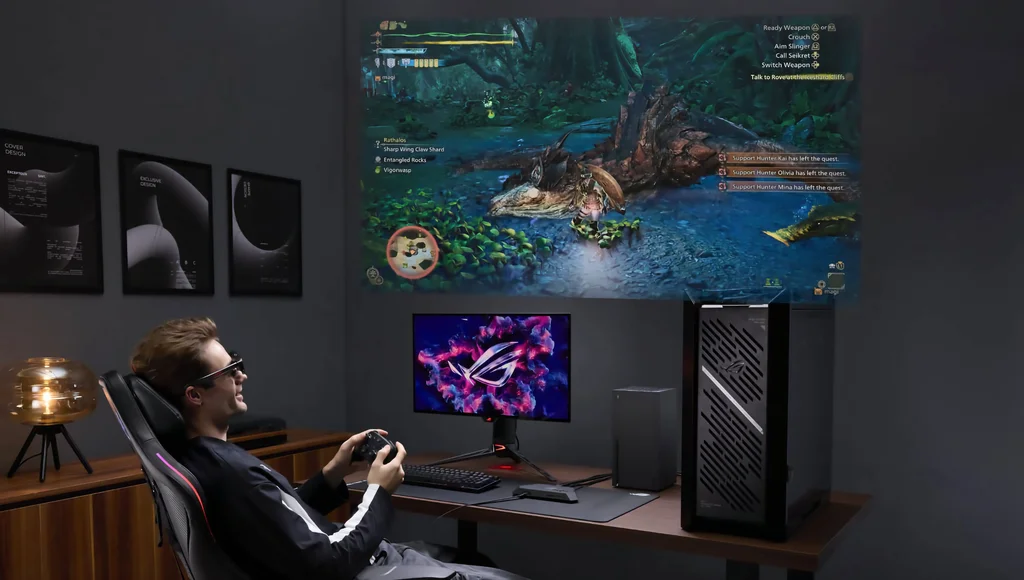
Can a monitor or television be replaced by gaming glasses? Asus believes so. In collaboration with Xreal, the manufacturer has presented new gaming glasses Asus Xreal R1, which offer a virtual screen with a diagonal of up to 117 inches and a refresh rate of up to 240 Hz.
Micro-OLED Instead of LCD
Similar to the Apple Vision Pro and the upcoming Samsung Galaxy XR, Asus glasses use micro-OLED displays. This is a key difference compared to the Meta Quest headsets, which still rely on low-resolution LCD panels. Micro-OLED provides higher contrast, better sharpness, and significantly improved image quality, especially when displaying text and dynamic games.
Light as regular glasses
Unlike heavy VR goggles, the Asus Xreal R1 is actually glasses. Weighing just 91 grams, they do not completely cover the field of view and do not isolate the user from their surroundings. At the same time, one must accept the compromise of a 1080p resolution, which is noticeably lower than that of full-fledged XR headsets.
Virtual screen without a bigger desk
Asus announced the product even before CES 2026 with the slogan that “you don’t need a bigger desk.” That’s true, although you still need a powerful PC or console, to which the glasses connect via USB-C or the included HDMI / DisplayPort dock. The manufacturer boasts a 57-degree field of view, which is supposed to provide the impression of a massive screen floating in space.
“57° FOV provides a spacious virtual image while still giving a good view of the real world. This means the feeling of sitting in front of a 171-inch screen from four metres away. Whether you’re gaming or watching movies, you’re getting a screen that allows you to fully enjoy your entertainment” – reports Asus.
240 Hz and Anchor Mode
Micro-OLED in the Asus Xreal R1 supports a resolution of 1080p with a refresh rate of up to 240 Hz, making these glasses an exceptionally interesting option for gamers. The virtual screen can follow head movements or remain "anchored" in one place in space thanks to Anchor Mode. The launch of the Asus Xreal R1 is scheduled for the first half of 2026. The price has not yet been disclosed.
Competition from Xreal
At CES 2026, Xreal showcased its own glasses, the Xreal 1S. They feature micro-OLED displays with a resolution of 1200p and a refresh rate of 120 Hz, along with the ability to virtualise a screen up to 500 inches. A new feature is also the conversion of 2D images into 3D. The price of the Xreal 1S has been set at 449 dollars or 499 euros. Gaming glasses are increasingly entering the territory previously reserved for monitors and televisions. The question is whether gamers are ready to swap their traditional screens for virtual ones.