 Katarzyna Petru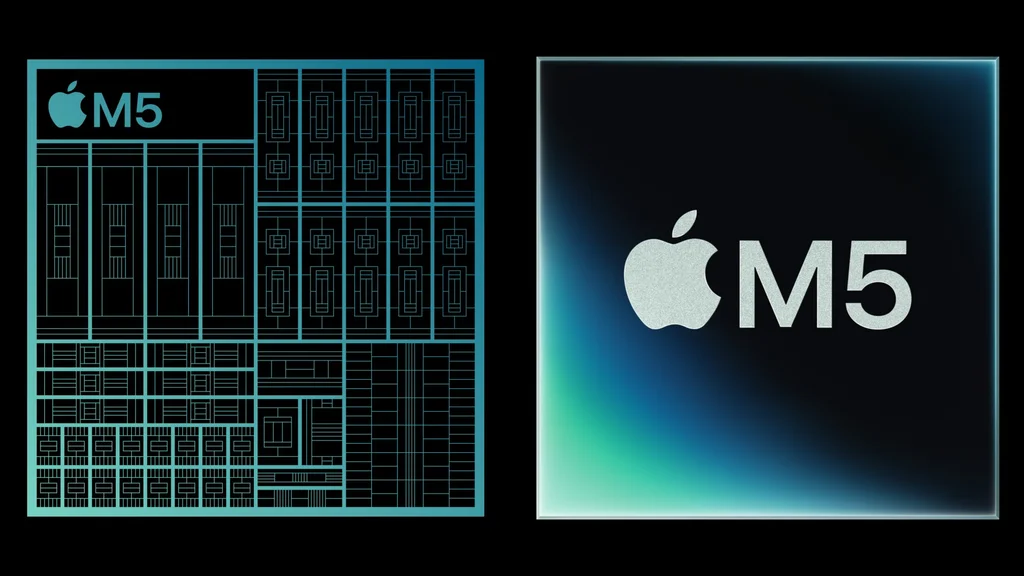
Apple has just announced a broad collaboration with Google, through which the Gemini models will power future AI features in the company's ecosystem. But that's just part of a bigger plan. According to the latest information from Ming-Chi Kuo, Apple is set to begin production of its own AI chips for servers later this year. If these reports are confirmed, we are talking about one of the most significant strategic moves by Apple since the transition of Macs to Apple Silicon.
Custom AI chips. Apple does it their way
According to Ming-Chi Kuo, self-designed AI chips for servers will enter mass production in the second half of 2026. Moreover, Apple plans to launch its own data centres in 2027. This is a clear signal that the company expects a significant increase in demand for AI – both that which operates locally on devices and that which is supported by the cloud.
Although Apple’s server AI chips have been talked about for years, it’s only now that it starts to look like a real, concrete plan rather than a futuristic rumour.
Silicon is now Apple's most powerful chip
Apple has been facing quite a bit of criticism lately for delays in AI and inconsistent software quality. However, one cannot deny that its team responsible for semiconductors is truly world-class.
Apple Silicon has been powering iPhones, iPads, and MacBooks for years, consistently setting new standards for performance and energy efficiency. Recently, the company has gone even further by introducing its own C1 and C1X cellular modems and N1 wireless connectivity chip. Now, that same team is tackling AI server chips. And this is where Apple's true advantage over the competition may lie.
Servers under full control
According to Kuo's predictions, the first batches of chips will be created before the new data centres are launched. This means that Apple will likely start testing and implementing them on a smaller scale within the existing infrastructure. This is a very “Apple” approach – full control over hardware, software, and now also over the AI server backend. In the long run, this could mean:
better optimisation of AI for specific system functions
lower costs compared to using someone else's infrastructure
greater control over data privacy
a real alternative to Nvidia and external AI accelerator providers
Will this be a game changer?
If Apple actually integrates its own AI models, its own server chips, and its own data centres, it may create a closed AI ecosystem that no one else has today. This is exactly the same pattern that worked previously with iPhones and Macs.
So the question isn’t “will Apple make its own AI chips,” but “how much will this change the balance of power in the market.” Because if the company from Cupertino pulls off this plan, its biggest advantage may turn out to be not the speed of implementing innovations but the consistency and full control over technology. And that can be more important in the long run than being first.