 Redakcja Choose TV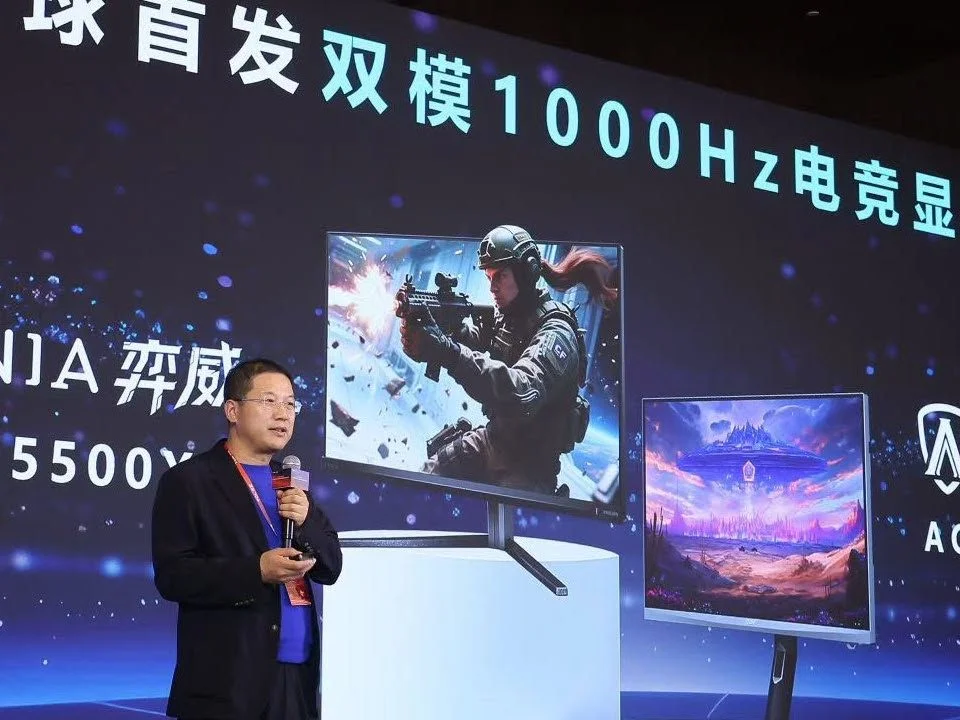
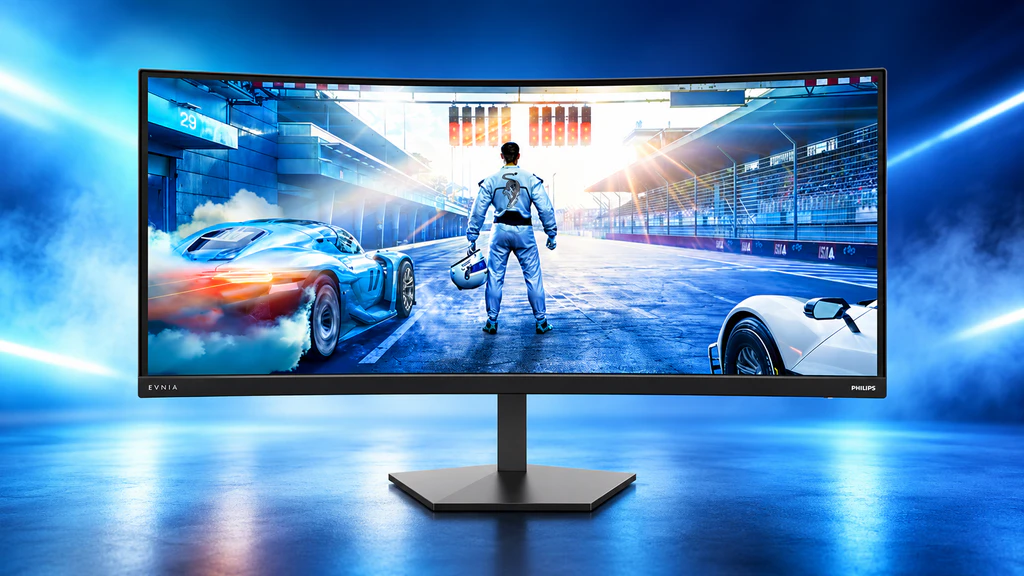
AOC and Philips officially presented what the industry had been expecting for several weeks: the world's first gaming monitors with a refresh rate of 1000 Hz. Yes – a thousand. This is no longer an evolution, but a brutal break through the existing technological ceiling.
Information about such constructions appeared in leaks a month ago. At that time, it was said that AOC and AntGamer were working on something that would break the current records (750 Hz). However, AntGamer is keeping quiet, while AOC and Philips – are not. Both brands operate under the auspices of TP Vision, so it's no surprise that their new models use the same IPS LCD panel.
New models: AOC AGP277QK and Philips 27M2N5500XD
According to DisplaySpecifications, the monitors were announced at a special event in China. They will be the first to appear in that market. Both models offer:
27 inches
resolution 2560×1440 px (1440p)
response time 1 ms G2G
contrast 2000:1
wide colour coverage + factory calibration Delta E < 2
VESA DisplayHDR 400
On paper, it looks solid, but… well, paper has its limits with this class of products.
Dual-mode: 500 Hz at 1440p or 1000 Hz at 720p
To achieve the legendary 1000 Hz, a price must be paid: lowering the resolution to 720p. At native 1440p, monitors operate at “only” 500 Hz. Sounds familiar? Top OLED monitors do the same in 720 Hz mode. It’s simply a limitation of bandwidth and pixel control – to push the panel to its limits, the number of displayed pixels must be reduced.
1000 Hz? Sounds cosmic, but the reality is more complex
In theory – fantastic. In practice? IPS LCD is still IPS LCD. As noted by FlatpanelsHD, the claimed 1 ms G2G is only the best possible result under ideal conditions. To maintain a real 1000 Hz, response times would need to fall closer to 0.1–0.5 ms. And that IPS won't be able to achieve in 2025. The effect? Motion on screen is unlikely to look better than today's 720 Hz OLEDs. This stems from several factors:
LCD pixels don't turn off instantly like OLED, so motion blur will always be more pronounced,
differences in perception at such values are becoming less noticeable anyway,
OLED has significantly higher contrast, perfect blacks, and faster pixel switching.
In other words: LCD must chase OLED in speed, because it has no chance in quality.
Who are these monitors for?
Not for movie buffs. Not for graphic designers. Not even for AAA gaming, because hardly anyone wants to watch their games at 720p these days. This is purely e-sports gear, designed for the most demanding FPS players: CS2, Valorant, Apex. Every fraction of a second counts, every slightly faster position change matters. For them – it could be a step forward. For the rest – more of a technological curiosity than a daily monitor.
Nevertheless: a historic moment. A few years ago, the industry was excited about 240 Hz. Today we have 1000 Hz… and faster than anyone anticipated. What’s the next step? The first 1000 Hz OLEDs. When that happens, then we can truly talk about a real revolution.