 Maciej Koper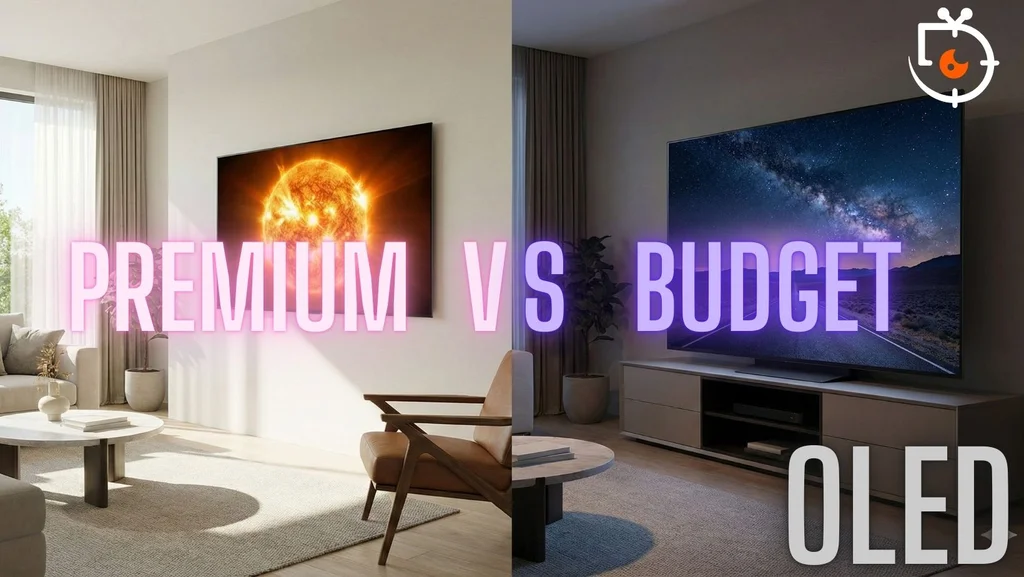
Choosing an OLED TV today is truly a minefield. On one hand, marketers bombard us with numbers, and on the other, the price differences between series can knock you off your feet. You might often wonder: does that more expensive model actually shine better, or are you just paying for the logo and a nicer casing? In this text, we won't be giving academic lectures on pixel structure. We'll focus on what your eyes can see: the real image quality, features, and how the screen will perform in your living room.
Why is it worth buying an OLED television?
Before we get into specific dilemmas, it’s worth reminding ourselves why OLED has become the standard for those seeking the highest quality. Unlike LCD screens (including Mini-LED), where the image requires a backlight, in OLED technology, each of the millions of pixels shines independently. In practice, this means perfect blacks, infinite contrast, and a natural image that looks best during evening viewings.
The second key aspect is motion blur. Remember, the key here isn't just the number of hertz (Hz), but the response time of the panel, which is how quickly the pixels change colour. This is why a 120Hz OLED often provides a sharper image in motion than a 165Hz LCD television, which is crucial in sports and gaming. These additional values like 144 or 165Hz are aimed solely at advanced PC gamers.
Division into series: Brightness as the main determinant
To help you navigate the market, the latest models can be divided into three main segments, differing primarily in brightness (measured in nits):
TV Class | Example Models | Brightness | Features | Who is it for? |
Budget | LG series B, Samsung S85, Philips 700 | 500–700 nits | Basic casing, standard speakers | For those who mainly watch in the evenings, looking for the cheapest entry into the world of high-quality image |
Mid-range | LG series C, Samsung S90, Philips 800 | about 1000 nits | "Golden mean", better image processors | Best choice for Netflix and HBO. Optimal price-to-image quality ratio |
Premium | LG series G, Samsung S95, Sony A95L/ Bravia 8 II, Philips 900, Panasonic Z95 | +2000 nits | Premium extras, better audio, design, extended warranty, | For very bright living rooms, for demanding gamers and those looking for top-shelf design. |
When does paying extra for premium models make real sense?
Since mid-range models already offer nearly reference levels of brightness for film content, why even consider purchasing top-end series like LG G, Samsung S95 or Philips from the 900 series? There are several reasons, and they usually go beyond just watching series on streaming. First of all, it’s important to differentiate between maximum brightness in HDR and brightness in SDR content, which includes typical television, sports, or news programmes. It is in such scenarios that top series gain the most advantage. Where cheaper OLEDs start to look too dark in sunlight, more expensive models can maintain a clear and contrasty image even in difficult, sunlit conditions. Additionally, there are better anti-reflective coatings that significantly influence the lack of reflections on the panel.
The topic is quite different in video games as well. HDR in games can produce bright effects much more intensely, even reaching values of around 10,000 nits. This is where top-tier televisions have the space to showcase their full technical capabilities. Additionally, there are proprietary solutions from manufacturers: LG in the G series offers a five-year warranty on the panel and a special mount that allows for installation perfectly flat against the wall. Samsung in the S95 series uses a unique matte panel that drastically improves working comfort in bright rooms, along with the One Connect module that makes aesthetically hiding cables easier. Sony, on the other hand, focuses on unbeatable image processing algorithms and access to the Bravia Core platform with films at the highest bitrate. There are plenty of such gems, but you know what this is all roughly about.
Go for size, because you already have high quality
The basic strategy we recommend is: first, choose the largest size you can afford while maintaining decent picture quality. In the case of OLED technology, the condition of "decent quality" is practically met by every model, regardless of price or series, because here we have virtually perfect motion fluidity and infinite contrast. Since you get picture quality essentially "automatically", it makes more sense to focus on these three elements:
distance from the screen,
room brightness,
available budget.
To make your choice easier, we have a few scenarios for you that often come up online:
Scenario 1: medium budget, distance 2.5 m, watching movies and series
If you watch television mainly in the evening, you're faced with the dilemma: 55-inch premium flagship or 65-inch mid-range, opt for the latter (e.g., 65" from the S90 series). At 2.5 metres, those extra 10 inches will make a bigger difference and provide a better cinematic experience than additional nits of brightness, which you won't fully utilise in the evening anyway.
Scenario 2: Large living room, distance 3.5 m, high budget
If you have a large living room and a budget around 10,000 PLN, the choice becomes more complex and depends on the characteristics of your space. Here you can go in one of three directions to best spend your money.
Bright living room = 65 premium
The first option, ideal for those with very bright living rooms and a large number of windows, is to choose technology that truly wins against the sun's rays. In this case, the best choice would be high-end series like Samsung's S95 series, which has a unique matte display and is also very bright. This solution significantly improves viewing comfort during the day.
Dark lounge = the largest size possible
If your lounge is darker or you have the option to fully cover the windows, you should aim for maximum immersion. In these conditions, an 83-inch OLED, even from a slightly lower series, will be a hit. At a distance of over 3.5 metres, the enormous screen size will make a colossal impression on you that no additional features of a smaller television can replace. Evening screenings on such a powerful display offer a completely different level of cinematic experience.
Universal application = mid-range
The third way is the golden mean. Mid-range models in the size of 77 inches offer nearly reference quality picture for film content. By choosing such a television, you get a device that will perform well in most scenarios. It’s the most rational choice that allows you to maintain a great balance between size and price.
Scenario 3: Low-Medium Budget, Distance 4–5 m
In this situation, we advise against buying an OLED. At such a large distance, you won't pick up on the subtle differences in image quality, and a 55-inch screen will simply be too small. It's better to choose at least a 75-inch mini-LED TV, which will provide a much better viewing experience without straining your eyes.
Three Myths About OLED TVs
There are many misunderstandings surrounding this technology that are worth clarifying:
"OLED is not suitable for bright rooms": This is not true. Today's series, especially the premium ones, perform really well in sunlight. We could even say that they perform better than some mini-LEDs.
"OLED will burn out": With normal use (movies, games), modern protections almost completely eliminate this problem. The topic is definitely less frightening than descriptions online from a few years ago. Of course, if you push the TV to its limits, ignoring the manufacturer's recommendations, this effect could occur.
"OLED is always the best choice": Not always. When it comes to picture quality, yes, OLED will give you the best picture quality on the market. BUT... if you sit very far away and have a low budget, you'll get more enjoyment from simply a larger mini-LED backlit LCD screen than a small OLED.