 Maciej Koper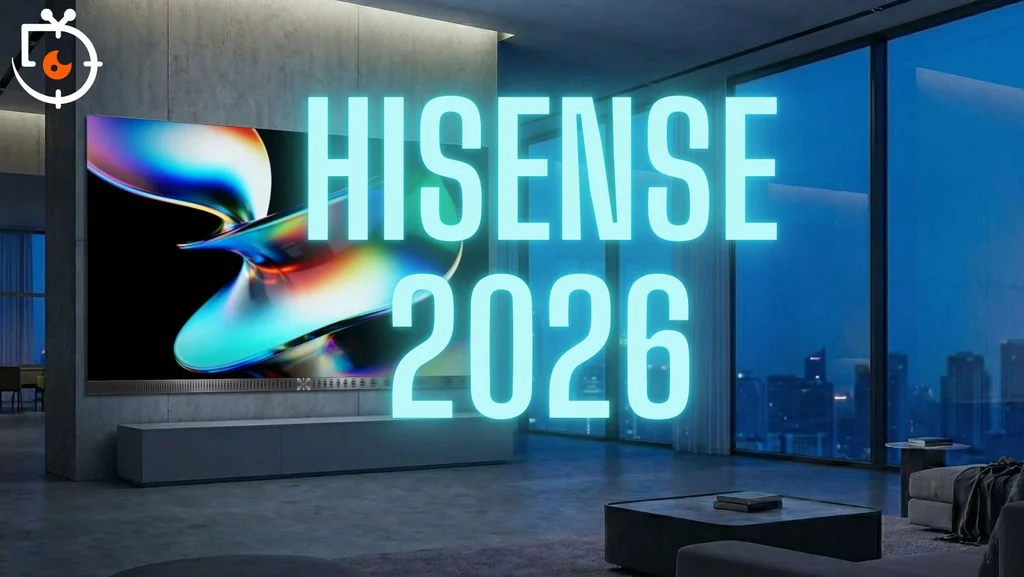
We visited the Hisense booth at this year's CES and although the manufacturer did not show all the new models that will hit the shops, the presented prototypes clearly signal the direction in which the market is heading. Instead of focusing on minor improvements, the company has opted for fundamental changes in how screens generate colours and light.
MicroLED RGBY: The Return of Yellow in Huge Format
One of the most popular points at the stand was the monstrous 163-inch MicroLED screen designated 163MX. What sets it apart (besides the astronomical price of $150,000) is the implementation of RGBY technology, meaning the addition of a fourth, yellow subpixel to the standard colour set. We examined this solution up close and it may remind one of the former Sharp Quattron televisions. However, here the aim is much more modern. The yellow diode is exceptionally bright and allows the entire screen to shine with immense power while consuming less energy. In practice, an image of such a vast diagonal looks stunning, offering cinematic scale and perfect blacks, although with a price nearing a million zlotys and still visible panel seams, it remains a fascinating vision of the future for the few.
Micro RGB (+C)
Another major innovation that we have tested is the Micro RGB+C Evo technology, presented in the flagship 116-inch model 116UXS. Hisense claims that previous solutions are now a thing of the past and introduces a fourth backlighting colour – cyan (a shade of ocean blue). This is intended to allow for an even wider colour palette, exceeding 110% of the BT.2020 standard. Currently, this value surpasses the capabilities of the existing film industry! On site, the amazing colour saturation caught the eye, as they truly look simply stunning. The manufacturer has applied advanced control here, which aims to eliminate backlight errors, such as the halo effect.
New Generation Laser TV
Hisense is also not slowing down in the category of "laser televisions", or ultra-short throw projectors. We saw the successor to the popular PX3 Pro model, the PX4 Pro, which brings an increase in brightness to 3500 lumens and better contrast. This solution is ideal for those who want a 120-inch image without placing a massive glass panel in the room. However, the real star in the projector segment was the XR10 model. This device has a brightness of up to 6000 ANSI lumens, enclosed in a stylish retro housing. The XR10 can display an image with a diagonal of up to 300 inches and is packed with artificial intelligence that (as the manufacturer claims) automatically adjusts the focus and geometry of the image. During our demo, we saw how it performed in a bright room, and it must be said that the line between a projector and a classic television is becoming increasingly blurred.
We checked all these novelties for you live, analysing what is a real change and what is merely a marketing slogan. If you want to see how the 163-inch giant performs in action and whether the additional colours in the lighting truly make a difference, we invite you to watch our full material straight from Las Vegas!