TCL RM7L vs Samsung S85H

Direct comparison

S85H

Available screen sizes: 65”75”85”98”

Available screen sizes: 48”55”65”77”83”

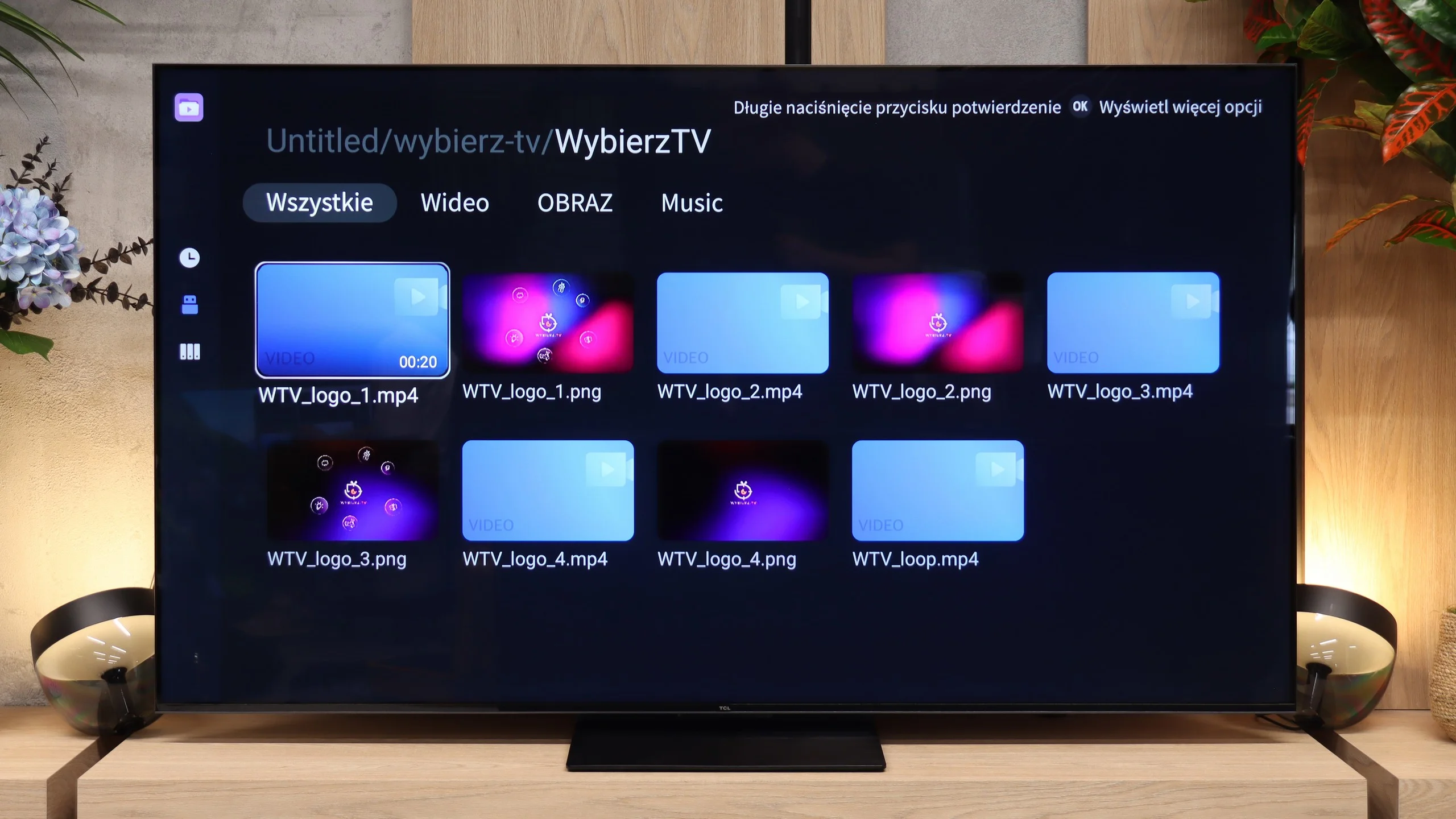
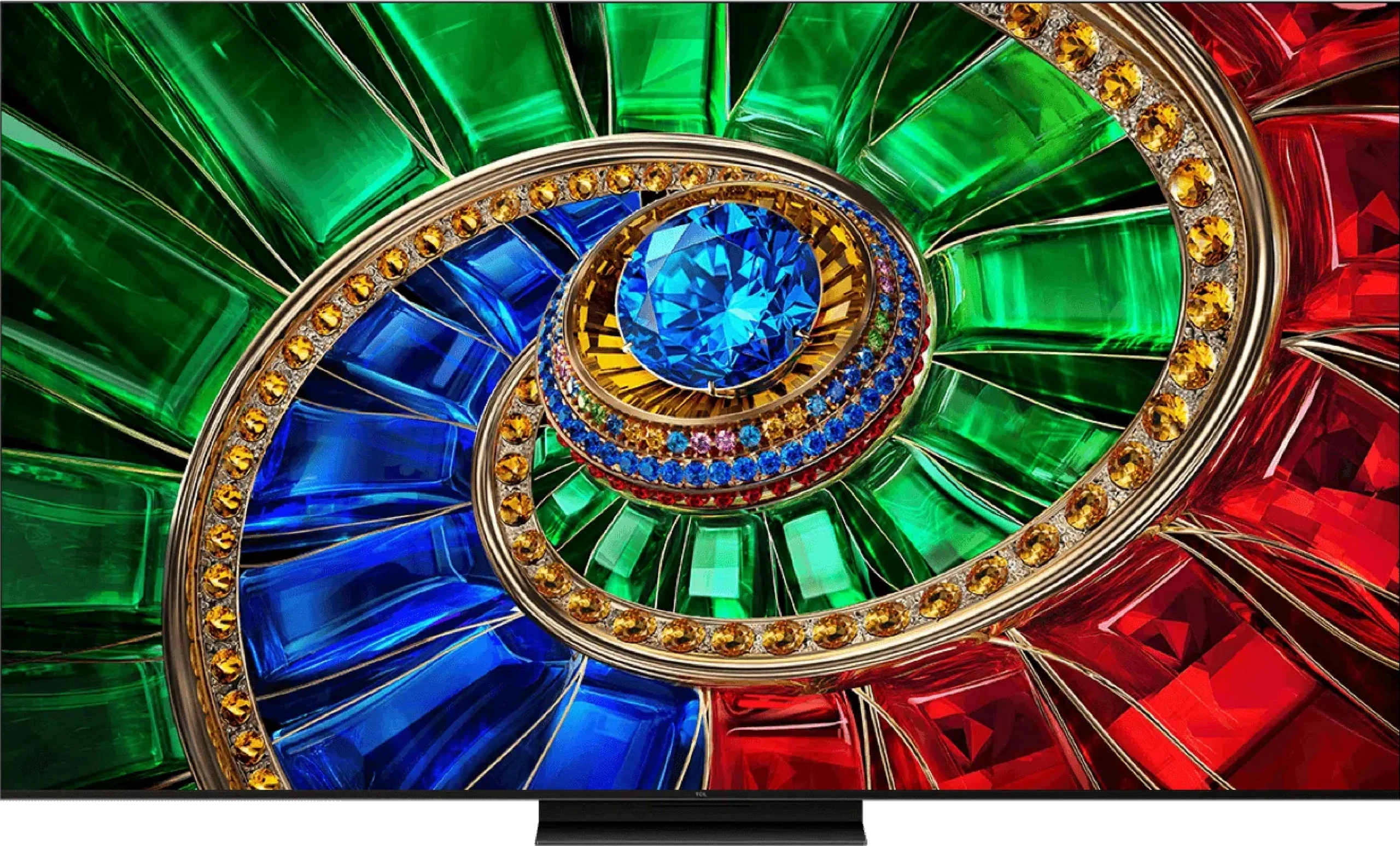
Review TCL RM7L Main photo
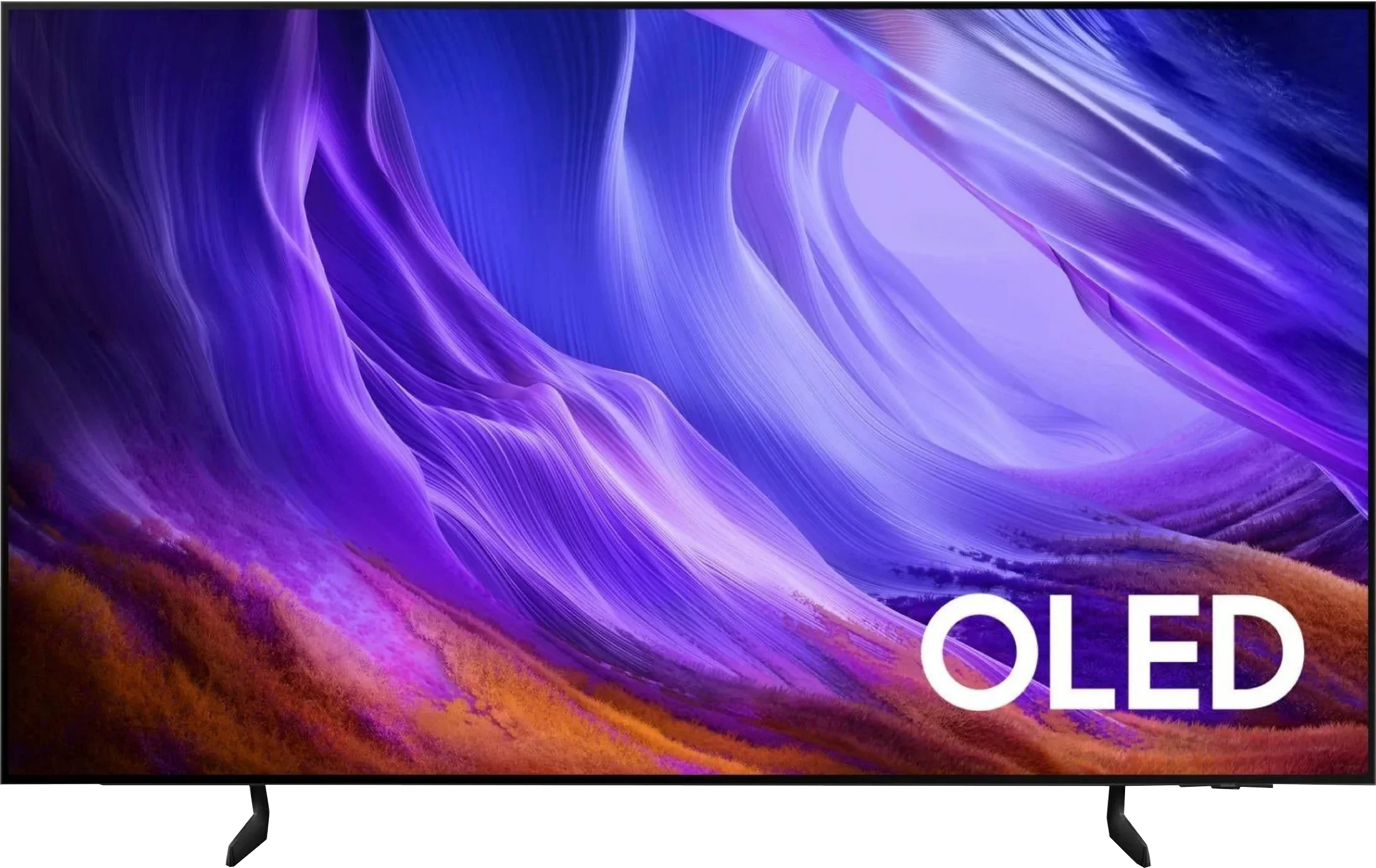
Review Samsung S85H Main photo

Panel type: LCD VA

Resolution: 3840x2160

System: Google TV

Model year: 2026

Complete the survey to find out the result

Panel type: WRGB OLED

Resolution: 3840x2160

System: Tizen

Model year: 2026

Complete the survey to find out the result

Overall rating

7.8

7.9

  • Movies and series in UHD quality

    7.4

    8.0

  • Classic TV, YouTube

    7.1

    8.6

  • Sports broadcasts (TV and apps)

    6.9

    8.5

  • Gaming on console

    8.8

    9.6

  • TV as a computer monitor

    8.4

    7.6

  • Watching in bright light

    7.8

    5.1

  • Utility functions

    7.8

    7.3

  • Apps

    9.6

    9.3

  • Sound quality

    7.8

    7.2

Advantages

  • Very high HDR and SDR brightness

  • Good black levels and contrast (VA panel + mini-LED)

  • Full support for HDR formats, including Dolby Vision and HDR10+

  • Extensive gaming features (VRR, ALLM, HGiG)

  • Good motion clarity with low blur (up to 288Hz)

  • Google TV operating system (many apps, Gemini voice assistant)

  • Perfect black and infinite contrast: OLED

  • Decent HDR brightness of up to around 800 nits

  • High image fidelity after calibration

  • Very smooth motion, 120 Hz OLED panel

  • Rich set of gaming features: VRR, Game Bar, low input lag

  • Four HDMI 2.1 ports with full 48 Gbps bandwidth

  • Extensive, smooth-running Tizen system

  • Feature-rich solar-powered remote

  • Support for Dolby Atmos immersive sound

Disadvantages

No like
  • Poor digital image processing due to the use of the older MediaTek Pentonic 700 processor

  • The glossy screen coating does little to reduce reflections

  • Only two HDMI 2.1 ports

  • Less stable colours, dependent on the dimming algorithm (a characteristic of RGB panels)

  • Worse reflection suppression than its predecessor, a characteristic of the new OLED SE panel

  • Average SDR brightness; best suited to rooms with controlled lighting

  • No DTS:X support, a drawback mainly for owners of Blu-ray collections

  • No Dolby Vision; not essential, but would be welcome 🙂

Our verdict

The TCL RM7L is a TV that can't be fairly assessed by measurements and charts alone. Although it isn't uncompromising kit, it more than holds its own in everyday use. It delivers a bright, dynamic and richly saturated picture, which makes it great for HDR content, gaming and fast-paced films. The RM7L doesn't chase perfect "reference-level" accuracy. Instead, it serves up an image that simply pleases the eye. In daily use there's little to fault. Google TV runs smoothly and provides access to a full suite of apps, and the generous set of gaming features means the TV performs just as well when connected to a console or PC as it does during an evening on the sofa. It's simply a versatile piece of kit that will suit most home uses. The most interesting aspect, though, is TCL's approach to backlighting. Rather than chasing numbers and inflating dimming zone counts, as with the C7L, they opted for RGB Mini-LED technology. The effect is genuinely intriguing. Although blacks and contrast are very good, in the most demanding scenes, with bright objects on a dark background, the halo can be slightly more noticeable than on the rival from the same stable. Interestingly, the glow itself takes on the colour of the displayed element, which makes it look much more natural and less distracting than on classic Mini-LED screens.

And that is where the dilemma appears. Placing the RM7L next to the TCL C7L, it's hard to deliver a clear, objective verdict. Both models cost almost the same, but represent two completely different backlight design philosophies. The C7L wins on dimming precision thanks to a larger number of zones, while the RM7L makes up for it with the distinctive, extremely pleasing-to-the-eye character of its RGB panel. Until recently the choice boiled down to a simple zone count; today, as TCL shows, the matter is much more interesting. If we had to choose between the two, the scales would tip slightly towards the C7L because of the higher zone count and equally impressive, saturated colours, but the final decision always depends on what an individual expects from their equipment.
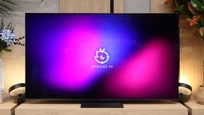
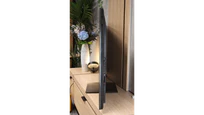
Samsung S85H is a very successful continuation of the S85 series and a television that still fulfils its primary role well – to be an affordable entry into the world of OLEDs. The biggest change compared with the predecessor is the use of the new OLED SE panel from LG Display, but the overall character of the model has remained practically unchanged. Its greatest strengths remain perfect blacks, very high contrast and a picture that can look particularly superb in the evening. Add to that good colour reproduction and the ability to achieve very high fidelity to the director’s vision. The S85H also performs very well as a versatile all-round TV. Gamers get four HDMI 2.1 ports, 120 Hz, VRR, very low input lag and Game Motion Plus, so there is little to criticise here. Tizen runs quickly and smoothly, and the whole system clearly targets users who mainly use Netflix, YouTube and other streaming services today, while treating traditional broadcast TV as an add-on. The new OLED SE panel is not without drawbacks. This is most noticeable when watching during the day, as it is worse at suppressing reflections than earlier organic panels. Its brightness is also not high enough for the S85H to feel particularly at home in a very brightly sunlit living room. It is still a TV that shows its strengths best in the evening or in a room with at least partial control of ambient light. And that is probably the best way to approach the S85H. It is not an OLED designed to break brightness records or compete with the most expensive panels. Its aim is simply to offer what people like most about the technology, but at a lower price. Perfect blacks, a very good picture for films, excellent gaming capabilities and a user-friendly smart system make the S85H one of the easiest ways to get into OLED without spending a fortune.

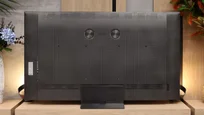
TV appearance

HDMI inputs
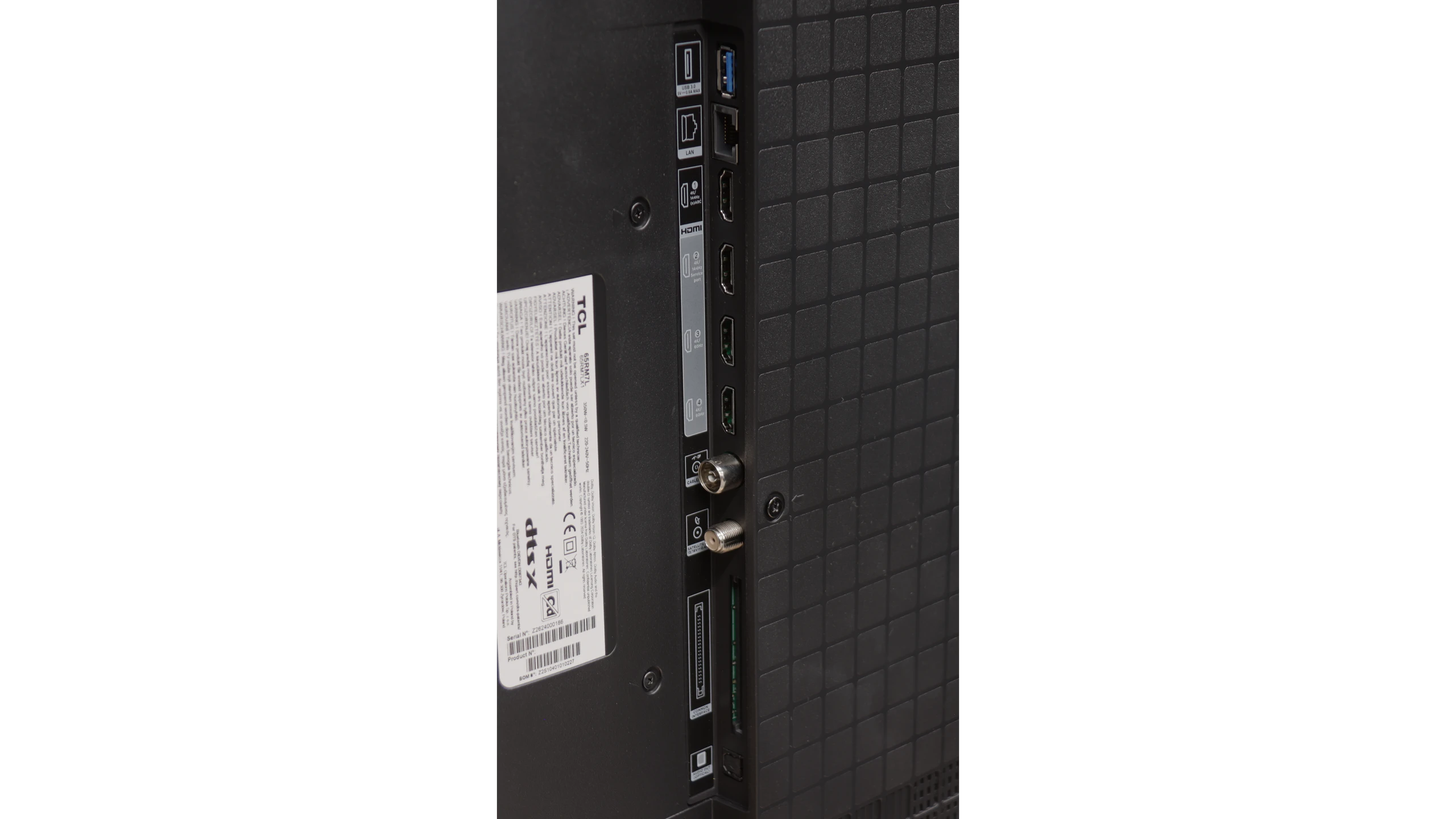
2 x HDMI 2.0, 2 x HDMI 2.1 (48Gbps)
0 x HDMI 2.0, 4 x HDMI 2.1 (48Gbps)
Other inputs
Outputs
Toslink (Optical audio), eARC (HDMI), ARC (HDMI)
Network Interfaces
Wi-Fi 2.4GHz, Wi-Fi 5GHz, Ethernet (LAN) 100Mbps
Build quality
Good
Good
Stand type
Central
Legs
Bezel color
Graphite
Graphite
Stand
Height adjustment
Base adjustment
Accessories
Stand
Stand

Contrast and black detail

7.7/10

10/10

Local dimming function: Yes, number of zones: 448 (16 x 28)

Contrast:

Review TCL RM7L Contrast and black detail

Result

258,450:1

Review TCL RM7L Contrast and black detail

Result

41,400:1

Review TCL RM7L Contrast and black detail

Result

18,800:1

Review TCL RM7L Contrast and black detail

Result

15,650:1

Review TCL RM7L Contrast and black detail

Result

8,350:1

Review Samsung S85H Contrast and black detail

Result

∞:1

Review Samsung S85H Contrast and black detail

Result

∞:1

Review Samsung S85H Contrast and black detail

Result

∞:1

Review Samsung S85H Contrast and black detail

Result

∞:1

Review Samsung S85H Contrast and black detail

Result

∞:1

Halo effect and black detail visibility:

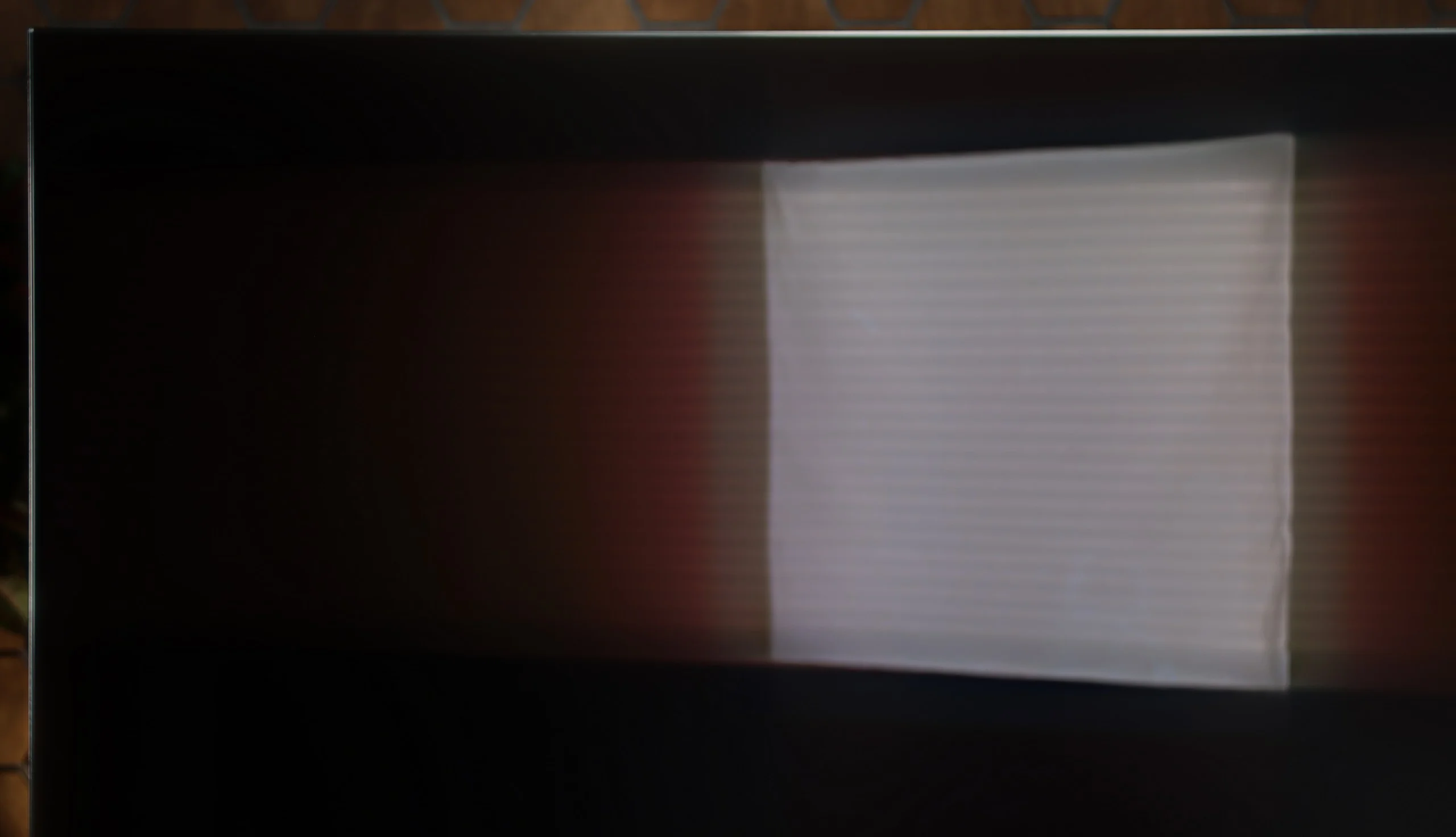
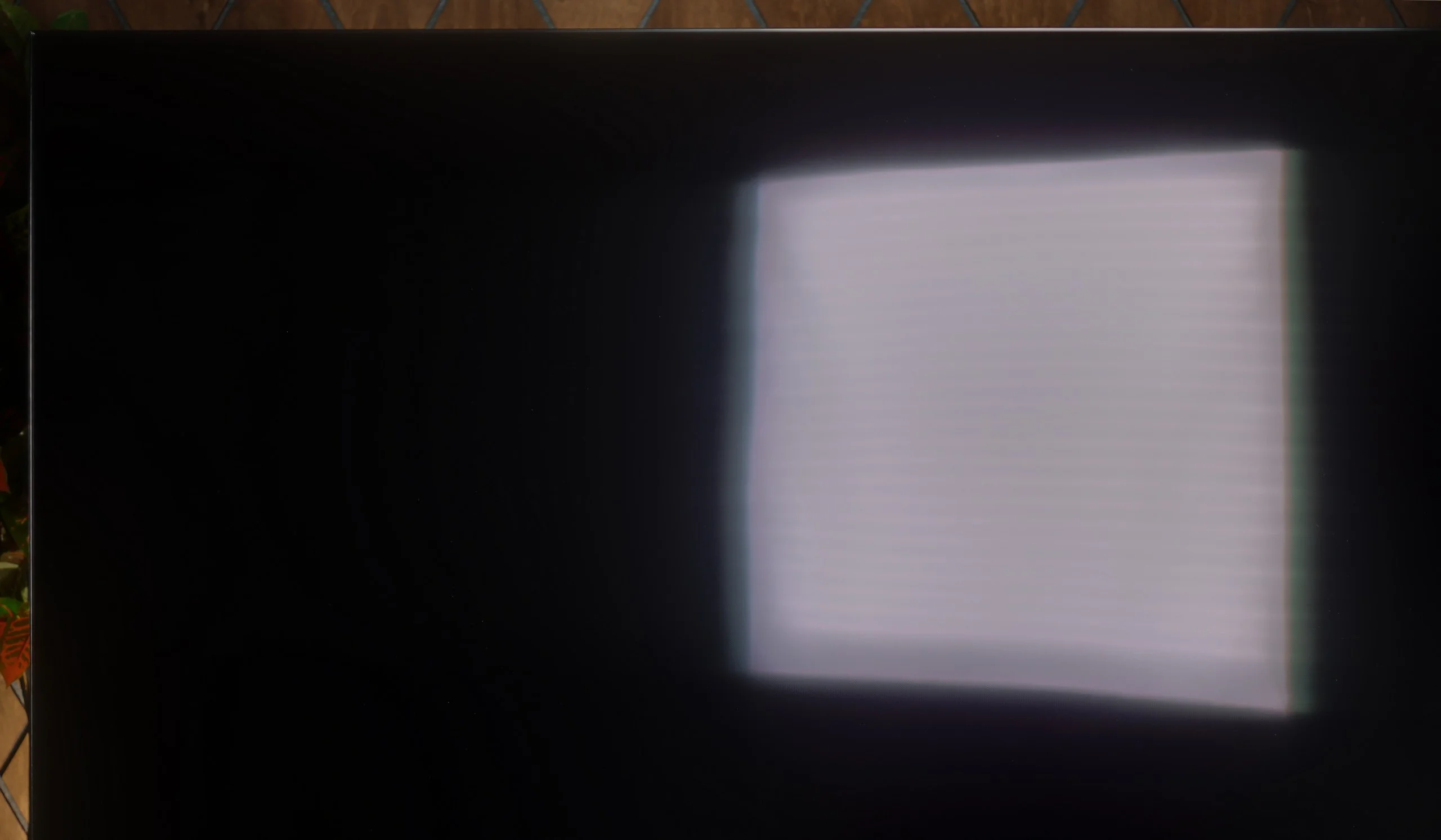
Check the visibility of bright lights on a dark background. Mini-LEDs often struggle with this. The photo does not compare black levels – that’s what the video below is for.

The video accurately shows differences in contrast and black levels between TVs, as well as potential issues: halo around bright objects or Mini-LED zone operation visible as brightness jumps.

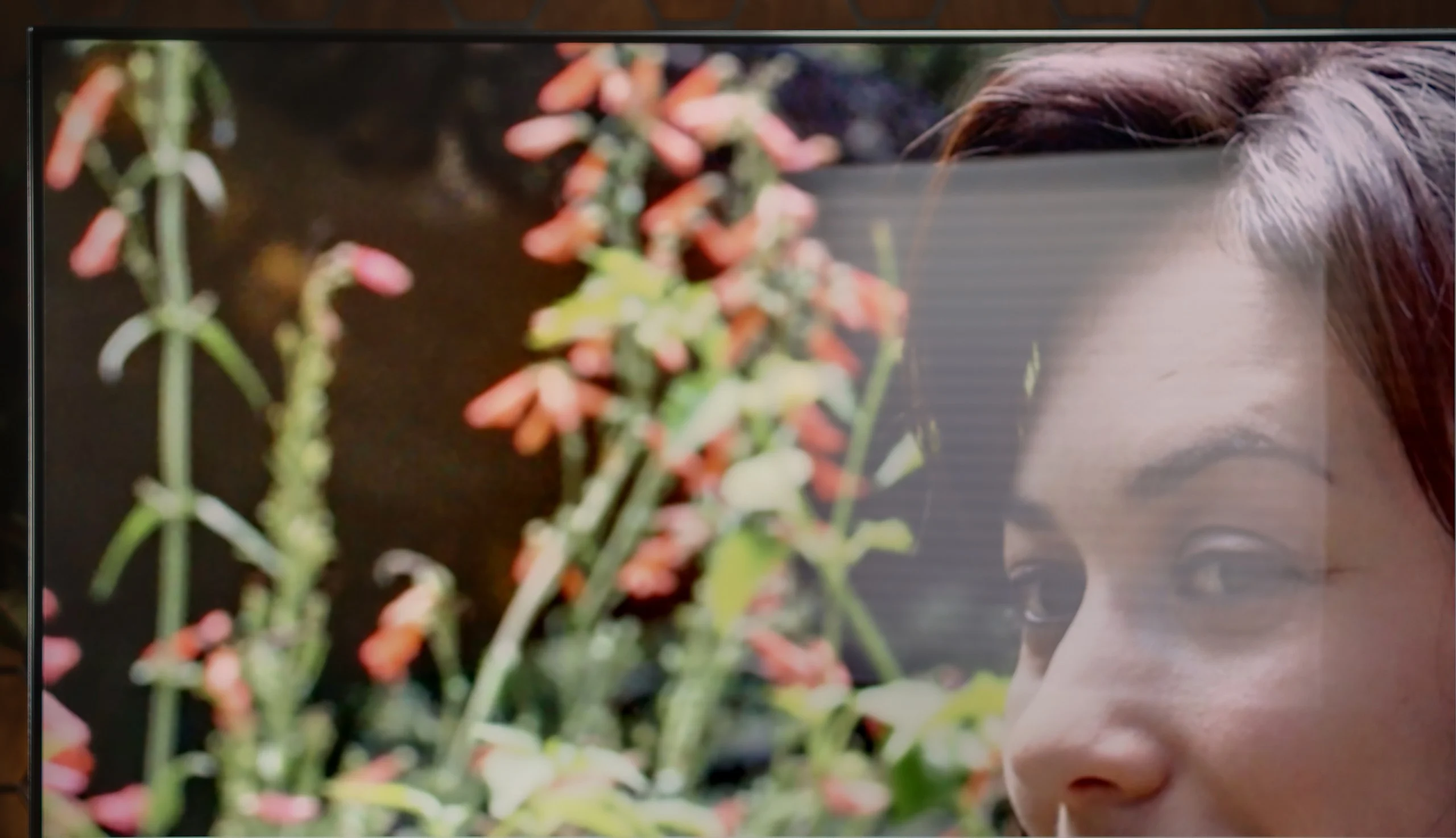
Black performance on the TCL RM7L is really good. The combination of a high-contrast VA panel with a zone-based RGB Mini-LED backlight allows the TV to achieve very high contrast figures. In most of the scenes we measured, the results were good enough that dark parts of the image looked deep and convincing. The RM7L performs best in less demanding shots where black occupies a large portion of the screen and bright elements are relatively small. In such conditions contrast can reach six-figure values. As scene complexity increases, results gradually fall off, but that is a natural characteristic of any LCD TV using local dimming.

However, the RM7L has noticeably fewer zones than its counterpart using an SQD Mini-LED backlight. In the 65-inch version the difference is more than twofold, so you more often see more pronounced blooming around bright elements on a dark background. In terms of pure dimming precision, the RM7L is therefore not as accurate as the C7L. RGB Mini-LED has its own advantage here though. The bloom is not simply white, it takes on the color of the displayed element. A good example is the helicopter cockpit scene from Sicario 2, where a greenish bloom appears around the green lights instead of the typical bright halo known from conventional Mini-LED TVs. The halo effect is still visible, but because its color matches the image it is less distracting and looks more natural.
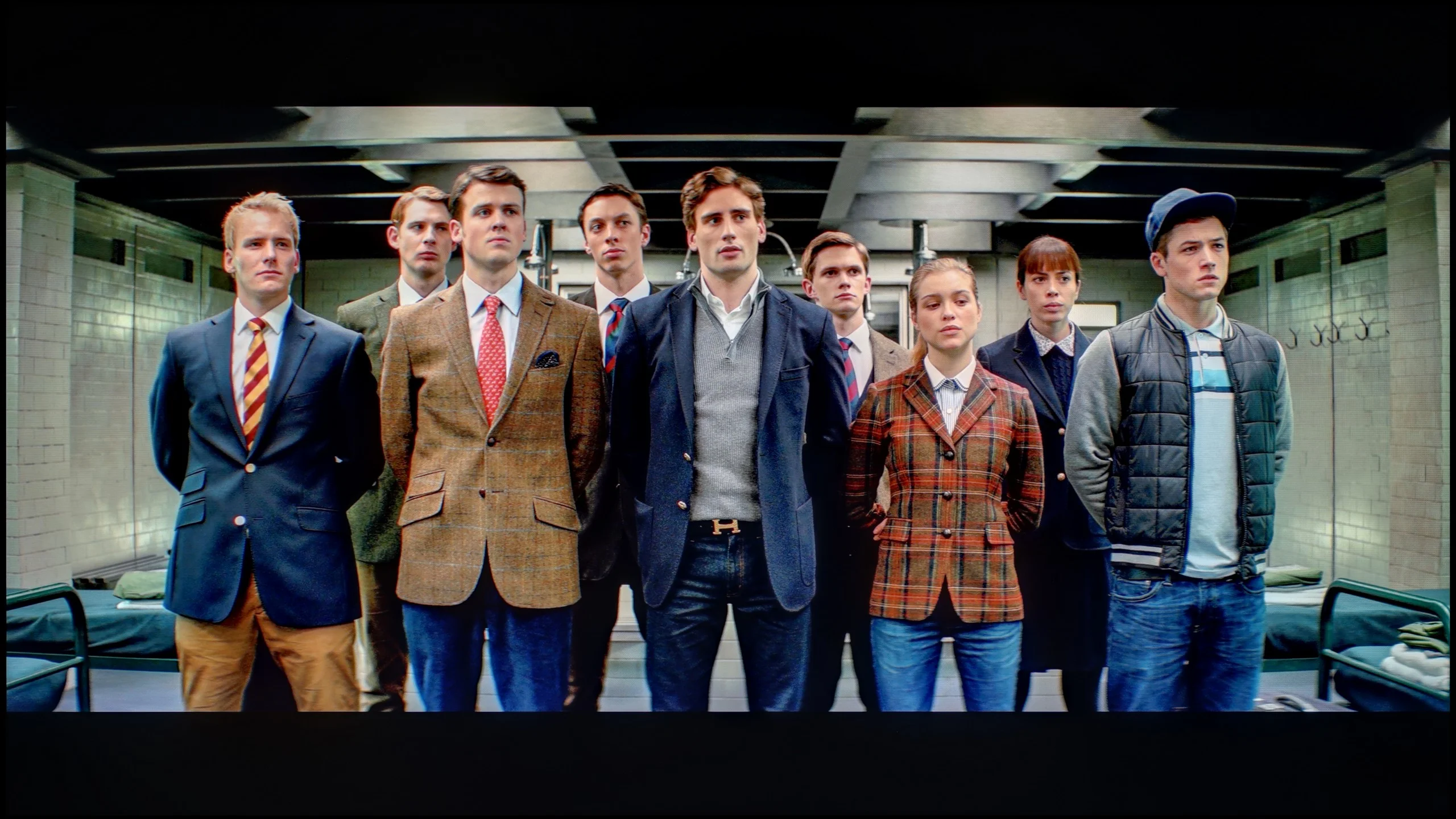
Ultimately we rate the RM7L and C7L similarly for black-level performance. The C7L controls the backlight better thanks to a larger number of zones, while the RM7L makes up for it with the character of its bloom. The bloom is somewhat larger, but its color blends better with the displayed image.

NOTE: Naturally, as the TV size increases the number of zones grows, yet we expect similar contrast results across RM7L sizes. It’s also worth adding that TCL lists the number of "color zones" in its product brochures, not the actual dimming zones. Since each color zone consists of three RGB channels, the advertised number should be divided by three. Therefore 1,344 color zones in the 65-inch unit we tested mean 448 actual dimming zones.

Size

Dimming zones (actual)

Color zones

65"

448

1344

75"

600

1800

85"

720

2160

98"

960

2880

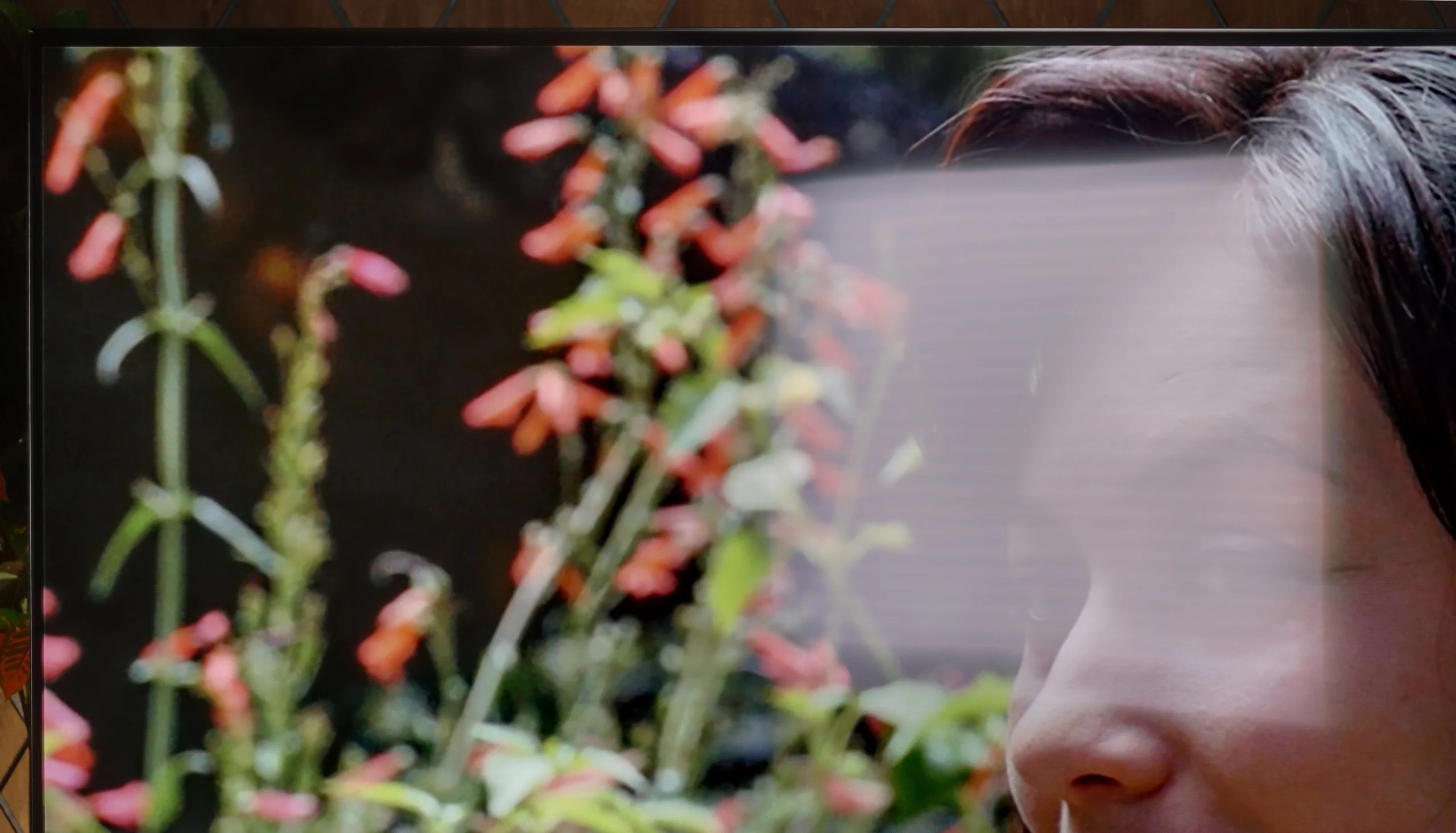
Changing the panel to the new WOLED SE from LG Display practically changed nothing in terms of black levels and contrast. And it was hard to expect any major improvement here, since we're still talking about OLED, a technology that can switch off each pixel individually. In practice, that means perfect blacks and tremendous image depth, particularly in darker scenes. Black bars are truly black, there is no halo around bright elements, and contrast remains virtually infinite. Even very expensive Mini-LEDs with thousands of local dimming zones still cannot offer the same precision as the S85H. And that's its biggest advantage. The S85H may be Samsung's cheapest OLED, but when it comes to blacks it delivers exactly the same as far more expensive models that use organic panels.

HDR effect quality

6.6/10

6.3/10

Supported formats
HDR10, HDR10+, Dolby Vision, Dolby Vision IQ, HLG
HDR10, HDR10+, HLG
Color gamut coverage
DCI P3: 96.6%, BT.2020: 88.7%
DCI P3: 95.2%, BT.2020: 70.9%

Luminance measurements in HDR:

Review TCL RM7L Brightness measurement

Result

914 nit

Review TCL RM7L Brightness measurement

Result

538 nit

Review TCL RM7L Brightness measurement

Result

653 nit

Review TCL RM7L Brightness measurement

Result

494 nit

Review TCL RM7L Brightness measurement

Result

1413 nit

Review Samsung S85H Brightness measurement

Result

733 nit

Review Samsung S85H Brightness measurement

Result

744 nit

Review Samsung S85H Brightness measurement

Result

837 nit

Review Samsung S85H Brightness measurement

Result

755 nit

Review Samsung S85H Brightness measurement

Result

404 nit

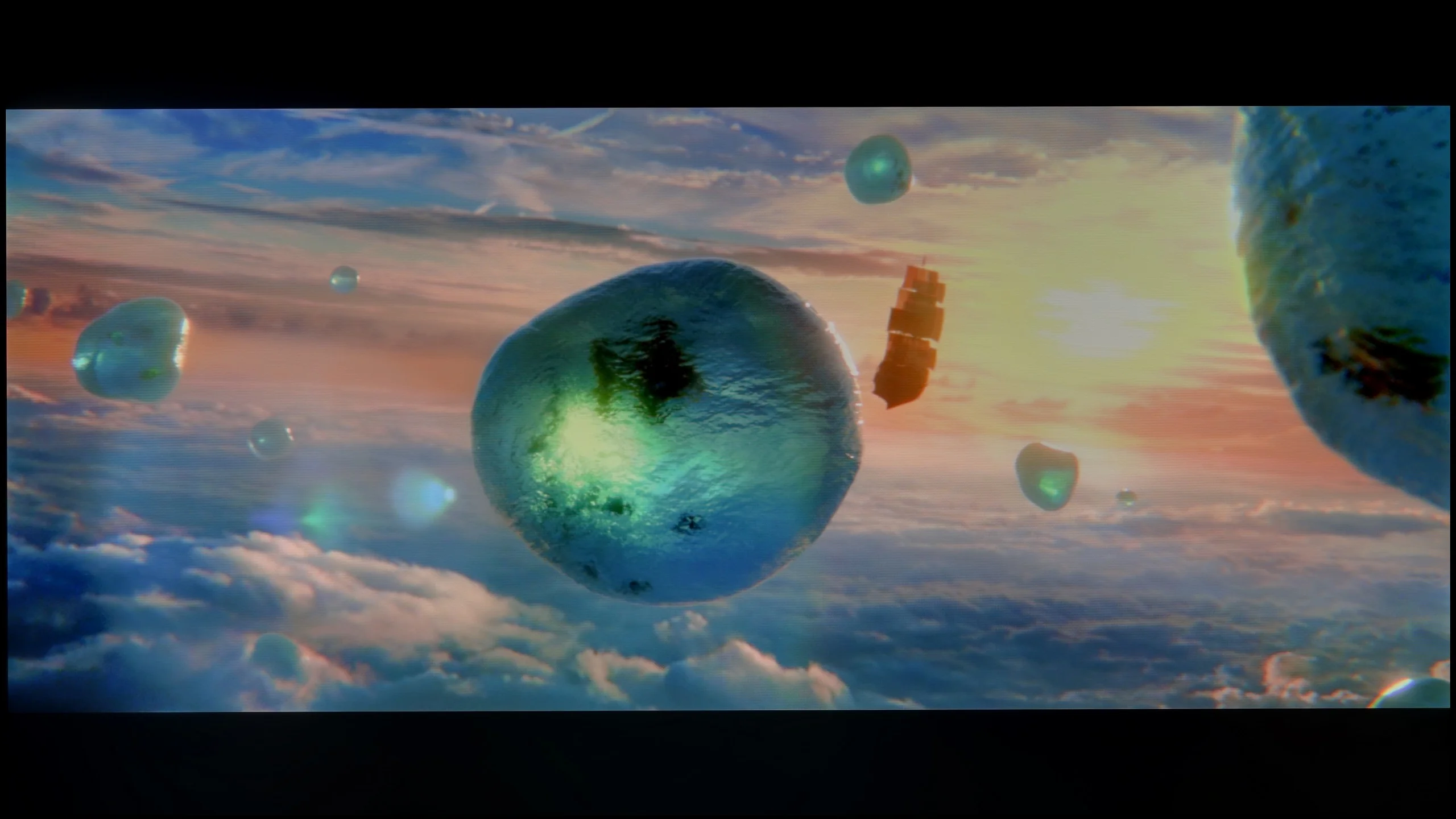
Scene from the movie “Pan” (about 2800 nits)

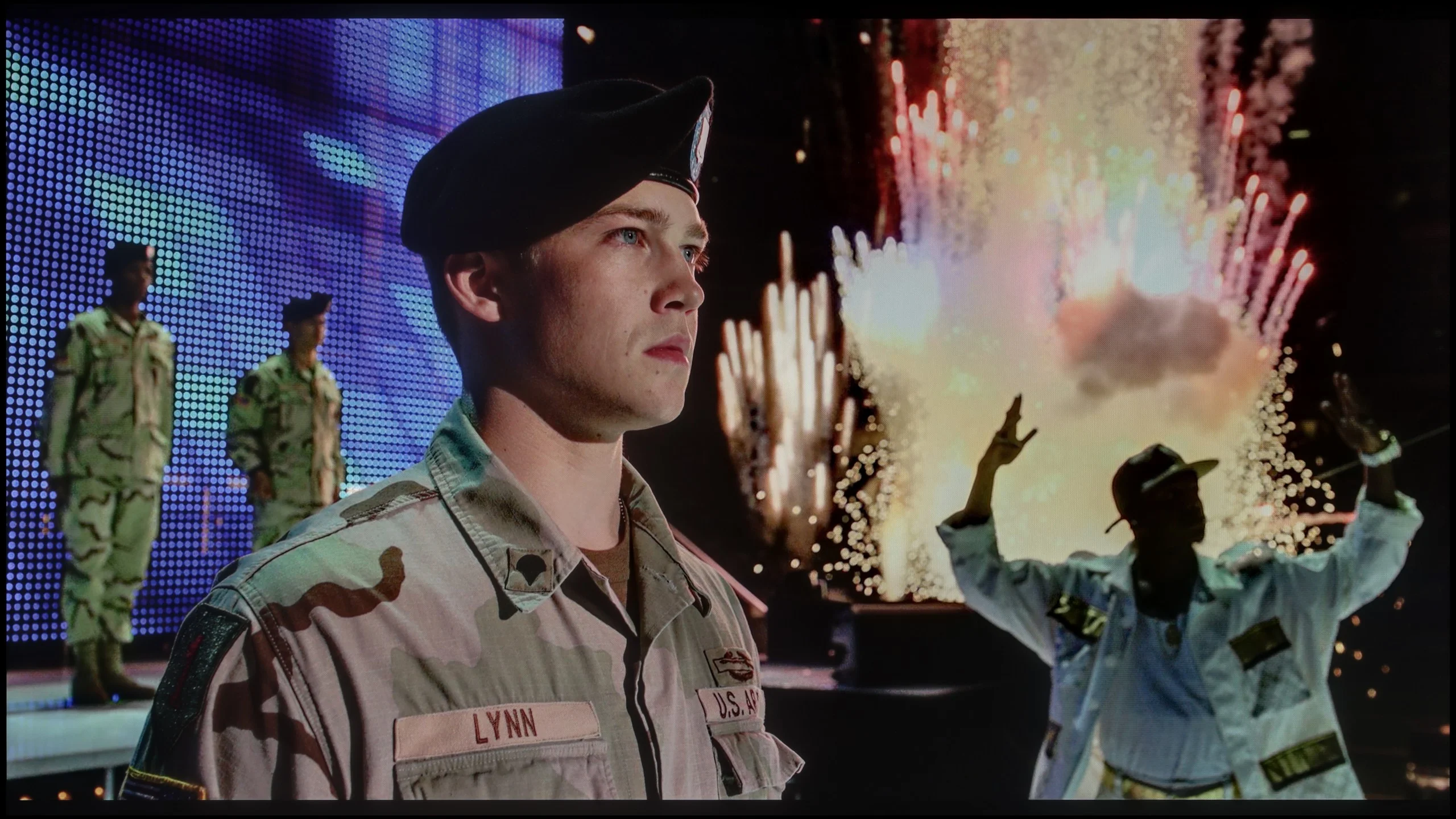
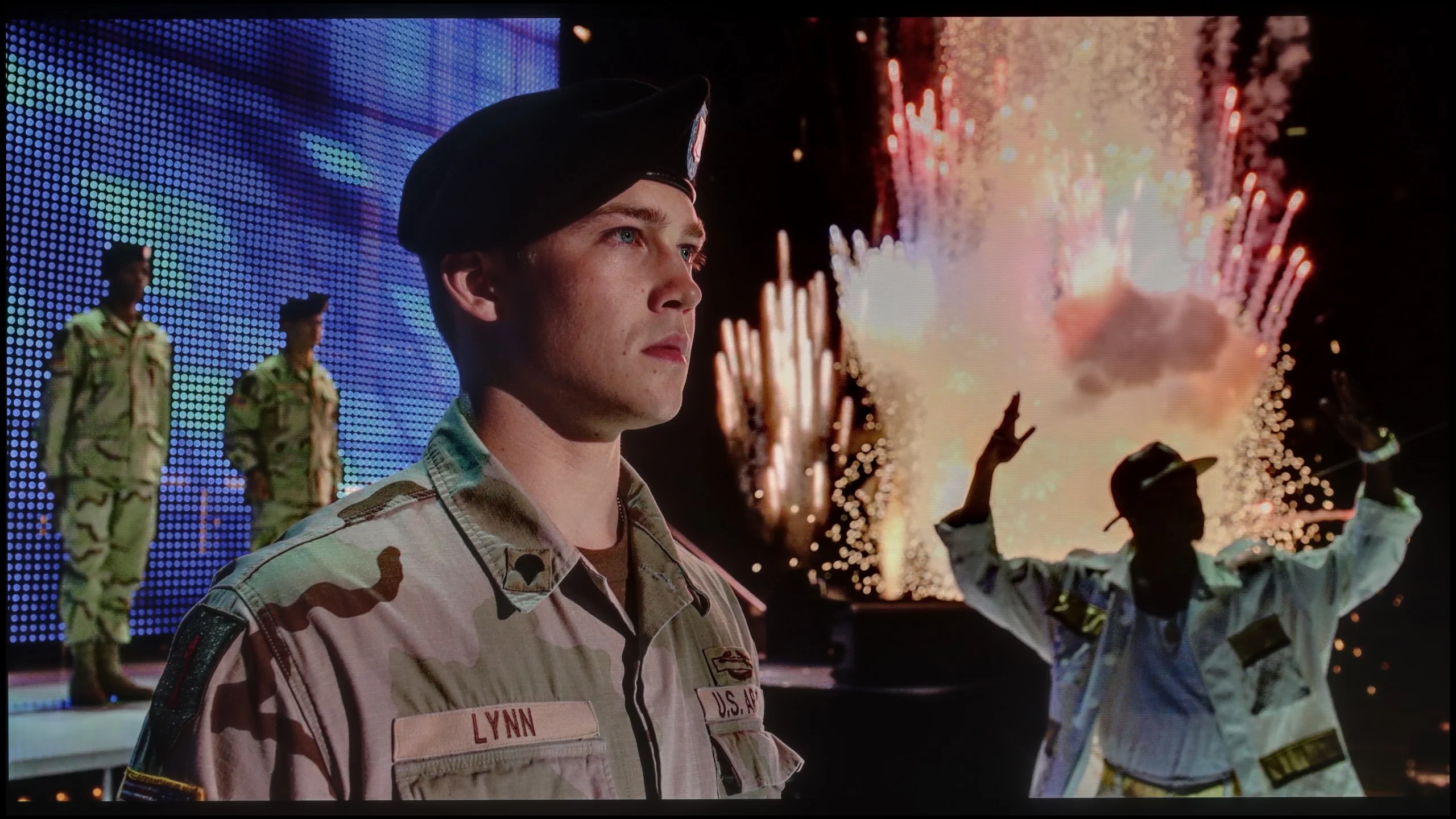
Scene from the movie “Billy Lynn” (about 1100 nits)

The photos show two HDR10 movies. 'Pan' is one of the brightest productions ever made, while 'Billy Lynn' (soldier) has brightness typical of streaming (Netflix, Prime, HBO MAX). Notice the intensity of effects and detail in whites.

Static HDR10

The photos present the visibility of white details in various HDR formats. They do not show brightness differences between TVs (these can be compared in the previous gallery).

Dynamic: Dolby Vision

Dynamic: HDR10+

The photos present the visibility of white details in various HDR formats. They do not show brightness differences between TVs (these can be compared in the previous gallery).

HDR luminance chart:

Samsung S85H

TCL RM7L

Luminance of RGB colors

TCL RM7L is a bright TV. In our measurements its peak brightness hovered around 1600 nits. That is clearly less than the C7L, which can approach 2600 nits, but in real film scenes the difference between the models is not that large. In less demanding shots with many bright elements, the RM7L can sustain about 1000 nits, and sometimes even a little more, getting close to 1500 nits. It performs worse in dark scenes with small points of light, where their brightness can fall to around 500 nits. This is not random behaviour. The TV intentionally dims fine details to better control the backlight and preserve higher contrast. That comes at the expense of their intensity, but it is typical behaviour for TVs with local dimming in a similar price bracket.

Colour gamut coverage

In HDR not only brightness matters but also colour. And here the RM7L has plenty to show. Colours are highly saturated and a wide colour gamut is one of its major strengths. In our DCI-P3 measurements it reached about 96%, and BT.2020 around 83%. It is worth remembering that on a TV with this kind of backlight the result can vary depending on the scene. On test patterns colours look best, while in films their saturation is sometimes a little lower than on SQD Mini LED or QD-OLED TVs. The construction of the backlight itself is also interesting. The RM7L does not use the classic red, green and blue LED set. TCL used two green LEDs and one blue, with the red produced by a PFS phosphor. This shows up in spectrometer measurements, but it does not have a major impact on the picture. Colours are still rendered correctly.

Interestingly, the new WOLED SE panel has brought a slight improvement in brightness to the S85 series. In the same movie scenes last year's model stayed closer to around 700 nits, while the S85H can reach roughly 800 nits. This isn't a change that completely transforms HDR perception, but that extra brightness is noticeable, especially with pinpoint highlights, specular reflections and stronger special effects. Around 800 nits is already a very good result for an entry-level OLED and in most films it's enough for HDR to have the proper impact. Bright elements can stand out clearly against perfect black, and it's still that contrast that does most of the work. You do need to bear in mind a typical limitation of organic panel technology. When a very bright scene covers a large part of the screen, brightness can drop by almost half. That's the effect of the panel's protection mechanisms, which limit its power with large bright areas.

Colours

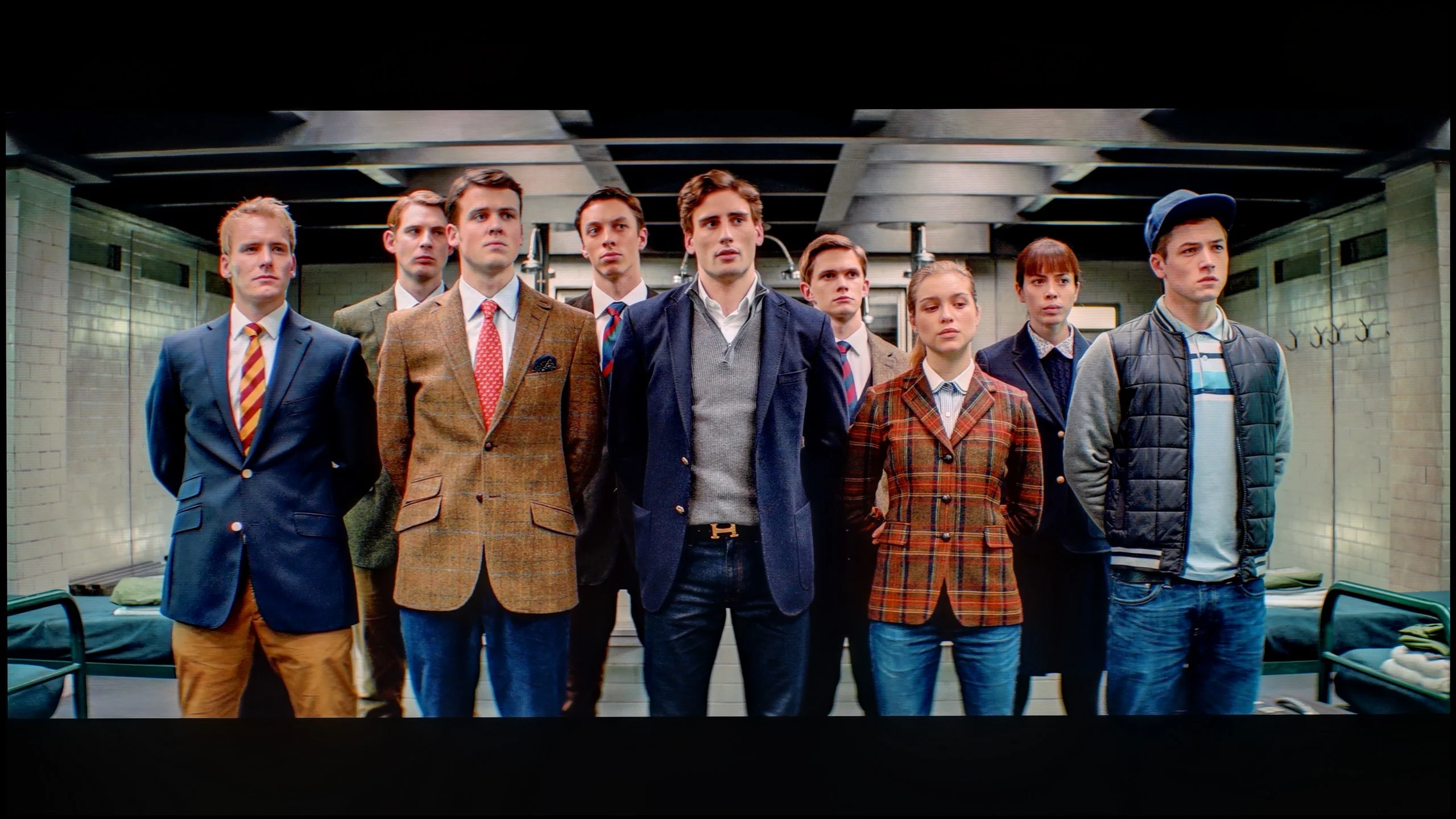
The S85H can deliver very pleasing, saturated colours and in most HDR films it looks really good in that respect. We measured around 95% DCI-P3 coverage, so the palette most commonly used in movies is reproduced to a very high degree. Skin tones, greens and stronger reds still have the right intensity, and in normal viewing it's hard to fault them. Only when you look wider at BT.2020 do the limitations of the new OLED SE panel become apparent. Coverage was about 70%, a little less than previous-generation WOLEDs and noticeably less than QD-OLED panels. In films this is not a big loss, because most productions rarely use such highly saturated colours. You're more likely to notice it in games, where creators often opt for more intense colours.
Factory color reproduction

5.8/10

7/10

This gallery shows how colors change after professional TV calibration. If you notice the difference, we recommend ordering this service at SkalibrujTV.com.

Factory Mode

After calibration

This gallery shows how colors change after professional TV calibration. If you notice the difference, we recommend ordering this service at SkalibrujTV.com.

Factory Mode

After calibration

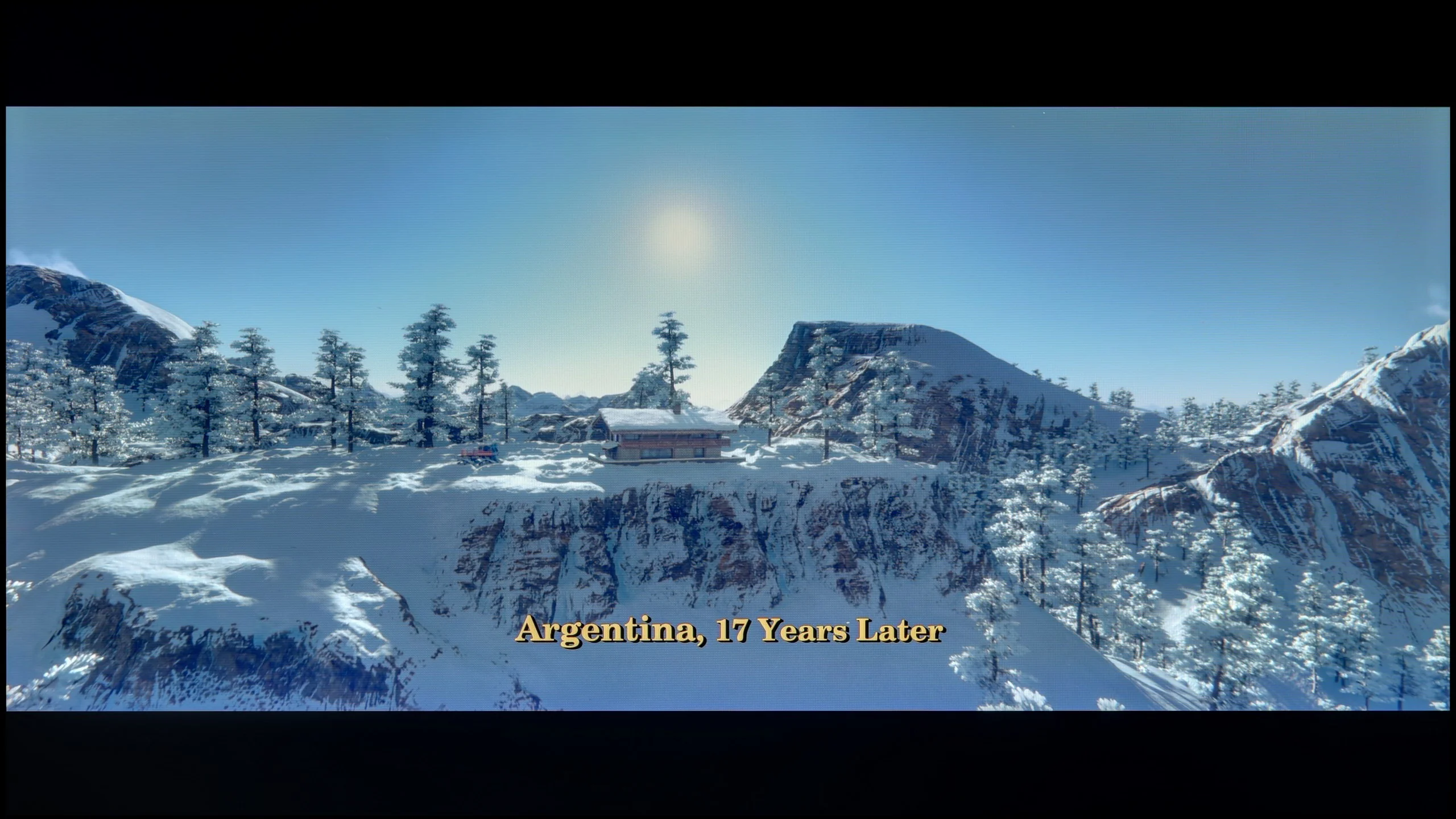
We checked the out-of-the-box colours in Filmmaker Mode, the best picture setting available to the user. TCL has been using it in its TVs for two years, and its aim is to reproduce the image as faithfully as possible in line with the creators' intent. On the RM7L it was indeed the most accurately set mode, although it was not without flaws. The biggest problem was the white balance. Too much red and blue made the image shift towards slightly pink tones. This was visible in both SDR and HDR. On top of that the brightness response was slightly boosted, making the picture appear a little brighter but at the same time less contrasty than it should be.

For colour evaluation we naturally chose Filmmaker mode, and in SDR our S85H sample was very well set up from the factory. The largest deviation is in the white balance, where, as brightness rises, there is a slight lack of blue. In practice this means whites and greys have a subtly warmer tint than they should. However, this is not a major fault and during normal viewing it is unlikely to be very noticeable. Gamma also stays close to the reference value, so the image is neither overly bright nor unnecessarily dim. The S85H’s SDR picture quality is therefore very good straight out of the box. A few more imperfections appear in HDR. Here the white balance drifts more with increasing brightness, blue starts to dominate and the red component is clearly lacking. This also translates into larger errors for some colours. They do not yet amount to shifts that completely change the character of the image, but in direct comparison with a reference the difference is easier to spot. Overall, Filmmaker mode is a very good starting point before professional calibration.

Color reproduction after calibration

8/10

9.1/10

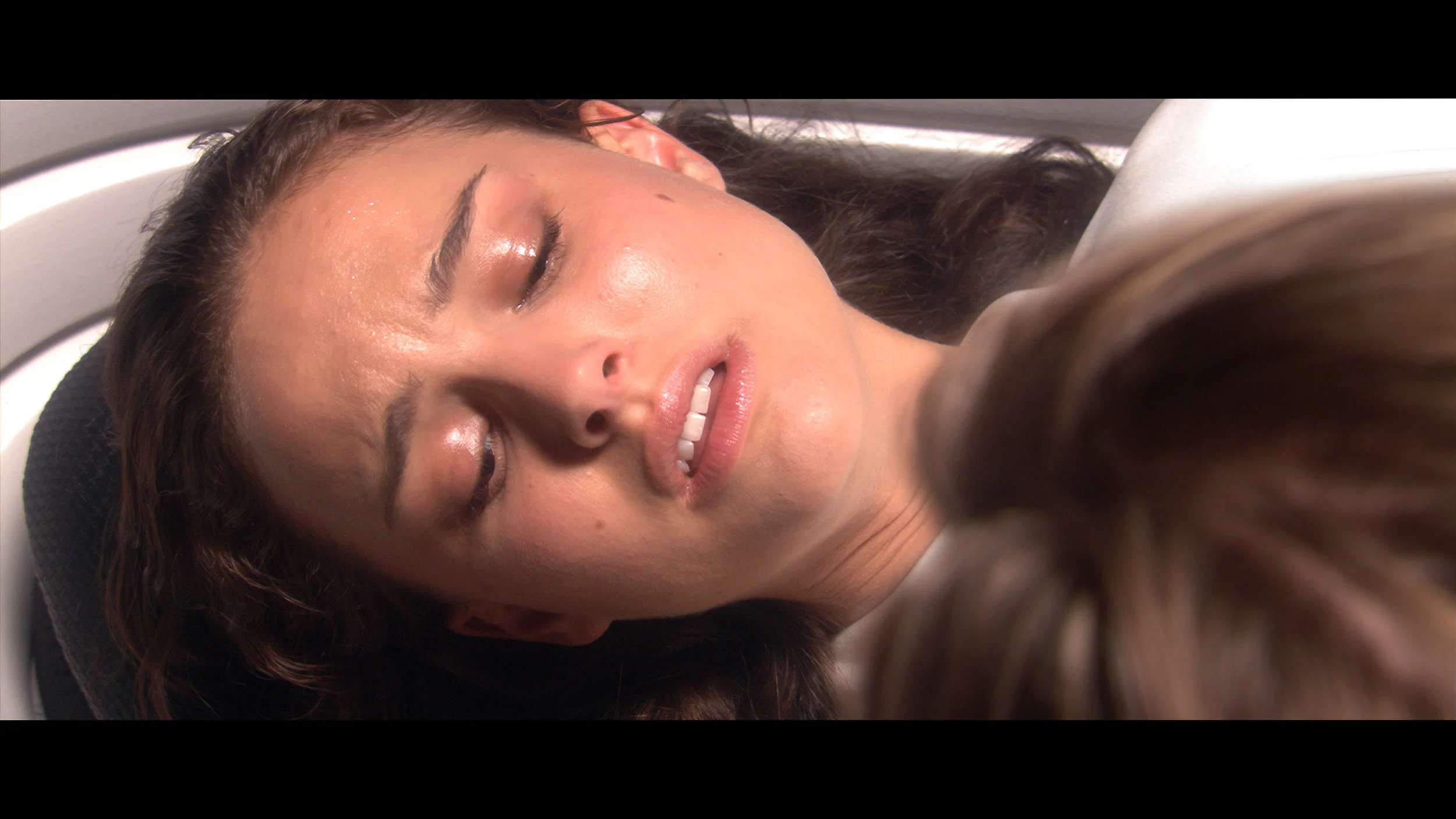
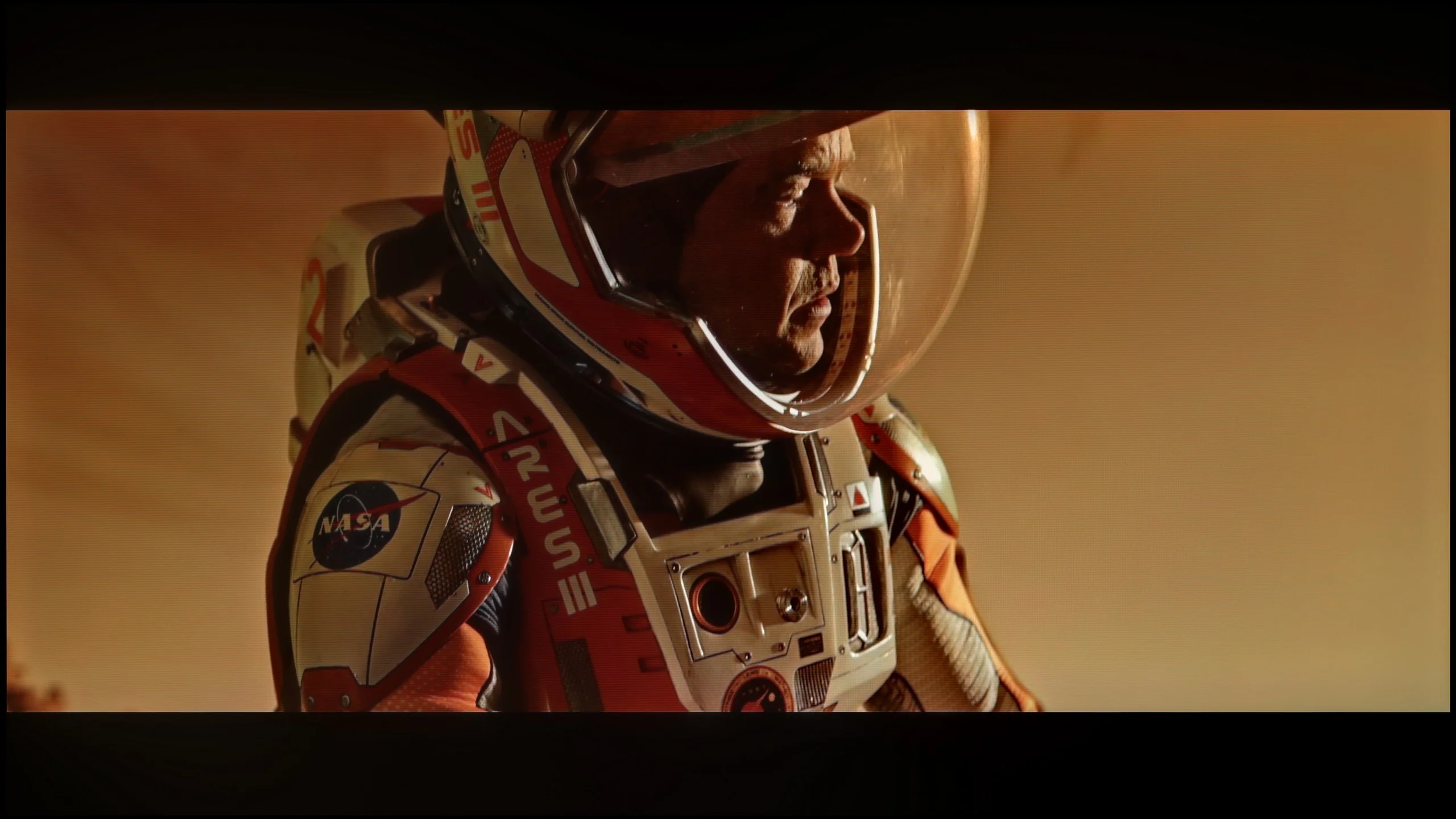
The photos show how movies look on the TV. Pay attention to black detail visibility, colors, and shadow tint.

The photos show how movies look on the TV. Pay attention to black detail visibility, colors, and shadow tint.

Thanks to the fairly extensive calibration menu we were able to correct the vast majority of the previously described issues. The biggest change concerned the white balance. After calibration it now looks very good, so the picture shed its pinkish tint and became much more neutral. The luminance response has also improved. Both the SDR gamma and the HDR EOTF curve are now much closer to the reference values. The picture is no longer unnecessarily brightened, and darker areas look more natural and have greater depth. Better luminance accuracy also affected the colours, which after calibration are noticeably more accurate. Not everything could, however, be set perfectly. With HDR material the RM7L still interprets part of the signal in its own way and does not always follow the reference curve precisely. This is most apparent in some darker scenes, where the TV can either slightly lift the shadows or darken them completely. That is where the earlier impression of a slightly brightened, less contrasty picture came from. Despite this, the calibration delivers a very good result. It removes the most visible errors and, above all, makes the picture much closer to how it should look.

Calibration yields very good results on the S85H. First and foremost, it was possible to set the white balance almost perfectly, which removes the slightly too warm character of the image that was previously visible in SDR. Colour reproduction itself also improves markedly, with most errors falling to a very low level and in everyday viewing it is hard to speak of any noticeable inaccuracies. You can also make significant improvements in HDR, although some issues remain due to the TV's inherent characteristics. The S85H does not always hold the brightness curve perfectly; the darkest parts are slightly lifted, and as you approach the panel's limits small deviations are visible in the brightest areas. Added to this is the limited coverage of the wider BT.2020 gamut, which of course cannot be overcome by any calibration. Despite this, the end result is very good and, after calibration, the S85H can produce a really well-tuned, natural image.

Smoothness of tonal transitions

8.9/10

7/10

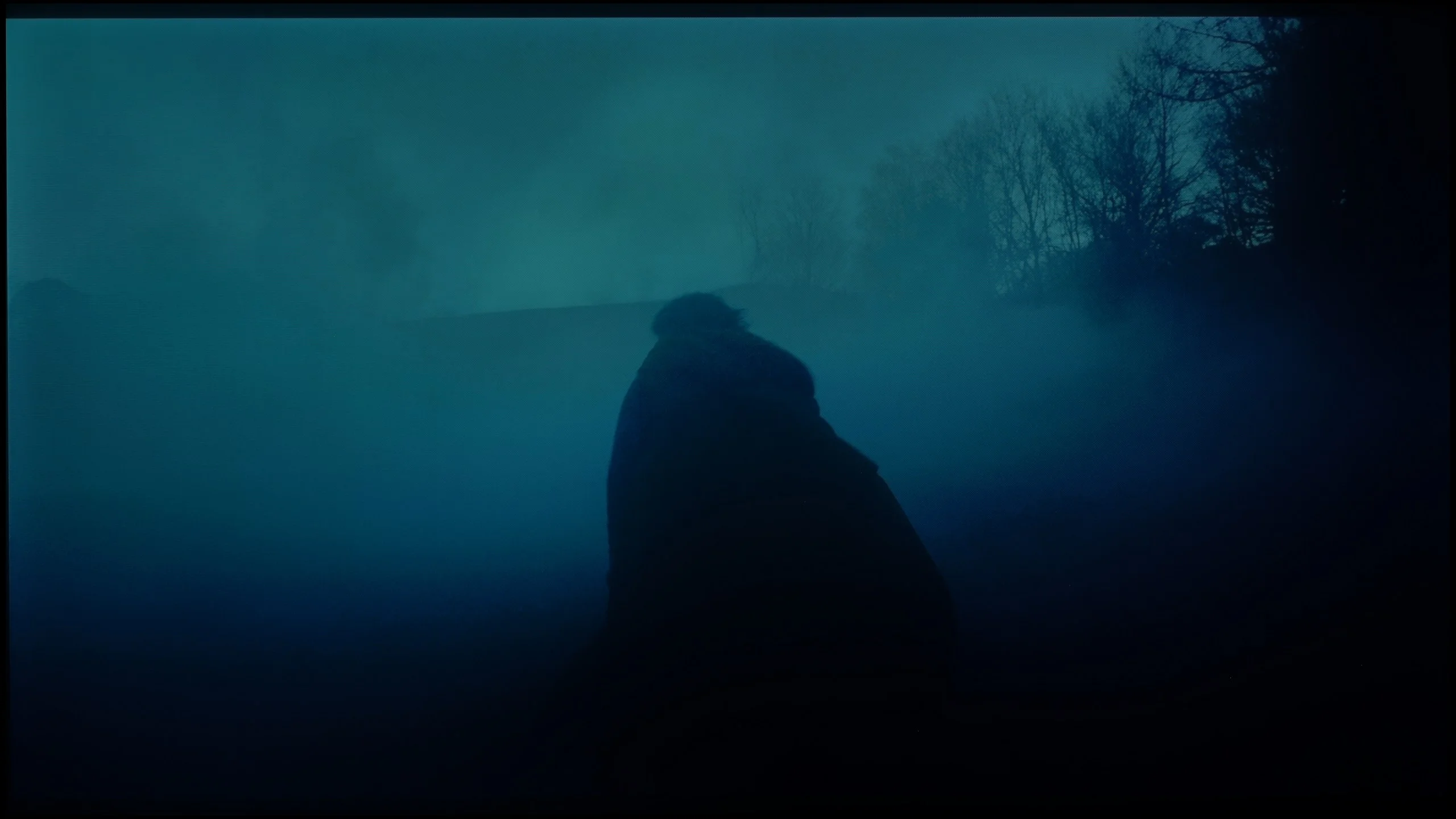
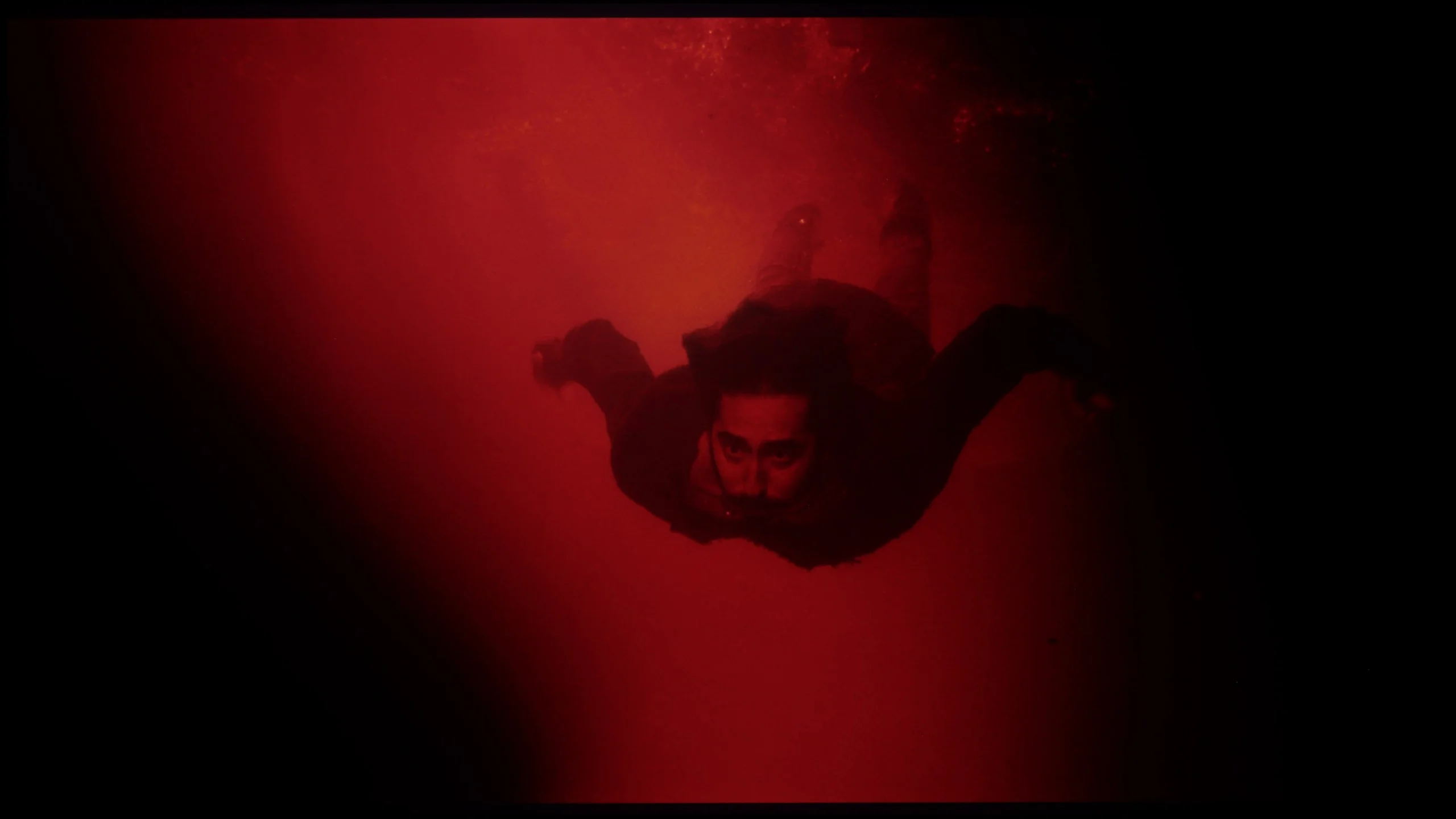
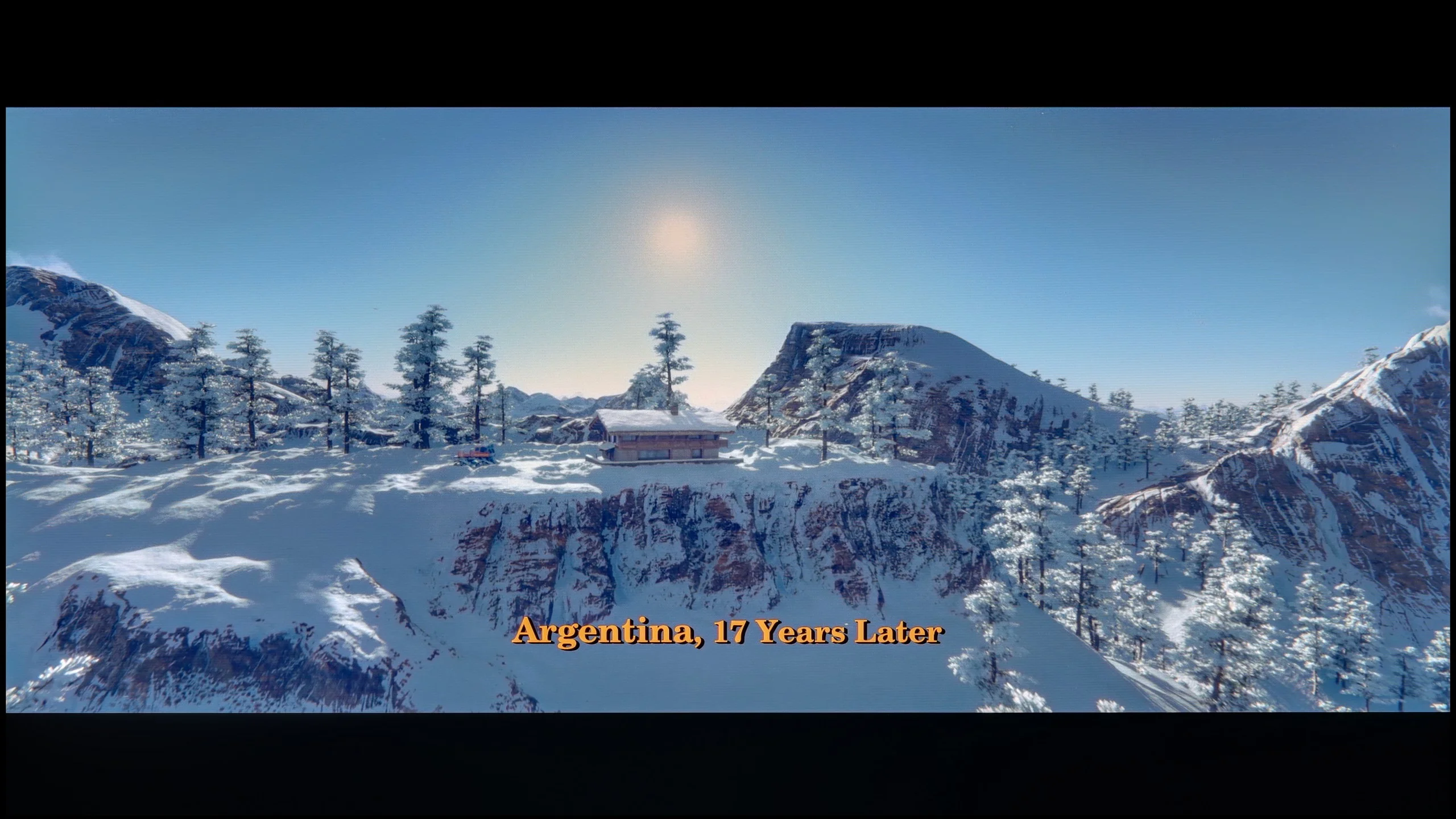
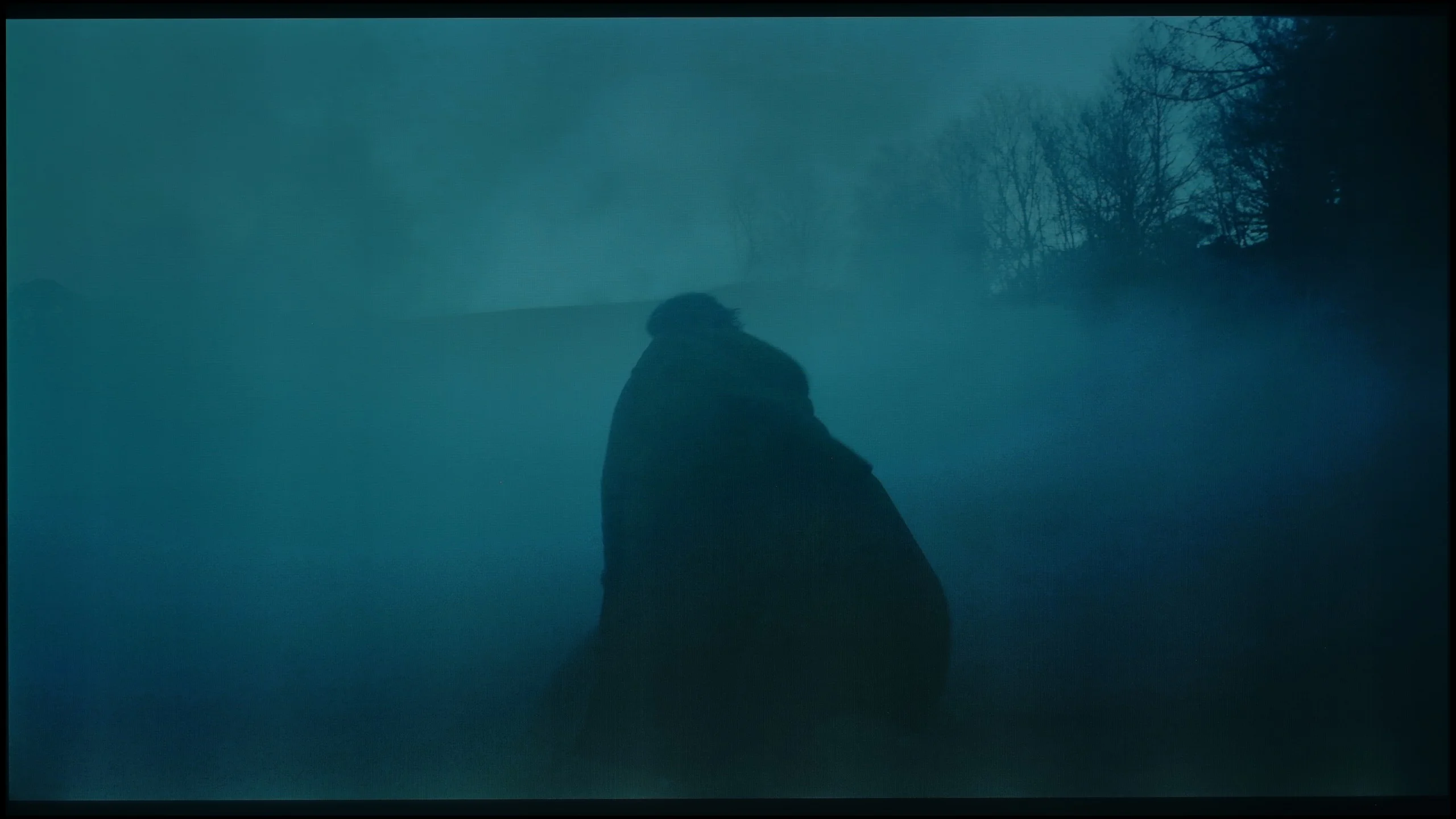
These are selected scenes that show smooth tonal transitions from one color to another. If you see distinct banding, it’s the TV panel’s fault.

These are selected scenes that show smooth tonal transitions from one color to another. If you see distinct banding, it’s the TV panel’s fault.

These are selected scenes that show smooth tonal transitions from one color to another. If you see distinct banding, it’s the TV panel’s fault.

These are selected scenes that show smooth tonal transitions from one color to another. If you see distinct banding, it’s the TV panel’s fault.

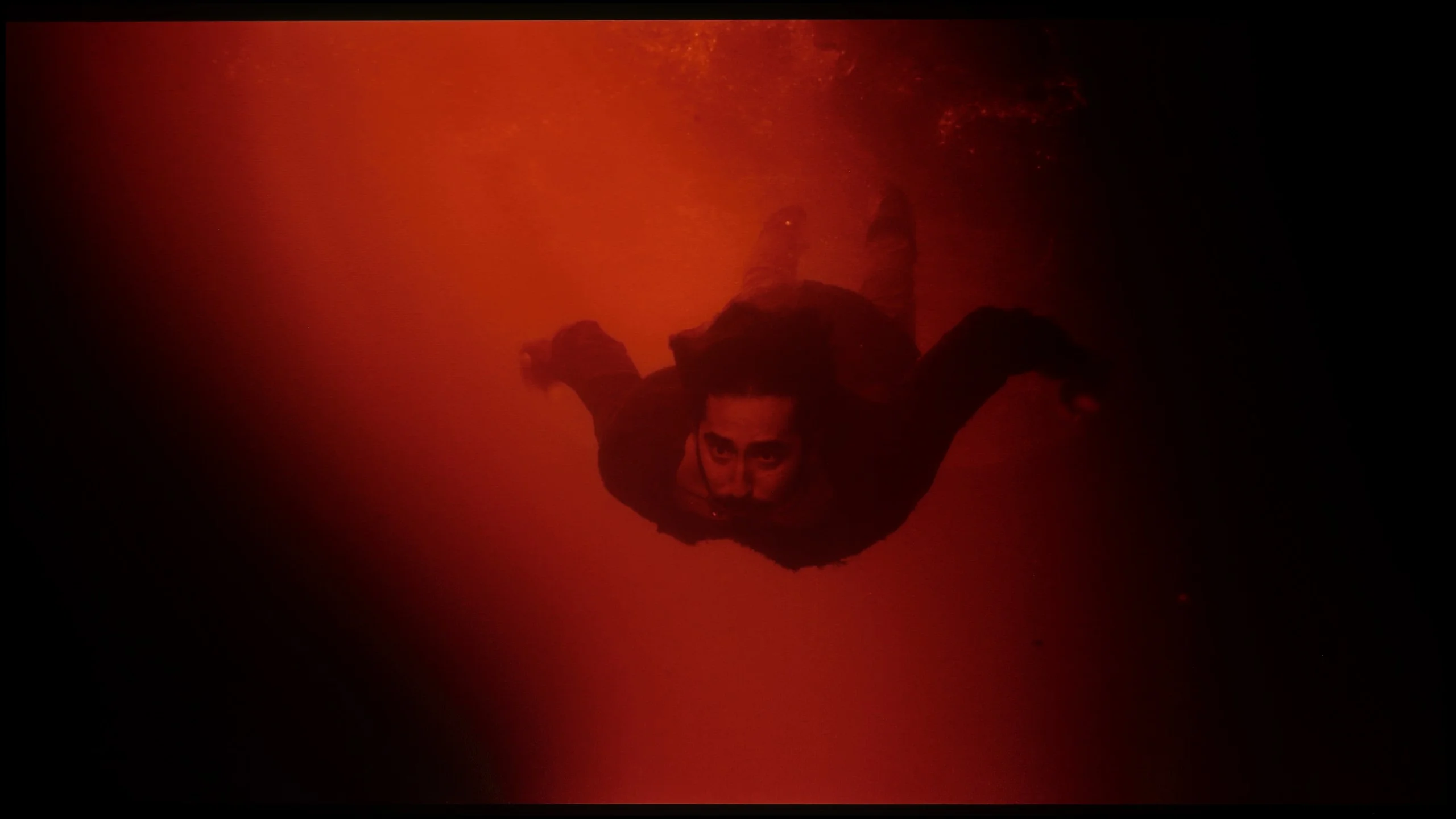
The smoothness of tonal transitions on the RM7L is very good. In both bright and dark scenes the gradients are smooth and there is no visible colour banding. Minor issues only appear with exceptionally demanding material, such as our fourth test pattern featuring red water transitioning into black. It should be noted, however, that most televisions struggle to reproduce this scene perfectly. Therefore, in everyday use this should not pose a significant problem.

The smoothness of tonal transitions is definitely not a strong suit of the S85H compared with other OLEDs. It is most visible in bright gradients, where fairly obvious banding appears between successive shades. Instead of a perfectly smooth transition you can see distinct colour bands and, unfortunately, you do not have to hunt for them. Moving gradients fare even worse. When tonal transitions move the imperfections become more apparent and the picture looks simply average in this respect. It is not perfect on dark gradients either. You can also notice irregularities there, so the issue is not limited to the brightest areas of the image. Of course, in a typical film you will not see this all the time, but scenes with large areas of similar colour, such as sky, fog, sunset or a dark background, can reveal the panel's limitations. Compared with older WOLEDs there is still some improvement, but looking at the TVs we have tested this year the S85H is average in this regard, much like its rival the LG B6 that uses the same panel. And this is one of those traits where the difference compared with last year's QD-OLED panel becomes very clear. QD-OLEDs handle the smooth blending of successive shades much better and, in terms of gradation, clearly outperform the WOLED SE panel used here.

Image scaling and smoothness of tonal transitions

5.5/10

7.5/10

Image without overscan on the SD signal
OK
No
Smooth transition function
OK
OK

Smooth transition function

The match photo shows how the TV smooths weak tonal transitions in low-quality video.

Image scaling SD (576i)

The model photo shows how it handles upscaling of SD material.

Upscaling and digital image processing are not the RM7L's strong suit. TCL has used the MediaTek Pentonic 700 chipset here, designated MT5896, which is not among the best processors when it comes to handling lower-quality source material. The biggest problems appear with heavily compressed content from YouTube or standard broadcast TV. The processor cannot effectively hide posterization and the characteristic banding between tones. The feature intended to smooth these issues does little to help, and can also interfere with the image too much, smoothing, for example, faces or fine textures. For that reason it is best simply not to use it.

Standard upscaling to 4K looks better. Lower-quality content is sufficiently sharp and retains an adequate amount of detail. It is not on a par with the best processors on the market, but for everyday viewing the result is entirely acceptable.

Samsung has fitted the S85H with the same proprietary AI NQ4 Gen2 processor used in last year’s S85F and, in terms of digital image processing, it performs quite well. Upscaling is one of the model’s stronger points. Lower-resolution material is well sharpened, edges look natural, and the picture does not feel overly artificial. One caveat is a typical Samsung trait: at very low resolutions you cannot completely disable overscan, so the TV may slightly crop the left edge of the image. The "noise reduction" function also works very well, smoothing weaker tonal transitions. The processor can effectively remove posterisation and other imperfections visible in lower-quality material. However, you need to be careful with the strength of this function, because Samsung can be quite aggressive here. When it is activated, small image details, such as the texture of skin or clothing, can start to disappear along with the unwanted artefacts.

Blur and motion smoothness

7.8/10

8.5/10

Maximum refresh rate of the panel
144Hz
120Hz
Film motion smoothing option
OK
OK
Blur reduction option
OK
OK
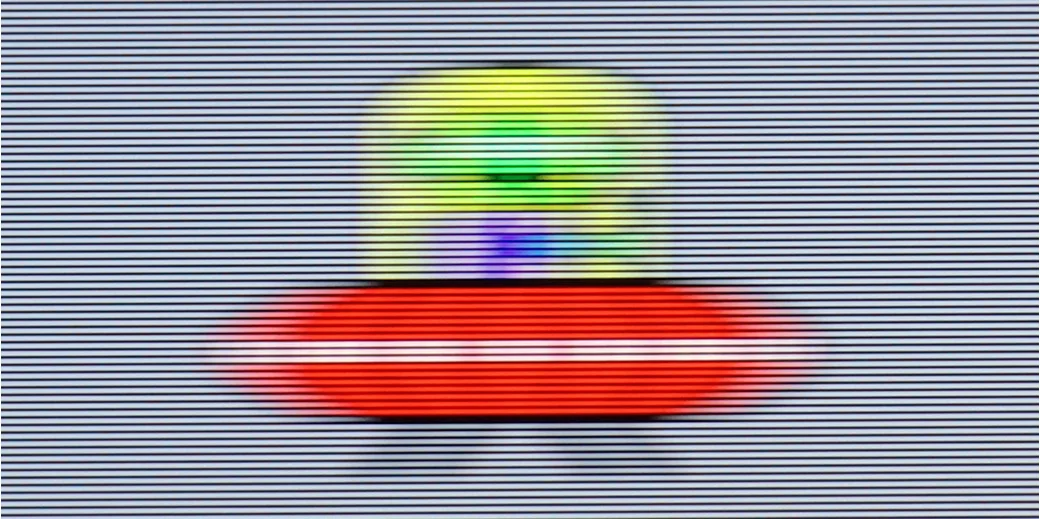
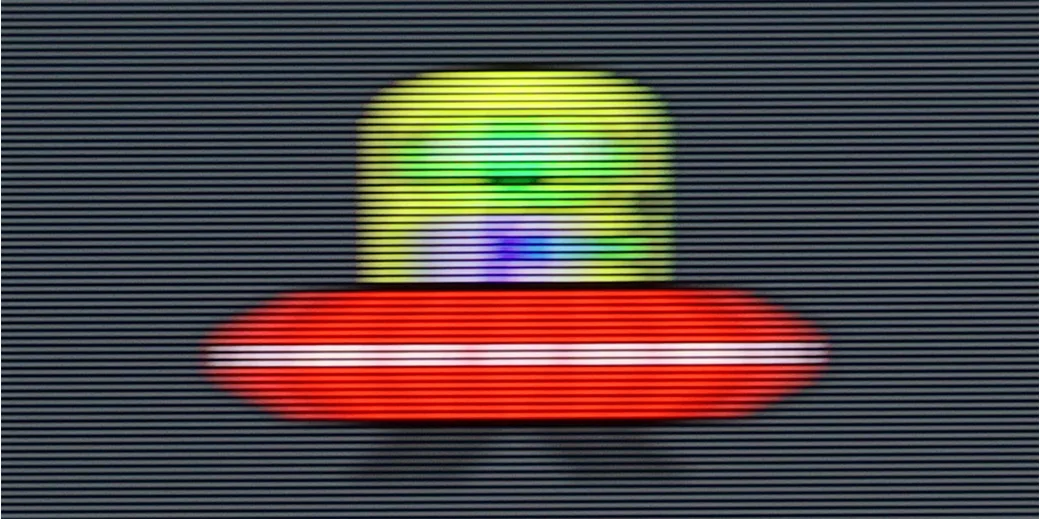
BFI function 60Hz
Yes, 120Hz (double contours)
Yes, 60Hz (image flickers)
BFI function 120Hz
Yes, 240Hz (double contours)
No
Brightness drop with BFI
44%
49%

Blur (native resolution, maximum refresh rate):

Blur (BFI function enabled):

Image flickers in this mode

Blur (4K@144Hz ):

Blur (4K@60Hz):

The RM7L features a 144 Hz VA panel, so from the outset it is well suited to sports, gaming and other fast-paced content. The high refresh rate also gives the motion interpolation more scope, allowing it to generate additional frames. On the RM7L it works well and, with the right settings, can noticeably improve motion smoothness without an excessive soap opera effect.
The S85H uses an OLED panel, so it performs excellently for motion blur. Pixels respond virtually instantly, so moving objects do not leave the characteristic trailing seen on some LCD TVs. This is especially noticeable in sport and fast-paced games, where the picture remains very clean even during rapid motion. The panel itself runs at 120 Hz. That is more than sufficient for films, TV series, sport and console gaming. It is a pity Samsung did not include a higher refresh rate aimed at PC gamers, as more and more TVs now offer 144 or even 165 Hz at 4K. However, that does not affect motion handling in films or sport.

You also have a classic motion-smoothing feature with two settings, blur reduction and judder reduction. So you can decide whether films should retain their cinematic 24 frames per second or whether you prefer to smooth them a little. The S85H gives plenty of freedom here, and the interpolation works well and, with sensible settings, does not generate too many artefacts.

Console compatibility and gaming features

9.8/10

9.6/10

  • ALLM
    Yes
    Yes
  • VRR
    Yes
    Yes
  • VRR range
    48 - 288Hz
    48 - 120Hz
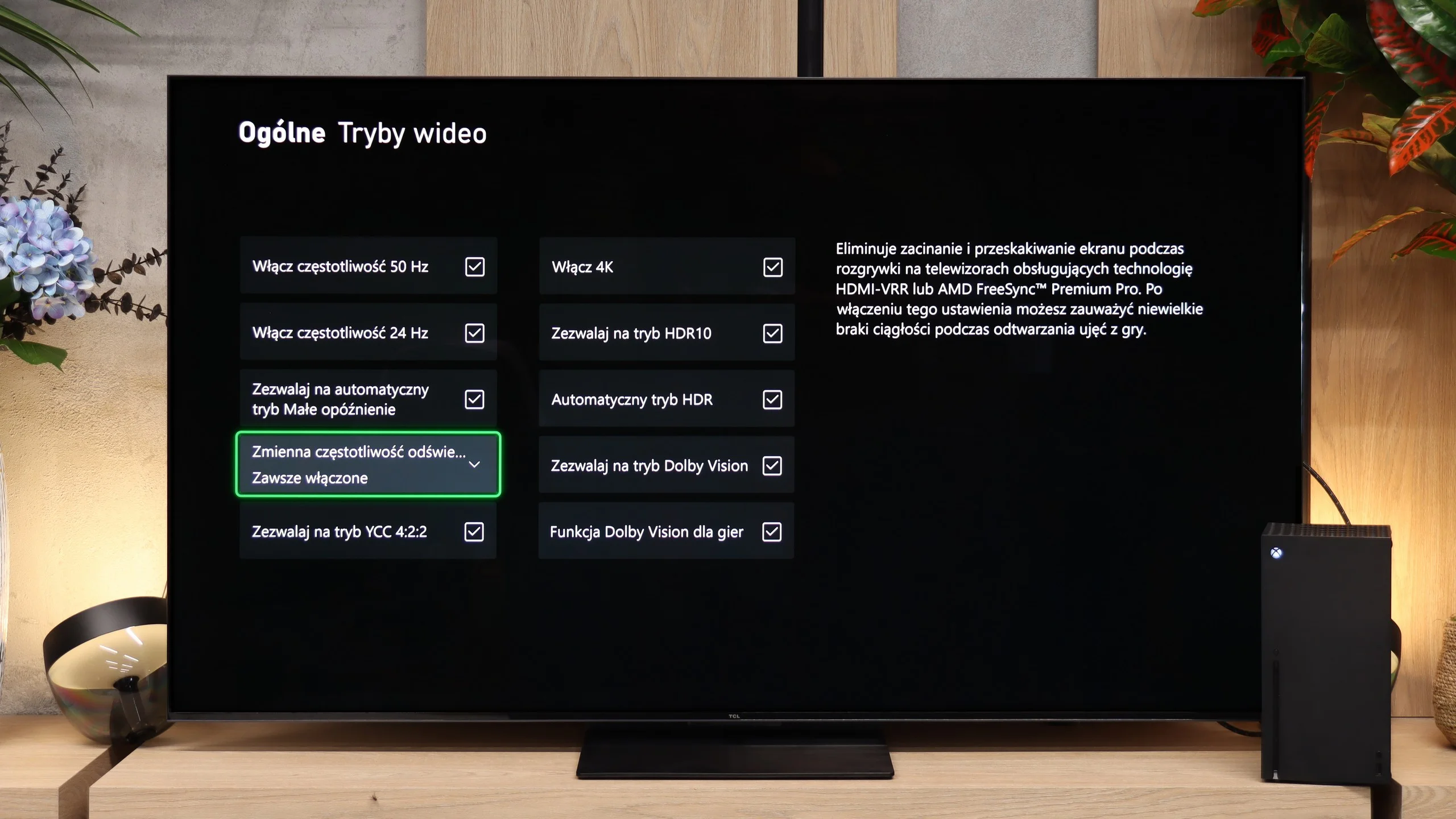
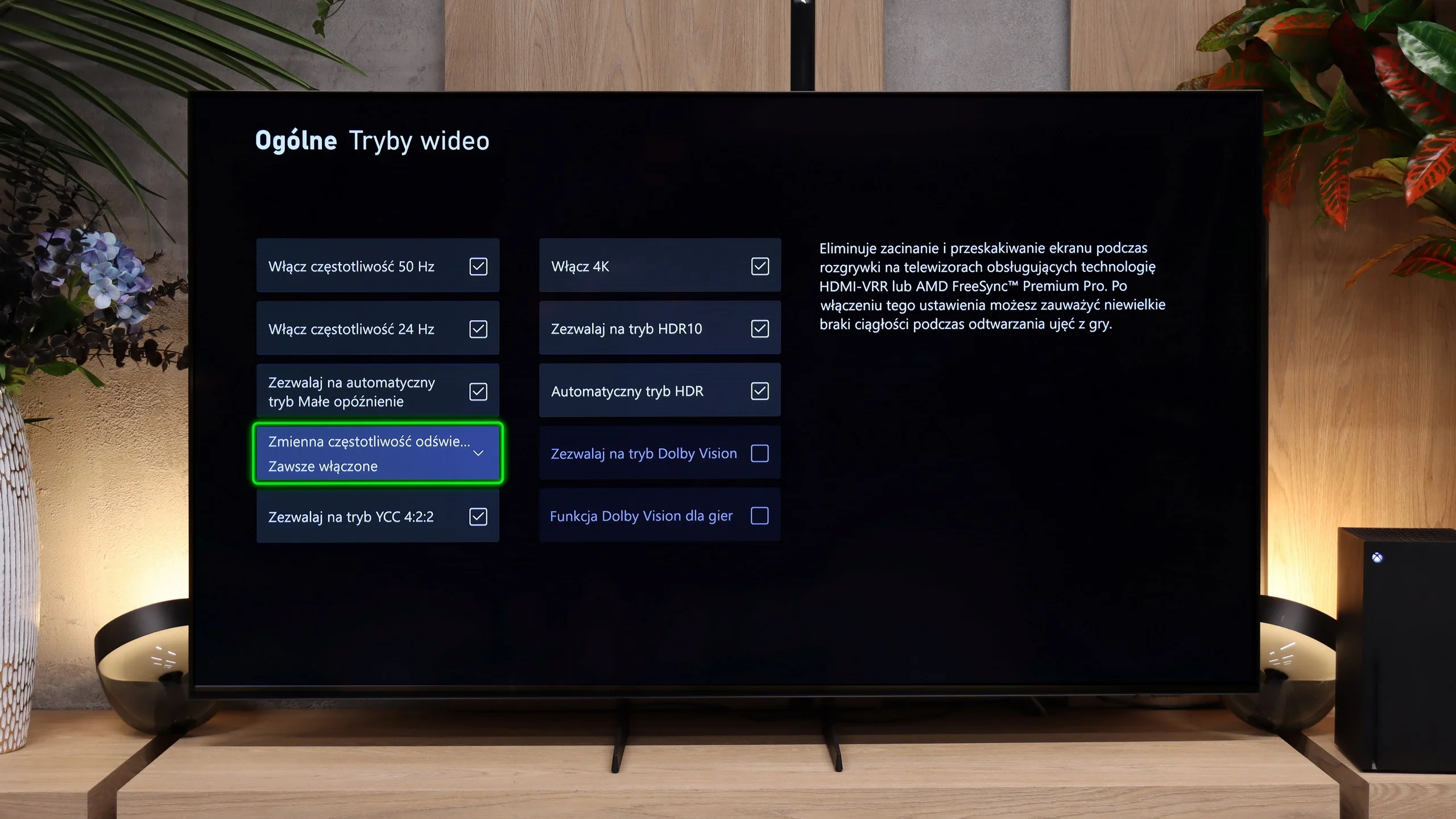
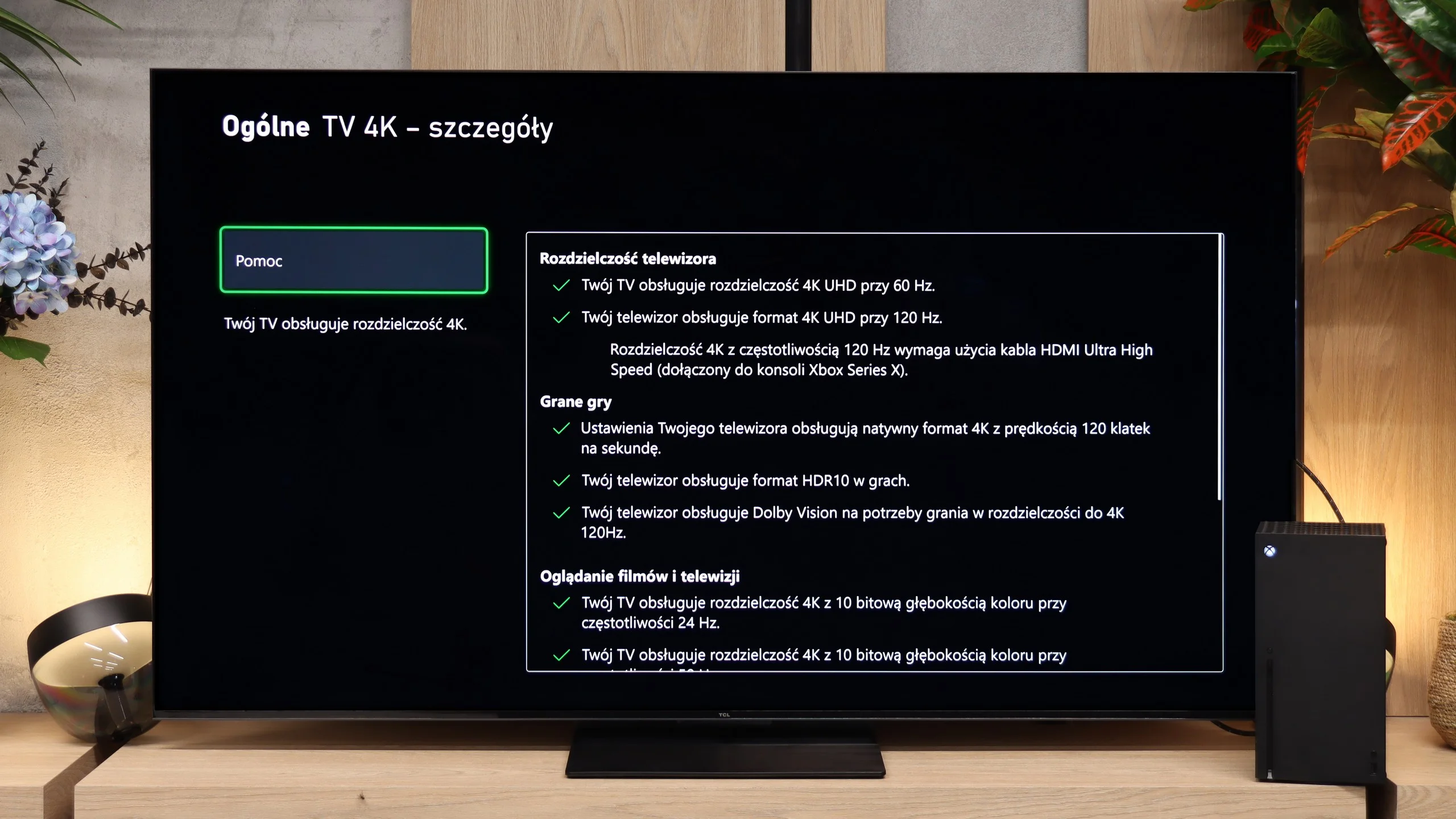
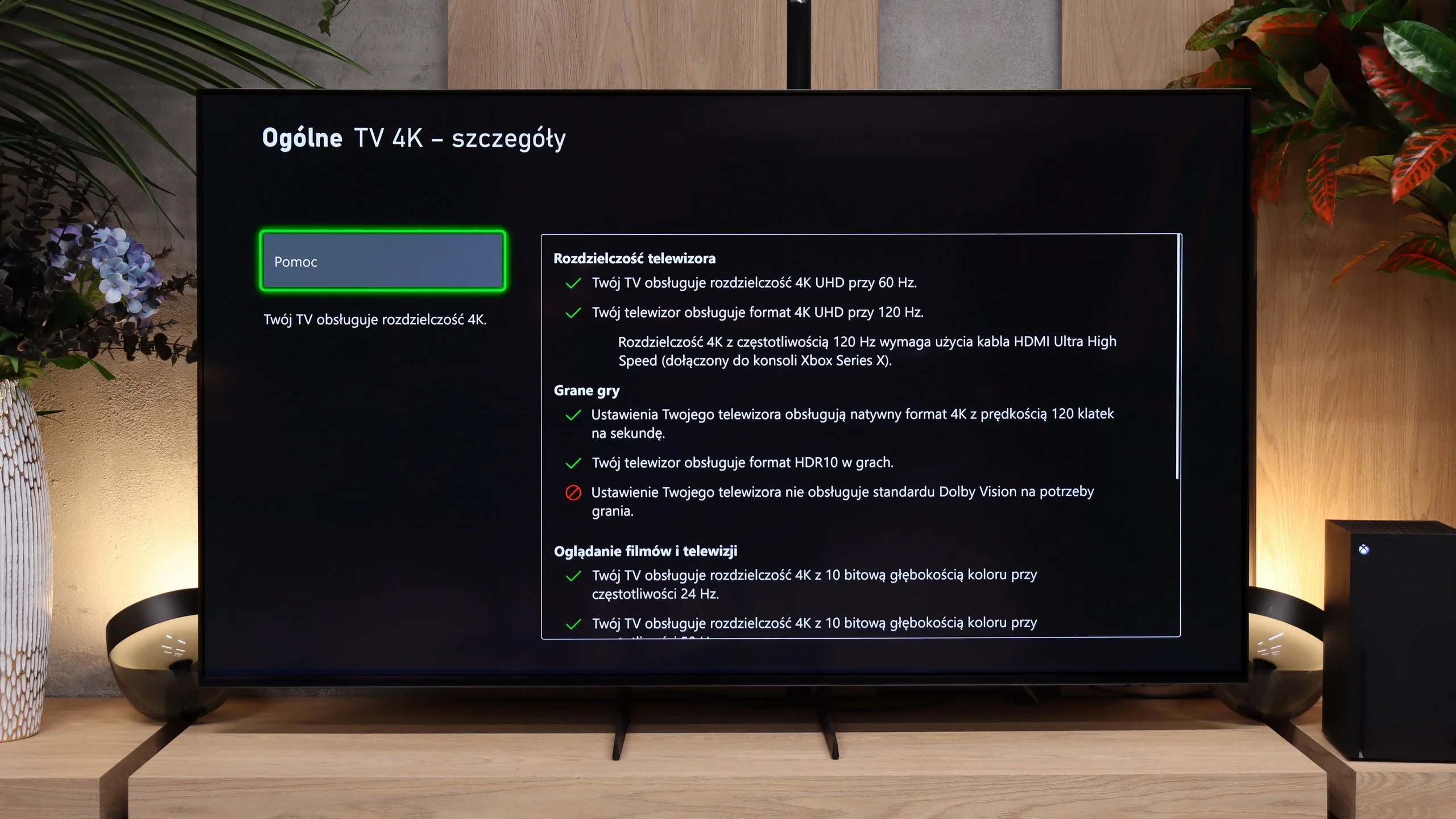
  • Dolby Vision Game Mode
    Yes
    No
  • Correct implementation of HGIG
    Yes
    Yes
  • 1080p@120Hz
    Yes
    Yes
  • 1440p@120Hz
    Yes
    Yes
  • 4K@120Hz
    Yes
    Yes
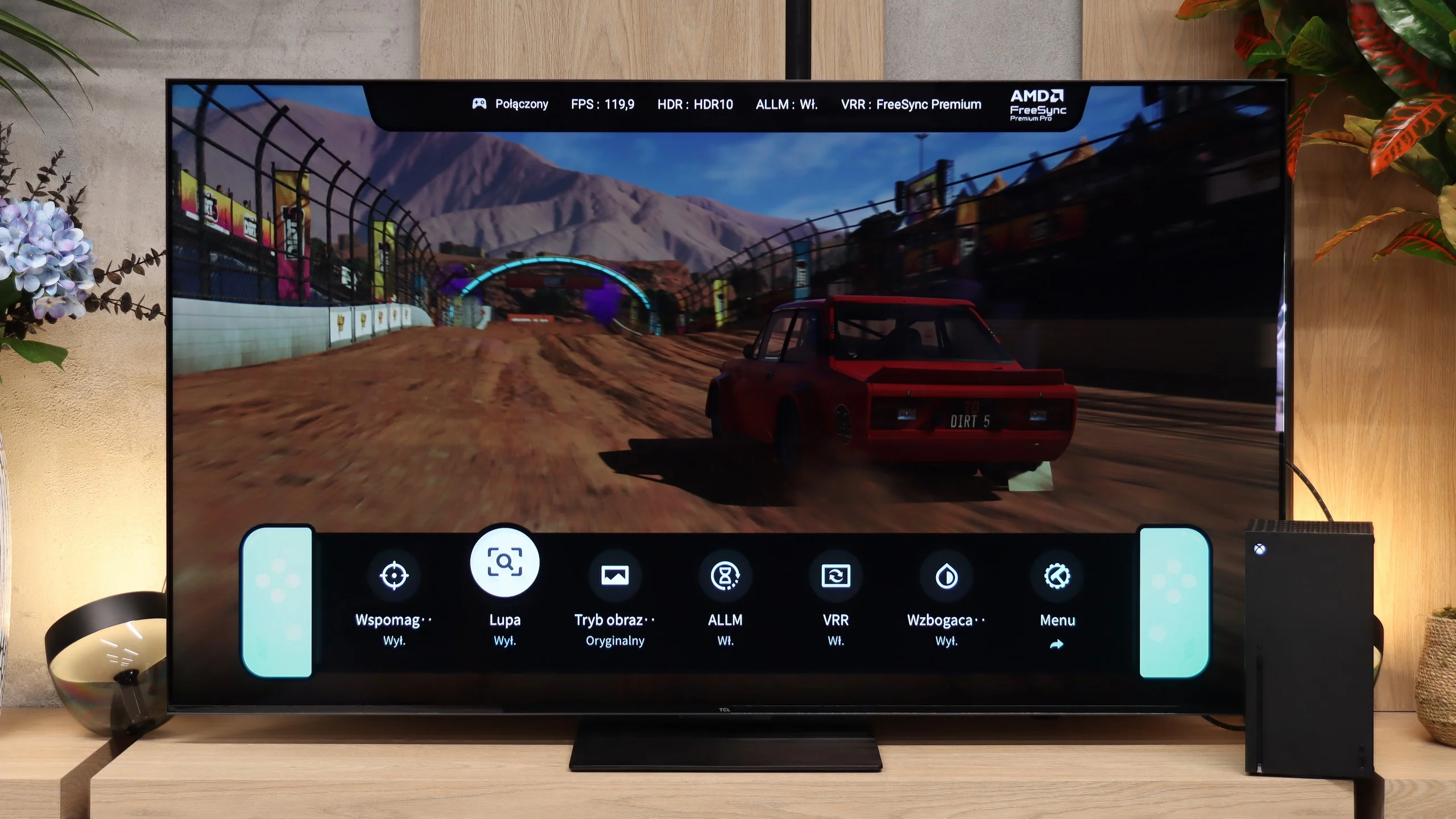
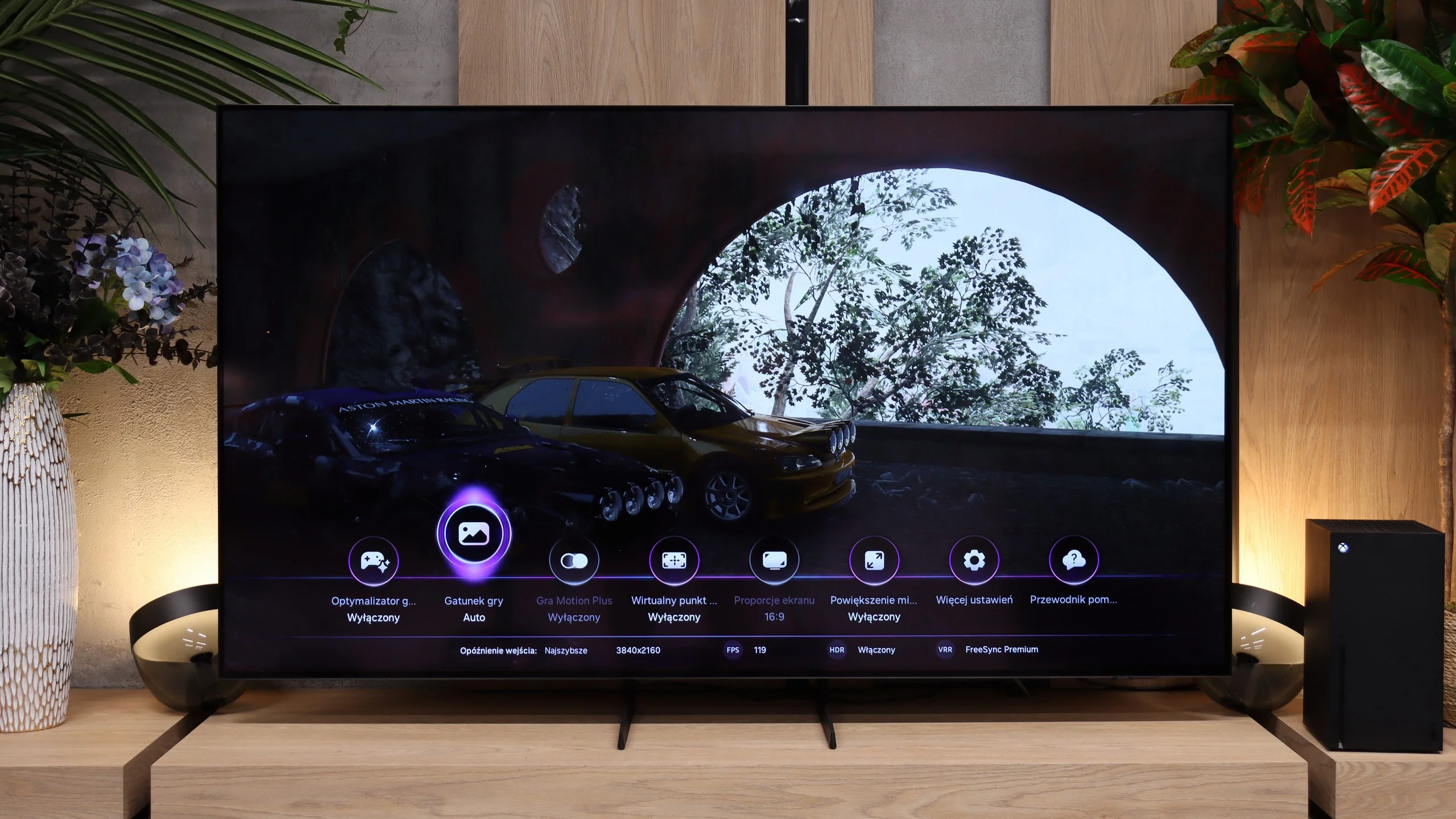
  • Game bar
    Yes
    Yes

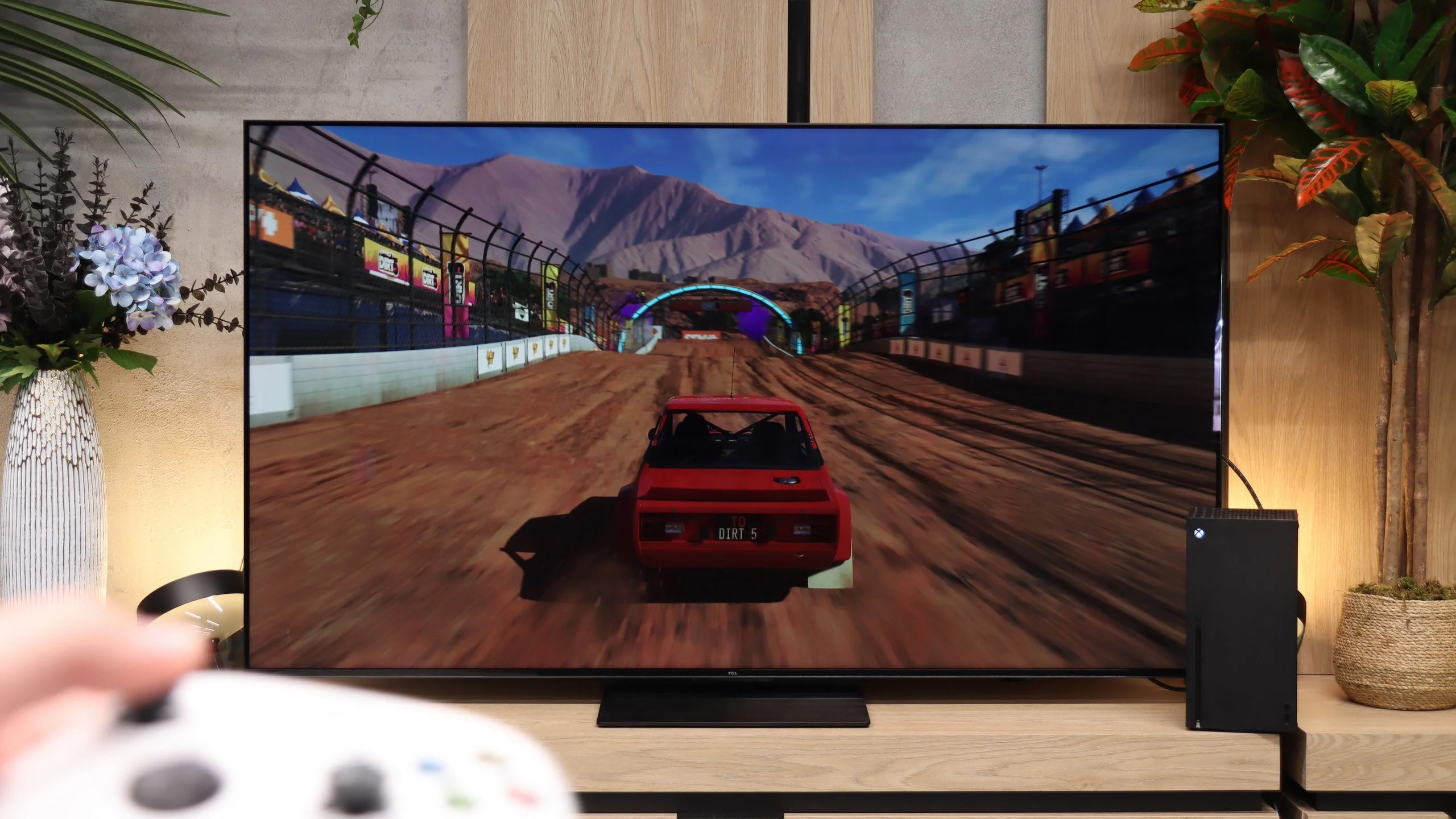
The RM7L earns almost nothing but praise when it comes to features for gamers. The TV supports ALLM, VRR and Dolby Vision Gaming and works properly with HGiG, so it’s hard to point to any major omissions in that regard. In practice this means automatic switching to a low-latency mode, smoother motion at variable frame rates and accurate brightness reproduction in HDR games. There’s also a very useful Game Bar. From it you can quickly check frame rate, VRR status, signal format or aspect ratio, and change the key settings without leaving the game. TCL has also added a few extra options, such as a crosshair overlay and brightening of dark image areas, which can be handy in some titles. The biggest drawback stems from the use of the Pentonic 700 processor. Only two of the four HDMI ports support the full HDMI 2.1 standard. That won’t matter much with a single console, but if you connect two consoles and a PC you may run out of ports, especially since one of those ports may be needed for eARC and a soundbar.

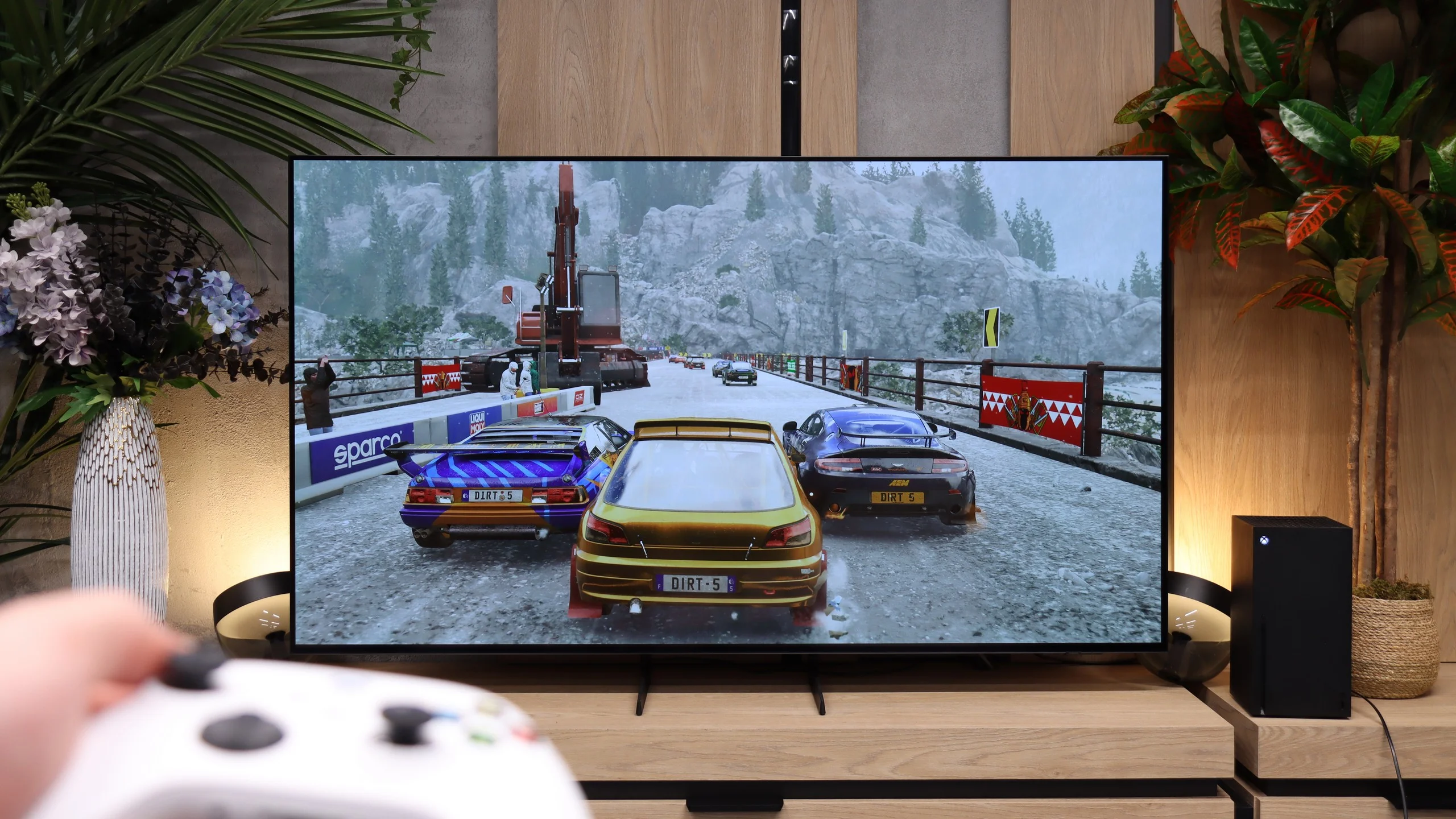
The Samsung S85H is very well prepared for gaming, essentially regardless of whether you connect a console or a PC. The manufacturer hasn't skimped on ports and all four HDMI ports support full HDMI 2.1. That means you can use 4K at 120 Hz, VRR and ALLM without worrying which input your console is plugged into. With multiple devices that matters a lot, because you don't have to choose between a console, a PC or a soundbar connected via eARC. The feature set itself is very comprehensive. The S85H supports VRR, FreeSync and automatic game mode switching, and Samsung also offers its extensive Game Bar where you can quickly check key signal parameters and change settings without leaving the game. The only notable omission is Dolby Vision, which will matter mainly to Xbox owners. This, incidentally, is typical of Samsung TVs. Game Motion Plus performs very well, and it's one of the features that have set Samsung TVs apart for years. It smooths motion in games running at 30 or 60 fps, but does so without as much increase in input lag as a conventional motion interpolator. In practice, with slower-paced games, racing titles or action games this can really improve the perceived motion, especially if you're sensitive to low frame rates.

Input lag

9.9/10

10/10

SDR

1080p60
14 ms
10 ms
1080p120
9 ms
5 ms
2160p60
14 ms
10 ms
2160p120
9 ms
5 ms

HDR

2160p60
14 ms
10 ms
2160p120
9 ms
5 ms
4320p60

Dolby Vision

2160p60 DV
14 ms
2160p120 DV
9 ms

Input lag on the RM7L is low. With a 120 Hz signal it drops below 10 ms, and at 60 Hz it is just under 15 ms. In practice the response to input is instantaneous, and even the lower figures known from OLEDs do not provide a clear advantage here. Dolby Vision Gaming also performs well. Input lag in this mode remains at the same level as in the other gaming modes, which still isn't standard on every TV.

The Samsung S85H also performs very well in terms of input lag. At 120 Hz we measured input lag below 5 ms, a level at which the TV's response to controls is practically instantaneous. At 60 Hz the delay is, of course, higher, but still very low, around 10 ms, so in this respect the S85H gives little cause for complaint.
Compatibility with PC

8.4/10

7.6/10

Chroma 444 (max. resolution and refresh rate)
Yes
Yes
Font clarity
Good
Good
Readability of dark text and shapes
Good
Very Good
Input lag in PC mode (4K, max. refresh rate)
8ms
5ms
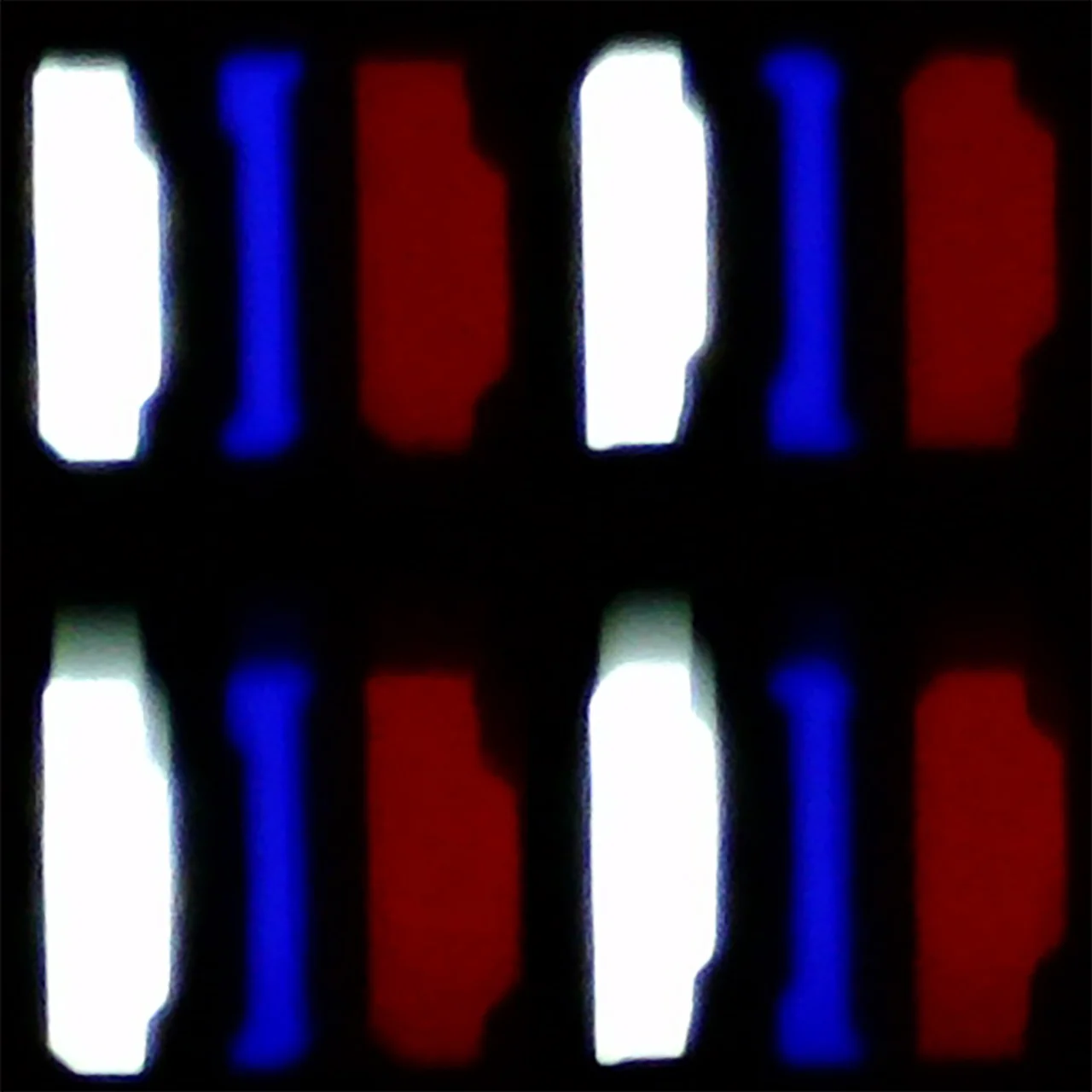
Matrix subpixel arrangement
RGB
RGWB
Max refresh rate
144Hz
120Hz
G-Sync
Yes
Yes

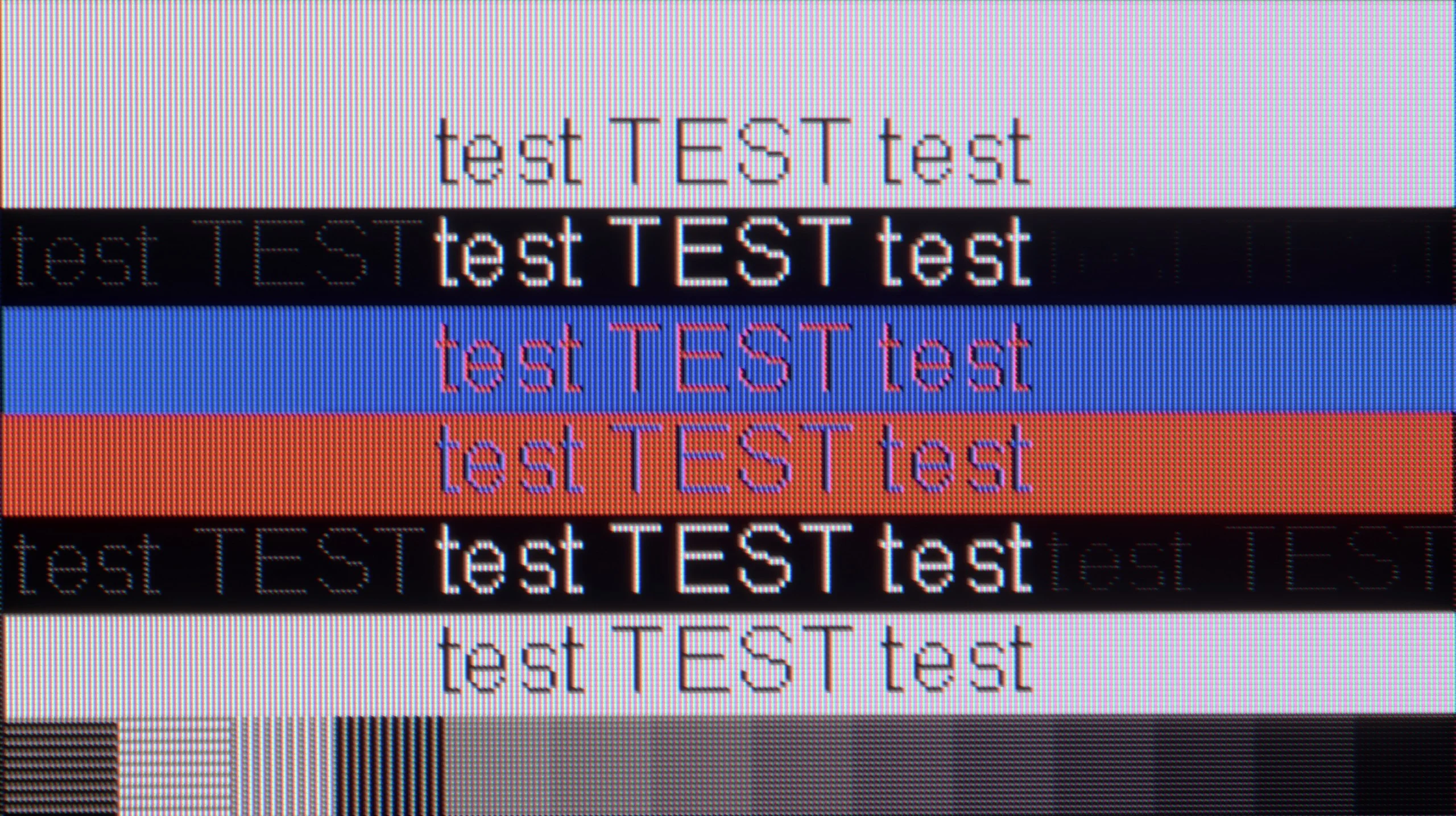
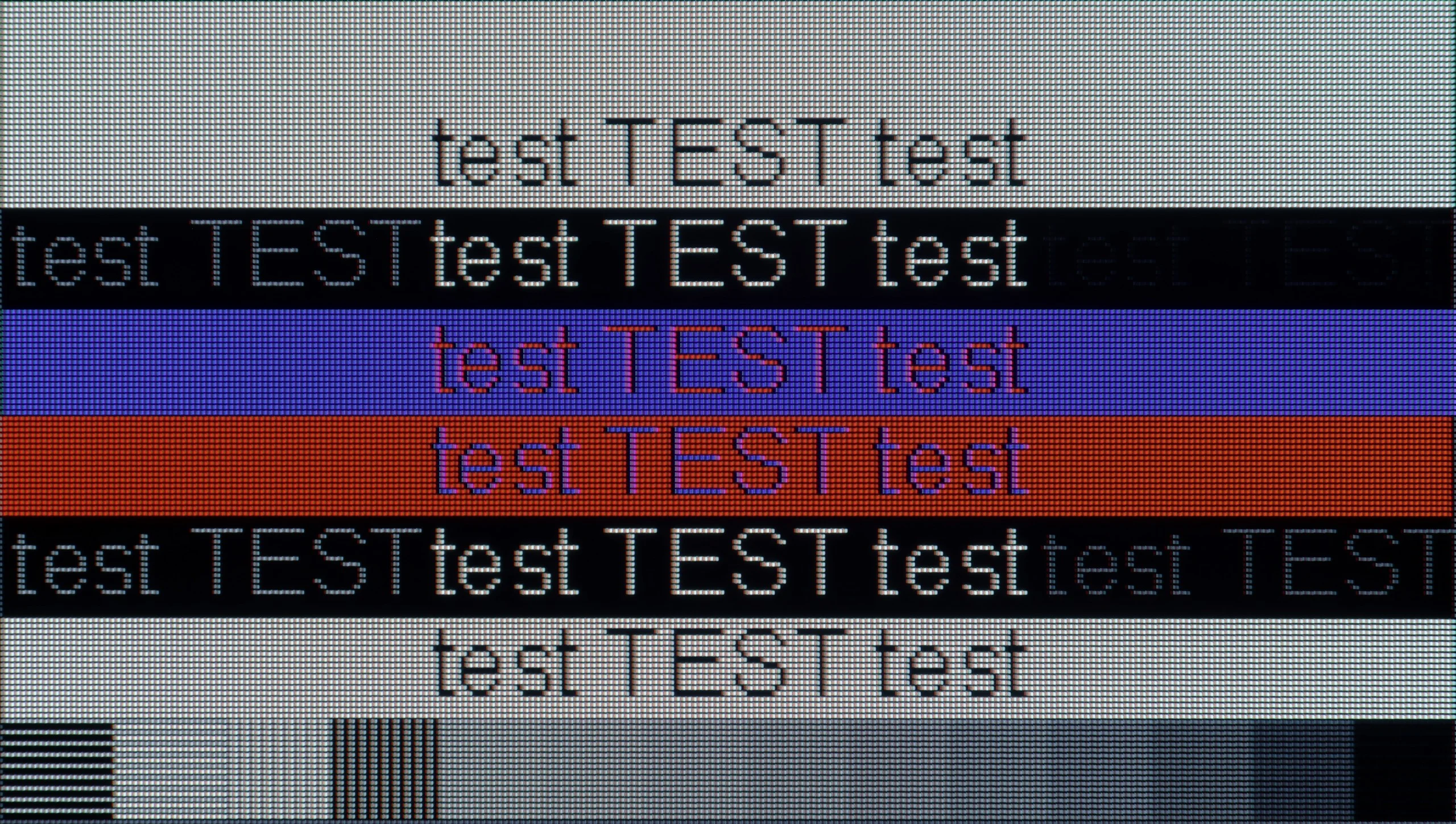
The photo shows the legibility of small fonts. Ideally, lines should be the same thickness on both light and dark text, with minimal pixel gaps.

Using the RM7L with a computer performs very well, especially if you treat it as a gaming display. The TV supports 4K at 144 Hz, and dropping to Full HD can raise the refresh rate to as much as 288 Hz. It also supports G-Sync and FreeSync, so there's little to criticise in terms of smoothness. Text handling is a bit poorer. At the maximum refresh rate, letters viewed from very close are not perfectly sharp and you can notice a faint shadow behind them. Switching to 120 Hz improves matters, though they're still not perfect. However, it's hard to regard this as a serious flaw, because given the sizes in which the RM7L is available, it's unlikely to be used on a desk as a monitor for document work.
Samsung S85H will also work very well as a large computer monitor. Font legibility is good and, from the typical viewing distance for such a large screen, text looks really good. You just need to remember the four-subpixel layout of the WOLED panel, because from very close up the edges of letters are not quite as perfectly sharp as on a conventional RGB monitor. However, this is a characteristic of OLED technology itself and, in normal TV use, it should not be an issue.

The S85H also has plenty to offer PC gamers. You get 120 Hz, G-Sync support, very low input lag and, of course, the OLED panel's lightning-fast response time. The only thing missing for complete satisfaction is the ability to run the panel at a higher refresh rate. More and more TVs already support 144 or 165 Hz at 4K, so an extra mode like that would be welcome here.

Viewing angles

4.5/10

7.5/10

Brightness drop at an angle of 45 degrees
81%
34%

Viewing angles on the RM7L are quite good and among the better ones you will find in TVs with VA panels. Even when looking at the screen from the side, colours do not shift as much as in many conventional VA designs. In that respect the RM7L can be compared to the better WHVA panels used in higher TCL ranges such as the C8L or X11L. There is, however, one clear downside. As the viewing angle increases, image brightness falls off very quickly. Colours and the overall character of the image remain relatively intact, but the screen itself becomes noticeably darker. At very large off axis angles the difference is already enough that the picture can simply look too dark. For that reason the RM7L is best viewed as close to the centre of the screen as possible.

Viewing angles are one of the major advantages of the S85H and OLED panels in general. Even when viewed well off to the side, the image still retains good contrast, brightness and colour saturation. In this respect the S85H performs decidedly better than practically any LCD or Mini-LED TV available today. Only QD-OLED panels actually do better, as they can keep colours even more consistent at wide viewing angles. However, those are found only in higher-end models.

Daytime performance

7.8/10

5.1/10

Panel finish
Glare
Satin
Reflection suppression
Poor
Average
Black levels during daytime
Very Good
Good

Panel brightness

Samsung S85H: 350 cd/m2

TCL RM7L: 959 cd/m2

The RM7L should perform well in a bright living room, primarily thanks to its high SDR brightness. With everyday content the television averages around 1000 nits, so it can easily cut through ambient light entering the room and maintain a clear image even during the day. A weak point is the panel's glossy coating. Direct reflections are quite noticeable, and stronger light sources can also spread across the screen surface. For that reason it's best not to position the television opposite a window or a lamp. With correct placement, however, the RM7L will still be a very good choice for a brightly sunlit room.

The Samsung S85H is a moderately bright TV. In our measurements the average SDR brightness was around 350 nits, so that should be sufficient for ordinary daytime viewing, provided the TV is not in a very sunlit living room. In a moderately lit room the picture remains readable, but with large windows and light shining directly on the screen the S85H's capabilities start to fall short. We have a few more criticisms of the WOLED SE panel itself. A change in the panel's construction compared with the previous generation has affected how the screen handles reflections, and unfortunately it is not a change for the better. Reflections are more noticeable than on earlier WOLED panels. LG Display tried to partly mask this effect with a more satin screen finish that scatters light, but that does not completely solve the issue. With a strong light source the reflection becomes quite large and a characteristic greyish halo appears around it. Photos clearly show that such a reflection can occupy a large part of the image and greatly affect how it is perceived. So the S85H does not really change the situation compared with cheaper OLEDs when it comes to daytime viewing. It is best suited to evening use or to a room where you have at least partial control over the lighting. It is still comfortable to use during the day, but it is definitely not a television designed for a very bright living room.

Panel details

Backlight Type
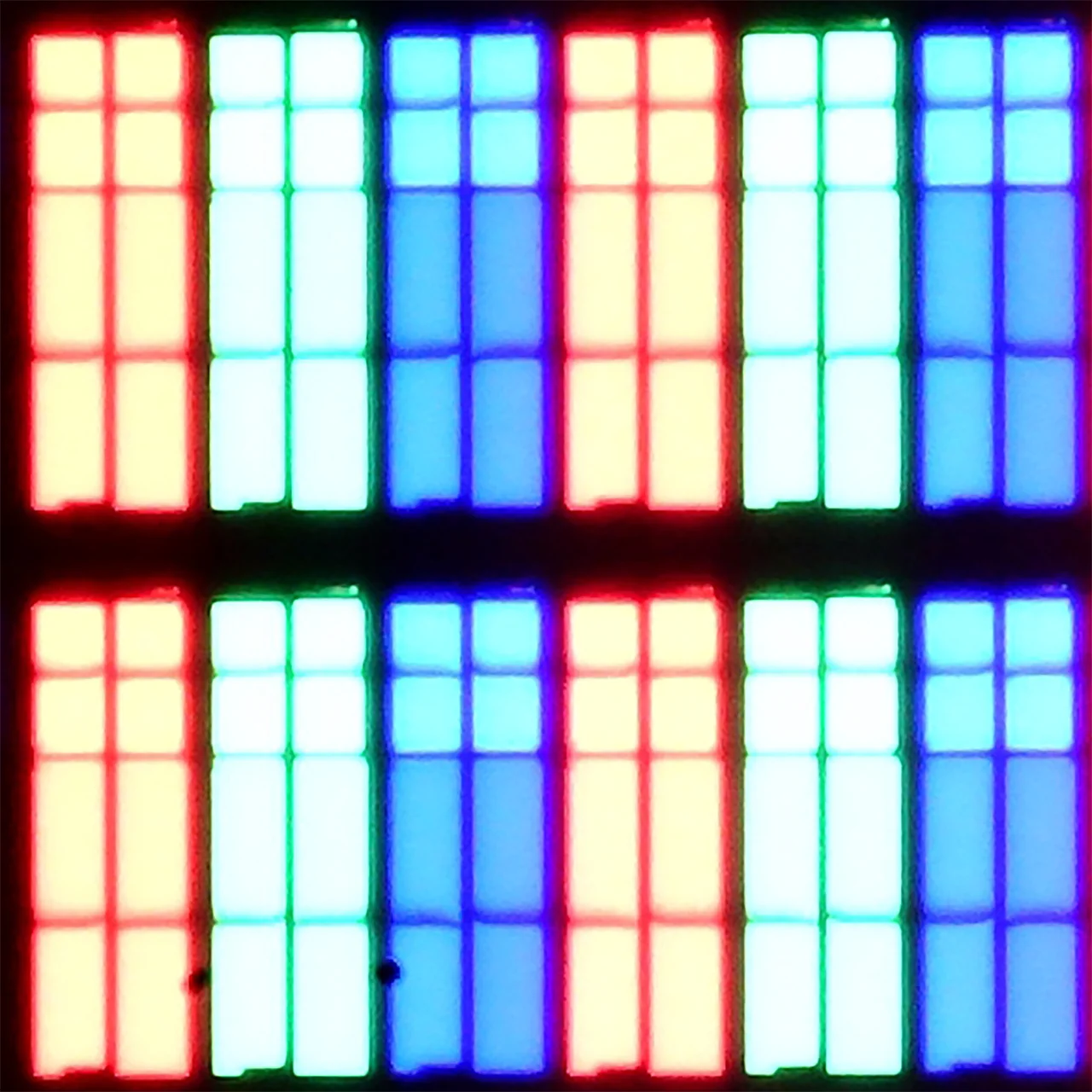
Mini-LED RGB + PFS
WRGB OLED
Software version during testing
V8-0012T01-LF1V641.003171
1204
Image processor
MT5896 2,5GB RAM

Subpixel Structure:

Panel uniformity and thermal imaging:

Review TCL RM7L TV Panel details
Review Samsung S85H TV Panel details

TCL RM7L

Samsung S85H

TV features

7.8/10

7.3/10

  • System
    Google TV
    Tizen
  • System performance
    Good
    Very good
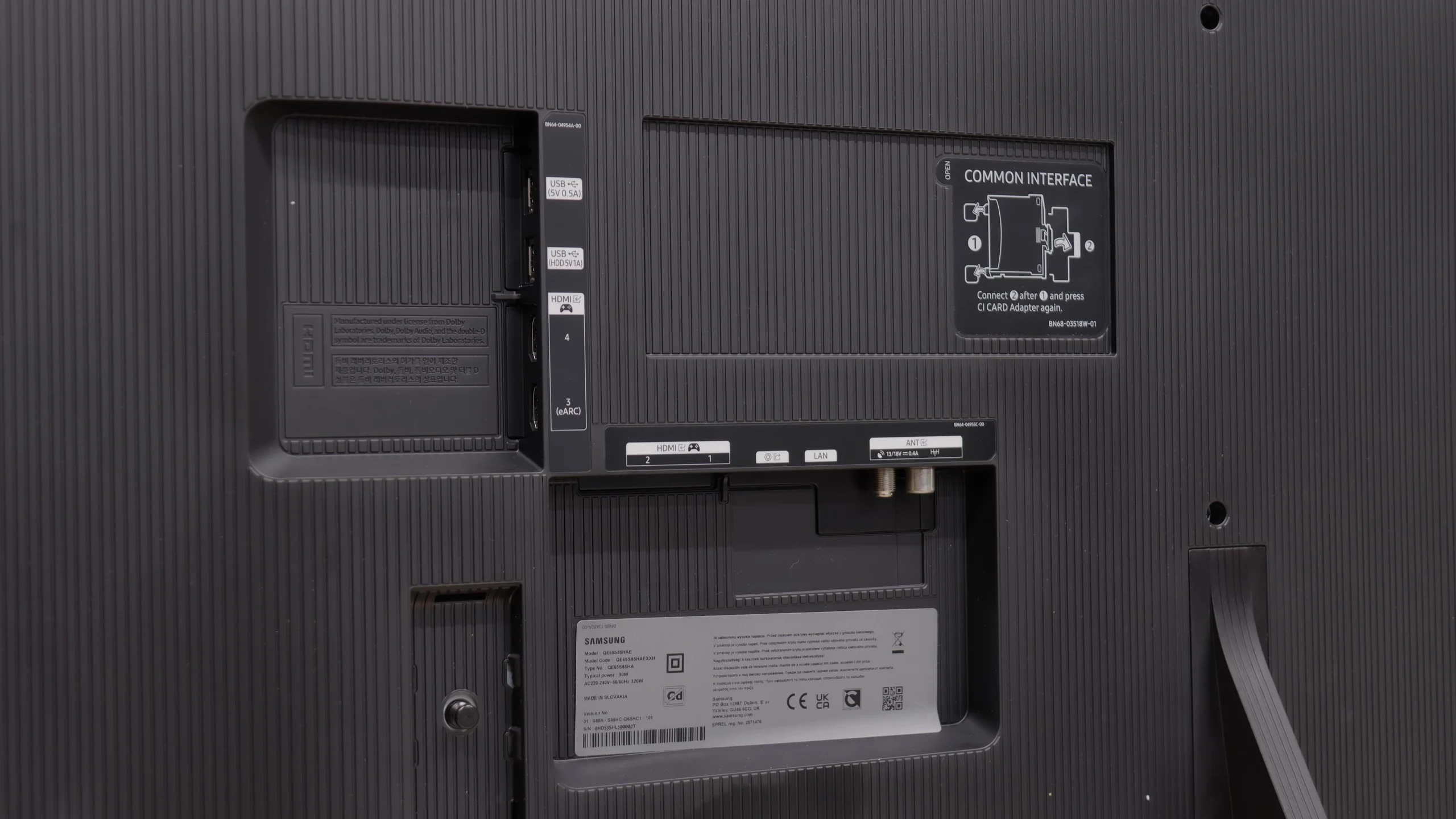
  • HDMI inputs
    2 x HDMI 2.0, 2 x HDMI 2.1 48Gbps
    0 x HDMI 2.0, 4 x HDMI 2.1 48Gbps
  • Outputs
    Toslink (Optical audio), eARC (HDMI), ARC (HDMI)
    Toslink (Optical audio), eARC (HDMI), ARC (HDMI)
  • Network Interfaces
    Wi-Fi 2.4GHz, Wi-Fi 5GHz, Ethernet (LAN) 100Mbps
    Wi-Fi 2.4GHz, Wi-Fi 5GHz, Ethernet (LAN) 100Mbps
  • TV reception
    DVB-T, DVB-T2, DVB-S, DVB-S2, DVB-C
    DVB-T, DVB-T2, DVB-S, DVB-S2, DVB-C

Classic features:

  • Recording to USB (terrestrial TV)
    No
    No
  • Recording programming
    No
    No
  • Picture in Picture (PiP)
    No
    No
  • RF remote control (no need to aim)
    Yes
    Yes
  • Backlit remote control
    No
    No
  • Teletext
    Yes
    Yes
  • Audio only mode
    Yes
    Yes
  • Bluetooth headphones support
    Yes
    Yes
  • Simultaneous Bluetooth headphones & TV audio
    Yes
    Yes

Smart features:

  • AirPlay
    Yes
    Yes
  • Screen mirroring (Windows Miracast)
    Yes
    Yes
  • Voice search
    Yes
    Yes
  • Voice search in native language
    Yes
    Yes
  • Ability to connect a keyboard and mouse
    Yes
    Yes
Review TCL RM7L TV features
Review Samsung S85H TV features

Sound connection options

  • HDMI audio
    eARC (HDMI), ARC (HDMI)
    eARC (HDMI), ARC (HDMI)
  • Other audio outputs
    Toslink (Optical audio)
    Toslink (Optical audio)
  • Wireless audio
    Bluetooth
    Bluetooth

Supported audio formats (external HDMI eARC audio):

  • Dolby Digital Plus 7.1
    Yes
    Yes
  • Dolby True HD 7.1
    Yes
    Yes
  • Dolby Atmos in Dolby Digital Plus (JOC)
    Yes
    Yes
  • Dolby Atmos in Dolby True HD
    Yes
    Yes
  • DTS:X in DTS-HD MA
    Yes
    No
  • DTS-HD Master Audio
    Yes
    No

Senior accessibility

  • Numeric keyboard on TV
    Yes
    No
  • Font size adjustment
    Yes
    Yes
  • Audio description
    Yes
    Yes

Smart TV features

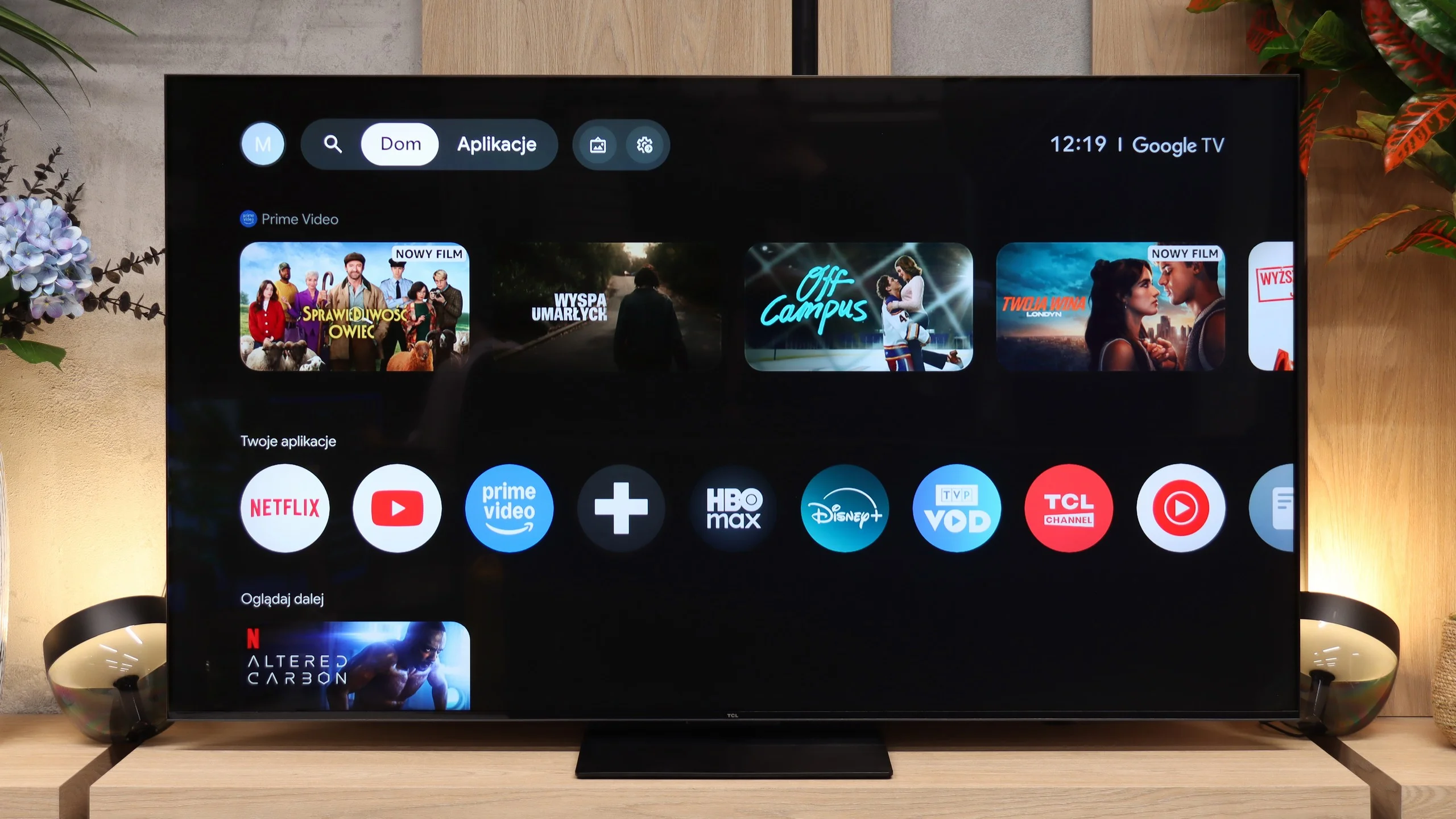
The RM7L runs on Google TV, which is great news, because it’s one of the most polished systems on the market today. The store has pretty much everything: from the major streaming platforms to lesser-known apps, so you really don’t need to worry about a lack of content. There are also the classics on board, Chromecast and AirPlay, which make it easy to cast from your phone to the big screen. An interesting change is that the previous Google Assistant has been replaced by Gemini. The new "artificial brain" understands natural speech better and can answer questions much more sensibly. Everything runs smoothly and delivers exactly what we expect from a TV today.

Traditional TV

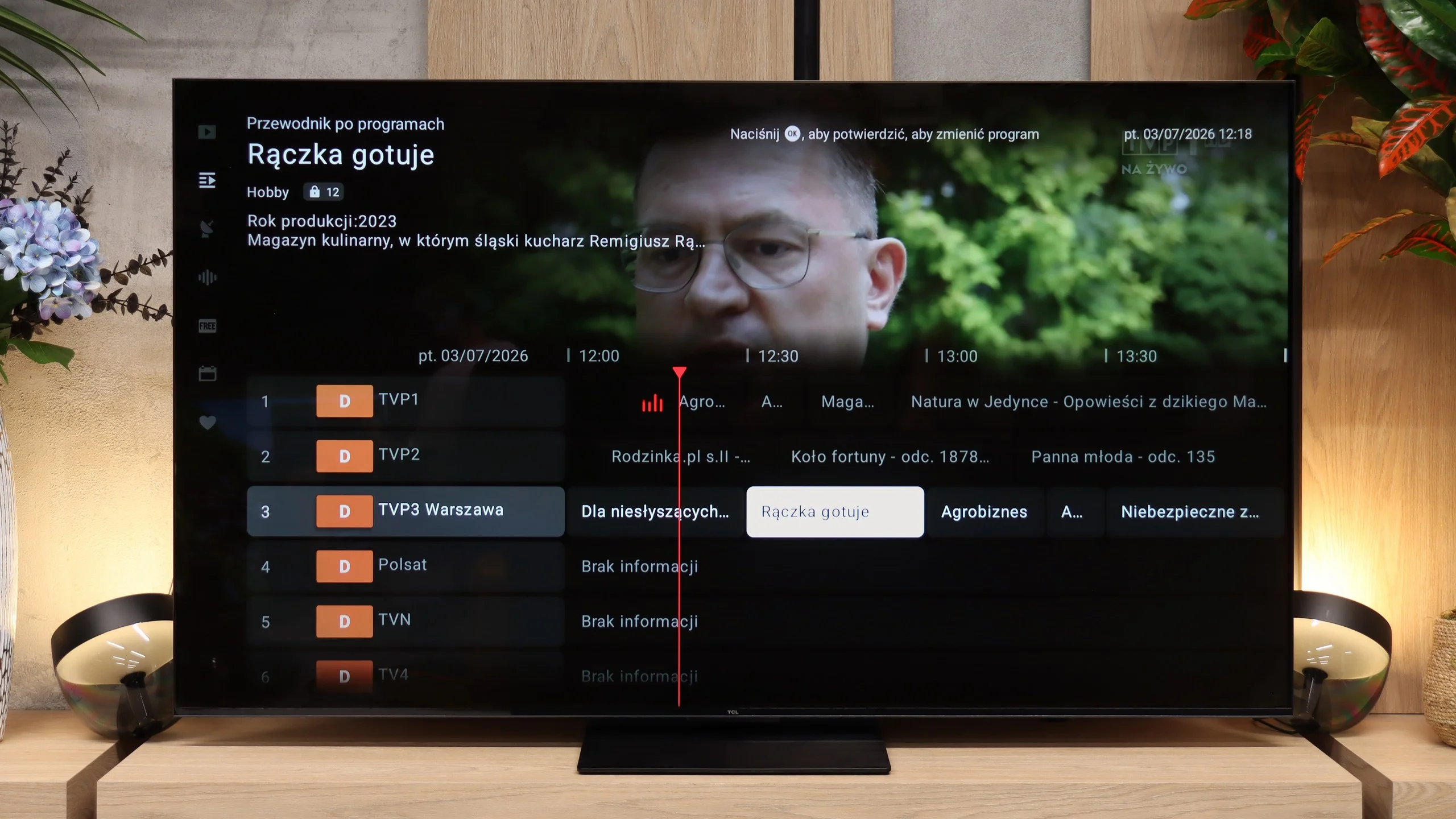
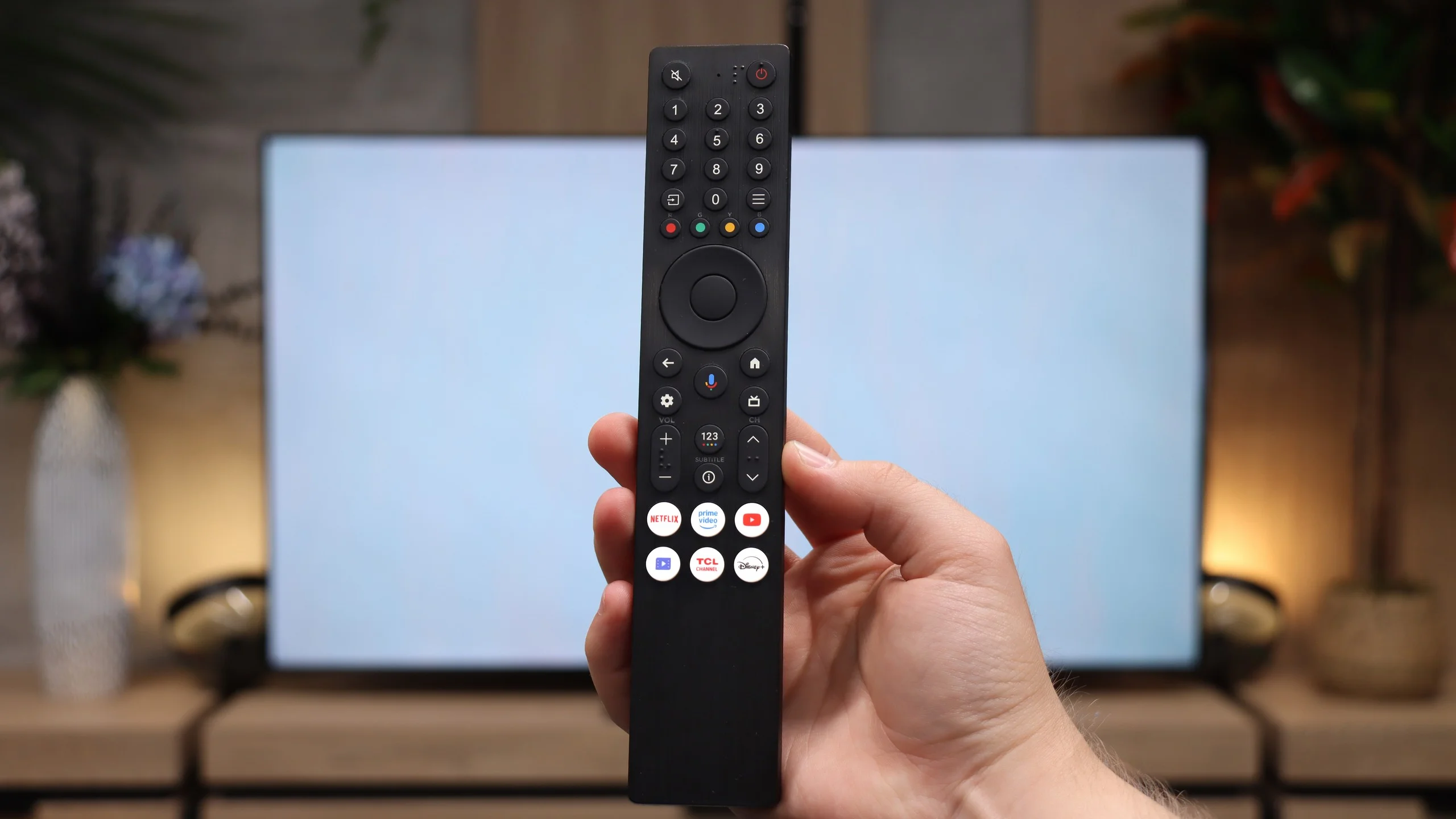
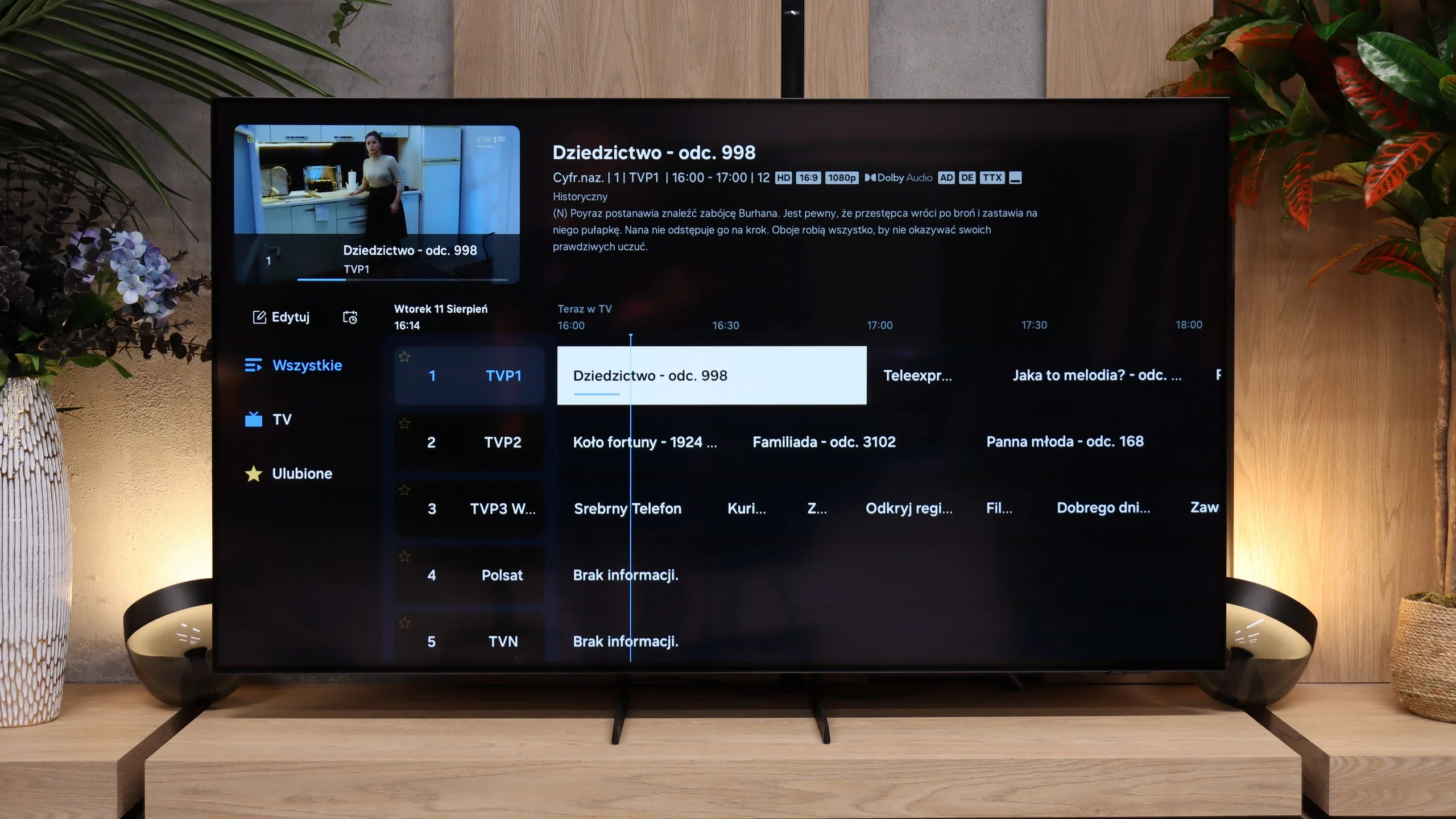
If someone prefers channel surfing to streaming, they’ll be pleased with the traditional remote control. It has a full numeric keypad and plenty of physical buttons, so operating the TV is quite straightforward, without having to wade through on‑screen menus. In terms of TV features it’s simply solid. The electronic programme guide (EPG) and channel switching work flawlessly, although you won’t find additional features like PiP or PVR.

Tizen

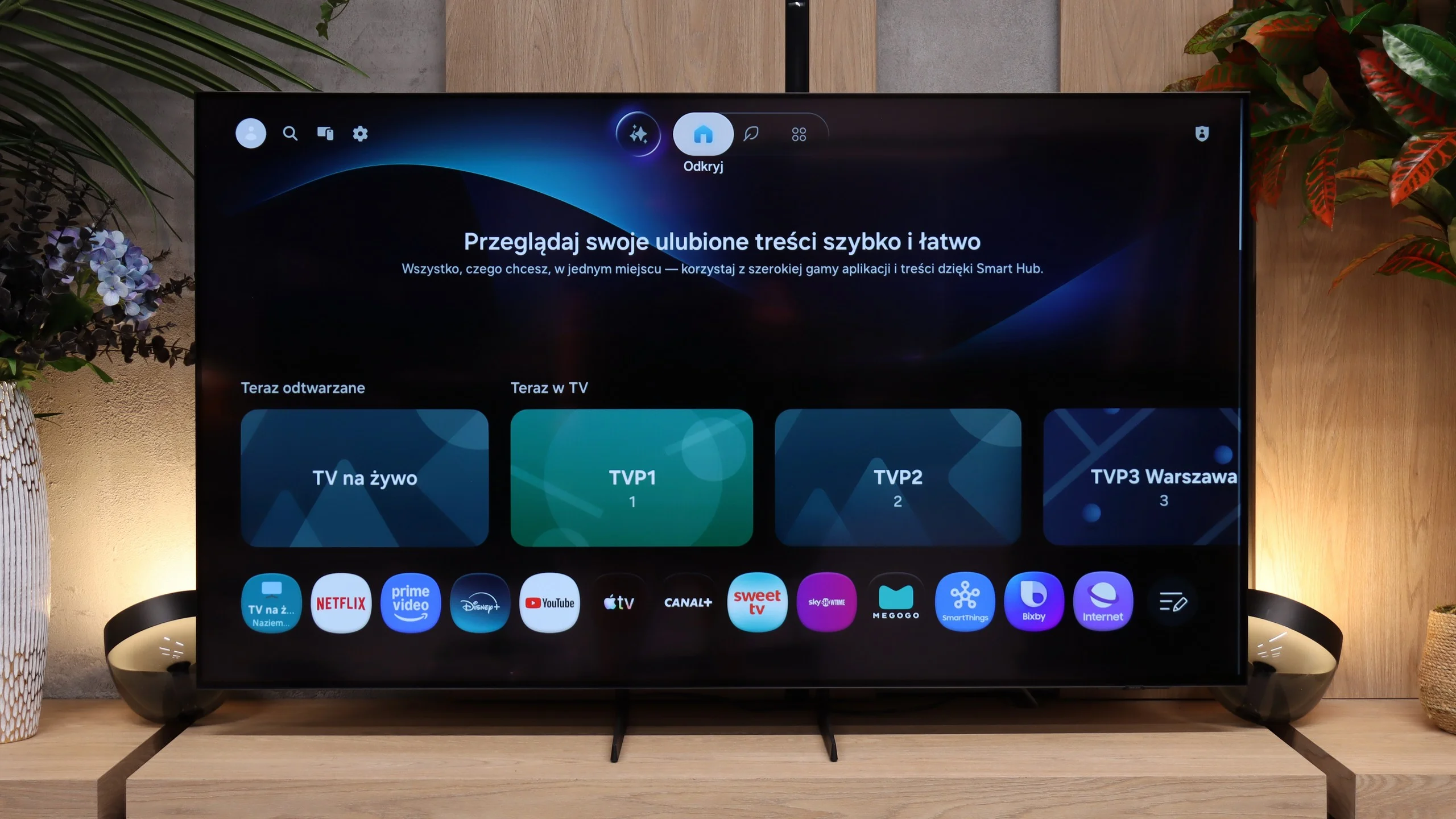
Samsung S85H runs on Tizen and, in terms of online features, there is little to criticise. The system is fast and responsive, and the selection of apps is one of the largest on the market. Besides the main streaming platforms you will also find many less popular services, so it’s unlikely you’ll be left without something you really need. Samsung is also developing SmartThings features, integration with other devices and an increasing number of AI-based solutions. There are really lots of possibilities here and some users will probably never explore half of them. A big plus is the promised seven years of system updates. For a television, which we usually keep much longer than a phone or computer, that matters. Tizen should therefore receive new features and fixes for a long time rather than being abandoned after two or three years. The S85H does not, in fact, feel like a cheaper model. We essentially get the same extensive ecosystem that Samsung offers in its more expensive TVs.

Classic features

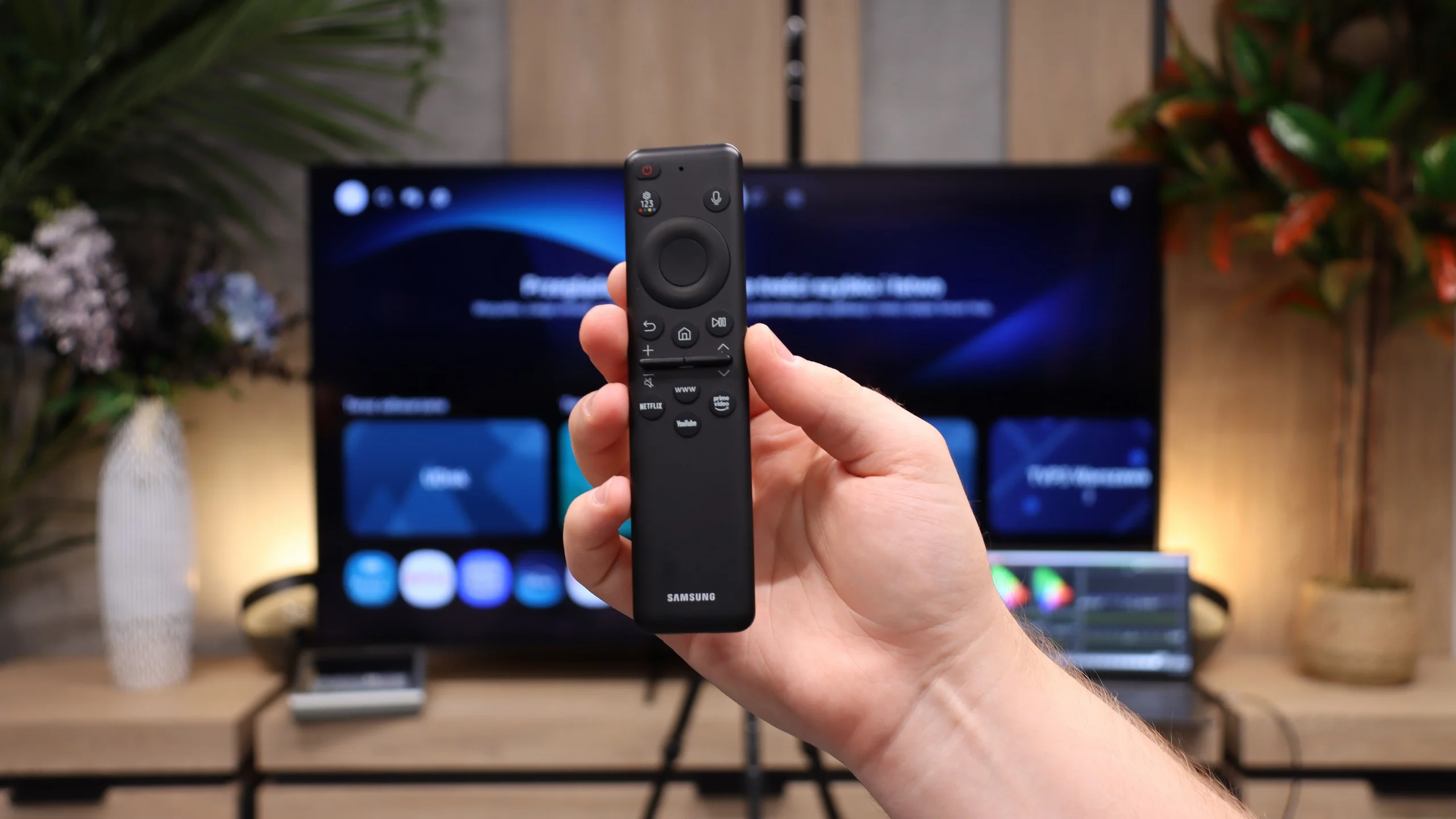
Samsung’s approach to classic television features looks completely different. It’s clear that for several years the manufacturer has been placing increasing emphasis on "modern" services at the expense of traditional ones. The S85H is therefore not a TV that will particularly appeal to people who are used to extensive control over conventional broadcasting. The supplied remote illustrates this well. It is small, minimalist and has only the most necessary buttons, but lacks a traditional numeric keypad. That works well for streaming, but for those who frequently watch broadcast TV without a set-top box it may not be to everyone’s taste. It’s simply a consequence of the direction Samsung is taking its televisions...

Apps

9.6/10

9.3/10

OK
Disney_Plus
OK
Amazon_Prime_Video
OK
Player_TVN
OK
Polsat_Box_Go
OK
Canal_Plus_Online
OK
TVP_VOD
OK
Apple_TV_Plus
OK
SkyShowtime
OK
Rakuten
OK
CDA_Premium_Browser
OK
Spotify
OK
Tidal
OK
Netflix
OK
YouTube
OK
HBO_MAX
OK
Kodi
No
Apple_music
OK
Eleven_sports
No
Xbox Game Pass
OK
GeForce NOW
No
Amazon Luna
OK
Boosteroid
OK
Steam Link
OK
Disney_Plus
OK
Amazon_Prime_Video
OK
Player_TVN
OK
Polsat_Box_Go
OK
Canal_Plus_Online
OK
TVP_VOD
OK
Apple_TV_Plus
OK
SkyShowtime
OK
Rakuten
OK
CDA_Premium_Browser
OK
Spotify
No
Tidal
OK
Netflix
OK
YouTube
OK
HBO_MAX
No
Kodi
OK
Apple_music
OK
Eleven_sports
OK
Xbox Game Pass
OK
GeForce NOW
OK
Amazon Luna
OK
Boosteroid
No
Steam Link

Playing files from USB

9.4/10

9.1/10

Supported photo formats:

JPEG
Yes
Yes
HEIC
Yes
No
PNG
Yes
Yes
GIF
Yes
No
WebP
Yes
No
TIFF
No
No
BMP
Yes
Yes
SVG
No
No

Maximum photo resolution:

4 Mpix
Yes
Yes
6 Mpix
Yes
Yes
8 Mpix
Yes
Yes
10 Mpix
Yes
Yes
12 Mpix
Yes
Yes
16 Mpix
Yes
Yes
20 Mpix
Yes
Yes
24 Mpix
Yes
Yes
28 Mpix
Yes
Yes
32 Mpix
Yes
Yes

The built-in media player in the RM7L performs very well. The TV handled most of our test material with ease, whether films, photos or music. Shortcomings do occur, of course, but they mostly affect less common formats. In practice most people will get by without installing an additional player.

The Samsung S85H's USB file player works quickly and without major problems. The TV handles both videos and photos well, and with the latter we had no issues with unusual resolutions or high megapixel counts. Subtitle support is also a plus, with Polish characters displaying correctly and no additional settings required. The only real shortcoming was lack of support for the HEIC format, which is often used by Apple devices. Apart from that, the built-in player performs very well and will be more than sufficient for most people for everyday use with a USB stick or external USB drive.

Sound

7.8/10

7.2/10

  • Maximum volume
    88dB
    86dB
  • Dolby Digital Plus 7.1
    Yes
    Yes
  • Dolby True HD 7.1
    No
    No
  • Dolby Atmos in Dolby Digital Plus (JOC)
    Yes
    Yes
  • Dolby Atmos in Dolby True HD
    No
    No
  • DTS:X in DTS-HD MA
    Yes
    No
  • DTS-HD Master Audio
    Yes
    No

Unlike the higher C7L, C8L or X11L series, the RM7L does not feature an audio system branded by Bang & Olufsen. TCL has opted here for an Onkyo speaker array supported by "Ultra Bass" technology. The difference is also visible in the build. Instead of metal covers, simpler plastic grilles have been used. Does that affect sound quality? In our view, not as much as you might think. The RM7L simply sounds good, with a slightly different character to the C7L. Dialogue is clean and clear, and the TV can easily fill a larger living room. The amount of low end is also a plus. For a TV in this class there is quite a bit of bass and it does not come across as completely flat. Our measurements confirm this. Maximum volume reaches around 88 dB, which is a very good result, and the frequency response remains relatively even. Only above roughly 7-8 kHz is there a more noticeable drop in efficiency, so the highest frequencies are no longer as well exposed. That said, for a TV of this class the RM7L offers a surprisingly pleasant sound and most users will have no cause for complaint.

In terms of sound, the S85H hasn't really changed from its predecessor. It still has a fairly basic 2.0 setup with a total power of 20 W, which sounds decent and, for such a slim TV, can even add a touch of bass. It's perfectly adequate for everyday TV viewing, but it's not at the level of pricier models, which can sound fuller and more 'spatial'. With that kind of picture, it really calls for at least adding a soundbar. All the more so as the S85H supports Dolby Atmos and Samsung's proprietary Q-Symphony, which allows a compatible Samsung soundbar to work with the TV's speakers rather than completely replace them. If you want to get more out of this setup for films, an external sound system is the most sensible addition.

Sound Quality Test

Acoustic Measurements

88dBC (Max)

75dBC

86dBC (Max)

75dBC

Reader comments

Comments are provided by the external service Disqus (Zeta Global). Once loaded, Disqus may set cookies and process data about your activity.

We will remember your choice on this device. Provider's privacy policy