 Direct comparison
The TCL C7L is an incredibly successful Mini-LED television and a fully deserved successor to the hit model C7K. The list of advantages of this device is truly extensive. At the top is the extremely high brightness of the panel. Thanks to this, the television handles brightly lit living rooms without any problems, offering a fantastic and dynamic image in HDR format. Huge applause is also due for the use of the new Super QLED coating – after professional calibration, the colours can be not only natural but also incredibly saturated. The best part is that the screen achieves this regardless of the scene displayed, which is often not the case with all TVs featuring RGB backlighting. The C7L is also a brilliant piece of equipment for gamers; it could even be said that it is a true "multimedia powerhouse." We get full support for consoles and PCs, refresh rates of up to 288 Hz, G-Sync, and low input lag, which doesn’t increase even when activating the demanding Dolby Vision Gaming mode. Everything is tied together by a well-optimised Google TV system, which in this generation of TCL devices operates noticeably smoother and more efficiently (at least that's the impression we got during our testing). Of course, the C7L is not a perfect device, and the manufacturer had to make certain compromises in this model. The biggest drawback of the C7L is the use of a less powerful image processor. Unfortunately, this translates to rather average digital processing and other design limitations, such as only two HDMI 2.1 ports. A more powerful chip has been reserved this year for the higher series, such as the C8L. From a business point of view, this is entirely understandable. Why? Because if TCL had included a better processor here, most people would probably not see any point in paying extra for a higher model. So even if certain compromises exist, the C7L series is once again shaping up to be one of the most cost-effective Mini-LED televisions this year. If you are looking for a versatile, extremely bright screen for movies, series, television, or gaming – literally for everything – and at the same time do not want to overpay for top series, then yes... the C7L is a brilliant choice that we can definitely recommend to you.
- Matching (Score) |
- Our verdict |
- TV appearance |
- Where to buy |
- Contrast and black detail |
- HDR effect quality |
- Factory color reproduction |
- Color reproduction after calibration |
- Smoothness of tonal transitions |
- Image scaling and smoothness of tonal transitions |
- Blur and motion smoothness |
- Console compatibility and gaming features |
- Input lag |
- Compatibility with PC |
- Viewing angles |
- Daytime performance |
- Panel details |
- TV features |
- Apps |
- Playing files from USB |
- Sound
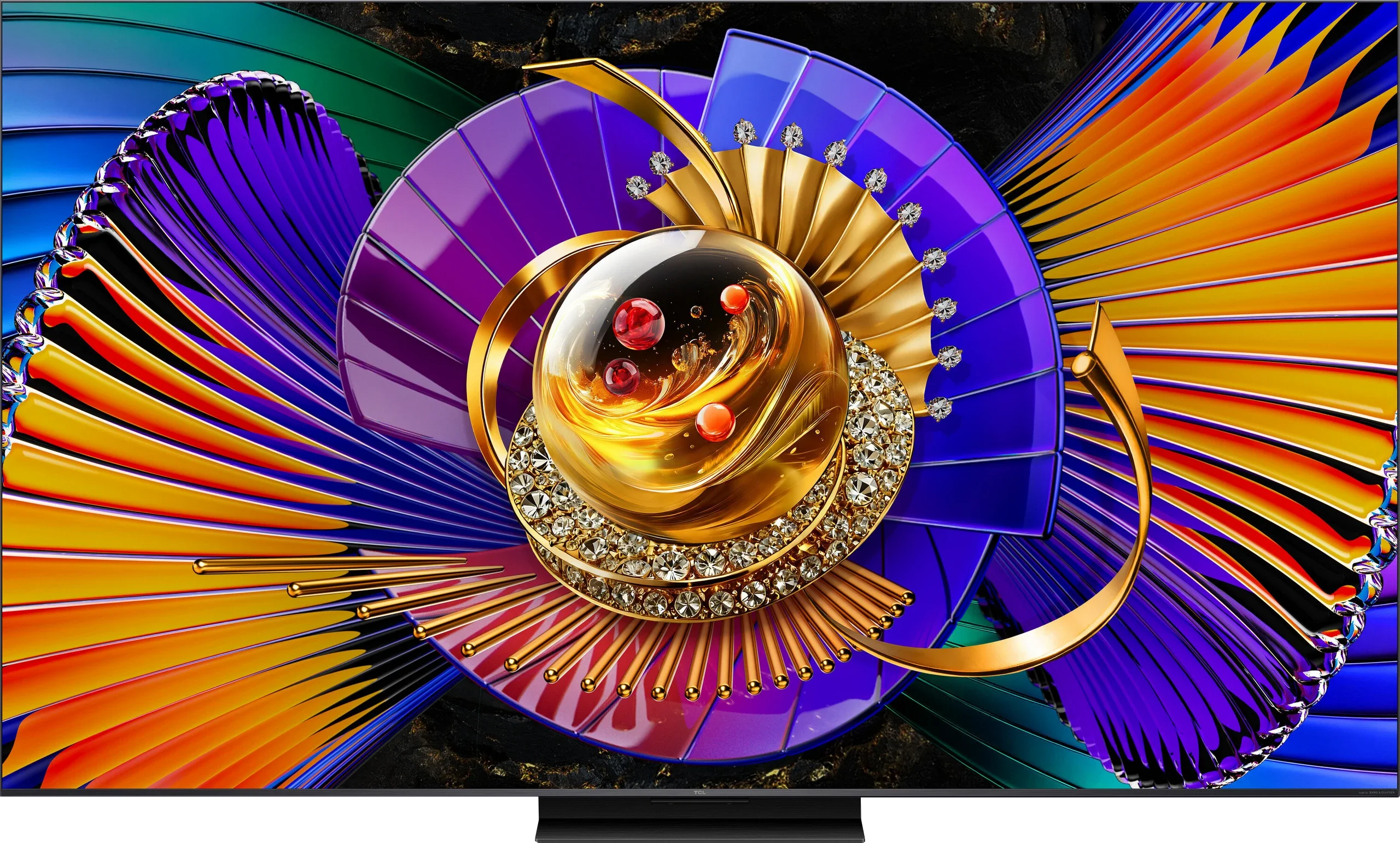
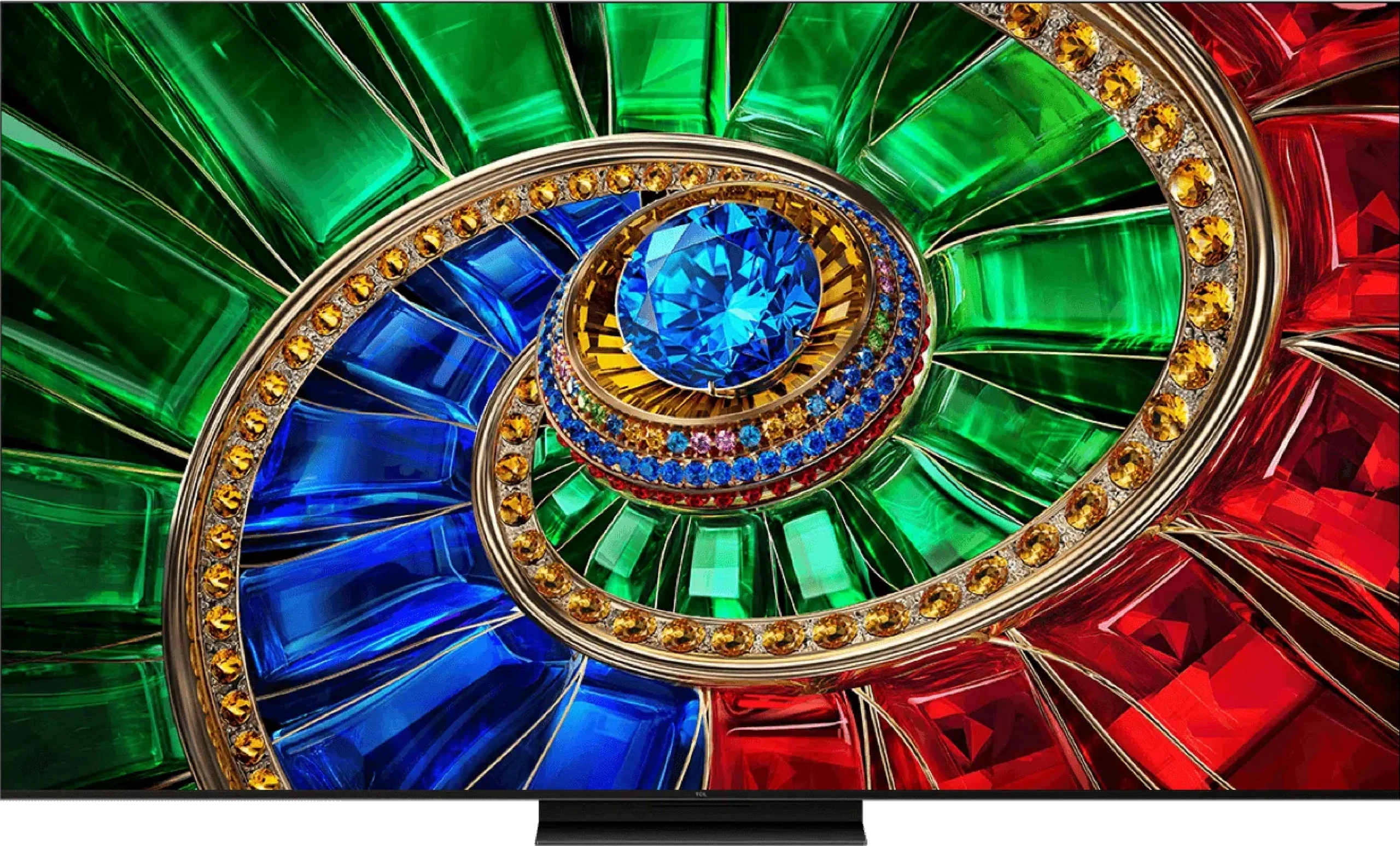
Panel type: LCD VA
Resolution: 3840x2160
System: Google TV
Model year: 2026
Complete the survey to find out the result
Panel type: LCD VA
Resolution: 3840x2160
System: Google TV
Model year: 2026
Complete the survey to find out the result
Overall rating
7.8
7.8
 Movies and series in UHD quality
7.2
7.4
 Classic TV, YouTube
6.8
7.1
 Sports broadcasts (TV and apps)
6.7
6.9
 Gaming on console
8.8
8.8
 TV as a computer monitor
8.4
8.4
 Watching in bright light
8.8
7.8
 Utility functions
7.8
7.8
 Apps
9.6
9.6
 Sound quality
7.7
7.8
Complete the survey to find out what fits your preferences
Advantages

Very high brightness
Good black levels and contrast (VA panel + mini-LED)
Excellent colour-gamut coverage thanks to the new "Super QLED" filter
Full support for HDR formats including Dolby Vision and HDR10+
Top specs for gamers (HDMI 2.1, low input lag)
High refresh-rate performance with low motion blur (up to 288 Hz)
Google TV operating system (many apps, Gemini voice assistant)
Very high HDR and SDR brightness
Good black levels and contrast (VA panel + mini-LED)
Full support for HDR formats, including Dolby Vision and HDR10+
Extensive gaming features (VRR, ALLM, HGiG)
Good motion clarity with low blur (up to 288Hz)
Google TV operating system (many apps, Gemini voice assistant)
Disadvantages

Poor digital image processing due to the use of the older MediaTek Pentonic 700 processor
Only two HDMI 2.1 ports, one of which is shared with the eARC audio channel, e.g. a soundbar
Sound loses dynamics above 40–50% volume
Poor digital image processing due to the use of the older MediaTek Pentonic 700 processor
The glossy screen coating does little to reduce reflections
Only two HDMI 2.1 ports
Less stable colours, dependent on the dimming algorithm (a characteristic of RGB panels)
Our verdict
The TCL RM7L is a TV that can't be fairly assessed by measurements and charts alone. Although it isn't uncompromising kit, it more than holds its own in everyday use. It delivers a bright, dynamic and richly saturated picture, which makes it great for HDR content, gaming and fast-paced films. The RM7L doesn't chase perfect "reference-level" accuracy. Instead, it serves up an image that simply pleases the eye. In daily use there's little to fault. Google TV runs smoothly and provides access to a full suite of apps, and the generous set of gaming features means the TV performs just as well when connected to a console or PC as it does during an evening on the sofa. It's simply a versatile piece of kit that will suit most home uses. The most interesting aspect, though, is TCL's approach to backlighting. Rather than chasing numbers and inflating dimming zone counts, as with the C7L, they opted for RGB Mini-LED technology. The effect is genuinely intriguing. Although blacks and contrast are very good, in the most demanding scenes, with bright objects on a dark background, the halo can be slightly more noticeable than on the rival from the same stable. Interestingly, the glow itself takes on the colour of the displayed element, which makes it look much more natural and less distracting than on classic Mini-LED screens.
And that is where the dilemma appears. Placing the RM7L next to the TCL C7L, it's hard to deliver a clear, objective verdict. Both models cost almost the same, but represent two completely different backlight design philosophies. The C7L wins on dimming precision thanks to a larger number of zones, while the RM7L makes up for it with the distinctive, extremely pleasing-to-the-eye character of its RGB panel. Until recently the choice boiled down to a simple zone count; today, as TCL shows, the matter is much more interesting. If we had to choose between the two, the scales would tip slightly towards the C7L because of the higher zone count and equally impressive, saturated colours, but the final decision always depends on what an individual expects from their equipment.
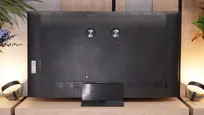
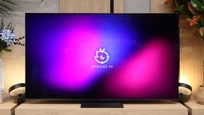
TV appearance
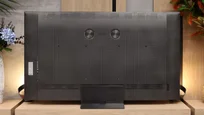
Where to buy

Contrast and black detail
7.7/10
7.7/10
Local dimming function: Yes, number of zones: 1152 (24 x 48)
Local dimming function: Yes, number of zones: 448 (16 x 28)
Contrast:


Result
174,100:1

Result
25,700:1

Result
13,950:1

Result
10,900:1

Result
9,900:1
Result
258,450:1
Result
41,400:1
Result
18,800:1
Result
15,650:1
Result
8,350:1
Halo effect and black detail visibility:
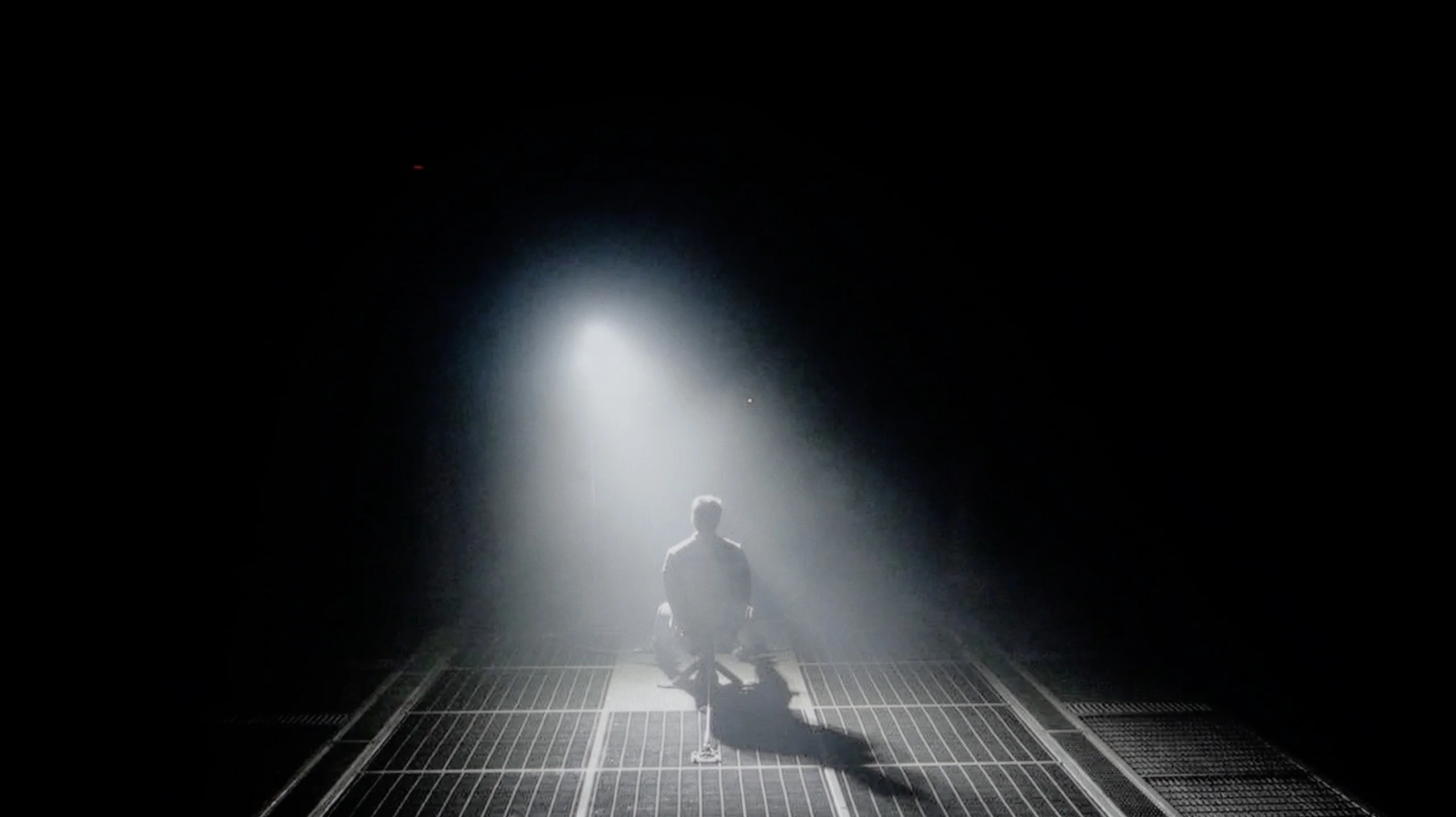
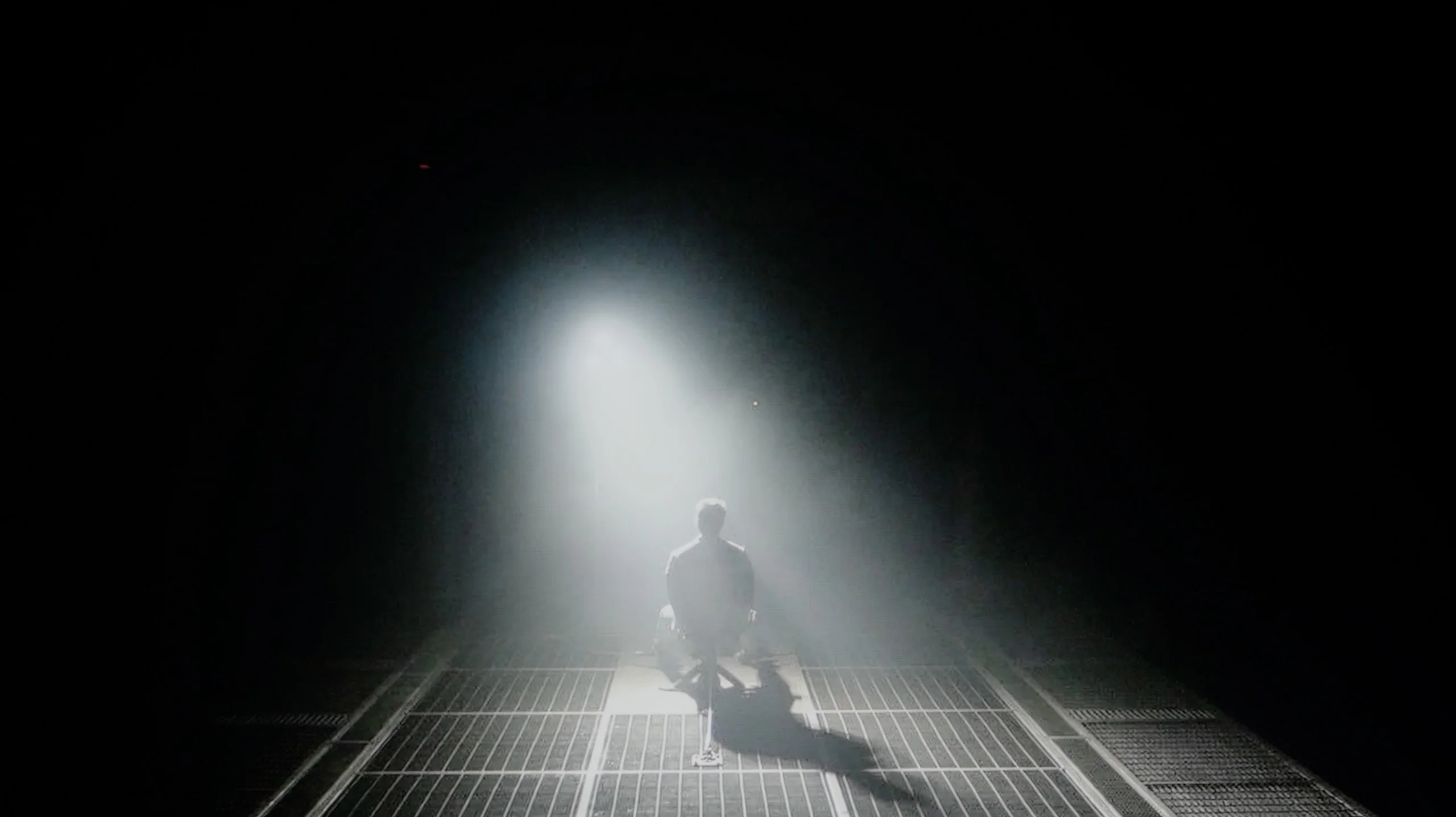
Check the visibility of bright lights on a dark background. Mini-LEDs often struggle with this. The photo does not compare black levels – that’s what the video below is for.
The video accurately shows differences in contrast and black levels between TVs, as well as potential issues: halo around bright objects or Mini-LED zone operation visible as brightness jumps.
The TCL C7L is a Mini LED TV which, in the 65-inch model we tested, is equipped with over 1,000 local dimming zones. Combined with a proprietary VA panel (referred to by TCL CSOT as HVA 2.0), this delivers very respectable results for black levels and contrast. In most of the scenes we measured, black levels and contrast looked very good, and in the easiest shots the blacks were deep enough to even resemble those seen on OLED screens. This, of course, refers to the least demanding shots with large areas of black on screen. When more bright elements appear on screen and black no longer dominates, you can see that the TCL C7L, like most Mini LED TVs, has issues handling its local dimming zones.
This is particularly obvious on the black bars in films shot in the 2.35:1 widescreen format. A distinct halo effect, a bright glow, can appear on the black bars or around small bright objects. Contrast can then drop drastically, from lab-measured values of around 200,000:1 to about 10,000:1, which is quite noticeable in a completely dark room. It’s worth remembering that this should not be treated as a flaw of the TV but rather as a characteristic of Mini LED technology. Of course the effect becomes much less intrusive if you turn on even a small amount of diffuse light in the room, which I strongly recommend doing when watching any LCD TV.
Black performance on the TCL RM7L is really good. The combination of a high-contrast VA panel with a zone-based RGB Mini-LED backlight allows the TV to achieve very high contrast figures. In most of the scenes we measured, the results were good enough that dark parts of the image looked deep and convincing. The RM7L performs best in less demanding shots where black occupies a large portion of the screen and bright elements are relatively small. In such conditions contrast can reach six-figure values. As scene complexity increases, results gradually fall off, but that is a natural characteristic of any LCD TV using local dimming.
However, the RM7L has noticeably fewer zones than its counterpart using an SQD Mini-LED backlight. In the 65-inch version the difference is more than twofold, so you more often see more pronounced blooming around bright elements on a dark background. In terms of pure dimming precision, the RM7L is therefore not as accurate as the C7L. RGB Mini-LED has its own advantage here though. The bloom is not simply white, it takes on the color of the displayed element. A good example is the helicopter cockpit scene from Sicario 2, where a greenish bloom appears around the green lights instead of the typical bright halo known from conventional Mini-LED TVs. The halo effect is still visible, but because its color matches the image it is less distracting and looks more natural.
Ultimately we rate the RM7L and C7L similarly for black-level performance. The C7L controls the backlight better thanks to a larger number of zones, while the RM7L makes up for it with the character of its bloom. The bloom is somewhat larger, but its color blends better with the displayed image.
NOTE: Naturally, as the TV size increases the number of zones grows, yet we expect similar contrast results across RM7L sizes. It’s also worth adding that TCL lists the number of "color zones" in its product brochures, not the actual dimming zones. Since each color zone consists of three RGB channels, the advertised number should be divided by three. Therefore 1,344 color zones in the 65-inch unit we tested mean 448 actual dimming zones.
Size | Dimming zones (actual) | Color zones |
|---|---|---|
65" | 448 | 1344 |
75" | 600 | 1800 |
85" | 720 | 2160 |
98" | 960 | 2880 |
HDR effect quality
6.6/10
6.6/10
Luminance measurements in HDR:

Result
1236 nit

Result
401 nit

Result
831 nit

Result
352 nit

Result
1204 nit
Result
914 nit
Result
538 nit
Result
653 nit
Result
494 nit
Result
1413 nit
Scene from the movie “Pan” (about 2800 nits)
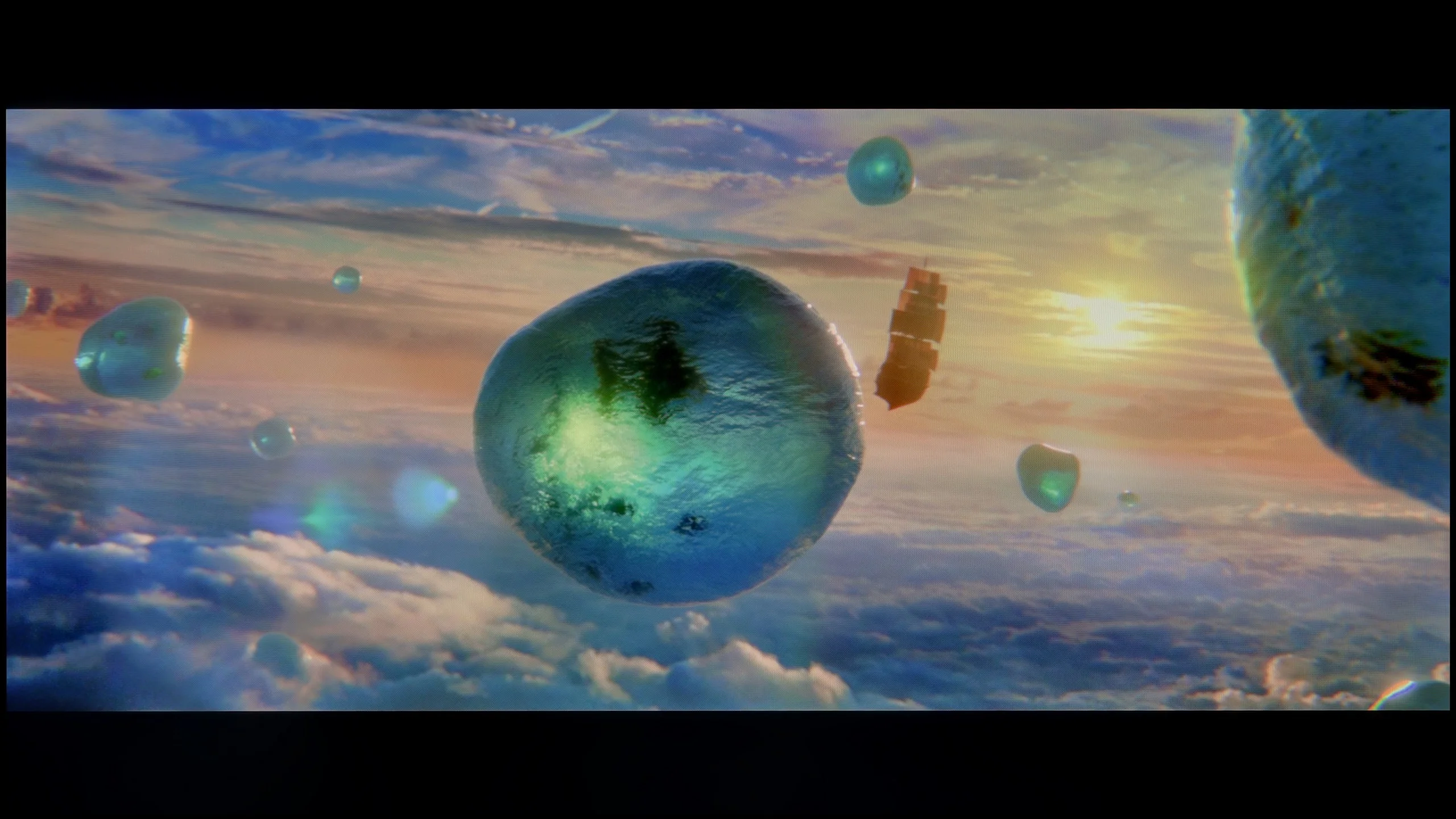
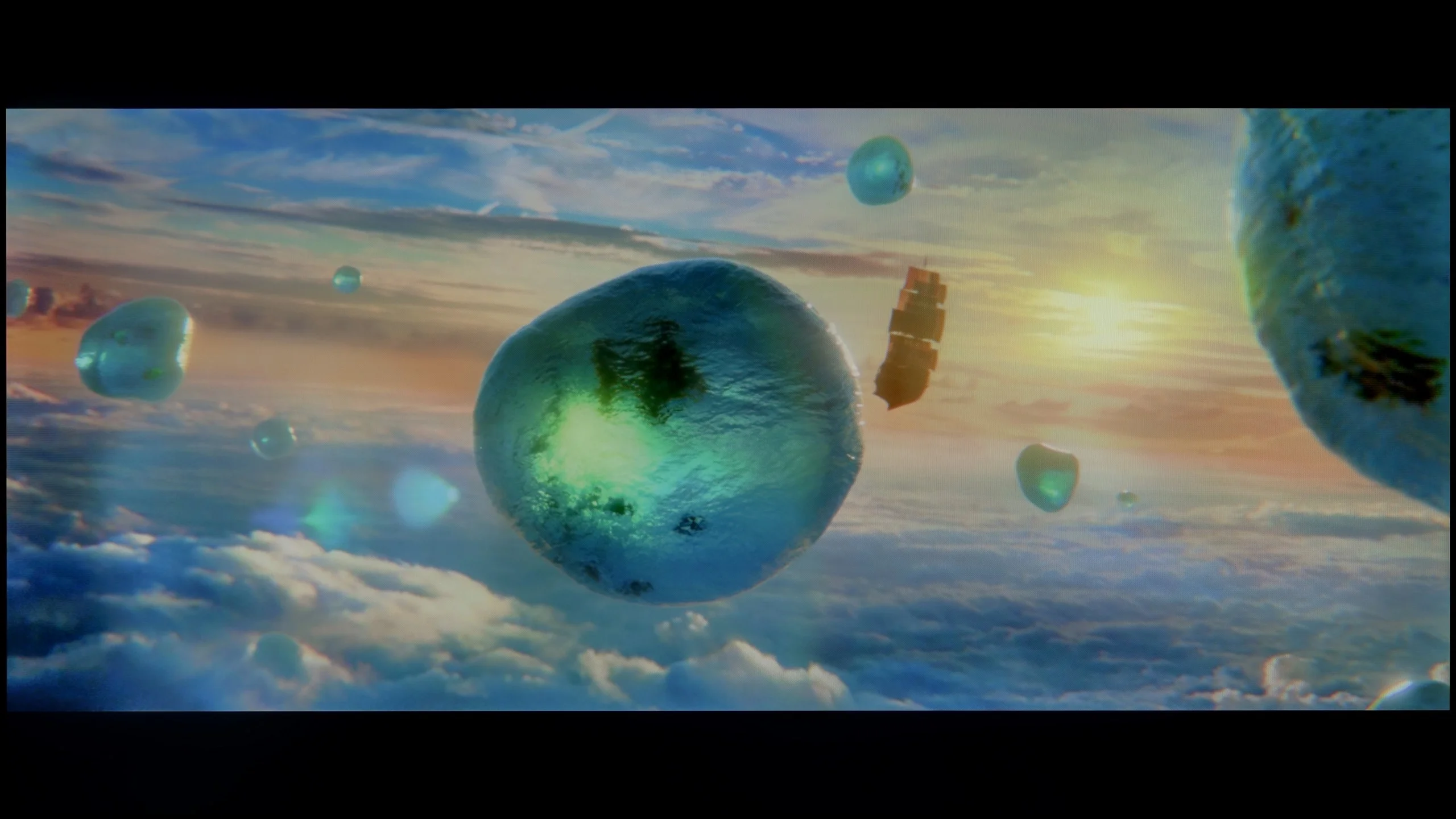
Scene from the movie “Billy Lynn” (about 1100 nits)
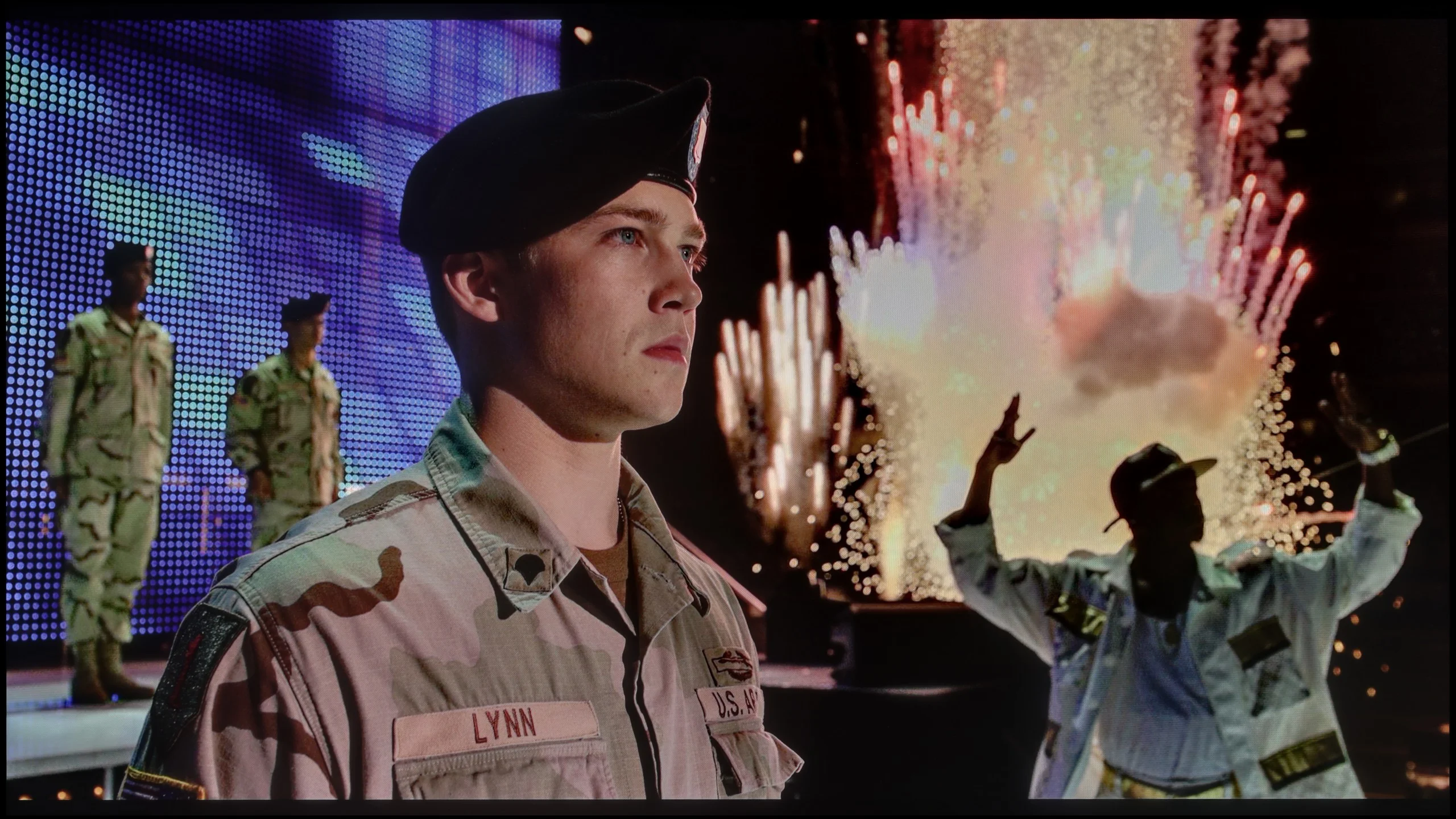
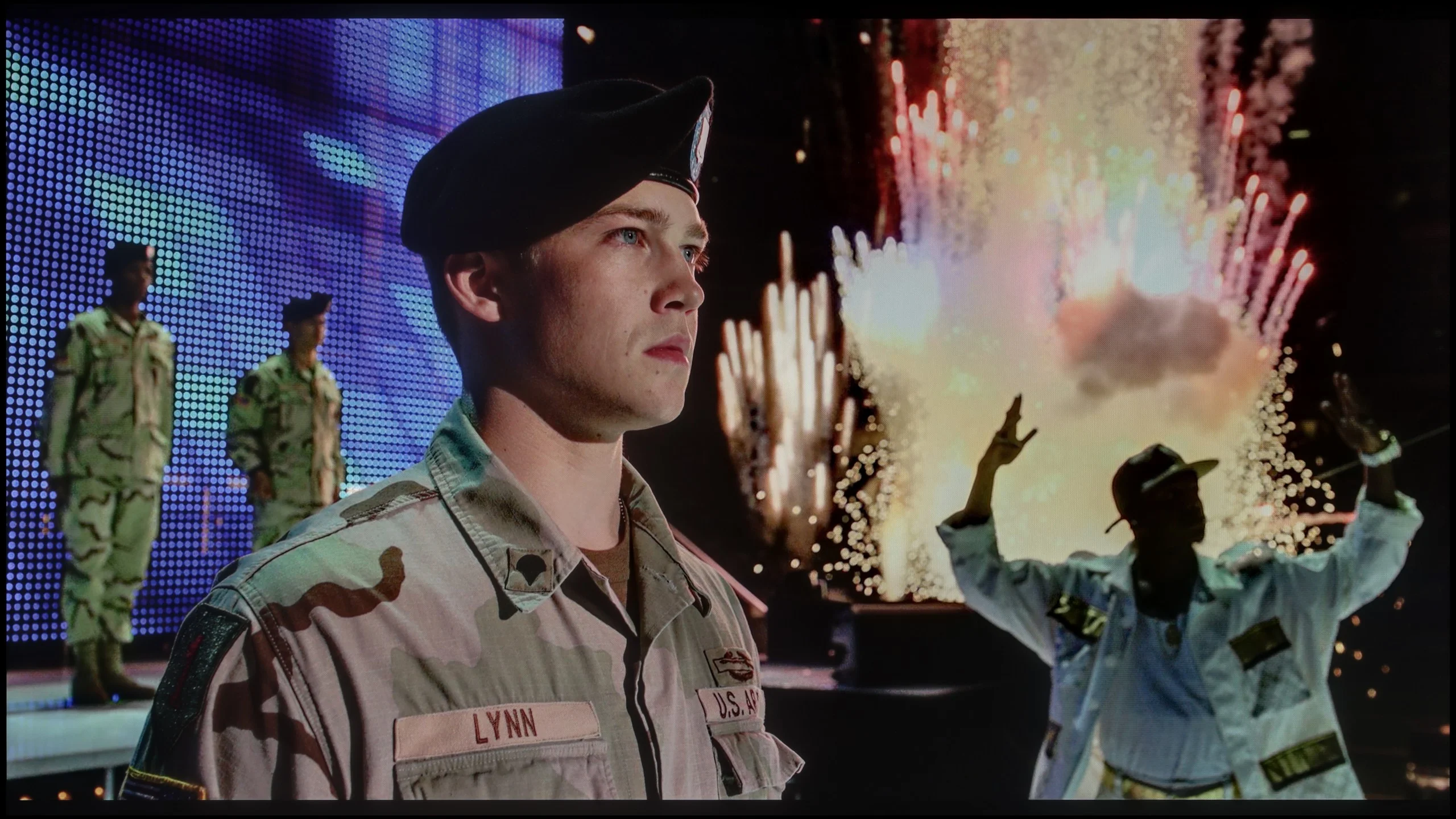
The photos show two HDR10 movies. 'Pan' is one of the brightest productions ever made, while 'Billy Lynn' (soldier) has brightness typical of streaming (Netflix, Prime, HBO MAX). Notice the intensity of effects and detail in whites.
Static HDR10


The photos present the visibility of white details in various HDR formats. They do not show brightness differences between TVs (these can be compared in the previous gallery).
Dynamic: Dolby Vision
Dynamic: Dolby Vision


The photos present the visibility of white details in various HDR formats. They do not show brightness differences between TVs (these can be compared in the previous gallery).
HDR luminance chart:
TCL RM7L
TCL C7L
The TCL C7L is, without doubt, an extremely bright TV. In synthetic tests using static test patterns it can reach peak brightness of around 2800 nits. That's a truly phenomenal result, given the price bracket it occupies. Unfortunately, measurements with real film scenes are not as spectacular as the white-square tests. Brightness in real HDR footage on the C7L falls to around 1200 nits. That's still very good, because the vast majority of modern films are graded to that level. However, when small, pinpoint elements appear on screen, the brightness of those details drops dramatically, even to around 400 nits, which reduces the HDR impact. The TV does this deliberately to preserve black levels and avoid excessive blooming. This is somewhat understandable, but it also shows that Mini LED technology is not completely without compromises in this respect. As for the HDR effect itself, alongside brightness the key factor is, of course, colour. Thanks to the use of new 'super' quantum dots, the colours are simply superb and among the best on the market. The TV is able to achieve very wide coverage of the BT.2020 and DCI-P3 colour gamuts, matching the best RGB Mini-LED screens with ease. Best of all, the C7L can maintain such high colour saturation regardless of the scene being displayed, which is often problematic in competing RGB Mini-LED TVs.
TCL RM7L is a bright TV. In our measurements its peak brightness hovered around 1600 nits. That is clearly less than the C7L, which can approach 2600 nits, but in real film scenes the difference between the models is not that large. In less demanding shots with many bright elements, the RM7L can sustain about 1000 nits, and sometimes even a little more, getting close to 1500 nits. It performs worse in dark scenes with small points of light, where their brightness can fall to around 500 nits. This is not random behaviour. The TV intentionally dims fine details to better control the backlight and preserve higher contrast. That comes at the expense of their intensity, but it is typical behaviour for TVs with local dimming in a similar price bracket.
Colour gamut coverage
In HDR not only brightness matters but also colour. And here the RM7L has plenty to show. Colours are highly saturated and a wide colour gamut is one of its major strengths. In our DCI-P3 measurements it reached about 96%, and BT.2020 around 83%. It is worth remembering that on a TV with this kind of backlight the result can vary depending on the scene. On test patterns colours look best, while in films their saturation is sometimes a little lower than on SQD Mini LED or QD-OLED TVs. The construction of the backlight itself is also interesting. The RM7L does not use the classic red, green and blue LED set. TCL used two green LEDs and one blue, with the red produced by a PFS phosphor. This shows up in spectrometer measurements, but it does not have a major impact on the picture. Colours are still rendered correctly.
Factory color reproduction
5.6/10
5.8/10
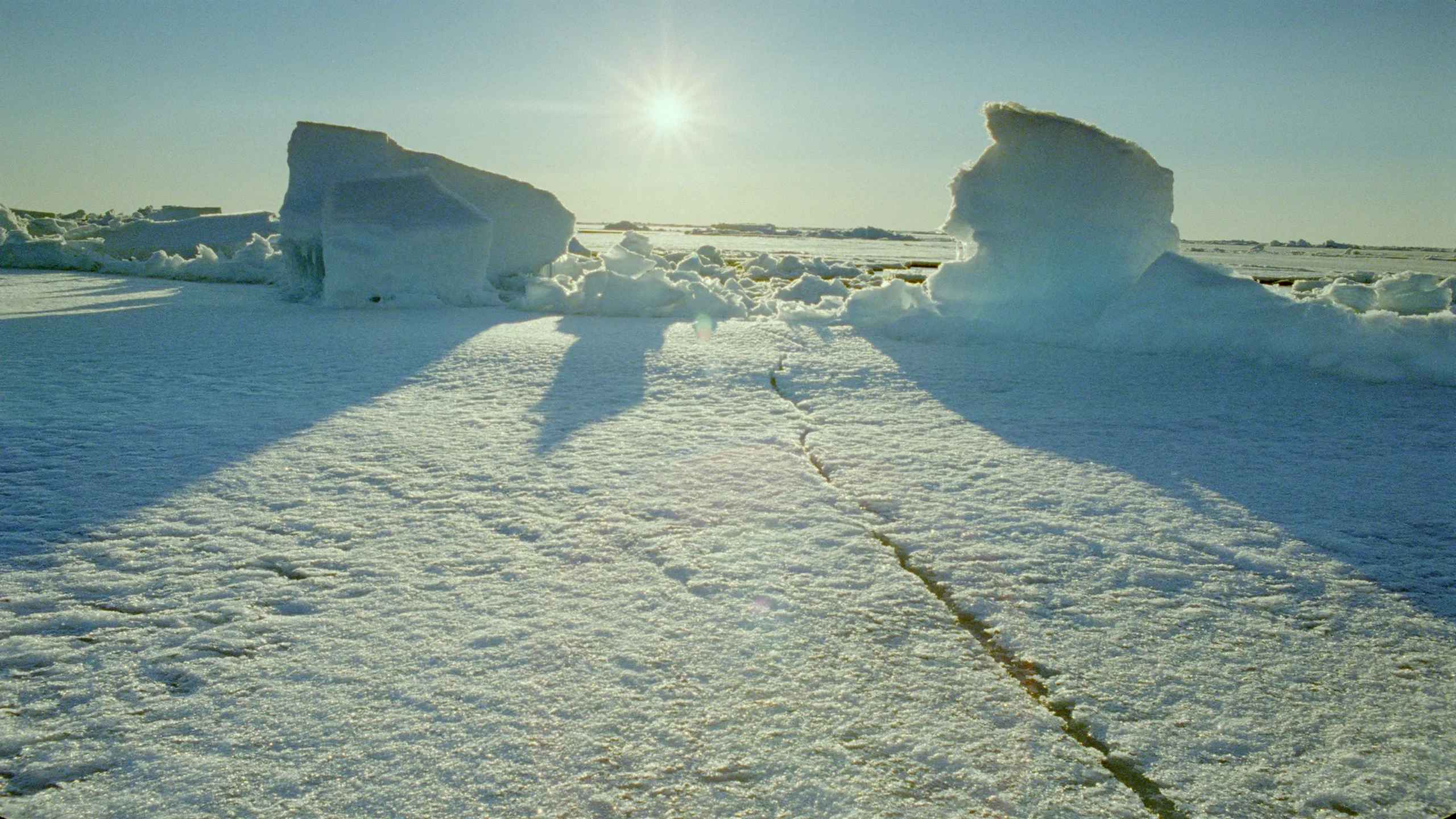

This gallery shows how colors change after professional TV calibration. If you notice the difference, we recommend ordering this service at SkalibrujTV.com.
Factory Mode
After calibration
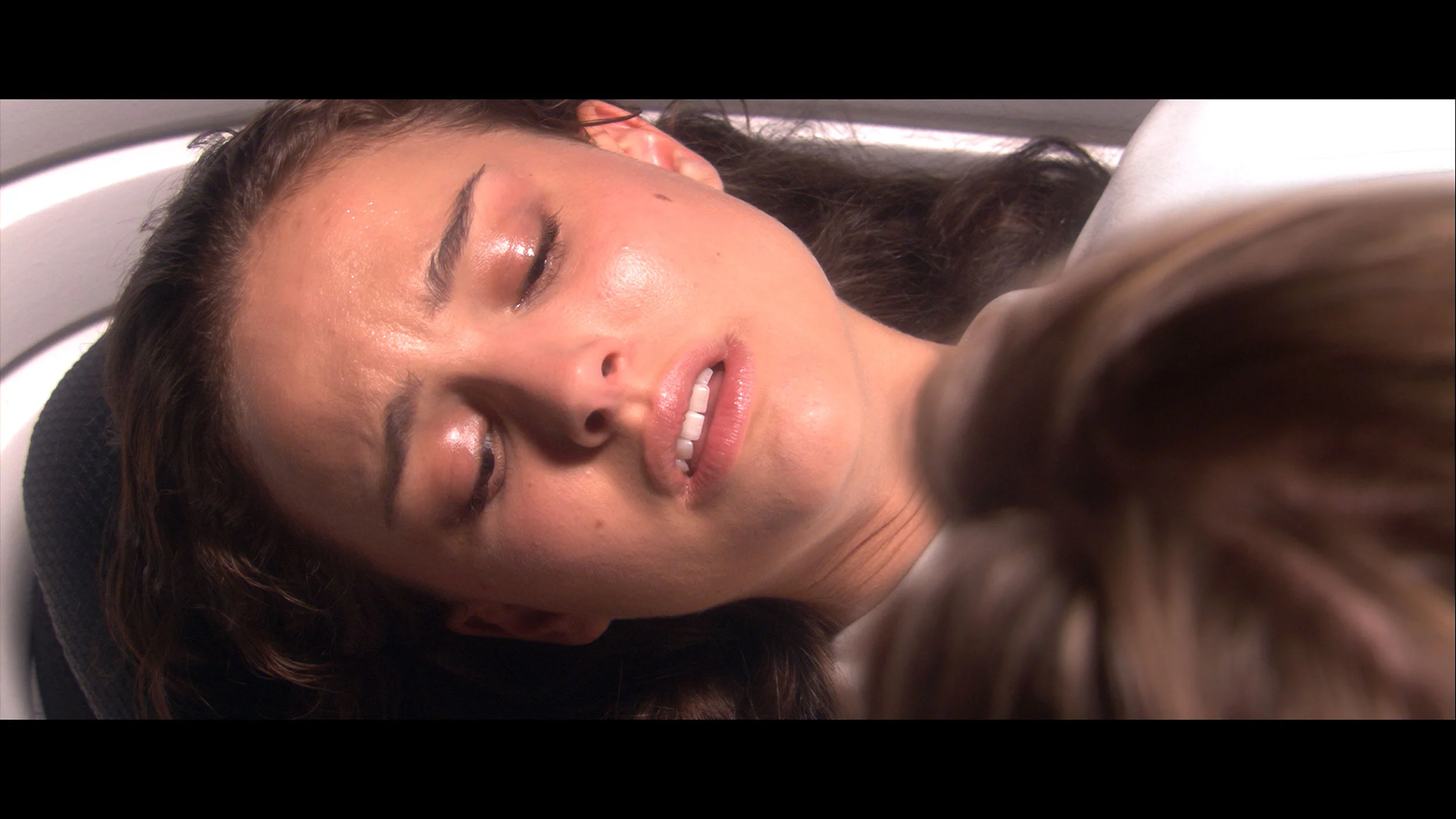
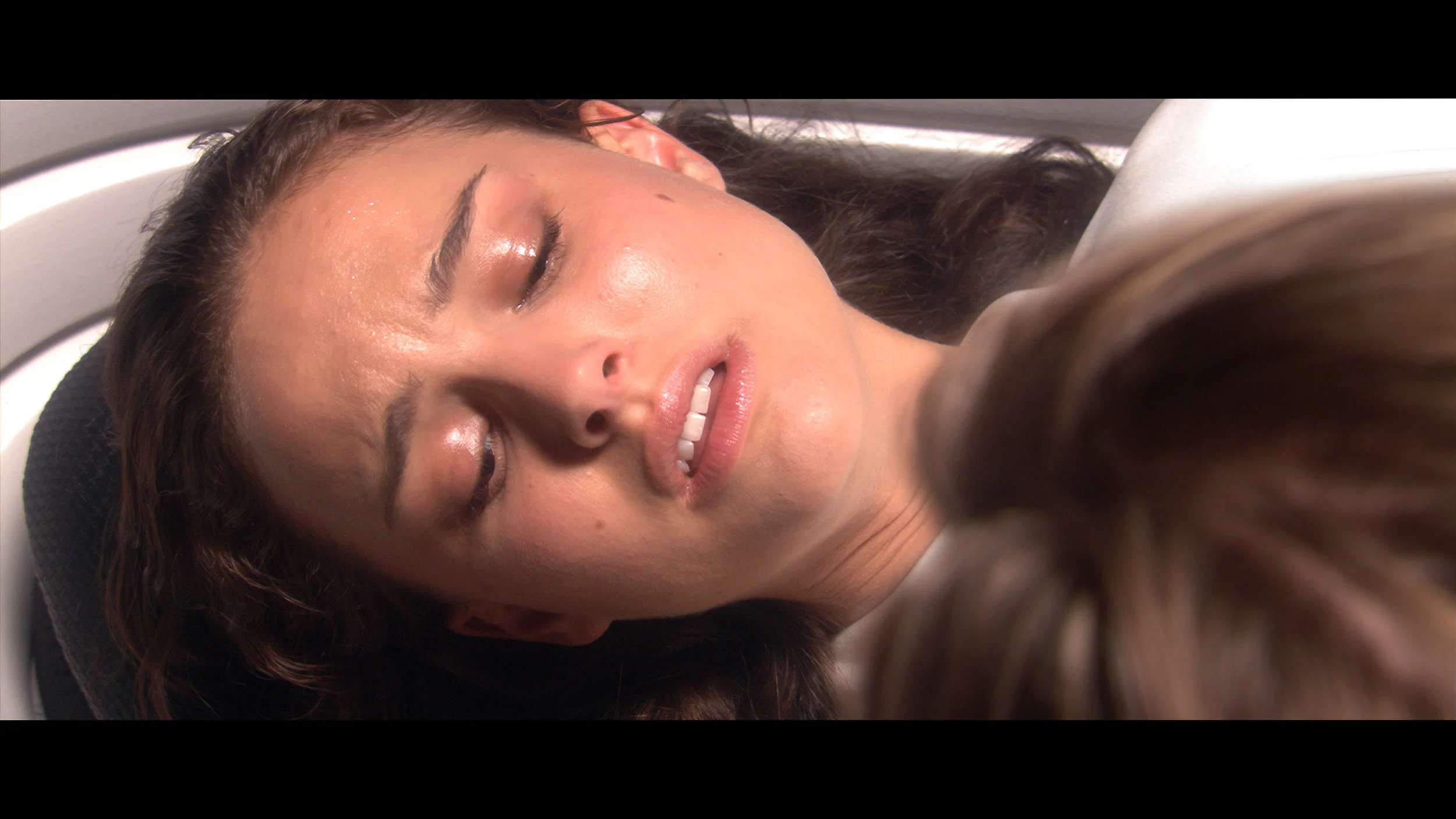
This gallery shows how colors change after professional TV calibration. If you notice the difference, we recommend ordering this service at SkalibrujTV.com.
Factory Mode
After calibration
When it comes to out-of-the-box colours, what's new in TCL TVs, including the C7L model, is the addition of a picture mode called Filmmaker Mode. This is significant because such a mode was not previously available from this manufacturer. As the name suggests, this setting is meant to present the picture with the filmmaker's full intent. After our tests we can confirm that it is, without doubt, the best built-in mode on this TV if you want faithful colour reproduction straight out of the box. However, we certainly wouldn't say it's perfect. Like most devices on the market, this C7L also had some factory calibration errors. The white balance in Filmmaker mode drifted towards a slightly greenish-yellow tint, caused mainly by an excess of the green component and a noticeable shortfall in blue. Of course, this won't be a major drawback for the average viewer, but if you care about perfect whites, natural skin tones and getting the full potential out of the structure of those new "super" quantum dots, the TV really needs professional calibration.
We checked the out-of-the-box colours in Filmmaker Mode, the best picture setting available to the user. TCL has been using it in its TVs for two years, and its aim is to reproduce the image as faithfully as possible in line with the creators' intent. On the RM7L it was indeed the most accurately set mode, although it was not without flaws. The biggest problem was the white balance. Too much red and blue made the image shift towards slightly pink tones. This was visible in both SDR and HDR. On top of that the brightness response was slightly boosted, making the picture appear a little brighter but at the same time less contrasty than it should be.
Color reproduction after calibration
7.5/10
8/10
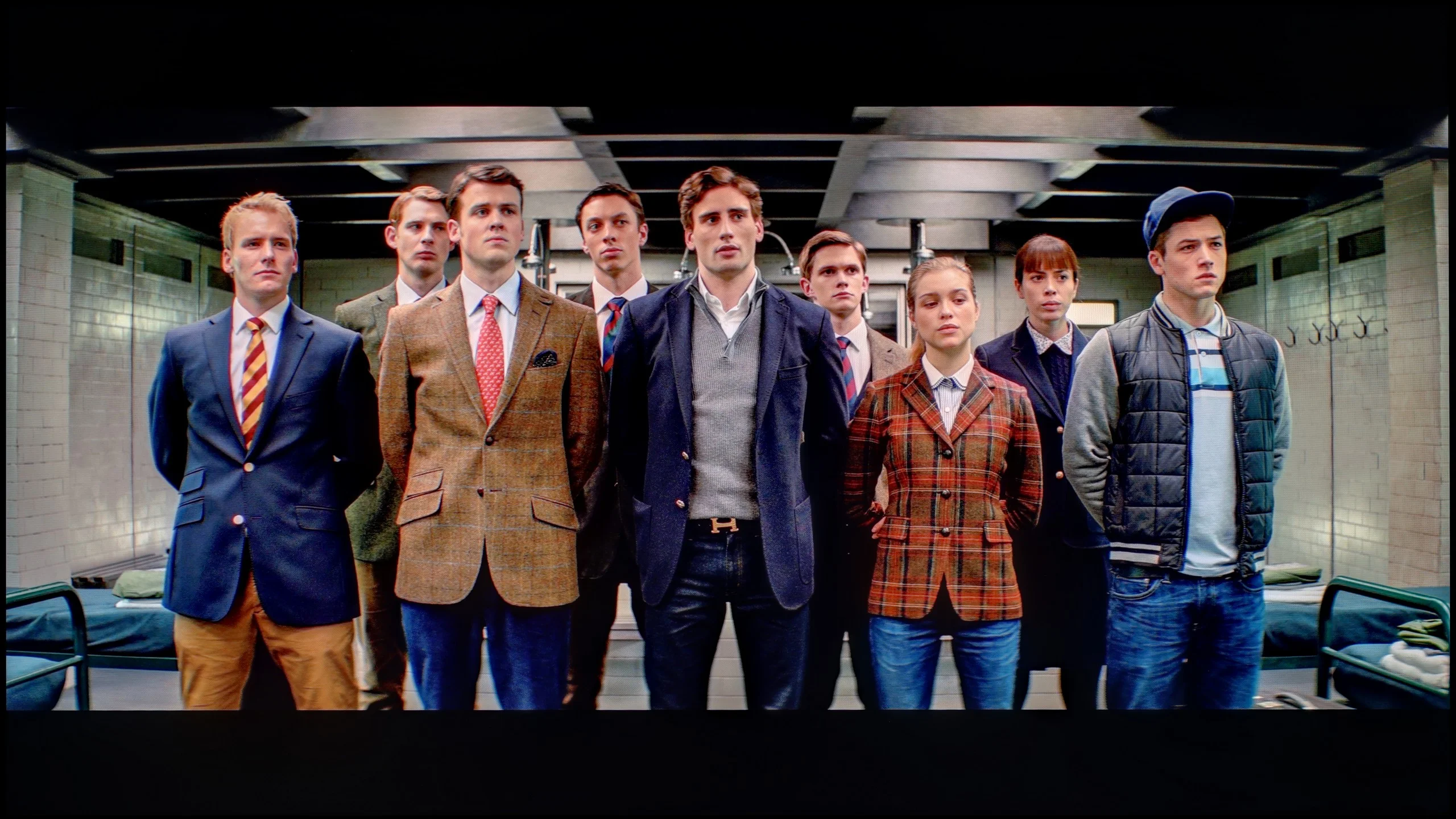
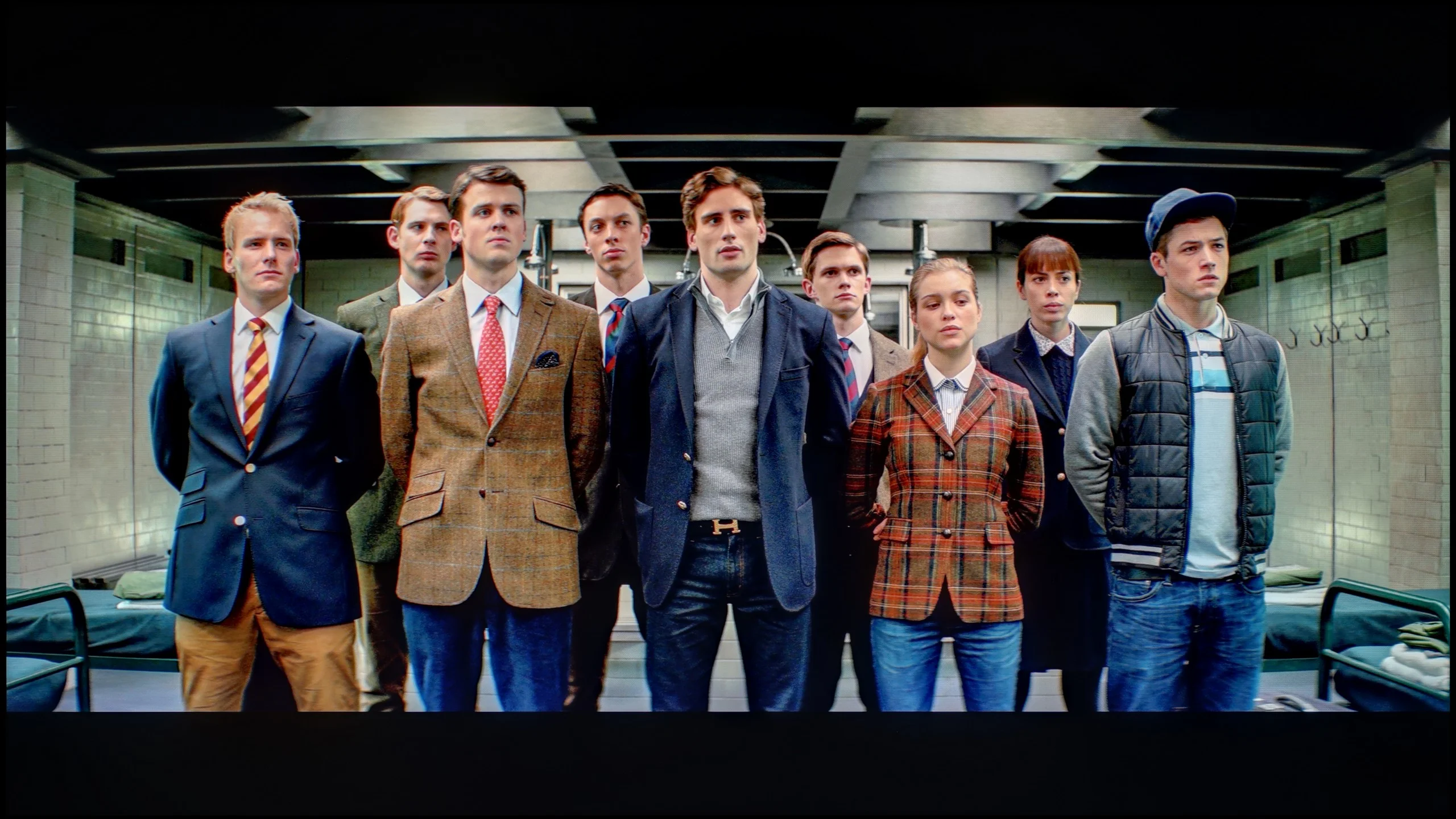
The photos show how movies look on the TV. Pay attention to black detail visibility, colors, and shadow tint.
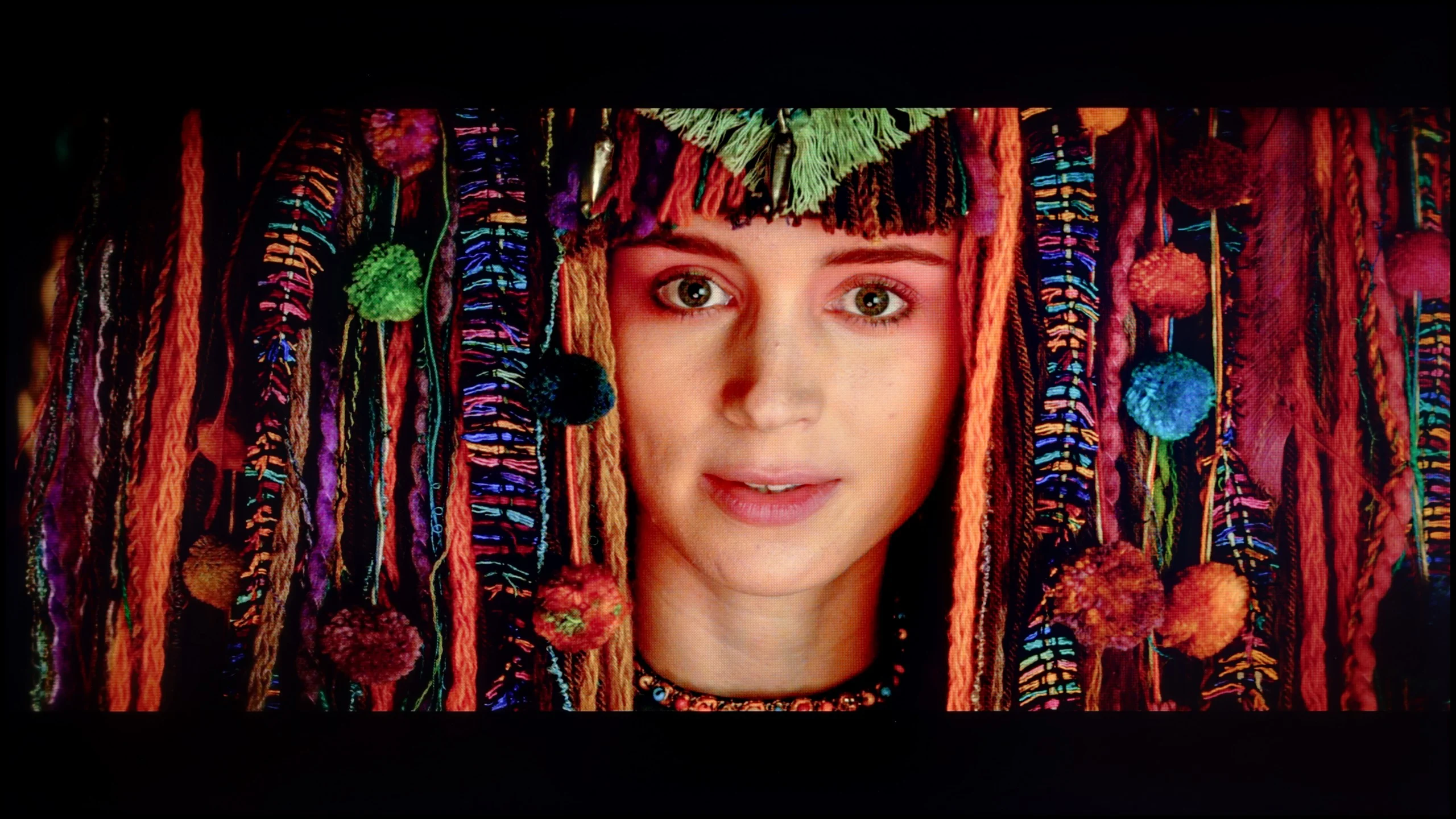
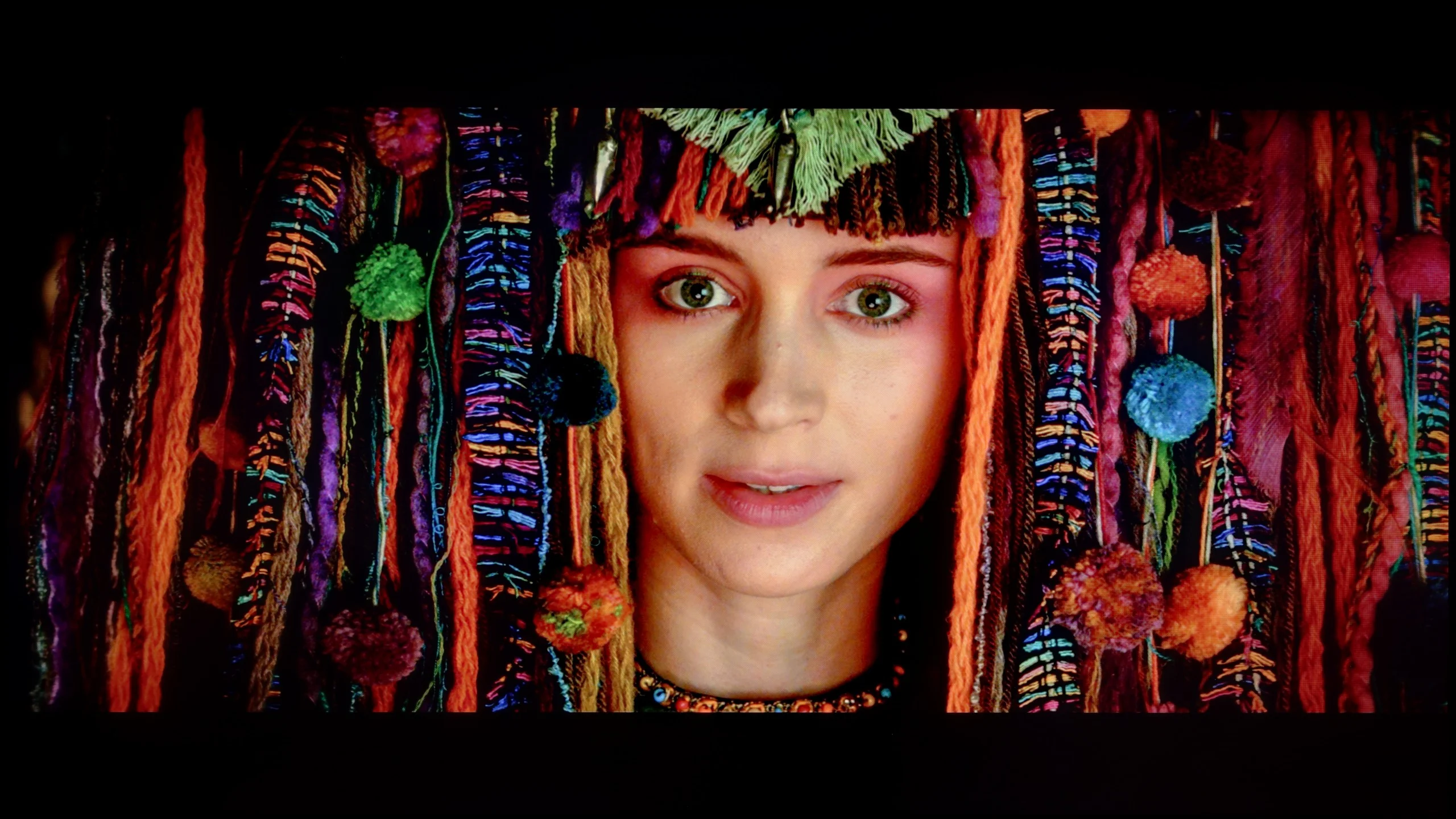
The photos show how movies look on the TV. Pay attention to black detail visibility, colors, and shadow tint.
After professional calibration we managed to greatly improve the situation in the factory Filmmaker Mode. After our corrections, the errors in the ColorChecker test and across the wide colour gamut fell below the threshold of human perception, that is below a value of 3, which is a very good result. The TCL C7L definitely benefits from such a procedure in terms of colour fidelity, and it's hard to deny. Brightness management for HDR content looks a little worse after calibration, though. As I described earlier, even though we set this model up correctly, when you play real film scenes the TV can handle its brightness in a rather peculiar way. It often brightens some elements on screen contrary to the creator's intent, which is clearly visible in the EOTF traces measured from specific films. Despite this defect, or rather a specific characteristic of the television, one thing you can't fault is that after calibration the C7L was able to reproduce colours accurately.
Thanks to the fairly extensive calibration menu we were able to correct the vast majority of the previously described issues. The biggest change concerned the white balance. After calibration it now looks very good, so the picture shed its pinkish tint and became much more neutral. The luminance response has also improved. Both the SDR gamma and the HDR EOTF curve are now much closer to the reference values. The picture is no longer unnecessarily brightened, and darker areas look more natural and have greater depth. Better luminance accuracy also affected the colours, which after calibration are noticeably more accurate. Not everything could, however, be set perfectly. With HDR material the RM7L still interprets part of the signal in its own way and does not always follow the reference curve precisely. This is most apparent in some darker scenes, where the TV can either slightly lift the shadows or darken them completely. That is where the earlier impression of a slightly brightened, less contrasty picture came from. Despite this, the calibration delivers a very good result. It removes the most visible errors and, above all, makes the picture much closer to how it should look.
Smoothness of tonal transitions
8.6/10
8.9/10
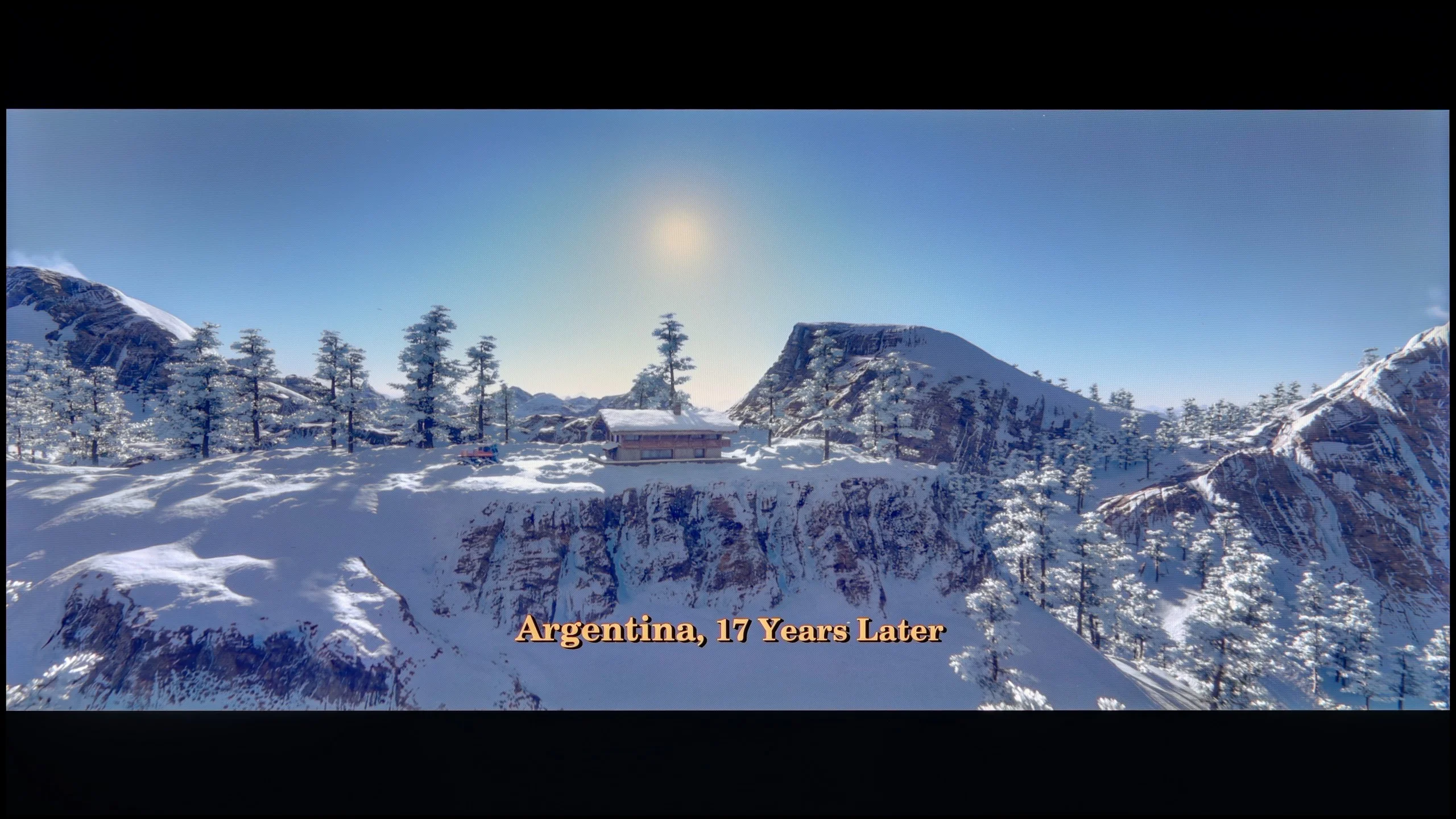
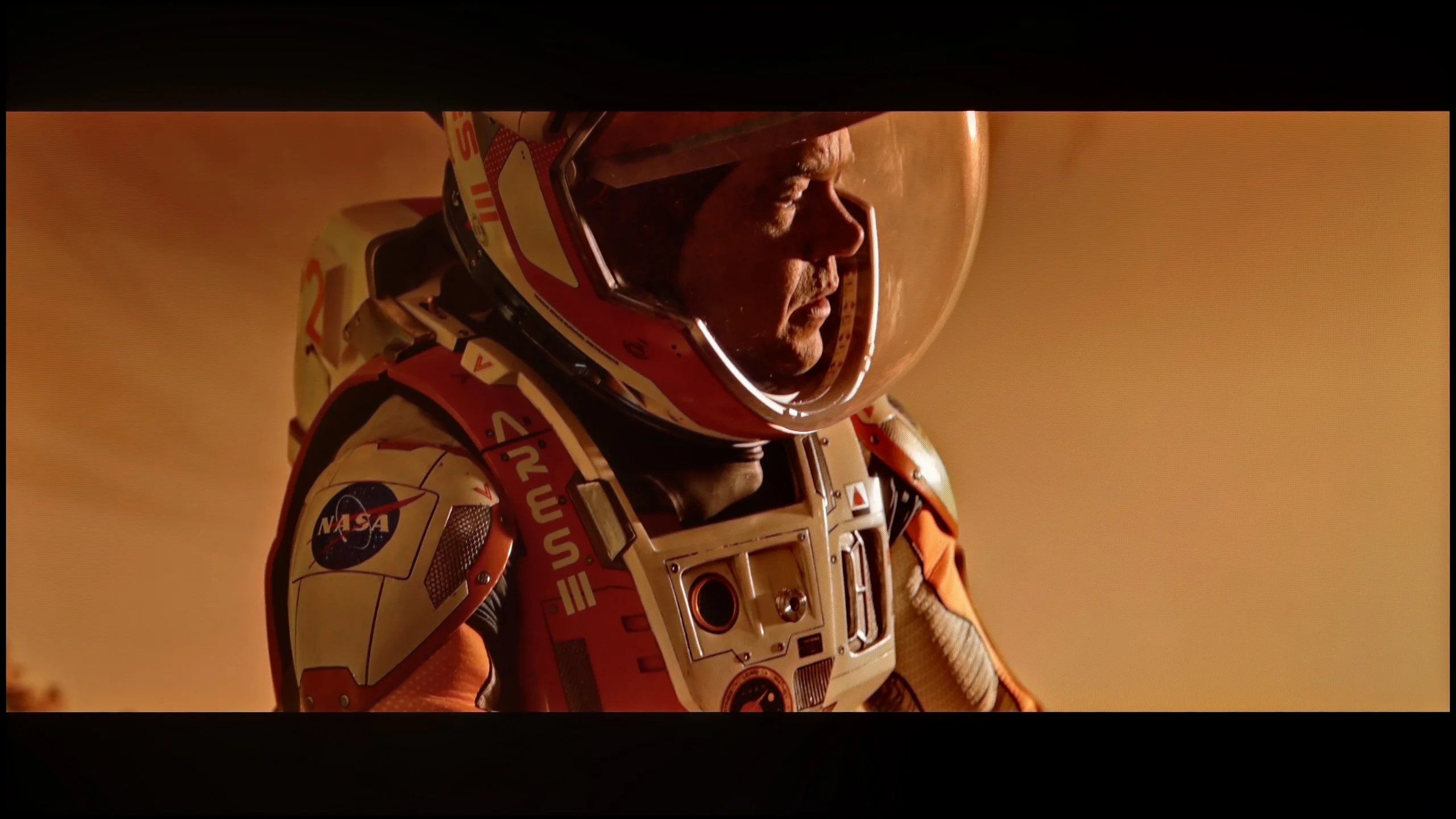
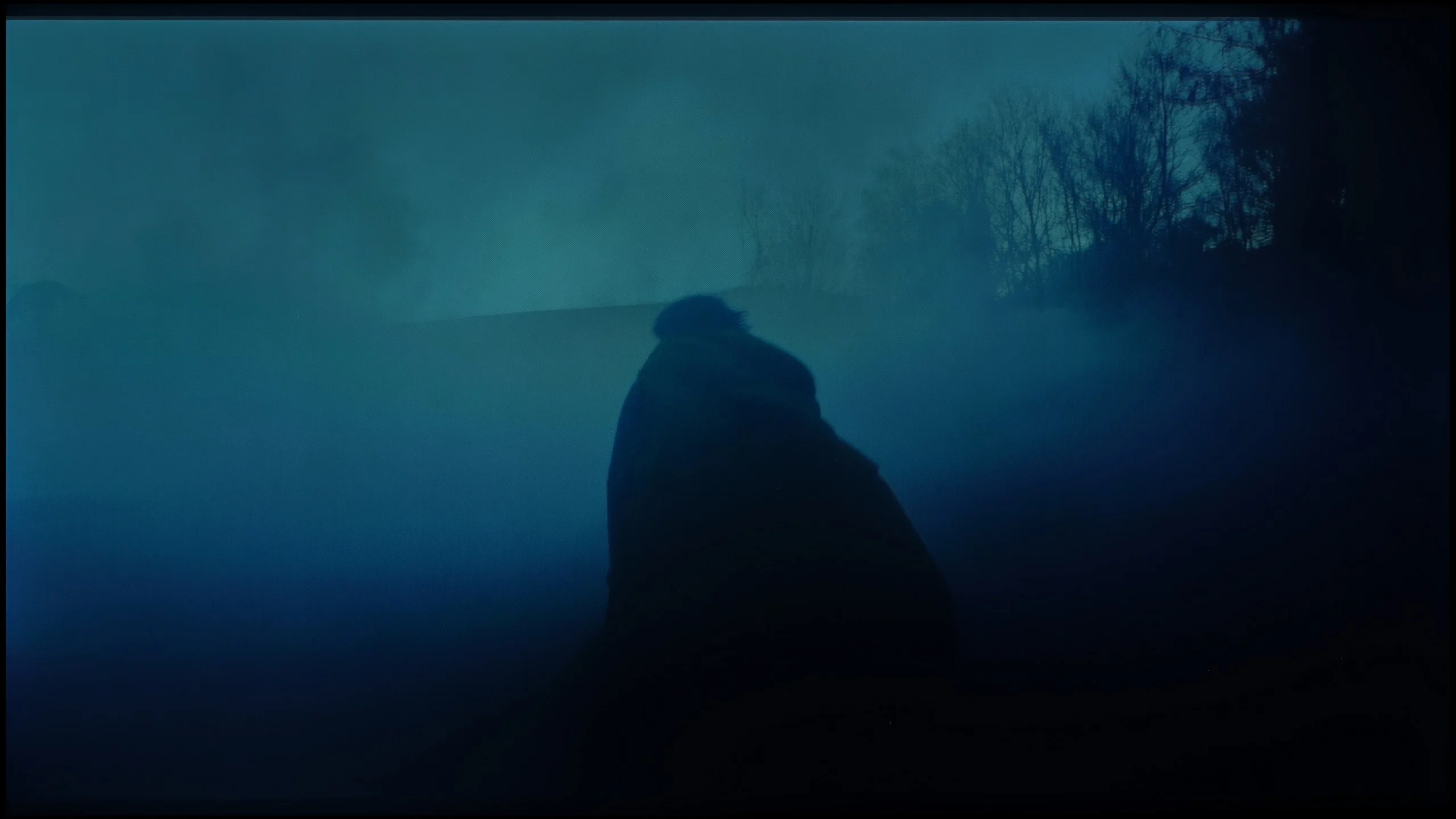
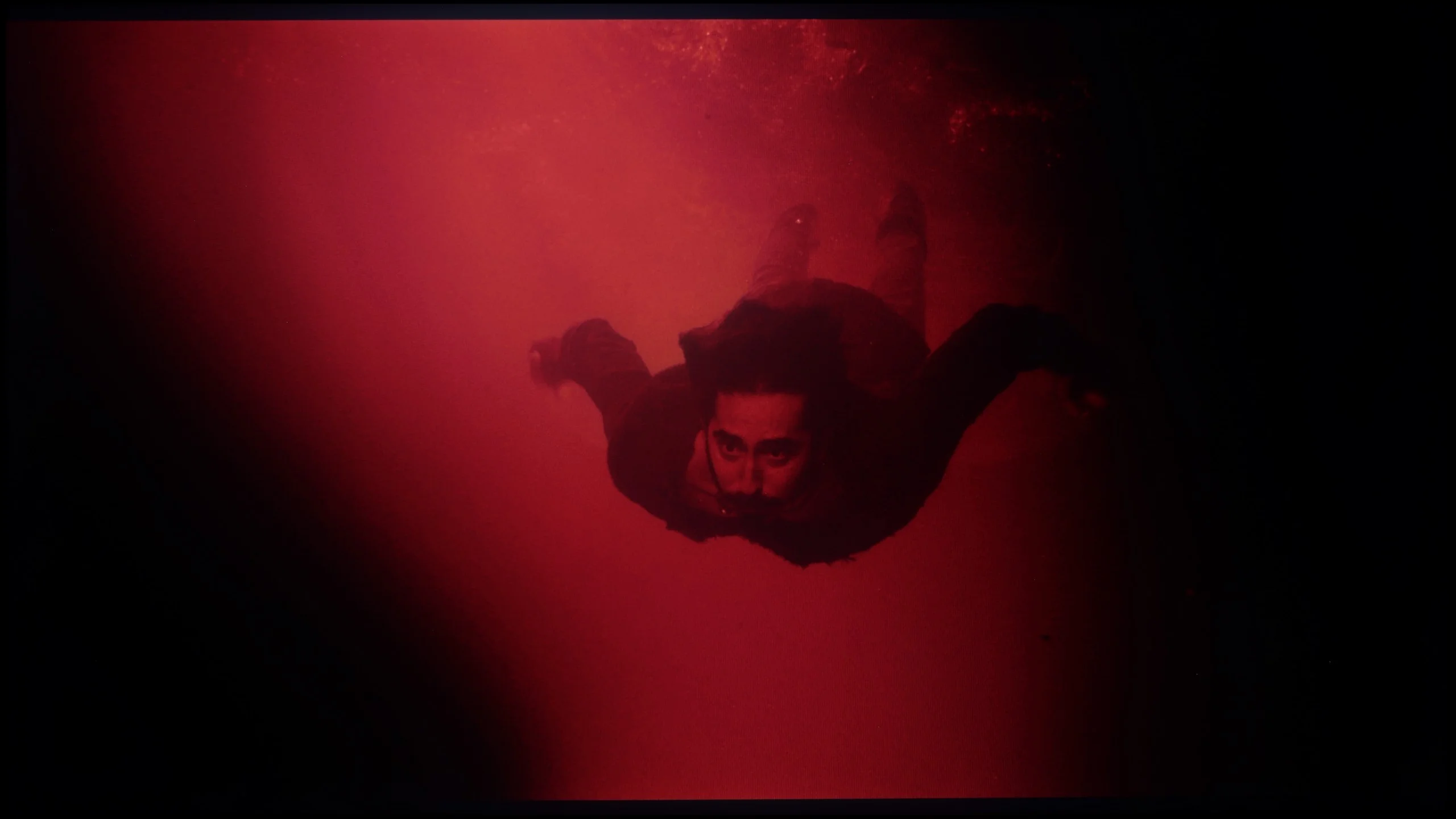
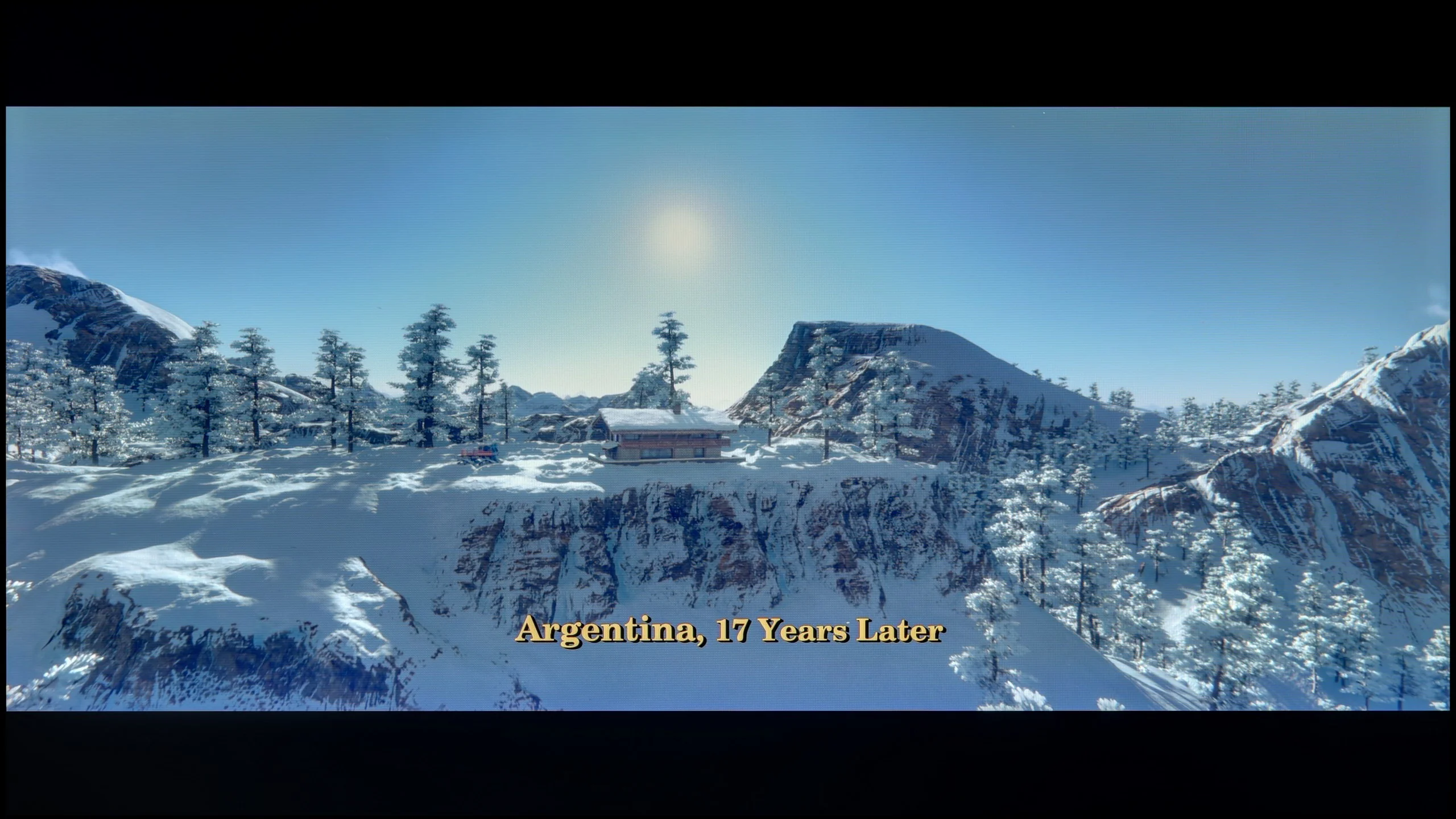
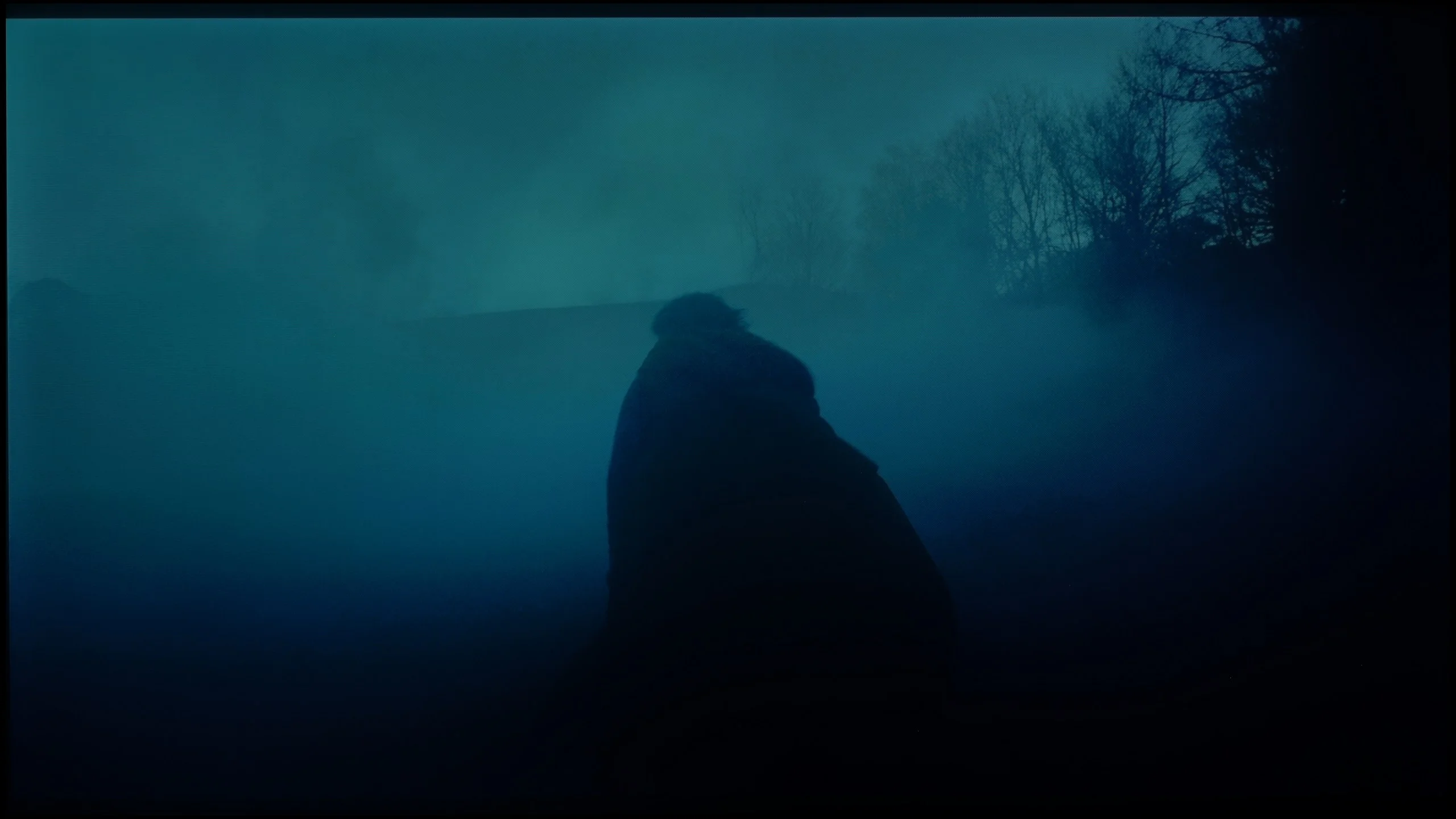
These are selected scenes that show smooth tonal transitions from one color to another. If you see distinct banding, it’s the TV panel’s fault.
These are selected scenes that show smooth tonal transitions from one color to another. If you see distinct banding, it’s the TV panel’s fault.
These are selected scenes that show smooth tonal transitions from one color to another. If you see distinct banding, it’s the TV panel’s fault.
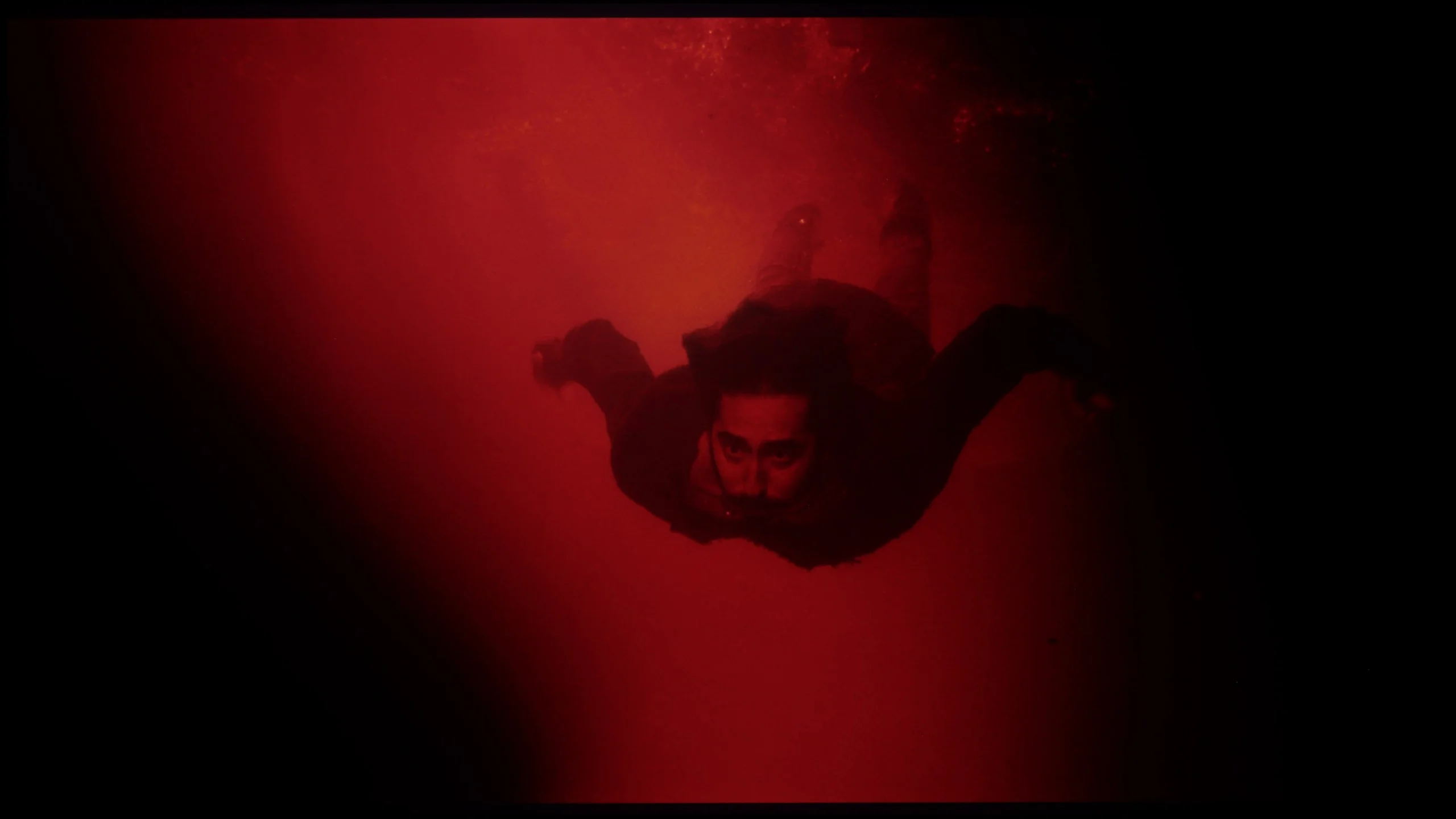
These are selected scenes that show smooth tonal transitions from one color to another. If you see distinct banding, it’s the TV panel’s fault.
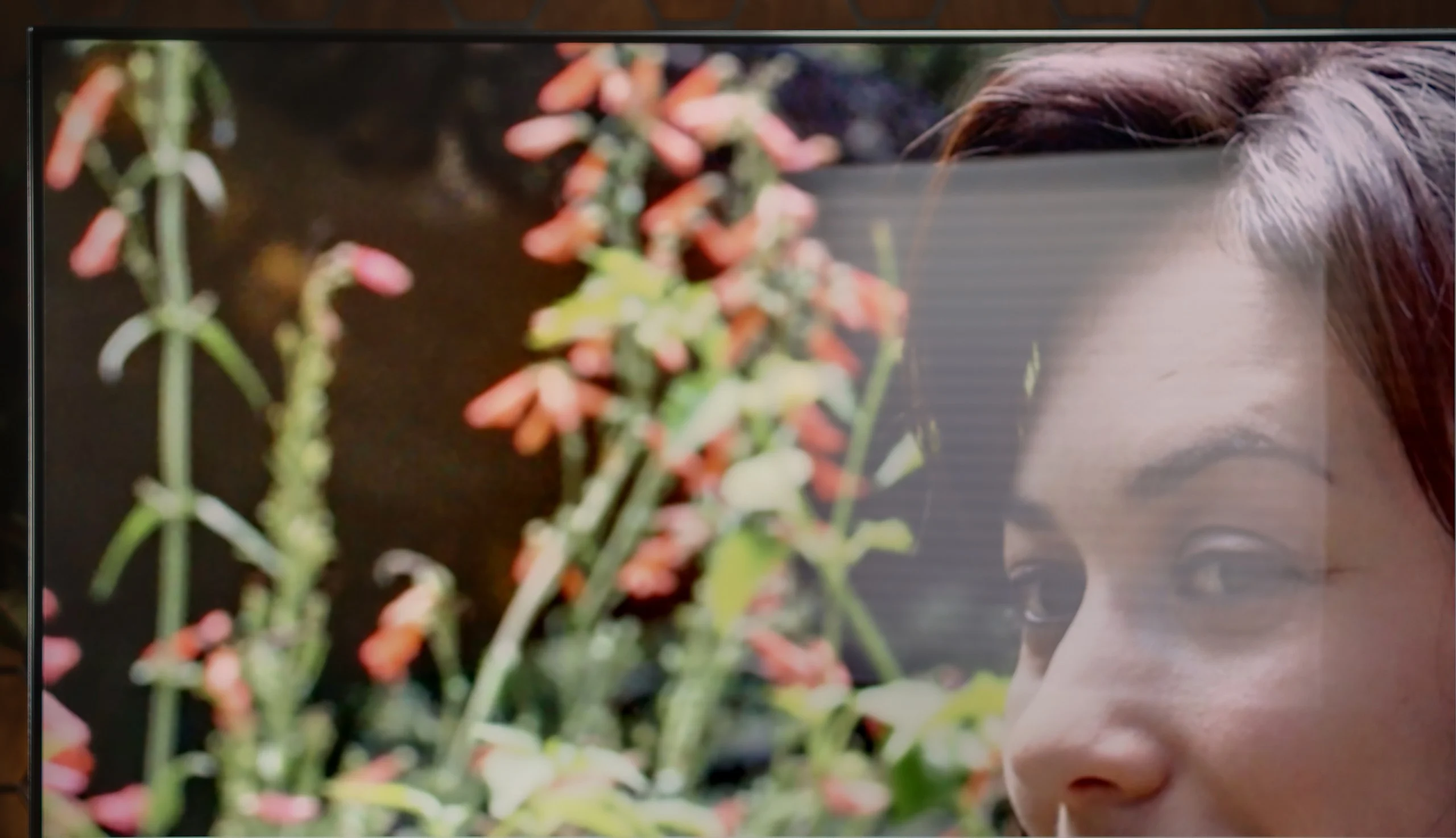
Another aspect worth discussing is the smoothness of tonal transitions. Here it must be honestly admitted that on the TCL C7L it simply looks good. In most scenes, and especially in the brighter shots, there are absolutely no banding issues. In native 4K HDR content the image is clean and the transitions between shades are very smooth. It looks just as good in Dolby Vision, where during our tests we did not notice any digital artefacts or ugly colour posterisation. You could, if you wanted to be picky, point to very dark scenes where a heavily compressed signal is being displayed on screen. Under those conditions the C7L can sometimes reveal minor imperfections, but in this model that is not something that really catches the eye, especially during everyday film viewing.
The smoothness of tonal transitions on the RM7L is very good. In both bright and dark scenes the gradients are smooth and there is no visible colour banding. Minor issues only appear with exceptionally demanding material, such as our fourth test pattern featuring red water transitioning into black. It should be noted, however, that most televisions struggle to reproduce this scene perfectly. Therefore, in everyday use this should not pose a significant problem.
Image scaling and smoothness of tonal transitions
5.5/10
5.5/10

Smooth transition function
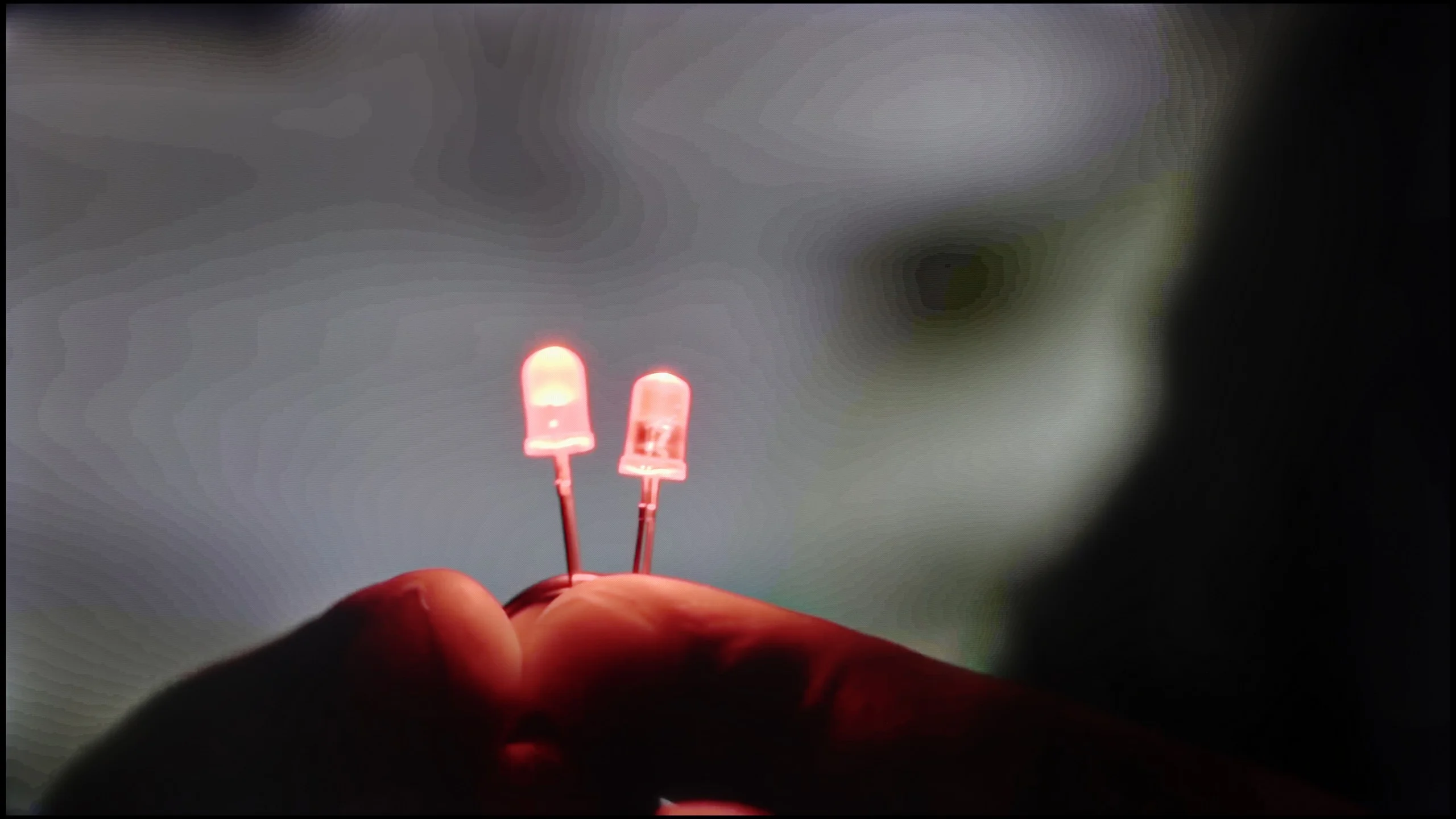
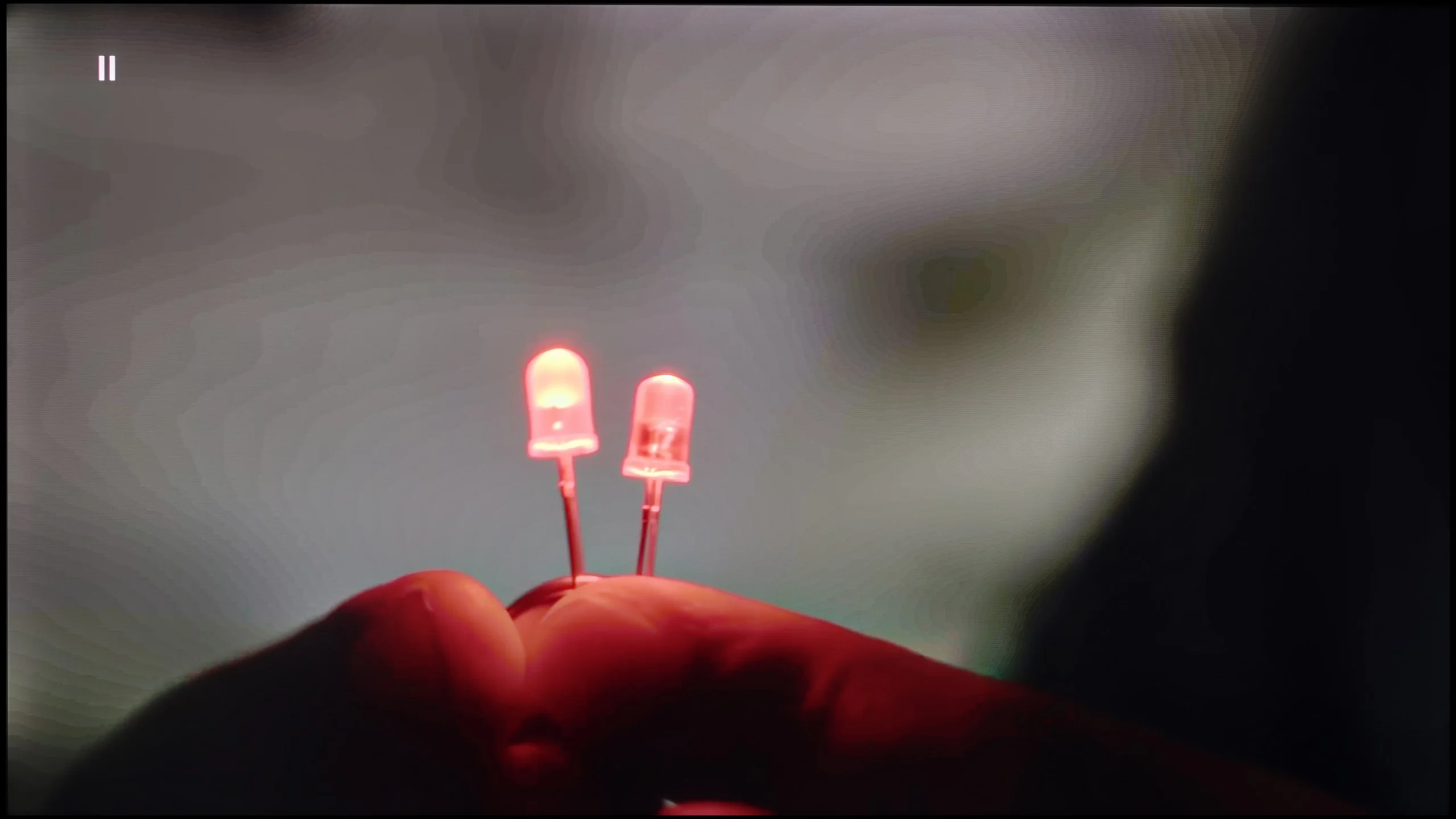
The match photo shows how the TV smooths weak tonal transitions in low-quality video.
Image scaling SD (576i)


The model photo shows how it handles upscaling of SD material.
This can be seen as, to some extent, the Achilles' heel of the C7L. Unfortunately, this TV uses the older MediaTek Pentonic 700 chip, which has never been famed for outstanding digital image processing. You can clearly see that in the behaviour of the progressive smoothing function, the feature responsible for reducing jagged edges and removing digital noise. It simply performs very poorly. When set to low, its effectiveness is almost non-existent. The only small plus is that the algorithm does not further spoil the picture or blur details unnecessarily. Upscaling, that is scaling lower-resolution content to 4K, performs slightly better. It is simply adequate and does not stand out against the competition. There is no denying that the C7L would benefit greatly in this regard if the manufacturer opted for the newer Pentonic 800 processor, which is now appearing in an increasing number of rival models.
Upscaling and digital image processing are not the RM7L's strong suit. TCL has used the MediaTek Pentonic 700 chipset here, designated MT5896, which is not among the best processors when it comes to handling lower-quality source material. The biggest problems appear with heavily compressed content from YouTube or standard broadcast TV. The processor cannot effectively hide posterization and the characteristic banding between tones. The feature intended to smooth these issues does little to help, and can also interfere with the image too much, smoothing, for example, faces or fine textures. For that reason it is best simply not to use it.
Standard upscaling to 4K looks better. Lower-quality content is sufficiently sharp and retains an adequate amount of detail. It is not on a par with the best processors on the market, but for everyday viewing the result is entirely acceptable.
Blur and motion smoothness
7.8/10
7.8/10
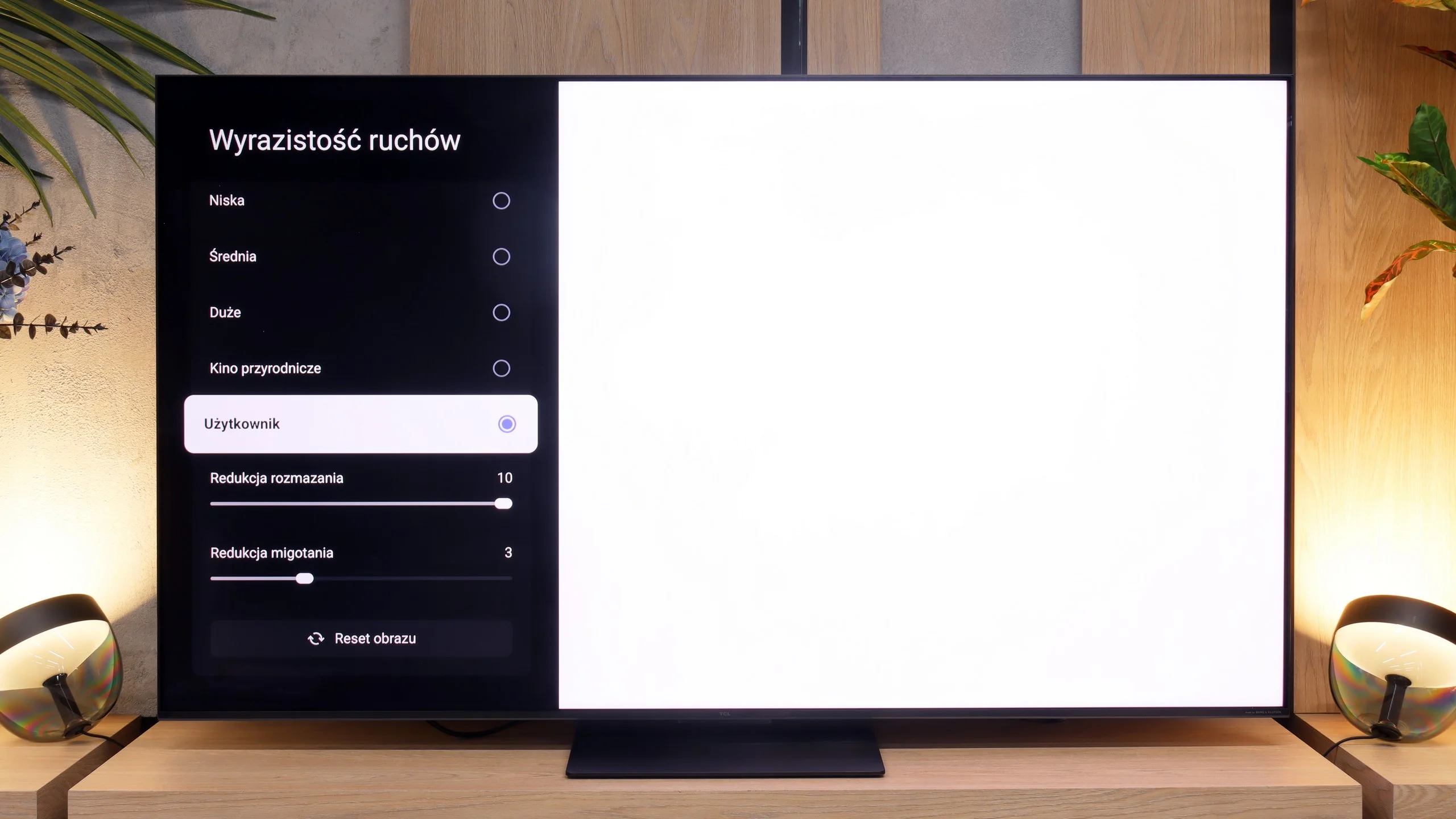
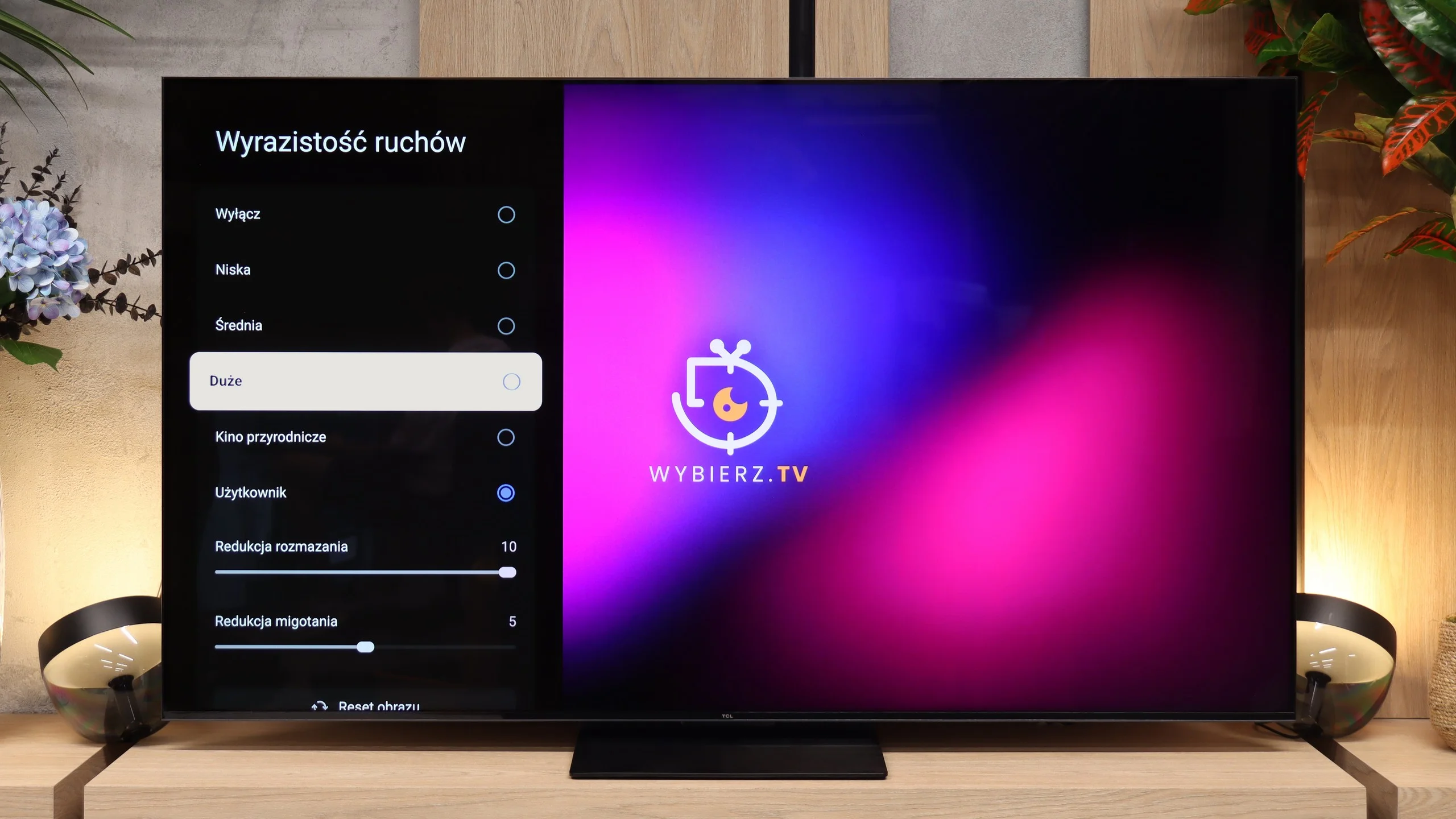
Blur (native resolution, maximum refresh rate):

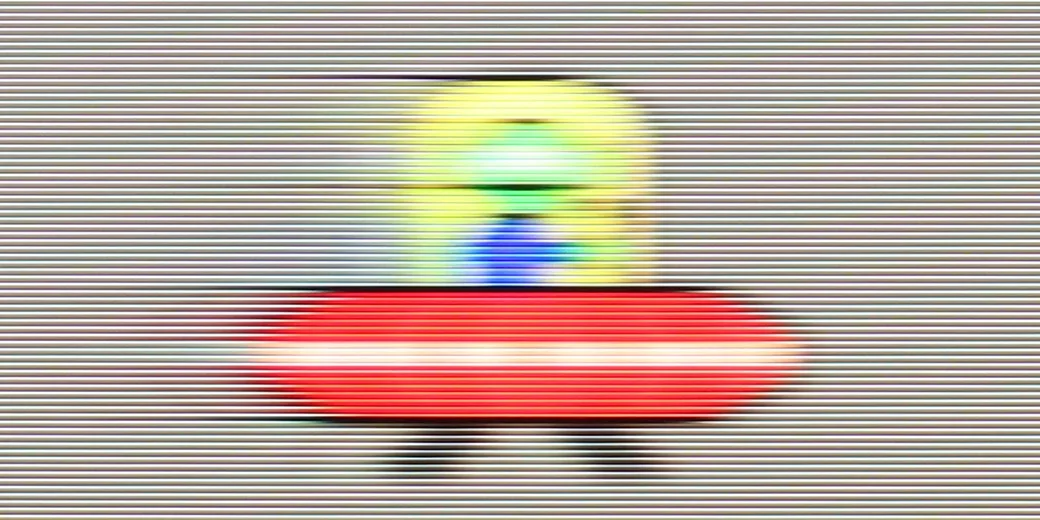

Blur (BFI function enabled):



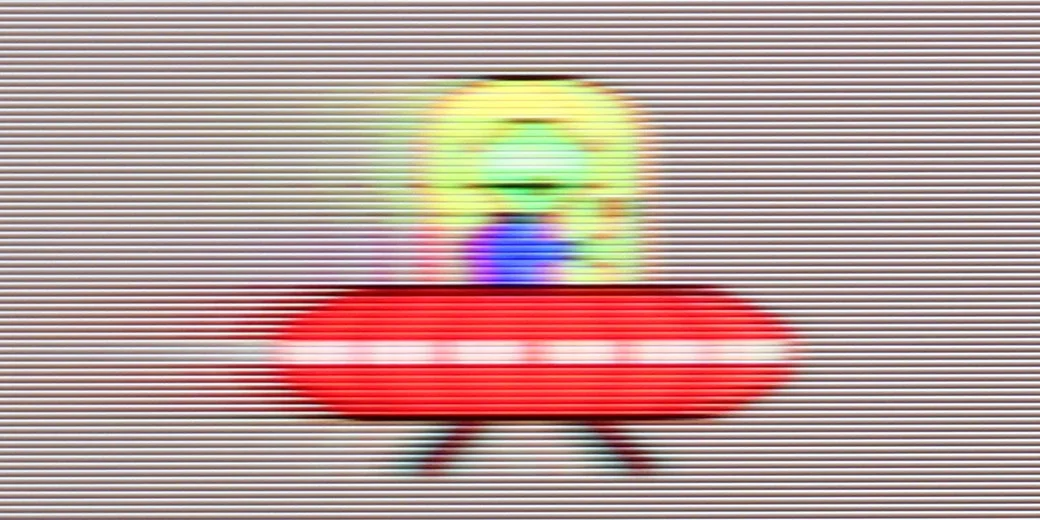
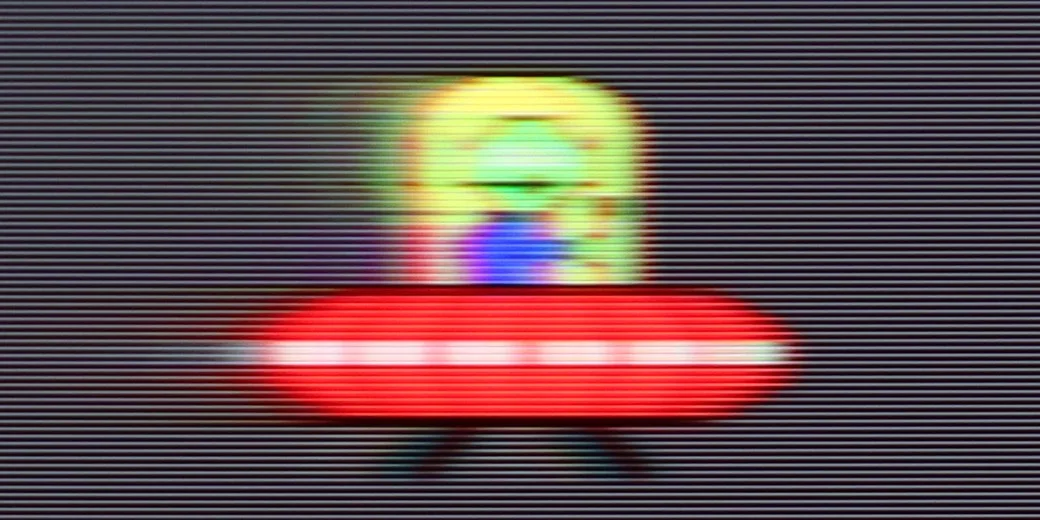
Blur (4K@144Hz):
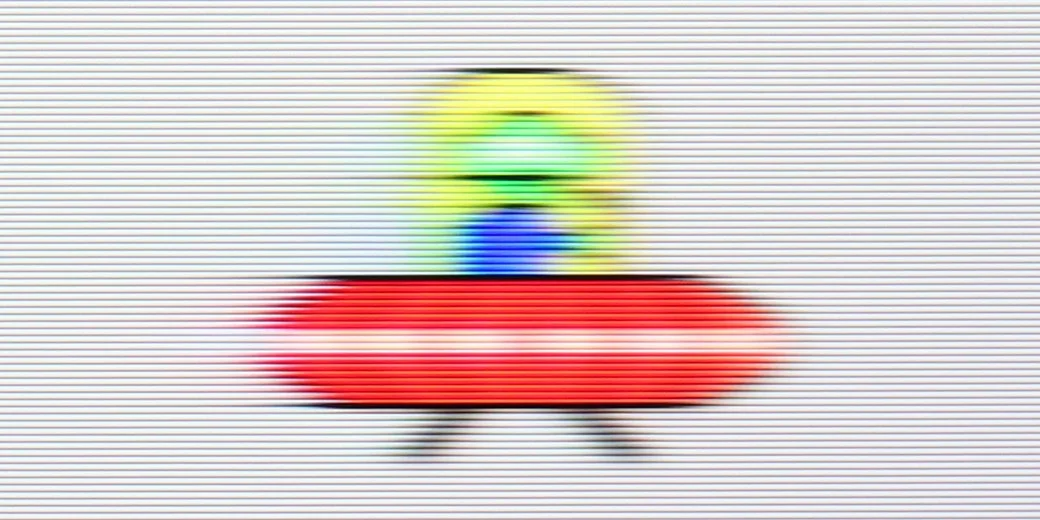
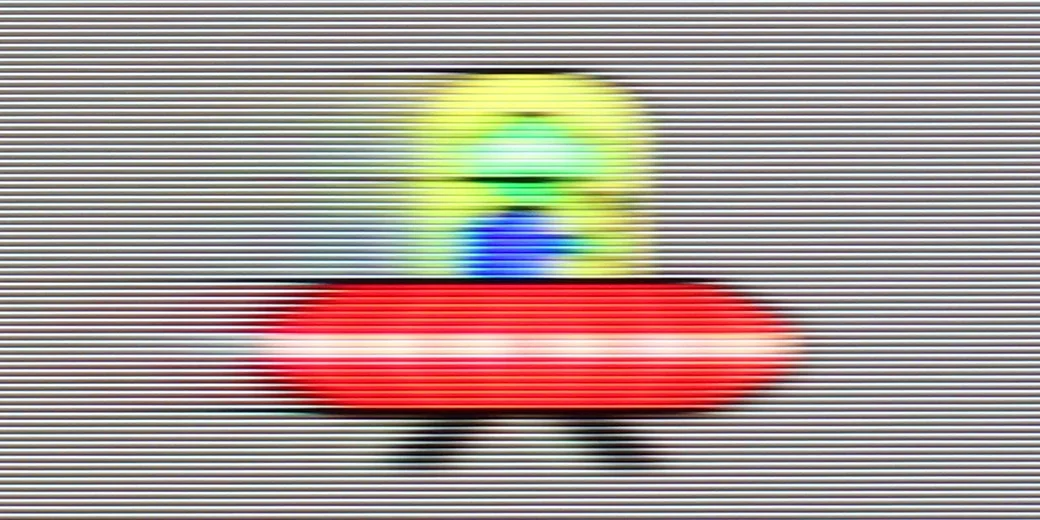
Blur (4K@144Hz ):

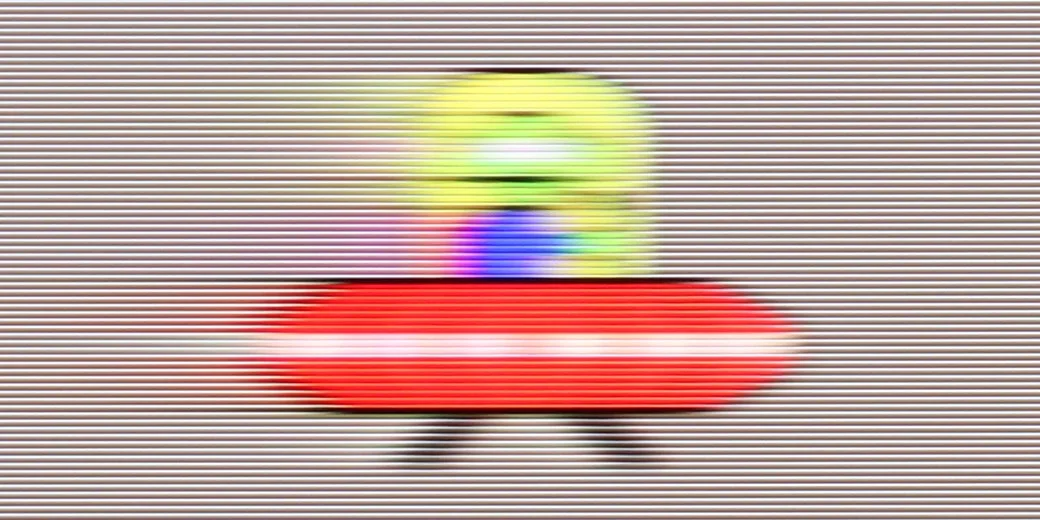
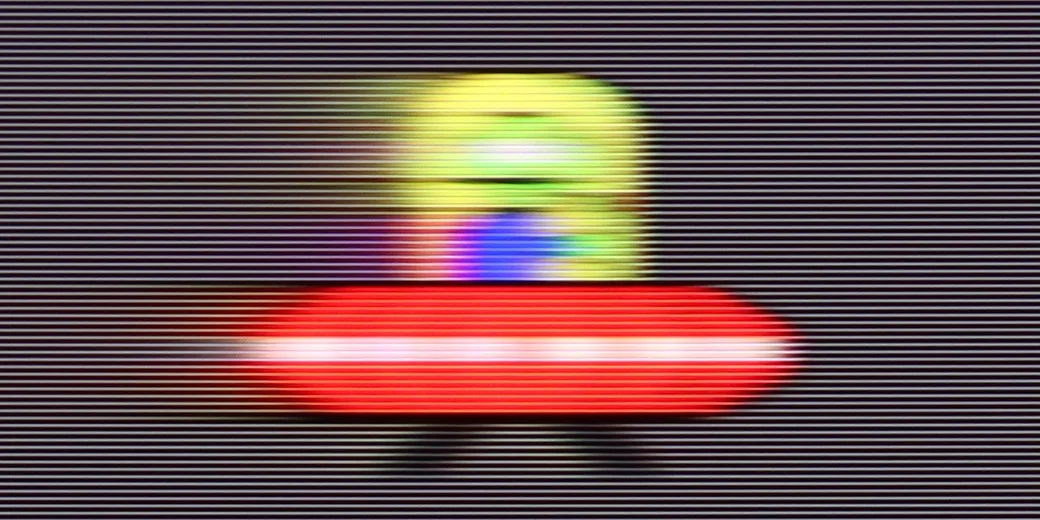
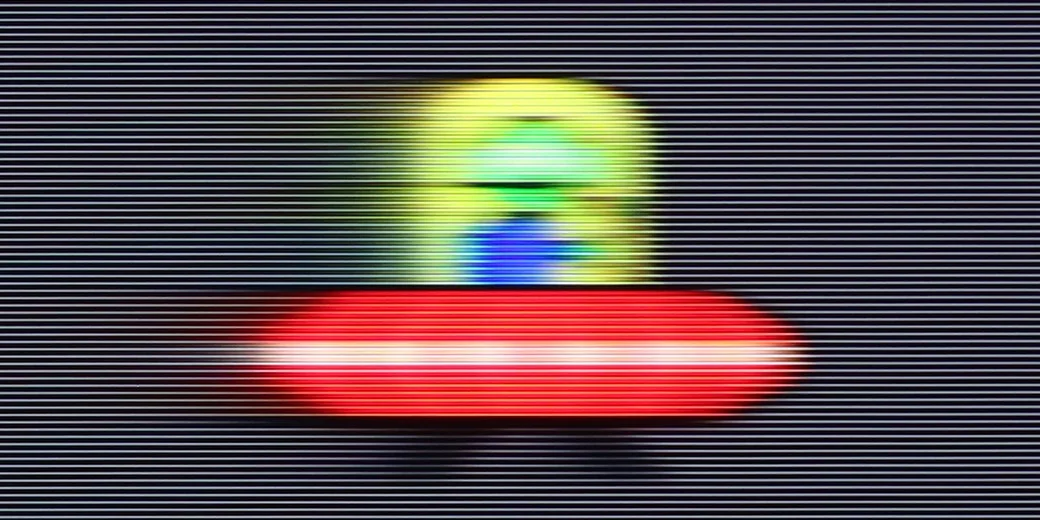
The TCL C7L uses a native 4K panel with a 144 Hz refresh rate, which at lower resolutions when connected to a PC can even reach up to 288 Hz. These are, of course, very high figures and impressive on paper, but bear in mind that almost all the dynamic content you’ll watch on this TV will still run at around a maximum of 120 Hz. To rein in that motion, the TV’s menu includes a motion-smoothing system called "Motion Clarity". It offers several preset modes, including a user mode that we strongly recommend you set manually using our tried-and-tested guides on our YouTube channel. There are two key sliders available. The first, "Blur Reduction", is responsible for cutting motion blur and improving sharpness in dynamic 60-fps material, such as sports broadcasts. The second slider, "Flicker Reduction", lets you add artificial frames to films and series shot in cinematic 24 or 30 frames per second. This, of course, can completely eliminate the irritating judder that appears during camera movement.
The RM7L features a 144 Hz VA panel, so from the outset it is well suited to sports, gaming and other fast-paced content. The high refresh rate also gives the motion interpolation more scope, allowing it to generate additional frames. On the RM7L it works well and, with the right settings, can noticeably improve motion smoothness without an excessive soap opera effect.
Console compatibility and gaming features
9.8/10
9.8/10
- ALLM
- VRR
- VRR range48 - 288Hz48 - 288Hz
- Dolby Vision Game Mode
- Correct implementation of HGIG
- 1080p@120Hz
- 1440p@120Hz
- 4K@120Hz
- Game bar
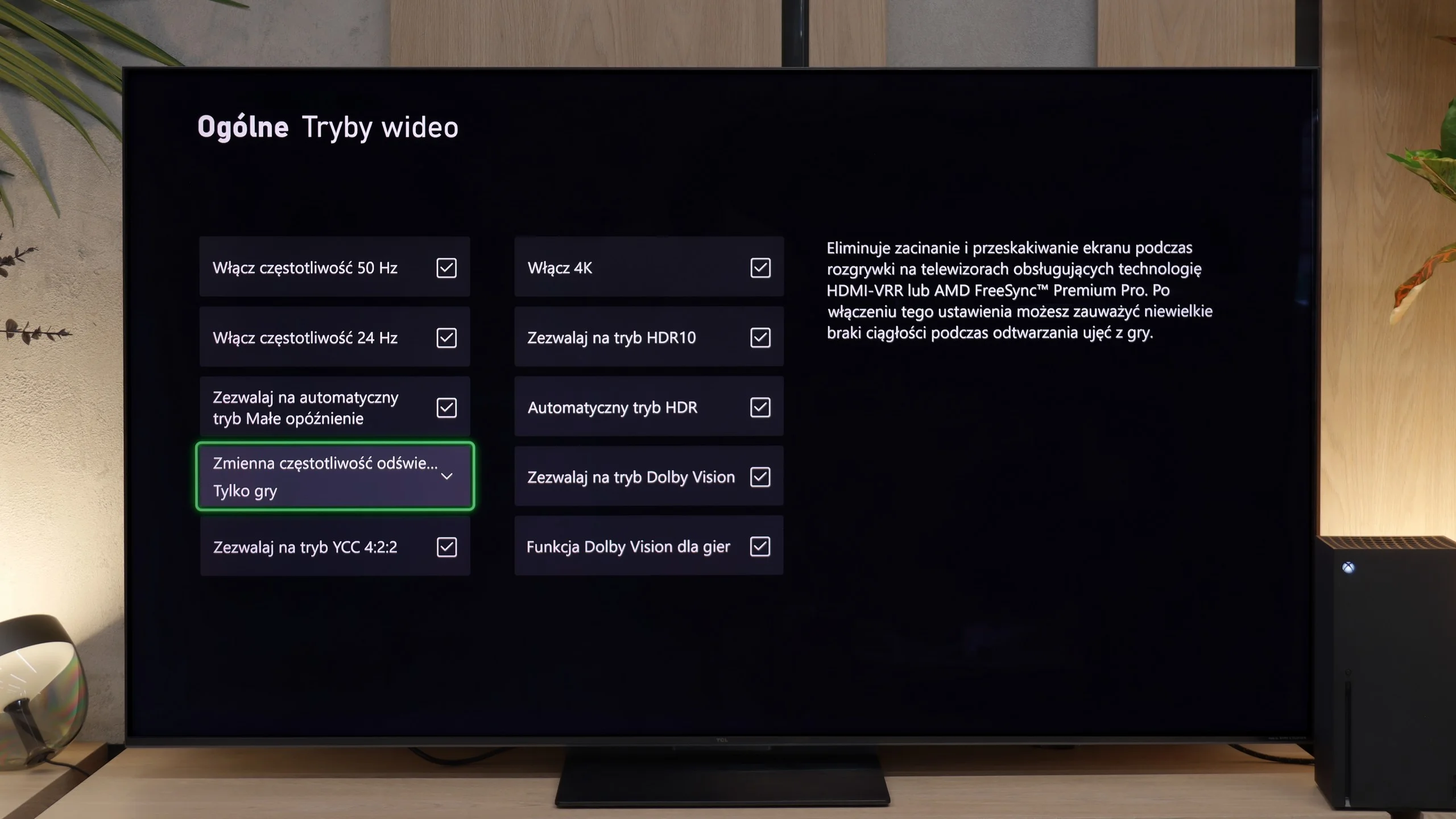
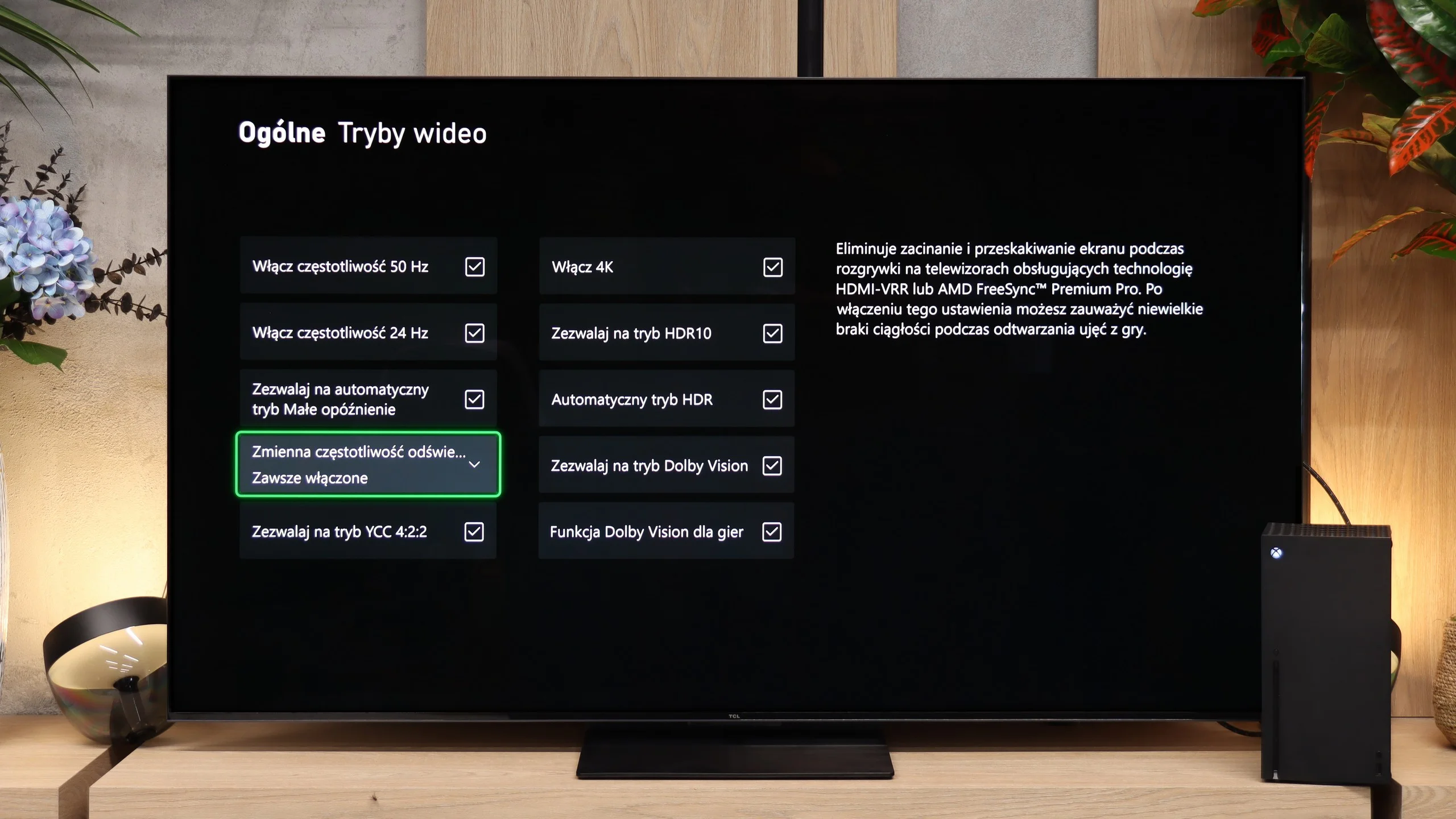
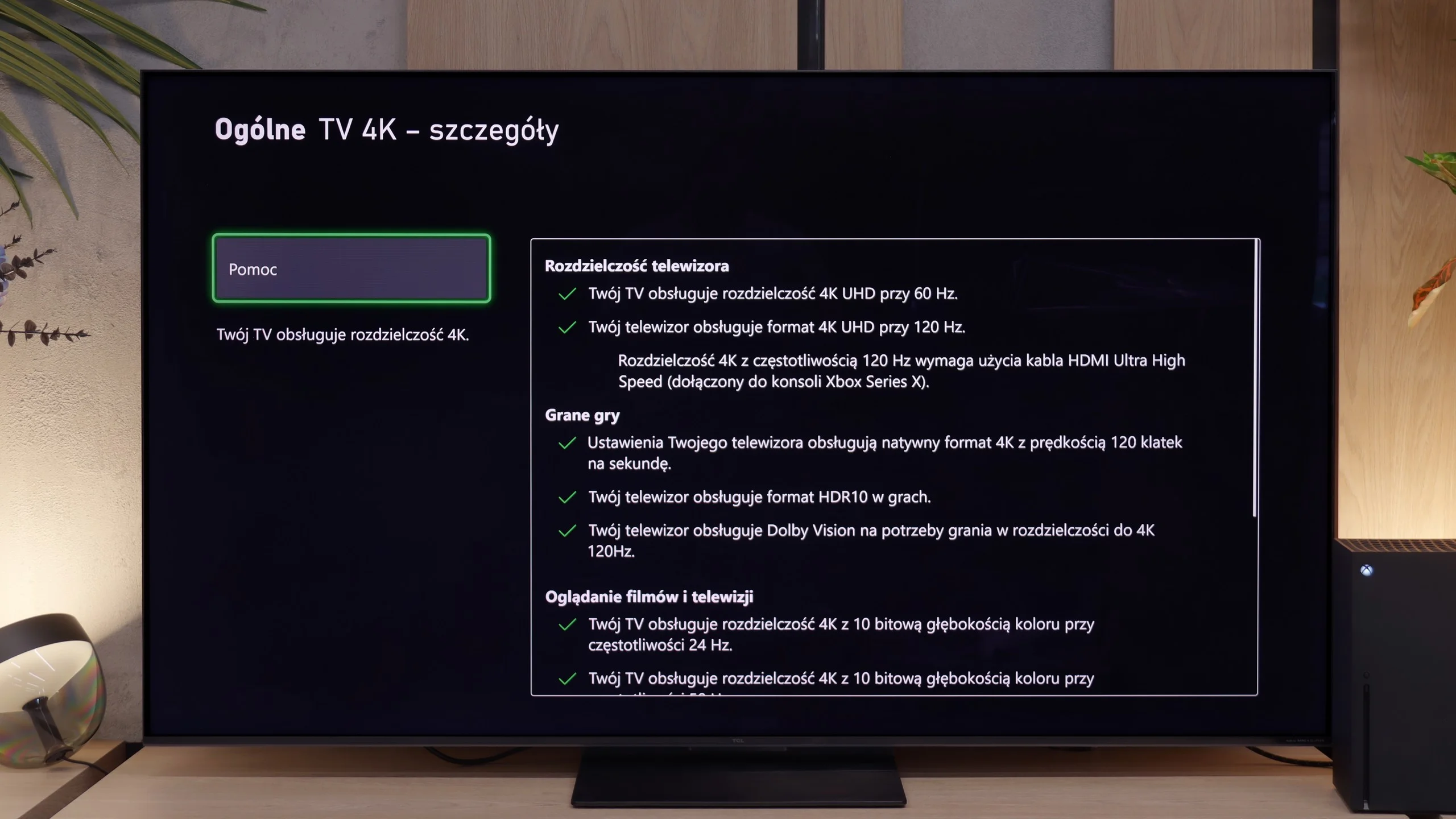
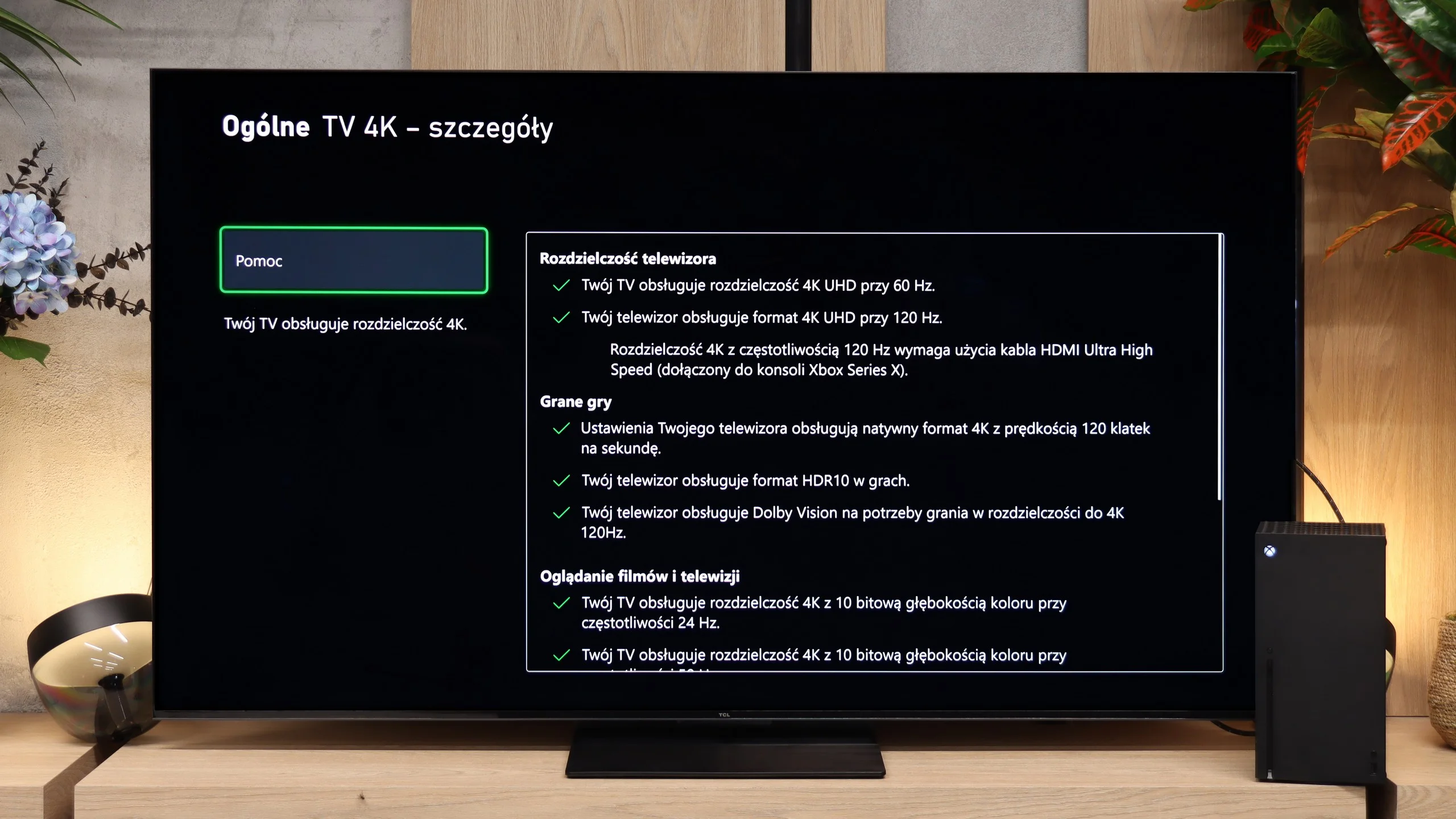
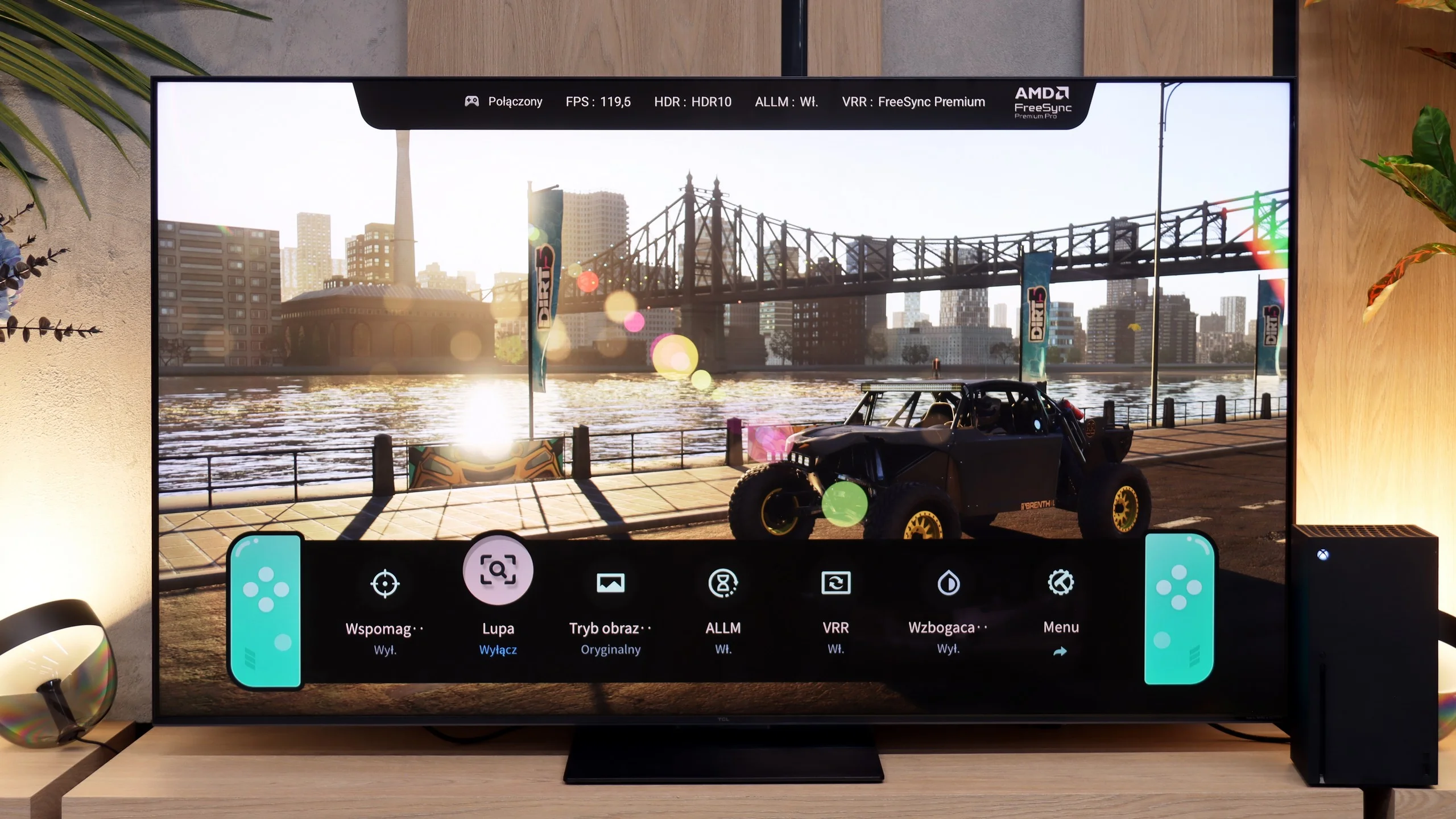
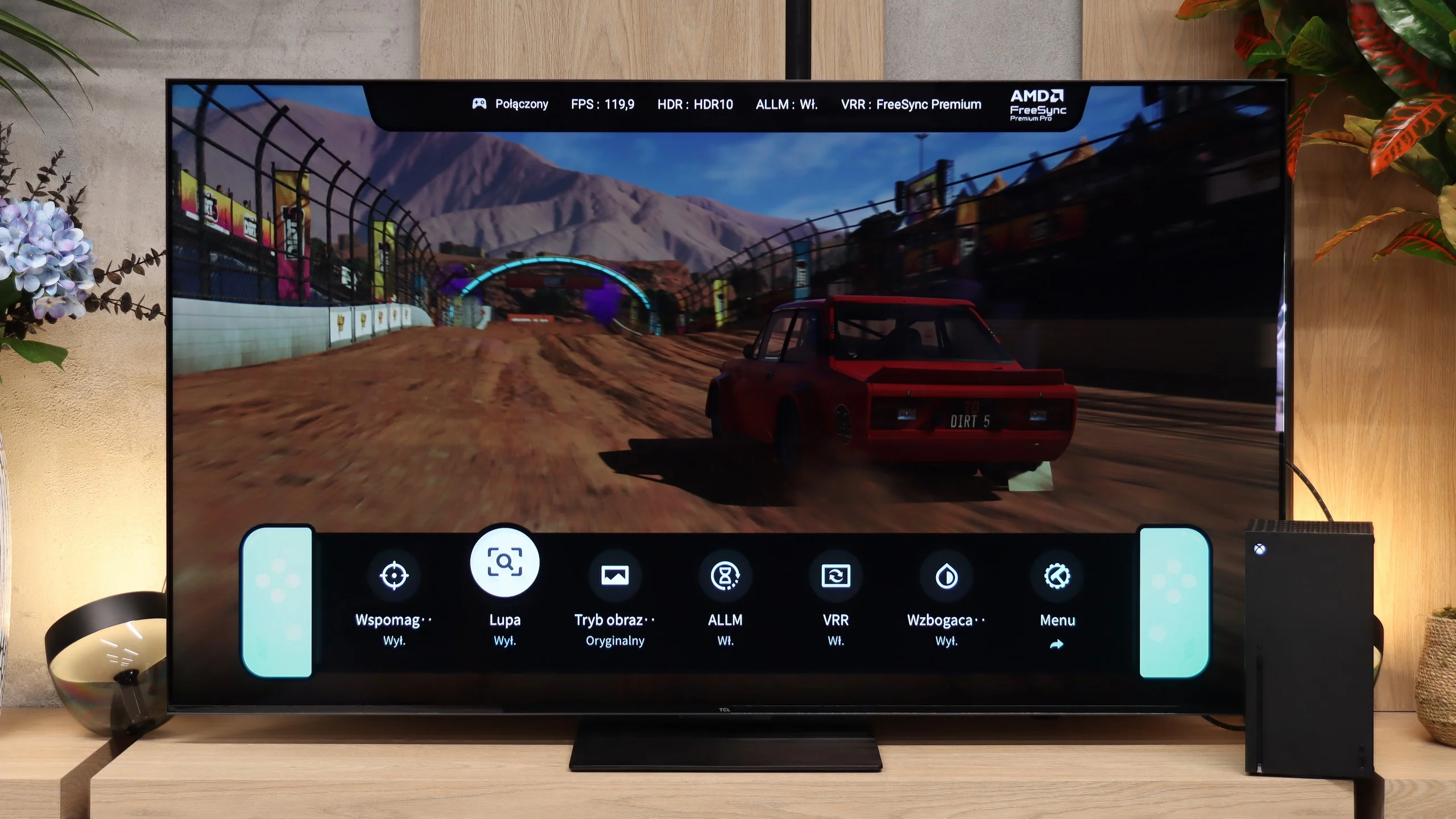
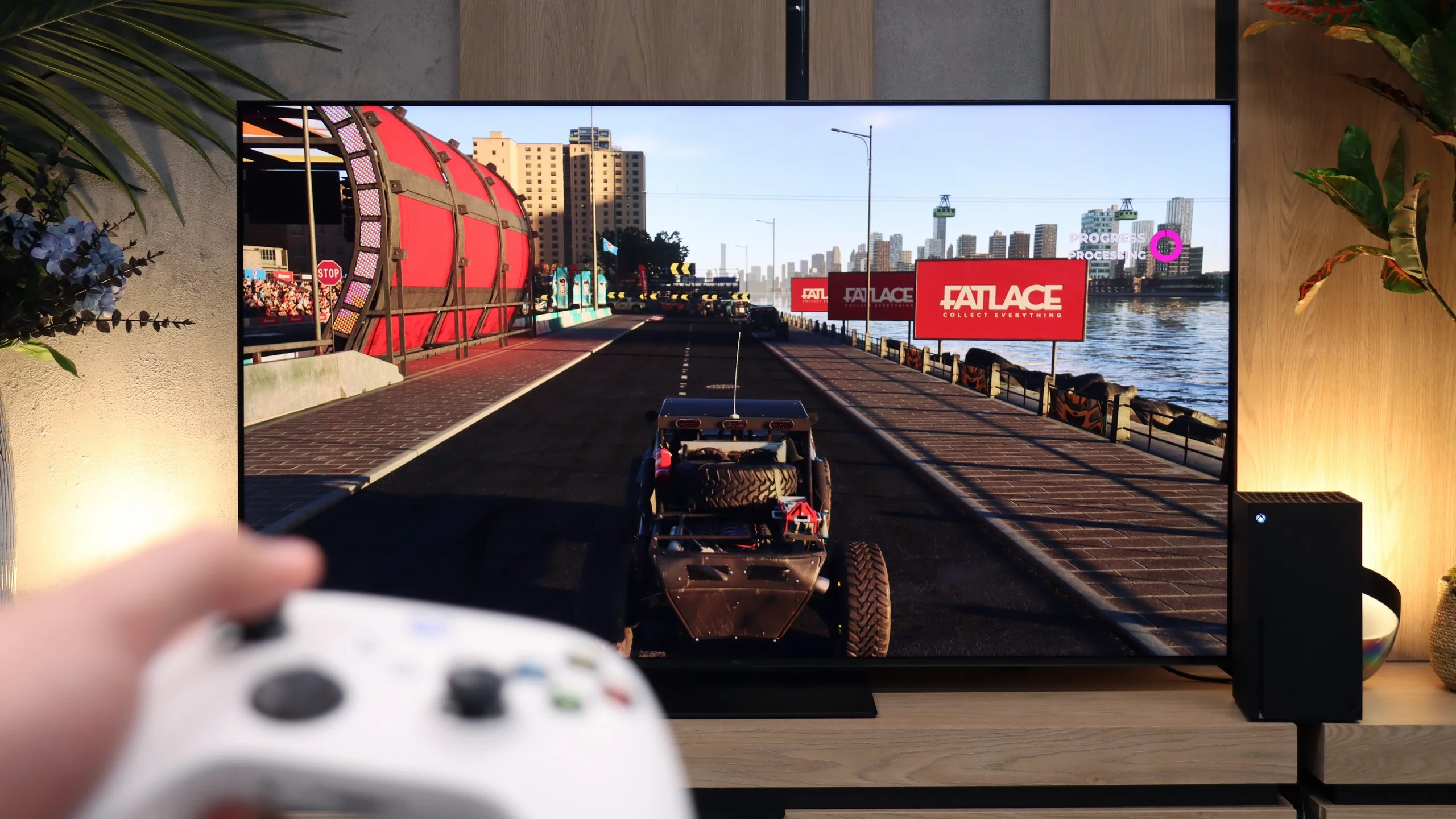
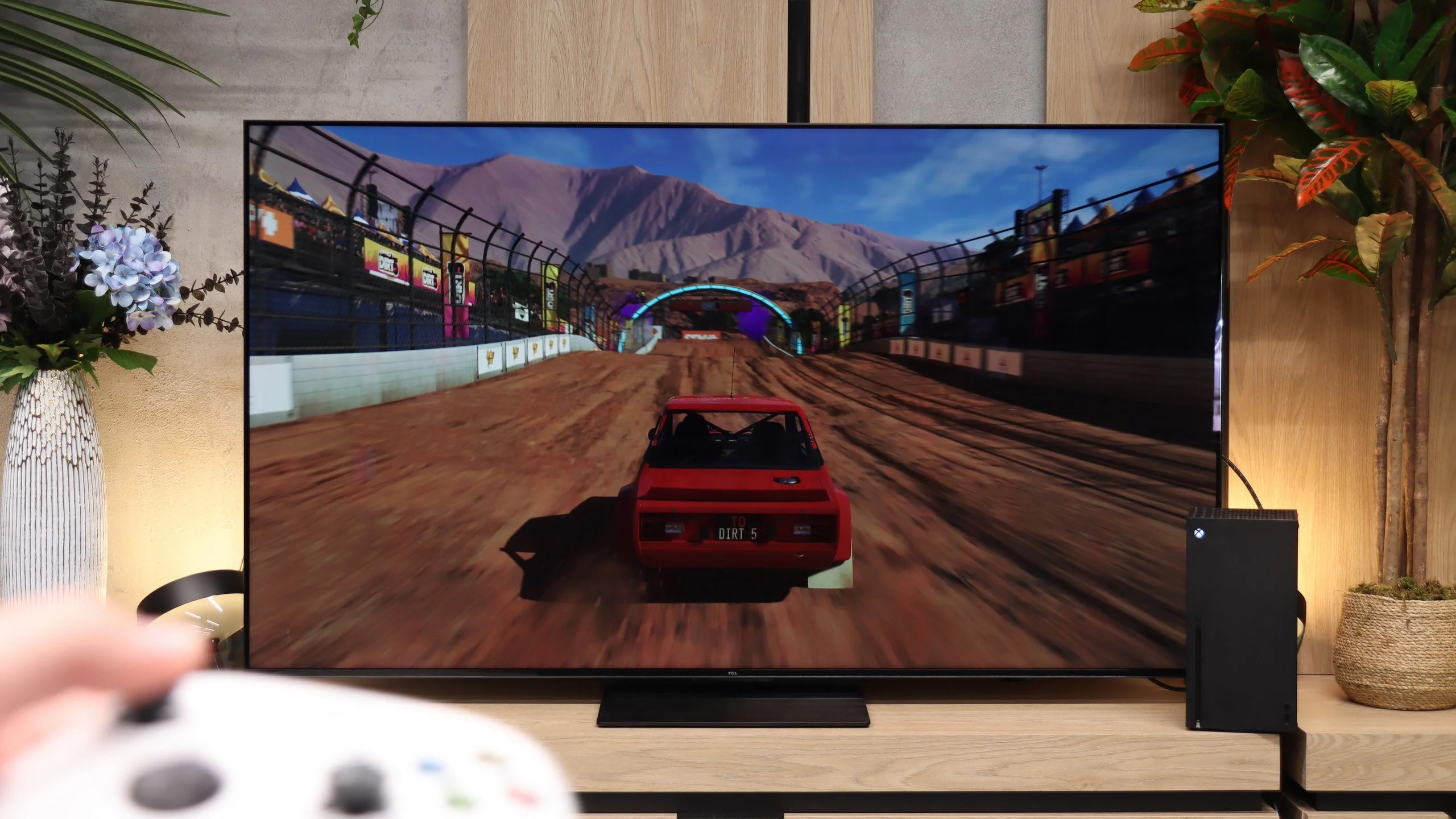
When it comes to gaming, the TCL C7L is simply an outstanding TV for players. Thanks to two HDMI 2.1 ports with full 48 Gbps bandwidth, you get access to all the key features required by console owners and powerful PC rigs. There’s a well-working ALLM mode with very low input lag and VRR frame synchronisation that operates over an impressive range from 48 to 288 Hz. Importantly, unlike some rivals, TCL has properly implemented the console HDR10 HGIG profile and supports Dolby Vision in games. The package is completed by a very well designed gamer panel, the Game Bar, which even lets you edit its appearance and change the theme so it perfectly matches the style of your console.
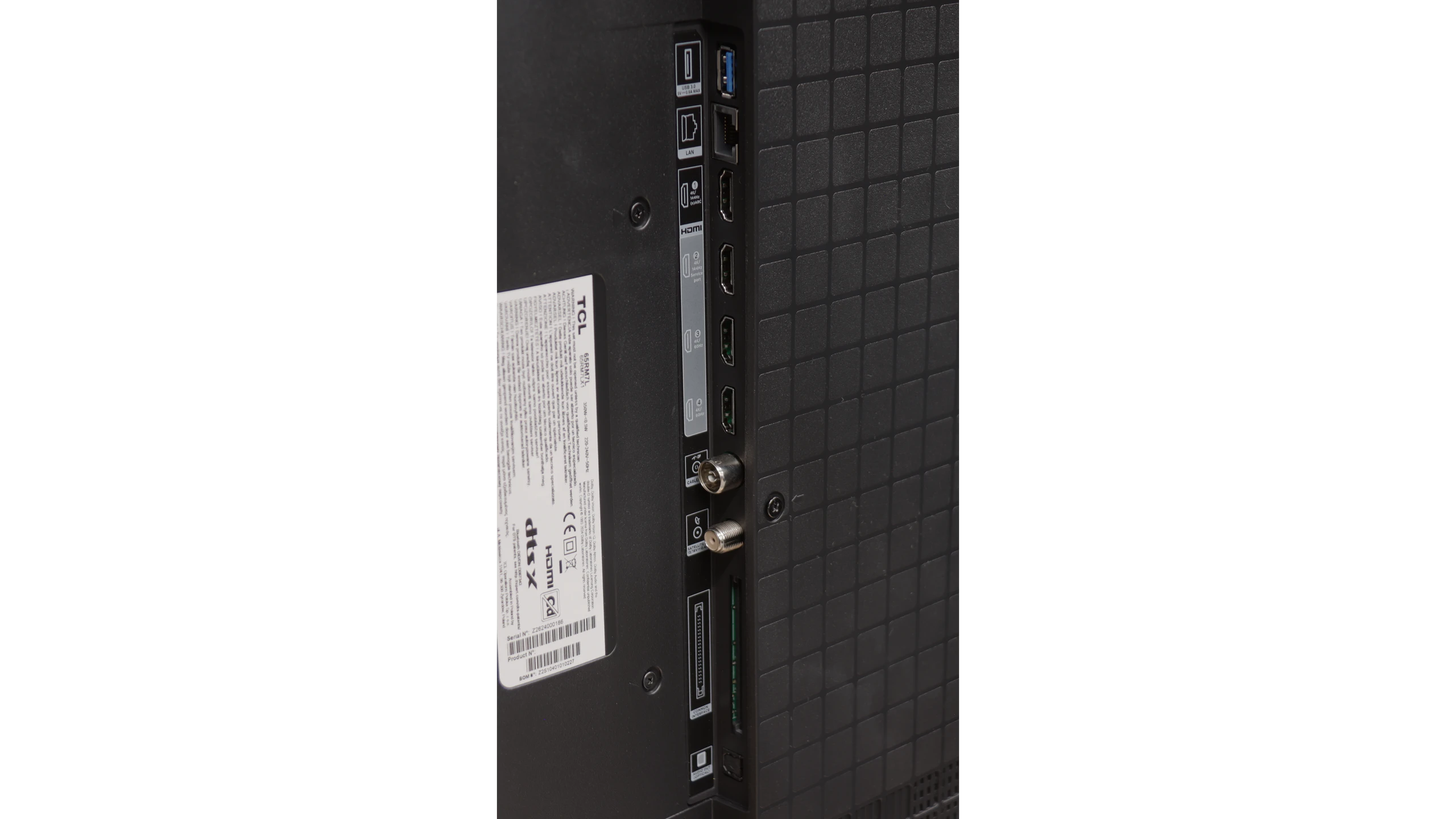
The only thing you can, and even should, criticise is that the TV offers only two full-spec HDMI 2.1 ports, while the other two are older HDMI 2.0. That creates quite a logistical problem. Why? Because one of the fast ports also handles the return audio channel eARC. In practice this means that if you connect a soundbar or home cinema system to the TV, you’ll be left with just one free HDMI 2.1 socket. If you have two consoles at home, or a console and a powerful PC, unfortunately you’ll have to give something up or keep juggling cables at the back of the case while trying to maintain convenient control of the audio system.
The RM7L earns almost nothing but praise when it comes to features for gamers. The TV supports ALLM, VRR and Dolby Vision Gaming and works properly with HGiG, so it’s hard to point to any major omissions in that regard. In practice this means automatic switching to a low-latency mode, smoother motion at variable frame rates and accurate brightness reproduction in HDR games. There’s also a very useful Game Bar. From it you can quickly check frame rate, VRR status, signal format or aspect ratio, and change the key settings without leaving the game. TCL has also added a few extra options, such as a crosshair overlay and brightening of dark image areas, which can be handy in some titles. The biggest drawback stems from the use of the Pentonic 700 processor. Only two of the four HDMI ports support the full HDMI 2.1 standard. That won’t matter much with a single console, but if you connect two consoles and a PC you may run out of ports, especially since one of those ports may be needed for eARC and a soundbar.
Input lag
10/10
9.9/10
SDR
HDR
Dolby Vision
It's worth taking a look at the raw numbers here, because in terms of signal latency the TCL C7L is right at the top of the market. Our measurements showed that the input lag is extremely low and for a 60 Hz signal it is only about 10 ms. When we step up and run a game at 120 Hz, the delay drops to an almost imperceptible 6 to 7 ms. More importantly, the TV maintains these figures even after enabling Dolby Vision in games.
Input lag on the RM7L is low. With a 120 Hz signal it drops below 10 ms, and at 60 Hz it is just under 15 ms. In practice the response to input is instantaneous, and even the lower figures known from OLEDs do not provide a clear advantage here. Dolby Vision Gaming also performs well. Input lag in this mode remains at the same level as in the other gaming modes, which still isn't standard on every TV.
Compatibility with PC
8.4/10
8.4/10
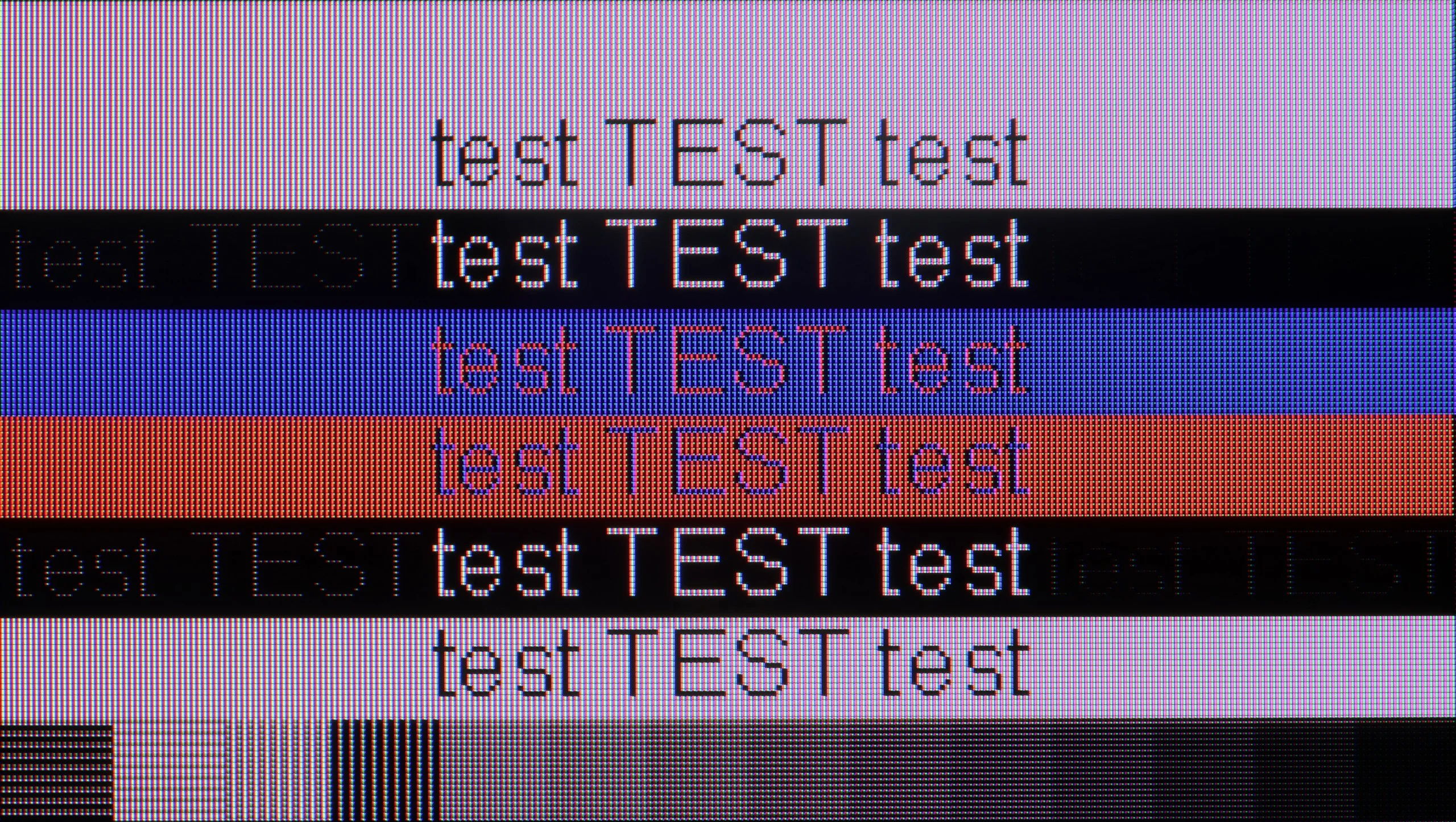
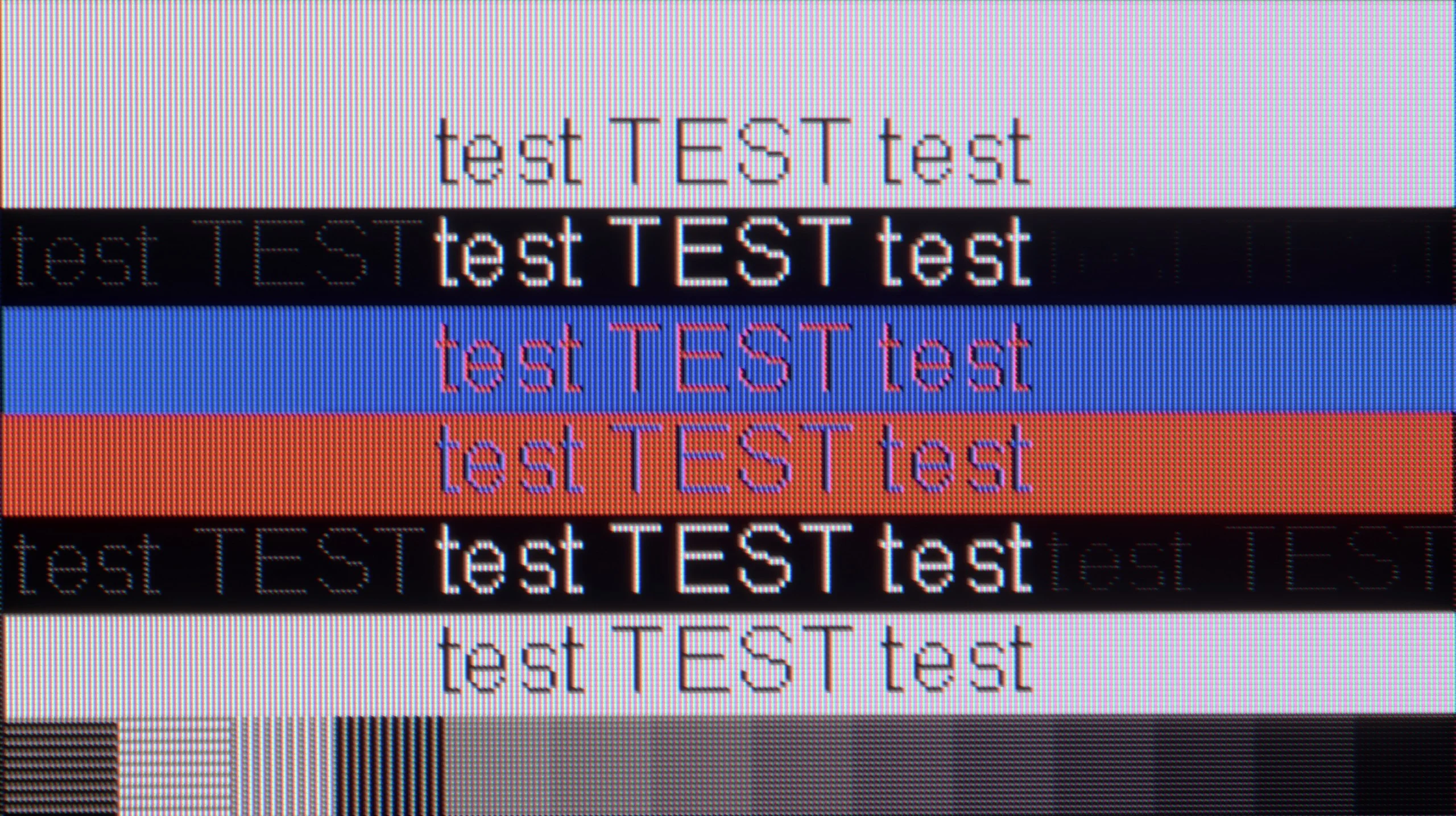
The photo shows the legibility of small fonts. Ideally, lines should be the same thickness on both light and dark text, with minimal pixel gaps.
As for gaming on PC, as I mentioned earlier, it's genuinely hassle-free. The TV handles high refresh rates without a hitch: full 4K at 144 Hz, and in Full HD it can even reach 288 Hz. On top of that, G-Sync and FreeSync work without any issues. For PC gamers, the C7L can therefore serve as an excellent, gigantic monitor.
Typical office work involving text fares a bit worse, because the panel behaves rather oddly in those circumstances. When the highest refresh modes are enabled, namely 144 Hz and 288 Hz, the readability and sharpness of dark text on a light background are rather mediocre, with fonts becoming slightly blurred and jagged. Fortunately, this can be fixed very easily by changing the display refresh rate in your graphics card settings to a steady 120 Hz. Then the text becomes perfectly sharp again, which is definitely worth remembering if you plan to use the C7L as a work screen.
Using the RM7L with a computer performs very well, especially if you treat it as a gaming display. The TV supports 4K at 144 Hz, and dropping to Full HD can raise the refresh rate to as much as 288 Hz. It also supports G-Sync and FreeSync, so there's little to criticise in terms of smoothness. Text handling is a bit poorer. At the maximum refresh rate, letters viewed from very close are not perfectly sharp and you can notice a faint shadow behind them. Switching to 120 Hz improves matters, though they're still not perfect. However, it's hard to regard this as a serious flaw, because given the sizes in which the RM7L is available, it's unlikely to be used on a desk as a monitor for document work.
Viewing angles
3.7/10
4.5/10
Unfortunately, the strong native contrast of the HVA 2.0 panel comes at a price. It's the viewing angles, which on the C7L model are simply poor. That's all, of course, due to the use of the mentioned VA-type panel. It's an inherent characteristic of that technology and something you have to bear in mind when buying. If you sit directly in front of the screen, the picture will delight you with its depth, but just shift a few dozen degrees to the side on the sofa and the colours will immediately start to fade. By choosing this model, you accept a classic market compromise: you get deep blacks and superb contrast, but you sacrifice viewing angles.
Viewing angles on the RM7L are quite good and among the better ones you will find in TVs with VA panels. Even when looking at the screen from the side, colours do not shift as much as in many conventional VA designs. In that respect the RM7L can be compared to the better WHVA panels used in higher TCL ranges such as the C8L or X11L. There is, however, one clear downside. As the viewing angle increases, image brightness falls off very quickly. Colours and the overall character of the image remain relatively intact, but the screen itself becomes noticeably darker. At very large off axis angles the difference is already enough that the picture can simply look too dark. For that reason the RM7L is best viewed as close to the centre of the screen as possible.
Daytime performance
8.8/10
7.8/10
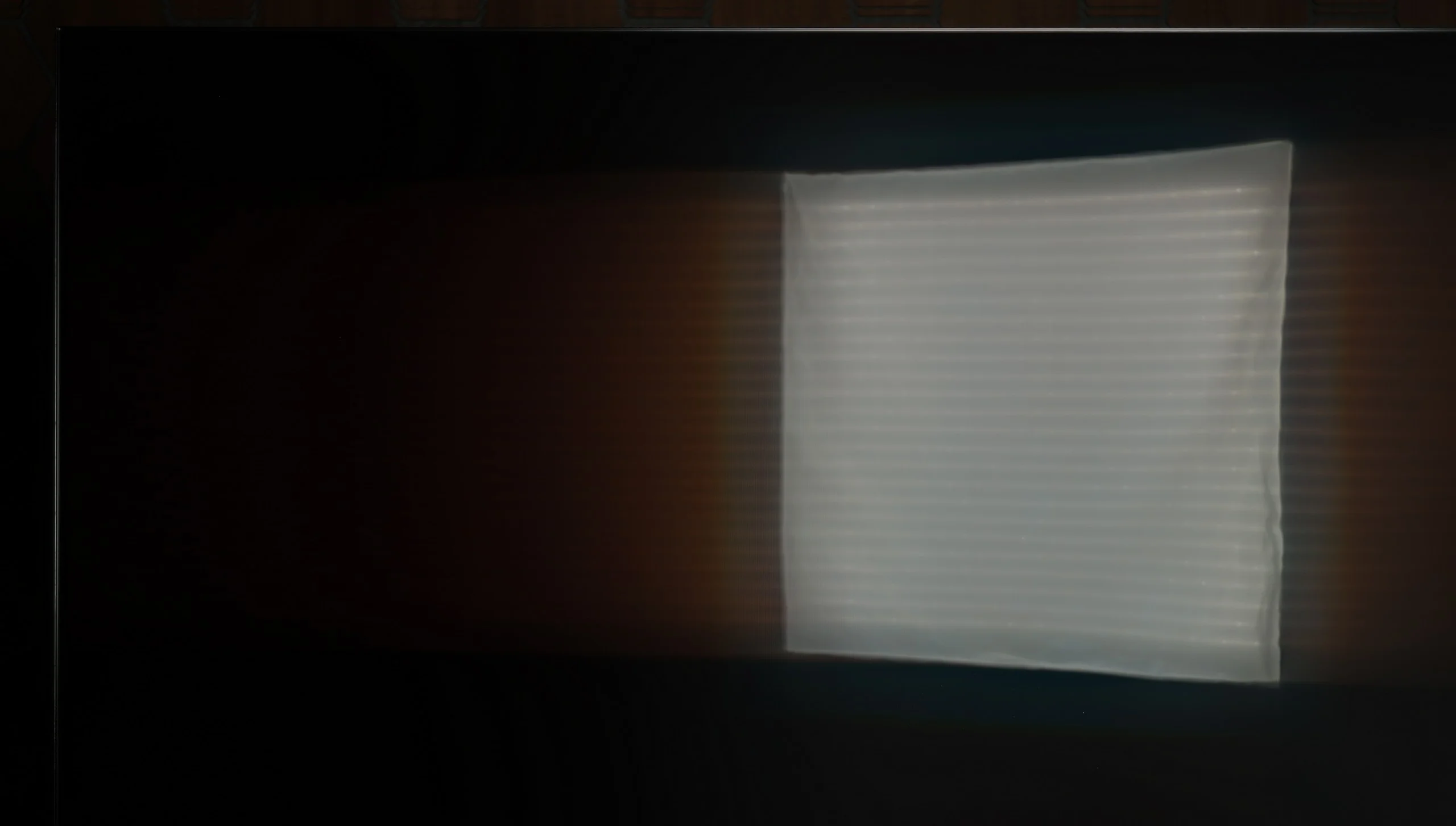
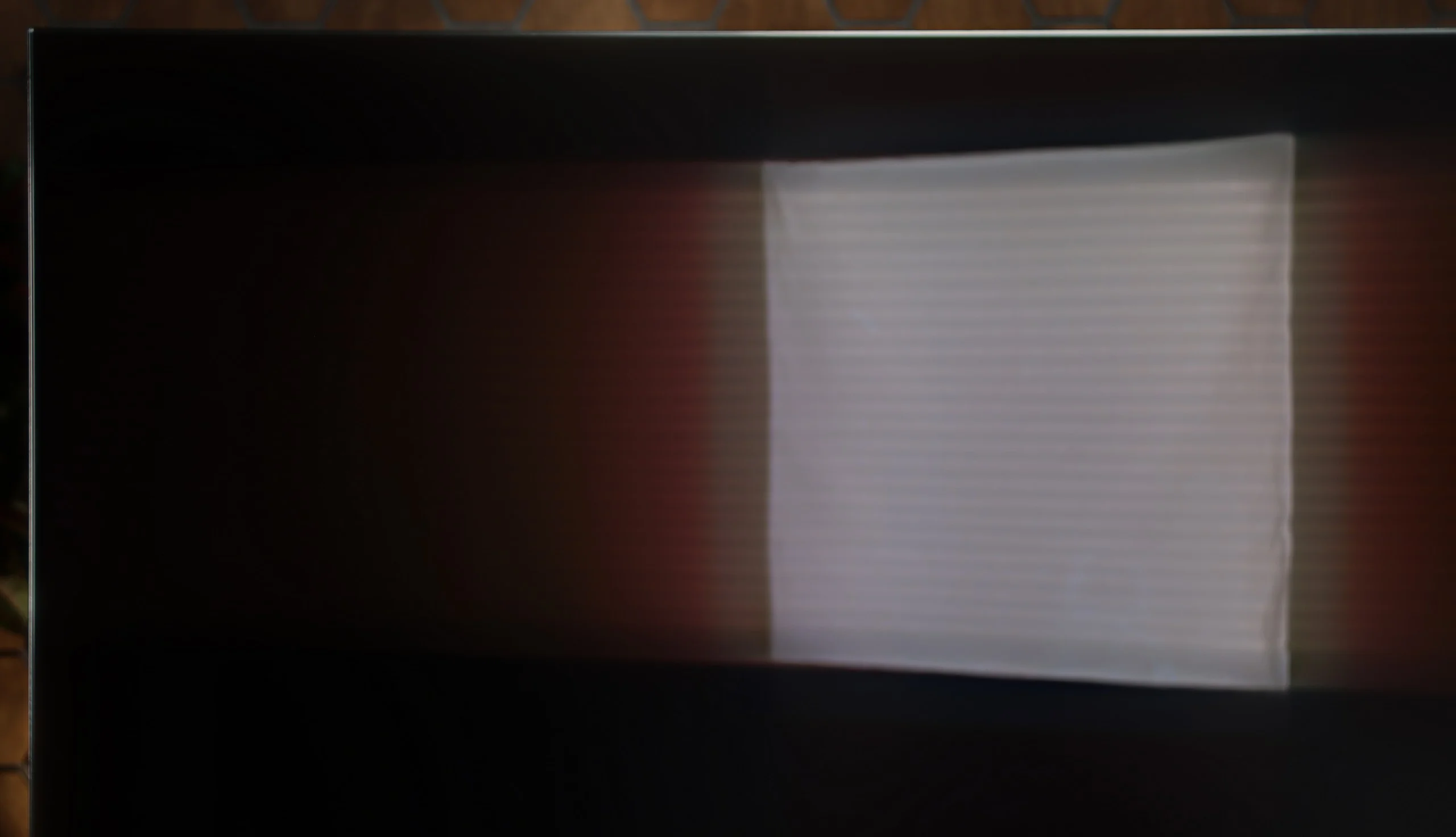
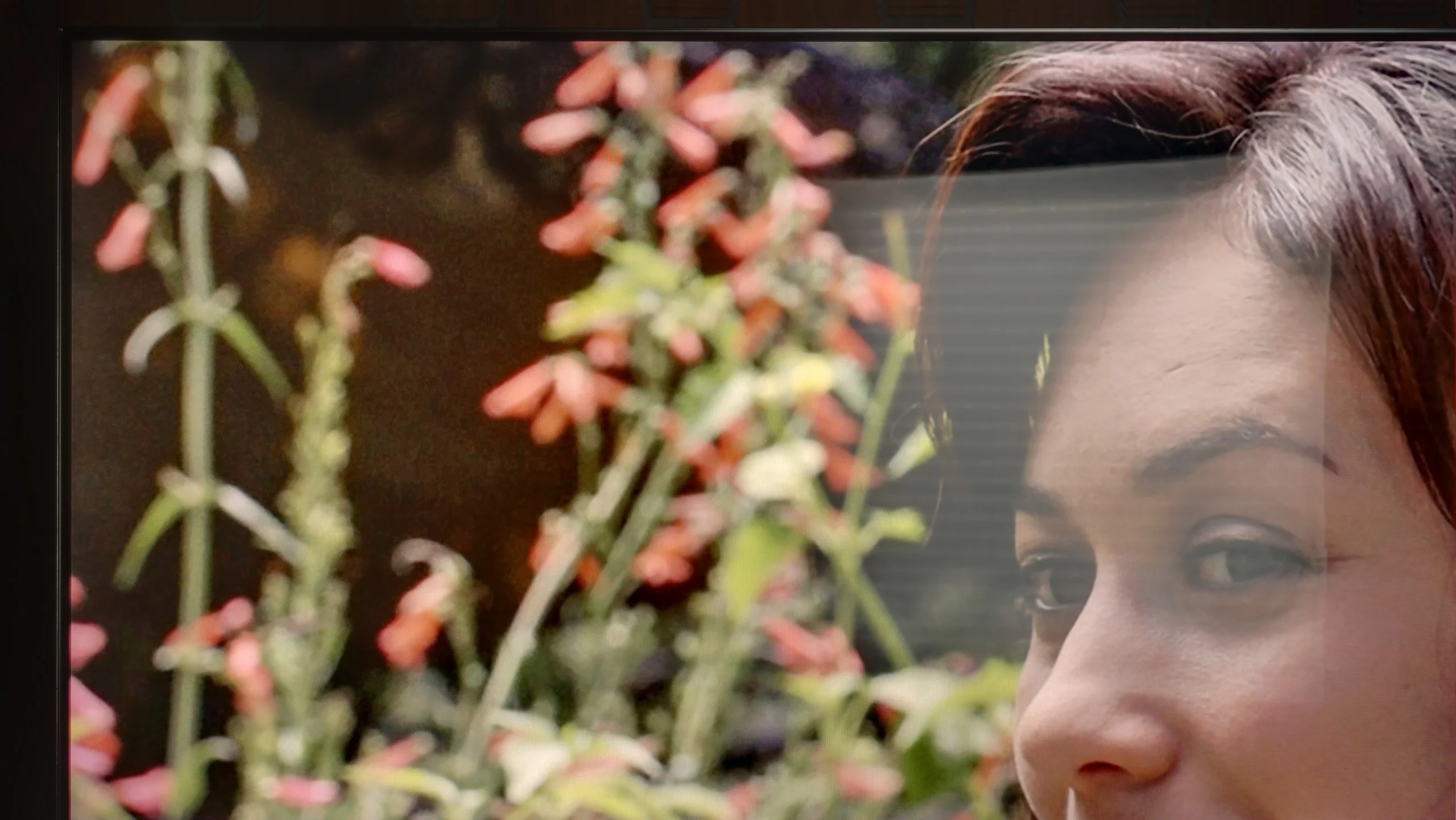
Panel brightness
TCL RM7L: 959 cd/m2
TCL C7L: 1327 cd/m2
It’s also worth mentioning how the TCL C7L performs during everyday viewing in a sunlit living room. As we’ve already established, it’s an extremely bright TV, and it’s precisely thanks to such a huge luminance headroom (up to 2400 nits in SDR!) that it can perform brilliantly in very bright rooms, the picture simply cuts through the light entering the room without any problems. The only thing to watch out for are direct reflections on the screen. The coating used on the panel this year is noticeably glossier than the one we saw on last year’s C7K. The screen suppresses point reflections much less effectively, which, in unfavourable conditions, for example when a window is directly opposite the TV, may be fairly irritating for some users. Even so, in terms of raw brightness the C7L is simply a beast for bright living rooms.
The RM7L should perform well in a bright living room, primarily thanks to its high SDR brightness. With everyday content the television averages around 1000 nits, so it can easily cut through ambient light entering the room and maintain a clear image even during the day. A weak point is the panel's glossy coating. Direct reflections are quite noticeable, and stronger light sources can also spread across the screen surface. For that reason it's best not to position the television opposite a window or a lamp. With correct placement, however, the RM7L will still be a very good choice for a brightly sunlit room.
Panel details
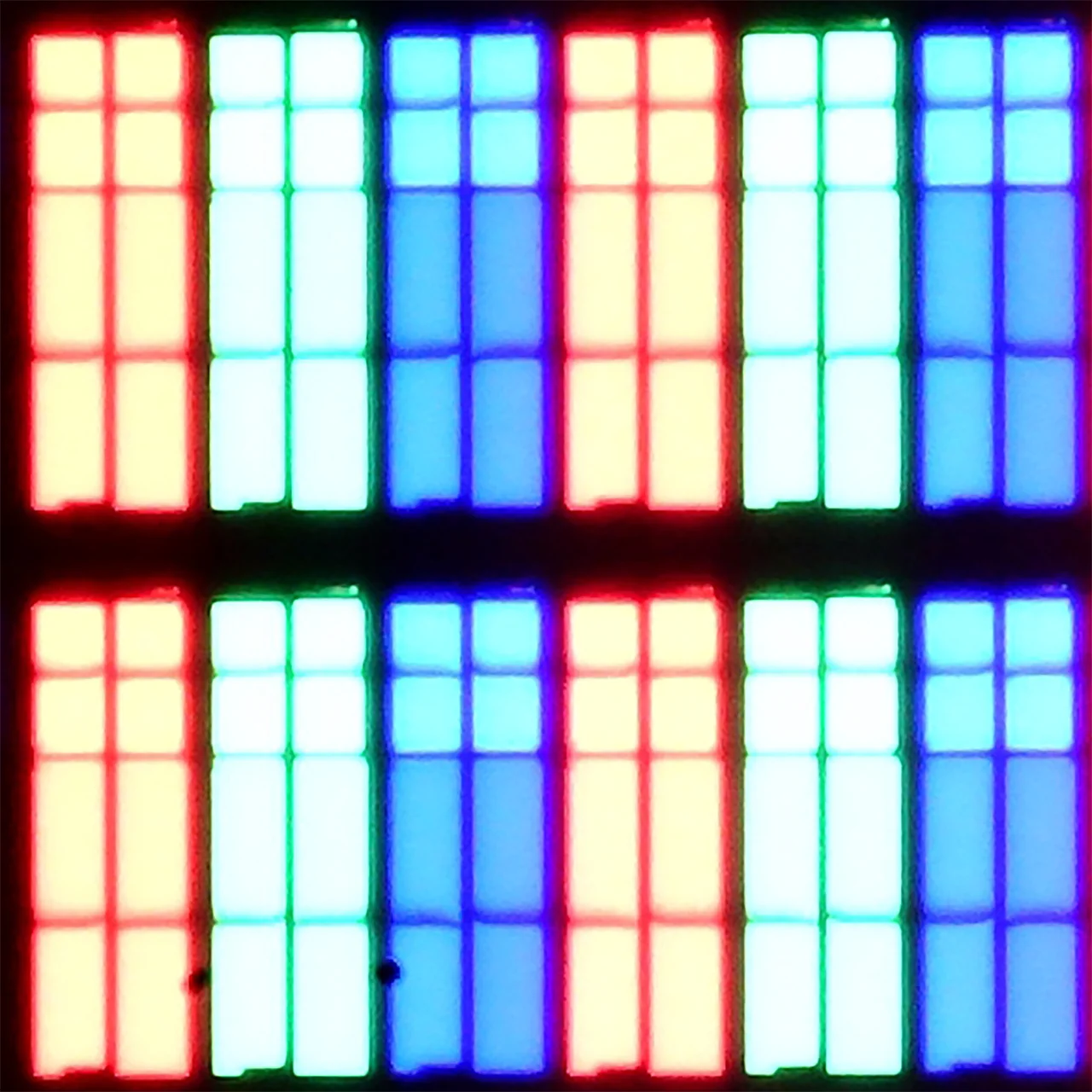
Subpixel Structure:
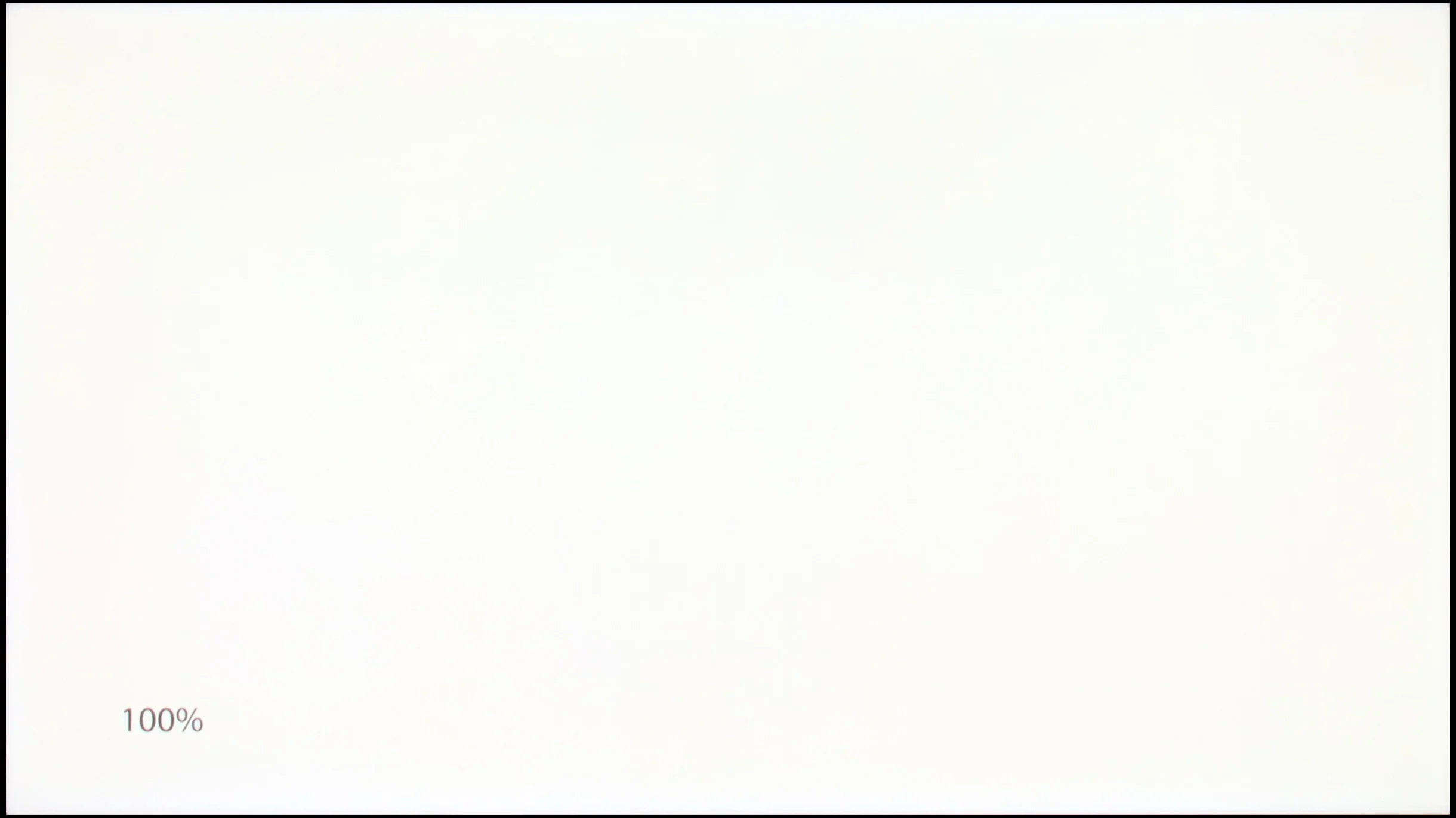
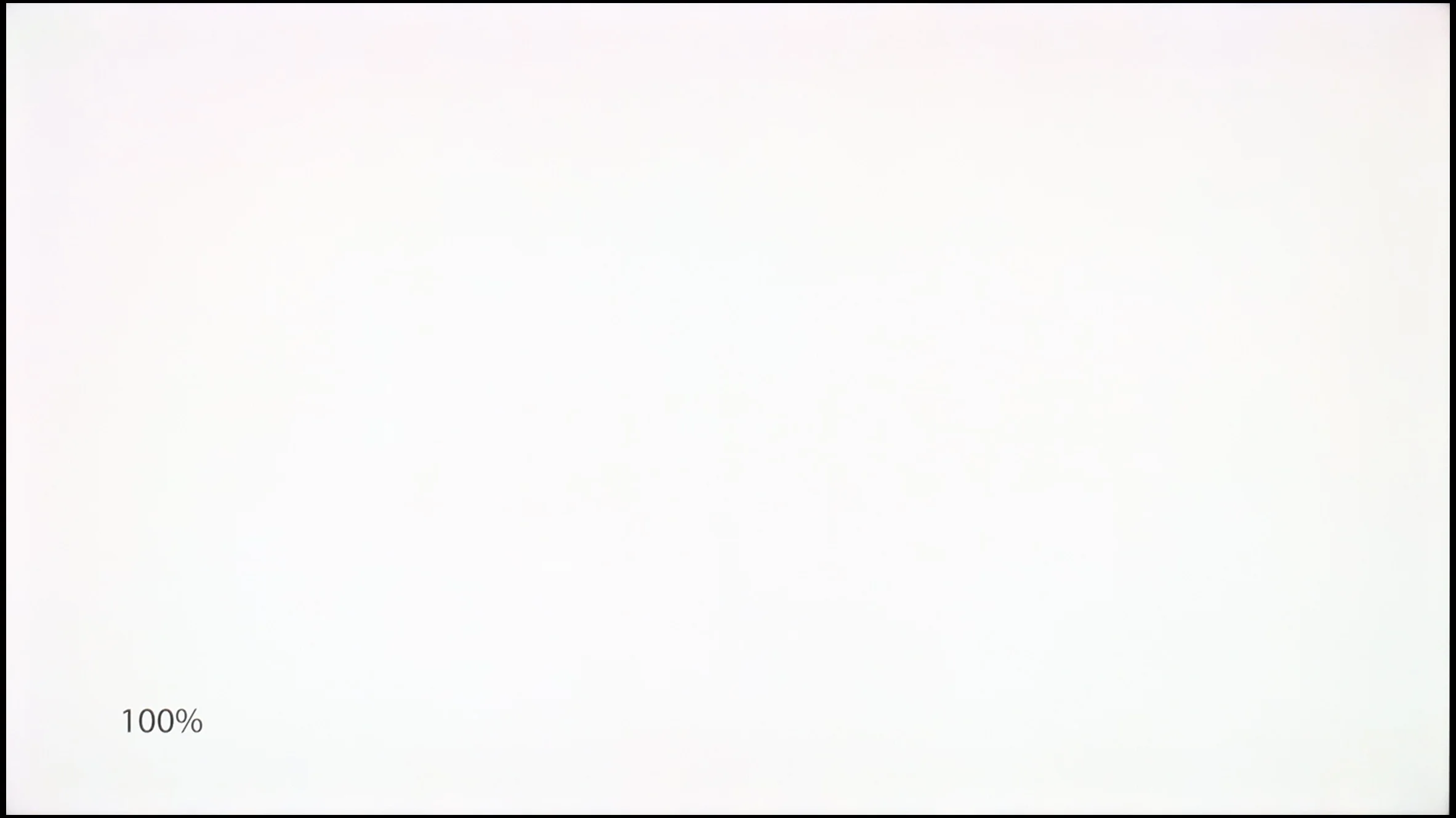
Panel uniformity and thermal imaging:
TCL C7L
TCL RM7L
TV features
7.8/10
7.8/10
- SystemGoogle TVGoogle TV
- System performanceVery goodGood
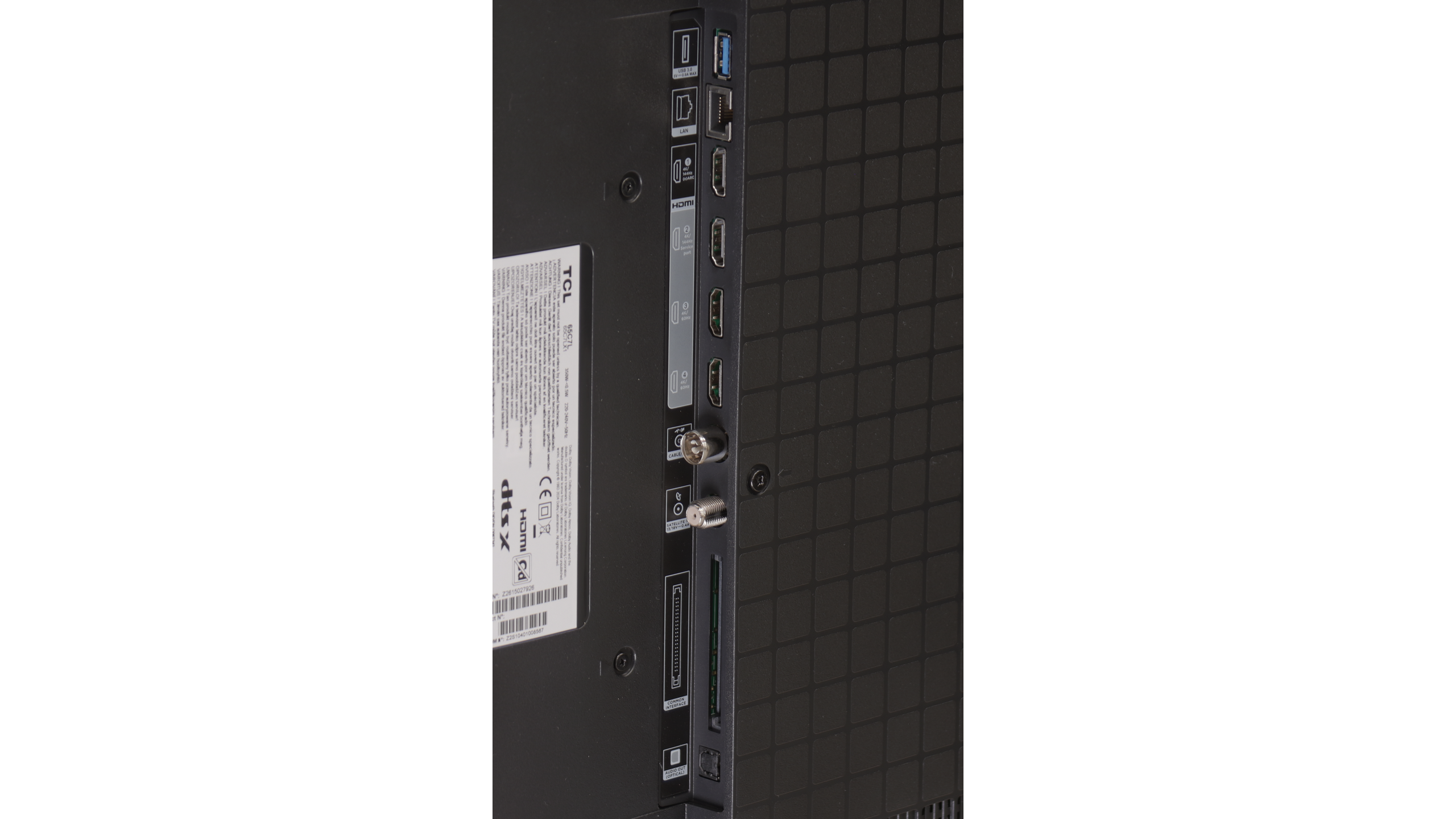
- HDMI inputs2 x HDMI 2.0, 2 x HDMI 2.1 48Gbps2 x HDMI 2.0, 2 x HDMI 2.1 48Gbps
- OutputsToslink (Optical audio), eARC (HDMI), ARC (HDMI)Toslink (Optical audio), eARC (HDMI), ARC (HDMI)
- Network InterfacesWi-Fi 2.4GHz, Wi-Fi 5GHz, Ethernet (LAN) 100MbpsWi-Fi 2.4GHz, Wi-Fi 5GHz, Ethernet (LAN) 100Mbps
- TV receptionDVB-T, DVB-T2, DVB-S, DVB-S2, DVB-CDVB-T, DVB-T2, DVB-S, DVB-S2, DVB-C
Classic features:
- Recording to USB (terrestrial TV)

- Recording programming
- Picture in Picture (PiP)
- RF remote control (no need to aim)
- Backlit remote control
- Teletext
- Audio only mode
- Bluetooth headphones support
- Simultaneous Bluetooth headphones & TV audio
Smart features:
- AirPlay
- Screen mirroring (Windows Miracast)
- Voice search
- Voice search in native language
- Ability to connect a keyboard and mouse
Sound connection options
- HDMI audioeARC (HDMI), ARC (HDMI)eARC (HDMI), ARC (HDMI)
- Other audio outputsToslink (Optical audio)Toslink (Optical audio)
- Wireless audioBluetoothBluetooth
Supported audio formats (external HDMI eARC audio):
- Dolby Digital Plus 7.1
- Dolby True HD 7.1
- Dolby Atmos in Dolby Digital Plus (JOC)
- Dolby Atmos in Dolby True HD
- DTS:X in DTS-HD MA
- DTS-HD Master Audio
Senior accessibility
- Numeric keyboard on TV
- Font size adjustment
- Audio description
Google TV i Smart TV
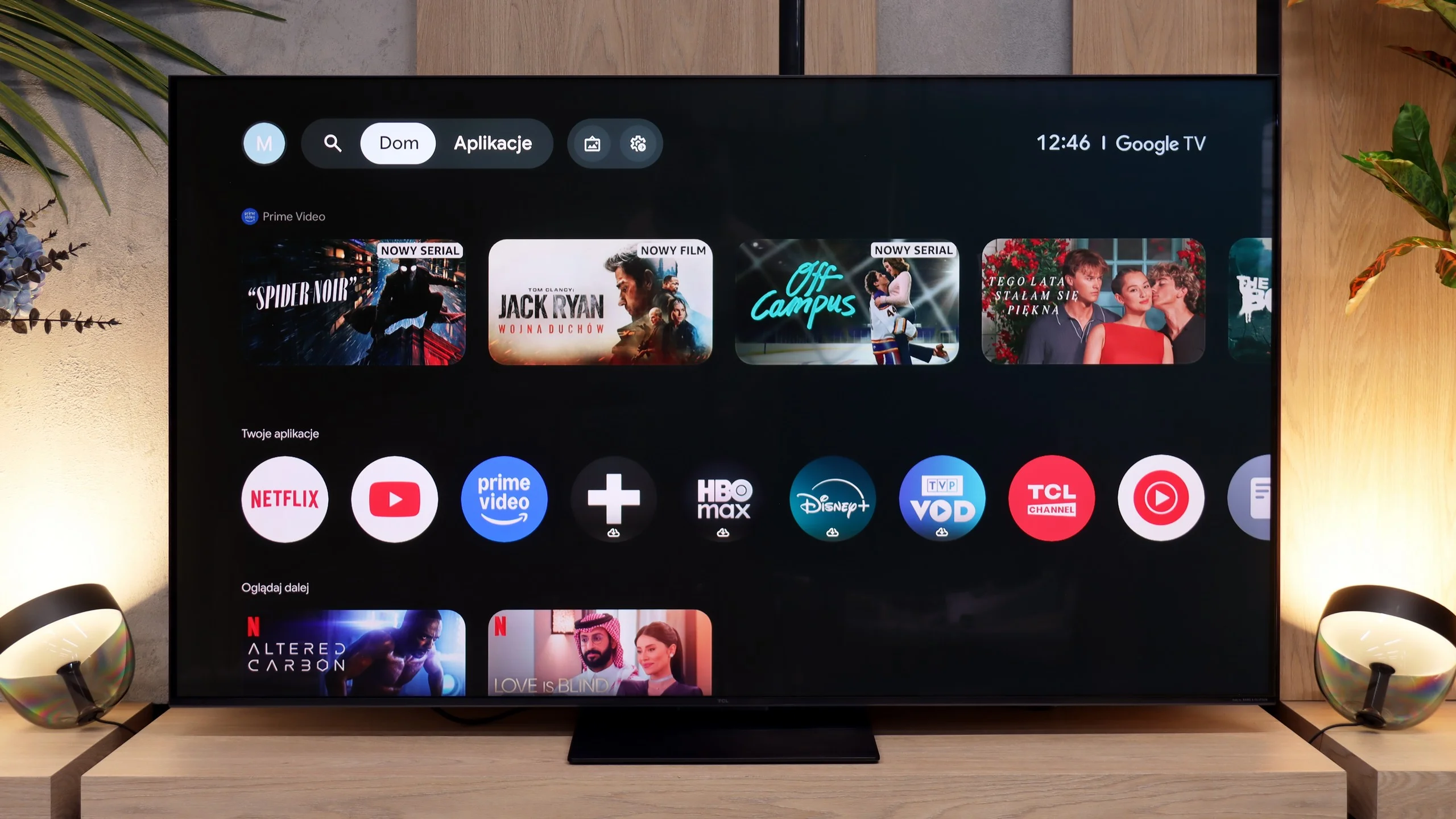
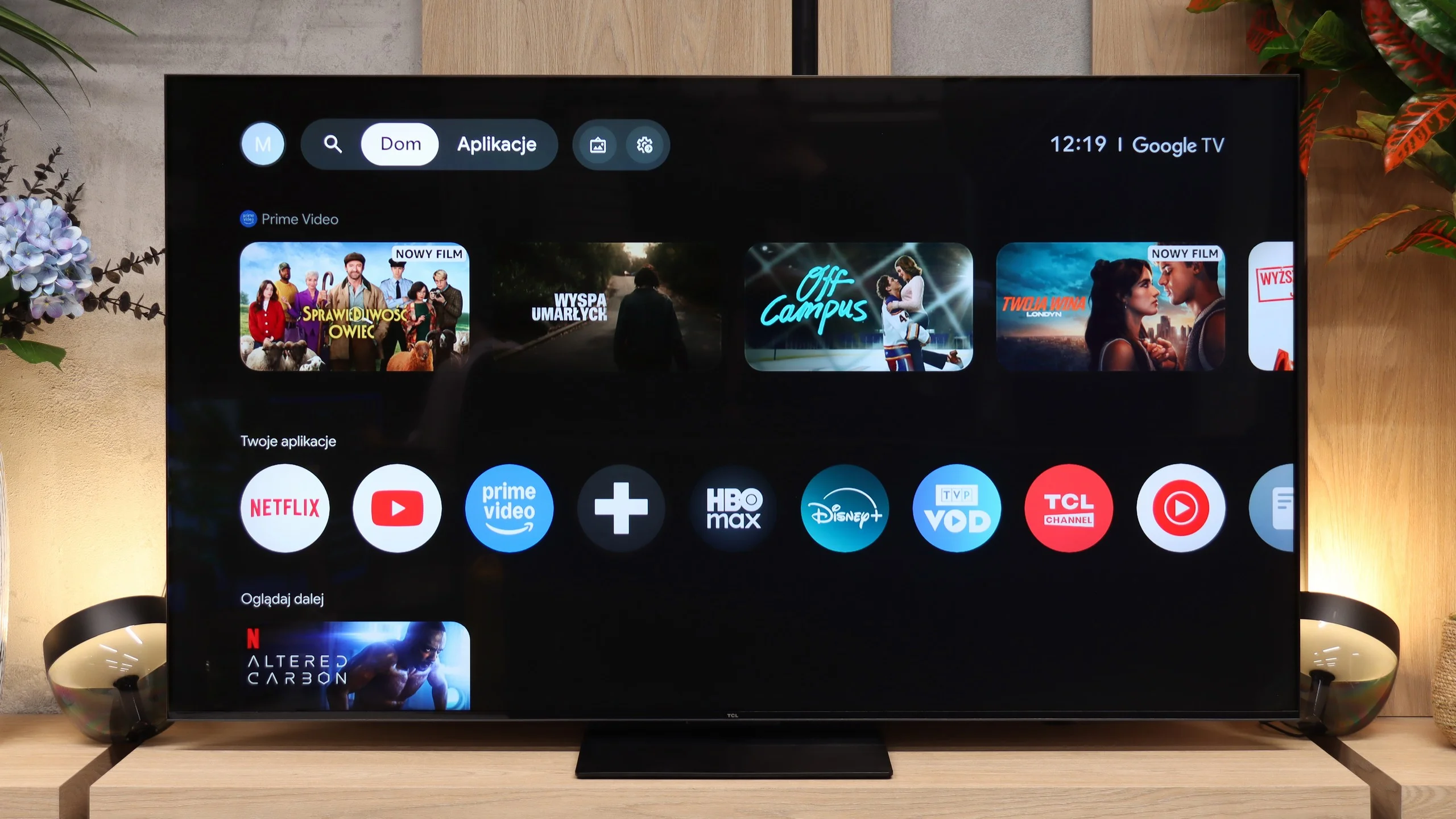
The multimedia heart of the TCL C7L is, of course, the Google TV operating system, which provides access to a vast app library and all the most popular streaming platforms on the market. The Smart TV in this model runs smoothly, offering full support for useful network features such as Apple AirPlay and Chromecast. A huge and very pleasant surprise, however, is the software's overall polish. We noticed that Google's system on the new C7L runs considerably smoother and faster than on last year's TCL models. This is largely thanks to better optimisation for the launch. Unnecessary pauses and minor interface stutters known from older models seem to be a thing of the past.
Funkcje telewizyjne
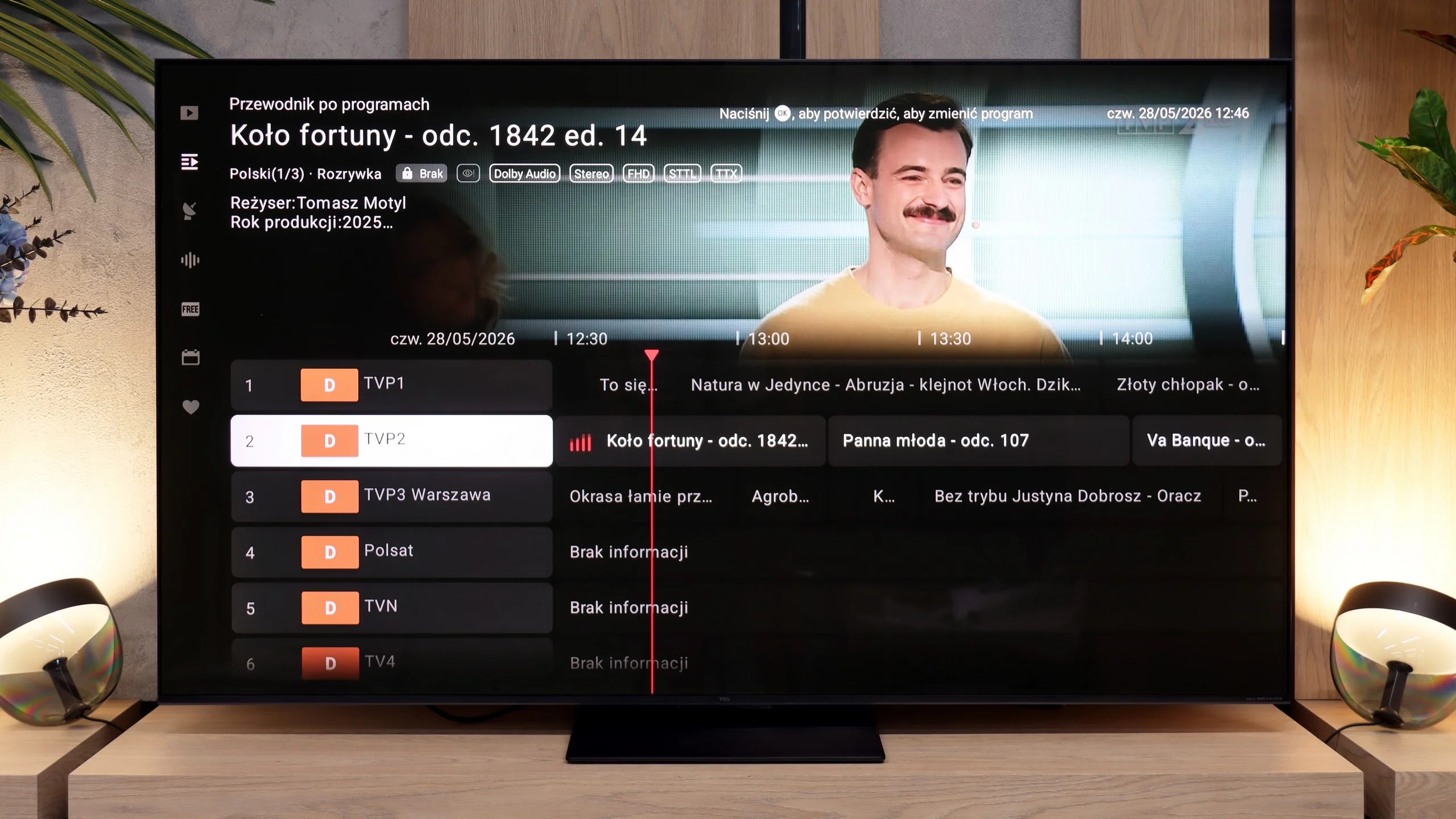
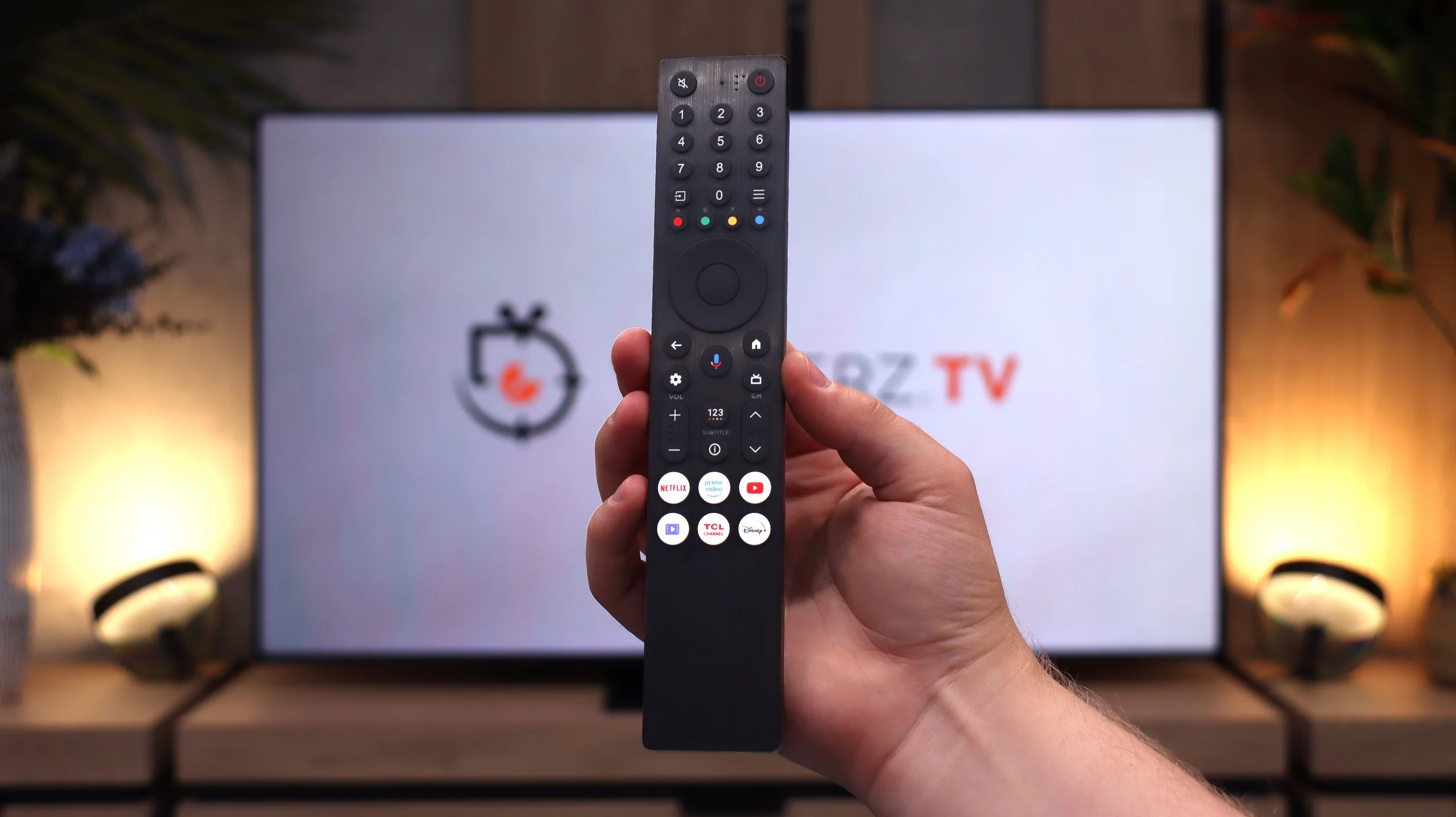
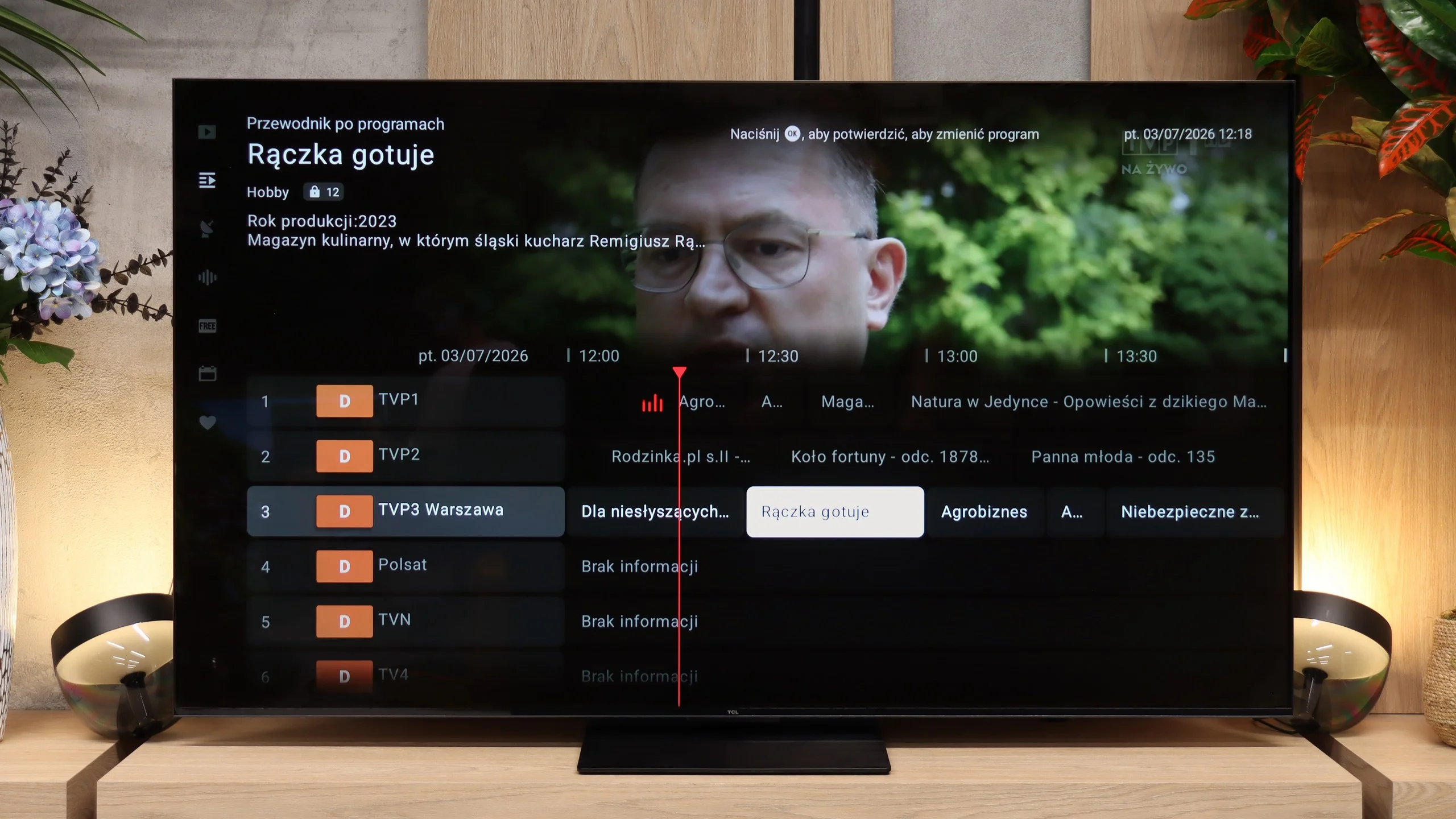
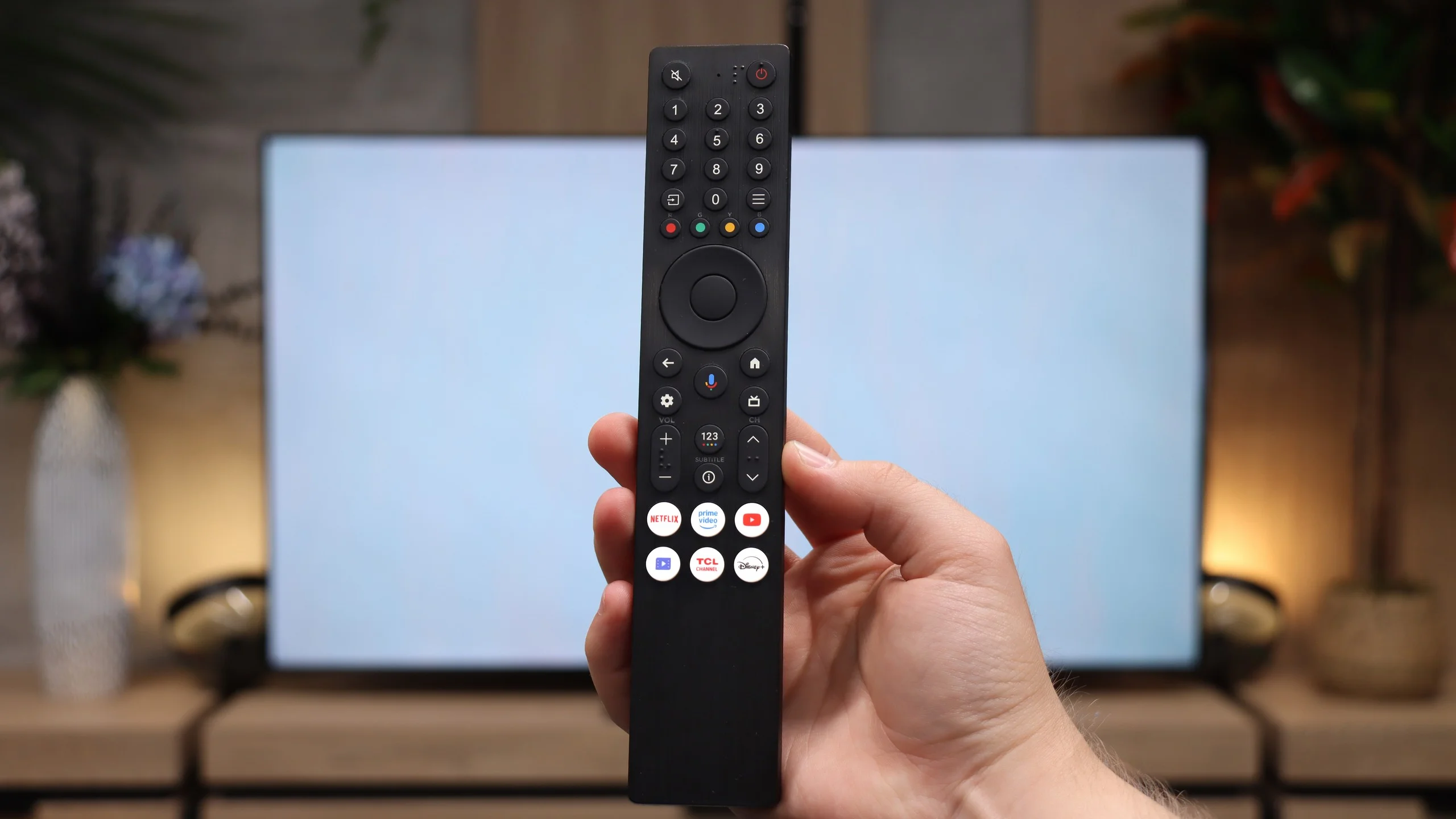
As far as traditional over-the-air or cable TV is concerned, the TCL C7L does not offer many additional advanced features. It's simply a basic receiver. The manufacturer has not attempted any revolutionary solutions here, so apart from the traditional programme guide you won't find anything special. A big nod to traditional viewers is the classic remote control. Contrary to the prevailing trend for minimalism, it still features a full numeric keypad, which makes switching channels much quicker.
Smart TV features
The RM7L runs on Google TV, which is great news, because it’s one of the most polished systems on the market today. The store has pretty much everything: from the major streaming platforms to lesser-known apps, so you really don’t need to worry about a lack of content. There are also the classics on board, Chromecast and AirPlay, which make it easy to cast from your phone to the big screen. An interesting change is that the previous Google Assistant has been replaced by Gemini. The new "artificial brain" understands natural speech better and can answer questions much more sensibly. Everything runs smoothly and delivers exactly what we expect from a TV today.
Traditional TV
If someone prefers channel surfing to streaming, they’ll be pleased with the traditional remote control. It has a full numeric keypad and plenty of physical buttons, so operating the TV is quite straightforward, without having to wade through on‑screen menus. In terms of TV features it’s simply solid. The electronic programme guide (EPG) and channel switching work flawlessly, although you won’t find additional features like PiP or PVR.
Apps
9.6/10
9.6/10






















Playing files from USB
9.4/10
9.4/10
Supported photo formats:
Maximum photo resolution:
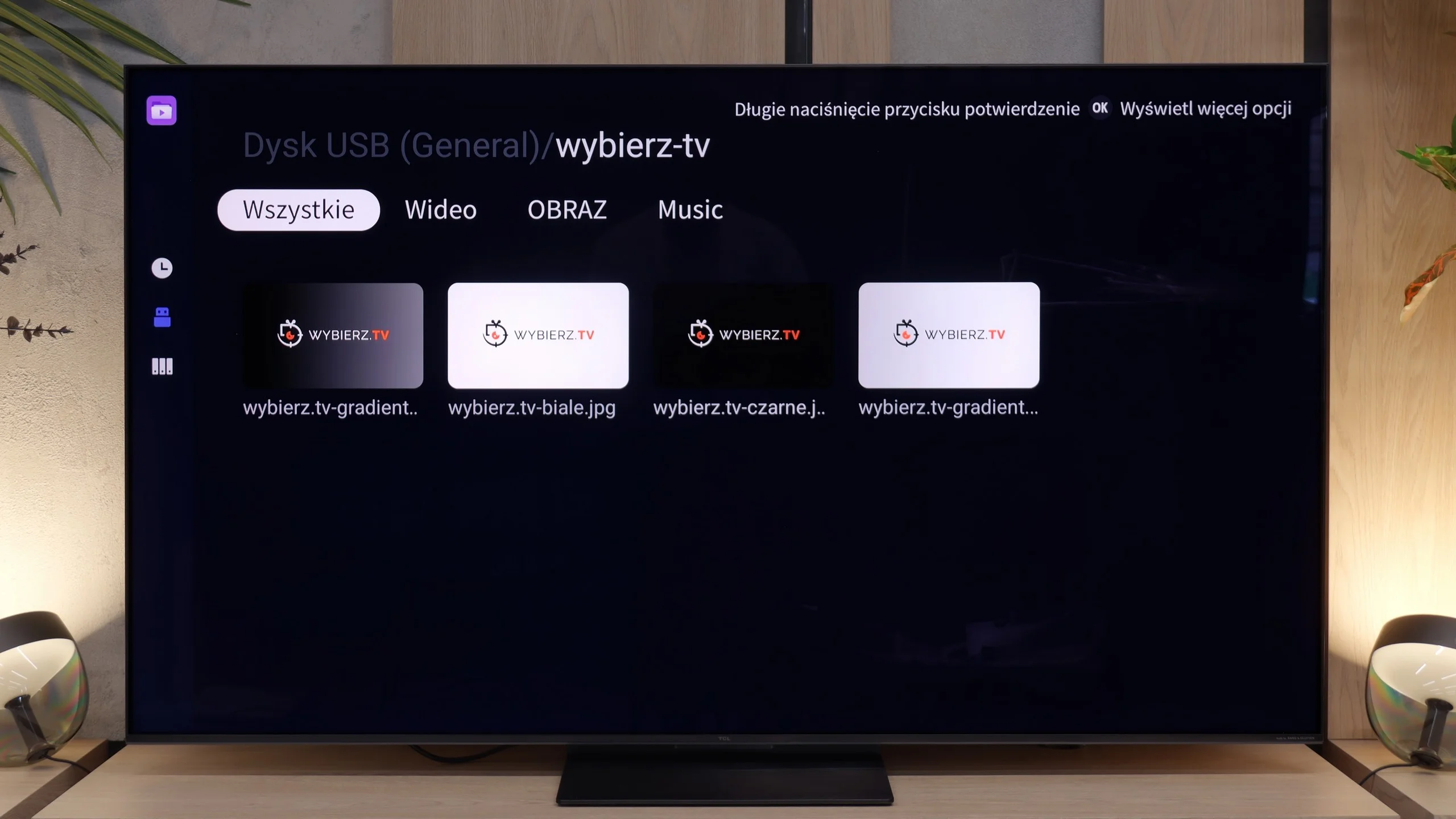
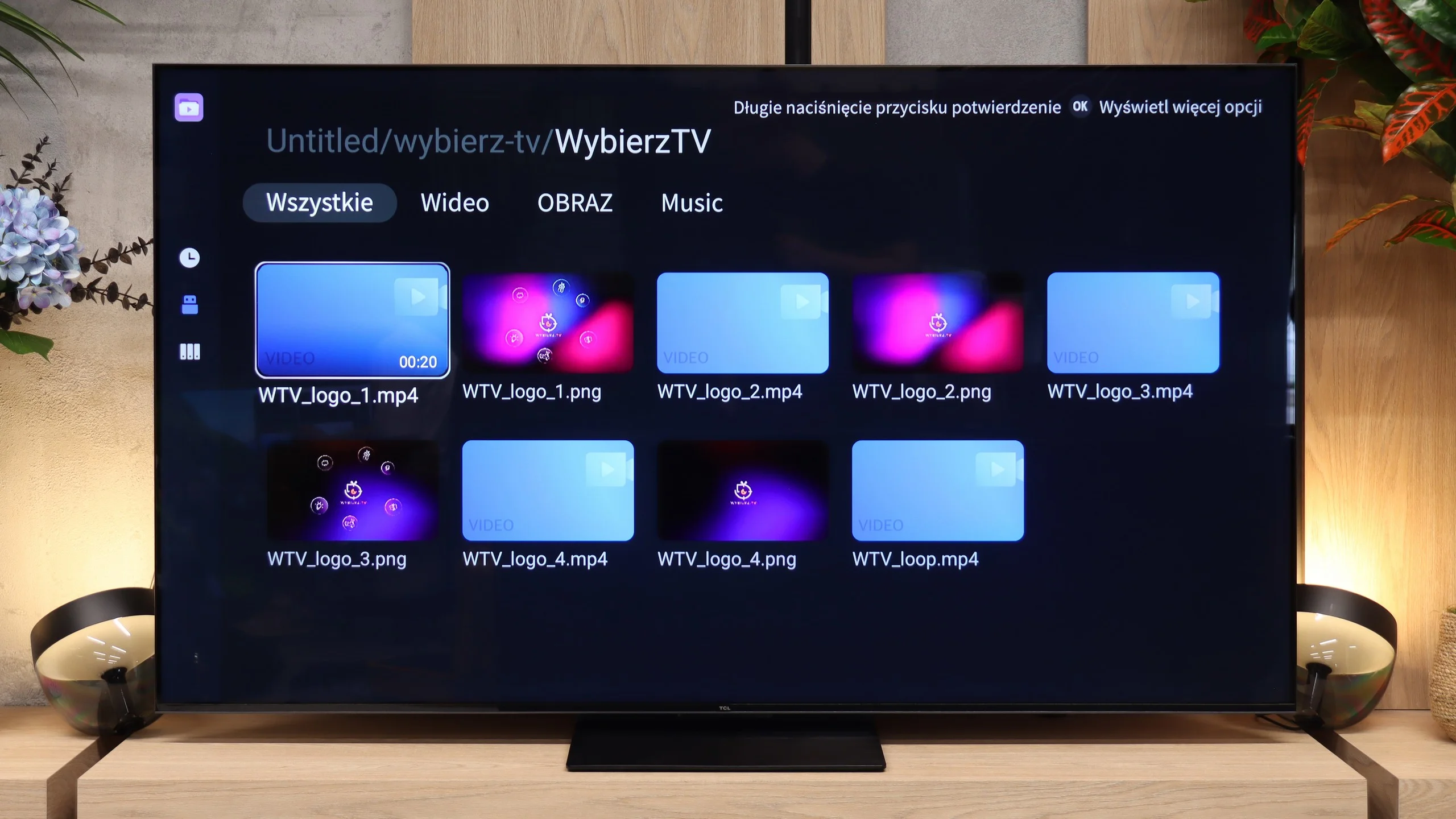
Finally, in the multimedia section it is worth mentioning playback from external USB drives. During our tests we did not encounter any unpleasant surprises; the built-in player handles all common video and audio formats exactly as it should. Interestingly, the TCL C7L also had no problem playing photos saved in Apple's native HEIC format. This is an extremely rare feature in manufacturers' built-in TV apps. And although Google TV of course lets you install external media player apps, in the case of the C7L the built-in tool is so well polished that installing additional software is unlikely to be necessary.
The built-in media player in the RM7L performs very well. The TV handled most of our test material with ease, whether films, photos or music. Shortcomings do occur, of course, but they mostly affect less common formats. In practice most people will get by without installing an additional player.
Sound
7.7/10
7.8/10
- Maximum volume77dB88dB
- Dolby Digital Plus 7.1
- Dolby True HD 7.1
- Dolby Atmos in Dolby Digital Plus (JOC)
- Dolby Atmos in Dolby True HD
- DTS:X in DTS-HD MA
- DTS-HD Master Audio
The TCL C7L simply sounds fairly good and does the job competently. In terms of sound quality itself, practically nothing has changed compared with last year's C7K model. The manufacturer still uses a Bang & Olufsen-branded speaker system in a 2.2 configuration. The only thing that can be quite irritating during viewing is that when you raise the volume to higher levels, roughly above 50% on the scale, the volume no longer corresponds to the on-screen indicator. The B&O audio system works well for everyday viewing of current affairs or series at moderate volume, but if you're looking for better sound it's worth buying at least a basic soundbar for the C7L.
Unlike the higher C7L, C8L or X11L series, the RM7L does not feature an audio system branded by Bang & Olufsen. TCL has opted here for an Onkyo speaker array supported by "Ultra Bass" technology. The difference is also visible in the build. Instead of metal covers, simpler plastic grilles have been used. Does that affect sound quality? In our view, not as much as you might think. The RM7L simply sounds good, with a slightly different character to the C7L. Dialogue is clean and clear, and the TV can easily fill a larger living room. The amount of low end is also a plus. For a TV in this class there is quite a bit of bass and it does not come across as completely flat. Our measurements confirm this. Maximum volume reaches around 88 dB, which is a very good result, and the frequency response remains relatively even. Only above roughly 7-8 kHz is there a more noticeable drop in efficiency, so the highest frequencies are no longer as well exposed. That said, for a TV of this class the RM7L offers a surprisingly pleasant sound and most users will have no cause for complaint.
Sound Quality Test
Acoustic Measurements
77dBC (Max)
75dBC
88dBC (Max)
75dBC
Reader comments
Comments are provided by the external service Disqus (Zeta Global). Once loaded, Disqus may set cookies and process data about your activity.
We will remember your choice on this device. Provider's privacy policy