 Direct comparison
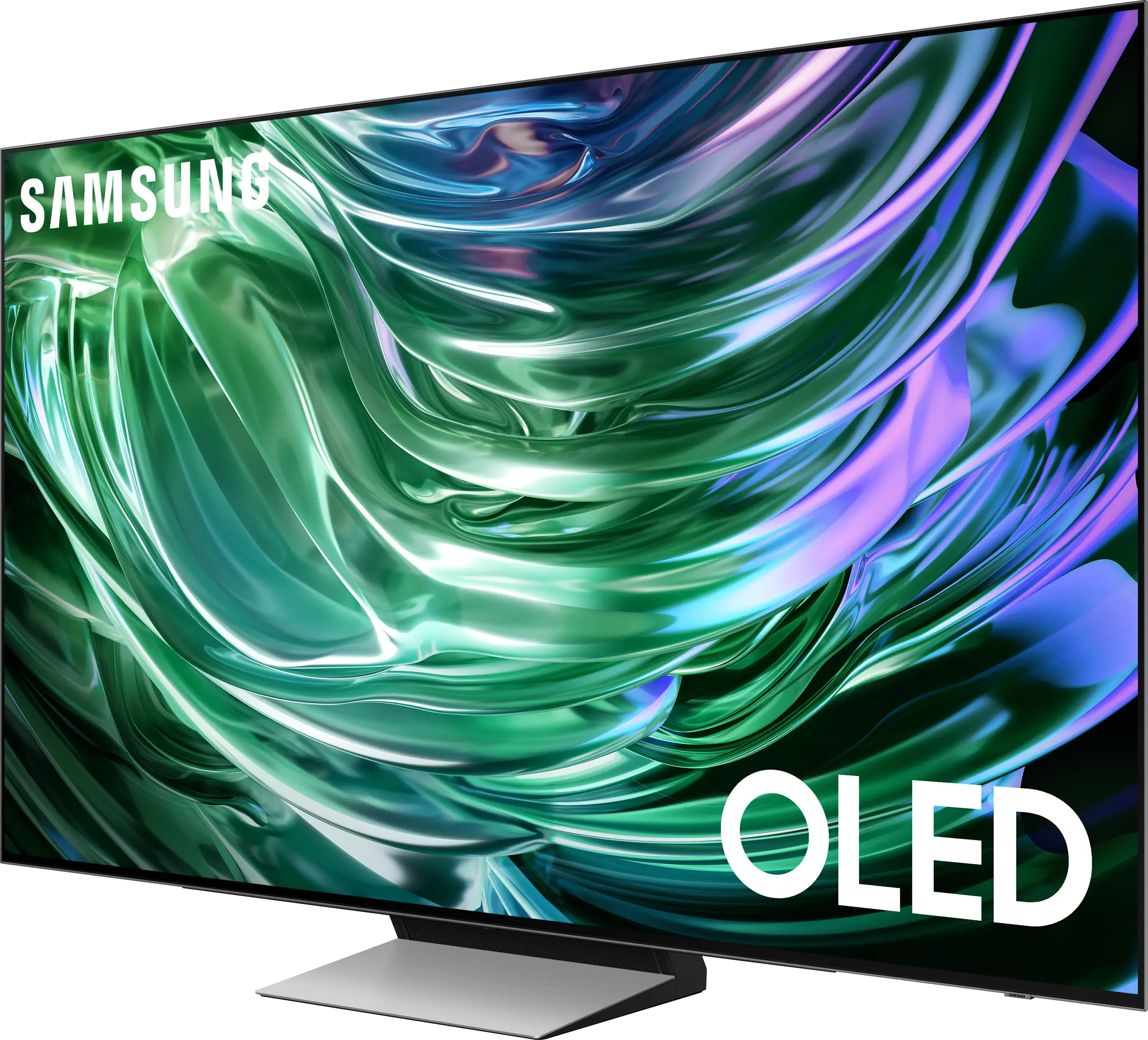
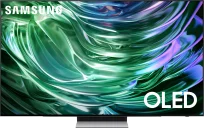
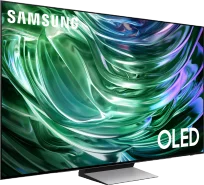
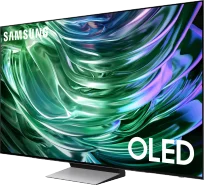
Samsung OLED 48 S90D or S94D is the smallest model in this series, and we had the opportunity to see what it can do. At first glance, it's evident that it deals excellently with details in dark scenes, as is expected from an OLED. However, it is worth mentioning that the 48-inch version differs from the larger models. Brightness is slightly lower, and the panel has a satin finish instead of glossy. During the day, this may affect the perceived image. Nevertheless, regardless of the variant, OLED always makes an impression. The depth of black is incredible, and the contrast ensures that even the most demanding scenes look cinematic. When it comes to high-quality materials, the television literally shines here – bright elements in dark frames literally pop out of the screen. The factory colour settings could be better, but after calibration, the television showcases its full potential. While watching from different spots in the room, we noticed that wide viewing angles make a difference – the image remains clear and full of detail, even when viewed from the side. The Tizen system proved convenient to use – applications like Netflix and Prime Video were within easy reach. A few less popular applications were missing, which could be a downside, but it wasn’t a problem for us. The interface itself ran smoothly without any hiccups. During sports and dynamic movie viewing, the television showed what it’s capable of. The 144 Hz panel eliminates motion blur, and fast actions are displayed smoothly and without interruptions. What is gaming like on this television? It's simply a pure pleasure. Low input lag and support for 144 Hz made every gaming session responsive and smooth, regardless of whether we were playing fast-paced FPSs or calmer strategy games. Samsung OLED 48' S90D/S94D is a great choice for those looking for a smaller television with excellent picture quality and additional features for gamers. It's not without its compromises, but it performs really well in everyday use. For us, it's a compact piece of equipment that proves that size doesn’t always matter.
- Matching (Score) |
- Our verdict |
- TV appearance |
- Where to buy |
- Contrast and black detail |
- HDR effect quality |
- Factory color reproduction |
- Color reproduction after calibration |
- Smoothness of tonal transitions |
- Image scaling and smoothness of tonal transitions |
- Blur and motion smoothness |
- Console compatibility and gaming features |
- Input lag |
- Compatibility with PC |
- Viewing angles |
- Daytime performance |
- Panel details |
- TV features |
- Apps |
- Playing files from USB |
- Sound
S90D / S94D

BRAVIA 2 II / S25M2
Available screen sizes: 48”
Panel type: WRGB OLED
Resolution: 3840x2160
System: Tizen
Model year: 2024
Panel type: LCD IPS
Resolution: 3840x2160
System: Google TV
Model year: 2026
Check how well they match your needs
Take the surveyOverall rating
7.9
5.8
 Movies and series in UHD quality
8.0
5.2
 Classic TV, YouTube
8.6
5.2
 Sports broadcasts (TV and apps)
8.4
5.5
 Gaming on console
9.4
6.2
 TV as a computer monitor
8.6
6.0
 Watching in bright light
5.4
4.8
 Utility functions
7.4
6.6
 Apps
9.3
9.6
 Sound quality
6.8
6.1
Complete the survey to find out what fits your preferences
Advantages

Perfect black
Great for 4K HDR content
Excellent for gamers - 144hz, HDMI 2.1, low input lag.
Advanced and fluid Tizen system
Multifunctional solar remote control
Very good viewing angles (IPS panel)
Google TV with a vast selection of apps
Chromecast and AirPlay
Low input lag
Very good USB media player
Supports audio formats: Dolby (Atmos, TrueHD, Digital), DTS (X, HD)
Two remotes included
Disadvantages

Inferior brightness compared to larger equivalents
Lack of Dolby Vision and DTS:X
Too high a price for what it offers!
Very poor blacks and low contrast (IPS panel)
Low brightness of around 320 nits
No support for dynamic HDR formats (Dolby Vision, HDR10+)
Only a 60 Hz panel
Very limited gaming capabilities
Our verdict
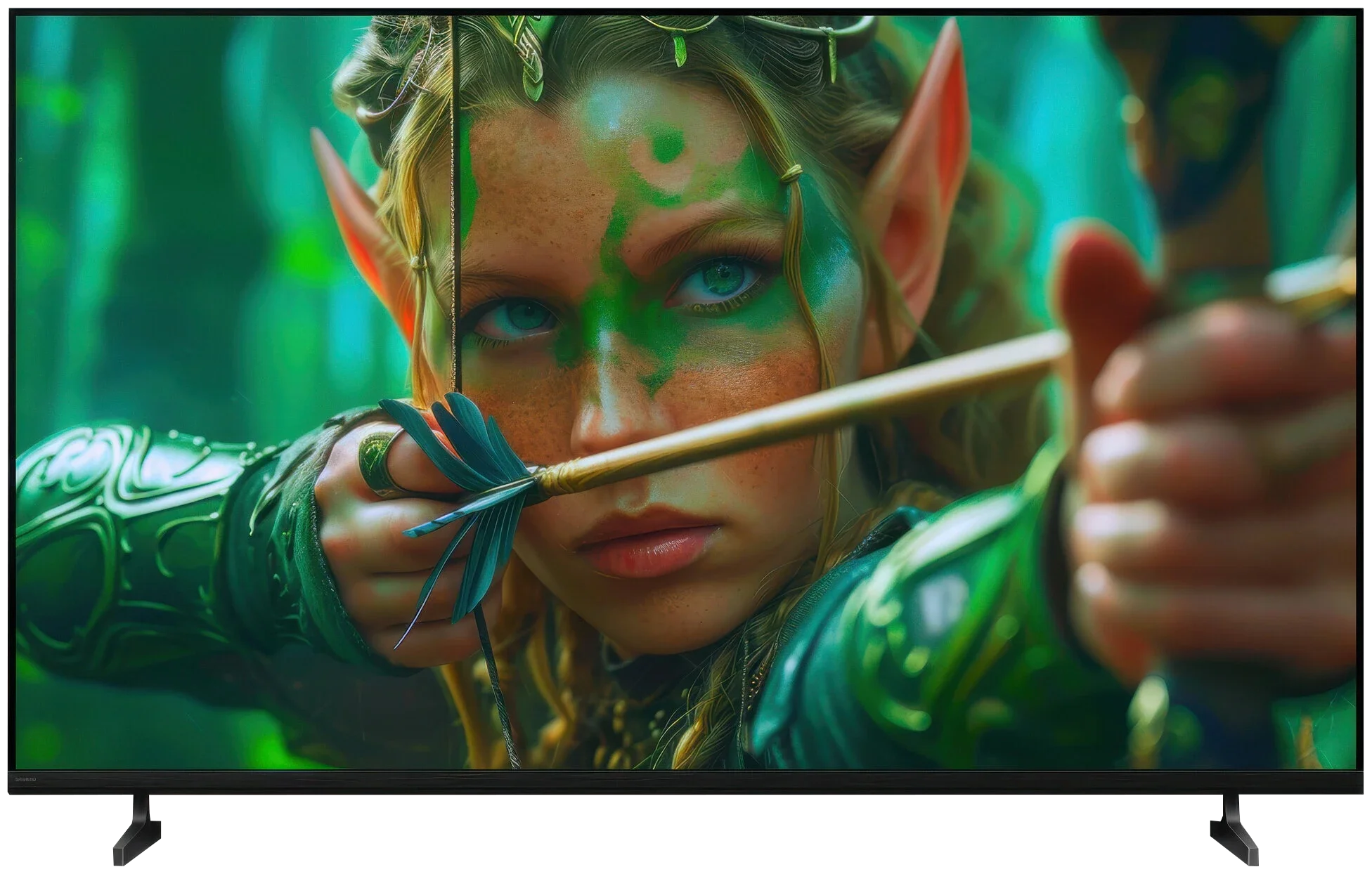
The Sony Bravia 2 II is a television that performs best in simple, everyday use. And we suspect many people will choose it mainly because of Google TV. The system provides access to a huge number of apps and streaming services, and it also includes Chromecast, AirPlay and convenient voice search. The set itself may not run as quickly as more expensive Sony models, but in terms of features there is little to complain about. Importantly, for ordinary viewing the picture quality is quite decent. The Bravia 2 II handles SDR material particularly well, meaning regular TV, YouTube and much of older films and series. The factory Cinema mode is already fairly well tuned, colours look natural and, without much fiddling with the settings, you can simply start watching. And in our view this is where the Bravia 2 II shows its best side, as a simple Smart TV for everyday use rather than a television that aims to impress with the panel's capabilities.
However, you should remember that the word "Bravia" on the casing does not automatically mean excellent picture quality. The Bravia 2 II uses an IPS panel with very low contrast, and that is its biggest problem. During the day this is not such a big issue, but switch the lights off in the evening and the blacks start to look more like dark grey. Of course, in return you get good viewing angles, so if the TV sits in a large living room and is watched by several people from different positions, IPS has its advantage. But that comes at the cost of weak blacks. This is also not a television made with HDR impact or more demanding gamers in mind. About 300 nits of brightness and a narrow colour gamut mean HDR material does not show much more than what we see in SDR. The 60 Hz panel and the lack of broader gaming features also clearly show that gaming is not a priority for this model.
And it wouldn't really be a big problem, because we expected exactly that from an entry-level Sony model. However, the biggest issue for the Bravia 2 II is its price. For similar money you can easily find competing TVs, especially from Korean and Chinese brands, that already offer much more, from 120 Hz panels to Mini-LED backlighting with local dimming. So the Bravia 2 II is not a bad television in itself. It's simply too expensive for what it offers. If its price were noticeably lower, as a simple TV for everyday viewing it would make much more sense.
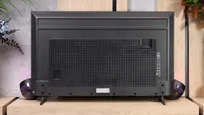
TV appearance

Contrast and black detail
10/10
2.7/10
Local dimming function: No
Contrast:


Result
∞:1

Result
∞:1

Result
∞:1

Result
∞:1

Result
∞:1
Result
1,150:1
Result
1,200:1
Result
1,450:1
Result
1,400:1
Result
1,100:1
Halo effect and black detail visibility:
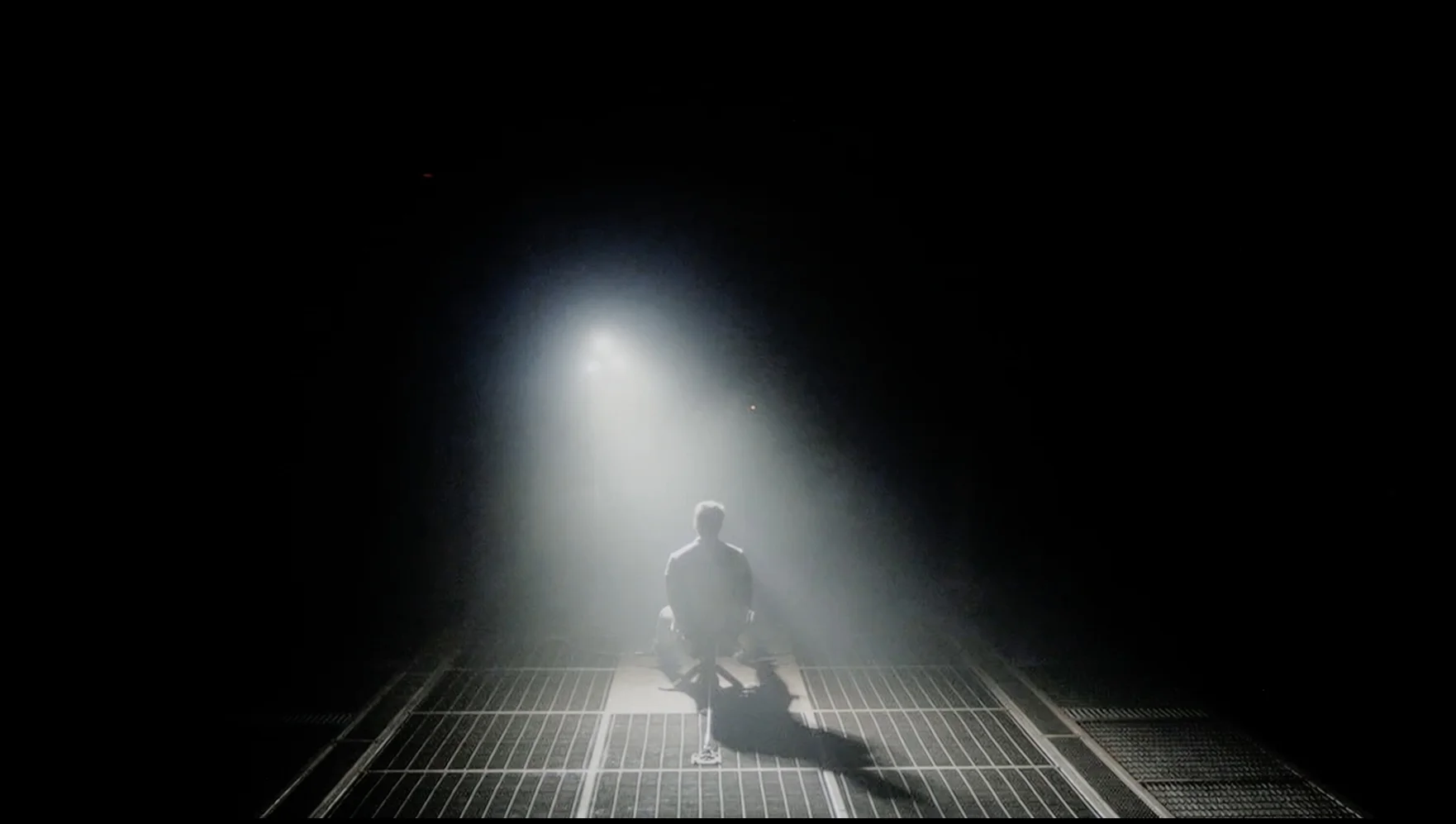
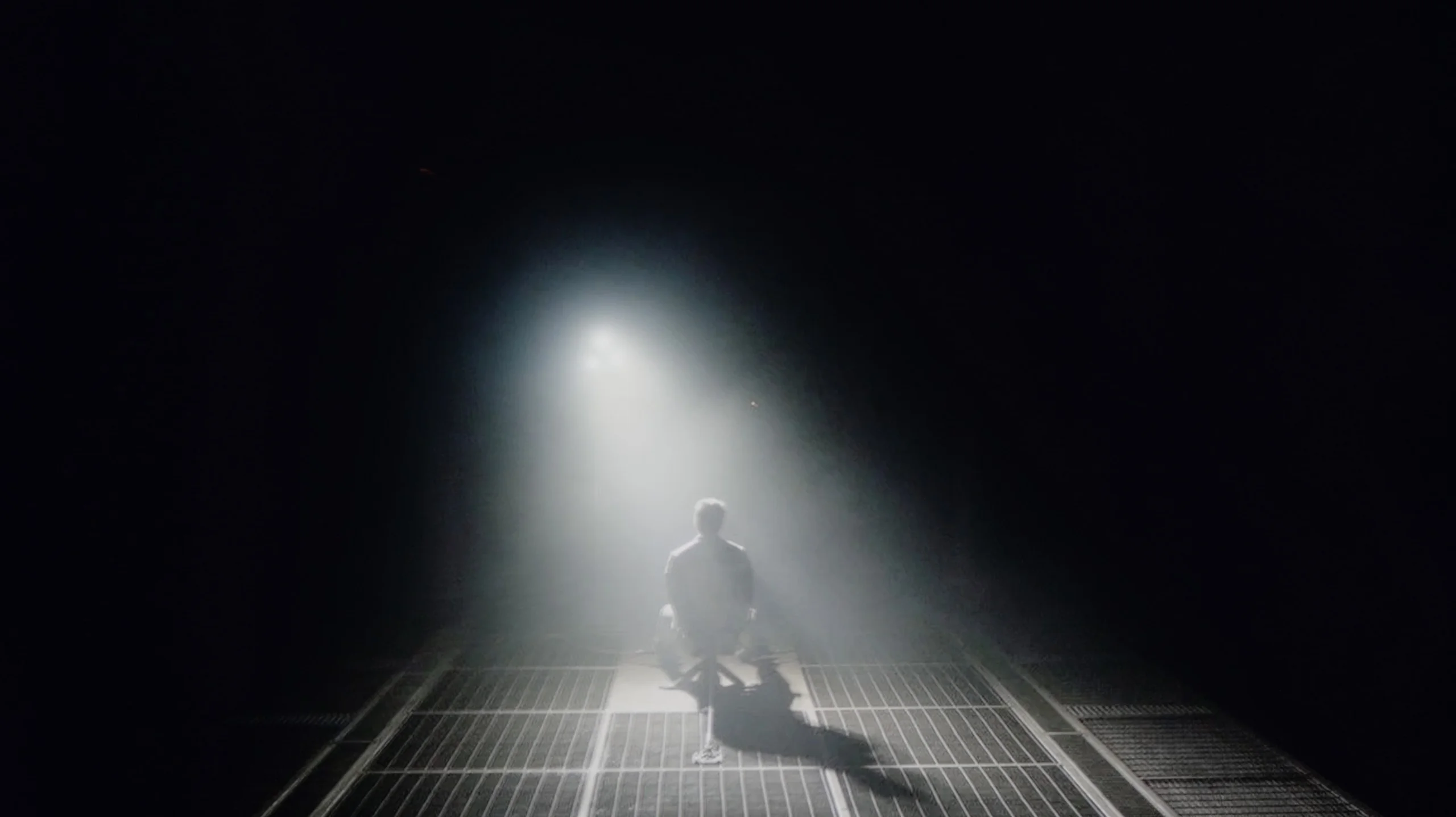
Check the visibility of bright lights on a dark background. Mini-LEDs often struggle with this. The photo does not compare black levels – that’s what the video below is for.
The video accurately shows differences in contrast and black levels between TVs, as well as potential issues: halo around bright objects or Mini-LED zone operation visible as brightness jumps.
Samsung OLED 48 S90D stands out due to its use of OLED technology, which provides an extremely high contrast, one of its key advantages. OLED technology allows each pixel to emit light independently, resulting in perfectly deep blacks and excellent visibility of details even in the darkest scenes. Unlike traditional LCD screens with backlighting, where blacks can appear blurred and greyish due to uneven illumination, OLED ensures that pixels are completely turned off in areas where black should appear. As a result, contrast reaches an impressive level, and images become more vibrant and realistic. An example can be seen in a scene from the film “Oblivion,” where the S90D effectively captures the intense light of the lantern, highlighting the details in the bright areas of the image. In “Sicario 2,” the OLED panel accurately reproduces the helicopter lights against a dark background.
When it comes to black levels, the Bravia 2 II unfortunately doesn't have much to offer. Sony has used an IPS panel here, a solution that delivers one of the lowest native contrast ratios among all LCD panels. In our measurements we recorded values of around 1100–1450:1, and unfortunately this becomes very noticeable when watching. Additionally, the TV has no local dimming system, so it cannot dim only those parts of the screen that really should remain dark. In practice this means that once the lights are turned off, blacks very quickly start to shift towards grey and dark blue. In scenes such as Oblivion or Sicario 2, instead of a deep backdrop we get a noticeably brightened image, which greatly undermines the atmosphere of evening viewings. Of course, the IPS panel also has the advantage of better viewing angles, but in this respect it's hard to see that as any real compensation. If you're looking for a television primarily for watching films in the evening, the Bravia 2 II simply isn't a model we could recommend.
HDR effect quality
6.4/10
4/10
Luminance measurements in HDR:

Result
788 nit

Result
807 nit

Result
851 nit

Result
838 nit

Result
372 nit
Result
294 nit
Result
307 nit
Result
329 nit
Result
330 nit
Result
325 nit
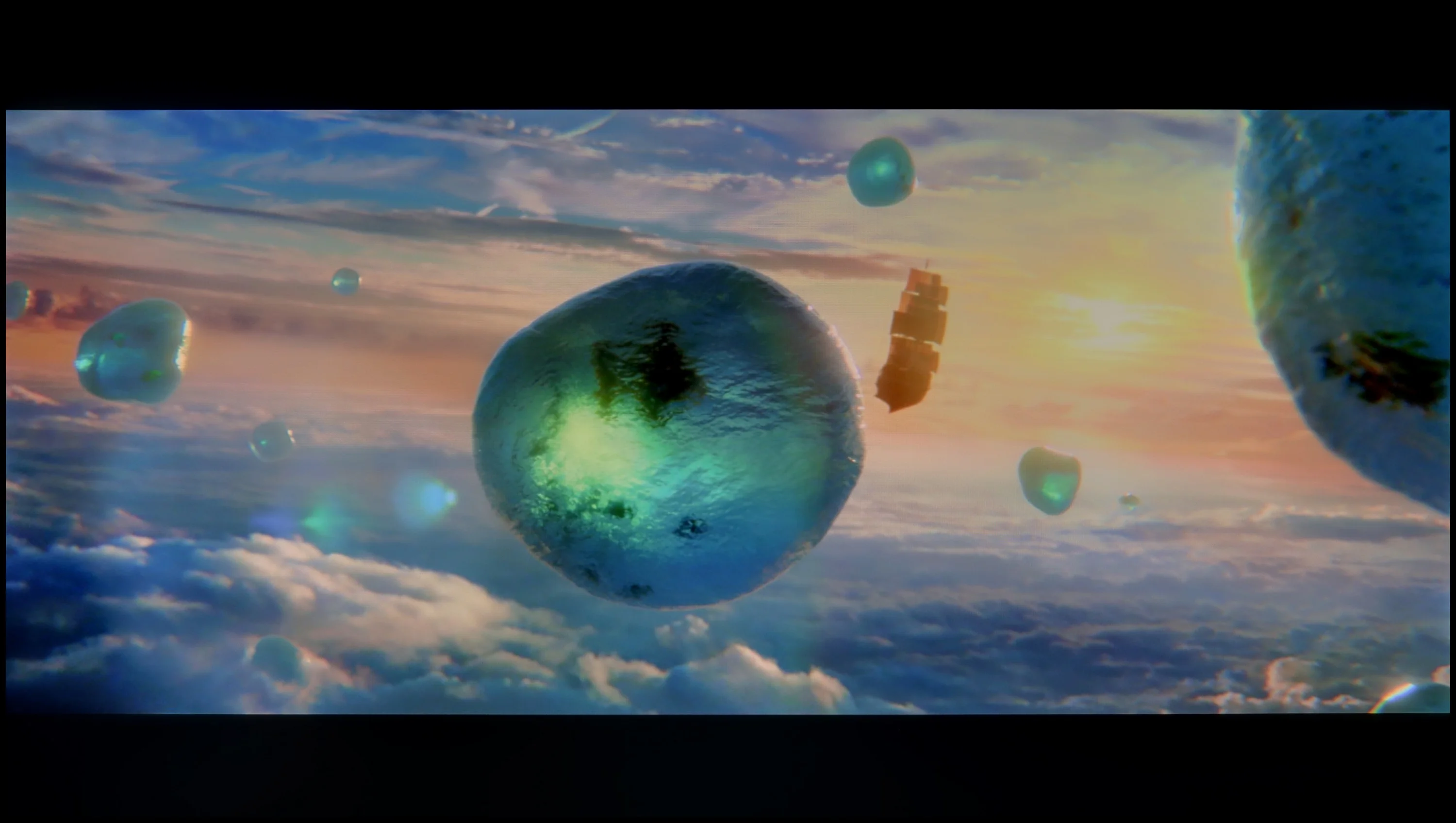
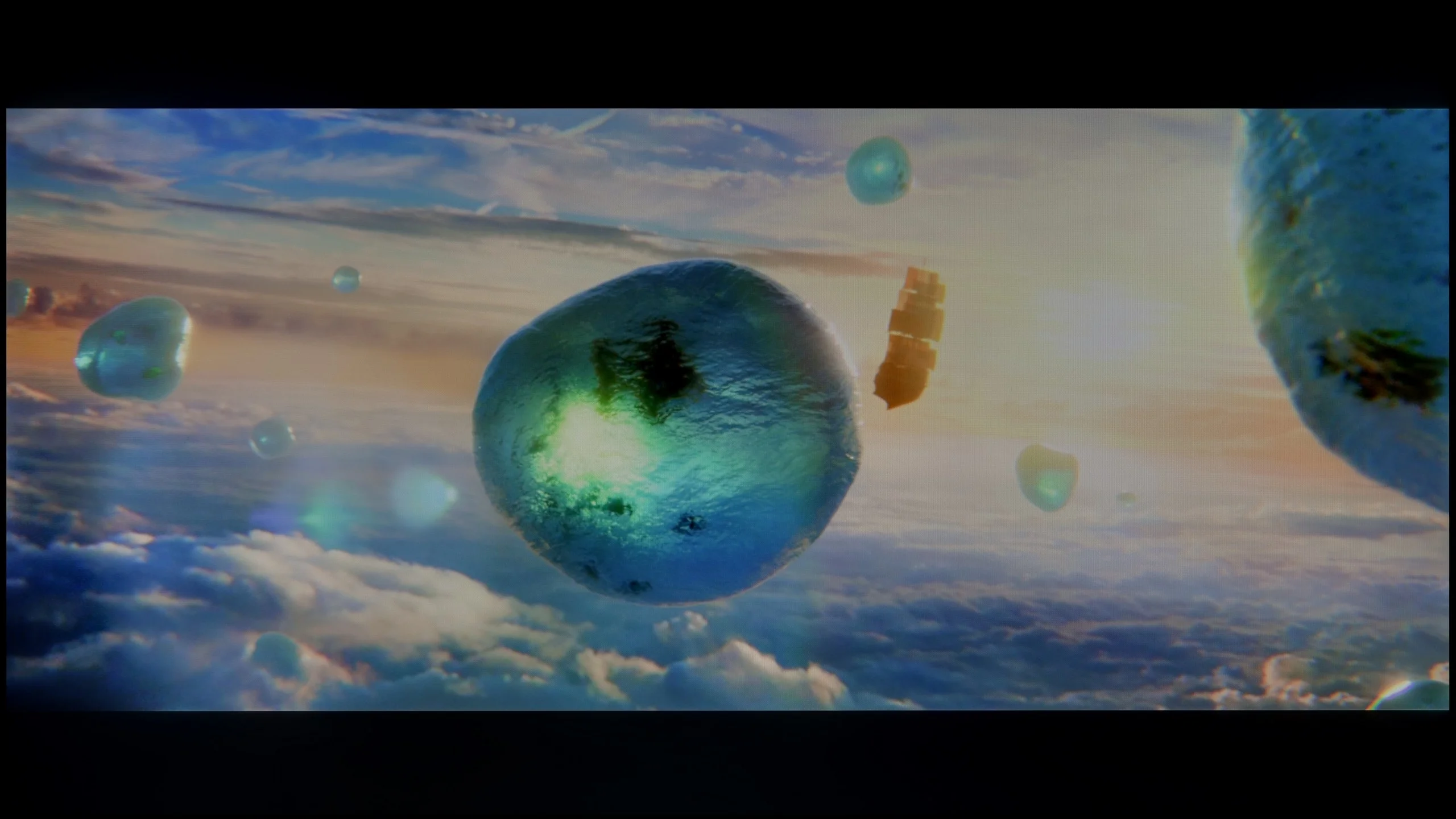
Scene from the movie “Pan” (about 2800 nits)
Scene from the movie “Billy Lynn” (about 1100 nits)

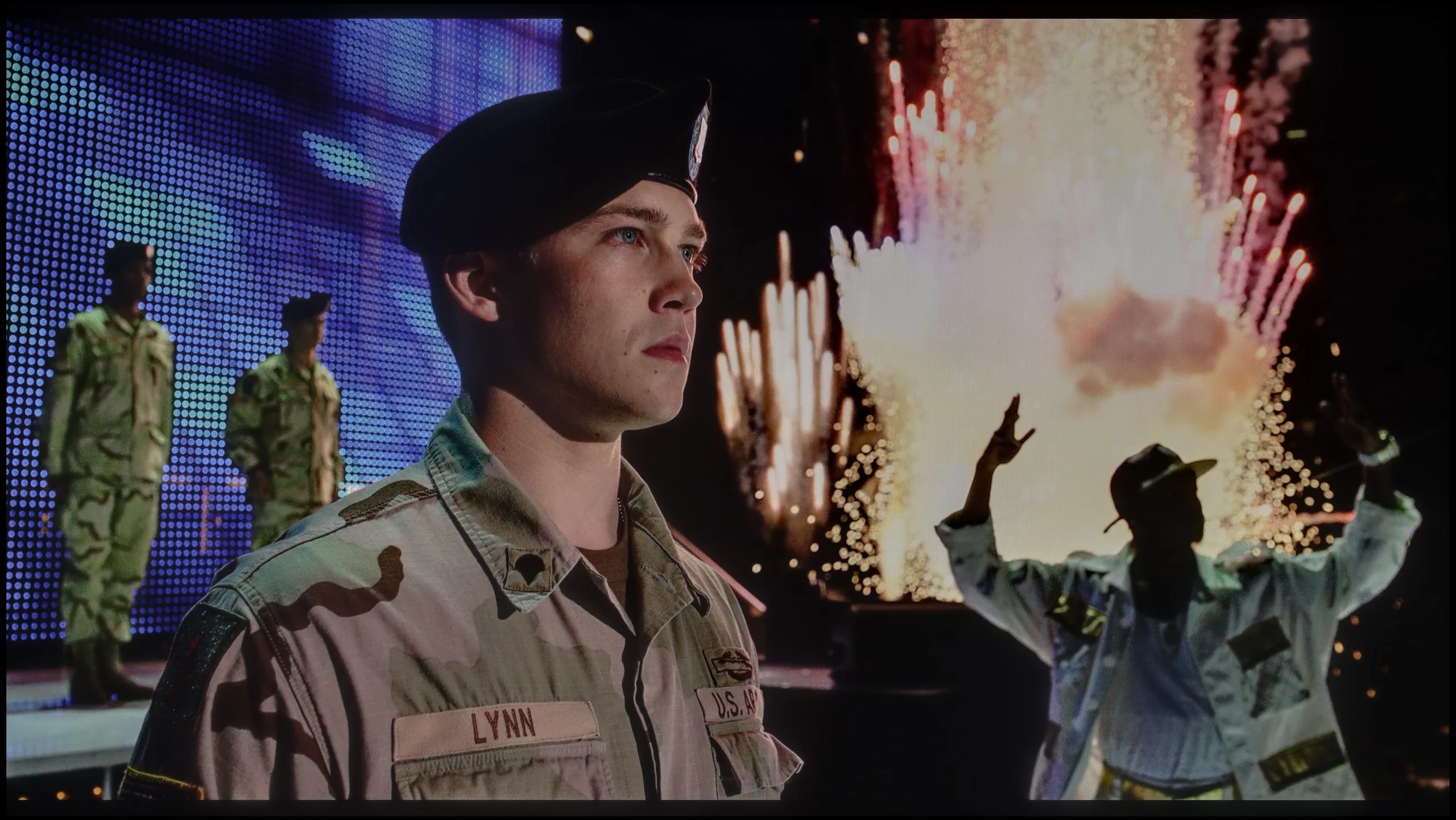
The photos show two HDR10 movies. 'Pan' is one of the brightest productions ever made, while 'Billy Lynn' (soldier) has brightness typical of streaming (Netflix, Prime, HBO MAX). Notice the intensity of effects and detail in whites.
Static HDR10


The photos present the visibility of white details in various HDR formats. They do not show brightness differences between TVs (these can be compared in the previous gallery).
HDR luminance chart:
Sony BRAVIA 2 II (S25M2)
Samsung S90D / S94D 48" (WRGB OLED)
Luminance of RGB colors
In the tested film scenes, the television Samsung OLED 48 S90D achieves impressive brightness results, surpassing 800 nits in the first four shots, which can be considered a very good result. In the case of the final shot, where a fullscreen flash of sunlight is visible, the brightness drops to around 400 nits, but still remains at an acceptable level. However, it's worth noting that this model in larger sizes offers higher values, exceeding the "barrier" of 1000 nits. Additionally, speaking of the DCI-P3 colour space coverage at 97% is an excellent result, which guarantees extremely rich and realistic colour reproduction, further enhancing image quality. However, once again it should be remembered that the panel in the 65' variant equipped with a QD-OLED panel will be even better in this aspect. For those hesitating in choosing the size of the S90D model, it is worth mentioning that the larger versions of this television offer better HDR effects, and consequently, higher scores in our tests.
The Sony Bravia 2 II is not a very bright TV and unfortunately that is immediately apparent in HDR. In our measurements brightness stayed around 300 to 330 nits, which is clearly too low for the brightest parts of the image to look truly impressive. In practice, HDR here does not differ that much from standard SDR. Bright highlights, the sun or lamps are of course visible, but they lack the intensity you would expect from HDR material. The Bravia 2 II therefore performs much better with standard SDR content, and in that use its limited brightness will be least noticeable.
Colour gamut coverage
The Sony Bravia 2 II is also not impressive in terms of colour. The TV does not use any additional gamut‑expanding filter, such as the quantum dots found in QLED TVs or a PFS phosphor layer. In our measurements coverage of the DCI‑P3 gamut was about 78%, and the very wide BT.2020 roughly 57%. That's definitely too little to talk about truly saturated colours in HDR material. More intense reds, greens or turquoises will simply be less striking than on TVs with an expanded colour gamut. The Bravia 2 II therefore performs much better in the Rec.709 standard, the gamut used for films, series and television in SDR.
Factory color reproduction
7/10
5.3/10


This illustrative image shows how colors change after professional calibration. If you can see the difference, you can order it from SkalibrujTV – it's our own service.
Factory mode
After calibration


This illustrative image shows how colors change after professional calibration. If you can see the difference, you can order it from SkalibrujTV – it's our own service.
Factory mode
After calibration
The S90D Samsung television has been tested in Filmmaker mode, which offers good colour reproduction, although with some imperfections that may be noticeable to more demanding users. This mode can seem overly warm, and users switching from Standard mode may experience a slight shock. It's worth noting that this state of affairs is caused by poor settings, such as in the white balance, rather than the Filmmaker mode itself. In both SDR and HDR content, the device shows drops in blue, causing colours to become warmer than they should be. In practice, this means that some shades, such as sky blue or skin tones, may appear less natural and more tinged with pink or yellow. The Colour Checker test confirms these deviations, showing shifts towards warmer tones. In SDR content, the gamma graph indicates slight fluctuations, causing the image to be minimally darker, especially in shadows. This may affect less distinct details in darker scenes. Conversely, in 4K HDR materials, the EOTF curve is situated above the recommended line, leading to some parts of the image being displayed too brightly, which can cause clipping in the brightest areas. Overall, the Samsung S90D presents a solid image right out of the box, but for the best results, especially with more demanding content, additional calibration is recommended.
The out-of-the-box colour reproduction in Cinema mode was actually quite good, at least for ordinary SDR material. The Bravia 2 II had a slight tendency to boost reds, so some colours shifted to slightly warmer, at times faintly pinkish, tones. However, this wasn’t a major fault and during normal viewing the picture still looked fairly natural. There was a bit more happening with image brightness. Looking at the gamma curve, you can see Sony doesn’t stick perfectly to the reference value. The darkest areas are slightly lifted, while as brightness increases the gamma gradually rises and a larger part of the picture becomes darker than it should. That said, it’s not such a large difference as to be very distracting in everyday viewing. Overall, SDR straight out of the box performs quite respectably.
The situation is considerably worse in HDR. We’ve already mentioned the limited colour gamut, but in addition the Bravia 2 II noticeably manipulates image brightness here. The EOTF curve sits below the reference value for a large part of its range, which means the TV renders most mid and brighter parts of a scene darker than the source material intends. Only towards the very end of the range does the curve flatten out, as the panel reaches the limits of its capabilities. Combined with a peak brightness of around 300 nits, this results in HDR that not only lacks much brightness, but can also simply look too dark.
Color reproduction after calibration
8.7/10
7/10


The photos show how movies look on the TV. Pay attention to black detail visibility, colors, and shadow tint.


The photos show how movies look on the TV. Pay attention to black detail visibility, colors, and shadow tint.
After calibration, the television Samsung OLED 48 S90D in film mode looks even better than one could have presumed. The white balance, for both HD and 4K HDR content, has been improved to nearly perfection. Although minor errors can still be noticed, they are so minimal that they do not significantly affect the quality of the image. The colours are more balanced, which translates to a natural representation of details, particularly in scenes requiring a precise colour palette. It is worth adding that this model in the 48' size is equipped with a WOLED panel that has a different characteristic compared to larger sizes and has a smaller coverage of a wide colour gamut, not offering such rich colours as, for example, the 65-inch version, which is fitted with a QD-OLED panel.
The contrast has also undergone significant improvement. The gamma graph after calibration is much closer to the expected line, providing a better balance between the bright and dark parts of the image. The EOTF curve, which before calibration showed issues with overexposed scenes, now displays better results. This effect allows for greater detail preservation in the bright parts of the image, especially in HDR material.
Calibration did a lot for the Bravia 2 II, particularly with SDR content. Above all, we managed to even out the white balance and tidy up the gamma, which now follows the reference value much more closely. As a result, the image no longer has the previous pink cast, and the brightness across different areas is much better organised. You can also see this in the colour errors, which after calibration fell to a very low level (with slight issues in the most saturated reds). We also partially managed to rein in the Bravia 2 II in HDR, especially in the way the television handles image brightness. However, there is one thing no calibration can fix: the capabilities of the panel itself. A narrow colour gamut means the television is physically unable to reproduce the most saturated colours present in HDR material. On top of that, the low contrast of the IPS panel means darker scenes are veiled by a grey haze, which robs colours of some of their depth. So we can improve how the Bravia 2 II makes use of its capabilities, but unfortunately we cannot overcome the panel's inherent limitations.
Smoothness of tonal transitions
7.6/10
8/10
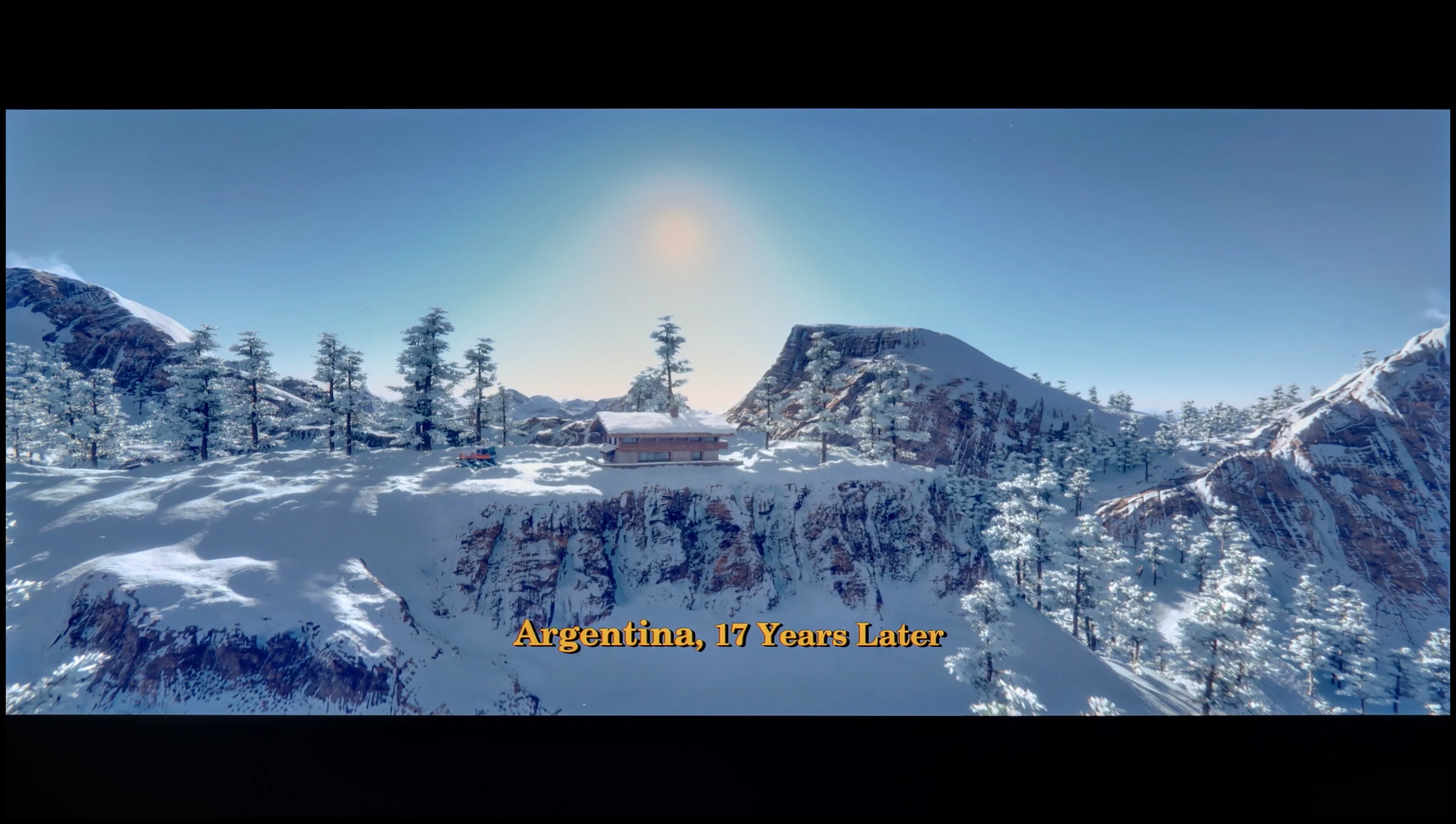

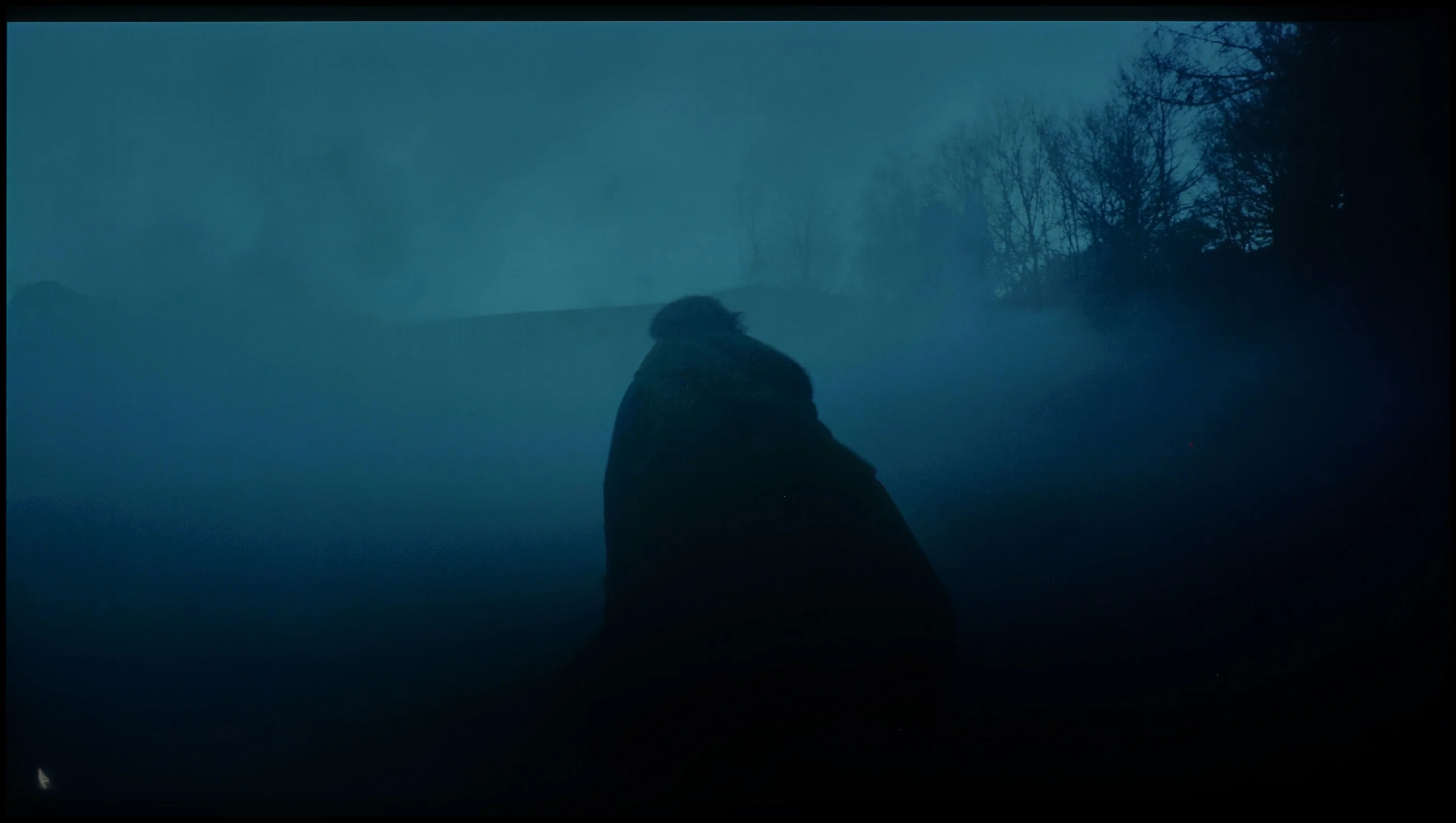
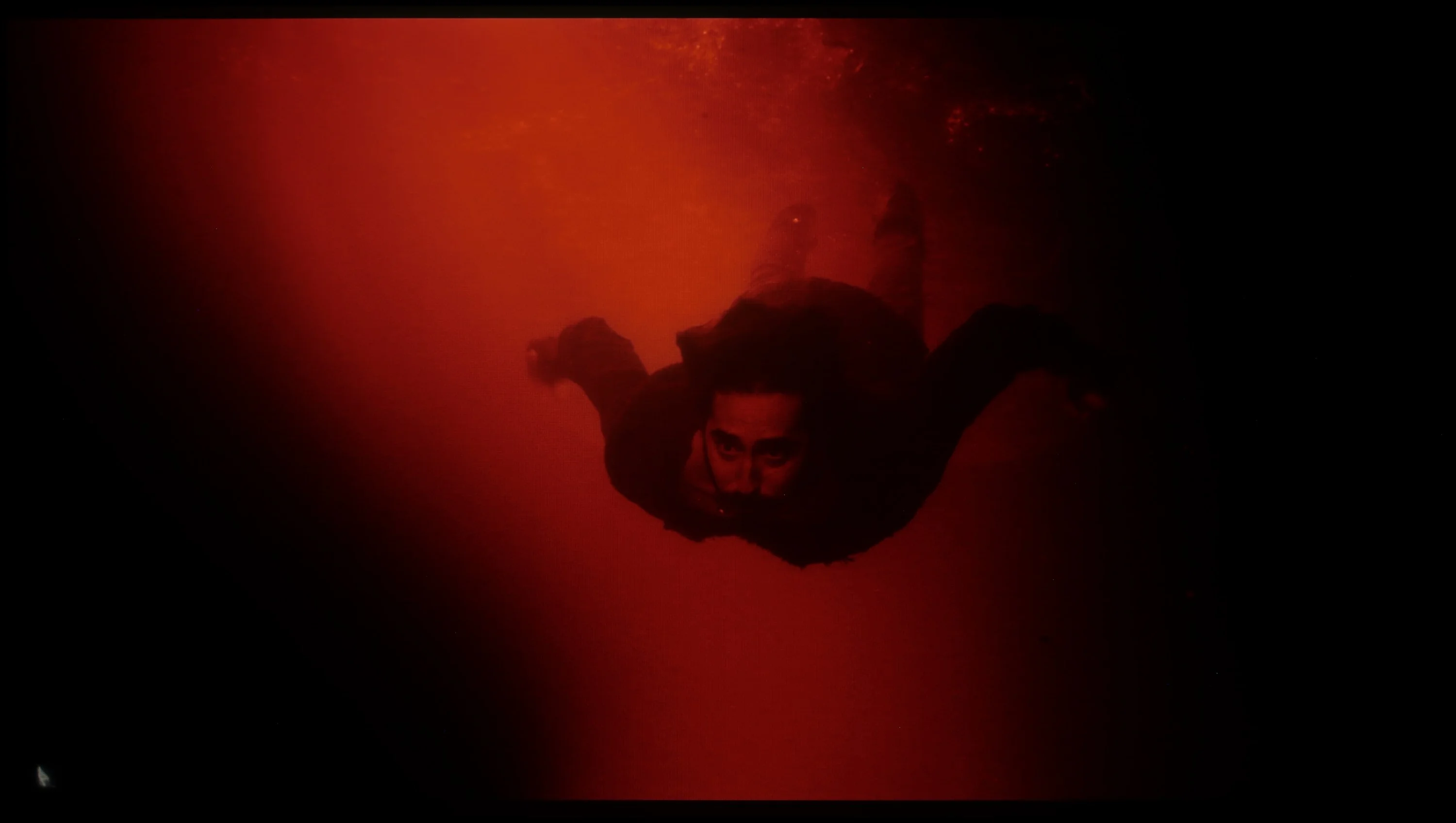
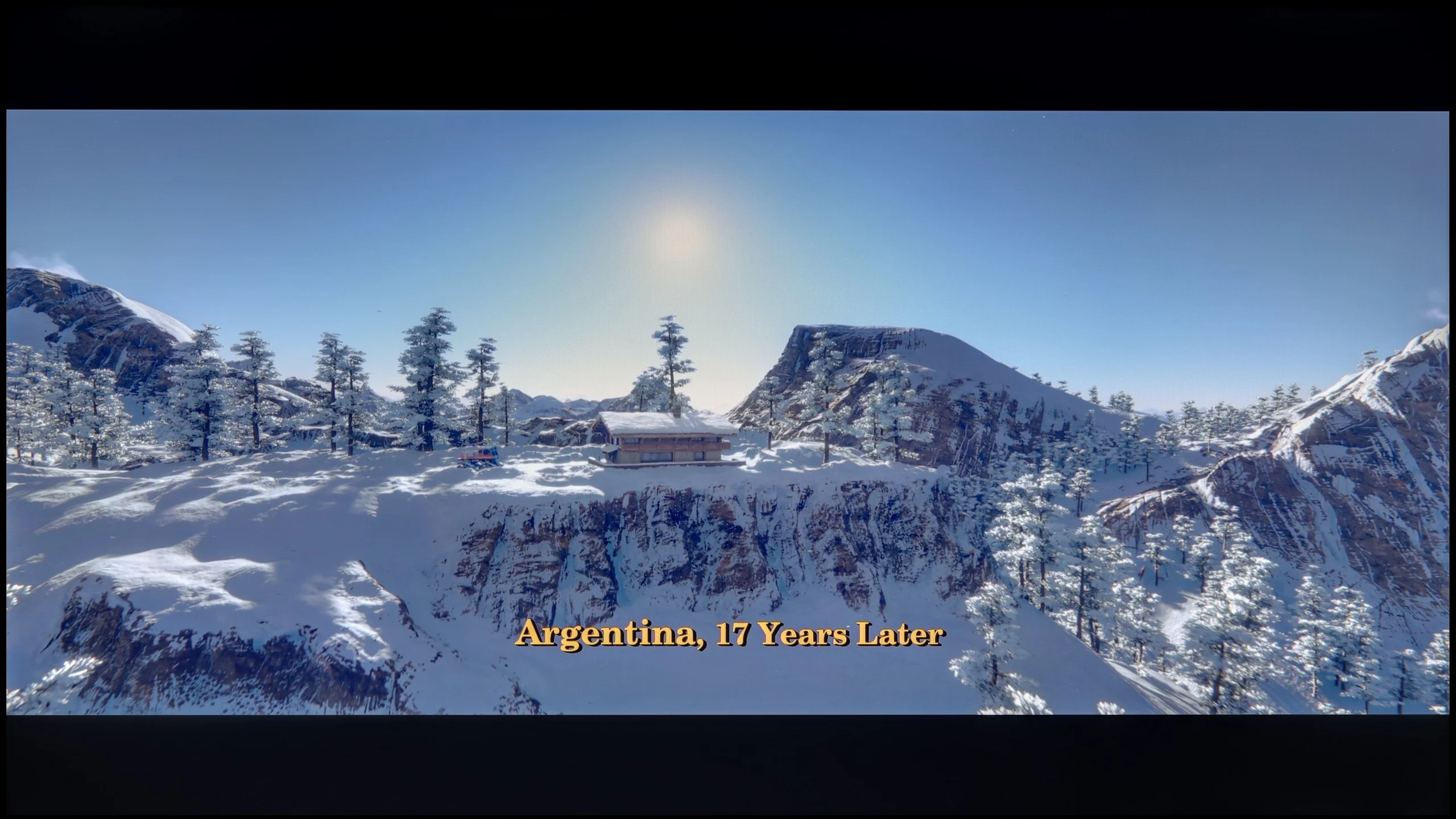
These are selected scenes that show smooth tonal transitions from one color to another. If you see distinct banding, it’s the TV panel’s fault.

These are selected scenes that show smooth tonal transitions from one color to another. If you see distinct banding, it’s the TV panel’s fault.
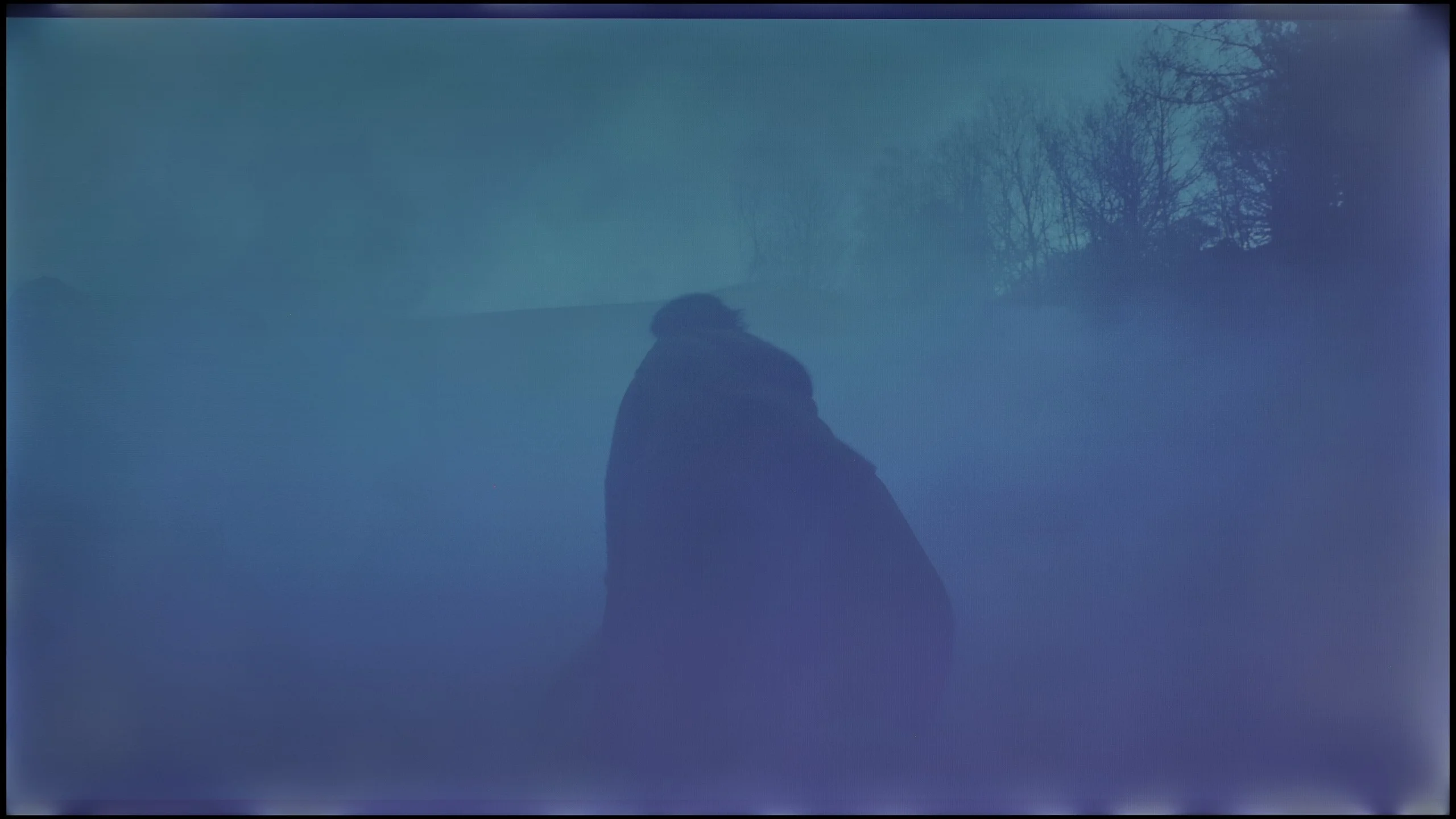
These are selected scenes that show smooth tonal transitions from one color to another. If you see distinct banding, it’s the TV panel’s fault.
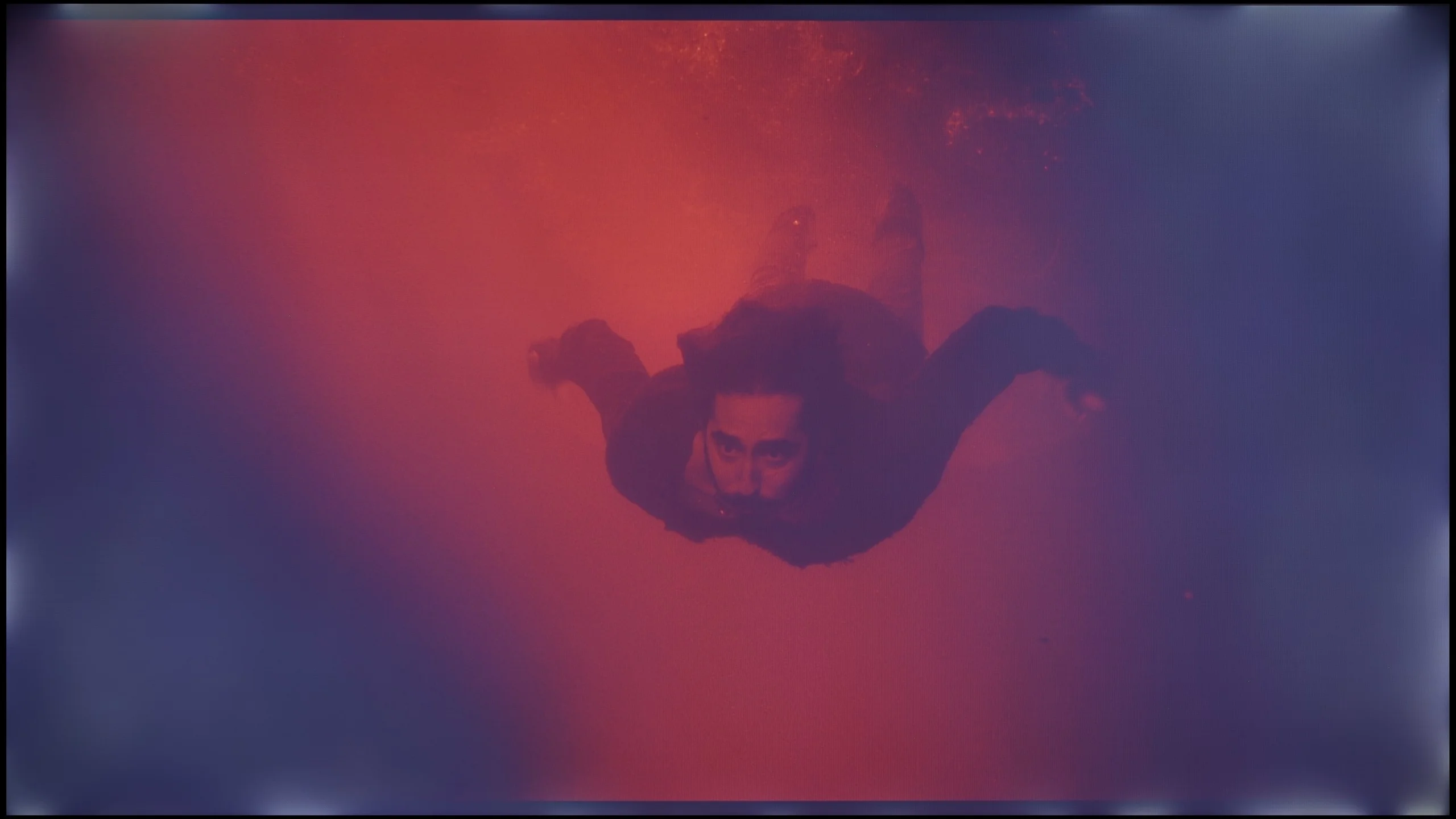
These are selected scenes that show smooth tonal transitions from one color to another. If you see distinct banding, it’s the TV panel’s fault.
The fluidity of tonal transitions on the Samsung OLED 48 S90D television is at a good level, although subtle imperfections are visible in places. In most scenes, the tonal transitions are smooth and well-rendered, providing a natural viewing experience. In more demanding sequences, such as a darkly coloured sky, slight issues may arise; however, these do not significantly affect the overall visual experience. In the test scene dominated by red hues, slight clipping of the brighter areas can be observed, but it is subtle enough not to interfere with viewing. Overall, the fluidity of tonal transitions on the S90D television is solid, ensuring good reception of content.
The smoothness of tonal transitions on the Bravia 2 II is quite good, although it depends a lot on the scene. In bright parts of the image the gradation is smooth and it’s hard to spot any major issues. It gets worse in very dark shots. In scenes with many dark shades distinct banding between successive tones was already visible. So it’s not perfect, but for most everyday content the problem shouldn’t be particularly noticeable.
Image scaling and smoothness of tonal transitions
7.9/10
6/10


Smooth transition function
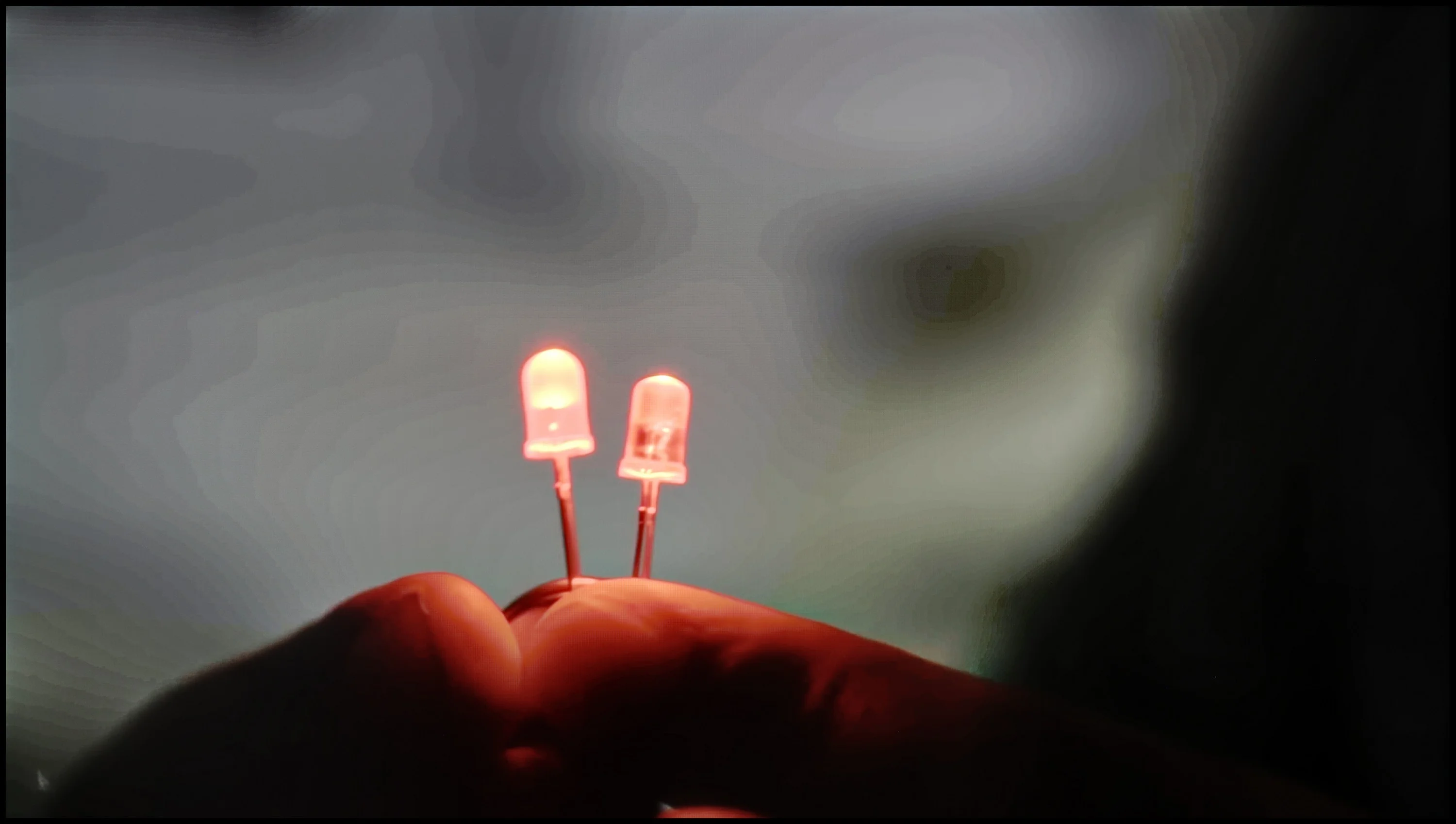
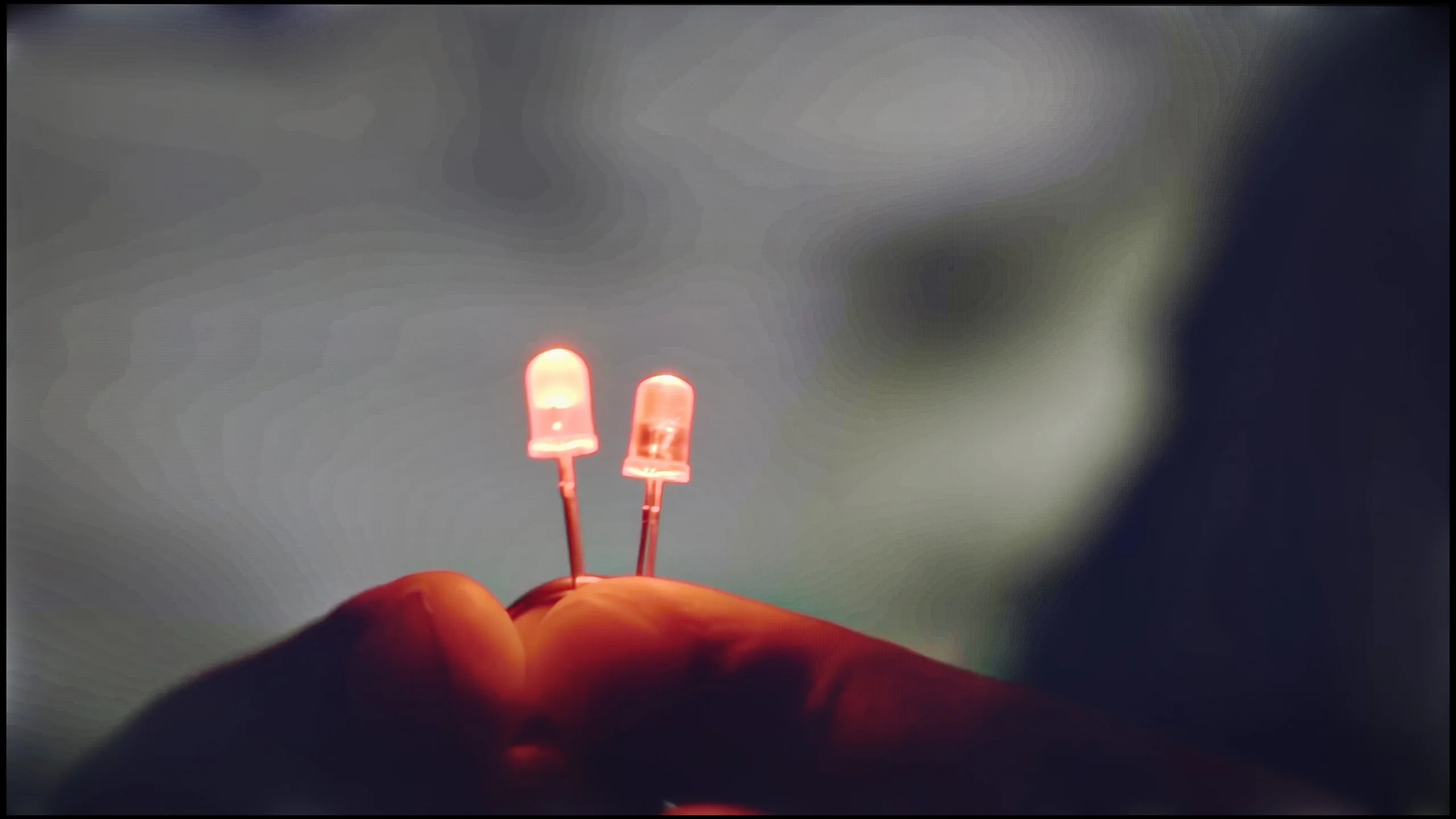
The match photo shows how the TV smooths weak tonal transitions in low-quality video.
Image scaling SD (576i)


The model photo shows how it handles upscaling of SD material.
The Samsung OLED 48 S90D television performs very well in smoothing tonal transitions. Thanks to the applied technology, the transitions between colours are more fluid and natural. There is also the option to use the noise reduction function, which further smooths tonal transitions, which can be useful in certain situations. However, it is worth remembering that enabling noise reduction can also lead to the smoothing of desired film grain, which in turn can reduce the cinematic atmosphere of the image. For this reason, caution is advised when using this function, as it is better to leave the natural grain that adds character and authenticity to the content being viewed.
Samsung, as always, does not disappoint and excels at scaling images from lower resolutions. The S90D OLED 48 Samsung television effectively processes lower resolutions, as seen in the visible image. The outline of the model is clear and correct, looking natural and detailed as a result. Moreover, the branches of trees are well replicated, showing no strong jaggedness that could detract from the quality of the image. Thanks to effective scaling, even lower resolution materials look attractive on the screen, satisfying users who prefer a variety of content sources such as regular aerial/cable television.
The upscaling on the Bravii 2 II is quite good and, in that respect, the TV matches the standard Sony has set. Lower-resolution content is sensibly upscaled to 4K, and the image is slightly smoothed in the process without excessive edge sharpening. The situation is worse when it comes to improving footage with visible compression artefacts. This is handled by the "Digital Noise Reduction" function, which at the "High" setting can indeed smooth out some unpleasant tonal banding. The problem is that it does this rather aggressively and, along with the imperfections, it also removes a lot of fine detail, including natural film grain. What is more, when there is more motion on screen its effectiveness drops sharply and any improvement is then minimal. For everyday use we therefore tended not to use this function.
Blur and motion smoothness
8.5/10
5/10
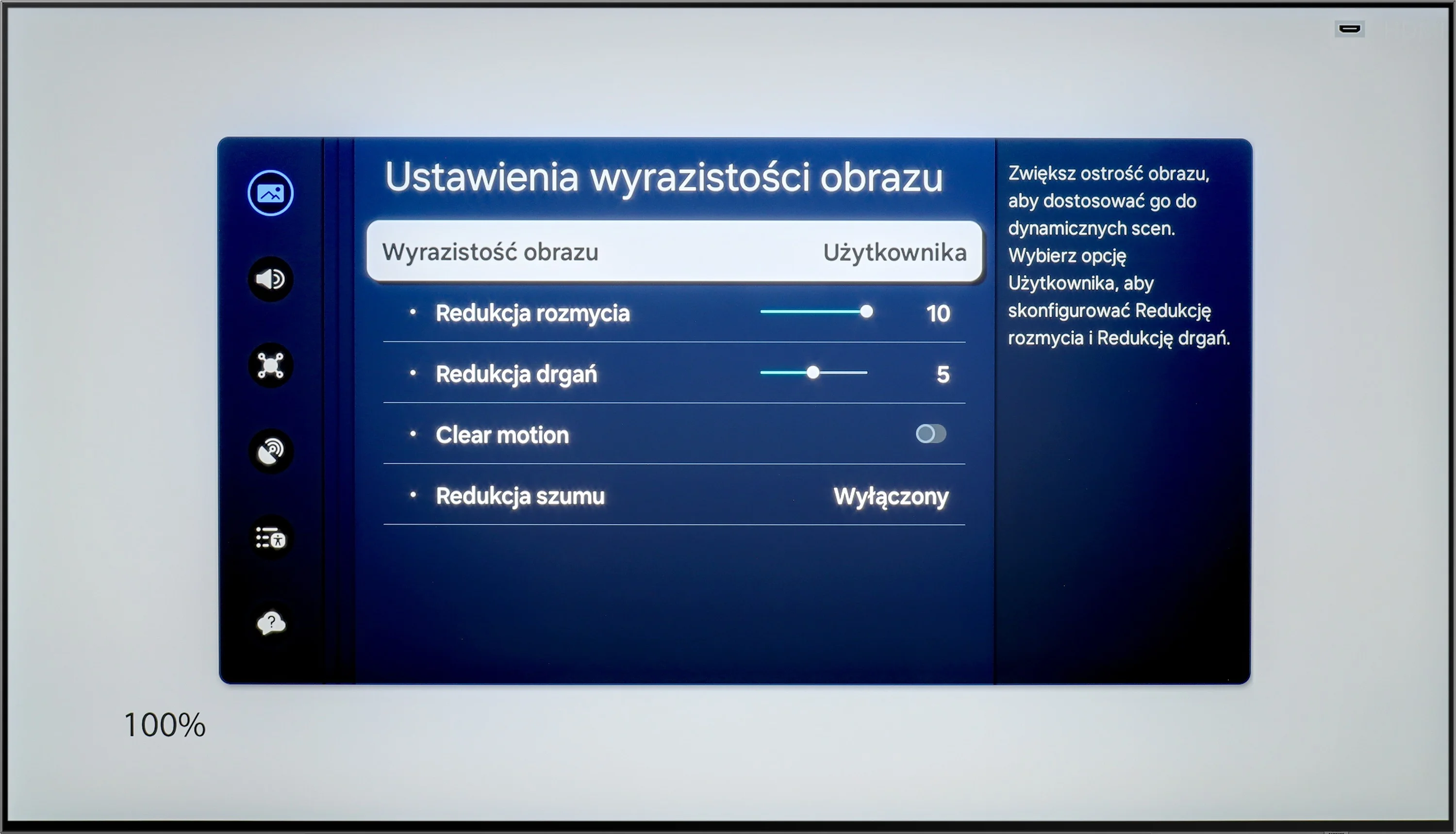
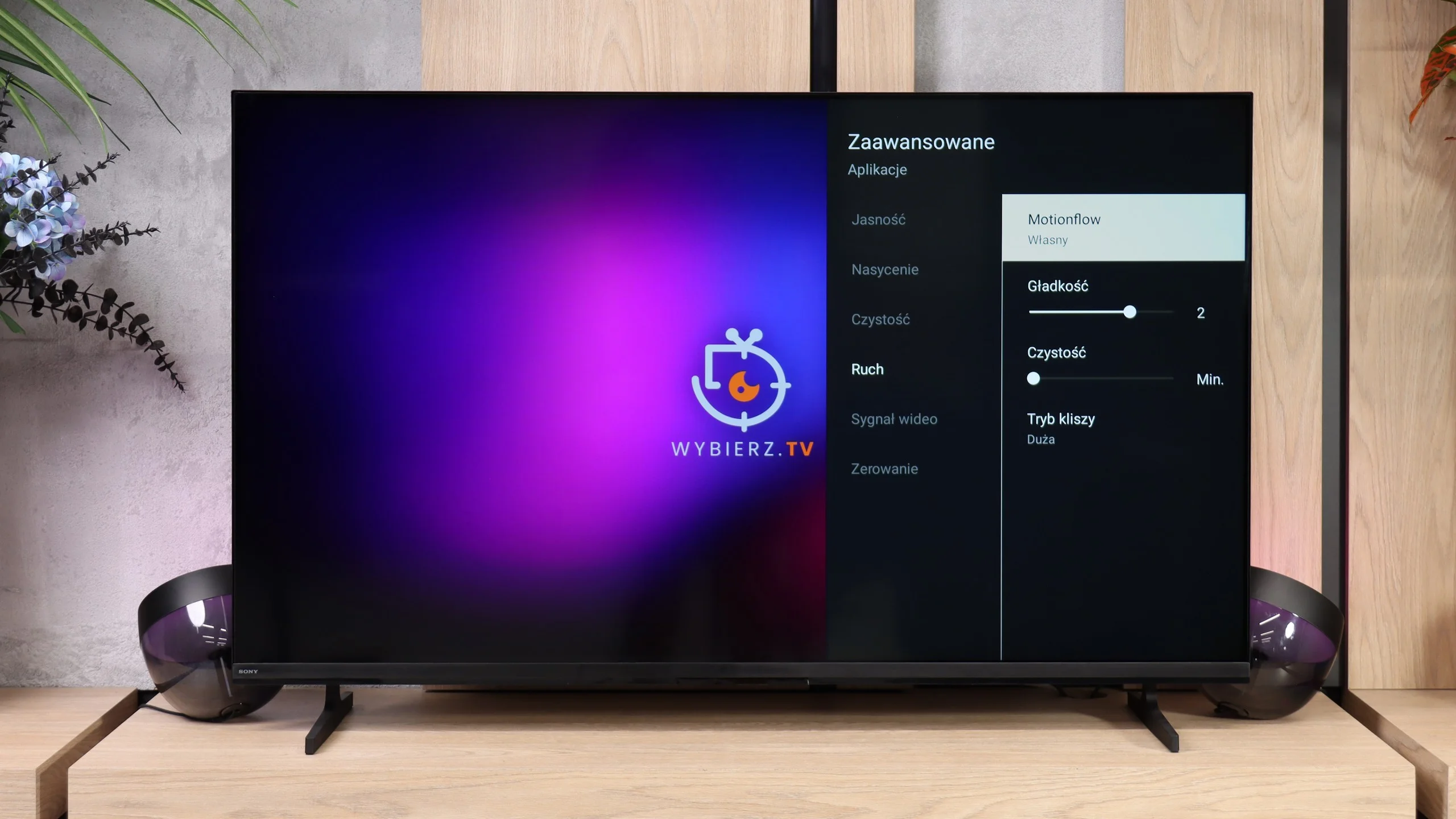
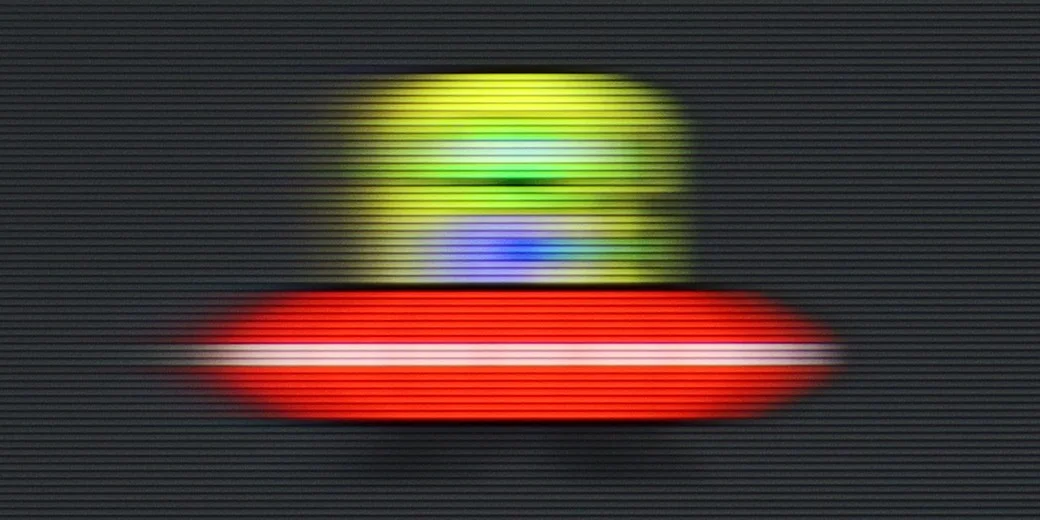
Blur (native resolution, maximum refresh rate):





Blur (BFI function enabled):
Image flickers in this mode
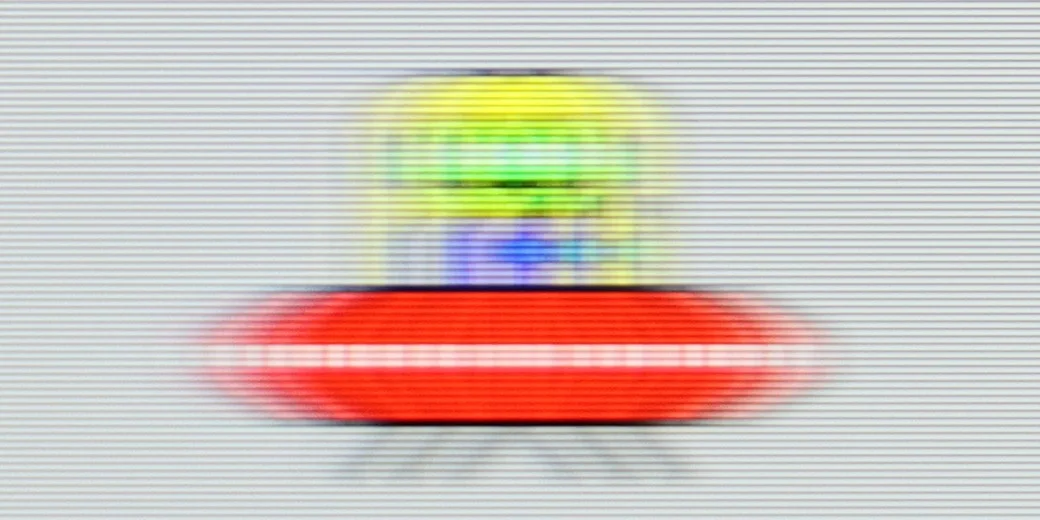

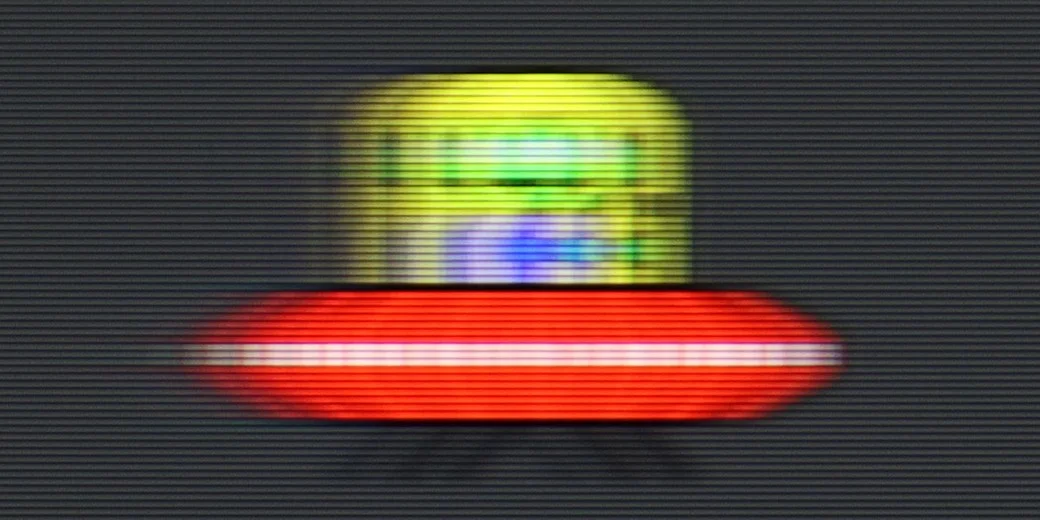
The S90D television is equipped with a 120 Hz panel, with the possibility of "overclocking" to 144 Hz with the appropriate PC configuration, ensuring exceptional motion fluidity. For years, Samsung has offered a variety of image sharpness settings on a ten-point scale, allowing users to customise the display to their preferences. In the UFO test, thanks to the use of an OLED panel, there is no sign of any blurring. The pixel response is instantaneous and perfectly captures dynamic movements. In this aspect, OLED technology is considered one of the best on the market. The image is incredibly sharp and detailed, even during fast action, making the S90D OLED 48 Samsung television an ideal choice for gamers and sports enthusiasts.
Bravia 2 II uses a 60 Hz panel and, given its capabilities, handles motion quite well. However, bear in mind that it is a basic panel and its limitations are already clearly visible, especially during sports. The TV cannot interpolate 50/60 fps material to a higher refresh rate, so it cannot further improve the sharpness of fast-moving objects. For films and series, however, it offers a conventional motion smoothing feature that can reduce the characteristic judder of material shot at 24 fps.
Console compatibility and gaming features
9.5/10
3.3/10
- ALLM
- VRR
- VRR range48 - 144Hz
- Dolby Vision Game Mode
- Correct implementation of HGIG
- 1080p@120Hz
- 1440p@120Hz
- 4K@120Hz
- Game bar
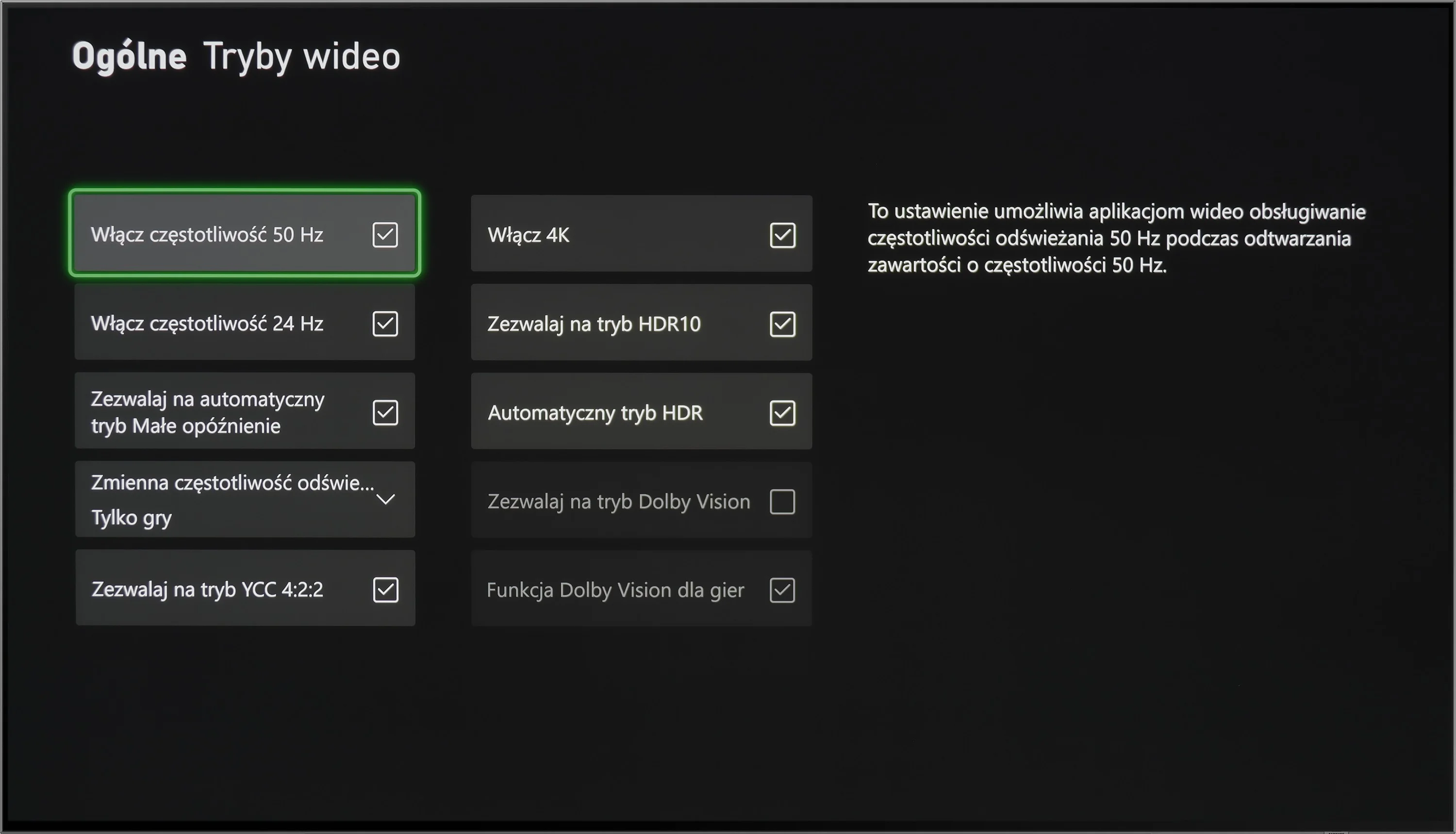
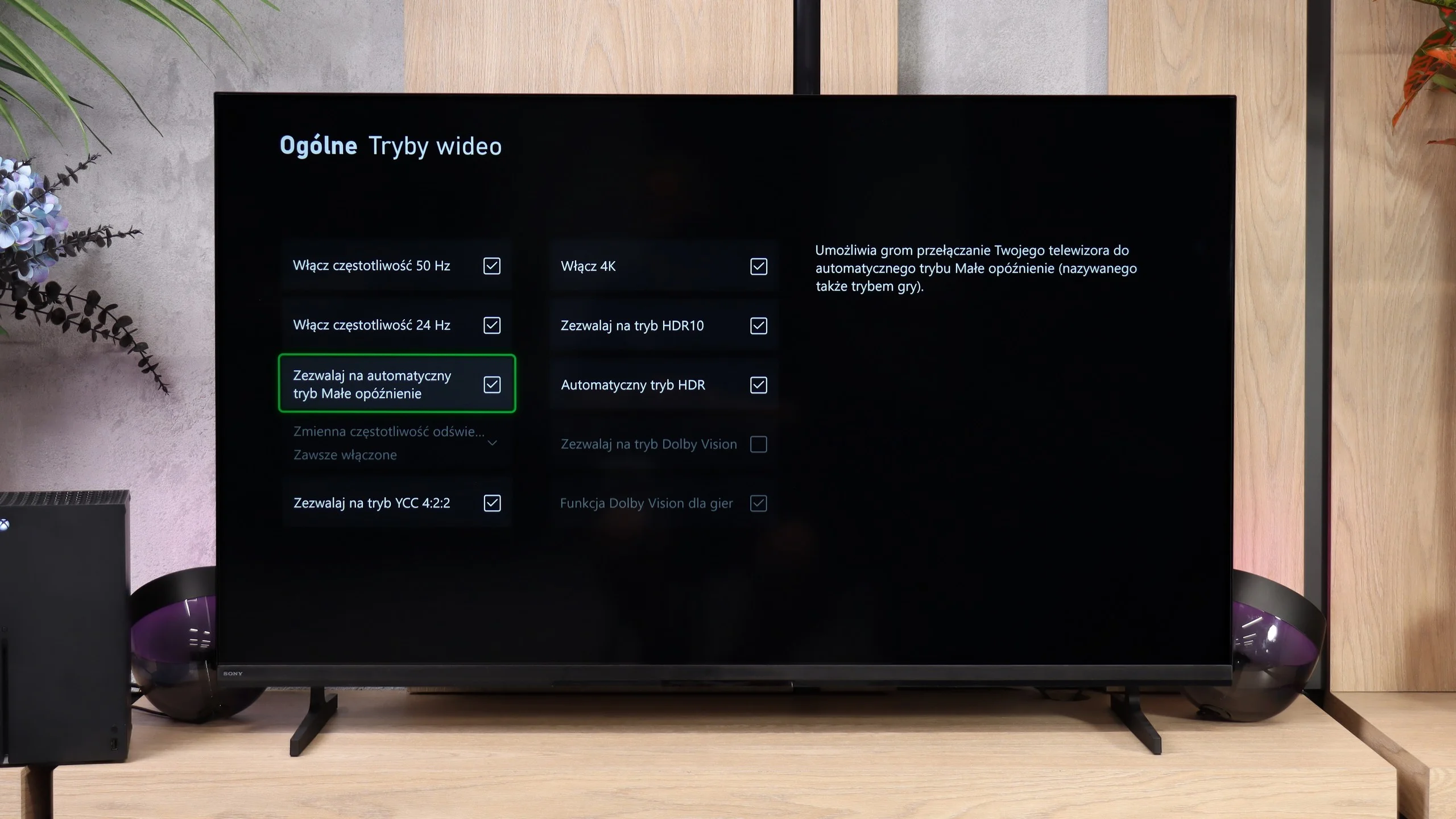
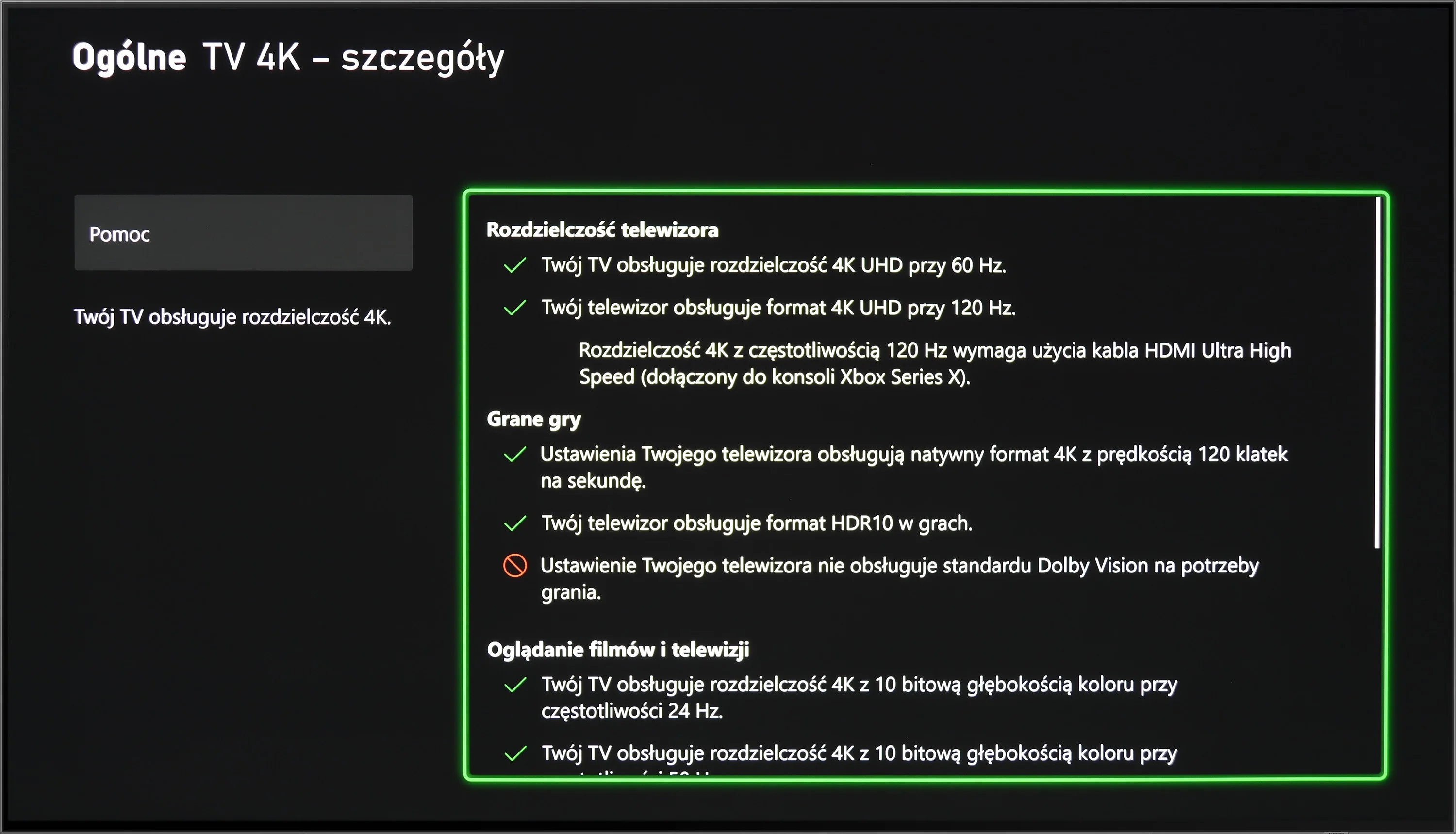
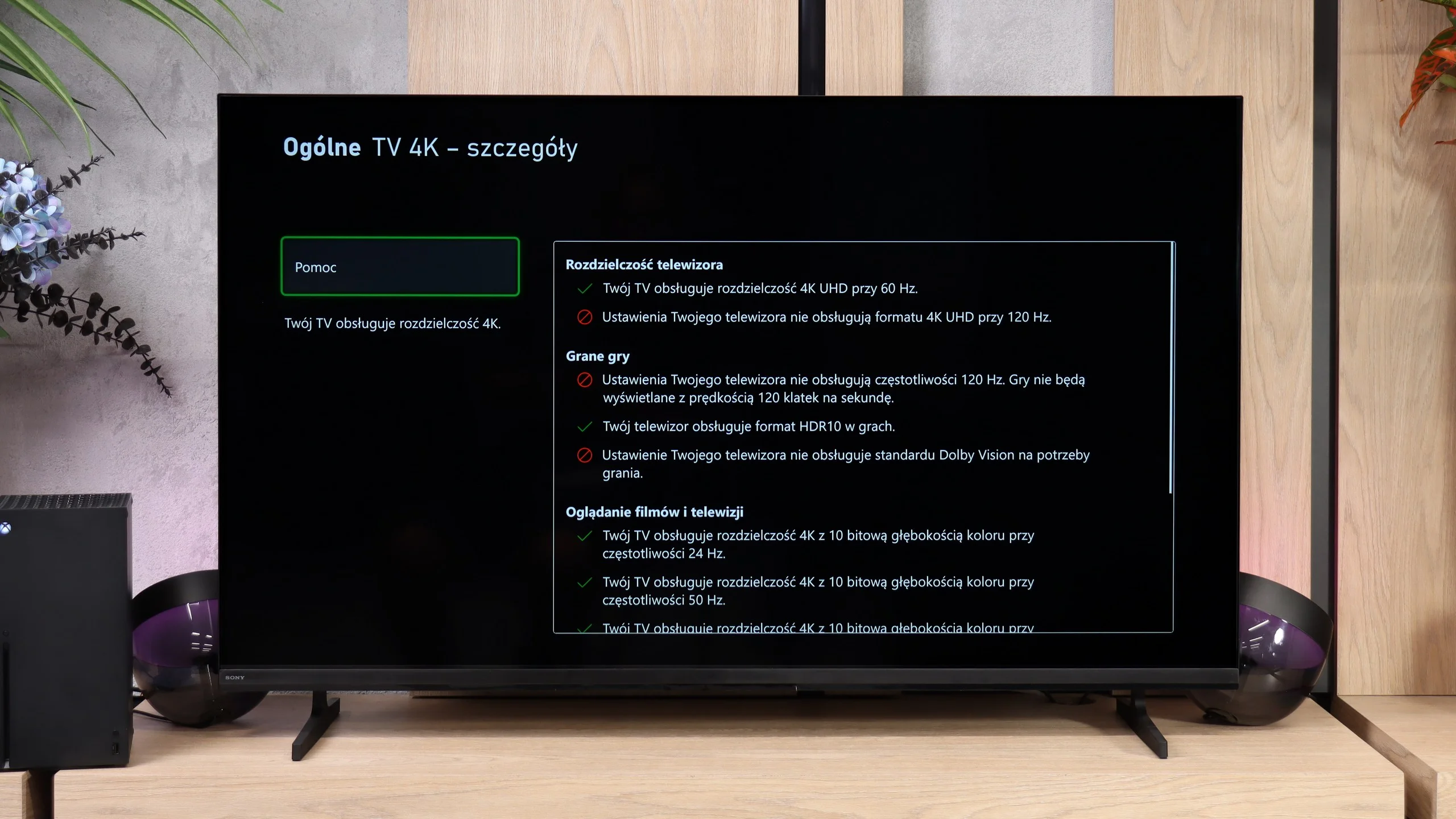
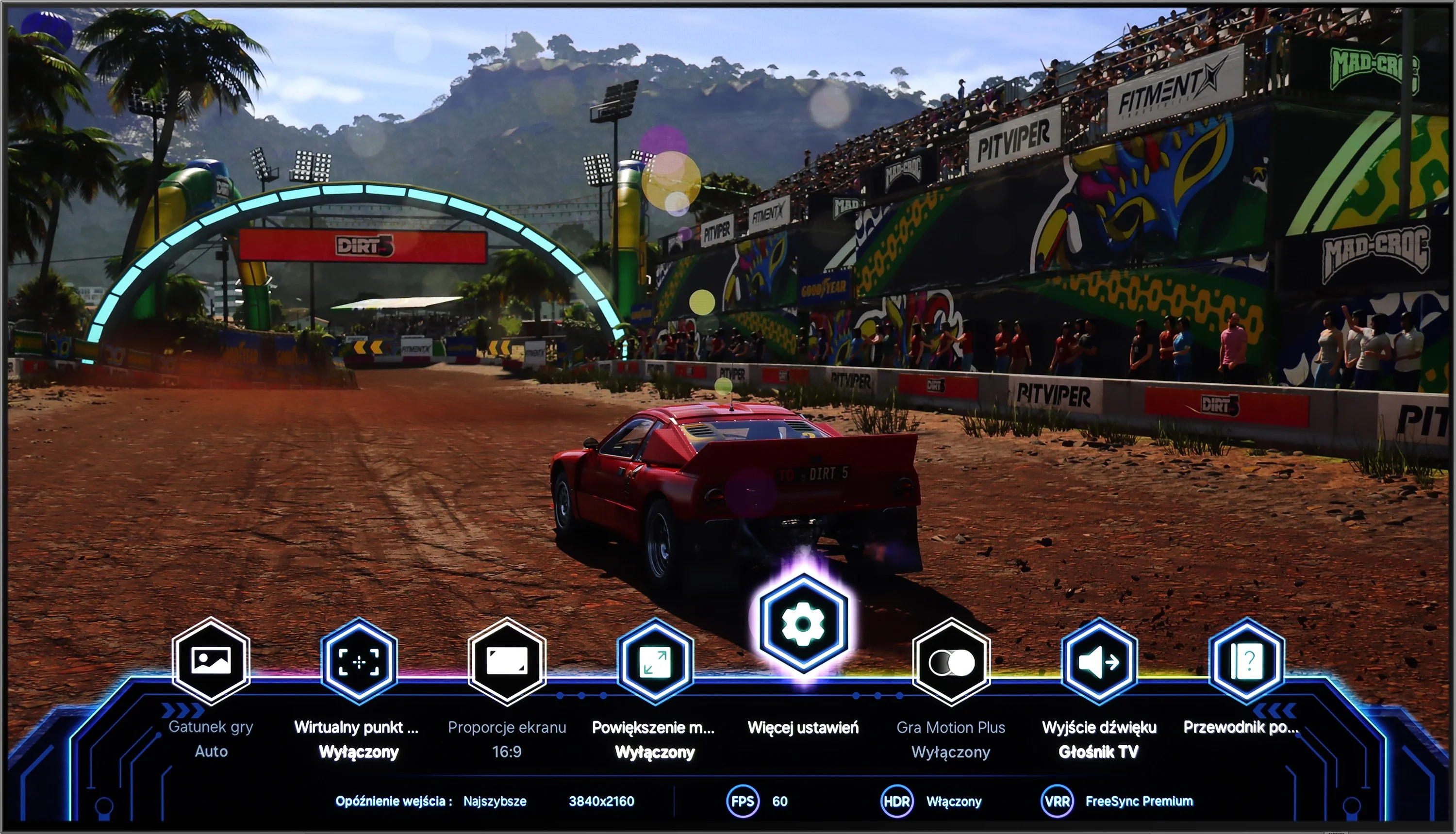
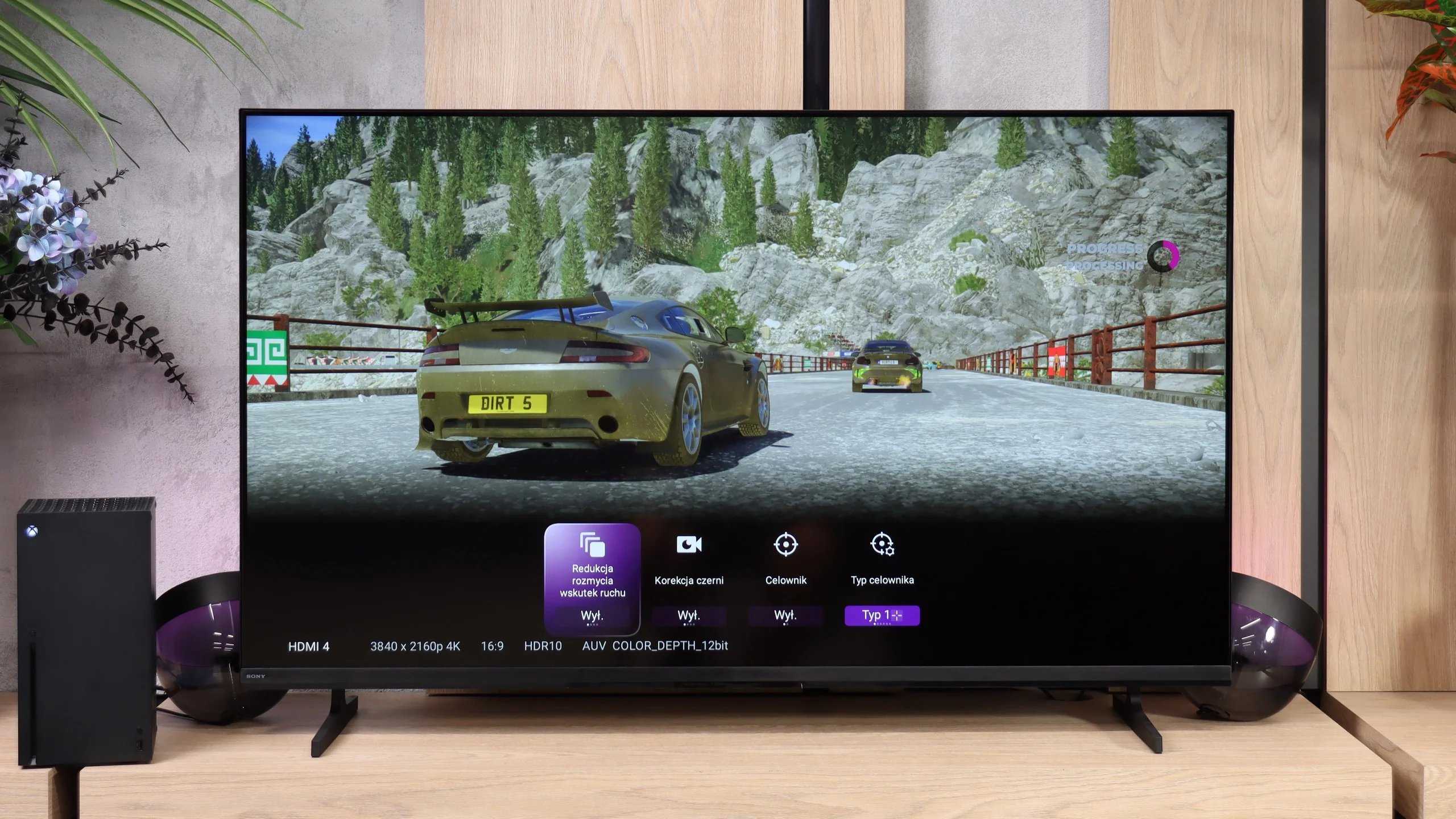
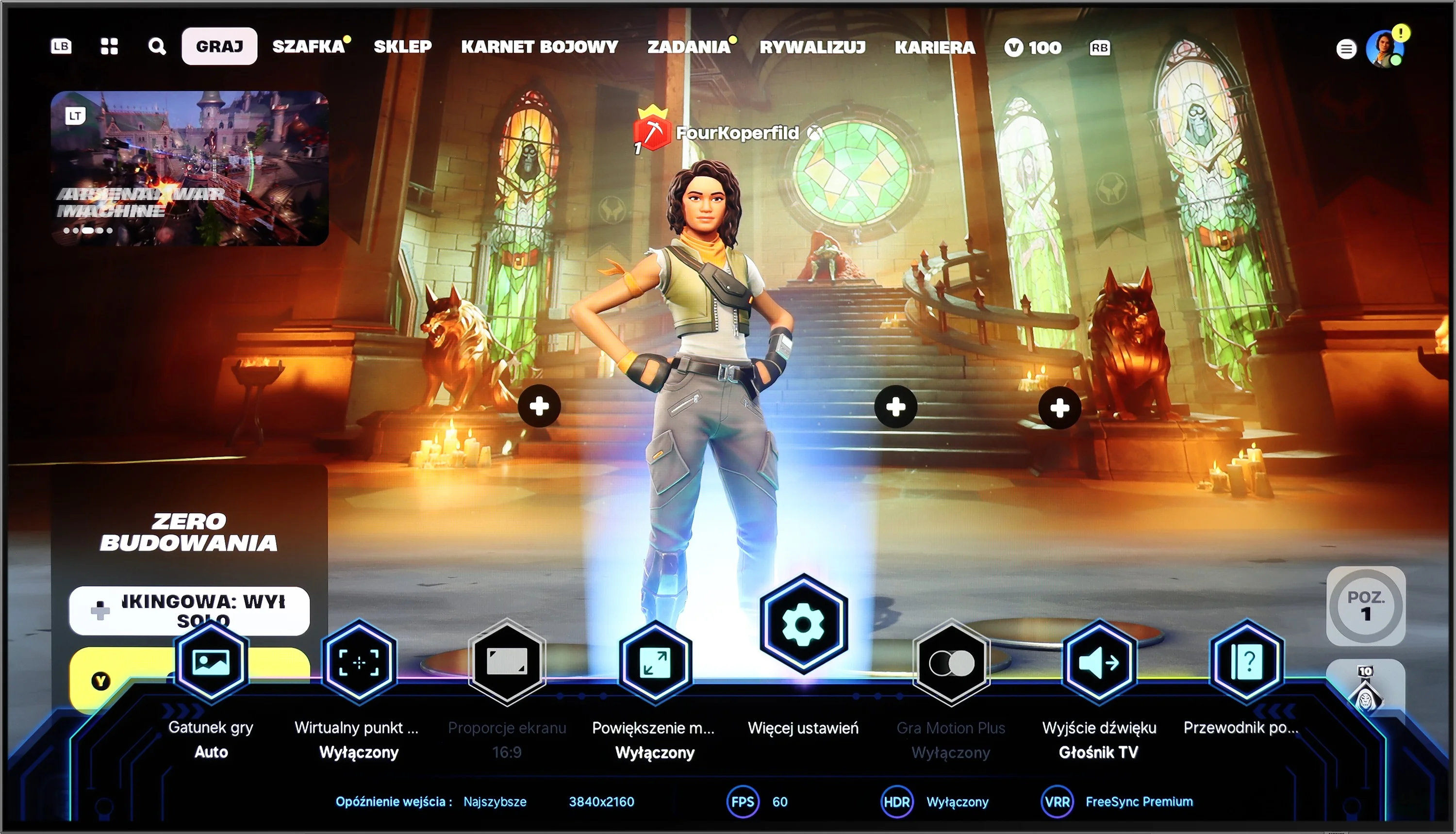
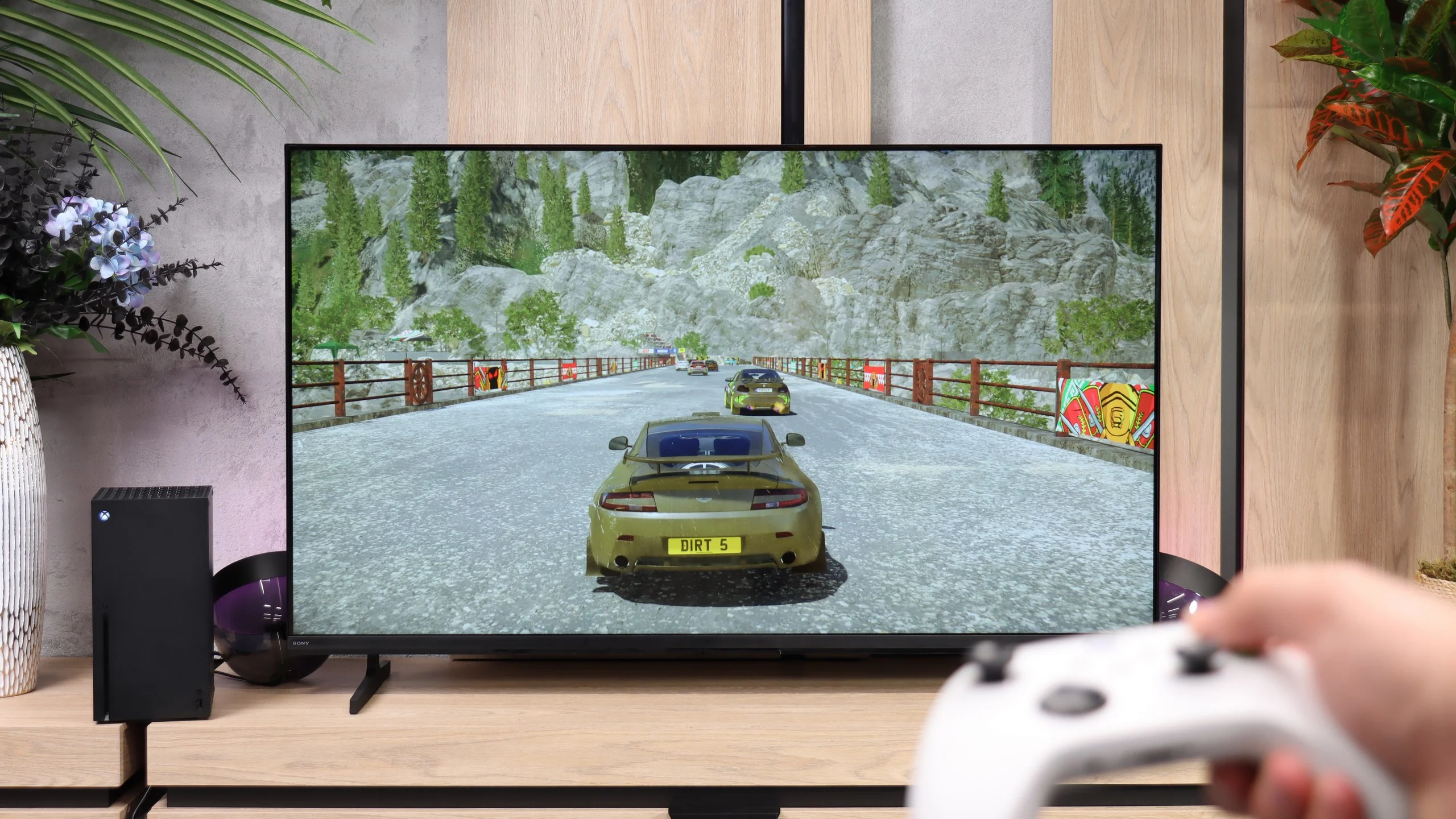
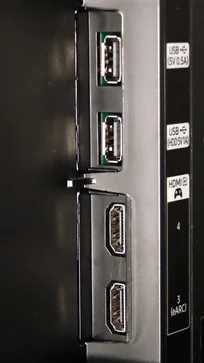
The Samsung OLED 48 S90D television is excellently tailored to the needs of gamers, offering four HDMI 2.1 ports that support features such as Auto Low Latency Mode (ALLM), Variable Refresh Rate (VRR), and HGIG (HDR Gaming Interest Group). With these technologies, gamers can enjoy smoother gameplay and faster screen responsiveness, significantly enhancing comfort during long gaming sessions. Additionally, the Game Bar feature allows for easy adjustments of settings such as screen ratios, which can be particularly useful in various types of games. For PC users, the television offers an impressive refresh rate of 144Hz, and Nvidia and AMD graphics cards support G-Sync and FreeSync, further improving image fluidity. Although the lack of Dolby Vision support may be a downside, it is worth noting that this technology is not as widely used in games as it is in films. Nevertheless, the S90D still offers excellent features for gamers, making it an outstanding choice for those seeking high-quality visuals and advanced gaming technologies.
The Bravia 2 II is not a television that lends itself well to gaming, and the list of features shows that quite quickly. You essentially only get the automatic low-latency mode ALLM and a simple Game Bar that lets you view basic signal information and change a few settings. But that is where the list of strengths ends. The TV does not support VRR or 120 Hz (not even at lower resolutions), and on top of that it has problems with a proper implementation of the HDR HGIG format. It is suitable for occasional console gaming, and thanks to low input lag controls remain responsive, but if someone is looking for a TV primarily for games, the Bravia 2 II will simply be a rather limited choice.
Input lag
10/10
10/10
SDR
HDR
Dolby Vision
Samsung's OLED features an exceptionally low input lag, regardless of resolution and frame rate, in both SDR and HDR modes. Results around 10 ms are truly impressive and significantly enhance the gaming experience. Such a low input lag ensures immediate responsiveness to on-screen actions, which is crucial in dynamic games where every millisecond counts. This allows users to enjoy fluidity and precision, making the S90D television an excellent choice for those prioritising gaming performance.
Here the Bravia 2 II performs markedly better. The input lag is only about 11 ms, which is low enough that delays are practically unnoticeable when gaming. Even with a modest set of gaming features, the TV will therefore handle regular console play without any major problems.
Compatibility with PC
8.6/10
6/10
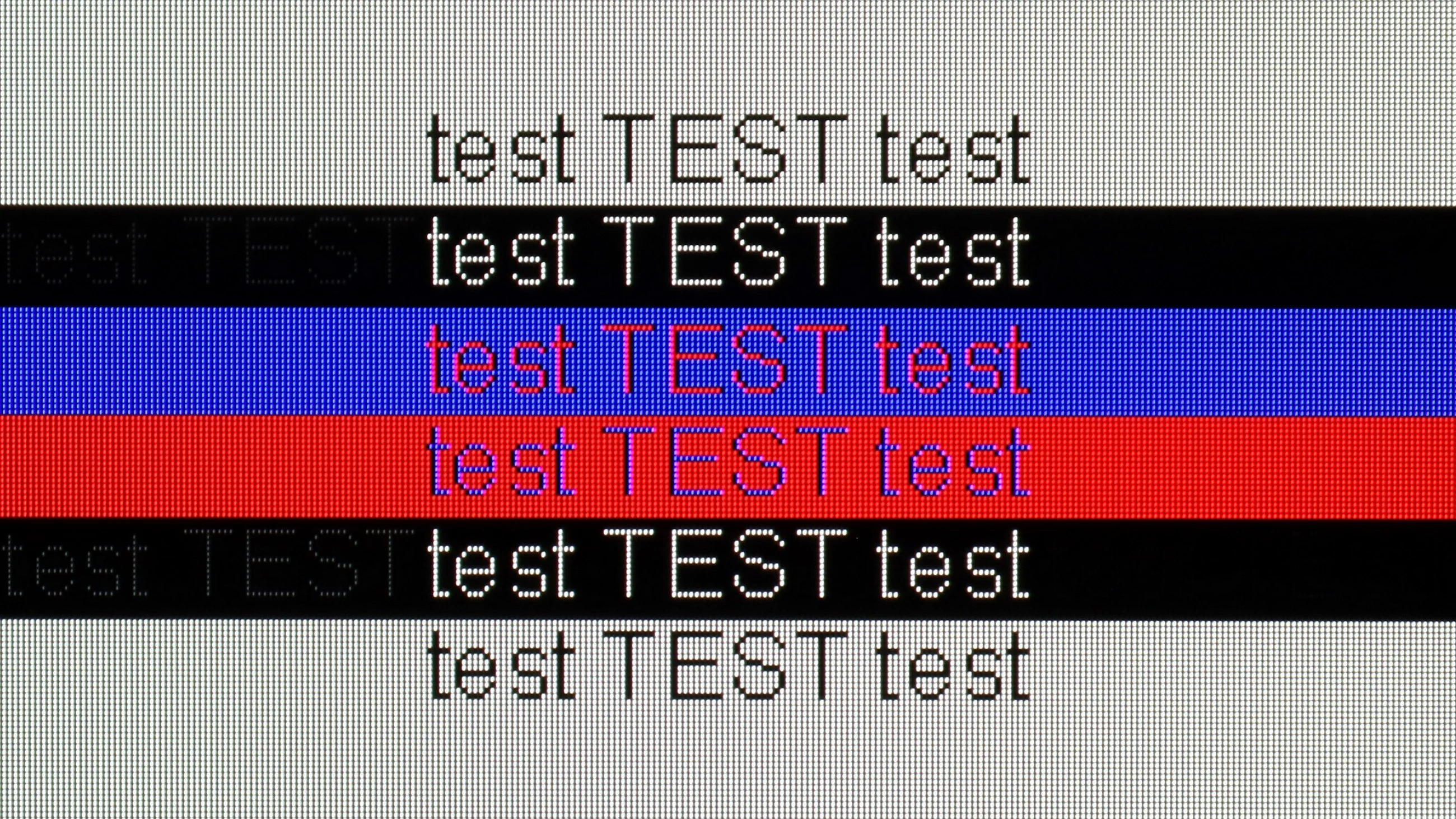
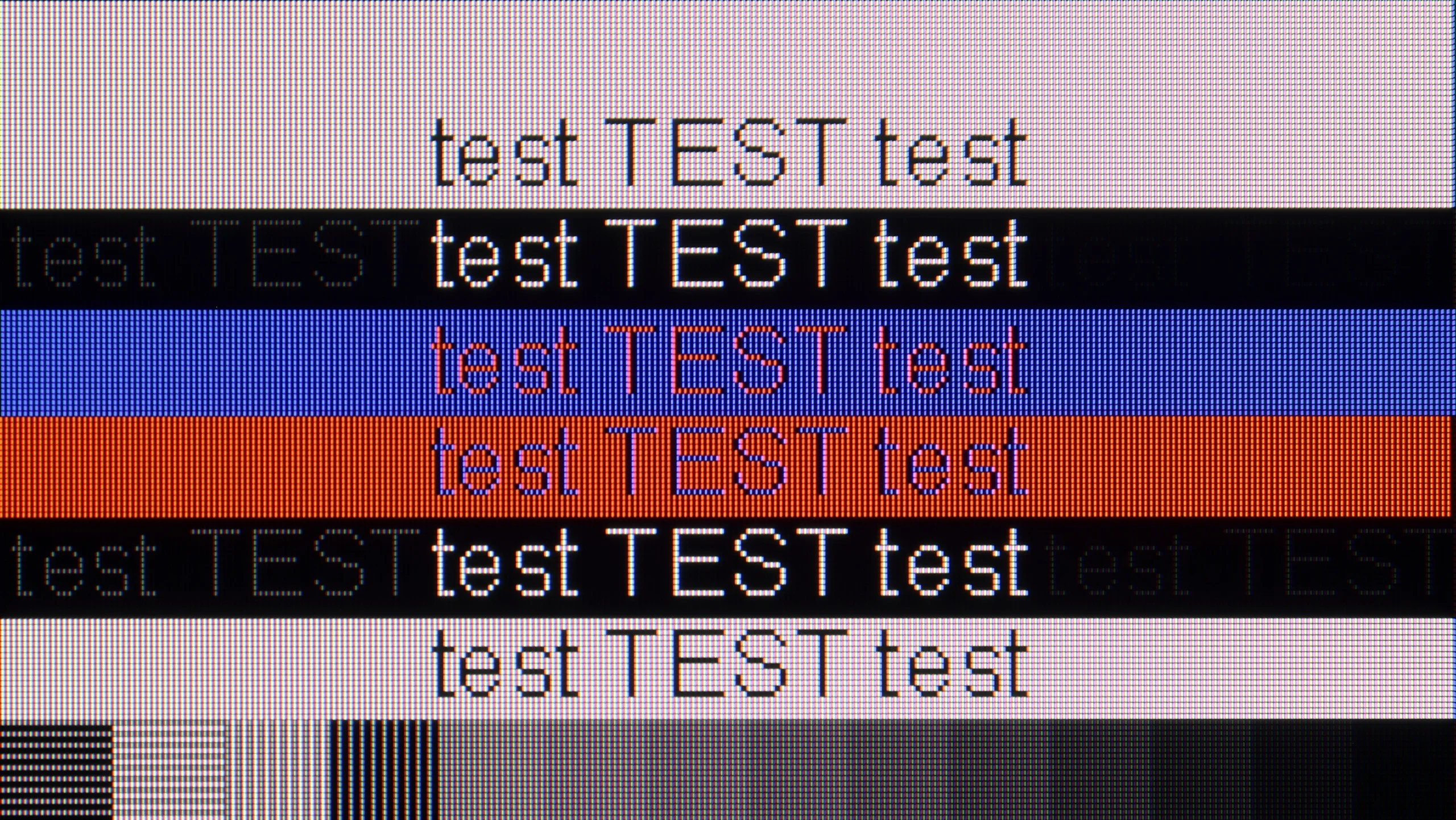
The photo shows the legibility of small fonts. Ideally, lines should be the same thickness on both light and dark text, with minimal pixel gaps.
The Samsung OLED 48 S90D television works perfectly with a PC. Fonts are clearly visible, which makes reading text and using applications easier. Additionally, it supports 4:4:4 chroma at 4K resolution and a refresh rate of 144 Hz, ensuring full colour reproduction and image sharpness. It is worth highlighting that the input lag of just 5 ms is extremely beneficial, especially for gamers and professionals working with graphics. With such low latency, using the television as a monitor becomes a pleasure, allowing for comfortable and responsive work. The S90D television is an excellent choice for users seeking performance and quality in everyday computer use.
The Bravia 2 II handles a computer very well, at least if you think of it as a screen for work. Thanks to its IPS panel and correct 4:4:4 chroma reproduction, text is sharp and legible regardless of size, shape or colour. That's good news, especially for those considering buying the smaller model and placing it on their desk instead of a conventional monitor. It's much worse, however, when it comes to gaming. The TV does not offer 120 Hz, VRR or other features that might interest more demanding PC gamers. So it performs very well for office work or for watching content from a computer, but as a gaming display it has quite a few limitations.
Viewing angles
7.2/10
6.5/10
The viewing angles on the S90D television, thanks to OLED technology, are unparalleled. OLED offers excellent colour and contrast reproduction, even at wide viewing angles, which ensures that the image remains sharp and vibrant from almost any perspective. Users can enjoy a consistent visual experience, regardless of where they are viewing the screen.
Viewing angles are, in turn, one of the strengths of the Bravia 2 II. Thanks to the IPS panel, the picture retains accurate colours and brightness for quite a long time even when you are not sitting directly in front of the TV. In this respect Sony recoups some of the points it lost earlier on blacks and contrast. The Bravia 2 II can therefore be better suited to a larger living room or a room where some people watch the TV from the side, especially if it is mainly intended for everyday television viewing.
Daytime performance
5.4/10
4.8/10
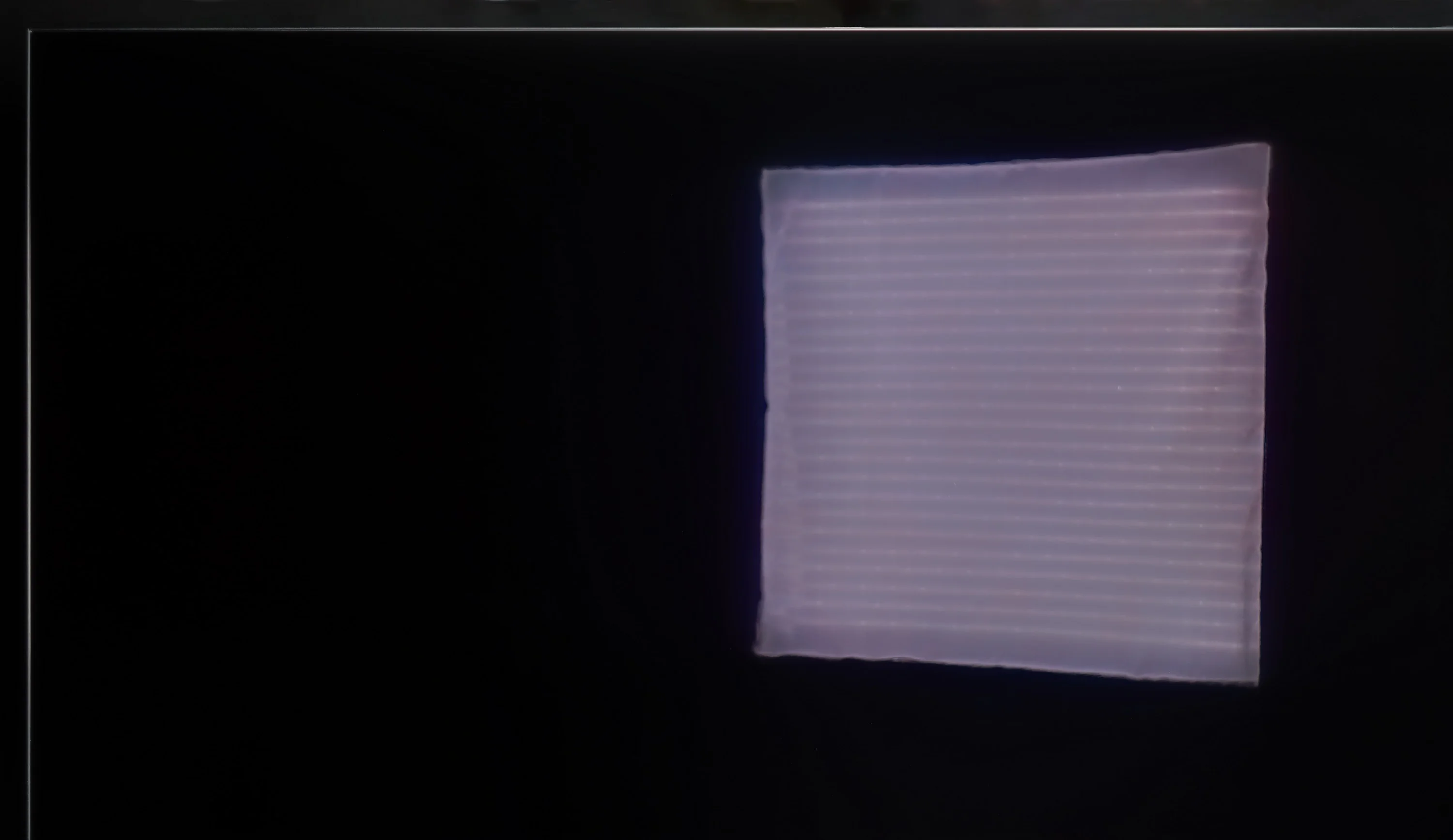
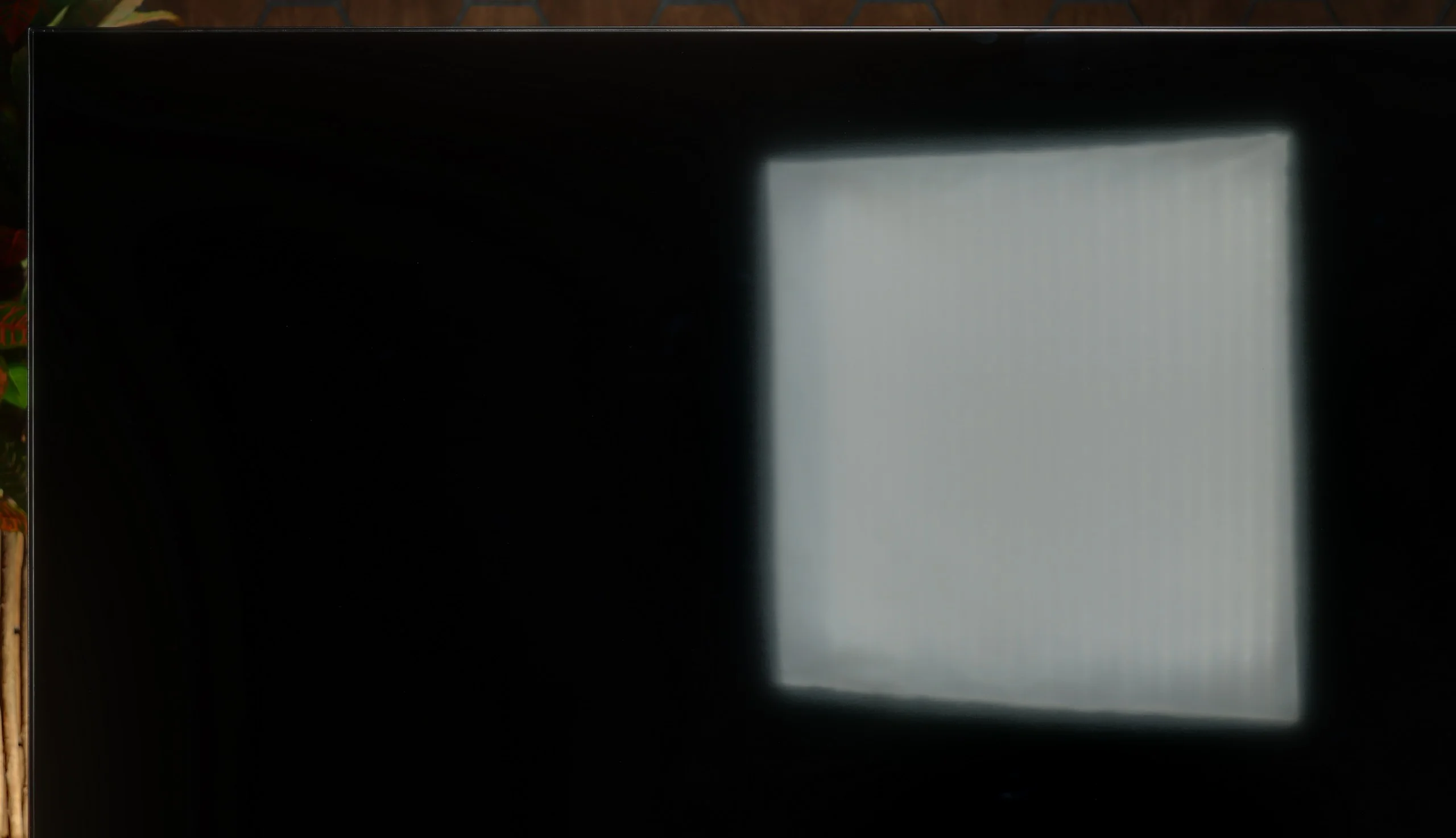
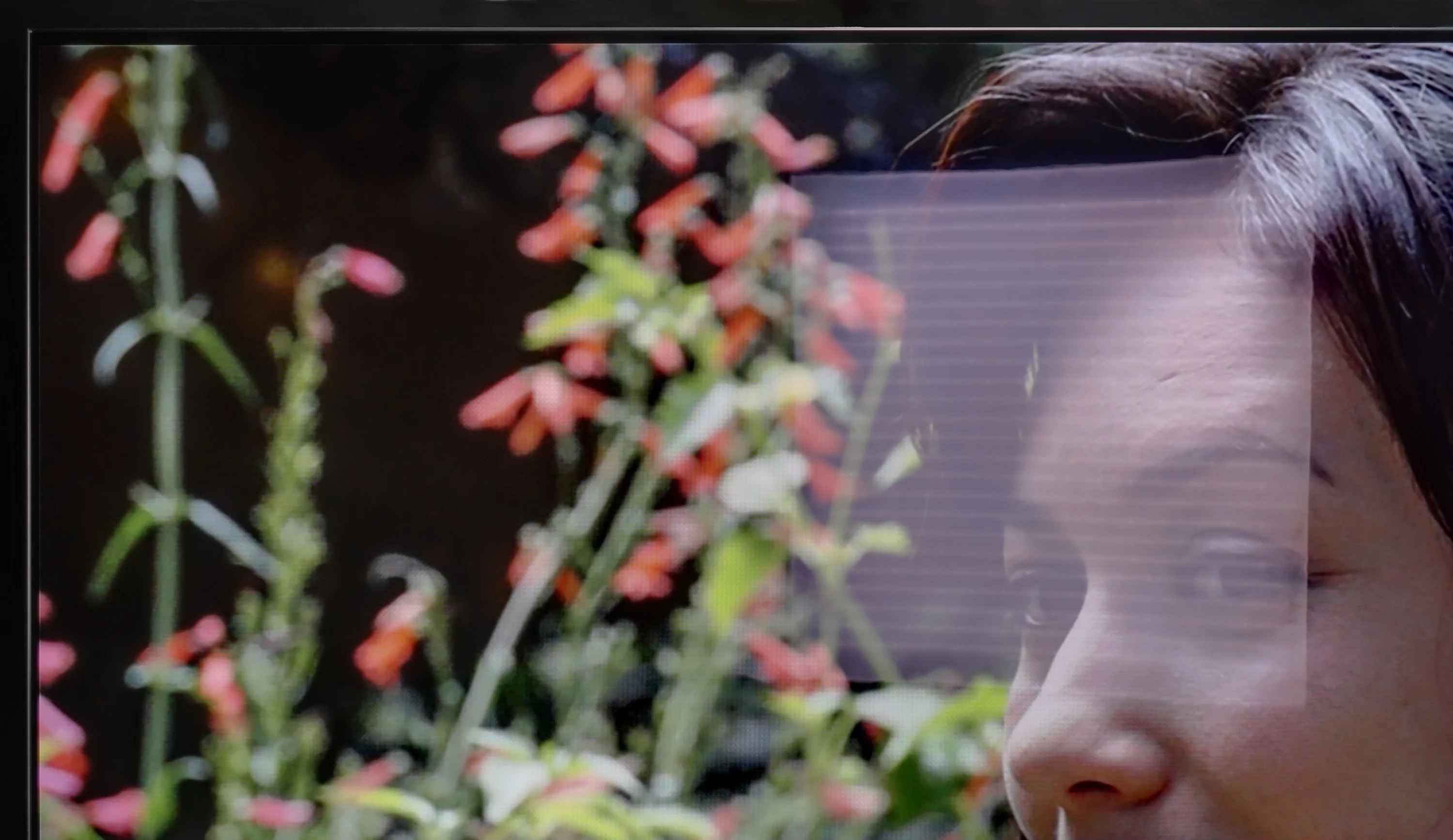
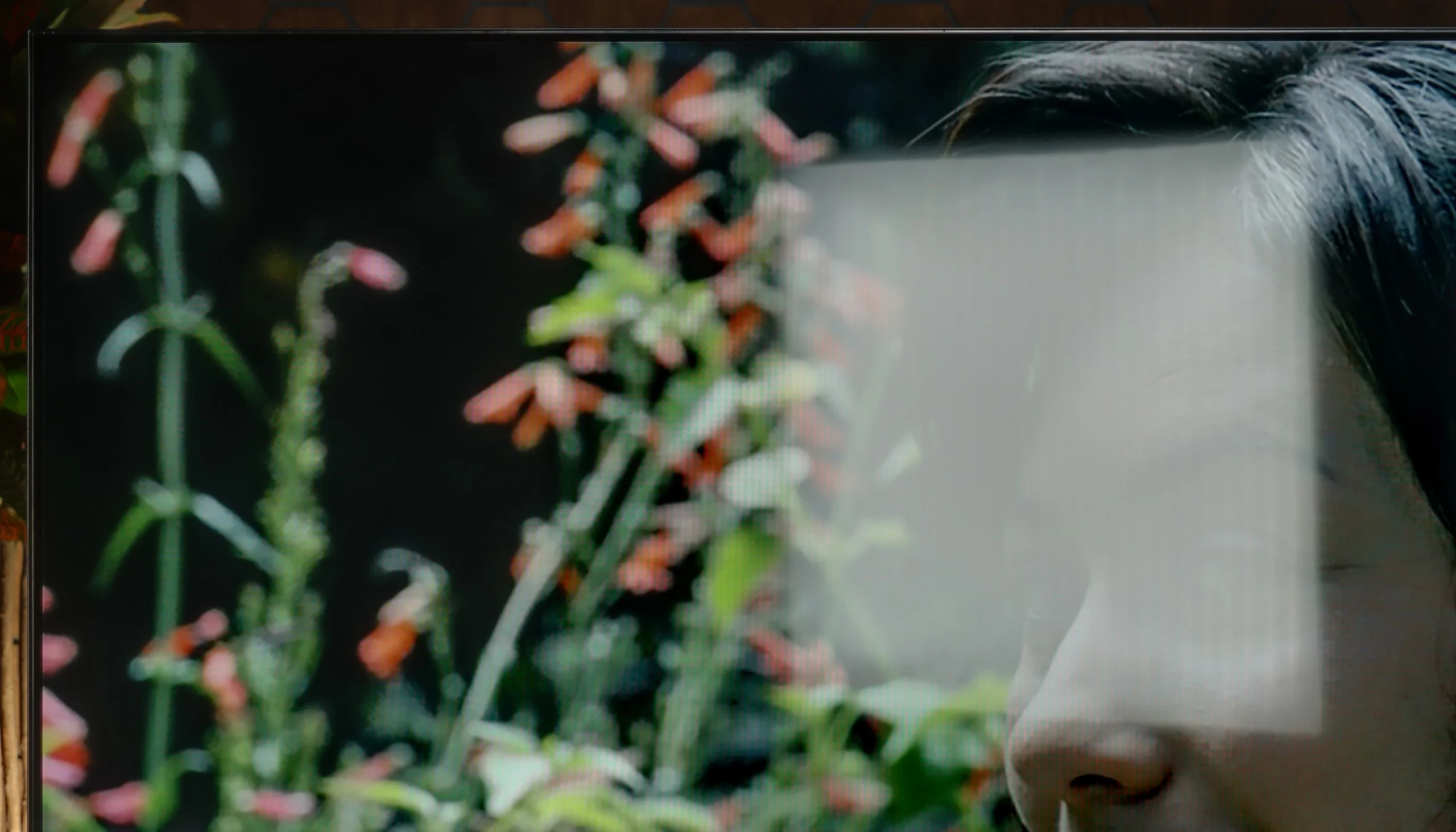
Panel brightness
Sony BRAVIA 2 II (S25M2): 319 cd/m2
Samsung S90D / S94D 48" (WRGB OLED): 320 cd/m2
When watching during the day, the Samsung OLED 48 S90D performs well, achieving an average brightness of around 320 nits, which is a decent result for OLED technology in a 48-inch size. Thanks to the satin finish, reflection suppression is at an acceptable level, allowing for comfortable viewing even in bright rooms. The only noticeable downside to this technology, rather than the television itself, is the brightness at 100% white screen fill. In such conditions, OLED can struggle to achieve extremely high brightness. Such situations can be seen when we want to watch winter sports, for example, ski jumping.
By day the Bravia 2 II is rather average. Brightness of around 320 nits doesn't leave much headroom, but in a typical, moderately bright living room it's still enough to keep the picture readable. The matt screen coating does a decent job of limiting reflections, though it can't eliminate them completely. With strong light falling directly on the screen there's simply not enough brightness to effectively punch through the reflections. So it'll be fine for ordinary daytime viewing, but in a very bright room with lots of windows you may already notice the limitations of this model.
Panel details
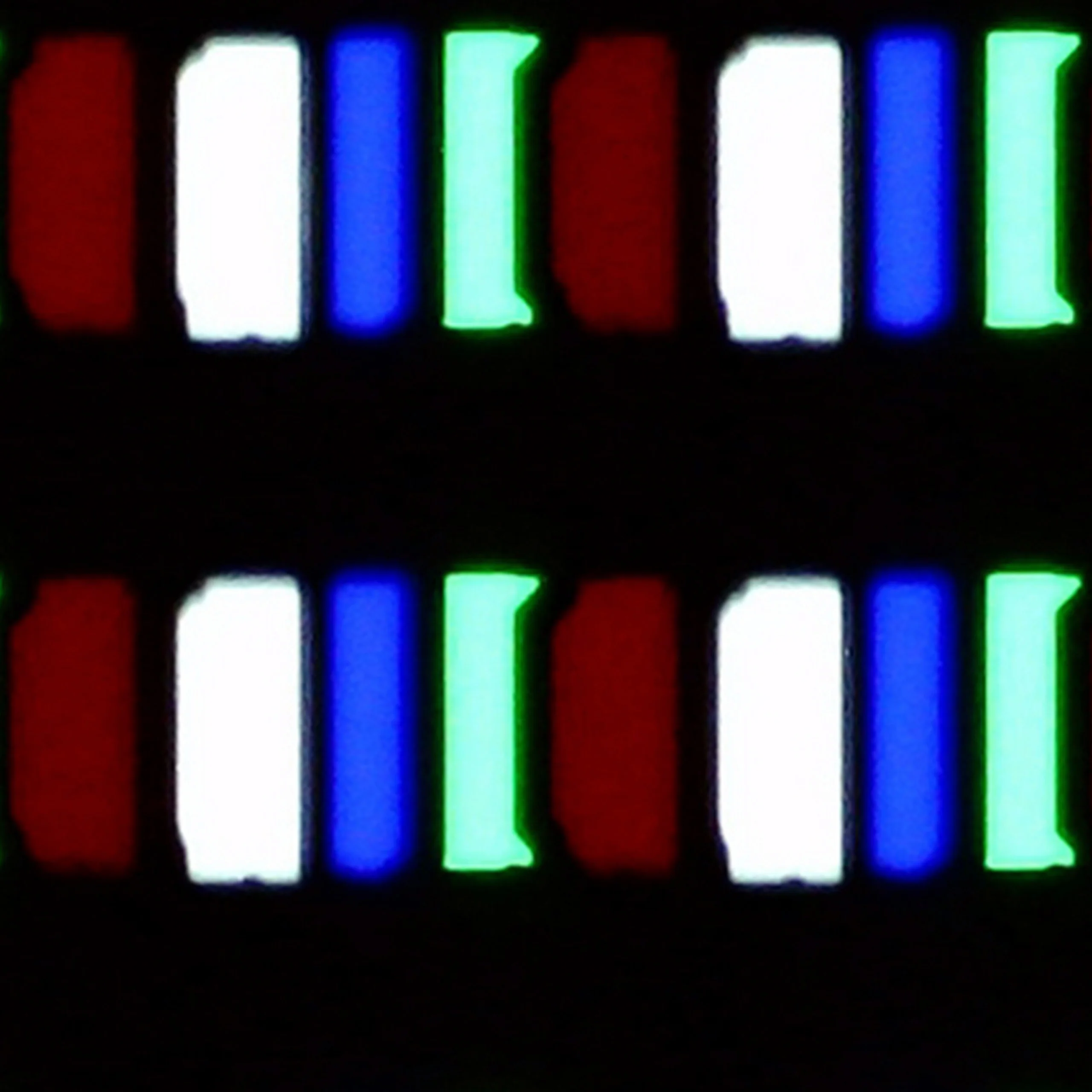
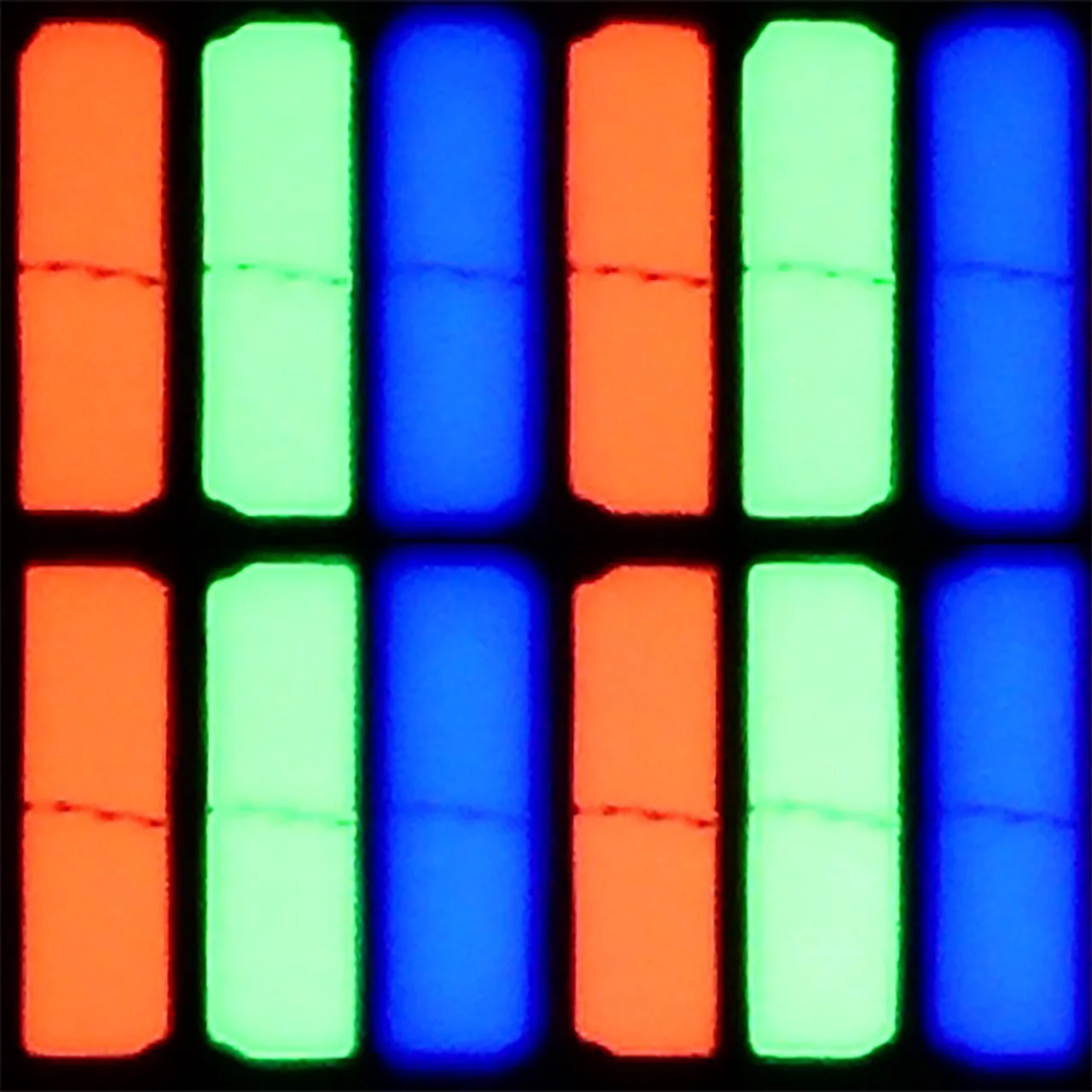
Subpixel Structure:
Panel uniformity and thermal imaging:


Samsung S90D / S94D 48" (WRGB OLED)
Sony BRAVIA 2 II (S25M2)
TV features
7.4/10
6.6/10
- SystemTizenGoogle TV
- System performanceVery goodDecent
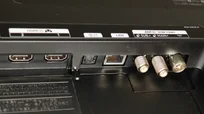
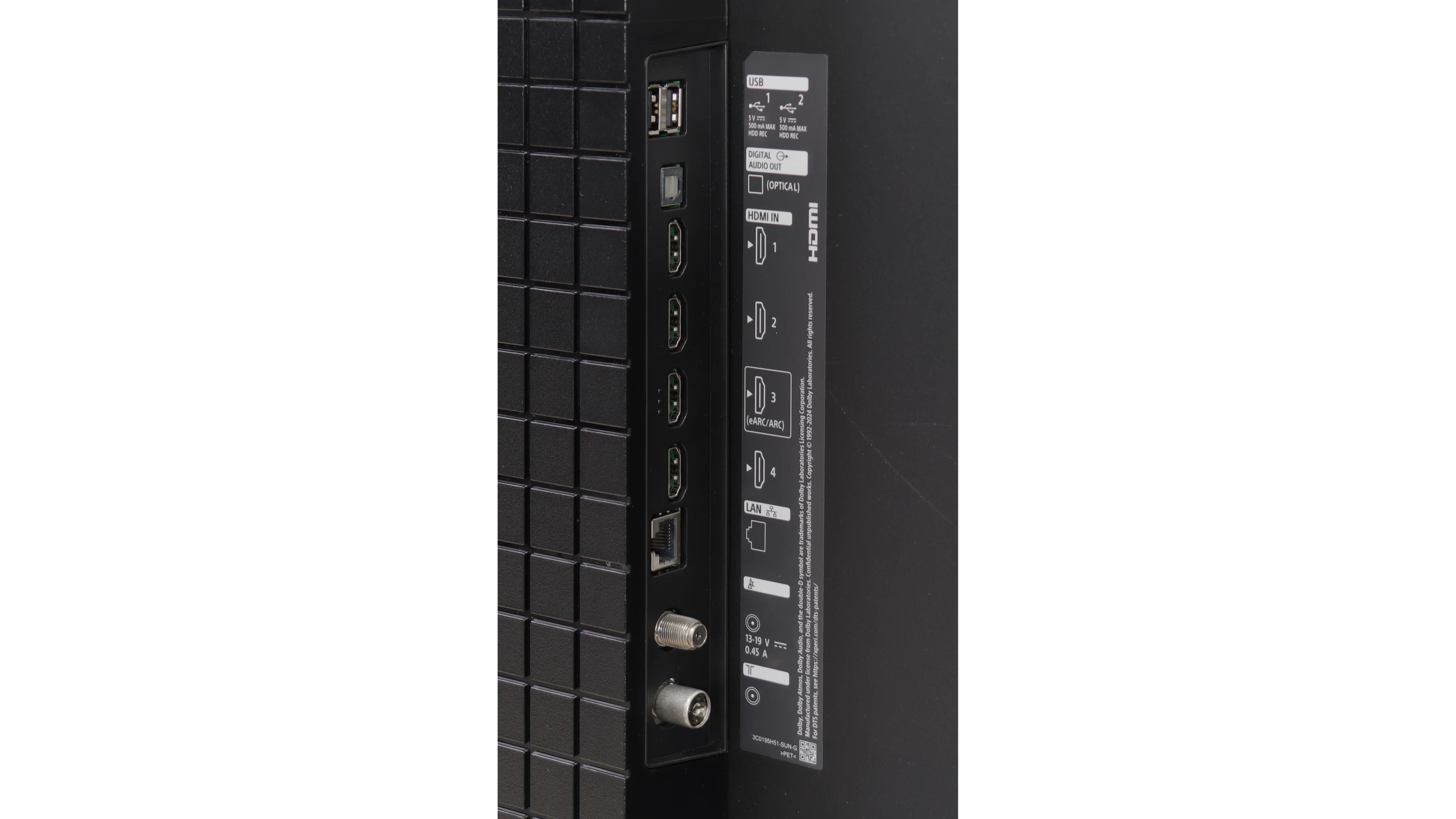
- HDMI inputs0 x HDMI 2.0, 4 x HDMI 2.1 48Gbps4 x HDMI 2.0, 0 x HDMI 2.1
- OutputsToslink (Optical audio), eARC (HDMI), ARC (HDMI)Toslink (Optical audio), eARC (HDMI), ARC (HDMI)
- Network InterfacesWi-Fi 2.4GHz, Wi-Fi 5GHz, Ethernet (LAN) 100MbpsWi-Fi 2.4GHz, Wi-Fi 5GHz, Ethernet (LAN) 100Mbps
- TV receptionDVB-T, DVB-T2, DVB-S, DVB-S2, DVB-CDVB-T, DVB-T2, DVB-S, DVB-S2, DVB-C
Classic features:
- Recording to USB (terrestrial TV)
- Recording programming
- Picture in Picture (PiP)
- RF remote control (no need to aim)
- Backlit remote control
- Teletext
- Audio only mode
- Bluetooth headphones support
- Simultaneous Bluetooth headphones & TV audio
Smart features:
- AirPlay
- Screen mirroring (Windows Miracast)
- Voice search
- Voice search in native language
- Ability to connect a keyboard and mouse
Sound connection options
- HDMI audioeARC (HDMI), ARC (HDMI)eARC (HDMI), ARC (HDMI)
- Other audio outputsToslink (Optical audio)Toslink (Optical audio)
- Wireless audioBluetoothBluetooth
Supported audio formats (external HDMI eARC audio):
- Dolby Digital Plus 7.1
- Dolby True HD 7.1
- Dolby Atmos in Dolby Digital Plus (JOC)
- Dolby Atmos in Dolby True HD
- DTS:X in DTS-HD MA
- DTS-HD Master Audio
Senior accessibility
- Numeric keyboard on TV
- Font size adjustment
- Audio description
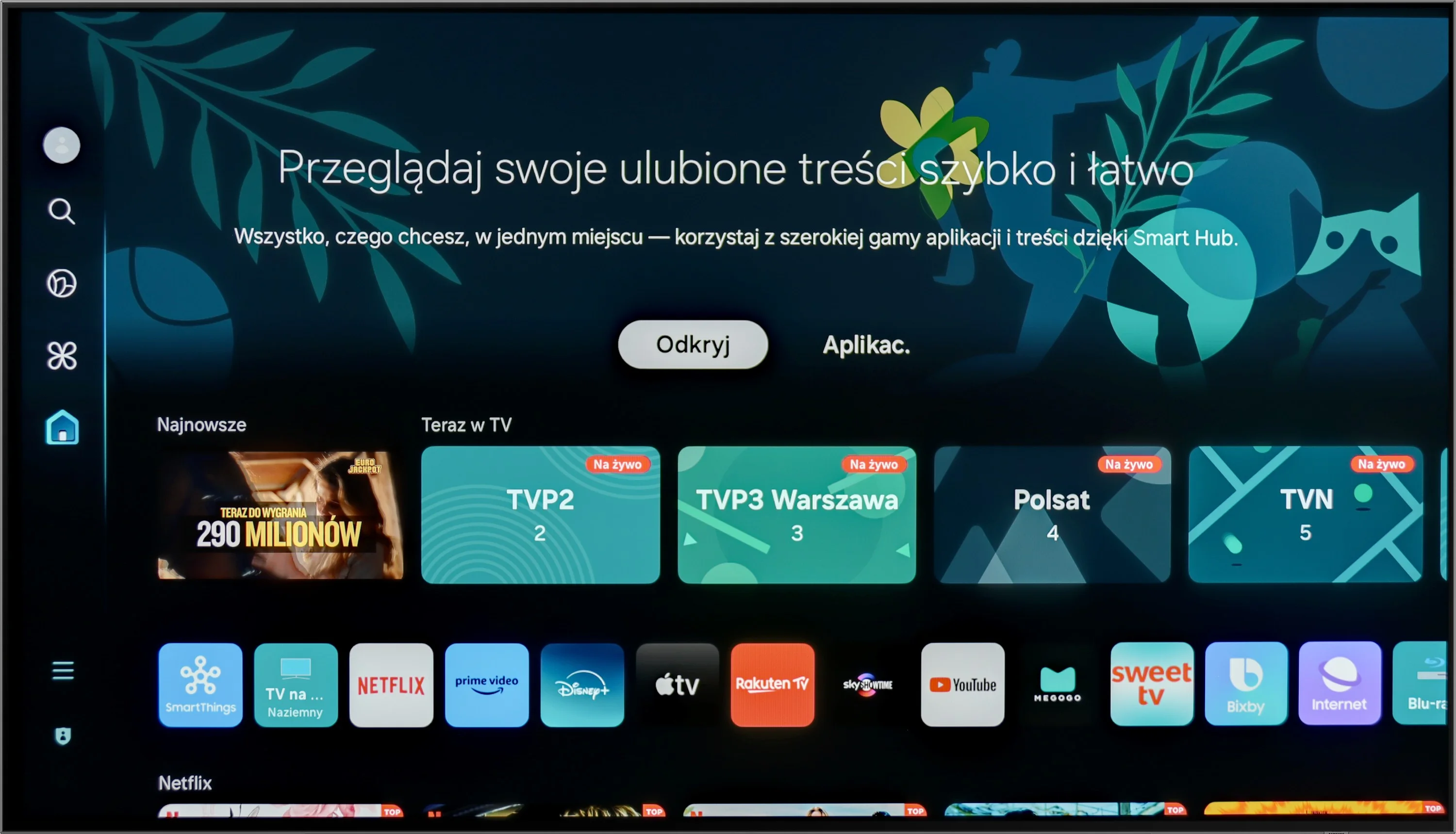
The Samsung OLED 48 S90D television offers a range of features that significantly enhance user comfort, making it the ideal device for entertainment in the comfort of your home. The Tizen system, on which this model is based, is a modern and advanced platform that provides users with an intuitive and smooth experience. With a user-friendly interface, navigation through applications and settings is quick and intuitive, making it easy for even less tech-savvy individuals to use the television. Tizen supports a rich set of applications, including all popular streaming services such as Netflix, YouTube, and Amazon Prime Video. A new feature for 2024 is the availability of voice search in Polish. It's also worth noting the eco-friendly solar remote, which is not only environmentally friendly but also practical for daily use. For example, the remote is capable of controlling multiple devices connected to the television, so there is no need to use multiple remotes. Additionally, the television supports AirPlay, allowing for easy content sharing from Apple devices such as iPhone or iPad. The S90D OLED 48 also allows for the connection of various Bluetooth devices, such as mice, keyboards, or headphones, which increases its versatility and enables user experience personalisation. This means that users can easily adjust their settings to make the most of the television's capabilities. The only downside that can be pointed out is the lack of USB recording support. For some users, this may be a limitation, especially for those wishing to archive their favourite shows or films. Despite this, the S90D television offers many advanced features and technologies, making it an excellent choice for anyone seeking high-quality entertainment in their home.
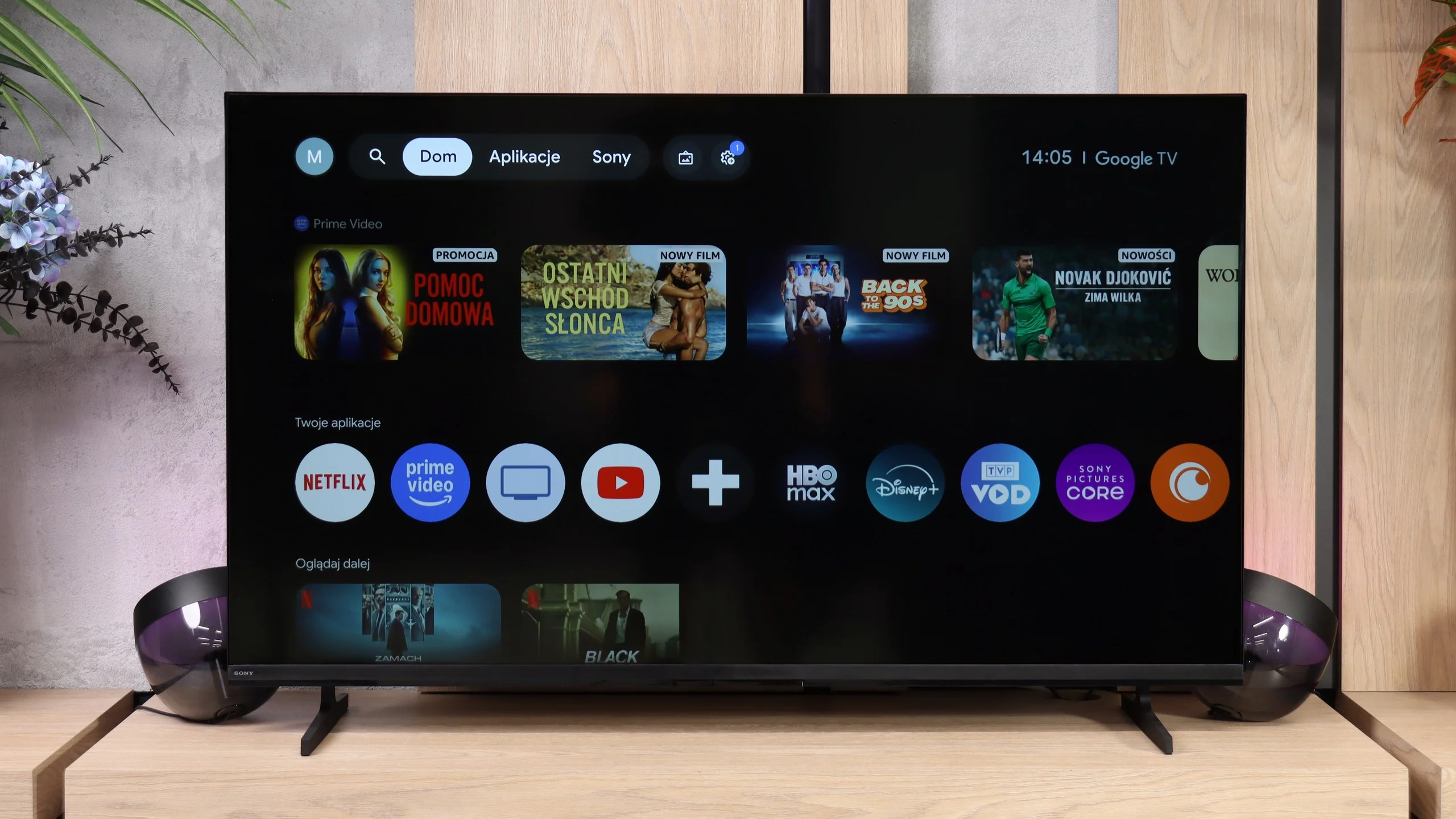
Google TV
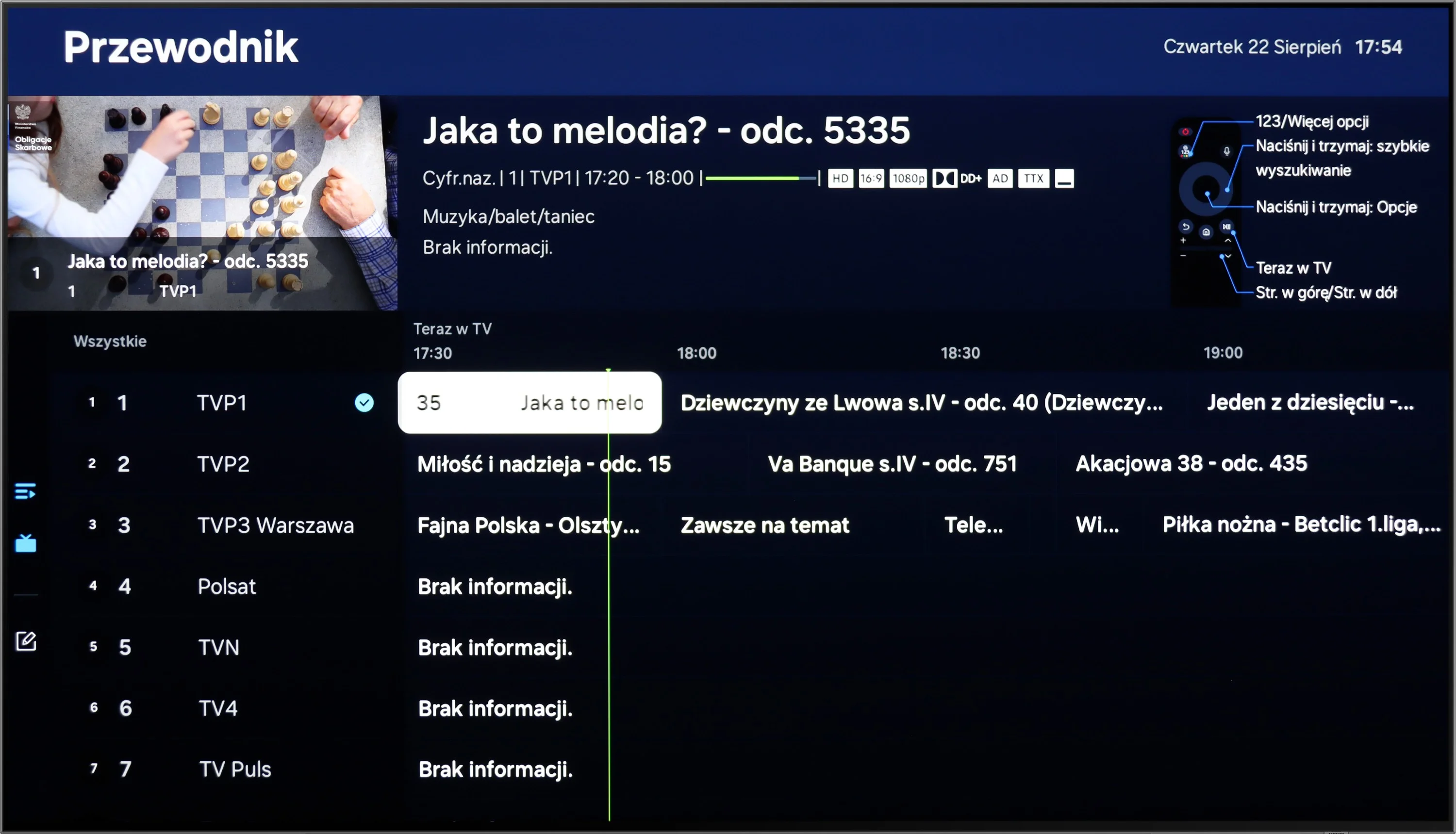
Bravia 2 II runs on Google TV, which is definitely one of this model's stronger points. First and foremost we get a huge selection of apps, so there’s no problem accessing popular streaming services. There’s also Chromecast and AirPlay, which make it easy to cast content from your phone or other devices. Voice search with Google Assistant/Gemini also works very well, including in Polish. The system itself is not, admittedly, one of the fastest versions of Google TV we’ve tried, and sometimes you have to wait a moment for a response, but overall it performs decently. In terms of capabilities there’s little to complain about, especially for one of Sony’s cheapest TVs.
TV features
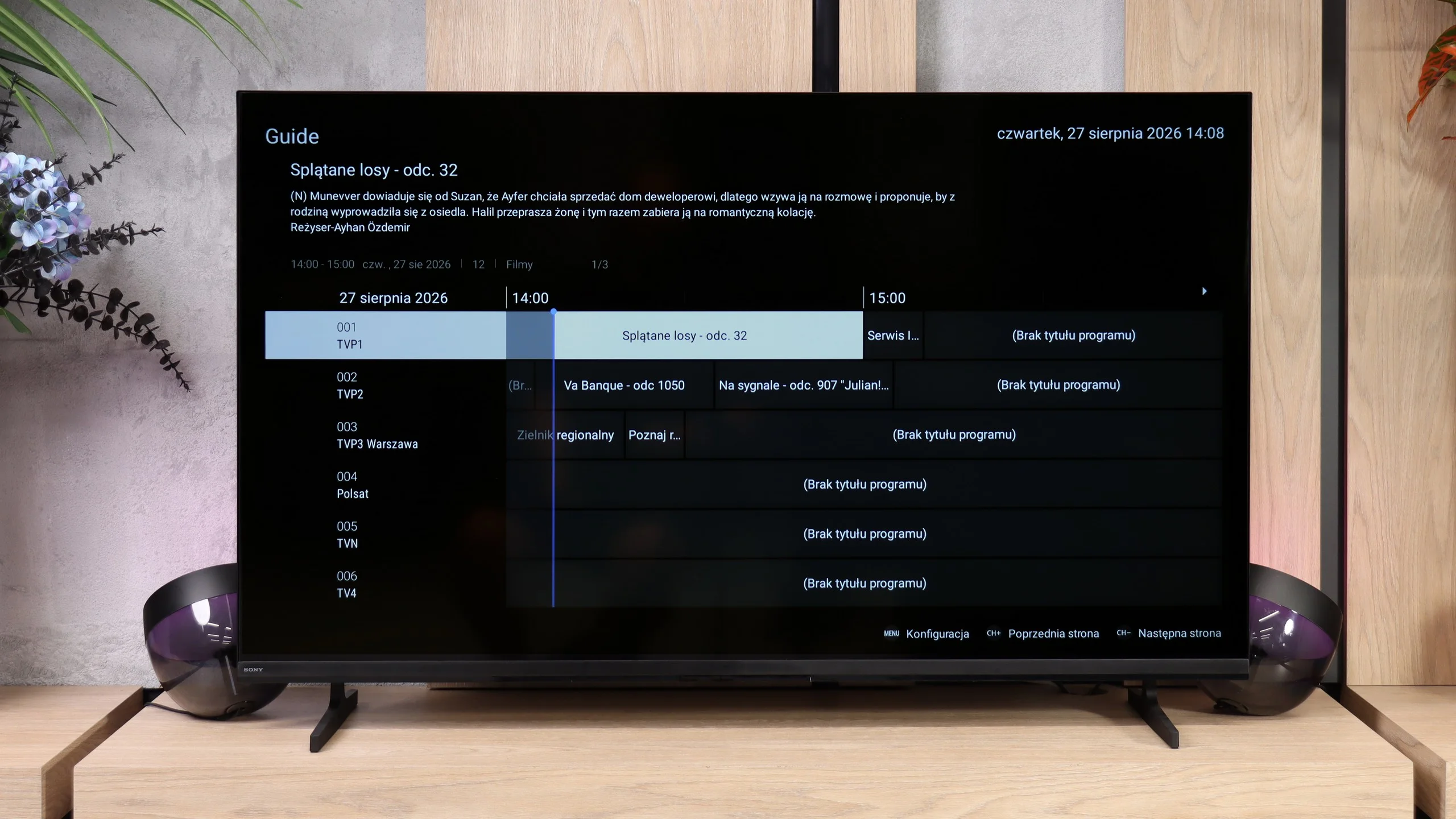
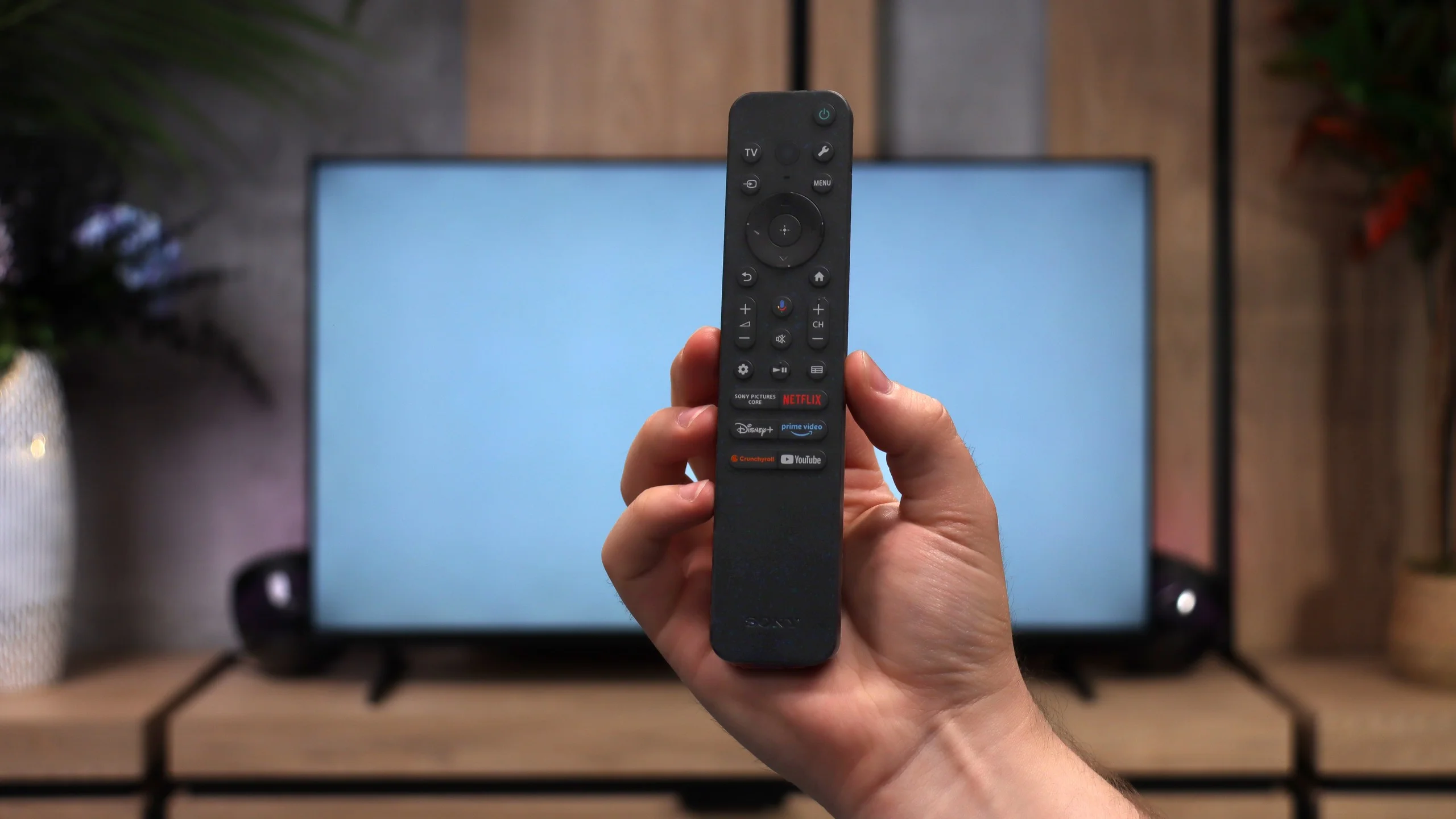
When it comes to conventional TV features, the Bravia 2 II is rather modest. You won't find, for example, USB programme recording or other more advanced extras here, so in that respect it's fairly basic. On the plus side, it does come with two remotes. One is a modern, simpler remote intended mainly for operating the Smart TV, and the other is a classic remote with more buttons, which may be more comfortable for people who frequently use traditional television. The smaller one operates via radio, so you don't have to point it directly at the screen, which is simply convenient in everyday use.
Apps
9.3/10
9.6/10






















Playing files from USB
9.1/10
9.4/10
Supported photo formats:
Maximum photo resolution:
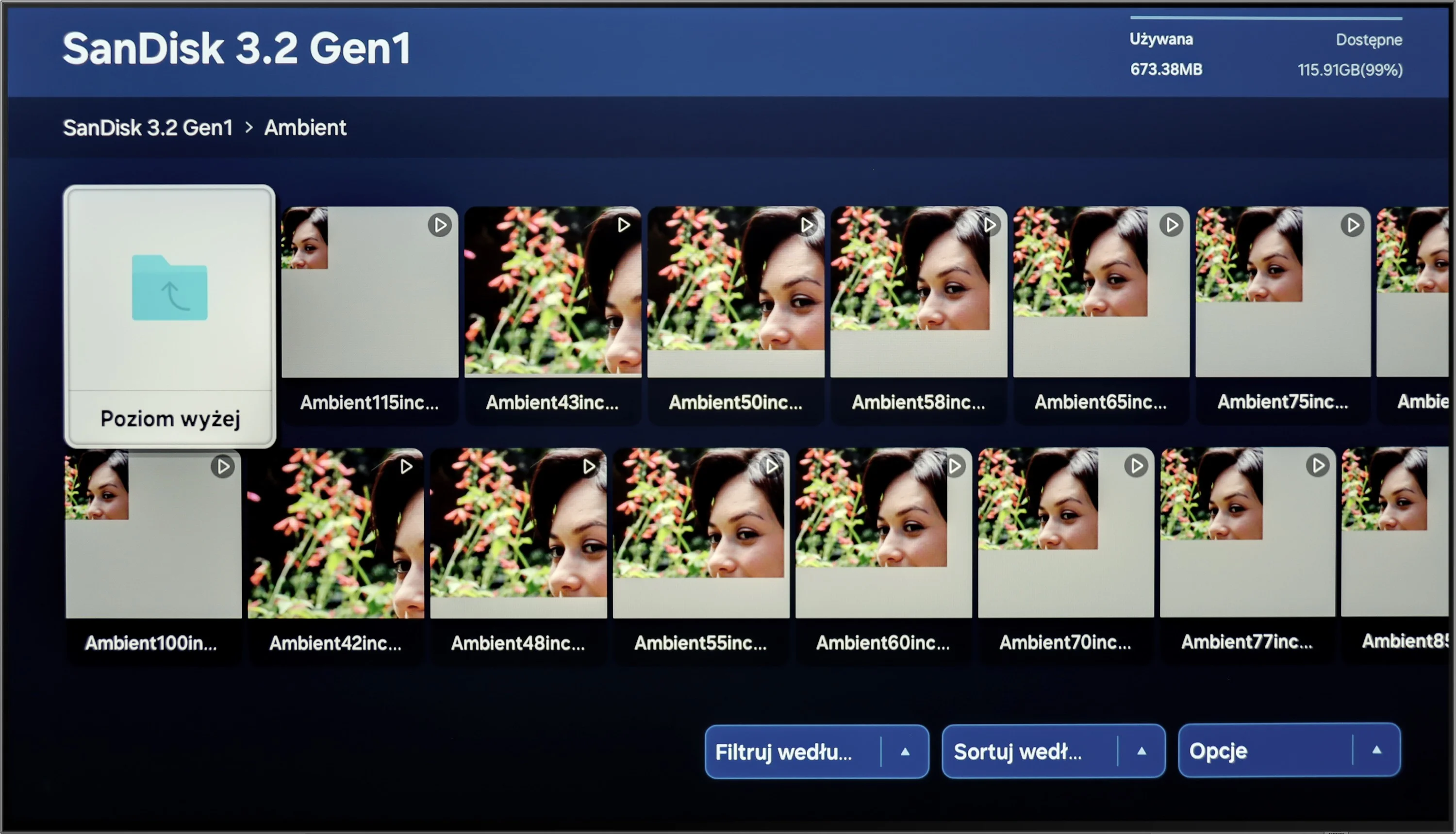
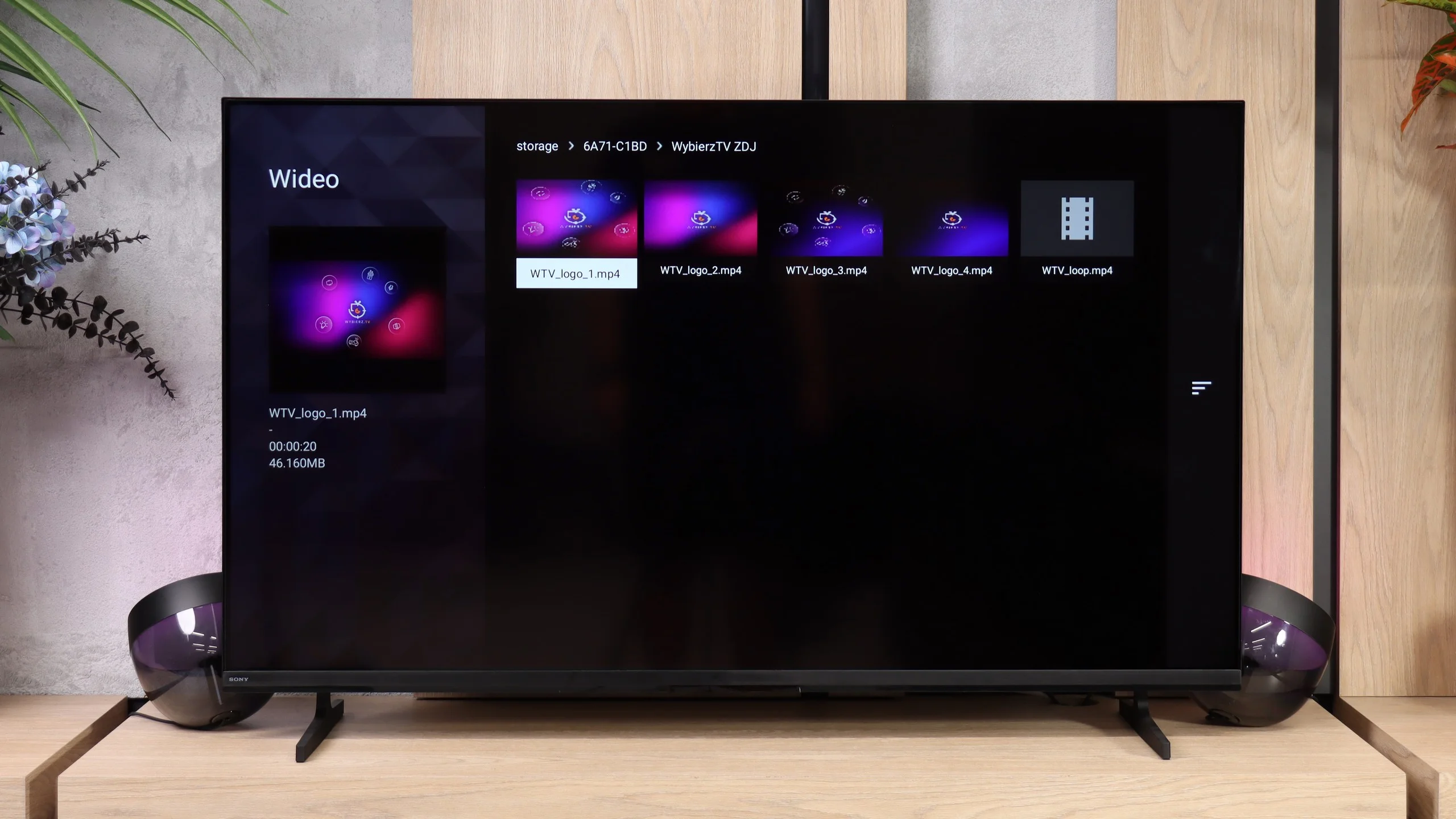
The Samsung S90D is equipped with a built-in player that supports most popular video formats, allowing for convenient playback of films from various sources. The player also supports subtitles in Polish and enables users to customise the font colour, increasing comfort when watching content with subtitles. In terms of photo formats, the television handles many of them; however, one of the few downsides is the lack of ability to play the popular PNG format. Nevertheless, the overall file playback capabilities of the S90D are at an excellent level.
The built-in file player performs very well. The Bravia 2 II opens almost anything you throw at it, from common video files and subtitles to photos and music. Importantly, it also has no trouble with more demanding 4K material encoded in HEVC or AV1. Of course, there are a few isolated formats the TV does not support, such as VVC or some less common audio and image files. These are mostly things few people will try to play directly on the TV.
Sound
6.8/10
6.1/10
- Maximum volume-92dB
- Dolby Digital Plus 7.1
- Dolby True HD 7.1
- Dolby Atmos in Dolby Digital Plus (JOC)
- Dolby Atmos in Dolby True HD
- DTS:X in DTS-HD MA
- DTS-HD Master Audio
The Samsung OLED 48 S90D television provides good sound quality, with clear and balanced tones. The sound is clear, and the bass is well audible, which enhances the viewing experience. Even at the highest volume, the sound remains clear, although the television itself is not very loud.
The sound on the Bravia 2 II is simply adequate for an entry-level TV. It’s perfectly fine for watching regular television, such as the news, but as is common with this kind of design it mainly lacks bass. That becomes apparent quite quickly with music and even more so in action films, where explosions and other heavy effects lack weight. Sony does deserve praise for its support of audio formats. When you connect a soundbar or a home cinema system the TV will pass the main formats via eARC without issue, including Dolby Atmos, Dolby TrueHD, DTS-HD Master Audio and DTS:X. It’s particularly pleasing to see DTS included, which you cannot always take for granted on competitors’ TVs, even the most expensive models.
Sound Quality Test
No sound test video
Acoustic Measurements
No acoustic data
92dBC (Max)
75dBC
Reader comments
Comments are provided by the external service Disqus (Zeta Global). Once loaded, Disqus may set cookies and process data about your activity.
We will remember your choice on this device. Provider's privacy policy