 Direct comparison
The Samsung QN80H is a genuinely successful mid-range television and, in our view, should be seen exactly that way. Not as a new Neo QLED flagship, but as the first model in Samsung's lineup to give a clear taste of better picture quality. Full Mini LED backlighting, high brightness and well-saturated colours mean that for someone upgrading from a standard LCD TV the difference can be substantial. A huge plus is that Samsung did not neglect it in terms of functionality. The QN80H received almost the same rich package of features as the flagships. So we have a complete gamers' setup led by four HDMI 2.1 ports and a blazingly fast Tizen system, which also comes with a guarantee of support and updates for the next seven years. Of course we must remember that this is not a top-tier model. The number of Mini-LED dimming zones does not break any records, so in demanding scenes you can see some compromises in image quality. There are also small decisions we simply don't like, such as abandoning the solar-powered remote in favour of a less elegant battery-powered version. Still, it's hard to fault the QN80H for performing poorly in any important area. This is a television that performs at least well on practically every front. Those are exactly the expectations one should have of it. It doesn't try to pass itself off as a flagship, but neither does it disappoint in any aspect. These are precisely the results we expected from the '80' series, and those expectations have been met. Is it worth buying? Yes, but much will depend on the price. At a suitably attractive price, the QN80H could once again become one of Samsung's most sensible models for people who want to step up to a higher level of picture quality but do not intend to pay extra for the brand's most expensive televisions.
- Matching (Score) |
- Our verdict |
- TV appearance |
- Where to buy |
- Contrast and black detail |
- HDR effect quality |
- Factory color reproduction |
- Color reproduction after calibration |
- Smoothness of tonal transitions |
- Image scaling and smoothness of tonal transitions |
- Blur and motion smoothness |
- Console compatibility and gaming features |
- Input lag |
- Compatibility with PC |
- Viewing angles |
- Daytime performance |
- Panel details |
- TV features |
- Apps |
- Playing files from USB |
- Sound

Check the best price offer:
Samsung QN80H(paid link)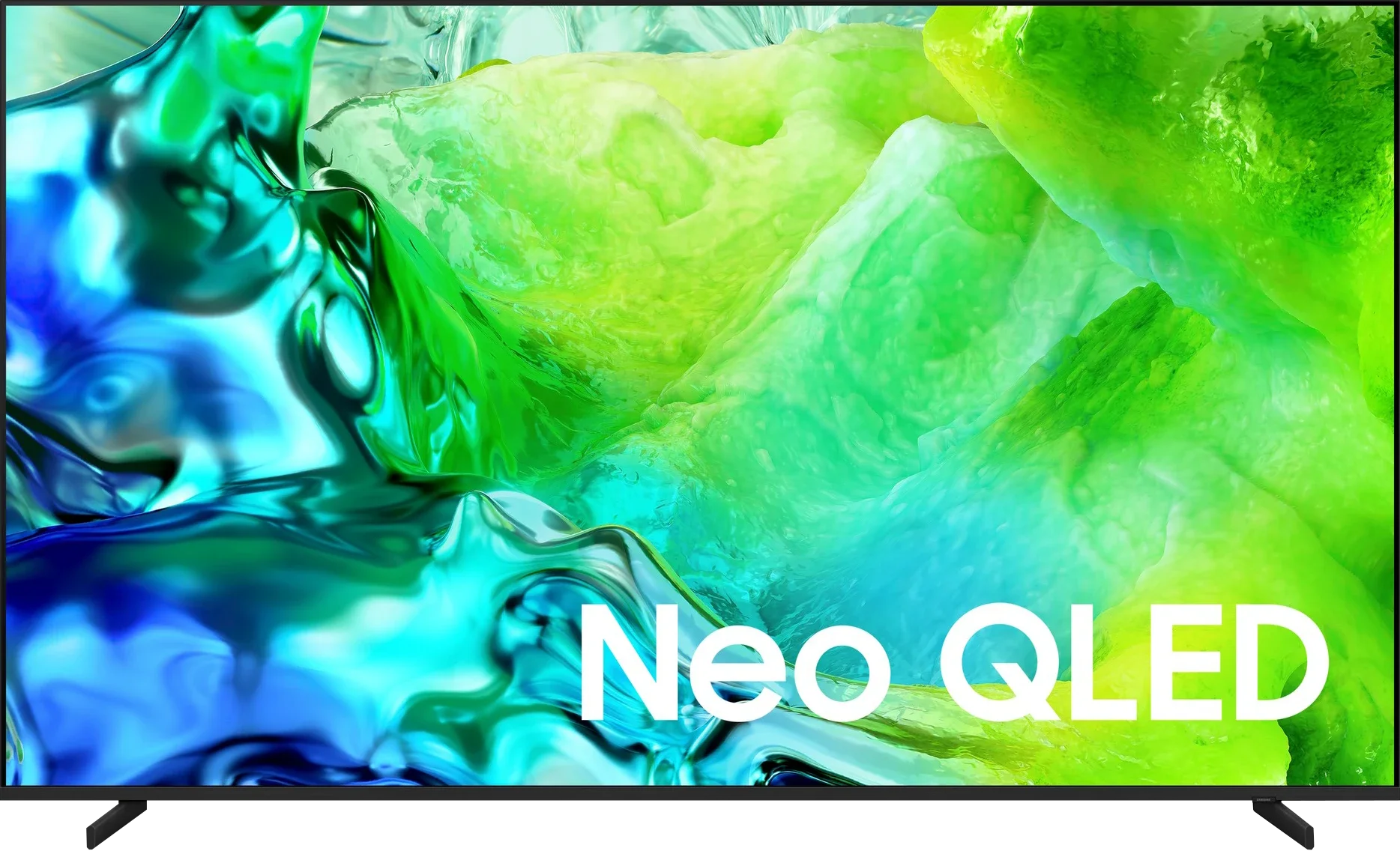
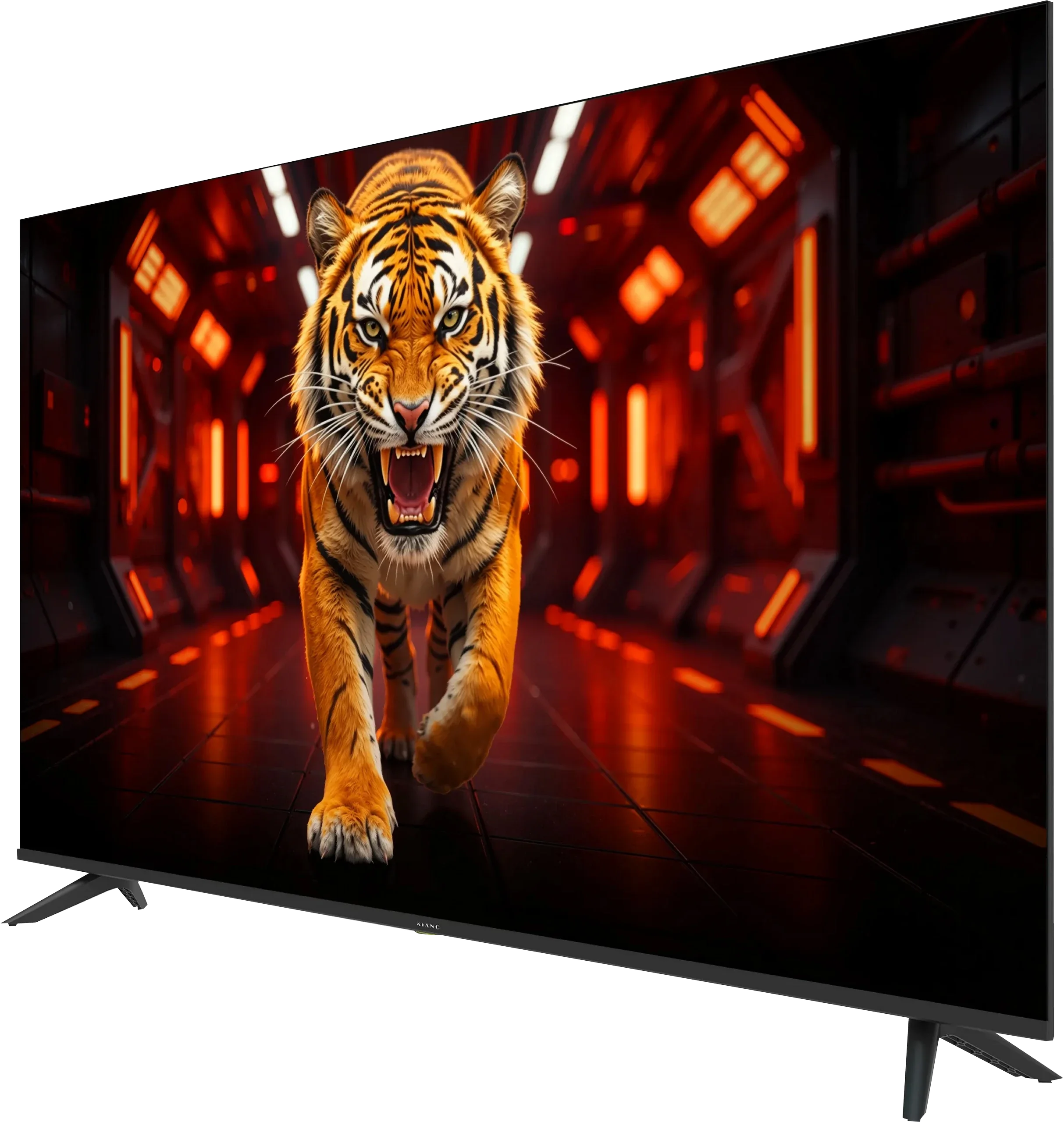
Panel type: LCD VA
Resolution: 3840x2160
System: Tizen
Model year: 2026
Complete the survey to find out the result
Panel type: LCD VA
Resolution: 3840x2160
System: Tizen
Model year: 2026
Complete the survey to find out the result
Overall rating
7.3
4.9
 Movies and series in UHD quality
7.0
4.8
 Classic TV, YouTube
6.8
5.4
 Sports broadcasts (TV and apps)
6.8
3.9
 Gaming on console
9.0
5.3
 TV as a computer monitor
8.9
6.0
 Watching in bright light
5.8
3.7
 Utility functions
7.3
5.1
 Apps
9.3
8.8
 Sound quality
7.1
3.6
Complete the survey to find out what fits your preferences
Advantages

Good blacks thanks to Mini LED backlighting
High brightness, exceeding 1,000 nits in HDR
Rich colours thanks to QLED quantum dots
High 144 Hz panel refresh rate
4x HDMI 2.1 ports
Very low input lag
Advanced gaming features
Fast Tizen OS
Seven years of system support
Excellent compatibility with PCs (240 Hz mode, excellent font readability)
Adjustable foot spacing and height
Low price
Tizen OS with a wide selection of popular apps
Decent contrast thanks to a VA panel
Effective digital image processing (rarely seen at this price)
Low input lag
Very good text readability when connected to a computer
Supports AirPlay and wireless screen mirroring
Disadvantages

Small number of local dimming zones, 110 in the 65-inch model
Average glare suppression
No USB recording or PiP function
Rather inelegant plastic feet
No solar-powered remote 😓
Low brightness
No wide colour gamut (no QLED / PFS)
Poor motion handling: noticeable smearing, a 60 Hz panel and no motion smoothing
No gaming features whatsoever
Slow operation
Very poor audio
Average build quality
Our verdict
Kiano Elegance is primarily an option for people who want to spend as little as possible on a TV while still having convenient access to popular apps. The use of Tizen is a big plus here, because you get a system well known from Samsungs and you do not have to immediately buy a streaming stick to watch films or series. At a low enough price this could be a sufficient reason to consider this model. The digital video processing is also worthy of praise; in operation it resembles the solutions found in entry-level Samsungs. Kiano quite effectively smooths unwanted banding between colours in weaker sources, so heavily compressed footage looks better. It is, of course, not perfect, but remember the very low budget we are dealing with. The mere fact that this feature actually helps is commendable. Unfortunately the operating system does not make the Kiano run as smoothly as Samsung TVs. You sometimes have to wait for a response, and the USB player can take a long time to open files. The savings are also visible in the build quality and the screen’s capabilities. Low brightness makes viewing in a sunny room difficult and prevents it from delivering impressive HDR, while motion blur is noticeable during faster movement. Add weak sound to that, and buying separate speakers can quickly become another expense. That is why the Kiano Elegance really makes sense only if it is noticeably cheaper than the competition. It may be enough for everyday programmes or as a second TV in the home, but if you are only a small amount short of the price of a base model from a better-known manufacturer, we think it is worth paying the extra. Tizen and the decent video processing are strengths of this Kiano, but they do not compensate for all the cost-cutting. It is better to compare final prices than to assume that a TV with Samsung’s system will provide the same level of user comfort.
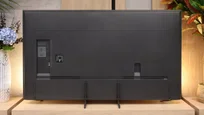
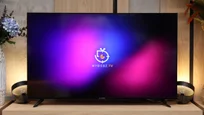
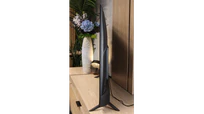
TV appearance

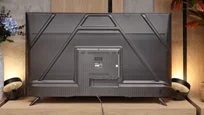

Contrast and black detail
6.7/10
4.8/10
Local dimming function: Yes, number of zones: 110 (10 x 11)
Local dimming function: No
Contrast:


Result
18,900:1

Result
7,100:1

Result
23,200:1

Result
7,750:1

Result
3,800:1
Result
3,350:1
Result
3,350:1
Result
2,650:1
Result
3,650:1
Result
2,400:1
Halo effect and black detail visibility:
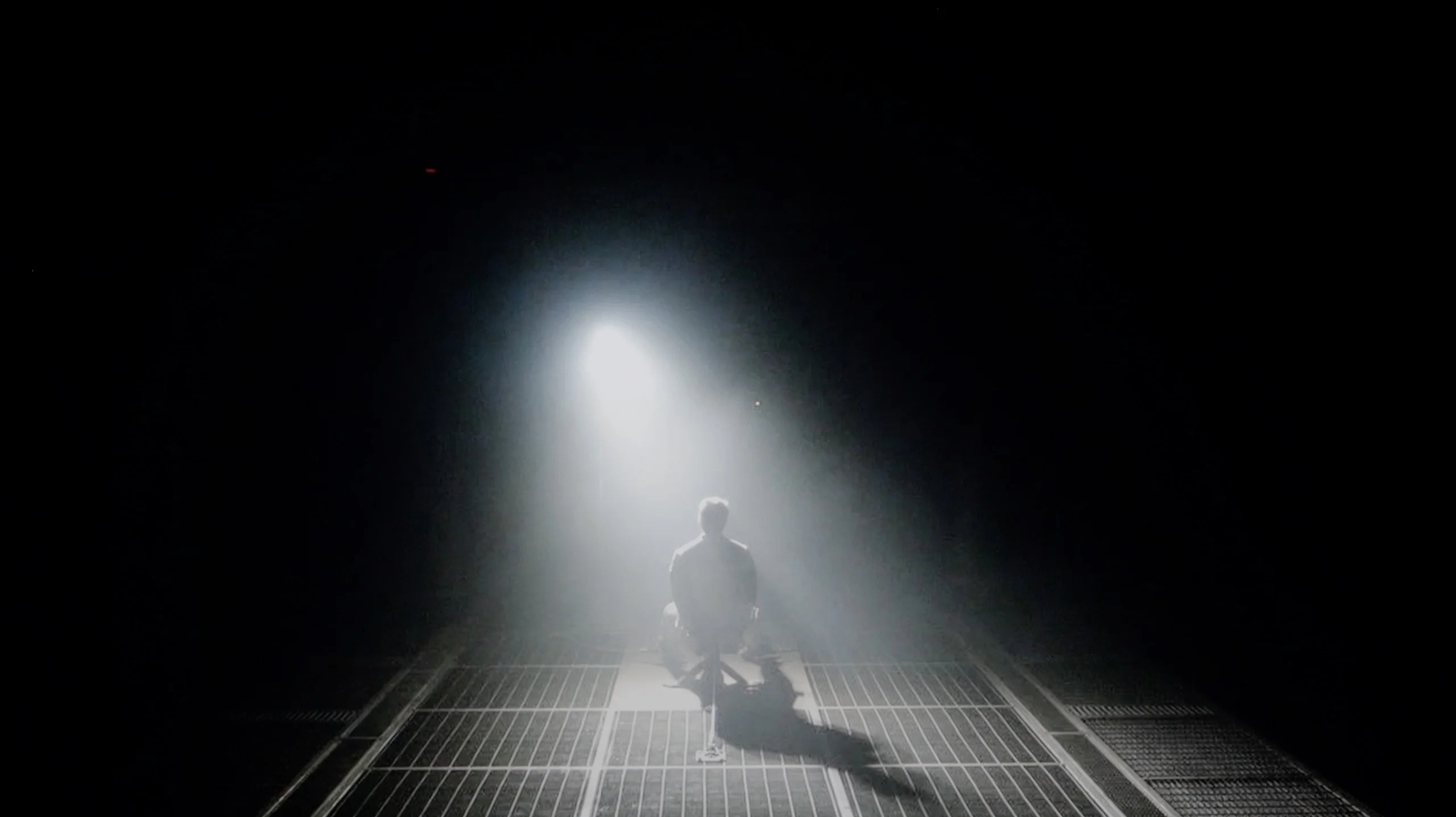
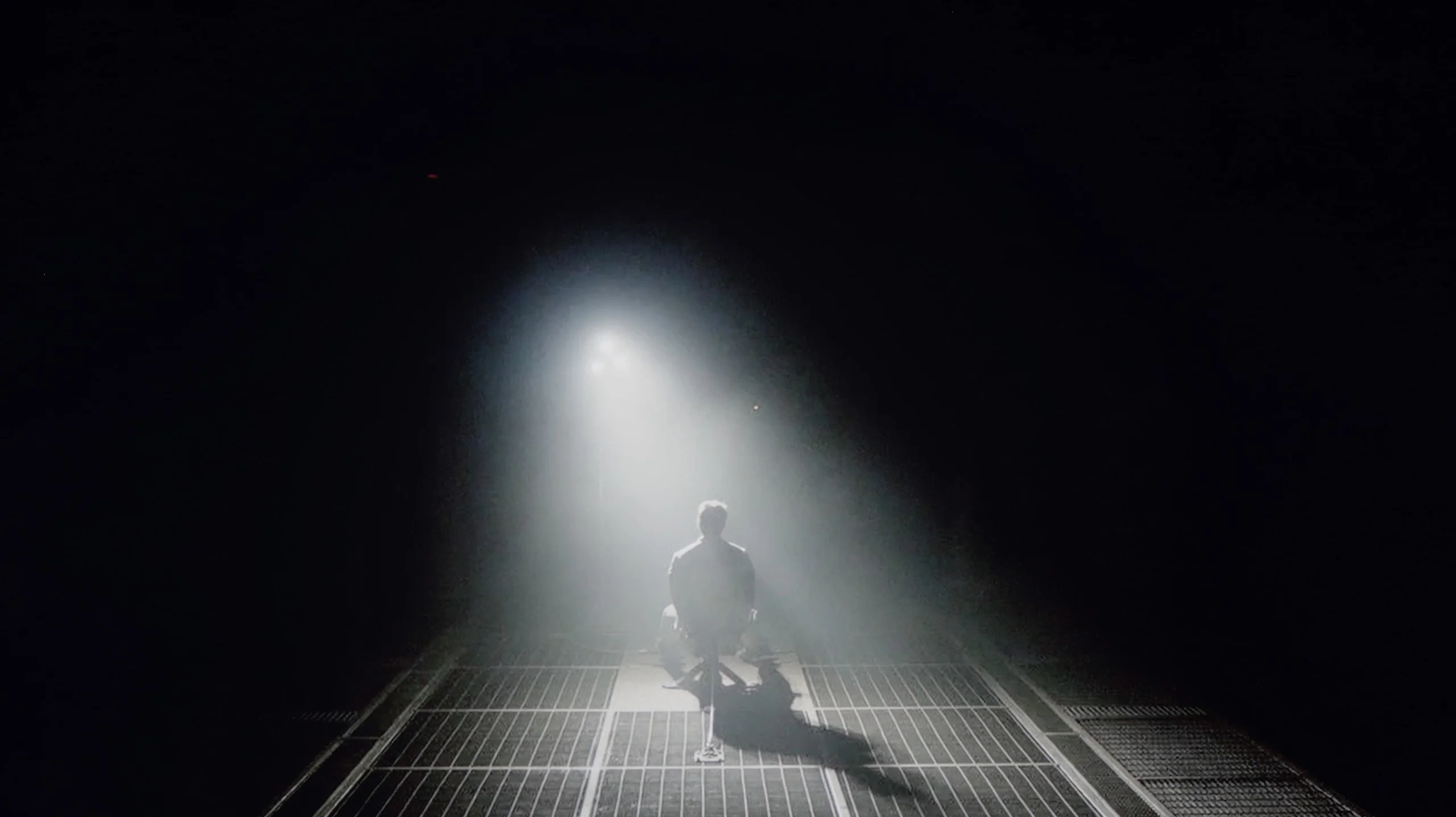
Check the visibility of bright lights on a dark background. Mini-LEDs often struggle with this. The photo does not compare black levels – that’s what the video below is for.
The video accurately shows differences in contrast and black levels between TVs, as well as potential issues: halo around bright objects or Mini-LED zone operation visible as brightness jumps.
The QN80H represents the Neo QLED line, which means it features Mini-LED direct full-array local dimming. In the 65-inch model we tested we counted exactly 110 local dimming zones. Against aggressively priced Chinese competition that number may not look particularly impressive, but it is still vastly better than having no dimming at all or the edge-dimming used in lower-tier models. Especially since Samsung has paired the QN80H with a high-contrast VA panel. As a result, even with a relatively modest number of zones the TV can achieve very good results. In our tests on film scenes the QN80H performed solidly, particularly where deep blacks dominated the screen. In films such as Oblivion the black we measured could be three to four times deeper than the panel’s native capability. That shows the TV can competently and precisely dim the appropriate areas to deliver an image with satisfying contrast.
However, things get tricky in more demanding moments. In scenes with a large number of fine details on a dark background (the helicopter shot at the bottom) the QN80H’s biggest weakness becomes apparent. When small but very bright points appear on screen the dimming algorithm clearly gets confused. Instead of precisely lighting only those details, the TV brightens almost the entire screen, causing the blacks around them to go noticeably grey. This is a direct consequence of the modest number of dimming zones. One can only hope Samsung will optimise the algorithm in future firmware updates. Despite this, we judge the overall contrast positively, particularly when comparing the QN80H with screens that lack local dimming altogether.
In the 55-inch variant we tested, the Kiano Elegance uses a VA panel, which by itself already provides rather good black levels. The contrast we measured was around 4000:1, which is typical for this kind of panel and clearly better than in TVs using IPS or ADS panels. That gives the picture decent depth in the evening, and blacks are not so heavily brightened. You should bear in mind, however, that the Elegance uses a conventional backlight without local dimming. This means the backlight is on all the time and the TV cannot dim selected parts of the screen. In that respect the difference compared with even basic Mini LED models is obvious. There, individual backlight zones can dim independently, so in dark scenes blacks can be much deeper. Kiano does not have those capabilities, but for a simple LCD TV its native contrast is quite respectable.
HDR effect quality
5.8/10
3/10
Luminance measurements in HDR:

Result
694 nit

Result
385 nit

Result
703 nit

Result
307 nit

Result
660 nit
Result
158 nit
Result
172 nit
Result
193 nit
Result
180 nit
Result
205 nit
Scene from the movie “Pan” (about 2800 nits)


Scene from the movie “Billy Lynn” (about 1100 nits)


The photos show two HDR10 movies. 'Pan' is one of the brightest productions ever made, while 'Billy Lynn' (soldier) has brightness typical of streaming (Netflix, Prime, HBO MAX). Notice the intensity of effects and detail in whites.
Static HDR10


The photos present the visibility of white details in various HDR formats. They do not show brightness differences between TVs (these can be compared in the previous gallery).
Dynamic: HDR10+
Dynamic: HDR10+


The photos present the visibility of white details in various HDR formats. They do not show brightness differences between TVs (these can be compared in the previous gallery).
HDR luminance chart:
Kiano Elegance Tizen
Samsung QN80H
The Samsung QN80H is undoubtedly a bright TV. In synthetic tests it exceeds the 1000-nit mark, which on paper promises a solid HDR effect. In practice the screen really shows its teeth, although it can't fully spread its wings (or its backlight, if you will 🤔) in every condition. Bright, wide scenes make the best impression. Well-lit outdoor shots and brightly lit scenes look really good on it. Brightness then stays around 700 nits, which provides a noticeable step up in quality compared with standard SDR. Problems start in dark scenes with small, pinpoint highlights. The QN80H tends to dim these strongly, in order to protect black depth at all costs. On the one hand this gives better contrast, on the other... you lose dynamics and the brilliance of fine HDR detail. So the TV has considerable potential, but the dimming algorithm can be too restrictive.
Colour gamut coverage
When it comes to colours it's good as well. The QN80H uses quantum dot technology, and in our measurements it covered 93% of the DCI-P3 colour space and about 70% of BT.2020. Today those results aren't exactly jaw-dropping, but in real-world use they're more than sufficient to deliver a vivid, natural image for most films and TV series. Colours are suitably saturated, and after proper calibration they don't look artificial or overly aggressive.
The HDR effect on the Kiano Elegance is practically non-existent. The TV is simply too dim to deliver any noticeable improvement over a standard SDR picture. Our measured peak brightness is around 200 nits, which is definitely too low for bright elements, such as various lighting effects, to actually stand out on screen. HDR content will be reproduced, but without the impact that the format is meant to provide. In addition, the Kiano Elegance does not use any extra wide colour gamut technologies, like quantum dots or even a PFS filter. As a result, some of the vivid colours encoded in HDR films cannot be shown with proper saturation. This is especially apparent in more colourful productions, where the picture simply looks poorer than on TVs with a wide colour gamut. The Kiano Elegance is therefore much better suited to standard SDR material: broadcast TV, YouTube or older films and series. Their demands are much lower and match this TV's capabilities far better.
Factory color reproduction
6.1/10
4.8/10


This gallery shows how colors change after professional TV calibration. If you notice the difference, we recommend ordering this service at SkalibrujTV.com.
Factory Mode
After calibration
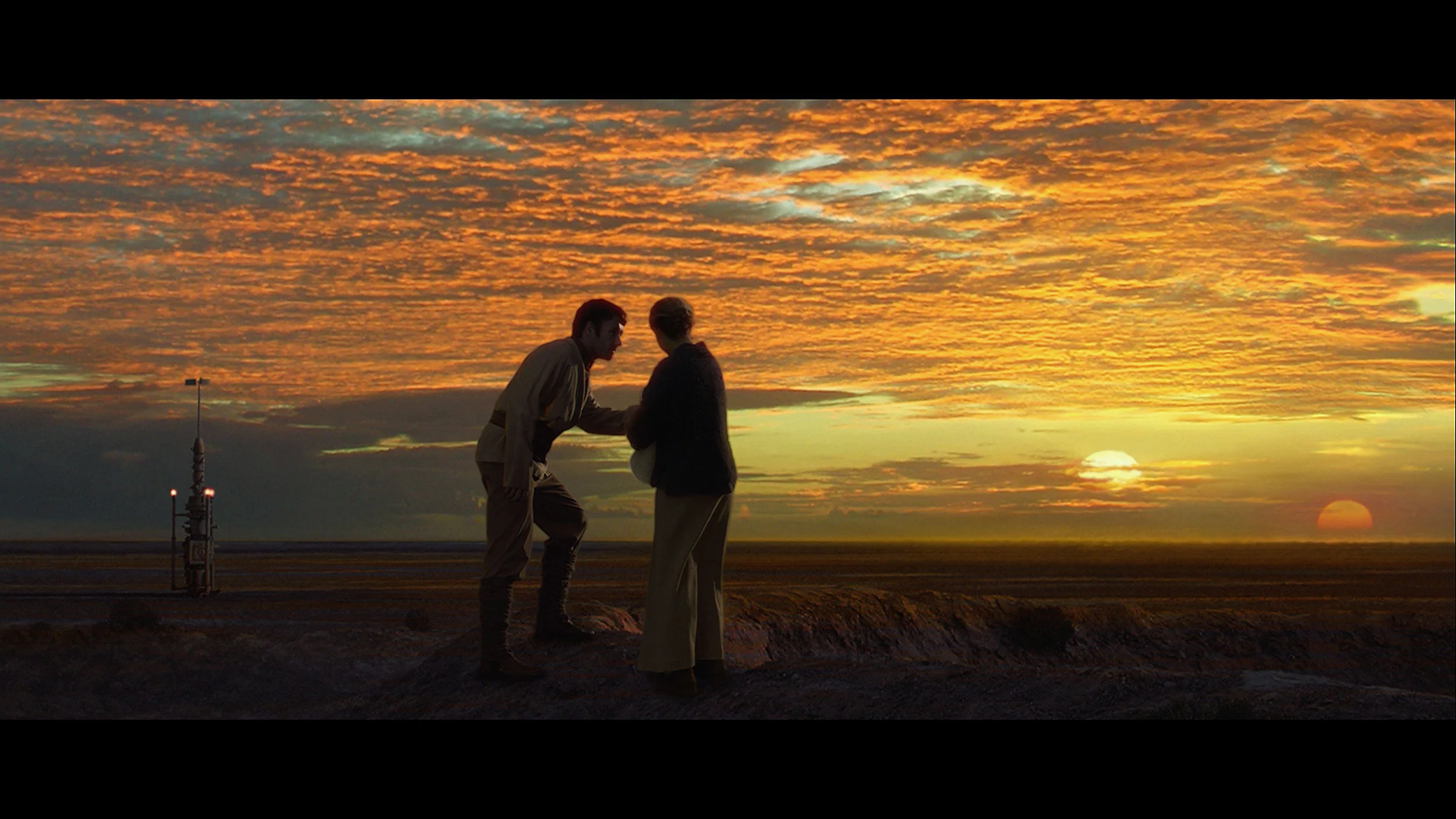
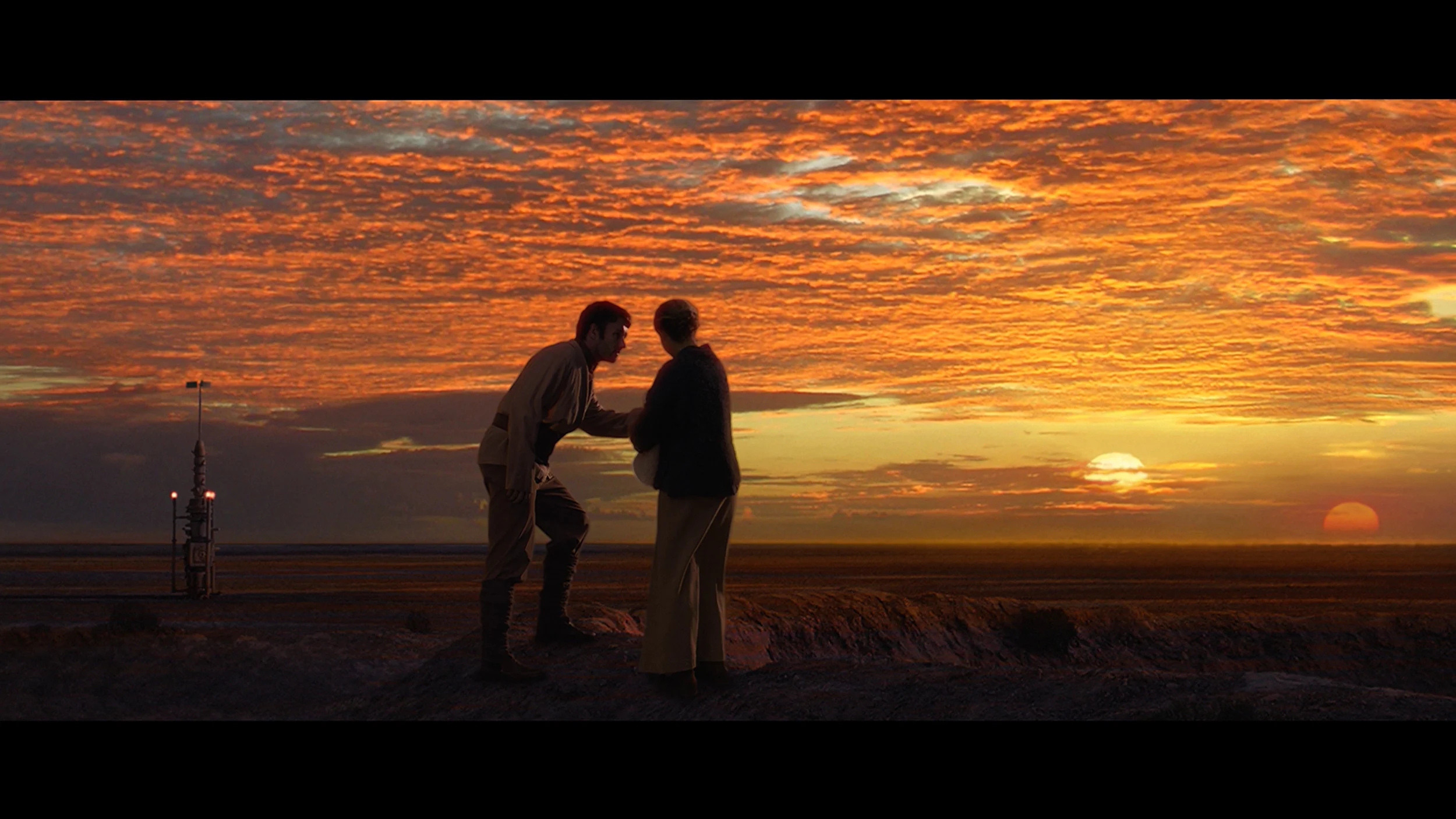
This gallery shows how colors change after professional TV calibration. If you notice the difference, we recommend ordering this service at SkalibrujTV.com.
Factory Mode
After calibration
The factory settings of the QN80H performed really well, especially compared with the majority of TVs we receive for testing. Of course, our measurements were taken in Filmmaker Mode, and that's the mode we recommend turning on immediately after the initial setup. For SDR material, our sample was set up surprisingly well. The white balance was very even, colours looked natural, and errors were so small they were hard to notice without measurement equipment. The only weaker point was the gamma. In the brighter parts of the image the TV brightened them a little too much, which at times made the picture lose some depth. Still, we'd like most TVs to look this good straight out of the box.
It fared a little worse in HDR. The white balance was still set correctly, so the problem was not with the colours but with the way the QN80H managed image brightness. This was immediately visible on the EOTF chart. The TV brightened large parts of scenes too much, causing the brightest elements to clip. Interestingly, very small points were often dimmed too much at the same time. As a result, some fine details simply disappeared. So the factory Filmmaker mode in HDR is not bad, but it is definitely not as well calibrated as in SDR.
In Film mode the colours on the Kiano Elegance are quite decent, especially for a TV at this price point. However, that does not mean the picture is properly calibrated straight away. This is most apparent in the white balance, which lacked red. As a result the image had a slightly cooler character and some skin tones and warmer colours did not look as natural as they should. On top of that, both the SDR gamma and the EOTF curve in HDR were driven too high. Put simply, the TV brightened the image more than the source material intended. In SDR this produced a slightly brighter, more 'TV-like' image, but it also robbed it of some depth. In HDR this behaviour compounded the panel's limitations, because at such low brightness the TV had even less headroom to correctly render brighter parts of the image. The biggest limitations, however, appeared in HDR. The colour gamut encoded in such material often exceeds the Kiano Elegance's capabilities, which does not employ any gamut-expanding solution. More saturated reds, greens and blues are therefore rendered much more subdued than they should be. In less demanding scenes this is not yet very noticeable, but with more colourful films the difference compared with TVs that have a wide colour gamut becomes very clear.
Color reproduction after calibration
8.2/10
6.5/10


The photos show how movies look on the TV. Pay attention to black detail visibility, colors, and shadow tint.


The photos show how movies look on the TV. Pay attention to black detail visibility, colors, and shadow tint.
We saw the biggest difference after calibration in HDR Filmmaker mode. SDR was already very good out of the box, so we didn't have much work to do there. In HDR, however, we managed to get to grips with the way the QN80H handled brightness, as it had been over-brightening most scenes. After calibration the picture is calmer, more natural and much closer to how a faithful image should look.
Contrary to appearances, even an inexpensive TV like the Kiano Elegance offers quite a lot of calibration options. We were particularly successful at improving the white balance. After correction the slightly cool cast of the image disappeared and the colours became noticeably more natural. We also managed to better set the gamma and the overall image characteristics in SDR. Despite our efforts, it quickly became clear that further limitations no longer stem from the settings but from the TV’s own capabilities. In SDR the Kiano can look genuinely good. Broadcast TV, YouTube, sport and older films can have natural colours and a pleasing image. It’s much worse in HDR. Here calibration alone cannot compensate for the lack of brightness and a wide colour gamut. The TV simply cannot reproduce some of the more saturated colours or sufficiently strong highlights. So while you can get a really decent picture from it in SDR, HDR remains clearly beyond its abilities.
Smoothness of tonal transitions
9.5/10
8.5/10





These are selected scenes that show smooth tonal transitions from one color to another. If you see distinct banding, it’s the TV panel’s fault.

These are selected scenes that show smooth tonal transitions from one color to another. If you see distinct banding, it’s the TV panel’s fault.

These are selected scenes that show smooth tonal transitions from one color to another. If you see distinct banding, it’s the TV panel’s fault.

These are selected scenes that show smooth tonal transitions from one color to another. If you see distinct banding, it’s the TV panel’s fault.
The tonal transitions on the Samsung QN80H are very good. Colours of similar hues blend smoothly, without obvious banding, blotches or abrupt steps between successive gradations. Dark gradients look particularly good, for example shades of grey and transitions just above black. It’s in such areas that many televisions begin to show their weaknesses, whereas the QN80H handles them surprisingly well. Minor imperfections only appear in very bright scenes, where slight banding occasionally occurs. However, this is subtle enough that it shouldn’t bother anyone during normal viewing.
The Kiano Elegance handles colour gradation quite well. In most scenes the transitions between individual shades are smooth and there is no strong banding or distinct bands that can be a problem in the cheapest televisions. The biggest limitations only appear in darker scenes. With very subtle transitions in greys or shadows you can notice slight posterization and colour separation. However, this is not something that will be noticeable all the time. With typical content Kiano fares reasonably well in this respect, especially given its price.
Image scaling and smoothness of tonal transitions
7/10
6.5/10


Smooth transition function
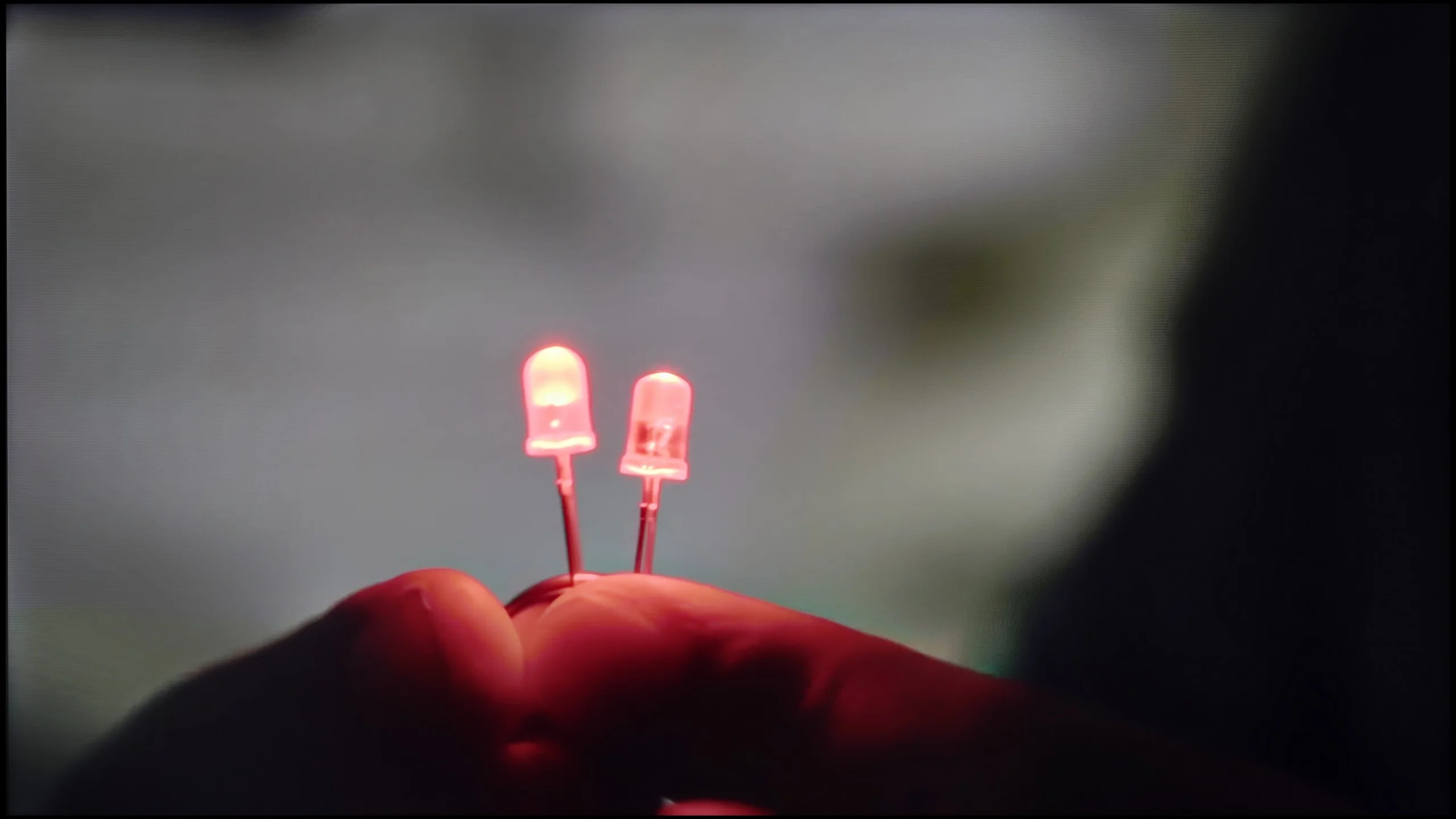
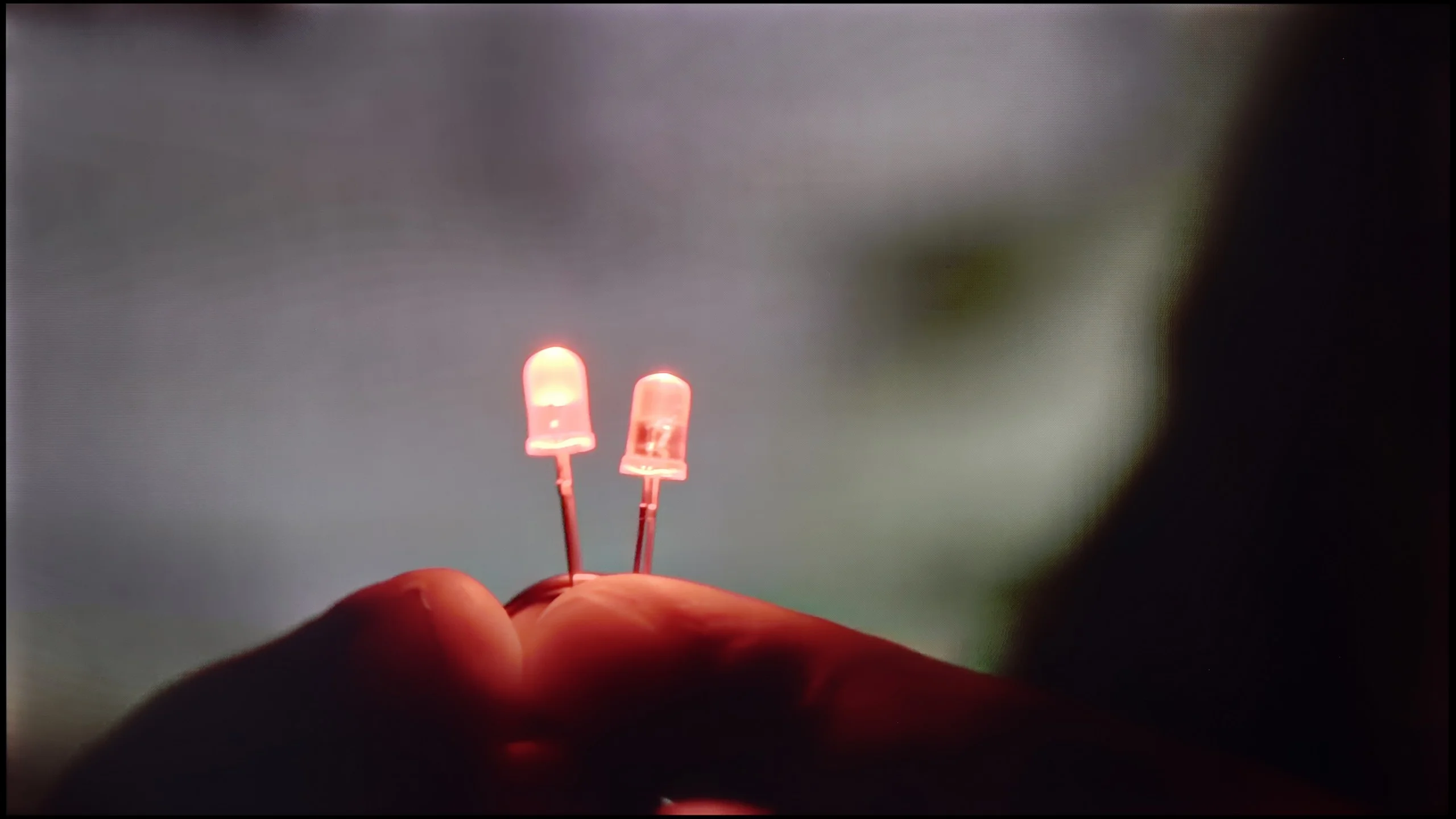
The match photo shows how the TV smooths weak tonal transitions in low-quality video.
Image scaling SD (576i)
Digital image processing in the Samsung QN80H is handled by the second-generation NQ4 AI processor. It's a chip we already know from the manufacturer's earlier models, and it still performs very well, especially with lower-resolution content. The image is effectively upscaled to 4K, but without excessive sharpening and without giving the impression the TV is aggressively trying to improve the source material.
The "Noise Reduction" function also proves useful. It can noticeably reduce posterisation and visible banding in lower-quality material, particularly in low-bitrate streaming. However, it's important to remember that it does not work without side effects. It can remove some film grain and slightly smooth the image. So with a high-quality source we'd leave this function switched off. If, however, someone is more bothered by banding and uneven tonal transitions than by the loss of some grain, "Noise Reduction" can be a really useful addition.
For a relatively inexpensive TV, the upscaling and digital image processing in the Kiano Elegance perform really well. The scaling of lower-resolution content itself is decent. It is not, of course, at the level of the best TVs on the market, but ordinary broadcast television and Full HD content look quite good on a 4K screen. We were much more surprised by its ability to smooth unwanted tonal transitions. Many TVs in this price bracket either do not offer a similar function at all, or its effect is practically invisible. Kiano, using noise reduction known from Samsung TVs, can quite effectively mask heavy compression, colour banding and other imperfections of poorer sources. There is just one catch. The feature works fairly aggressively and, along with the imperfections, can also remove some fine detail or natural film grain. So with high-quality content we would probably leave it off. However, if you are watching older recordings, heavily compressed broadcasts or poor-quality material from the internet, it is worth experimenting with it. In such conditions it can actually improve perceived image quality.
Blur and motion smoothness
7.8/10
2/10
Blur (native resolution, maximum refresh rate):






Blur (BFI function enabled):
Image flickers in this mode



Blur (4K@144Hz):



Blur ():
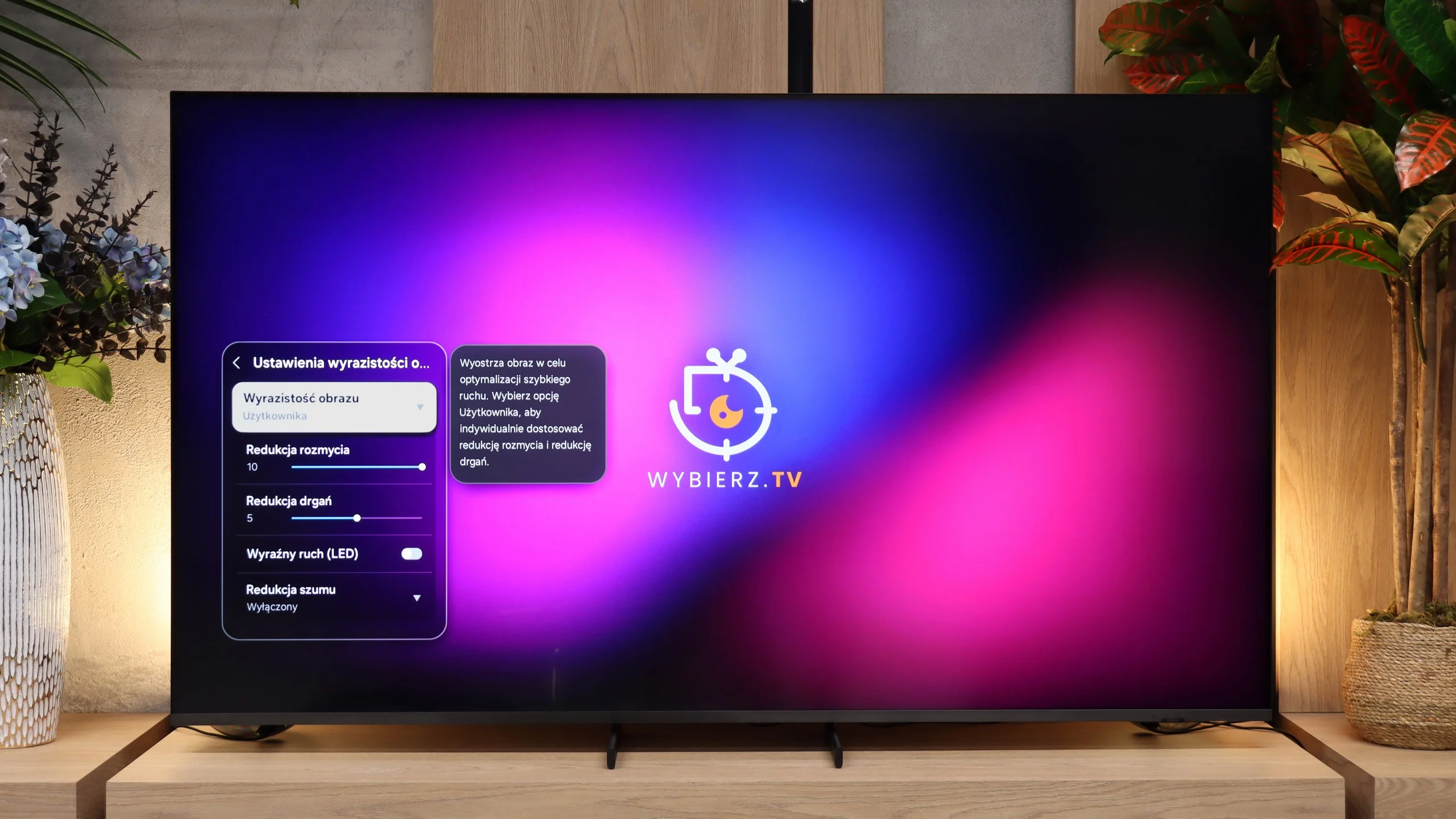
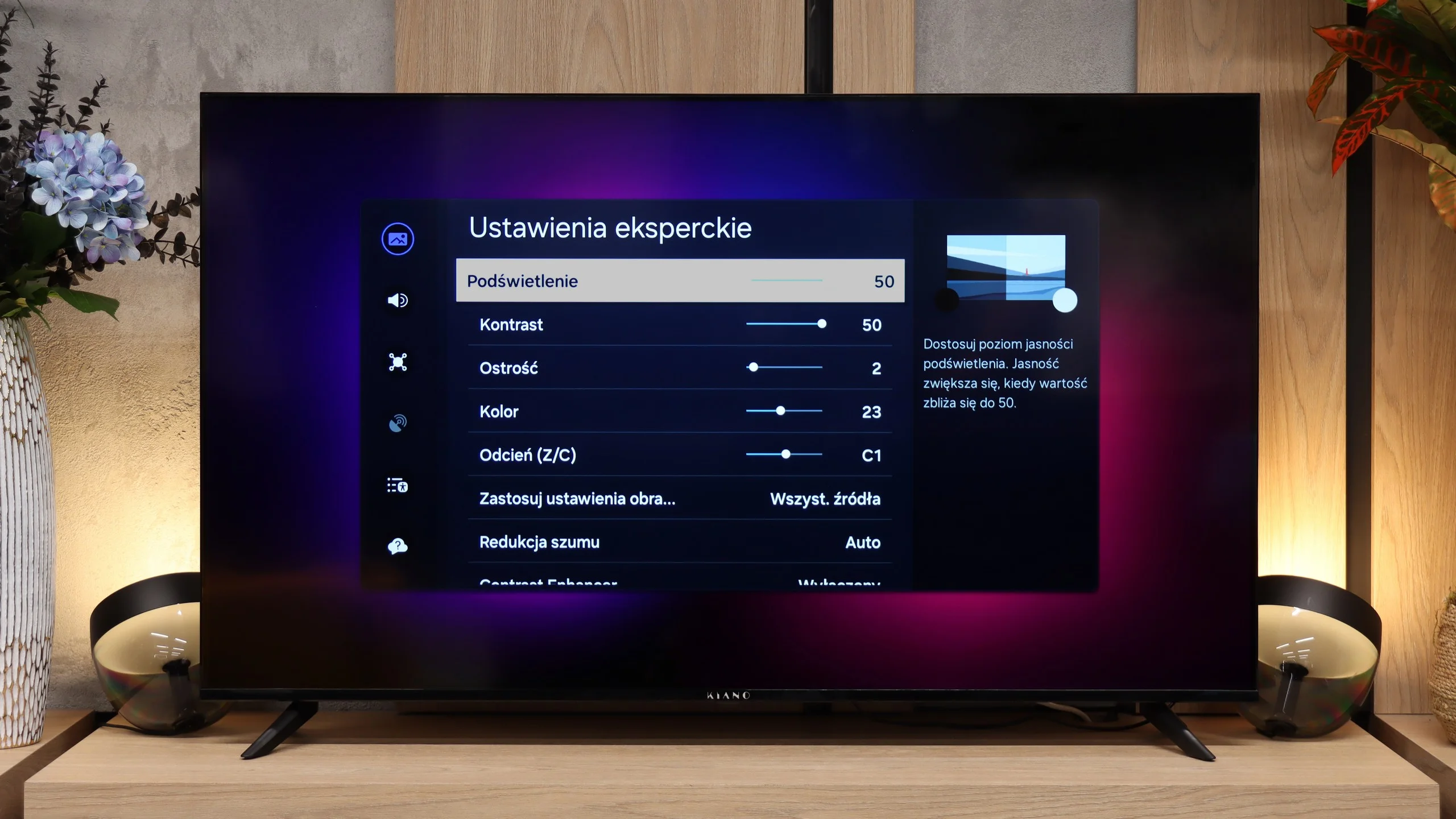
Motion handling and motion clarity on the QN80H are really good, mainly thanks to the fast panel. In 4K the screen refreshes at up to 144 Hz, and when switched to Full HD and connected to a PC it can reach as much as 240 Hz. That's new for Samsung TVs and a useful addition for people who want to use the TV for PC gaming as well. We were more interested, however, in how the QN80H performs at 120 Hz, because consoles use that refresh rate. Here it performs very well. The panel does not suffer greatly from the smearing typical of VA panels, and light trails behind moving objects are mainly visible on dark backgrounds. That said, it's nothing that would interfere with normal watching of sport or gaming. The TV also has a motion smoothing system that Samsung calls "Wyrazistością obrazu". You can adjust judder reduction and blur reduction separately, so it's easy to tailor its behaviour to films, sport or your own preferences.
In terms of motion handling the Kiano Elegance performs rather poorly. The TV has a 60 Hz panel, but at this price point that's not surprising. What’s more problematic is the complete lack of any motion interpolation feature. In practice that means the TV displays content at exactly the frame rate at which it was recorded. That isn't a major issue for films, but with sport or fast panning shots you can clearly see that motion isn't particularly smooth.
Console compatibility and gaming features
9.6/10
1.6/10
- ALLM
- VRR
- VRR range48 - 240Hz
- Dolby Vision Game Mode
- Correct implementation of HGIG
- 1080p@120Hz
- 1440p@120Hz
- 4K@120Hz
- Game bar
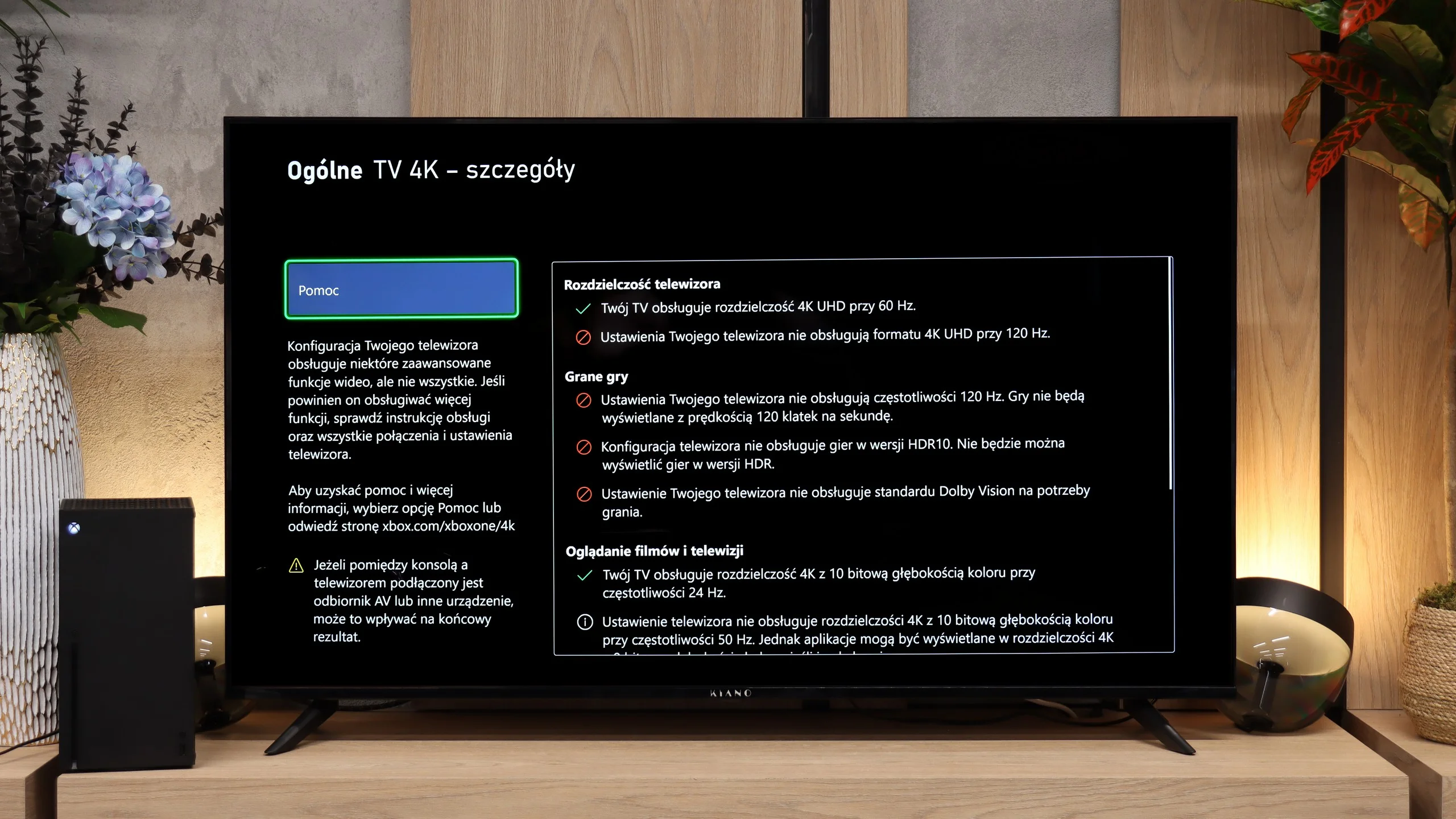
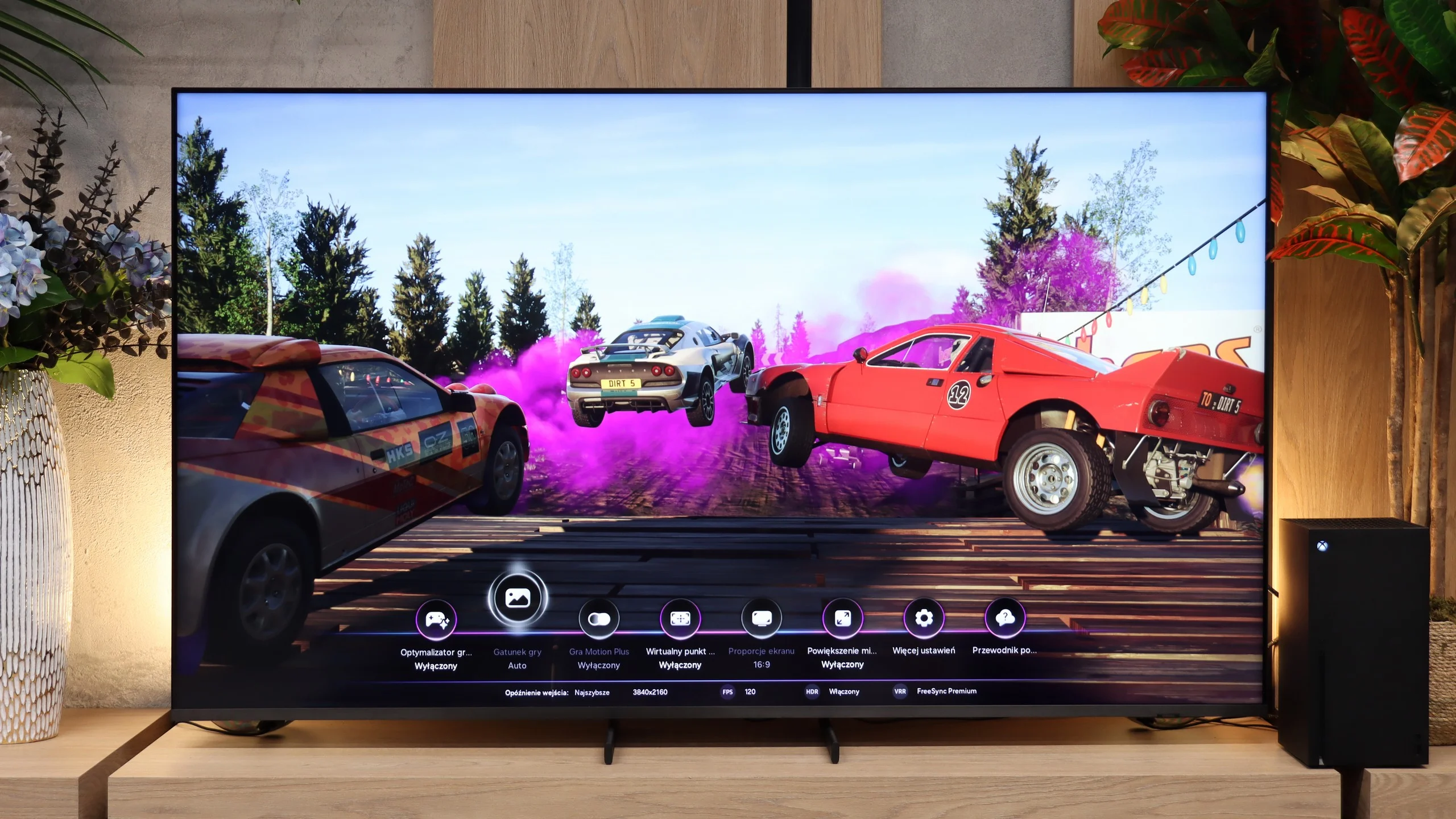
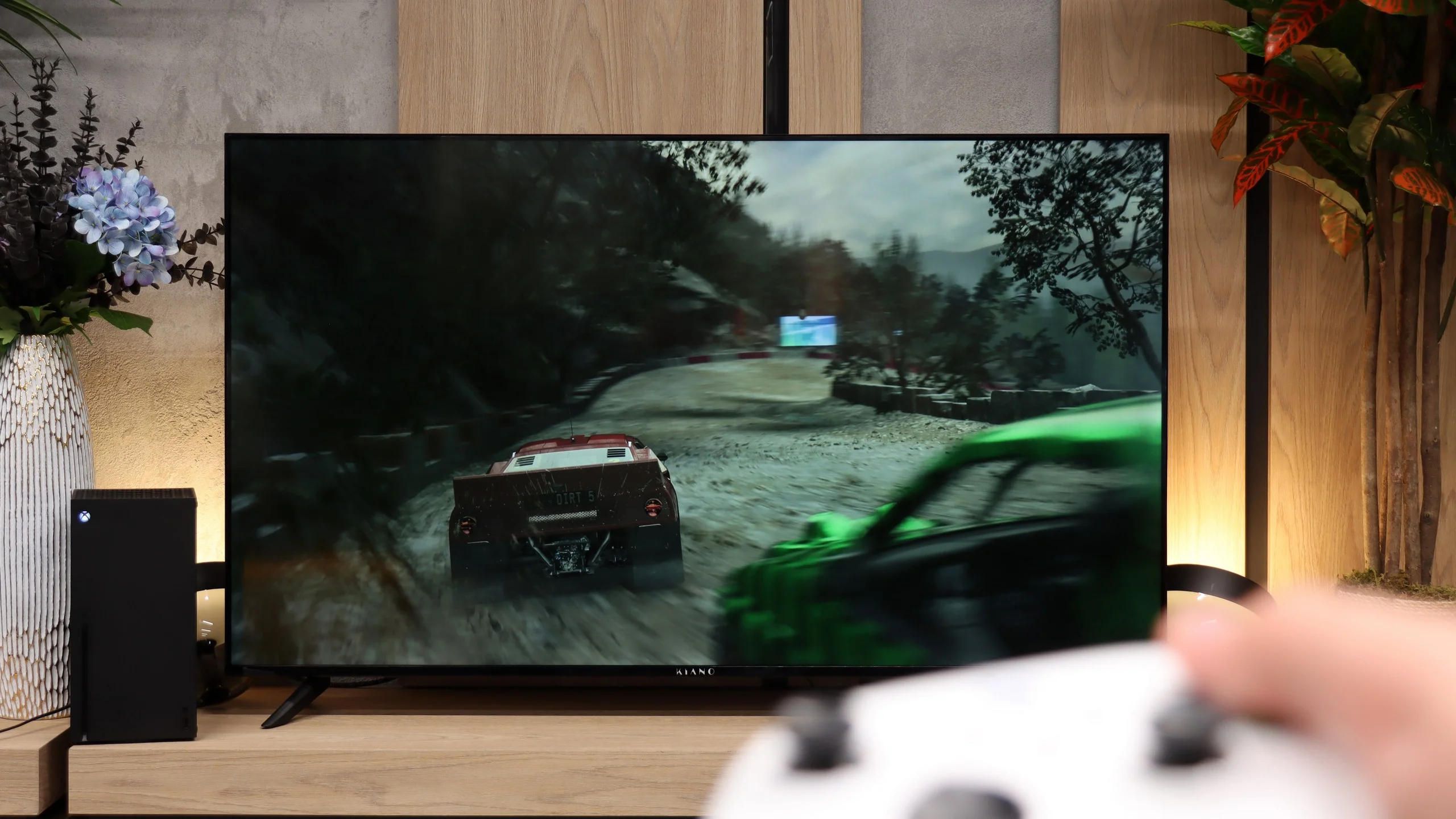
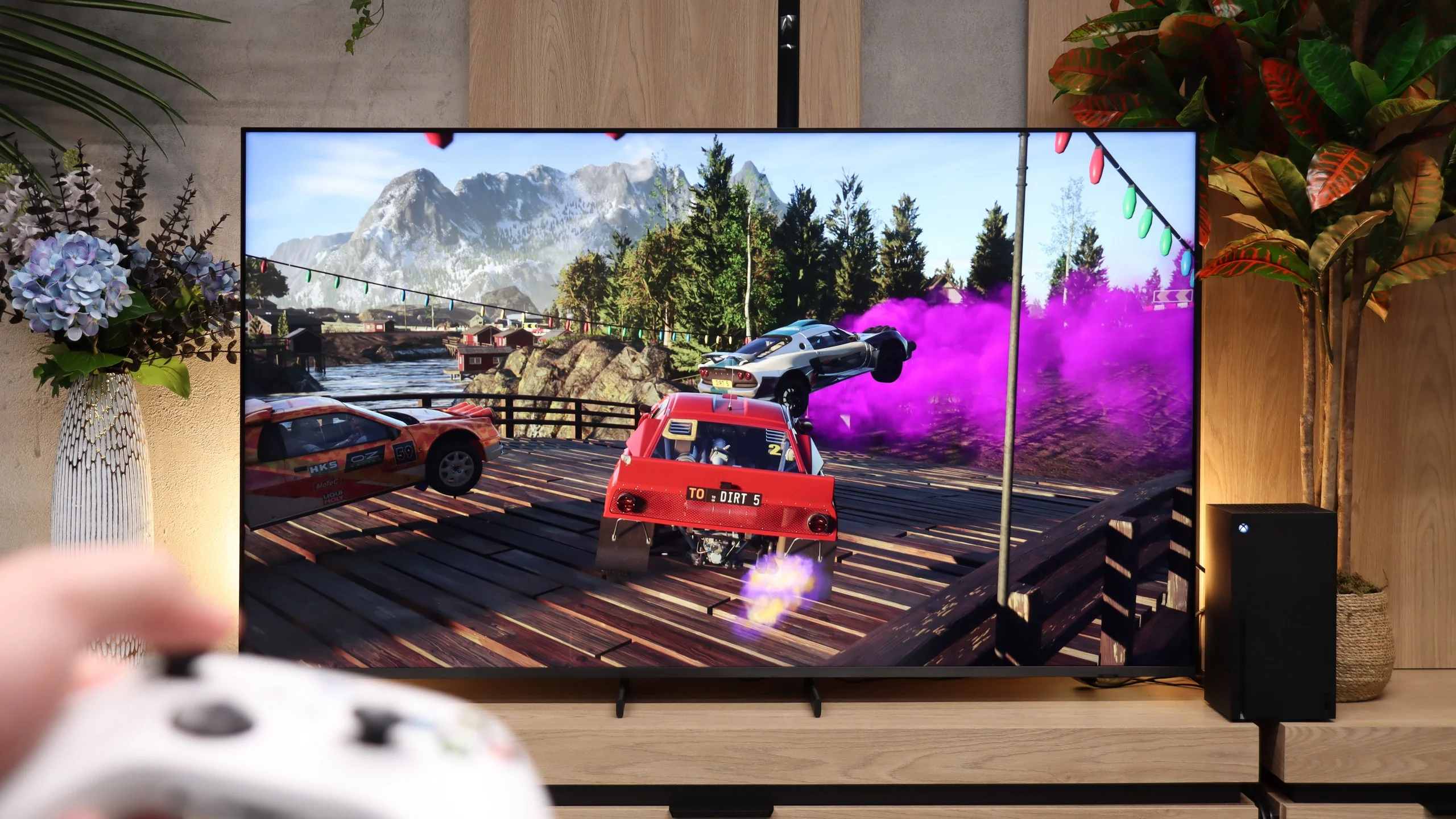
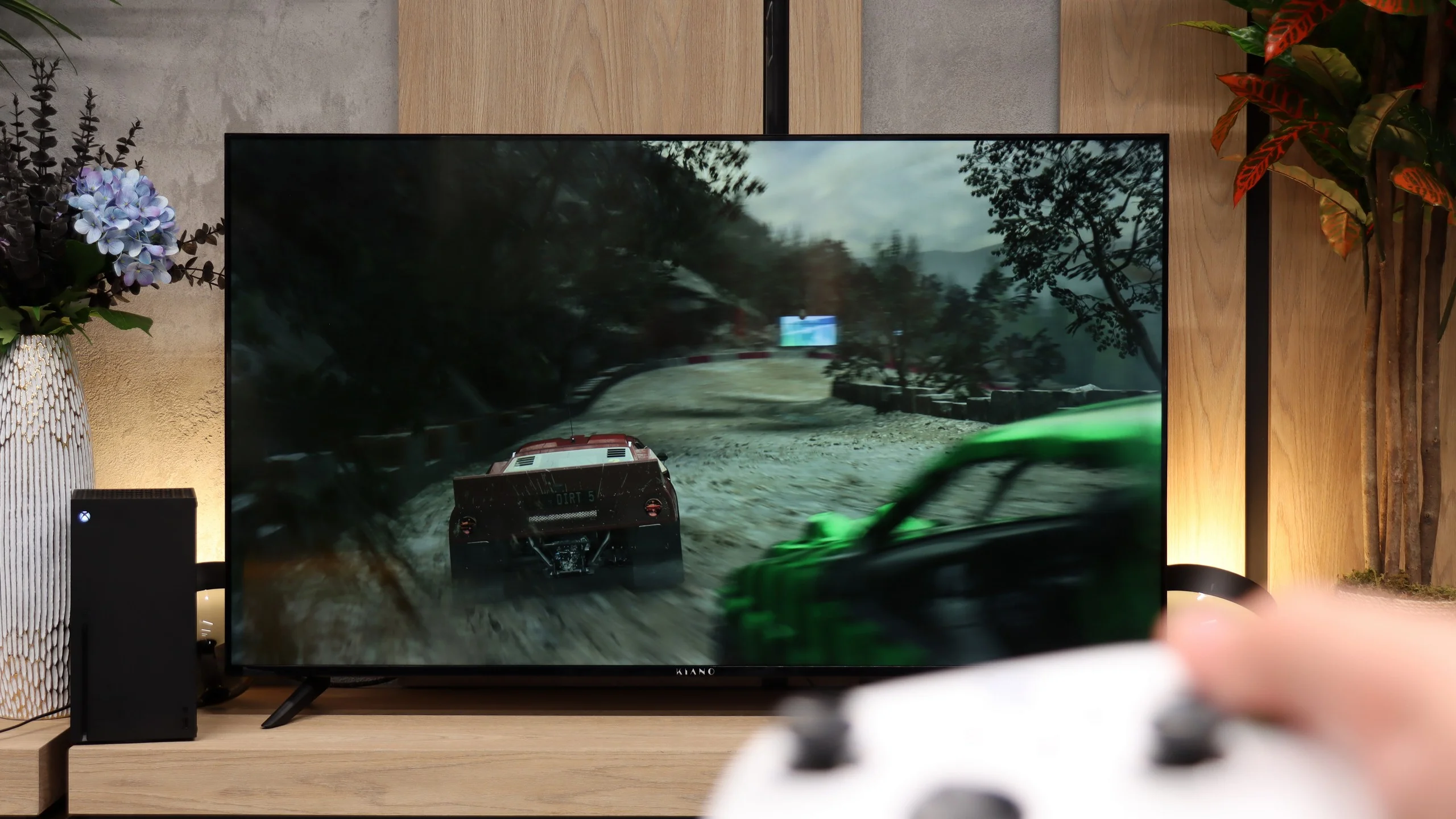
The Samsung QN80H is a TV that stands out when it comes to gaming features. The biggest new addition for 2026 is DLG mode, which allows refresh rates of up to 240 Hz when the image is switched to Full HD. It's an option aimed mainly at PC users, but it also shows that Samsung is still heavily developing the gaming side of its TVs. However, the list of advantages doesn't end there. The QN80H has four full-fledged HDMI 2.1 ports, which is still not standard at this price point. So you can connect several consoles, a PC or a soundbar at the same time without having to wonder which port supports the full video capabilities. The TV also supports VRR, ALLM and HGiG, so it's hard to fault its basic feature set.
A downside is the lack of Dolby Vision, which may matter primarily to Xbox Series X owners. However, this is not a flaw that disqualifies the QN80H as a gaming TV. Samsung has a feature most manufacturers still lack: its proprietary motion smoothing, Game Motion Plus. It's a motion smoothing system that works in game mode too, allowing you to improve the smoothness of titles running at 30 or 60 frames per second without a drastic increase in input lag. In practice, Game Motion Plus can make a much bigger difference than the Dolby codec, especially in more demanding games that don't offer a 60 FPS mode. The image becomes noticeably smoother, while controls remain sufficiently responsive. So despite the lack of Dolby Vision, the QN80H remains one of the best-equipped gaming TVs in its class.
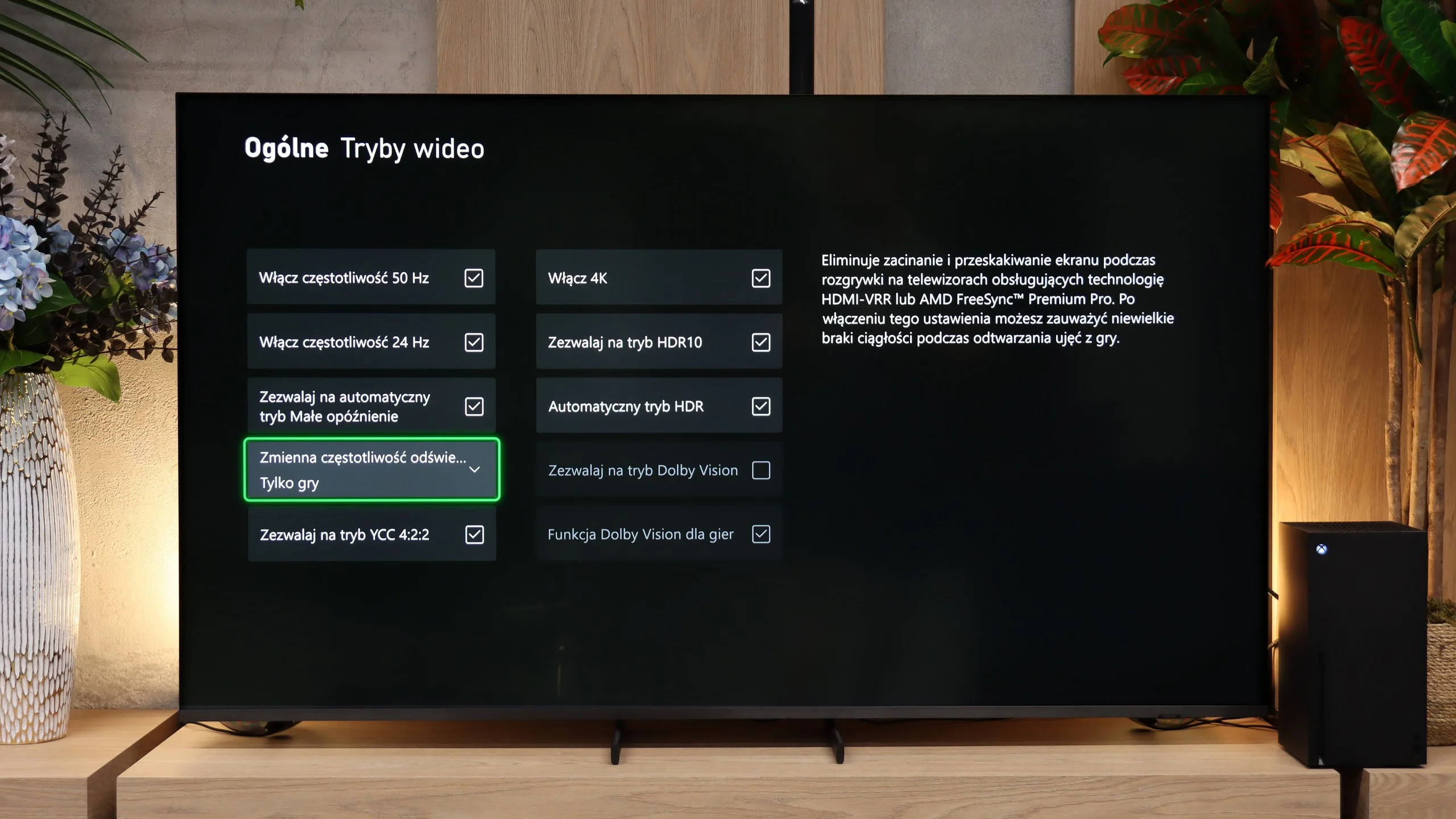
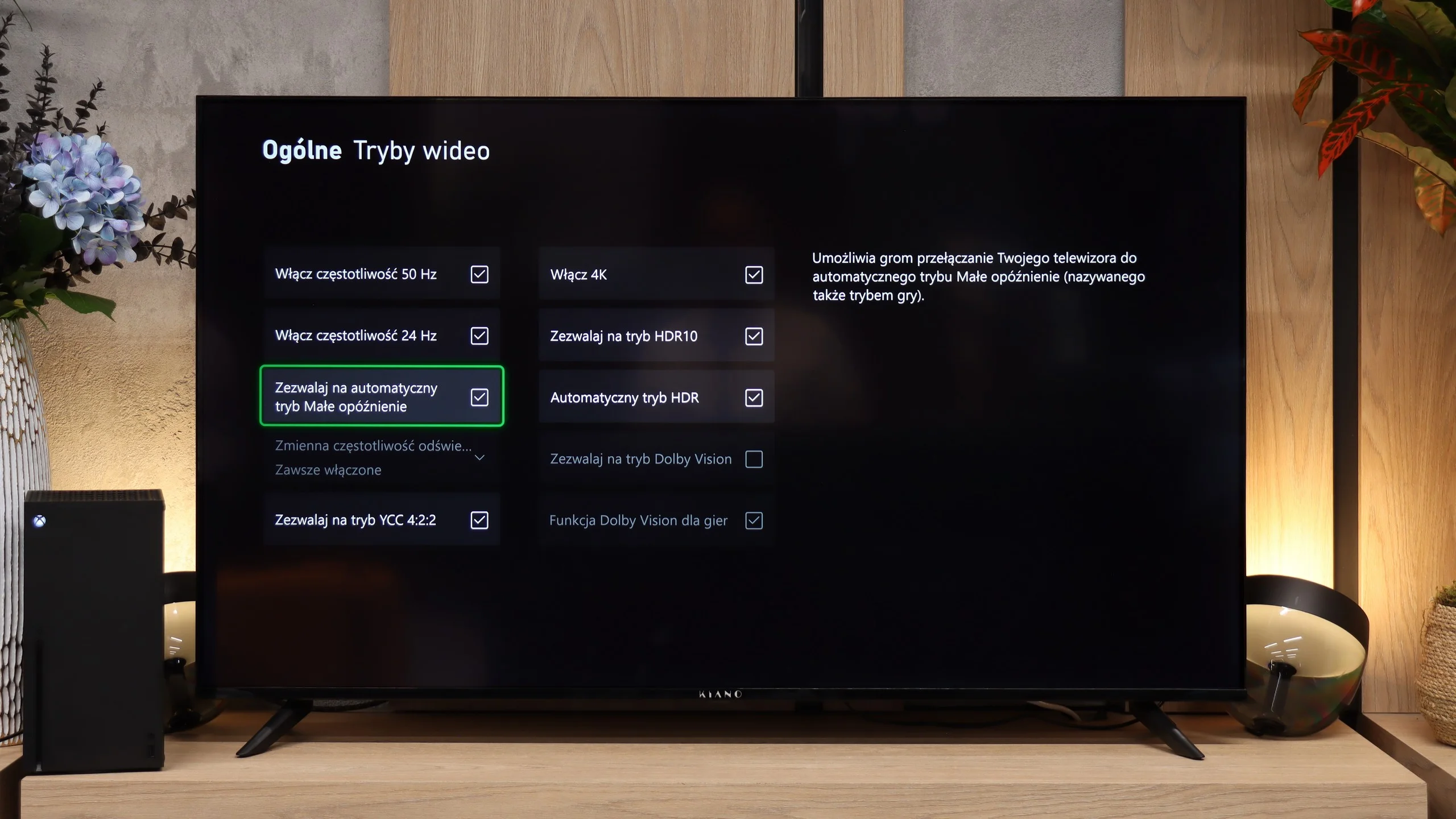
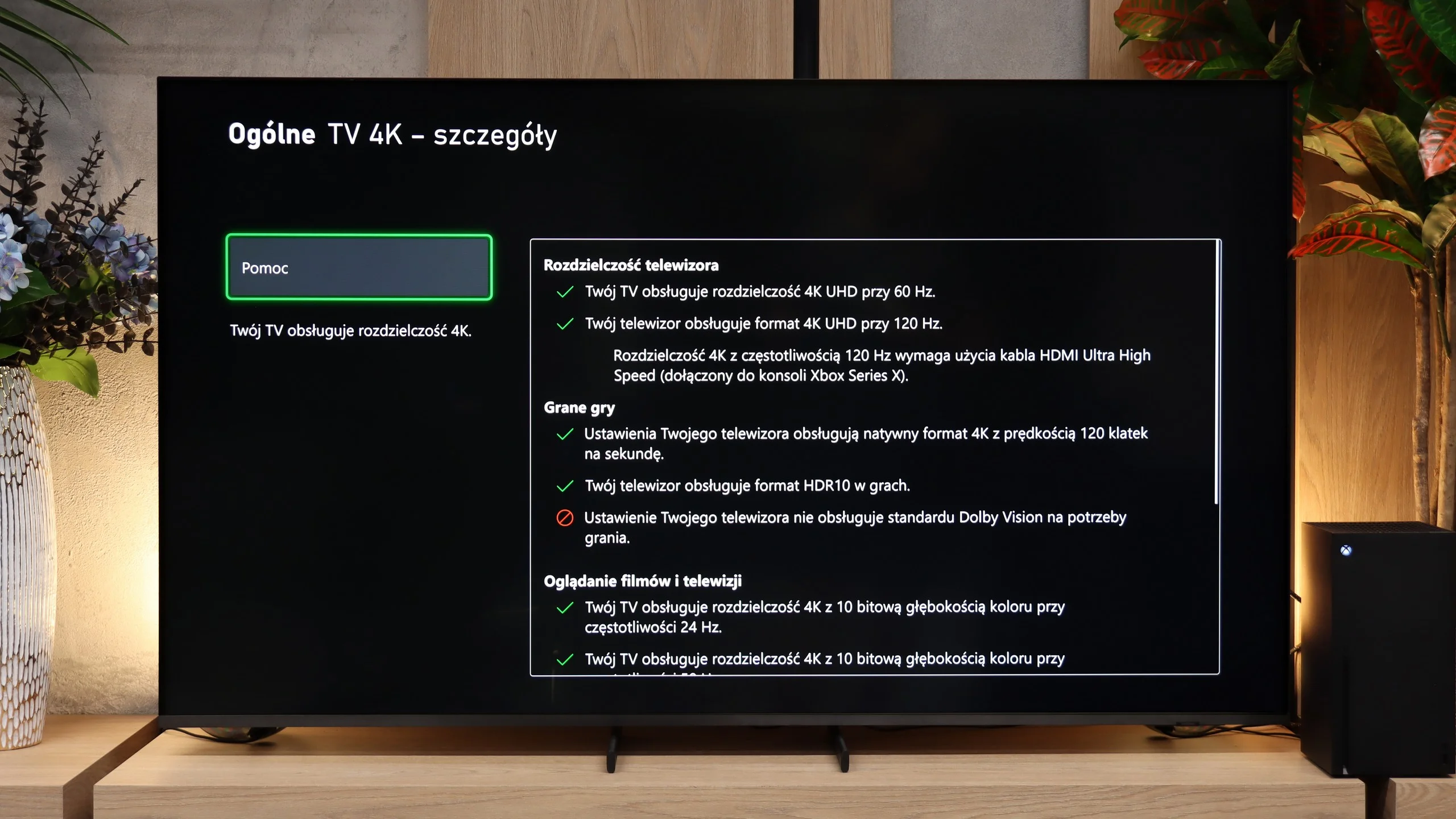
The Kiano Elegance lets you connect a console and play, but its ambitions basically stop there. The panel supports up to 60 Hz and there is no VRR, which helps when frame rates drop. It even lacks ALLM, i.e. automatic switching to a low-latency mode, so you have to take care of the TV’s settings yourself. That’s a pity, especially since input lag is low in the appropriate mode. However, if a console is one of the main reasons you’re buying a TV, it’s worth looking for something with greater capabilities.
Input lag
10/10
9.8/10
SDR
HDR
Dolby Vision
Input lag on the QN80H is at a very good level. In Game Mode the delay is around 10 ms, which is exactly what we expect nowadays from the best gaming TVs. In that respect it’s hard to fault Samsung. Controls are responsive, controller movement is instantaneous and even more demanding players should not experience any discomfort. With the aforementioned Game Motion Plus enabled, input lag increases to about 45 ms. Of course this is a higher value, but still small enough that in more relaxed role‑playing or adventure games the feature remains fully usable, especially since in return you get a much smoother picture.
Although it has few features for gamers, the Kiano Elegance performs very well in terms of input lag. We measured around 14 to 15 ms at 60 Hz, both in Full HD and in 4K. Turning on HDR also doesn't increase input lag. Response to controller inputs is therefore quick, and while gaming you don't feel the TV noticeably delaying the controls. This is one of the model's strengths.
Compatibility with PC
8.9/10
6/10
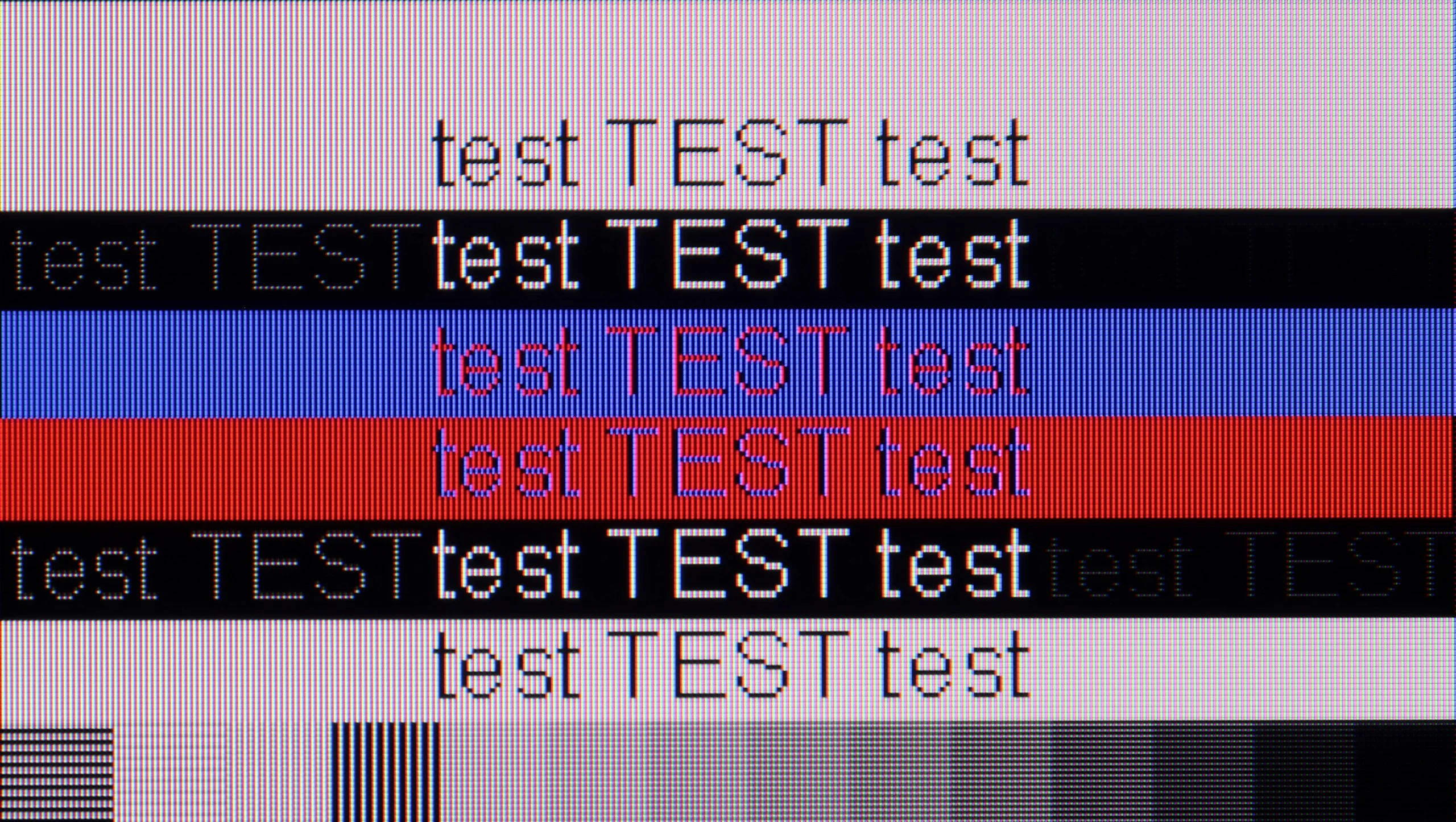
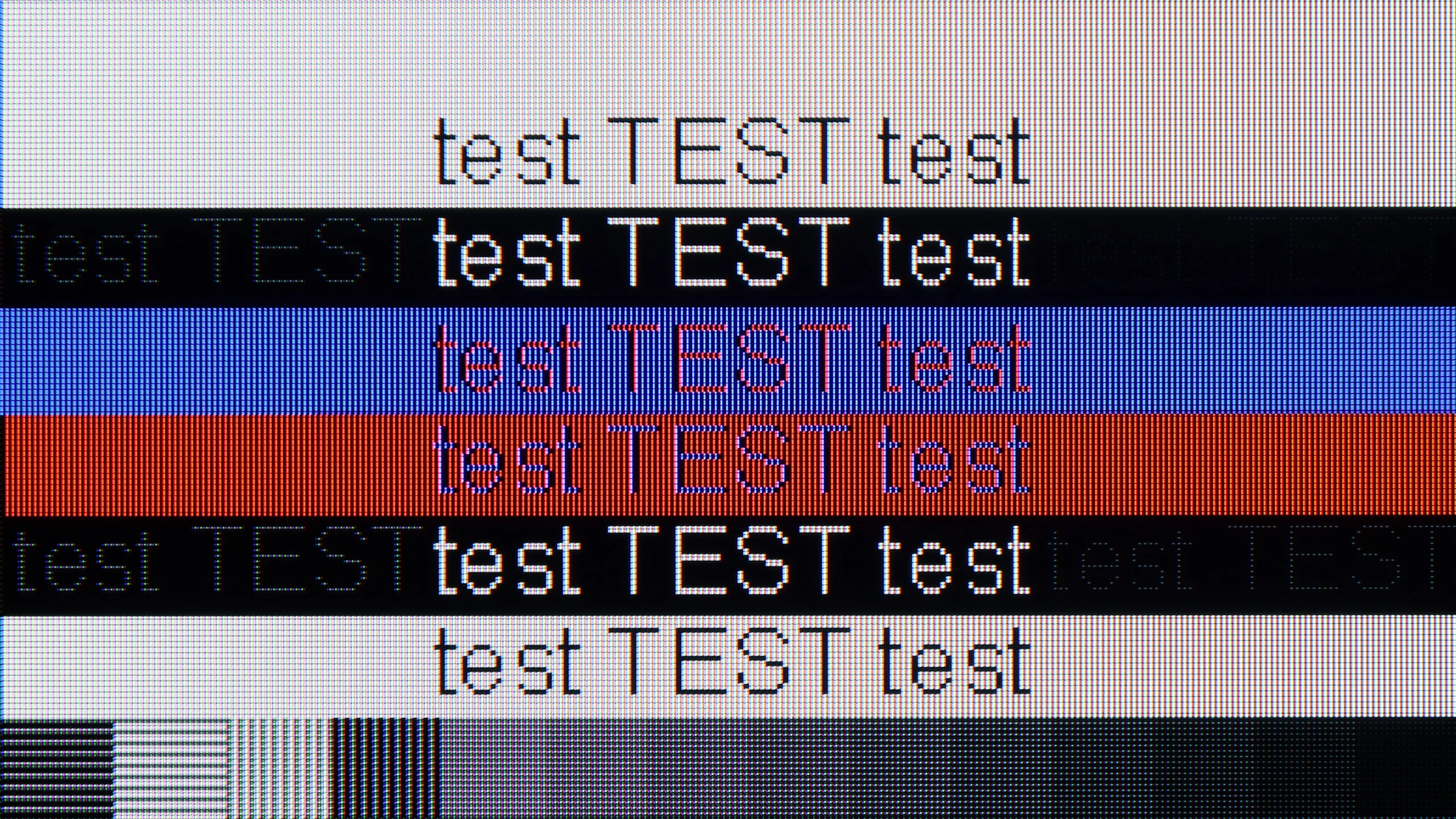
The photo shows the legibility of small fonts. Ideally, lines should be the same thickness on both light and dark text, with minimal pixel gaps.
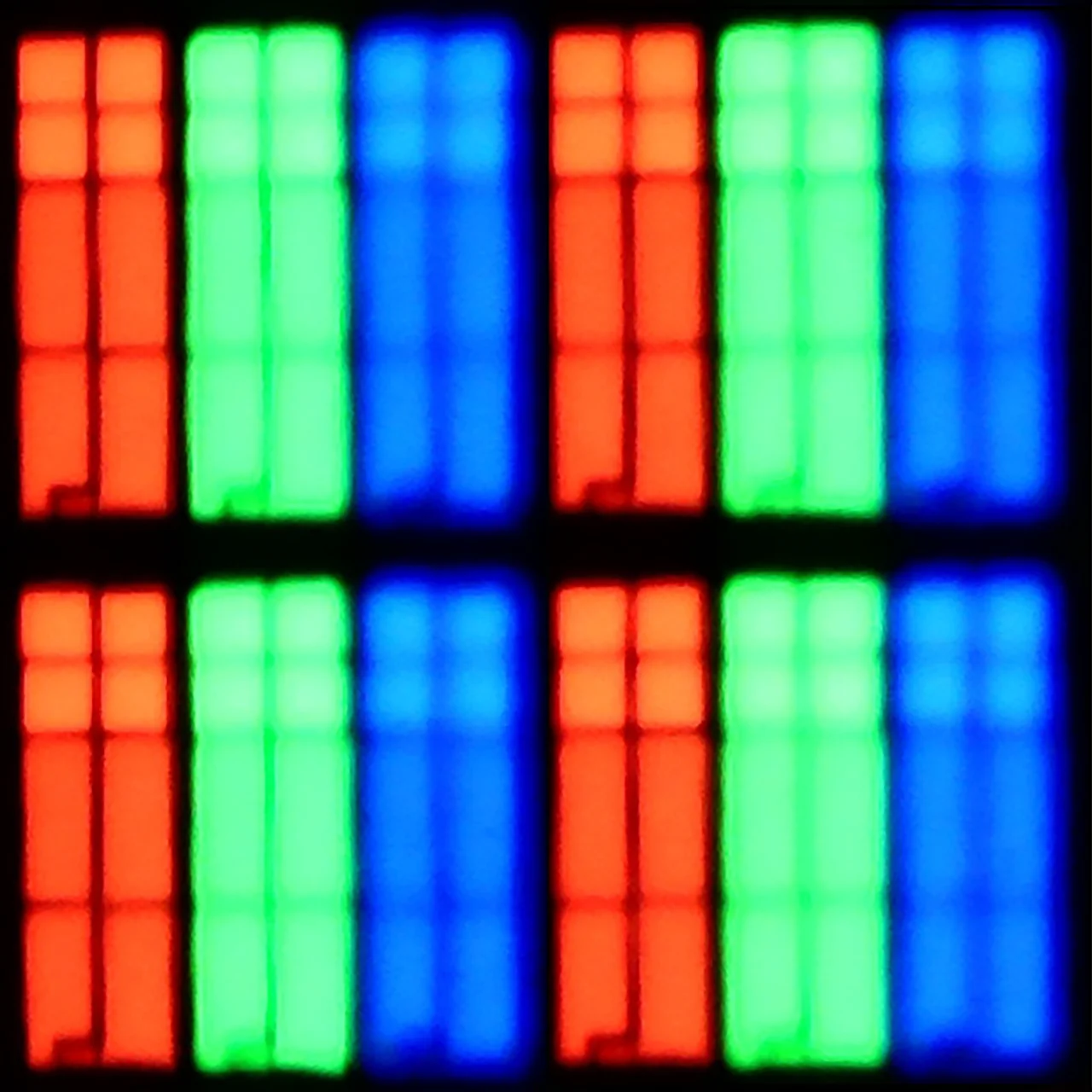
The Samsung QN80H will also easily serve as a large monitor. Aside from the already mentioned 144 Hz refresh rate in 4K (and as much as 240 Hz in Full HD!), the TV offers a full set of gaming features, which when connected to a computer provides plenty of scope. When used for text work, the QN80H also performs very well. The panel used here has a classic, standard RGB pixel layout. Fonts are sharp, clean and very legible. There is no sign of jagged letter edges or strange, coloured outlines around the text. Of course, few people will probably buy such a large TV solely for office work. It is worth knowing, however, that the QN80H will handle such tasks without the slightest hesitation.
For browsing the internet, reading documents or displaying images from a laptop, the Kiano Elegance performs quite well. It supports 4:4:4 chroma subsampling, so small, colourful letters remain legible. There are also no major issues with rendering dark text. Despite using a BGR subpixel arrangement, font legibility in our tests was very good.
When gaming on a PC, however, the limitations described earlier reappear. The refresh rate maxes out at 60 Hz and G-Sync is not supported. A low input lag of around 15 ms provides responsive control, but it will not improve the clarity of moving objects. As a large screen for basic tasks the Kiano manages well, but there are better options for fast-paced games.
Viewing angles
3.2/10
2.8/10
Viewing angles are unfortunately the Achilles' heel of the VA panel used here. On the one hand this panel gives the QN80H higher contrast and better blacks, but on the other hand it produces a noticeably worse image when viewed off-axis than TVs with IPS or ADS panels. If you sit a little to the side, colours start to lose saturation and blacks become lighter. The picture remains readable, but it no longer looks as good as when viewed from straight on. Therefore the QN80H will perform best when most viewers sit as close to the centre of the screen as possible.
The Kiano Elegance is best watched sitting directly in front of the screen. Move to the side and the colours noticeably lose saturation, and the image becomes much less contrasty. At a 45-degree angle we measured a brightness drop of about 63%, so the difference is hard to miss. This is a typical weakness of VA panels and something to bear in mind if the TV will be placed opposite a wide sofa or viewed from different parts of the room.
Daytime performance
5.8/10
3.7/10
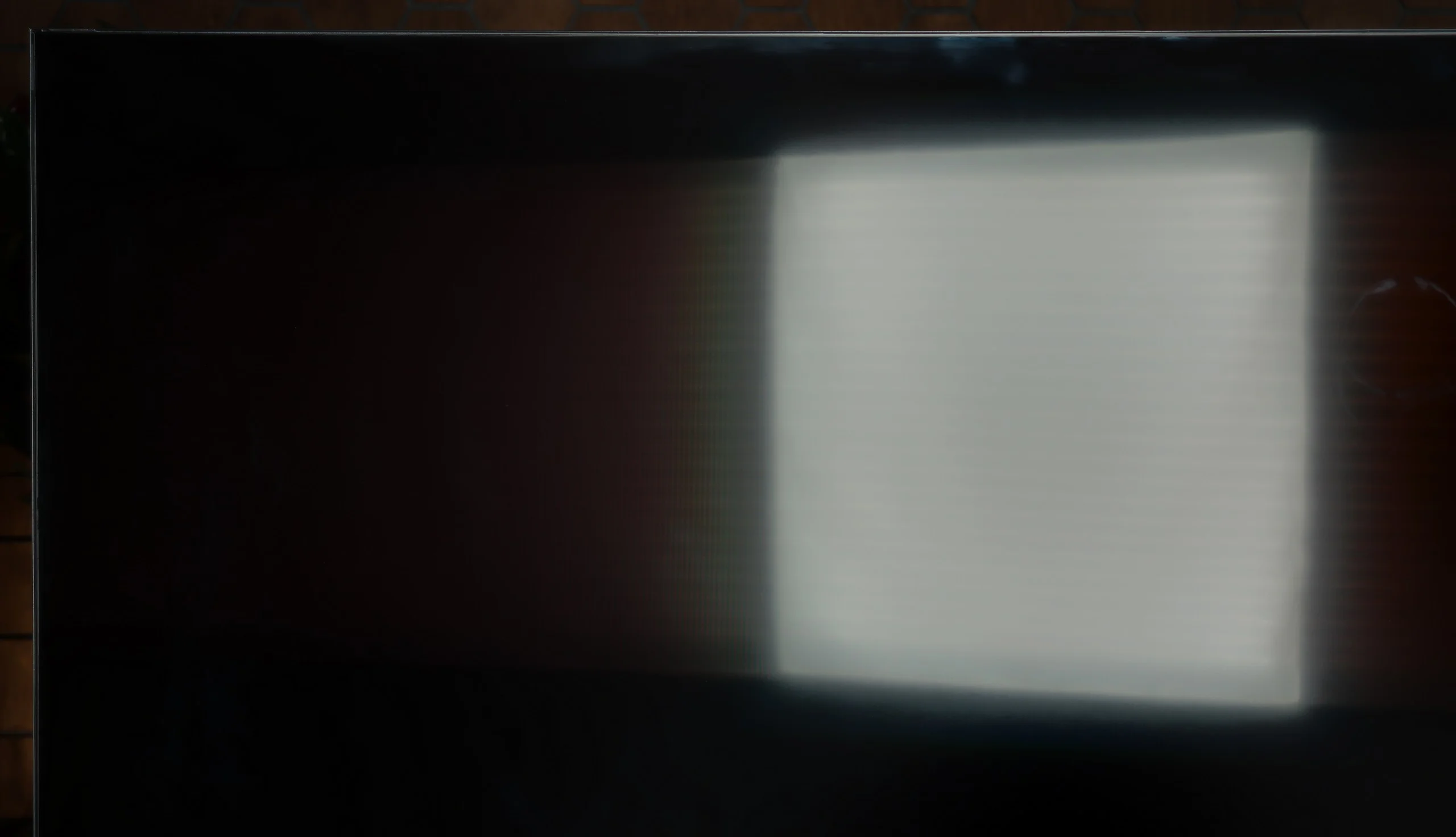
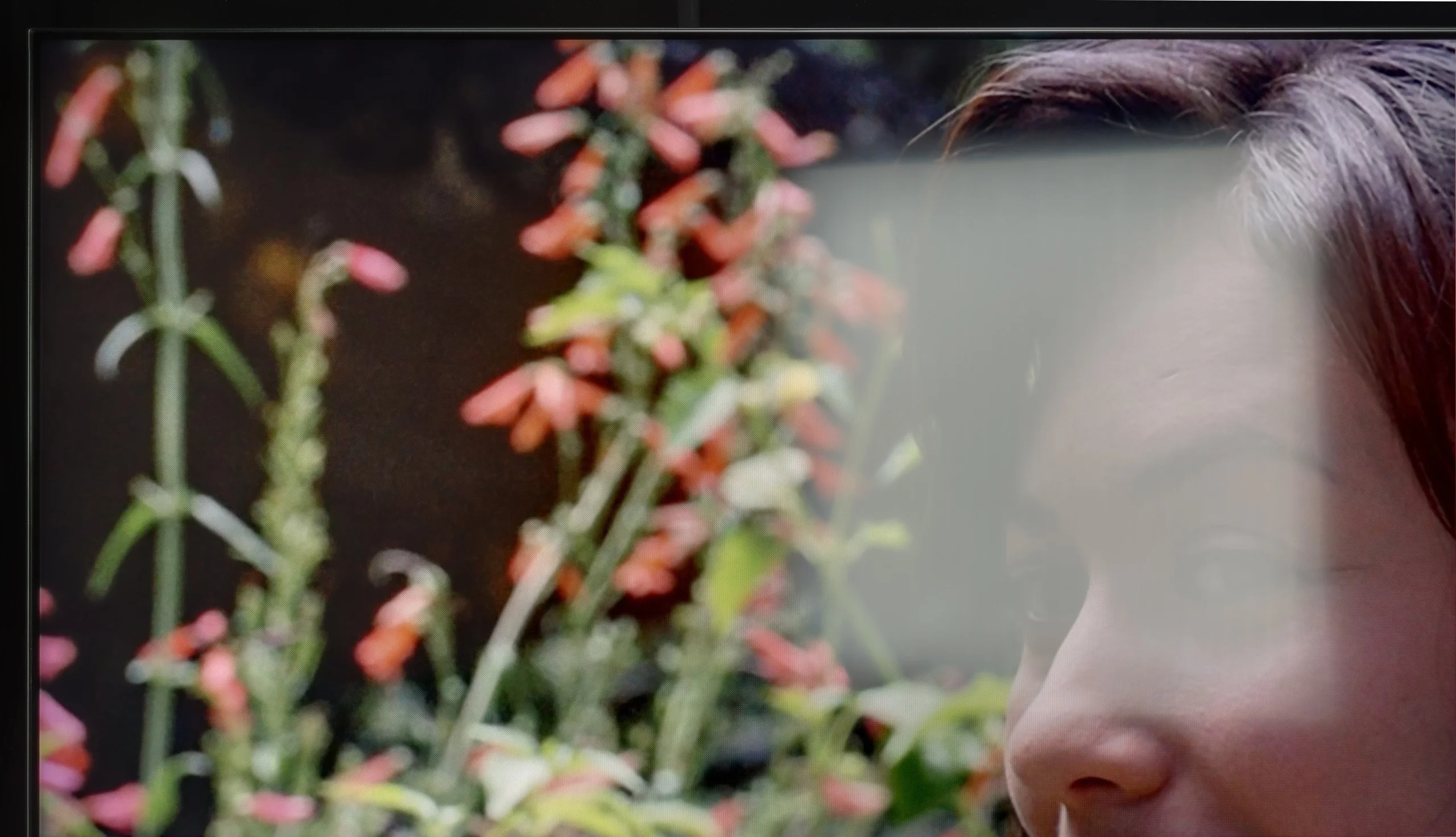
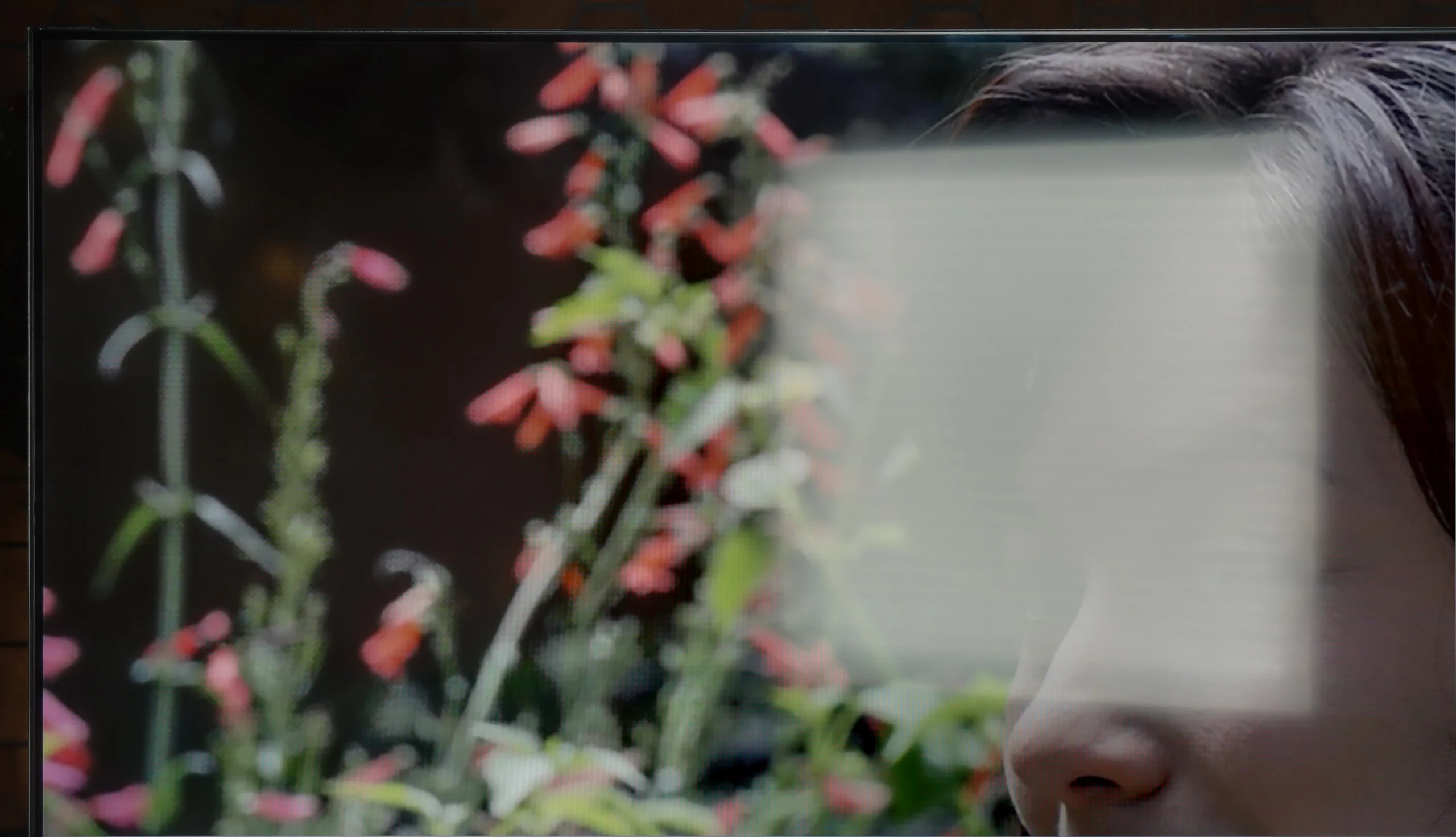
Panel brightness
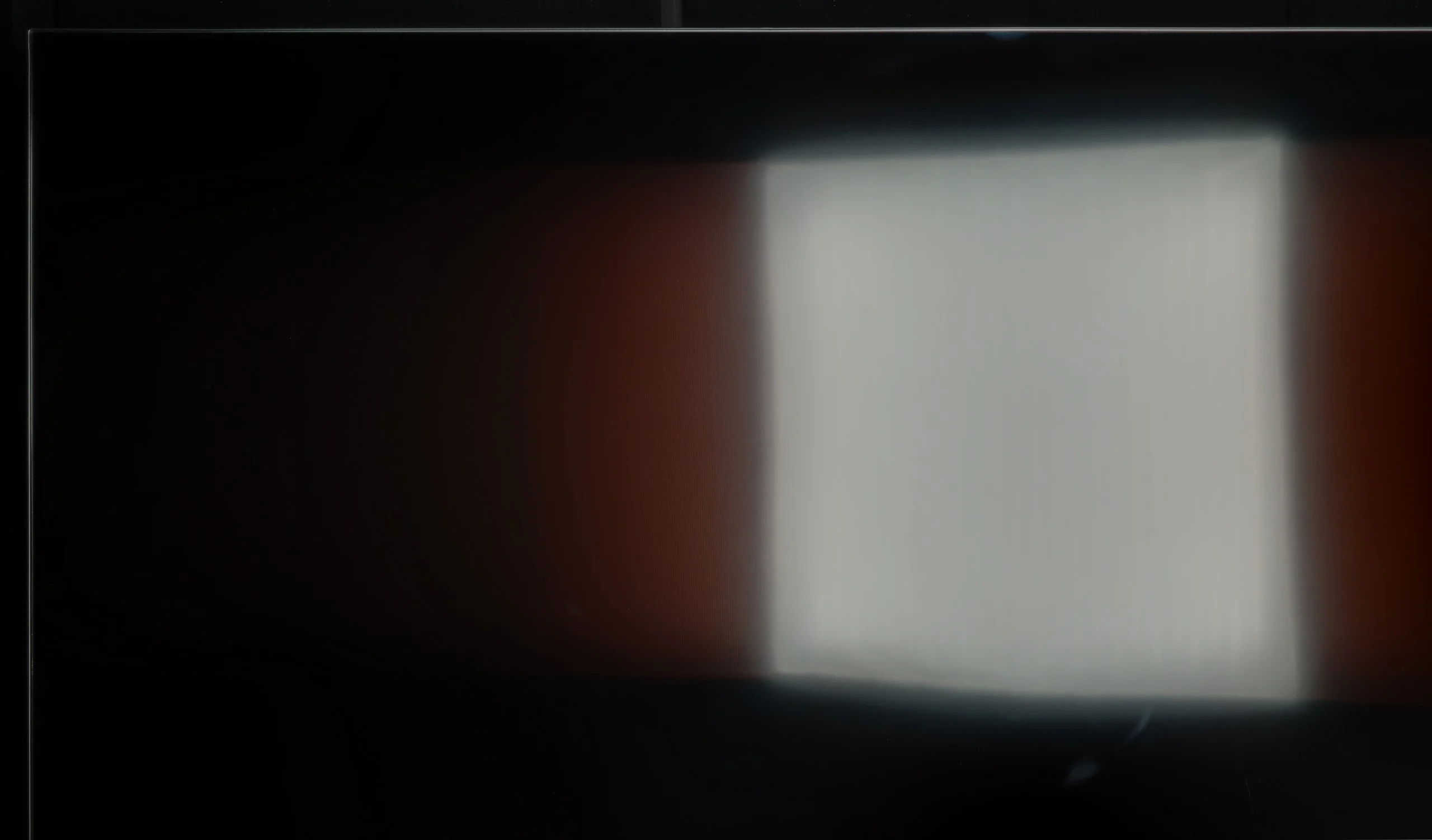
Kiano Elegance Tizen: 215 cd/m2
Samsung QN80H: 459 cd/m2
In terms of brightness for everyday SDR content the Samsung QN80H is a fairly modest television. In typical material it reaches around 460 nits. That may not be a record result, but it's easily enough for watching in a normally lit living room. However, the screen coating is less impressive. It's satin, so it copes with reflections better than a typical glossy panel, but it can still show them quite clearly. What is more, in this respect the QN80H performs a little worse than last year's QN80F. While there should be no problems in a moderately bright room, a large window (or a lamp) placed directly opposite the television can be highly distracting during viewing.
Kiano Elegance will simply be too dim for a very sunlit living room. Average brightness is about 215 nits, so during the day the picture is easily washed out by light coming through the windows. Especially with darker films, you may need to close the blinds. The satin coating does a decent job of reducing reflections, and blacks in a lit room do not look bad, but that is not enough to make up for the low brightness. The TV will be much better suited to a less sunlit room or to evening viewing.
Panel details
Subpixel Structure:
Panel uniformity and thermal imaging:
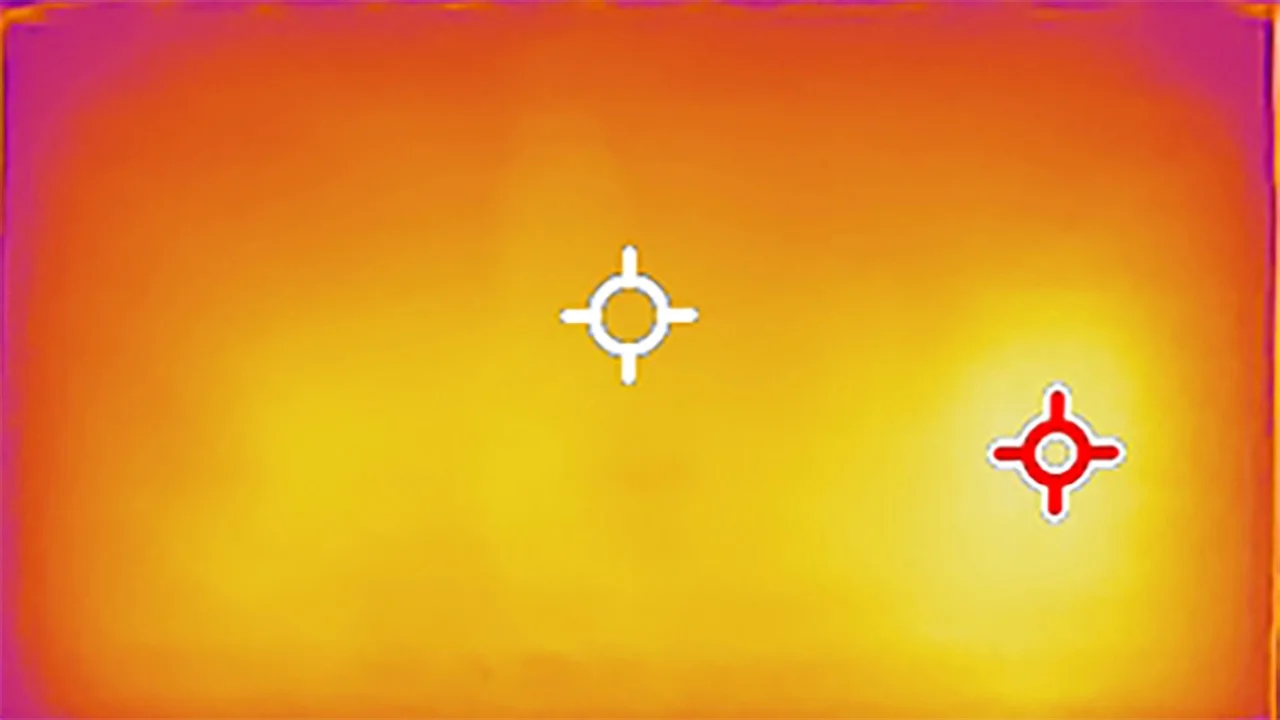

Samsung QN80H
Kiano Elegance Tizen
TV features
7.3/10
5.1/10
- SystemTizenTizen
- System performanceVery goodAverage
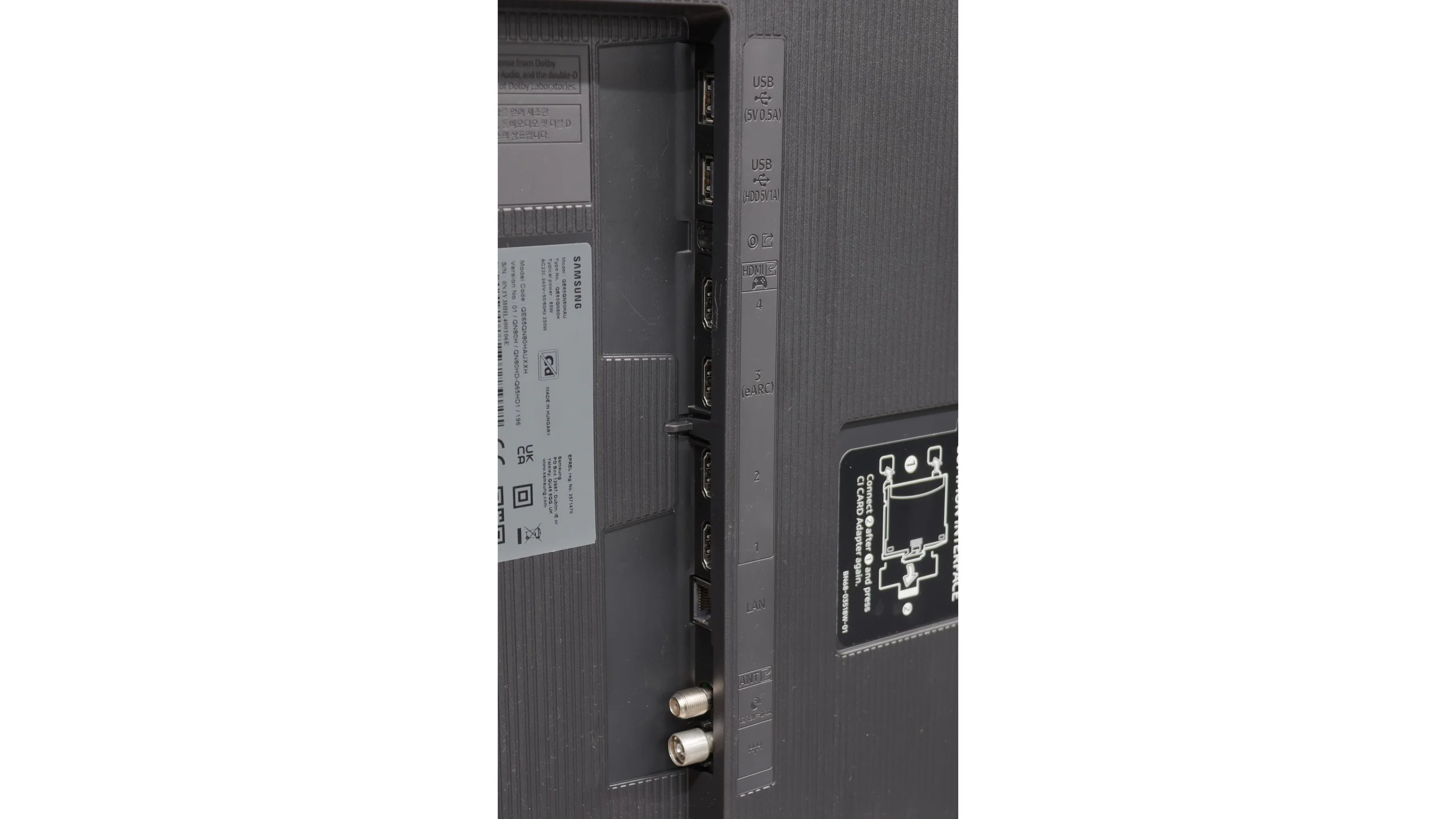
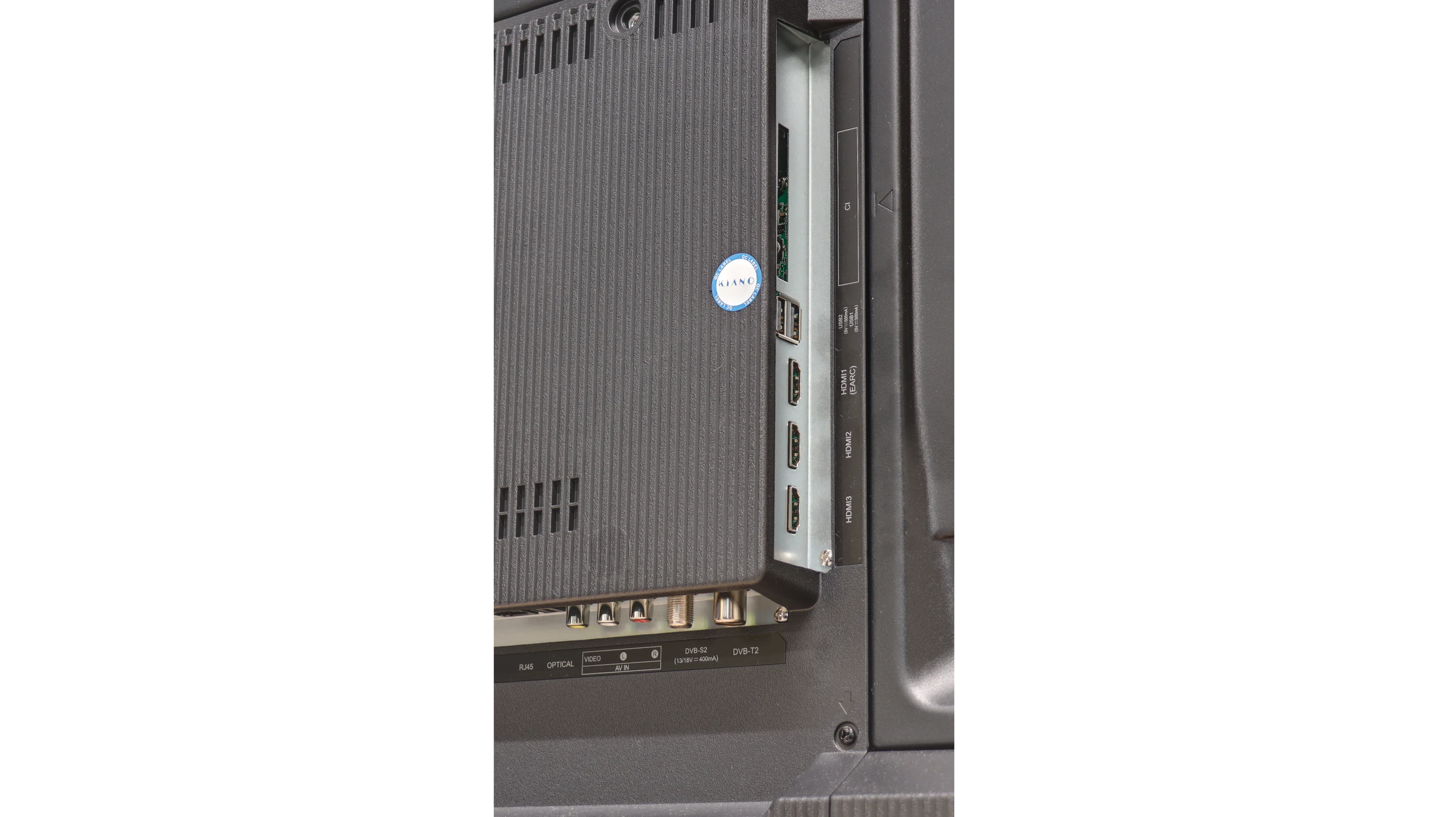
- HDMI inputs0 x HDMI 2.0, 4 x HDMI 2.1 48Gbps3 x HDMI 2.0, 0 x HDMI 2.1
- Other inputsRCA (Chinch)
- OutputsToslink (Optical audio), eARC (HDMI), ARC (HDMI)SPDIF (Coaxial audio), eARC (HDMI), ARC (HDMI)
- Network InterfacesWi-Fi 2.4GHz, Wi-Fi 5GHz, Ethernet (LAN) 100MbpsWi-Fi 2.4GHz, Wi-Fi 5GHz, Ethernet (LAN) 100Mbps
- TV receptionDVB-T, DVB-T2, DVB-S, DVB-S2DVB-T, DVB-T2, DVB-S, DVB-S2, DVB-C
Classic features:
- Recording to USB (terrestrial TV)
- Recording programming
- Picture in Picture (PiP)
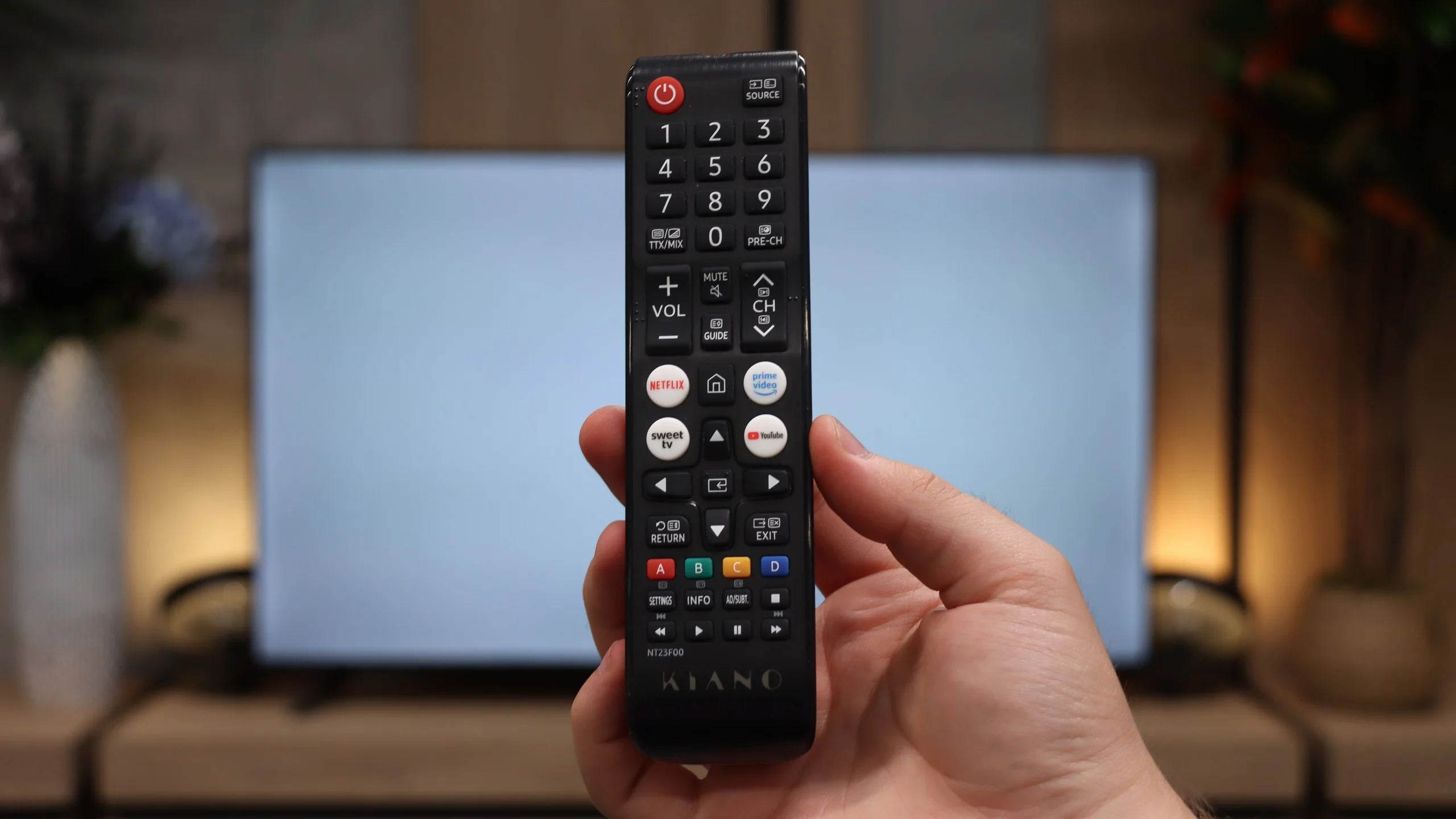
- RF remote control (no need to aim)
- Backlit remote control
- Teletext
- Audio only mode
- Bluetooth headphones support
- Simultaneous Bluetooth headphones & TV audio
Smart features:
- AirPlay
- Screen mirroring (Windows Miracast)
- Voice search
- Voice search in native language
- Ability to connect a keyboard and mouse
Sound connection options
- HDMI audioeARC (HDMI), ARC (HDMI)eARC (HDMI), ARC (HDMI)
- Other audio outputsToslink (Optical audio)AuxiliaryOutput-SPDIF (Coaxial audio)
- Wireless audioBluetooth, Samsung Q-Symphony (Speaker extension)Bluetooth, Samsung Q-Symphony (Speaker extension)
Supported audio formats (external HDMI eARC audio):
- Dolby Digital Plus 7.1
- Dolby True HD 7.1
- Dolby Atmos in Dolby Digital Plus (JOC)
- Dolby Atmos in Dolby True HD
- DTS:X in DTS-HD MA
- DTS-HD Master Audio
Senior accessibility
- Numeric keyboard on TV
- Font size adjustment
- Audio description
Smart TV: Tizen
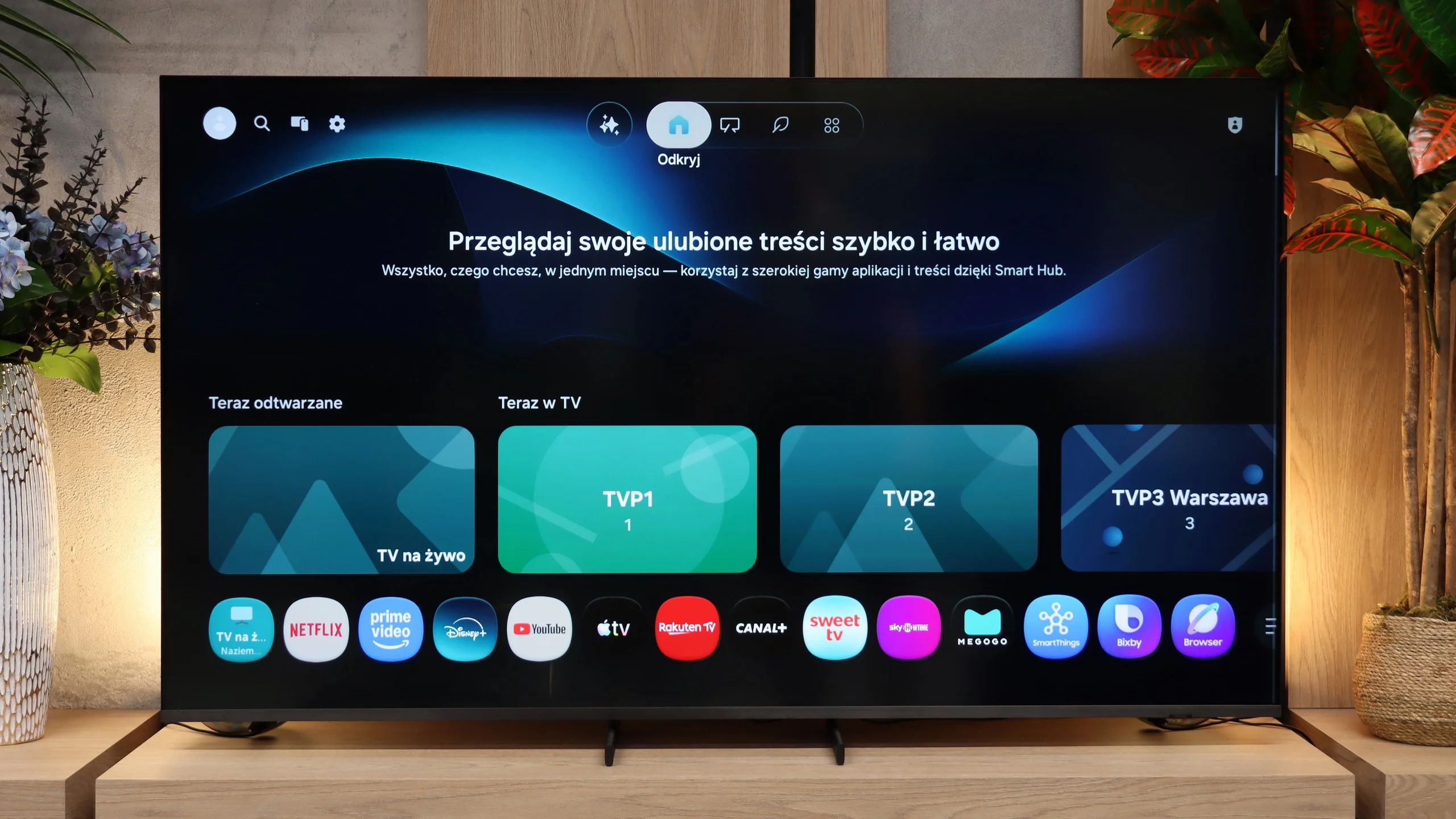
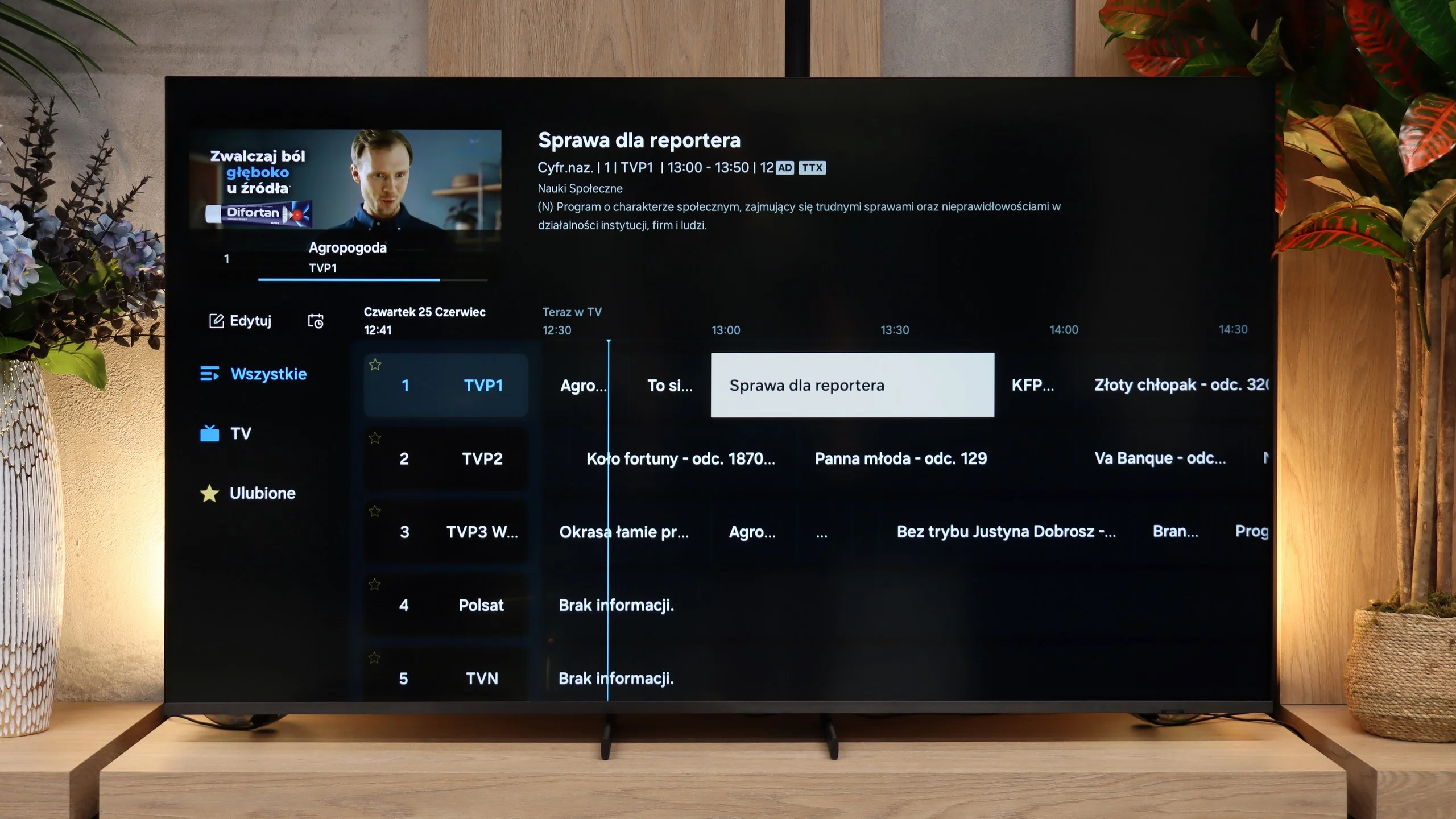
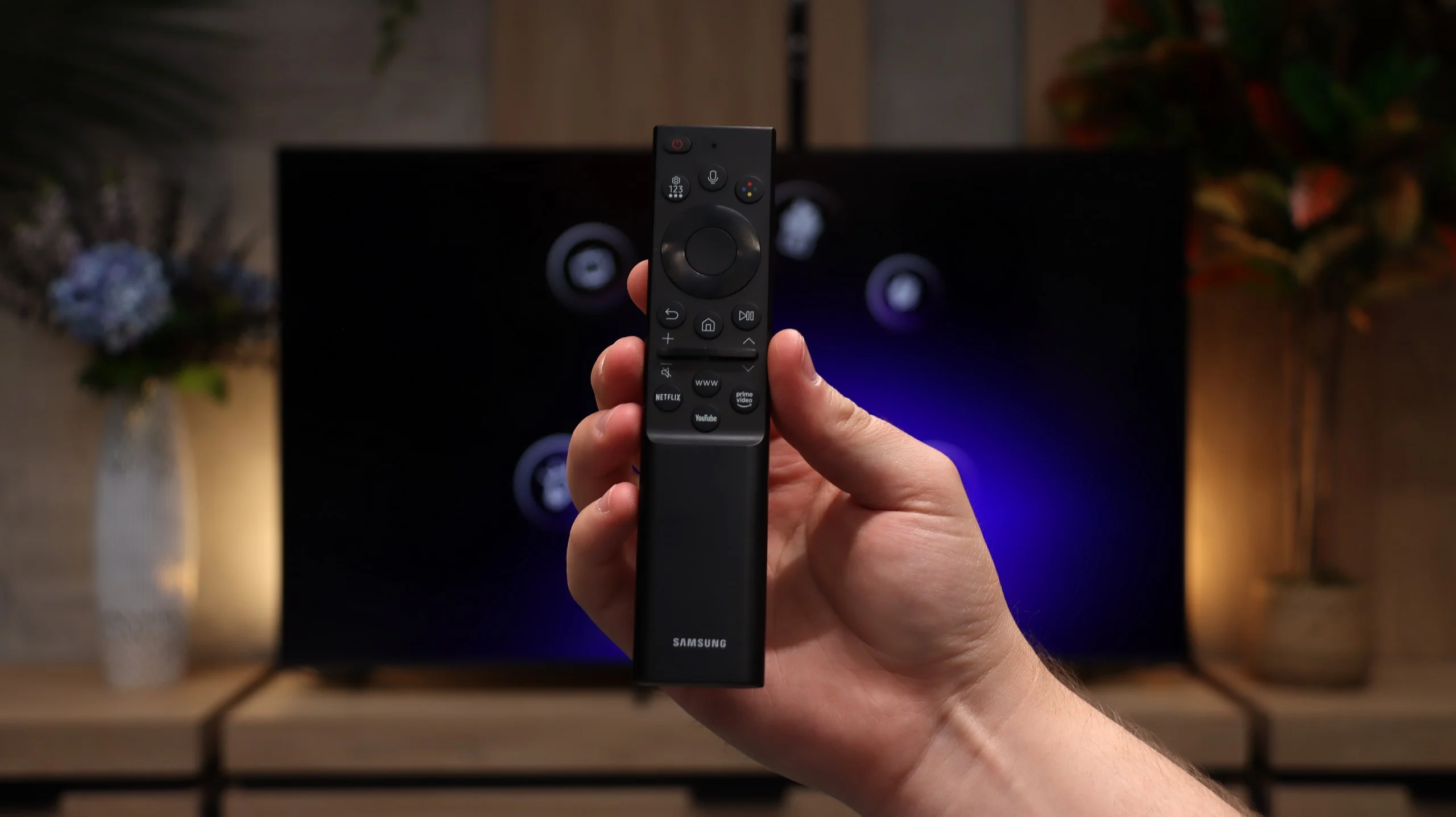
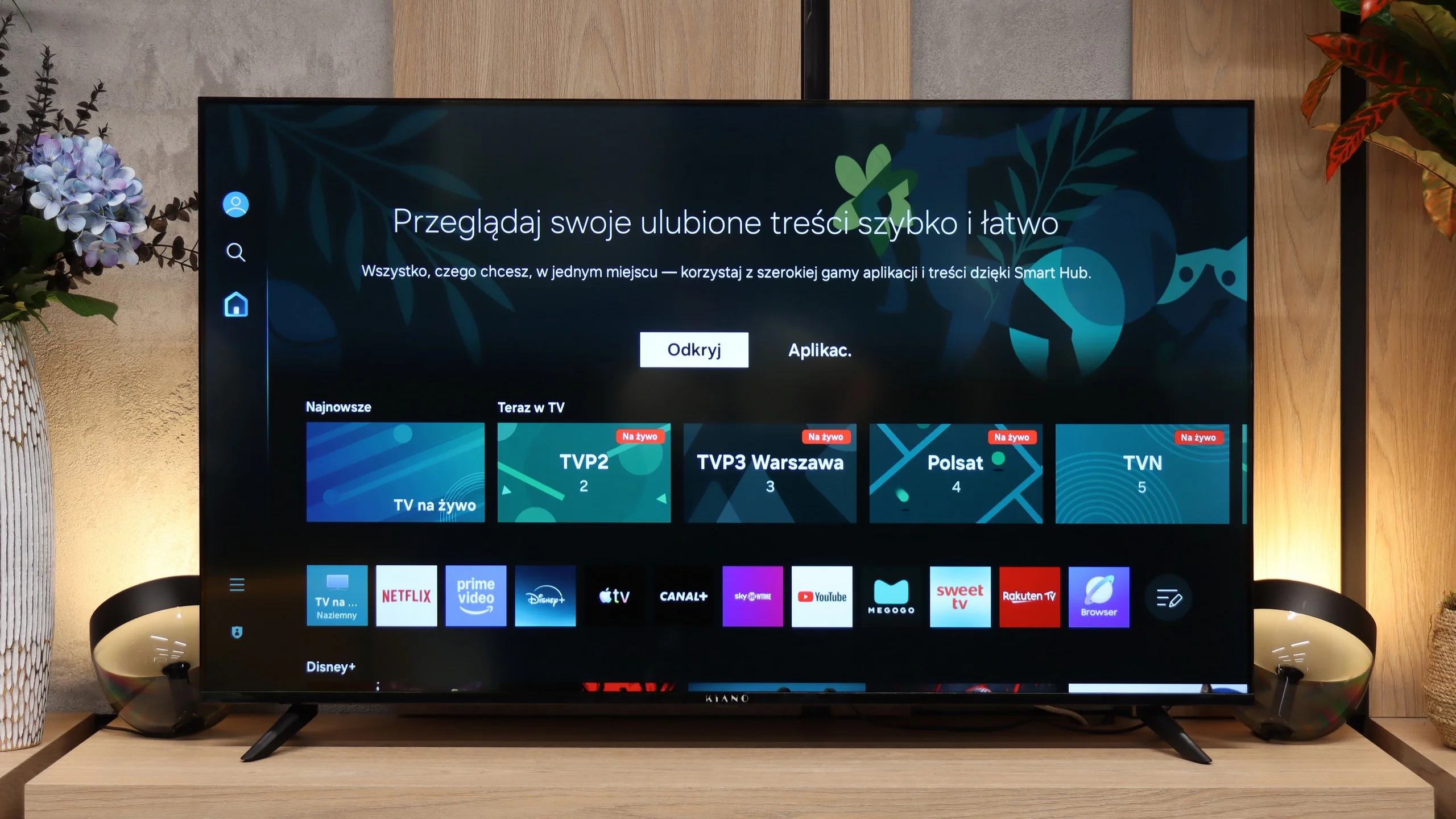
Samsung QN80H traditionally runs on Samsung's proprietary Tizen platform. This software is strongly focused on AI-based solutions and a whole range of other modern features. So things like AirPlay and phone screen mirroring (Screen Mirroring) work here without any problem. The system itself is fast, menu animations are smooth, and that's a clear plus. Tizen also includes many of Samsung's own solutions, led by the SmartThings app, which lets you conveniently manage smart devices throughout the home. Everything is controlled with a small, intuitive remote. Another major advantage is that Tizen is currently one of the longest-supported Smart TV platforms on the market. Samsung states it will support the device for up to 7 years from its launch.
Classic features
The situation is worse when it comes to more traditional TV features. What's missing? The QN80H doesn't allow recording TV programs to USB storage, so it lacks PVR functionality. There is also no classic remote with a numeric keypad, which may bother people who still like to change channels directly using numbers (without a set-top box). In this year's "80" series PIP is also missing, which was present in earlier models. So there's no way to display two images at once. It's clear that Samsung today is focusing more on online features than on solutions aimed at traditional TV users.
Tizen in the Kiano TV
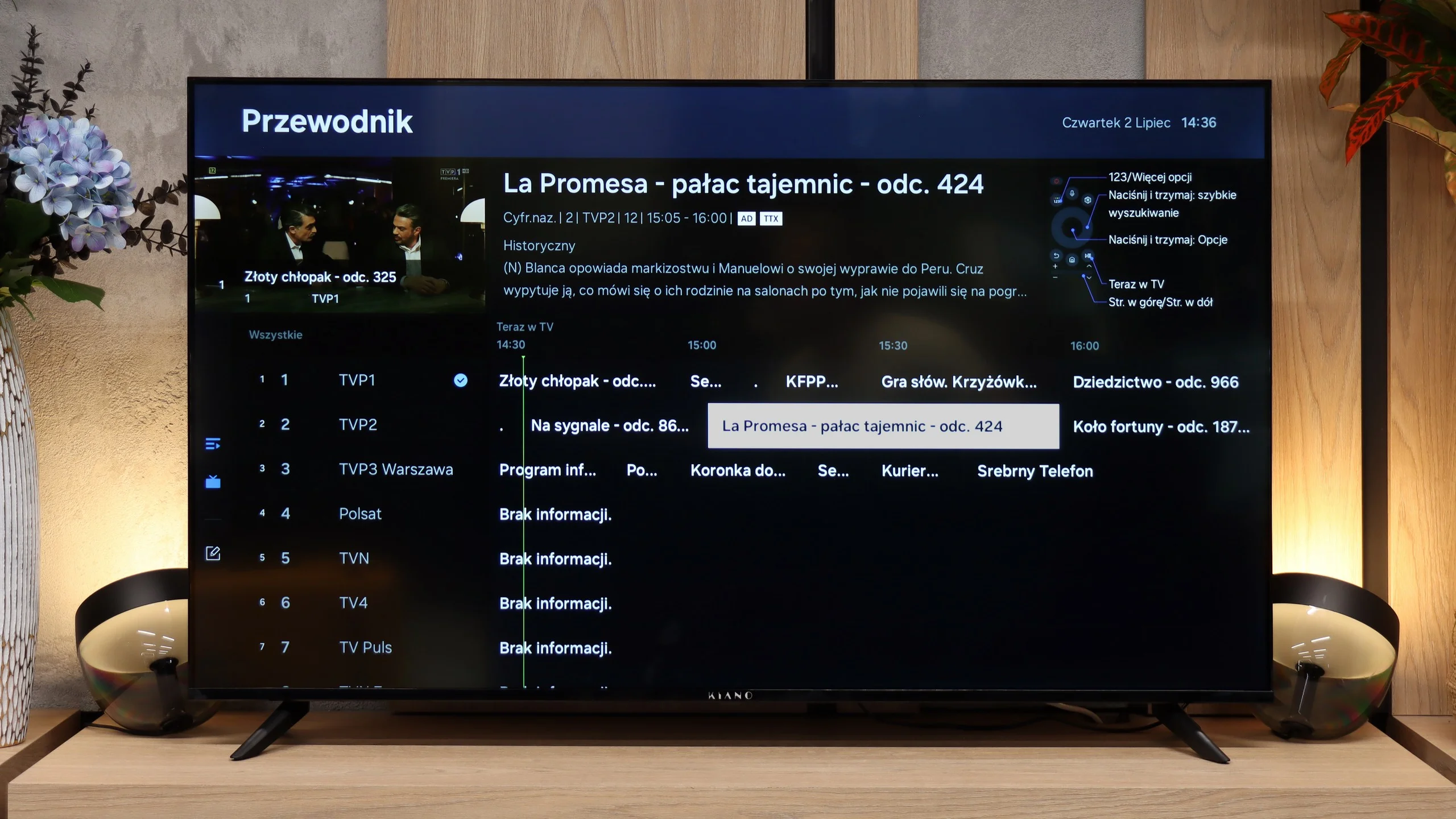
Tizen is one of the main reasons to consider this model. It gives access to many popular apps, so you don't necessarily need an external streaming device to watch series or YouTube. Bear in mind, however, that the same system does not guarantee the same ease of use as in more expensive Samsung models. On the Kiano the responsiveness is average, and you may sometimes have to wait a moment for the menu to react. There is no voice search, so titles must be entered with the remote control. A convenient addition is AirPlay and the ability to wirelessly stream the picture from a computer.
Everyday use
The basic TV functions are in place, but there is no USB programme recording or picture-in-picture. The remote uses infrared, so it must be pointed at the TV, and its buttons are not backlit. It is useful, however, that you can use Bluetooth headphones and the speakers at the same time. This allows one person to listen through headphones (for example an older person) without taking the sound away from others in the household. For connecting devices there are three HDMI 2.0 inputs, which are sufficient for 4K at 60 Hz. A soundbar can be connected via eARC, and an analogue RCA input is provided for older equipment.
Apps
9.3/10
8.8/10






















Playing files from USB
9.1/10
8/10
Supported photo formats:
Maximum photo resolution:
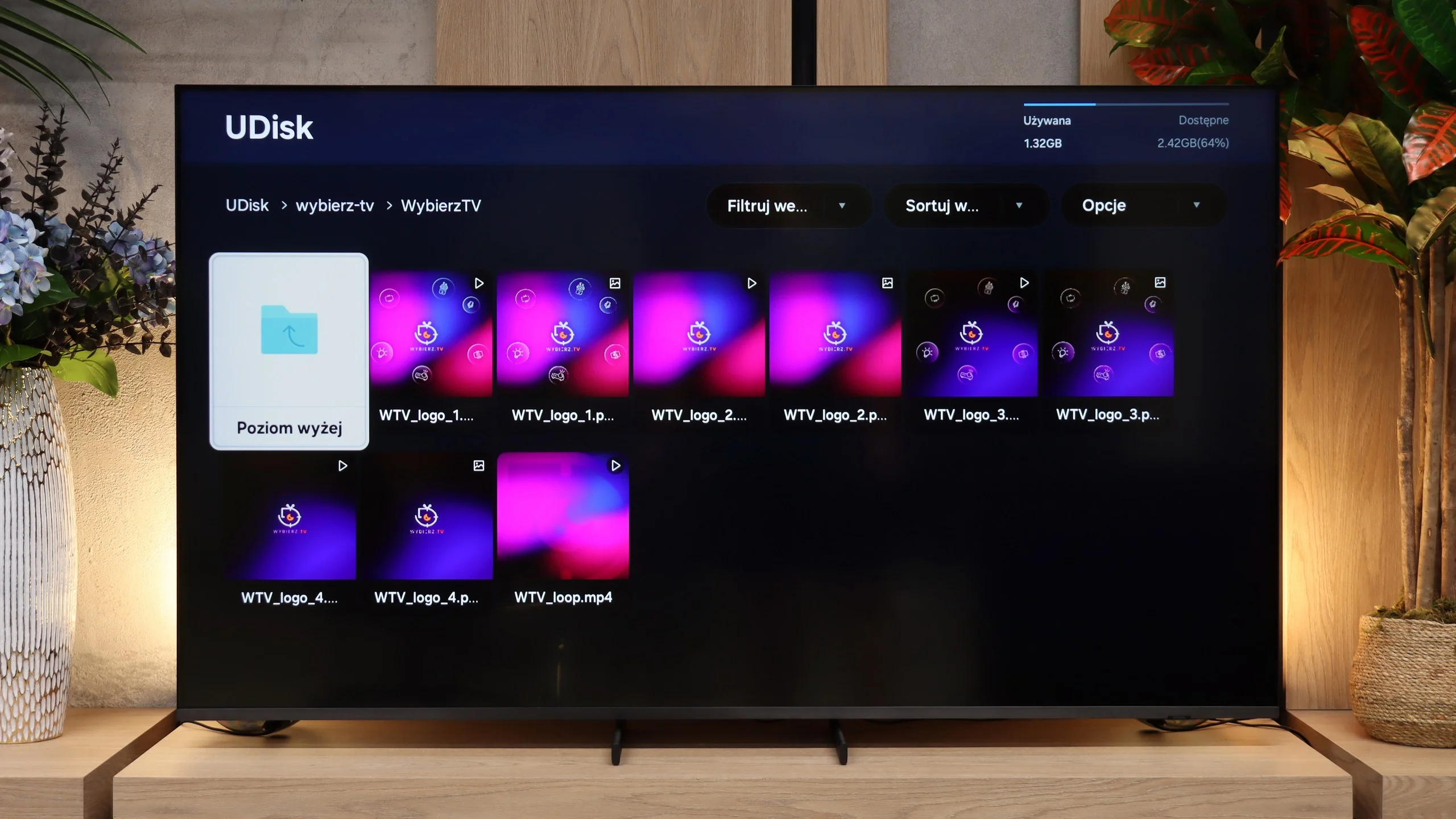
The built-in media player on the QN80H works very well. If you connect a USB stick or an external USB drive, you shouldn't have any major problems playing your own content. The TV supports most popular video, audio and photo formats. The only thing missing for it to be ideal is broader support for less common image formats. A good example is HEIC, which is often used by Apple devices. The QN80H may not be able to open such files.
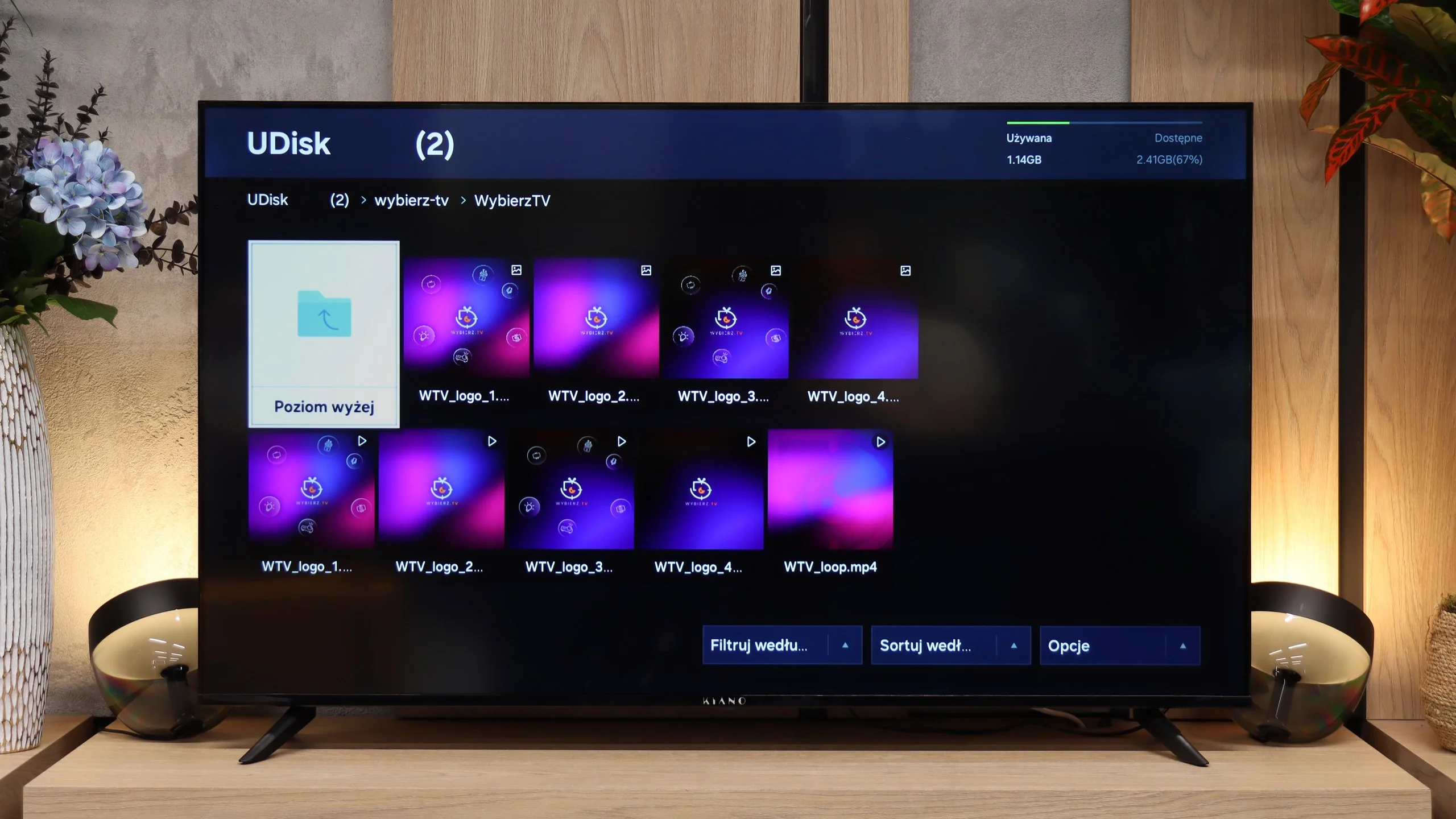
The USB player in the Kiano Elegance supports most popular formats, so opening typical films, photos or music should usually not be a problem. However, actually using it is less satisfactory. During testing it had its 'moments of weakness' and could take a very long time to open individual files. Sometimes it took so long that you could start to wonder whether the TV was still loading something or had already frozen. It's sufficient for occasionally playing something from a USB stick, but browsing a larger collection can require a great deal of patience.
Sound
7.1/10
3.6/10
- Maximum volume86dB88dB
- Dolby Digital Plus 7.1
- Dolby True HD 7.1
- Dolby Atmos in Dolby Digital Plus (JOC)
- Dolby Atmos in Dolby True HD
- DTS:X in DTS-HD MA
- DTS-HD Master Audio
In terms of audio the Samsung QN80H sounds relatively decent. The 2.0 speaker setup with a total power of 30 W isn't exactly spectacular compared with flagship models, but it's perfectly adequate for everyday TV watching, the news or basic TV series. If, however, you want a more cinematic experience, the set offers full support for Dolby Atmos. By connecting a suitable soundbar or speakers you can expect a more spacious sound. Additionally, Samsung supports Q-Symphony, which allows simultaneous playback from the TV's speakers and a compatible soundbar.
An interesting new feature is one based on artificial intelligence. It's a special sport-watching mode called "Football AI". It was created to use sliders to artificially boost the commentator's voice above the stadium noise or... quite the opposite: mute it and leave only the crowd. Although the algorithm can be a little "clumsy" at times, this feature can be a lifesaver. Especially if you happen to tune into a match with a commentator you particularly can't stand... 😉
Sound is one of the weaker aspects of the Kiano Elegance. The TV can get fairly loud, measuring 88 dB, but loudness alone does not translate to sound quality. For casual viewing you can stick with the built-in speakers, but for films or music it's worth budgeting for a separate sound system. Connecting a soundbar via HDMI eARC should not cause problems. The TV also supports Dolby Atmos over Dolby Digital Plus, but it does not play Dolby TrueHD or DTS-HD tracks.
Sound Quality Test
Acoustic Measurements
86dBC (Max)
75dBC
88dBC (Max)
75dBC
Reader comments
Comments are provided by the external service Disqus (Zeta Global). Once loaded, Disqus may set cookies and process data about your activity.
We will remember your choice on this device. Provider's privacy policy