 Direct comparison
Samsung Q70D performed in the test just as it should for its category – very well. The strongest points of the television are undoubtedly its efficiency when using a console and the colour reproduction after undergoing the calibration process. The former will certainly not allow gamers to remain indifferent to the range of benefits that Samsung Q70D can offer, and there are indeed many, including this almost exclusive feature for the manufacturer’s units – the ability to smooth out gameplay while maintaining a reasonable input lag, which allows titles running at 30 fps to perform like those at native 60 frames per second. In the context of gaming, one cannot forget the well-implemented HGIG mode, which, when correctly set up, is on par with games using Dolby Vision. One should also not overlook the ease of pairing the television with the Canal+ decoder, which is not such an obvious advantage, but we know that many people struggle with this issue. Staying on the topic of television, it must be acknowledged that the Samsung Q70D offers very good brightness in SDR materials for its price range, making daytime viewing more than comfortable. A downside for the tested television has to be the lack of Dolby Vision, which would have greatly enhanced the maximum brightness of the Samsung Q70D. One should also not overlook the construction flaws of the device, which may (though not necessarily) lead to light bleed, which can be noticed in dark conditions on less bright scenes. What cannot be taken away from Samsung Q70D is the fact that it features one of the better motion smoothing technologies in its price range, which works excellently in the context of sports events or fast-paced action scenes. The system that operates the television runs very smoothly, and the only complaint one might have is the lack of the Tidal app. In summary, the Samsung Q70D is a good continuation of the manufacturer's seventh series, which year after year gains – both in quality and popularity.
- Matching (Score) |
- Our verdict |
- TV appearance |
- Where to buy |
- Contrast and black detail |
- HDR effect quality |
- Factory color reproduction |
- Color reproduction after calibration |
- Smoothness of tonal transitions |
- Image scaling and smoothness of tonal transitions |
- Blur and motion smoothness |
- Console compatibility and gaming features |
- Input lag |
- Compatibility with PC |
- Viewing angles |
- Daytime performance |
- Panel details |
- TV features |
- Apps |
- Playing files from USB |
- Sound
Q70D / Q74D / Q77D

M80H / M86H
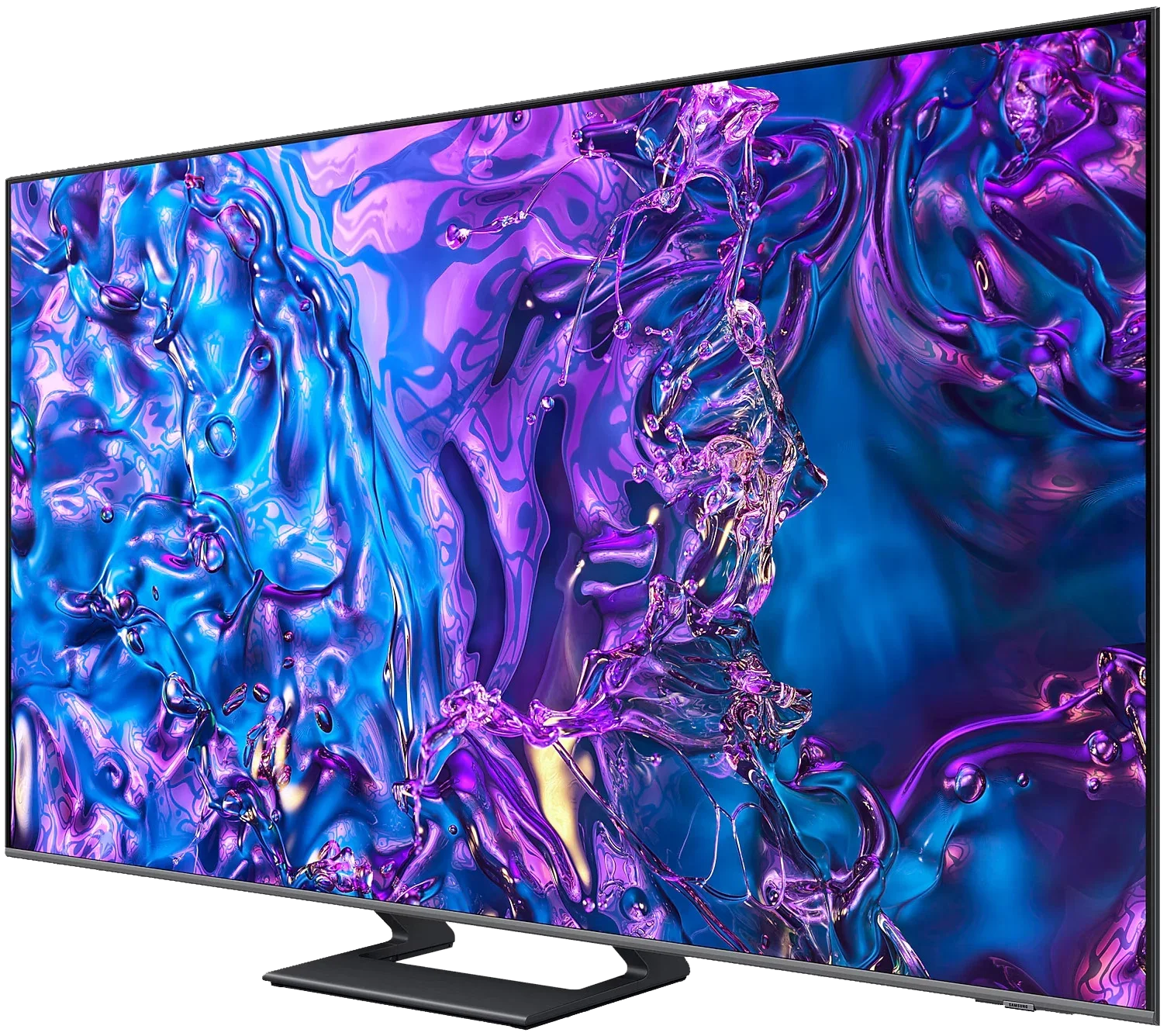
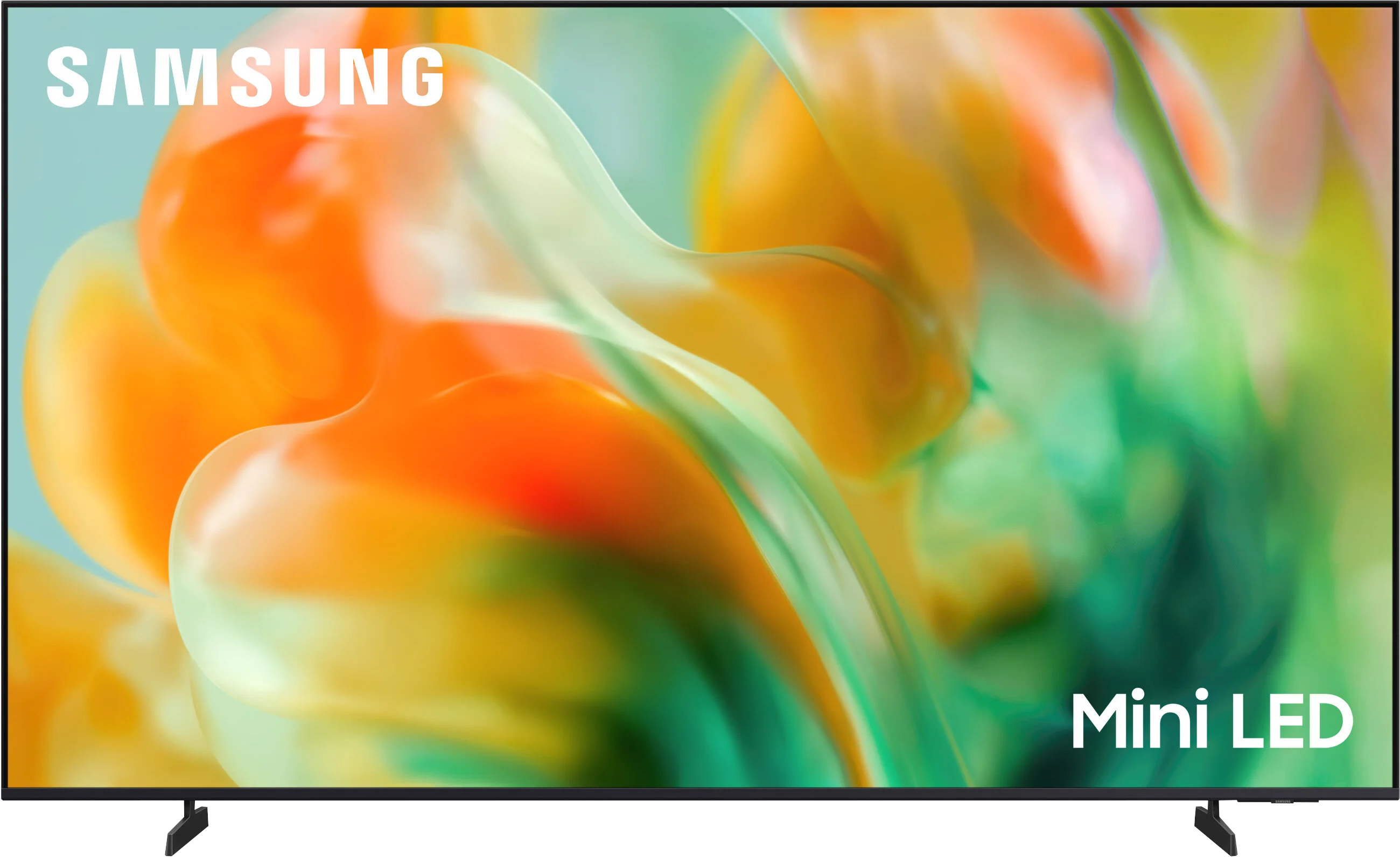
Panel type: LCD VA
Resolution: 3840x2160
System: Tizen
Model year: 2024
Complete the survey to find out the result
Panel type: LCD VA
Resolution: 3840x2160
System: Tizen
Model year: 2026
Complete the survey to find out the result
Overall rating
6.8
6.9
 Movies and series in UHD quality
6.1
6.5
 Classic TV, YouTube
6.0
6.6
 Sports broadcasts (TV and apps)
6.5
6.7
 Gaming on console
8.7
8.8
 TV as a computer monitor
8.0
8.9
 Watching in bright light
5.4
5.0
 Utility functions
7.4
7.3
 Apps
9.3
9.3
 Sound quality
6.3
6.0
Complete the survey to find out what fits your preferences
Advantages

Excellent performance with consoles and computers
Colour reproduction after calibration
Very good performance in sports - advanced motion smoothing system
Smooth and trouble-free operation of the Tizen system
Very good tonal transition quality in this budget
Three HDMI 2.1 ports with VRR and ALLM support
Dedicated motion smoothing for gamers: Game Motion Plus
Low input lag
High refresh rates: 4K 144 Hz and Full HD 240 Hz
Decent contrast thanks to a VA panel
Relatively little smearing for a VA panel
Rich colours thanks to a PFS filter (a different QLED 😉)
Good digital image processing for this segment
Fast Tizen system with plenty of apps
Disadvantages

Possible noticeable light leaks
Dolby Vision support not available
No local dimming despite being labelled Mini-LED!
Low brightness: 350 nits
No support for Dolby Vision and DTS:X formats
No Toslink optical audio output
Our verdict
The M80H shows its strengths where motion matters most. A fast panel, refresh rate up to 144 Hz and relatively low motion blur mean sport and fast-paced games look really good on it. In this respect the TV can even outclass some much more expensive Samsung LCD models. Gamers also get low input lag, three full-bandwidth HDMI 2.1 ports and Game Motion Plus, which can improve the smoothness of games running at 30 or 60 frames per second. When connected to a PC you can also use a 240 Hz refresh rate, although only at Full HD. A considerable advantage of the M80H is the NQ4 AI Gen2 processor, until recently used in Samsung’s higher-tier ranges. It handles lower-resolution material well and can improve the appearance of weaker sports broadcasts or heavily compressed recordings. The additional picture-enhancing features do produce a noticeable effect, though at higher settings their action becomes too strong and starts to interfere with the natural look of the image. Even so, they are worth counting as positives, because in the cheapest TVs similar solutions often have far less impact.
The biggest objection, however, is calling the M80H a Mini-LED television. There is no local dimming here, the feature that usually accounts for this technology’s main advantage. A peak brightness of around 350 nits also does not allow for particularly impressive HDR. In terms of picture quality the M80H therefore sits much closer to basic LCD TVs than to more elaborate Neo QLED models such as the QN80H. That does not mean films look bad on it. The VA panel provides decent contrast and the PFS filter delivers attractive, saturated colours. One should be aware, however, that the lack of local dimming clearly limits the TV’s picture-quality capabilities. The M80H is therefore not a model that reveals the full potential of Mini-LED backlighting.
It will perform much better in the hands of a gamer or a sports fan for whom panel speed, low input lag and extensive gaming features are the priorities. If its price remains noticeably lower than models equipped with local dimming, that compromise could be a perfectly sensible choice for those users.
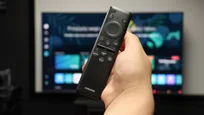
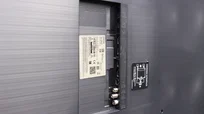
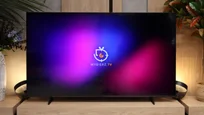
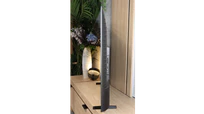
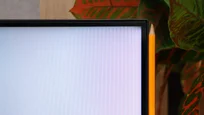
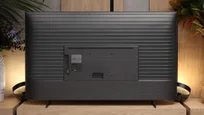
TV appearance

Contrast and black detail
5.4/10
6.3/10
Local dimming function: No
Local dimming function: No
Contrast:


Result
2,450:1

Result
5,150:1

Result
6,550:1

Result
5,850:1

Result
2,800:1
Result
5,950:1
Result
7,150:1
Result
8,150:1
Result
7,850:1
Result
5,550:1
Halo effect and black detail visibility:
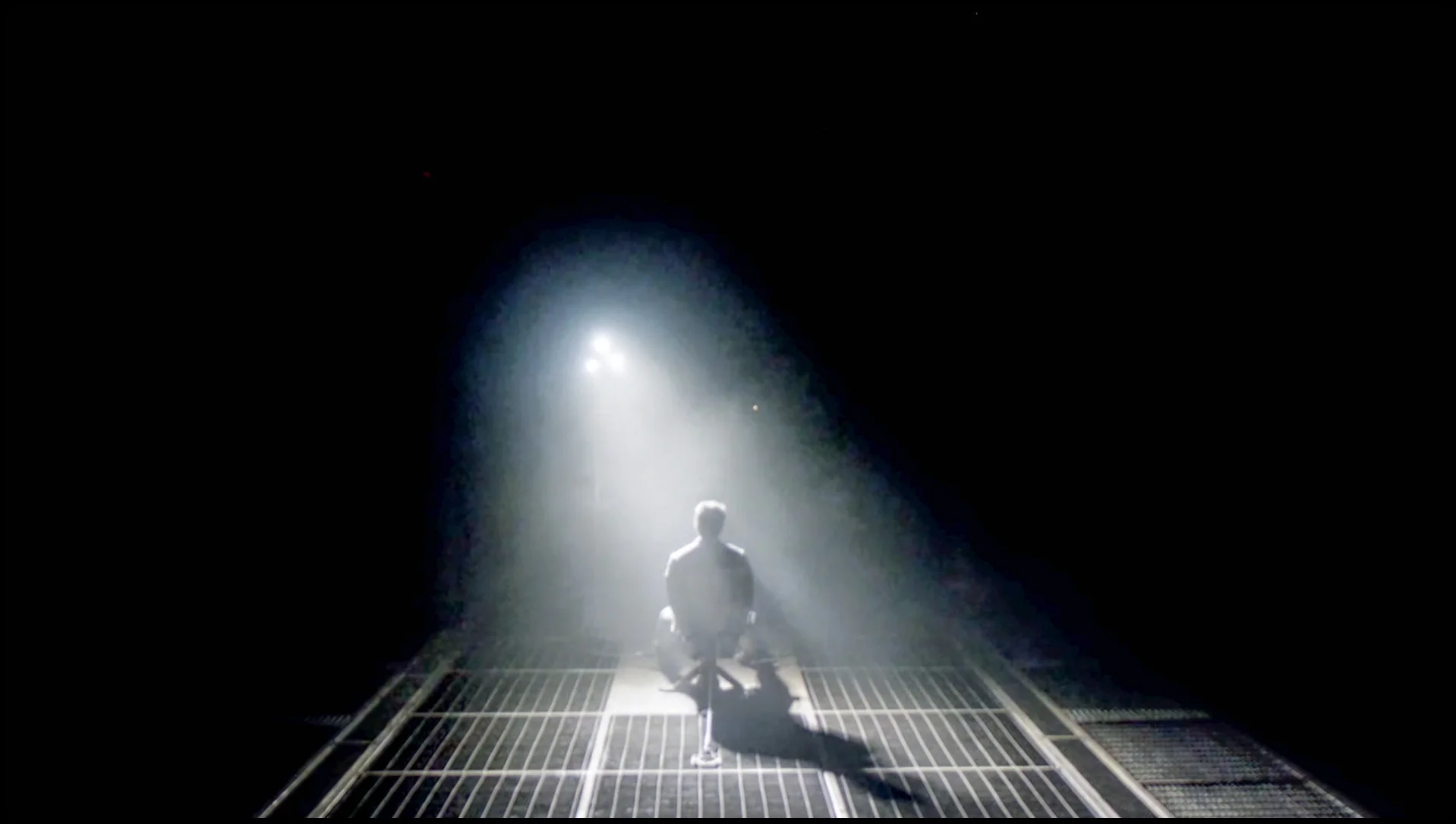
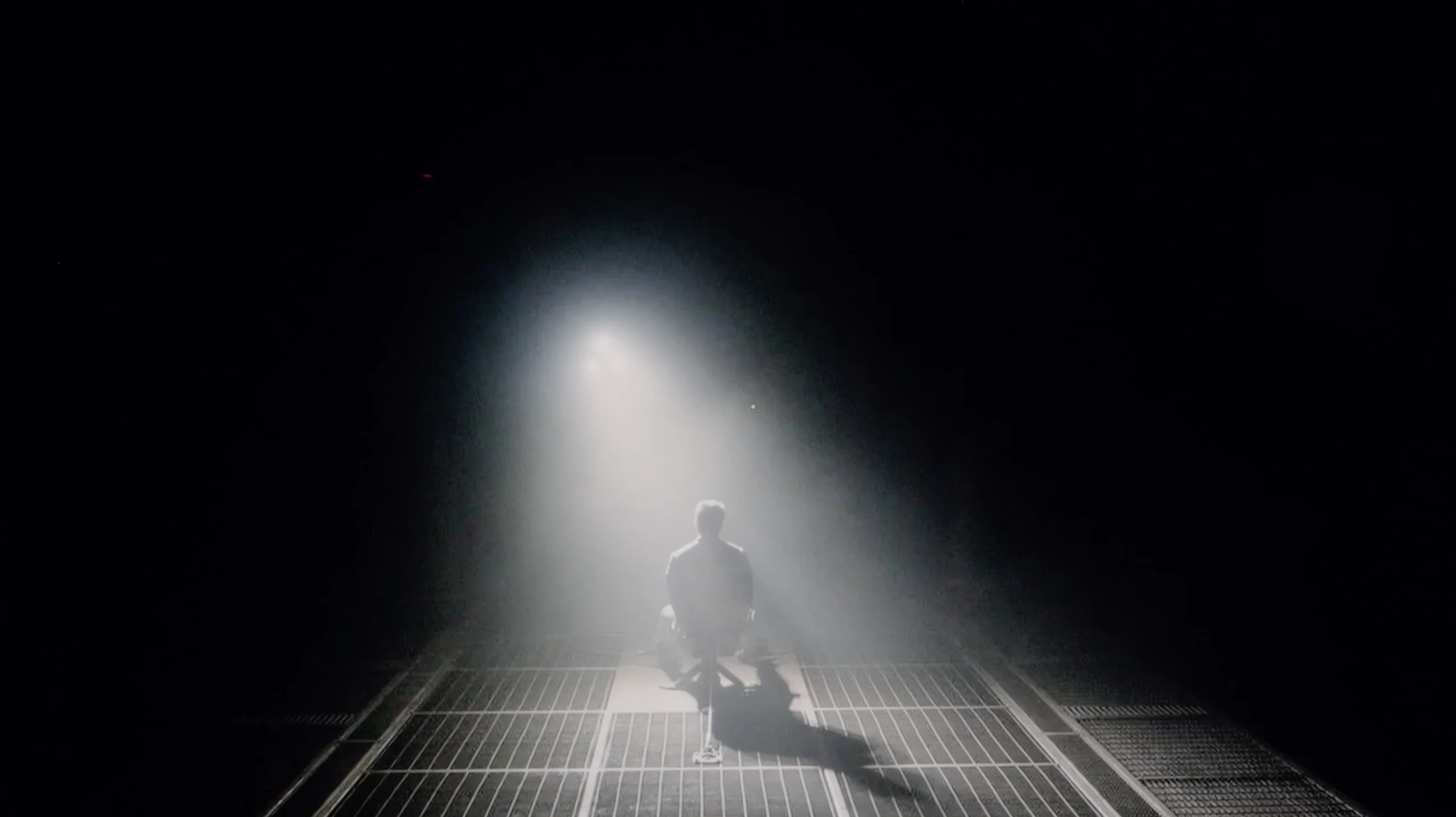
Check the visibility of bright lights on a dark background. Mini-LEDs often struggle with this. The photo does not compare black levels – that’s what the video below is for.
The video accurately shows differences in contrast and black levels between TVs, as well as potential issues: halo around bright objects or Mini-LED zone operation visible as brightness jumps.
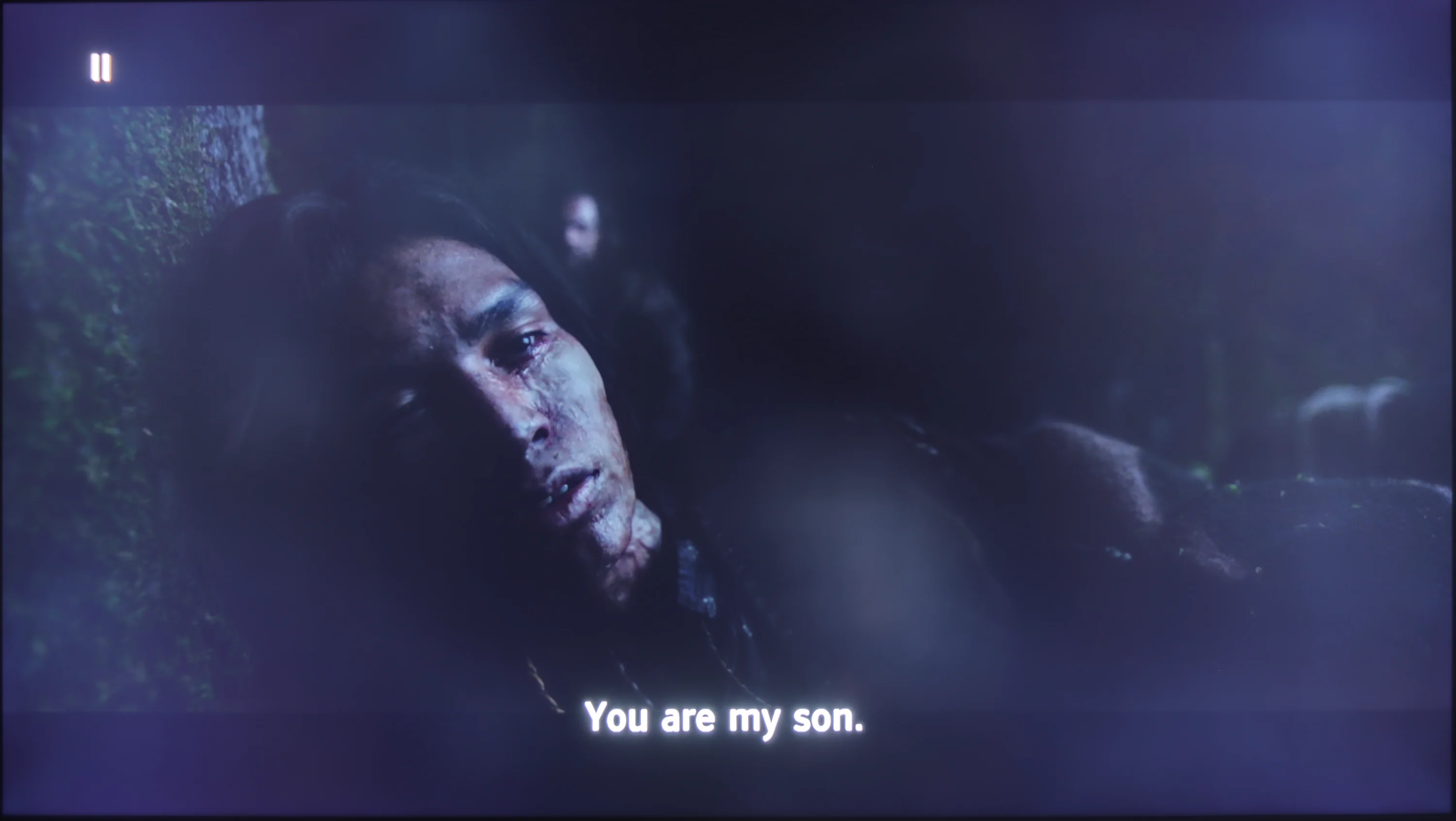
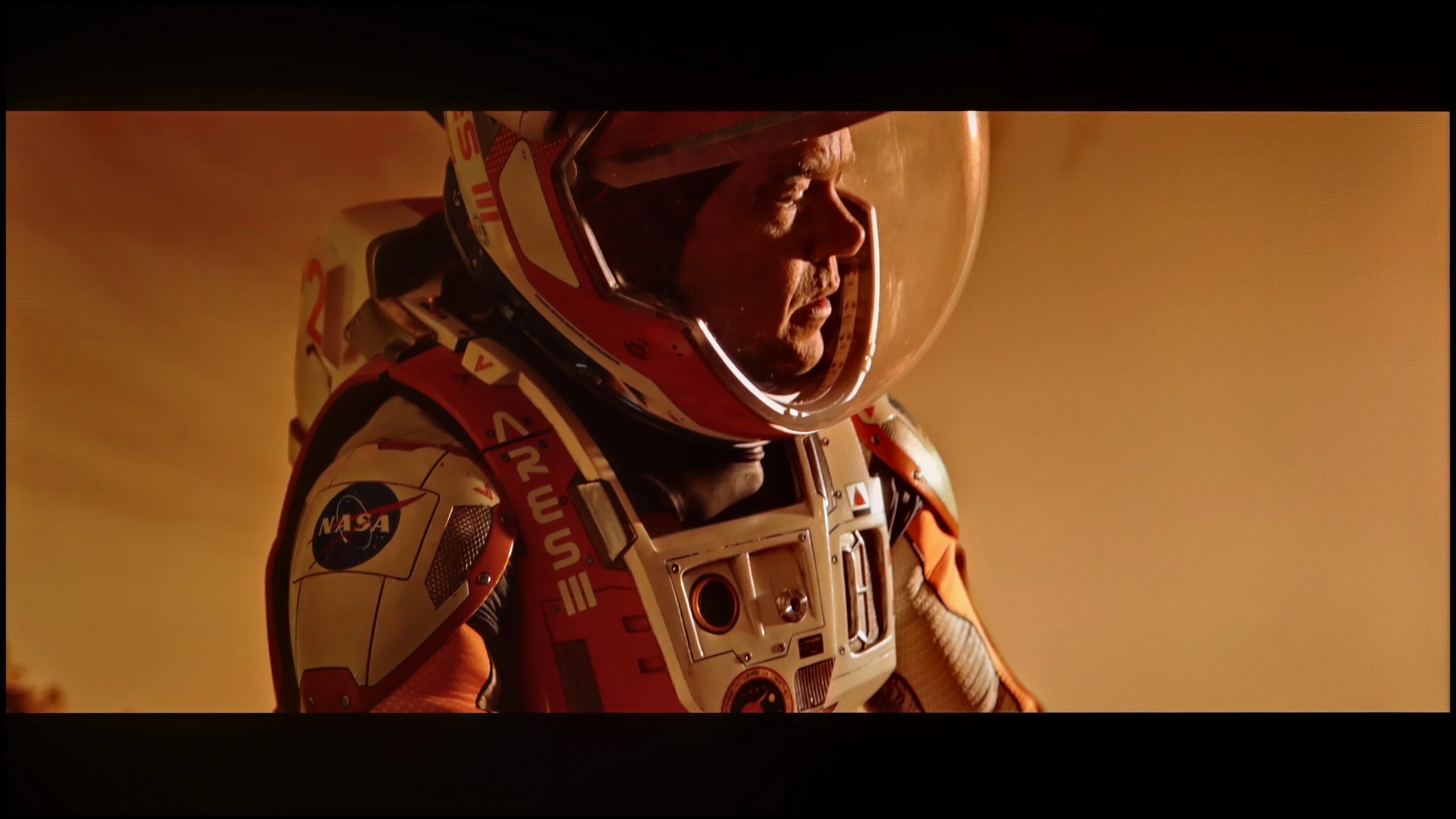
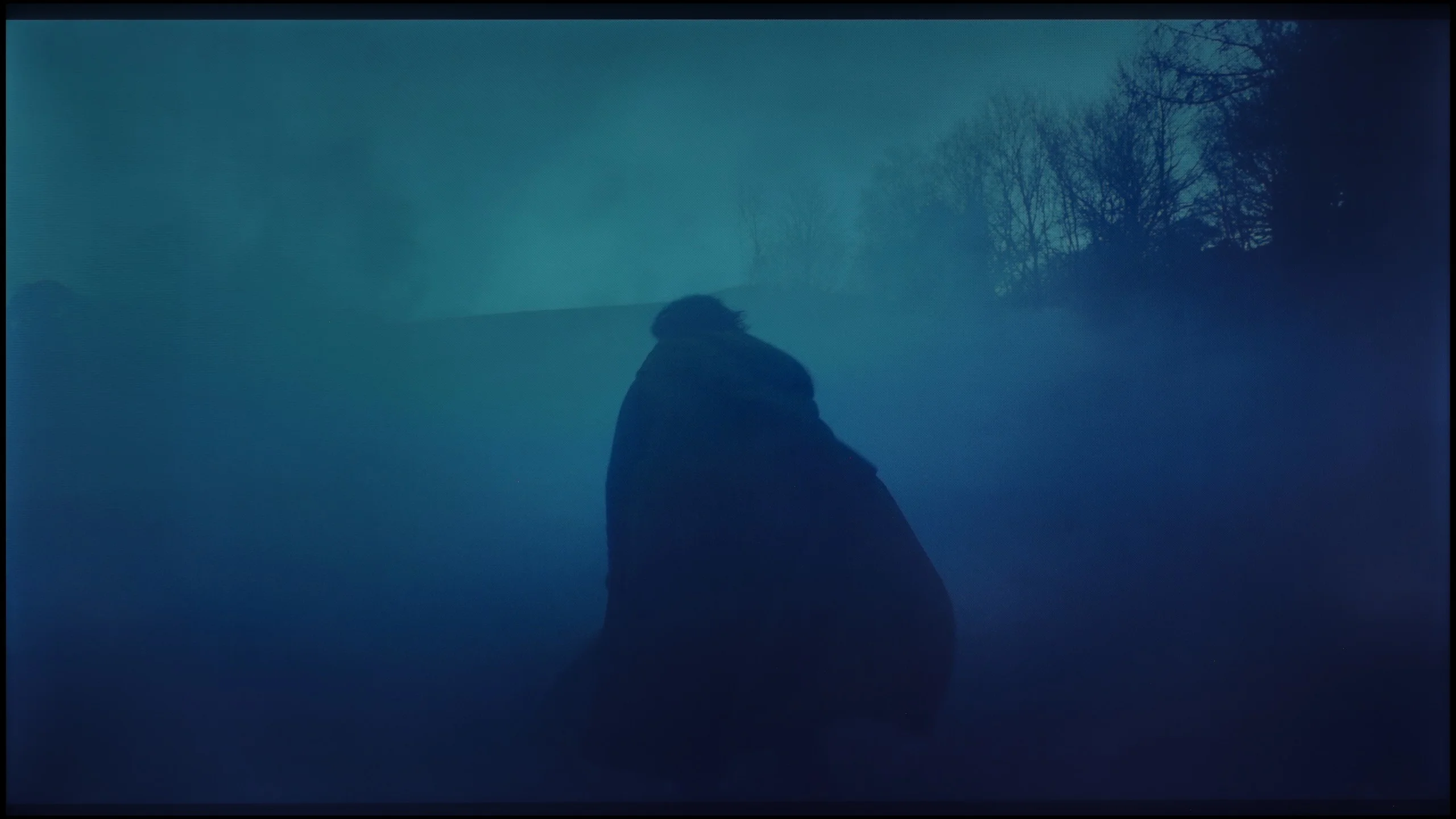
Samsung Q70D and its related models, such as Q77D and Q74D, utilise a VA panel, which in itself should provide decent contrast. Typically, it is several times higher than in IPS/ADS screens that are not equipped with an advanced local dimming system. The contrast results, as you can see, are quite varied, which is caused by the non-uniformity of the panel. Therefore, at times we can achieve good contrast, whereas at other times it is significantly degraded, but generally fairly consistent, not counting light leakage. Let’s take a look at the film scenes we prepared from the films "Oblivion" and "Revenant". As we can see, in the first one, the lights are well separated from each other, which is a positive phenomenon, as visibility of details in the whites in further tests should be equally good. What stands out the most here is the unusual over-sharpening of smoke visible under the light and the navy black in the background. In the frame from the second film, the first thing that stands out is the uneven backlighting of our scene. It was quite significant and heavily affected the perceived image. Nevertheless, the details in the film were well visible.
Samsung M80H is an LCD TV that, according to the manufacturer, uses a Mini-LED backlight. It may indeed use smaller LEDs placed directly behind the screen, but it is not the same type of Mini-LED found in more expensive TVs. The M80H does not have local dimming, so the backlight cannot independently control the brightness of individual parts of the image. Black levels are quite decent, mainly thanks to the VA panel used. Depending on the scene, the contrast we measured was roughly 5,500:1 to over 8,000:1. For a TV without local dimming these are good results, and it is precisely in such designs that VA panels have a considerable advantage over IPS/ADS panels. It is worth noting that some results exceed the panel’s native contrast, which is around 5,000:1. Samsung has implemented a global dimming function. When there is a lot of black on the screen, the TV dims the entire backlight, making dark areas appear deeper. However, this comes at the expense of the brightness of the rest of the image. So the M80H will not significantly brighten a small bright spot while maintaining deep blacks around it, as it dims or brightens the whole screen.
HDR effect quality
5.5/10
4.7/10
Luminance measurements in HDR:

Result
433 nit

Result
461 nit

Result
477 nit

Result
475 nit

Result
490 nit
Result
288 nit
Result
340 nit
Result
349 nit
Result
345 nit
Result
364 nit
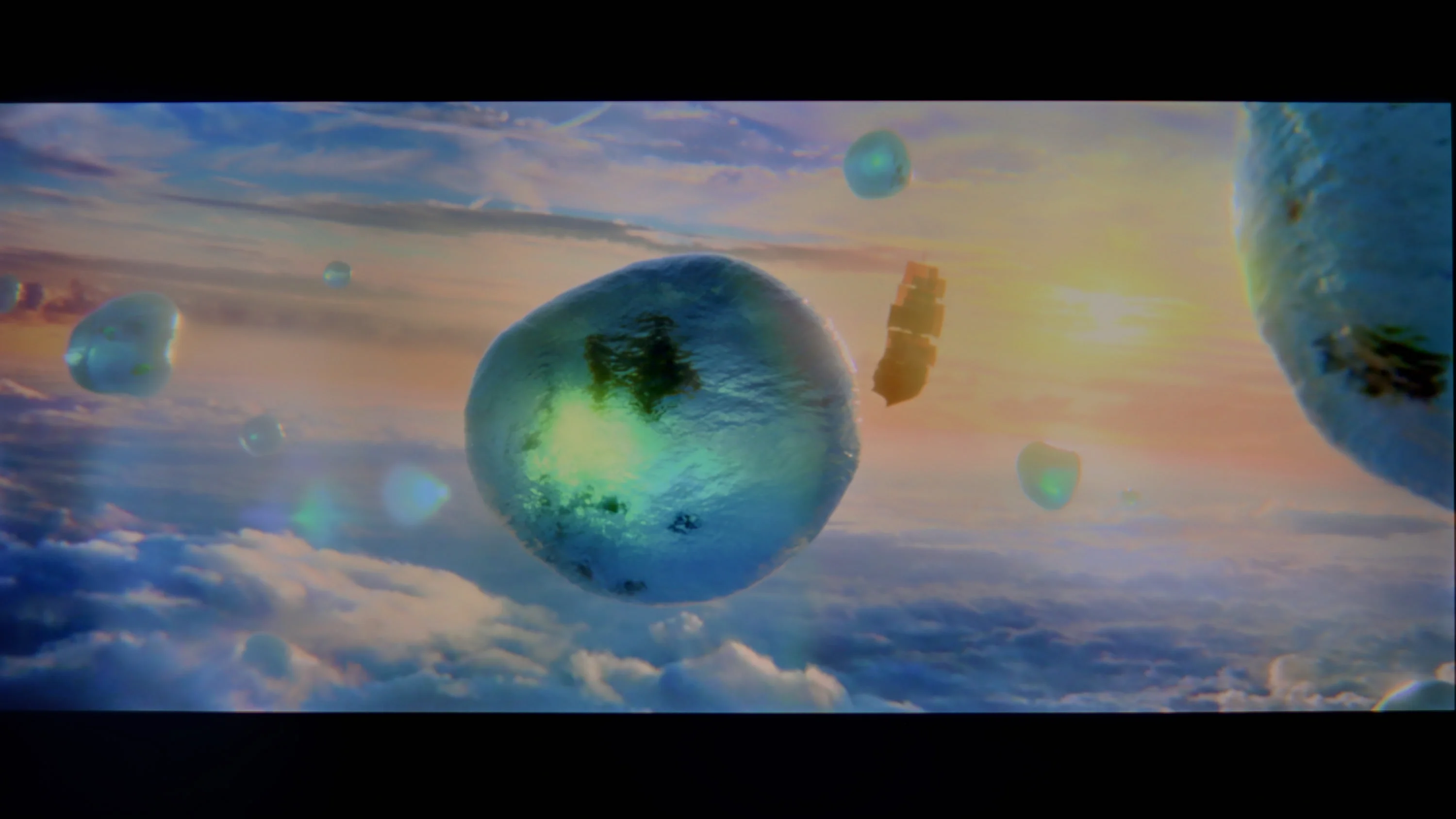
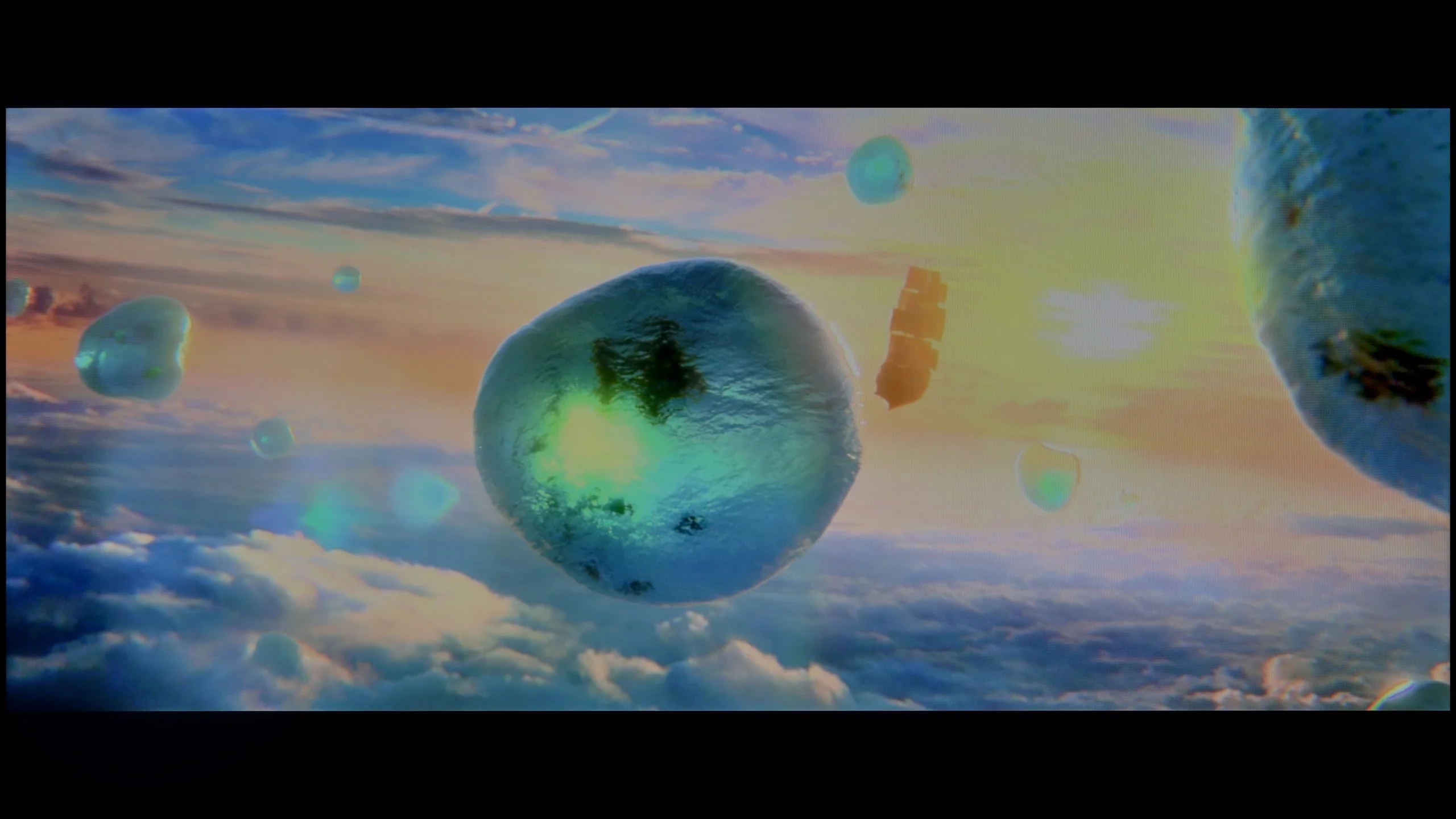
Scene from the movie “Pan” (about 2800 nits)
Scene from the movie “Billy Lynn” (about 1100 nits)
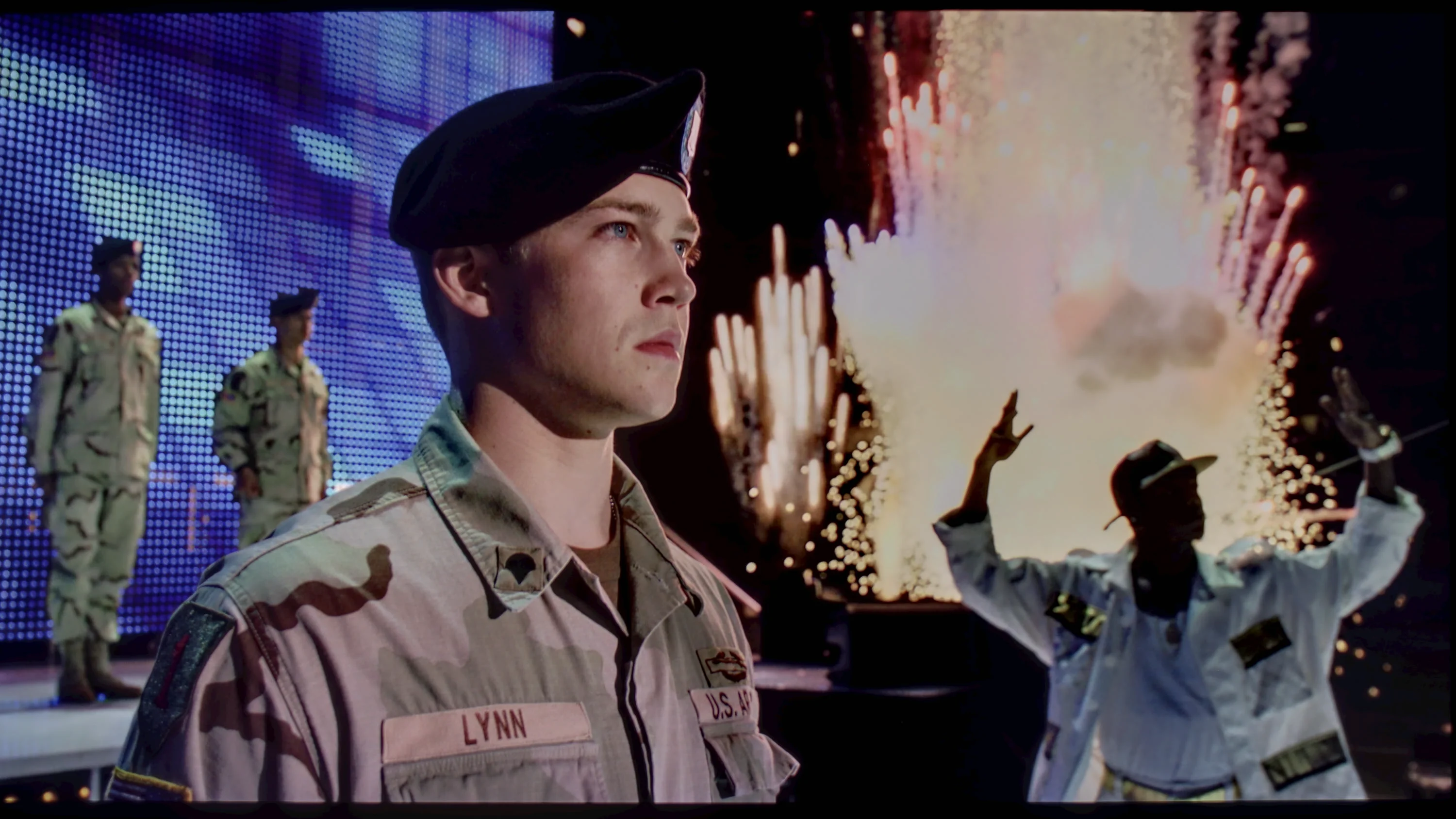
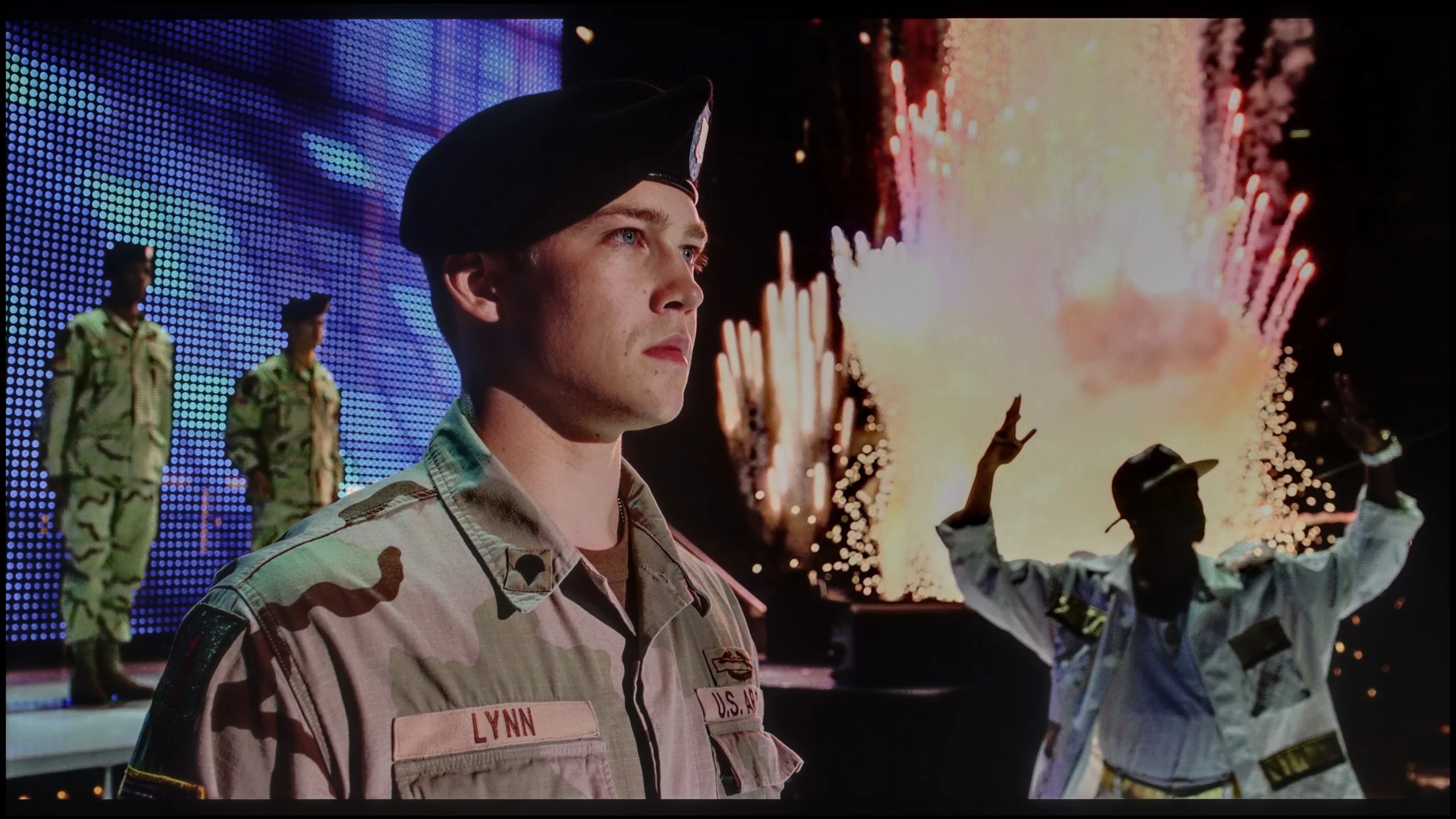
The photos show two HDR10 movies. 'Pan' is one of the brightest productions ever made, while 'Billy Lynn' (soldier) has brightness typical of streaming (Netflix, Prime, HBO MAX). Notice the intensity of effects and detail in whites.
Static HDR10
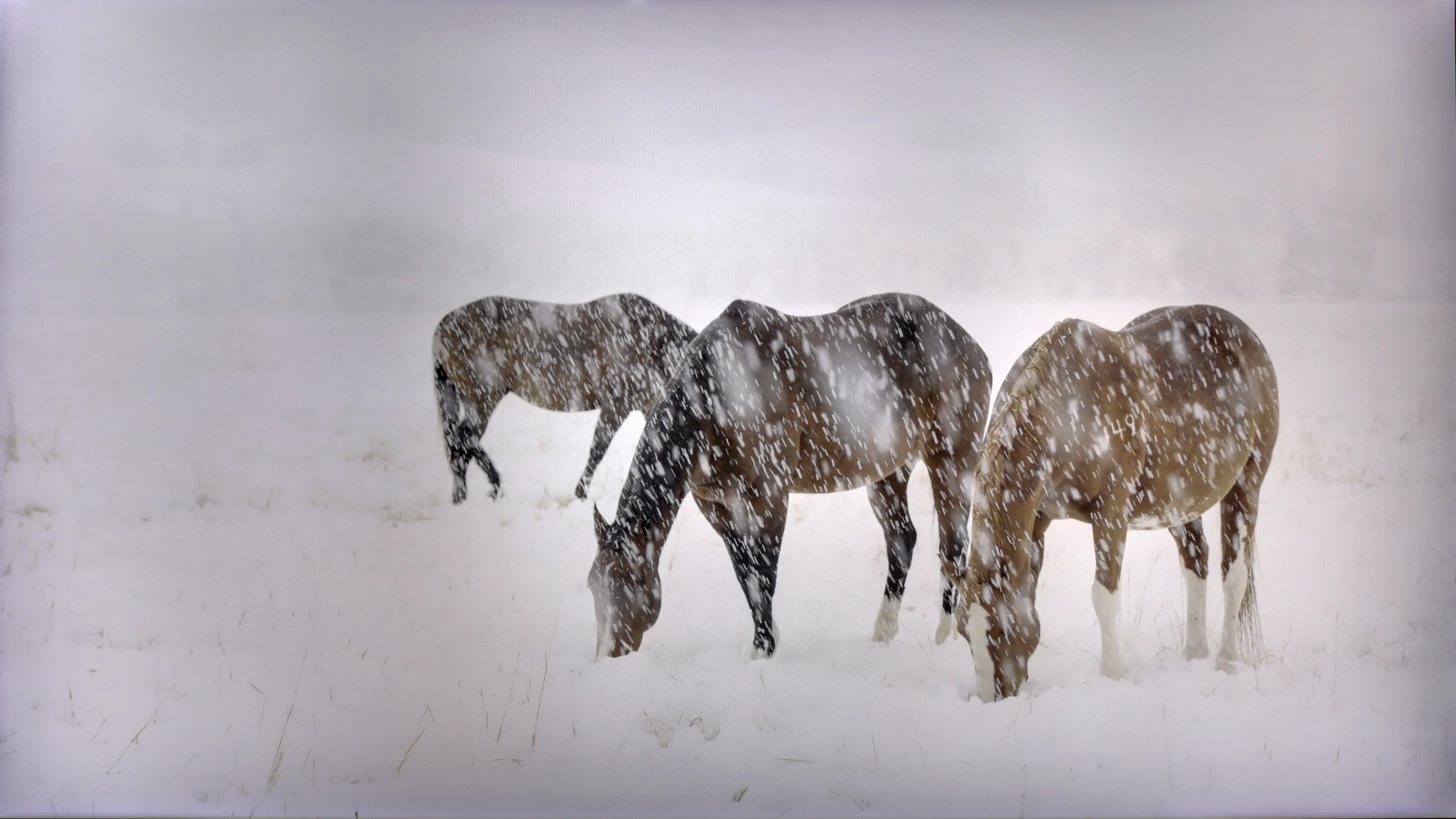

The photos present the visibility of white details in various HDR formats. They do not show brightness differences between TVs (these can be compared in the previous gallery).
Dynamic: HDR10+
Dynamic: HDR10+


The photos present the visibility of white details in various HDR formats. They do not show brightness differences between TVs (these can be compared in the previous gallery).
HDR luminance chart:
Samsung M80H
Samsung QLED Q70D / Q74D / Q77D
Luminance of RGB colors
The brightness that the Samsung Q70D can offer is at a fairly average level, although it cannot be said that the HDR effect will be unnoticeable. Any brightness above 400 nits allows for a clear distinction between SDR and HDR materials. As was the case in the paragraph about contrast and black levels, this time we can observe that the first scene, featuring a bright sun and a dark foreground, possesses the lowest luminance among the measured ones. The result, which can be considered very good for this price range and class of display, is the latter. In a scene where we see a large light source filling a significant part of the frame, the brightness of the television is at its highest, reaching nearly 500 nits. It is worth noting the quite low coverage of the wide DCI-P3 colour gamut, which occasionally results in noticeable gaps in the colour palette. Additionally, users can enjoy rich colours and high precision in shade reproduction, making movie screenings a special experience. It is also worth noting that the Q70D Samsung panel performs excellently in eliminating blur during dynamic action scenes, which enhances the viewing comfort of sports broadcasts or games.
The M80H is not among the brightest TVs. Its peak brightness is around 350 nits and we saw similar results in most of our test scenes. That is not enough to achieve truly striking HDR; bright highlights lack the necessary punch and the overall image is a bit too dark. In practice HDR on the M80H resembles a well-presented SDR image more than noticeably more dynamic material with a wide brightness range. The image can still look acceptable, but it is hard to speak of strong specular highlights, clearly glowing light sources or an effect that immediately distinguishes HDR from ordinary content.
Colours
One of the M80H's stronger points is its colours. The TV uses a filter based on PFS backlighting, which allows it to display a much wider colour gamut than a standard LCD screen without filters. Our measurements confirm this – the M80H covers around 96% of the DCI-P3 gamut and 72% of BT.2020. Those are really good figures, which allow colours to be deeply saturated. Samsung's approach here is interesting. The M80H is not part of the QLED family, even though in terms of colour it is practically indistinguishable from models carrying that badge. From an image-quality point of view it doesn't really matter though — the colours are simply good.
Factory color reproduction
6.1/10
6.1/10


This gallery shows how colors change after professional TV calibration. If you notice the difference, we recommend ordering this service at SkalibrujTV.com.
Factory Mode
After calibration

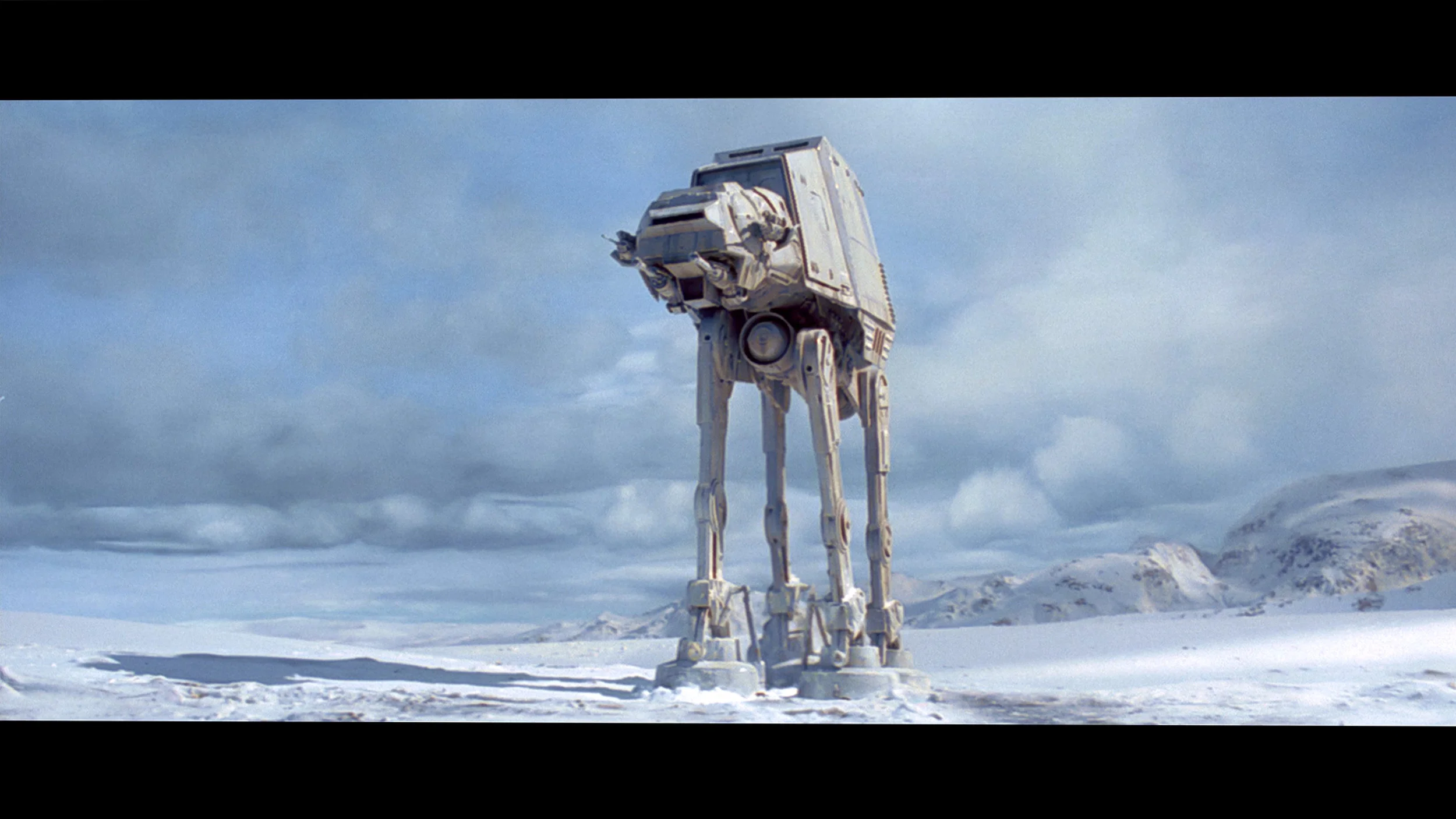
This gallery shows how colors change after professional TV calibration. If you notice the difference, we recommend ordering this service at SkalibrujTV.com.
Factory Mode
After calibration
The best factory mode on the Samsung Q70D is "Filmmaker," and it was this mode that we used during all our tests. Before calibration, it had several flaws that effectively prevented it from conveying the director's intentions. In both SDR and HDR materials, the white balance was dominated by red and green. As a result, there was a characteristic yellow tint on the image, causing white to appear yellowed and resulting in skin tones that were noticeably too warm. The lowered gamma in standard colour gamut materials resulted in a significant drop in contrast, which was already not the highest. This caused detail in the blacks to be accentuated but also led to overexposure in brighter scenes. The EOTF curve, in this case, proved to be much better and only brightened those scenes with relatively low luminance. This was perfectly evident in the section where we measured the television's maximum brightness in HDR materials. At that point, the frame from the film "Billy Lynn" was unnaturally bright and lacking in depth.
Filmmaker Mode is set fairly well out of the box, although it falls short of perfection. In SDR material the most noticeable issue is an excess of red in the white balance, which makes the image appear a little warmer than it should. HDR content has a similar character. As for the brightness response, in SDR the gamma stays close to the target value for most of the range. Small deviations are mainly visible in darker areas, which in places are a bit too crushed. In HDR the darkest details are slightly lifted, while from around 65% brightness the image begins to be slightly darkened. This is largely due to the way the TV controls its brightness. Overall, Filmmaker Mode looks pretty good straight out of the box, but the picture can still be improved.
Color reproduction after calibration
8.1/10
7.8/10
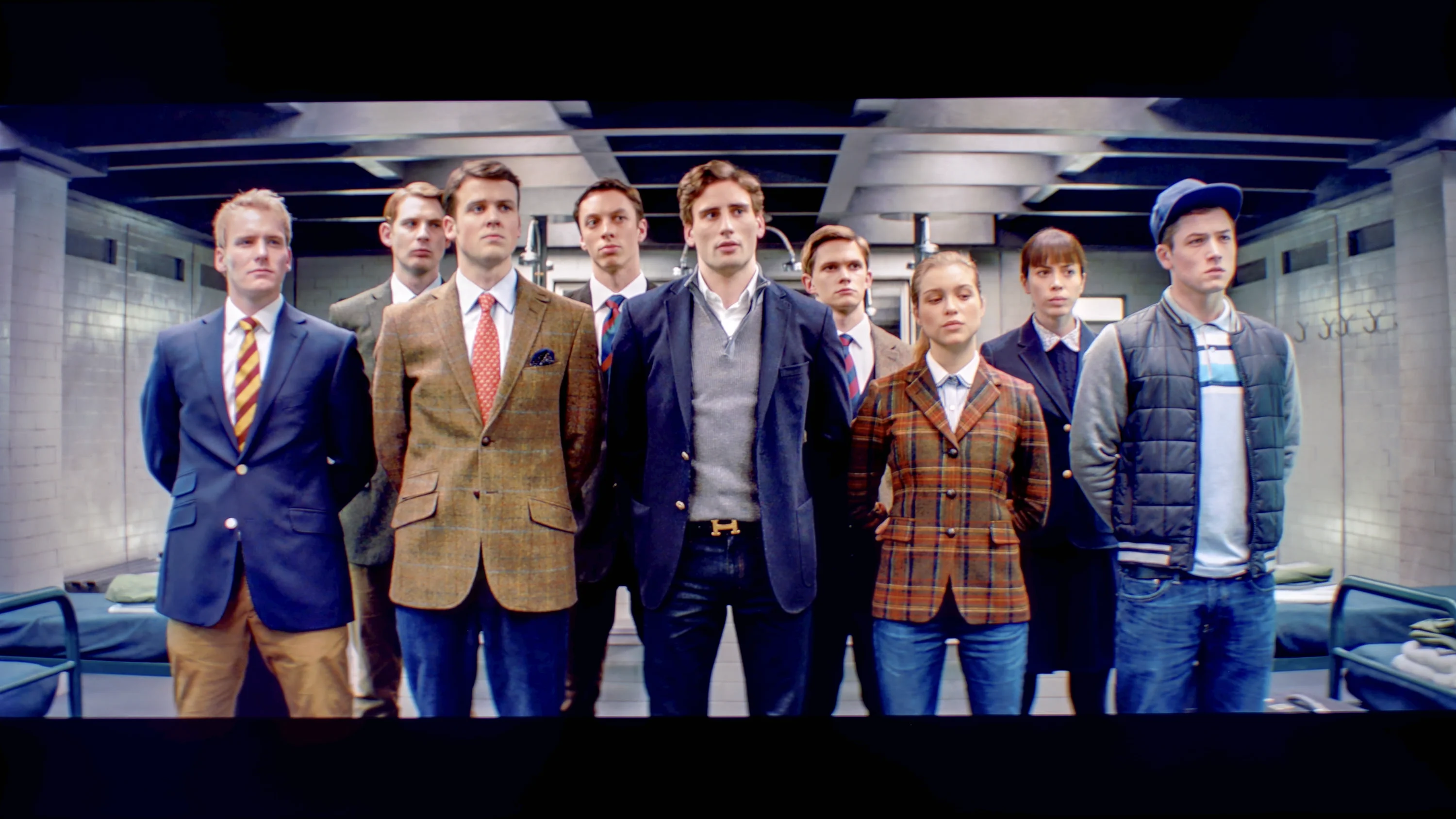
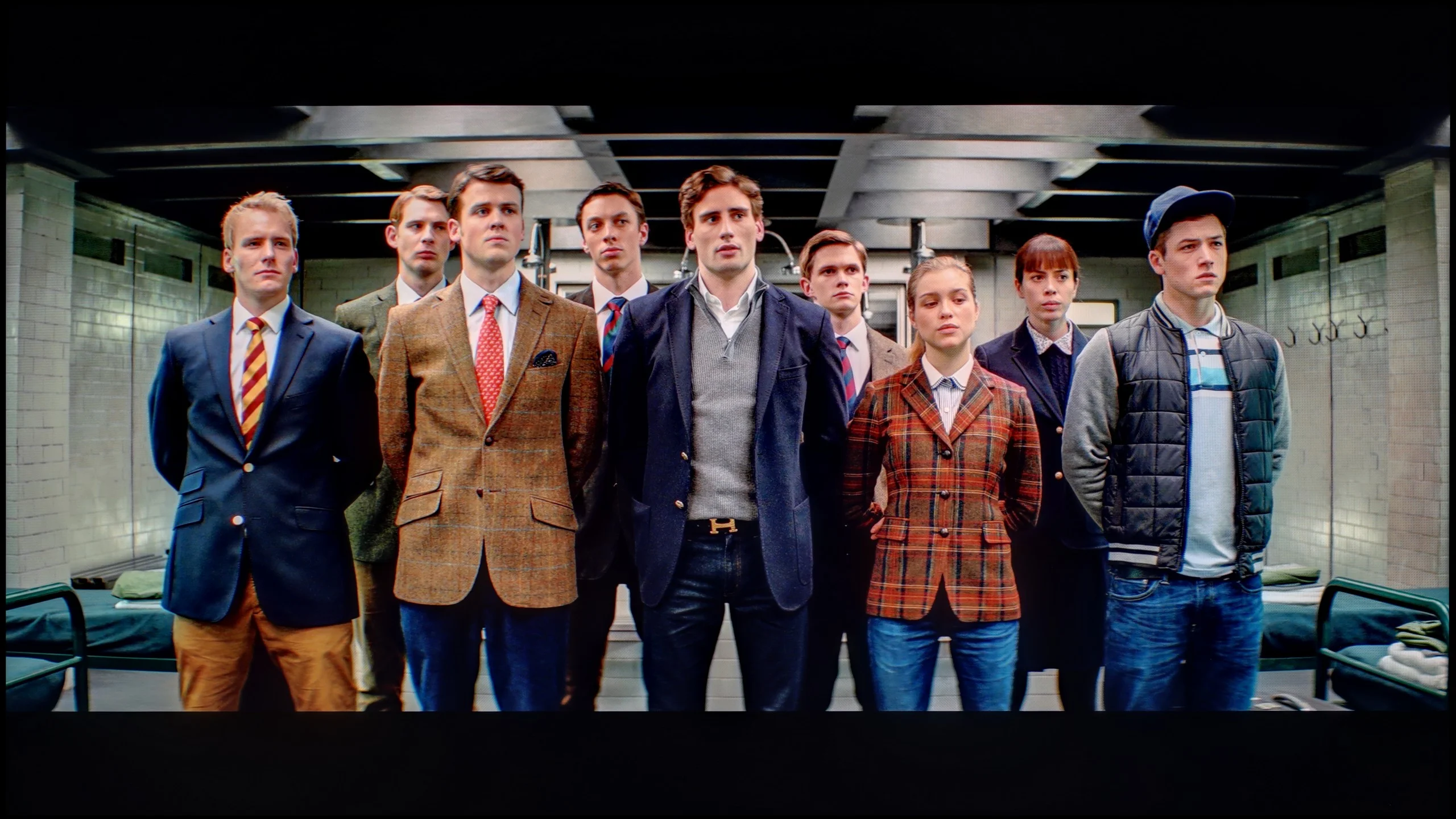
The photos show how movies look on the TV. Pay attention to black detail visibility, colors, and shadow tint.
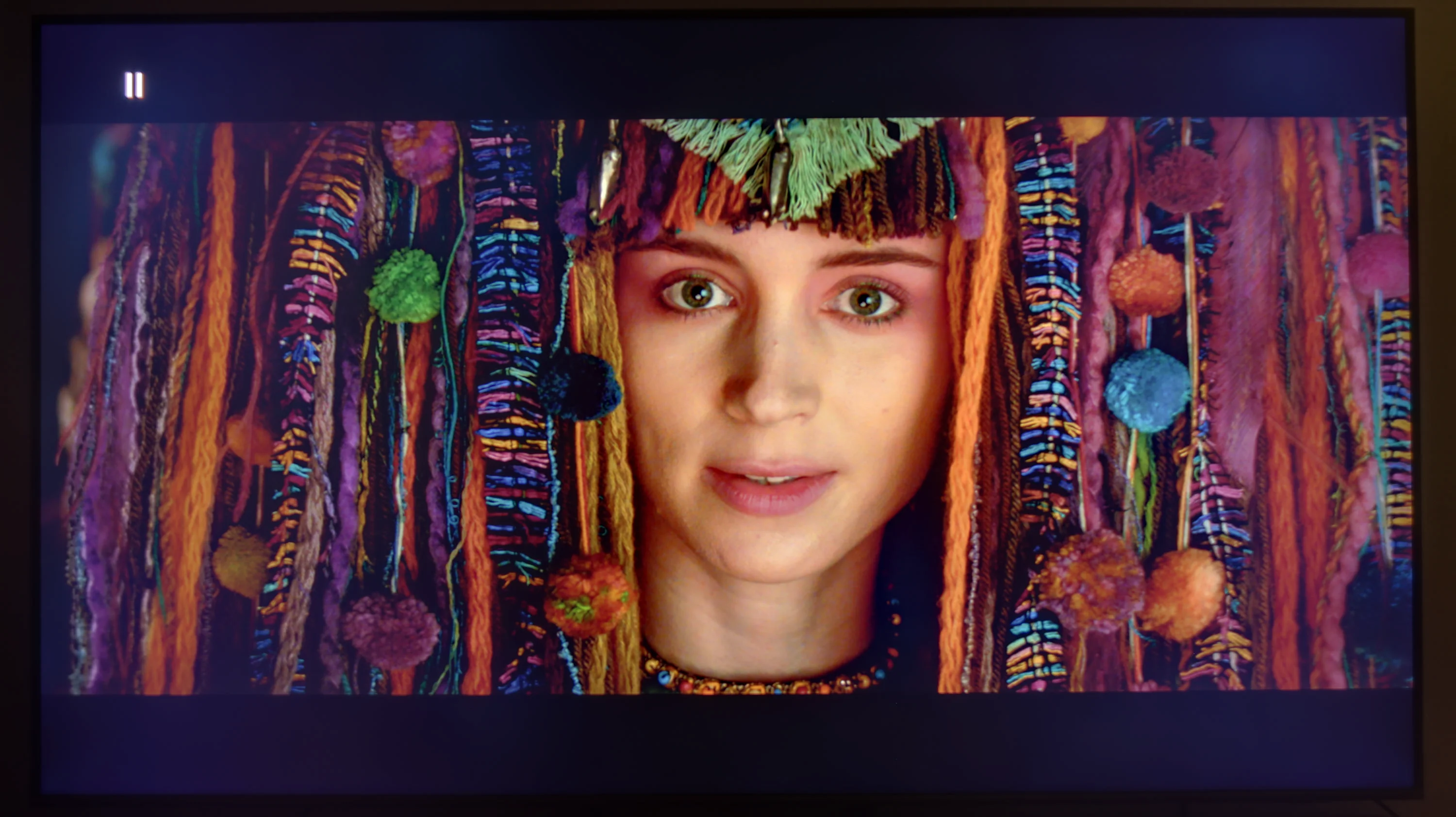
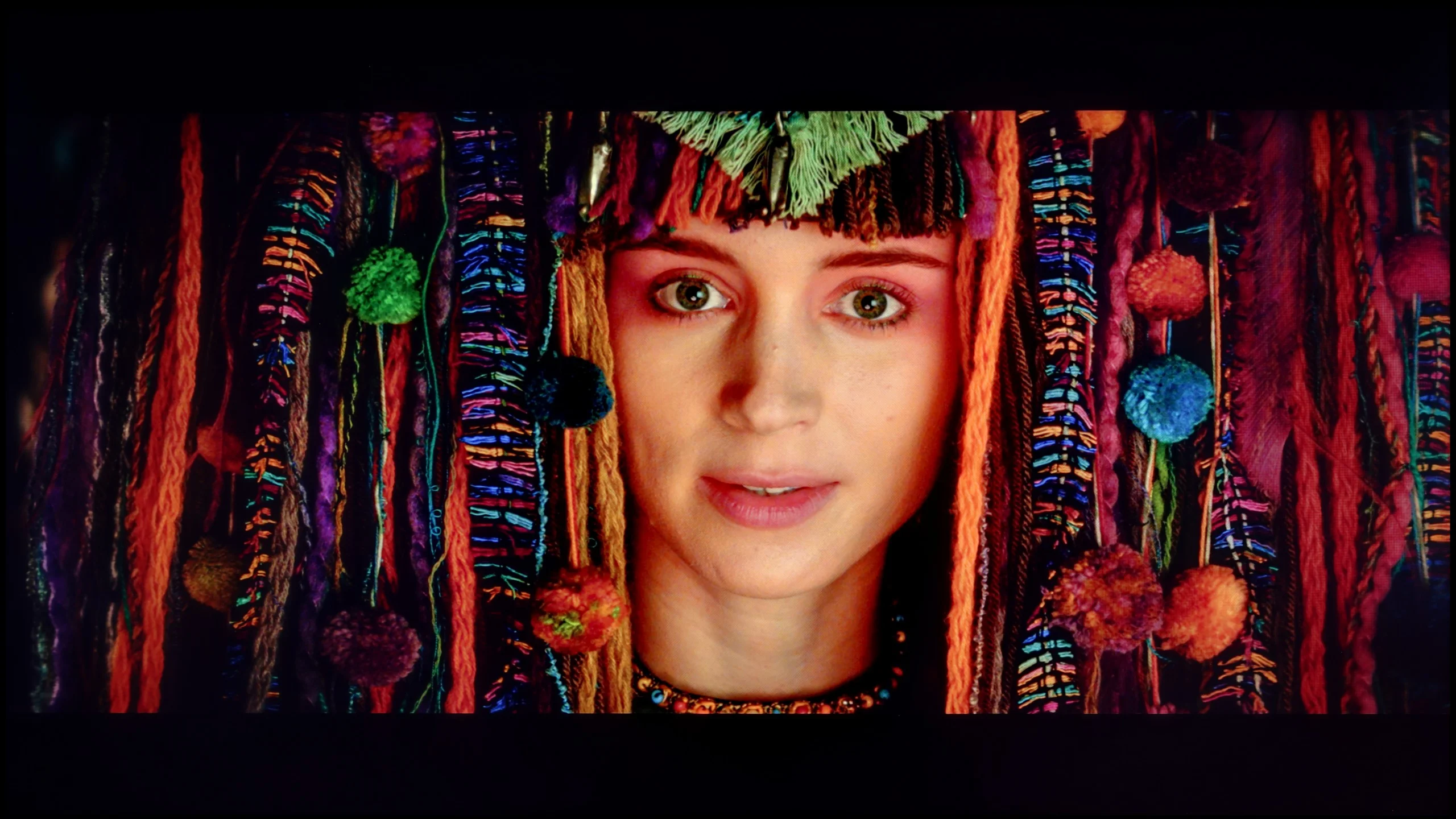
The photos show how movies look on the TV. Pay attention to black detail visibility, colors, and shadow tint.
Fortunately, Samsung provides a wide range of calibration tools in all its televisions, including 2-point and 20-point grey scale adjustment as well as advanced CMS. This allowed us to significantly improve the quality of SDR and HDR content. The vast majority of errors have been corrected, and the image that the Samsung Q70D now generates is definitely closer to the reference. Higher deltaE errors in wide dynamic range content are primarily due to the display's insufficient luminance.
After calibration, the M80H fares very well, especially with the most ordinary SDR content. Regular broadcast TV, YouTube and films watched without HDR can look very good on it. After correcting the white balance the errors are small, although sometimes we can still see that the TV tends to overdo the most saturated reds. In HDR it is also possible to improve the picture and correct its main faults, but it is not at the level of pricier models. Samsung quite heavily restricts colour adjustment in HDR, so in many areas we have to accept what the TV offers out of the box. Calibration lets us improve some parameters, but we are no longer able to change the overall character of the M80H's image.
Smoothness of tonal transitions
6.9/10
9.8/10
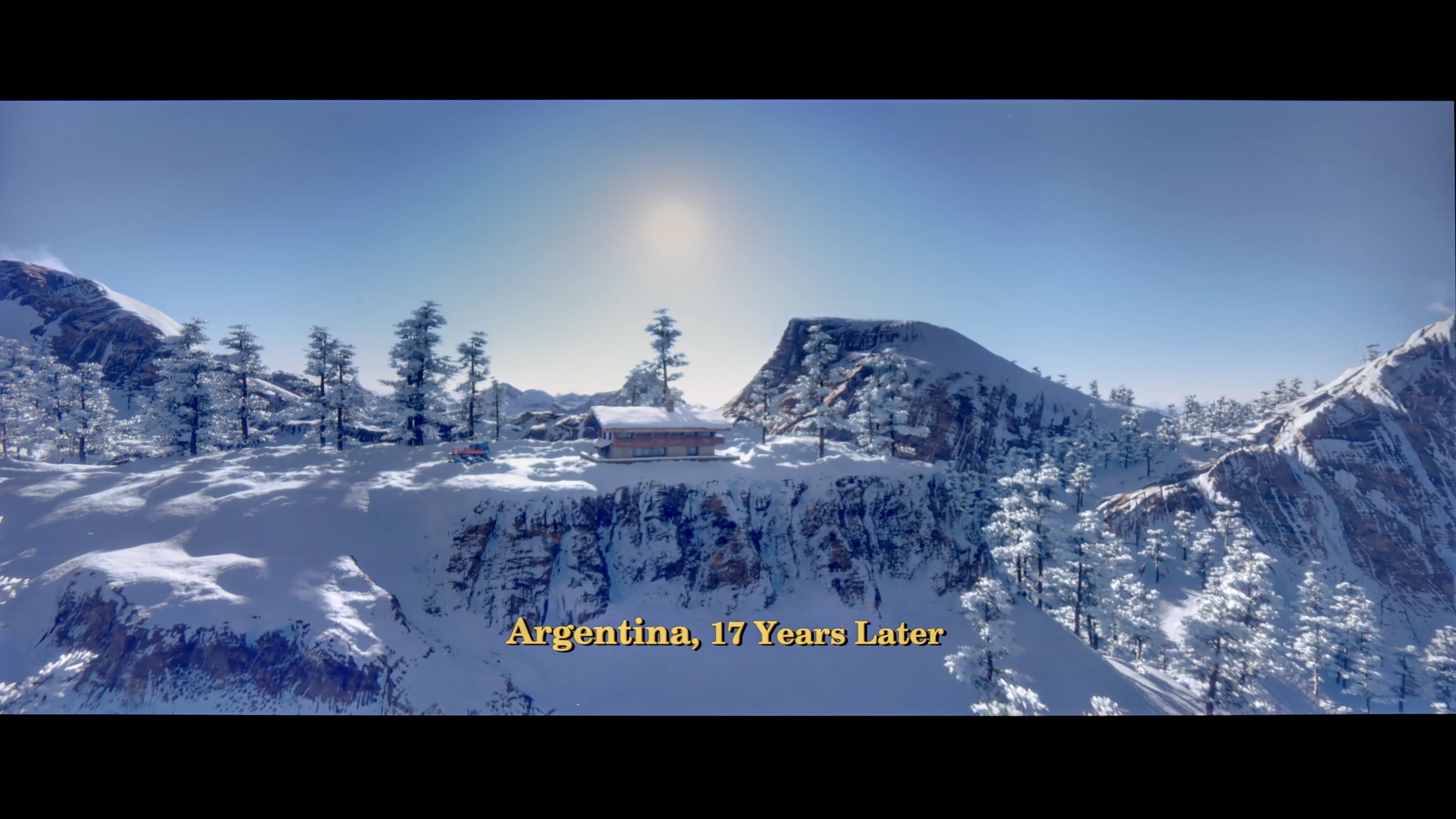
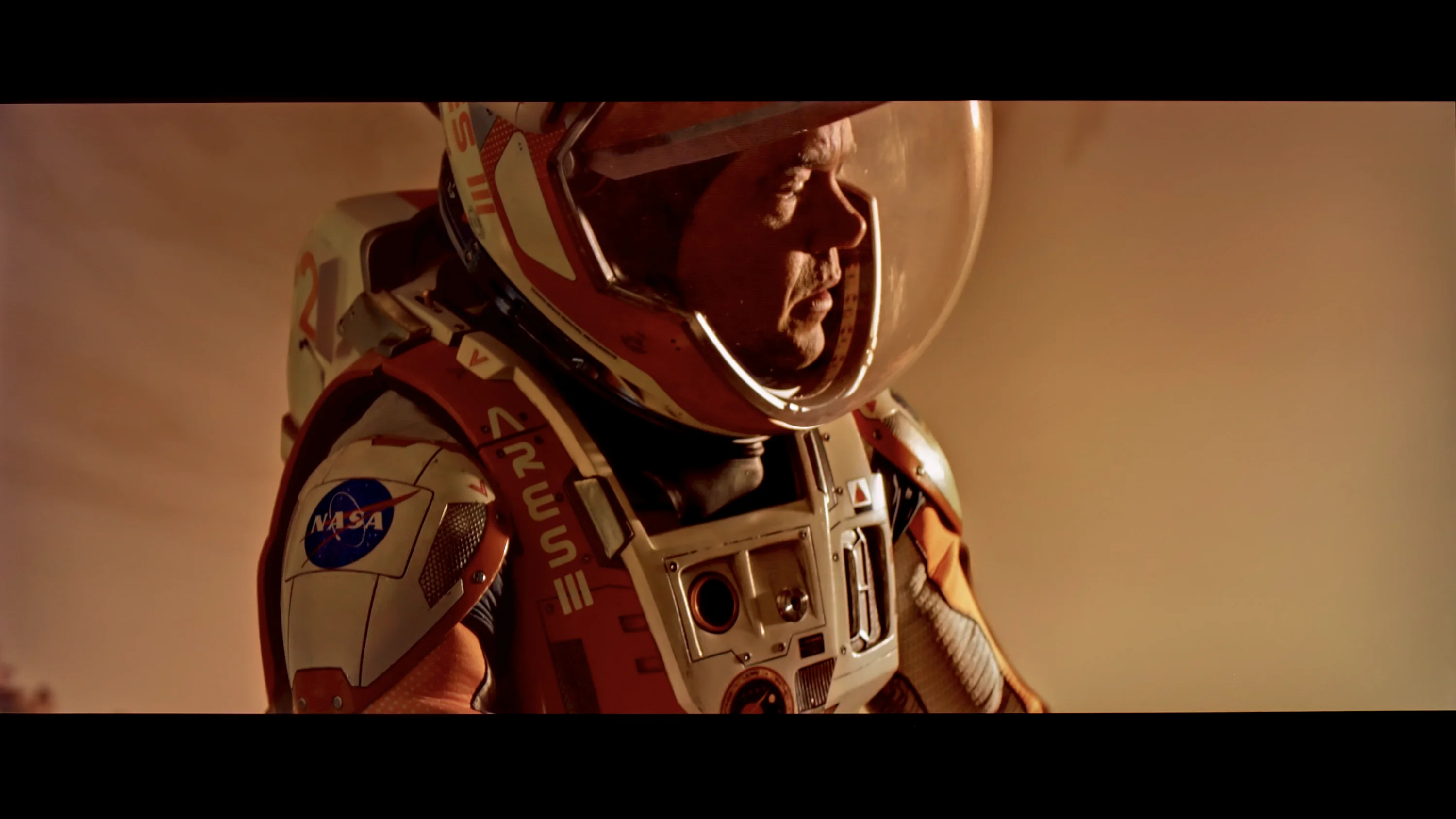
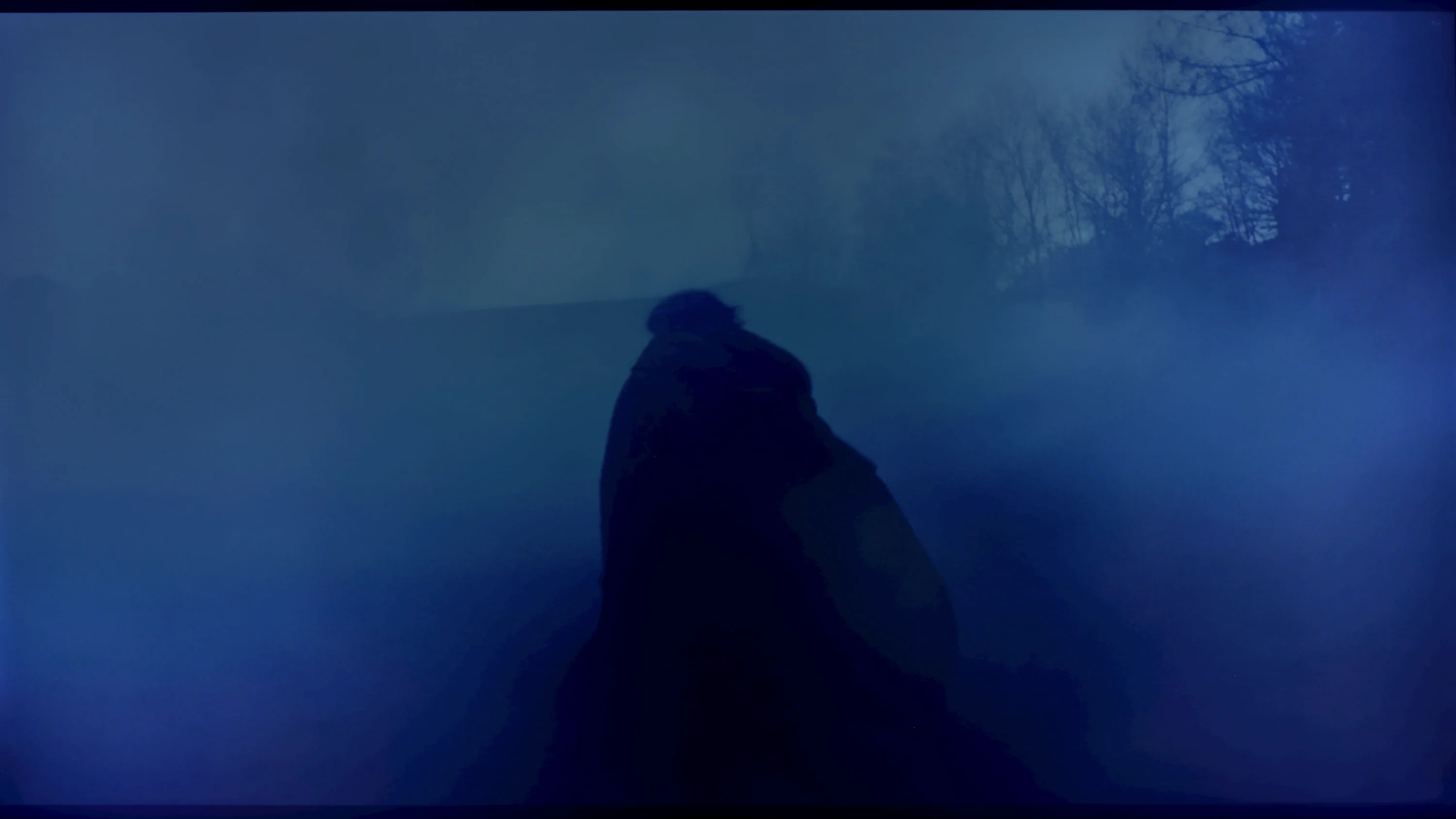
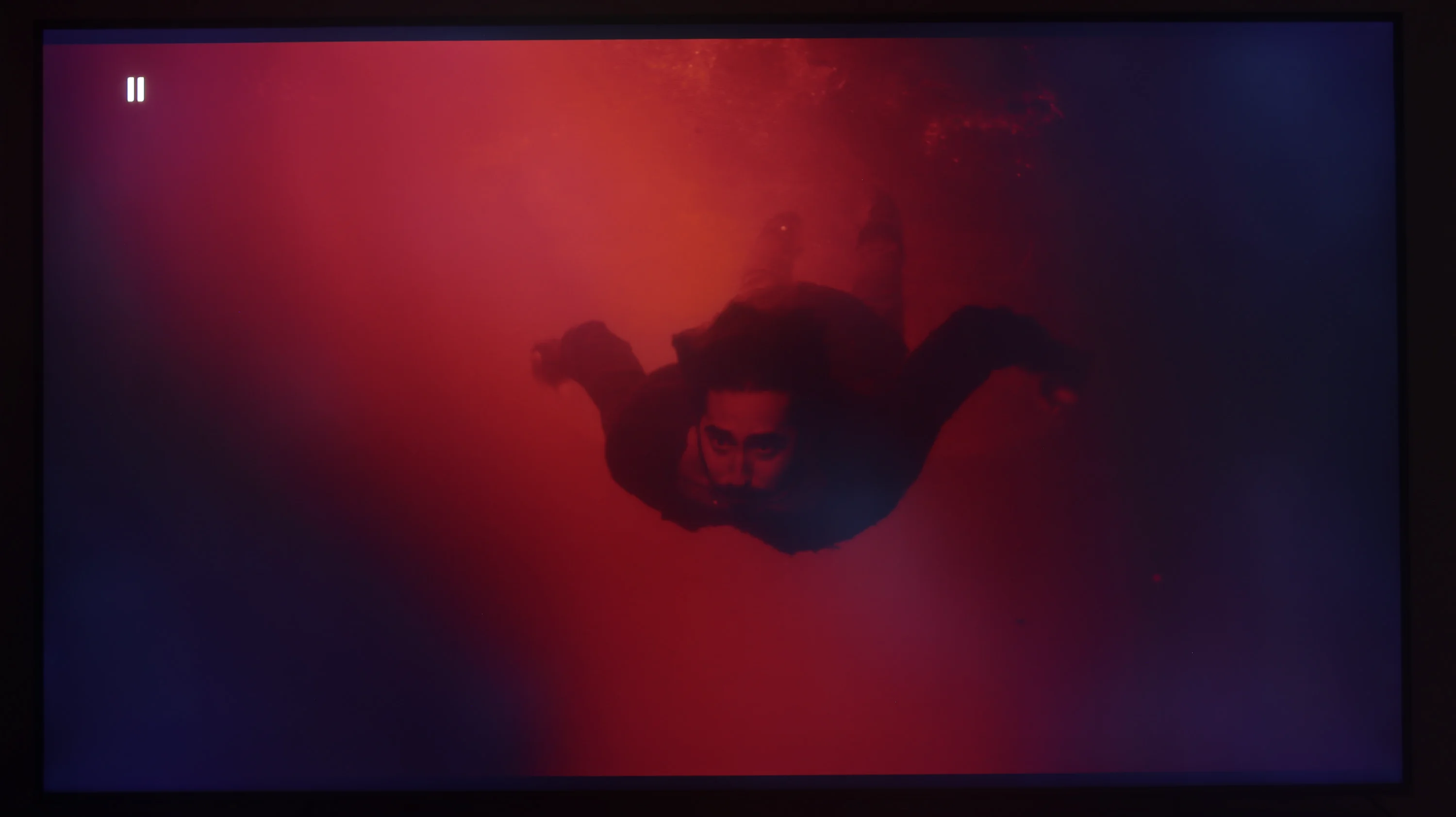
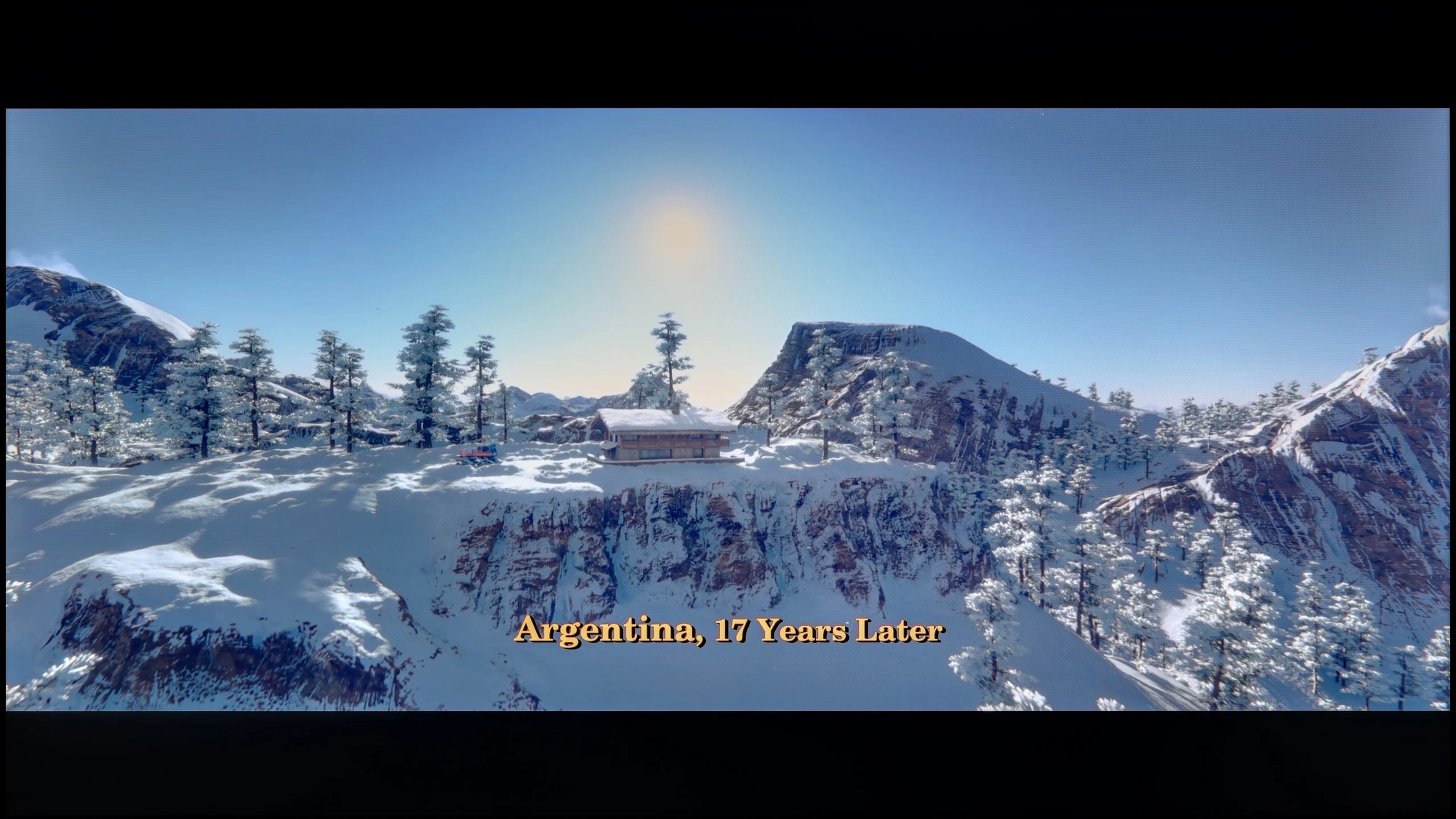
These are selected scenes that show smooth tonal transitions from one color to another. If you see distinct banding, it’s the TV panel’s fault.
These are selected scenes that show smooth tonal transitions from one color to another. If you see distinct banding, it’s the TV panel’s fault.
These are selected scenes that show smooth tonal transitions from one color to another. If you see distinct banding, it’s the TV panel’s fault.
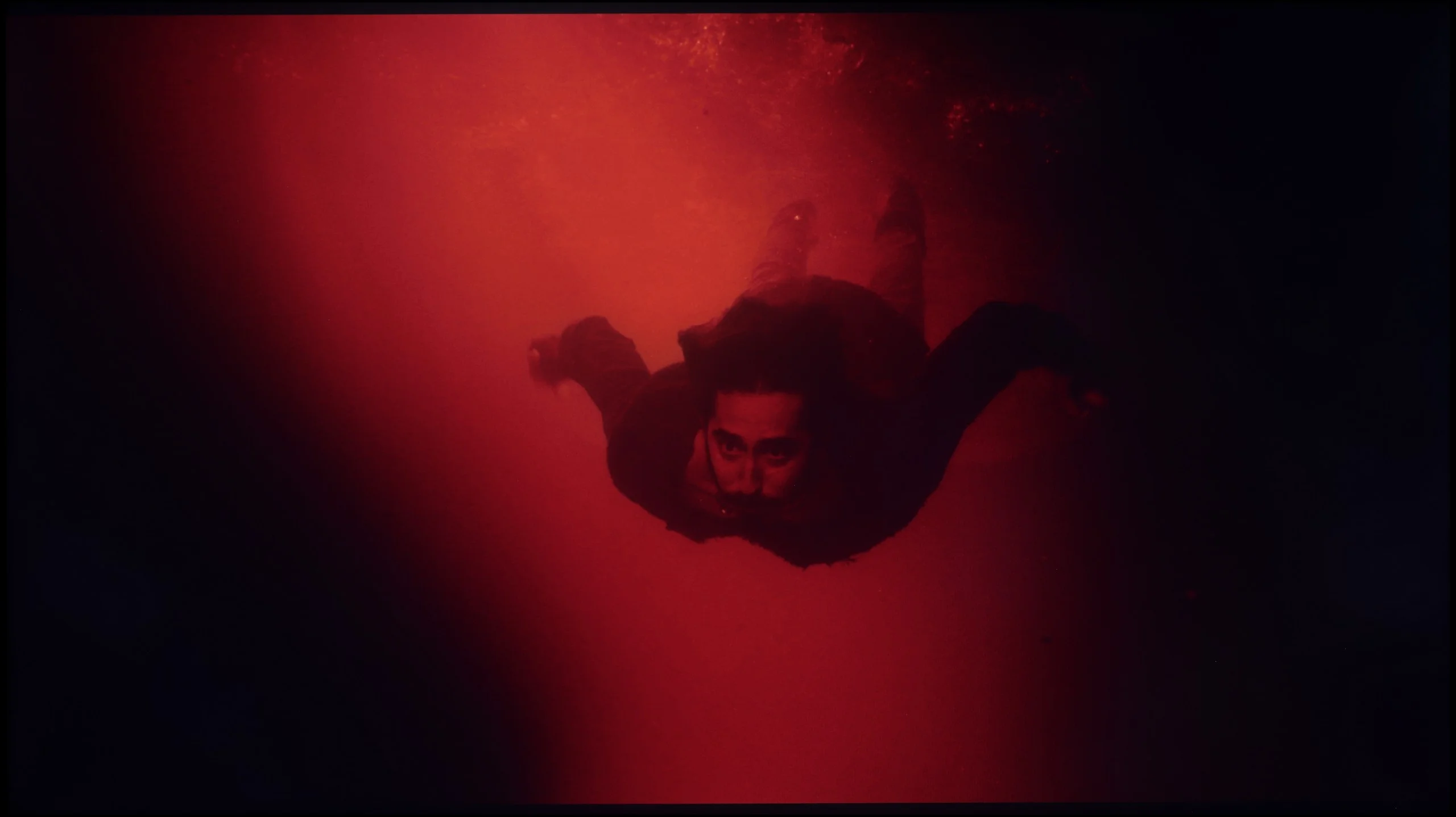
These are selected scenes that show smooth tonal transitions from one color to another. If you see distinct banding, it’s the TV panel’s fault.
Considering how important lighting is in films and series, the overlapping structures and the fluidity of tonal transitions constitute an extremely significant element in assessing the quality of the image. The colour grading in the tested television stands at a fairly decent level. It cannot be said to be outstanding, but it is also not bad. We assess it as adequate. Brighter scenes perform best here, showing the least amount of stuttering. In scenes recorded in darker settings, slight deficiencies in grading can already be noticed, although this is not an issue that would cause discomfort while watching. This may be disrupted by the bleed of the backlighting, which is clearly visible in the last image.
The M80H delivers almost perfect smoothness of tonal transitions. Posterisation is practically absent, and successive tones blend very smoothly in both bright and dark scenes. We didn’t notice any obvious colour banding, for example in skies or in scenes with smoke. If the image looks worse in dark shots, that isn’t due to gradation issues. Instead, the limitations of the backlight and the lack of local dimming become more apparent, causing blacks to lack sufficient depth.
Image scaling and smoothness of tonal transitions
7/10
7/10


Smooth transition function
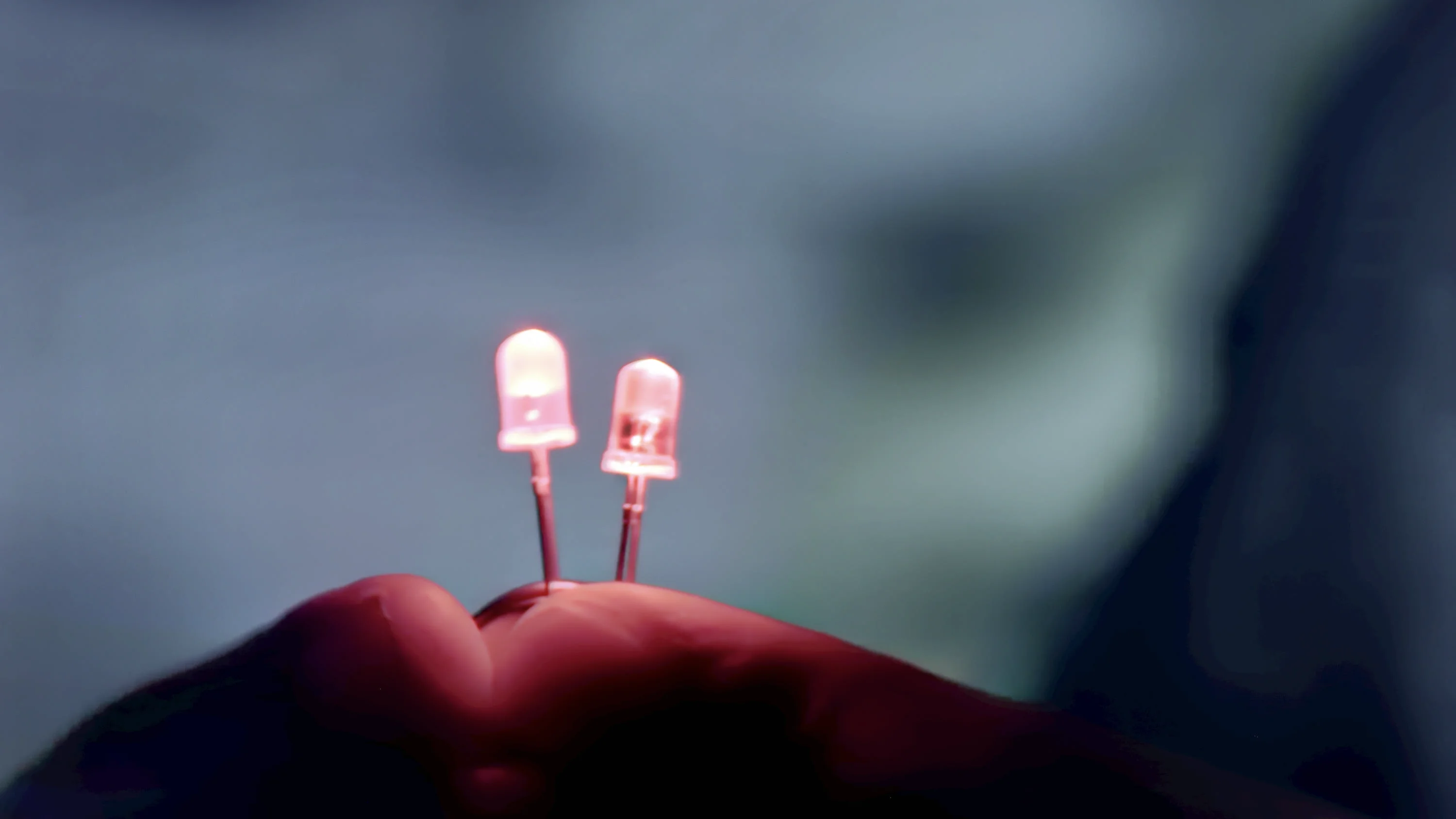
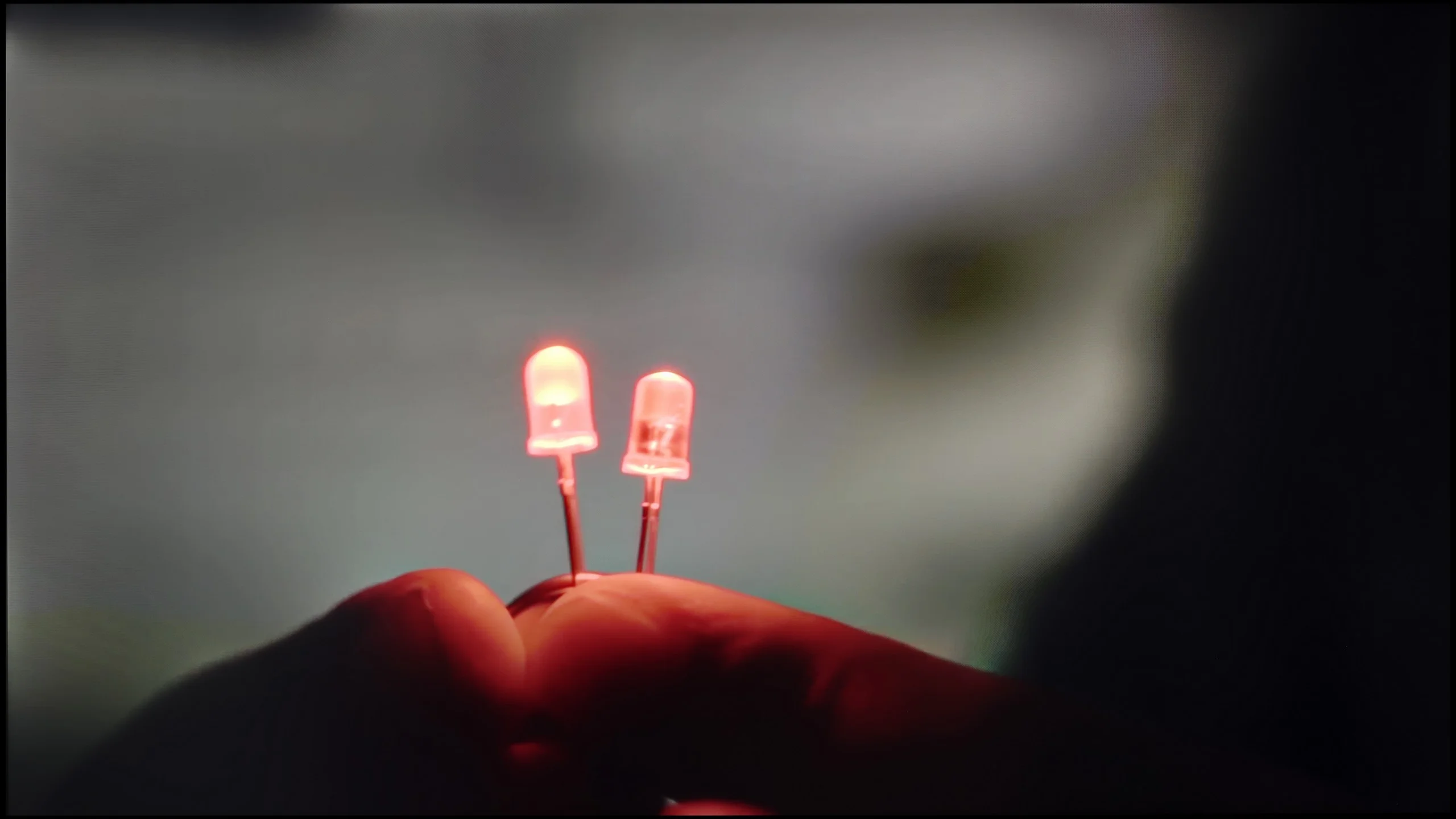
The match photo shows how the TV smooths weak tonal transitions in low-quality video.
Image scaling SD (576i)

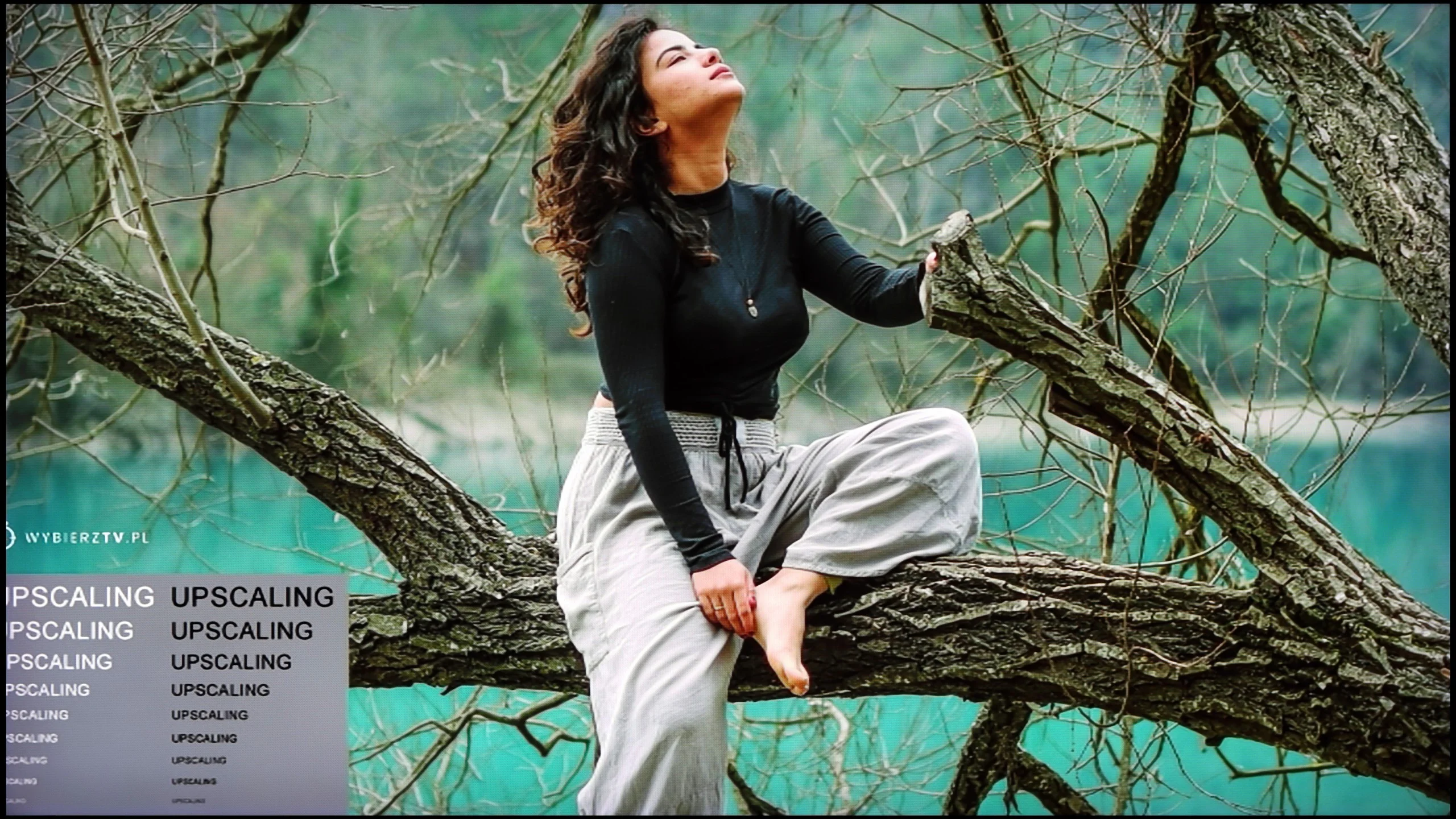
The model photo shows how it handles upscaling of SD material.
The function responsible for improving gradation has been named "Noise Reduction" in the menu. As we have confirmed, it is worth enabling, as it has a positive effect on tonal transitions. More importantly, it does not negatively affect the film grain or the fine details, which the competition sometimes "blesses" us with.
The image scaling on Samsung Q70D should be rated as average. The manufacturer does not intend to artificially sharpen the image, but rather to leave it naturally softened.
Although the M80H is positioned fairly low in Samsung's range, the manufacturer equipped it with one of its stronger processors, the NQ4 AI Gen2. The same chip can be found, for example, in Neo QLED TVs and the lower-tier S85H OLED. That is good news, because when it comes to improving weaker sources the processor performs really well. Upscaling is the strongest point. Low-resolution content is displayed correctly and edges do not look overly jagged. Of course the TV will not create details that are not present in the source, but regular broadcast TV and older recordings look decent on it. One drawback is the overscan effect, that is edge cropping, which cannot be completely turned off. The tonal transition smoothing function, the so-called noise reduction, also works well. The processor can effectively reduce visible traces of heavy compression, but it does not do this without side effects. At higher settings it may over-smooth the image, remove some fine detail and even eliminate film grain. For that reason we recommend using this function mainly for content that really suffers from strong compression and posterisation.
Blur and motion smoothness
7.4/10
7.9/10
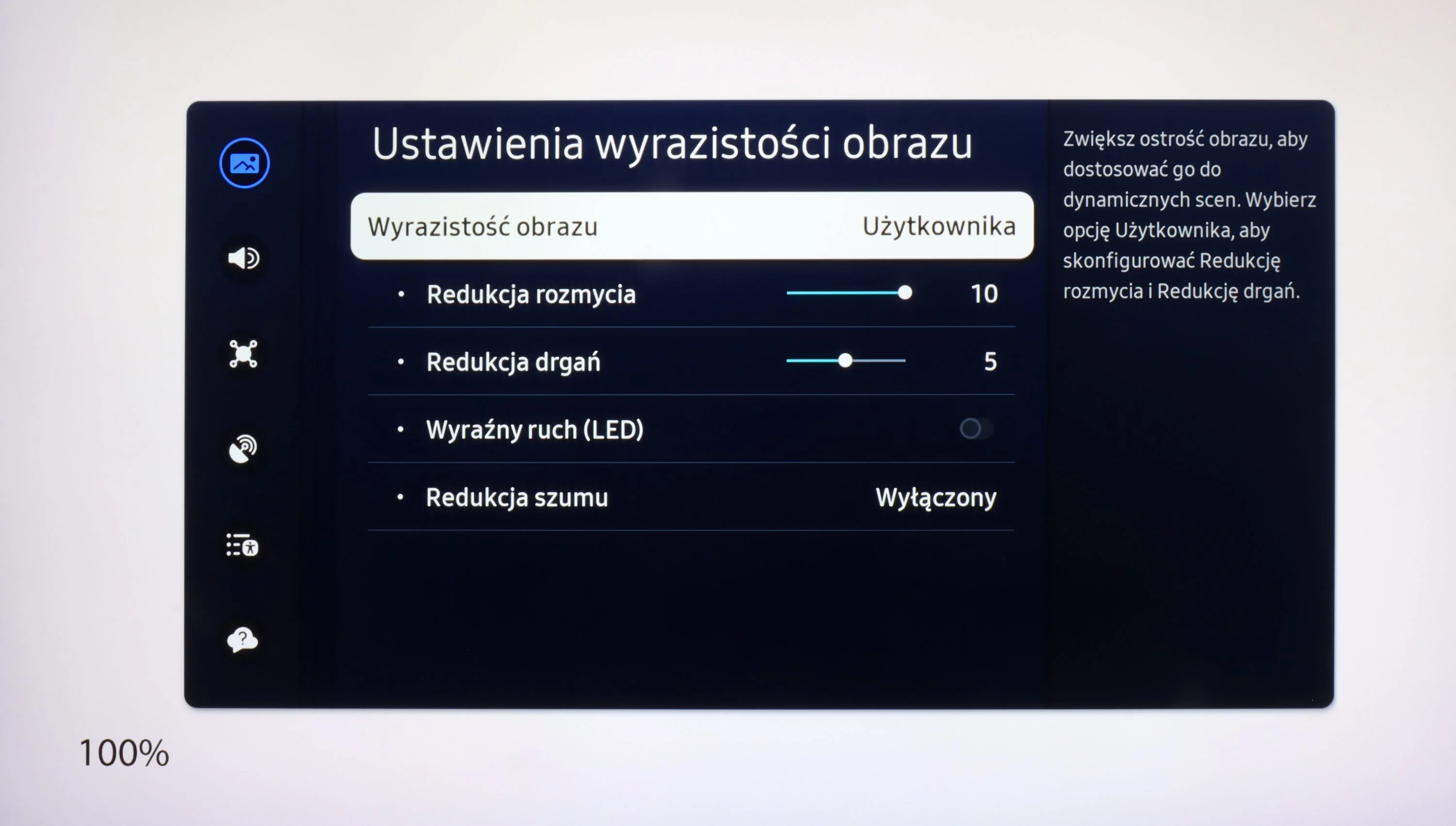
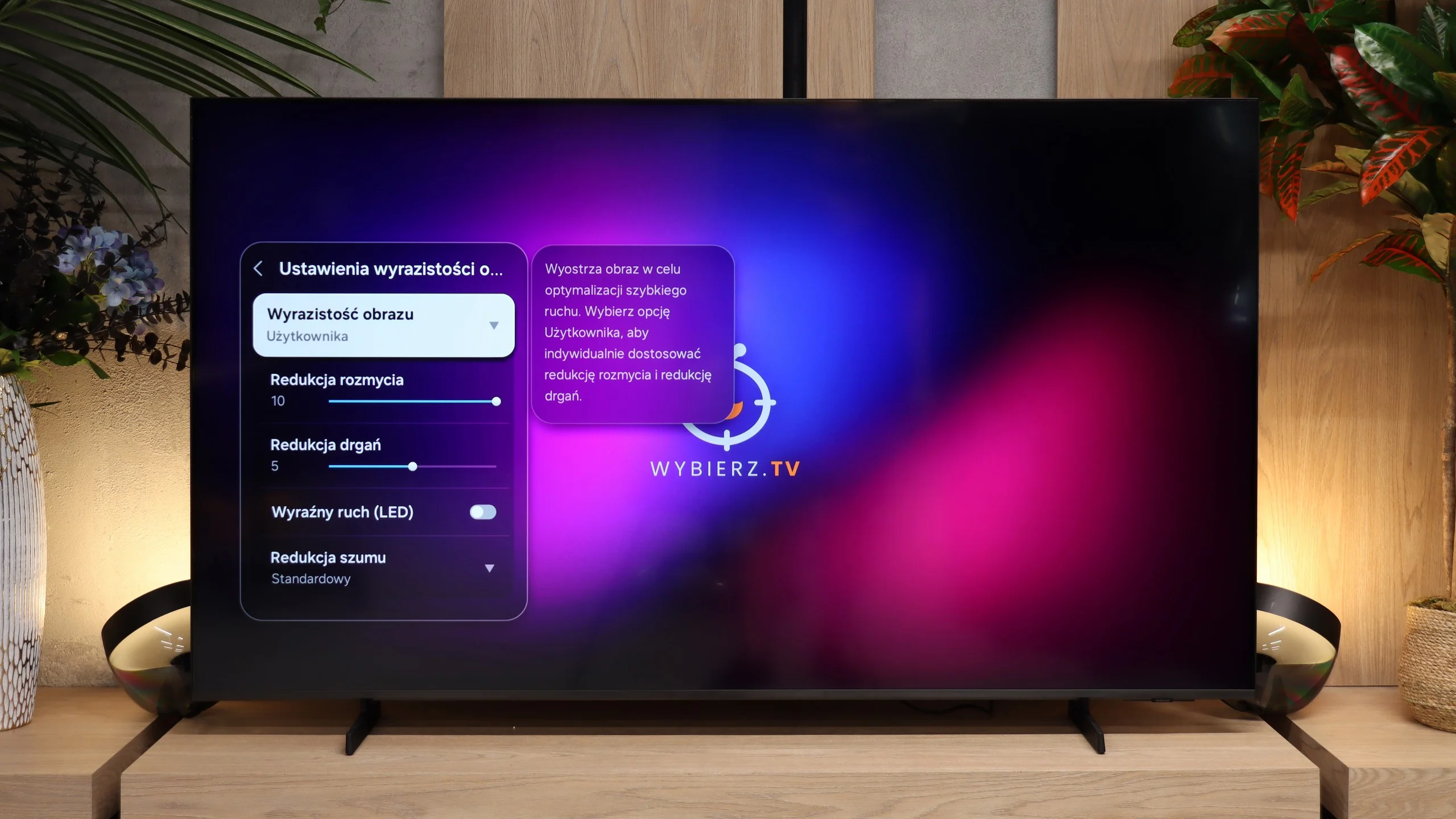
Blur (native resolution, maximum refresh rate):

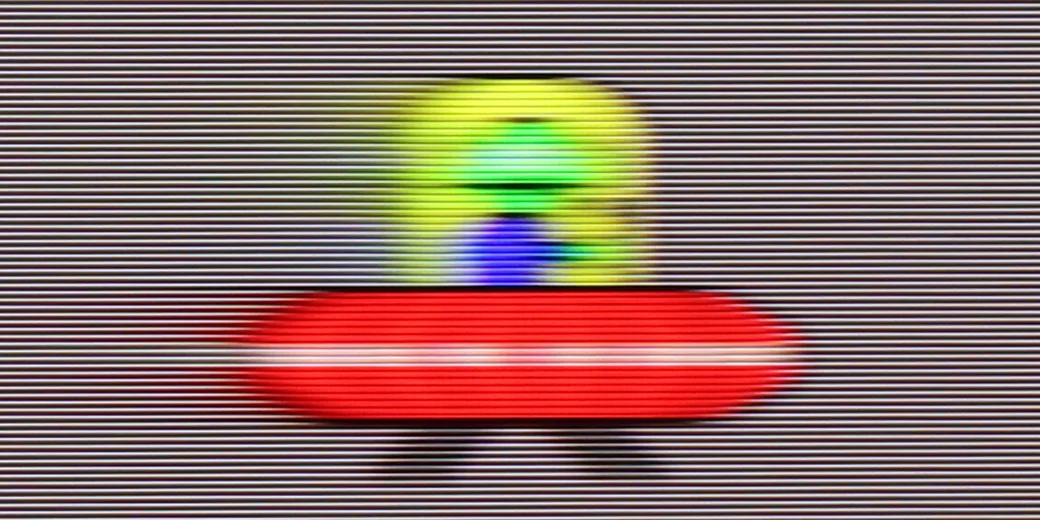
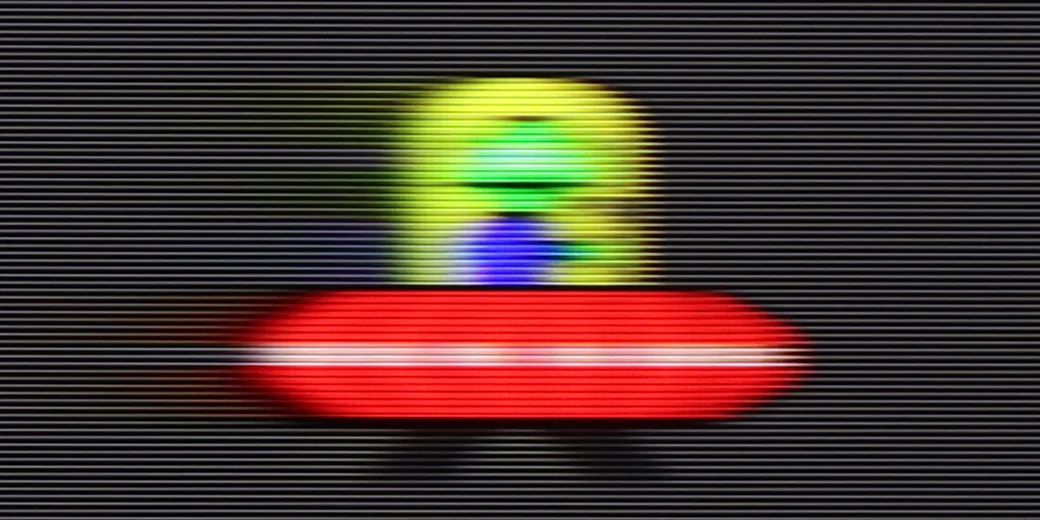

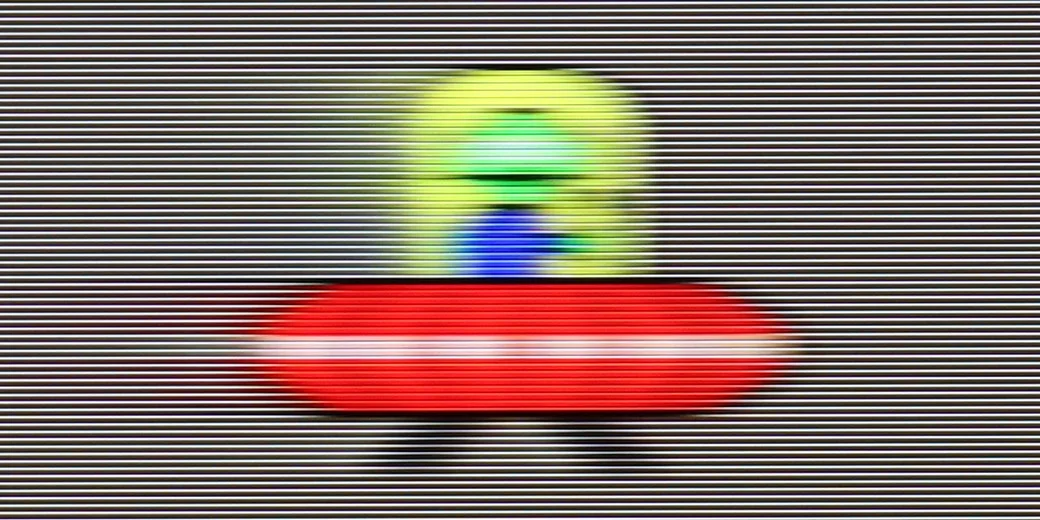
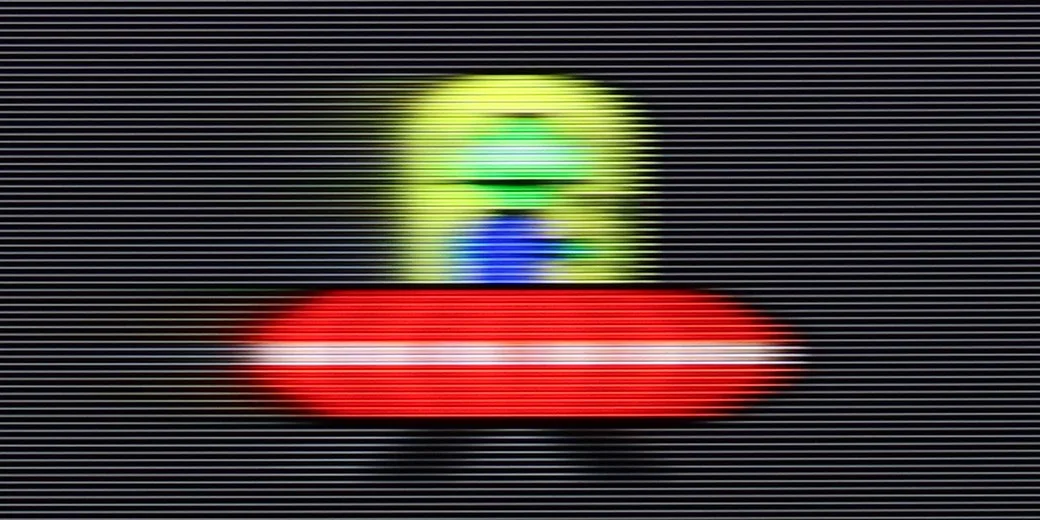
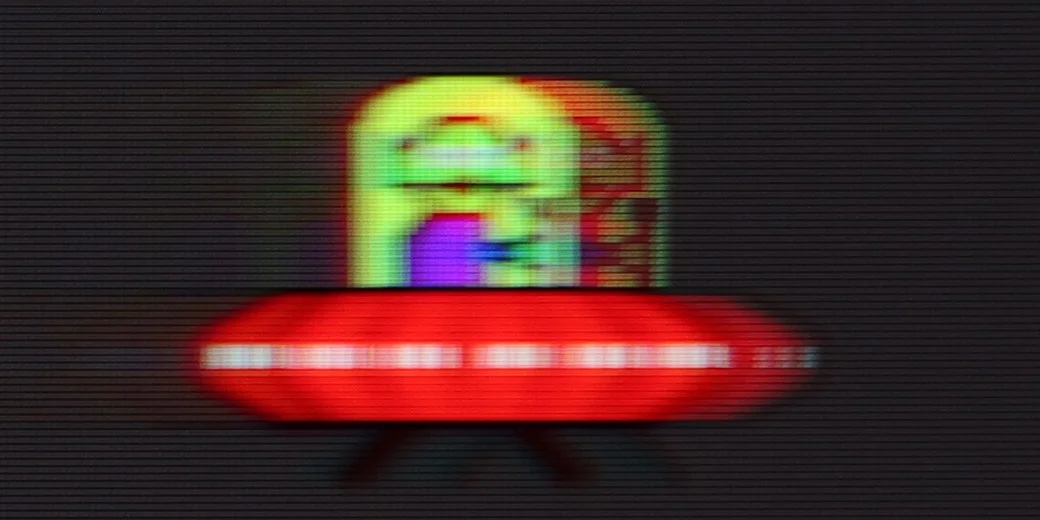
Blur (BFI function enabled):
Image flickers in this mode


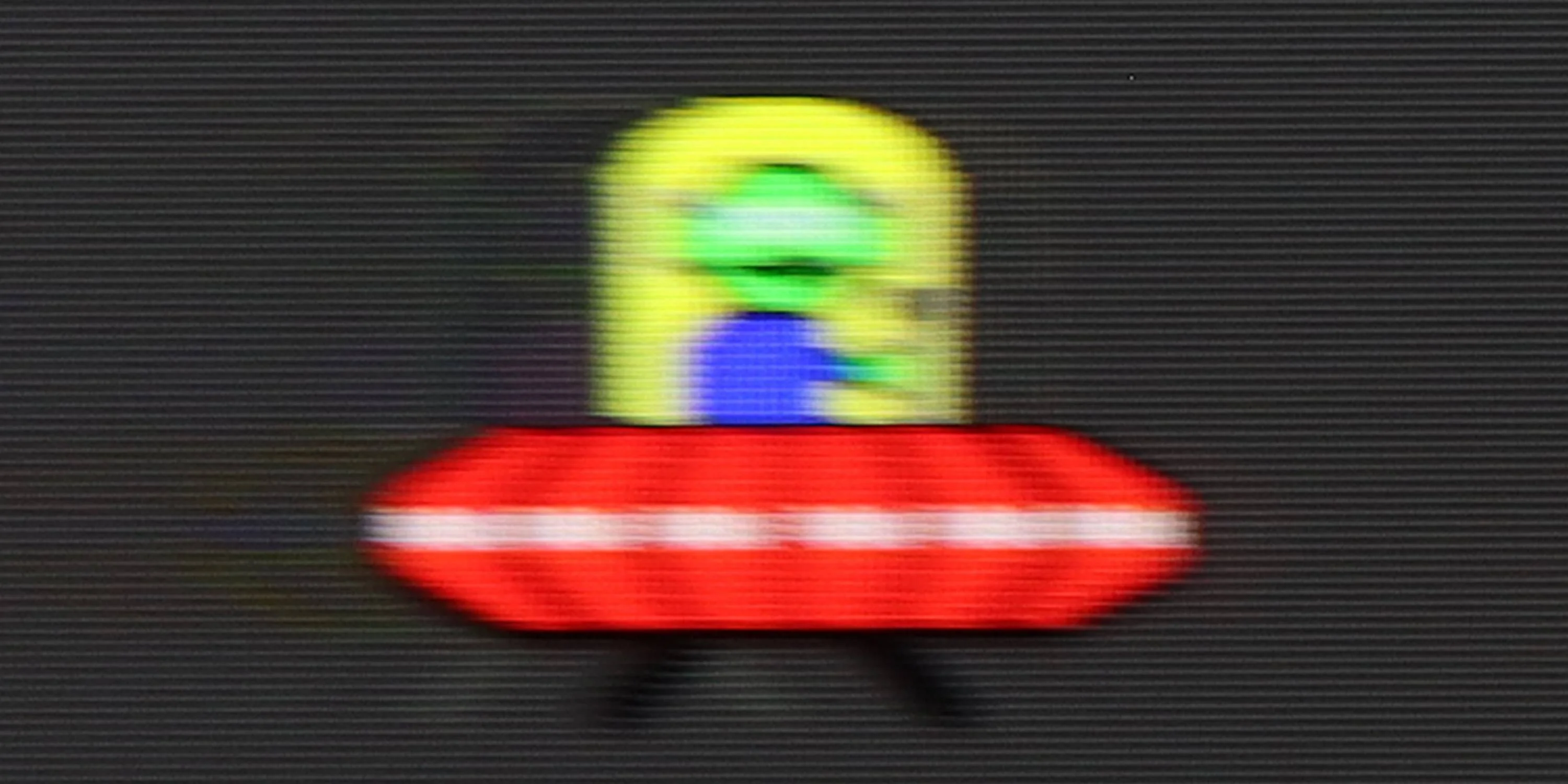
Image flickers in this mode


Blur ():
Blur (4K@240Hz):


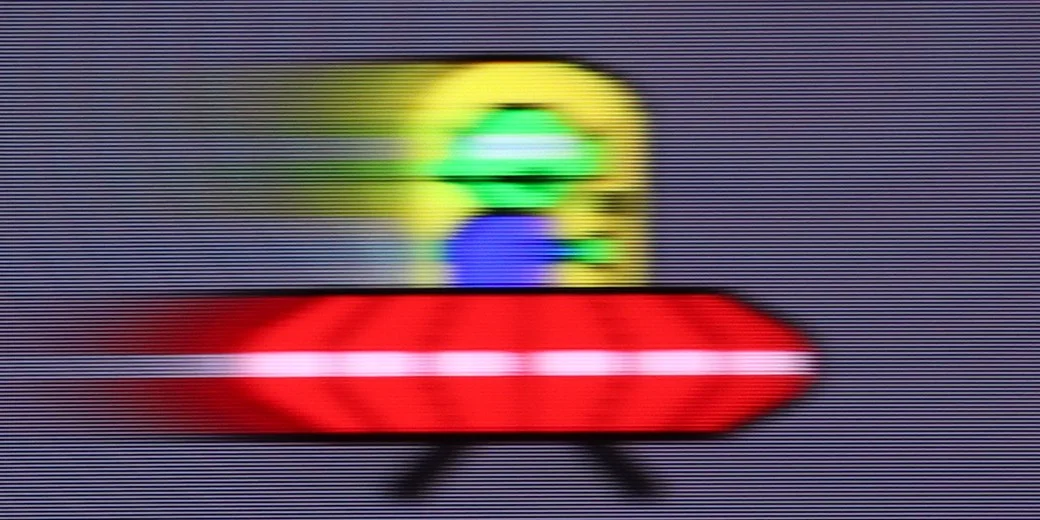
Samsung Q70D is the first model in the manufacturer's portfolio featuring a 120Hz panel. Consequently, its motion smoothing functions are more advanced than those in lower-tier models. Within the menu, we find three functions responsible for improving smoothness: "Motion Blur Reduction," "Judder Reduction," and "Clear Motion (LED)." We will discuss the third one later. The first function is responsible for sharpness in motion, while the second adjusts the level of smoothing. The smoother in Samsung Q70D performs satisfactorily, and each setting brings noticeable changes. Therefore, those who dislike the characteristic juddering in films or are avid sports viewers will be able to achieve a personalised level of smoothing. In the picture, we present a setting with slight smoothing, without the soap opera effect.
The panel used in Samsung Q70D features a fairly good response time for this type of display. Of course, it won't be as sharp as a proverbial razor, but at this price, it is a recommendable choice for all kinds of sports.
The M80H performs very well for watching sport and for gaming. The TV is fitted with a panel offering a refresh rate of up to 144 Hz at 4K, and when the resolution is lowered to Full HD it can even support 240 Hz. PC gamers will benefit most from the latter.
The panel also handles content displayed at 120 Hz well, which is particularly important for console gaming. The high refresh rate is also useful when watching sport, and motion blur is relatively limited. That matters because VA panels are not known for top results in this area. With the M80H, fast-moving objects do not show pronounced smearing.
Console compatibility and gaming features
9.5/10
9.6/10
- ALLM
- VRR
- VRR range48 - 120Hz48 - 240Hz
- Dolby Vision Game Mode
- Correct implementation of HGIG
- 1080p@120Hz
- 1440p@120Hz
- 4K@120Hz
- Game bar
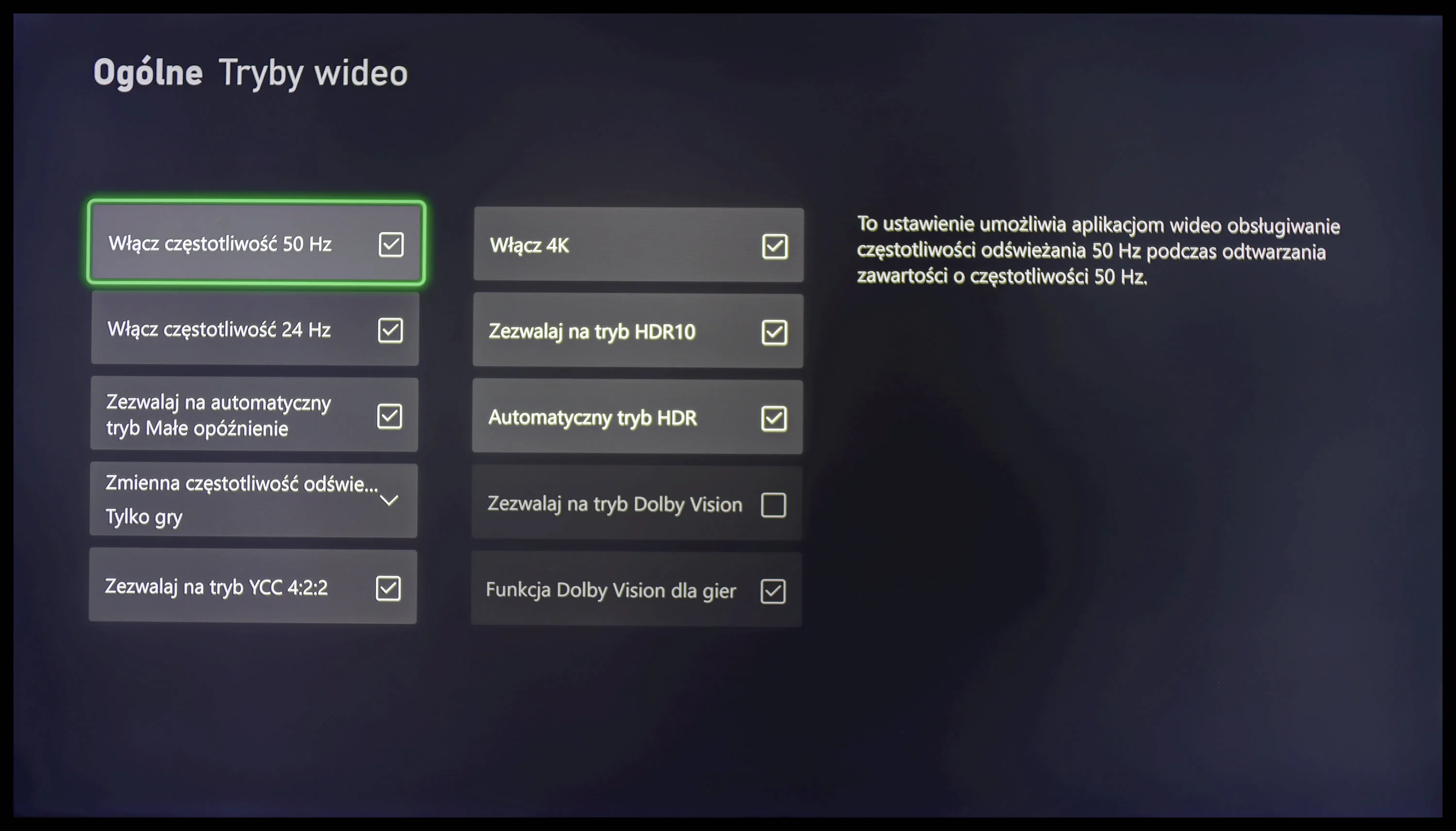
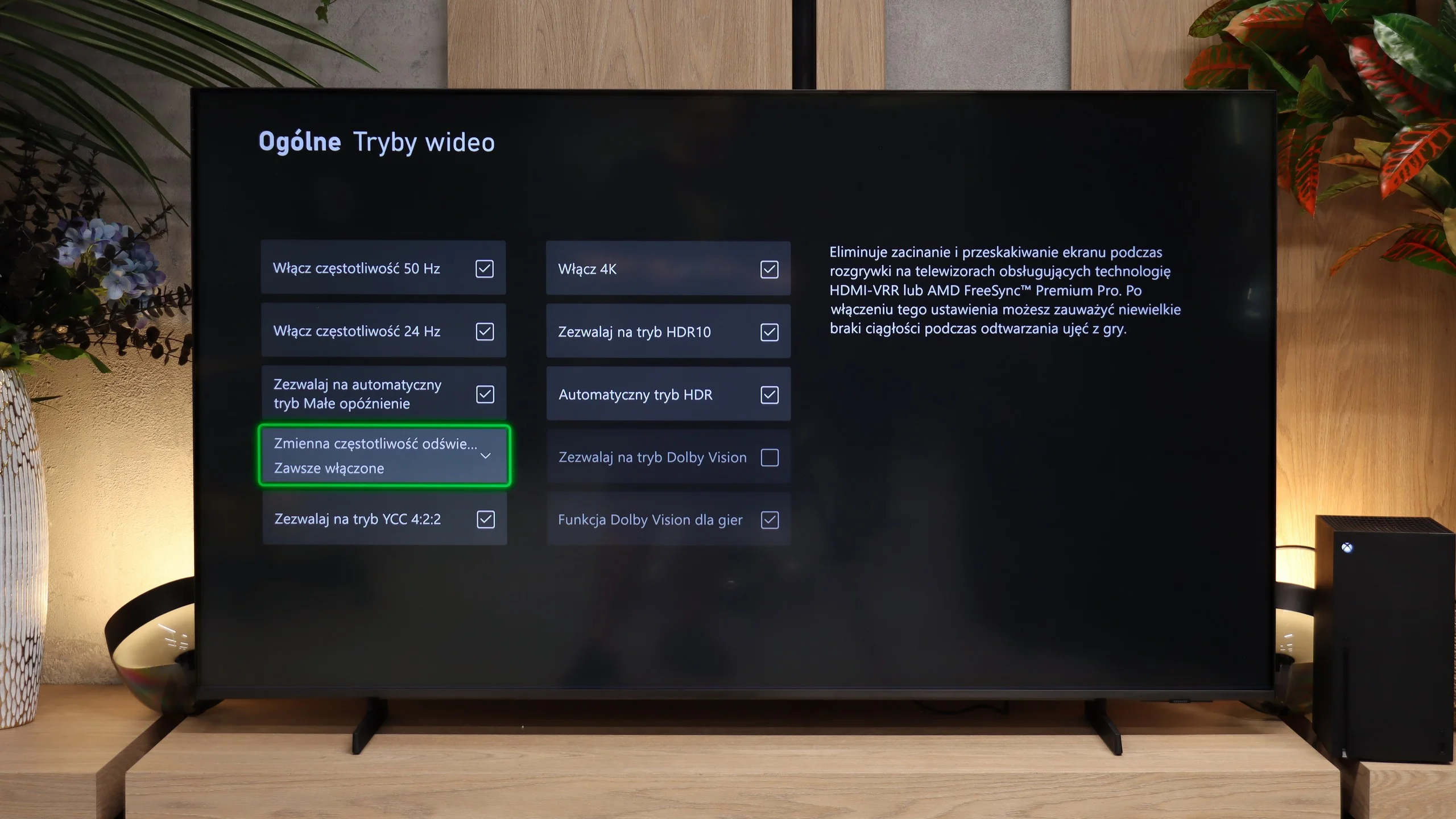
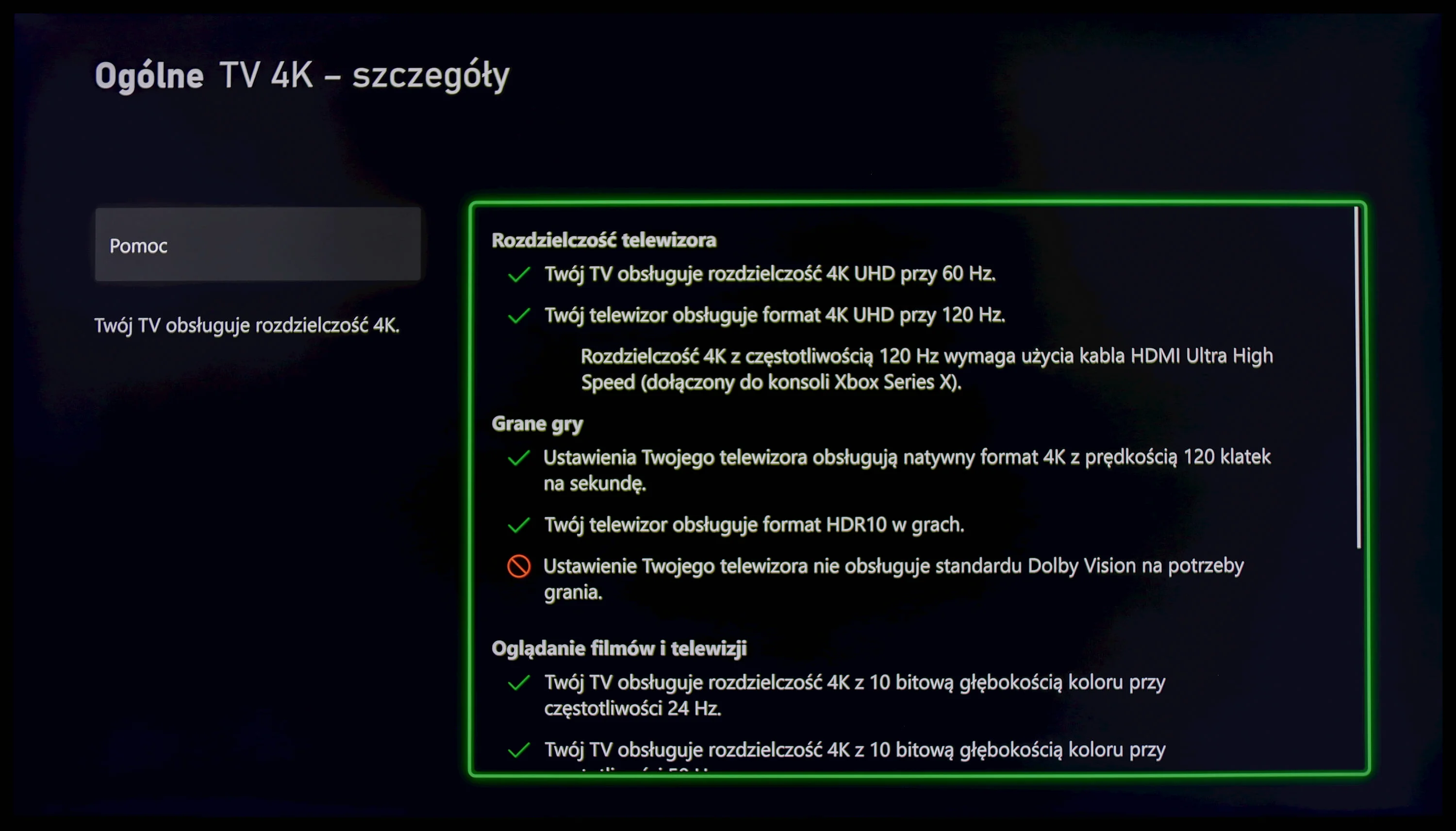
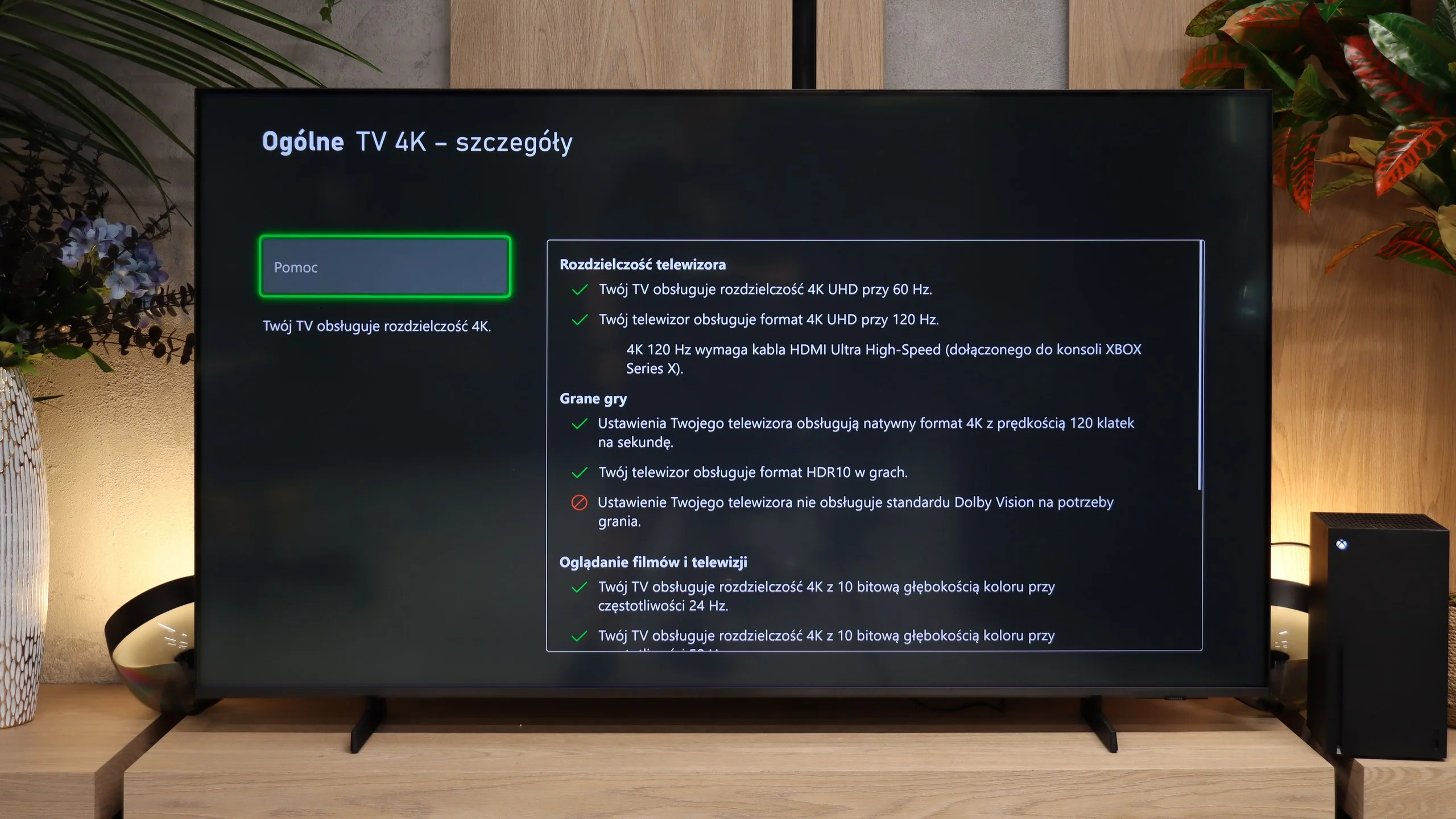
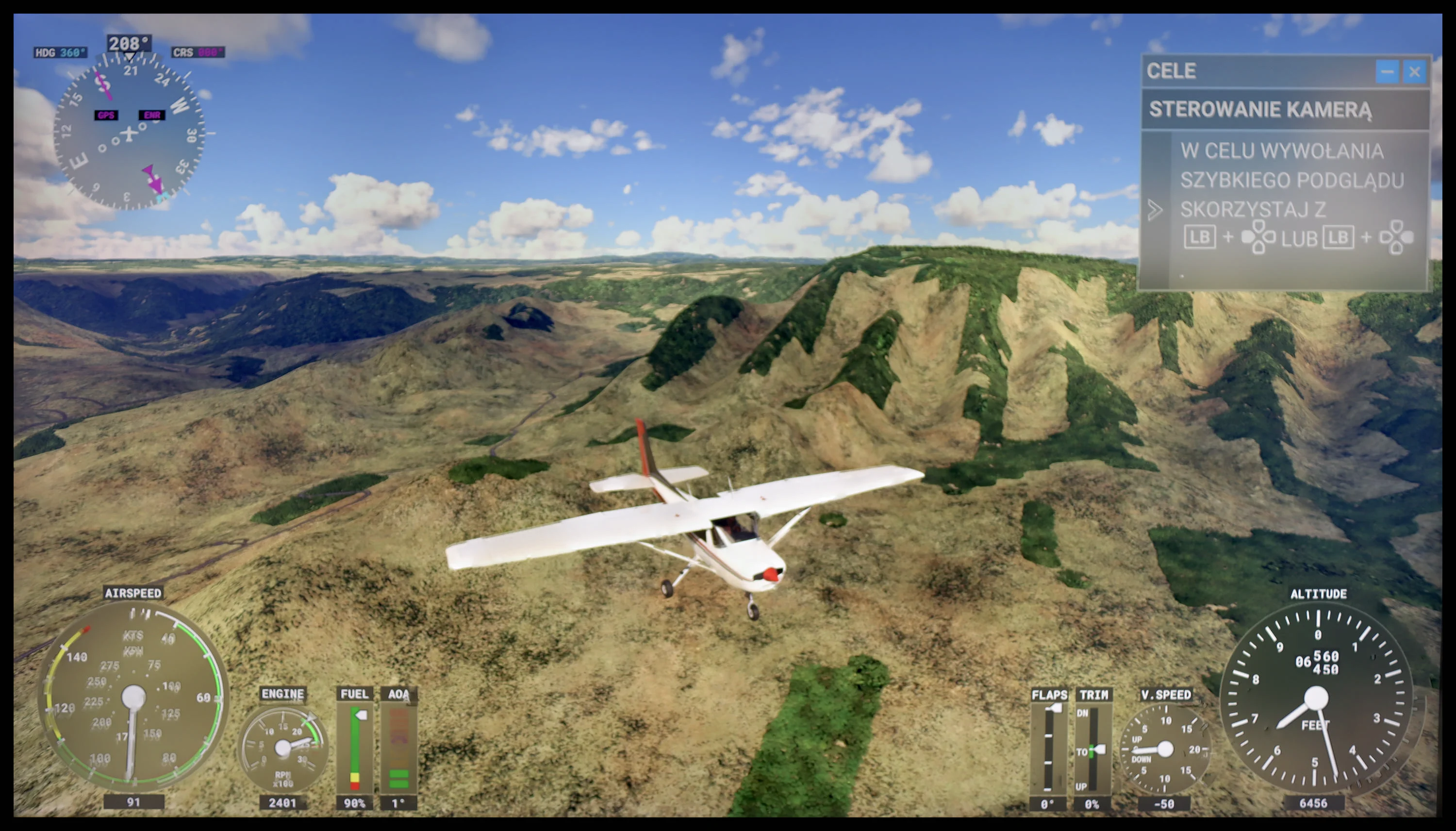
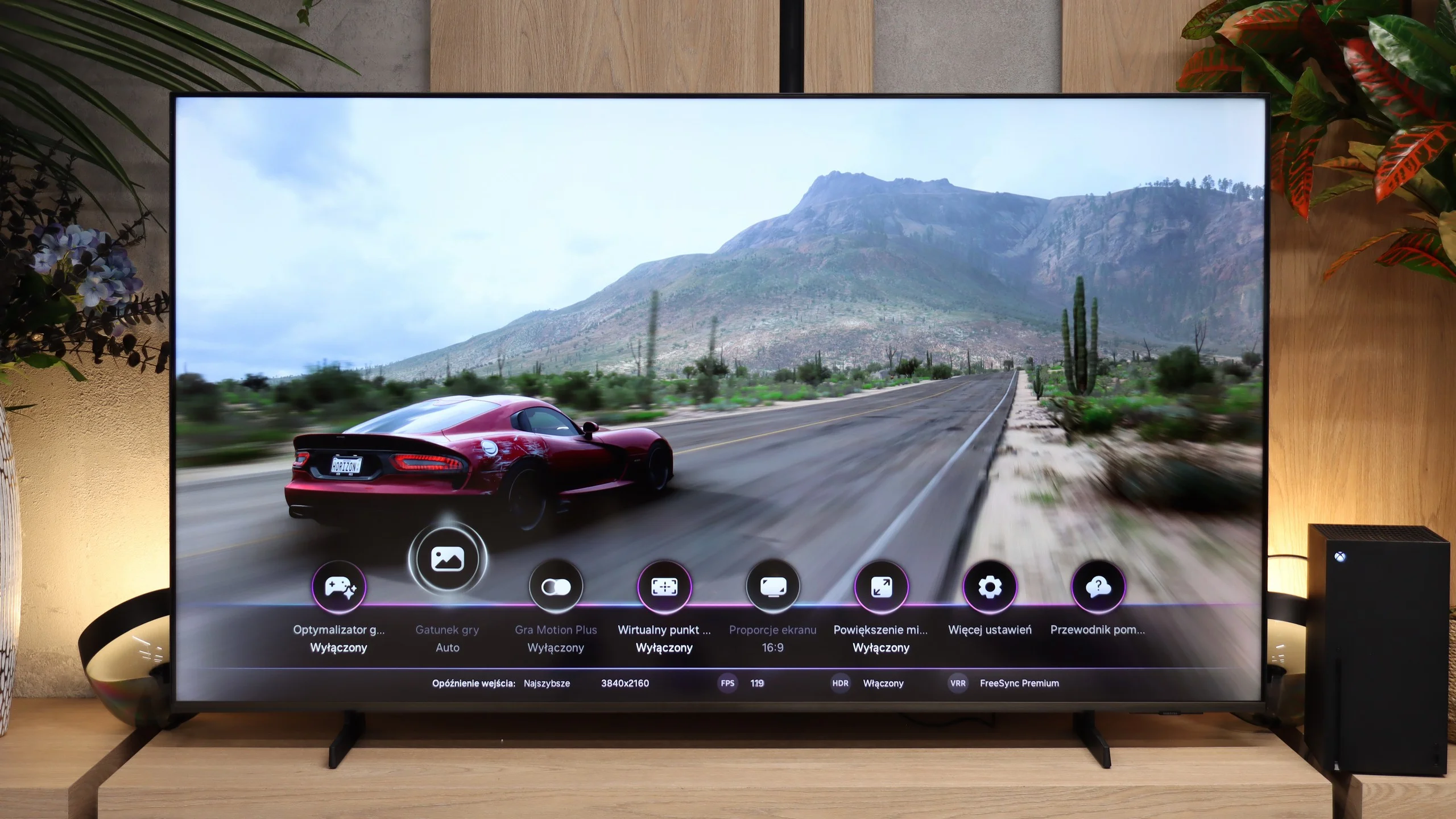
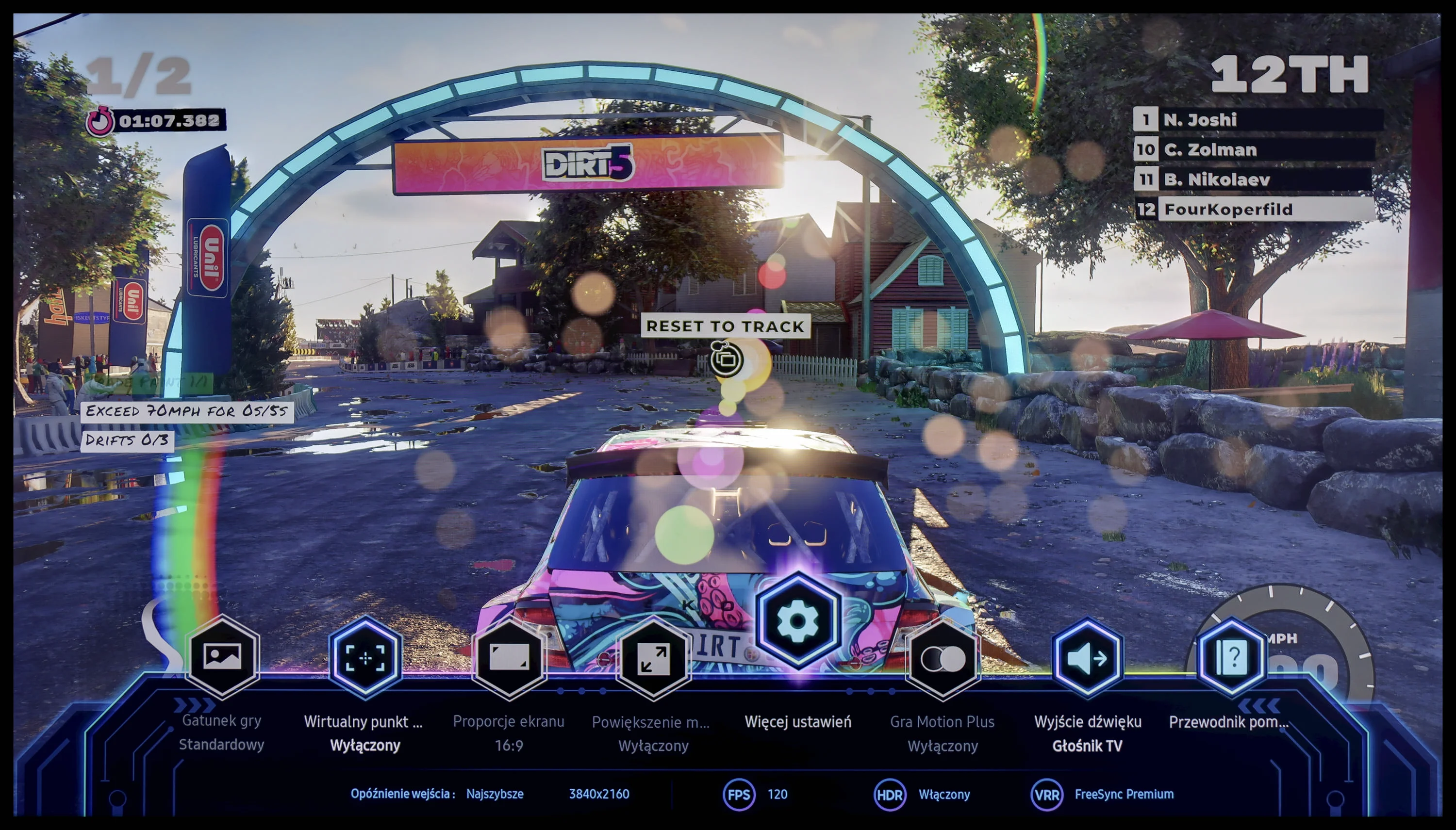
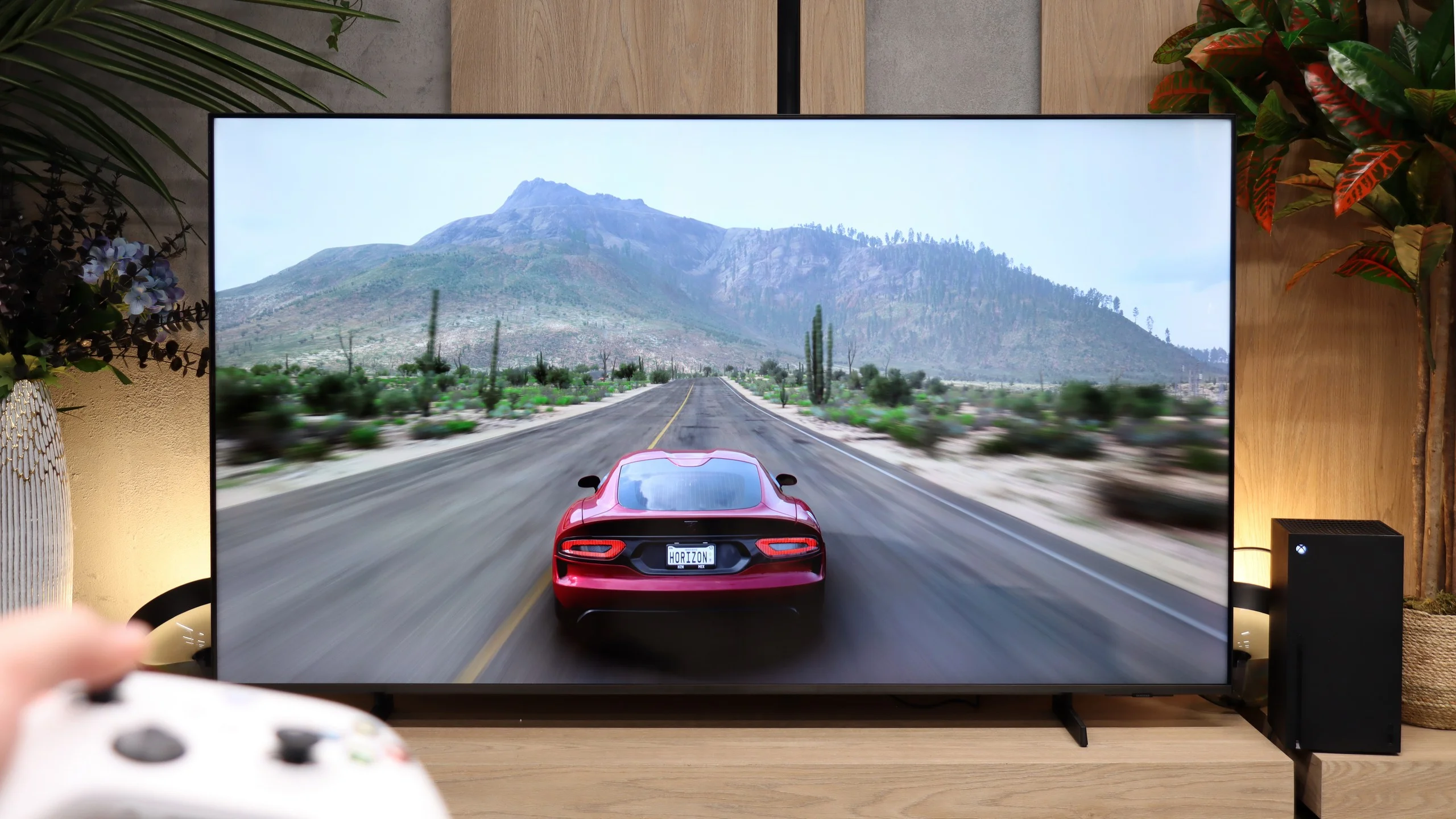
The tested television is equipped with four HDMI 2.1 ports. Interestingly, all of them have a bandwidth of 40 Gbps; however, during the conducted tests, we did not find any negative effects related to this state of affairs. Moreover, and more importantly, Samsung Q70D supports all functions resulting from the aforementioned standard. This news will surely please all gamers, as it means that whether using a console or a PC, we can count on the highest possible comfort during gameplay. Given the typical absence of HDR Dolby Vision for this manufacturer, it is significant that the HGIG mode has been correctly implemented and there is no issue with setting the calibration checkerboard. We particularly note that Samsung, as the only manufacturer, allows gameplay with the smoothener turned on, without significant degradation. This means that titles running at 30 fps will be perceived like those with native 60 frames per second.
Samsung, as one of the first manufacturers, introduced the Game Bar to its televisions, which it has consistently refined since then. It contains all the necessary information regarding gameplay parameters that we can change "on the fly".
To summarise: Samsung Q70D performs excellently both with a console and a computer. All functions worked perfectly and there were no issues with them. The ability to enable the smoothener without a significant increase in input lag is a true game changer.
The M80H could be a very good choice for gamers on a slightly smaller budget. In terms of features it offers essentially the same as far more expensive Samsung TVs. All three HDMI ports support the 2.1 standard, so even if one is taken by a soundbar connected via eARC there is still room for a PC and consoles. There is also VRR that runs up to 144 Hz at 4K and up to 240 Hz at Full HD. Samsung has also correctly implemented HGiG, so after performing HDR calibration on a console games are properly matched to the screen’s capabilities. This won't make the M80H any brighter, but at least it won't unnecessarily crush the brightest parts of the image. There's also a Game Bar for quick access to key settings and a Gaming Hub that lets you play in the cloud without a console. The M80H also offers Game Motion Plus, which creates additional frames and improves the smoothness of games running at 30 or 60 fps. Input lag then rises to around 59 ms, but is still roughly three times lower than with ordinary motion smoothing on TVs from other manufacturers. We wouldn't really recommend it for online gaming, but in more relaxed titles it can perform very well.
Input lag
10/10
9.9/10
SDR
HDR
Dolby Vision
The latency results in Samsung Q70D are at a high level, regardless of the signal or resolution. All gamers will certainly appreciate the manufacturer's efforts, which allow for a game running in 4K 120 Hz with HDR to have a mere 7 ms latency, which is virtually unnoticeable even in online games. It is worth adding that the lag with the smoothness enhancer switched on increases by about twice, which still means very comfortable gaming in this case.
Input lag in the M80H is very low. With a 60 Hz signal it is about 14 ms, and at 120 Hz it drops to 9 to 10 ms. The delay is therefore practically imperceptible, whether we're gaming in SDR or HDR.
Compatibility with PC
8/10
8.9/10
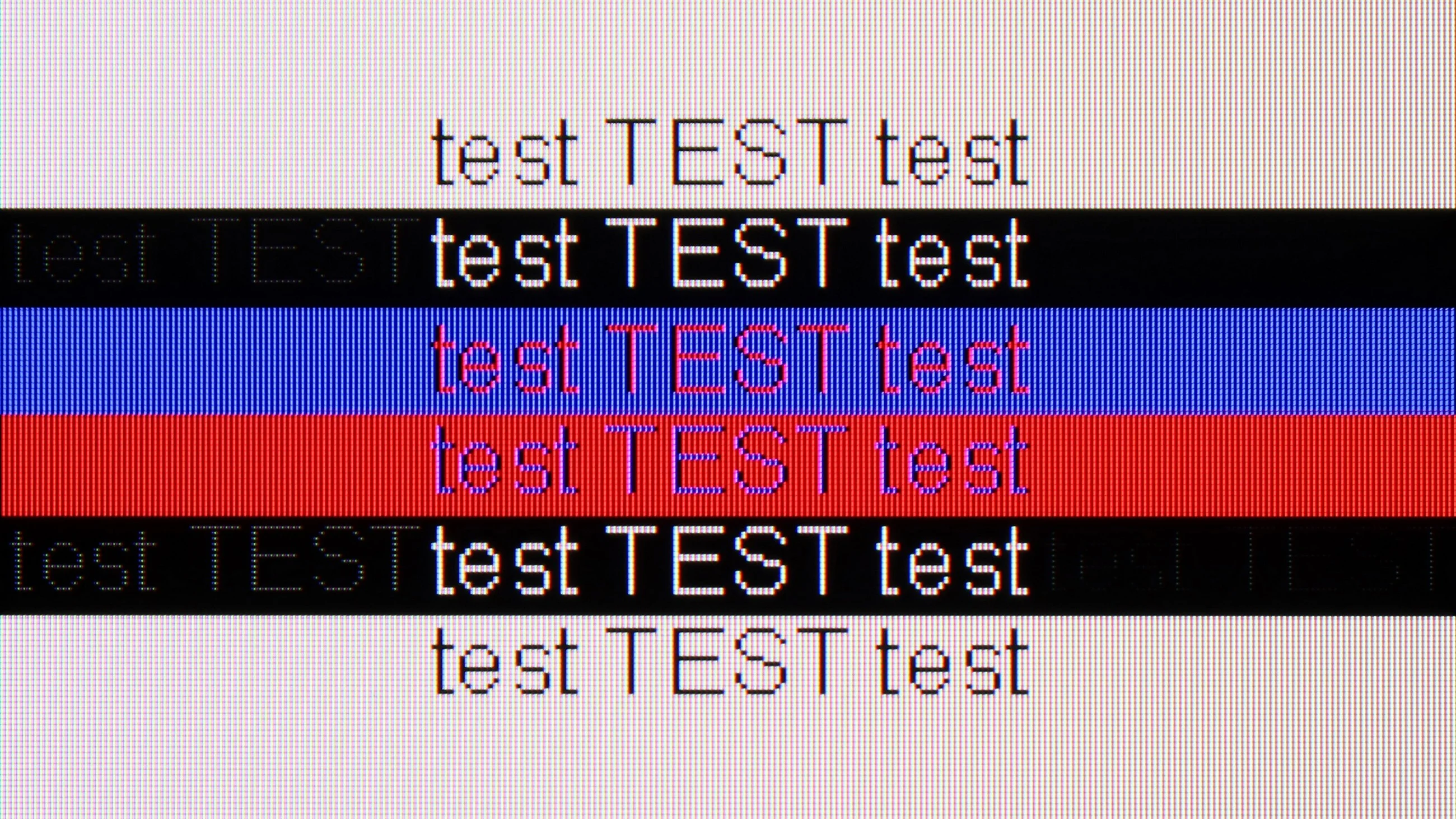
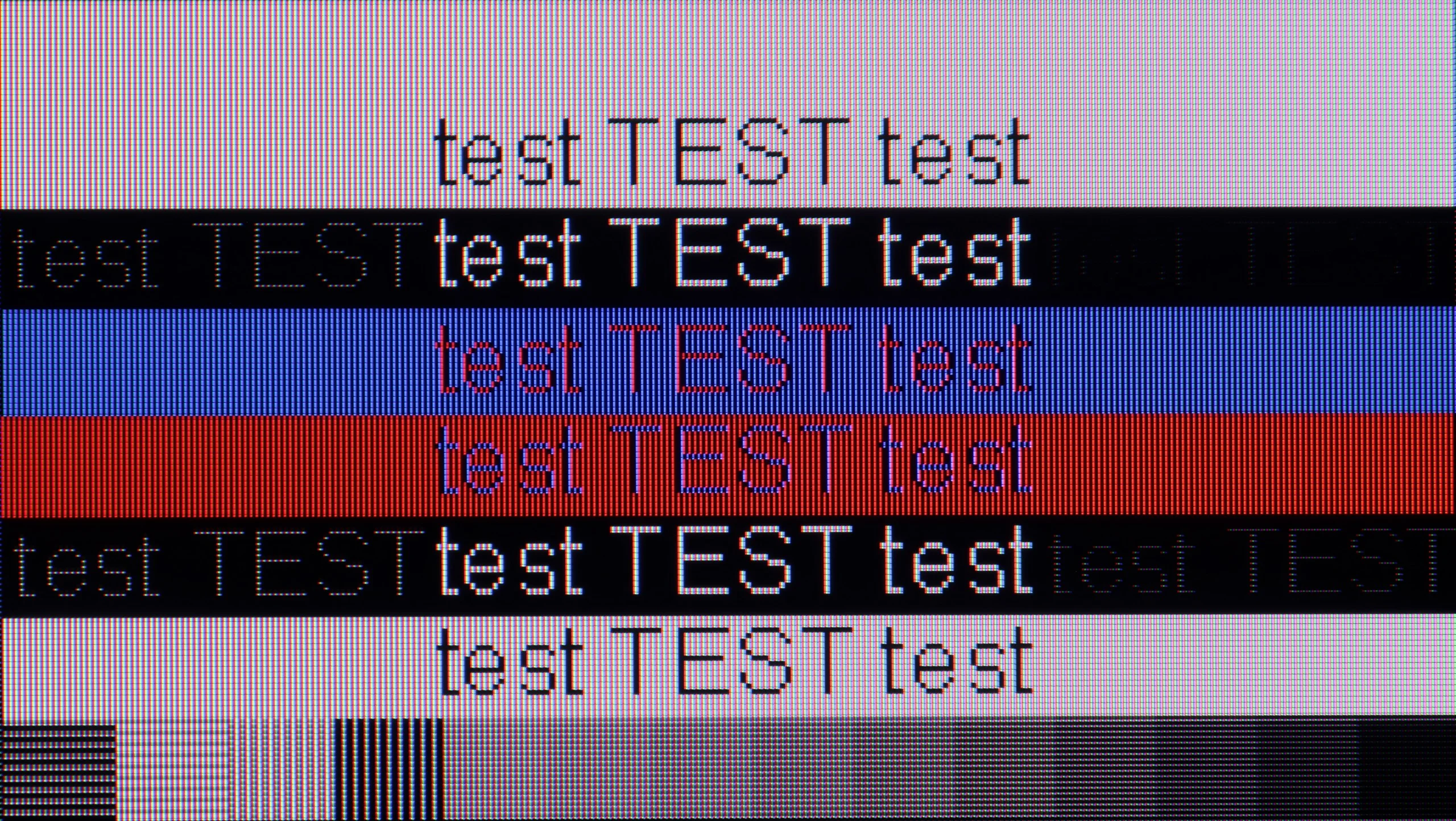
The photo shows the legibility of small fonts. Ideally, lines should be the same thickness on both light and dark text, with minimal pixel gaps.
After connecting the television to the computer and wanting to use it as a monitor, we can expect a low input lag of 13 ms, which is practically unnoticeable along the mouse-screen-eye line. Thanks to the correct implementation of chroma 4:4:4, the readability of fonts is at a high level, so one can confidently connect the Samsung Q70D to the computer as a monitor and anticipate comfortable work with text.
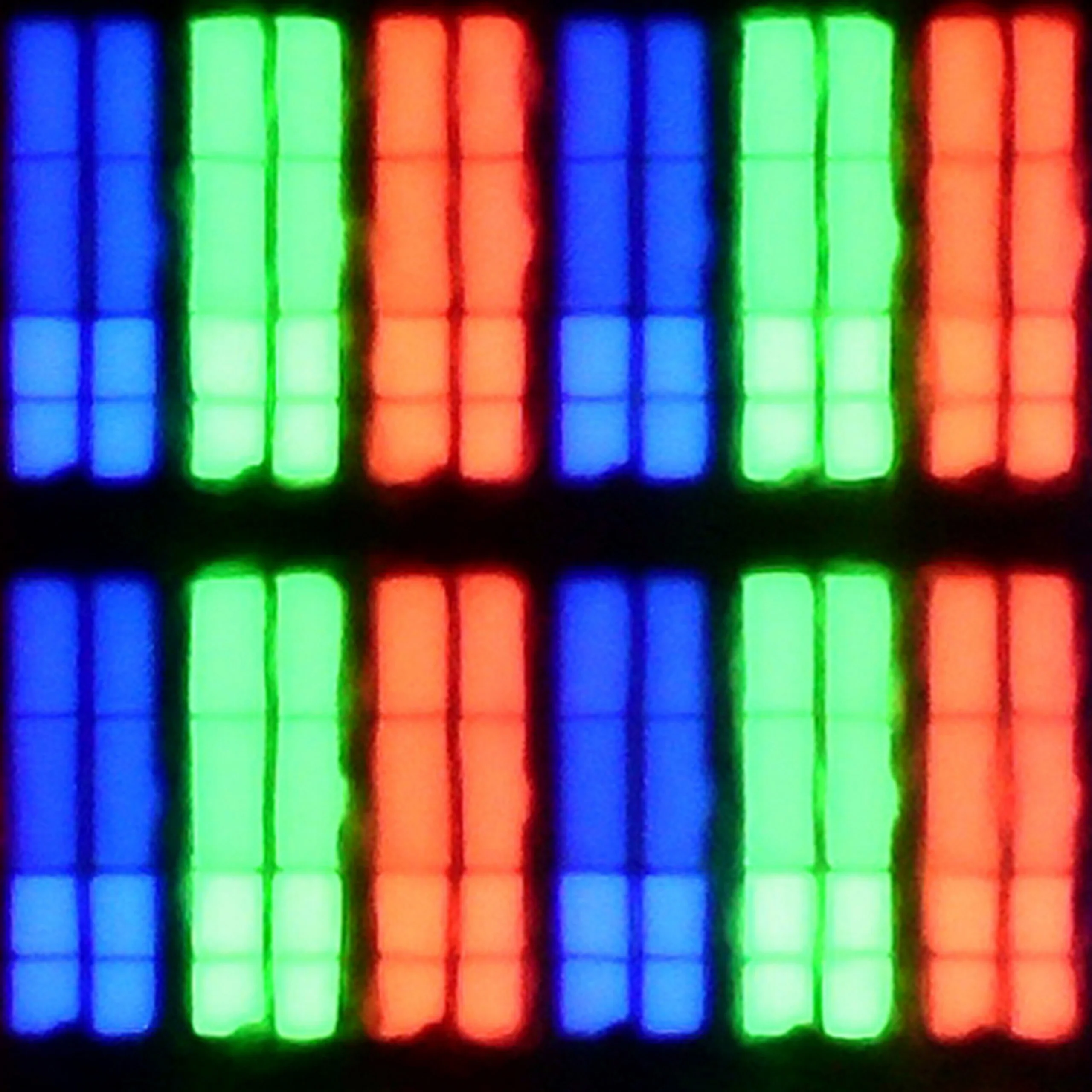
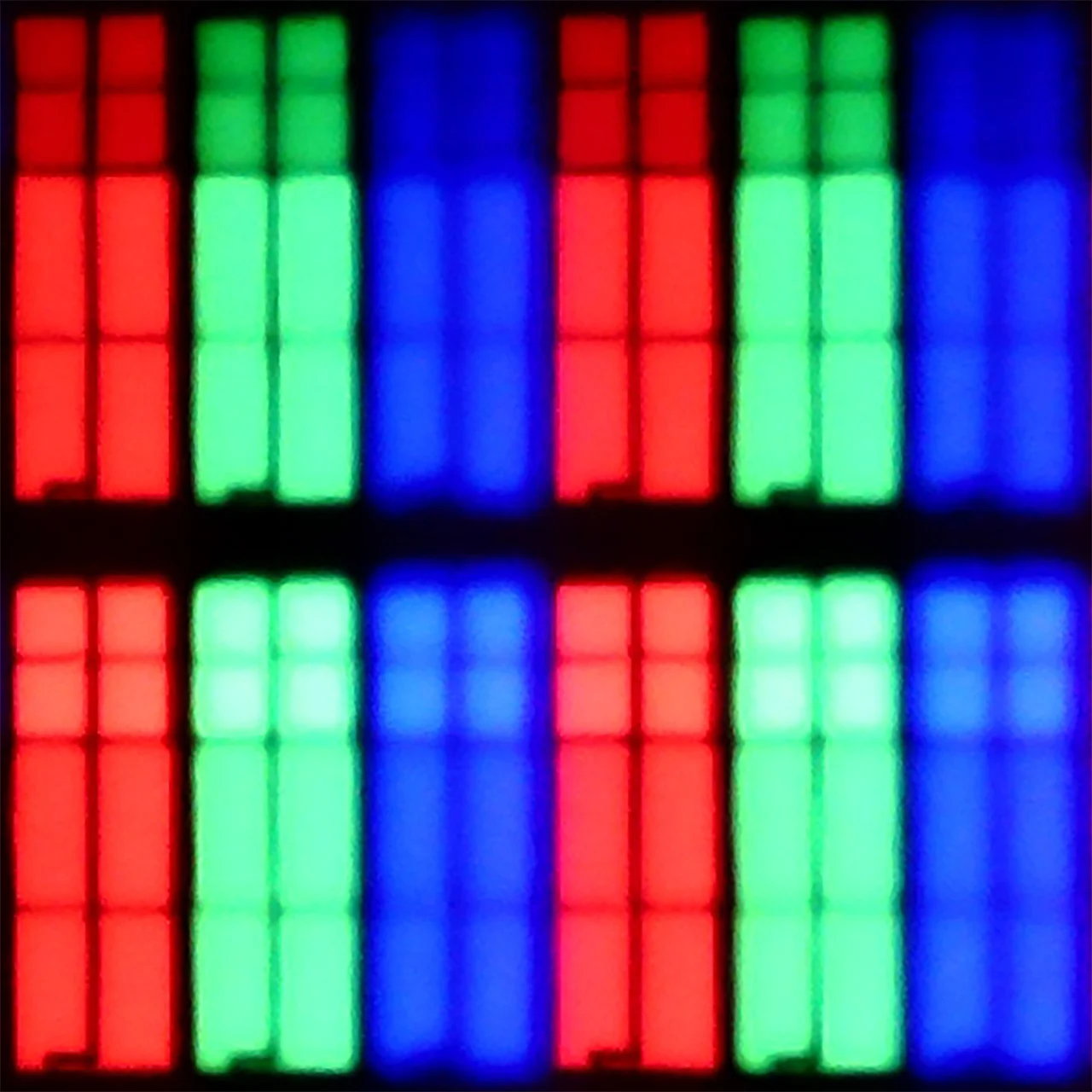
The subpixel arrangement is BGR, which does not negatively impact the use of the television as a monitor. However, since operating systems are not adapted to such a subpixel format, this may cause slightly less clear outlines. Nevertheless, this is practically negligible and only a handful of people may notice it.
The M80H also works very well as a computer monitor. Gamers can use 4K at 144 Hz, with VRR and G-Sync, and input lag in PC mode is around 10 ms. There is also a Full HD mode at 240 Hz. The TV correctly displays 4:4:4 chroma at the maximum resolution and refresh rate. Combined with a classic RGB subpixel layout, this gives very good font legibility, for both light and dark text. The M80H is therefore suitable not only for gaming but also for everyday desk work.
Viewing angles
2.9/10
3.1/10
Due to the VA panel, the performance of the Samsung Q70D in terms of viewing angles is its Achilles' heel. Even a slight shift from the axis results in a significant loss of contrast and a substantial degradation of colours.
Viewing angles are one of the weaker points of the M80H. The TV uses a VA panel, which provides deeper blacks and higher contrast than an IPS panel, but it looks worse when viewed from the side. Just sitting at a wider angle is enough for colours to start losing saturation, blacks to become noticeably lighter, and the whole image to look more washed out. This is a typical compromise associated with this type of panel. The M80H therefore performs best when watched straight on or from a minimal angle.
Daytime performance
5.4/10
5/10
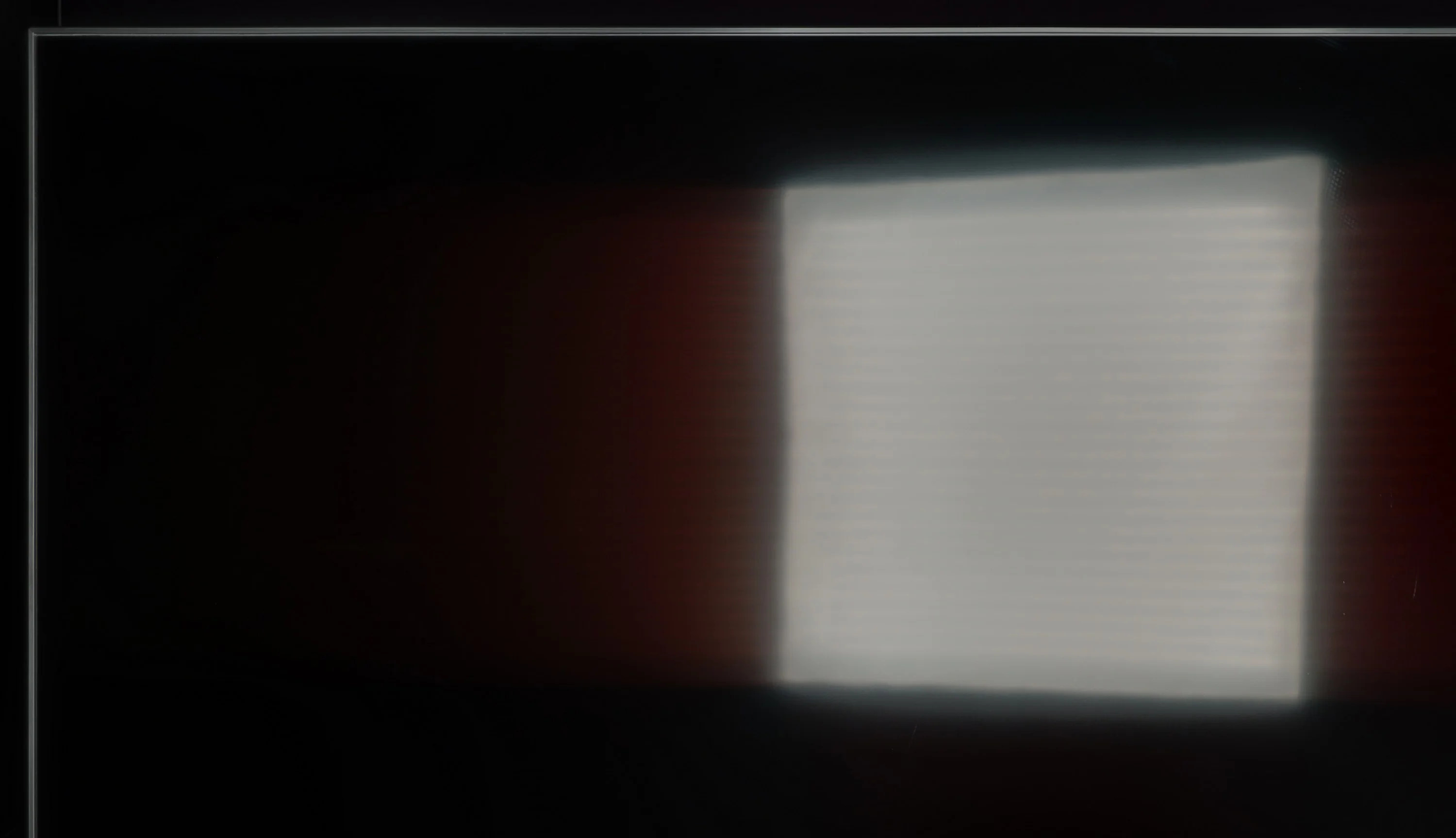
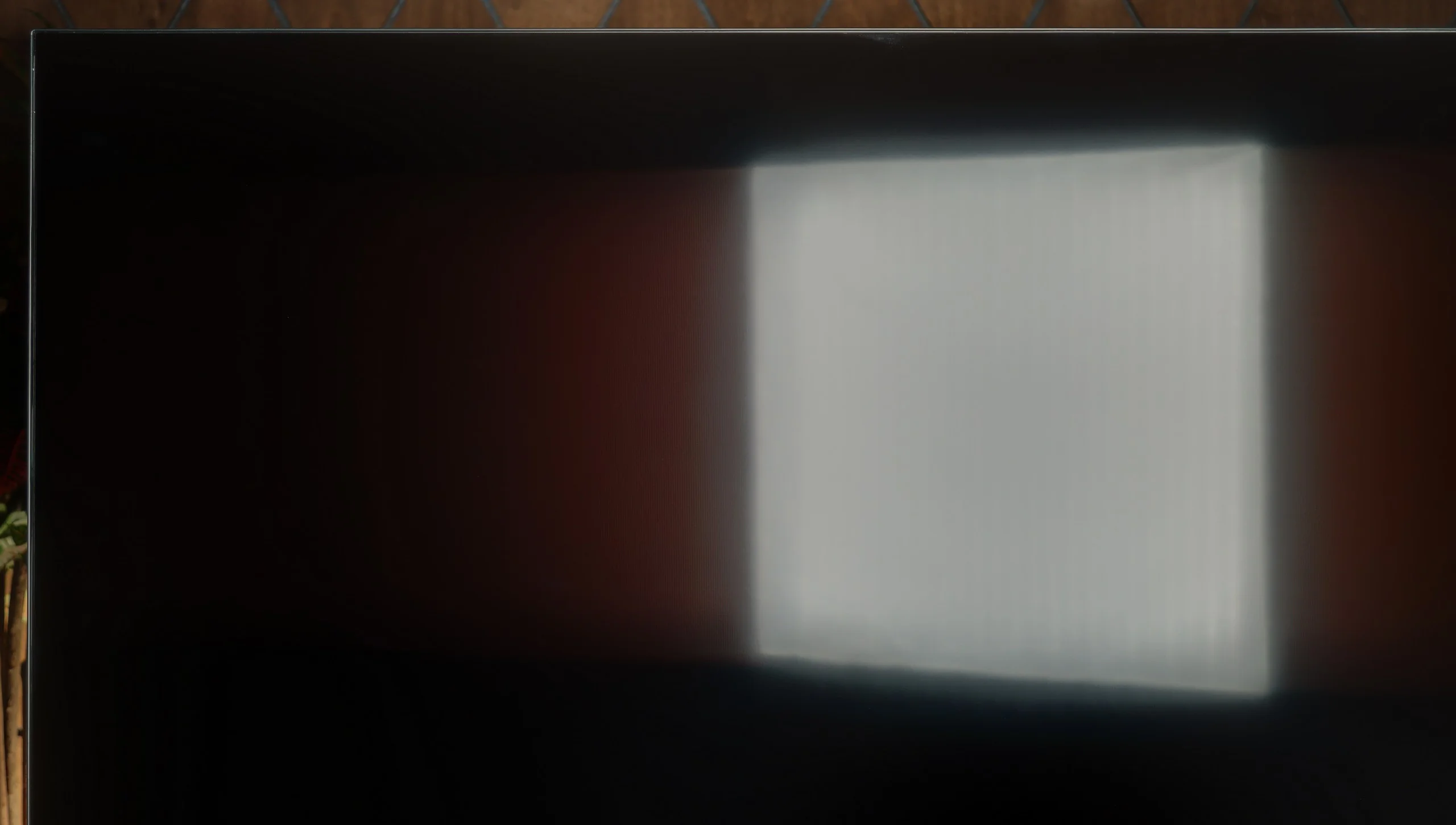
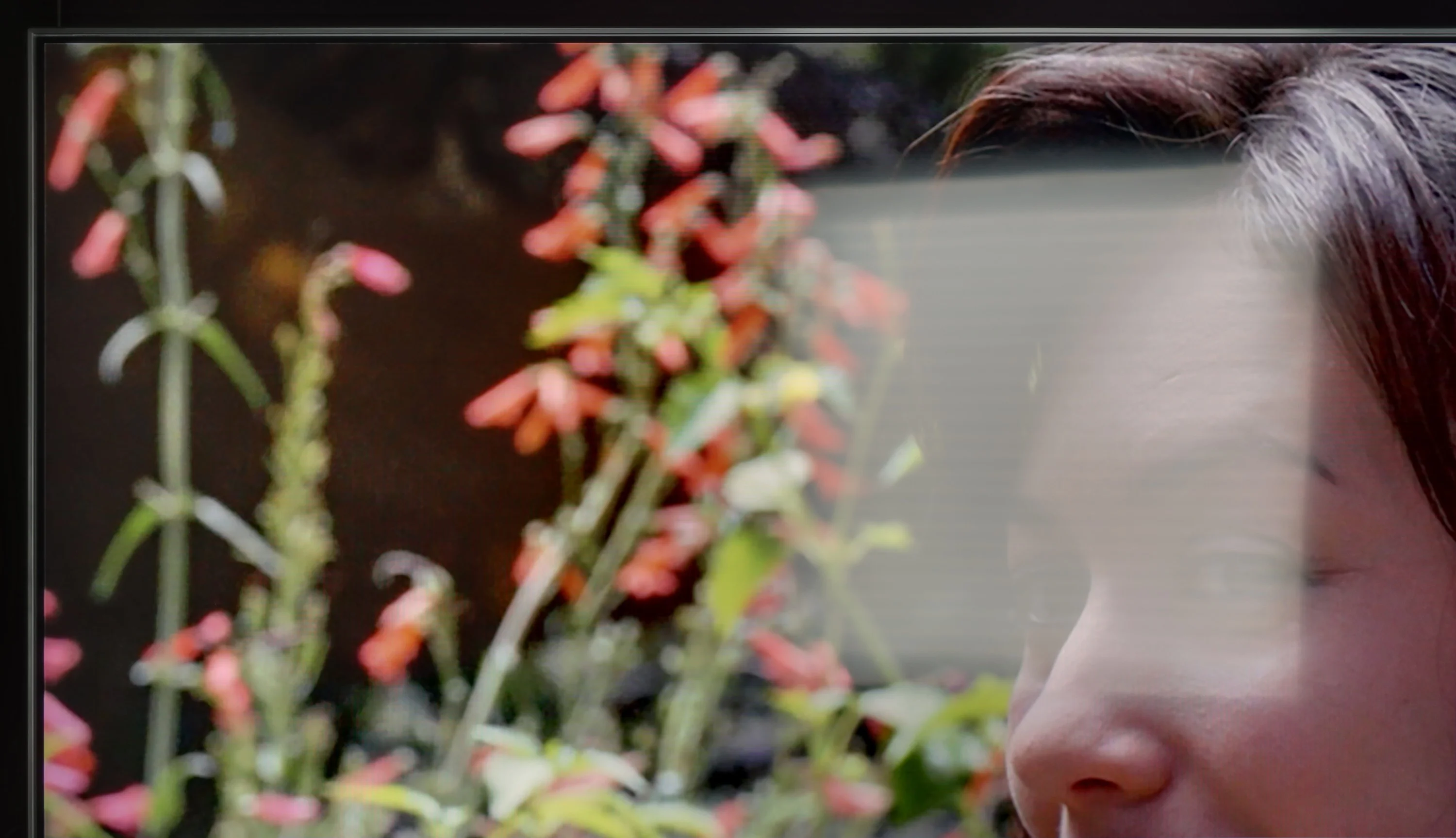
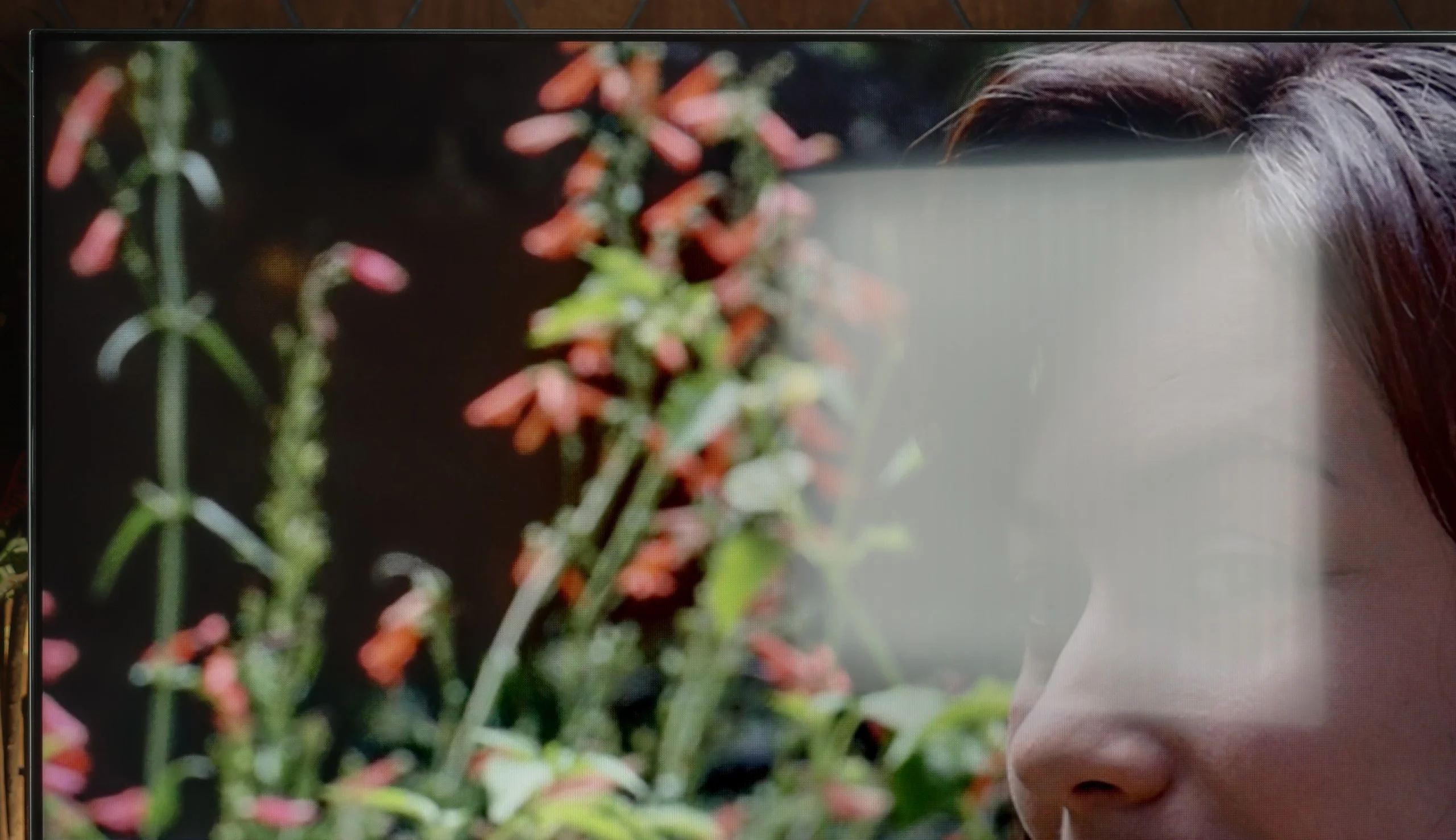
Panel brightness
Samsung M80H: 345 cd/m2
Samsung QLED Q70D / Q74D / Q77D: 449 cd/m2
The satin finish of the panel in the Q70D allows for quite good performance in a strongly sunlit room. It is worth noting that the reflections do not extend beyond their source, thus not spilling over onto the rest of the panel. We also commend the maximum brightness of the television in SDR materials, which is 450 nits, allowing for comfortable content consumption during the day.
In a bright room the M80H performs acceptably, but without any major surprises. The satin finish does a decent job of reducing reflections, although with large windows or lamps positioned opposite the screen they will still be visible. Black levels are a plus: with the lights on they do not become overly grey. SDR brightness is around 345 nits and remains stable regardless of the scene being shown. In a typical living room this should be enough for comfortable daytime viewing. However, in a very brightly sunlit room the image may look too washed out.
Panel details
Subpixel Structure:
Panel uniformity and thermal imaging:
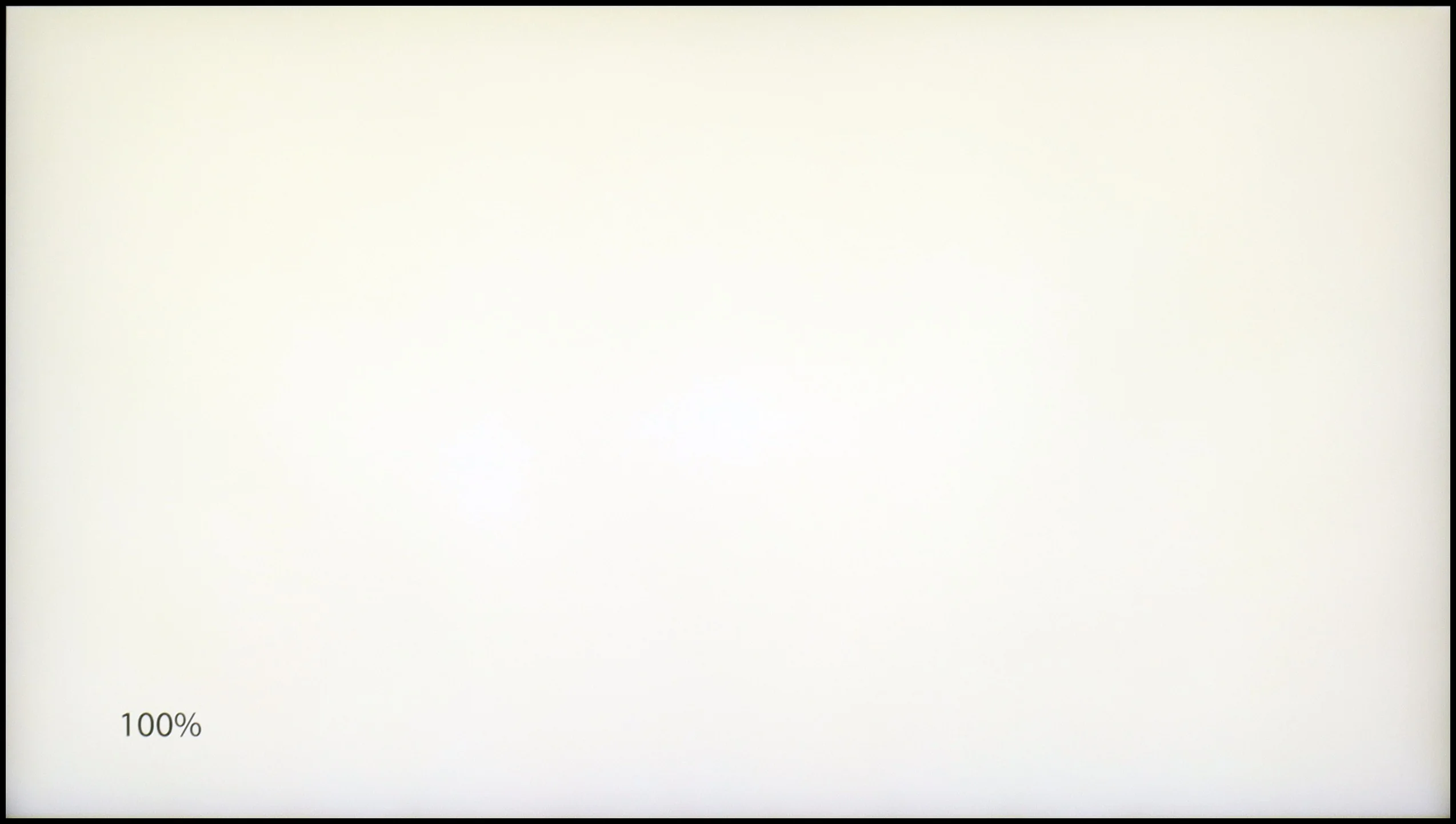
Samsung QLED Q70D / Q74D / Q77D
Samsung M80H
TV features
7.4/10
7.3/10
- SystemTizenTizen
- System performanceGoodVery good
- HDMI inputs0 x HDMI 2.0, 4 x HDMI 2.1 40Gbps0 x HDMI 2.0, 3 x HDMI 2.1 48Gbps
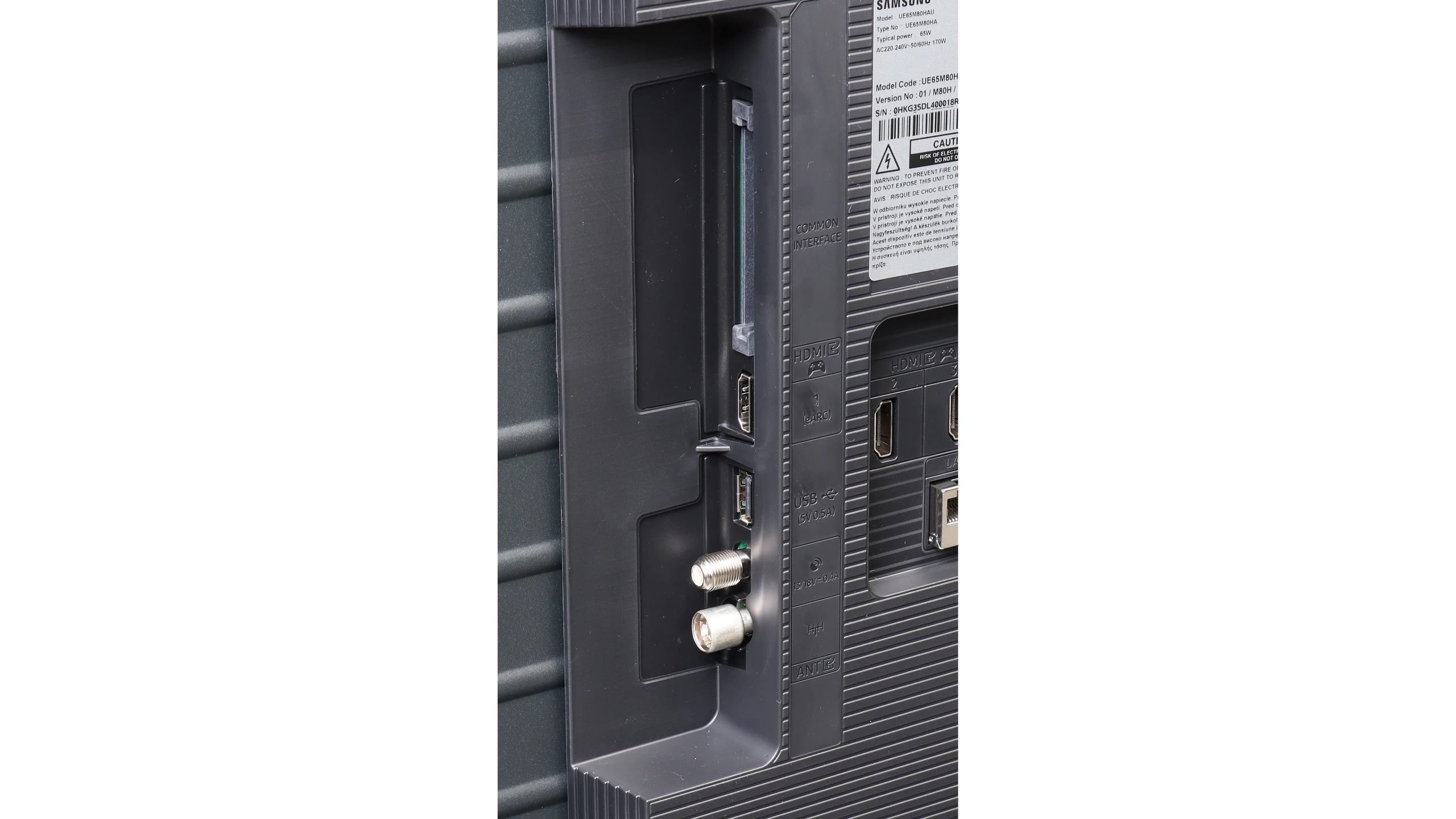
- OutputsToslink (Optical audio), eARC (HDMI), ARC (HDMI)eARC (HDMI), ARC (HDMI)
- Network InterfacesWi-Fi 2.4GHz, Wi-Fi 5GHz, Ethernet (LAN) 100MbpsWi-Fi 2.4GHz, Wi-Fi 5GHz, Ethernet (LAN) 100Mbps
- TV receptionDVB-T, DVB-T2, DVB-S, DVB-S2, DVB-CDVB-T, DVB-T2, DVB-S, DVB-S2, DVB-C
Classic features:
- Recording to USB (terrestrial TV)
- Recording programming
- Picture in Picture (PiP)
- RF remote control (no need to aim)
- Backlit remote control
- Teletext
- Audio only mode
- Bluetooth headphones support
- Simultaneous Bluetooth headphones & TV audio
Smart features:
- AirPlay
- Screen mirroring (Windows Miracast)
- Voice search
- Voice search in native language
- Ability to connect a keyboard and mouse
Sound connection options
- HDMI audioeARC (HDMI), ARC (HDMI)eARC (HDMI), ARC (HDMI)
- Other audio outputsToslink (Optical audio)
- Wireless audioBluetoothBluetooth
Supported audio formats (external HDMI eARC audio):
- Dolby Digital Plus 7.1
- Dolby True HD 7.1
- Dolby Atmos in Dolby Digital Plus (JOC)
- Dolby Atmos in Dolby True HD
- DTS:X in DTS-HD MA
- DTS-HD Master Audio
Senior accessibility
- Numeric keyboard on TV
- Font size adjustment
- Audio description
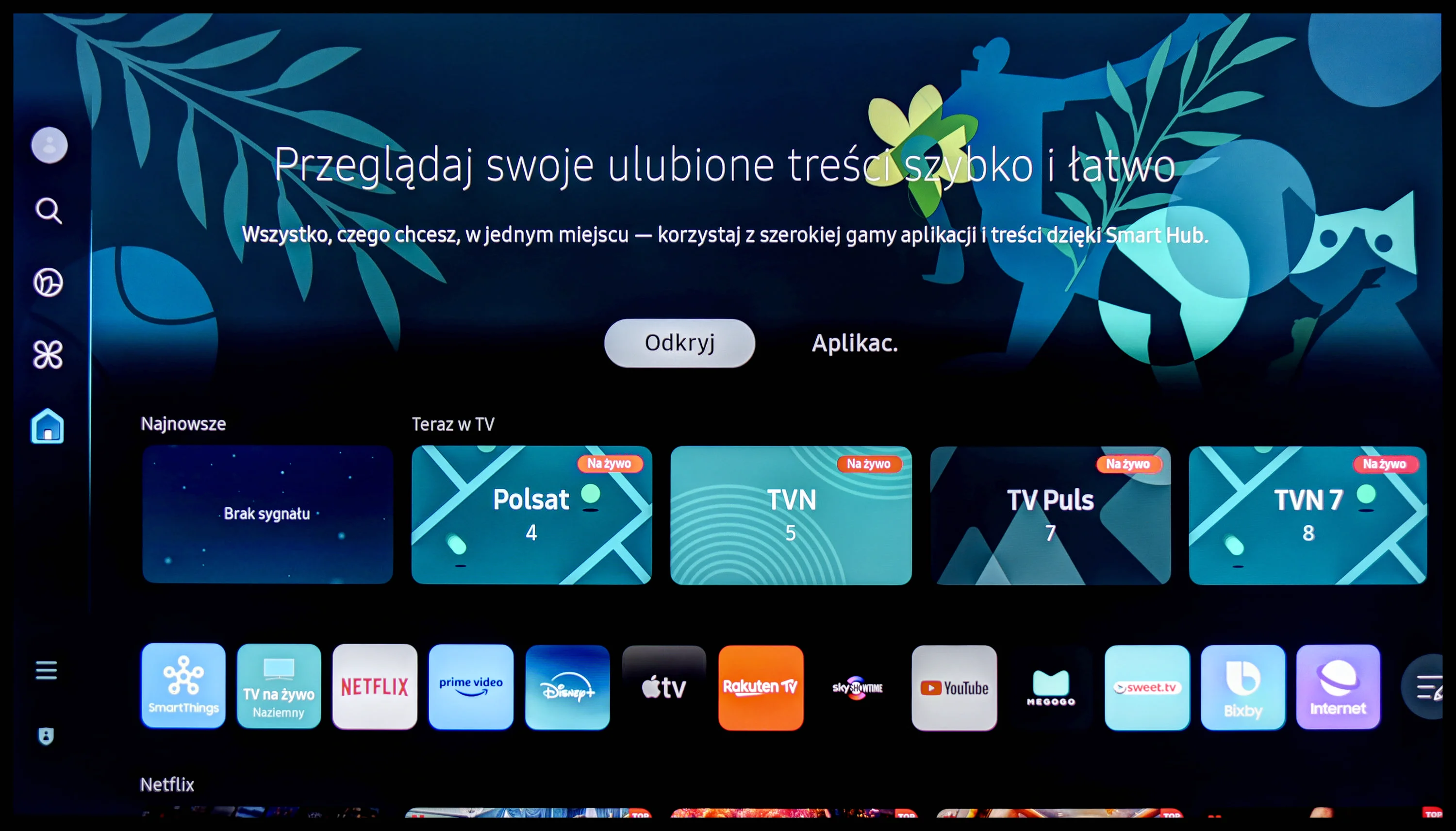
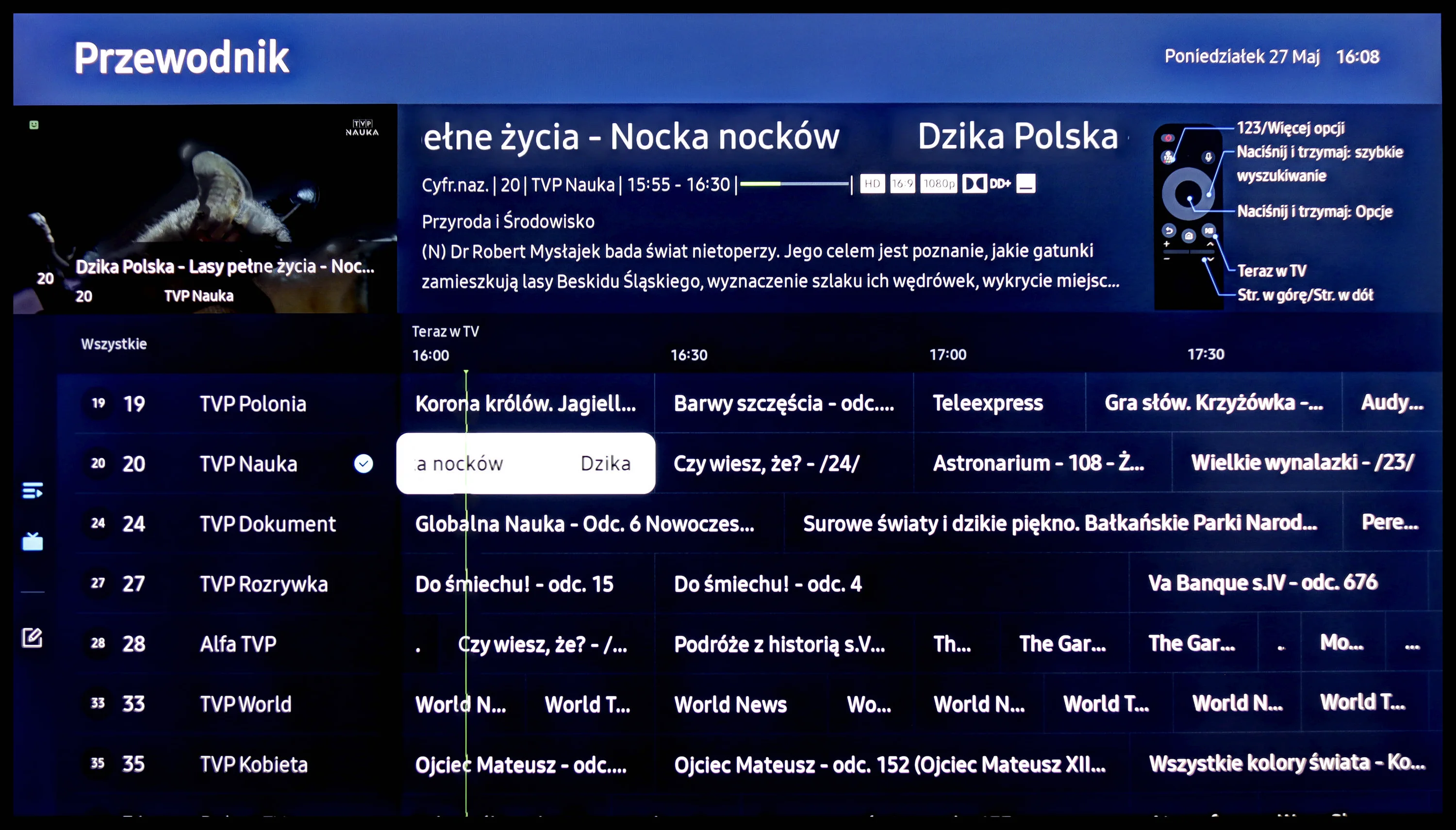
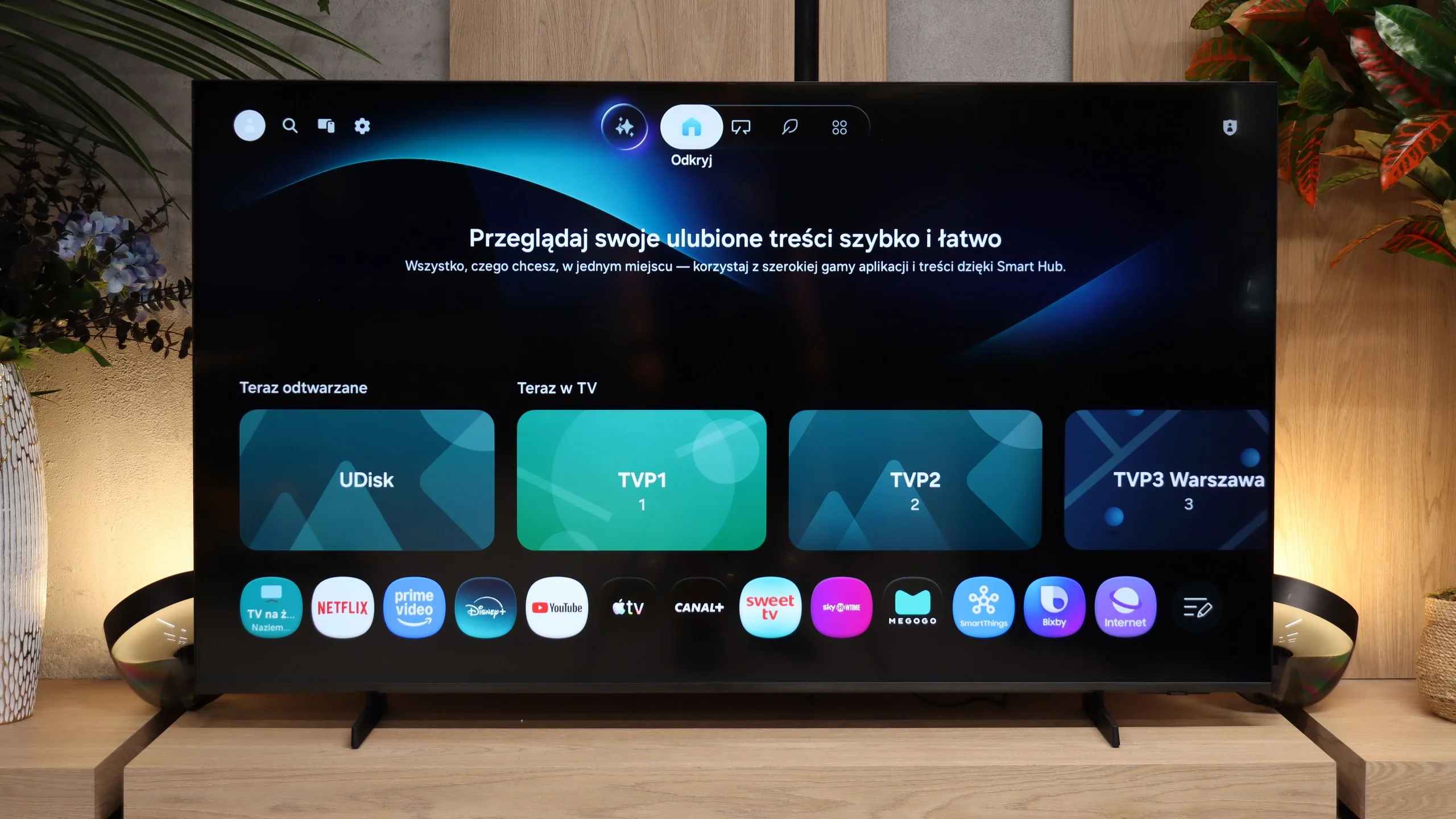
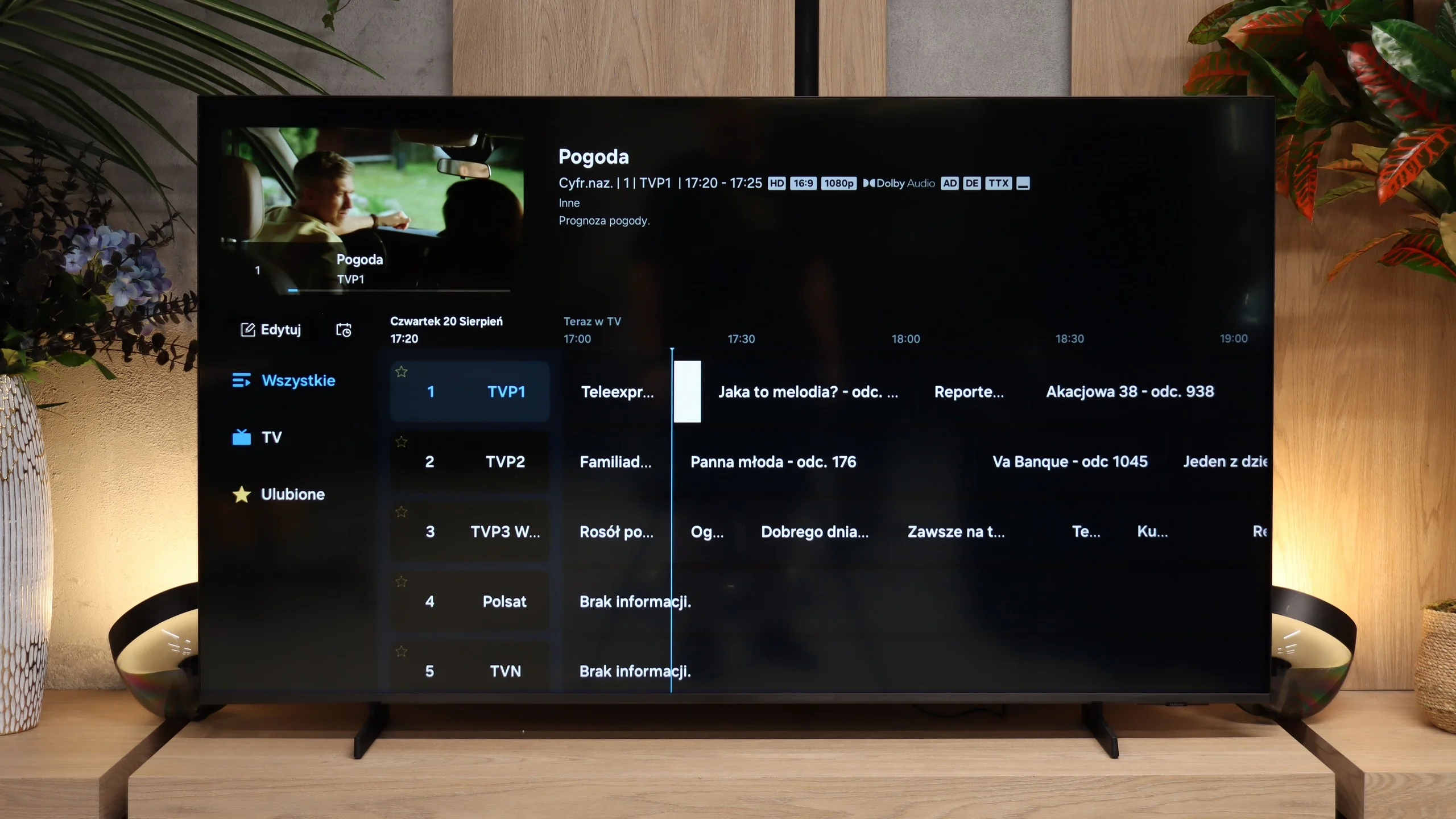
The operation of the Samsung Q70D is powered by the proprietary Tizen system. It is quite a well-known software, as the manufacturer has been developing it in its televisions for a really long time. Its main advantage is smooth performance and the absence of significant stutters, which we can confirm through conducted tests. The greatest downside, however, is its closed nature. Although the app store is quite extensive, we are still at the mercy of the manufacturer. Therefore, we will not be able to install missing items, even from a pendrive. A perfect example of this is this year's discontinuation of support for the Tidal app. On the other hand, a benefit, especially for users of Apple equipment, is the implementation of AirPlay, which allows for easy mirroring of content from a device to the television. Fortunately, Samsung has also provided the option to connect a keyboard and mouse for much quicker navigation through the television's menu. It is worth mentioning that the manufacturer has luckily included a remote that connects via Bluetooth this year, which often did not occur in the past. The Tizen system has one more advantage. It integrates very well with external devices such as the NC+ decoder or soundbars. The connection process is very quick and does not require any special skills.
In summary: The Tizen system is very smoothly functioning software, which is certainly a strong advantage of the television. Although more advanced users may complain about the lack of at least KODI, the rest will be satisfied.
Smart TV system
The M80H runs on Tizen, the same system found in all Samsung TVs. The system is fast, stable and offers all the most popular streaming apps. There is therefore no need to worry that a lower-tier model would be missing any of the major services. It also supports AirPlay, Miracast and voice search. The TV works with the SmartThings system, so it can be used to control smart home devices.
Television features
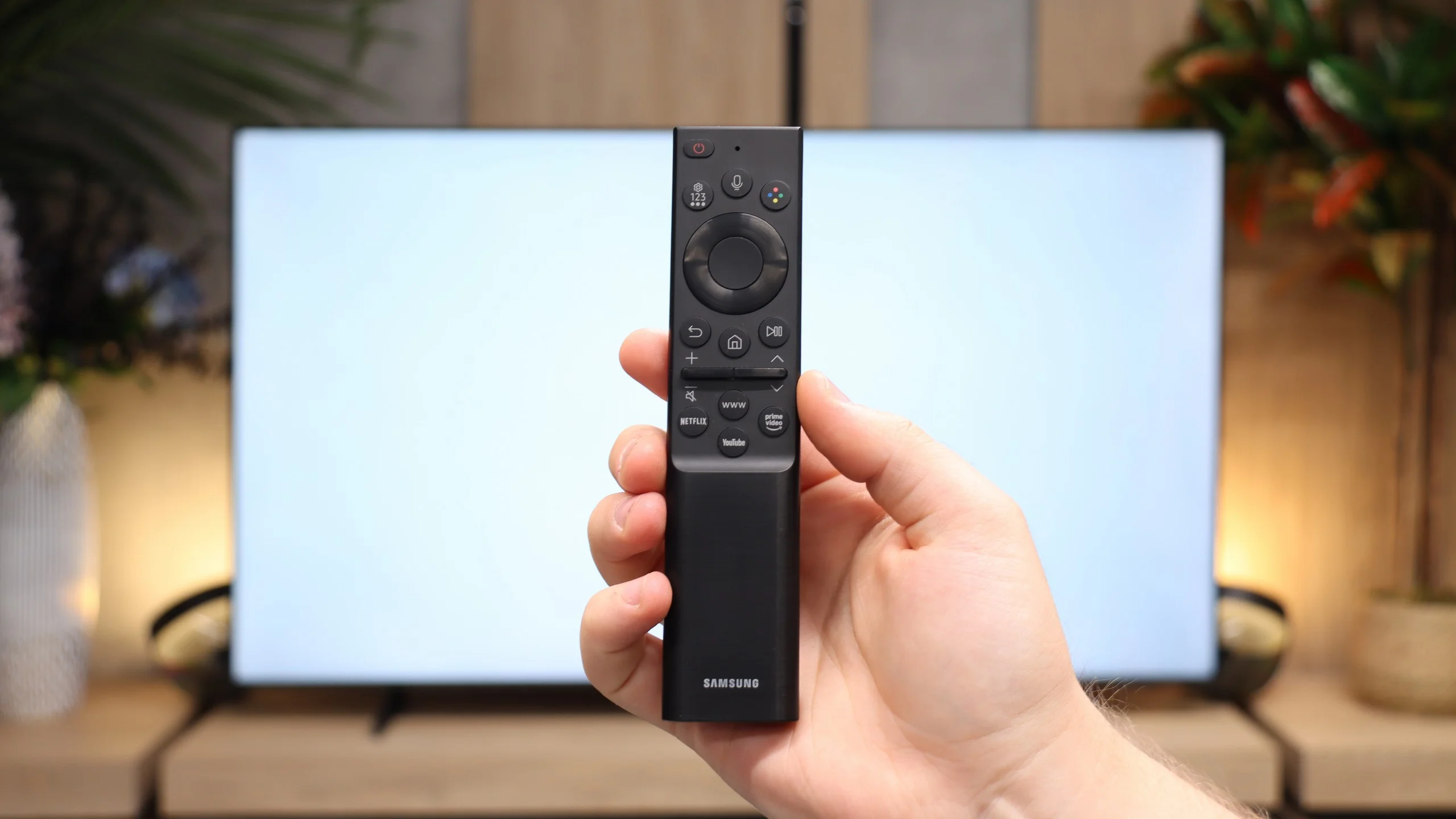
Traditional television features are weaker. The M80H does not allow recording programmes to a USB drive or scheduling recordings. It also lacks picture-in-picture. What remains are the basics, such as teletext and the option to turn off the screen while keeping the sound on. You can connect Bluetooth headphones to the TV, and audio can be played through them and the built-in speakers at the same time. That’s useful if one viewer needs higher volume, for example seniors. The set comes with a simple Smart remote with a small number of buttons. Unfortunately it is not the solar-powered version known from other Samsung models, and the remote runs on standard batteries. Fortunately it connects to the TV via radio, so you do not have to point it directly at the screen.
Apps
9.3/10
9.3/10






















Playing files from USB
9.1/10
9.1/10
Supported photo formats:
Maximum photo resolution:
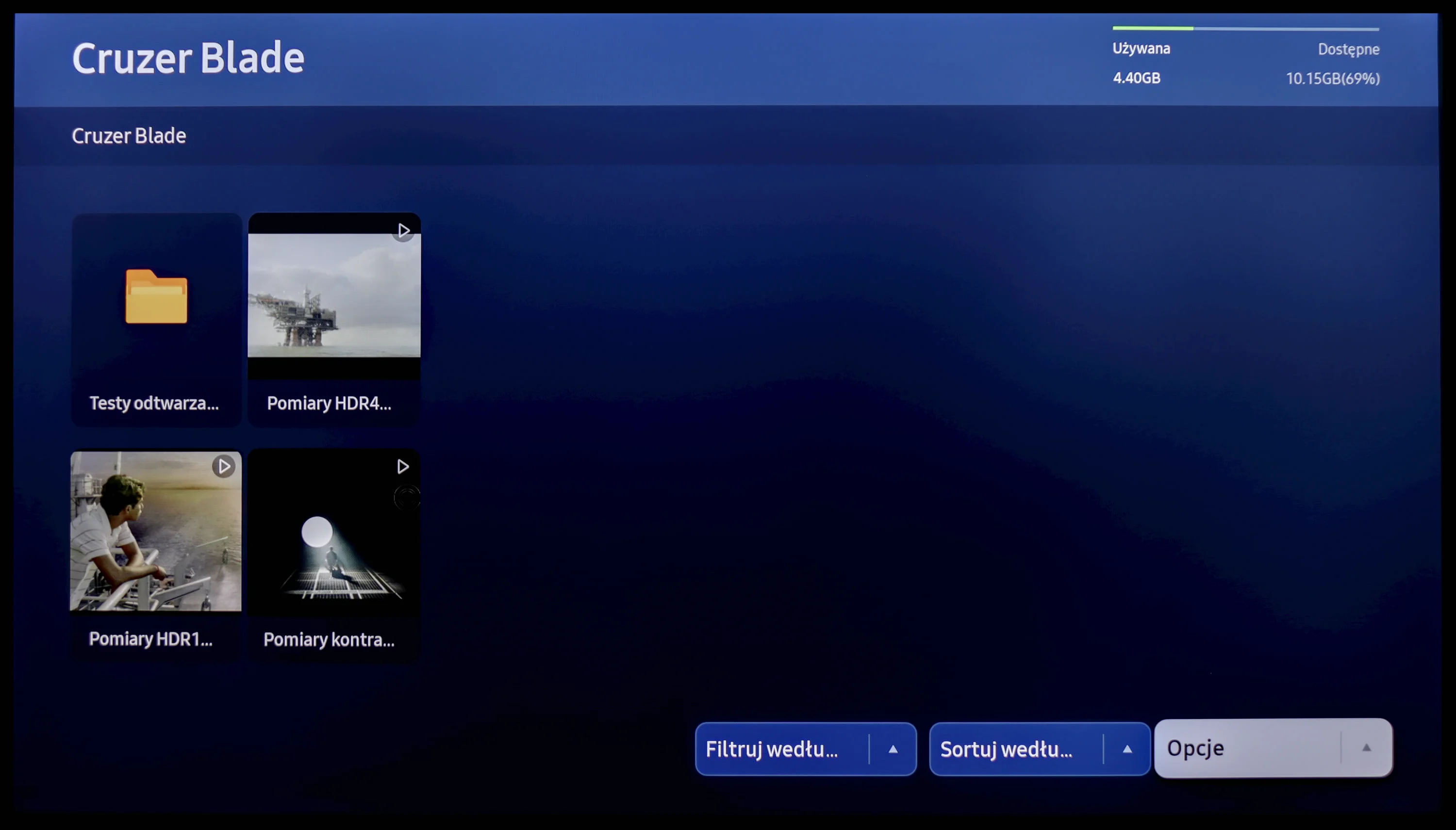
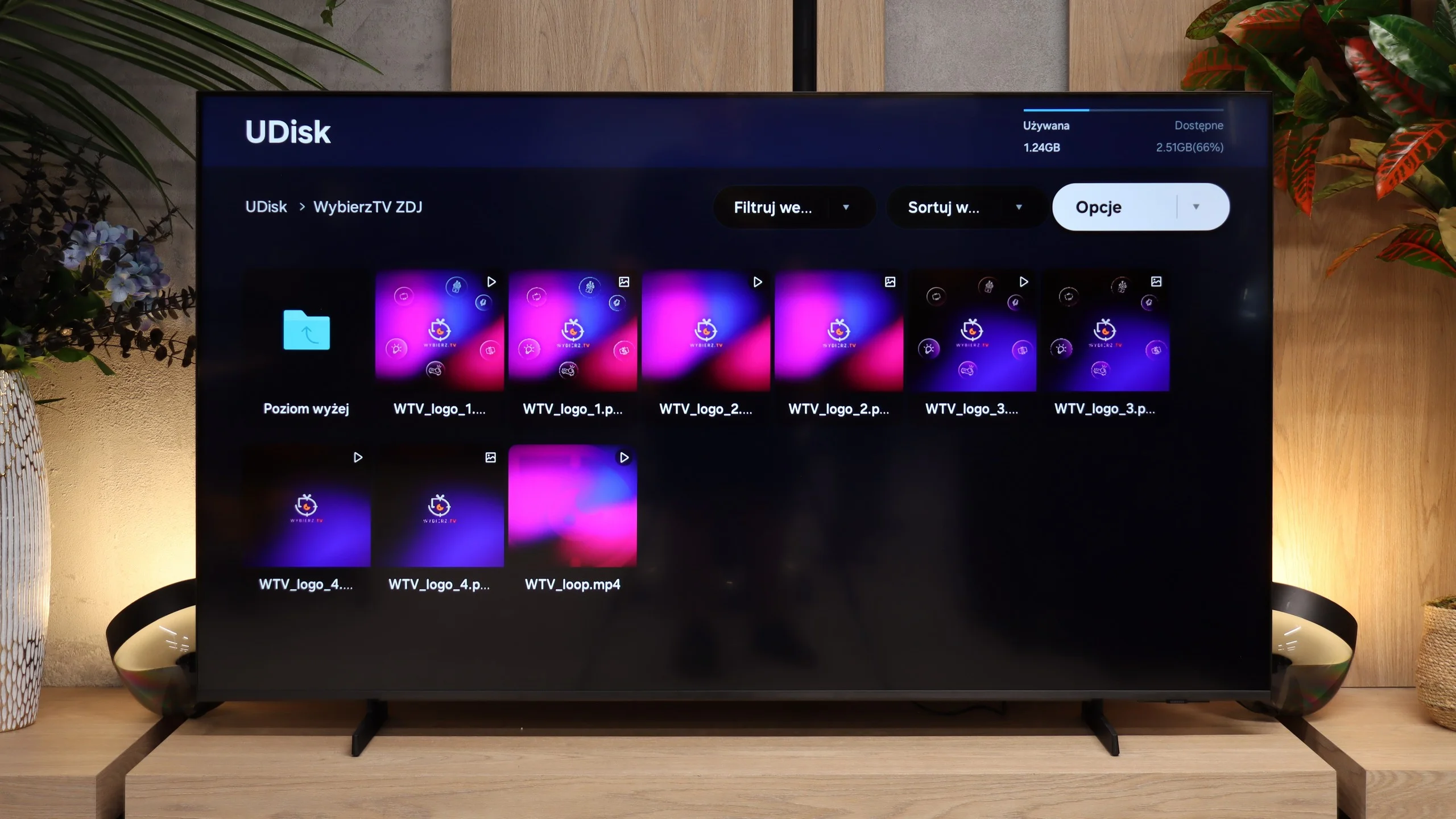
The built-in player Samsung Q70D is one of its major advantages. It handled almost all video and audio files prepared for the testing process excellently. The only exceptions in this regard are, of course, the Dolby Vision format (which is not surprising) and less popular codecs. Additionally, credit should be given for the support of Polish characters and the ability to change font colours. However, it performs worse with photo formats, as it only supports JPEG among the popular ones. There is definitely a lack of formats such as PNG or Apple's HEIC.
The built-in USB player handles most common video and image formats. It easily displays JPEG, PNG and BMP files, even in high resolution. However, it lacks support for HEIC, the format used, among others, by iPhones. In practice this is unlikely to be a big problem, because the M80H supports AirPlay and most people will probably use that to show holiday photos on the TV. 😉
Sound
6.3/10
6/10
- Maximum volume-88dB
- Dolby Digital Plus 7.1
- Dolby True HD 7.1
- Dolby Atmos in Dolby Digital Plus (JOC)
- Dolby Atmos in Dolby True HD
- DTS:X in DTS-HD MA
- DTS-HD Master Audio
The built-in audio system Samsung Q70D, due to its slim design, is not among the most outstanding. The overall sound is fairly balanced, although we wouldn't advise increasing the volume above 2/4 of the scale. However, if we have a home cinema system, a number of codecs await us, notably featuring the most important ones, namely DTS-HD Master Audio and Dolby Atmos.
The M80H is fitted with a 2.0 speaker set rated at 20 W. It performs adequately but does not stand out among TVs with similar audio systems. Dialogue is clearly audible and the speakers themselves do not introduce noticeable distortion. However, there is a definite lack of bass, so music in particular can sound flat. If you want a somewhat fuller sound, it's worth considering even a simple soundbar and connecting it via HDMI eARC. The TV can also pass Dolby Atmos audio that way. Bear in mind, however, that the M80H has no optical output, so older audio equipment cannot be connected to it in that way.
Sound Quality Test
No sound test video
Acoustic Measurements
No acoustic data
88dBC (Max)
75dBC
Reader comments
Comments are provided by the external service Disqus (Zeta Global). Once loaded, Disqus may set cookies and process data about your activity.
We will remember your choice on this device. Provider's privacy policy