 Direct comparison
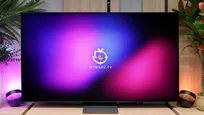
Samsung S95D is definitely our favourite among the televisions from this brand for 2024. We were impressed by its innovative matte panel, which sets it apart from the competition. Its brightness is astonishing. This is one of the highest values in the OLED segment. As a result, it performs excellently in both dimly lit rooms and full sunlight. Motion fluidity in this model is outstanding. When watching dynamic content such as sports or games, every fast scene is rendered with precision and without distortion. For us, gaming enthusiasts, the S95D offers a lot. It is equipped with four HDMI 2.1 ports. They support all the features available on the latest consoles. Moreover, the ability to use the Xbox app for cloud gaming removes the need to have a physical console! In everyday use, the television does not disappoint either. The Tizen system provides an intuitive interface and quick access to favourite streaming services. Integration with other devices, not just those from Samsung, is possible thanks to the SmartThings app. We can control smart devices such as lighting or monitoring from the television. This is incredibly convenient. Additionally, the S95D offers a Multi View function, allowing you to watch two different programmes simultaneously. The eco-friendly solar remote is another advantage. It supports multiple devices. This means we can manage everything from one place. For those of us who dislike having numerous remotes on the table, this is truly a significant benefit. The Solar Cell remote can take control of devices such as a decoder, home theatre, console, and many more. Support for AirPlay and Bluetooth enables hassle-free content streaming and accessory connections. We cannot overlook the design of the S95D. Its slim build and innovative One Connect solution make a striking impression. The only drawback we've noticed is a feature of the matte panel. During the day, it may somewhat dull the colours. Nevertheless, we believe that the Samsung S95D is a television full of advanced features and technology. It's perfect for those who desire the highest quality entertainment in their home. This is a genuinely outstanding device that undoubtedly deserves to be called one of the best televisions of 2024.
- Matching (Score) |
- Our verdict |
- TV appearance |
- Where to buy |
- Contrast and black detail |
- HDR effect quality |
- Factory color reproduction |
- Color reproduction after calibration |
- Smoothness of tonal transitions |
- Image scaling and smoothness of tonal transitions |
- Blur and motion smoothness |
- Console compatibility and gaming features |
- Input lag |
- Compatibility with PC |
- Viewing angles |
- Daytime performance |
- Panel details |
- TV features |
- Apps |
- Playing files from USB |
- Sound
S95D
S90HAT / S90HAE / S92HAT

Available screen sizes: 77”
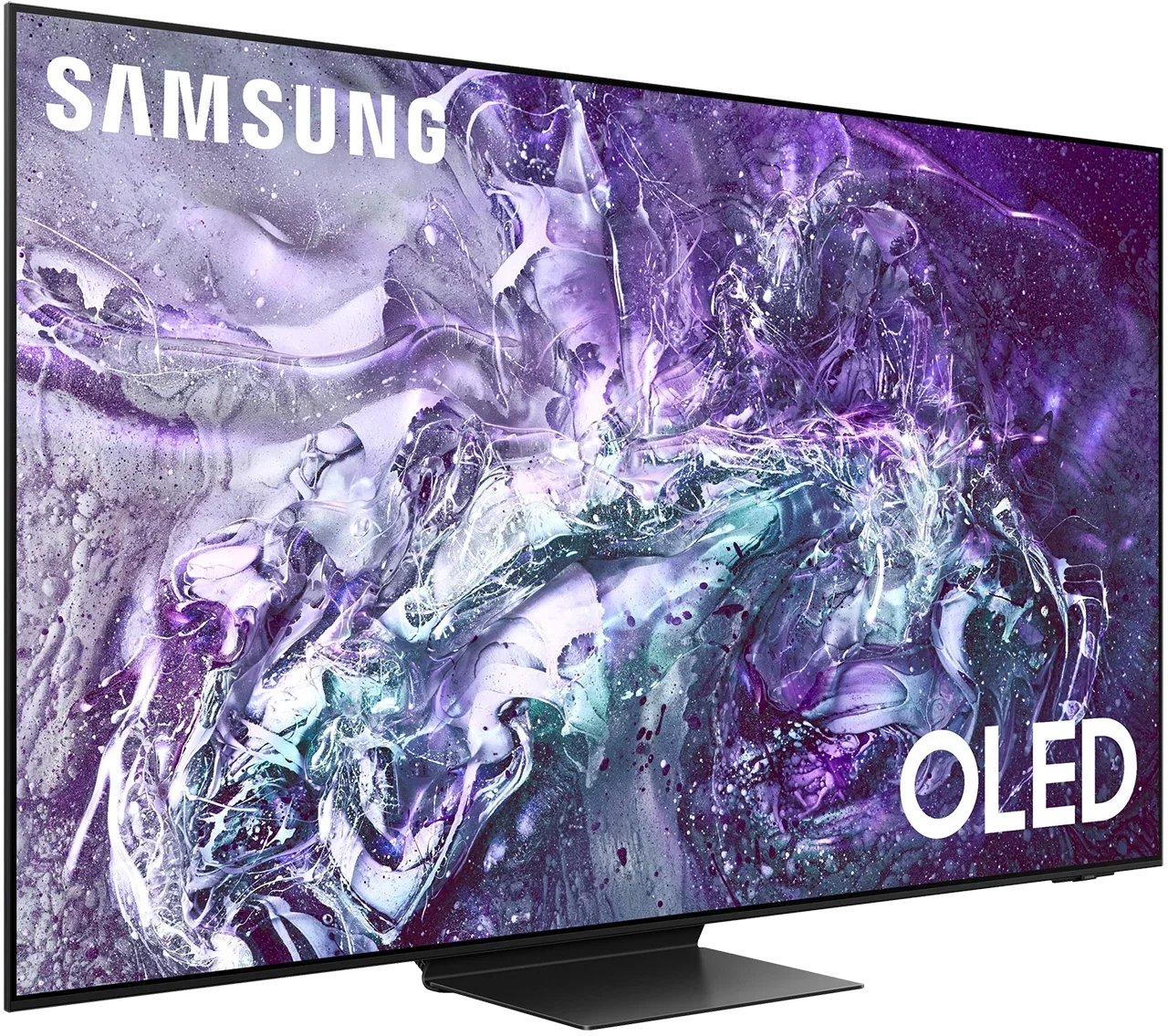
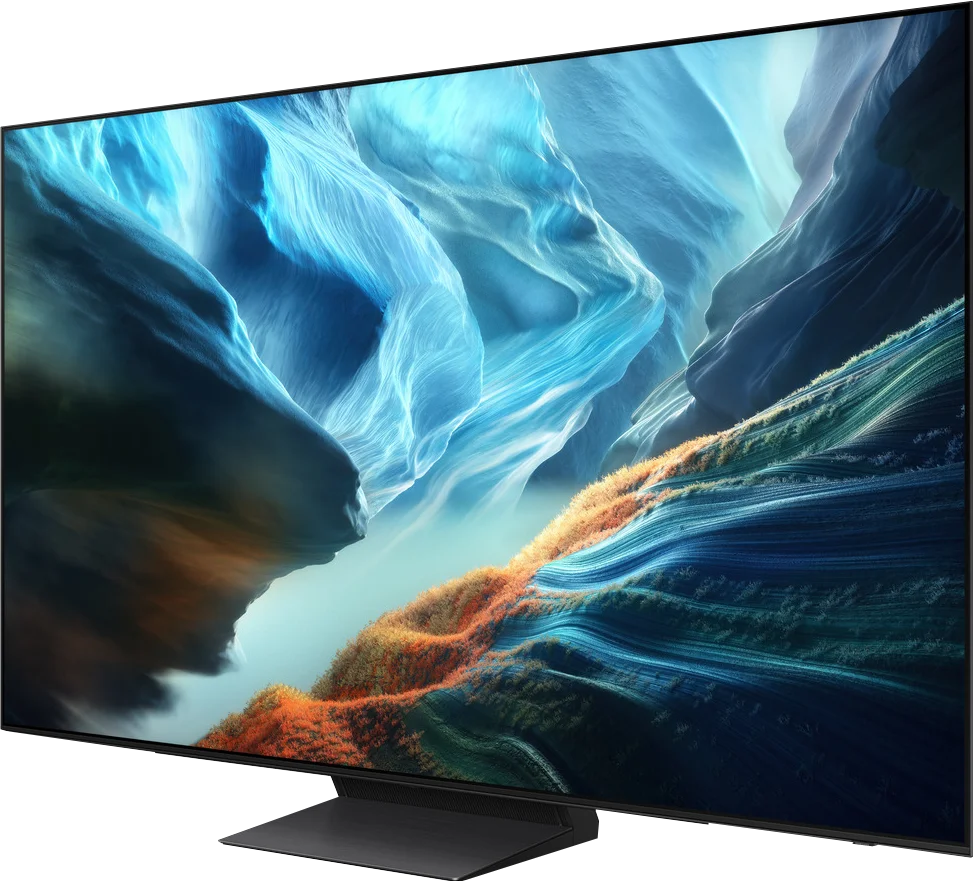
Panel type: QD-OLED
Resolution: 3840x2160
System: Tizen
Model year: 2024
Complete the survey to find out the result
Panel type: QD-OLED
Resolution: 3840x2160
System: Tizen
Model year: 2026
Complete the survey to find out the result
Overall rating
8.5
8.6
 Movies and series in UHD quality
8.9
9.0
 Classic TV, YouTube
9.2
9.3
 Sports broadcasts (TV and apps)
8.9
9.0
 Gaming on console
9.8
9.8
 TV as a computer monitor
8.6
8.6
 Watching in bright light
6.2
6.4
 Utility functions
7.9
7.3
 Apps
9.3
9.3
 Sound quality
7.9
8.4
Complete the survey to find out what fits your preferences
Advantages

Remarkable depth of image and black (OLED)
Very good HDR effect
Excellent brightness
Saturated colours - high coverage of a wide colour gamut Bt.2022
Best viewing angles on the market
Matte panel
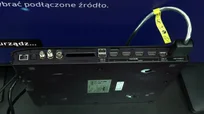
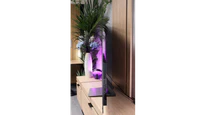
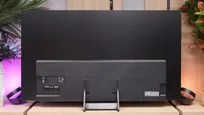
Super slim design (Innovative One Connect solution)
Perfect blacks and infinite contrast
Very high HDR brightness (up to 1700 nits)
Excellent colour gamut coverage (QD-OLED)
Reference-grade image reproduction after professional calibration
Excellent motion clarity (no smearing)
Outstanding for gamers (4x HDMI 2.1, VRR, ALLM, low input lag)
High panel refresh rate (up to 165Hz)
Perfect viewing angles
Effective anti-reflective coating (matte)
Fast, responsive Tizen system
Surprisingly good sound
Disadvantages

Colours during the day may be less intense due to the matte screen
Lack of support for DTS audio tracks (this may be an issue with an external player)
In bright light, blacks can take on a cherry tint (a characteristic of QD-OLED panels)
The matte coating in strong light affects the perceived colour saturation
Lack of TV features such as USB recording or PIP
No support for DTS:X (an issue for Blu-ray disc fans)
Why can't we find this panel in all sizes?!
Our verdict
Samsung, what have you actually done? The S90H is a TV that won us over practically from the first minutes. If you want a short answer to whether it's worth the money, we’ll be blunt: yes, absolutely. The combination of perfect, organic black with very high brightness and the vivid colors of the QD-OLED panel creates an effect that wows you from the first time you turn it on. Choosing a matte finish proved to be a perfect decision. No more constant battles with the blinds or seeing your own reflection on a sunny day. Sure, purists like us will notice that in a heavily sunlit room the blacks can slightly shift toward grayish-maroon tones, but daytime usability here is invaluable. Most importantly, in the evening and at night the picture still delivers everything we love about OLEDs: perfect black, excellent contrast, and amazing depth. Add to that a fast, refined Tizen system and an almost complete package of gaming features led by Game Motion Plus. The result is an exceptionally complete TV where minor software niggles don't change the overall, very positive impression. So does the S90H have any serious downside? As far as the TV itself is concerned, it's hard to point to anything that would really spoil its appeal. The biggest reservation is more about Samsung's policy. To this day it's hard for us to understand why such a great QD-OLED panel is available only in the 77-inch model we tested, with the HAT suffix in the name. Maybe that will change in the future, but for now that's how it stands. So if you're aiming exactly for this variant, there's no need to hesitate. The Samsung S90H in the 77-inch QD-OLED version is one of the most exciting TVs of the year. Once the early-adopter tax drops and stronger promotions arrive, it could become one of the most cost-effective OLEDs on the market, and quite possibly one of 2026's biggest bestsellers.
TV appearance


Contrast and black detail
10/10
10/10
Contrast:


Result
∞:1

Result
∞:1

Result
∞:1

Result
∞:1

Result
∞:1
Result
∞:1
Result
∞:1
Result
∞:1
Result
∞:1
Result
∞:1
Halo effect and black detail visibility:
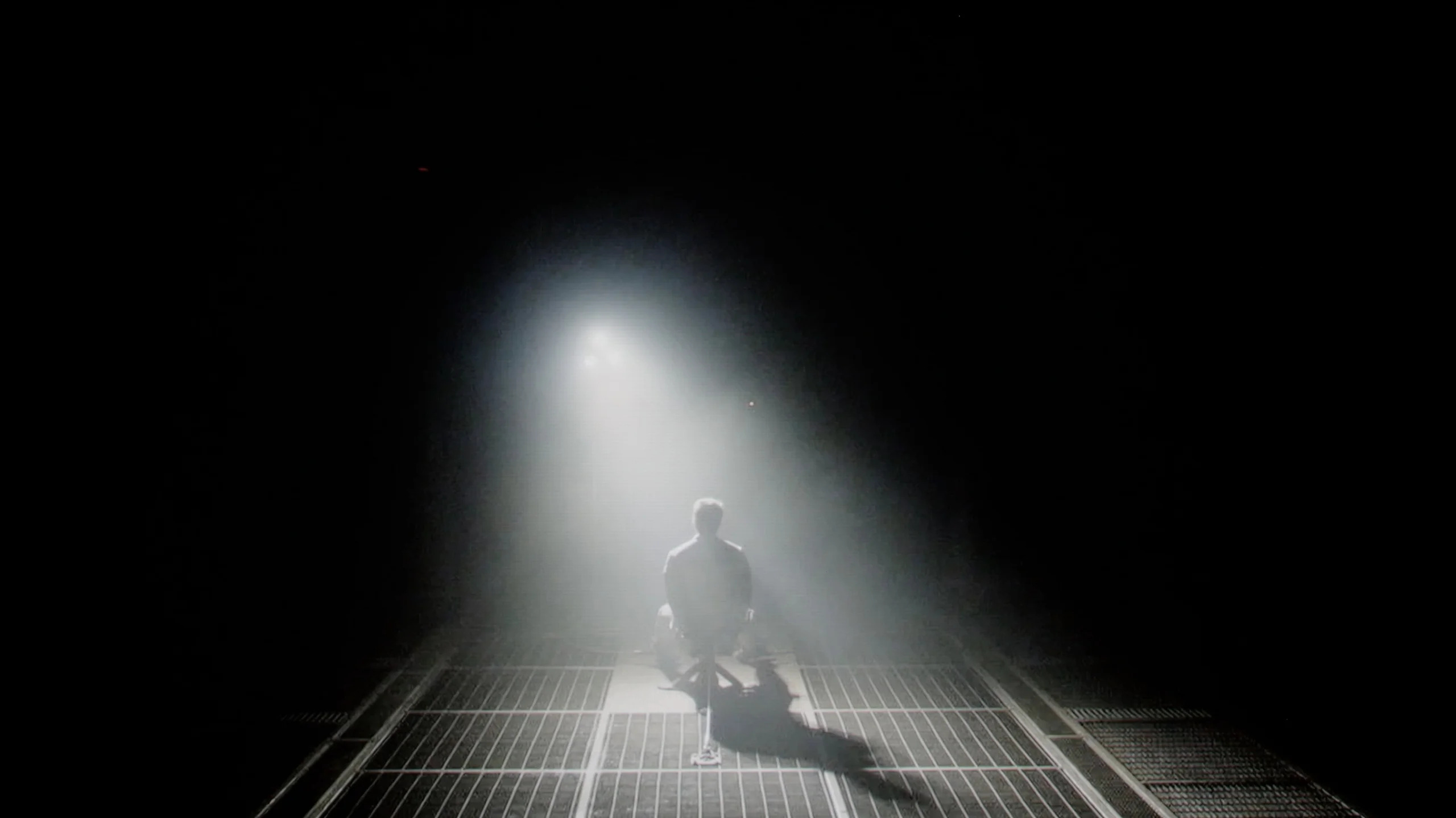
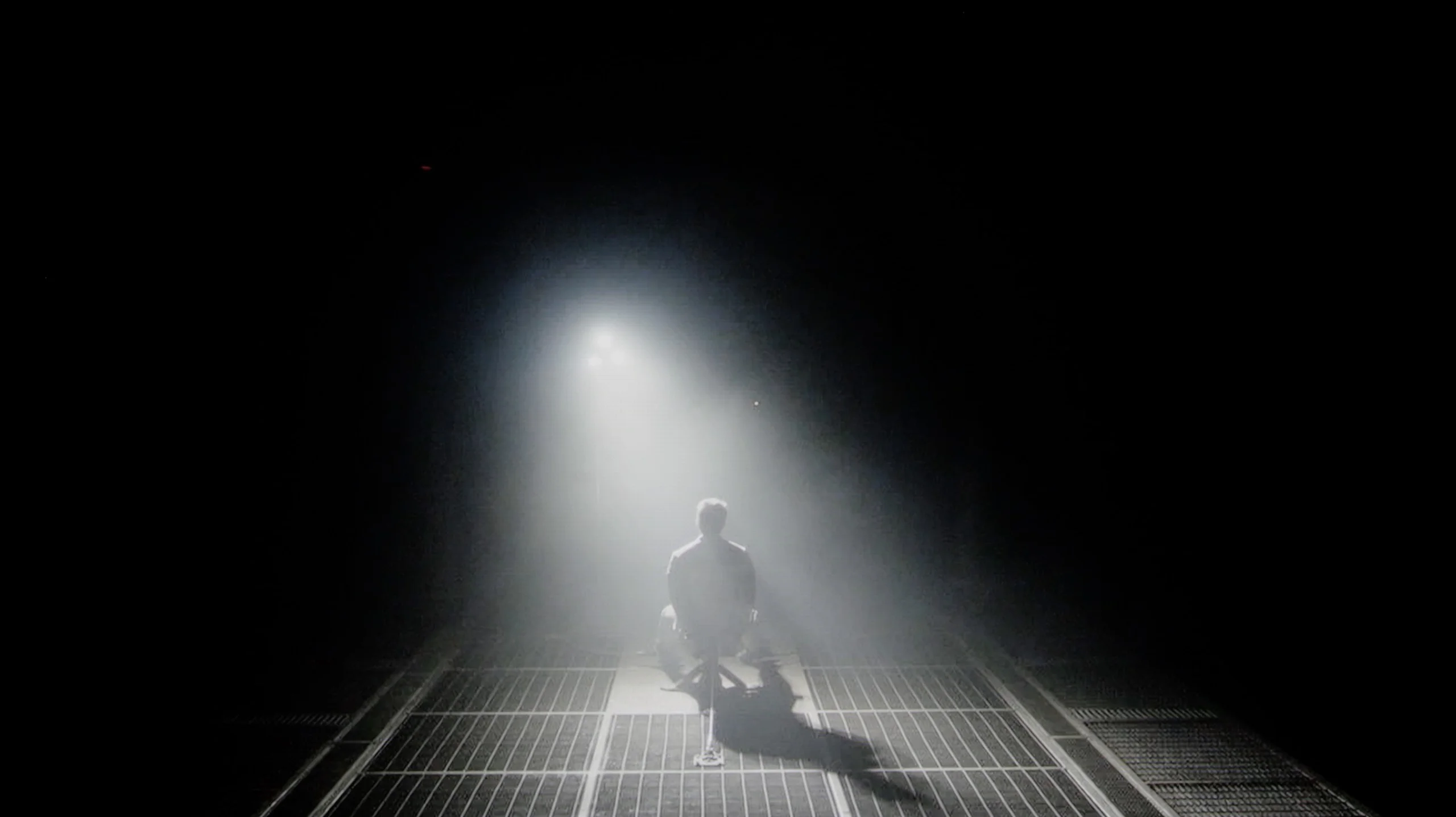
Check the visibility of bright lights on a dark background. Mini-LEDs often struggle with this. The photo does not compare black levels – that’s what the video below is for.
The video accurately shows differences in contrast and black levels between TVs, as well as potential issues: halo around bright objects or Mini-LED zone operation visible as brightness jumps.
Samsung S95D with QD-OLED technology impresses with perfect black, which it owes to self-emissive OLED diodes working in conjunction with a layer of quantum dots. Each pixel can turn off independently, allowing the screen to achieve absolute black without the slightest light leakage. The effect? Infinite contrast, where bright objects on a dark background shine clearly, and details in the shadows are reproduced with great accuracy.
Compared to traditional LCD televisions or even other OLEDs, S95D stands out with incredible image uniformity and depth of black. This makes night viewings take on a cinematic atmosphere, and the image appears almost three-dimensional. An ideal choice for those who expect the highest quality and complete immersion in the content being watched.
Because the Samsung S90H uses an OLED panel, it deserves top marks for contrast and black levels. Importantly, this applies both to the WOLED-panel version and to the QD-OLED variant we tested. Each pixel emits light independently and can be turned off completely, so the TV delivers perfect blacks and virtually infinite contrast. This results in excellent image depth and a very clear separation of bright elements from a dark background, without the halo effect (blooming) that still occurs even in the best LCD TVs. The effect is particularly striking when watching in a darkened room, where dark scenes look incredibly realistic and the picture gains in three-dimensionality and detail.
HDR effect quality
7.8/10
7.8/10
Luminance measurements in HDR:

Result
1400 nit

Result
1521 nit

Result
1560 nit

Result
1385 nit

Result
804 nit
Result
1464 nit
Result
1470 nit
Result
1269 nit
Result
1505 nit
Result
902 nit
Scene from the movie “Pan” (about 2800 nits)


Scene from the movie “Billy Lynn” (about 1100 nits)


The photos show two HDR10 movies. 'Pan' is one of the brightest productions ever made, while 'Billy Lynn' (soldier) has brightness typical of streaming (Netflix, Prime, HBO MAX). Notice the intensity of effects and detail in whites.
Static HDR10


The photos present the visibility of white details in various HDR formats. They do not show brightness differences between TVs (these can be compared in the previous gallery).
Dynamic: HDR10+
Dynamic: HDR10+


The photos present the visibility of white details in various HDR formats. They do not show brightness differences between TVs (these can be compared in the previous gallery).
HDR luminance chart:
Samsung S90H (QD-OLED)
Samsung OLED S95D
Samsung S95D offers excellent HDR performance, delivering consistent effects across all scenes exceeding values of 1500 nits, except for the fifth, where brightness drops to 800 nits. Despite this, the television maintains a high level of picture quality. A significant advantage of QD-OLED technology is its ability to maintain high brightness even in the smallest elements against a black background, which is rare in LCD and mini LED televisions. As a result, every scene dazzles with strong lighting effects, regardless of the size of the illuminated area. Only in the brightest scenes with large light areas does brightness slightly drop, which is typical even for standard OLEDs produced by LG. Additionally, the quantum dot coating has achieved an unprecedented high coverage of the BT.2020 colour gamut at 88%.
The Samsung S90H is a genuinely bright TV for the mid-range OLED segment. In synthetic tests its peak brightness reached around 1650 nits. That’s an impressive result in this class, roughly 50% higher than what we have seen from previous models in this price bracket. Most importantly, these tests translate directly to real video material. In four out of five film clips we tested, the S90H’s brightness ranged between 1300 and 1500 nits. That headroom allows it to reproduce most HDR films with very high dynamic range and without obvious compromises, especially in material mastered to 1000–1500 nits. In practice light effects, reflections and explosions have the appropriate punch, and the picture does not appear dimmed. Of course, on full-screen very bright scenes the result is naturally lower and drops to around 900 nits. This is a direct result of the OLED panel’s protection systems working to prevent overload. Even in this scenario there is little to complain about. Those 900 nits across the whole screen is still a very high level, ensuring excellent dynamic range in HDR content.
Colour has always been a major strength of QD-OLED TVs, and the S90H is no exception. The DCI-P3 colour space we measured reached a full 100% (actually 99.9%), while coverage of the much wider BT.2020 gamut hit about 89%. That’s an excellent result, enabling very saturated and vivid colours in HDR content. It’s worth emphasising that QD-OLED’s advantage over WOLED panels is not limited to palette coverage alone. In practice it’s mainly visible in the higher brightness of saturated colours, that is in a greater colour volume. As a result, intense reds, greens and blues in HDR look more vibrant and more striking.
Factory color reproduction
7.5/10
8.3/10


This gallery shows how colors change after professional TV calibration. If you notice the difference, we recommend ordering this service at SkalibrujTV.com.
Factory Mode
After calibration


This gallery shows how colors change after professional TV calibration. If you notice the difference, we recommend ordering this service at SkalibrujTV.com.
Factory Mode
After calibration
On the Samsung S95D, the mode that best reproduces colours is the Filmmaker mode. We conduct all our tests in this mode. Although initially, the picture in this mode may appear slightly warmer to the viewer, it provides significantly more detail compared to the standard or dynamic mode, which is always oversaturated and artificial. The Filmmaker mode is therefore the most closely aligned with the vision of filmmakers and ideal for watching high-quality content. It is worth noting, however, that the factory settings are not perfect, despite dealing with premium segment equipment. The image may contain certain errors that affect the overall quality of the displayed scenes. An example is drops in red colour in the white balance, both in HD and HDR content. Colour Checker tests showed that the hues lean towards cooler tones. The image is dominated by blue hues, and the entire colour spectrum is distorted. As can be seen in the picture below, the little boy from the film appears in cooler tones, making him look less natural. When it comes to the brightness characteristics for HD content, it is quite accurate, although there are minor errors. The biggest problem arises when displaying 4K HDR content. The EOTF curve, which seems appropriate at first glance in test patterns, shows that the television sometimes "messes" with the image in real film scenes. This causes the picture to be slightly brightened in some scenes and darkened in others.
Samsung S95D offers quite good factory colour reproduction, but it has some shortcomings that may require calibration to fully utilise the potential of this television. The process is recommended to achieve the most natural and immersive image possible.
The next stage of the test was to check how the S90H handles colour reproduction without any calibration. As always, we carried out the measurements in Filmmaker Mode, the best factory picture preset. And here Samsung really deserves praise. The factory tuning is at a very high level, and a few years ago this was not one of its strong points. The average colour error (Delta E) remained around 3, which is below the level at which most people can notice any inaccuracies. Only in the brightest shades of grey did the values slightly approach 4, but even then it's hard to regard this as a real problem while watching. For out-of-the-box settings, the result is simply excellent.
Color reproduction after calibration
9/10
9.4/10


The photos show how movies look on the TV. Pay attention to black detail visibility, colors, and shadow tint.


The photos show how movies look on the TV. Pay attention to black detail visibility, colors, and shadow tint.
How much can the picture quality of a television change after calibration? After performing calibration on the Samsung S95D, the white balance was significantly improved, eliminating any major errors, which allowed for a more natural and harmonious colour reproduction. In the case of 4K content, there are only minor imperfections, which do not affect the overall picture quality. Thanks to calibration, viewers can now enjoy more balanced tones, allowing for a better representation of the filmmakers' intentions. The contrast has also improved, and the gamma shows even better results. This means that the differences between the light and dark areas of the image have become more pronounced, translating into better depth and detail in scenes. As a result, shadows gained more detail, and bright areas are no longer overwhelming, providing a more realistic visual experience. However, it should be noted that the EOTF curve is slightly below the expected level, which may affect how the television handles dynamic scenes. Nonetheless, after calibration, the overall picture quality has significantly improved, and viewers can now enjoy a visual experience that is more in line with the filmmakers' intentions. The television handles subtle tonal transitions and contrast better, making it more suitable for watching films and high-definition programmes. Ultimately, the picture after calibration is closely aligned with reference quality, making the visual experience even more satisfying.
All right, but you know we wouldn't be ourselves if we didn't also check how far we could push the S90H after professional calibration. And there was no big surprise. Since the factory settings were already very good, there wasn't much room for improvement. Even so, we managed to refine the picture to near perfection. After calibration the mean colour reproduction errors fell below the threshold of perception, with Delta E values under 2 for both SDR and HDR material. We also improved the brightness response, so the image more faithfully reflects the creators' intent and maintains appropriate tonality across the whole luminance range. After professional calibration the S90H therefore becomes a display very close to reference.
Will the difference be spectacular for everyone? Not necessarily. The factory settings already deliver a very high level, so in everyday viewing some people may not notice a dramatic jump. Much also depends on the individual unit. Our sample was very well tuned straight out of the box, but that doesn't mean every S90H will perform at the same level. Even identical models can differ from each other in terms of factory calibration. That's exactly why professional calibration makes sense: it allows a specific unit to be brought to the highest possible accuracy, rather than relying on a bit of luck when buying.
Smoothness of tonal transitions
8.5/10
9/10


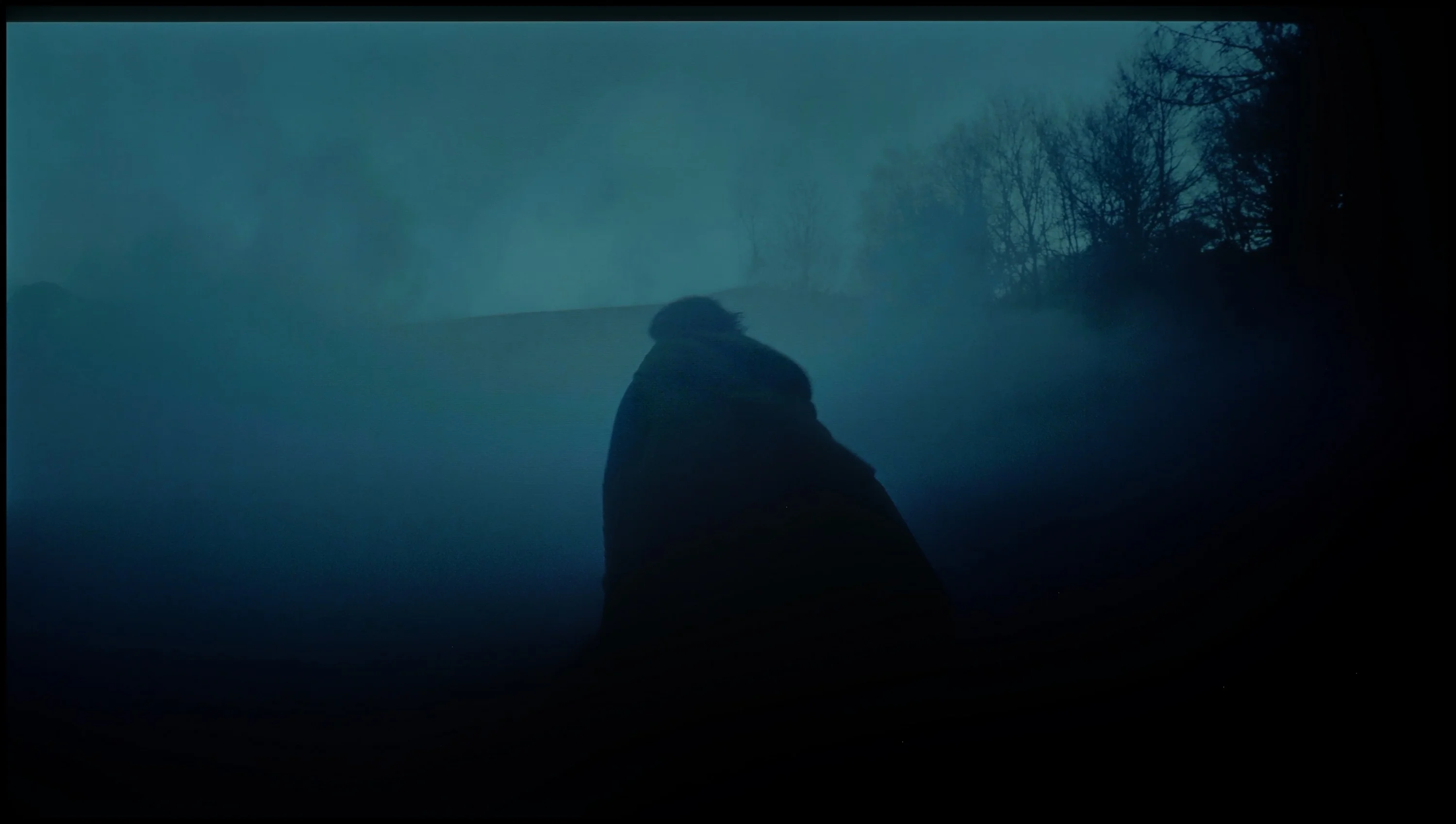

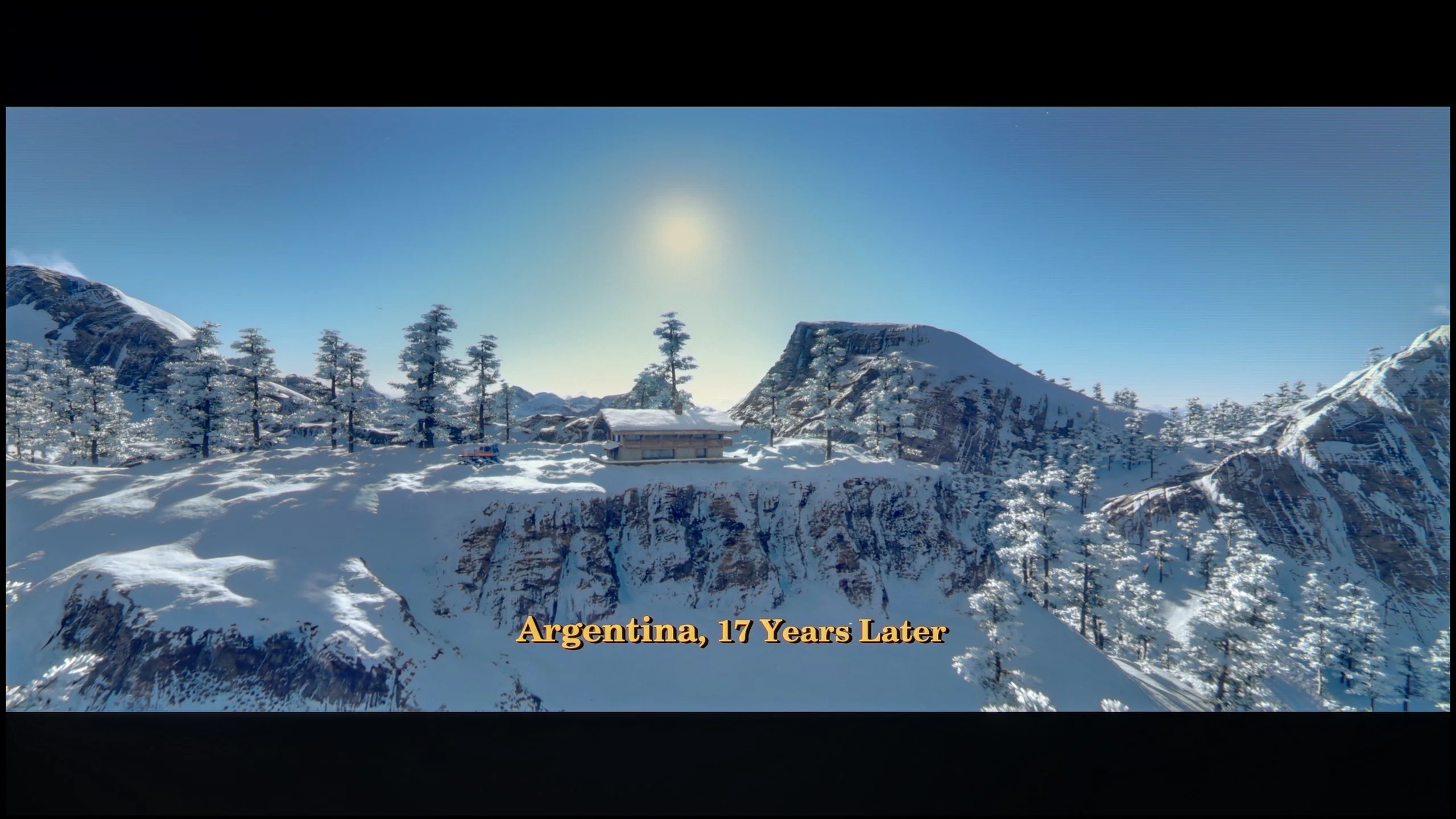
These are selected scenes that show smooth tonal transitions from one color to another. If you see distinct banding, it’s the TV panel’s fault.

These are selected scenes that show smooth tonal transitions from one color to another. If you see distinct banding, it’s the TV panel’s fault.
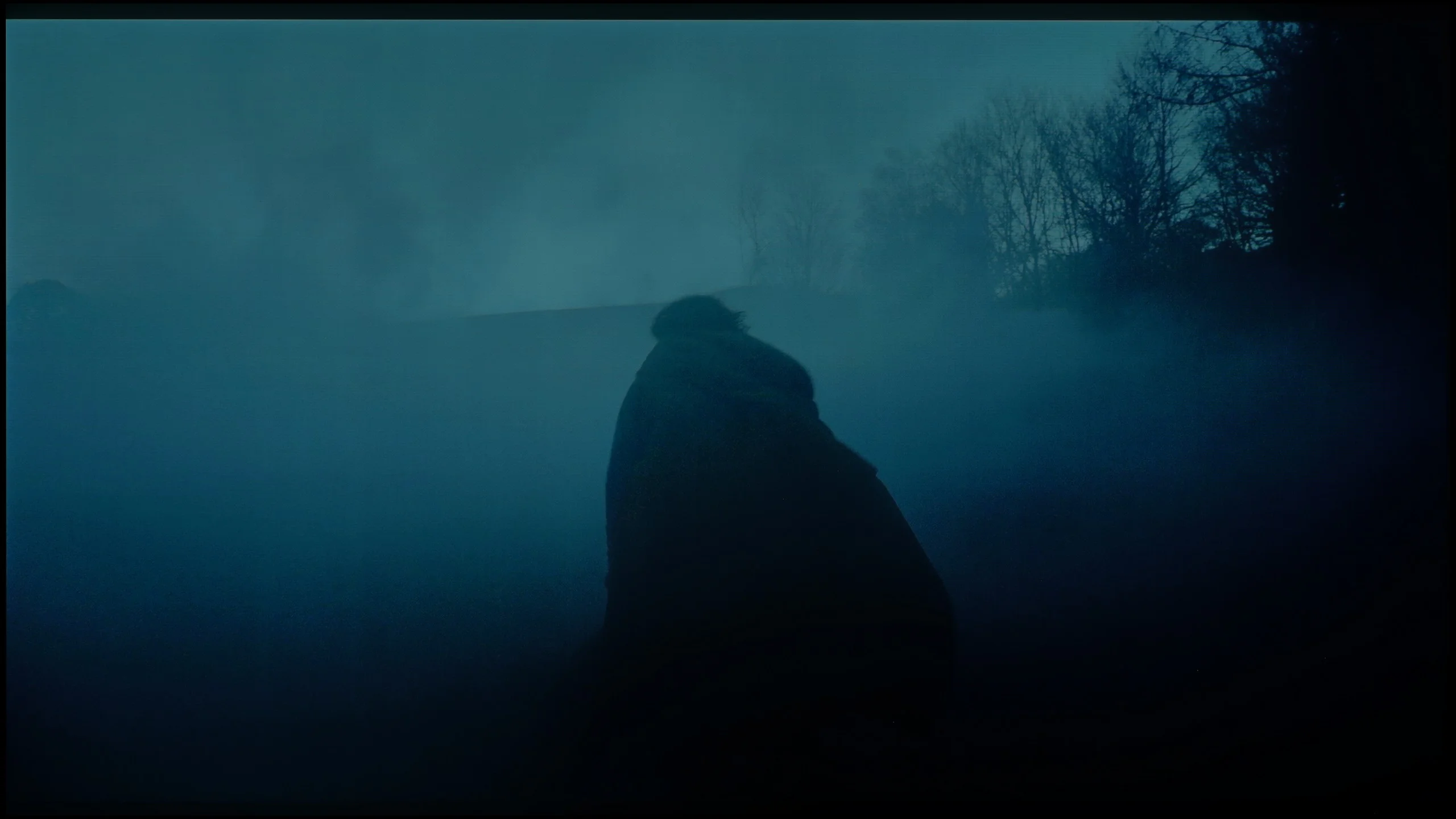
These are selected scenes that show smooth tonal transitions from one color to another. If you see distinct banding, it’s the TV panel’s fault.

These are selected scenes that show smooth tonal transitions from one color to another. If you see distinct banding, it’s the TV panel’s fault.
The tonal gradation on the Samsung S95D television is outstanding. Even in the most demanding scenes of the tested films, the television performs excellently. Any issues with smoothing tonal transitions are minimal and almost imperceptible. The average viewer is unlikely to notice them, which contributes to the overall positive visual experience during everyday use. It is also worth mentioning that the use of a QD-OLED panel allows for better results than those achieved with the best panels produced by LG - WOLED.
The smoothness of tonal transitions here is exceptionally high. In most content it's hard to spot any obvious posterisation, and if it does occur, it's only in the most demanding scenes. That's one of the traits we often observe in well-tuned QD-OLED panels. In practice they can perform better in terms of gradation than many classic WOLEDs, although of course much also depends on the electronics and the specific model. So if you care about the smoothest possible gradients, the tested variant with a QD-OLED panel has a clear advantage here.
Image scaling and smoothness of tonal transitions
7.5/10
7.5/10


Smooth transition function
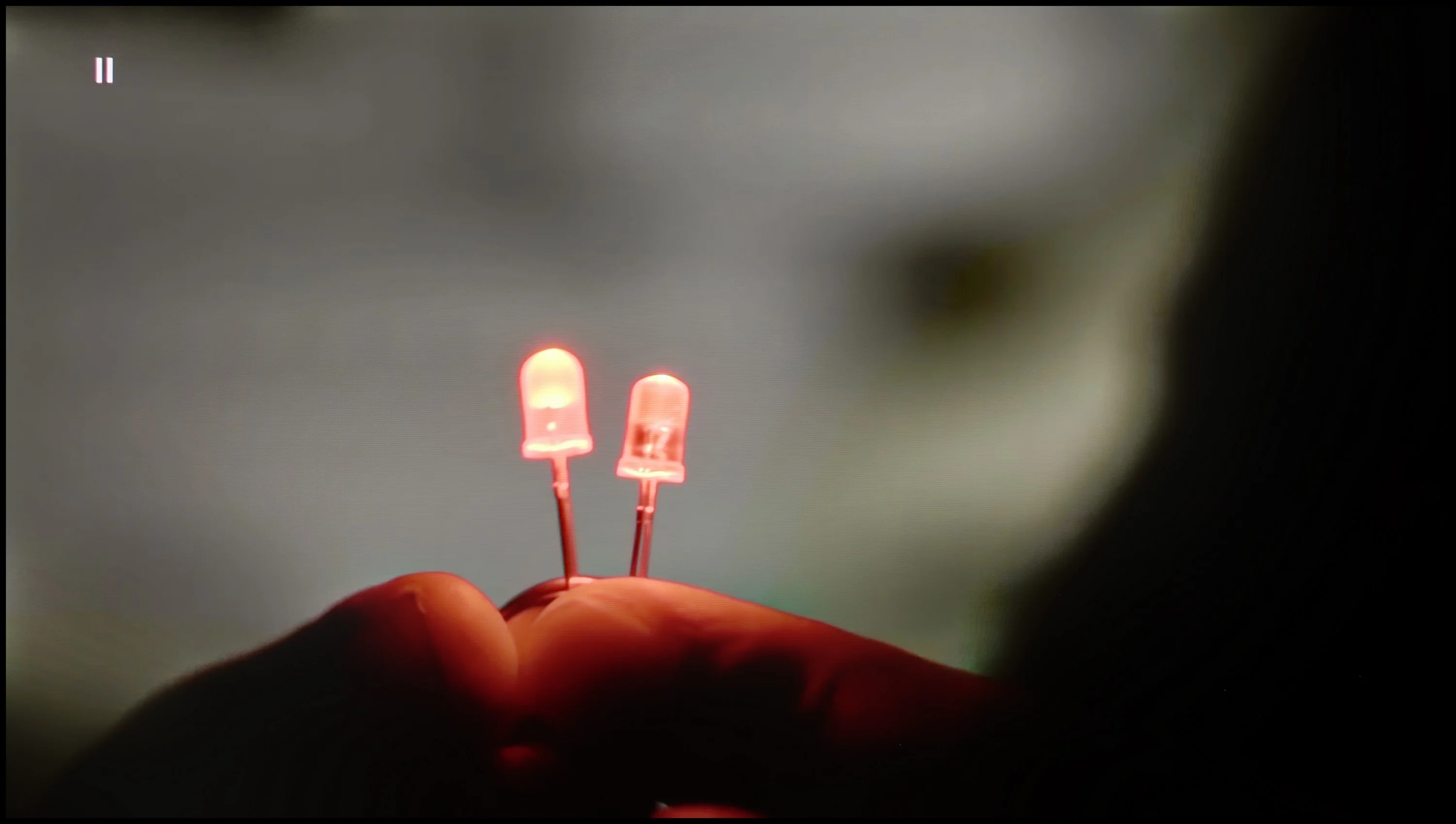
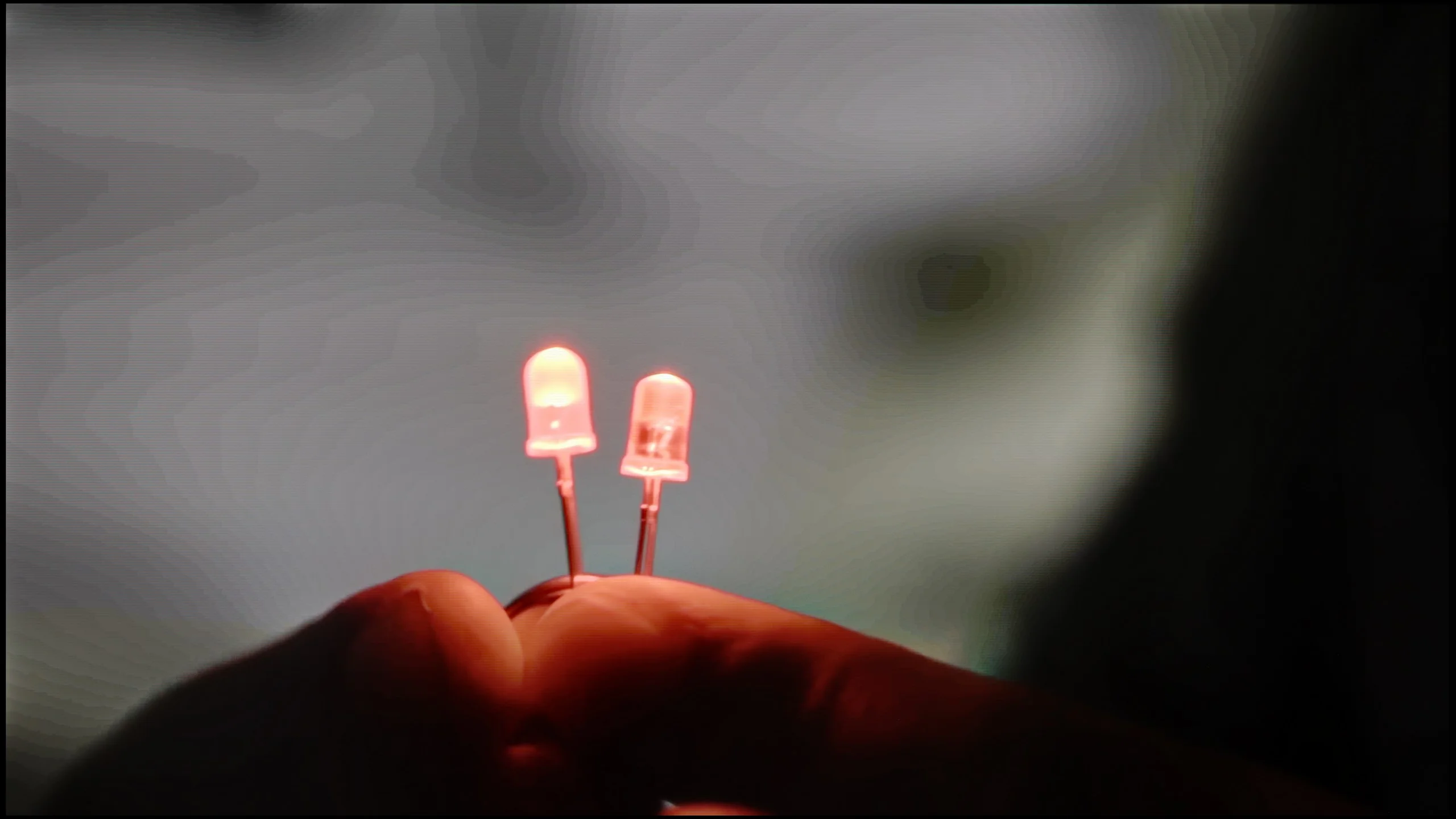
The match photo shows how the TV smooths weak tonal transitions in low-quality video.
Image scaling SD (576i)


The model photo shows how it handles upscaling of SD material.
How does the television handle tonal transitions in lower-quality materials? Generally speaking, the S95D performs exceptionally well. On the screen with the light bulb, there are virtually no transitions between shades of grey, making it one of the best televisions we have tested in this regard.
Regarding digital processing, the entire image — from branches to model figures — has been well rendered, without any jagged edges or heavily visible contours. However, we must draw attention to one issue: the image is slightly cropped. Nevertheless, the television performs excellently, and details in lower-quality materials are still noticeable and well-defined.
In this respect Samsung has changed practically nothing compared with last year’s model, which is actually quite good news. The feature responsible for smoothing tonal transitions still very effectively limits the posterisation effect. However, you should remember that it works rather aggressively, because besides the artefacts themselves it can also remove film grain and slightly soften fine image detail. As always, this is therefore a matter of compromise and personal preference. If you want the most faithful reproduction of the source material possible, we recommend leaving this function turned off.
There is also little to be said about upscaling in terms of revolution. The S90H uses the same proprietary NQ4 Gen3 image processor as its predecessor, so scaling quality has remained practically unchanged. The TV handles lower-resolution material well, effectively improving its sharpness. However, the overscan problem has still not been solved. With some older material, especially archival recordings, it may happen that a portion of the image at the edges is cropped. It’s a minor flaw, but a shame Samsung has left this issue unchanged for another year running.
Blur and motion smoothness
8.5/10
8.5/10
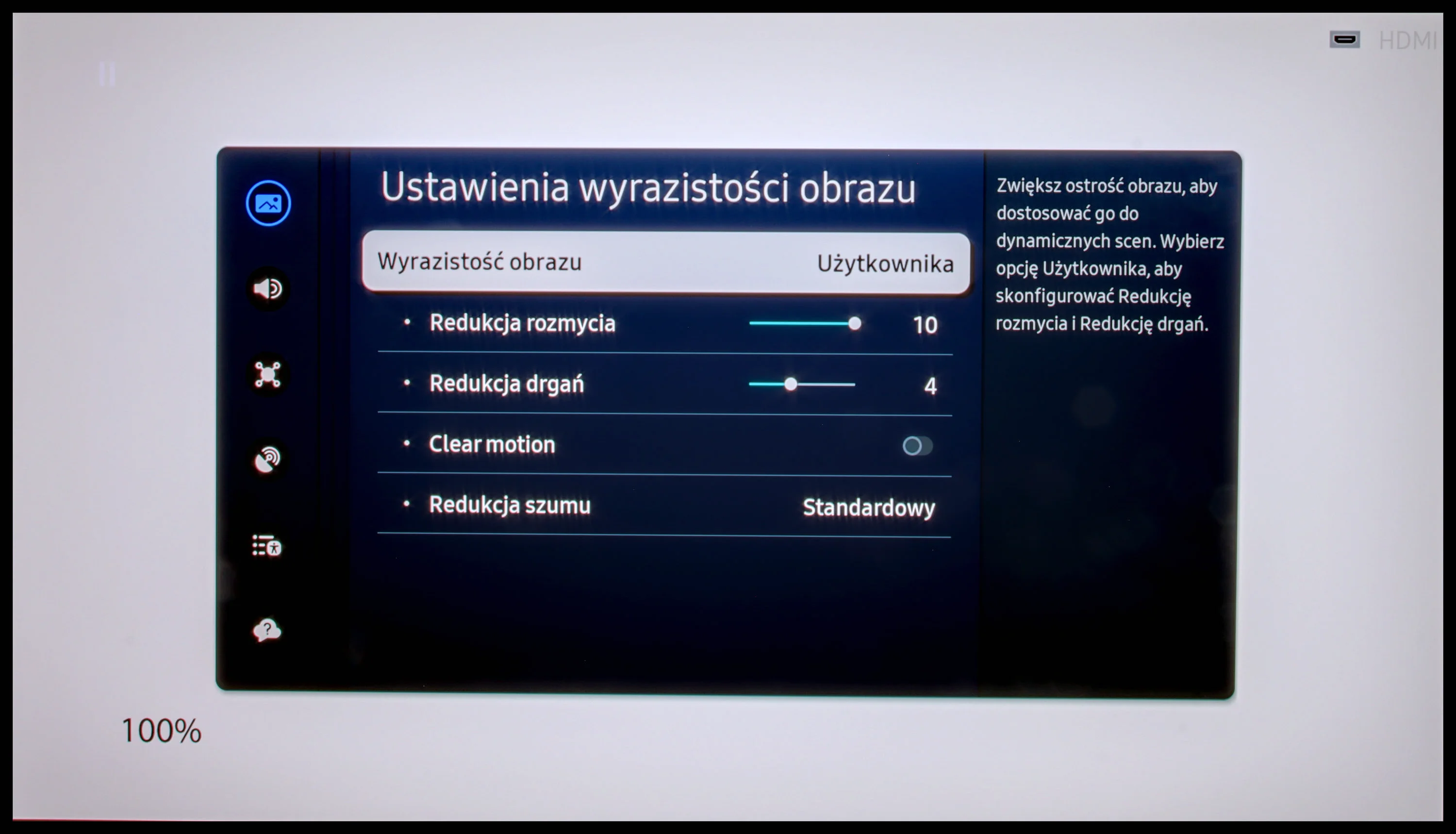
Blur (native resolution, maximum refresh rate):






Blur (BFI function enabled):
Image flickers in this mode
Image flickers in this mode



Blur ():
Blur (4K@165HZ):



The Samsung S95D television, equipped with a refresh rate of 120 Hz (and even 144 Hz in the appropriate PC configuration), offers excellent motion smoothness. Samsung provides a variety of image sharpness settings on a ten-point scale, allowing users to adjust the display according to their preferences - whether the image should be more cinematic/frame-like or more theatrical/smooth. In UFO tests, the OLED matrix shows its advantages, eliminating any blurring. The lightning-fast pixel response means that dynamic movements are reproduced with unparalleled precision.
In terms of motion handling the S90H delivers a very high level. A new feature here is a panel with a refresh rate of up to 165 Hz, although in practice that will mainly benefit PC gamers. Films, series and sports broadcasts do not use such high refresh rates, so when watching them the difference compared with the standard 120 Hz will not be noticeable. That said, thanks to the OLED panel's lightning-fast response time motion is very clean and the picture does not suffer from the motion blur typical of many LCDs. Samsung has equipped the television with extensive motion-smoothness settings. You get two sliders: judder reduction and blur reduction, which let you easily tailor the picture's character to your own preferences. You can easily achieve a very smooth image when watching sport, but you can just as well preserve a more cinematic feel at the typical 24 frames per second. It all depends on which effect you prefer.
Console compatibility and gaming features
9.6/10
9.6/10
- ALLM
- VRR
- VRR range48 - 144Hz48 - 165Hz
- Dolby Vision Game Mode
- Correct implementation of HGIG
- 1080p@120Hz
- 1440p@120Hz
- 4K@120Hz
- Game bar
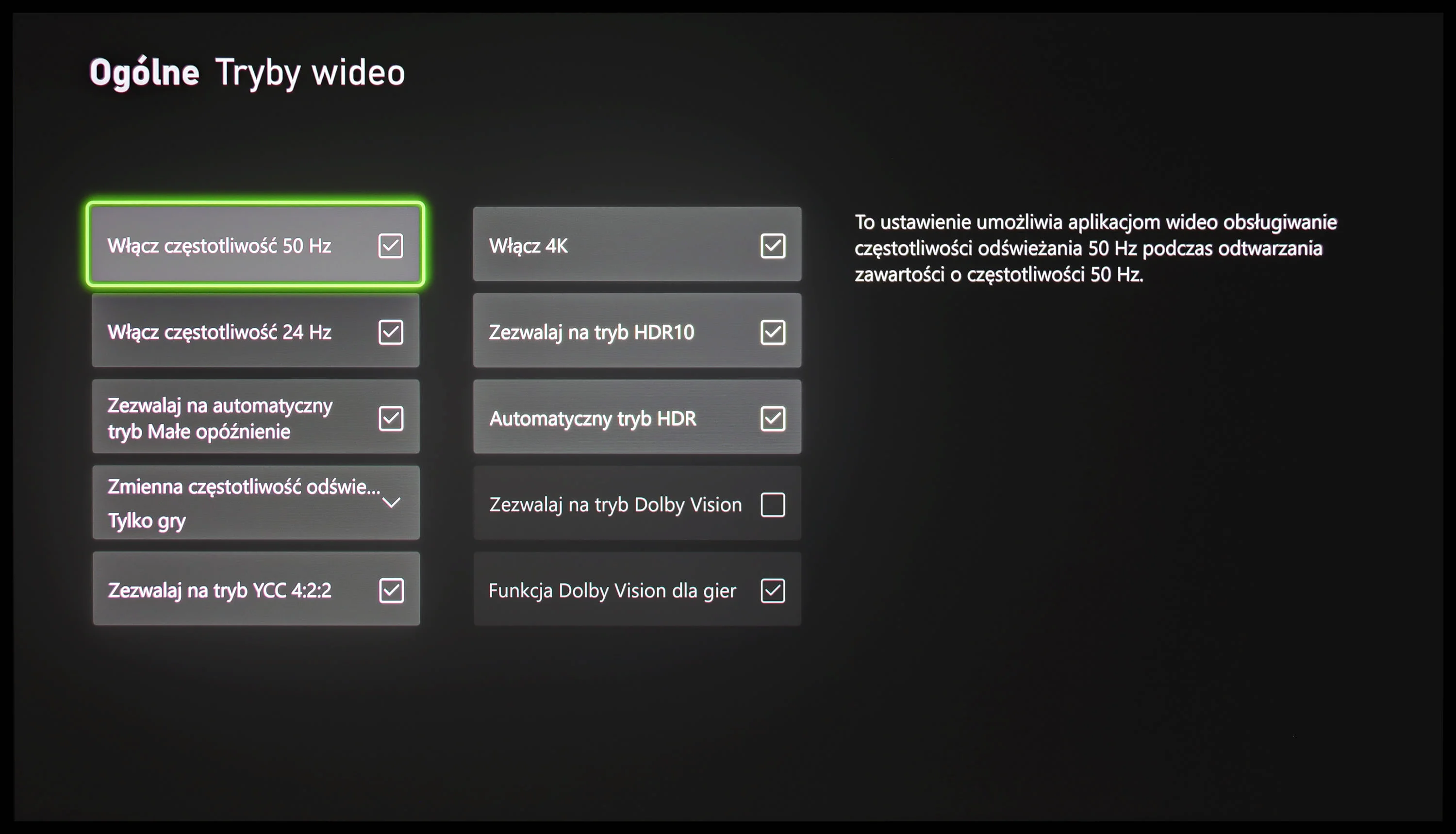
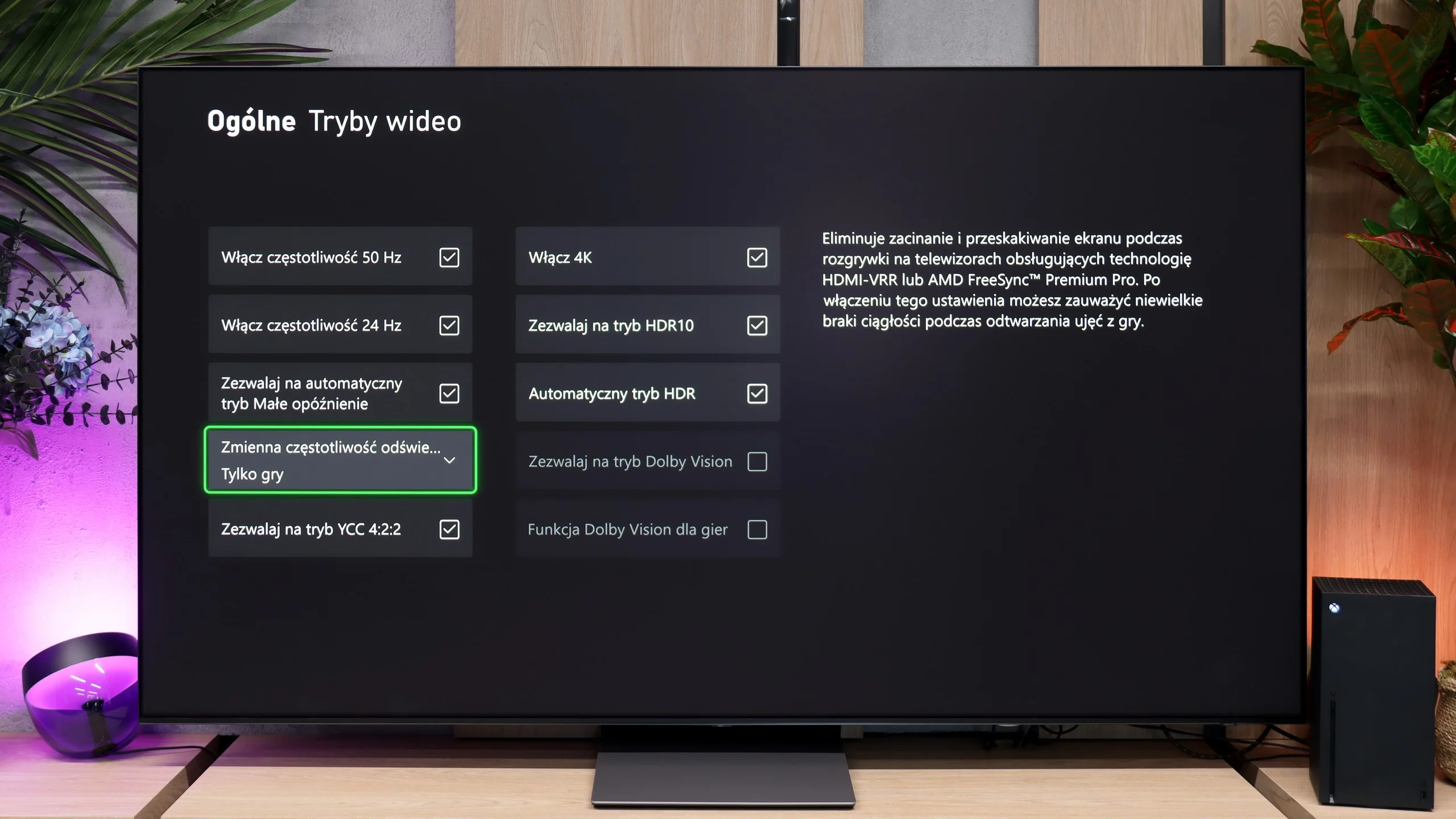
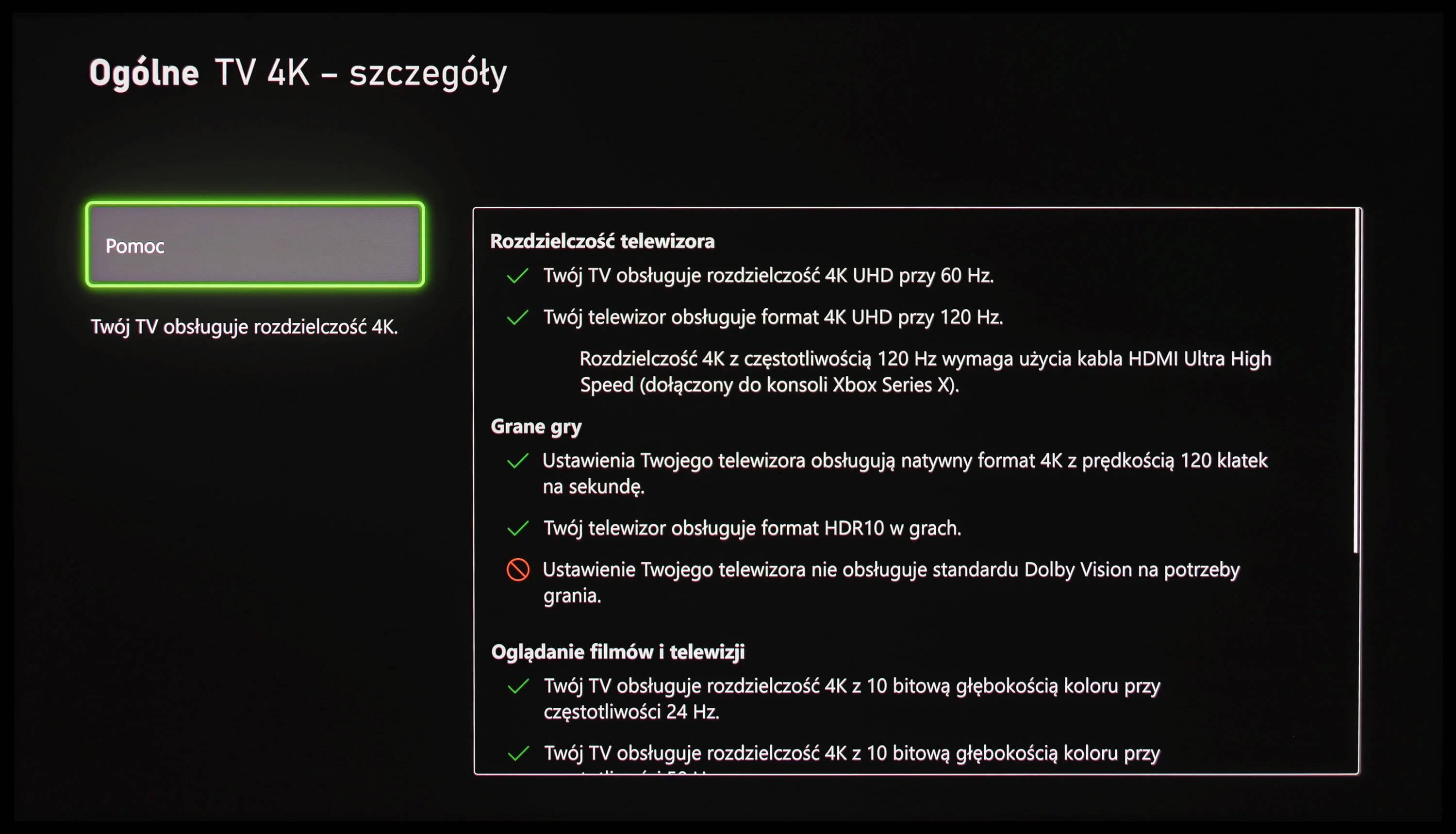
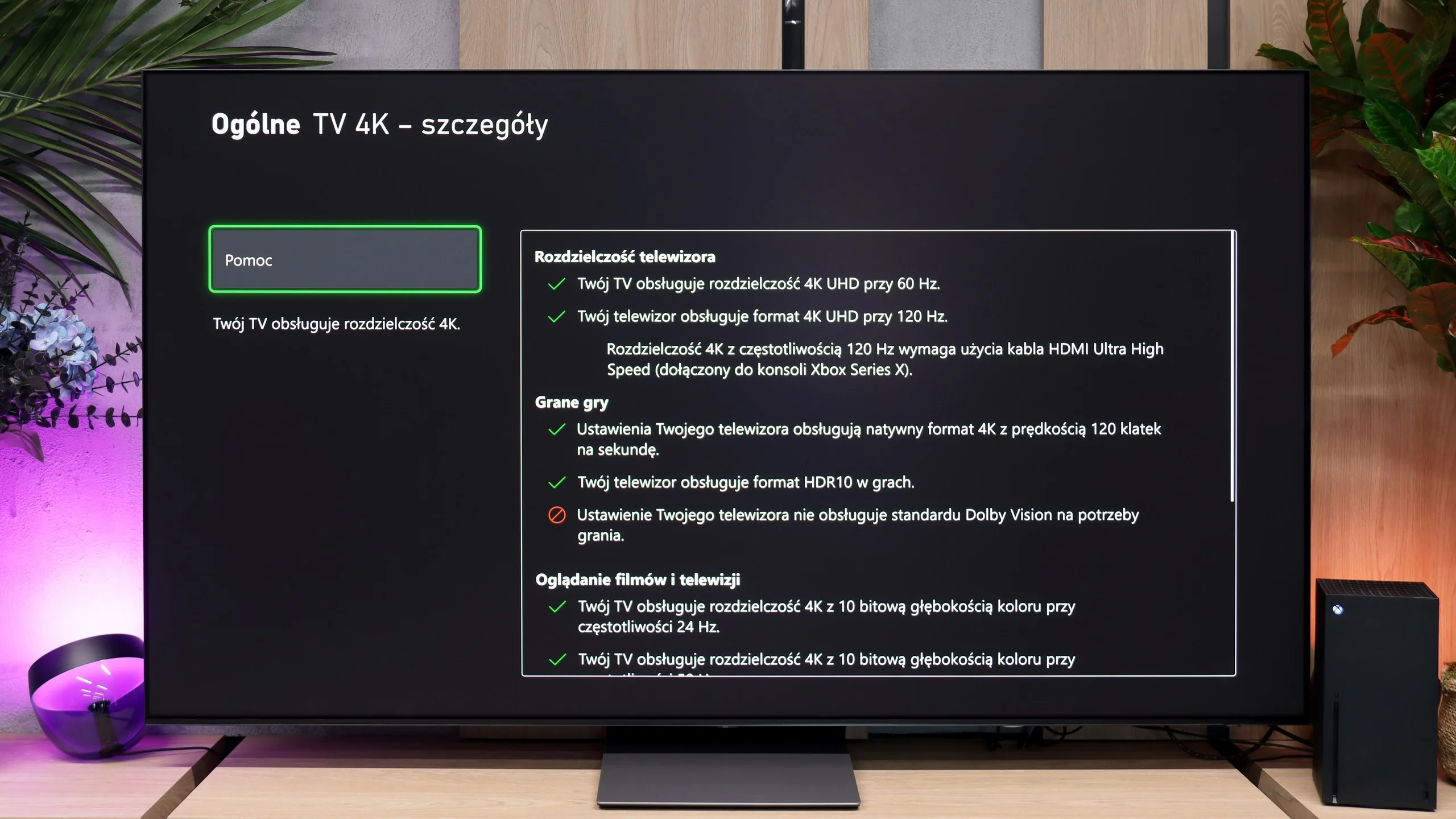

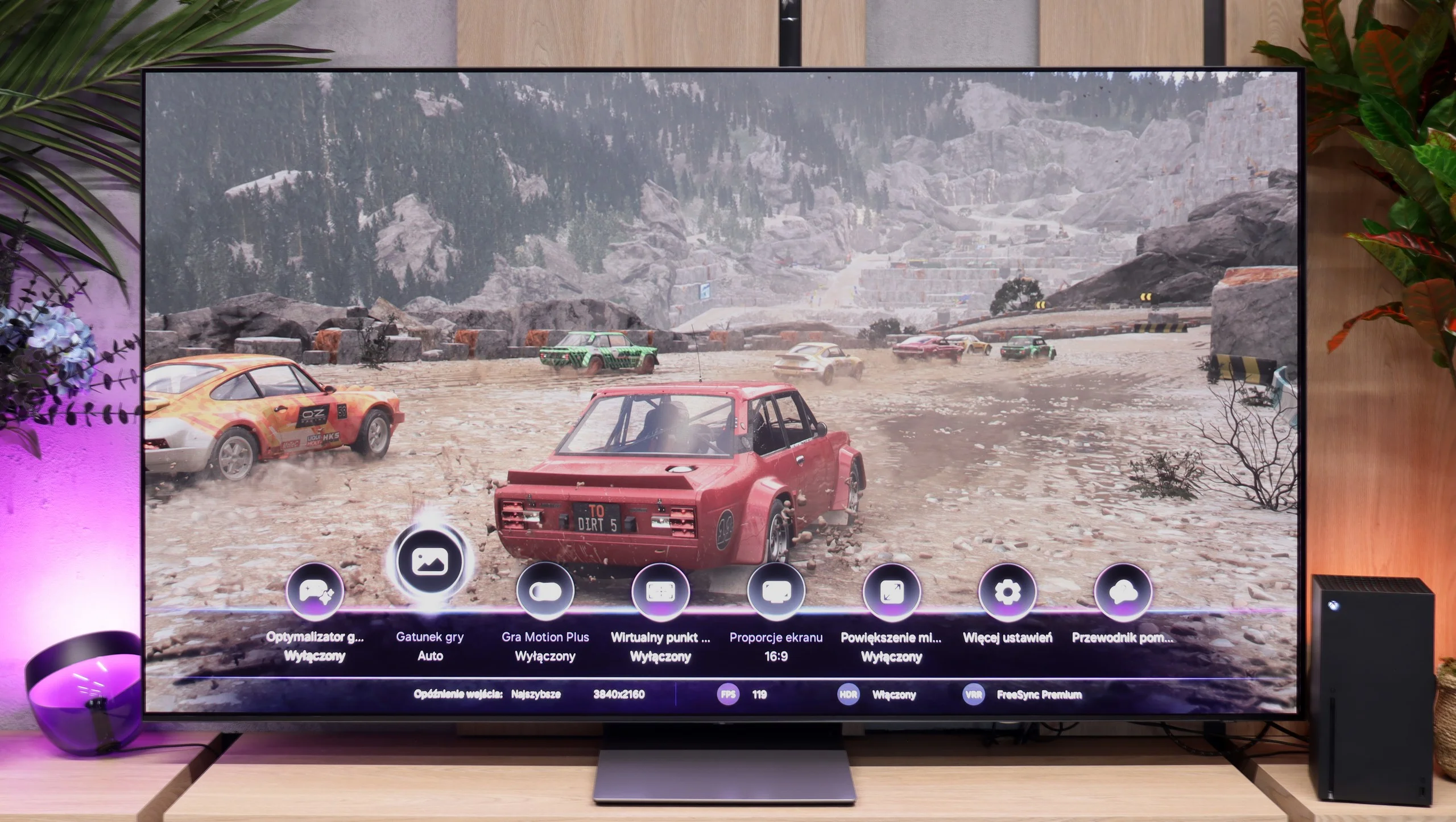
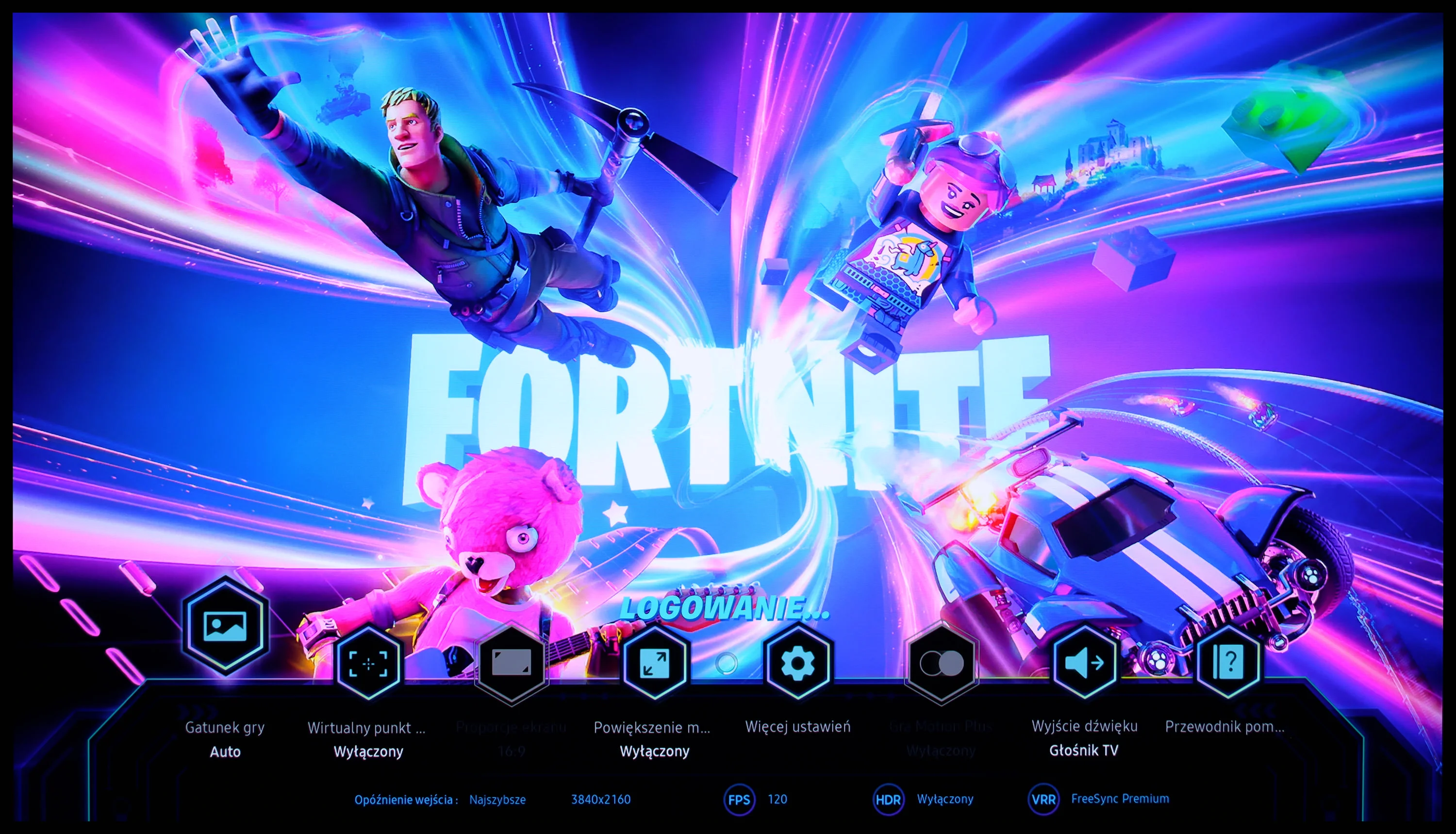
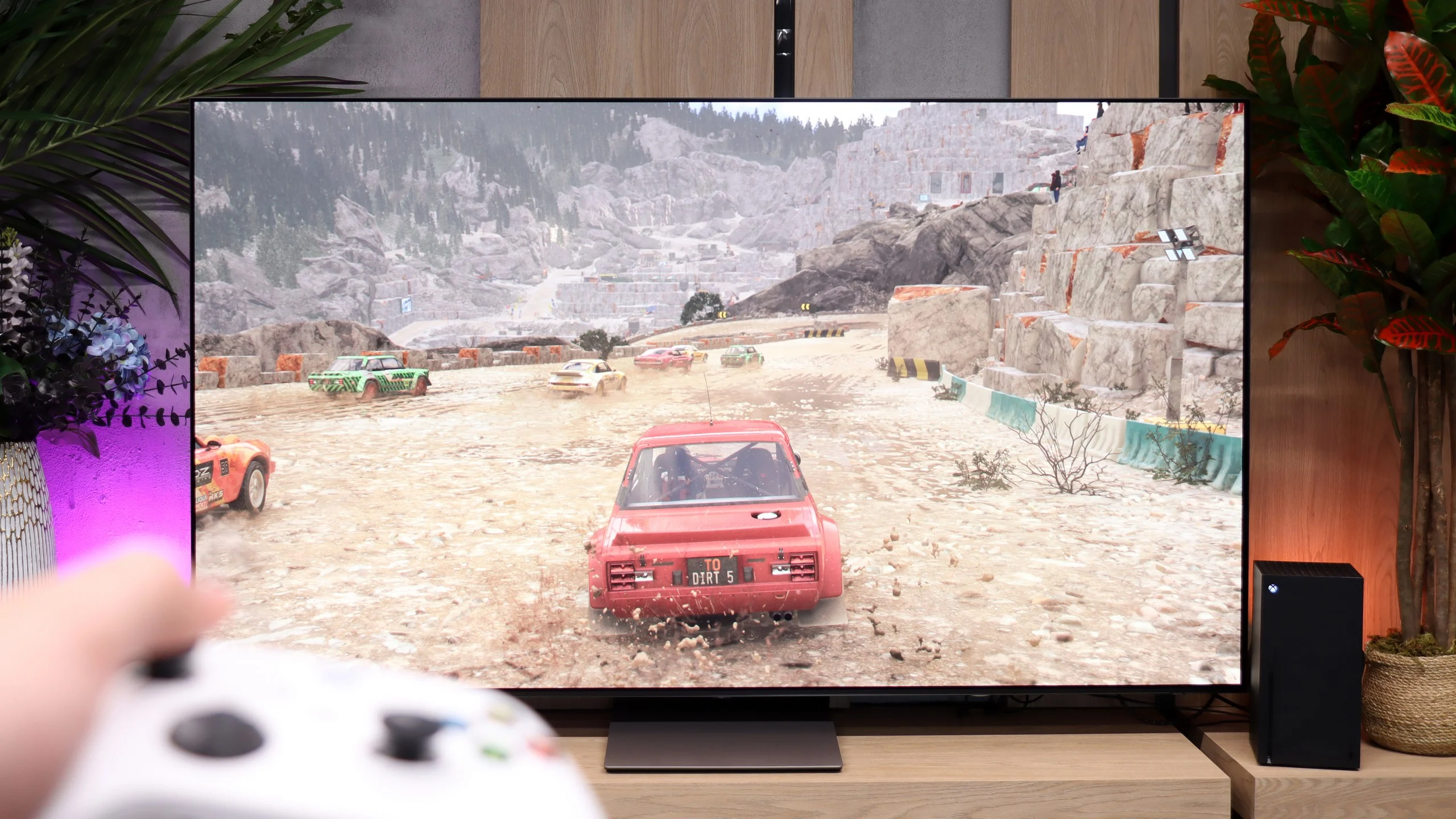
The Samsung S95D TV is perfectly suited to the needs of gamers, offering four HDMI 2.1 ports that support key features such as Auto Low Latency Mode (ALLM), Variable Refresh Rate (VRR), and HDR Gaming Interest Group (HGIG). The HDMI 2.1 ports do not provide full bandwidth of 48Gb, but they are still sufficient for achieving appropriate resolution and smoothness. Thanks to these technologies, gamers can enjoy smoother and more responsive gameplay, which significantly impacts comfort and performance during intense gaming sessions. One of the biggest advantages is the Xbox app, which allows for cloud gaming without the need for a console. Through it, gamers can access a wide range of titles directly on the TV, enjoying high image quality and smooth gameplay. Additionally, the S95D offers a Game Bar feature that enables easy management of game settings, including quick adjustments of parameters such as changing the aspect ratio, which can be extremely useful in various games and gaming modes. It is also worth mentioning the support for G-Sync and FreeSync, which is a huge plus for users of Nvidia and AMD graphics cards. Despite the lack of support for Dolby Vision, the TV still offers excellent features that make it an ideal choice for console gaming enthusiasts. Overall, the S95D combines modern technologies with outstanding picture quality, creating a complete package for any gamer.
From the outset the Samsung S90H feels like a TV designed with gamers in mind, and it's easy to see why. The manufacturer has equipped it with almost everything you could expect from a modern gaming screen. You get as many as four full-bandwidth HDMI 2.1 ports, support for ALLM and VRR, and very high refresh rates. There's also a clear Game Bar that lets you instantly check key picture parameters or change settings without leaving the game. Another very welcome improvement is the HGiG behaviour. Last year it could cause quite a few problems, but on the S90H it works exactly as it should.
Samsung's ace up its sleeve remains its proprietary Game Motion Plus mode. The feature works similarly to the motion smoothing used for films: it improves animation smoothness in games while keeping input lag at a very reasonable level. For titles running at 30 or 60 fps, with the right settings input lag did not exceed 40 ms in our tests. That's a very good result, especially since with many manufacturers enabling similar features results in delays several times higher. Game Motion Plus does not, of course, replace Dolby Vision Gaming, as it's a completely different type of feature, but overall it's a gaming addition that many players may find more noticeable. Smoother motion in 30/60 fps games often makes a bigger difference than HDR itself (which, incidentally, is often poorly implemented in games).
Input lag
10/10
10/10
SDR
HDR
Dolby Vision
The Samsung S95D television stands out with a low input lag of just 5 ms for 120 Hz content and 9 ms for 60 Hz content. These are impressive results that ensure an incredibly smooth gaming experience. If it weren't for our scale limited to 10 points, the S95D would deserve an even higher rating!
Input lag is another aspect that's really hard to fault. With a 120 Hz signal we measured just around 5 ms, which is a truly outstanding result. After switching to even higher refresh rates the latency dropped to astronomically low levels, virtually imperceptible during gaming. The Samsung S90H delivers absolutely market-leading results here.
Compatibility with PC
8.6/10
8.6/10
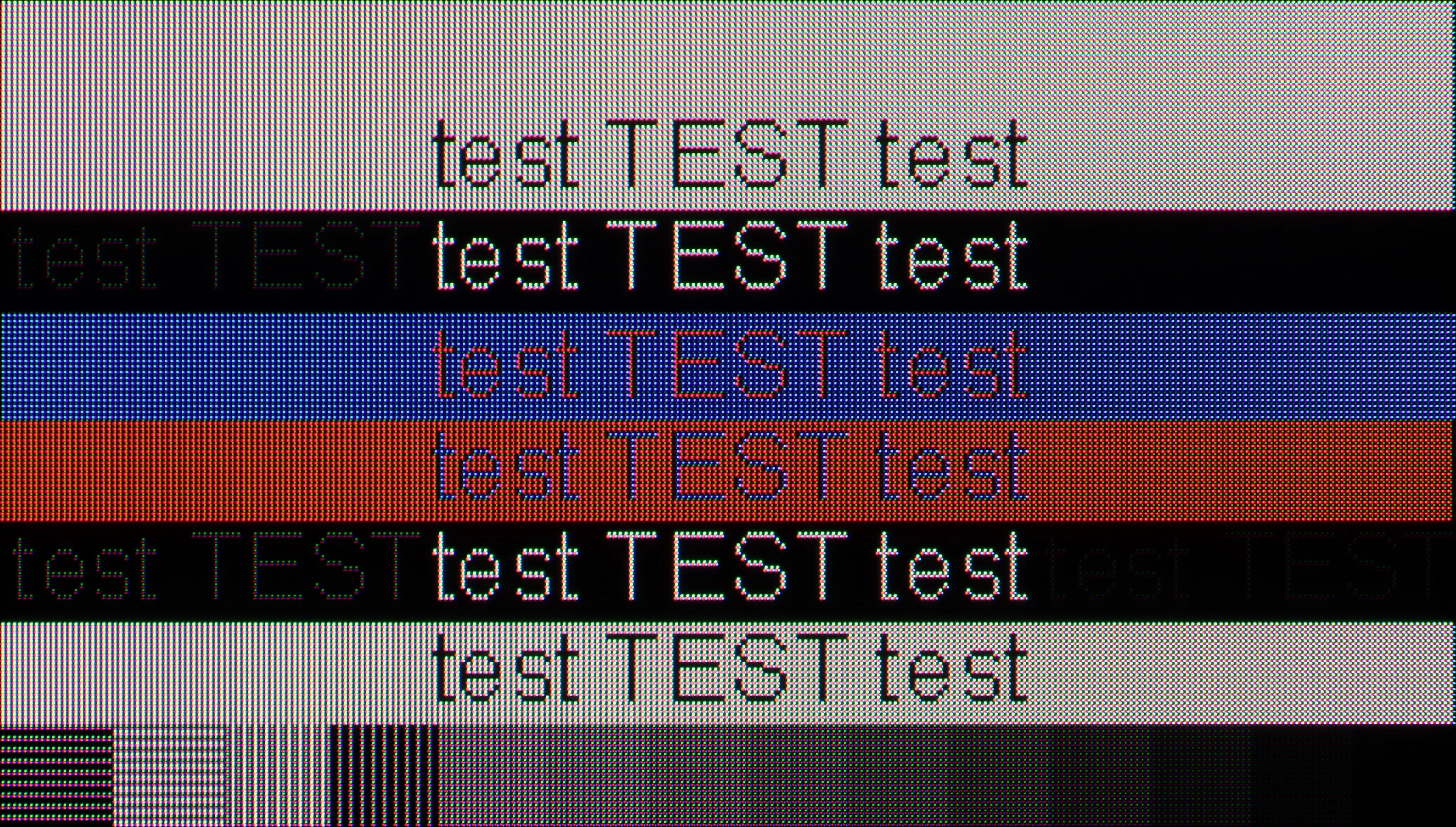
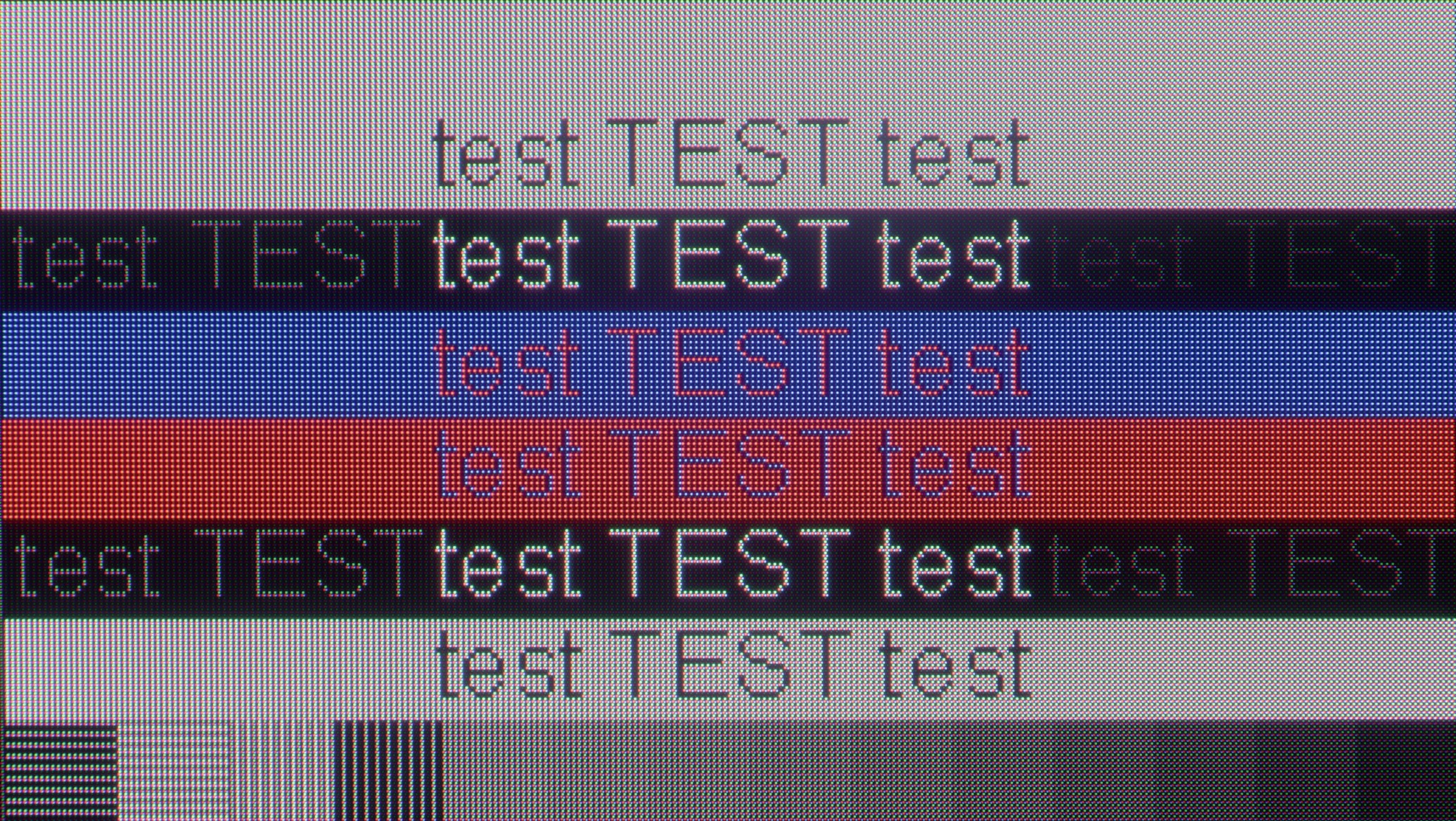
The photo shows the legibility of small fonts. Ideally, lines should be the same thickness on both light and dark text, with minimal pixel gaps.
Samsung S95D is truly an excellent choice for use with a computer. With support for chroma 4:4:4, text on the screen is sharp and readable, which is crucial for both work and gaming. When connected to a computer, the input lag of 5 ms ensures outstanding smoothness.
We deducted points due to the sub-pixel arrangement in QD-OLED panels. Nevertheless, the overall user experience is impressive, and the television performs excellently in everyday tasks as well as in more demanding situations.
The Samsung S90H works excellently as a large PC screen, and not only because of its gaming-oriented feature set. The panel supports a refresh rate of up to 165 Hz, has very low input lag, and the official NVIDIA G-Sync certification allows you to achieve smooth gameplay without screen tearing when used with GeForce graphics cards. If you’re looking for a large display that will handle demanding PC games well, the S90H is an excellent choice.
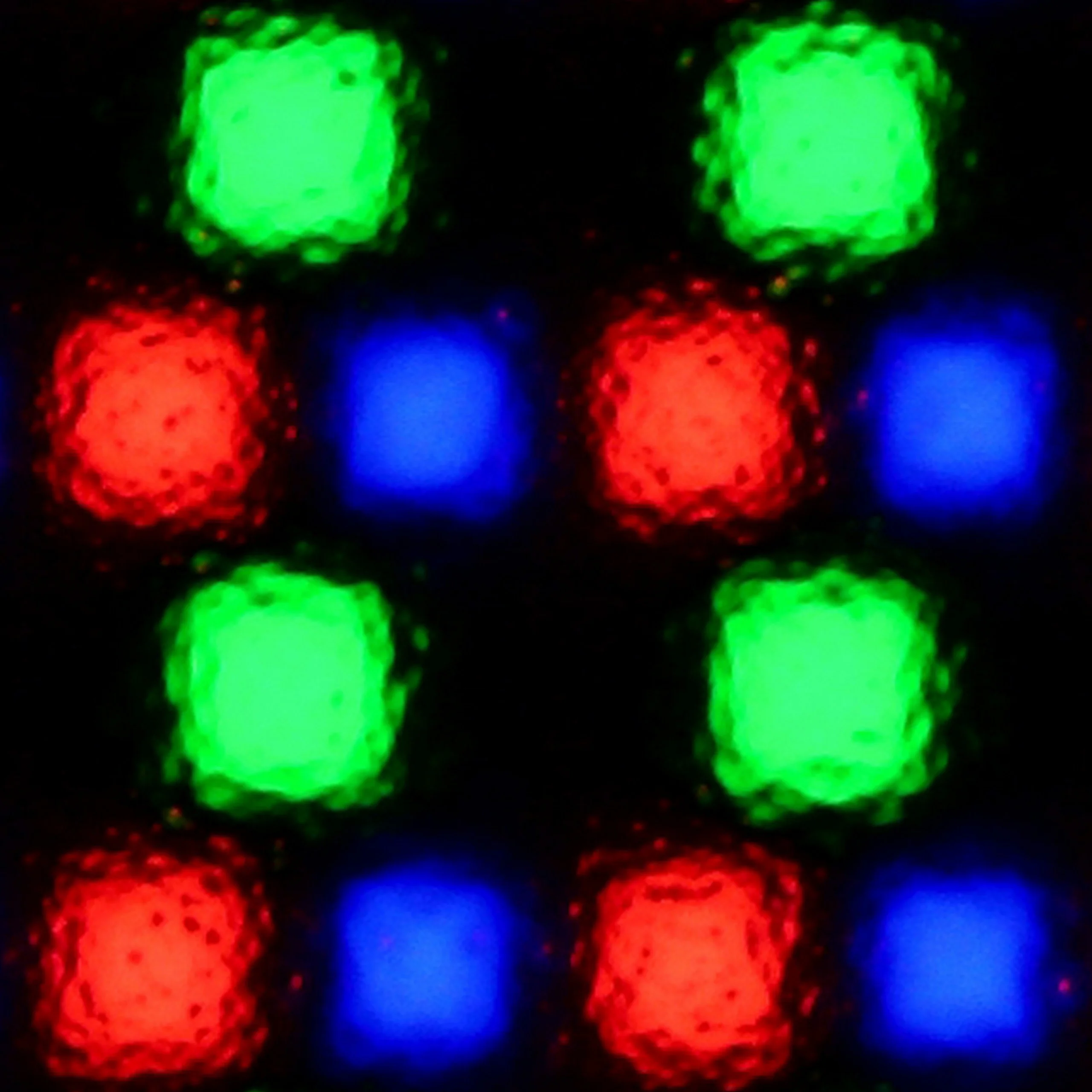
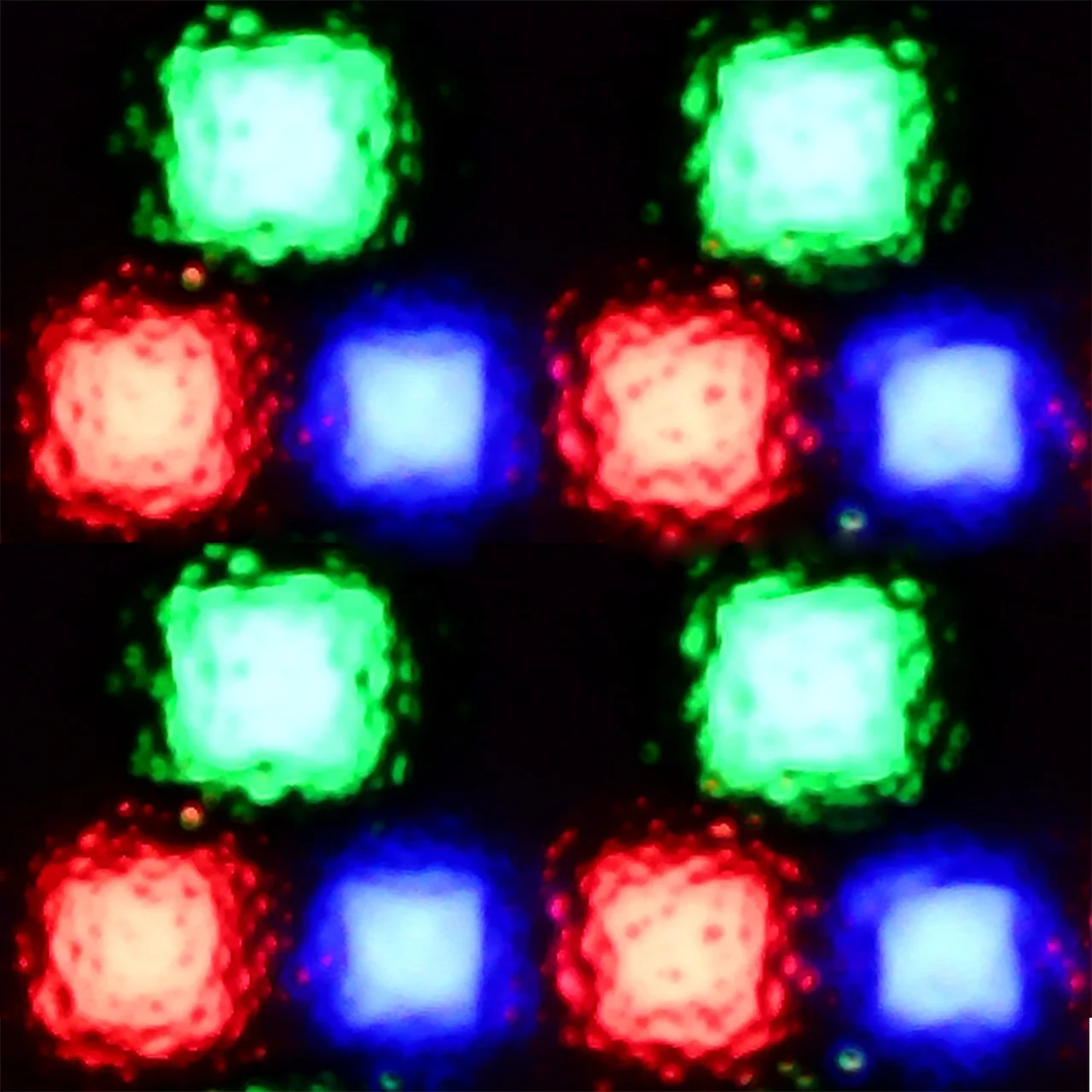
And what about everyday work with text or web browsing? That’s good too. Fonts are sharp and legible, although you should bear in mind the specifics of QD-OLED panels. Up close you can notice the characteristic triangular subpixel layout, which can make letter edges appear slightly jagged or pick up faint coloured fringing. Is that an issue? In practice, it’s minor. After all, we’re talking about a 77-inch screen, so few people will sit just a few dozen centimetres from the panel. From a normal viewing distance that effect becomes virtually invisible.
Viewing angles
9.8/10
9.9/10
The viewing angles on the Samsung S95D are simply perfect—the best we have ever tested. QD-OLED panels in this category are unmatched. Even with the excellent viewing angles offered by standard WOLEDs, QD-OLED definitely leads the way. Regardless of the viewing angle, the picture remains bright, clear, and full of detail, making the Samsung S95D an absolute leader in this field.
As befits an OLED, the viewing angles are excellent, but the QD-OLED panel used here goes one step further in that respect. Even if we sit well to the side of the screen, the colours hardly lose saturation and the drop in brightness is marginal. There is also no sign of the greenish tint that can be irritating on some TVs with panels from LG Display. The image retains its colours very well regardless of the angle from which we view it.
Daytime performance
6.2/10
6.4/10
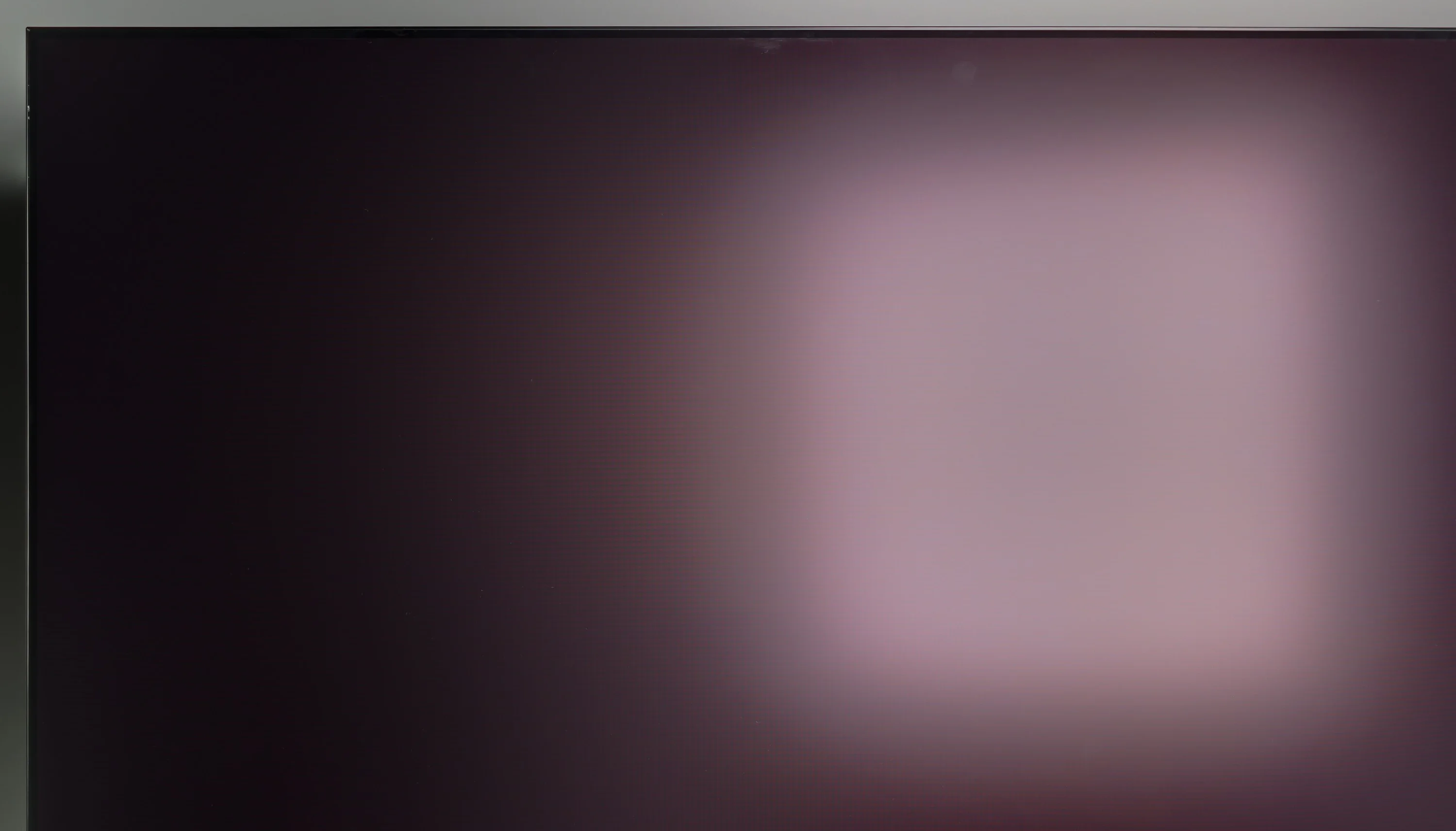
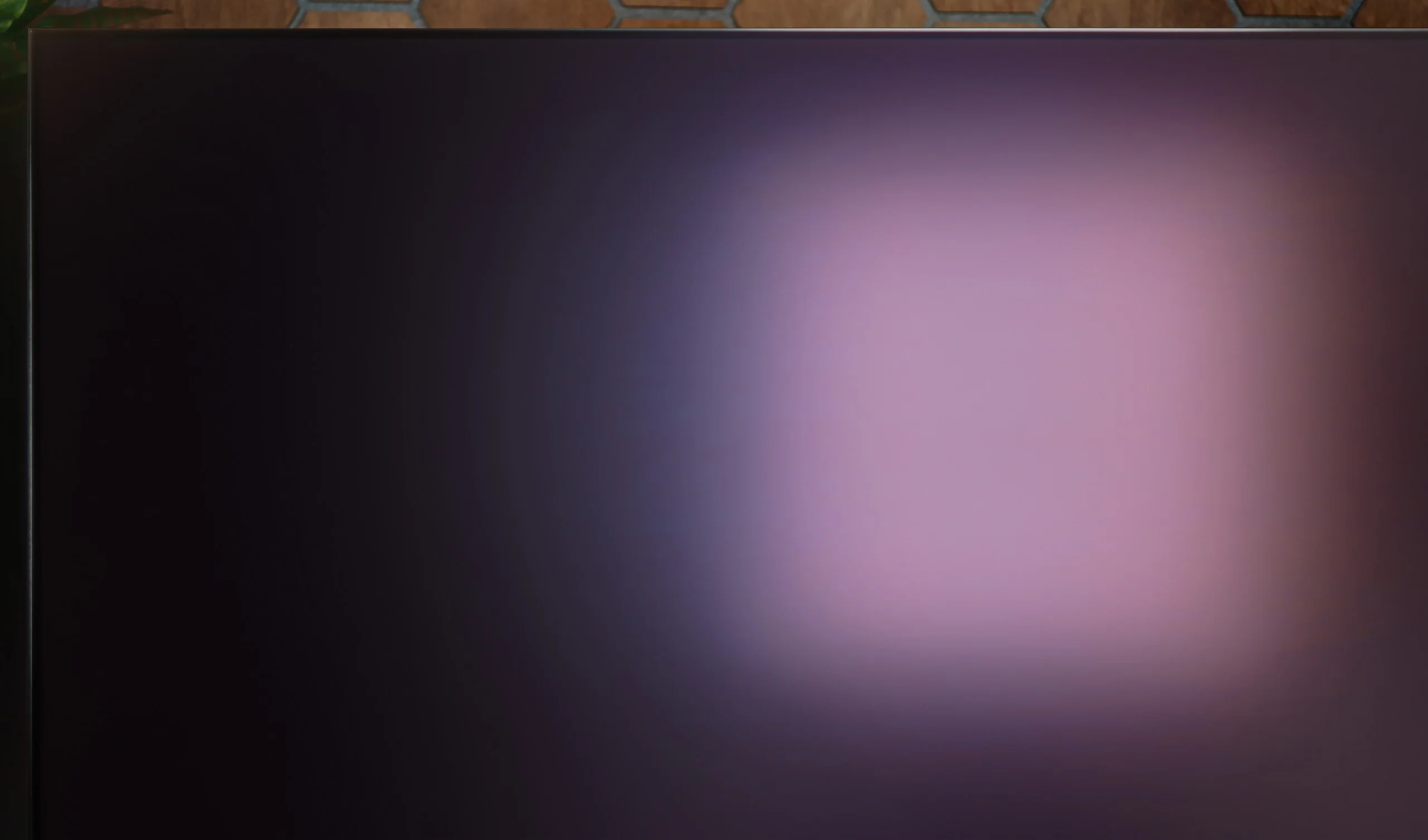
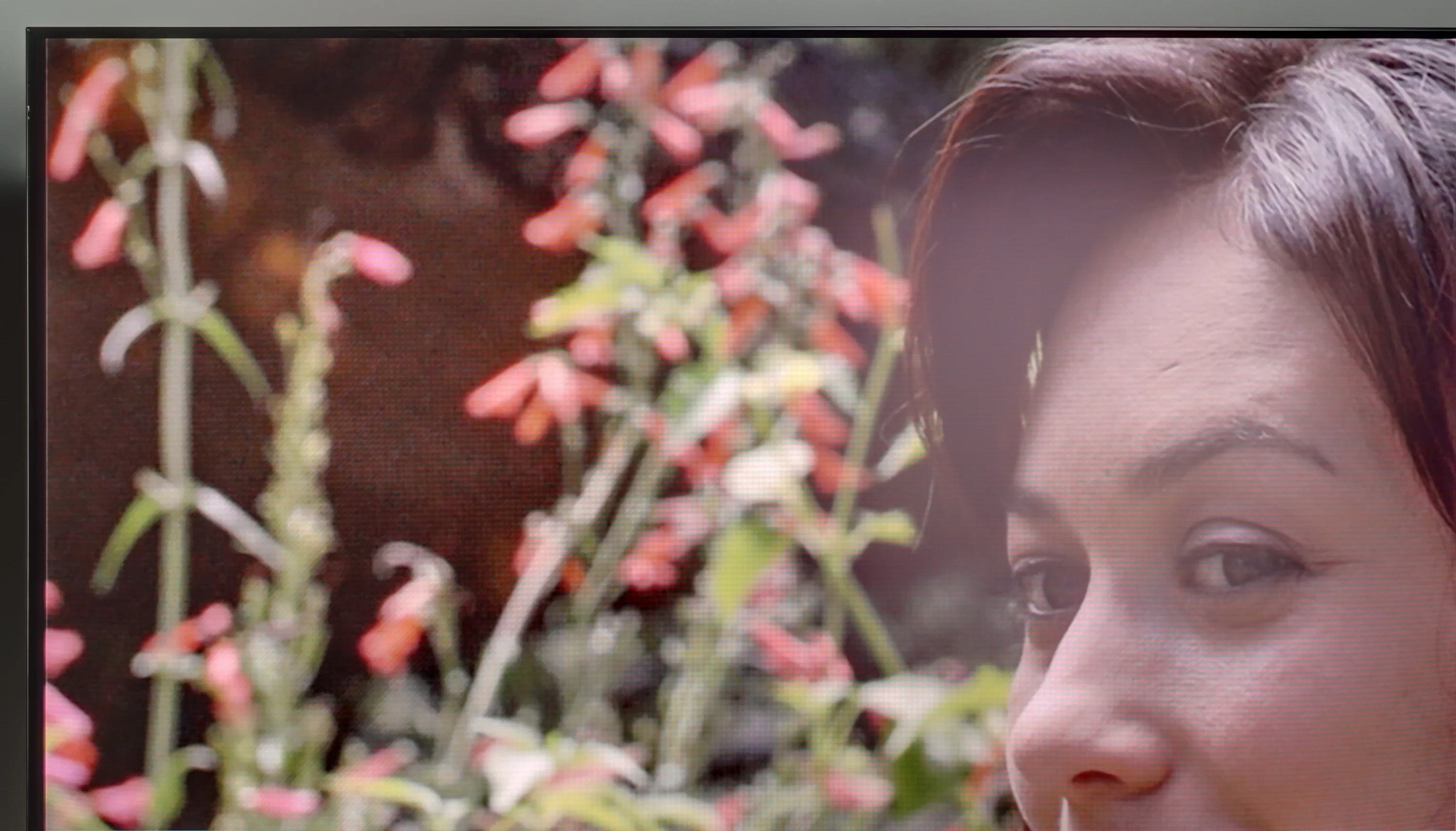
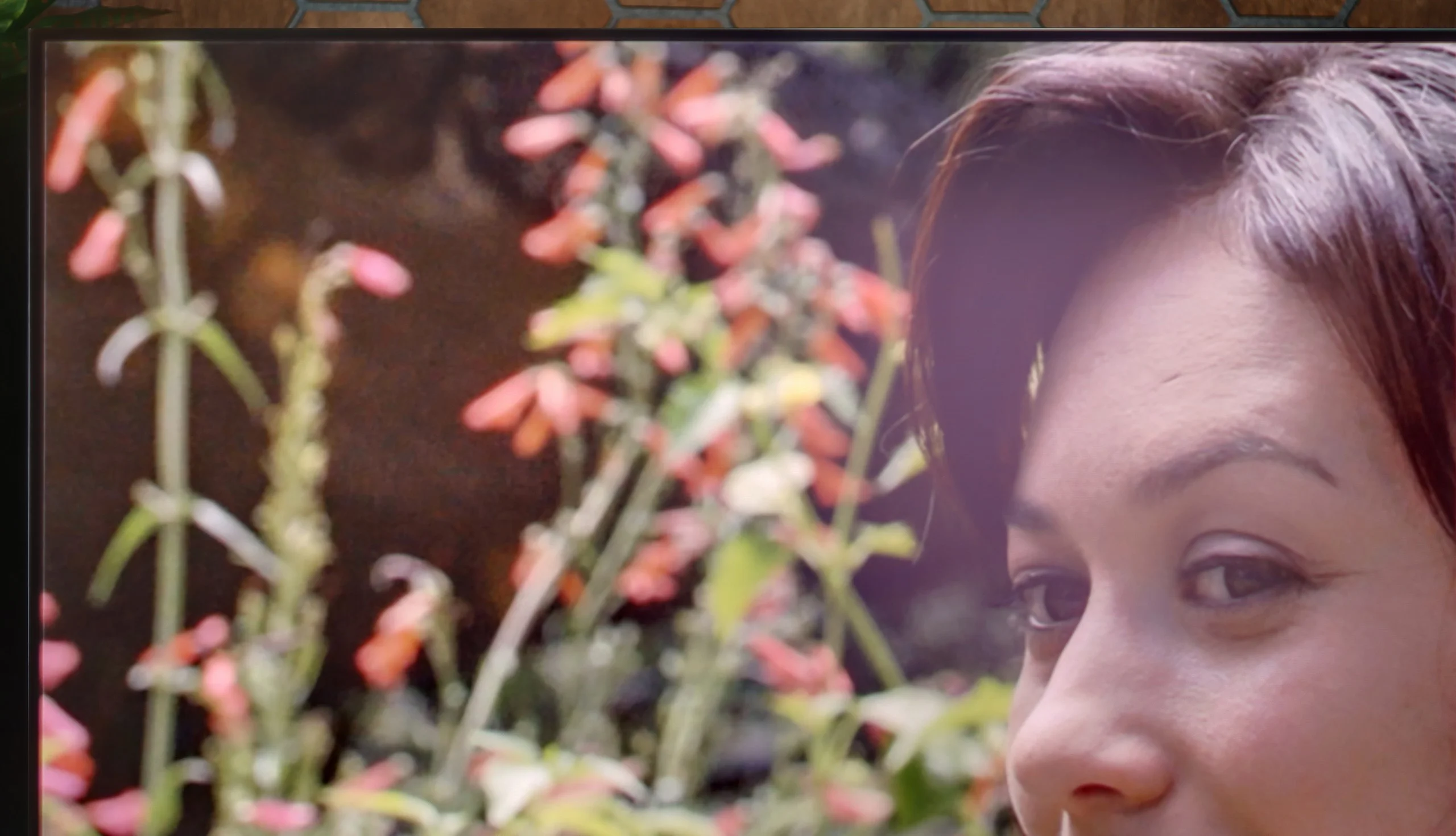
Panel brightness
Samsung S90H (QD-OLED): 486 cd/m2
Samsung OLED S95D: 508 cd/m2
The Samsung S95D television stands out for its exceptional daytime performance, being the only OLED on the market with a matte screen. Thanks to this feature, light reflections are reduced, allowing for comfortable viewing in bright rooms. However, it is worth noting that the matte coating may slightly diminish colour intensity. Despite this minor drawback, the television remains very bright, offering up to 500 nits of brightness. This makes the image clear and vivid even in well-lit spaces, making the S95D a great choice for everyday use.
The biggest addition to the S90 range is the matte screen finish. Samsung has taken this step in this line for the first time and, in our view, it was a good move. You notice the difference straight away. The coating very effectively suppresses reflections, so even when there is a window opposite the TV or a strong lamp is shining, you won't see the typical mirror-like glare on the screen. Instead, only a gently diffused light appears, which interferes much less with viewing. If the TV is going to sit in a bright living room, that's really hard to overstate.
Of course there is a trade-off. QD-OLED with a matte coating has a characteristic trait: when strong light hits the screen, blacks can shift slightly towards a cherry tint, and colours may lose a little of their depth. This isn't a defect that occurs in every situation, but a quirk of this design under strong lighting. Fortunately the TV itself is bright enough that there are no issues watching during the day. In SDR it reaches around 500 nits of average brightness, and combined with the matte coating this makes for really comfortable viewing conditions.
Panel details
Subpixel Structure:
Panel uniformity and thermal imaging:


Samsung OLED S95D
Samsung S90H (QD-OLED)
TV features
7.9/10
7.3/10
- SystemTizenTizen
- System performanceVery goodVery good
- HDMI inputs0 x HDMI 2.0, 4 x HDMI 2.1 40Gbps0 x HDMI 2.0, 4 x HDMI 2.1 48Gbps
- Other inputsToslink (Optical audio)
- OutputseARC (HDMI), ARC (HDMI)Toslink (Optical audio), eARC (HDMI), ARC (HDMI)
- Network InterfacesWi-Fi 2.4GHz, Wi-Fi 5GHz, Ethernet (LAN) 100MbpsWi-Fi 2.4GHz, Wi-Fi 5GHz, Ethernet (LAN) 100Mbps, Ethernet (LAN) 1Gbit
- TV receptionDVB-T, DVB-T2, DVB-S, DVB-S2, DVB-CDVB-T, DVB-T2, DVB-S, DVB-S2, DVB-C
Classic features:
- Recording to USB (terrestrial TV)
- Recording programming
- Picture in Picture (PiP)
- RF remote control (no need to aim)
- Backlit remote control
- Teletext
- Audio only mode
- Bluetooth headphones support
- Simultaneous Bluetooth headphones & TV audio
Smart features:
- AirPlay
- Screen mirroring (Windows Miracast)
- Voice search
- Voice search in native language
- Ability to connect a keyboard and mouse
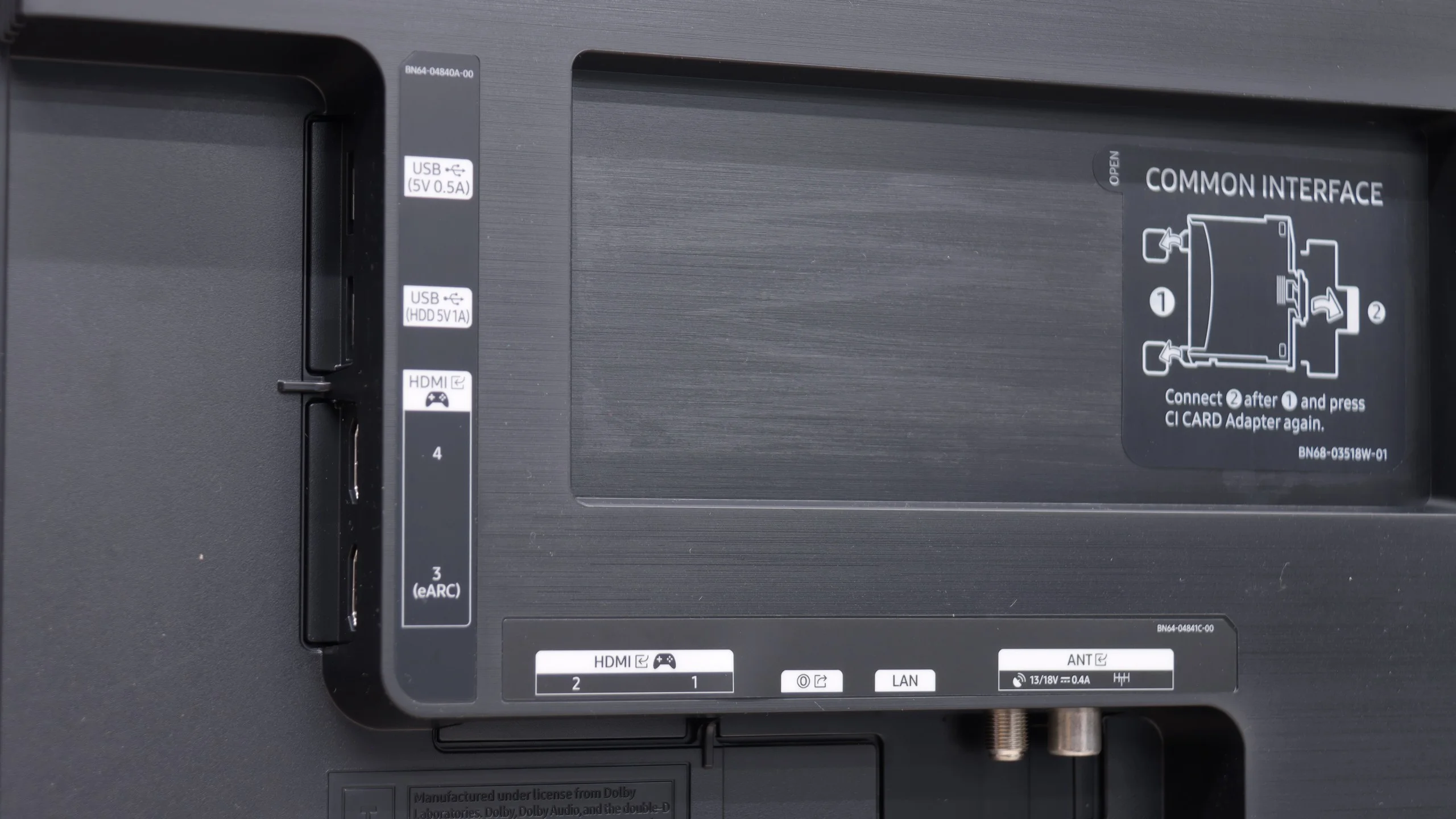
Sound connection options
- HDMI audioeARC (HDMI), ARC (HDMI)eARC (HDMI), ARC (HDMI)
- Other audio outputsToslink (Optical audio)
- Wireless audioBluetoothBluetooth
Supported audio formats (external HDMI eARC audio):
- Dolby Digital Plus 7.1
- Dolby True HD 7.1
- Dolby Atmos in Dolby Digital Plus (JOC)
- Dolby Atmos in Dolby True HD
- DTS:X in DTS-HD MA
- DTS-HD Master Audio
Senior accessibility
- Numeric keyboard on TV
- Font size adjustment
- Audio description
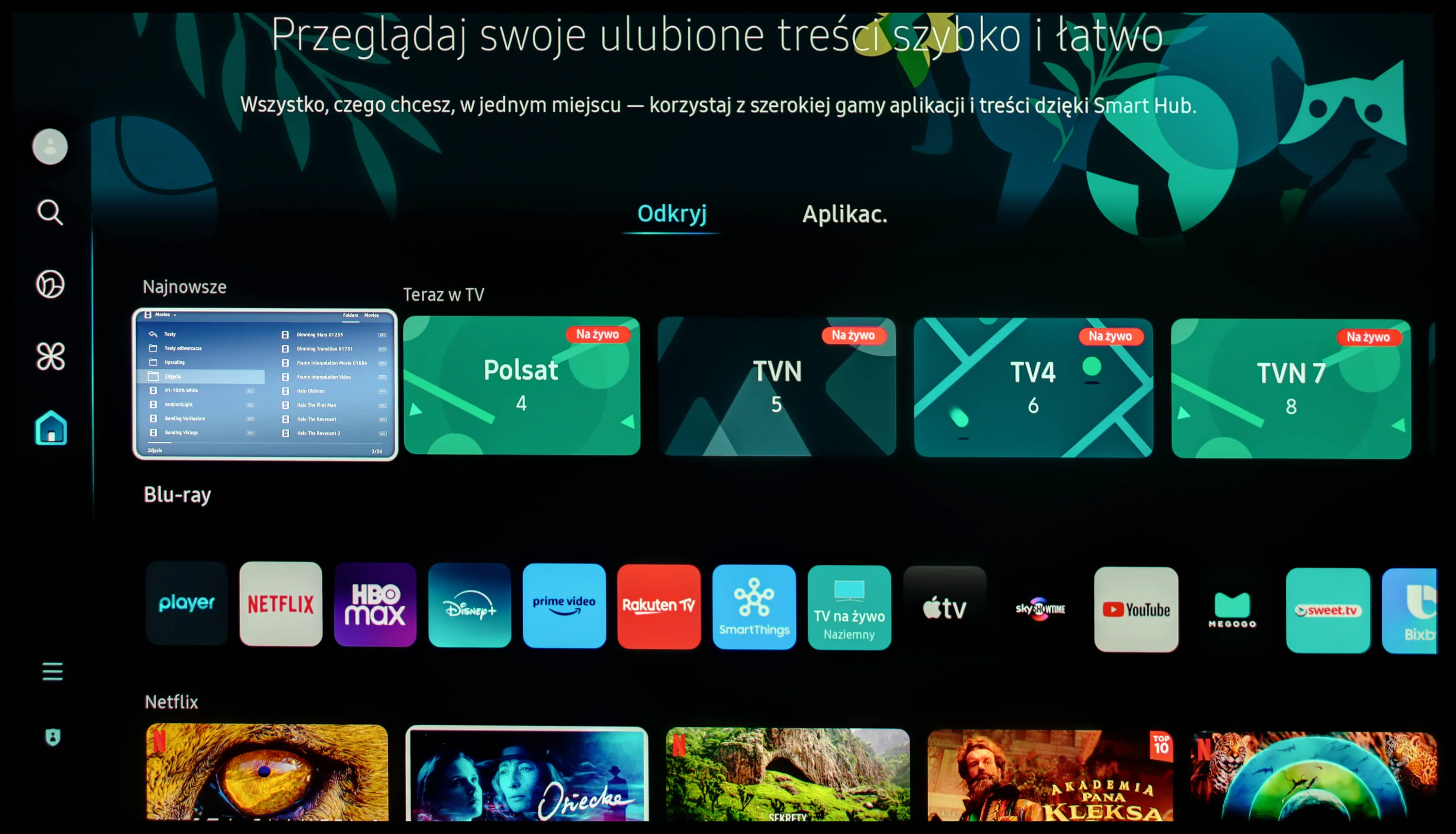
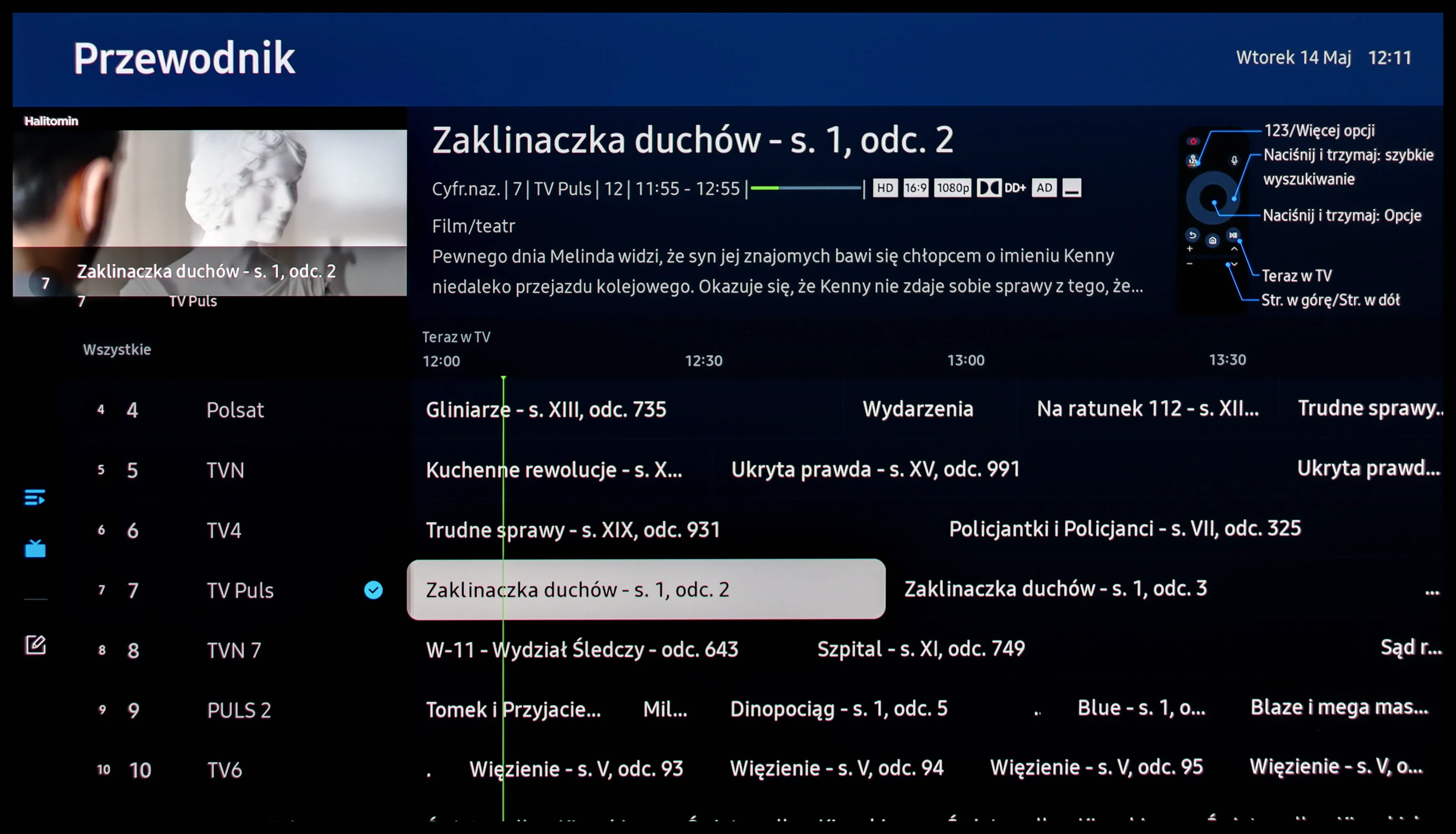
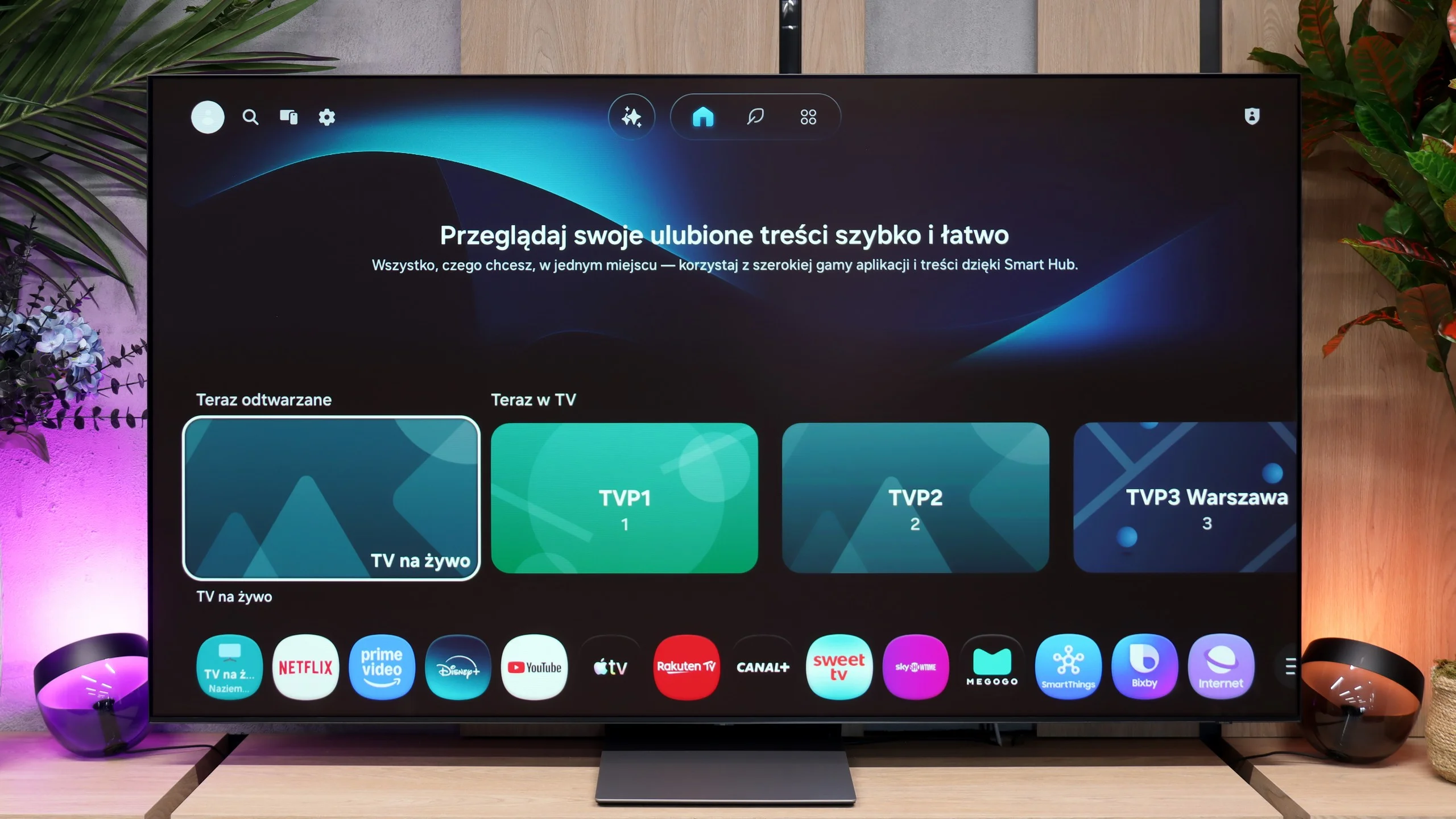
The Samsung S95D television offers a range of features that significantly enhance user comfort, making it an ideal device for entertainment in the privacy of one's home. The Tizen system, on which this model is based, is a modern and advanced platform that provides an intuitive and smooth experience. Thanks to its user-friendly interface, navigation through applications and settings is quick and straightforward, making it easy for even those less familiar with technology to use the television. Tizen supports a rich set of applications, including all popular streaming services such as Netflix, YouTube, and Amazon Prime Video. A new feature for 2024 is the availability of voice search in Polish. Additionally, the television supports AirPlay, allowing for easy content sharing from Apple devices like iPhone or iPad. It is worth noting that the S95D television works with the SmartThings app, which enables integration with other smart devices in the home. This app allows for automation creation and monitoring of household equipment, making the television not only an entertainment device but also a smart home management centre.
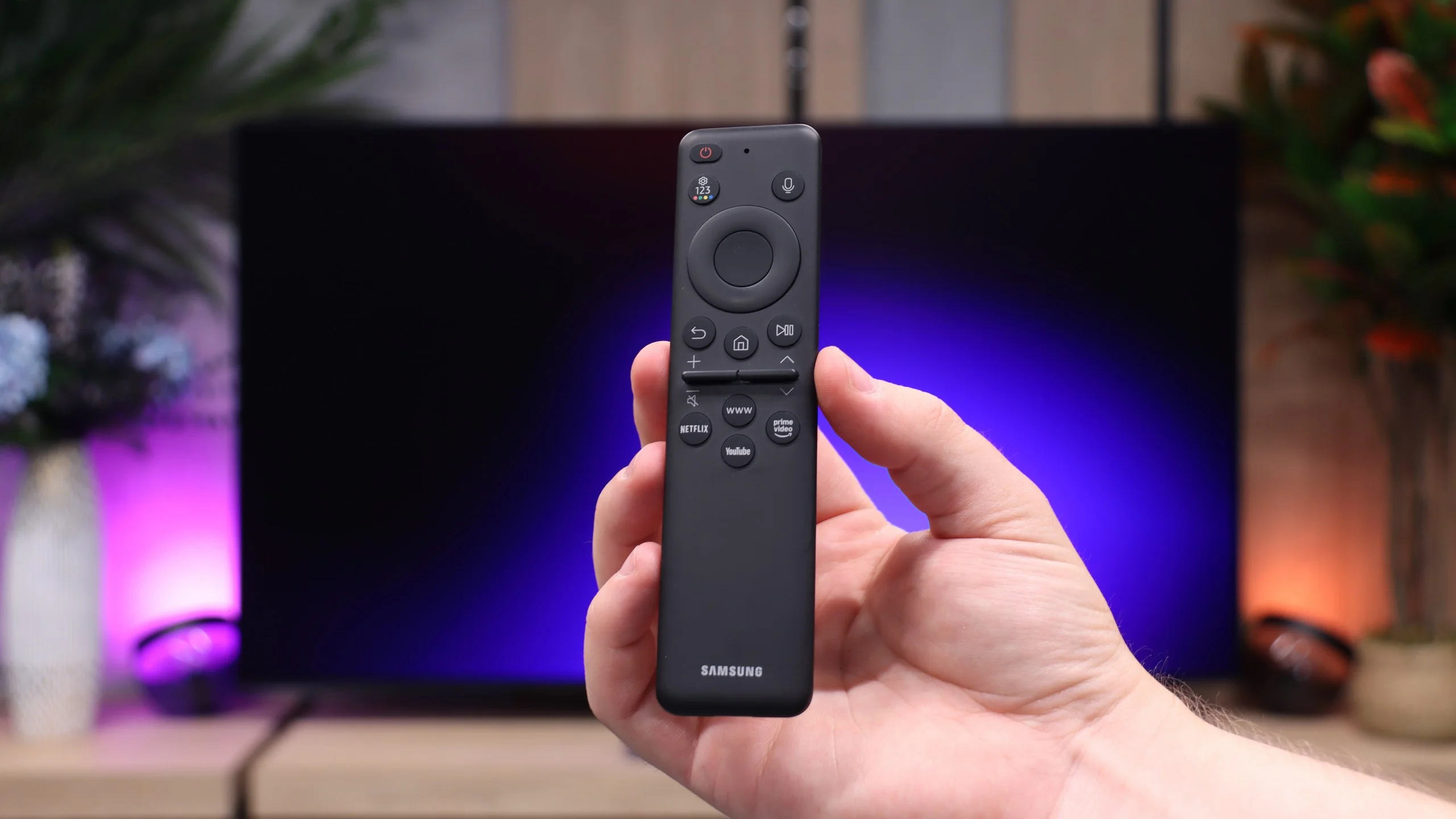
It is also worth mentioning the included accessories, including an eco-friendly solar remote control, which is not only environmentally friendly but also practical for everyday use. This remote can operate multiple devices connected to the television, eliminating the need to use several different remotes - it easily integrates with other set-top boxes such as Canal+ / NC+. Additionally, the One Connect module in the Samsung S95D is an excellent solution that makes the television extremely slim. With this device, all cables and connections can be concealed. It is one of the sleekest devices that can be mounted on a wall, providing an aesthetic and modern look to the interior. If we want to place the device on a very sturdy metal stand, we need not worry. This module can be mounted at the back of the stand, creating a harmonious whole.
The only drawback that can be pointed out is the lack of USB recording support. For some users, this might be a limitation. Nevertheless, the Samsung S95D television offers many advanced features and technologies, making it an excellent choice for anyone looking for high-quality entertainment in their home.
Traditional TV
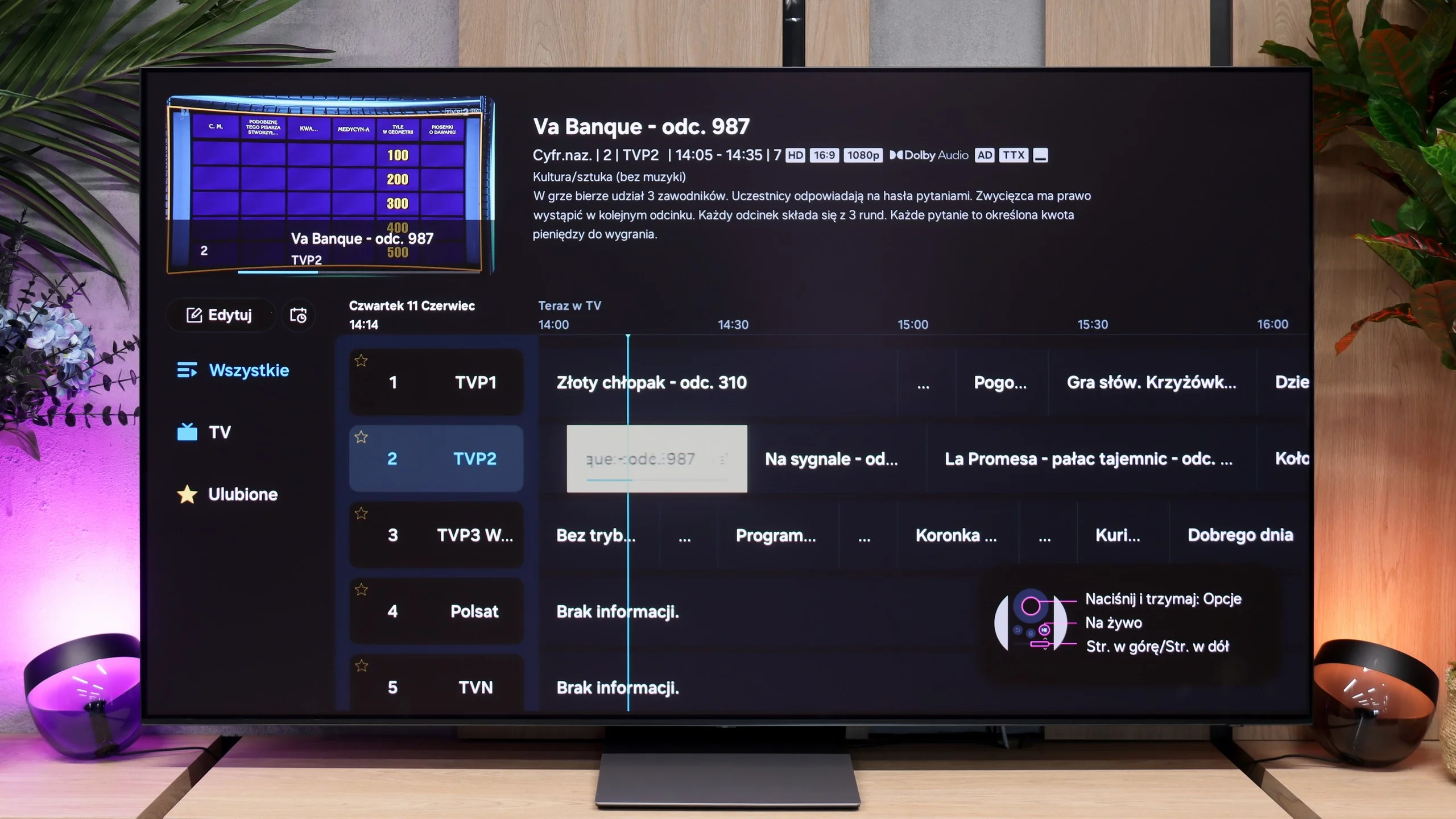
When it comes to ordinary cable or an aerial, Samsung hasn't reinvented the wheel. Putting all the AI fanfare to one side, the user largely gets the same as last year. The TV simply does its job: it switches channels smoothly, has a tuner and a CI module slot, so in many cases you can do without an external set-top box. Teletext is also still present. The compact remote is worth praising too; its biggest advantage is radio connectivity, so you don't have to point it directly at the TV to change anything. The problem is that almost every competitor offers most of these features today, and the S90H doesn't add anything particularly special. What's more, the manufacturer has taken a small step backwards. The PiP function, picture-in-picture, has disappeared from the S90 range. If you were in the habit of glancing at the news in the corner of the screen while watching another programme, you won't be able to do that here. A shame.
Smart TV: Tizen
While there's little to get excited about with traditional TV, the Tizen system in its 2026 incarnation is absolutely top-tier. Again putting AI features to one side, the main point is simple: the system is simply lightning fast. Response to commands from the remote is instantaneous, and when navigating menus there are no slow animations or irritating stutters. Although it doesn't include Google TV, the app catalogue is very broad. Practically all the major VOD streaming platforms are available, so it's hard to have any real complaints on that front. Fans of console-free gaming will also be pleased, because Samsung has significantly expanded the cloud gaming section, offering access to the main streaming services directly from the TV. As a Smart TV, the S90H is simply a very comprehensive and exceptionally fast device.
Apps
9.3/10
9.3/10






















Playing files from USB
8.8/10
9.1/10
Supported photo formats:
Maximum photo resolution:
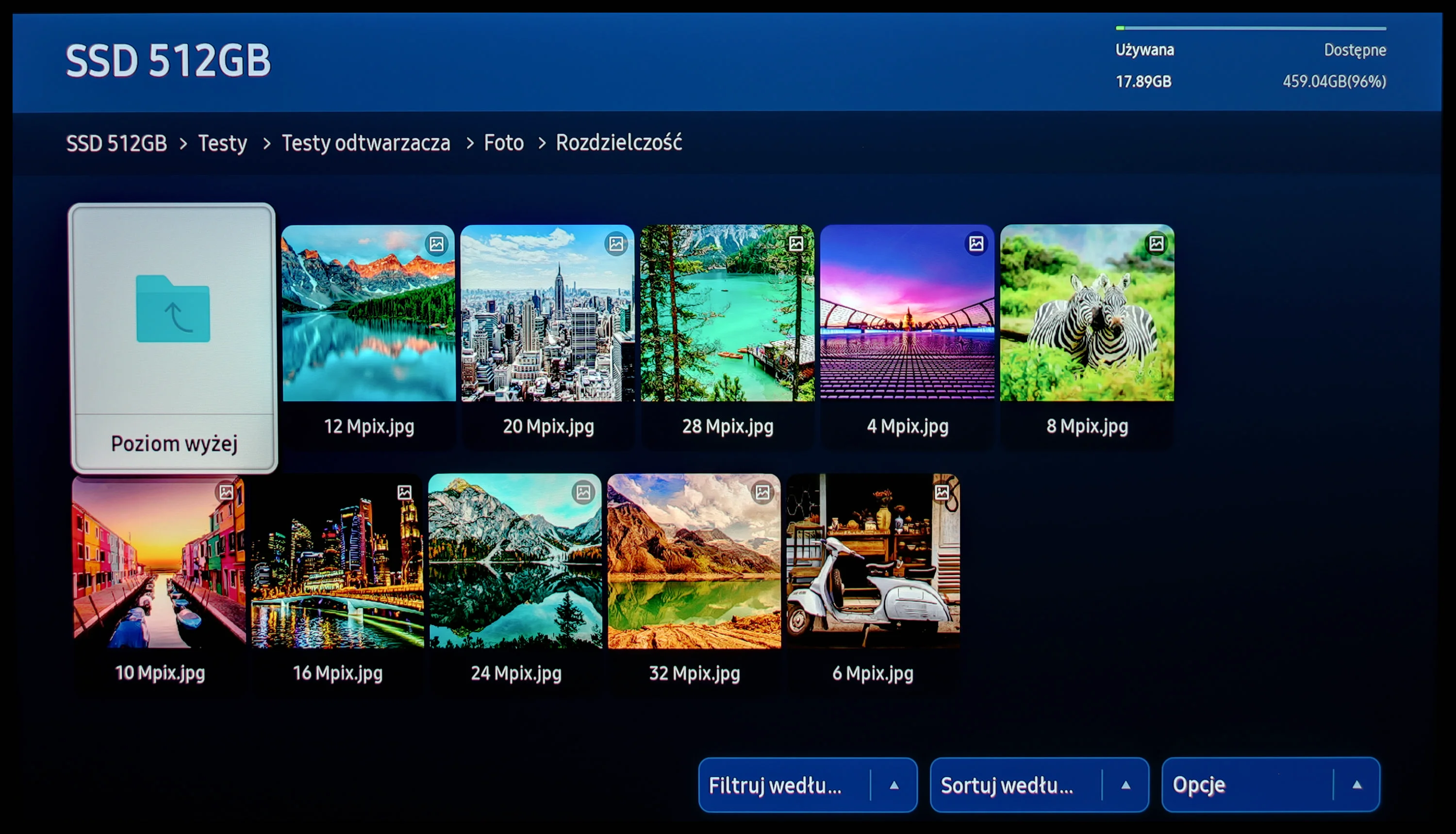
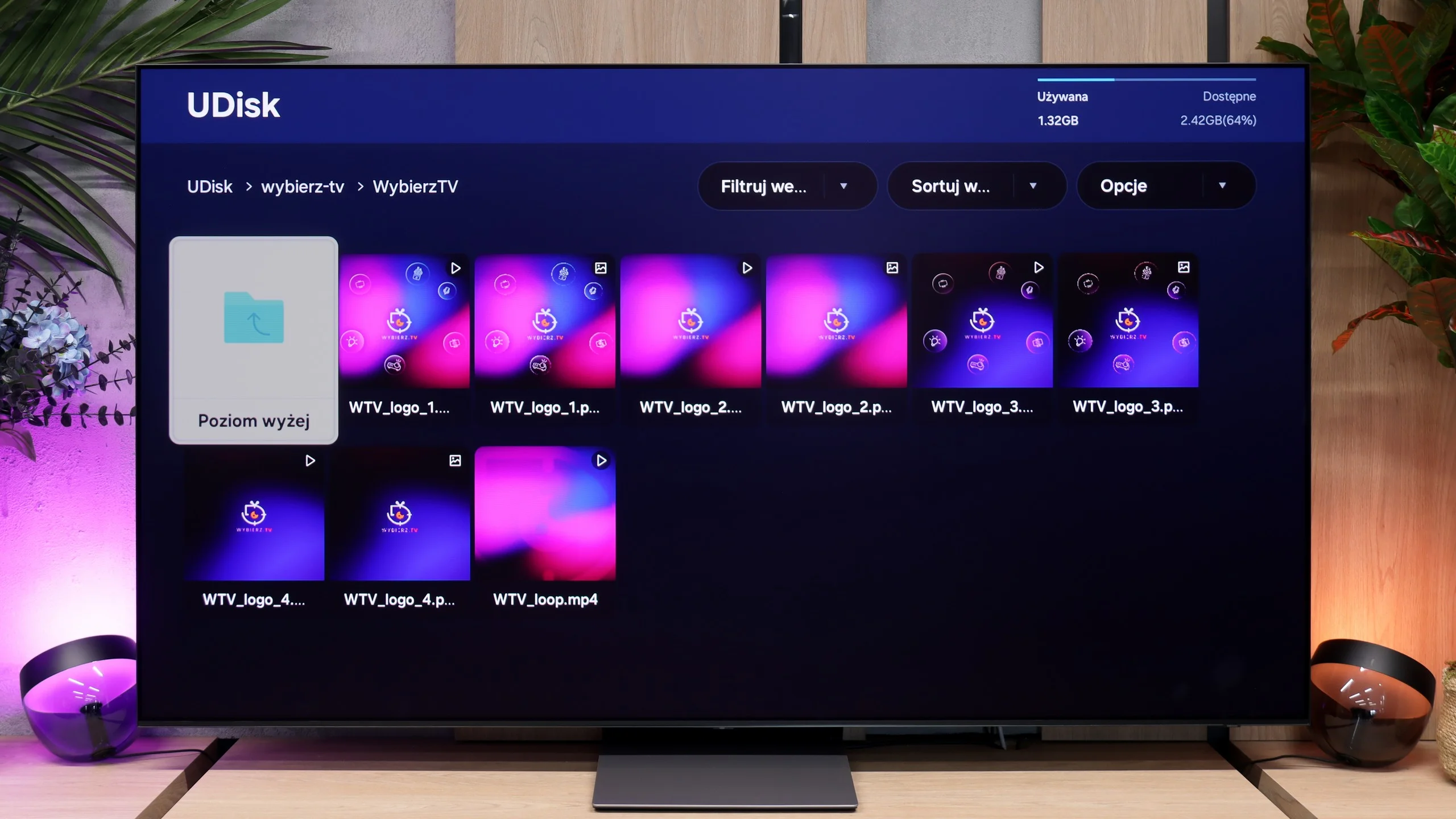
Samsung S95D stands out with an excellent built-in player that handles most video and audio files we tested without any issues. The exceptions are files in Dolby Vision format and some less common codecs. The player supports Polish characters and allows for font colour adjustment, which is a big plus.
Its built-in player handles most popular video, audio and photo formats very well. Its playback capabilities are comprehensive enough that you certainly won't miss the option to install external players, such as VLC. However, we encountered a serious bug when attempting to open HEIC photos from an iPhone. The S90H not only failed to display the files, but caused the system to freeze completely. The receiver stopped responding to any of our commands, so we had to reset it (unplugging it solved the issue). This appears to be a software bug that requires an urgent fix in the next firmware release.
Sound
7.9/10
8.4/10
- Maximum volume84dB89dB
- Dolby Digital Plus 7.1
- Dolby True HD 7.1
- Dolby Atmos in Dolby Digital Plus (JOC)
- Dolby Atmos in Dolby True HD
- DTS:X in DTS-HD MA
- DTS-HD Master Audio
Although the Samsung S95D is one of the sleekest televisions on the market, it offers quite pleasing sound. The television supports Dolby codecs, which allows for high-quality audio enjoyment. However, a downside is the lack of support for DTS, which may be a limitation for some users who use external players. Nevertheless, the overall sound quality remains satisfactory, especially for such a slim device. With advanced Dolby Atmos technology, users can enjoy immersive, three-dimensional sound that perfectly complements the high picture quality.
In theory, the audio specification of the S90 series has remained unchanged for several years. We still get a 2.1 speaker system with a total power of 40 W. However, when we powered up the unit we tested, we were pleasantly surprised. The television sounded noticeably better than the dry technical specifications or our recollections from previous models' tests would suggest. It's hard to say definitively whether this is down to optimisation of the sound-control software, or simply the fact that the 77-inch cabinet allows for slightly larger drivers and gives them better conditions to work in. The fact is the sound is fuller and more dynamic. That's a big plus for the manufacturer. Our only real gripe is the lack of support for the DTS format. Unfortunately, this is a standard increasingly being dropped by TV manufacturers, so Samsung is no exception. On the plus side, it does support the most popular spatial format, Dolby Atmos. Even so, fans of physical Blu-ray releases, where DTS tracks are still very common, may feel slightly disappointed.
Sound Quality Test
No sound test video
Acoustic Measurements
No acoustic data
89dBC (Max)
75dBC
Reader comments
Comments are provided by the external service Disqus (Zeta Global). Once loaded, Disqus may set cookies and process data about your activity.
We will remember your choice on this device. Provider's privacy policy