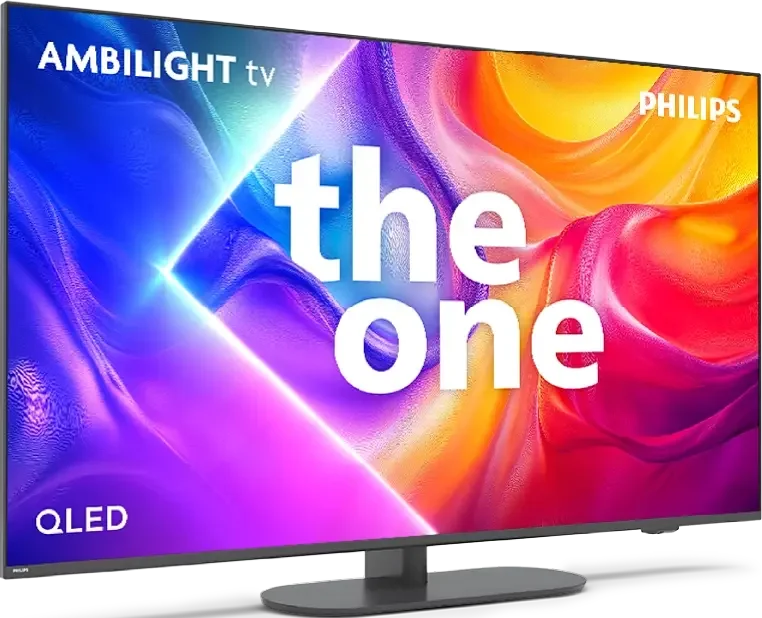
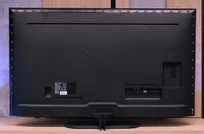
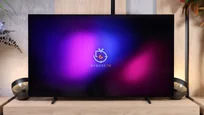
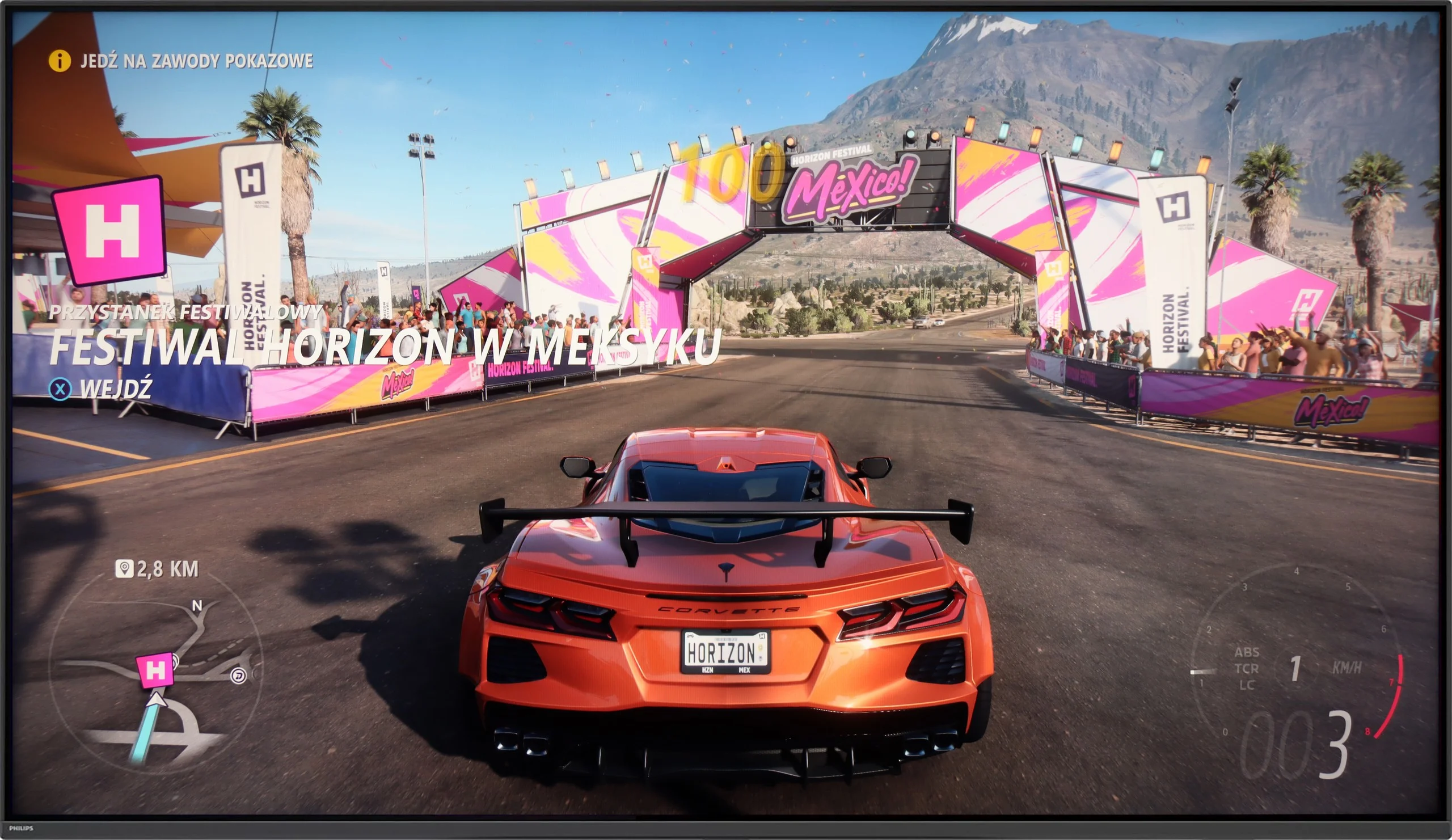
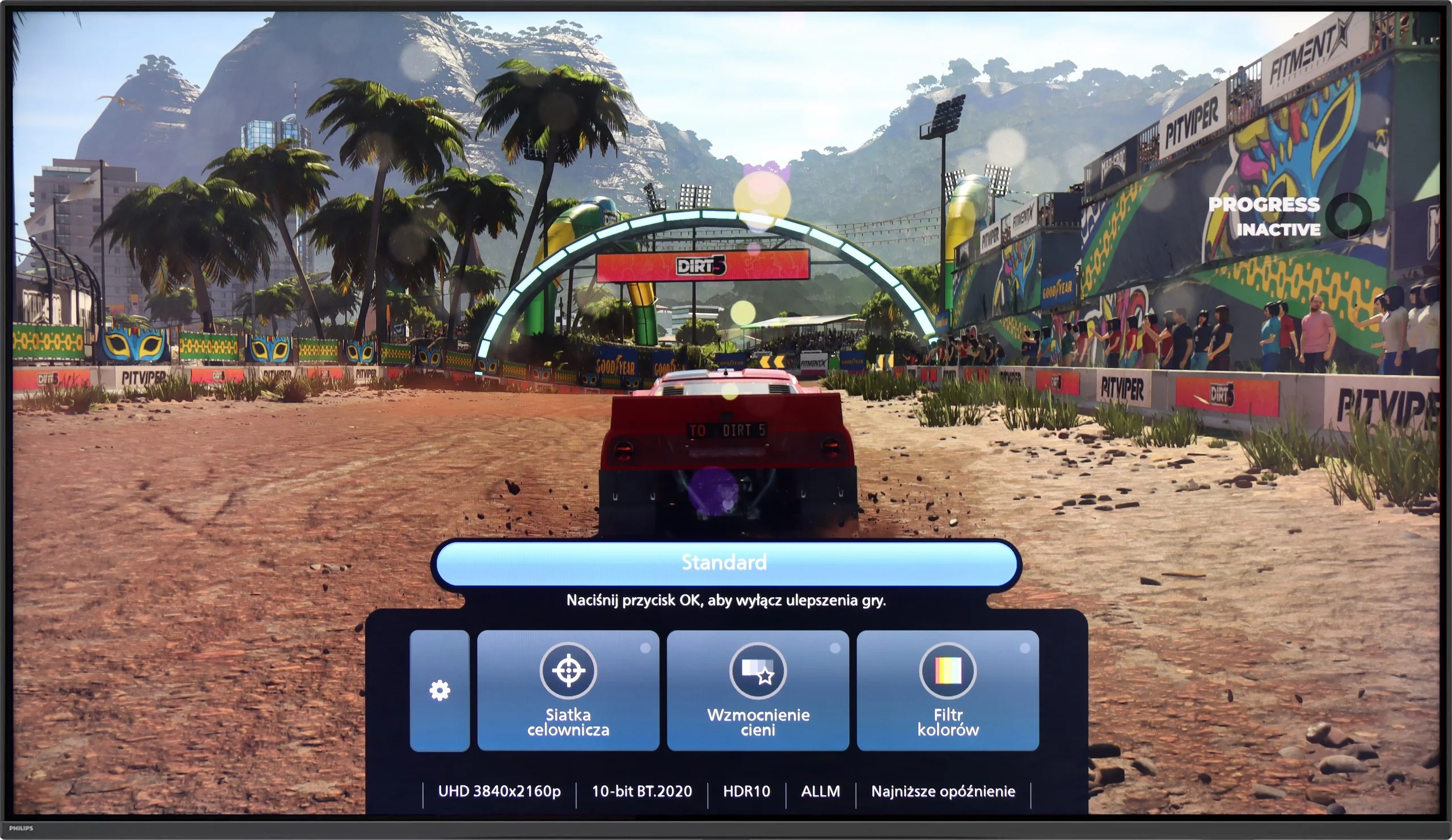
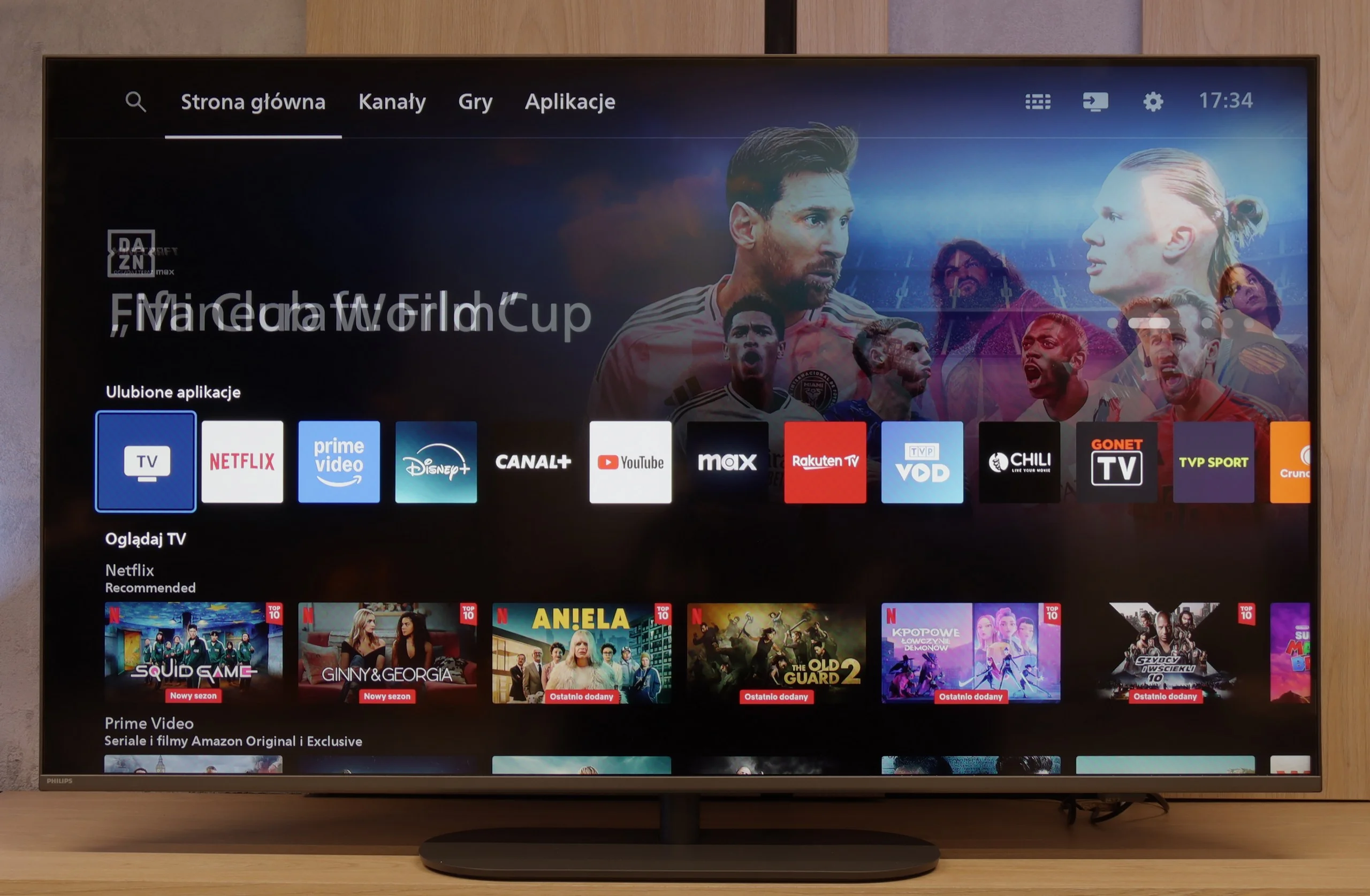
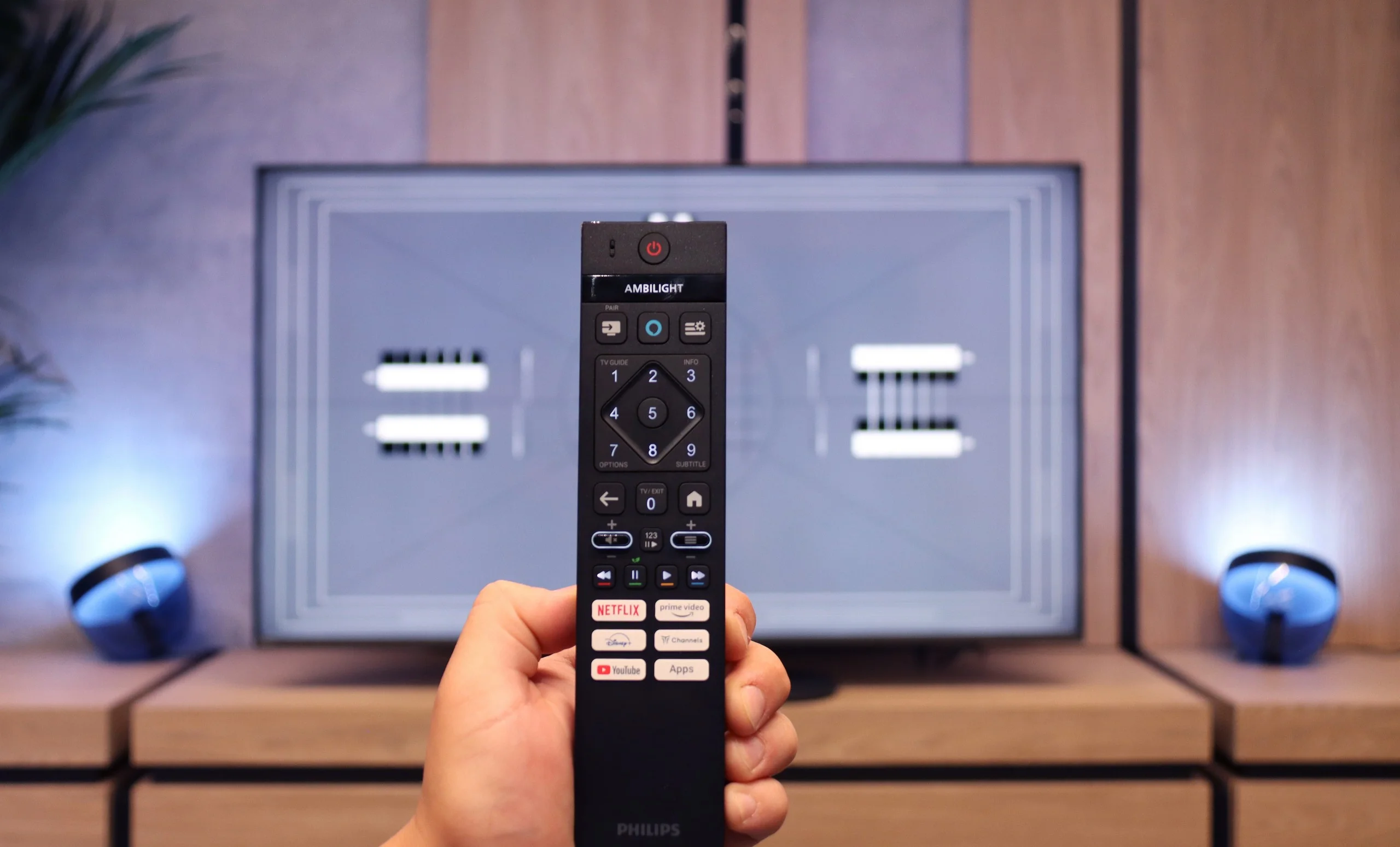
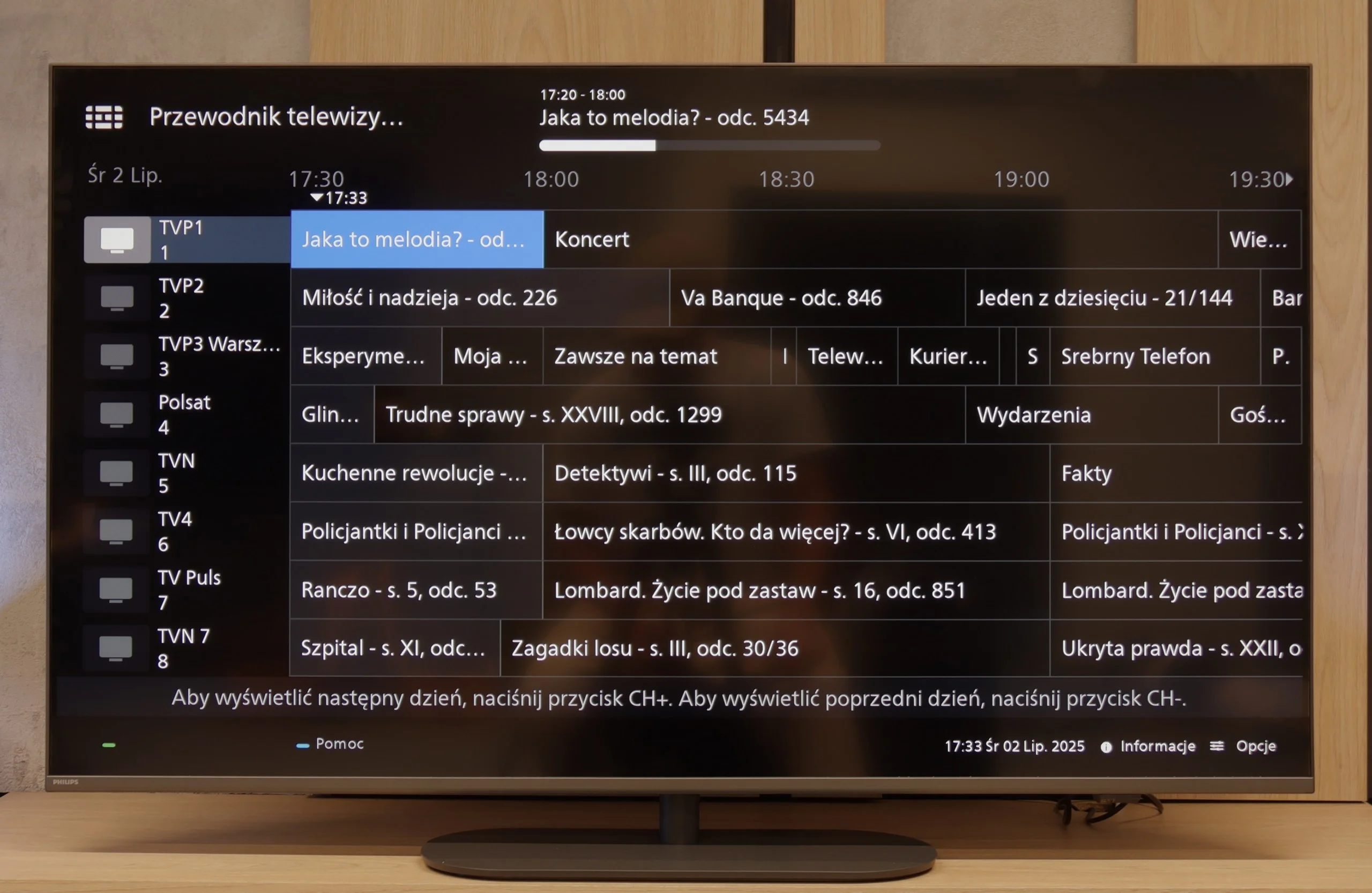
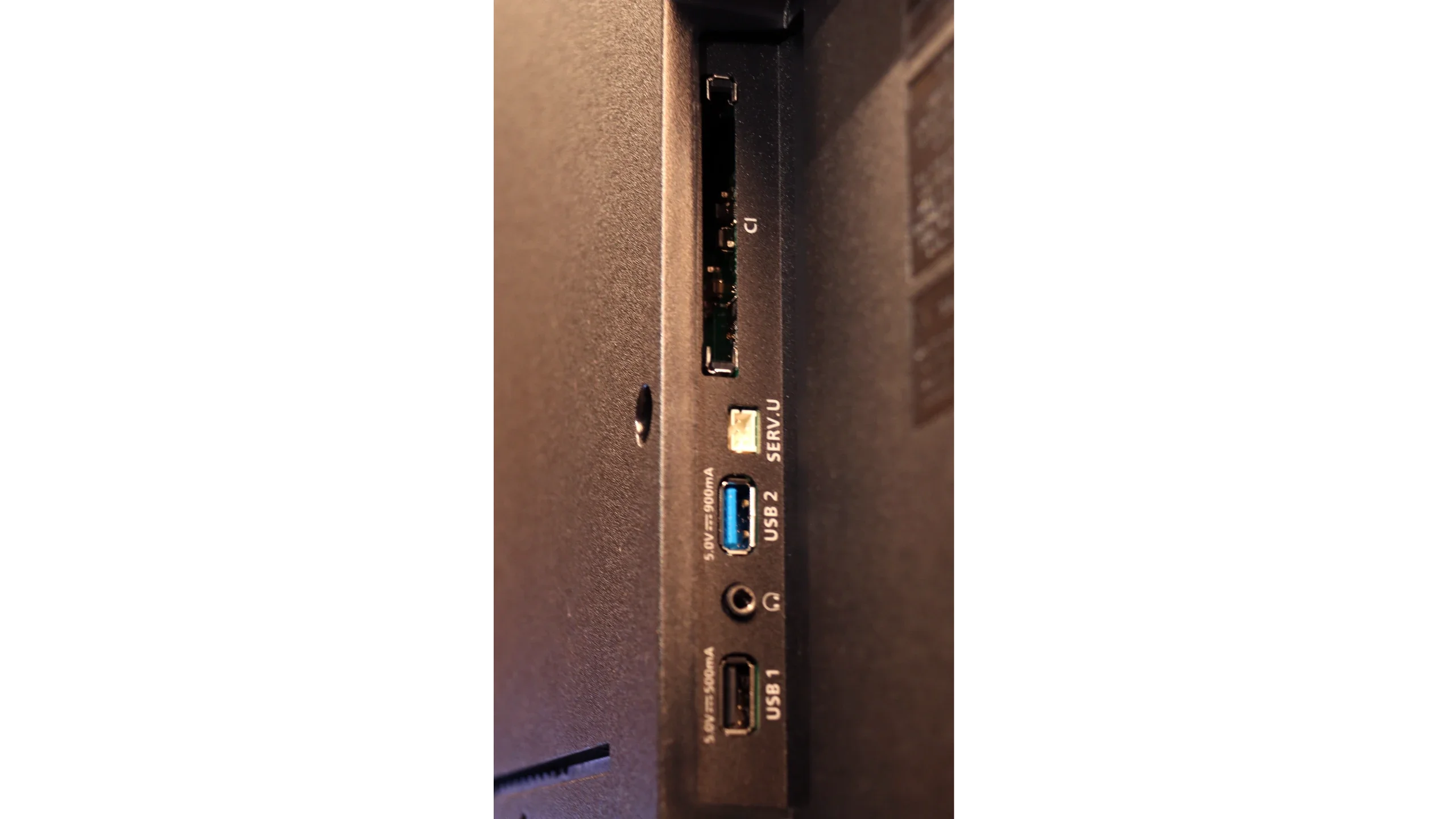
Philips PUS9000 is proof that the manufacturer not only keeps a finger on the pulse but also listens attentively to its users. In the latest iteration of this popular series, there is a noticeable progress – especially compared to the previous generation that we had the opportunity to test. The use of a VA panel has brought a significant improvement in black levels, which finally presents itself at an acceptable level. A brightness of 500 nits does not disappoint even in sunlit rooms, and support for a wide range of HDR formats – including Dolby Vision and HDR10+ – complements the image of a well-prepared device. Additionally, the support for spatial audio technologies such as Dolby Atmos and DTS only enhances the positive impression, especially since the presence of all the aforementioned formats is not a given, even in the priciest models of 2025. But what truly sets this model apart from the competition is the Ambilight system. The multicoloured backlighting not only makes a visual impression – in a darkened room, it can enhance perceived contrast and completely transform the experience of watching a film or series. The gaming mode also deserves recognition. 144 Hz, low input lag, variable refresh rate, G-Sync compatibility, and Game Bar function – everything one could expect from a device designed with consoles and PC in mind. Unfortunately, not everything works perfectly. The Titan OS system, while operating relatively smoothly, still suffers from shortcomings – many popular applications are lacking, minor bugs appear, and the overall experience can be somewhat clunky in everyday use. Moreover, the remote, despite its modern appearance, still uses infrared and requires aiming at the television. What a pity.
So, who is the PUS9060 for? For those who want to immerse themselves in an evening session with impressive Ambilight, game on consoles, and stream content from external devices. In such a scenario, “The One” may indeed turn out to be "the one" – especially since its price is not off-putting on release day.
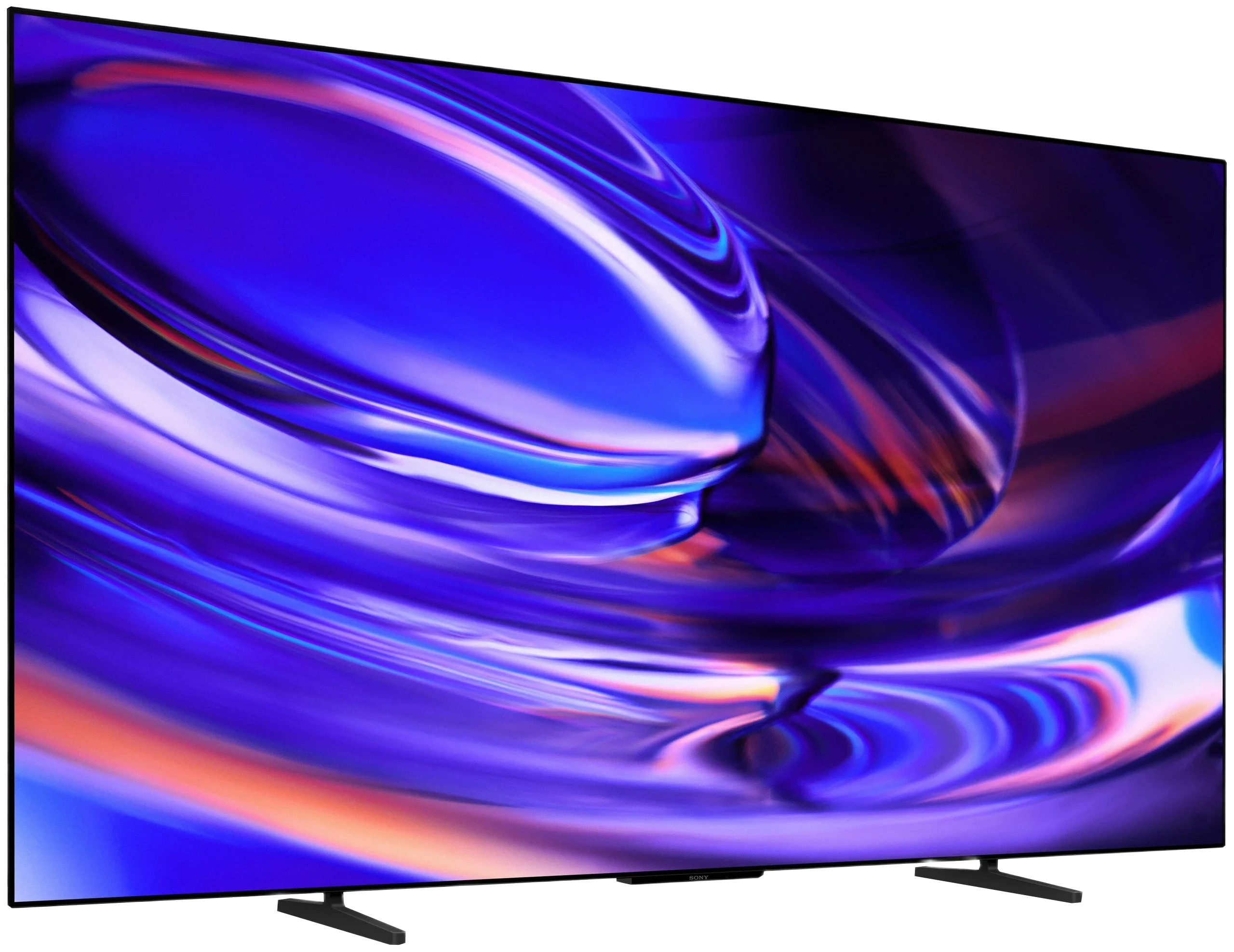
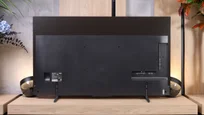
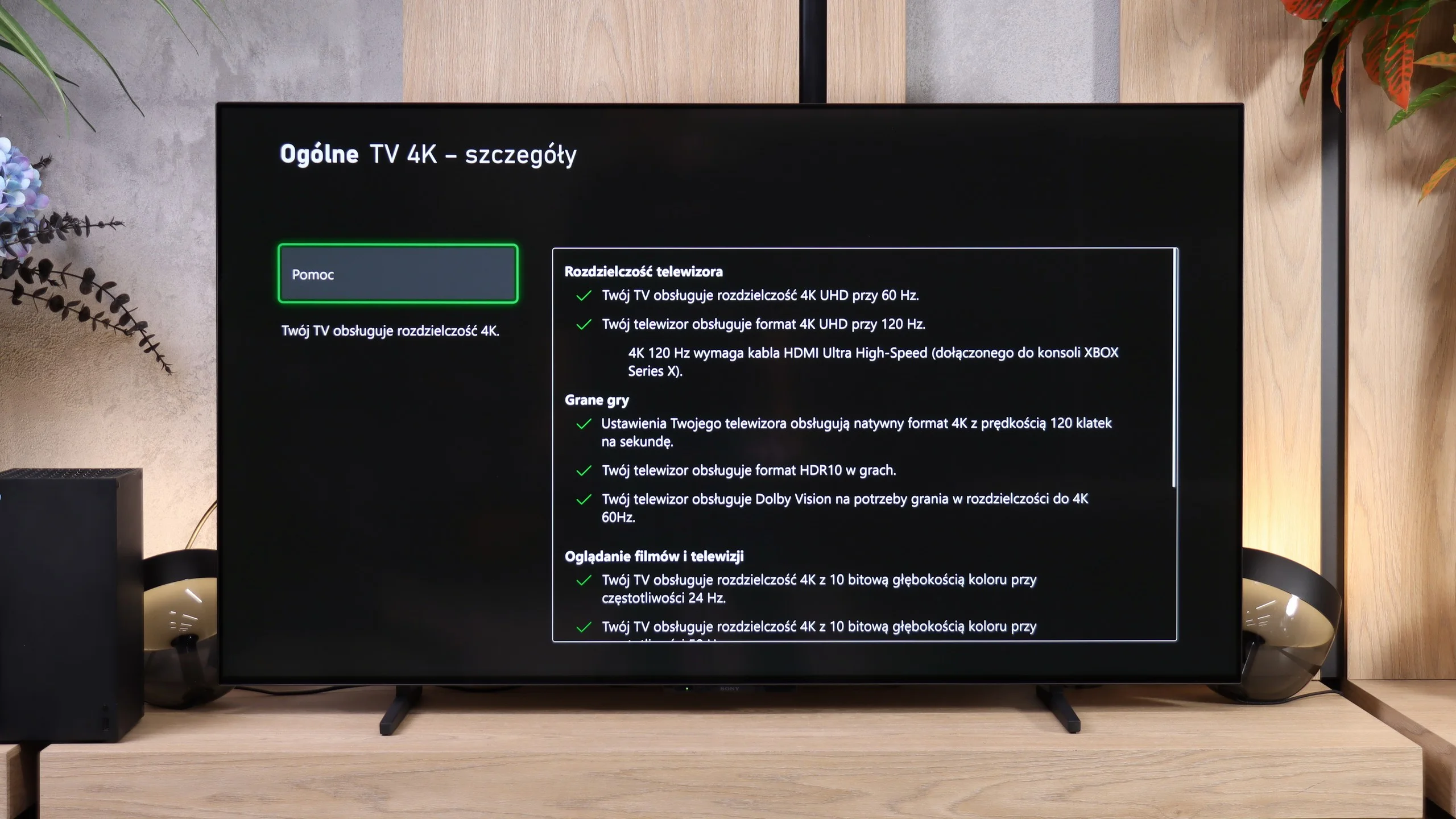
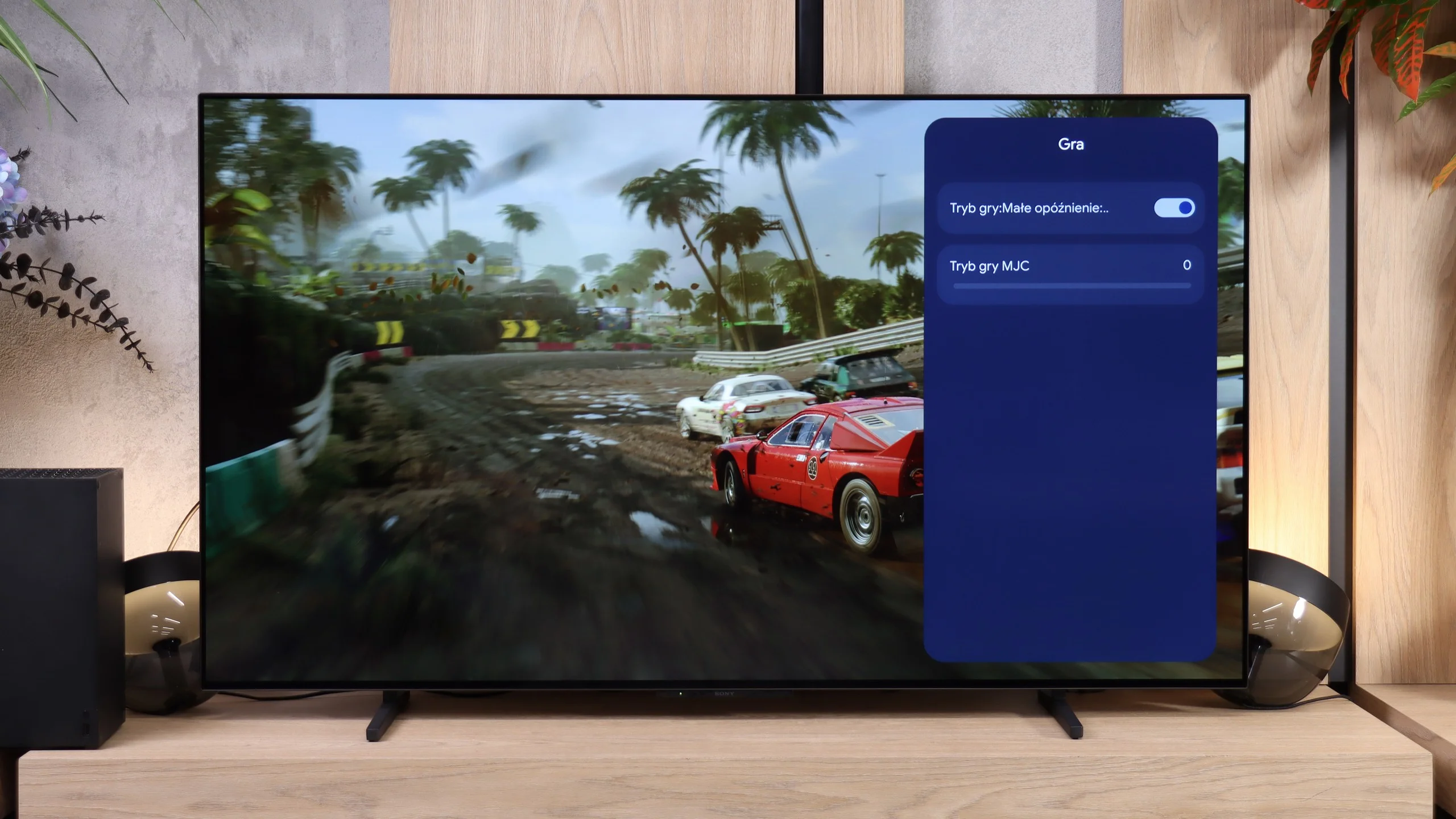
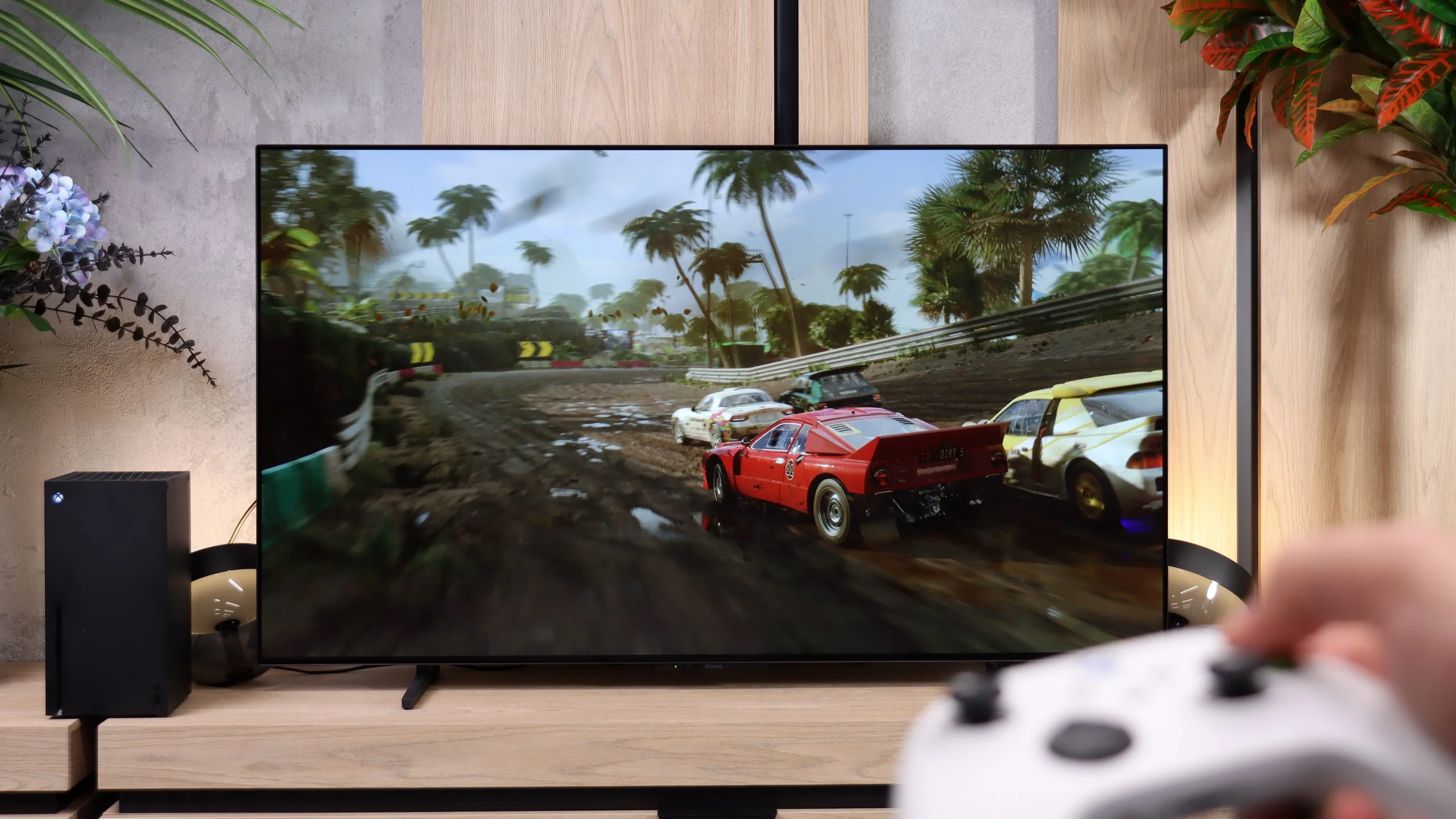
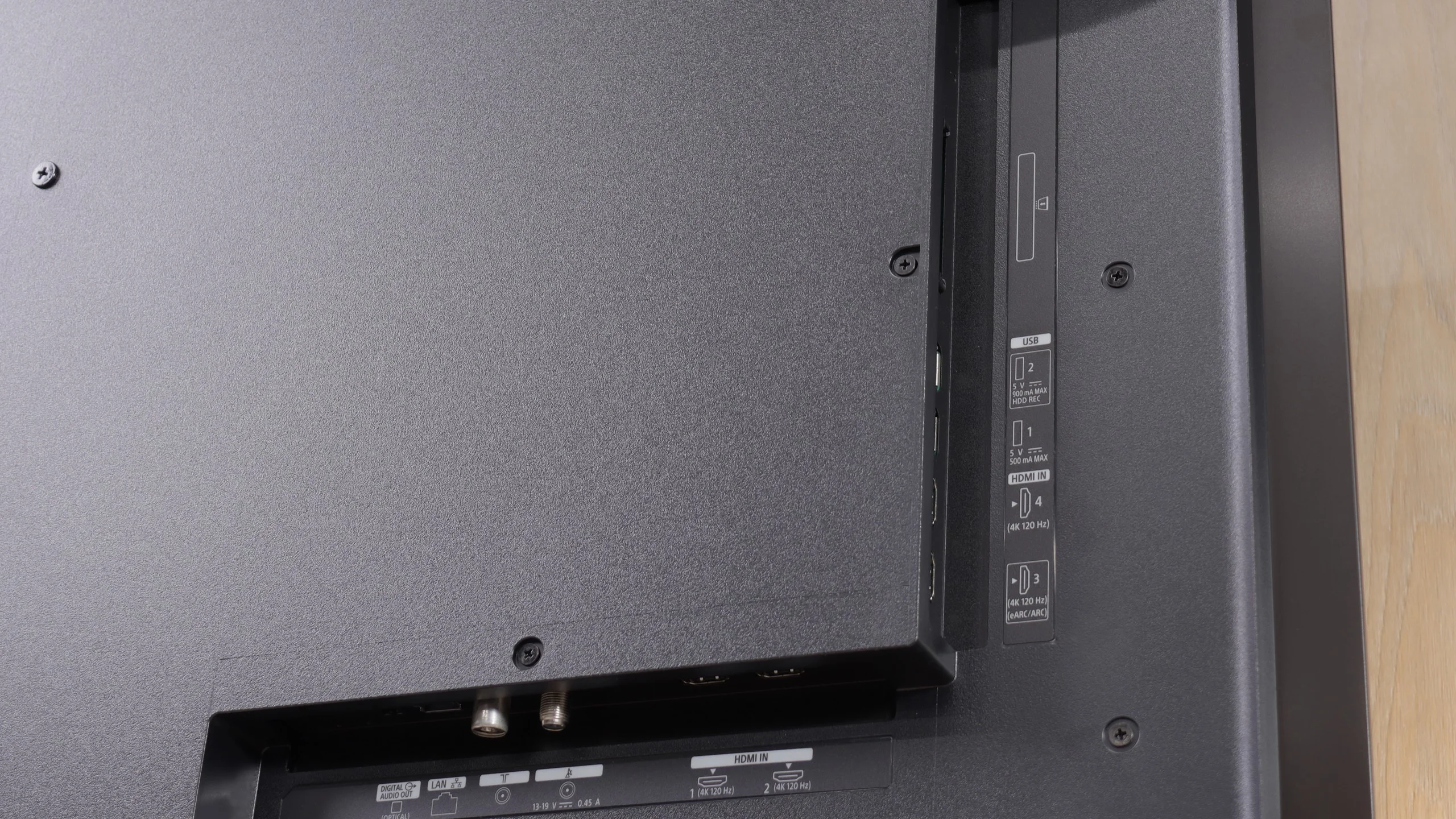
The BRAVIA 6 can provide a lot of viewing pleasure, especially in the evening when the strengths of the OLED panel are most apparent. Deep blacks, good contrast and natural colours after calibration mean that, with the right material, its picture is easy to appreciate. It also performs well with a console: it delivers smooth motion and responds quickly to controller inputs. It's pleasing to see four full HDMI 2.1 ports, which Sony has finally included. Thanks to them, connecting several devices is less of a problem than even with some more expensive models from the brand. The whole package is rounded off by solid build quality and an attractive design.
However, that's not enough to make it stand out among competing OLEDs. We've generally paid extra for Sony TVs, in part for better image processing, but it's hard to spot an advantage in that area with the BRAVIA 6. Weaker recordings look average, and in demanding HDR scenes details are lost in the bright parts of the picture. Dolby Vision helps a little, but it doesn't change the overall impression: you get an image that can be pleasing, yet it doesn't give a clear reason to choose Sony over another entry-level OLED.
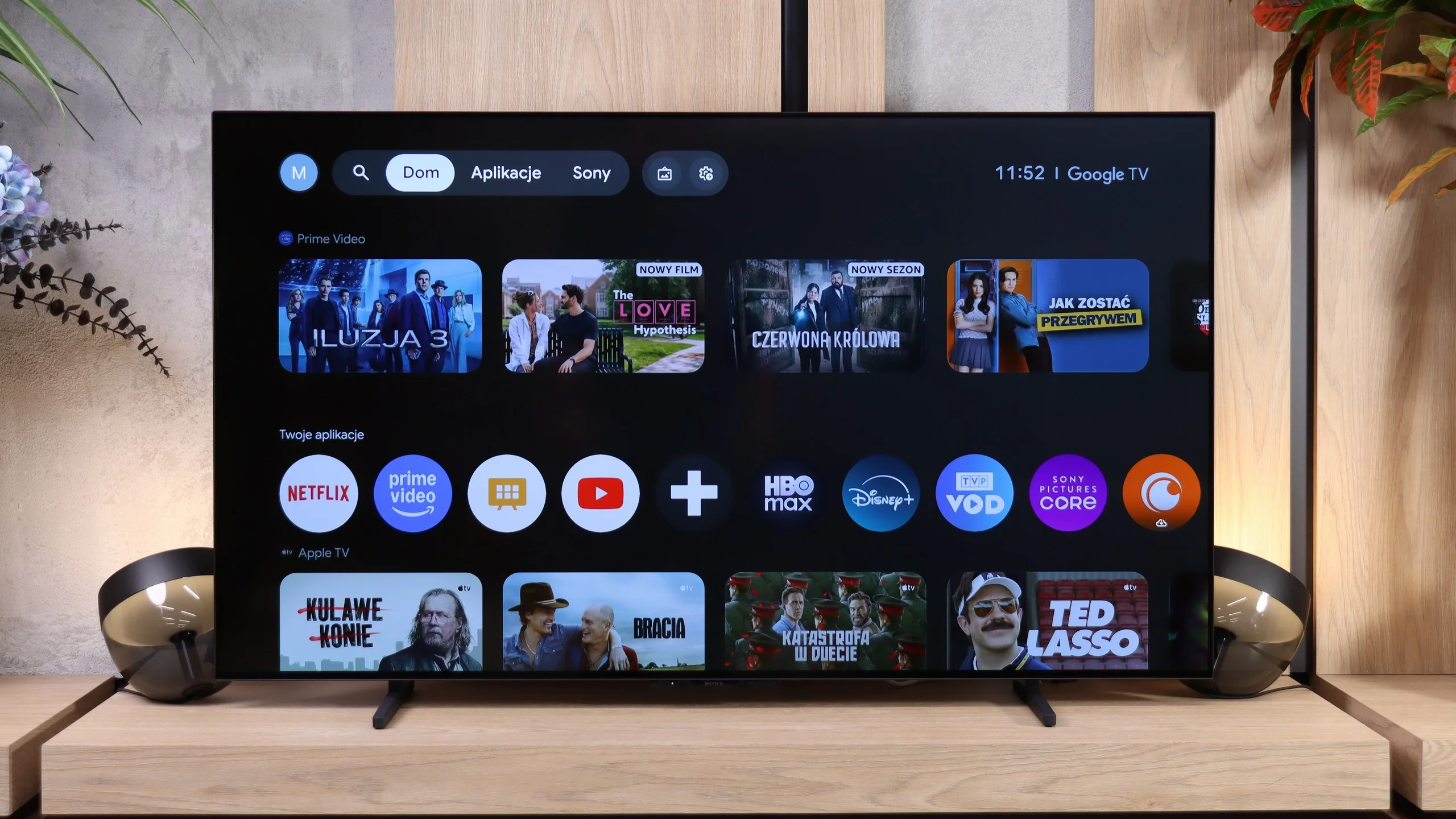
While the lack of such an advantage can be tolerated with a suitably low price, it's much harder to overlook problems in everyday use. Google TV offers a wide range of apps, but during our tests using the TV too often ended with having to... unplug it. Even playing a film from a USB stick could be problematic. It was at moments like these that we felt there was little... Sony in this BRAVIA. It lacks the refinement that used to be one of the reasons to pay more for a Sony TV.
In the end the BRAVIA 6 leaves a fair amount of disappointment. The OLED panel gives it a solid foundation, but the pleasure of watching too often gives way to frustration with operation. For that reason, in its current state we find it hard to recommend, even though it's one of the cheapest OLEDs on the market. An attractive price can make up for some image limitations, but it's hard to see that as a sufficient argument when basic functions fail. So before we can consider whether it's worth buying the BRAVIA 6, Sony needs to deliver the level of polish we expect.
 Direct comparison