 Direct comparison
Philips PUS7009 with a VA panel is a television that is best suited for casual users who primarily use it for watching TV, browsing photos, or using basic applications. Thanks to the VA panel, it offers significantly better contrast and deeper blacks than the IPS version, making it a better choice for watching films in darker rooms. Features such as ALLM, VRR, and Game Bar provide satisfactory compatibility with consoles, making it a solid option for less demanding gamers. In terms of image quality, Philips PUS7009 with a VA panel offers better black levels than the IPS variant, but it is still not without its drawbacks. Low brightness and lack of Dolby Vision support mean that the television does not perform well with more demanding HDR scenes. Philips' proprietary operating system, TitanOS, still leaves much to be desired. While it offers access to basic applications, its limitations and lack of intuitiveness can be frustrating for more advanced users. At this price point, it is worth considering other models (list below) that will better meet the requirements for image quality and multimedia features.
- Matching (Score) |
- Our verdict |
- TV appearance |
- Where to buy |
- Contrast and black detail |
- HDR effect quality |
- Factory color reproduction |
- Color reproduction after calibration |
- Smoothness of tonal transitions |
- Image scaling and smoothness of tonal transitions |
- Blur and motion smoothness |
- Console compatibility and gaming features |
- Input lag |
- Compatibility with PC |
- Viewing angles |
- Daytime performance |
- Panel details |
- TV features |
- Apps |
- Playing files from USB |
- Sound
Available screen sizes: 50”
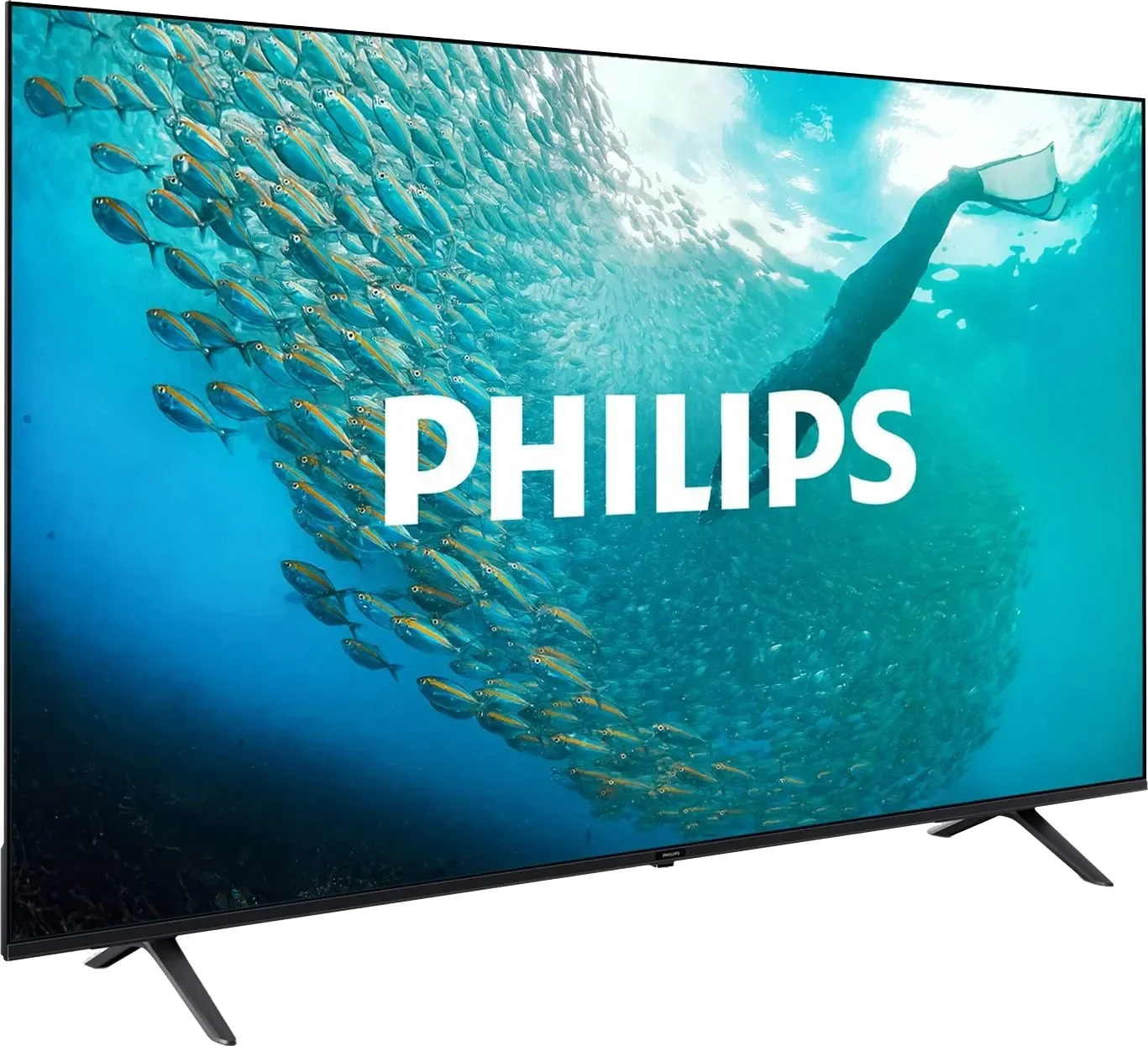
Panel type: LCD VA
Resolution: 3840x2160
System: Titan OS
Model year: 2024
Complete the survey to find out the result
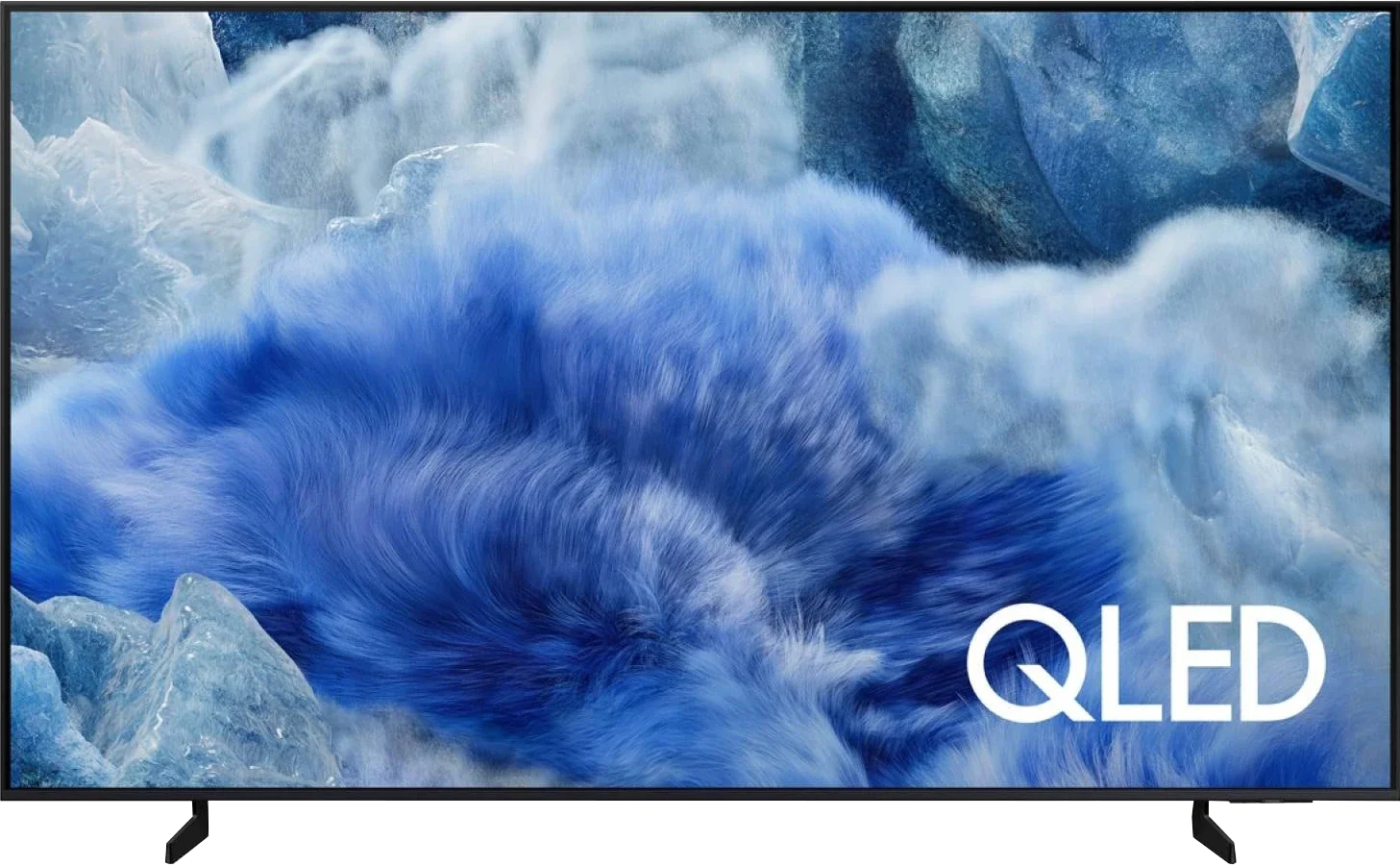
Panel type: LCD VA
Resolution: 3840x2160
System: Tizen
Model year: 2025
Complete the survey to find out the result
Overall rating
5.3
6.3
 Movies and series in UHD quality
4.9
6.3
 Classic TV, YouTube
5.4
6.0
 Sports broadcasts (TV and apps)
5.0
5.1
 Gaming on console
6.6
7.2
 TV as a computer monitor
2.0
6.0
 Watching in bright light
4.4
5.6
 Utility functions
6.3
7.3
 Apps
6.7
9.3
 Sound quality
5.6
6.0
Complete the survey to find out what fits your preferences
Advantages

Good native contrast - better than the IPS panel variant
The dynamic tone mapping feature enhances image quality in demanding scenes
Okay for casual gamers - VRR, ALLM, low input lag
Supports all popular audio formats, including Dolby and DTS
Solid contrast thanks to the VA panel
Quite good brightness in SDR and HDR (up to around 500 nits)
Satin finish handles reflections well
Tizen operating system – fast, intuitive, with a rich selection of applications
Solar remote with USB-C charging
Integration with the SmartThings ecosystem
Excellent input lag
Good font readability when working with a PC, suitable as a monitor for text tasks
Adjustable stand on multiple planes
Disadvantages

Very low brightness (250 nits)
Poorly developed operating system - TitanOS
No support for Dolby Vision
Worse viewing angles than the variants 43' and 55'
Severely limited features for gamers (
No USB recording or PiP functionality
Average digital image processing
Our verdict
Samsung Q8F is quite a successful continuation of the Q67D model. It offers similar image quality in HDR content, and with a brightness of around 500 nits, it can create an effect that is hard to call average. The support for the HDR10+ format also helps, as it has been realistically competing with Dolby Vision for some time and delivers comparable experiences in many productions. The contrast is another positive aspect – for a VA panel, it performs solidly and allows for enjoyable blacks in films and series. However, the greatest advantage of the Q8F remains the operating system. Tizen operates quickly, provides access to many applications, and works well with the SmartThings ecosystem, allowing the television to easily integrate into a larger network of home devices. Interestingly, the Q8F also has a niche application – thanks to its very good font readability, it performs excellently as a screen for working with text. Additionally, there is an adjustable stand that allows the television to be set on practically any desk or narrower TV cabinet. The biggest drawback, in our opinion, is not the image quality itself – as it is difficult to expect miracles in this price range – but rather what has happened to the gaming features. Options such as VRR and HGiG have disappeared with updates, which were available even in simpler constructions in previous generations. Indeed! The manufacturer even boasts about the availability of these features in its catalogue. This makes it difficult to recommend the Q8F to anyone today who plans to connect a console and expects full support for new technologies. Thus, the Q8F is a television that can be appealing – primarily for its design, above-average image quality, and efficient Tizen system. But at the same time, one can see a step backward compared to its predecessor. Let us hope that Samsung will manage to quickly rectify these shortcomings, as otherwise even such a successful 'everyday' television may leave some users with a sense of dissatisfaction.
[UPDATE] We have updated our 2025 Samsung TV reviews following the release of firmware version 1131, which officially restores the essential HGiG (HDR Gaming Interest Group) support.
TV appearance





Contrast and black detail
5.4/10
5.5/10
Local dimming function: No
Local dimming function: No
Contrast:


Result
4,250:1

Result
4,600:1

Result
3,800:1

Result
4,200:1

Result
4,250:1
Result
5,200:1
Result
4,650:1
Result
3,650:1
Result
4,100:1
Result
4,150:1
Halo effect and black detail visibility:
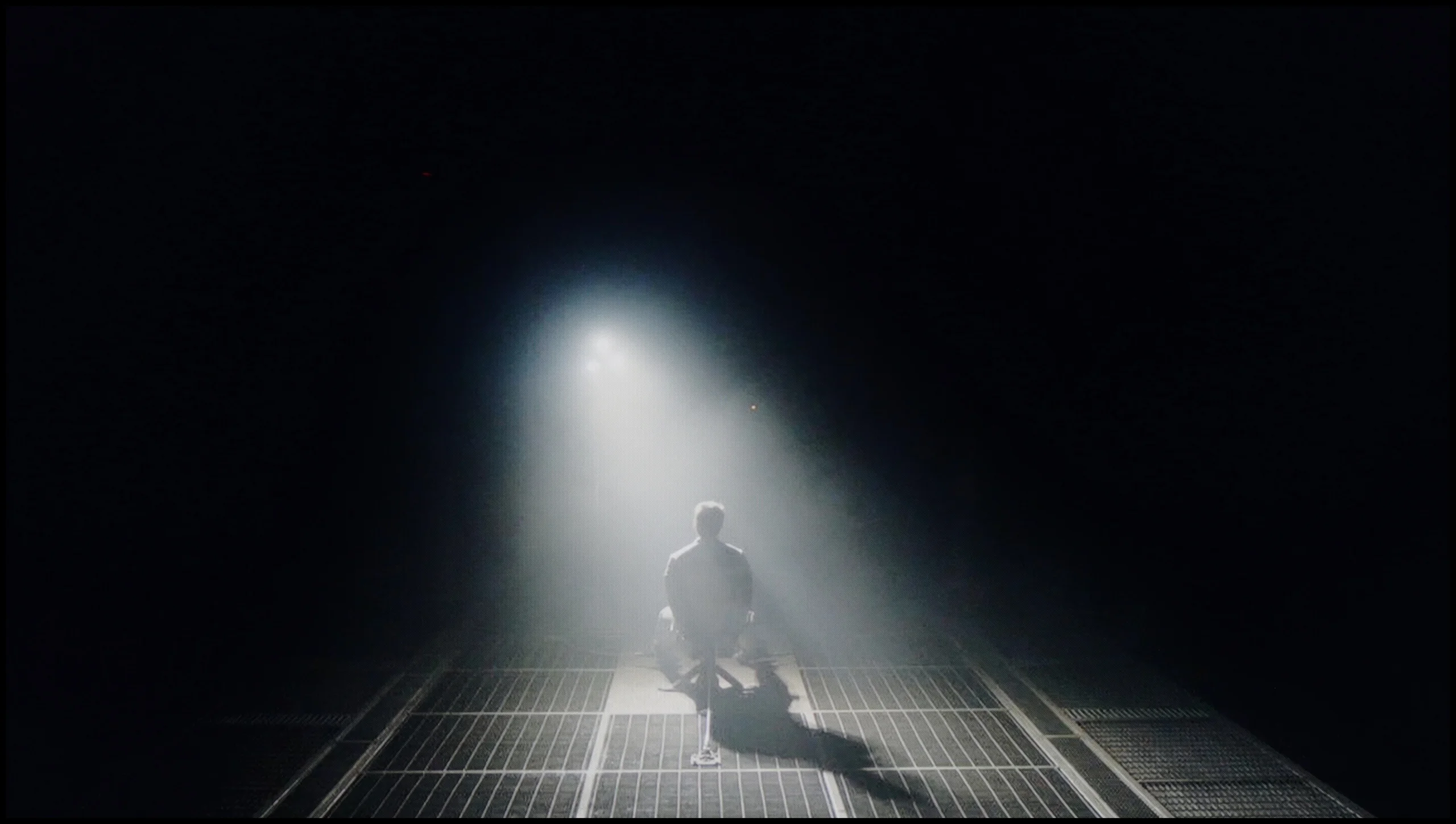
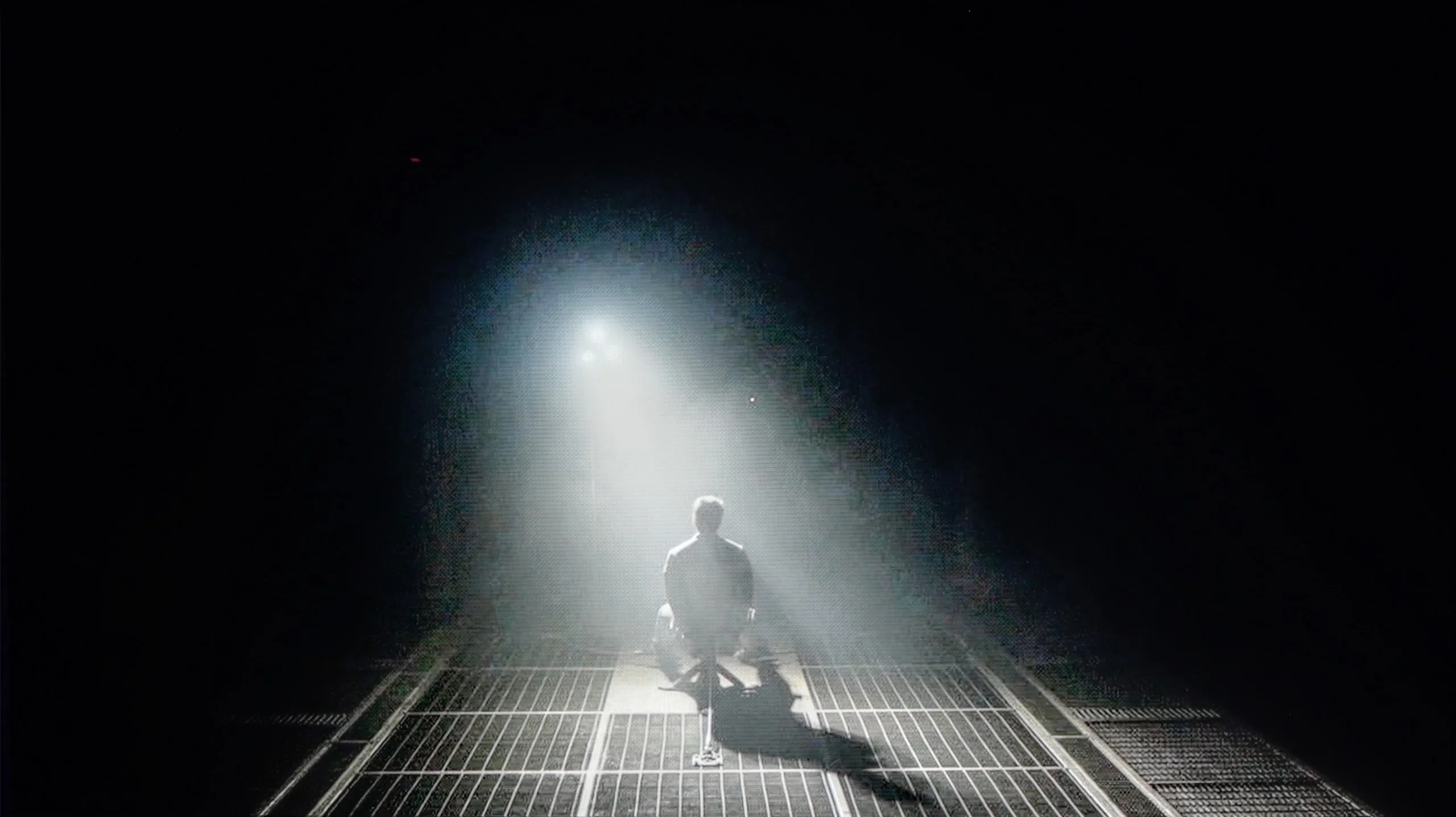
Check the visibility of bright lights on a dark background. Mini-LEDs often struggle with this. The photo does not compare black levels – that’s what the video below is for.

The video accurately shows differences in contrast and black levels between TVs, as well as potential issues: halo around bright objects or Mini-LED zone operation visible as brightness jumps.
Philips PUS7009 in the 50' variant uses a VA panel, which offers better contrast and deeper blacks compared to the variant with an IPS panel, albeit with some limitations. Due to its price, this model does not feature local dimming technology, which affects the quality of blacks in challenging scenes. For example, in the film The Revenant, one can notice that the blacks take on a navy hue, which does not allow for full immersion in the film's atmosphere. Nevertheless, compared to the IPS version, the difference is noticeable in favour of the VA panel, which performs significantly better in reproducing darker scenes, providing a more satisfying picture in poorly lit rooms.
Samsung Q8F uses a VA LCD panel, which immediately puts it in a good position when it comes to contrast. By nature, such panels offer deeper blacks than IPS displays, and this effect is indeed noticeable here. In the test patterns, the contrast maintained itself in the range of around 4000:1 to even 6000:1, which in practice results in a surprisingly engaging image, especially in a slightly dimmed living room. Of course, it does not reach the level of LCD screens with local dimming, let alone OLED — sometimes the black can shift to a shade of blue, making the overall image appear flattened. However, Samsung employs a simple trick: so-called global dimming, which dims the entire screen when a lot of dark areas appear. The effect can be impressive, but it comes at the cost of losing some detail, which may not appeal to everyone. Despite this, the Q8F still presents itself significantly better than televisions with IPS panels, offering solid contrast and blacks that can draw you into the cinematic atmosphere.
HDR effect quality
3.4/10
5.2/10
Luminance measurements in HDR:

Result
229 nit

Result
210 nit

Result
241 nit

Result
234 nit

Result
240 nit
Result
473 nit
Result
417 nit
Result
457 nit
Result
210 nit
Result
471 nit
Scene from the movie “Pan” (about 2800 nits)


Scene from the movie “Billy Lynn” (about 1100 nits)


The photos show two HDR10 movies. 'Pan' is one of the brightest productions ever made, while 'Billy Lynn' (soldier) has brightness typical of streaming (Netflix, Prime, HBO MAX). Notice the intensity of effects and detail in whites.
Static HDR10


The photos present the visibility of white details in various HDR formats. They do not show brightness differences between TVs (these can be compared in the previous gallery).
Dynamic: HDR10+
Dynamic: HDR10+


The photos present the visibility of white details in various HDR formats. They do not show brightness differences between TVs (these can be compared in the previous gallery).
HDR luminance chart:
Samsung Q8F
Philips PUS7009 (VA)
In terms of HDR effect quality, Philips PUS7009 performs very poorly. A brightness level of 250 nits does not allow one to enjoy HDR effects, and the image resembles more of a standard SDR. There is no question of dynamic effects or vivid light bursts. The coverage of the DCI-P3 colour gamut is only 75%, which is definitely insufficient. The lack of full colour coverage means that the colours are not as vibrant as they should be, resulting in a flat and unconvincing image. There are no aspects for which this model could be praised in the context of HDR.
In terms of brightness, the Samsung Q8F performs surprisingly well for a television without local dimming. In measurements, it reaches up to 500 nits, which in practice means that most movie and series scenes look pleasing, and it cannot be accused of lacking the 'HDR effect'. In films such as Life of Pi or The Meg, the screen was able to burst with brightness and deliver a light effect at a satisfying level. It struggles more in difficult moments — during dark scenes with individual bright points. The global dimming used causes the television to dim the image to maintain deep blacks, but at the expense of detail brightness. This is clearly visible in the scene from Sicario 2, where the helicopter lights dropped to around 200 nits. This is a conscious design decision that gives the impression of deeper blacks, but somewhat takes away the brightness from individual elements, and one must simply keep this in mind. In terms of colour reproduction, the Q8F uses quantum dot technology, which widens the colour gamut. A coverage of the DCI-P3 palette at 91% can be considered a decent result, although it is not a record-breaking figure compared to other QLEDs.
Factory color reproduction
4/10
4.6/10


This gallery shows how colors change after professional TV calibration. If you notice the difference, we recommend ordering this service at SkalibrujTV.com.
Factory Mode
After calibration


This gallery shows how colors change after professional TV calibration. If you notice the difference, we recommend ordering this service at SkalibrujTV.com.
Factory Mode
After calibration
The television was tested in movie mode, which – despite its name – does not provide accurate image display. The white balance in both 4K HDR and HD/SDR content shows drops in red, causing the image to appear cooler and the colours to lose their natural warmth. The gamma brightness characteristics and the EOTF curve confirm that the television struggles to maintain appropriate brightness – it boosts it significantly, resulting in an unnaturally washed-out image. This effect can be seen in the comparisons below, where everything looks as if it has a milky filter applied. Additionally, the limited coverage of a wide colour palette also does not favour quality – color checker tests indicate significant colour variations, making it difficult to achieve faithful image reproduction.
We decided to check out the Filmmaker mode, as it provided us with the best image straight out of the box. However, this does not mean it was perfect. The white balance had too much blue and red, resulting in the white taking on a slight mauve-pink hue. Such an imbalance affected the visibility of practically all colours, as can be seen in the comparison photo below. The brightness characteristics in SDR content were quite well adjusted, though in HDR material we noticed that the television did not always manage its global dimming effectively — at times the screen was too dim, while at other moments it could suddenly brighten. Fortunately, issues related to colours can be effectively corrected with calibration tools, so we decided to get to work.
Color reproduction after calibration
5.7/10
7.8/10


The photos show how movies look on the TV. Pay attention to black detail visibility, colors, and shadow tint.


The photos show how movies look on the TV. Pay attention to black detail visibility, colors, and shadow tint.
After calibration, the image improved significantly, especially in terms of white balance, which is now more stable, and the hues have become more natural, eliminating the previous impression of an overly cool image. The calibration brought noticeable benefits in terms of tonality – the shadows and midtones are now more realistic, and the overall effect appears more harmonious. Unfortunately, hardware limitations still affect image quality. The brightness characteristics remain problematic, despite our efforts, and due to poor coverage of the DCI-P3 and BT.2020 colour spaces, delta E errors are still at a high level. Although the calibration improved some aspects, the television still does not allow for complete satisfaction.
After calibration, we managed to correct the white balance to near perfection. Older SDR content looks fantastic — most errors fall within a value range of 2, which is well below the threshold of perceivability for the human eye. In HDR, we also brought the white balance to an acceptable level, but another issue arises here. So why are there still relatively large errors in colour reproduction? This mainly stems from the limited colour palette and the way the television manages brightness. The global dimming technique used does not give the user control in the settings, so when analysing the EOTF curve in HDR films, it is apparent that the Q8F can modify luminance independently. This can be regarded as a certain limitation, but despite this, the picture after calibration is still much more pleasant to view than in the factory version.
Smoothness of tonal transitions
7.6/10
9/10
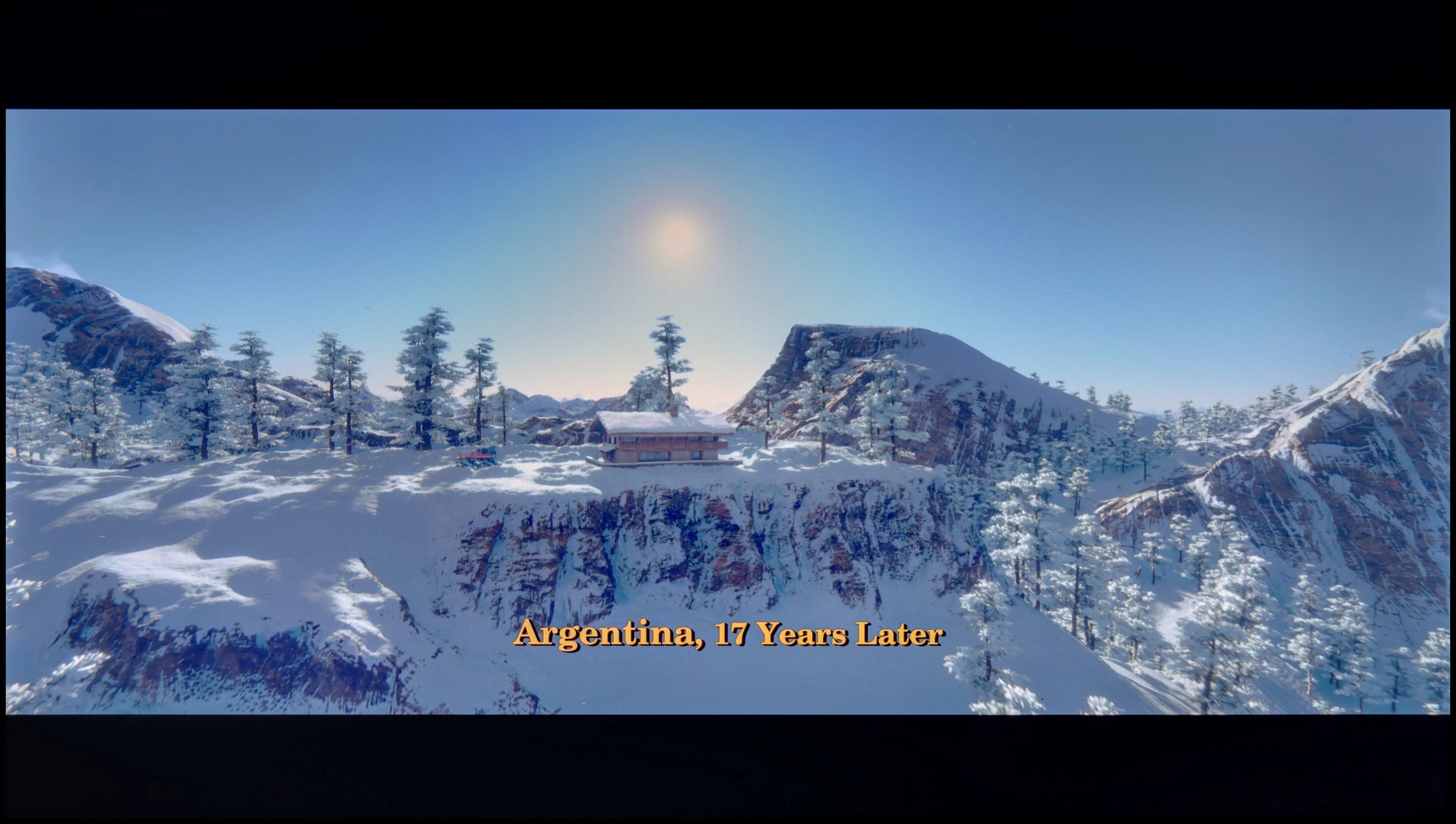



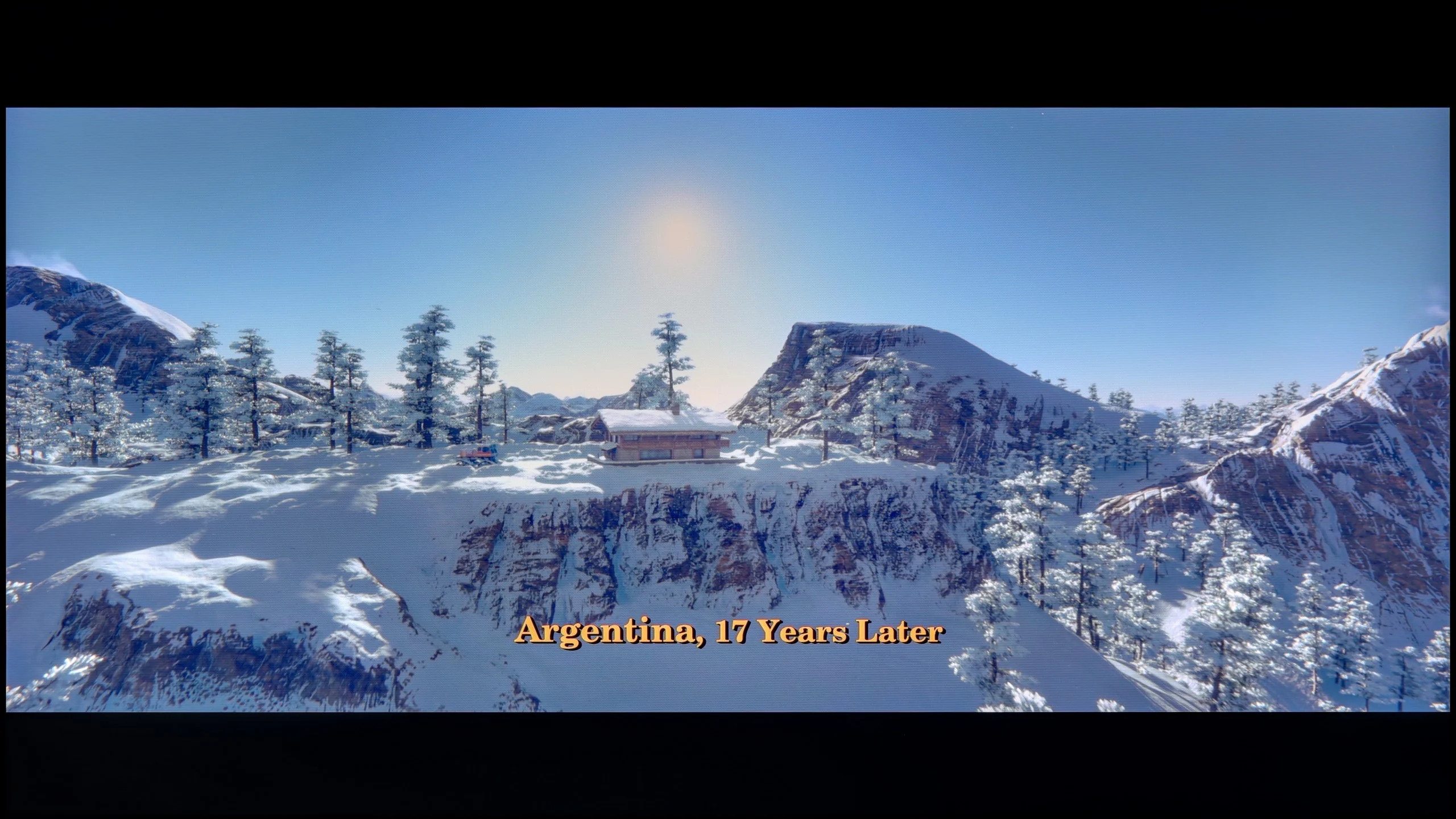
These are selected scenes that show smooth tonal transitions from one color to another. If you see distinct banding, it’s the TV panel’s fault.

These are selected scenes that show smooth tonal transitions from one color to another. If you see distinct banding, it’s the TV panel’s fault.

These are selected scenes that show smooth tonal transitions from one color to another. If you see distinct banding, it’s the TV panel’s fault.
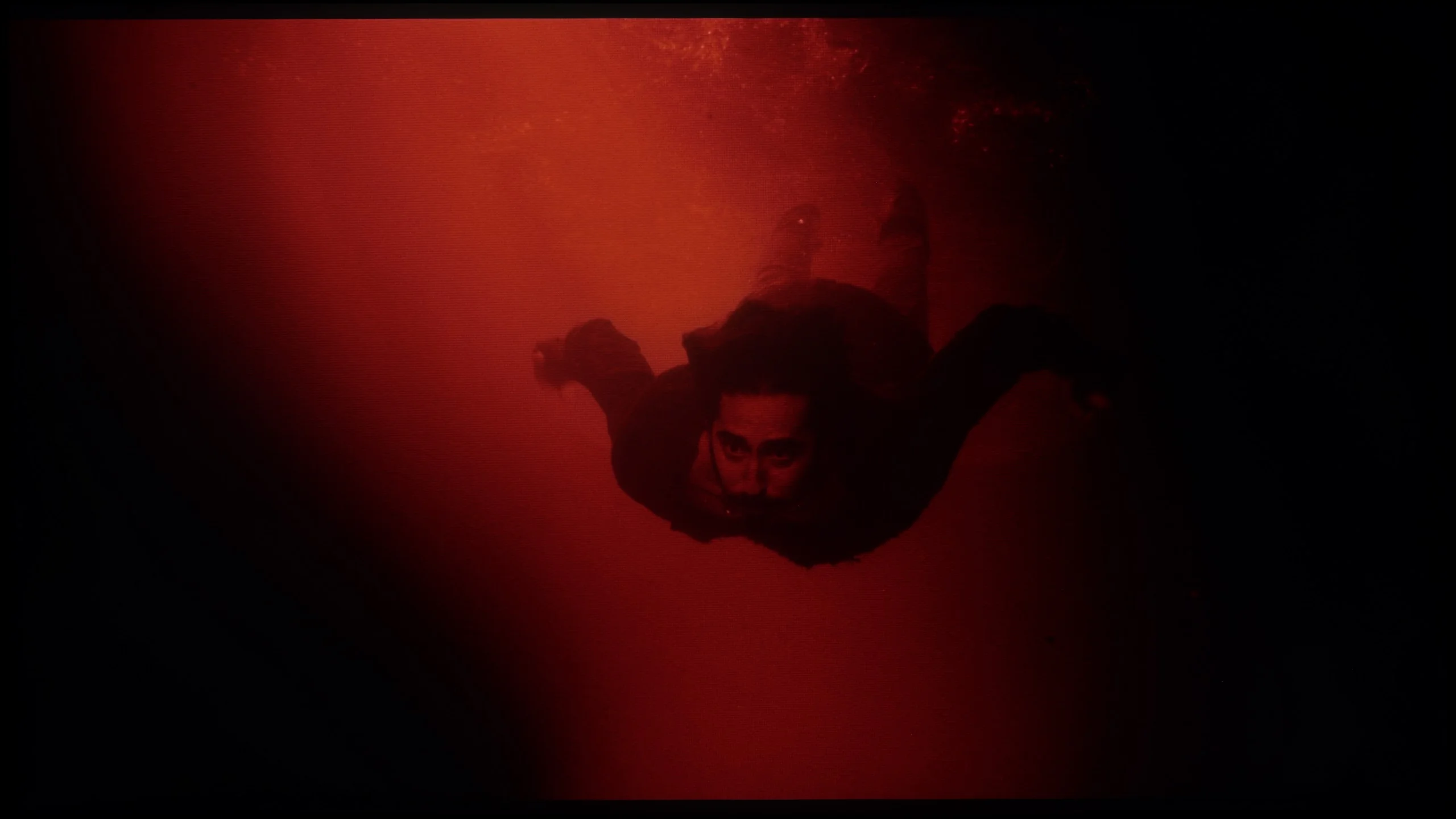
These are selected scenes that show smooth tonal transitions from one color to another. If you see distinct banding, it’s the TV panel’s fault.
The gradation of tonal transitions on the Philips PUS7009 television is at a decent level and does not exhibit any serious flaws that could affect viewing comfort. Although upon closer examination, one can notice minor imperfections in the bright and colourful transitions, they are minimal enough that most viewers are unlikely to notice them. The version with the VA panel performs slightly worse in this regard; however, the differences are subtle enough that they should not hinder the average user.
The fluidity of tonal transitions in the Q8F performs really very well. The television beautifully blends colours, both in bright patches of sky and in darker scenes, where it is easy to spot visible "steps" in colours. Admittedly, there are occasional errors, but you have to look closely to catch them. In practice, when watching films or series, the image appears cohesive and does not distract with any artefacts. Therefore, the rating in this category had to be high. 😉
Image scaling and smoothness of tonal transitions
6/10
5/10


Smooth transition function
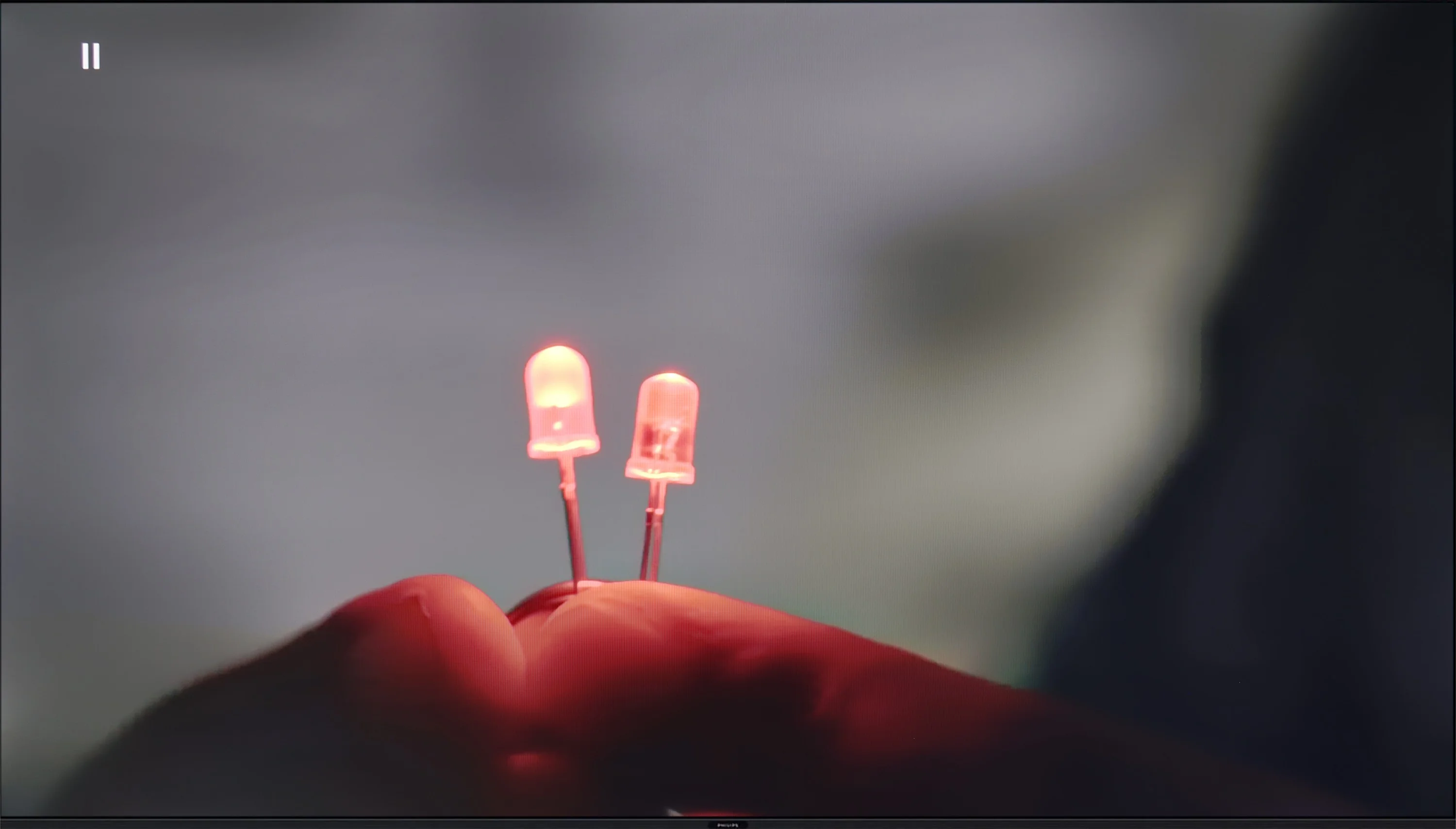
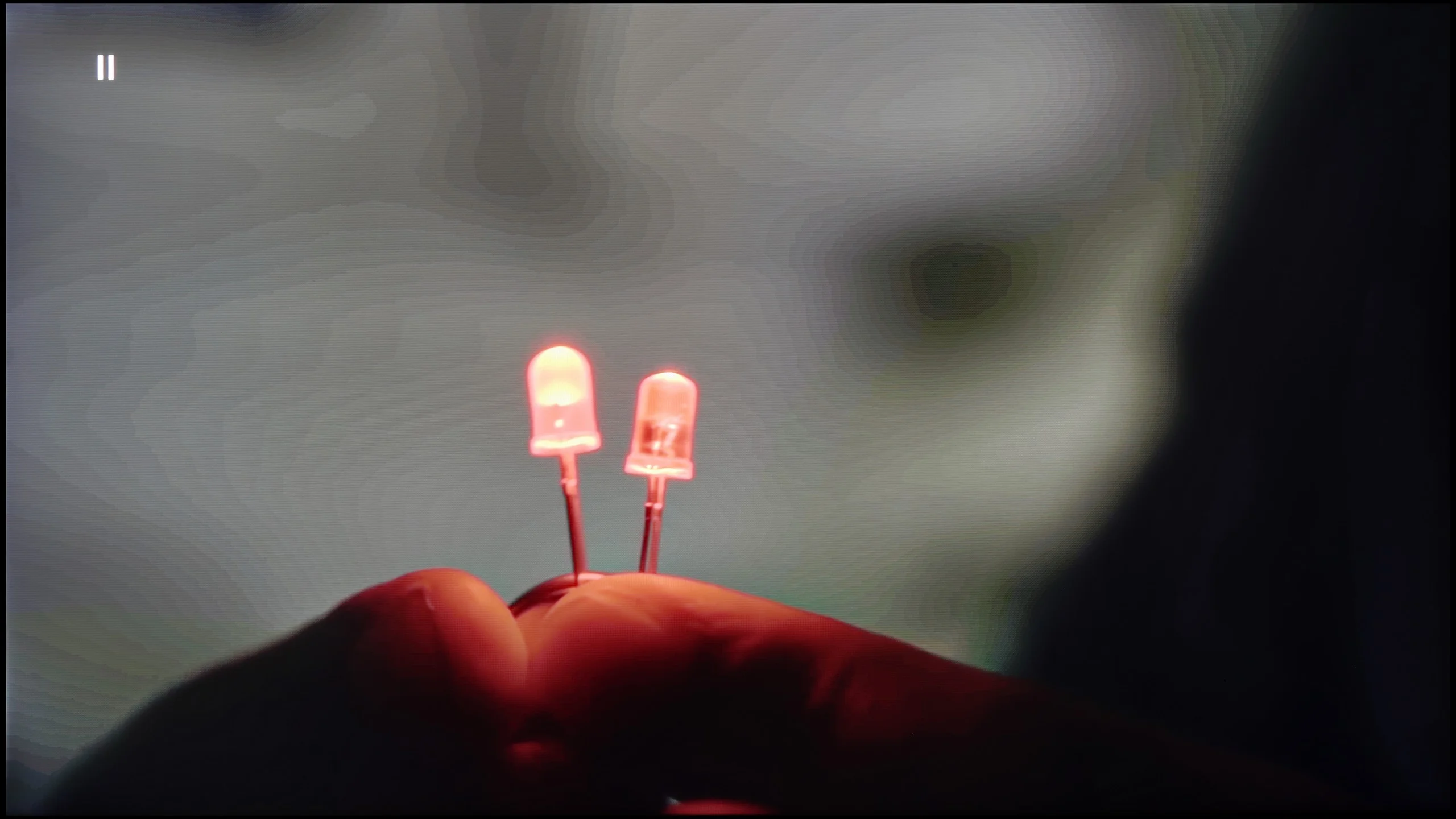
The match photo shows how the TV smooths weak tonal transitions in low-quality video.
Image scaling SD (576i)


The model photo shows how it handles upscaling of SD material.
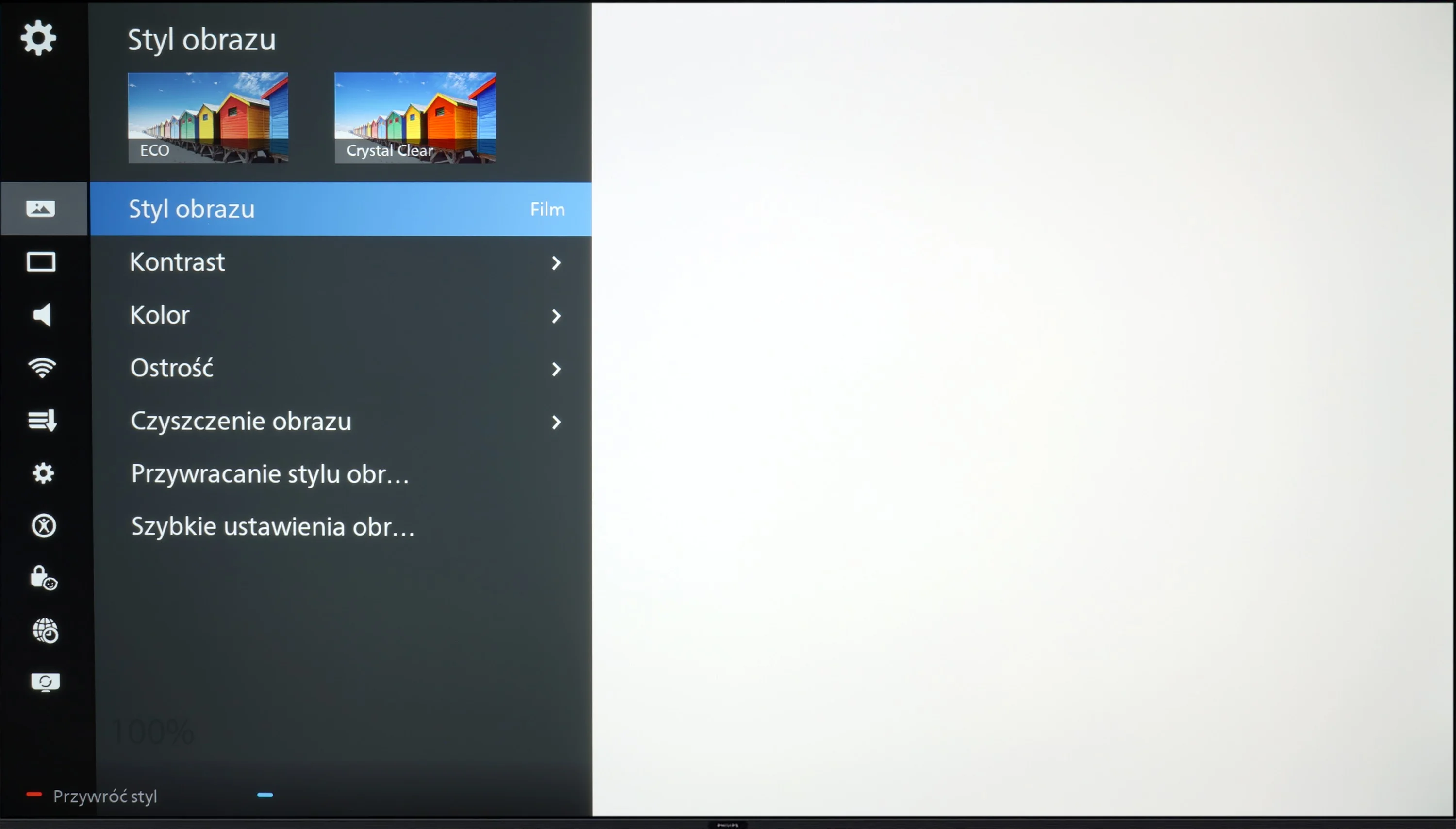
When it comes to tonal transitions in low-quality material, the function called "Distortion Reduction" (the "minimum" setting) effectively improves gradation, eliminating unattractive tonal transitions. However, this setting on Philips televisions is quite aggressive – while it does not blur grain or good quality material, it can introduce undesirable effects and blur elements that should remain sharp when the signal is poorer.
In terms of image scaling, Philips PUS7009 performs decently. A significant advantage is the absence of cropped image edges, meaning no overscan, which allows for the display of the full frame without loss. The image is noticeably enhanced, making characters and backgrounds, such as the model or branches in the background, look quite detailed and natural, even with lower quality signals. Although scaling is not perfect, as it can remove desired details in the distance, the effects are good enough for most users to be satisfied.
Let’s check how the Q8F performs with older content, which often has poor quality. Let's start with the positives: the upscaling, or raising the image to a higher resolution, works really well. The television handles both traditional television and YouTube material quite competently, without giving the impression that we are dealing with something completely unattractive. It performs less well with very low resolutions, such as 576p — the image can be cropped, and unfortunately, the overscan issue cannot be turned off. Moreover, the digital processing itself appears less effective. The noise reduction feature, instead of eliminating unwanted disturbances, smooths out almost everything: film grain (which is desirable for many viewers) disappears along with the texture of the image, and the faces of the actors start to resemble characters from cheap Turkish soap operas. Therefore, it’s hard to consider this option useful — it’s best to leave it completely turned off. Perhaps Samsung will refine the operation of this function in future updates, but for now, it’s difficult to view it as anything other than an unnecessary addition.
Blur and motion smoothness
4.9/10
4.5/10
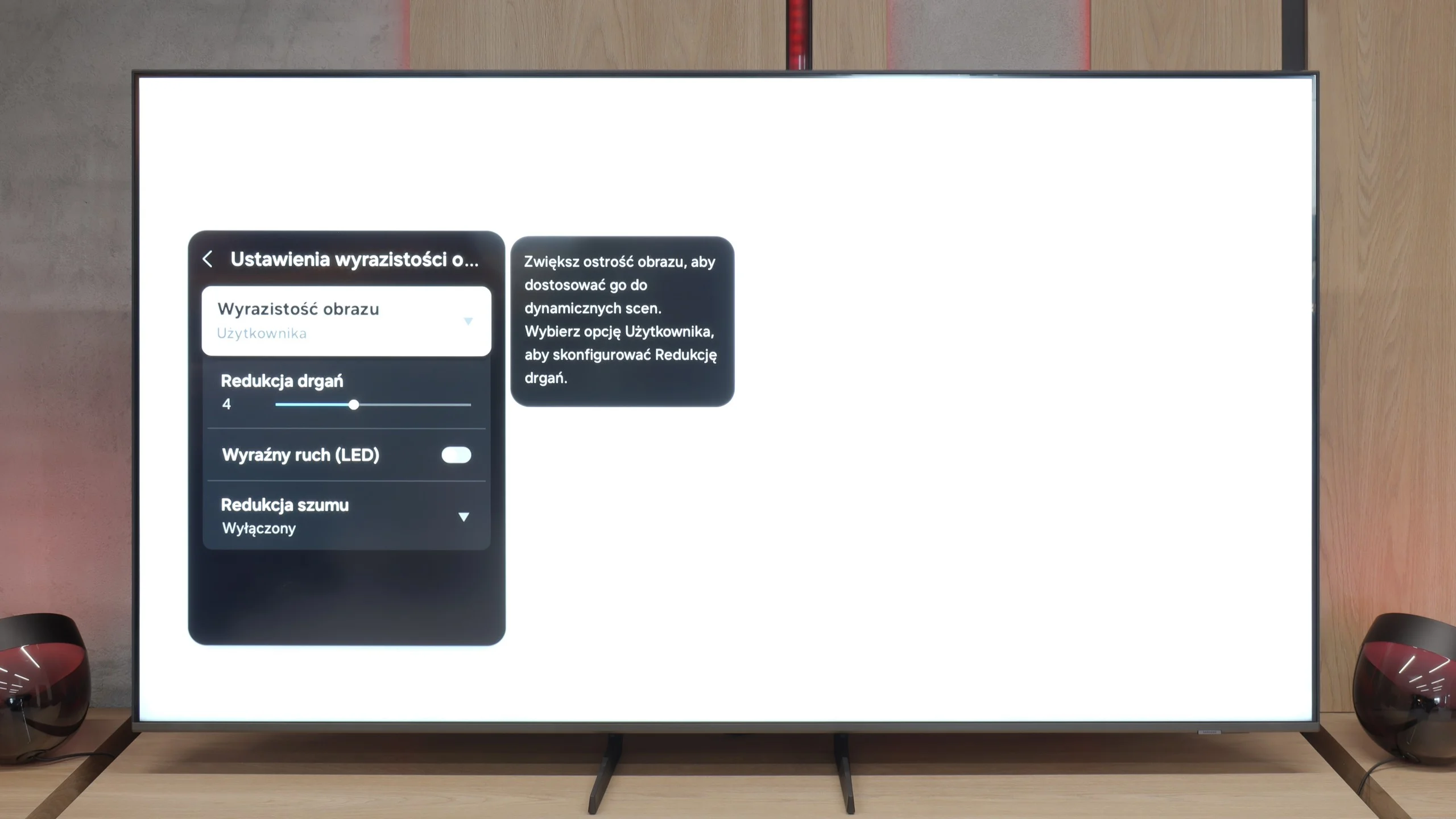
Blur (native resolution, maximum refresh rate):

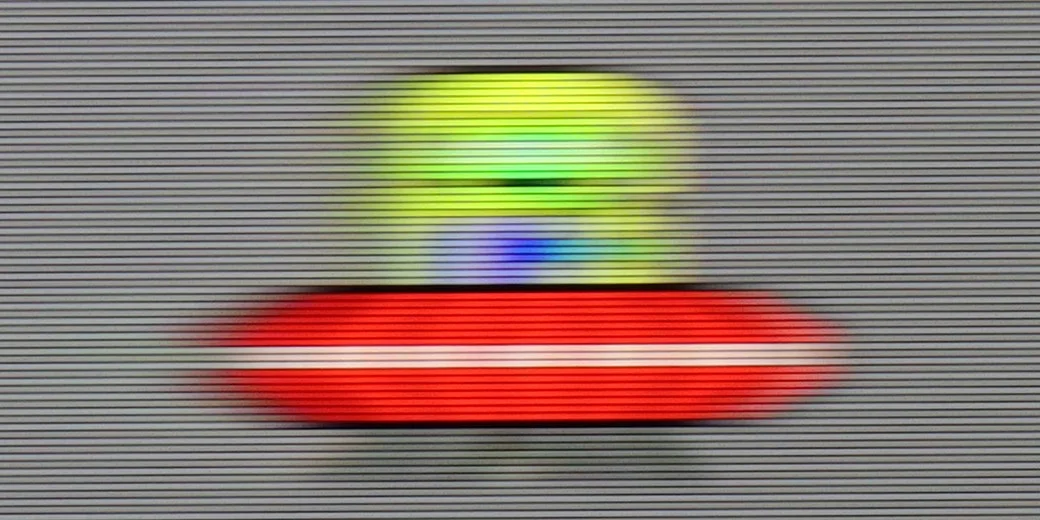
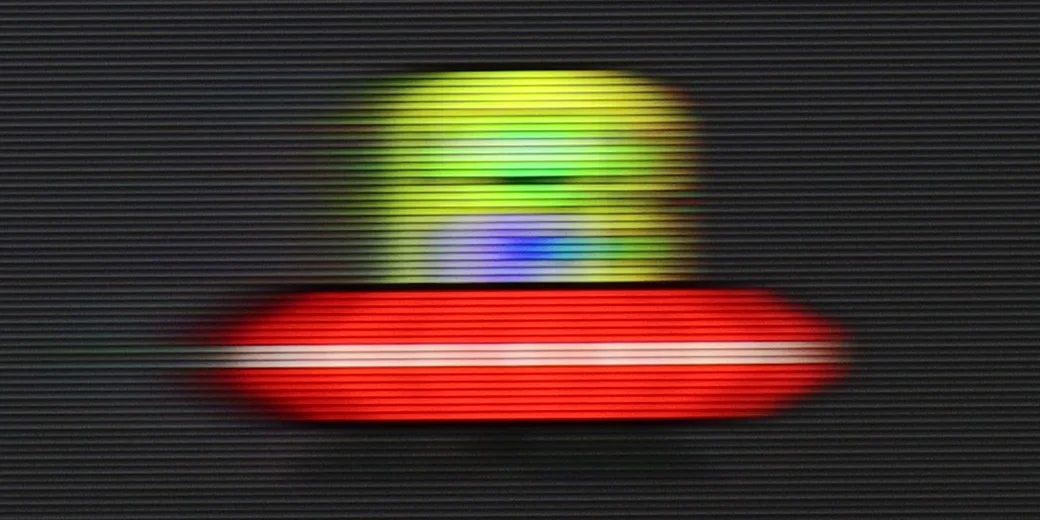



Blur (BFI function enabled):



Philips PUS7009 does not have motion smoothing capabilities, which means there is no option to adjust the image for a more choppy or smoother, cinematic effect. Such features could positively influence the reception of dynamic scenes. In terms of motion blur, this model is equipped with a 60 Hz VA panel, which offers slightly worse results than the variant with an IPS panel. The VA panel introduces minimally greater motion blur, although the differences are not significant and should not pose a problem for most viewers.
Due to the applied 60 Hz matrix, it is difficult to call the Q8F a television designed for gaming or watching sports. The panel is not particularly fast, which makes motion blur noticeably visible. If you were hoping for spectacular, even 'stadium-like' experiences during broadcasts, you may feel slightly disappointed. Fortunately, in the case of films and series, Samsung has not abandoned the motion blur reduction feature. This is nothing but a motion smoother that allows you to improve the fluidity of productions recorded at 24 or 30 frames per second. This way, you can decide for yourself whether you prefer a smoother, 'television' image or to maintain a cinematic character. It all depends on the viewer's preferences, and the ability to adjust this parameter is undoubtedly a plus.
Console compatibility and gaming features
4.7/10
5/10
- ALLM
- VRR
- VRR range48 - 60Hz
- Dolby Vision Game Mode
- Correct implementation of HGIG
- 1080p@120Hz
- 1440p@120Hz
- 4K@120Hz
- Game bar
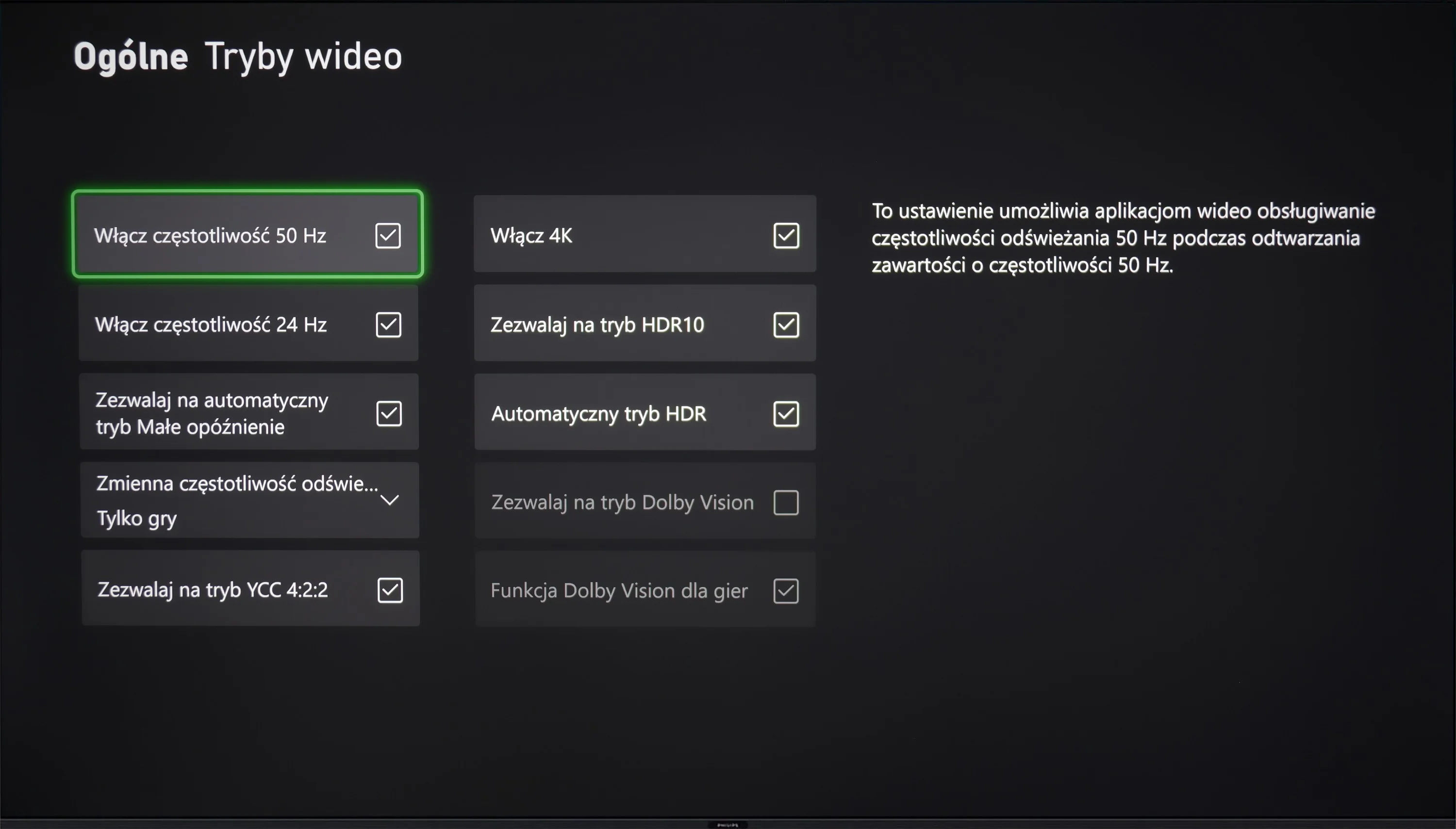
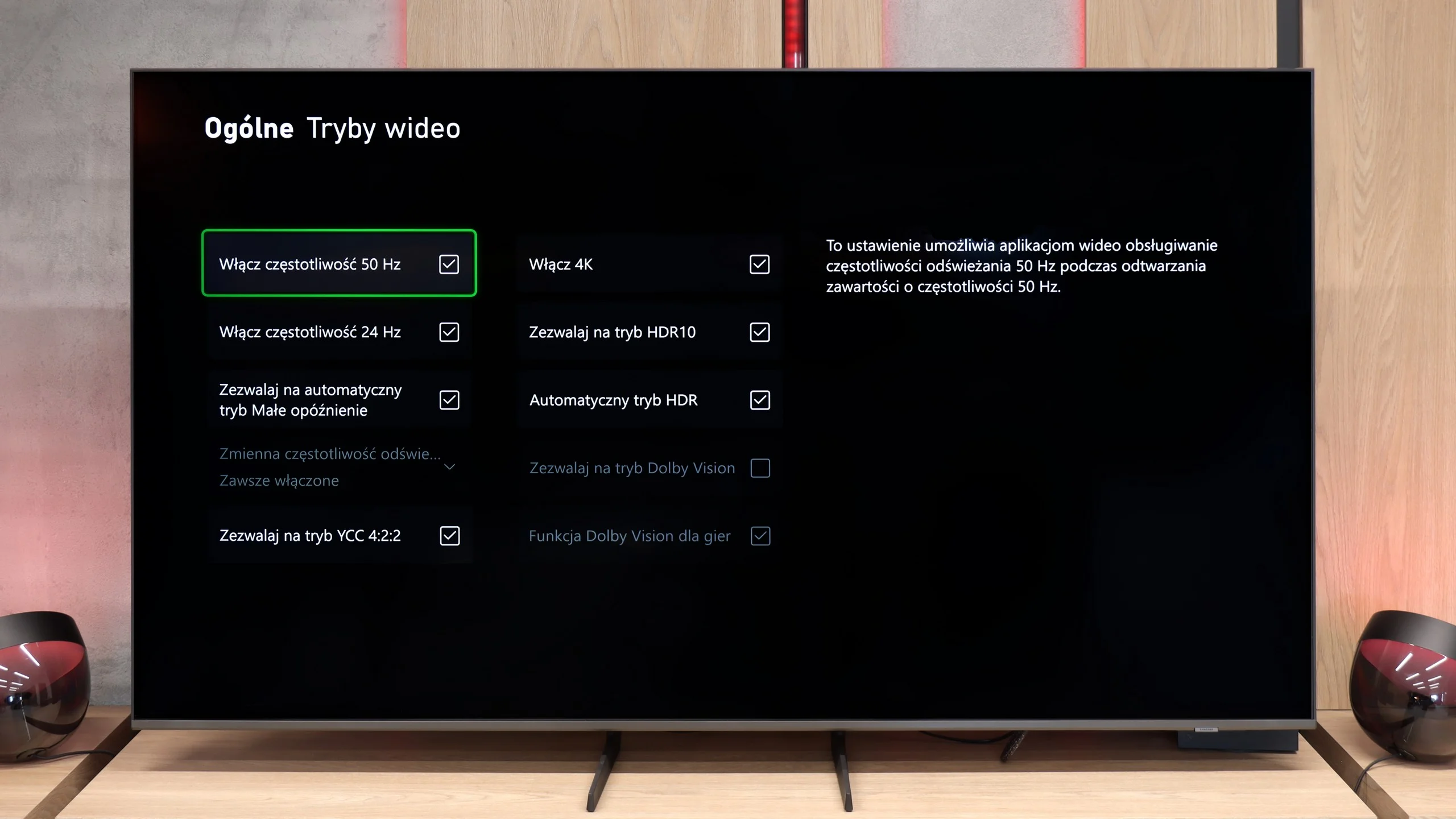
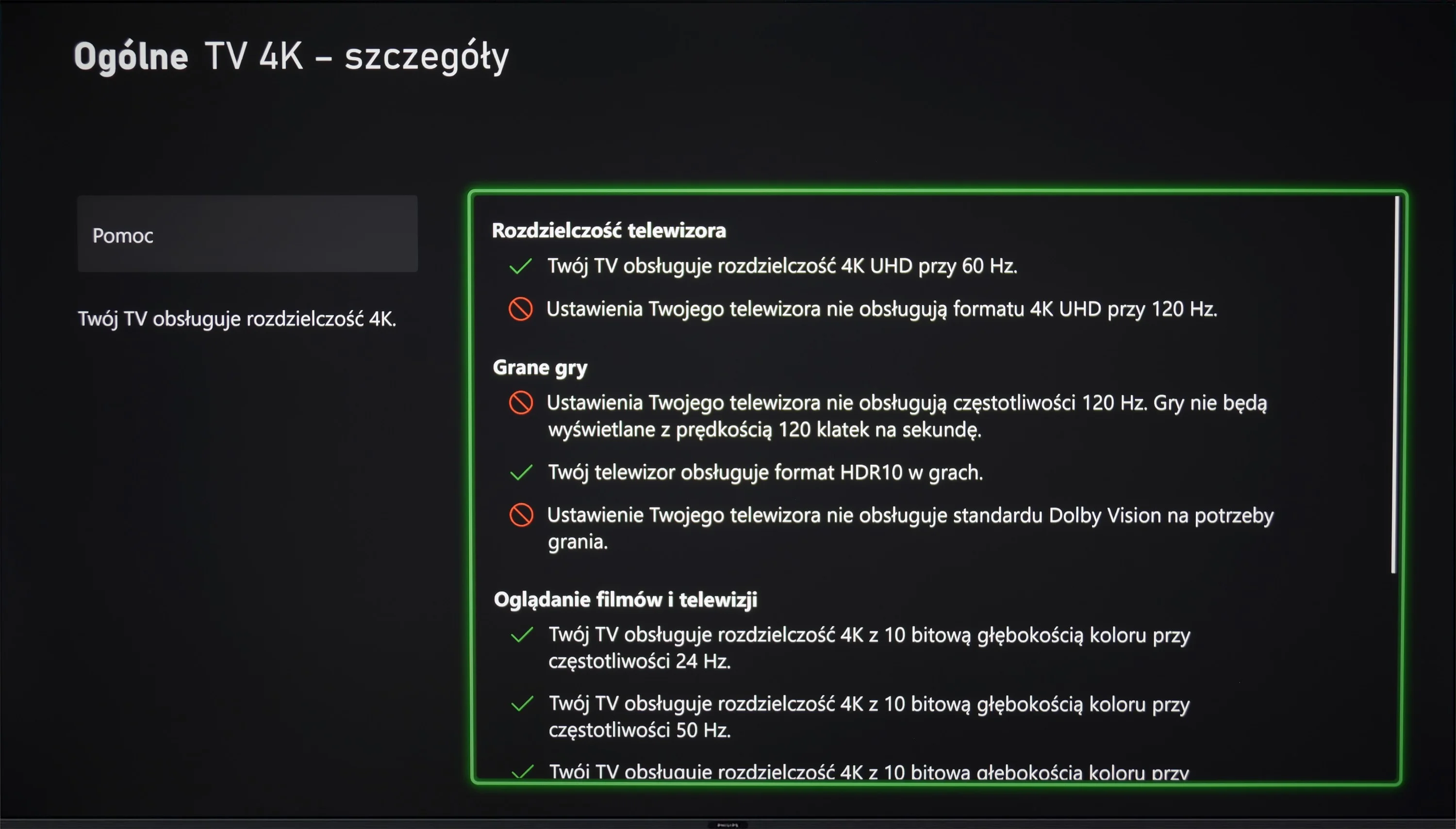
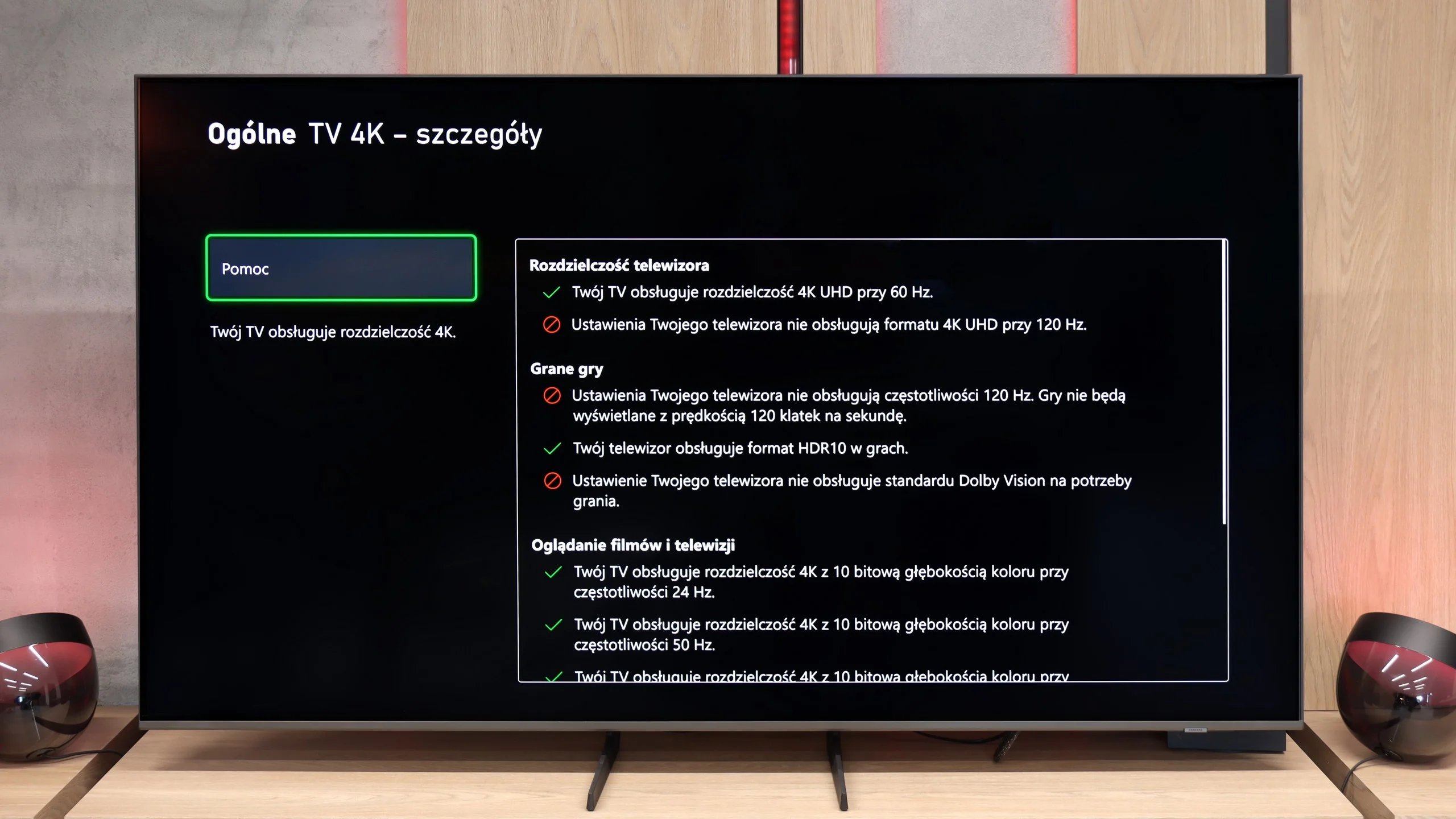
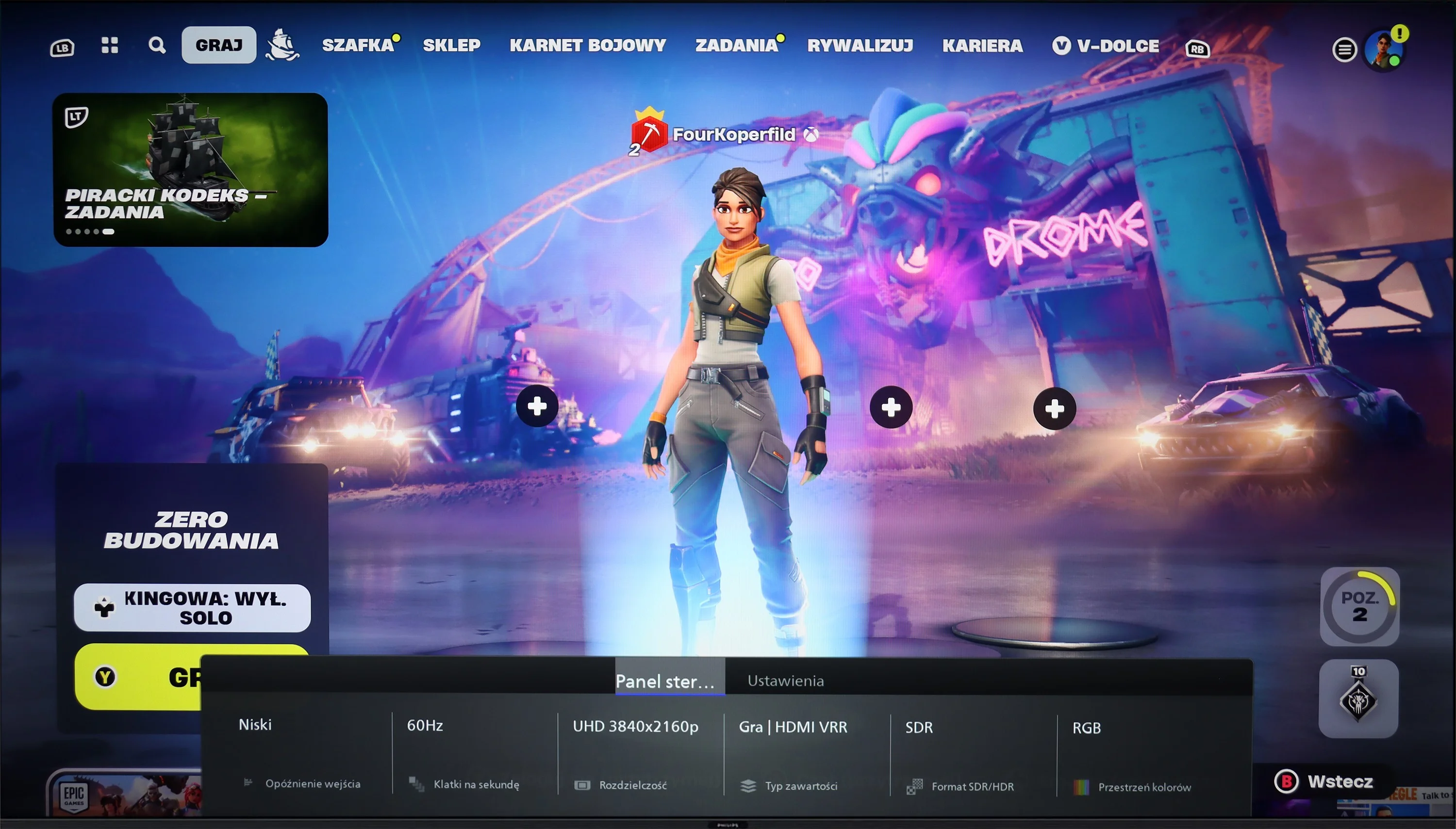
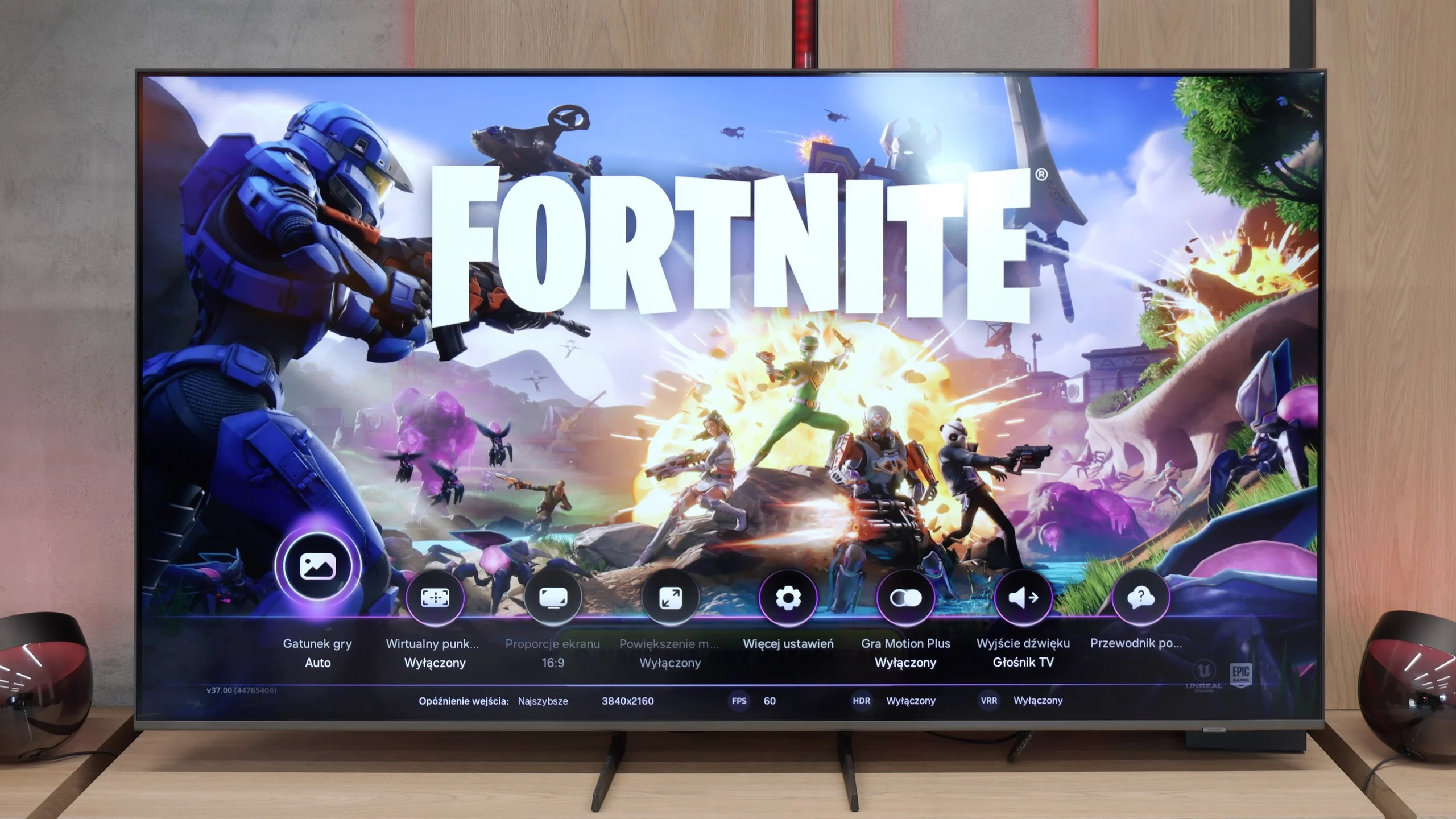
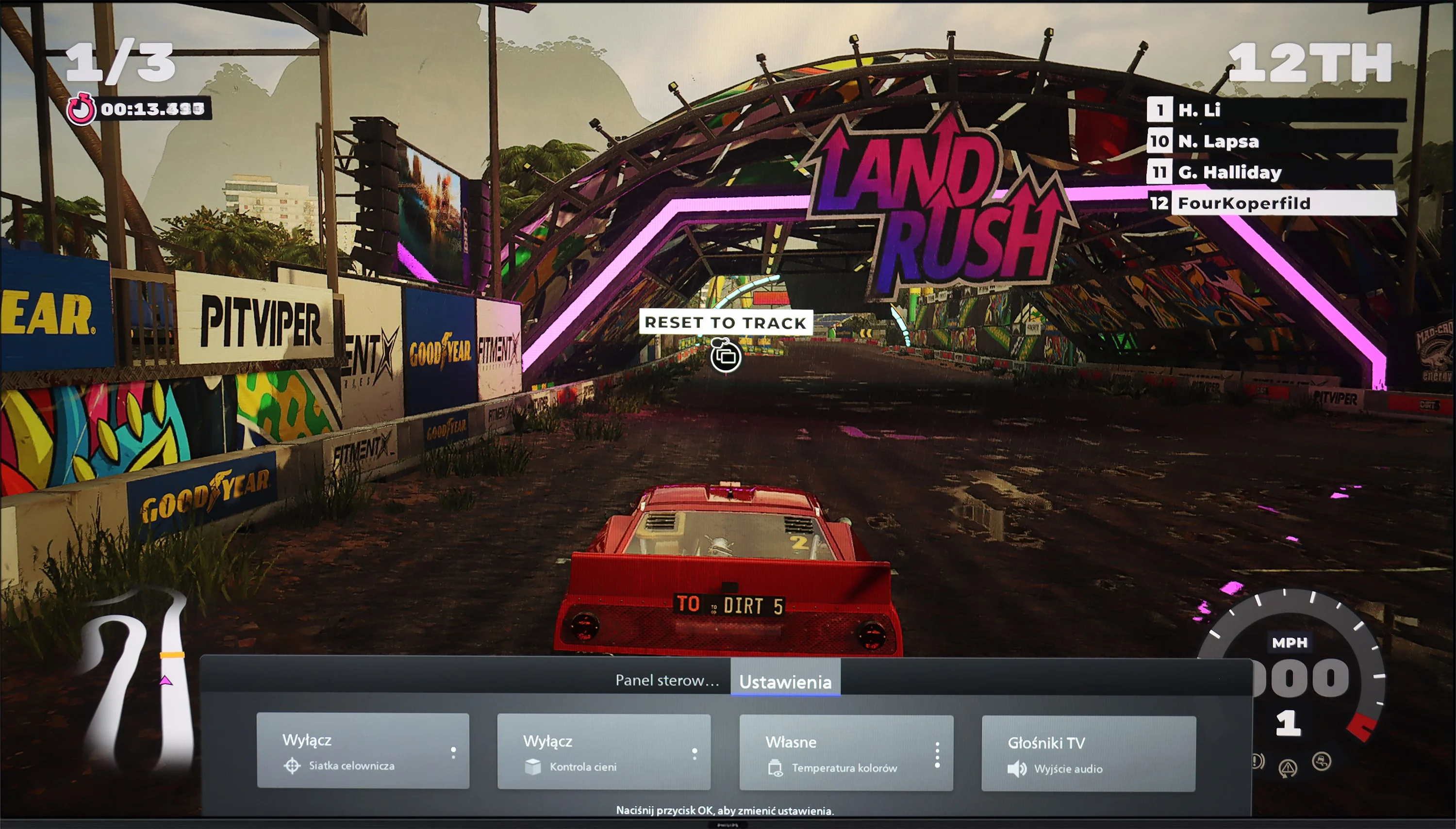
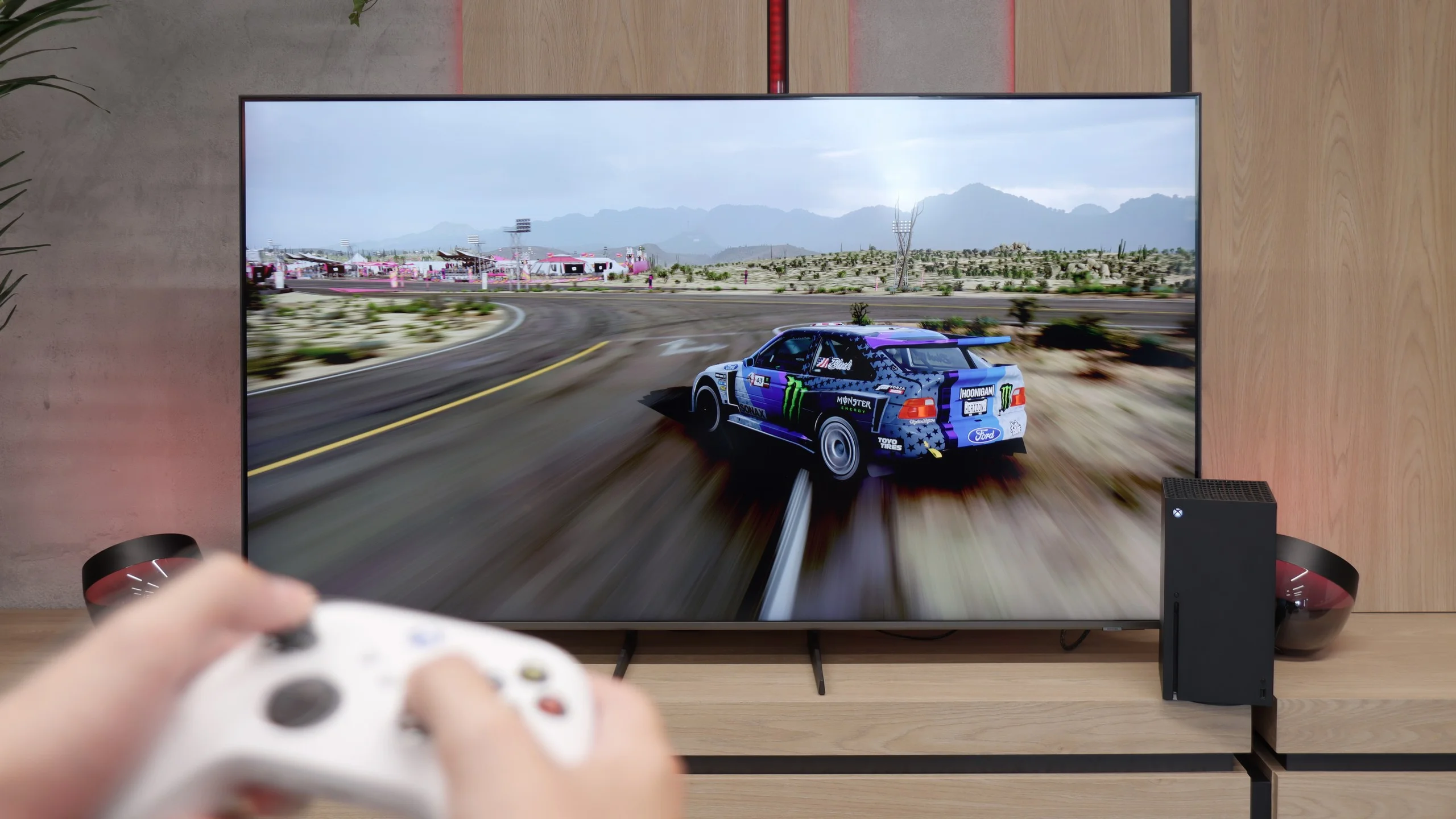
In terms of compatibility with consoles, Philips PUS7009 is likely to satisfy casual gamers. Although equipped with HDMI 2.0, it offers features such as ALLM (Auto Low Latency Mode), VRR (Variable Refresh Rate), and Game Bar. ALLM automatically switches the television to low latency mode, which speeds up responses during gaming, while VRR adjusts the refresh rate to minimise screen tearing. Game Bar provides quick access to gaming settings and monitors key parameters, although it visually falls short compared to competing solutions. However, more demanding gamers may feel underwhelmed. Philips PUS7009 does not support advanced HDR formats in games, and the 60 Hz panel limits the ability to display smooth and detailed images in dynamic scenes, which may not satisfy fans of fast-paced action games.
[UPDATE] We have updated our 2025 Samsung TV reviews following the release of firmware version 1131, which officially restores the essential HGiG (HDR Gaming Interest Group) support.
It is not entirely clear what Samsung has meddled with this year regarding its televisions, but the Q8F is not free from all the confusion surrounding updates and shortcomings. While its older cousin, the Q67D, could still be recommended to casual gamers with a clear conscience, it is difficult to find a reason to do so here. Apart from the automatic game mode and the attractively designed Game Bar, we receive practically nothing that could attract gaming enthusiasts. The lack of proper HGiG implementation is a significant issue, especially since after the 1126 update, the feature simply disappeared. The situation regarding VRR is even worse. Although it is listed in the manufacturer's brochures and appears in the Game Bar, we were unable to activate it. The Xbox Series X console did not allow activation at all, and the option remained greyed out and inactive. It is hard to praise such a television even to casual gamers, which is a pity, as Samsung had a strong bargaining chip in the gaming segment for years.
Input lag
10/10
9.9/10
SDR
HDR
Dolby Vision
Input lag in Philips PUS7009 is at a very good level – it is only 11 ms for the supported resolutions. For most gamers, this low level of latency should be satisfactory, providing smooth and responsive experiences during gameplay.
Fortunately, in terms of gaming, Samsung did not attempt to 'enhance' anything and the input lag remained at an excellent level. Results hovering around 10–15 ms mean that delays are practically imperceptible. The controls are instant, and the responses from the console or computer appear on the screen with no noticeable delay. In this respect, the Q8F performs excellently and it is difficult to fault it in any way.
Compatibility with PC
2/10
6/10
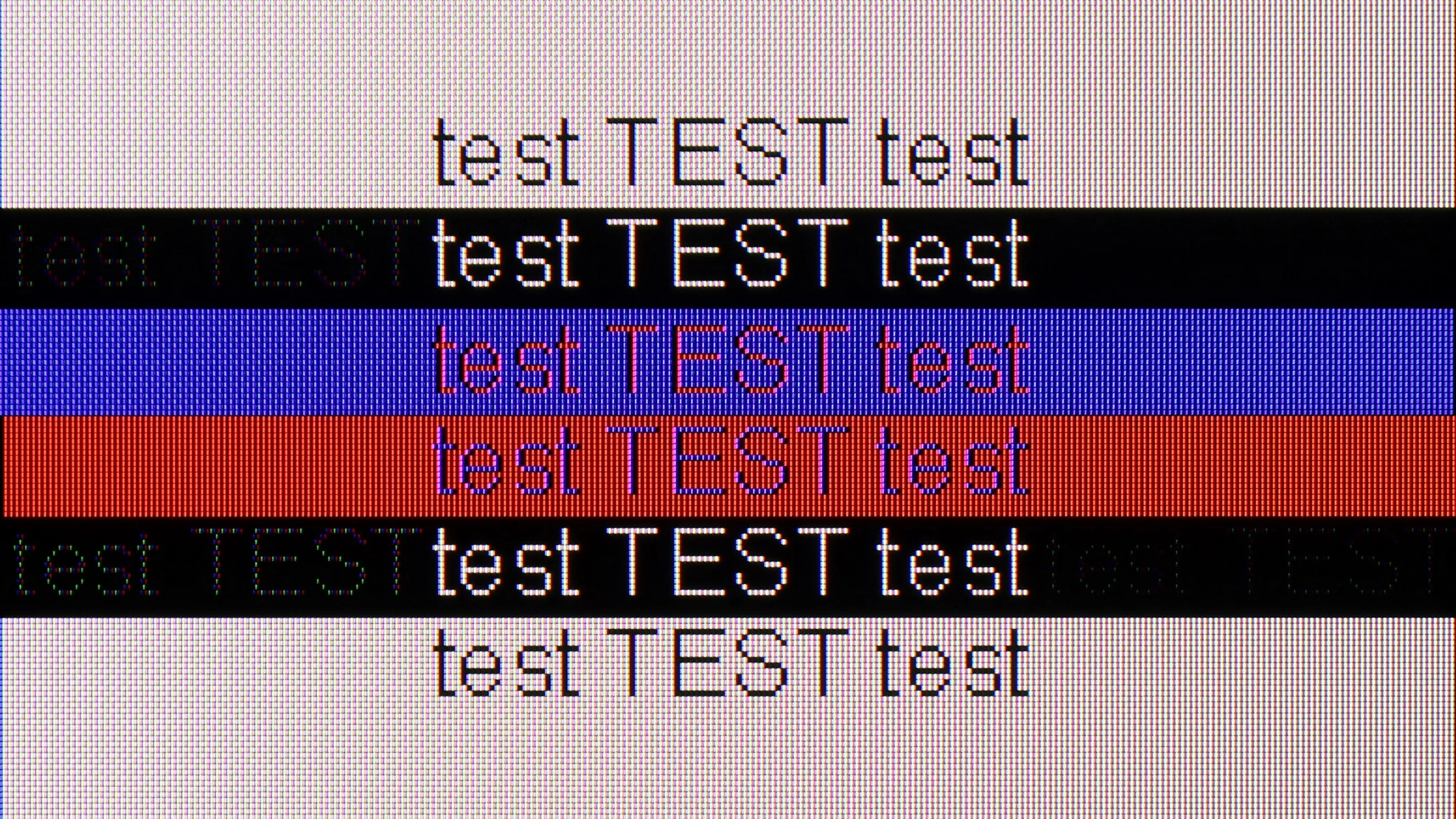
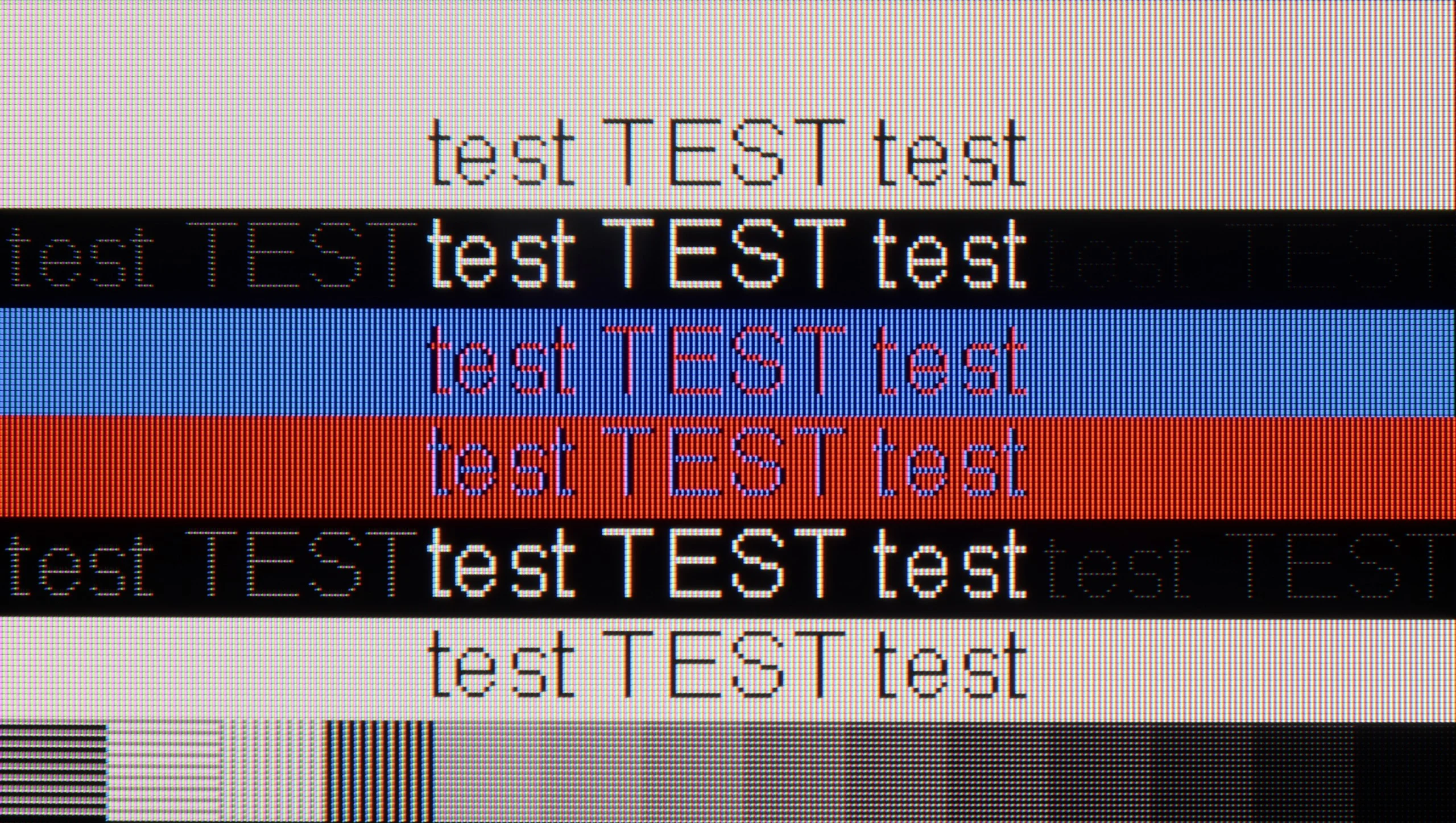
The photo shows the legibility of small fonts. Ideally, lines should be the same thickness on both light and dark text, with minimal pixel gaps.
Regarding collaboration with the PC, the VA matrix variant in Philips PUS7009 is not suitable for text work, despite supporting chroma 4:4:4. The visibility of fonts is at a moderately satisfactory level. The biggest problem is their display on a dark background – the text appears "pixelated," and the letters have multicoloured textures, which significantly hinders comfortable work with documents and text editing.
Although gaming on the Q8F is not particularly attractive — there are no modes with lower resolution and higher refresh rates, and it also has issues with VRR (G-Sync) as well as a limitation of the panel to 60 Hz — it performs excellently as a work monitor. The readability of the fonts is very high, so working with text or Excel spreadsheets is a pure pleasure. In this regard, the Q8F can be a real alternative to a large office monitor.
Viewing angles
3.4/10
3.4/10
The viewing angles on the Philips PUS7009 with a VA panel are distinctly worse compared to the version with an IPS panel, which is due to the inherent limitations of VA technology. When viewed at an angle, colours quickly lose their intensity, and contrast drops dramatically, making the picture appear washed out and less discernible. For those who plan to watch the television from different places in the room, this may be a significant issue, especially compared to IPS panels, which offer considerably better viewing angles and a more consistent image even when viewed from the side.
The viewing angles on the Q8F can be described as average, which is due to the use of a VA panel. When watching the television straight on, the picture looks very good, but just moving slightly to the side causes it to start fading and losing contrast. Colours gradually lose their saturation, and black takes on a shade of grey. This is a typical limitation of this type of panel, and one cannot expect miracles here. Compared to IPS panels, the difference is clear — although they are weaker in contrast, they hold colour better at an angle. The Q8F will perform best in a classic setup, where viewers are seated centrally in front of the screen. If you plan to watch with a larger group, with people spread out across the living room, the effect may not be as satisfying.
Daytime performance
4.4/10
5.6/10
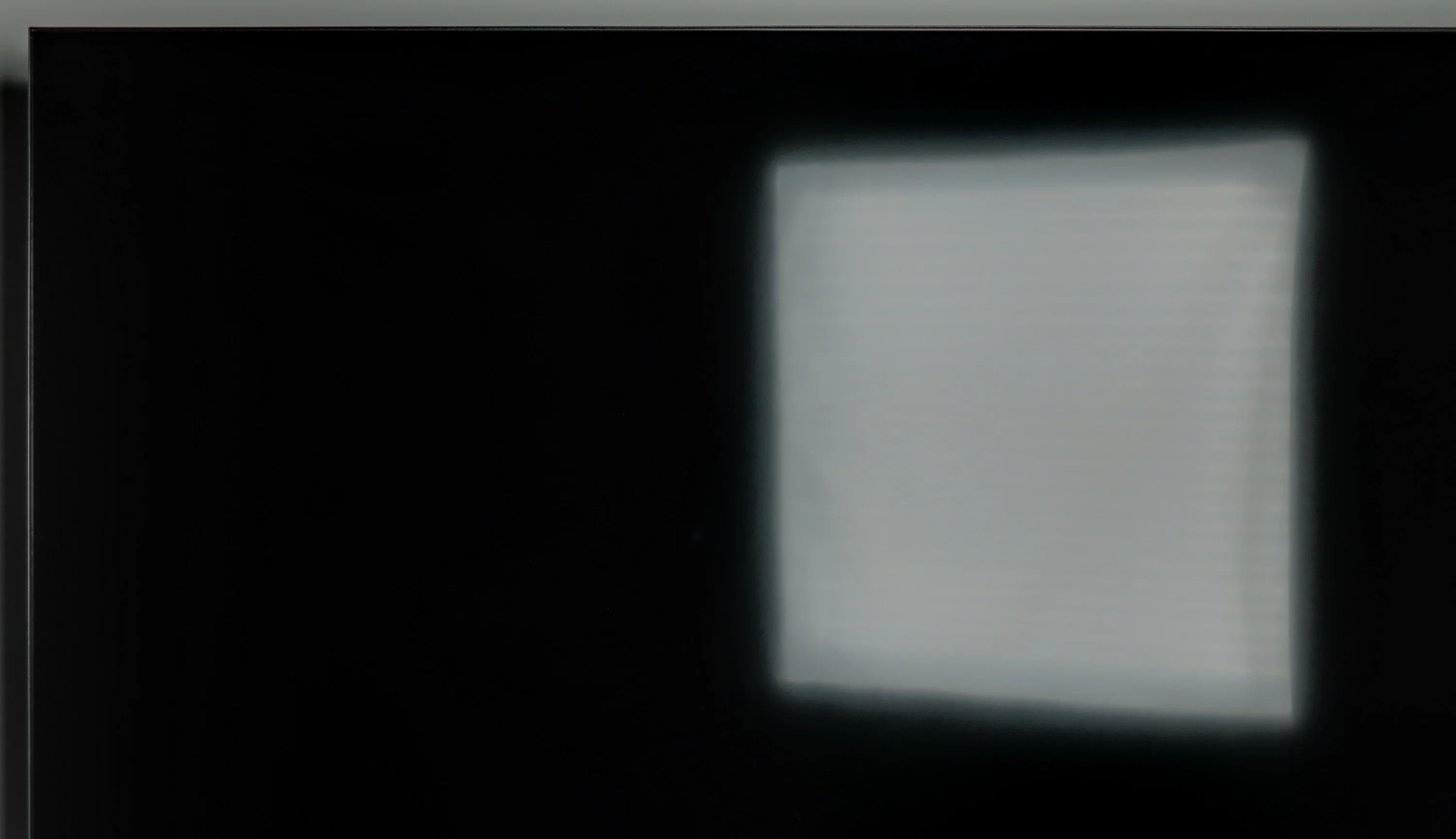
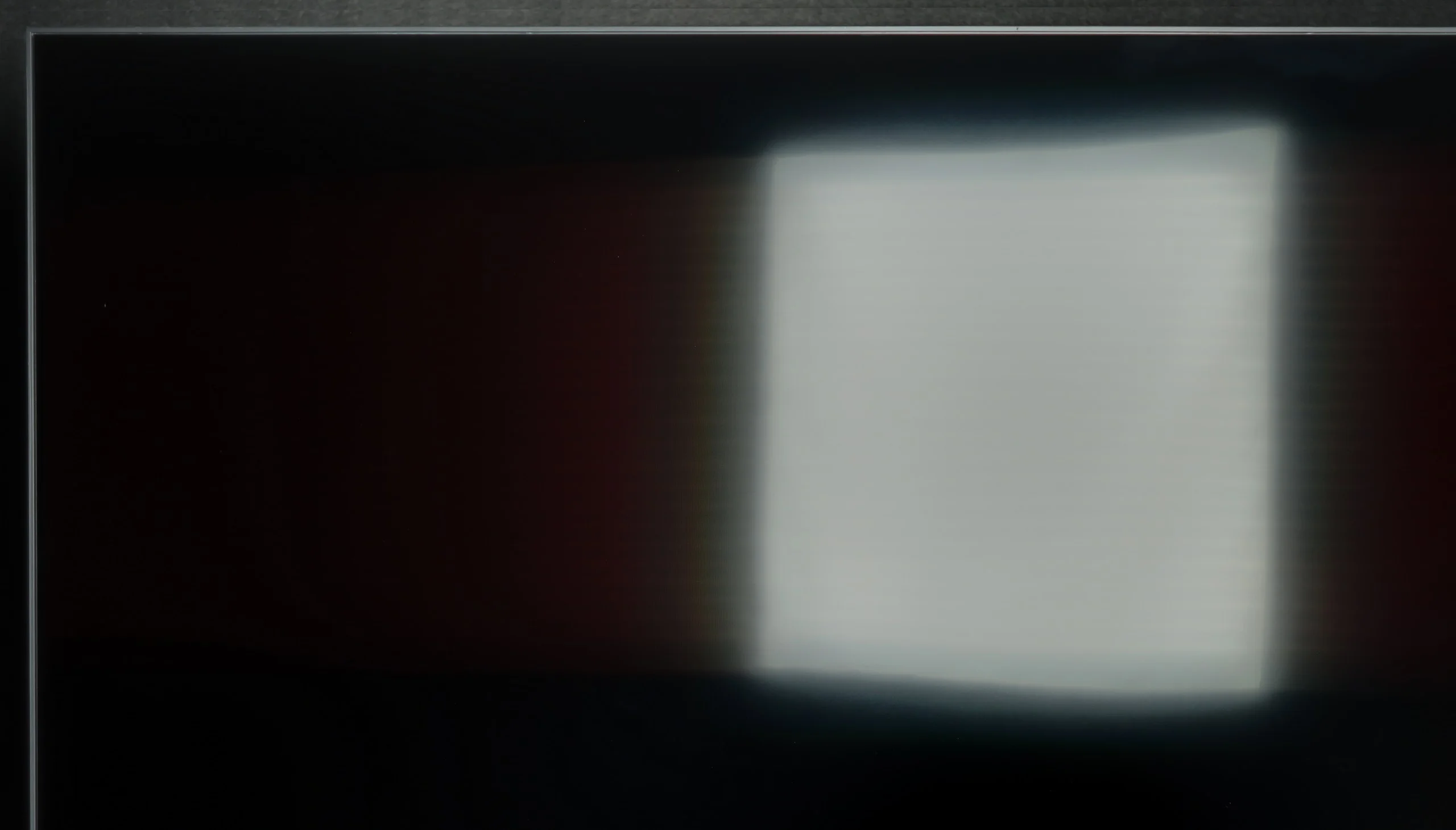
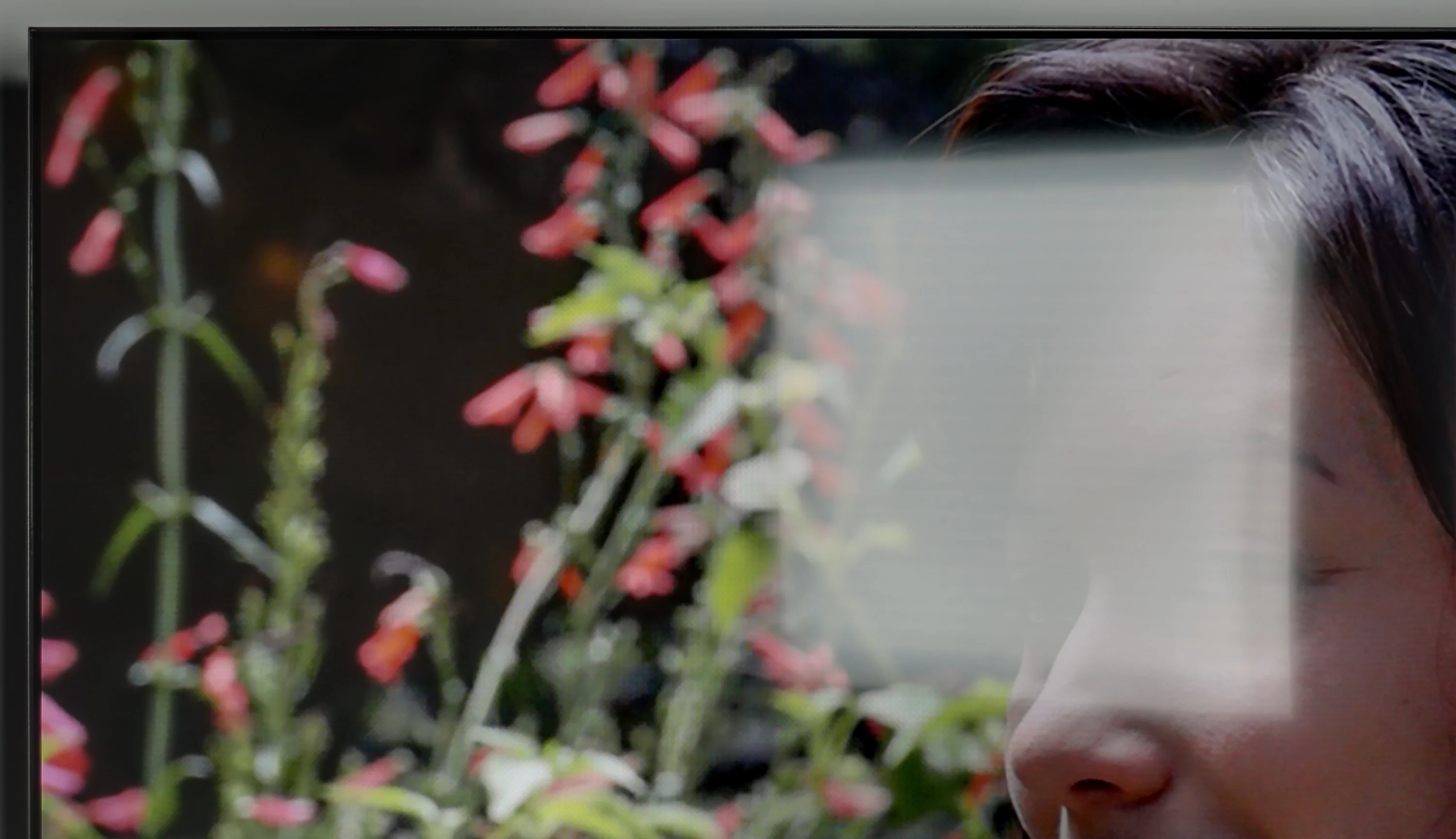
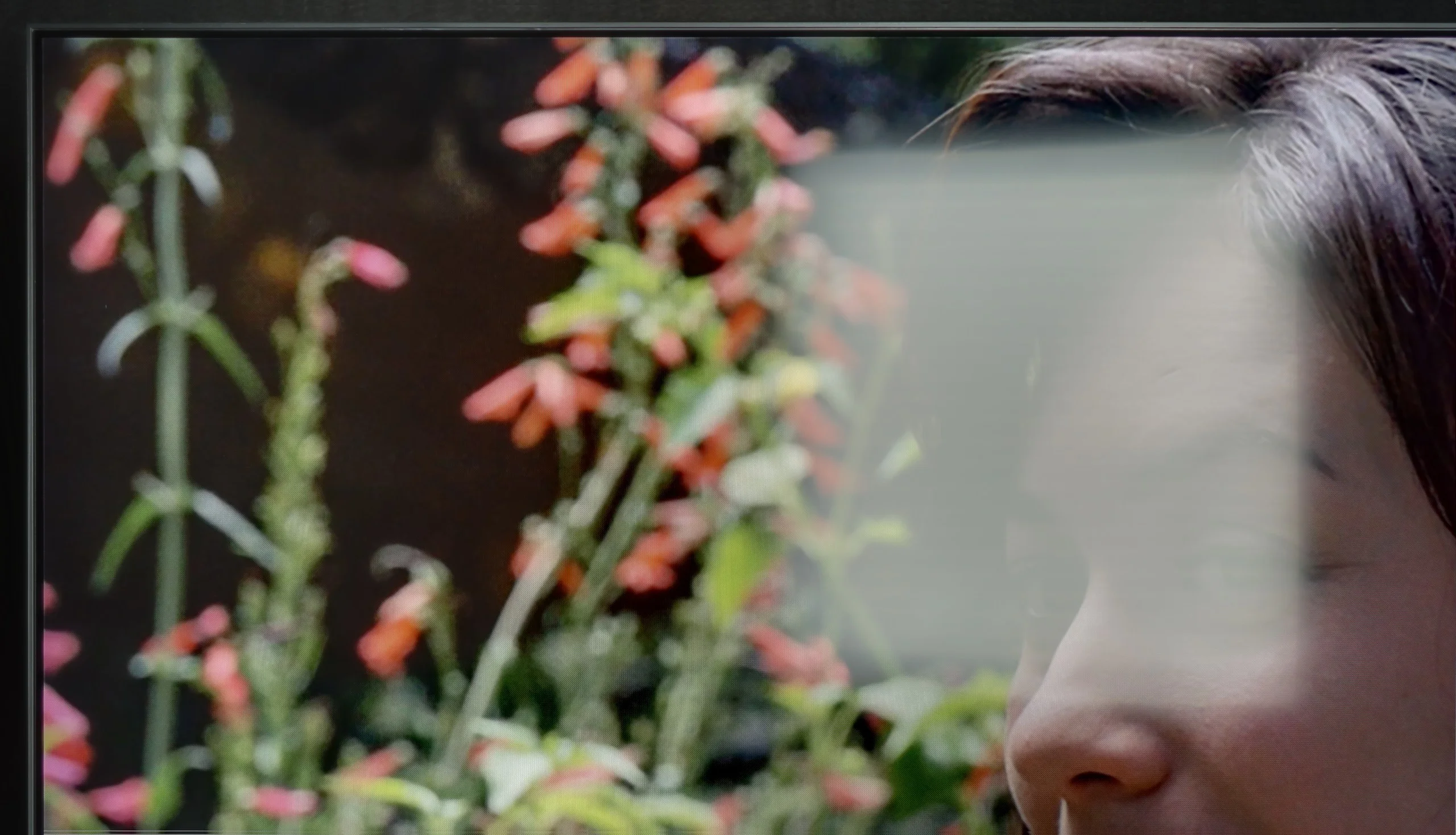
Panel brightness
Samsung Q8F: 430 cd/m2
Philips PUS7009 (VA): 280 cd/m2
Although the panel in the Philips PUS7009 is equipped with a satin finish that effectively reduces reflections, the brightness of 280 nits in SDR mode is simply too low for the television to perform well in bright rooms. As a result, in heavily sunlit conditions, details on the screen may be difficult to see, which lowers the comfort of use during the day.
The Q8F performs quite well during the day. Its brightness hovers around 450 nits, which proves to be a sufficient level for moderately bright living rooms. It is not a television that will win a battle against sunlight streaming directly through the window, but under typical home conditions, the picture remains clear and appealing. A significant advantage is the satin finish of the panel, which effectively reduces reflections and helps maintain colour saturation even when the room is bright. As a result, watching series during the day or evening sports broadcasts with the lights on poses no problems. The Q8F does not aspire to be a cinema television in full sunlight, but as an everyday screen in normal home conditions, it performs really well.
Panel details
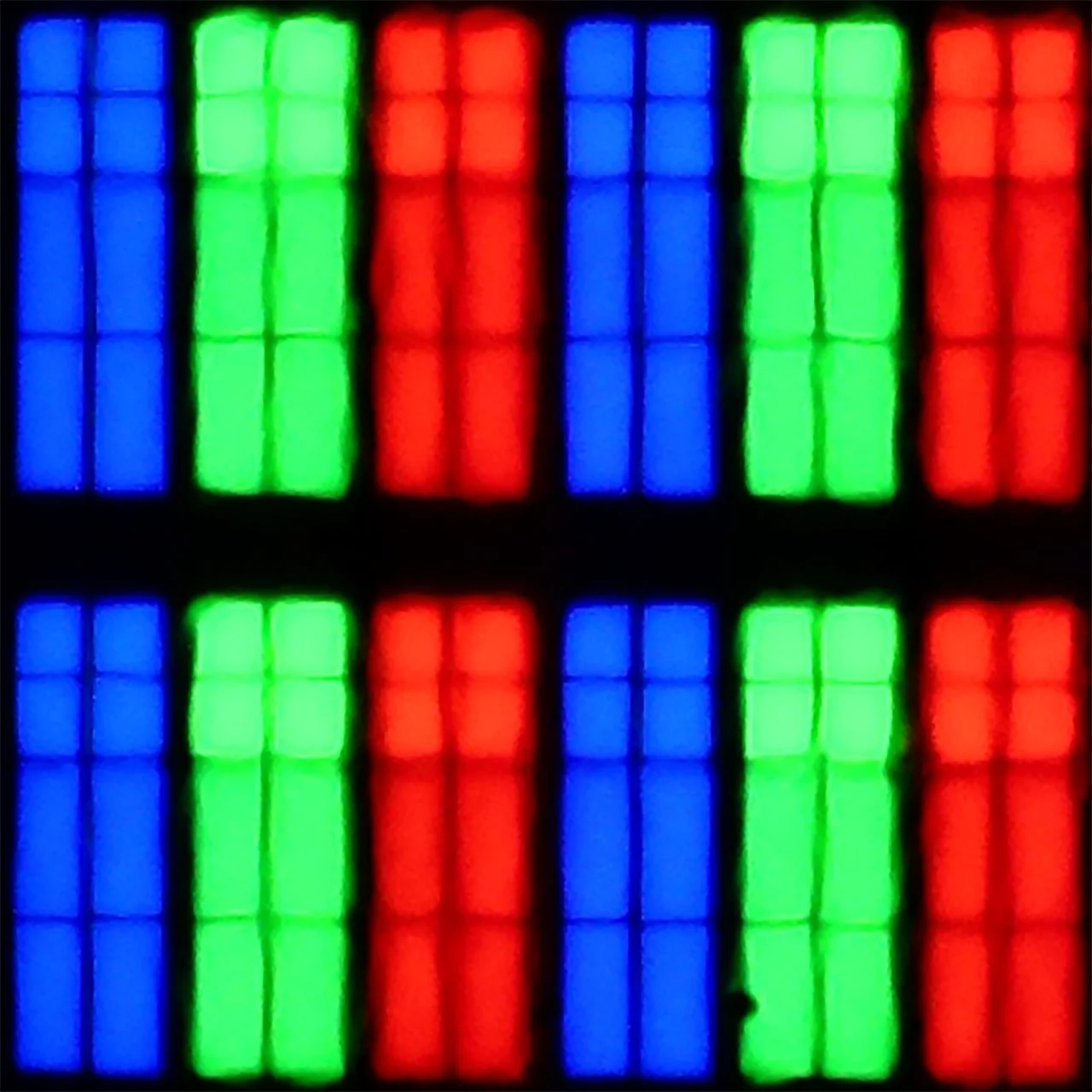
Subpixel Structure:
Panel uniformity and thermal imaging:


TV features
6.3/10
7.3/10
- SystemTitan OSTizen
- System performancePoorGood
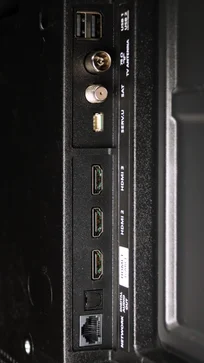
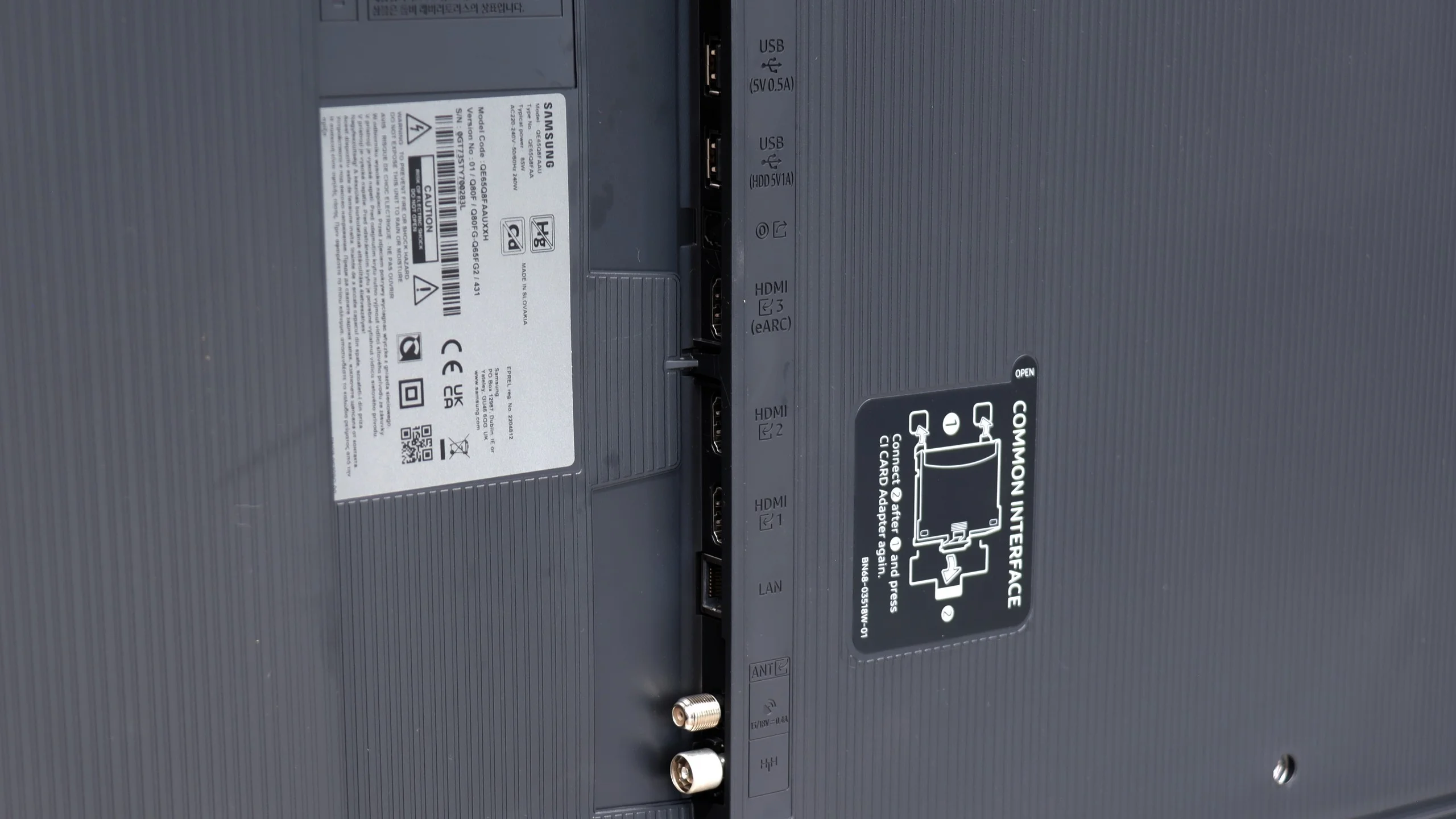
- HDMI inputs3 x HDMI 2.0, 0 x HDMI 2.13 x HDMI 2.0, 0 x HDMI 2.1
- OutputsToslink (Optical audio), eARC (HDMI), ARC (HDMI)Toslink (Optical audio), eARC (HDMI), ARC (HDMI)
- Network InterfacesWi-Fi 2.4GHz, Wi-Fi 5GHz, Ethernet (LAN) 100MbpsWi-Fi 2.4GHz, Wi-Fi 5GHz, Ethernet (LAN) 100Mbps
- TV receptionDVB-T, DVB-T2, DVB-S, DVB-S2, DVB-CDVB-T, DVB-T2, DVB-S, DVB-S2, DVB-C
Classic features:
- Recording to USB (terrestrial TV)
- Recording programming
- Picture in Picture (PiP)
- RF remote control (no need to aim)
- Backlit remote control
- Teletext
- Audio only mode
- Bluetooth headphones support
- Simultaneous Bluetooth headphones & TV audio
Smart features:
- AirPlay
- Screen mirroring (Windows Miracast)
- Voice search
- Voice search in native language
- Ability to connect a keyboard and mouse
Sound connection options
- HDMI audioeARC (HDMI), ARC (HDMI)eARC (HDMI), ARC (HDMI)
- Other audio outputsToslink (Optical audio)Toslink (Optical audio)
- Wireless audioBluetoothBluetooth
Supported audio formats (external HDMI eARC audio):
- Dolby Digital Plus 7.1
- Dolby True HD 7.1
- Dolby Atmos in Dolby Digital Plus (JOC)
- Dolby Atmos in Dolby True HD
- DTS:X in DTS-HD MA
- DTS-HD Master Audio
Senior accessibility
- Numeric keyboard on TV
- Font size adjustment
- Audio description
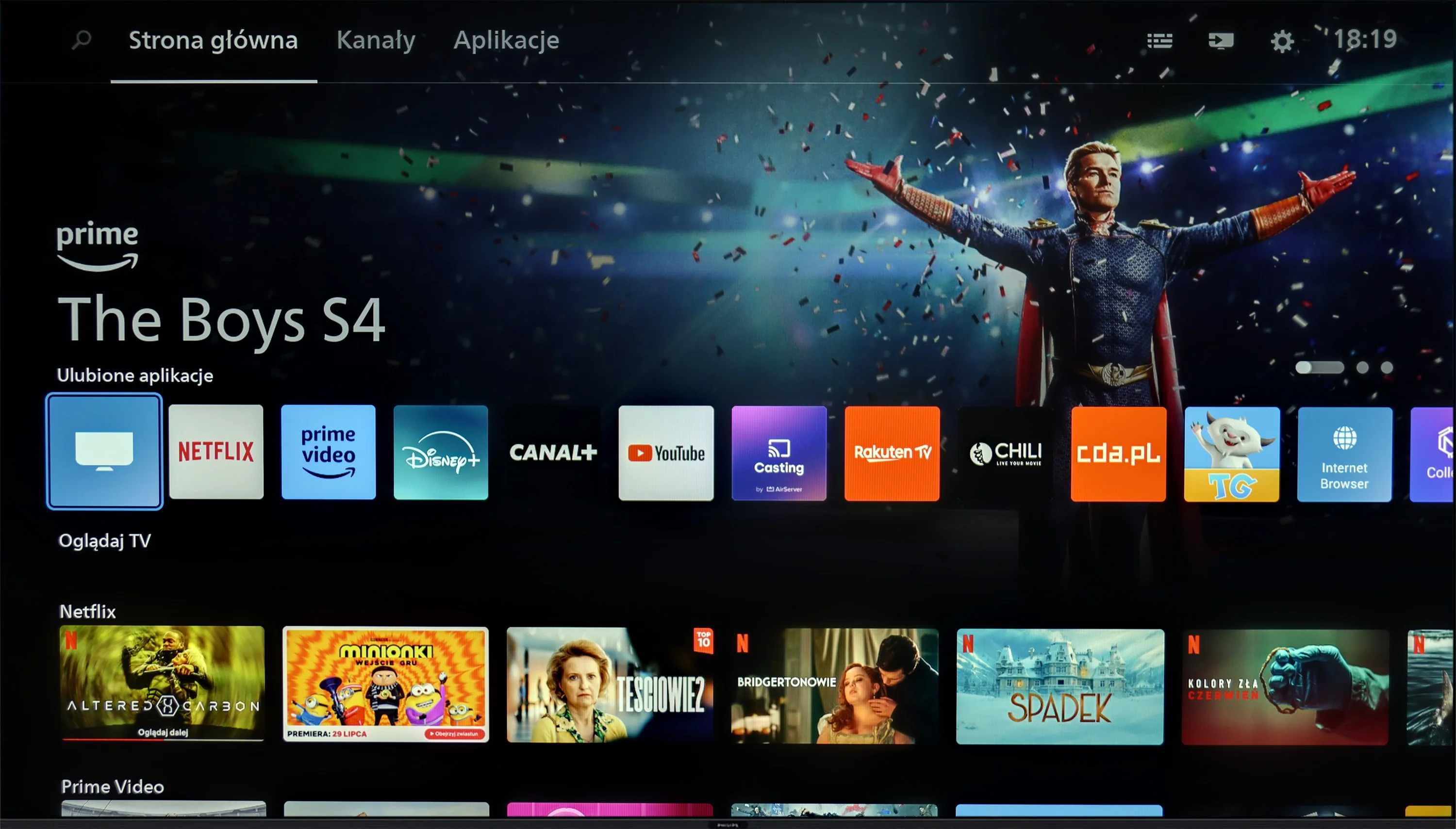
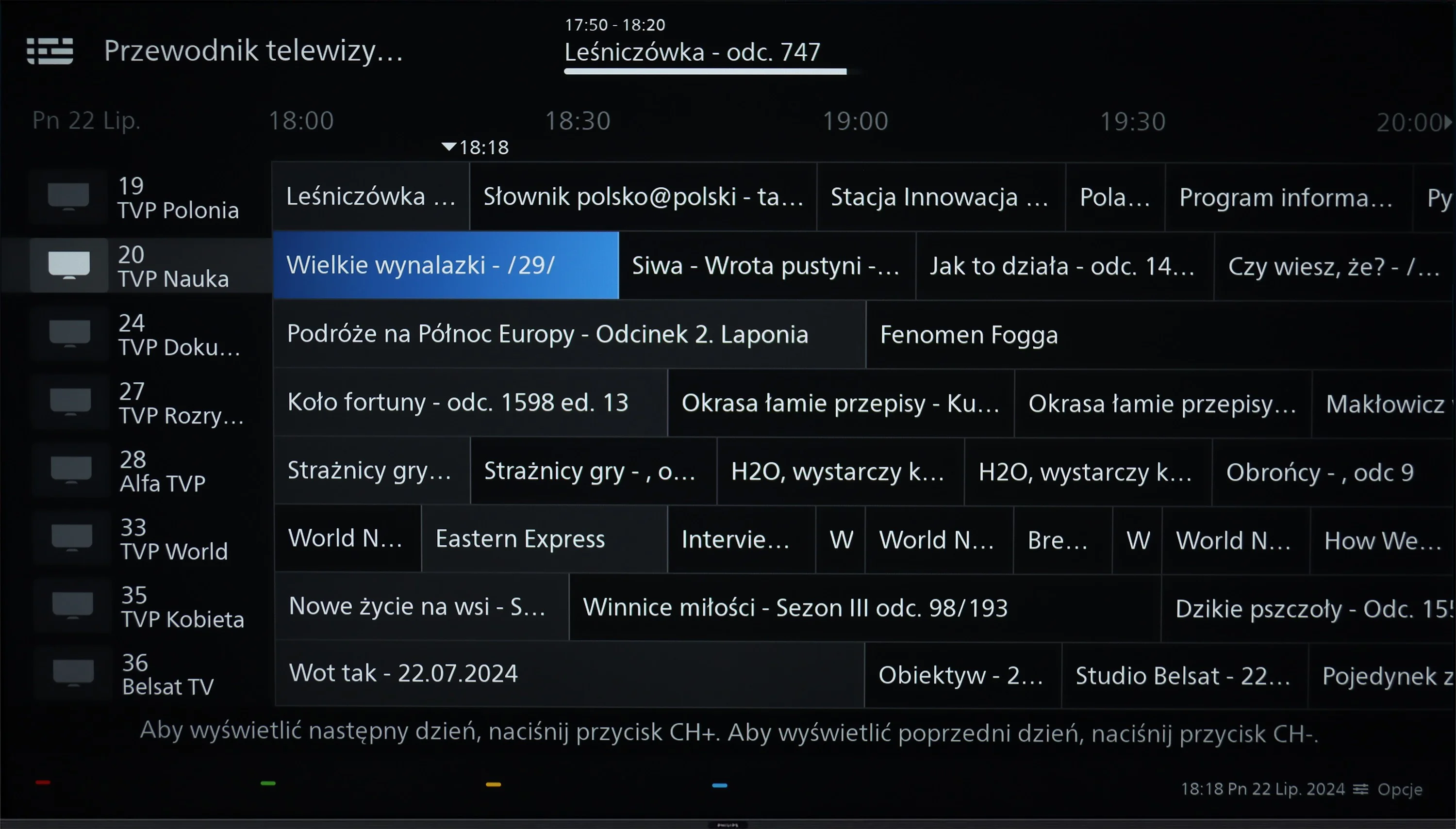
Philips has opted for a change in its approach to the operating system this year, replacing the previous open GoogleTV system with its proprietary TitanOS. As is often the case with new solutions, TitanOS is struggling with typical teething problems. Currently, it only offers basic applications, and the app store leaves much to be desired, which may disappoint users expecting a wealth of programming options. Additionally, the lack of support for AirPlay and the inability to record to USB are further limitations that may affect the overall user experience.
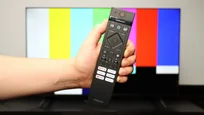
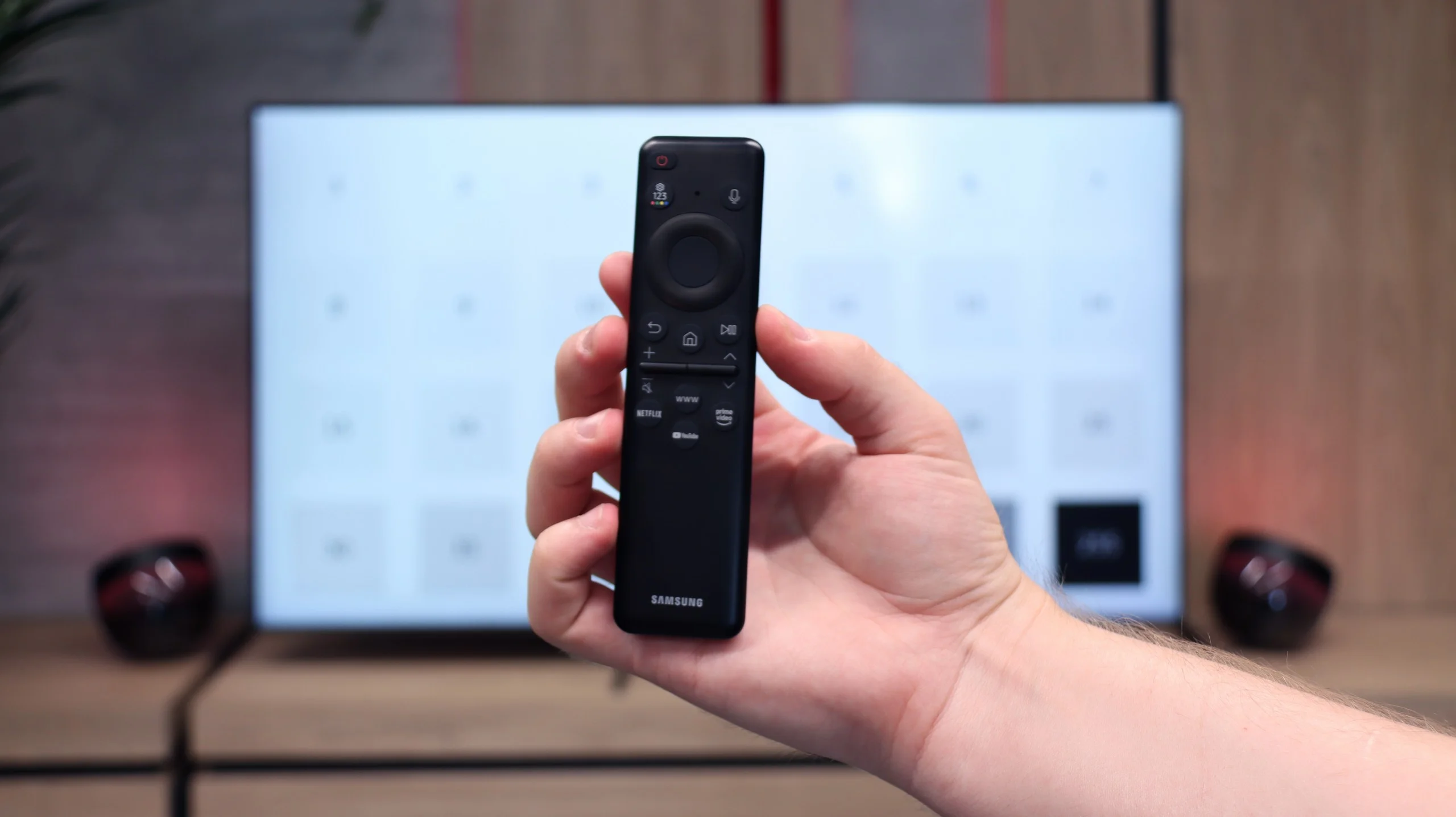
One interesting feature of the models with TitanOS is the new remote control, which, thanks to its backlighting, is very convenient to use. Unfortunately, its wireless functionality is not entirely reliable. The hybrid design means that sometimes you need to aim at the television, while other times you do not—this depends on the buttons being used. This is just plain annoying.
On the positive side, Bluetooth support should be noted, as it allows for the connection of a mouse or other peripheral devices. This is particularly useful when using the browser, which can be an alternative given the limited availability of applications in the TitanOS app store.
SmartTV Features: Tizen
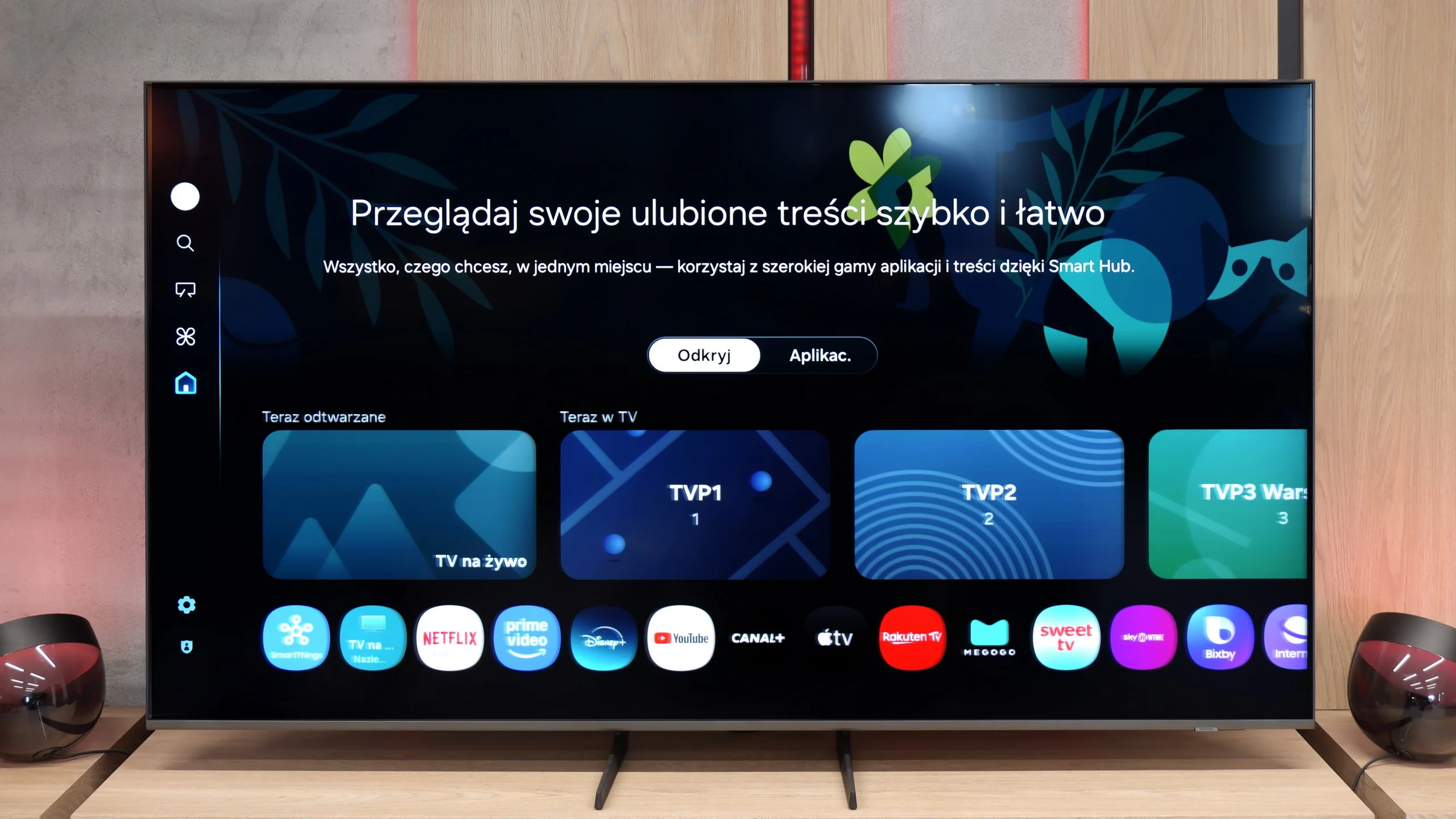
In terms of smart features, the Q8F does not lag behind what Samsung has accustomed us to. On board, we have the Tizen system – fast, intuitive, and well integrated with other devices. AirPlay, screen mirroring, and simple voice commands work seamlessly, so the basics are checked off perfectly. Additionally, there is SmartThings, an app that turns the television into the centre of a home ecosystem. You can connect a washing machine, vacuum cleaner, light bulbs, or speakers and control everything from one place, including the television. There is also no shortage of apps within Tizen for watching films or series – Netflix, YouTube, Disney+, and Prime Video are readily available. However, it is worth noting that Tizen is a closed system, so anyone hoping to install less popular programmes may be disappointed.
Traditional Television
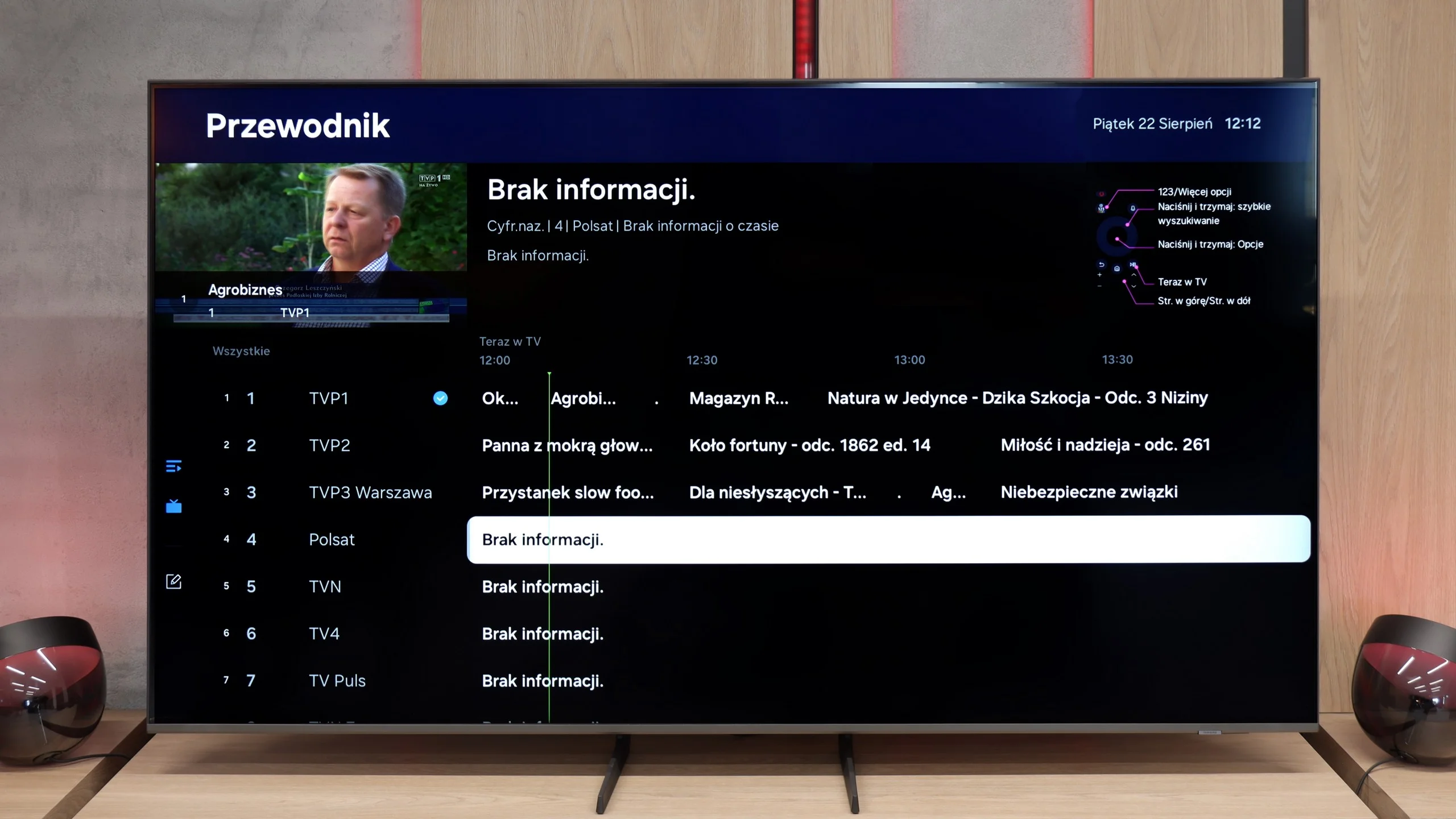
Traditional television fares worse. The Q8F will simply act as a screen here – it will display the image, but we won't find additional functions such as USB recording or PiP mode. The remote is small and strongly minimalist. It looks modern and can be charged with solar batteries on the back cover or via USB-C, but it must be recognized that it may not appeal to everyone – particularly older users may miss traditional buttons. However, it must be noted honestly that Samsung has been consistently steering its televisions (as has the competition, which copies some of their ideas) towards the smart home, rather than towards equipment "for grandparents." Considering the tremendous popularity of the brand, it can be assumed that most users, even the older ones, have already got used to the fact that the era of remotes with a full array of rubber buttons is slowly coming to an end.
Apps
6.7/10
9.3/10






















Playing files from USB
8.2/10
9.1/10
Supported photo formats:
Maximum photo resolution:
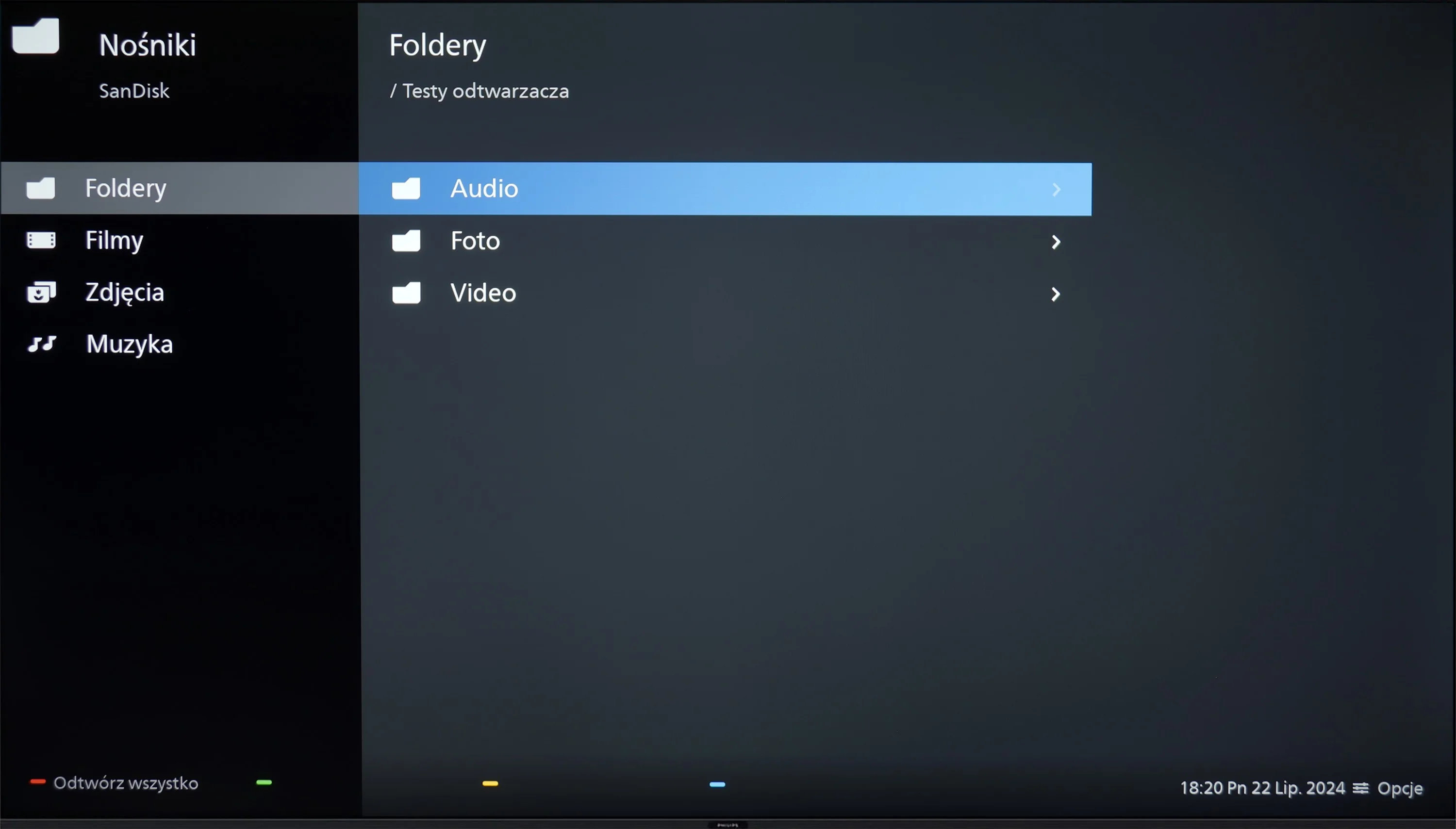
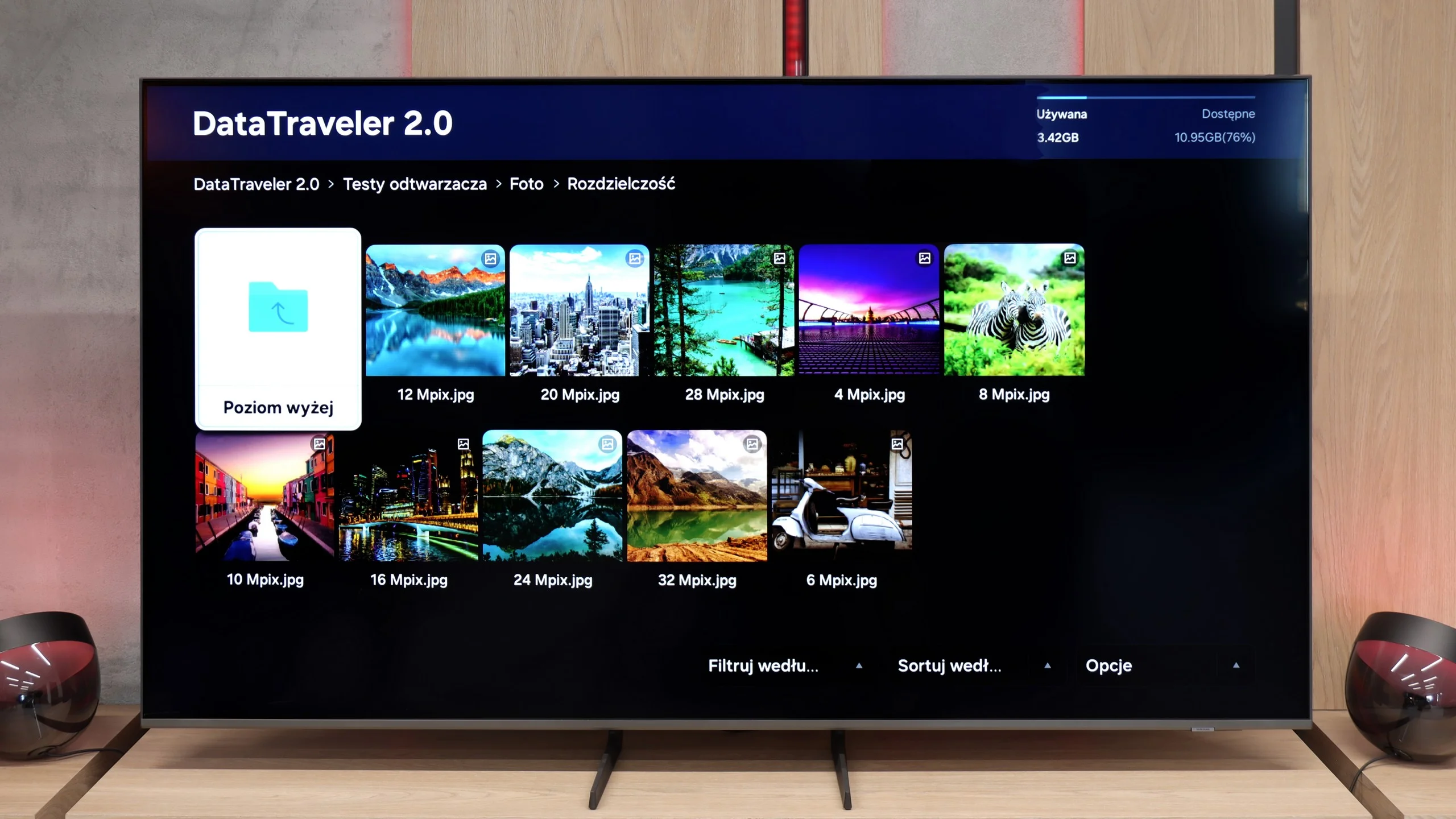
In terms of playing files from USB, Philips PUS7009 performs quite decently. The television plays most popular formats of photos, audio, and video, and an additional plus is the support for Polish subtitles and the ability to change fonts. Unfortunately, it has issues with playing certain photo resolutions.
Samsung Q8F handles playing files from USB quite efficiently. It supports virtually all popular video formats as well as photos, so you can easily load a holiday video or a family album. There are occasional exceptions with less common photo formats, but the most important JPEG works perfectly, which will be crucial for the majority of users. It's just a pity that Tizen does not allow for the installation of alternative players, such as VLC. Even then, less popular formats would not pose any problem.
Sound
5.6/10
6/10
- Maximum volume-84dB
- Dolby Digital Plus 7.1
- Dolby True HD 7.1
- Dolby Atmos in Dolby Digital Plus (JOC)
- Dolby Atmos in Dolby True HD
- DTS:X in DTS-HD MA
- DTS-HD Master Audio
The sound in Philips PUS7009 is rather flat and does not stand out compared to other televisions. Nevertheless, it is worth noting that the television supports all popular audio formats, including Dolby and DTS, which is a plus in terms of compatibility with various audio sources.
The sound on the Q8F can be described as acceptable. A slightly defined bass can be heard, but it is really minimal – the slim design of the television simply does not provide space for the pair of 2 × 10 W speakers to spread their wings. This is a typical scenario for most televisions: if someone cares about truly cinematic experiences, it is worth considering a soundbar. Samsung has a really wide range in this category across various budgets, so it's easy to find something suitable. The television itself will work for watching classic TV and series from time to time, but for greater sound excitement, one should not expect much.
Acoustic Measurements
No acoustic data
84dBC (Max)
75dBC
Reader comments
Comments are provided by the external service Disqus (Zeta Global). Once loaded, Disqus may set cookies and process data about your activity.
We will remember your choice on this device. Provider's privacy policy