 Direct comparison
LG UA7500 with a VA panel is a television designed for everyday viewing of television, YouTube, or streaming platforms, where SDR content still dominates. It performs very well in this role – it has decent digital image processing, respectable upscaling, and quite coherent tonal transitions. The biggest advantage remains the webOS system, full of applications and features, such as USB recording, AirPlay support, and screen mirroring. For many people, this is enough to consider it a “television for daily use.” It will also perform reasonably well as a screen for the occasional gamer – although it only has a 60 Hz panel, it features ALLM, VRR in the 48–60 Hz range, and a convenient Game Bar, which are usually reserved for more expensive models. Downsides? Primarily the viewing angles – as is the case with VA, the image quickly loses quality from the side. There are also no dynamic HDR formats, and the limited colour palette means that cinematic “HDR effects” are minimal. On the other hand, it is an affordable television that is likely to see appealing discounts, so if someone doesn’t want to spend a fortune and accepts its limitations, they get a solid “basic model” with a good system. It’s just a shame the manufacturer didn’t include a Magic remote in the package.
- Matching (Score) |
- Our verdict |
- TV appearance |
- Where to buy |
- Contrast and black detail |
- HDR effect quality |
- Factory color reproduction |
- Color reproduction after calibration |
- Smoothness of tonal transitions |
- Image scaling and smoothness of tonal transitions |
- Blur and motion smoothness |
- Console compatibility and gaming features |
- Input lag |
- Compatibility with PC |
- Viewing angles |
- Daytime performance |
- Panel details |
- TV features |
- Apps |
- Playing files from USB |
- Sound
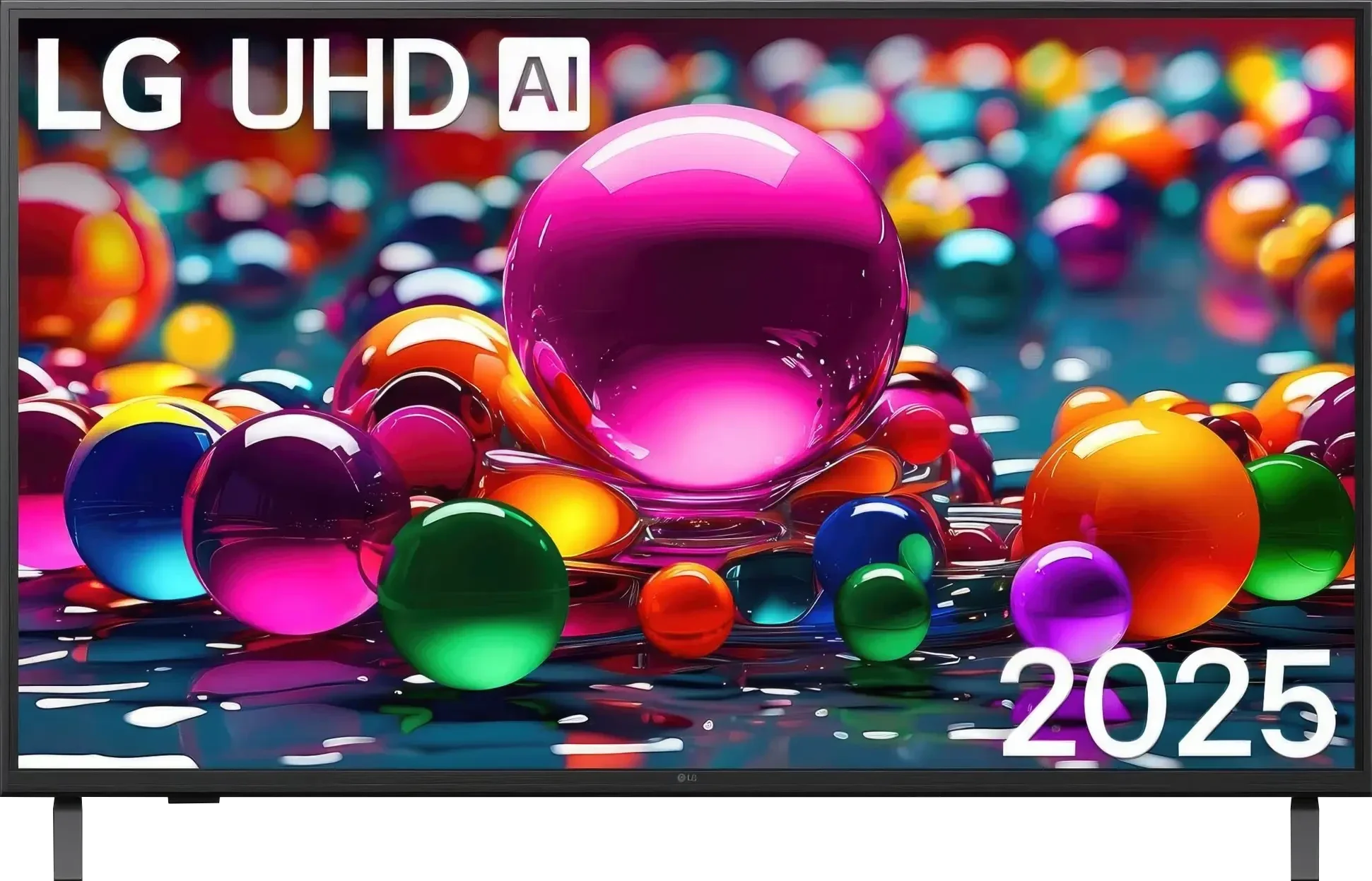
Panel type: LCD VA
Resolution: 3840x2160
System: WebOS
Model year: 2025
Complete the survey to find out the result
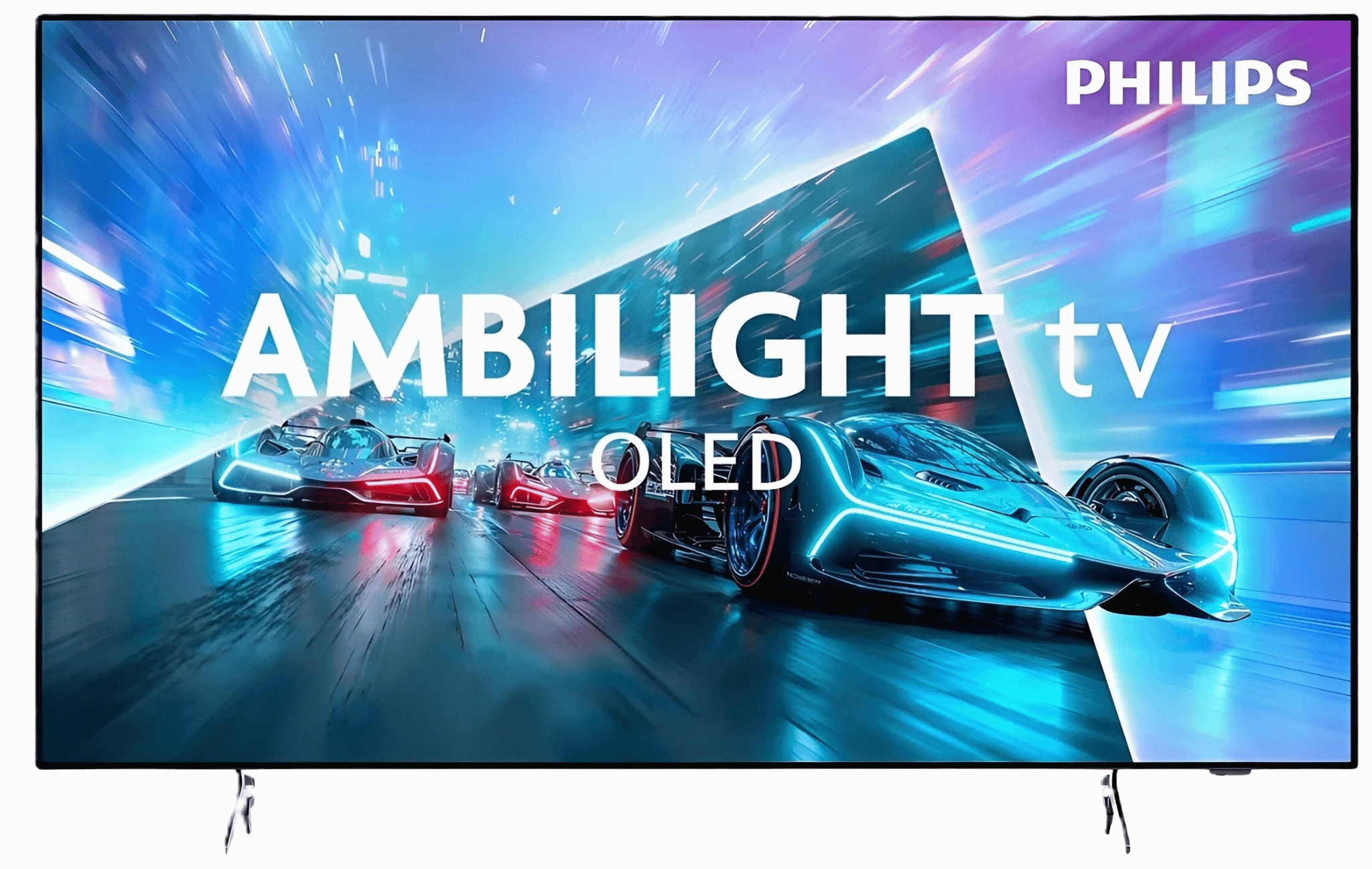
Panel type: WRGB OLED
Resolution: 3840x2160
System: Titan OS
Model year: 2026
Complete the survey to find out the result
Overall rating
6.0
7.7
 Movies and series in UHD quality
6.0
8.0
 Classic TV, YouTube
6.1
8.7
 Sports broadcasts (TV and apps)
5.0
8.5
 Gaming on console
6.9
9.0
 TV as a computer monitor
5.4
7.6
 Watching in bright light
4.6
4.5
 Utility functions
7.0
7.9
 Apps
9.1
7.7
 Sound quality
6.0
7.0
Complete the survey to find out what fits your preferences
Advantages

High native contrast (VA Panel), better black levels, less "flattened" image in evening screenings
Correct upscaling and decent tonal transition gradation
webOS system with a rich app base and support for AirPlay
Ability to record to USB from built-in tuners
Low input lag (below 10 ms)
Friendly for the "casual gamer": ALLM, VRR (48–60 Hz), Game Bar, HGiG
Perfect black and very high contrast
Impressive HDR for evening viewing
Very good colour reproduction after calibration
Wide viewing angles
Ambilight enhances the viewing experience 🙂
120 Hz panel useful for gaming and sports
Four HDMI 2.1 inputs
Supports Dolby Vision (improves picture in many HDR scenes)
Disadvantages

Limited colour gamut coverage (approx. 80% DCI-P3), rather symbolic HDR
No dynamic HDR formats (Dolby Vision, HDR10+)
Typical off-axis viewing issues for VA panels
Quite a plastic housing and no Magic remote included in the package
Limited app selection on Titan OS
Lower SDR brightness than competitors
Reflections on the screen are distracting in a bright living room
Infrared remote control requires aiming at the TV (sometimes slow to respond)
Visible posterisation
Our verdict
The Philips OLED761 shows that the brand’s entry-level OLED can be a very solid choice for watching films. It performs best in the evening, when perfect blacks and striking HDR let you appreciate the strengths of the panel. After calibration, very accurate colours add to that, so it’s hard to fault the picture itself for normal viewing. It doesn’t always handle the brightest highlights as well in demanding HDR10 films, but Dolby Vision helps in those scenes. It’s a TV that can make a real impression when you watch with the lights off. A big part of that experience is Ambilight. If you like a backlight on the wall behind the screen, the OLED761 gives you a clear reason to consider Philips. You don’t have to pay extra for higher-end models to combine this feature with a good OLED picture. This model is also good for gaming: the 120 Hz panel and four HDMI 2.1 ports let you use it as a screen for films, a console or a PC. That’s important, because even the cheapest OLED in the lineup should be a versatile purchase, not a TV that’s only good for evening viewing. Before buying, it’s worth looking at two limitations. The first is viewing in a bright room. The OLED761 is a little dimmer than rivals using a similar panel, and the lack of a polariser in the OLED SE panel further reduces its performance in bright conditions. The second is Titan OS. The system runs more smoothly than in earlier versions, but it still offers a more limited selection of apps than the competition. Improved smoothness is welcome, but it won’t replace access to the services you use every day, so it’s best to check app availability before buying. We also disliked the remote. Although it’s backlit and has a full set of useful buttons, it requires precise aiming at the screen. Ultimately the Philips OLED761 makes most sense for people who mainly watch in the evenings and want Ambilight. In those conditions it can confidently compete with the Samsung S85H or the LG B6 in terms of picture, and the choice between them will come down more to price, the operating system and personal habits. Philips doesn’t have a clear advantage in every use case, but it shouldn’t be dismissed as a lesser alternative just because it opens the brand’s OLED range. At the right price it’s a good buy, provided the available apps meet your needs.
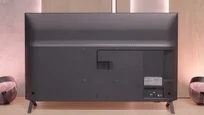
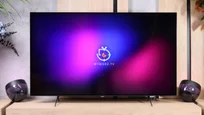
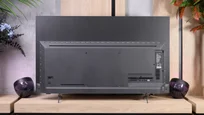
TV appearance



Contrast and black detail
5.8/10
10/10
Local dimming function: No
Contrast:


Result
6,350:1

Result
5,800:1

Result
4,350:1

Result
4,500:1

Result
4,900:1
Result
∞:1
Result
∞:1
Result
∞:1
Result
∞:1
Result
∞:1
Halo effect and black detail visibility:
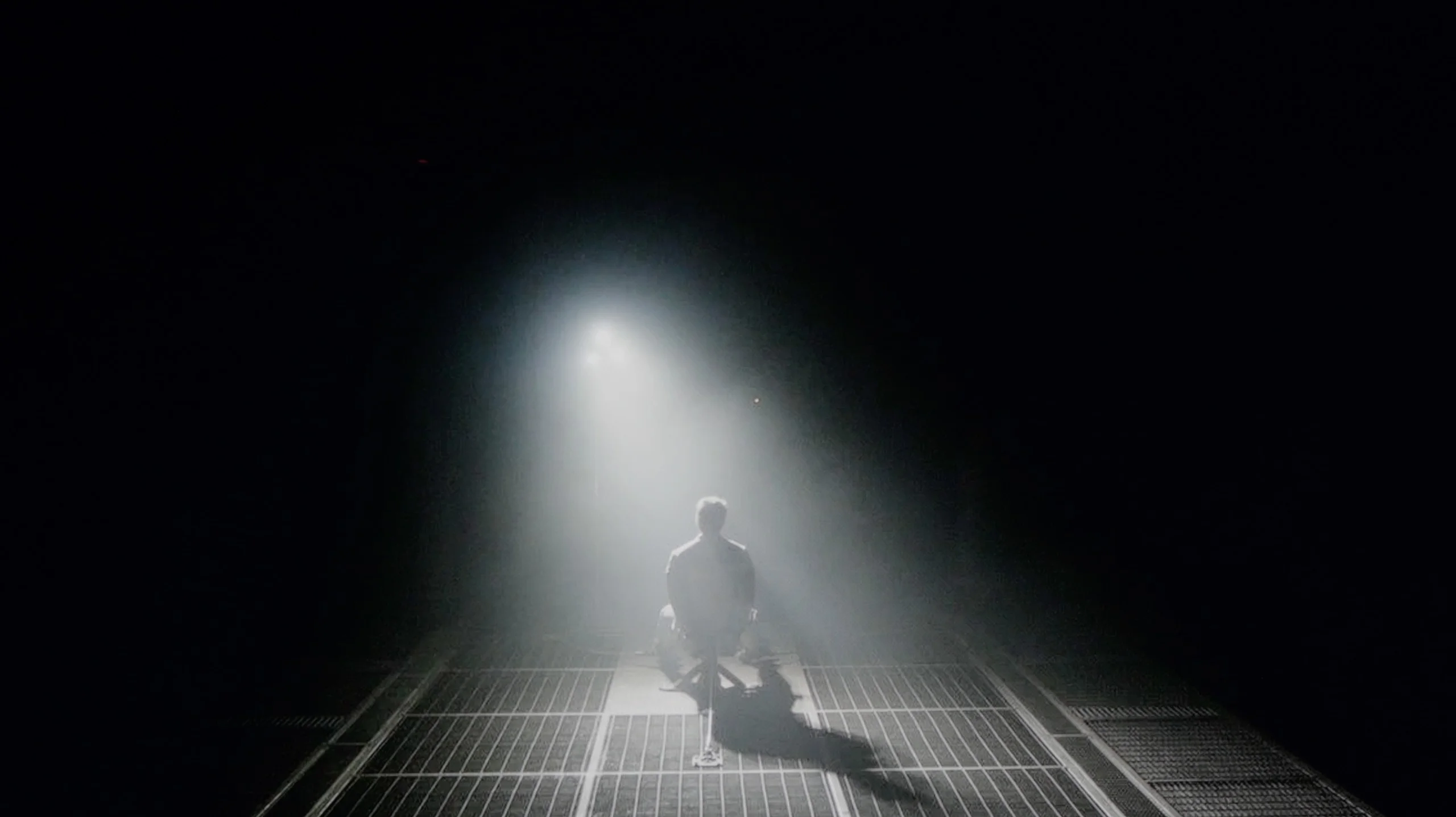
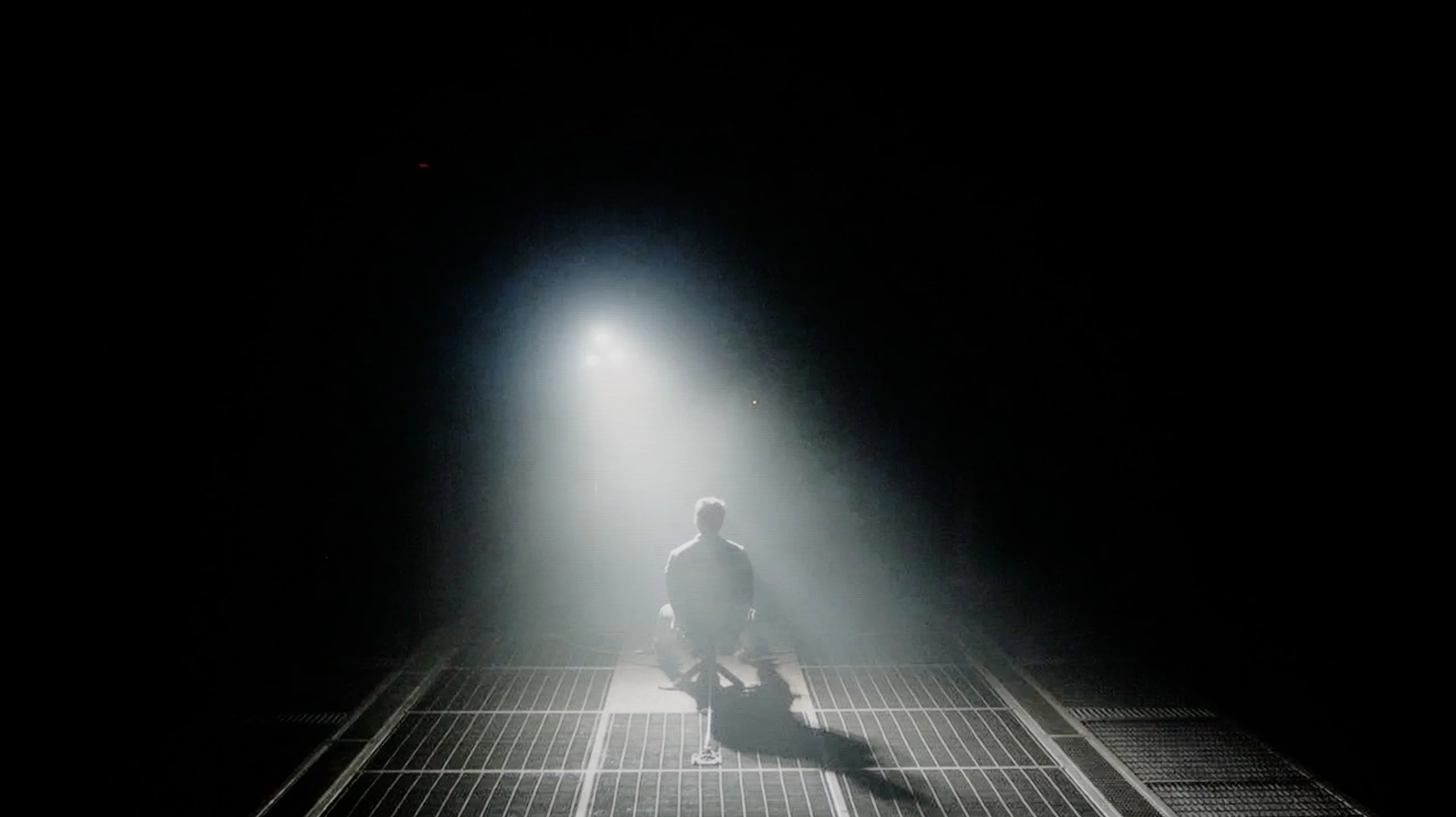
Check the visibility of bright lights on a dark background. Mini-LEDs often struggle with this. The photo does not compare black levels – that’s what the video below is for.
The video accurately shows differences in contrast and black levels between TVs, as well as potential issues: halo around bright objects or Mini-LED zone operation visible as brightness jumps.
This is where the greatest advantage of the VA panel version begins. A contrast ratio of around 6000:1 means that during evening viewing, the image gains depth, and darker scenes in films look natural and do not wash out to grey. It is clear that the blacks are much better than in the IPS panel version, and it is this difference that defines the character of the television. Of course, one must remember that the UA7500 lacks local dimming, so one shouldn't expect miracles. The darkest scenes cannot compete with more expensive televisions, but at least the contrast is stable and sufficient for evening screenings to be convincing.
In this category the Philips OLED761 earns the highest rating. The OLED panel used allows each pixel to be controlled independently, and where the image should be completely black it simply switches them off. Thanks to this, in all test scenes we achieved infinite contrast. When watching, this translates into deep blacks and a very clear separation of bright elements from a dark background. Even a small lamp or a star does not cause blooming of the surroundings from the screen backlight, which Mini LEDs still struggle with in demanding scenes. This is an advantage of the technology itself, so even Philips' cheapest OLED can match much more expensive models in this respect. In a dark room it is particularly obvious how much of a difference that precision makes. Black doesn't turn grey just because a bright object appears right next to it, and the television doesn't have to choose between dimming the light and preserving a dark background.
There are some reservations, however, about the way shades just above black are displayed. In film scenes the OLED761 can slightly brighten them, causing the darkest parts of the image to be a little brighter than they should be. This is also confirmed by the start of the luminance curve. That doesn't mean the panel can't show perfect black, because fully black elements remain switched off. The imperfection concerns the reproduction of the very darkest greys and, although it doesn't negate the excellent contrast, it can be noticed in some night-time shots.
HDR effect quality
4.3/10
6.1/10
Luminance measurements in HDR:

Result
300 nit

Result
263 nit

Result
366 nit

Result
218 nit

Result
351 nit
Result
538 nit
Result
702 nit
Result
784 nit
Result
740 nit
Result
289 nit
Scene from the movie “Pan” (about 2800 nits)


Scene from the movie “Billy Lynn” (about 1100 nits)


The photos show two HDR10 movies. 'Pan' is one of the brightest productions ever made, while 'Billy Lynn' (soldier) has brightness typical of streaming (Netflix, Prime, HBO MAX). Notice the intensity of effects and detail in whites.
Static HDR10


The photos present the visibility of white details in various HDR formats. They do not show brightness differences between TVs (these can be compared in the previous gallery).
HDR luminance chart:
Philips OLED761
LG UA75006LA (VA)
Luminance of RGB colors
The LG UA7500 with a VA panel holds brightness at around 350 nits, which does not make a significant impression by today's standards. It is hard to speak of a true HDR experience here – most content looks more like classic SDR with a slight attempt at boosting the highlights. The advantage is that regardless of the tested scene, the effect remained relatively stable. However, we noticed that in very extreme scenes with a lot of fine details, the television can gently dim the image to achieve better black levels, but this comes at the expense of visibility of bright effects. It is also worth noting that the UA7500 is not equipped with any additional technologies for expanding colours. It is neither a QLED panel nor PFS LED, which is why the coverage of the DCI-P3 colour gamut is only 80%, making many HDR films appear flat and not conveying the full diversity of colours.
Philips OLED761 uses the new-generation WOLED SE panels from LG Display, and in terms of HDR brightness it achieves results comparable to its closest rivals, the Samsung S85H and LG B6. Peak brightness is around 800 nits, which is a solid result for an entry-level OLED. Importantly, similar values also appear in films. In scenes with small lights on a dark background we measured about 700–780 nits, so a torch, a reflection or a lamp can noticeably shine. Combined with perfect black this produces a convincing HDR effect, especially during evening viewing. The panel’s capabilities, however, fall off as the bright portion of the image increases. When, instead of isolated lights, there is an extensive sunlit landscape, the TV can no longer maintain such high brightness. In the oil-rig scene we measured 289 nits, and with an even larger bright-area fill the result may approach roughly 200 nits. In practice this means a sun-drenched shot will look less dramatic than small lights in a night scene. Despite this limitation, HDR on the OLED761 deserves a positive assessment. It is not a TV that will light up the whole room with every bright scene, but it can clearly show the difference between ordinary footage and HDR material. It performs best where bright accents appear on a darker background, because then the high brightness of individual elements and deep black combine to deliver the strongest effect.
Colours
The Philips OLED761 also handles colours well, as its panel covers the vast majority of the DCI-P3 gamut, which contains most of the colours encountered in films and HDR TV series. As a result, in everyday viewing colours have appropriate saturation and the picture does not look washed out. Limitations only become apparent in more demanding material that uses shades beyond DCI-P3 and belonging to the wider BT.2020 gamut. In such shots the most intense reds and greens can look less impressive than on QD-OLED, SQD-Mini LED or RGB Mini LED screens. A separate issue is saturation retention at high brightness. The WOLED panel uses an additional white subpixel to help brighten the image, but this does not increase the brightness of the colours in the same way. Therefore very bright colours may appear slightly washed out, which is easiest to notice on vivid neon signs or colourful lighting effects. These are limitations visible mainly in specific, demanding scenes. For most films and TV shows watched day to day the OLED761 has sufficient capability to deliver well-saturated, attractive colours.
Factory color reproduction
5.6/10
6.5/10


This gallery shows how colors change after professional TV calibration. If you notice the difference, we recommend ordering this service at SkalibrujTV.com.
Factory Mode
After calibration
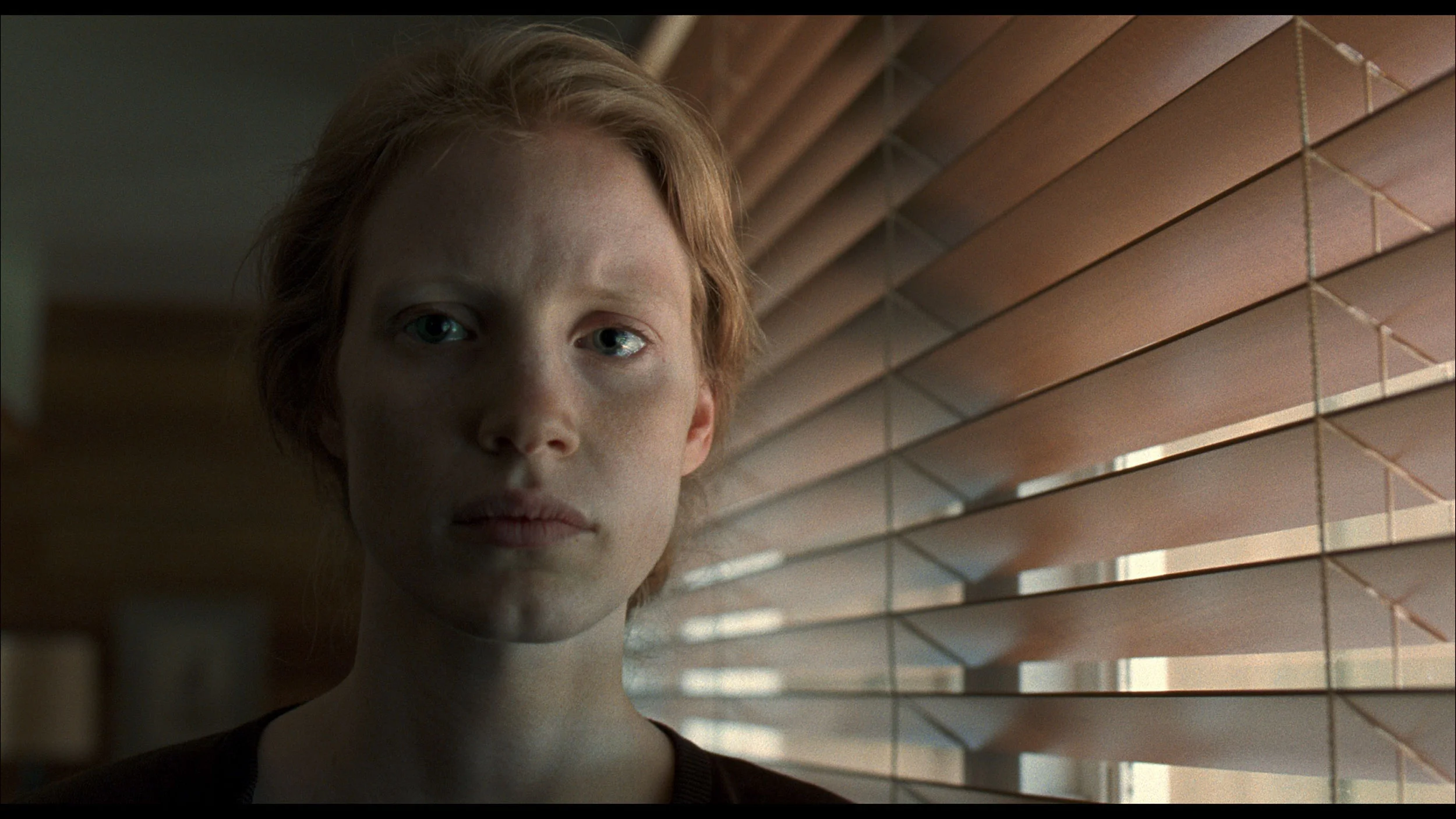
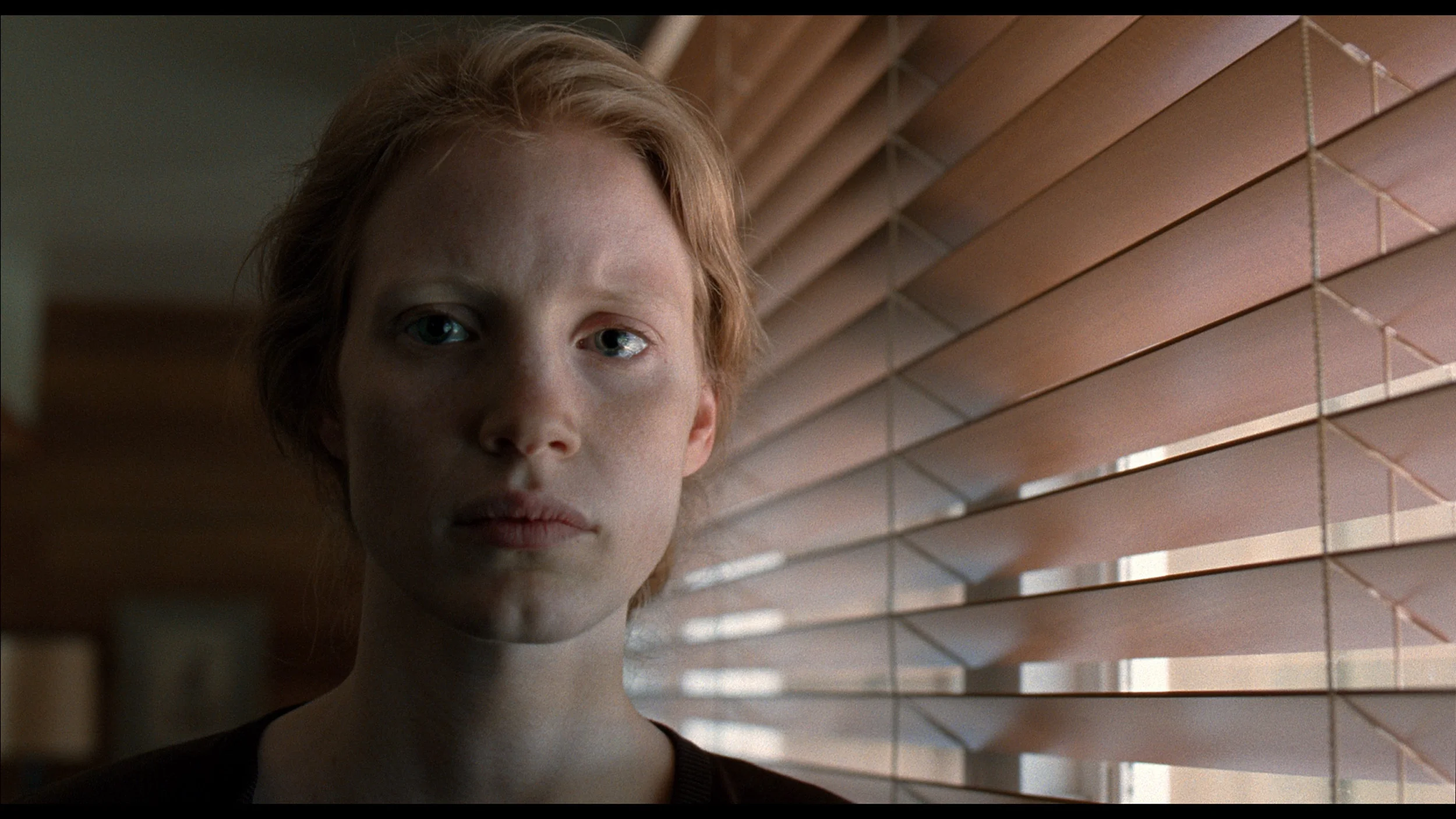
This gallery shows how colors change after professional TV calibration. If you notice the difference, we recommend ordering this service at SkalibrujTV.com.
Factory Mode
After calibration
The Filmmaker mode on the LG UA7500 performs better than one might expect from such a budget television, but let’s not get carried away with praise. The image is put together quite sensibly and does not irritate at first glance, however, its weaknesses quickly become apparent. This is most evident in scenes with bright points – background lamps or reflections of light on the skin are distinctly exaggerated. The faces of the characters often look unnatural, as if they have been 'overexposed'. Added to this is the default gamma characteristic, which brightens the smallest details and causes the image to lose subtlety in darker areas. Nevertheless, it is a fact that for its price range, the UA7500 in factory mode provides a fairly decent starting point. However, it is clear that without additional adjustment, it will not be possible to avoid these problems, which is why – as with other televisions – we decided to see what could be achieved after calibration.
The OLED761’s factory Movie mode settings deliver a fairly pleasant picture, although the colours are not completely neutral. In SDR material there is primarily a lack of blue, and in parts of the range also some red, so whites and greys can take on a slightly yellow-green tint. You will notice it most easily on neutral surfaces, which look warmer than they should. The colours themselves are still quite good, and most of the samples we checked do not show large errors. So this is not a case where the colour cast completely changes the appearance of the film being watched. More attention is needed to the way brightness is handled in SDR. Over most of the range the television slightly darkens the image, which can make faces and elements of the surroundings appear heavier, and details in darker areas less readable. At the same time, tones just above black are brightened. These two characteristics can occur together: the deepest shadows become too noticeable, while the rest of the scene is a little too dark. In HDR there is also a shortage of blue, particularly in the brighter parts of the image. This gives whites a warm, yellowish tint, which can be visible on things like clouds or snow. Darker tones are set much better in terms of white balance, so the extent of this tint varies with scene brightness. Out of the box the OLED761 performs decently, but measurements show that, above all, white neutrality and the rendering of brightness still need refinement through calibration.
Color reproduction after calibration
7/10
9/10


The photos show how movies look on the TV. Pay attention to black detail visibility, colors, and shadow tint.


The photos show how movies look on the TV. Pay attention to black detail visibility, colors, and shadow tint.
The biggest improvement we noticed was when calibrating the mode intended for everyday SDR content. We managed to smooth out the white balance in an acceptable way and tackle the problem of excessive brightening of fine details due to the gamma curve. As a result, the image gained the consistency and naturalness that was missing in the factory settings. After such adjustments, we can confidently state that for everyday television content, programmes, or materials from YouTube, the LG UA7500 performs very well – especially after professional calibration. The situation is somewhat different for HDR content. Here, calibration allowed us to tame the white balance and slightly improve the brightness management; however, the limitations of the construction are immediately apparent. The lack of additional filters to widen the colour palette results in the most vivid colours appearing flat, and the image does not display the intensity we would expect from good HDR. So in SDR, the UA7500 performs quite well, but in HDR – despite corrections – it remains far behind, and this is a characteristic that one must accept when choosing this television.
After calibration, the Philips OLED761 performs very well. The white balance was set almost perfectly, so the previous colour cast disappears and faces, whites and greys look more natural. The improved gamma means the image is no longer unnecessarily darkened and it is easier to make out details in darker areas. Colours are reproduced with high precision, which, combined with deep blacks, delivers a very pleasant picture for watching films in the evening. It is clear that even Philips’s entry-level OLED has considerable potential that is worth exploiting by refining the settings. In HDR the brightness characteristic runs close to the reference across most of the range, so most scenes retain the correct appearance. There is a slight lifting of shades just above black and a tendency to render the very brightest parts a little too strongly. These are, however, observations relating to specific parts of the image. In the most demanding shots some bright details may still be missing, but the overall result after calibration is definitely successful. The OLED761 can produce a natural, well balanced picture that lets you focus on the film.
Smoothness of tonal transitions
8.8/10
7.4/10
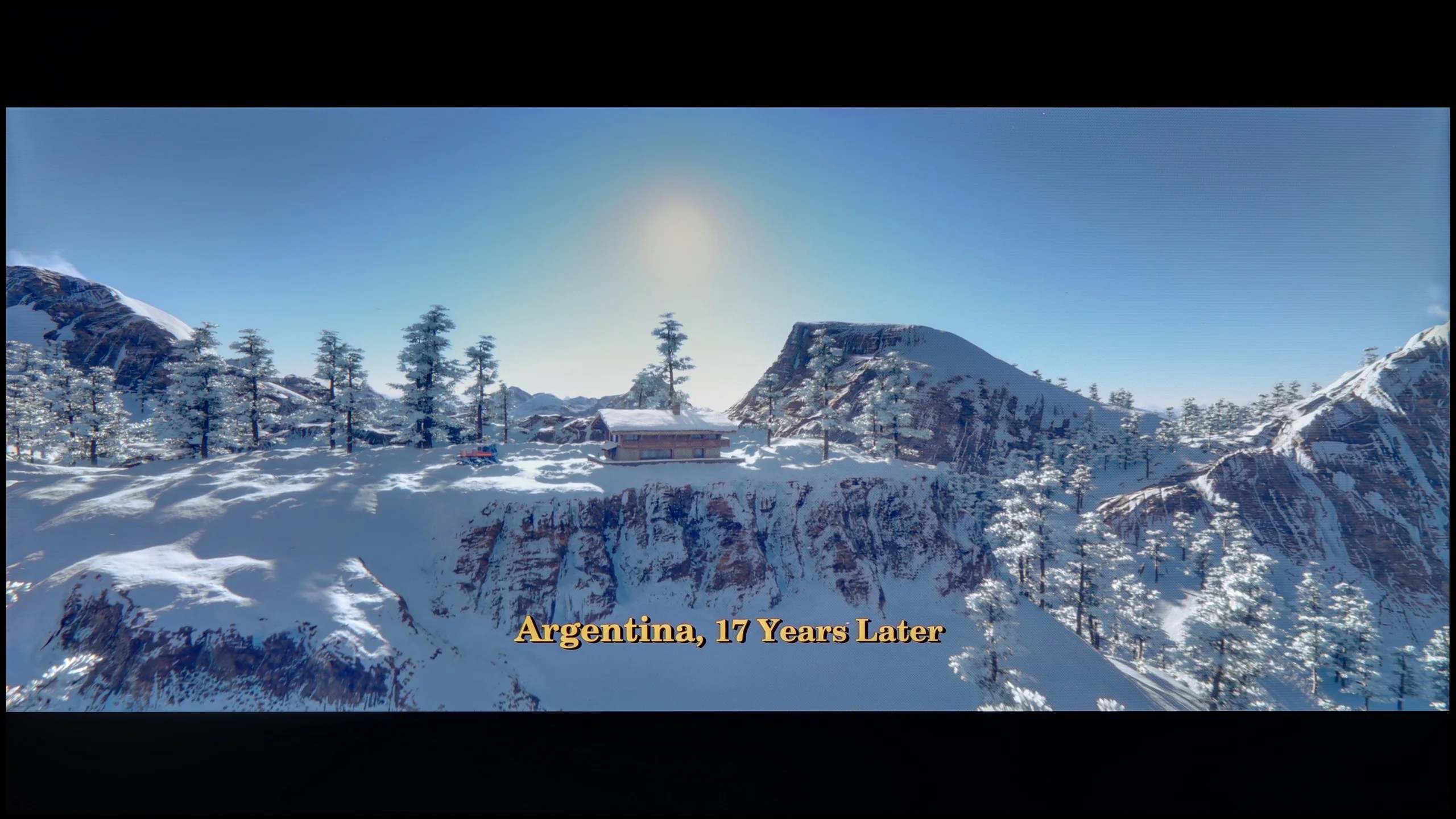



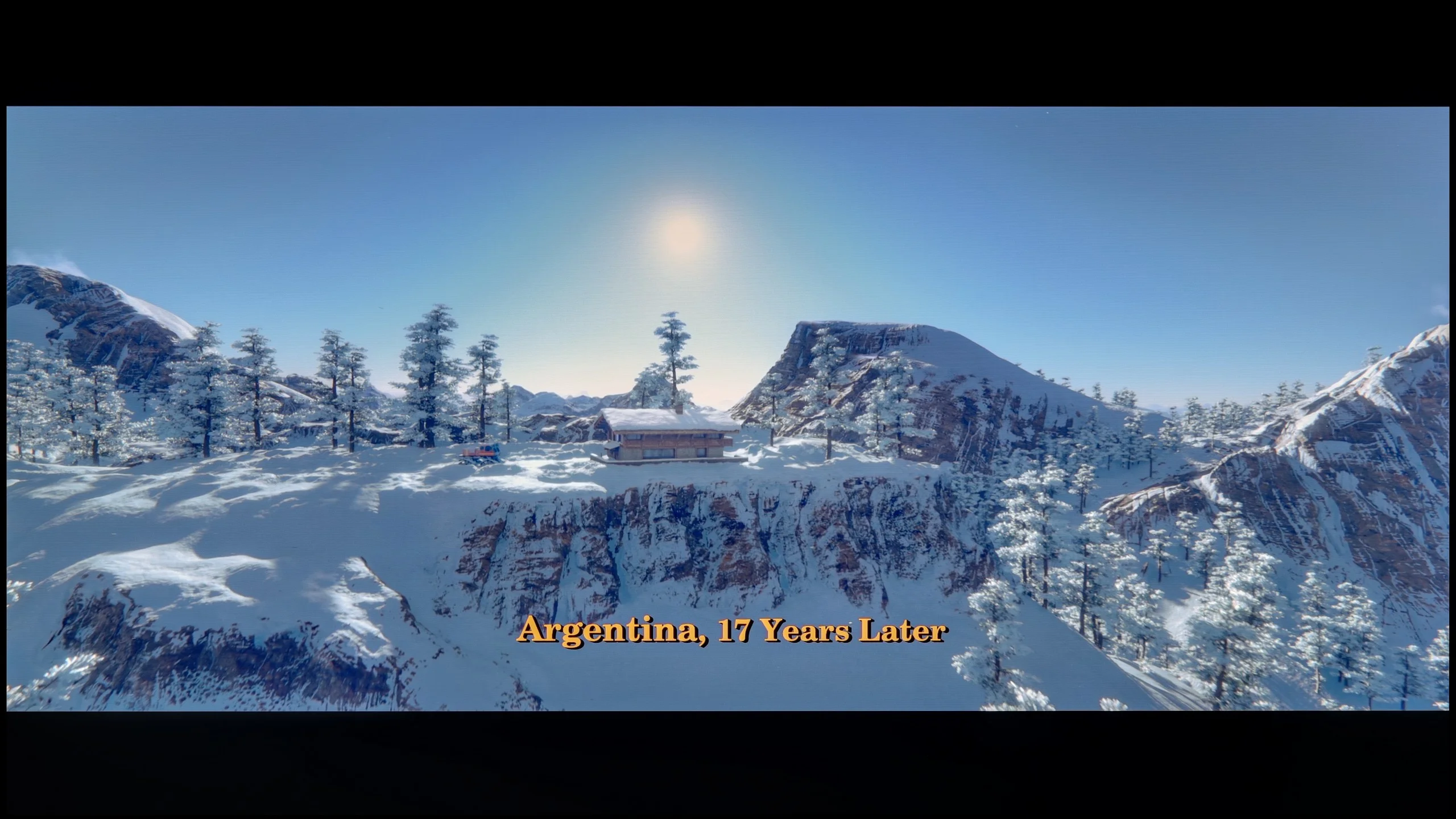
These are selected scenes that show smooth tonal transitions from one color to another. If you see distinct banding, it’s the TV panel’s fault.

These are selected scenes that show smooth tonal transitions from one color to another. If you see distinct banding, it’s the TV panel’s fault.
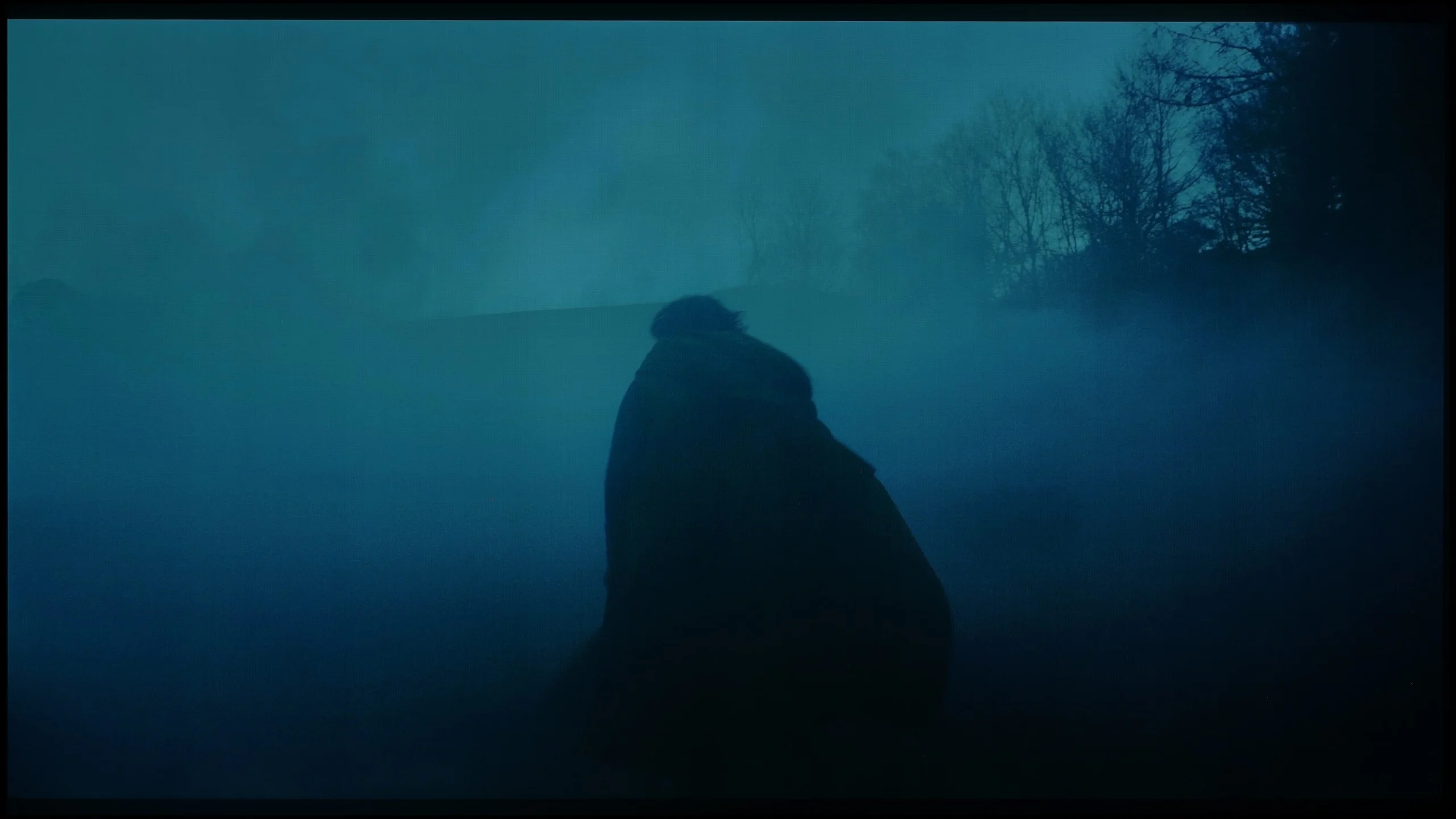
These are selected scenes that show smooth tonal transitions from one color to another. If you see distinct banding, it’s the TV panel’s fault.
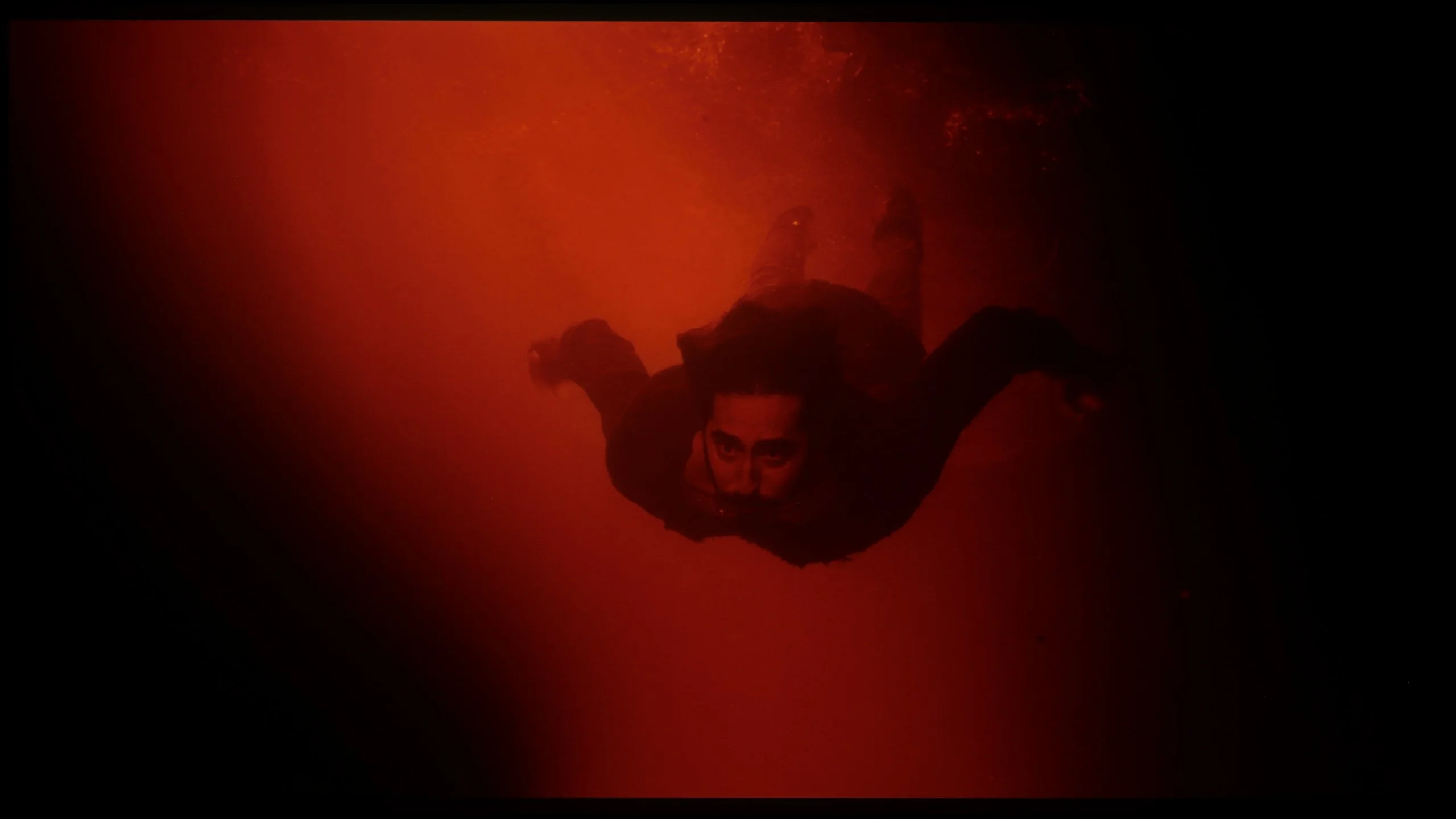
These are selected scenes that show smooth tonal transitions from one color to another. If you see distinct banding, it’s the TV panel’s fault.
The colour transitions in most scenes were smooth and hard for the average viewer to notice. However, the VA matrix variant provided something more – in the darker parts of the image, one could see significantly more shades, as the higher contrast allowed them to be brought out better. As a result, the image did not appear flattened and looked more natural. The transitions between colours themselves generally looked quite good and did not distract from the content.
Philips OLED761 handles tonal transitions quite well, although on bright gradients you can notice subtle banding between shades. They appear in most of the bright shots we checked, but are subtle enough that during normal viewing they shouldn't distract much from the film. In darker scenes the imperfections are most noticeable when the image fades to black and in the shot with the red water, where the colour transitions could be smoother. More than the gradation itself, however, the panel's uniformity can be distracting. In dark scenes this shows up as fairly distinct bands, causing uniform backgrounds to look less even than they should. This is a separate issue from the visible boundaries between shades, although during a viewing both phenomena can overlap. We've seen similar banding so far in every OLED we've tested with the new WOLED SE panel, so this isn't a fault unique to the OLED761. Their severity can, however, vary between units.
Image scaling and smoothness of tonal transitions
7/10
7.5/10

Smooth transition function
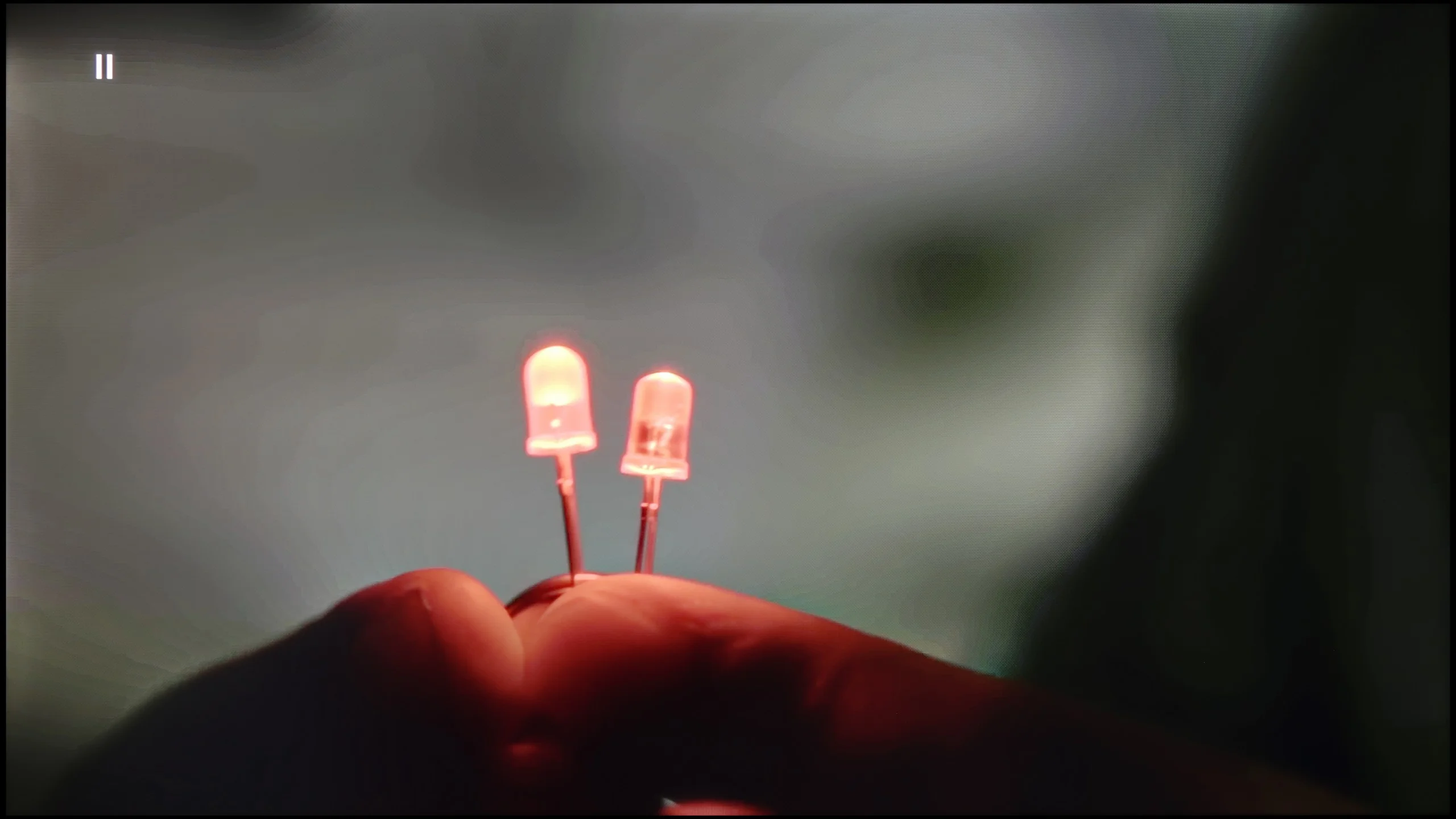
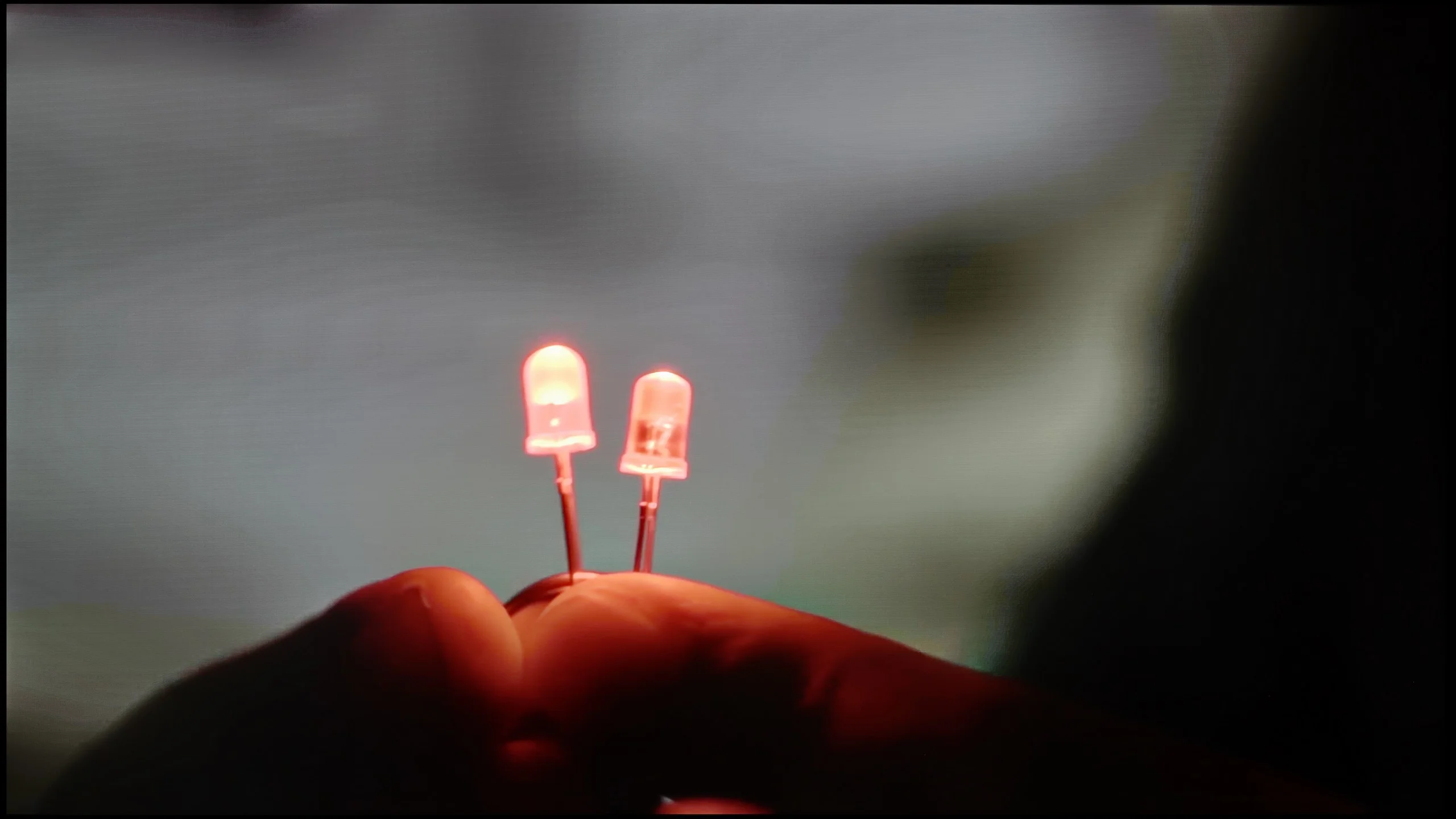
The match photo shows how the TV smooths weak tonal transitions in low-quality video.
Image scaling SD (576i)


The model photo shows how it handles upscaling of SD material.
LG UA7500 with a VA panel performed really well in this category. Image scaling from Full HD or even SD materials was surprisingly smooth. The picture looked smooth, edges were not overly jagged, and the television retained a considerable amount of detail, meaning that even older films did not lose their character. It particularly excelled with faces – there were no artificial contours or 'mask' effects, which often occur in cheaper models. The way the television handled tonal transitions in lower quality materials is also noteworthy. Thanks to digital processing, colours did not bleed into each other, and gradients appeared natural and smooth. There was no excessive smoothing of the image or loss of cinematic grain. This makes the UA7500 great for everyday content – from terrestrial television, through sports, to YouTube, where we often watch materials in various resolutions.
The Philips OLED761 does a fairly good job of improving lower-quality material. Its Pentonic 800 processor effectively smooths visible transitions between tones that often appear in heavily compressed recordings. This is handled by the setting "Artefact reduction". When enabled, banding on a uniform background becomes less noticeable and, importantly, this is not achieved at the cost of noticeably blurring details. It's a feature worth using when the source material's quality leaves something to be desired. The upscaling itself has the characteristic Philips softness. Lower-resolution material looks quite gentle, and fine elements and contours lack a little sharpness. In the shot with the model this is visible in the hair and thin branches, which could be more clearly defined. A plus is the lack of overscan, that is, the cropping of the image edges. Even with a low-resolution signal the TV shows the entire frame.
Blur and motion smoothness
4/10
8.5/10

Blur (native resolution, maximum refresh rate):





Blur ():
Blur (4K@60Hz):

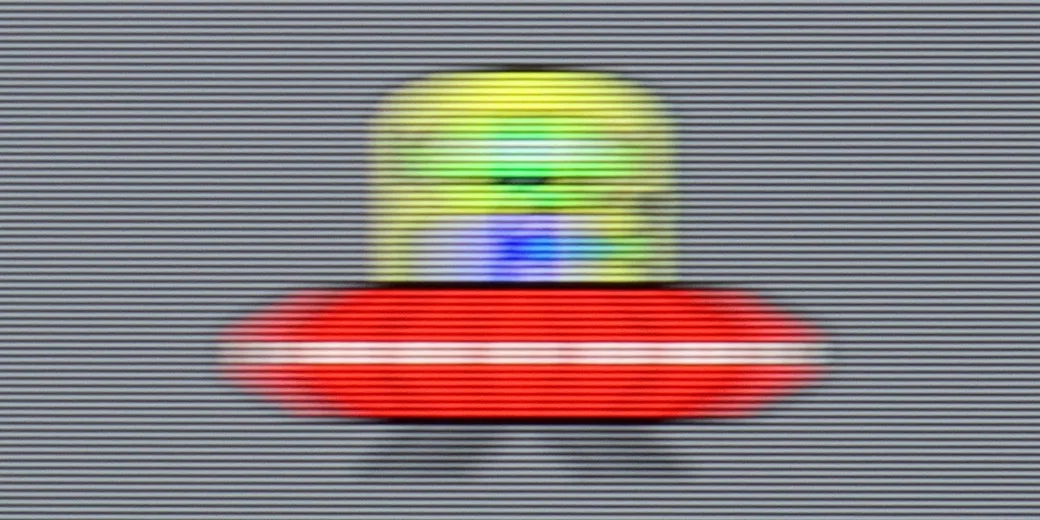

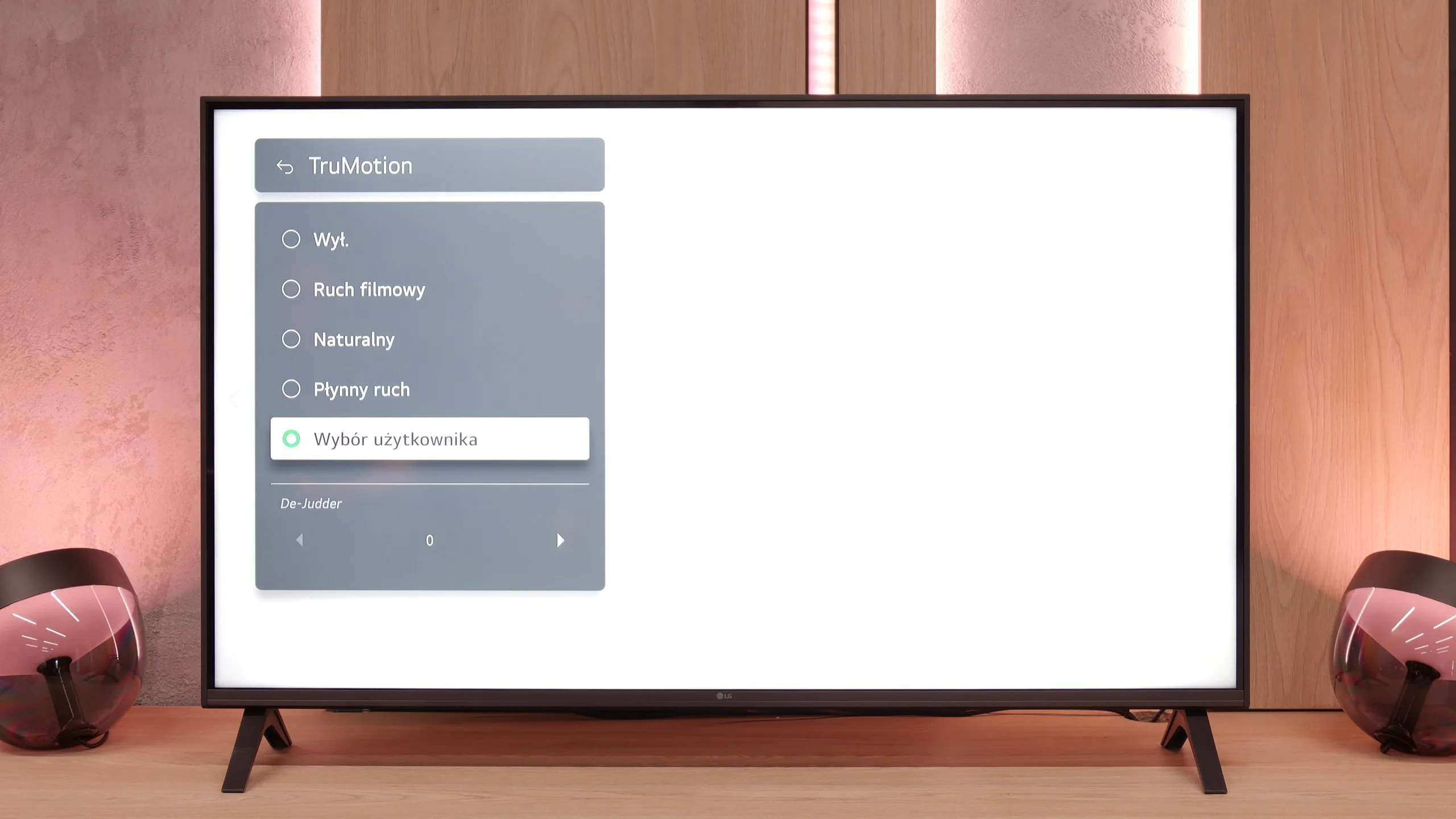
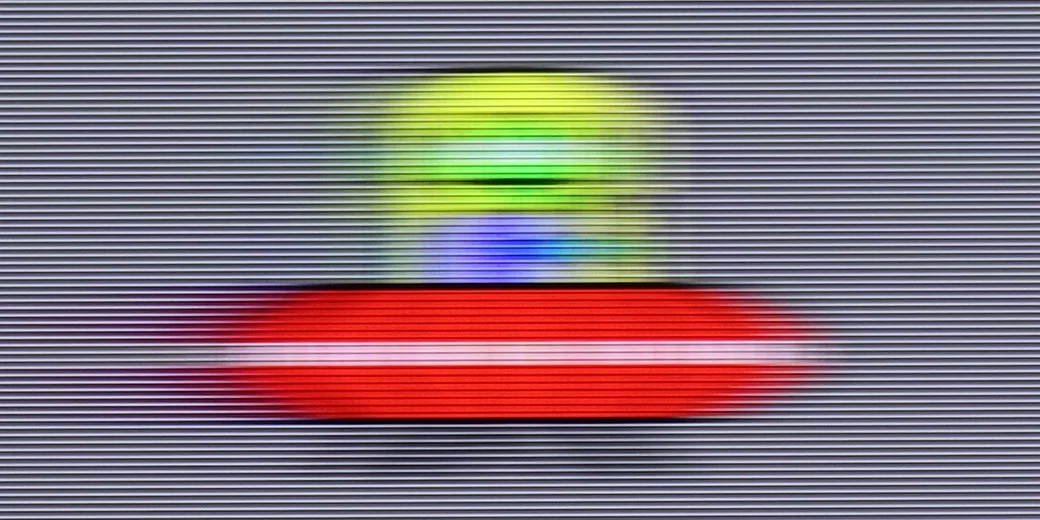
The LG UA7500 is a television with a 60 Hz panel, so it's difficult to expect much admiration in this category. It's more of a screen intended for everyday content or an evening film viewing rather than for following dynamic sporting events or playing action games. It's clear that the manufacturer targeted this model specifically at that group of consumers – and it performs correctly in that regard. We have the TruMotion feature available, which is a motion smoother. It's simple, with only one slider, but it can introduce a noticeable difference. At the lower settings, the image appears more raw and cinematic, whereas at higher values, the motion becomes smoother and more pleasing to the eye.
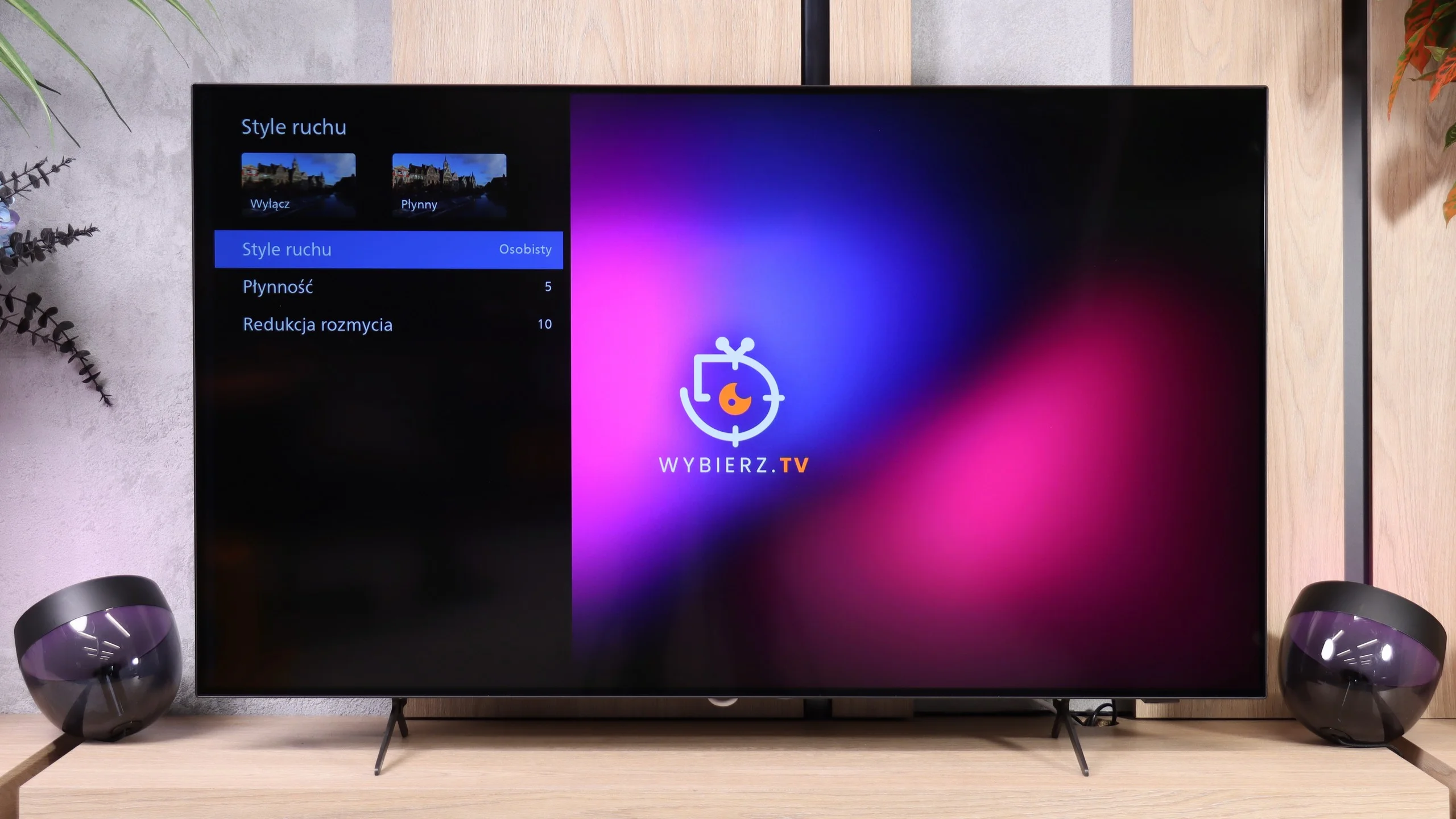
The Philips OLED761 performs very well in fast-moving scenes. Thanks to extremely fast pixel response, moving objects leave virtually no trailing smears, which will be appreciated by both sports viewers and gamers. The 120 Hz panel also helps maintain good motion clarity, as seen in the UFO test: edges remain clear whether an object moves against a bright or dark background. With a 60 Hz signal there is more blur, but this is mainly due to the way motion is displayed at the lower refresh rate, rather than a slow panel response.
When watching films you can use the "Motion Styles" settings, which include "Smoothness" and "Blur Reduction" sliders. They let you tailor the picture to your preferences, from preserving the characteristic cinematic motion to strongly smoothing it. A slight increase in smoothness is especially useful for slow camera moves, which can look choppy on a fast-reacting OLED. It does not have BFI, black frame insertion, to improve motion clarity, although even without it the OLED761 performs very well in this area.
Console compatibility and gaming features
6/10
10/10
- ALLM
- VRR
- VRR range48 - 60Hz40 - 120Hz
- Dolby Vision Game Mode
- Correct implementation of HGIG
- 1080p@120Hz
- 1440p@120Hz
- 4K@120Hz
- Game bar
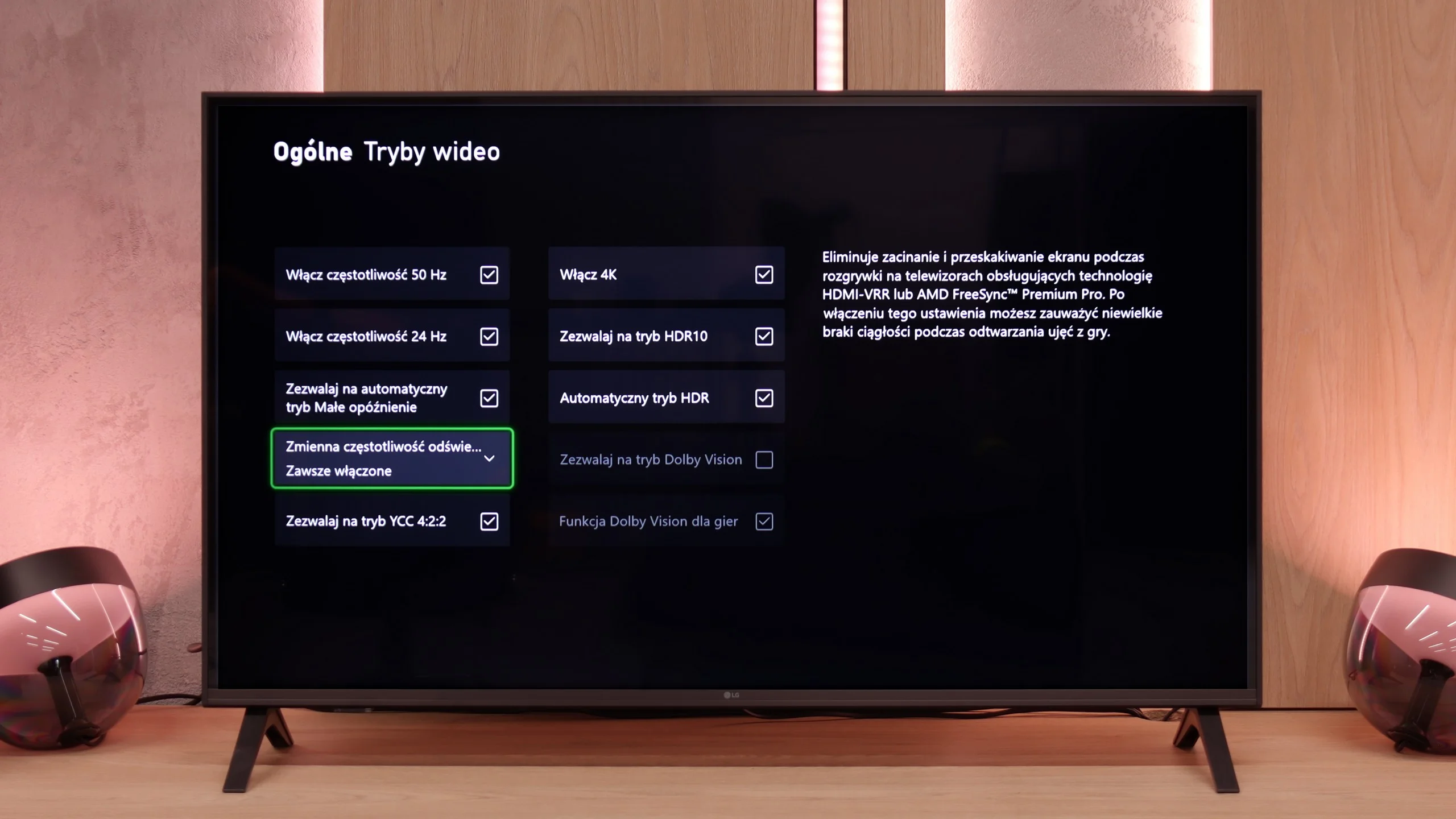
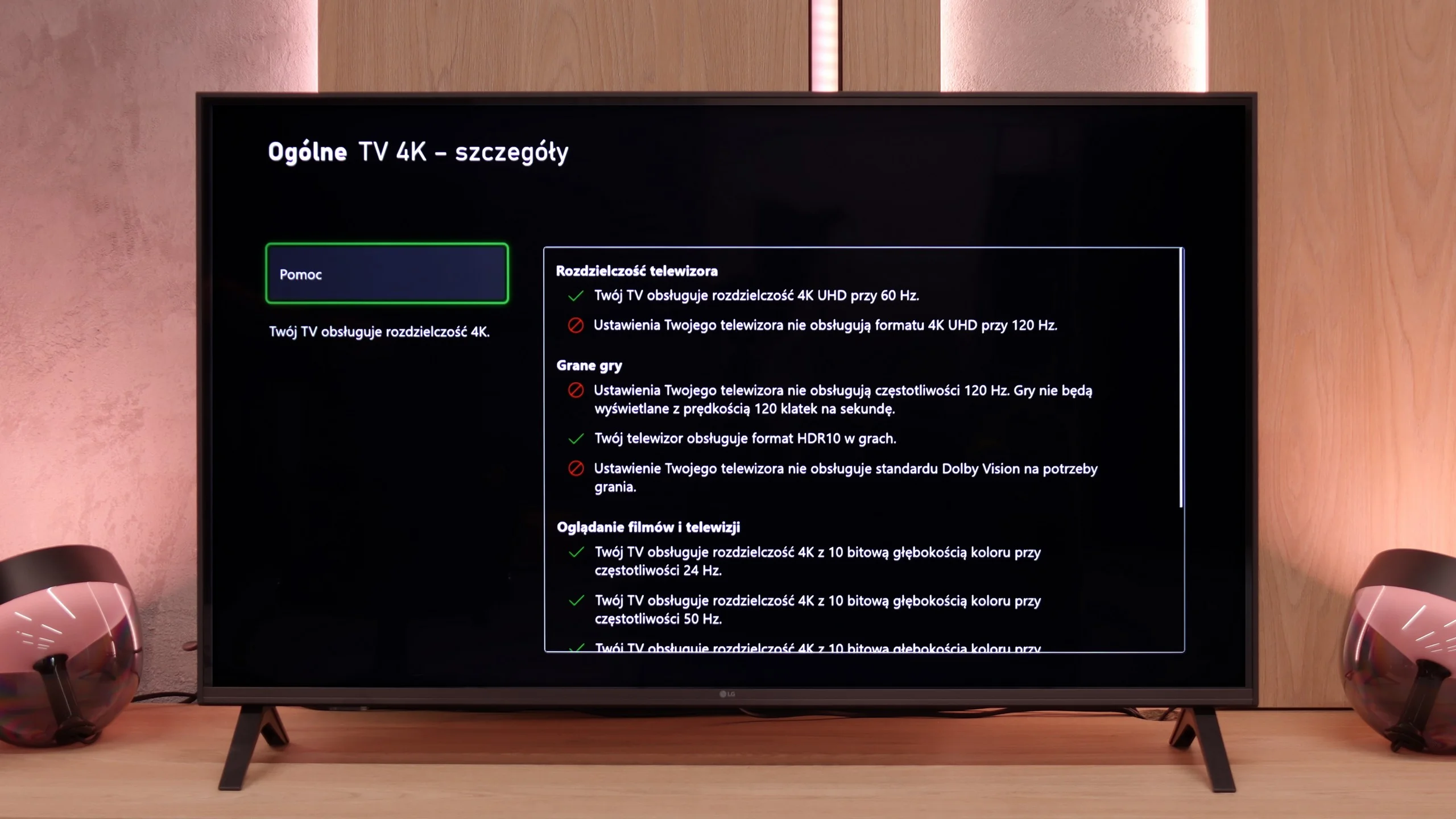
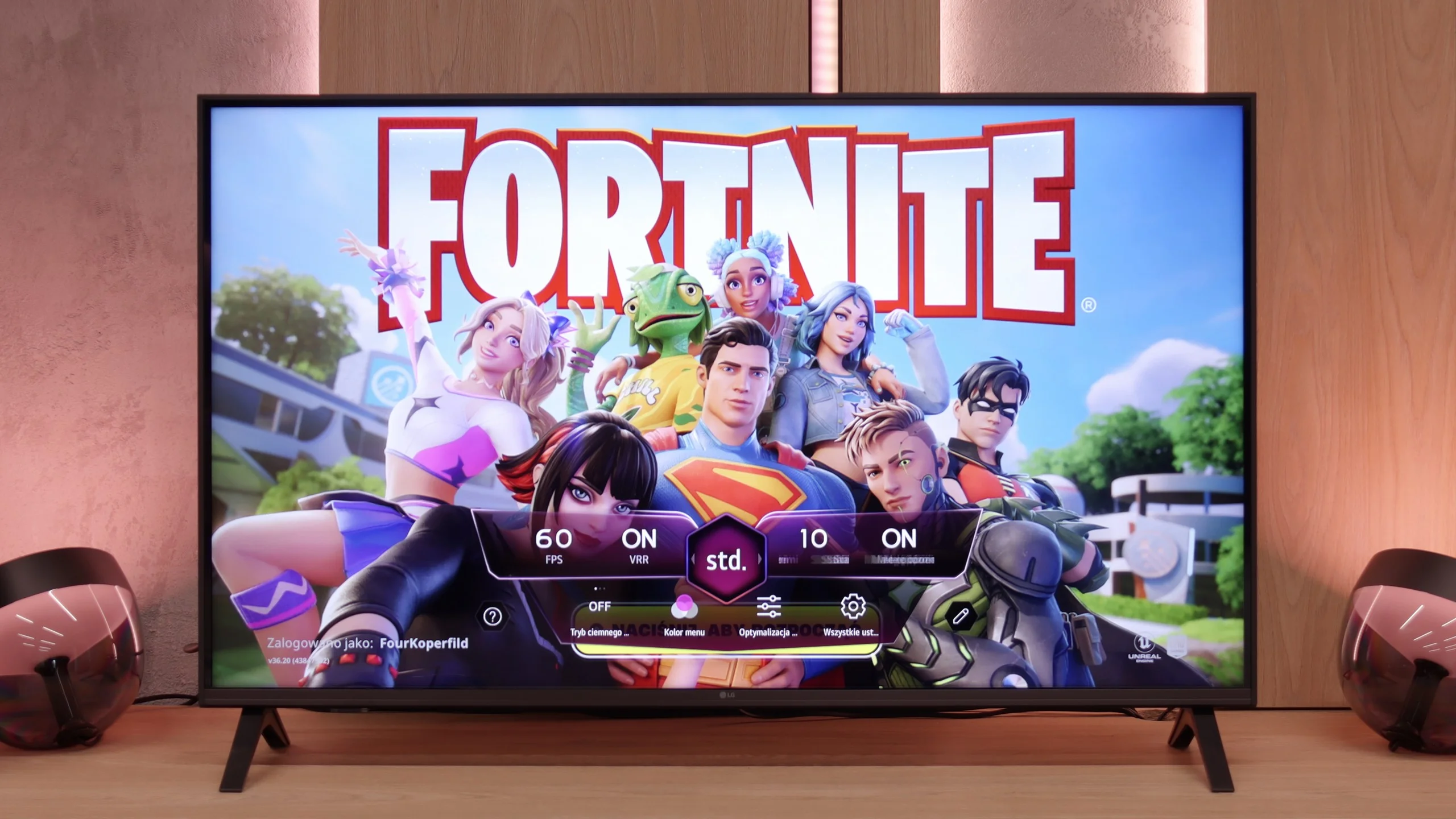
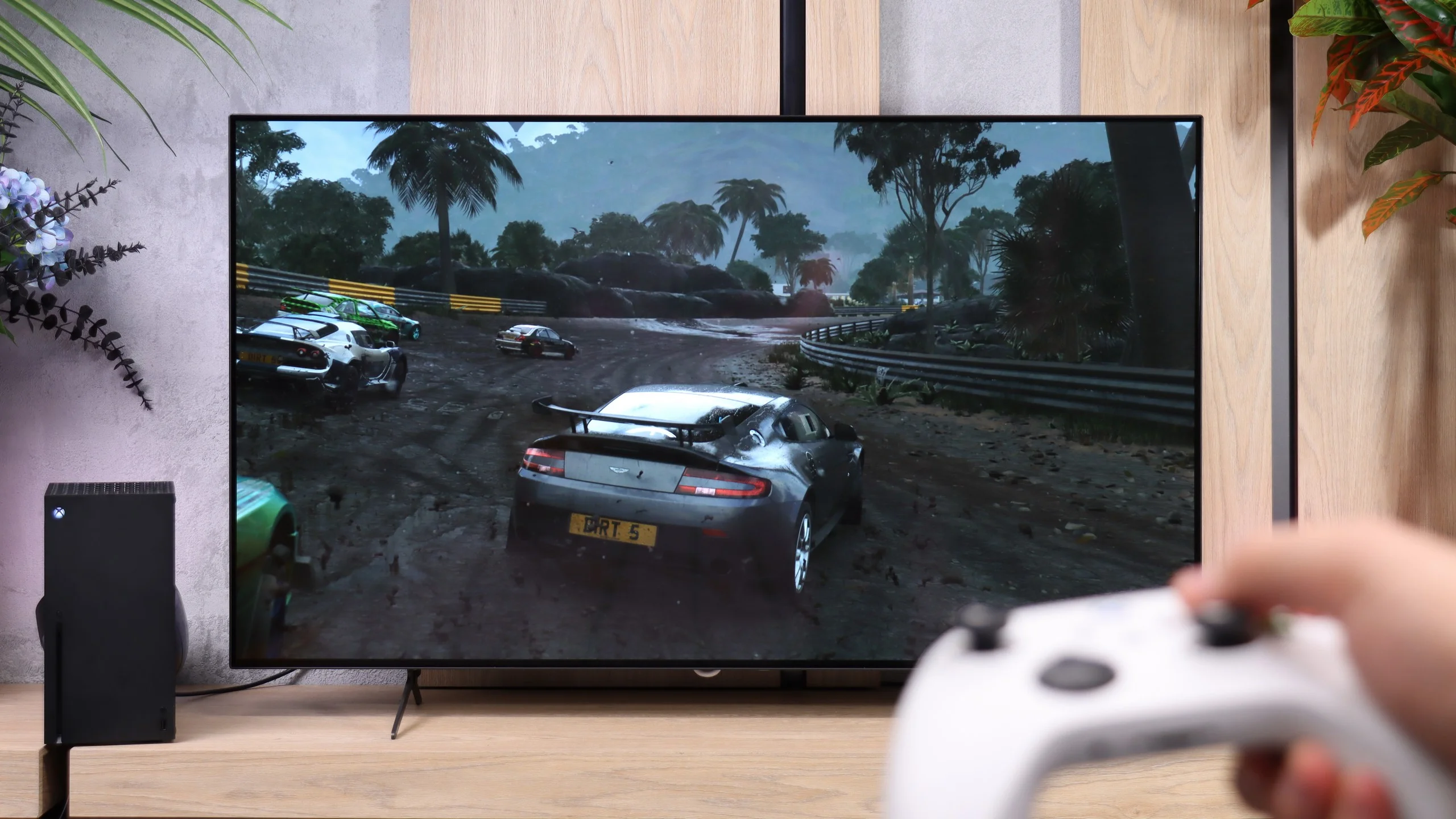
The LG UA7500 is a television that can be confidently recommended to "casual" gamers. It lacks a 120 Hz panel and HDMI 2.1 ports, so it cannot fully utilise the potential of modern consoles. However, the manufacturer has included several features that can enhance the gaming experience. Notably, the Game Bar stands out – a very well-designed panel where you can quickly preview and change the most important settings. From this interface, we have access to features like ALLM mode (automatic switching to game mode) and frame synchronization, which is VRR. The VRR range is limited – it works from 48 to 60 Hz – but the mere presence of this feature in such an affordable television makes a positive impression.
Additionally, it supports HGiG, which is the HDR calibration mode for gaming. It sounds good, but based on our testing experiences, we already know that for the UA7500, this option doesn't make much sense. The television doesn't handle HDR very well, so paradoxically, we achieved better results with this mode disabled. This is another indication that the UA7500 is more of a screen for occasional gamers who value simplicity and convenience rather than for those seeking the full experience from the latest consoles.
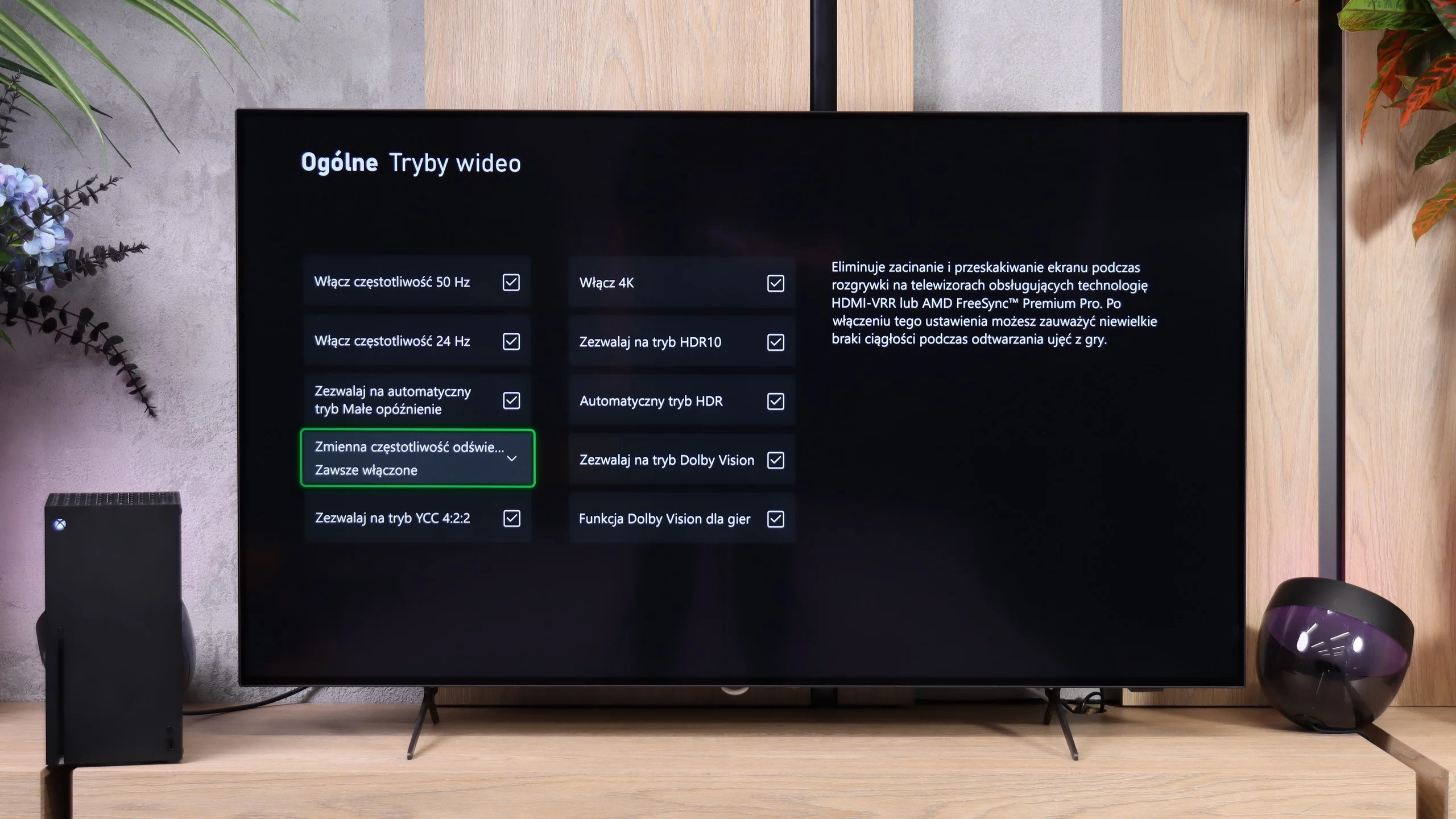
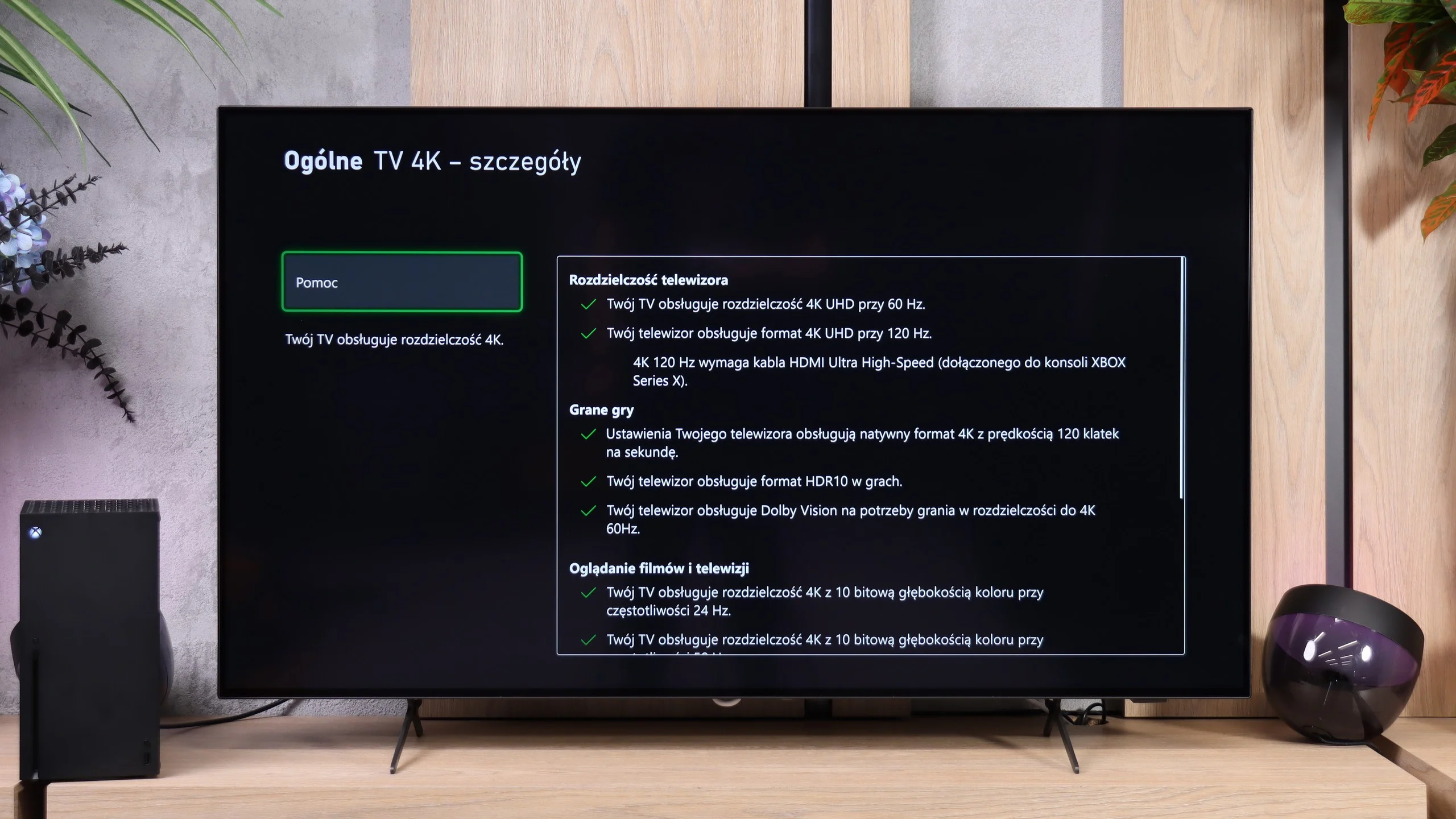
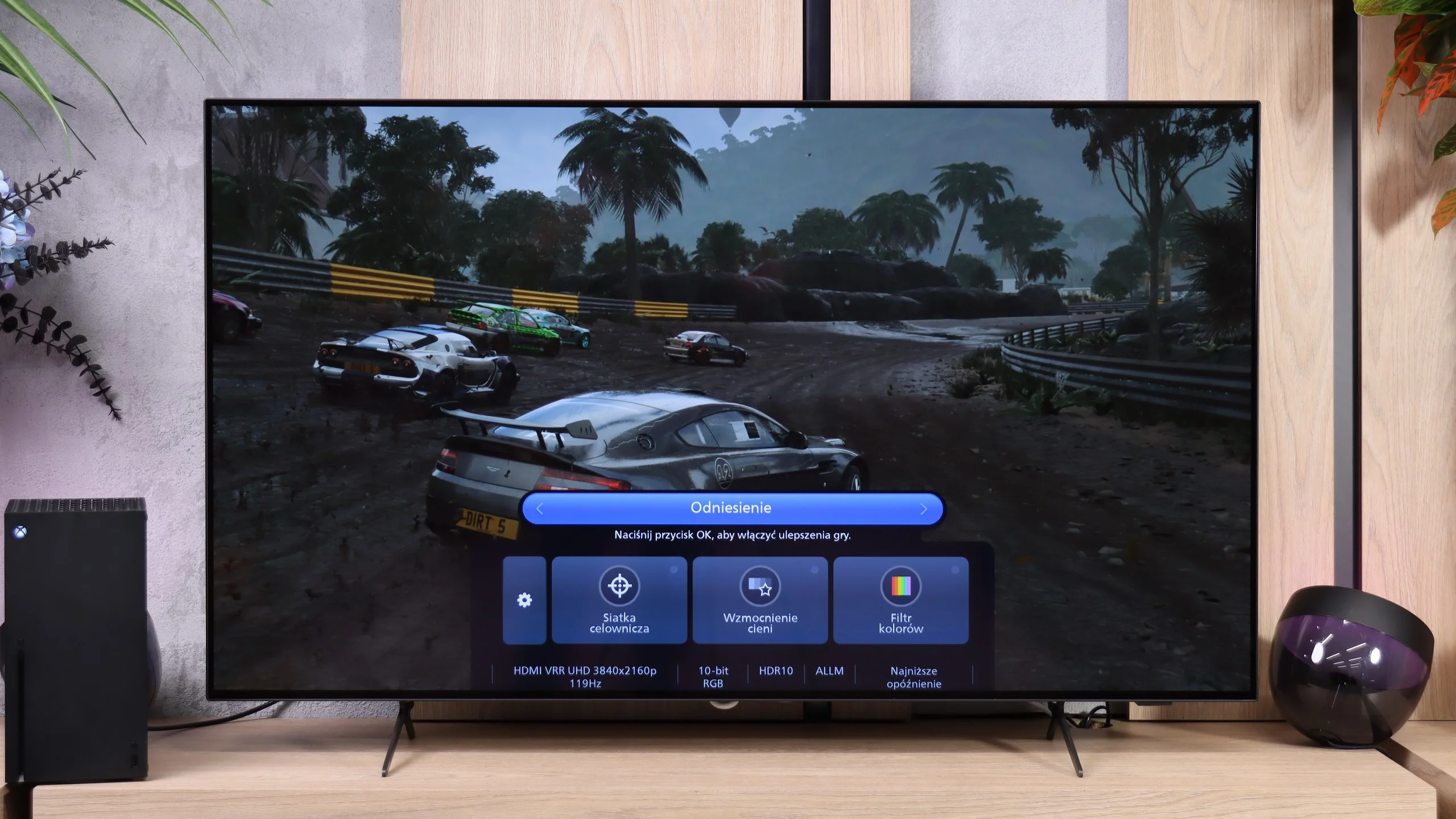
Although the OLED761 is Philips' cheapest OLED this year, it's hard to spot any major cost-cutting in its gaming feature set. The TV supports gaming at 120 Hz in Full HD, 1440p and 4K, so it lets you make use of the high-frame-rate modes available on consoles. The fast OLED panel means objects don't leave trailing even during dynamic action. When a console doesn't maintain a steady frame rate, VRR operating from 40 to 120 Hz helps. The image won't tear during rapid camera pans, and frame-rate fluctuations are less noticeable.
Philips has also thought about convenience. When you start a game the TV can automatically switch to a low-latency mode, and the most important settings are available in the handy Game Bar. There you can check image parameters, turn on an on-screen crosshair or brighten shadows if it's hard to spot an opponent in a dark area. The Game Bar itself may not be the most flashy on the market, but it does the job. There's also support for Dolby Vision for gaming and properly functioning HGiG, which makes it easier to match the console's HDR settings to the screen's capabilities. In terms of features, the OLED761 therefore offers a great deal.
Input lag
10/10
9.4/10
SDR
HDR
Dolby Vision
A delay of below 10 ms is a result that more expensive models could easily envy. This ensures that games run exceptionally responsively, with every action on the controller immediately visible on the screen. This is one of the strongest points of this television, particularly for those who enjoy firing up a console from time to time.
The input lag of the OLED761 depends not only on the refresh rate but also on whether you’re playing in SDR or HDR. SDR performs best: we measured 14 ms at 60 Hz and just 5 ms at 120 Hz, in both Full HD and 4K. Those are excellent results that let you enjoy quick response to controller inputs even in fast-paced games.
With HDR enabled the lag increases to 31 ms at 60 Hz and 13 ms at 120 Hz. Dolby Vision at 60 Hz gives a similar result of 30 ms. You can still play comfortably, especially in less demanding titles, but it’s a shame that enabling HDR comes with this drawback.
Compatibility with PC
5.4/10
7.6/10
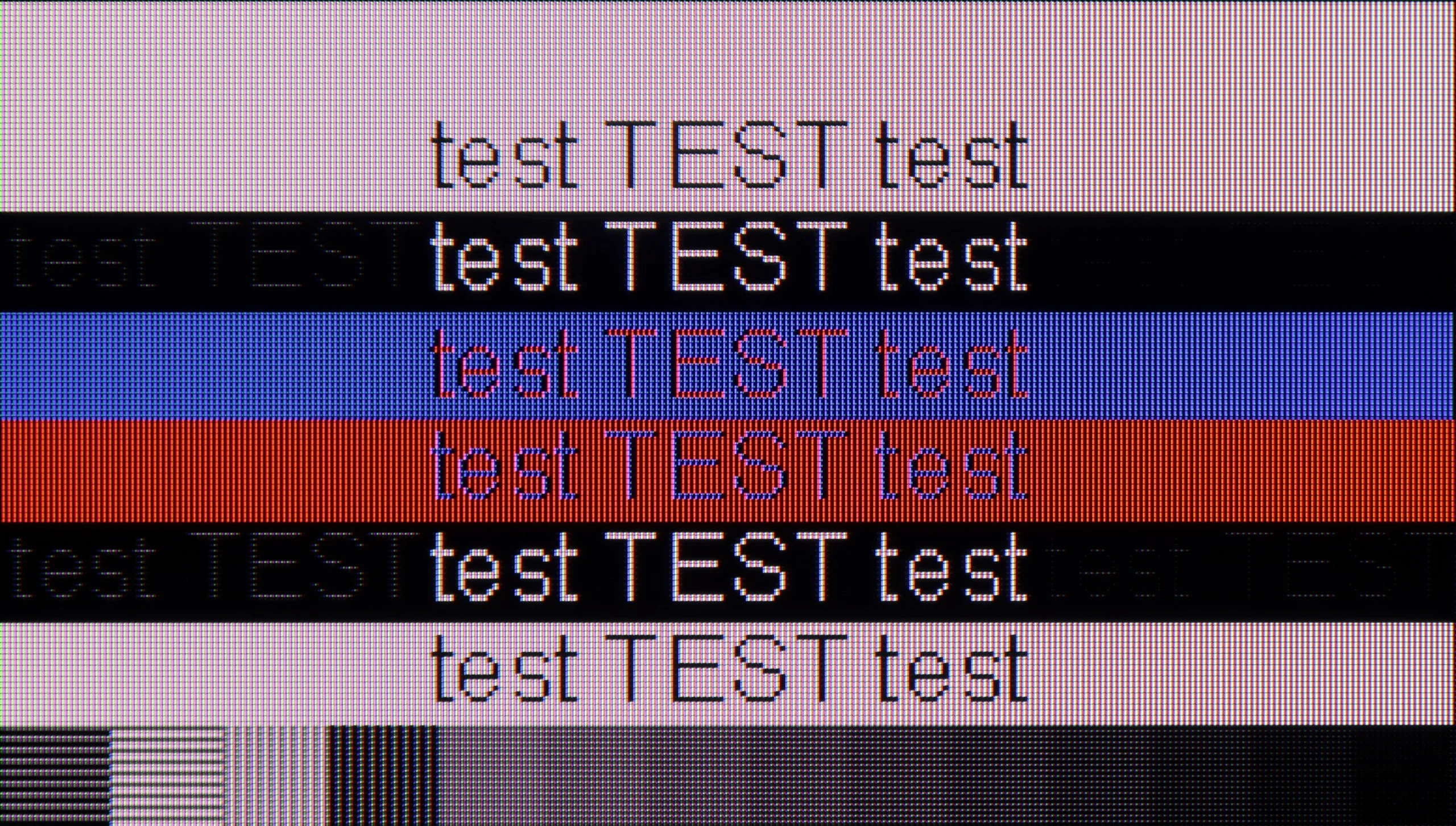
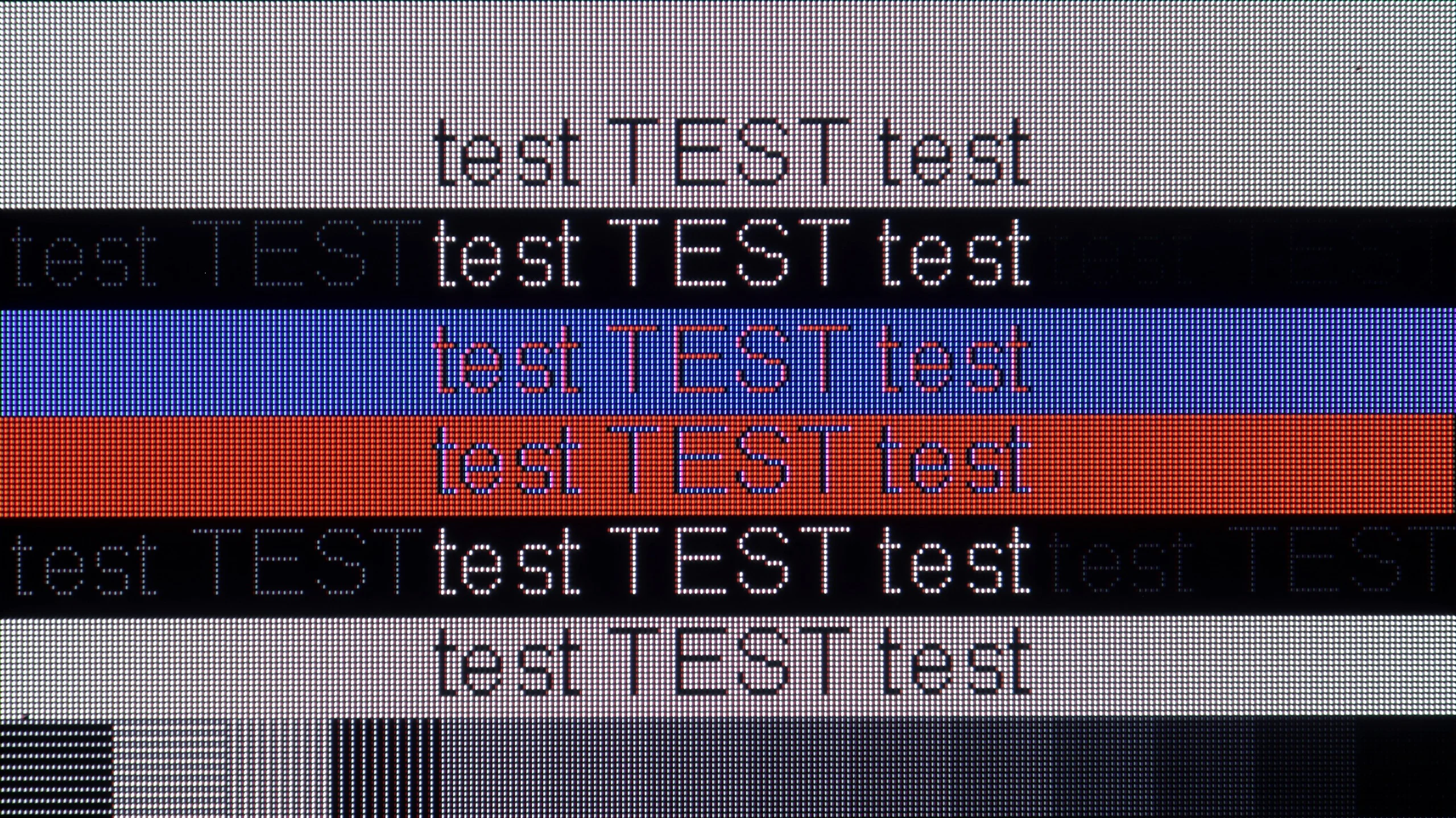
The photo shows the legibility of small fonts. Ideally, lines should be the same thickness on both light and dark text, with minimal pixel gaps.
The LG UA7500 with a VA panel performs somewhat weaker in this regard. The fonts are not as crystal clear as with IPS, and after prolonged use, the difference in readability can be felt. Support for 4:4:4 chroma is of course available, so colours appear correct, but overall it does not provide such a comfortable effect. In everyday use, the differences may not be significant, but for work with text and graphics, IPS proves to be a much better choice. The VA version is more suited as a versatile television with the option to connect a PC, rather than a fully-fledged office tool.
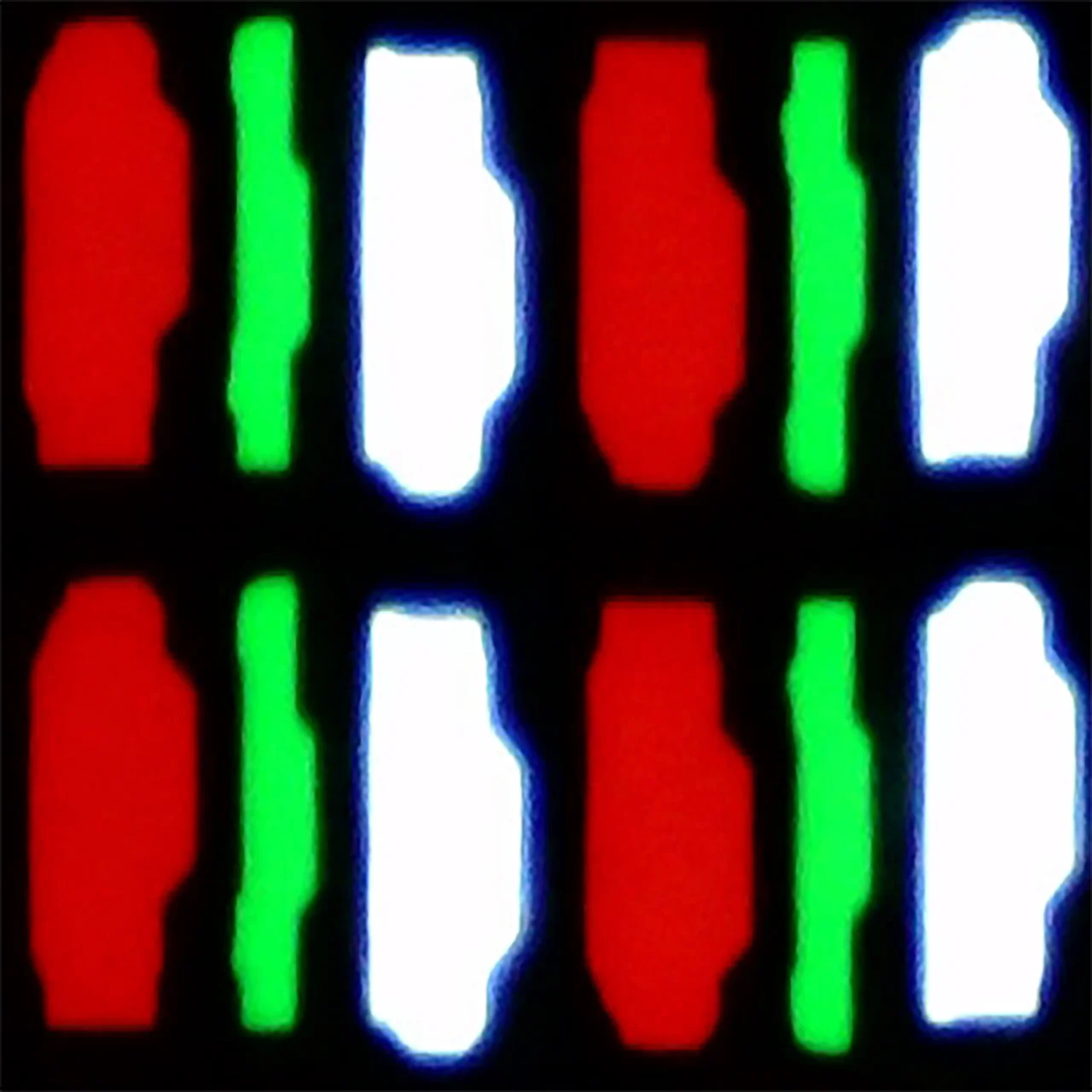
The Philips OLED761 performs well when connected to a computer. It correctly handles 4:4:4 chroma, so small text is legible and coloured letters remain sharp. When viewed up close, however, you can notice faint red fringes on the edges of characters. These result from the RGWB subpixel arrangement used in the WOLED panel, which standard font-smoothing methods are not suited to. When browsing the web this may not be an issue, but if the TV will be used mainly for working with text, it is worth taking this into account.
In games the OLED761 feels much better. The panel's fast response and support for G-Sync and FreeSync let you enjoy smooth motion without annoying blur or tearing. At 4K and 120 Hz in SDR we measured an input lag of just 5 ms, so control is very responsive. Bear in mind that input lag rises when HDR is enabled, as described earlier. The main limitation is the cap at 120 Hz refresh. The OLED761, like other models we tested with the WOLED SE panel, does not offer an extra 144 Hz mode or higher refresh rates at reduced resolution. For most people this will not be a serious problem, since 120 Hz already provides very good smoothness. Only gamers with powerful PCs aiming to extract the highest possible frame rates may feel slightly underwhelmed.
Viewing angles
3.1/10
7.5/10
The VA panel version presents a completely different approach. Straight on, the screen looks significantly better – the contrast is higher, blacks are deeper, and the colours are more saturated than in IPS. The problem arises when we move away from the axis. Just sitting a little off to the side causes the colours to start losing their intensity, and the image becomes noticeably paler. Black quickly turns to grey, and the whole loses its original character. Therefore, the UA7500 in the VA version works best in a typically "cinematic" setup – with a sofa or armchair positioned directly in front of the screen. In that case, the television can provide a much better experience than IPS, but when watching with a larger group from different places in the room, the limited viewing angles become its biggest disadvantage.
Regarding OLED performance, the OLED761 looks very good. You can sit off to the side and still watch an image with deep blacks and well-saturated colours, without the pronounced degradation known from VA panels. It's one of OLED's advantages that is easy to appreciate when watching with others: you don't have to sit in the middle of the sofa for a film to look as it should. Only QD-OLED panels are better in this respect.
Daytime performance
4.6/10
4.5/10
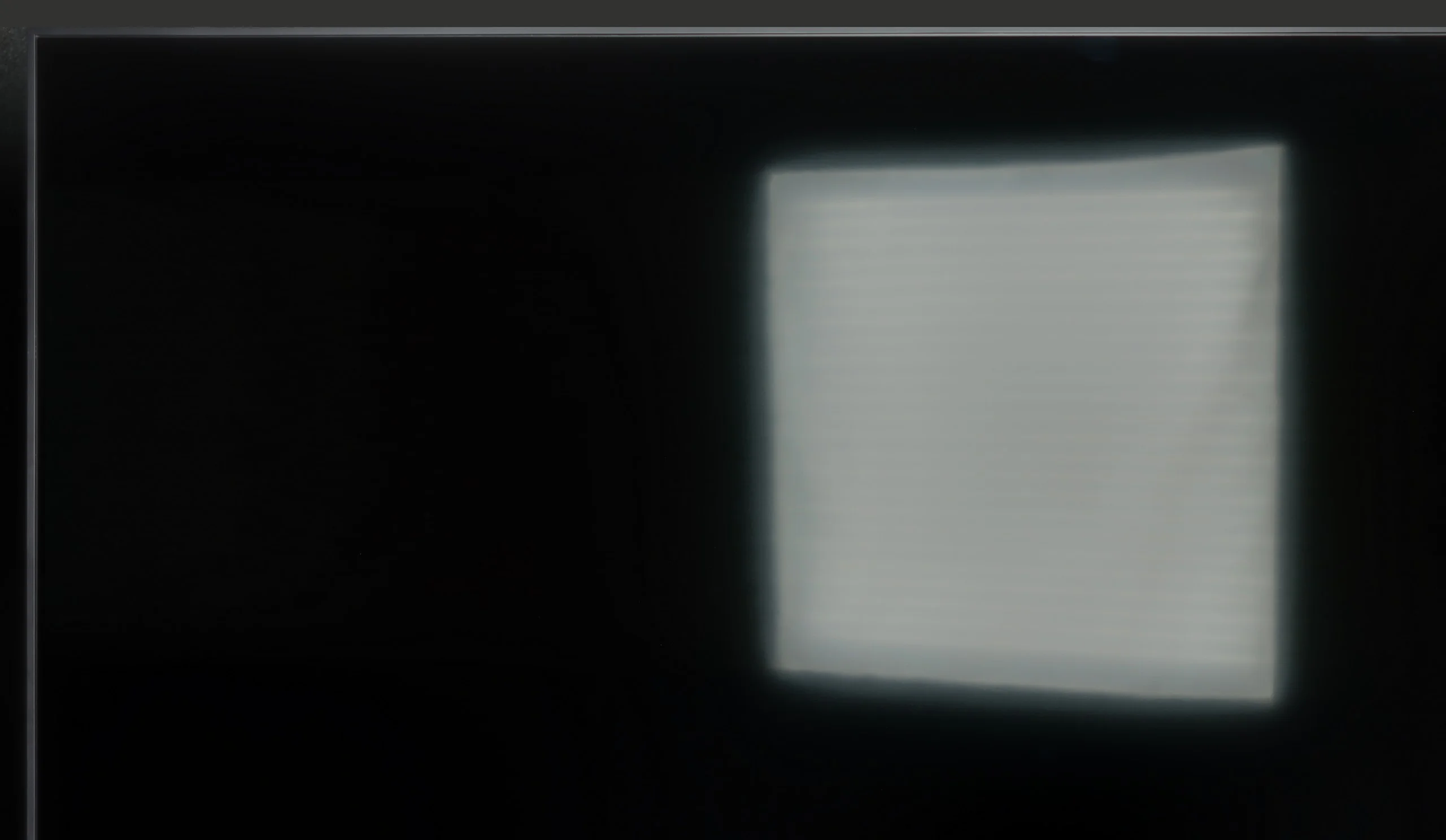
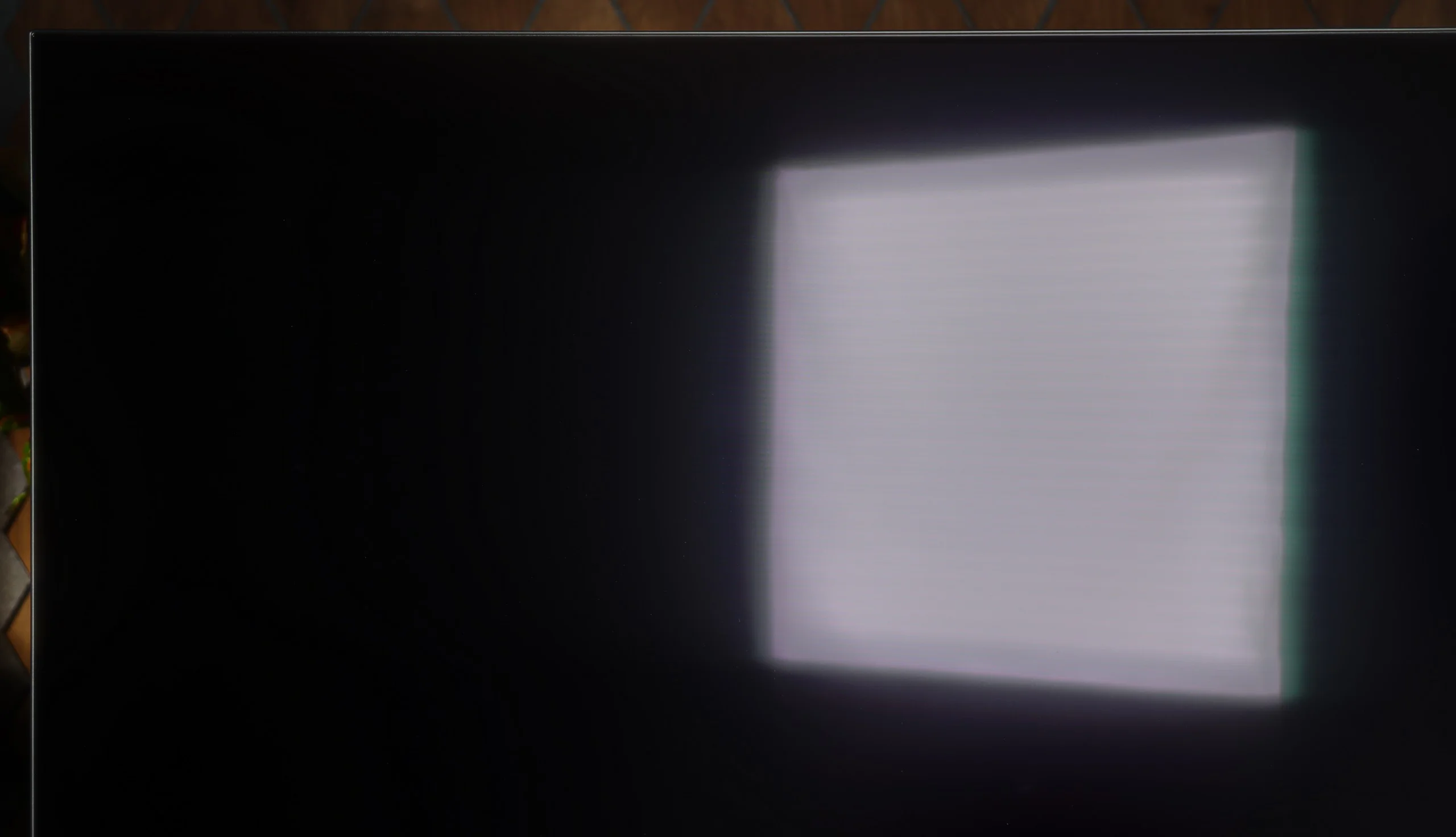
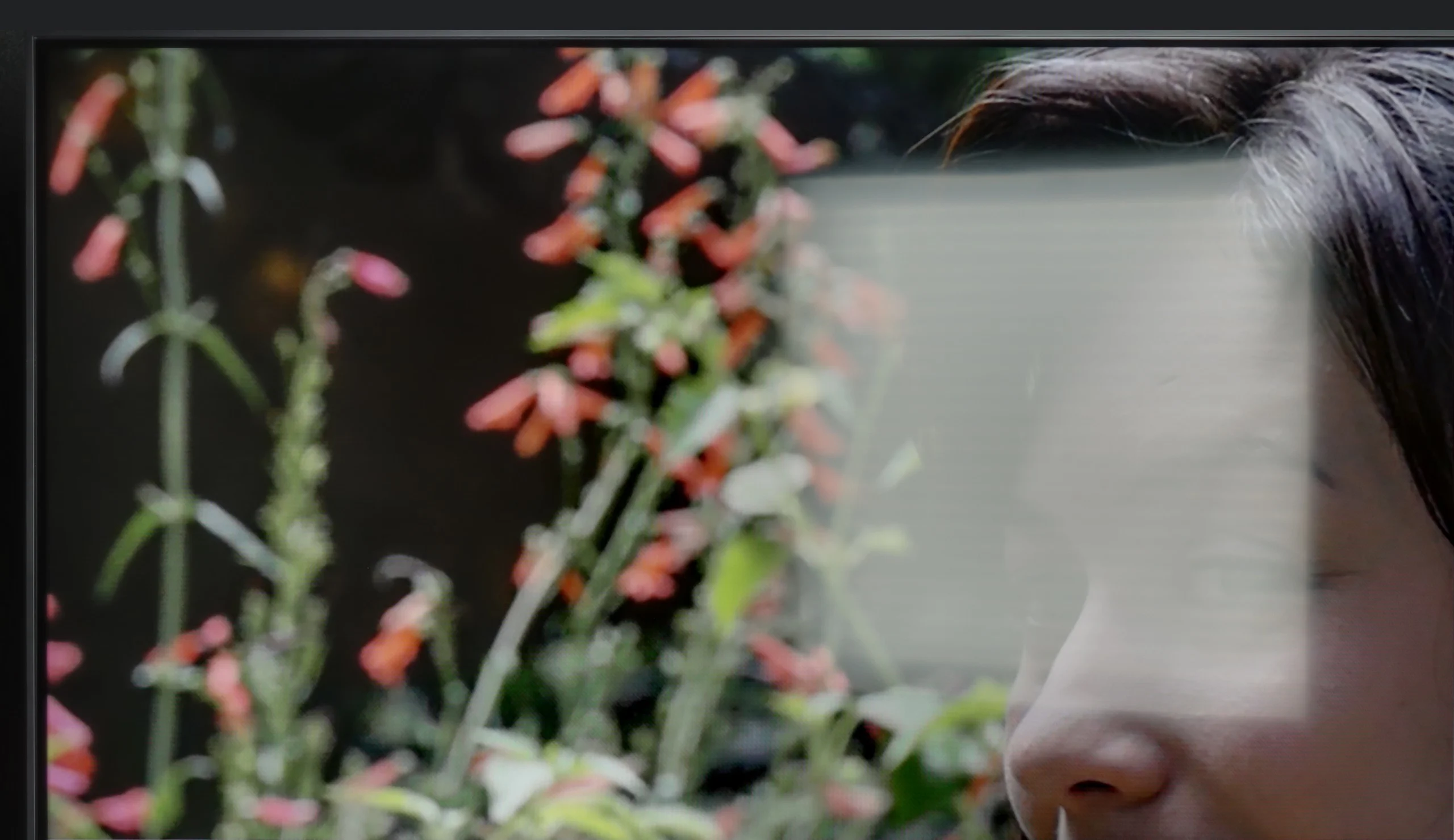
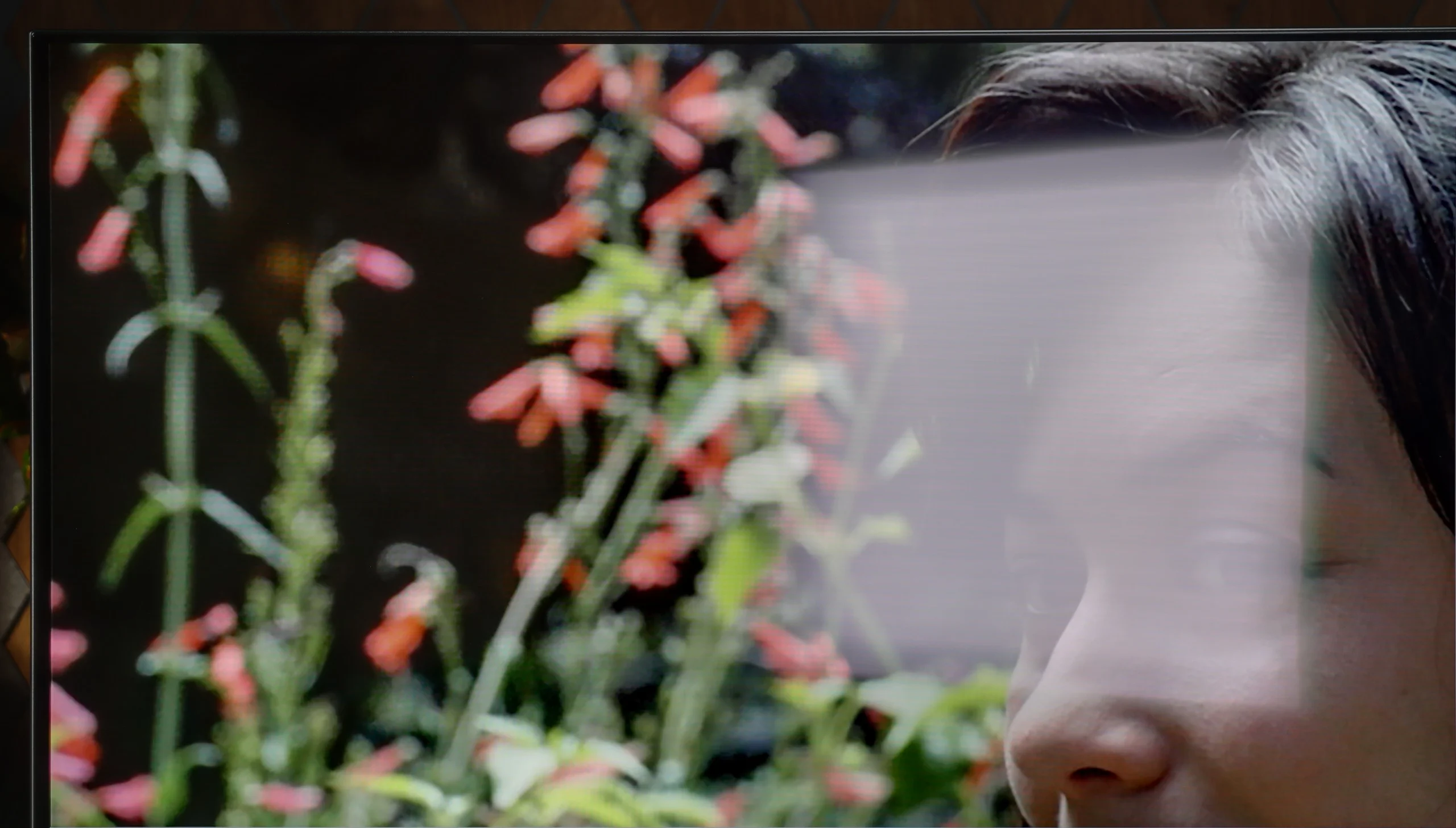
Panel brightness
Philips OLED761: 284 cd/m2
LG UA75006LA (VA): 302 cd/m2
LG UA7500 with a VA panel performed slightly better when it comes to watching in a bright room. The applied coating handles reflection suppression moderately – it does not eliminate them entirely, but it softens them enough to watch television during the day without significant discomfort. A plus is that the television maintains quite decent colour saturation, so the image does not appear washed out even with incoming light. The brightness itself is also a bit higher than in the IPS variant, reaching around 300 nits, making the screen slightly more resistant to challenging lighting conditions. Of course, this is not a level that will ensure comfort in very sunlit living rooms, but it manages well in typical home conditions.
The Philips OLED761 is not the best choice for a very bright living room. Average SDR brightness is about 280 nits, so it performs slightly worse even than rivals using the same panel. In a strongly sunlit room the picture simply lacks the punch to remain clearly visible, especially when watching darker scenes. In such conditions drawing the curtains may be necessary.
Nor does the way the WOLED SE panel's satin finish handles direct reflections help. A window or lamp opposite the screen is quite clearly visible, and their reflections show characteristic doubling and coloured halos. On the plus side, black levels still look good in a lit room, but at low TV brightness the reflections themselves can be distracting. The OLED761 will therefore work best where you can cover the windows and ensure bright light does not reflect directly on the screen.
Panel details
Subpixel Structure:
Panel uniformity and thermal imaging:


LG UA75006LA (VA)
Philips OLED761
TV features
7/10
7.9/10
- SystemWebOSTitan OS
- System performanceDecentGood
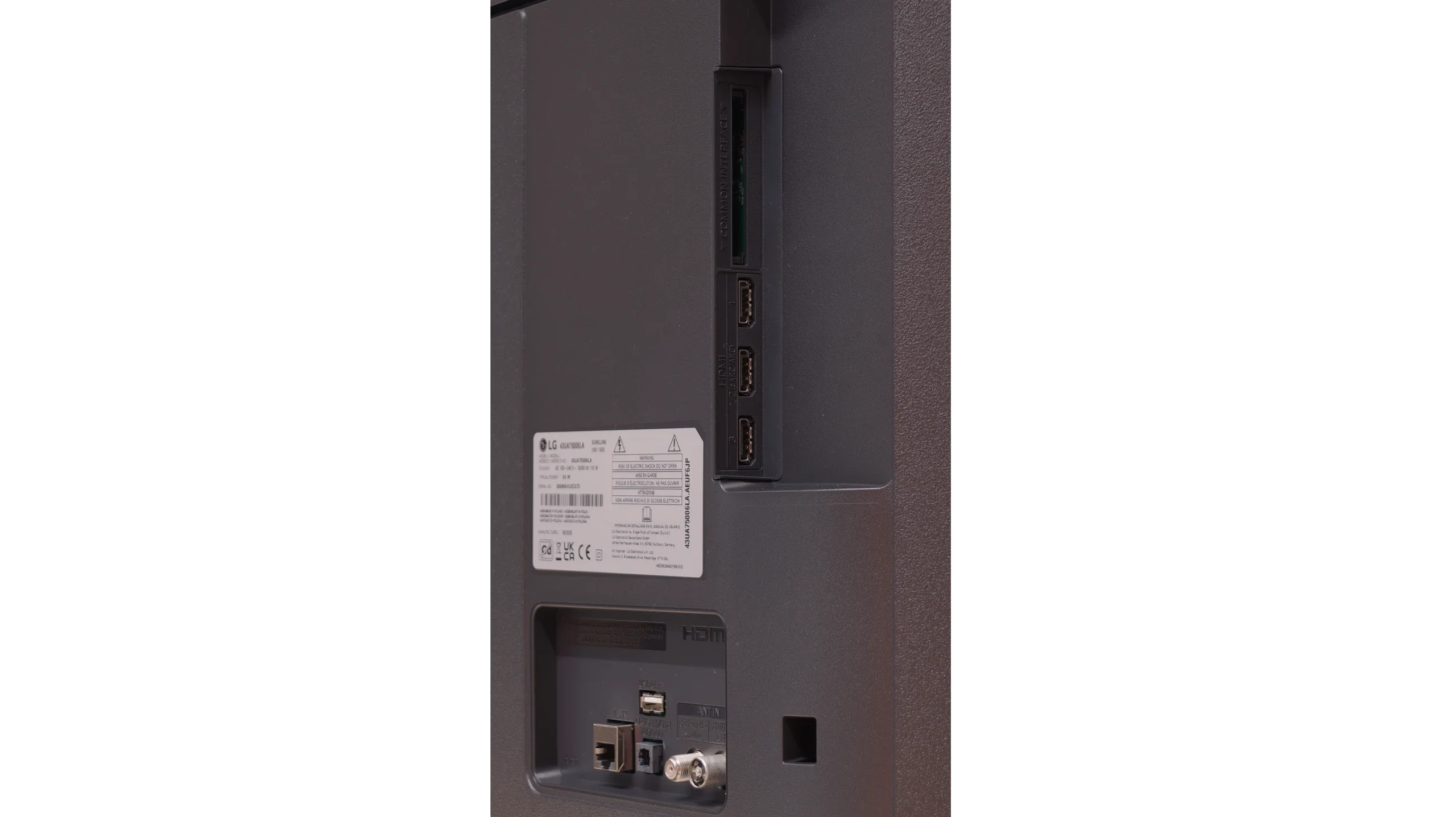
- HDMI inputs3 x HDMI 2.0, 0 x HDMI 2.10 x HDMI 2.0, 4 x HDMI 2.1 48Gbps
- OutputsToslink (Optical audio), eARC (HDMI), ARC (HDMI)Toslink (Optical audio), eARC (HDMI), ARC (HDMI), Mini-Jack (Headphones)
- Network InterfacesWi-Fi 2.4GHz, Wi-Fi 5GHz, Ethernet (LAN) 100MbpsWi-Fi 2.4GHz, Wi-Fi 5GHz, Ethernet (LAN) 100Mbps
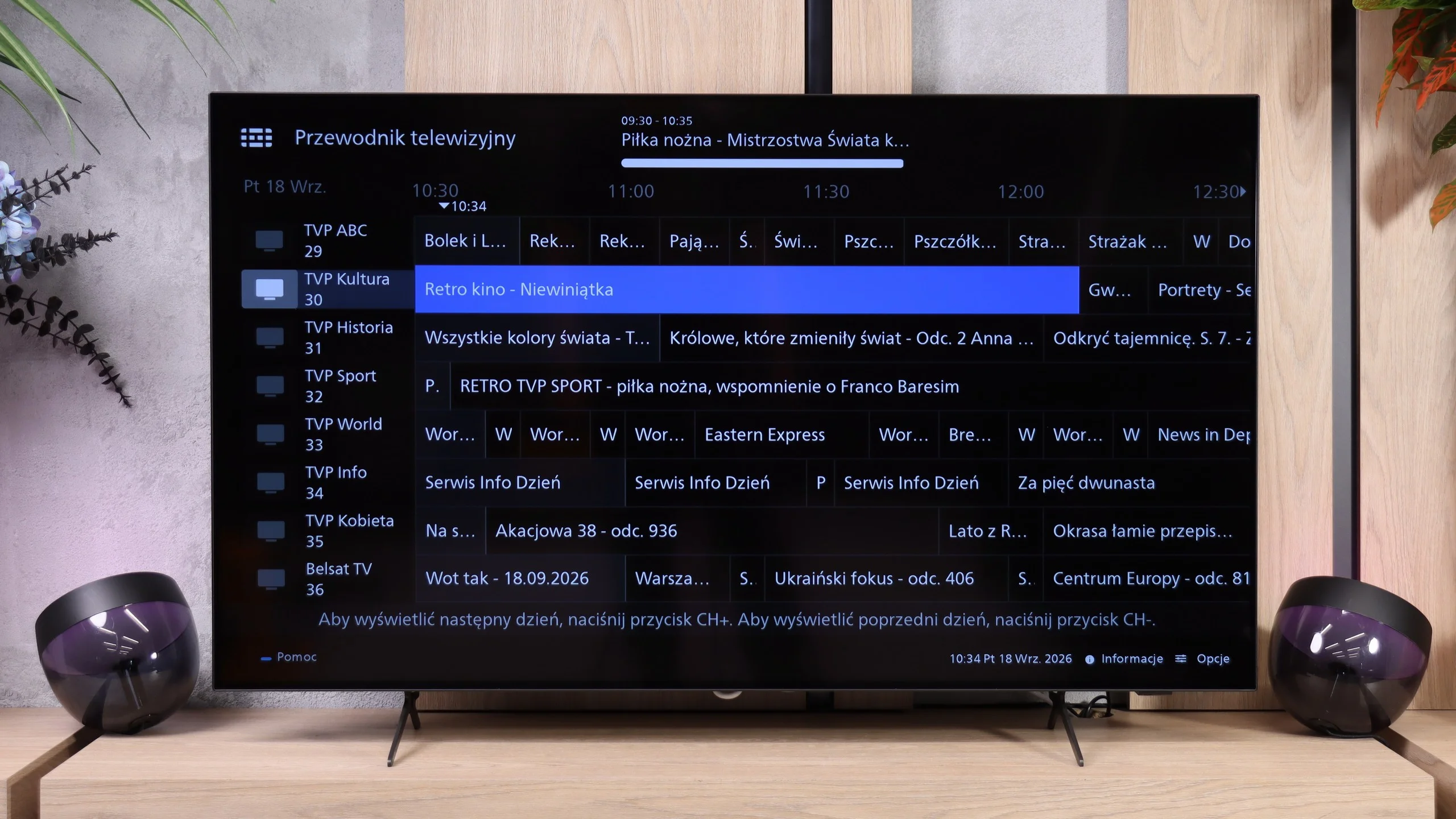
- TV receptionDVB-T, DVB-T2, DVB-S, DVB-S2, DVB-CDVB-T, DVB-T2, DVB-S, DVB-S2, DVB-C
Classic features:
- Recording to USB (terrestrial TV)
- Recording programming
- Picture in Picture (PiP)
- RF remote control (no need to aim)
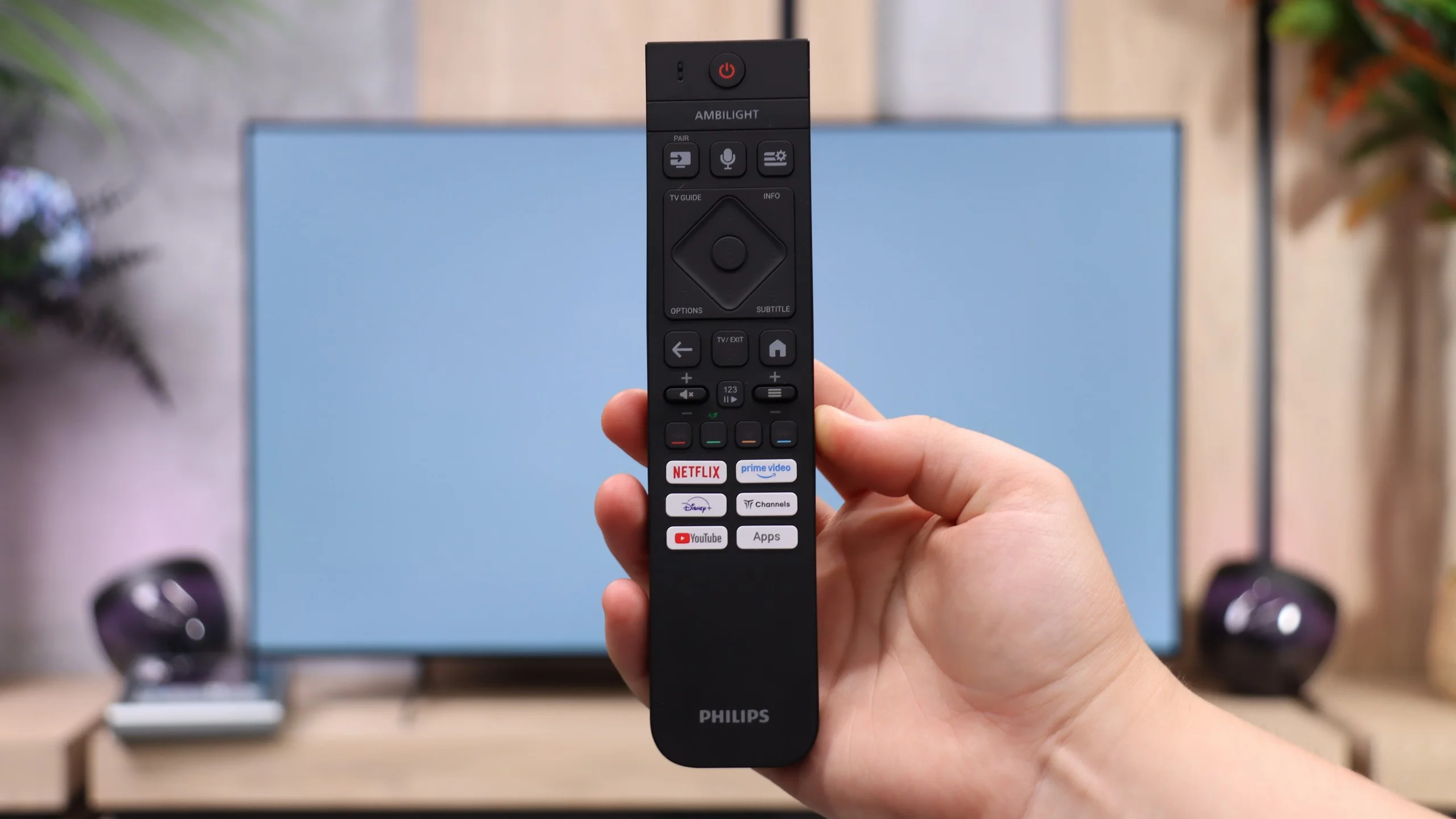
- Backlit remote control
- Teletext
- Audio only mode
- Bluetooth headphones support
- Simultaneous Bluetooth headphones & TV audio
Smart features:
- AirPlay
- Screen mirroring (Windows Miracast)
- Voice search
- Voice search in native language
- Ability to connect a keyboard and mouse
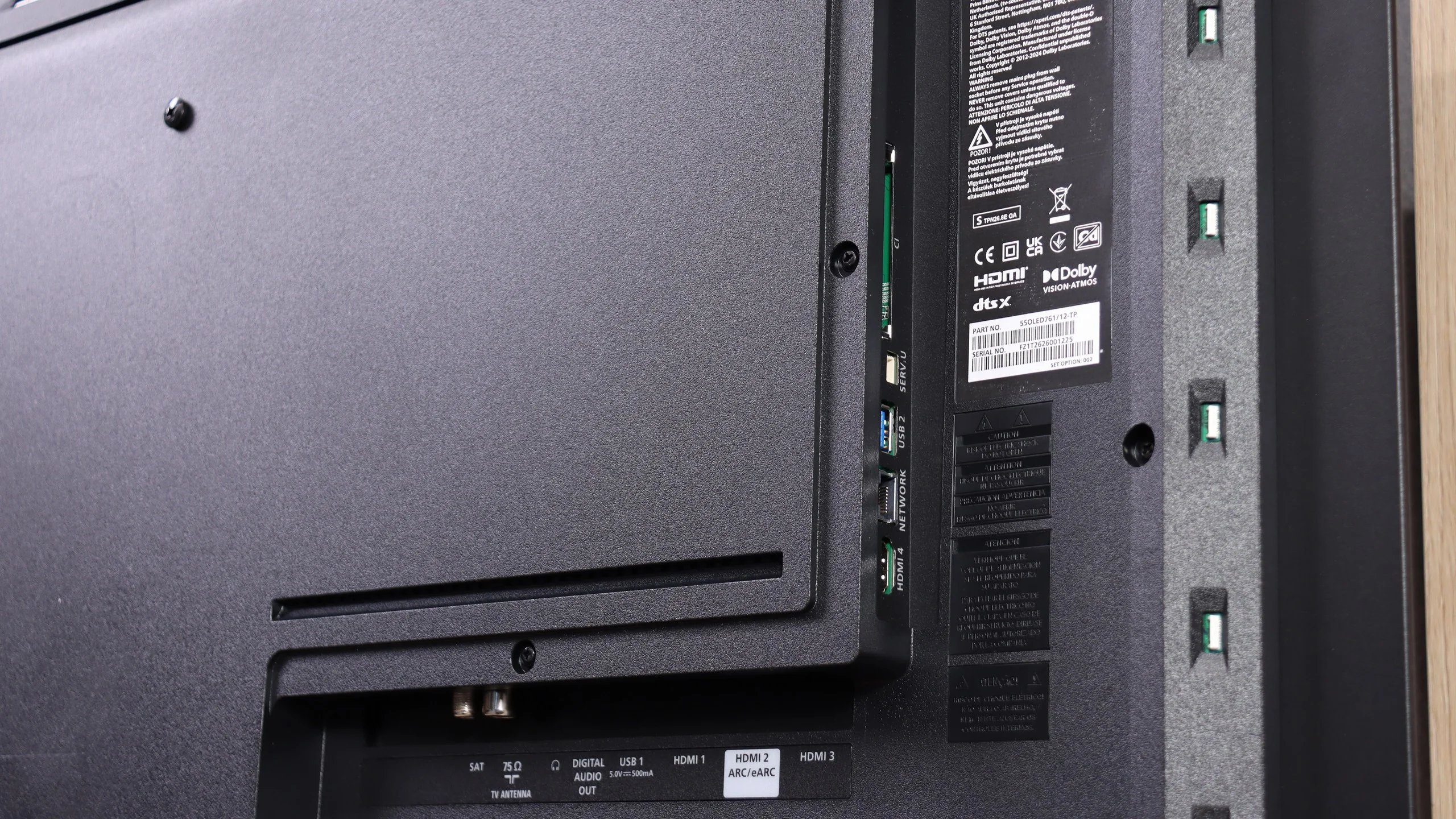
Sound connection options
- HDMI audioeARC (HDMI), ARC (HDMI)eARC (HDMI), ARC (HDMI)
- Other audio outputsToslink (Optical audio)Toslink (Optical audio), Mini-Jack (Headphones)
- Wireless audioBluetoothBluetooth
Supported audio formats (external HDMI eARC audio):
- Dolby Digital Plus 7.1
- Dolby True HD 7.1
- Dolby Atmos in Dolby Digital Plus (JOC)
- Dolby Atmos in Dolby True HD
- DTS:X in DTS-HD MA
- DTS-HD Master Audio
Senior accessibility
- Numeric keyboard on TV
- Font size adjustment
- Audio description
Smart Features: WebOS
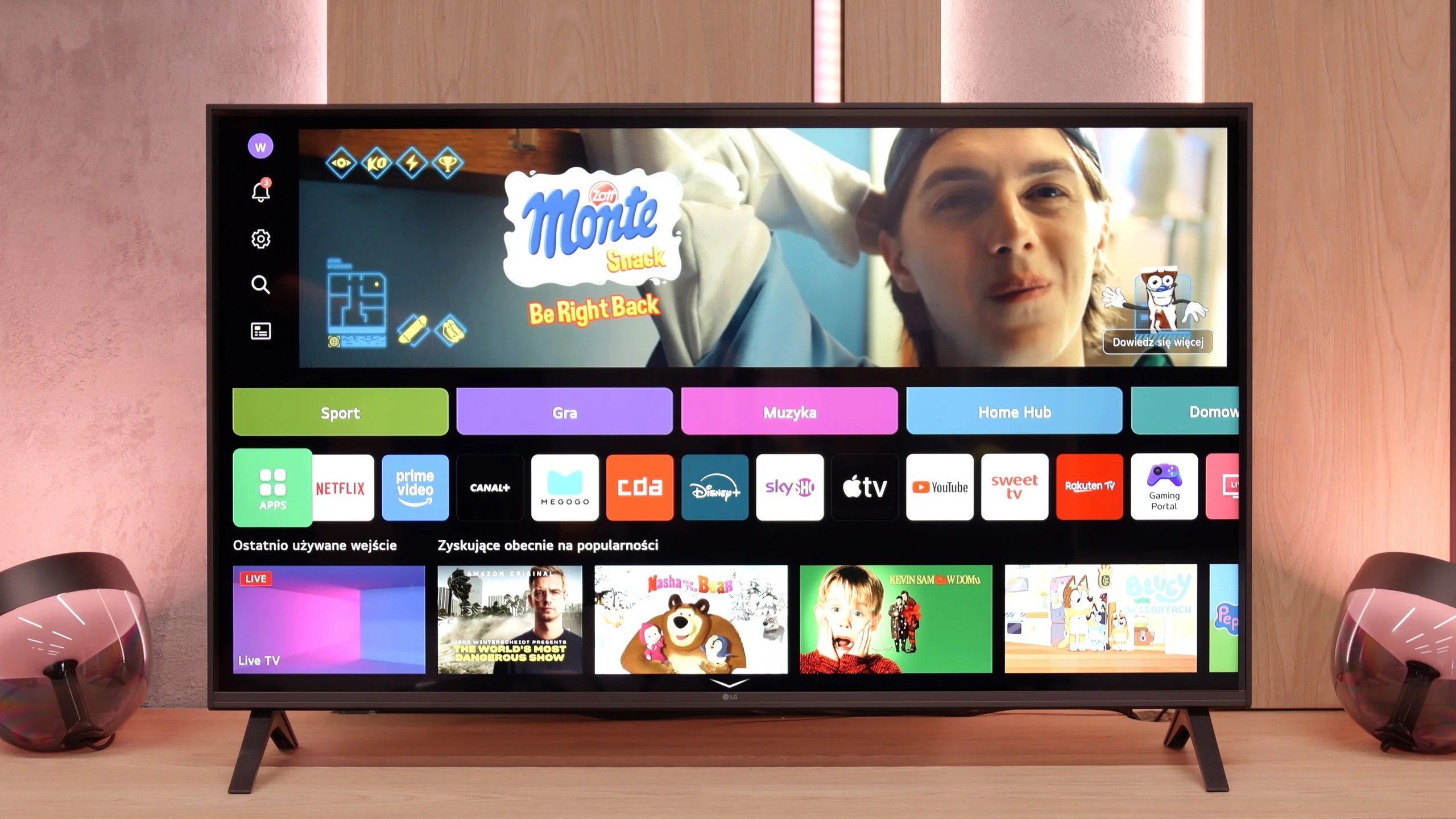
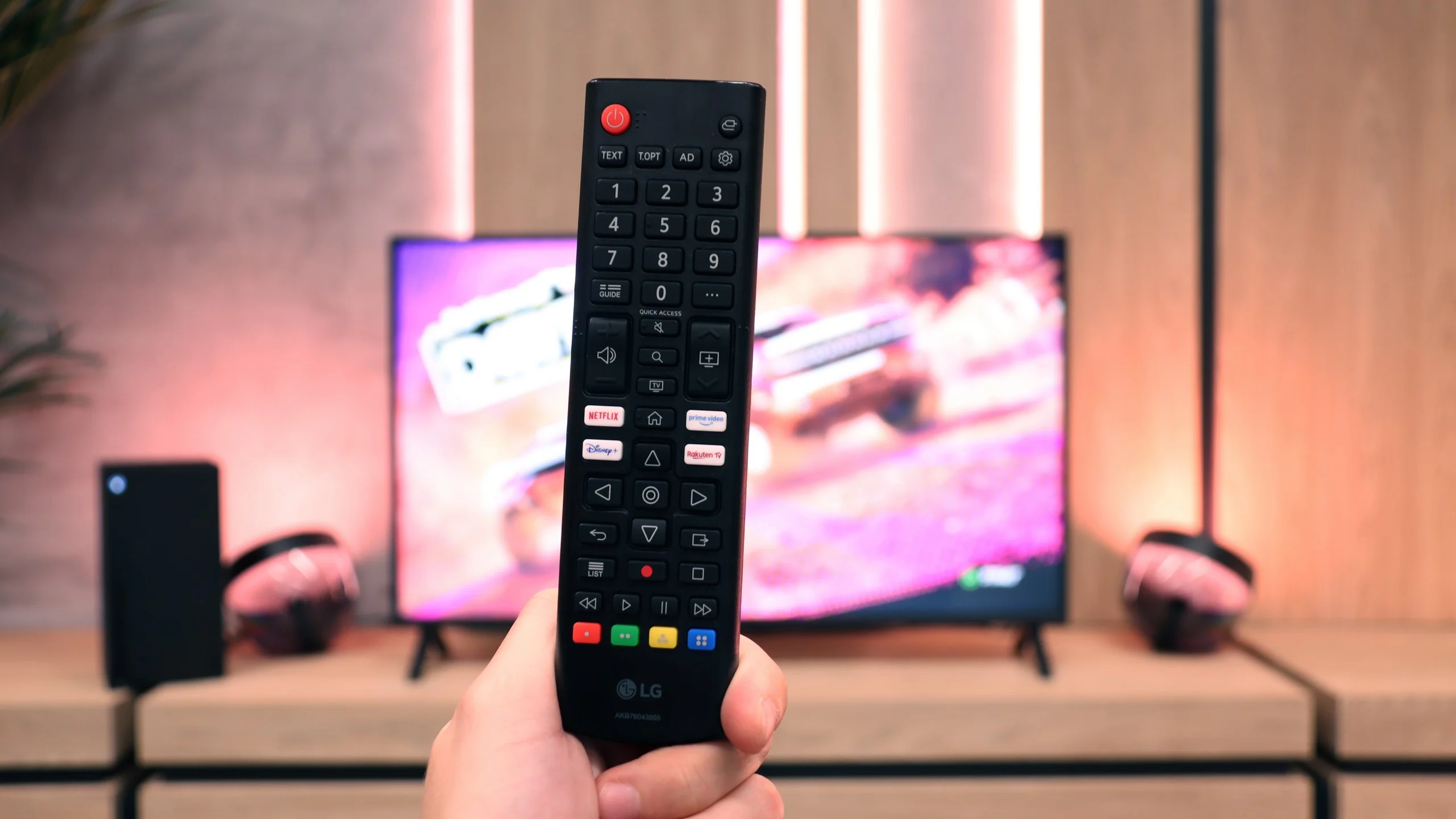
A big advantage of the LG UA7500 is the application of the webOS system. We gain access to a rich library of applications, support for AirPlay, screen mirroring and many additional features that allow for really convenient use of the television. Therefore, it is easy to connect a smartphone, watch something from streaming services, or use music applications. However, a downside is that webOS remains quite a "heavy" system and does not operate as smoothly on the UA7500 as it does on more expensive models. The situation is not aided by the fact that the manufacturer has not provided us here with a Magic remote with a cursor, which significantly speeds up navigation. We get a regular infrared remote, lacking that "magic" wand. Of course, it can be purchased separately, but considering the cost, it is often better to pay a bit more for a higher LG model that already includes such a remote.
Classic Features
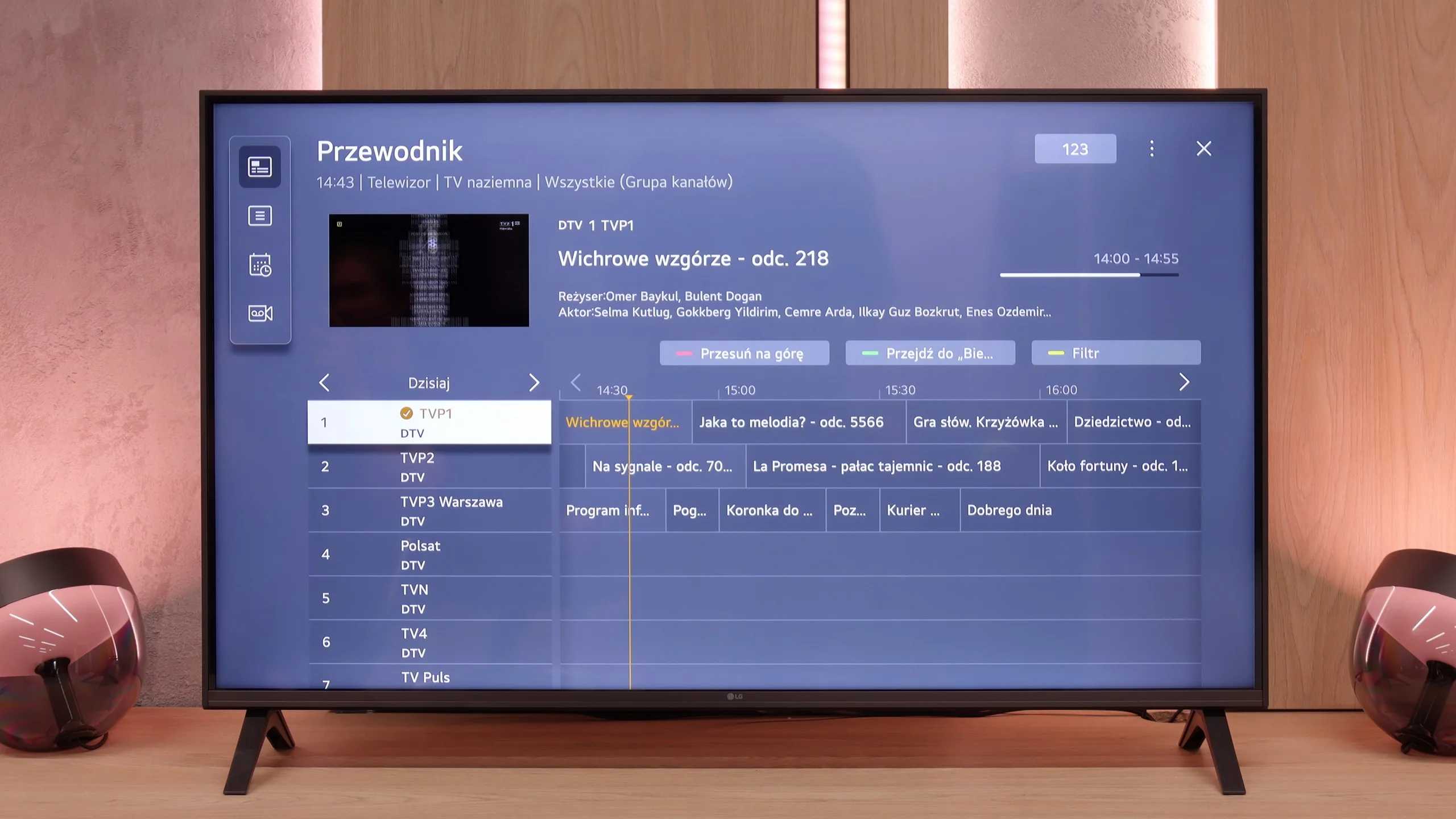
In more traditional usage, the LG UA7500 also does not disappoint. The remote is equipped with a numeric keypad and a substantial number of buttons, which will certainly be appreciated by users accustomed to older solutions. Additionally, there is the ability to record programmes to USB from built-in tuners and a quite readable EPG interface, which makes planning a television viewing session easier. A downside remains the fact that the remote always requires aiming at the screen – but we believe that most more traditional users will be able to forgive it, viewing it as a familiar and reliable tool.
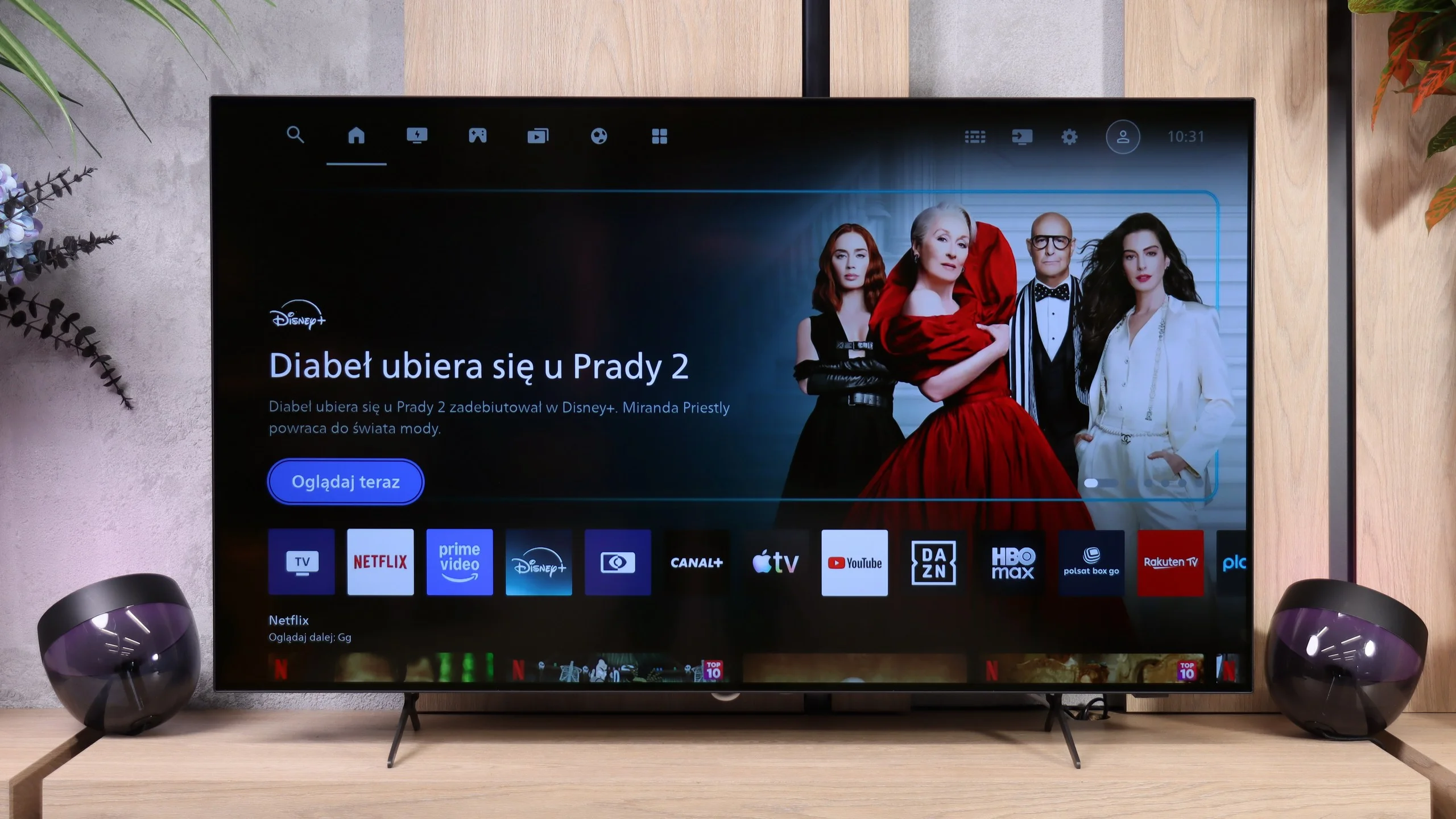
Titan OS
In the OLED761, rather than Google TV, we get Titan OS, which has been appearing more often on Philips TVs for several years. Over that time the system has clearly matured. It responds faster to commands, navigates menus more smoothly, and features that used to cause problems are finally beginning to work as they should. There is noticeable progress in everyday use, which is praise-worthy. It still does not match the level of refinement and capabilities of webOS or Tizen, and there is a considerable gap compared with the freedom and app selection offered by Google TV, but Titan OS is definitely heading in the right direction.
Practical features and ports
When watching standard broadcast TV you get the basic conveniences, including teletext and a remote with a numeric keypad. The buttons are backlit, which is very useful in the evening, but it is hard to understand why Philips stubbornly sticks with infrared control. Having to point the remote at the TV can be simply inconvenient (the only function that works wirelessly is voice control). There is no USB recording or picture in picture. The port selection, however, deserves praise: all four HDMI inputs support the 2.1 48Gbps standard, so after connecting a soundbar via eARC there are still three ports available to make full use of consoles and a PC. You do not need to worry about which device to connect at the cost of high refresh rates. There is even an analogue mini‑jack output, increasingly rare in new TVs but still useful for wired headphones or older audio equipment.
Ambilight
The most distinctive extra is, of course, Ambilight, for which Philips gets extra points from us. Lighting the wall with colours from the screen can add a lot of atmosphere to films and games, but it is also handy for relaxed evening viewing. The gentle glow means the bright screen is not the only light source in a completely dark room, which can improve viewing comfort. It is worth setting its intensity to suit the room instead of immediately turning it to maximum. For people who enjoy that style of viewing, Ambilight can be one of the strongest arguments for choosing the OLED761.
Apps
9.1/10
7.7/10






















Playing files from USB
8.2/10
8.6/10
Supported photo formats:
Maximum photo resolution:
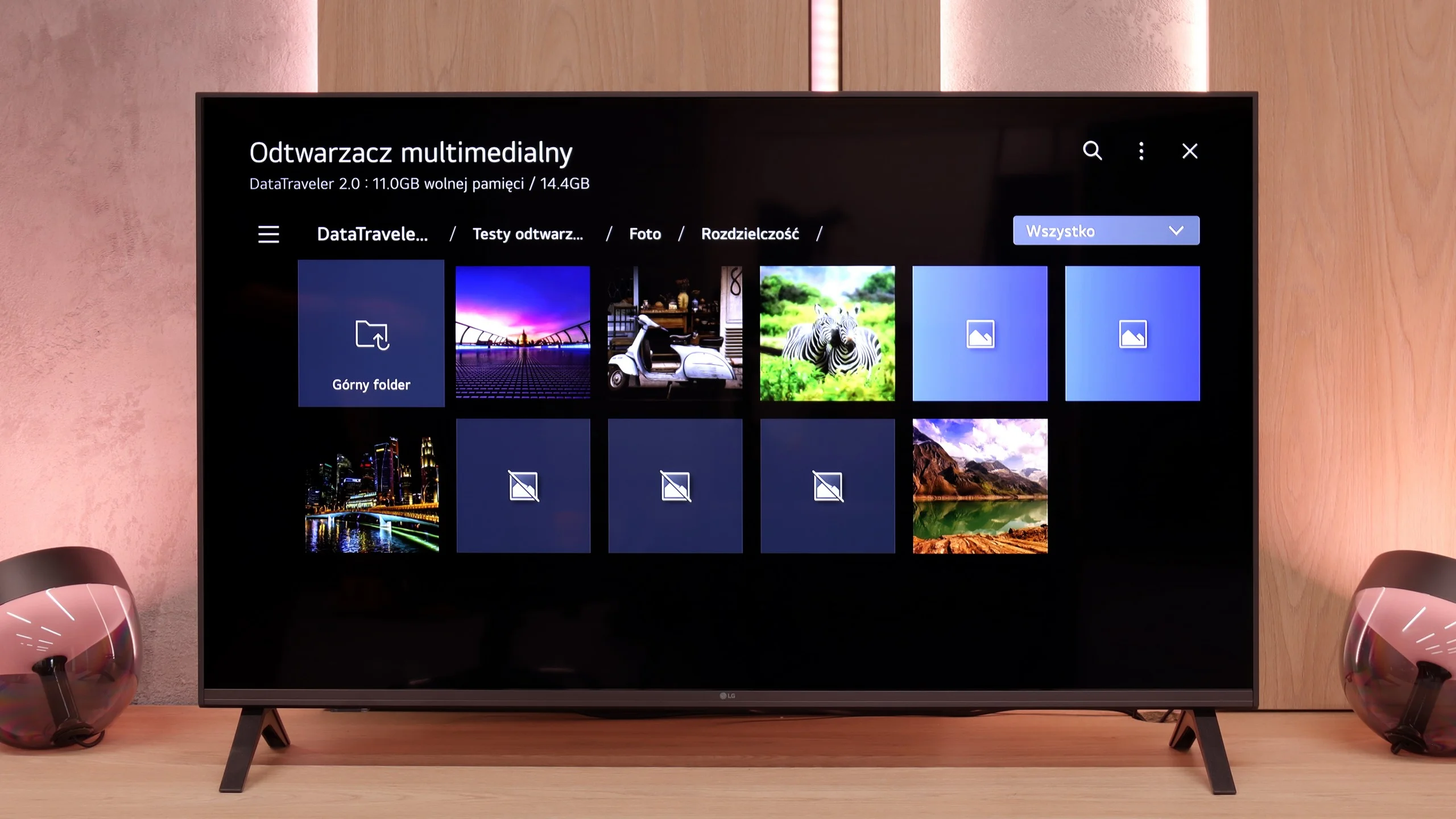
The media player on the UA7500 works fine – films or music start up without major issues, and this should be sufficient for most people. However, one thing caught our attention: the television does not play all photo formats. In practice, this means that if we upload photos straight from a smartphone to a USB drive, some may simply not open. It's a small detail, but it's worth keeping in mind. Fortunately, you can always use wireless screen sharing to display photos on the screen in another way.
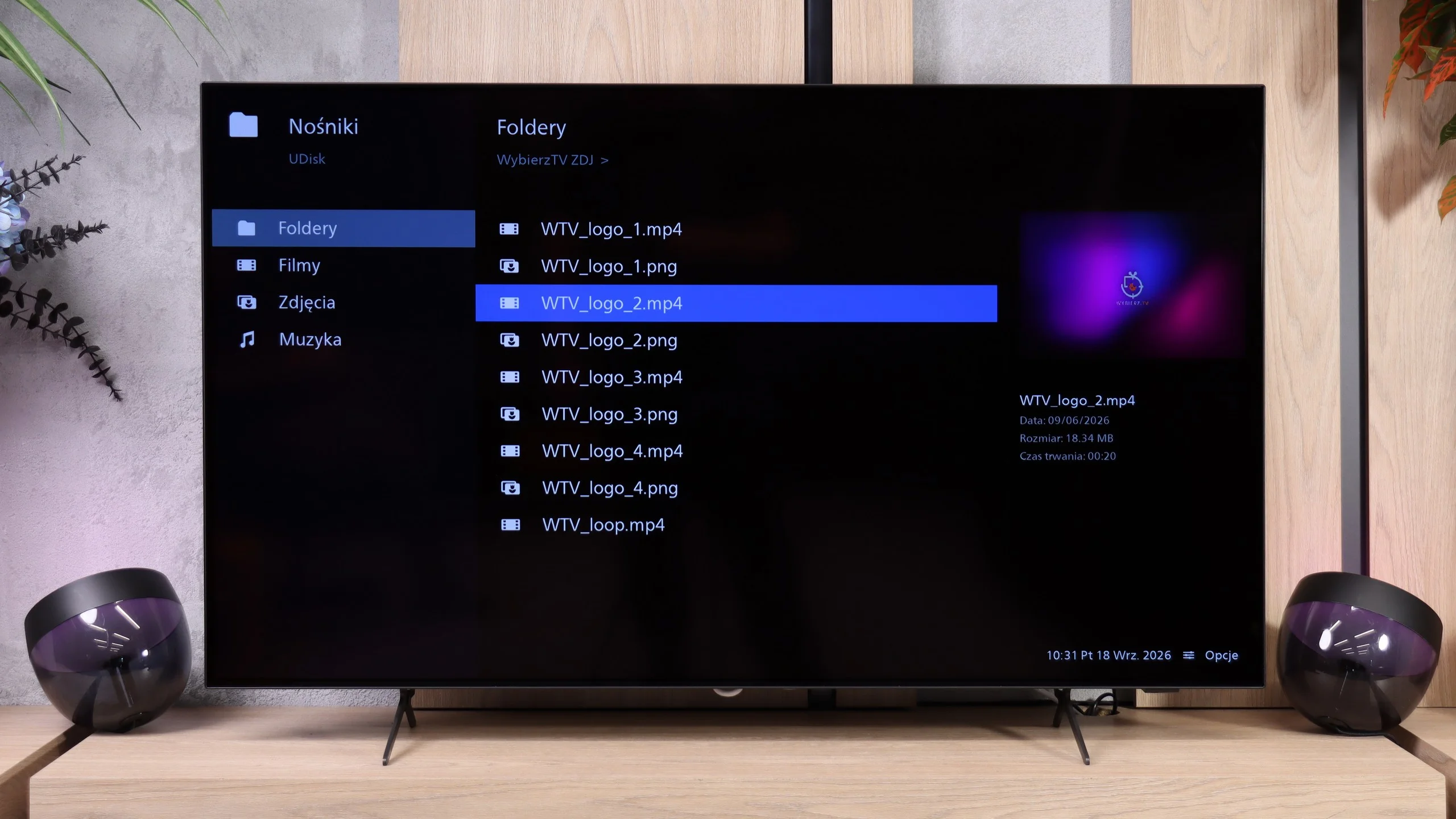
The USB player in the Philips OLED761 behaves rather oddly, and this is where you can see that Titan OS still needs refinement. Tested videos and music files played back correctly, but photos caused the most problems. Interestingly, it is not only a lack of support for certain formats but also the resolution of the images. The TV opened photos at 16 and 32 Mpix, yet failed to handle some smaller ones, such as 10 and 12 Mpix. So it is hard to point to a simple rule for preparing photographs to ensure they will all be displayed. If you plan to display holiday photos on a large screen, it is worth checking the files beforehand or using screen mirroring.
Sound
6/10
7/10
- Maximum volume81dB90dB
- Dolby Digital Plus 7.1
- Dolby True HD 7.1
- Dolby Atmos in Dolby Digital Plus (JOC)
- Dolby Atmos in Dolby True HD
- DTS:X in DTS-HD MA
- DTS-HD Master Audio
In terms of sound, the LG UA7500 does not impress with powerful bass or the highest volume, but it plays surprisingly well. Our impression was that it performs better than most of the cheapest budget televisions and does quite well in everyday use. It will be just right for news, programmes, or series.
The Philips OLED761 sounds quite good for a slim TV. Its midrange is the strongest, making dialogue clear and easy to follow. For watching TV series, news or regular programmes, the built-in speakers are more than adequate. However, it lacks deeper bass, which is most noticeable in music and action films. Explosions pack less punch, and music lacks a fuller sound. So if you want a more cinematic audio experience, a soundbar with a separate subwoofer will be a noticeable addition to the setup. Especially as the OLED761 handles spatial audio formats like Dolby Atmos and DTS:X without any problems.
Sound Quality Test
Acoustic Measurements
81dBC (Max)
75dBC
90dBC (Max)
75dBC
Reader comments
Comments are provided by the external service Disqus (Zeta Global). Once loaded, Disqus may set cookies and process data about your activity.
We will remember your choice on this device. Provider's privacy policy