 Direct comparison
LG NANO81A is essentially a continuation of the NanoCell series, which has hardly changed at all over the past few years. Apart from the new operating system, refreshed remote control, and a few marketing additions, we are dealing with practically the same design we have known for years. Thanks to the nanostructure filter, the television can display better, cleaner colours than standard budget televisions, and the IPS panel guarantees really decent viewing angles. Unfortunately, for these advantages, we pay for very poor blacks and low contrast, which is immediately noticeable during night screenings. Although webOS is still one of the best systems on the market, the biggest problem with the NANO81A is its price, which we simply do not understand. In 2025, this model faces enormous competition not just from brands like TCL or Hisense, but... from LG itself. The model we previously tested, QNED80A, is equipped with local dimming technology, has a brighter panel, and offers a wider colour gamut. Interestingly, at the time of writing this review, the technically superior QNED80A is often much cheaper than the NANO81A. In this situation, the existence of the NanoCell model makes no sense – unless your priority is solely wide viewing angles, but in our opinion, the price you have to pay for that (at the cost of tragic blacks and higher expenditure) is simply too high.
- Matching (Score) |
- Our verdict |
- TV appearance |
- Where to buy |
- Contrast and black detail |
- HDR effect quality |
- Factory color reproduction |
- Color reproduction after calibration |
- Smoothness of tonal transitions |
- Image scaling and smoothness of tonal transitions |
- Blur and motion smoothness |
- Console compatibility and gaming features |
- Input lag |
- Compatibility with PC |
- Viewing angles |
- Daytime performance |
- Panel details |
- TV features |
- Apps |
- Playing files from USB |
- Sound
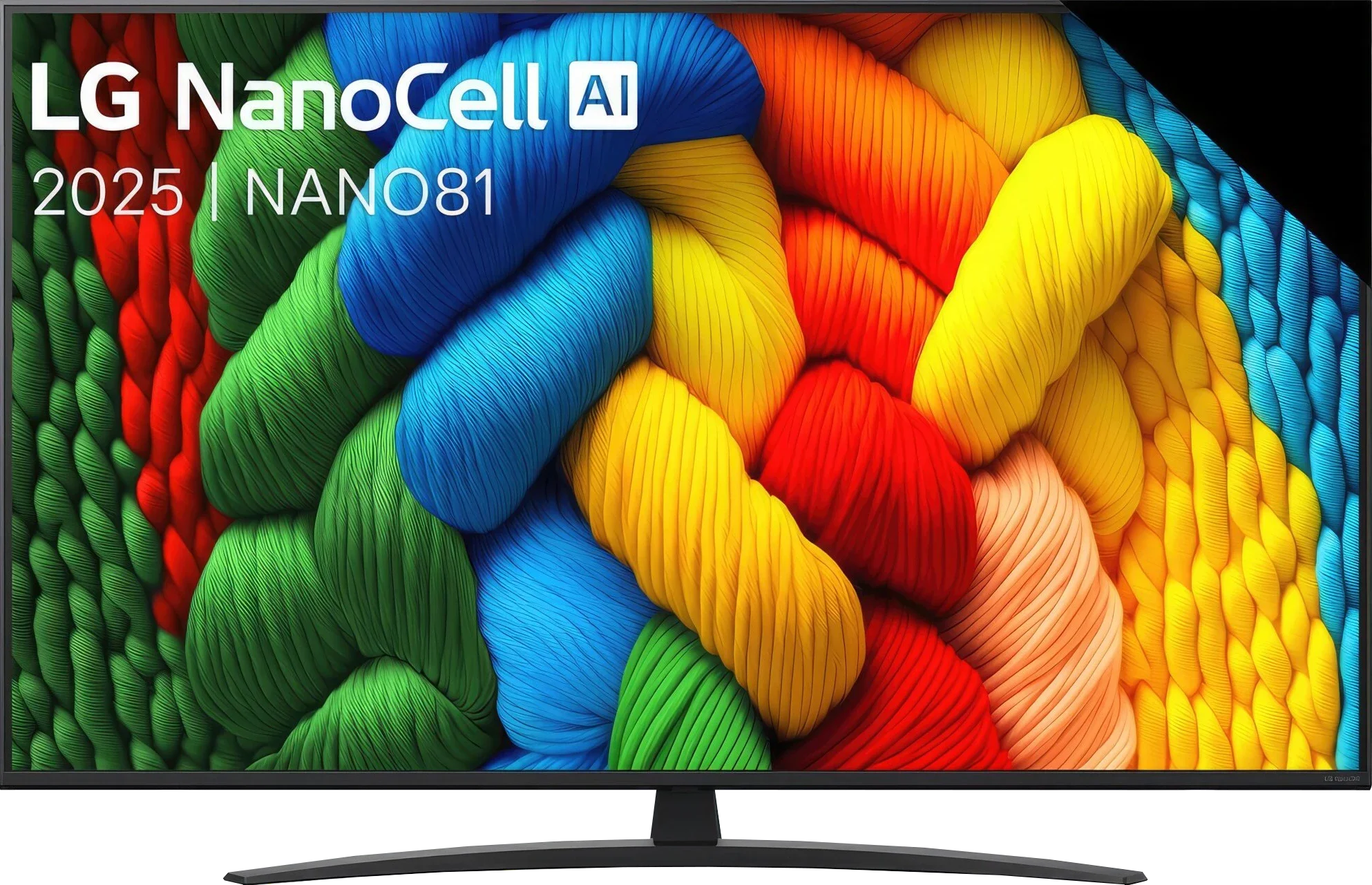
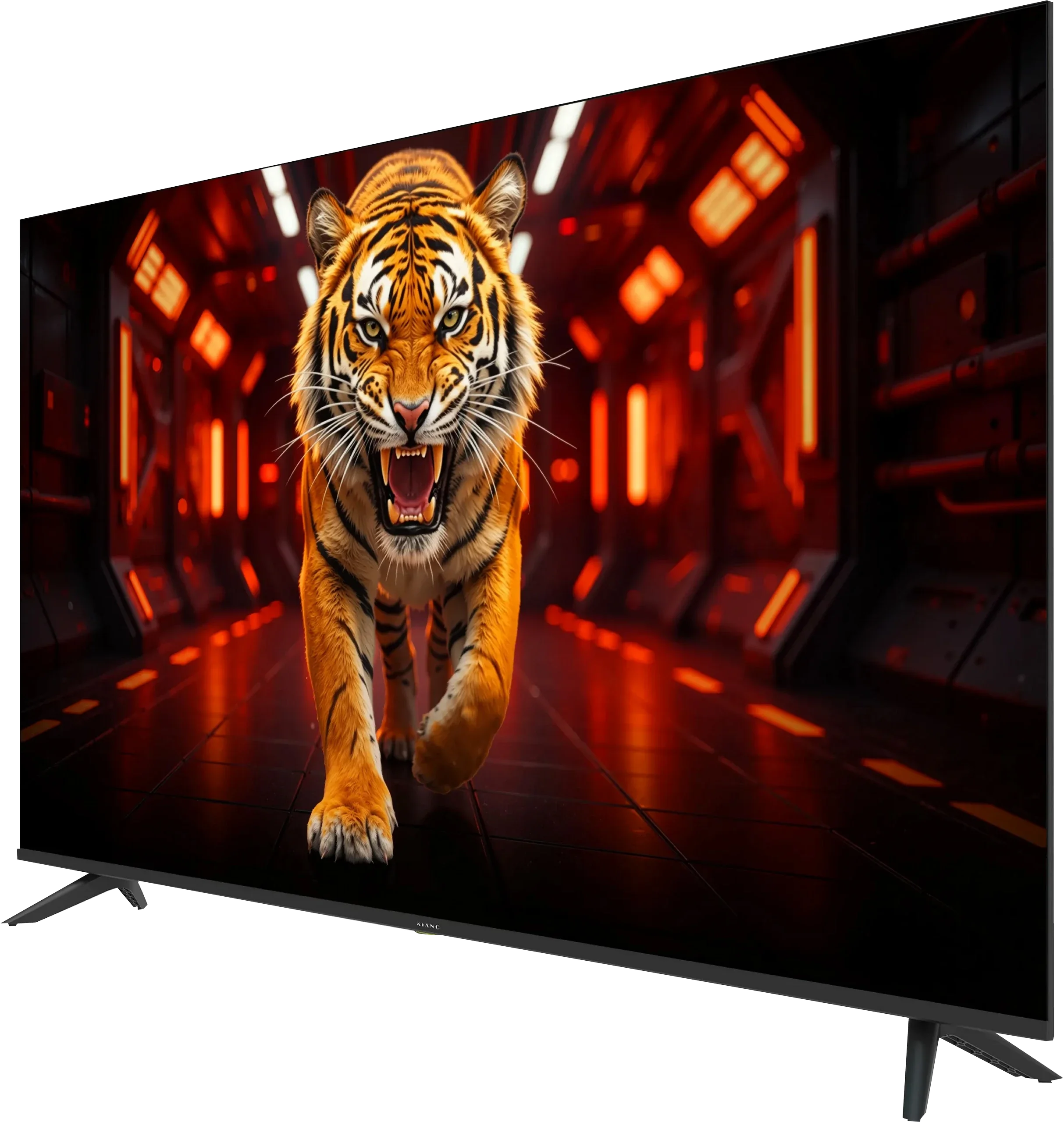
Panel type: LCD IPS
Resolution: 3840x2160
System: WebOS
Model year: 2025
Complete the survey to find out the result
Panel type: LCD VA
Resolution: 3840x2160
System: Tizen
Model year: 2026
Complete the survey to find out the result
Overall rating
5.7
4.9
 Movies and series in UHD quality
5.1
4.8
 Classic TV, YouTube
5.1
5.4
 Sports broadcasts (TV and apps)
5.4
3.9
 Gaming on console
6.7
5.3
 TV as a computer monitor
6.0
6.0
 Watching in bright light
4.0
3.7
 Utility functions
6.6
5.1
 Apps
9.1
8.8
 Sound quality
6.2
3.6
Complete the survey to find out what fits your preferences
Advantages

Wide viewing angles (IPS matrix)
Very low input lag (approx. 10-12 ms)
Fluid webOS 2025 system
Intuitive Magic remote with pointer
Better colour gamut coverage thanks to NanoCell filter
Excellent as a PC monitor (sharp fonts, Chroma 4:4:4)
Decent features for gamers (VRR, ALLM, HGiG)
Extensive calibration options and natural colours after adjustments
Good image processing and efficient upscaling of older content
Noticeable low-end blend in sound
Low price
Tizen OS with a wide selection of popular apps
Decent contrast thanks to a VA panel
Effective digital image processing (rarely seen at this price)
Low input lag
Very good text readability when connected to a computer
Supports AirPlay and wireless screen mirroring
Disadvantages

Poor black level and low contrast
Low brightness (approximately 250 nits – weak for very bright rooms)
Matrix refresh rate of only 60 Hz
USB player without support for HEIC files and very large images (over 20 Mpix)
Low brightness
No wide colour gamut (no QLED / PFS)
Poor motion handling: noticeable smearing, a 60 Hz panel and no motion smoothing
No gaming features whatsoever
Slow operation
Very poor audio
Average build quality
Our verdict
Kiano Elegance is primarily an option for people who want to spend as little as possible on a TV while still having convenient access to popular apps. The use of Tizen is a big plus here, because you get a system well known from Samsungs and you do not have to immediately buy a streaming stick to watch films or series. At a low enough price this could be a sufficient reason to consider this model. The digital video processing is also worthy of praise; in operation it resembles the solutions found in entry-level Samsungs. Kiano quite effectively smooths unwanted banding between colours in weaker sources, so heavily compressed footage looks better. It is, of course, not perfect, but remember the very low budget we are dealing with. The mere fact that this feature actually helps is commendable. Unfortunately the operating system does not make the Kiano run as smoothly as Samsung TVs. You sometimes have to wait for a response, and the USB player can take a long time to open files. The savings are also visible in the build quality and the screen’s capabilities. Low brightness makes viewing in a sunny room difficult and prevents it from delivering impressive HDR, while motion blur is noticeable during faster movement. Add weak sound to that, and buying separate speakers can quickly become another expense. That is why the Kiano Elegance really makes sense only if it is noticeably cheaper than the competition. It may be enough for everyday programmes or as a second TV in the home, but if you are only a small amount short of the price of a base model from a better-known manufacturer, we think it is worth paying the extra. Tizen and the decent video processing are strengths of this Kiano, but they do not compensate for all the cost-cutting. It is better to compare final prices than to assume that a TV with Samsung’s system will provide the same level of user comfort.
TV appearance


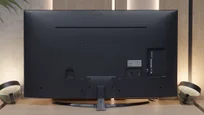
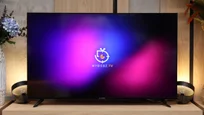
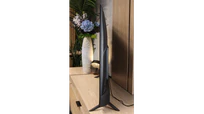
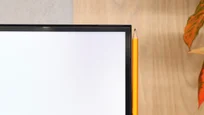
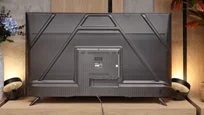

Contrast and black detail
1.5/10
4.8/10
Local dimming function: No
Local dimming function: No
Contrast:


Result
800:1

Result
850:1

Result
900:1

Result
900:1

Result
750:1
Result
3,350:1
Result
3,350:1
Result
2,650:1
Result
3,650:1
Result
2,400:1
Halo effect and black detail visibility:
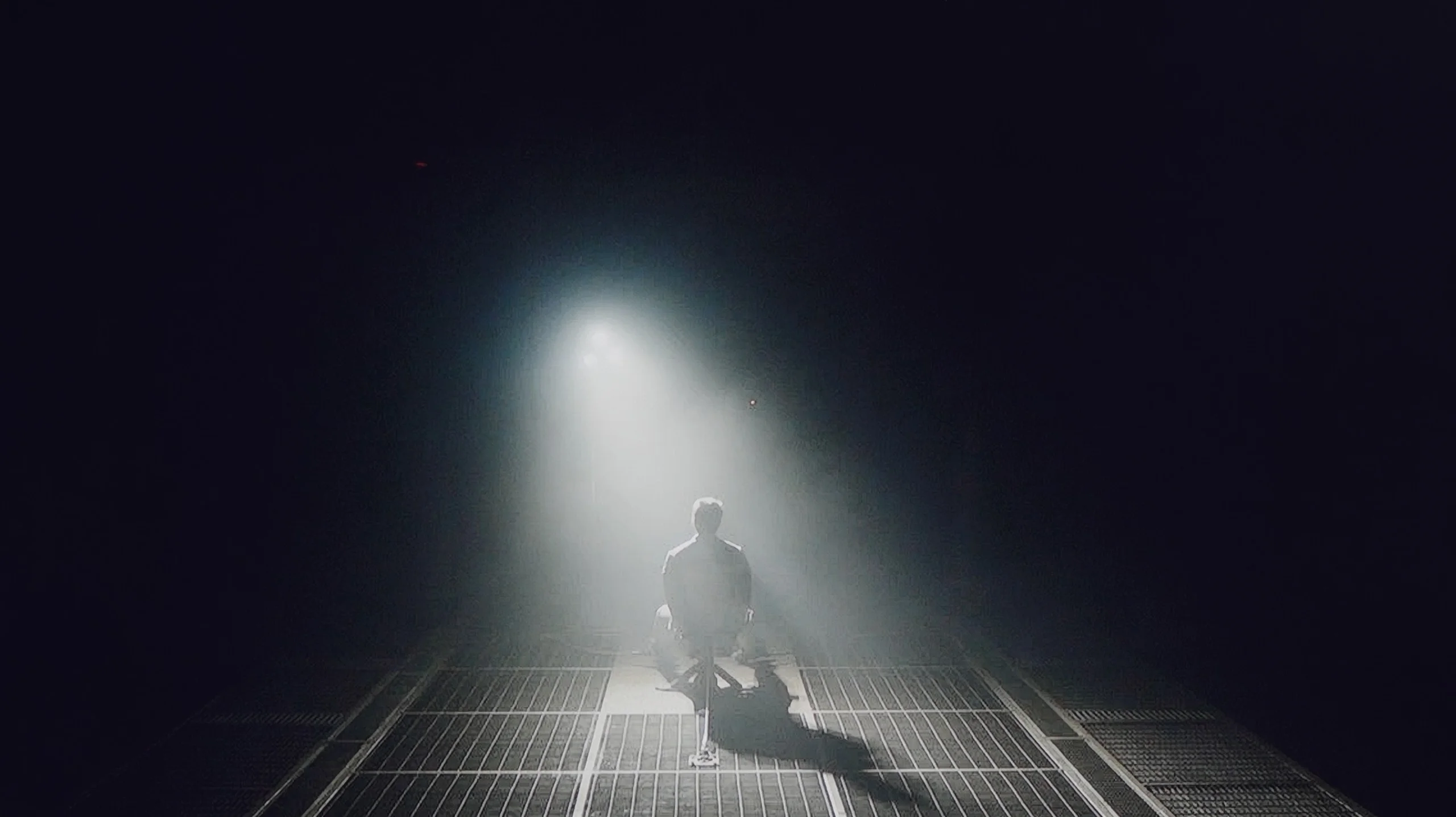
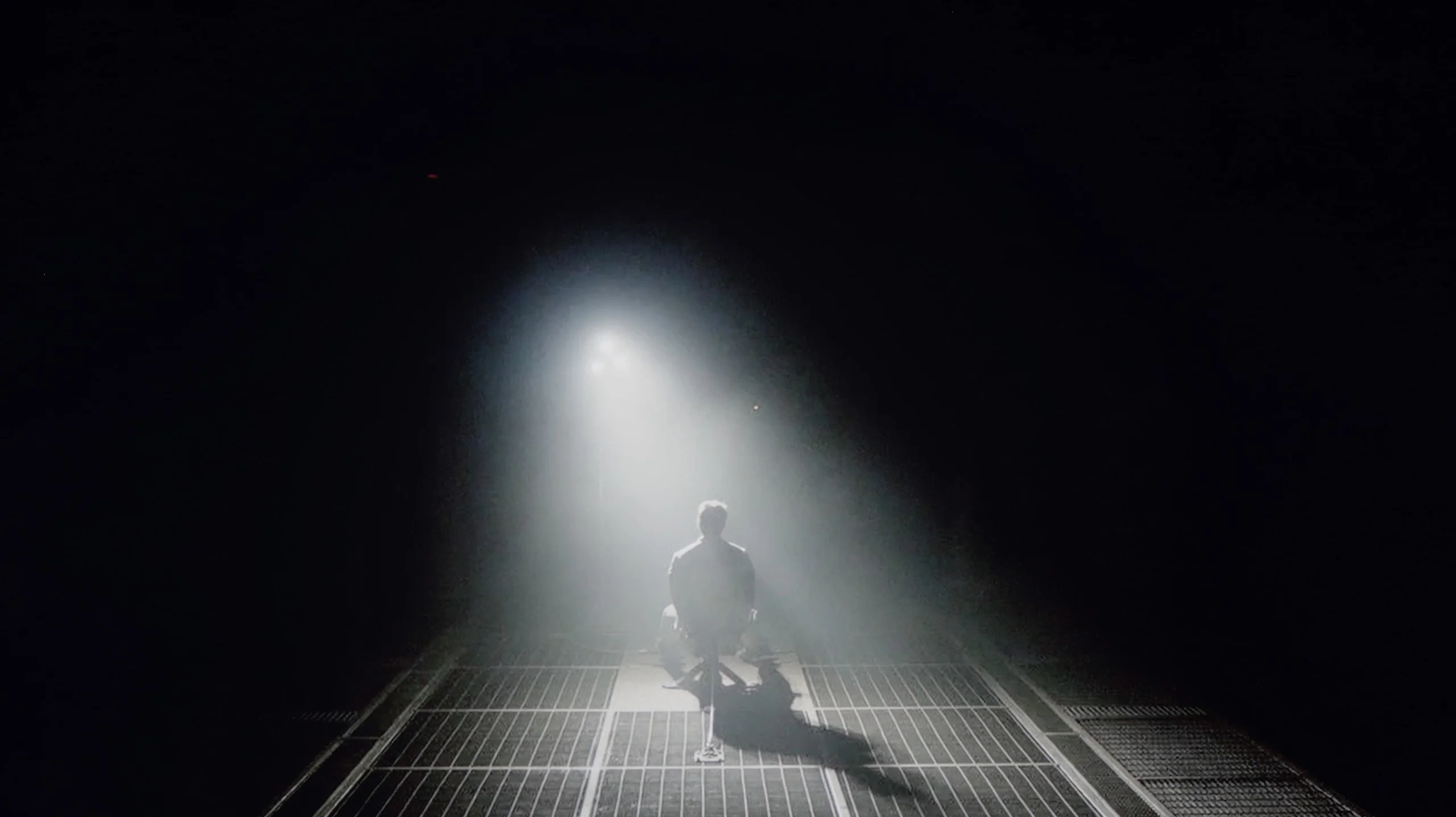
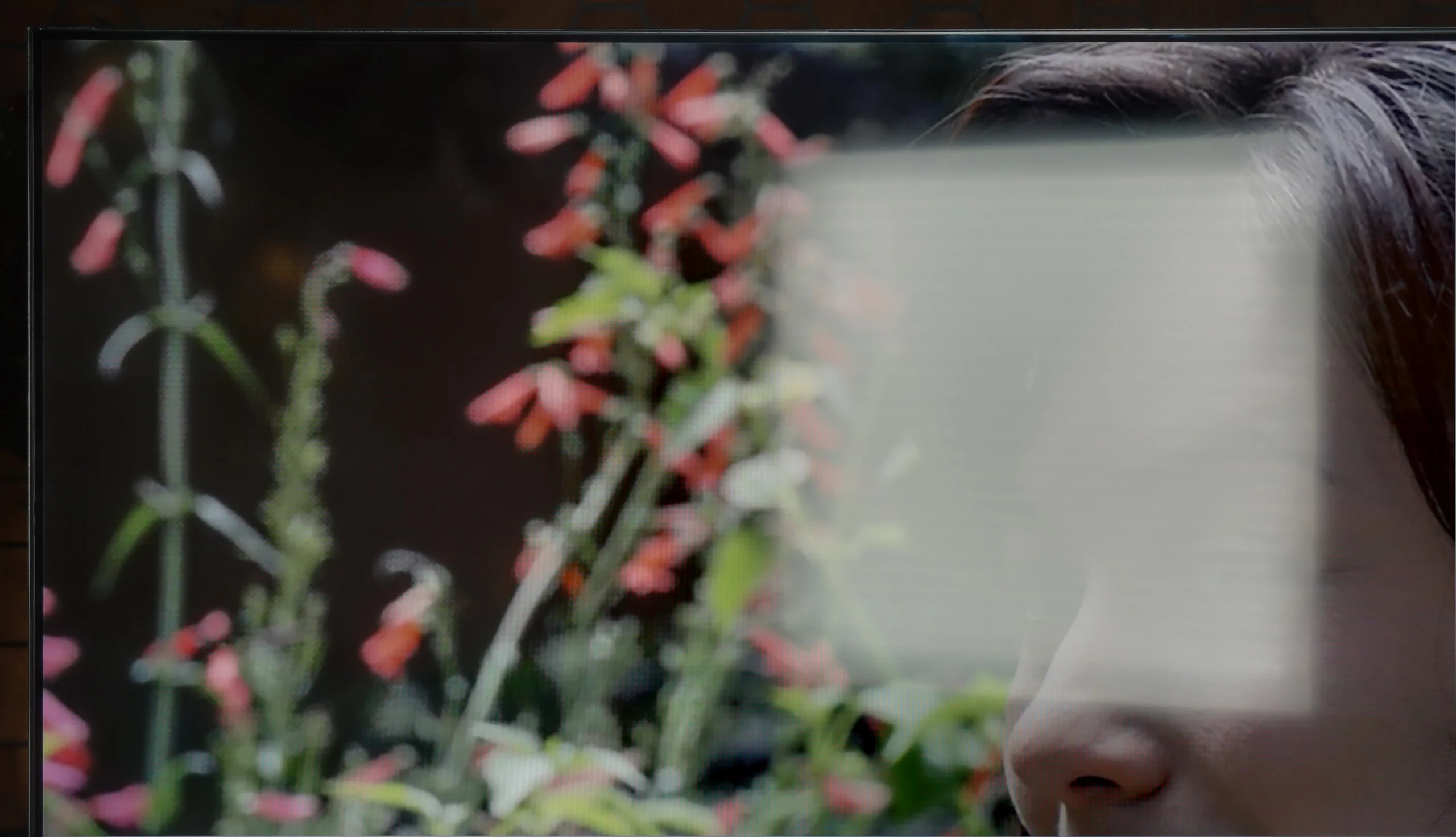
Check the visibility of bright lights on a dark background. Mini-LEDs often struggle with this. The photo does not compare black levels – that’s what the video below is for.
The video accurately shows differences in contrast and black levels between TVs, as well as potential issues: halo around bright objects or Mini-LED zone operation visible as brightness jumps.
The NanoCell series, including the model NANO81 we tested, is based on an IPS panel. For anyone who is somewhat familiar with screen technology, this means one thing: significant problems with black levels and contrast. Our measurements are merciless in this regard. A result of 800:1 is, to put it bluntly, a tragic outcome. In practice, this means that what should appear on the screen as deep black looks like a dark grey patch at night. Watching dark films or series in a completely dark room will be downright torturous – the image will lose all its depth and appear flat. If you do decide on this model, we have one key piece of advice for you: do not watch it in complete darkness. To salvage the situation somewhat, it is best to leave a gentle light on in the room, and the ideal solution would be to install LED strips behind the television. Such backlighting will trick your eye (this is known as simultaneous contrast) and make that grey on the screen seem a little darker. Nevertheless, the start of the test for cinematic experiences looks bleak.
In the 55-inch variant we tested, the Kiano Elegance uses a VA panel, which by itself already provides rather good black levels. The contrast we measured was around 4000:1, which is typical for this kind of panel and clearly better than in TVs using IPS or ADS panels. That gives the picture decent depth in the evening, and blacks are not so heavily brightened. You should bear in mind, however, that the Elegance uses a conventional backlight without local dimming. This means the backlight is on all the time and the TV cannot dim selected parts of the screen. In that respect the difference compared with even basic Mini LED models is obvious. There, individual backlight zones can dim independently, so in dark scenes blacks can be much deeper. Kiano does not have those capabilities, but for a simple LCD TV its native contrast is quite respectable.
HDR effect quality
3.6/10
3/10
Luminance measurements in HDR:

Result
228 nit

Result
193 nit

Result
250 nit

Result
168 nit

Result
252 nit
Result
158 nit
Result
172 nit
Result
193 nit
Result
180 nit
Result
205 nit
Scene from the movie “Pan” (about 2800 nits)


Scene from the movie “Billy Lynn” (about 1100 nits)


The photos show two HDR10 movies. 'Pan' is one of the brightest productions ever made, while 'Billy Lynn' (soldier) has brightness typical of streaming (Netflix, Prime, HBO MAX). Notice the intensity of effects and detail in whites.
Static HDR10


The photos present the visibility of white details in various HDR formats. They do not show brightness differences between TVs (these can be compared in the previous gallery).
HDR luminance chart:
Kiano Elegance Tizen
LG NANO81A / NANO80A
If you are counting on HDR in the NANO81A to bring tears to your eyes, I must disappoint you. This television is simply too dark to truly show what this format is all about. With a brightness of only 250 nits, HDR exists here mainly on paper. In practice, during viewing, it is very difficult to distinguish whether we are watching high dynamic range content or regular SDR – it simply lacks that ‘punch’ of light in the bright parts of the image. However, to give credit where it’s due, we do have a glimmer of hope here – and quite a clear one at that. It concerns the colour gamut coverage. Here, the NanoCell filter shows that it is not just marketing nonsense. Our measurements indicated that the coverage of the DCI-P3 space is around 88%. This is a really solid result that places this model significantly higher than typical budget options based on standard white LEDs without any filters. Of course, it still falls short of the level of quantum dot (QLED) TVs or advanced panels with PFS filters, but for this price point, the colours are surprisingly saturated and vibrant. It's just a shame that this low brightness prevents them from fully ‘spreading their wings’ with the Nano filter.
The HDR effect on the Kiano Elegance is practically non-existent. The TV is simply too dim to deliver any noticeable improvement over a standard SDR picture. Our measured peak brightness is around 200 nits, which is definitely too low for bright elements, such as various lighting effects, to actually stand out on screen. HDR content will be reproduced, but without the impact that the format is meant to provide. In addition, the Kiano Elegance does not use any extra wide colour gamut technologies, like quantum dots or even a PFS filter. As a result, some of the vivid colours encoded in HDR films cannot be shown with proper saturation. This is especially apparent in more colourful productions, where the picture simply looks poorer than on TVs with a wide colour gamut. The Kiano Elegance is therefore much better suited to standard SDR material: broadcast TV, YouTube or older films and series. Their demands are much lower and match this TV's capabilities far better.
Factory color reproduction
5.3/10
4.8/10


This gallery shows how colors change after professional TV calibration. If you notice the difference, we recommend ordering this service at SkalibrujTV.com.
Factory Mode
After calibration
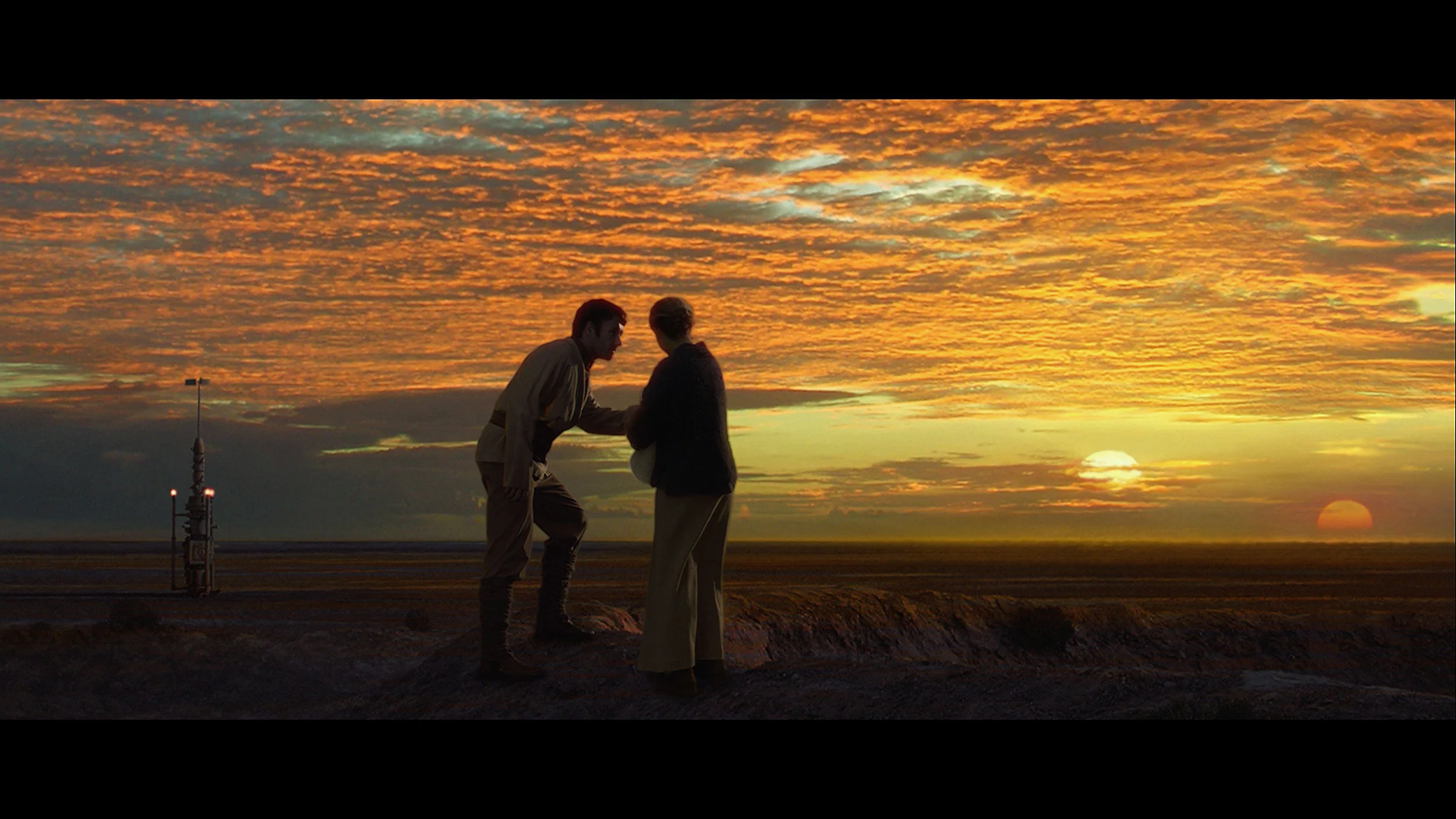
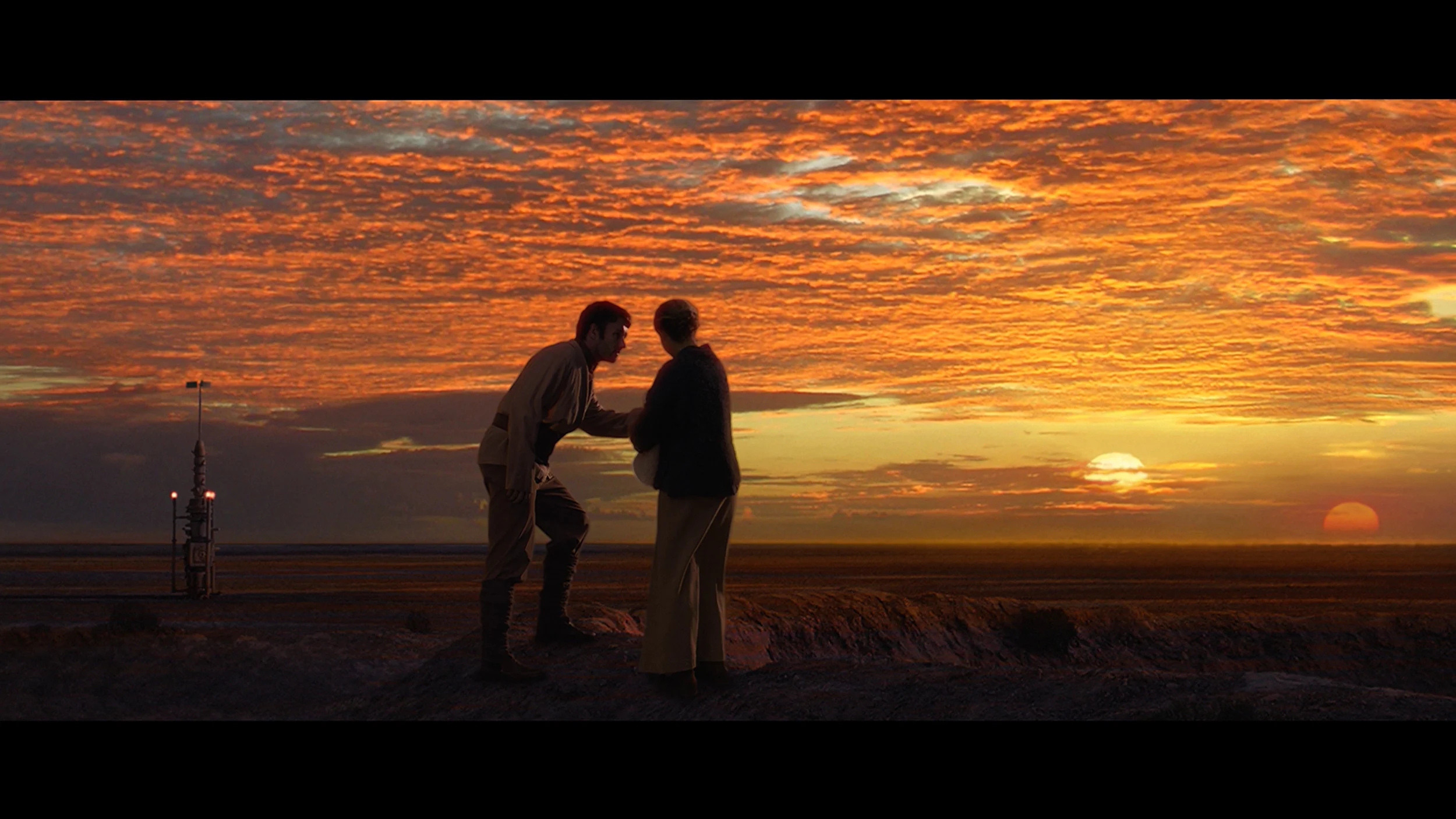
This gallery shows how colors change after professional TV calibration. If you notice the difference, we recommend ordering this service at SkalibrujTV.com.
Factory Mode
After calibration
For every film fan, the natural choice in LG televisions is the Filmmaker Mode. Its aim is to display images as the director intended – without unnecessary "enhancements". Unfortunately, in the case of our test unit NANO81A, the factory settings left something to be desired. The main issue turned out to be the white balance. Measurements showed a distinct deficiency of blue colour, which in practice meant that many scenes had a slightly yellowish, even "yellowed" tint. The white was not perfectly pure, which detracted from the freshness of the image. Additionally, brightness management was also not ideal – the factory-set gamma was too low. The picture often appeared oversaturated, as if overly lifted from the shadows, which caused it to lose naturalness and depth. Fortunately, LG, even in this relatively low price category, does not block access to advanced settings. The calibration possibilities of this model are enormous, which is a big plus for those who enjoy "digging" in the menu. We decided to approach the topic in our own way and see how much we could squeeze out of this panel with professional calibration.
In Film mode the colours on the Kiano Elegance are quite decent, especially for a TV at this price point. However, that does not mean the picture is properly calibrated straight away. This is most apparent in the white balance, which lacked red. As a result the image had a slightly cooler character and some skin tones and warmer colours did not look as natural as they should. On top of that, both the SDR gamma and the EOTF curve in HDR were driven too high. Put simply, the TV brightened the image more than the source material intended. In SDR this produced a slightly brighter, more 'TV-like' image, but it also robbed it of some depth. In HDR this behaviour compounded the panel's limitations, because at such low brightness the TV had even less headroom to correctly render brighter parts of the image. The biggest limitations, however, appeared in HDR. The colour gamut encoded in such material often exceeds the Kiano Elegance's capabilities, which does not employ any gamut-expanding solution. More saturated reds, greens and blues are therefore rendered much more subdued than they should be. In less demanding scenes this is not yet very noticeable, but with more colourful films the difference compared with TVs that have a wide colour gamut becomes very clear.
Color reproduction after calibration
7.5/10
6.5/10


The photos show how movies look on the TV. Pay attention to black detail visibility, colors, and shadow tint.


The photos show how movies look on the TV. Pay attention to black detail visibility, colors, and shadow tint.
After calibration, the NANO81A is a completely different television. What LG offers in terms of image enhancement tools even in such an affordable model deserves a big plus. We managed to completely eliminate that annoying yellowing of whites and make the colours natural, vibrant, and simply "true". In SDR content (that is, regular television, YouTube, or older films), the picture now looks worlds better – it is clear, well-balanced, and no longer strains the eyes with strange hues. It is clear that this panel has significant potential, which is simply wasted by poor presets out of the box. However, we do have one serious reservation that calibration cannot fully overcome – it concerns brightness management in HDR mode. LG's algorithm in this model is constructed very conservatively. The television intentionally dims the HDR picture to avoid overexposing the already weak blacks of the IPS panel. The programmers faced a choice: either to provide more light and accept that the blacks would become light grey or to reduce the brightness to maintain any contrast. They chose the latter. Nevertheless, after our adjustments, watching anything on the NANO81 is significantly better.
Contrary to appearances, even an inexpensive TV like the Kiano Elegance offers quite a lot of calibration options. We were particularly successful at improving the white balance. After correction the slightly cool cast of the image disappeared and the colours became noticeably more natural. We also managed to better set the gamma and the overall image characteristics in SDR. Despite our efforts, it quickly became clear that further limitations no longer stem from the settings but from the TV’s own capabilities. In SDR the Kiano can look genuinely good. Broadcast TV, YouTube, sport and older films can have natural colours and a pleasing image. It’s much worse in HDR. Here calibration alone cannot compensate for the lack of brightness and a wide colour gamut. The TV simply cannot reproduce some of the more saturated colours or sufficiently strong highlights. So while you can get a really decent picture from it in SDR, HDR remains clearly beyond its abilities.
Smoothness of tonal transitions
9.3/10
8.5/10
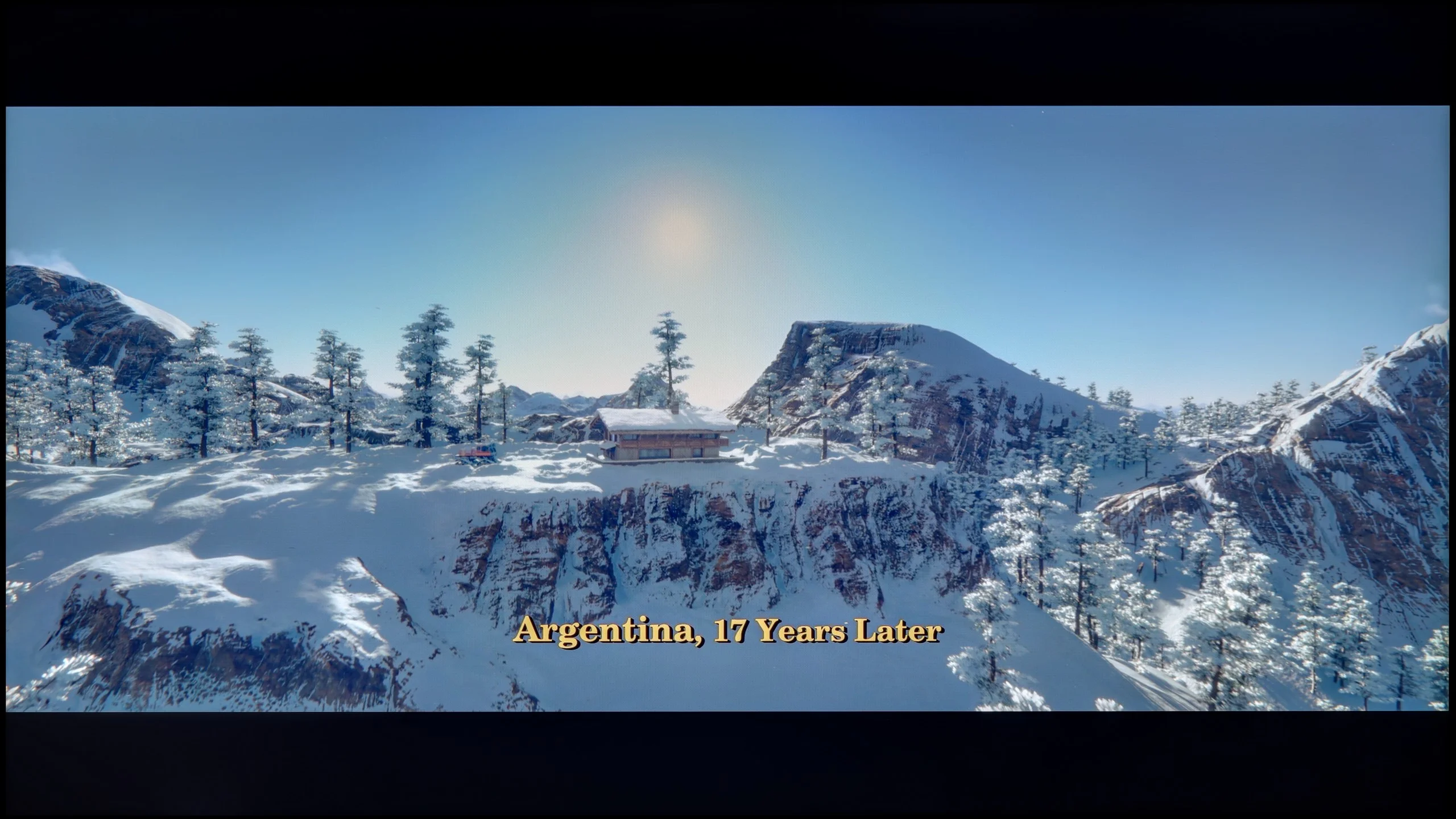



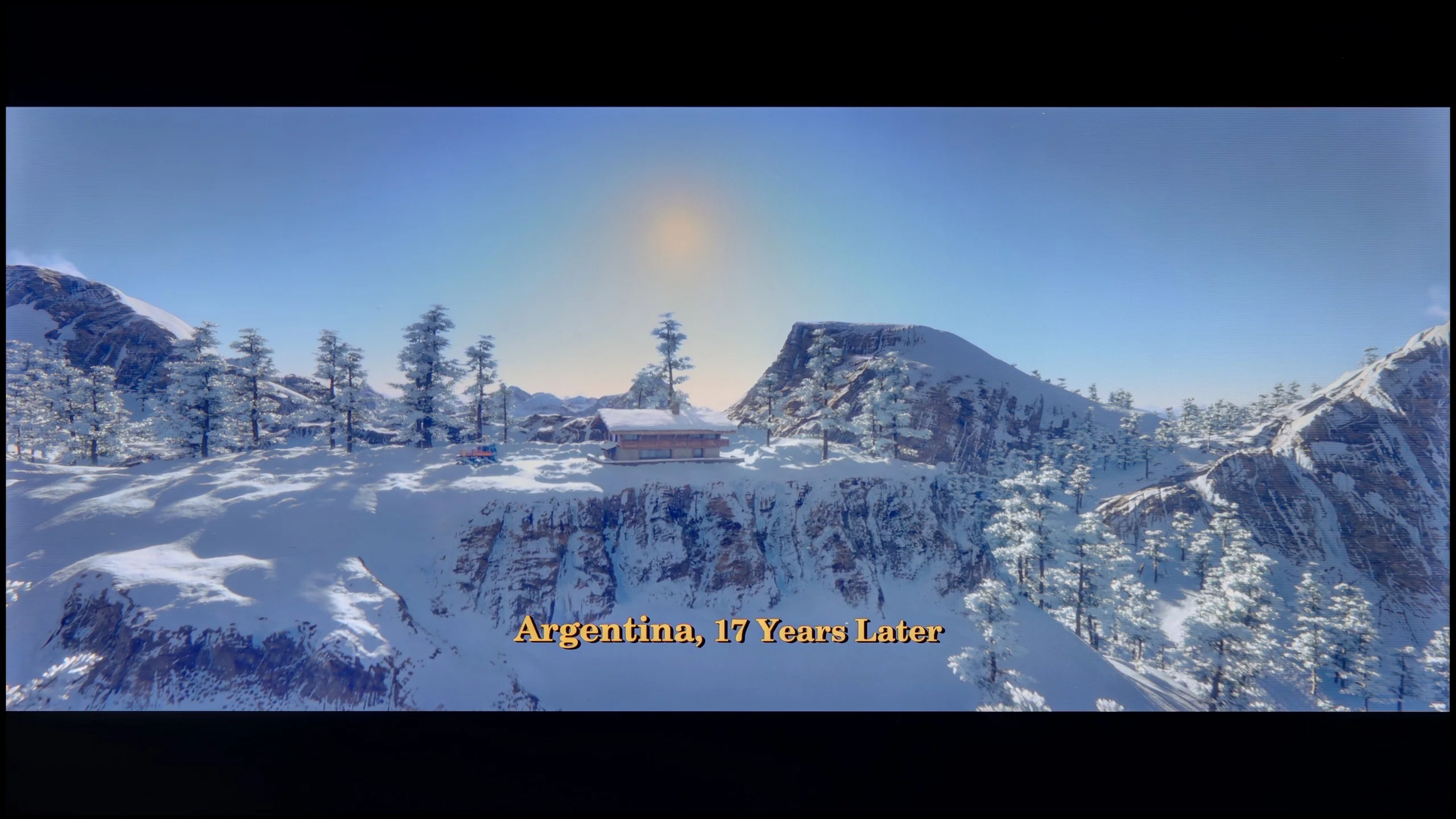
These are selected scenes that show smooth tonal transitions from one color to another. If you see distinct banding, it’s the TV panel’s fault.

These are selected scenes that show smooth tonal transitions from one color to another. If you see distinct banding, it’s the TV panel’s fault.
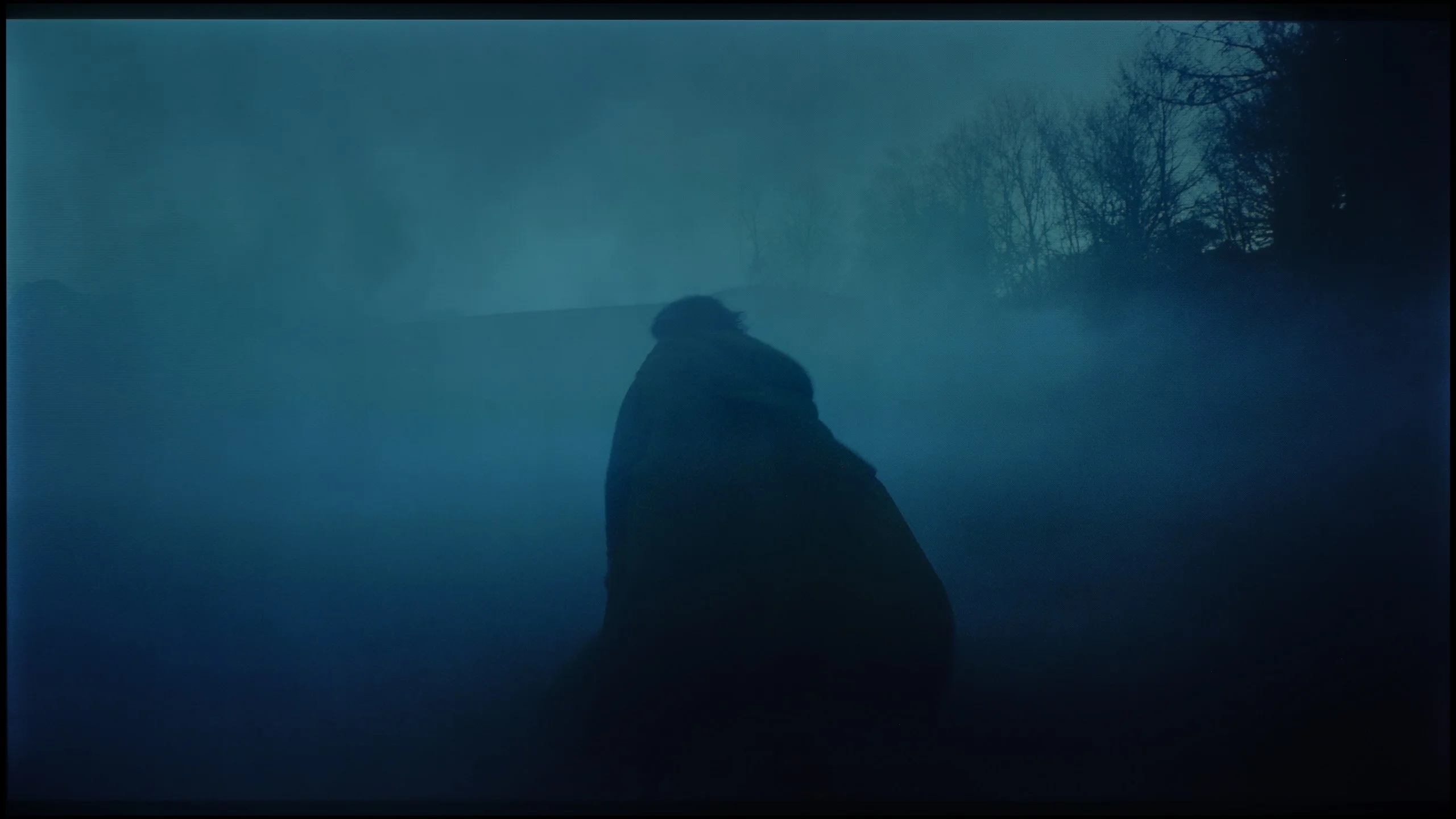
These are selected scenes that show smooth tonal transitions from one color to another. If you see distinct banding, it’s the TV panel’s fault.

These are selected scenes that show smooth tonal transitions from one color to another. If you see distinct banding, it’s the TV panel’s fault.
The fluidity of tonal transitions is an element in which the NANO81A truly shines. LG proves here that it can refine image processing algorithms even in its cheaper models. During testing, we practically noted no occurrences of banding, that is, the annoying "steps" visible where one colour should transition smoothly into another. Everything appears incredibly natural and smooth. This is particularly evident in the bright scenes from the film Kingsman, where the backgrounds remain clean and free from digital artefacts. However, what is even more impressive is how the television handles the extremely difficult, dark, and misty shots in The Revenant. Where many budget panels falter and serve up ugly patches instead of smooth mist, the NANO81A holds its ground, offering very velvety transitions. The only downside is the fact that with darker shades, you will notice more of the weak blacks of this television rather than any issues with colour blending.
The Kiano Elegance handles colour gradation quite well. In most scenes the transitions between individual shades are smooth and there is no strong banding or distinct bands that can be a problem in the cheapest televisions. The biggest limitations only appear in darker scenes. With very subtle transitions in greys or shadows you can notice slight posterization and colour separation. However, this is not something that will be noticeable all the time. With typical content Kiano fares reasonably well in this respect, especially given its price.
Image scaling and smoothness of tonal transitions
7/10
6.5/10


Smooth transition function
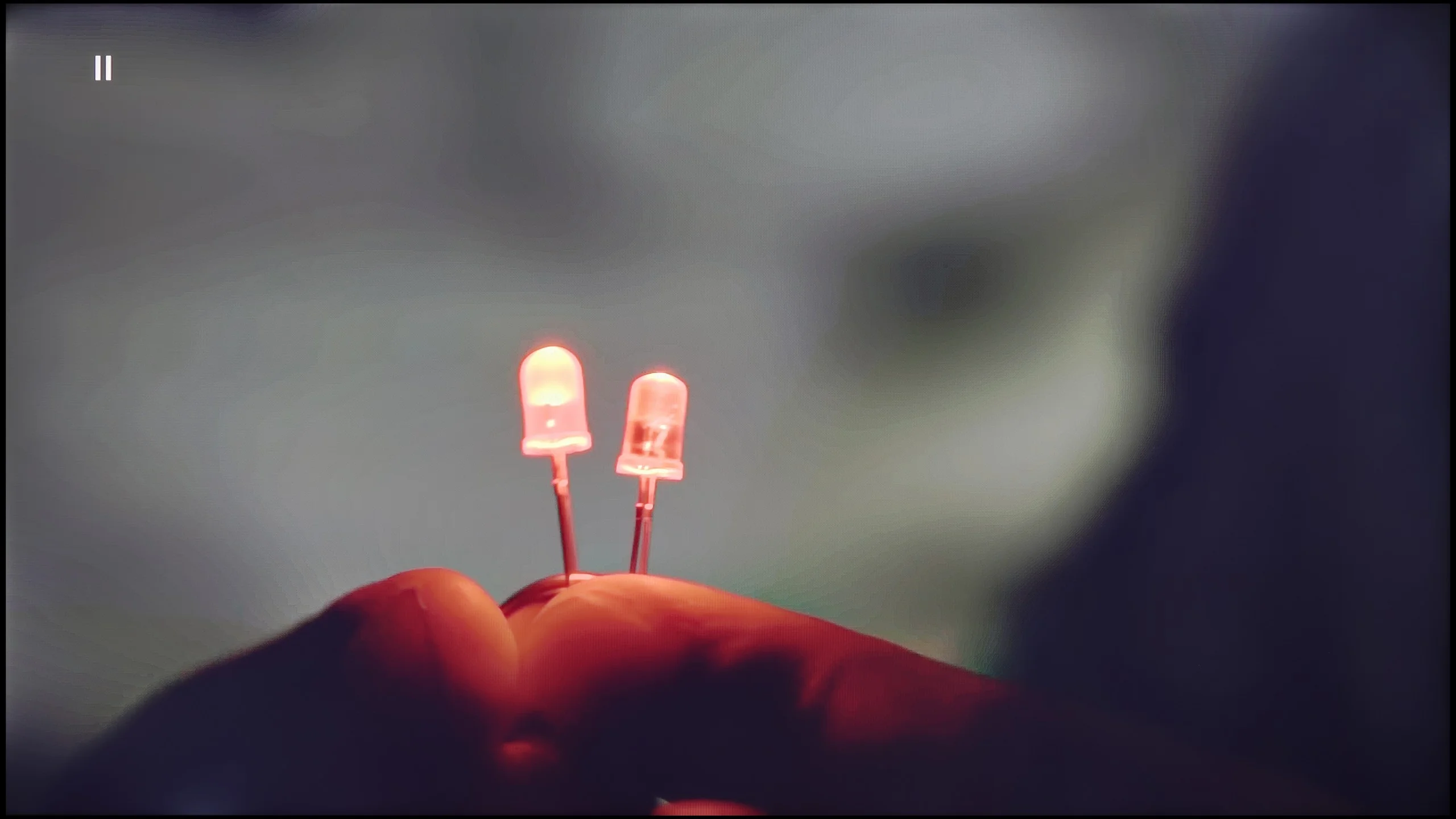
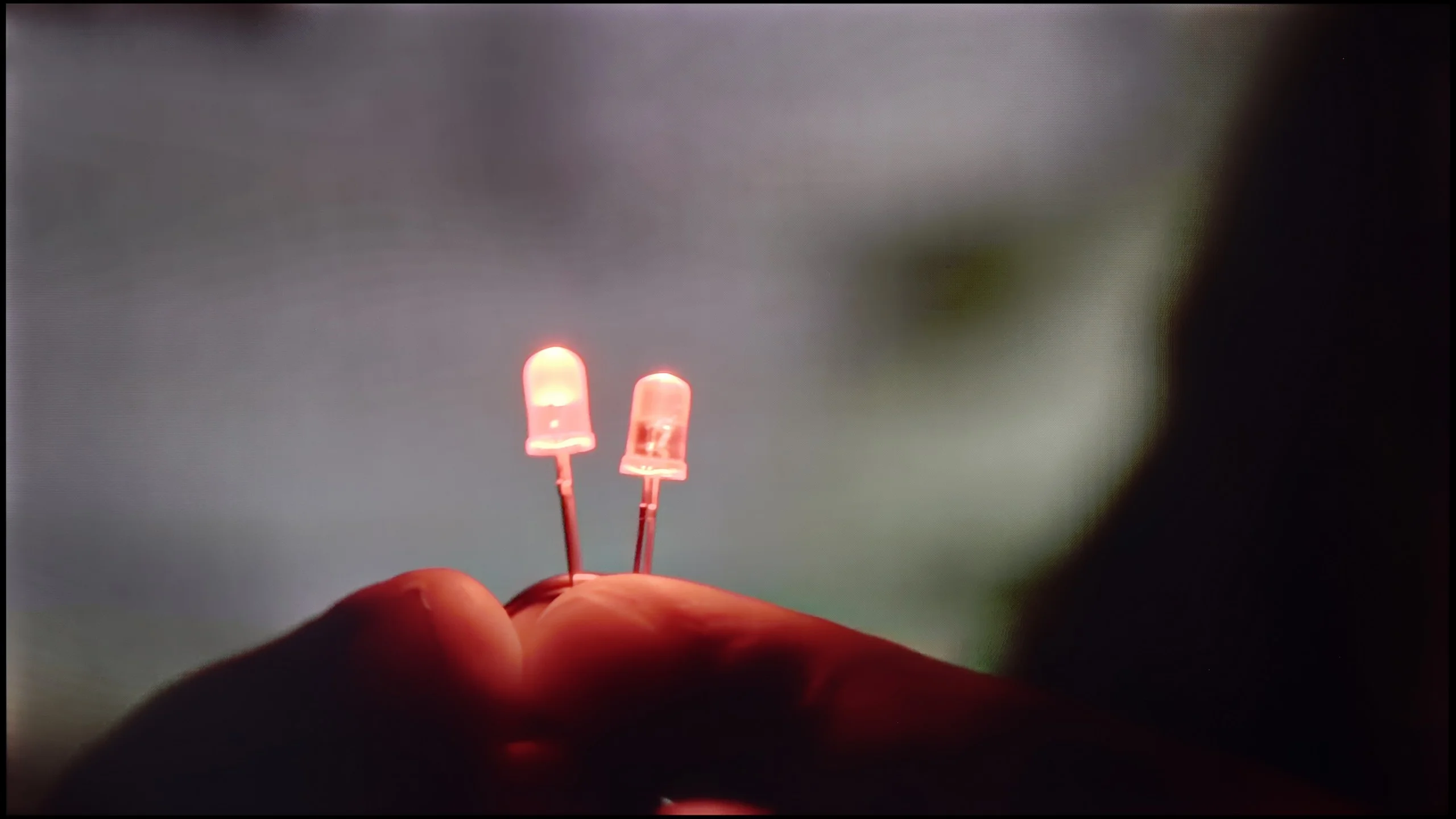
The match photo shows how the TV smooths weak tonal transitions in low-quality video.
Image scaling SD (576i)
It often happens that cheap 4K panels mercilessly bring to light all the "dirt" and imperfections of lower-resolution content. However, with the LG NANO81A, the situation is quite different. This is truly a solid performer when it comes to handling content that is far from ideal. The built-in processor does a great job with upscaling. Even older recordings look quite decent on this screen – the image is coherent, cleaned of digital noise, and simply pleasant to the eye. A significant advantage is the gradation reduction feature that you will find in the settings. It is extraordinarily effective in combating colour banding, which is a lifesaver when watching materials with a low bitrate, for instance, from some streaming services or older files from the web. However, it is worth maintaining a certain level of caution. Since we are dealing with a less powerful chip than in LG's top models, setting this option too aggressively may sometimes result in minor artefacts or slight blurring of details. Despite this risk, I definitely encourage experimenting with this feature - in many cases, it can save the viewing experience and make low-quality material fully watchable.
For a relatively inexpensive TV, the upscaling and digital image processing in the Kiano Elegance perform really well. The scaling of lower-resolution content itself is decent. It is not, of course, at the level of the best TVs on the market, but ordinary broadcast television and Full HD content look quite good on a 4K screen. We were much more surprised by its ability to smooth unwanted tonal transitions. Many TVs in this price bracket either do not offer a similar function at all, or its effect is practically invisible. Kiano, using noise reduction known from Samsung TVs, can quite effectively mask heavy compression, colour banding and other imperfections of poorer sources. There is just one catch. The feature works fairly aggressively and, along with the imperfections, can also remove some fine detail or natural film grain. So with high-quality content we would probably leave it off. However, if you are watching older recordings, heavily compressed broadcasts or poor-quality material from the internet, it is worth experimenting with it. In such conditions it can actually improve perceived image quality.
Blur and motion smoothness
4.6/10
2/10
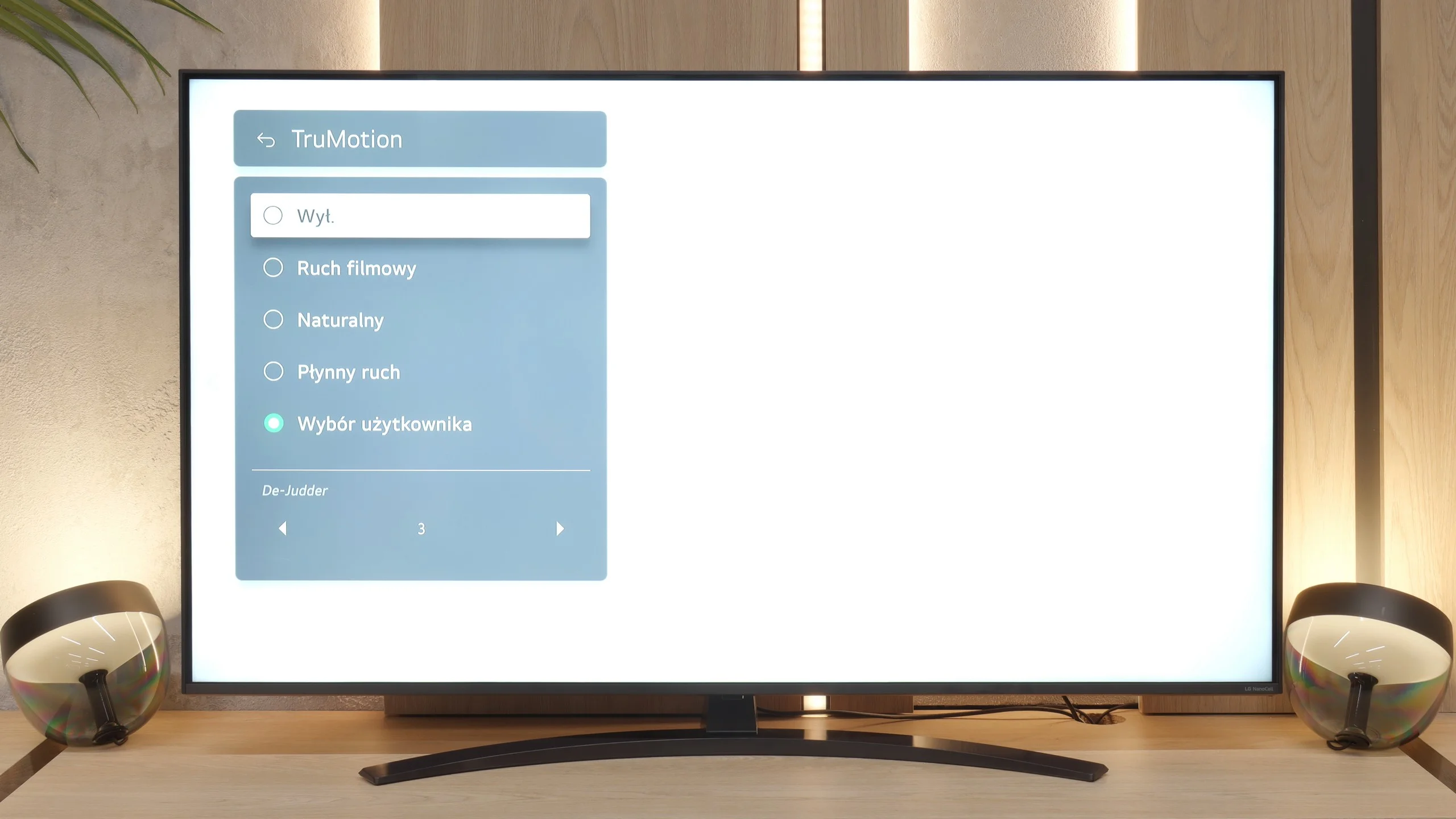
Blur (native resolution, maximum refresh rate):






When it comes to motion fluidity, the NANO81A unfortunately has a hard time. The television is based on a panel with a refresh rate of 60 Hz. If you are looking for perfect sharpness in dynamic football matches or fast action games, you may feel a bit disappointed. With such a low native refresh rate, fast objects on the screen will always be a little blurred.
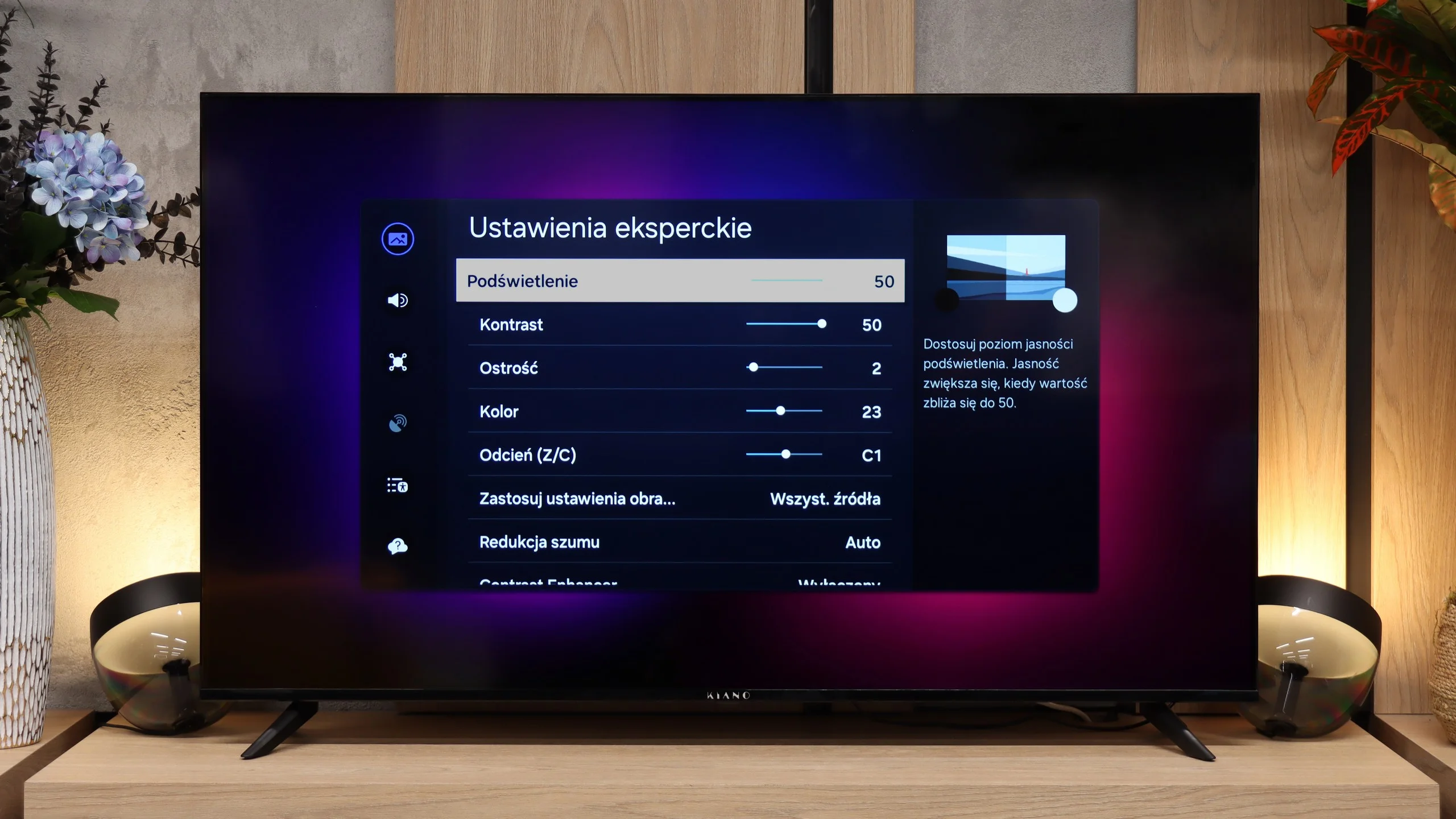
In terms of motion handling the Kiano Elegance performs rather poorly. The TV has a 60 Hz panel, but at this price point that's not surprising. What’s more problematic is the complete lack of any motion interpolation feature. In practice that means the TV displays content at exactly the frame rate at which it was recorded. That isn't a major issue for films, but with sport or fast panning shots you can clearly see that motion isn't particularly smooth.
Console compatibility and gaming features
6/10
1.6/10
- ALLM
- VRR
- VRR range48 - 60Hz
- Dolby Vision Game Mode
- Correct implementation of HGIG
- 1080p@120Hz
- 1440p@120Hz
- 4K@120Hz
- Game bar
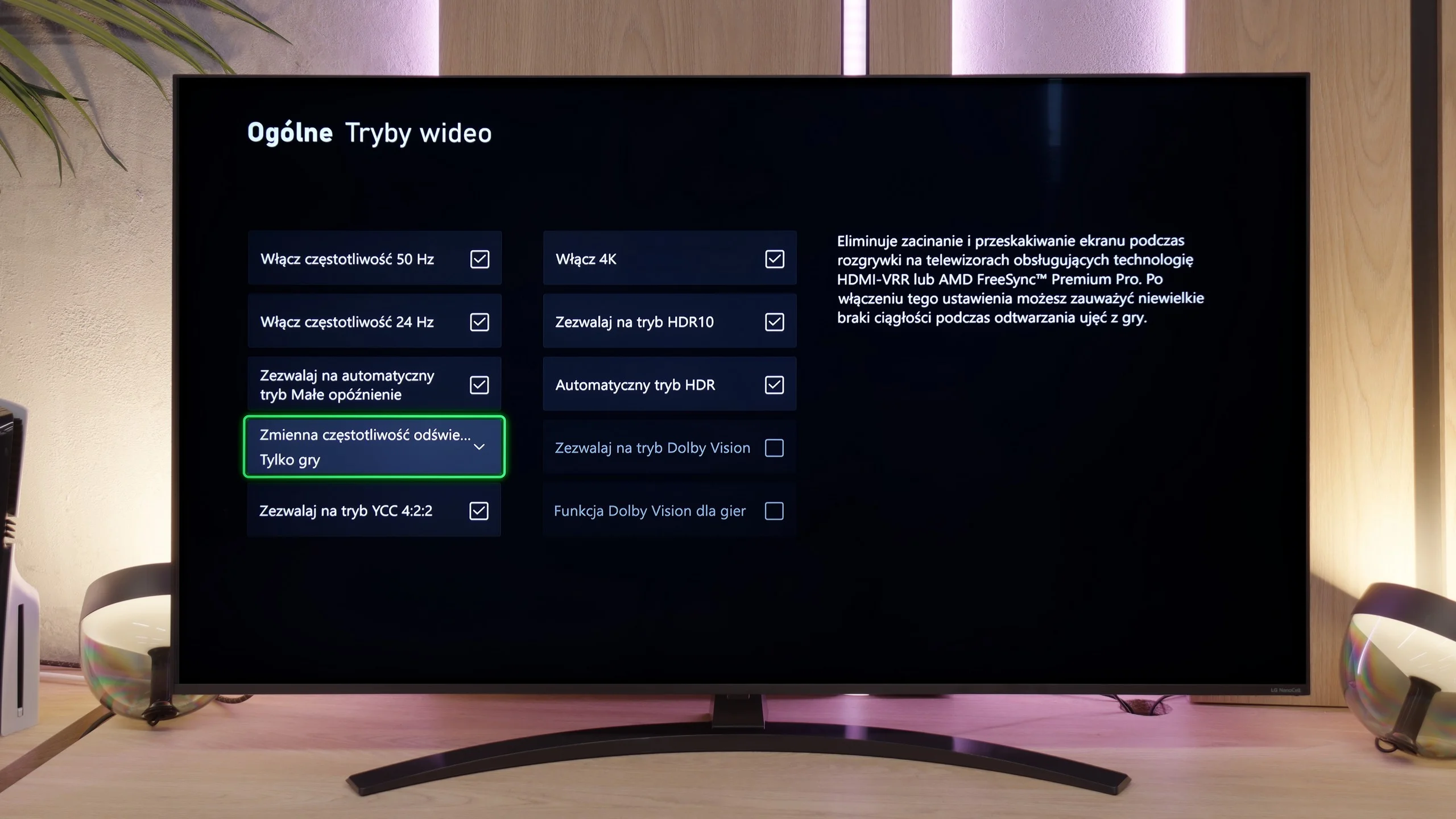
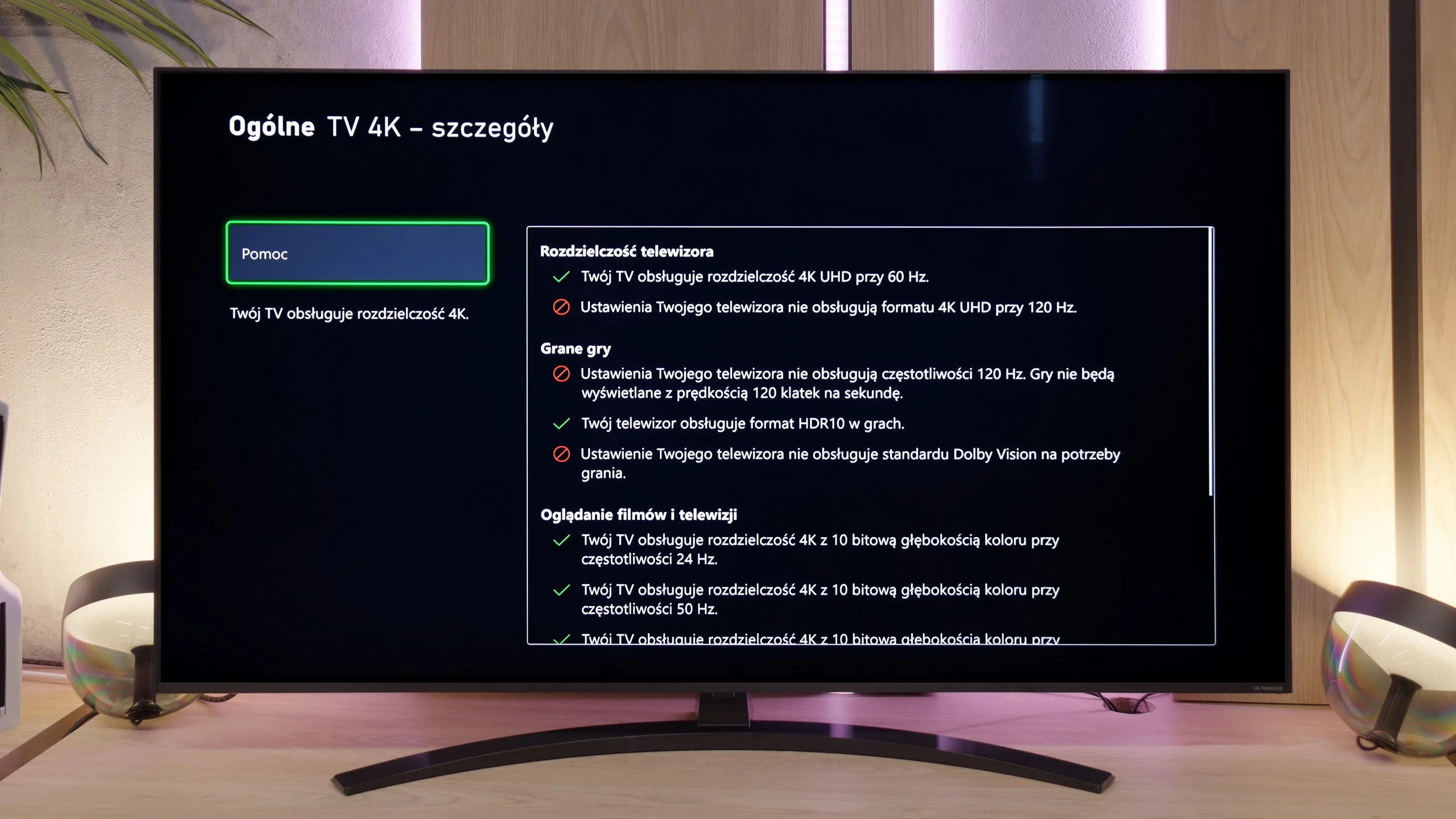
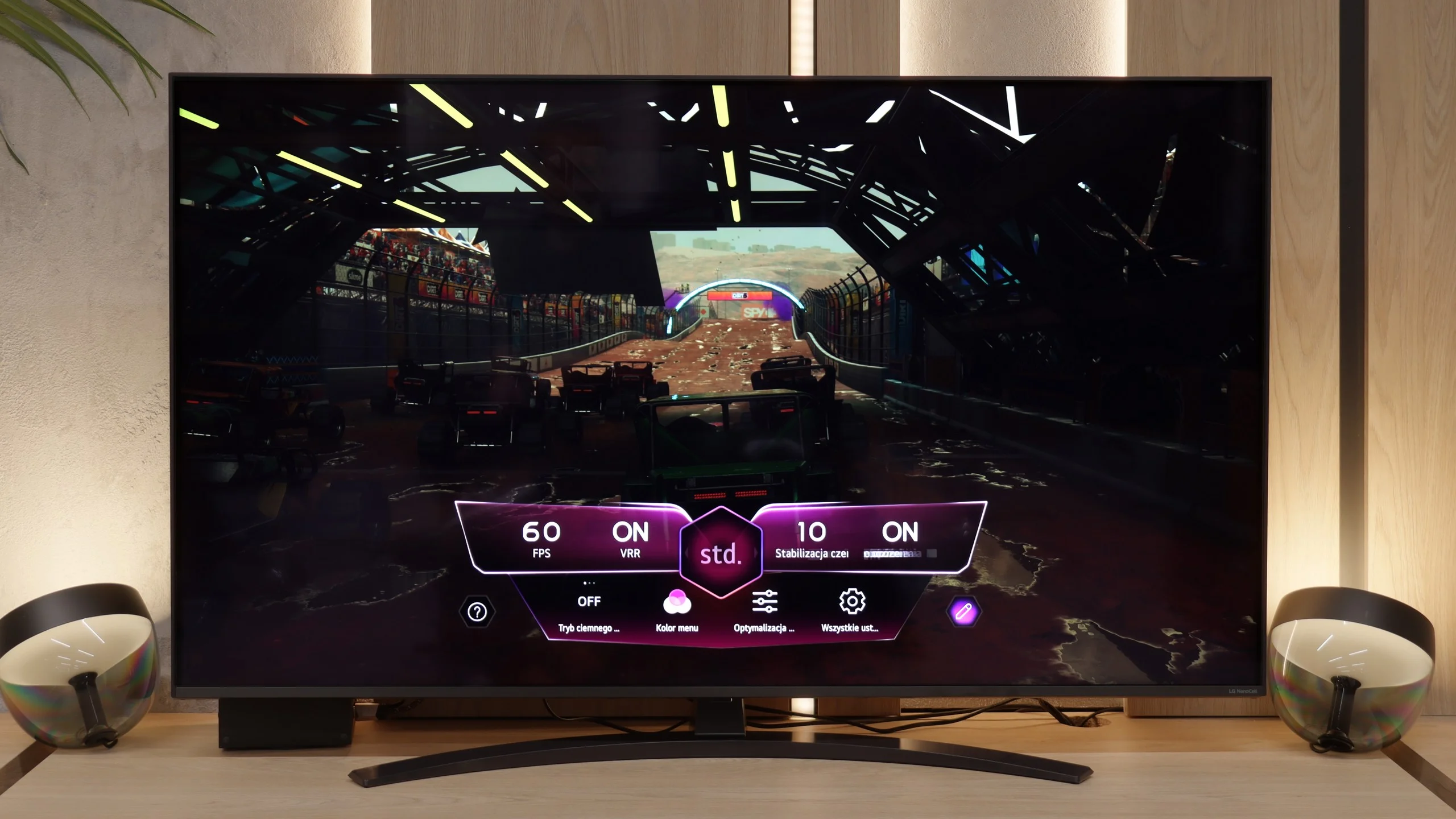
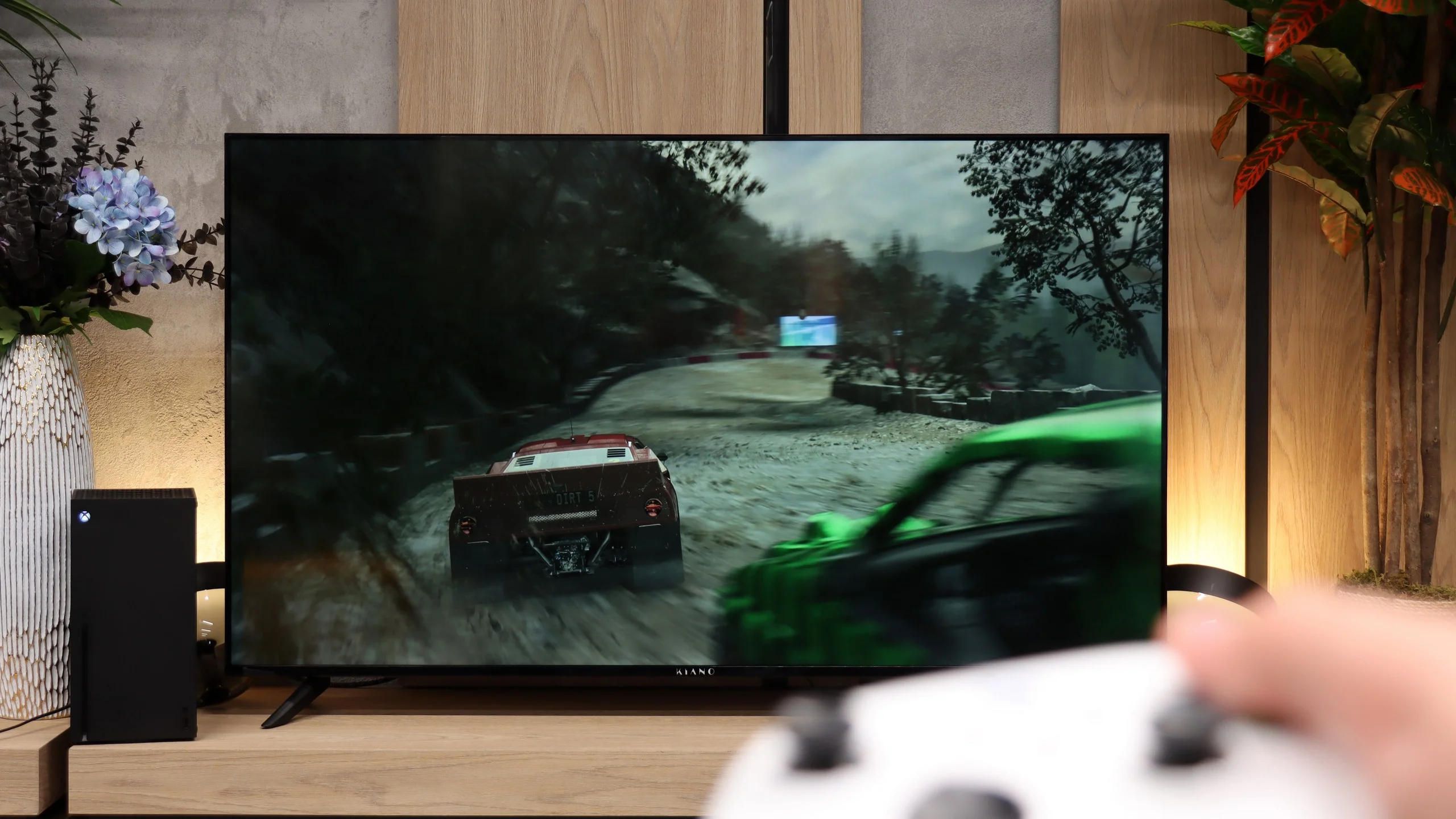
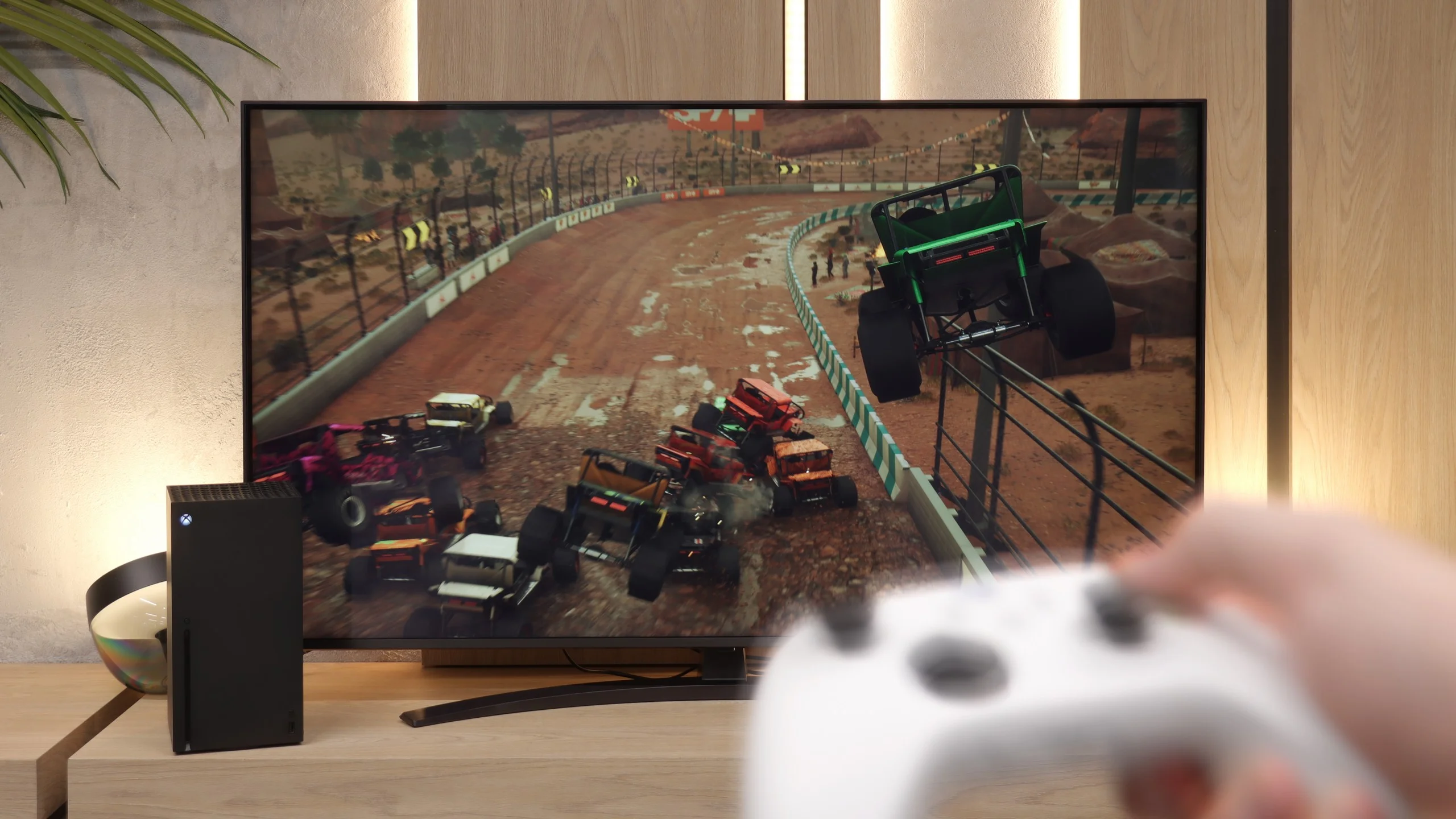
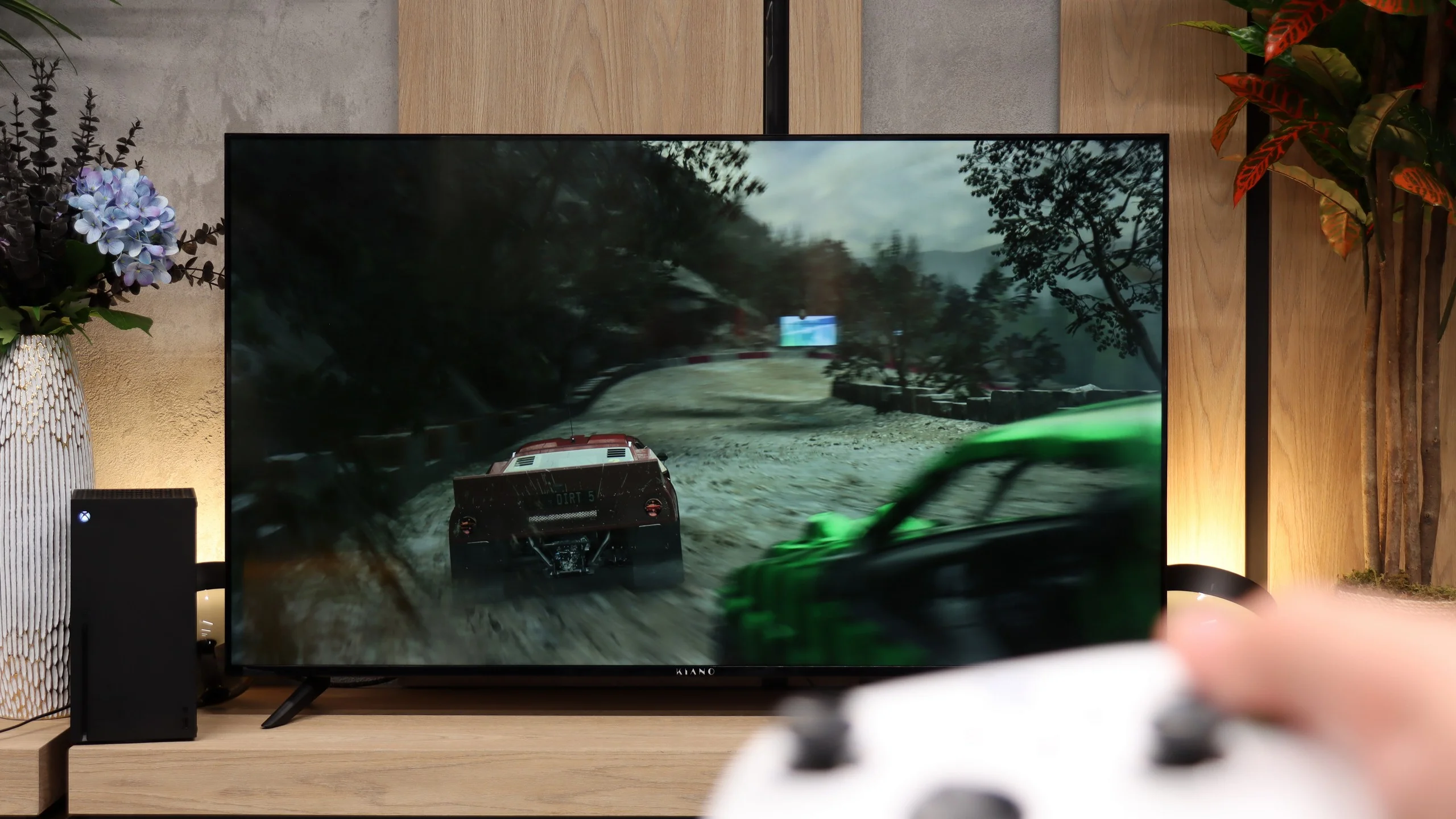
NANO81A is unfortunately not hardware designed for e-sports. The lack of support for a 120 Hz signal is a fact that users planning to purchase this model simply have to come to terms with. Nevertheless, LG's engineers have made an effort to maximise the potential of this 60 Hz panel, offering a set of features that genuinely enhance the gaming experience. Firstly, the television supports VRR technology (within the range of 48-60 Hz) and ALLM. As a result, the image remains stable and does not "tear", and the device automatically switches to low-latency mode as soon as it detects a signal from a console. Managing these settings is extremely simple thanks to a dedicated system overlay, which allows for quick viewing of parameters without leaving the game. A very significant advantage is the support for the HGiG format. This solution is crucial for owners of modern consoles because it enables the television to correctly "understand" the intentions of game developers regarding HDR tone mapping. In practice, this helps avoid the effect of "blown-out" bright spots, such as clouds or light sources, which is unfortunately a common issue in budget LCD televisions.
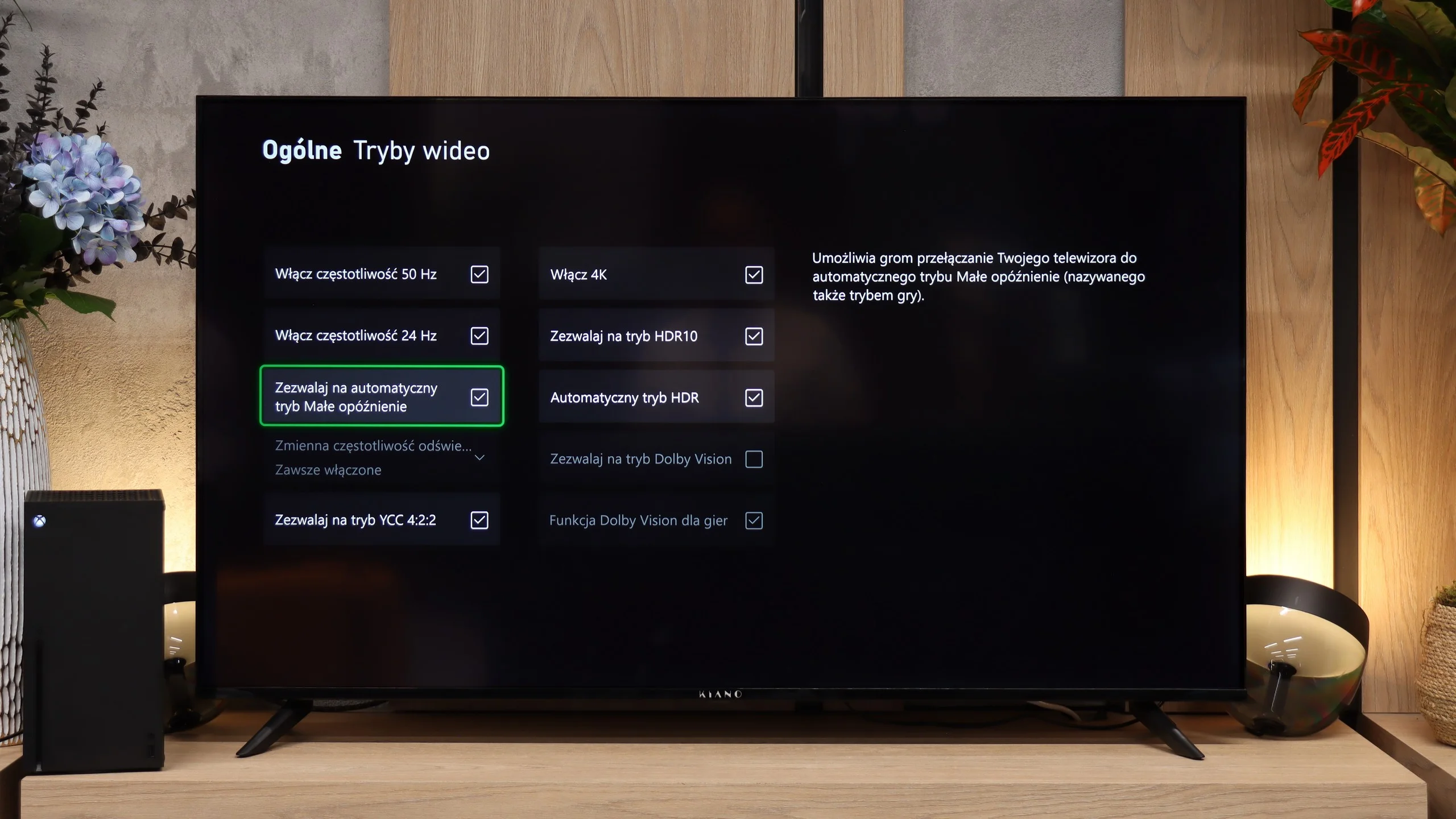
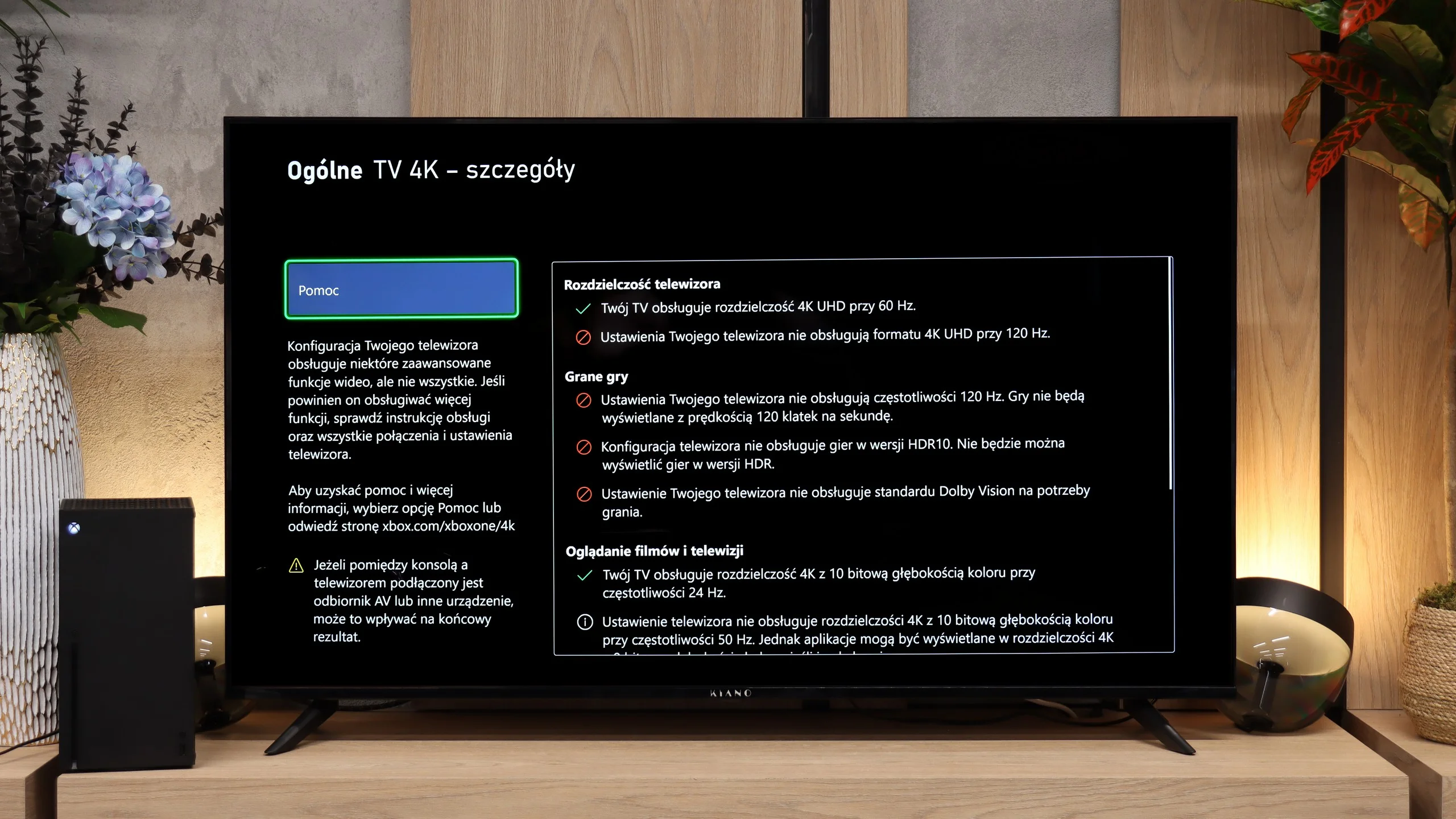
The Kiano Elegance lets you connect a console and play, but its ambitions basically stop there. The panel supports up to 60 Hz and there is no VRR, which helps when frame rates drop. It even lacks ALLM, i.e. automatic switching to a low-latency mode, so you have to take care of the TV’s settings yourself. That’s a pity, especially since input lag is low in the appropriate mode. However, if a console is one of the main reasons you’re buying a TV, it’s worth looking for something with greater capabilities.
Input lag
10/10
9.8/10
SDR
HDR
Dolby Vision
In terms of response speed, the LG NANO81A performs exceptionally well. The input lag we measured is around 12 ms. This result is at a very low level, which for a gamer means one thing – the delay between moving the stick on the controller and the reaction on the screen is practically imperceptible. The television excels in fast-paced titles, where every millisecond counts, and in this regard, it does not lag behind significantly more expensive models.
Although it has few features for gamers, the Kiano Elegance performs very well in terms of input lag. We measured around 14 to 15 ms at 60 Hz, both in Full HD and in 4K. Turning on HDR also doesn't increase input lag. Response to controller inputs is therefore quick, and while gaming you don't feel the TV noticeably delaying the controls. This is one of the model's strengths.
Compatibility with PC
6/10
6/10
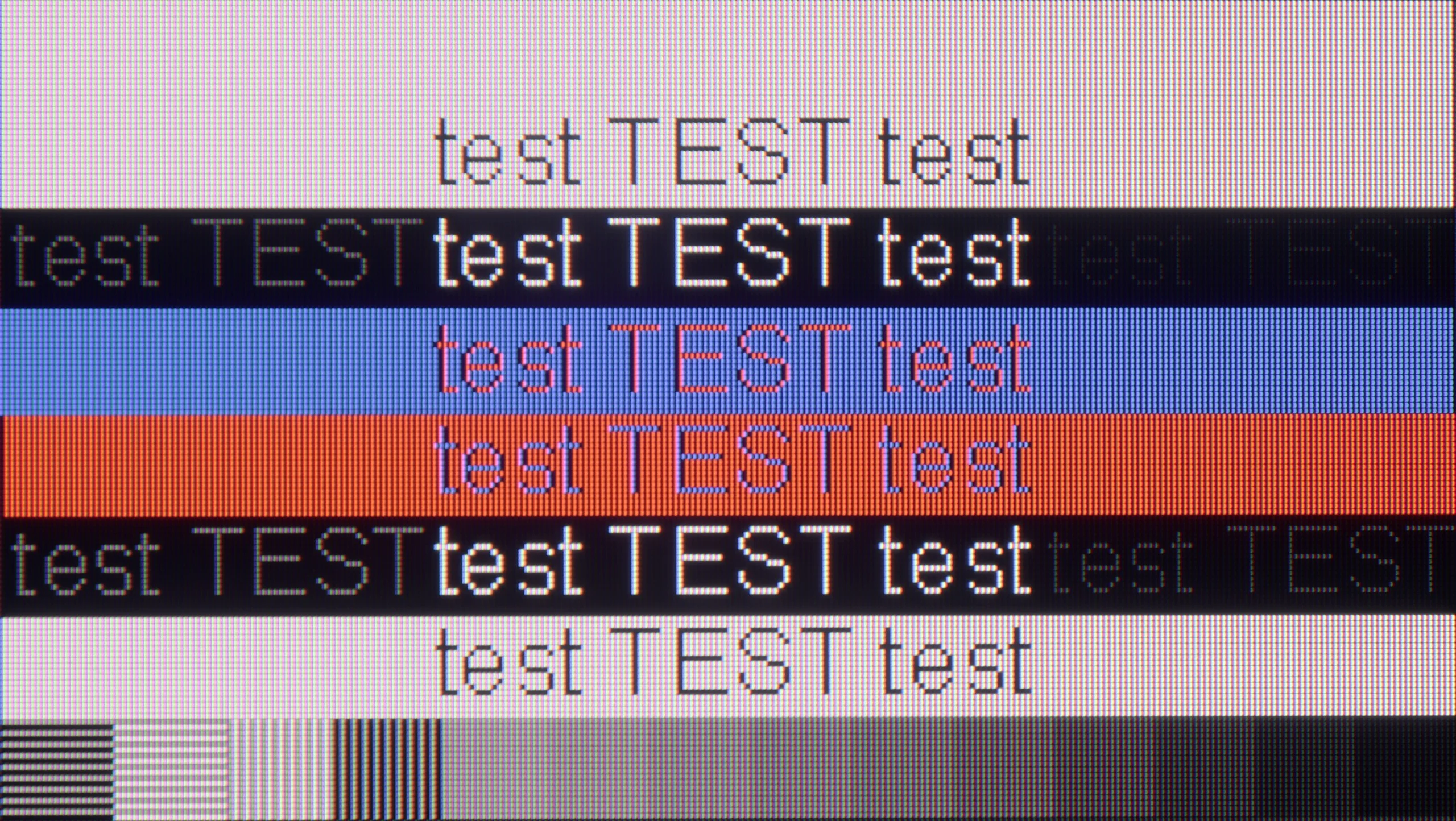
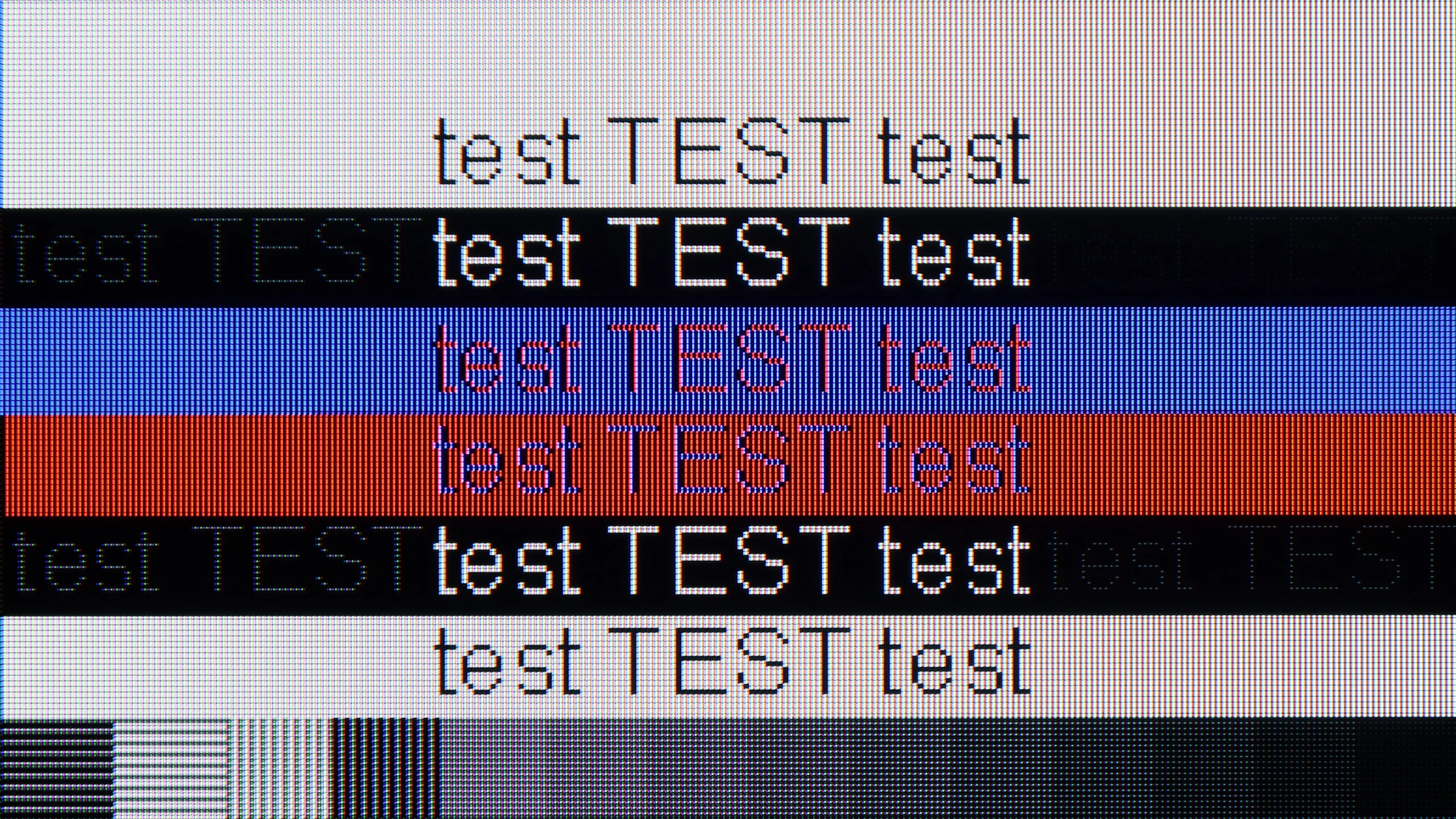
The photo shows the legibility of small fonts. Ideally, lines should be the same thickness on both light and dark text, with minimal pixel gaps.
Nano81A is truly a solid monitor for working with text. Thanks to the IPS panel and proper Chroma 4:4:4 implementation, fonts are very clear and sharp – practically everyone will be satisfied with how this screen performs as a monitor. We noticed just one minor detail that we picked up with our laboratory meticulousness: the vertical lines of dark text are slightly darker than the horizontal ones. However, this phenomenon is so minimal that we did not decide to deduct points for it. The scores only went down when it came to features typical for PC gamers – the lack of G-Sync support and high refresh rates above 60 Hz will be a significant downside for those looking for a screen for dynamic computer games.
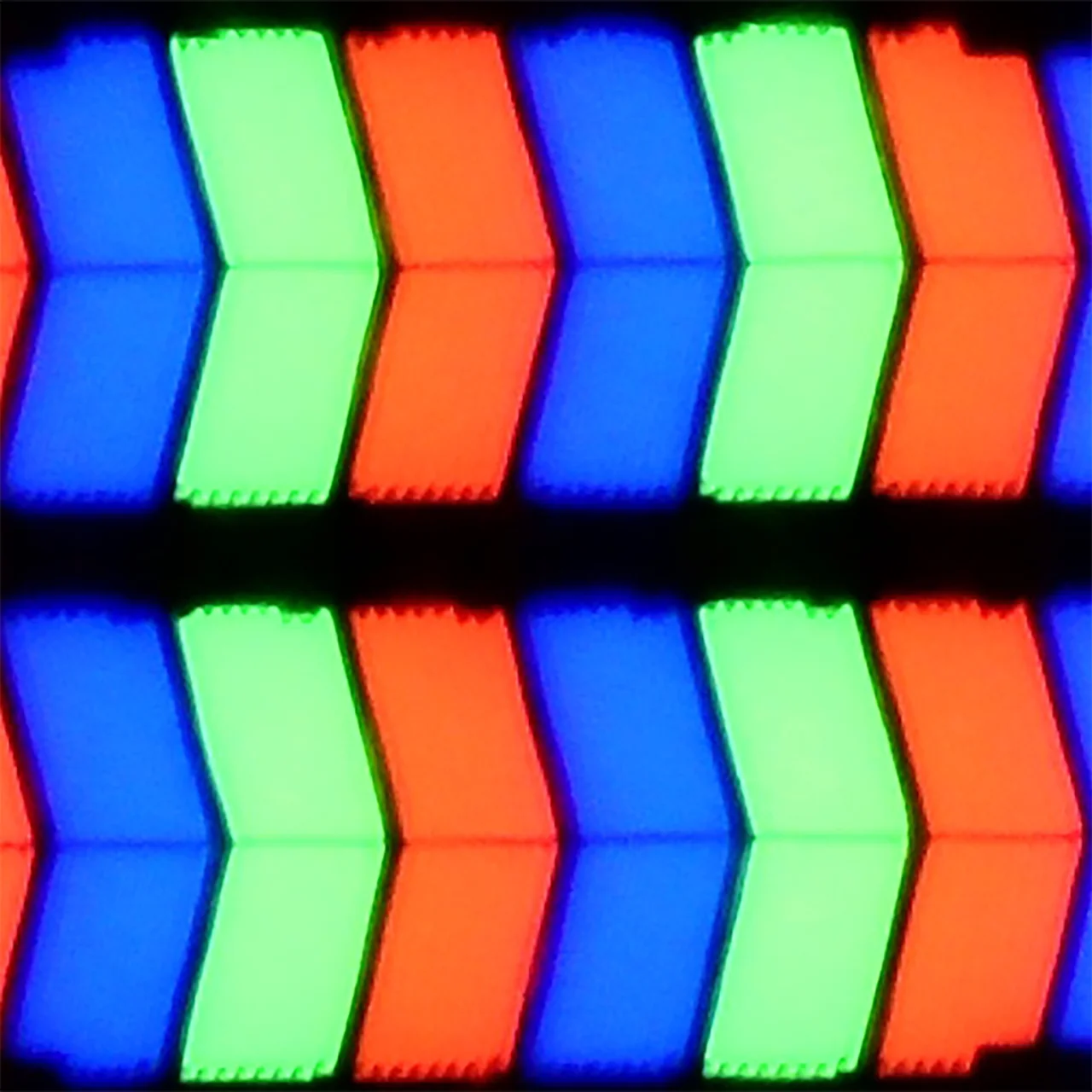
For browsing the internet, reading documents or displaying images from a laptop, the Kiano Elegance performs quite well. It supports 4:4:4 chroma subsampling, so small, colourful letters remain legible. There are also no major issues with rendering dark text. Despite using a BGR subpixel arrangement, font legibility in our tests was very good.
When gaming on a PC, however, the limitations described earlier reappear. The refresh rate maxes out at 60 Hz and G-Sync is not supported. A low input lag of around 15 ms provides responsive control, but it will not improve the clarity of moving objects. As a large screen for basic tasks the Kiano manages well, but there are better options for fast-paced games.
Viewing angles
6.1/10
2.8/10
This is the moment when the LG NANO81A can finally "breathe" and make up for the points lost in the categories of black levels and contrast. Thanks to the use of an IPS panel, the viewing angles here are simply very good. It is in this section that the tested model gains the most and clearly shows its advantage over competing televisions equipped with VA panels. In practice, this means that the image does not lose quality, even when viewed from a sharp angle. This makes the NANO81A a great option for those who have a wide furniture arrangement in their living room or often watch matches and films with larger groups.
The Kiano Elegance is best watched sitting directly in front of the screen. Move to the side and the colours noticeably lose saturation, and the image becomes much less contrasty. At a 45-degree angle we measured a brightness drop of about 63%, so the difference is hard to miss. This is a typical weakness of VA panels and something to bear in mind if the TV will be placed opposite a wide sofa or viewed from different parts of the room.
Daytime performance
4/10
3.7/10
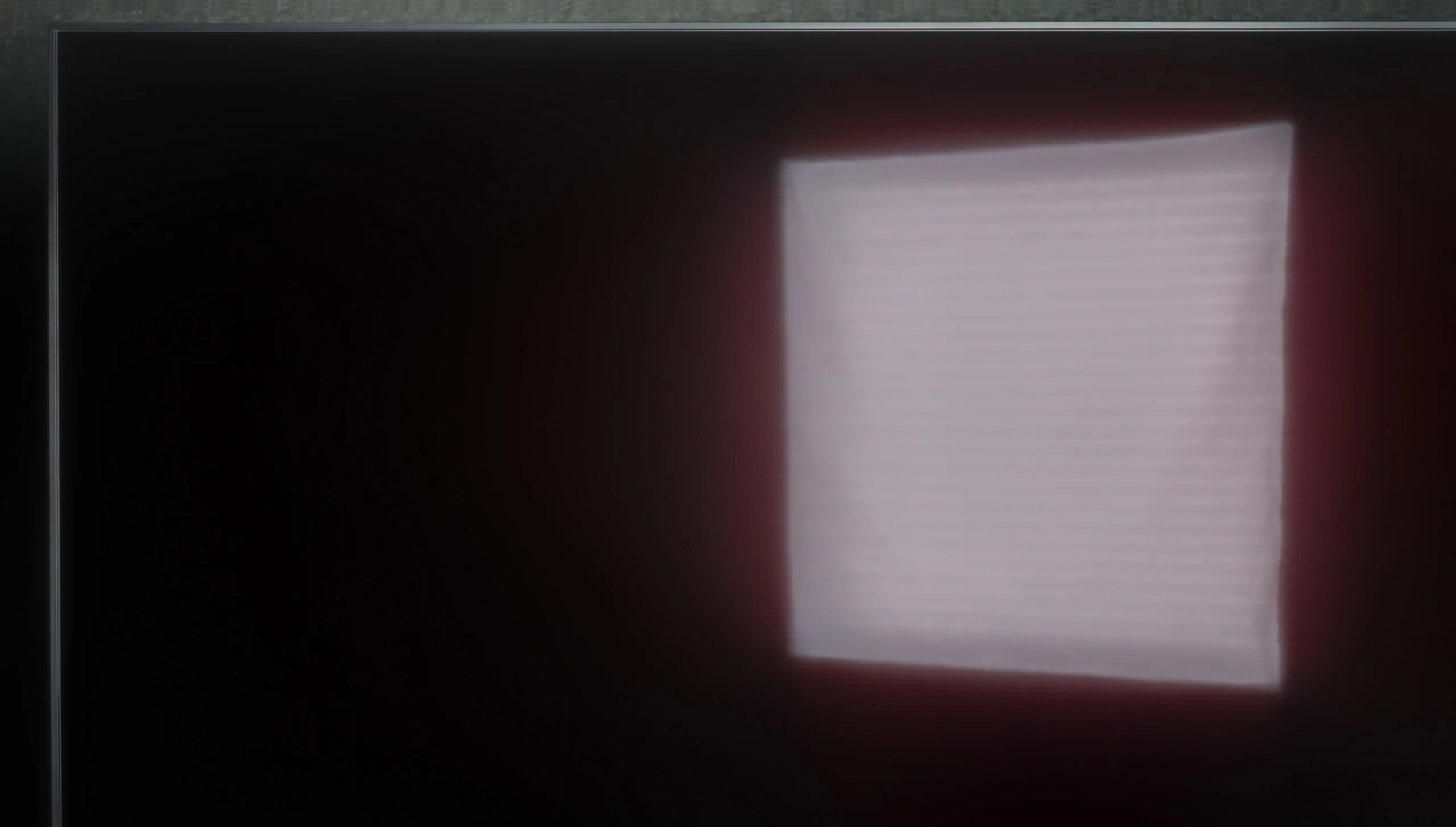
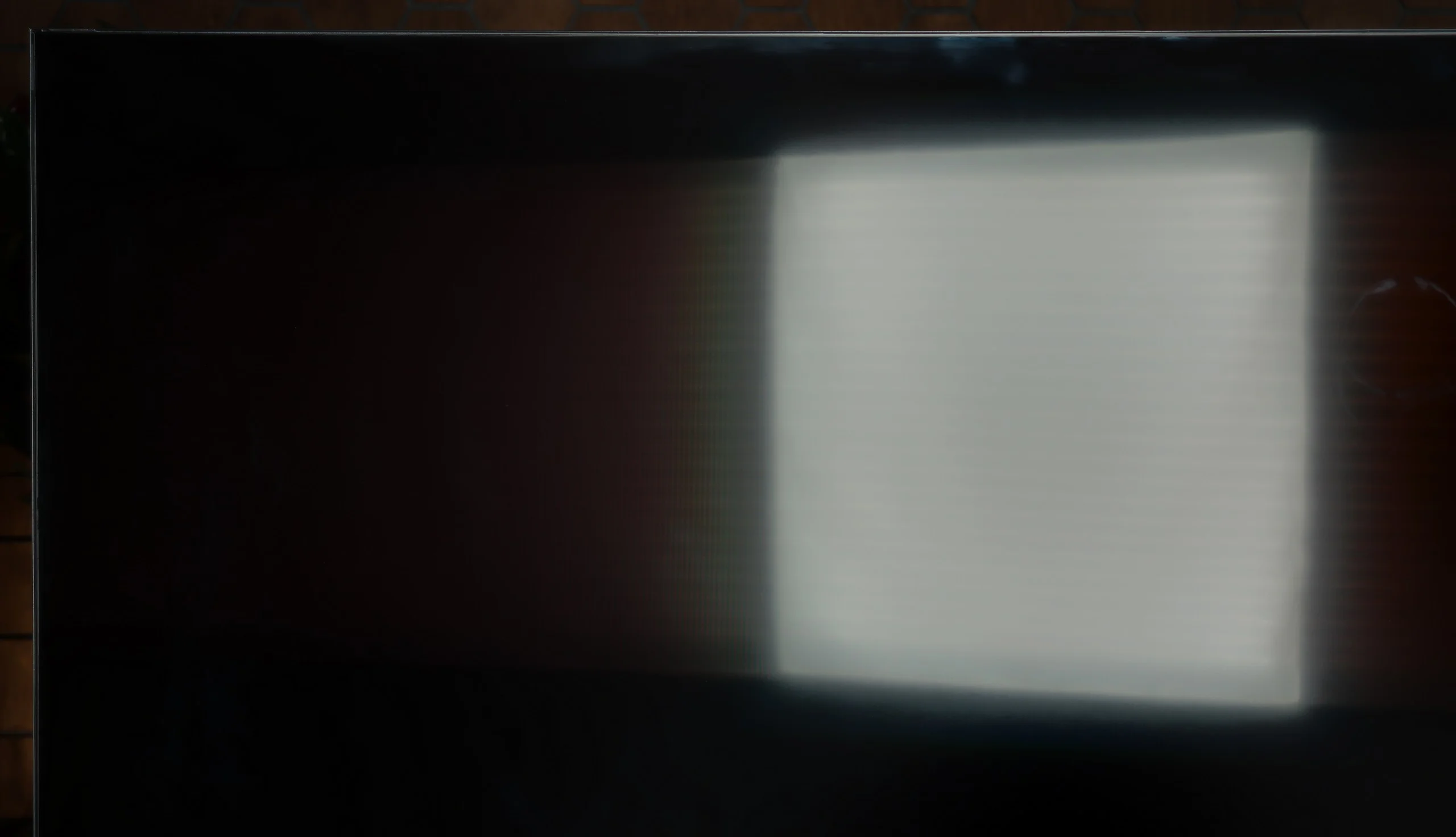
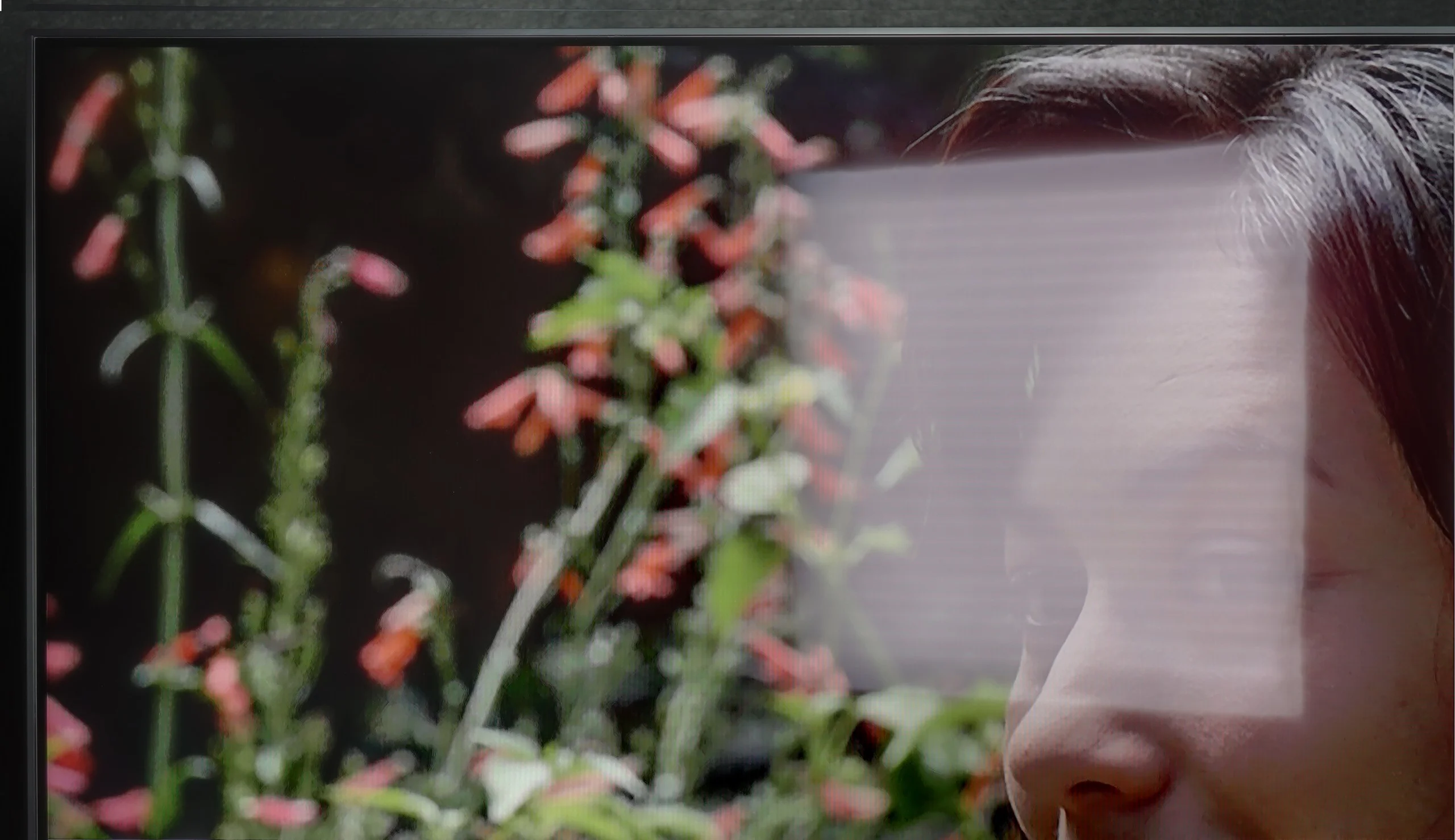
Panel brightness
Kiano Elegance Tizen: 215 cd/m2
LG NANO81A / NANO80A : 247 cd/m2
NANO81A is a relatively dark television, so it works best in rooms where you have control over the lighting. With a brightness of around 250 nits, it is difficult to recommend it wholeheartedly for very bright, strongly sunlit living rooms – in such conditions, the picture will simply lack punch. Nevertheless, LG deserves a small plus for the screen finish. The satin panel used here does a decent job of suppressing reflections. Thanks to this, even if there is a bit of light in the room, you won’t see every detail of your surroundings reflected on the screen. So if you can slightly close the blinds, a daytime viewing is certainly possible, but this model simply wasn’t designed to "fight" full sunlight.
Kiano Elegance will simply be too dim for a very sunlit living room. Average brightness is about 215 nits, so during the day the picture is easily washed out by light coming through the windows. Especially with darker films, you may need to close the blinds. The satin coating does a decent job of reducing reflections, and blacks in a lit room do not look bad, but that is not enough to make up for the low brightness. The TV will be much better suited to a less sunlit room or to evening viewing.
Panel details
Subpixel Structure:
Panel uniformity and thermal imaging:


LG NANO81A / NANO80A
Kiano Elegance Tizen
TV features
6.6/10
5.1/10
- SystemWebOSTizen
- System performanceGoodAverage
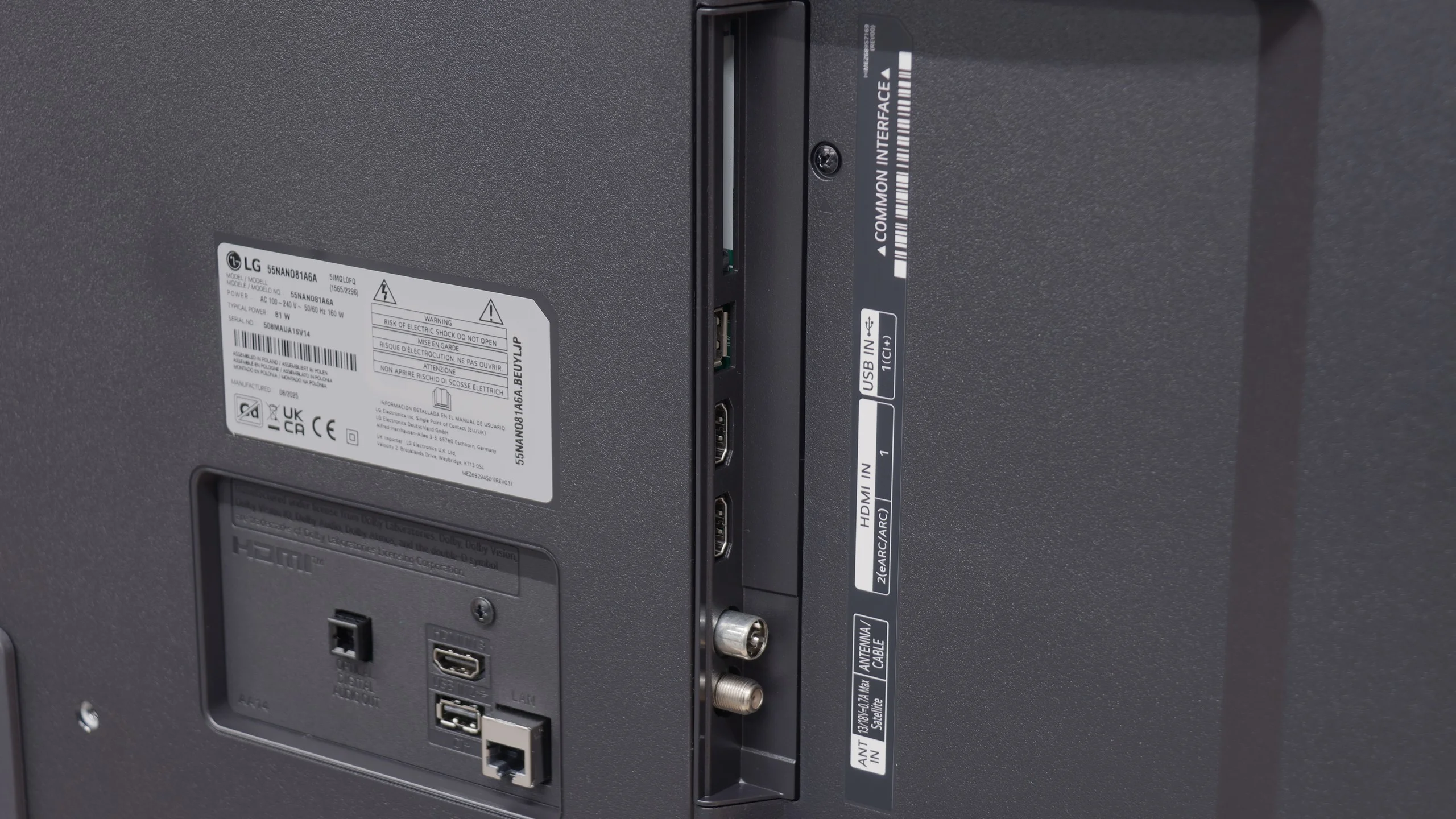
- HDMI inputs3 x HDMI 2.0, 0 x HDMI 2.13 x HDMI 2.0, 0 x HDMI 2.1
- Other inputsRCA (Chinch)
- OutputsToslink (Optical audio), eARC (HDMI), ARC (HDMI)SPDIF (Coaxial audio), eARC (HDMI), ARC (HDMI)
- Network InterfacesWi-Fi 2.4GHz, Wi-Fi 5GHz, Ethernet (LAN) 100MbpsWi-Fi 2.4GHz, Wi-Fi 5GHz, Ethernet (LAN) 100Mbps
- TV receptionDVB-T, DVB-T2, DVB-S, DVB-S2, DVB-CDVB-T, DVB-T2, DVB-S, DVB-S2, DVB-C
Classic features:
- Recording to USB (terrestrial TV)
- Recording programming
- Picture in Picture (PiP)
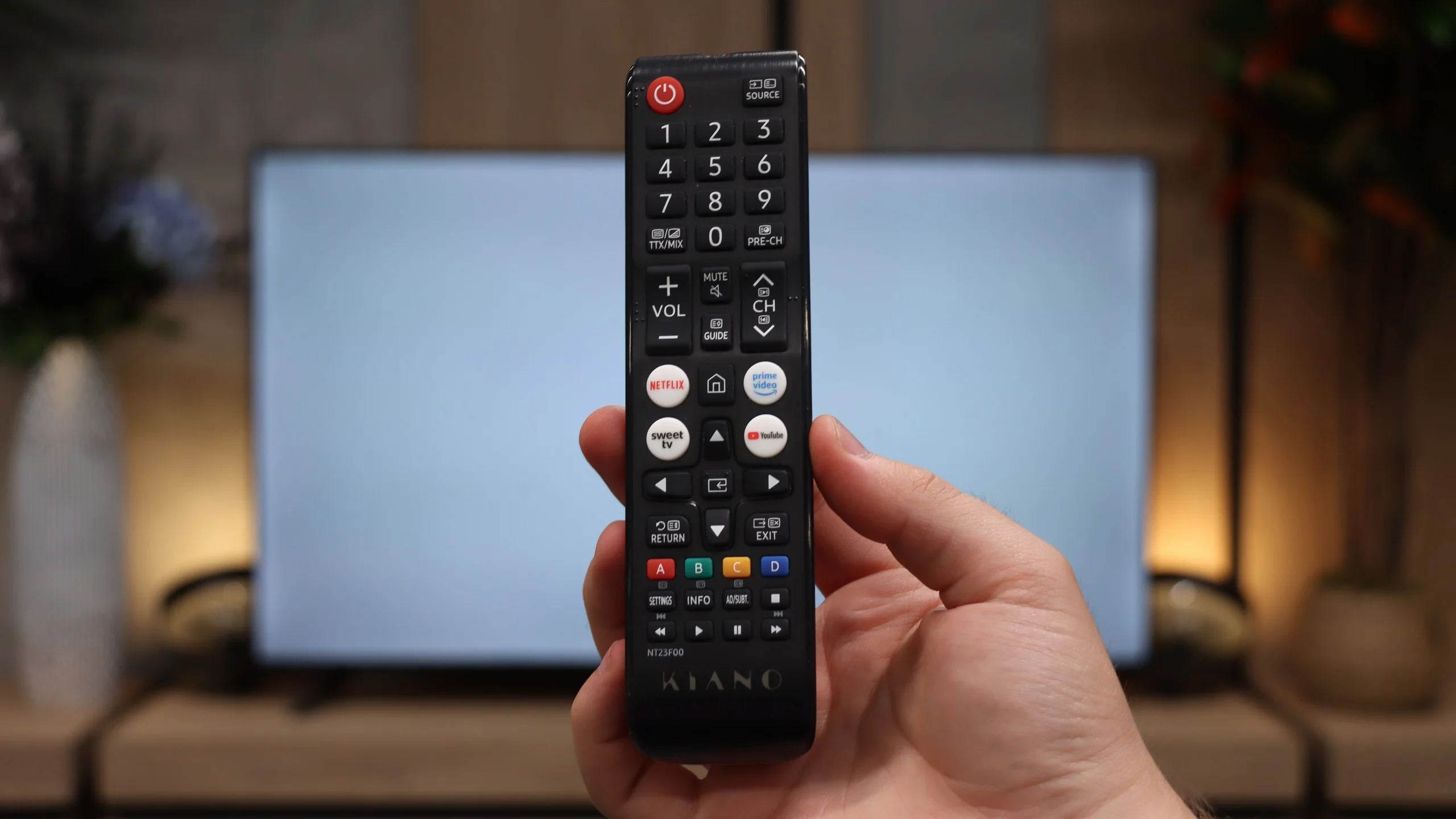
- RF remote control (no need to aim)
- Backlit remote control
- Teletext
- Audio only mode
- Bluetooth headphones support
- Simultaneous Bluetooth headphones & TV audio
Smart features:
- AirPlay
- Screen mirroring (Windows Miracast)
- Voice search
- Voice search in native language
- Ability to connect a keyboard and mouse
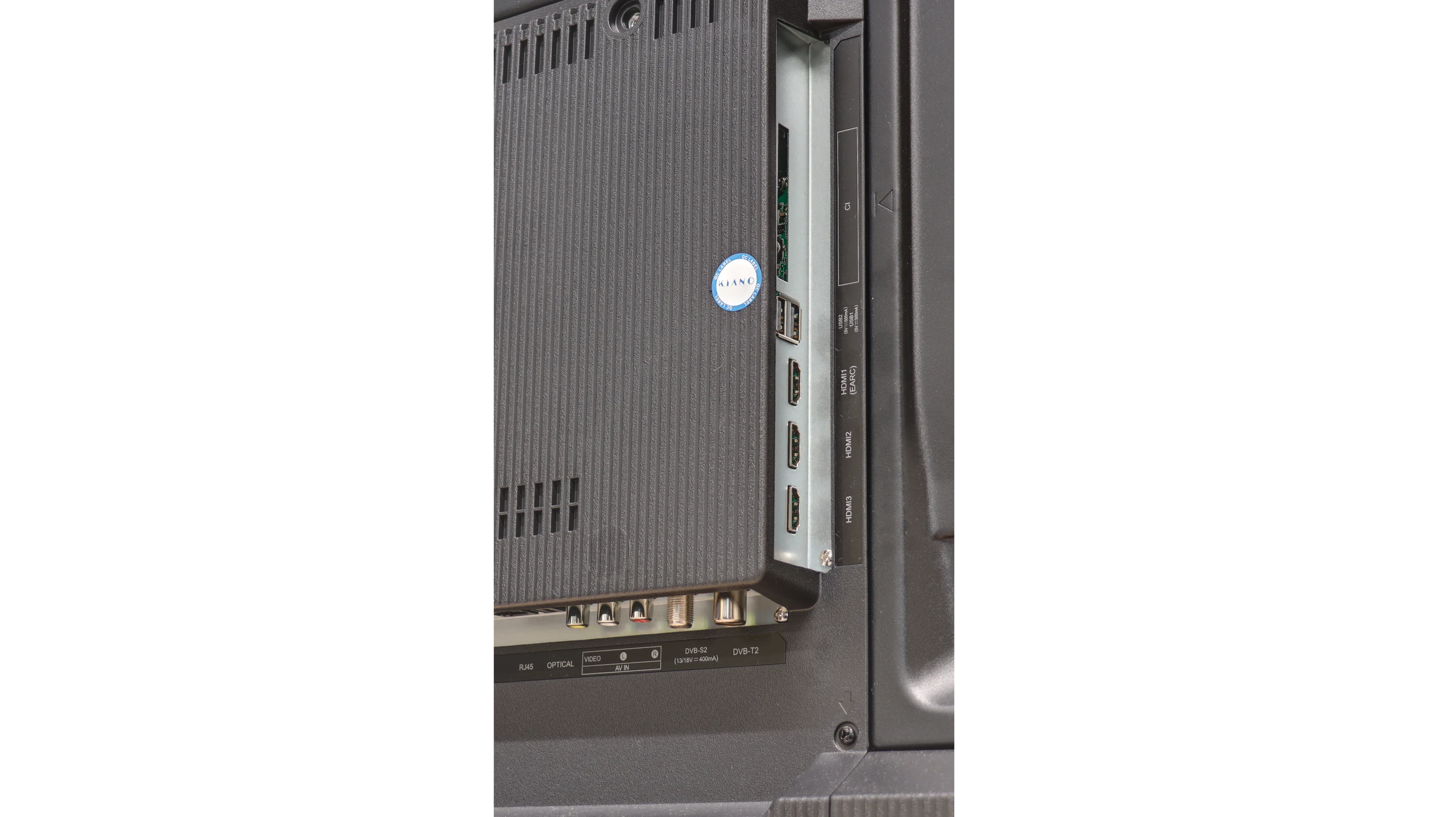
Sound connection options
- HDMI audioeARC (HDMI), ARC (HDMI)eARC (HDMI), ARC (HDMI)
- Other audio outputsToslink (Optical audio)AuxiliaryOutput-SPDIF (Coaxial audio)
- Wireless audioBluetoothBluetooth
Supported audio formats (external HDMI eARC audio):
- Dolby Digital Plus 7.1
- Dolby True HD 7.1
- Dolby Atmos in Dolby Digital Plus (JOC)
- Dolby Atmos in Dolby True HD
- DTS:X in DTS-HD MA
- DTS-HD Master Audio
Senior accessibility
- Numeric keyboard on TV
- Font size adjustment
- Audio description
Smart Features: WebOS
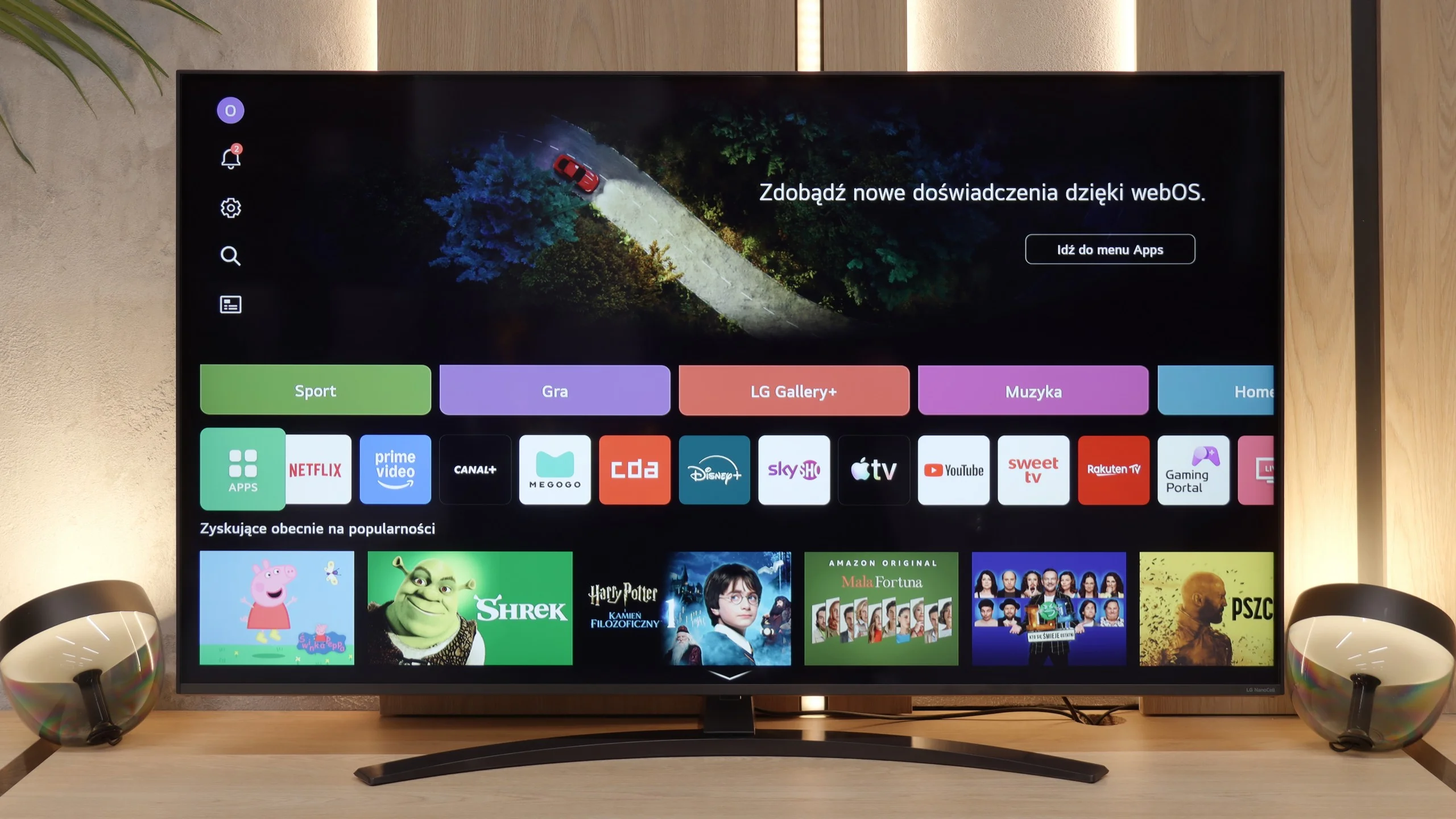
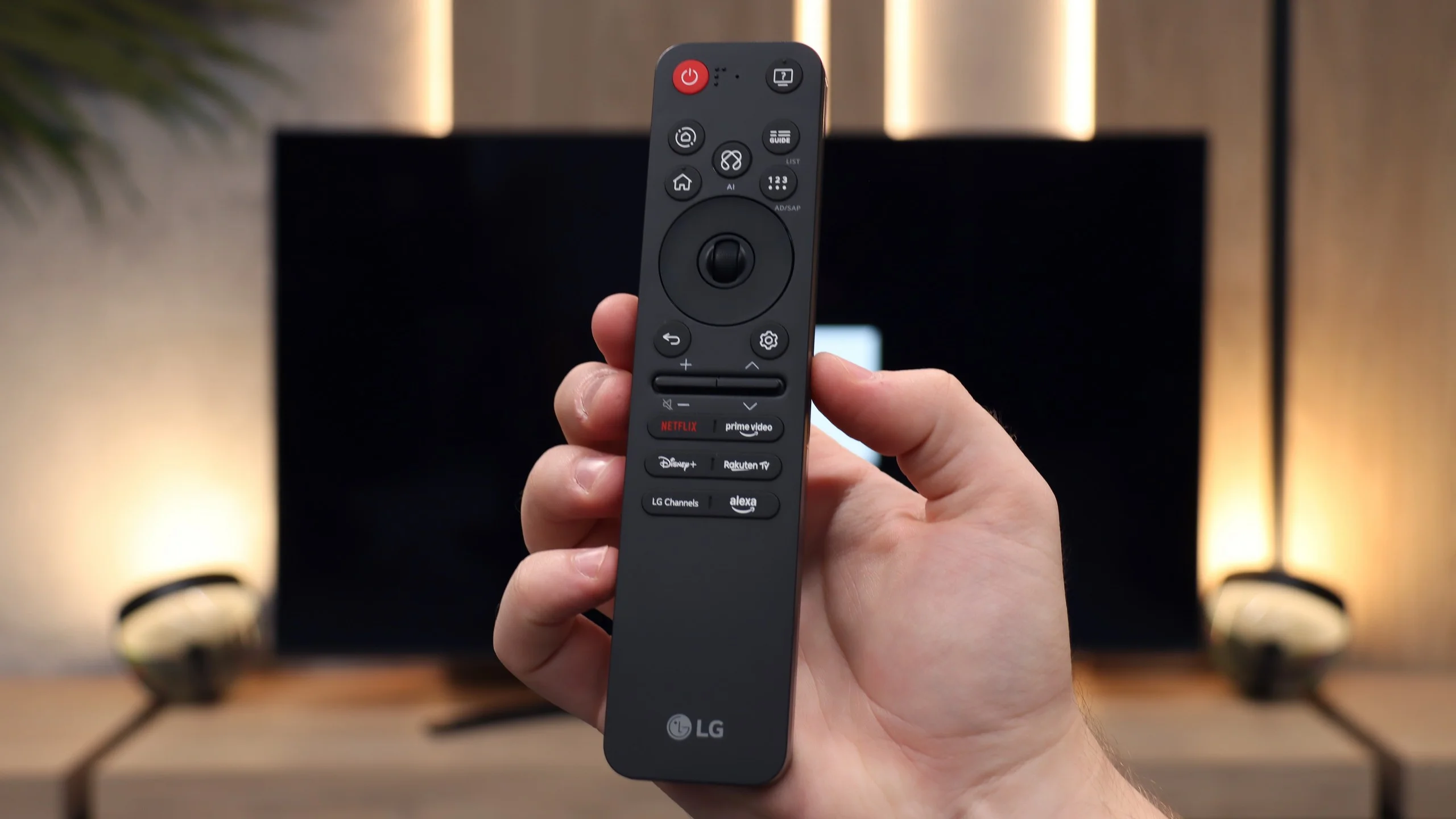
One of the biggest advantages of the NANO81A model is its "brain", which is the operating system. LG has implemented a full-fledged WebOS version for 2025 here, which in terms of fluidity and user experience is on par with the more expensive models of this brand. Applications launch smoothly, and navigating through the menu is pure pleasure – there are no annoying stutters, which often occur with budget competitors. All of this is thanks to the unique remote with a pointer function (cursor), which has undergone a visual makeover this year. The manufacturer has opted for minimalism – the new Magic remote is significantly smaller and more ergonomic than its predecessors. It fits perfectly in the hand, but this change also has a downside. The physical numeric keypad has completely disappeared from the casing. For younger users, accustomed to streaming and selecting tiles, this will be no problem at all. However, older household members, attached to entering channel numbers by heart, will have to change their long-standing habits.
Everyday Use
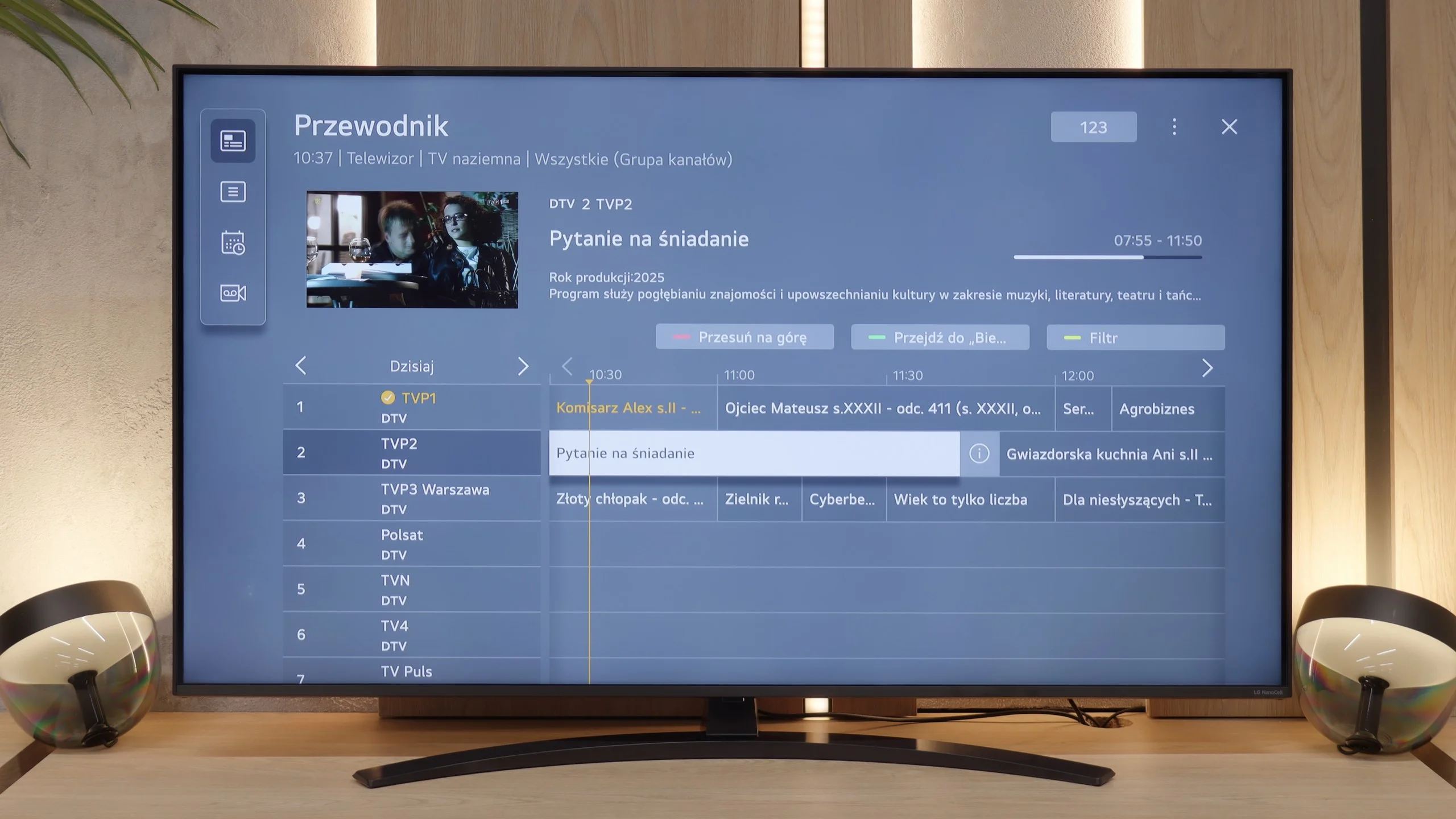
In terms of functions that we would call "classic", the NANO81A sticks to a tried-and-true standard. It is not a multimedia powerhouse that will surprise you with exotic additions, but in everyday television tasks, it performs flawlessly. The handling of traditional terrestrial or cable television, including even the old faithful Teletext, is correct and intuitive. Wireless communication also deserves praise. The Bluetooth module works very reliably, allowing for quick and stable connection of a game controller or wireless headphones and speakers. It is simply a television that "works" – it is stable, predictable, and does not cause unnecessary complications during daily use.
Tizen in the Kiano TV
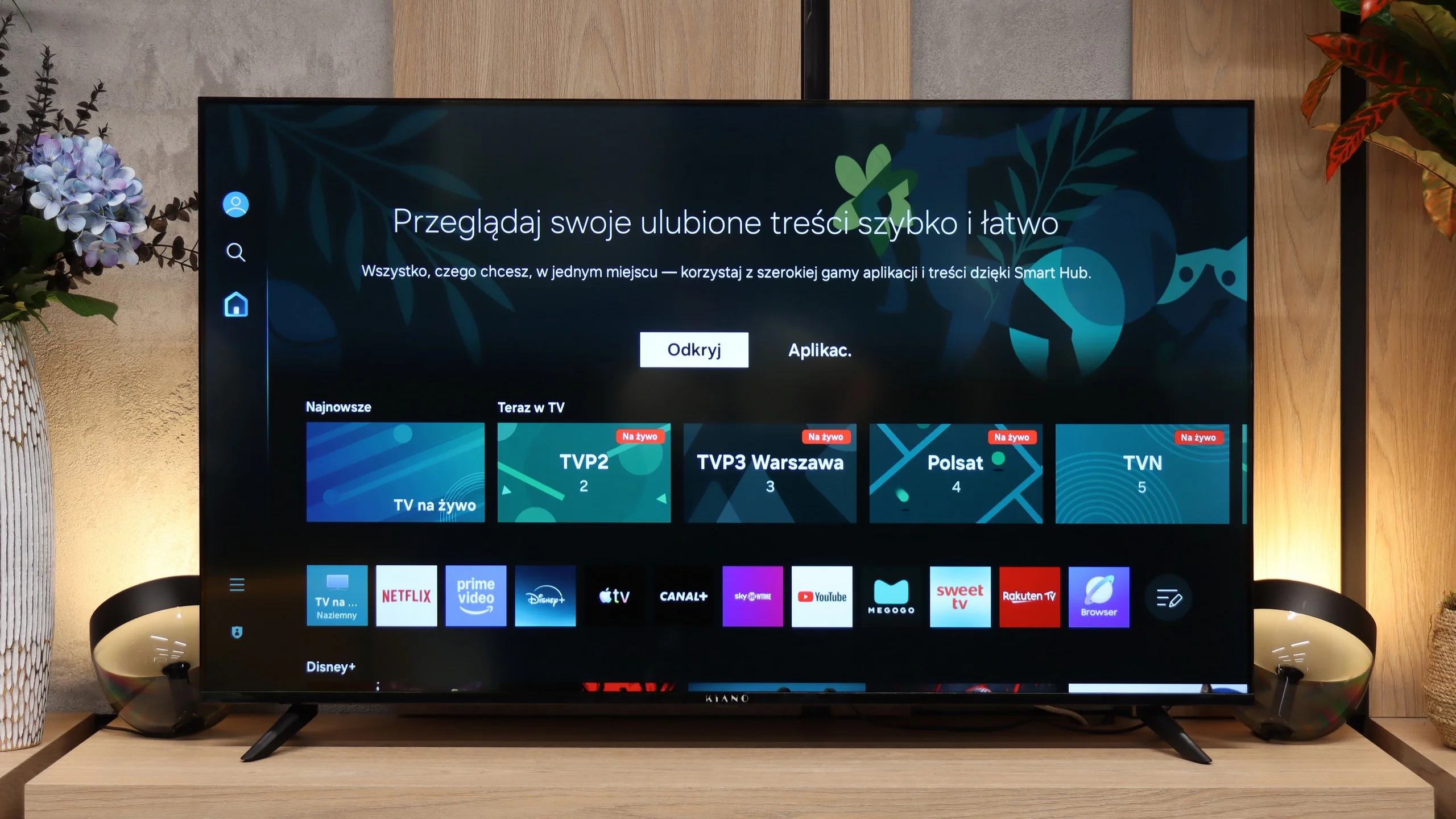
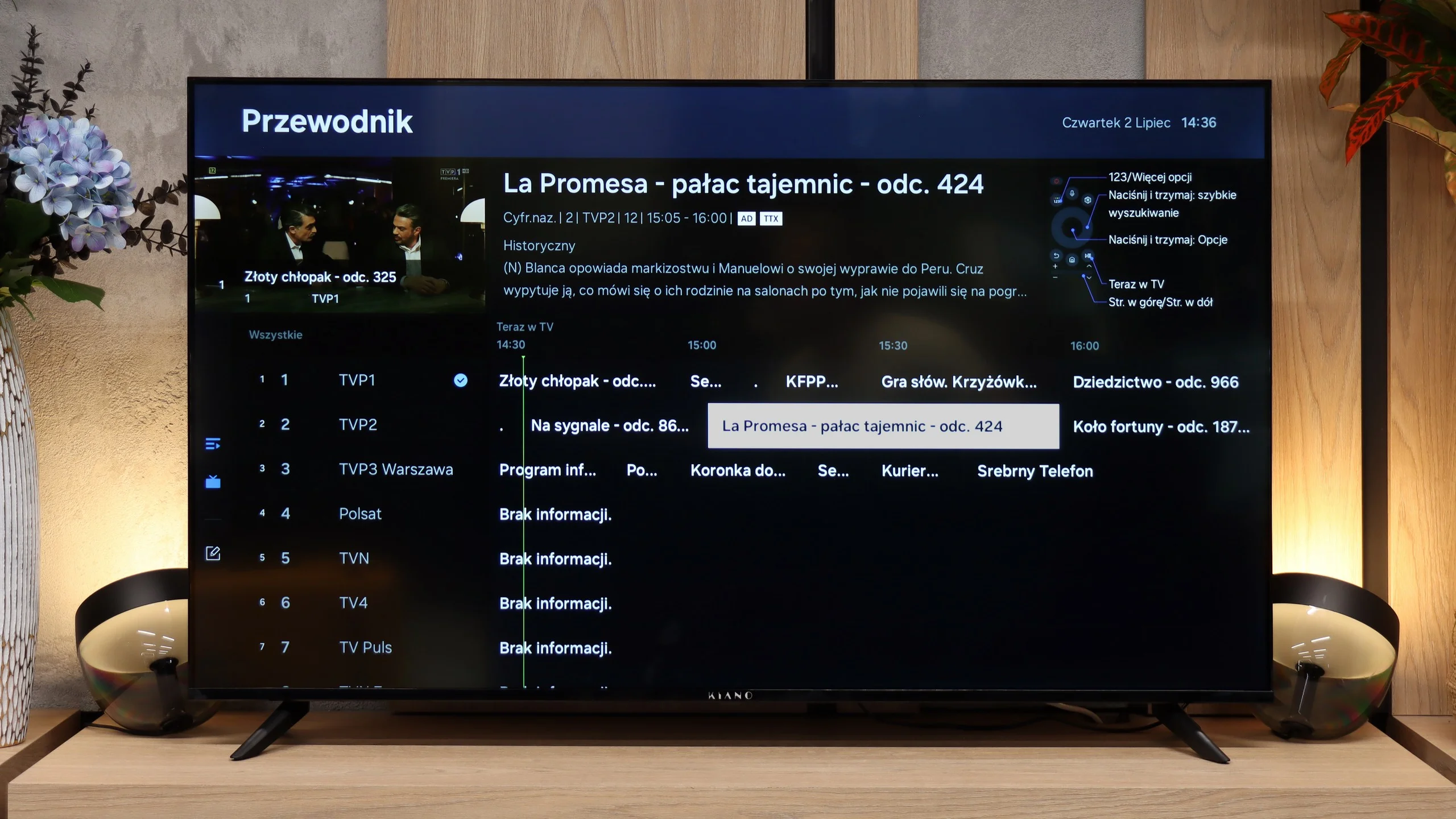
Tizen is one of the main reasons to consider this model. It gives access to many popular apps, so you don't necessarily need an external streaming device to watch series or YouTube. Bear in mind, however, that the same system does not guarantee the same ease of use as in more expensive Samsung models. On the Kiano the responsiveness is average, and you may sometimes have to wait a moment for the menu to react. There is no voice search, so titles must be entered with the remote control. A convenient addition is AirPlay and the ability to wirelessly stream the picture from a computer.
Everyday use
The basic TV functions are in place, but there is no USB programme recording or picture-in-picture. The remote uses infrared, so it must be pointed at the TV, and its buttons are not backlit. It is useful, however, that you can use Bluetooth headphones and the speakers at the same time. This allows one person to listen through headphones (for example an older person) without taking the sound away from others in the household. For connecting devices there are three HDMI 2.0 inputs, which are sufficient for 4K at 60 Hz. A soundbar can be connected via eARC, and an analogue RCA input is provided for older equipment.
Apps
9.1/10
8.8/10






















Playing files from USB
8.2/10
8/10
Supported photo formats:
Maximum photo resolution:
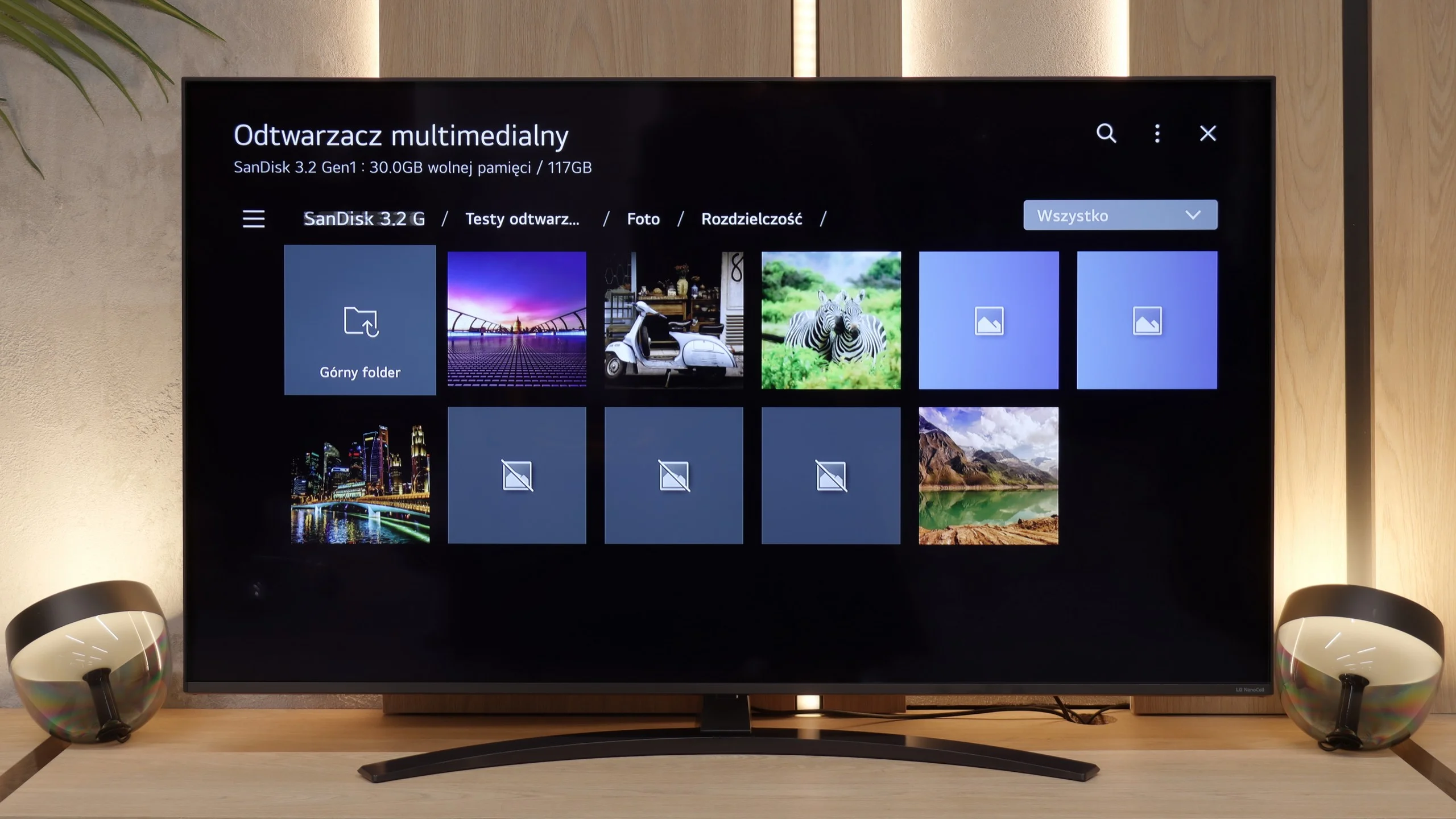
Many users still use their own USB drives to display movies or photos on a large screen. In this regard, the NANO81A performs quite decently – the built-in player supports a wide range of video and audio codecs, so most film libraries will work "straight out of the box". However, one must bear in mind the specifics of the WebOS system. Since it is a closed environment, we are limited to what the manufacturer has prepared for us. There is no possibility to install alternative players (like the popular VLC), so if the system player cannot handle something, not much can be done about it. During testing, we encountered a few specific limitations. Firstly, support for HEIC files is lacking. If you take photos with an iPhone and want to view them directly from a USB drive, the television simply won't see them – it's worth changing the file format to JPG on the phone immediately. We also noticed that the player has difficulties processing very large image files. Photos with a resolution of 20–28 Mpix may fail to load or cause system errors. Aside from these exceptions, everyday multimedia handling is smooth.
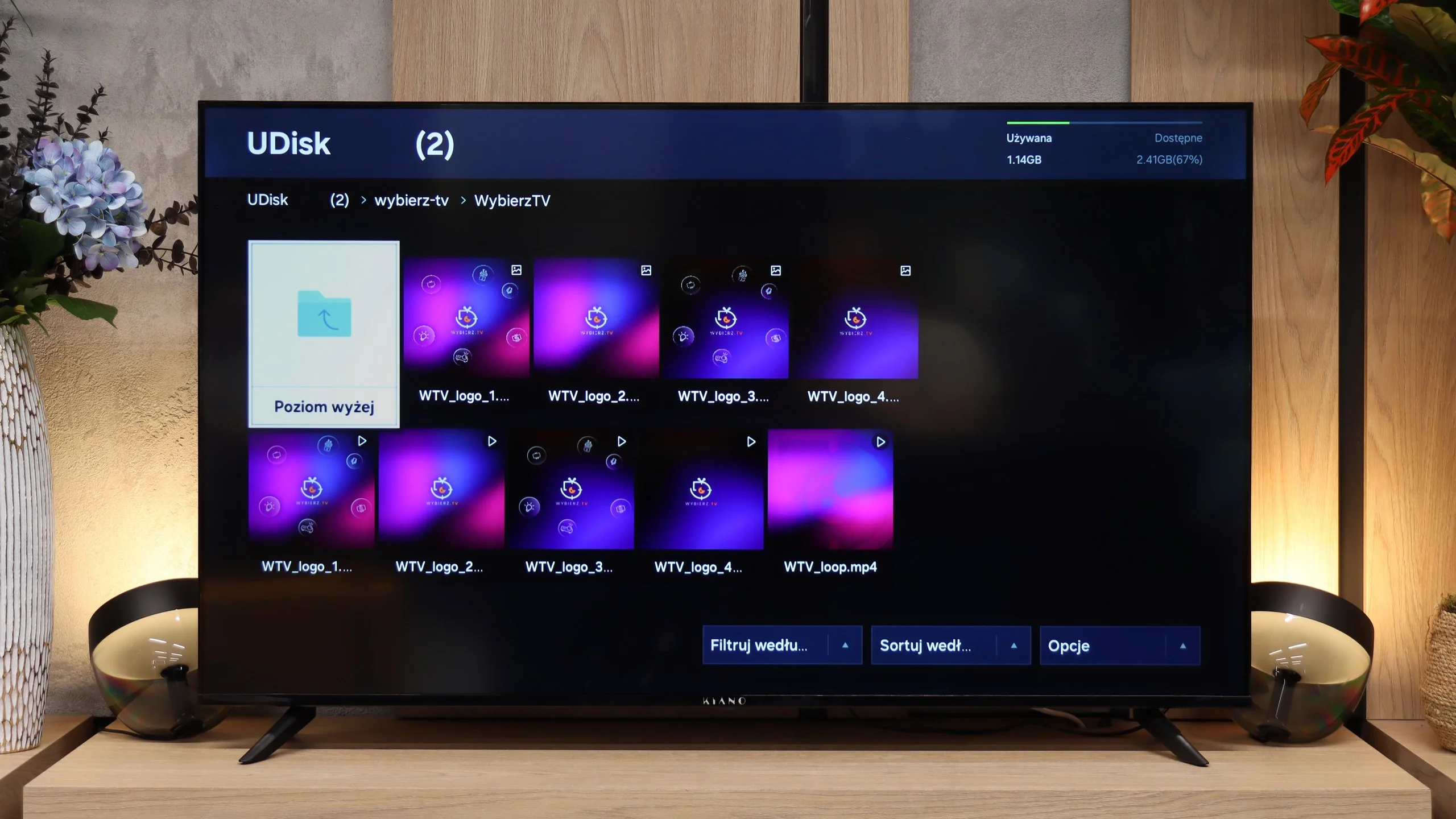
The USB player in the Kiano Elegance supports most popular formats, so opening typical films, photos or music should usually not be a problem. However, actually using it is less satisfactory. During testing it had its 'moments of weakness' and could take a very long time to open individual files. Sometimes it took so long that you could start to wonder whether the TV was still loading something or had already frozen. It's sufficient for occasionally playing something from a USB stick, but browsing a larger collection can require a great deal of patience.
Sound
6.2/10
3.6/10
- Maximum volume81dB88dB
- Dolby Digital Plus 7.1
- Dolby True HD 7.1
- Dolby Atmos in Dolby Digital Plus (JOC)
- Dolby Atmos in Dolby True HD
- DTS:X in DTS-HD MA
- DTS-HD Master Audio
In terms of audio, the LG NANO81A pleasantly surprises compared to its higher-end sibling, the QNED80A model. Interestingly, NanoCell sounds a bit better, which is likely due to its slightly thicker casing. The greater volume allows for the extraction of any hints of low tones – the bass may not be powerful, but it is more clearly defined than in thinner constructions. However, one should not expect miracles. It is still a standard 2.0 speaker configuration with a total power of 20 W, so the overall sound characteristics remain similar to other models in this price range. The mid and high tones are adequate, making dialogues in films and news programmes clear. Although this slight improvement in the lower registers is pleasing, for true home cinema or listening to music, it is still worth considering purchasing at least a basic soundbar.
Sound is one of the weaker aspects of the Kiano Elegance. The TV can get fairly loud, measuring 88 dB, but loudness alone does not translate to sound quality. For casual viewing you can stick with the built-in speakers, but for films or music it's worth budgeting for a separate sound system. Connecting a soundbar via HDMI eARC should not cause problems. The TV also supports Dolby Atmos over Dolby Digital Plus, but it does not play Dolby TrueHD or DTS-HD tracks.
Sound Quality Test
Acoustic Measurements
81dBC (Max)
75dBC
88dBC (Max)
75dBC
Reader comments
Comments are provided by the external service Disqus (Zeta Global). Once loaded, Disqus may set cookies and process data about your activity.
We will remember your choice on this device. Provider's privacy policy