 Direct comparison
Kiano Elegance is primarily an option for people who want to spend as little as possible on a TV while still having convenient access to popular apps. The use of Tizen is a big plus here, because you get a system well known from Samsungs and you do not have to immediately buy a streaming stick to watch films or series. At a low enough price this could be a sufficient reason to consider this model. The digital video processing is also worthy of praise; in operation it resembles the solutions found in entry-level Samsungs. Kiano quite effectively smooths unwanted banding between colours in weaker sources, so heavily compressed footage looks better. It is, of course, not perfect, but remember the very low budget we are dealing with. The mere fact that this feature actually helps is commendable. Unfortunately the operating system does not make the Kiano run as smoothly as Samsung TVs. You sometimes have to wait for a response, and the USB player can take a long time to open files. The savings are also visible in the build quality and the screen’s capabilities. Low brightness makes viewing in a sunny room difficult and prevents it from delivering impressive HDR, while motion blur is noticeable during faster movement. Add weak sound to that, and buying separate speakers can quickly become another expense. That is why the Kiano Elegance really makes sense only if it is noticeably cheaper than the competition. It may be enough for everyday programmes or as a second TV in the home, but if you are only a small amount short of the price of a base model from a better-known manufacturer, we think it is worth paying the extra. Tizen and the decent video processing are strengths of this Kiano, but they do not compensate for all the cost-cutting. It is better to compare final prices than to assume that a TV with Samsung’s system will provide the same level of user comfort.
- Matching (Score) |
- Our verdict |
- TV appearance |
- Where to buy |
- Contrast and black detail |
- HDR effect quality |
- Factory color reproduction |
- Color reproduction after calibration |
- Smoothness of tonal transitions |
- Image scaling and smoothness of tonal transitions |
- Blur and motion smoothness |
- Console compatibility and gaming features |
- Input lag |
- Compatibility with PC |
- Viewing angles |
- Daytime performance |
- Panel details |
- TV features |
- Apps |
- Playing files from USB |
- Sound
OLED801 / OLED811

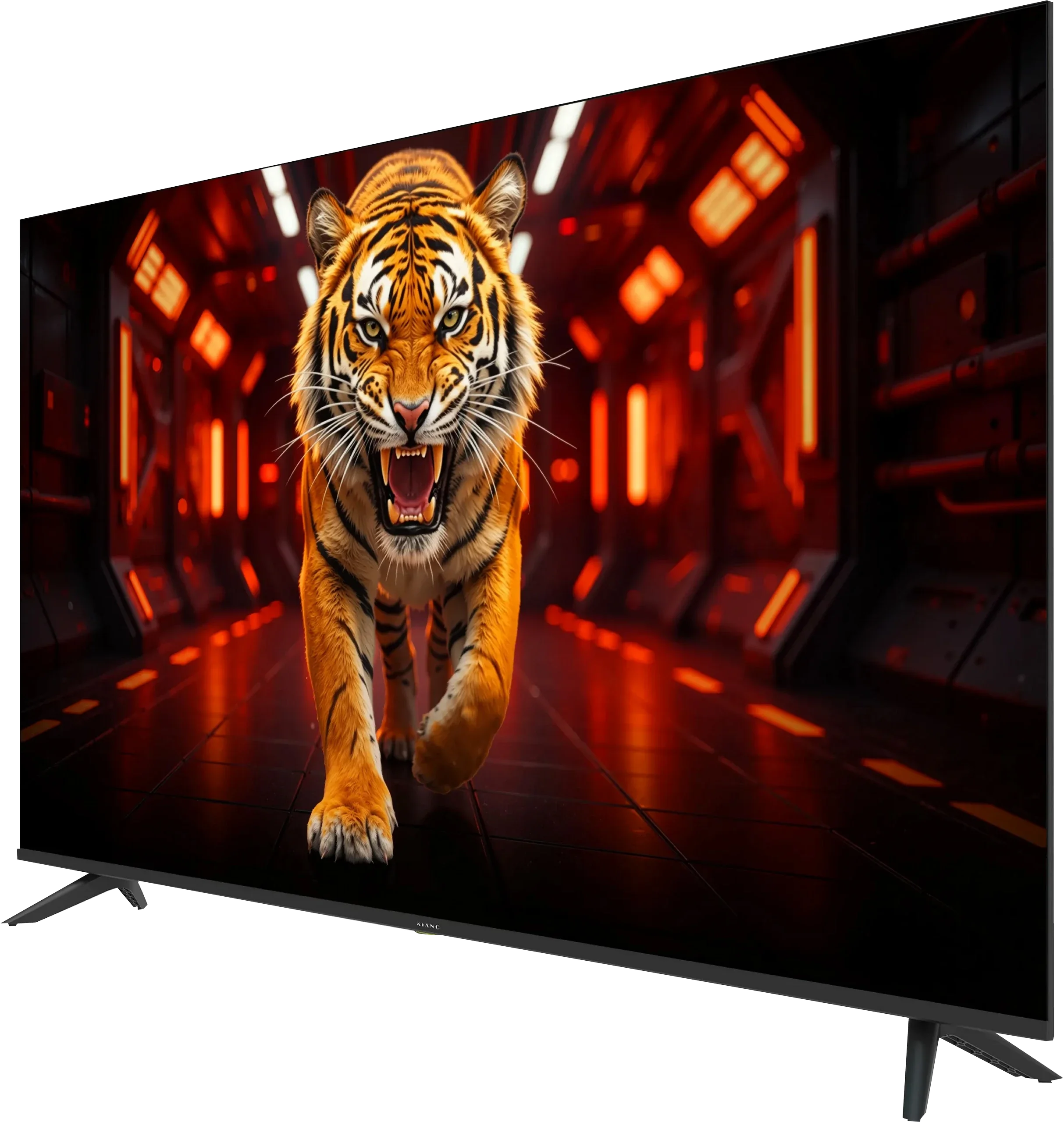
Panel type: LCD VA
Resolution: 3840x2160
System: Tizen
Model year: 2026
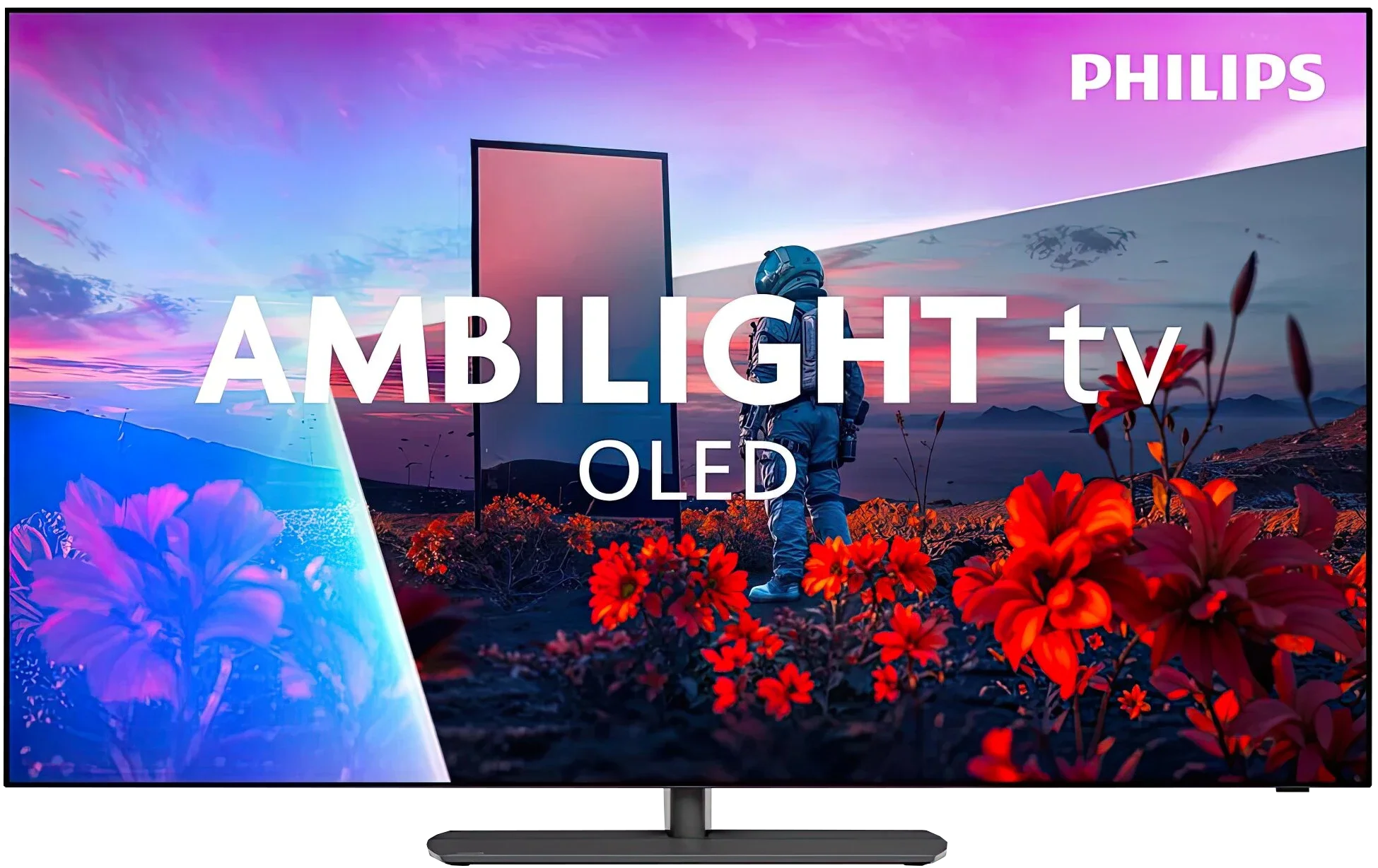
Panel type: WRGB OLED
Resolution: 3840x2160
System: Titan OS
Model year: 2026
Check how well they match your needs
Take the surveyOverall rating
4.9
8.1
 Movies and series in UHD quality
4.8
8.5
 Classic TV, YouTube
5.4
8.7
 Sports broadcasts (TV and apps)
3.9
8.5
 Gaming on console
5.3
8.9
 TV as a computer monitor
6.0
8.6
 Watching in bright light
3.7
6.0
 Utility functions
5.1
7.9
 Apps
8.8
7.7
 Sound quality
3.6
7.6
Complete the survey to find out what fits your preferences
Advantages

Low price
Tizen OS with a wide selection of popular apps
Decent contrast thanks to a VA panel
Effective digital image processing (rarely seen at this price)
Low input lag
Very good text readability when connected to a computer
Supports AirPlay and wireless screen mirroring
Three-sided Ambilight that creates a great atmosphere for viewing
Perfect blacks and excellent contrast from the OLED panel
Powerful HDR effect. Brightness around 1500 nits
Very good viewing angles
Excellent motion clarity (no smearing)
Supports 4K at 165 Hz
Four HDMI 2.1 ports
Extensive gaming features
Support for multiple audio/video formats: (Dolby Vision, Dolby Atmos, HDR10+, DTS)
Disadvantages

Low brightness
No wide colour gamut (no QLED / PFS)
Poor motion handling: noticeable smearing, a 60 Hz panel and no motion smoothing
No gaming features whatsoever
Slow operation
Very poor audio
Average build quality
Smaller app library on Titan OS than on Google TV or most competitors
Infrared remote that needs to be pointed at the TV (sometimes responds slowly)
Visible posterization (mainly in bright scenes)
Underused image-processing capabilities of the Pentonic 800
Our verdict
Philips OLED811 is a mid-range OLED for 2026 that stands out from its biggest rivals mainly for one thing: Ambilight. The light that follows the picture and spreads across the wall can change the atmosphere of an entire viewing session. In the evening the screen seems to extend beyond its borders and watching simply gains extra charm. For some it will be a pleasant extra, for others a sufficient reason to choose Philips again. The picture itself is very comparable to what models such as the LG C6 or Samsung S90H offer when using the same type of panel. So you get deep, perfect blacks on which bright elements make a strong impression. The OLED811 can deliver powerful HDR and, importantly, after calibration the picture itself is close to the reference. There is no big advantage over the competition, but there is also no feeling that by choosing Philips for Ambilight you are sacrificing image quality.
There are also a few good changes for gamers compared with last year’s model. Thanks to the MediaTek Pentonic 800 chipset we finally have four HDMI 2.1 ports, so connecting several devices, for example consoles, a PC and a soundbar, no longer requires choosing which device will get the full capabilities of the port. Gaming itself is very enjoyable — the television responds quickly, supports variable refresh rates, and from a PC allows gaming in 4K at 165 Hz. It’s a pity that the new processor’s capabilities were not put to equally good use when processing lower-quality sources. The biggest concern, however, is the operating system. Titan OS replaced the popular Google TV and although it has clearly developed over the past year, it is still hard to call the change a positive one. The system runs more smoothly, has more useful features, and the app library already contains most popular streaming services. Nevertheless, the selection of apps is still much smaller than with Google or the competition, and in our view that remains the OLED811’s biggest drawback. People who use less popular services may particularly feel this difference.
Is it worth buying? Yes, if Titan OS meets your needs. In terms of picture and gaming capabilities the OLED811 has as much to offer as its rivals, but Ambilight gives it something others do not. So Philips both gives and takes. It adds a unique viewing atmosphere but limits freedom of app choice. If the apps you use are available, that compromise may be worth making.
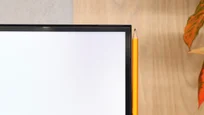
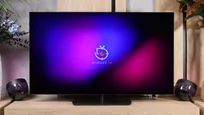
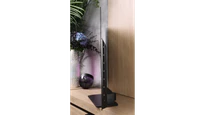
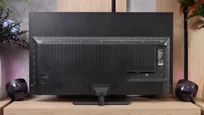
TV appearance



Contrast and black detail
4.8/10
10/10
Local dimming function: No
Contrast:


Result
3,350:1

Result
3,350:1

Result
2,650:1

Result
3,650:1

Result
2,400:1
Result
∞:1
Result
∞:1
Result
∞:1
Result
∞:1
Result
∞:1
Halo effect and black detail visibility:
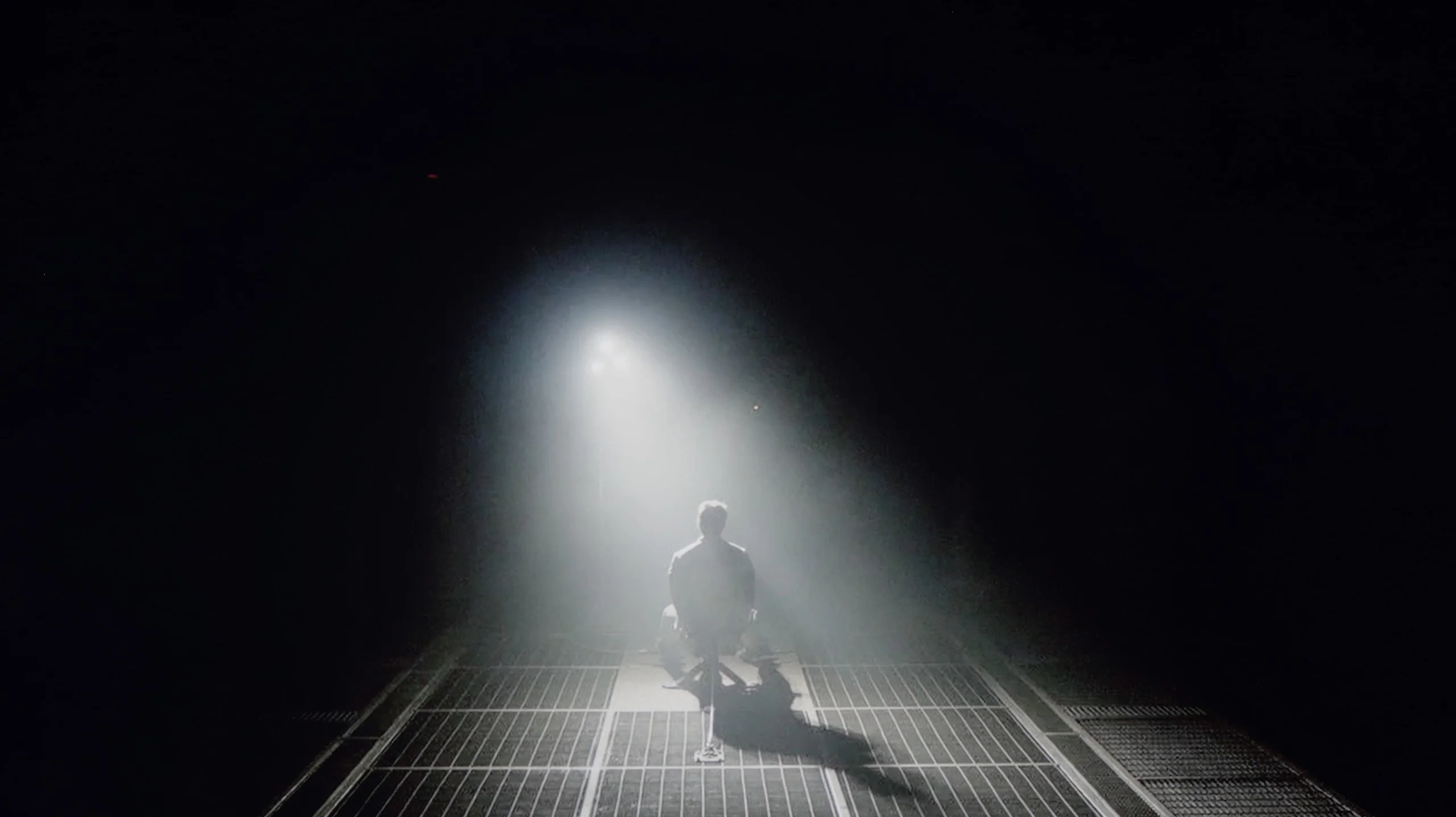
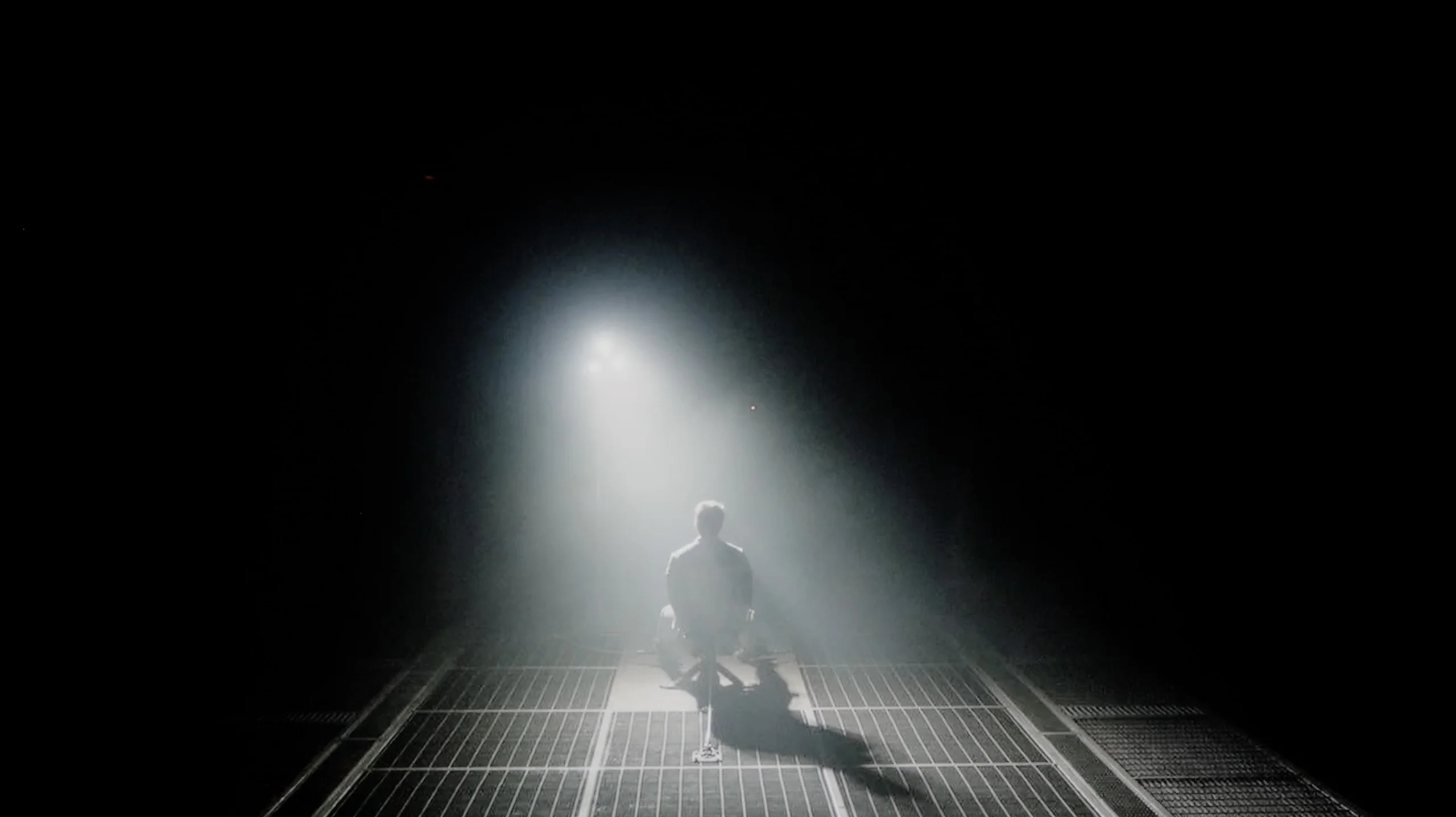
Check the visibility of bright lights on a dark background. Mini-LEDs often struggle with this. The photo does not compare black levels – that’s what the video below is for.
The video accurately shows differences in contrast and black levels between TVs, as well as potential issues: halo around bright objects or Mini-LED zone operation visible as brightness jumps.
In the 55-inch variant we tested, the Kiano Elegance uses a VA panel, which by itself already provides rather good black levels. The contrast we measured was around 4000:1, which is typical for this kind of panel and clearly better than in TVs using IPS or ADS panels. That gives the picture decent depth in the evening, and blacks are not so heavily brightened. You should bear in mind, however, that the Elegance uses a conventional backlight without local dimming. This means the backlight is on all the time and the TV cannot dim selected parts of the screen. In that respect the difference compared with even basic Mini LED models is obvious. There, individual backlight zones can dim independently, so in dark scenes blacks can be much deeper. Kiano does not have those capabilities, but for a simple LCD TV its native contrast is quite respectable.
Black and contrast are categories where the Philips OLED811 showcases all the benefits of OLED technology. Each pixel lights independently and can be switched off completely, so black is simply black. There’s no grey glow or haloing around bright objects. During evening viewings this produces a great effect: stars in the night sky, city lights and text on dark backgrounds remain clearly separated from a perfectly black surround.
It’s therefore hard to expect any improvement here over other OLEDs, because in terms of black depth and contrast the result is already exemplary. The OLED811 doesn’t need local dimming or a compromise between the brightness of a small object and the black around it. Even a single bright point can sit next to a completely switched-off pixel, giving the image outstanding depth.
It’s in scenes with extensive black that the advantage over Mini LED TVs becomes clear. Even the most sophisticated local-dimming systems control larger areas of the image, so in demanding shots they can create a glow around bright elements or dim them to preserve a dark background. The Philips OLED811 doesn’t suffer from this problem.
HDR effect quality
3/10
7.6/10
Luminance measurements in HDR:

Result
158 nit

Result
172 nit

Result
193 nit

Result
180 nit

Result
205 nit
Result
1225 nit
Result
1310 nit
Result
1443 nit
Result
1368 nit
Result
626 nit
Scene from the movie “Pan” (about 2800 nits)


Scene from the movie “Billy Lynn” (about 1100 nits)


The photos show two HDR10 movies. 'Pan' is one of the brightest productions ever made, while 'Billy Lynn' (soldier) has brightness typical of streaming (Netflix, Prime, HBO MAX). Notice the intensity of effects and detail in whites.
Static HDR10


The photos present the visibility of white details in various HDR formats. They do not show brightness differences between TVs (these can be compared in the previous gallery).
Dynamic: HDR10+
Dynamic: Dolby Vision


The photos present the visibility of white details in various HDR formats. They do not show brightness differences between TVs (these can be compared in the previous gallery).
HDR luminance chart:
Philips OLED811
Kiano Elegance Tizen
Luminance of RGB colors
The HDR effect on the Kiano Elegance is practically non-existent. The TV is simply too dim to deliver any noticeable improvement over a standard SDR picture. Our measured peak brightness is around 200 nits, which is definitely too low for bright elements, such as various lighting effects, to actually stand out on screen. HDR content will be reproduced, but without the impact that the format is meant to provide. In addition, the Kiano Elegance does not use any extra wide colour gamut technologies, like quantum dots or even a PFS filter. As a result, some of the vivid colours encoded in HDR films cannot be shown with proper saturation. This is especially apparent in more colourful productions, where the picture simply looks poorer than on TVs with a wide colour gamut. The Kiano Elegance is therefore much better suited to standard SDR material: broadcast TV, YouTube or older films and series. Their demands are much lower and match this TV's capabilities far better.
Philips OLED811 uses a new generation of WOLED EX panels, also found in models such as the LG C6 and Samsung S90H. After calibration we measured around 1500 nits, which is a very good result for an OLED TV. You can see this clearly in films and series. All kinds of bright flashes have the right intensity, especially when they appear against a dark background. In such scenes the OLED811 can deliver truly impressive HDR. Of course, that does not mean you will see that level of brightness in every shot. When the screen is filled with a large amount of white or a wide explosion, brightness falls to around 600 nits. That is still a good result, but those scenes no longer have the same punch as small, bright elements on a dark background. This is a known limitation of OLEDs and the OLED811 is no exception.
Colours
Aside from HDR brightness, colours also matter and here Philips performs very well. It covers almost the entire DCI-P3 gamut, which contains most of the colours used in HDR films and series. You get saturated reds and lush greens, and when watching it’s hard to find major faults in that respect. It looks a little worse with the much wider BT.2020 gamut, whose most saturated shades are already out of reach for this panel. There is also the issue of the white subpixel that the WOLED panel uses to boost brightness. With very bright colours you can see a certain washout: the colour is bright but loses some of its intensity. It is precisely in such situations that QD-OLED panels from Samsung Display have the advantage. However, in most films and series this is not something that will immediately stand out.
Factory color reproduction
4.8/10
7.8/10


This illustrative image shows how colors change after professional calibration. If you can see the difference, you can order it from SkalibrujTV – it's our own service.
Factory mode
After calibration


This illustrative image shows how colors change after professional calibration. If you can see the difference, you can order it from SkalibrujTV – it's our own service.
Factory mode
After calibration
In Film mode the colours on the Kiano Elegance are quite decent, especially for a TV at this price point. However, that does not mean the picture is properly calibrated straight away. This is most apparent in the white balance, which lacked red. As a result the image had a slightly cooler character and some skin tones and warmer colours did not look as natural as they should. On top of that, both the SDR gamma and the EOTF curve in HDR were driven too high. Put simply, the TV brightened the image more than the source material intended. In SDR this produced a slightly brighter, more 'TV-like' image, but it also robbed it of some depth. In HDR this behaviour compounded the panel's limitations, because at such low brightness the TV had even less headroom to correctly render brighter parts of the image. The biggest limitations, however, appeared in HDR. The colour gamut encoded in such material often exceeds the Kiano Elegance's capabilities, which does not employ any gamut-expanding solution. More saturated reds, greens and blues are therefore rendered much more subdued than they should be. In less demanding scenes this is not yet very noticeable, but with more colourful films the difference compared with TVs that have a wide colour gamut becomes very clear.
Film mode on the Philips OLED811 is sensibly set up straight out of the box. Most colour errors remain small, both in SDR and HDR, so you can sit down to watch without adjusting the settings first. There are no major inaccuracies that would immediately distract from the film. It falls a little short of perfection, though. The white balance shows a slight lack of red compared with green, so whites and greys can have a faint greenish tint. It is not a strong colour cast, but measurements clearly show it. There are also minor brightness deviations in SDR: some parts of the image are slightly brightened, and the darkest shades are not always reproduced evenly. In HDR the TV sticks much closer to the reference, although in places it gently lifts detail from the shadows. These are generally areas that could be improved. The factory film mode provides a good starting point, and calibration will reveal how much more can be gained from it.
Color reproduction after calibration
6.5/10
9.3/10


The photos show how movies look on the TV. Pay attention to black detail visibility, colors, and shadow tint.


The photos show how movies look on the TV. Pay attention to black detail visibility, colors, and shadow tint.
Contrary to appearances, even an inexpensive TV like the Kiano Elegance offers quite a lot of calibration options. We were particularly successful at improving the white balance. After correction the slightly cool cast of the image disappeared and the colours became noticeably more natural. We also managed to better set the gamma and the overall image characteristics in SDR. Despite our efforts, it quickly became clear that further limitations no longer stem from the settings but from the TV’s own capabilities. In SDR the Kiano can look genuinely good. Broadcast TV, YouTube, sport and older films can have natural colours and a pleasing image. It’s much worse in HDR. Here calibration alone cannot compensate for the lack of brightness and a wide colour gamut. The TV simply cannot reproduce some of the more saturated colours or sufficiently strong highlights. So while you can get a really decent picture from it in SDR, HDR remains clearly beyond its abilities.
After calibration the Philips OLED811 produces an image very close to the reference. We managed to correct the white balance and eliminate the slight tint visible in the factory settings. Errors in the Color Checker measurements for SDR and HDR fell to around 1 to 2, and many samples are even below 1. That's a level at which differences from the reference image are hard to spot with the naked eye. We also improved the gamma, and only in the brightest whites is there a slight brightening remaining. In HDR the EOTF curve also tracks the reference closely, although the TV still tends to gently boost the brightness of small elements, such as stars or on-screen text. This gives the picture a little extra sparkle that shouldn't be there, but otherwise there's little to fault. It was already good out of the box, and after calibration we managed to refine most of the remaining shortcomings.
Smoothness of tonal transitions
8.5/10
7.5/10





These are selected scenes that show smooth tonal transitions from one color to another. If you see distinct banding, it’s the TV panel’s fault.

These are selected scenes that show smooth tonal transitions from one color to another. If you see distinct banding, it’s the TV panel’s fault.

These are selected scenes that show smooth tonal transitions from one color to another. If you see distinct banding, it’s the TV panel’s fault.

These are selected scenes that show smooth tonal transitions from one color to another. If you see distinct banding, it’s the TV panel’s fault.
The Kiano Elegance handles colour gradation quite well. In most scenes the transitions between individual shades are smooth and there is no strong banding or distinct bands that can be a problem in the cheapest televisions. The biggest limitations only appear in darker scenes. With very subtle transitions in greys or shadows you can notice slight posterization and colour separation. However, this is not something that will be noticeable all the time. With typical content Kiano fares reasonably well in this respect, especially given its price.
Compared with Philips' previous OLEDs the smoothness of tonal transitions has clearly improved. The biggest difference is visible in dark parts of the picture, which can cause WOLED panels a lot of trouble. On the OLED811 they have been smoothed very well, with tones transitioning smoothly from one to another without visible banding or contouring. That's a big plus, especially when viewing dark scenes.
Unfortunately, it's not as good in brighter scenes. That's where we have the biggest reservations: instead of a gentle transition between tones, in places you can see distinct boundaries, known as posterisation. It can be quite noticeable, and it's a shame that the improvement seen in dark scenes did not extend to the brighter parts of the image to a similar degree.
Image scaling and smoothness of tonal transitions
6.5/10
6.8/10


Smooth transition function
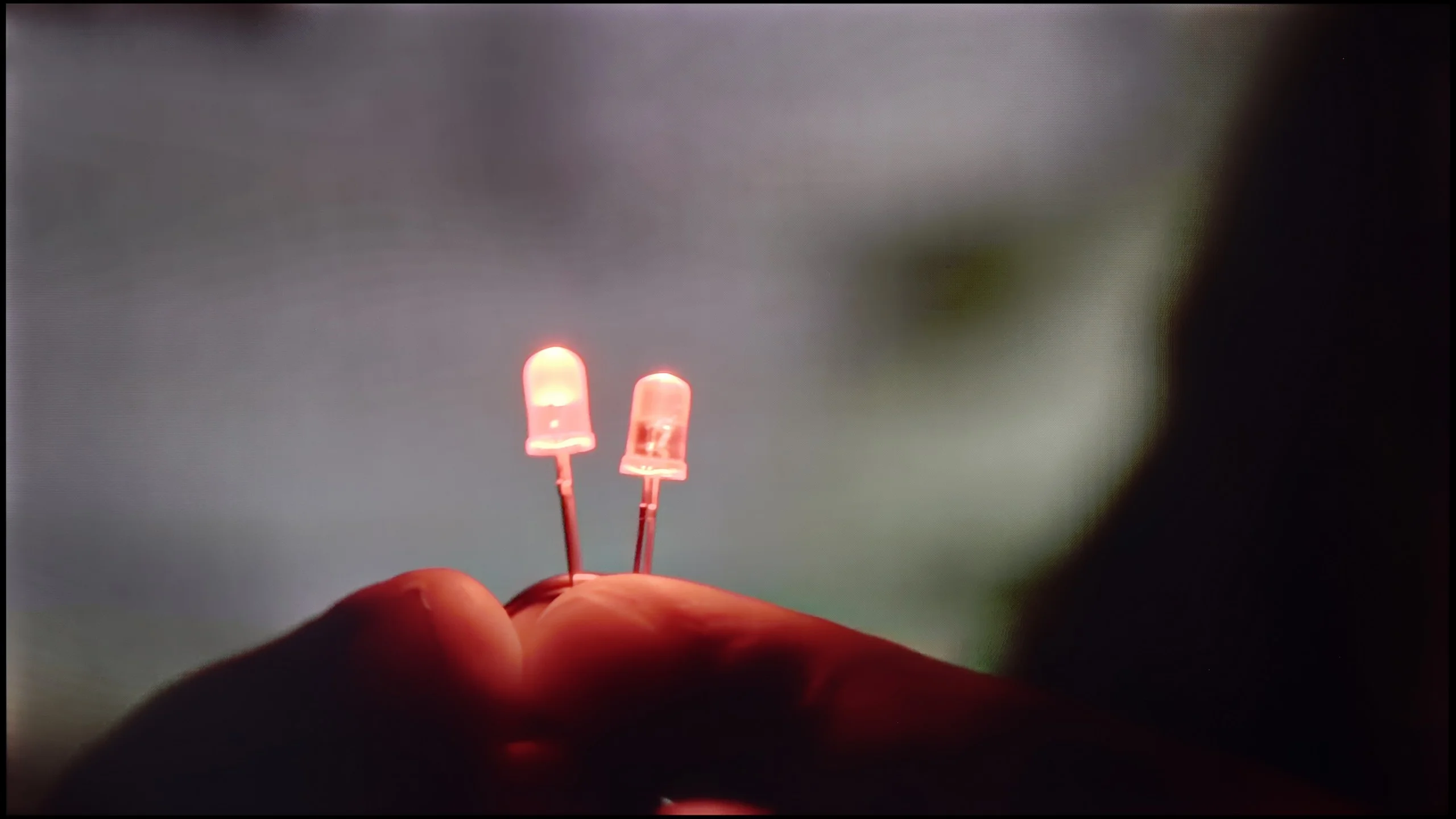
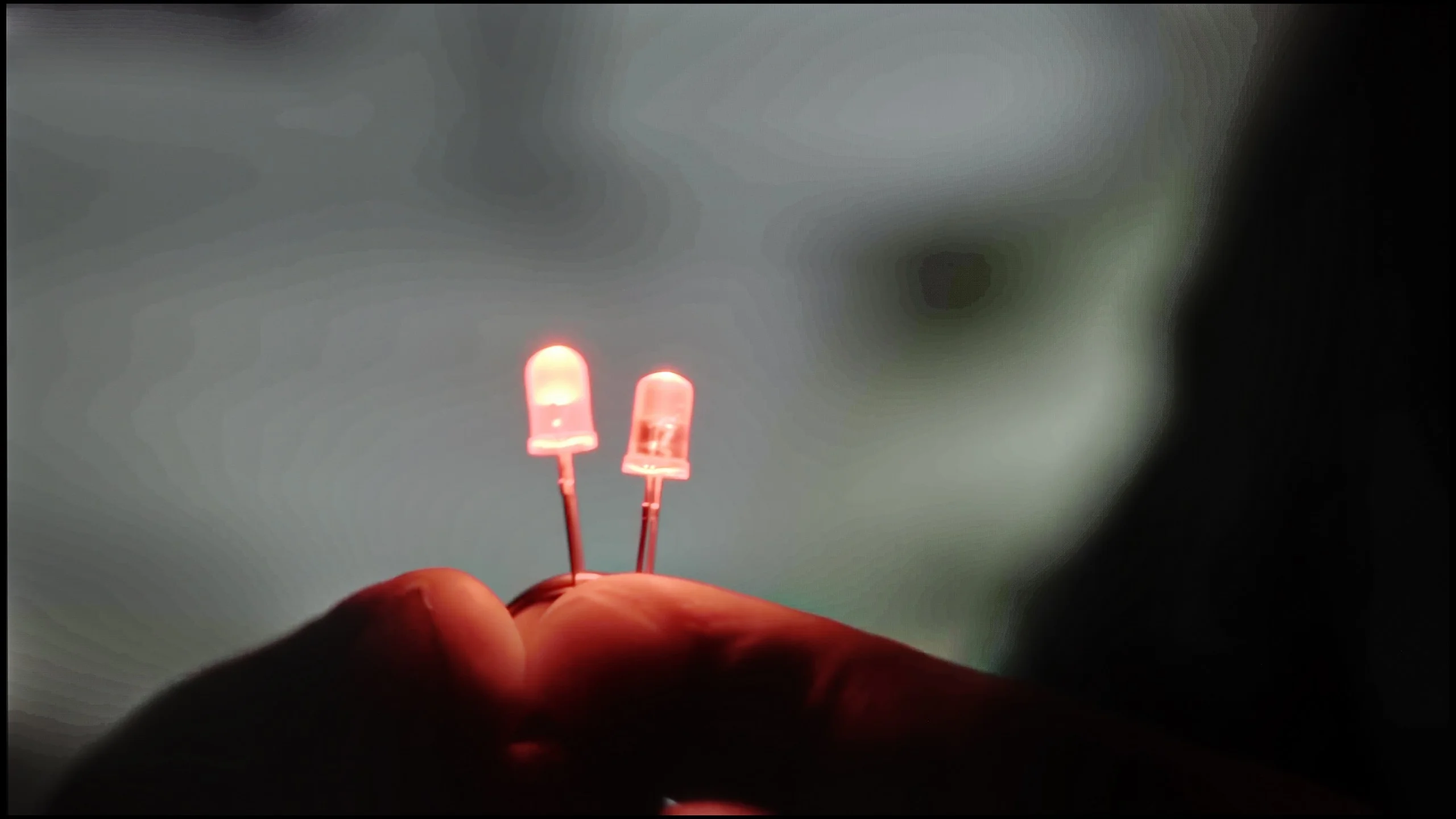
The match photo shows how the TV smooths weak tonal transitions in low-quality video.
Image scaling SD (576i)
For a relatively inexpensive TV, the upscaling and digital image processing in the Kiano Elegance perform really well. The scaling of lower-resolution content itself is decent. It is not, of course, at the level of the best TVs on the market, but ordinary broadcast television and Full HD content look quite good on a 4K screen. We were much more surprised by its ability to smooth unwanted tonal transitions. Many TVs in this price bracket either do not offer a similar function at all, or its effect is practically invisible. Kiano, using noise reduction known from Samsung TVs, can quite effectively mask heavy compression, colour banding and other imperfections of poorer sources. There is just one catch. The feature works fairly aggressively and, along with the imperfections, can also remove some fine detail or natural film grain. So with high-quality content we would probably leave it off. However, if you are watching older recordings, heavily compressed broadcasts or poor-quality material from the internet, it is worth experimenting with it. In such conditions it can actually improve perceived image quality.
OLED811 handles lower-quality material reasonably well, though it falls well short of perfection. The "Banding reduction" function helps to smooth tonal transitions and on the low setting gives a fairly good result. It does not remove bands between shades as effectively as similar solutions from some competitors, but at least it does not introduce new artefacts in the process. This is a sensible setting for everyday viewing. There is still some dissatisfaction, however, because the MediaTek Pentonic 800 chipset used here can, in other manufacturers' implementations, cope with the effects of heavy compression more effectively even at similarly low settings. Much therefore depends on how a given manufacturer makes use of its capabilities. We have a few more comments about the upscaling to 4K. There is a lot of detail, but the overall image looks rather soft. Edges are heavily smoothed, which robs the picture of a bit of sharpness and clarity. This can be partly corrected with the sharpness slider in the menu, though that will merely accentuate outlines rather than recover detail. On the plus side, there is no overscan; even with an SD signal the TV does not crop the edges of the picture.
Blur and motion smoothness
2/10
8.5/10
Blur (native resolution, maximum refresh rate):






Blur ():
Blur (4K@165Hz ):



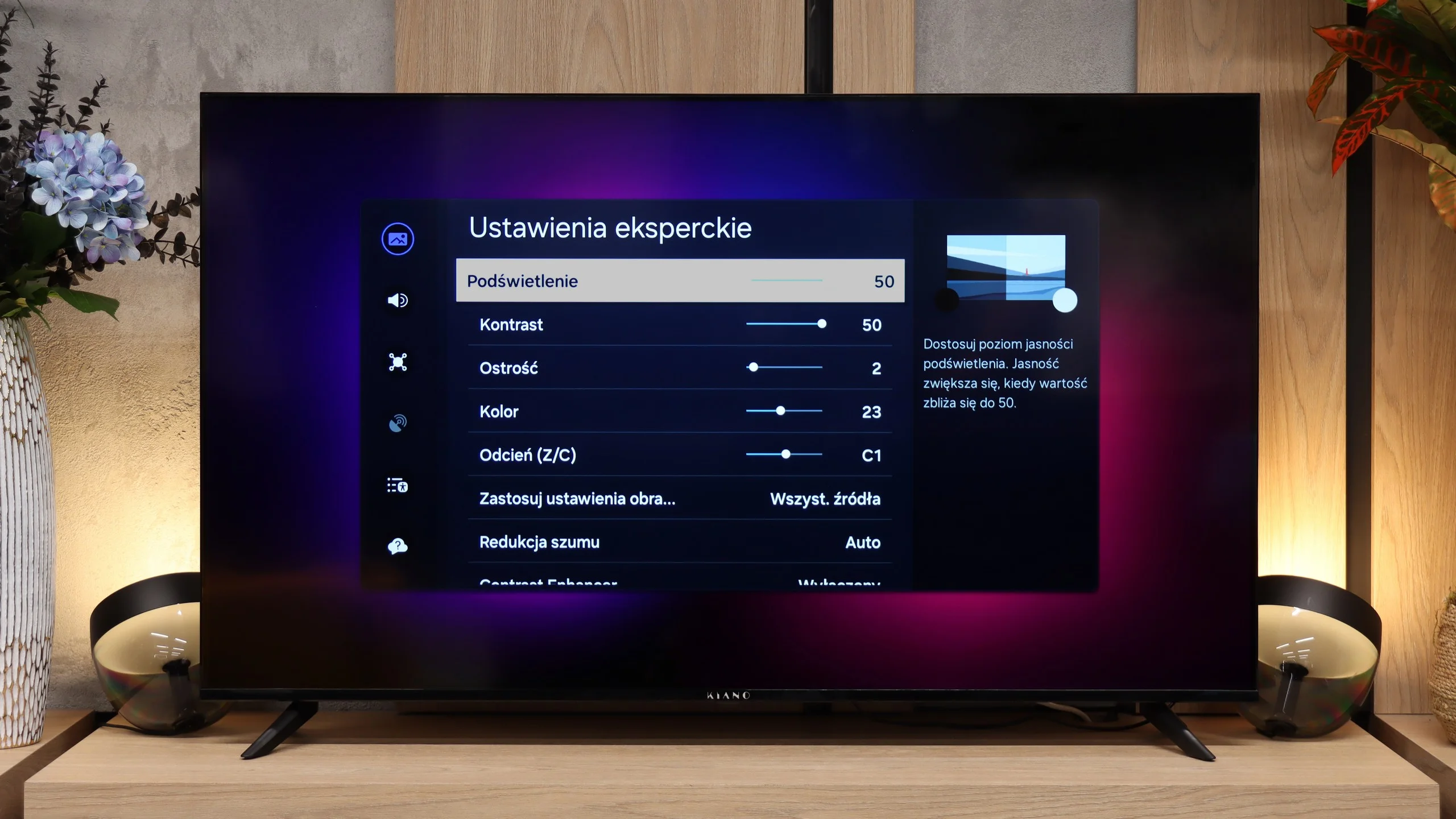
In terms of motion handling the Kiano Elegance performs rather poorly. The TV has a 60 Hz panel, but at this price point that's not surprising. What’s more problematic is the complete lack of any motion interpolation feature. In practice that means the TV displays content at exactly the frame rate at which it was recorded. That isn't a major issue for films, but with sport or fast panning shots you can clearly see that motion isn't particularly smooth.
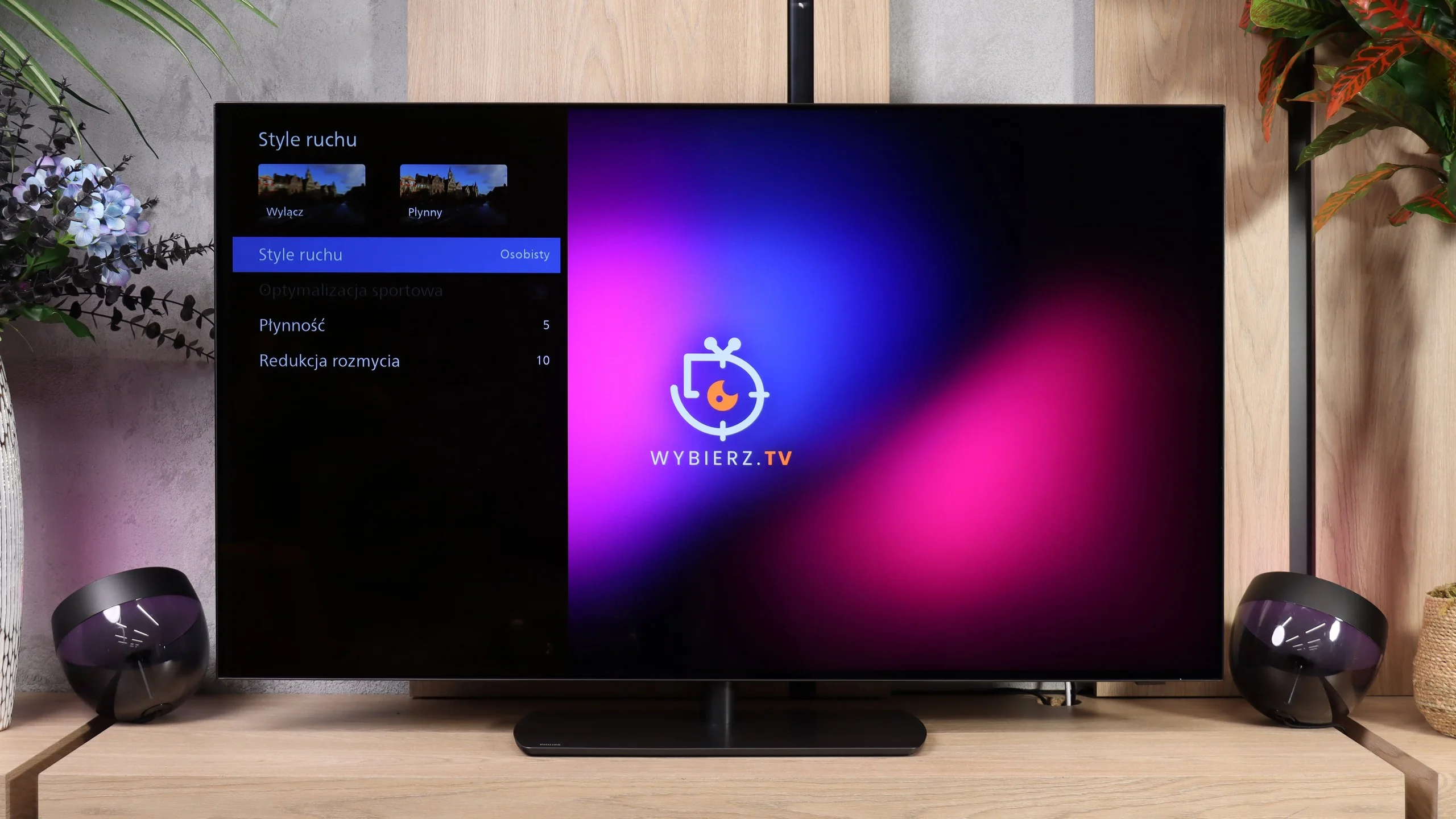
In terms of motion handling the OLED811 performs excellently. At 120 Hz, which is useful for console gaming and watching sport, the picture stays clear and moving objects do not leave noticeable smears. The fast response of OLED pixels helps here; this is clear in the UFO test, even on dark backgrounds. There are also motion smoothing controls. For films you can adjust the level of smoothing to suit your taste, ranging from preserving a cinematic character to much smoother motion. A separate blur reduction setting is useful for fast-paced material such as sports broadcasts.
Console compatibility and gaming features
1.6/10
9.5/10
- ALLM
- VRR
- VRR range 48 - 165Hz
- Dolby Vision Game Mode
 Yes, high input lag
- Correct implementation of HGIG
- 1080p@120Hz
- 1440p@120Hz
- 4K@120Hz
- Game bar
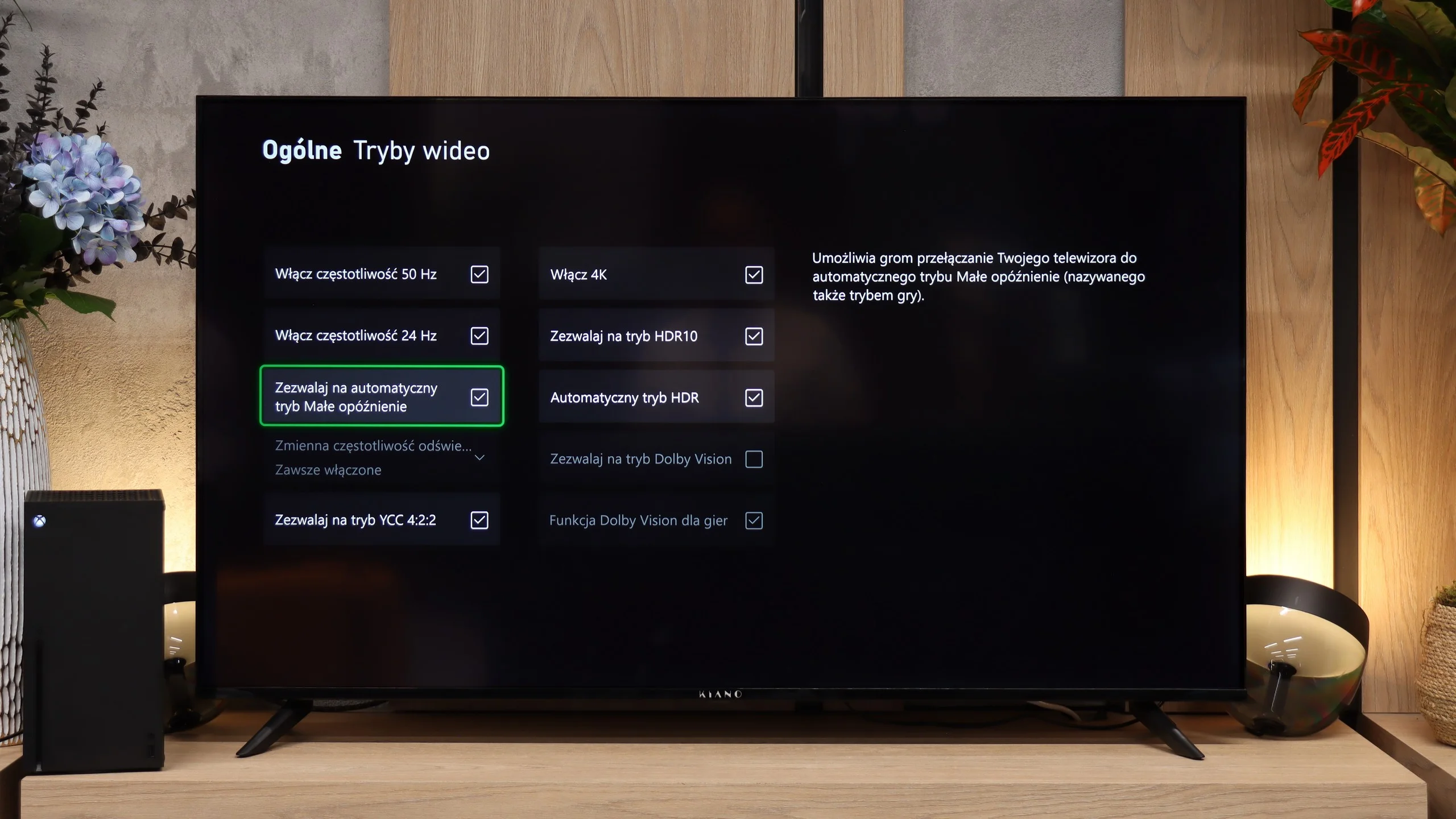
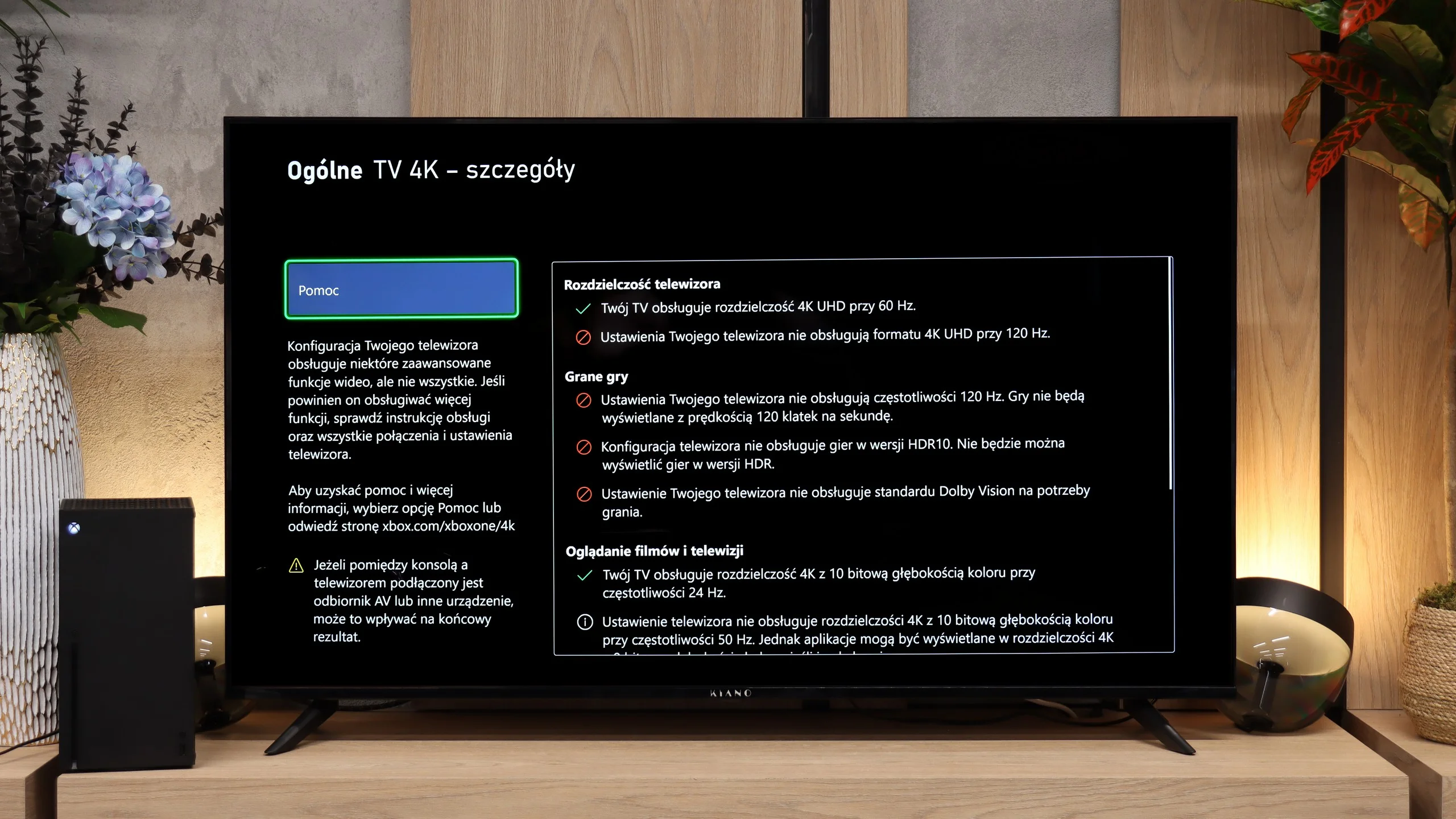
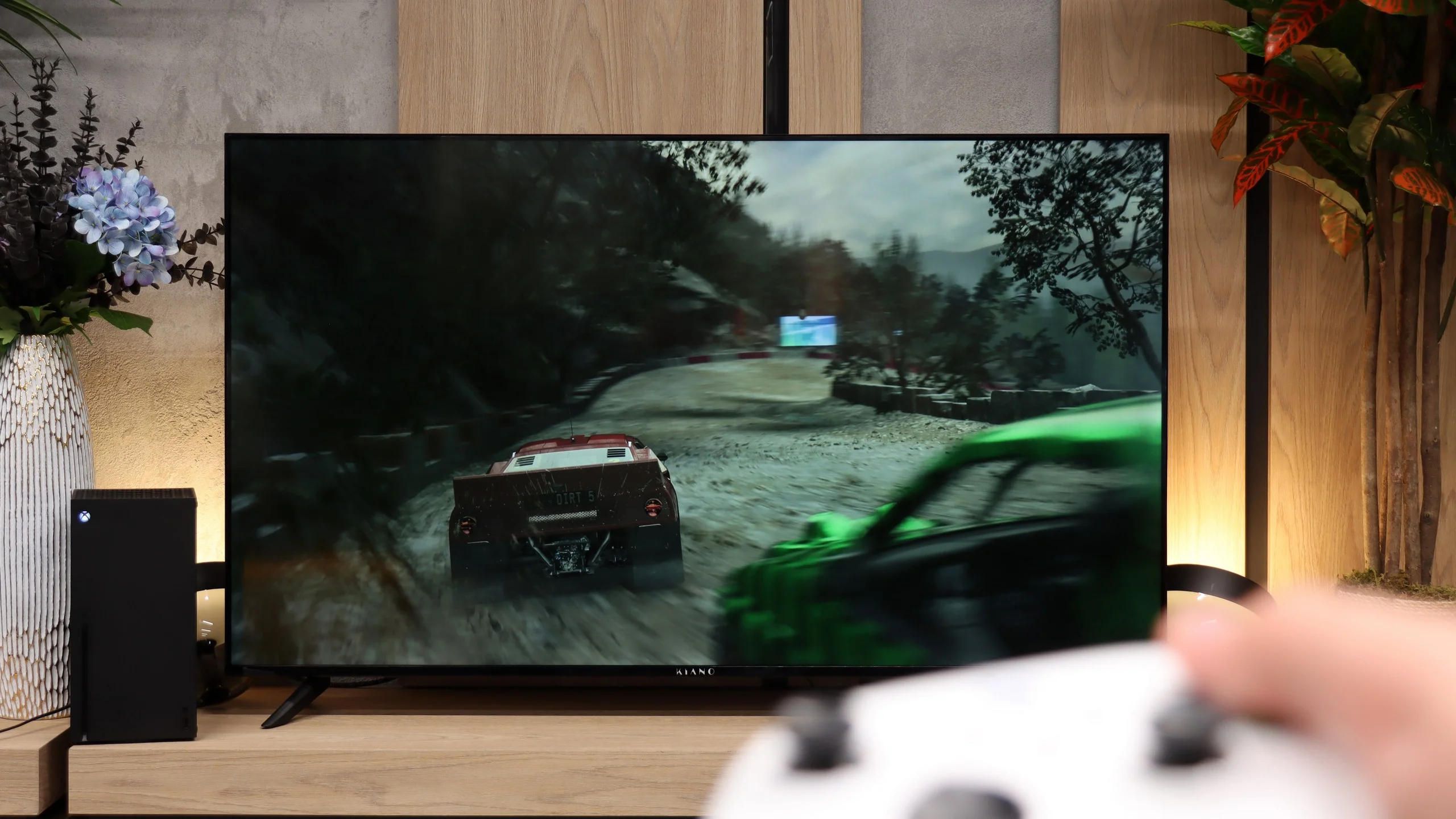
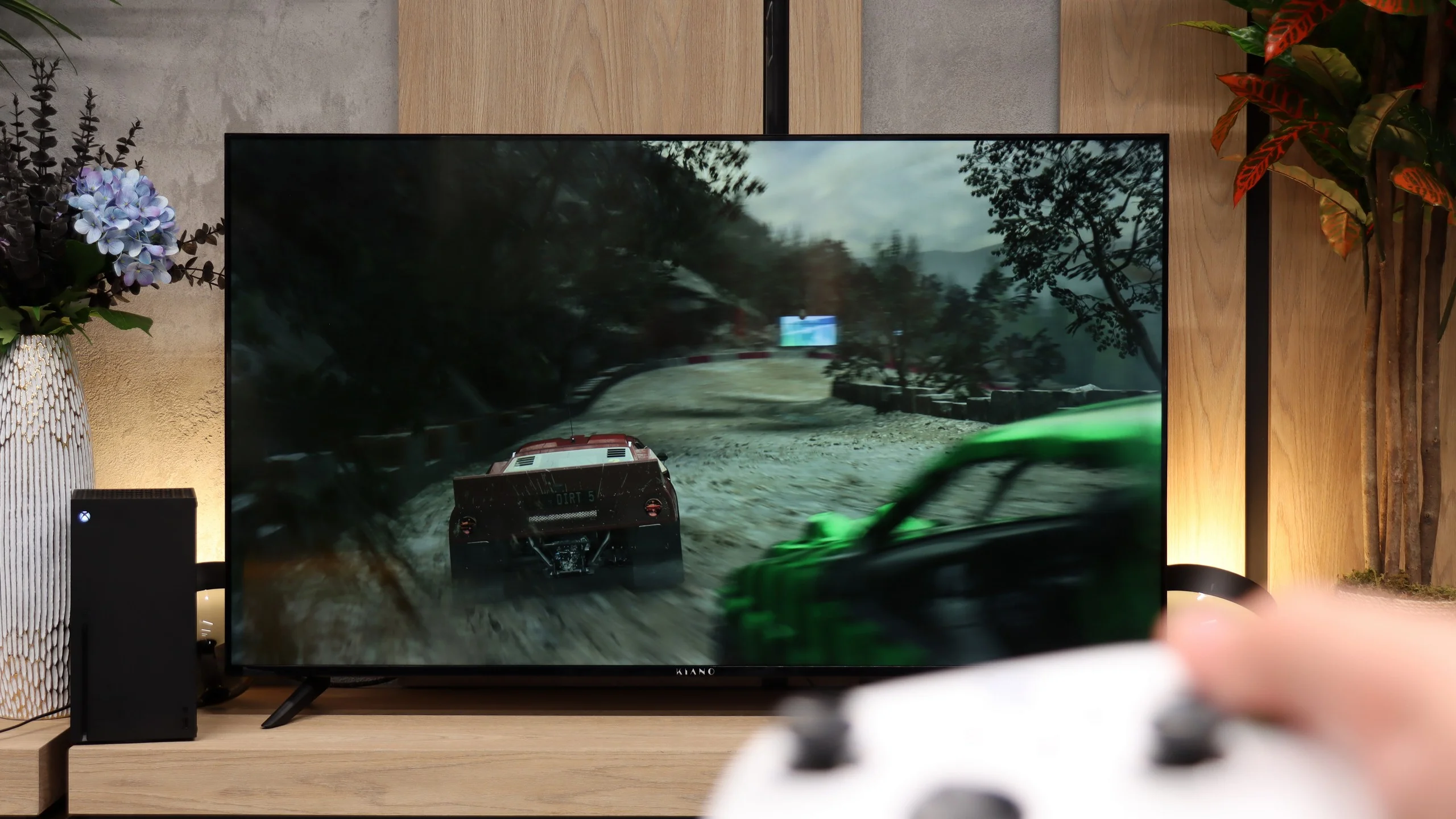
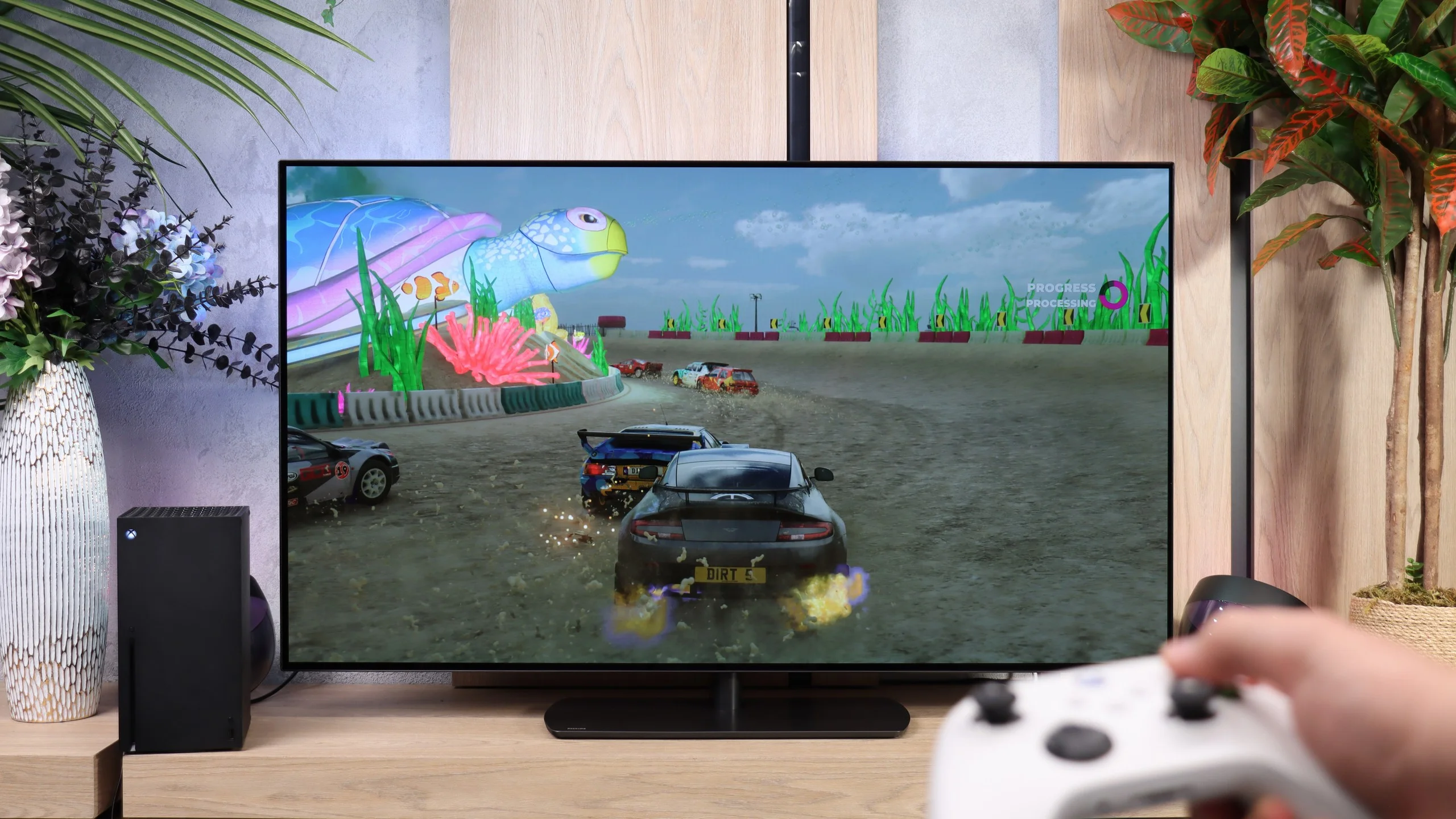
The Kiano Elegance lets you connect a console and play, but its ambitions basically stop there. The panel supports up to 60 Hz and there is no VRR, which helps when frame rates drop. It even lacks ALLM, i.e. automatic switching to a low-latency mode, so you have to take care of the TV’s settings yourself. That’s a pity, especially since input lag is low in the appropriate mode. However, if a console is one of the main reasons you’re buying a TV, it’s worth looking for something with greater capabilities.
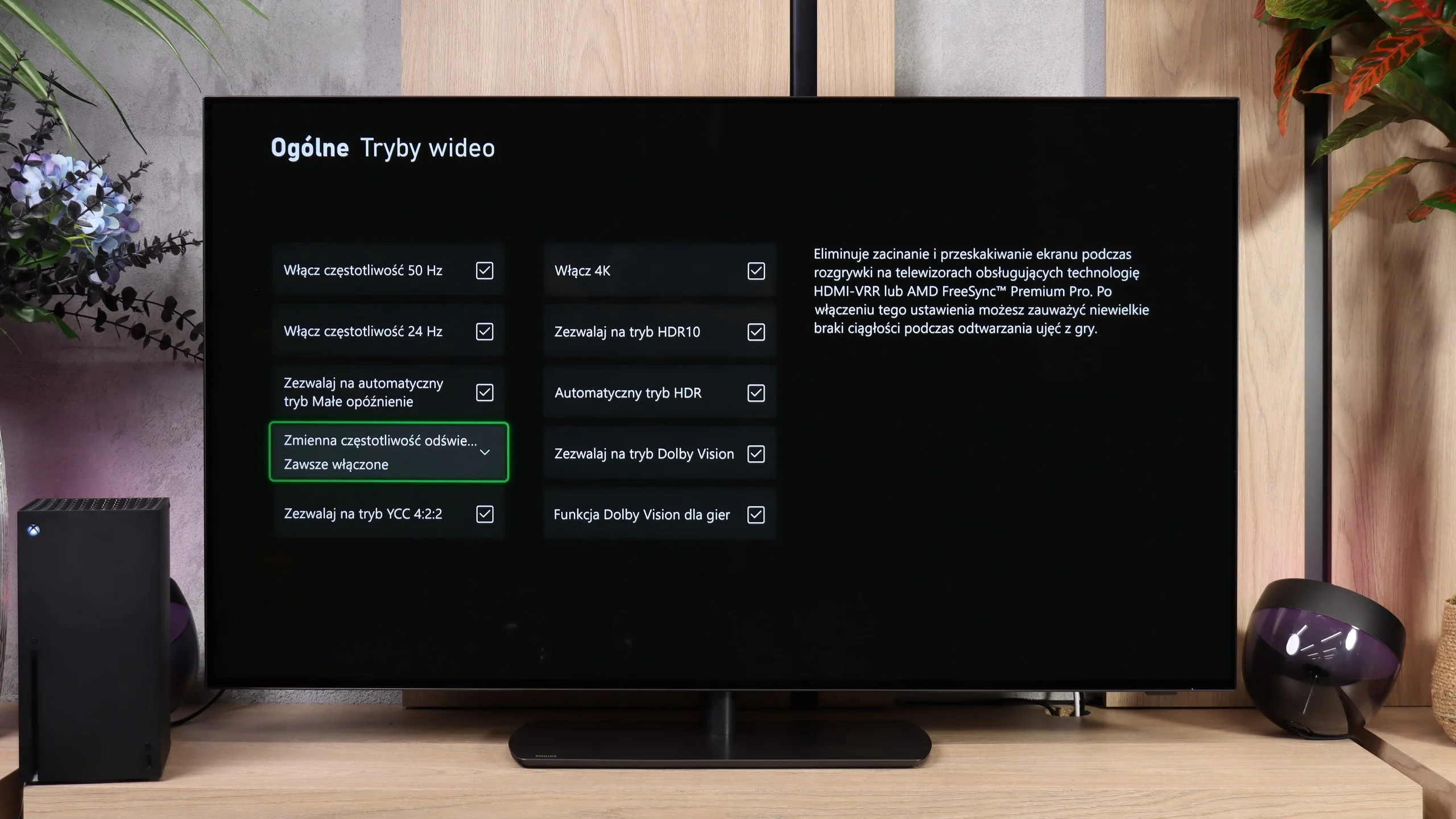
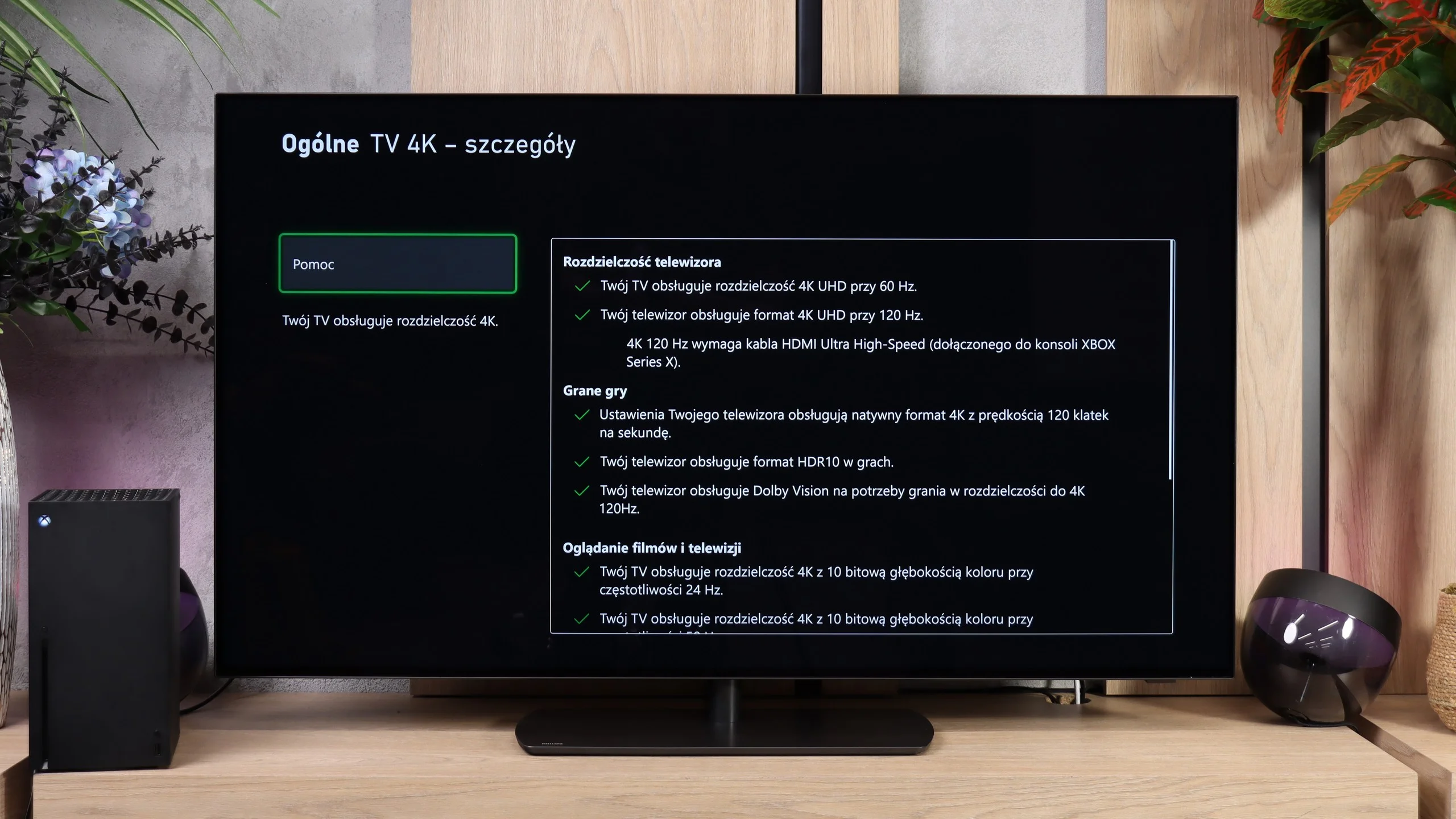
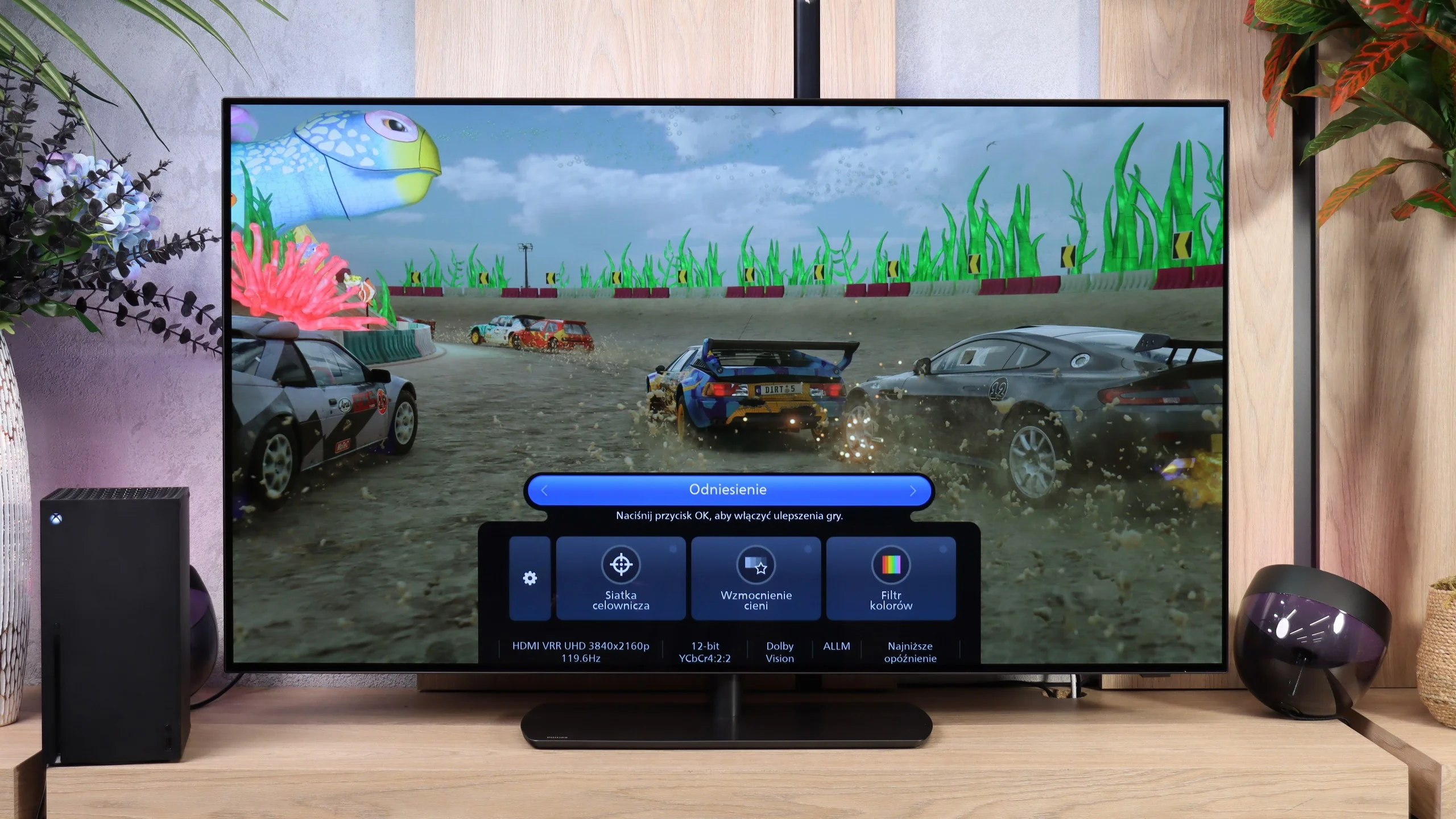
OLED811 has almost everything you could expect from a TV for gaming. It supports 120 Hz at Full HD, 1440p and 4K, and when connected to a PC it can reach 165 Hz. It also has VRR, which helps prevent screen tearing when frame rates fluctuate, and ALLM, which automatically switches to game mode. So you don't have to dig into the settings every time you power up your console.
Another plus is that HGiG works correctly, so once HDR is set on the console the TV doesn't apply its own changes to image brightness. There's also a Game Bar to check signal parameters and quickly change settings useful while gaming. The list even includes Dolby Vision for gaming, but there is a significant catch, which you can read about below.
Input lag
9.8/10
8.8/10
SDR
HDR
Dolby Vision
Although it has few features for gamers, the Kiano Elegance performs very well in terms of input lag. We measured around 14 to 15 ms at 60 Hz, both in Full HD and in 4K. Turning on HDR also doesn't increase input lag. Response to controller inputs is therefore quick, and while gaming you don't feel the TV noticeably delaying the controls. This is one of the model's strengths.
The OLED811 responds instantly. We measured 14 ms at 60 Hz and just 5 ms at 120 Hz, both in Full HD and 4K. Those are excellent results that let you comfortably play even fast online titles.
Compatibility with PC
6/10
8.6/10
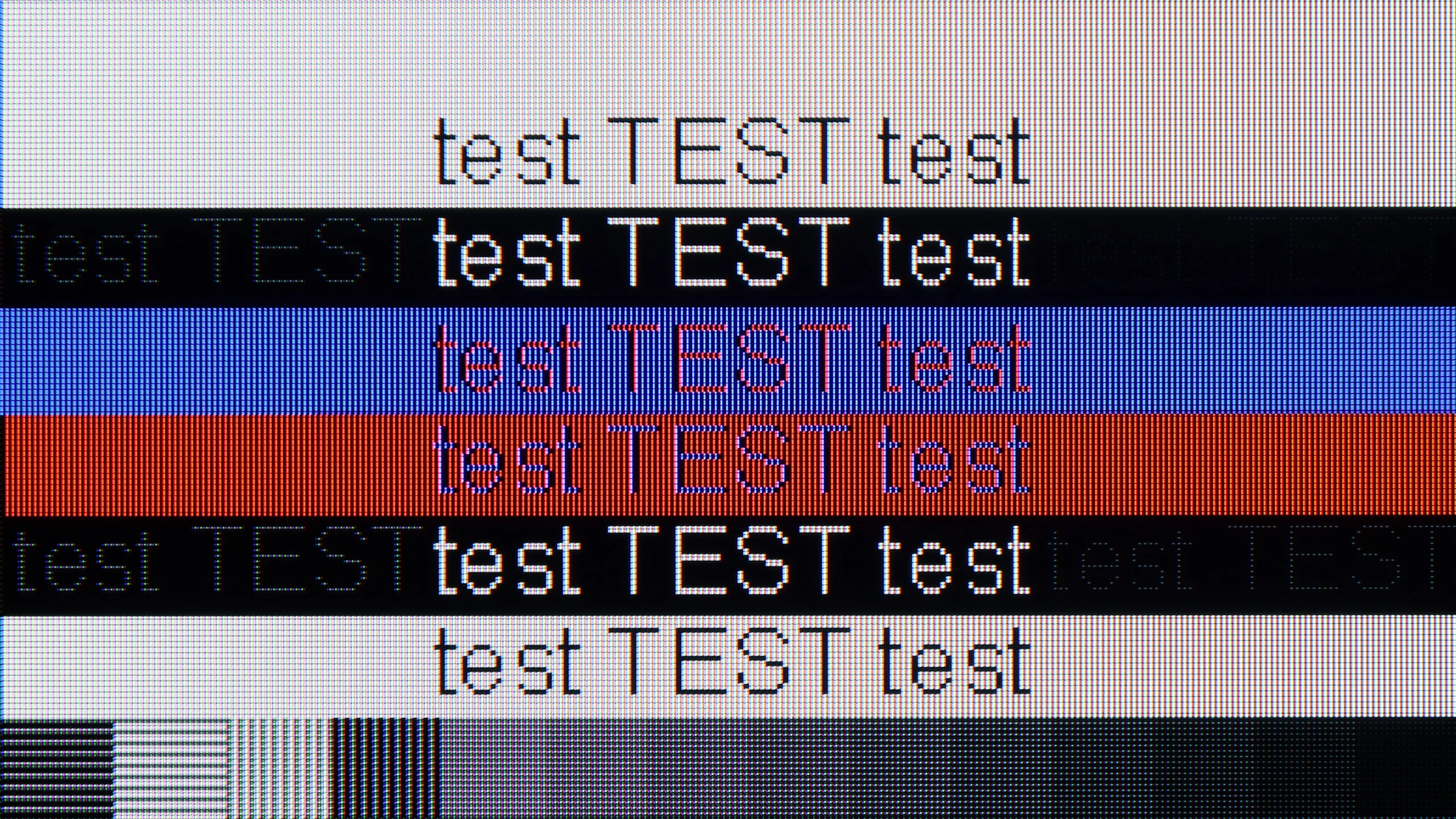
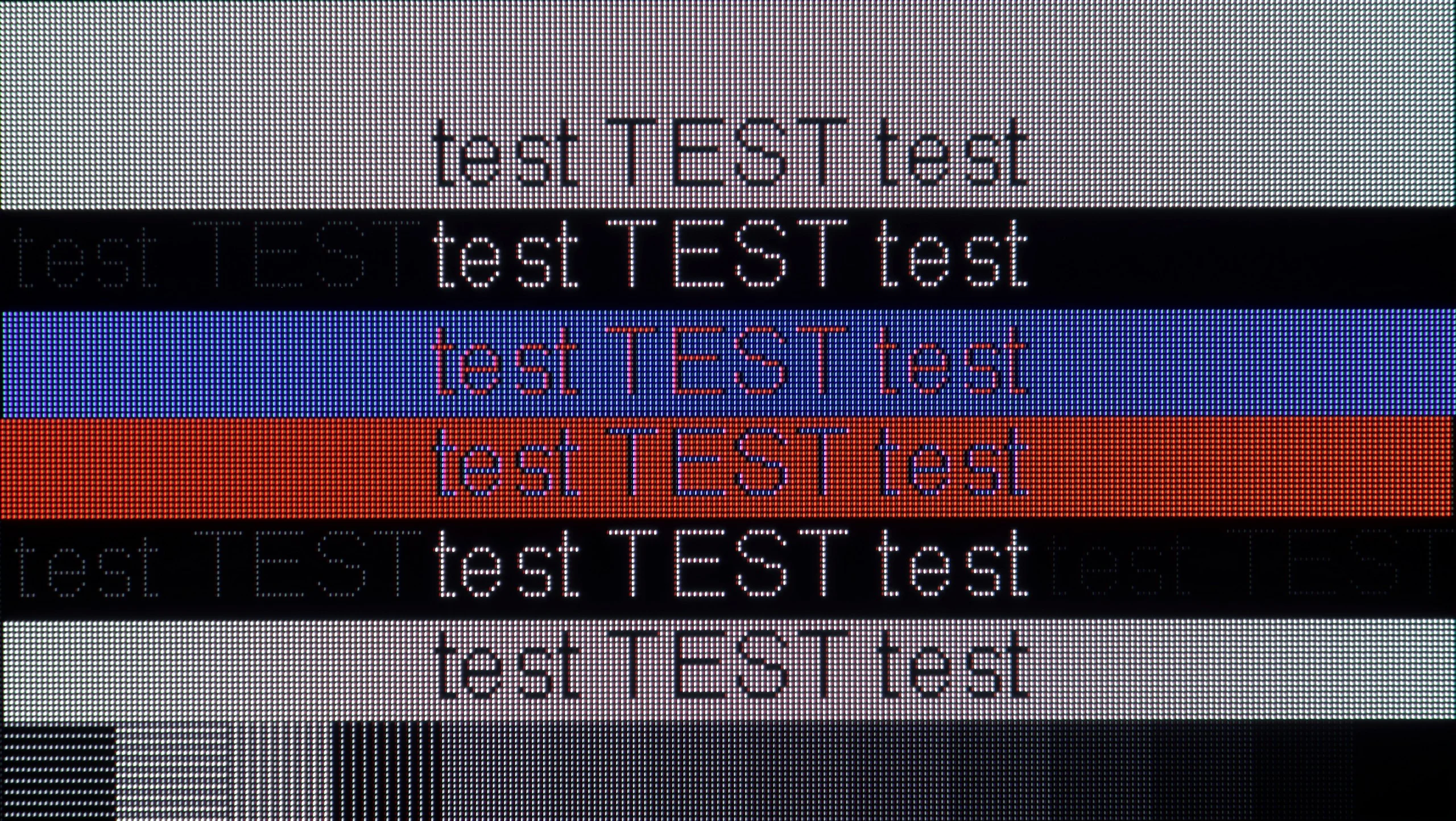
The photo shows the legibility of small fonts. Ideally, lines should be the same thickness on both light and dark text, with minimal pixel gaps.
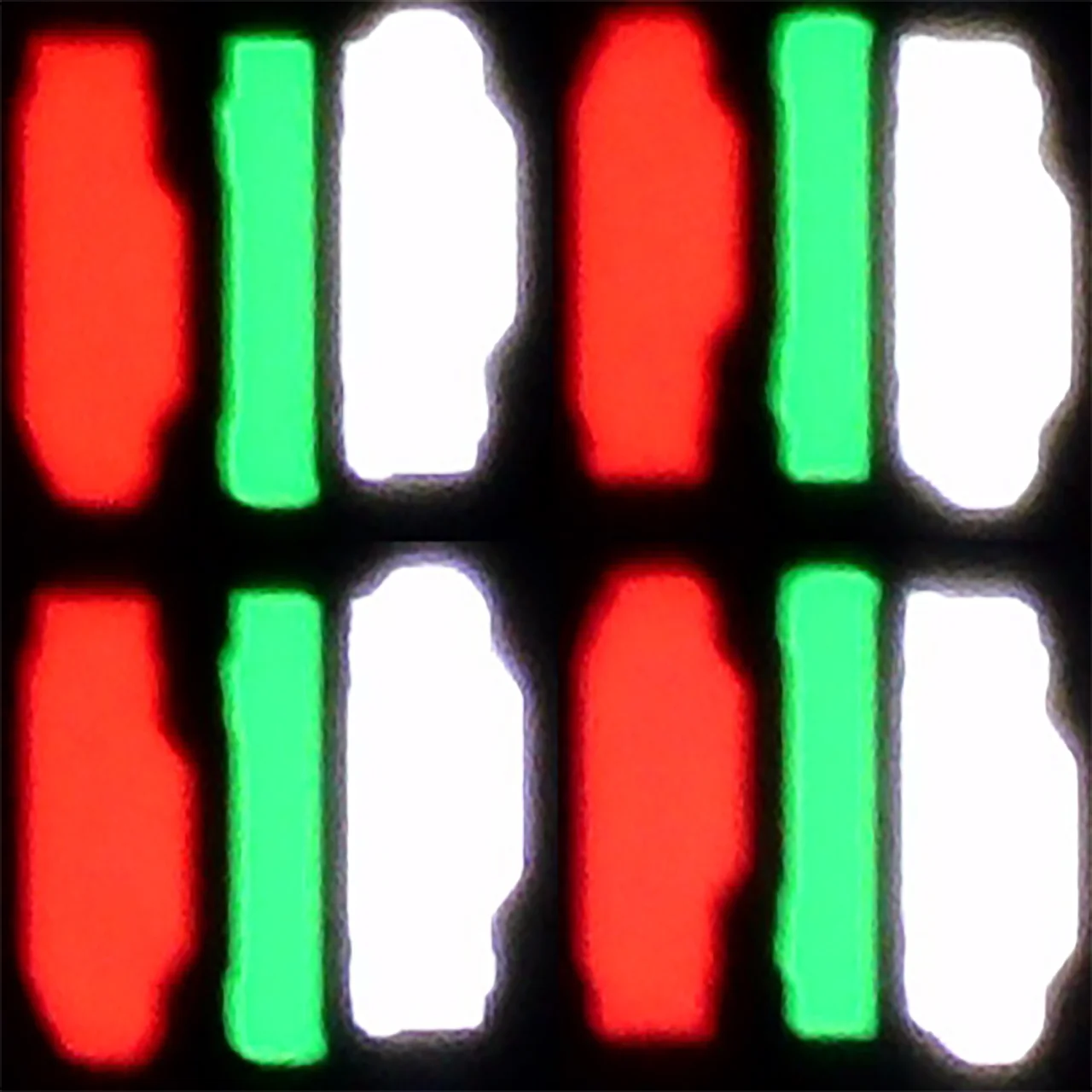
For browsing the internet, reading documents or displaying images from a laptop, the Kiano Elegance performs quite well. It supports 4:4:4 chroma subsampling, so small, colourful letters remain legible. There are also no major issues with rendering dark text. Despite using a BGR subpixel arrangement, font legibility in our tests was very good.
When gaming on a PC, however, the limitations described earlier reappear. The refresh rate maxes out at 60 Hz and G-Sync is not supported. A low input lag of around 15 ms provides responsive control, but it will not improve the clarity of moving objects. As a large screen for basic tasks the Kiano manages well, but there are better options for fast-paced games.
The Philips OLED811 works very well with a PC. The manufacturer has finally managed to implement 4:4:4 chroma correctly, even at maximum resolution and refresh rate. As a result, small text and coloured edges are legible, without blurring or rainbow artefacts caused by loss of colour information. Dark text on dark backgrounds also performs well, which is something TVs can struggle with. There are still minor imperfections related to the RGWB subpixel layout. Fonts are not as sharp as on a conventional RGB monitor, and white letters can show faint red outlines up close. From a normal viewing distance you hardly notice it, though sitting close to the screen at a desk makes it easier to spot.
The most fun, however, comes from gaming on a PC. The combination of 4K at 165 Hz, functional G-Sync and input lag of around 5 ms makes the OLED811 excellent for that. If you have a PC that can take advantage of such a refresh rate, it’s definitely worth connecting it to the Philips.
Viewing angles
2.8/10
7.8/10
The Kiano Elegance is best watched sitting directly in front of the screen. Move to the side and the colours noticeably lose saturation, and the image becomes much less contrasty. At a 45-degree angle we measured a brightness drop of about 63%, so the difference is hard to miss. This is a typical weakness of VA panels and something to bear in mind if the TV will be placed opposite a wide sofa or viewed from different parts of the room.
The viewing angles on the OLED811 are excellent and among the best on the market. Even sitting well off to the side, you still see an image with deep blacks and well-saturated colours. This is a big advantage over LCD screens, as you don't have to sit directly in front to enjoy good picture quality.
QD-OLED panels do even better, keeping colours truer at angles. On the Philips, at greater off‑axis angles white shifts slightly towards greenish hues, but the effect is so small that it is hard to find it bothersome during viewing. We'd even say that, in this respect, we've come across the best WOLED panel unit we've tested so far.
Daytime performance
3.7/10
6/10
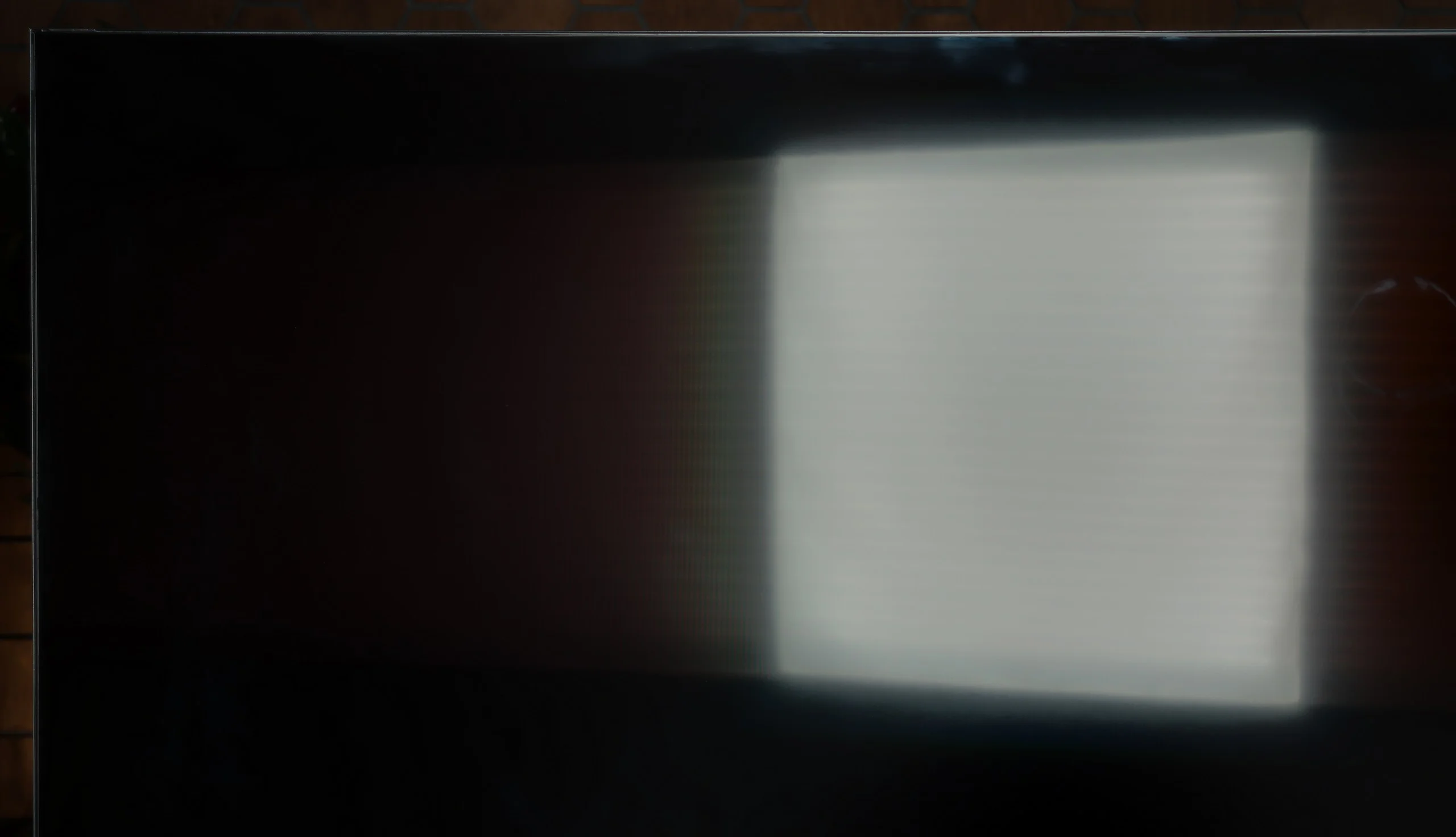
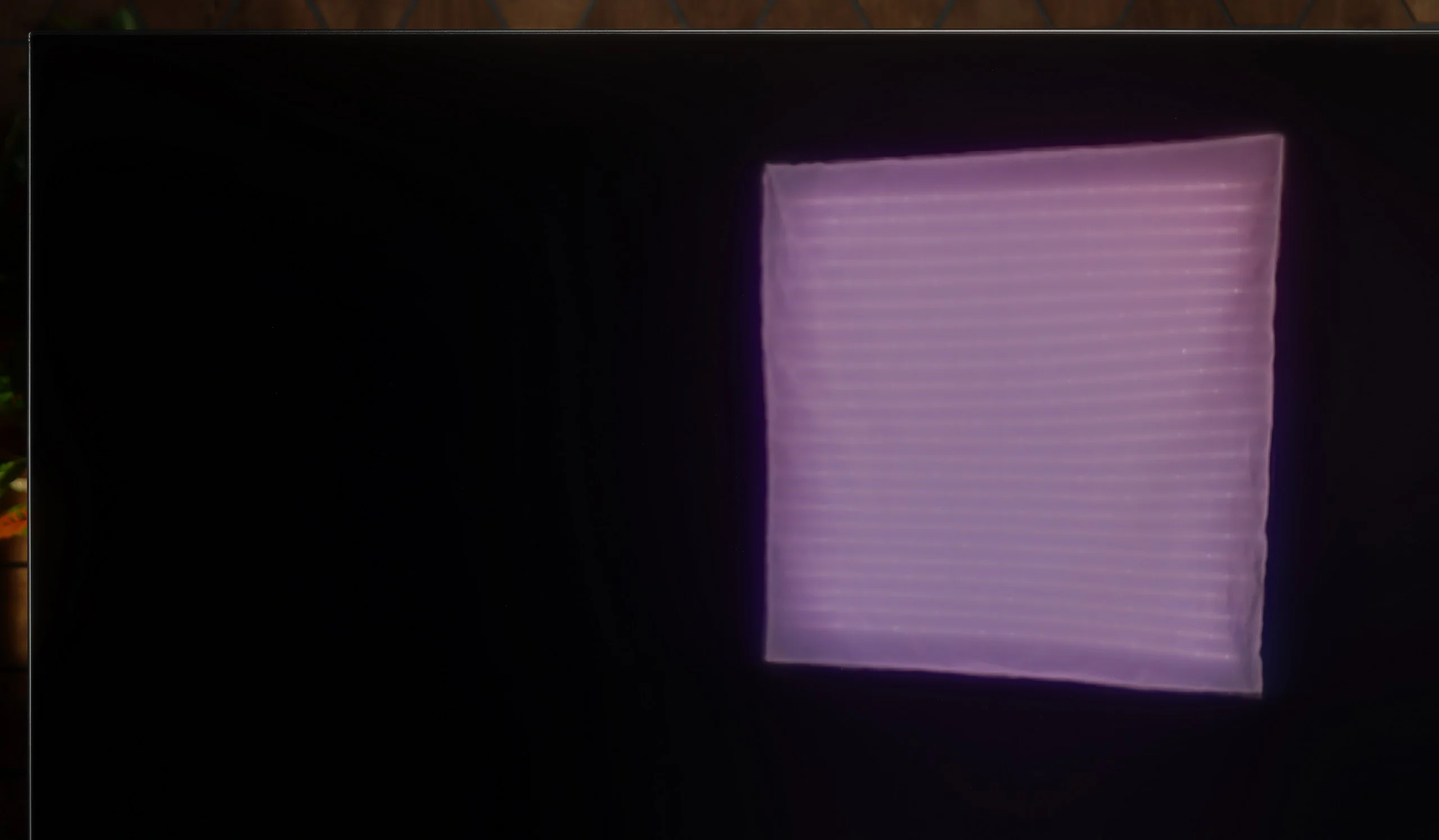
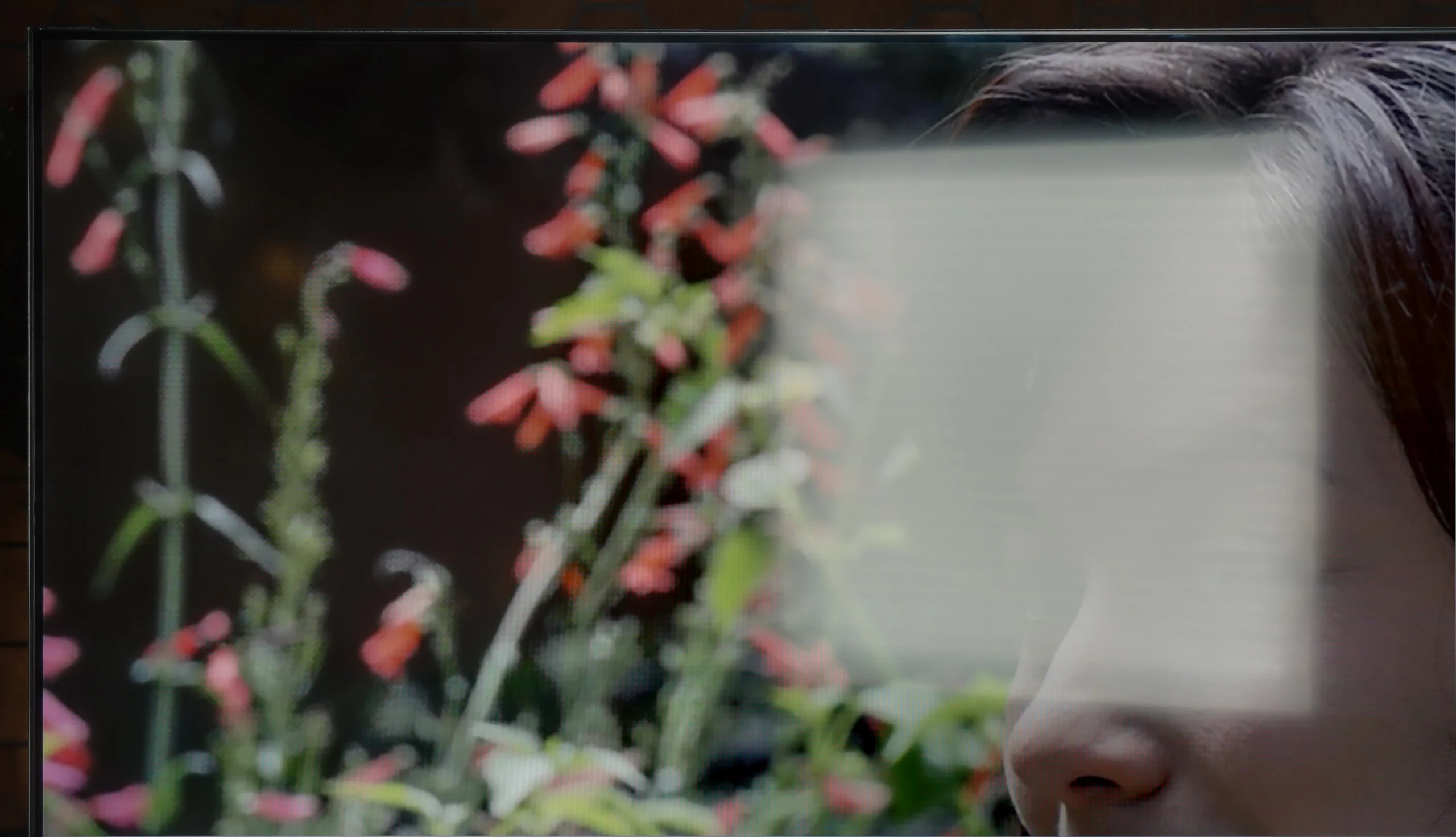
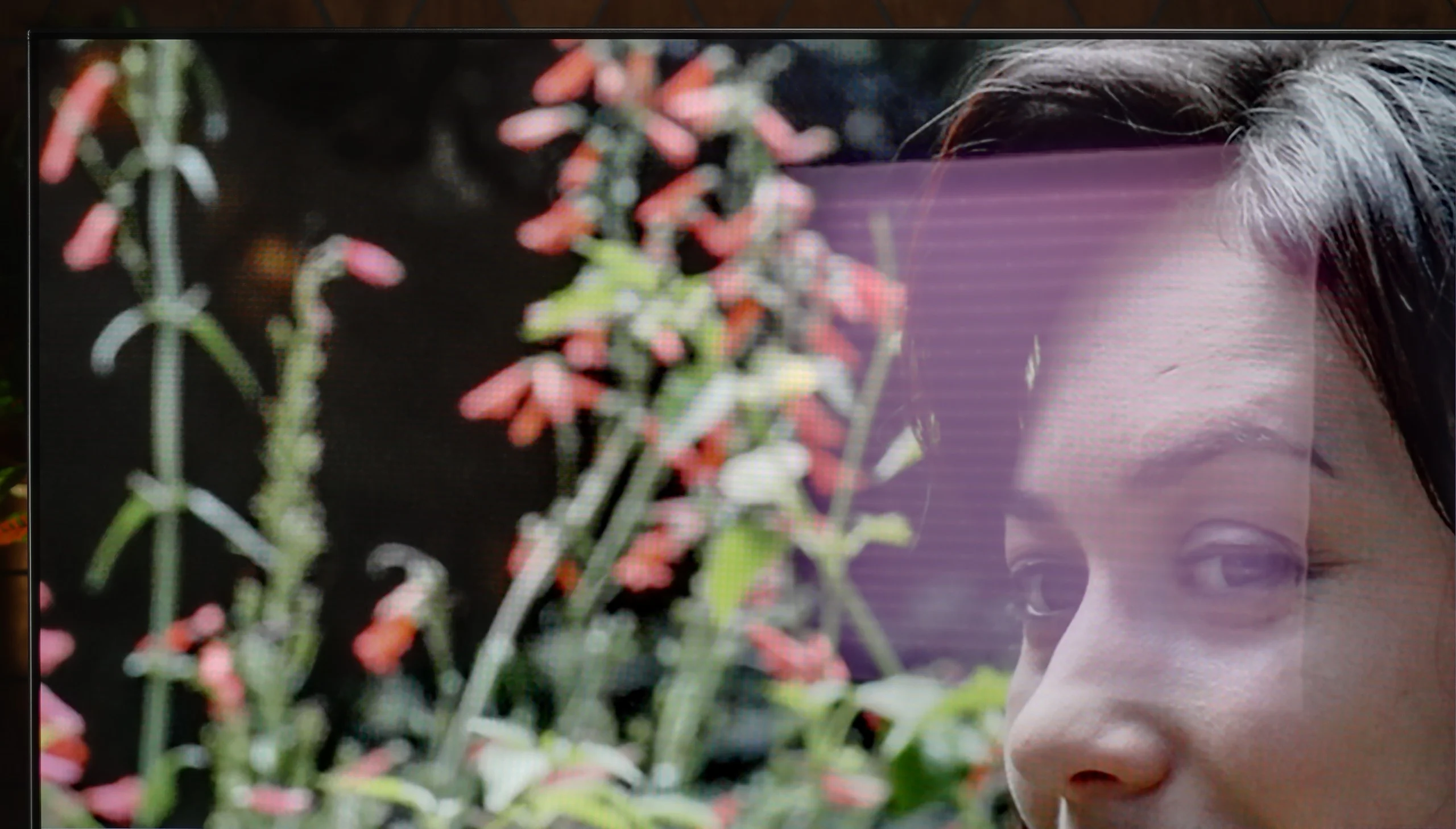
Panel brightness
Philips OLED811: 392 cd/m2
Kiano Elegance Tizen: 215 cd/m2
Kiano Elegance will simply be too dim for a very sunlit living room. Average brightness is about 215 nits, so during the day the picture is easily washed out by light coming through the windows. Especially with darker films, you may need to close the blinds. The satin coating does a decent job of reducing reflections, and blacks in a lit room do not look bad, but that is not enough to make up for the low brightness. The TV will be much better suited to a less sunlit room or to evening viewing.
OLED811 copes with daytime viewing, though in a very bright living room it has its limitations. Maximum SDR brightness reaches around 600 nits, comparable to the LG C6 or the Samsung S90H, which use the same panel. That’s noticeably more than entry-level OLEDs and will be more than enough for most people. However, bear in mind this brightness is not sustained across the whole screen; it falls with large areas of white, and our average measurement was about 392 nits.
A bigger problem can be direct reflections from windows or lamps. The glossy coating suppresses them reasonably well, but they are still clearly visible on the screen, especially in dark scenes. It doesn’t diffuse them as effectively as matte screens, so placing the TV opposite a large window is not the best idea. On the plus side, blacks remain very good even during the day. In a typical living room the Philips will cope without major issues, but with strong sunlight falling directly on the screen you will want blinds.
Panel details
Subpixel Structure:
Panel uniformity and thermal imaging:


Kiano Elegance Tizen
Philips OLED811
TV features
5.1/10
7.9/10
- SystemTizenTitan OS
- System performanceAverageGood
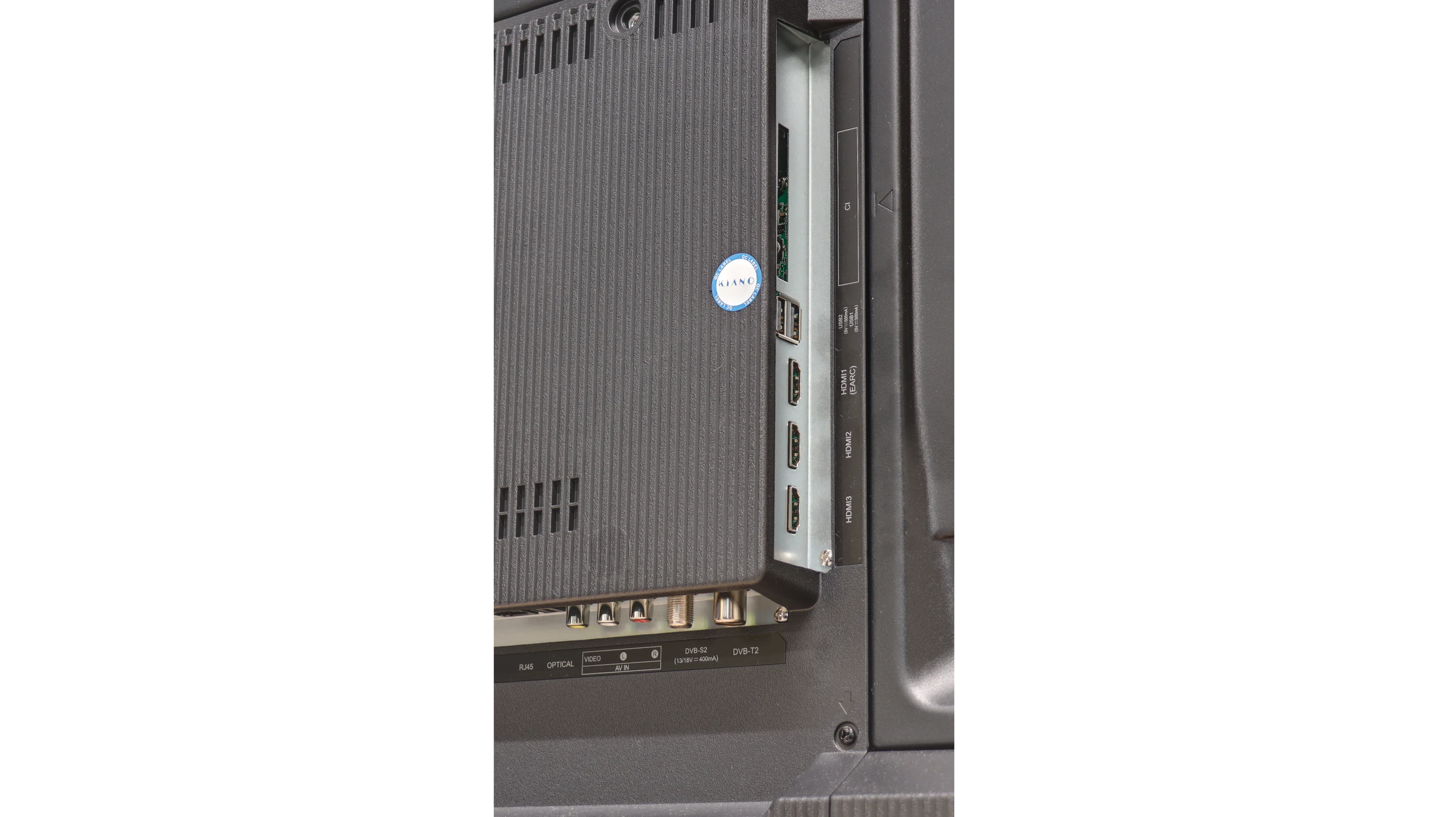
- HDMI inputs3 x HDMI 2.0, 0 x HDMI 2.10 x HDMI 2.0, 4 x HDMI 2.1 48Gbps
- Other inputsRCA (Chinch)
- OutputsSPDIF (Coaxial audio), eARC (HDMI), ARC (HDMI)Toslink (Optical audio), eARC (HDMI), ARC (HDMI), Mini-Jack (Headphones)
- Network InterfacesWi-Fi 2.4GHz, Wi-Fi 5GHz, Ethernet (LAN) 100MbpsWi-Fi 2.4GHz, Wi-Fi 5GHz, Ethernet (LAN) 100Mbps
- TV receptionDVB-T, DVB-T2, DVB-S, DVB-S2, DVB-CDVB-T, DVB-T2, DVB-S, DVB-S2, DVB-C
Classic features:
- Recording to USB (terrestrial TV)
- Recording programming
- Picture in Picture (PiP)
- RF remote control (no need to aim)
- Backlit remote control
- Teletext
- Audio only mode
- Bluetooth headphones support
- Simultaneous Bluetooth headphones & TV audio
Smart features:
- AirPlay
- Screen mirroring (Windows Miracast)
- Voice search
- Voice search in native language
- Ability to connect a keyboard and mouse
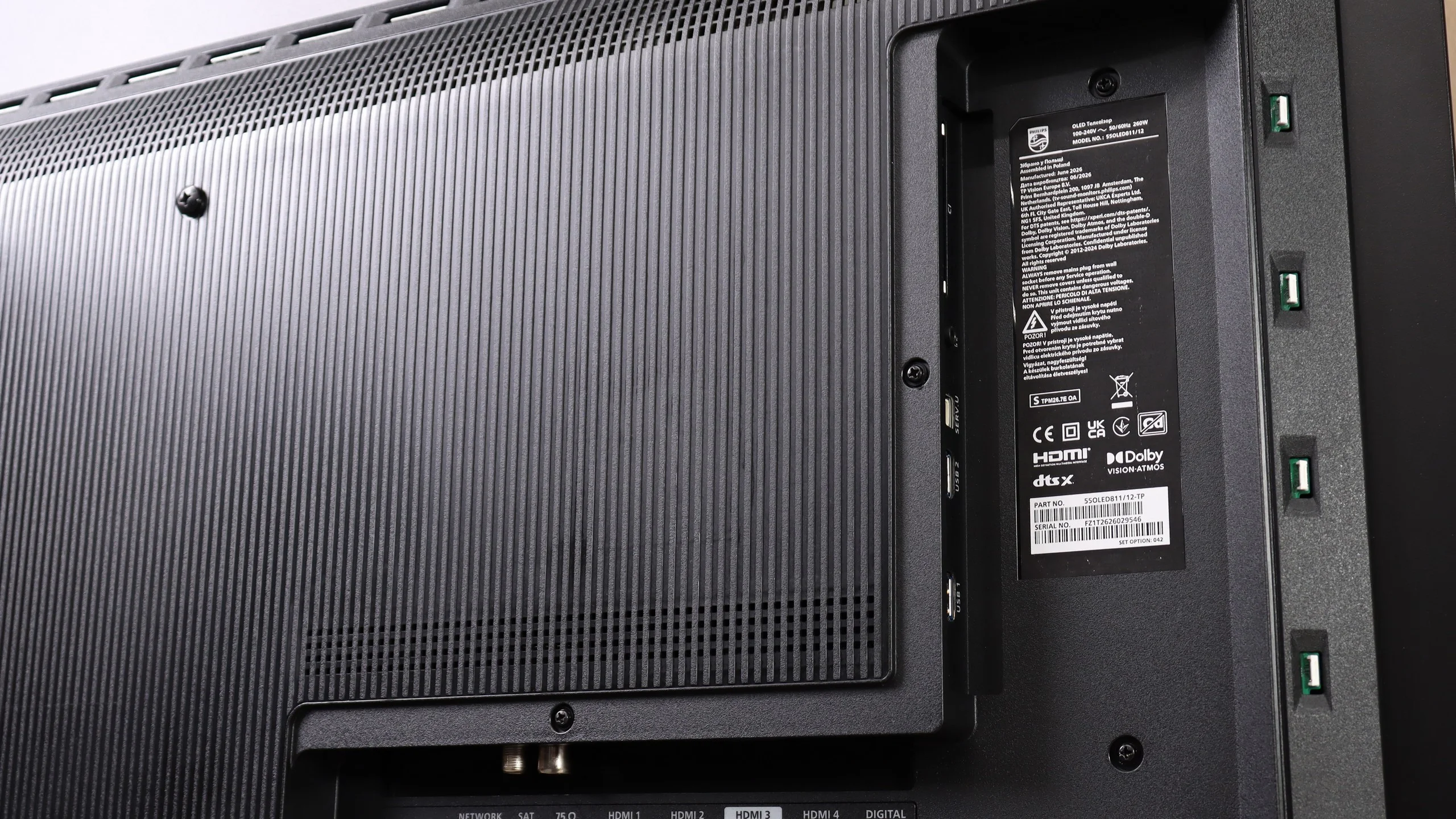
Sound connection options
- HDMI audioeARC (HDMI), ARC (HDMI)eARC (HDMI), ARC (HDMI)
- Other audio outputsAuxiliaryOutput-SPDIF (Coaxial audio)Toslink (Optical audio), Mini-Jack (Headphones)
- Wireless audioBluetoothBluetooth
Supported audio formats (external HDMI eARC audio):
- Dolby Digital Plus 7.1
- Dolby True HD 7.1
- Dolby Atmos in Dolby Digital Plus (JOC)
- Dolby Atmos in Dolby True HD
- DTS:X in DTS-HD MA
- DTS-HD Master Audio
Senior accessibility
- Numeric keyboard on TV
- Font size adjustment
- Audio description
Tizen in the Kiano TV
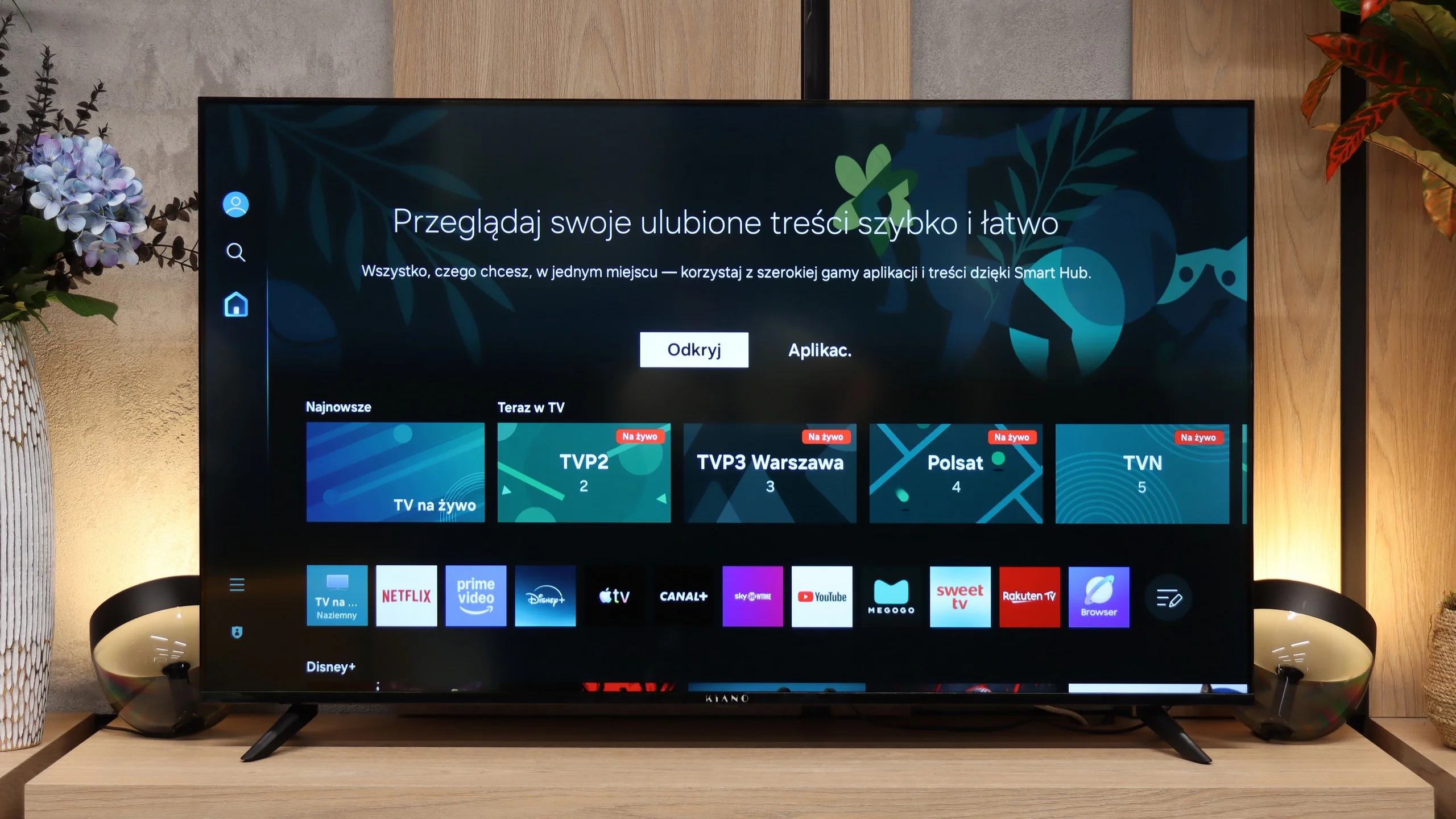
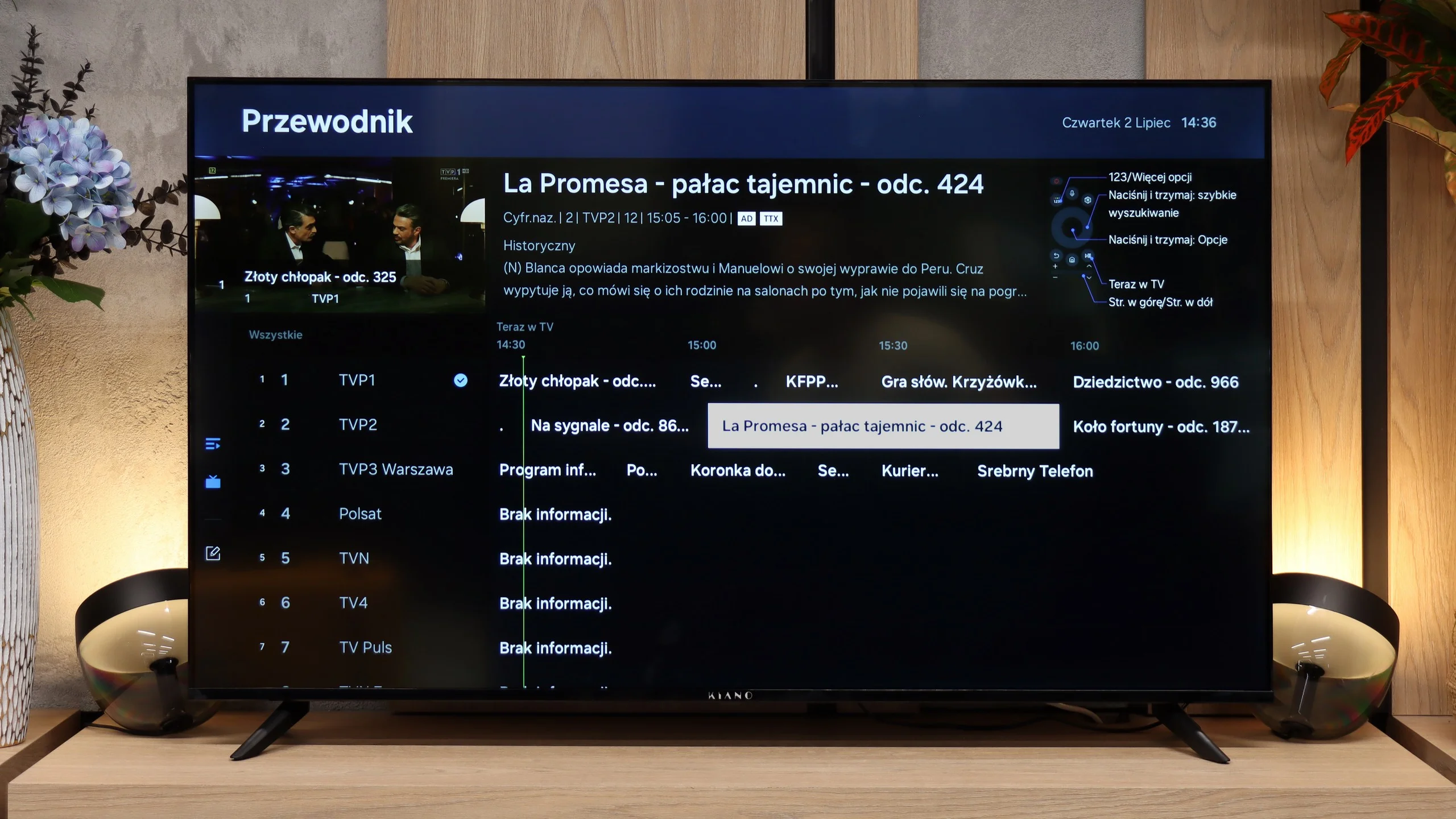
Tizen is one of the main reasons to consider this model. It gives access to many popular apps, so you don't necessarily need an external streaming device to watch series or YouTube. Bear in mind, however, that the same system does not guarantee the same ease of use as in more expensive Samsung models. On the Kiano the responsiveness is average, and you may sometimes have to wait a moment for the menu to react. There is no voice search, so titles must be entered with the remote control. A convenient addition is AirPlay and the ability to wirelessly stream the picture from a computer.
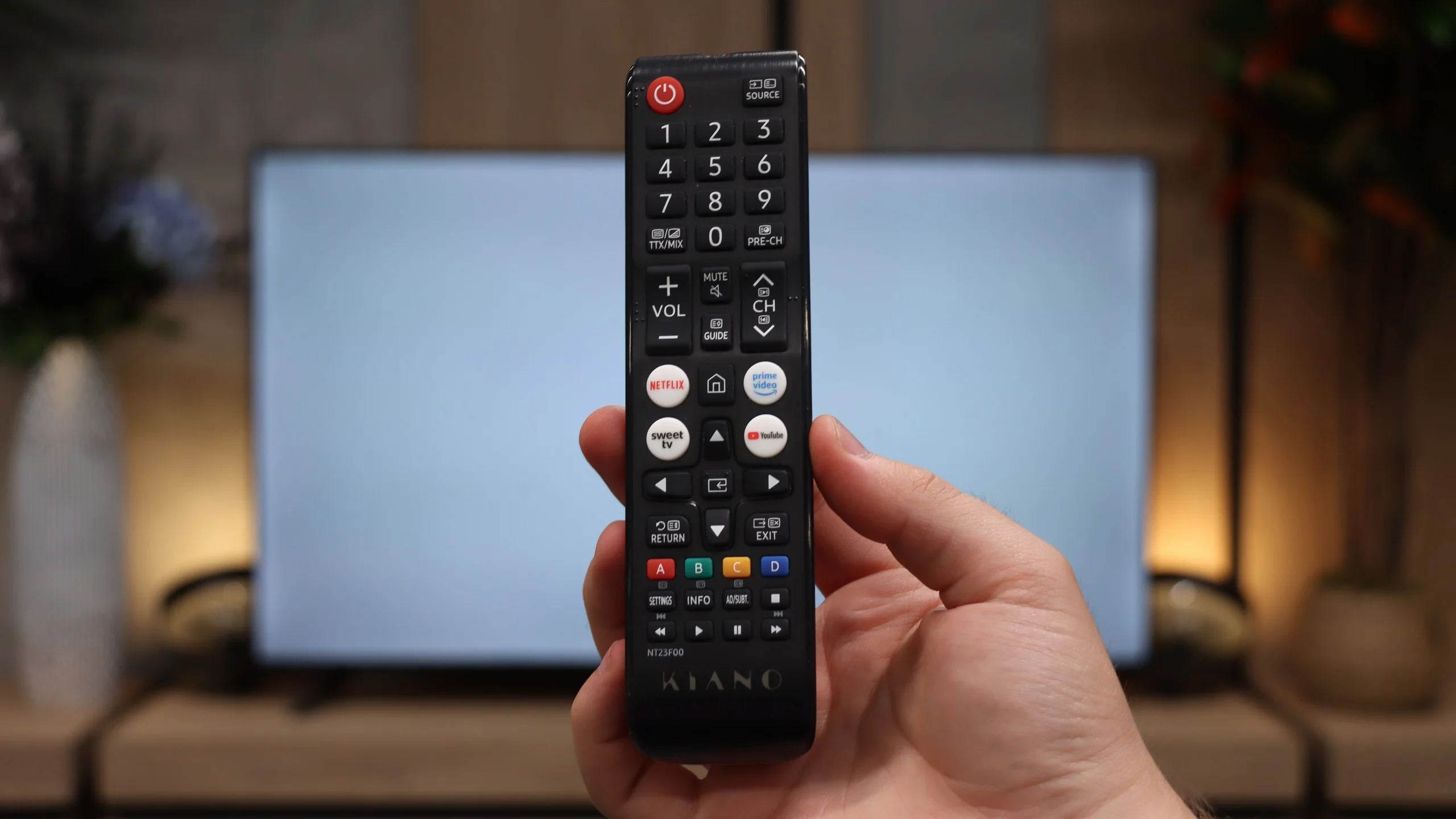
Everyday use
The basic TV functions are in place, but there is no USB programme recording or picture-in-picture. The remote uses infrared, so it must be pointed at the TV, and its buttons are not backlit. It is useful, however, that you can use Bluetooth headphones and the speakers at the same time. This allows one person to listen through headphones (for example an older person) without taking the sound away from others in the household. For connecting devices there are three HDMI 2.0 inputs, which are sufficient for 4K at 60 Hz. A soundbar can be connected via eARC, and an analogue RCA input is provided for older equipment.
Smart features: Titan OS
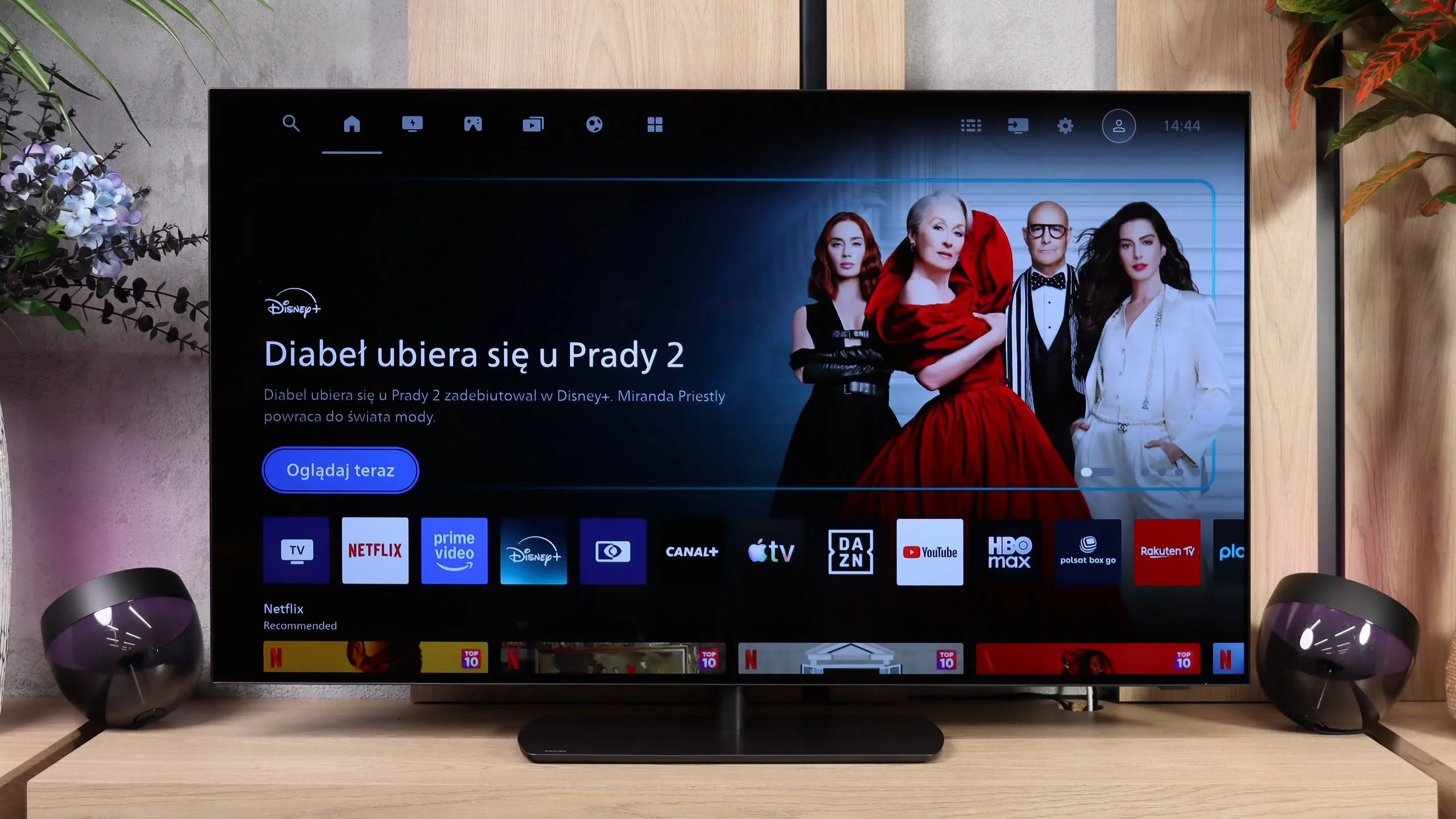
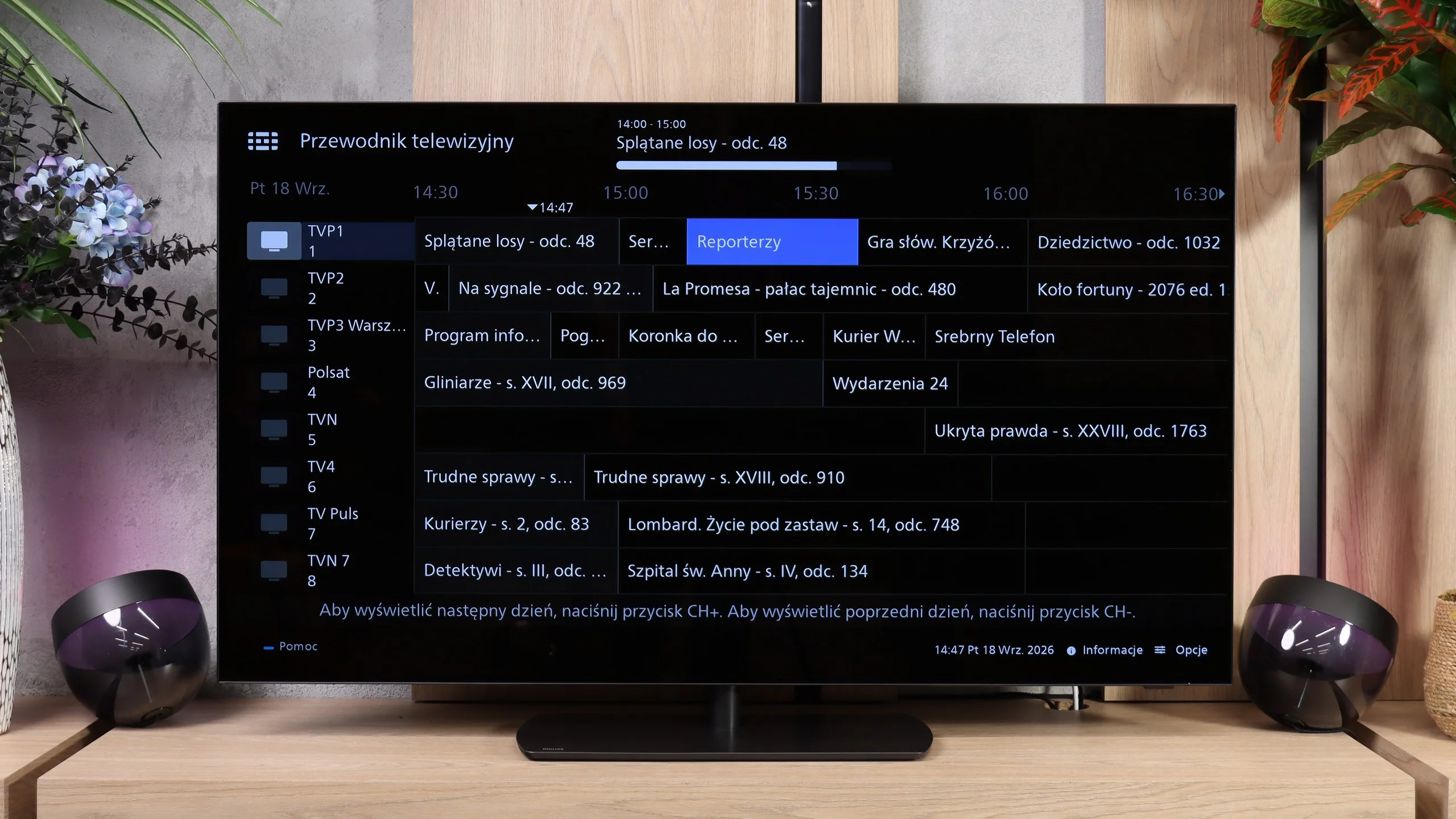
It's the Smart TV system that is the most controversial change in the OLED811. Philips dropped the user-favorite Google TV in favor of its own Titan OS. For many people this may be hard to accept, although Titan has been getting better every year and runs noticeably smoother. We have working AirPlay, screen mirroring from a computer, and voice search in Polish. System responsiveness has improved too, though minor delays still occur when navigating menus. We suspect the infrared remote is partly to blame, as it doesn't always register commands immediately. The biggest limitation compared with Google TV remains a smaller app selection. That doesn't mean it's empty — you'll find Netflix, Prime Video, Disney+, CANAL+, and Apple TV was recently added to the library. If you mainly use popular services, Titan should be enough, but it's worth checking availability of lesser-known apps before buying (list at the bottom 😉).
Ambilight
Ambilight is still one of the best reasons to consider a Philips. On the OLED811 it's three-sided — LEDs at the top and along the sides of the chassis light the wall with colors matched to what's happening on screen. In the evening it creates a great effect and can change the mood of the whole room, which is why we awarded extra points for this feature. You don't have to use dynamic picture tracking though. If you prefer calmer viewing conditions, you can set a steady white light. That's a nice option for evening sessions when you don't want to sit in front of a bright screen in a completely dark room.
Classic features
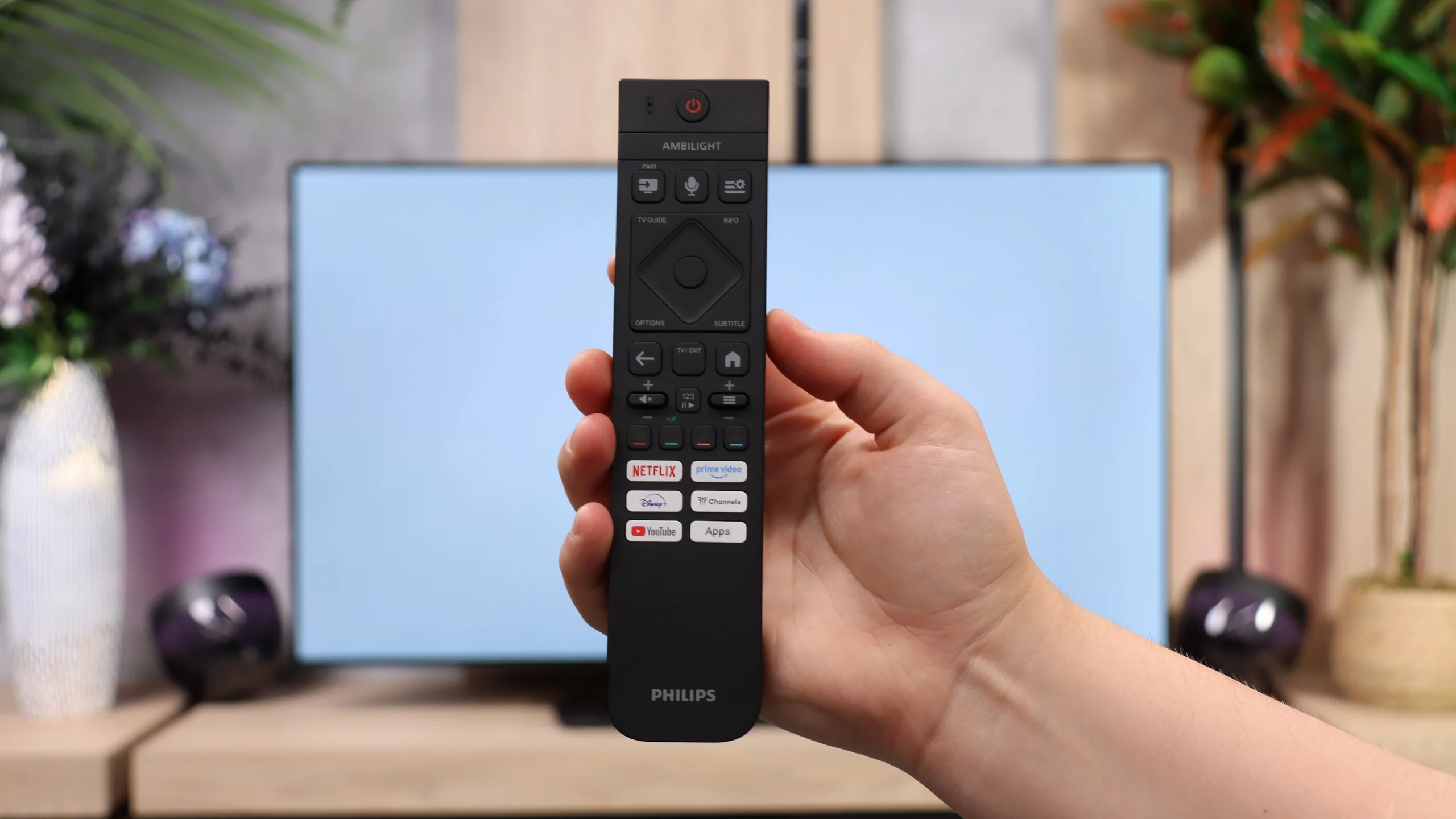
For regular TV watching the OLED811 performs well, although there is no USB recording or picture-in-picture (PiP). You can connect Bluetooth headphones and use them at the same time as the TV speakers. What bothers us most is the aforementioned infrared control. The remote itself is really interestingly designed: it has backlighting and a hybrid keyboard with a numeric section. It's a shame you have to aim it at the TV like with old remotes. For equipment at this level we'd prefer to just press buttons without wondering which way we're holding the remote. Hopefully Philips will fix that in future models.
Apps
8.8/10
7.7/10






















Playing files from USB
8/10
8.6/10
Supported photo formats:
Maximum photo resolution:
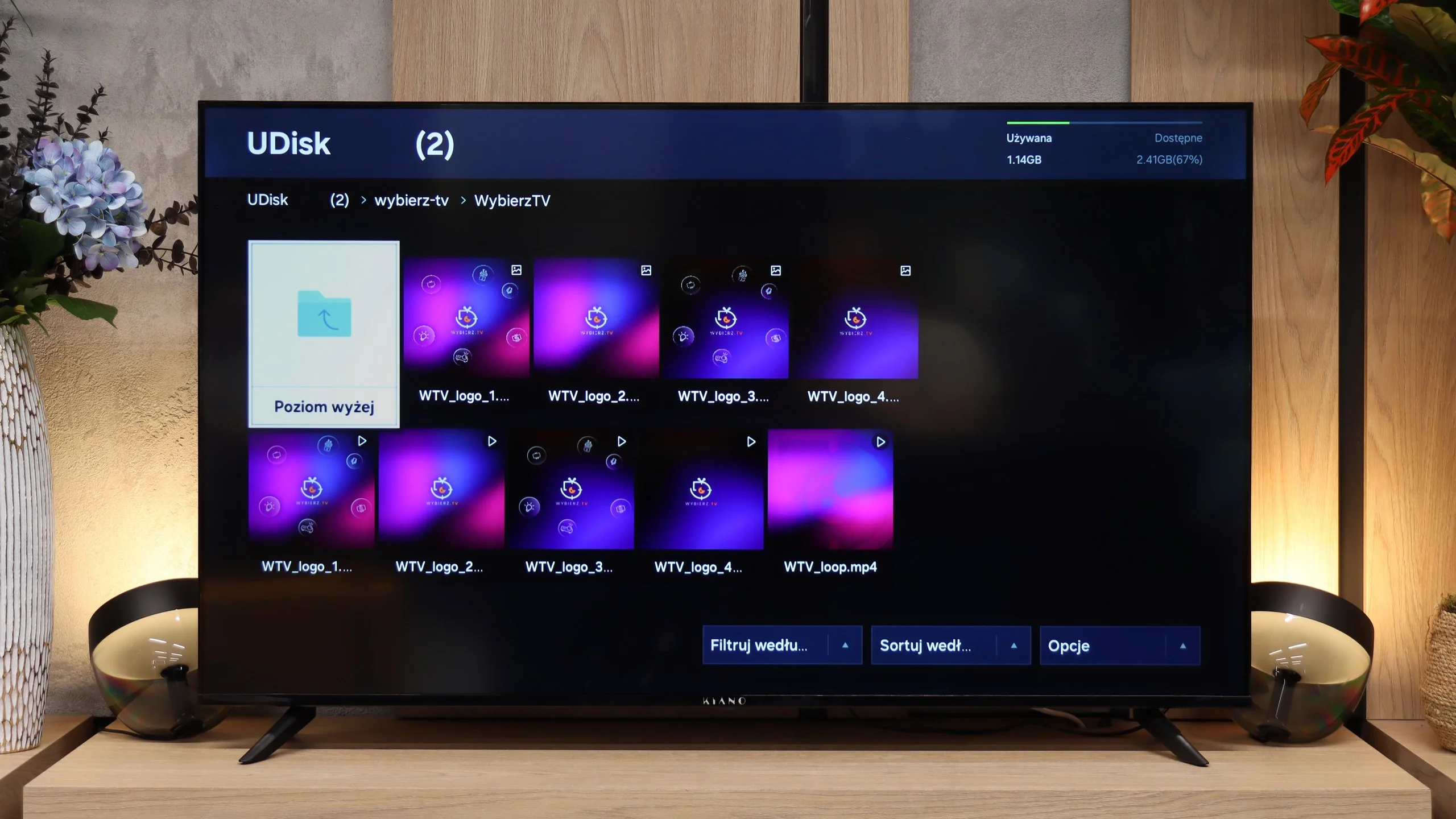
The USB player in the Kiano Elegance supports most popular formats, so opening typical films, photos or music should usually not be a problem. However, actually using it is less satisfactory. During testing it had its 'moments of weakness' and could take a very long time to open individual files. Sometimes it took so long that you could start to wonder whether the TV was still loading something or had already frozen. It's sufficient for occasionally playing something from a USB stick, but browsing a larger collection can require a great deal of patience.
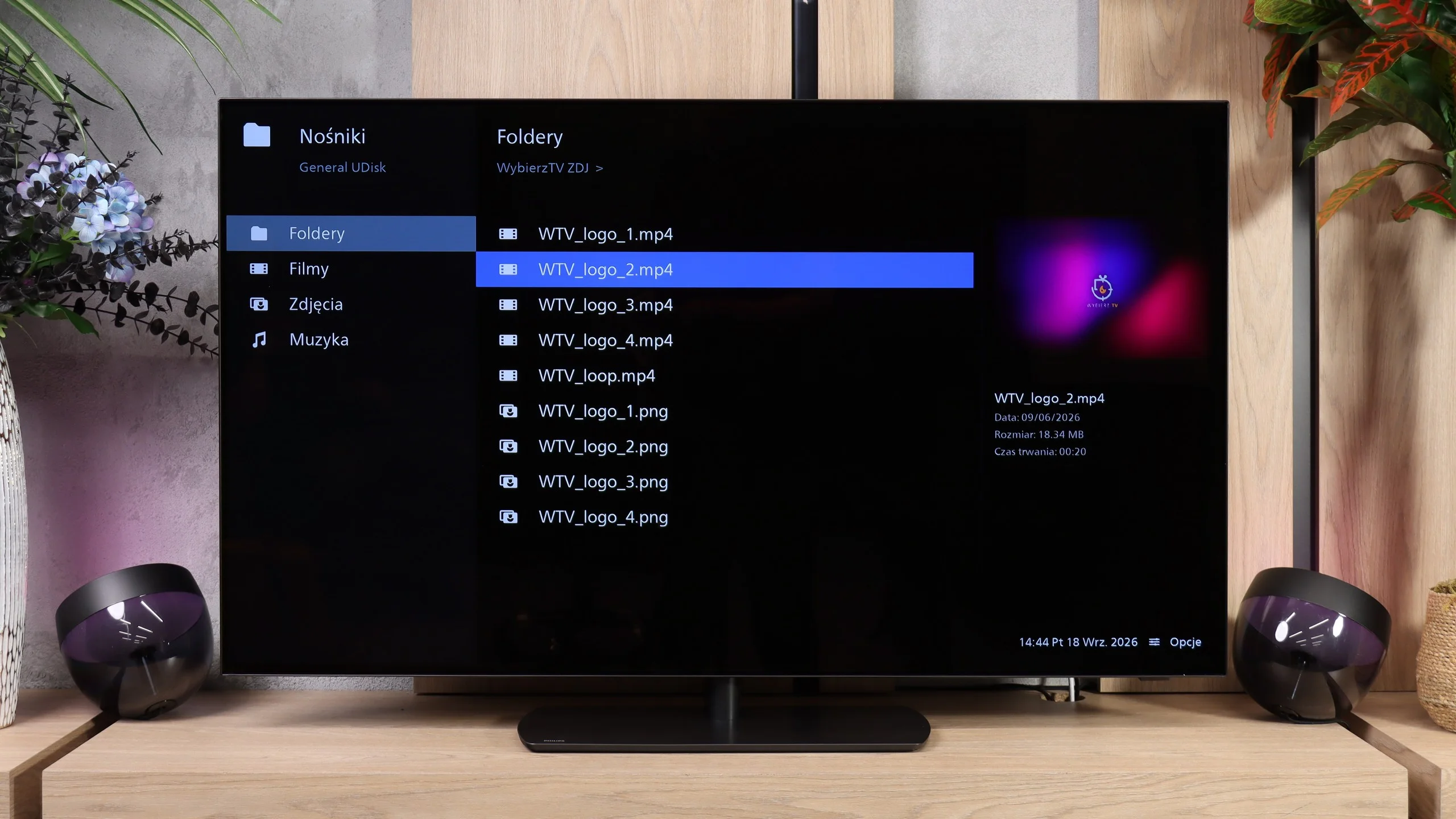
The USB player in the OLED811 handles most of the audio and video formats we test, so it's perfectly adequate for watching a film or playing music from a USB stick. However, our main reservations are about photos, specifically its oddly selective handling of their resolutions. The TV opened 8, 16 and 32MP files but couldn't cope with the rest. It's not that the photos are simply too large. The player can display a higher-resolution image yet refuse to open a smaller one. When browsing holiday snaps this can be simply irritating, because some of them will need to be converted on a computer first... or you could just mirror your screen remotely...😉
Sound
3.6/10
7.6/10
- Maximum volume88dB93dB
- Dolby Digital Plus 7.1
- Dolby True HD 7.1
- Dolby Atmos in Dolby Digital Plus (JOC)
- Dolby Atmos in Dolby True HD
- DTS:X in DTS-HD MA
- DTS-HD Master Audio
Sound is one of the weaker aspects of the Kiano Elegance. The TV can get fairly loud, measuring 88 dB, but loudness alone does not translate to sound quality. For casual viewing you can stick with the built-in speakers, but for films or music it's worth budgeting for a separate sound system. Connecting a soundbar via HDMI eARC should not cause problems. The TV also supports Dolby Atmos over Dolby Digital Plus, but it does not play Dolby TrueHD or DTS-HD tracks.
There have been a few concrete changes to the audio compared with last year’s OLED820. The rear subwoofer is gone, and the 4.1 speaker layout has been replaced by a 2.2 configuration. Despite these changes, the OLED811 still sounds good and fairly balanced. It can play louder, and the sound even seems a little fuller than a year ago. However, the bass has suffered. Although the sound has some weight, the low end lacks the depth of its predecessor. It’s easiest to hear this in films and music, when you’re waiting for a bigger punch. Still, this is well above average for built‑in TV speakers. If you want deeper bass and clearer spatial effects, it’s worth considering a soundbar or a system with an AV receiver. Philips gives plenty of freedom here: it supports both Dolby Atmos and DTS, and can pass Dolby TrueHD tracks over HDMI eARC to compatible equipment. So there are options if we decide to expand the audio setup in future.
Sound Quality Test
Acoustic Measurements
88dBC (Max)
75dBC
93dBC (Max)
75dBC
Reader comments
Comments are provided by the external service Disqus (Zeta Global). Once loaded, Disqus may set cookies and process data about your activity.
We will remember your choice on this device. Provider's privacy policy