 Direct comparison
The Hisense U7S Pro is undoubtedly a successful model, but it is designed for specific tasks. Its absolute domain is bright, sunlit living rooms. Thanks to its powerful brightness (over 2200 nits in HDR) and matte panel, you can count on a comfortable picture during the day – without squinting and battling reflections. This excellent performance during the day is matched by its rich features. We get great upscaling of lower quality content (e.g., traditional television), a brilliant remote control, and sound refined by the company Devialet. Importantly, this bright screen has also squeezed the maximum functionality for gamers. Here we have as many as four HDMI 2.1 ports, VRR, ALLM, and refresh rates of up to 330 Hz! All these features make it a true monster for consoles or PCs, as long as we forgive it for lacking support for the HGiG format. However, while the TV shines (or "mattifies"? 😉) during the day, certain compromises emerge at night. Although the screen received a significant upgrade in terms of the number of Mini-LED dimming zones compared to last year's model, there is no noticeable improvement in black quality in the new generation. Generally, it is good, but sometimes it feels like the algorithms do not quite manage such a large number of dimming points. It is clear that – like every Mini-LED – the U7S Pro will lose to OLEDs during nighttime viewing. Overall, however, it is still a very versatile, well-equipped television for everyday use. So if you are looking for a television that will provide you with satisfactory picture quality at any time of day, and at the same time you don't want to pay as much as for top-end models, this model will be an excellent choice.
- Matching (Score) |
- Our verdict |
- TV appearance |
- Where to buy |
- Contrast and black detail |
- HDR effect quality |
- Factory color reproduction |
- Color reproduction after calibration |
- Smoothness of tonal transitions |
- Image scaling and smoothness of tonal transitions |
- Blur and motion smoothness |
- Console compatibility and gaming features |
- Input lag |
- Compatibility with PC |
- Viewing angles |
- Daytime performance |
- Panel details |
- TV features |
- Apps |
- Playing files from USB |
- Sound
U7S PRO / U77S PRO

C6 / C64 / C6E / C6H / C61
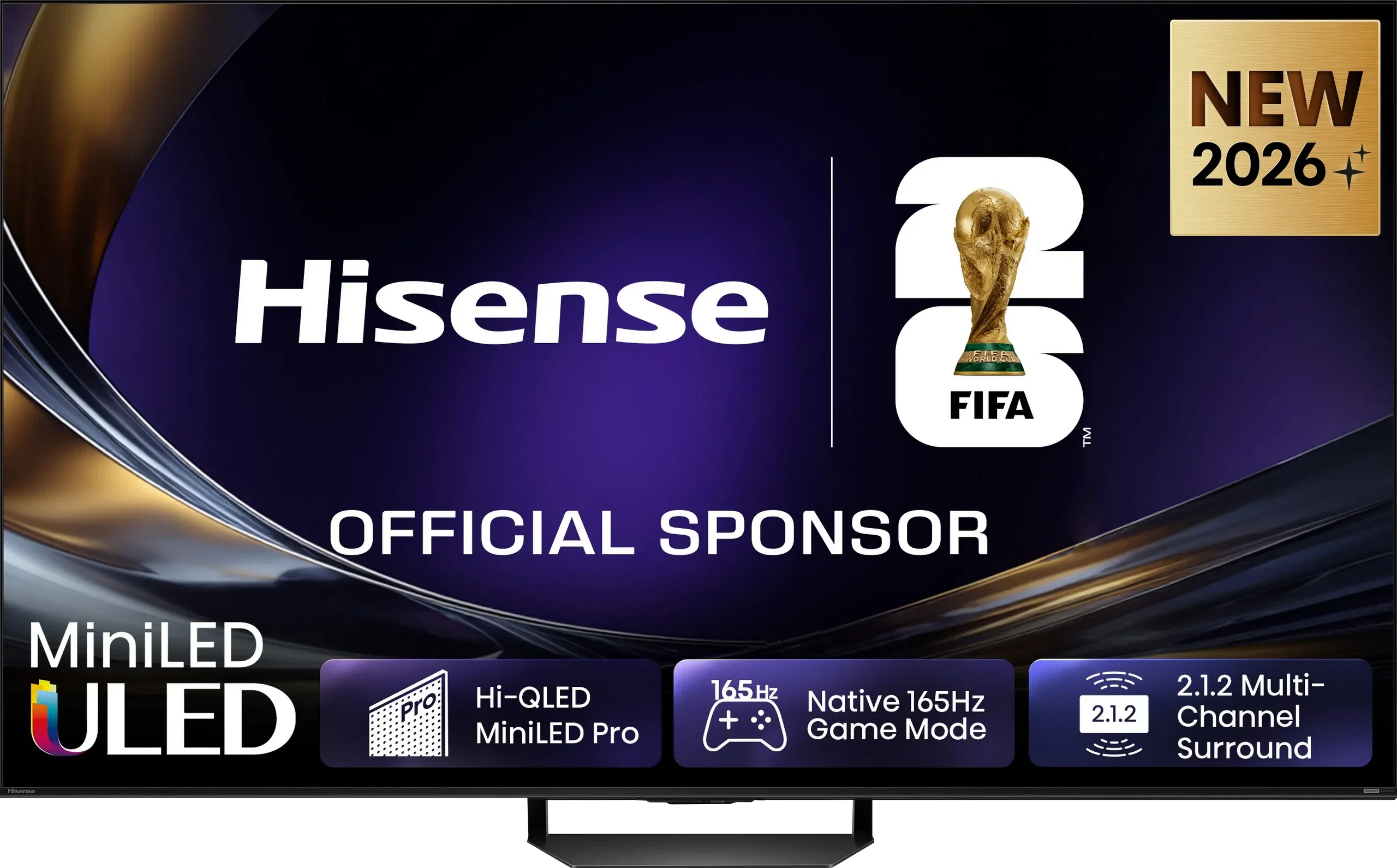
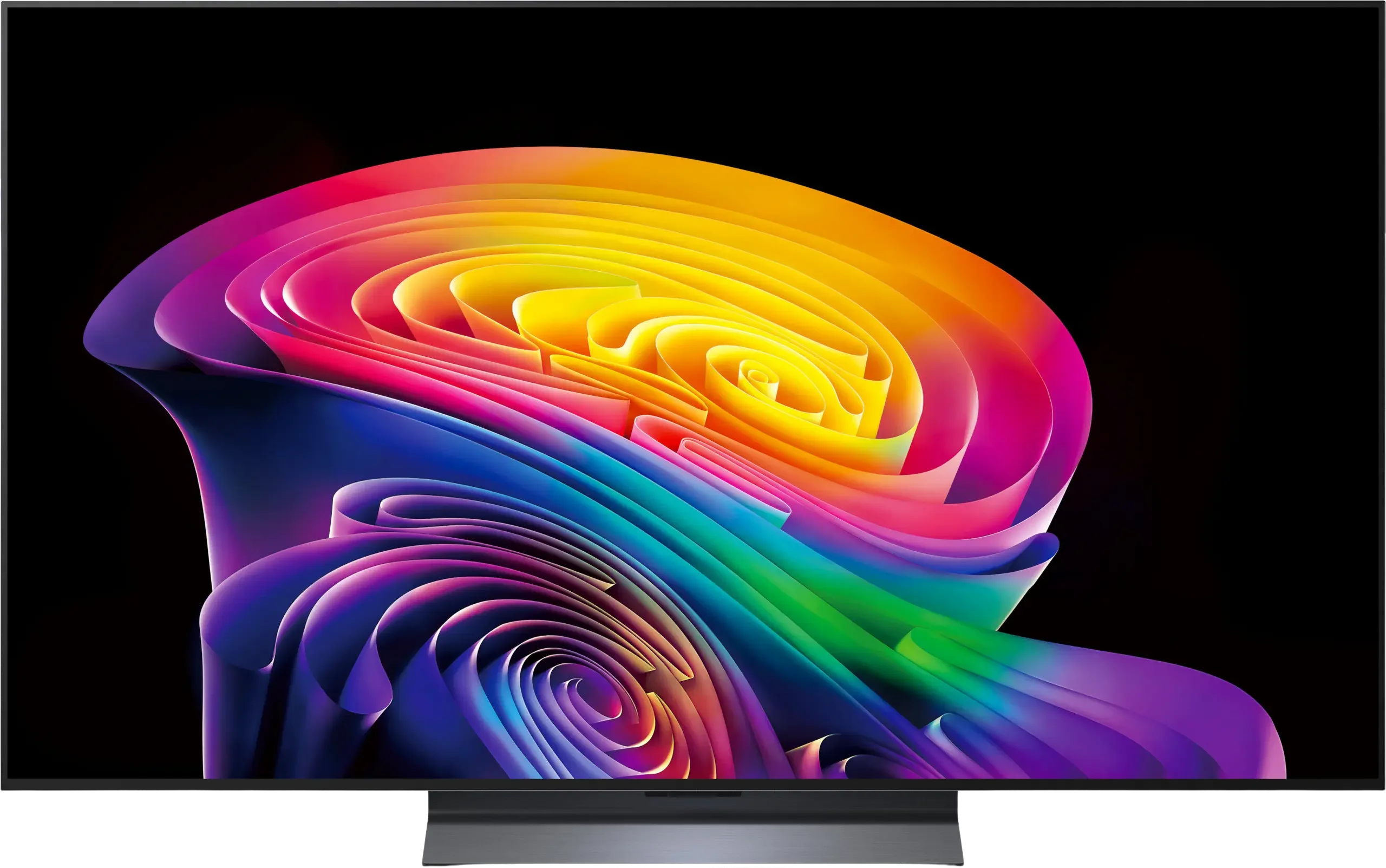
Panel type: LCD VA
Resolution: 3840x2160
System: VIDAA
Model year: 2026
Panel type: WRGB OLED
Resolution: 3840x2160
System: WebOS
Model year: 2026
Check how well they match your needs
Take the surveyOverall rating
7.8
8.3
 Movies and series in UHD quality
7.3
8.4
 Classic TV, YouTube
7.1
8.8
 Sports broadcasts (TV and apps)
6.8
8.6
 Gaming on console
8.3
9.4
 TV as a computer monitor
8.4
8.6
 Watching in bright light
8.1
6.6
 Utility functions
9.4
8.4
 Apps
8.3
9.1
 Sound quality
7.8
7.0
Complete the survey to find out what fits your preferences
Advantages

Very high brightness: Over 2200 nits in HDR
Good black levels and contrast: VA panel (65") + 960 Mini-LED zones
QLED: Wide colour gamut coverage
Excellent upscaling: Very good handling of low-quality signals
Ideal for a bright living room: High brightness + matte panel
Extensive format support: Dolby Vision, HDR10+, Dolby Atmos, DTS:X
Powerful gaming features: 4x HDMI 2.1 (48 Gbps), up to 330 Hz, low input lag, Game Bar
Above-average sound: Built-in subwoofer + Devialet tuning
Remote: Solar panel, USB-C, backlight, numeric keypad
Recording programmes to USB
- Perfect black and OLED contrast - Very high HDR brightness, up to approx. 1,500 nits - Excellent image quality for HDR films and Dolby Vision - Very good image processing and upscaling - 165 Hz panel and virtually no motion blur - Great package for gamers: VRR, G-Sync, HGiG, Dolby Vision Gaming - Very low input lag, approx. 5 ms at 120 Hz - Wide viewing angles - Intuitive, modern WebOS - Convenient control with the Magic Remote featuring a gyroscope
Disadvantages

No support for the HGiG format (consoles)
App availability issues: Limited availability of certain apps on HomeOS / VIDAA
Poor image at an angle: Additionally, the matte panel loses its ability to suppress reflections
Different remote versions depending on the C6 variant, so before buying it's hard to be sure which Magic Remote will be included.
Visible grain (dithering) around blacks, noticeable when viewed up close.
Average reflection handling, in a very bright living room strong reflections may be noticeable.
No DTS:X support, an external AV receiver or player will be required for that format.
Our verdict
LG C6 is a very successful evolution of one of the most popular OLEDs on the market. The TV itself hasn't changed radically compared with last year's C5, the look is very similar, webOS offers comparable features, and gamers once again get pretty much everything you can expect from a modern television. You can't really complain, since the C5 was already a very complete piece of kit in that regard. The most important change came where there was still room for improvement, namely the panel itself. The new WOLED panel is noticeably brighter and about 1500 nits in HDR makes the C6 increasingly hard to dismiss as just a 'mid-range OLED'. HDR movies look very impressive, black remains perfect, colours are very good, and the new processor, the same one found in the flagship G6, handles upscaling and lower-quality material very well. On top of that there's a really strong set of features for gamers. 165 Hz on PC, VRR, G-Sync and very low input lag mean you can just as well hook up a console as a powerful PC. During the day the C6 also performs better than previous generations, although of course in a very bright living room you'll still find brighter TVs on the market. And that's probably exactly why we like the C series most: its versatility. The C6 doesn't try to be the best TV in every possible category, but it hardly performs poorly in any. It's suitable for cinema, sport, gaming, regular TV and everyday streaming. If its price falls after launch as it has with previous generations, it could be one of the most interesting OLEDs to buy in 2026.
TV appearance

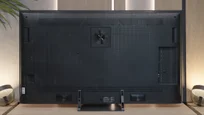
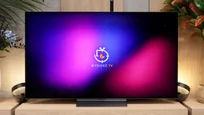


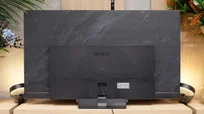

Contrast and black detail
7.5/10
10/10
Local dimming function: Yes, number of zones: 960 (24 x 40)
Contrast:


Result
346,350:1

Result
13,500:1

Result
19,050:1

Result
9,950:1

Result
6,450:1
Result
∞:1
Result
∞:1
Result
∞:1
Result
∞:1
Result
∞:1
Halo effect and black detail visibility:
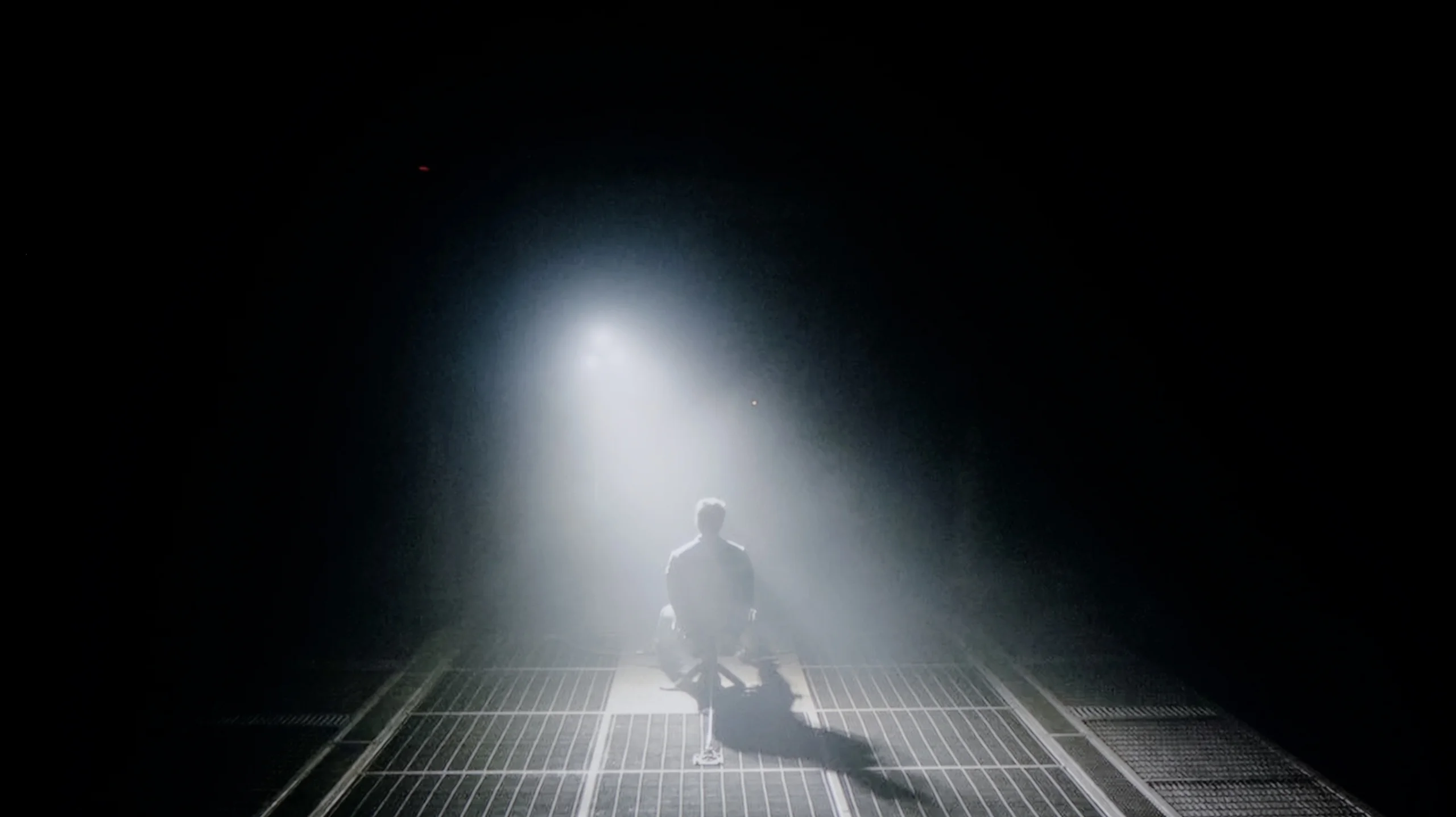
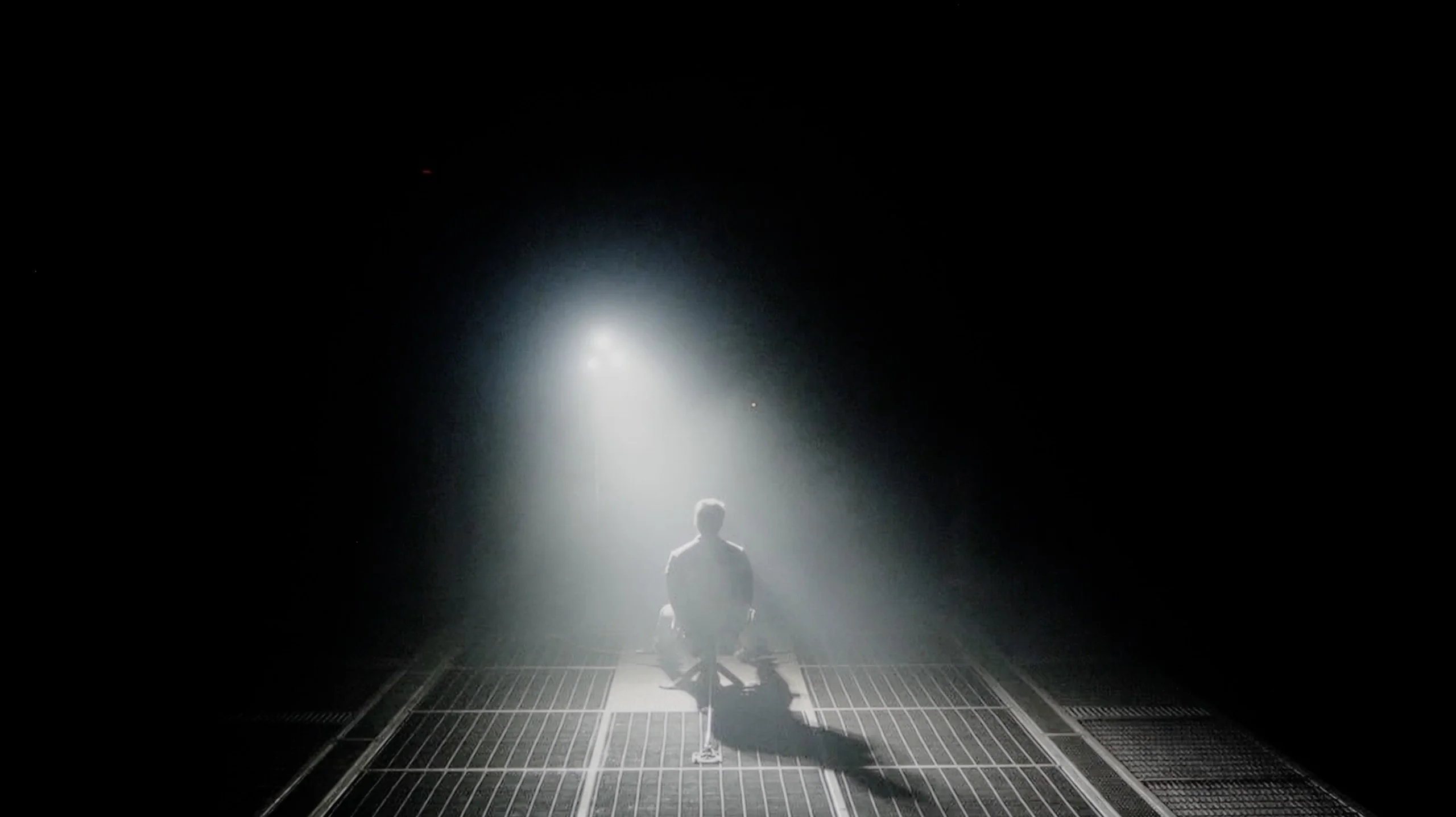
Check the visibility of bright lights on a dark background. Mini-LEDs often struggle with this. The photo does not compare black levels – that’s what the video below is for.
The video accurately shows differences in contrast and black levels between TVs, as well as potential issues: halo around bright objects or Mini-LED zone operation visible as brightness jumps.
The U7S Pro in the 65" version we tested uses a VA panel and has as many as 960 local dimming zones. Thanks to the combination of this panel (that is, with high native contrast) and the large number of zones, blacks here are really very good. In dark scenes viewed with the room slightly lit, the effect can even resemble OLED TVs with organic panels, as our first test scene from the film Oblivion showed. Unfortunately, when the screen contains more small bright elements on a dark background, the local dimming algorithm begins to show its weaknesses. Contrast can then drop noticeably, and a halo effect, a characteristic glow (so-called blooming), becomes visible around bright objects. This is, however, a natural feature of Mini-LED TVs caused by the physical limitations of this technology — there will always be fewer dimming zones, even if there are many, than independent pixels in an OLED, so it is physically impossible to eliminate it completely. Interestingly, although the new U7S Pro model has almost twice as many local dimming zones as last year’s U7Q Pro, in practice it has not brought any significant improvement in this respect.
When it comes to black, there really isn't much to say. The LG C6 uses an OLED panel, so each pixel can be completely switched off. The result is exactly what you'd expect: perfect blacks, very high contrast and no halo around bright elements. This is particularly apparent in night scenes, where single lamps, captions or other bright points appear against a very dark background. The C6 handles them without issue and doesn't suffer from the limitations typical of Mini LED TVs with local dimming. Interestingly, in this respect it makes no difference whether we're talking about this C6 or the more expensive Tandem OLED variant. In terms of black levels both TVs perform practically identically. The differences between them are primarily to be found in brightness and colour.
NOTE: In the helicopter scene from the film Sicario 2 we noticed graininess and flickering in the darkest parts of the image. This looks like a software bug that LG should fix with an update. The effect is even more noticeable on the Tandem OLED version, and we observed similar behaviour on the flagship LG G6.
HDR effect quality
6.7/10
7.8/10
Luminance measurements in HDR:

Result
1041 nit

Result
458 nit

Result
1104 nit

Result
528 nit

Result
897 nit
Result
1489 nit
Result
1288 nit
Result
1527 nit
Result
1345 nit
Result
649 nit
Scene from the movie “Pan” (about 2800 nits)


Scene from the movie “Billy Lynn” (about 1100 nits)

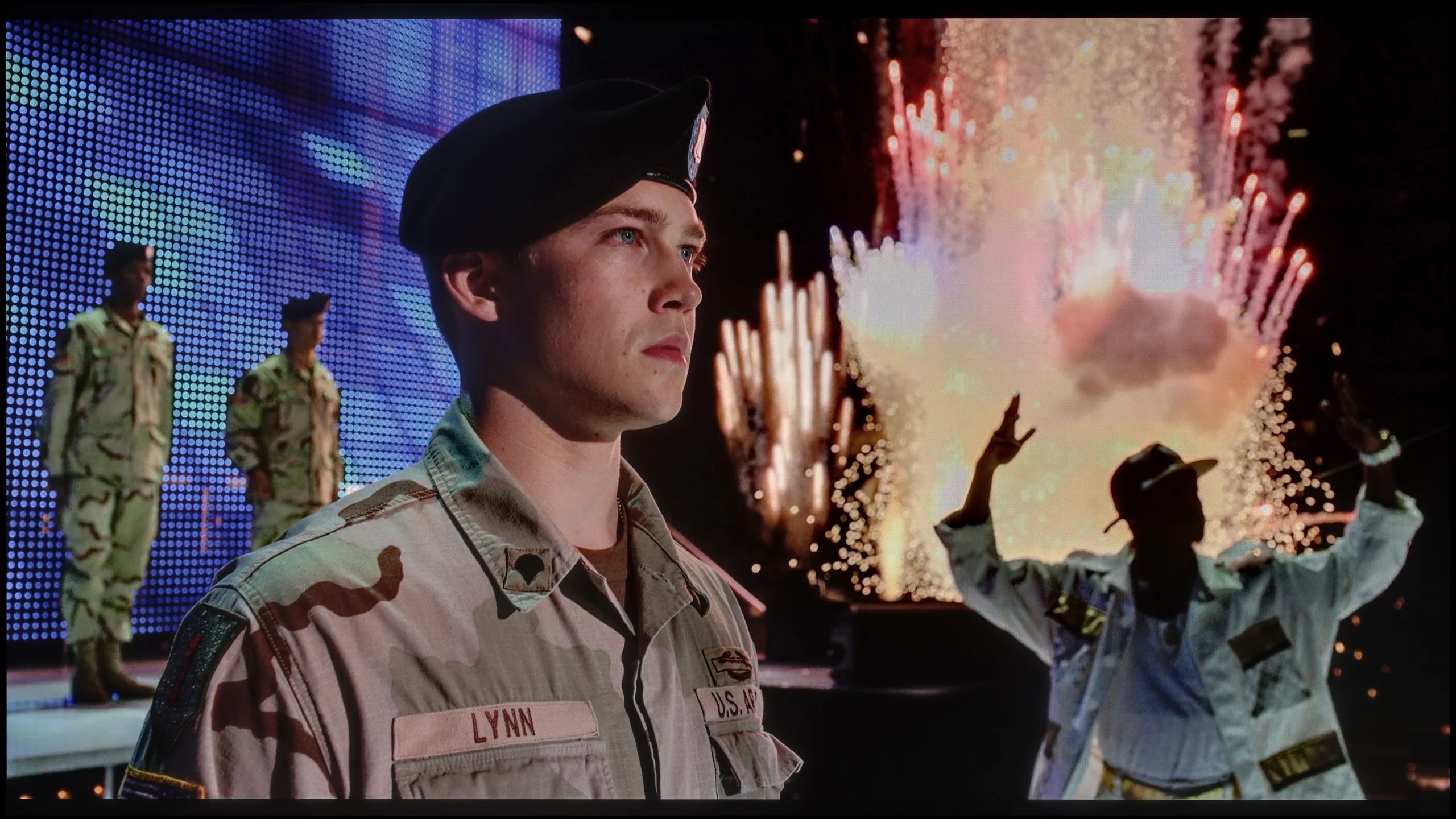
The photos show two HDR10 movies. 'Pan' is one of the brightest productions ever made, while 'Billy Lynn' (soldier) has brightness typical of streaming (Netflix, Prime, HBO MAX). Notice the intensity of effects and detail in whites.
Static HDR10


The photos present the visibility of white details in various HDR formats. They do not show brightness differences between TVs (these can be compared in the previous gallery).
Dynamic: Dolby Vision
Dynamic: Dolby Vision


The photos present the visibility of white details in various HDR formats. They do not show brightness differences between TVs (these can be compared in the previous gallery).
HDR luminance chart:
LG OLED C6 (WOLED)
Hisense U7S Pro
Luminance of RGB colors
Let's start with the fact that the U7S Pro is an impressively bright television. In calibrated mode our measurement equipment indicated a staggering 2,200 nits of peak brightness. This is an outstanding result, especially given that this model is positioned more as a mid-range set. However, as we know, peak brightness on test patterns is one thing and real film scenes another. Unfortunately, in actual video material the backlight output drops noticeably. Admittedly, in the most demanding moments the TV can still exceed 1,000 nits, which is still a great result and fits the mastering standards of most HDR films, but aggressively tuned local dimming algorithms turn out to be the real challenge. Because of them, small bright details, such as stars or the moon in a night sky, are noticeably dimmed. The TV tries to maintain deep blacks at all costs, which is understandable, but unfortunately this comes at the expense of the dynamic impact and the brightness of the HDR effect. The colour reproduction is worth praising. The new U7S Pro is a QLED design that provides very wide colour gamut coverage. Unlike last year’s model (U7Q Pro), this year’s variant is a 'true' QLED rather than a solution based on a PFS filter. As a result, colour saturation has increased noticeably and coverage of the most demanding BT.2020 colour space has exceeded 81%.
The HDR performance of the LG C6 is really very good. LG Display's new WOLED panel has primarily brought a considerable increase in brightness. In our unit we measured around 1,500 nits and, importantly, the TV can deliver similar values in many typical film scenes. That gives the HDR the necessary impact. Bright highlights, lamps and sunlight can be really intense, and most HDR films simply look very impressive. Of course it's still an OLED, so brightness falls in scenes with a lot of white. This is well illustrated by the fifth scene in the film The Meg, where the C6 reached around 600 to 700 nits. That's still a very good result, but it also shows that the new panel hasn't shed all the limitations typical of OLEDs.
Colours
When it comes to colours, there is also little to complain about. The C6 covers about 99% of the DCI-P3 gamut and roughly 75% of BT.2020. In practice the colours are very saturated and, importantly, stable across different scenes. This is worth emphasising, because not every TV behaves the same in this respect. In some RGB Mini LED models colour saturation can depend more strongly on image brightness. A wider colour palette is nowadays offered mainly by QD-OLED TVs and new SQD models with a new generation of quantum dots. However, the C6 still performs very strongly here and is able to produce suitably saturated colours in most film scenes.
Factory color reproduction
4.7/10
7.8/10


This illustrative image shows how colors change after professional calibration. If you can see the difference, you can order it from SkalibrujTV – it's our own service.
Factory mode
After calibration
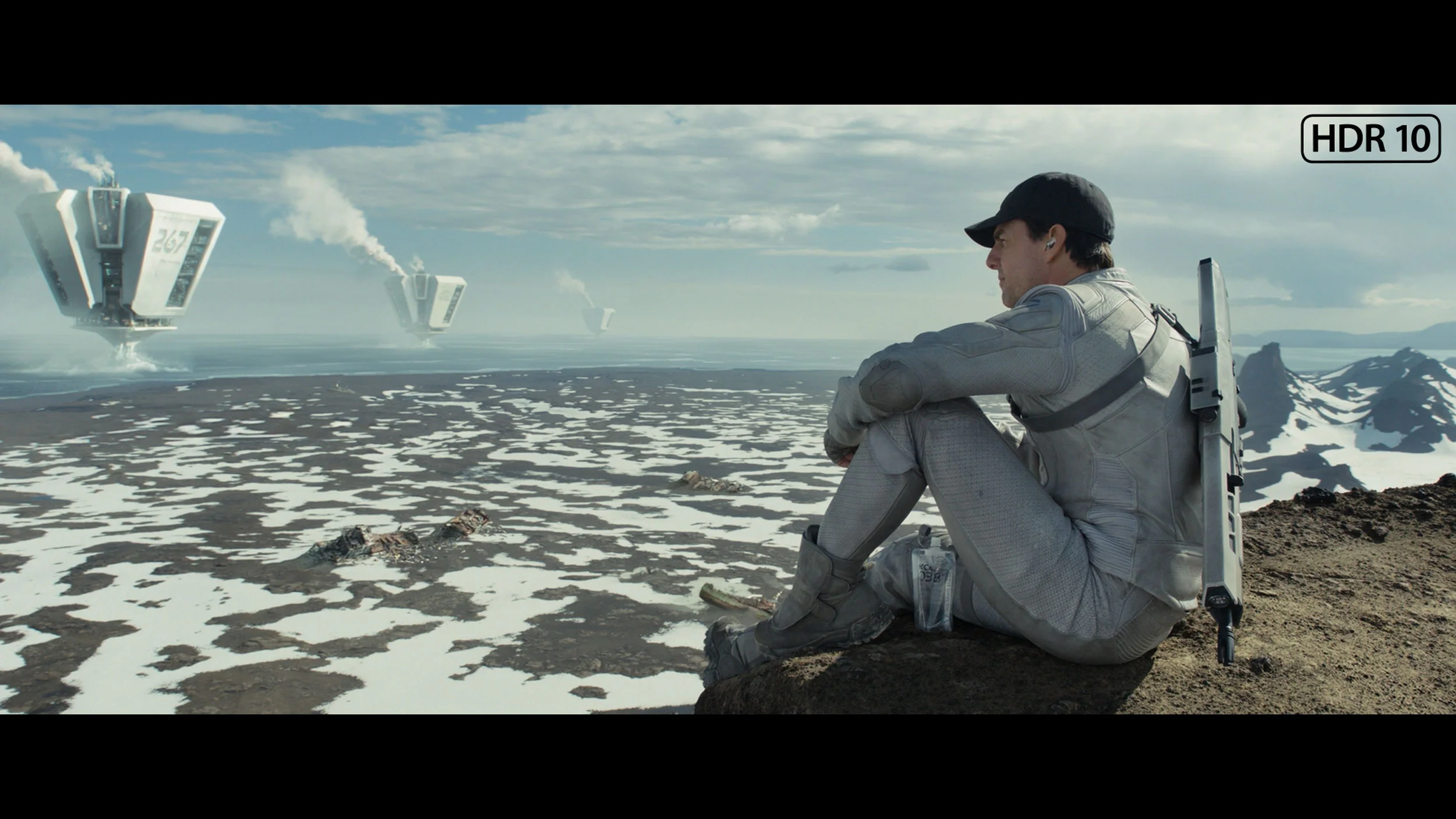
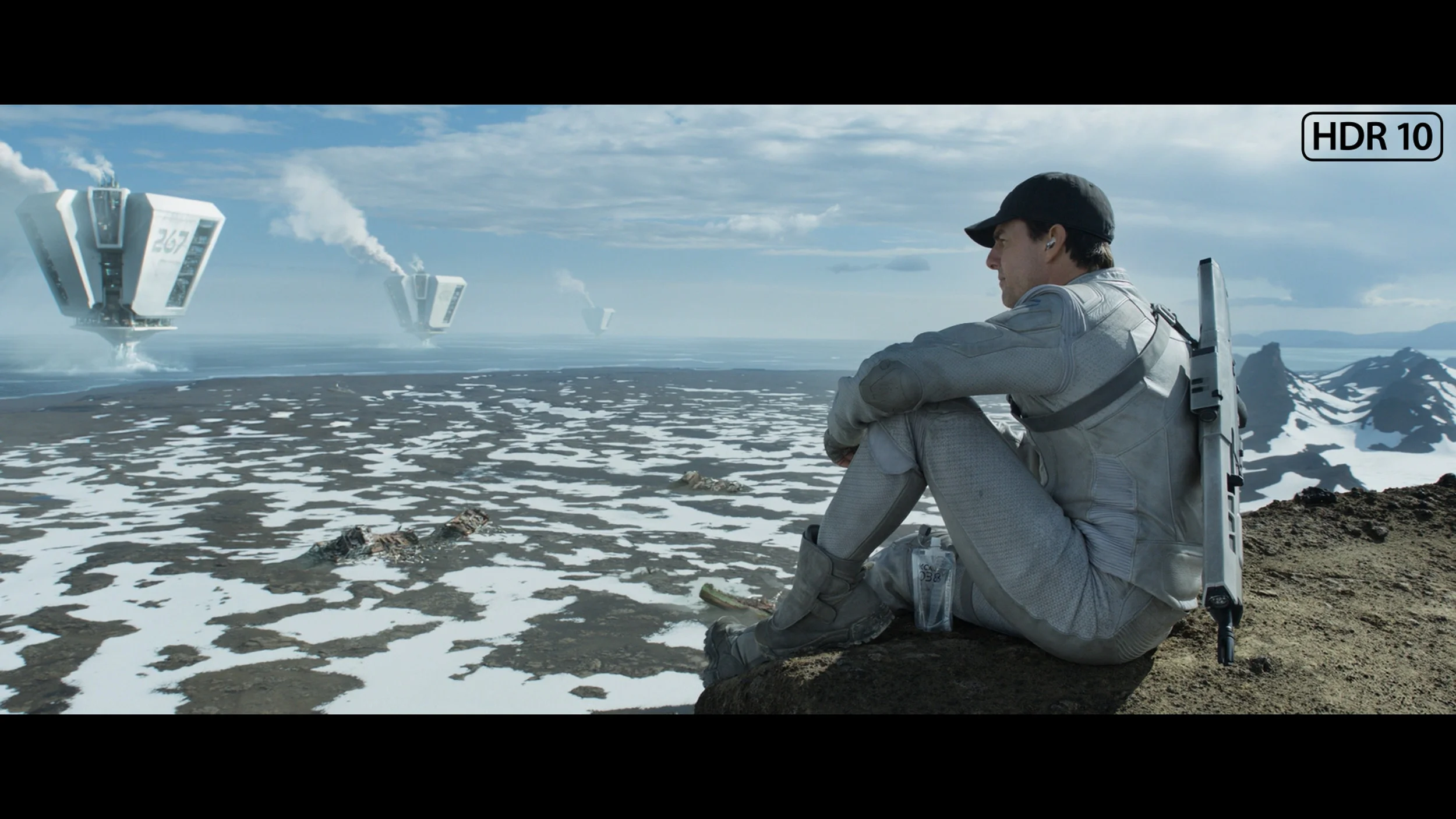
This illustrative image shows how colors change after professional calibration. If you can see the difference, you can order it from SkalibrujTV – it's our own service.
Factory mode
After calibration
We tested the U7S Pro, as we always do, in the best factory-calibrated picture mode, namely Filmmaker Mode. The colours on display can be judged in two ways. The most disappointing was the preset intended for viewing SDR content, that is conventional television, YouTube and other less demanding material. The image there was noticeably yellowish, which turned out to be a direct consequence of an incorrectly set white balance. As our graphs show, this was due to a large deficiency of the blue component, which drastically affected the overall colour temperature. You can see this clearly on the ColorChecker charts and on the colour gamut plots themselves, where most samples shifted towards yellow. Fortunately the factory HDR mode performed much better; there the colour errors hovered around a Delta E of 3, which is already a very solid result.
Right out of the box the LG C6 is pretty well set up, especially if you choose Filmmaker mode. In SDR material the white balance is decent, although as brightness increases it starts to lack a bit of red. The picture becomes a little cooler as a result, but it’s not such a big difference that it stands out during normal viewing. More happens in the brightness response itself. Gamma is a bit low and instead of holding at 2.4 it sits closer to 2.1–2.2 over much of the range. In practice the C6 slightly brightens midtones. Shadows are therefore more readable, but the image loses some depth compared with how it should look in a dark room. In HDR the situation is a bit more interesting. The start of the grayscale looks very good, but from about 20–30% brightness the white balance starts to drift more and more. As brightness rises there’s more red and a noticeable lack of blue. In the brightest highlights the difference is already significant and also affects reproduction of some colors. The EOTF curve itself is handled fairly well over most of the range. The C6 only has a tendency to slightly brighten the image, which we also saw during our film comparisons. The largest deviation appears around the brightest highlights, where the TV begins to adapt the signal to the panel’s capabilities. So the out-of-the-box Filmmaker mode in HDR isn’t perfect, but overall it performs well. The biggest room for improvement is the white balance, especially at high brightness.
Color reproduction after calibration
7.5/10
9.1/10
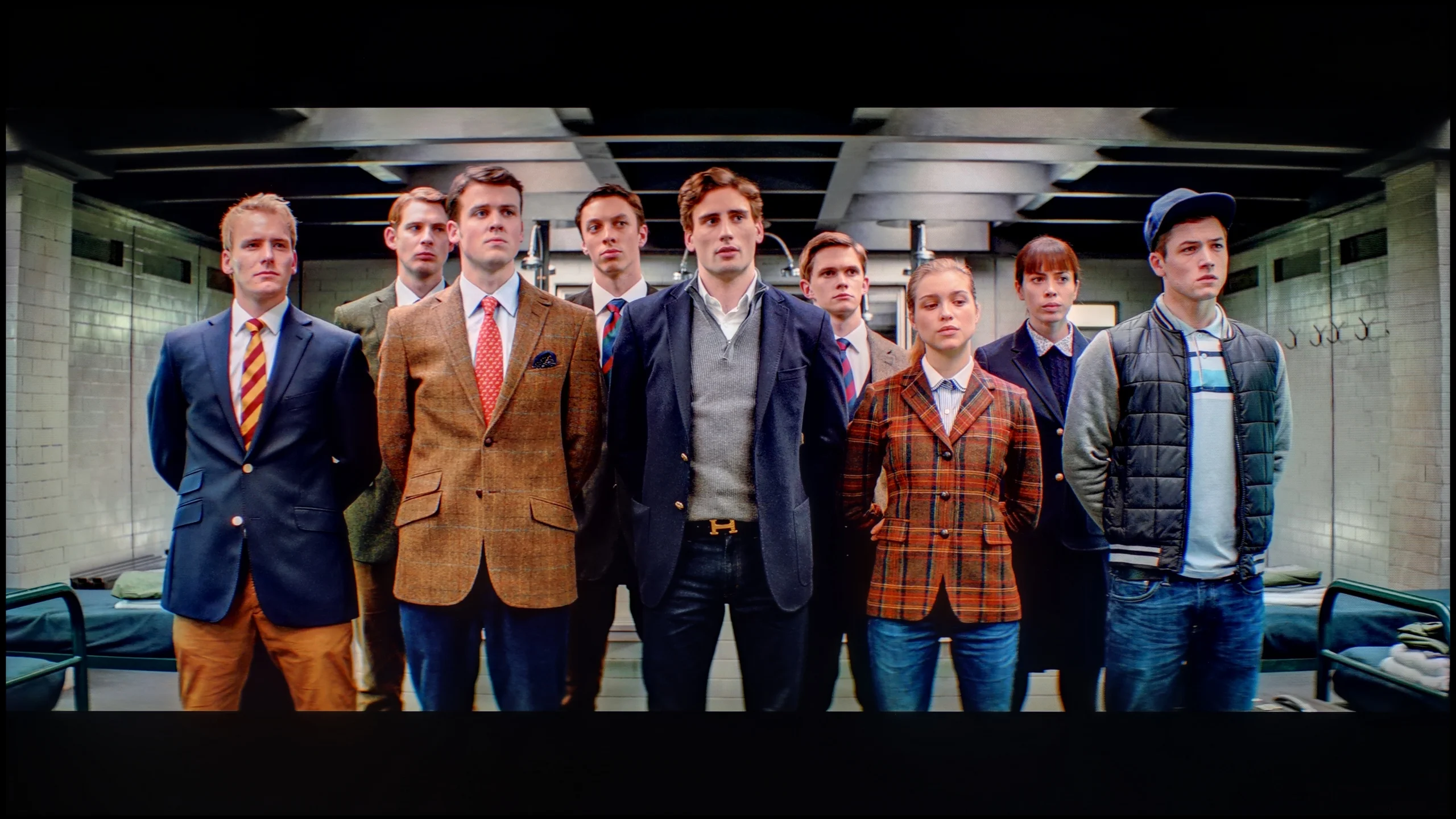
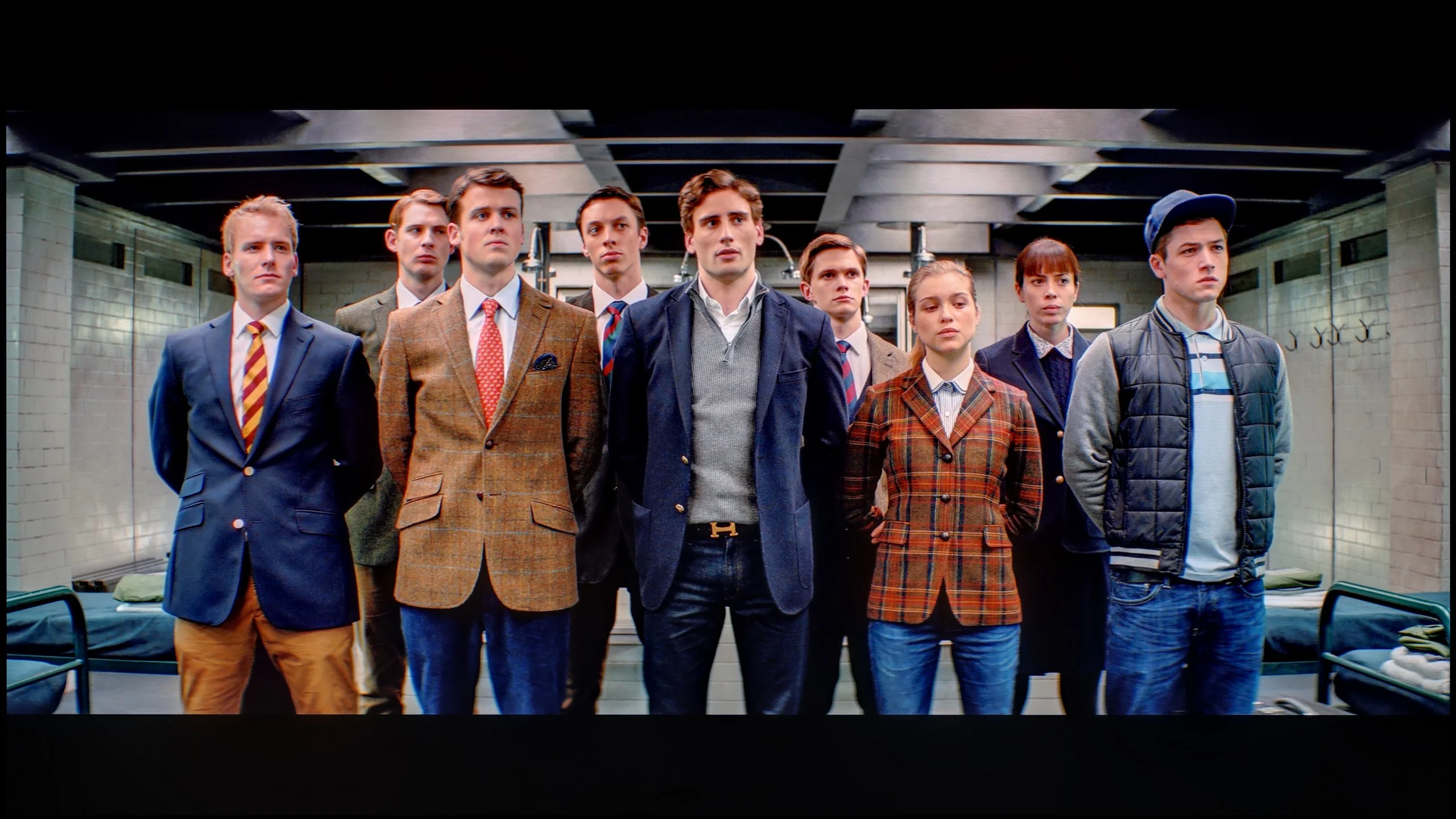
The photos show how movies look on the TV. Pay attention to black detail visibility, colors, and shadow tint.


The photos show how movies look on the TV. Pay attention to black detail visibility, colors, and shadow tint.
We know, however, that the company Hisense is capable of much more – as previous generations have demonstrated – which is why we couldn't simply overlook the factory shortcomings of the U7S Pro model in everyday content. As is often the case, the television underwent professional calibration. The conclusions? This process brought about a colossal change. After manually adjusting the white balance and supplementing the deficiencies in the blue component, the annoying yellow tint disappeared as if by magic. White became naturally pure, and skin tones gained the appropriate, healthy hue. Importantly, calibration not only tamed the capricious SDR mode but also allowed us to extract the maximum potential from the panel, reducing average colour reproduction errors to levels nearly imperceptible to the human eye. The only thing we must criticise after the whole process is the very nature of the Mini-LED backlight and its specific interaction with the HDR signal. The aggressively tuned local dimming algorithms significantly interfere with the EOTF brightness curve. As a result, the backlight does not always work perfectly with the creator's intention – depending on the scene being viewed, the curve can noticeably deviate either above or below the reference, which at times disrupts the ideal dynamics of HDR imagery.
LG TVs have been very receptive to calibration for years and the C6 is no exception. After adjustment the white balance was set almost perfectly, and most colour errors dropped to values below 3, often even around 2. In practice this means very accurate colour reproduction, both in SDR and HDR. An interesting quirk only appeared with the luminance response in HDR. On a standard EOTF chart everything looks almost ideal and at first glance it would be hard to criticise. Only when we measured the TV's behaviour with filters based on actual film scenes did it become clear that the C6 has a slight tendency to artificially boost image brightness.
This is not a huge difference and many people may even view it positively, because HDR consequently looks a little more striking. From the perspective of fidelity to the source material this is not ideal, however, as some scenes are simply a touch brighter than the filmmaker intended. Interestingly, this is rather unusual for LG. In previous generations the brand's TVs typically stuck very closely to the reference picture characteristic after calibration. With the C6 we are still very close to the standard, but this subtle brightness boost is indeed noticeable in films and TV series.
Smoothness of tonal transitions
9.5/10
7/10
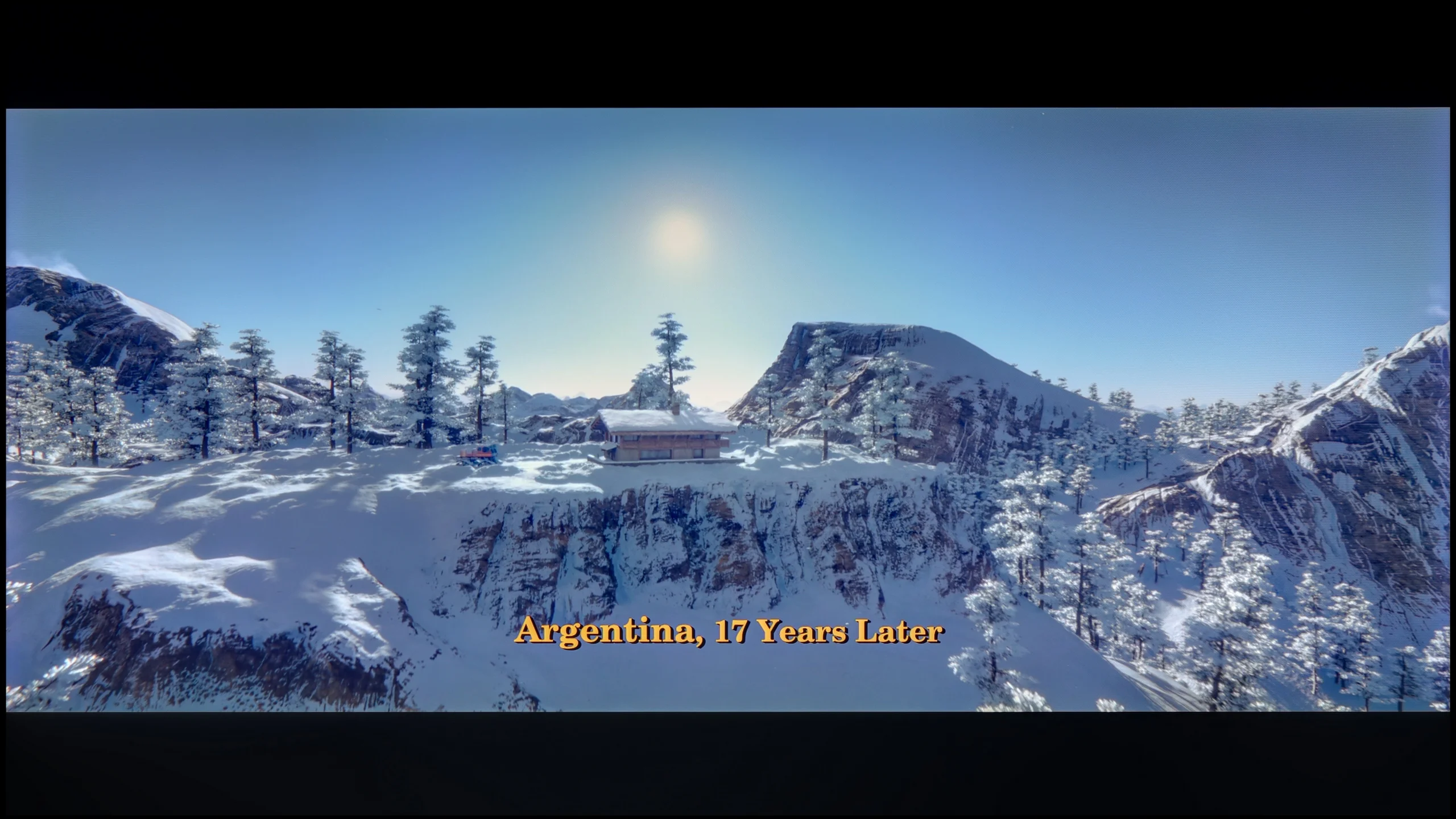

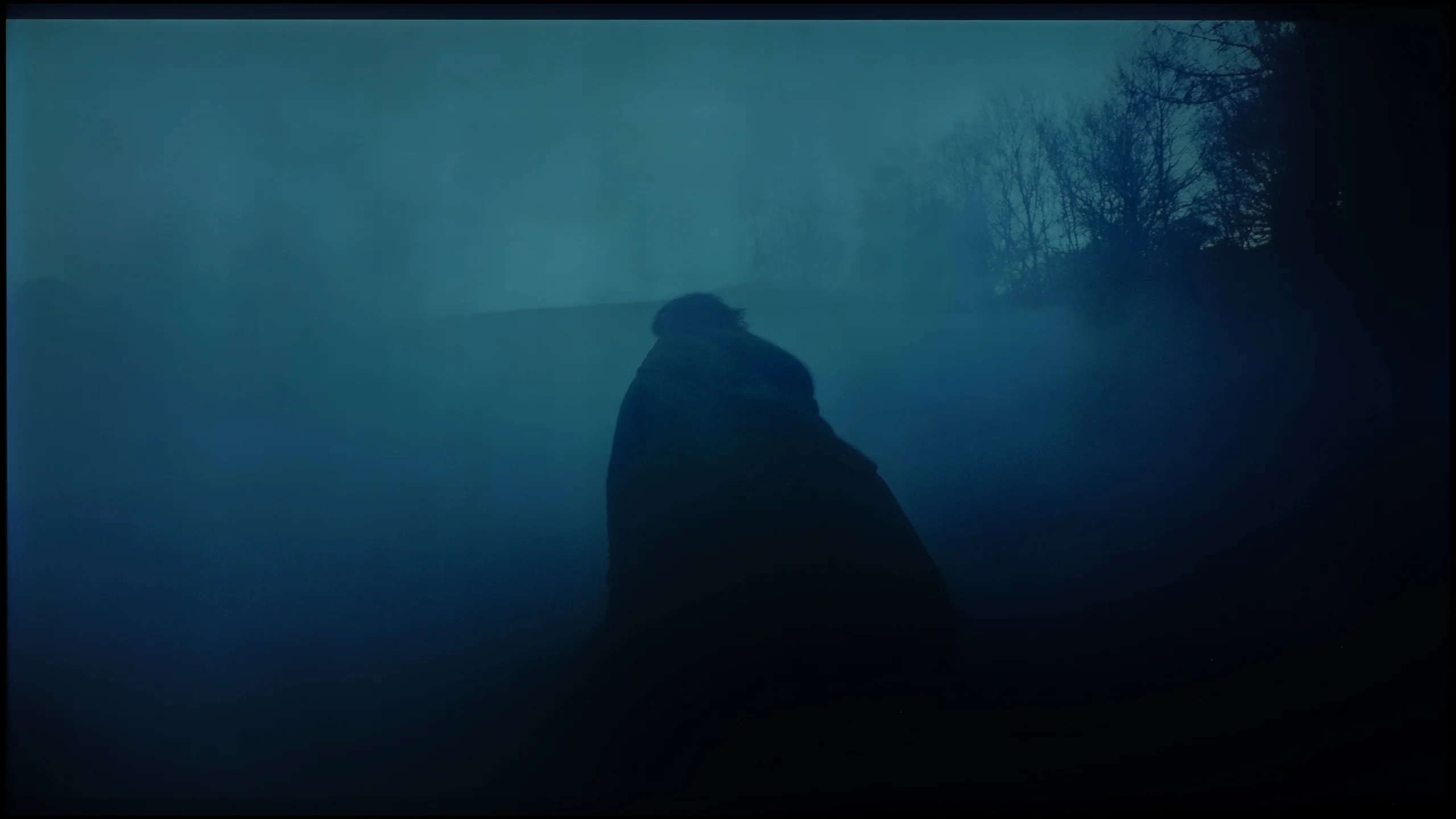
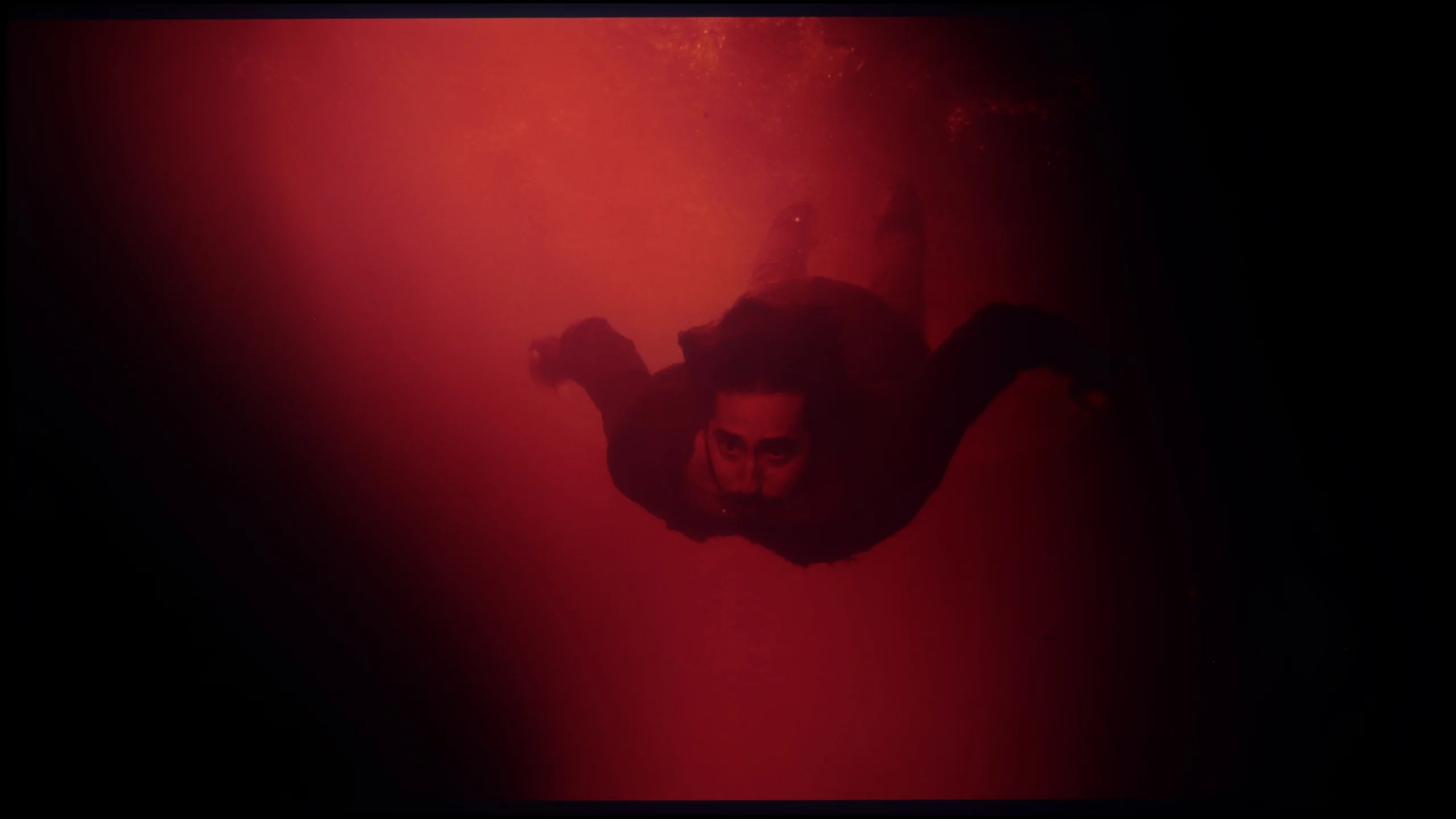
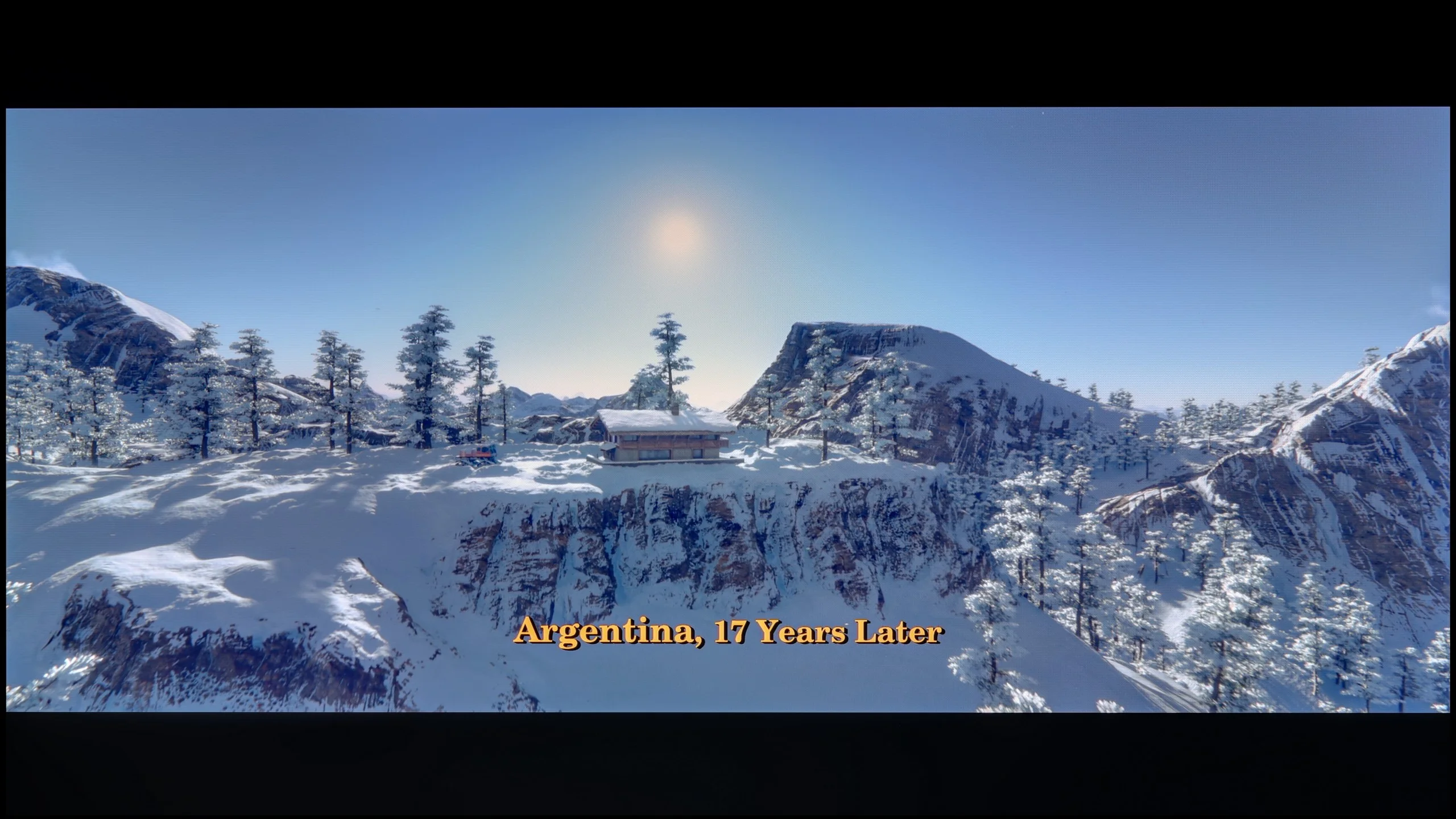
These are selected scenes that show smooth tonal transitions from one color to another. If you see distinct banding, it’s the TV panel’s fault.

These are selected scenes that show smooth tonal transitions from one color to another. If you see distinct banding, it’s the TV panel’s fault.
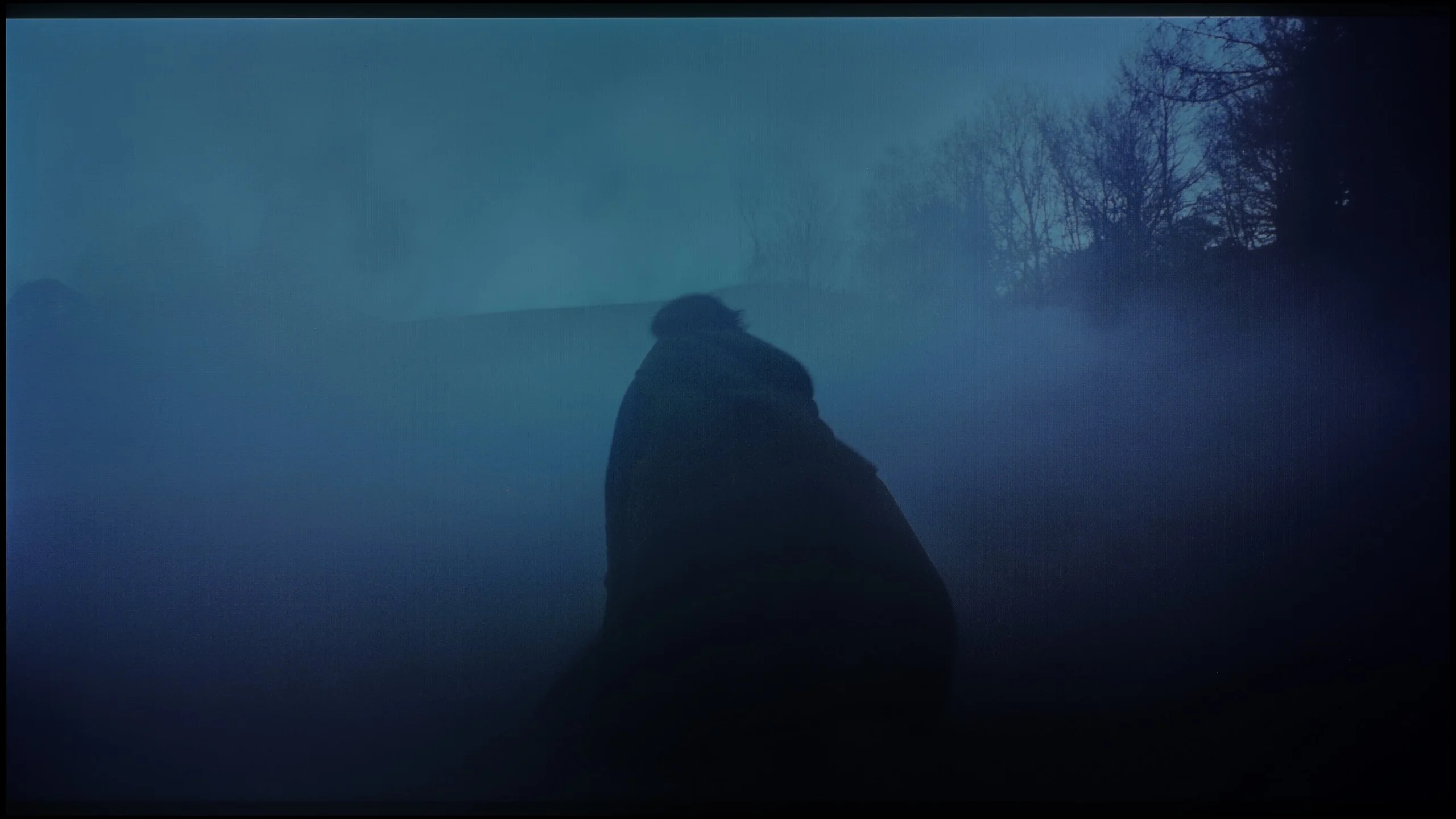
These are selected scenes that show smooth tonal transitions from one color to another. If you see distinct banding, it’s the TV panel’s fault.
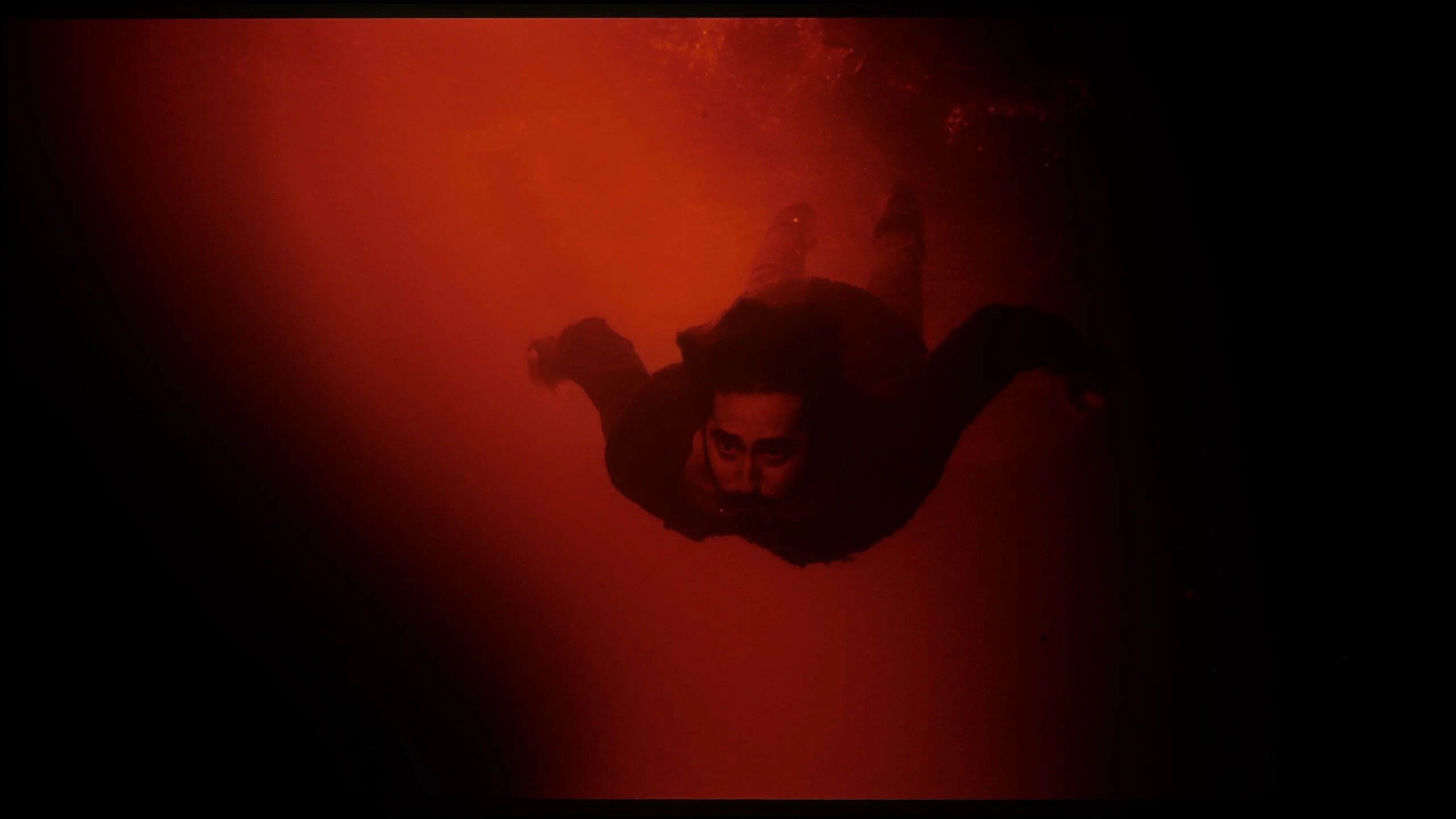
These are selected scenes that show smooth tonal transitions from one color to another. If you see distinct banding, it’s the TV panel’s fault.
Digital image processing has for some time now been a true calling card for Hisense. In the U7S Pro we did not notice any significant problems with the so-called color banding, that is posterisation. Individual shades transition almost perfectly and smoothly into one another, without the irritating effect of jagged edges or visible steps on gradients.
The LG C6 handles tonal transitions very well. In most film scenes it was hard to spot any obvious posterisation issues. Both in the dark parts of the image and in bright transitions the colours remain relatively smooth and do not break up into visible banding. That’s good news, because WOLED panels have not always been perfect in this respect. On the C6 it is noticeably better, and during normal viewing this aspect of the picture should not draw attention.
Note: One drawback is the dithering visible around blacks. At close viewing distances you can notice slight flickering and graininess in the darkest parts of the image. It is not as pronounced as in the version with a Tandem OLED panel, but it still occurs, so in this category we decided to take a few points off the C6.
Image scaling and smoothness of tonal transitions
7.8/10
8.5/10

Smooth transition function
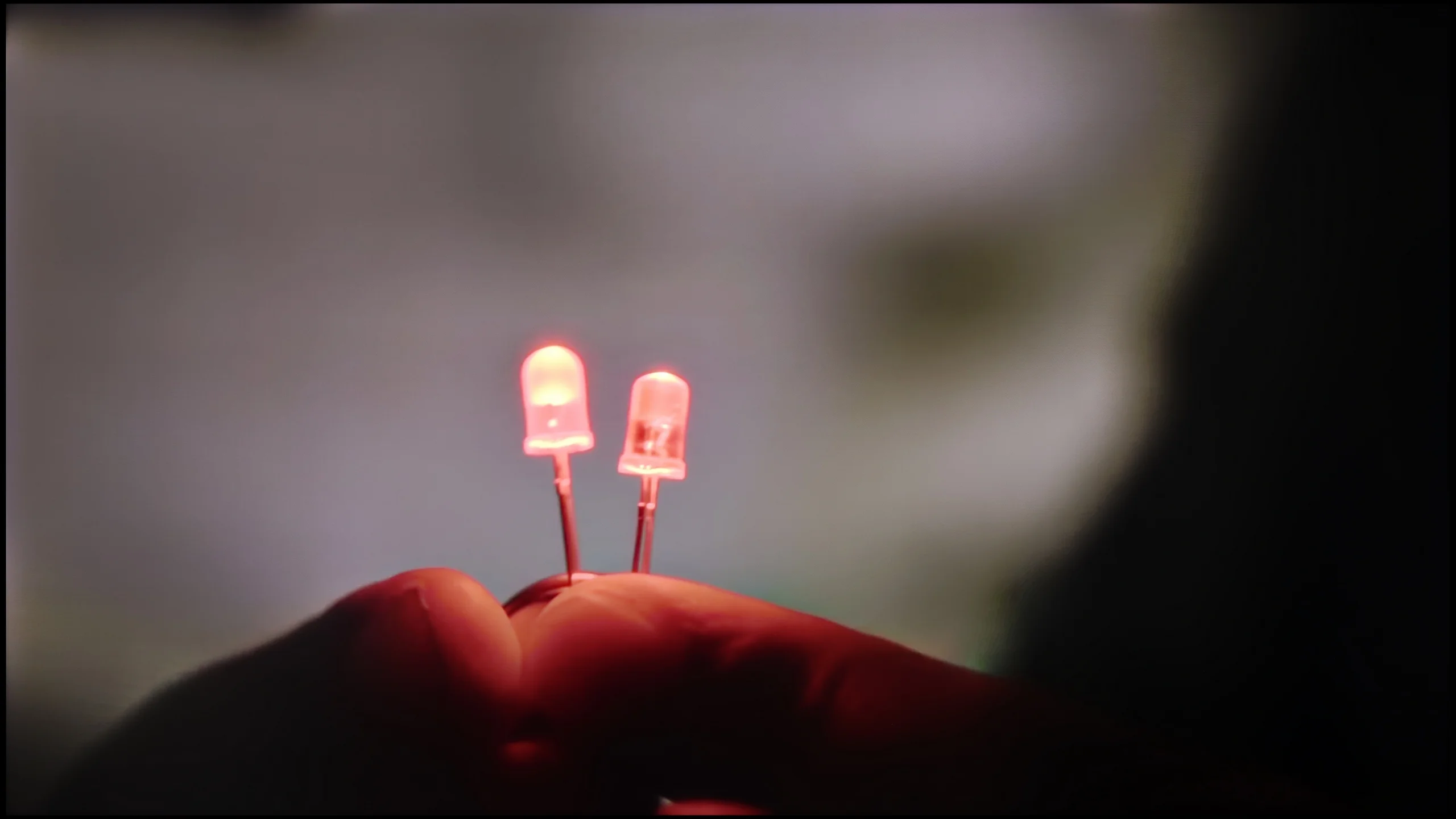
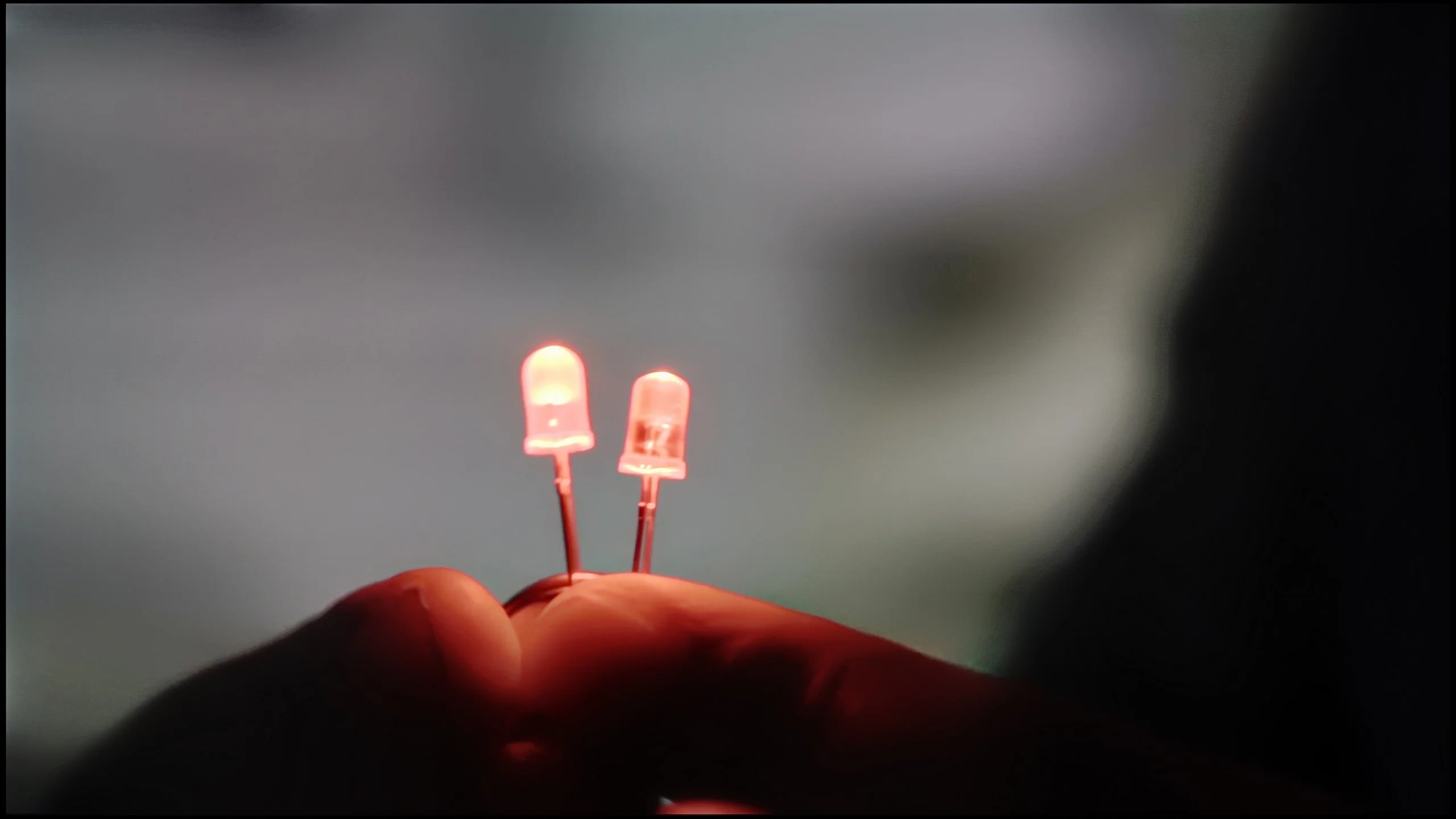
The match photo shows how the TV smooths weak tonal transitions in low-quality video.
Image scaling SD (576i)


The model photo shows how it handles upscaling of SD material.
The digital processing of lower-quality signals is of a very high standard here, all thanks to the MediaTek Pentonic 800 processor used in the U7S Pro. Upscaling itself also performs very well, meaning the TV's ability to lift lower-resolution sources to 4K is strong. We didn't notice any unnatural, sharp contours on the screen, and our test image featuring a model simply looked attractive.
Here the LG C6 has taken a real step forward. The TV uses the same processor found in the flagship G6, and in terms of image processing the two models are very similar. That's a considerable plus, because in this area LG's processor this year performs excellently. The "Smooth Gradation" function in particular works very well. With heavily compressed material it can effectively hide ugly banding and artefacts that often appear, for example, in lower-quality streaming. It's best to leave it set to "Low". That way the improvement is clear and the TV does not yet start blurring fine details. Higher settings smooth the image more aggressively but can already remove some of the natural texture of objects on the screen. Upscaling itself also performs very well. Lower-resolution content is sharpened correctly, edges look clean, and the processor quite effectively reconstructs fine details. In this respect the C6 is already very close to LG's best TVs and the differences compared with the G6 are small.
Blur and motion smoothness
7.4/10
8.5/10
Blur (native resolution, maximum refresh rate):
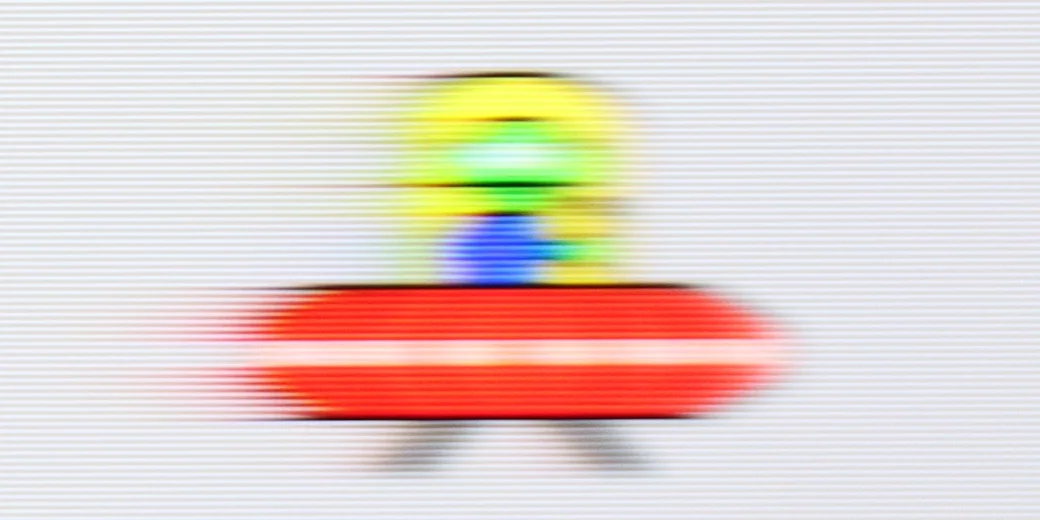
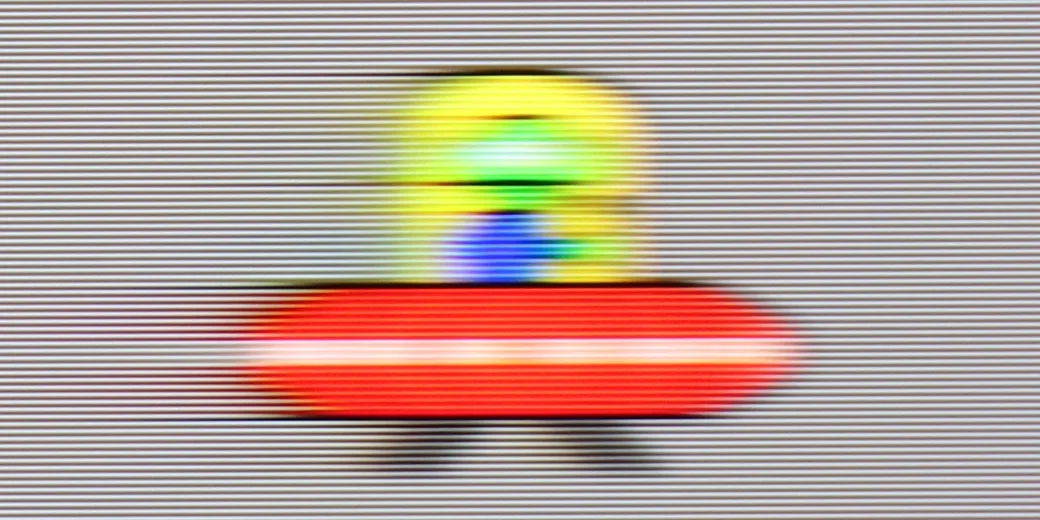
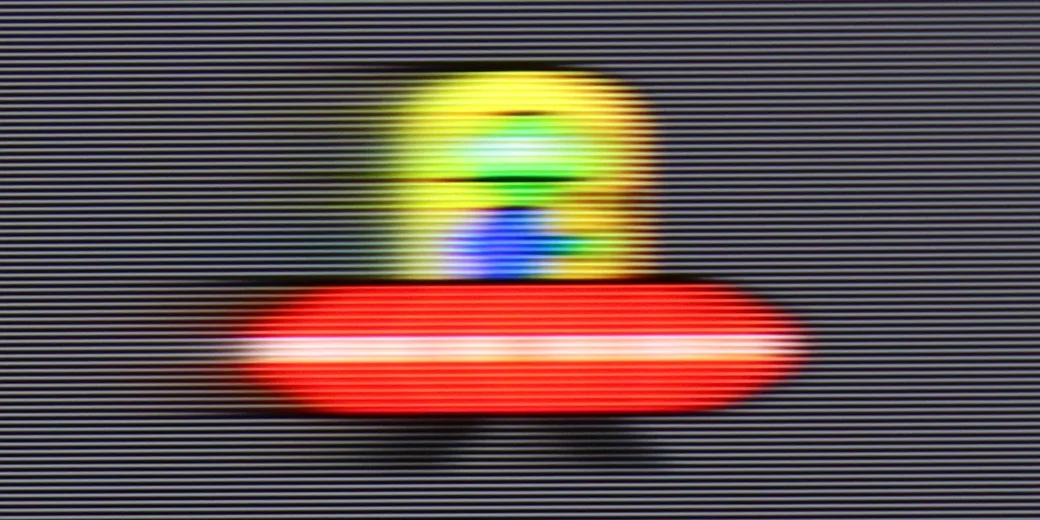


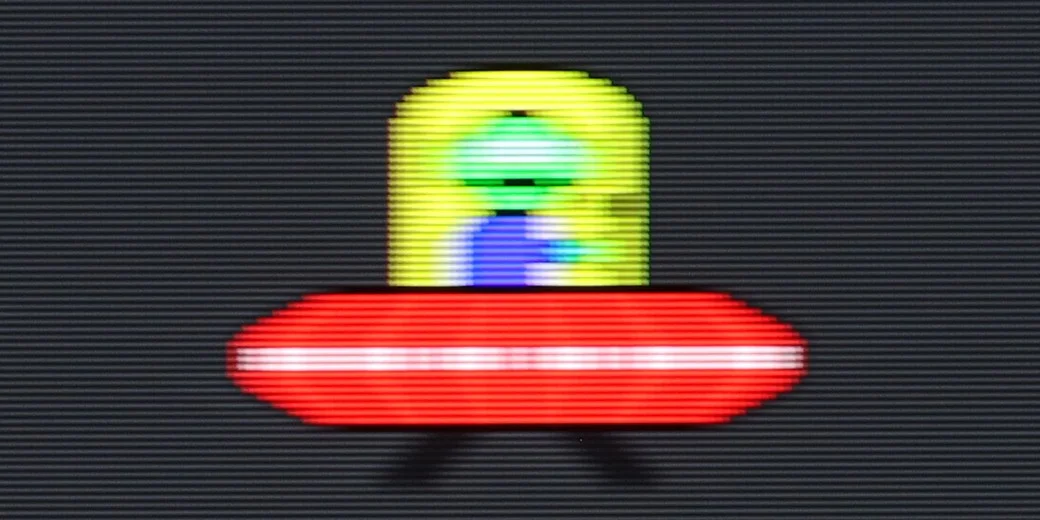
Blur (BFI function enabled):



Image flickers in this mode


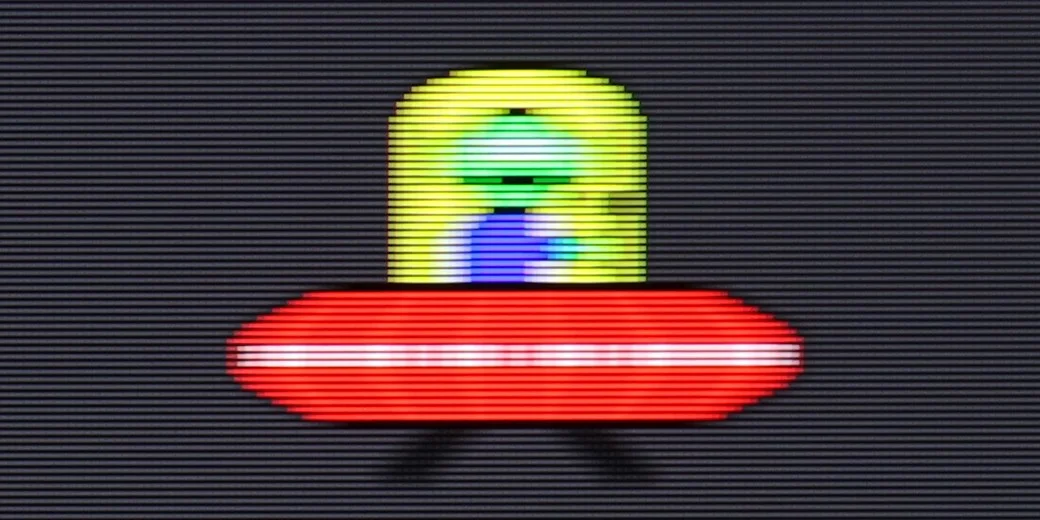
Blur (1080P@330Hz):
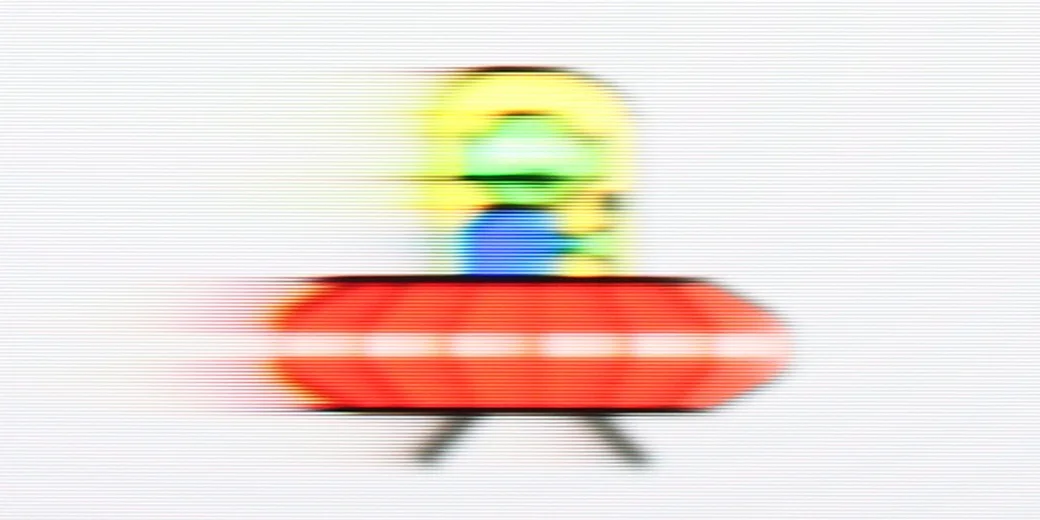

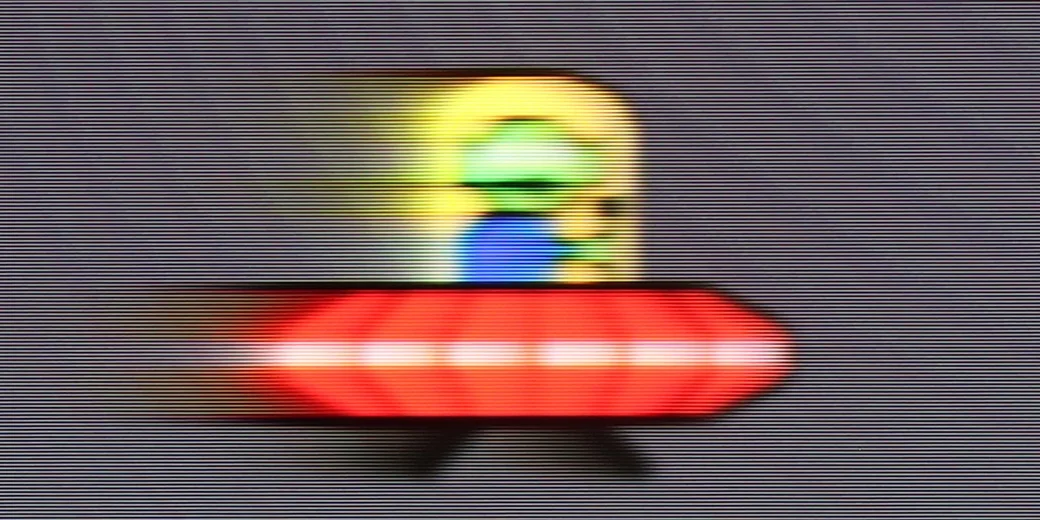
Blur (4K@165Hz):


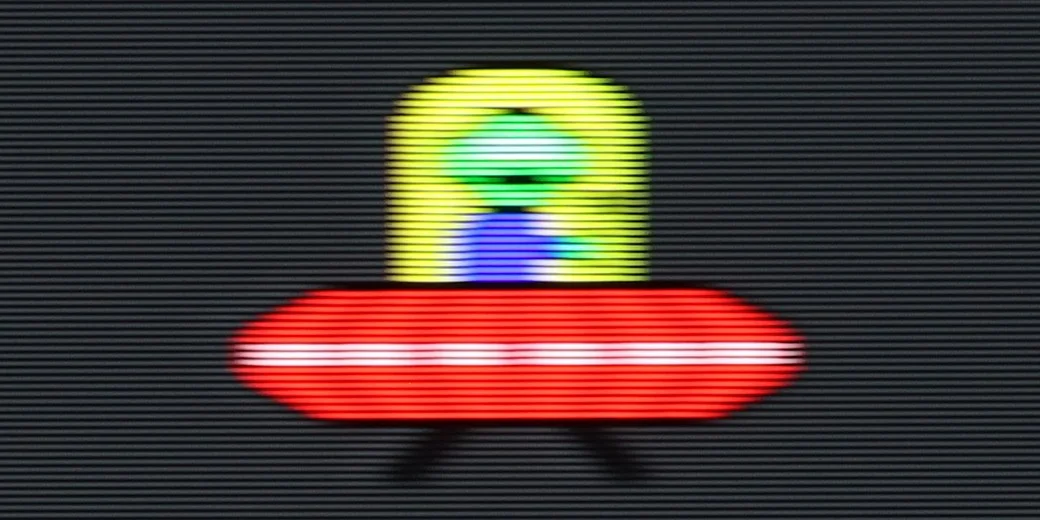
Hisense U7S Pro uses a panel with a maximum refresh rate of 165 Hz at 4K, and in game mode it can even reach 330 Hz at Full HD. However, it's worth remembering that these top figures matter little in everyday use, because most content is limited to a maximum of 120 Hz (for example when playing on a console). Even so, the TV handles motion quite well and performs very respectably for an LCD design.
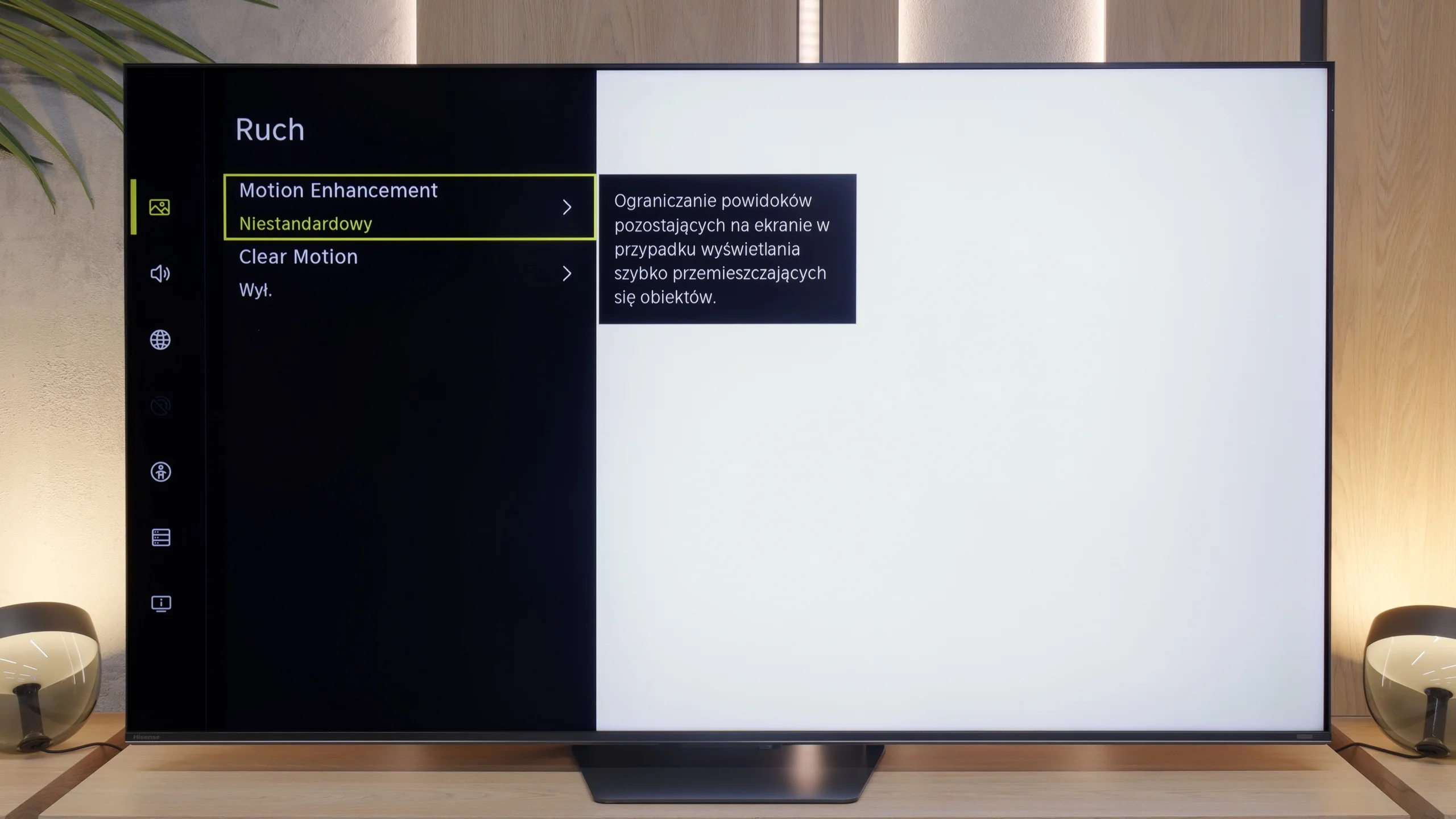
It's hard to fault the smoothness itself. In the menu you'll find a motion smoothing feature called "Motion Enhancement", which hides two sliders: blur reduction and judder reduction. These allow manual configuration of the smoother, which works well for both films and sport, effectively improving the raw TV signal.
LG C6 received a panel with a maximum refresh rate of 165 Hz, which is great news above all for gamers using a powerful PC. In films, sport or on consoles we will of course make use of up to 120 Hz, but even then it is hard to fault the motion clarity. As befits an OLED, the panel's response time is almost instantaneous. Moving objects therefore do not leave the characteristic smearing or trails that we can still see on LCD televisions. This is especially noticeable in sport and fast-paced games, where the picture remains very clean even during dynamic movement.
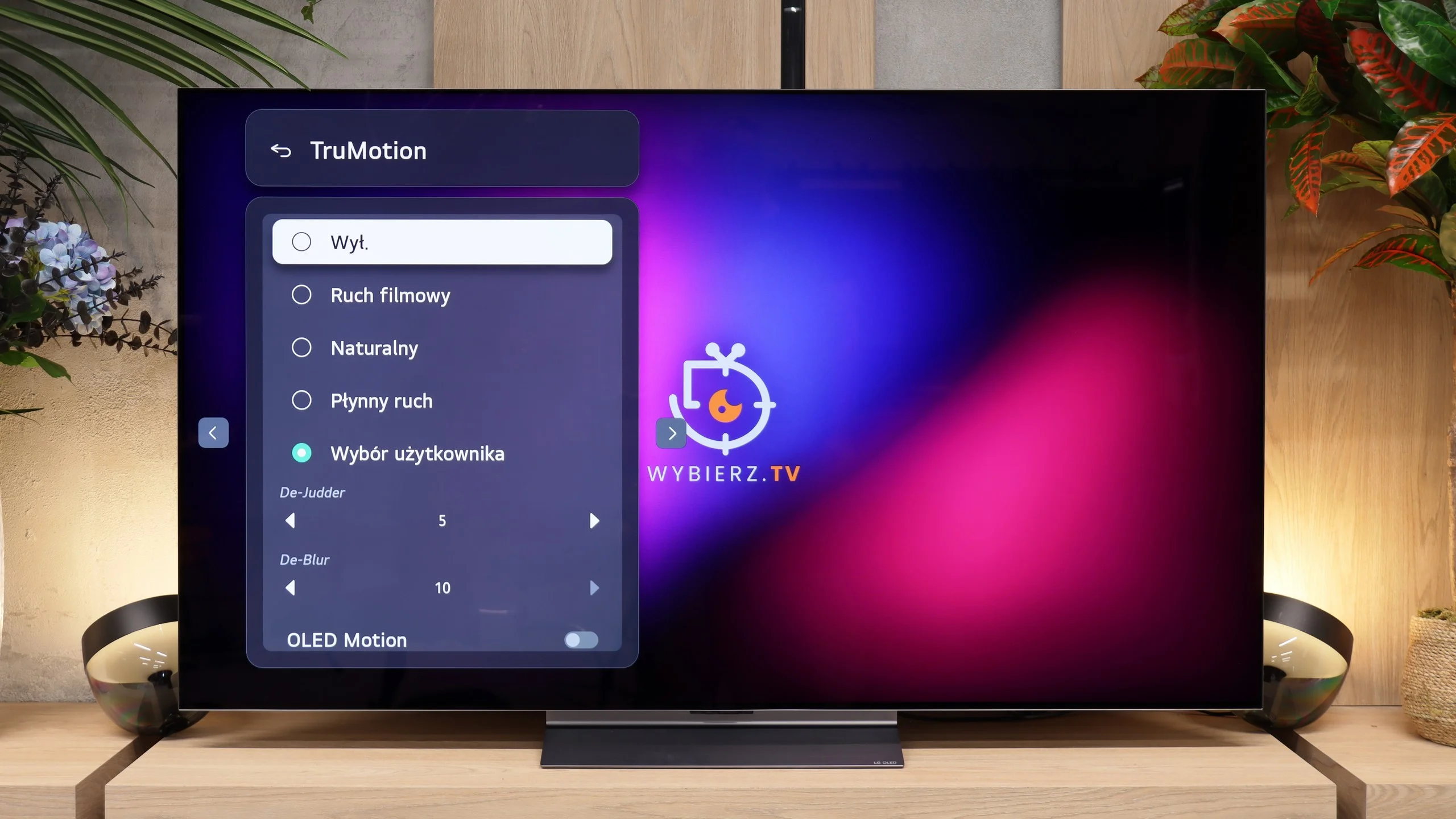
For films and television LG has also prepared the TruMotion motion smoothing system. In the user settings you will find two separate sliders. De-Judder primarily addresses low frame-rate content, that is mainly films and TV series at 24 fps. You can use it to slightly reduce the characteristic judder or set a higher value if you want a very smooth image. De-Blur is useful for higher frame-rate material, chiefly sports broadcasts and 50/60 fps television.
Console compatibility and gaming features
8.5/10
10/10
- ALLM
- VRR
- VRR range48 - 330Hz40 - 165Hz
- Dolby Vision Game Mode
- Correct implementation of HGIG

- 1080p@120Hz
- 1440p@120Hz
- 4K@120Hz
- Game bar
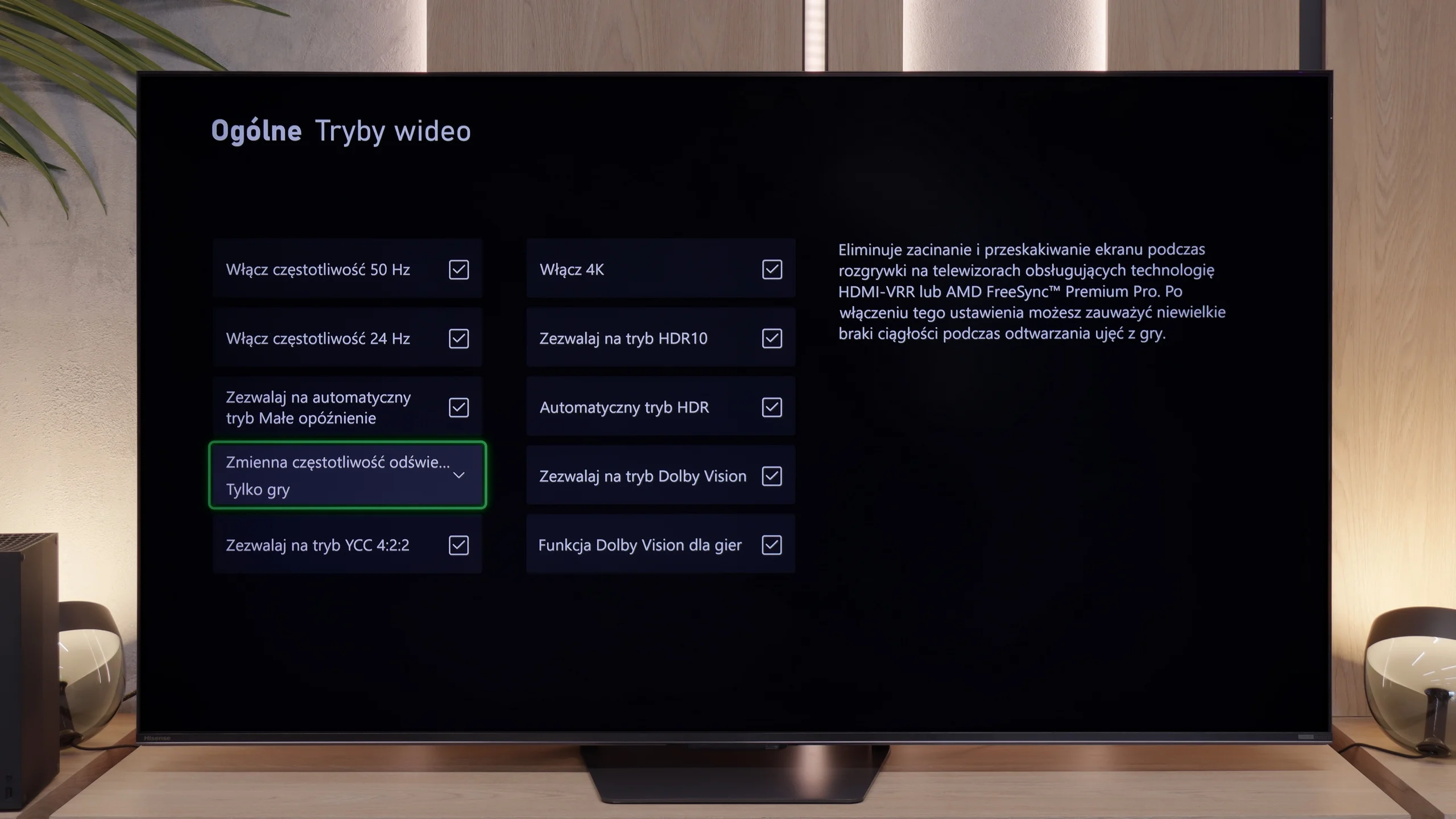
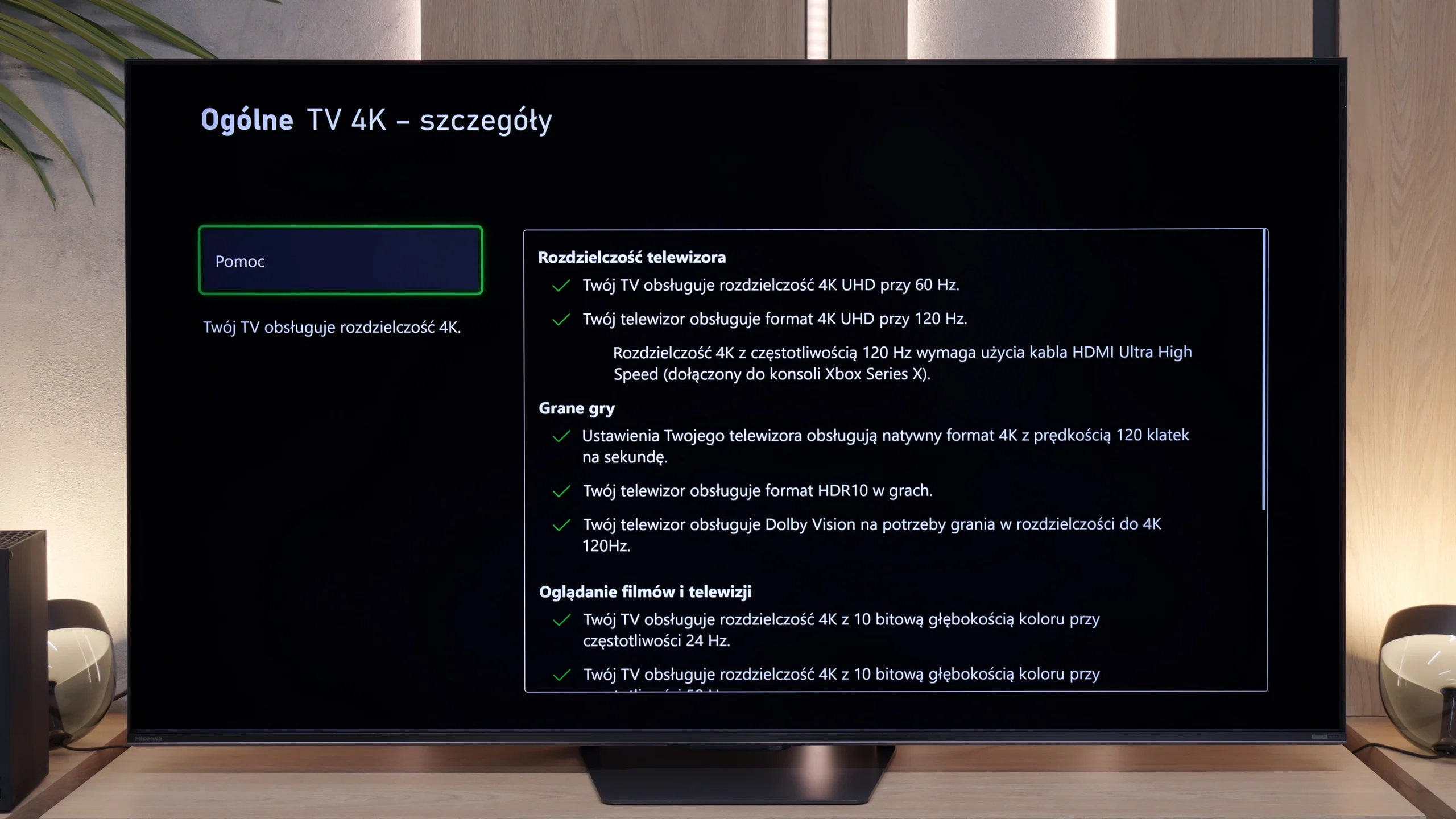
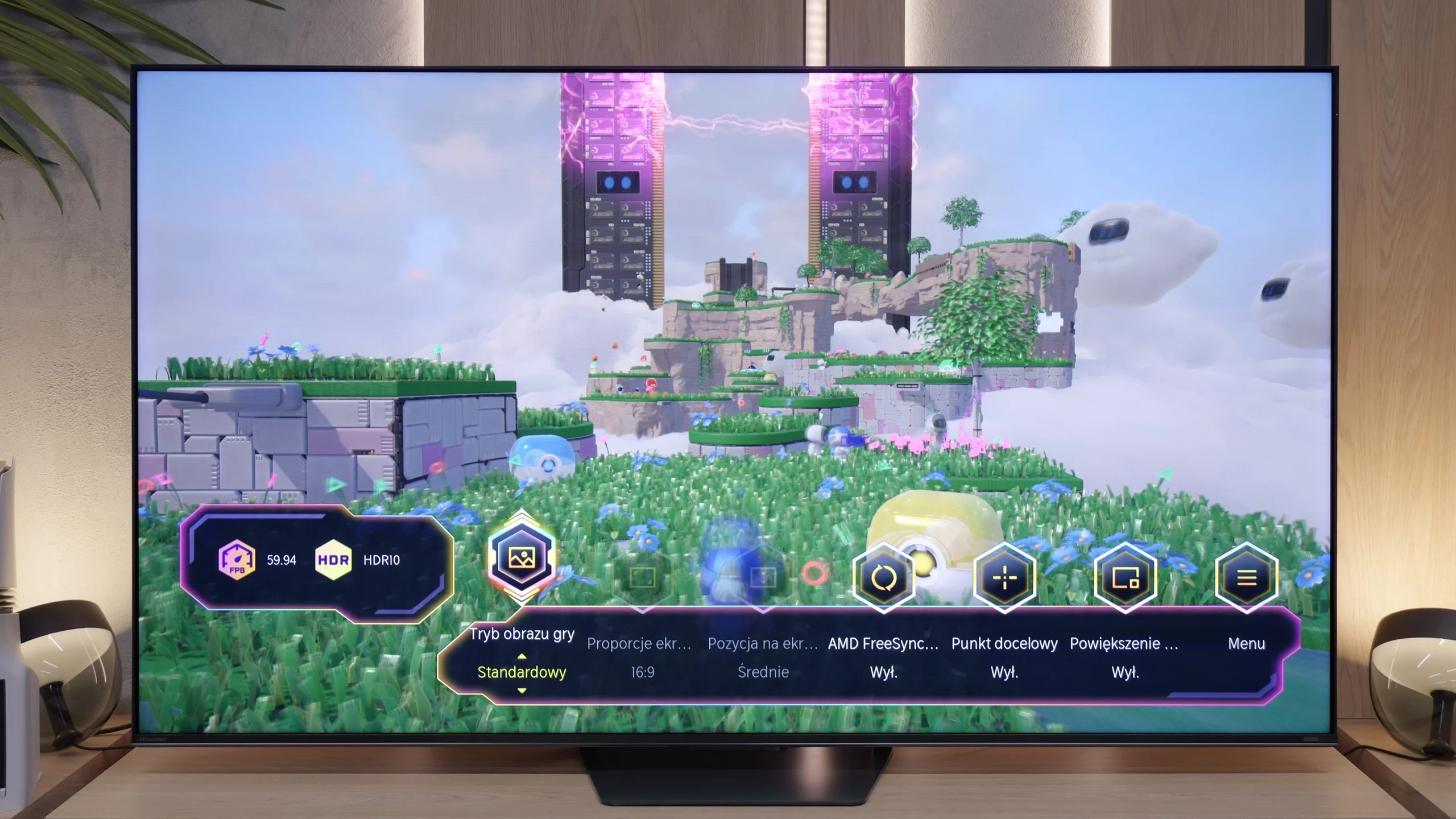
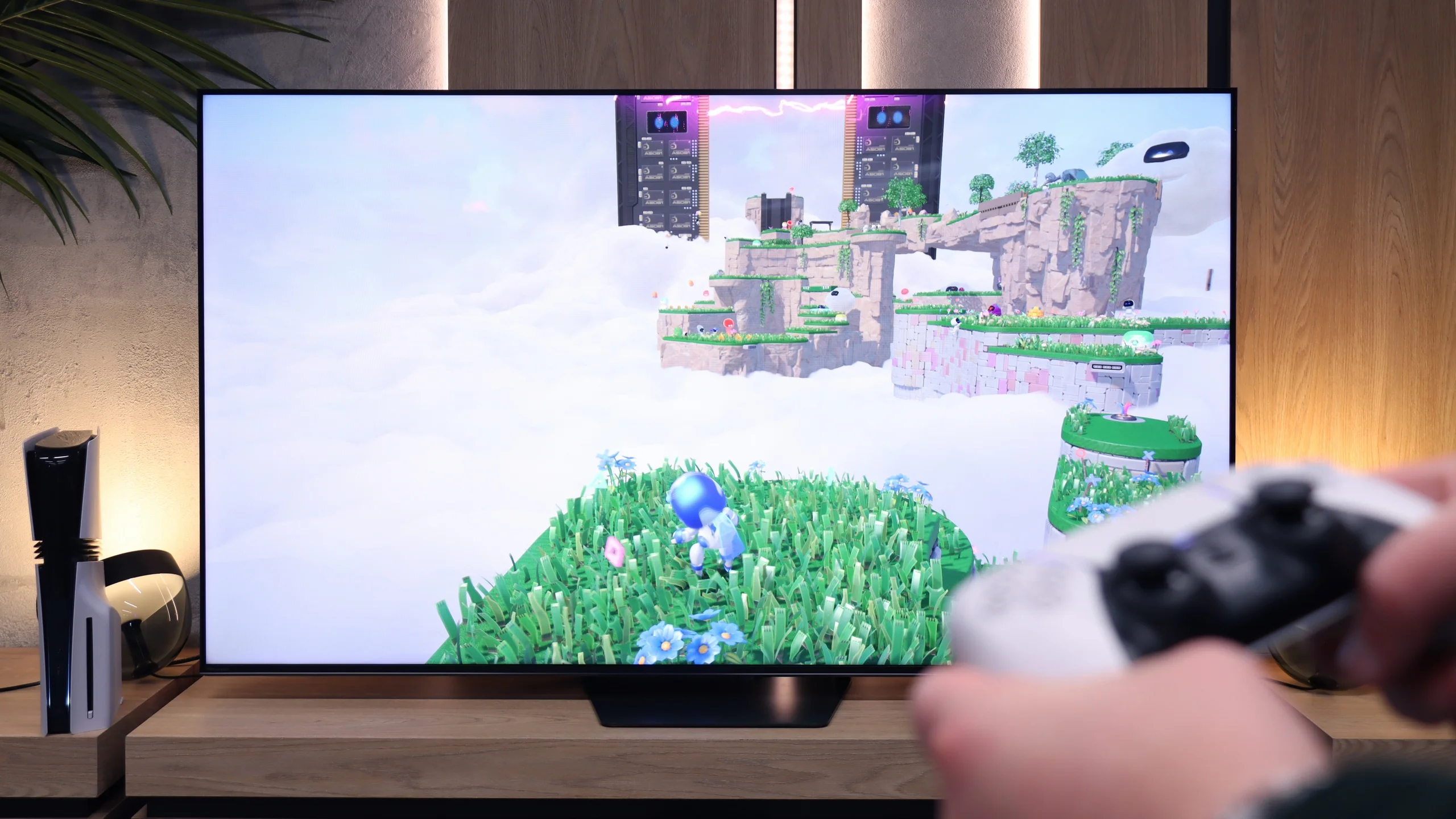
If you plan to connect a console or PC to the U7S Pro, you'll be more than satisfied. This TV is excellent for gamers. Hisense didn't spare any expense and fitted it with four HDMI 2.1 ports with full 48 Gbps bandwidth, so you don't need to juggle cables, as each port supports the full feature set. It offers automatic low-latency mode (ALLM) and VRR, which operates across a wide range from 48 Hz up to a whopping 330 Hz. Of course, that 330 Hz is for now a bit of a gimmick for owners of powerful PCs, since consoles will still be limited to 120 Hz, but it's good to have that headroom for the future. The Game Bar is also very useful while gaming. It's a handy on-screen menu for players where, without leaving the main TV settings, you can quickly change picture mode, enable a crosshair in the centre of the screen, or even switch to an ultra-wide display aspect, which PC simulator fans will appreciate. The only drawback to be aware of is an incorrect implementation of the HGiG standard in games. The TV ignores the console's HDR10 instructions and keeps forcefully altering the image in an attempt to "improve" it, which makes proper HDR setup in the console menu (where you set brightness using the symbols/checkerboard pattern) somewhat more awkward.
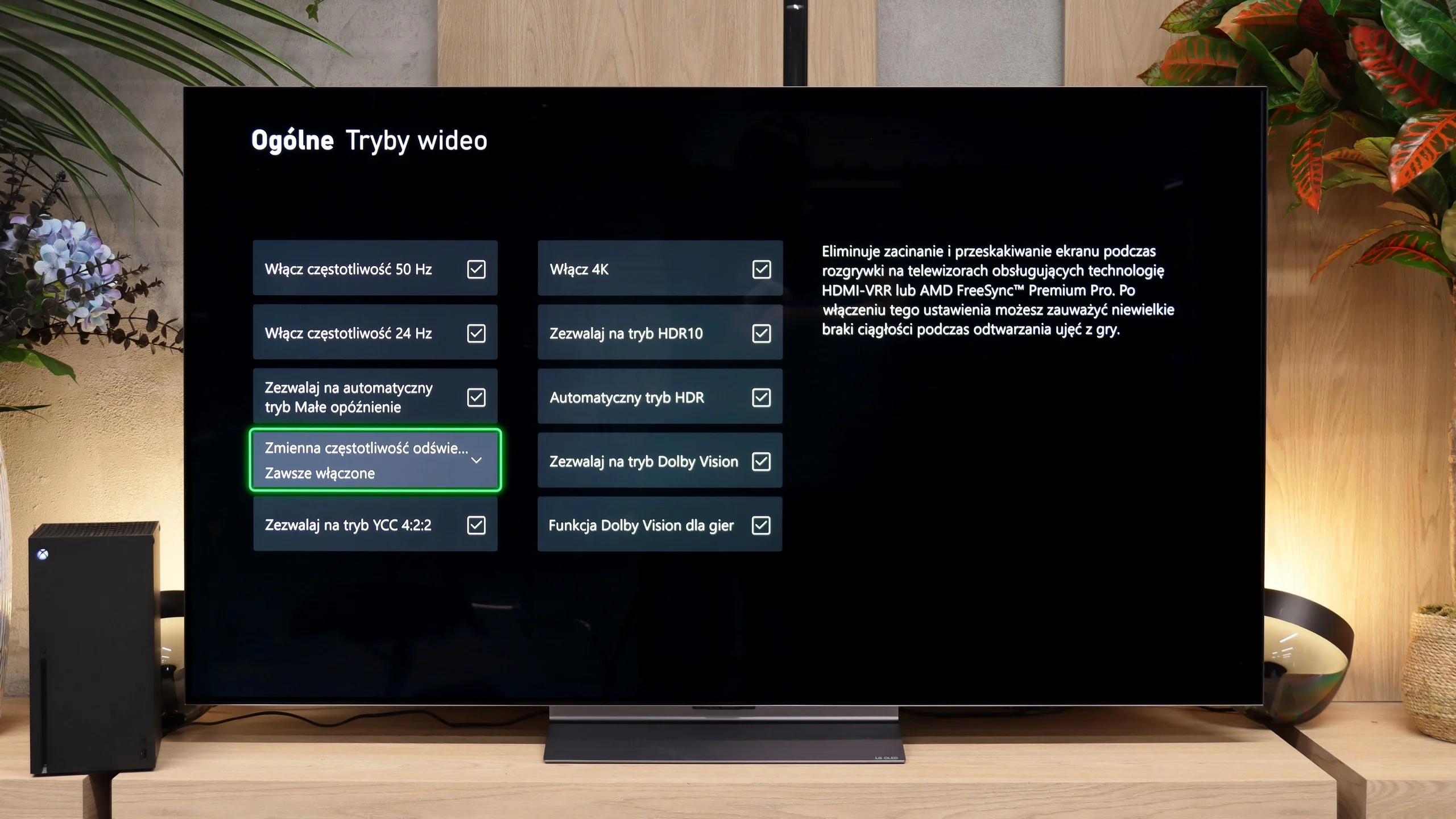
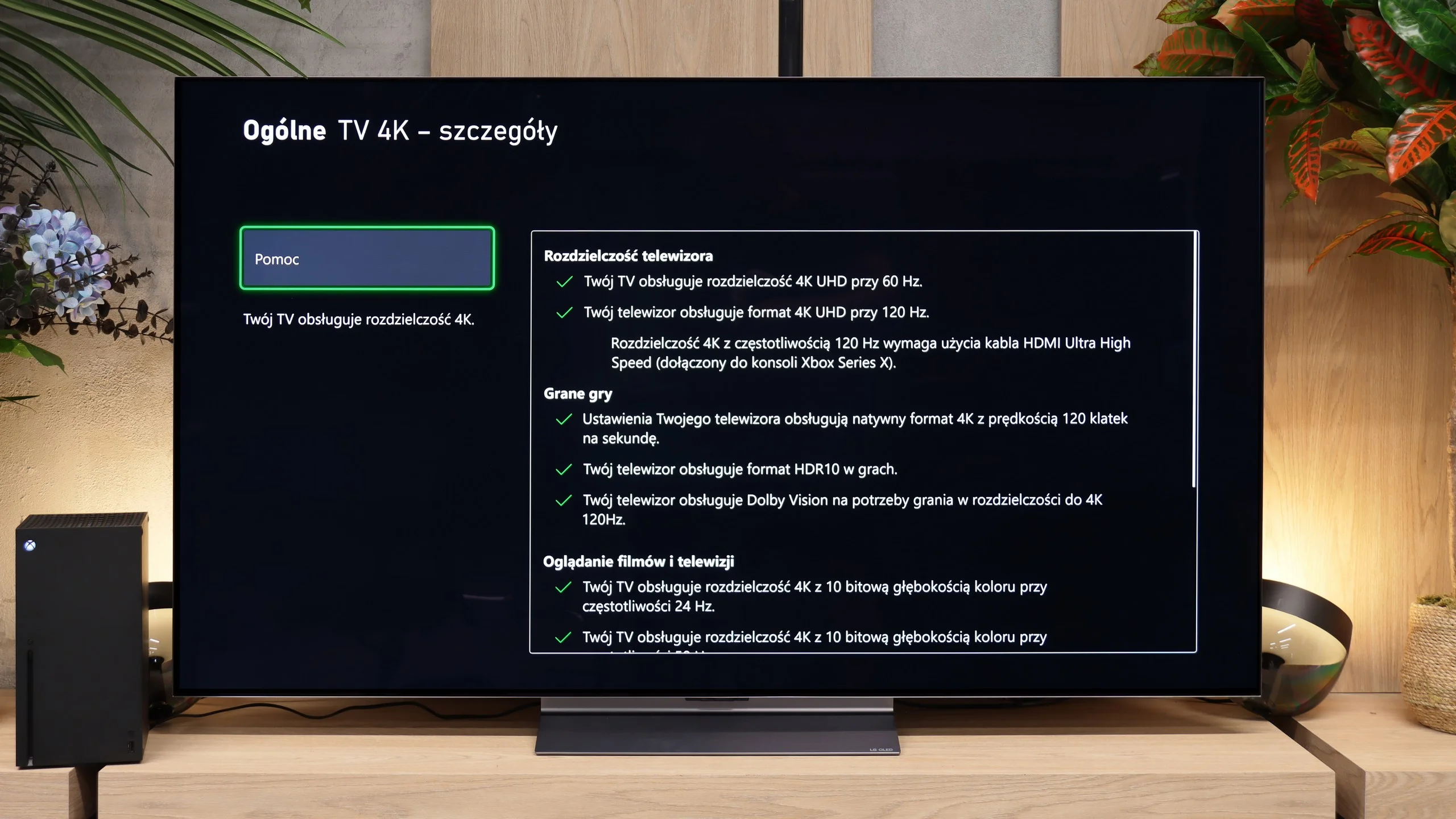
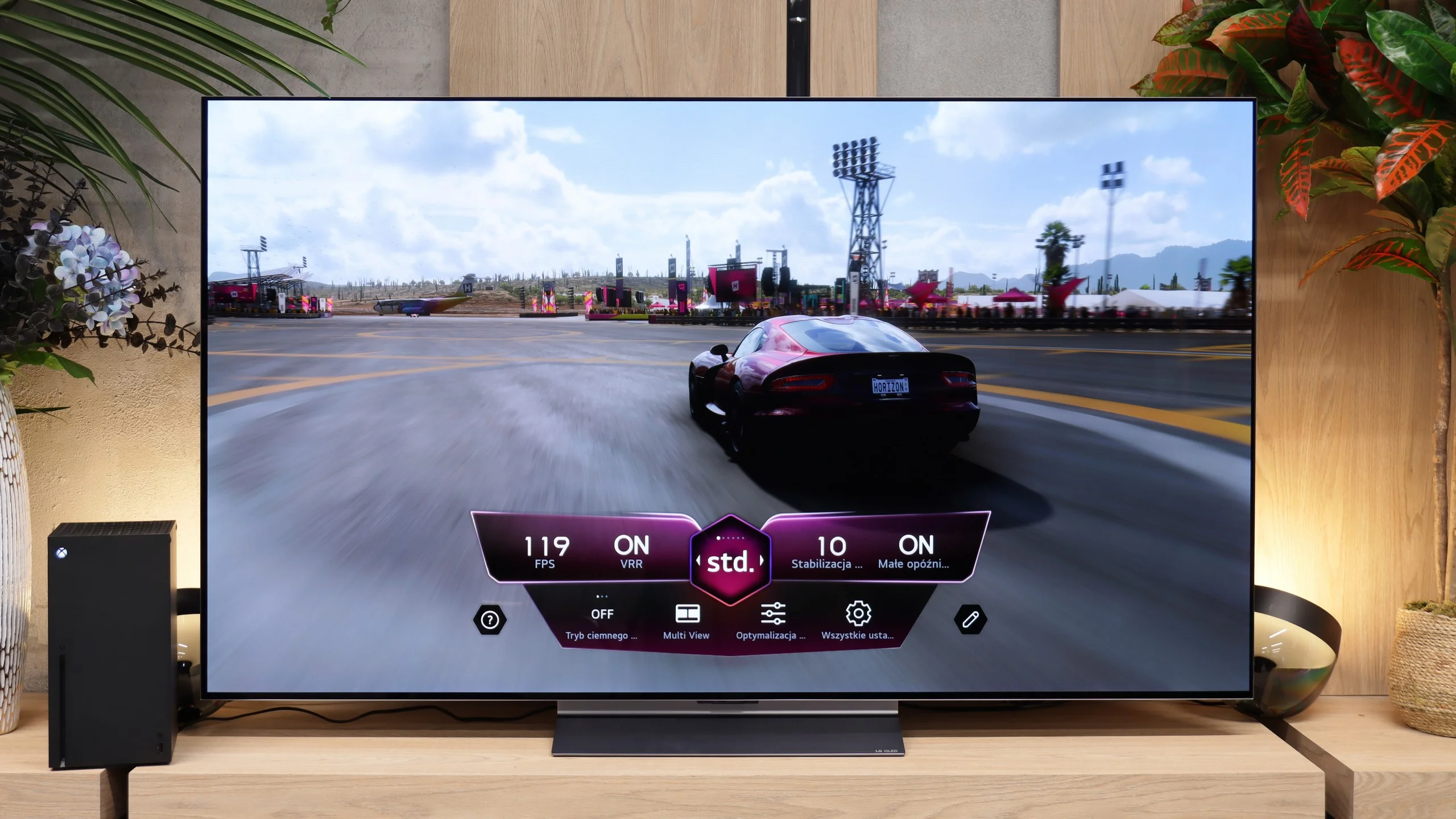
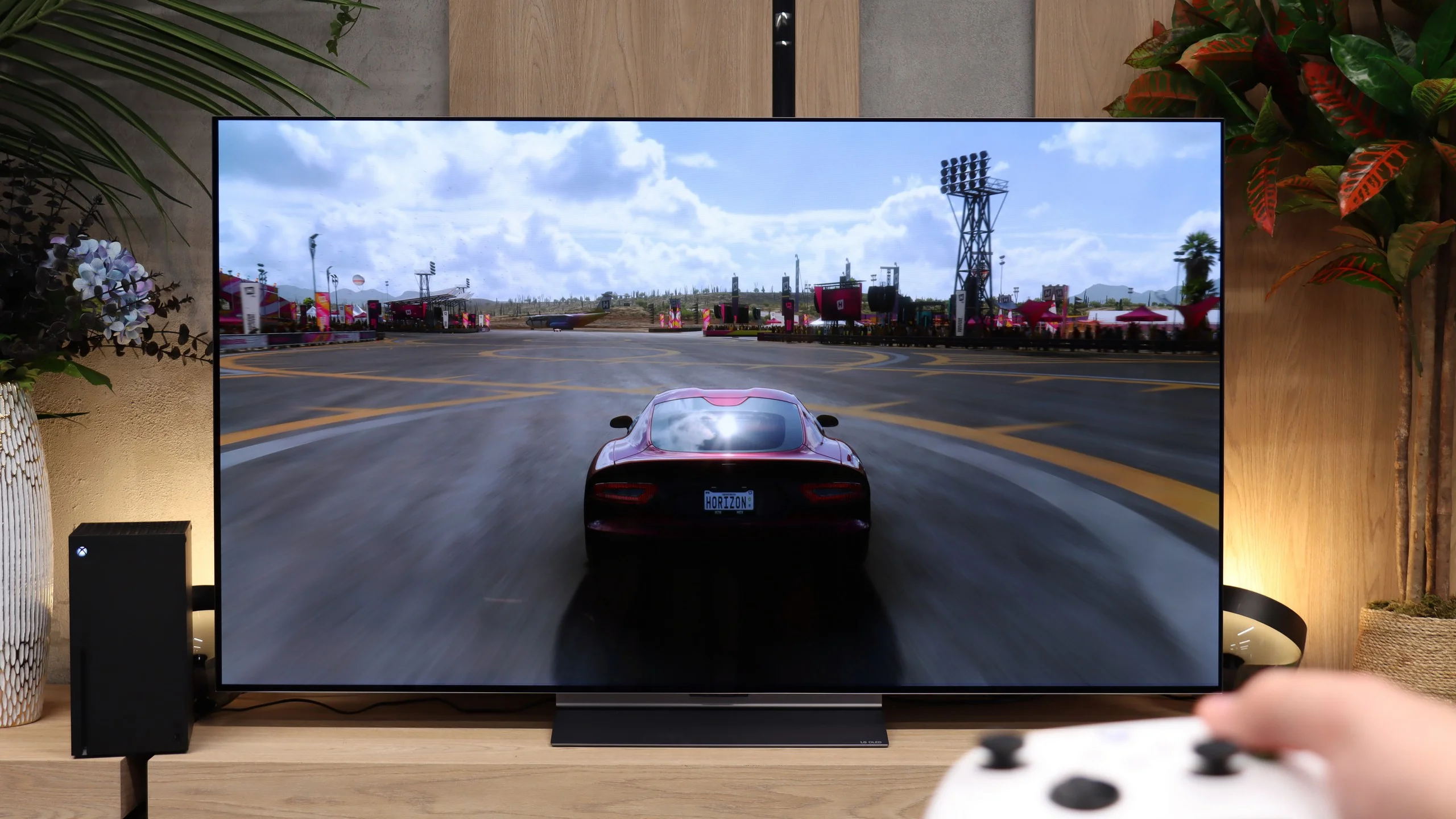
LG has long focused heavily on gamers, and the C6 really lacks nothing important. The TV supports 4K at 120 Hz from consoles, and when connected to a PC it can run at up to 165 Hz. There is also VRR from 40 to 165 Hz, ALLM and a properly working HGiG. A big plus is support for Dolby Vision in games, so the Xbox Series X can use that format without giving up Game Mode. It's rounded off by a Game Bar, from which you can quickly check key signal parameters and change settings without leaving the game. In terms of features, the C6 is therefore one of those TVs that is really hard to fault. Whether you're gaming on a PlayStation, an Xbox or a PC, practically everything you could expect from a modern gaming TV is available here.
Input lag
9.7/10
9.9/10
SDR
HDR
Dolby Vision
When it comes to latency, it's really good. Results below 10 ms for 120 Hz content are great news, because the response to thumbstick movement or pressing a button on the controller is instantaneous. At standard 60 Hz, latency rises to around 18 ms, which is still low enough that even a keen gamer won't be able to notice it. The only thing you could nitpick is playing with Dolby Vision enabled. Then input lag can jump to around 30 ms. However, to be fair, these are still not figures we'd consider poor or ones that would prevent comfortable gameplay.
When it comes to input lag, the C6 performs as a good gaming TV should. At 120 Hz we measured around 5 ms, so controller response is virtually instantaneous. At 60 Hz it increases to about 14 ms, but that's still a good result. Latency is slightly higher with Dolby Vision. At 120 Hz it's around 14 ms, and at 60 Hz about 22 ms. In practice, if you're playing normally on an Xbox, this is unlikely to be something that will actually bother you.
Compatibility with PC
8.4/10
8.6/10
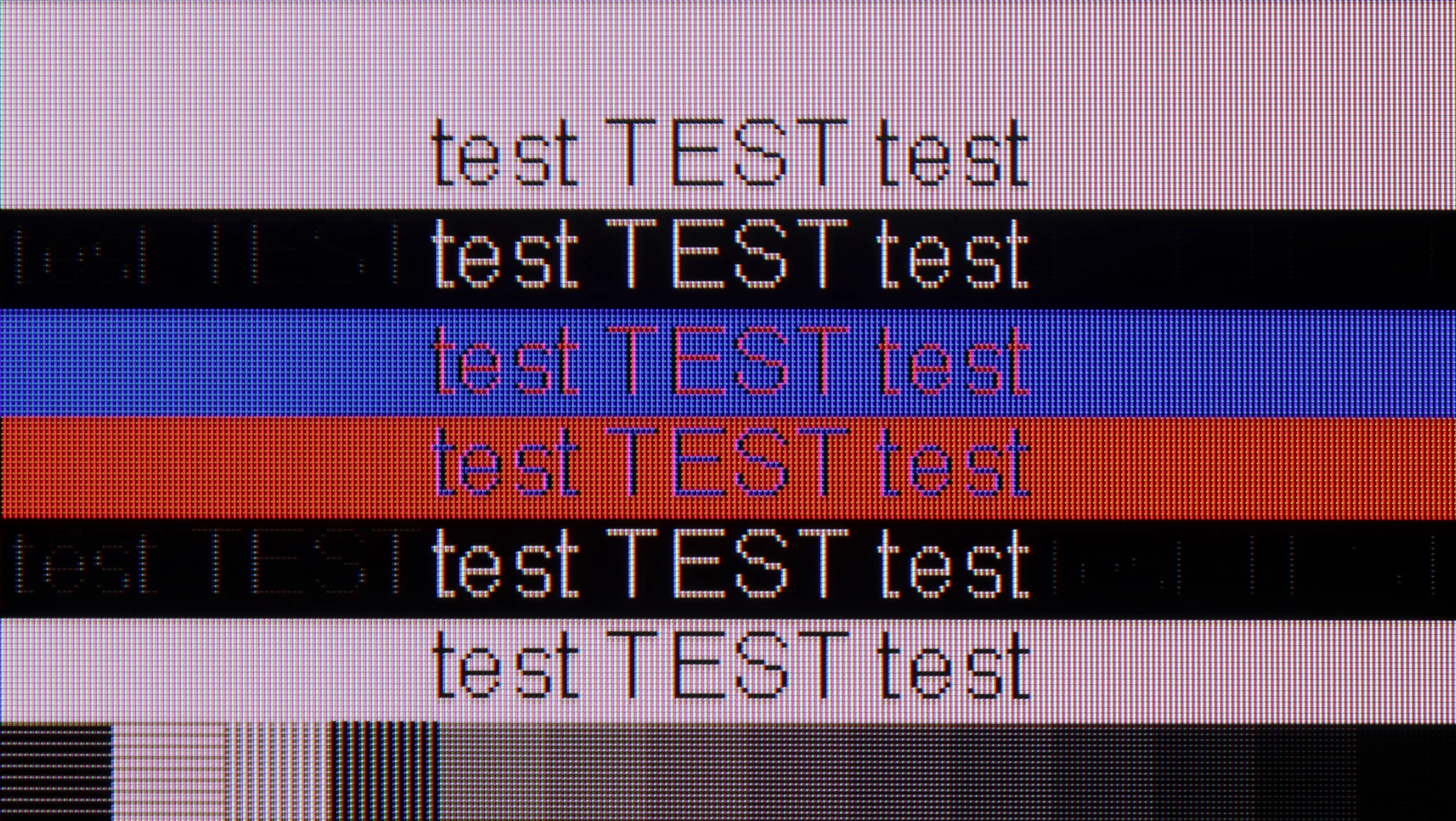
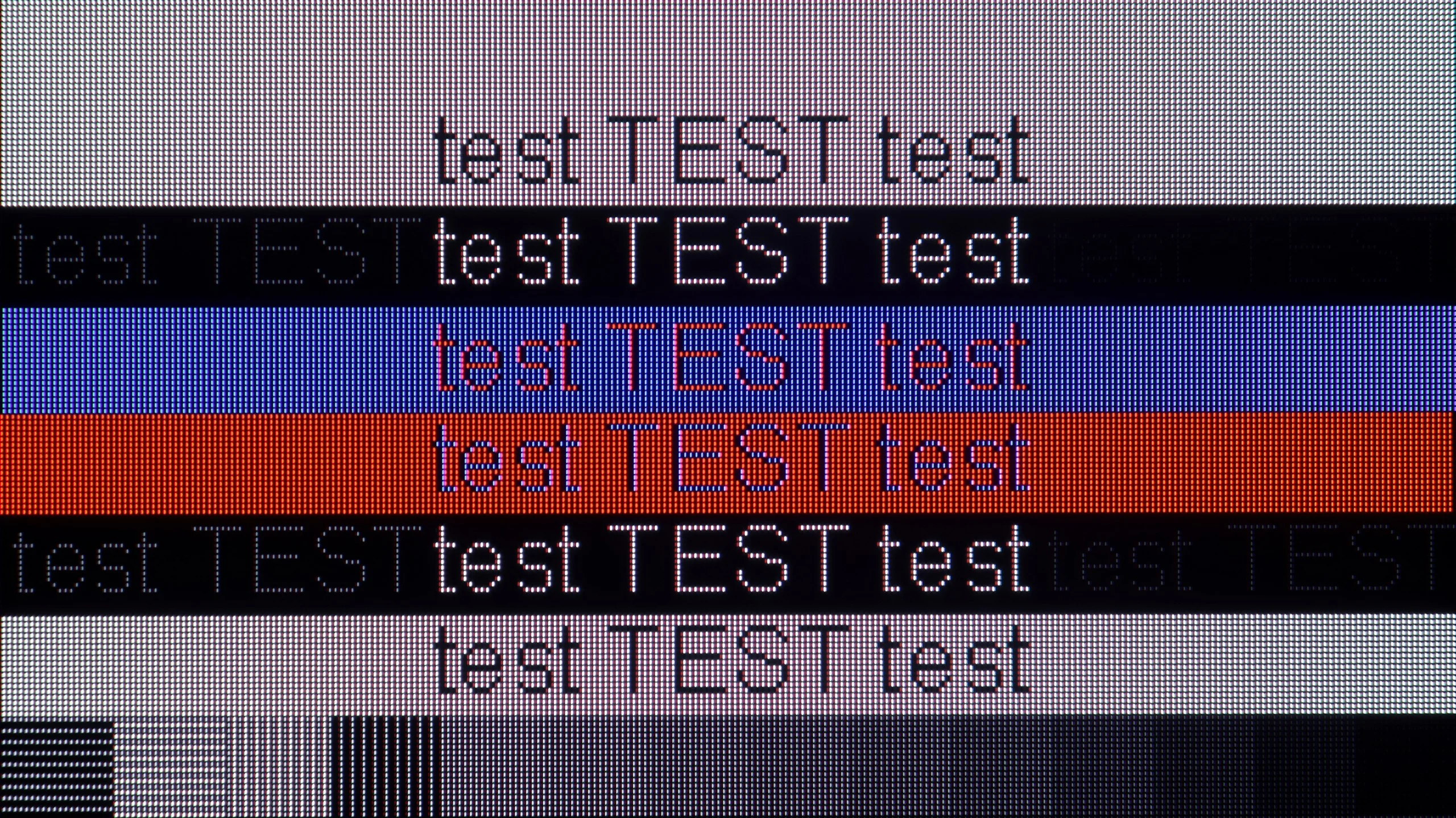
The photo shows the legibility of small fonts. Ideally, lines should be the same thickness on both light and dark text, with minimal pixel gaps.
U7S Pro, as we already mentioned, is great kit for gamers, including PC gamers. The TV can reach very high refresh rates, up to 165 Hz at 4K, and when dropping to Full HD it can even hit 330 Hz. These are values typically seen in monitors rather than in televisions. In addition, the TV works without problems with NVIDIA and AMD graphics cards thanks to G-Sync and FreeSync.
As for text readability on the desktop, it’s quite good, because the TV supports full colour sampling (Chroma 4:4:4), so fonts should be sharp and clear. However, there’s a small catch: text clarity significantly worsens when the TV runs at 165 Hz or 144 Hz. To fix this and get much better, sharper fonts, it’s best to simply change the refresh rate in Windows settings to 120 Hz.
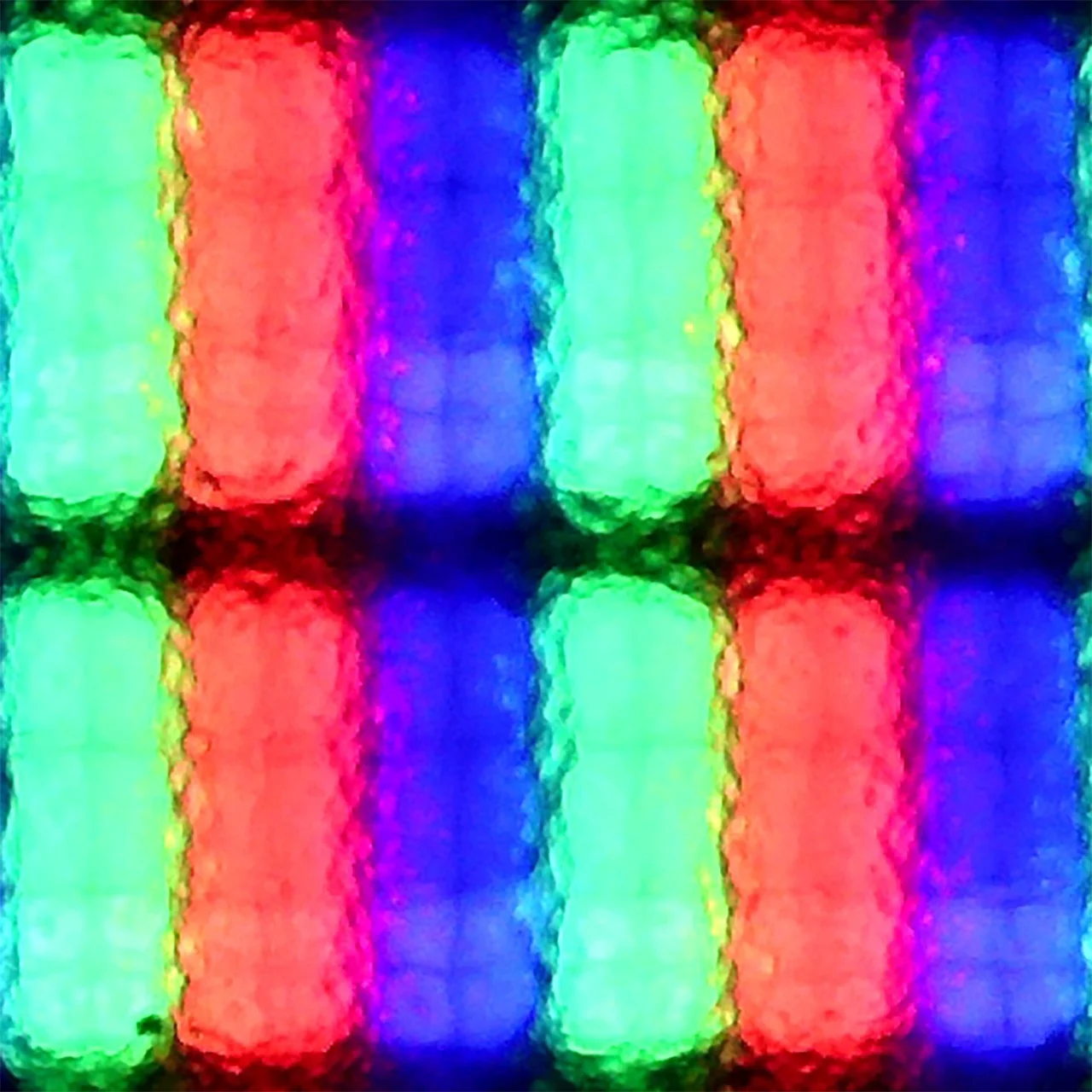
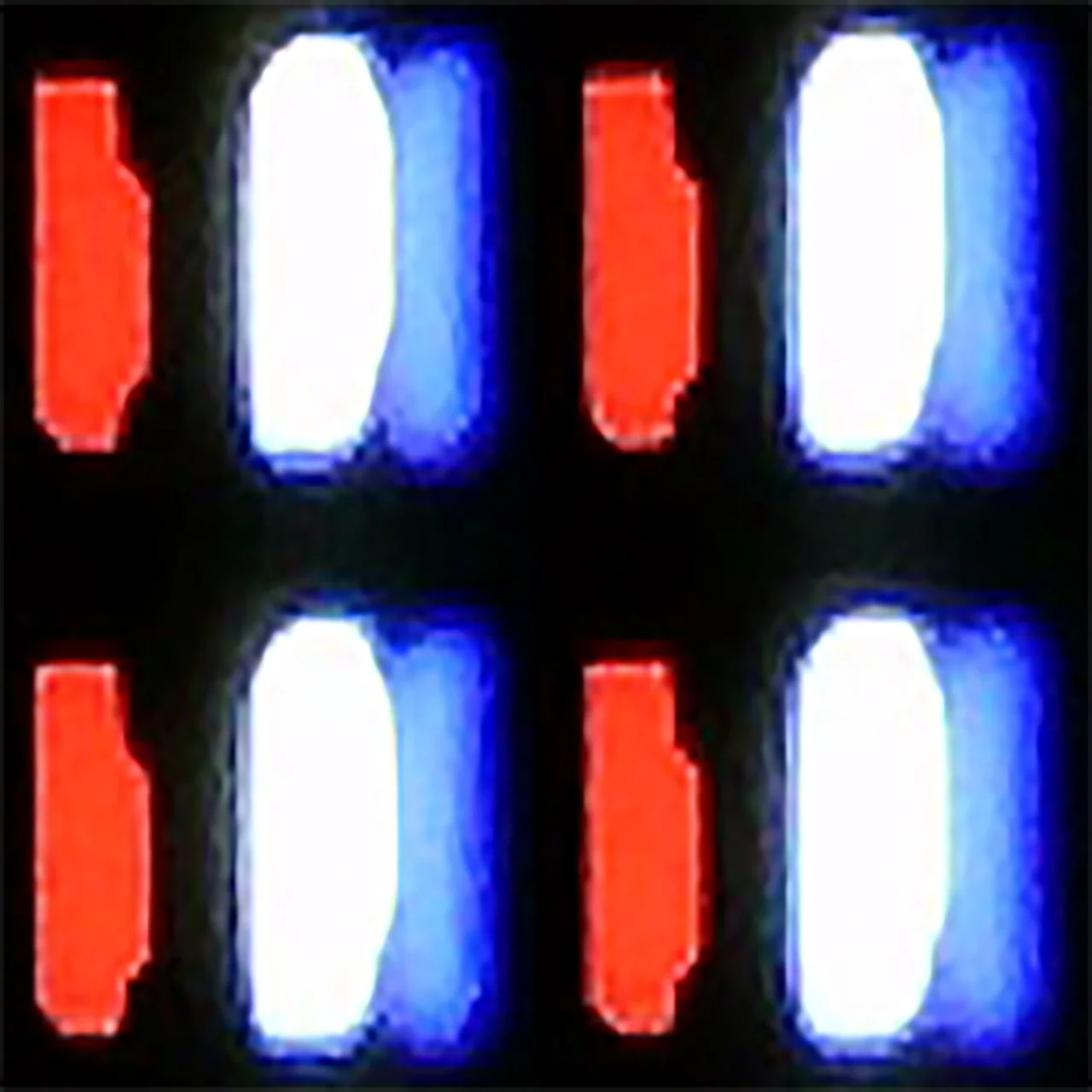
The C6 also performs very well when connected to a PC. The TV correctly supports 4:4:4 chroma subsampling, so text, icons and other small UI elements are displayed sharply. That means it can be used without any major issues not only for gaming but also for regular work on Windows. A limitation remains the panel's four-subpixel layout. If you sit very close to the screen, you may notice slight coloured fringes on the edges of some fonts. This is not especially bothersome and from a normal viewing distance it practically disappears. The C6 also has a lot to offer PC gamers. With a PC you can use the full 165 Hz, and there is G-Sync, VRR and very low input lag, which at the maximum refresh rate is around 5 ms. Combined with the OLED’s lightning-fast response time, this delivers a very smooth, clean image with no visible smearing. So if someone plans to connect a powerful PC to the C6, the TV can comfortably serve as a large gaming monitor, and it also performs quite well for everyday work.
Viewing angles
3.2/10
7.4/10
Unfortunately, the U7S Pro does not offer the best viewing angles on the market. This is due to the VA panel used here, which, unlike IPS or ADS panels, suffers much greater image degradation when viewed from the side. Colours then lose their saturation and contrast drops noticeably. Interestingly, this trait applies not only to the panel itself but also to the screen's outer layer. The matte coating used here loses its "matte" qualities at steep angles and starts to behave more like a glossy screen. Instead of diffusing light, it begins to reflect it more strongly, which can increase discomfort when using it in a sunlit room. Therefore, to enjoy the best image quality and avoid reflections, it's best to sit directly in front of the U7S Pro screen whenever possible.
Viewing angles on the LG C6 are excellent and effectively among the best you can currently find in TVs. This is largely thanks to the OLED panel itself. Even when you sit noticeably to the side, the image still maintains good contrast and the colours do not lose much of their saturation. That makes the C6 very well suited to a larger living room where not everyone sits directly in front of the screen. Only at very wide angles can you notice slight colour shifts, but during normal viewing it is hard to regard this as any real problem. In this respect, only Samsung Display's QD-OLED panels actually perform better.
Daytime performance
8.1/10
6.6/10
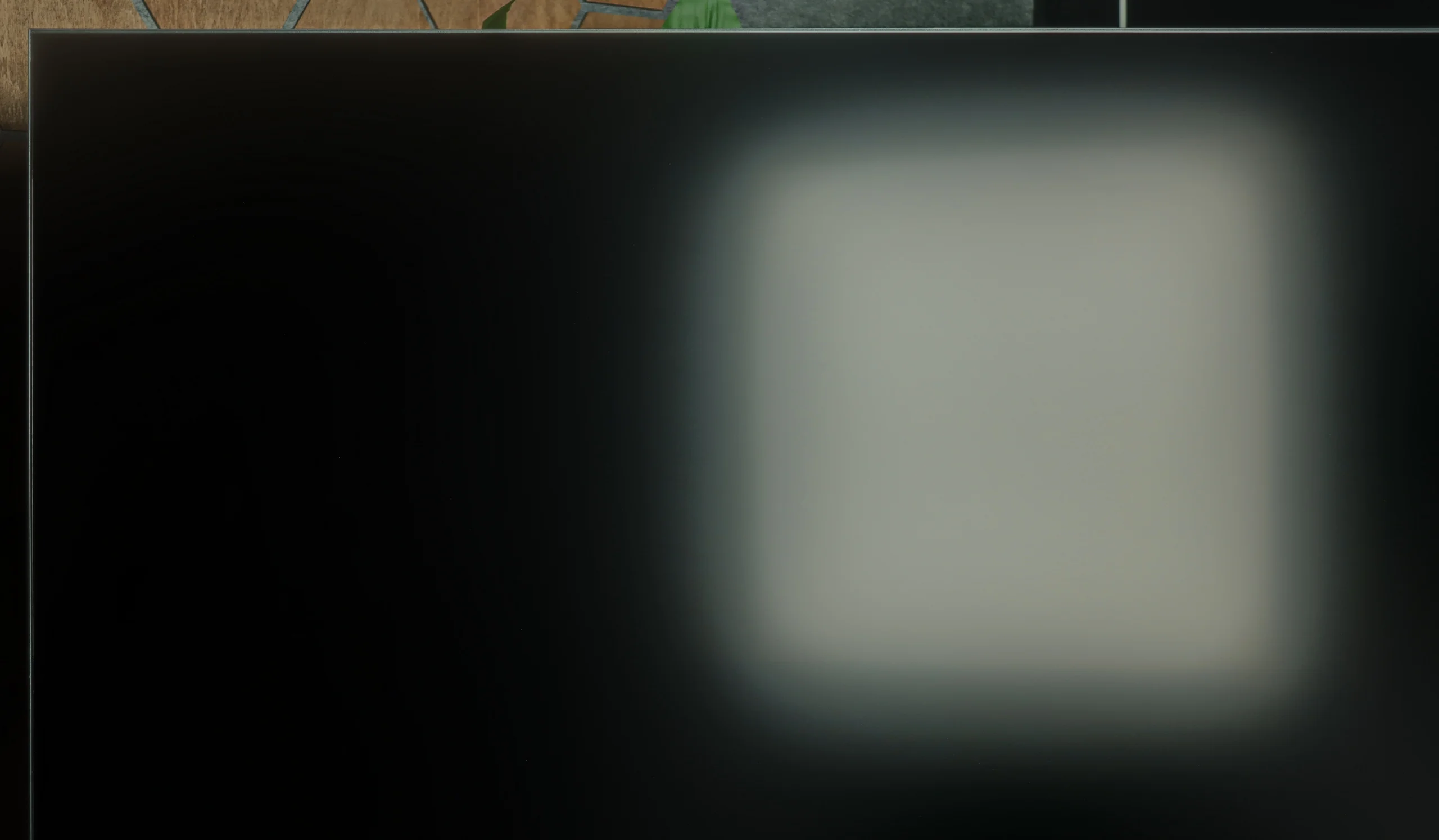
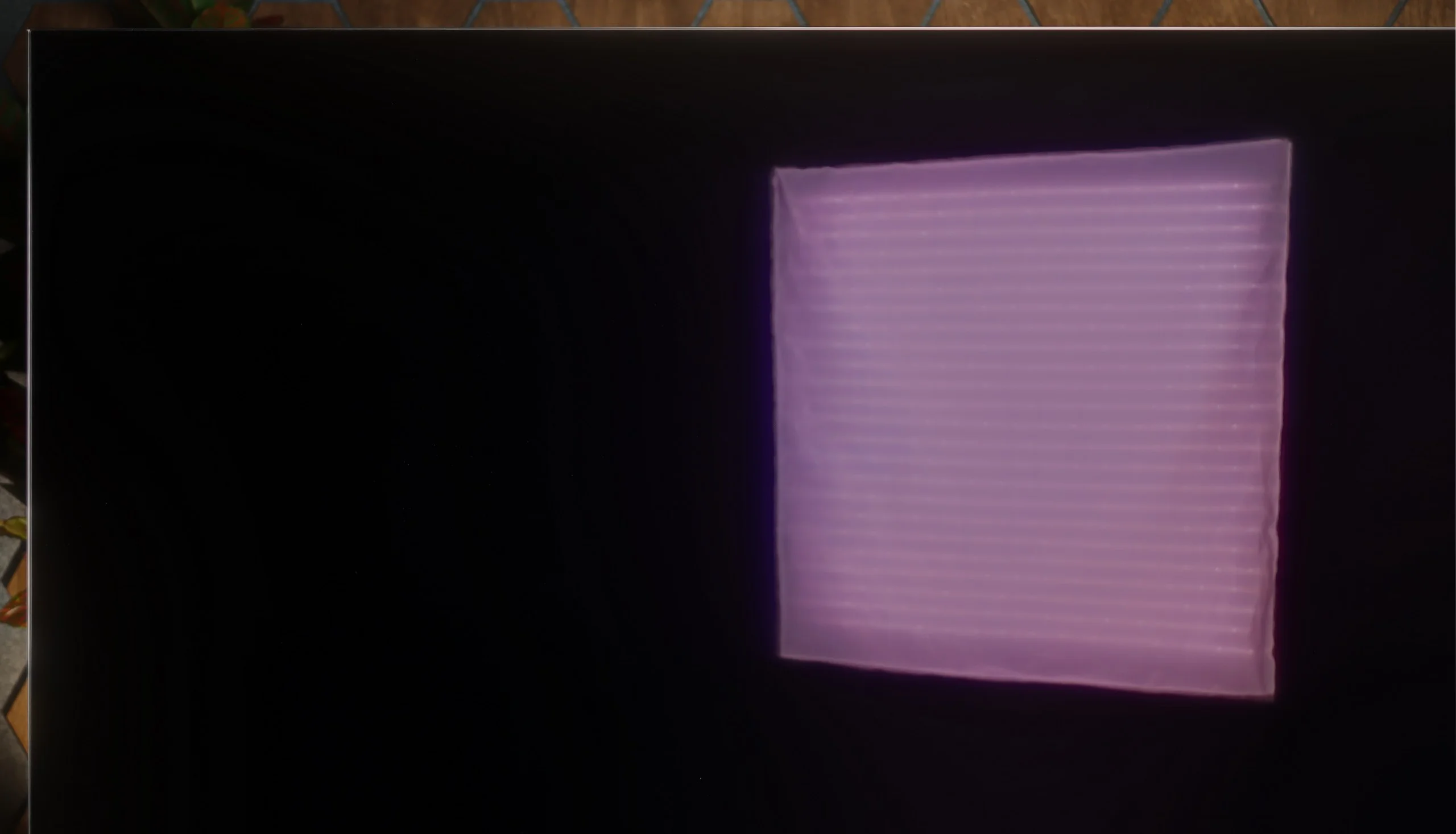
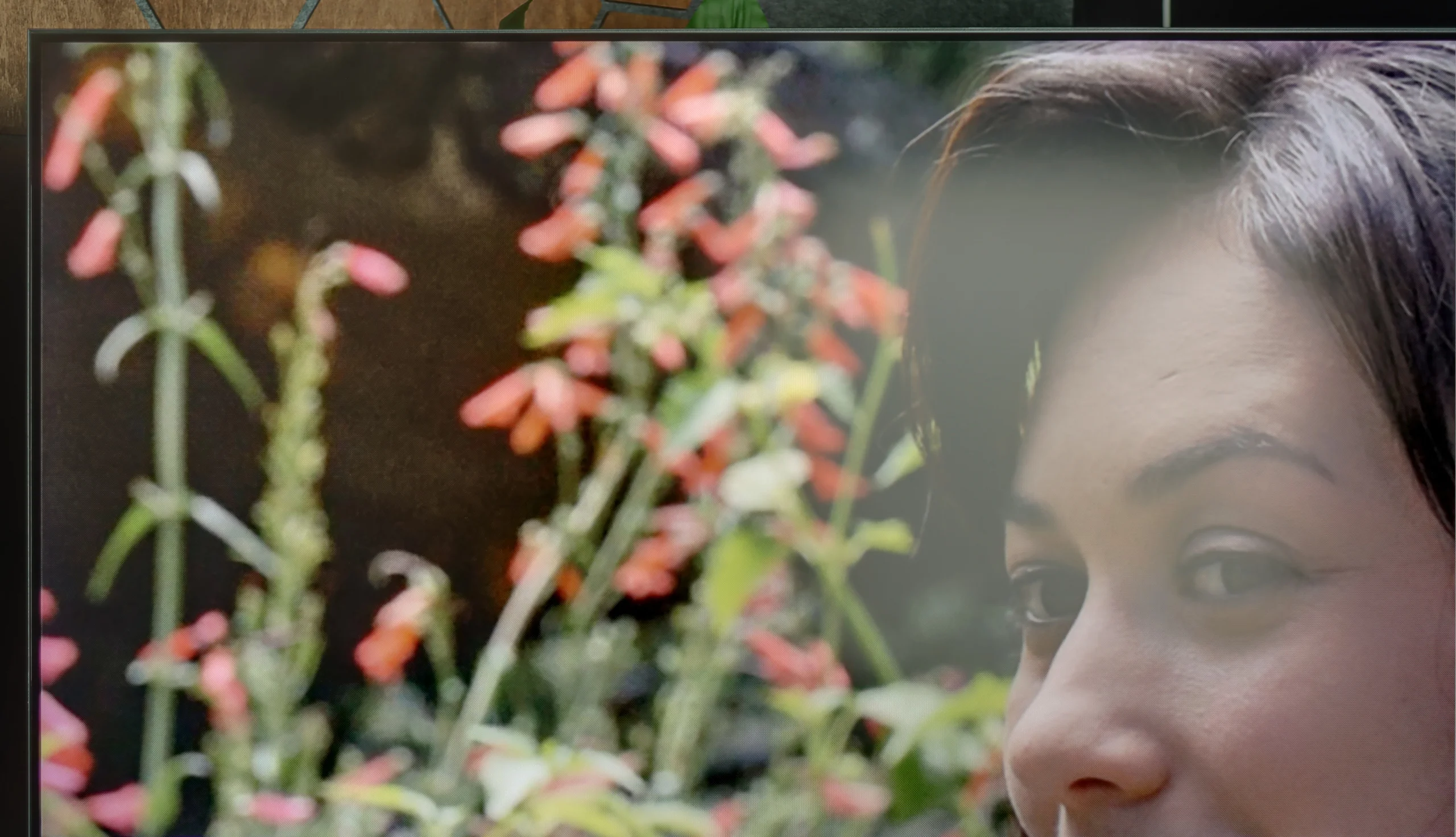
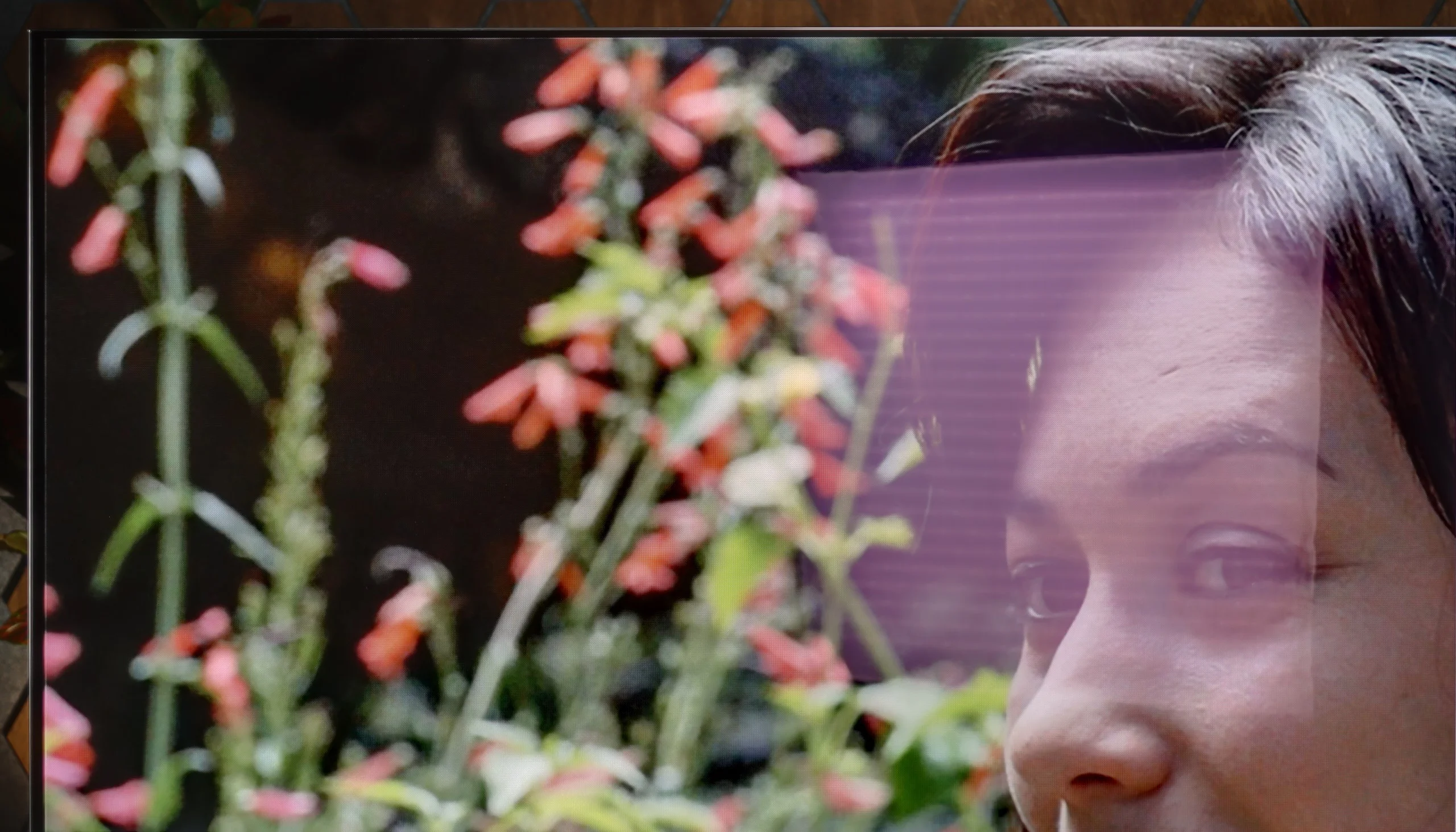
Panel brightness
LG OLED C6 (WOLED): 469 cd/m2
Hisense U7S Pro: 903 cd/m2
The U7S Pro performs very well in brightly sunlit living rooms, thanks to its new matte screen coating. In this year’s model it does an excellent job of suppressing reflections from light shining directly onto the TV. It is not the deepest matte finish available on the market, but it performs well in most scenarios. However, it is worth remembering the aforementioned quirk: when viewed from an angle the coating loses its effectiveness dramatically and the screen starts to look satin-glossy. So if your windows are positioned at an unlucky angle, people sitting at the side of the sofa may have to contend with noticeable reflections. Despite this minor drawback, the U7S Pro remains an excellent choice for a bright living room. Beyond the coating itself, its key strength is extreme brightness. In typical television content (SDR) the screen can average as much as 900 nits. That’s an impressive result that places this model among the market leaders.
The LG C6 has a glossy panel that handles direct reflections quite well, but it does not eliminate them completely. If there is a large window or a strong lamp opposite the television, their reflections will still be visible. On the other hand, the screen preserves blacks well in a lit room and even during the day the picture does not become grey or washed out. In addition, the C6 is fairly bright in SDR. With typical content we measured around 470 nits, so in most living rooms it should cope during the day without much trouble. Brightness only begins to fall more noticeably when a large portion of the screen is occupied by white. This is still one of the typical characteristics of OLEDs and it can already be noticed with very bright content, such as winter sports. Overall the C6 will perform well in a normally lit living room. However, if the television is going to sit opposite huge windows and fight strong sunlight for most of the day, a bright Mini LED will still be the better choice.
Panel details
Subpixel Structure:
Panel uniformity and thermal imaging:


Hisense U7S Pro
LG OLED C6 (WOLED)
TV features
9.4/10
8.4/10
- SystemVIDAAWebOS
- System performanceGoodVery good
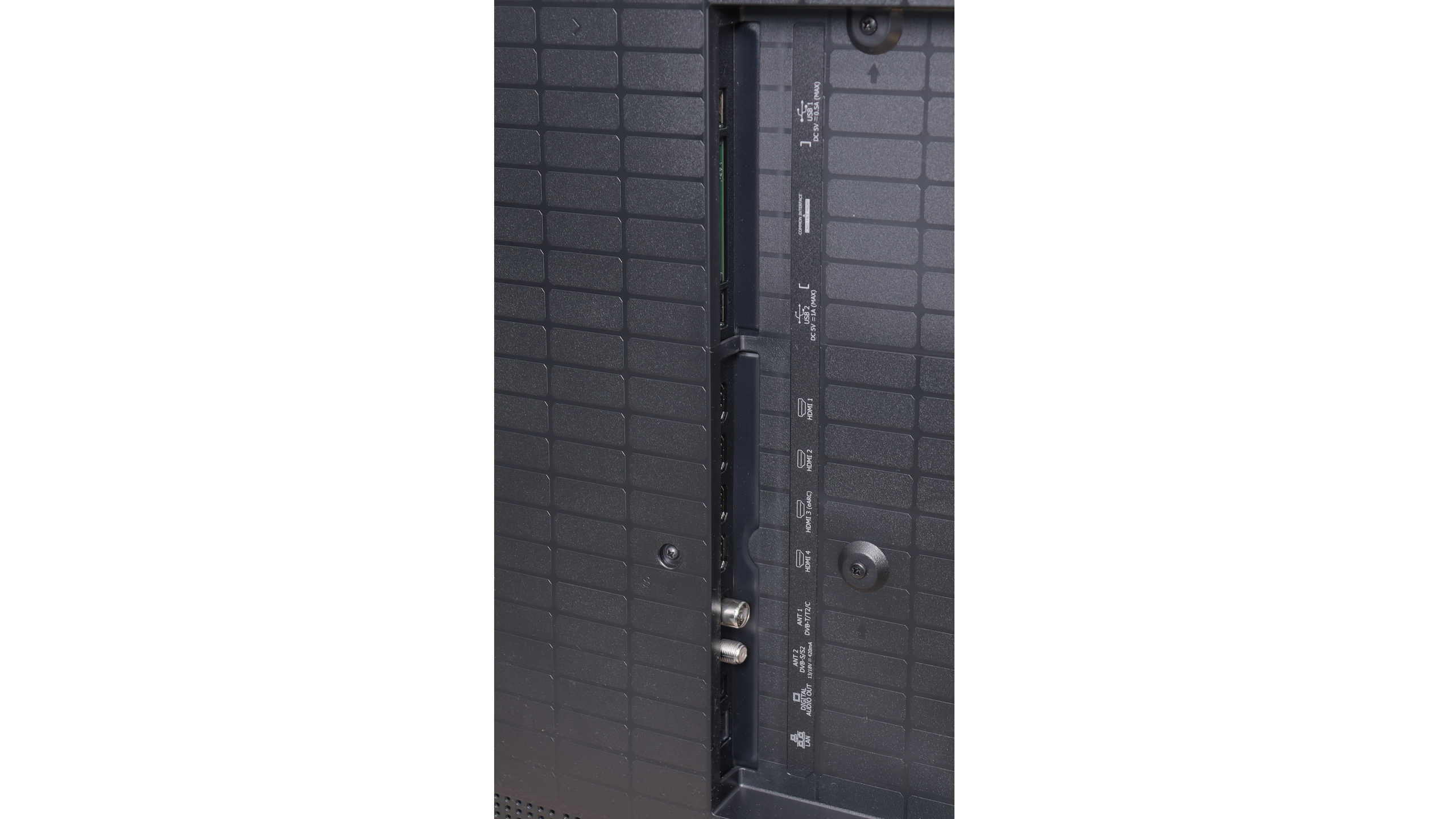
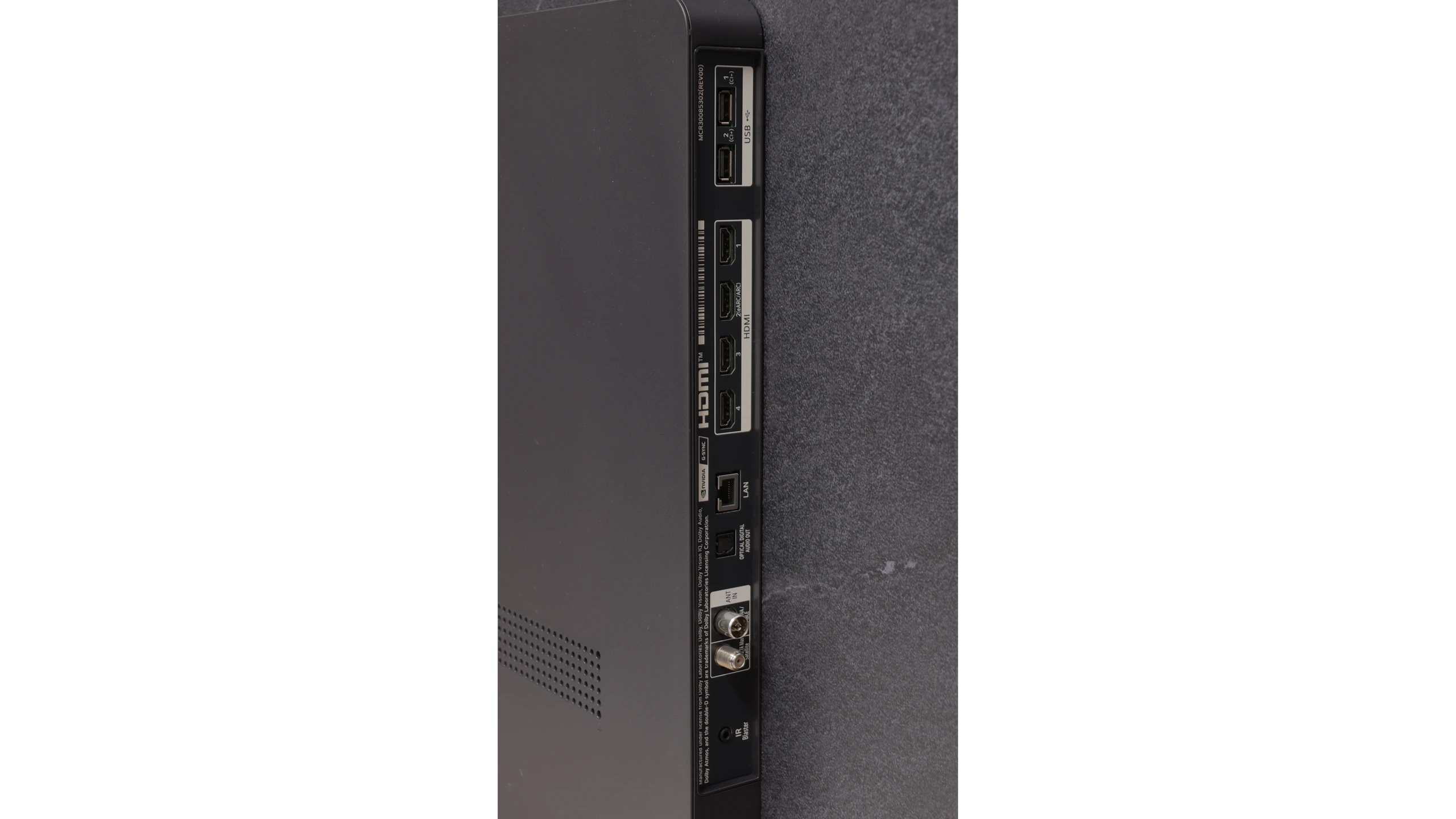
- HDMI inputs0 x HDMI 2.0, 4 x HDMI 2.1 48Gbps0 x HDMI 2.0, 4 x HDMI 2.1 48Gbps
- Other inputsIR (remote)
- OutputsToslink (Optical audio), eARC (HDMI), ARC (HDMI)Toslink (Optical audio), eARC (HDMI), ARC (HDMI)
- Network InterfacesWi-Fi 2.4GHz, Wi-Fi 5GHz, Ethernet (LAN) 100MbpsWi-Fi 2.4GHz, Wi-Fi 5GHz, Ethernet (LAN) 100Mbps
- TV receptionDVB-T, DVB-T2, DVB-S, DVB-S2, DVB-CDVB-T, DVB-T2, DVB-S, DVB-S2, DVB-C
Classic features:
- Recording to USB (terrestrial TV)
- Recording programming
- Picture in Picture (PiP)
- RF remote control (no need to aim)
- Backlit remote control
- Teletext
- Audio only mode
- Bluetooth headphones support
- Simultaneous Bluetooth headphones & TV audio
Smart features:
- AirPlay
- Screen mirroring (Windows Miracast)
- Voice search
- Voice search in native language
- Ability to connect a keyboard and mouse
Sound connection options
- HDMI audioeARC (HDMI), ARC (HDMI)eARC (HDMI), ARC (HDMI)
- Other audio outputsToslink (Optical audio)Toslink (Optical audio)
- Wireless audioBluetoothBluetooth
Supported audio formats (external HDMI eARC audio):
- Dolby Digital Plus 7.1
- Dolby True HD 7.1
- Dolby Atmos in Dolby Digital Plus (JOC)
- Dolby Atmos in Dolby True HD
- DTS:X in DTS-HD MA
- DTS-HD Master Audio
Senior accessibility
- Numeric keyboard on TV
- Font size adjustment
- Audio description
SmartTV: Vidaa / HomeOS
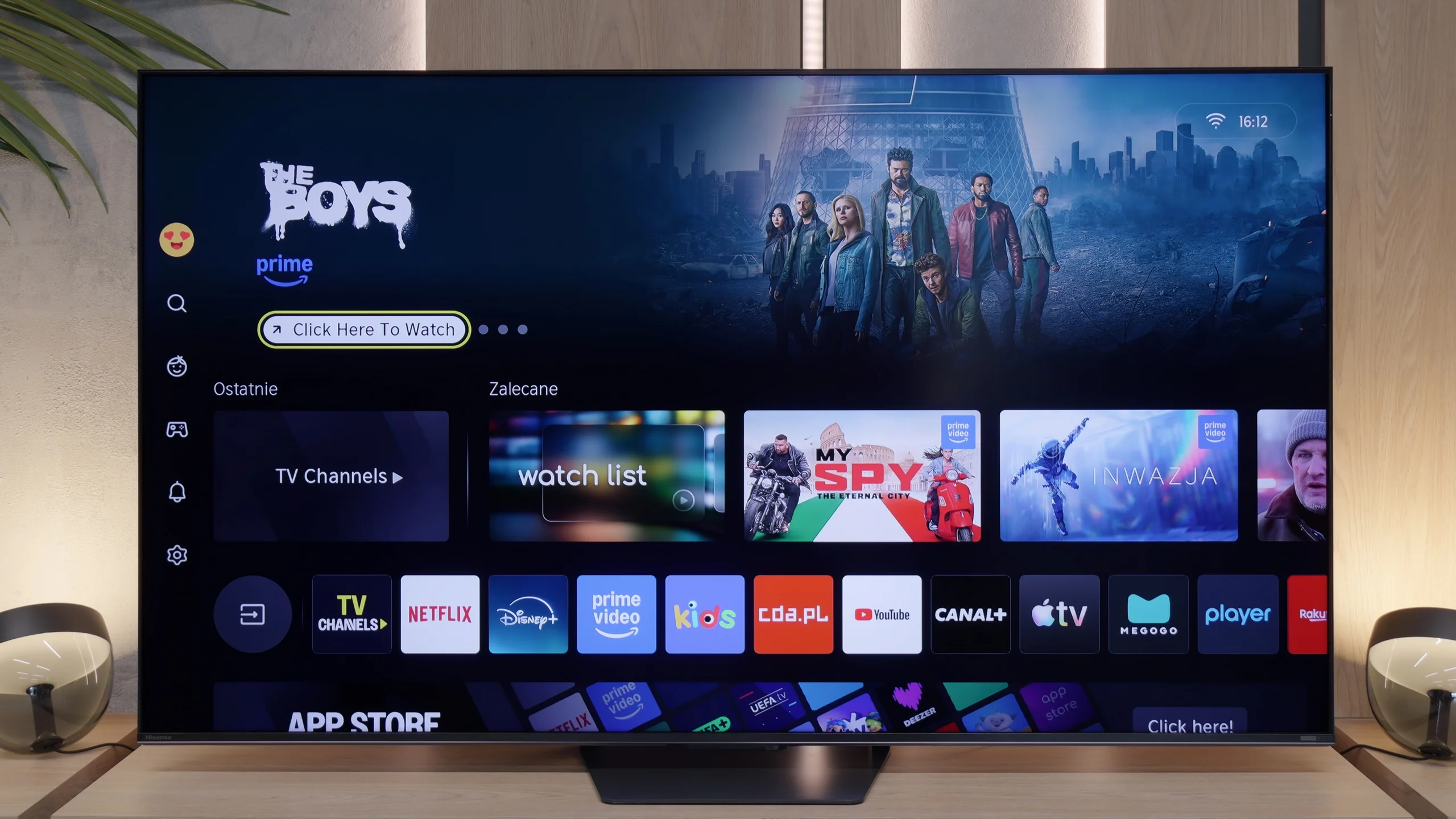
Hisense U7S Pro on our European market traditionally uses its proprietary system. This year, Vidaa underwent rebranding and changed its name to "HomeOS". When it comes to the appearance of the system itself, there are no major revolutions here – instead of purple accents, we simply have yellow ones. The system operates really smoothly and is very responsive. The television supports all typical Smart TV features, such as AirPlay, screen mirroring, and voice search. Interestingly, the new voice assistant is based on artificial intelligence, so its responses are mainly driven by AI. The only criticism that can be directed at the Vidaa system is that it does not offer the broadest library of applications. At least, this is the case as of the time of writing this review in May 2026. (The list of applications is at the bottom).
Television Features
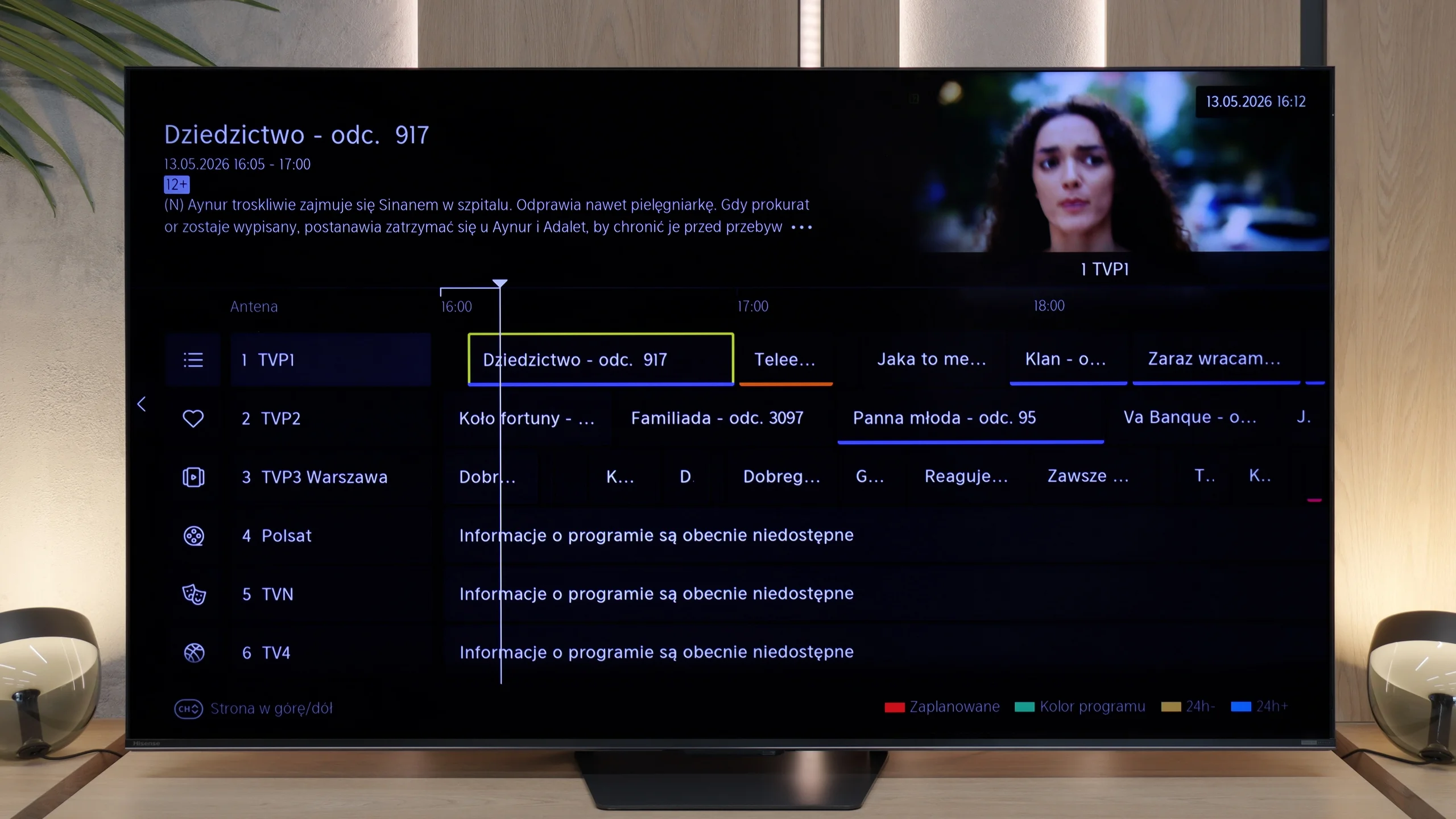
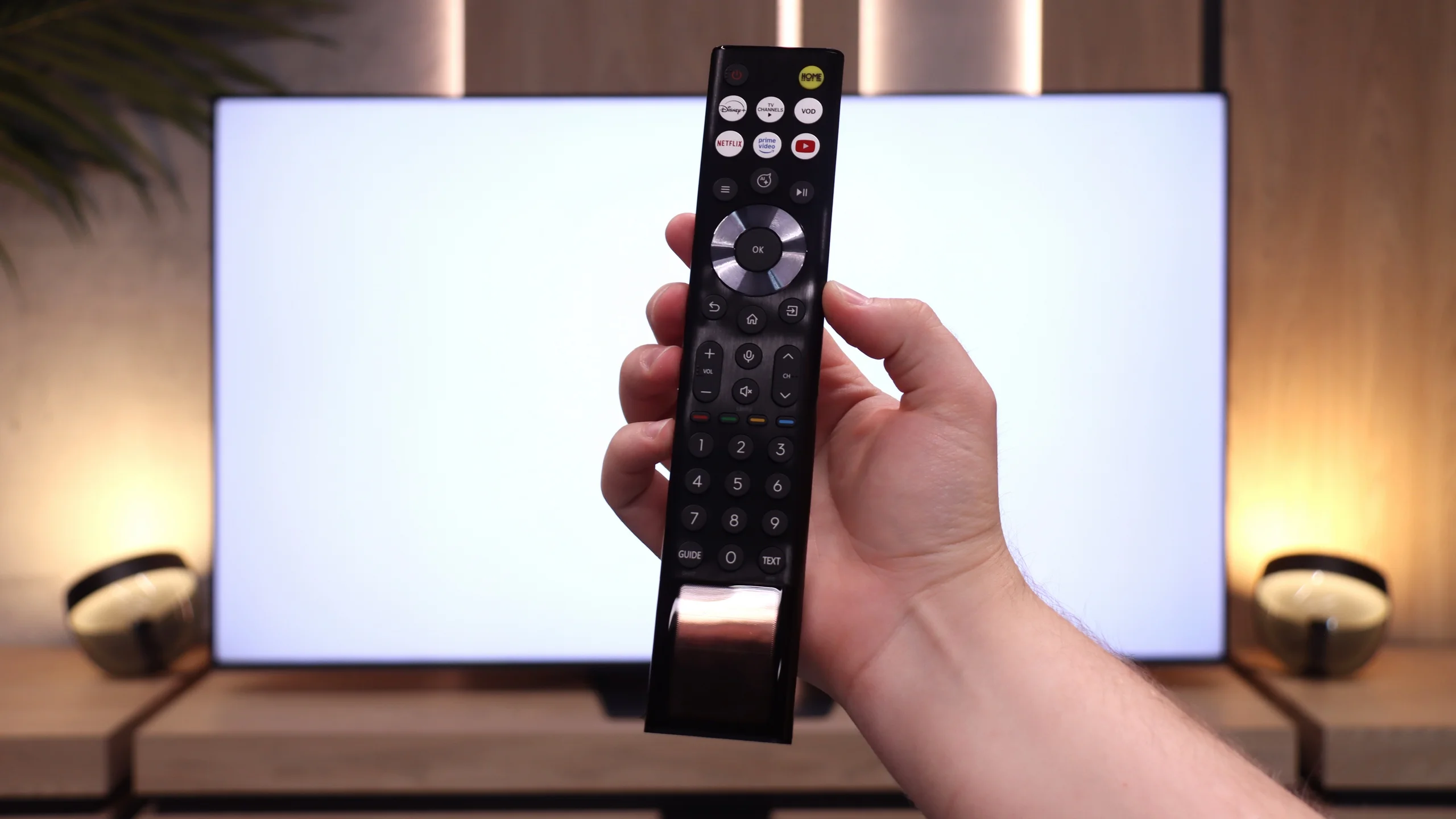
U7S Pro also performs well as a classic television for watching traditional TV, mainly thanks to the remote control with a physical numeric keypad, which we receive in the package. With it, you can easily and quickly enter the number of the station you are interested in. In the evenings, there is no need to click around blindly, as the operational part of the remote is backlit. Additionally, you don't have to worry about batteries – the remote is equipped with a solar panel, and if necessary, it can simply be charged via USB-C port. It is also worth adding that the HomeOS system (i.e., Vidaa) offers the ability to record programmes from the built-in tuner straight onto a connected USB flash drive or hard drive, as well as the option to schedule recordings. This is a significant advantage, as such a feature is already quite rarely encountered today, and it will certainly please those who use antenna TV.
Smart TV – webOS
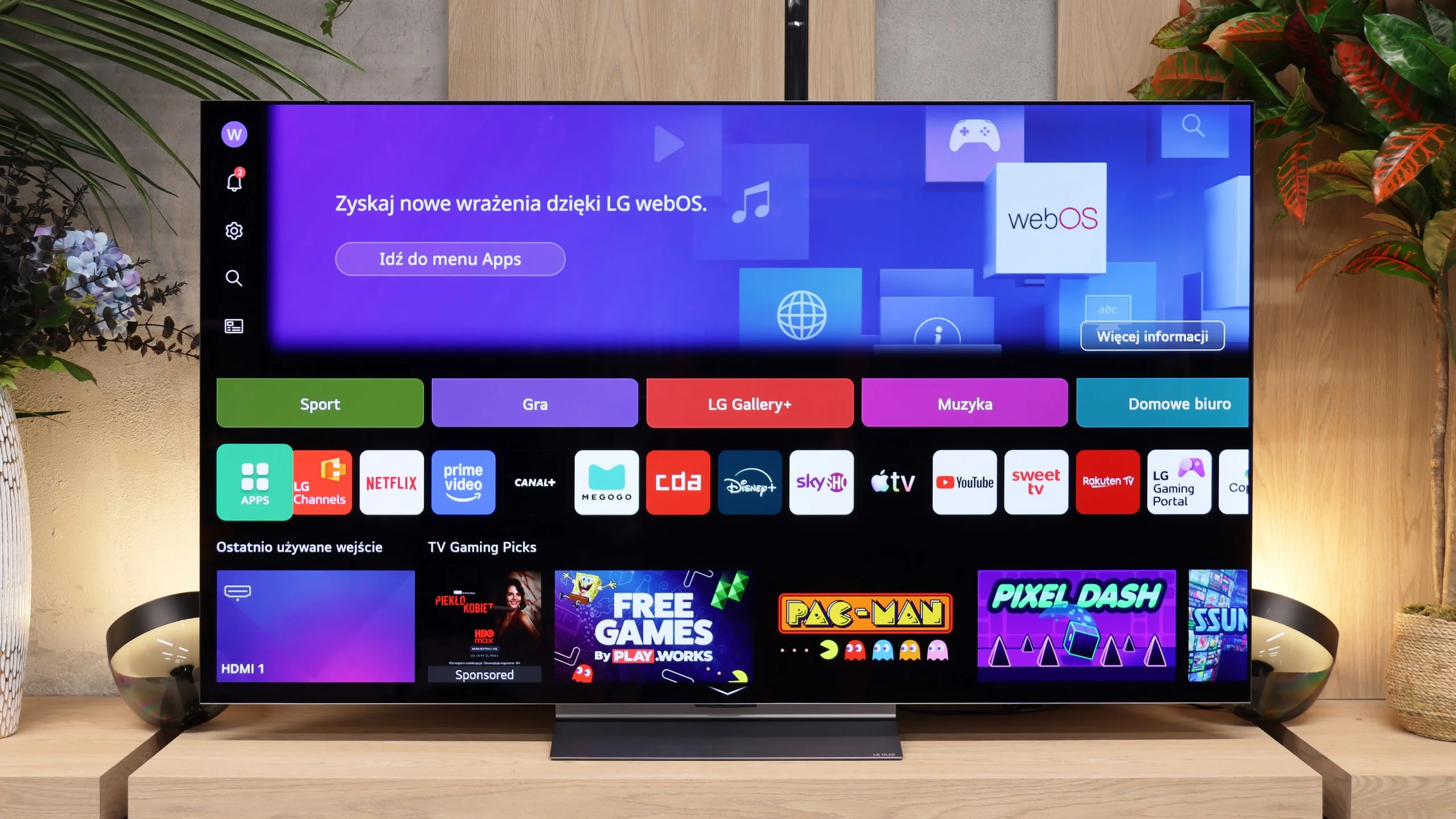
Regardless of which C6 variant you come across, the set of features remains the same. The heart of the television is, of course, webOS, the system LG has been developing for many years. It runs quickly, is well optimised and, above all, provides access to practically all popular apps. Netflix, Disney+, Prime Video, YouTube, Max and other streaming services — in this respect it is hard to find major gaps. The system itself also offers a lot of extra options. There is AirPlay, easy screen casting from a smartphone, control of smart home devices and the ability to personalise the home screen. LG has been significantly expanding webOS for several generations and at times the number of available tabs or recommendations can be a little overwhelming (especially with ads in the background), but once you get used to it the system is convenient and, most importantly, works smoothly.
Classic television features
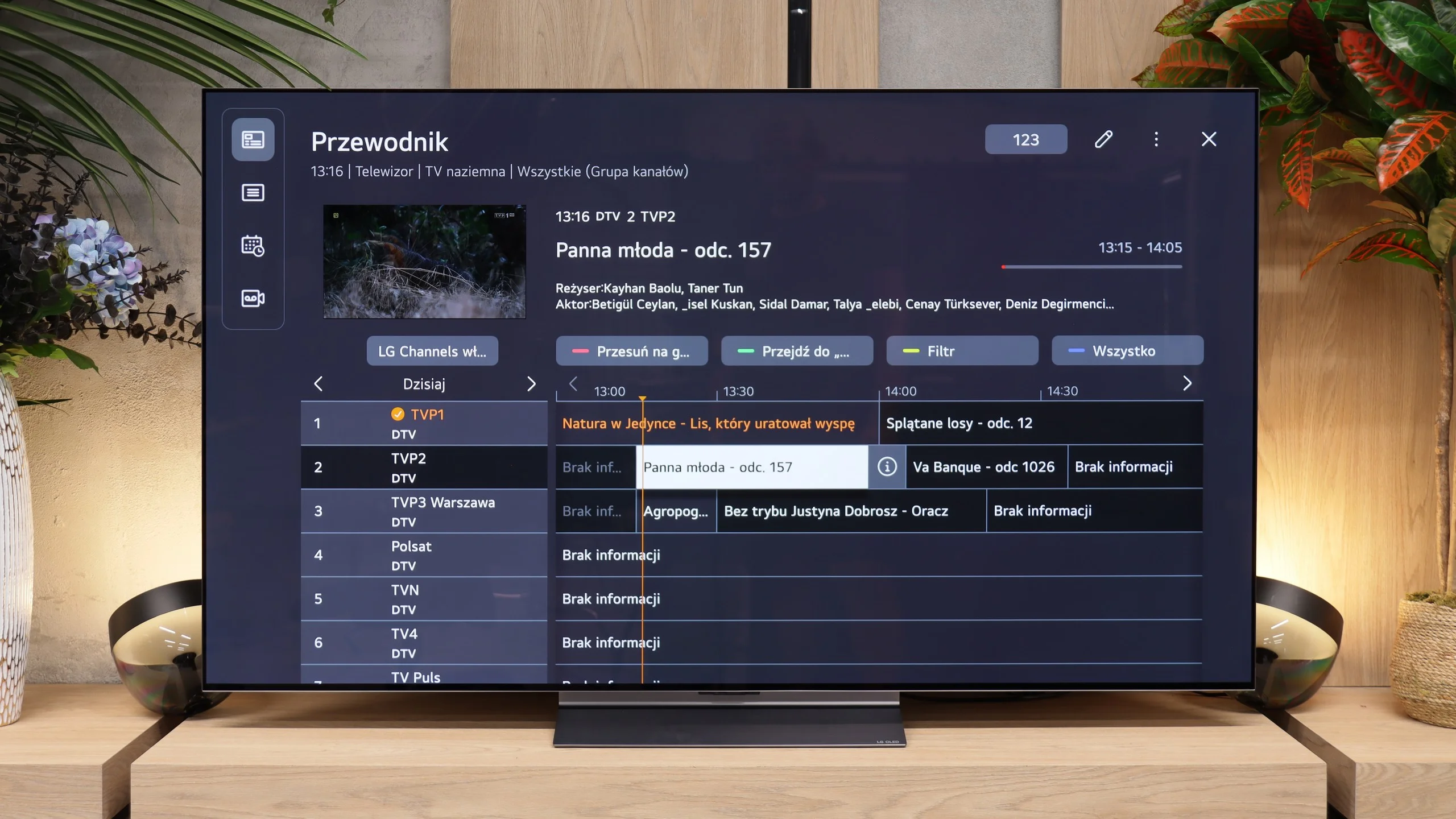
The C6 also handles being used as a normal television very well, not just as a screen for Netflix. Terrestrial TV support, the programme guide and channel switching all work smoothly and there is little to complain about. LG still offers the ability to record programmes to USB, so in terms of traditional features the equipment is really comprehensive. In fact we only miss two things here. The first is PiP, the ability to display two video sources at the same time. The second is a backlight for the remote, which would be particularly useful for evening viewing. Apart from that, the C6 has pretty much everything you can expect from a modern television.
Magic Remote: DIFFERENT VERSIONS
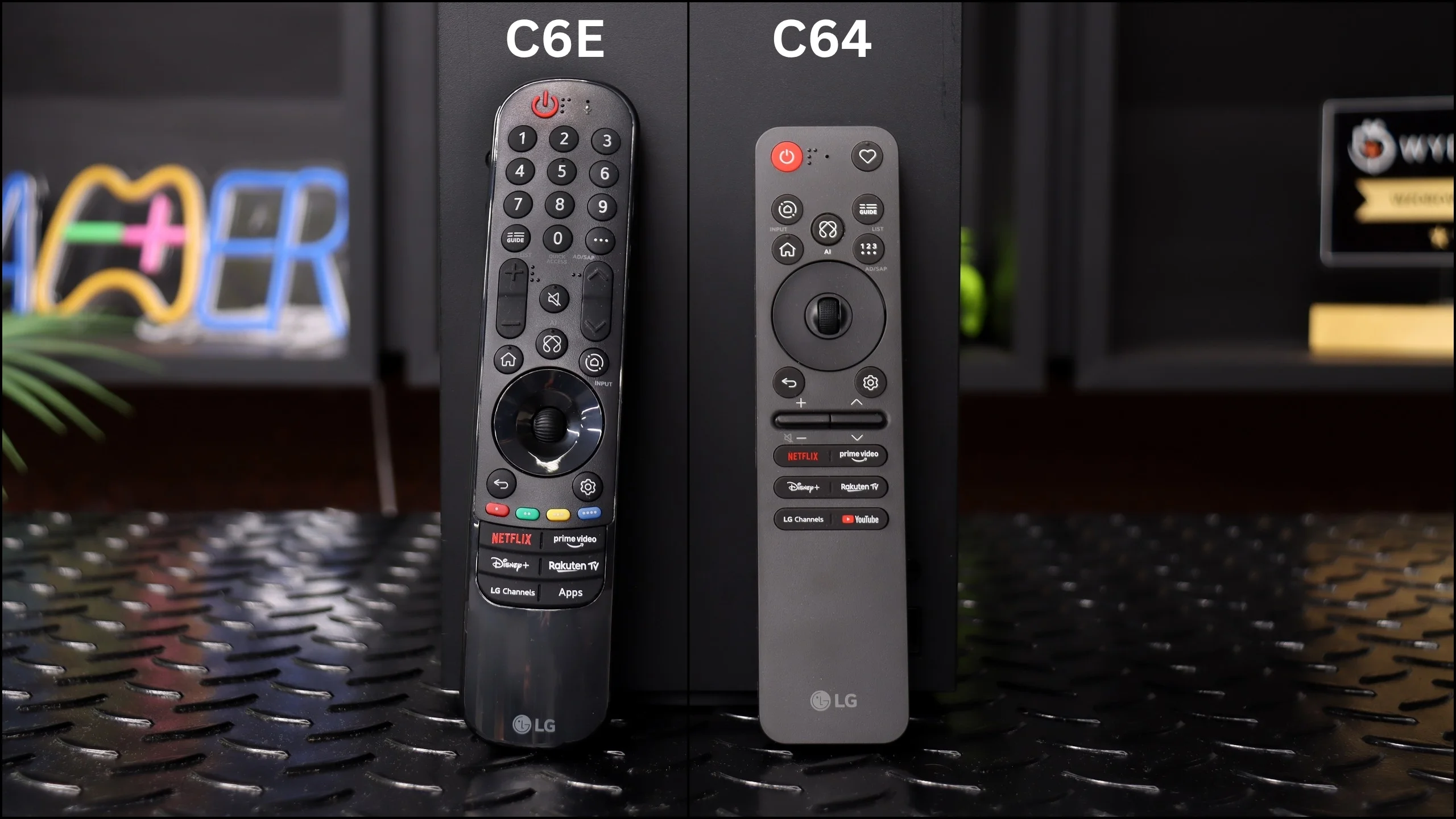
When buying the C6 it is worth paying attention to the remote, because LG has caused a bit of confusion here. During our tests we had, among others, the C64 variant, commonly found in large retail chains. The set included the new, much smaller Magic Remote Slim. It has fewer buttons and looks decidedly more modern, but still retains two of LG remotes' most distinctive features: the scroll wheel and cursor control by moving the remote. The C6E we tested, on the other hand, was equipped with the older, larger version of the Magic Remote. It works essentially the same, but has a classic numeric keypad and many more physical buttons. It looks less modern, but some people — especially those used to traditional remotes — may find it more convenient. So there is no single answer as to which remote is better. The new one is smaller, simpler and decidedly more contemporary; the older one offers faster access to a larger number of functions without having to navigate through menus. It's worth knowing that depending on the C6 marking, you may find one or the other variant in the box.
Apps
8.3/10
9.1/10






















Playing files from USB
8.3/10
9.1/10
Supported photo formats:
Maximum photo resolution:
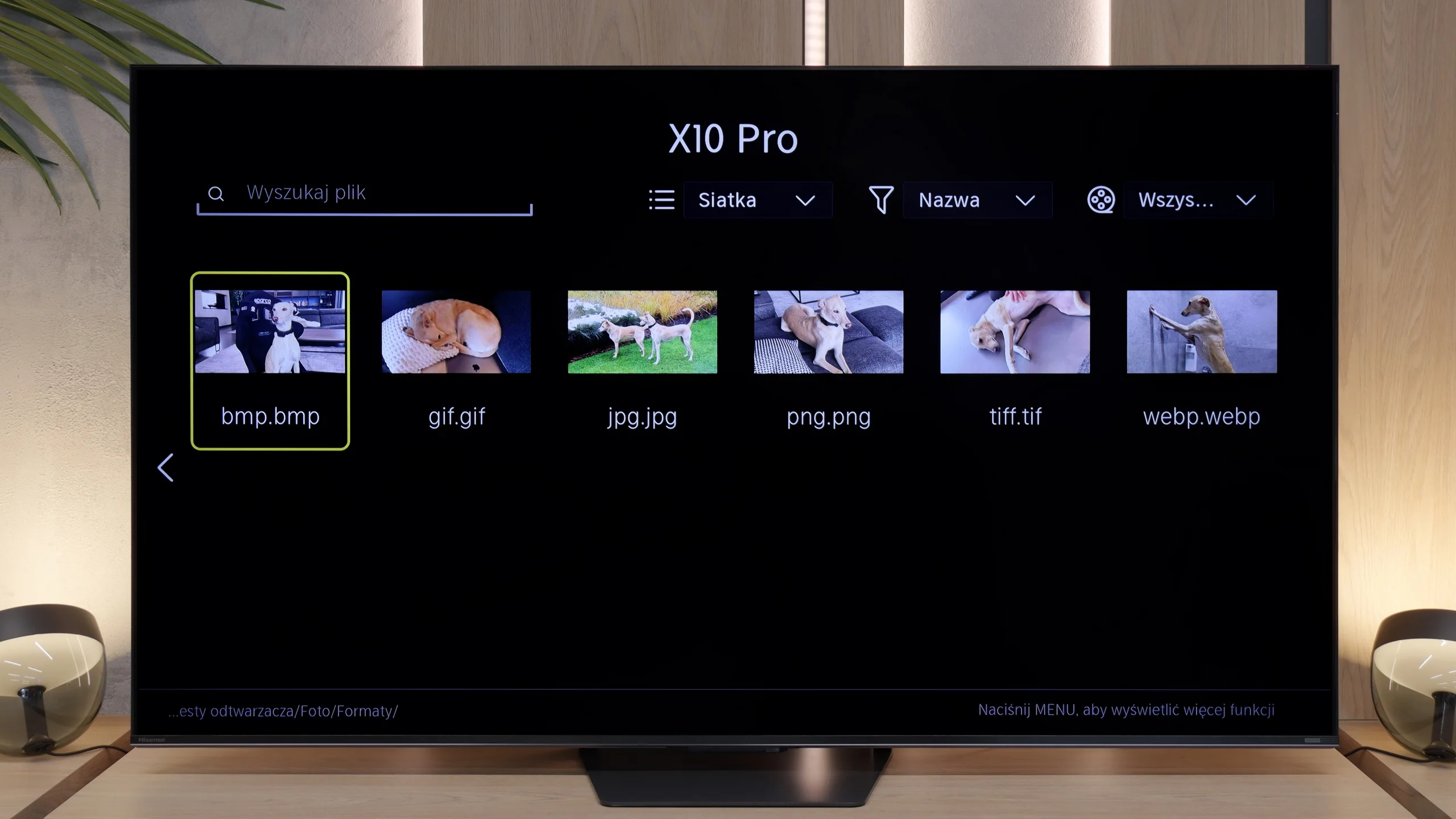
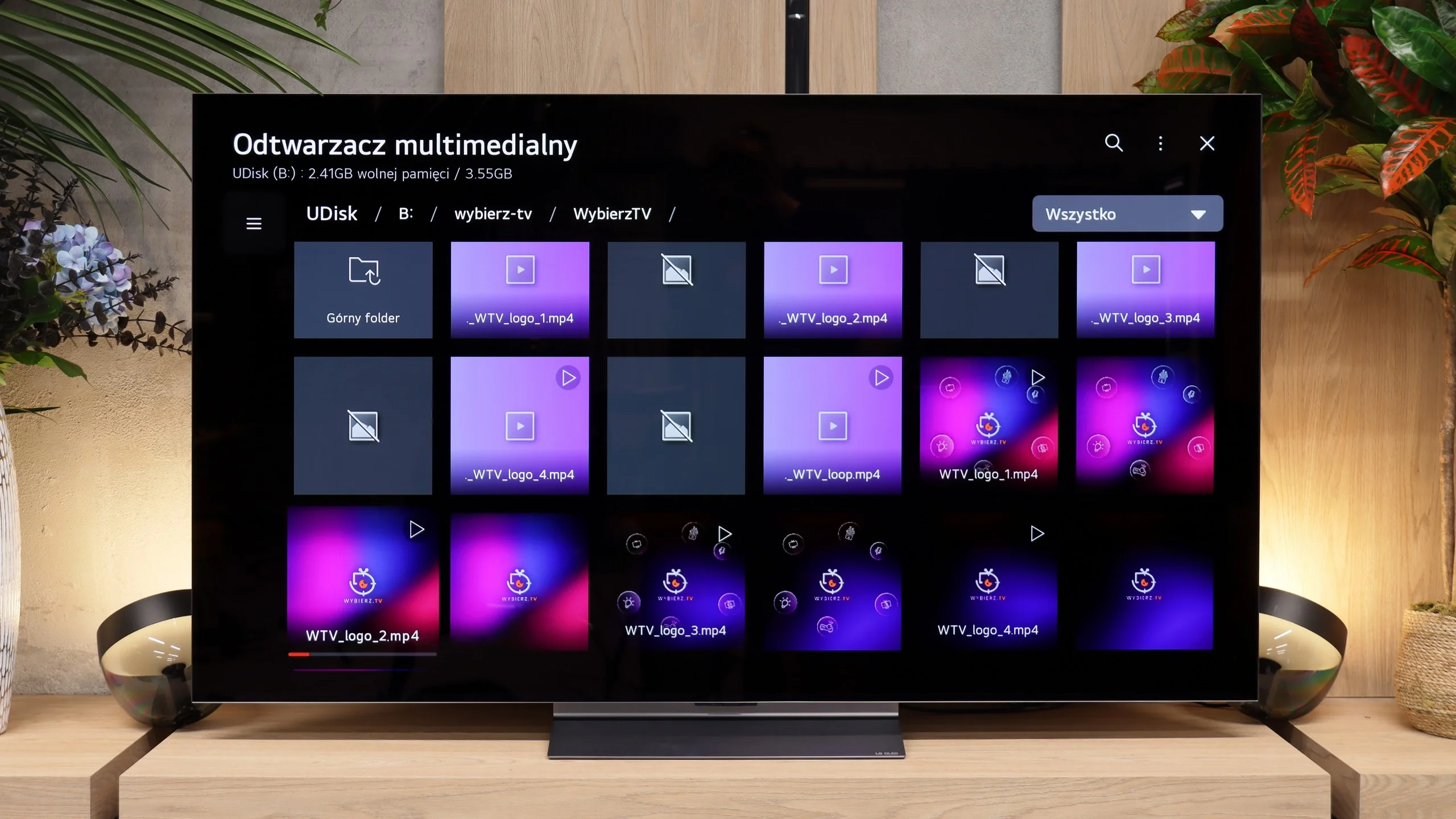
Playing files from a USB flash drive on the U7S Pro is straightforward. The TV handles the vast majority of photo, audio and video file formats without fuss. However, we have reservations about the supported image resolutions, which are quite limited. It's worth bearing in mind, because during tests photos at resolutions such as 12, 20 or 24 MP simply would not play in the built-in player.
During our tests the television handled virtually all the most popular video formats we copied onto a USB stick with no problems. There were no issues with high bitrates, subtitles or more demanding files, so in that respect there is little to complain about. The only exception was material with a DTS audio track. That is no surprise, however, because the television simply does not support that codec. Aside from that, the player is good enough that most users can get by without installing external apps or connecting an additional player.
Sound
7.8/10
7/10
- Maximum volume85dB88dB
- Dolby Digital Plus 7.1
- Dolby True HD 7.1
- Dolby Atmos in Dolby Digital Plus (JOC)
- Dolby Atmos in Dolby True HD
- DTS:X in DTS-HD MA
- DTS-HD Master Audio
Sound in the U7S Pro is really good, and certainly above average. Hisense has changed the cabinet design compared with the U7Q Pro and now there is a built-in subwoofer at the rear, i.e. a low-frequency driver. Thanks to it the bass is clearly audible. The Chinese manufacturer is heavily promoting its collaboration this year with engineers from Devialet, who were responsible for the audio tuning on this model. Evidence of this is the aforementioned logo on the cabinet. The only thing to criticise is the television's behaviour at full power. At maximum volume (set to 100%) the cabinet vibrates unpleasantly and an irritating creak of the plastic is clearly audible. Fortunately turning the volume down to around 80% completely eliminates the problem.
In terms of sound, the C6 has hardly changed compared with last year’s C5. It still uses a 2.2-channel system with a total output of 40 W, so a somewhat more solid foundation than many TVs that rely on simple 2.0-channel setups with 20 W. In practice the sound is quite good. Dialogue is clear, the tonality is not overly flat, and the extra speakers deliver a bit more bass than many basic TVs. Of course it still won’t replace a good soundbar, let alone a home cinema, but it is perfectly adequate for everyday TV viewing. There is a small step back in the settings. LG removed some of the preset sound modes this year, which makes it a little harder to tailor the sound to your preferences than with the previous generation. For that reason our score is slightly lower, although the speakers’ actual capabilities remain virtually unchanged. A plus is support for Dolby Atmos, currently the most popular surround-sound format for films and streaming. Support for DTS is still missing, which may matter mainly to people using their own film libraries on discs or as digital files.
Sound Quality Test
Acoustic Measurements
85dBC (Max)
75dBC
88dBC (Max)
75dBC
Reader comments
Comments are provided by the external service Disqus (Zeta Global). Once loaded, Disqus may set cookies and process data about your activity.
We will remember your choice on this device. Provider's privacy policy