 Direct comparison
The Haier Q80FUX television is one of the most schizophrenic propositions we've had in our editorial office for a long time. On one hand, we have a solid piece of equipment here: a VA panel ensuring deep blacks, as expected in this segment, and a QLED quantum filter that can indeed produce vibrant, eye-catching colours. This is the foundation upon which a really competitive mid-range receiver could have been built. Unfortunately, all this matrix potential is systematically thwarted by the software, which represents a true millstone around the neck of this model. The Achilles' heel of the Q80FUX is its total capitulation when faced with HDR10 materials. The electronics seem to completely misunderstand how to interpret the signal, resulting in the brightest parts of the image being continuously blown out, turning them into a flat, milky patch. If we add the Google TV system to this, which, although functional, is unstable, full of bugs, and annoying shortcomings, we see a product that feels raw and clearly shows the manufacturer's lack of experience. Just when we thought we had written this model off, we discovered its surprising niche. Once connected to a console, the Q80FUX undergoes a transformation. It turns out that this television offers an impressively low input lag, fully supports VRR, and can handle a 120Hz signal in Full HD resolution. In the gaming world, where responsiveness is everything, these parameters put it in a very good light. So, we are dealing with a device of very narrow specialization. This is not a universal living room television – it lacks stability and above all, any correctness when handling films. Rather, it is a budget-friendly, large-format monitor for gamers, who can consciously forgive it all the software flaws in exchange for those few key attributes needed for consoles/PC at a relatively affordable price.
- Matching (Score) |
- Our verdict |
- TV appearance |
- Where to buy |
- Contrast and black detail |
- HDR effect quality |
- Factory color reproduction |
- Color reproduction after calibration |
- Smoothness of tonal transitions |
- Image scaling and smoothness of tonal transitions |
- Blur and motion smoothness |
- Console compatibility and gaming features |
- Input lag |
- Compatibility with PC |
- Viewing angles |
- Daytime performance |
- Panel details |
- TV features |
- Apps |
- Playing files from USB |
- Sound
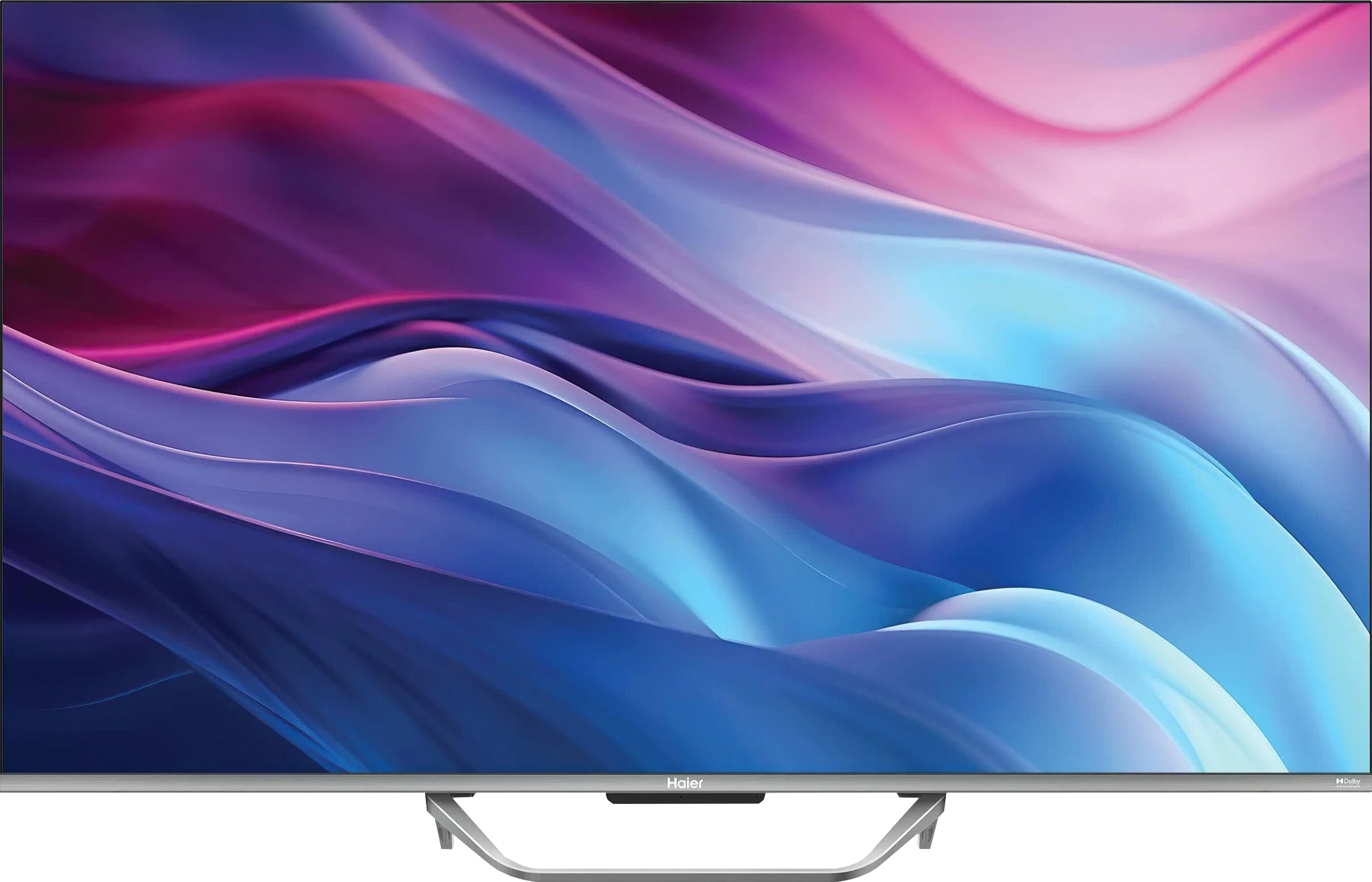
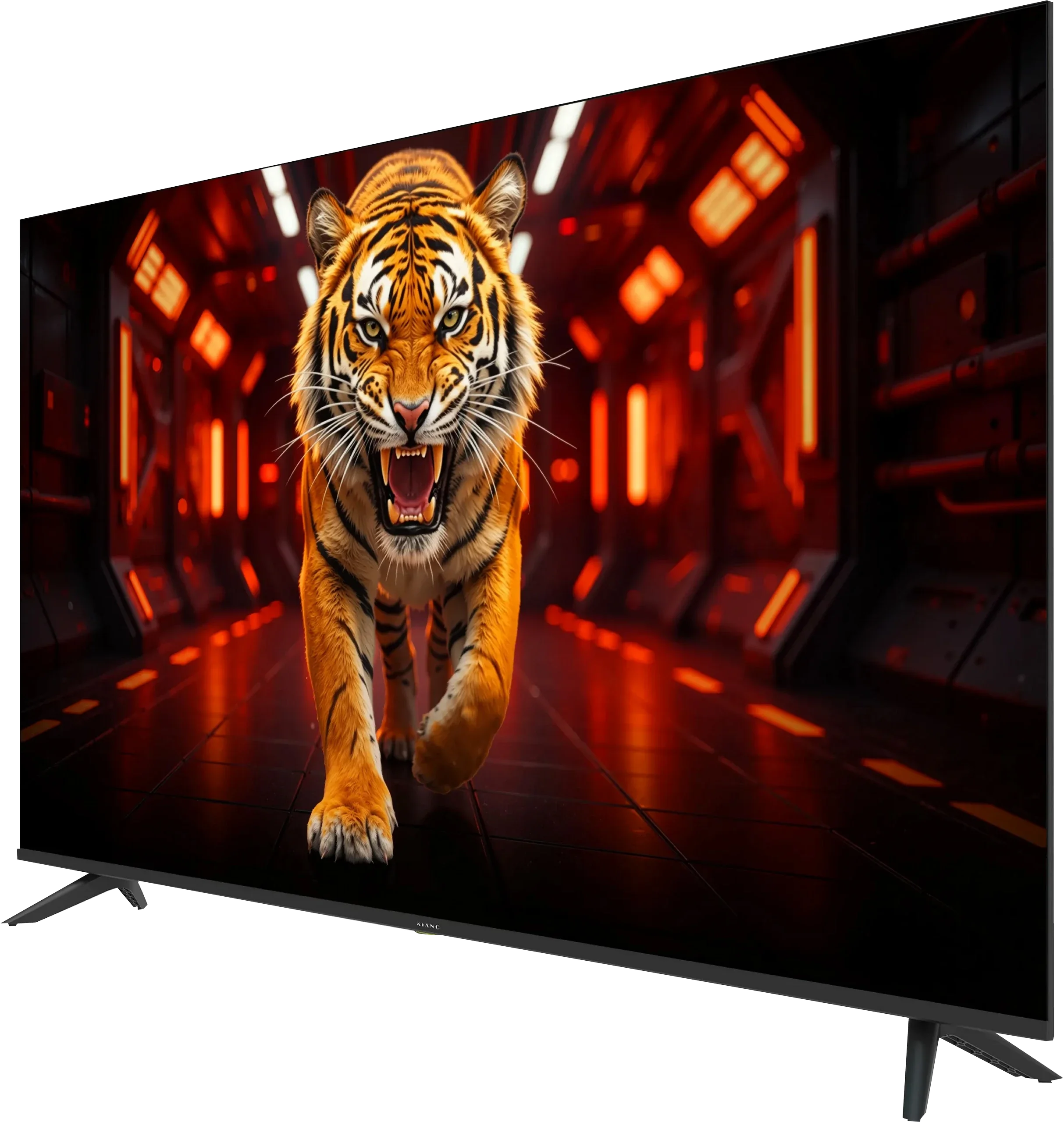
Panel type: LCD VA
Resolution: 3840x2160
System: Google TV
Model year: 2025
Complete the survey to find out the result
Panel type: LCD VA
Resolution: 3840x2160
System: Tizen
Model year: 2026
Complete the survey to find out the result
Overall rating
5.8
4.9
 Movies and series in UHD quality
5.9
4.8
 Classic TV, YouTube
5.6
5.4
 Sports broadcasts (TV and apps)
4.7
3.9
 Gaming on console
6.7
5.3
 TV as a computer monitor
6.0
6.0
 Watching in bright light
4.8
3.7
 Utility functions
5.6
5.1
 Apps
9.6
8.8
 Sound quality
5.5
3.6
Complete the survey to find out what fits your preferences
Advantages

Very good native contrast and decent black (thanks to the VA panel)
PFS / QLED filter - Wide colour gamut (approx. 95% DCI-P3)
Remarkably low input lag (below 10 ms at 120Hz and around 12 ms at 60Hz), making it an excellent choice for fast-paced games.
Support for 120Hz in lower resolution (Full HD) and the presence of VRR and ALLM
Support for Dolby Vision
Well-functioning file player from USB
Presence of an analogue headphone output (jack)
Low price
Tizen OS with a wide selection of popular apps
Decent contrast thanks to a VA panel
Effective digital image processing (rarely seen at this price)
Low input lag
Very good text readability when connected to a computer
Supports AirPlay and wireless screen mirroring
Disadvantages

The image is quite heavily "blown out" in HDR
Google TV software is full of bugs, poor translations, and issues
Lack of any image enhancement features (noise reduction, gradient smoothing)
Average brightness
Flat, bass-less sound
High input lag in Dolby Vision mode for gaming
Odd and poorly ergonomic remote
Low brightness
No wide colour gamut (no QLED / PFS)
Poor motion handling: noticeable smearing, a 60 Hz panel and no motion smoothing
No gaming features whatsoever
Slow operation
Very poor audio
Average build quality
Our verdict
Kiano Elegance is primarily an option for people who want to spend as little as possible on a TV while still having convenient access to popular apps. The use of Tizen is a big plus here, because you get a system well known from Samsungs and you do not have to immediately buy a streaming stick to watch films or series. At a low enough price this could be a sufficient reason to consider this model. The digital video processing is also worthy of praise; in operation it resembles the solutions found in entry-level Samsungs. Kiano quite effectively smooths unwanted banding between colours in weaker sources, so heavily compressed footage looks better. It is, of course, not perfect, but remember the very low budget we are dealing with. The mere fact that this feature actually helps is commendable. Unfortunately the operating system does not make the Kiano run as smoothly as Samsung TVs. You sometimes have to wait for a response, and the USB player can take a long time to open files. The savings are also visible in the build quality and the screen’s capabilities. Low brightness makes viewing in a sunny room difficult and prevents it from delivering impressive HDR, while motion blur is noticeable during faster movement. Add weak sound to that, and buying separate speakers can quickly become another expense. That is why the Kiano Elegance really makes sense only if it is noticeably cheaper than the competition. It may be enough for everyday programmes or as a second TV in the home, but if you are only a small amount short of the price of a base model from a better-known manufacturer, we think it is worth paying the extra. Tizen and the decent video processing are strengths of this Kiano, but they do not compensate for all the cost-cutting. It is better to compare final prices than to assume that a TV with Samsung’s system will provide the same level of user comfort.
TV appearance


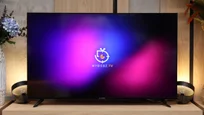
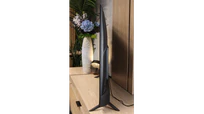

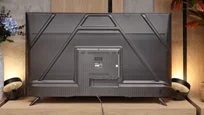

Contrast and black detail
6.3/10
4.8/10
Local dimming function: No
Local dimming function: No
Contrast:


Result
5,200:1

Result
7,400:1

Result
7,550:1

Result
7,300:1

Result
6,450:1
Result
3,350:1
Result
3,350:1
Result
2,650:1
Result
3,650:1
Result
2,400:1
Halo effect and black detail visibility:
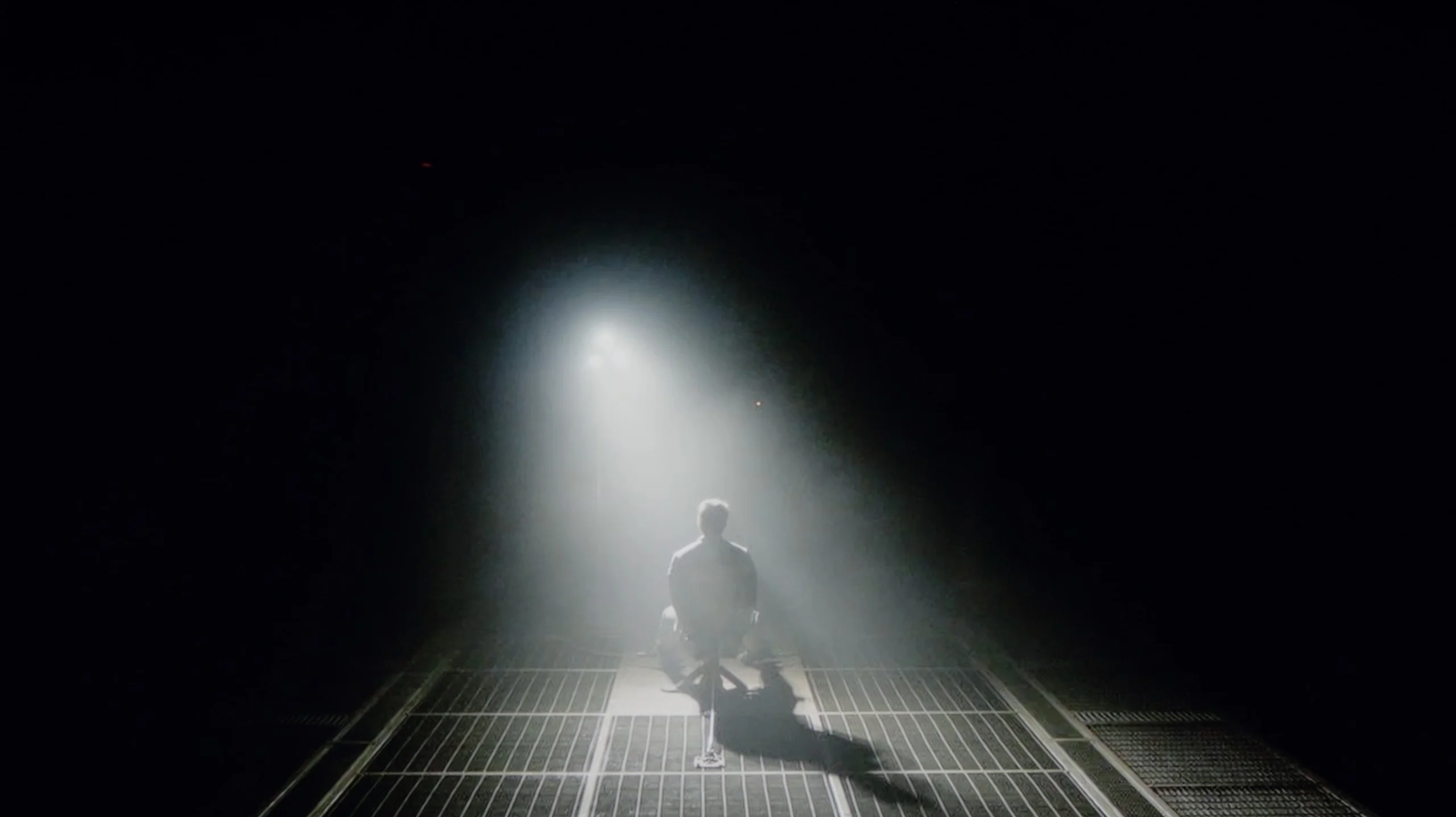
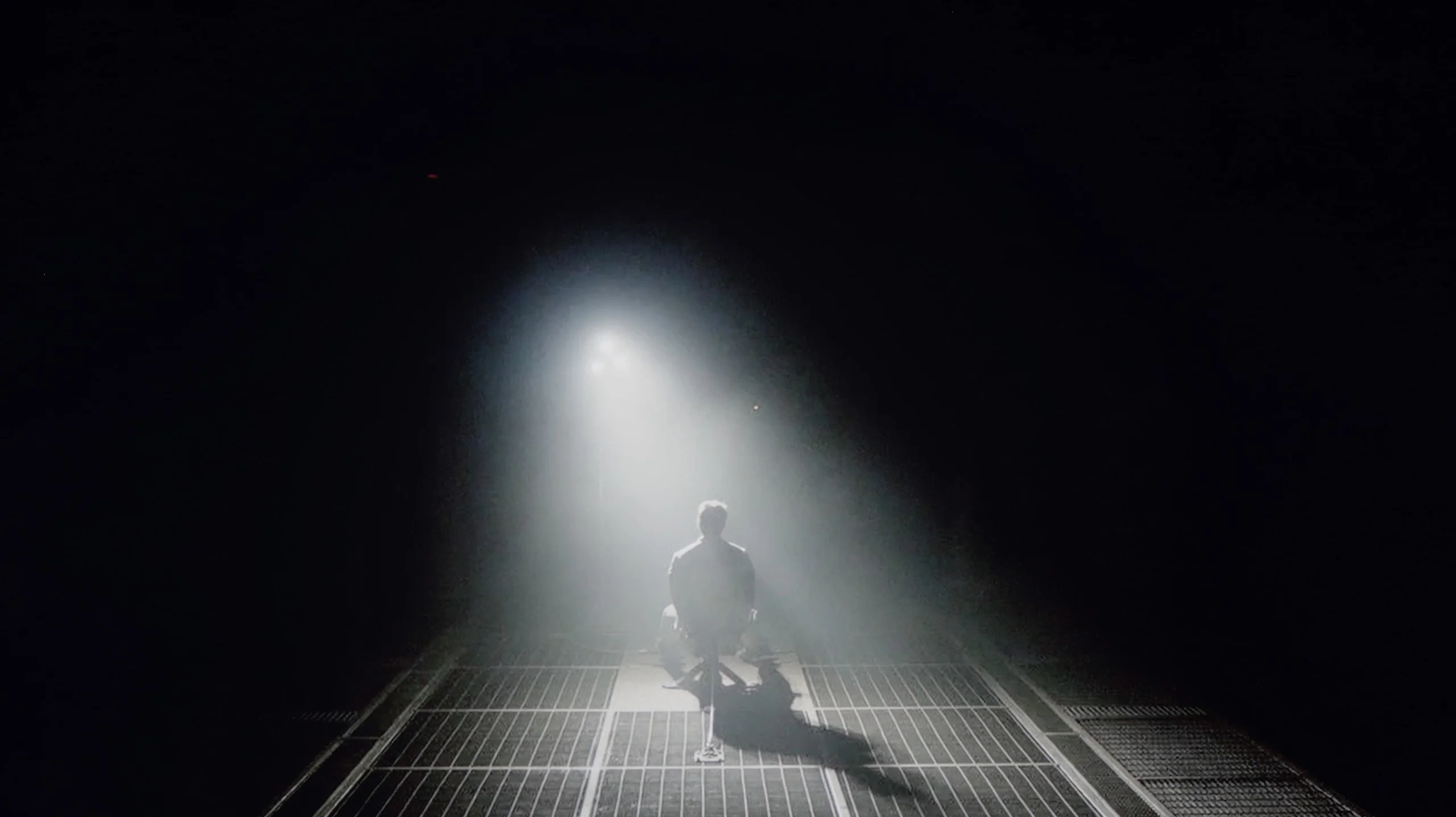
Check the visibility of bright lights on a dark background. Mini-LEDs often struggle with this. The photo does not compare black levels – that’s what the video below is for.
The video accurately shows differences in contrast and black levels between TVs, as well as potential issues: halo around bright objects or Mini-LED zone operation visible as brightness jumps.
I must admit that approaching a receiver in this price range, one instinctively crosses their fingers, hoping that at least the black won’t be a grey patch. Meanwhile, the Haier Q80FUX, specifically the 55-inch specimen residing in our editorial office, can very positively surprise in this regard. Its secret lies in the use of a VA panel, which inherently has a tendency to generate high contrast. And these are not empty promises. During screenings, in most cinematic shots, the contrast consistently reported levels from 5000:1, often reaching the threshold of 8000:1. These are really strong results, considering the fact that this television does not possess any, even minimal, form of local dimming. Translating this into experiences from behind the couch: for its price point, the Q80FUX offers simply solid black. Of course, it is not that perfectly velvety depth that makes the screen disappear into darkness. When we conduct a screening in conditions of full isolation from light, we notice that in the darkest parts of the image, the black reveals its budget origins, subtly veering towards a bluish hue. However, this is a defect that is easy to mask – just a bit of light from a lamp in the corner of the room is enough for this nuance to become invisible, and the image to regain satisfying depth.
In the 55-inch variant we tested, the Kiano Elegance uses a VA panel, which by itself already provides rather good black levels. The contrast we measured was around 4000:1, which is typical for this kind of panel and clearly better than in TVs using IPS or ADS panels. That gives the picture decent depth in the evening, and blacks are not so heavily brightened. You should bear in mind, however, that the Elegance uses a conventional backlight without local dimming. This means the backlight is on all the time and the TV cannot dim selected parts of the screen. In that respect the difference compared with even basic Mini LED models is obvious. There, individual backlight zones can dim independently, so in dark scenes blacks can be much deeper. Kiano does not have those capabilities, but for a simple LCD TV its native contrast is quite respectable.
HDR effect quality
4.9/10
3/10
Luminance measurements in HDR:

Result
308 nit

Result
327 nit

Result
352 nit

Result
330 nit

Result
344 nit
Result
158 nit
Result
172 nit
Result
193 nit
Result
180 nit
Result
205 nit
Scene from the movie “Pan” (about 2800 nits)


Scene from the movie “Billy Lynn” (about 1100 nits)


The photos show two HDR10 movies. 'Pan' is one of the brightest productions ever made, while 'Billy Lynn' (soldier) has brightness typical of streaming (Netflix, Prime, HBO MAX). Notice the intensity of effects and detail in whites.
Static HDR10


The photos present the visibility of white details in various HDR formats. They do not show brightness differences between TVs (these can be compared in the previous gallery).
Dynamic: Dolby Vision
Dynamic: HDR10+


The photos present the visibility of white details in various HDR formats. They do not show brightness differences between TVs (these can be compared in the previous gallery).
HDR luminance chart:
Kiano Elegance Tizen
Haier Q80FUX
Alright, let’s move on to the topic that stirs up so much discussion, namely the capabilities of the television in HDR mode. Let’s state it clearly right away: the Haier Q80FUX is certainly not a brightness demon. The panel of this receiver can generate about 350 nits at peak, which in today’s terms is the absolute minimum to even talk about the presence of High Dynamic Range (HDR). On the positive side, this power is at least stable – regardless of which test pattern or film scene we used, the measurements consistently oscillated in the range of 300-350 nits. These are therefore results that are at best sufficient, definitely far from the dazzling display of capabilities we are accustomed to with more expensive models. Fortunately, there is one aspect in which the Q80FUX compensates for these shortcomings and does so impressively. After all, we are talking about a QLED television (more precisely PFS LED), which means that thanks to the quantum dot filter applied to the panel, it can generate really juicy, vibrant colours. These are not empty promises – a DCI-P3 colour gamut coverage of nearly 95% is an impressive result and directly translates into colours that are very pleasant to the eye and saturated.
The HDR effect on the Kiano Elegance is practically non-existent. The TV is simply too dim to deliver any noticeable improvement over a standard SDR picture. Our measured peak brightness is around 200 nits, which is definitely too low for bright elements, such as various lighting effects, to actually stand out on screen. HDR content will be reproduced, but without the impact that the format is meant to provide. In addition, the Kiano Elegance does not use any extra wide colour gamut technologies, like quantum dots or even a PFS filter. As a result, some of the vivid colours encoded in HDR films cannot be shown with proper saturation. This is especially apparent in more colourful productions, where the picture simply looks poorer than on TVs with a wide colour gamut. The Kiano Elegance is therefore much better suited to standard SDR material: broadcast TV, YouTube or older films and series. Their demands are much lower and match this TV's capabilities far better.
Factory color reproduction
4/10
4.8/10
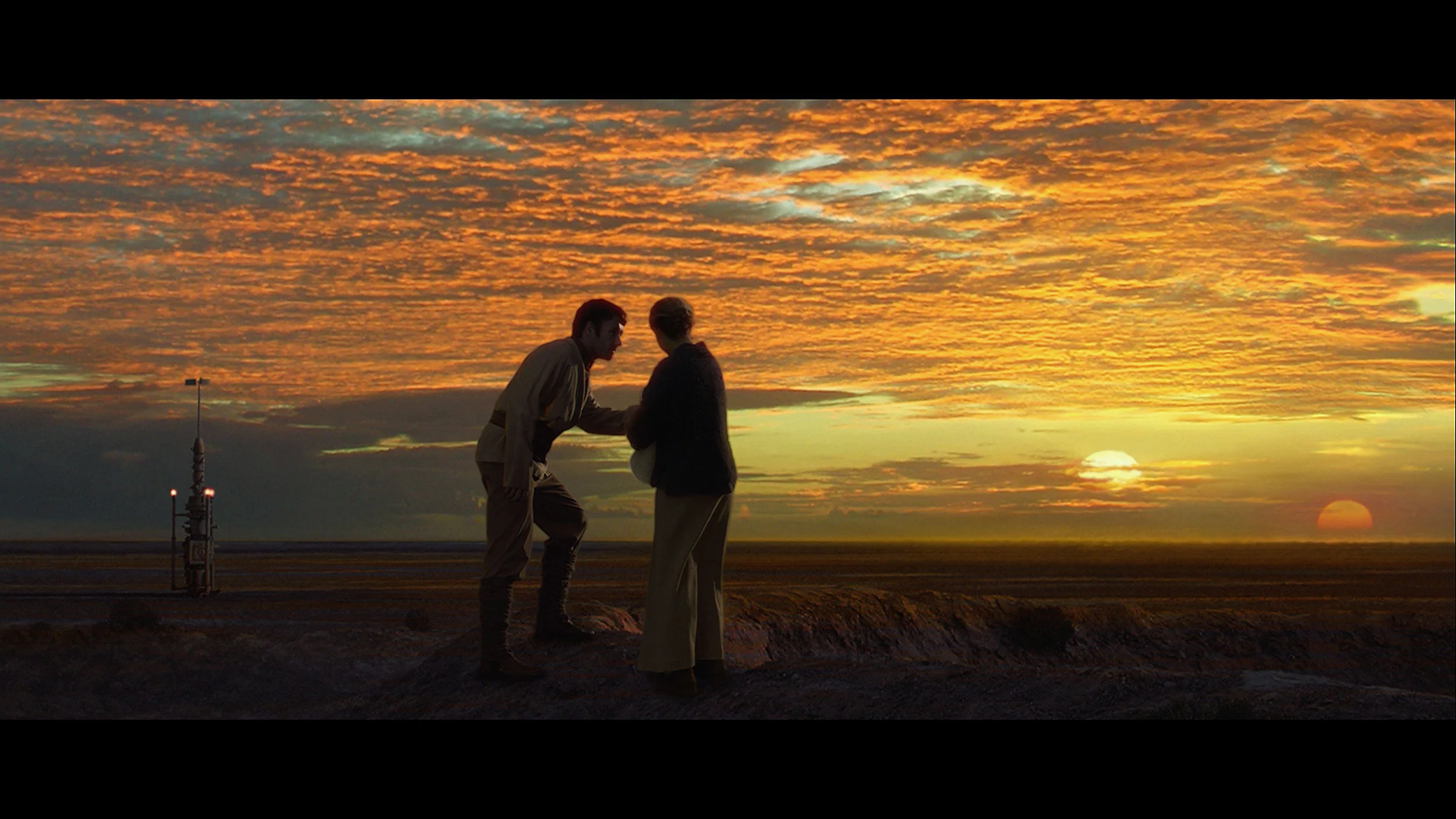
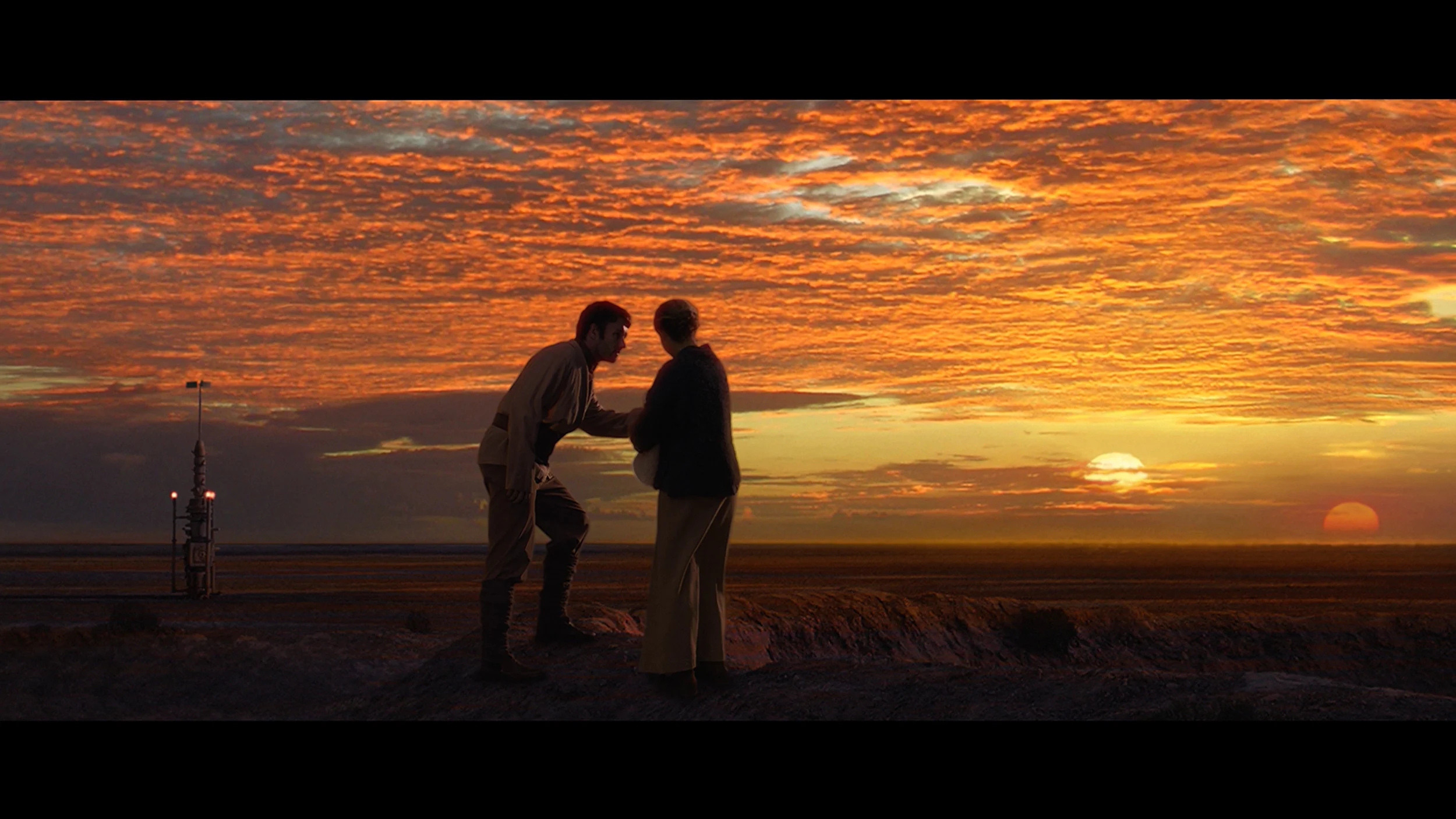
This gallery shows how colors change after professional TV calibration. If you notice the difference, we recommend ordering this service at SkalibrujTV.com.
Factory Mode
After calibration
Factory settings for movie mode are rarely perfect, but in the case of the Q80FUX, we were confronted with a noticeable imbalance. In SDR content, the image was decidedly too warm, a result of excessive red in the white balance, giving the whole a slightly sepia tone. Ironically, in HDR materials, the television fell into the opposite extreme – an excess of blue caused an unnatural, cold effect in perception. However, it was not the capricious white balance that was the biggest problem with this television. The real culprit, responsible for the aforementioned issues, was hiding deeper. It turned out that the Q80FUX has completely miscalibrated gamma values and, crucial for HDR, a poorly executed EOTF curve. It was these erroneous factory settings that caused persistent clipping of the brightest parts of the image, overlaying them with that characteristic milky filter. Thus, we found the source of the problem. This state of affairs led to general, significant colour errors, which were easy to catch even for an untrained eye. Like every television we tested, we decided to calibrate this model as well, and the results of these adjustments can be found in the next paragraph.
In Film mode the colours on the Kiano Elegance are quite decent, especially for a TV at this price point. However, that does not mean the picture is properly calibrated straight away. This is most apparent in the white balance, which lacked red. As a result the image had a slightly cooler character and some skin tones and warmer colours did not look as natural as they should. On top of that, both the SDR gamma and the EOTF curve in HDR were driven too high. Put simply, the TV brightened the image more than the source material intended. In SDR this produced a slightly brighter, more 'TV-like' image, but it also robbed it of some depth. In HDR this behaviour compounded the panel's limitations, because at such low brightness the TV had even less headroom to correctly render brighter parts of the image. The biggest limitations, however, appeared in HDR. The colour gamut encoded in such material often exceeds the Kiano Elegance's capabilities, which does not employ any gamut-expanding solution. More saturated reds, greens and blues are therefore rendered much more subdued than they should be. In less demanding scenes this is not yet very noticeable, but with more colourful films the difference compared with TVs that have a wide colour gamut becomes very clear.
Color reproduction after calibration
6.1/10
6.5/10


The photos show how movies look on the TV. Pay attention to black detail visibility, colors, and shadow tint.


The photos show how movies look on the TV. Pay attention to black detail visibility, colors, and shadow tint.
The results of our calibration procedures must, regrettably, be acknowledged as twofold. Generally speaking, the picture is undeniably better than before the corrections; however, the biggest winner of this process turned out to be SDR content. It is precisely there, after correcting the gamma and white balance graphs, that we achieved results that can confidently be called very good. After adjustment, the Q80FUX truly shines in standard dynamics, showing only slight errors in the most difficult skin tone reproductions. Unfortunately, the weakest link remains HDR content. Here lies the paradox: despite having calibrated the white balance to nearly perfection, the overall colour errors still remain at quite a high level. The reason is that the television continues to interpret static HDR10 metadata "in its own way," stubbornly enforcing that unfortunate image burn-out effect, which inevitably leads to significant distortions. Although we have successfully eliminated the factory excess of blue, it is precisely due to this interference of electronics that the screen still tends to stray into somewhat overly cold tones. That is just how this television is.
Contrary to appearances, even an inexpensive TV like the Kiano Elegance offers quite a lot of calibration options. We were particularly successful at improving the white balance. After correction the slightly cool cast of the image disappeared and the colours became noticeably more natural. We also managed to better set the gamma and the overall image characteristics in SDR. Despite our efforts, it quickly became clear that further limitations no longer stem from the settings but from the TV’s own capabilities. In SDR the Kiano can look genuinely good. Broadcast TV, YouTube, sport and older films can have natural colours and a pleasing image. It’s much worse in HDR. Here calibration alone cannot compensate for the lack of brightness and a wide colour gamut. The TV simply cannot reproduce some of the more saturated colours or sufficiently strong highlights. So while you can get a really decent picture from it in SDR, HDR remains clearly beyond its abilities.
Smoothness of tonal transitions
7.5/10
8.5/10





These are selected scenes that show smooth tonal transitions from one color to another. If you see distinct banding, it’s the TV panel’s fault.

These are selected scenes that show smooth tonal transitions from one color to another. If you see distinct banding, it’s the TV panel’s fault.
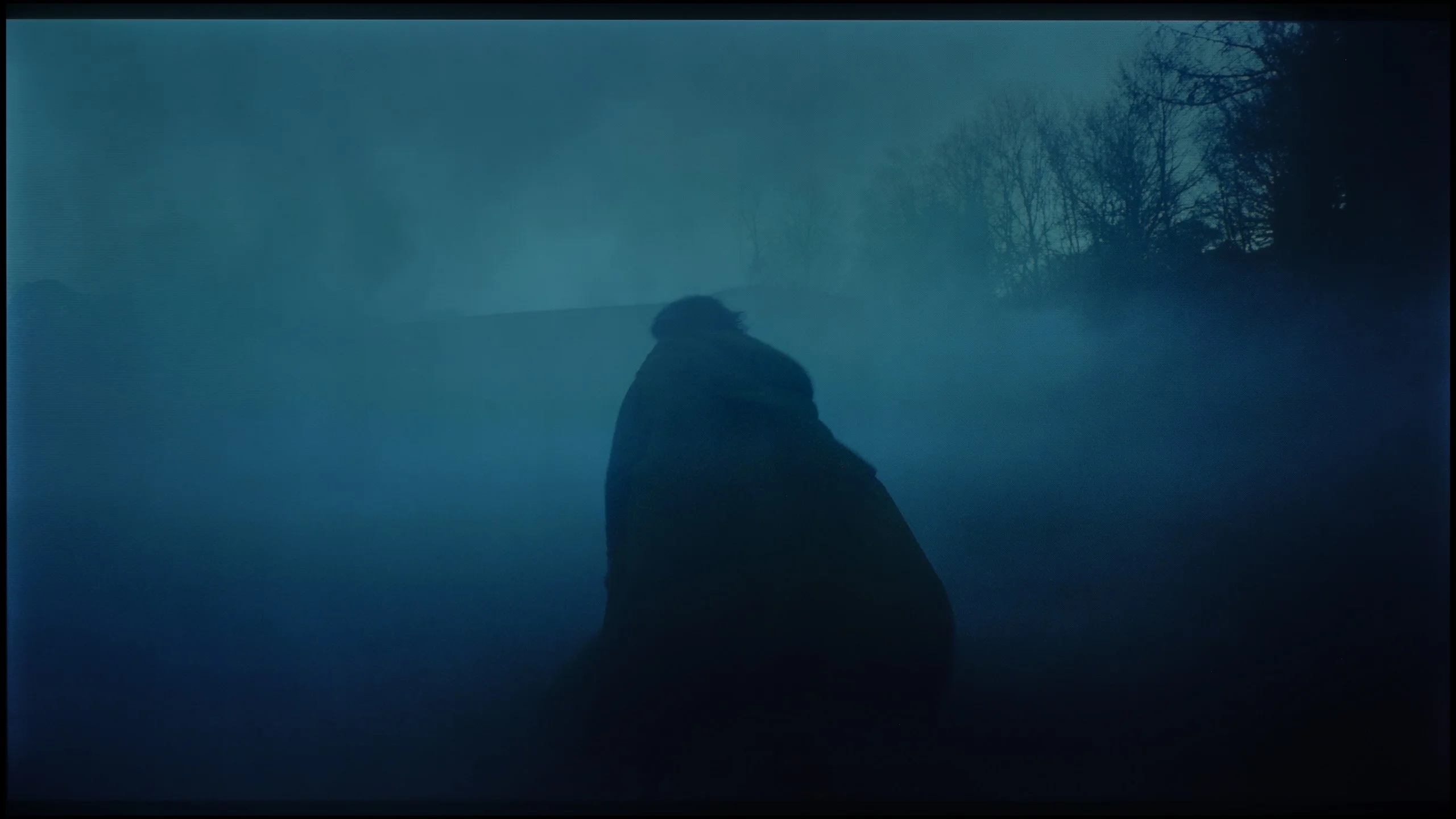
These are selected scenes that show smooth tonal transitions from one color to another. If you see distinct banding, it’s the TV panel’s fault.

These are selected scenes that show smooth tonal transitions from one color to another. If you see distinct banding, it’s the TV panel’s fault.
Analysing the ability of the television to handle subtle tonal transitions, known as "banding", leads us to interesting conclusions. The Haier Q80FUX seamlessly blends neighbouring colours in most scenes, creating a smooth, cohesive image. However, this process is not perfect. During testing, we noted minor issues and imperfections in every test scene we used. These may not be errors that aggressively stand out and ruin the viewing experience, yet their presence is worth noting. Interestingly, this receiver shows no particular weaknesses or strengths in this regard – it handles this challenge in exactly the same way, whether displaying delicate gradients of a bright sky or dark transitions in the shadows.
The Kiano Elegance handles colour gradation quite well. In most scenes the transitions between individual shades are smooth and there is no strong banding or distinct bands that can be a problem in the cheapest televisions. The biggest limitations only appear in darker scenes. With very subtle transitions in greys or shadows you can notice slight posterization and colour separation. However, this is not something that will be noticeable all the time. With typical content Kiano fares reasonably well in this respect, especially given its price.
Image scaling and smoothness of tonal transitions
4/10
6.5/10


Smooth transition function
The match photo shows how the TV smooths weak tonal transitions in low-quality video.
Image scaling SD (576i)
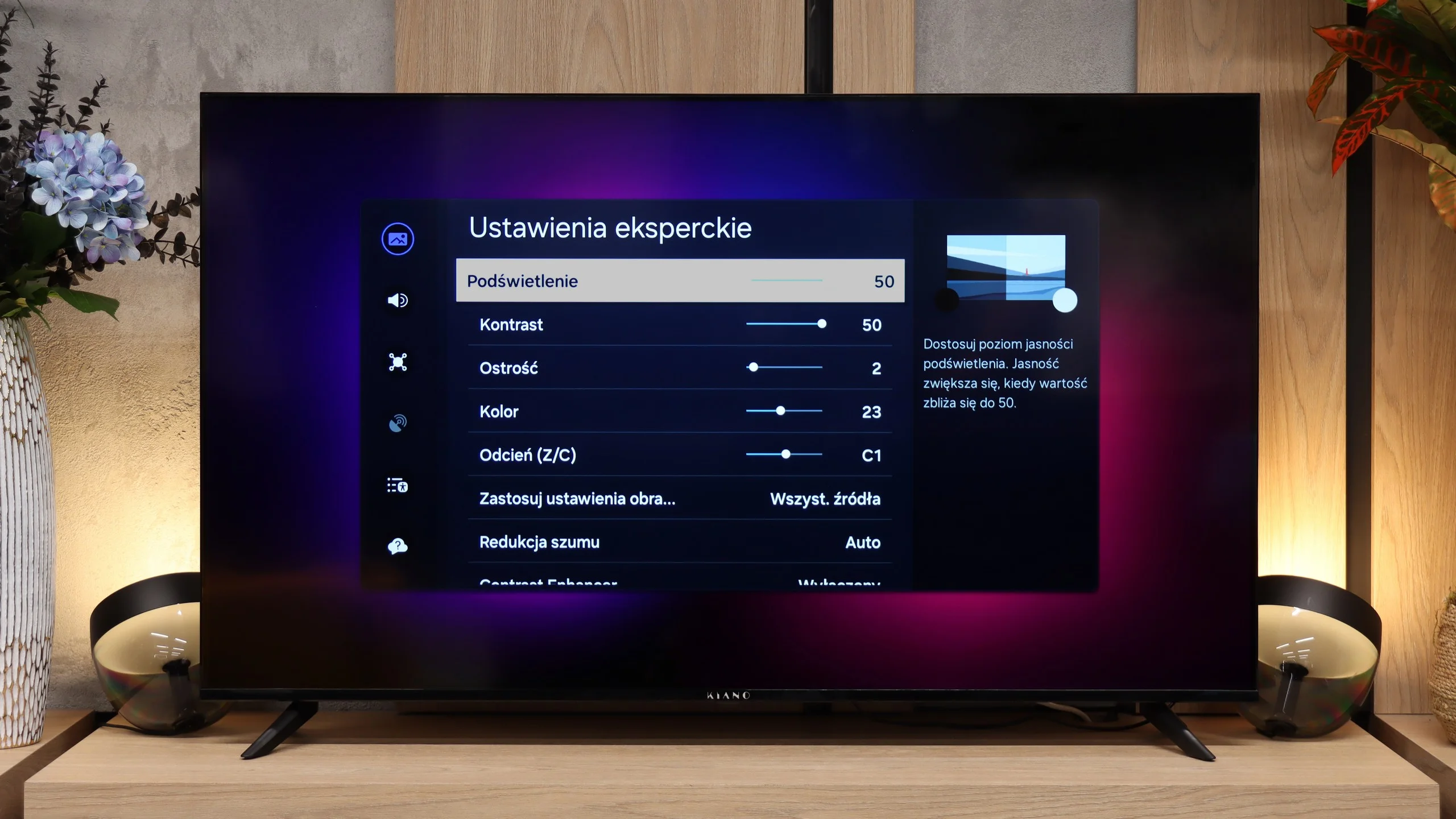
If there is one area where Haier clearly shows it still has a long way to go compared to the market leaders, it is digital image processing. The upscaling, well... is just alright. And that’s really about all that can be said about it. It does what is expected of it: it ensures that lower resolution signals do not scare us with harsh pixelation on the screen and do not look like a forcibly enlarged postage stamp. However, it is far from the finesse and “intelligent” sharpening that more experienced players in this market have developed over the years. The biggest shortcoming of the Q80FUX software is the almost complete lack of any additional "cleaning" and smoothing functions for the image. The receiver does not offer any noise reduction or gradient improvement mechanisms. This means that with older or heavily compressed materials, we simply have to come to terms with the fact that any imperfections in tonal transitions or blending of colours, which we mentioned earlier, will continually accompany us during the viewing.
For a relatively inexpensive TV, the upscaling and digital image processing in the Kiano Elegance perform really well. The scaling of lower-resolution content itself is decent. It is not, of course, at the level of the best TVs on the market, but ordinary broadcast television and Full HD content look quite good on a 4K screen. We were much more surprised by its ability to smooth unwanted tonal transitions. Many TVs in this price bracket either do not offer a similar function at all, or its effect is practically invisible. Kiano, using noise reduction known from Samsung TVs, can quite effectively mask heavy compression, colour banding and other imperfections of poorer sources. There is just one catch. The feature works fairly aggressively and, along with the imperfections, can also remove some fine detail or natural film grain. So with high-quality content we would probably leave it off. However, if you are watching older recordings, heavily compressed broadcasts or poor-quality material from the internet, it is worth experimenting with it. In such conditions it can actually improve perceived image quality.
Blur and motion smoothness
4.5/10
2/10
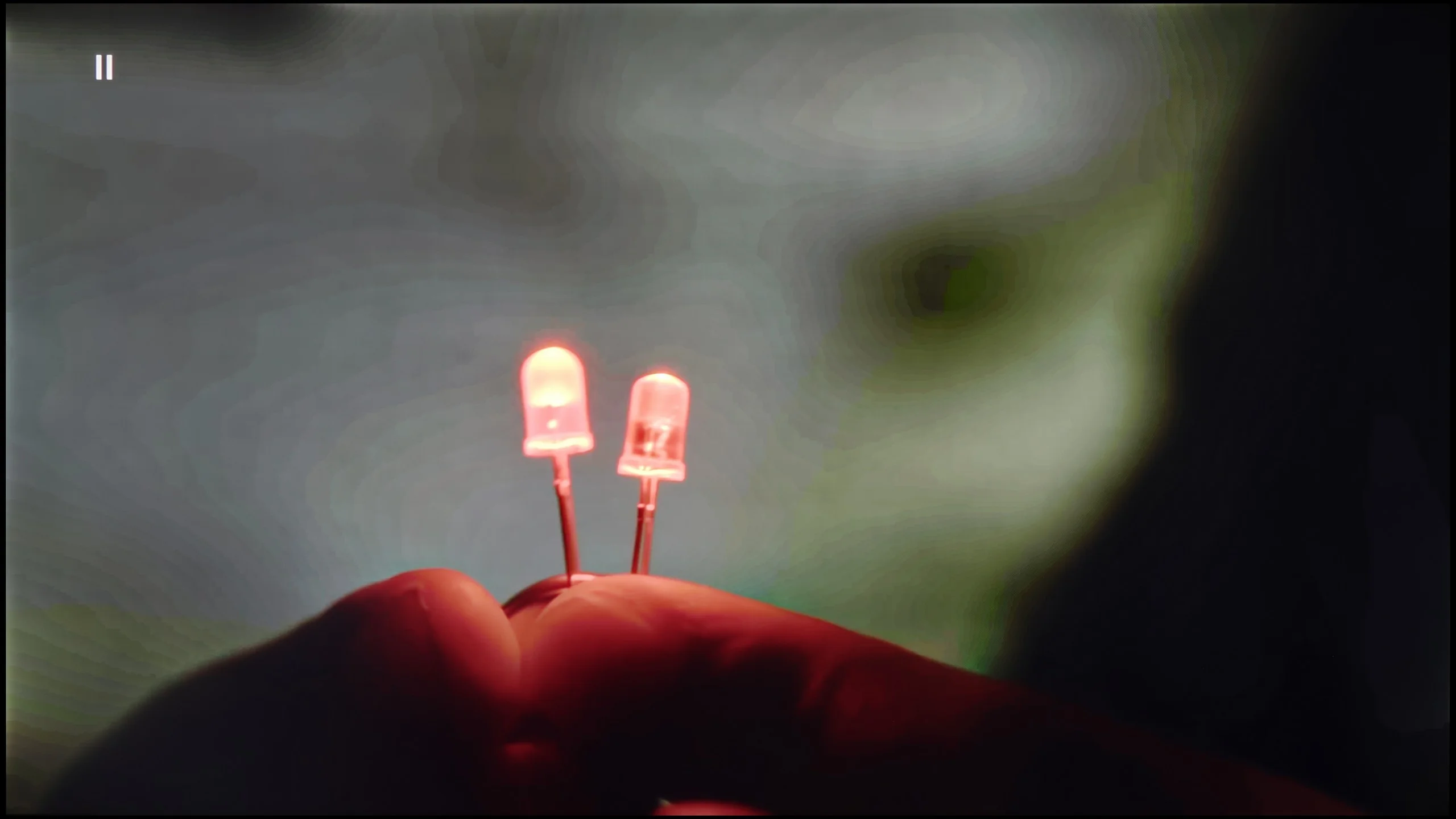
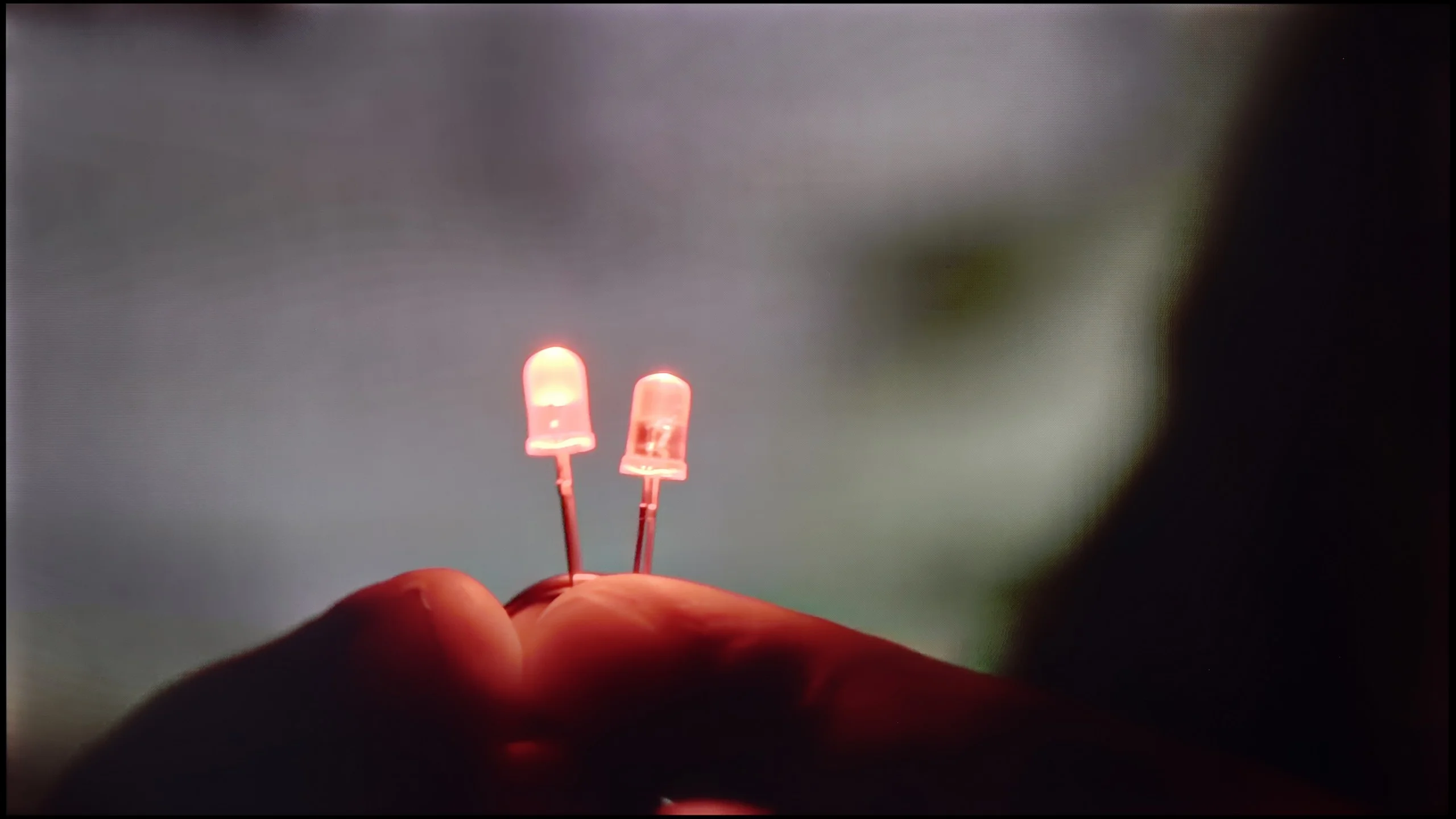
Blur (native resolution, maximum refresh rate):






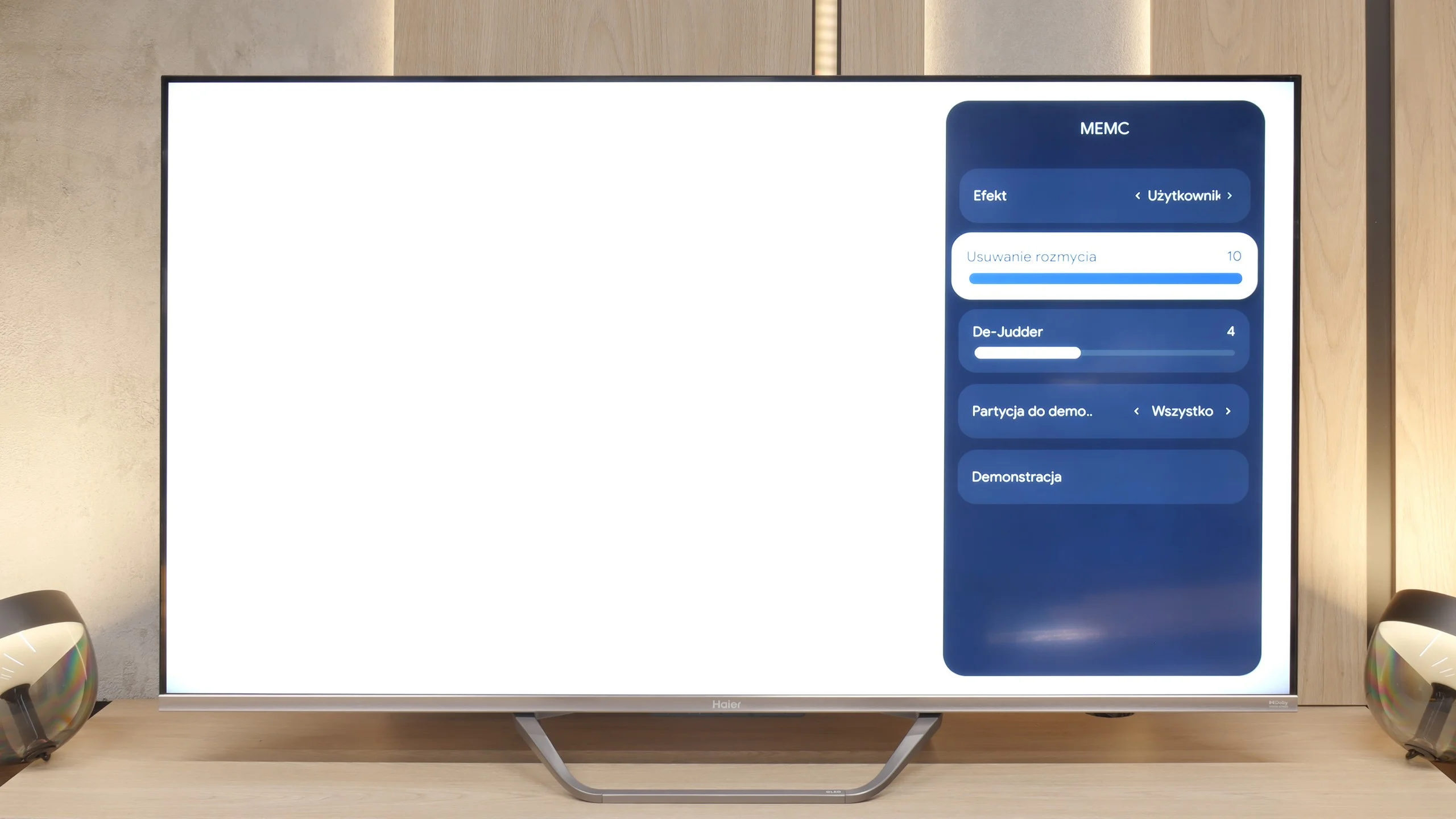
The issue of motion fluidity and blurring is largely predetermined by the use of a 60-hertz panel, which naturally makes it difficult to recommend this receiver to enthusiasts of very dynamic content. Fortunately, in the Q80FUX, we find a few options (although, as we shall see shortly, in reality only one) that are supposed to improve the experience with older film productions. There is a "De-Judder" slider available, which actually controls the smoothness of the image and allows us to adjust it to our preferences: from raw, cinematic frame rates to a more theatrical, smoothed presentation. However, a true surprise awaits us just beside it in the menu. There is also a second slider, supposedly dedicated to removing blur – a feature we typically encounter in 120Hz panels to combat motion blur in sports. However, as we expected, recalling memories from the tests of the K85F model, this slider here is merely a façade. Its adjustment does absolutely nothing to the image and it simply appears to be an oversight by the product engineers who left a non-functional option in the software for this type of panel.
In terms of motion handling the Kiano Elegance performs rather poorly. The TV has a 60 Hz panel, but at this price point that's not surprising. What’s more problematic is the complete lack of any motion interpolation feature. In practice that means the TV displays content at exactly the frame rate at which it was recorded. That isn't a major issue for films, but with sport or fast panning shots you can clearly see that motion isn't particularly smooth.
Console compatibility and gaming features
5.6/10
1.6/10
- ALLM
- VRR
- VRR range48 - 120Hz
- Dolby Vision Game Mode
 Yes, high input lag
- Correct implementation of HGIG
- 1080p@120Hz
- 1440p@120Hz
- 4K@120Hz
- Game bar
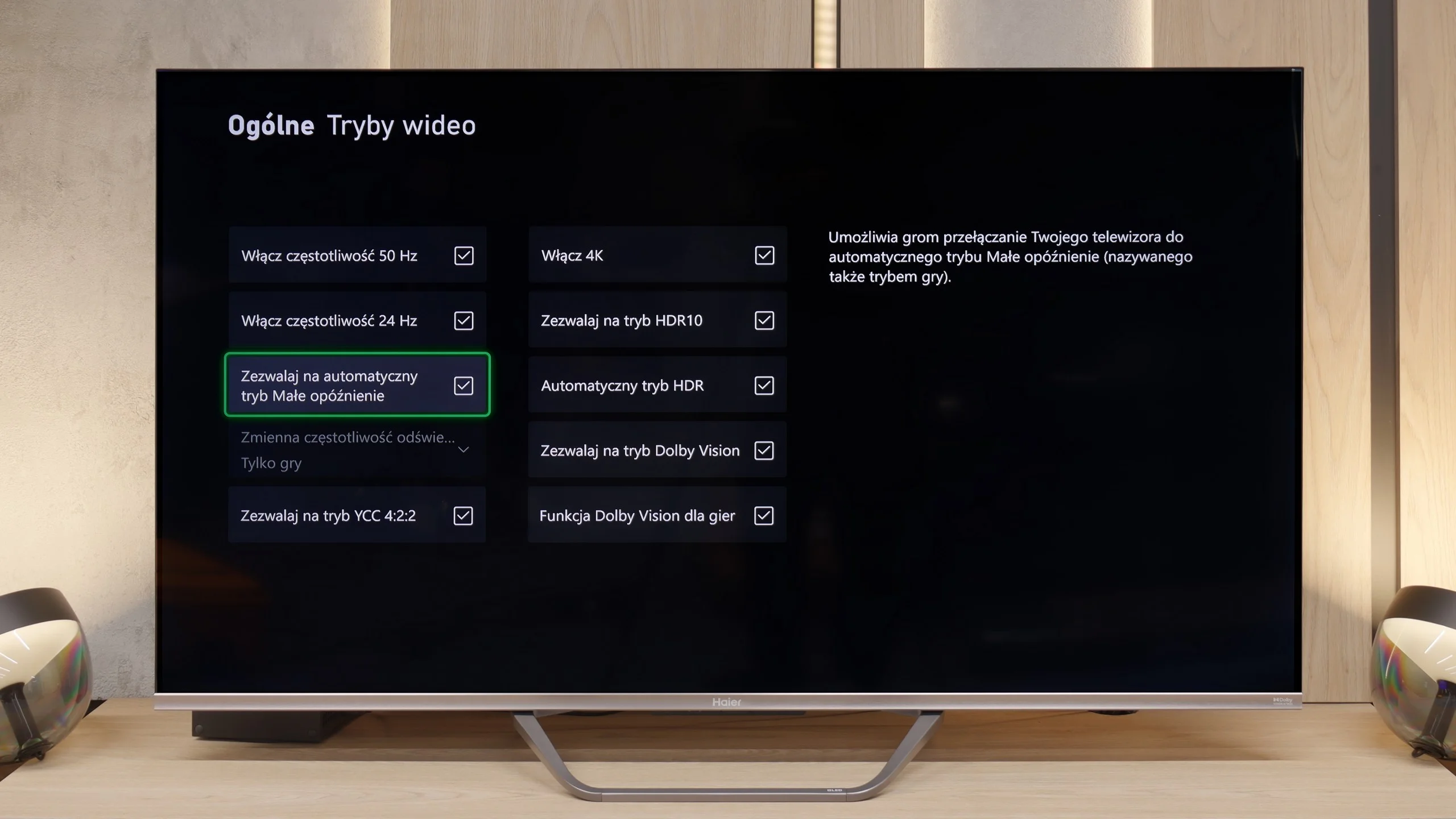
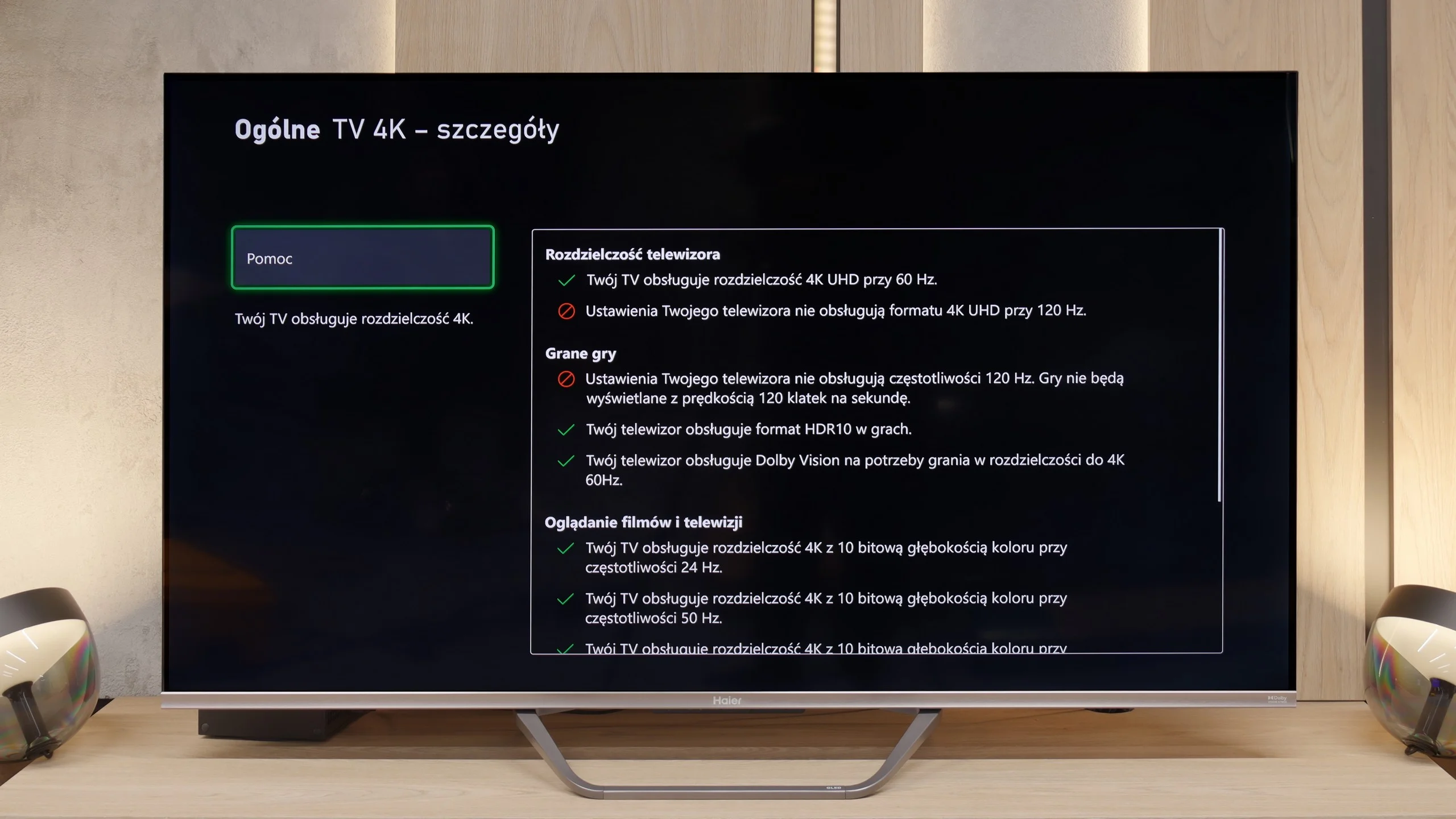
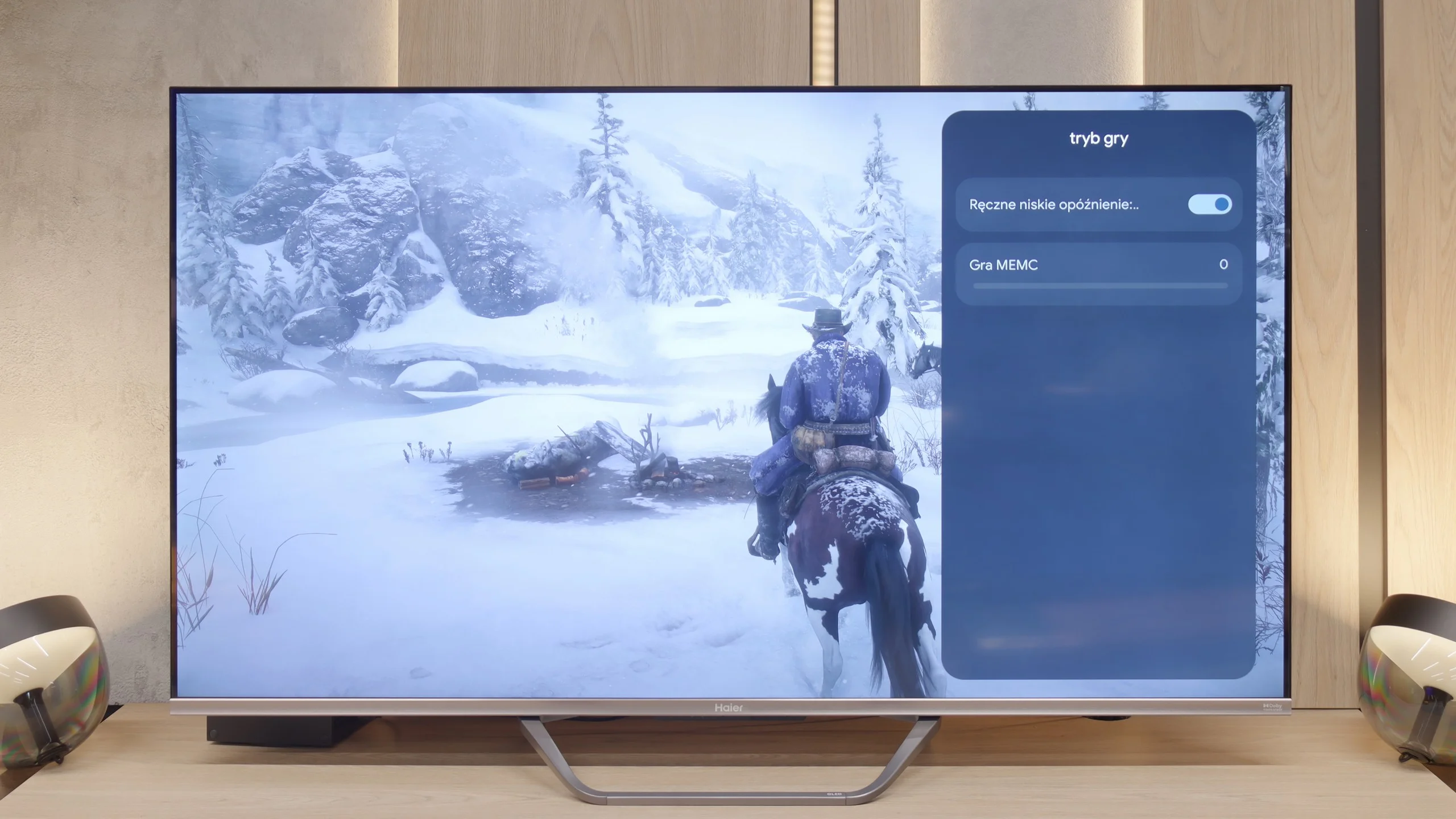
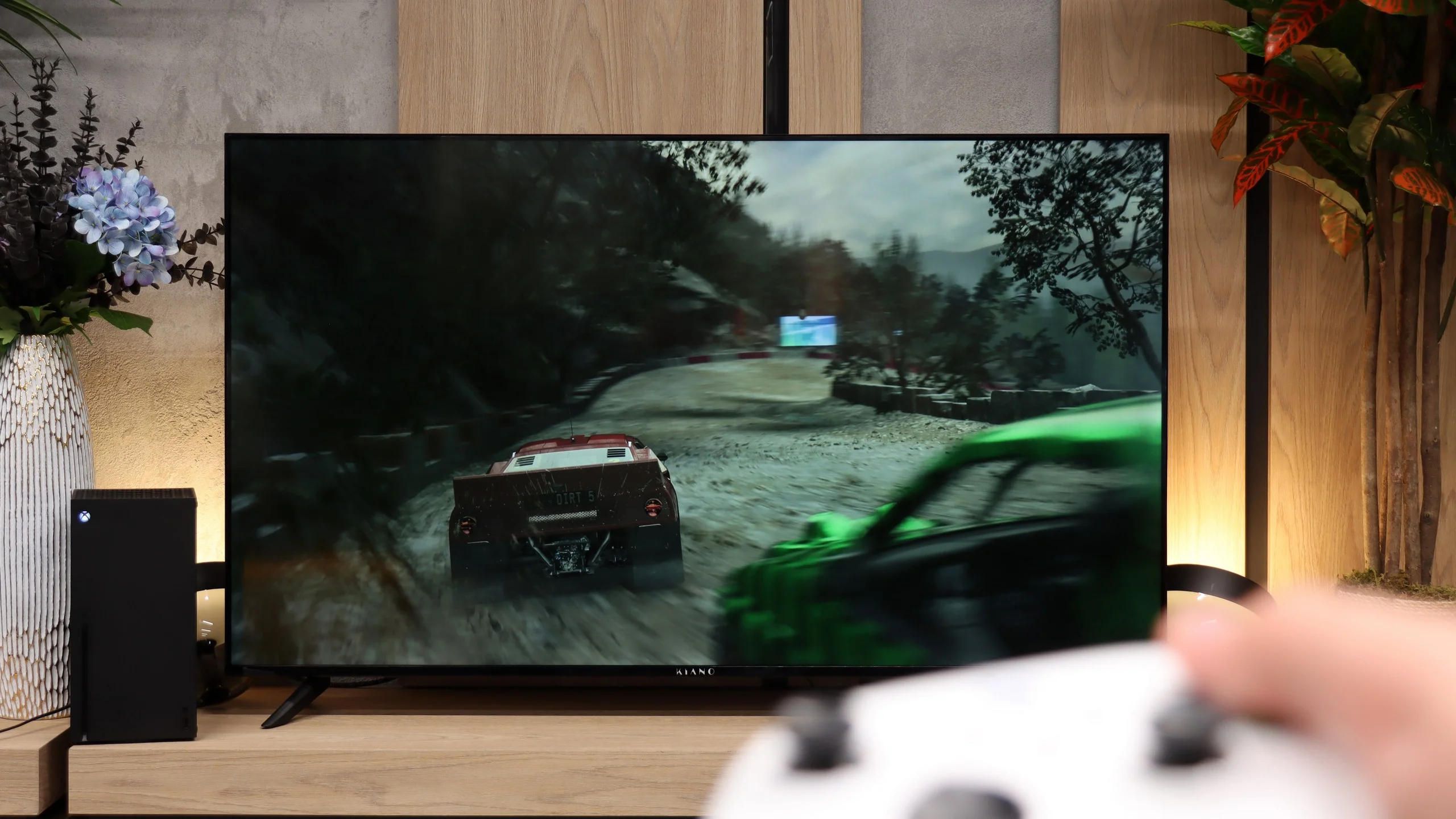
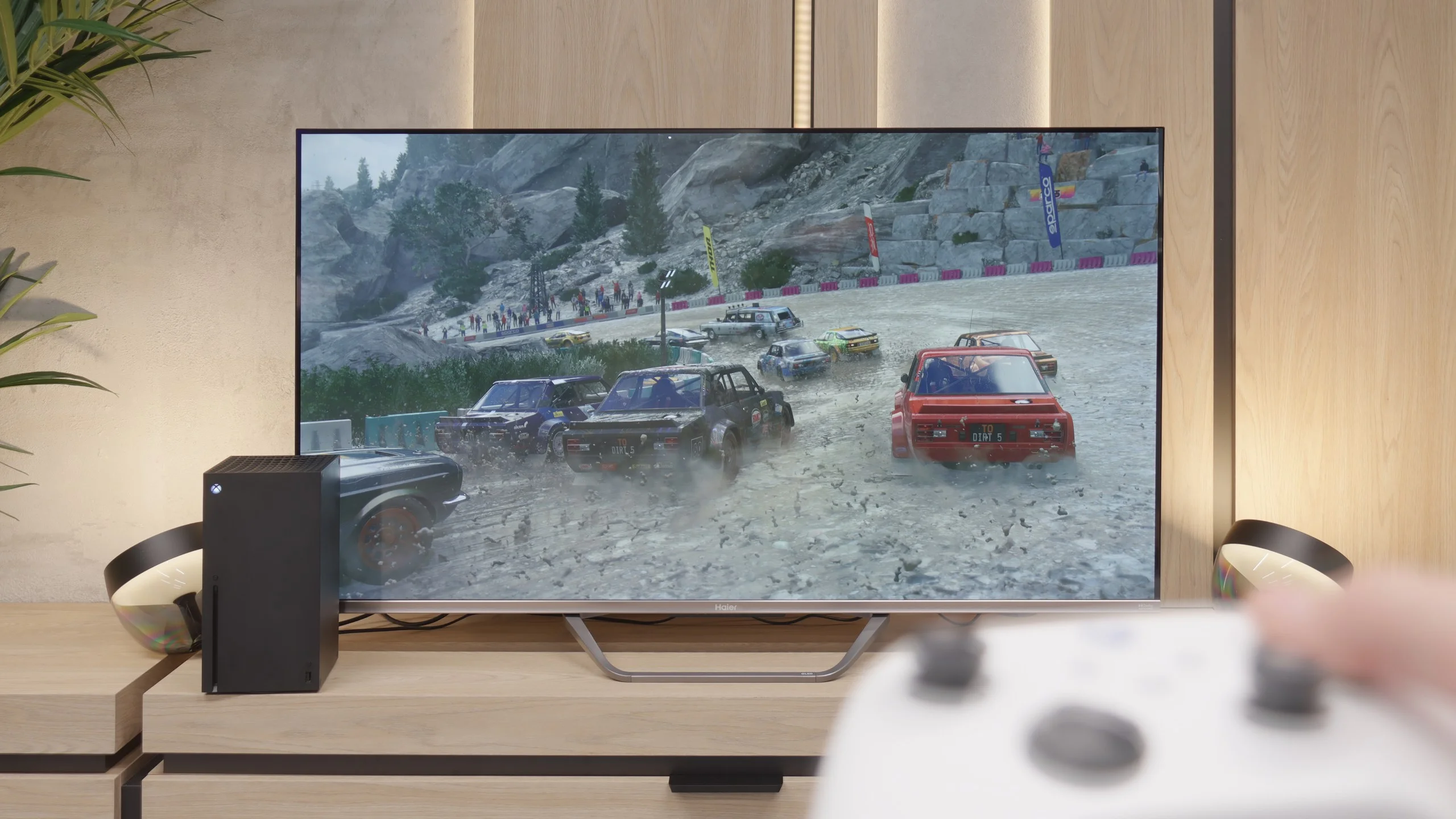
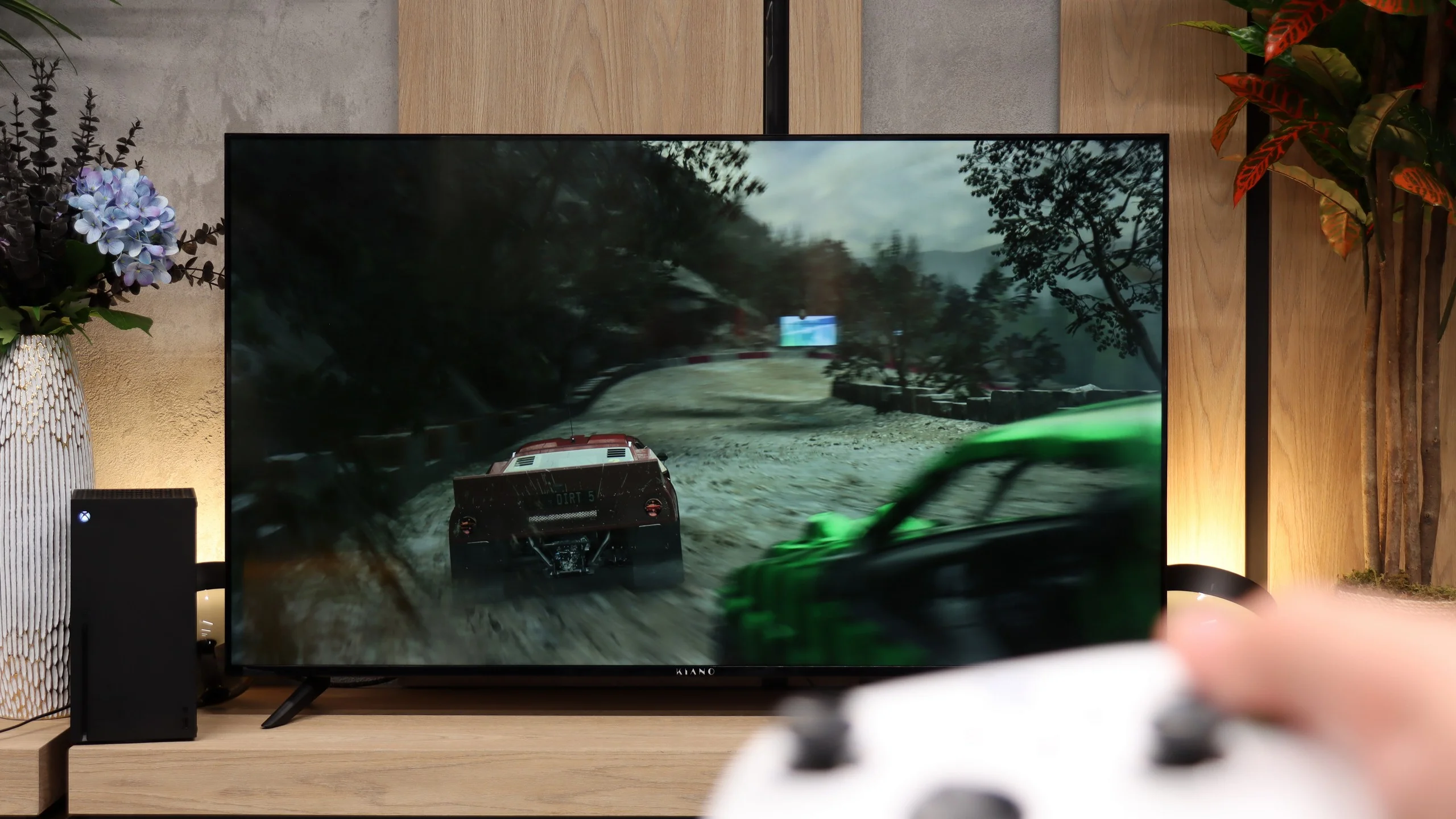
Stepping into the realm of gaming, the Haier Q80FUX proves to be quite a decent companion for the "casual gamer". Onboard, we find highly desired features such as VRR (Variable Refresh Rate) and ALLM (Auto Low Latency Mode). However, the biggest surprise is something else altogether. Although we are not dealing with a 4K@120Hz panel here, the television is capable of accepting and displaying a 120Hz signal at a lower resolution (Full HD). This is a very useful feature that allows for a conscious switch of the console to a lower resolution mode in exchange for significantly higher smoothness, which is a compromise entirely acceptable in the gaming world.
We won’t particularly complain about the lack of extras like the "Game Bar", as it's merely a nice addition. The most concerning issues arise when we delve into the world of HDR in gaming. Due to the television constantly adapting the signal "in its own way", setting the brightness on the console according to the HGIG standard is nearly impossible to achieve as per instructions. Worse still, in the Dolby Vision mode for gaming, the input lag increases to around 50 ms, which is a value high enough to render this mode practically unusable. However, in general, we would not recommend gaming on this television in HDR mode, so these are not such grave shortcomings. What is most pleasing is the presence of 120Hz in Full HD, which makes the Q80FUX a rather nice television for the occasional gamer.
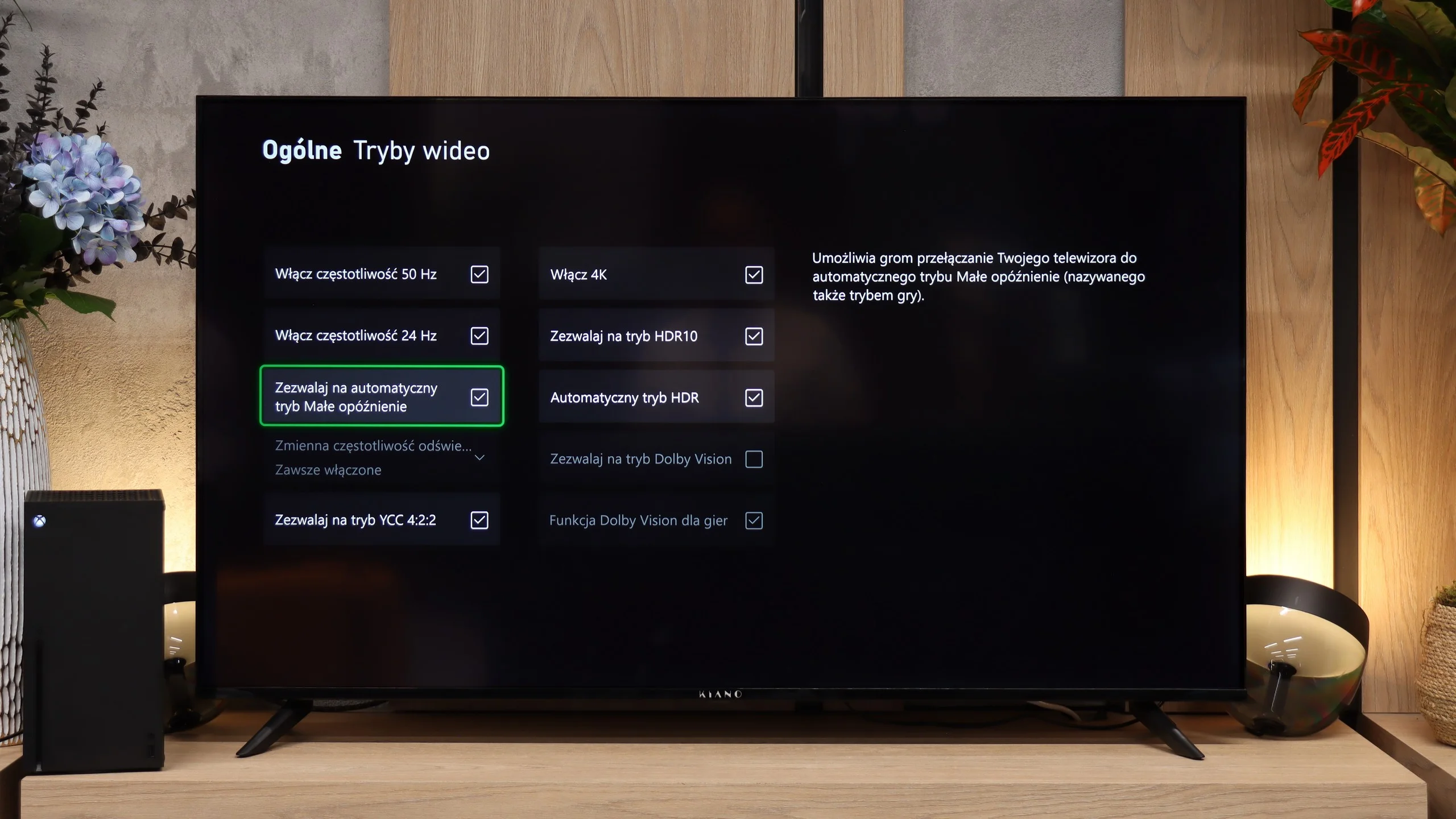
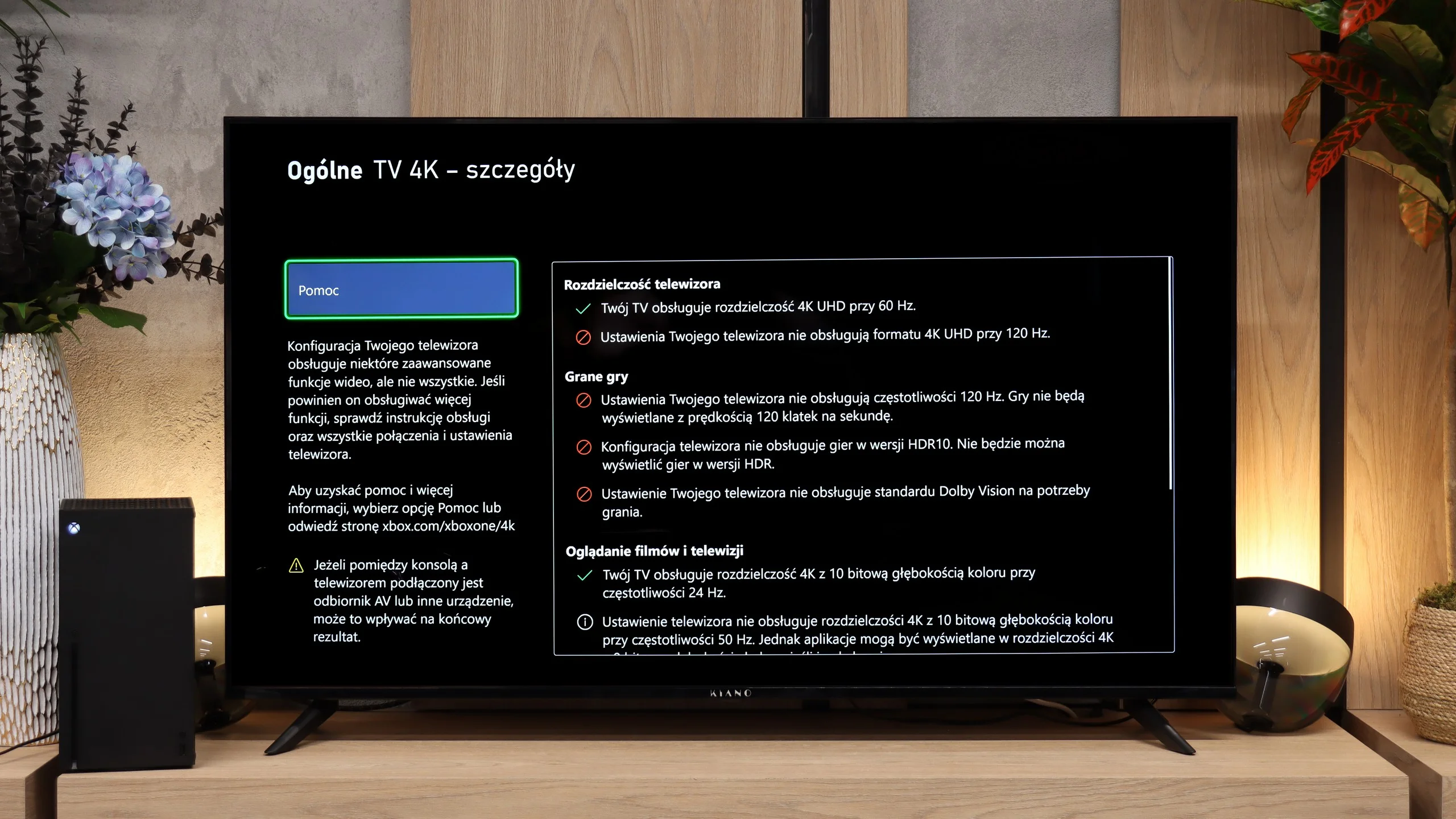
The Kiano Elegance lets you connect a console and play, but its ambitions basically stop there. The panel supports up to 60 Hz and there is no VRR, which helps when frame rates drop. It even lacks ALLM, i.e. automatic switching to a low-latency mode, so you have to take care of the TV’s settings yourself. That’s a pity, especially since input lag is low in the appropriate mode. However, if a console is one of the main reasons you’re buying a TV, it’s worth looking for something with greater capabilities.
Input lag
9.4/10
9.8/10
SDR
HDR
Dolby Vision
If there is one category in which the Haier Q80FUX absolutely shines and shows its claws, it is input lag. In this regard, the television presents results that are nothing short of remarkable. In 120Hz mode (achieved, let us remind you, at a lower resolution), input lag drops below 10 ms, which is an excellent value, worthy of high-end gaming monitors. Not much worse, and still at a very good level, is the classic 60Hz mode – here the measurements consistently indicated around 12-14 ms. These are results that significantly more expensive, dedicated gaming designs would not be ashamed of. The only serious stumble here is the Dolby Vision mode. As we have established before, its activation raises the lag to an unacceptable level, so we definitely advise against using it during any interactive gameplay.
Although it has few features for gamers, the Kiano Elegance performs very well in terms of input lag. We measured around 14 to 15 ms at 60 Hz, both in Full HD and in 4K. Turning on HDR also doesn't increase input lag. Response to controller inputs is therefore quick, and while gaming you don't feel the TV noticeably delaying the controls. This is one of the model's strengths.
Compatibility with PC
6/10
6/10
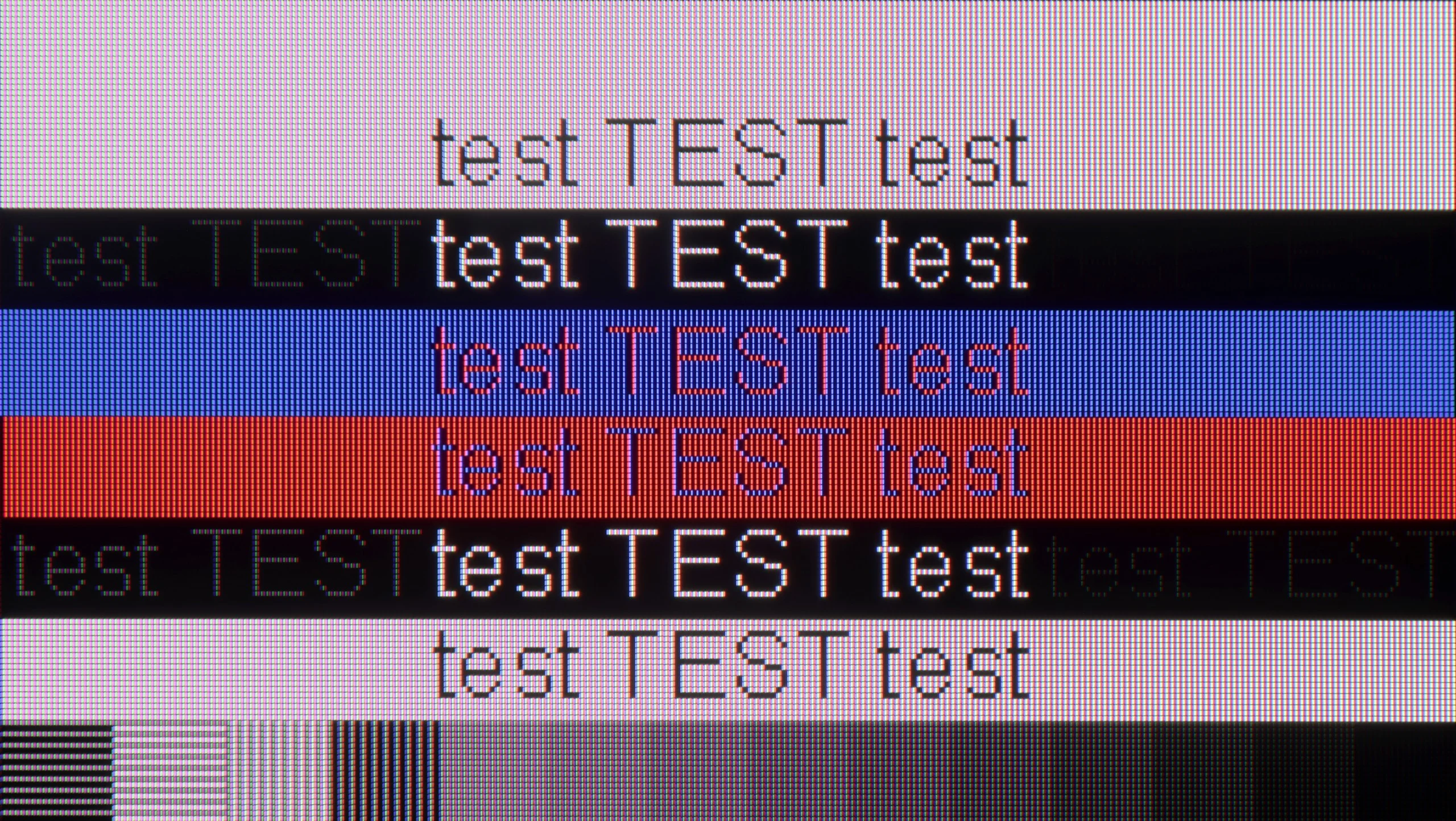
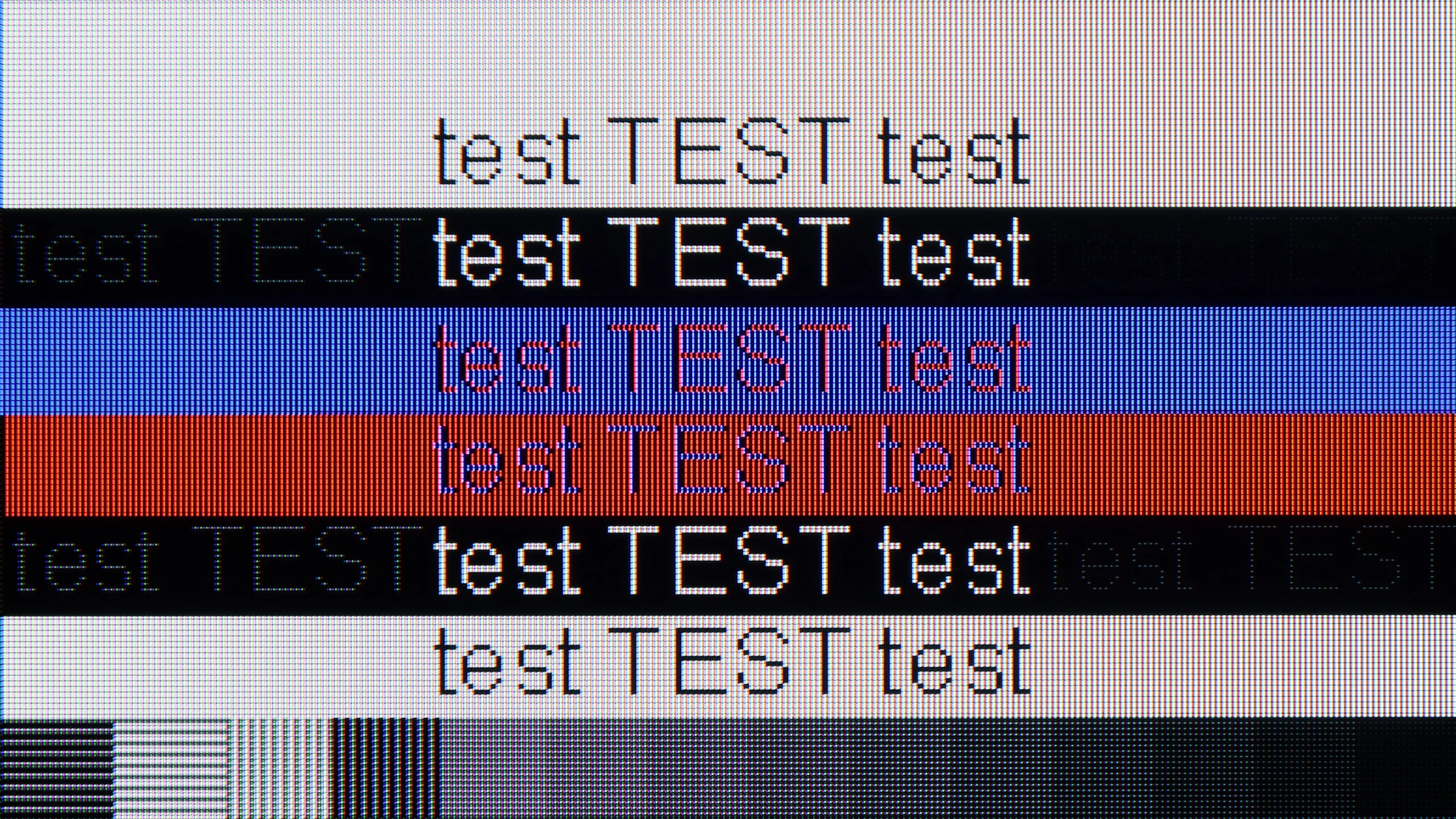
The photo shows the legibility of small fonts. Ideally, lines should be the same thickness on both light and dark text, with minimal pixel gaps.
We also checked, of course, how the Q80FUX performs when connected to a computer. And here’s another pleasant surprise – it handles this really very well. The most important thing is that the fonts are very readable, so nothing blurs and you can work on it normally. Additionally, just like with consoles: we can set a lower resolution here in exchange for achieving a high refresh rate of 120Hz. Importantly, in this mode, G-Sync launched correctly and worked well. This only confirms that this television is truly a successful and efficient piece of equipment for gaming, even on a PC.
For browsing the internet, reading documents or displaying images from a laptop, the Kiano Elegance performs quite well. It supports 4:4:4 chroma subsampling, so small, colourful letters remain legible. There are also no major issues with rendering dark text. Despite using a BGR subpixel arrangement, font legibility in our tests was very good.
When gaming on a PC, however, the limitations described earlier reappear. The refresh rate maxes out at 60 Hz and G-Sync is not supported. A low input lag of around 15 ms provides responsive control, but it will not improve the clarity of moving objects. As a large screen for basic tasks the Kiano manages well, but there are better options for fast-paced games.
Viewing angles
3.3/10
2.8/10
Anyone who plans screenings in a wide family group must be aware of the fundamental compromise that Haier has made by implementing a VA panel in this model. This technology has indeed given us deep blacks and high contrast, but its inherent characteristic is also a noticeable narrowing of viewing angles. It is enough to sit a bit further to the side of the sofa to immediately notice how the colours start to lose saturation and the image begins to fade. It’s simply a classic trade-off – we gain something (contrast) at the expense of something else (angles) – and the Q80FUX fits perfectly into this pattern.
The Kiano Elegance is best watched sitting directly in front of the screen. Move to the side and the colours noticeably lose saturation, and the image becomes much less contrasty. At a 45-degree angle we measured a brightness drop of about 63%, so the difference is hard to miss. This is a typical weakness of VA panels and something to bear in mind if the TV will be placed opposite a wide sofa or viewed from different parts of the room.
Daytime performance
4.8/10
3.7/10
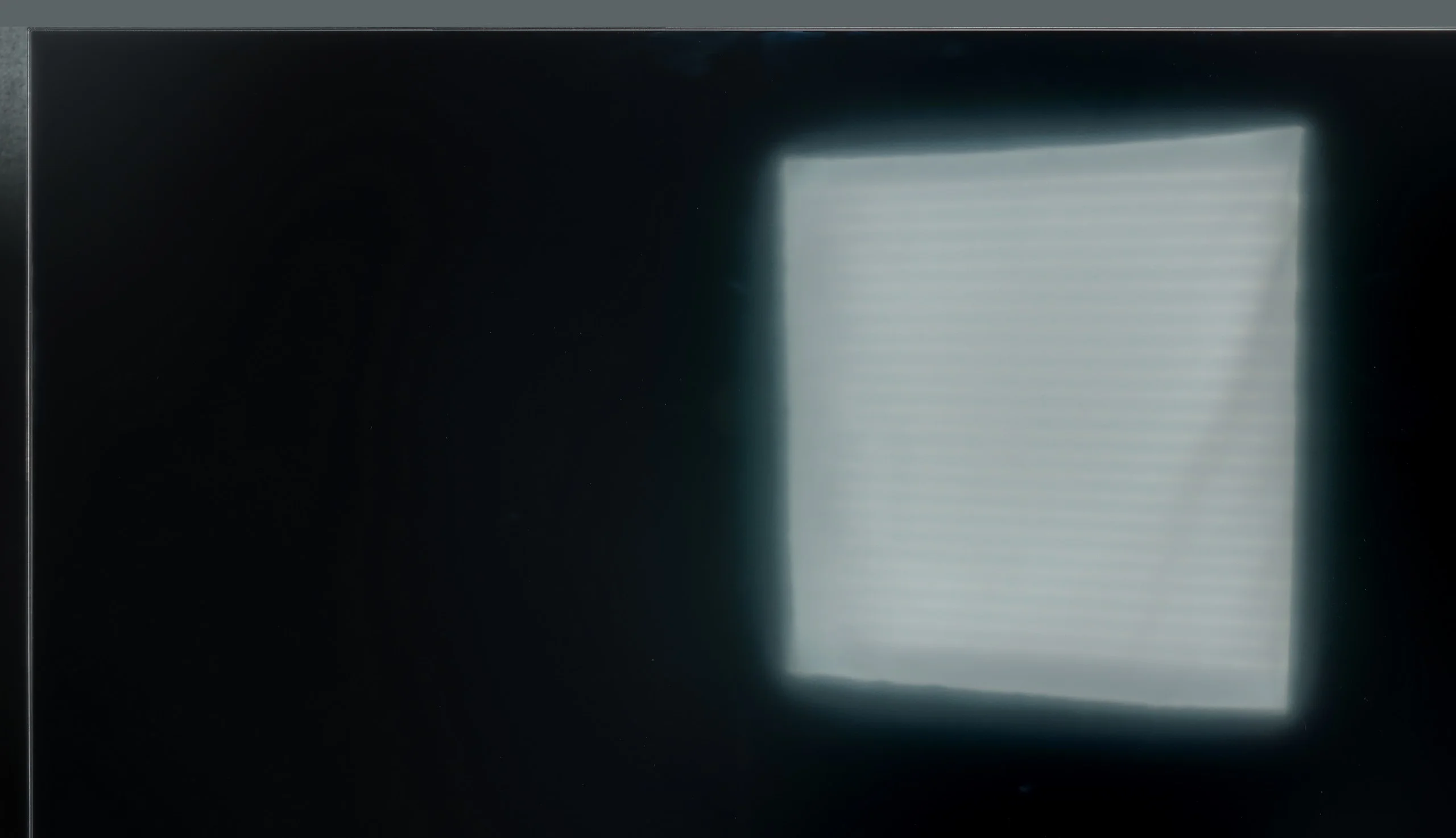
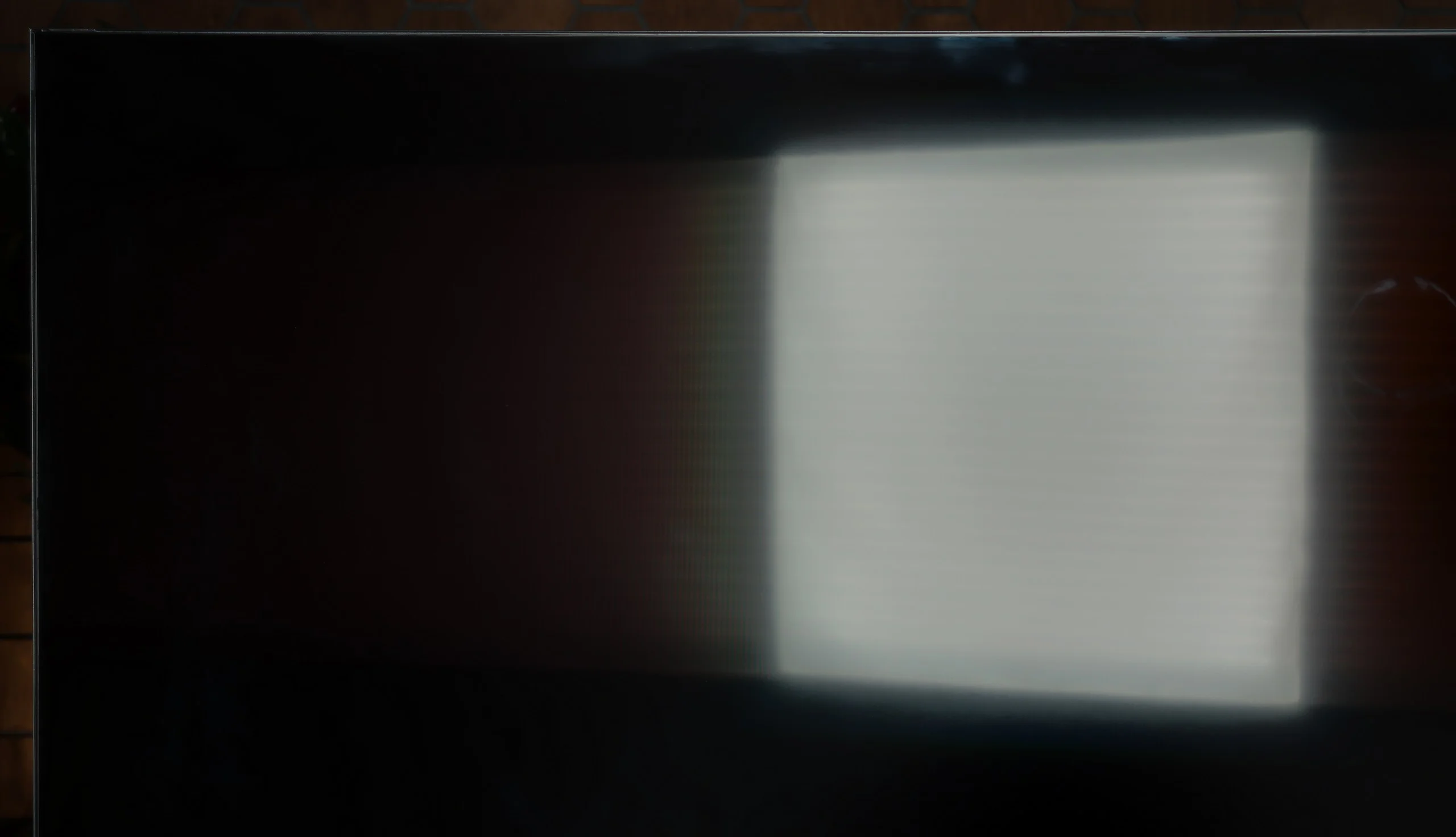
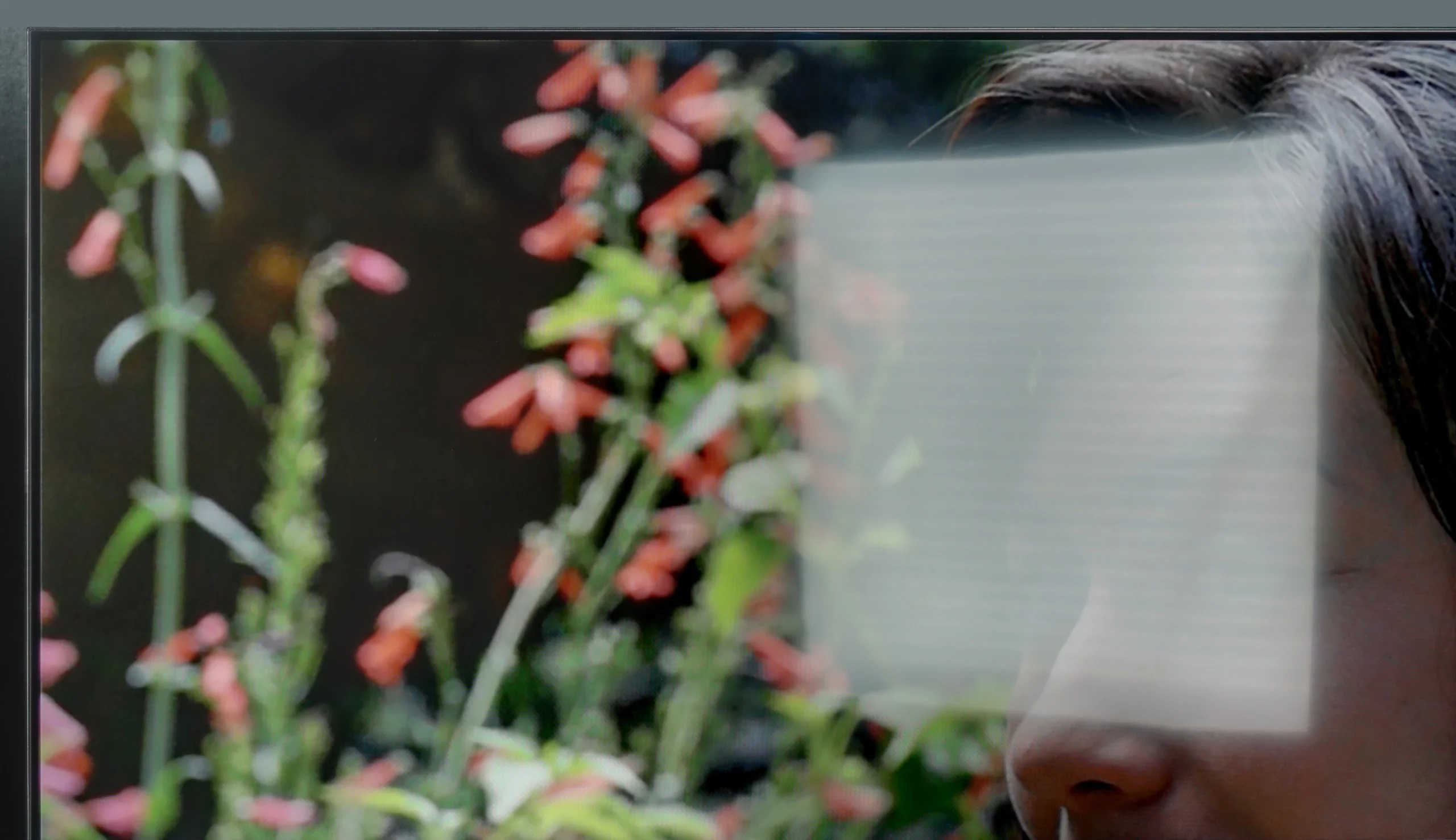
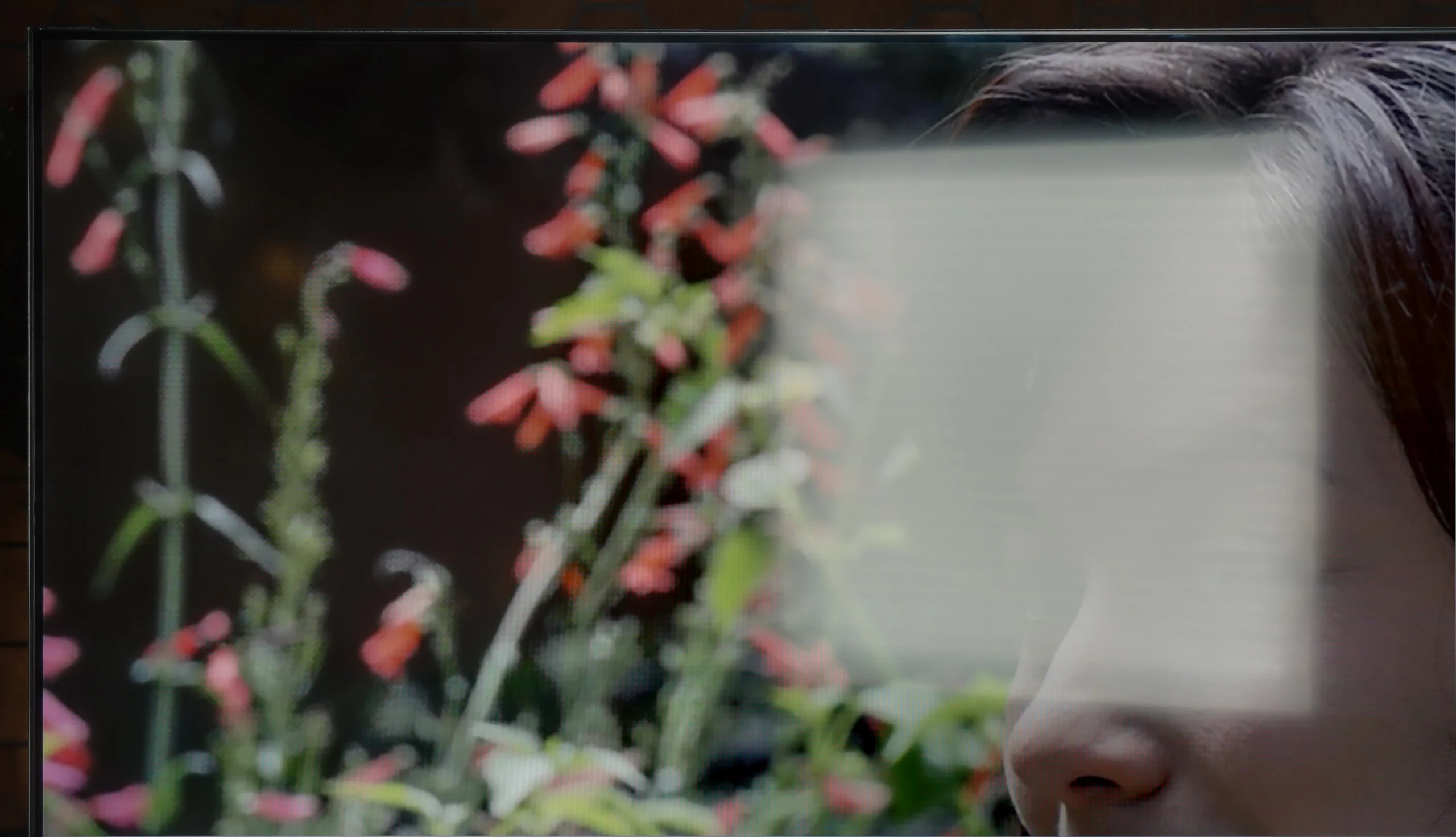
Panel brightness
Kiano Elegance Tizen: 215 cd/m2
Haier Q80FUX: 317 cd/m2
The clash of the receiver with the daily challenges posed by a bright living room is quite decent in the case of the Q80FUX, although it is certainly difficult to speak of it as ideal. The panel itself is equipped with a coating that handles most reflections and glare from the surroundings quite effectively. Equally importantly, even in more challenging lighting conditions, the screen manages to retain pleasantly saturated colours. However, the weakness of this construction reveals itself where the brightness comes into play. The previously mentioned, rather moderate maximum brightness (around 350 nits) means that in confrontation with intense, natural light coming through the window, the screen often struggles to "break through". On a sunny day, the image may simply lack the appropriate impact.
Kiano Elegance will simply be too dim for a very sunlit living room. Average brightness is about 215 nits, so during the day the picture is easily washed out by light coming through the windows. Especially with darker films, you may need to close the blinds. The satin coating does a decent job of reducing reflections, and blacks in a lit room do not look bad, but that is not enough to make up for the low brightness. The TV will be much better suited to a less sunlit room or to evening viewing.
Panel details
Subpixel Structure:
Panel uniformity and thermal imaging:


Haier Q80FUX
Kiano Elegance Tizen
TV features
5.6/10
5.1/10
- SystemGoogle TVTizen
- System performanceAverageAverage
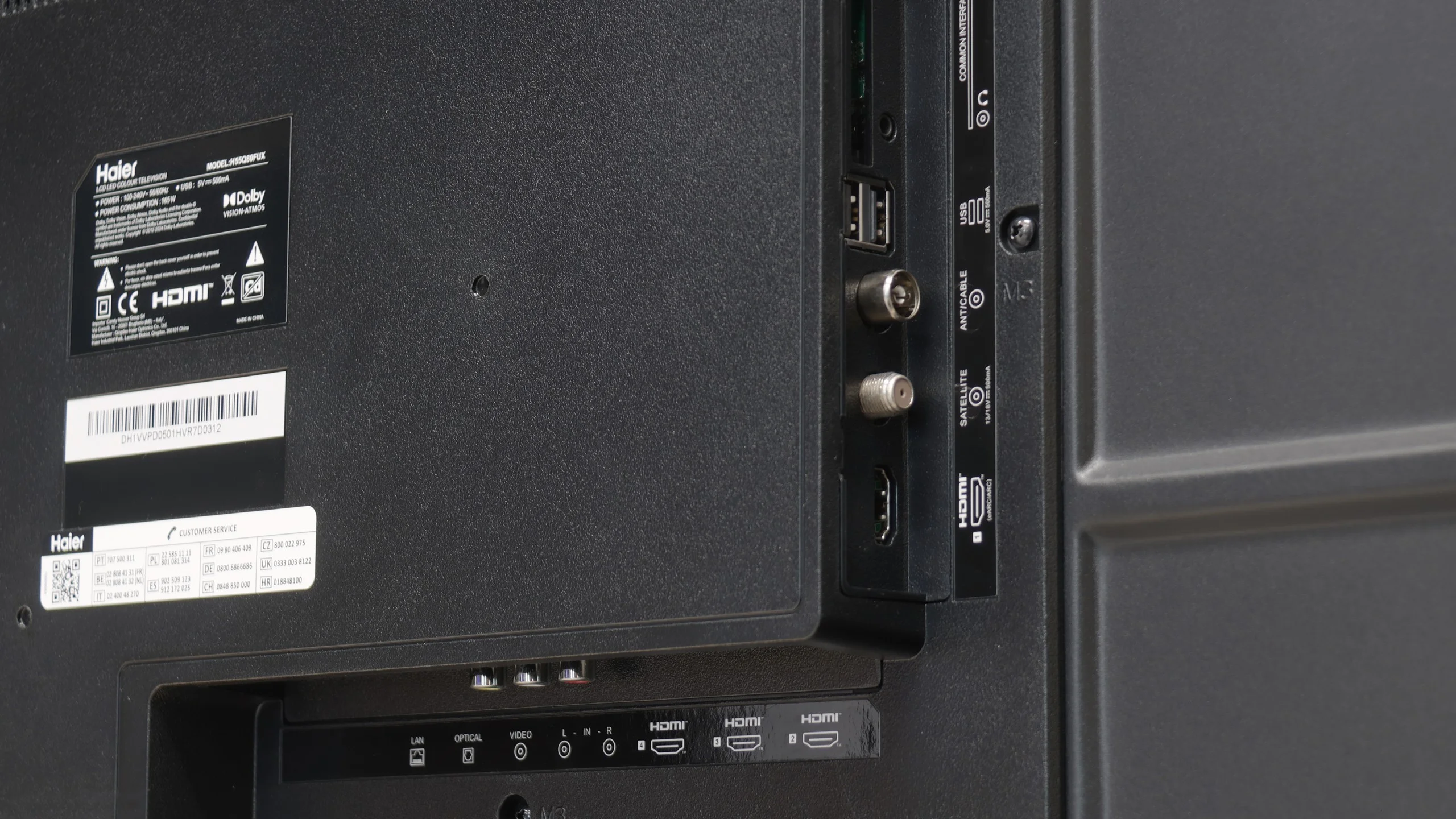
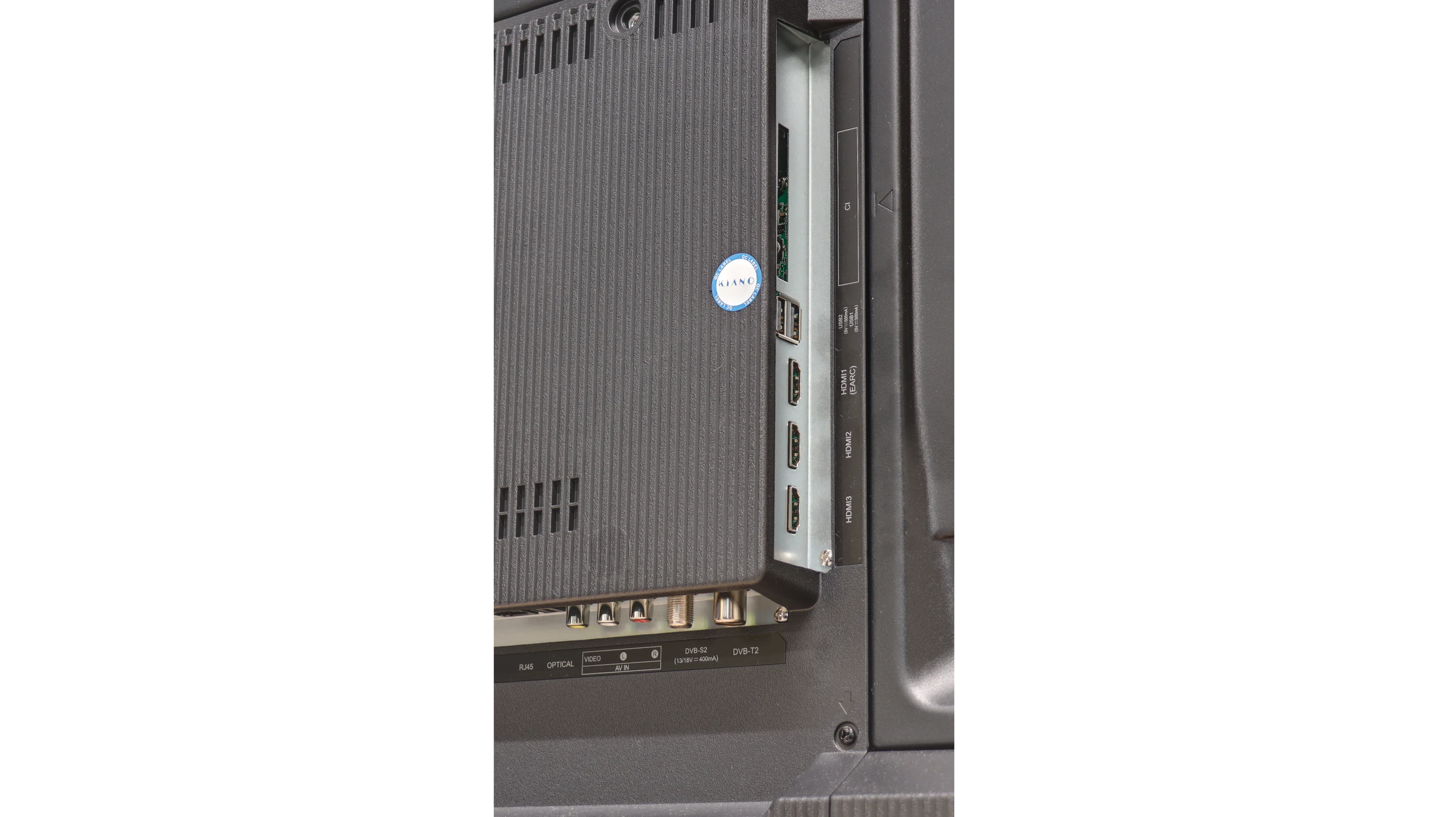
- HDMI inputs4 x HDMI 2.0, 0 x HDMI 2.13 x HDMI 2.0, 0 x HDMI 2.1
- Other inputsRCA (Chinch)RCA (Chinch)
- OutputsToslink (Optical audio), eARC (HDMI), ARC (HDMI), Mini-Jack (Headphones)SPDIF (Coaxial audio), eARC (HDMI), ARC (HDMI)
- Network InterfacesWi-Fi 2.4GHz, Wi-Fi 5GHz, Ethernet (LAN) 100MbpsWi-Fi 2.4GHz, Wi-Fi 5GHz, Ethernet (LAN) 100Mbps
- TV receptionDVB-T, DVB-T2, DVB-S, DVB-S2, DVB-CDVB-T, DVB-T2, DVB-S, DVB-S2, DVB-C
Classic features:
- Recording to USB (terrestrial TV)
- Recording programming
- Picture in Picture (PiP)
- RF remote control (no need to aim)
- Backlit remote control
- Teletext
- Audio only mode
- Bluetooth headphones support
- Simultaneous Bluetooth headphones & TV audio
Smart features:
- AirPlay
- Screen mirroring (Windows Miracast)
- Voice search
- Voice search in native language
- Ability to connect a keyboard and mouse
Sound connection options
- HDMI audioeARC (HDMI), ARC (HDMI)eARC (HDMI), ARC (HDMI)
- Other audio outputsToslink (Optical audio), Mini-Jack (Headphones)AuxiliaryOutput-SPDIF (Coaxial audio)
- Wireless audioBluetoothBluetooth
Supported audio formats (external HDMI eARC audio):
- Dolby Digital Plus 7.1
- Dolby True HD 7.1
- Dolby Atmos in Dolby Digital Plus (JOC)
- Dolby Atmos in Dolby True HD
- DTS:X in DTS-HD MA
- DTS-HD Master Audio
Senior accessibility
- Numeric keyboard on TV
- Font size adjustment
- Audio description
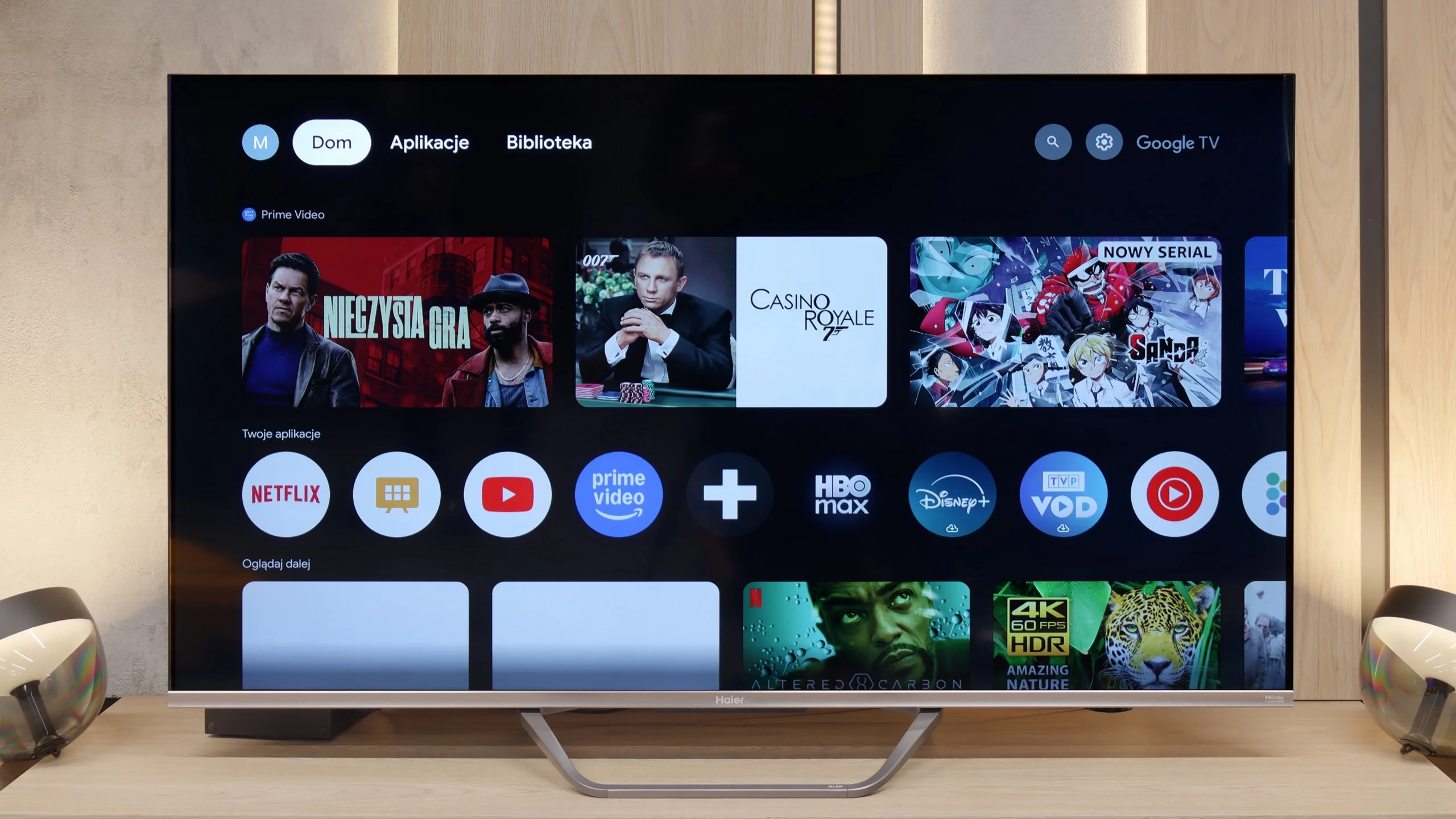
SmartTV on Haier Q80FUX: GoogleTV
Let's start with the smart layer, which in the Q80FUX is managed by the Google TV system. This is theoretically a huge advantage, opening access to an incredible library of apps, facilitating screen mirroring from mobile devices, and offering convenient voice search. Unfortunately, just like in other models from this brand that we tested, the implementation of this platform leaves much to be desired. It's not even about drastic stuttering or delays in navigation, but rather a festival of minor errors, oversights, and terrible translations in the menu. Because of this, it's hard to regard "Google TV" in Haier's version as equal to what we find in receivers from Sony or TCL, even though the same proudly sounding name is displayed on the box.
Classic Features
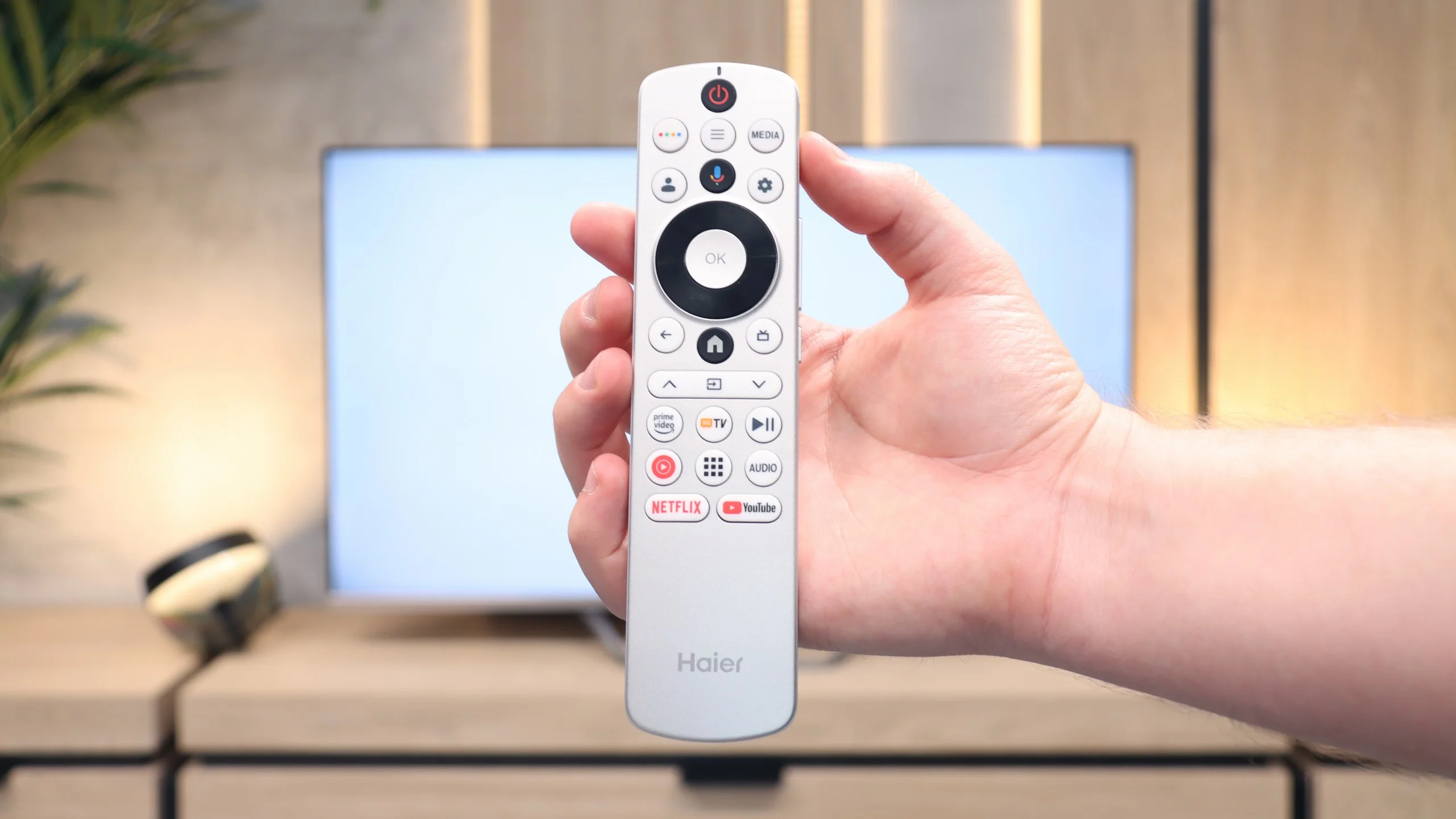
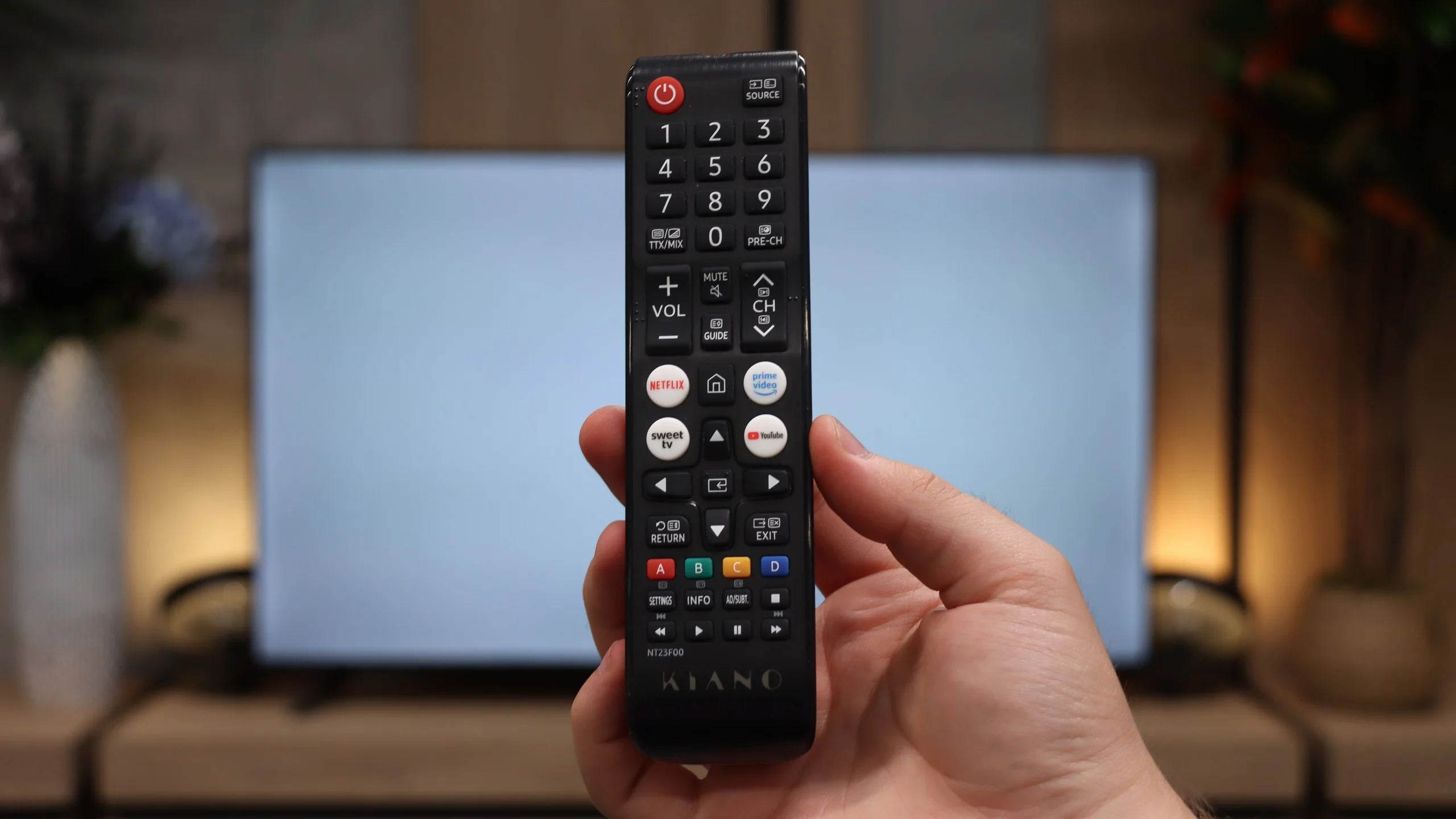
Moving on to the classic, functional features of the television, the image of the device does not improve at all. The only commendable aspect is the presence of Bluetooth connectivity and an unusual but useful relic from the past in the form of an analogue headphone jack output. Aside from that, it's hard to find anything that would excite us. Due to the problematic software, the receiver (like its predecessors in our tests) was unable to find any terrestrial television channels, despite other televisions connected to the same installation having no issues whatsoever. The remote control itself is also strange – its design may appeal to some, but due to the lack of a numeric keypad and the absurd placement of some buttons on the side edge, it definitely cannot be called senior-friendly.
Tizen in the Kiano TV
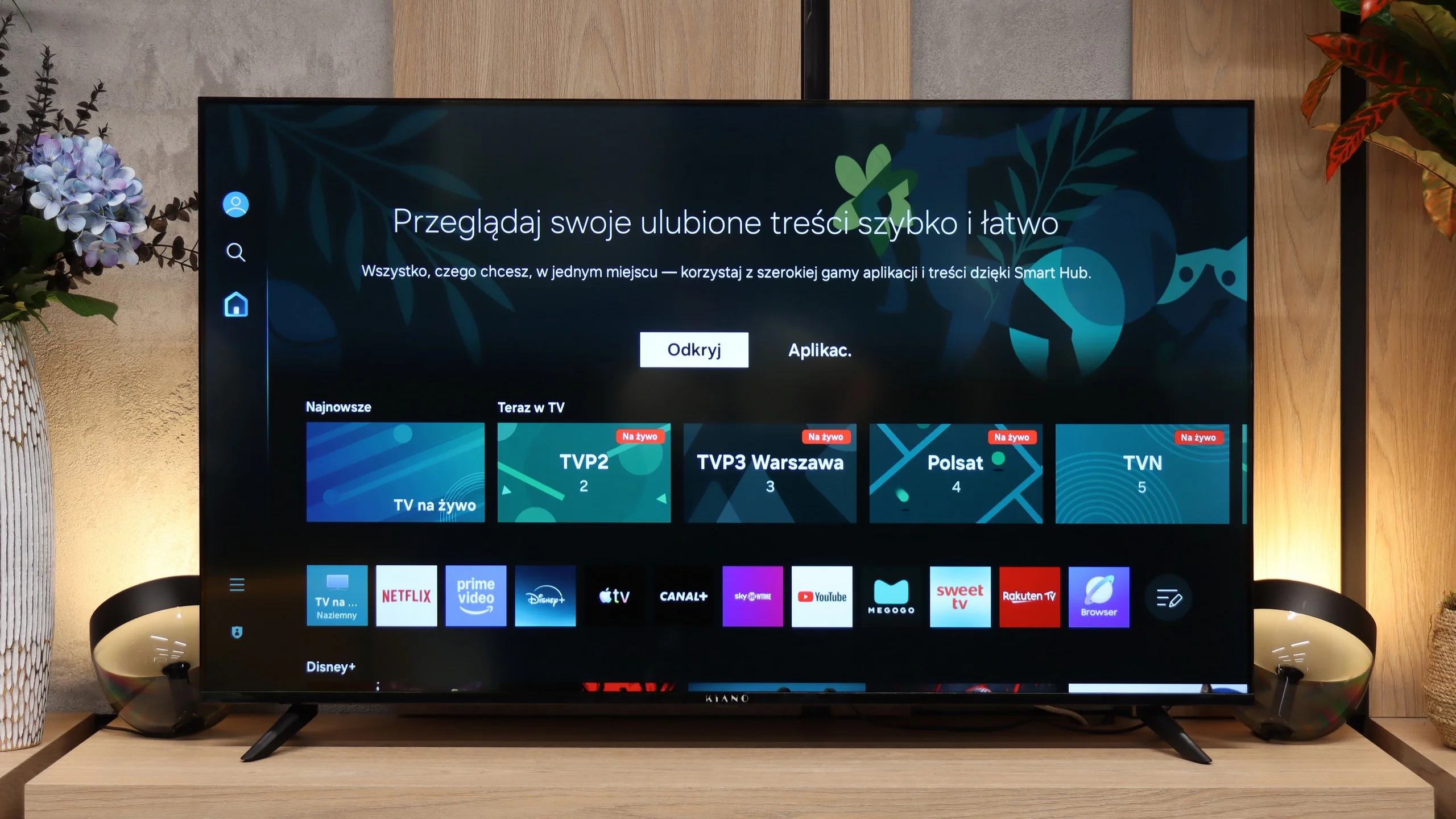
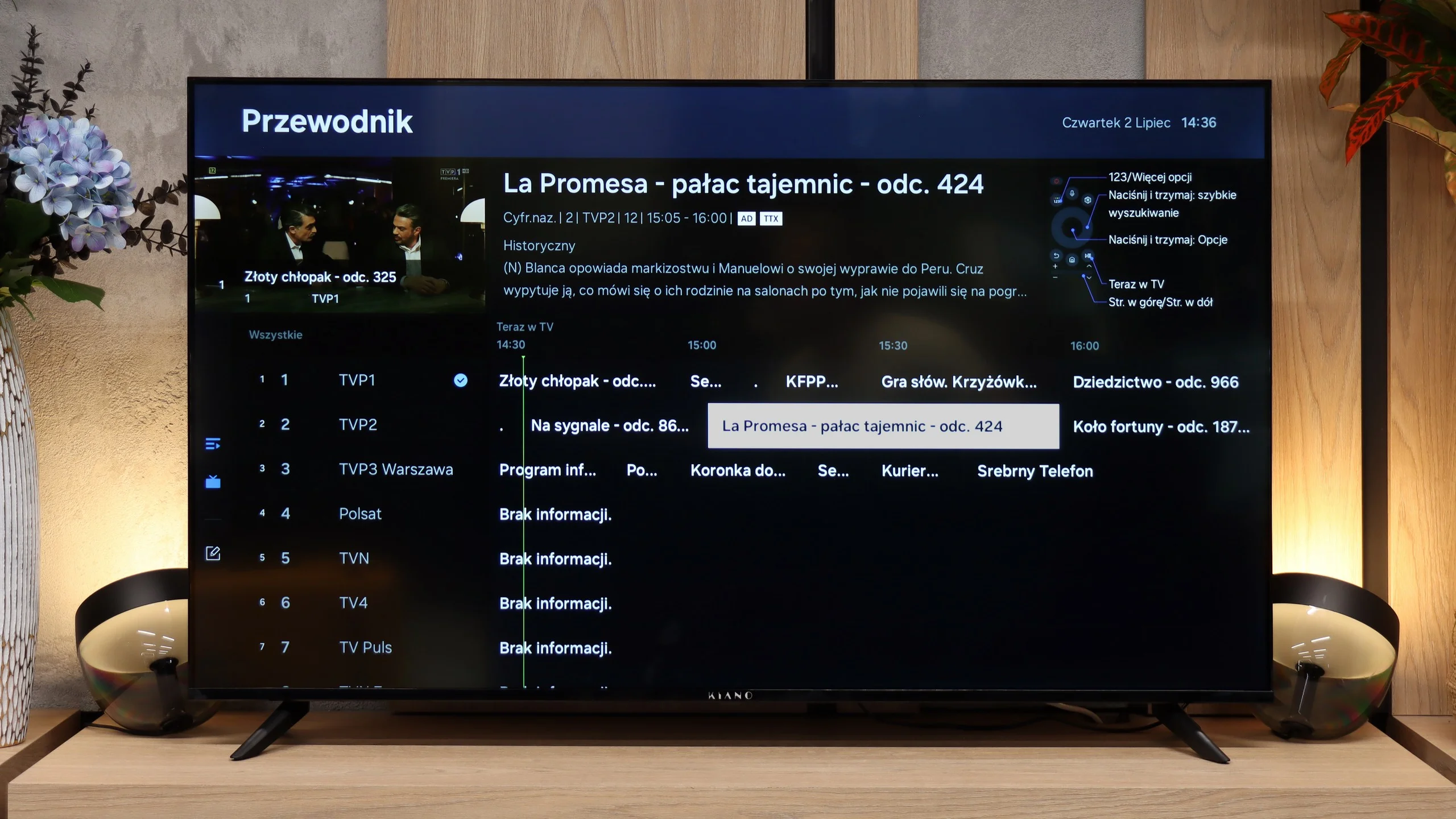
Tizen is one of the main reasons to consider this model. It gives access to many popular apps, so you don't necessarily need an external streaming device to watch series or YouTube. Bear in mind, however, that the same system does not guarantee the same ease of use as in more expensive Samsung models. On the Kiano the responsiveness is average, and you may sometimes have to wait a moment for the menu to react. There is no voice search, so titles must be entered with the remote control. A convenient addition is AirPlay and the ability to wirelessly stream the picture from a computer.
Everyday use
The basic TV functions are in place, but there is no USB programme recording or picture-in-picture. The remote uses infrared, so it must be pointed at the TV, and its buttons are not backlit. It is useful, however, that you can use Bluetooth headphones and the speakers at the same time. This allows one person to listen through headphones (for example an older person) without taking the sound away from others in the household. For connecting devices there are three HDMI 2.0 inputs, which are sufficient for 4K at 60 Hz. A soundbar can be connected via eARC, and an analogue RCA input is provided for older equipment.
Apps
9.6/10
8.8/10






















Playing files from USB
9.6/10
8/10
Supported photo formats:
Maximum photo resolution:
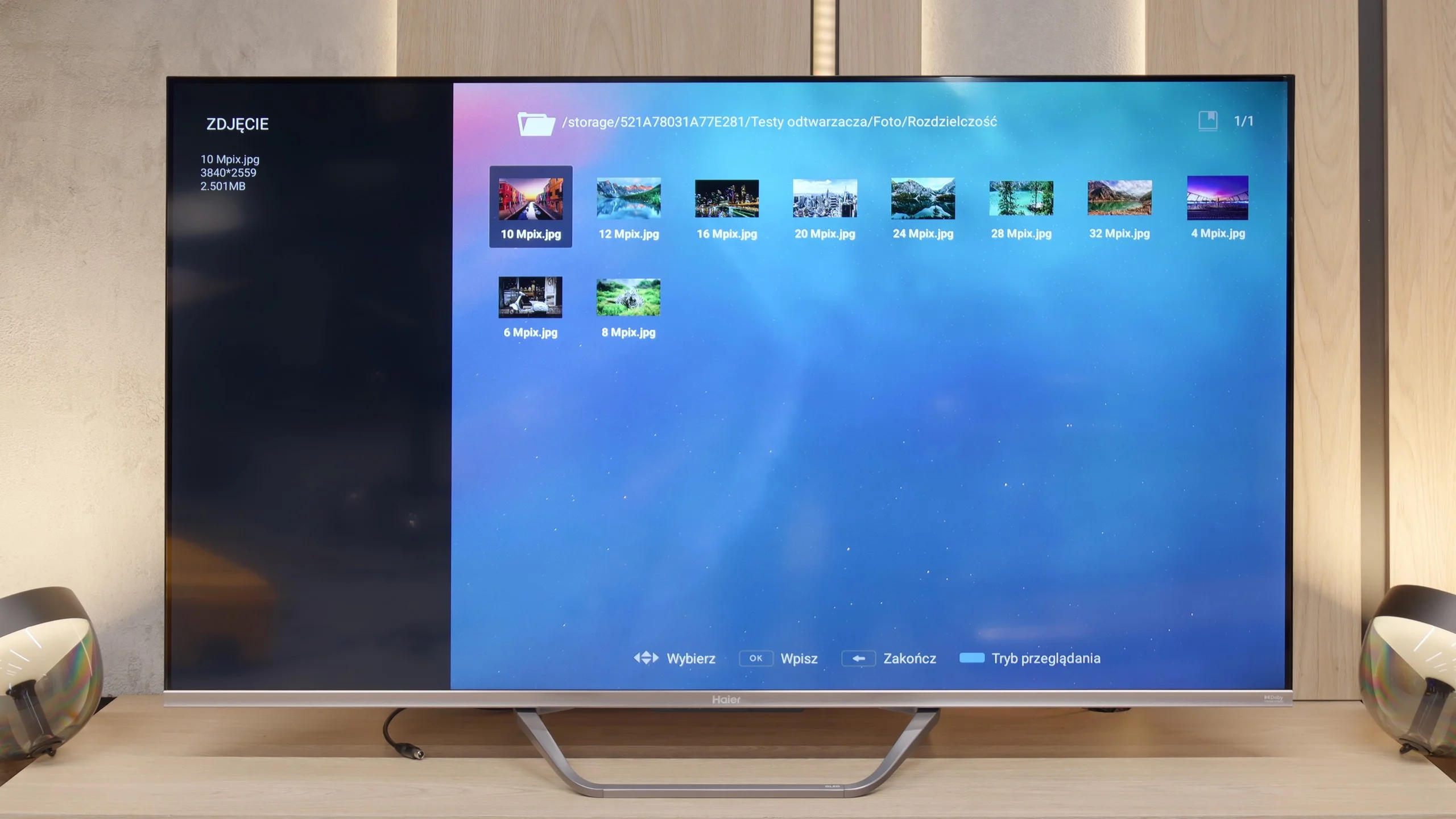
We must admit that after a series of setbacks we experienced in assessing the overall implementation of the Google TV system, we approached the media player test with considerable reservation. Meanwhile, in this one specific aspect, the Q80FUX served us a genuine surprise. The built-in application for managing files from USB drives works simply excellently. This software component seems to be completely immune to the ailments that afflict the rest of the system, opening practically all the most important and popular video file formats that we presented to it.
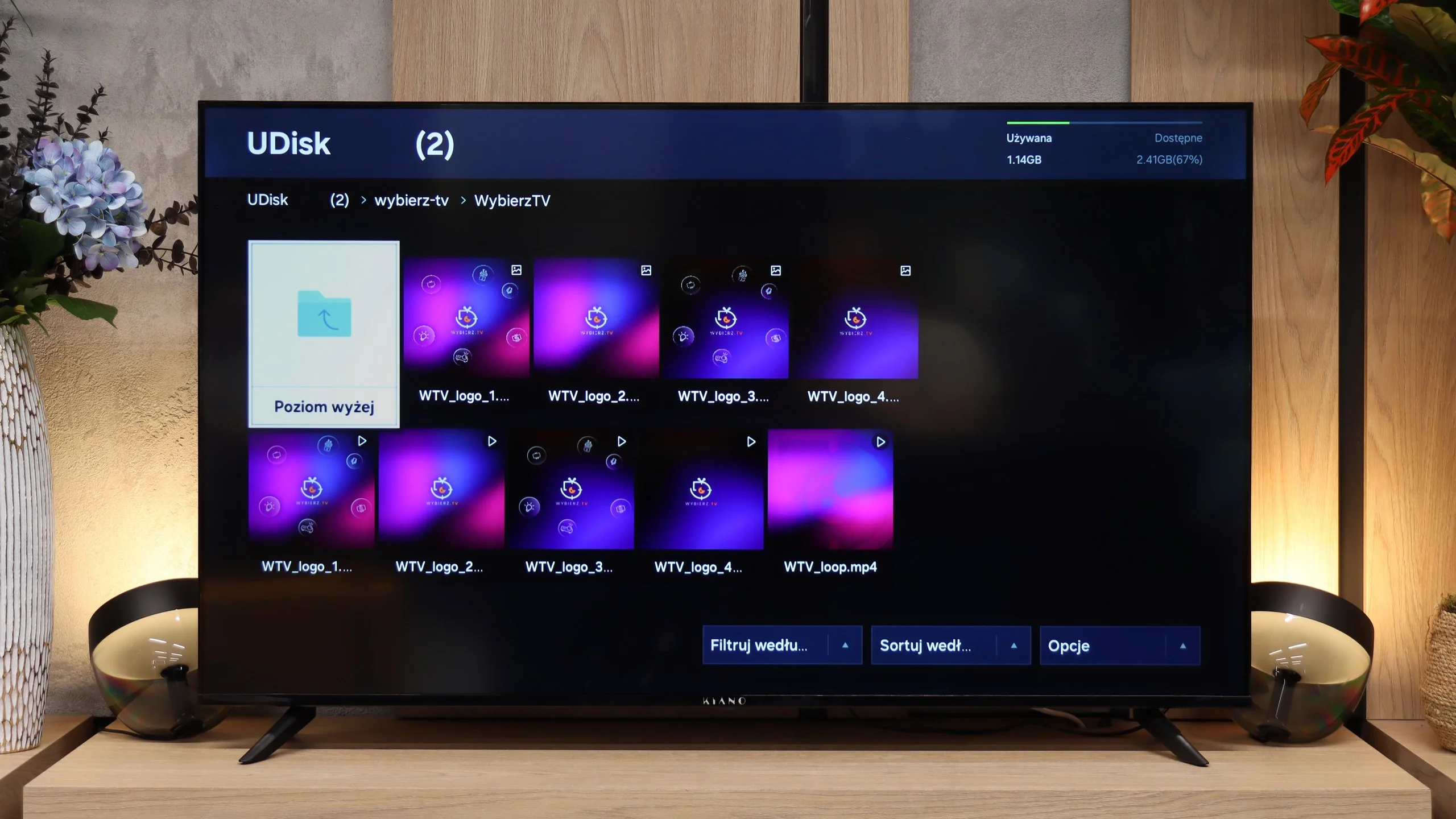
The USB player in the Kiano Elegance supports most popular formats, so opening typical films, photos or music should usually not be a problem. However, actually using it is less satisfactory. During testing it had its 'moments of weakness' and could take a very long time to open individual files. Sometimes it took so long that you could start to wonder whether the TV was still loading something or had already frozen. It's sufficient for occasionally playing something from a USB stick, but browsing a larger collection can require a great deal of patience.
Sound
5.5/10
3.6/10
- Maximum volume84dB88dB
- Dolby Digital Plus 7.1
- Dolby True HD 7.1
- Dolby Atmos in Dolby Digital Plus (JOC)
- Dolby Atmos in Dolby True HD
- DTS:X in DTS-HD MA
- DTS-HD Master Audio
When it comes to acoustic "experiences", the Haier Q80FUX seems to adhere to the principle that sound is simply meant to be there. And it is – that's about all that can be said. The built-in speakers deliver an exceptionally flat sound, lacking character, and above all, they lack any distinct bass foundation. A small consolation is the fact that the television supports Dolby Atmos format. However, let's be honest: to truly benefit from the merits of this codec and hear the promised spatial quality, passive decoding capability is not enough. Connecting an external home theatre system or at least a decent soundbar is, in this case, not just a recommendation but an absolute necessity.
Sound is one of the weaker aspects of the Kiano Elegance. The TV can get fairly loud, measuring 88 dB, but loudness alone does not translate to sound quality. For casual viewing you can stick with the built-in speakers, but for films or music it's worth budgeting for a separate sound system. Connecting a soundbar via HDMI eARC should not cause problems. The TV also supports Dolby Atmos over Dolby Digital Plus, but it does not play Dolby TrueHD or DTS-HD tracks.
Sound Quality Test
Acoustic Measurements
84dBC (Max)
75dBC
88dBC (Max)
75dBC
Reader comments
Comments are provided by the external service Disqus (Zeta Global). Once loaded, Disqus may set cookies and process data about your activity.
We will remember your choice on this device. Provider's privacy policy