 Redakcja Choose TV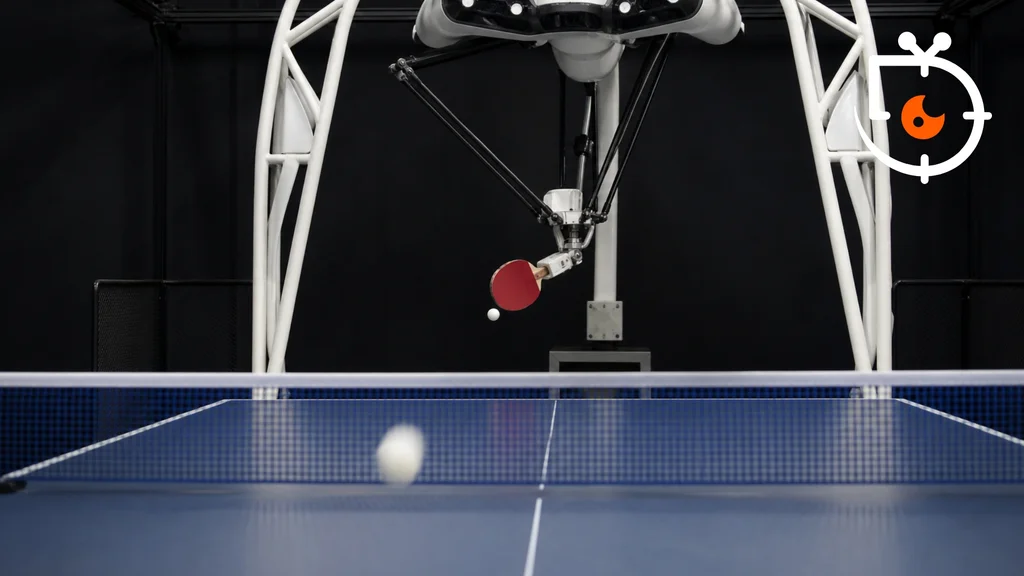
The table tennis robot from Sony looks like an impressive display of technology at first glance, but in practice, it says much more about the future of artificial intelligence. It is no longer just a system that analyses data on a screen, but one that must operate in the real world, react in fractions of a second, and deal with chaos that cannot be fully predicted.
AI goes beyond the screen
Unlike classic examples like Deep Blue, which defeated a human in chess, here we have an entirely different challenge. Table tennis is a fast, dynamic game where not only analysis matters but also reaction and precise movement. The robot must track the ball, predict its trajectory, and react before the situation changes. This demonstrates a significant shift in the development of AI. It's no longer just about intelligence in the sense of calculations, but about the ability to act in real-time. Such systems can find applications in factories, logistics, or even medicine, where quick and accurate responses are crucial.
When AI Gets a "Body"
The biggest change occurs when artificial intelligence starts to operate physically. In controlled environments, such as factories, robots are already performing repetitive tasks, but the future lies in dealing with unpredictability. Curved surfaces, variable conditions, the presence of humans – all of these make tasks much more challenging. Along with this, the risks also increase. A bug in an application can be annoying, but a robot's error in a hospital or on the road can have serious consequences. Therefore, the development of such systems is not only a matter of technology but also of safety and responsibility.
The Sony robot is not just a technological curiosity, but a harbinger of a larger change. AI is no longer confined to computers and is beginning to operate in the physical world. This opens up enormous possibilities, but also presents new challenges that we are only just starting to understand.
source: digitaltrends