 Redakcja Choose TV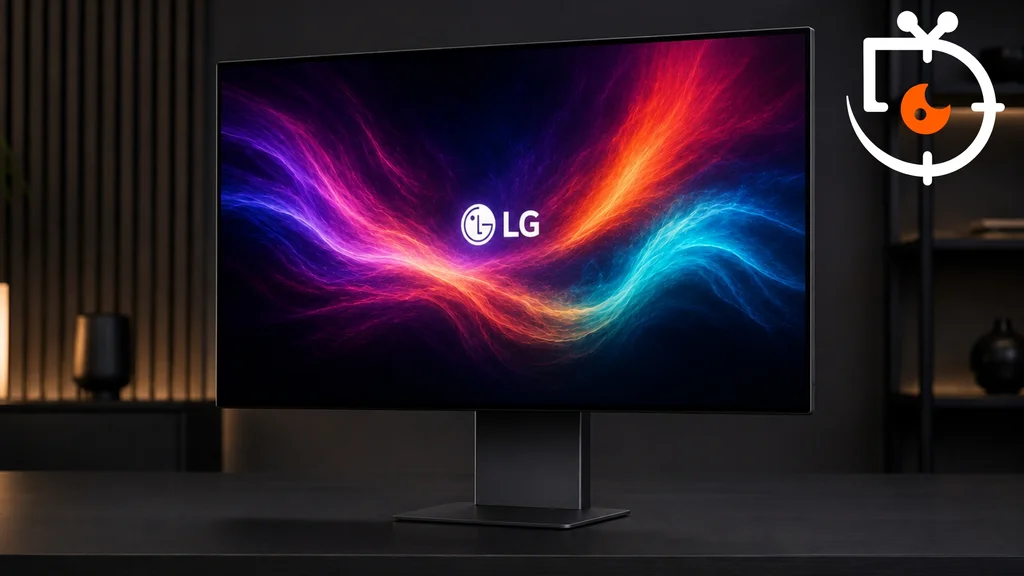
The Computex 2026 fair brought more interesting innovations from the world of OLED monitors. LG Display used the event to showcase several advanced next-generation panels. The biggest attention was drawn to the first 27-inch WOLED screen offering a 5K resolution. The manufacturer also presented an experimental solution using BFI technology, which could significantly improve the smoothness of images in games. Everything indicates that OLED is preparing for another major leap forward.
LG has created the first 27-inch OLED monitor with 5K resolution
One of the most interesting novelties presented by LG Display was the 27-inch WOLED panel equipped with a resolution of 5120 × 2880 pixels. This means a pixel density of about 220 pixels per inch, which has so far been mainly the domain of LCD monitors intended for professionals. The manufacturer also applied an RGB-stripe pixel layout, which is designed to improve the sharpness of displayed text and graphics. The panel offers a refresh rate of 120 Hz and a peak brightness of up to 1000 nits. The full-screen brightness is around 250 nits. LG emphasises that the new screen has been designed not only for gamers. The manufacturer also sees its application in photography, video editing, graphic design, and other professional tasks. Thanks to its very high resolution, the monitor is expected to provide a level of detail comparable to high-quality prints. However, it is still unclear when such a panel will make its way into ready products available in stores. It is worth noting that similar designs have already been presented by Samsung Display earlier. This shows that the largest panel manufacturers are increasingly investing in the development of OLED screens with very high resolution. For users, this means a chance for a new class of premium monitors to emerge. This segment has been practically reserved for advanced LCD screens for years.
The BFI Technology May Return to OLED Monitors
The second intriguing feature presented by LG Display was a prototype monitor using BFI technology, or Black Frame Insertion. The solution involves inserting black frames between the actual images displayed on the screen. This allows the human eye to perceive motion as sharper and clearer. The technology had previously been used in some OLED televisions, but over time manufacturers began to abandon it. The issue turned out to be flickering images and a noticeable decrease in brightness. However, LG has clearly not given up on this idea. During the presentation, a 27-inch WOLED panel with a resolution of 1440p and a refresh rate of 540 Hz was showcased, which uses a new approach to BFI operation. The manufacturer claims that the solution may help reduce the problems arising from the performance of graphics cards. At the same time, it requires very high screen brightness. The prototype achieves around 330 nits at full screen and even 1500 nits at peak, as activating BFI significantly reduces the final brightness of the image. At this stage, it is still unknown whether the technology will make it into finished monitors. However, the very fact that work is underway shows that OLED manufacturers are still looking for ways to improve image quality in dynamic scenes. This may be particularly interesting for gamers as a development direction.
LG Display showcased during Computex 2026 that the development of OLED monitors is not slowing down. The first 27-inch WOLED 5K panel is likely to attract both professionals and demanding home users. At the same time, the company is working on new solutions to improve motion clarity through BFI technology. Although we will have to wait for the launch of ready products, the direction of OLED development looks increasingly promising.
source: flatpanelshd