 Maciej Koper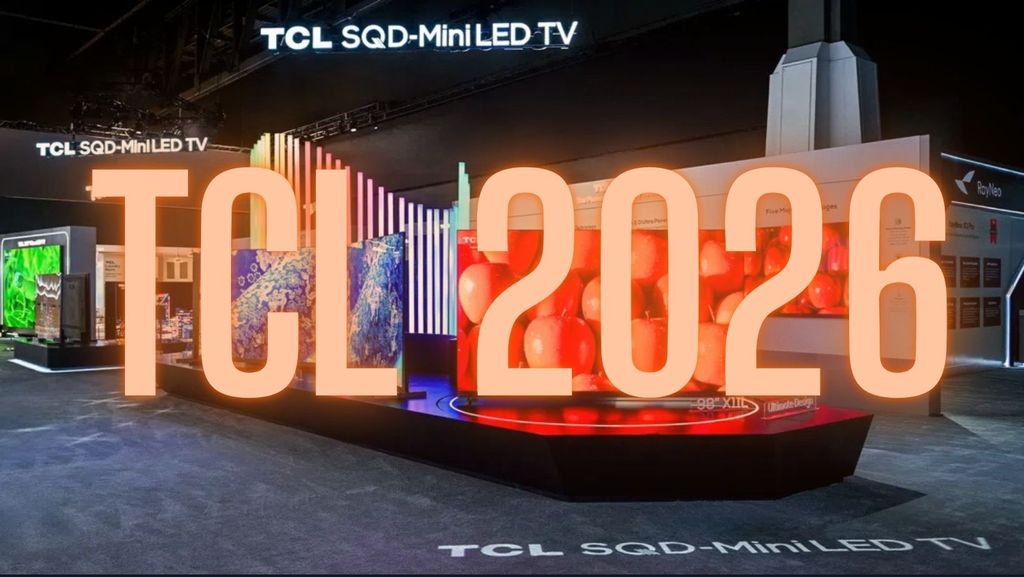
While most manufacturers at CES 2026 focused on promises and vague announcements, TCL, as one of the few, laid its cards on the table. We visited their booth in Las Vegas to see if the promised revolution in MiniLED is just numbers in tables or an actual leap in quality. And you know what? There's plenty to write about, as the Chinese giant is playing on two fronts this year that could significantly shake things up in living rooms.
Flagship X11L: 2cm thick and 20,000 dimming zones
The main highlight of the event was the successor to the top X11K – the X11L model. Here was the first surprise, as TCL has gone against the grain. While the industry has been excited about Micro RGB technology (or MiniLED RGB), their flagship opted for something different: SQD technology, which is a new approach to quantum dots. Why? The reason is simple but crucial for anyone who doesn't want a television the size of a wardrobe on their wall. Micro RGB requires space for light to disperse. By choosing televisions with SQD technology, TCL has created a television that is only 0.8 inches thick, while still housing a monstrous 20,000 dimming zones (in the 98-inch version). We stood in front of this screen for a good fifteen minutes, viewing it from extreme angles – the 'halo' effect around bright objects is practically non-existent. It seems that this television can truly compete with organic matrices in terms of black levels and contrast. The only question is how the final product will look when it arrives in Europe? We will find out in March or April of this year.
X11L: A powerful image that requires... a powerful living room
Despite the admiration for the technology, the X11L has one key downside for many. Ironically, it’s not about the price at all. The greatest barrier to owning this model will be its size. Everything indicates that, just like last year, our adventure with the flagship series will begin only from 85/98 inches. At this moment, there are no signs that TCL plans to offer smaller sizes for this specific model. Once again, we will see the 98-inch version, and the offering will be capped off by the absolute giant - 115 inches. Although the final price of these largest monsters is not yet known, one can safely assume that it will not be cheap. This is uncompromising equipment, aiming at a specific PREMIUM viewer. However, if you have space on your wall and are looking for the absolute peak of MiniLED technology in 2026, the X11L will be one of the strongest contenders for that title.
Wireless Surround Sound
TCL X11L is also a return to the roots in terms of audio. Instead of hidden speakers “playing into the wall,” we have an integrated soundbar with drivers aimed directly at the viewer. This is the result of collaboration with Bang & Olufsen, and it simply shows. However, the real hit may be the support for Dolby Atmos Flex Connect. This technology allows you to wirelessly add a subwoofer or additional speakers to the television anywhere in the room. The system will automatically detect their location and calibrate the sound so that you are always at the centre of the action.
C9L: Completely different from its predecessor
However, if the slimness of the casing is not a priority for you, TCL has prepared the C9L model. This is where the Micro RGB technology has landed. The television is noticeably thicker than the flagship X11L, but in return, it offers a colour palette that almost 100% covers the BT.2020 space. It is a proposition for those who seek "reference" colour reproduction and are willing to sacrifice design for uncompromised colour saturation. It is good to see that the manufacturer is giving us a choice, rather than confining us to one technology.
C8L and C7L: A Premiere Without Fireworks?
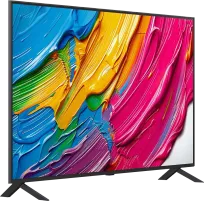
The situation with the C7L and C8L models at the trade fair was peculiar. While the manufacturer was throwing numbers around with the flagship X11L or C9L, with these "for the people" series, TCL suddenly became a bit tight-lipped. Visually, both models are very reminiscent of what we saw a year ago. The C8L still tempts with its Zero Border design and its slim bezel, while the C7L features a classic design with a visible black margin along the edge of the display.
WHVA 2nd Generation Matrix
The most important information regarding the C7L and C8L series is the use of second generation WHVA matrices. This is the move we have been waiting for. It is no secret that Mini-LED televisions – although very good in terms of contrast and brightness – usually suffered from poor viewing angles. Just sitting a bit to the side would cause the image to lose saturation and fade into greyness. From what we saw at the exhibition, WHVA 2.0 effectively eliminates this problem. The image remains stable, and the colours do not fade as quickly as in older models from before 2025.
Dolby Vision 2.0 TCL confirms its support
Important news for fans of the highest quality picture. TCL officially confirms the implementation of Dolby Vision 2.0 in its televisions for 2026. Interestingly, it is said that the new format could also be available via update for selected models from 2025, although at this moment, it has not yet been officially confirmed. We have prepared a separate piece for you about Dolby Vision 2.0, where we break down this format as well as the topic of HDR into its components. Be sure to catch up on it:
Printed OLEDs: The Chinese Can Do It Too
Finally, TCL unveiled something that goes far beyond the home living room – printed OLEDs (IJP) straight from the CSOT factory. These are not just curiosities for smartphones or 27-inch monitors. The manufacturer clearly states that this technology, due to its precision and sharpness, could revolutionise the market for professional devices, such as medical tools. However, the real draw at the booth was the prototype of the car cockpit of the future. TCL demonstrated how their displays can be stretched and bent almost arbitrarily to fit the rounded shapes of a car’s interior. Most importantly for us, the end users: these panels have a classic subpixel arrangement. This means that whether we’re looking at research results or navigation in the car, the text is as sharp as a razor – without the annoying jaggedness of fonts that some current OLED manufacturers still struggle with.
TCL Takes No Prisoners
This year's TCL booth at CES 2026 demonstrated that the time for calling this brand a "cheaper alternative" has definitively come to an end. The manufacturer confidently enters the ultra-premium segment, focusing on gigantic screens and proprietary technologies such as SQD, while showcasing its printed OLEDs as a futuristic alternative to Korean panels. Of course, trade show promises of 10,000 nits or perfect blacks should always be taken with a pinch of salt, but the progress regarding WHVA 2.0 panels, the use of new SQD quantum dots, and RGB Mini-LED/Micro LED backlighting represents real changes that we will feel. The year 2026 is shaping up to be a year of great diagonals and a fight for Mini-LED to finally shed any complexes it has regarding OLEDs.