 Redakcja Choose TV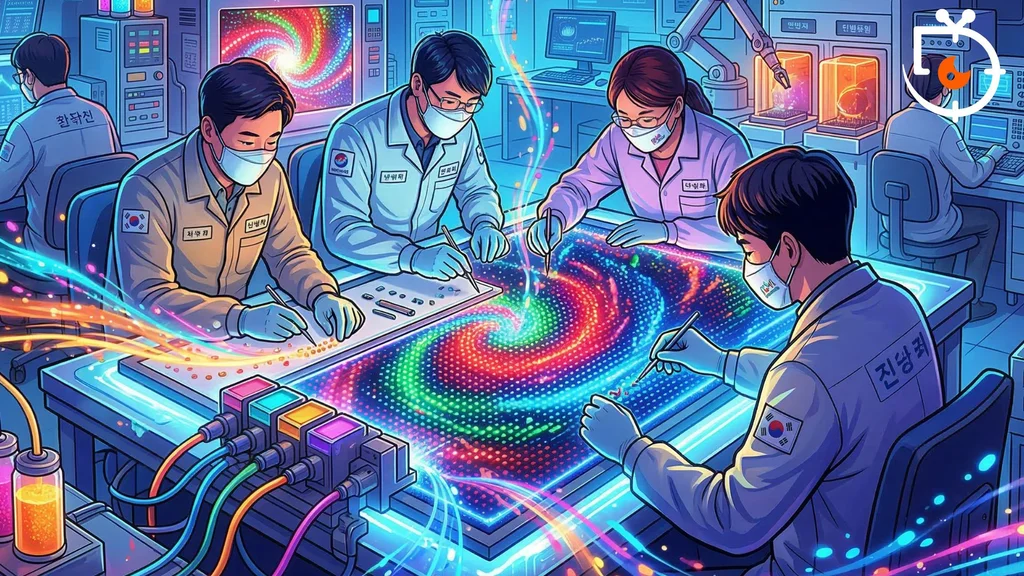
Samsung Display is once again creating a new generation of displays. After several years of stagnation, the giant is resuming work on QNED technology (Quantum Dot Nanorod LED). Success in the precise distribution of nanostructures has made a project that was previously shelved a priority and a real threat to current QD-OLED matrices.
End of production problems? Samsung has a new plan
The reactivation of the QNED project is a result of a breakthrough in the process of applying nanowires using inkjet printing. Samsung Display has struggled with a technological barrier for years. Previously, it was not possible to consistently and precisely place blue diodes (nanowires) on the surface of the panel. However, the latest reports from Korea confirm that engineers have overcome this obstacle.
Samsung's concept involves completely replacing organic light emitters (OLED) with inorganic nanowires. From the user's perspective, this is a fundamental change: QNED screens are expected to be almost completely resistant to burn-in, offer significantly higher brightness, and crucially – be cheaper to mass-produce than current QD-OLED or WOLED panels.
Samsung's QNED is not the same as LG's QNED
It is worth clarifying the naming confusion that may mislead consumers. The QNED currently promoted by LG is merely an extension of LCD technology with quantum dots. The solution being developed by Samsung is a completely new league of emissive technology, where each subpixel emits its own light, similar to MicroLED and OLED.
If Samsung manages to transition from the laboratory phase to pilot production, the fate of QD-OLED technology in the premium segment may be sealed. The new standard aims to combine the best features of OLEDs (perfect black) with the durability of classic LEDs.
Source: OLED-Info