 Redakcja Choose TV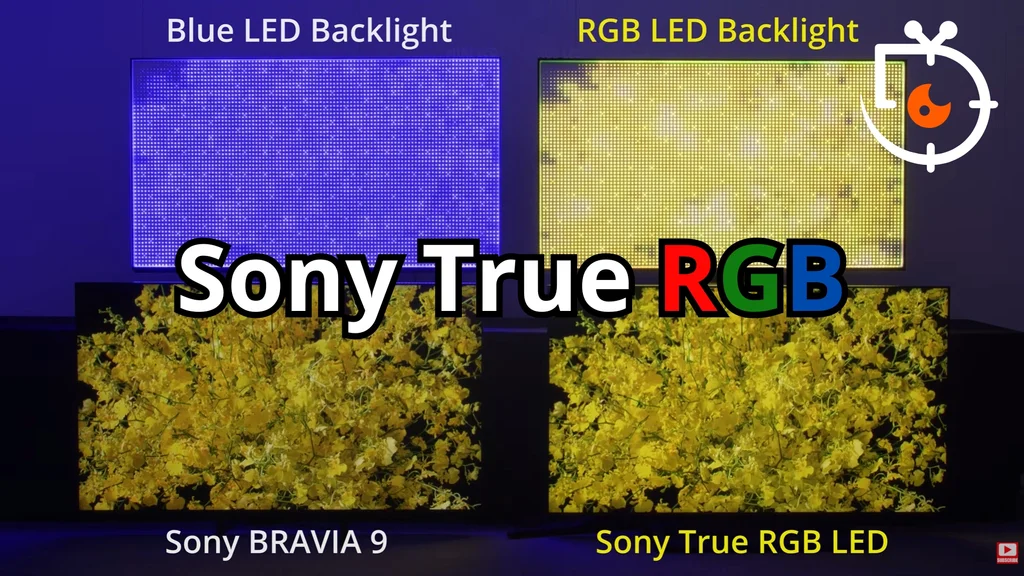
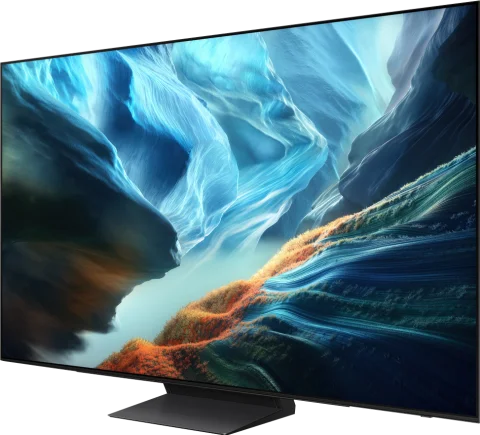
Sony announces a new generation of televisions based on technology referred to as True RGB. This solution is set to be another step in the development of LED displays and simultaneously an attempt to enter a level that has so far been the domain of OLEDs. The manufacturer promises higher brightness, better colour reproduction, and greater control over the image than in previous constructions. The new televisions will be presented in a few weeks. It seems that at the press presentation, Sony did not unveil all of its models for the upcoming year.
What is True RGB technology?
In classic LED televisions, including those with Mini LED backlighting, the light is generated indirectly. Typically, blue diodes are used, and the final colour is achieved through additional layers such as PFS or QLED, which filter the light. Sony takes a different approach. In True RGB technology, each diode is meant to emit a specific red, green, or blue colour without the involvement of filtering layers. This is a more “physical” approach to colour generation, which eliminates losses resulting from light filtering. The effect? A purer colour spectrum, greater precision, and potentially significantly better colour space coverage.
Advantage over Competitive RGB LED Solutions
Although solutions referred to as RGB LED or Micro RGB are already appearing on the market, many of them rely on intermediate methods of colour generation. In practice, this means using several light sources supported by additional layers (e.g. PFS or QLED). According to information presented by Sony and industry analyses (including materials from Vincent at HDTV Test), competing technologies often do not control each “subpixel” independently. It sometimes occurs that two diodes operate simultaneously, and the target colour is only created after passing through the emission layer.
This leads to less precise colour reproduction, which can be observed, for instance, in spectrometer measurements, where the red spectrum can be “jagged,” and the reported coverage of BT.2020 deviates from perfection and the marketed 100% coverage of this palette. Sony claims that their solution allows for full, individual control of each RGB, which is supposed to translate into a more uniform and accurate spectrum of light.
Brightness and colour volume of up to 4000 nits
One of the most interesting aspects of True RGB is the claimed brightness. Sony suggests that the new televisions can achieve levels of up to around 4000 nits, which is a huge leap compared to current models; for comparison, BRAVIA 9 reaches about 1500 nits in real film scenes. Such high luminance, combined with pure colours, can significantly enhance the so-called colour volume, meaning the ability to maintain saturated hues at high brightness. This is one of the areas where OLEDs have previously had their limitations.
Technological foundations and experience of Sony
True RGB is not a random experiment. It is the result of many years of work by Sony on LED backlighting technologies. The company has been developing RGB systems since the QUALIA 005 model in 2004, and later introduced solutions such as Backlight Master Drive. The new technology combines expertise in precise control of LEDs with the advantages of Mini LED, while trying to achieve picture quality associated with OLED but without its typical limitations.
New leaks about Bravia 7 II and Bravia 9 II
The first leaks regarding specific models using True RGB technology are also emerging online, referring to the upcoming Sony Bravia 7 II and Bravia 9 II. According to unofficial information, the televisions are set to hit the market in a wide range of large screen sizes (from around 65 to even 115 inches), although the exact variants vary depending on the source. This is, of course, still merely speculation, but everything suggests that the Bravia 7 and Bravia 9 series might receive a really solid upgrade if all these reports are confirmed.
Is this a threat to OLED and QD-OLED?
On paper, True RGB looks very promising. If Sony actually achieves the stated brightness, full coverage of wide colour spaces, and precise control of each sub-pixel, this could be one of the biggest changes in the television market in years. However, it will be a while before we find out whether the "True RGB" television is better than OLED.
Sony True RGB is set to be a breakthrough in display technology, moving away from light filtering towards direct emission of specific colours. This approach could provide higher brightness, better colour reproduction, and greater control over the image than current LED systems. If the manufacturer's announcements are confirmed, the television market may face a significant shift in the balance of power and OLED will finally have a truly strong competitor.
source: HDTVTest