 Redakcja Choose TV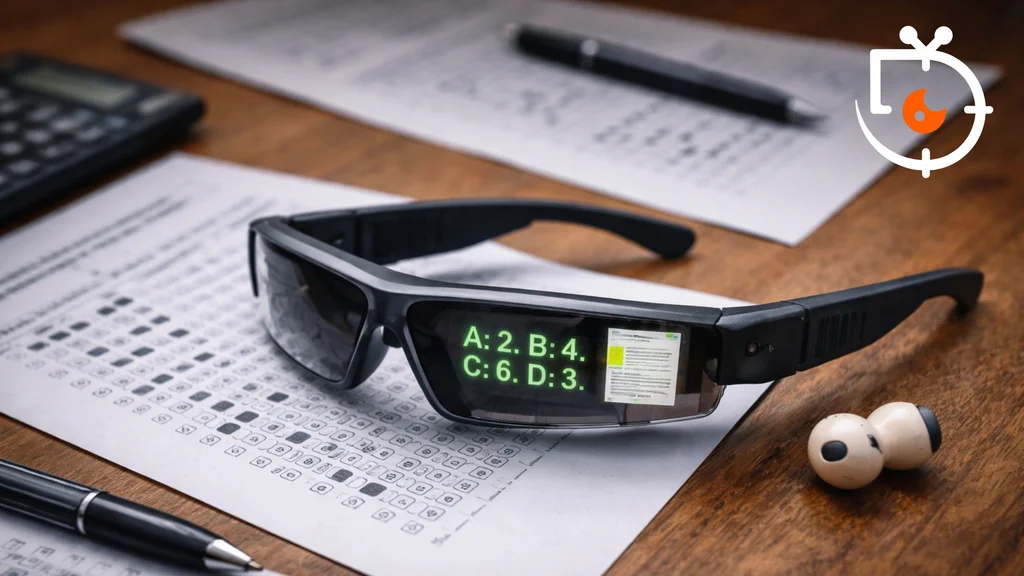
Smart glasses have previously raised significant controversy regarding privacy, but now a completely new problem is emerging. An increasing number of people are starting to use them for cheating during exams, and in a practically undetectable way. Thanks to the combination of cameras and artificial intelligence, it is possible to analyse questions in real-time and display answers without pulling out a phone. Interestingly, such devices can even be rented for a few dollars a day, specifically for tests or exams. This shows that the problem is no longer theoretical; it is happening here and now.
How cheating works using smart glasses
Modern glasses are equipped with cameras, microphones, and AI systems that analyse what the user is looking at. In practice, this means that it is enough to glance at a sheet of paper with a question, and the system can scan it and send it to an AI model that generates the answer almost instantly. Everything happens discreetly, without suspicious movements. Devices like Ray-Ban Meta Smart Glasses have already raised concerns due to the possibility of recording without the knowledge of others. Now, another level of problem arises, as technology begins to affect not only privacy but also integrity in education.
A problem that is hard to control
The biggest challenge is that such solutions are practically invisible. Smart glasses look like ordinary models, so detecting them during an exam is much more difficult than with a phone or smartwatch. This means that traditional methods of control stop working. Experts point out that this could completely change the approach to examinations. In some places, there are already attempts to restrict access to AI tools during tests, but this is only a temporary solution.
We are entering the era of so-called "invisible technology," which is on one hand very useful, but on the other easy to abuse. Smart glasses can assist with navigation or translation, but they can just as easily become a tool for circumventing rules. The boundary between assistance and deception is beginning to blur, and educational institutions will need to quickly find new ways to adapt to this reality.
source: digitaltrends.com