 Michał Wołoszyn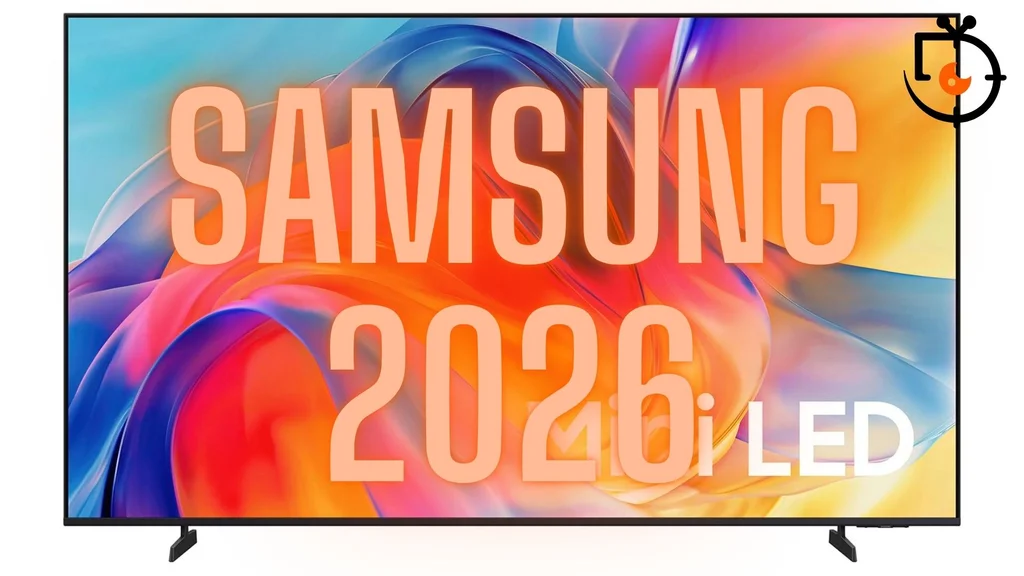
While everyone is excited about the new OLEDs, Samsung is quietly revolutionising the segment that interests the average person the most. Models are arriving in American stores that are causing quite a stir in the naming conventions. If you thought that every Mini-LED from Samsung was a "Neo QLED", the year 2026 will be completely different. The Koreans are introducing budget Mini-LEDs that... do not have quantum dots. What is this all about?
Samsung Series M: Mini-LED without Quantum Dots?
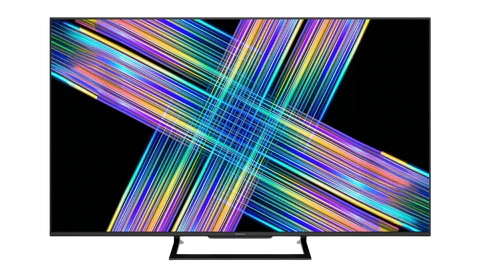
The biggest surprise in the upcoming lineup is the appearance of a brand new family of devices: the M series (M70H, M80H, and M90H). Interestingly, even though Mini-LED diodes are working under their hood, Samsung deliberately does not promote them under the Neo QLED brand. Why? The answer lies in recent legal battles with TCL. Samsung has evidently taken to heart the importance of accurate naming and decided that if a television uses different colour filters, rather than quantum dot nanoparticles, it has no right to be called a QLED. It’s a bold and honest move. Instead of "Q", we are presented with a technology they have named "Pure Spectrum Color" (probably PFS-LED filter).
M70H and M80H Series: A Budget Powerhouse with Features for Gamers
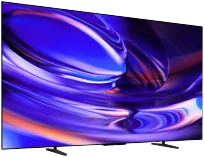
Moving on to the specific models, the M series promises to be a market hit for those who count every penny but do not want to compromise on picture fluidity. The M70H model (available from 43 to 85 inches) is expected to be equipped with a 120 Hz panel, which is a rarity in this price range. Even more interesting is the M80H, which receives the NQ4 AI Gen2 processor and a feature that we have only seen before in Chinese products: refresh rate up to 240 Hz.
Samsung M70H | Price (USD) | Price (PLN - rounded to "store price") |
43" | $349 | 1,499 zł |
50" | $399 | 1,699 zł |
55" | $449 | 1,899 zł |
65" | $529 | 2,299 zł |
75" | $729 | 3,199 zł |
85" | $1199 | 4,999 zł |
These televisions will be equipped with HDMI 2.1 ports
Samsung M80H | Price (USD) | Price (PLN - rounded) |
55" | $699 | 2 999 zł |
65" | $799 | 3 499 zł |
75" | $1199 | 4 999 zł |
85" | $1799 | 7 699 zł |
Where's the catch?
Now we need to pause this enthusiasm for a moment. As the portal HDTVTest rightly points out, there is a high probability that the M series and the cheapest new model from the Neo QLED series QN70H use Edge-lit Mini-LED backlighting. The true strength of Mini-LED technology lies in the hundreds of local dimming zones (FALD) placed behind the panel. Only the QN80H model is shaping up to be the design we are looking for – with a full "Quantum Mini LED" system.
New in the Neo QLED series: QN70H and QN80H
Two models from the QN series have also appeared in American stores.
QN70H
QN70H: Despite its name suggesting a continuation of the QN70F, this model features a 60 Hz panel. Its design is reminiscent of last year's Q8F – it lacks local dimming technology. Prices start from $599 (~£2,599) for the 43" size.
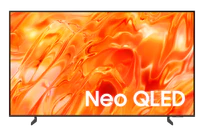
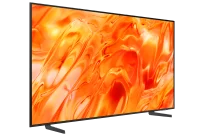
QN80H
QN80H looks completely different. This model is clearly "thicker," which suggests full-fledged Mini-LED backlighting (FALD) placed behind the screen. This will probably be a continuation of the QN80F model, although we cannot confirm that yet. Interestingly, it features a size of 100 inches, with a price expected to be around $2499 (around £10,499). This could be the cheapest “hundred” with such good MINI-LED backlighting from Samsung.
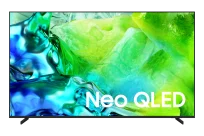
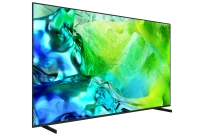
Crystal UHD U8000H
For those looking for simply "anything that shines in 4K", Samsung refreshes the Crystal UHD series. The U8000H model is technically a copy of last year's solutions, but with an updated Tizen system. This will undoubtedly be the cheapest 4K television in the 2026 offering, aimed at the least demanding viewer.
Is it worth waiting for Samsung's new M series?
It is clear that Samsung intends to fight for customers' wallets this year not only with uncompromising quality of flagship models, which we saw at the CES 2026 fair, but above all with products perfectly tailored "for the masses".
Mini-LED 120 Hz for less than 2000 PLN in 55 inches? If these prices and specifications of the M70H series are confirmed, we are looking at a surefire bestseller that could completely demolish the competition's offerings in the "budget" segment. Of course, we approach these new products with a dose of healthy skepticism, especially regarding the (probably) edge lighting and lack of quantum dots. However, the market potential for these models is enormous.
You can expect the first professional tests of these models in our lab – provided they hit the Polish market – around May.