 Redakcja Choose TV
The latest report from the analytics firm Omdia indicates an impending revolution in the construction of OLED screens. The abandonment of the traditional polariser layer (CPL) in favour of newer solutions is expected to bring massive benefits in brightness and energy efficiency of devices. According to forecasts, shipments of such panels will rise to 244 million units over the next six years.
COE Technology: The Key to Energy Efficiency and Slimness
Standard OLED panels use circular polarizers, which are responsible for directing light, but at the same time act as a barrier to brightness - they absorb nearly half of the light generated by the pixels. Transitioning to Color Filter-on-Encapsulation (COE) technology allows for the elimination of this physical layer. Instead of a thick film, colour filters are applied directly to the protective layer of the diodes, which drastically reduces the thickness of the entire panel.
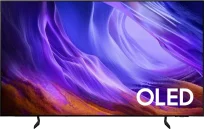
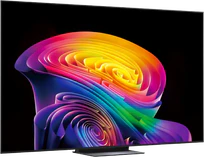
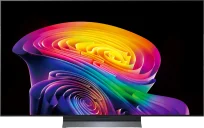
The latest "budget" OLED SE panel from LG Display serves as the first example of such a solution. These panels can be found in models such as the LG B6, Panasonic Z85C, and possibly the Samsung S85H.
This solution is particularly significant in the case of devices with limited space, such as foldable smartphones or VR goggles. Higher luminous efficiency directly translates into lower energy consumption by the device, which allows for an extended operation time on a single charge without the need to increase battery capacity. An example of the practical implementation of this innovation is the Samsung Galaxy S26 Ultra model, which, thanks to the new panel structure, offers advanced privacy features and improved readability in bright sunlight.
The market awaits a sharp increase
Although technologies eliminating polarizers in mobile devices initially only reached the most expensive flagships due to implementation costs, there is currently a trend towards expanding their availability. It is estimated that by 2032, the number of delivered panels of this type will reach 244 million units annually. Aside from top-tier solutions such as COE, manufacturers are also developing simplified polarizing layers (SPL), which, with lower production costs, have a chance of reaching cheaper smartphone and tablet models.
The new screen architecture also facilitates hiding cameras beneath the display surface. With fewer layers for light to penetrate, under-display cameras can capture higher quality images, which has been a major barrier to their popularisation until now. Everything suggests that over the next decade, traditional, "thick" OLED panels will be completely replaced by a new generation of displays.
Source: Omdia