 Katarzyna Petru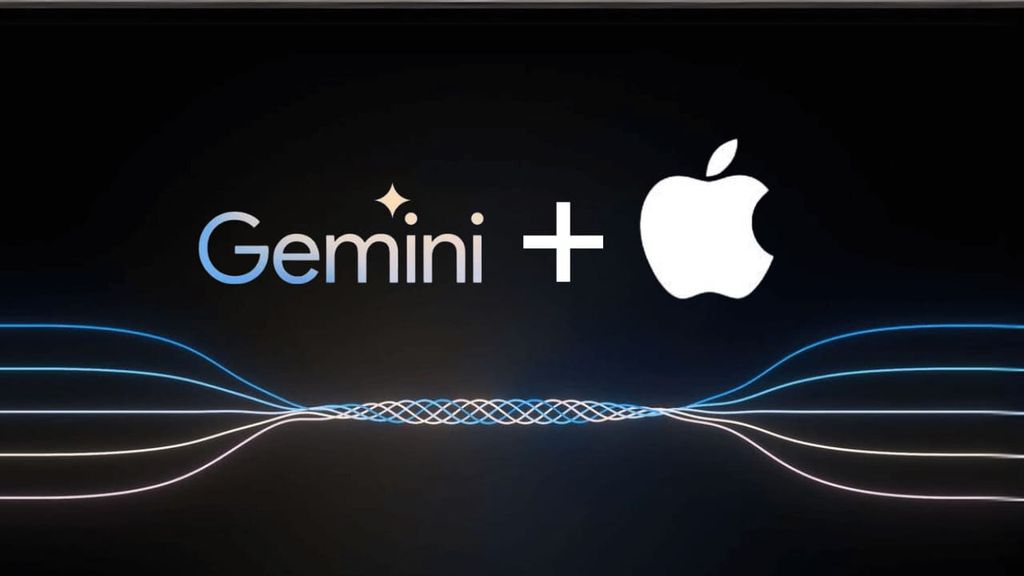
Apple's collaboration with Google in the field of artificial intelligence has raised more questions than answers from the outset. Now, new information revealed by The Information sheds considerable light on the background of this partnership. One thing is certain – Apple is using Gemini, but on its own terms. And it does not intend to share the stage with Google.
Apple fine-tunes Gemini independently
During the official announcement of the partnership between Apple and Google, there were no specific technical details shared. The companies only confirmed that features based on Gemini would operate locally on Apple devices and within Private Cloud Compute, which is intended to ensure user privacy.
The Information reveals, however, much more. Apple is not only using the Gemini model as a foundation but can also fine-tune it independently, without constant intervention from Google.
Indeed, Apple can ask Google to modify selected elements of the model's functionality, but in practice, Cupertino has full control over how Gemini responds to questions and the style of conversation it maintains. In other words – it is not Google that sets the terms, but Apple that shapes the AI to fit its product philosophy.
Siri without the Google logo and without "Gemini" in the name
One of the biggest unknowns was regarding branding. Will Siri effectively become an advertisement for Google? Will users see the Gemini logo with every response? According to The Information – absolutely not.
In the current prototype of the system, responses from Siri do not contain any references to Google or Gemini. No logo, no names, no suggestions that a competing company's model is operating behind the scenes.
This perfectly aligns with earlier reports from Mark Gurman at Bloomberg, who predicted as early as the end of last year that Apple would never publicly showcase this collaboration. Siri is simply meant to be… better. Without foreign influences, without borrowings from Android, and without a "Google-like" character.
End of links instead of answers
One of Siri's biggest problems for years has been the lack of real general knowledge. Instead of answers – a list of links. Instead of information – a suggestion to "check in Safari". Apple hopes that Gemini will change this. The new Siri is supposed to provide real answers to factual questions, such as:
the population of countries,
scientific information,
basic encyclopaedic data.
This is an area where Siri has long lagged behind not only ChatGPT but even Google Assistant from a few years ago.
Siri is to better "understand emotions". This is a risky direction
The most controversial part of the report concerns emotional support. Apple assumes that Gemini-powered Siri will handle conversations where users signal loneliness, sadness, or discouragement more effectively. The new Siri is expected to respond more conversationally and empathetically – similarly to ChatGPT or Gemini in conversational mode. However, this is a minefield. The history of chatbots includes many instances where AI systems:
misinterpreted the user's emotional state,
downplayed the seriousness of the situation,
or even provided dangerous suggestions.
How Apple intends to reconcile empathy with safety – the report does not explain. And this could be one of the most challenging elements of the whole puzzle.
Two Siri Brains – Still One Problem
Craig Federighi has previously admitted that the biggest failure of Siri was attempting to merge two systems:
the classical, deterministic one (timers, alarms, messages),
and the AI-based language model.
Apple ultimately concluded that the hybrid architecture did not meet the company's quality standards. Nevertheless, the new Siri once again tries to bridge both worlds – this time in a more thoughtful way. Simple tasks will still be handled locally on the device, but when a query is ambiguous, Gemini will step in. An example? If you ask Siri to send a message to "mum," and you don't have such a contact, the new Siri is supposed to analyse the message history and context to determine who you mean.
Sounds great. In practice – it is precisely the problem that Google and Amazon have been grappling with for years.
Implementation in stages. Full Siri only in 2026?
Finally, the schedule. Apple does not intend to release everything at once. Some features will debut this spring. More advanced capabilities – such as:
remembering previous conversations,
proactive suggestions (e.g. leaving for the airport earlier due to traffic jams),
are only expected to be announced at WWDC in June. This means one thing – the Siri revolution will be slow, but methodical. Apple does not want a repeat of a false start and apparently prefers to deliver features in stages rather than promising miracles and delivering half measures.