 Redakcja Choose TV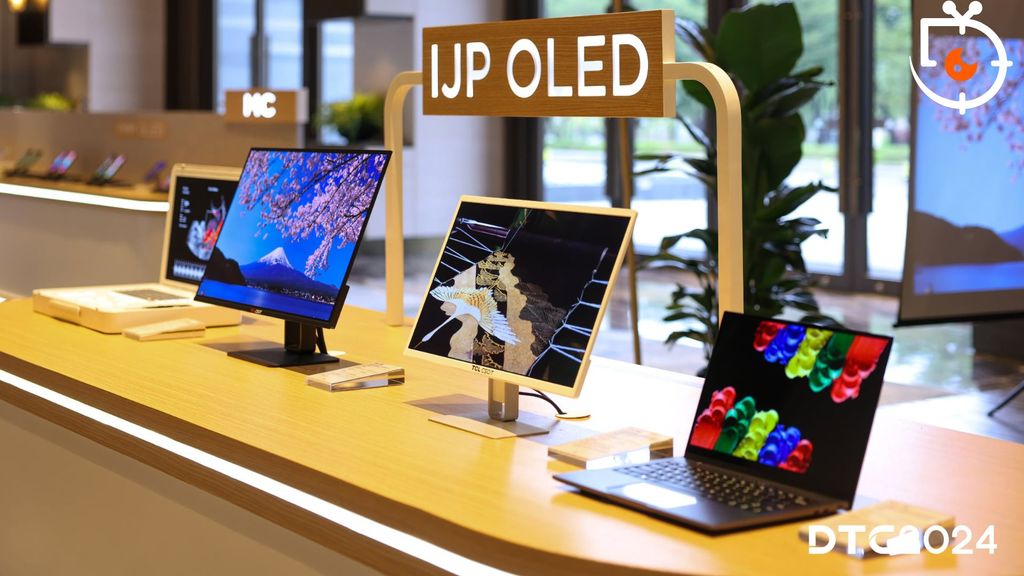
The OLED monitor market is currently dominated by two players: LG and Samsung. However, this situation may change thanks to TCL CSOT, which according to reports from EET China, has completed "functional tests" of its first consumer matrix made using inkjet printing technology (IJP OLED). This is a groundbreaking moment, as while the "printing" of OLED screens has been talked about for years, it is only now that we have a specific start date for mass production, set for July 2026.
End of issues with blurry text?
The new panel from TCL has a diagonal of 27 inches and a 4K resolution. However, the most interesting information for those working with text and graphics is not the resolution itself, but the applied Stripe RGB subpixel layout. Unlike many current OLED monitors on the market, which have issues with clear font display due to the specific pixel arrangement, TCL's proposal aims to offer image precision known from classic LCD matrices, while retaining all the advantages of OLED. In fact, you could see this solution in our YouTube video:
In technical terms: the panel supports a refresh rate of up to 120 Hz, and its brightness at 300 nits, along with the HDR True Black 500 certification, suggest that it will be a strong competitor to the current WOLED and QD-OLED matrices, offering almost infinite contrast with 99 percent coverage of the DCI-P3 colour palette.
Inkjet Printing: Cheaper Production, Tough Start
Why is IJP (Inkjet Printing) technology so important? Currently, OLED matrices, including QD-OLED and WOLED, are produced through complicated vacuum processes. The spray method that TCL is working on allows for significant reductions in material waste and simplifies the production line. In theory, this should lead to a noticeable drop in the final prices of devices.
However, it's important to maintain some distance from the announcements about mass availability. Industry sources indicate that although July 2026 is a timeline confirmed internally, TCL is still grappling with the issue of "yield," meaning the percentage of functional panels in the final production. This means that in the initial phase, the number of functional panels leaving the factory may be low, which will limit the number of available monitors on store shelves.
Prices and Market Debut
The producer has not yet revealed the official prices, but the inkjet printing technology is intended to be a cheaper alternative to current solutions. At this moment, the panels are undergoing final refinements in China and are most likely to debut there first. If the process goes according to plan, in the second half of 2026, we can expect a surge of 4K OLED monitors at new, and hopefully lower, prices.
Source: EET China