 Redakcja Choose TV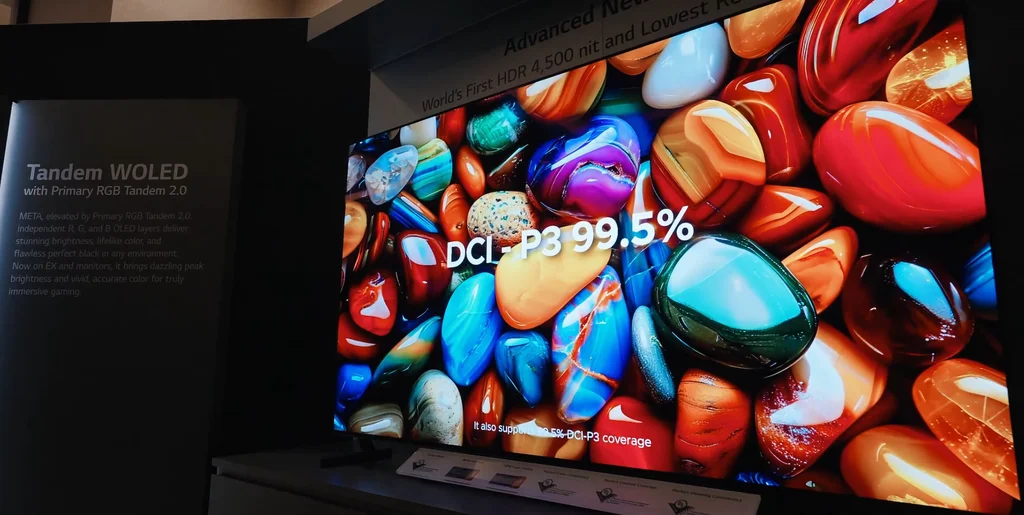
RGB LED, also known as micro RGB or RGB miniLED, is one of the most talked-about innovations at CES 2026 in Las Vegas. The technology, touted as the next big leap in LCD development, is making its way into televisions from Hisense, Samsung, and LG Electronics this year, and soon also Sony. Is this the moment when OLED loses its position as the undisputed leader in picture quality?
OLED vs RGB LED – what really changes?
At first glance, RGB LED is impressive. The use of red, green, and blue diodes in LCD backlighting allows for very high brightness and an exceptionally wide colour palette. This is where RGB LED can realistically surpass OLED – especially in terms of colour saturation at extreme brightness. The problem is that RGB LED remains an LCD technology. Regardless of the type of backlighting, the key element is still the liquid crystal matrix, which:
has a response time that is many times slower than OLED,
offers significantly lower native contrast,
loses image quality at an angle,
requires aggressive local dimming to improve blacks.
RGB LED manufacturers are keen to talk about brightness and colours, but in presentations from CES 2026, they strikingly often omit the number of dimming zones. This is not a coincidence.
Problem z wygaszaniem stref w RGB LED
W RGB LED każda strefa wygaszania zawiera trzy niezależnie sterowane diody: czerwoną, zieloną i niebieską. To ogromne wyzwanie dla elektroniki sterującej i algorytmów przetwarzania obrazu. W praktyce może to oznaczać, że:
liczba stref wygaszania w modelach 2026 będzie niższa niż w najlepszych miniLED z 2025 roku,
trudniej będzie ograniczyć poświaty (halo),
poprawa kontrastu pozostanie kompromisem.
Tymczasem OLED wykonuje lokalne wygaszanie na poziomie pojedynczego piksela – jednocześnie dla jasności i koloru. Dla telewizora 4K oznacza to ponad 8,3 miliona „stref”, podczas gdy nawet najbardziej zaawansowane LCD operują na tysiącach. RGB LED nie rozwiązuje fundamentalnych problemów LCD. Może je jedynie częściowo maskować.
How does LG Display plan to respond?
LG Display is not ignoring the RGB LED offensive. On the contrary – in 2026, the company is significantly expanding its OLED offering, both in the premium segment and in more affordable price ranges. The most important innovation is the enhanced Tandem WOLED panel with Primary RGB Tandem 2.0 technology. According to LG Display:
peak brightness reaches up to 4500 nits,
panel reflectivity has been reduced,
energy efficiency has been improved.
This technology is no longer reserved exclusively for top models. In 2026, it will be used in:
OLED EX panels,
all gaming OLED monitors from LG Display.
RGB-stripe in OLED monitors
The second significant direction of development is RGB-stripe pixels in OLED monitors, which improve:
sharpness of text,
colour accuracy,
saturation of colours.
It is worth noting that LG Display OLED televisions in 2026 still utilise the RGBW arrangement. The term "Tandem WOLED" refers to the construction of the white OLED diode, rather than the presence of a white subpixel as such.
Cheaper OLEDs – a key change
The most interesting new development revealed by LG Display in a conversation with FlatpanelsHD is the introduction of the OLED SE (Special Edition) line. These are panels designed with the mid-range segment in mind:
sizes: 83, 77, 65, 55 and 48 inches,
pixel-level dimming preserved,
lower energy consumption,
more balanced specifications.
OLED SE is set to reach TV manufacturers in 2026 and could realistically change the power dynamics in the mid-price range, where LCD currently dominates.
What about large diagonals and 8K?
LG Display admits that LCD televisions larger than 80 inches are still cheaper to produce. However, the company is counting on:
further improvement in OLED production yields,
increased costs for advanced LCD (miniLED, RGB LED),
gradual reduction of the price difference.
As for 8K OLED, the technology has been ready for years, but the market and content are lagging behind. LG Display declares full readiness to return when real demand arises.
Comfort for the Eyes – The Quiet Argument for OLED
In the context of increasingly brighter LCDs, LG Display highlights an often-overlooked aspect: eye comfort. OLED:
does not use continuous backlighting,
emits light only where needed,
reduces exposure to harmful components of blue light.
In 2025, LG Display was the first company to obtain the Eyesafe 3.0 certification, taking into account the impact of the display on the circadian rhythm.
Will RGB LED threaten OLED?
RGB LED is undoubtedly the most advanced form of LCD available to consumers. It offers impressive brightness and colours, but does not change the fundamental limitations of liquid crystal technology. OLED, instead of defending the status quo, enters 2026 with:
higher brightness,
better efficiency,
new pixel structures,
and finally – cheaper panels.
This does not seem like a technology on the defensive.