At first glance, it's clear that the TCL A300 NXTVision wants to be more than just an ordinary television. It offers an image display mode that – unlike its competitors from Korea, Samsung The Frame – is completely free of charge. Additionally, like its rivals, freebies are included. In the package, in addition to the television, we find extra frames imitating light wood as well as a flat wall mount, allowing the television to truly resemble a gallery piece. In terms of everyday use, the Google TV system makes the biggest impression – it's extensive, fast, and offers access to a vast number of applications. And if we feel like stepping out of the digital museum and jumping straight into the gaming world, the A300 can surprise us. Two HDMI 2.1 ports, 144 Hz, VRR, ALLM, and very low input lag mean that even demanding gamers can feel at home here. Well... maybe except for those who are sensitive to ghosting – because that's still one of the model's major issues. There are also downsides. Although the picture mode is free – and that's worth appreciating – the quality of the available graphics clearly falls short of what Samsung offers in its paid ART Store. The images displayed resemble photos rather than realistic reproductions of artworks. Unfortunately, the A300 – like the competing Hisense S7NQ – performs poorly in this regard and additionally has some software issues. The brightness of the television itself also leaves much to be desired – it is the darkest television of the entire “frame trio,” which translates to average experiences during the day and limited HDR effects. Nevertheless, the TCL A300 NXTVision is a quite reasonable alternative to Samsung The Frame or S7NQ – especially if we are looking for a more affordable solution without additional fees for access to the "gallery" mode and with an operating system that doesn't limit us in terms of the number of applications. However, it should be noted that this is a proposition with a lot of compromises. If we want to save a bit and aren’t expecting top-end picture quality, then the A300 could be a picture-perfect choice. Otherwise, it’s worth looking at its competition.
- Matching (Score) |
- Our verdict |
- TV appearance |
- Where to buy |
- Contrast and black detail |
- HDR effect quality |
- Factory color reproduction |
- Color reproduction after calibration |
- Smoothness of tonal transitions |
- Image scaling and smoothness of tonal transitions |
- Blur and motion smoothness |
- Console compatibility and gaming features |
- Input lag |
- Compatibility with PC |
- Viewing angles |
- Daytime performance |
- Panel details |
- TV features |
- Apps |
- Playing files from USB |
- Sound
TCL A300W NXTVision vs Haier M95E
 Direct comparison
A300W / A300W PRO / NXTVision

M95 / M95EUX
Available screen sizes: 65”

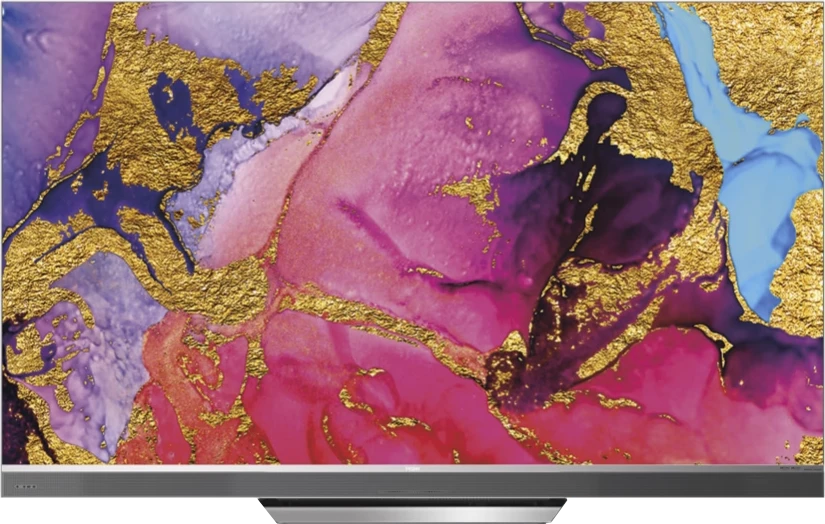
Panel type: LCD VA
Resolution: 3840x2160
System: Google TV
Model year: 2024
Complete the survey to find out the result
Panel type: LCD VA
Resolution: 3840x2160
System: Google TV
Model year: 2025
Complete the survey to find out the result
Overall rating
6.5
7.1
 Movies and series in UHD quality
 6.3
6.9
 Classic TV, YouTube
 6.0
6.1
 Sports broadcasts (TV and apps)
 5.9
5.6
 Gaming on console
 8.2
7.8
 TV as a computer monitor
 8.2
6.6
 Watching in bright light
 4.7
8.5
 Utility functions
 7.0
3.6
 Apps
Apps 9.6
9.6
 Sound quality
 6.0
9.2
Complete the survey to find out what fits your preferences
Advantages

Frames styled like a painting included
Mount included
VA matrix with decent contrast
Supports all popular HDR formats, including Dolby Vision and HDR10+
Great for gamers: VRR, G-Sync, ALLM, low input lag
High refresh rate - 144Hz
Free "picture mode"
Supports DTS:X and Dolby Atmos
GoogleTV operating system with the largest app base
Phenomenal sound: Built-in audio system from Harman Kardon
Very high brightness: up to 1700 nits
Good panel for gaming and sports: 144Hz, low motion blur
Low input lag: below 10 ms (at 120Hz)
Complete gaming package: Two HDMI 2.1 ports, support for 4K@144Hz, VRR (G-Sync) and ALLM provide a solid foundation for consoles and PCs
Great tonal fluidity: The TV handles gradients and color transitions excellently
Wide color gamut (QLED): 96% DCI-P3 coverage guarantees vibrant and saturated colors
Support for Dolby Vision and HDR10+
Disadvantages

Low brightness
Motion blur issues
Missing USB recording feature or PiP
Worse image quality in "art mode" than Samsung The Frame
Colors and blacks significantly fade under sunlight
No VESA standard
Software bugs
Very underdeveloped dimming algorithms are the biggest flaw. Mini LED zones "dance" on the screen
Clunky Google TV system: The entire interface runs slowly, has annoying stutters, and experiences errors
Non-functioning motion smoother in movies
Average performance with PC: At 120Hz and 144Hz, the TV struggles with sharp font display
Very high price considering the current state of the product
Our verdict
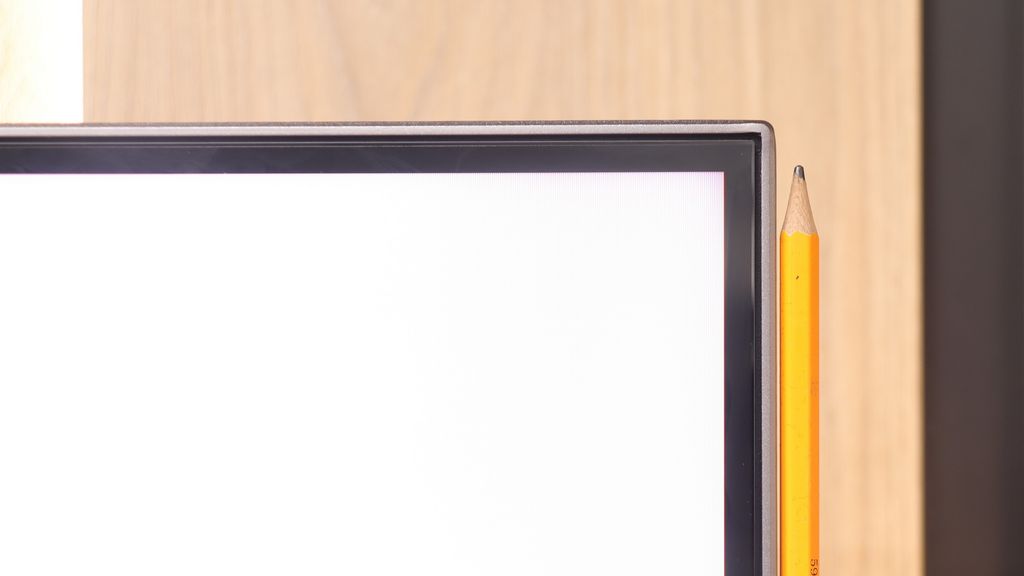
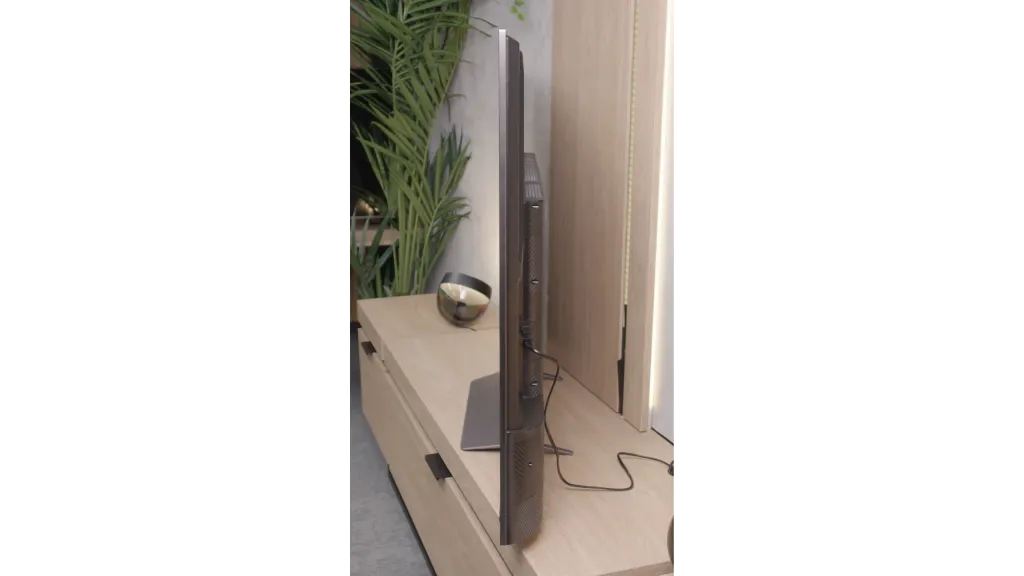
Haier M95E is, on paper, a television that looks like the dream come true for any "bargain hunter." When we look at the specifications – a Mini LED panel with hundreds of zones, powerful brightness exceeding 1500 nits, a QLED 144Hz matrix, phenomenally low input lag, and sound branded by Harman Kardon – everything screams "flagship!" So we are dealing with equipment that theoretically should throw down the gauntlet to the most expensive players on the market. Unfortunately, if you read our review carefully, you’ll need to read it quite closely, because there is one word that appears almost in every paragraph: "but..." And it is this word that perfectly summarizes this model. The M95E is a television of gigantic contradictions and wasted potential, where nearly every advantage is brutally countered by a fundamental software flaw. So we have hundreds of dimming zones, but the algorithms controlling them create a distracting disco on the screen. We have phenomenal HDR brightness, but the television completely struggles with tone mapping and burns details. We have an ultra-fast, non-tearing 144Hz matrix, but motion smoothing systems for movies are virtually non-existent. We have a great package for gamers, but without HGiG and with font display issues. Finally, we have superb sound, but wrapped in a clumsy and frustrating Smart TV system. This is exactly why the Haier M95E is such a frustrating device. It’s a story about fantastic hardware that lacks the final, most crucial polish – refined software.
TV appearance




Contrast and black detail
5.5/10
6.8/10
Local dimming function: No
Local dimming function: Yes, number of zones: 576 (24 x 24)
Contrast:


Result
5,000:1

Result
5,450:1

Result
3,800:1

Result
4,000:1

Result
3,950:1
Result
152,100:1
Result
36,400:1
Result
37,800:1
Result
13,850:1
Result
5,350:1
Halo effect and black detail visibility:

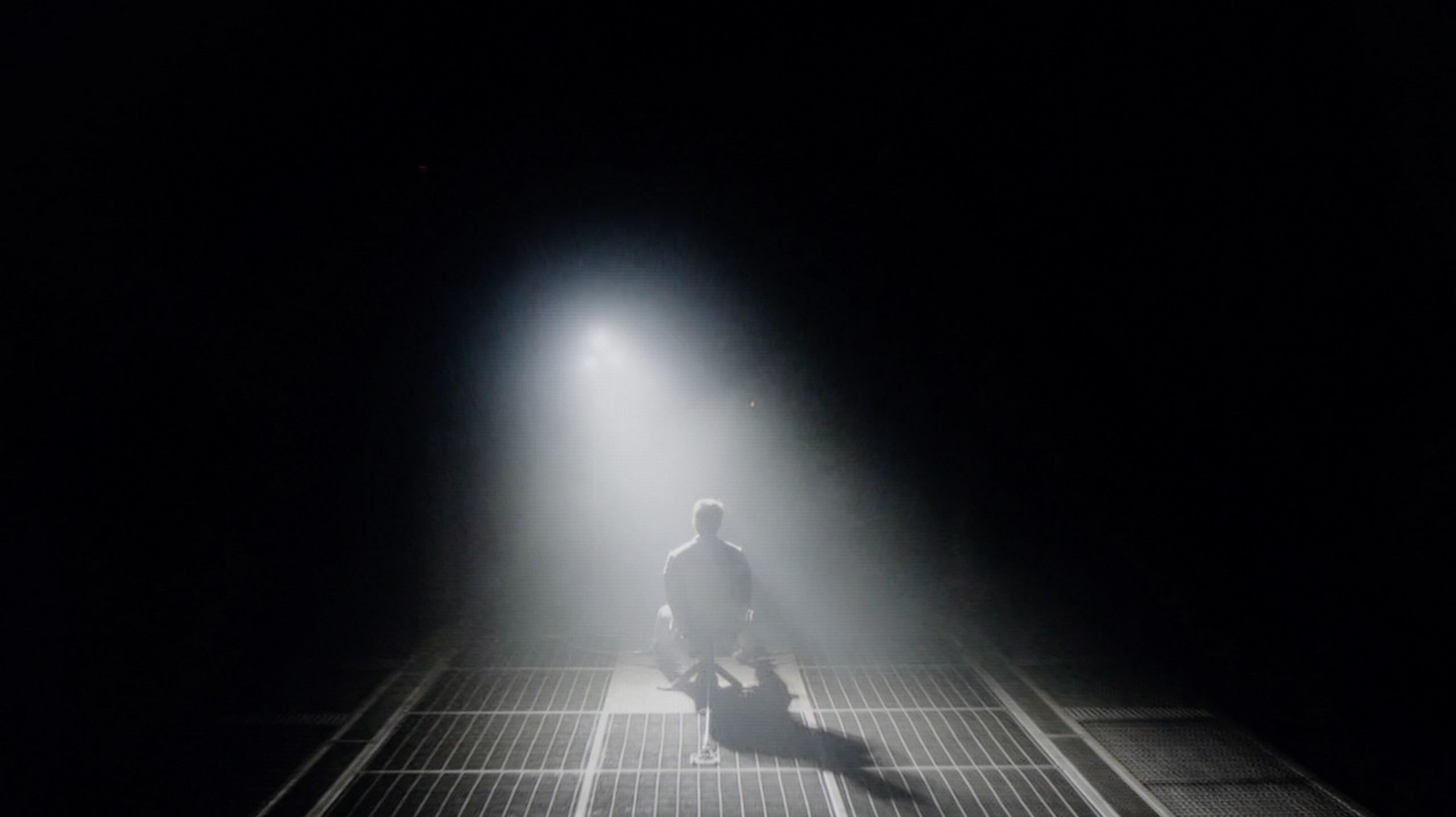
Check the visibility of bright lights on a dark background. Mini-LEDs often struggle with this. The photo does not compare black levels – that’s what the video below is for.
The video accurately shows differences in contrast and black levels between TVs, as well as potential issues: halo around bright objects or Mini-LED zone operation visible as brightness jumps.
TCL A300, also known as NXTVision, uses a VA panel, so right from the start, decent contrast could be expected. In our test patterns, the television did indeed show typical results for this type of panel – in the best case, the contrast reached about 5000:1, which is not a bad result for this segment.
However, it should be noted that the model is not equipped with any local dimming technology, which unfortunately shows in practice. Black, although at times quite deep, often shifts to blue or gray – especially in darker scenes. In short: for a television without local dimming, it's not bad, but there’s no point in comparing it to models that already have that feature on board.
Getting to the heart of the matter, which is the assessment of black levels and contrast, we must start with the specifications, which inspire genuine admiration on paper. The Haier M95E is a Mini LED design, equipped in the 65-inch version with an impressive grid of 576 independent dimming zones (a symmetric arrangement of 24x24). When we combine this technology with a VA-type panel, known for its native deep blacks, our expectations for image quality instantly rise. And indeed, as long as we feed the television static test patterns, everything looks phenomenal. The contrast measurements are so remarkable that the M95E almost throws down the gauntlet to the most expensive players on the market. Unfortunately, this delight lasts only until we turn on the first better film material.
As soon as motion appears on the screen – and we're not even talking about crazy chases, but about ordinary dialogues or camera transitions – the fundamental weakness of the unfinished algorithms controlling the backlighting comes to light. If you remember our tests of the Xiaomi S MINI-LED 2025 model, the story dangerously comes full circle. The dimming zones seem to have a life of their own, putting on a kind of "disco" of lights. Chaotic flashes and visible pumping of the backlighting are unfortunately very distracting and ruin the viewing experience, creating a huge HALO effect. Importantly, we conducted tests using the "High" dimming setting. It turned out that in our unit, this was the only mode in which the zones actually managed to work sensibly in HDR content without simultaneously causing a drastic drop in overall brightness. All of this leads to one conclusion: The M95E has enormous but completely underutilized hardware potential. It clearly lacks the hours spent refining the software, which forced us to lower the score in this critical category.
HDR effect quality
5/10
6.8/10
Luminance measurements in HDR:

Result
357 nit

Result
348 nit

Result
338 nit

Result
350 nit

Result
389 nit
Result
1224 nit
Result
662 nit
Result
1143 nit
Result
568 nit
Result
898 nit
Scene from the movie “Pan” (about 2800 nits)


Scene from the movie “Billy Lynn” (about 1100 nits)

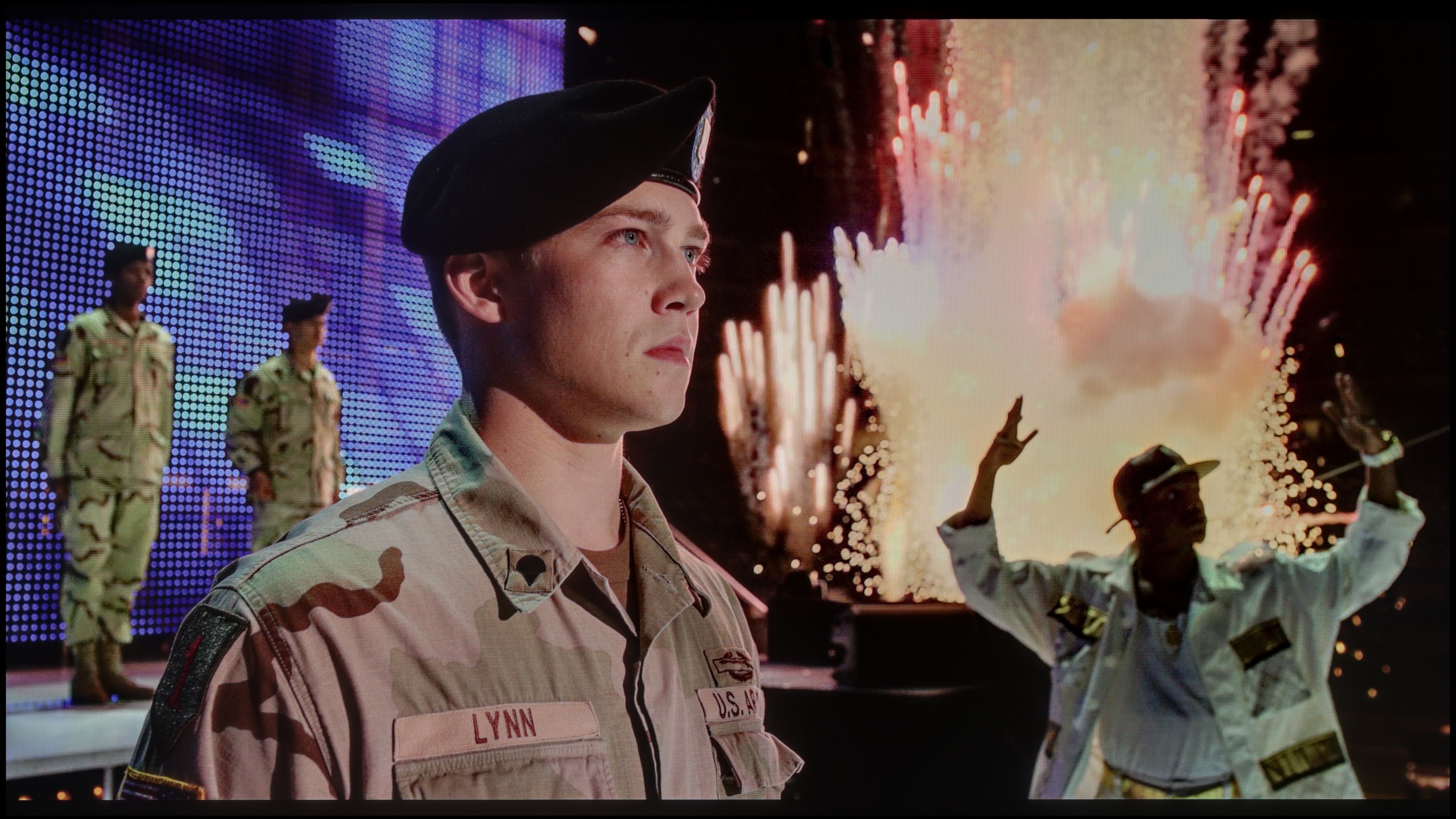
The photos show two HDR10 movies. 'Pan' is one of the brightest productions ever made, while 'Billy Lynn' (soldier) has brightness typical of streaming (Netflix, Prime, HBO MAX). Notice the intensity of effects and detail in whites.
Static HDR10


The photos present the visibility of white details in various HDR formats. They do not show brightness differences between TVs (these can be compared in the previous gallery).
Dynamic: Dolby Vision
Dynamic: Dolby Vision


The photos present the visibility of white details in various HDR formats. They do not show brightness differences between TVs (these can be compared in the previous gallery).
HDR luminance chart:
Haier M95E
TCL A300W NXTVision
When it comes to brightness, the TCL A300W is definitely the darkest TV among all frame-style models, such as Samsung The Frame or Hisense CanvasTV – and unfortunately, this is immediately noticeable. In our measurements, the peak luminance reached only about 400 nits, and on test film screens, this value dropped to 350 nits. This is definitely too little to feel the true "magic" of bright HDR effects. As a consolation – the TV is equipped with a PFS LED coating (which is something like QLED), which provides very good coverage of a wide color palette, both DCI-P3 and BT.2020. Additionally, there is full support for all popular HDR formats – HDR10, HDR10+, HLG, and Dolby Vision – which somewhat compensates for the shortcomings in brightness and helps improve the overall perception of materials in this quality.
If there is one category in which the Haier M95E undoubtedly shines, it is the HDR effect, driven by the raw power of the backlighting. This TV cannot be denied that it is a truly bright device. Both in most movie scenes and during our synthetic measurements, the panel easily achieved and often even exceeded the threshold of 1200-1500 nits. This directly translates to the viewing experience – the image has a striking impact and truly allows you to feel the magic of materials recorded in this format. However, one must be aware of a certain compromise. When particularly demanding scenes filled with small, yet intense bright spots appear on the screen, the M95E does not lose its punch nor dims, but it pays a different price for it. A very strong and noticeably distracting halo effect is generated around these bright elements. It is evident here that the algorithms controlling the dimming have been programmed to prioritize brightness and visibility of the smallest details, even if this comes at the cost of flawless black levels. We are not entirely convinced that this is the healthiest approach; however, it must be acknowledged that the overall capabilities of the M95E in this regard are quite substantial. A significant advantage is the fact that we are dealing with a Mini LED QLED construction. The use of a quantum dot layer brings tangible benefits in the form of wide color gamut coverage, which in our tests reached almost 96% of the DCI-P3 color space. This guarantees that the television has full predispositions to display vibrant and appropriately saturated colors.
Factory color reproduction
5.9/10
4.6/10


This gallery shows how colors change after professional TV calibration. If you notice the difference, we recommend ordering this service at SkalibrujTV.com.
Factory Mode
After calibration
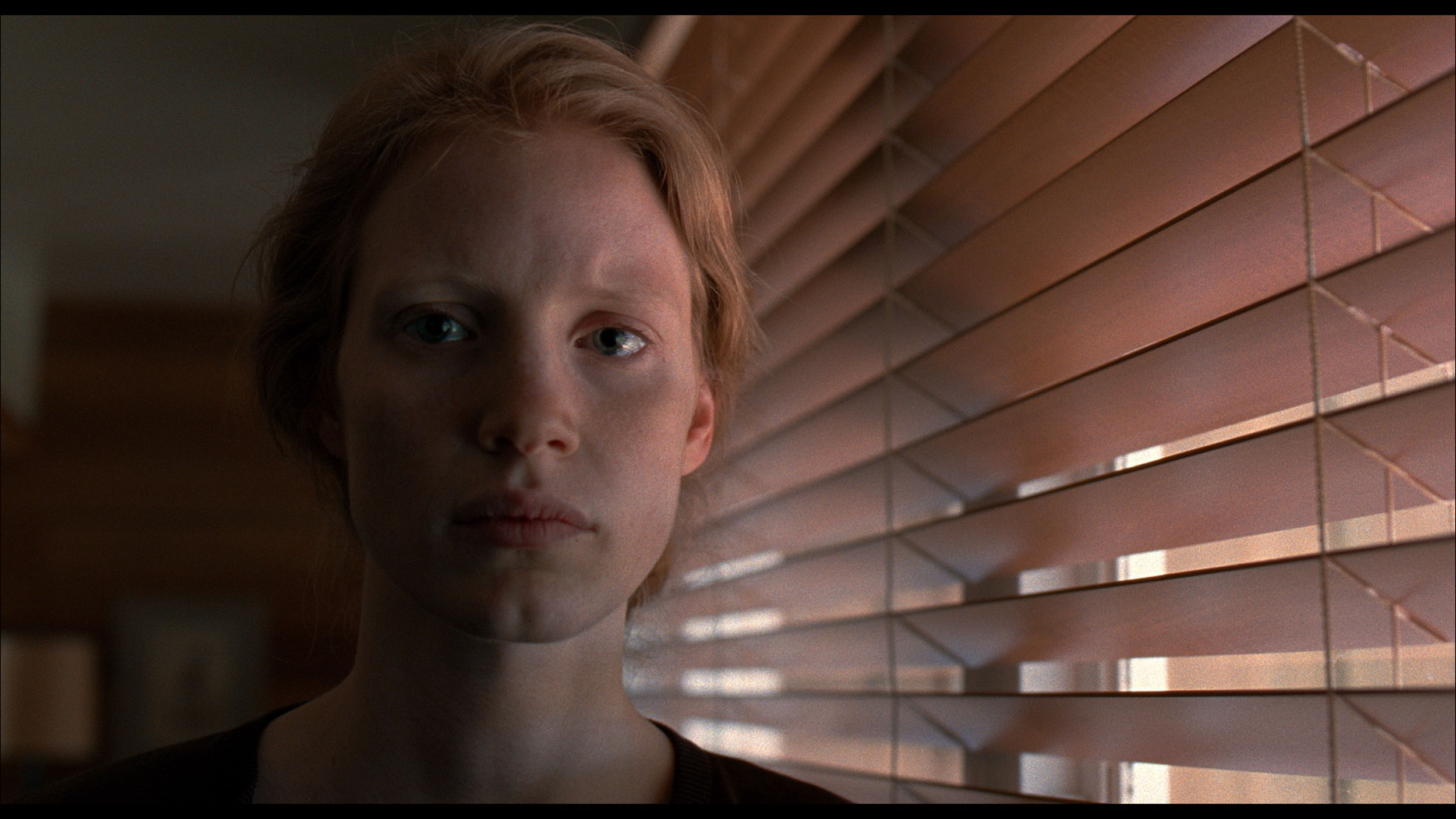
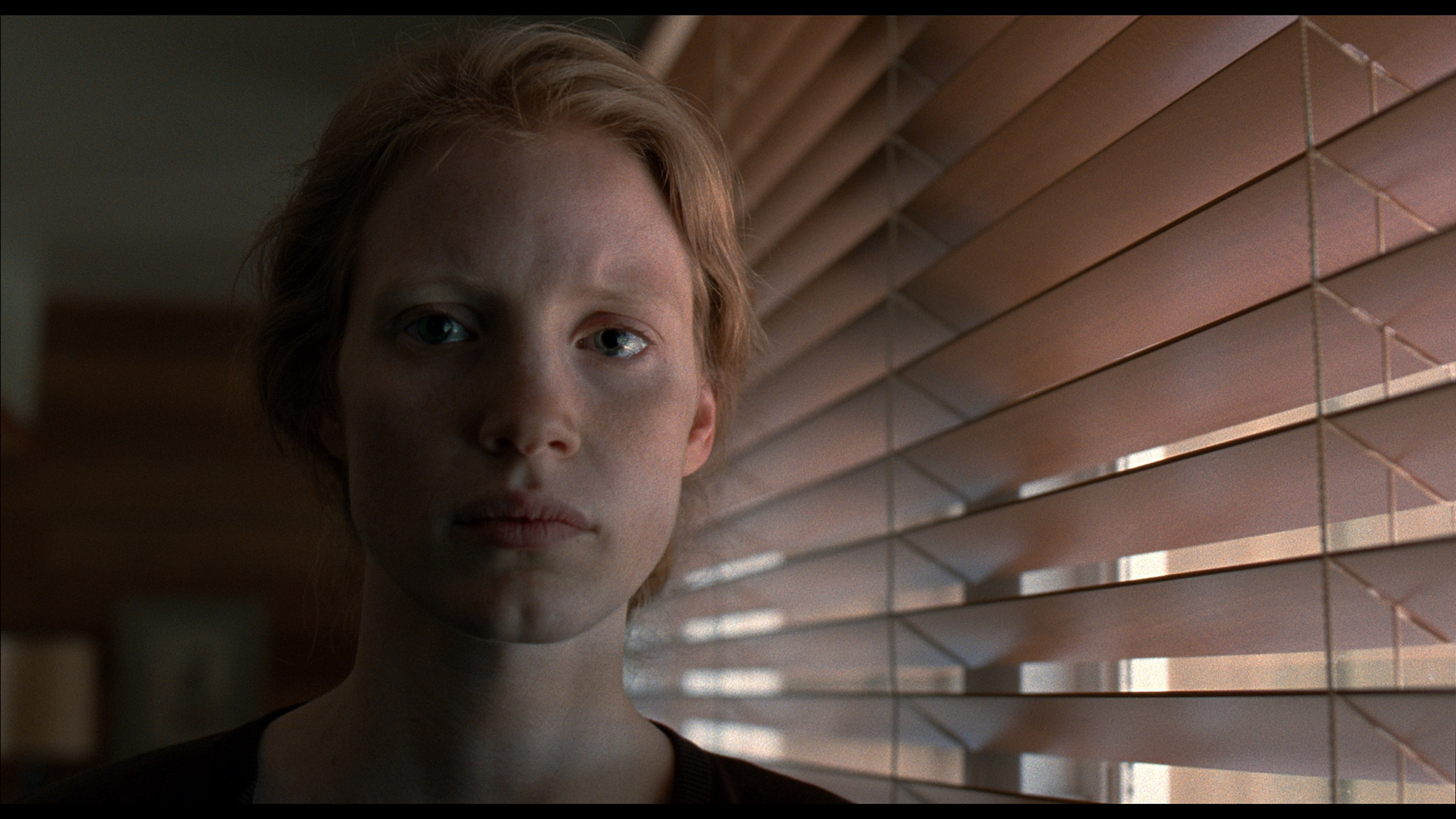
This gallery shows how colors change after professional TV calibration. If you notice the difference, we recommend ordering this service at SkalibrujTV.com.
Factory Mode
After calibration
TCL A300 offers several picture modes, but without a doubt, the movie mode performs the best. Unfortunately, although it is the best choice among the available options, it is not free from errors. Both in HD and HDR content, the image has a noticeably too warm tint – leaning slightly towards pink, which is particularly noticeable in snowy scenes. Instead of pure white, we get a pinkish hue that spoils the natural perception of colors.
The brightness management doesn't perform well either. For older HD materials, the image often seems too dark – as confirmed by the inflated gamma value. Conversely, with HDR content, the effect is reversed – the image is overly brightened, which we observed in scenes from the movie Pan. This lack of consistency also affects color reproduction accuracy – a test with the ColorChecker showed that many samples deviate significantly from the reference values.
Fortunately, TCL allows manual adjustment of the settings, so we decided to check how the television would perform after our professional calibration. The effects of this correction are described below.
We evaluate every television primarily based on its default cinema mode – in this case "Film" – which theoretically should be the "best" and most accurate right out of the box. Unfortunately, with the Haier M95E, the word "best" is absolutely not synonymous with the word "good." Even during SDR viewing, the picture revealed obvious issues: white balance skewed too much towards red, and excessive, unnatural color saturation led to visible color deviations. Worse still, the M95E also has trouble managing brightness (gamma curve), excessively darkening the entire scene. Such behavior is hard to commend, as it directly causes details in the shadows to blend into a black blob, which are irretrievably lost.
However, the real disaster struck after switching to HDR material while still remaining in "Film" mode. It's hard to guess who came up with such a fantastic idea – or perhaps it was simply a complete oversight of this stage by Haier's engineers – but the image, instead of cinema fidelity, began to resemble the bright "Dynamic" mode. The white balance exposed huge issues with the blue color, which in turn resulted in unnatural sharpening and artificial oversaturation of the entire scene. As if that weren't enough, the EOTF curve characteristics ruthlessly revealed that the television also has fundamental problems with local dimming management in this setting. We haven't calibrated many Haiers in our career, but we know for sure now that the M95E definitely needs it.
Color reproduction after calibration
8/10
6/10

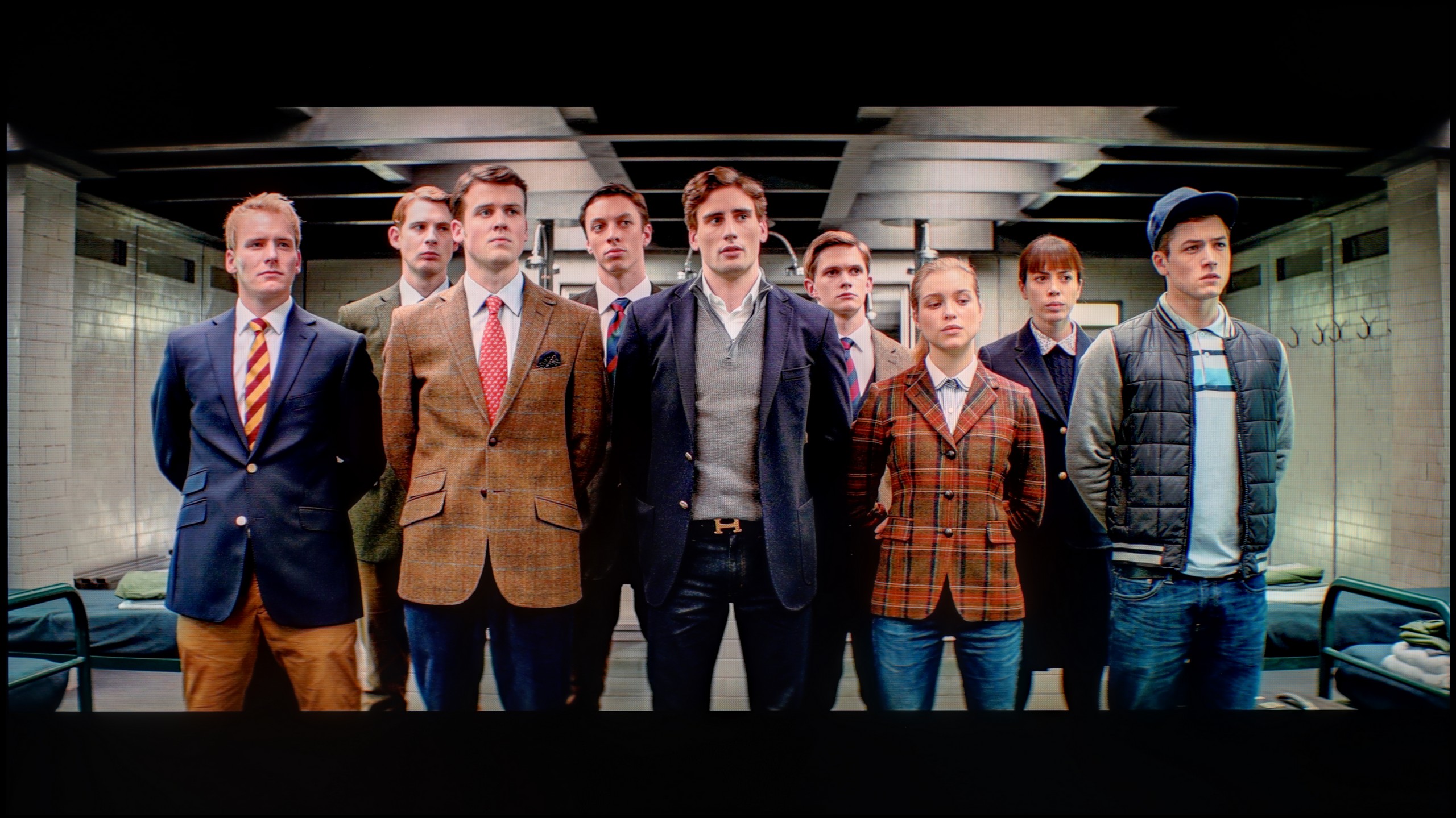
The photos show how movies look on the TV. Pay attention to black detail visibility, colors, and shadow tint.


The photos show how movies look on the TV. Pay attention to black detail visibility, colors, and shadow tint.
After our professional calibration, the TCL A300 literally got a new lease on life. The image is no longer too warm, and the colors finally look the way they should – which was confirmed by the ColorChecker test, where the color samples finally started hitting their marks, at least to some reasonable degree. It was also possible to partially correct the brightness management – the image is now more balanced and less "wobbly" between different types of content. Of course, certain limitations cannot be overcome – a slightly noticeable blooming effect still occurs, but that's a characteristic of the technology, not something that can be eliminated even after professional settings.
Generally: after calibration, the A300 looks significantly better and gains a completely new quality.
The calibration process left us with extremely mixed feelings. On one hand, we noted significant success in the area of colorimetry. Utilizing the options available in the menu, we managed to tame the white balance and bring it down to an acceptable level. As a result, SDR content was finally freed from the annoying red dominance, and the HDR image no longer resembled a vibrant, store demonstration mode. The entire color palette and its saturation were also clearly corrected – perhaps not perfectly, but to the extent that the software allowed, and the difference was visible to the naked eye.
Unfortunately, this is where our list of corrections basically ends, as M95E simply did not allow for more. As we indicated earlier, most settings related to image brightness do not respond to our commands at all. This means we were unable to control its fundamental characteristics in any way – neither the gamma curve nor the EOTF. In practice, the television in SDR content still tends to darken details, which was confirmed by the inflated gamma, merging details in the shadows. On the other hand, the EOTF curve in HDR mode still mercilessly exposed all the previously mentioned issues with chaotic local dimming zone management. And while the calibration process itself yielded quite a lot, removing most of the color issues, ultimately we had to capitulate.
Smoothness of tonal transitions
8.6/10
9.4/10


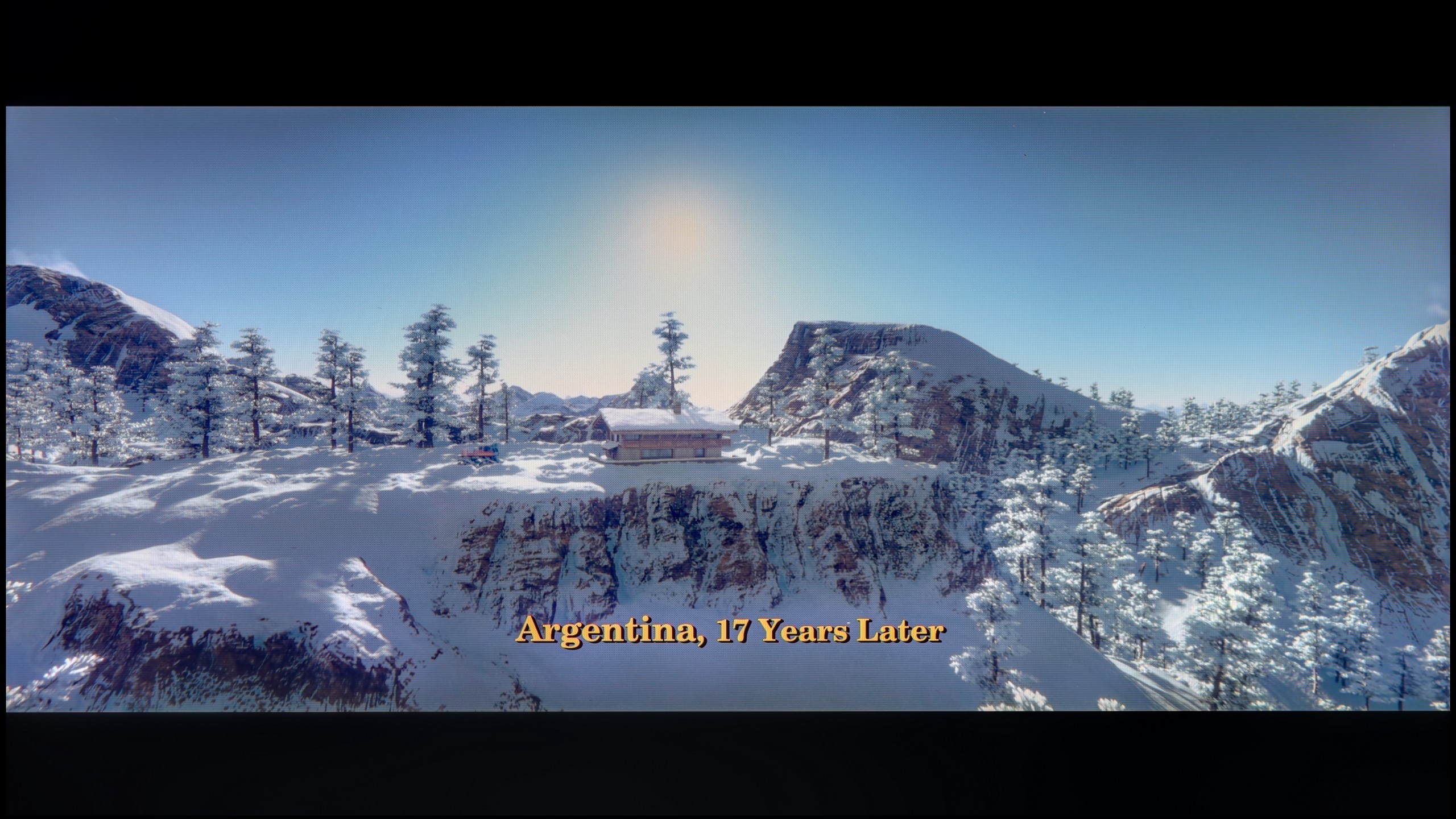
These are selected scenes that show smooth tonal transitions from one color to another. If you see distinct banding, it’s the TV panel’s fault.

These are selected scenes that show smooth tonal transitions from one color to another. If you see distinct banding, it’s the TV panel’s fault.
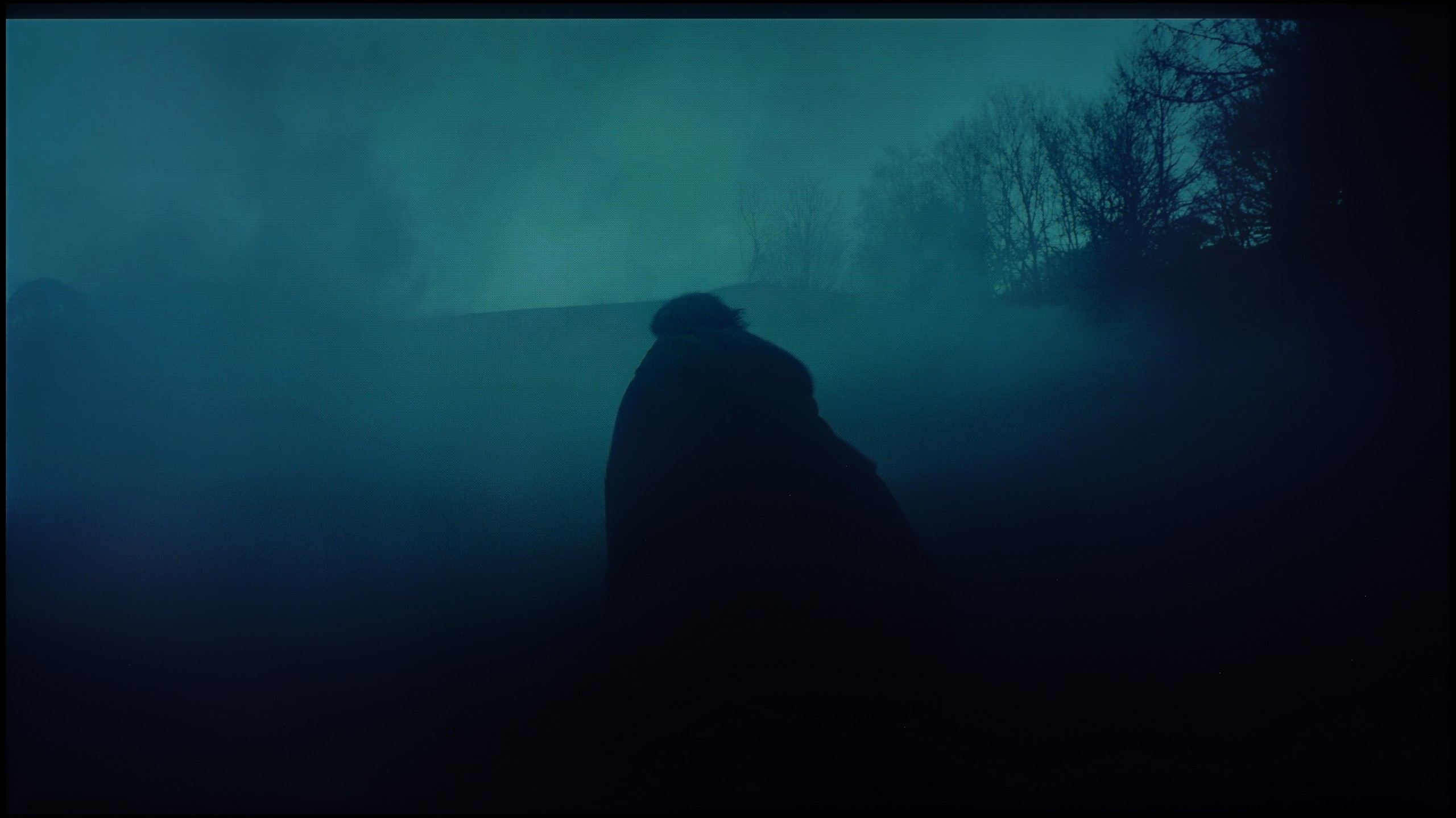
These are selected scenes that show smooth tonal transitions from one color to another. If you see distinct banding, it’s the TV panel’s fault.
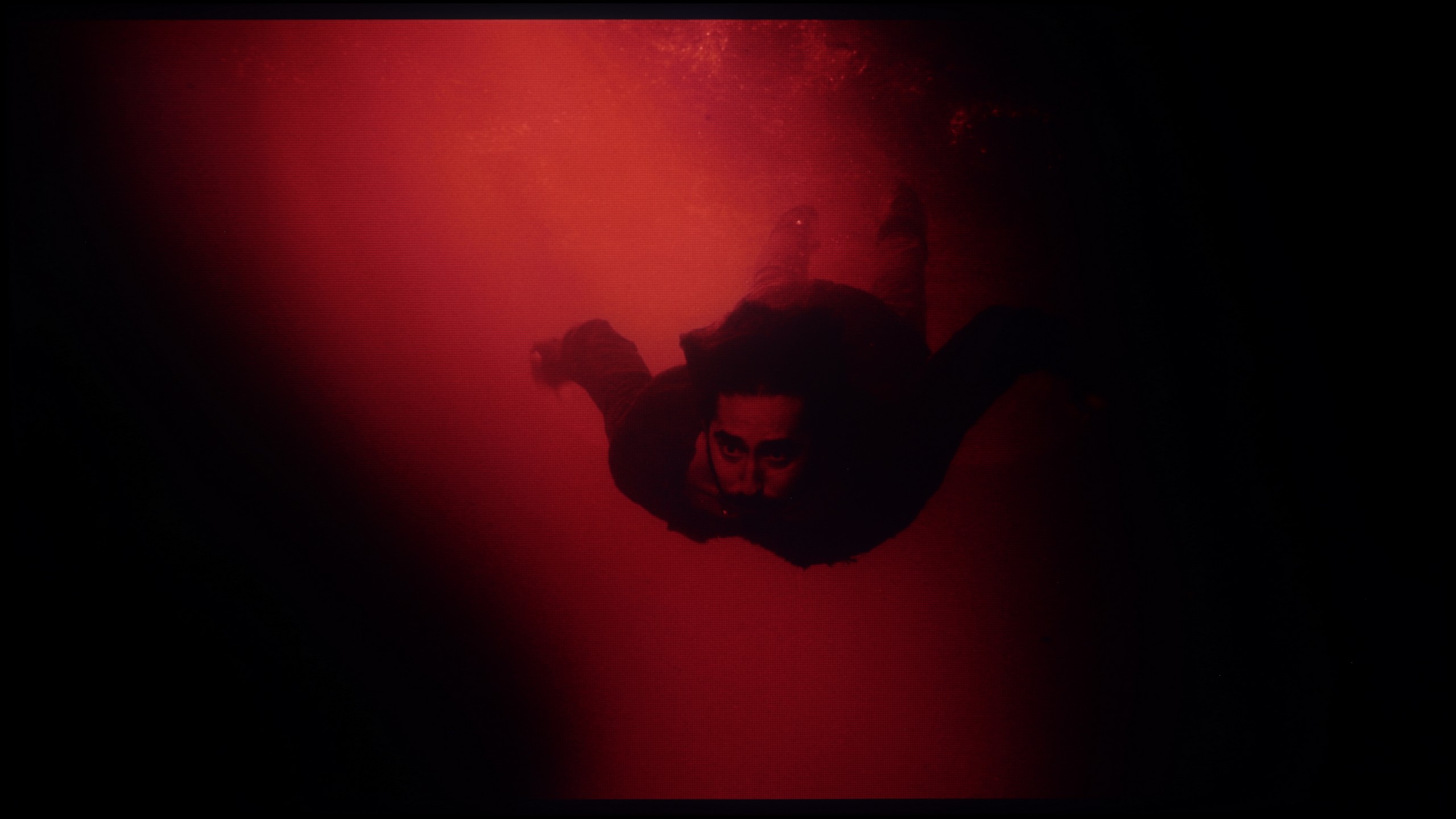
These are selected scenes that show smooth tonal transitions from one color to another. If you see distinct banding, it’s the TV panel’s fault.
TCL A300 NXTVision is another frame-style television that really handles the smoothness of color transitions well. It's hard to find clear bands or sharp transitions between shades of the same color here – the overall look is natural and smooth.
However, it must be honestly admitted that among the three tested models (The Frame and S7NQ), TCL performs the weakest in this category. In darker and lighter scenes, delicate imperfections can be noticed. Nevertheless, looking at it as a whole, for a TV in this price range – it really presents itself solidly. It may not be the best among all, but it maintains a very good level.
We are now moving on to a category that has proven to be one of the strongest aspects of the tested model. The fluidity of tonal transitions, or the ability to smoothly blend closely related shades, is at a very high level here. The Haier M95E excels at reproducing gradients, even in the most demanding, dark scenes, where many TVs can show unsightly banding (posterization). Although we did notice minimal shortcomings in very bright parts of the image, these are issues that are so symbolic that they do not ruin the overall, excellent impression. In this specific competition, the M95E deserves one of the highest ratings on our portal.
Image scaling and smoothness of tonal transitions
5.5/10
5/10

Smooth transition function

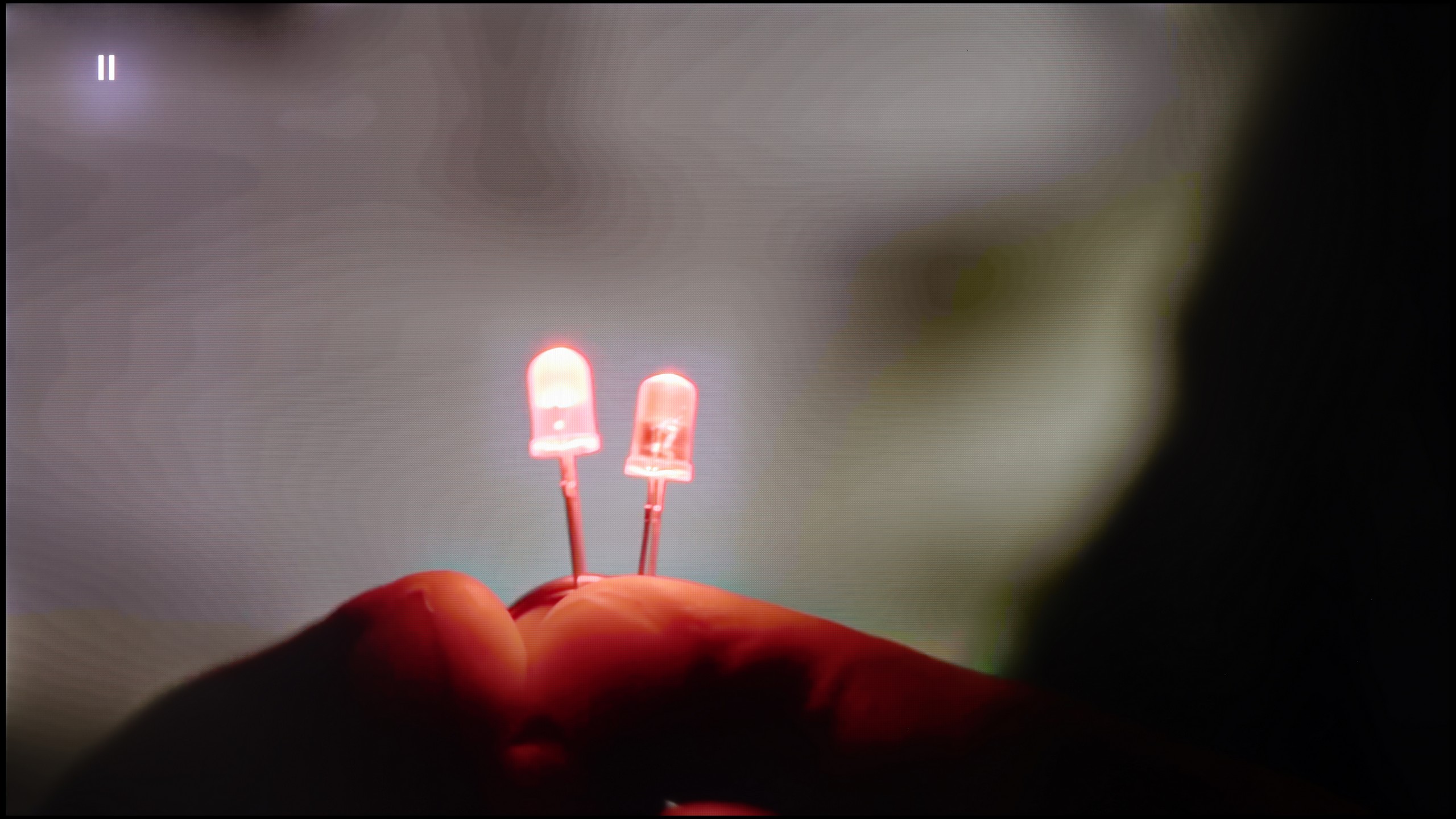
The match photo shows how the TV smooths weak tonal transitions in low-quality video.
Image scaling SD (576i)


The model photo shows how it handles upscaling of SD material.
TCL A300 handles tonal transitions in high-quality films very well, but the question arises – how does it perform with weaker materials? The television is equipped with a tonal transition smoothing feature, but its effectiveness can be described in one word: "random." In one scene it may work and improve the gradation, and when turned off… the effect remains the same. There is a lack of consistency and predictability.
Image scaling is also not one of the A300's strong suits. In the test pattern, the main character actually looked better than on the raw signal, but with thin lines – like fonts or background details – there was noticeable jaggedness and aliasing. On the plus side, the television does not cut off the image and has no issues with overscan, but the overall quality of scaling is rather average.
Well, what happens with those color transitions when lower quality material full of compression artifacts comes on screen? Unfortunately, we have some bad news for you. Although we can find an option in the menu responsible for smoothing tonal transitions in older content, we definitely DO NOT RECOMMEND using it. Its activation causes a barrage of additional, ugly artifacts, noticeably blurring the entire image, and the funniest part – it often doesn’t even remove those unwanted “stairs” it was supposed to fight against. This feature might as well not exist at all.
We can write many more positive things about the overall upscaling, which is the process of raising lower resolutions to the native 4K matrix. The image after upscaling looks really good – it's neither overly jagged nor artificially smoothed. In this particular matter, the M95E simply delivers.
Blur and motion smoothness
6.4/10
6.5/10


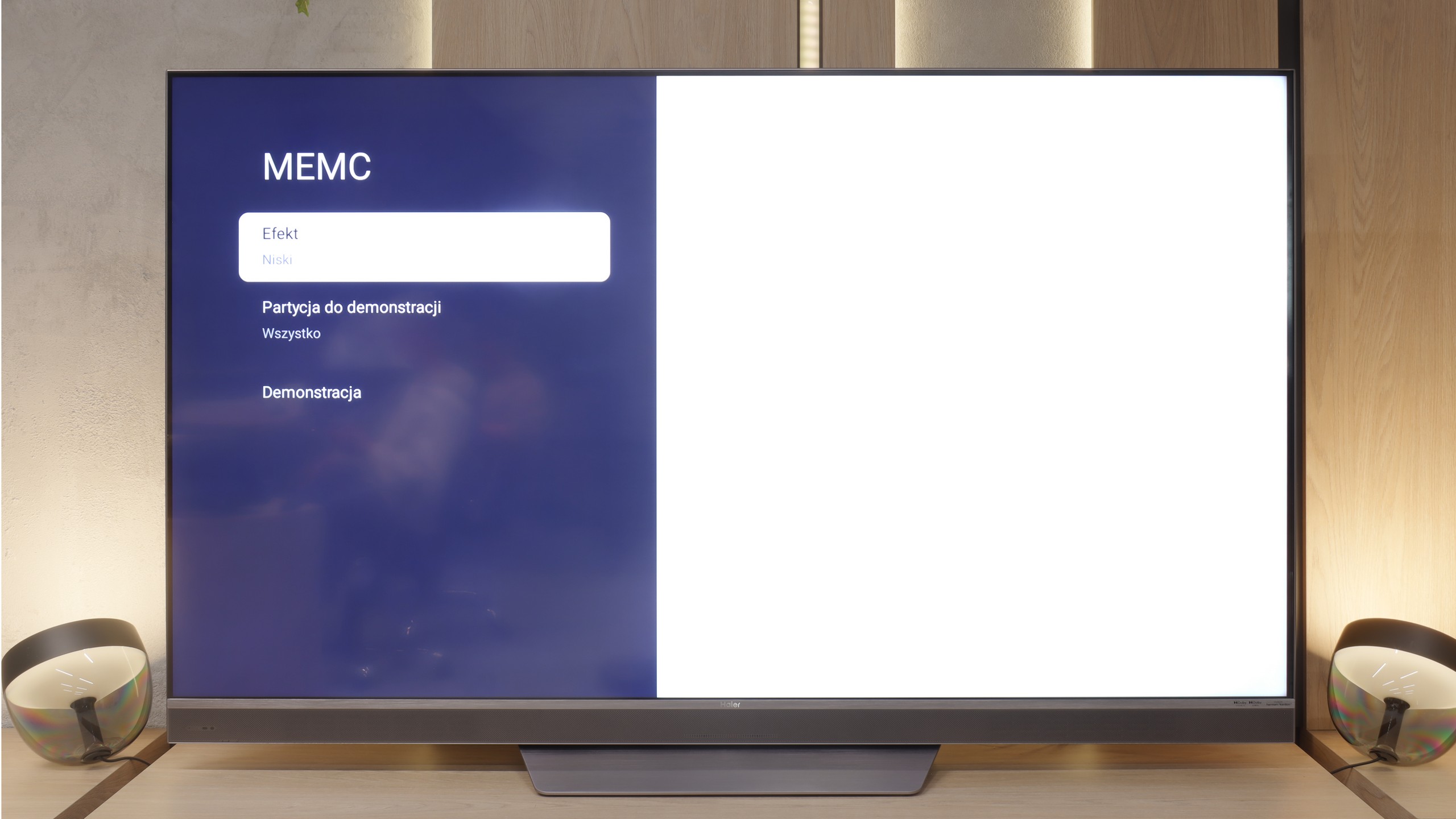
Blur (native resolution, maximum refresh rate):



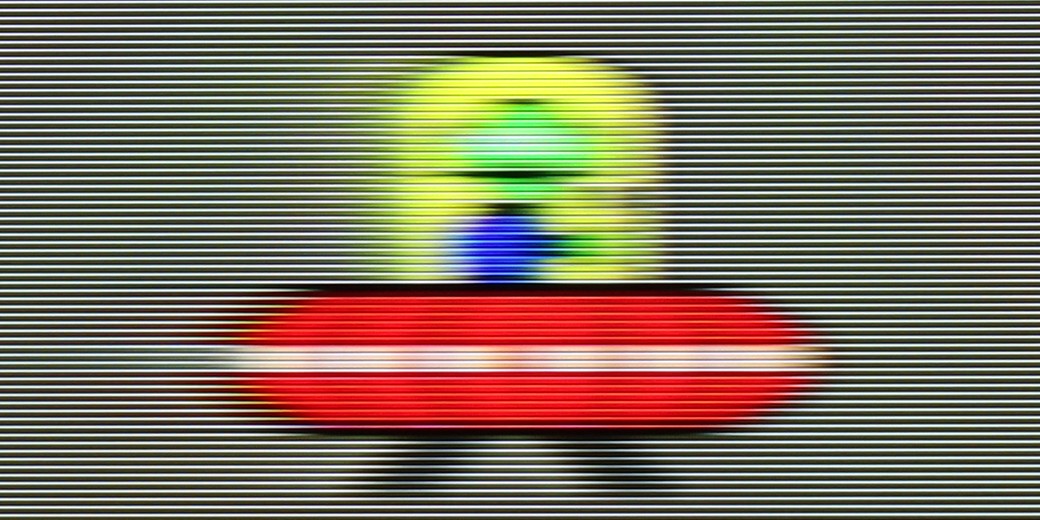
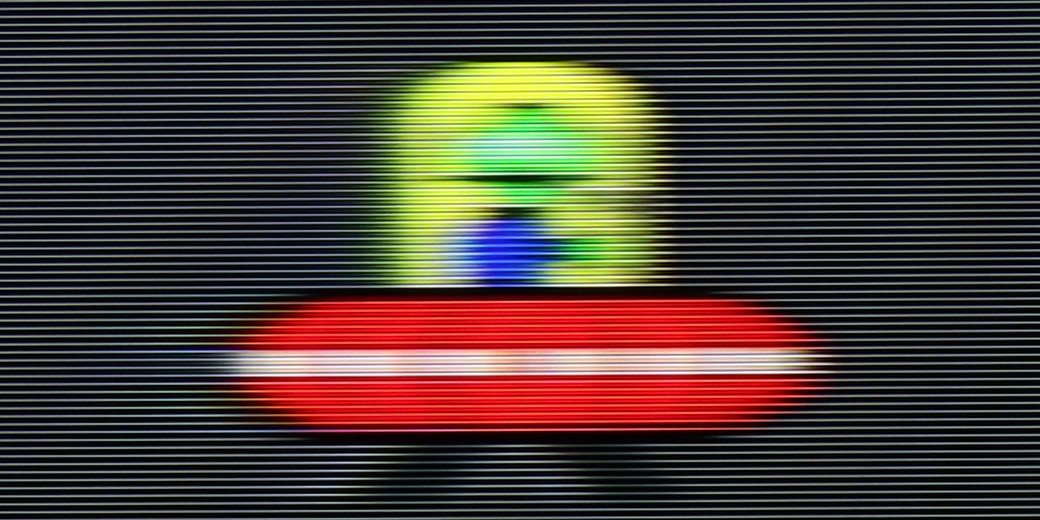
Blur ():
Blur (4K@144Hz):


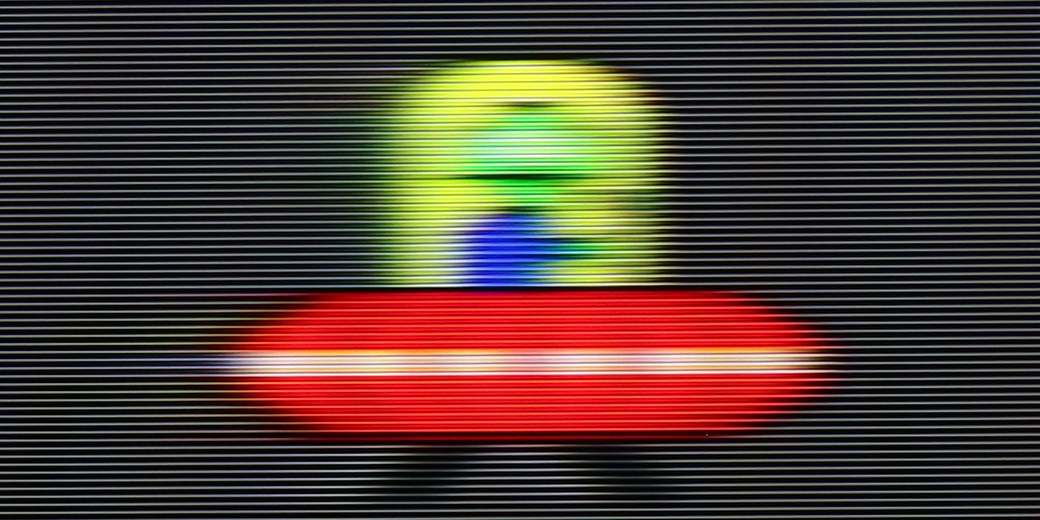
The TCL A300 is equipped with a 144 Hz panel, which should immediately satisfy practically everyone – both gamers and sports fans. The motion is smooth, and the picture is clear even in fast scenes. Additionally, the television offers a motion enhancement feature called "Motion," where we can find two sliders on a 10-point scale. These allow for adjusting the effect to personal preferences – from a classic, cinematic look with visible frames to a very smooth (though already unnatural) image reminiscent of a soap opera effect. Thanks to this, everyone can find a setting that suits them.
When it comes to motion fluidity and ghosting, our feelings are quite mixed because the M95E is a paradoxical television. Let’s start with the absolute delights: the heart of the device is a 144Hz panel, but what truly impresses is its performance with 120Hz content, which is crucial for sports and console gaming. We must state with full responsibility that Haier has equipped the television with one of the best VA panels currently available on the market when it comes to minimizing ghosting. It is rare to encounter an LCD panel that offers such clean, sharp, and ghost-free motion. In this respect, the M95E is simply phenomenal.
And this is exactly why the unpleasant surprise waiting for us on the software side is so painful. It turns out that this fantastic hardware potential is completely untapped, as the television practically offers no functioning options for improving fluidity. The smoothing systems, which should assist with lower frame rate content, can indeed be found in the Menu but essentially do not respond to our settings. The conclusion is brutally simple: if you intend to watch high fluidity material, you must be sure that the source is transmitting it natively at 120. In every other case, you must resign yourself to a rather raw, choppy image because the M95E will not help smooth it out in any way.
Console compatibility and gaming features
9.8/10
7.5/10
- ALLM
- VRR
- VRR range48 - 144Hz48 - 144Hz
- Dolby Vision Game Mode
- Correct implementation of HGIG
- 1080p@120Hz
- 1440p@120Hz
- 4K@120Hz
- Game bar

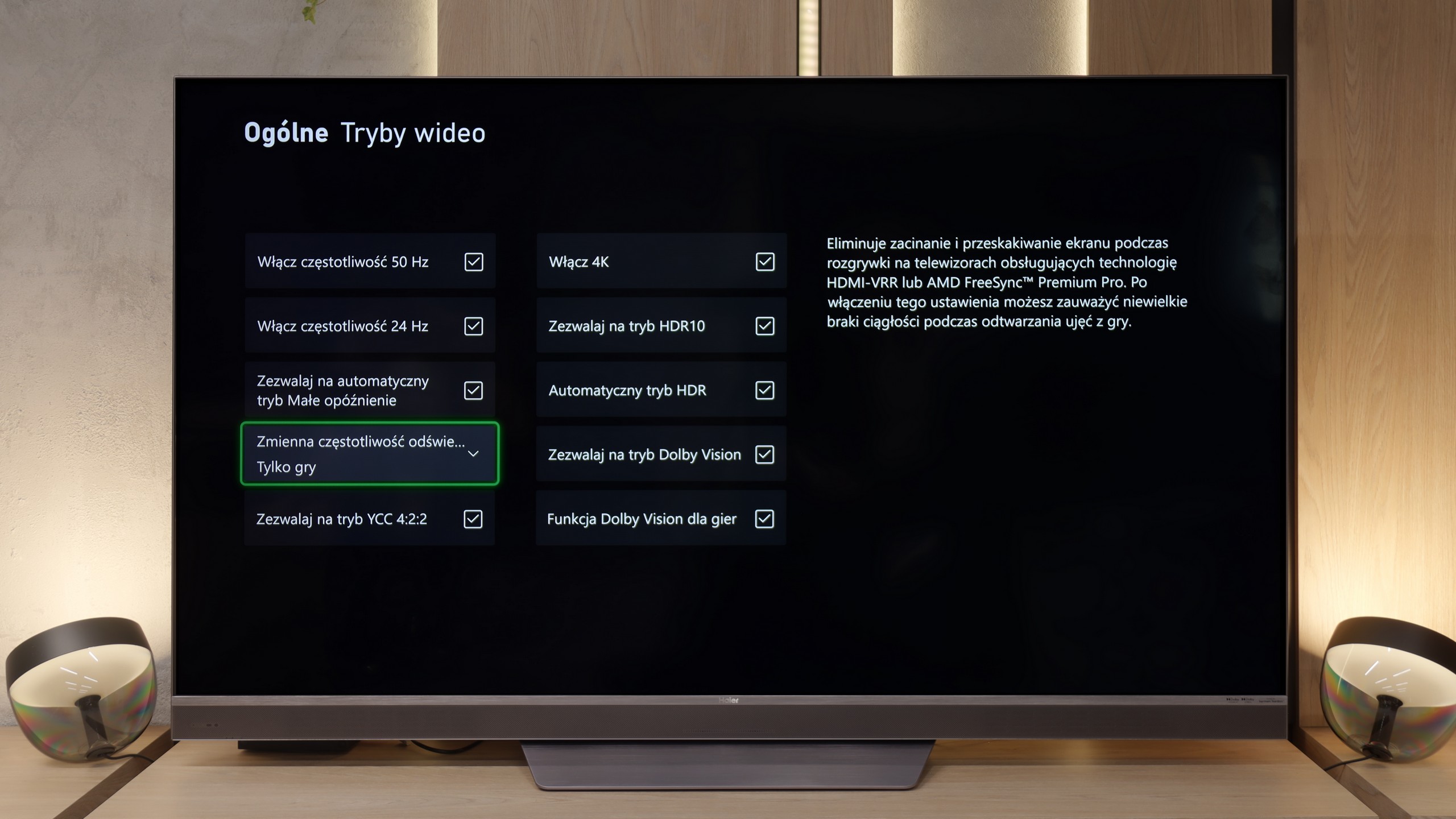

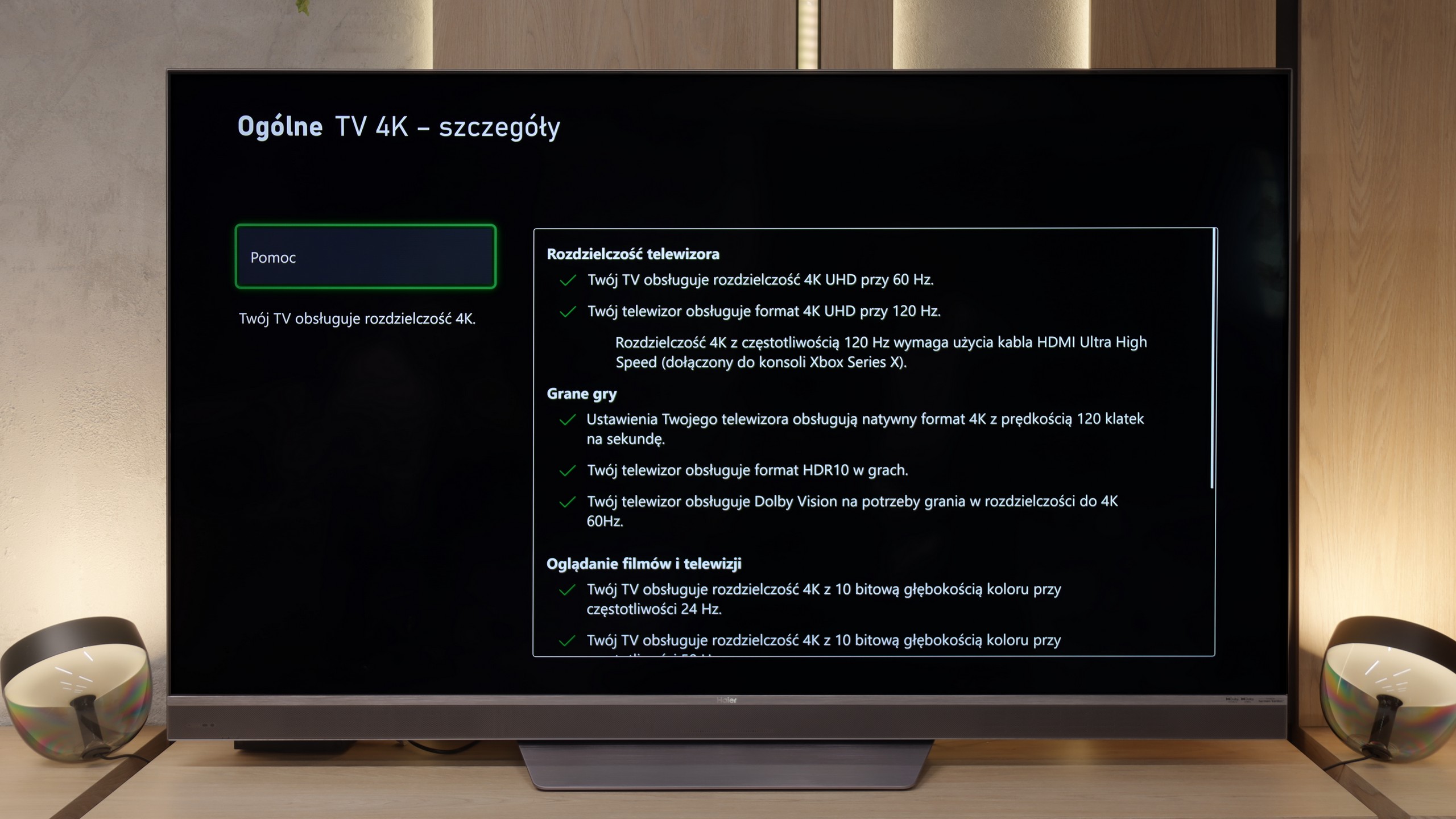

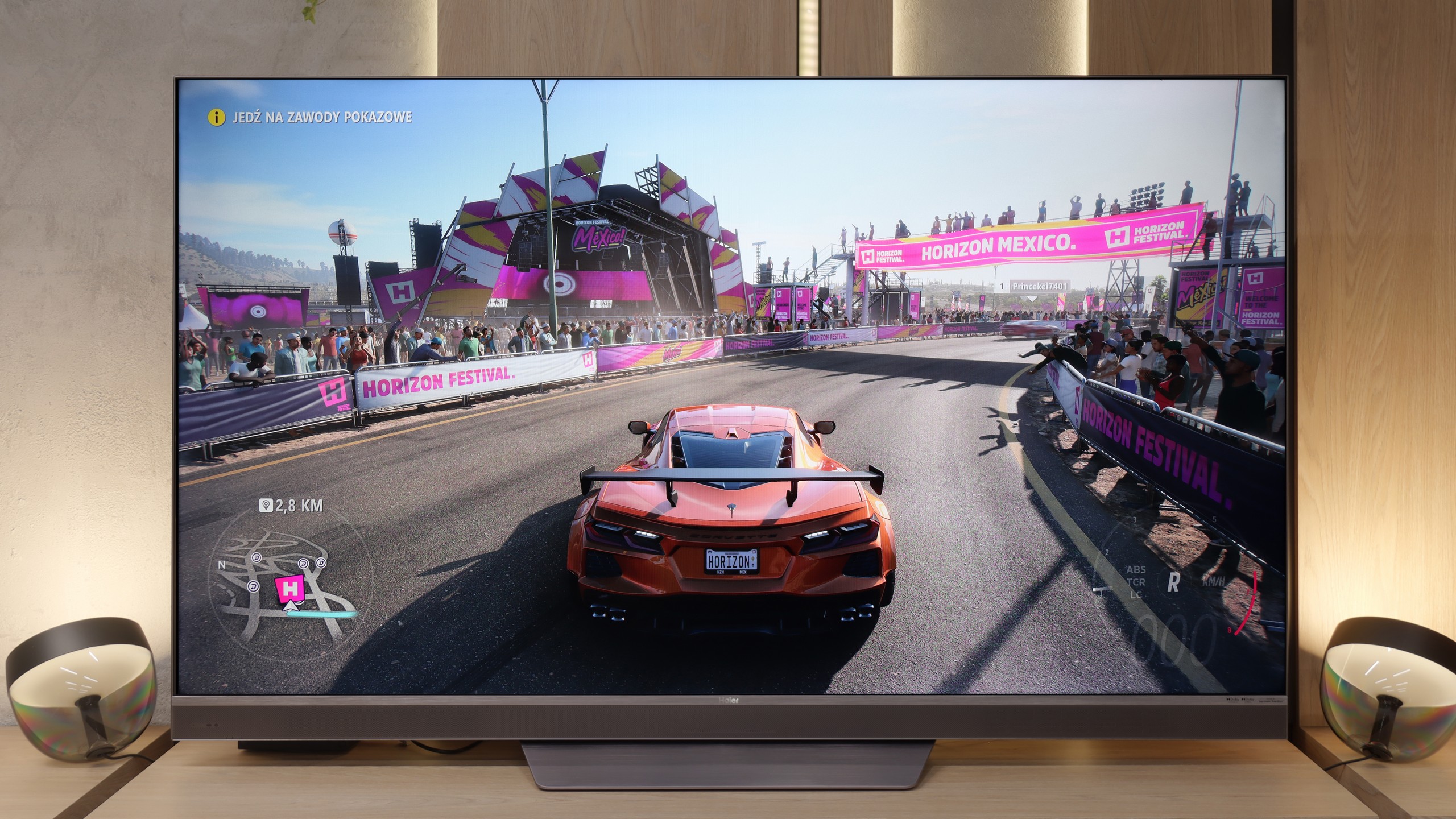

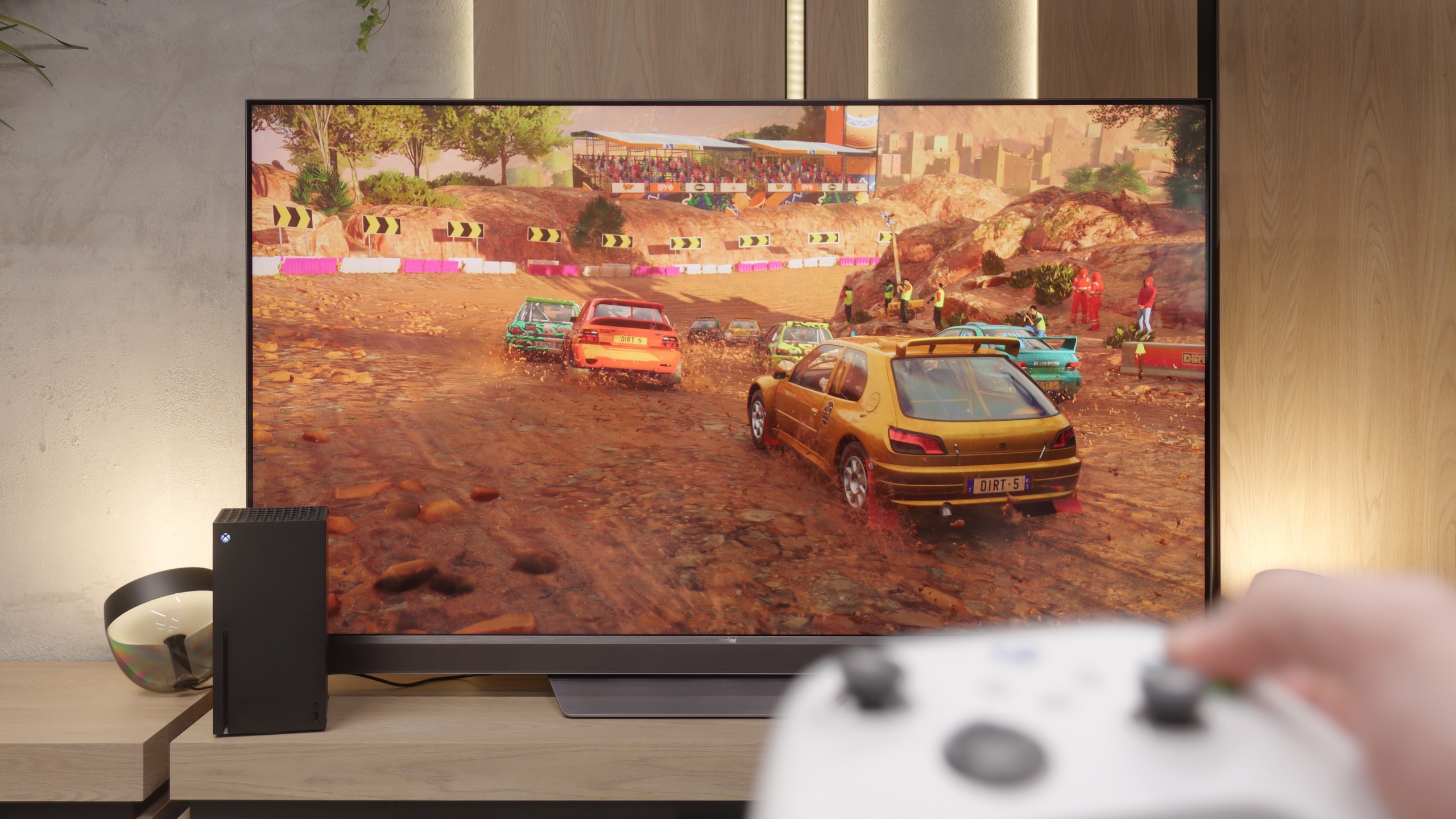
TCL A300 is a television designed not only to transport us to a digital art museum but also to a full-fledged gaming world. It offers practically everything you would expect from gear for gamers: two HDMI 2.1 ports with full bandwidth, 144 Hz refresh rate, VRR support, and ALLM.
The correct implementation of the HGIG mode is also a plus – something that competing Hisense sometimes struggles with. The television easily handles lower resolutions (e.g., Full HD) while maintaining high refresh rates, which will be appreciated by owners of older consoles or PCs.
In addition, there’s an attractive and clear GameBar that facilitates quick access to settings for gamers. The A300 is truly well-prepared for gaming at the highest level – it's just a shame that issues with motion blur slightly tarnish its overall image as a gaming device.
When it comes to features for gamers, the Haier M95E presents some really strong arguments. First of all, it is fully ready for the new generation of consoles and powerful PCs. It is equipped with two full-fledged HDMI 2.1 ports, which handle 4K signals at 120Hz effortlessly and even allow for gaming at 144Hz. This is a foundation that guarantees us full utilization of the potential of our equipment. Moreover, the key technologies work flawlessly here. The television accurately detects the console and automatically switches to low latency mode (ALLM), so we don’t have to dig into the settings. The frame synchronization (VRR) also works smoothly, eliminating the annoying tearing of the image when the game's fluidity slightly drops. Considering the remarkably low motion blur of the panel, which we have already mentioned, the M95E creates a truly comfortable and responsive gaming environment. Of course, this is not a perfect package. A dedicated "Game Bar," which would be a handy menu for gamers, would be a nice addition, but in essence, it is just a nice extra. A more serious shortcoming is the lack of support for the HGiG standard, which complicates the ideal HDR configuration on the console and can lead to overexposures. Despite these shortcomings, the basic "gaming package" offered by the M95E is really solid and fully functional.
Input lag
9.7/10
9.8/10
SDR
HDR
Dolby Vision
In terms of input lag, the TCL A300 performs really well. Values below 10 ms at a 120 Hz refresh rate are something many gamers dream of – such low lag is practically imperceptible, both during everyday gaming and in more demanding esports titles. One could indeed point out the result of 23 ms in Dolby Vision mode at 60 frames, but it is still a low enough value that it's hard to have serious objections. In this category, the A300 truly excels.
The key parameter for any player, often more important than colors or contrast, is responsiveness. In this category, Haier M95E shows no mercy. The input lag we measured for the 120Hz signal was below 10 milliseconds. This result is among the absolute market leaders, placing this model on par with dedicated gaming monitors. In practice, this means an immediate reaction to every movement of the controller, keyboard, or mouse.
Compatibility with PC
8.2/10
6.6/10

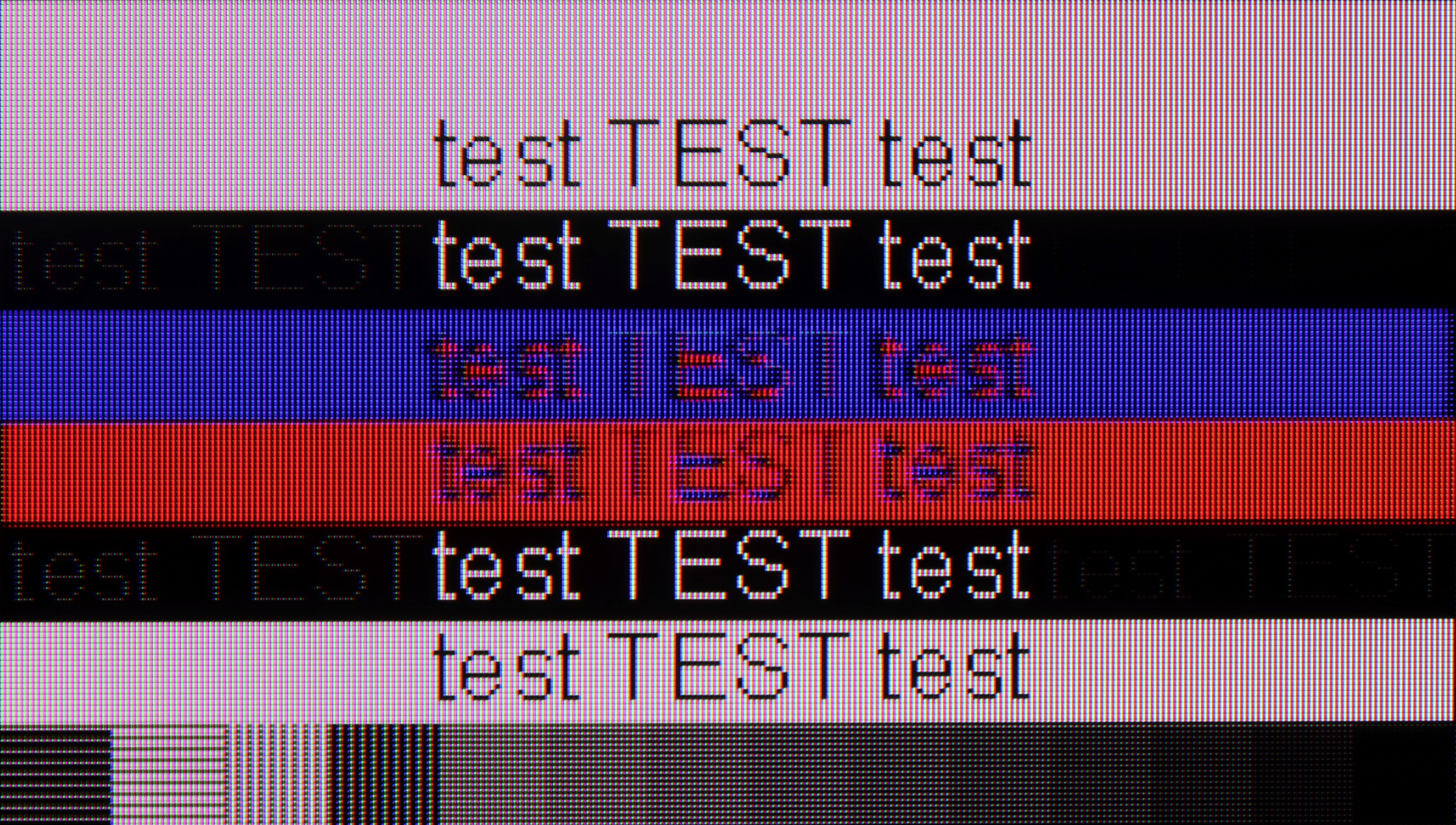
The photo shows the legibility of small fonts. Ideally, lines should be the same thickness on both light and dark text, with minimal pixel gaps.
If we plan to use the TCL A300 as a monitor for a computer, we may be pleasantly surprised. The television performs really well in this role. It is equipped with a 144 Hz panel, supports G-Sync, and, as we mentioned, offers very low input lag, so gaming on it with a connected PC is pure pleasure.
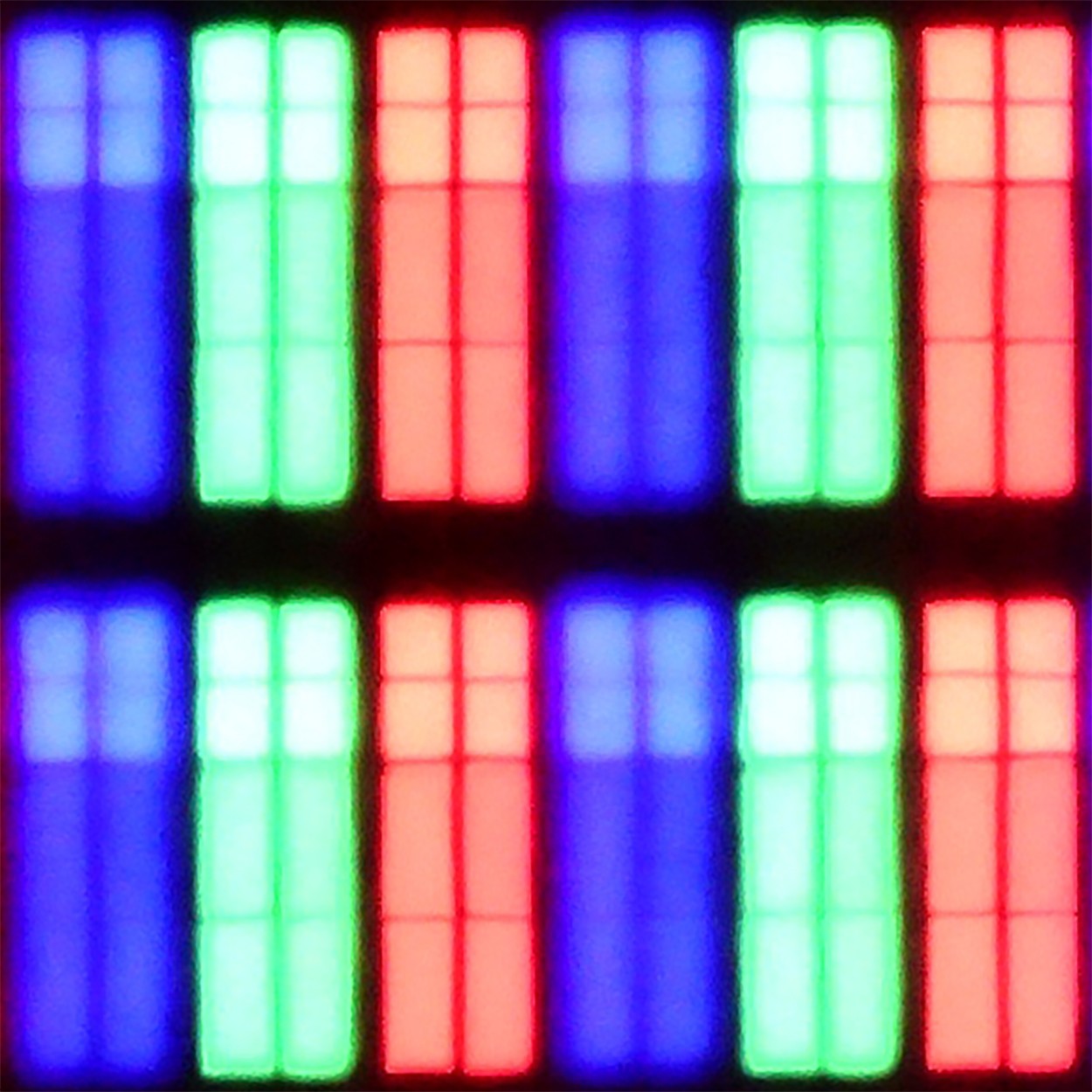
Working with text is also possible, although with some limitations. The TCL A300 has slight issues displaying dark fonts and thin lines – this stems from the structure of the subpixels, which can be somewhat bothersome in everyday use, even though it looks better in pictures than in reality.
The television supports chroma 4:4:4, but only up to 120 Hz. That's why we noted that this feature is available, but with a limitation – if we care about perfectly legible fonts, it's worth sticking to a refresh rate of 120 Hz. At 144 Hz, the sharpness of the text may suffer slightly.
As a monitor for PC gaming, the M95E performs really well. We have full support for 144Hz, there's VRR, and therefore, G-Sync works as well. In this regard – it's great. That's probably why our "average" rating in this category surprises you. The reason is simple: while it excels at gaming, regular text work is not its forte. When set to 120Hz or 144Hz, the TV's ability to display text is, to put it bluntly, poor. The text is blurry, and the colored letters become fuzzy due to the lack of full support for Chroma 4:4:4. Interestingly, there's a workaround – just switch the computer to 60Hz mode and everything returns to normal, with the fonts becoming sharp. The only downside is that it forces us to constantly juggle settings every time we want to stop gaming and do some work.
Viewing angles
3.2/10
3.1/10
The viewing angles on the TCL A300 NXTVision are – let's be honest – average. The television is equipped with a VA panel, which inherently has quite limited angles, and unfortunately, you can clearly see that here. The film below speaks for itself – even a slight deviation from the axis results in a noticeable drop in contrast and color saturation. It’s a pity that this is another frame-style television that hasn’t done anything about it. After all, we don’t always have the option to sit perfectly straight in front – especially if the device is also meant to serve a decorative function in the living room.
The issue of viewing angles is not surprising here – they are simply weak. The Haier M95E uses a VA panel, so as you move away from the screen's axis, the image quickly loses color saturation, and the contrast clearly fades. However, this is a typical and fully expected feature of this technology, so it's hard to consider it a significant drawback – this type of panel is just like that.
Daytime performance
4.7/10
8.5/10


Panel brightness
Haier M95E: 1039 cd/m2
TCL A300W NXTVision: 388 cd/m2
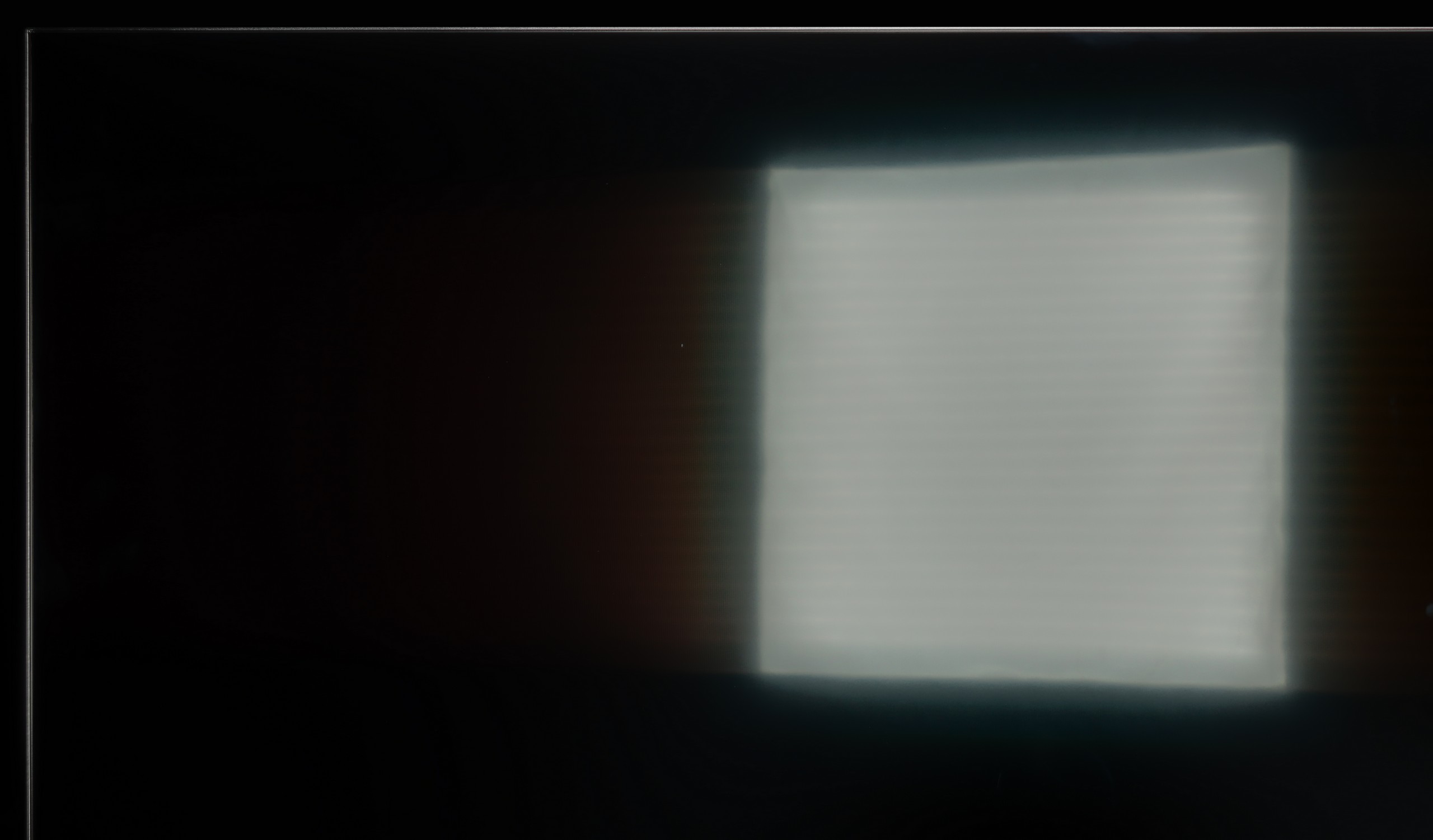
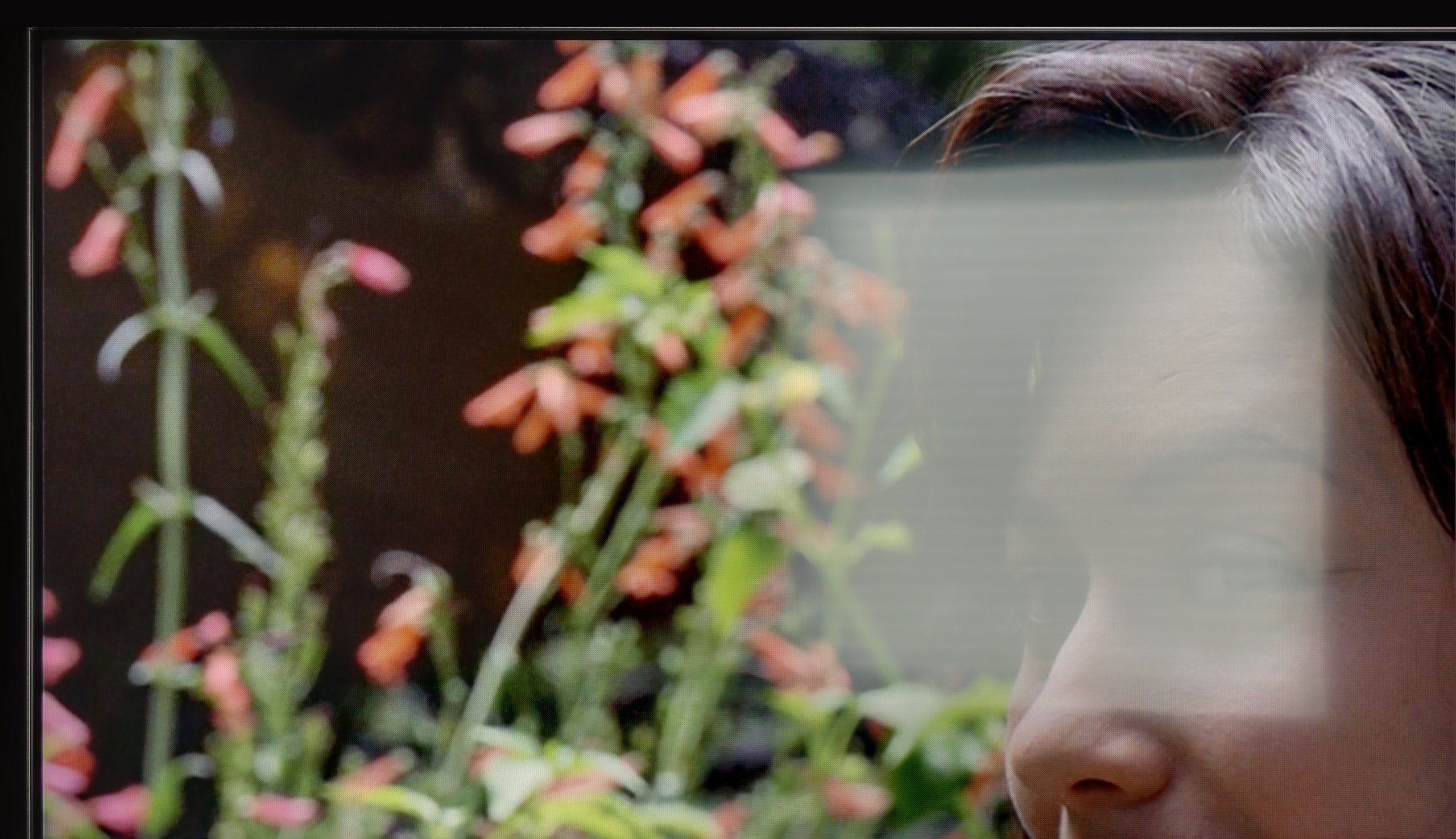
The TCL A300 NXTVision is equipped with a matte panel very similar to the one found in one of its Chinese competitors – the Hisense S7NQ model. Such a surface does quite well in suppressing reflections, although it must be admitted that it performs worse than Samsung's The Frame, which offers a definitely higher level in this respect. As is often the case with matte displays, blacks during the day lose depth and appear more gray than black – and this is no different here. Unfortunately, the fact that the A300 is the darkest television among the tested trio does not help either. As a result, it has a real problem standing out in heavily sunlit rooms.
If you are looking for a TV for a bright living room, the Haier M95E is one of the stronger candidates. Its efficiency in daytime conditions is primarily due to its very high brightness. In SDR mode, the panel averages over 1000 nits, which is a result that easily allows it to "break through" the light coming into the room, even in very challenging conditions. And although the M95E doesn't have some revolutionary, super-matte anti-reflective coating, its raw backlight power is entirely sufficient for it to perform excellently as a screen for watching "during the day".
Panel details
Subpixel Structure:
Panel uniformity and thermal imaging:


TCL A300W NXTVision
Haier M95E
TV features
7/10
3.6/10
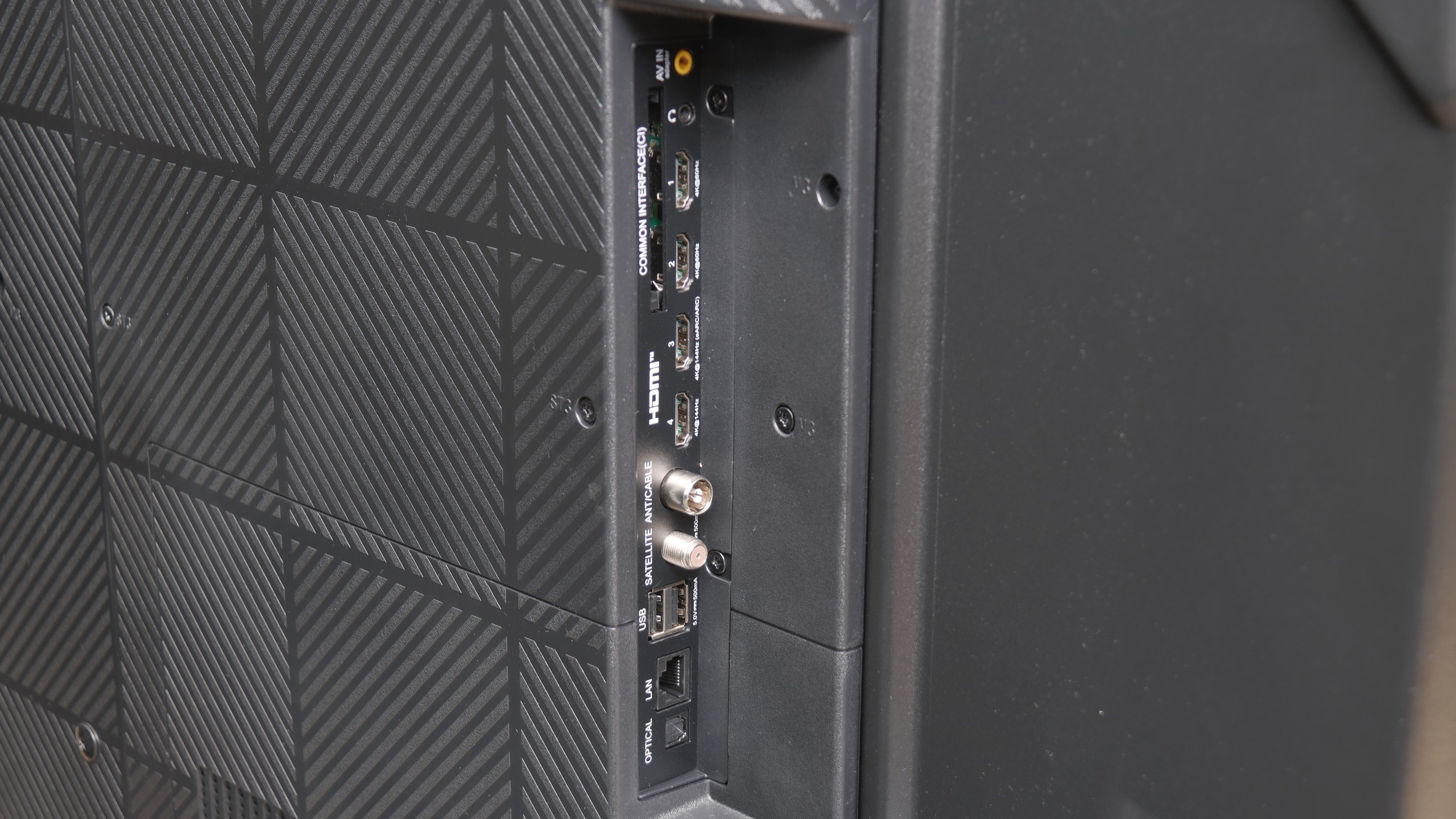
- HDMI inputs2 x HDMI 2.0, 2 x HDMI 2.1 48Gbps2 x HDMI 2.0, 2 x HDMI 2.1
- Other inputsRCA (Chinch)
- OutputsToslink (Optical audio), eARC (HDMI), ARC (HDMI)Toslink (Optical audio), eARC (HDMI), ARC (HDMI), Mini-Jack (Headphones)
- Network InterfacesWi-Fi 2.4GHz, Wi-Fi 5GHz, Ethernet (LAN) 100MbpsWi-Fi 2.4GHz, Wi-Fi 5GHz, Ethernet (LAN) 100Mbps
- TV receptionDVB-T, DVB-T2, DVB-S, DVB-S2, DVB-CDVB-T, DVB-T2, DVB-S, DVB-S2, DVB-C
Classic features:
- Recording to USB (terrestrial TV)
- Recording programming
- Picture in Picture (PiP)
- RF remote control (no need to aim)
- Backlit remote control
- Teletext
- Audio only mode
- Bluetooth headphones support
- Simultaneous Bluetooth headphones & TV audio
Smart features:
- AirPlay
- Screen mirroring (Windows Miracast)
- Voice search
- Voice search in native language
- Ability to connect a keyboard and mouse


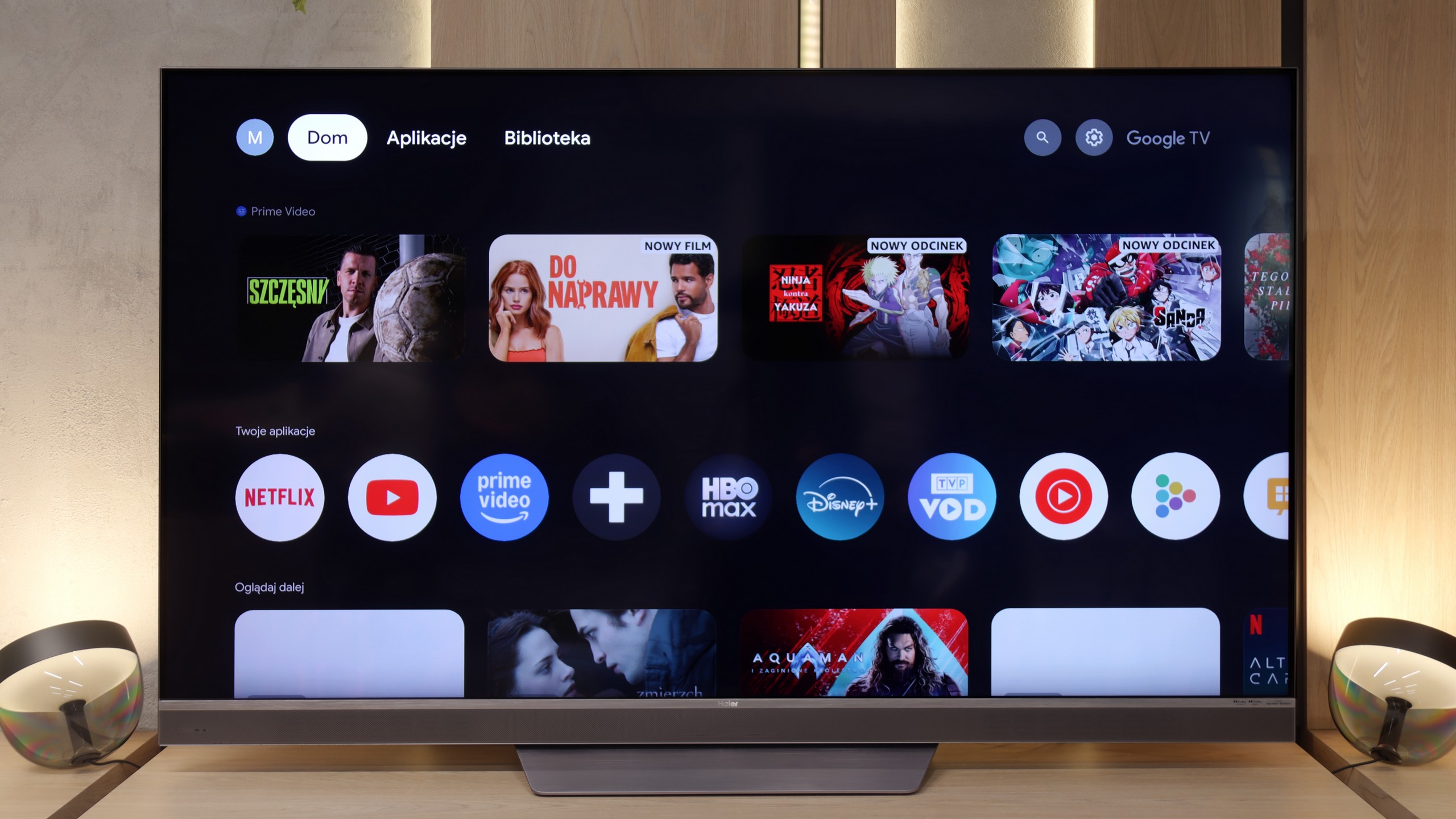
TCL A300 is a television styled like a painting, which in everyday use can successfully imitate a work of art hanging on the wall. It is equipped with a special image display mode, additional frames in a light wood tone, and a flat wall mount that allows the TV to be hung like a real painting – flush against the wall.
A significant advantage of the picture mode is that it is completely free. We have access to dozens of artworks from which we can choose what should be displayed in standby mode – instead of a black screen, the image selected by us stays on the wall. The quality of the graphic reproduction is decent, but it must be admitted that it clearly falls short compared to that of Samsung's ART Store. Although access to the images there is paid, the quality of the scans is significantly better – you can see the texture of the paint, canvas, and details. In the TCL A300, it resembles high-quality photos more than realistic reproductions of artworks. Additionally, the implementation of the picture mode in the system leaves much to be desired. For example – if we set the brightness in picture mode to 10%, this same value automatically transfers to the regular viewing mode, where we could easily set the brightness to 50% or even 100%. It also works the other way around – when we set the brightness to 100% in regular mode, after switching to gallery mode, the images are displayed with that same maximum brightness, shining too intensely and losing the entire effect of "a picture on the wall." These are minor but annoying errors that can ruin the impression of what was supposed to be visually subtle and elegant.
Moving on to more classic features – the A300 runs on the Google TV system, which currently offers by far the largest selection of applications (full list available below). The well-functioning voice assistant with support for the Polish language is also a significant plus. As is standard – as in most TCL televisions – there is a lack of USB recording functionality or picture-in-picture (PiP) mode.
Classic Features of M95E
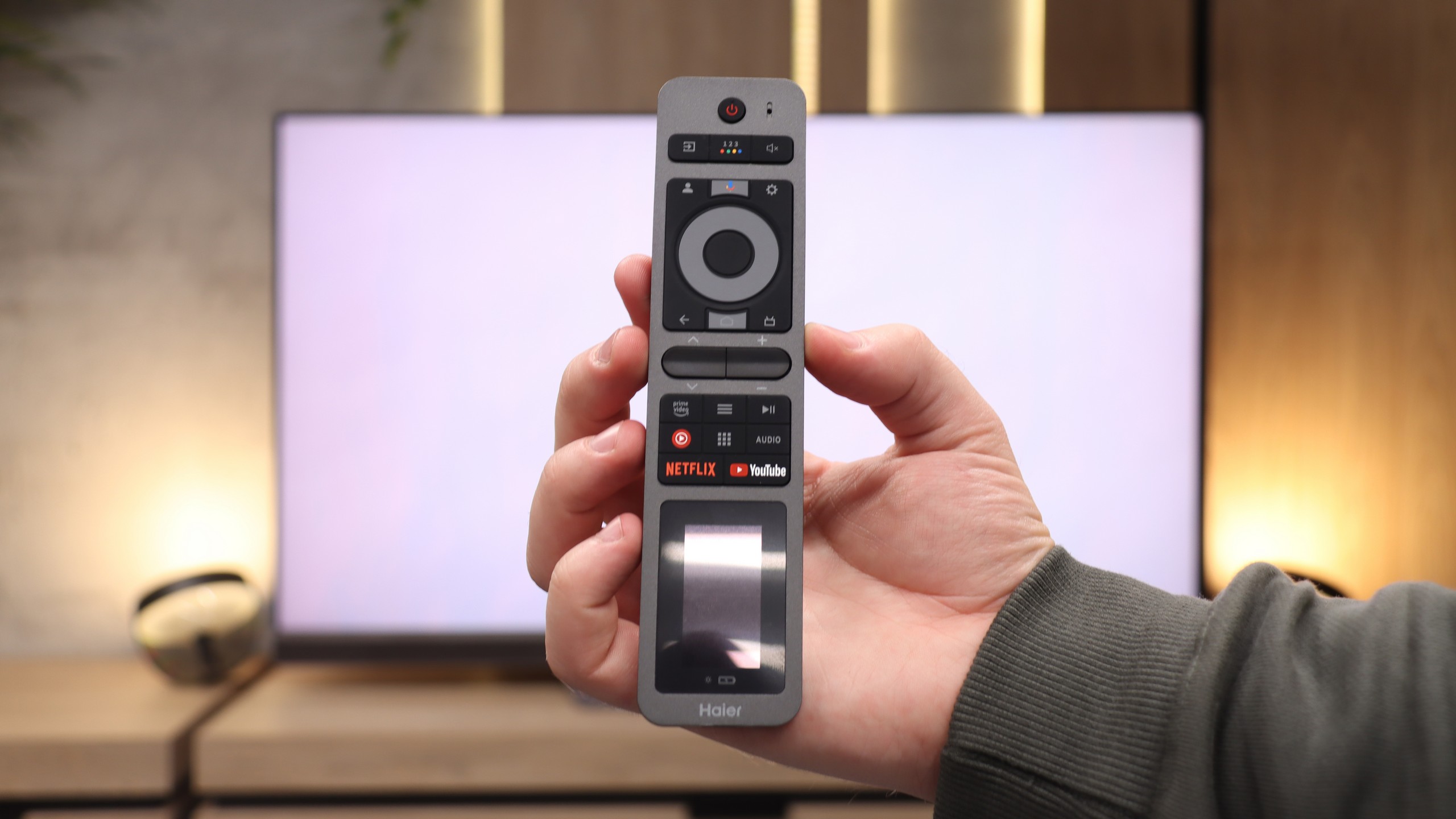
When it comes to the classic features of the television, the M95E falls, to put it mildly, short. The only real plus in this category is that we even get a remote control, although it has quite an awkward shape and is not the most comfortable to use. The real trouble began when we tried to search for terrestrial TV channels – the receiver stubbornly refused to connect to any antenna throughout the tests. To be sure, we checked the same setup on another television, where everything worked flawlessly, which rules out any fault on our side. Generally, apart from the fact that it has Bluetooth and a physical mini-jack headphone output, it’s hard to praise the M95E for anything here.
Operating System: Google TV
Well, you might ask, what about Smart features? After all, Google TV is a system that offers incredible capabilities. That's true, it usually is. And indeed, in the M95E, we find the same vast library of applications and access to a voice assistant as with any other manufacturer. However, this is where the advantages of this system in the tested model end. On our unit, the software simply ran sluggishly. We encountered annoying bugs, and the entire interface regularly experienced slight stutters in the most inappropriate places, which effectively discouraged us from using it.
Apps
9.6/10
9.6/10






















Playing files from USB
8.9/10
9.5/10
Supported photo formats:
Maximum photo resolution:

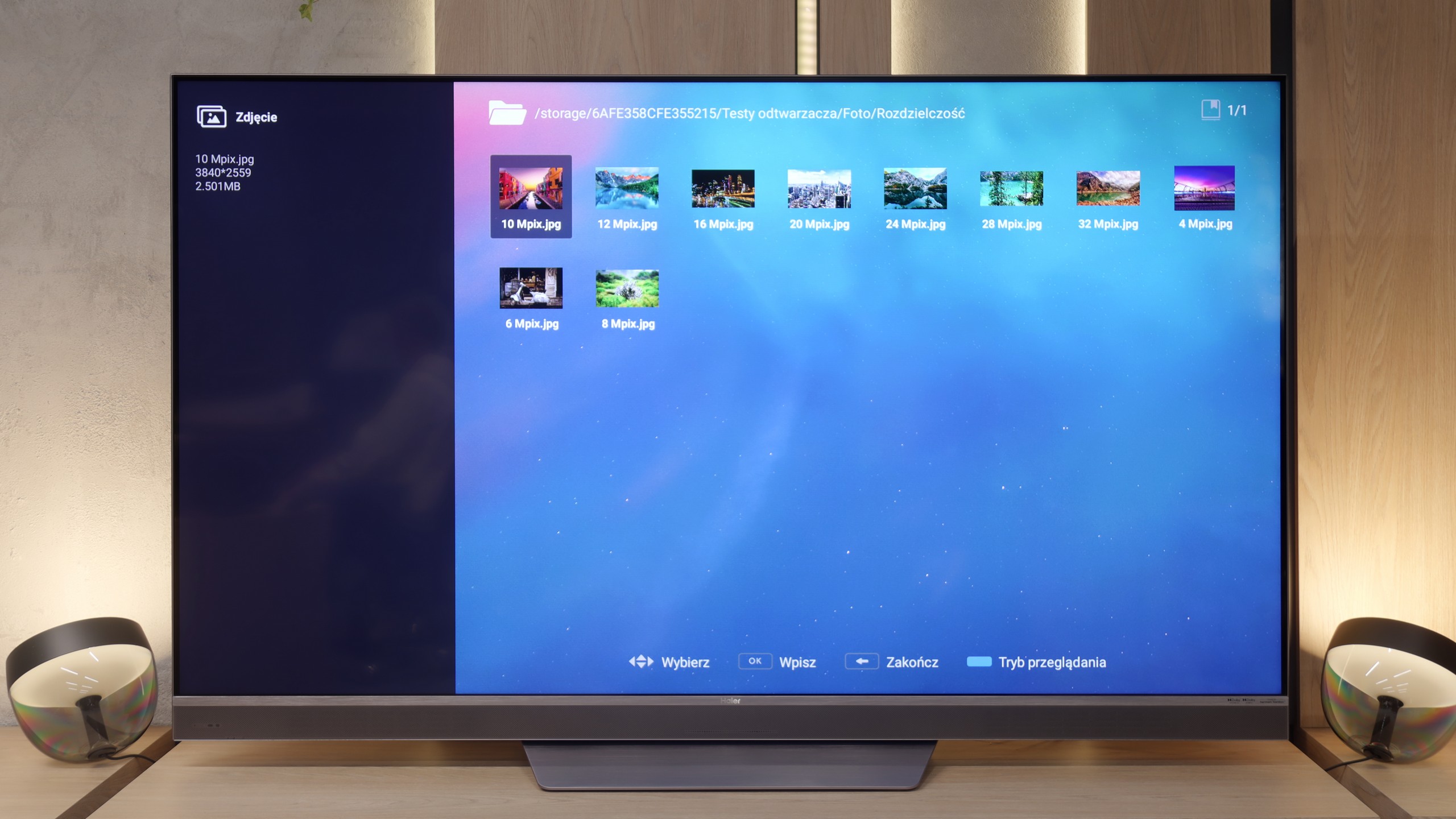
The built-in player in the TCL A300 works as it should – most popular video and photo files play without any issues. Although it lacks support for the HEIC format from Apple (which is quite common in many TVs), most users still rely on the AirPlay feature, so it shouldn't pose a major problem. If someone is not satisfied with the default player, the Google TV system offers considerable options – it's easy to install an alternative app that better matches our preferences. Nonetheless, it must be admitted that the factory solution is completely sufficient for everyday use.
In such an unrefined and clunky system, we didn't expect any positive surprises. Yet, the built-in file player with USB turned out to be a real gem. To our surprise, the application worked smoothly and handled all the most important formats we threw at it flawlessly. It's one of the few components of the M95E software that seems to work exactly as it should.
Sound
6/10
9.2/10
- Maximum volume-87dB
- Dolby Digital Plus 7.1
- Dolby True HD 7.1
- Dolby Atmos in Dolby Digital Plus (JOC)
- Dolby Atmos in Dolby True HD
- DTS:X in DTS-HD MA
- DTS-HD Master Audio
When it comes to sound, the TCL A300W – like its competitors – sounds quite... flat, after all, we are talking about a super slim TV. For everyday watching of news or series, this level is completely sufficient, but during movie screenings, it may clearly lack depth and space. On the plus side, it’s worth noting that the TV supports both Dolby Atmos and the increasingly rare DTS:X – which provides more options when connecting an external audio system. It’s also worth mentioning that the A300 PRO model is equipped with a dedicated, flat soundbar. And it's no ordinary one – it sounds better than most of the TVs we tested.
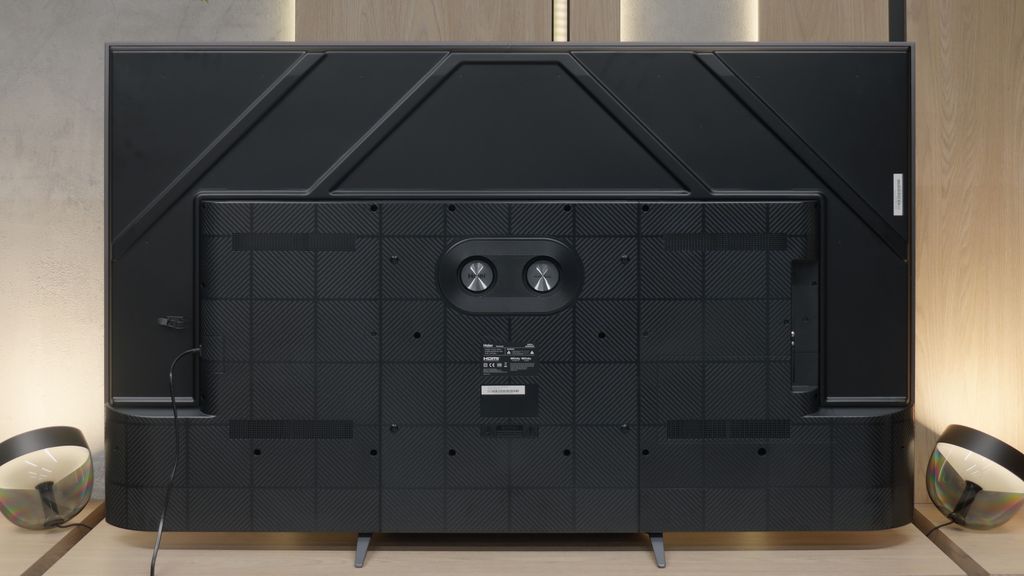
After all this enumeration of shortcomings and wasted potential, we move on to a category that is like a breath of fresh air. The sound on the Haier M95E is simply phenomenal. We can confidently state that it is one of the best-sounding televisions that has graced our editorial office this year. The integrated soundbar, proudly positioned at the front, delivers really clear and balanced audio, serving us distinct dialogues and selective high tones. The real magic also comes from the back of the casing – that’s where two additional subwoofers are located, providing a surprisingly strong and pleasant bass. Of course, we will be realists. We are still talking about the capabilities of the speakers built into the television, and there is no comparison to a decent external audio system. Nevertheless, as an integrated solution, the M95E sounds really very good and leaves most of the competition far behind.
Sound Quality Test
No sound test video
Acoustic Measurements
No acoustic data
87dBC (Max)
75dBC