 Direct comparison
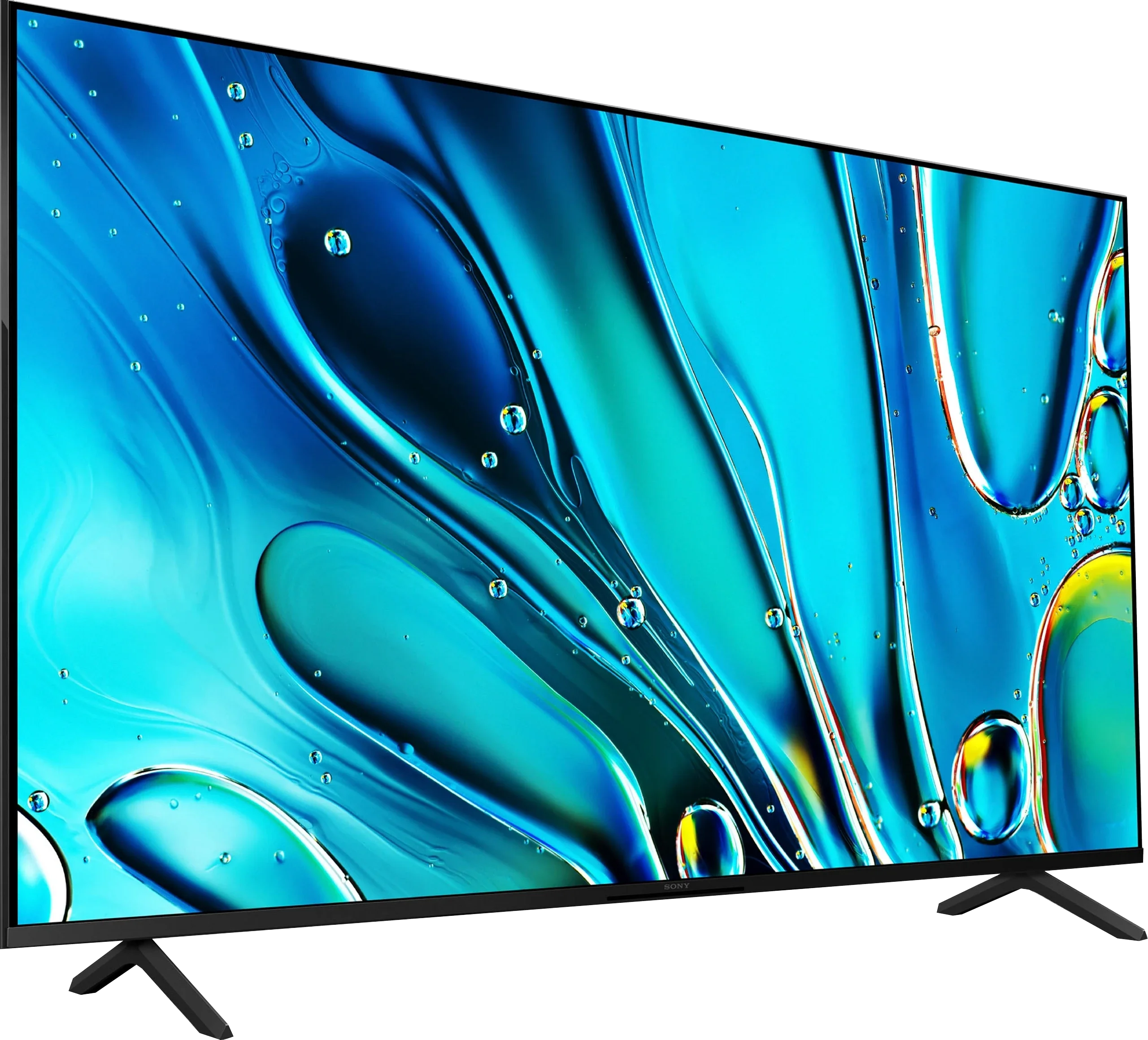
Sony Bravia 3 in the VA panel variant is a television that remains the same budget model in character, but the change in panel type makes watching movies and series much more enjoyable. Higher contrast and deeper blacks finally allow for viewing in the evening without the impression that the screen is drowning in shades of gray. This is a significant advantage over the IPS version, even if it comes at the cost of much worse viewing angles. In practice, this comes down to a choice – if we watch mainly from a couch positioned directly in front, the VA panel gives a decidedly better effect. The rest of the image remains largely the same. The PFS filter still provides pleasantly saturated colors, and the upscaling is at a good level, ensuring that SDR content looks clean and aesthetic. The Google TV system, although it doesn’t always work perfectly smoothly, remains a huge asset – access to a broad library of applications and streaming platforms is something that competitors in this price range don’t always offer in such a refined form. At the same time, the Bravia 3 with VA does not solve all the issues of its predecessor. HDR brightness at around 350 nits still does not allow for a true high dynamic effect, and the lack of local dimming means that fine details can still be blown out. Additionally, there’s no USB recording, which was present in the predecessor. So, who is the Bravia 3 in the VA version for? For those who want to enter the world of Sony televisions at a lower cost and care about decent quality in films and series, primarily watching lower-quality content. It is not a proposition for gamers or for someone expecting cinematic HDR effects. As with the IPS version, it’s hard to talk about a bargain – even if it is the "cheapest Sony of 2025," it is still more expensive than competitors who can offer Mini-LEDs with significantly better contrast and brightness at the same price. Therefore, it is worth considering this model primarily when we come across an attractive promotion.
- Matching (Score) |
- Our verdict |
- TV appearance |
- Where to buy |
- Contrast and black detail |
- HDR effect quality |
- Factory color reproduction |
- Color reproduction after calibration |
- Smoothness of tonal transitions |
- Image scaling and smoothness of tonal transitions |
- Blur and motion smoothness |
- Console compatibility and gaming features |
- Input lag |
- Compatibility with PC |
- Viewing angles |
- Daytime performance |
- Panel details |
- TV features |
- Apps |
- Playing files from USB |
- Sound
BRAVIA 3 / K-(XX)S3

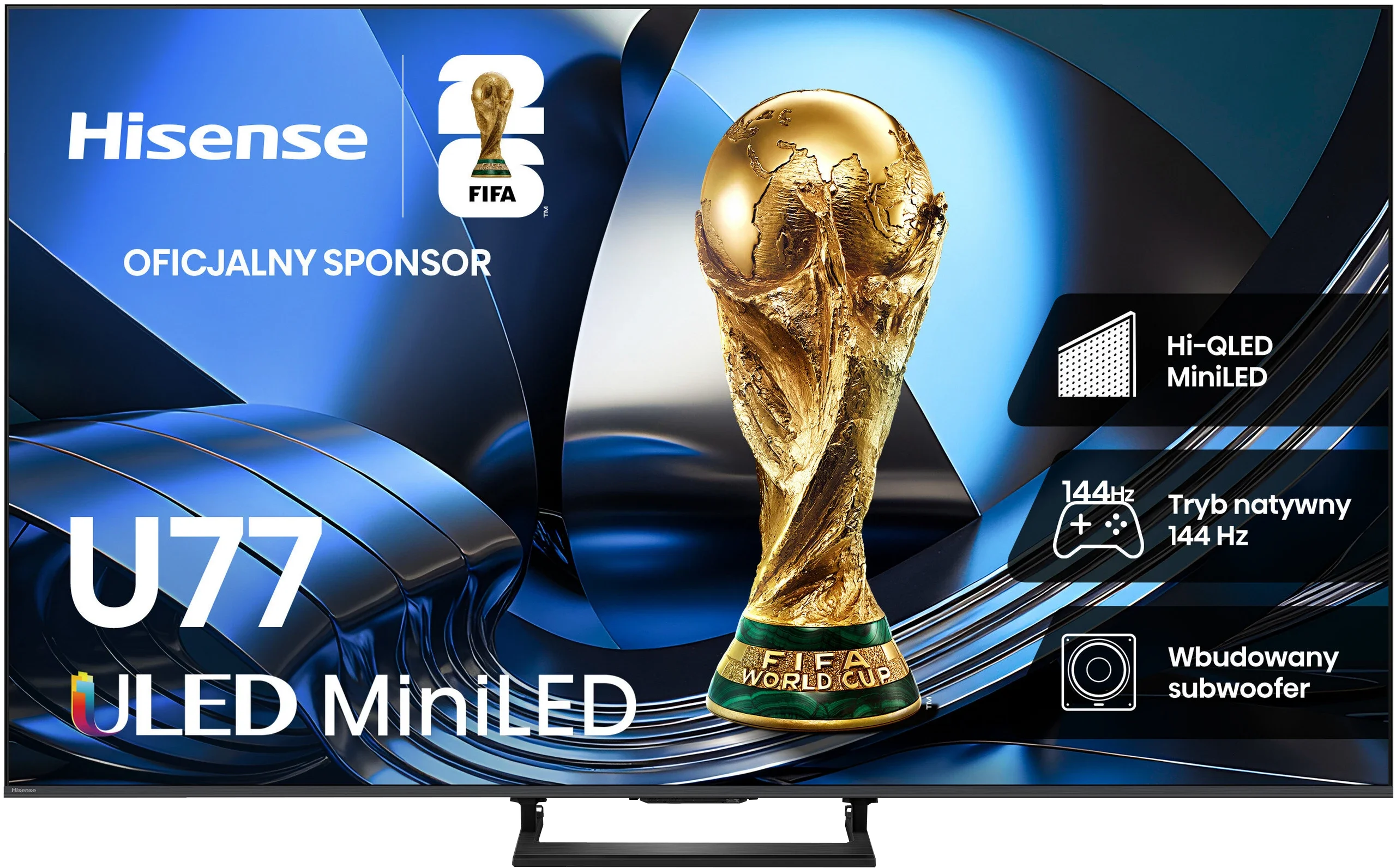
U7S / U77S
Available screen sizes: 50”
Panel type: LCD VA
Resolution: 3840x2160
System: Google TV
Model year: 2025
Panel type: LCD VA
Resolution: 3840x2160
System: VIDAA
Model year: 2026
Check how well they match your needs
Take the surveyOverall rating
6.2
7.3
 Movies and series in UHD quality
6.3
6.9
 Classic TV, YouTube
6.3
6.9
 Sports broadcasts (TV and apps)
5.4
6.4
 Gaming on console
6.6
8.2
 TV as a computer monitor
3.5
8.2
 Watching in bright light
5.4
7.0
 Utility functions
6.1
8.9
 Apps
9.6
8.3
 Sound quality
6.5
7.2
Complete the survey to find out what fits your preferences
Advantages

Significantly better contrast and deeper blacks than the IPS variant
Higher screen brightness, which improves viewing comfort during the day
More uniform panel, fewer issues with vignetting and lightening
Smooth tonal transitions, especially in bright scenes
Wide color gamut coverage (over 91% DCI-P3)
Effective upscaling of lower quality materials
Dolby Vision support, which partially enhances the experience of HDR content
Google TV system with a large app library
Two remotes included – classic and minimalist
Deep blacks, ideal for evening viewing
Bright, clear picture even during the day
Natural colors after calibration when watching regular TV and SDR movies
Plenty of options for console and PC gamers
Low input lag
Feature-rich VIDAA system
Recording programs to USB and a convenient remote that you don't have to point at the screen
Pleasant sound with light bass
Disadvantages

A lot worse viewing angles than in the version with the IPS panel
Collaboration with PC clearly weaker: worse font readability and visible dithering
Occasional system freezes on Google TV
Missing USB recording feature
Pronounced smearing on the VA panel
HDR image is overly bright, clearly at odds with the creators' intent
Incorrect HGiG behavior that makes HDR setup in games difficult
Poor viewing angles\
Some apps missing from the VIDAA system
Our verdict
Hisense U7S is the latest iteration of the U7 series, whose biggest advantage remains its price-to-quality ratio. You get a Mini LED TV with local dimming, which really improves black levels and gives the picture depth for evening viewing. During the day, the generous brightness headroom is useful, so you don't have to immediately cover the windows. It's not a device without compromises, but as an everyday TV it makes a lot of sense. Gamers benefit a lot as well. The U7S supports high refresh rates from consoles and PCs, has an extensive set of gaming features, and responds very quickly to controller input. Pleasingly, the low input lag is preserved in Dolby Vision too. Add in the smoothly running VIDAA, which offers both Smart features and handy extras for regular TV, and the package is fairly versatile, though compared with last year's U7Q it's hard to call it a big step forward. Unfortunately there are also things that clearly bother us. The first is motion blur. The panel has a high refresh rate, but its pixels don't always keep up, so visible trails follow moving objects. Fans of sports and fast-paced games will notice this especially. The second issue is HDR, which the TV shows somewhat "its own way." Instead of sticking to the brightness encoded in the content, it strongly brightens parts of the image. That was probably meant to look more impressive, but it often has the opposite effect: the scene becomes over-bright, loses depth, and clearly departs from the creators' intent. It's a shame this behavior can't be effectively corrected even during calibration. Despite these remarks, the U7S remains an interesting choice if you're looking to get as much as possible for a reasonable price. Compared with basic LCDs without local dimming, which you can still find at a similar price, it primarily offers much better blacks. And that's exactly its greatest strength. You don't have to reach for an expensive model to get a Mini LED whose advantages are actually noticeable when watching. If you accept its flaws, the Hisense U7S can above all be a cost-effective purchase.
TV appearance
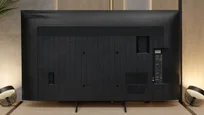
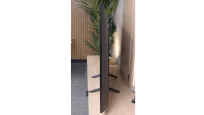
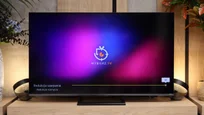
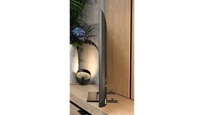
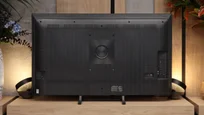

Contrast and black detail
5.7/10
8/10
Local dimming function: No
Local dimming function: Yes, number of zones: 192 (8 x 24)
Contrast:


Result
5,550:1

Result
5,250:1

Result
5,050:1

Result
5,150:1

Result
4,000:1
Result
507,800:1
Result
51,250:1
Result
30,900:1
Result
21,250:1
Result
5,650:1
Halo effect and black detail visibility:
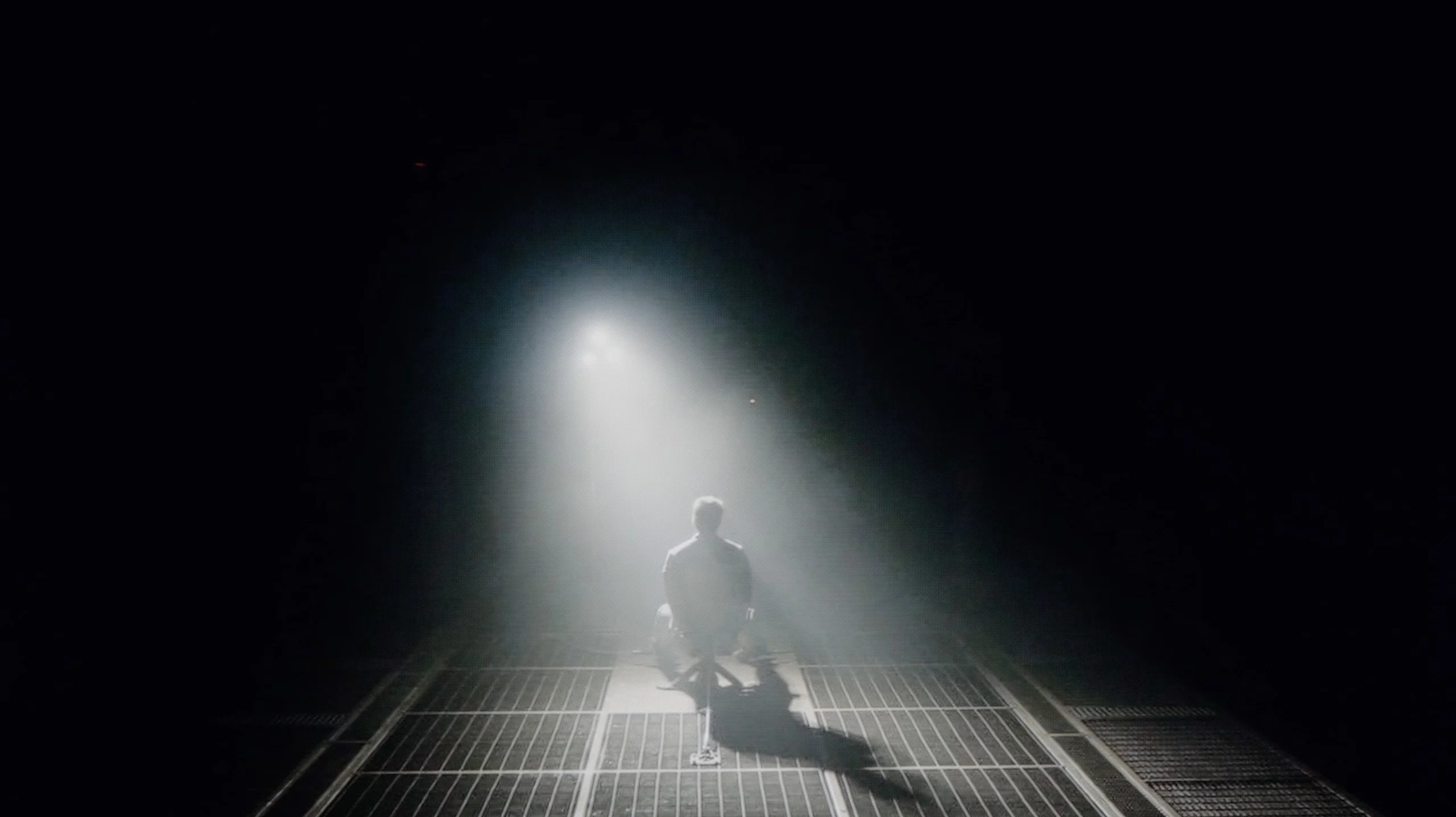
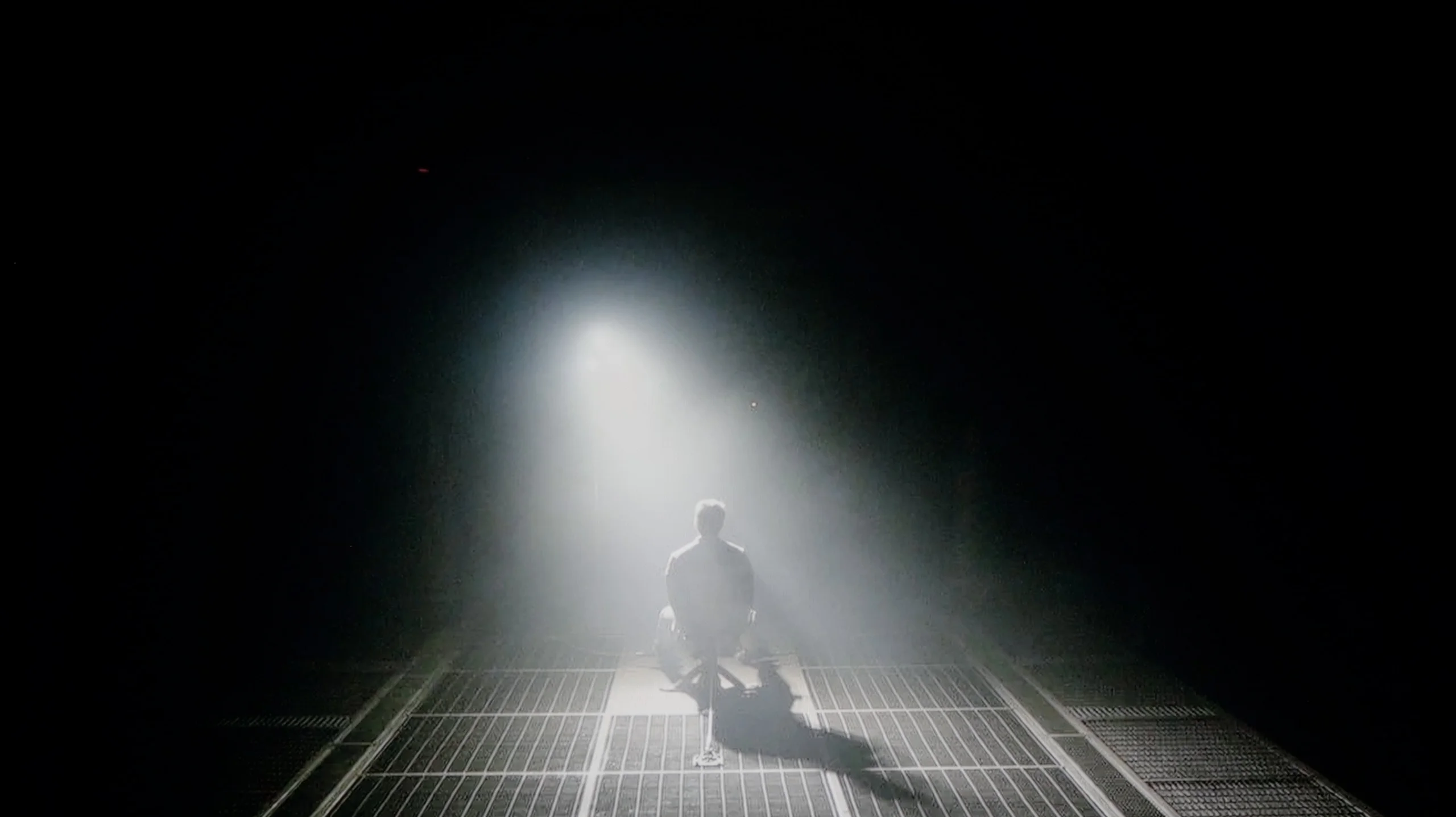
Check the visibility of bright lights on a dark background. Mini-LEDs often struggle with this. The photo does not compare black levels – that’s what the video below is for.
The video accurately shows differences in contrast and black levels between TVs, as well as potential issues: halo around bright objects or Mini-LED zone operation visible as brightness jumps.
The biggest difference in the 50-inch variant is the way Bravia 3 handles contrast. Although the television is not equipped with a local dimming system, simply changing the type of panel to VA provides a noticeable effect. The contrast is definitely higher than in the other sizes based on IPS panels, and the blacks no longer resemble washed-out shades of gray or navy. As a result, much more detail is visible in darker parts of the image, making evening viewing simply more enjoyable. It's still not at the level of more expensive Sony models, but the difference compared to the other variants of Bravia 3 is clear and easily noticeable after a short viewing session.
The Hisense U7S shows good black levels, especially for one of the entry-level Mini LED models. The 55-inch unit we tested uses 192 local dimming zones that work well with the VA panel. In most of our scenes contrast ranged from about 21,000:1 to over 51,000:1, and in one it even exceeded 500,000:1. In many films you can see it — dark scenes have depth, and blacks don't glow gray like on many cheaper LCDs without local dimming.
It gets worse when the screen contains a lot of small bright objects on a dark background (for example, in the scene shown below). There aren't enough zones to illuminate each one separately, so you can see a bright halo around the small objects. This so-called halo effect is easiest to notice when watching in a dark room. In the most demanding shot contrast fell to about 5,650:1, and here the backlight limitations are clearly visible. Even so, given the TV's class, it's hard to call this a fault, because many Mini LED TVs in a similar price range will have similar problems.
HDR effect quality
4.9/10
5.5/10
Luminance measurements in HDR:

Result
319 nit

Result
360 nit

Result
393 nit

Result
365 nit

Result
395 nit
Result
700 nit
Result
297 nit
Result
640 nit
Result
154 nit
Result
745 nit
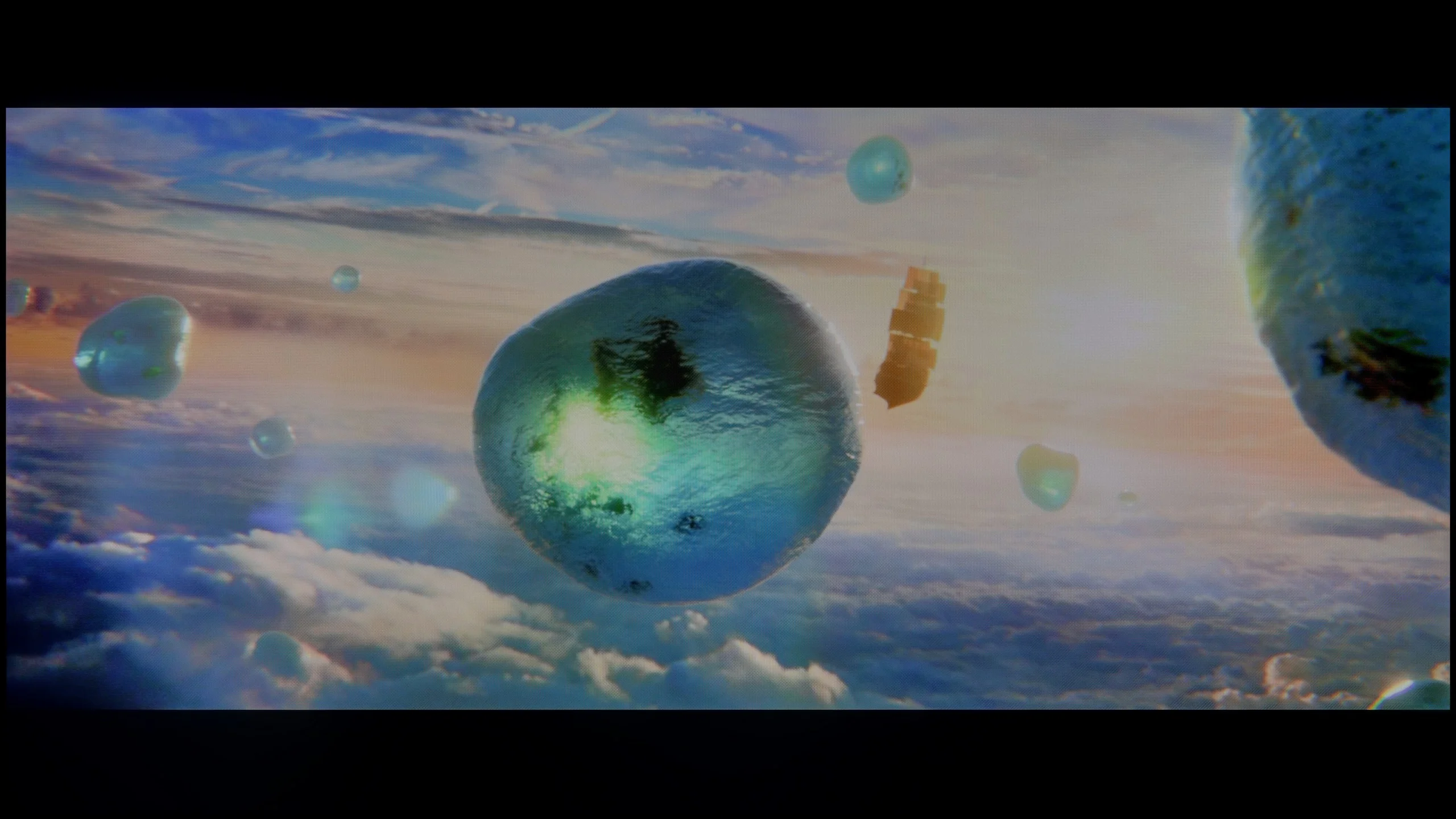
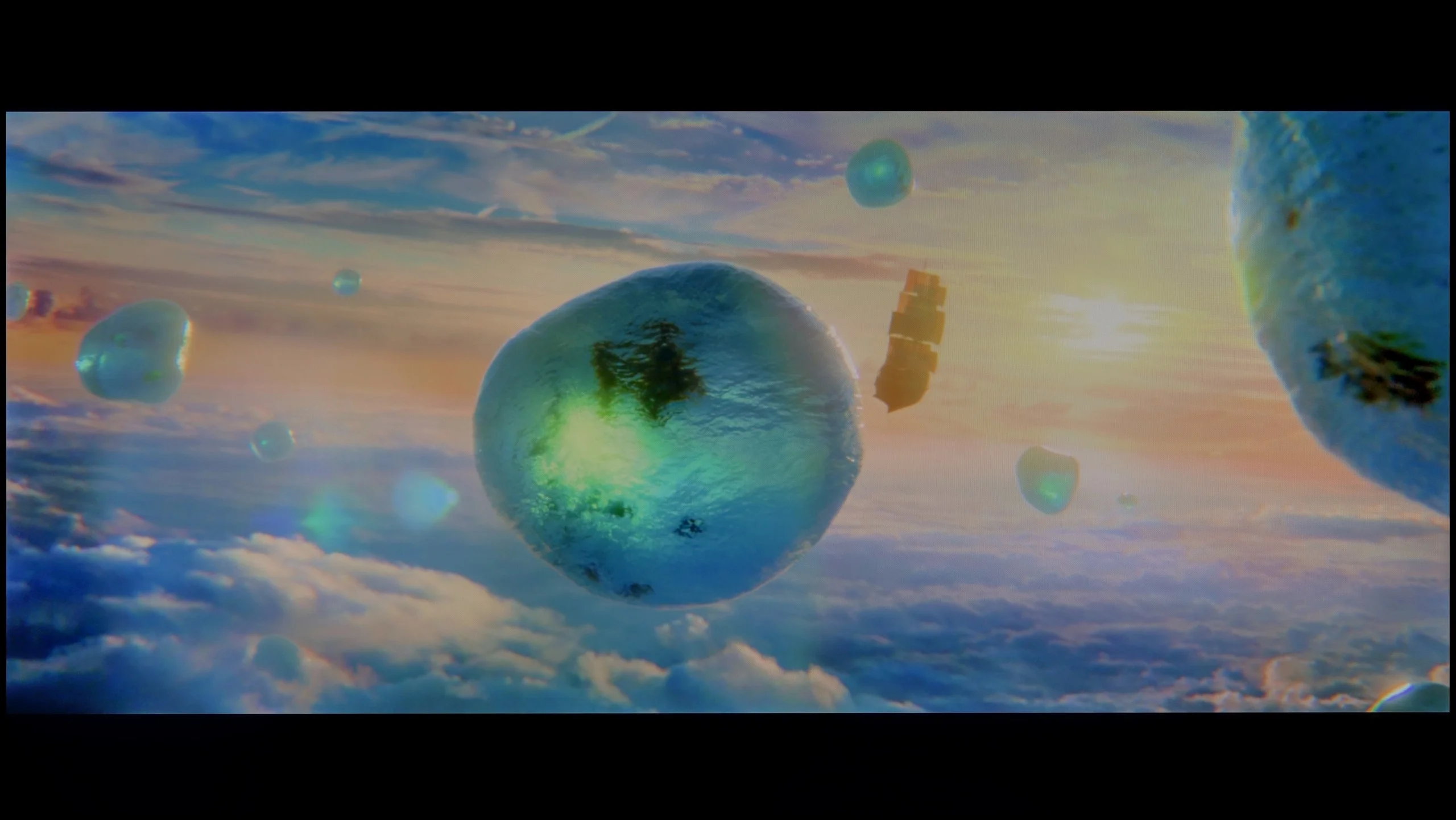
Scene from the movie “Pan” (about 2800 nits)
Scene from the movie “Billy Lynn” (about 1100 nits)
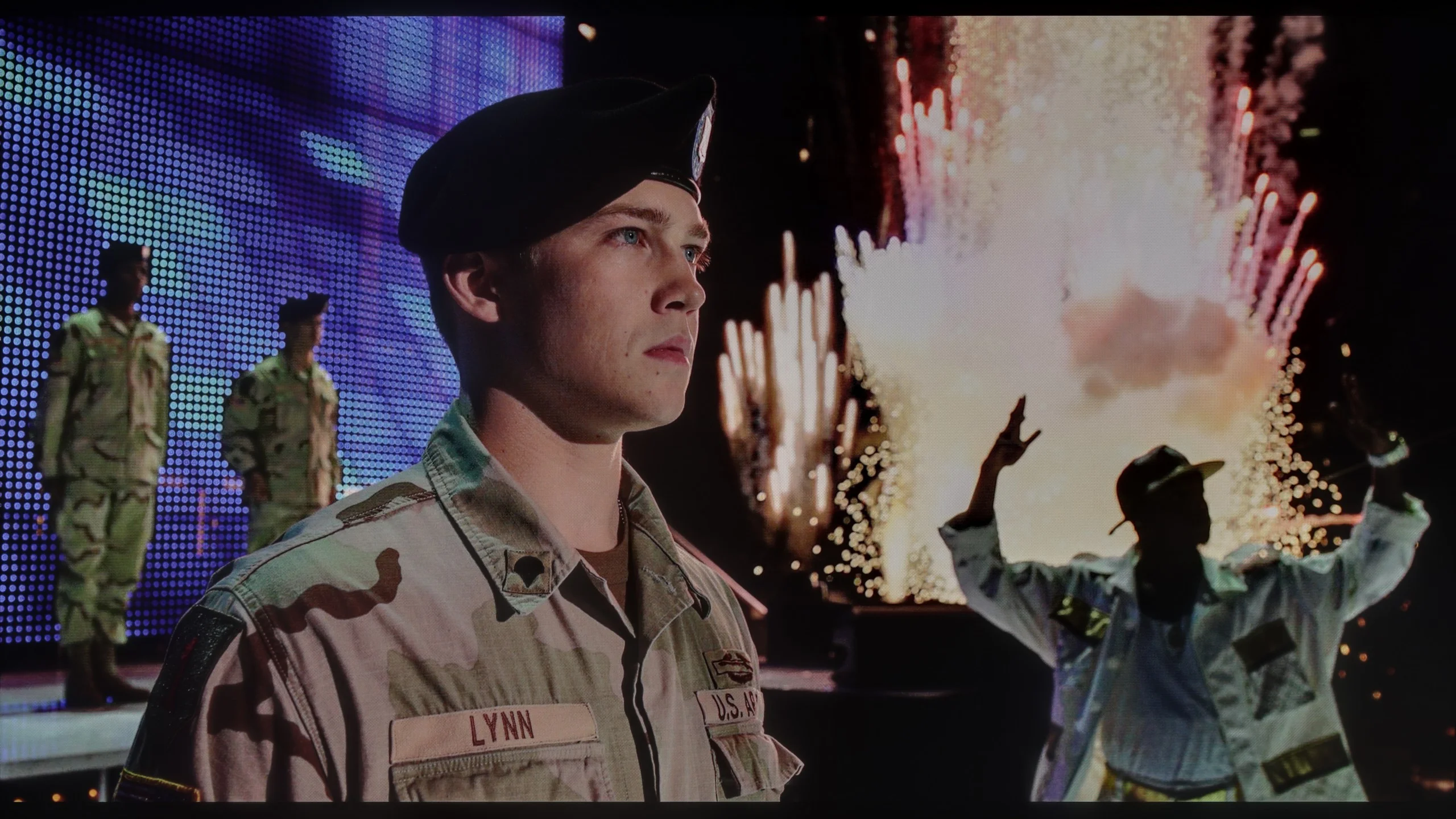
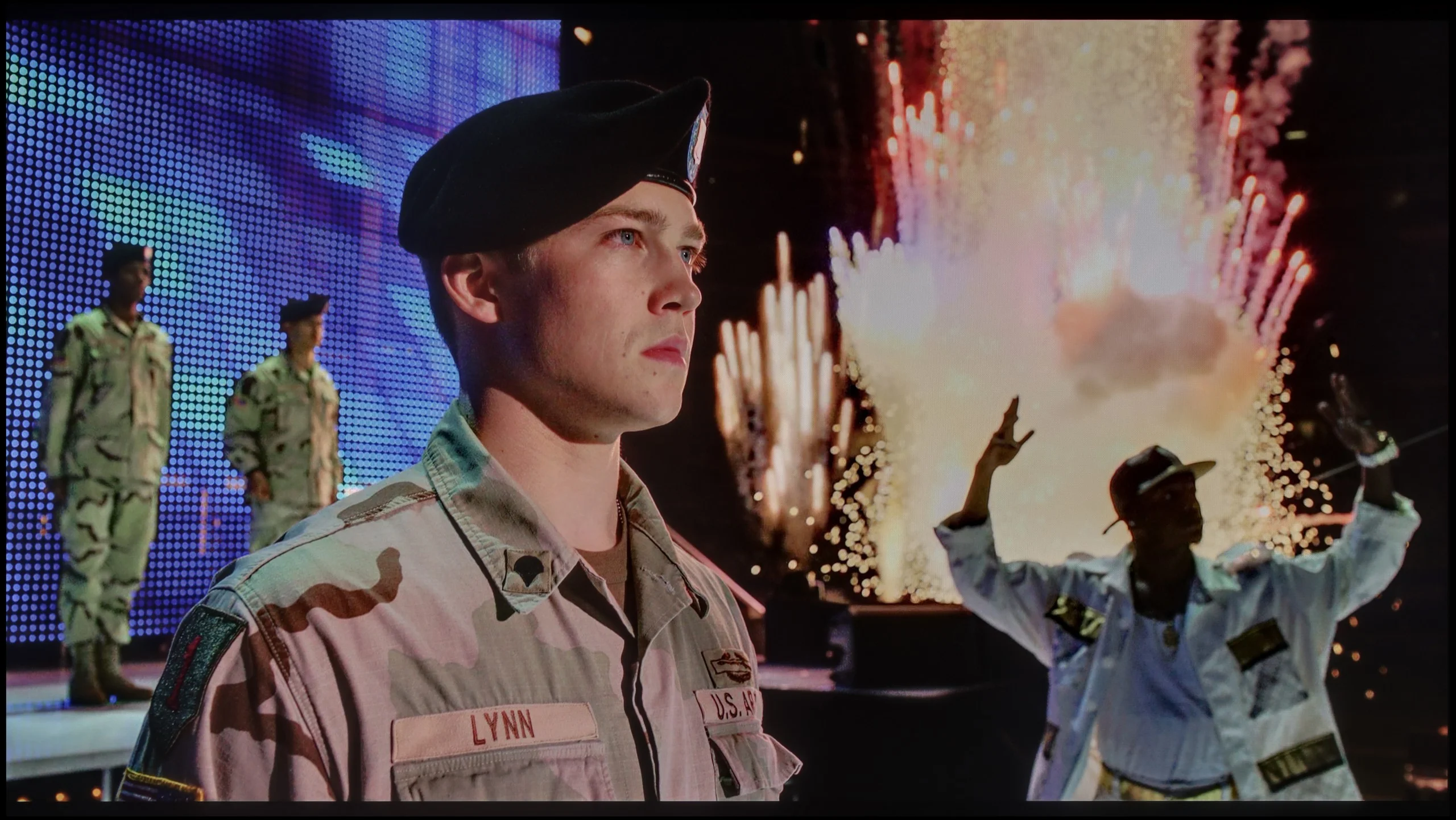
The photos show two HDR10 movies. 'Pan' is one of the brightest productions ever made, while 'Billy Lynn' (soldier) has brightness typical of streaming (Netflix, Prime, HBO MAX). Notice the intensity of effects and detail in whites.
Static HDR10
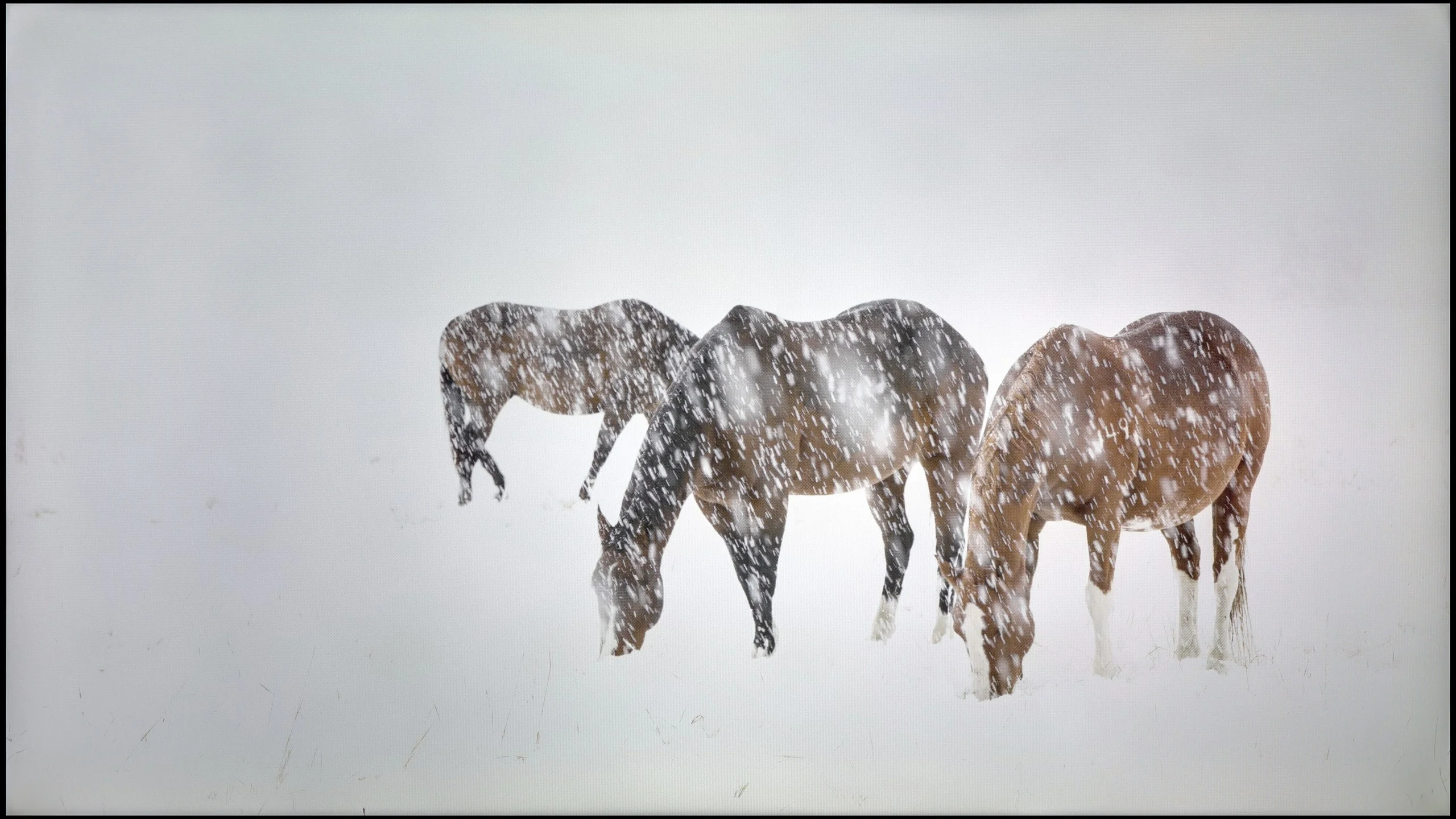

The photos present the visibility of white details in various HDR formats. They do not show brightness differences between TVs (these can be compared in the previous gallery).
Dynamic: Dolby Vision
Dynamic: Dolby Vision


The photos present the visibility of white details in various HDR formats. They do not show brightness differences between TVs (these can be compared in the previous gallery).
HDR luminance chart:
Hisense U7S / U77SE
Sony Bravia 3 50' (VA)
Interestingly, in the 50-inch version, the Bravia 3 performs slightly better in terms of brightness than its larger variants. In measurements, it achieved around 370 nits, which still aren't values that can compete with top-end televisions, but enough to speak of a semblance of HDR effect. For some users, this level will be acceptable, while others will view it as typical for SDR content, where spectacular bursts or strong contrasts are not expected. It must be clearly stated that the Bravia 3 is not a television for those who want to extract maximum quality from the most challenging film materials.
However, this does not mean that everything is mediocre. Sony equipped this model with an additional PFS filter, which works similarly to solutions used in QLED televisions. As a result, the coverage of the DCI-P3 color palette increased to over 91 percent. In everyday use, this means livelier, more saturated colors and a more pleasing image texture. Even if strong lighting effects are lacking, movies and series can look significantly more attractive than in its predecessor, the X75WL.
The Hisense U7S has considerable HDR potential, but it can't use it in every scene. On a test pattern it reaches around 1,100 nits, so the backlight itself is very strong. In our brighter film scenes we measured about 640 to 745 nits. That's still enough for the sun or bright highlights to have a noticeable glow and to show an advantage over SDR material. When the TV needs to illuminate a larger portion of the image, it does quite well.
The problem appears with small lights on a dark background. Each of the 192 zones covers an area much larger than a tiny point on the screen. If the TV were to strongly light such a zone, it would also brighten the surrounding area along with the light. Hisense tries to avoid that and dims the entire zone. Black levels therefore look better, but a small bright object that should draw the eye also loses intensity. That's why in two tougher scenes we recorded only 297 and 154 nits. The difference is large: in one shot HDR can impress, and in the next small lights are noticeably muted. The U7S therefore prioritizes maintaining deep blacks, even at the expense of bright details. With this number of zones that's an understandable compromise, but it's worth remembering — the 1,100-nit peak tells us about the backlight's capability, not how brightly the TV will render every element of a film.
Colors
Hisense calls the U7S ULED, but that's a marketing name; the wider color gamut here comes from a PFS phosphor backlight. In our measurements the TV covered about 91% of DCI-P3 and 71% of BT.2020. Those are good results, although it falls short of the best screens on the market. The biggest shortfall is in green — the TV doesn't even reach the DCI-P3 target there, so the most saturated shades will be less intense than they should be. Most colors in HDR films and series, however, still look suitably rich. A positive is the repeatability of the results. Gamut coverage on test patterns and in film scenes is practically identical.
Factory color reproduction
5.8/10
5.8/10


This illustrative image shows how colors change after professional calibration. If you can see the difference, you can order it from SkalibrujTV – it's our own service.
Factory mode
After calibration


This illustrative image shows how colors change after professional calibration. If you can see the difference, you can order it from SkalibrujTV – it's our own service.
Factory mode
After calibration
We primarily tested the Sony Bravia 3 in movie mode, which immediately proved to be the best choice among the factory settings. It's not a perfect picture, but compared to eco mode, which the TV suggests right out of the box, the difference is clear and positive. In movie mode, one can notice a certain problem: the picture seems too warm, which results from a lack of blue in the white balance. Despite this, in SDR content, the final effect can still be considered quite decent and satisfactory for everyday viewing. Much more serious errors appear in HDR materials. The Color Checker analysis showed significant deviations, and poor brightness management, combined with limited color gamut coverage, further exposes the shortcomings of the picture in this mode. All this makes HDR on the Bravia 3 look unconvincing and can spoil the impression left by the quite decent SDR content settings. Fortunately, this is not a hopeless situation. All sorts of errors can be somewhat mitigated, and some can even be completely corrected through professional calibration. That’s why we decided to see how the TV would perform after such adjustments.
The out-of-the-box colors on the Hisense U7S are decent, but there are a few things to improve. In SDR there's a red bias in the white balance, which makes the image too warm and in places slightly pink. You can notice this on faces and on bright, neutral surfaces. Gamma also runs below the reference, so the TV brightens the image, especially in darker areas. That makes shadow details easier to see, but the scene loses some of its depth.
In HDR the white balance is a bit more even, but not completely neutral; midtones lack blue, and the brightest areas lack red. A bigger problem is how brightness is reproduced. The EOTF curve shows that a large portion of midtones is being brightened, so the image looks brighter than the source material intends. Color Checker measurements also perform worse than in SDR: many errors are around 3 to 4, and individual ones reach as high as 8. Colors can therefore look attractive, but they are not always faithful to what we should be seeing. There's room for improvement, and we'll check how much can be corrected with calibration.
Color reproduction after calibration
7.5/10
7.5/10
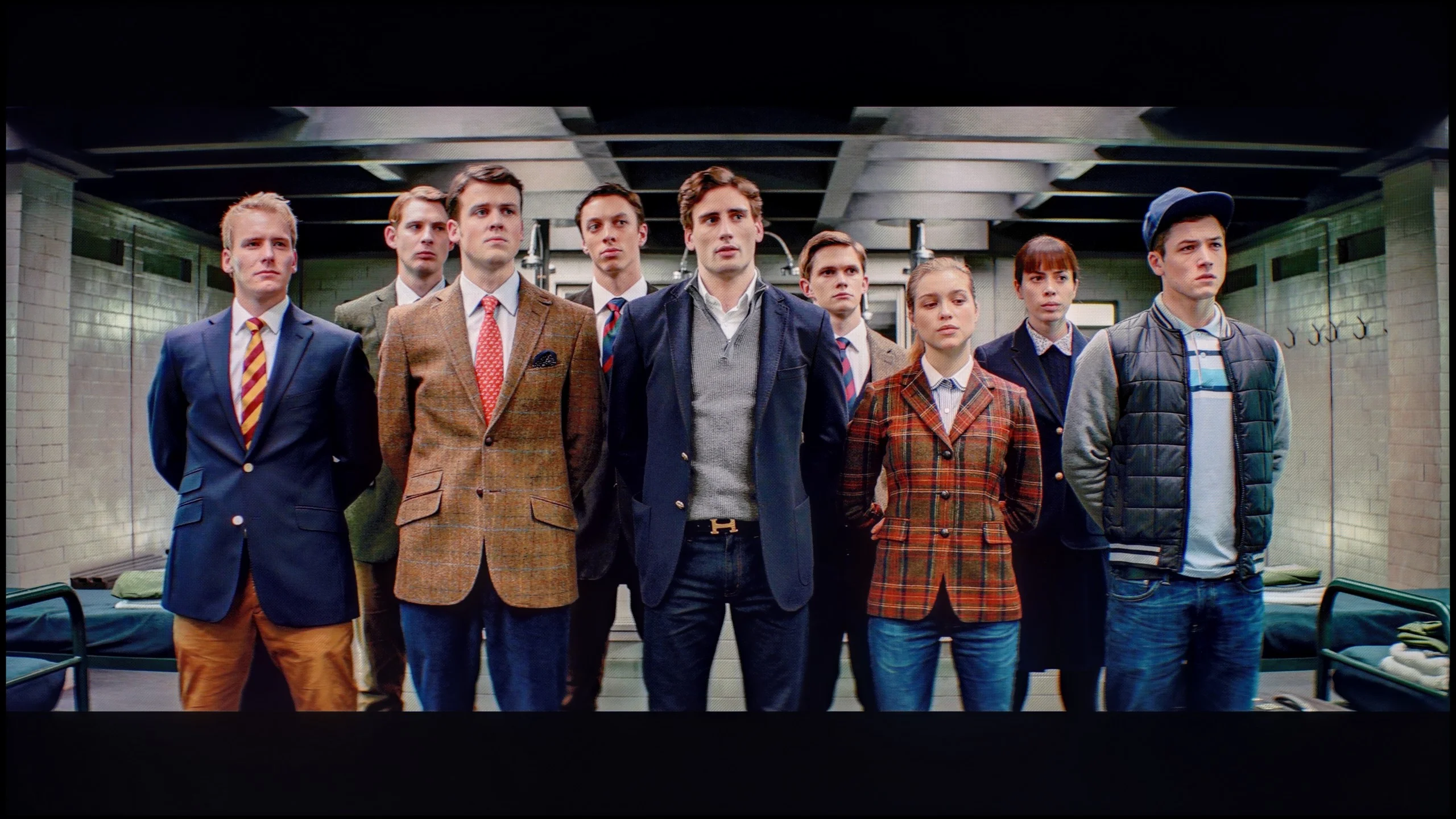
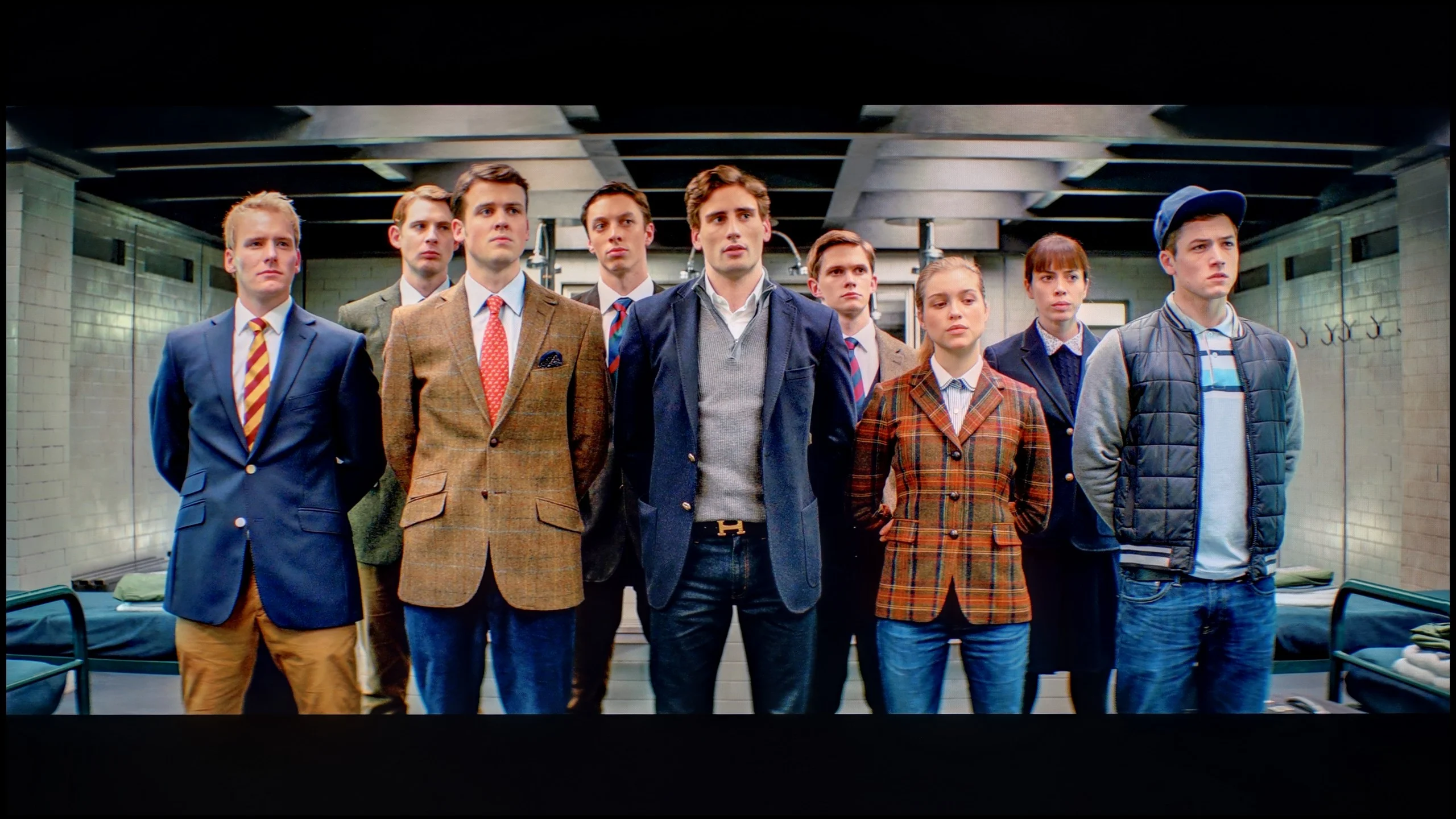
The photos show how movies look on the TV. Pay attention to black detail visibility, colors, and shadow tint.


The photos show how movies look on the TV. Pay attention to black detail visibility, colors, and shadow tint.
The calibration allowed us to extract significantly more from the Bravia 3 than we could have expected at the beginning. Most importantly, we managed to address the deficiency of blue, which previously caused a noticeable warming of the image. After a slight adjustment in the white balance, most of the errors in the Color Checker measurements for SDR content practically disappeared. The shades of white gained naturalness, and the brightness management in gamma stabilized to a level nearly ideal, not exceeding the threshold of human eye perception. One can therefore confidently say that in SDR content, after a few adjustments in settings, the Bravia 3 performs really impressively. Much worse, though still definitely better than before calibration, is its performance with HDR content. The white balance has been brought under control, but the limitations of the IPS panel are insurmountable. The lack of local dimming means that even the smallest elements can be overexposed, which is immediately noticeable. Color-wise, the effect is also improved, although far from perfect – many errors still exceed four, or even five delta E units, meaning they remain visible to the human eye. It was already clear that the Bravia 3 is not a television designed to impress with HDR quality. Nevertheless, it is gratifying that in SDR content, after calibration, the image can look truly great, and in this category, the television surprised us positively.
Calibration of the Hisense U7S helped most with SDR content. We managed to even out the white balance, so the previous warm cast is gone and whites and grays look neutral. Gamma is also now very close to the reference, and the TV no longer brightens the image unnecessarily, so darker scenes have regained depth. Color Checker measurements confirm the improvement: most errors fall below 2. That yields a really well-calibrated picture for regular TV and SDR movies. It didn't go as smoothly in HDR. The TV lacks an effective way to correct the EOTF curve, so Hisense still interprets the content's brightness a bit on its own. It brightens parts of the image and can dim the brightest elements depending on the scene and the local dimming behavior. Calibration couldn't eliminate this. It shows up in the Color Checker results as well, where many errors remain around 3–4 and individual ones exceed 7. So in SDR the result is very good, but in HDR we have to accept that the TV adds its own interpretation of brightness to the image.
Smoothness of tonal transitions
9.1/10
8.5/10
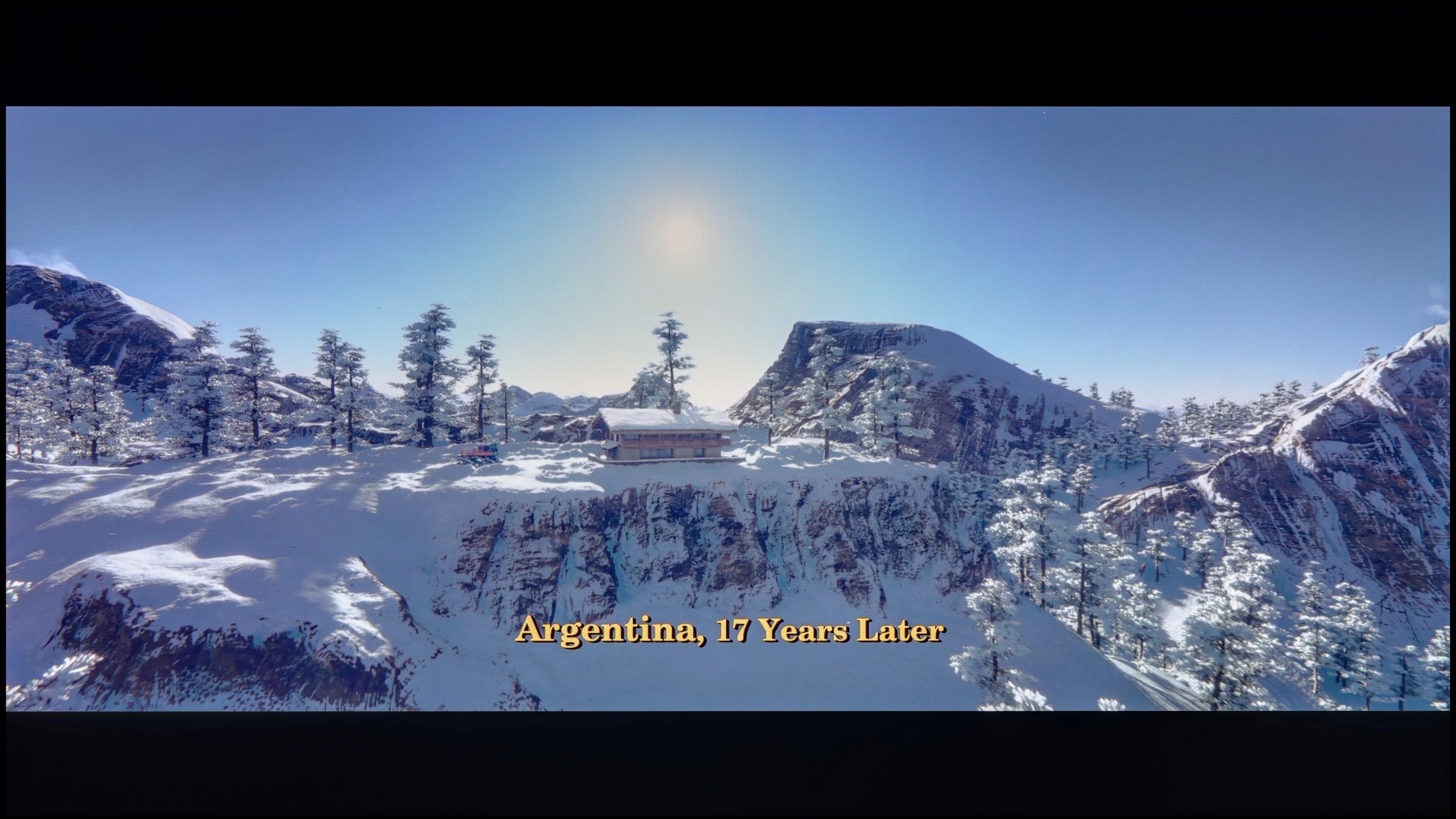
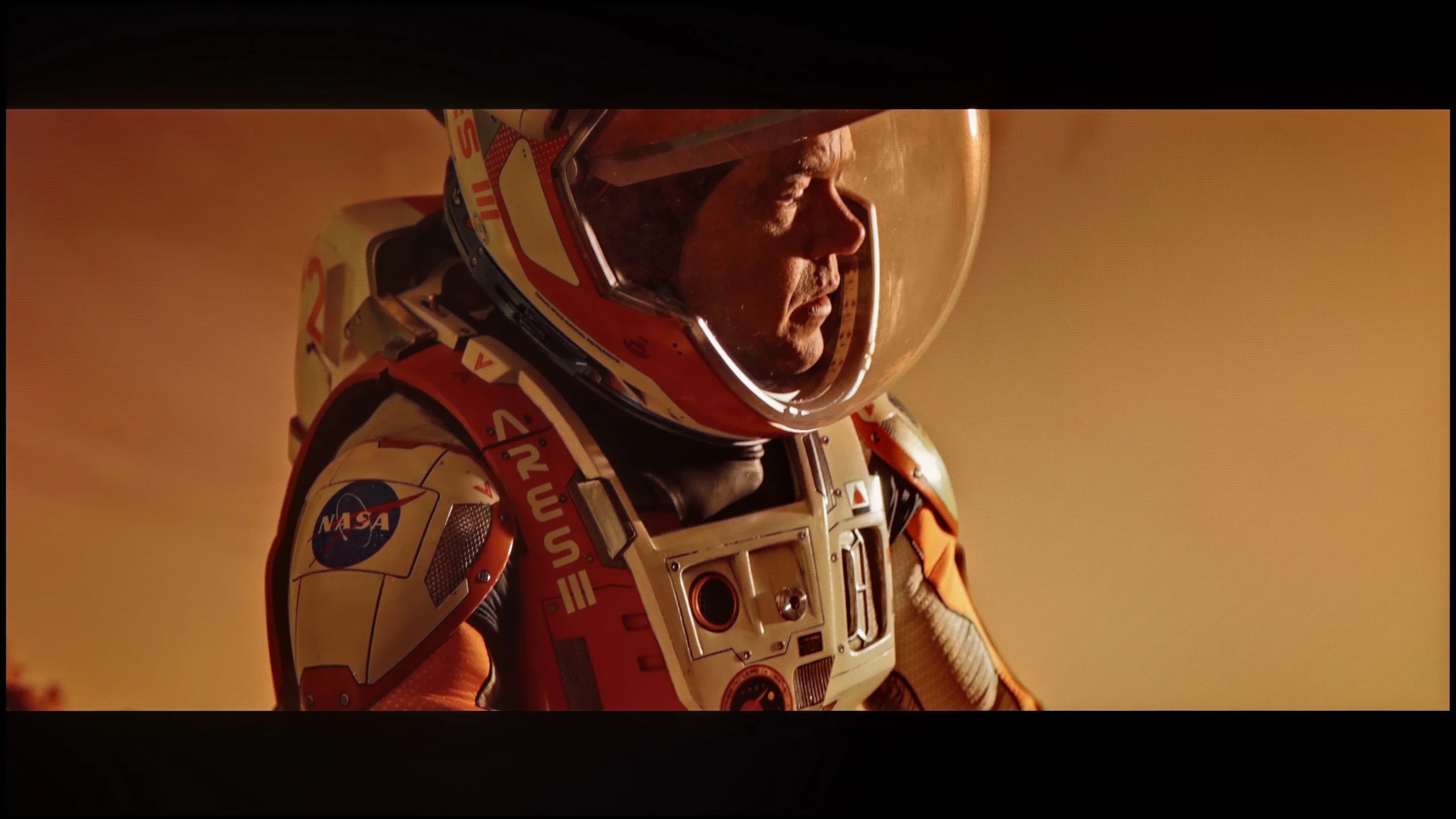
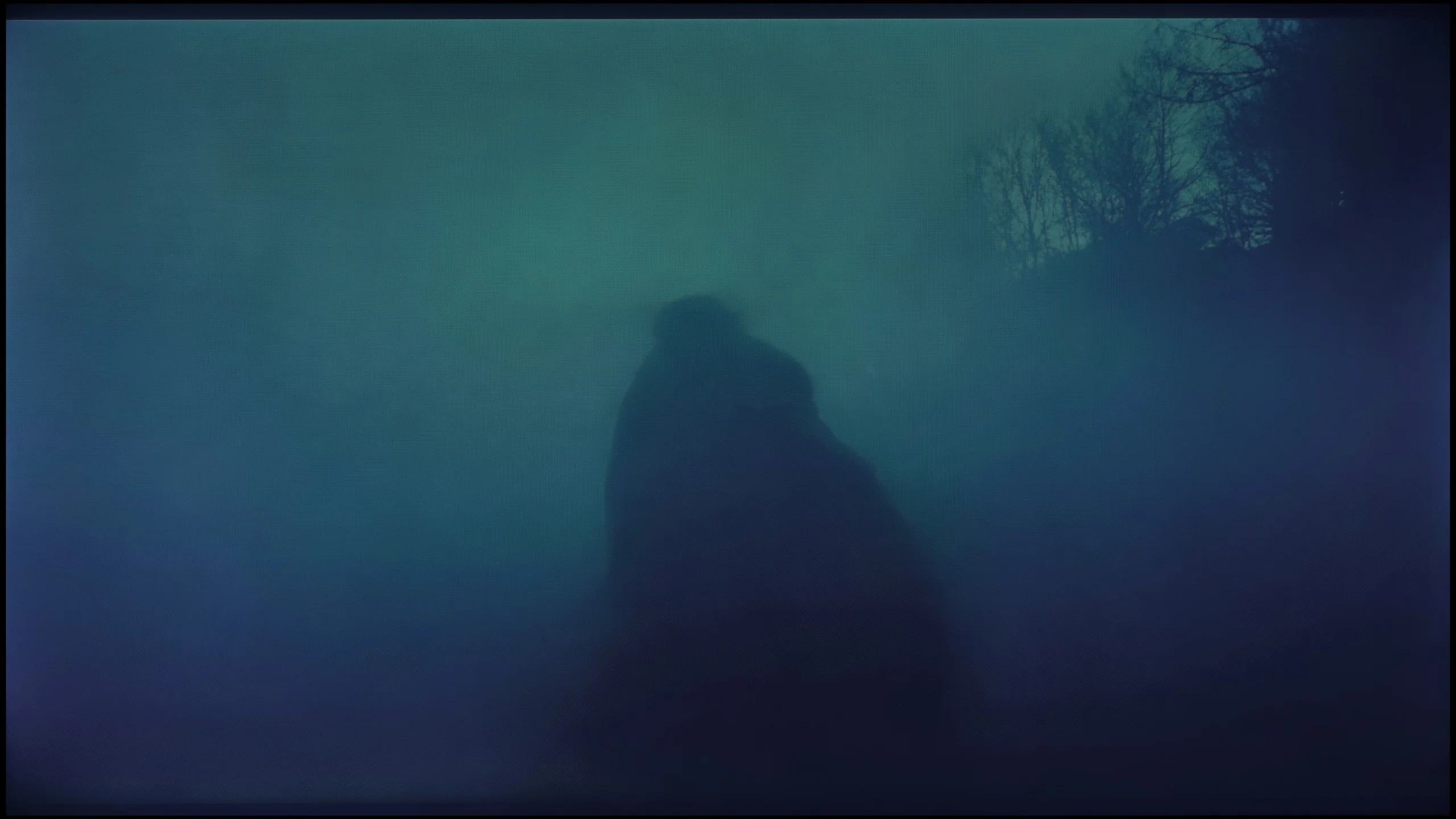
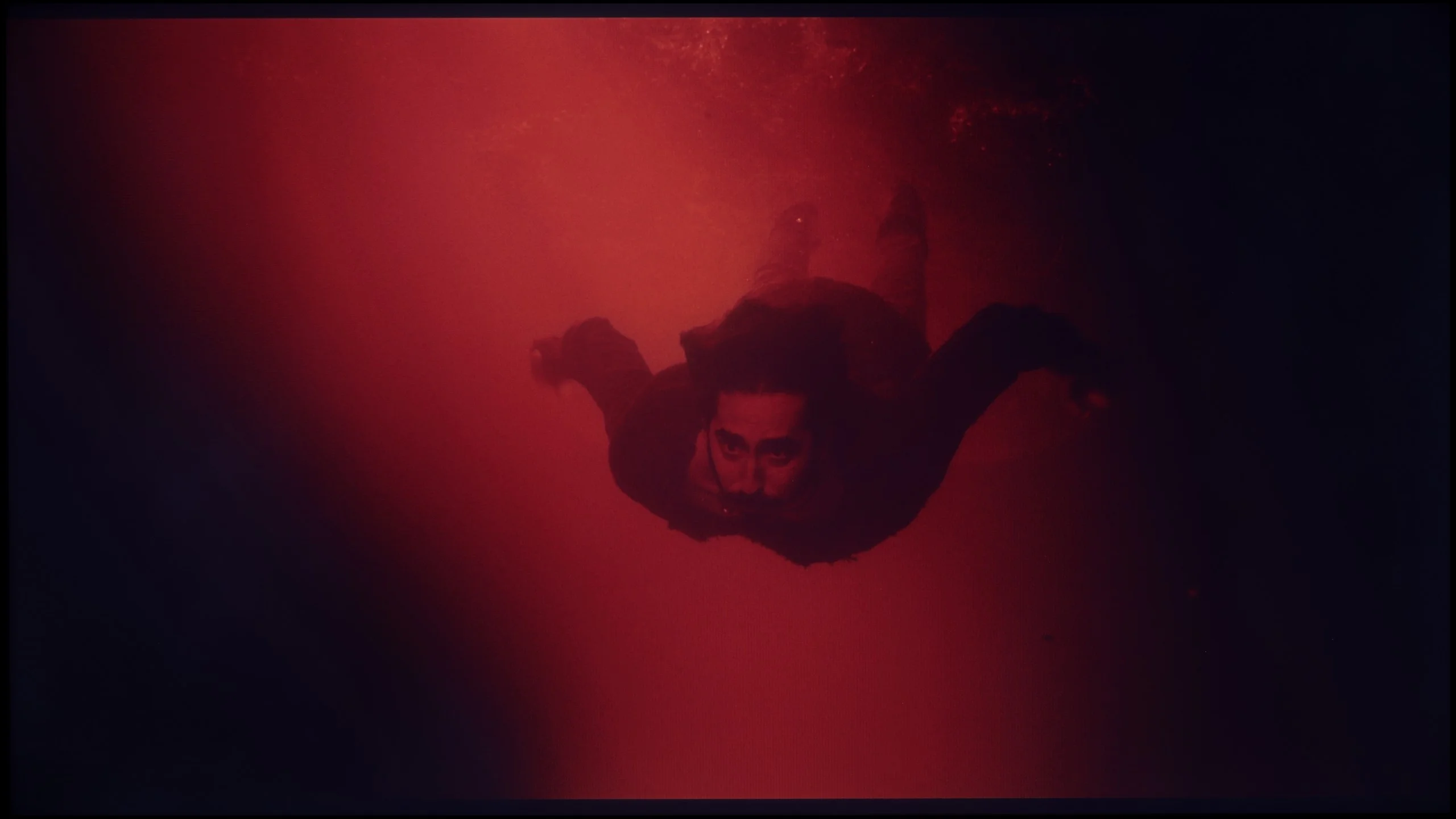
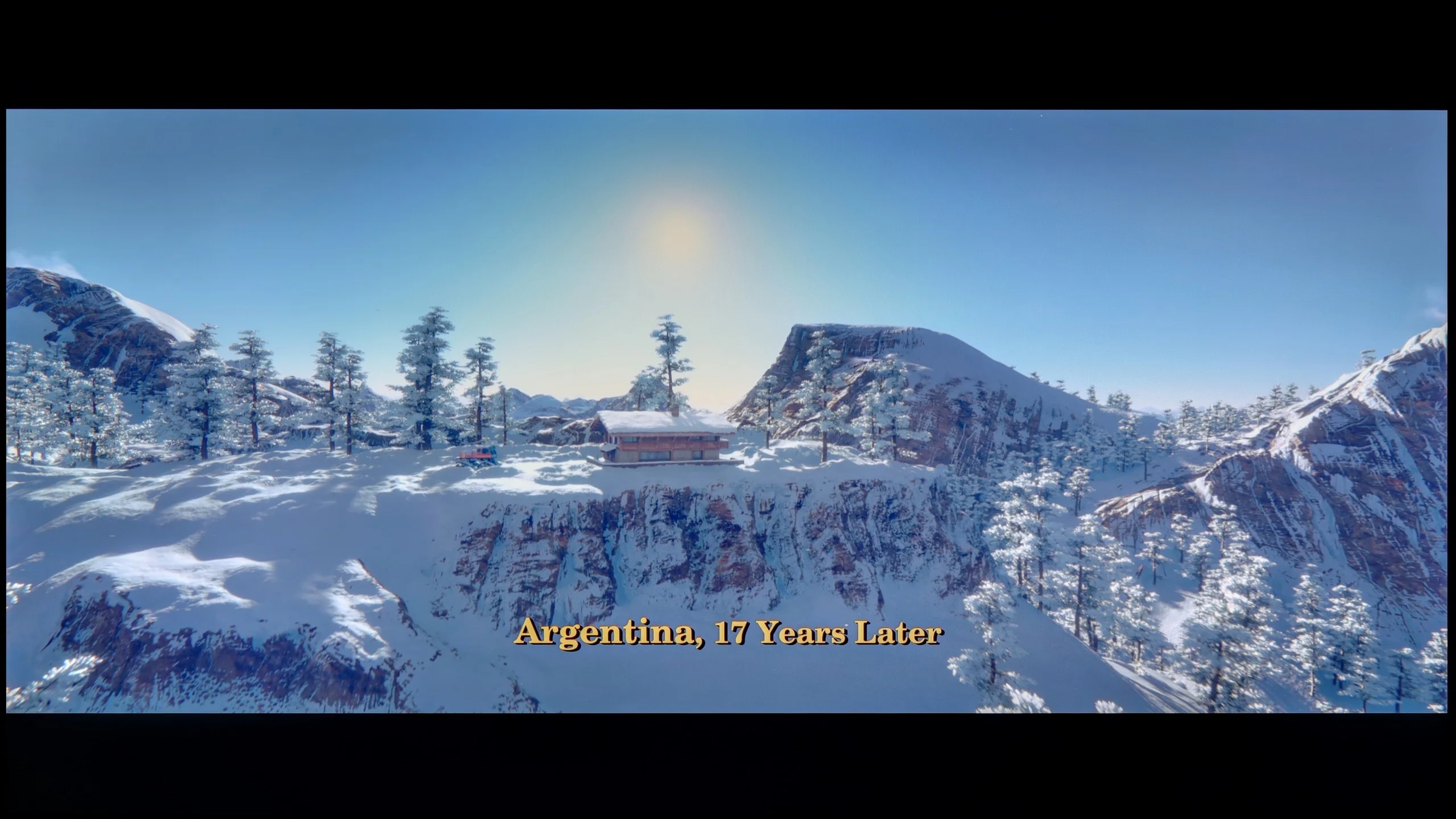
These are selected scenes that show smooth tonal transitions from one color to another. If you see distinct banding, it’s the TV panel’s fault.
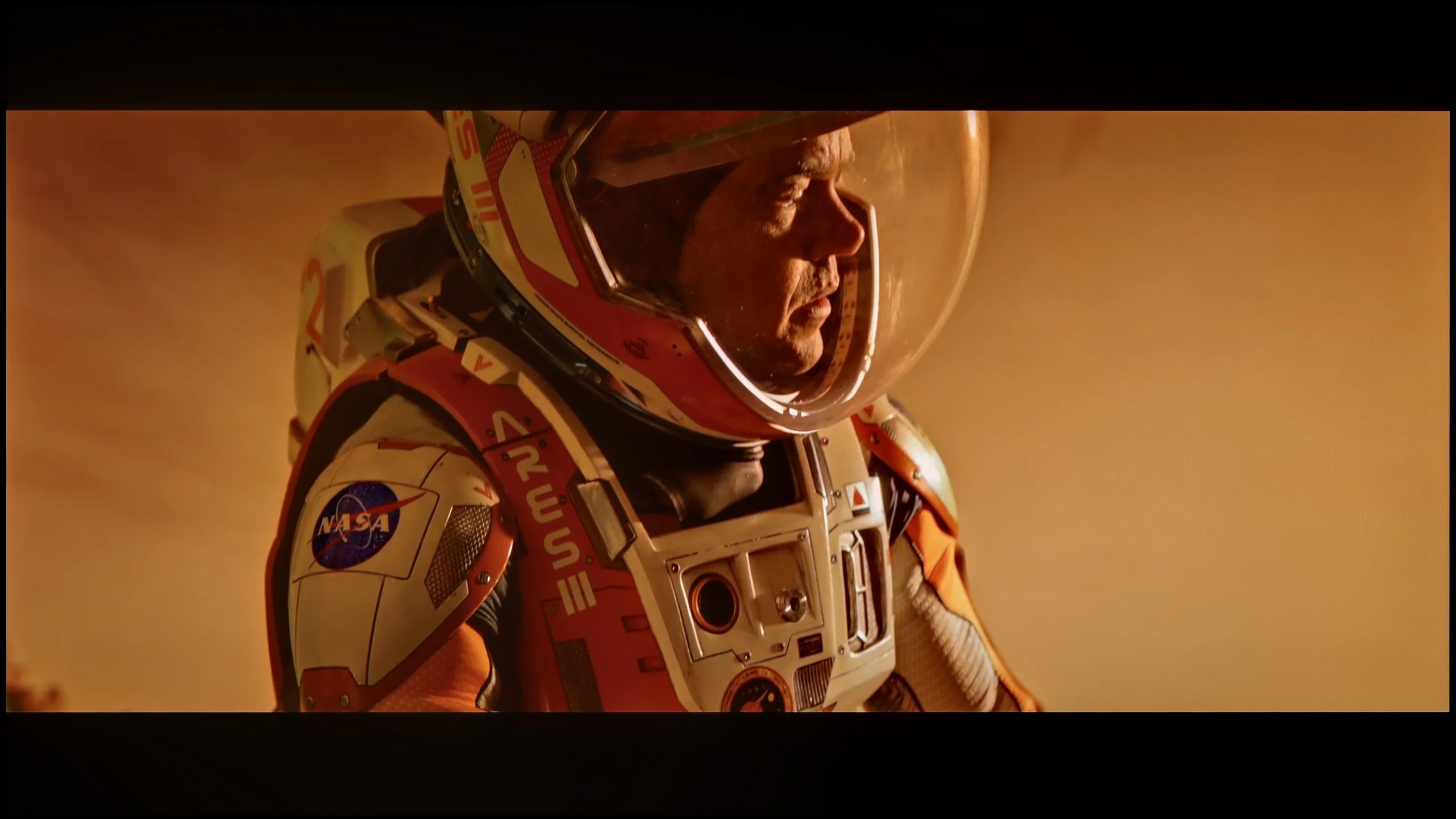
These are selected scenes that show smooth tonal transitions from one color to another. If you see distinct banding, it’s the TV panel’s fault.
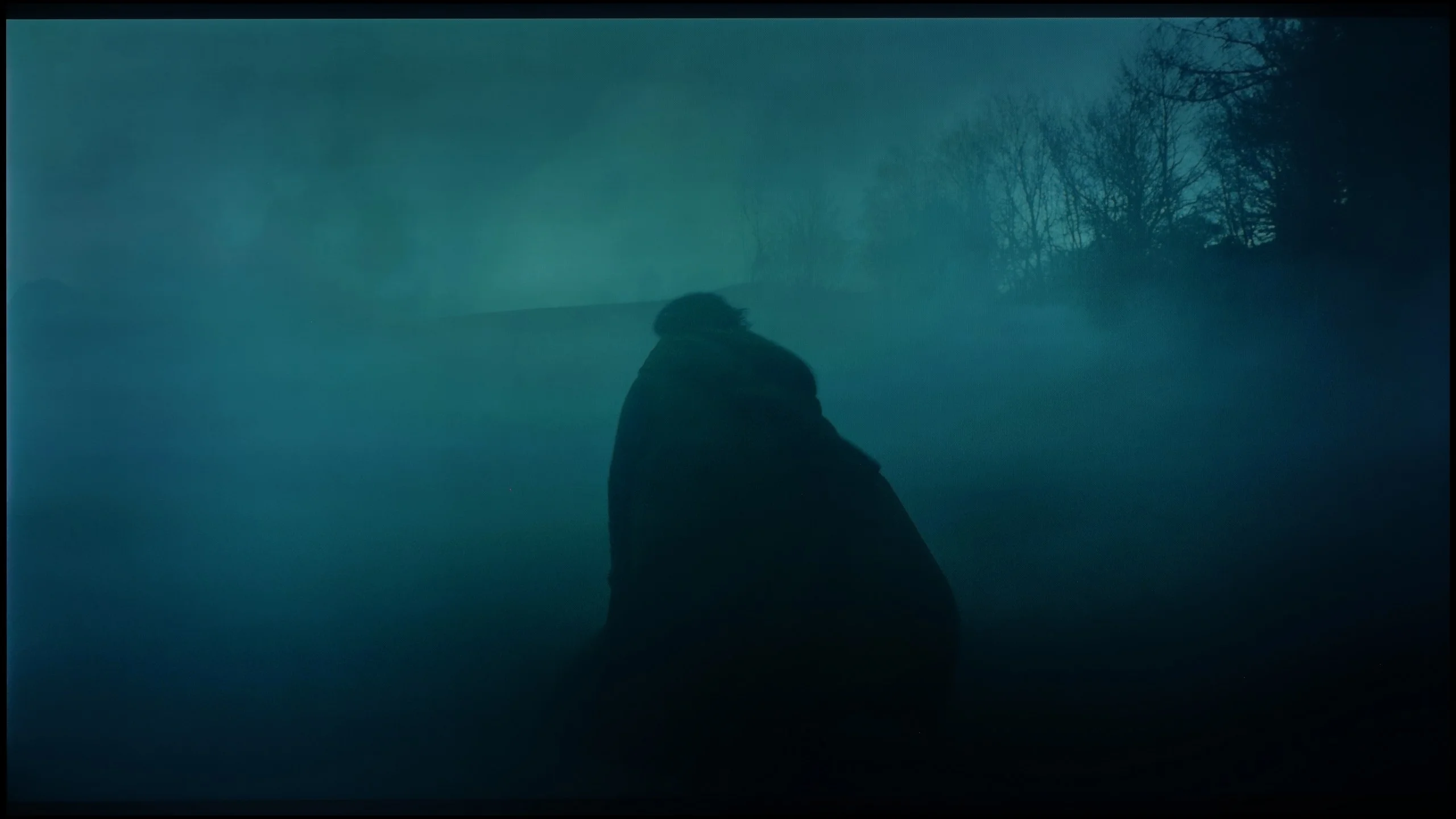
These are selected scenes that show smooth tonal transitions from one color to another. If you see distinct banding, it’s the TV panel’s fault.
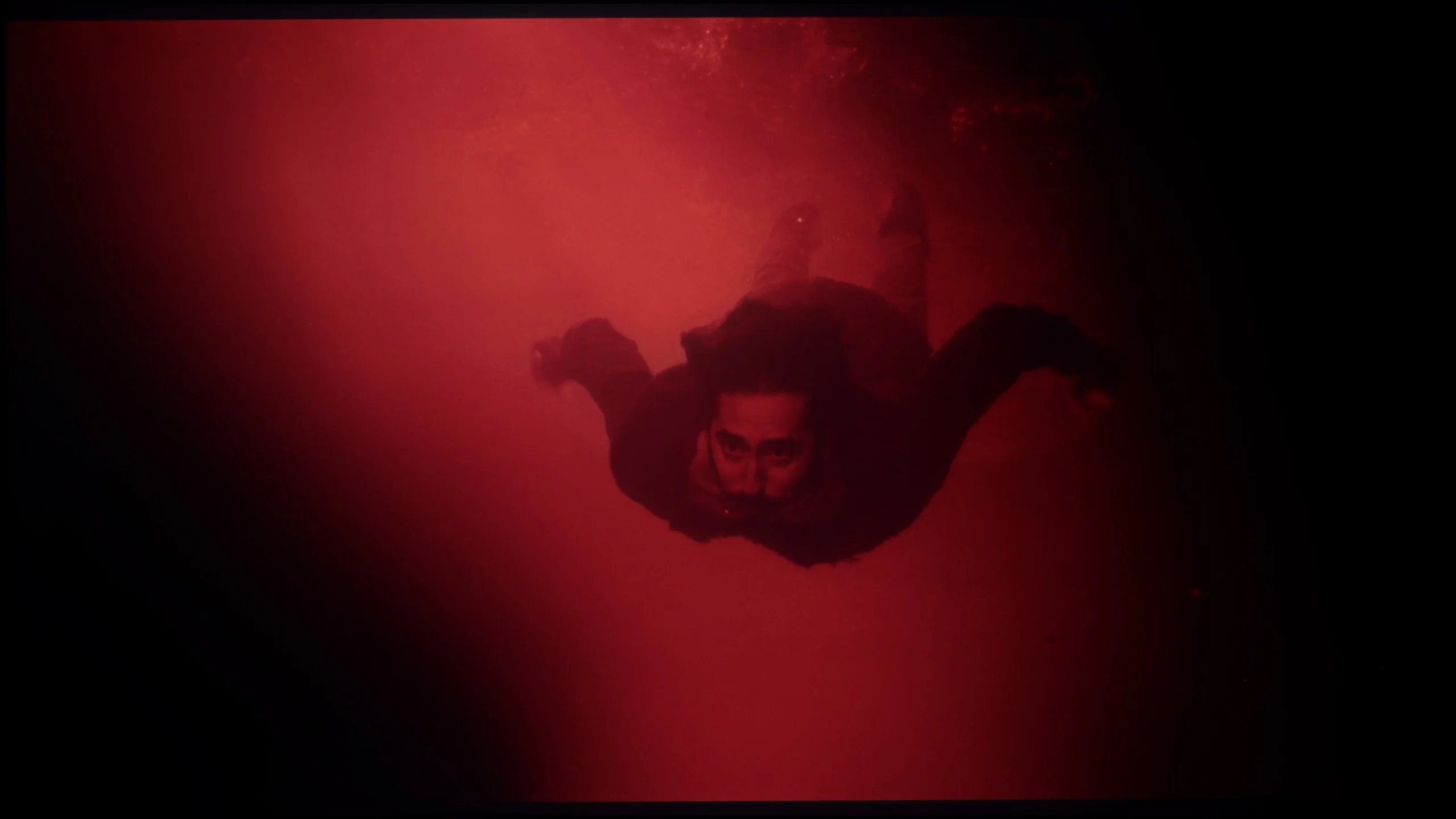
These are selected scenes that show smooth tonal transitions from one color to another. If you see distinct banding, it’s the TV panel’s fault.
In terms of the fluidity of tonal transitions, the impressions from the Bravia 3 with a VA panel are very similar to what we saw in the IPS variant; however, there is one crucial factor here – screen uniformity. The VA panel performs significantly better at maintaining image consistency, which immediately translates into a higher rating. This was most noticeable in scenes from the movie Green Knight. In the IPS version, strong brightening and vignetting practically made it impossible to assess the gradation itself, whereas in the 50-inch variant, this problem was greatly reduced. As for the tonal transitions themselves, the TV presents itself really well. In bright parts of the image, we did not notice any serious errors – colors combine smoothly, without creating artificial contours. In darker scenes, there are also no major issues with color gradation, and thanks to the more even backlighting, the image is much more pleasant to view than in the IPS panel version. So, one can say that this is one of those categories where the Bravia 3 in the 50-inch edition performs surprisingly well.
The smoothness of tonal transitions is one of the Hisense U7S’s stronger points. HDR10 material performs especially well, with colors blending gently into one another without noticeable banding. Even in dark scenes it’s hard to find major issues. Minor color stepping is visible only in brighter shots, but during typical viewing it usually doesn’t attract attention. It looks a bit worse in Dolby Vision, where boundaries between shades can be more apparent. That’s why Hisense loses some points from us, although overall this is still a very good result and one of the better performers in its class.
Image scaling and smoothness of tonal transitions
7/10
6/10

Smooth transition function
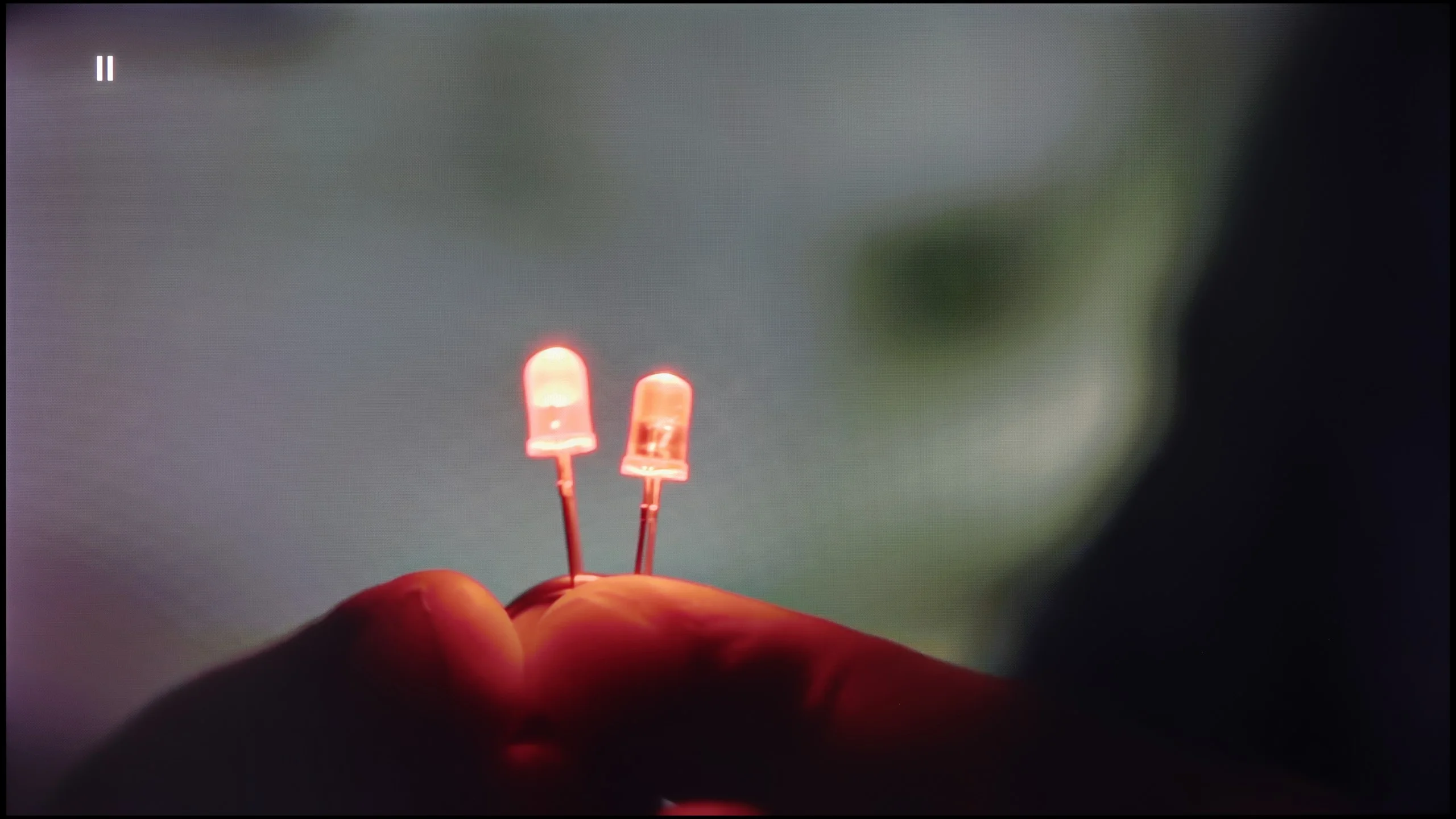
The match photo shows how the TV smooths weak tonal transitions in low-quality video.
Image scaling SD (576i)


The model photo shows how it handles upscaling of SD material.
Bravia 3 brings something more to the Sony TV family than just a common name. It stands out primarily for its ability to enhance the quality of weaker materials thanks to the processor used. Of course, we won't find the advanced XR chip known from more expensive models here, but still, it must be admitted that the image at lower resolutions looked surprisingly good. The upscaling worked effectively, and most parts of the screen were free from the typical excessive edge jaggedness found in budget constructions. The feature that improves the fluidity of tonal transitions is also noteworthy. In the high setting, it works really well, effectively masking gradation imperfections without significant loss of detail. It does happen that the algorithm overly smooths elements that should remain sharp - for example, faces - however, in general, the effect is beneficial. The best results were achieved precisely at the highest setting, and this option could be recommended to people watching lower quality content.
The handling of lower-quality material on the Hisense U7S is fairly mediocre. The Pentonic 700 chipset used here doesn't cope well with the effects of heavy compression. The menu includes a "Smooth & Gradient" picture option, but its performance leaves much to be desired. At the low setting it's hard to notice any improvement in tonal transitions, although at least the image isn't degraded. The medium and high settings still don't remove visible banding between shades and begin to smear details; in our test clips even parts of characters' faces disappeared. Interestingly, film grain remains untouched at every level. If you use this feature, we'd stick with the low setting. Its current behavior needs refinement, but that's mainly down to the processor used. Upscaling to 4K performs much better. Lower-resolution footage gains clarity, edges are well reconstructed, and fine elements look crisp. That doesn't mean it can recover details that weren't in the recording, but the TV makes good use of what it gets from the source. Another plus is that it doesn't crop the image edges, even with an SD signal.
Blur and motion smoothness
4.8/10
7/10

Blur (native resolution, maximum refresh rate):
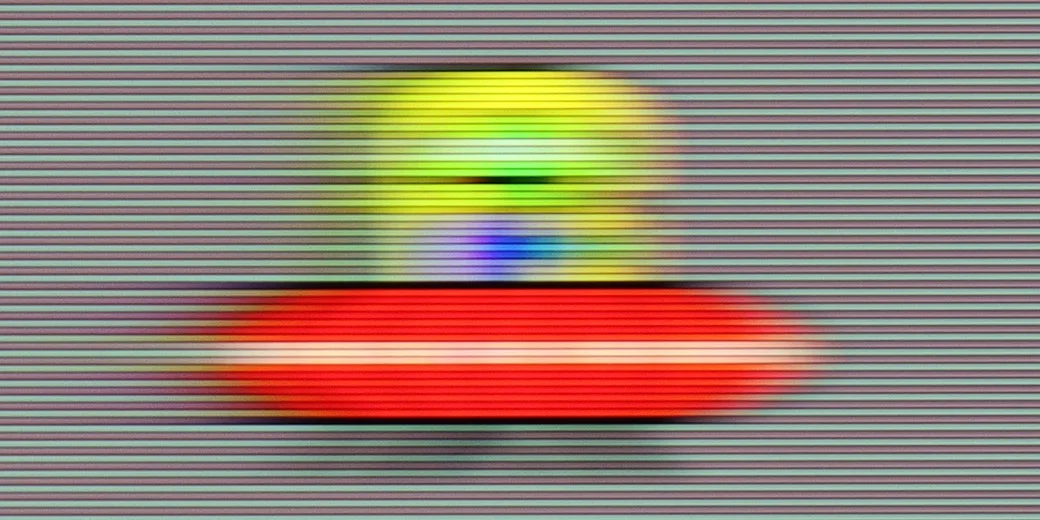
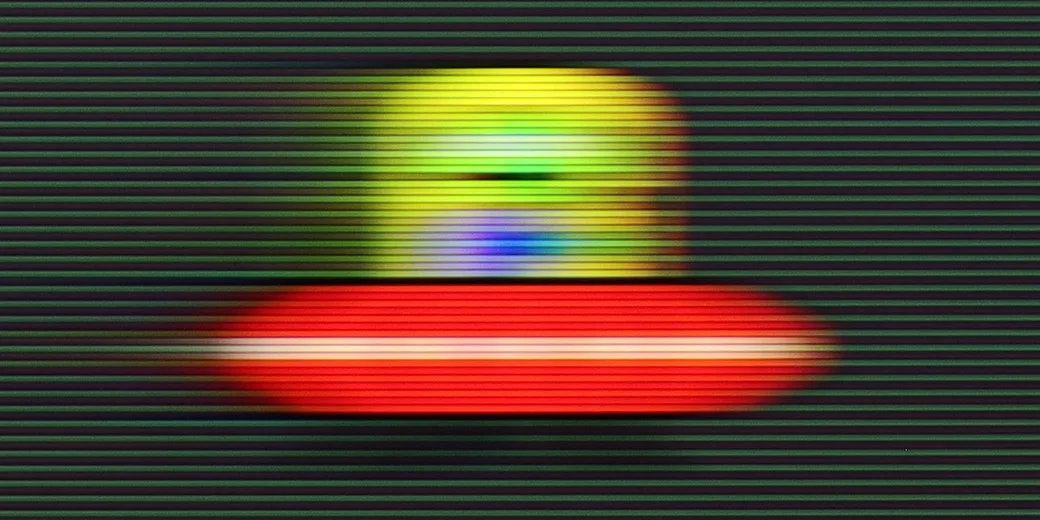

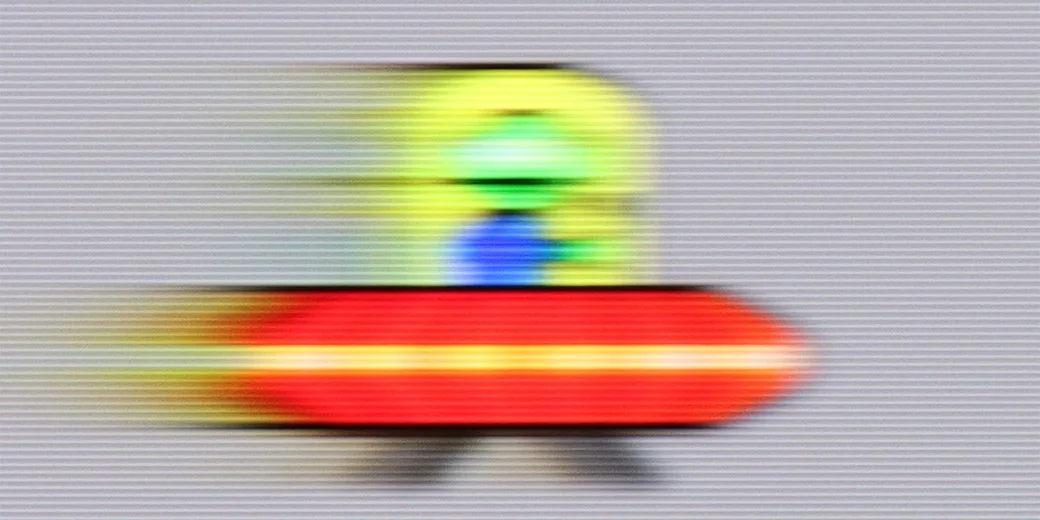
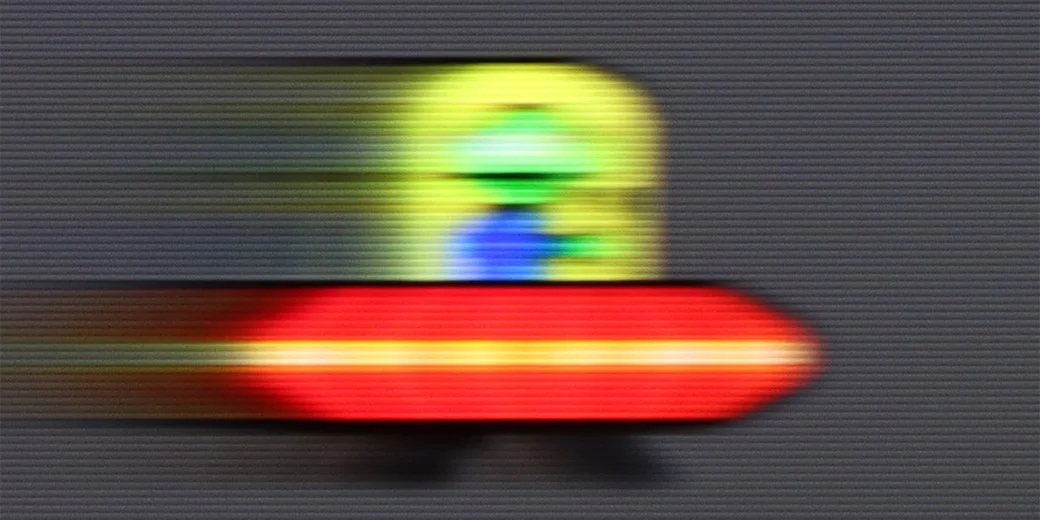
Blur (BFI function enabled):
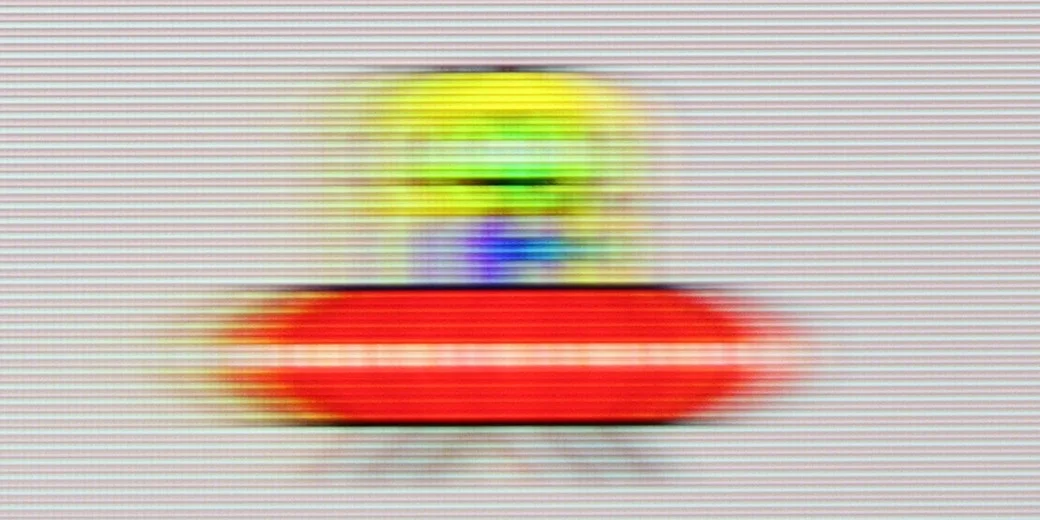
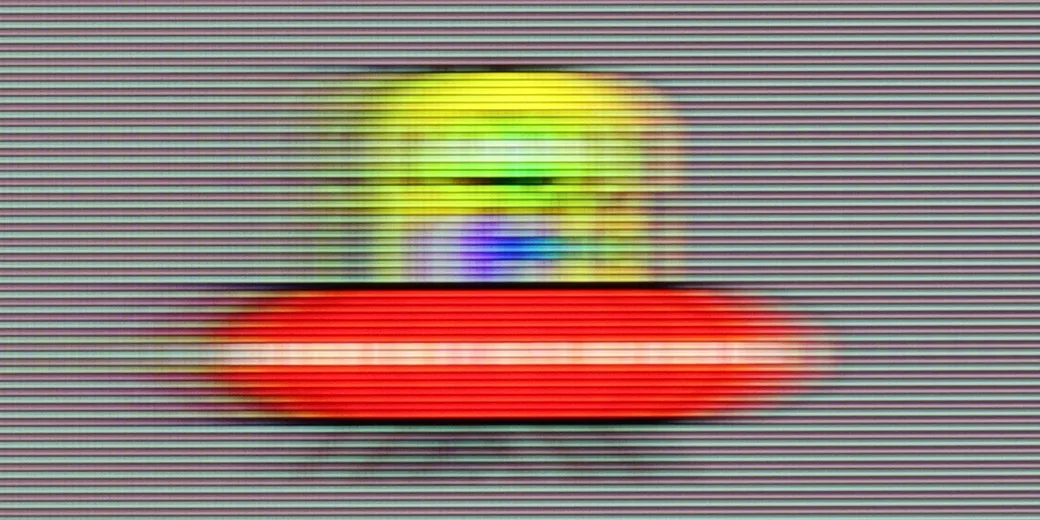
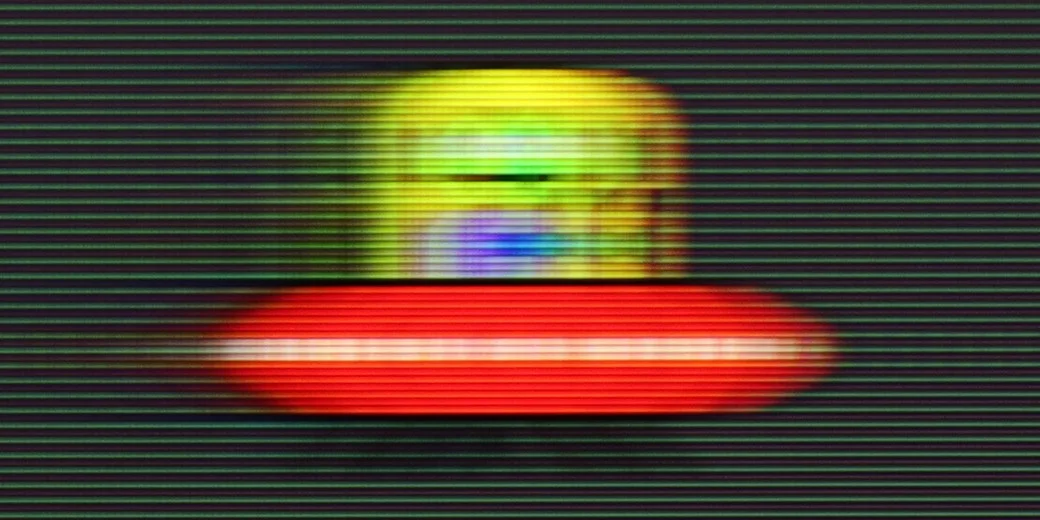


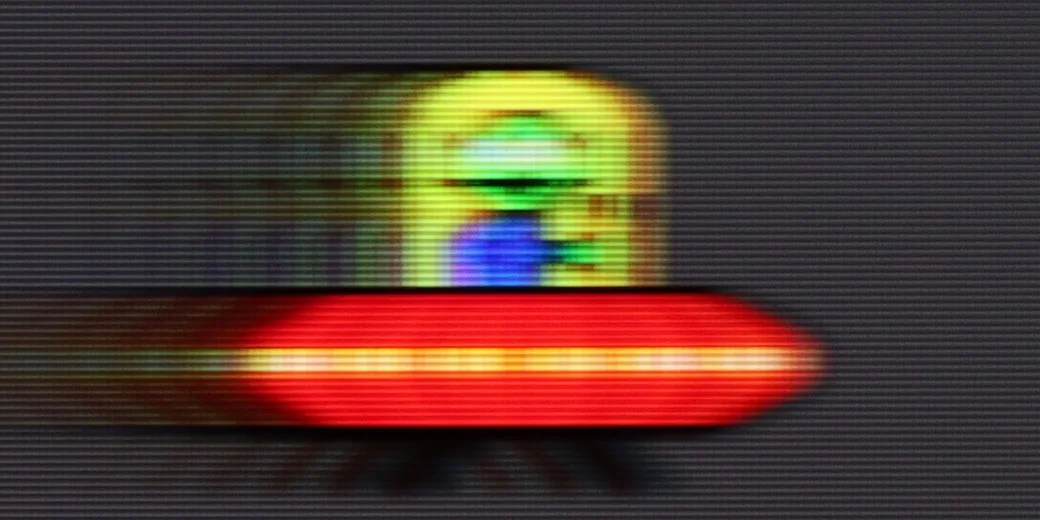
Blur ():
Blur (1080p@240Hz):

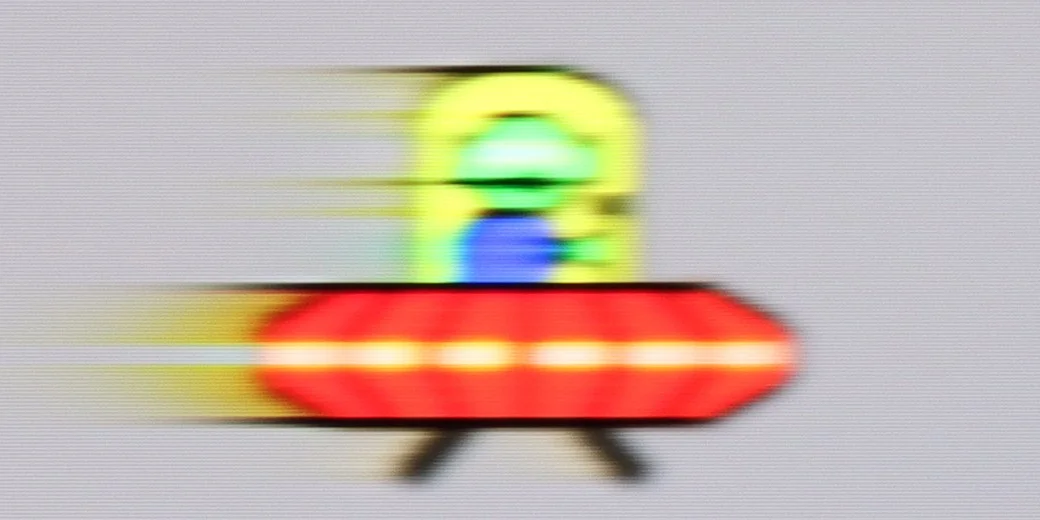
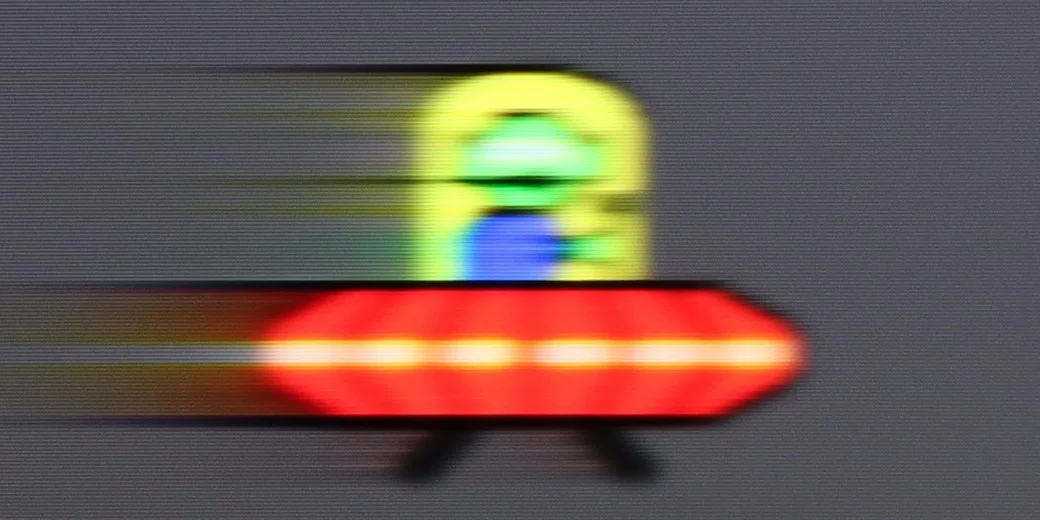
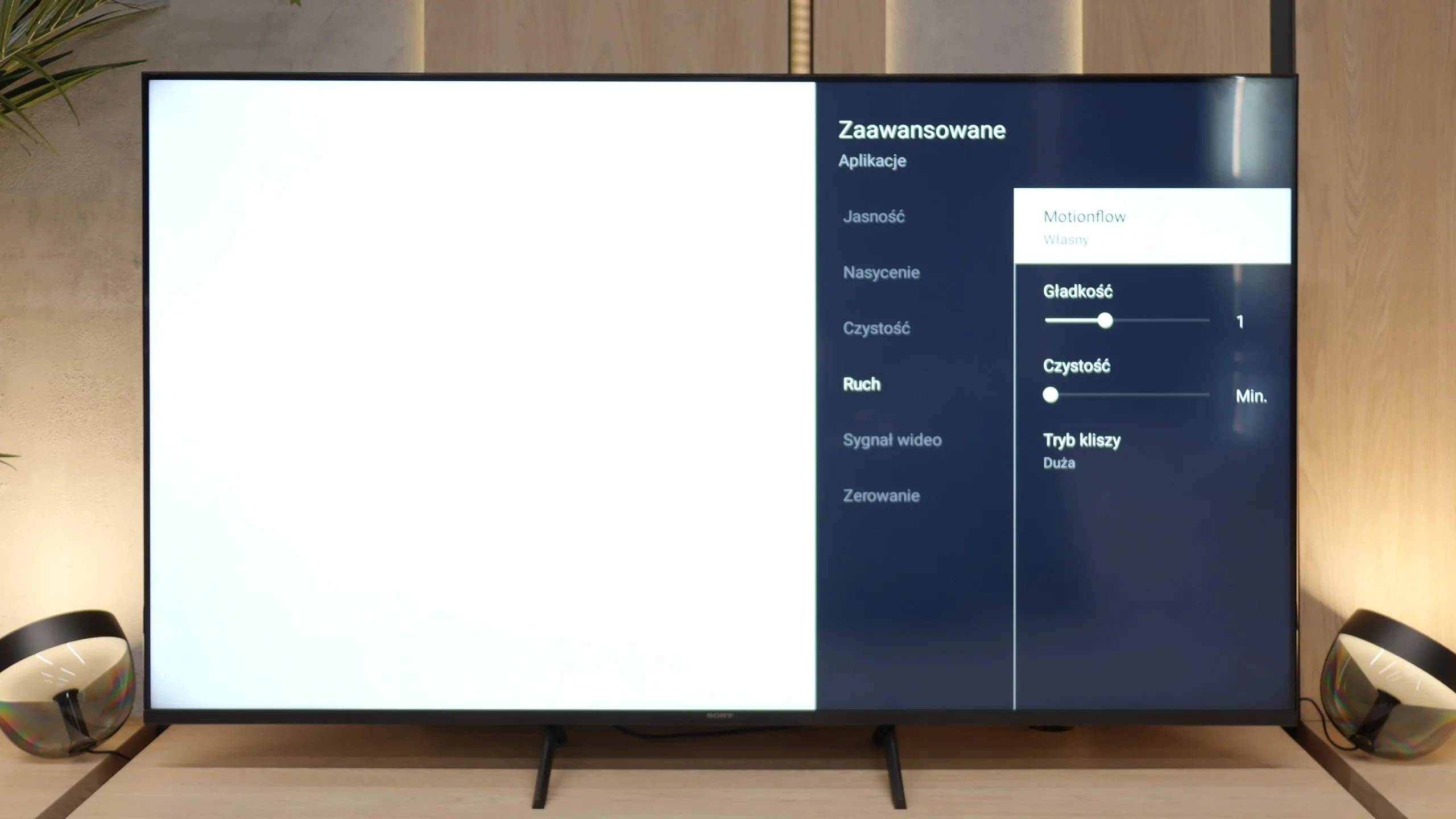
The fluidity of motion has never been a strong point of televisions equipped with 60 Hz panels, and the Bravia 3 is no exception. Nevertheless, Sony has added something that may appeal to those who are more sensitive to the way images are displayed. We are talking about the proprietary motion smoother, Motion Flow, which gives users a lot of adjustment options. Thanks to it, the image can become smoother, almost theatrical, or you can stick with a more cinematic style characterized by the jaggedness that many people simply associate with the filmic atmosphere. These features work for content with lower frame rates, such as movies and series recorded at 24 or 30 frames per second, which are the materials we encounter every day. This is where the motion smoother proves to be one of the most important features in everyday use of the television, and here the Bravia 3 performs really well.
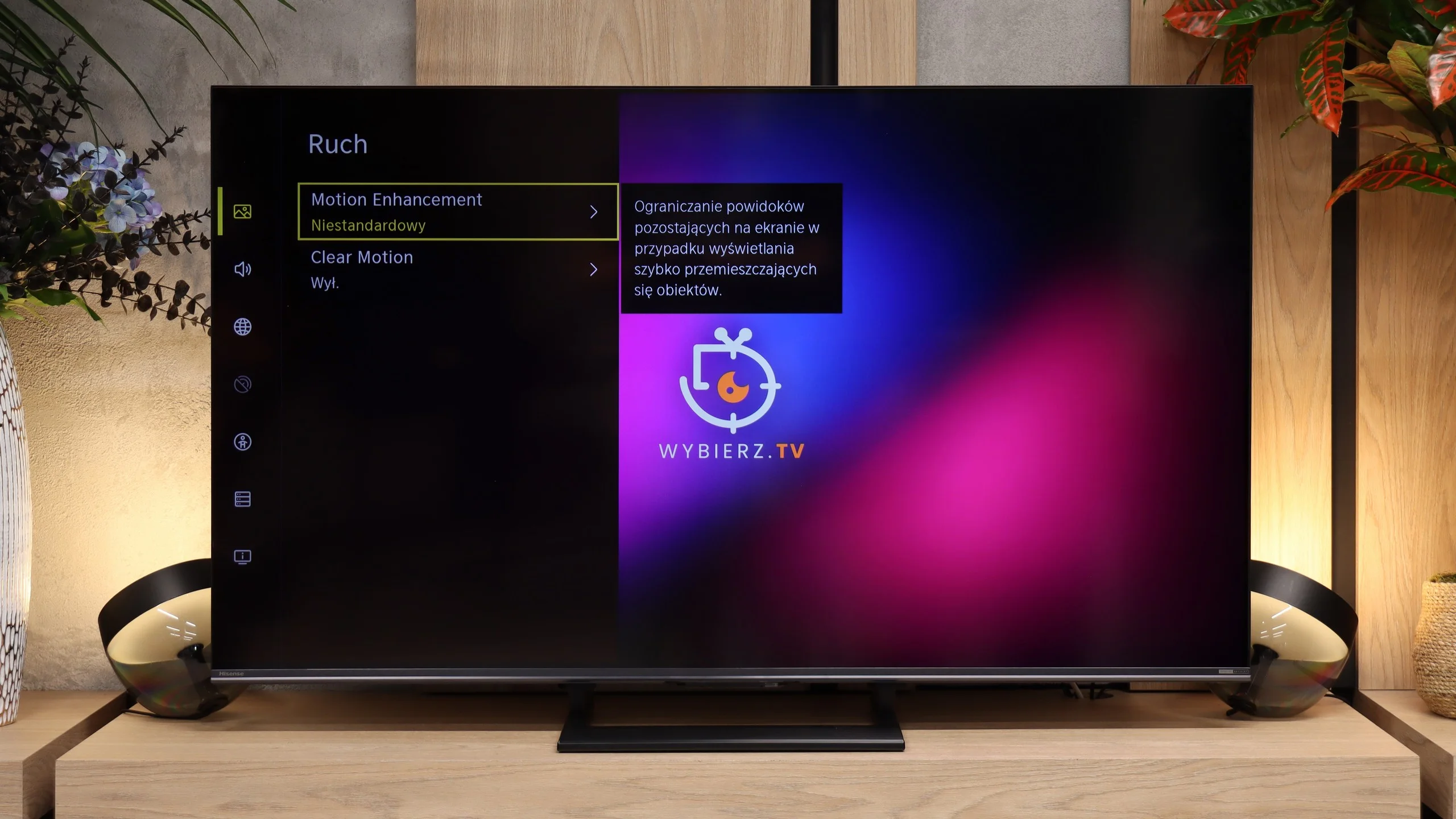
Motion handling on the Hisense U7S is pretty good thanks to the 144 Hz refresh rate. For movies we also have a motion smoothing feature that lets you adjust judder and blur reduction. You can therefore keep a more cinematic motion or increase smoothness if abrupt camera shifts bother you. In sports and games the high refresh rate is also useful, but unfortunately it doesn't solve this panel's biggest problem.
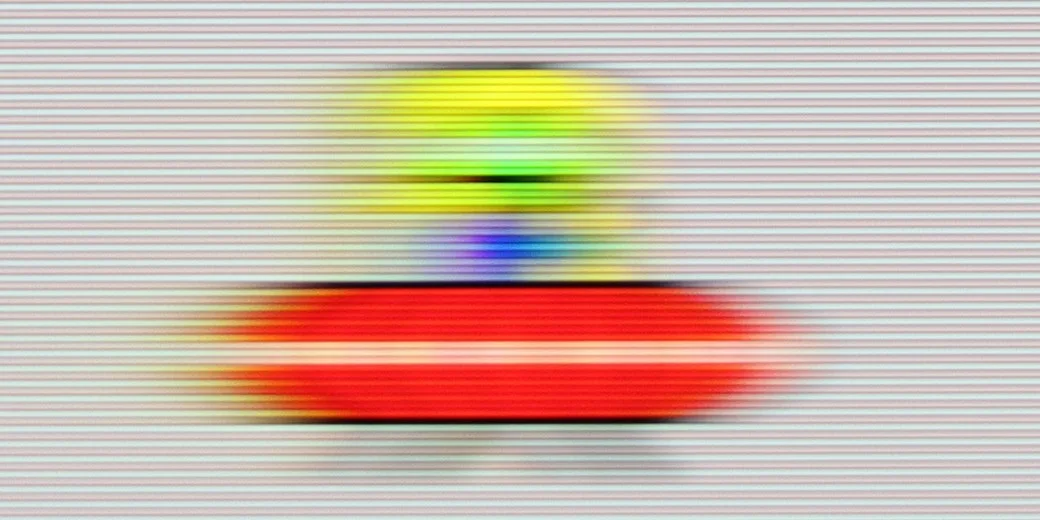
The culprit is pixel response time. Fast-moving objects leave long, noticeable trails, as our UFO test shows. It's worst on dark backgrounds, where the trail behind the object is especially pronounced. So motion can be smooth, but the moving object itself loses sharpness, and that difference on the U7S is fairly easy to notice.
Console compatibility and gaming features
4/10
8.5/10
- ALLM
- VRR
- VRR range 48 - 240Hz
- Dolby Vision Game Mode
- Correct implementation of HGIG
- 1080p@120Hz
- 1440p@120Hz
- 4K@120Hz
- Game bar
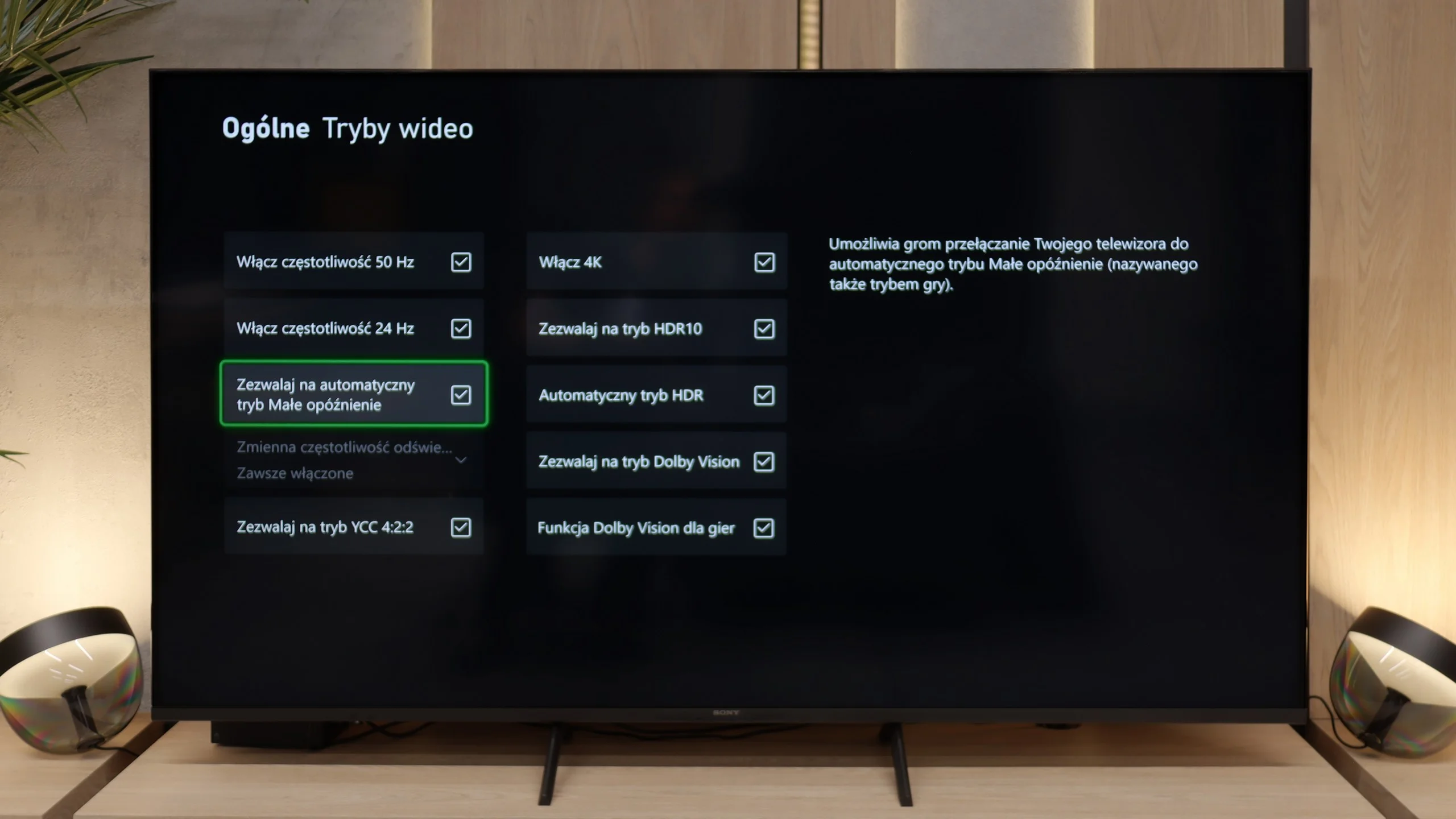
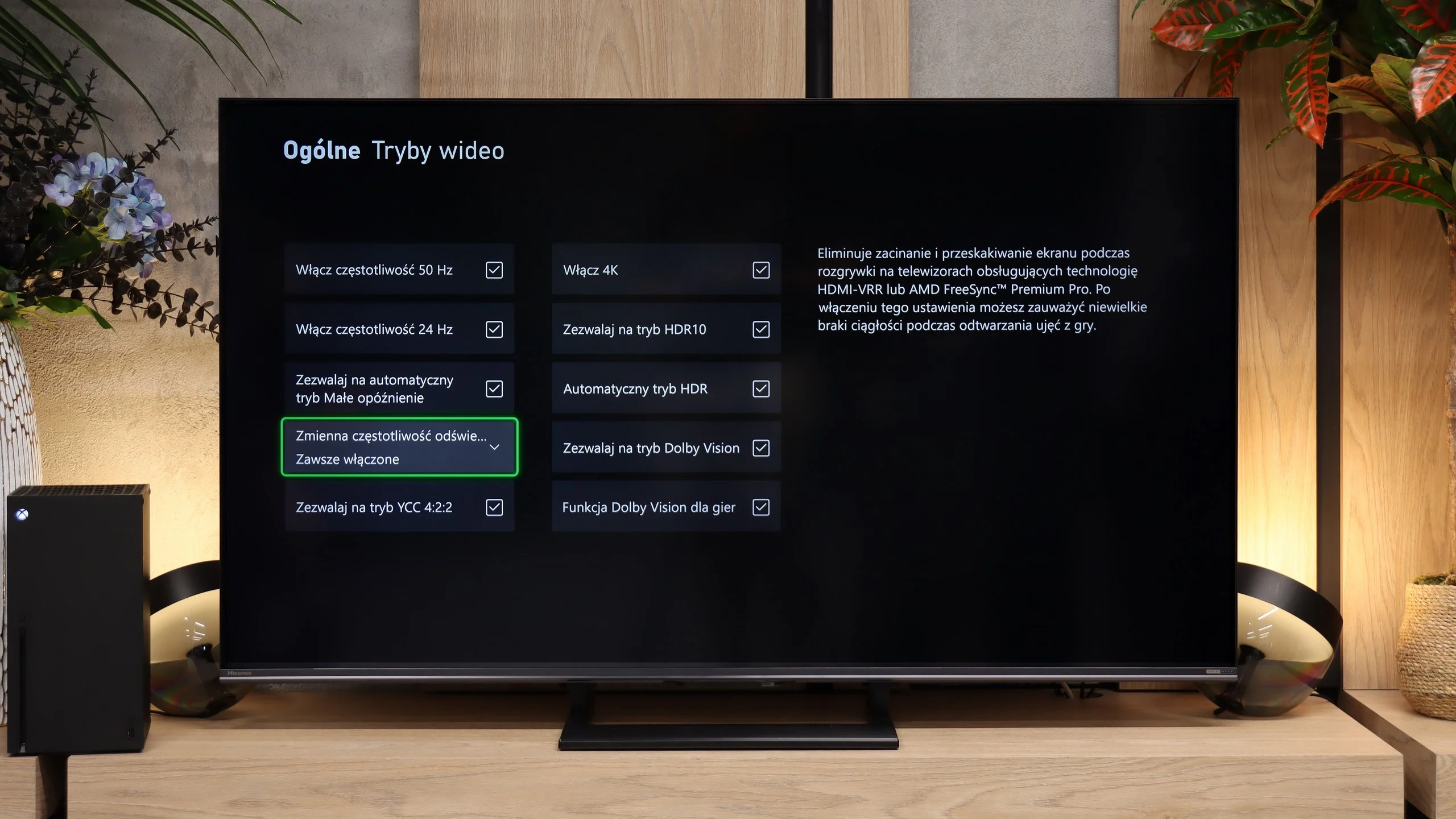
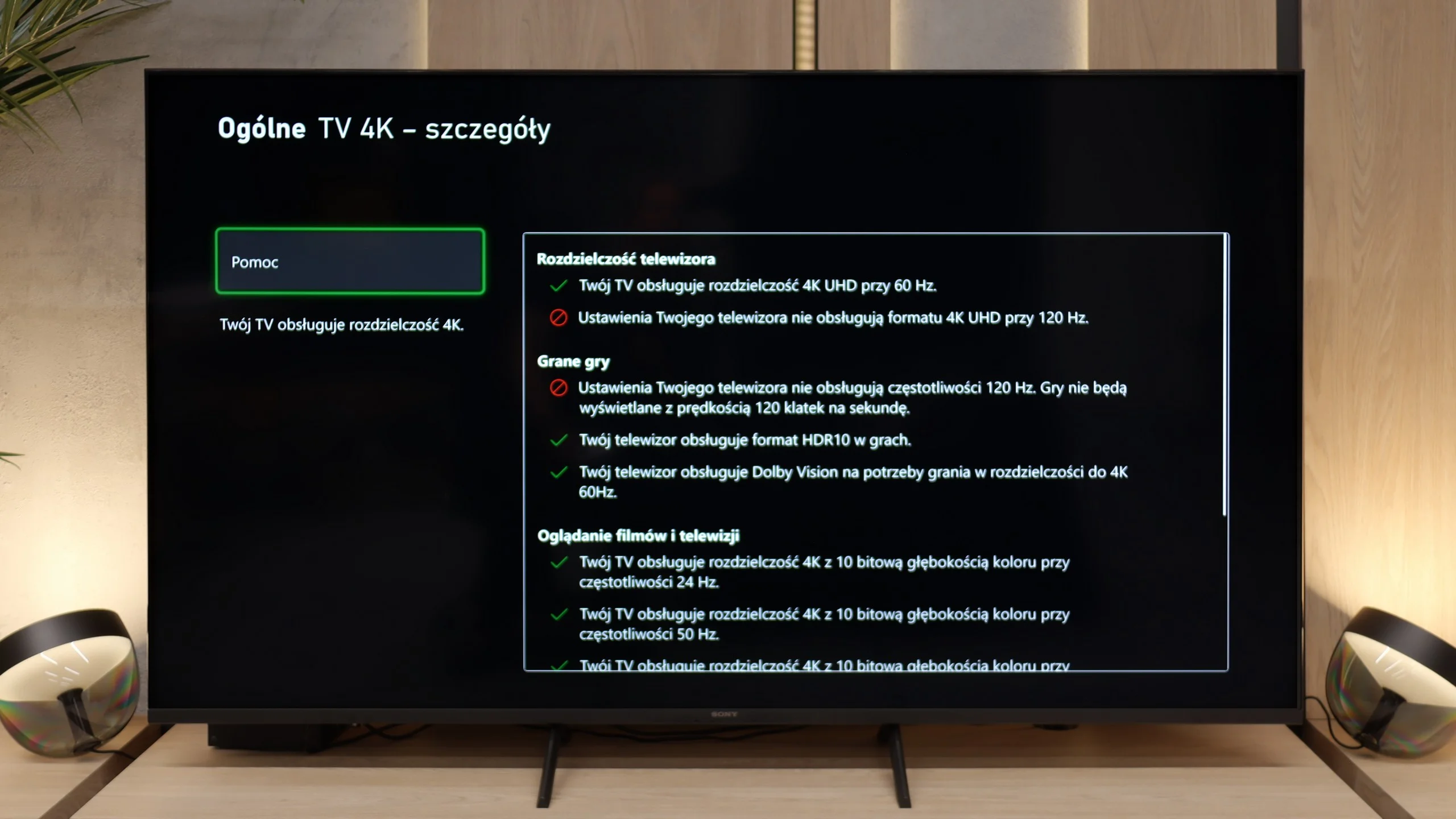
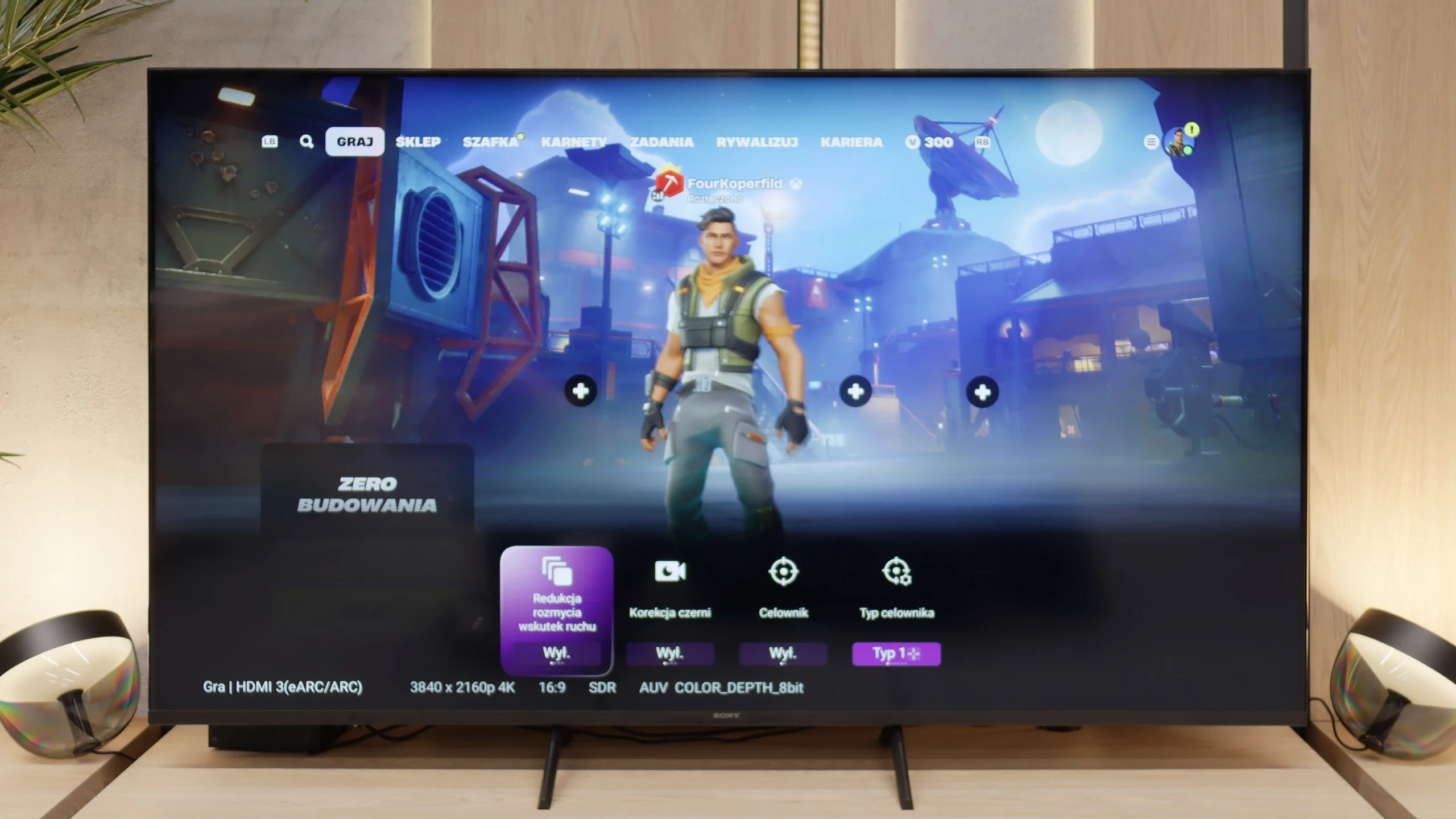
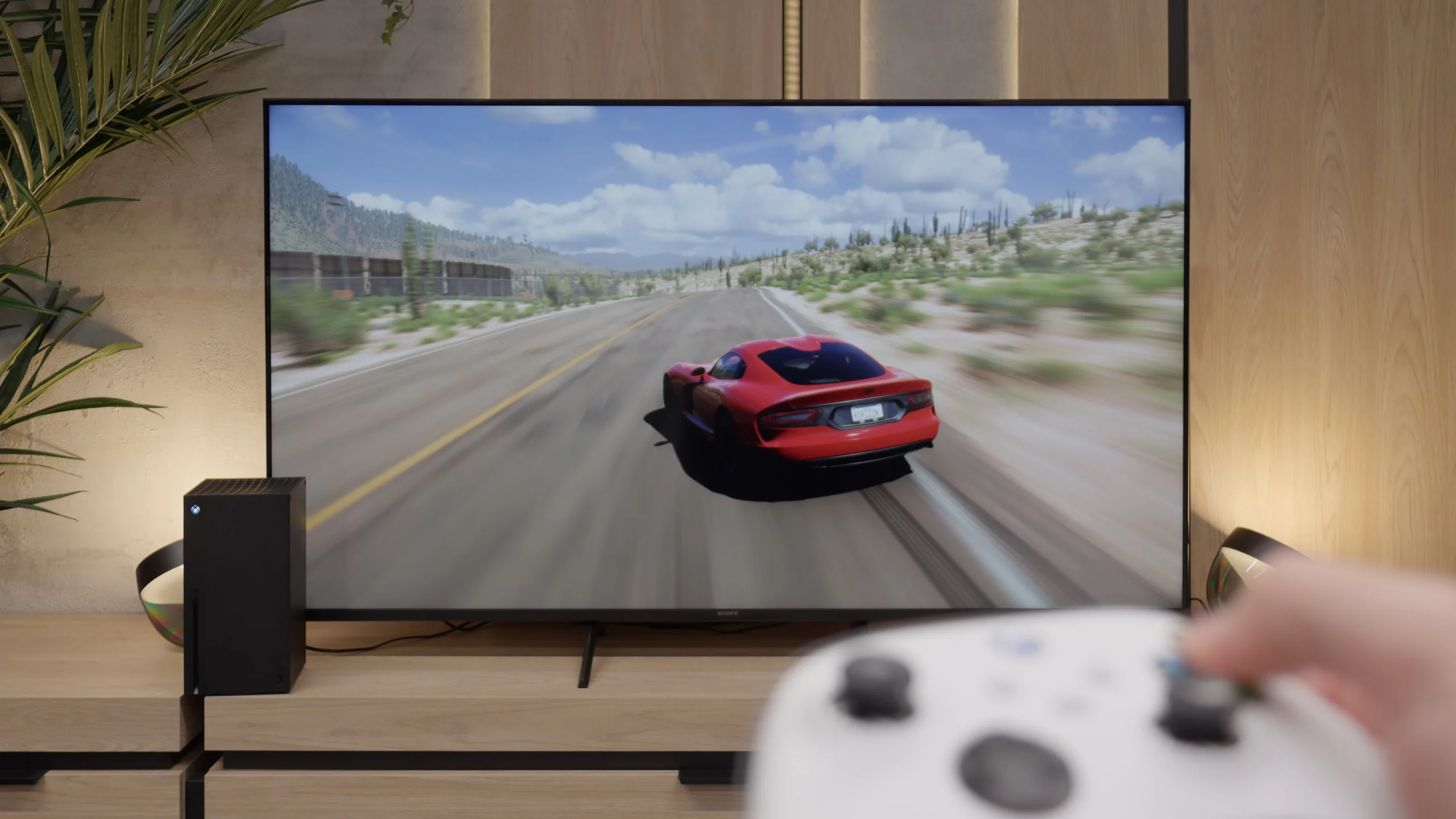
Bravia 3 is not equipment for e-sports players or fans of late-night marathons with a controller in hand. The lack of 120 Hz refresh rate and HDMI 2.1 ports closes the topic before it even gets a chance to develop. This is a television for a casual gamer who will play FIFA or racing games after work, not for someone who measures every frame in a spreadsheet. Nevertheless, Sony has added a few nice extras to make it feel less bare. ALLM works as it should, automatically switching the television to game mode (low latency). There's even a simple Game Bar that is clear. However, the biggest curiosity here is the PlayStation Portal app. Thanks to it, you can launch games from PS5 wirelessly and see them immediately on the television screen. It sounds great, but it only takes a few minutes to feel significant lag. In our opinion, it's more of a showcase of capabilities than something you can reliably use every day. If someone really wants to play, it's better to connect the console with an HDMI cable and forget about wireless issues.
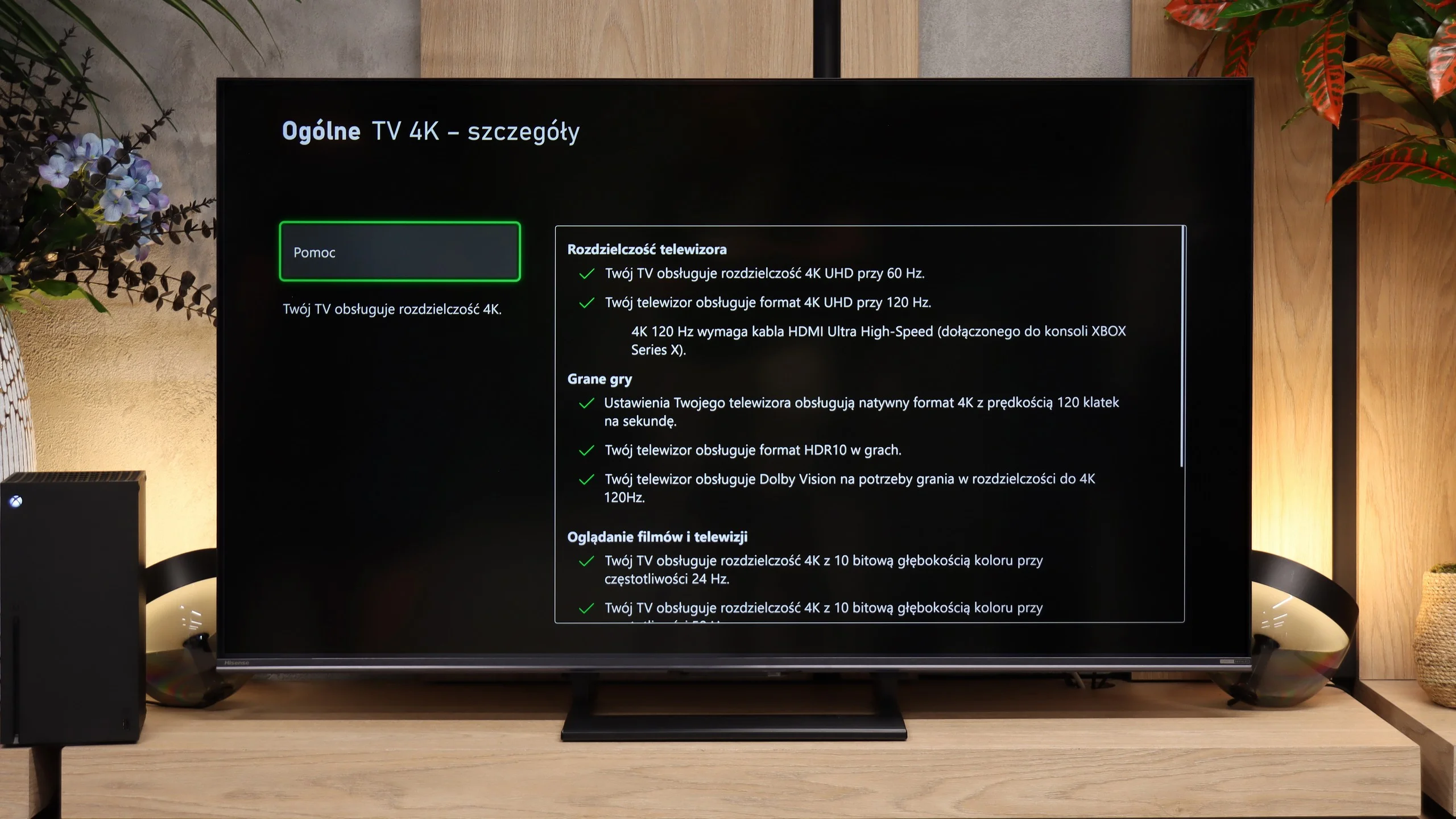
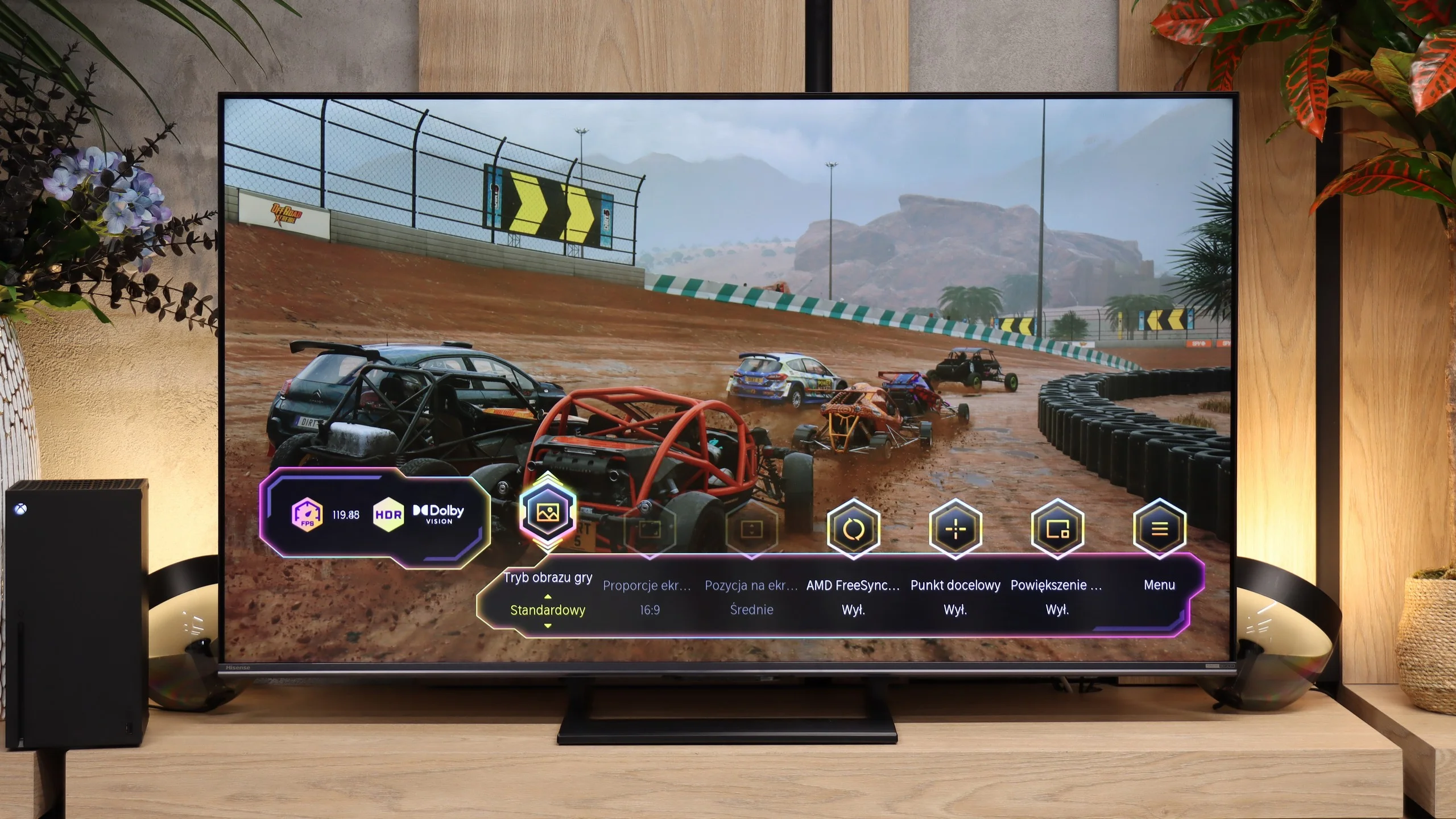
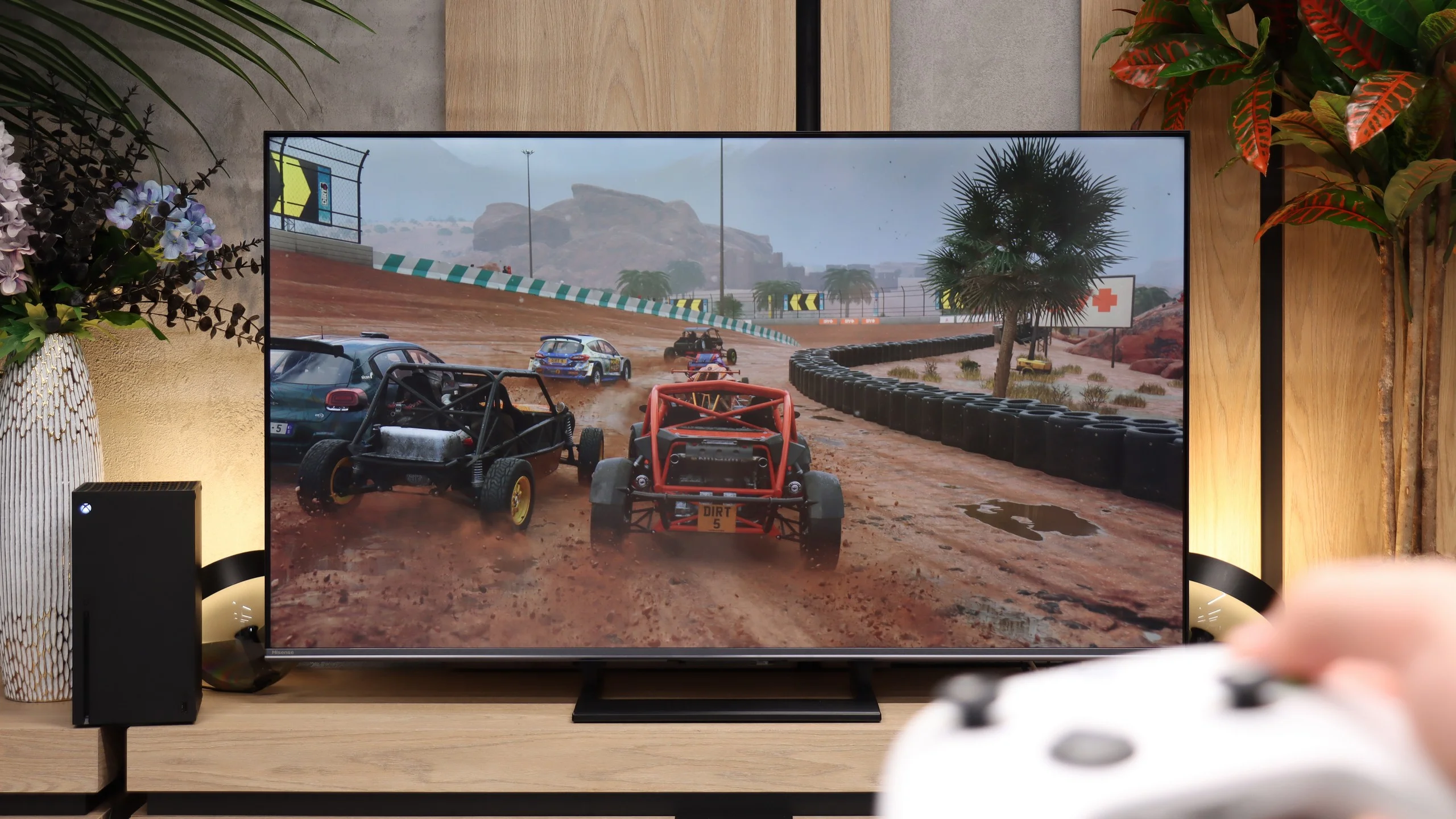
The Hisense U7S has a lot to offer gamers. You get two HDMI 2.1 ports and support for 120 Hz at Full HD, 1440p, and 4K, so modern consoles’ capabilities are well used. When connected to a PC you can use 144 Hz at 4K or switch the resolution to Full HD and run 240 Hz. So there’s a wide choice, although it’s worth remembering the motion smearing mentioned earlier, which the high refresh rate does not eliminate. VRR and ALLM are also present. The first helps prevent tearing when frame rates in a game change. The second automatically switches the TV into game mode, so you don’t have to dig through the menu each time. VRR works from 48 to 240 Hz, with the highest refresh rate available in Full HD. Xbox users can also play in Dolby Vision, including at 120 Hz. Importantly, this format does not introduce significant input lag here. The Game Bar also looks very good. It’s easy to read, visually appealing, and lets you quickly check what signal the TV is receiving. There are also handy gaming settings at your fingertips, including shadow brightening. If it’s hard to spot an opponent in a dark game, you can improve visibility without digging through the entire menu.
Our biggest complaints concern HGiG. Hisense continues to do its own tone mapping, which makes setting HDR on the console confusing. You adjust a checkerboard test pattern and the TV continuously adapts how it looks. As a result, the moment the pattern disappears does not correctly indicate the screen’s brightness limit, and it’s easy to set the value too high. For this model it’s better to set the target HDR peak brightness on the console to about 900 to 1000 nits, rather than relying on the configurator.
Input lag
10/10
9.9/10
SDR
HDR
Dolby Vision
Here, Bravia 3 shows its best side. Latencies drop below 12 milliseconds in almost every resolution and mode, so the response to controller movements is instantaneous, and there is no noticeable delay. It feels like the console and the TV are speaking the same language, without unnecessary pauses and hesitations. Special attention should be given to the Dolby Vision Gaming mode. In its predecessor, the X75WL model, using this feature was simply agonizing – input lag could exceed 100 milliseconds, which effectively took away the pleasure of gaming. In Bravia 3, this problem has been completely eliminated.
In terms of input lag the Hisense U7S performs excellently. At 60 Hz we measured 14–16 ms, and at 120 Hz just 9–10 ms. Input is responsive, and even in fast-paced games the TV doesn't introduce any noticeable delay. Importantly, Dolby Vision performs just as well, with 14 ms at 60 Hz and 9 ms at 120 Hz, so you don't have to give up that format for fear of added latency. The motion smearing described earlier is a separate issue: the panel responds quickly to input, but the pixels don't always keep up with color changes.
Compatibility with PC
3.5/10
8.2/10
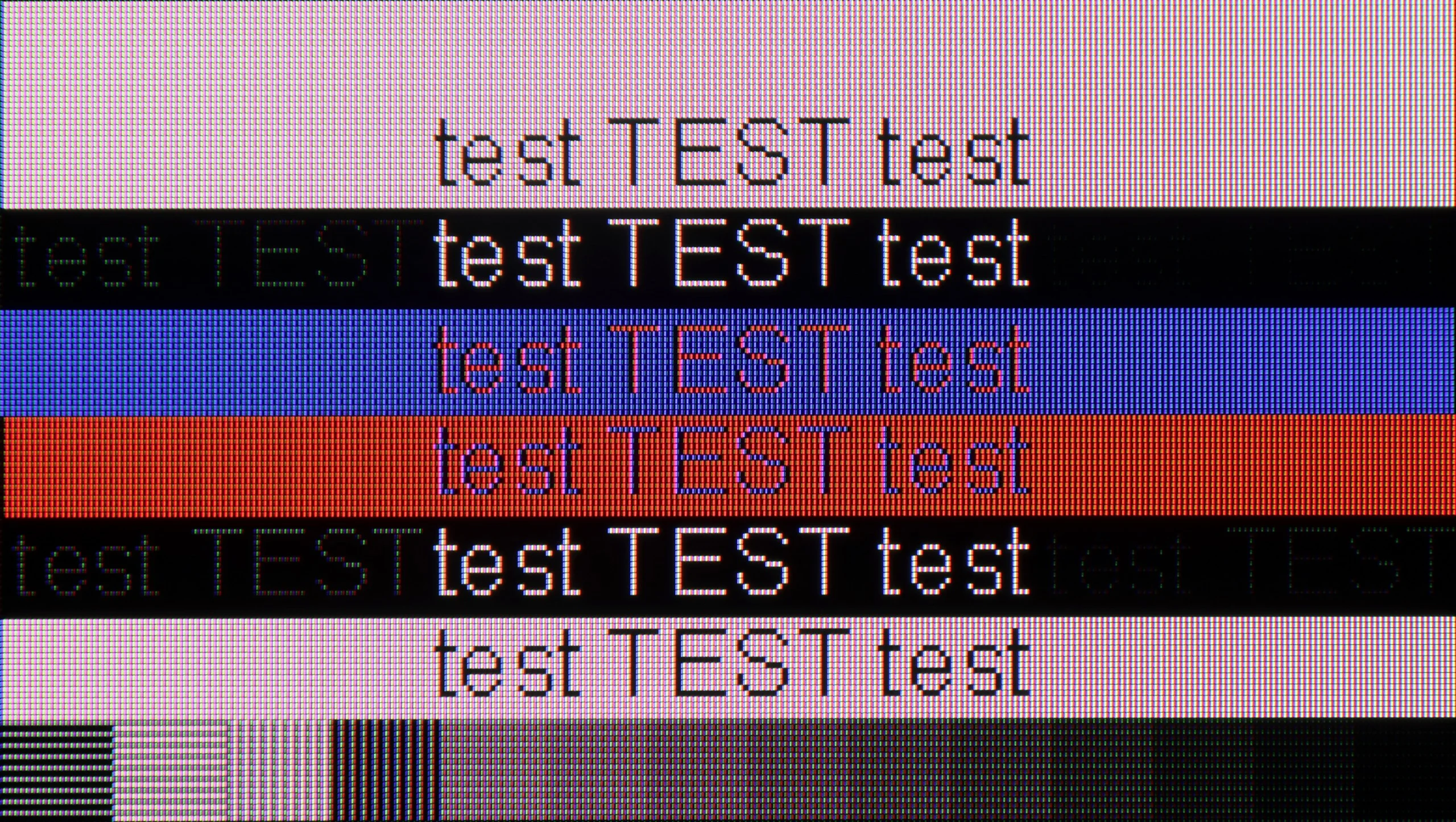
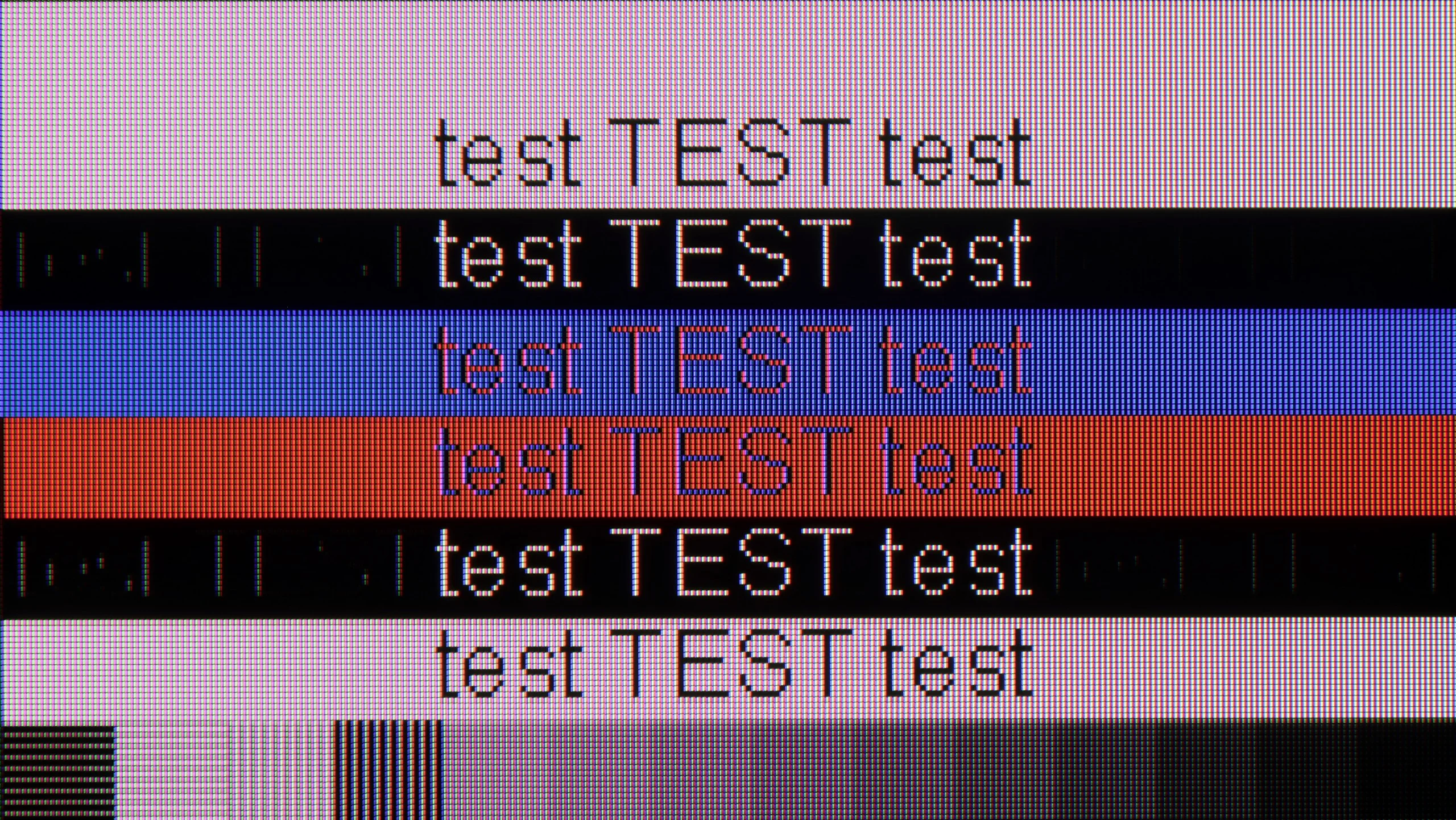
The photo shows the legibility of small fonts. Ideally, lines should be the same thickness on both light and dark text, with minimal pixel gaps.
Collaboration with a computer in the case of Bravia 3 with a VA panel does not perform as well as in the version with an IPS panel. The fonts are noticeably less sharp and harder to read, which is immediately apparent when working with text. To this, there is the surprising issue of dithering, which we did not notice in the IPS variant. This is quite an unusual situation, but definitely worth noting, as it may hinder those planning to use the television as a monitor. When it comes to PC gaming, there are also no major reasons for enthusiasm here. The lack of support for frame synchronization with graphics cards or higher refresh rates makes the screen rather unattractive in this role. Therefore, if someone is seriously considering connecting Bravia 3 to a computer, a better choice would be the variant with an IPS panel, which performs significantly better in this regard.
When connected to a PC, you can use 4K at 144 Hz with G-Sync enabled and about 10 ms of input lag. It's a good setup for gaming, although panel smearing is still noticeable in fast-moving scenes. Chroma 4:4:4 also works correctly, even at the maximum refresh rate, so colorful on-screen text and small desktop elements remain legible.
The U7S is quite suitable for web browsing or occasional work, but not all fonts look equally sharp. Our main issue is with small, dark text: thin parts of letters can disappear and characters look uneven. It's hard to notice from the couch, but when working up close, especially with text or spreadsheets, it can be distracting.
Viewing angles
3.2/10
3.1/10
The viewing angles in Bravia 3 with VA matrix are clearly weaker than in the version with IPS panel. It is enough to sit slightly to the side for the image to begin losing saturation and clarity, and the black to take on a lighter shade. This is the natural price to pay for the significantly better contrast and deeper blacks, which are a definite advantage in this variant.
Viewing angles are unfortunately a weak point of the Hisense U7S. As soon as you move to the side, colors lose saturation, blacks become lighter, and the picture looks washed out. At a 45-degree angle we measured a 74% drop in brightness, so the difference compared with watching head-on is really large. That's a typical limitation of VA panels. When sitting centrally you can appreciate its strong contrast, but people seated at the far ends of a wide couch will see a noticeably weaker picture. The U7S is therefore best suited to setups where viewing positions are as close to directly in front of the screen as possible.
Daytime performance
5.4/10
7/10
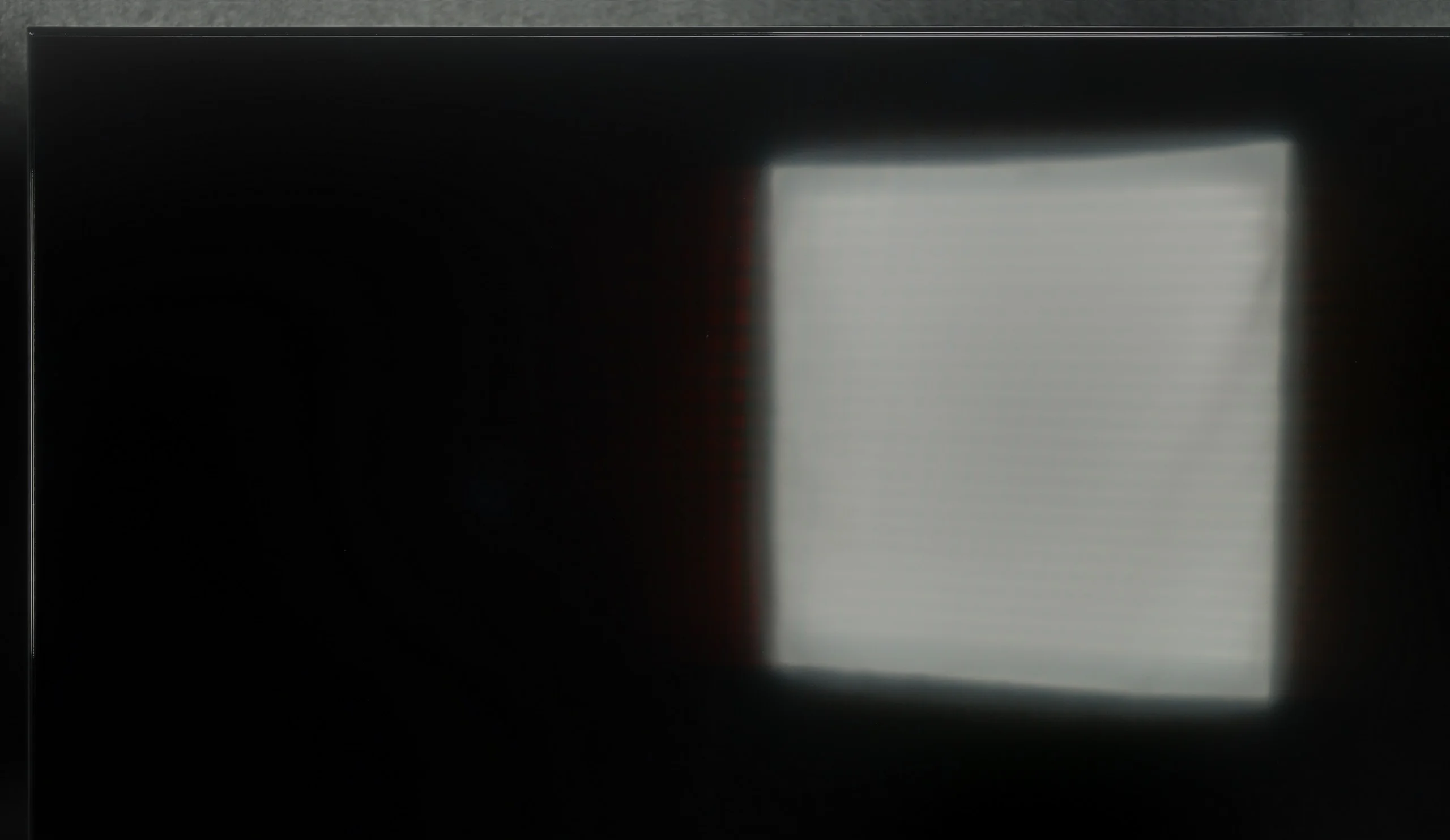
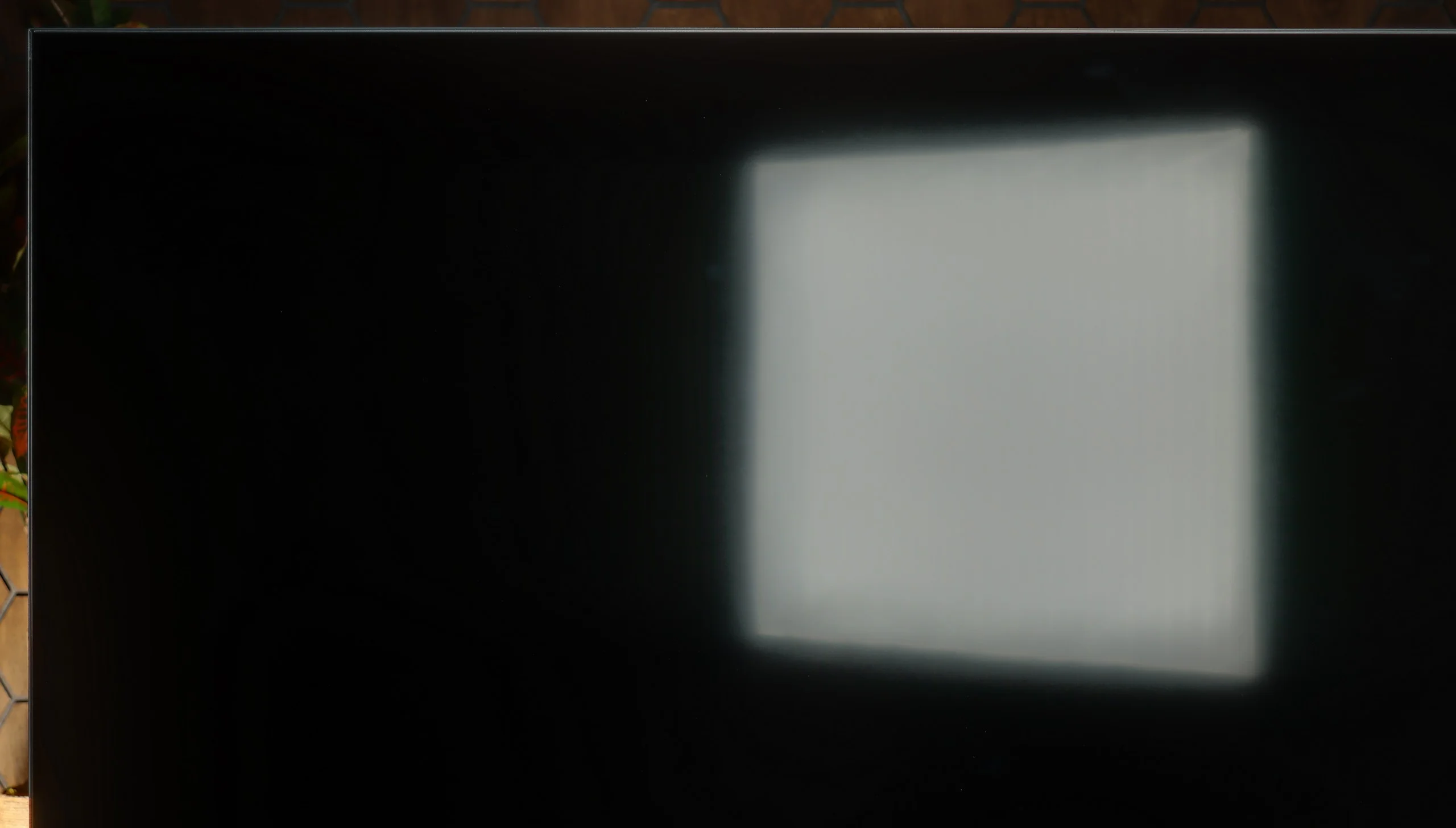
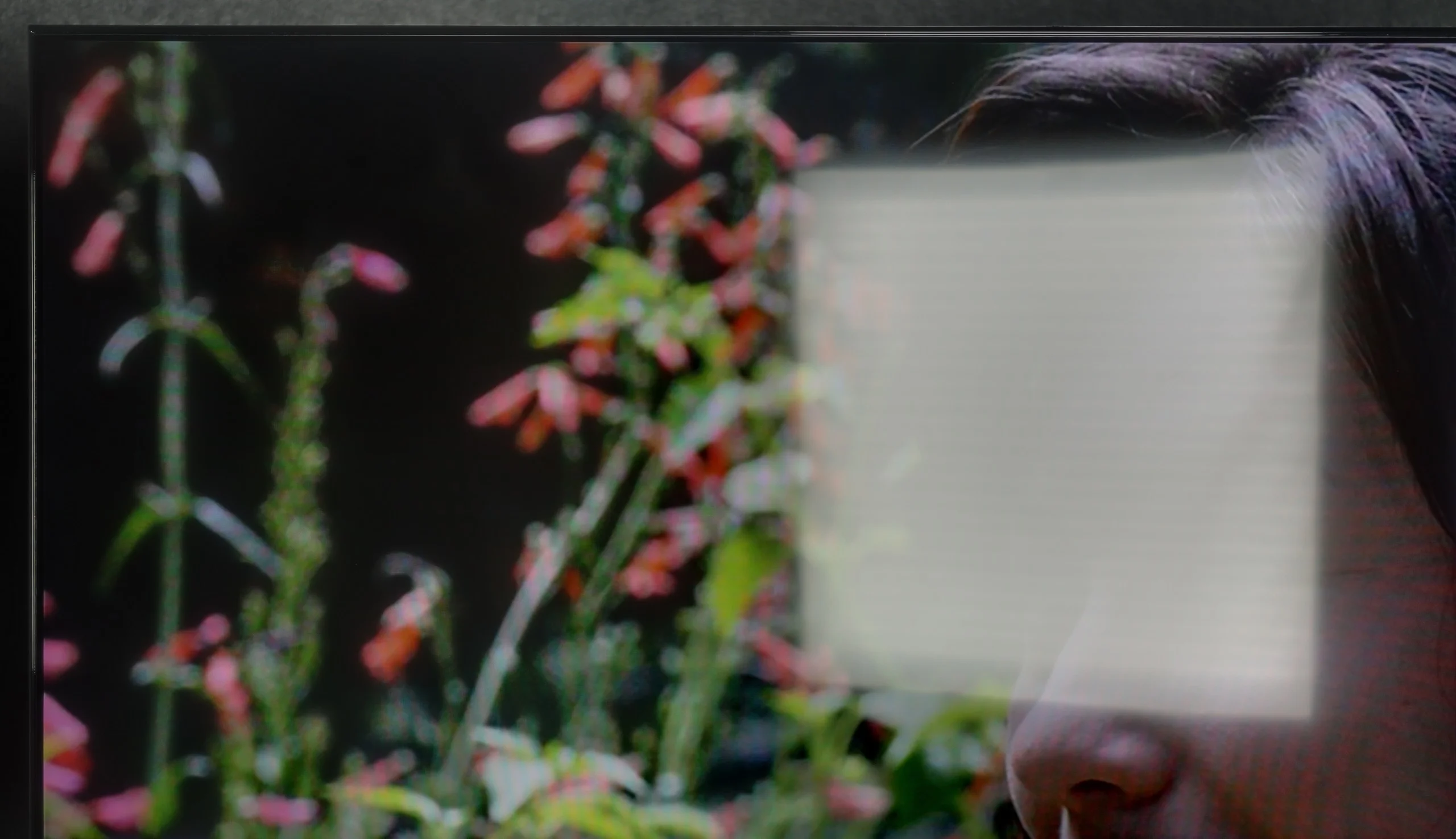
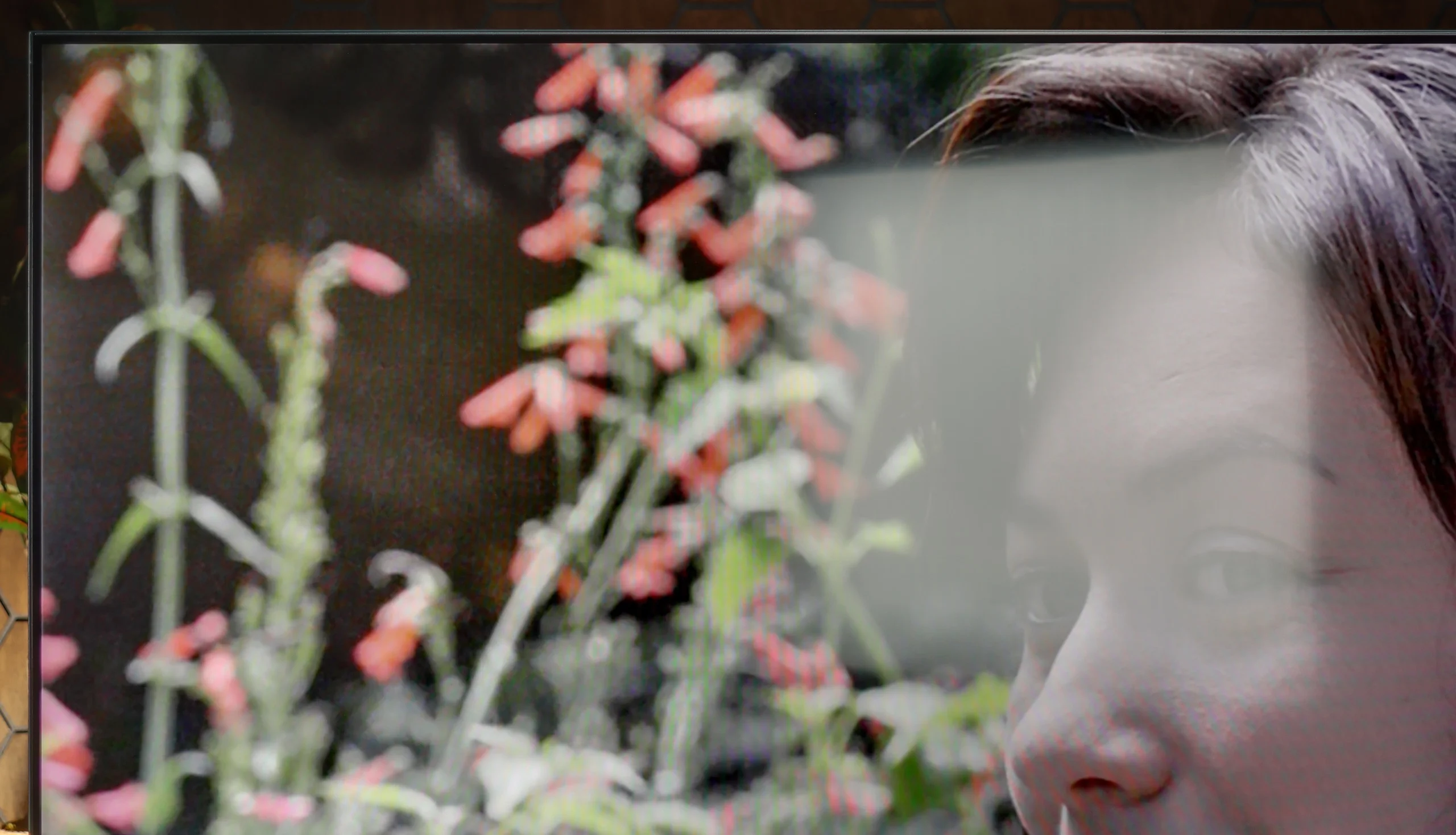
Panel brightness
Hisense U7S / U77SE: 664 cd/m2
Sony Bravia 3 50' (VA): 397 cd/m2
The performance of the Bravia 3 in the VA variant during the day is a mix of pros and cons. The manufacturer has also used a satin coating here, but compared to IPS, it struggles more with direct reflections. When sharp light hits the screen, reflections can be more pronounced and may interfere with viewing. On the other hand, the television compensates with higher brightness. In normal daytime conditions, the image is clearer and sharper than in the version with the IPS panel. Thanks to this, in everyday use, the Bravia 3 in the VA edition can perform even better, as long as it is not placed in a highly sunlit area.
The Hisense U7S performs well for daytime viewing. In SDR we measured an average of about 664 nits, and depending on the screen content the brightness ranged roughly from 500 to 800 nits. Even with an all-white image it stays above 500 nits, so a sports broadcast or a bright TV program won't suddenly look dim. That's enough headroom for comfortable viewing in most living rooms. The satin finish does a decent job of reducing reflections, but a window opposite the TV will still be visible. In the photo you can clearly see that its reflection can obscure part of the picture, so high brightness alone doesn't solve everything. On the plus side, blacks and colors hold up in daylight and don't become excessively gray. Overall the U7S works well in a bright room, though you should position it to avoid direct window reflections.
Panel details
Subpixel Structure:
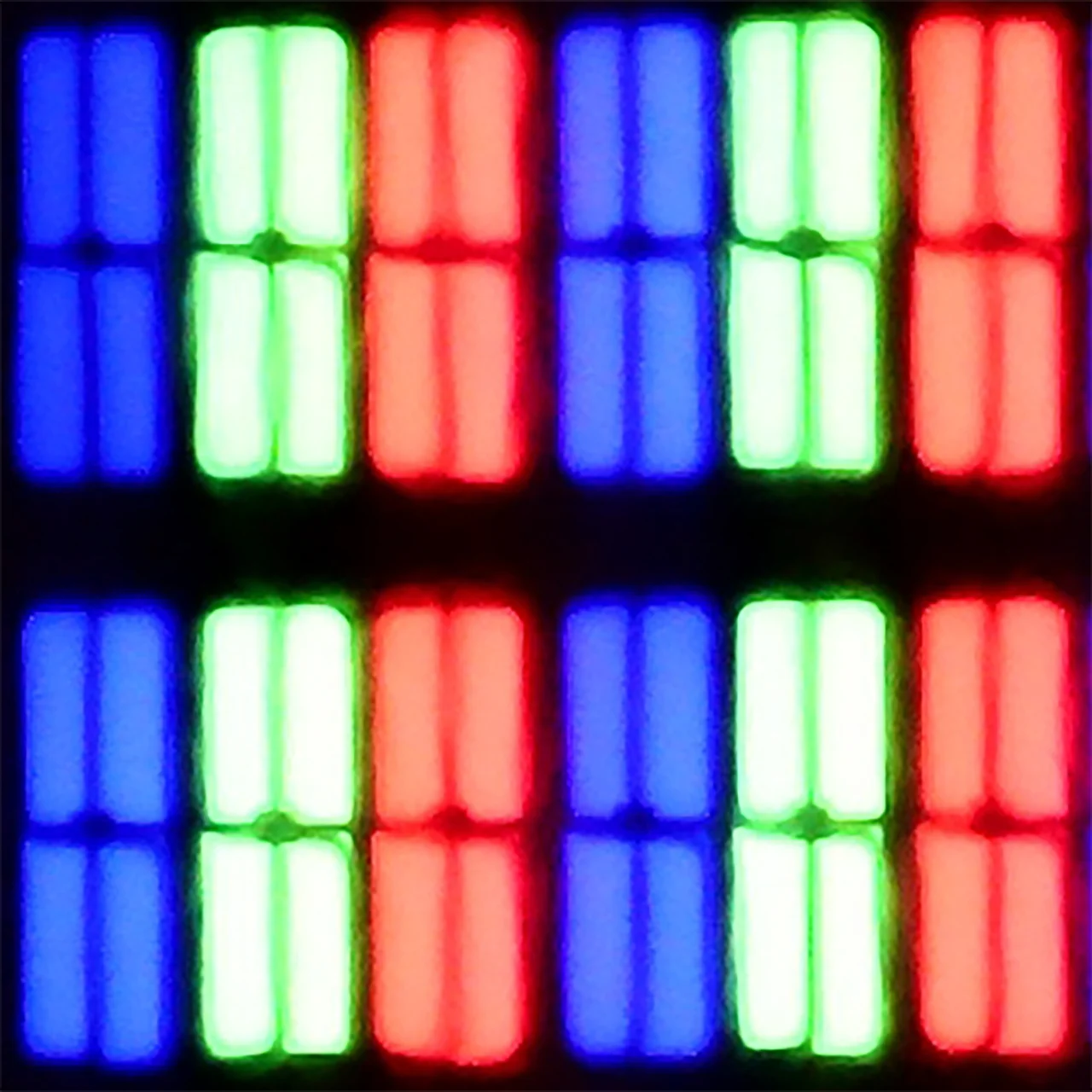
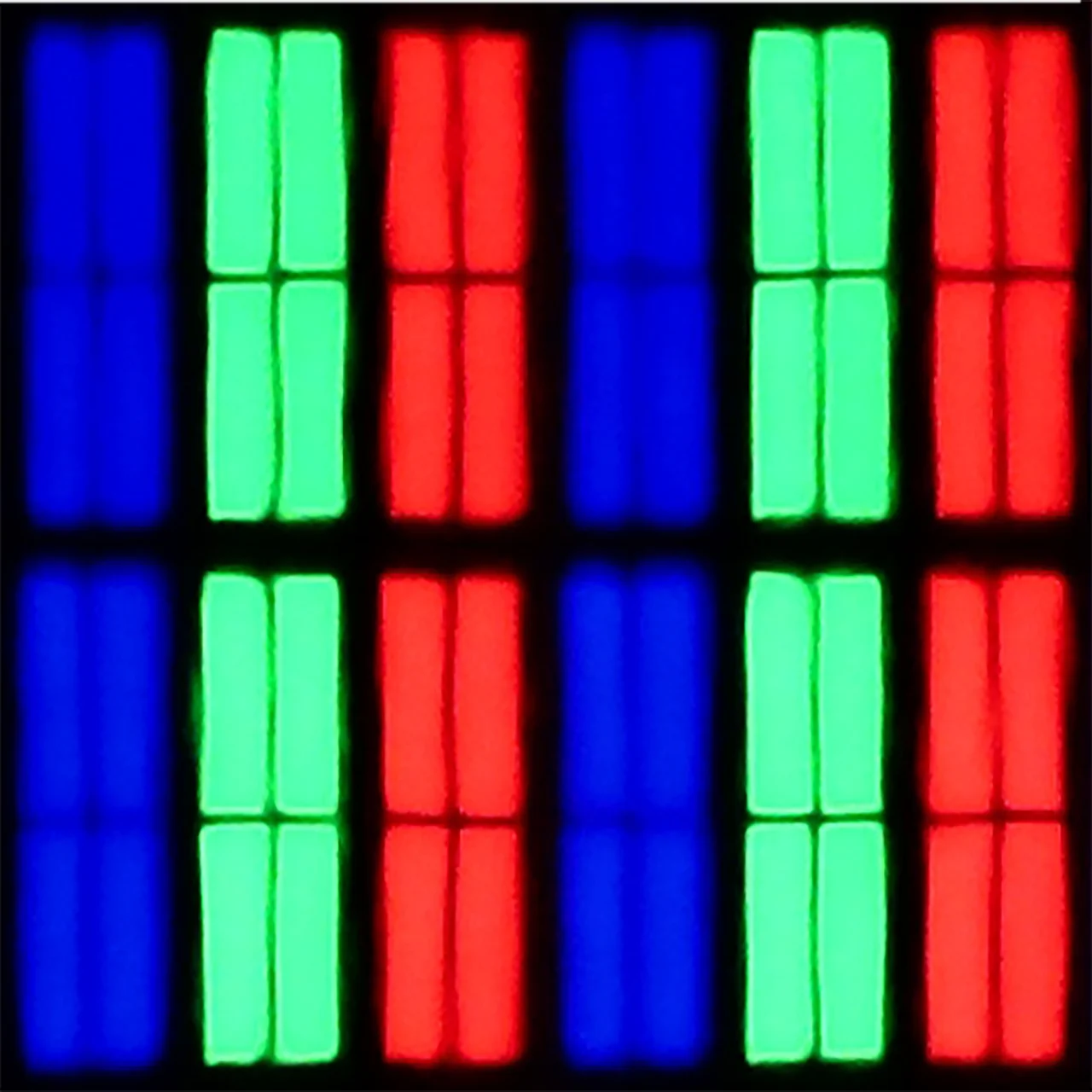
Panel uniformity and thermal imaging:


TV features
6.1/10
8.9/10
- SystemGoogle TVVIDAA
- System performanceSystemResponsiveness-Good
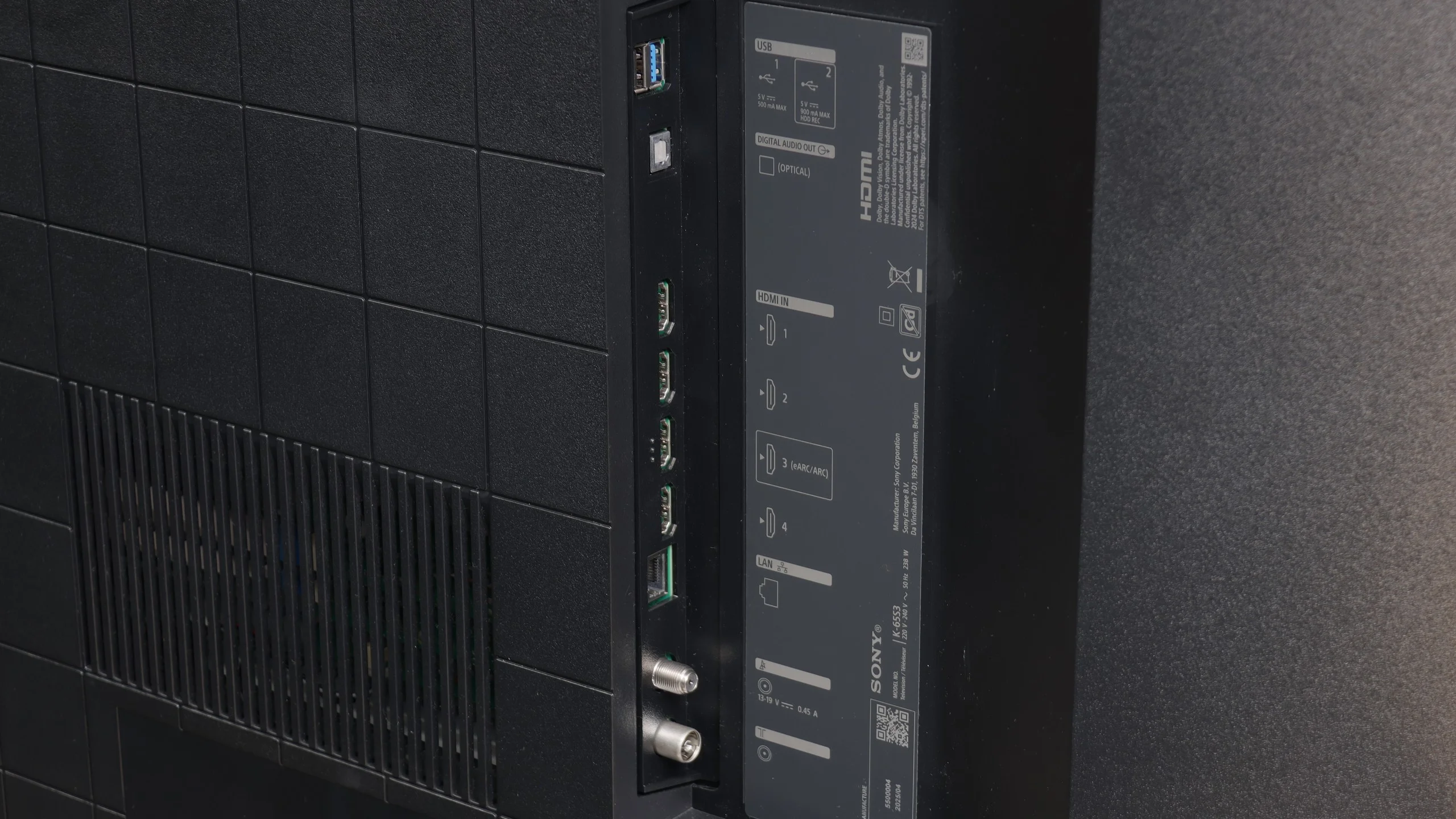
- HDMI inputs4 x HDMI 2.0, 0 x HDMI 2.12 x HDMI 2.0, 2 x HDMI 2.1 48Gbps
- OutputsToslink (Optical audio), eARC (HDMI), ARC (HDMI)Toslink (Optical audio), eARC (HDMI), ARC (HDMI)
- Network InterfacesWi-Fi 2.4GHz, Wi-Fi 5GHz, Ethernet (LAN) 100MbpsWi-Fi 2.4GHz, Wi-Fi 5GHz, Ethernet (LAN) 100Mbps
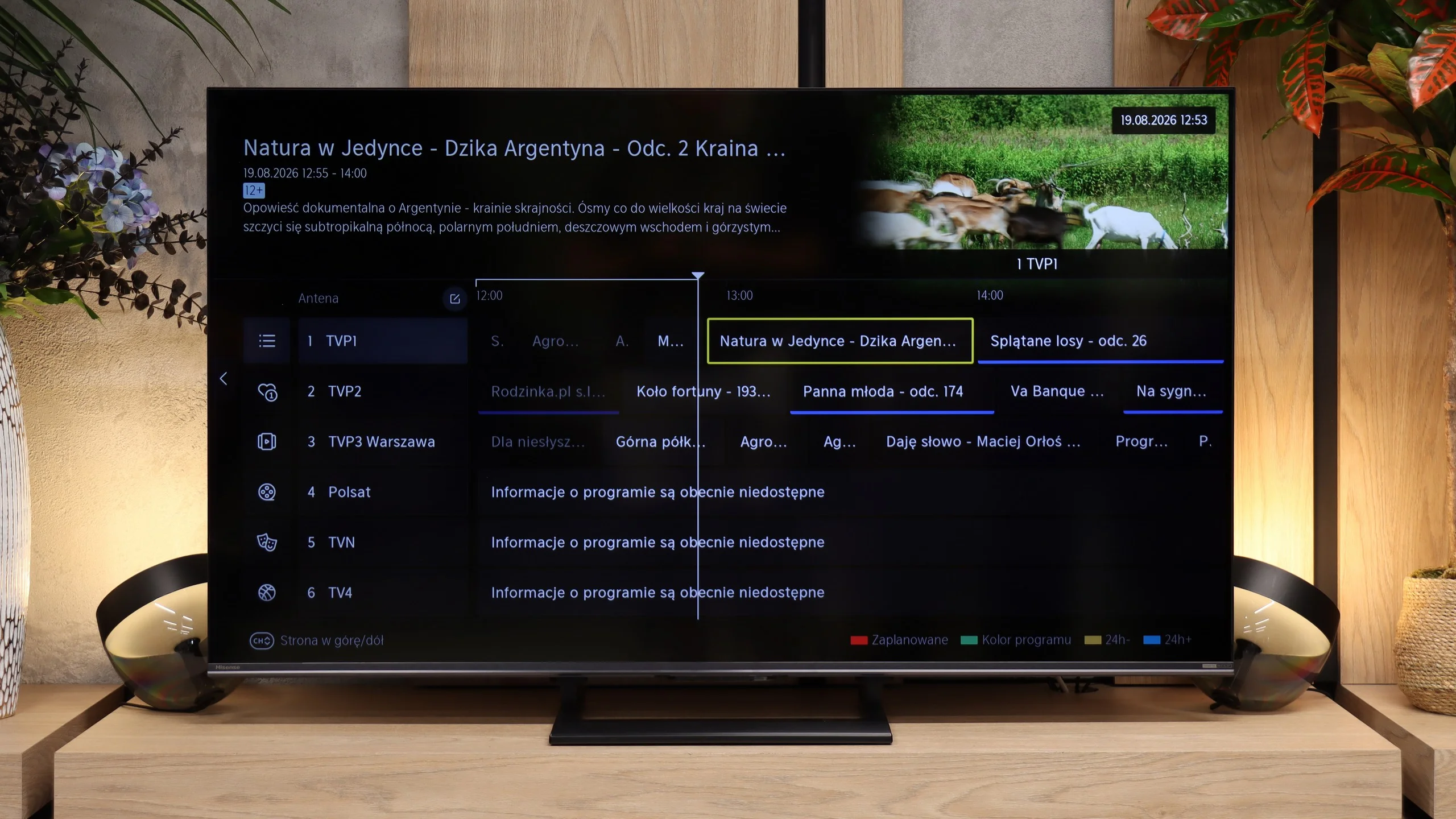
- TV receptionDVB-T, DVB-T2, DVB-S, DVB-S2, DVB-CDVB-T, DVB-T2, DVB-S, DVB-S2, DVB-C
Classic features:
- Recording to USB (terrestrial TV)
- Recording programming
- Picture in Picture (PiP)
- RF remote control (no need to aim)
- Backlit remote control
- Teletext
- Audio only mode
- Bluetooth headphones support
- Simultaneous Bluetooth headphones & TV audio
Smart features:
- AirPlay
- Screen mirroring (Windows Miracast)
- Voice search
- Voice search in native language
- Ability to connect a keyboard and mouse
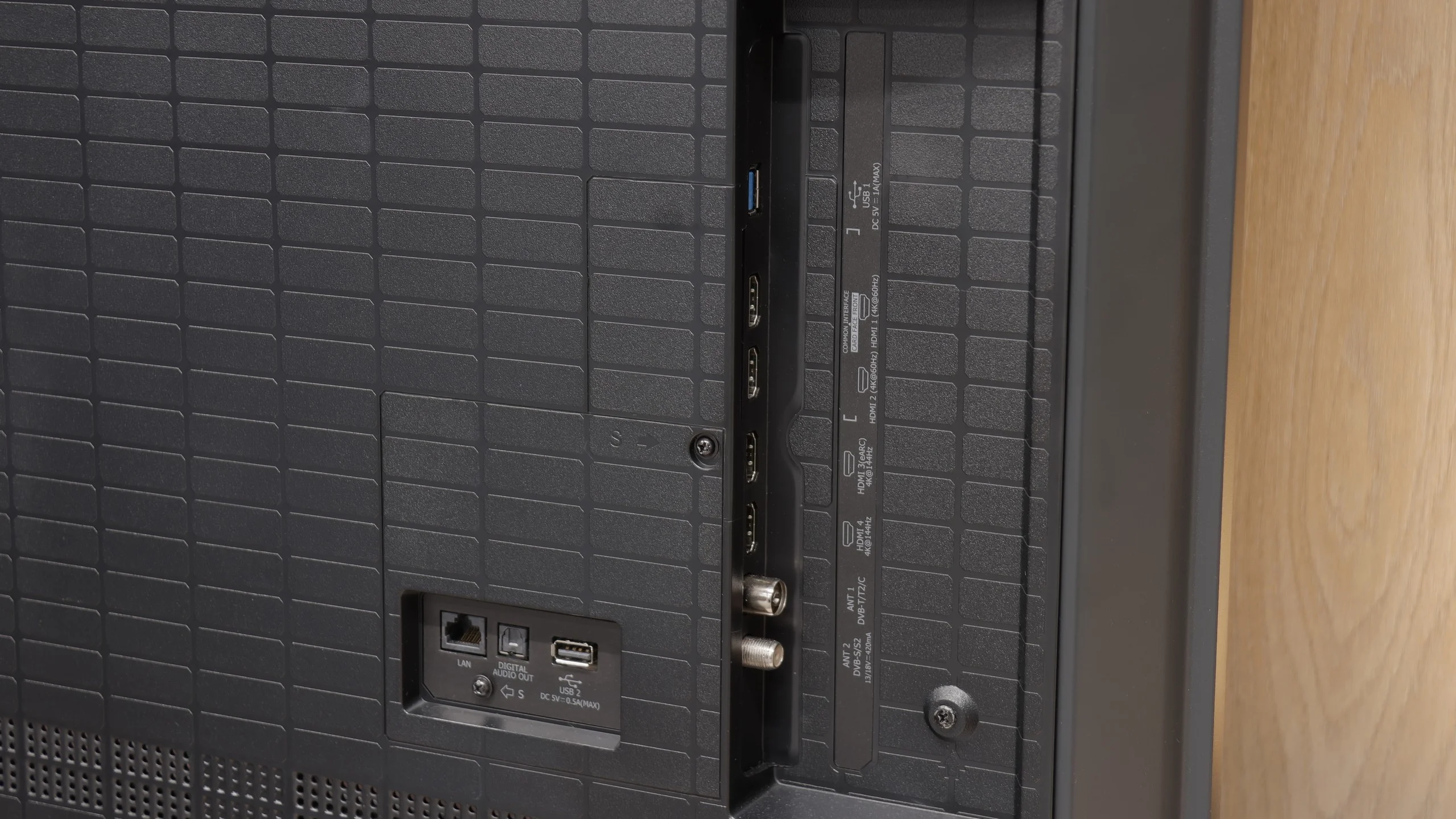
Sound connection options
- HDMI audioeARC (HDMI), ARC (HDMI)eARC (HDMI), ARC (HDMI)
- Other audio outputsToslink (Optical audio)Toslink (Optical audio)
- Wireless audioBluetoothBluetooth
Supported audio formats (external HDMI eARC audio):
- Dolby Digital Plus 7.1
- Dolby True HD 7.1
- Dolby Atmos in Dolby Digital Plus (JOC)
- Dolby Atmos in Dolby True HD
- DTS:X in DTS-HD MA
- DTS-HD Master Audio
Senior accessibility
- Numeric keyboard on TV
- Font size adjustment
- Audio description
Smart TV Features
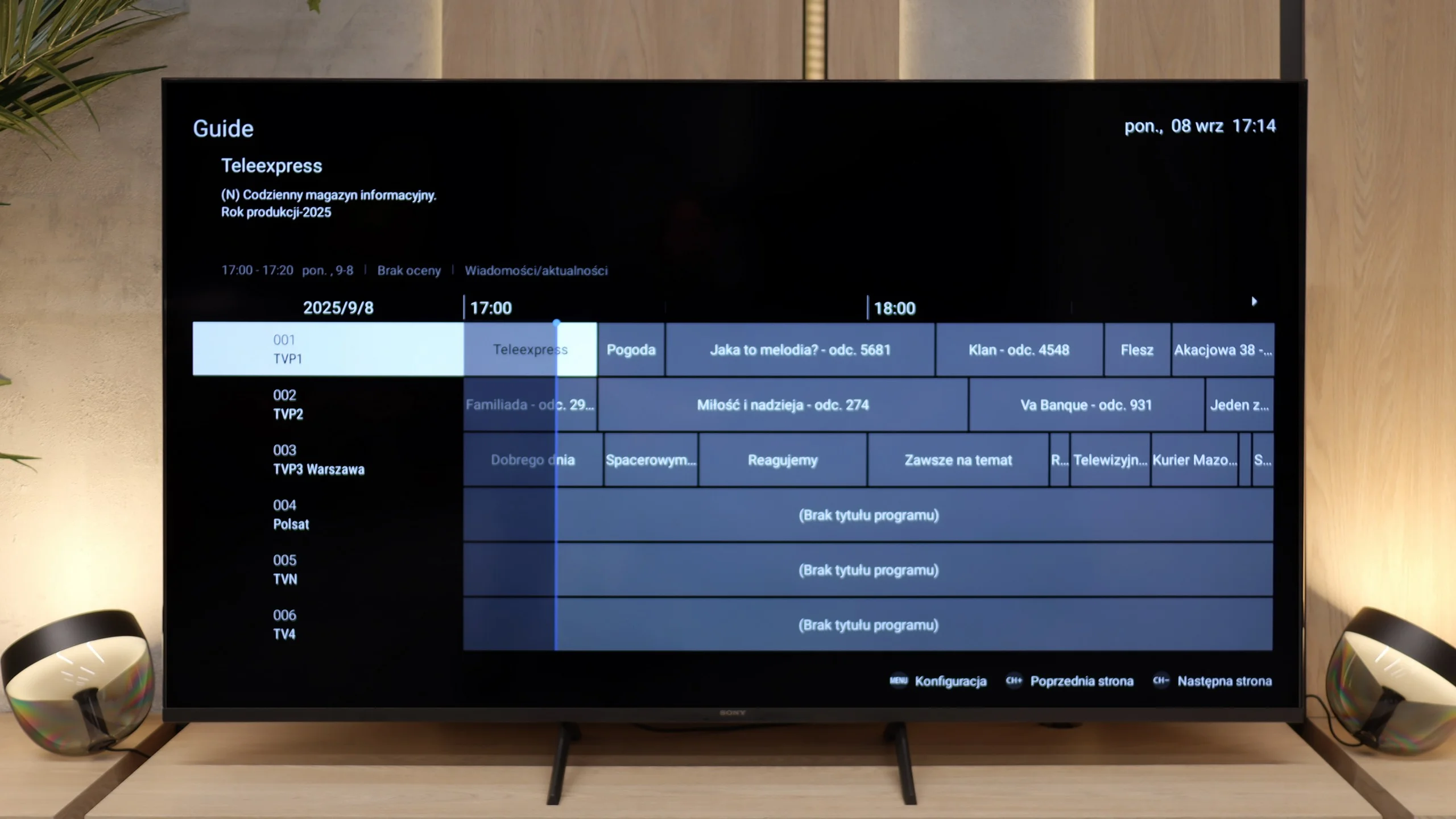
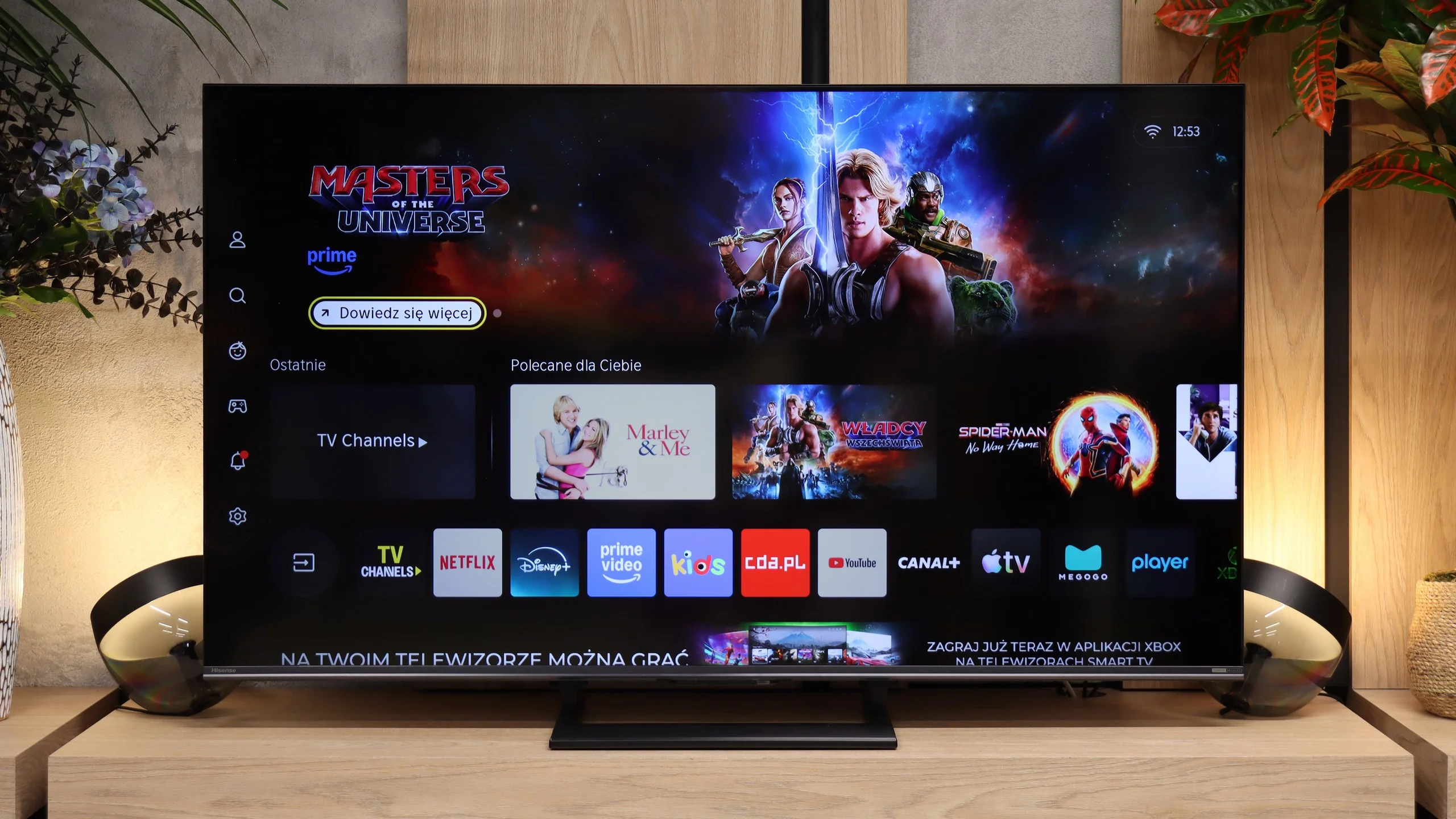
The biggest advantage of the Bravia 3 in everyday use is the presence of the Google TV system. Thanks to it, we have access to one of the largest libraries of applications and streaming services, so regardless of whether someone mainly uses Netflix, Disney+, or smaller platforms, everything is at their fingertips. The Google voice assistant also worked very well, responding to our commands quite "smartly." The Google TV system should theoretically operate very smoothly because Sony has been implementing it better than many cheaper competitors for years. Unfortunately, in the case of the Bravia 3, it's not as nice as we would expect. During testing, we noticed slight lagging in the interface, and some features, such as screen mirroring, simply refused to cooperate. One might get the impression that the processor in this model sometimes struggles to handle the demanding system, and not everything works as smoothly as we would expect.
Classic Features
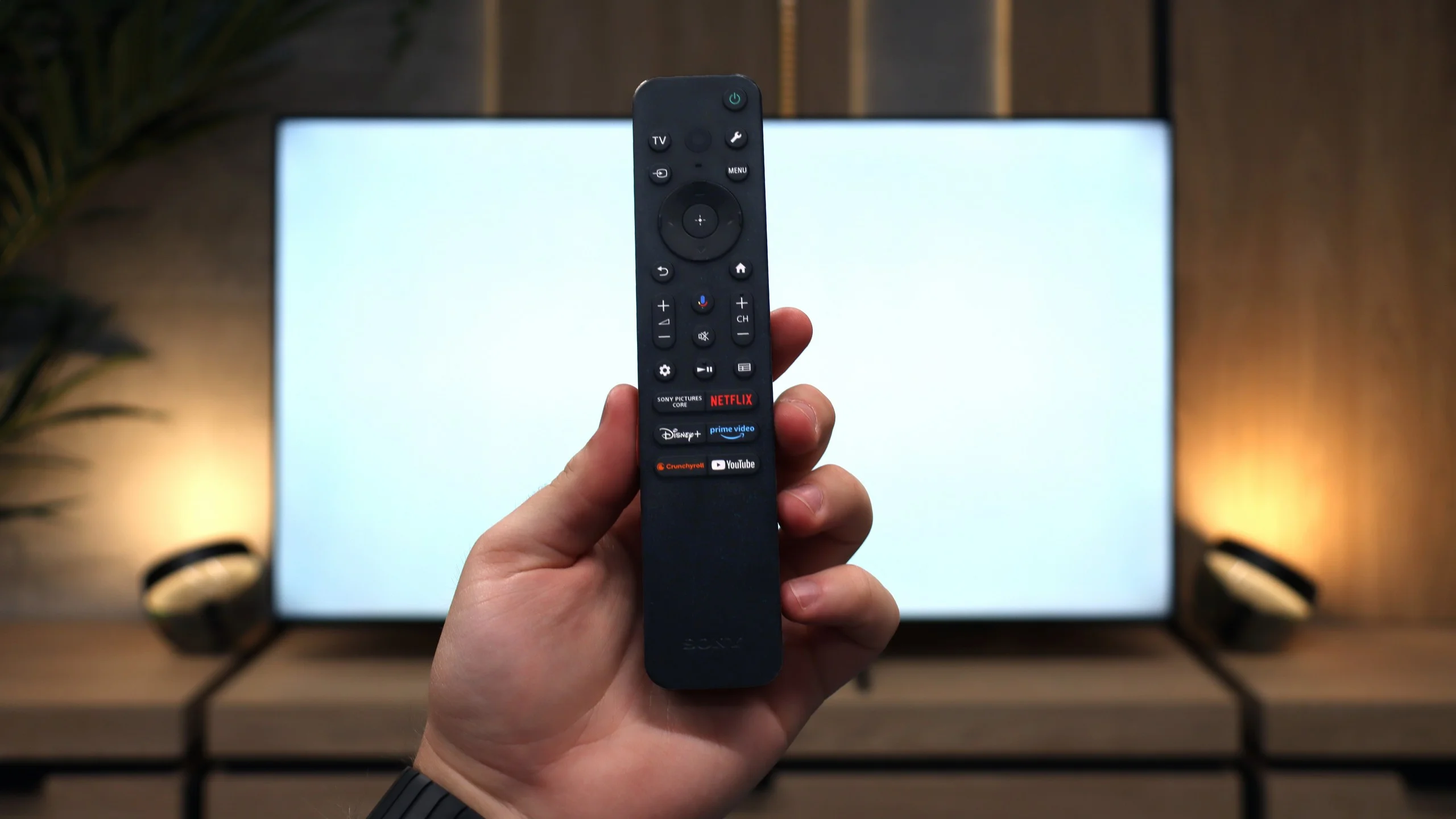
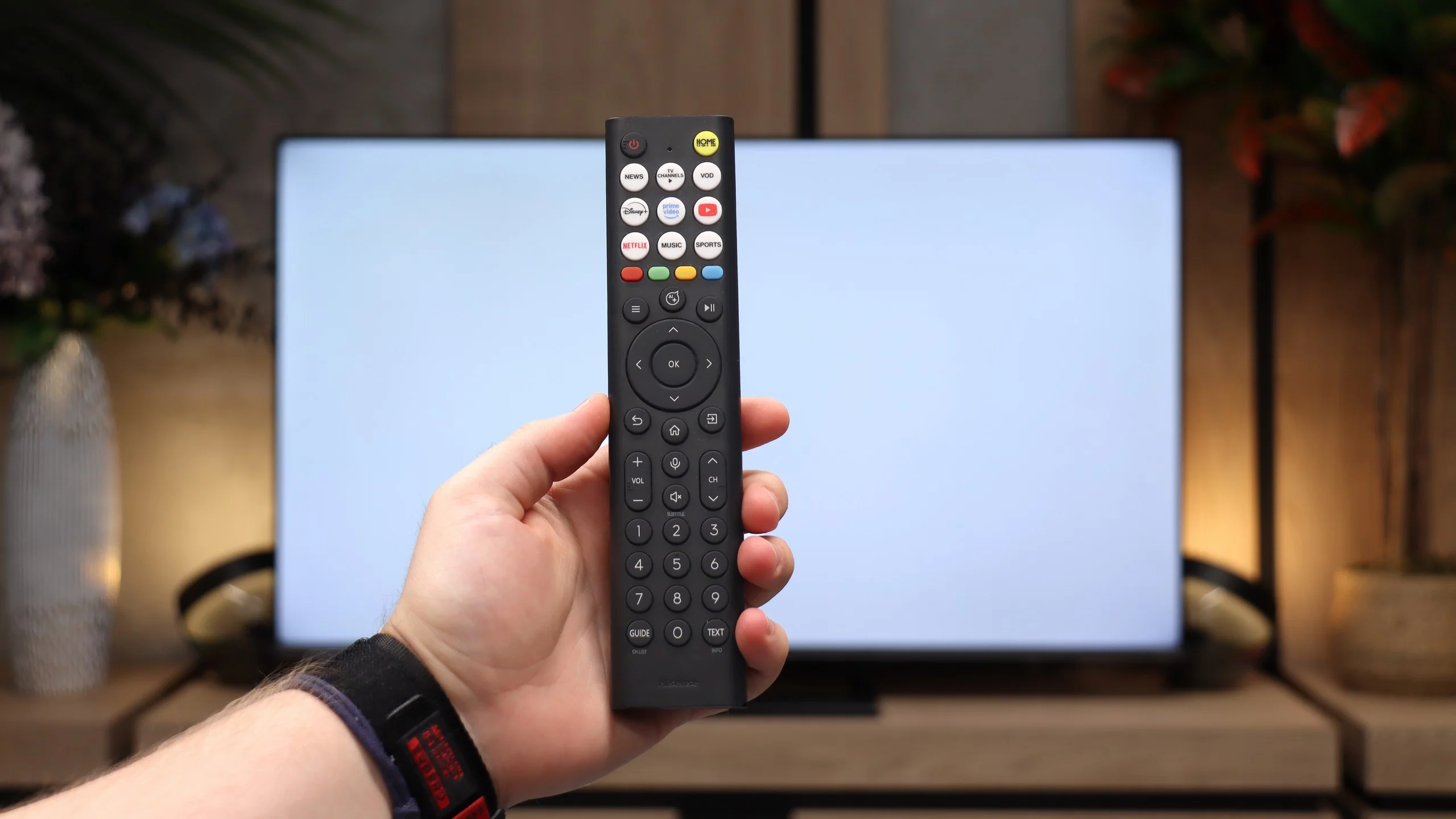
Sony, even in the cheapest series, manages to remind us of its experience with various users. In the package, we find as many as two remotes. The first is modern and minimalist, with a small number of buttons, which works great for using apps and Google TV functions. The second is a classic remote with a richer set of keys and a numeric keypad, which will be especially appreciated by older people used to traditional solutions. This is a nice nod to different user groups, and it must be admitted that Sony handled this very practically. However, it is a pity that compared to the X75WL model, the ability to record content from TV tuners to USB memory has disappeared. The manufacturer has completely abandoned this feature, so if someone was attached to it, they will unfortunately not find it in the Bravia 3.
Smart TV: VIDAA
VIDAA HOME OS on the Hisense U7S is feature-rich, runs quickly, and doesn’t complicate everyday use. In addition to apps, it supports AirPlay for streaming from Apple devices and Miracast for mirroring a computer display. Voice search in Polish also works, so instead of typing a movie title with the remote you can just say it. You can also connect a keyboard and mouse. In terms of smart features there’s little to complain about, though before buying it’s worth checking the availability of specific apps you use, as it isn’t as extensive as competing systems.
Classic features and the remote
Hisense hasn’t forgotten viewers who watch regular TV. The U7S lets you record over-the-air programs to a USB drive and schedule recordings for later. There’s teletext, the option to listen to audio with the screen off, and support for Bluetooth headphones. Conveniently, headphones can operate at the same time as the TV speakers, so one person, for example a senior, can use them while others still listen normally. The main notable missing feature is picture-in-picture, or PiP.
We weren’t fond of the remote itself. It’s very plastic and looks rather "cheap", but it does its job well. It has a full numeric keypad, plenty of shortcuts, and controls the TV via radio, so you don’t have to point it at the screen. It’s only a shame the buttons aren’t backlit. Hisense reserves more elegant remote versions for higher-end models, such as the U7S Pro.
Apps
9.6/10
8.3/10






















Playing files from USB
9.6/10
8.4/10
Supported photo formats:
Maximum photo resolution:
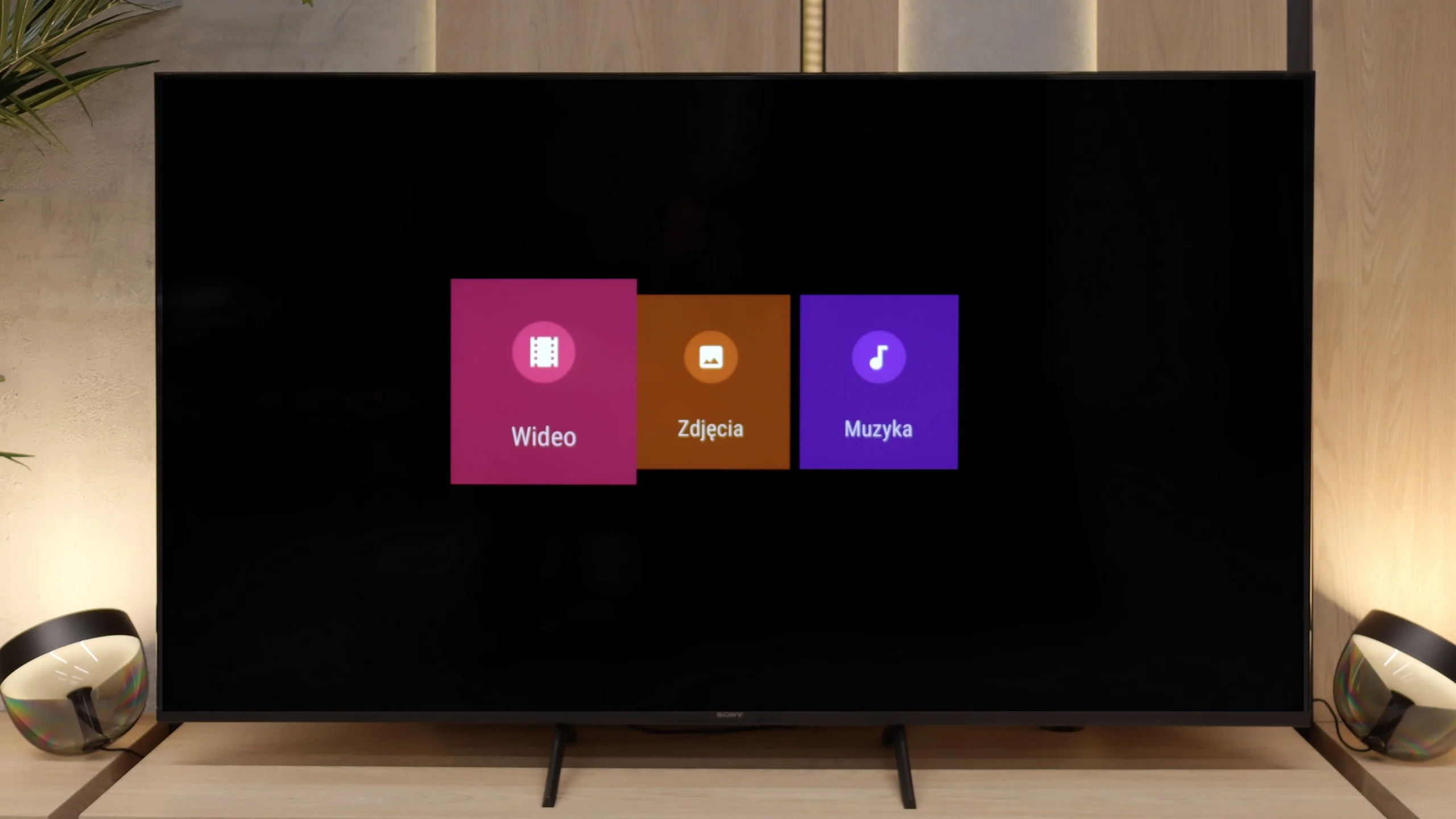
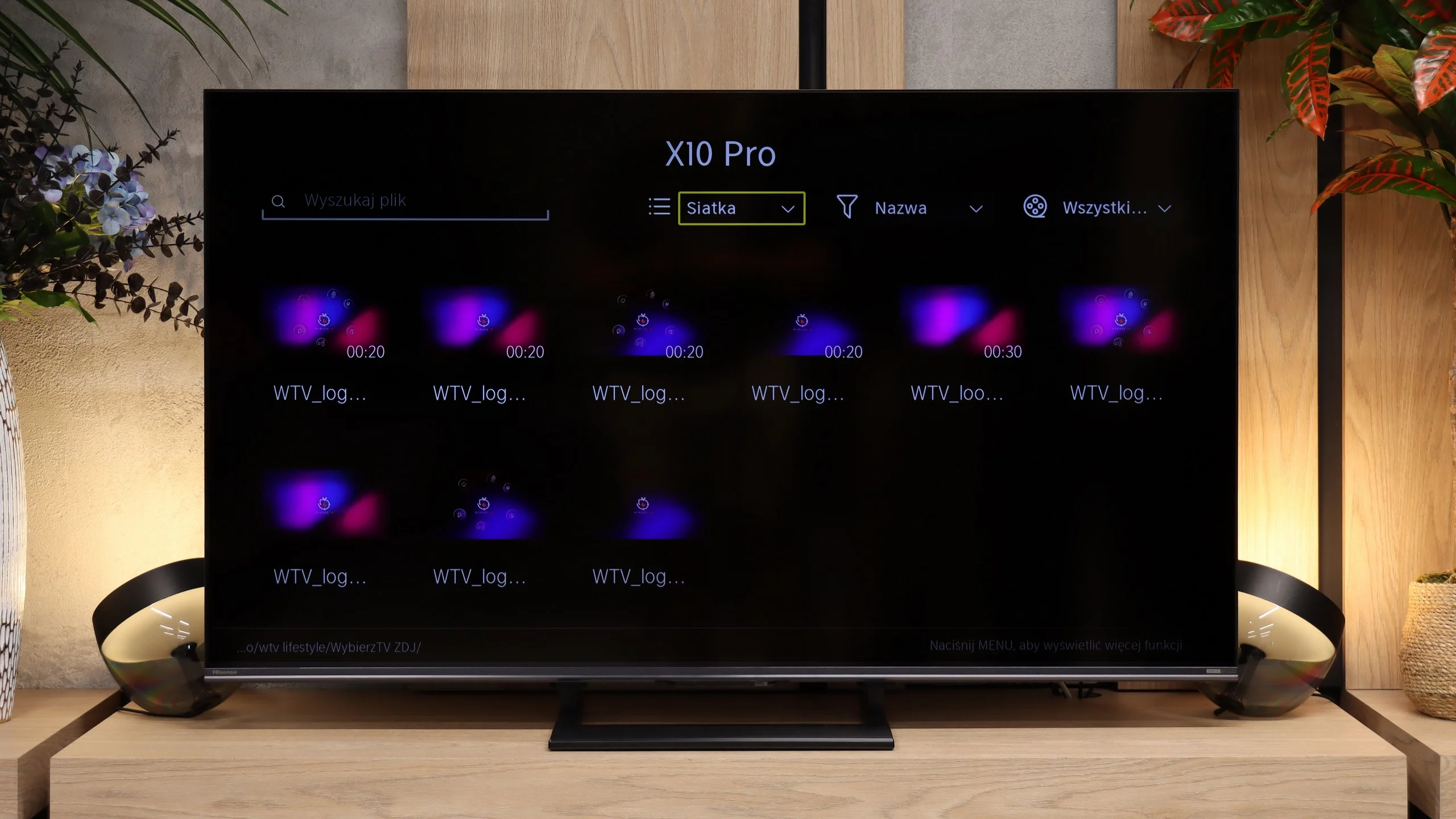
Here, Sony really did a great job. The built-in player works quickly and doesn’t "hassle" when launching various formats. We didn't have to reach for external applications like VLC, as the TV handled even files that can cause a lot of issues on other models – such as HEIC photos from Apple devices. It’s a small detail, but one that shows the manufacturer wanted the user to feel complete convenience. By just plugging in a USB drive with a movie or photos from vacation onto an external hard drive, you can connect it and start watching on the big screen immediately. No fuss, no installing additional software, no searching for workarounds. This is really a rarity in TVs, and it must be said that in this aspect, Bravia 3 truly surprised us pleasantly.
The USB player in the Hisense U7S handles most common files. It played our H.264 and H.265 material without issues, including high-bitrate 4K recordings and the test Dolby Vision file. SRT and SUB subtitles work, including Polish characters and font color changes. Not everything worked, however. AV1 and H.266/VVC files did not play, nor did ASS and TXT subtitles. Audio is good, from basic MP3s to FLAC 96 kHz/24-bit, though AIFF and DSD are not supported.
Our biggest issues are with photos. Supported formats are extensive: in addition to JPEG and PNG, WebP and TIFF work as well, but HEIC won't open. Resolution handling is also odd. The TV displayed 4, 6, 8, 16 and 32 MP images, but couldn't handle 10, 12 or 24 MP files. So it's not a straightforward size limit. The player is perfectly fine for videos and music, but when showing vacation photos you may find that some files need to be converted beforehand.
Sound
6.5/10
7.2/10
- Maximum volume88dB88dB
- Dolby Digital Plus 7.1
- Dolby True HD 7.1
- Dolby Atmos in Dolby Digital Plus (JOC)
- Dolby Atmos in Dolby True HD
- DTS:X in DTS-HD MA
- DTS-HD Master Audio
Bravia 3 plays in a rather flat manner, but makes up for it with volume. It will perform flawlessly for watching traditional television, as the dialogues are clear and the mid-tones are well audible. This type of characteristic will be particularly appreciated by older users who primarily care about speech intelligibility. However, if someone expects something more from the sound, such as stronger bass or a wider soundstage, it is worth reaching for a soundbar despite everything. The television supports modern codecs, including Dolby Atmos and DTS:X, so an external sound system will easily utilize their potential. This ensures that with a relatively small expense, one can achieve a much fuller and more engaging sound.
The USB player in the Hisense U7S handles most common movies and music well. It supports 4K content, including a Dolby Vision file we tested, and it correctly displays Polish characters in subtitles. It should be sufficient for everyday use with a USB flash drive, although it can have problems with less common formats. Our biggest issue is with photos. The TV handles their resolution rather selectively: it may open a larger photo but refuse to display a smaller one. When browsing a vacation album this can be annoying, because we can't be sure all the photos will display. Some of them will need to be prepared on a computer beforehand.
Sound Quality Test
Acoustic Measurements
No acoustic data
88dBC (Max)
75dBC
Reader comments
Comments are provided by the external service Disqus (Zeta Global). Once loaded, Disqus may set cookies and process data about your activity.
We will remember your choice on this device. Provider's privacy policy