Sharp FQ8 vs Samsung S95H

Direct comparison

S95H / S99H

Info

Available screen sizes: 50”55”65”75”

Available screen sizes: 48”55”65”77”

Review Sharp FQ8 Main photo
Review Samsung S95H Main photo

Panel type: LCD VA

Resolution: 3840x2160

System: Google TV

Model year: 2024

Complete the survey to find out the result

Panel type: QD-OLED

Resolution: 3840x2160

System: Tizen

Model year: 2026

Complete the survey to find out the result

Overall rating

6.4

8.8

  • Movies and series in UHD quality

    6.4

    9.3

  • Classic TV, YouTube

    6.2

    9.4

  • Sports broadcasts (TV and apps)

    6.2

    9.0

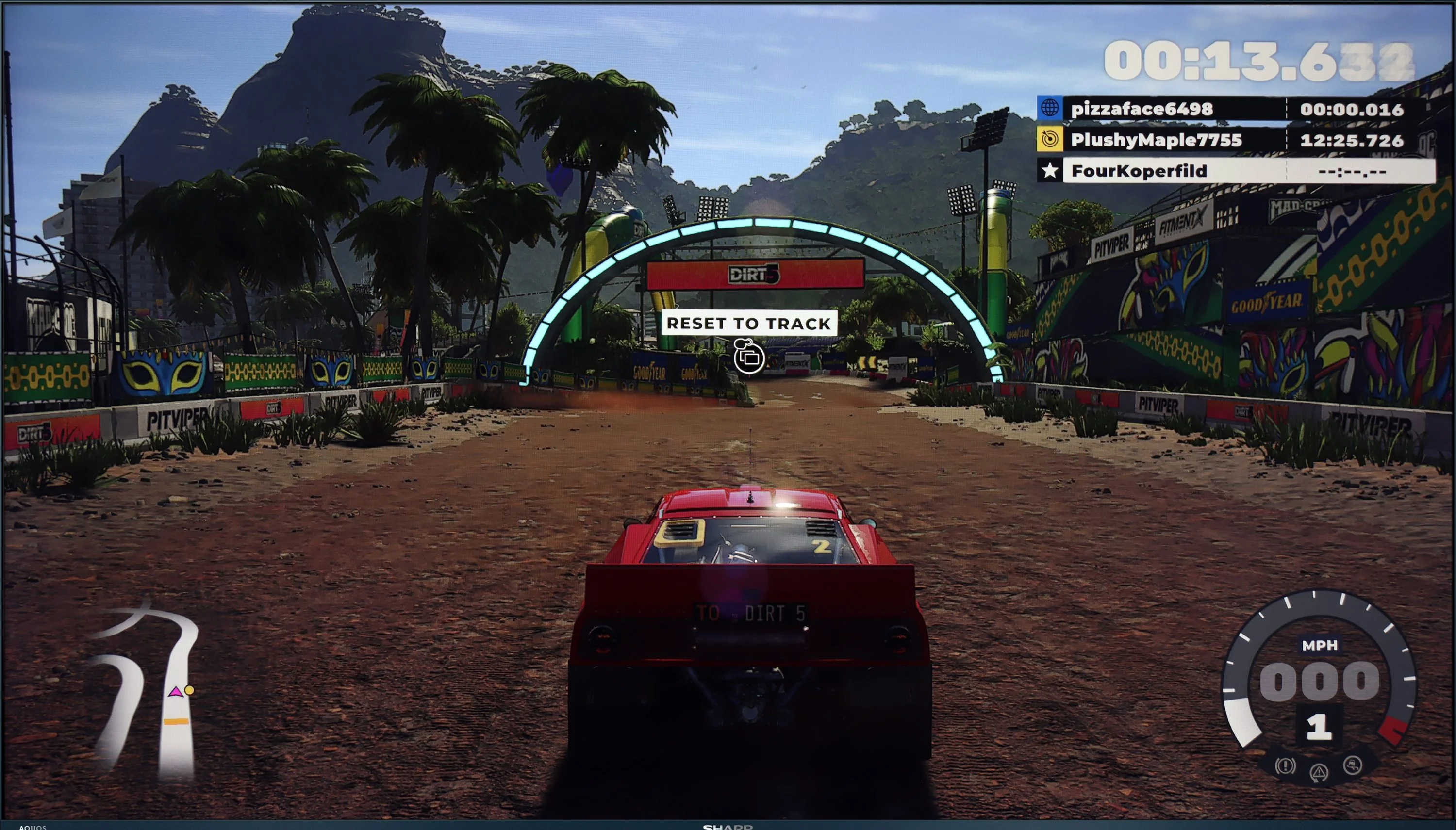
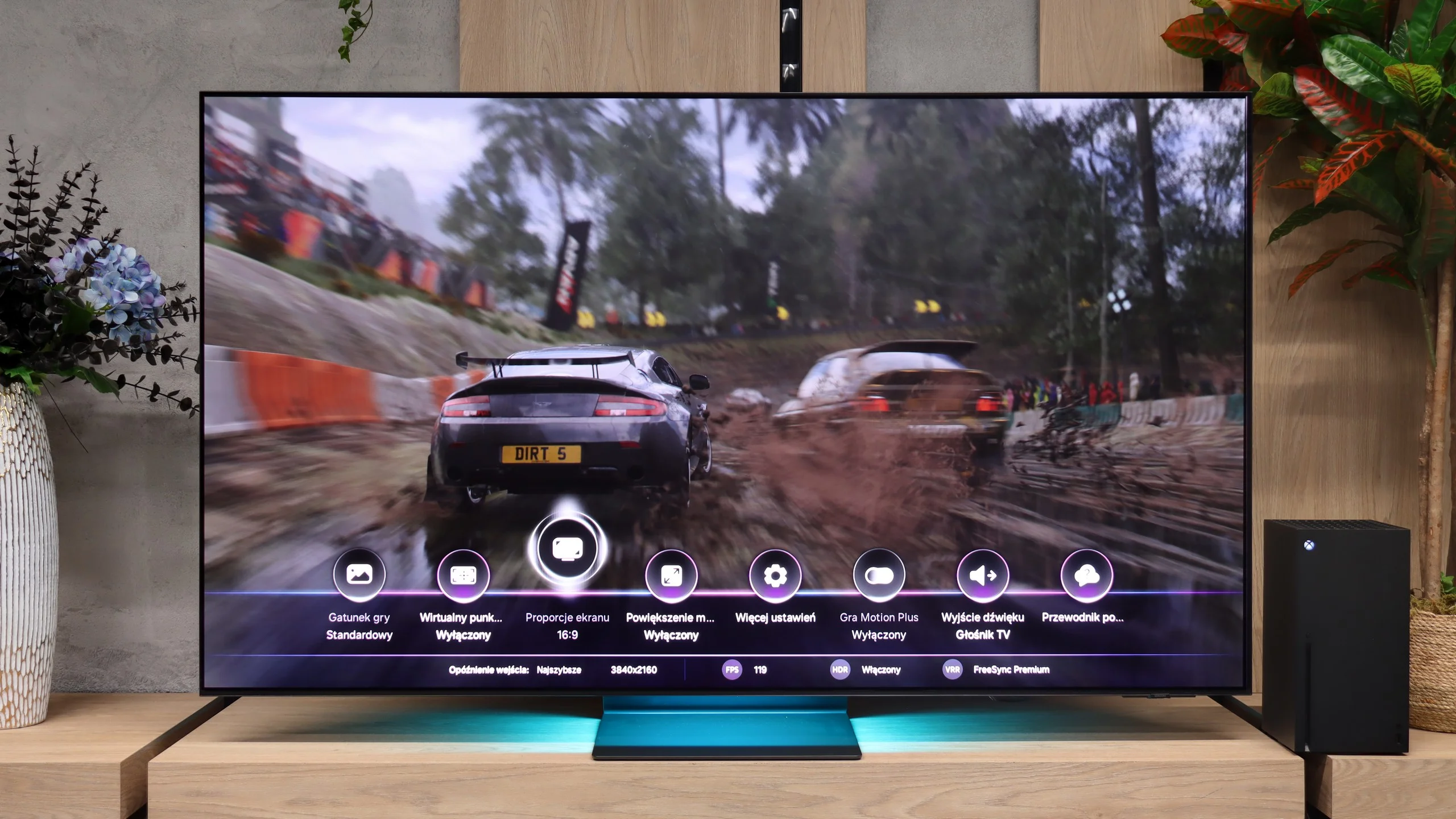
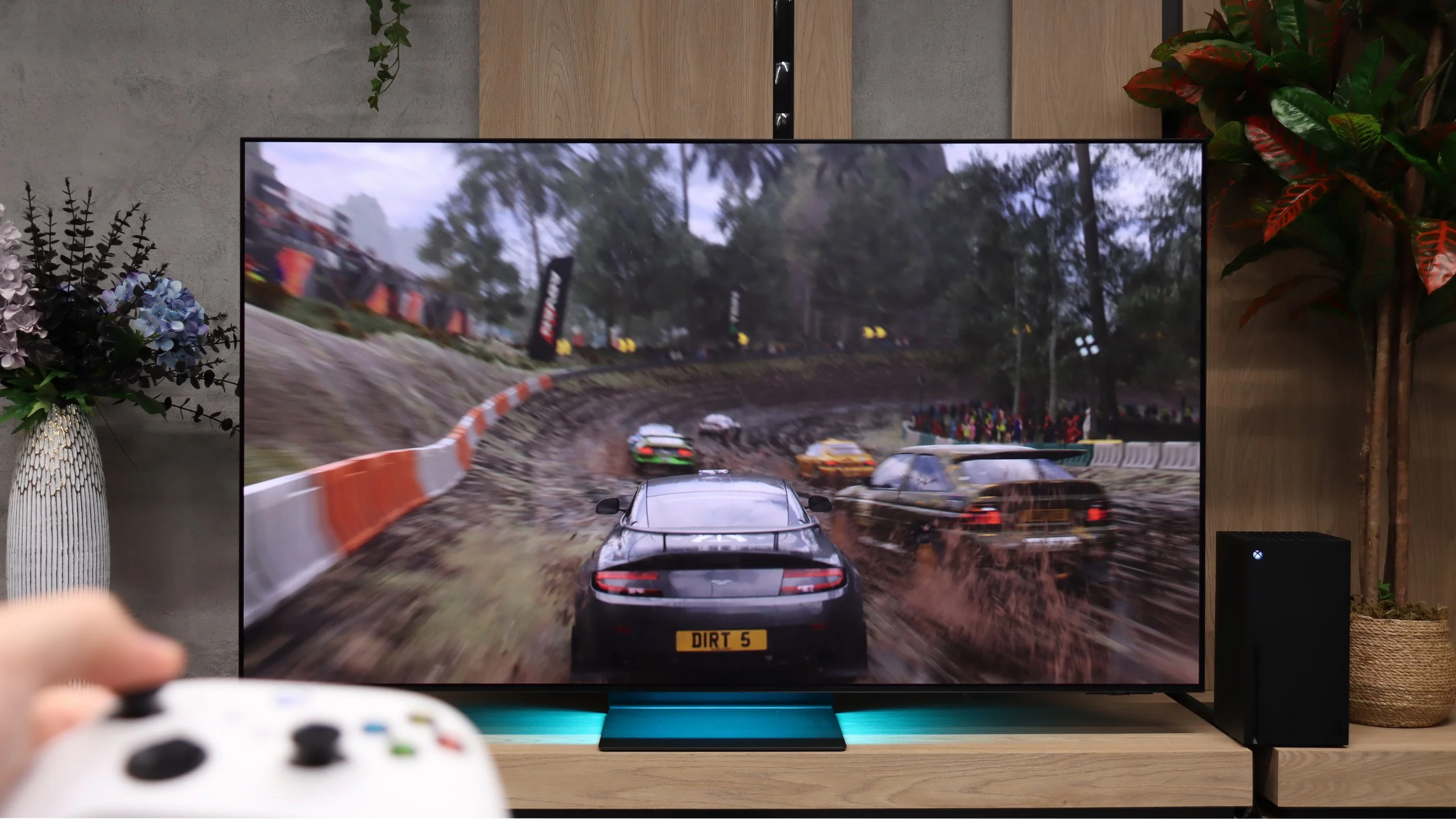
  • Gaming on console

    7.4

    9.9

  • TV as a computer monitor

    3.0

    8.8

  • Watching in bright light

    5.4

    7.3

  • Utility functions

    6.5

    7.9

  • Apps

    9.6

    9.3

  • Sound quality

    6.0

    8.0

Advantages

  • High native contrast

  • Smooth tonal transitions

  • 120 Hz matrix

  • Advanced features for gamers

  • Low input lag

  • Harman/Kardon branded audio

  • Perfect black levels and OLED contrast

  • Very high brightness

  • Rich, highly saturated QD-OLED colors

  • Natural-looking image after calibration

  • Excellent tone mapping (lots of detail in bright scenes)

  • Matte coating that effectively reduces reflections

  • Best viewing angles on the market (QD-OLED)

  • 165 Hz refresh rate and lightning-fast panel response

  • Very low input lag and extensive gaming features

  • STUNNING APPEARANCE

  • One Connect module included

Disadvantages

No like
  • Poor viewing angles

  • Dolby Vision IQ does not work properly

  • Average response time of the panel

  • Poor font readability when connected to a PC

  • Noticeable black level degradation in bright light (a characteristic of QD-OLED panels)

  • Last year's version of Tizen

  • No DTS support (mainly relevant to Blu-ray fans)

Our verdict

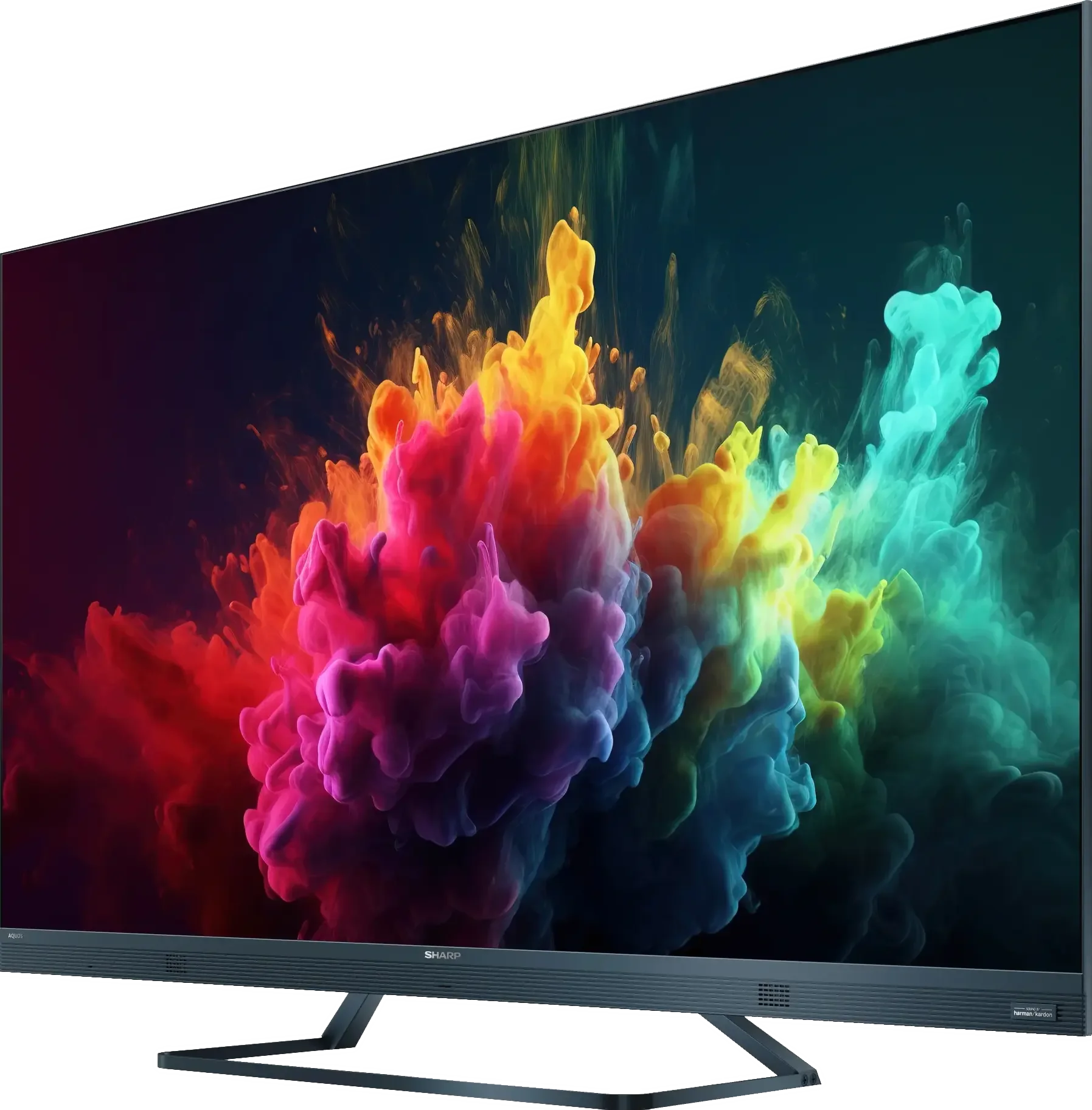
The Sharp FQ8 television offers numerous features that set it apart in its price range. It operates on the Google TV platform, granting access to a wide array of applications and intuitive navigation. A 120 Hz refresh rate panel ensures smooth image rendering, while low input lag makes it an appealing option for gamers. The high native contrast delivers deep, vivid blacks, and the television achieves a respectable brightness of 450 nits, allowing for comfortable HDR content viewing. Additionally, advanced formats like Dolby Vision are supported, and the inclusion of quantum dots (Quantum Dot/QLED) enhances the wide colour gamut coverage.

However, the Sharp FQ8 has its shortcomings. The lack of dynamic tone mapping control in HDR mode may disappoint more demanding users, and despite featuring Dolby Vision IQ, its performance is underwhelming. The panel's average response time can impact the clarity of fast-moving scenes, and limited viewing angles significantly reduce image quality when viewed from the side.

Despite these drawbacks, the Sharp FQ8 stands out as a solid choice, offering a good balance of quality, image fluidity, and an enjoyable audio system, all at a competitive price. While not flawless, it should meet the needs of most users seeking an affordable television with a 120 Hz panel.

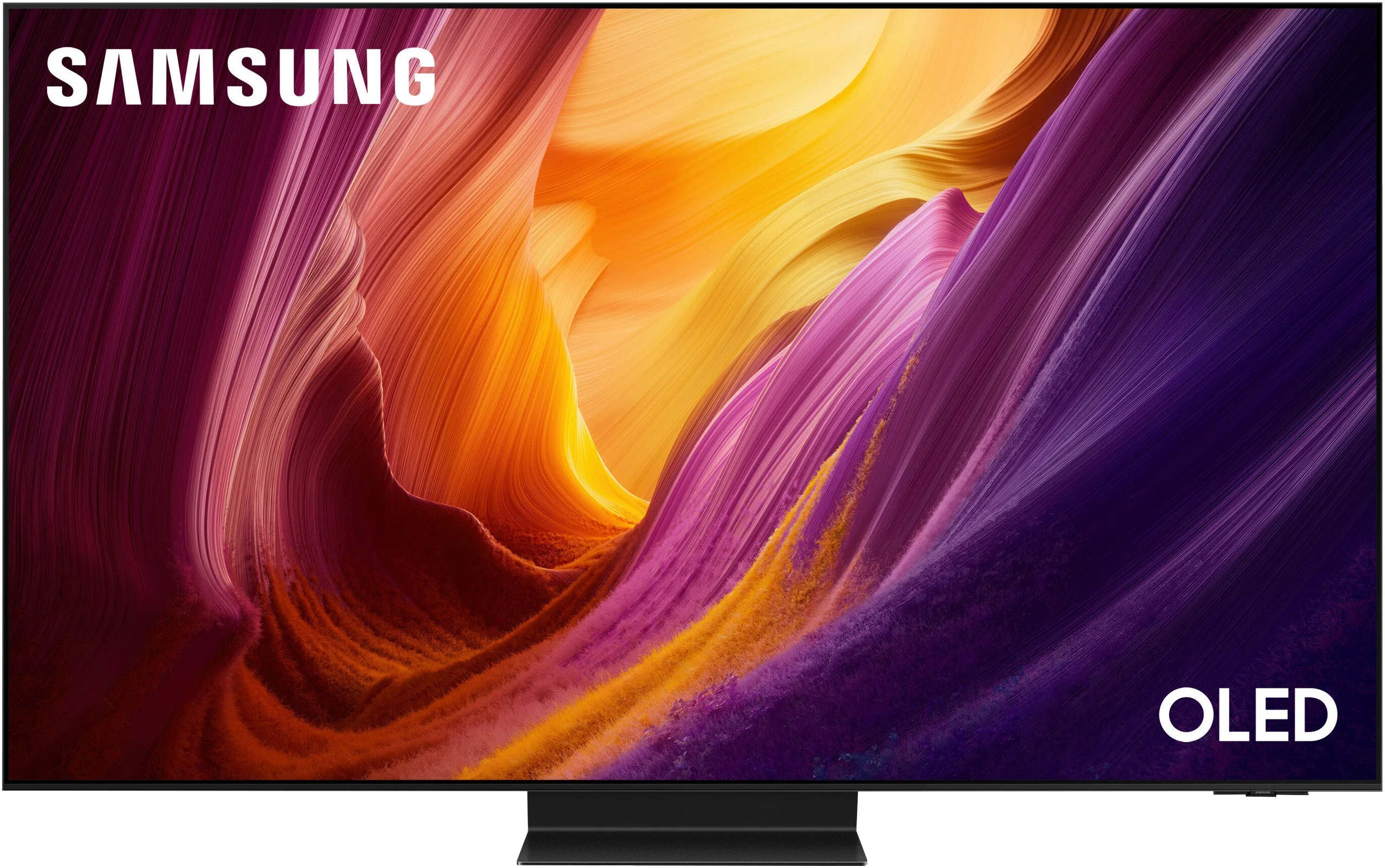
The Samsung S95H is, in almost every respect, a continuation of the S95F. During testing we often felt like we were watching the same TV. But... is that a bad thing? Not necessarily, because the predecessor set the bar very high. We still get a phenomenal picture and one of the best TVs we tested in 2026. HDR has huge impact, and the colors and blacks make a good movie really keep you glued to the screen. With a console or PC the S95H is just as enjoyable because it delivers what we expect from a flagship product.

The strongest argument for this model may be its looks. It's aimed at people who want the slimmest, most minimalist TV possible. Especially when mounted on a wall the S95H looks excellent, and One Connect helps tidy up the whole setup. If the distinctive bezel of the S99H isn't to your taste, here you'll find a more discreet design. Brightness is admittedly lower than in the higher series, but still high enough that it's hard to call it a serious compromise for viewing.

Not everything deserves praise, though. We were most disappointed by the presence of last year's version of Tizen. The system itself runs quickly, but this detail only underscores how little has changed compared to the S95F. Perhaps Samsung will release a suitable update soon.

Ultimately the S95H is a great choice for someone looking for top-tier picture in an exceptionally slim chassis. The Samsung S95H isn't revolutionary, but it's still a TV that, despite giving us a small déjà vu, left a huge impression.

TV appearance

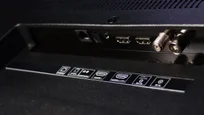
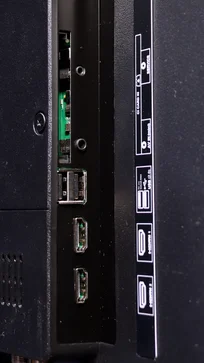
HDMI inputs
2 x HDMI 2.0, 2 x HDMI 2.1 (48Gbps)
0 x HDMI 2.0, 4 x HDMI 2.1 (40Gbps)
Other inputs
RCA (Chinch)
USB-C
Outputs
Toslink (Optical audio), eARC (HDMI), ARC (HDMI), Mini-Jack (Headphones)
Toslink (Optical audio), eARC (HDMI), ARC (HDMI)
Network Interfaces
Wi-Fi 2.4GHz, Wi-Fi 5GHz, Ethernet (LAN) 100Mbps
Build quality
Good
Super Premium
Stand type
Legs
Central
Bezel color
Graphite
Graphite
Stand
Fixed
Fixed
Flat design
No
Yes
Accessories
Stand
Stand, One Connect Box

Contrast and black detail

6.2/10

10/10

Local dimming function: No

Contrast:

Review Sharp FQ8 Contrast and black detail

Result

5,200:1

Review Sharp FQ8 Contrast and black detail

Result

7,200:1

Review Sharp FQ8 Contrast and black detail

Result

7,700:1

Review Sharp FQ8 Contrast and black detail

Result

8,100:1

Review Sharp FQ8 Contrast and black detail

Result

4,800:1

Review Samsung S95H Contrast and black detail

Result

∞:1

Review Samsung S95H Contrast and black detail

Result

∞:1

Review Samsung S95H Contrast and black detail

Result

∞:1

Review Samsung S95H Contrast and black detail

Result

∞:1

Review Samsung S95H Contrast and black detail

Result

∞:1

Halo effect and black detail visibility:

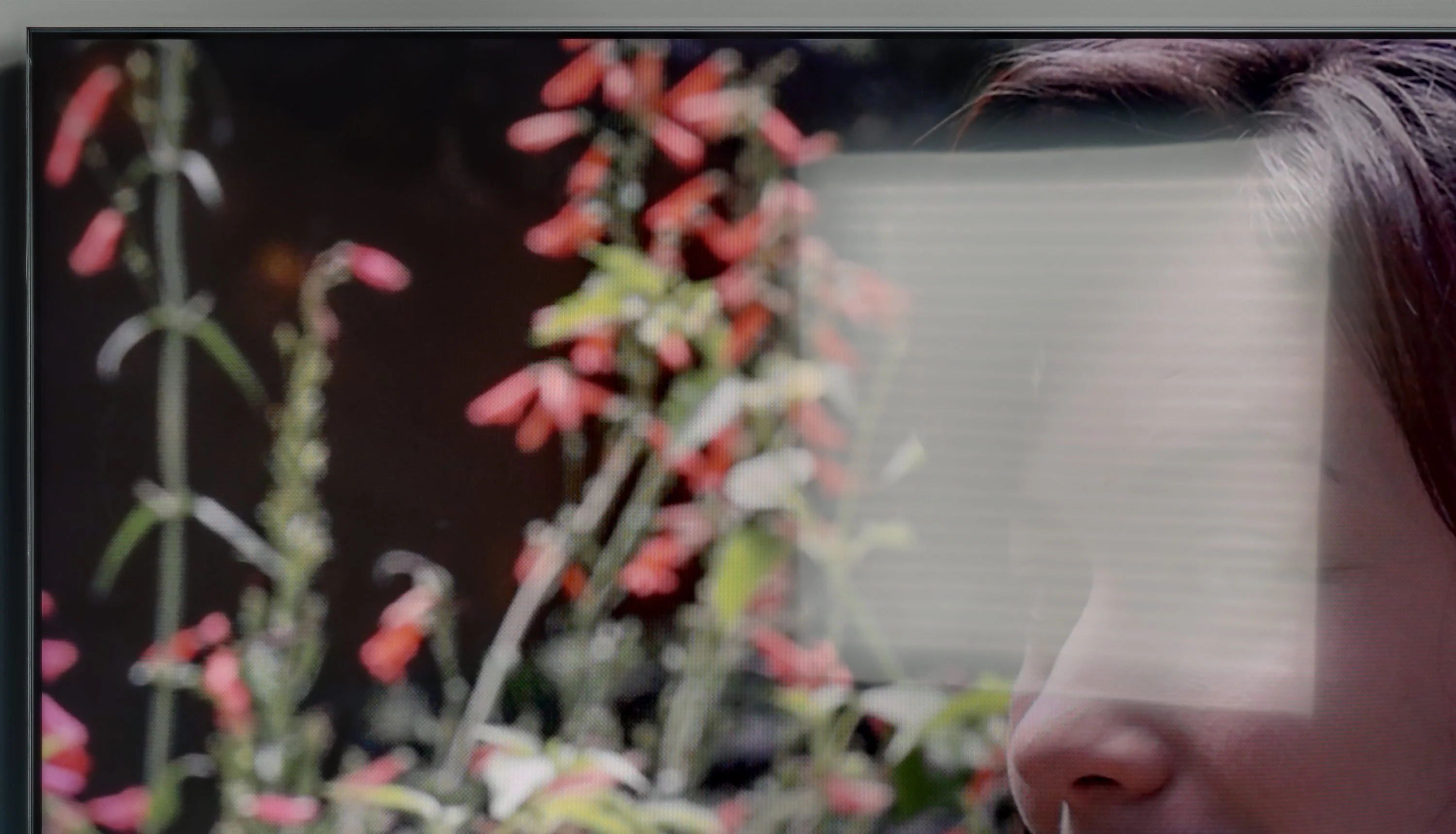
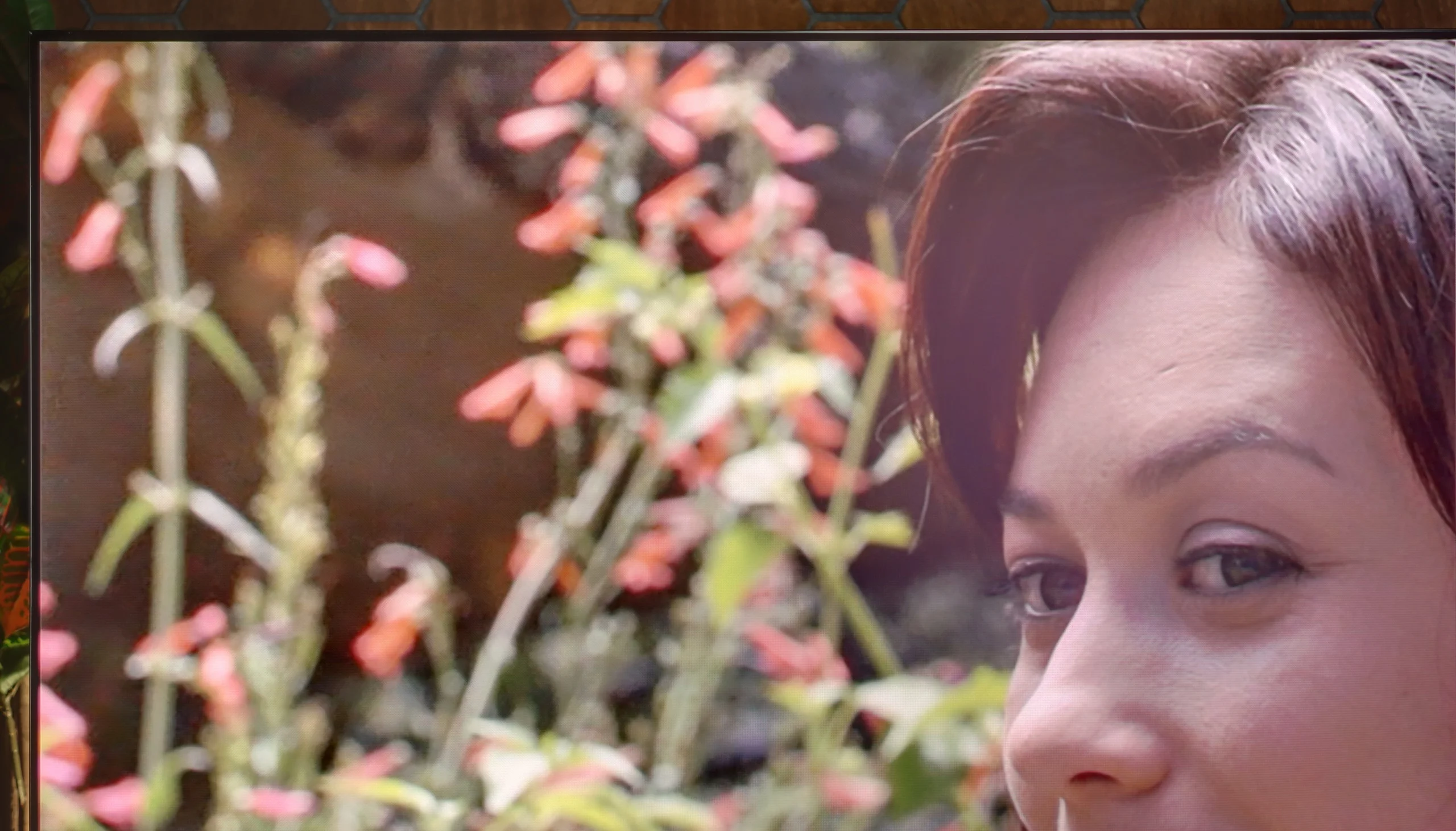
Check the visibility of bright lights on a dark background. Mini-LEDs often struggle with this. The photo does not compare black levels – that’s what the video below is for.

The video accurately shows differences in contrast and black levels between TVs, as well as potential issues: halo around bright objects or Mini-LED zone operation visible as brightness jumps.

The Sharp FQ8, with its VA panel, delivers an exceptionally high native contrast ratio, achieving an impressive 8100:1 in tests using film test patterns. This result significantly surpasses most competitors in its price range and is a rare achievement. The high contrast provides excellent depth to images, especially in scenes with pronounced differences between light and dark elements. This makes it particularly strong in contrast performance and black-level quality, which are critical factors in overall image evaluation.

The television features direct backlighting (Direct LED), which helps maintain consistent brightness levels. However, it lacks local dimming support, a common limitation in this price category. While this does slightly impact the depth and clarity of blacks in darker scenes, the high native contrast ensures the Sharp FQ8 still delivers a strong viewing experience.

In the Samsung S95H we tested, the 65-inch model uses a QD-OLED panel. The same type of panel is also used in the 55- and 77-inch versions. A new size in the series is the 48-inch, but note — it’s a completely different design. It doesn’t have a QD-OLED panel or a One Connect module, so our review should not be directly applied to that variant.

Back to blacks: it’s exactly what you’d expect from any OLED. Each pixel lights independently and can turn off completely. That means black is truly deep and inky, whether we’re looking at a large shadow or a small dark patch right next to a bright light. There are no bright film-like bands or halos caused by local dimming zones. In our test scenes the S95H looked excellent in this regard. Bright objects stood out clearly against the dark background, and the black retained its depth even in the most demanding shots. In the evening this creates a really pleasant effect, and it’s the kind of picture we love OLEDs for.

It’s worth noting, however, that our unit had a minor issue with so-called black crush. The darkest shades of gray sometimes merged with the black, causing some shadow details to disappear. The image then appeared even deeper and more contrasty, but that came at the expense of details that should have been visible. The black itself remained perfect; the TV simply didn’t always show what was just above it.

HDR effect quality

5.3/10

8.8/10

Supported formats
HDR10, Dolby Vision, HLG
HDR10, HDR10+, HLG
Color gamut coverage
DCI P3: 93.6%, BT.2020: 74.6%
DCI P3: 99.9%, BT.2020: 88.8%

Luminance measurements in HDR:

Review Sharp FQ8 Brightness measurement

Result

384 nit

Review Sharp FQ8 Brightness measurement

Result

399 nit

Review Sharp FQ8 Brightness measurement

Result

465 nit

Review Sharp FQ8 Brightness measurement

Result

461 nit

Review Sharp FQ8 Brightness measurement

Result

463 nit

Review Samsung S95H Brightness measurement

Result

2246 nit

Review Samsung S95H Brightness measurement

Result

2236 nit

Review Samsung S95H Brightness measurement

Result

2113 nit

Review Samsung S95H Brightness measurement

Result

2230 nit

Review Samsung S95H Brightness measurement

Result

1571 nit

Scene from the movie “Pan” (about 2800 nits)

Scene from the movie “Billy Lynn” (about 1100 nits)

The photos show two HDR10 movies. 'Pan' is one of the brightest productions ever made, while 'Billy Lynn' (soldier) has brightness typical of streaming (Netflix, Prime, HBO MAX). Notice the intensity of effects and detail in whites.

Static HDR10

The photos present the visibility of white details in various HDR formats. They do not show brightness differences between TVs (these can be compared in the previous gallery).

Dynamic: Dolby Vision

Dynamic: HDR10+

The photos present the visibility of white details in various HDR formats. They do not show brightness differences between TVs (these can be compared in the previous gallery).

HDR luminance chart:

Samsung S95H

Sharp FQ8

The Sharp FQ8 achieves a maximum brightness of over 450 nits, which is commendable for its price range. While this level might not be groundbreaking, it places the television among the better-performing models in its class. At this brightness, the image appears vivid and detailed, and the HDR metadata functions effectively, offering a more immersive viewing experience compared to dimmer devices.

The television supports the advanced Dolby Vision HDR format, enhancing the depth and richness of the content. It also includes Dolby Vision IQ, which adjusts the image's brightness and colours based on ambient lighting. However, the implementation of this feature on the Sharp FQ8 is suboptimal, introducing artificial brightening and noticeable distortions. For this reason, it is advisable to disable Dolby Vision IQ for the most accurate picture quality.

With quantum dot technology, the television achieves a colour gamut coverage of approximately 94%, resulting in vibrant and realistic colours. This combination of features ensures the Sharp FQ8 delivers an engaging and detailed visual experience, even with some limitations.

The Samsung S95H is an extremely bright OLED TV. It doesn't quite reach the level of this year's S99H, the one with a bezel, but a peak of around 2300 nits is still a phenomenal result. You can really feel that in movies. Highlights, sun reflections, or lights against a dark background have the punch we expect from a premium TV. Importantly, the S95H performs well across different scenes. It doesn't need a single small bright spot on a black screen to show what it can do. In the first four test shots we measured over 2100 nits, even though each places slightly different demands on the TV. That makes the HDR effect strong both in night scenes and in more evenly lit frames.

Of course there are limitations typical of OLEDs. When a very bright image covers a large part of the screen, ABL comes into play, the mechanism that limits panel brightness. With an almost white screen the drop can be much greater than with a short, point-like highlight. That doesn't mean bright movie scenes look weak. In a demanding shot from "The Meg" we reached about 1600 nits. That's still an excellent result, and the bright sky and reflections on the water retain a lot of intensity.

QD-OLED colors

The colors on the Samsung S95H are simply fantastic. It's one of the most "colorful" OLEDs we've tested. Deeply saturated reds, greens, and neons look great and complement the screen's high brightness well. DCI-P3 coverage is as high as 99.9%, so the TV can reproduce virtually the entire gamut used in this color space for HDR films.

Interestingly, our measurements also show progress compared with the S95F. BT.2020 coverage increased from about 87% to 89.6%. That's a very similar result to what we recorded with this year's S99H, suggesting very similar capabilities of both panels in terms of color gamut. The difference from its predecessor is small but worth noting. The S95H remains at the very top of OLEDs in this regard and can confidently compete with new displays using SQD quantum dots.

Factory color reproduction

4.2/10

7.6/10

This gallery shows how colors change after professional TV calibration. If you notice the difference, we recommend ordering this service at SkalibrujTV.com.

Factory Mode

After calibration

This gallery shows how colors change after professional TV calibration. If you notice the difference, we recommend ordering this service at SkalibrujTV.com.

Factory Mode

After calibration
The Sharp FQ8 was evaluated for colour reproduction in its movie mode, which provides the best default settings for achieving realistic visuals. While it performs adequately, certain issues impact the overall image quality. Tests on HD content revealed significant white balance problems, with a marked dominance of red. This is evident in the colour graph, where the red line noticeably rises above the others, and in practical tests, such as a movie scene featuring a child, where the image appears overly warm and unnaturally red. Similar issues persist with 4K HDR content, where an excessive red tint detracts from the accuracy of colour reproduction, an important consideration for viewers prioritising faithful visuals.
For SDR contrast, the gamma graph displayed an unusual anomaly at the start, highlighting reproduction issues. The remainder of the gamma curve lies below the reference line, indicating suboptimal brightness and contrast levels for standard content. In 4K HDR, the EOTF curve also deviates significantly, suggesting inconsistencies in brightness reproduction. These fluctuations can result in less enjoyable viewing experiences for HDR content, particularly in scenes requiring precise light and dark balance.

Out of the box the Samsung S95H performs quite well, although our unit had a few things to correct. In SDR content there is a red bias in the white balance. This makes the image slightly warm, and whites and faces can take on a subtle pink tint. It's not a major inaccuracy, but you can notice it when comparing to a reference image. More attention is drawn to how it handles dark scenes. Gamma is above the target value of 2.4 for most of the range, and the deviation is particularly large in the darkest tones. The image therefore looks darker and more contrasty than it should. That confirms the previously mentioned issue with losing detail near black. Dark clothing or background elements can blend into a single blotch, even though the detail is still present in the source material. In HDR brightness control is much better. The EOTF curve tracks the reference closely, so the TV preserves the brightness of different parts of the scene well. There are, however, minor color deviations. In the brighter areas a dominance of red and blue over green gives whites a slightly pinkish-purple tint. Overall the starting point is good, especially in HDR, but calibration can still improve things.

Color reproduction after calibration

7.8/10

9.4/10

The photos show how movies look on the TV. Pay attention to black detail visibility, colors, and shadow tint.

The photos show how movies look on the TV. Pay attention to black detail visibility, colors, and shadow tint.

After calibration, the Sharp FQ8 shows notable improvements in its performance for SDR content. The white balance has been significantly refined, with all lines approaching the reference line. While the lines are not perfectly straight, the results are impressive for a TV in this price range. This adjustment enhances the naturalness and accuracy of colours, contributing to a more enjoyable visual experience. However, the gamma chart still displays the peculiar jump at the start, though the remaining line now aligns much closer to the expected outcome.

For HDR content, the white balance also sees meaningful improvements compared to the pre-calibration state, although it doesn’t perform as well as in SDR mode. This refinement results in more consistent and visually appealing colours, despite some remaining imperfections. On the downside, the EOTF chart reveals limited progress in contrast due to the lack of control over dynamic tone mapping settings, which hampers uniform brightness representation in HDR.

Despite these limitations, the calibration significantly elevates the Sharp FQ8, particularly in SDR mode. The improved white balance and colour reproduction deliver a more natural and pleasant viewing experience. While HDR content still leaves room for improvement, the TV achieves a respectable level of performance, solidifying its position as a strong contender in its price range.

After calibration the S95H looks really excellent. We managed to remove the excess red, so white is neutral and skin tones have regained a natural hue. In SDR color errors are now very small. The image retains great saturation but doesn't add any tint that was visible in the factory settings. This is exactly how a well-set TV in this class should look. HDR also shows an improved white balance. In addition, brightness in film scenes tracks the reference very well. Strong highlights have the right intensity, and the TV doesn't unnecessarily brighten the whole frame. Combining that level of control with the capabilities of the QD-OLED panel produces an image that's simply very pleasant to watch. We really have only two reservations. The first is the loss of the very darkest details. Our unit still tended to crush some tones near black, though this may be a characteristic of the particular test sample. The second concerns adjustment of the color palette in HDR. The available settings don't allow perfect correction of all hues, so some minor inaccuracies remain. That doesn't change the very good final result; after calibration the S95H delivers a truly high-quality image.

Smoothness of tonal transitions

8.8/10

9/10

These are selected scenes that show smooth tonal transitions from one color to another. If you see distinct banding, it’s the TV panel’s fault.

These are selected scenes that show smooth tonal transitions from one color to another. If you see distinct banding, it’s the TV panel’s fault.

These are selected scenes that show smooth tonal transitions from one color to another. If you see distinct banding, it’s the TV panel’s fault.

These are selected scenes that show smooth tonal transitions from one color to another. If you see distinct banding, it’s the TV panel’s fault.

The Sharp FQ8 excels in the fluidity of tonal transitions, offering smooth and harmonious shifts between colours in all tested movie scenes. This contributes positively to the overall image quality, enhancing the viewing experience. The only slight criticism is the visible gradation towards black, especially noticeable in scenes like a colourful sunset against the mountains. However, these minor imperfections do not detract from the generally impressive and pleasant visual performance.

The S95H handles tonal transitions very well. This is a strong suit of QD-OLED panels, which in our tests less often show distinct banding between shades than WOLED panels that use a white subpixel. In most scenes colors transition smoothly from one to another. This is especially noticeable in dark shots, where instead of the characteristic bands we see smooth gradations between shades of gray. It's not entirely perfect, though. In some brighter scenes you can spot slight irregularities, but you have to look closely. During normal viewing they are unlikely to distract from the movie. Overall the S95H performs very well in this category.

Image scaling and smoothness of tonal transitions

6.5/10

7.5/10

Image without overscan on the SD signal
OK
No
Smooth transition function
OK
OK

Smooth transition function

The match photo shows how the TV smooths weak tonal transitions in low-quality video.

Image scaling SD (576i)

The model photo shows how it handles upscaling of SD material.

The Sharp FQ8 performs adequately with its 10-bit colour reproduction feature, providing smooth transitions between grey shades in the light bulb photo. For optimal results, setting it to medium is recommended, as it avoids issues like grain smoothing or blurring key elements. The "low" setting also yields good results without introducing unwanted visual artefacts.

In terms of upscaling, the Sharp FQ8 TV handles video without overscan, making full use of the screen. The jagged edges of branches are noticeable, but the edges of trousers appear without any clear jaggedness, contributing positively to the overall image quality. Additionally, the TV's AI Super Resolution feature enhances clarity by artificially sharpening jagged elements, further improving the viewing experience.

The NQ4 Gen3 processor handles scaling and digital image processing, the same one used in the S99H. Our test findings are also very similar. Lower-resolution material looks really good when upscaled to 4K. The picture is clear, but without artificial edge enhancement or excessive sharpening. A small note concerns very old recordings in 480p or lower. With such a signal the TV can slightly crop the edges of the frame.

The noise reduction feature is used to improve heavily compressed material. It smooths visible banding between shades and reduces other imperfections, for example in lower-quality YouTube recordings. However, it works fairly aggressively. Small details and the natural film grain can disappear along with the noise. We left it turned off to preserve the original look of the material. If someone is more bothered by artifacts than by the loss of some detail, it's worth trying it out.

Blur and motion smoothness

7.2/10

8.5/10

Maximum refresh rate of the panel
144Hz
165Hz
Film motion smoothing option
OK
OK
Blur reduction option
OK
OK
BFI function 60Hz
No
Yes, 60Hz (image flickers)
BFI function 120Hz
No
No
Brightness drop with BFI
-%
50%

Blur (native resolution, maximum refresh rate):

Blur (BFI function enabled):

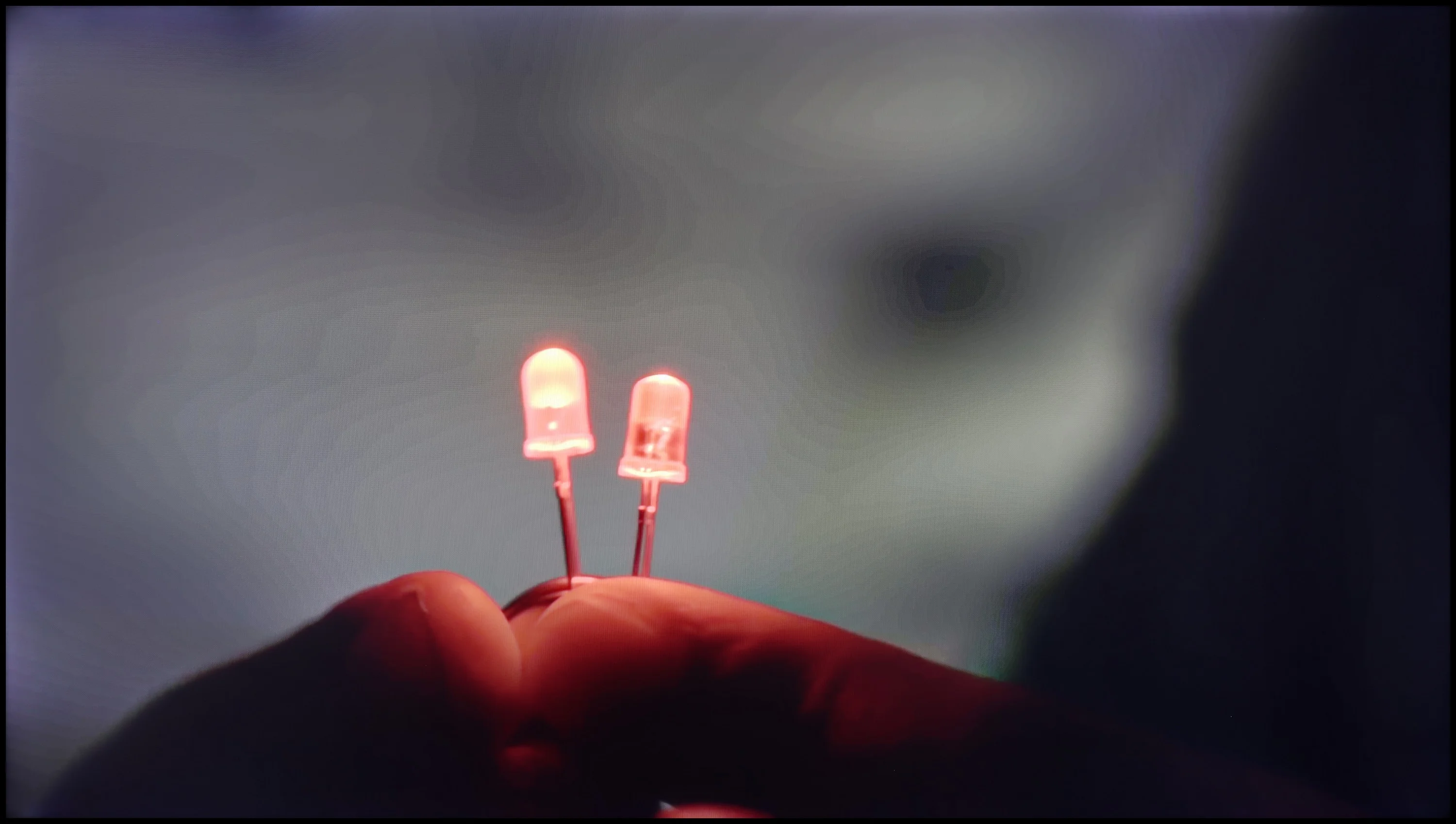
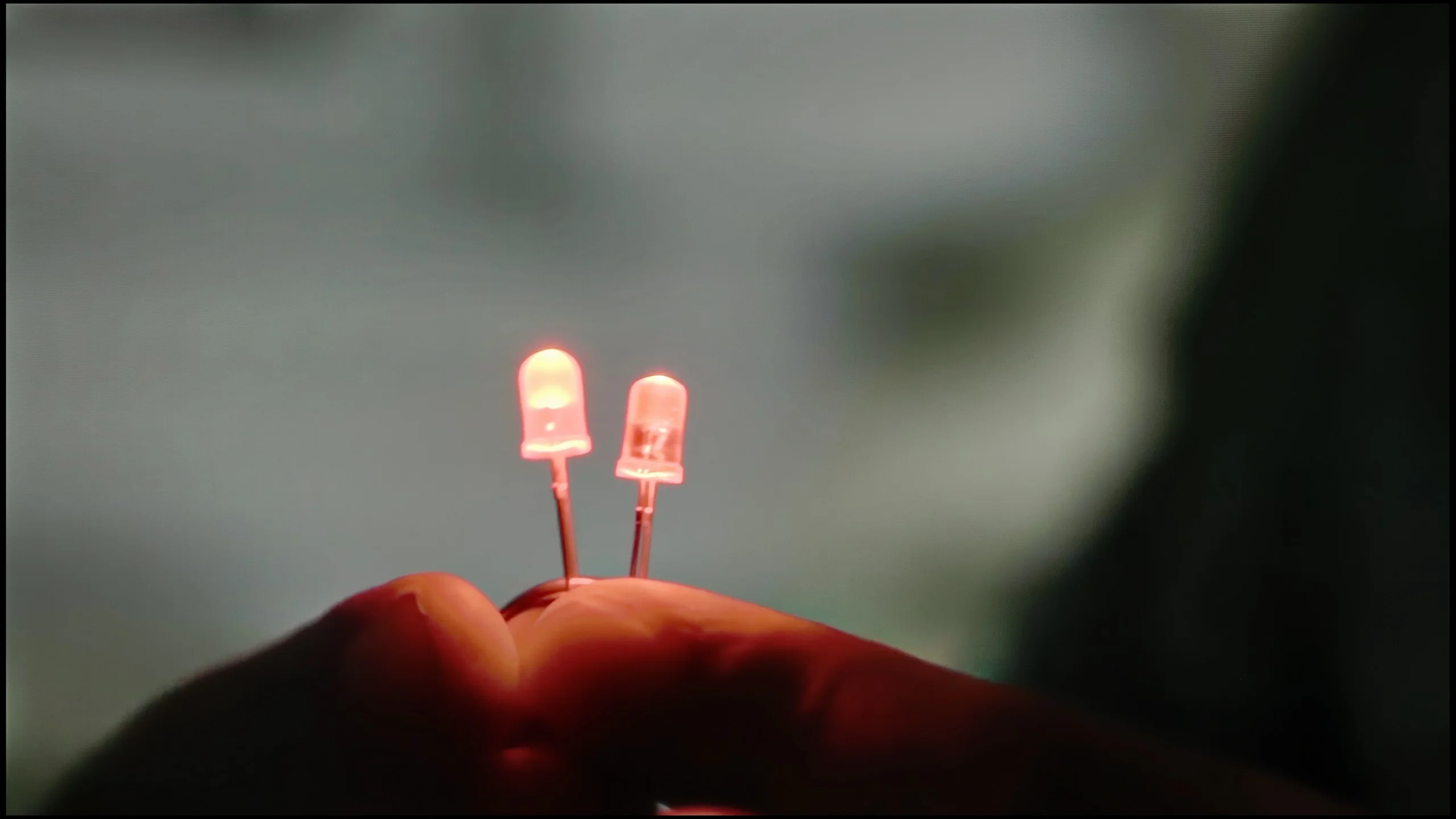
Image flickers in this mode

Blur ():

Blur (4K@165Hz):

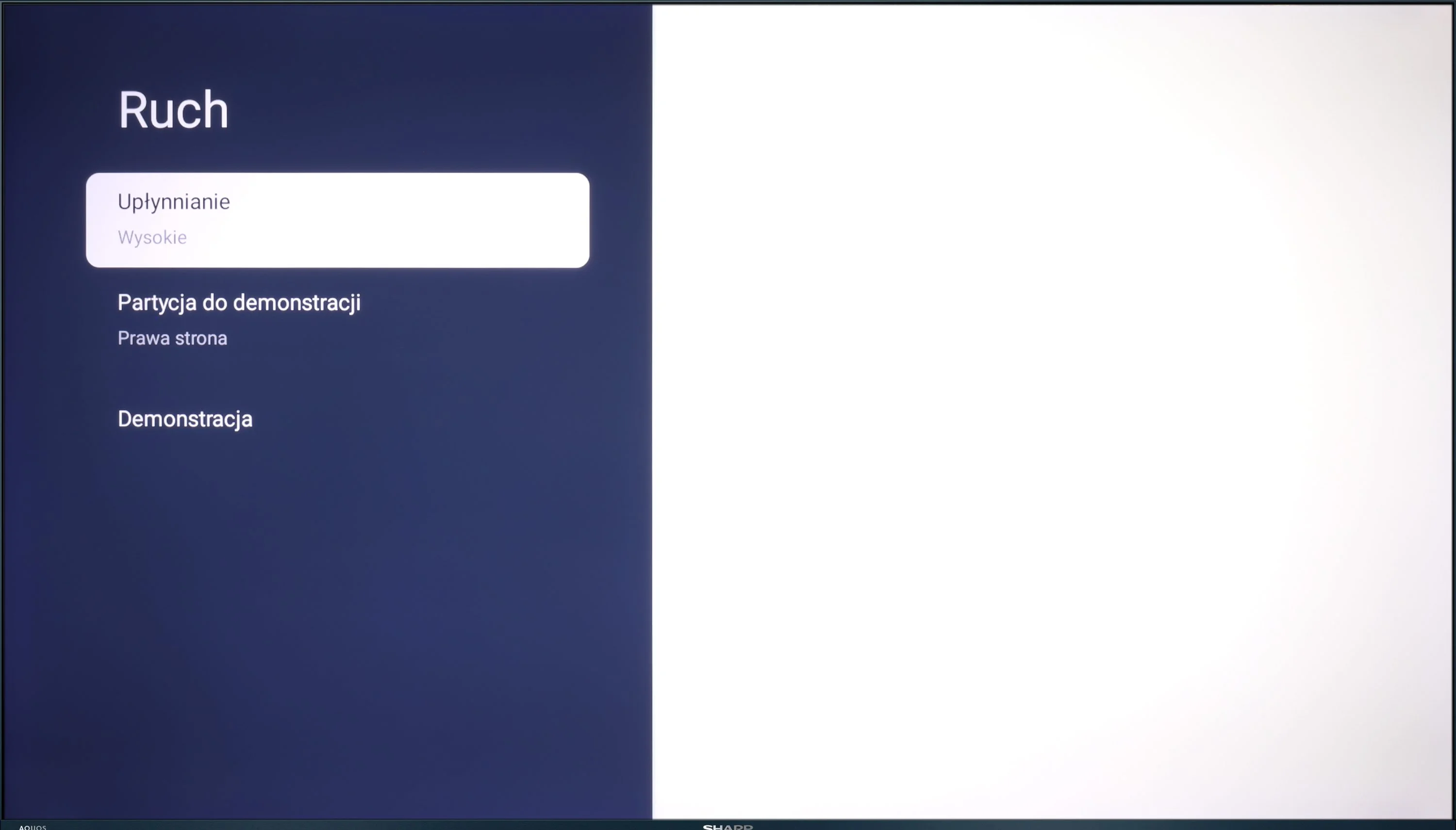
The Sharp FQ8 features a 120 Hz panel, able to support playback at 144 Hz when connected to a PC, which should theoretically provide smooth motion rendering. The TV includes features designed to enhance film fluidity and reduce motion blur, crucial for more dynamic content. However, in the absence of Black Frame Insertion (BFI) technology, the panel's average response time leads to less-than-ideal results. This results in slight motion blur, which may be particularly noticeable when watching sports or during intense gaming sessions.

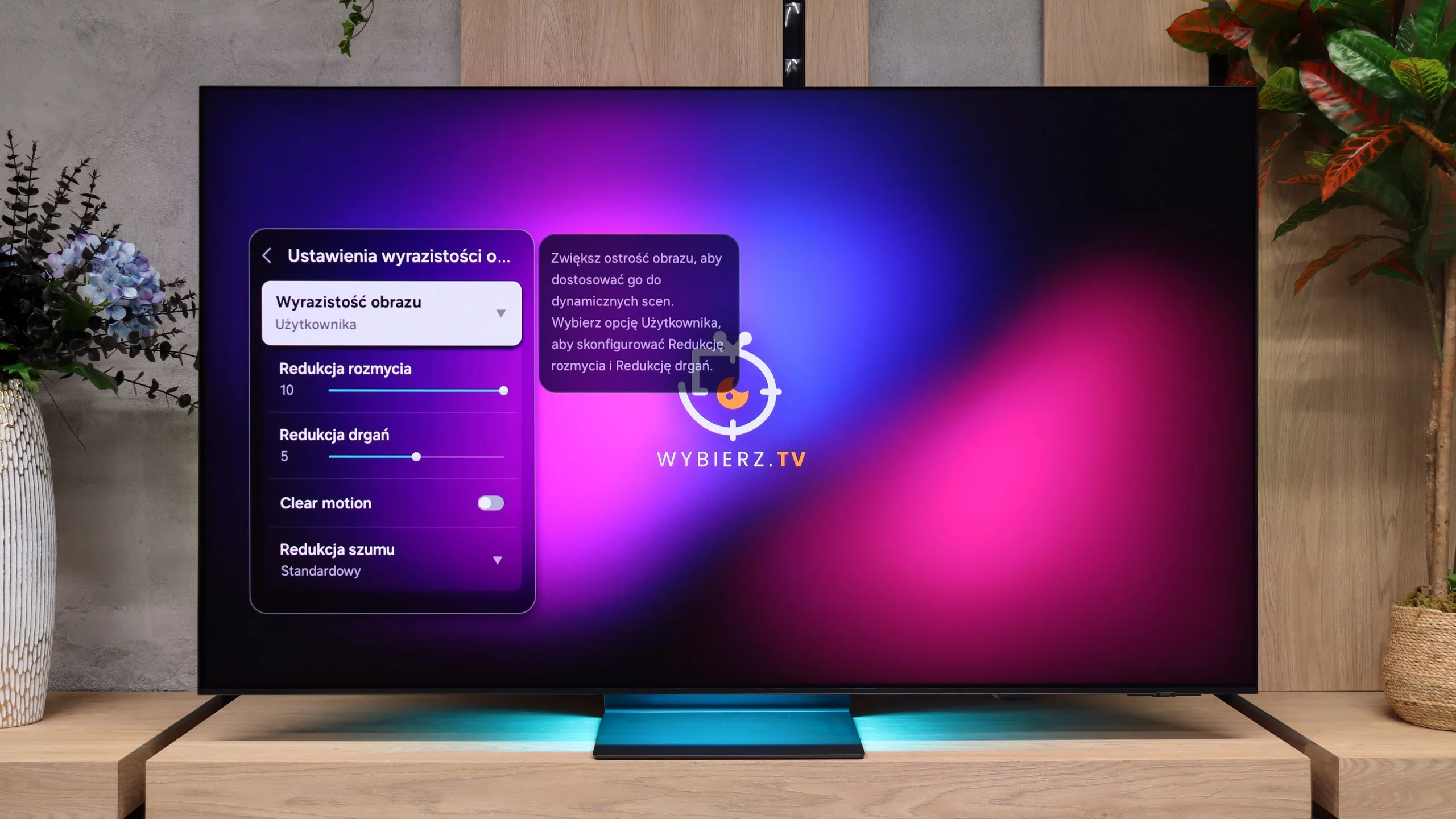
The Samsung S95H handles motion very well, which is what you'd expect from an OLED. The panel supports up to a 165 Hz refresh rate, though that will mainly be useful to PC gamers. For watching sports, the instantaneous pixel response time matters more. Fast-moving balls or players don't leave the typical trailing smear. As a result, moving images remain clear, without the artifacts common to slower LCD panels. There is also a motion smoothing feature that lets you tailor the motion to your liking. In movies you can slightly reduce judder during camera pans or choose a stronger smoothing effect. A separate setting for faster content is useful when watching sports.

Console compatibility and gaming features

7.1/10

9.6/10

  • ALLM
    Yes
    Yes
  • VRR
    Yes
    Yes
  • VRR range
    48 - 144Hz
    48 - 165Hz
  • Dolby Vision Game Mode
    Warning Yes, high input lag
    No
  • Correct implementation of HGIG
    No
    Yes
  • 1080p@120Hz
    Yes
    Yes
  • 1440p@120Hz
    No
    Yes
  • 4K@120Hz
    Yes
    Yes
  • Game bar
    No
    Yes

The Sharp FQ8 offers several features that cater to gamers, enhancing the overall gaming experience. Firstly, the television is equipped with HDMI 2.1, which brings several advantages. ALLM (Auto Low Latency Mode) automatically switches the TV to a low-latency mode when a gaming device is detected. VRR (Variable Refresh Rate) helps reduce screen stuttering by adjusting the screen’s refresh rate to match the number of frames generated by the console or PC, providing smoother gameplay, especially in dynamic games. Additionally, the TV supports G-Sync, which synchronises the image with the graphics card, preventing stuttering and screen tearing.

Despite these advantages, the FQ8 has some limitations. The lack of support for HGiG (HDR Gaming Interest Group) means the TV does not optimise the dynamic range for HDR games. Furthermore, while Dolby Vision mode can improve picture quality in supported games, it suffers from very high input lag.

Samsung S95H is a phenomenal gaming TV. Beyond the excellent picture it offers a whole set of useful gaming features. VRR works from 48 to 165 Hz and helps keep things smooth with variable frame rates. ALLM automatically engages a low-latency mode, and properly working HGiG makes it easier to set up HDR on consoles. There are no issues handling console 120 Hz in Full HD, 1440p, and 4K. A handy addition is the Game Bar, which gathers signal info and the most important settings in one place.

Game Motion Plus deserves special praise. This motion smoothing can improve the fluidity of lower-frame-rate games, and input lag in our measurements with it was about 20 ms. For additional motion processing that's a very good result. In slower-paced games you can therefore get a smoother image without noticeably sluggish controls.

As for limitations, note the lack of Dolby Vision for games, which mainly affects Xbox users. The HDMI 2.1 ports also have 40 instead of 48 Gb/s bandwidth, likely because of the One Connect module. For typical console gaming in 4K at 120 Hz with 10-bit HDR this isn't an issue and doesn't force a reduction in picture quality. For most players this will be a spec difference they simply won't notice while gaming.

Input lag

9.1/10

10/10

SDR

1080p60
16 ms
11 ms
1080p120
8 ms
6 ms
2160p60
16 ms
11 ms
2160p120
8 ms
6 ms

HDR

2160p60
16 ms
9 ms
2160p120
8 ms
5 ms
4320p60

Dolby Vision

2160p60 DV
128 ms
2160p120 DV
20 ms

The input lag on the Sharp FQ8 is generally impressive, with a performance below 16 ms at all tested resolutions, making it a solid choice for gaming with smooth and quick response times. However, when Dolby Vision mode is enabled and the refresh rate is set to 60 Hz, the input lag increases significantly. This can negatively impact responsiveness, particularly in fast-paced games where accuracy and reaction time are key.

In terms of input lag, the S95H performs flawlessly. At 60 Hz we measured just 9 to 11 ms, and at 120 Hz the delay drops to 5 to 6 ms. Controls are very responsive, so even in fast-paced shooters or racing games it's hard to find any fault. Importantly, enabling HDR does not worsen input lag. You can therefore enjoy the full picture capabilities without sacrificing quick response to controller inputs.

Compatibility with PC

3/10

8.8/10

Chroma 444 (max. resolution and refresh rate)
No
Yes
Font clarity
Poor
Good
Readability of dark text and shapes
Good
Very Good
Input lag in PC mode (4K, max. refresh rate)
17ms
6ms
Matrix subpixel arrangement
BGR
RGB (QD-OLED)
Max refresh rate
144Hz
165Hz
G-Sync
Yes
Yes

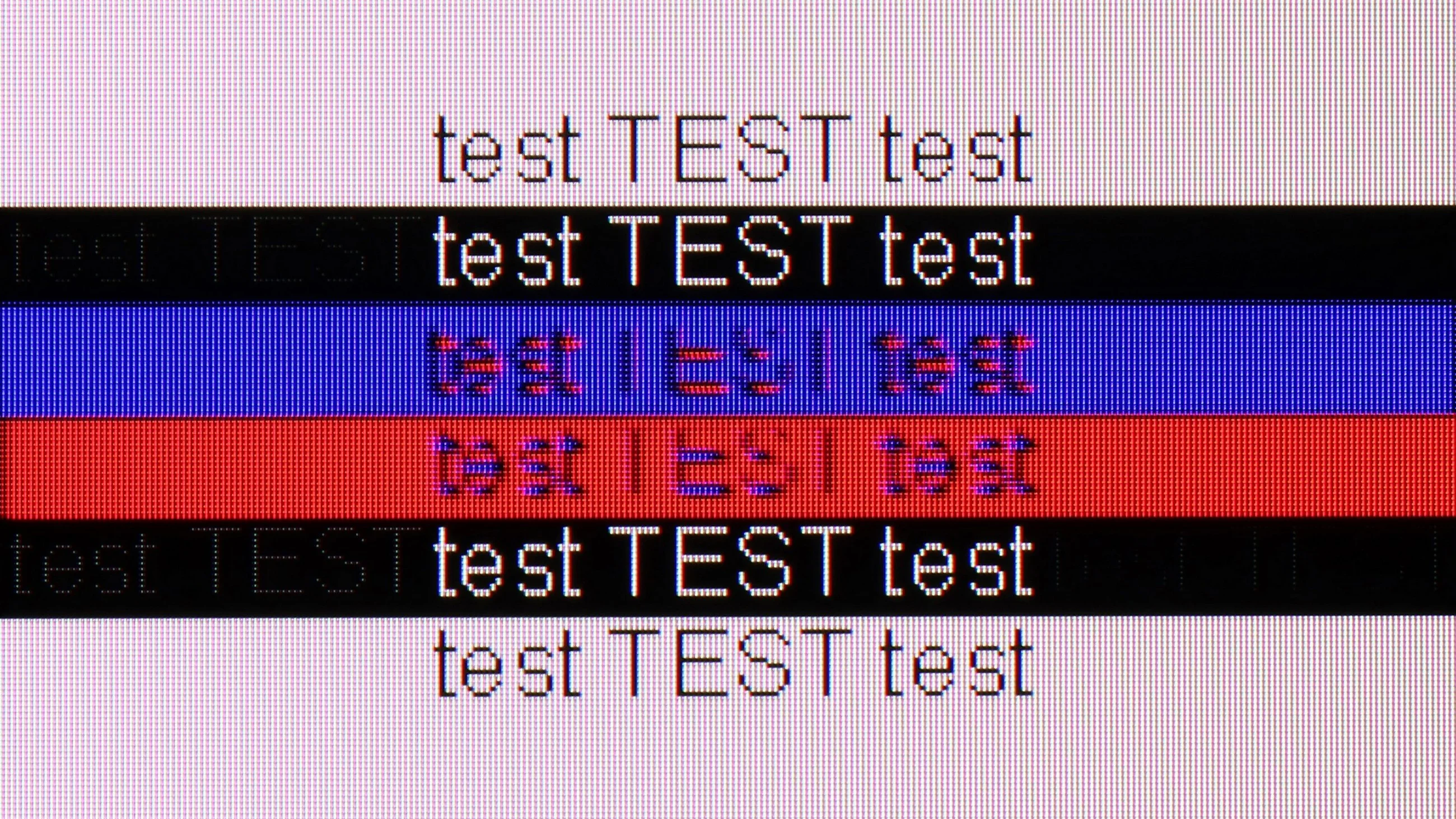
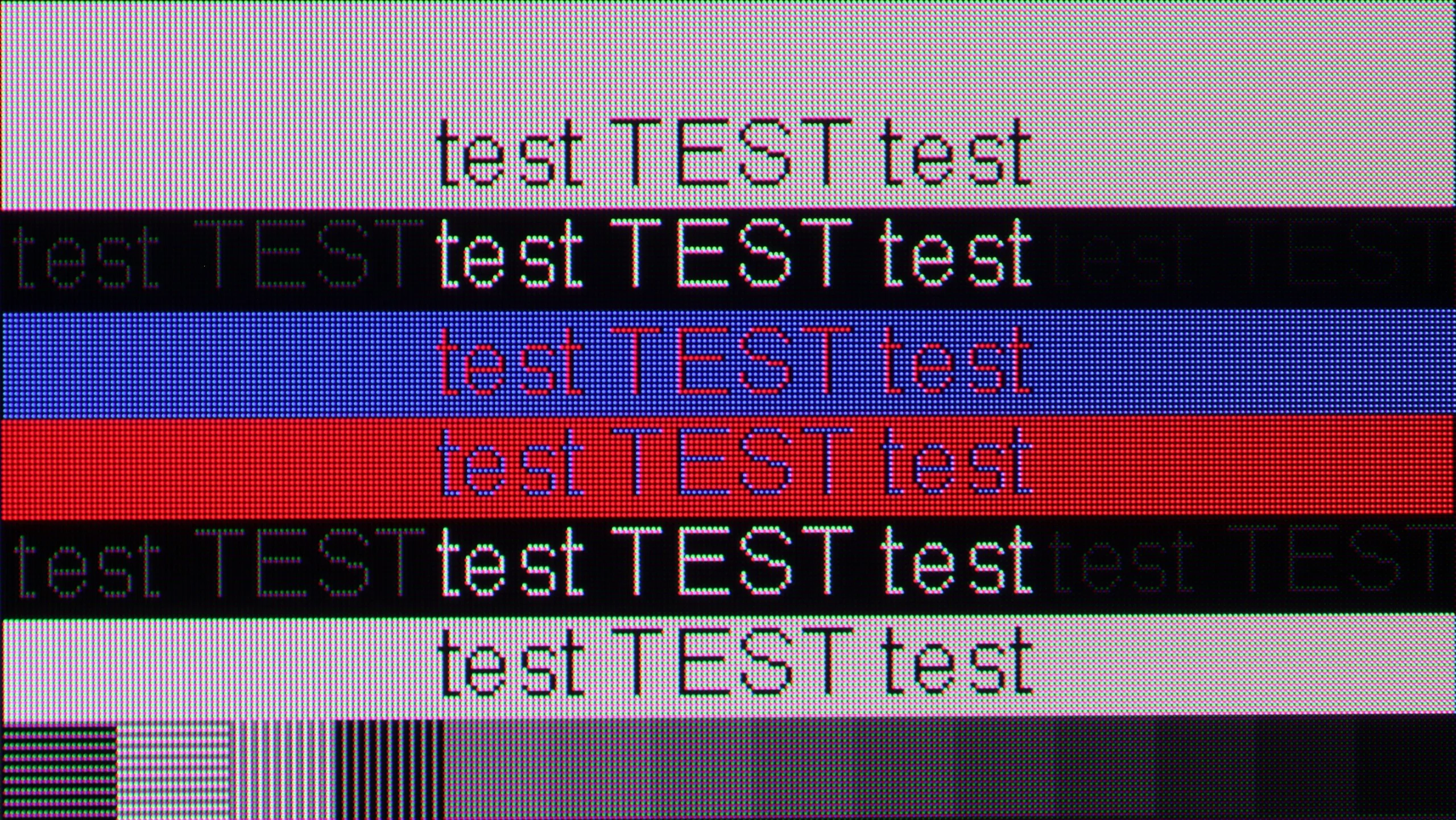
The photo shows the legibility of small fonts. Ideally, lines should be the same thickness on both light and dark text, with minimal pixel gaps.

The Sharp FQ8 doesn't perform optimally when paired with a PC, despite its low input lag. The key issue is the lack of full support for chroma 4:4:4 at 4K and 120 Hz resolution, which leads to blurry text and a loss of detail in computer graphics. Furthermore, the use of a BGR subpixel arrangement, rather than the standard RGB, reduces font readability, making text appear blurry.

The Samsung S95H works great with a PC, especially when you use it for gaming. You get 4K at 165 Hz, G-Sync support, and an input lag of just 6 ms. Combined with the panel’s lightning-fast response, that delivers a very smooth and responsive picture. The TV also properly supports 4:4:4 chroma at the maximum refresh rate, so small colored elements remain legible.

It also handles text well, though it wouldn’t be our first choice for all-day document work. First, the QD-OLED versions discussed here start at 55 inches, so you’d need a really big desk for work 😉. Second, the triangular subpixel layout means you can see slight colored fringing on the tiniest letters. You mainly notice it up close. From a normal TV viewing distance it shouldn’t be distracting, so occasional web browsing or working with text isn’t a problem.

Viewing angles

2.1/10

9.9/10

Brightness drop at an angle of 45 degrees
84%
10%

The Sharp FQ8 has limited viewing angles, typical of a VA panel. When viewed from a wider angle, the TV's brightness diminishes significantly, and colours quickly lose their vibrancy. This results in a washed-out image with less defined details, which could be a concern if you intend to watch with a larger group or from multiple positions in the room.

Viewing angles on the S95H are excellent. It's one of the biggest advantages of the QD-OLED panel, and in this respect Samsung ranks among the best TVs we've tested. Even well off to the side, colors remain saturated and the picture doesn't lose noticeable brightness. So when there's a wide viewing angle or you're watching a match with a larger group, you don't have to fight for the center seat on the couch. The picture still looks great from side seats. 🙂

Daytime performance

5.4/10

7.3/10

Panel finish
Satin
Matte
Reflection suppression
Average
Very Good
Black levels during daytime
Good
Poor

Panel brightness

Samsung S95H: 722 cd/m2

Sharp FQ8: 440 cd/m2

The Sharp FQ8 performs well in daylight conditions, with the panel reaching a brightness of 440 nits. Combined with its satin screen coating, this ensures satisfactory visibility even in bright environments. Notably, the television handles the colour black without issues during the day, allowing darker scenes to remain readable and preserving depth despite the surrounding light.

The Samsung S95H performs very well for daytime viewing. This is largely thanks to the matte finish, which effectively diffuses reflections. Instead of clearly seeing a window or a lamp in the screen, you see a softer glow. Add to that an average SDR brightness of around 750 nits. For an OLED that’s an excellent result, allowing comfortable TV viewing in a bright living room. You should remember, though, that brightness depends on what’s actually on the screen. With smaller bright areas the S95H exceeds 1,000 nits, but with an all-white test pattern it drops to about 400. So when watching winter sports or other very bright content, the picture won’t have the same punch as in mixed scenes.

The biggest limitation remains black levels in a brightly lit room. First, light hitting the QD-OLED panel visibly tints it toward a cherry hue, which robs it of its deep blacks and makes the image look less contrasty. The matte finish handles reflections well, but it also diffuses that light more. The S95H is still a very comfortable TV to watch during the day. You’ll only see the full potential of its blacks in dimmer lighting.

Panel details

Backlight Type
PFS LED
QD-OLED
Software version during testing
v1.17
1301
Image processor
mt5889

Subpixel Structure:

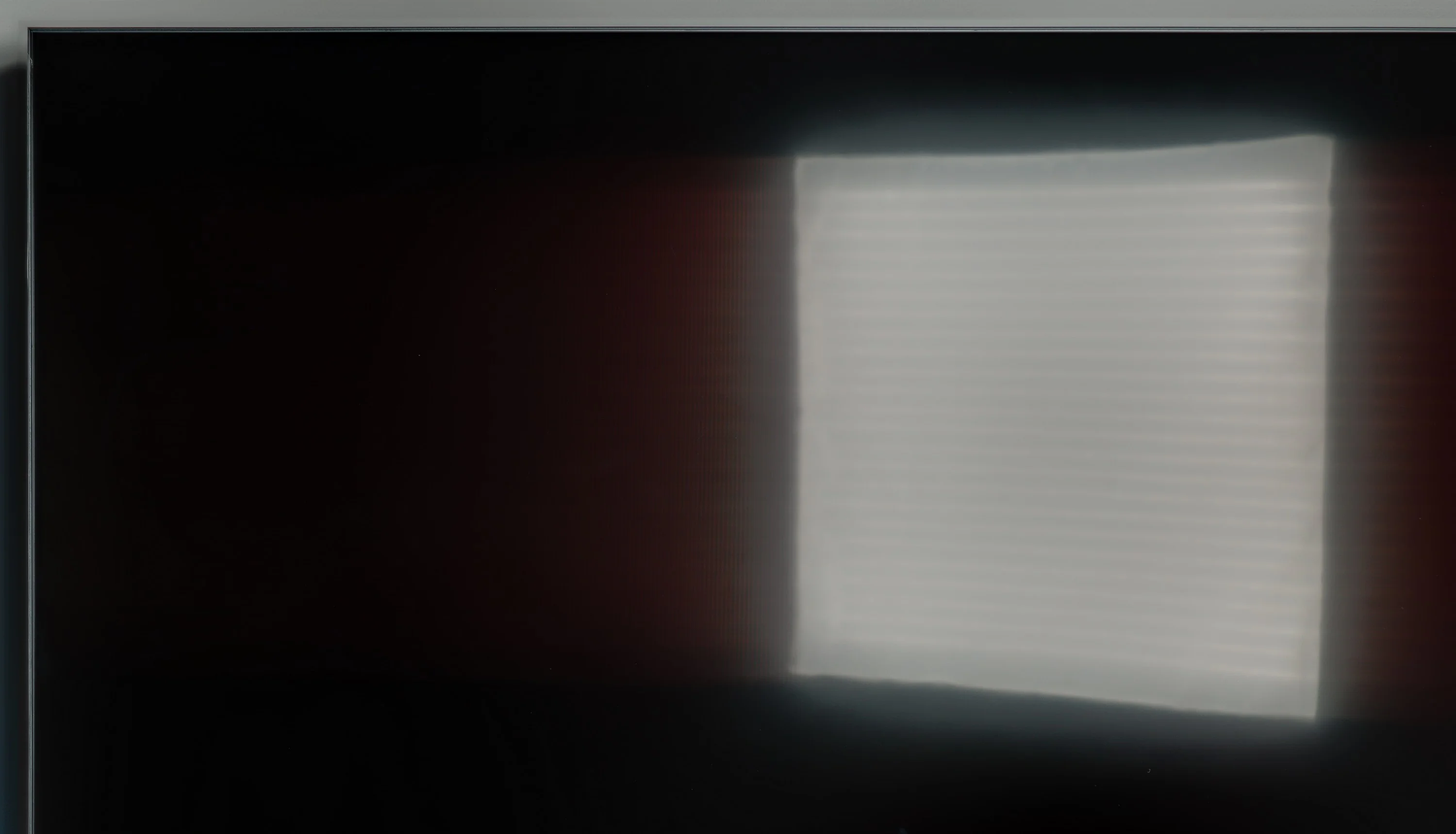
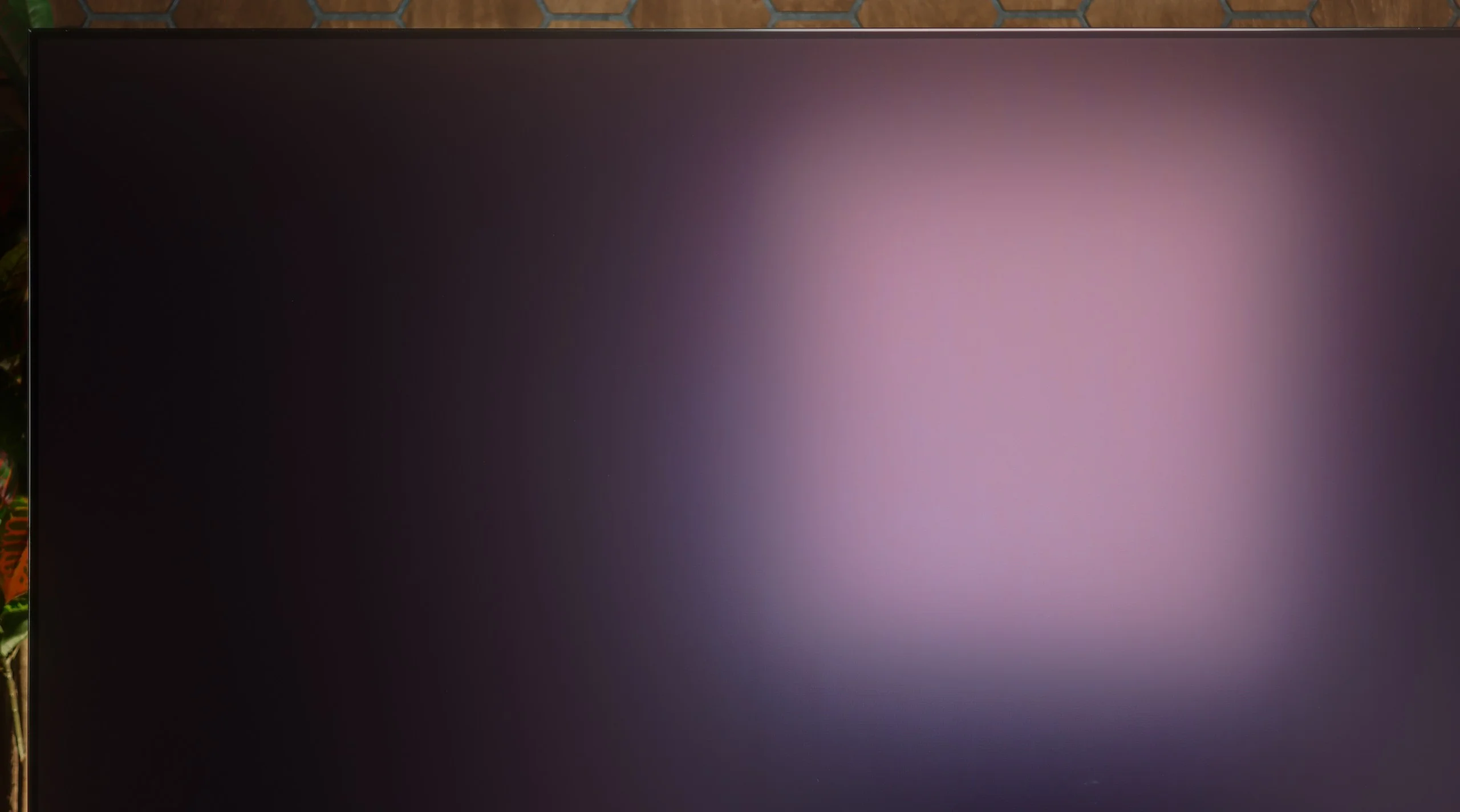
Panel uniformity and thermal imaging:

Sharp FQ8

Samsung S95H

TV features

6.5/10

7.9/10

  • System
    Google TV
    Tizen
  • System performance
    Decent
    Very good
  • HDMI inputs
    2 x HDMI 2.0, 2 x HDMI 2.1 48Gbps
    0 x HDMI 2.0, 4 x HDMI 2.1 40Gbps
  • Other inputs
    RCA (Chinch)
    USB-C
  • Outputs
    Toslink (Optical audio), eARC (HDMI), ARC (HDMI), Mini-Jack (Headphones)
    Toslink (Optical audio), eARC (HDMI), ARC (HDMI)
  • Network Interfaces
    Wi-Fi 2.4GHz, Wi-Fi 5GHz, Ethernet (LAN) 100Mbps
    Wi-Fi 2.4GHz, Wi-Fi 5GHz, Ethernet (LAN) 100Mbps
  • TV reception
    DVB-T, DVB-T2, DVB-S, DVB-S2, DVB-C
    DVB-T, DVB-T2, DVB-S, DVB-S2, DVB-C

Classic features:

  • Recording to USB (terrestrial TV)
    No
    No
  • Recording programming
    No
    No
  • Picture in Picture (PiP)
    No
    Yes
  • RF remote control (no need to aim)
    Yes
    Yes
  • Backlit remote control
    No
    No
  • Teletext
    Yes
    Yes
  • Audio only mode
    Yes
    Yes
  • Bluetooth headphones support
    Yes
    Yes
  • Simultaneous Bluetooth headphones & TV audio
    No
    Yes

Smart features:

  • AirPlay
    No
    Yes
  • Screen mirroring (Windows Miracast)
    Yes
    Yes
  • Voice search
    Yes
    Yes
  • Voice search in native language
    Yes
    Yes
  • Ability to connect a keyboard and mouse
    Yes
    Yes
Review Sharp FQ8 TV features
Review Samsung S95H TV features

Sound connection options

  • HDMI audio
    eARC (HDMI), ARC (HDMI)
    eARC (HDMI), ARC (HDMI)
  • Other audio outputs
    Toslink (Optical audio), Mini-Jack (Headphones)
    Toslink (Optical audio)
  • Wireless audio
    Bluetooth
    Bluetooth

Supported audio formats (external HDMI eARC audio):

  • Dolby Digital Plus 7.1
    Yes
    Yes
  • Dolby True HD 7.1
    Yes
    Yes
  • Dolby Atmos in Dolby Digital Plus (JOC)
    Yes
    Yes
  • Dolby Atmos in Dolby True HD
    Yes
    Yes
  • DTS:X in DTS-HD MA
    Yes
    No
  • DTS-HD Master Audio
    Yes
    No

Senior accessibility

  • Numeric keyboard on TV
    No
    No
  • Font size adjustment
    No
    Yes
  • Audio description
    No
    Yes

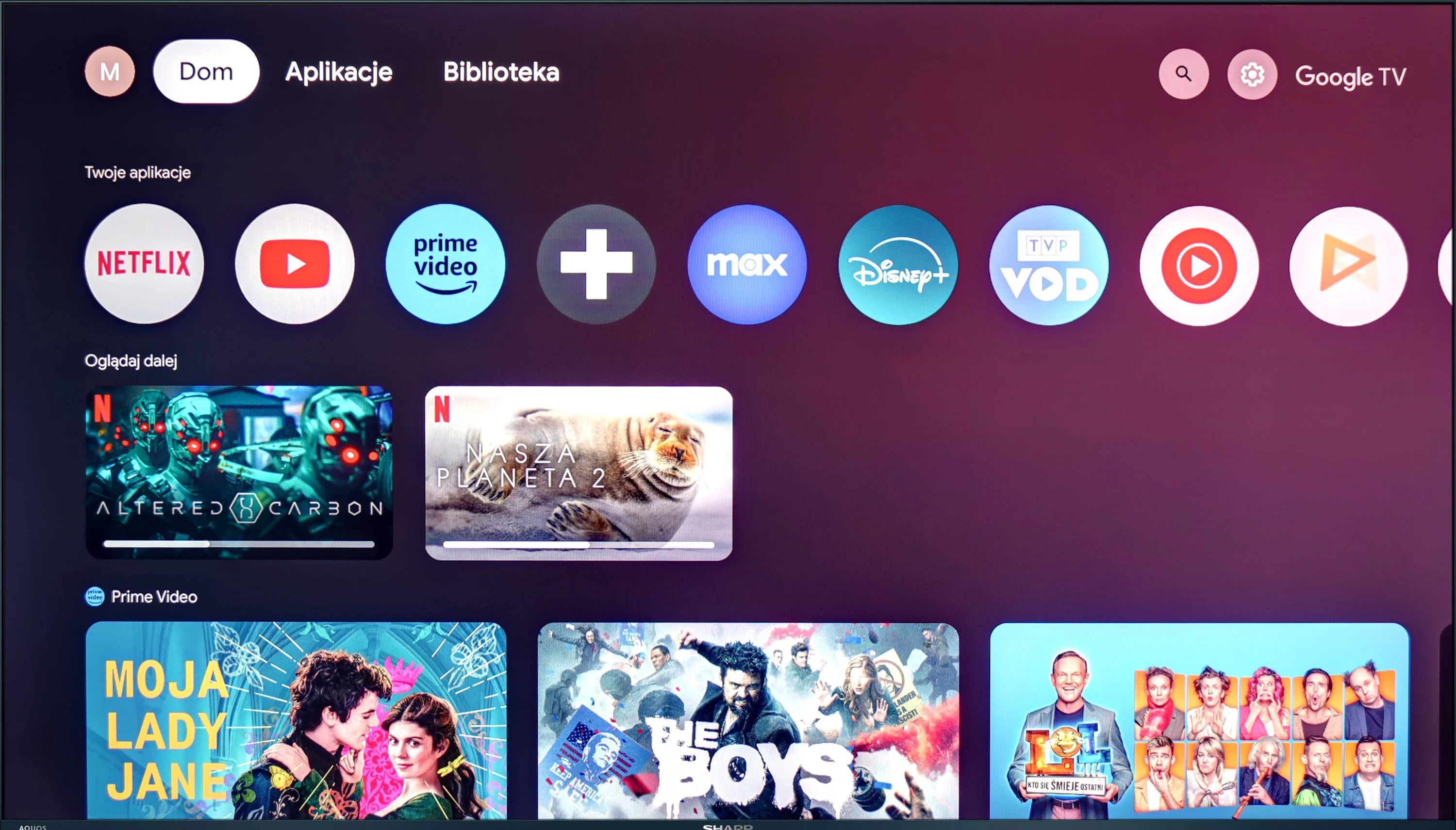
The Sharp FQ8 is equipped with the modern Google TV system, providing access to a variety of apps including Netflix, YouTube, Prime Video, and Disney+. It also supports voice control, making it easier to navigate and access content quickly. The television allows for the connection of multiple devices, such as keyboards, mice, Bluetooth headphones, and other accessories.

However, the TV does have some limitations. The absence of a TV programme recording feature and picture-in-picture (PiP) support could be a downside for those who rely on these options. Additionally, Apple device users may find the lack of AirPlay compatibility frustrating, as it complicates streaming content from an iPhone or iPad to the television.

Tizen

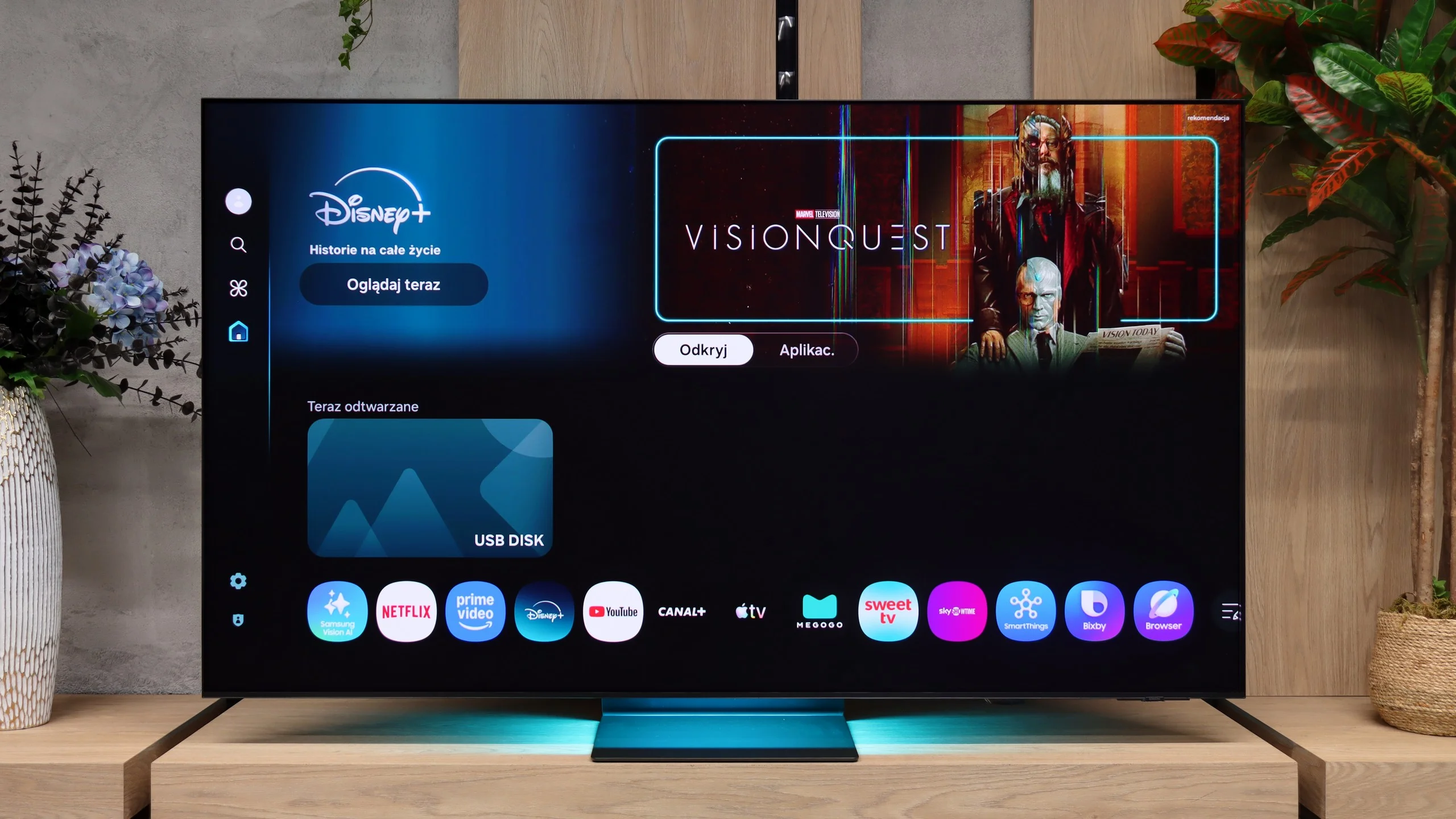
The S95H uses the Tizen system, which is very responsive here. Switching between apps and settings is smooth, so everyday use doesn’t require patience. We have a wide selection of streaming apps, voice search and AirPlay for streaming content from Apple devices. You can also wirelessly display a computer’s screen. It’s a well-equipped Smart TV where it’s easy to find something for yourself.

However, we noticed something odd. Our unit had a 2025 firmware version, even though the S95H is a 2026 model. At the time of testing we also couldn’t find an update to this year’s system version on the manufacturer’s website. That’s surprising, because other Samsung models have already received it. Tizen itself runs smoothly, but for a new TV in this class we would expect the operating system to be up to date as well.

TV features and remote

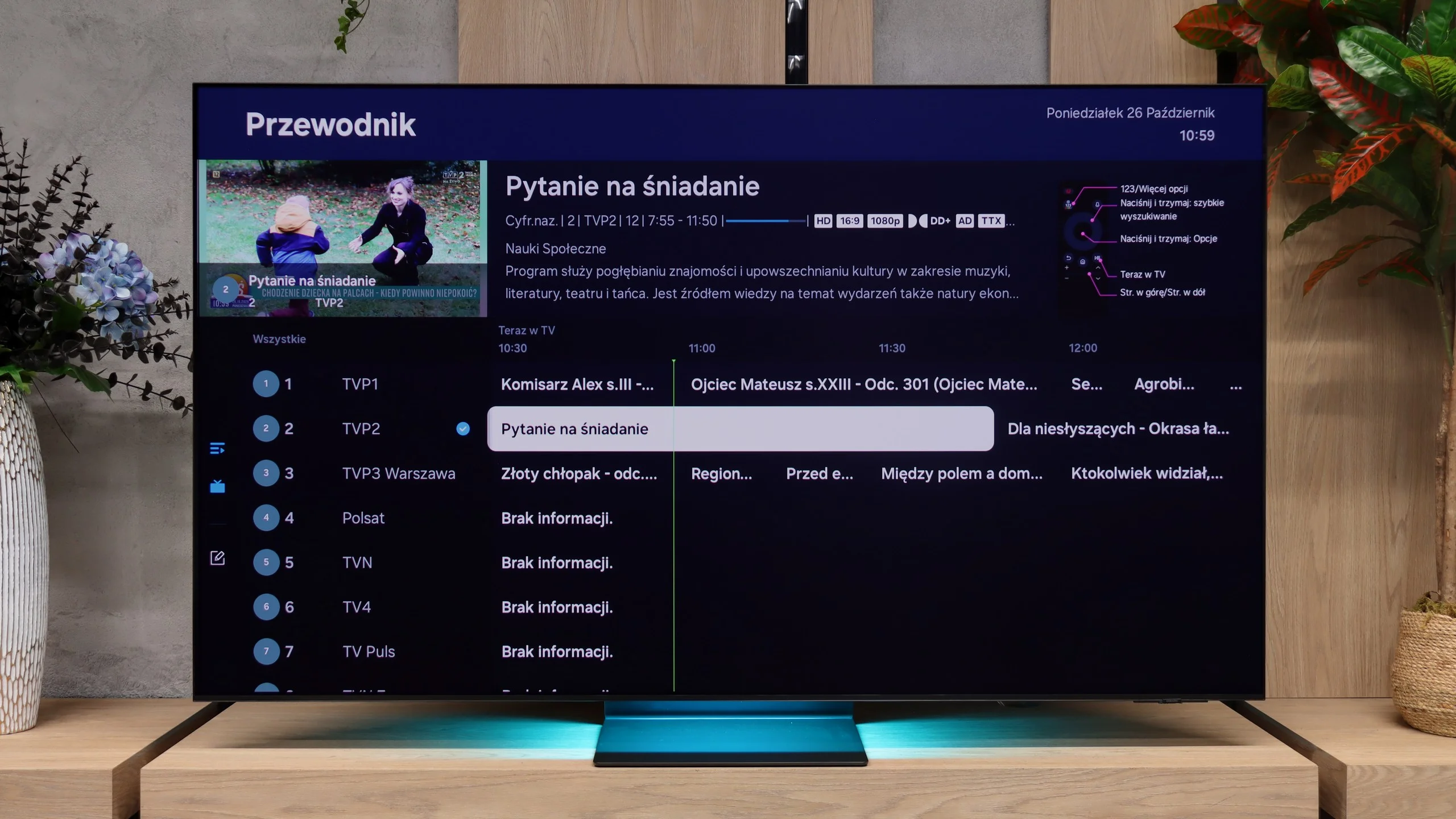
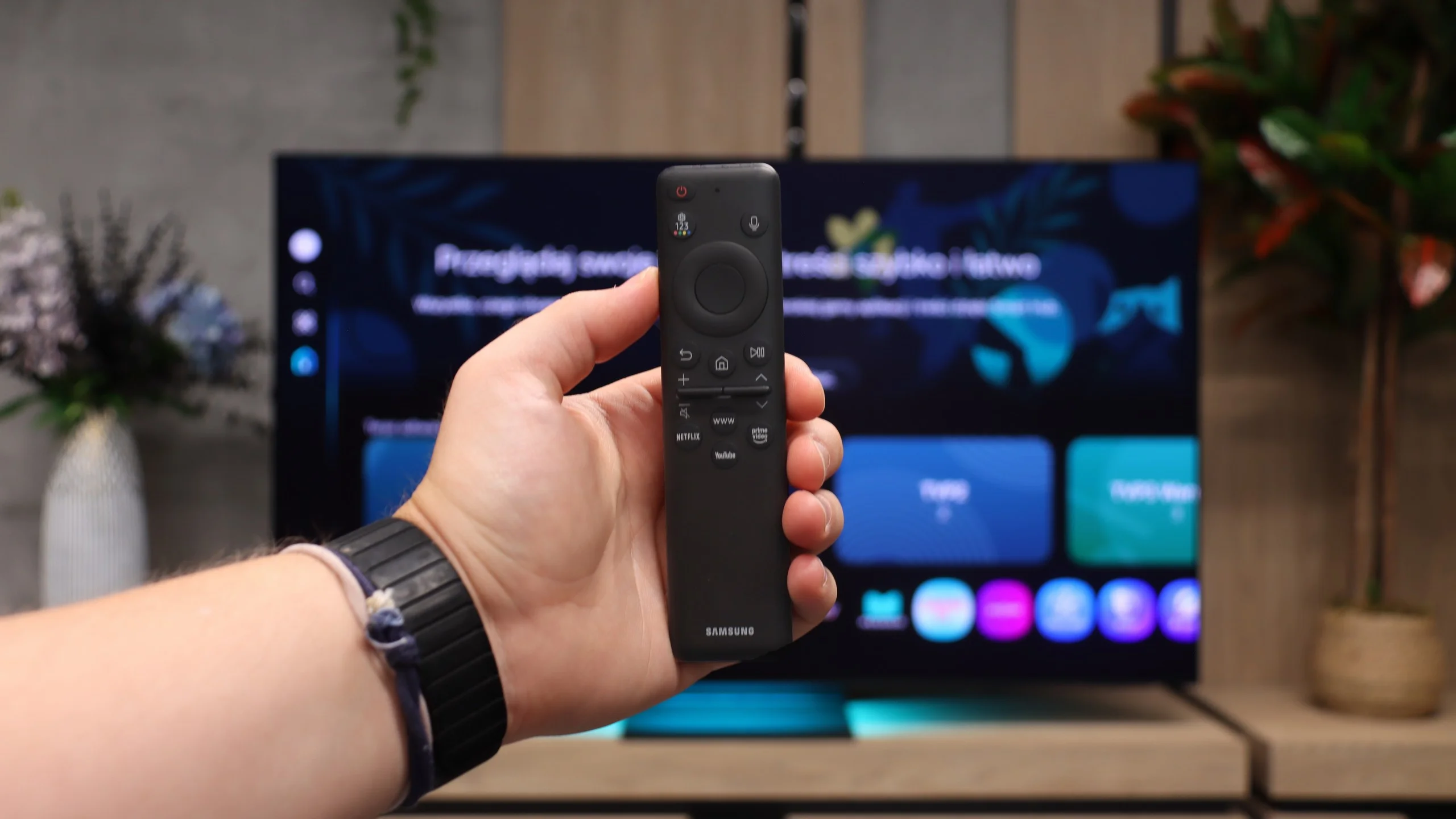
Classic features include teletext and picture-in-picture, but there’s no USB program recording. It can also be useful that the TV can play audio simultaneously through its speakers and Bluetooth headphones. The remote is very minimalist and works without pointing at the screen, though it’s a shame it doesn’t have backlit buttons. A definite plus is that it doesn’t require battery replacement and can be charged using solar power.

One Connect

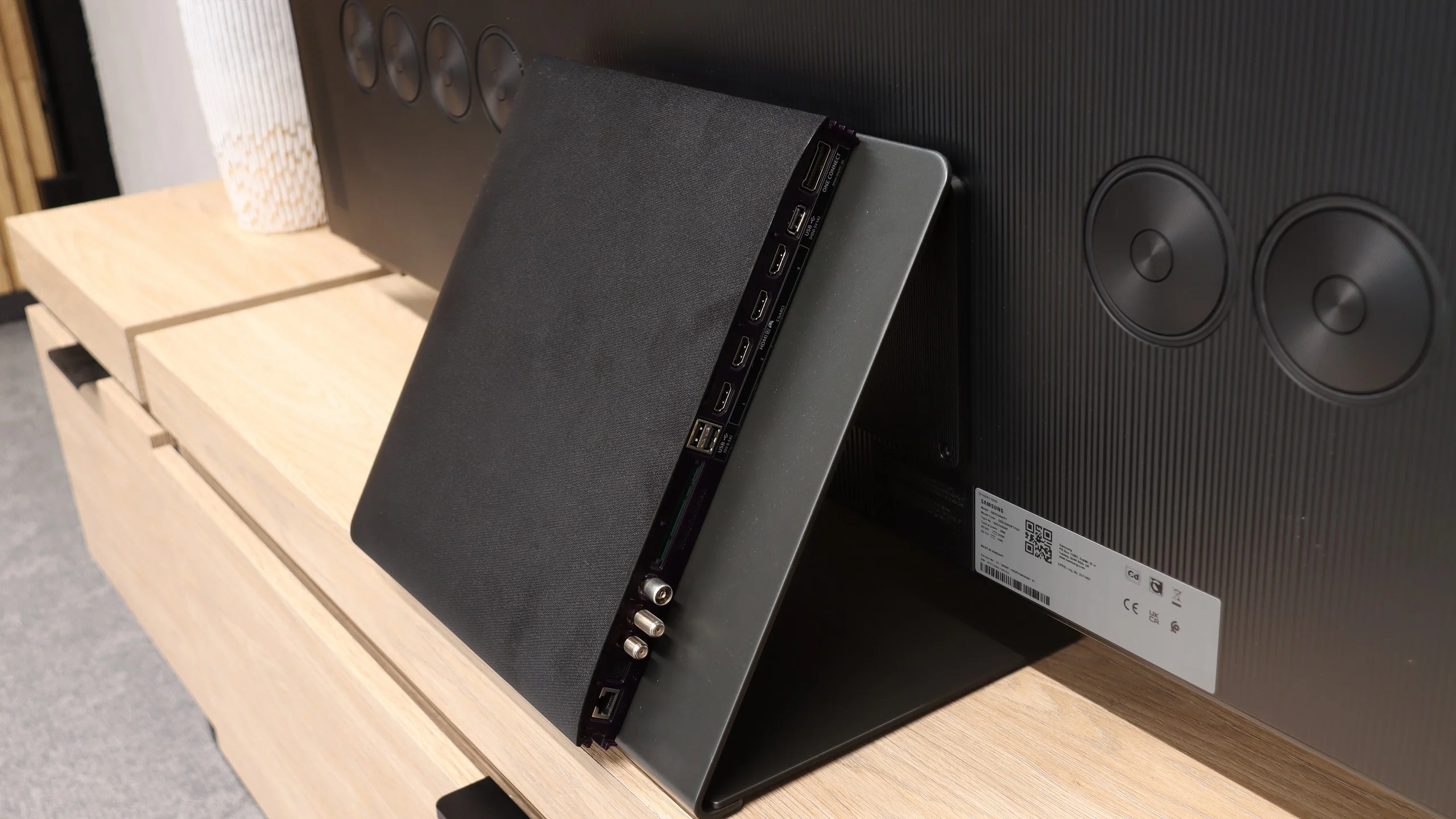
An important addition is the One Connect module, which earns Samsung TVs a small plus from us. It includes four HDMI 2.1 inputs with 40 Gbps bandwidth, and you can connect a soundbar via eARC or the optical output. The biggest advantage of this solution is simple: only a single cable runs to the screen. It’s easier to hide cables and to connect another device without reaching behind the TV. People planning to wall-mount the S95H will especially appreciate this.

Apps

9.6/10

9.3/10

OK
Disney_Plus
OK
Amazon_Prime_Video
OK
Player_TVN
OK
Polsat_Box_Go
OK
Canal_Plus_Online
OK
TVP_VOD
OK
Apple_TV_Plus
OK
SkyShowtime
OK
Rakuten
OK
CDA_Premium_Browser
OK
Spotify
OK
Tidal
OK
Netflix
OK
YouTube
OK
HBO_MAX
OK
Kodi
No
Apple_music
OK
Eleven_sports
No
Xbox Game Pass
OK
GeForce NOW
No
Amazon Luna
OK
Boosteroid
OK
Steam Link
OK
Disney_Plus
OK
Amazon_Prime_Video
OK
Player_TVN
OK
Polsat_Box_Go
OK
Canal_Plus_Online
OK
TVP_VOD
OK
Apple_TV_Plus
OK
SkyShowtime
OK
Rakuten
OK
CDA_Premium_Browser
OK
Spotify
No
Tidal
OK
Netflix
OK
YouTube
OK
HBO_MAX
No
Kodi
OK
Apple_music
OK
Eleven_sports
OK
Xbox Game Pass
OK
GeForce NOW
OK
Amazon Luna
OK
Boosteroid
No
Steam Link

Playing files from USB

9.4/10

9.1/10

Supported photo formats:

JPEG
Yes
Yes
HEIC
Yes
No
PNG
Yes
Yes
GIF
Yes
No
WebP
Yes
No
TIFF
No
No
BMP
Yes
Yes
SVG
No
No

Maximum photo resolution:

4 Mpix
Yes
Yes
6 Mpix
Yes
Yes
8 Mpix
Yes
Yes
10 Mpix
Yes
Yes
12 Mpix
Yes
Yes
16 Mpix
Yes
Yes
20 Mpix
Yes
Yes
24 Mpix
Yes
Yes
28 Mpix
Yes
Yes
32 Mpix
Yes
Yes

Thanks to the Google TV system, the Sharp FQ8 offers excellent flexibility when playing files from USB. Users can install various apps for video and audio playback, such as VLC or MX Player, allowing the television to handle the most popular file formats. Whether it’s movies, music, or photos, the support for multiple formats ensures a comfortable and hassle-free multimedia experience from external drives.

The built-in file player works quickly and smoothly. The S95H opened almost all the audio and video files we prepared and expected it to handle. You don’t have to wait long for them to load, and browsing the contents of the storage device is convenient.

It’s a shame it doesn’t support HEIC photos, the default format used by many iPhones. So if you want to show photos from your phone directly from a USB flash drive, you need to convert them first, for example to JPEG.

Sound

6/10

8/10

  • Maximum volume
    91dB
    86dB
  • Dolby Digital Plus 7.1
    Yes
    Yes
  • Dolby True HD 7.1
    Yes
    No
  • Dolby Atmos in Dolby Digital Plus (JOC)
    Yes
    Yes
  • Dolby Atmos in Dolby True HD
    Yes
    No
  • DTS:X in DTS-HD MA
    Yes
    No
  • DTS-HD Master Audio
    Yes
    No

The sound performance of the Sharp FQ8 is, of course, subjective, but there are a few notable aspects. The television features a Harman/Kardon-branded soundbar aimed directly at the user. While it isn’t a full-fledged soundbar or home theatre system, this speaker arrangement significantly improves the audio experience, providing clearer and more direct sound, which is particularly beneficial for everyday television viewing. It’s also worth mentioning that the television can achieve very high volumes, which will be helpful for individuals with hearing difficulties. The only criticism we encountered was related to sound processing by Dolby, which resulted in noticeable sound distortions and artificial clipping.

In terms of sound, the S95H is essentially a copy of last year’s model. Despite its very slim cabinet, it delivers clean, pleasant audio, but the overall presentation is rather flat. It lacks depth and stronger bass, which, given such an impressive picture, leaves something to be desired. On the other hand, it’s hard to expect large drivers in a TV about a centimeter thick. Beautiful looks come at a price here.

It’s therefore worth adding a soundbar or a separate audio system to the S95H so the sound better matches the picture. The TV supports Dolby Atmos, which allows you to expand the setup with immersive surround sound. However, it lacks DTS support. That limitation may bother people who watch discs with DTS soundtracks.

Sound Quality Test

No sound test video

Acoustic Measurements

No acoustic data

86dBC (Max)

75dBC

Reader comments

Comments are provided by the external service Disqus (Zeta Global). Once loaded, Disqus may set cookies and process data about your activity.

We will remember your choice on this device. Provider's privacy policy