Philips PUS9010 (The One 2025) in the 75-inch version with an IPS panel is a television that clearly shows the differences resulting from the applied panel. Compared to the variant with a VA panel, it offers significantly better viewing angles, very good compatibility with consoles, and excellent text readability, but at the same time, it loses in terms of black levels and maximum brightness. This model is best suited for everyday use, gaming, and in larger living rooms where not everyone sits directly in front of the screen. The TV performs very well in terms of responsiveness and features for gamers, offering 144 Hz, low input lag, and full support for variable refresh rate. An additional advantage is Ambilight, which especially in the evening can enhance the viewing experience and partially mask the weaker black levels of the IPS panel. After calibration, the picture appears consistent and natural, and the differences compared to the VA version in color reproduction become hard to detect. On the other hand, it must be clearly stated that individuals focused on cinematic viewing in complete darkness may be disappointed. The weak black levels and increased brightness due to the quality of our particular unit made this variant of PUS9060 perform worse than the same model with a VA panel. Philips PUS9010 IPS is generally a sensible choice for users looking for a large, modern television for gaming, PC use, and everyday viewing with very good viewing angles. However, if deep blacks and better picture quality are a priority, it is worth considering other variants or a higher class of equipment, as often for a small additional fee, one can get a television equipped with mini-LED technology.
- Matching (Score) |
- Our verdict |
- TV appearance |
- Where to buy |
- Contrast and black detail |
- HDR effect quality |
- Factory color reproduction |
- Color reproduction after calibration |
- Smoothness of tonal transitions |
- Image scaling and smoothness of tonal transitions |
- Blur and motion smoothness |
- Console compatibility and gaming features |
- Input lag |
- Compatibility with PC |
- Viewing angles |
- Daytime performance |
- Panel details |
- TV features |
- Apps |
- Playing files from USB |
- Sound
PHILIPS PUS9010 (IPS) vs Samsung M80H
 Direct comparison

Check the best price offer:
Samsung M80HThe One 2025 / PUS9060 / PUS9010 / PUS9000

M80H / M86H
Available screen sizes: 75”
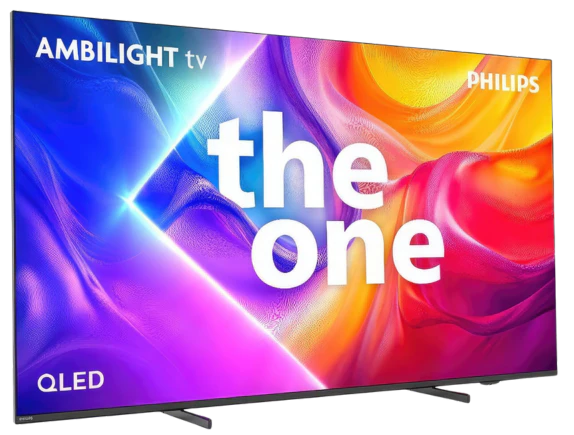
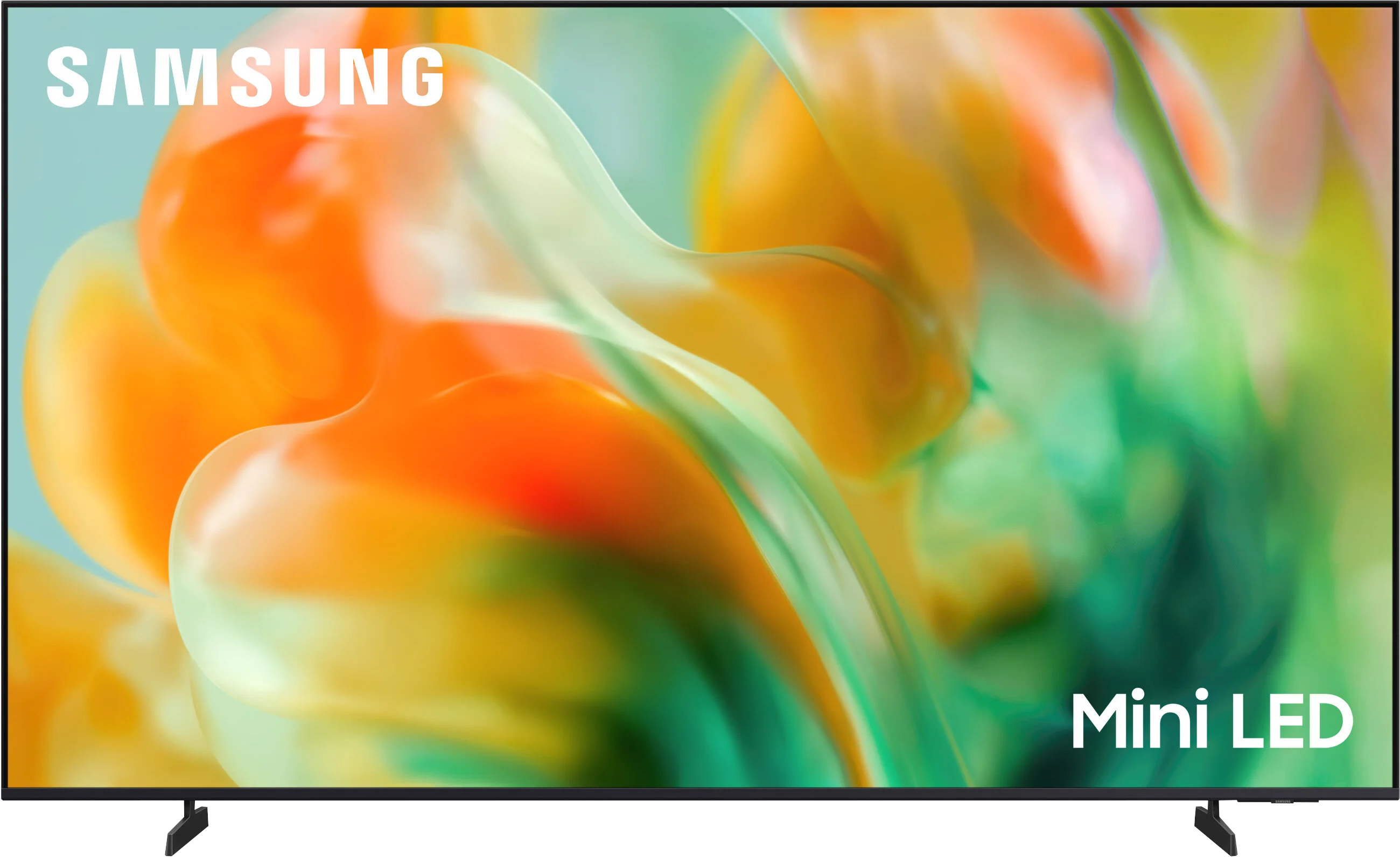
Panel type: LCD IPS
Resolution: 3840x2160
System: Titan OS
Model year: 2025
Complete the survey to find out the result
Panel type: LCD VA
Resolution: 3840x2160
System: Tizen
Model year: 2026
Complete the survey to find out the result
Overall rating
6.5
6.9
 Movies and series in UHD quality
5.9
6.5
 Classic TV, YouTube
5.6
6.6
 Sports broadcasts (TV and apps)
6.7
6.7
 Gaming on console
8.1
8.8
 TV as a computer monitor
8.9
8.9
 Watching in bright light
5.4
5.0
 Utility functions
6.1
7.3
 Apps
6.7
9.3
 Sound quality
6.6
6.0
Complete the survey to find out what fits your preferences
Advantages

Very good viewing angles thanks to the IPS matrix
Excellent PC compatibility, 144 Hz mode, proper support for G-Sync and FreeSync
A wide range of features for gamers, variable refresh rate, automatic game mode, HGiG
Support for multiple HDR formats including HDR10+ and Dolby Vision
Support for Dolby Atmos
Low input lag
Effective P5 image processor for lower quality content
Ambilight system
Lighted remote control
Three HDMI 2.1 ports with support for VRR and ALLM
Dedicated motion smoothing for gamers: Game Motion Plus
Low input lag
High refresh rates: 4K 144 Hz and Full HD 240 Hz
Decent contrast thanks to a VA panel
Minimal smearing for a VA panel
Rich colors thanks to the PFS filter (a different kind of QLED 😉)
Good digital image processing for this segment
Fast Tizen OS with a wide selection of apps
Disadvantages

Poor black and contrast (typical for IPS panels)
Significantly lower brightness than in the VA panel variant
Visible backlight bleed at the edges of the screen in the tested unit
Limited number of applications in the Titan OS system
The remote control is still based on infrared, requiring aiming at the screen
No local dimming despite being labeled Mini-LED!
Low brightness: 350 nits
No support for Dolby Vision and DTS:X
No Toslink optical audio output
Our verdict
The M80H shows its strengths where motion matters most. A fast panel, a refresh rate of up to 144 Hz, and relatively low motion blur make sports and fast-paced games look really good. In this respect the TV can even beat some significantly more expensive Samsung LCD models. Gamers also get low input lag, three full-bandwidth HDMI 2.1 ports, and Game Motion Plus, which can improve the smoothness of games running at 30 or 60 frames. When connected to a PC you can also use a 240 Hz refresh rate, although only at Full HD resolution. A big plus for the M80H is the NQ4 AI Gen2 processor, which was until recently used in higher-tier Samsung series. It handles lower-resolution content well and can enhance the look of weaker sports broadcasts or heavily compressed footage. The extra image-enhancing features do produce a visible effect, although at higher settings they become too strong and start to interfere with the picture's natural look. Still, they are worth listing as an advantage, since in the cheapest TVs similar solutions often matter much less.
What raises the most concerns is the M80H being called a Mini-LED TV. It does not have local dimming, the feature that usually accounts for the biggest benefit of this technology. Brightness of around 350 nits also does not allow for particularly striking HDR. In terms of picture quality the M80H is therefore much closer to basic LCD TVs than to more advanced Neo QLED models like the QN80H. That does not mean movies look bad on it. The VA panel provides decent contrast, and the PFS filter delivers attractive, saturated colors. You should be aware, however, that the lack of local dimming clearly limits the TV's picture-quality capabilities. The M80H is therefore not a model that demonstrates the full potential of Mini-LED backlighting.
It will perform much better in the hands of a gamer or sports fan for whom panel speed, low input lag, and extensive gaming features are most important. If its price remains significantly lower than models equipped with local dimming, that compromise may be a sensible choice for that group of users.
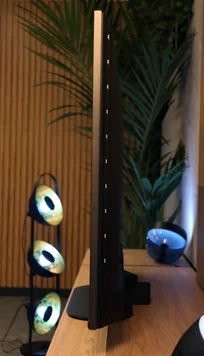
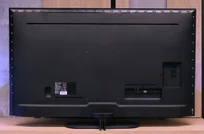
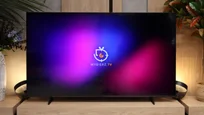
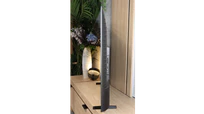
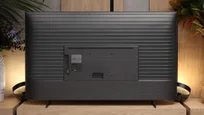
TV appearance



Contrast and black detail
2.9/10
6.3/10
Local dimming function: No
Local dimming function: No
Contrast:


Result
1,300:1

Result
1,400:1

Result
1,450:1

Result
1,500:1

Result
1,350:1
Result
5,950:1
Result
7,150:1
Result
8,150:1
Result
7,850:1
Result
5,550:1
Halo effect and black detail visibility:
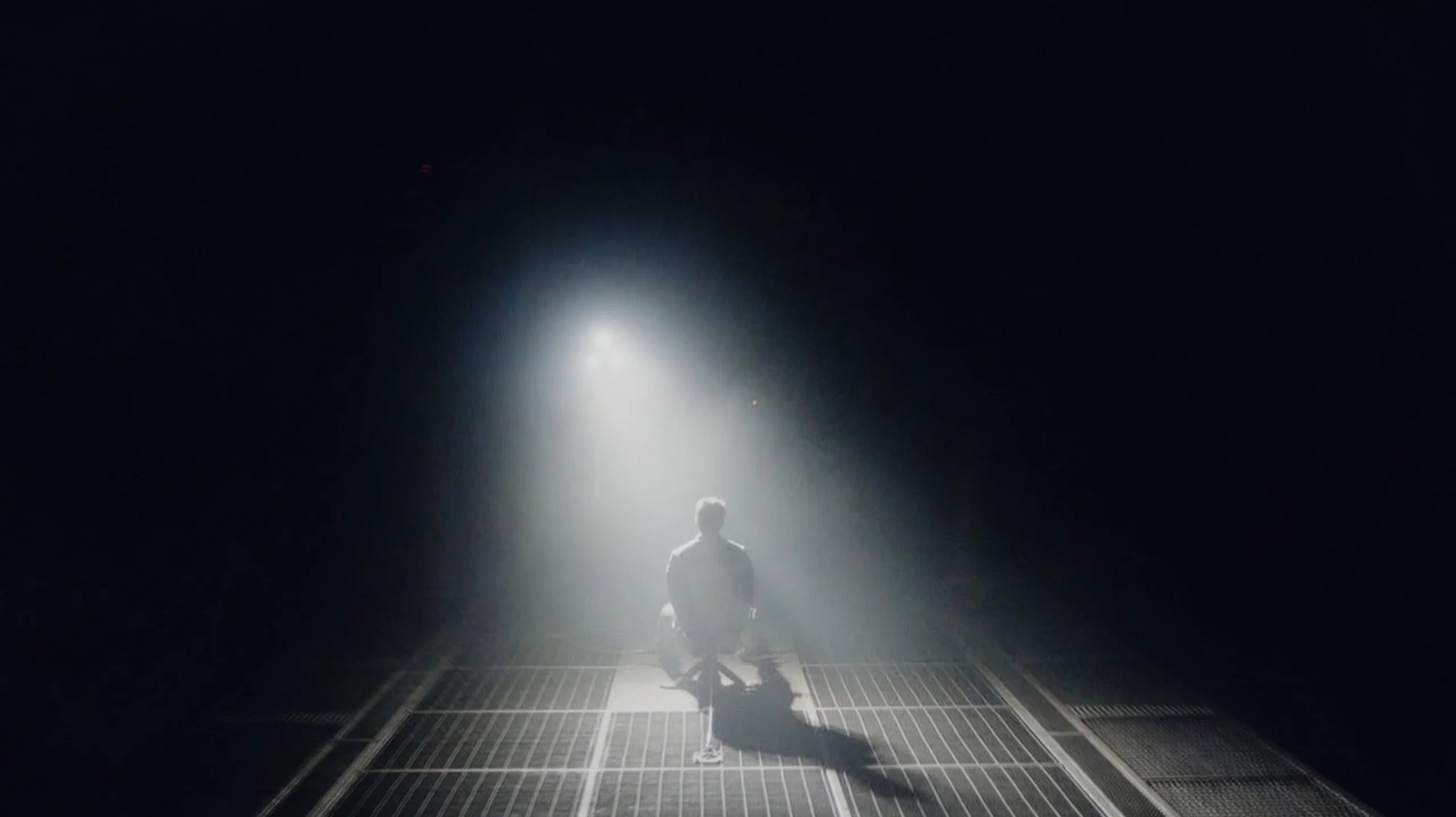
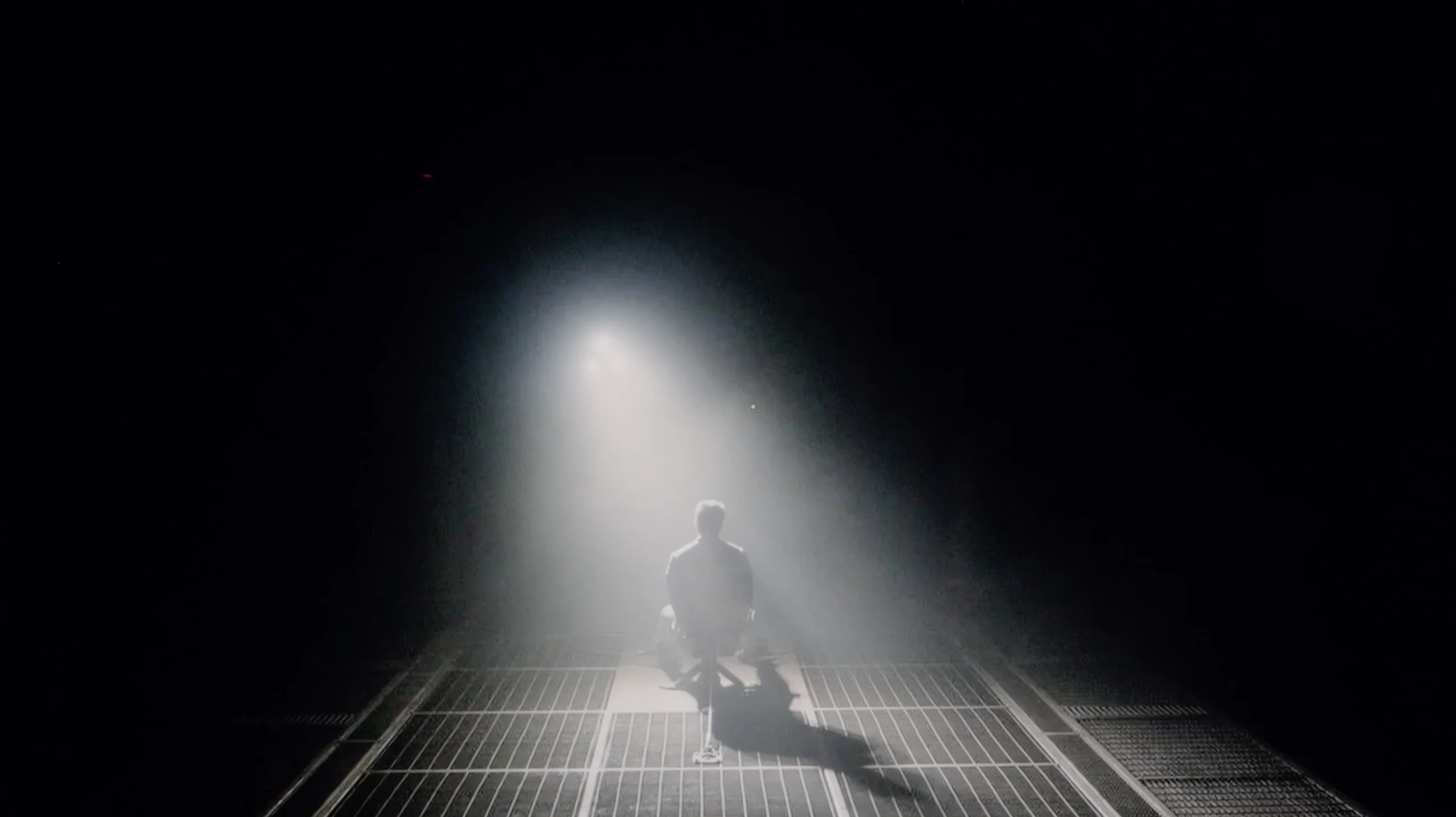
Check the visibility of bright lights on a dark background. Mini-LEDs often struggle with this. The photo does not compare black levels – that’s what the video below is for.
The video accurately shows differences in contrast and black levels between TVs, as well as potential issues: halo around bright objects or Mini-LED zone operation visible as brightness jumps.
In the 75-inch version of the Philips PUS9010 that we tested, an IPS panel has been used, which is immediately evident in terms of black levels and contrast. Compared to the 55-inch variant with a VA panel that we tested earlier, the difference is noticeable right from the first images. The black levels are shallower, and in a dark room, the screen clearly tends to gray. The TV is not equipped with local dimming, so when the light is off, dark scenes lose depth. In practice, the picture looks significantly worse than in the smaller 55-inch variant, particularly during movie screenings watched in the evening. The situation is somewhat salvaged by Ambilight. The rear lighting can subtly "deceive" the eye, improving perceived contrast and making black seem a bit deeper. It's a simple trick, but it works. That's why this model is definitely better watched with Ambilight turned on. It doesn't have to be a multi-color mode that tracks the image. Even a solid white backlight can enhance the viewing of dark scenes.
Samsung M80H is an LCD TV that, according to the manufacturer, uses Mini-LED backlighting. And maybe smaller LEDs placed directly behind the screen are indeed used here, but it's not the same type of Mini-LED we know from more expensive TVs. The M80H lacks local dimming, so the backlight cannot independently control the brightness of individual parts of the image. Black levels are quite decent, mainly thanks to the VA-type panel used. Depending on the scene, our measured contrast was about 5500:1 to over 8000:1. For a TV without local dimming, those are good results, and it's exactly in such designs that VA panels have a considerable advantage over IPS/ADS panels. It's worth noting that part of the results exceed the native contrast of the panel itself, which is about 5000:1. Samsung has implemented a global dimming feature. When there's a lot of black on the screen, the TV dims the entire backlight, making dark areas look deeper. However, this comes at the cost of the brightness of the rest of the image. The M80H therefore won't strongly brighten a small bright spot while maintaining deep black around it; it dims or brightens the whole screen.
HDR effect quality
5.2/10
4.7/10
Luminance measurements in HDR:

Result
374 nit

Result
383 nit

Result
397 nit

Result
391 nit

Result
401 nit
Result
288 nit
Result
340 nit
Result
349 nit
Result
345 nit
Result
364 nit
Scene from the movie “Pan” (about 2800 nits)


Scene from the movie “Billy Lynn” (about 1100 nits)


The photos show two HDR10 movies. 'Pan' is one of the brightest productions ever made, while 'Billy Lynn' (soldier) has brightness typical of streaming (Netflix, Prime, HBO MAX). Notice the intensity of effects and detail in whites.
Static HDR10


The photos present the visibility of white details in various HDR formats. They do not show brightness differences between TVs (these can be compared in the previous gallery).
Dynamic: Dolby Vision
Dynamic: HDR10+


The photos present the visibility of white details in various HDR formats. They do not show brightness differences between TVs (these can be compared in the previous gallery).
HDR luminance chart:
Samsung M80H
PHILIPS PUS9010 (IPS)
In the Philips PUS9010 version with an IPS panel, HDR brightness unfortunately falls short compared to the previously tested 55-inch variant with a VA panel. The difference is about 100 nits, which is clearly noticeable given the relatively low values. While the VA version could exceed 500 nits, here the maximum brightness reaches around 400 nits. This level still allows for watching movies and series in HDR, especially on streaming platforms, but the effects are clearly more subdued. Bright elements do not have as much impact, and scenes requiring high luminance appear less impressive. On the positive side, the coverage of the DCI-P3 color palette is commendable. The IPS version offers about 91%, which is roughly 5% more than the variant with the VA panel. This translates to slightly better color saturation in HDR content, despite the lower brightness. Colors can appear more vivid and consistent, particularly in colorful scenes.
The M80H is not one of the brightest TVs. Its peak brightness is around 350 nits and we saw similar results in most of our test scenes. That's not enough to produce genuinely impressive HDR — bright highlights lack punch and the overall image is a bit too dark. In practice, HDR on the M80H resembles a well-presented SDR image more than clearly more dynamic wide-range content. The picture can still look fine, but it's hard to point to strong specular highlights, clearly bright light sources, or an effect that immediately separates HDR from ordinary content.
Colors
One of the M80H's strengths is its color. The TV uses a PFS-based backlight filter, which allows it to display a significantly wider color gamut than a standard LCD screen without filters. Our measurements confirm this — the M80H covers about 96% of the DCI-P3 gamut and 72% of BT.2020. Those are very good results, which let the colors appear strongly saturated. Samsung's policy here is interesting. The M80H is not part of the QLED family, even though in terms of color it is practically on par with models carrying that label. From an image-quality standpoint, that doesn't matter much; the colors are simply good.
Factory color reproduction
5.9/10
6.1/10
We assessed color reproduction, as always, using factory settings, focusing on movie mode, which in the case of Philips usually offers the best starting point. This is also a good moment to show how much the same TV model can vary depending on the panel used. Looking at white balance, the overall trend remains similar to the variant with a VA panel. There is still excessive red in the whites, but in the tested unit with an IPS panel, there are also deficiencies in the blue channel. As a result, the image has a slightly different color character, which can be clearly seen in the comparative materials. This is a very good example showing why ready-made settings downloaded from the internet may not always work even within the same model.
However, returning to the assessment itself, this unit performs quite well, especially in SDR content. Color tests show correct saturation and color consistency, without glaring errors that could interfere with everyday viewing. In HDR materials, slight deficiencies in reds are already noticeable, but these are not flaws that completely ruin the perception of the image. The biggest limitations do not stem directly from the colors but rather from whites and blacks. The use of an IPS panel and slightly lowered gamma results in the image being slightly boosted in brightness, while the weak black further affects perceived contrast. This makes the overall look brighter, but at the same time, it loses depth, especially during evening viewing.
Filmmaker mode is reasonably well set up out of the box, though it falls short of perfect. In SDR material the most noticeable issue is an excess of red in the white balance, which makes the image look a bit warmer than it should. HDR content shows a similar character. As for the brightness response, in SDR the gamma stays close to the target for most of the range. Small deviations are mainly visible in darker areas, which in places are a little too dim. In HDR the very darkest details are slightly lifted, while from around 65% brightness the image begins to be gently darkened. This is largely due to the way the TV controls its brightness. Overall, Filmmaker mode looks good straight out of the box, but the image can still be improved.
Color reproduction after calibration
8/10
7.8/10


The photos show how movies look on the TV. Pay attention to black detail visibility, colors, and shadow tint.


The photos show how movies look on the TV. Pay attention to black detail visibility, colors, and shadow tint.
After calibration, the image was brought to a really reasonable level. Everything looks coherent and natural, and when it comes to color reproduction, it's hard to definitively state whether we have a VA or IPS panel. This is a good sign, showing that the TV has a solid foundation for further adjustments. It's worth noting the larger color gamut coverage in this variant, which can slightly improve the reception of colorful scenes, especially in HDR content. However, this advantage is largely counterbalanced by the elevated blacks, resulting from the use of an IPS panel. Limited black depth affects perceived contrast, especially when watching in a dark room. As a result, despite the noticeable improvement after calibration, the final assessment remains the same as in the variant with a VA panel. Better colors are not able to fully compensate for the weaker blacks.
After calibration, the M80H performs really well, especially with basic SDR content. Regular broadcast TV, YouTube, or movies viewed without HDR can look very accurate on it. After correcting the white balance, errors are minor, though you can still sometimes see that the TV tends to oversaturate the most saturated reds. In HDR you can also improve the picture and correct its main faults, but it doesn't reach the level of pricier models. Samsung quite heavily restricts color adjustment options in HDR, so in many areas we have to accept what the TV offers out of the box. Calibration lets us improve some parameters, but we are no longer able to change the overall image character of the M80H.
Smoothness of tonal transitions
8.5/10
9.8/10
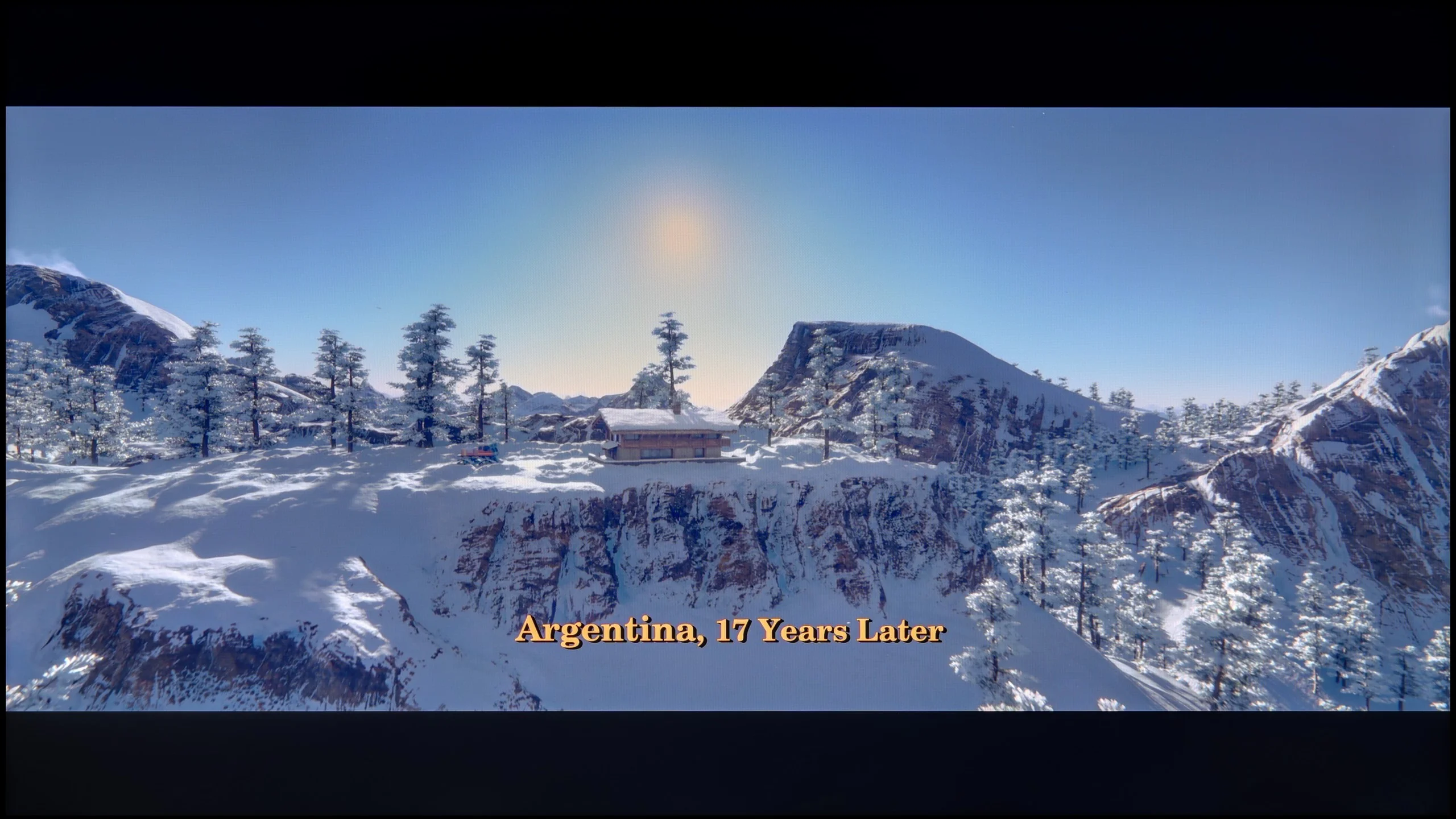




These are selected scenes that show smooth tonal transitions from one color to another. If you see distinct banding, it’s the TV panel’s fault.

These are selected scenes that show smooth tonal transitions from one color to another. If you see distinct banding, it’s the TV panel’s fault.

These are selected scenes that show smooth tonal transitions from one color to another. If you see distinct banding, it’s the TV panel’s fault.

These are selected scenes that show smooth tonal transitions from one color to another. If you see distinct banding, it’s the TV panel’s fault.
When it comes to the smoothness of tonal transitions, in the 75-inch version with an IPS panel, we have mixed feelings. Looking solely at colorful gradients, the transitions perform even better than in the version with a VA panel. The colors blend more smoothly, and typical banding issues are less noticeable. However, the situation changes drastically in dark scenes. The tragic black characteristic of IPS effectively ruins the perception of tonal transitions in low brightness areas. The boosted blacks make it difficult to see subtle shades of colors, and the very unnatural blooming of the panel further worsens the situation. In the tested unit, the backlight blooming was particularly visible at the edges, where the light practically leaked onto the screen. This not only negatively affects the perception of dark scenes but also significantly complicates an accurate assessment of the grading itself.
The smoothness of tonal transitions on the M80H is nearly perfect. Posterization is practically non-existent, and successive shades blend very smoothly in both bright and dark scenes. We didn't notice any obvious color banding, even in the sky or in smoke scenes. If the image looks worse in dark shots, that's not due to gradation issues. What becomes more apparent are the backlight limitations and the lack of local dimming, which keep blacks from having proper depth.
Image scaling and smoothness of tonal transitions
6.7/10
7/10


Smooth transition function
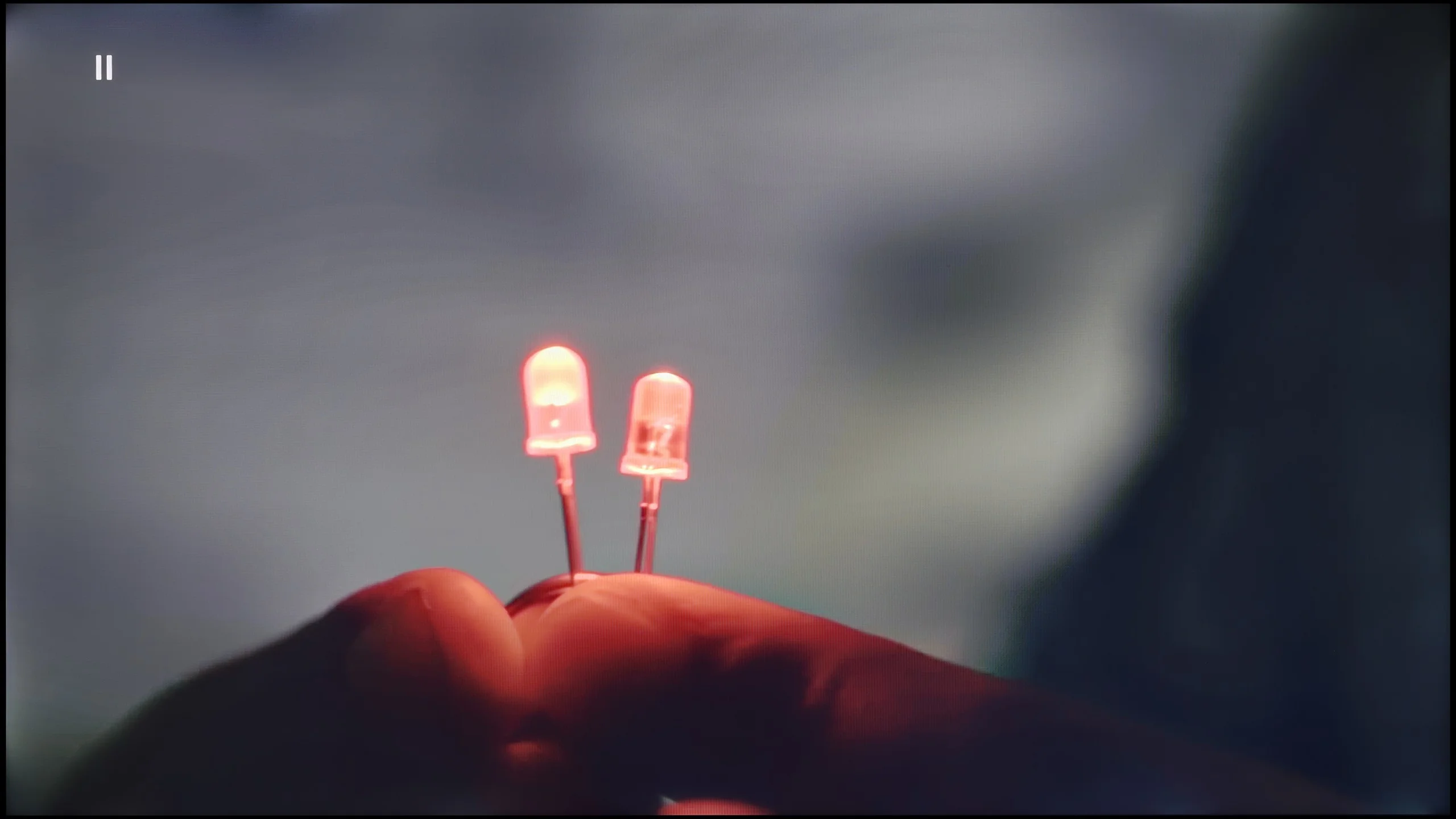
The match photo shows how the TV smooths weak tonal transitions in low-quality video.
Image scaling SD (576i)


The model photo shows how it handles upscaling of SD material.
In the Philips PUS9010, we find another iteration of the P5 Perfect Picture image processor, which aims to improve the quality of weaker materials. One of the components of this system is the distortion reduction function, responsible for smoothing tonal transitions. It works effectively and actually reduces visible color gradation. Unfortunately, it does so rather aggressively. In practice, it can dull details such as material textures or film grain. This is a clear compromise, so we wouldn't recommend it for movie screenings. It performs much better with looser content, like YouTube or regular television. The P5 processor also handles lower resolution materials quite well. The image is soft, sometimes even too soft, but it can easily be adjusted with the sharpness slider, tailoring the effect to personal preferences. Additionally, the lack of edge cropping in SD materials is a plus, which is still not standard in this class of televisions.
Although the M80H is positioned fairly low in Samsung's lineup, the manufacturer equipped it with one of its stronger processors, NQ4 AI Gen2. The same chip can be found in Neo QLED TVs and the lower-tier OLED S85H. That's good news, because the processor does a very good job improving weaker source material. Upscaling performs best. Low-resolution content is displayed properly, and edges don't look overly jagged. Of course the TV won't create details that aren't in the source, but regular broadcast TV and older recordings look decent on it. One drawback is overscan, that is, edge cropping, which cannot be fully disabled. The tonal transition smoothing feature, the so-called noise reduction, also works well. The processor can effectively reduce visible signs of heavy compression, but it does so not without side effects. At higher settings it can overly smooth the image, remove some fine detail, and even eliminate film grain. Therefore we recommend using this feature primarily for content that actually has problems with heavy compression and posterization.
Blur and motion smoothness
7.7/10
7.9/10
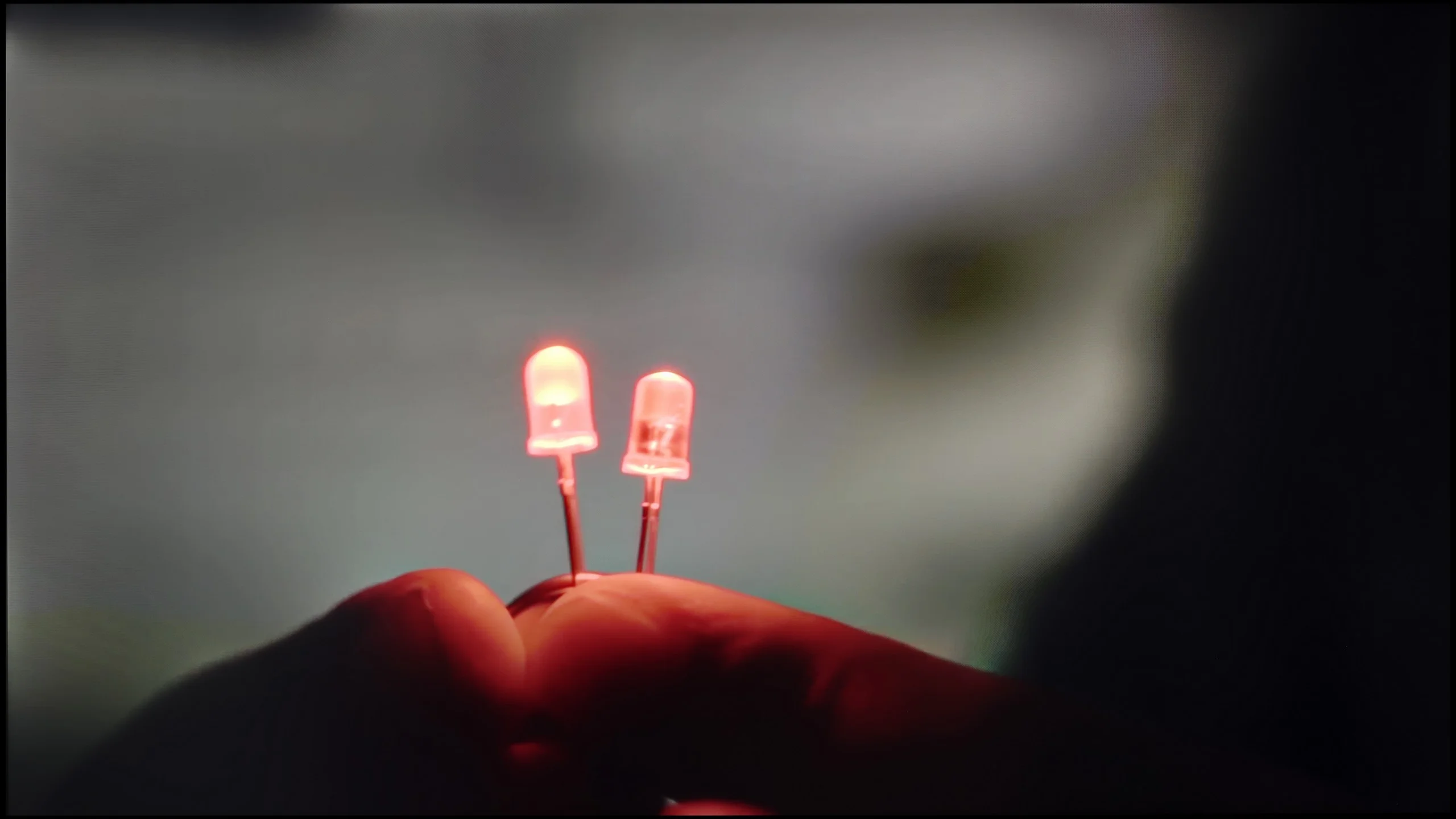
Blur (native resolution, maximum refresh rate):






Blur (BFI function enabled):
Image flickers in this mode



Blur (4K@144Hz):



Blur (4K@240Hz):



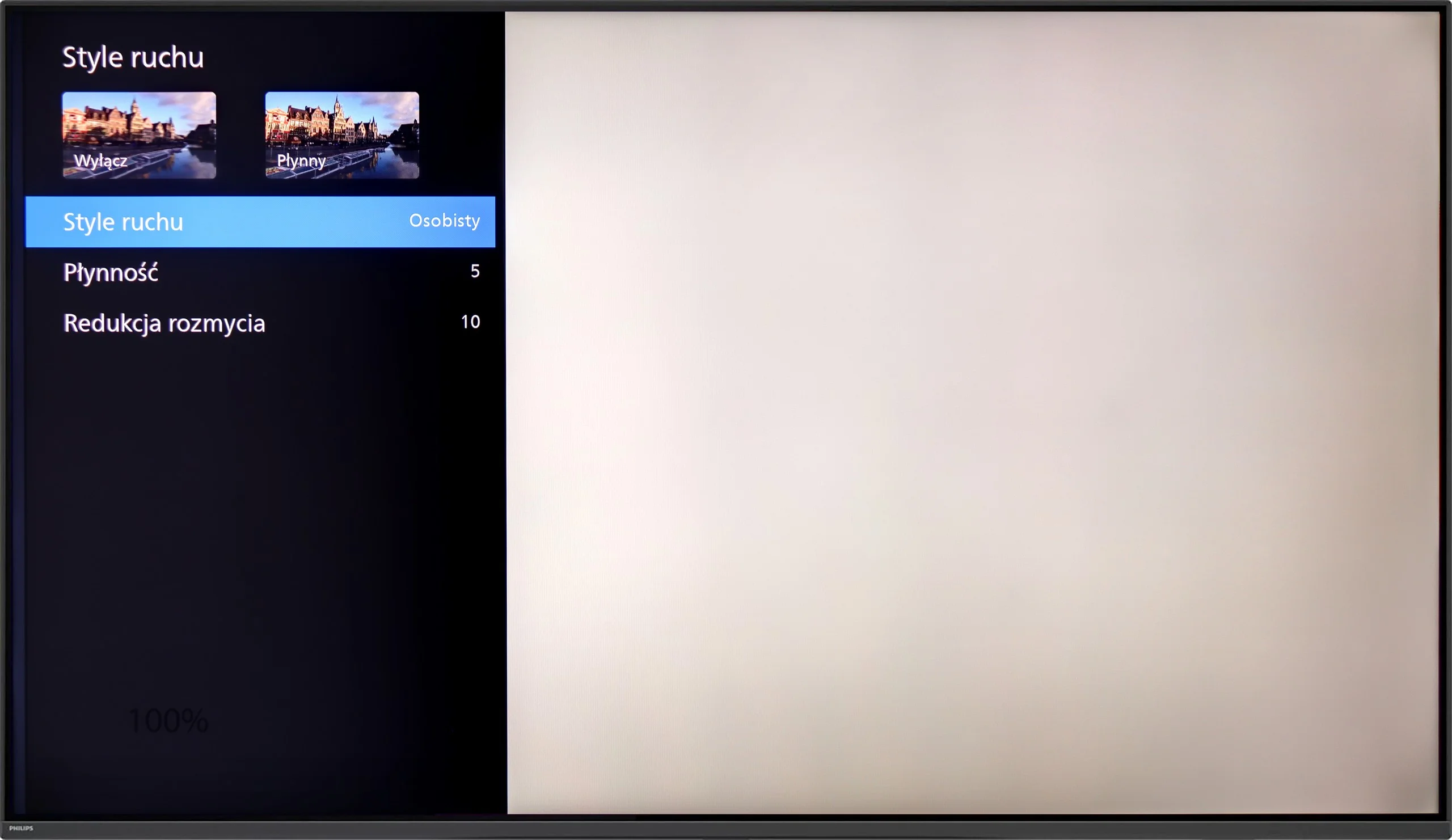
Philips PUS9010 has a 4K panel with a refresh rate of 144 Hz, which will be appreciated primarily by sports fans and gamers. This is especially evident in dynamic scenes where motion is sharp, and annoying trailing is nearly absent. When it comes to movies (standard 24 fps), Philips provides us with a proven set of settings known from higher series. Two sliders are used to control motion. The “Smoothness” slider allows you to adjust the image to your taste: at low settings, we maintain a cinematic character, while moving the slider to the right gives us a perfectly smooth, albeit slightly “theatrical” effect. On the other hand, the “Motion Blur Reduction” is a feature made for sports – it ensures that fast objects do not lose details and remain clear.
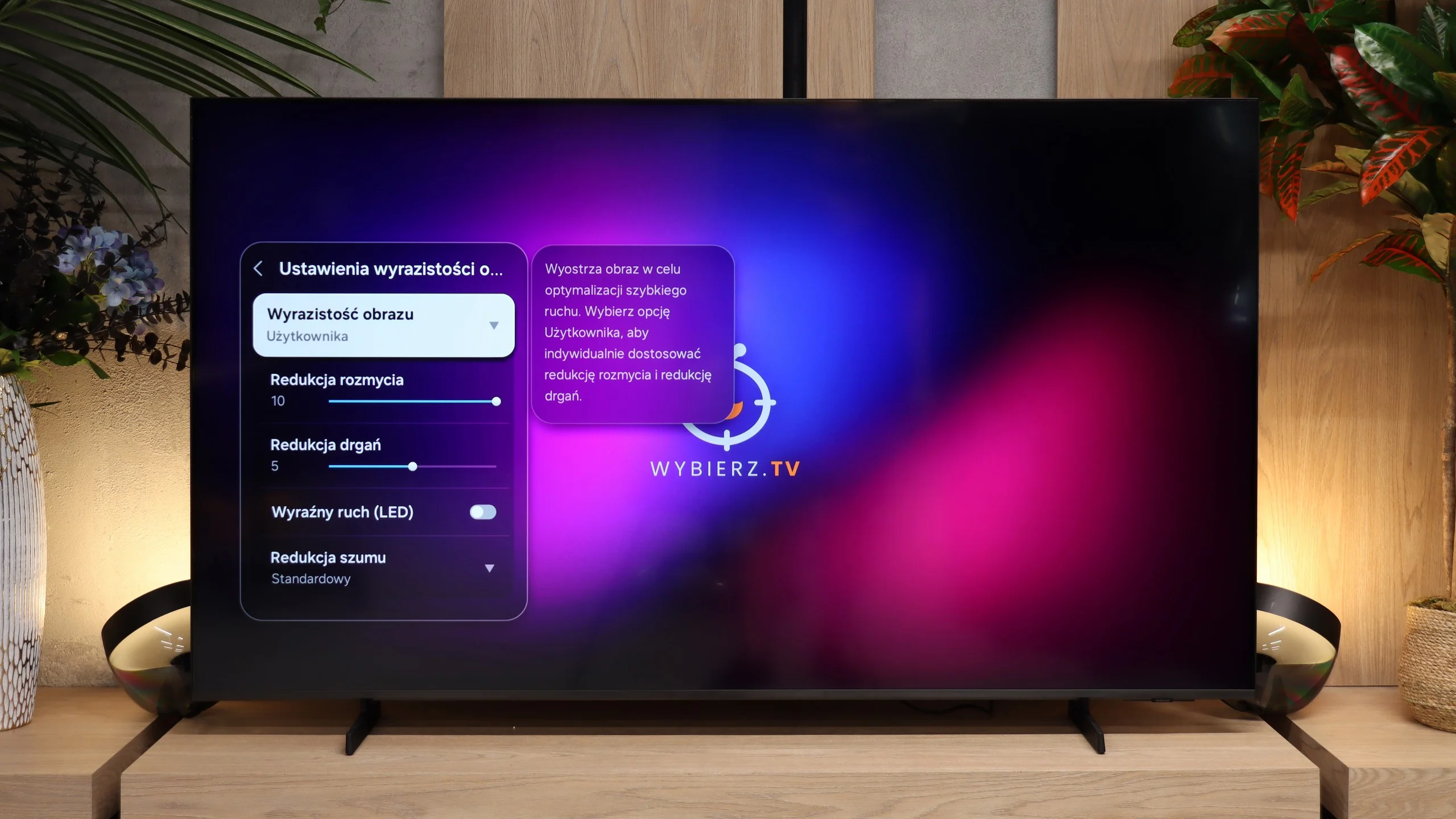
The M80H performs very well for watching sports and gaming. The TV is equipped with a panel with a refresh rate of up to 144 Hz at 4K, and when the resolution is lowered to Full HD it can handle up to 240 Hz. PC gamers will benefit most from the latter option.
The panel also handles 120 Hz content well, which matters especially for console gaming. The high refresh rate is useful for watching sports too, and motion blur is relatively low. That’s important because VA panels are not known for the best results in this respect. With the M80H, fast-moving objects do not produce a very noticeable trail.
Console compatibility and gaming features
9.8/10
9.6/10
- ALLM
- VRR
- VRR range48 - 144Hz48 - 240Hz
- Dolby Vision Game Mode
- Correct implementation of HGIG
- 1080p@120Hz
- 1440p@120Hz
- 4K@120Hz
- Game bar
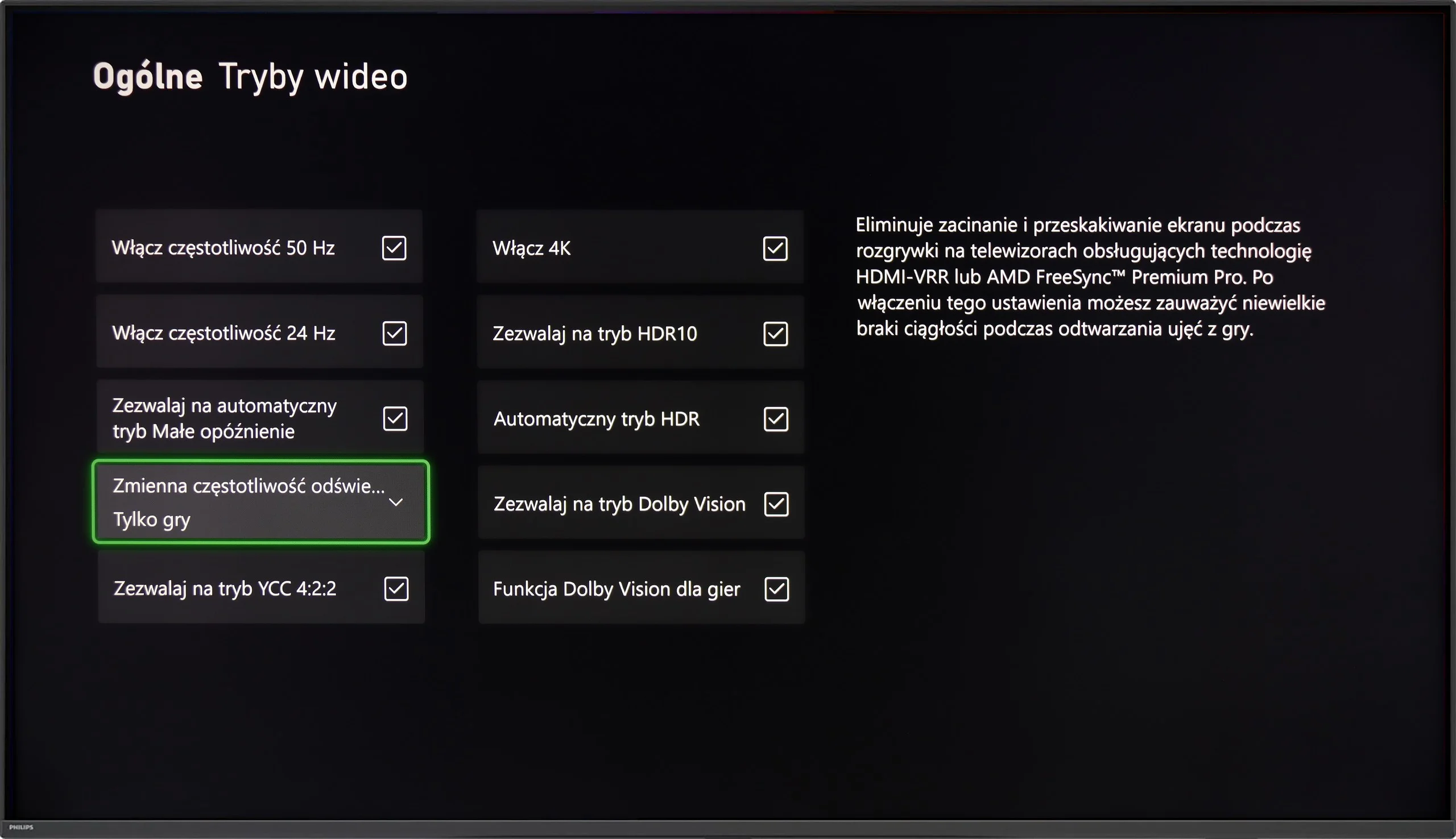
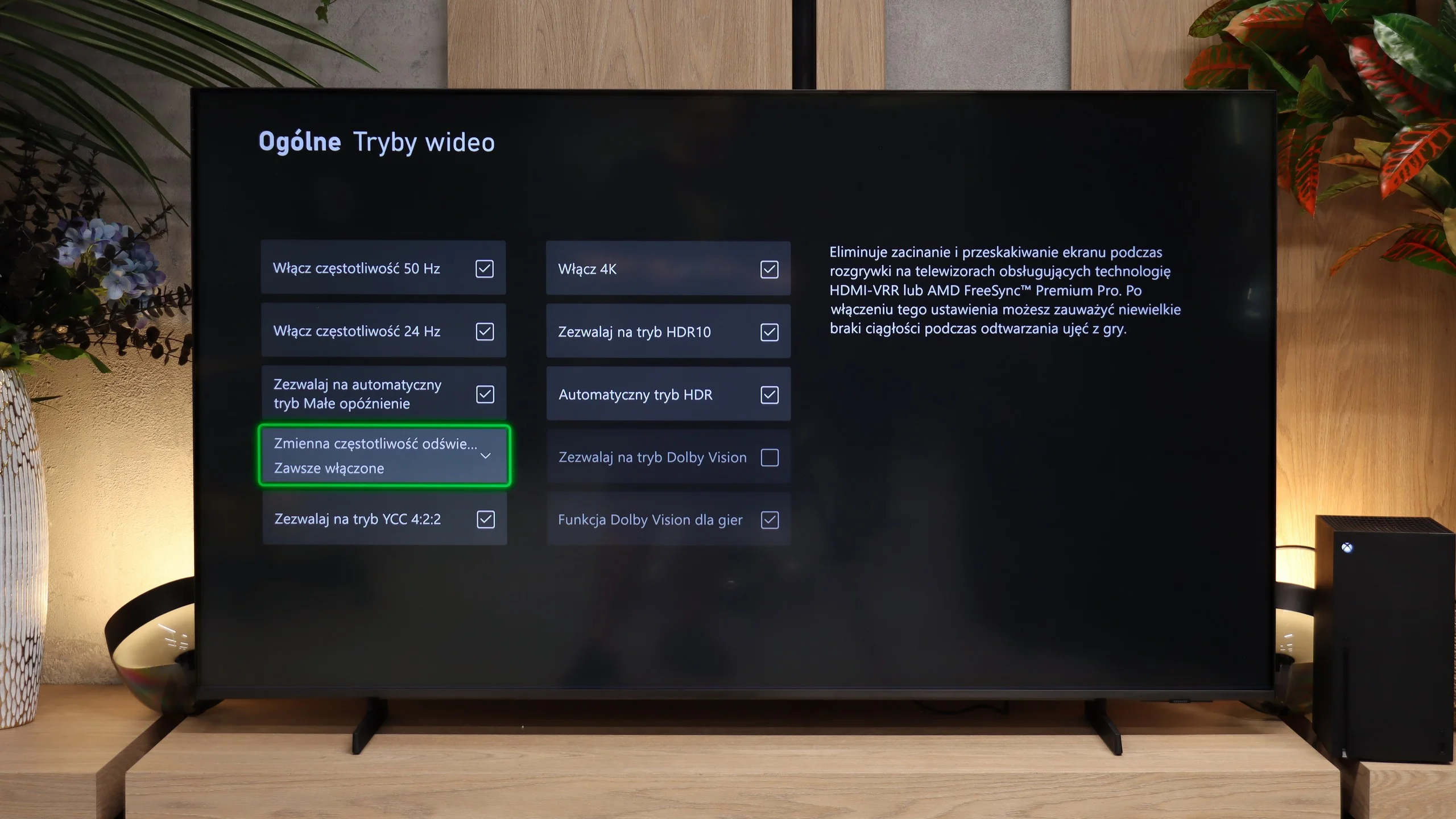
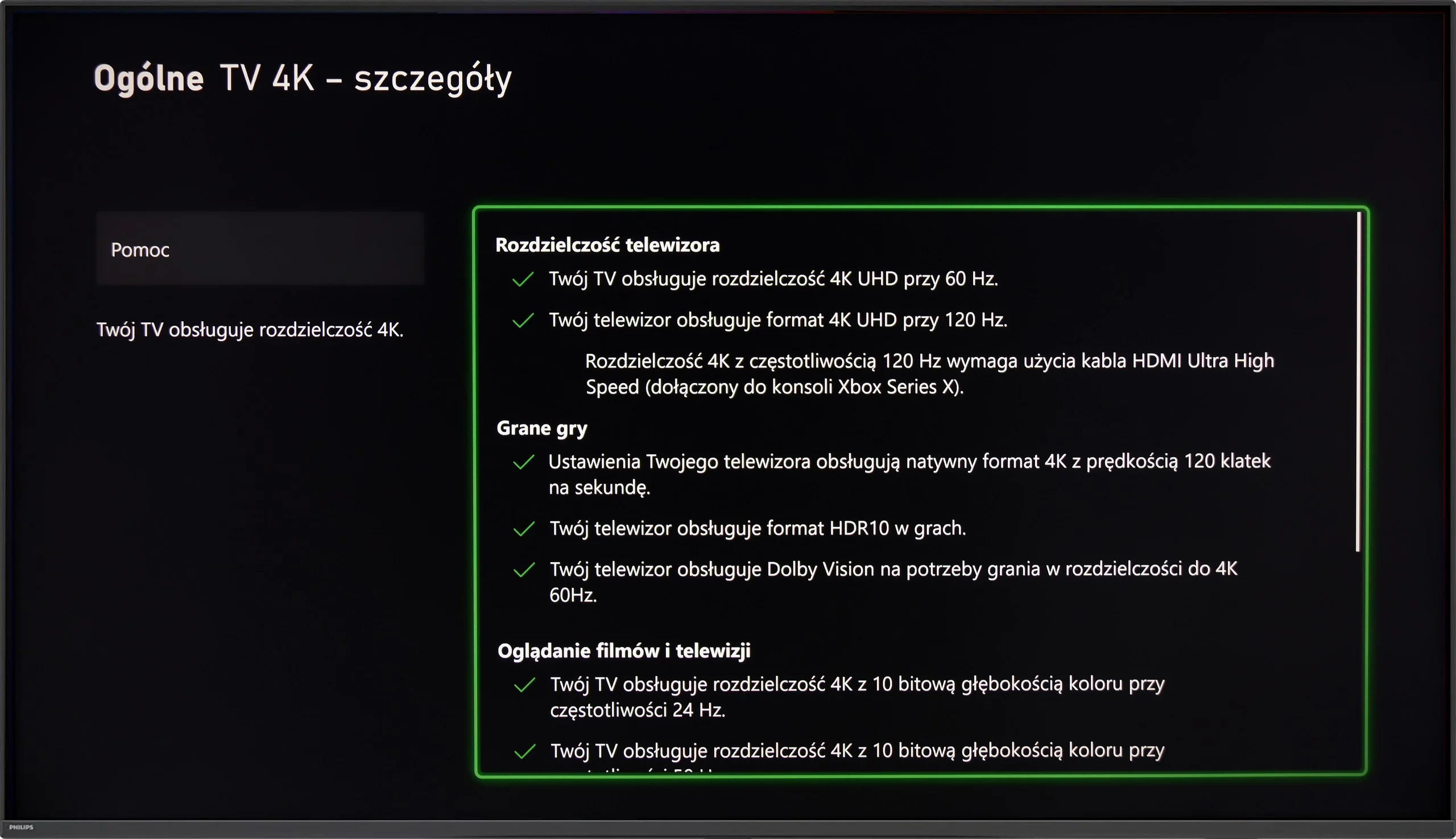
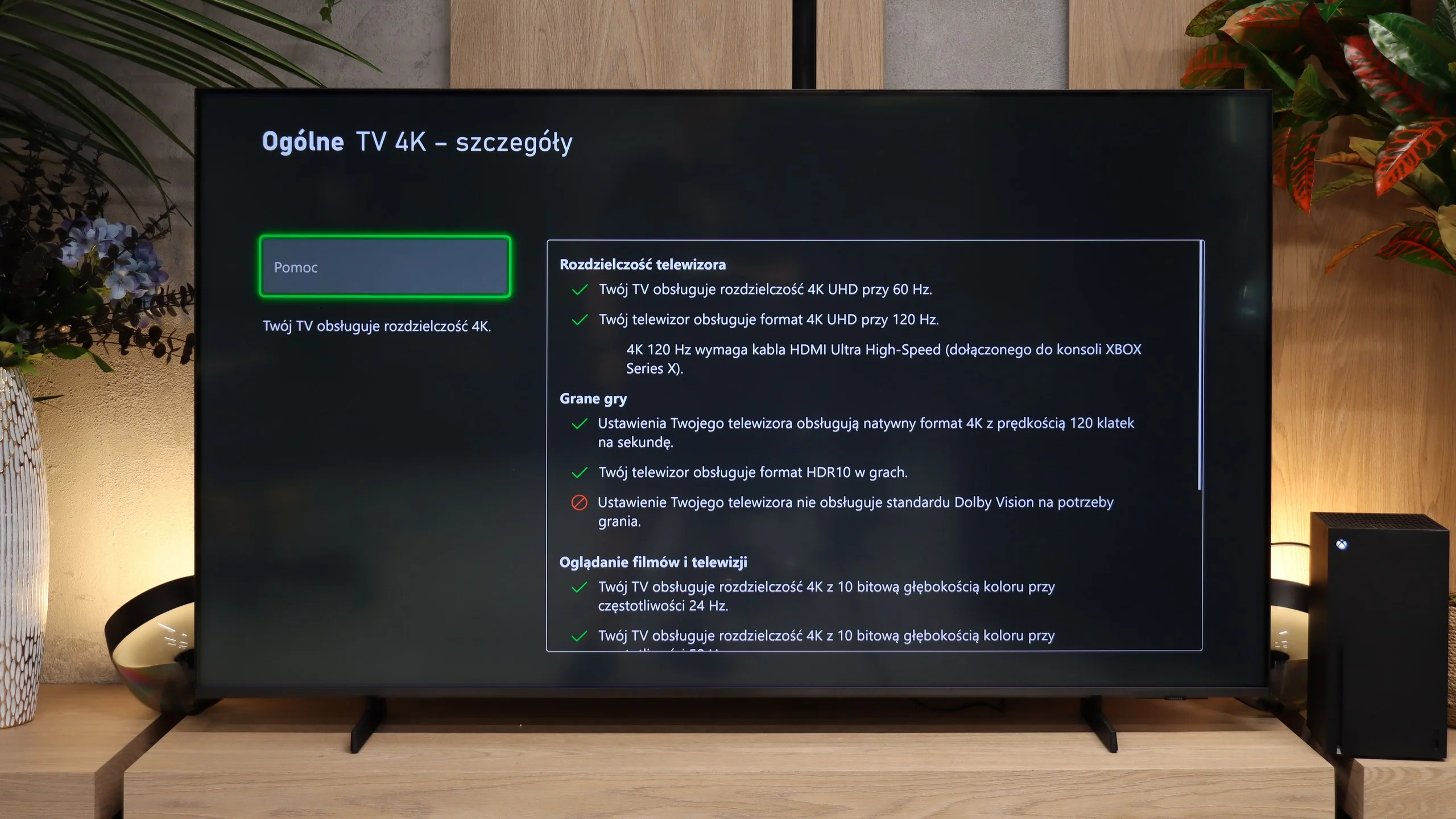
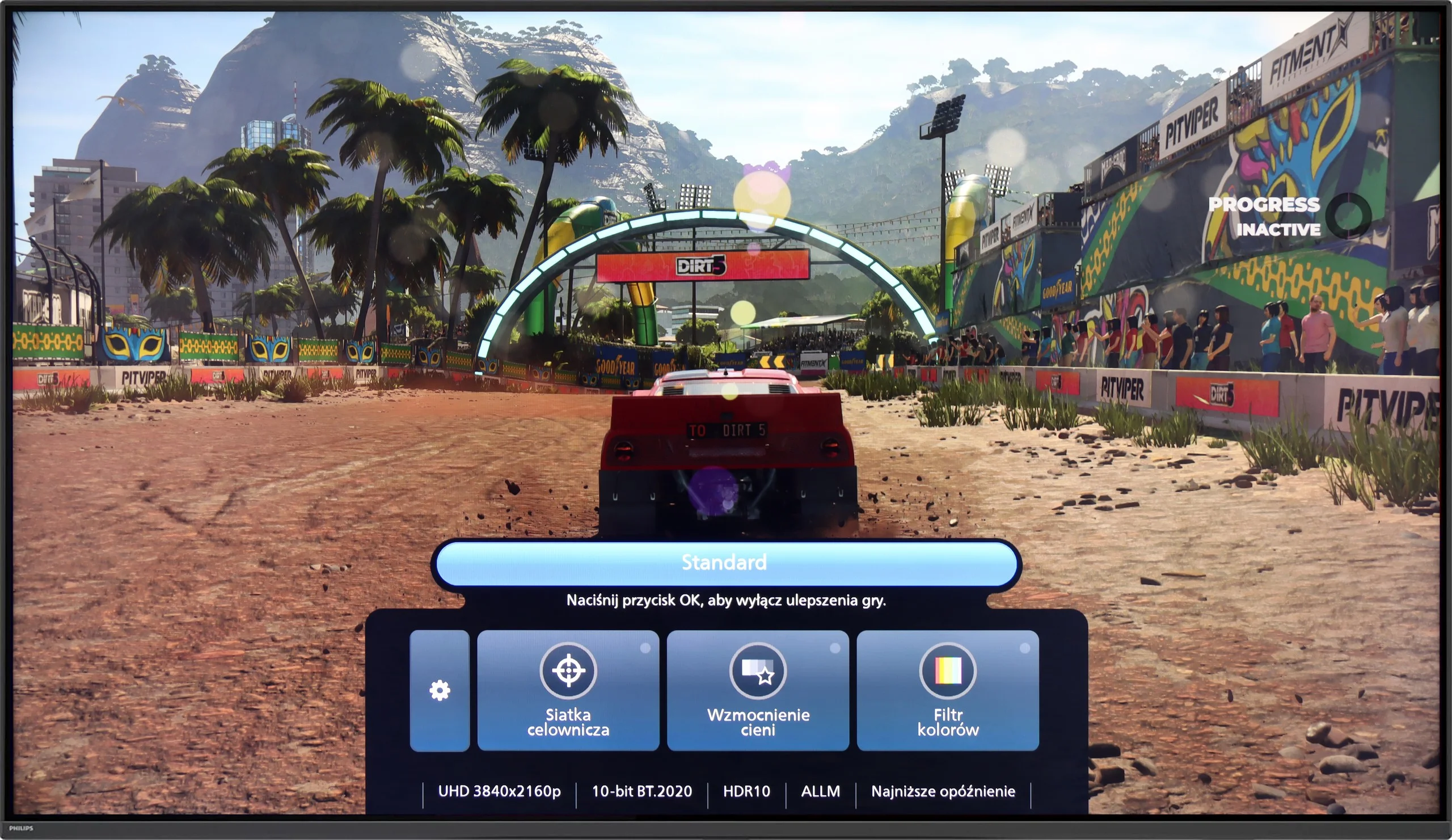
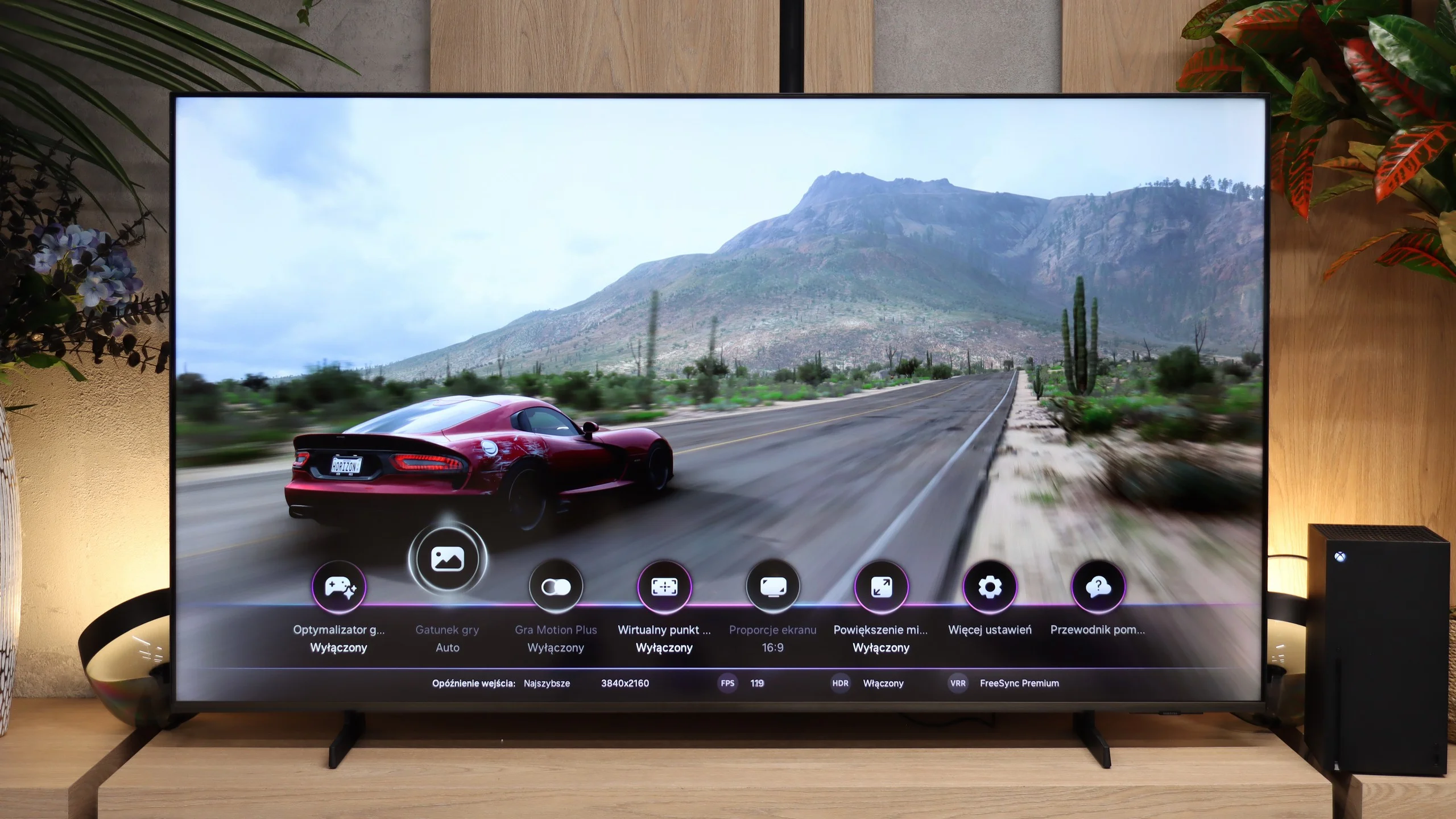
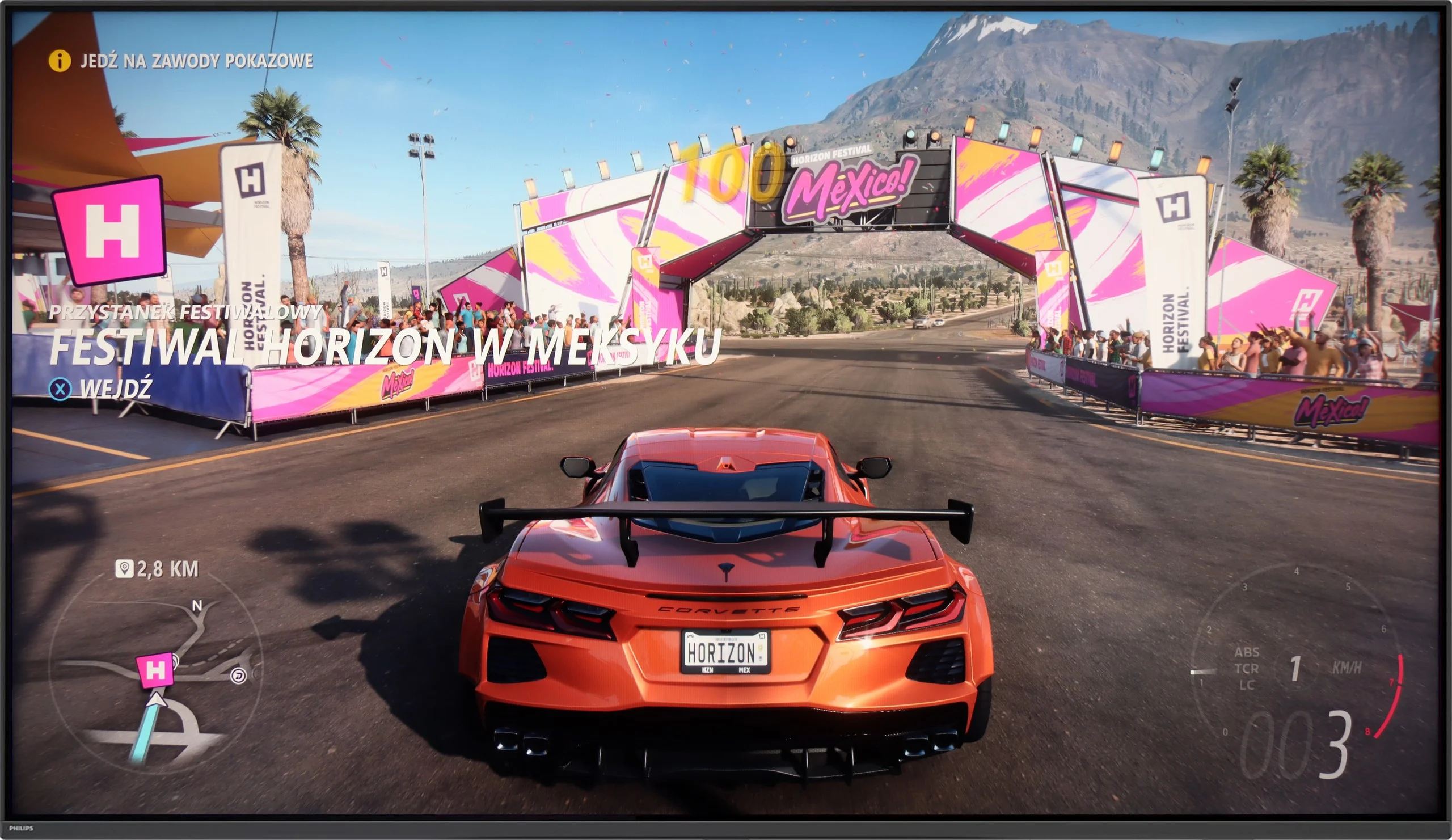
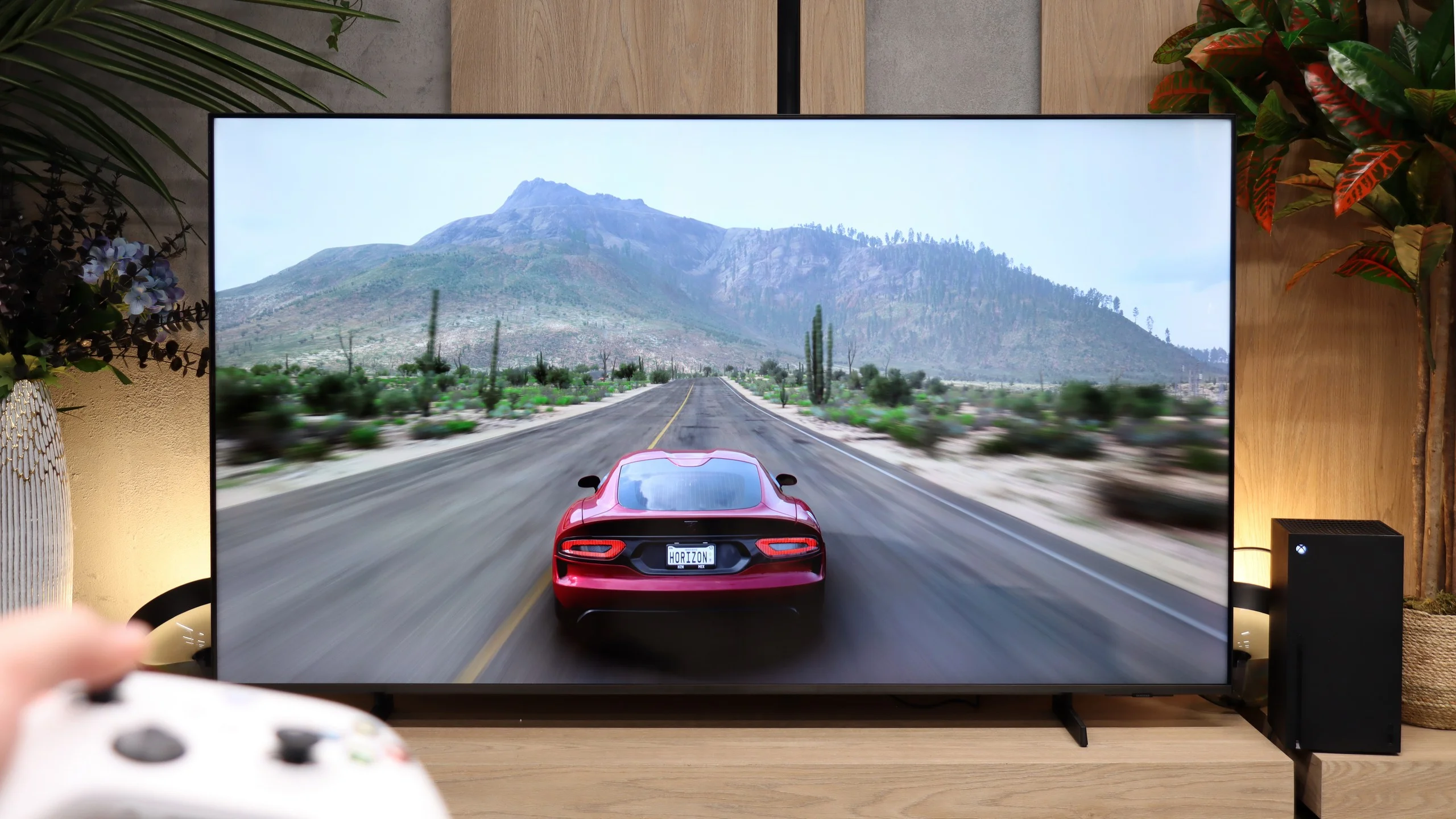
The Philips PUS9010 is truly a solid machine for gaming. It has everything that matters: VRR, automatic game mode (ALLM), and support for HGiG. The latter is a great feature—it allows HDR in games to be set exactly as the creators envisioned. The television handles 120 Hz refresh rates effortlessly at every popular resolution (1080p, 1440p, and 4K). It doesn't matter if you connect a PS5, Xbox, or a powerful PC—everything runs smoothly and just as it should. Gamers will also appreciate the Game Bar. It's a quick, clear menu that immediately shows whether low latency mode is active. This is especially useful when frequently switching between different consoles. The experience is completed by Ambilight. Evening sessions with this lighting are on a whole different level; the image seems larger, and dynamic scenes leave an even better impression. Even if someone isn’t a fan of such “gimmicks,” it’s hard to deny that it’s impressive.
The M80H can be a very good choice for gamers on a slightly smaller budget. Feature-wise it offers essentially the same as Samsung's much more expensive TVs. All three HDMI inputs support HDMI 2.1, so even if one is taken by a soundbar connected via eARC there’s still room for a PC and consoles. There’s also VRR up to 144 Hz at 4K and up to 240 Hz in Full HD. Samsung has properly implemented HGiG as well, so after performing HDR calibration on the console, games are appropriately matched to the screen’s capabilities. That won’t make the M80H any brighter, but at least it won’t unnecessarily wash out the brightest parts of the image. There’s also a Game Bar for quick access to the most important settings and a Gaming Hub that lets you play in the cloud without a console. The M80H also includes Game Motion Plus, which creates extra frames and improves the smoothness of games running at 30 or 60 fps. Input lag then rises to about 59 ms, but it’s still roughly three times lower than with the typical motion smoothing on other manufacturers’ TVs. We don’t really recommend it for online multiplayer, but in more relaxed titles it can work very well.
Input lag
9.5/10
9.9/10
SDR
HDR
Dolby Vision
In terms of responsiveness, the Philips PUS9010 performs very well. The input lag is around 9 ms at 120 Hz and 18 ms at 60 Hz, so the response to movements on the controller is quick and predictable. In practice, even dynamic action games or e-sports titles pose no problems. Dolby Vision in games performs worse. The lag then increases to around 35 ms, which may still be acceptable for less demanding players, but more sensitive individuals might feel a slight sluggishness in controls. For this reason, HDR10 with HGiG enabled remains a better choice. In this model, it works correctly, providing lower latencies and more predictable brightness behavior, without the issues that can arise with Dolby Vision.
Input lag on the M80H is very low. With a 60 Hz signal it's about 14 ms, and at 120 Hz it drops to 9-10 ms. The lag is therefore practically imperceptible, whether you're playing in SDR or HDR.
Compatibility with PC
8.9/10
8.9/10
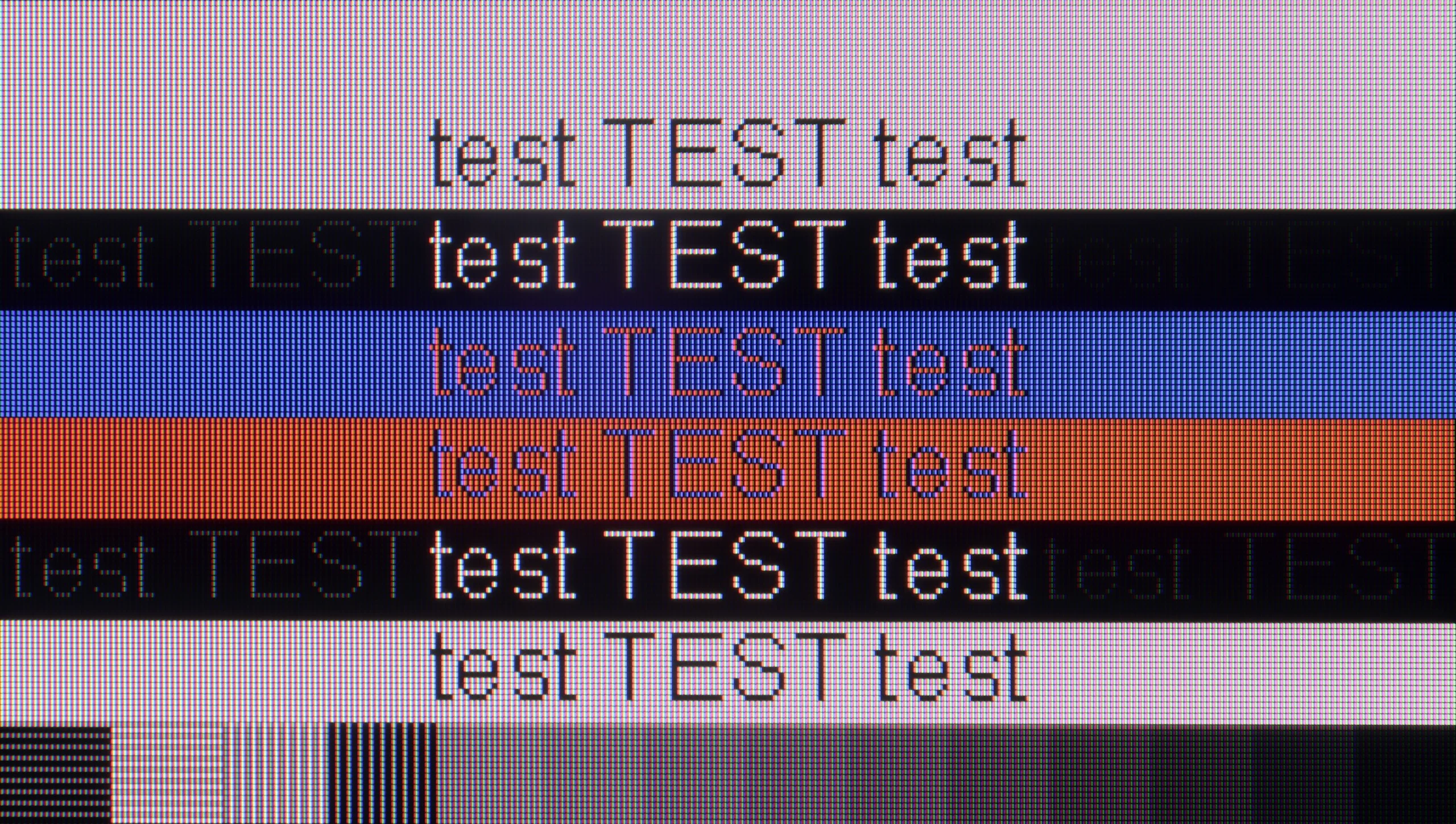
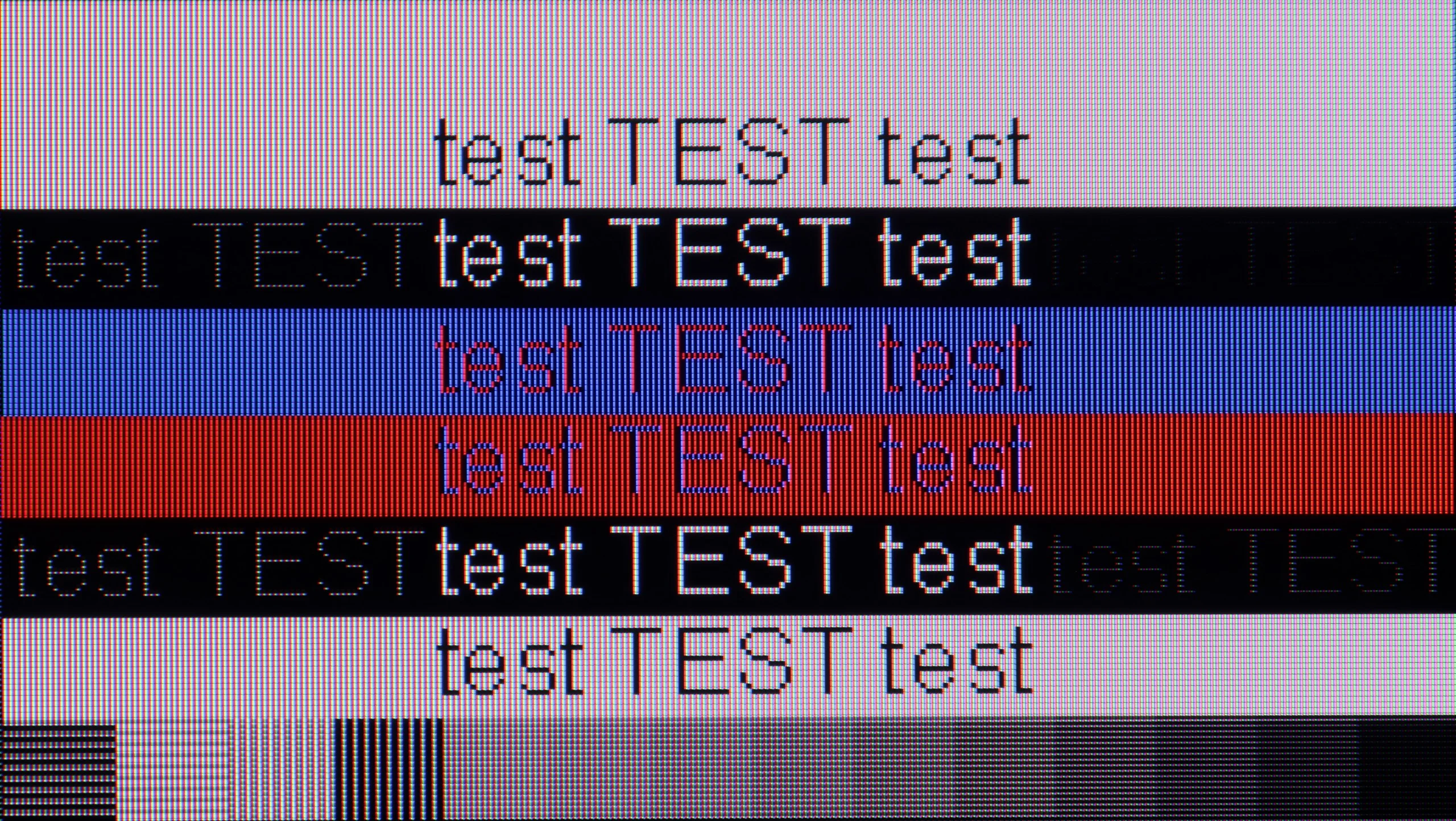
The photo shows the legibility of small fonts. Ideally, lines should be the same thickness on both light and dark text, with minimal pixel gaps.
Philips PUS9010 (2025) is a very good TV for using with a PC. The manufacturer has provided a dedicated 144 Hz mode for PC gamers, and the TV correctly supports variable refresh rates for both NVIDIA and AMD cards. G-Sync and FreeSync features work seamlessly, making PC gaming smooth and free of screen tearing. Now that we know the TV is very suitable for gaming, it's worth noting the readability of text, especially during daily work with a PC. The use of an IPS panel is definitely a plus here. Chroma has been implemented correctly, allowing for nearly perfect font reproduction. Text is sharp, clear, and does not cause problems even during extended use. However, out of our thoroughness, we must point out a minor detail. For very dark text, vertical and horizontal lines can have slightly different brightness levels. This is purely a technical flaw, practically unnoticeable in practice, especially in the case of the 75-inch variant, where the distance from the screen further masks this effect.
The M80H also works very well as a computer monitor. Gamers can use 4K resolution at 144 Hz with VRR and G-Sync, and input lag in PC mode is about 10 ms. A Full HD mode at 240 Hz is also available. The TV correctly displays chroma 4:4:4 at the maximum resolution and refresh rate. Combined with a classic RGB subpixel layout, this provides very good font legibility for both light and dark text. The M80H is therefore suitable not only for gaming but also for everyday desk work.
Viewing angles
5.8/10
3.1/10
The viewing angles on the Philips PUS9010 are very good, and this is one of the biggest advantages of the IPS panel. Compared to the variant with a VA panel, the difference is clear. The image maintains much better consistency, and colors remain stable even when viewing from a wide angle. Of course, with a change in position, the brightness level does drop slightly; however, the degradation of the image is much less than in the VA version. It is not the level known from OLED screens, but among LCD TVs, it can be considered one of the better viewing angles available on the market.
Viewing angles are one of the weaker points of the M80H. The TV uses a VA panel, which delivers better blacks and higher contrast than an IPS panel, but it looks worse when viewed from the side. Sit at a wider angle and colors start to lose saturation, blacks become noticeably lighter, and the whole image looks more washed out. That's a typical trade-off with this type of panel. The M80H is therefore best used when watched straight on or from only a slight angle.
Daytime performance
5.4/10
5/10
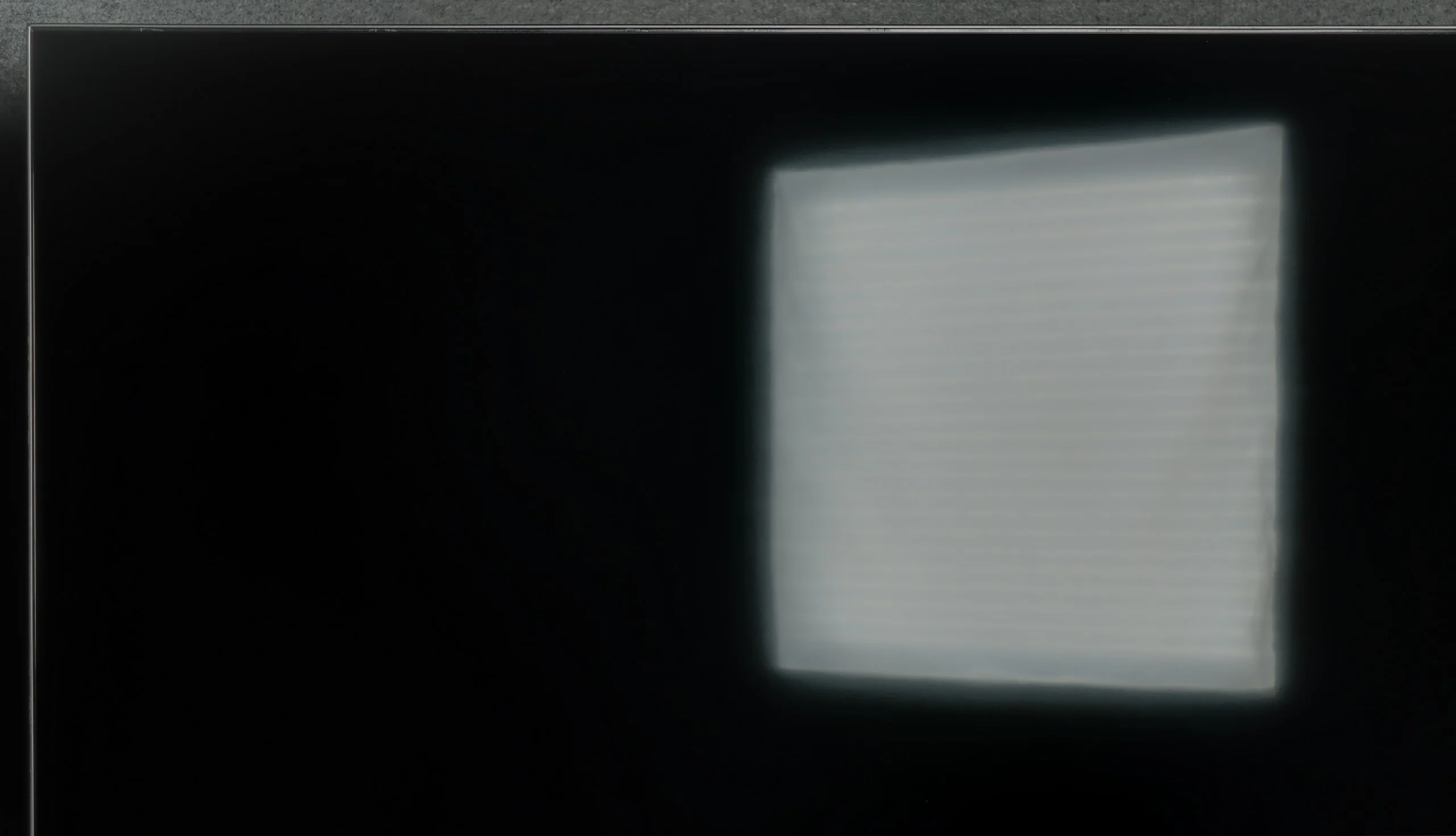
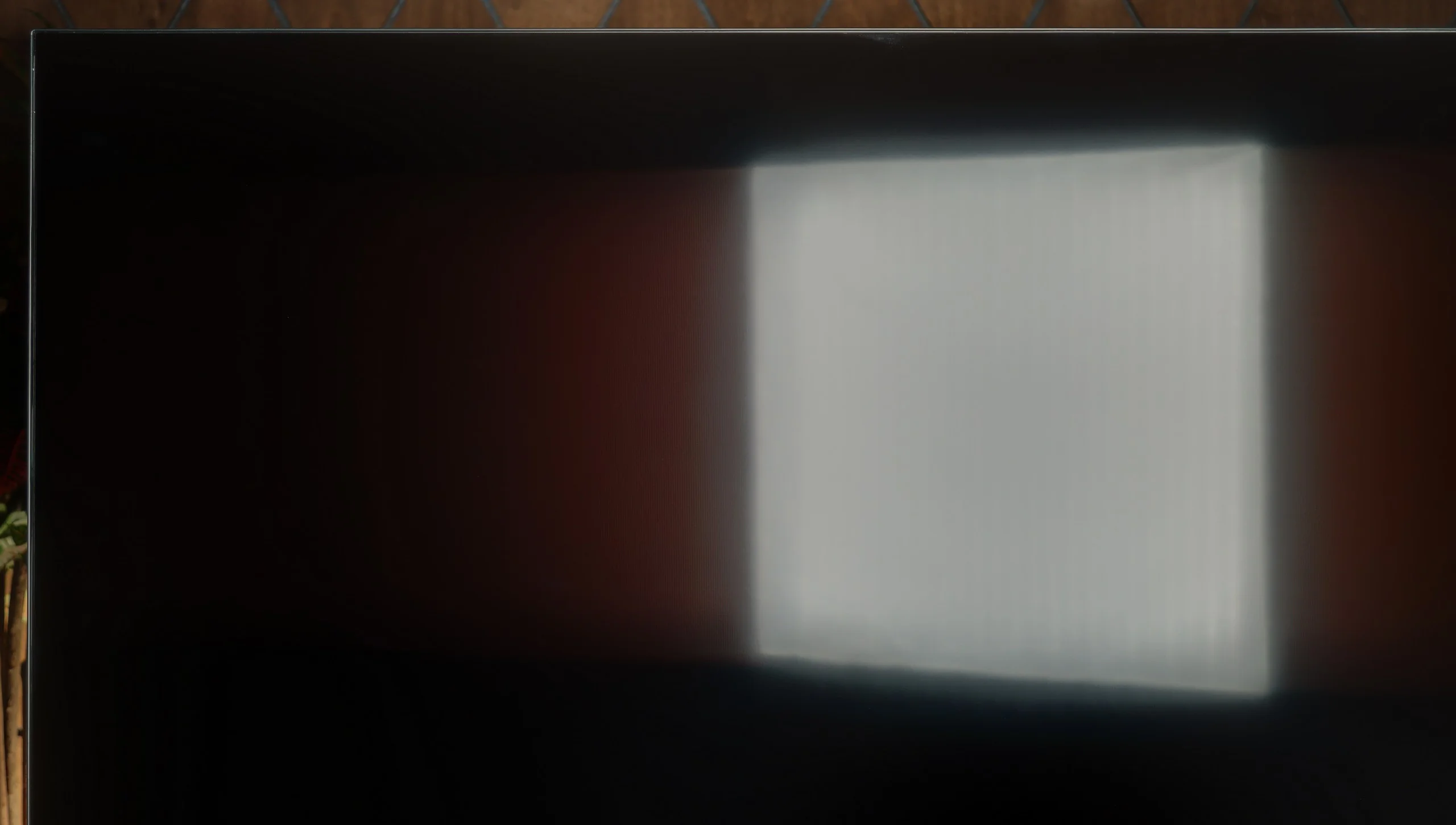
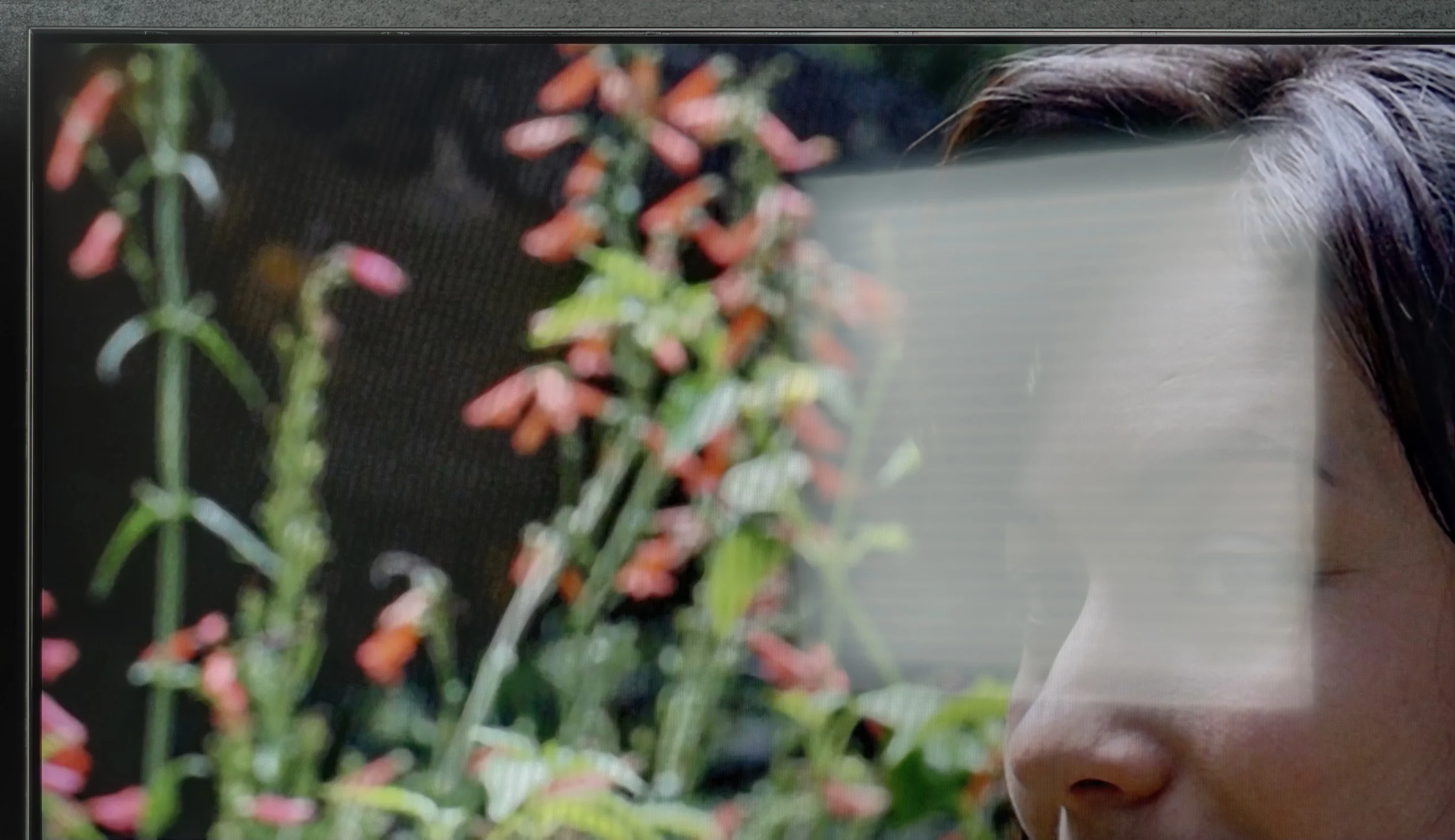
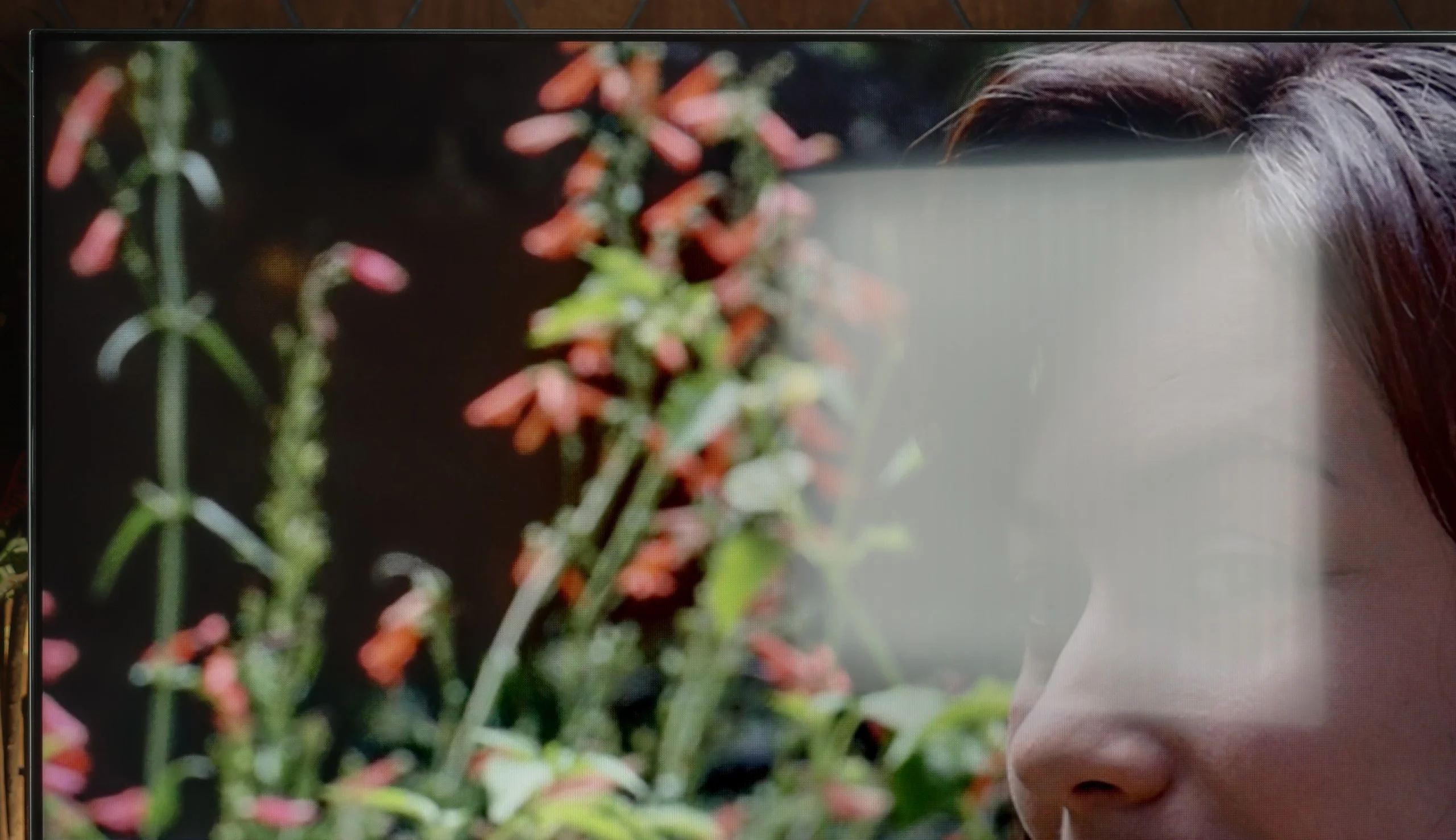
Panel brightness
Samsung M80H: 345 cd/m2
PHILIPS PUS9010 (IPS): 398 cd/m2
In terms of usage in a bright room, the Philips PUS9010 performs decently. The satin matrix used effectively dampens reflections and does not create a mirror effect, which prevents the screen from being too distracting from light coming in from windows or lamps. Unfortunately, compared to the VA matrix variant, the television performs weaker. The screen is noticeably darker, which can be felt in a heavily sunlit room. Under normal daylight conditions, this does not pose a major problem, but in very bright surroundings, the difference compared to the VA version is noticeable.
In a bright room the M80H performs adequately but without much fanfare. Its satin coating reasonably reduces reflections, though with large windows or lamps placed opposite the screen they will still be visible. The blacks are a plus; they don’t become excessively gray when the lights are turned on. SDR brightness is about 345 nits and remains stable regardless of the scene being shown. In a typical living room that should be enough for comfortable daytime viewing. In a room with very strong sunlight, however, the picture may not be vivid enough.
Panel details
Subpixel Structure:
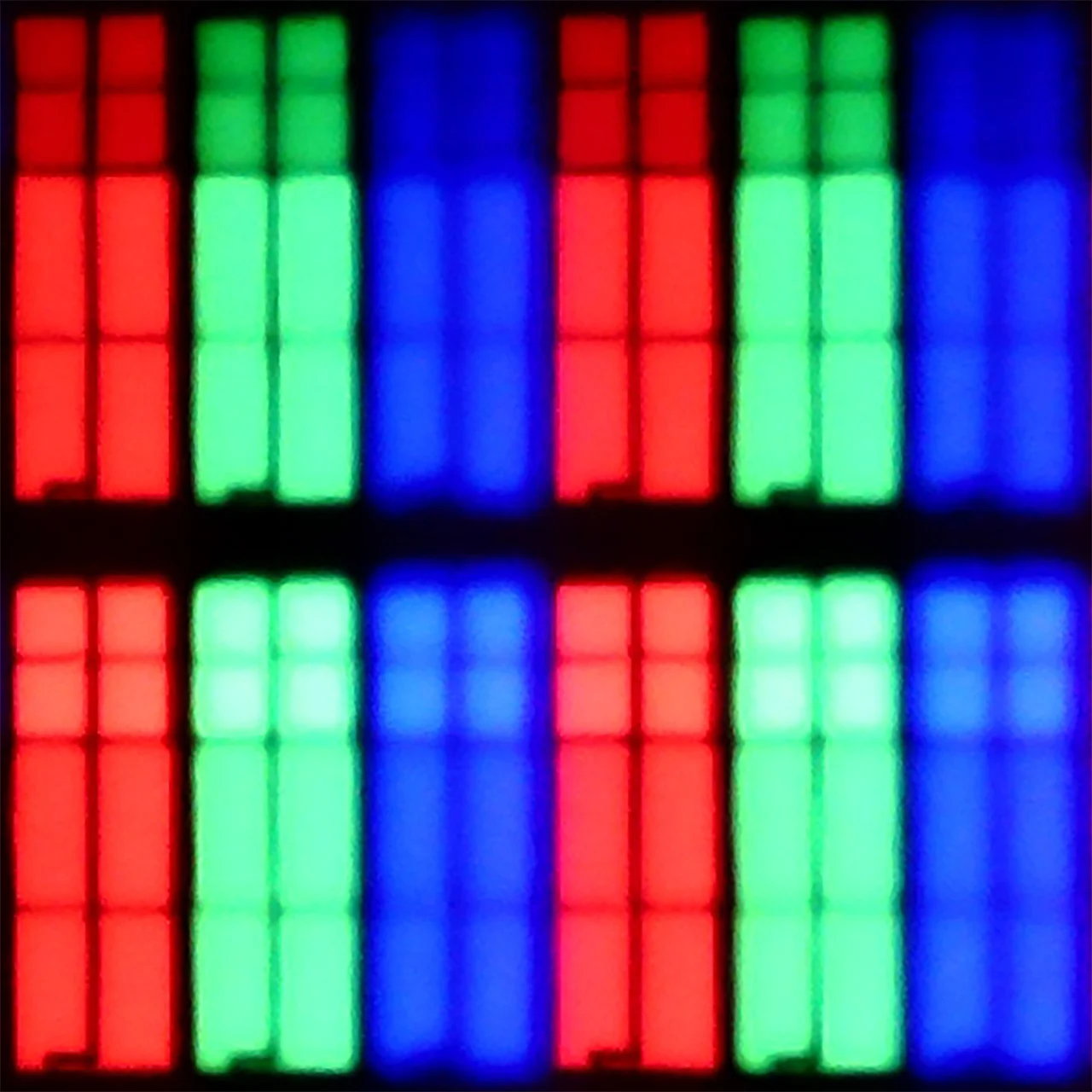
Panel uniformity and thermal imaging:
PHILIPS PUS9010 (IPS)
Samsung M80H
TV features
6.1/10
7.3/10
- SystemTitan OSTizen
- System performanceDecentVery good
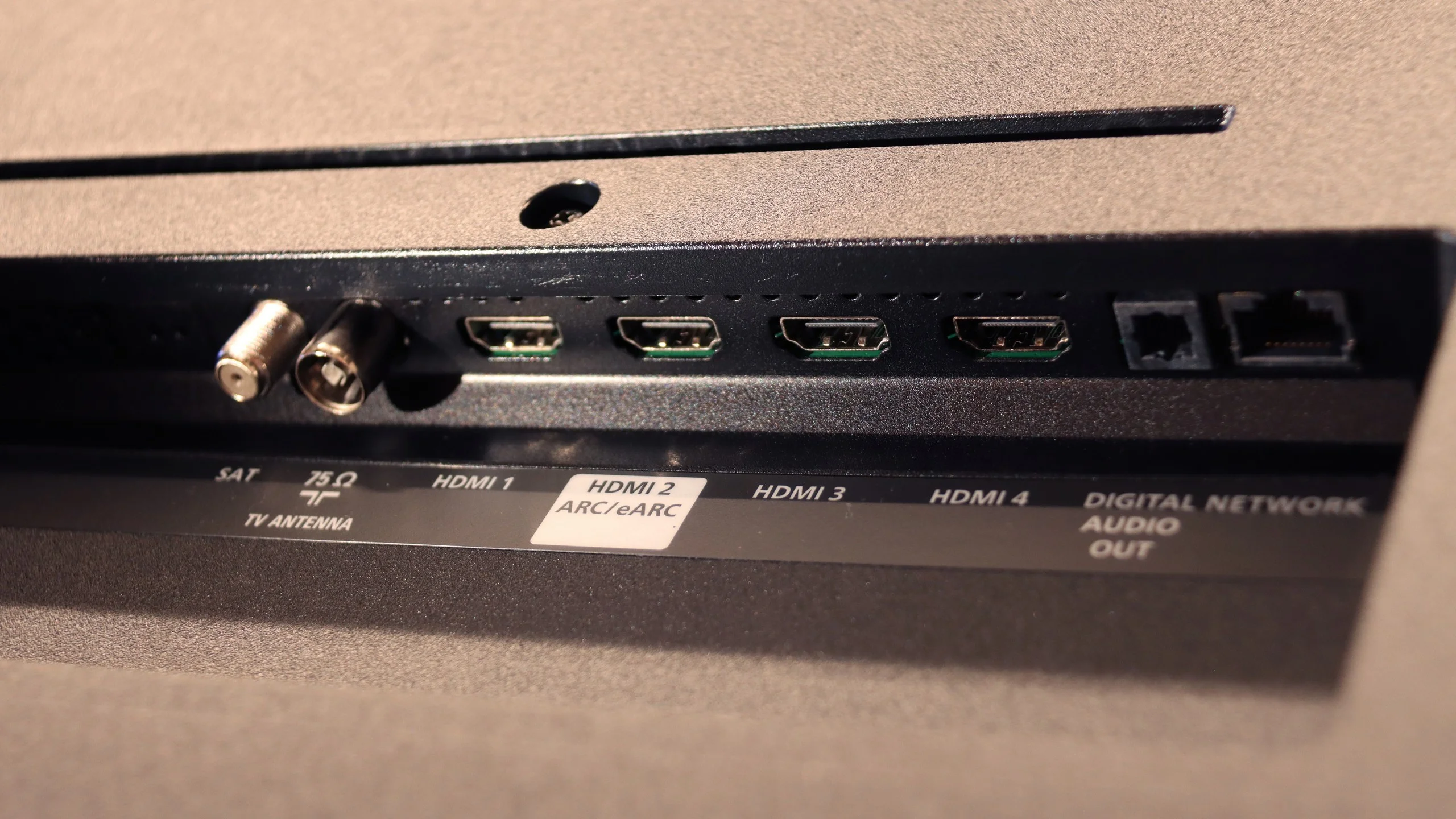
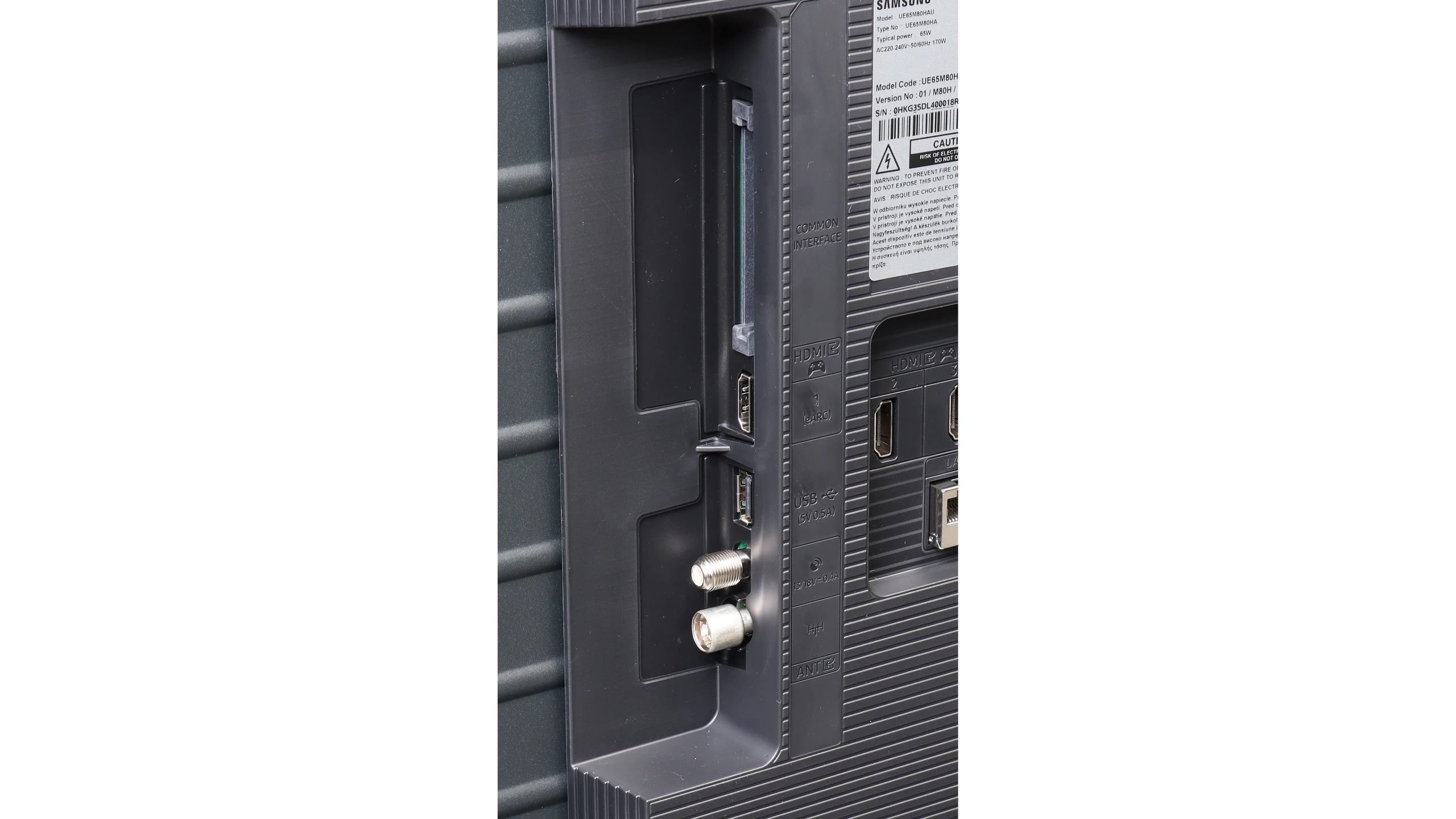
- HDMI inputs2 x HDMI 2.0, 2 x HDMI 2.1 48Gbps0 x HDMI 2.0, 3 x HDMI 2.1 48Gbps
- Other inputsToslink (Optical audio)
- OutputsToslink (Optical audio), eARC (HDMI), ARC (HDMI), Mini-Jack (Headphones)eARC (HDMI), ARC (HDMI)
- Network InterfacesWi-Fi 2.4GHz, Wi-Fi 5GHz, Ethernet (LAN) 1GbitWi-Fi 2.4GHz, Wi-Fi 5GHz, Ethernet (LAN) 100Mbps
- TV receptionDVB-T, DVB-T2, DVB-S, DVB-S2, DVB-CDVB-T, DVB-T2, DVB-S, DVB-S2, DVB-C
Classic features:
- Recording to USB (terrestrial TV)
- Recording programming
- Picture in Picture (PiP)
- RF remote control (no need to aim)
- Backlit remote control
- Teletext
- Audio only mode
- Bluetooth headphones support
- Simultaneous Bluetooth headphones & TV audio
Smart features:
- AirPlay
- Screen mirroring (Windows Miracast)
- Voice search
- Voice search in native language
- Ability to connect a keyboard and mouse
Sound connection options
- HDMI audioeARC (HDMI), ARC (HDMI)eARC (HDMI), ARC (HDMI)
- Other audio outputsToslink (Optical audio), Mini-Jack (Headphones)
- Wireless audioBluetoothBluetooth
Supported audio formats (external HDMI eARC audio):
- Dolby Digital Plus 7.1
- Dolby True HD 7.1
- Dolby Atmos in Dolby Digital Plus (JOC)
- Dolby Atmos in Dolby True HD
- DTS:X in DTS-HD MA
- DTS-HD Master Audio
Senior accessibility
- Numeric keyboard on TV
- Font size adjustment
- Audio description
Classic TV Features
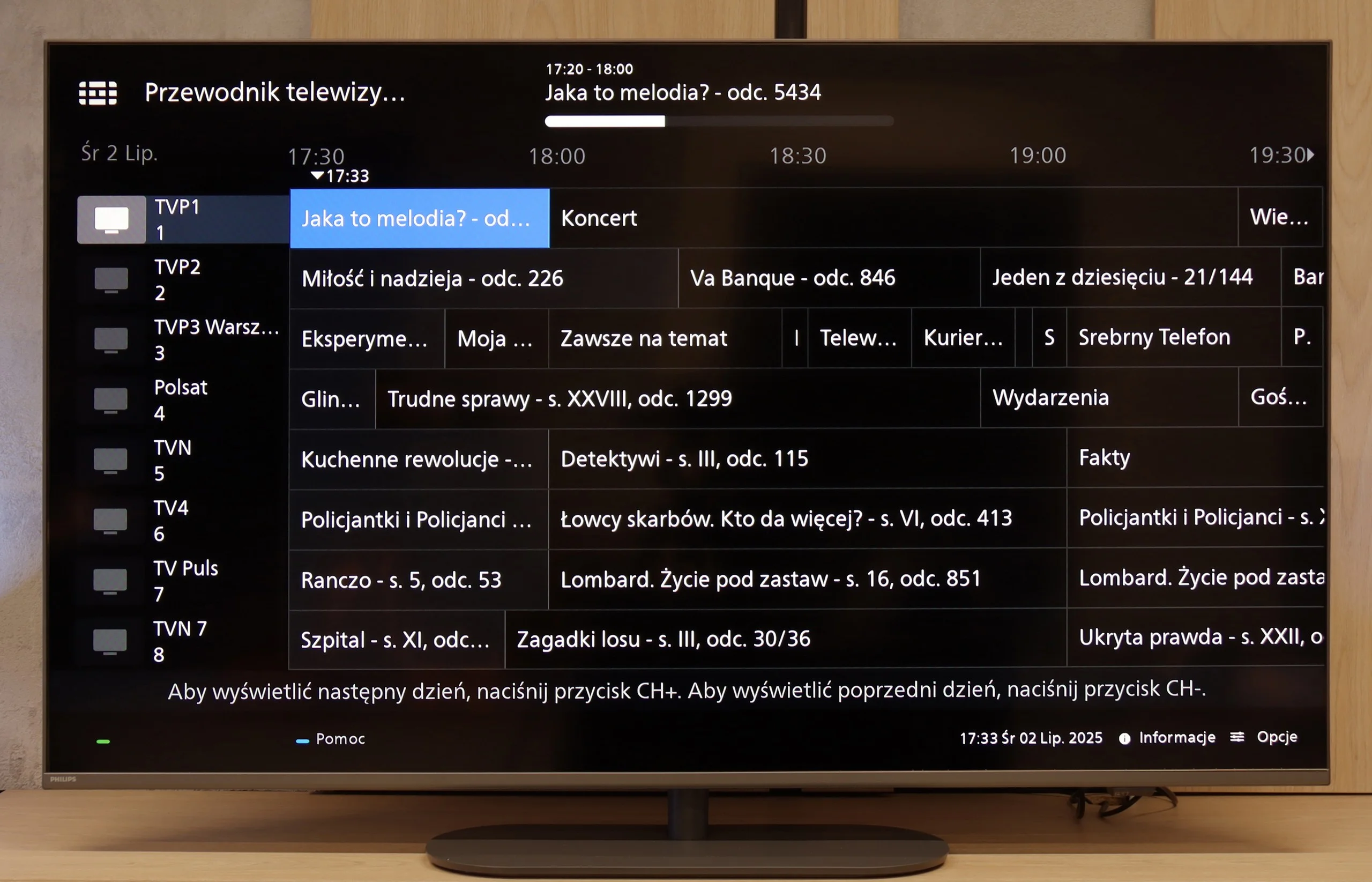
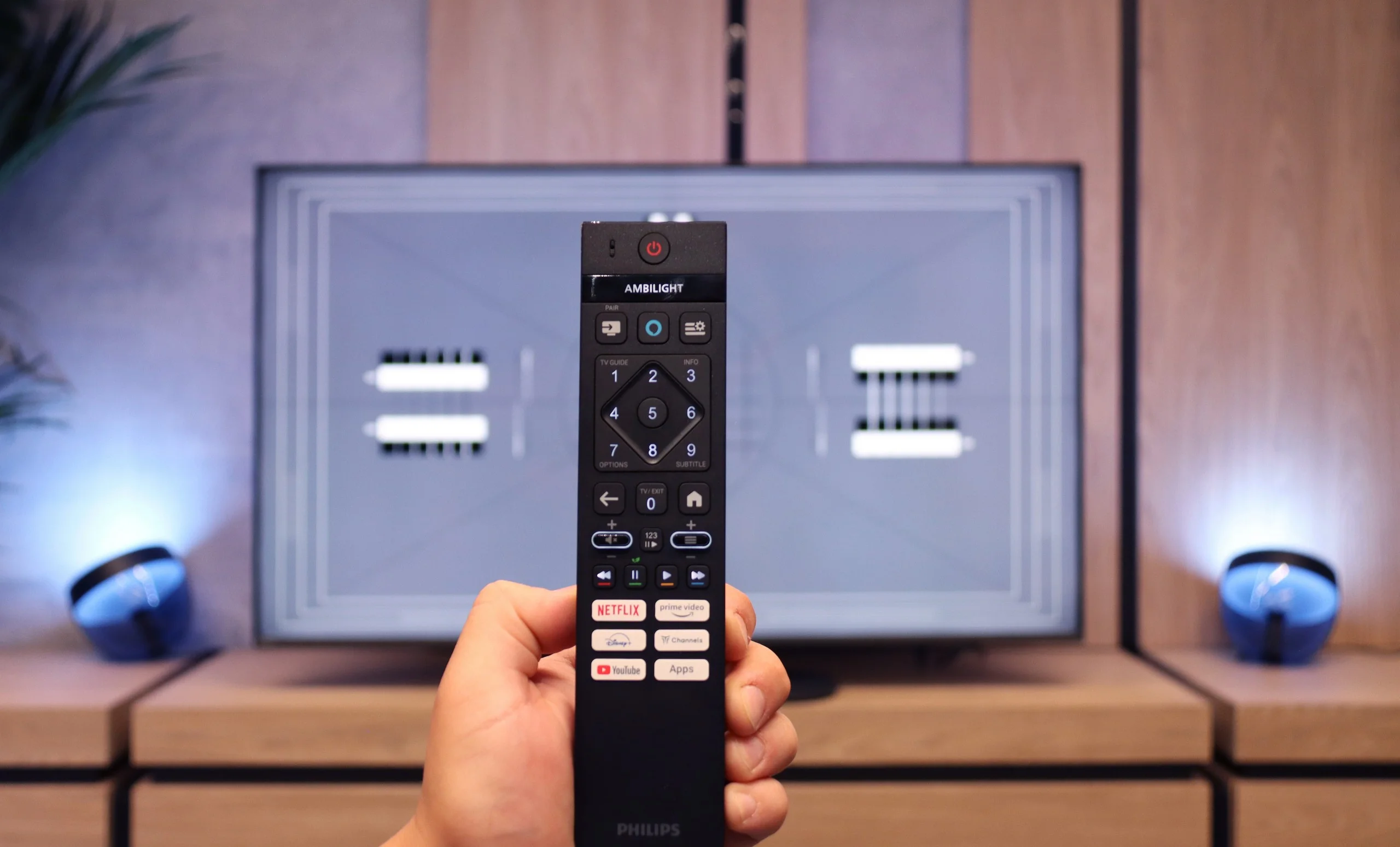
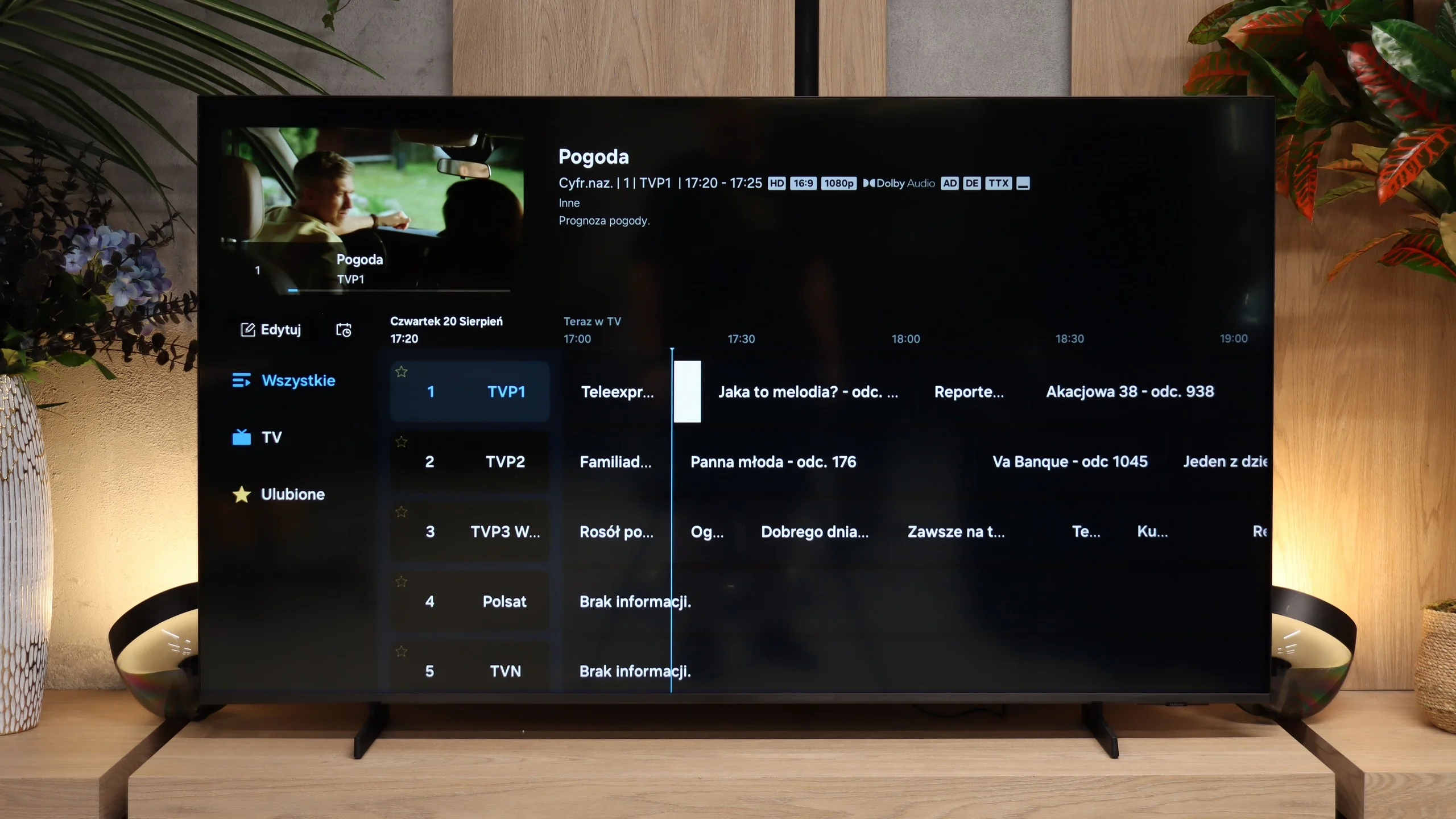
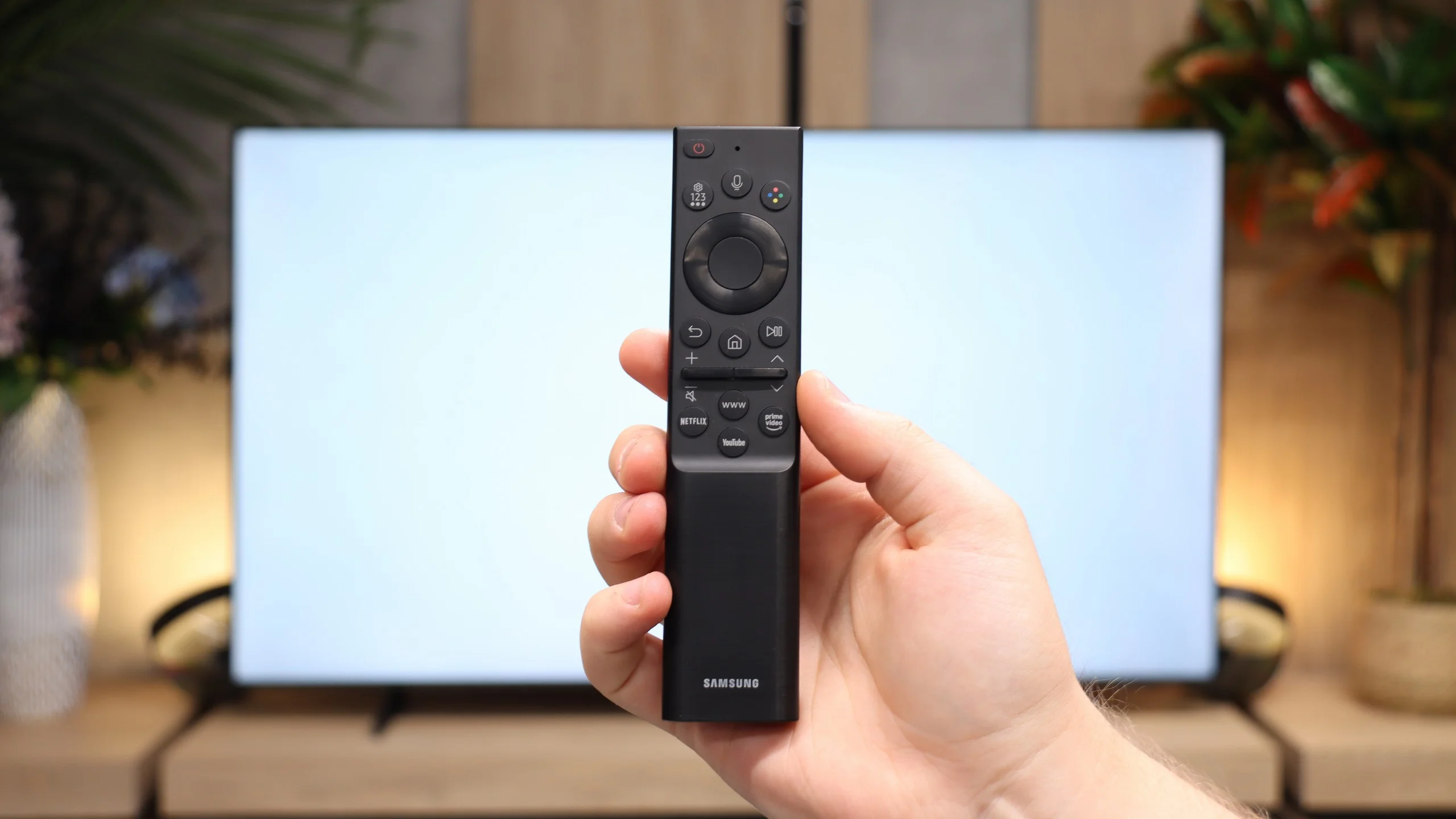
When it comes to classic features, the Philips PUS9010 is rather average. On board, you will find basics such as EPG, teletext, and the ability to connect headphones via Bluetooth. However, that's basically where the list of stronger points ends. Unfortunately, it lacks USB recording and a PiP (picture-in-picture) mode. These are features that are becoming less common, but they can still be useful in everyday use. On the plus side, there's a remote control with a numeric keypad. It's modern, backlit, and visually makes a very good impression. It's just a shame that it's still an infrared remote, so it requires aiming at the screen. With such a modern look, Bluetooth radio control would have been a welcome addition.
Smart TV
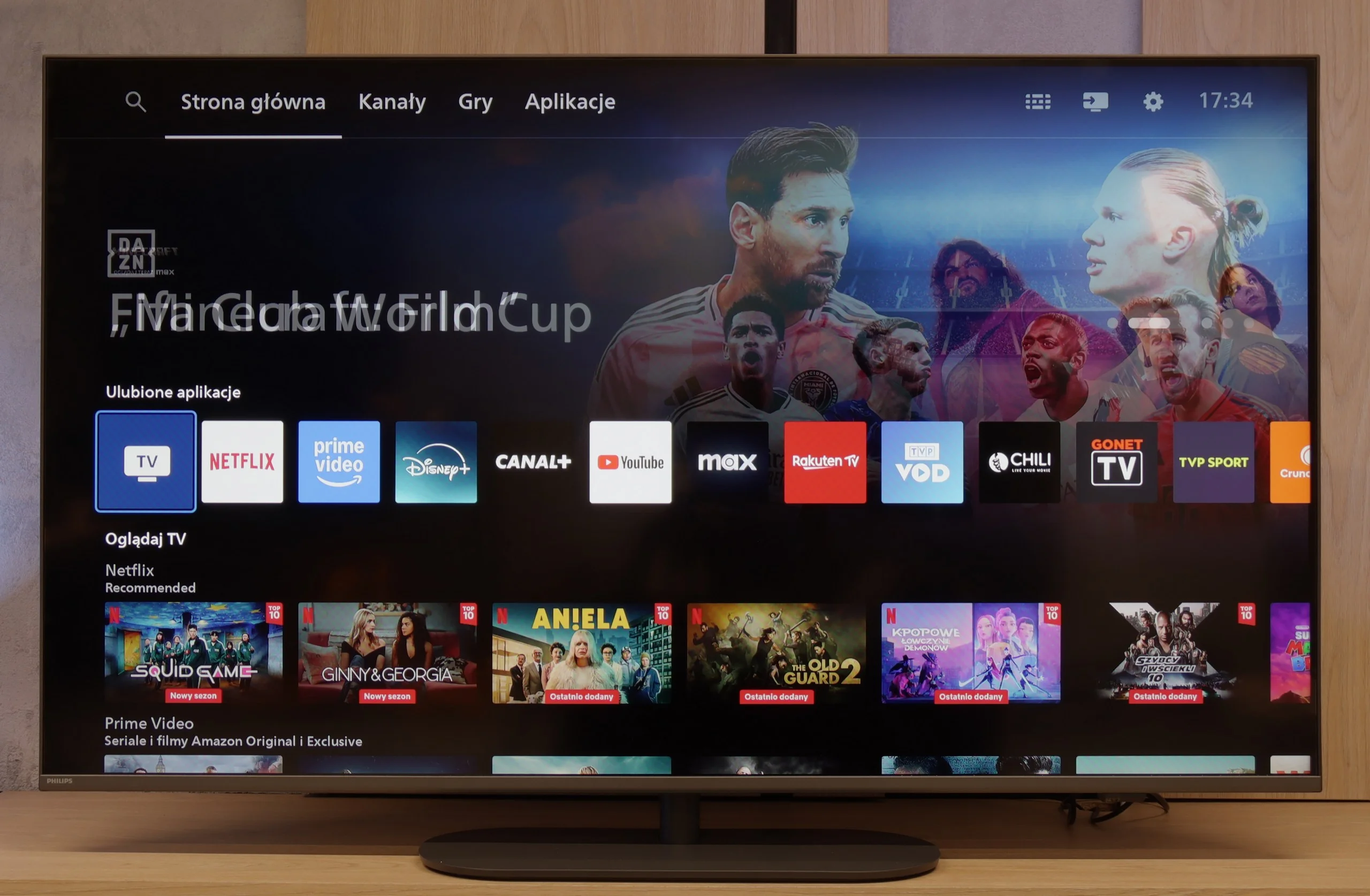
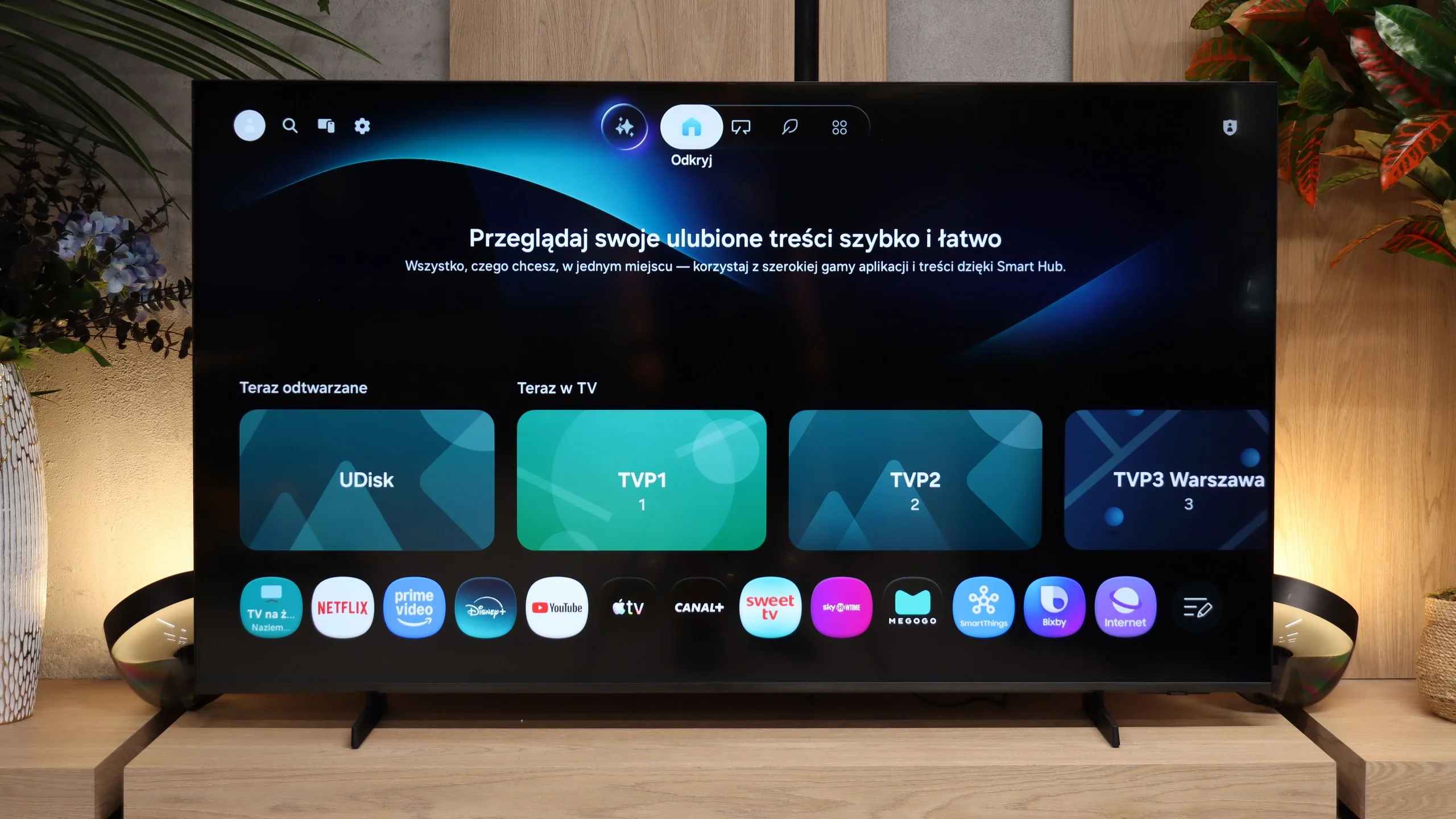
Most Philips televisions from 2025, including the PUS9010, run on the Titan OS system. This is still a relatively young platform, and unfortunately, its limitations are still evident. The system itself runs quite smoothly, clearly better than in the manufacturer's cheaper models, and during testing, it did not have any issues with screen mirroring or AirPlay, which is still not a given. However, the biggest drawback remains the limited number of available applications. This can be partially circumvented by connecting a keyboard and mouse to the TV and using the built-in web browser, but this is more of an emergency solution than a convenient everyday option.
Smart TV system
The M80H runs Tizen, the same system used across Samsung TVs. It's fast, stable, and offers all the most popular streaming apps, so you don't have to worry that a lower-tier model would be missing any major services. It also supports AirPlay, Miracast, and voice search. The TV works with SmartThings, so you can use it to control smart home devices.
TV features
Conventional TV features are weaker. The M80H doesn't allow recording programs to a USB drive or scheduling recordings. It also lacks picture-in-picture. On the plus side, it keeps the basics, like teletext and the ability to turn off the screen while leaving the audio playing. You can connect Bluetooth headphones to the TV, and audio can play simultaneously through them and the built-in speakers. That's useful if one viewer needs higher volume, for example seniors. The TV comes with a simple Smart remote with a limited number of buttons. Unfortunately it's not the solar-powered version found on some other Samsung models, and the remote uses regular batteries. Fortunately it connects to the TV via radio, so you don't need to point it directly at the screen.
Apps
6.7/10
9.3/10






















Playing files from USB
7.9/10
9.1/10
Supported photo formats:
Maximum photo resolution:
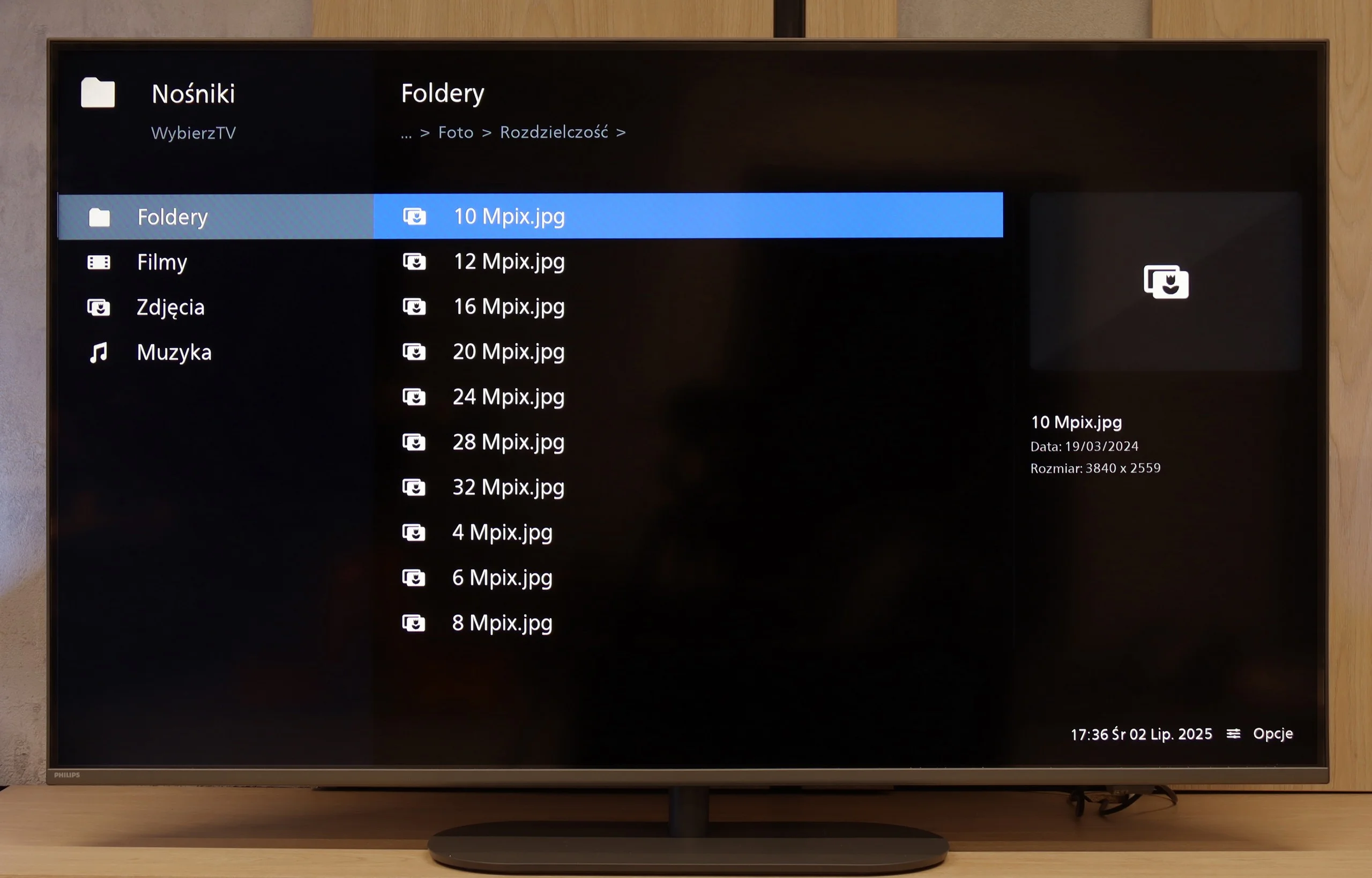
The media player in the new Philips is a solid standard. It handles most popular video and audio files, operating stably and predictably. While fans of rarer subtitle formats or specific image resolutions may feel a bit deprived, the built-in software takes care of the average user. It's a convenient solution that allows us to avoid using external equipment to play materials from an external drive.
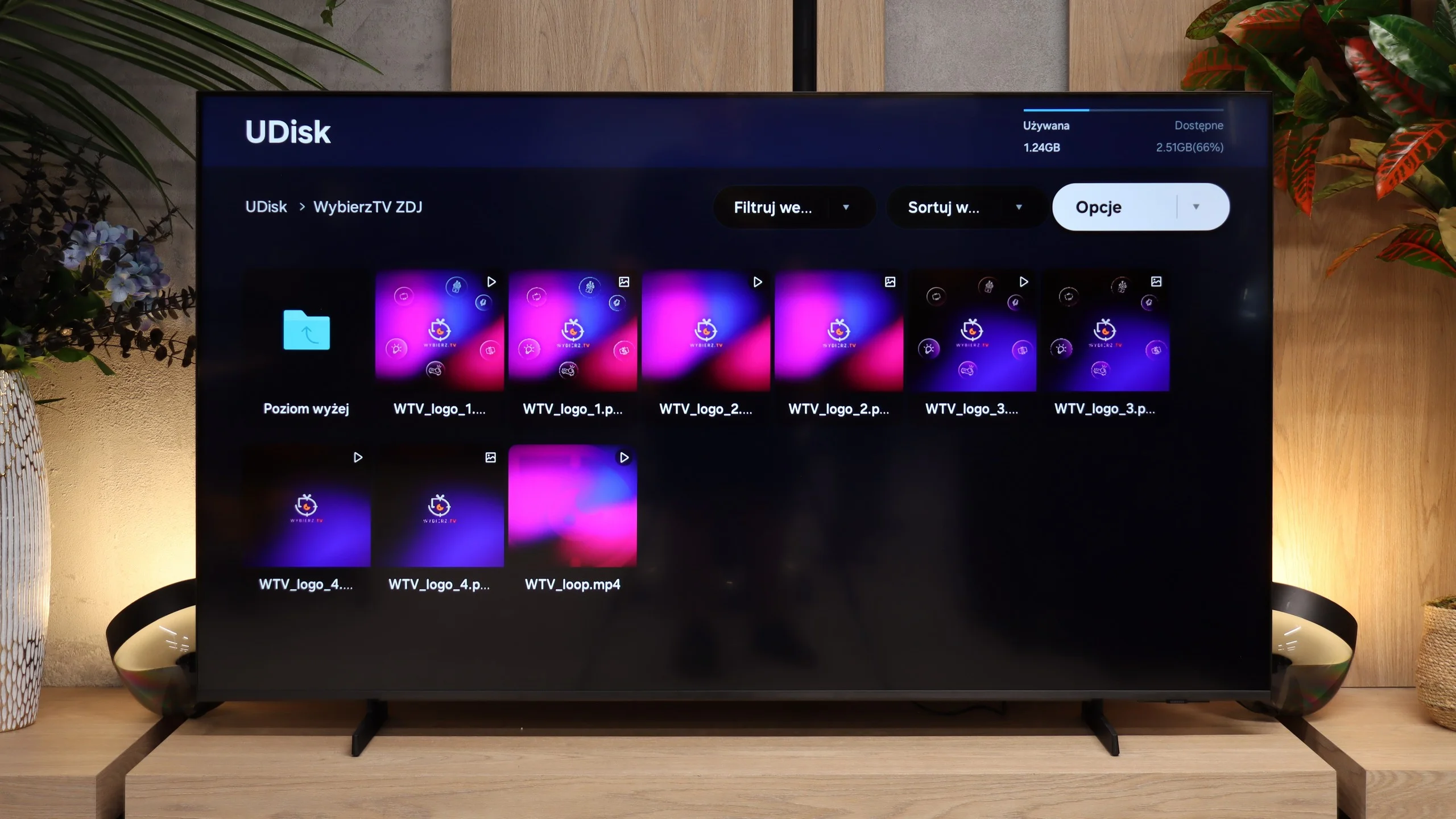
The built-in USB player handles most popular video and photo formats. It easily displays JPEG, PNG, and BMP files, even in high resolution. However, it lacks support for HEIC, the format used, among others, by iPhones. In practice this probably won’t be a big issue, because the M80H supports AirPlay and most people will likely use that to show vacation photos on the TV. 😉
Sound
6.6/10
6/10
- Maximum volume85dB88dB
- Dolby Digital Plus 7.1
- Dolby True HD 7.1
- Dolby Atmos in Dolby Digital Plus (JOC)
- Dolby Atmos in Dolby True HD
- DTS:X in DTS-HD MA
- DTS-HD Master Audio
The sound from the Philips PUS9010 is simply adequate. The tested unit offers a 2.0 setup with a total power of 40 W, which is completely sufficient for everyday watching of television, movies, or series. The sound quality is pleasant, but it's hard to speak of anything extraordinary, especially if you're looking for strong bass or greater dynamics. On the positive side, it should be noted that it supports a wide range of audio formats. When connecting a soundbar or home theater system, the TV easily handles Dolby Atmos and DTS without needing to fiddle with settings or losing sound quality. This is definitely good news for those planning external audio systems.
The M80H is equipped with a 2.0 speaker setup with 20 W of power. It performs adequately but doesn't stand out compared with TVs with similar audio systems. Dialogue is clearly audible and the speakers themselves don't add noticeable distortion. However, it definitely lacks bass, so music in particular can sound flat. If you want a somewhat fuller sound, consider a simple soundbar and connect it via HDMI eARC. The TV can also pass through Dolby Atmos audio that way. However, note that the M80H has no optical output, so you can't connect older audio equipment using that method.
Sound Quality Test
Acoustic Measurements
No acoustic data
88dBC (Max)
75dBC
Reader comments
Comments are provided by the external service Disqus (Zeta Global). Once loaded, Disqus may set cookies and process data about your activity.
We will remember your choice on this device. Provider's privacy policy