 Direct comparison
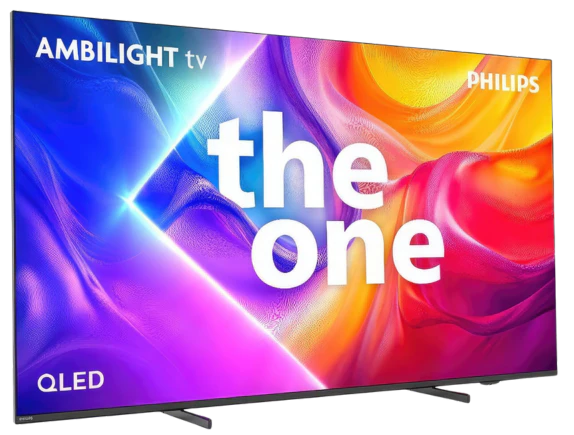
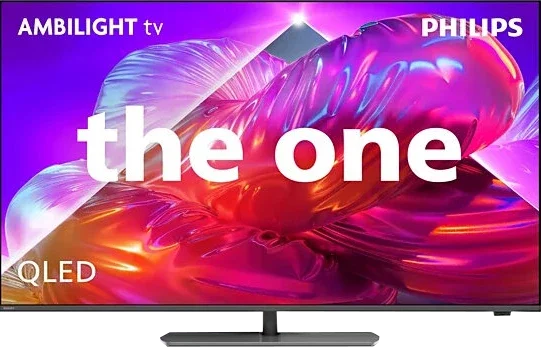
Philips PUS9010 (The One 2025) in the 75-inch version with an IPS panel is a television that clearly shows the differences resulting from the applied panel. Compared to the variant with a VA panel, it offers significantly better viewing angles, very good compatibility with consoles, and excellent text readability, but at the same time, it loses in terms of black levels and maximum brightness. This model is best suited for everyday use, gaming, and in larger living rooms where not everyone sits directly in front of the screen. The TV performs very well in terms of responsiveness and features for gamers, offering 144 Hz, low input lag, and full support for variable refresh rate. An additional advantage is Ambilight, which especially in the evening can enhance the viewing experience and partially mask the weaker black levels of the IPS panel. After calibration, the picture appears consistent and natural, and the differences compared to the VA version in color reproduction become hard to detect. On the other hand, it must be clearly stated that individuals focused on cinematic viewing in complete darkness may be disappointed. The weak black levels and increased brightness due to the quality of our particular unit made this variant of PUS9060 perform worse than the same model with a VA panel. Philips PUS9010 IPS is generally a sensible choice for users looking for a large, modern television for gaming, PC use, and everyday viewing with very good viewing angles. However, if deep blacks and better picture quality are a priority, it is worth considering other variants or a higher class of equipment, as often for a small additional fee, one can get a television equipped with mini-LED technology.
- Matching (Score) |
- Our verdict |
- TV appearance |
- Where to buy |
- Contrast and black detail |
- HDR effect quality |
- Factory color reproduction |
- Color reproduction after calibration |
- Smoothness of tonal transitions |
- Image scaling and smoothness of tonal transitions |
- Blur and motion smoothness |
- Console compatibility and gaming features |
- Input lag |
- Compatibility with PC |
- Viewing angles |
- Daytime performance |
- Panel details |
- TV features |
- Apps |
- Playing files from USB |
- Sound
The One 2025 / PUS9060 / PUS9010 / PUS9000

PQS9011 / PQS9001 / the one 2026
Available screen sizes: 75”
Panel type: LCD IPS
Resolution: 3840x2160
System: Titan OS
Model year: 2025
Complete the survey to find out the result
Panel type: LCD VA
Resolution: 3840x2160
System: Titan OS
Model year: 2026
Complete the survey to find out the result
Overall rating
6.5
6.8
 Movies and series in UHD quality
5.9
6.4
 Classic TV, YouTube
5.6
6.3
 Sports broadcasts (TV and apps)
6.7
6.8
 Gaming on console
8.1
7.4
 TV as a computer monitor
8.9
8.6
 Watching in bright light
5.4
6.1
 Utility functions
6.1
7.6
 Apps
6.7
7.2
 Sound quality
6.6
6.9
Complete the survey to find out what fits your preferences
Advantages

Very good viewing angles thanks to the IPS matrix
Excellent PC compatibility, 144 Hz mode, proper support for G-Sync and FreeSync
A wide range of features for gamers, variable refresh rate, automatic game mode, HGiG
Support for multiple HDR formats including HDR10+ and Dolby Vision
Support for Dolby Atmos
Low input lag
Effective P5 image processor for lower quality content
Ambilight system
Lighted remote control
Ambilight, which gives evening viewing sessions a unique atmosphere and improves the perceived native contrast of the VA panel
Excellent panel response time: minimal motion blur of moving objects
Many gaming features: four HDMI 2.1 ports, VRR, ALLM, HGiG
144 Hz refresh rate at 4K and 240 Hz at Full HD from a PC
Good coverage of a wide color gamut (PFS LED)
Dolby Vision, which actually helps the TV with HDR content
Decent brightness of around 500 nits, useful for daytime viewing
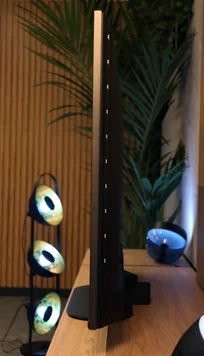
Rotating stand
Disadvantages

Poor black and contrast (typical for IPS panels)
Significantly lower brightness than in the VA panel variant
Visible backlight bleed at the edges of the screen in the tested unit
Limited number of applications in the Titan OS system
The remote control is still based on infrared, requiring aiming at the screen
No local dimming: average black levels at night and limited HDR performance
Smaller app library than the competition
Poor viewing angles (can be helped with a swivel stand)
Very high input lag in games with Dolby Vision
Significant errors in HDR color reproduction (no CMS adjustment available)
Infrared remote that requires aiming
Our verdict
The idea behind The One series has remained practically unchanged for years, and with the Philips PQS9001 this is both an advantage and its biggest weakness. Once again, we get a versatile mid-range TV whose main distinguishing feature is Ambilight. The lighting that follows what is happening on the screen can completely change the atmosphere of an evening movie session, and for many people it will be the main reason to choose this TV. That is hardly surprising, because once you get used to the effect, it can be difficult to go back to watching without it. The picture quality itself is good, but we have already seen a very similar level from this series in previous years. The VA panel provides decent blacks, colours are nicely saturated, and the brightness is sufficient for comfortable viewing in a typical living room. It is a shame, however, that Philips did not take another step forward and introduce at least basic local dimming. In a dark room, blacks can look noticeably bluish, and HDR, while clearly visible, does not make as strong an impression as it could. After so many years of The One being on the market, we would have expected a little more progress here.
There has, however, been a noticeable improvement in Titan OS. Compared with last year, and especially with the version from two years ago, the system has become much more pleasant to use. There are more apps, many smaller functions have been improved, and a number of irritating bugs we previously complained about have been fixed. Overall, it works reasonably well, although we are once again frustrated by the remote control, which still requires you to point it directly at the TV. Philips continues to rely on infrared for regular navigation, even though voice control uses a wireless connection. That makes it even harder to understand why the same connection was not used for navigating the menus. The One also has quite a lot to offer gamers. Four HDMI 2.1 ports and a broad set of gaming features are one thing, but what impressed us most was the panel’s response time. Our unit showed practically no visible smearing, even on dark backgrounds, which is quite rare for an LCD TV with a VA panel. Philips deserves a lot of credit for that. The ability to play at 4K 144 Hz or Full HD 240 Hz also makes the TV an interesting option for PC users. Unfortunately, there is still one unfinished element: using Dolby Vision in games on Xbox results in very high input lag.
The PQS9000 therefore leaves us with mixed feelings. It can surprise with excellent motion handling and shows that Philips has clearly worked on its operating system, but we do not see a similar step forward in picture quality. This is a TV we can recommend primarily to fans of Ambilight. If that lighting system is the main reason you are considering a Philips, then buying The One makes a lot of sense. It is still worth checking, however, whether you can find a Mini LED model with good local dimming at a similar price. Such a TV may offer deeper blacks and more impressive HDR performance. In the end, the choice comes down to what matters more to you: the atmosphere created by Ambilight or better picture quality itself.
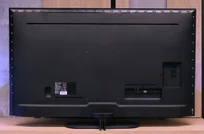
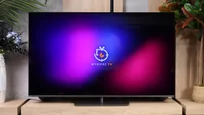
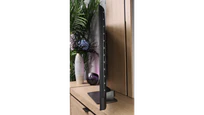
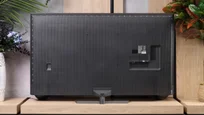
TV appearance



Contrast and black detail
2.9/10
5.8/10
Local dimming function: No
Local dimming function: No
Contrast:


Result
1,300:1

Result
1,400:1

Result
1,450:1

Result
1,500:1

Result
1,350:1
Result
5,500:1
Result
3,950:1
Result
5,600:1
Result
5,750:1
Result
4,500:1
Halo effect and black detail visibility:
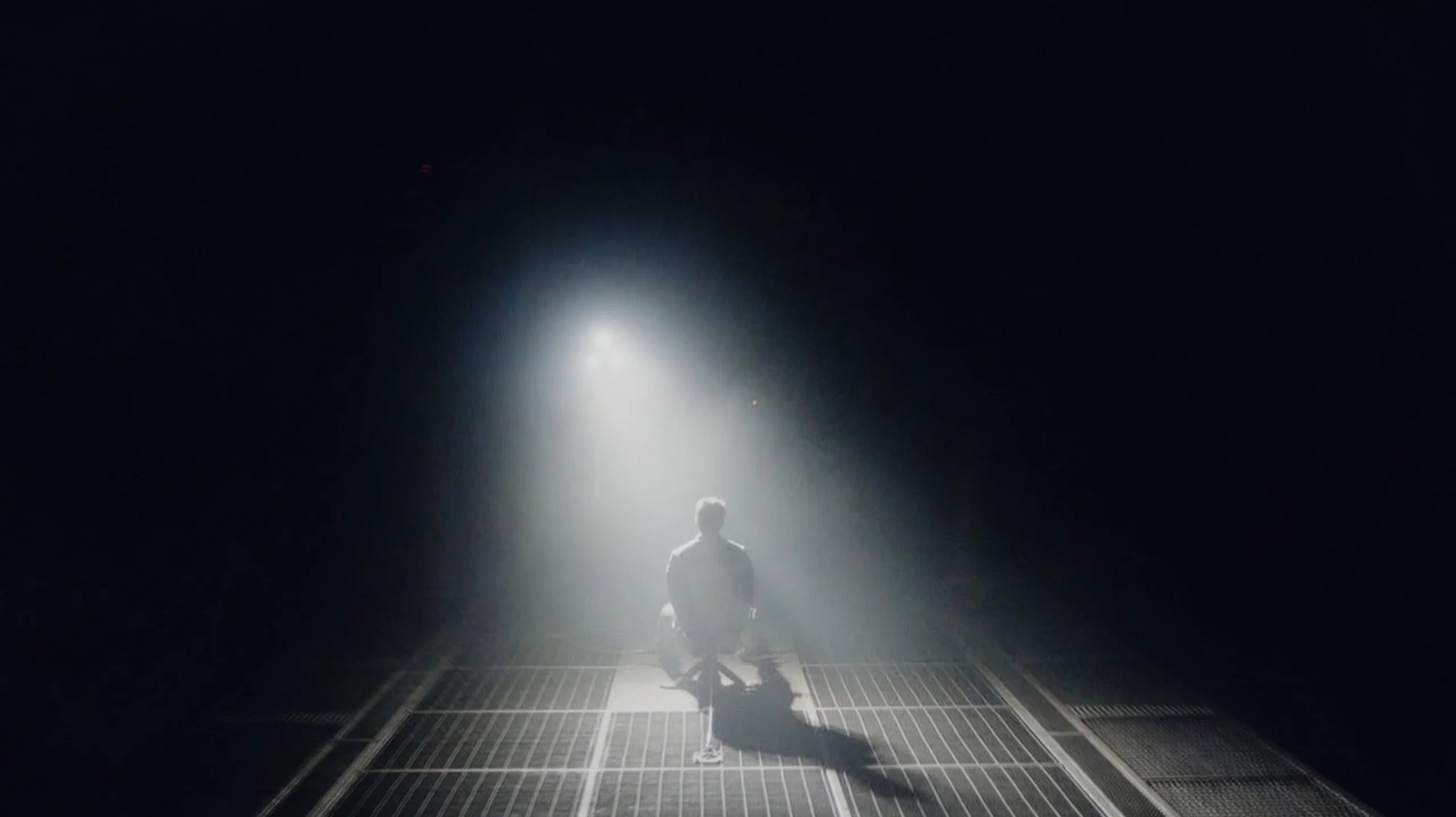
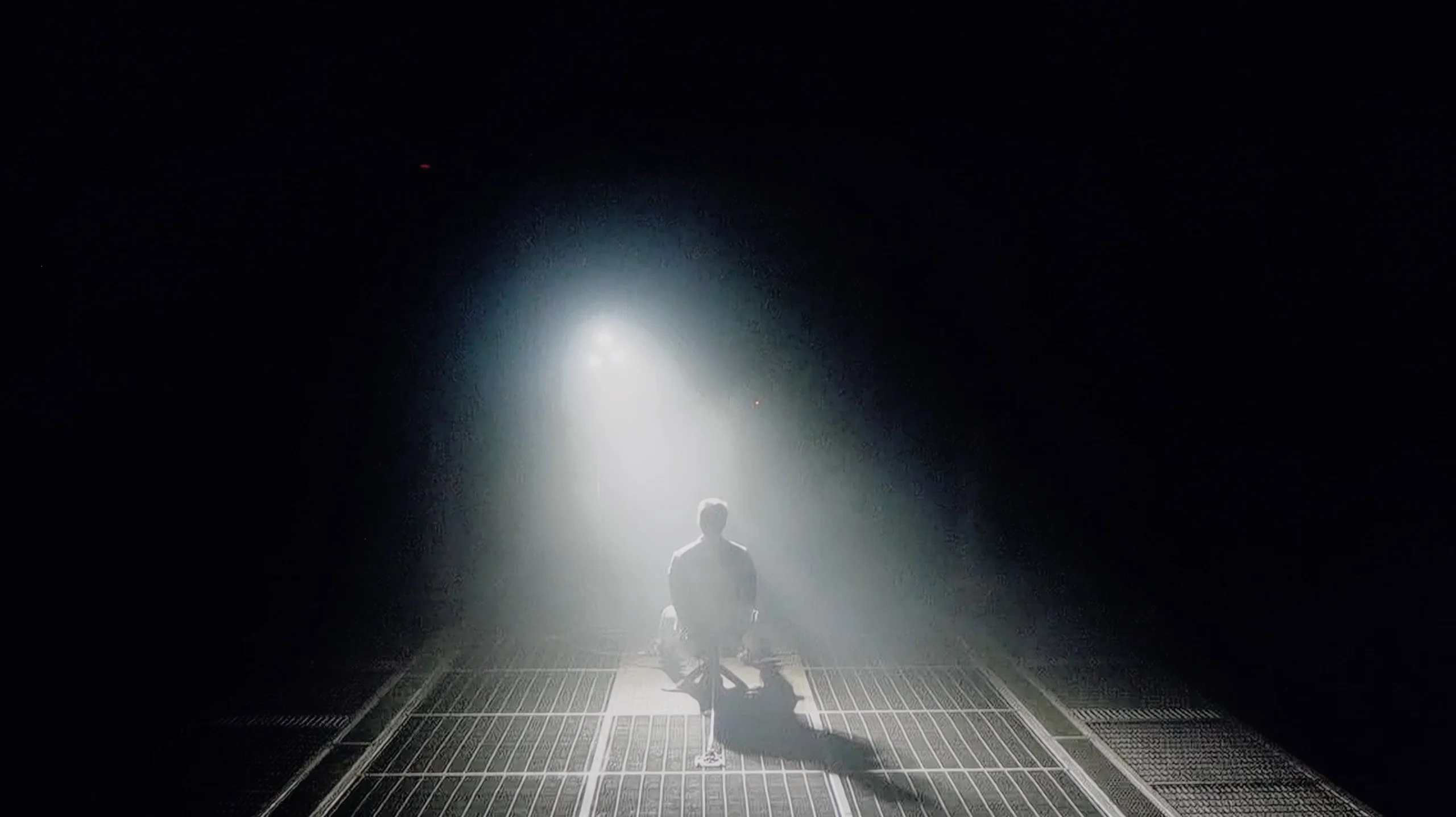
Check the visibility of bright lights on a dark background. Mini-LEDs often struggle with this. The photo does not compare black levels – that’s what the video below is for.
The video accurately shows differences in contrast and black levels between TVs, as well as potential issues: halo around bright objects or Mini-LED zone operation visible as brightness jumps.
In the 75-inch version of the Philips PUS9010 that we tested, an IPS panel has been used, which is immediately evident in terms of black levels and contrast. Compared to the 55-inch variant with a VA panel that we tested earlier, the difference is noticeable right from the first images. The black levels are shallower, and in a dark room, the screen clearly tends to gray. The TV is not equipped with local dimming, so when the light is off, dark scenes lose depth. In practice, the picture looks significantly worse than in the smaller 55-inch variant, particularly during movie screenings watched in the evening. The situation is somewhat salvaged by Ambilight. The rear lighting can subtly "deceive" the eye, improving perceived contrast and making black seem a bit deeper. It's a simple trick, but it works. That's why this model is definitely better watched with Ambilight turned on. It doesn't have to be a multi-color mode that tracks the image. Even a solid white backlight can enhance the viewing of dark scenes.
The black levels and contrast on the Philips PQS9000 are decent for an LCD TV without local dimming. That's mainly down to the VA panel; in our movie scenes contrast often exceeded 5000:1, and in weaker results dropped to around 4000:1. That delivers an image with quite good depth and a clear advantage over typical IPS panels, where black more easily looks gray. Unfortunately, that's about where the panel's strengths end. The TV lacks local dimming, so it can't dim a dark background separately while keeping bright highlights elsewhere on the screen. It only has global dimming, meaning it brightens or dims the entire backlight at once. In a completely dark room you can see these limits: blacks take on a dark navy tint, and shadowy scenes don't have the same depth as on a good locally dimmed screen. Luckily Ambilight helps here. The light on the wall makes the blacks on screen appear deeper and slightly masks the panel's glow. It doesn't change the TV's actual contrast, but it affects how our eyes perceive it. In this case Ambilight is therefore not just decoration, because it can also make evening viewing more pleasant.
HDR effect quality
5.2/10
5.5/10
Luminance measurements in HDR:

Result
374 nit

Result
383 nit

Result
397 nit

Result
391 nit

Result
401 nit
Result
449 nit
Result
467 nit
Result
487 nit
Result
486 nit
Result
507 nit
Scene from the movie “Pan” (about 2800 nits)


Scene from the movie “Billy Lynn” (about 1100 nits)

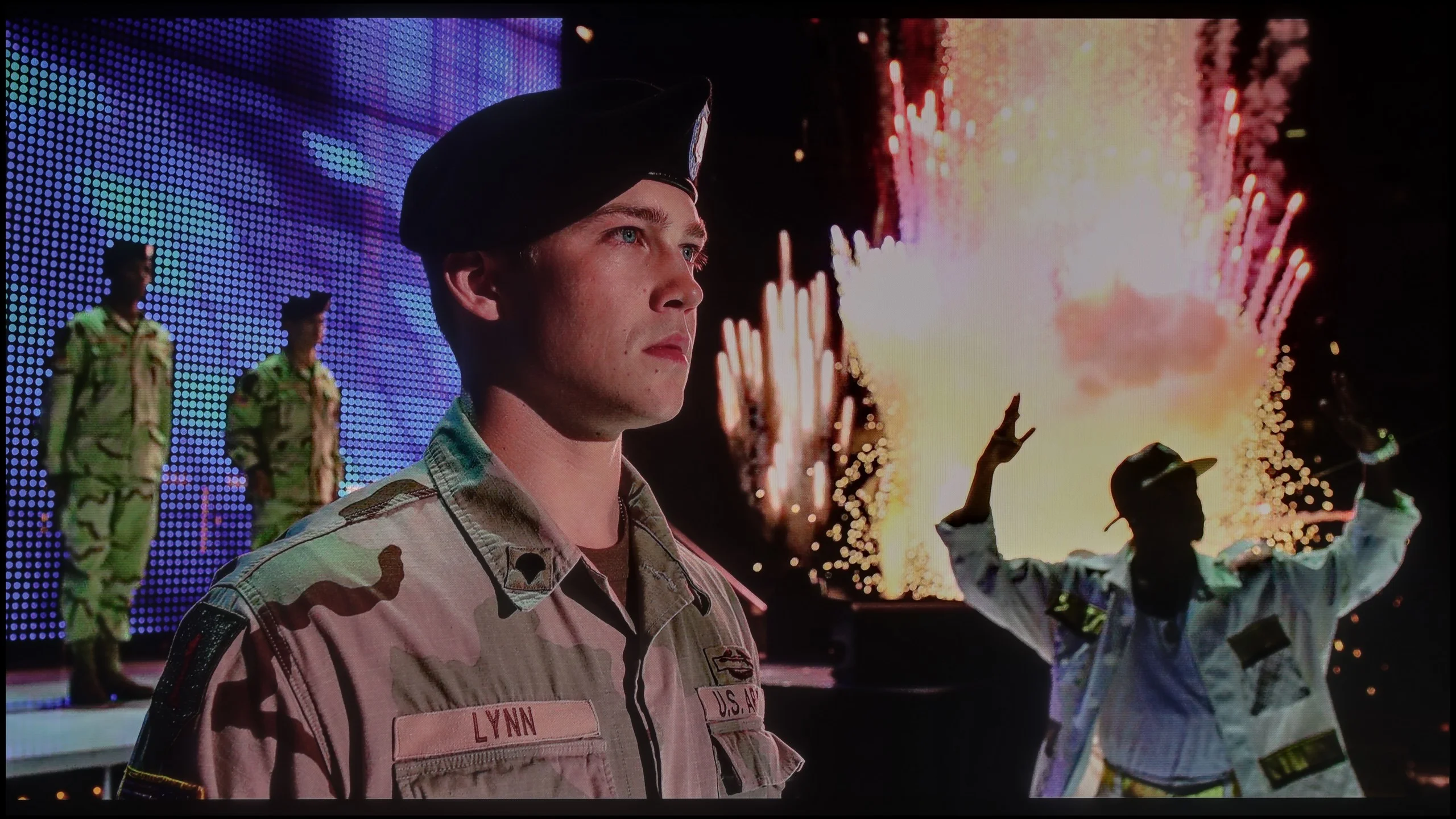
The photos show two HDR10 movies. 'Pan' is one of the brightest productions ever made, while 'Billy Lynn' (soldier) has brightness typical of streaming (Netflix, Prime, HBO MAX). Notice the intensity of effects and detail in whites.
Static HDR10


The photos present the visibility of white details in various HDR formats. They do not show brightness differences between TVs (these can be compared in the previous gallery).
Dynamic: Dolby Vision
Dynamic: Dolby Vision


The photos present the visibility of white details in various HDR formats. They do not show brightness differences between TVs (these can be compared in the previous gallery).
HDR luminance chart:
Philips PQS9011 / PQS9001 (The One 2026)
PHILIPS PUS9010 (IPS)
In the Philips PUS9010 version with an IPS panel, HDR brightness unfortunately falls short compared to the previously tested 55-inch variant with a VA panel. The difference is about 100 nits, which is clearly noticeable given the relatively low values. While the VA version could exceed 500 nits, here the maximum brightness reaches around 400 nits. This level still allows for watching movies and series in HDR, especially on streaming platforms, but the effects are clearly more subdued. Bright elements do not have as much impact, and scenes requiring high luminance appear less impressive. On the positive side, the coverage of the DCI-P3 color palette is commendable. The IPS version offers about 91%, which is roughly 5% more than the variant with the VA panel. This translates to slightly better color saturation in HDR content, despite the lower brightness. Colors can appear more vivid and consistent, particularly in colorful scenes.
Philips PQS9000 is a moderately bright TV; in our HDR scenes it reached roughly 450 to just over 500 nits. That's enough to notice a difference versus SDR. Sun reflections, lamps, and highlights have a bit more sparkle than on basic TVs, whose brightness often tops out around 300 nits. However, it’s not at a level where bright elements make a particularly strong impression. The biggest limitation remains contrast. Without local dimming, the TV raises the black level around a bright object when it brightens that object. That means there’s no clear separation between strong highlights and a dark background, and that contrast is what really shows off HDR. The PQS9000 offers more than the cheapest models, but despite decent brightness the effect stays fairly basic.
Colors
Philips deserves praise for the colors. Although the manufacturer labels this model QLED, a PFS phosphor is used here instead of quantum dots. That solution does not prevent good results, however. On test patterns and in measurements of film scenes we recorded about 94% DCI-P3 coverage and 75% BT.2020. For this class of TV that’s really good. In practice, it means the vast majority of colors used in HDR movies and series will have proper saturation. Lush greens and intense reds are not a major problem and add appeal to the picture. Limitations are easier to spot in some games and rarer content that uses the most saturated shades of the wide BT.2020 gamut. In those situations, displays with wider color coverage, such as SQD or RGB LED, can show more. In its price segment the PQS9000 has nothing to be ashamed of.
Factory color reproduction
5.9/10
5.1/10


This gallery shows how colors change after professional TV calibration. If you notice the difference, we recommend ordering this service at SkalibrujTV.com.
Factory Mode
After calibration
We assessed color reproduction, as always, using factory settings, focusing on movie mode, which in the case of Philips usually offers the best starting point. This is also a good moment to show how much the same TV model can vary depending on the panel used. Looking at white balance, the overall trend remains similar to the variant with a VA panel. There is still excessive red in the whites, but in the tested unit with an IPS panel, there are also deficiencies in the blue channel. As a result, the image has a slightly different color character, which can be clearly seen in the comparative materials. This is a very good example showing why ready-made settings downloaded from the internet may not always work even within the same model.
However, returning to the assessment itself, this unit performs quite well, especially in SDR content. Color tests show correct saturation and color consistency, without glaring errors that could interfere with everyday viewing. In HDR materials, slight deficiencies in reds are already noticeable, but these are not flaws that completely ruin the perception of the image. The biggest limitations do not stem directly from the colors but rather from whites and blacks. The use of an IPS panel and slightly lowered gamma results in the image being slightly boosted in brightness, while the weak black further affects perceived contrast. This makes the overall look brighter, but at the same time, it loses depth, especially during evening viewing.
Unfortunately, the PQS9000’s factory picture settings for Film mode need some fine-tuning. In SDR the biggest issue is an excess of red in the white balance, which makes whites, grays, and skin tones too warm, sometimes even slightly pink. On top of that, the gamma runs below the target across most of its range. The TV therefore brightens midtones and highlights, making the overall image look flatter than it should.
In HDR the white balance itself is much better. Aside from minor deviations, the components stay close to each other, so there isn’t the pronounced tint seen in SDR. However, the EOTF curve shows a slight brightening of parts of the image, and the biggest issue appears in measurements of the wide color gamut. Many hues deviate significantly from the reference, with errors reaching 8–9. So the good gamut coverage we praised earlier doesn’t mean the TV hits specific colors accurately. It can display a wide color range, but out of the box it doesn’t use it very precisely.
Color reproduction after calibration
8/10
7.7/10


The photos show how movies look on the TV. Pay attention to black detail visibility, colors, and shadow tint.


The photos show how movies look on the TV. Pay attention to black detail visibility, colors, and shadow tint.
After calibration, the image was brought to a really reasonable level. Everything looks coherent and natural, and when it comes to color reproduction, it's hard to definitively state whether we have a VA or IPS panel. This is a good sign, showing that the TV has a solid foundation for further adjustments. It's worth noting the larger color gamut coverage in this variant, which can slightly improve the reception of colorful scenes, especially in HDR content. However, this advantage is largely counterbalanced by the elevated blacks, resulting from the use of an IPS panel. Limited black depth affects perceived contrast, especially when watching in a dark room. As a result, despite the noticeable improvement after calibration, the final assessment remains the same as in the variant with a VA panel. Better colors are not able to fully compensate for the weaker blacks.
Calibration brought a big improvement, especially in SDR material. We managed to even out the white balance and remove the previous color cast, and the Color Checker measurements now look really very good. Colors are much closer to what should be on the screen, so with regular TV or SDR movies we can be satisfied with the result. Unfortunately HDR somewhat spoils that outcome. On one hand it's limited by the panel's capabilities, since calibration won't improve contrast or replace local dimming. On the other hand there are color errors we couldn't correct because the CMS settings, that is color management, were grayed out and inactive. For that Philips loses points with us. White balance can be fine-tuned, but without access to wide color gamut controls you can't correct colors in HDR as effectively. It's a shame, because the SDR results show the potential is there, it's just not allowed to be fully used everywhere.
Smoothness of tonal transitions
8.5/10
8.6/10
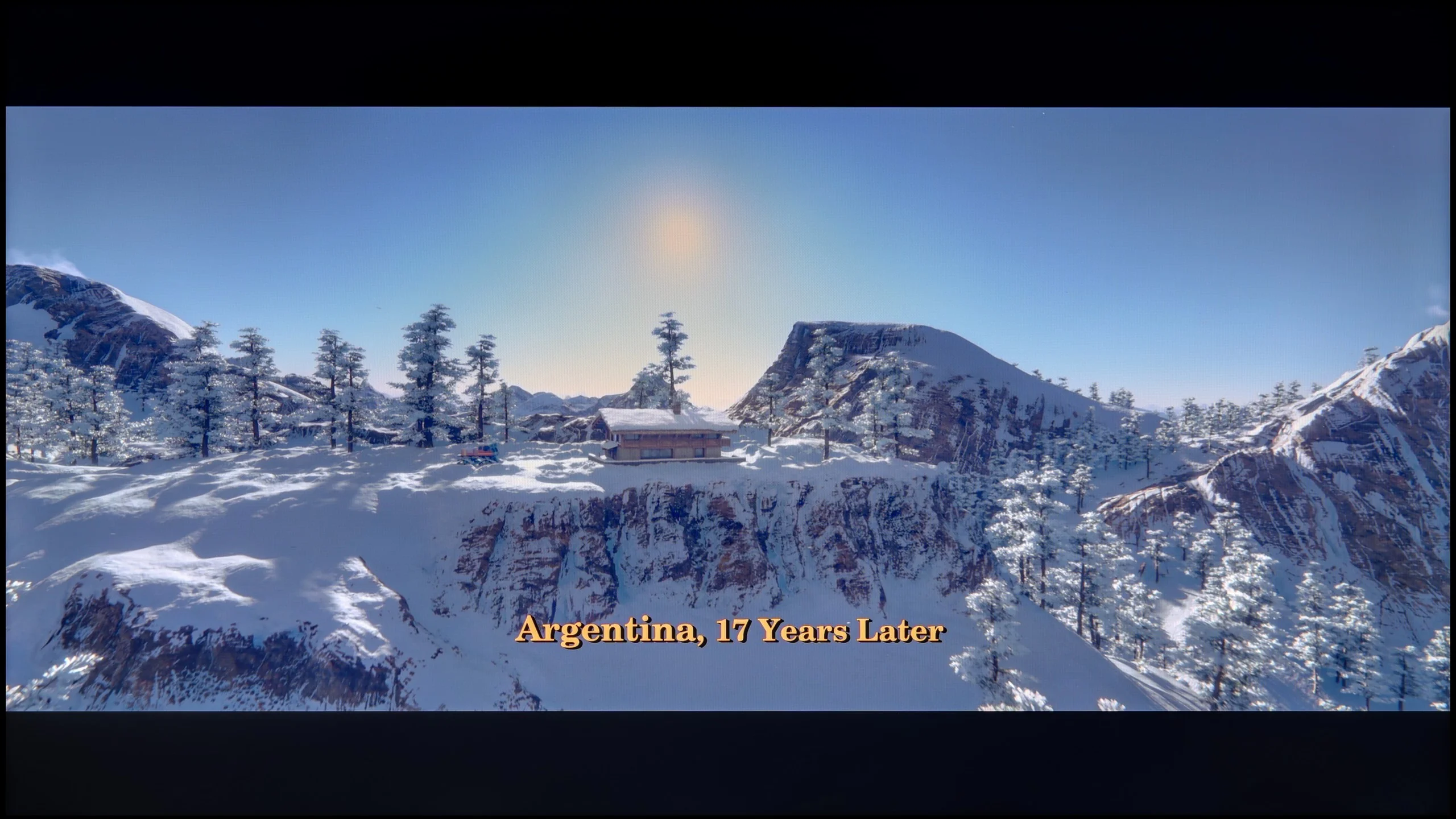




These are selected scenes that show smooth tonal transitions from one color to another. If you see distinct banding, it’s the TV panel’s fault.

These are selected scenes that show smooth tonal transitions from one color to another. If you see distinct banding, it’s the TV panel’s fault.

These are selected scenes that show smooth tonal transitions from one color to another. If you see distinct banding, it’s the TV panel’s fault.

These are selected scenes that show smooth tonal transitions from one color to another. If you see distinct banding, it’s the TV panel’s fault.
When it comes to the smoothness of tonal transitions, in the 75-inch version with an IPS panel, we have mixed feelings. Looking solely at colorful gradients, the transitions perform even better than in the version with a VA panel. The colors blend more smoothly, and typical banding issues are less noticeable. However, the situation changes drastically in dark scenes. The tragic black characteristic of IPS effectively ruins the perception of tonal transitions in low brightness areas. The boosted blacks make it difficult to see subtle shades of colors, and the very unnatural blooming of the panel further worsens the situation. In the tested unit, the backlight blooming was particularly visible at the edges, where the light practically leaked onto the screen. This not only negatively affects the perception of dark scenes but also significantly complicates an accurate assessment of the grading itself.
Philips PQS9000 handles tonal transitions very well. It’s especially noticeable in dark scenes, where shades blend smoothly into one another without visible banding or distinct borders between colors. As a result, even large uniform areas look smooth. Minor imperfections only appear in brighter tones, but you have to look closely to notice them. During normal viewing they are unlikely to distract from the movie. In this category Philips performs really well.
Image scaling and smoothness of tonal transitions
6.7/10
7/10

Smooth transition function
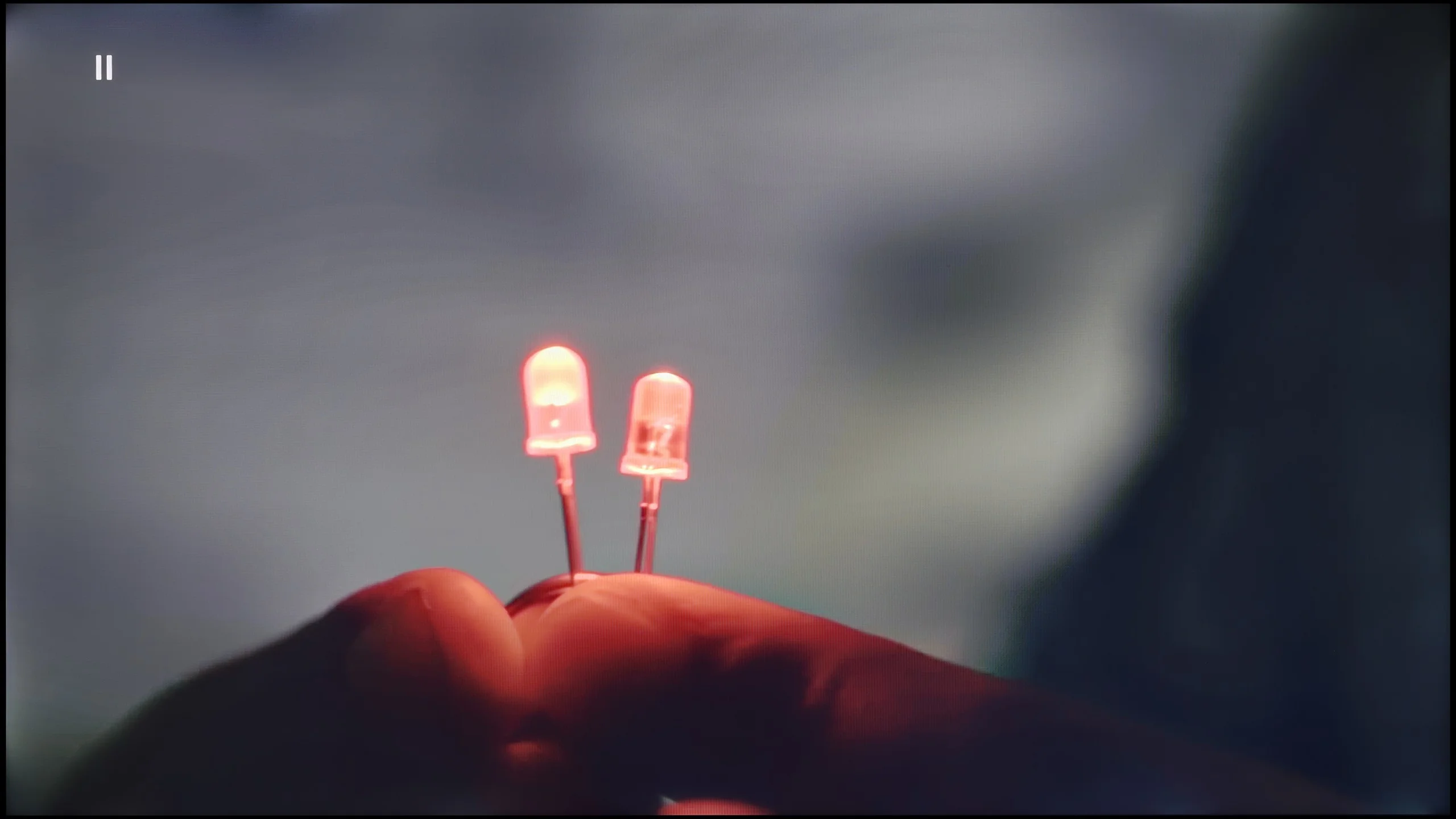
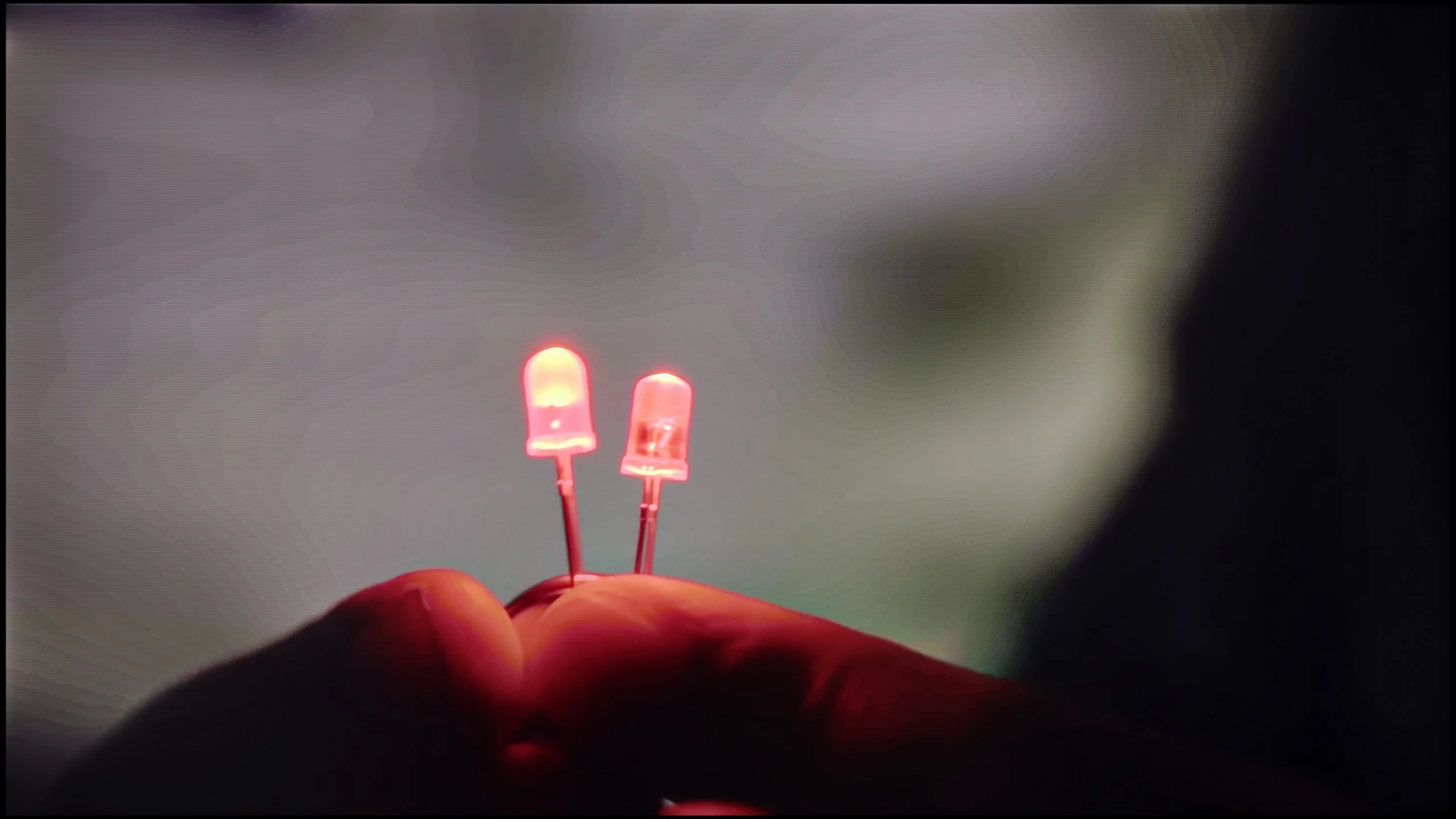
The match photo shows how the TV smooths weak tonal transitions in low-quality video.
Image scaling SD (576i)


The model photo shows how it handles upscaling of SD material.
In the Philips PUS9010, we find another iteration of the P5 Perfect Picture image processor, which aims to improve the quality of weaker materials. One of the components of this system is the distortion reduction function, responsible for smoothing tonal transitions. It works effectively and actually reduces visible color gradation. Unfortunately, it does so rather aggressively. In practice, it can dull details such as material textures or film grain. This is a clear compromise, so we wouldn't recommend it for movie screenings. It performs much better with looser content, like YouTube or regular television. The P5 processor also handles lower resolution materials quite well. The image is soft, sometimes even too soft, but it can easily be adjusted with the sharpness slider, tailoring the effect to personal preferences. Additionally, the lack of edge cropping in SD materials is a plus, which is still not standard in this class of televisions.
The digital image processing in the Philips PQS9000 performs well, though we have a few reservations. The "Distortion Reduction" function helps smooth tonal transitions in lower-quality material, but it works quite unevenly. It can improve a section of the picture, only to, moments later and still within the same scene, seem to lose effectiveness and reintroduce banding between shades. A plus is that it doesn't remove film grain or fine noise, so the image retains its texture. We found the "Medium" setting worked best, and that's the one we recommend. The 4K upscaling itself is acceptable, though the picture is very soft. Edges are heavily smoothed, which may make the image feel less crisp to some viewers. In that case, it's worth slightly increasing the sharpness in the TV's menu, as this will make edges stand out more. Don't overdo the sharpness slider, however, or you may introduce artificial halos instead of improving the picture.
Blur and motion smoothness
7.7/10
8.1/10
Blur (native resolution, maximum refresh rate):






Blur (4K@144Hz):



Blur (1080p@240Hz):



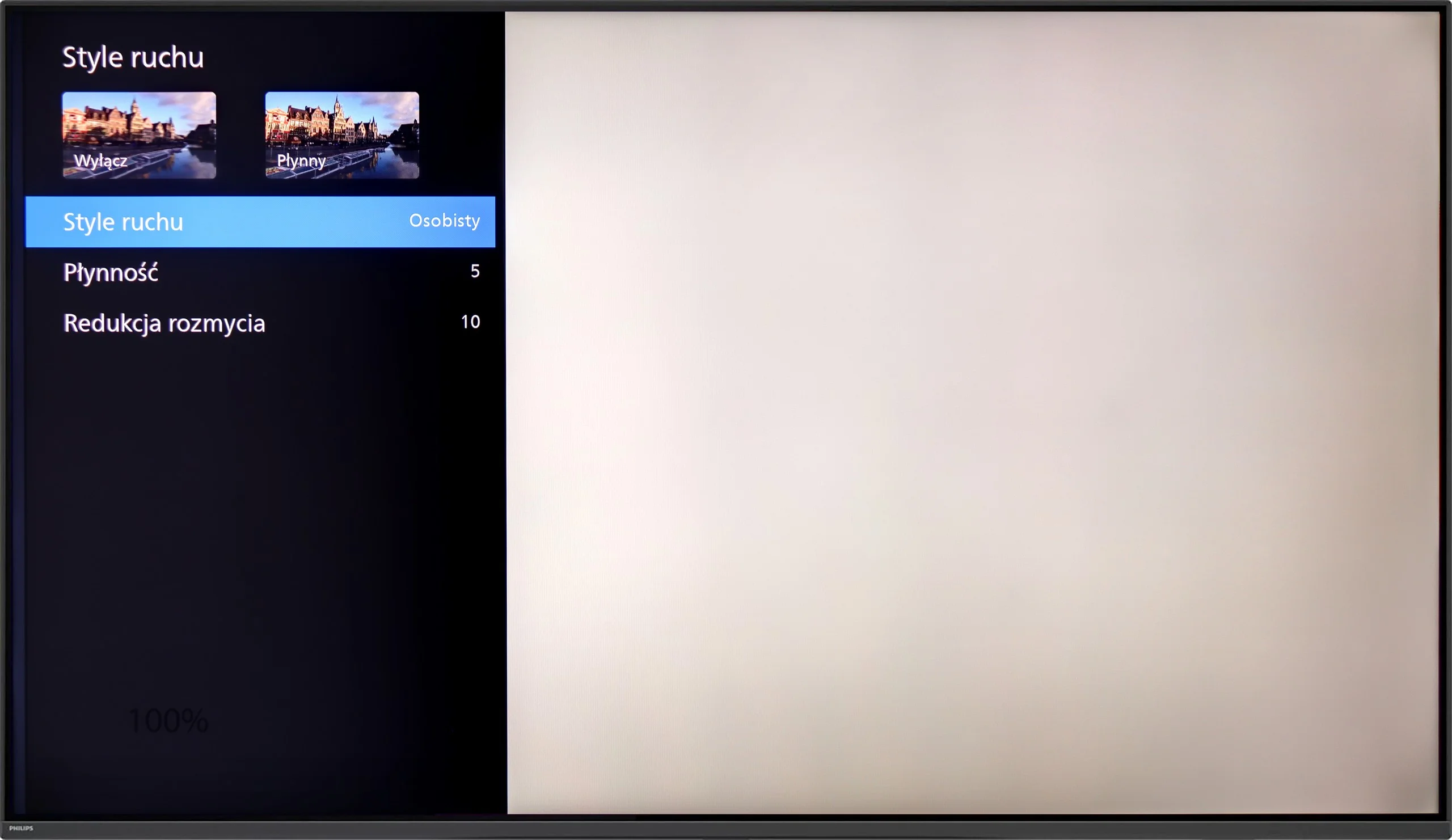
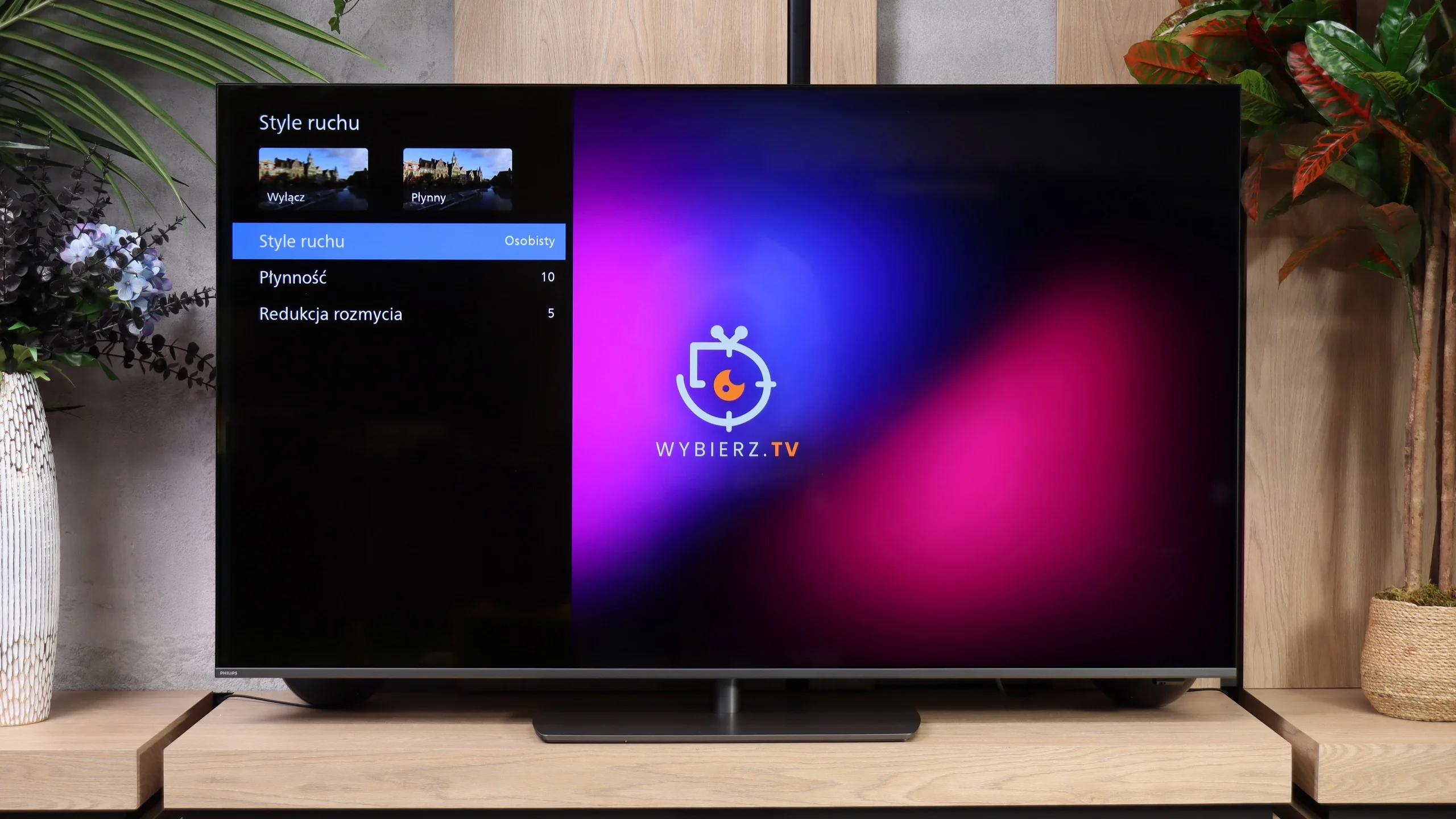
Philips PUS9010 has a 4K panel with a refresh rate of 144 Hz, which will be appreciated primarily by sports fans and gamers. This is especially evident in dynamic scenes where motion is sharp, and annoying trailing is nearly absent. When it comes to movies (standard 24 fps), Philips provides us with a proven set of settings known from higher series. Two sliders are used to control motion. The “Smoothness” slider allows you to adjust the image to your taste: at low settings, we maintain a cinematic character, while moving the slider to the right gives us a perfectly smooth, albeit slightly “theatrical” effect. On the other hand, the “Motion Blur Reduction” is a feature made for sports – it ensures that fast objects do not lose details and remain clear.
In terms of motion handling, the Philips PQS9000 performs outstandingly for an LCD TV. It's not just the 144 Hz refresh rate, but above all how quickly the panel itself responds. At 120 Hz you can hardly see the typical trailing smears behind moving objects. What's especially pleasing is that this also applies to darker backgrounds, where many VA panels clearly struggle. Here motion remains clear, and Philips pleasantly surprised us in that regard. To adjust how motion is displayed there is the "Motion Style" function. It includes two sliders: "Smoothness" and "Blur Reduction," which let you tailor the effect to the content you're watching and your personal preferences. Our suggested settings are shown in the photo. Treat them as a starting point and try different levels of smoothing to see which you prefer.
Console compatibility and gaming features
9.8/10
9.5/10
- ALLM
- VRR
- VRR range48 - 144Hz48 - 240Hz
- Dolby Vision Game Mode
 Yes, high input lag
- Correct implementation of HGIG
- 1080p@120Hz
- 1440p@120Hz
- 4K@120Hz
- Game bar
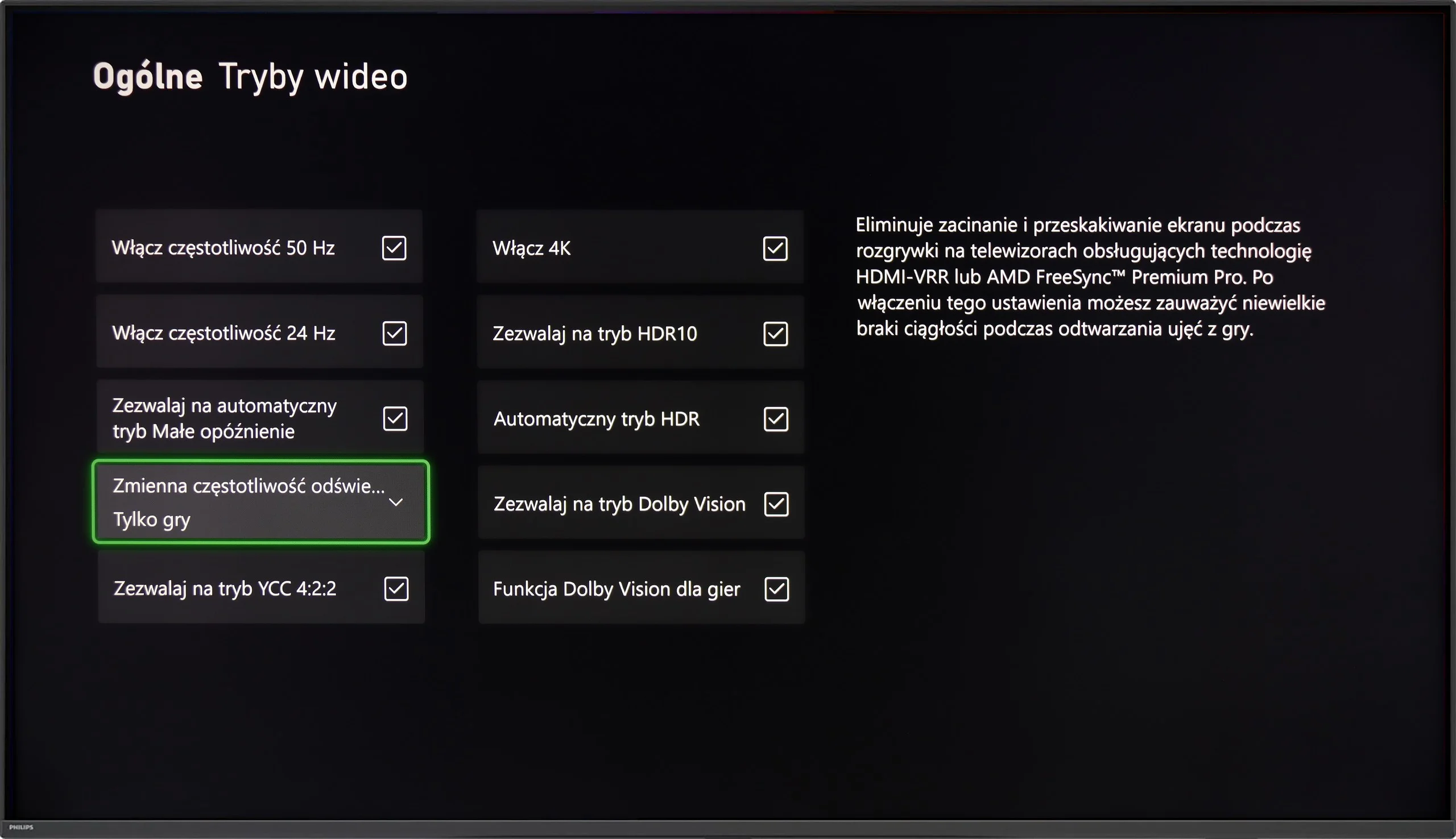
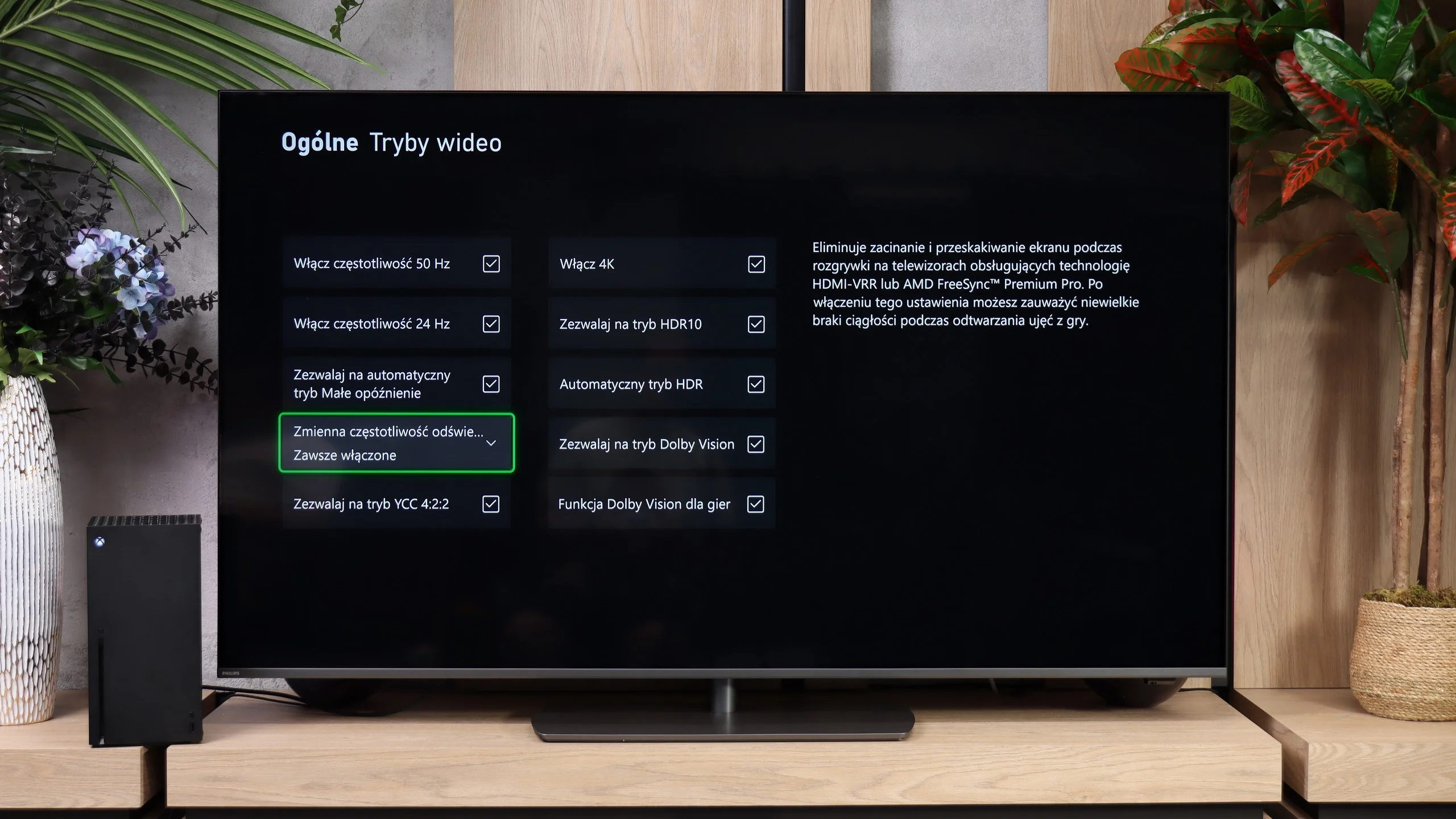
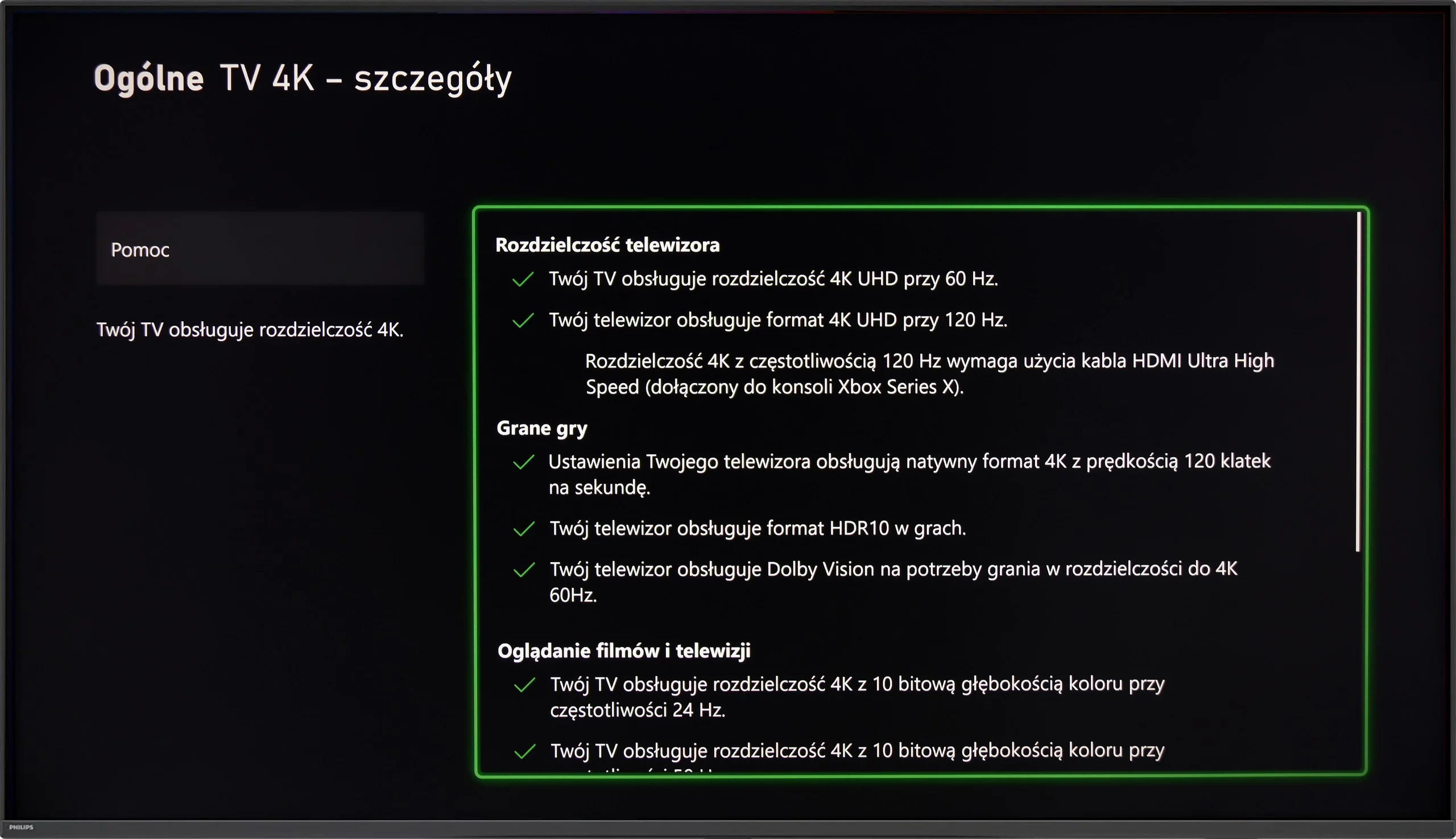
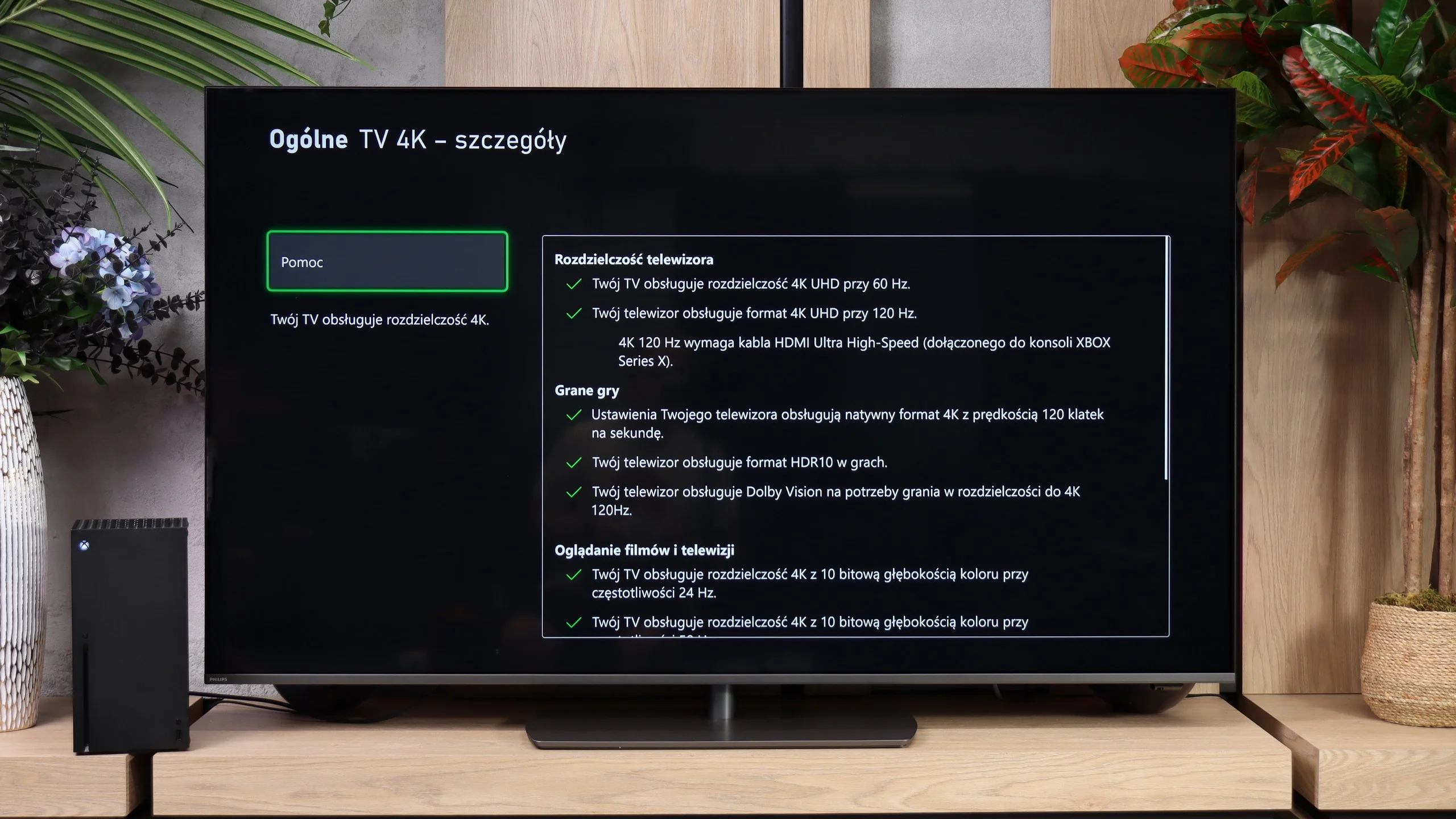
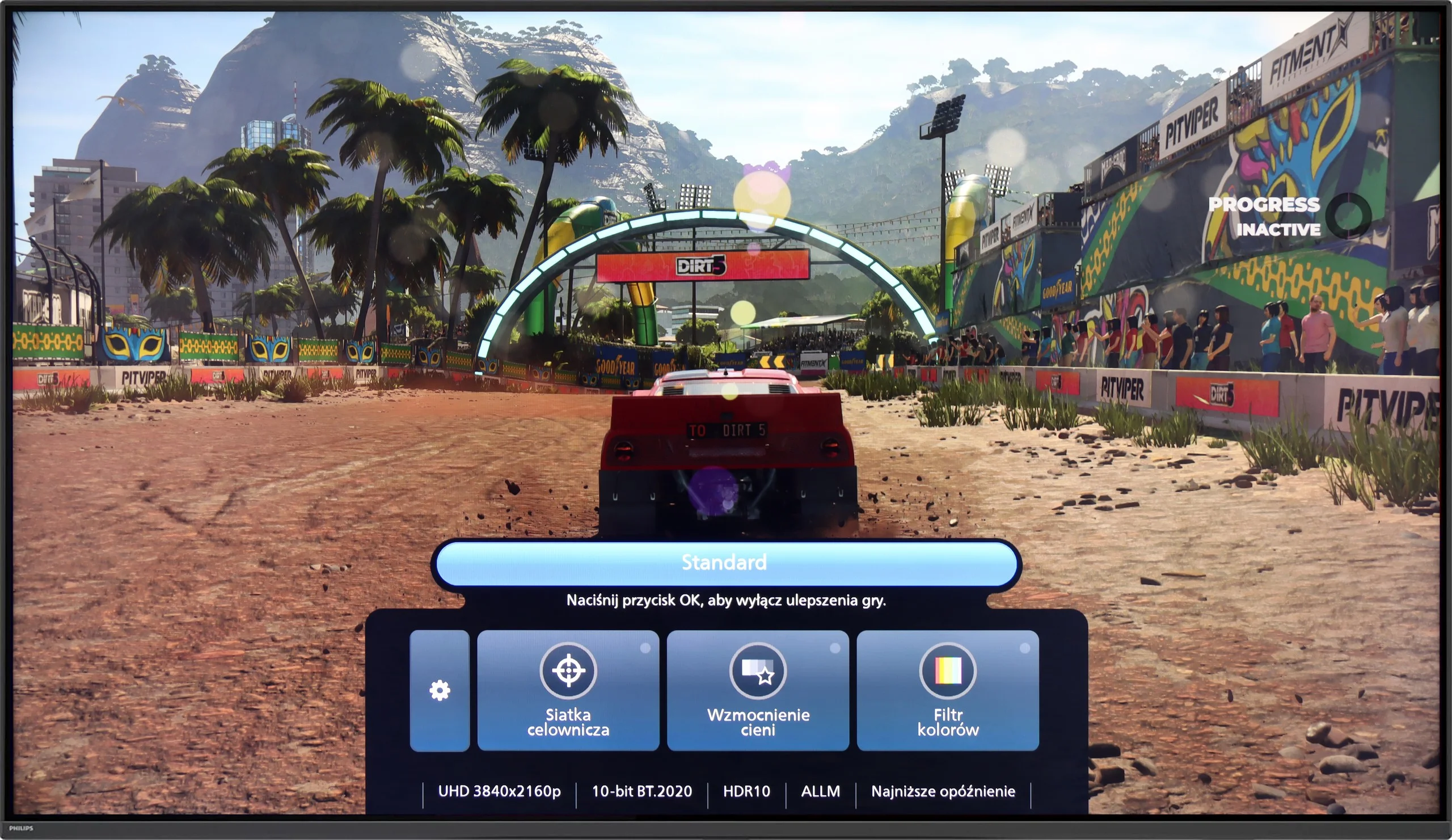
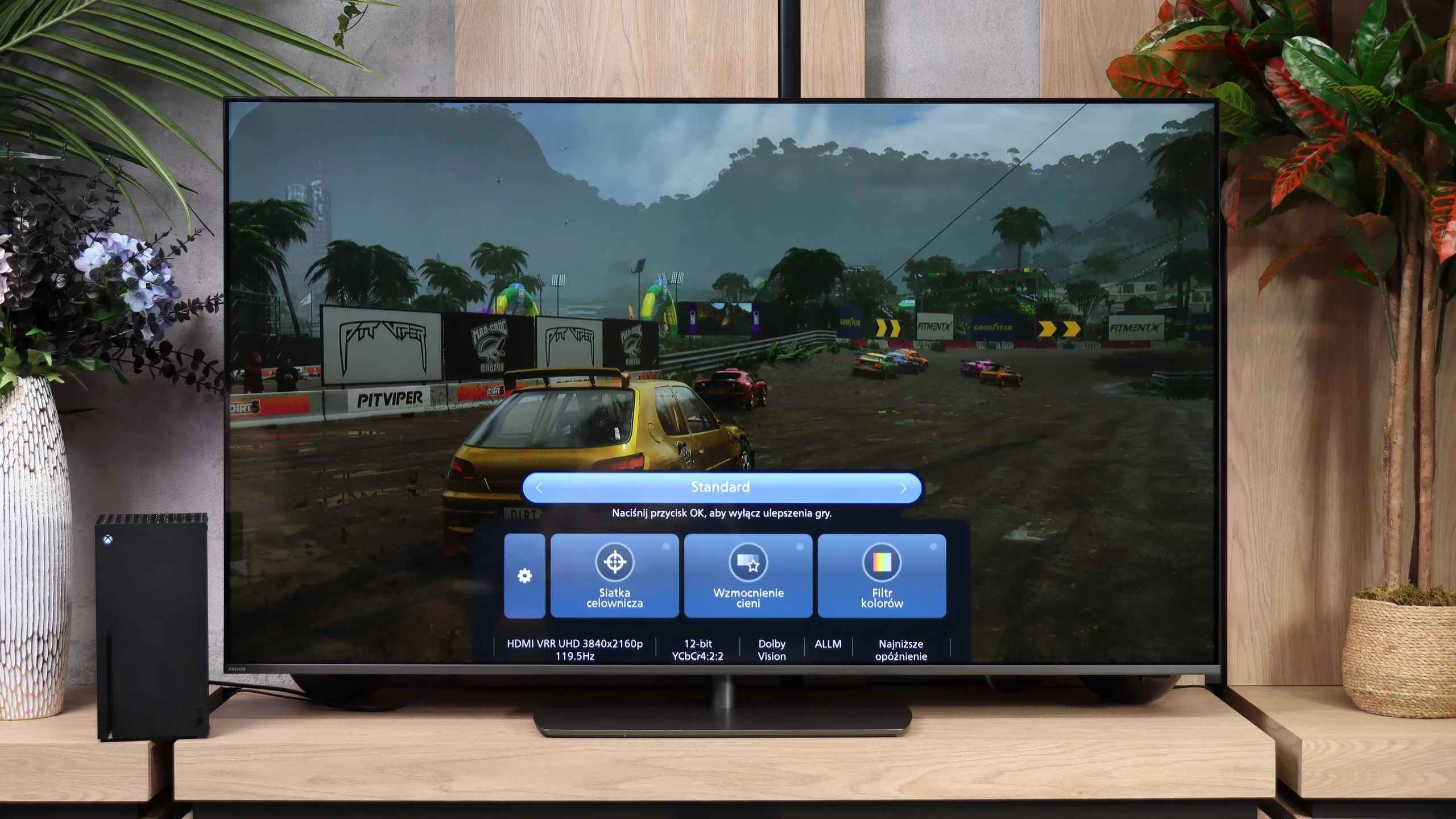
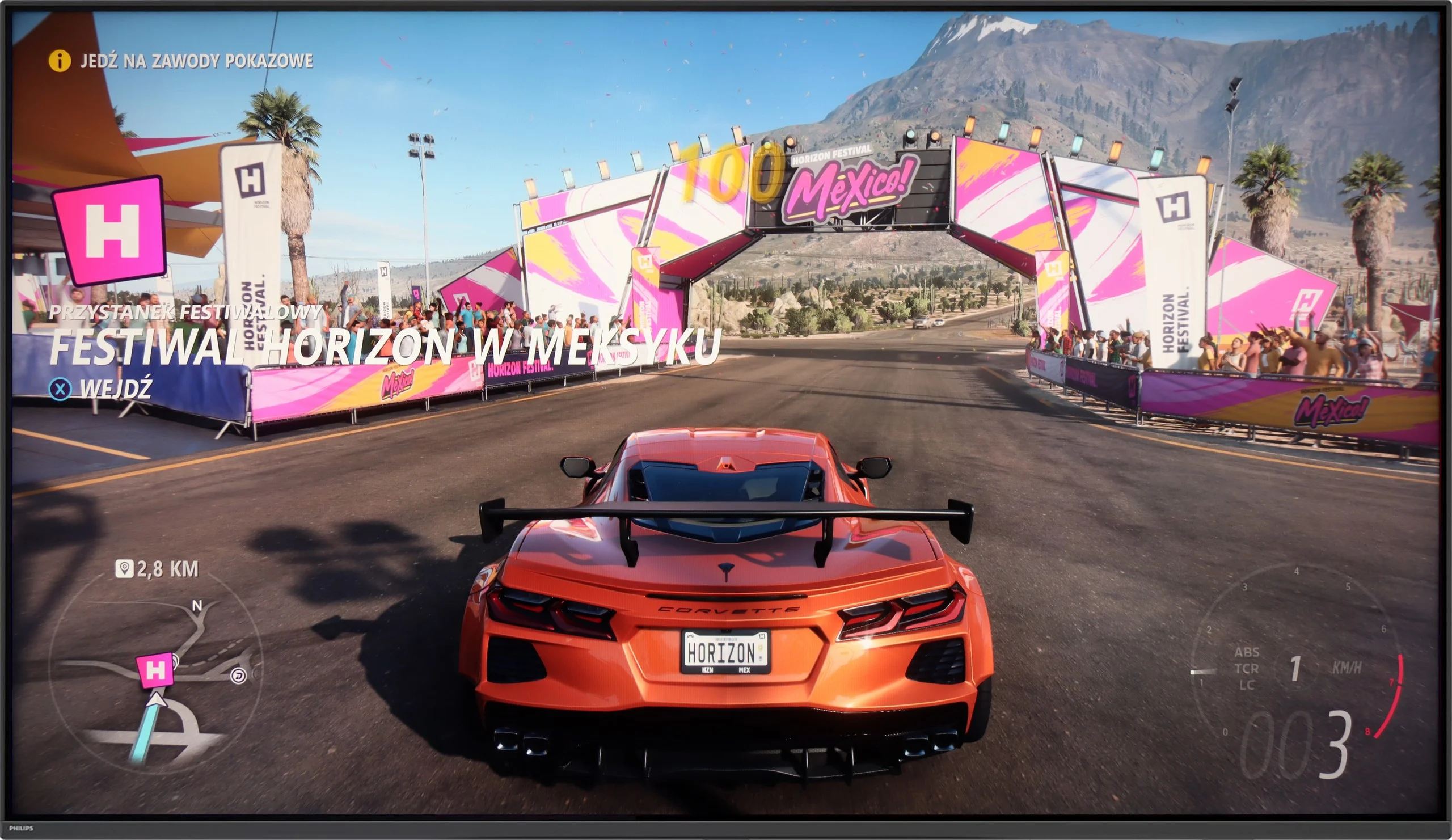
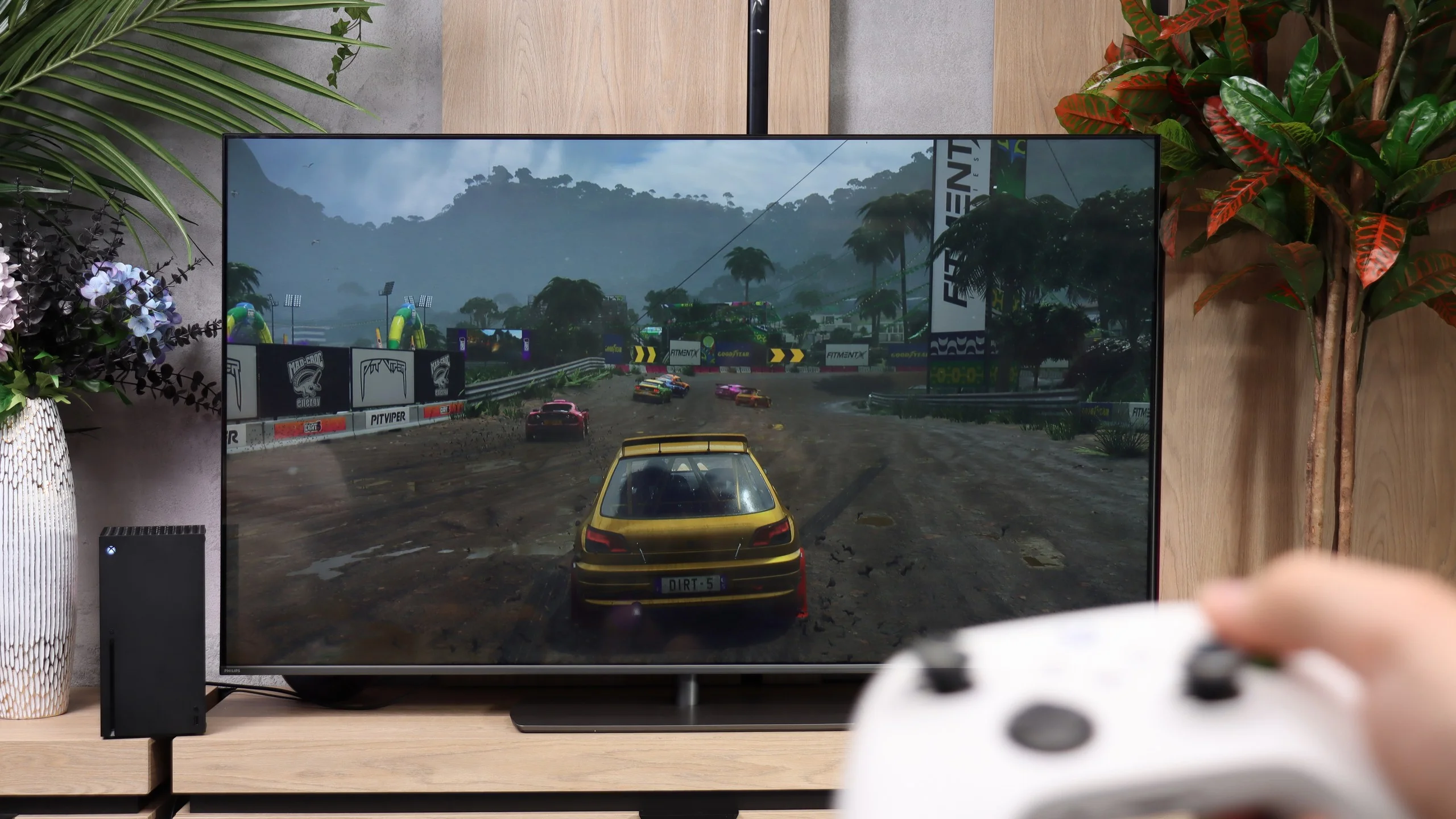
The Philips PUS9010 is truly a solid machine for gaming. It has everything that matters: VRR, automatic game mode (ALLM), and support for HGiG. The latter is a great feature—it allows HDR in games to be set exactly as the creators envisioned. The television handles 120 Hz refresh rates effortlessly at every popular resolution (1080p, 1440p, and 4K). It doesn't matter if you connect a PS5, Xbox, or a powerful PC—everything runs smoothly and just as it should. Gamers will also appreciate the Game Bar. It's a quick, clear menu that immediately shows whether low latency mode is active. This is especially useful when frequently switching between different consoles. The experience is completed by Ambilight. Evening sessions with this lighting are on a whole different level; the image seems larger, and dynamic scenes leave an even better impression. Even if someone isn’t a fan of such “gimmicks,” it’s hard to deny that it’s impressive.
Gaming features
When it comes to gaming features, the Philips PQS9000 really has a lot to offer. Four HDMI 2.1 ports let you connect multiple devices without having to decide which one gets the full-capability port. Consoles can use 120 Hz in Full HD, 1440p and 4K, and a PC can also take advantage of 144 Hz at 4K or 240 Hz if you drop down to Full HD. There's also VRR, which matches the refresh rate to the frame rate and prevents screen tearing. Its range goes from 48–240 Hz, with the upper limit applying to Full HD mode.
ALLM is included, so the TV automatically switches into game mode, and HGiG works correctly, which is useful when setting up HDR on a console. There's also a Game Bar for quick access to settings and signal information. The list even includes Dolby Vision gaming, but that option is hard to enjoy because of very high latency. Apart from that caveat, the feature set is really solid.
Input lag
9.5/10
7.2/10
SDR
HDR
Dolby Vision
In terms of responsiveness, the Philips PUS9010 performs very well. The input lag is around 9 ms at 120 Hz and 18 ms at 60 Hz, so the response to movements on the controller is quick and predictable. In practice, even dynamic action games or e-sports titles pose no problems. Dolby Vision in games performs worse. The lag then increases to around 35 ms, which may still be acceptable for less demanding players, but more sensitive individuals might feel a slight sluggishness in controls. For this reason, HDR10 with HGiG enabled remains a better choice. In this model, it works correctly, providing lower latencies and more predictable brightness behavior, without the issues that can arise with Dolby Vision.
Input lag is already less impressive than the rest of the "gaming" gear. At 60 Hz we measured 32 ms, both in SDR and HDR. That's enough for more relaxed games, but in fast shooters you can feel a slight delay. At 120 Hz the lag drops to 16 ms and gameplay is noticeably more enjoyable, though the competition can respond even faster.
The biggest problem appears when Dolby Vision is enabled. At 60 Hz the delay is as much as 213 ms, and at 120 Hz it reaches 106 ms. The response to controller input is then clearly delayed, which significantly interferes with gameplay. That's why on the PQS9000 it's definitely better to stick with HDR10. Dolby Vision is supported for games, but its practical usefulness remains limited.
Compatibility with PC
8.9/10
8.6/10
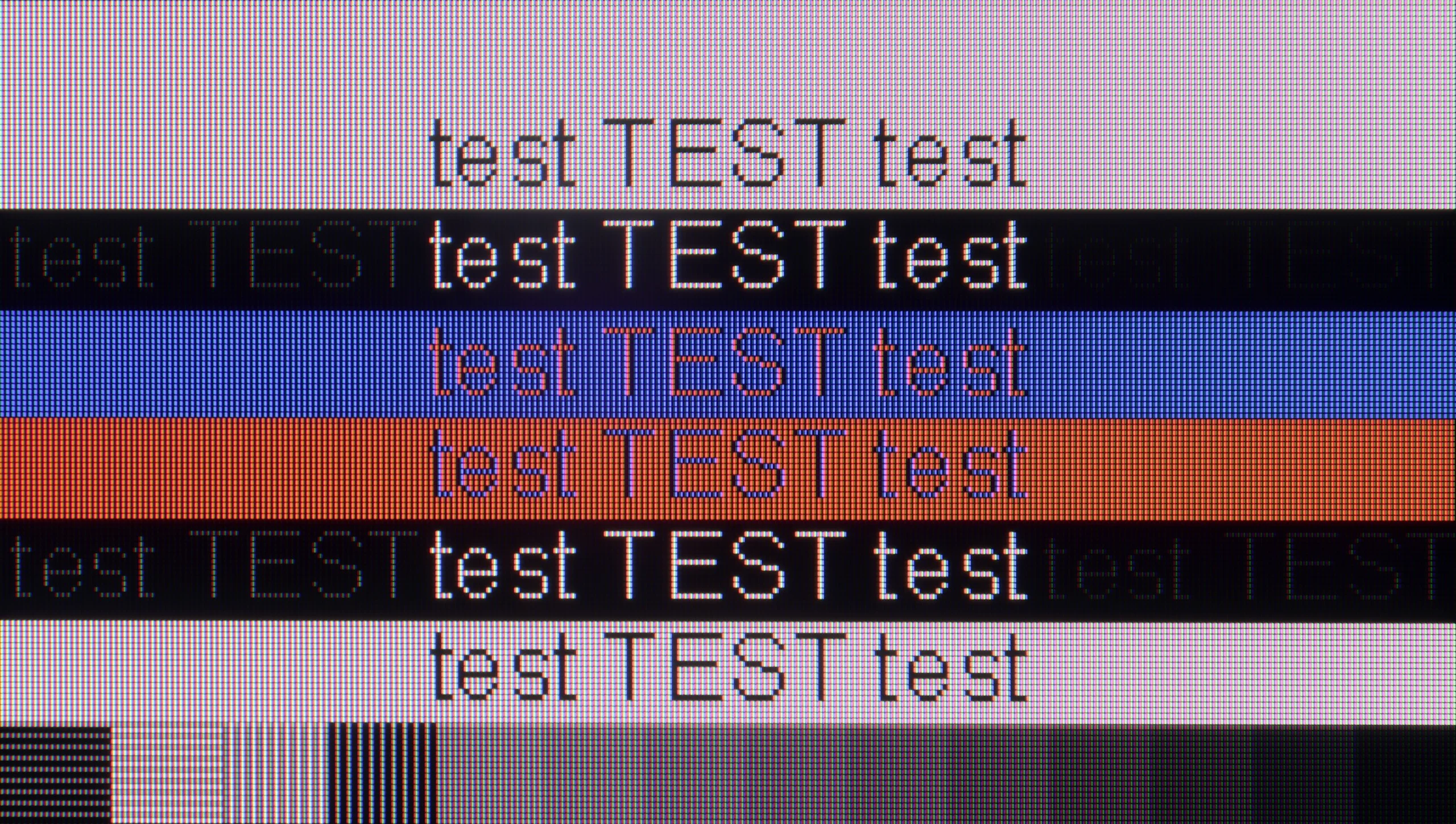
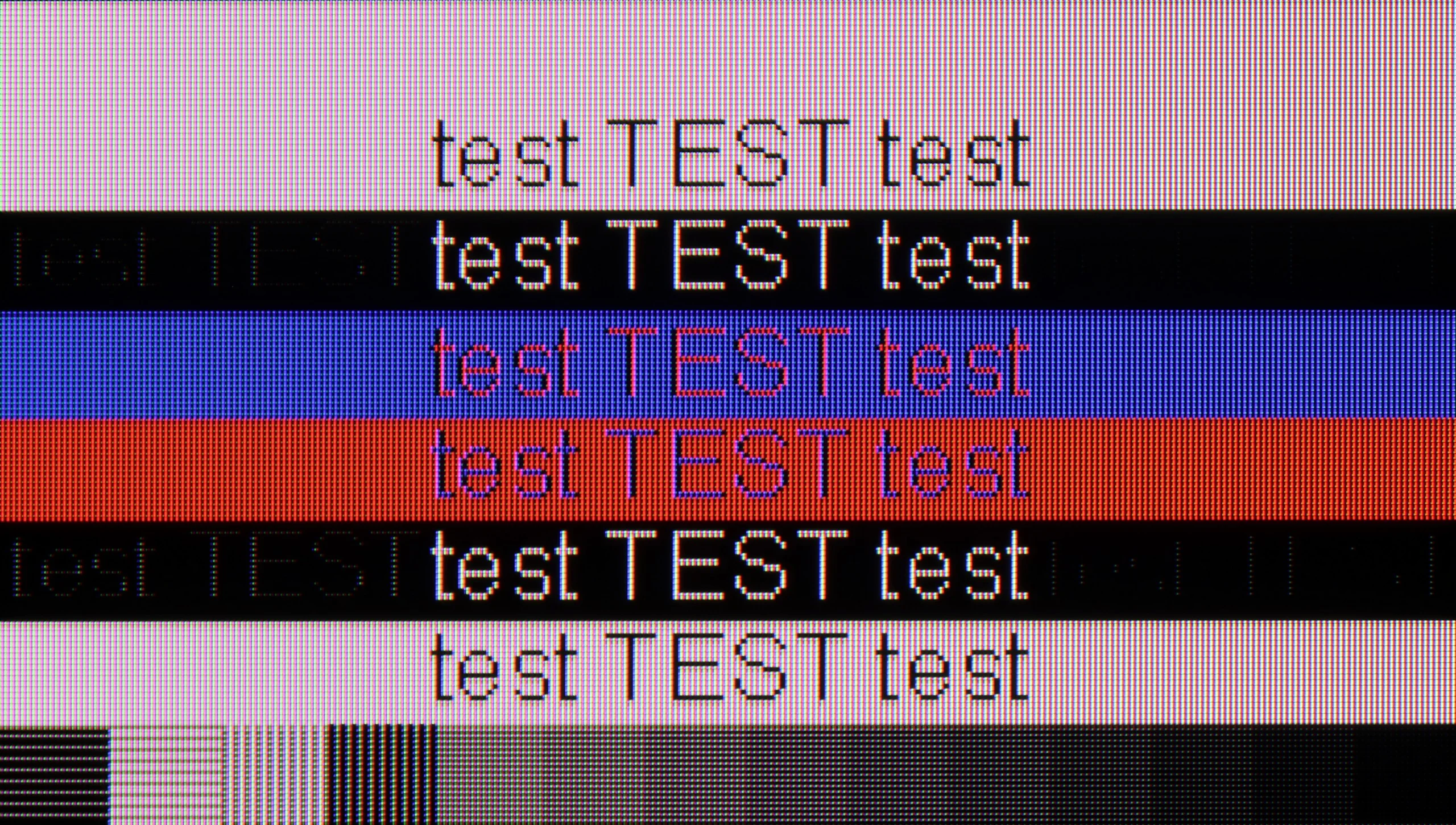
The photo shows the legibility of small fonts. Ideally, lines should be the same thickness on both light and dark text, with minimal pixel gaps.
Philips PUS9010 (2025) is a very good TV for using with a PC. The manufacturer has provided a dedicated 144 Hz mode for PC gamers, and the TV correctly supports variable refresh rates for both NVIDIA and AMD cards. G-Sync and FreeSync features work seamlessly, making PC gaming smooth and free of screen tearing. Now that we know the TV is very suitable for gaming, it's worth noting the readability of text, especially during daily work with a PC. The use of an IPS panel is definitely a plus here. Chroma has been implemented correctly, allowing for nearly perfect font reproduction. Text is sharp, clear, and does not cause problems even during extended use. However, out of our thoroughness, we must point out a minor detail. For very dark text, vertical and horizontal lines can have slightly different brightness levels. This is purely a technical flaw, practically unnoticeable in practice, especially in the case of the 75-inch variant, where the distance from the screen further masks this effect.
PQS9000 owes its high score for computer use mainly to its gaming capabilities. A 144 Hz refresh rate at 4K and support for G-Sync Compatible and AMD FreeSync Premium Pro let you use frame synchronization on compatible NVIDIA and AMD cards. Working with text also fares well. Standard fonts are sharp and legible, and thanks to correct 4:4:4 chroma support, colored letters, icons, and small desktop elements do not lose clarity. The biggest drawback concerns very small, dark text, where the horizontal strokes of letters are noticeably darker than the vertical ones, making some characters look uneven. You probably won't notice this from the couch, but if someone plans to put The One on a desk and work up close, this flaw may become bothersome.
Viewing angles
5.8/10
3.2/10
The viewing angles on the Philips PUS9010 are very good, and this is one of the biggest advantages of the IPS panel. Compared to the variant with a VA panel, the difference is clear. The image maintains much better consistency, and colors remain stable even when viewing from a wide angle. Of course, with a change in position, the brightness level does drop slightly; however, the degradation of the image is much less than in the VA version. It is not the level known from OLED screens, but among LCD TVs, it can be considered one of the better viewing angles available on the market.
Viewing angles are one of the weakest points of the Philips PQS9001. Move to the side and the colors noticeably lose saturation, and the image becomes washed out and lower in contrast. When watching with several people, seats directly in front of the screen are clearly the best. This is unfortunately a typical limitation of VA panels, where strong contrast head-on comes at the expense of poorer off-axis performance. Most TVs with this type of panel have the same problem, and The One is no exception. The swivel stand helps a bit by allowing you to angle the screen toward the viewer, but it won't solve the issue with widely spaced seats.
Daytime performance
5.4/10
6.1/10
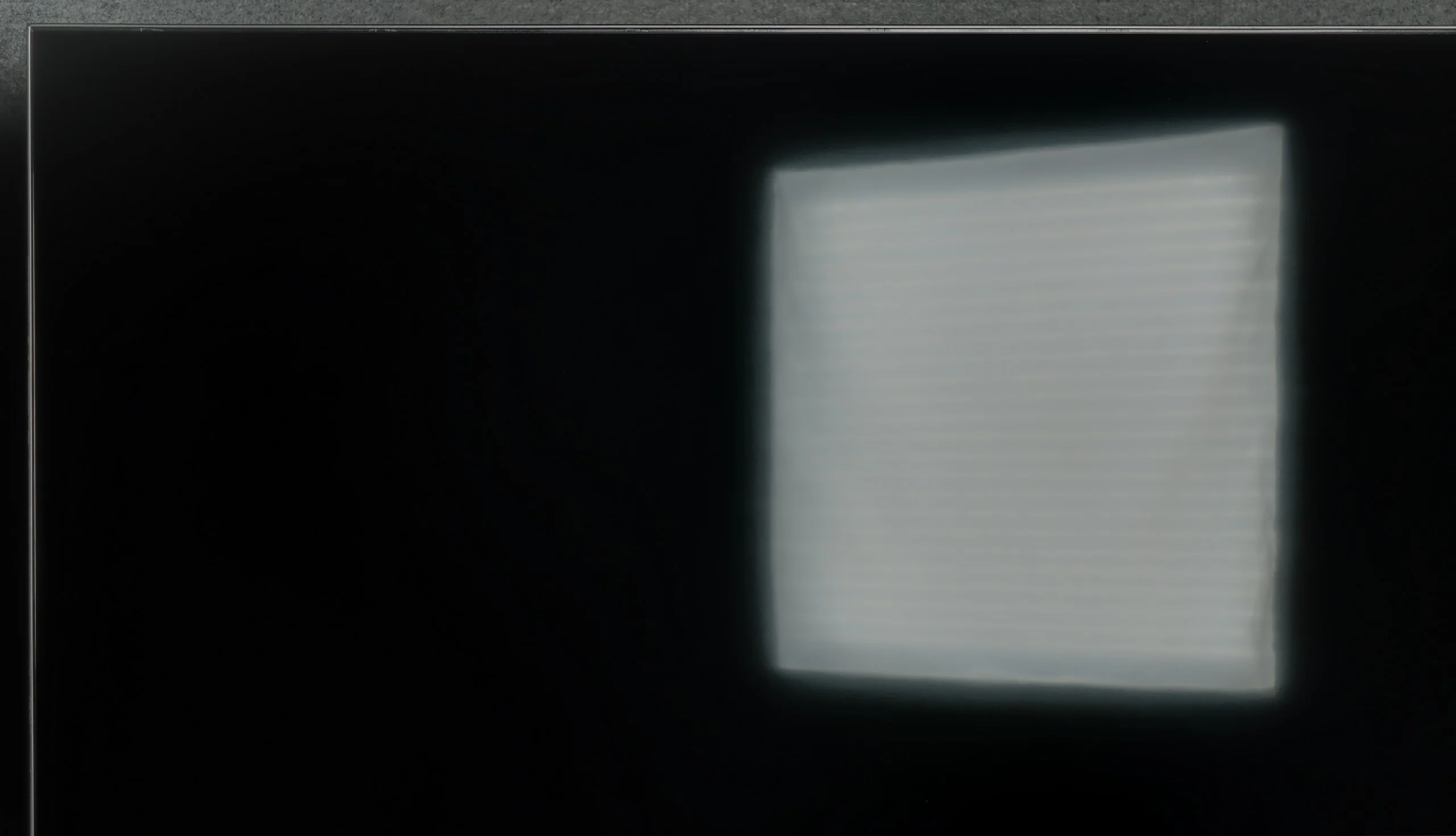
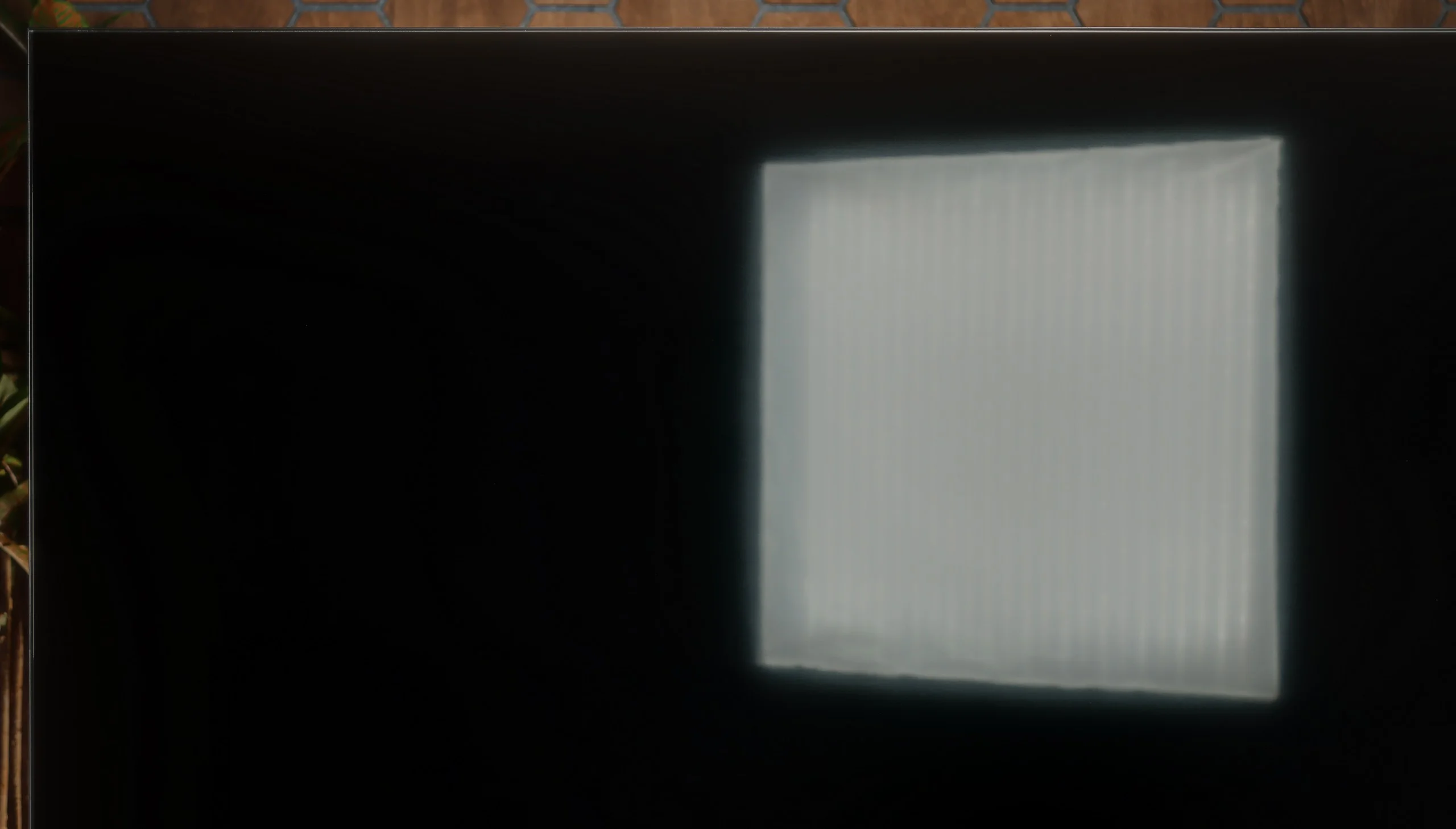
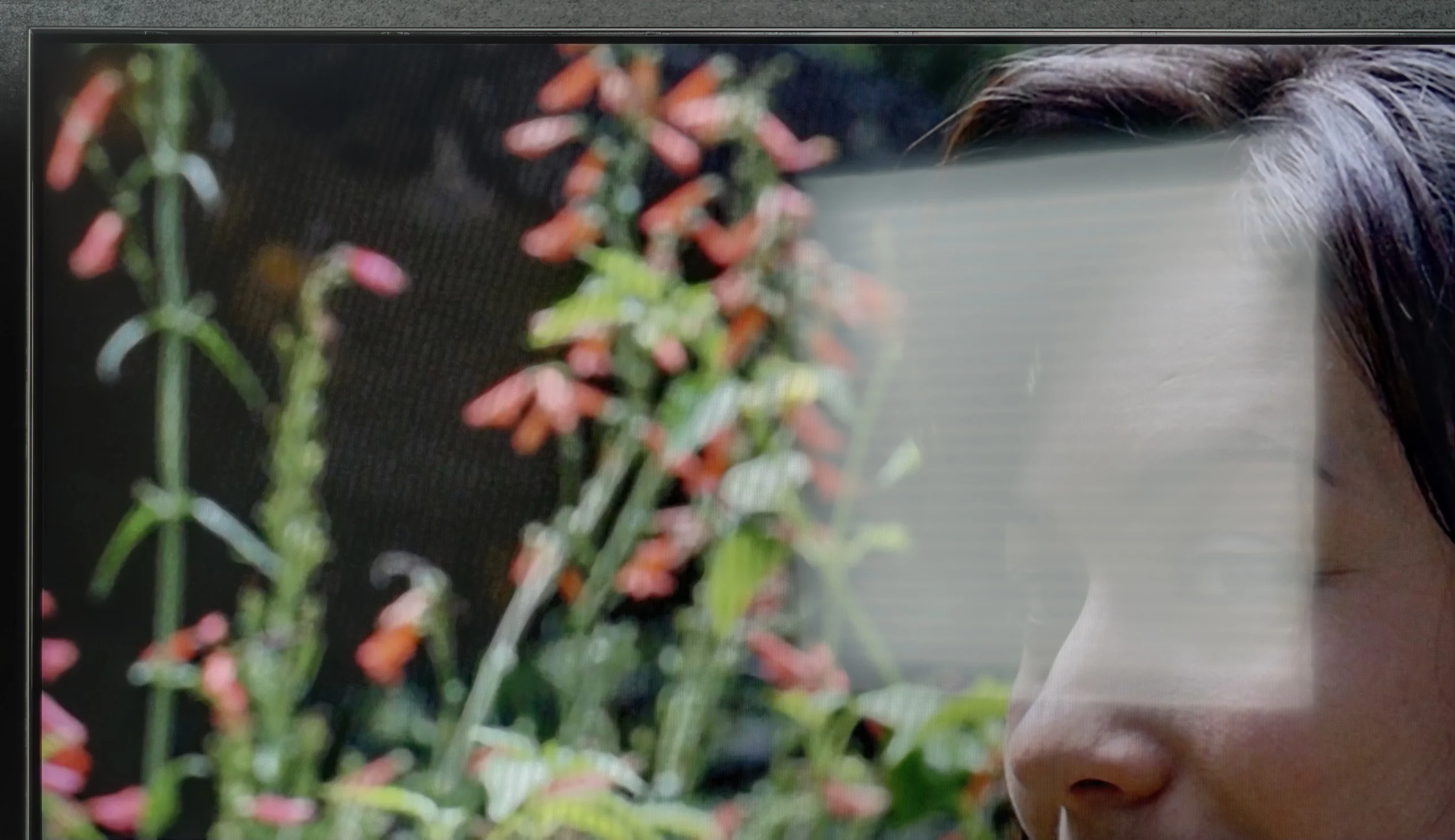
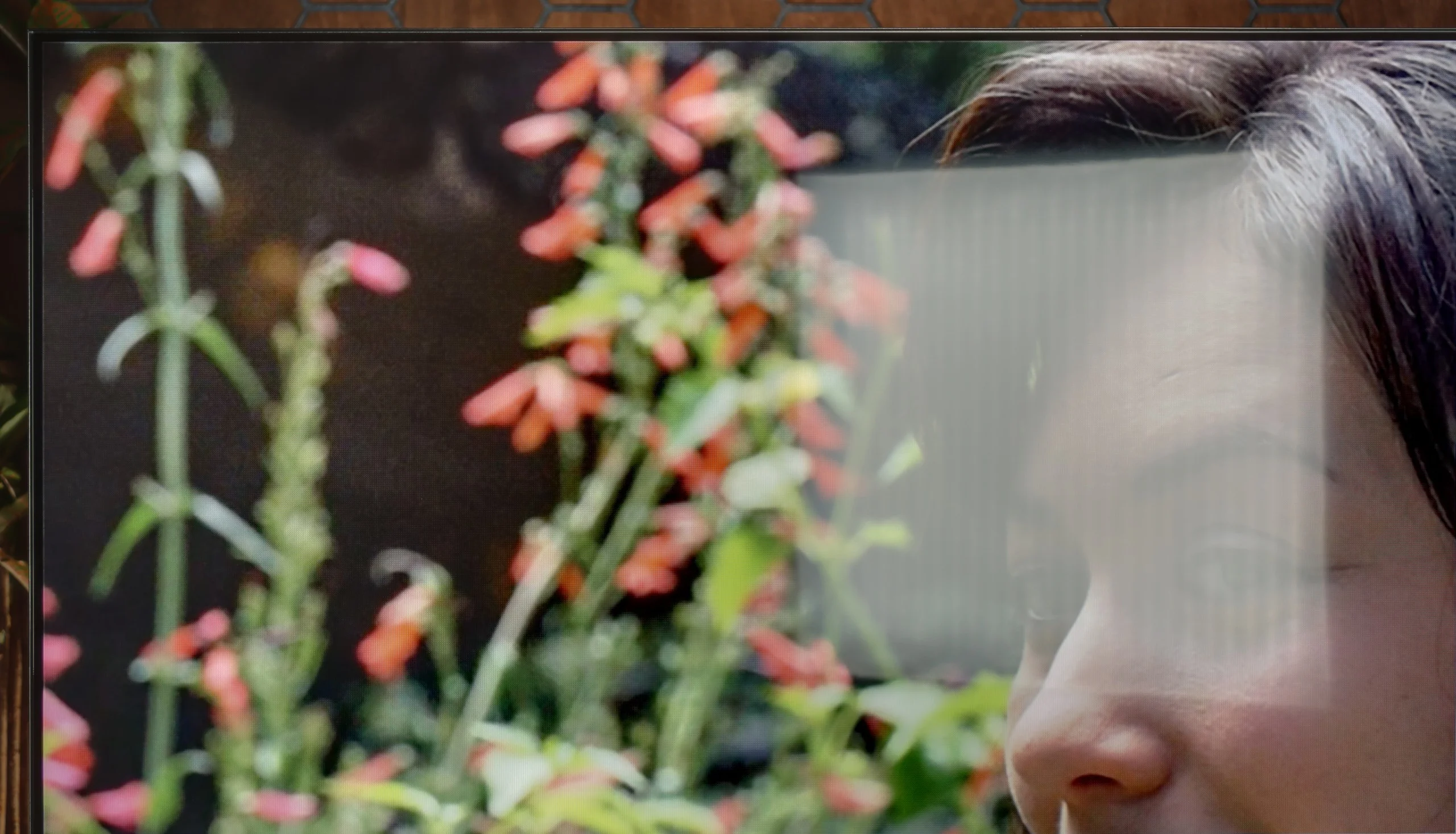
Panel brightness
Philips PQS9011 / PQS9001 (The One 2026): 502 cd/m2
PHILIPS PUS9010 (IPS): 398 cd/m2
In terms of usage in a bright room, the Philips PUS9010 performs decently. The satin matrix used effectively dampens reflections and does not create a mirror effect, which prevents the screen from being too distracting from light coming in from windows or lamps. Unfortunately, compared to the VA matrix variant, the television performs weaker. The screen is noticeably darker, which can be felt in a heavily sunlit room. Under normal daylight conditions, this does not pose a major problem, but in very bright surroundings, the difference compared to the VA version is noticeable.
The Philips PQS9001 performs quite well for daytime viewing. Its biggest advantage is a stable brightness of around 500 nits, regardless of how many bright elements appear on the screen. Even when watching winter sports or a scene full of white, the picture doesn't dim. In a typical living room that level is more than enough to comfortably watch TV without having to cover the windows.
The satin finish does a decent job of suppressing reflections, though it doesn't eliminate them completely. a window opposite the screen will be visible and may be distracting, especially in darker scenes. Black levels hold up well in daylight, so the overall image doesn't become overly washed out. So it's pretty good for everyday viewing, provided the sun isn't shining directly on the screen.
Panel details
Subpixel Structure:
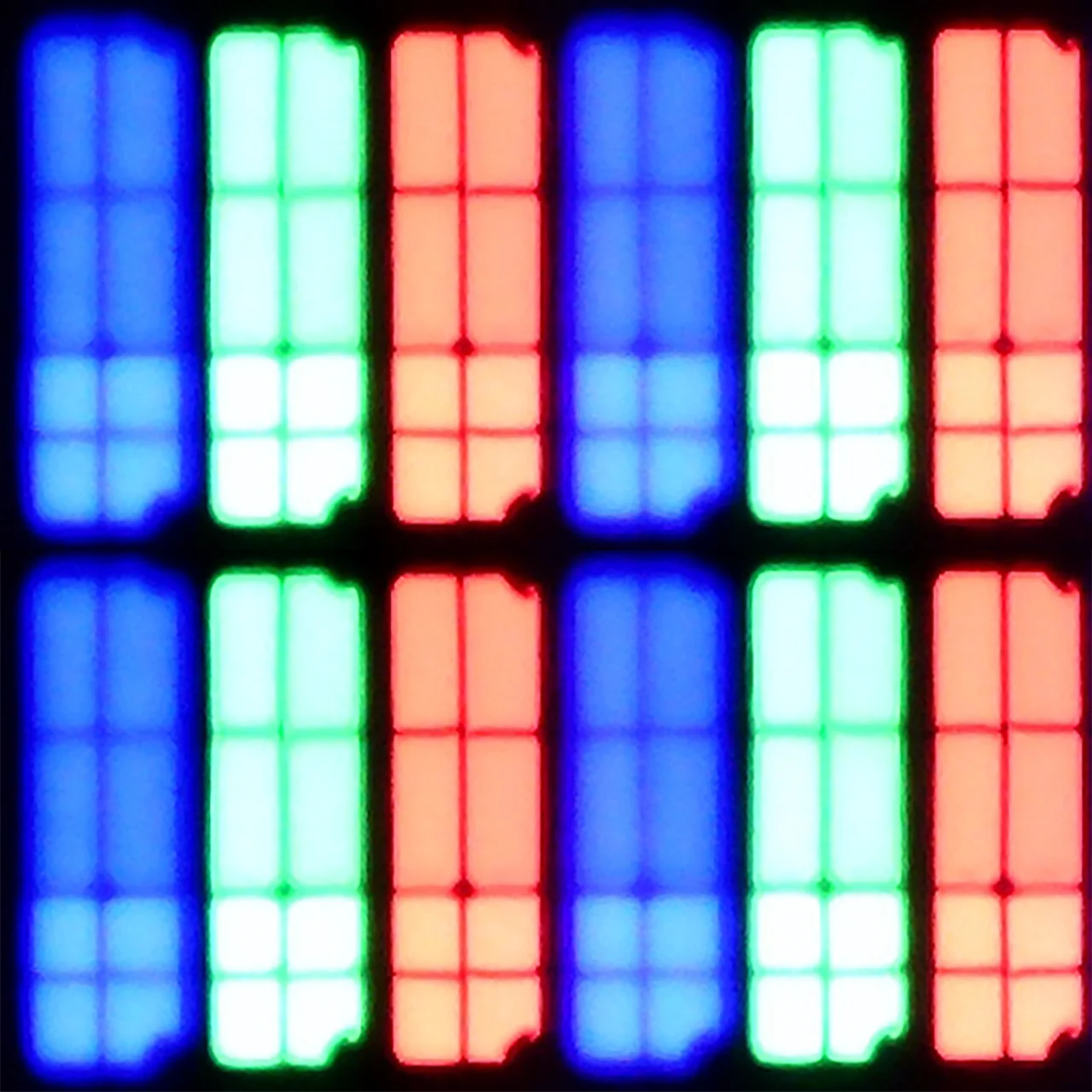
Panel uniformity and thermal imaging:
PHILIPS PUS9010 (IPS)
Philips PQS9011 / PQS9001 (The One 2026)
TV features
6.1/10
7.6/10
- SystemTitan OSTitan OS
- System performanceDecentDecent
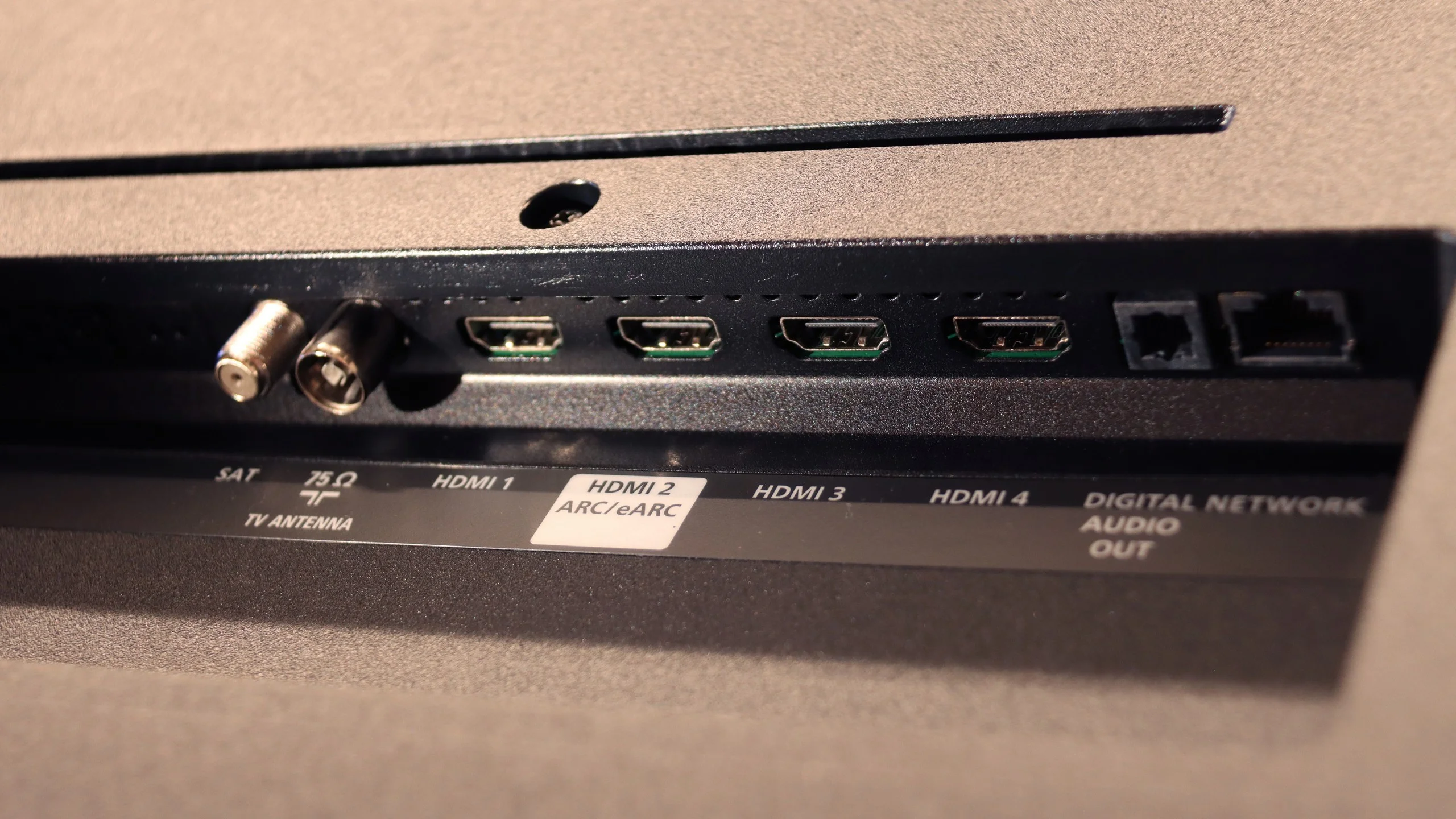
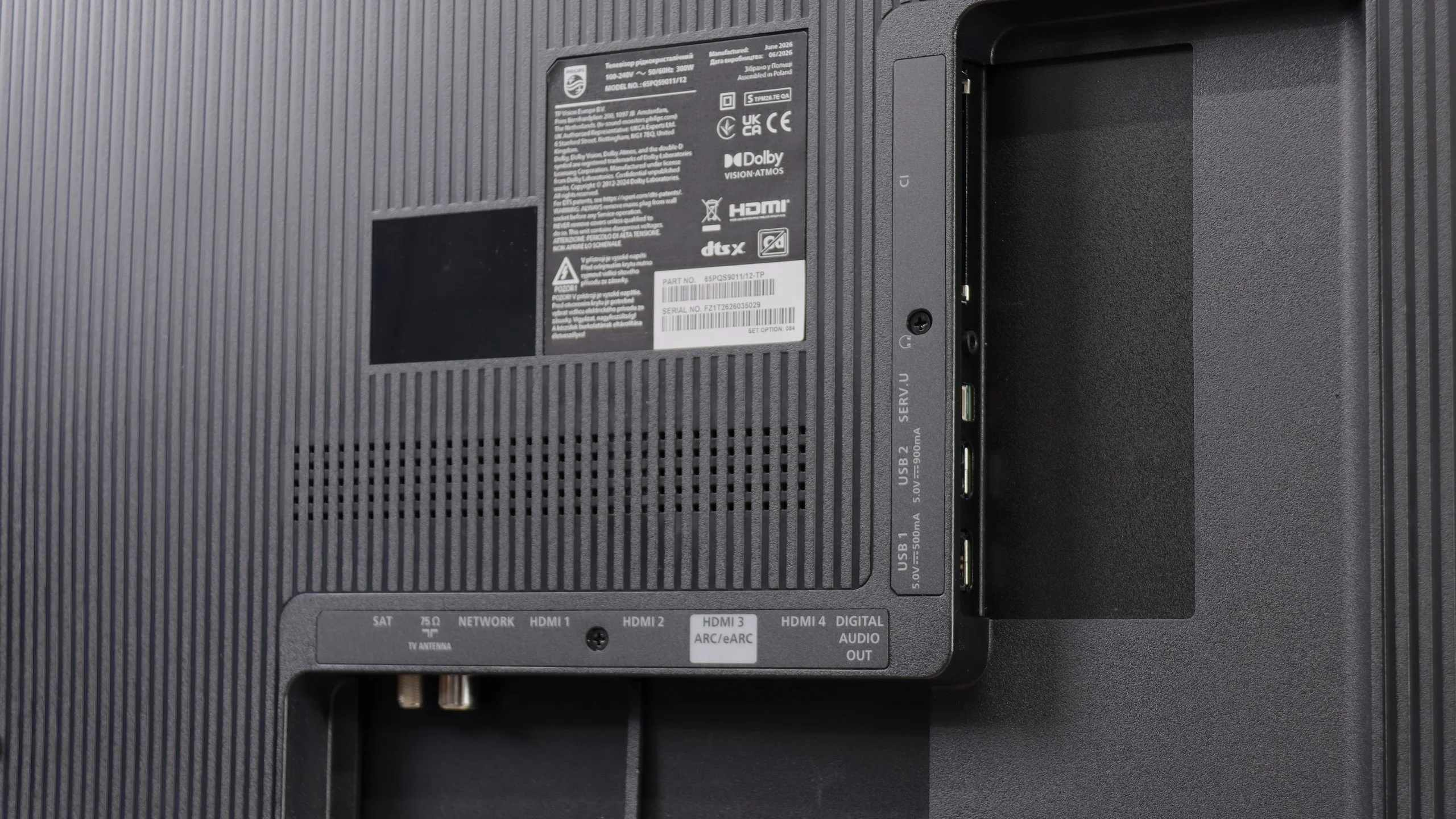
- HDMI inputs2 x HDMI 2.0, 2 x HDMI 2.1 48Gbps0 x HDMI 2.0, 4 x HDMI 2.1 48Gbps
- Other inputsToslink (Optical audio)
- OutputsToslink (Optical audio), eARC (HDMI), ARC (HDMI), Mini-Jack (Headphones)Toslink (Optical audio), eARC (HDMI), ARC (HDMI), Mini-Jack (Headphones)
- Network InterfacesWi-Fi 2.4GHz, Wi-Fi 5GHz, Ethernet (LAN) 1GbitWi-Fi 2.4GHz, Wi-Fi 5GHz, Ethernet (LAN) 100Mbps
- TV receptionDVB-T, DVB-T2, DVB-S, DVB-S2, DVB-CDVB-T, DVB-T2, DVB-S, DVB-S2, DVB-C
Classic features:
- Recording to USB (terrestrial TV)

- Recording programming
- Picture in Picture (PiP)
- RF remote control (no need to aim)
- Backlit remote control
- Teletext
- Audio only mode
- Bluetooth headphones support
- Simultaneous Bluetooth headphones & TV audio
Smart features:
- AirPlay
- Screen mirroring (Windows Miracast)
- Voice search
- Voice search in native language
- Ability to connect a keyboard and mouse
Sound connection options
- HDMI audioeARC (HDMI), ARC (HDMI)eARC (HDMI), ARC (HDMI)
- Other audio outputsToslink (Optical audio), Mini-Jack (Headphones)Toslink (Optical audio), Mini-Jack (Headphones)
- Wireless audioBluetoothBluetooth
Supported audio formats (external HDMI eARC audio):
- Dolby Digital Plus 7.1
- Dolby True HD 7.1
- Dolby Atmos in Dolby Digital Plus (JOC)
- Dolby Atmos in Dolby True HD
- DTS:X in DTS-HD MA
- DTS-HD Master Audio
Senior accessibility
- Numeric keyboard on TV
- Font size adjustment
- Audio description
Classic TV Features
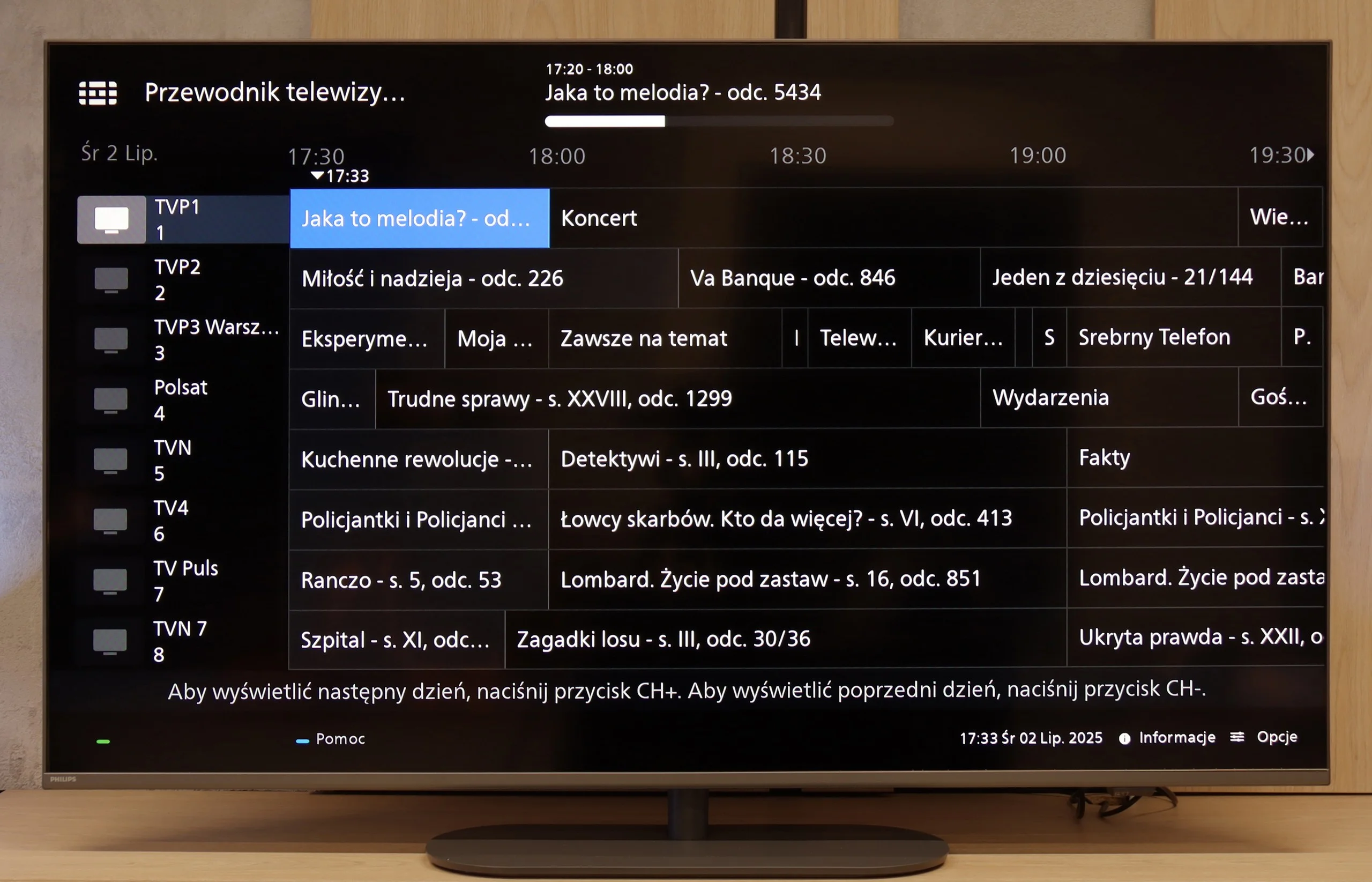
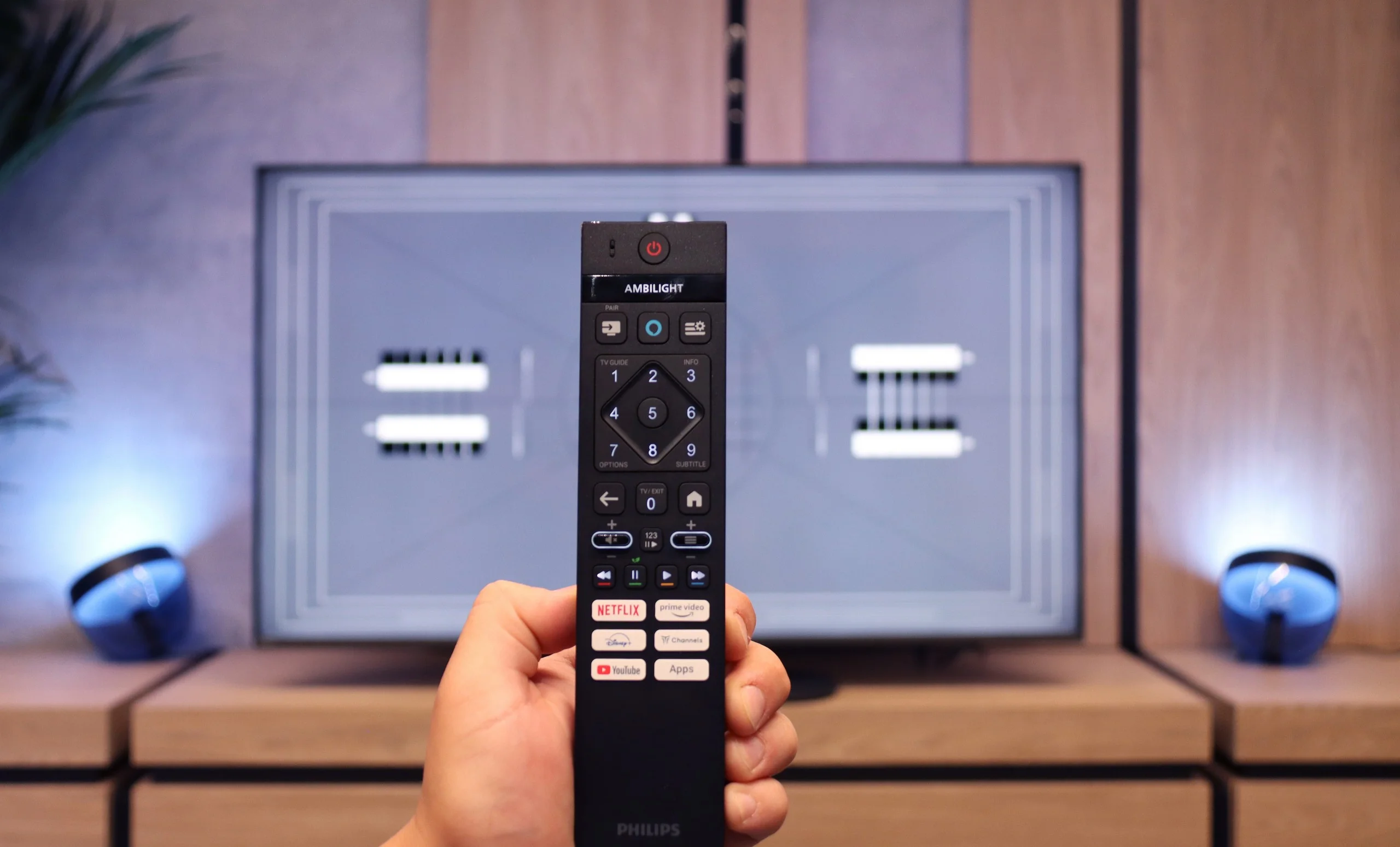
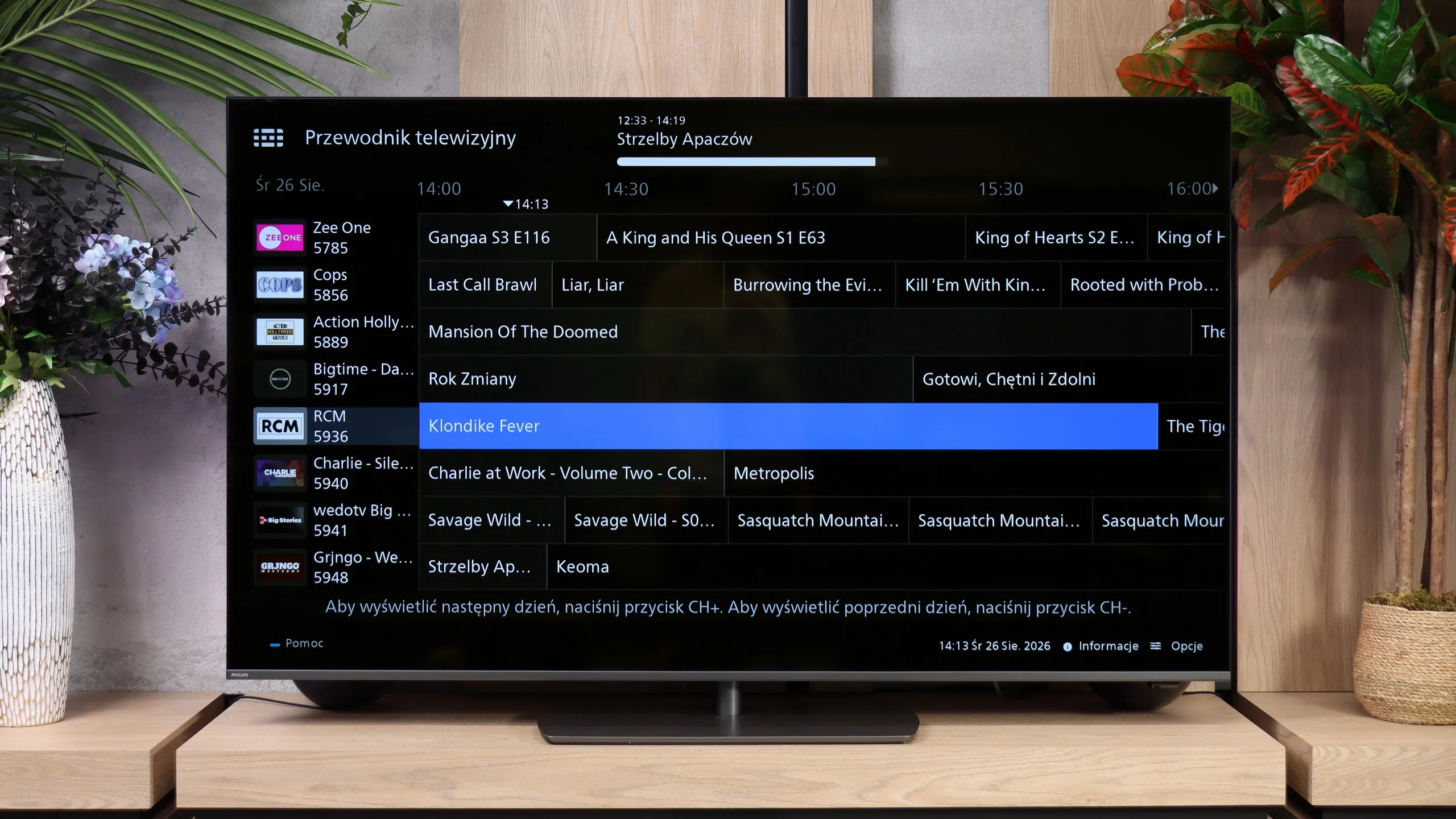
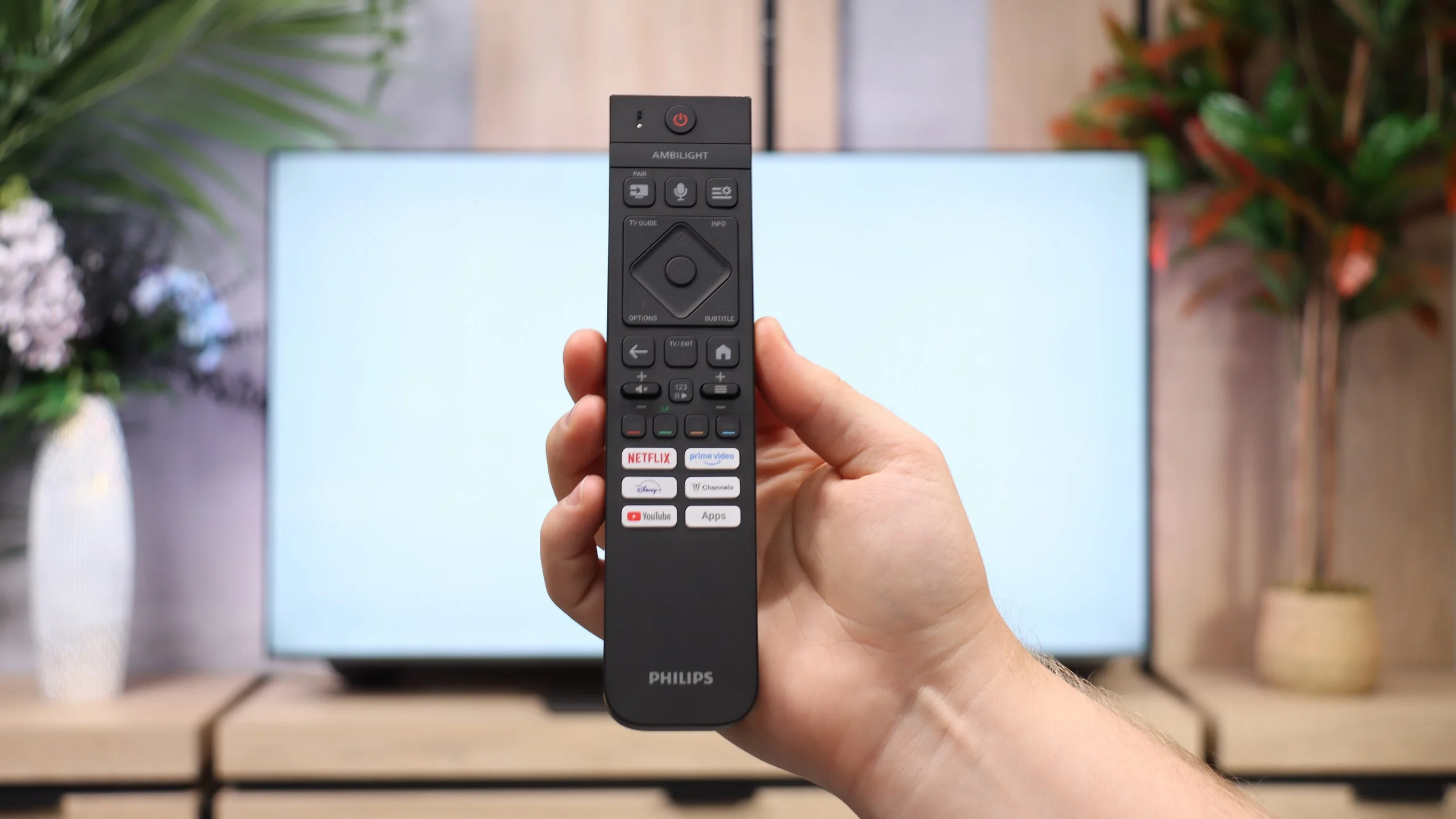
When it comes to classic features, the Philips PUS9010 is rather average. On board, you will find basics such as EPG, teletext, and the ability to connect headphones via Bluetooth. However, that's basically where the list of stronger points ends. Unfortunately, it lacks USB recording and a PiP (picture-in-picture) mode. These are features that are becoming less common, but they can still be useful in everyday use. On the plus side, there's a remote control with a numeric keypad. It's modern, backlit, and visually makes a very good impression. It's just a shame that it's still an infrared remote, so it requires aiming at the screen. With such a modern look, Bluetooth radio control would have been a welcome addition.
Smart TV
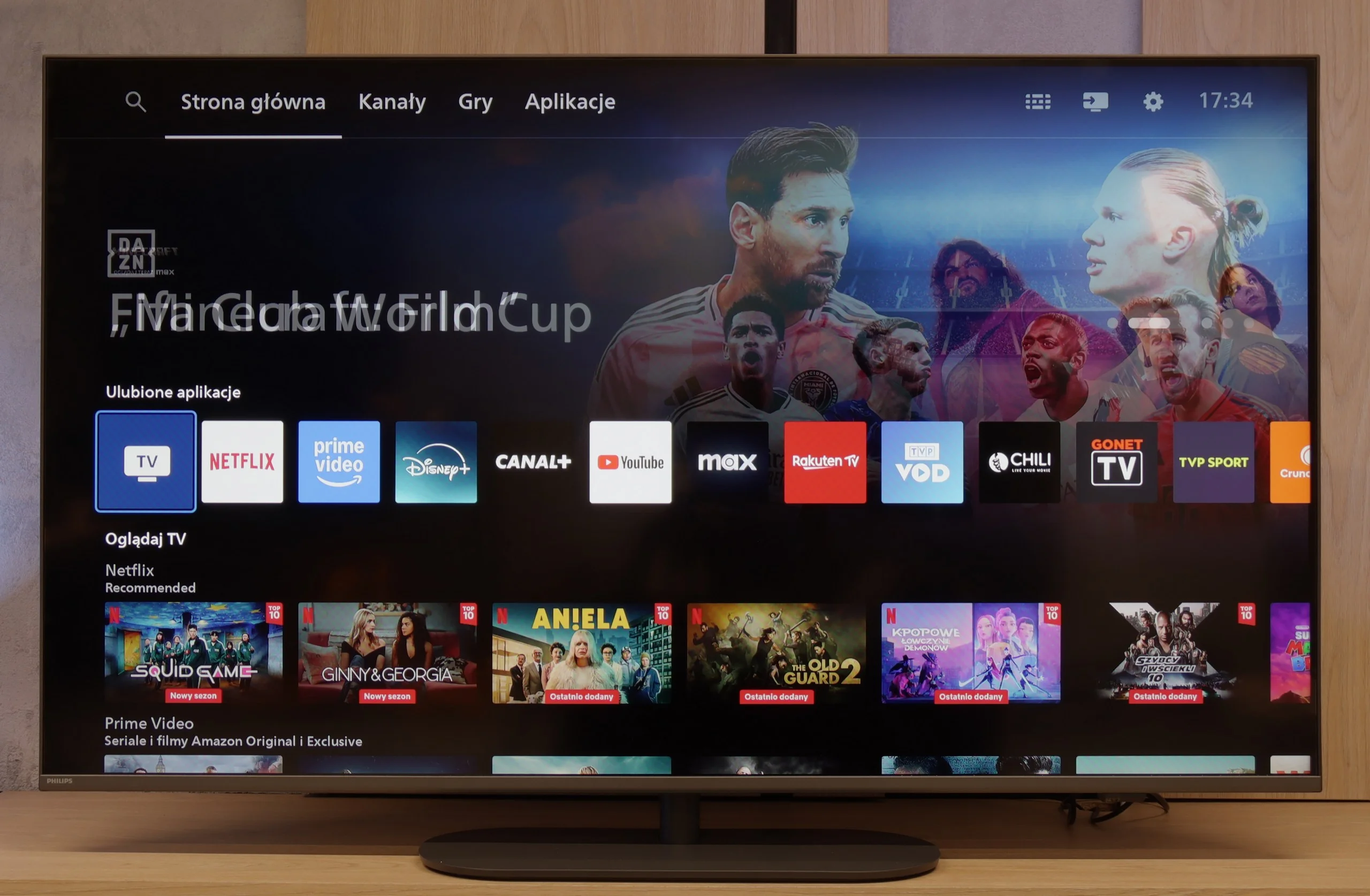
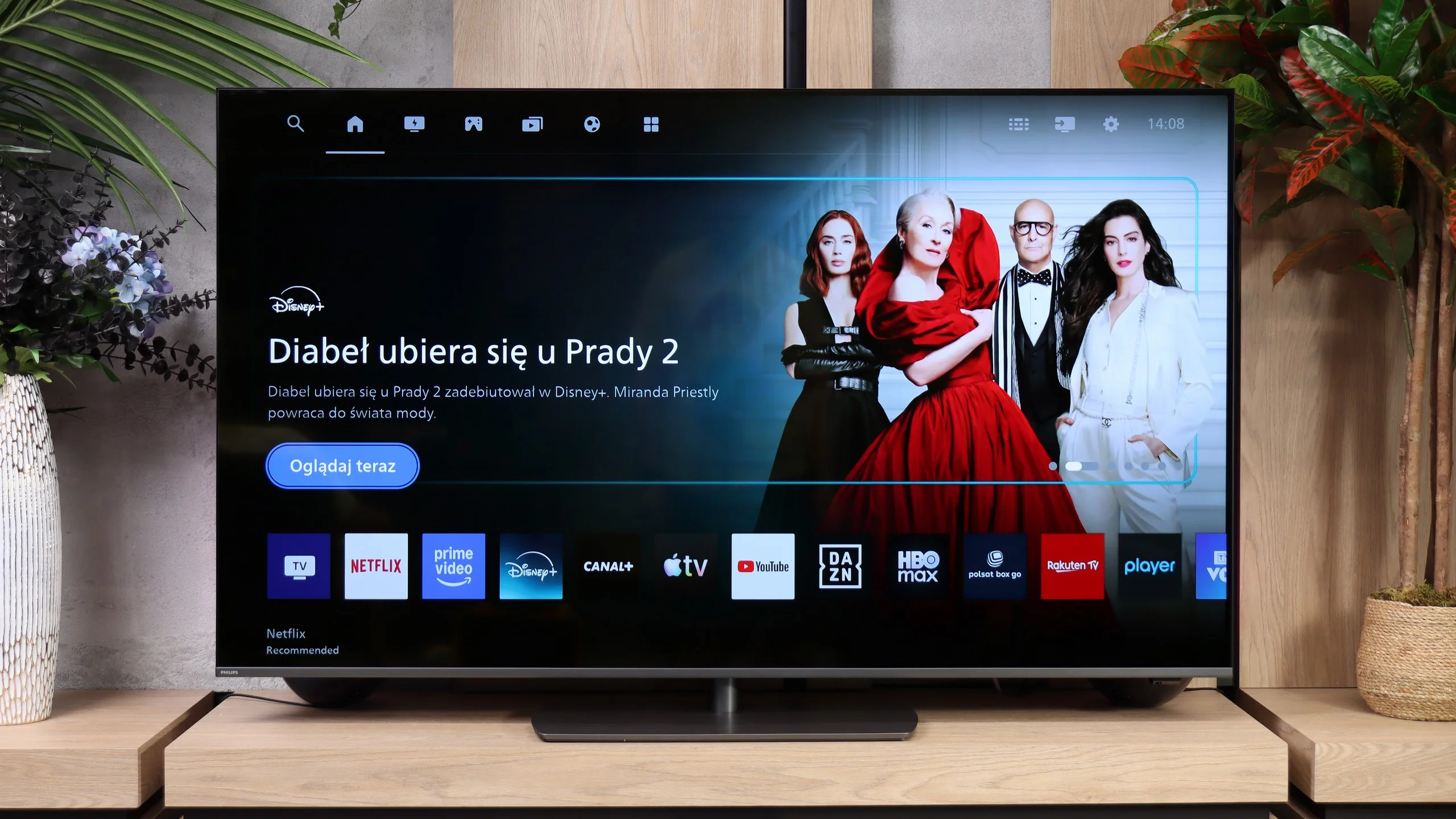
Most Philips televisions from 2025, including the PUS9010, run on the Titan OS system. This is still a relatively young platform, and unfortunately, its limitations are still evident. The system itself runs quite smoothly, clearly better than in the manufacturer's cheaper models, and during testing, it did not have any issues with screen mirroring or AirPlay, which is still not a given. However, the biggest drawback remains the limited number of available applications. This can be partially circumvented by connecting a keyboard and mouse to the TV and using the built-in web browser, but this is more of an emergency solution than a convenient everyday option.
Titan OS in this year's The One shows that Philips has worked on its system. Compared with last year's version, many small issues and functions that previously didn't work as they should have been fixed. Now we can use AirPlay without problems, cast a computer screen via Miracast, or search by voice in Polish. The system itself runs decently, though it's definitely not among the fastest. The app library has also grown: Netflix, Prime Video, Disney+, CANAL+, Apple TV, and YouTube are available. The selection is still smaller than on Google TV, but for popular services Titan gives fewer reasons to complain. Everyday usability has improved in the standard features as well. You can connect Bluetooth headphones and listen to audio through them at the same time as the TV speakers, and there's a mode that lets you turn off the screen and leave only the sound. USB recording and picture-in-picture (PiP) are missing. What's most disappointing is the remote: despite backlit buttons it still controls the TV via infrared, so you have to point it at the screen. The system has gained many useful tweaks, but that control element remains unchanged and can be irritating in daily use.
Apps
6.7/10
7.2/10






















Playing files from USB
7.9/10
8.6/10
Supported photo formats:
Maximum photo resolution:
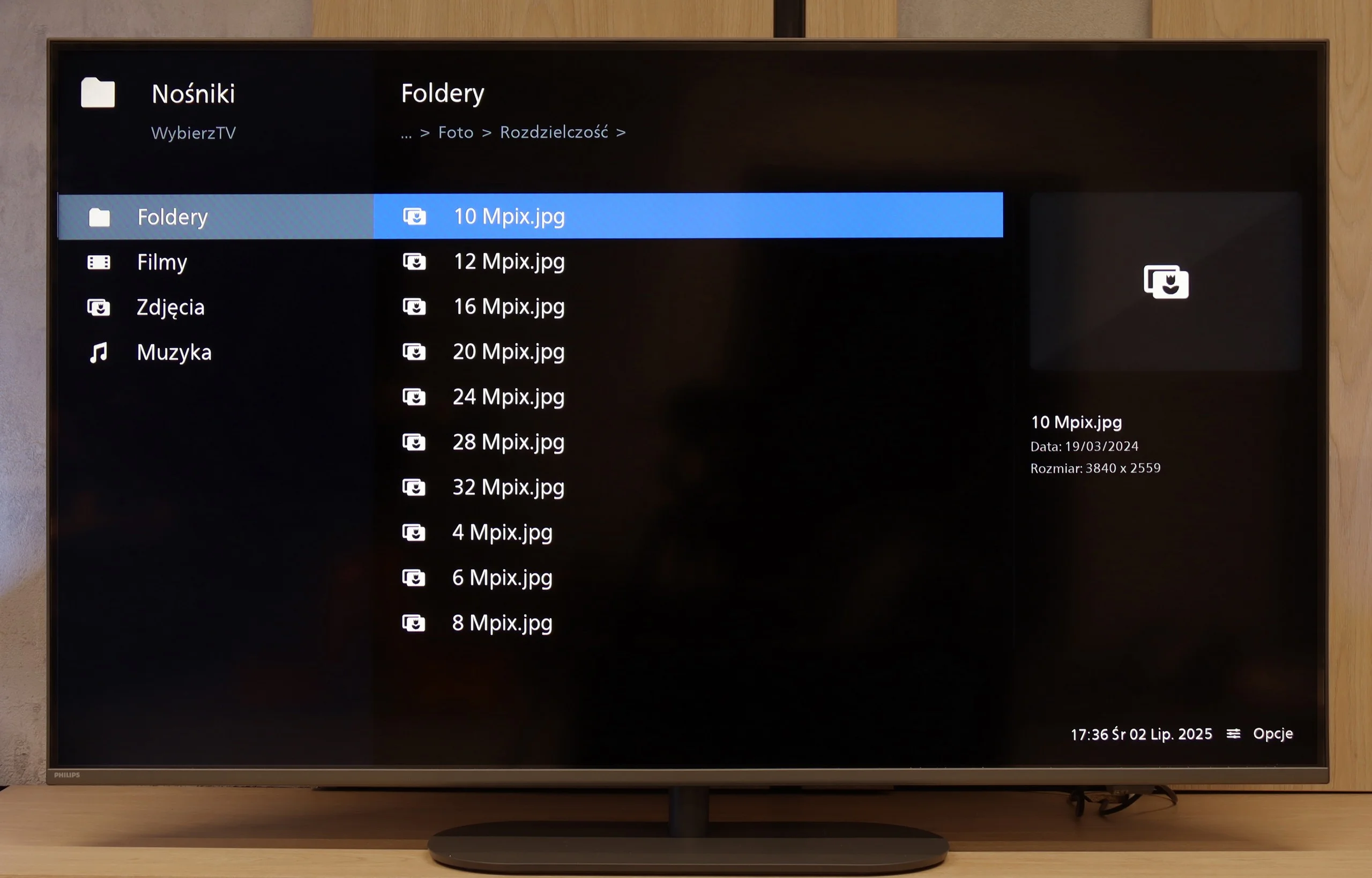
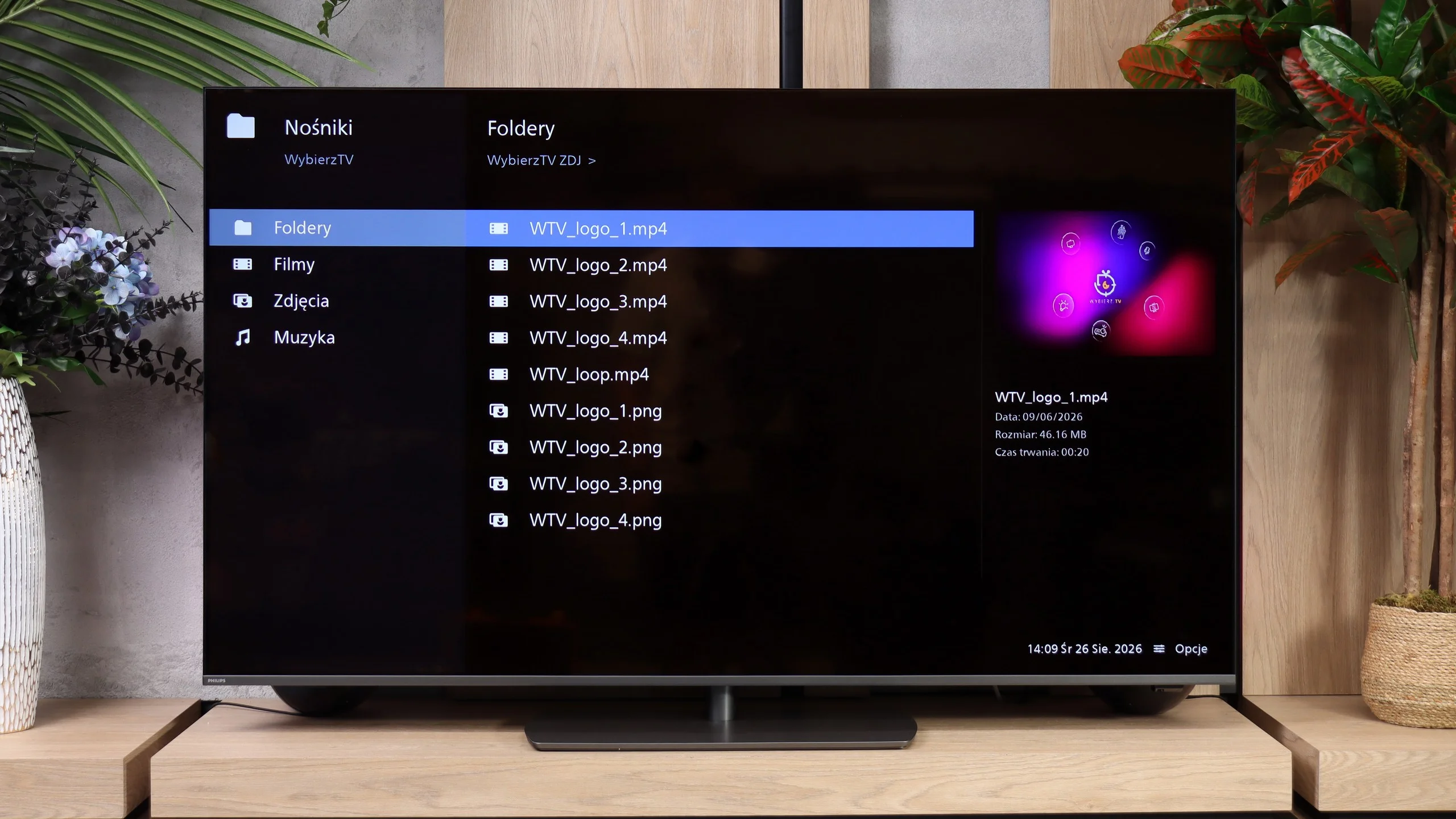
The media player in the new Philips is a solid standard. It handles most popular video and audio files, operating stably and predictably. While fans of rarer subtitle formats or specific image resolutions may feel a bit deprived, the built-in software takes care of the average user. It's a convenient solution that allows us to avoid using external equipment to play materials from an external drive.
The built-in USB player works quickly and smoothly and handles most tested files without problems. It performs well with music, from common MP3s to FLAC files, including 96 kHz/24-bit. It's perfectly adequate for everyday media playback from a USB flash drive. However, once again our biggest reservations are about photo handling. The player treats resolutions rather selectively: it opened our 8 MP, 16 MP and 32 MP files, but failed with, among others, 4 MP, 12 MP and 24 MP. It's hard to find any logic in that, since a larger photo works while a smaller one does not. That can be annoying when browsing vacation photos.
Sound
6.6/10
6.9/10
- Maximum volume85dB96dB
- Dolby Digital Plus 7.1
- Dolby True HD 7.1
- Dolby Atmos in Dolby Digital Plus (JOC)
- Dolby Atmos in Dolby True HD
- DTS:X in DTS-HD MA
- DTS-HD Master Audio
The sound from the Philips PUS9010 is simply adequate. The tested unit offers a 2.0 setup with a total power of 40 W, which is completely sufficient for everyday watching of television, movies, or series. The sound quality is pleasant, but it's hard to speak of anything extraordinary, especially if you're looking for strong bass or greater dynamics. On the positive side, it should be noted that it supports a wide range of audio formats. When connecting a soundbar or home theater system, the TV easily handles Dolby Atmos and DTS without needing to fiddle with settings or losing sound quality. This is definitely good news for those planning external audio systems.
The Philips PQS9001 has a 2.0 audio system with a total power of 40 W, that is, two 10 W speakers per side. It sounds quite good and definitely better than most budget TVs. There's plenty of volume, but the sound lacks depth. The biggest issue is a lack of deep bass, so explosions in movies and heavier parts of music don't have the proper weight. Higher frequencies are not reproduced evenly either. Measurements show a clear dip around 2 kHz, then a boost at 6–7 kHz and a drop-off above about 8 kHz. That can emphasize sibilance and add a bit of harshness to the sound, despite the recessed treble. It's adequate for everyday viewing, but for movies and music it's worth considering external audio. Especially since the TV supports surround sound formats, including Dolby Atmos and DTS. A compatible soundbar or AV receiver will make better use of those formats than the built-in speakers.
Sound Quality Test
Acoustic Measurements
No acoustic data
96dBC (Max)
75dBC
Reader comments
Comments are provided by the external service Disqus (Zeta Global). Once loaded, Disqus may set cookies and process data about your activity.
We will remember your choice on this device. Provider's privacy policy