Philips PUS8500 vs Philips MLED920 / MLED910

Direct comparison

PUS8500 / PUS8560 / PUS8510 / PUS8600

Info

MLED920 / MLED910

Info

Available screen sizes: 43”50”55”65”75”85”

Available screen sizes: 55”65”75”85”

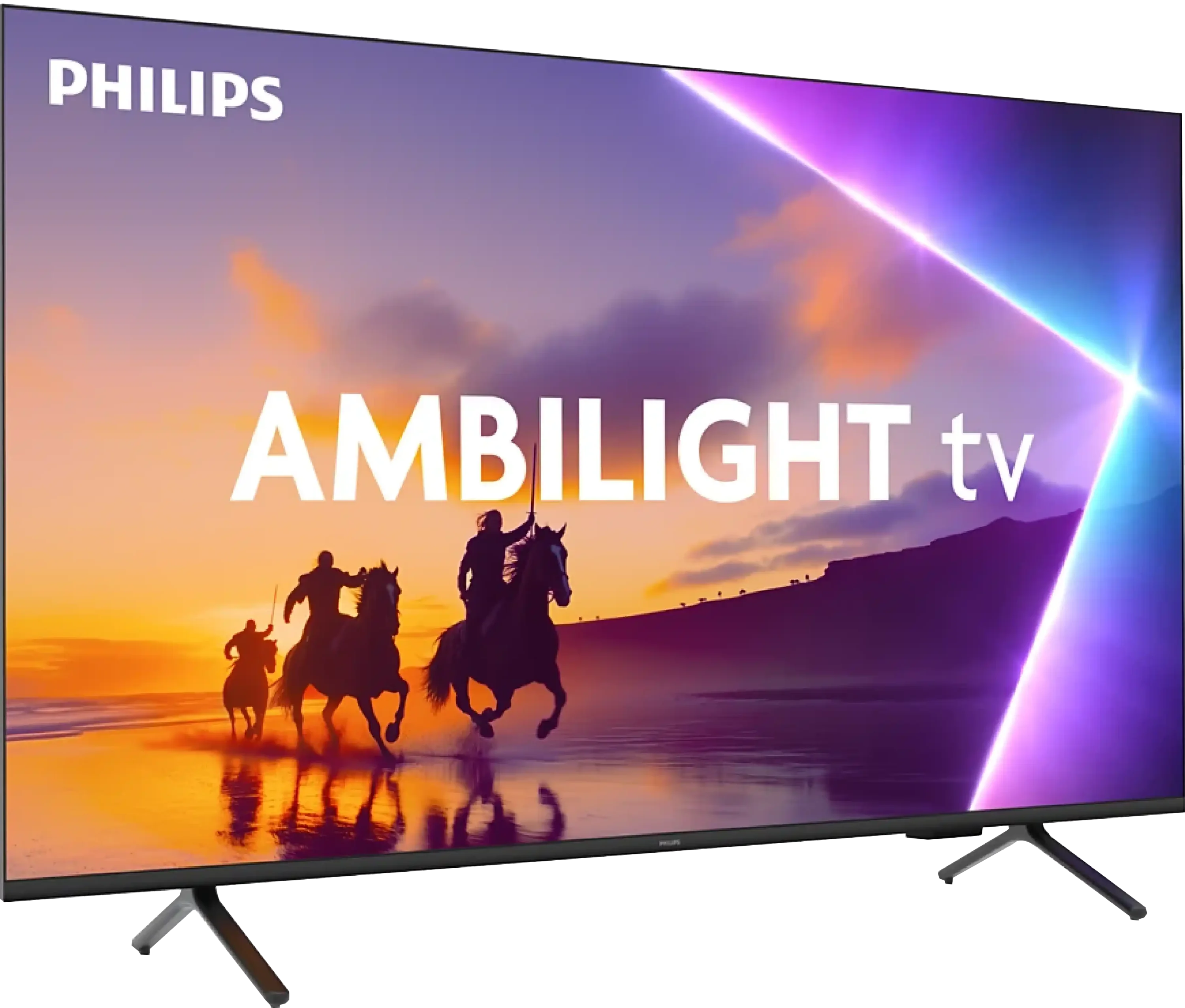
Review Philips PUS8500  Main photo
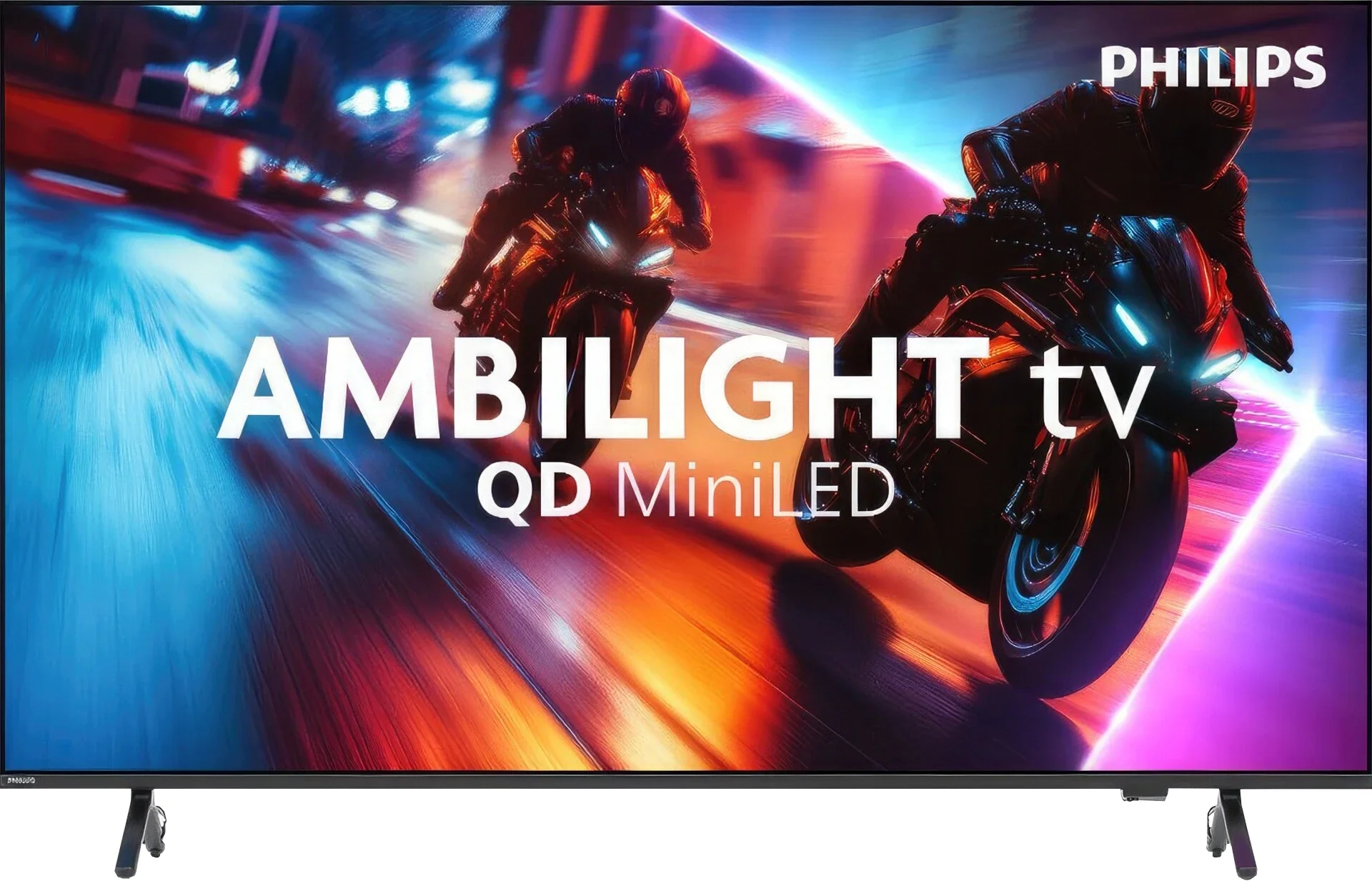
Review Philips MLED920 / MLED910 Main photo

Panel type: LCD VA

Resolution: 3840x2160

System: Titan OS

Model year: 2025

Complete the survey to find out the result

Panel type: LCD VA

Resolution: 3840x2160

System: Titan OS

Model year: 2025

Complete the survey to find out the result

Overall rating

5.8

6.5

  • Movies and series in UHD quality

    5.6

    6.4

  • Classic TV, YouTube

    6.2

    6.8

  • Sports broadcasts (TV and apps)

    5.3

    6.8

  • Gaming on console

    6.7

    8.5

  • TV as a computer monitor

    5.6

    4.0

  • Watching in bright light

    4.9

    5.5

  • Utility functions

    4.8

    5.5

  • Apps

    6.7

    6.7

  • Sound quality

    6.2

    6.2

Advantages

  • Ambilight TV System

  • High native contrast - VA panel

  • Low input lag

  • Basic features for gamers: ALLM and VRR

  • Full support for audio formats: Dolby Atmos and DTS

  • Backlit remote controler with numeric keypad

  • Solid black and high contrast thanks to mini-LED backlighting

  • HDR brightness reaching 700–800 nits in real movie scenes

  • Support for multiple HDR formats including Dolby Vision and HDR10+

  • Ambilight – a feature that adds atmosphere, especially in the evening

  • Lots of supported audio formats: DTS:X, Dolby Atmos, Dolby True HD 7.1

  • 144 Hz panel with support for VRR, ALLM, and Dolby Vision Gaming

  • Loud sound (up to 88 dB)

  • Illuminated remote

Disadvantages

No like
  • Average panel brightness

  • TitanOS system feels unfinished (some features do not work, gaps in applications)

  • Infrared remote control

  • Font readability issues (PC)

  • Titan OS is quite underdeveloped – there are significant bugs and deficiencies in the applications

  • Few user features

  • Hybrid infrared remote control

  • Issues with the fluidity of tonal transitions in dark scenes

  • The TV is not suitable (aside from gaming) for collaboration with a PC – strong dithering and poor readability of fonts, especially colored ones and on dark backgrounds

Our verdict

Ambilight because that's where we have to start, it's the biggest reason to buy the PUS8500. The three-sided backlighting of the TV looks great, especially in the evening. It creates an atmosphere, masks the imperfections of contrast, and makes the viewing experience simply more enjoyable. Even if the black levels aren't perfect, the native VA panel's high contrast is just fine. On top of that, there's really decent input lag and several gaming features like ALLM and VRR. Although there’s no HDMI 2.1 or 120Hz panel, casual gaming should be a pleasure. Especially since it's responsive and latency-free. Additionally, there’s full support for audio formats – both Dolby Atmos and DTS, so soundbar owners can rejoice too.

But let's not kid ourselves – this is still a budget TV, and at times it shows. Brightness is average – not weak enough to make viewing impossible, but if you hit a particularly sunny day, watching conditions without blinds can be problematic. However, in our opinion, the biggest disappointment with the PUS8560 is the operating system, Titan OS. Despite the system debuting some time ago, certain features simply wouldn't work – for example, screen mirroring from a phone despite the manufacturer's claims that such a feature is present here. There are fewer apps than with competitors, and the system itself runs a bit clumsily. Overall, it seems to have some capabilities, but clearly lacks refinement.

Of course, this is not a TV meant to compete with top models. But if someone is looking for something simple, with a nice atmosphere that the Ambilight system provides, it is a quite reasonable offer. You just need to know what to expect and accept the many compromises present here.

The Philips MLED920 is a natural continuation of last year's PML9000 model, but it's not a repeat performance. It's clear that the manufacturer has done its homework – first and foremost, the local dimming algorithms have been improved, which last year tended to significantly degrade the viewing experience. Now, the blacks and contrast look much better, and when combined with the Dolby Vision here, even HDR content looks really decent. The picture occasionally shines where it should, and it doesn’t strain the eyes in more challenging scenes. Undoubtedly, the biggest advantage of the MLED920 is its unique Ambilight system. The three-sided backlighting can give films and games a completely new atmosphere – the screen seems to extend beyond its borders, and the entire room becomes part of the viewing experience. This is something that will be appreciated not only by movie enthusiasts but also by gamers, who, in addition to the lights, get a whole set of features typical for modern gaming TVs: 144 Hz, VRR, ALLM, and Dolby Vision Gaming. In this regard, Philips has a lot to offer. However, there is a significant caveat – this brings us to the most difficult part of this verdict – it is still dual-purpose equipment. On one hand, we have strong picture quality and a unique Ambilight feature, while on the other, there are hardware limitations that are hard to ignore. Titan OS in its current form is a significant bottleneck, filled with bugs and shortcomings that make the television lag behind the competition. Additionally, the price is not low considering the offered capabilities. Therefore, it's hard to recommend it unequivocally to everyone. However, if you are looking for the brightest Philips screen at a reasonable price, with Ambilight, a full set of features for gamers, and basic applications – the MLED920 will be quite a good choice.

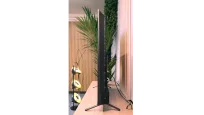
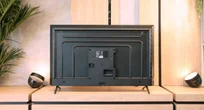
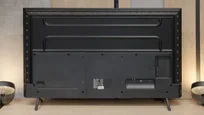
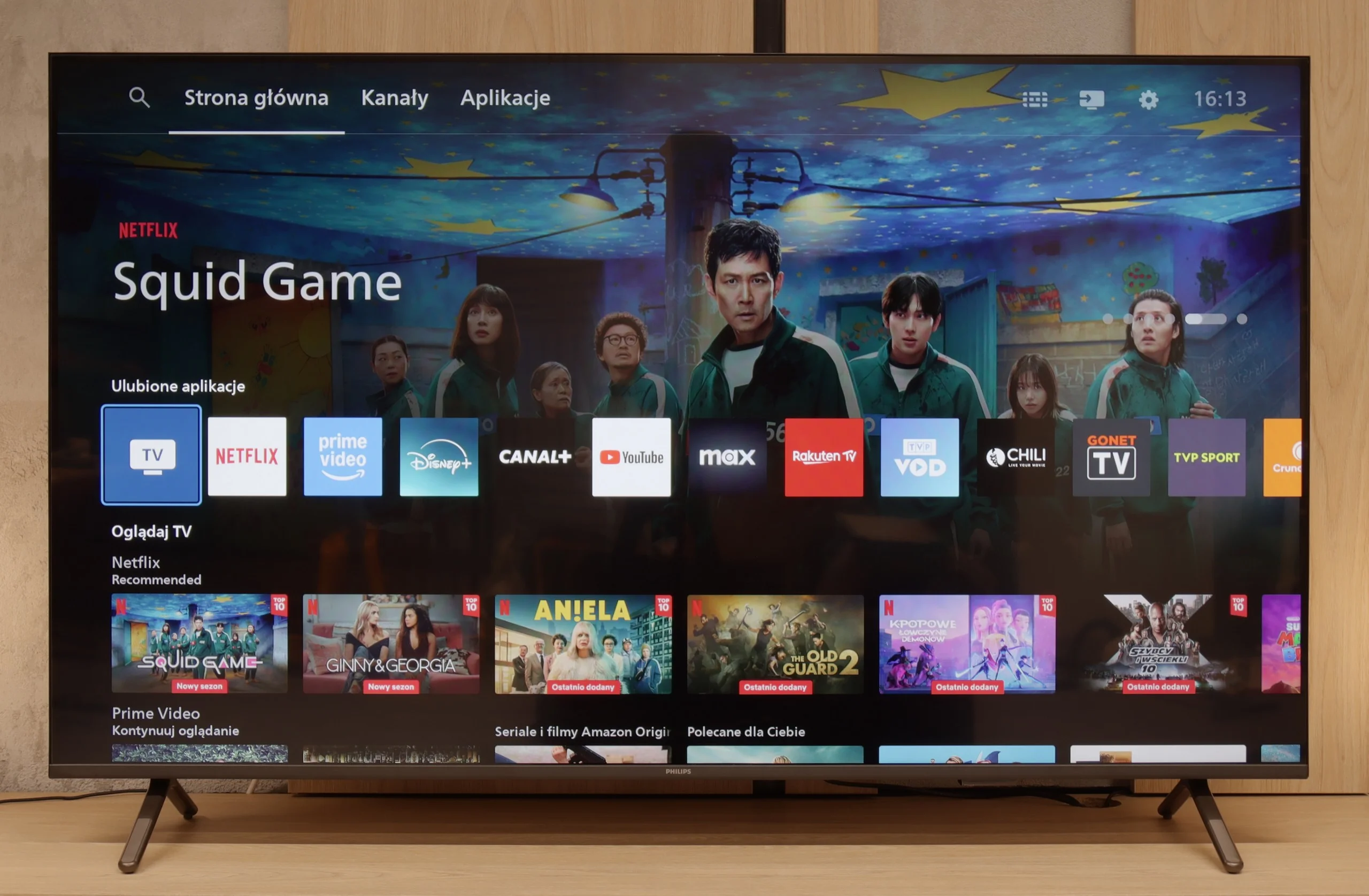
TV appearance

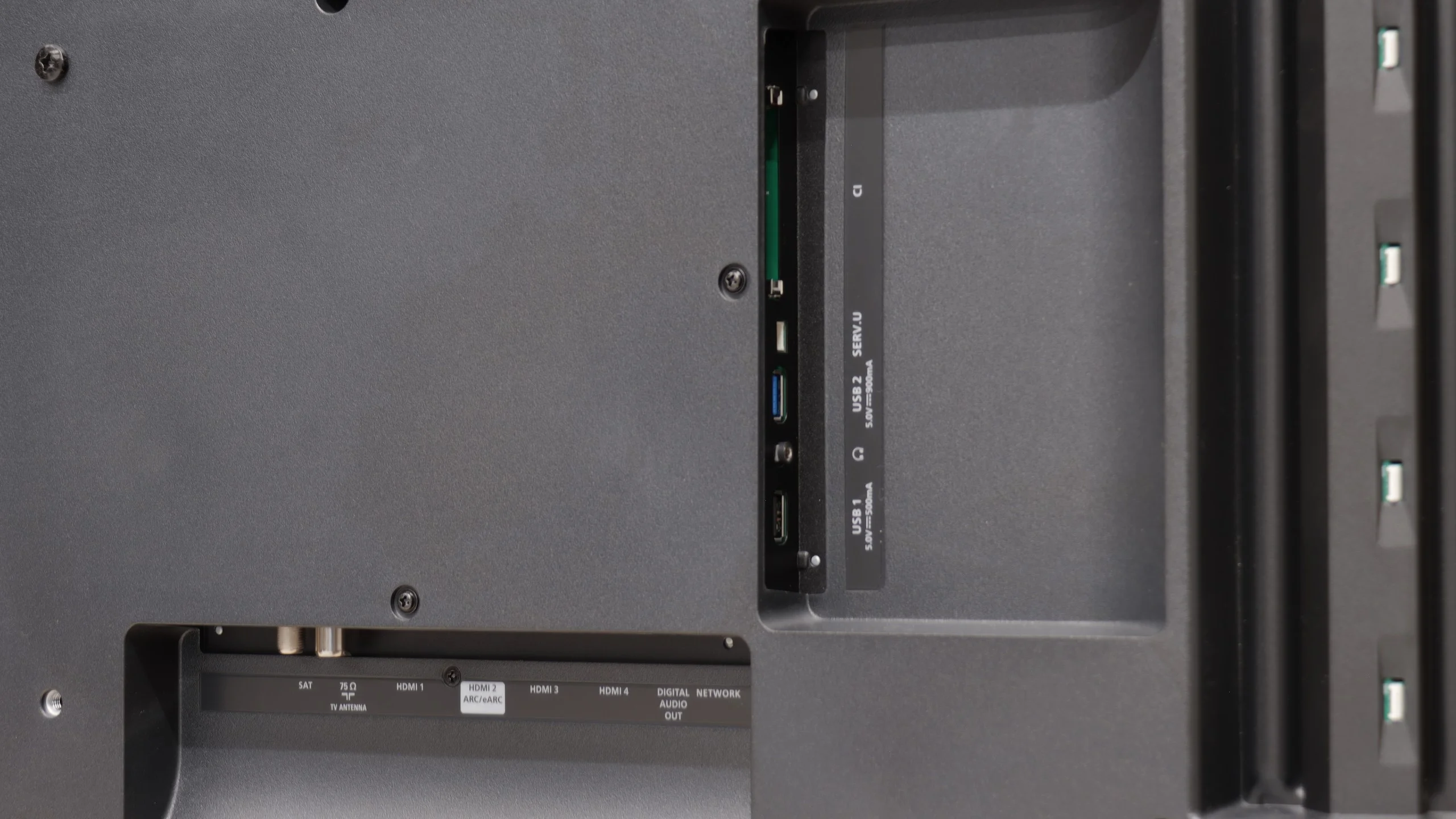
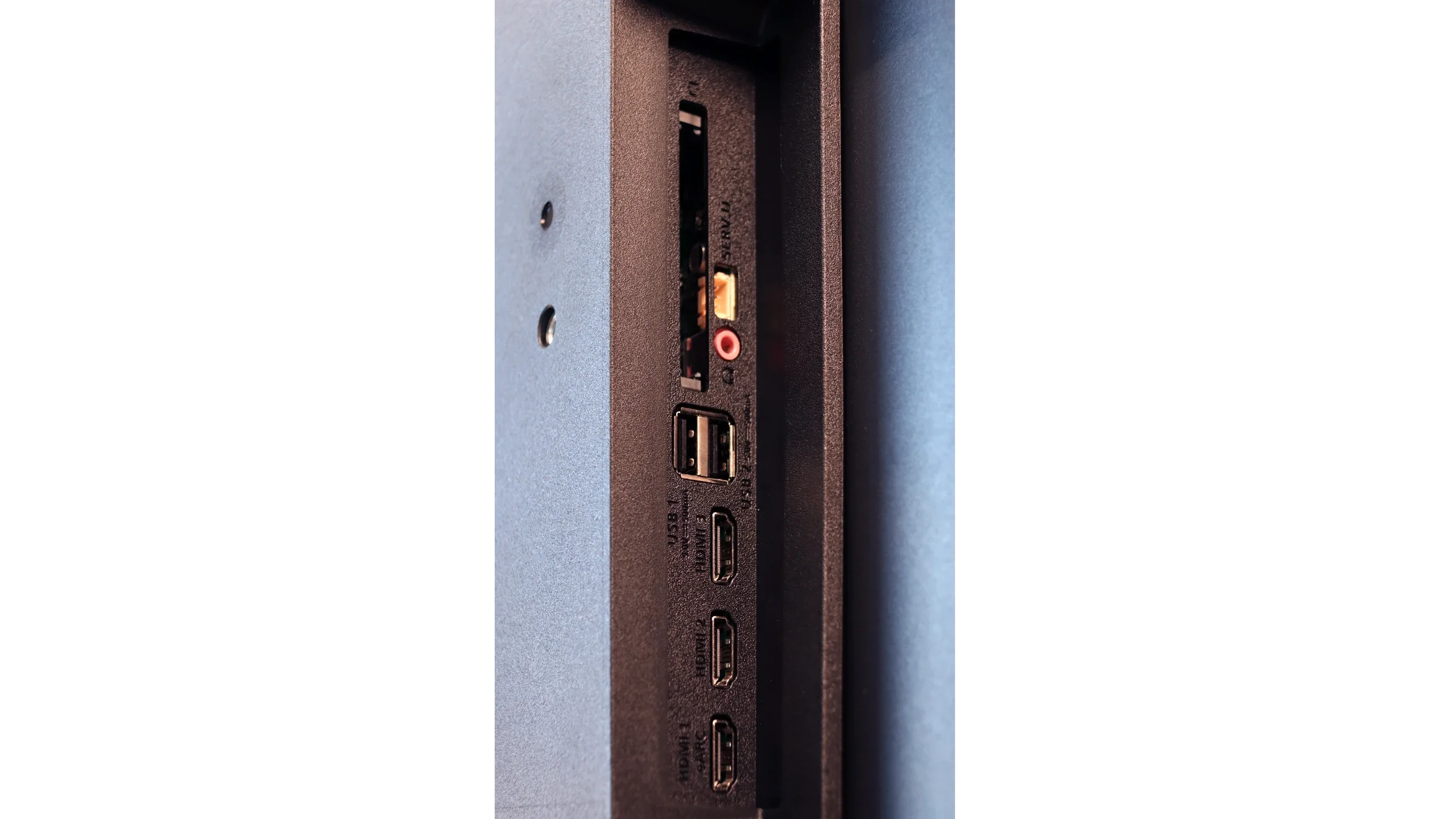
HDMI inputs
3 x HDMI 2.0, 0 x HDMI 2.1
0 x HDMI 2.0, 4 x HDMI 2.1 (48Gbps)
Other inputs
Outputs
Toslink (Optical audio), eARC (HDMI), ARC (HDMI), Mini-Jack (Headphones)
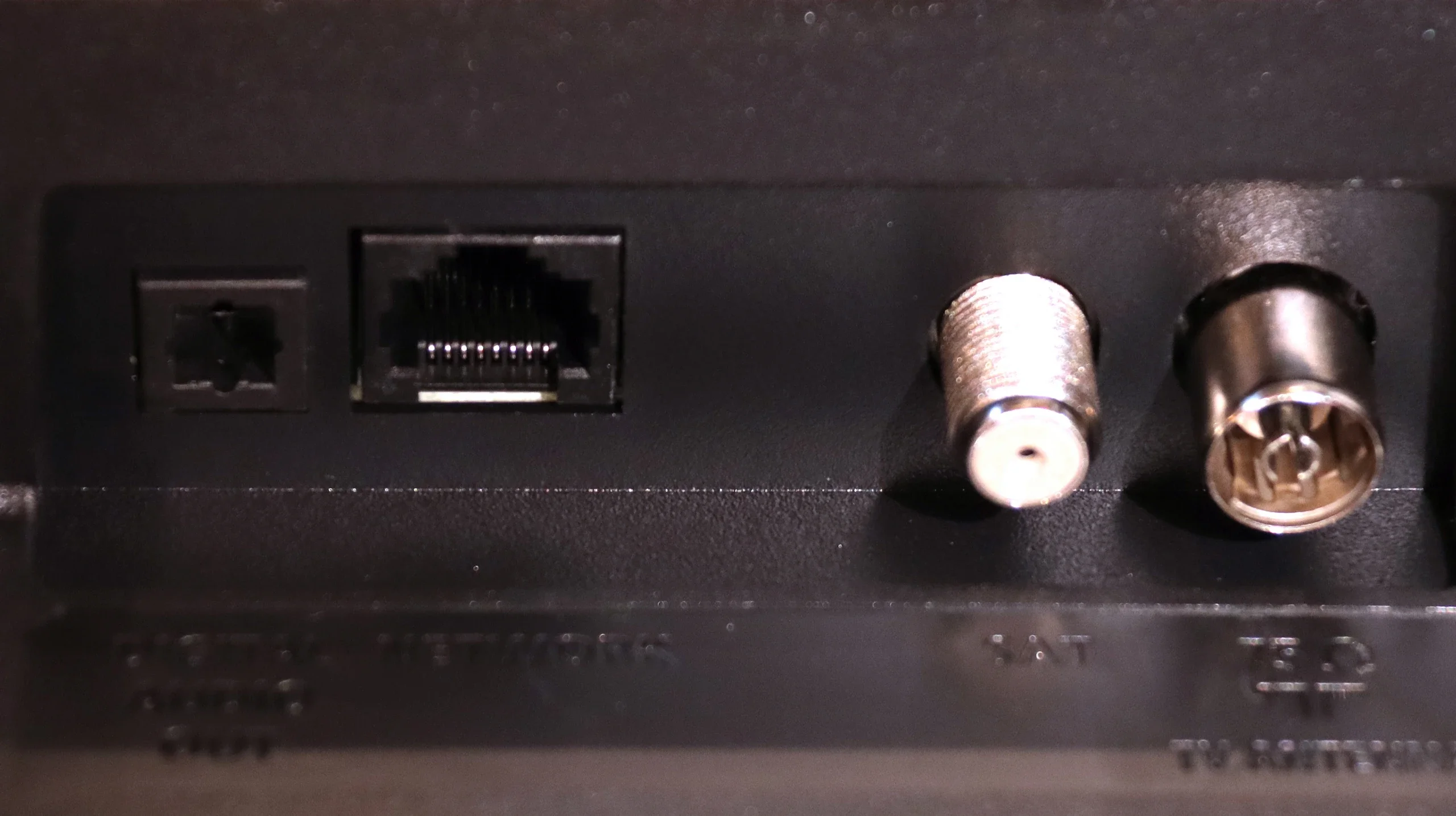
Network Interfaces
Wi-Fi 2.4GHz, Wi-Fi 5GHz, Ethernet (LAN) 100Mbps
Build quality
Average
Good
Stand type
Legs
Legs
Bezel color
Graphite
Graphite
Stand
Base adjustment
Fixed
Accessories
Stand
Stand

Contrast and black detail

6.1/10

7.9/10

Local dimming function: No

Local dimming function: Yes, number of zones: 144 (12 x 12)

Contrast:

Review Philips PUS8500  Contrast and black detail

Result

6,000:1

Review Philips PUS8500  Contrast and black detail

Result

5,950:1

Review Philips PUS8500  Contrast and black detail

Result

6,250:1

Review Philips PUS8500  Contrast and black detail

Result

5,950:1

Review Philips PUS8500  Contrast and black detail

Result

5,750:1

Review Philips MLED920 / MLED910 Contrast and black detail

Result

298,900:1

Review Philips MLED920 / MLED910 Contrast and black detail

Result

38,500:1

Review Philips MLED920 / MLED910 Contrast and black detail

Result

23,950:1

Review Philips MLED920 / MLED910 Contrast and black detail

Result

16,850:1

Review Philips MLED920 / MLED910 Contrast and black detail

Result

8,000:1

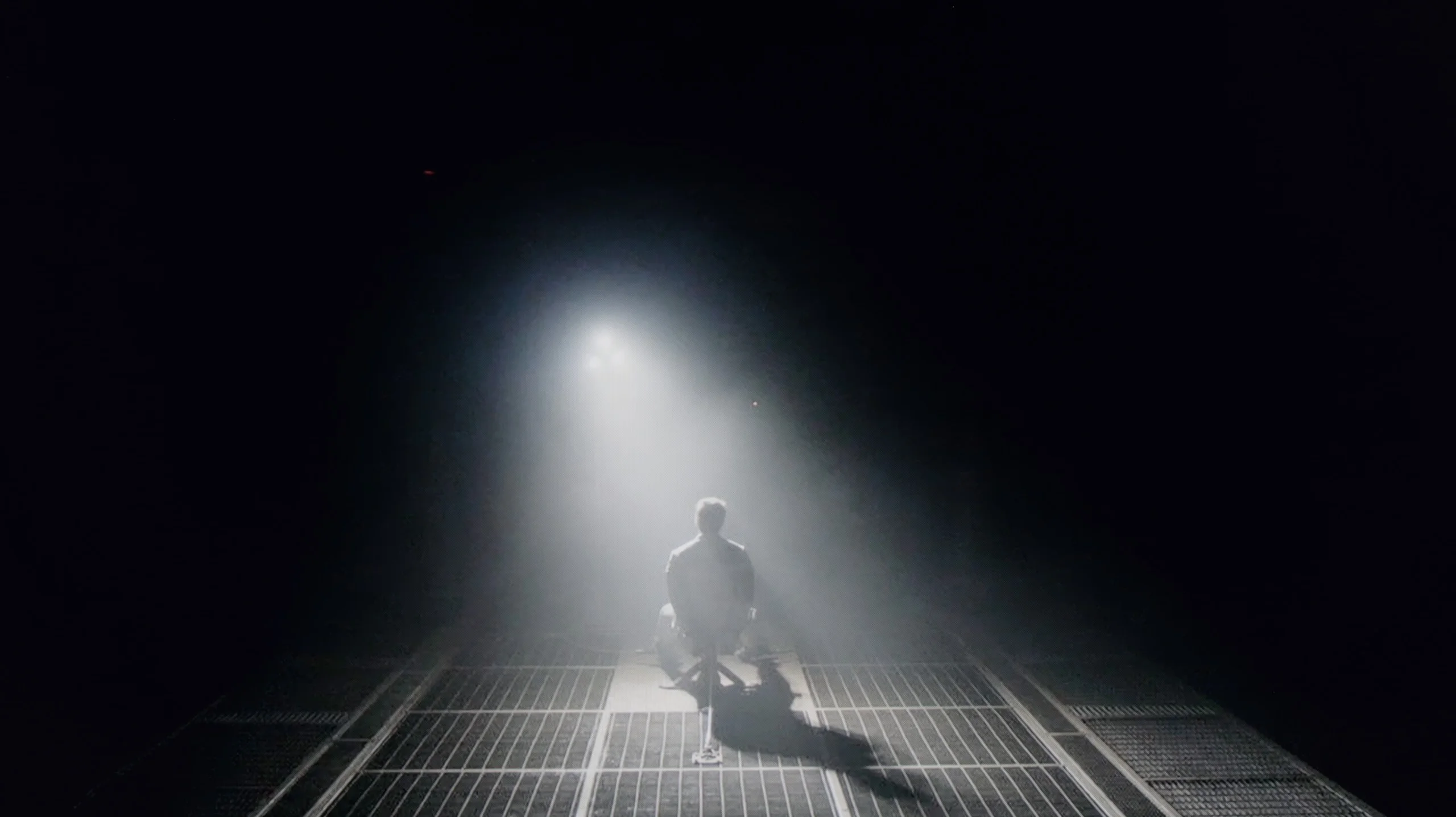
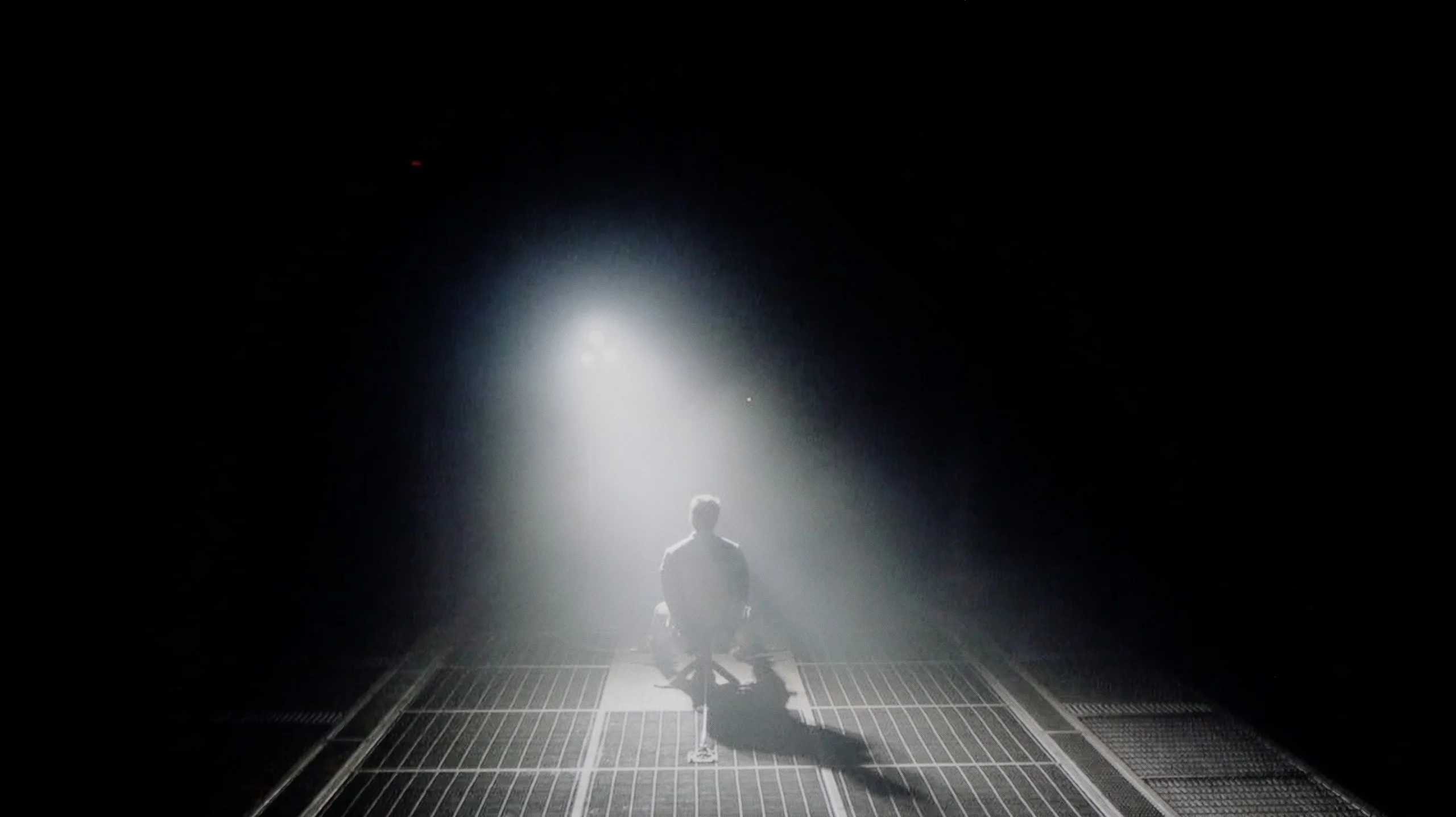
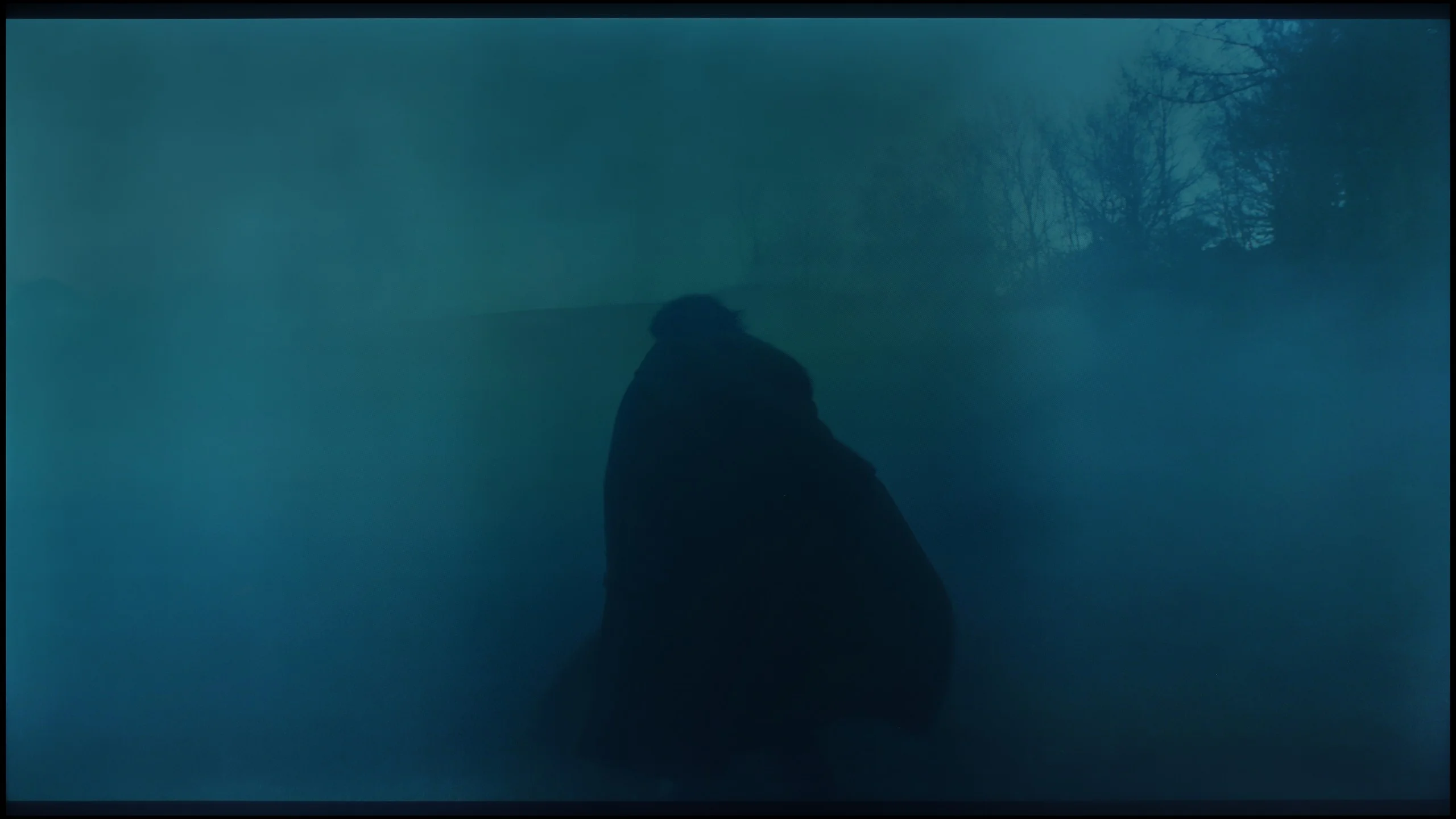
Halo effect and black detail visibility:

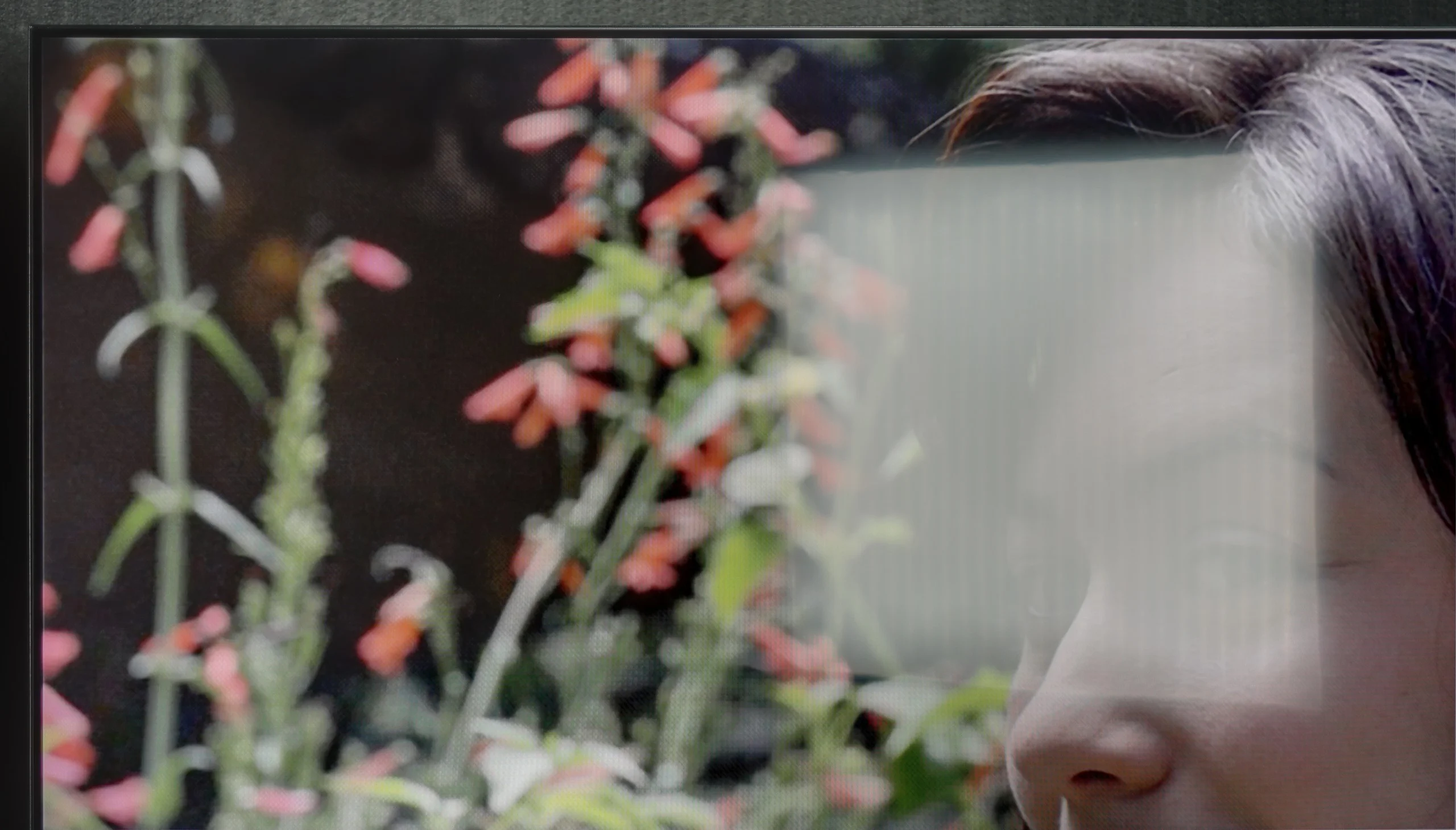
Check the visibility of bright lights on a dark background. Mini-LEDs often struggle with this. The photo does not compare black levels – that’s what the video below is for.
The video accurately shows differences in contrast and black levels between TVs, as well as potential issues: halo around bright objects or Mini-LED zone operation visible as brightness jumps.
The Philips PUS8560 in the size we tested is equipped with a VA panel. As a result, the black levels – for an LCD television – can be considered decent. And that is exactly the case with this model. Both the blacks and the overall contrast impression in the film scenes we tested are quite good – the image does not wash out, and details are visible even in more difficult sections.
But the panel alone is not everything. Unfortunately, the PUS8500 is not equipped with local dimming (which is a given looking at the TV segment), so one has to reckon with the fact that with completely turned-off lights, the black can resemble more shades of navy than true black. On the other hand – and here’s a plus for Philips – the Ambilight system does a great job. The backlighting makes a real impact on contrast perception. Thanks to this, even if the black technically isn't perfect, the subjective viewing experience becomes much more enjoyable. For many people, that’s enough for an evening screening to be truly impressive.

The Philips MLED920 in the 55-inch version that we had the opportunity to test uses a high-contrast VA panel. The panel itself is one thing, but the true distinguishing feature of this model is the mini-LED backlighting. This largely determines how black levels and contrast appear – and it must be said that Philips has made a significant leap forward compared to the models from 2024, where the local dimming algorithms performed just mediocrely. In this new version, it's much better, and the contrast presented by the MLED920 can really pleasantly surprise. At times, it even resembles the level known from the best LCD TVs on the market – blacks can be deep, the image gains three-dimensionality, and viewing sessions in a dark room create a great impression. Of course, as is the case with any mini-LED TV, this is not an image entirely free from compromises. With a large amount of fine details on the screen, the local dimming algorithms can sometimes get confused – sometimes dimming details more than we would like, and at other times brightening the background, resulting in slight light blue halos around objects (the so-called halo effect). Despite these imperfections, we must emphasize that black levels and contrast are truly a strong point of the Philips MLED920 and definitely one of the reasons to consider it in the mid-range.

HDR effect quality

4.8/10

5/10

Supported formats
HDR10, HDR10+, HLG
HDR10, HDR10+, Dolby Vision, HLG
Color gamut coverage
DCI P3: 90.4%, BT.2020: 65.8%
DCI P3: 89.9%, BT.2020: 65.6%

Luminance measurements in HDR:

Review Philips PUS8500  Brightness measurement

Result

273 nit

Review Philips PUS8500  Brightness measurement

Result

300 nit

Review Philips PUS8500  Brightness measurement

Result

324 nit

Review Philips PUS8500  Brightness measurement

Result

343 nit

Review Philips PUS8500  Brightness measurement

Result

334 nit

Review Philips MLED920 / MLED910 Brightness measurement

Result

722 nit

Review Philips MLED920 / MLED910 Brightness measurement

Result

177 nit

Review Philips MLED920 / MLED910 Brightness measurement

Result

775 nit

Review Philips MLED920 / MLED910 Brightness measurement

Result

131 nit

Review Philips MLED920 / MLED910 Brightness measurement

Result

677 nit

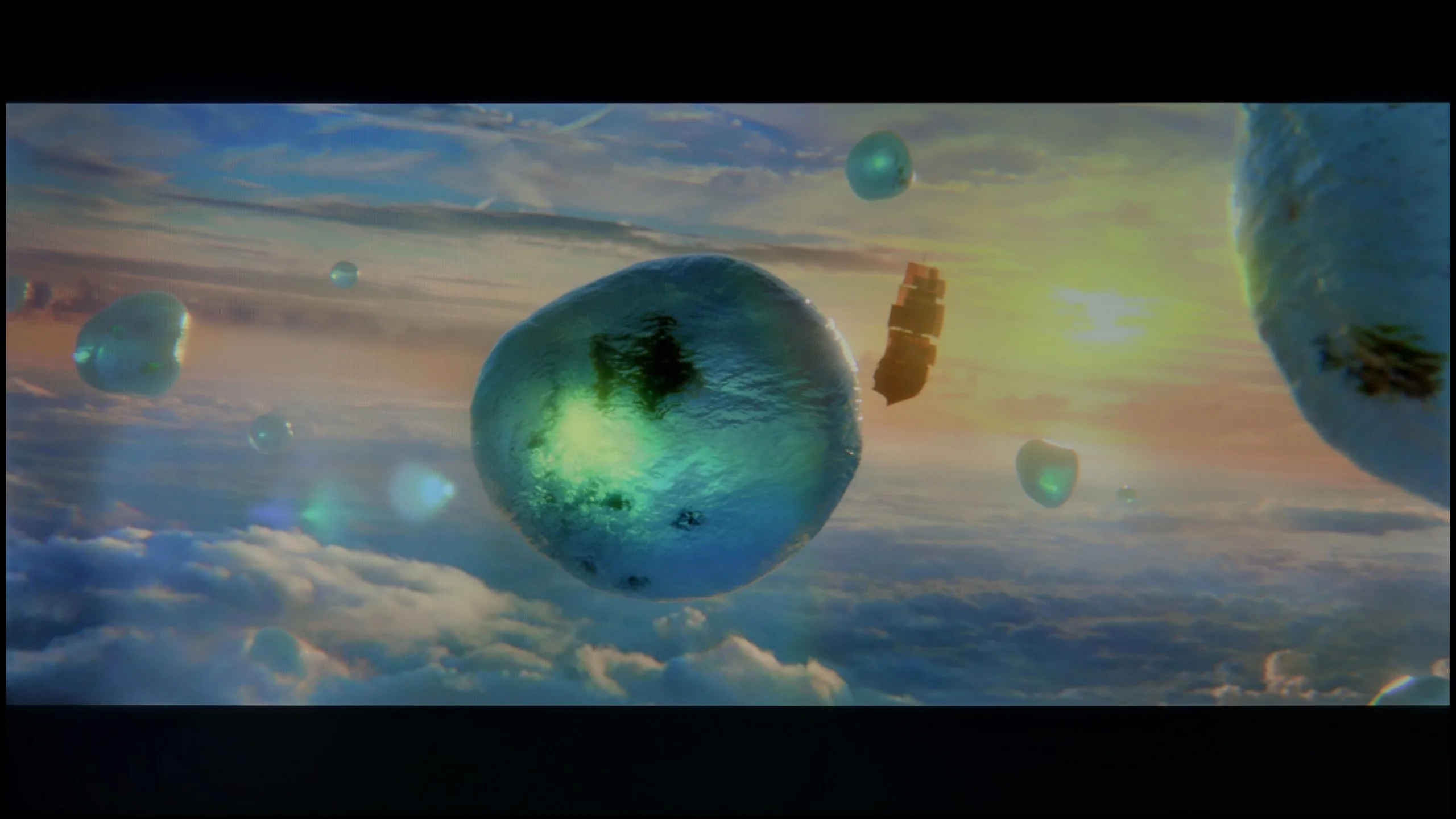
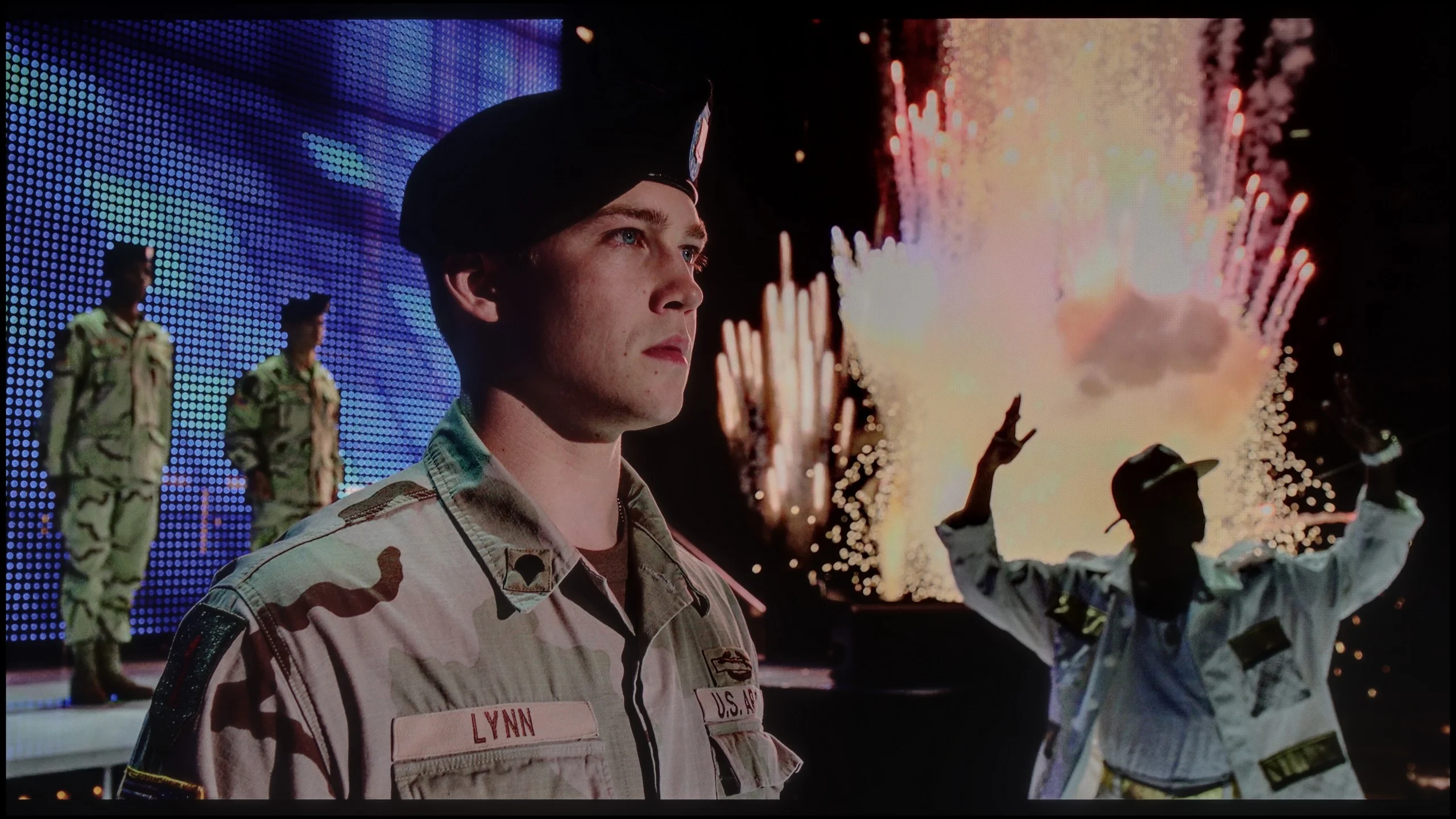
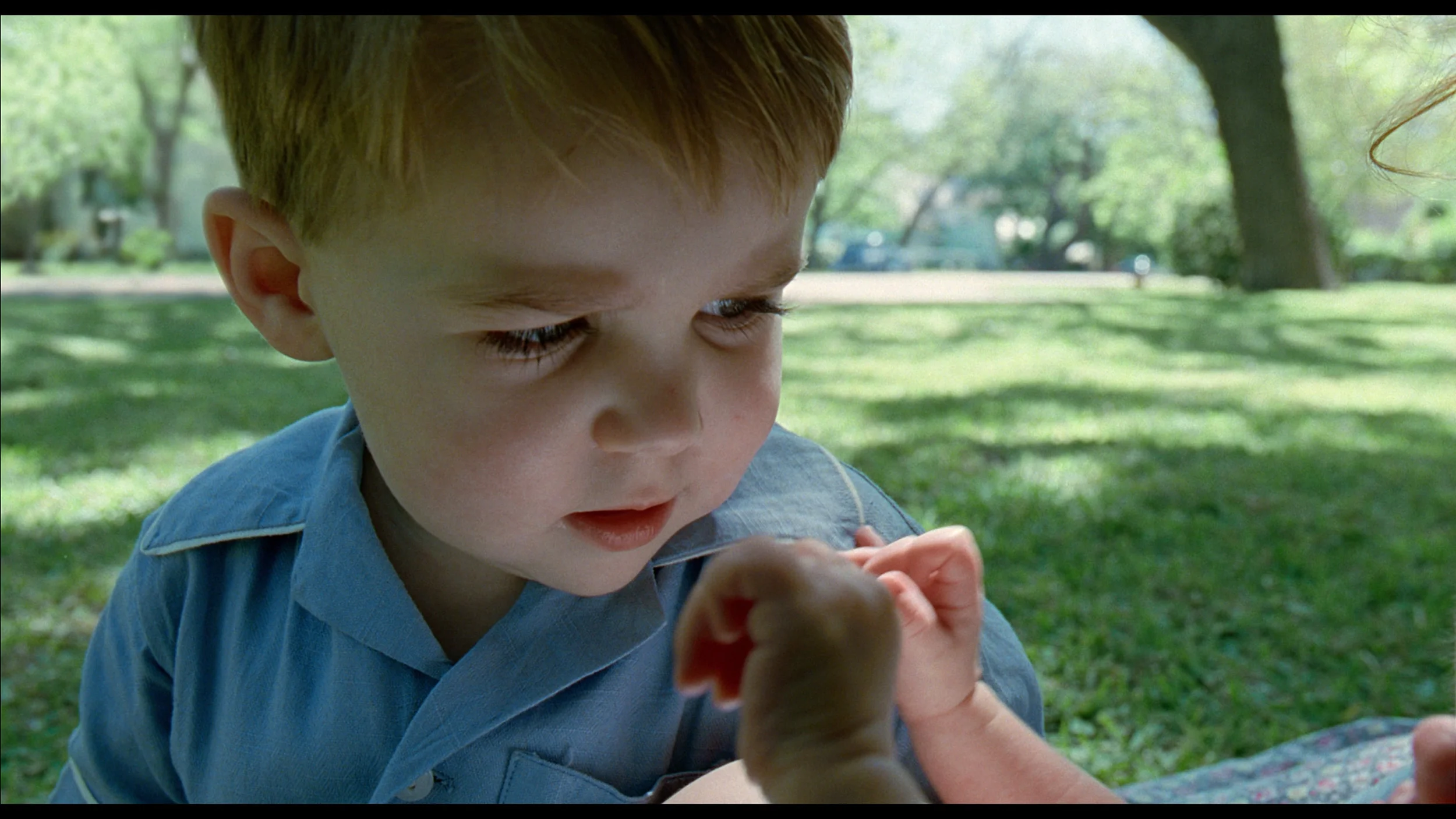
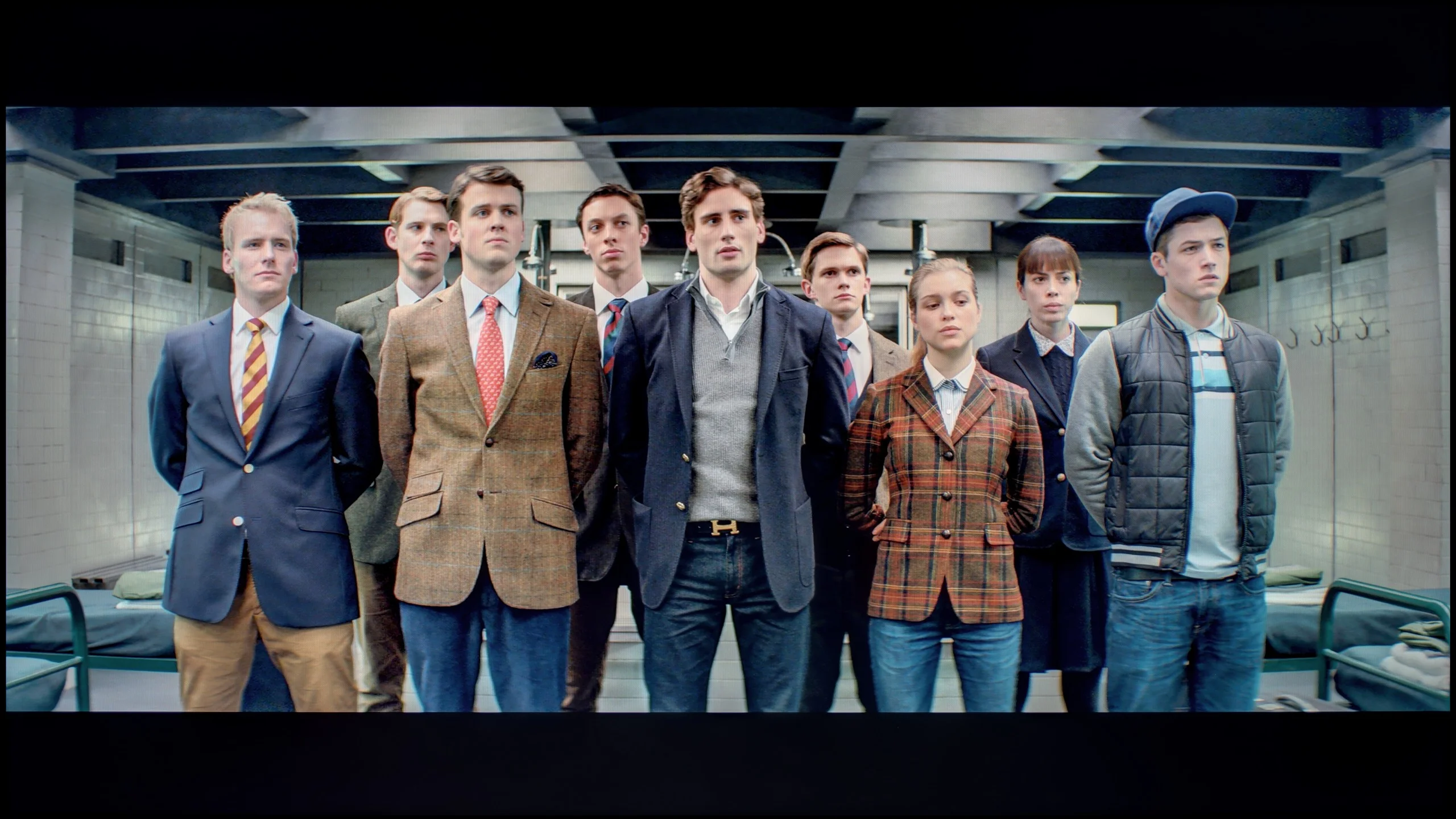
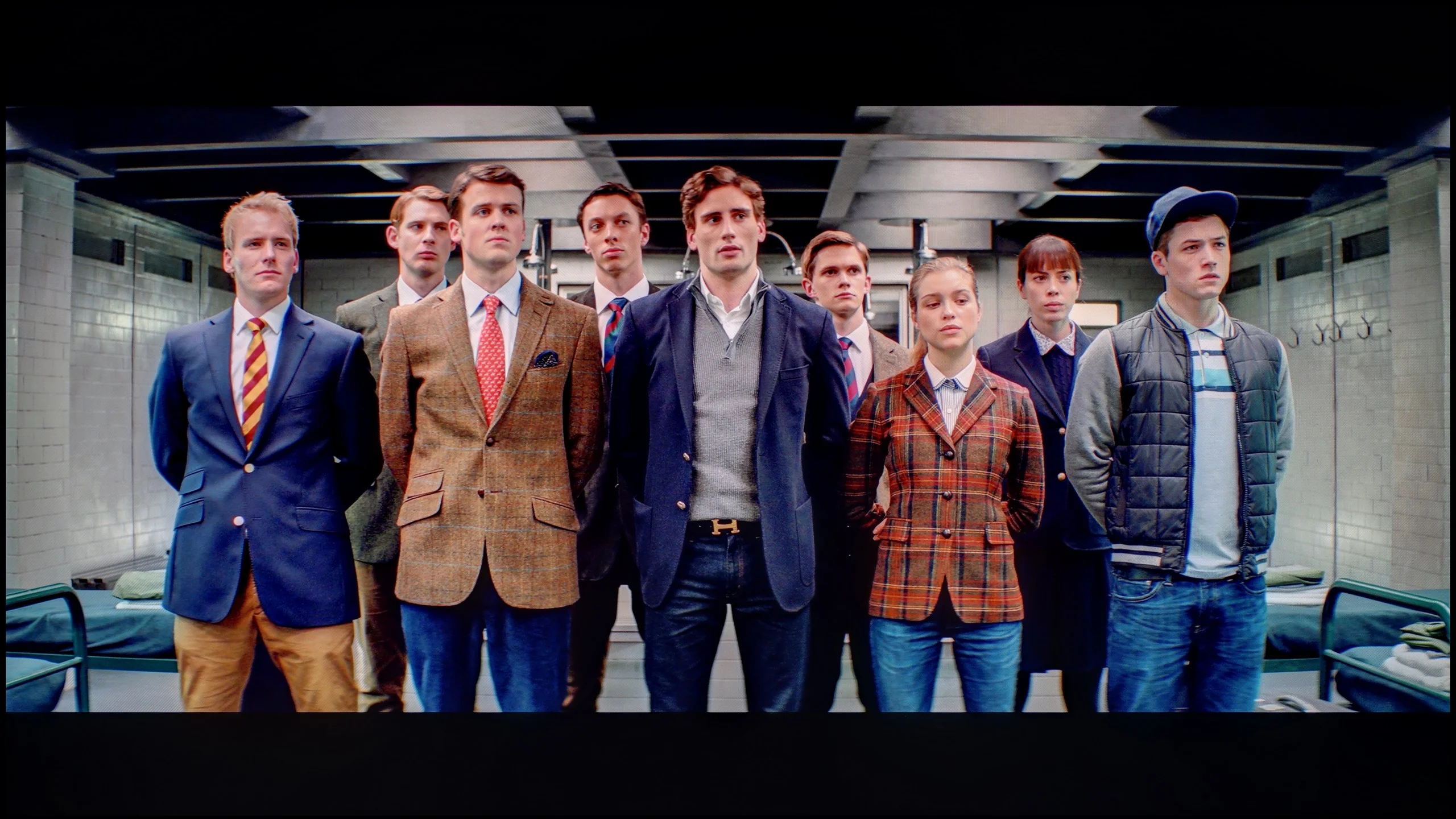
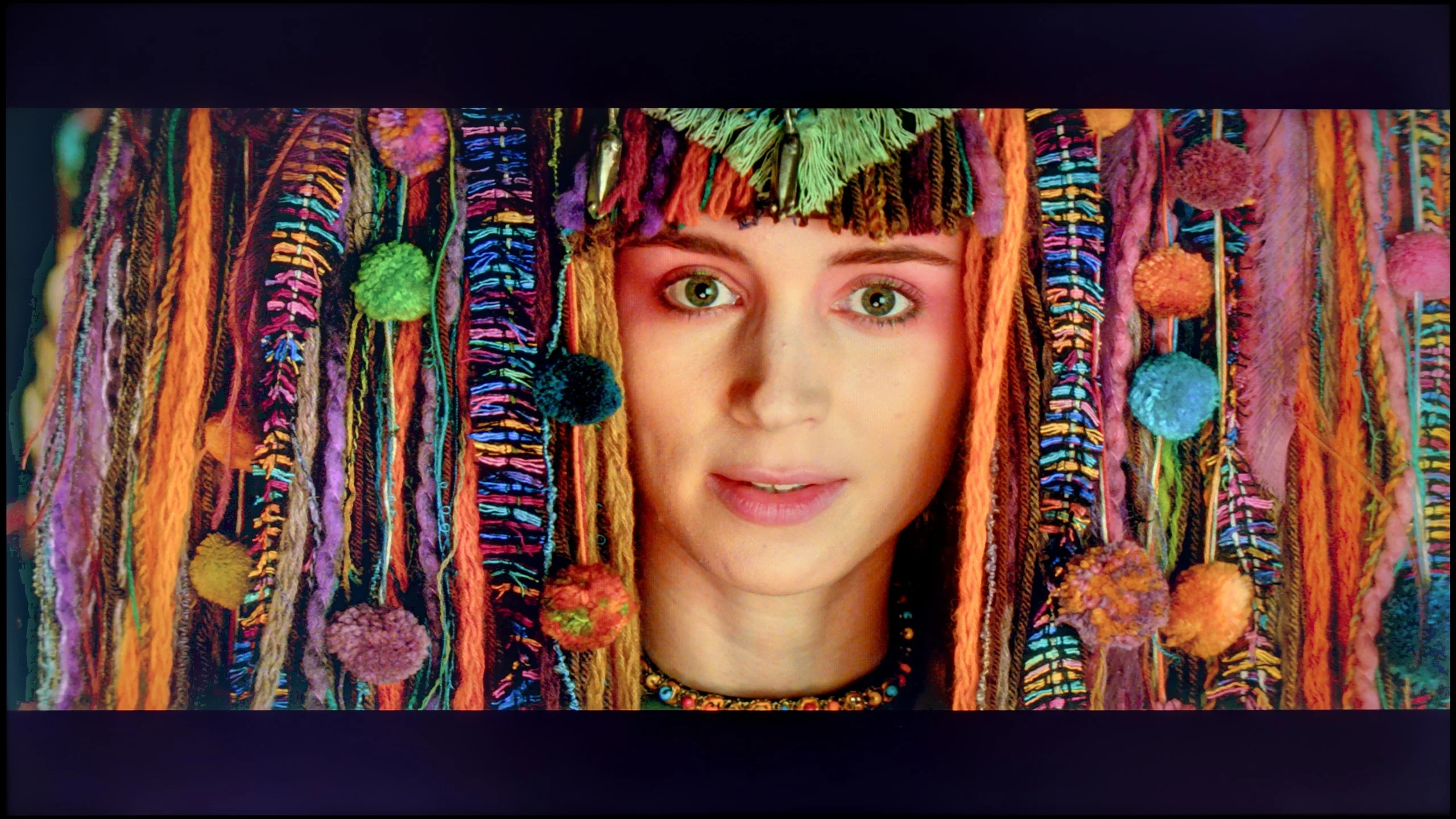
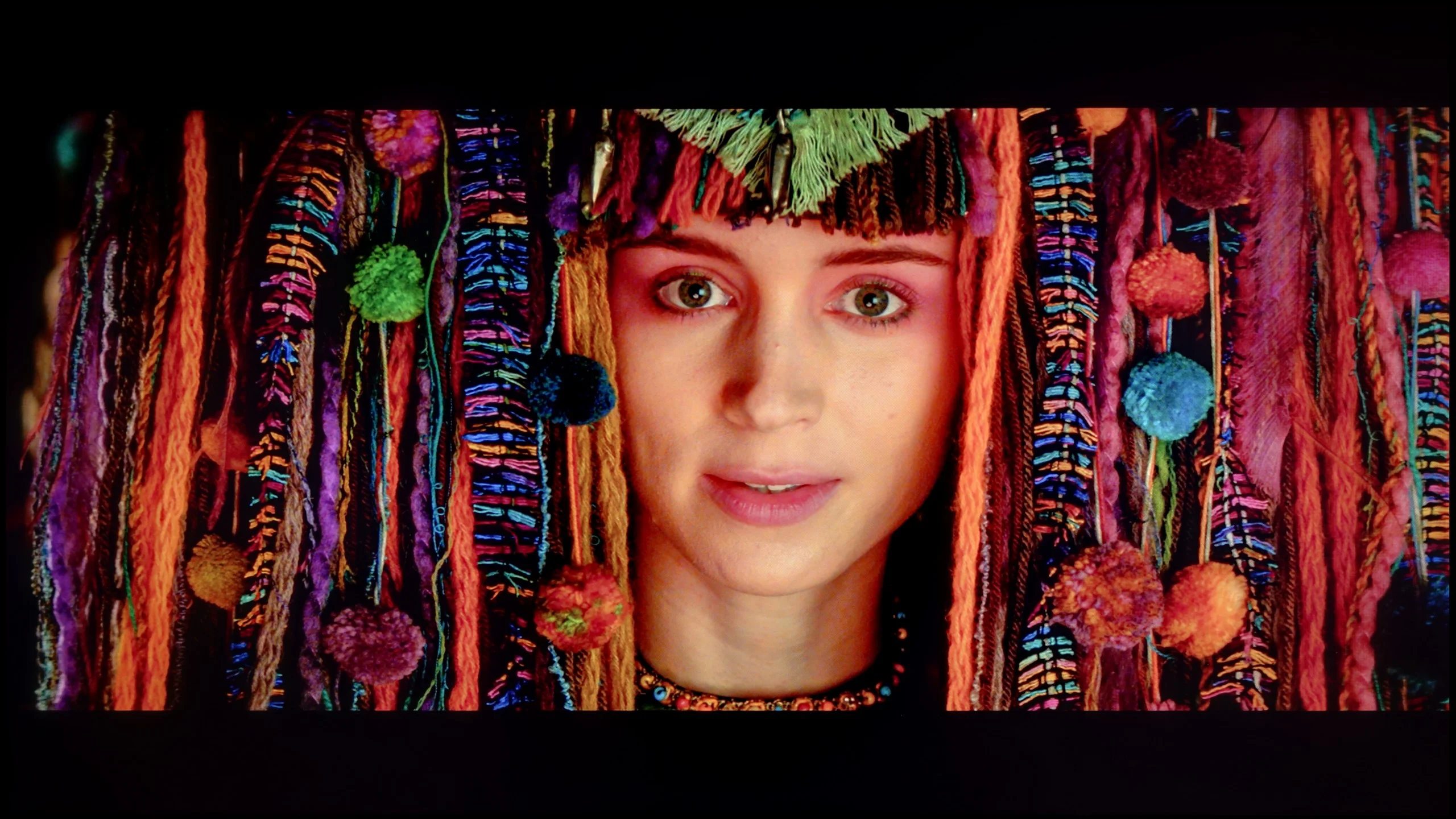
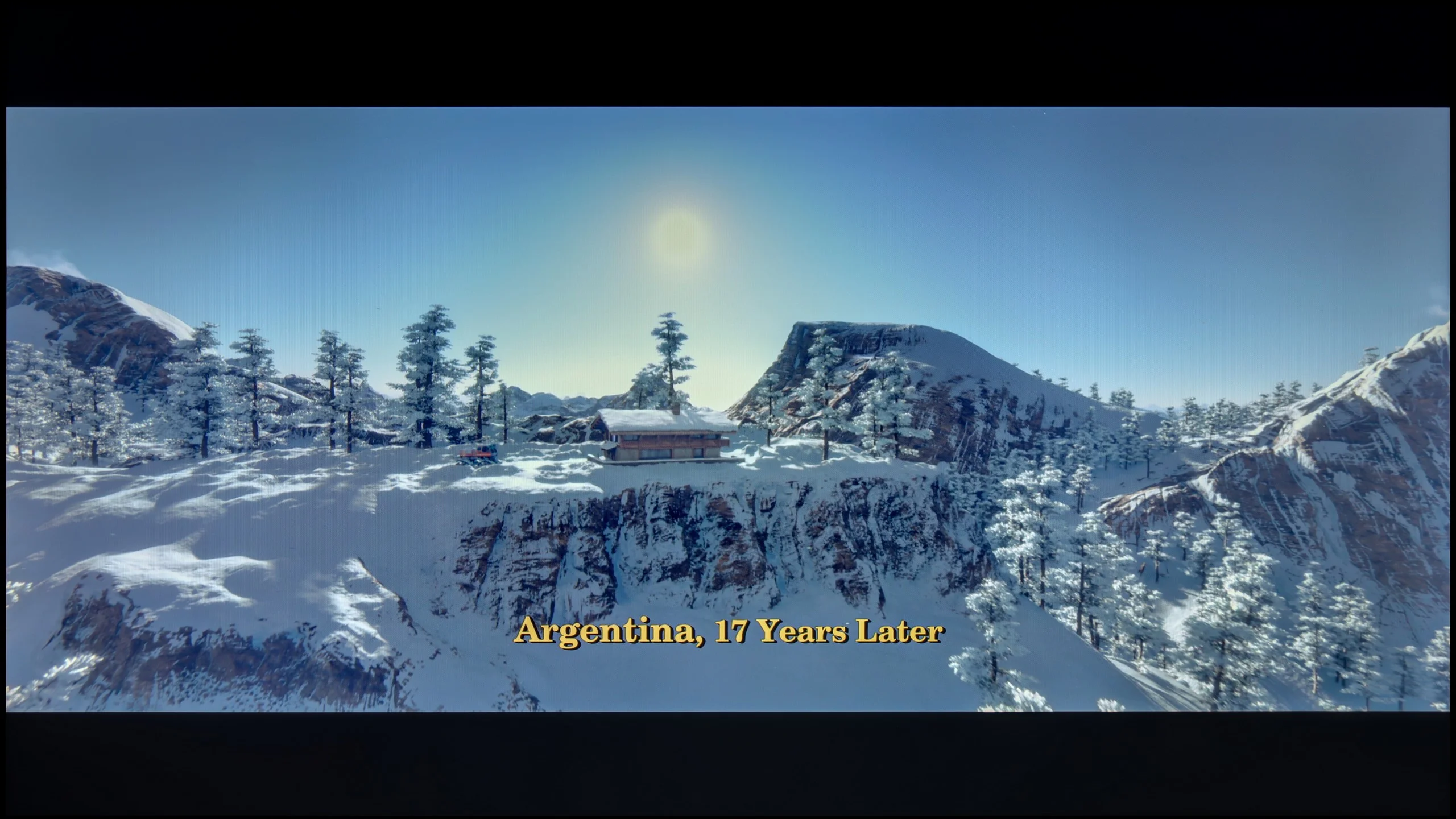
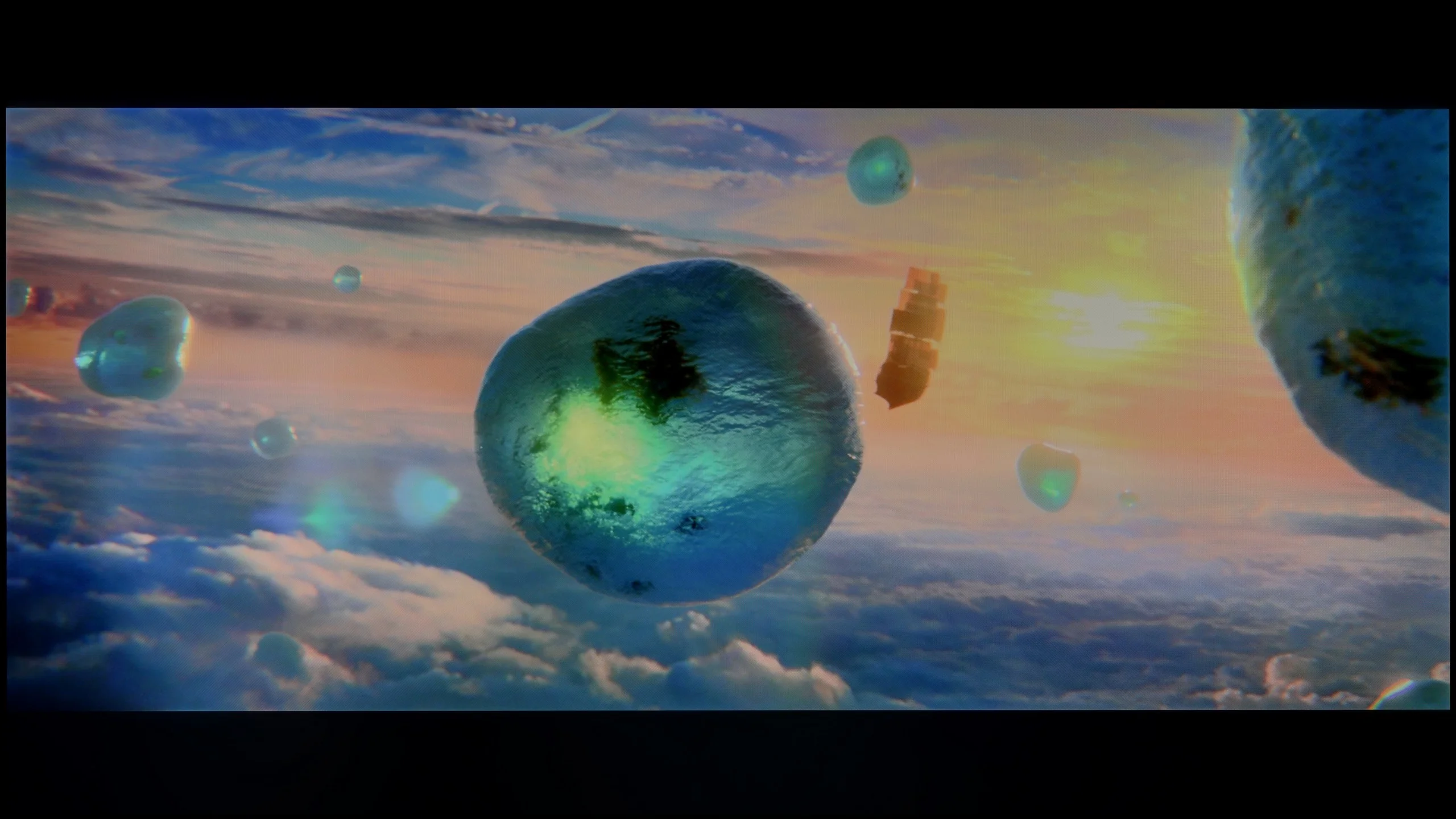
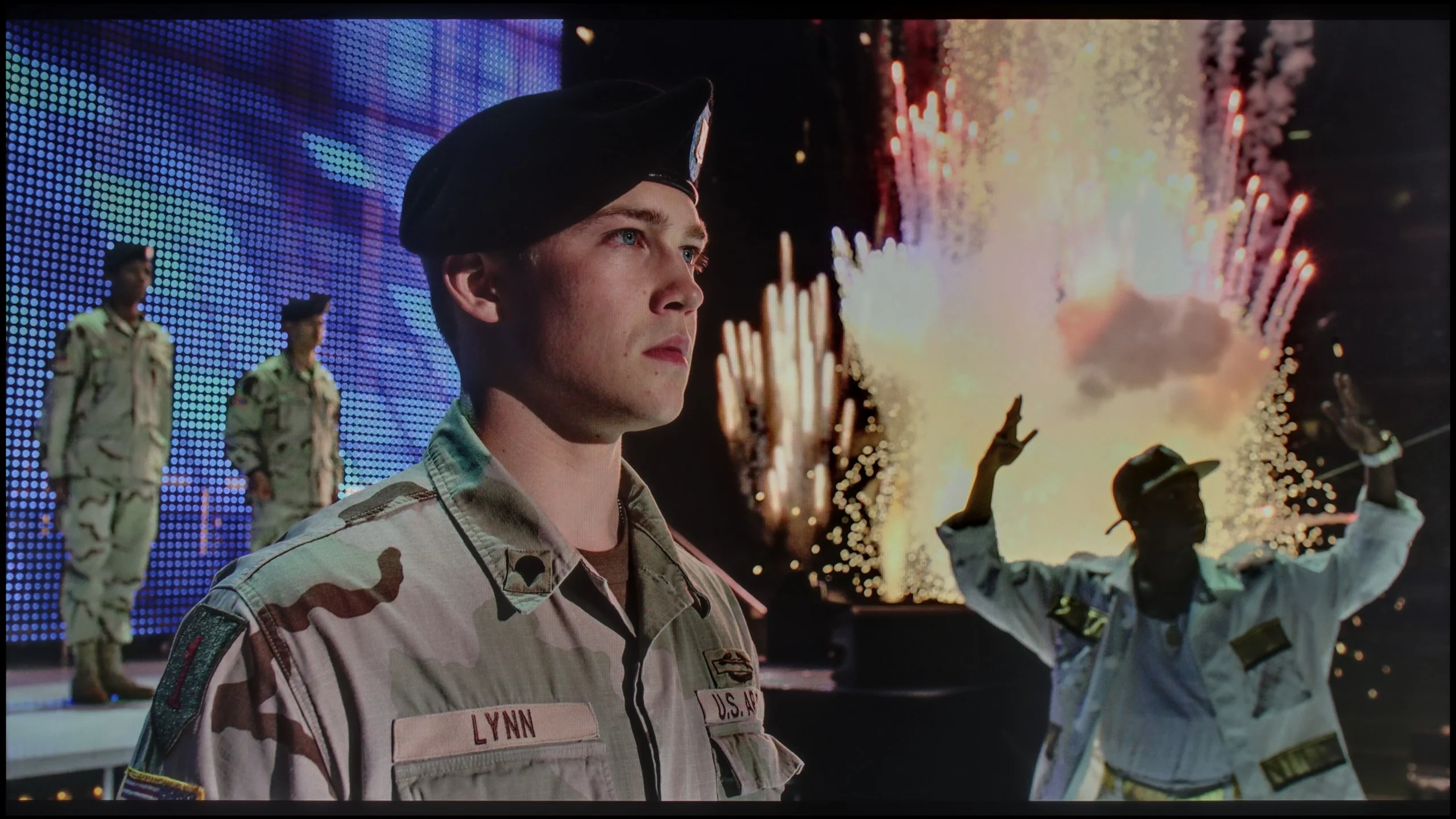
Scene from the movie “Pan” (about 2800 nits)

Scene from the movie “Billy Lynn” (about 1100 nits)

The photos show two HDR10 movies. 'Pan' is one of the brightest productions ever made, while 'Billy Lynn' (soldier) has brightness typical of streaming (Netflix, Prime, HBO MAX). Notice the intensity of effects and detail in whites.

Static HDR10

The photos present the visibility of white details in various HDR formats. They do not show brightness differences between TVs (these can be compared in the previous gallery).

Dynamic: HDR10+

Dynamic: Dolby Vision

The photos present the visibility of white details in various HDR formats. They do not show brightness differences between TVs (these can be compared in the previous gallery).

HDR luminance chart:

Philips MLED920 / MLED910

Philips PUS8500

When it comes to HDR performance on the PUS8560, one can confidently say that it is quite average. The brightness of the panel is around 350 nits, which we consider to be the absolute minimum for viewing content in this format. However, this is not a result that will impress viewers looking for the best possible image.

On the plus side, it is worth noting that the PUS8500 series – including the PUS8560/12 we tested – is marketed as a QLED television. And indeed, we can expect a wider color gamut here. This model is equipped with an additional filter (PFS), and the coverage of the DCI-P3 color space at around 90% should be sufficient for the majority of users. This filter works very similarly to quantum dots. As a result, the colors are quite well saturated. It’s not an outstanding result, but perfectly adequate for watching movies and series on streaming platforms.

In our measurements, the Philips MLED920 achieved even around 900 nits in static tests, which is a really solid result for a mid-range TV. In practice, this translates to a lot of satisfaction during viewing sessions – in scenes rich in bright light, such as the first, third, or fifth test screens, the screen was able to generate about 700 nits, which is enough to feel the true "HDR effect." However, it cannot be denied that the limited number of backlighting zones and the compromises of mini-LED dimming algorithms in more demanding scenes reveal their nature. In sequences with small light sources – such as the moon or a scene from the movie Sicario 2 – the television clearly prioritizes maintaining deeper blacks at the expense of the brightness of those small elements. For most viewers, this is still a reasonable compromise, as the dark background tends to look much better, though one must be aware that the details themselves may not impress with intensity. There is also some disappointment regarding colors. Although the applied PFS filter (the equivalent of quantum dots known from QLEDs) does its job and colors appear quite vivid, the coverage of the DCI-P3 color space reaches "only" 90%. In everyday viewing, this will be sufficient, but in extremely colorful productions – such as the latest Disney animations – one can notice that some tones are not as vibrant as they could be in other constructions.

Factory color reproduction

6.2/10

5/10

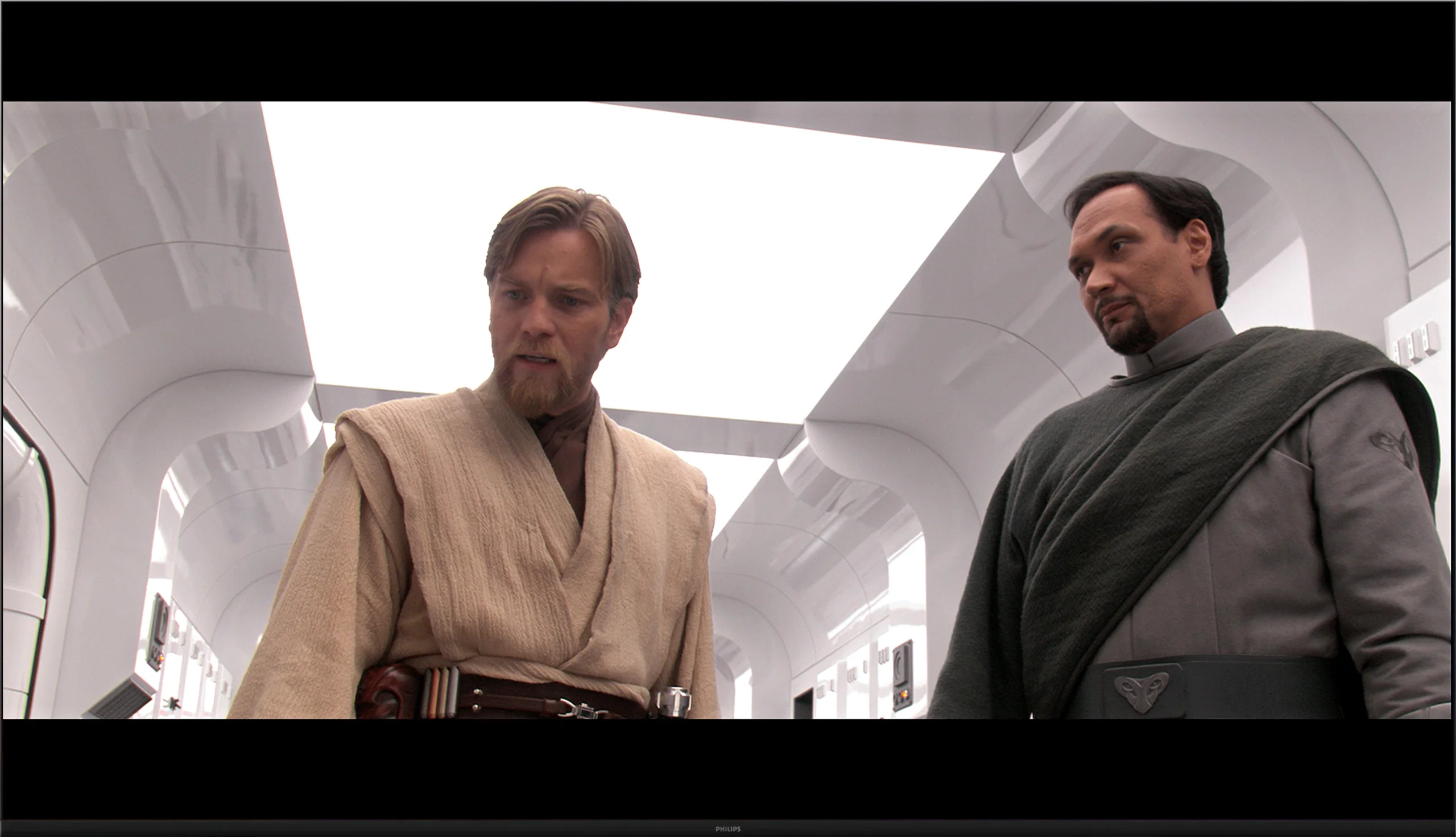
This gallery shows how colors change after professional TV calibration. If you notice the difference, we recommend ordering this service at SkalibrujTV.com.

Factory Mode

After calibration

This gallery shows how colors change after professional TV calibration. If you notice the difference, we recommend ordering this service at SkalibrujTV.com.

Factory Mode

After calibration

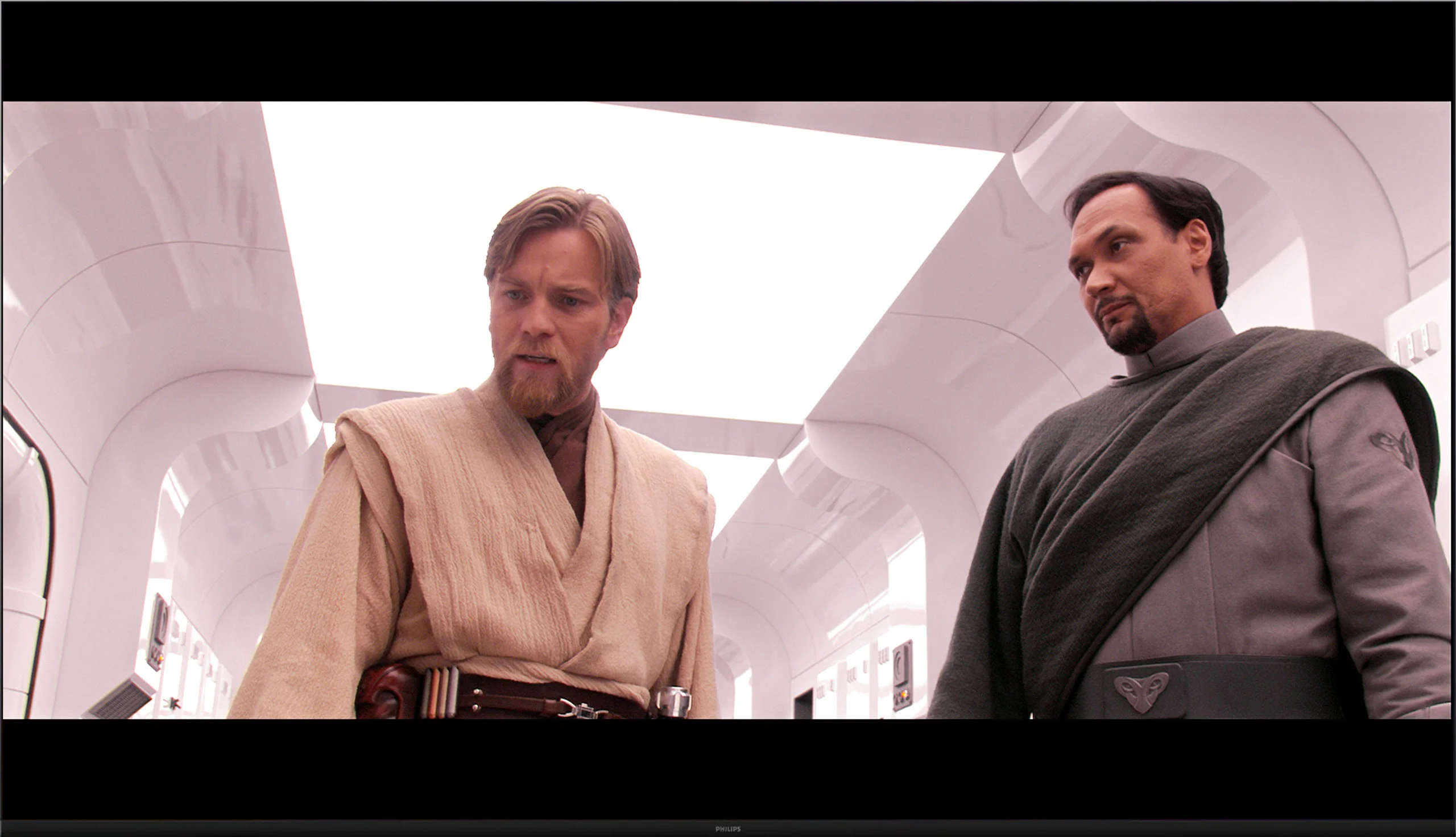
We tested the TV on the best available factory settings, which is in Film/Filmmaker mode – this is the mode we recommend for everyday viewing. Unfortunately, it is not without its flaws. Both in HD and HDR content, the image had a clear tendency to appear pinkish, caused by too much red and blue in the white balance. Another problem turned out to be excessive brightness of the image, which was confirmed by both the gamma chart and the EOTF curve. This characteristic was responsible for the loss of detail and washed-out colors in more challenging HDR scenes, as we mentioned earlier. Overall, this led to quite significant color reproduction errors – in extreme cases, the delta E value exceeded 7, while the threshold of visible errors for the human eye is about 3. This situation can be improved through calibration, and you can read about its effects below.

Like every Philips television we tested, we primarily evaluated the MLED920 in Filmmaker mode – this is supposed to be the "most honest" mode, designed for films and to faithfully convey the creators' intentions. Indeed, in terms of colorimetry, it performs the best among all the modes available on the television, but it is not without its flaws. The first thing that stands out is the white balance. The image has a slight tendency to take on purple-pink tones, which gives it a somewhat unnatural character. However, an even bigger problem turned out to be what we mentioned earlier – image clipping. Just look at the gamma or EOTF graphs to see that the line deviates significantly beyond the norm, falling below the value of 1.8. In practice, this means "clipping" the brightest whites, where the image becomes almost milky. Fortunately, most of these issues can be corrected – the MLED920 responds to calibration, and with a few adjustments, the image quality can be significantly improved.

Color reproduction after calibration

8.4/10

7.5/10

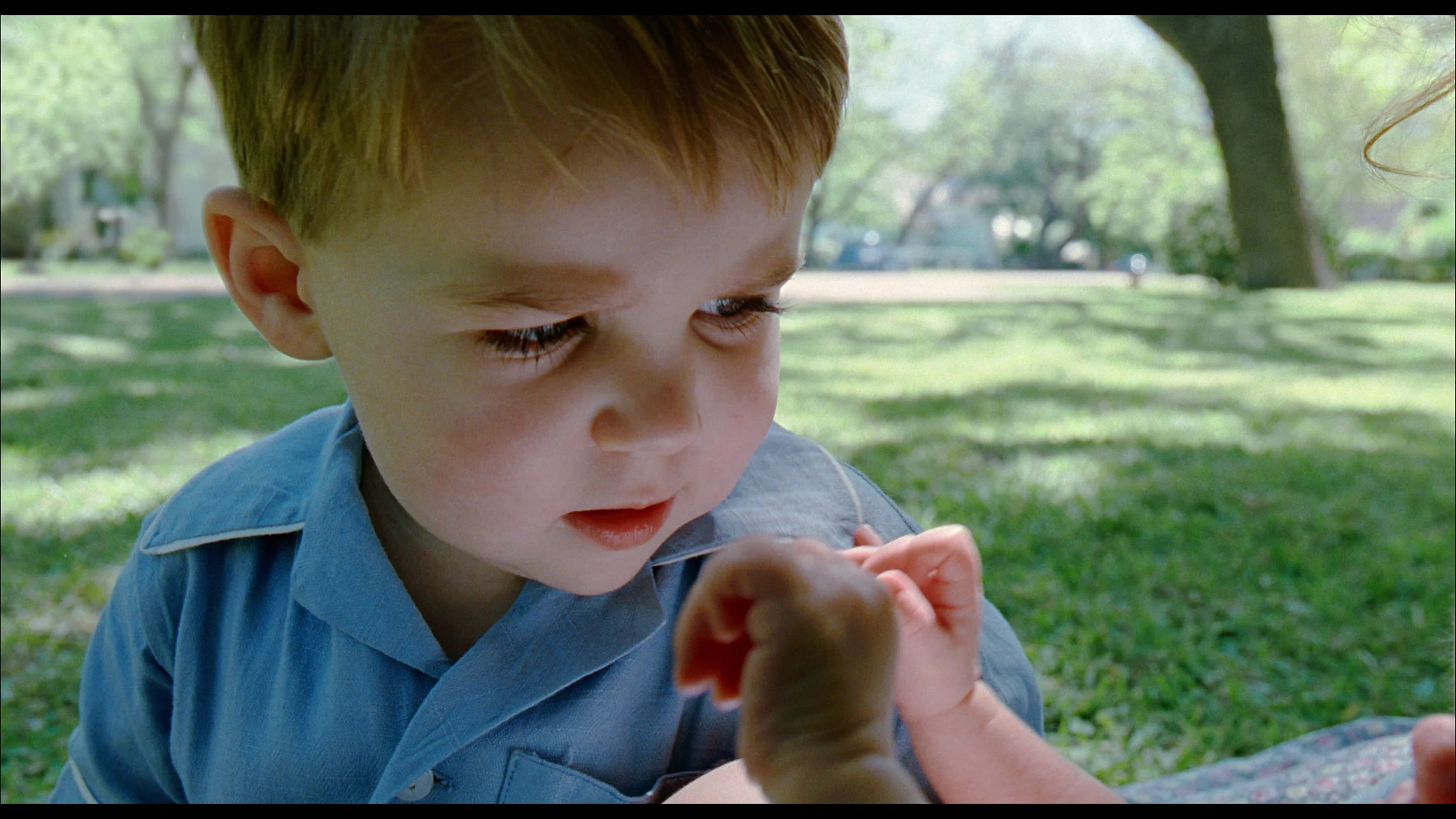
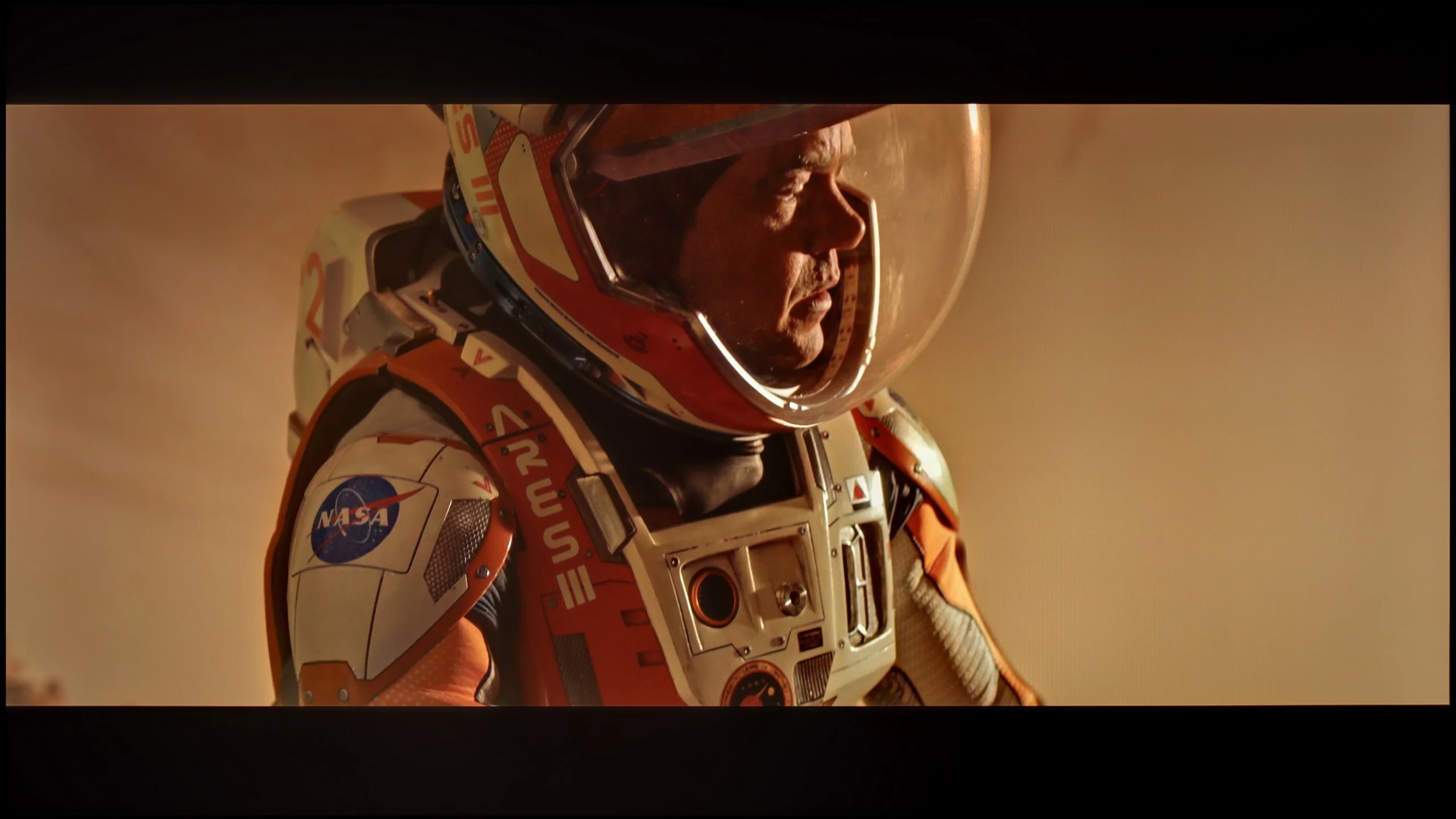
The photos show how movies look on the TV. Pay attention to black detail visibility, colors, and shadow tint.

The photos show how movies look on the TV. Pay attention to black detail visibility, colors, and shadow tint.

The Dutch manufacturer offers quite a large dose of settings in their products, so as usual, we decided to dig a little into them. The effects are immediately visible – we managed to correct the white balance, which made the image stop appearing excessively pink. The brightness characteristics were also partially balanced, of course, within the limits that the television itself allows. The image is no longer overly vibrant, and the overall reception after calibration is definitely better than in the factory settings of the Filmmaker mode.

One could only criticize the characteristics of the EOTF curve, which still indicates that the image tends to lighten materials in HDR format. Despite our efforts, the darkest parts of scenes can still be too bright, and the brightest do not always reach their full contrast potential. However, it must be clearly stated that we are dealing with a typically budget construction – you cannot expect reference-quality reproduction of HDR content from it.

Calibration definitely helped this model – it improved the balance, toned down the aggressive color scheme, and brought the image closer to what one might expect from a well-configured movie mode. However, there are certain limitations that cannot be overlooked.

After calibration, we managed to largely tame the white balance – to the extent that the average viewer will not be able to detect color inaccuracies. The characteristic pink-purple glow that previously disturbed the naturalness of the picture has also disappeared. The color palette has been organized, and the colors appear more consistent and neutral. The gamma in SDR content after calibration looks really good – there's no sign of the earlier “bleeding” effect in bright scenes. The picture has become more contrasted and devoid of the milkiness that previously spoiled the perception significantly. In the case of HDR content, the improvement is also noticeable, although it is still evident that the television is “doing its own thing.” The EOTF curve cannot be fully shaped, as Philips simply does not provide tools in its settings that allow for precise control over this parameter. In many films, the television simply still showcases the image “in its own way.” Despite these limitations, calibration has brought quite a lot of good – it has managed to minimize most of the color inaccuracies and significantly improve the overall balance of the picture. However, it must be remembered that certain barriers arise from the very hardware construction and they simply cannot be overcome.

Smoothness of tonal transitions

6.3/10

6.5/10

These are selected scenes that show smooth tonal transitions from one color to another. If you see distinct banding, it’s the TV panel’s fault.

These are selected scenes that show smooth tonal transitions from one color to another. If you see distinct banding, it’s the TV panel’s fault.

These are selected scenes that show smooth tonal transitions from one color to another. If you see distinct banding, it’s the TV panel’s fault.

These are selected scenes that show smooth tonal transitions from one color to another. If you see distinct banding, it’s the TV panel’s fault.

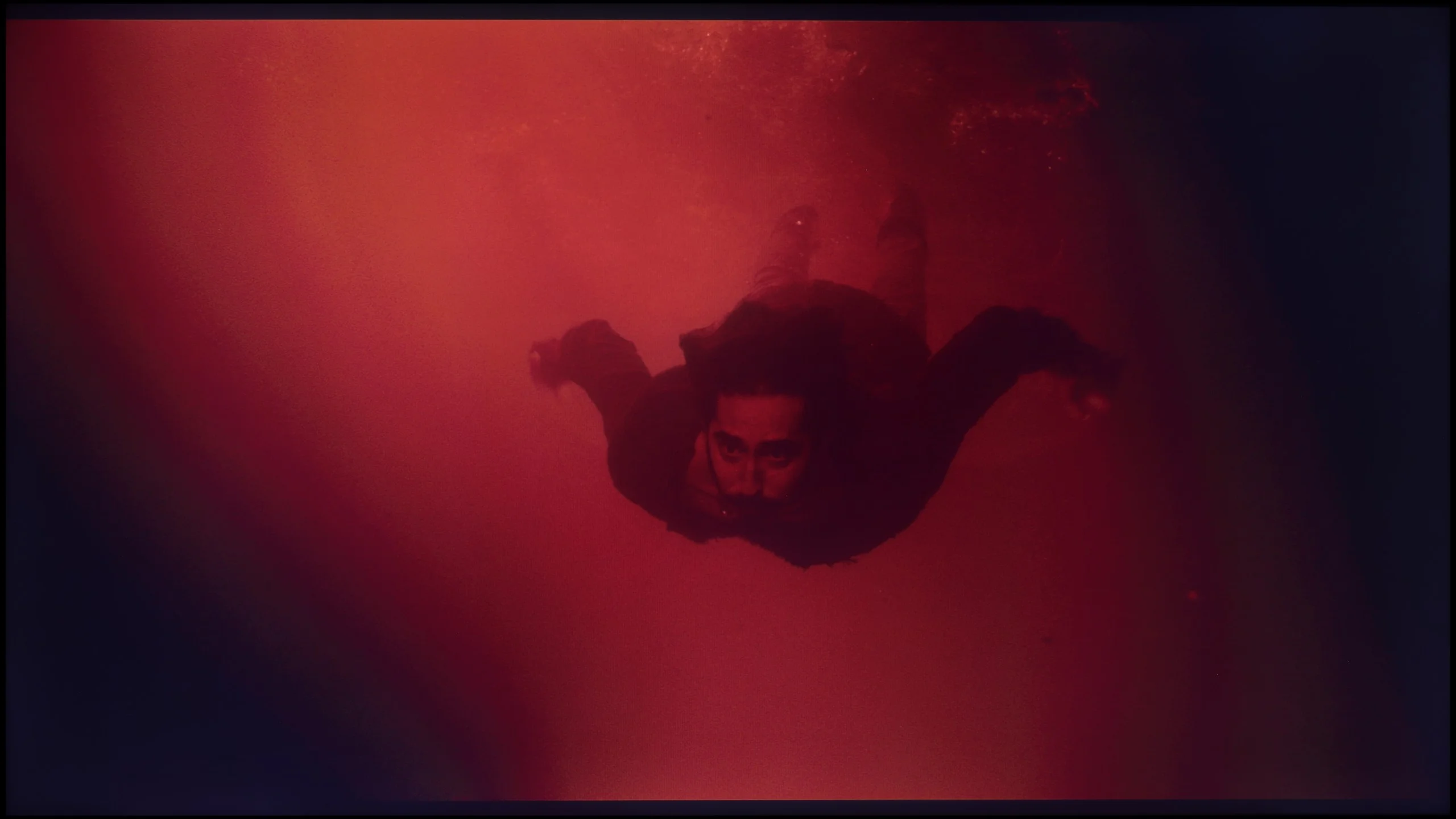
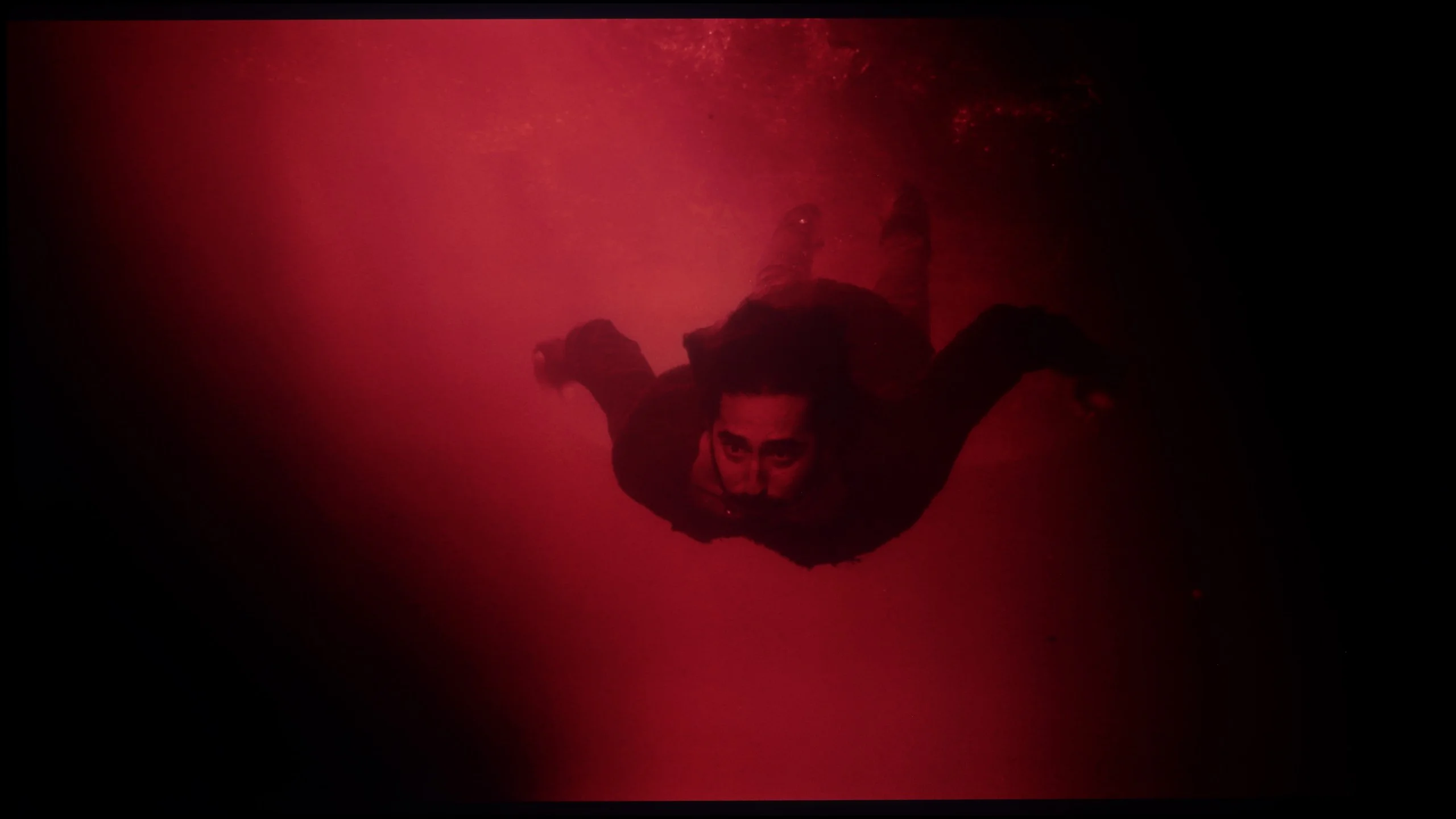
The PUS8560 handles color blending into smooth gradients very well. During testing, the image appeared cohesive and natural, with more serious issues with tonal transitions occurring only in very dark scenes – for example, in a shot with red water, where subtle cuts between colors could be seen. However, these are rather exceptions that do not spoil the reception of most content. It is worth mentioning another phenomenon that has a greater impact on image quality – the so-called dithering, or slight "sparkling" visible on solid backgrounds. This effect can be particularly noticeable in high-quality materials and may slightly detract from the impression of image clarity. It is for this flaw that we deducted some points in the rating.

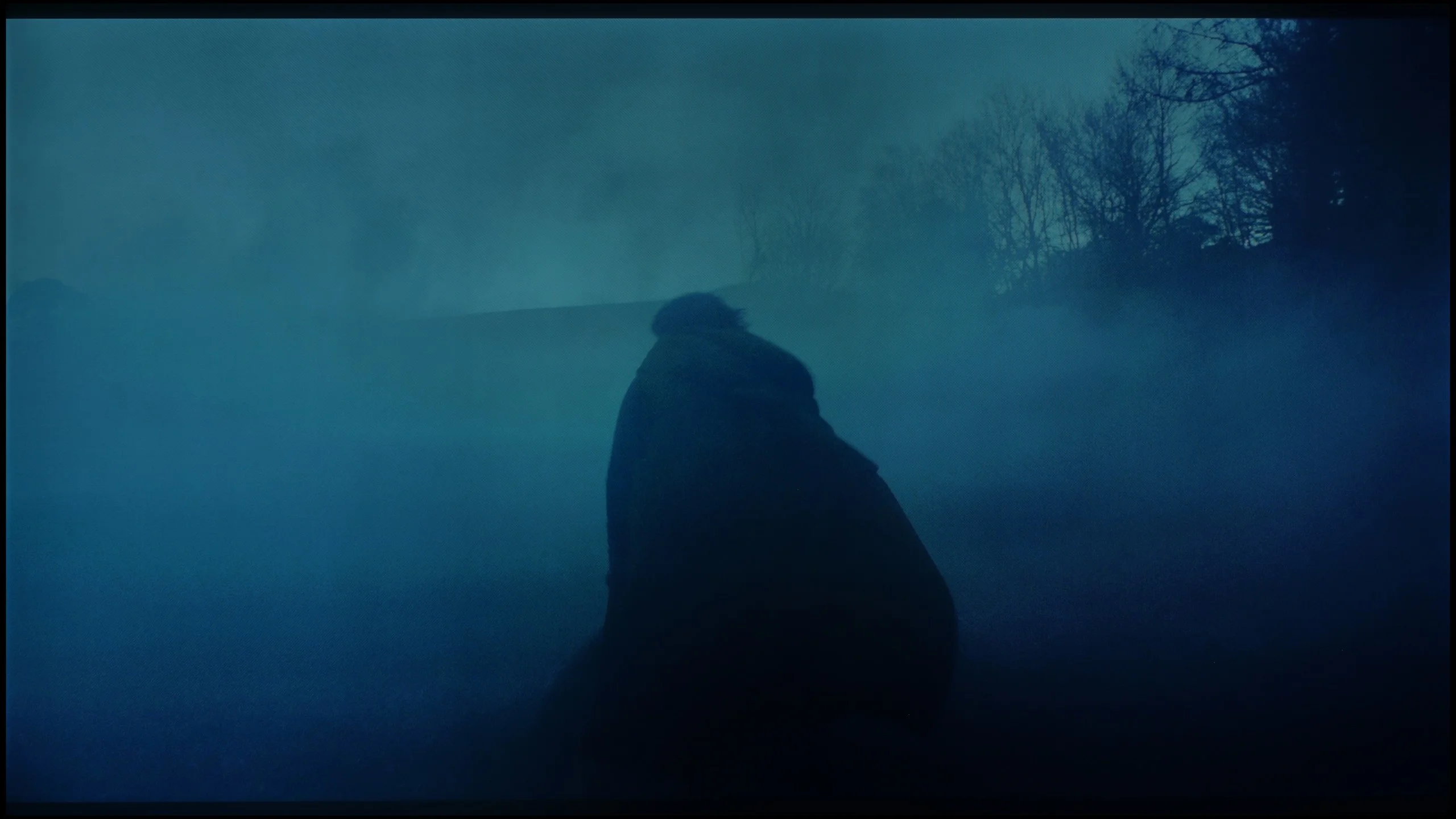
The fluidity of tonal transitions in the Philips MLED920 is not its strongest suit. In our tests, we quickly noticed that the television has noticeable problems in darker scenes – for example, segments from the movie The Green Knight or test grayscale palettes. There, you can see the characteristic banding of colors and too sharp transitions between shades, which can be quite noticeable in productions with a darker style. Fortunately, the situation looks better in brighter scenes – there the image appears smooth and free of major artifacts.

Image scaling and smoothness of tonal transitions

6.5/10

7/10

Image without overscan on the SD signal
OK
OK
Smooth transition function
OK
OK

Smooth transition function

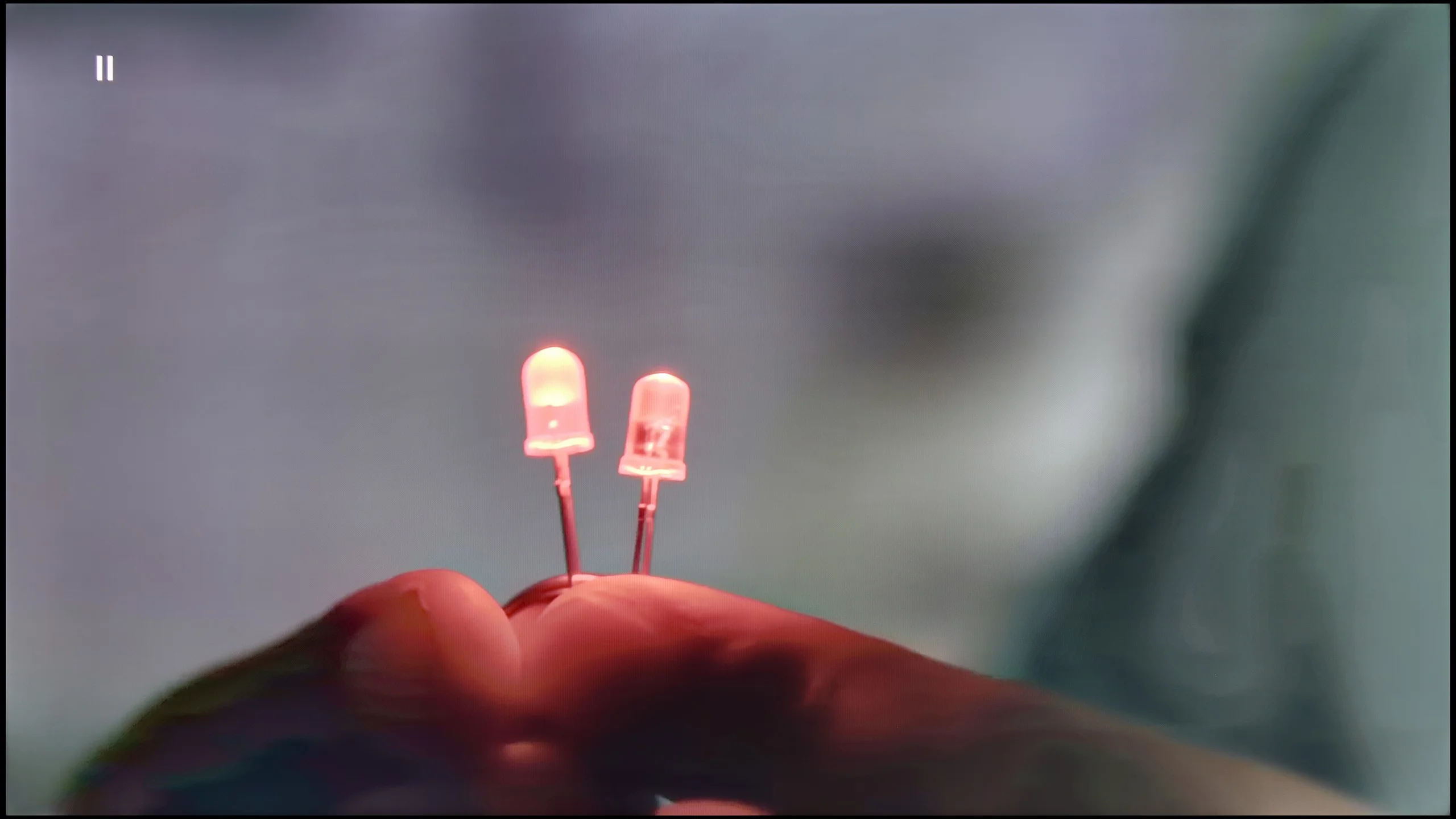
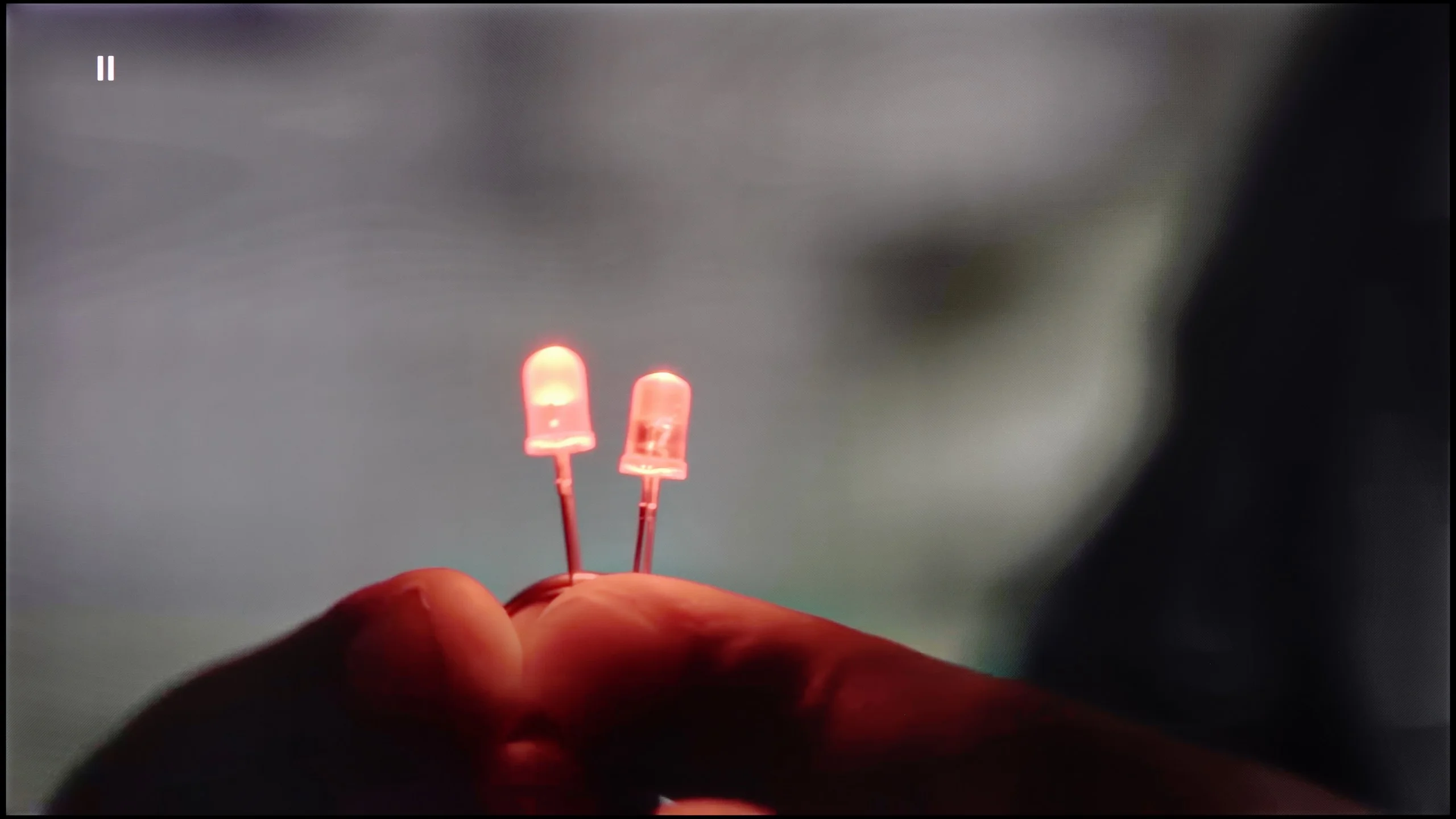
The match photo shows how the TV smooths weak tonal transitions in low-quality video.

Image scaling SD (576i)

The model photo shows how it handles upscaling of SD material.

Philips PUS8560 offers a feature that reduces posterization, hidden under the name "distortion reduction." And while it indeed serves its purpose by smoothing problematic tonal transitions, it operates a bit too broadly. In practice, it affects not only colorful gradients but also softens faces, clothing textures, and furniture surfaces. This decreases the authenticity of the image—especially in films where natural texture is of great importance. However, if someone is looking for smoothing at all costs, it's best to set this option to "Low." For cinema image enthusiasts—definitely not recommended.

On the plus side, the quality of upscaling older materials should be noted—the PUS8560 model handles them surprisingly well. The image maintains a natural softness without artificially enhanced sharpness. It is also worth mentioning that the television correctly displays very low-resolution content, avoiding problems with cropping the edges of the image (so-called overscan).

The manufacturer equipped this model with several features that improve signal quality, and although we usually approach such "enhancers" with skepticism, they turn out to be really helpful here. The key option is called "distortion reduction" – it works best at a medium level because, on one hand, it effectively smooths out unwanted banding and color transitions, while on the other, it doesn't excessively cut details, which keeps the image looking natural.

The situation is a bit worse with upscaling. Lower quality materials – such as test videos with models – appeared soft and lacking in sharpness. Yes, this can be somewhat corrected with the sharpness slider in the menu, but the effect still remains far from what competitors in a similar price range offer. Philips therefore still needs to work on this aspect because, in light of the successful improvement of tonal transitions, the upscaling simply performs poorly.

Blur and motion smoothness

4/10

7.7/10

Maximum refresh rate of the panel
60Hz
144Hz
Film motion smoothing option
No
OK
Blur reduction option
No
OK
BFI function 60Hz
No
No
BFI function 120Hz
No
No
Brightness drop with BFI
-%
-%

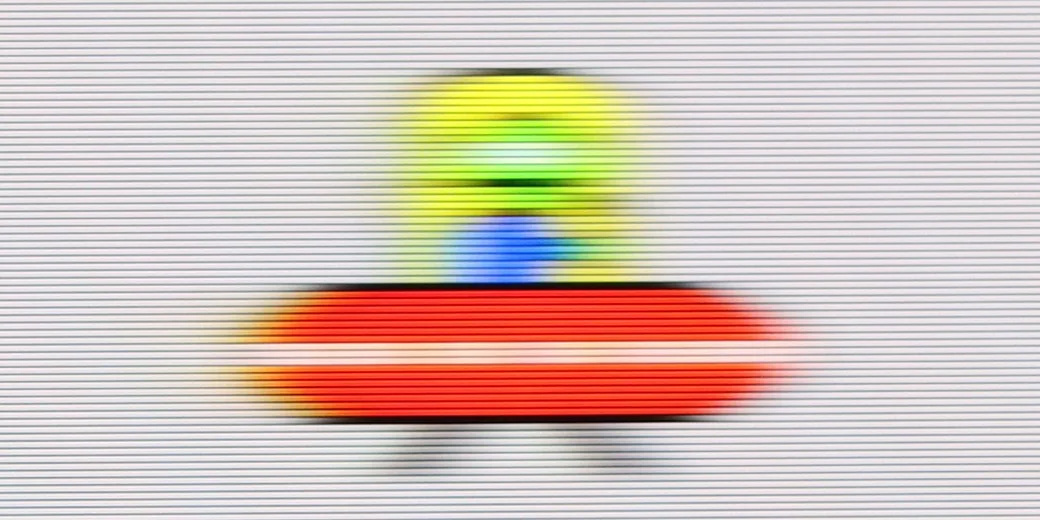
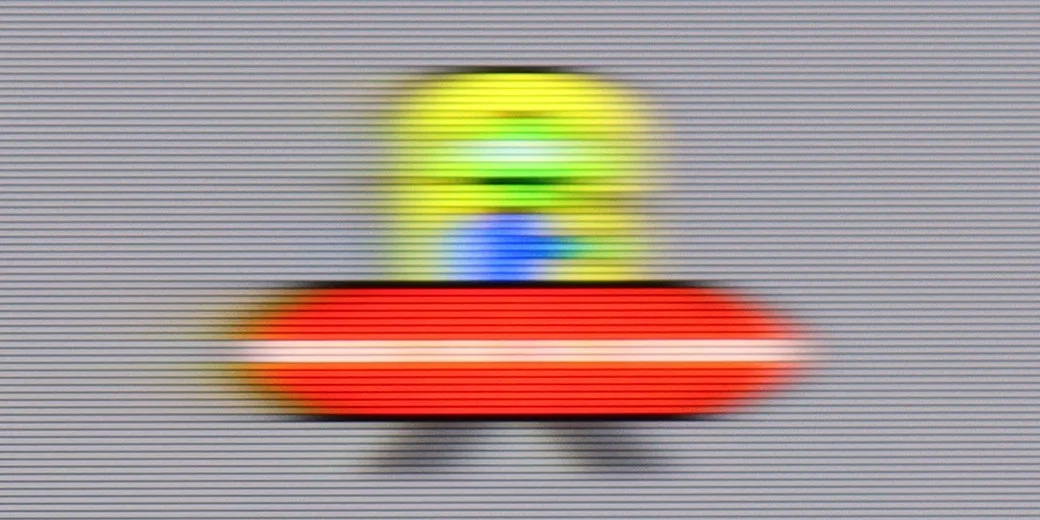
Blur (native resolution, maximum refresh rate):

Blur ():

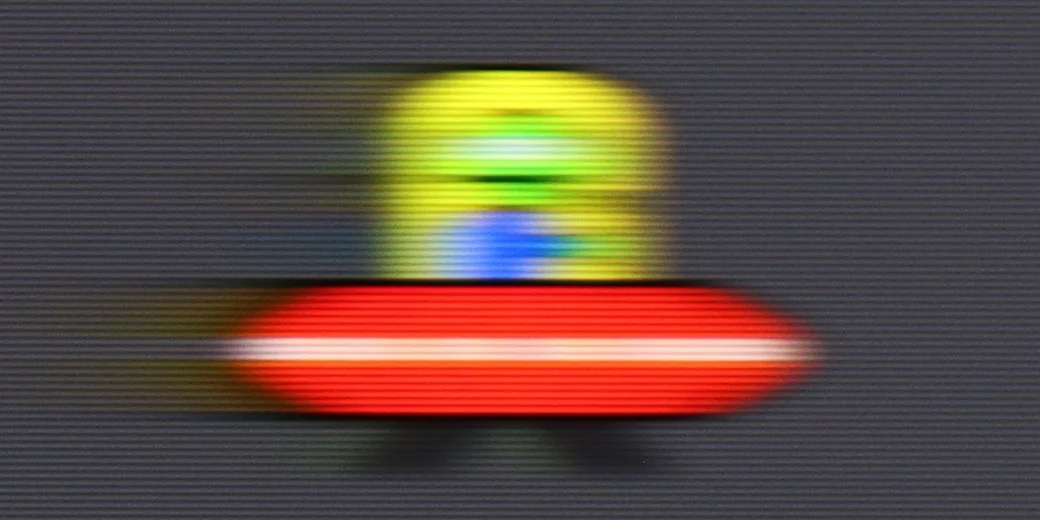
Blur (4K@144Hz):

The Philips PUS8560 is a television equipped with a 60 Hz refresh rate panel, which already limits its capabilities for displaying dynamic content. Watching sports or playing on a console is not one of the most enjoyable experiences. The situation is further worsened by the lack of any option to improve the smoothness of films. In the menu, we won't find settings that would allow for the activation of a motion smoother or even a slight motion smoothing in films recorded at 24 frames per second. You can imagine the effect. The picture may look jerky, especially in shots with panoramic camera movements.

The Philips MLED920 features a 144 Hz panel, which immediately suggests that we shouldn’t complain about motion smoothness. And indeed – the motion blur is relatively low here for a VA panel, and although one might occasionally notice slight issues on darker backgrounds, they are not something that most people would notice during regular viewing.

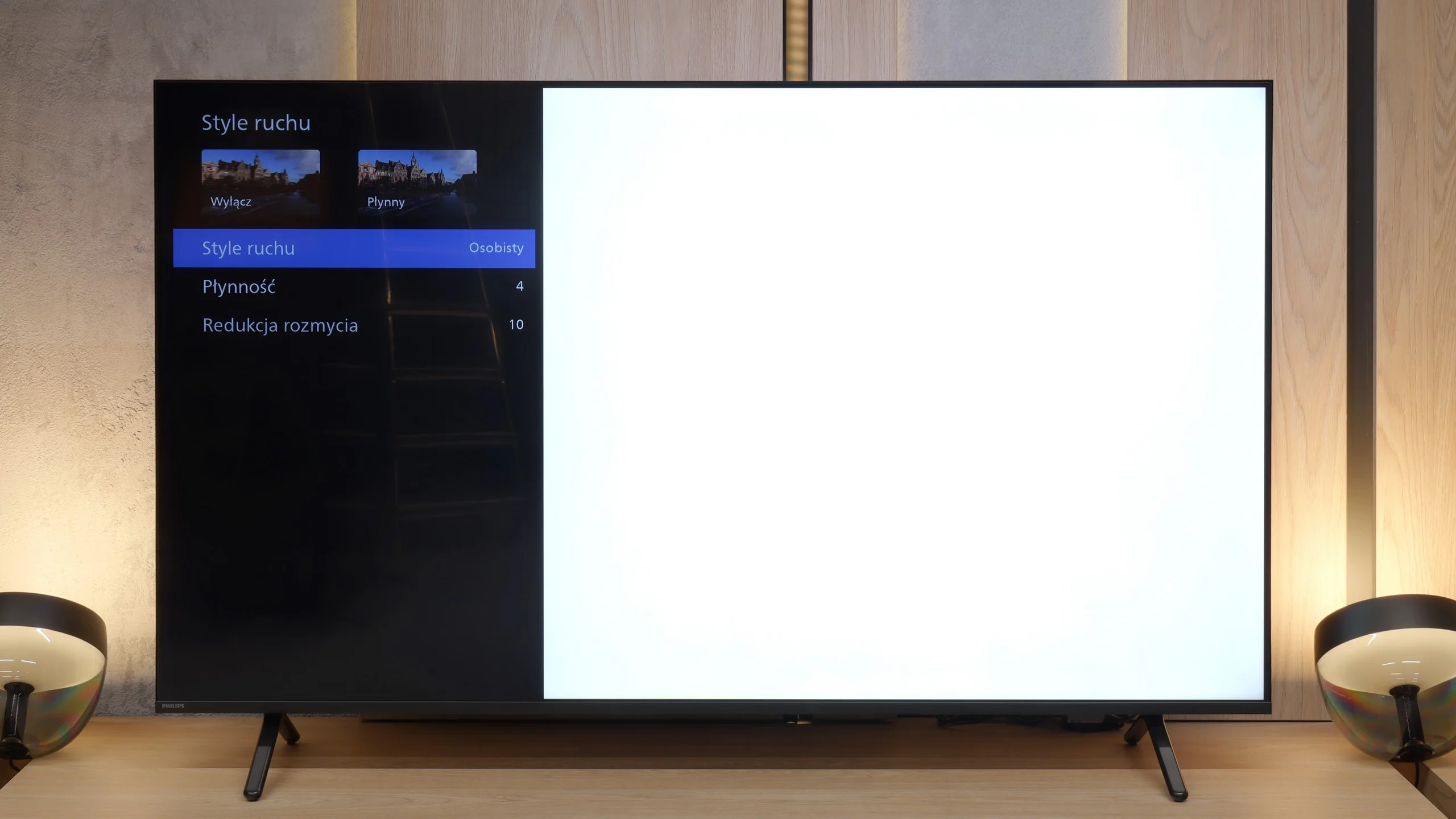
A major plus is the presence of a motion smoother called "Motion Style." It allows you to adjust the smoothness to your own preferences – if someone prefers a more “theatrical,” almost television-like image, they can increase the sliders, and if they want to preserve the natural “jitter” of a cinematic frame, they just need to set lower values. This way, everyone can find the perfect balance.

Console compatibility and gaming features

4.7/10

9.8/10

  • ALLM
    Yes
    Yes
  • VRR
    Yes
    Yes
  • VRR range
    48 - 60Hz
    48 - 144Hz
  • Dolby Vision Game Mode
    No
    Yes
  • Correct implementation of HGIG
    No
    Yes
  • 1080p@120Hz
    No
    Yes
  • 1440p@120Hz
    No
    Yes
  • 4K@120Hz
    No
    Yes
  • Game bar
    Yes
    Yes

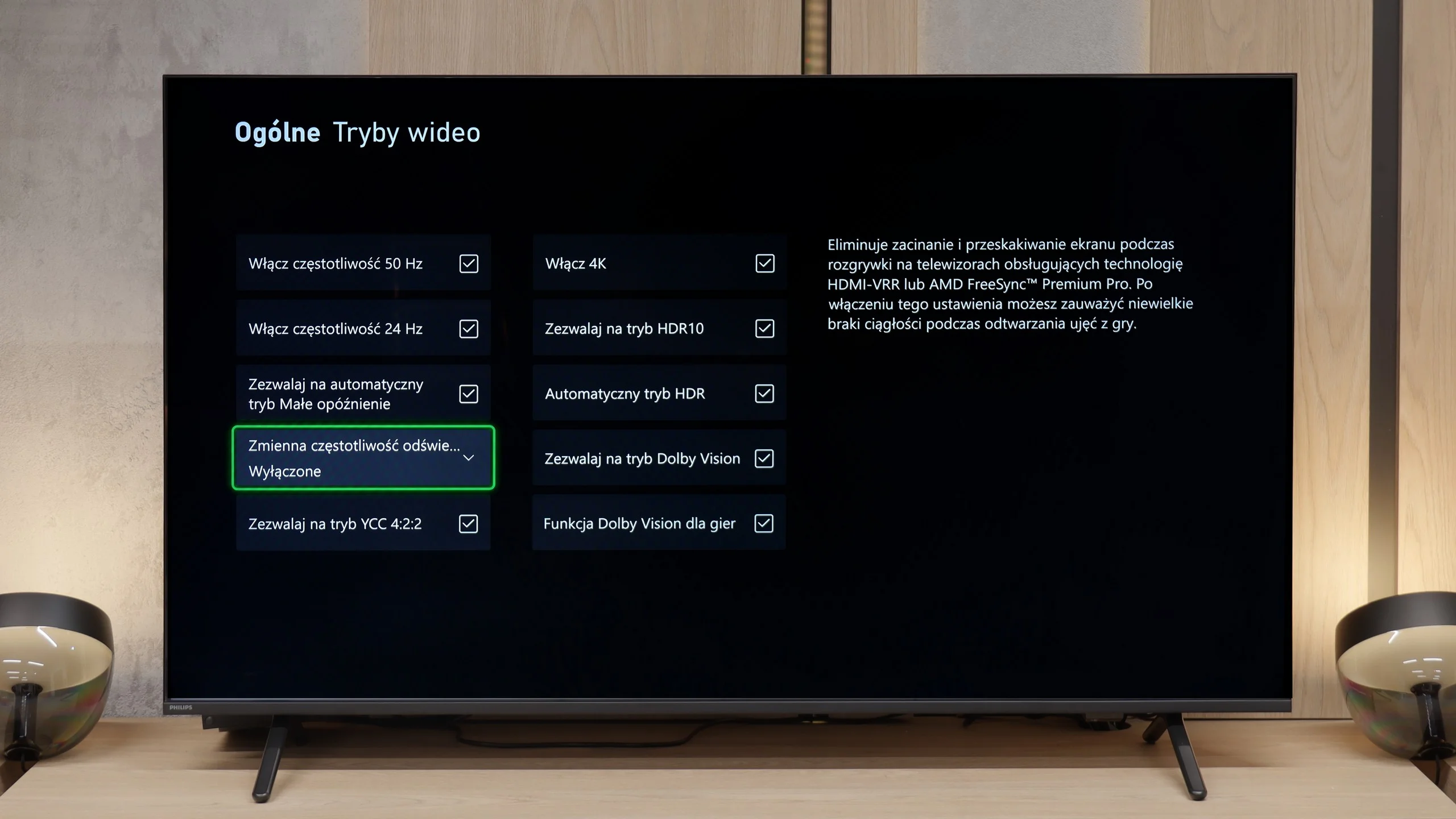
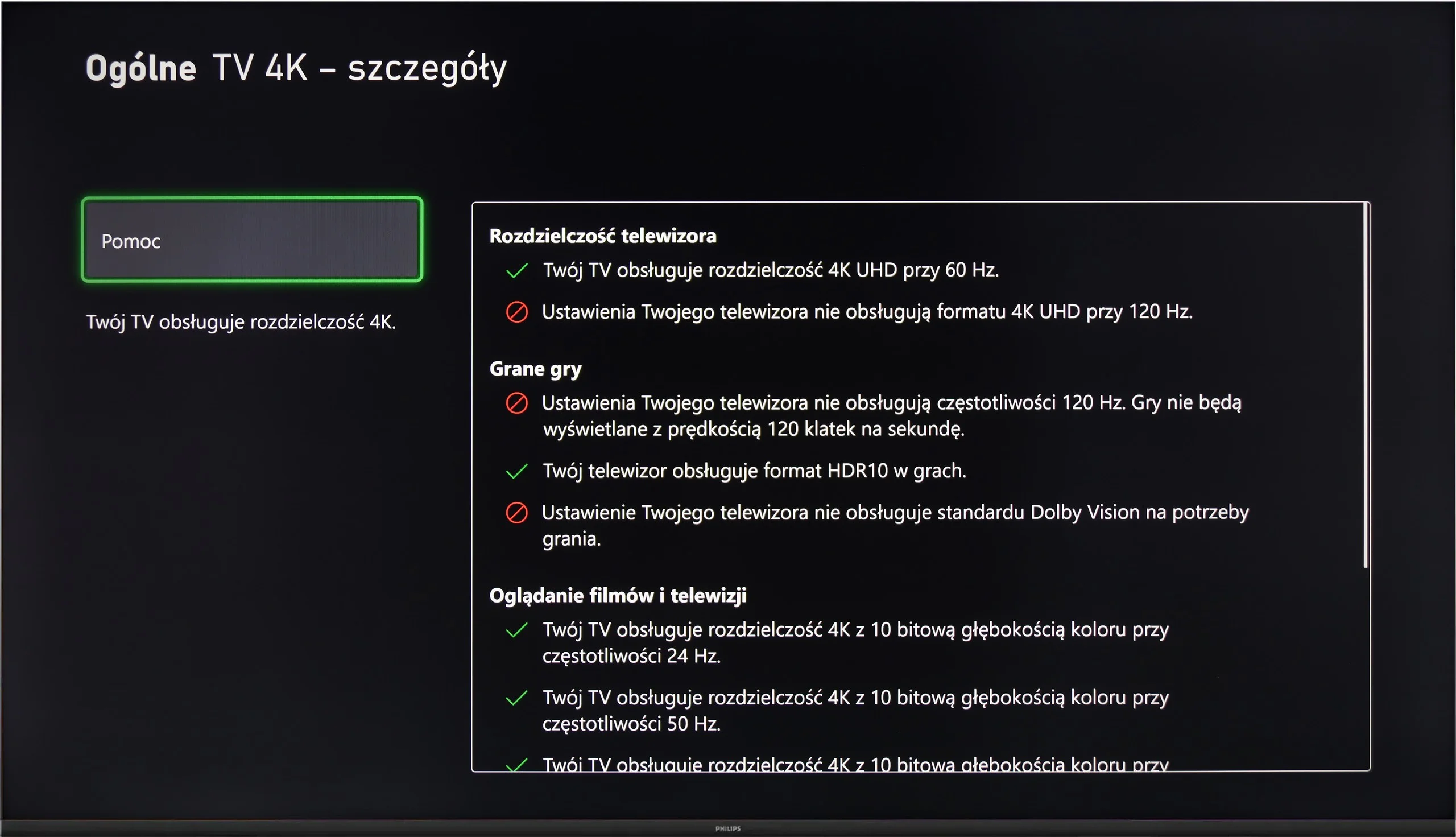
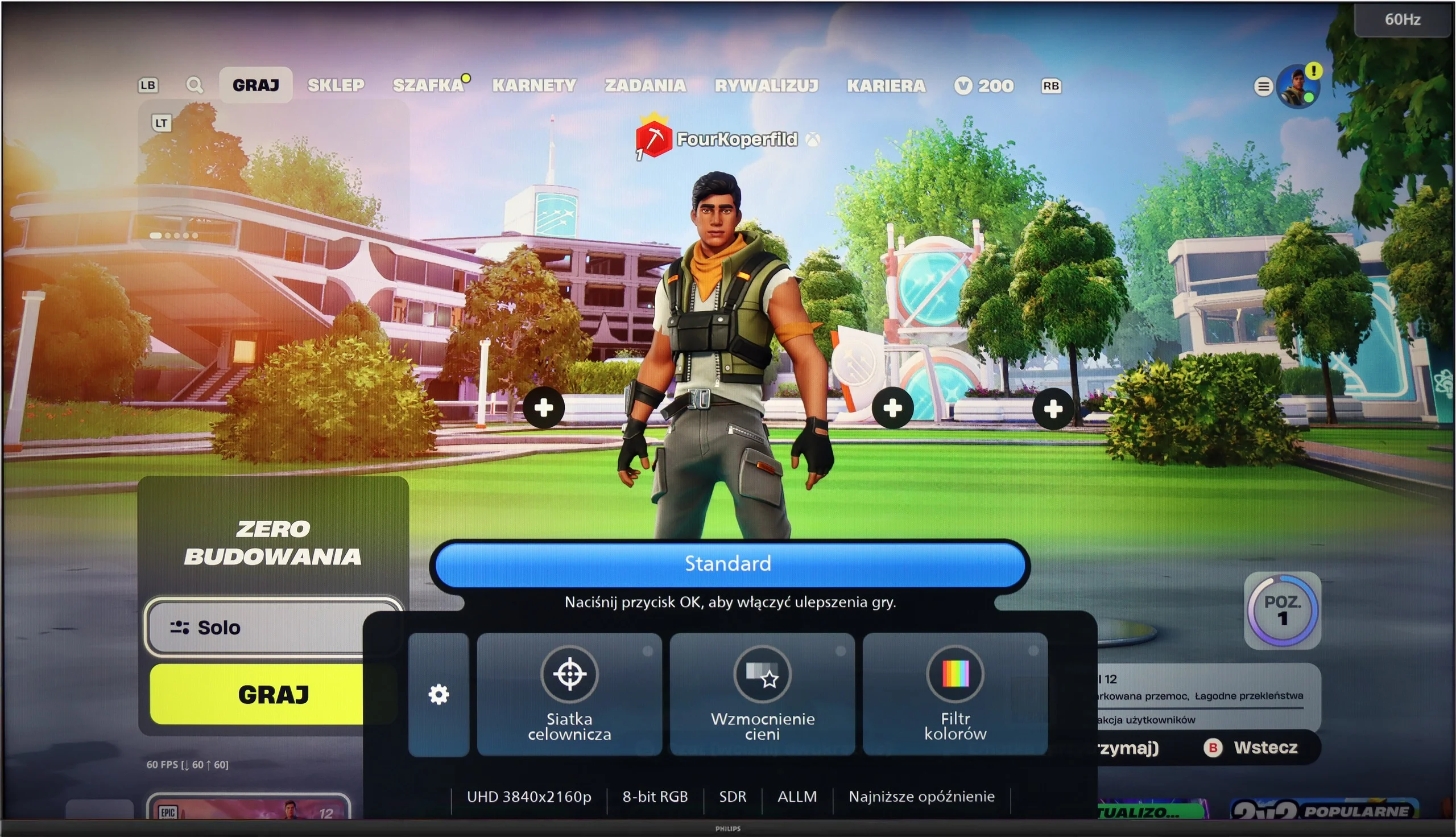
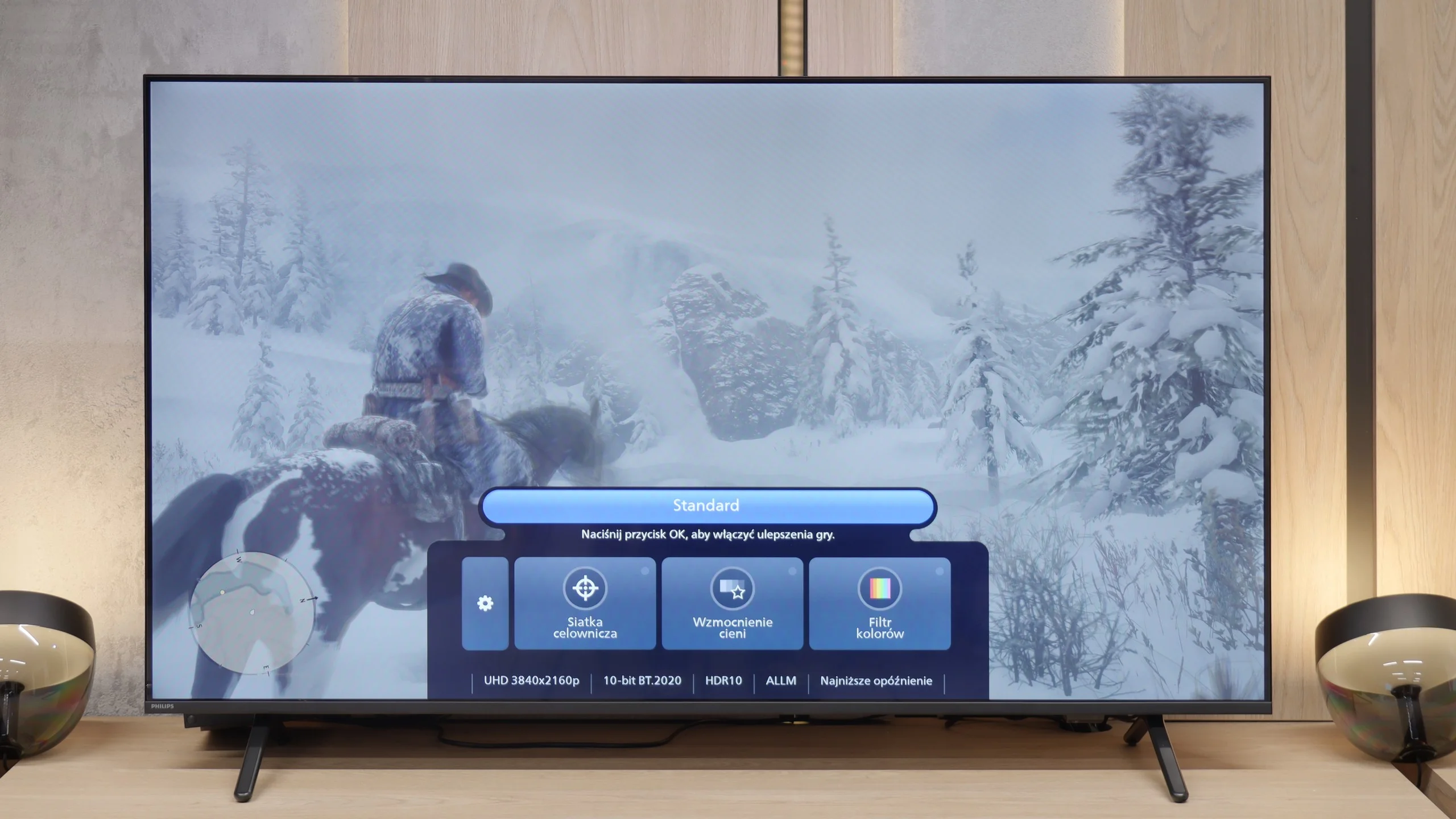
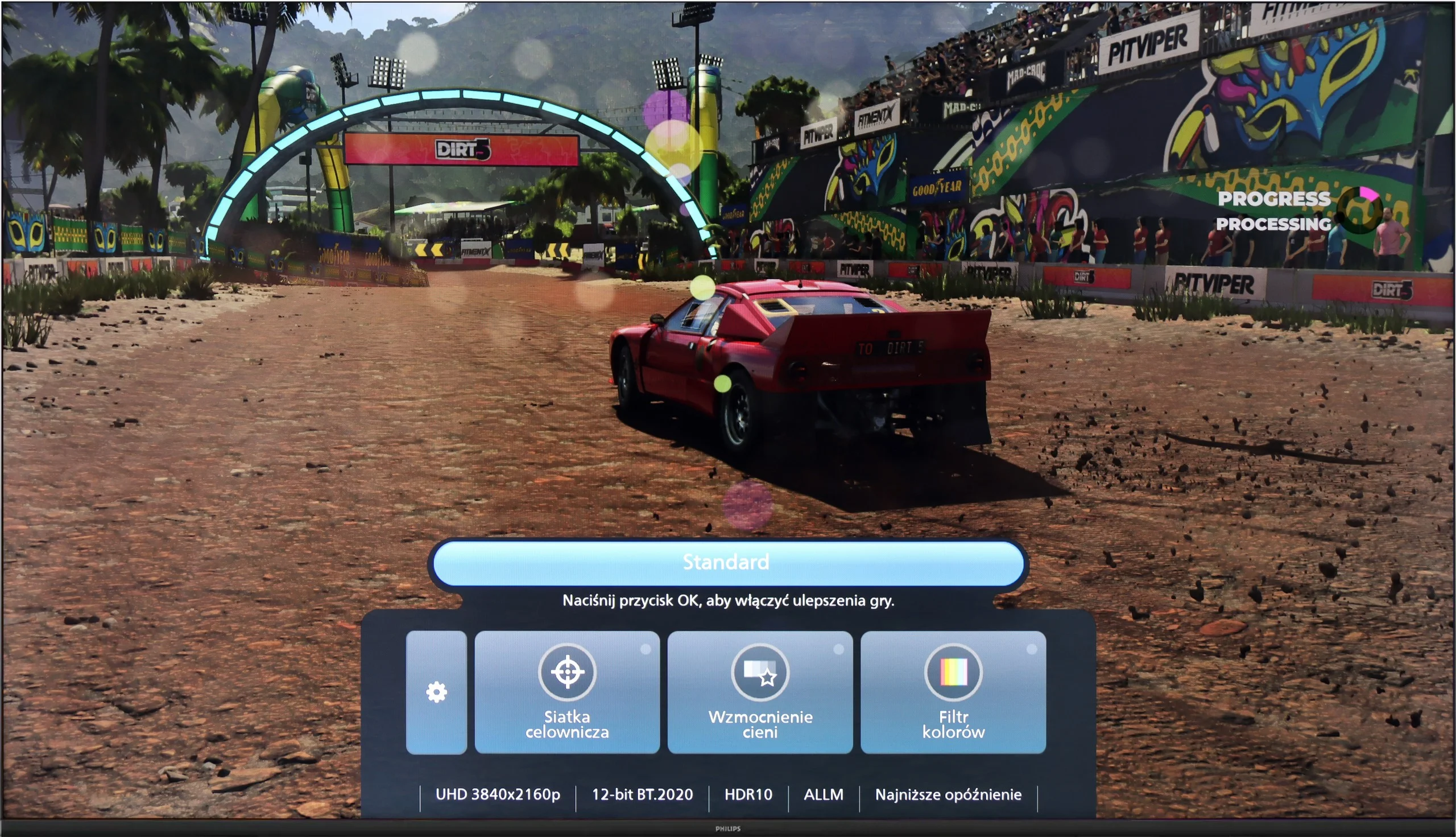
Although the Philips PUS8560 is not designed specifically for gamers, the manufacturer decided to equip it with several features that may prove useful when connecting a console. It includes automatic switching to game mode (ALLM), as well as a simple connection status information bar – the so-called Game Bar. While it does not make a particularly strong visual impression, it serves its purpose. The presence of variable refresh rate (VRR), operating in the range of 48 to 60 Hz, might come as a surprise. While this is not a wide range, in the case of less demanding games or titles with unstable fluidity, VRR can help reduce the stuttering effect. However, this is the only element that can be considered above the minimum.

It should be clearly stated that the PUS8560 is not hardware for gamers looking for a responsive screen and full support for modern console features. It lacks HDMI 2.1 ports, the refresh rate is limited to 60 Hz, and the panel's response time is not among the fastest. This model may be suitable at most for casual gamers who want to enjoy the Ambilight system.

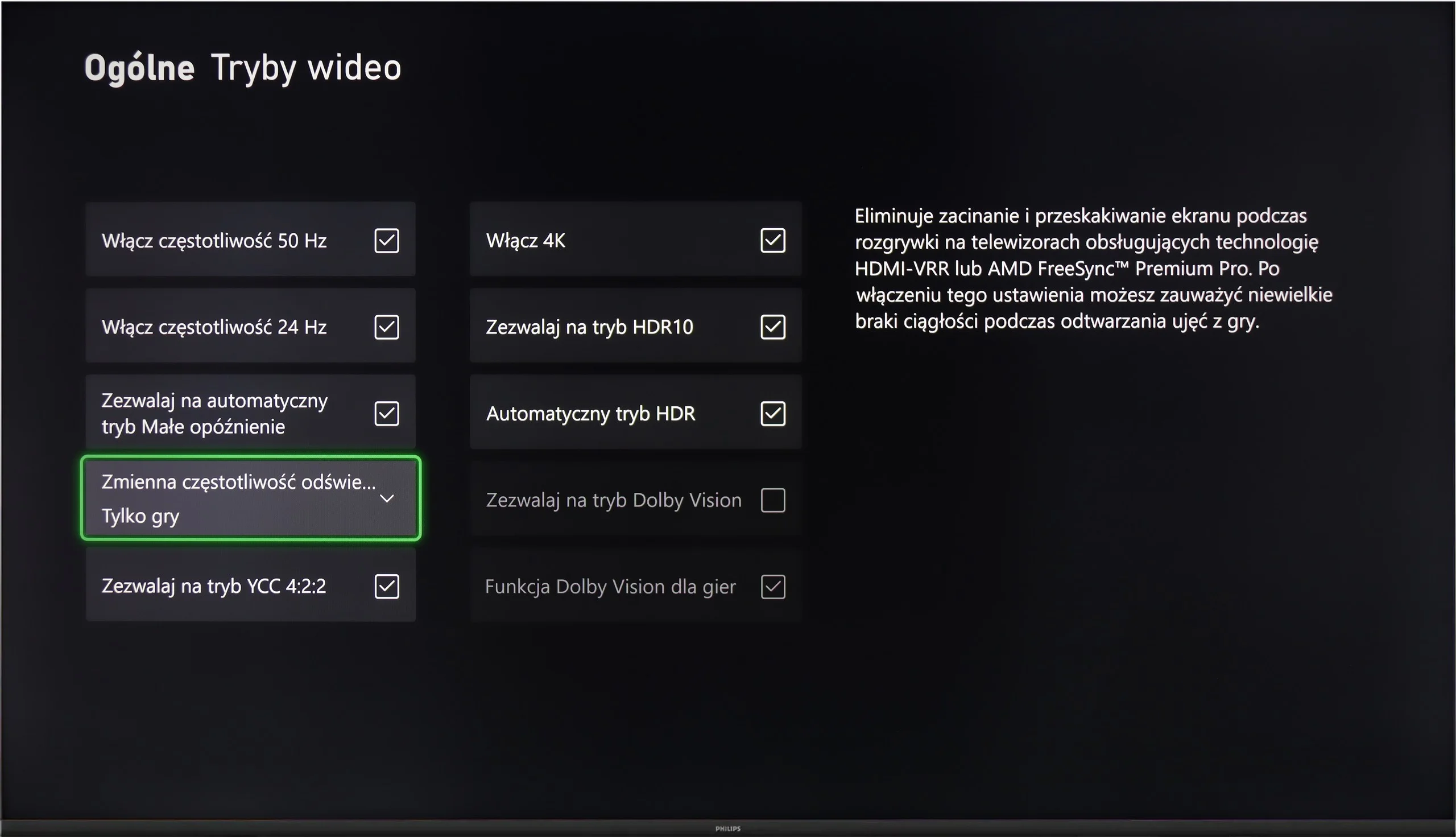
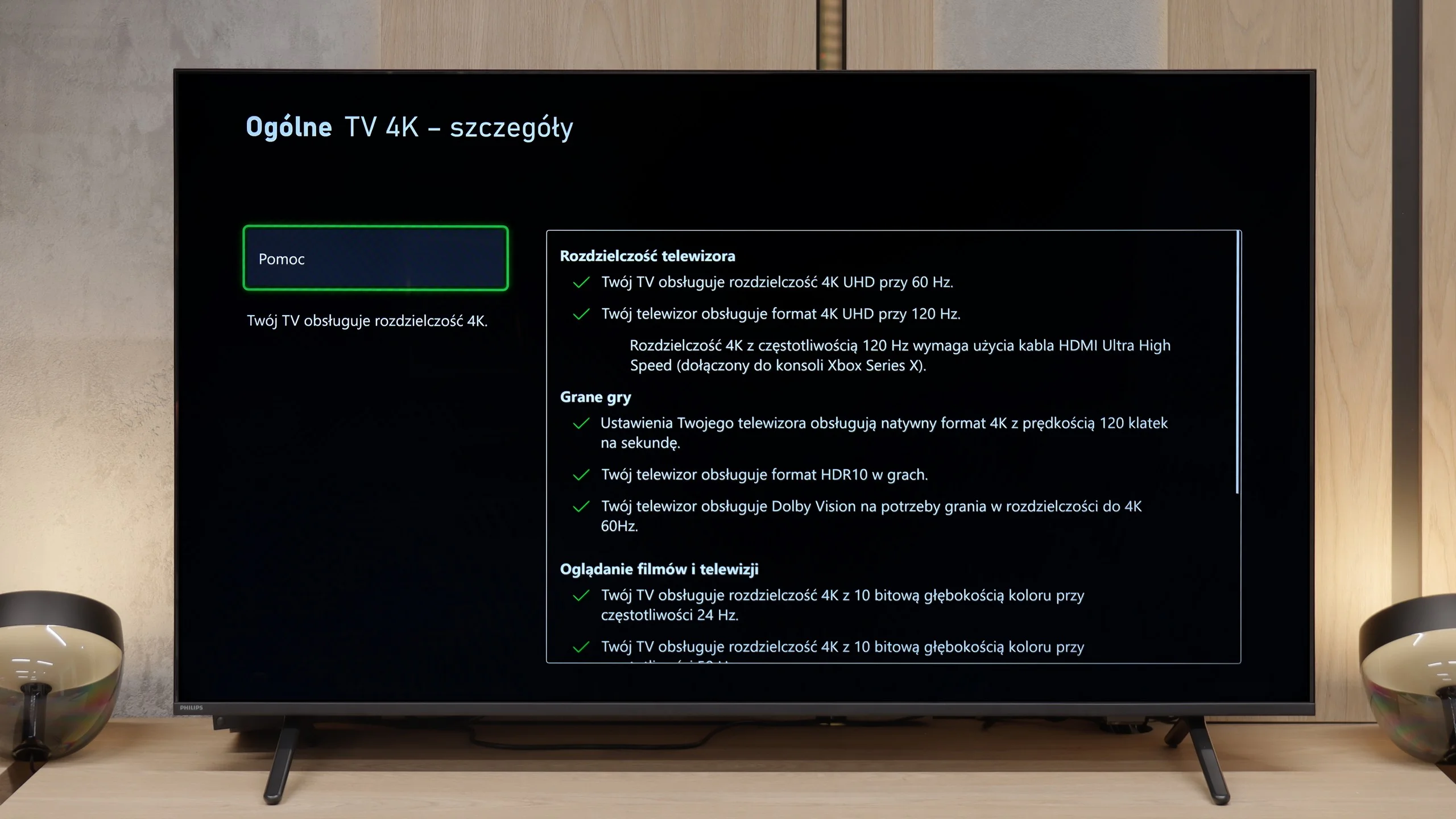
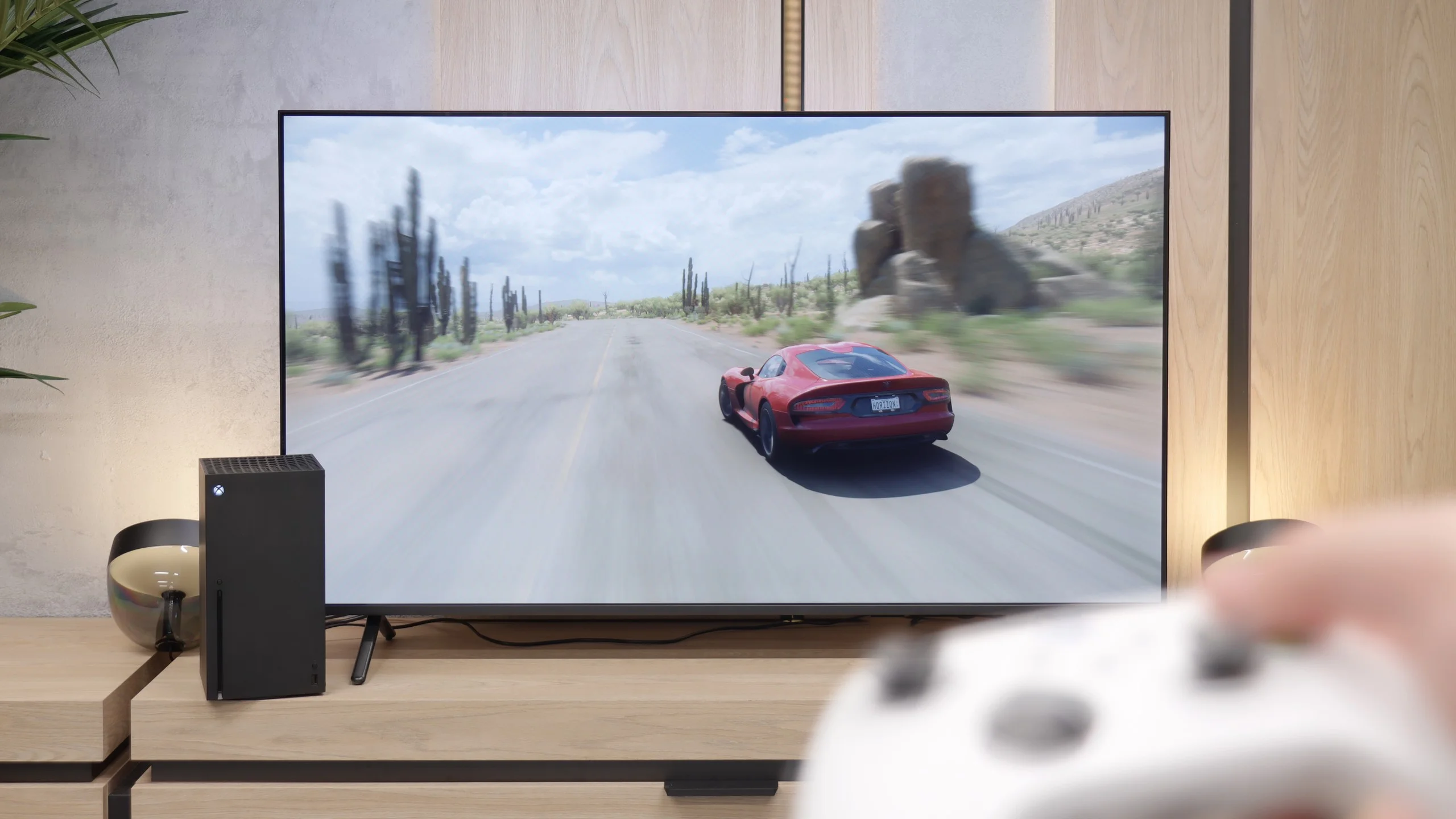
For gamers, the Philips MLED920 is truly a complete tool. The manufacturer has taken care of everything that today is considered standard in televisions designed for consoles and PCs. It features ALLM, so the console automatically switches the screen to game mode, it has VRR and 144 Hz refresh rate, which guarantees smooth gameplay even in fast titles. All key HDR formats are supported – including HGiG and Dolby Vision Gaming for Xbox – which means that regardless of what you are playing and on which console, the TV will be able to extract maximum potential from the image. In everyday gaming, the Game Bar also proves to be useful – a relatively simple implementation by Philips, but a functional panel where you can quickly check image parameters, turn on VRR, or adjust details without leaving the game. It may not be as advanced as the competition's offerings, but it performs its job flawlessly. And lastly, something that distinguishes Philips from its competitors – Ambilight. The three-sided LED backlighting can make a huge impression in games, especially in the evening. It also provides a way to slightly "expand" the screen and feel greater immersion. And since colorful LEDs have recently become almost a mandatory element of a gamer’s room, the MLED920 fits into this trend perfectly.

Input lag

10/10

9.6/10

SDR

1080p60
13 ms
18 ms
1080p120
9 ms
2160p60
13 ms
17 ms
2160p120
9 ms

HDR

2160p60
12 ms
17 ms
2160p120
9 ms
4320p60

Dolby Vision

2160p60 DV
35 ms
2160p120 DV
9 ms

The input lag on the PUS8560 is very good. When we previously wrote that this screen is more for "casual gamers," there's no shame in this regard – even compared to screens aimed at gamers. Results around 12 ms are truly exceptional, allowing for enjoyable responsive gameplay. It doesn't matter if we are playing in Full HD or 4K – the lag remains just as low, so if you care about quick reaction times, the PUS8560 will definitely not disappoint in this aspect.

Input lag on the Philips MLED920 is really very good – in 120 Hz mode, we measured values below 10 ms, placing this model among the absolute leaders of LCD televisions in terms of responsiveness. Even at 60 Hz, a result of around 18 ms is fully acceptable and won’t hinder any type of gameplay. A certain exception is the Dolby Vision mode at 60 frames, where the lag can increase to even 35 ms. This result might be slightly noticeable for esports players, but we must honestly admit – for the majority of so-called “casual gamers,” it will be absolutely unnoticeable. Especially since we’re talking about values that still allow for comfortable gaming without major compromises.

Compatibility with PC

5.6/10

4/10

Chroma 444 (max. resolution and refresh rate)
Yes
Yes
Font clarity
Very Good
Average
Readability of dark text and shapes
Poor
Poor
Input lag in PC mode (4K, max. refresh rate)
13ms
9ms
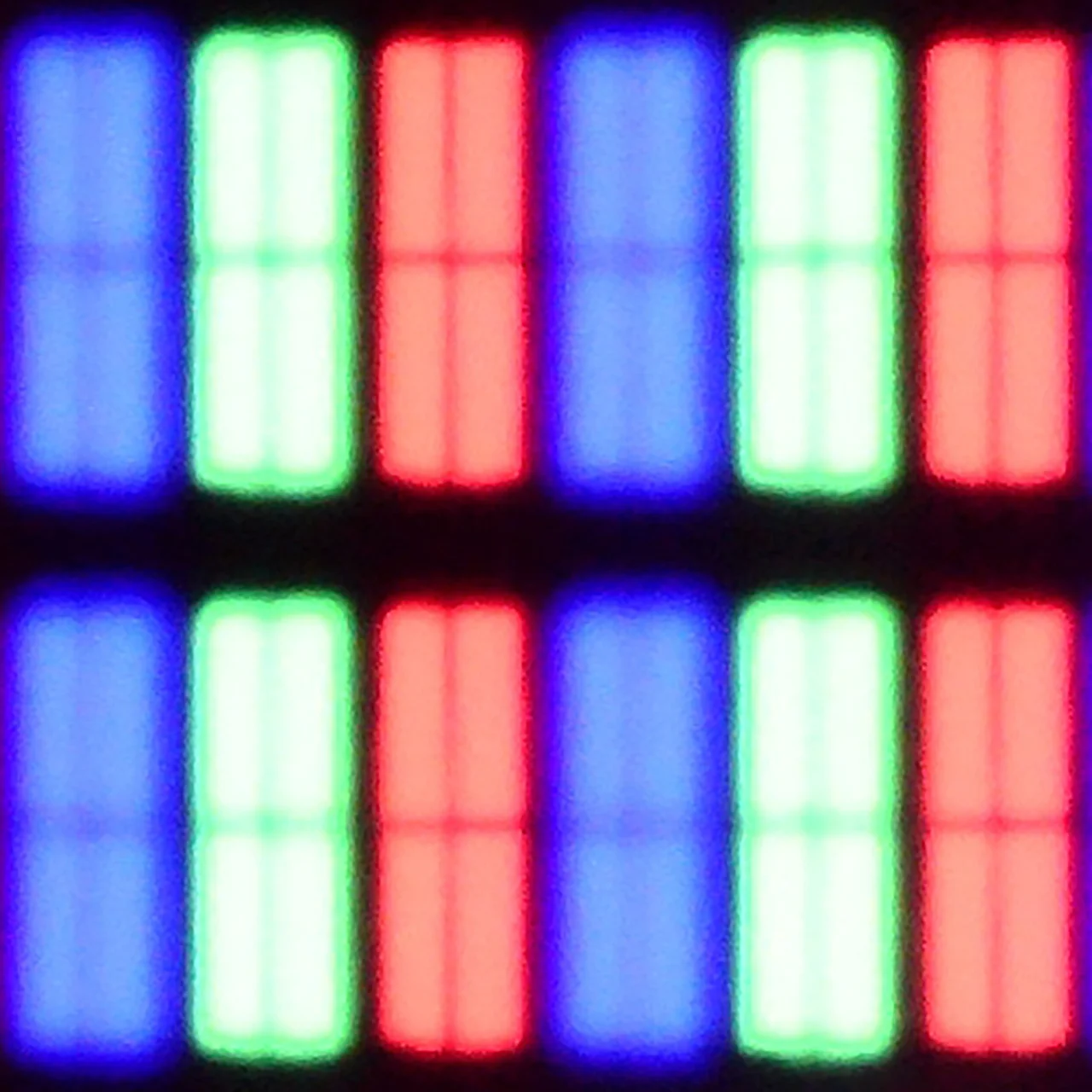
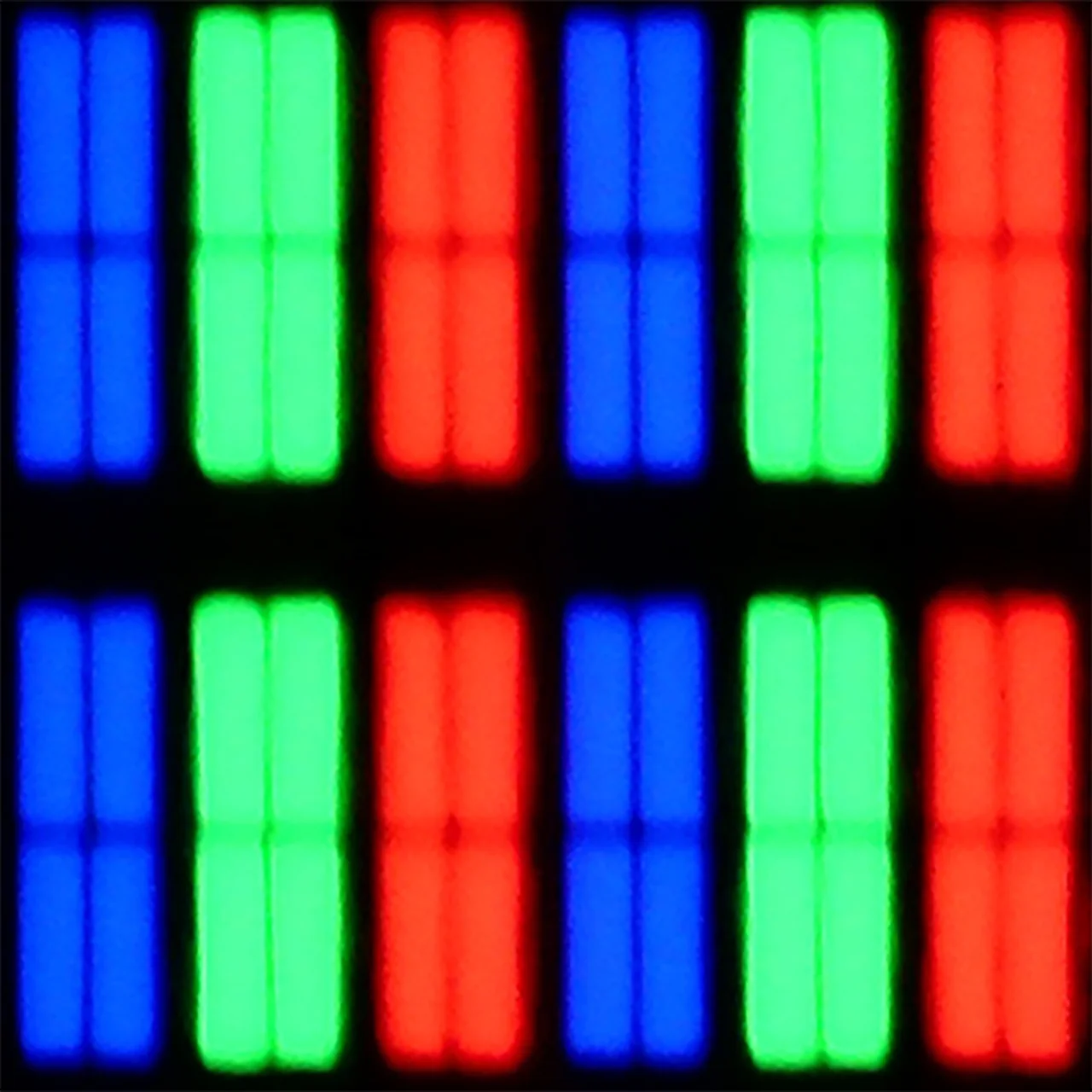
Matrix subpixel arrangement
BGR
BGR
Max refresh rate
60Hz
144Hz
G-Sync
No
Yes

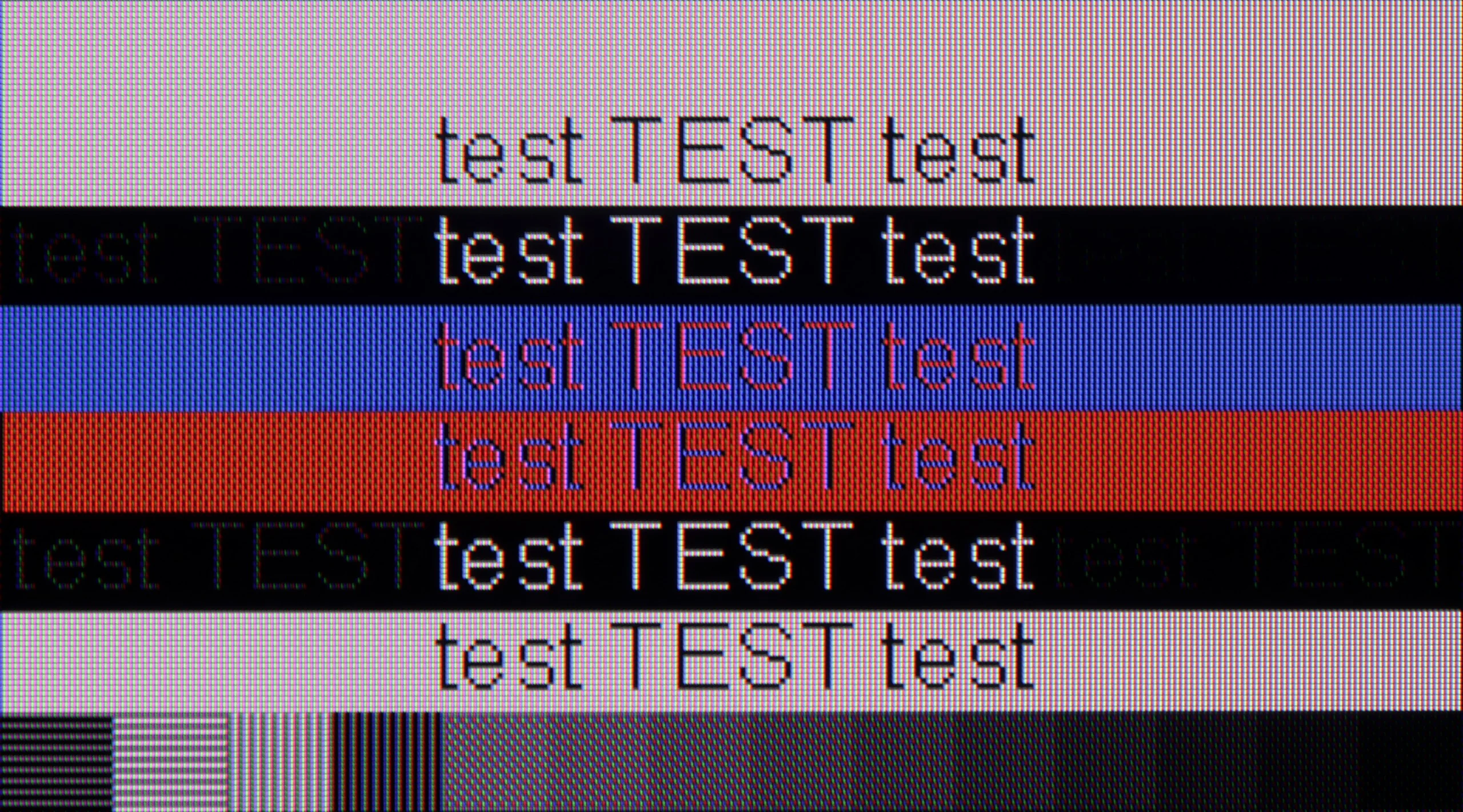
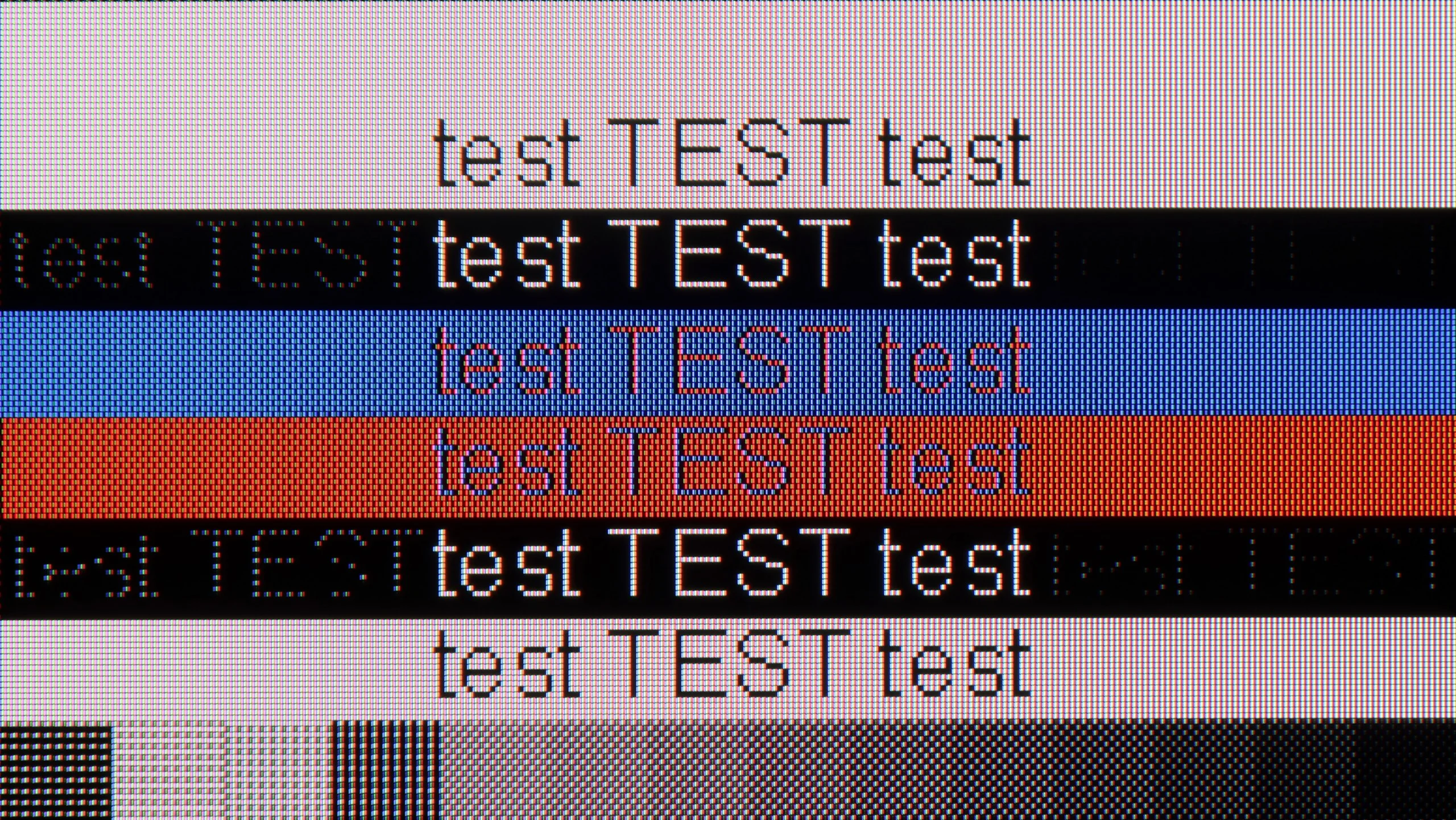
The photo shows the legibility of small fonts. Ideally, lines should be the same thickness on both light and dark text, with minimal pixel gaps.

When it comes to working with a PC on the PUS8560, it looks... quite strange. Chroma 4:4:4 is present in "Monitor" mode, but there is a problem with gray fonts – not all subpixels light up, which makes the text appear pixelated. On the other hand, in "Game" mode, chroma 4:4:4 disappears, but the gray fonts look correct. In practice, we are therefore forced to juggle settings if we want to have perfectly readable text all the time. And what about gaming on the computer? Our opinion remains the same as regarding consoles – it's doable, but without any fireworks. There is no variable refresh rate for G-SYNC graphics cards, and the refresh rate itself remains relatively low. On the plus side, we can again highlight the very low input lag, which saves the day in fast-paced games.

When it comes to working with a PC, the Philips MLED920 evokes rather mixed feelings. On one hand, it looks impressive on paper – we have 144 Hz, support for G-Sync and FreeSync, so in terms of gaming on a PC, the television does not disappoint. Anyone looking for a large screen for computer gaming gets a solid package of features here. However, when we try to use it as a typical monitor for daily work, its limitations quickly become apparent. The fonts do not look their best – there is noticeable strong dithering, colorful letters can be jagged, and with very dark text, strange anomalies appear, as if the panel loses thin lines and has trouble accurately reproducing them. In short: Yes for PC gaming. For any work and reading text: a firm no.

Viewing angles

3.3/10

3.2/10

Brightness drop at an angle of 45 degrees
68%
68%

The viewing angles on the PUS8560 are exactly what you would expect from a VA panel - they don't perform the best. The image loses quality even with a slight shift off-axis – colors become washed out, and the black starts to resemble a dark navy. This is, of course, the price paid for the better contrast that VA offers directly. In the case of our 55-inch unit, it is still acceptable, especially if the TV is perfectly positioned in front of the couch. But with larger screen sizes or a less central placement in the living room – it could be a problem for comfortable viewing.

The viewing angles on the MLED920 are classic for VA matrix technology – even a slight shift from the center causes the colors to begin to fade, the contrast weakens, and the overall picture becomes quite flat and unattractive. There are no miracles here. So if you’re watching movies with a larger group and everyone is sitting a bit off to the side, this will be slightly noticeable. On the other hand, you gain something for this: thanks to this matrix, the MLED920 can display a much deeper black than televisions with IPS panels.

Daytime performance

4.9/10

5.5/10

Panel finish
Satin
Satin
Reflection suppression
Decent
Decent
Black levels during daytime
Good
Good

Panel brightness

Philips MLED920 / MLED910: 421 cd/m2

Philips PUS8500 : 331 cd/m2

PUS8560 performs moderately during the day. The satin finish of the panel effectively reduces reflections, so light from the window or lamp doesn't interfere too much. The black also looks decent for a VA panel – even in daylight, there are no significant losses in contrast. But the charm fades when it gets really bright. The panel's brightness is around 300 nits, which is definitely too little to speak of full comfort in a brightly lit room. In such conditions, the PUS8560 simply needs to be supported by curtains – otherwise, the picture starts to look quite pale.

The Philips MLED920 performs fairly well in everyday use. The satin coating on the panel effectively reduces reflections, and in most moderately sunny living rooms, it manages unwanted glare. However, it is important to remember that this is not a television that impresses with brightness – the average value in SDR hovers around 450 nits. In very bright rooms, especially with large south-facing windows, the screen may not always overcome intense daylight. In such situations, it's worth supporting it with at least light curtains so that viewing comfort doesn't suffer significantly.

Panel details

Backlight Type
PFS LED
Mini-LED PFS LED
Software version during testing
TPN256E_V056.002.127.051
TPN258E_V058.002.179.041
Image processor

Subpixel Structure:

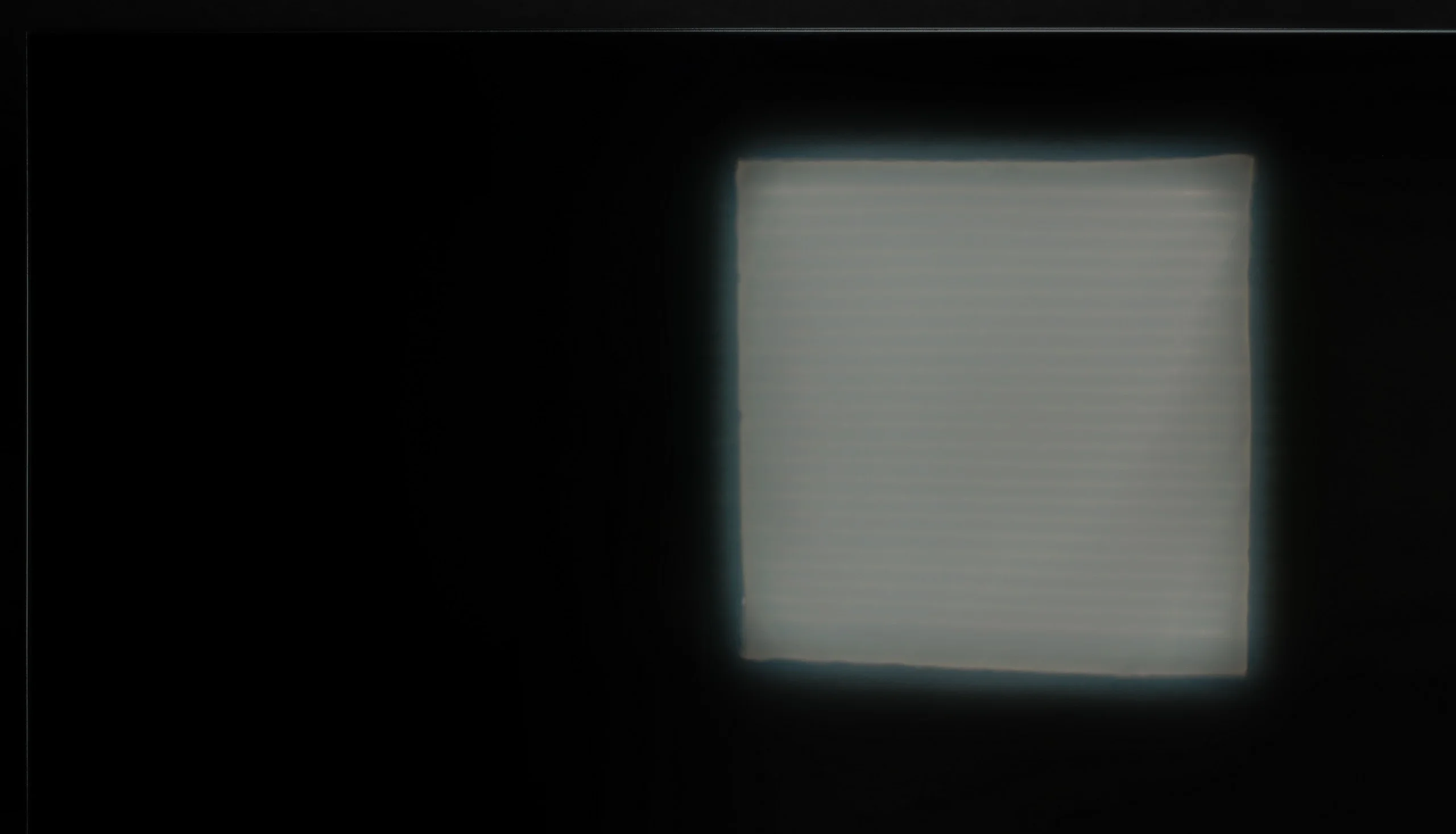
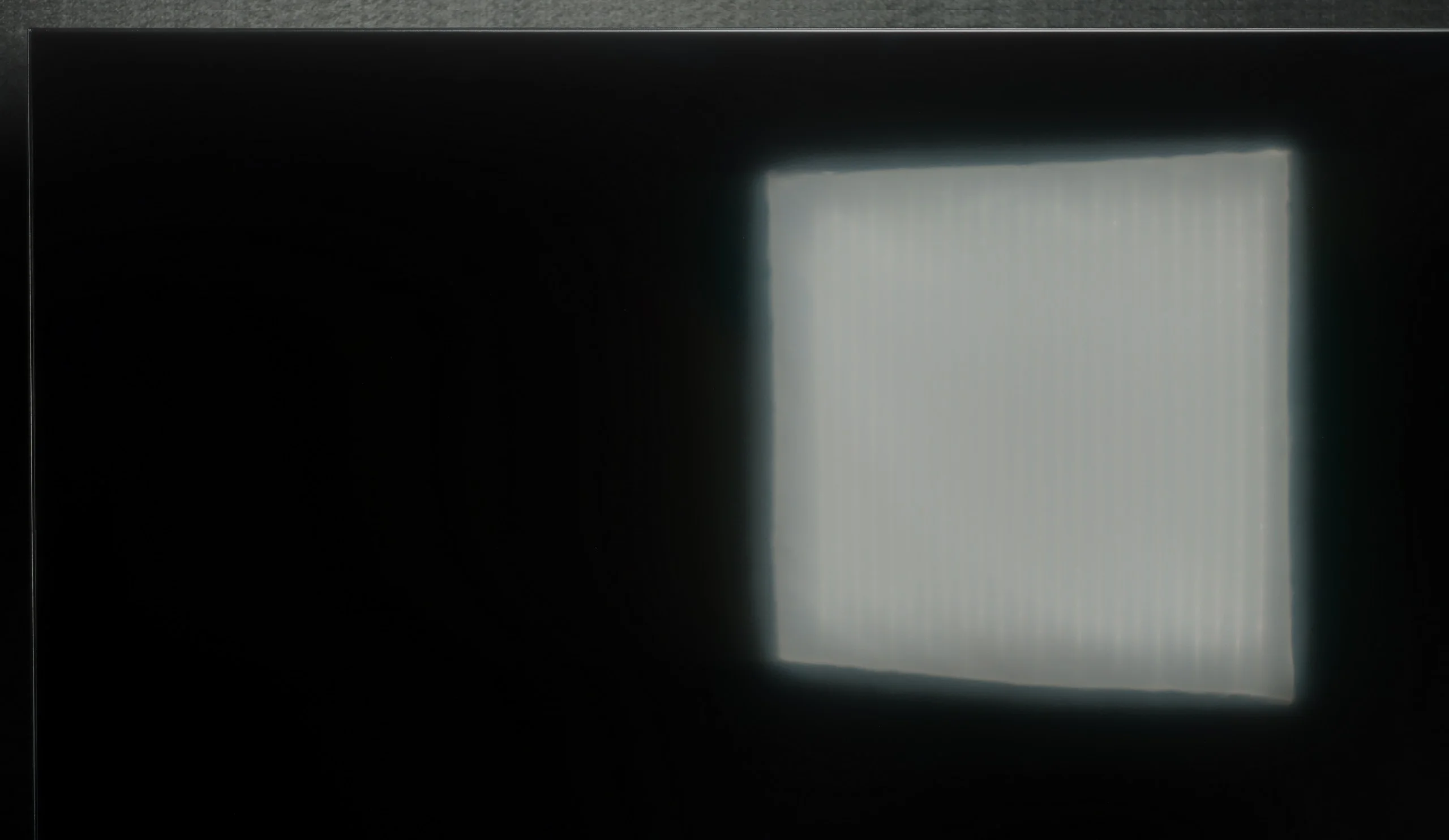
Panel uniformity and thermal imaging:

Review Philips PUS8500 TV Panel details
Review Philips MLED920 / MLED910 TV Panel details

Philips PUS8500

Philips MLED920 / MLED910

TV features

4.8/10

5.5/10

  • System
    Titan OS
    Titan OS
  • System performance
    Average
    Decent
  • HDMI inputs
    3 x HDMI 2.0, 0 x HDMI 2.1
    0 x HDMI 2.0, 4 x HDMI 2.1 48Gbps
  • Outputs
    Toslink (Optical audio), eARC (HDMI), ARC (HDMI), Mini-Jack (Headphones)
    Toslink (Optical audio), eARC (HDMI), ARC (HDMI), Mini-Jack (Headphones)
  • Network Interfaces
    Wi-Fi 2.4GHz, Wi-Fi 5GHz, Ethernet (LAN) 100Mbps
    Wi-Fi 2.4GHz, Wi-Fi 5GHz, Ethernet (LAN) 100Mbps
  • TV reception
    DVB-T, DVB-T2, DVB-S, DVB-S2, DVB-C
    DVB-T, DVB-T2, DVB-S, DVB-S2, DVB-C

Classic features:

  • Recording to USB (terrestrial TV)
    No
    No
  • Recording programming
    No
    No
  • Picture in Picture (PiP)
    No
    No
  • RF remote control (no need to aim)
    No
    No
  • Backlit remote control
    Yes
    Yes
  • Teletext
    Yes
    Yes
  • Audio only mode
    Yes
    Yes
  • Bluetooth headphones support
    Yes
    Yes
  • Simultaneous Bluetooth headphones & TV audio
    No
    No

Smart features:

  • AirPlay
    No
    Yes
  • Screen mirroring (Windows Miracast)
    No
    No
  • Voice search
    Yes
    Yes
  • Voice search in native language
    No
    No
  • Ability to connect a keyboard and mouse
    Yes
    Yes
Review Philips PUS8500  TV features
Review Philips MLED920 / MLED910 TV features

Sound connection options

  • HDMI audio
    eARC (HDMI), ARC (HDMI)
    eARC (HDMI), ARC (HDMI)
  • Other audio outputs
    Toslink (Optical audio), Mini-Jack (Headphones)
    Toslink (Optical audio), Mini-Jack (Headphones)
  • Wireless audio
    Bluetooth
    Bluetooth

Supported audio formats (external HDMI eARC audio):

  • Dolby Digital Plus 7.1
    Yes
    Yes
  • Dolby True HD 7.1
    Yes
    Yes
  • Dolby Atmos in Dolby Digital Plus (JOC)
    Yes
    Yes
  • Dolby Atmos in Dolby True HD
    Yes
    Yes
  • DTS:X in DTS-HD MA
    Yes
    No
  • DTS-HD Master Audio
    Yes
    No

Senior accessibility

  • Numeric keyboard on TV
    Yes
    Yes
  • Font size adjustment
    No
    Yes
  • Audio description
    Yes
    Yes

Classic TV Features:

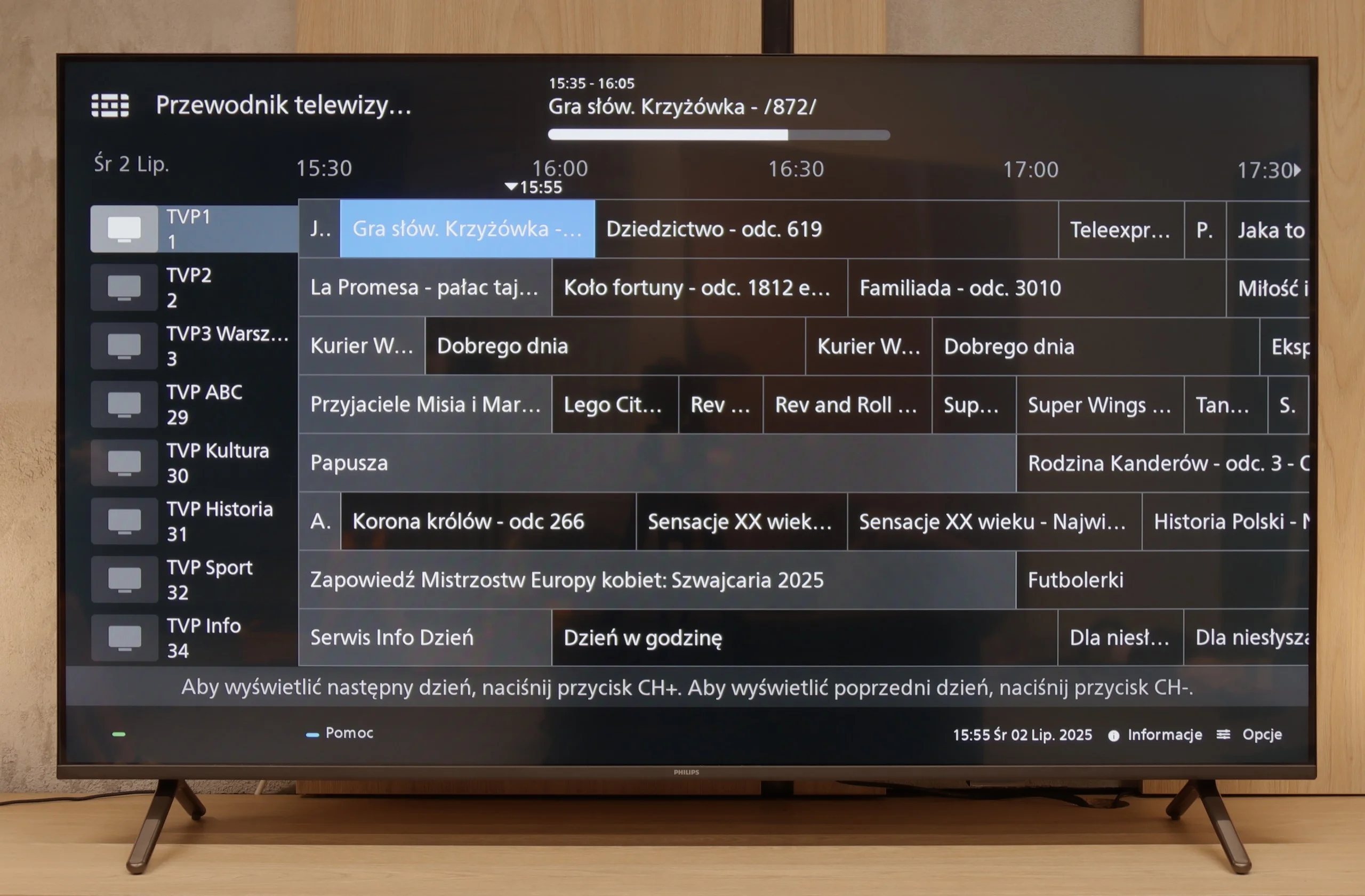
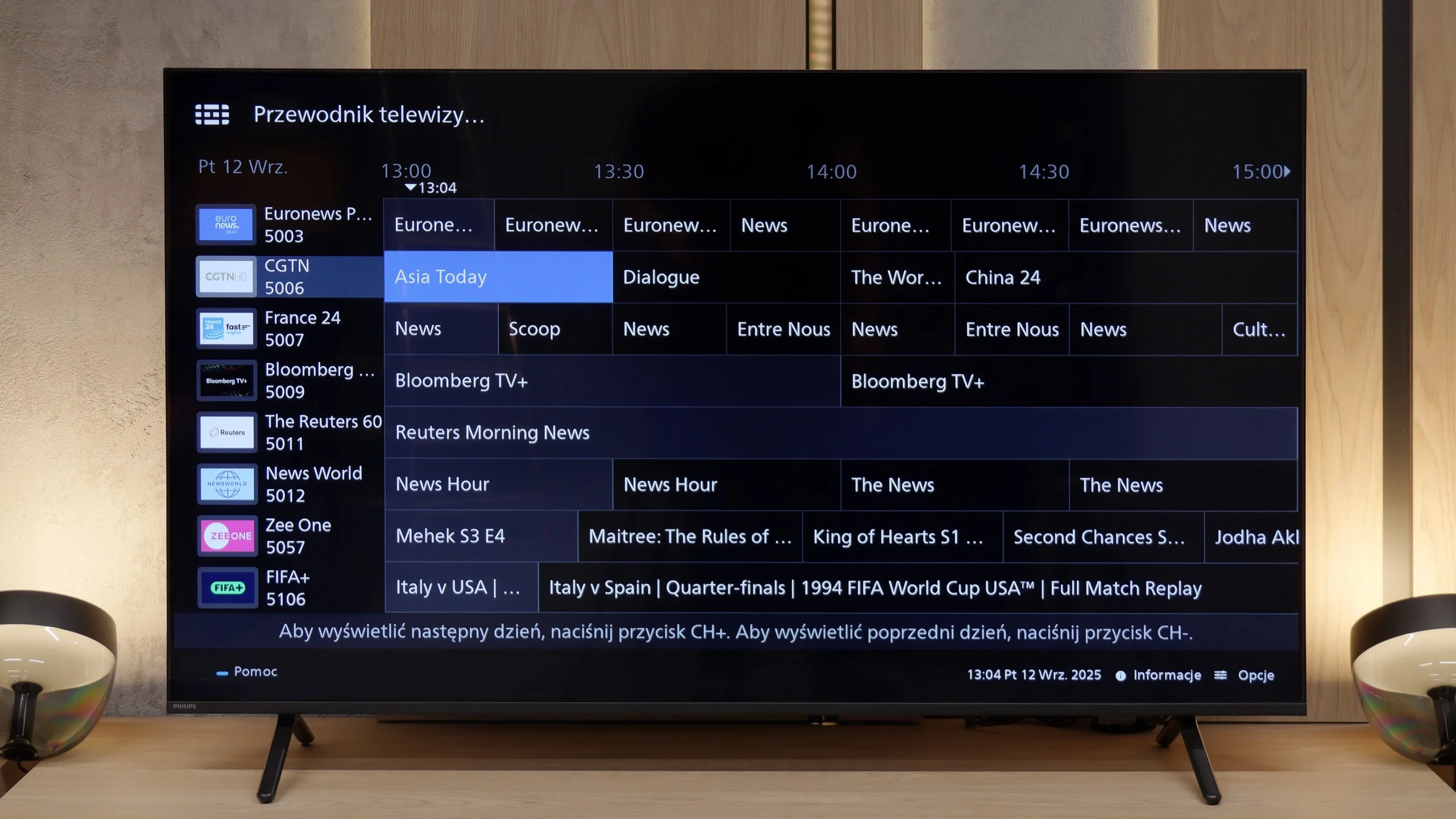
If you are looking for a TV that "works" in the basic sense – the PUS8560 will serve that purpose. In terms of classic features, we have a rather minimalist set. On the plus side, it includes an electronic program guide (EPG), teletext, a backlit remote control with a classic numeric keypad, and a headphone jack. It sounds a bit like a dream set for seniors – and there is some truth to that. However, it must be said clearly: this is a TV with very limited capabilities. We won't find features for recording from DVB tuners to USB, nor is there a PiP mode or other conveniences known from more expensive models.

Smart TV:

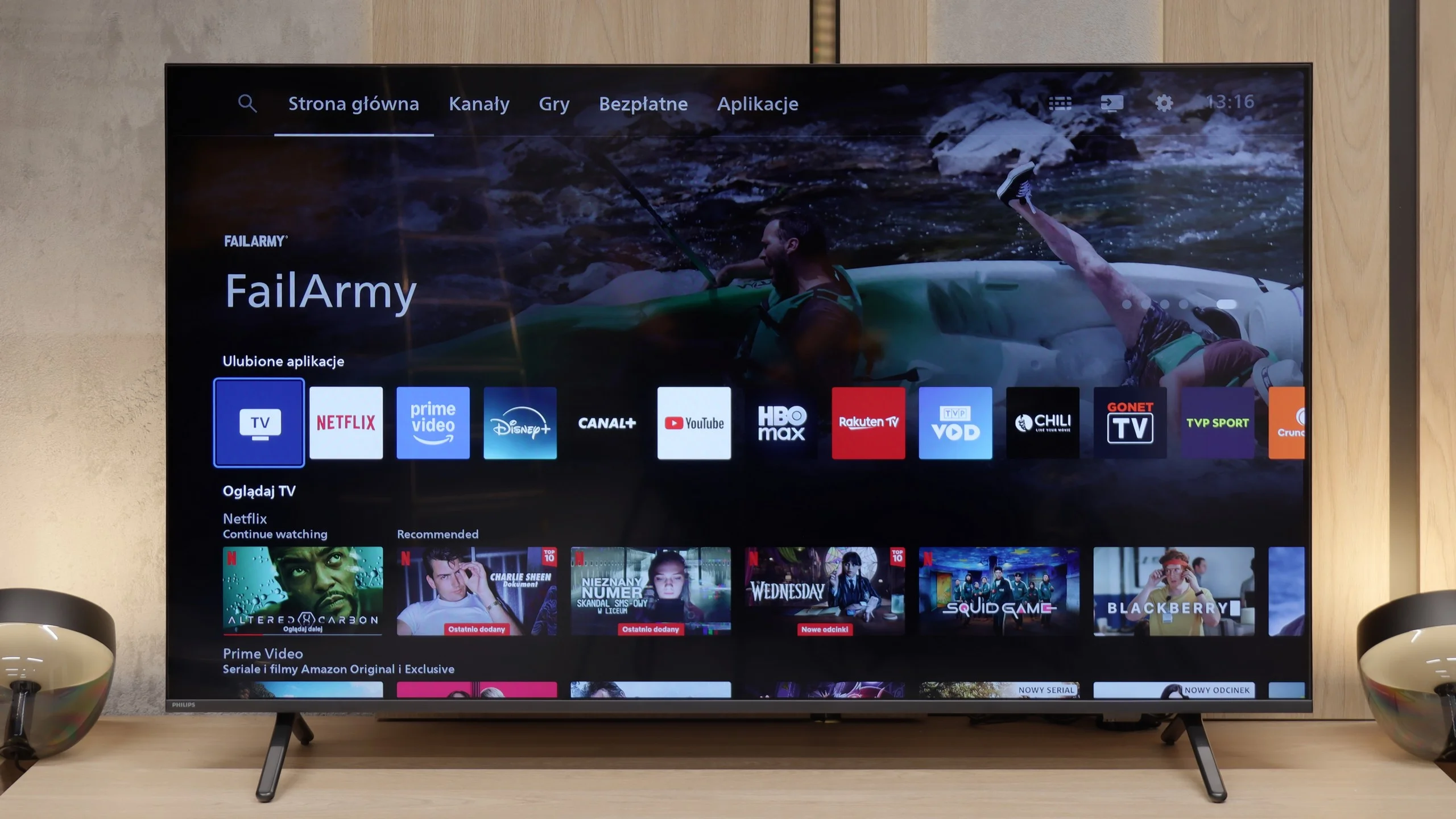
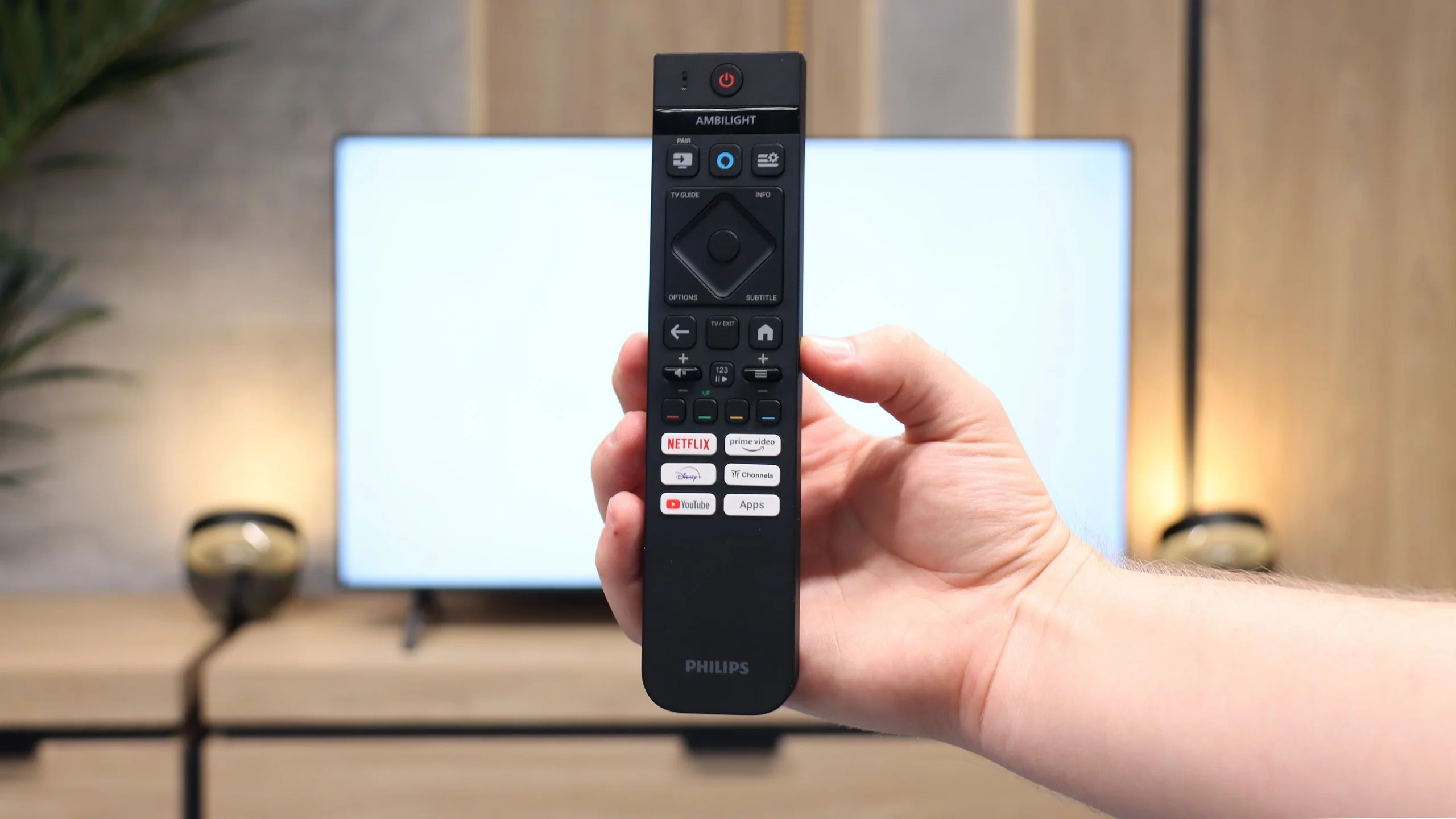
How does SmartTV fare on the PUS8560? Well, this is where it gets a bit tricky. The PUS8560 runs on the Titan OS, which in this particular implementation caused significant problems. Some features, while present "on paper," simply did not work. For example: Wireless screen mirroring features like Chromecast or Miracast – we tried to activate them with several different phones and laptops… without success. Perhaps this will be fixed in the future, but at the time of testing – it did not work. Additionally, the system's speed left much to be desired – switching between apps or home screens was simply slow. A significant portion of the features in the menu feels heavily hidden in the depths of a poorly organized system. To make matters worse, the library of available applications is quite limited. While the situation with apps is better than last year, it is still far from ideal. The situation is somewhat saved by the modern remote – slim, elegant, and superbly made with a really great backlight. Unfortunately, it operates on classic infrared, so you have to point it at the screen. The only exception is the voice control, which works via Bluetooth… it's just a shame that it doesn't support Polish.

Smart TV – Titan OS

Philips MLED920 uses the proprietary Titan OS, which is just beginning its journey in the TV market, and unfortunately, this is evident at every turn. On one hand, we have basic features – such as support for AirPlay or the ability to mirror the screen from a smartphone, but on the other hand, its limitations quickly become apparent. Screen mirroring works only with a phone, but not with a laptop. Voice search? Yes, but it is only supported by Amazon Alexa and in languages supported by this assistant. The system runs fairly quickly, but every now and then it can "fail" and gives the impression of something unfinished, still developing.

Classic TV Functions

Titan OS does not pamper in terms of classic TV functions either. Besides the hybrid remote with a numeric keypad – which, although illuminated and cleverly designed in two modes, unfortunately works via infrared – we won't find anything that could truly distinguish the MLED920 from the competition. There is no USB recording or PiP function, and such solutions could be useful in this class. From unusual additions, we have an analog output in the form of a jack, which allows connecting headphones or older speakers. It’s a small nod to users who still use older equipment.

Ambilight TV

What definitely diverts attention from the shortcomings of Titan OS is the unique, three-sided Ambilight system. Here, Philips still plays in its own league and can amaze those who have not encountered this addition. The colorful lighting that responds to screen content gives screenings a unique atmosphere and is something that the competition does not offer in a similar form. It is Ambilight that is meant to ensure that other issues – both system and functional – take a back seat.

Apps

6.7/10

6.7/10

OK
Disney_Plus
OK
Amazon_Prime_Video
OK
Player_TVN
OK
Polsat_Box_Go
OK
Canal_Plus_Online
OK
TVP_VOD
No
Apple_TV_Plus
No
SkyShowtime
OK
Rakuten
OK
CDA_Premium_Browser
No
Spotify
No
Tidal
OK
Netflix
OK
YouTube
OK
HBO_MAX
No
Kodi
No
Apple_music
No
Eleven_sports
No
Xbox Game Pass
No
GeForce NOW
No
Amazon Luna
OK
Boosteroid
No
Steam Link
OK
Disney_Plus
OK
Amazon_Prime_Video
OK
Player_TVN
OK
Polsat_Box_Go
OK
Canal_Plus_Online
OK
TVP_VOD
No
Apple_TV_Plus
No
SkyShowtime
OK
Rakuten
OK
CDA_Premium_Browser
No
Spotify
No
Tidal
OK
Netflix
OK
YouTube
OK
HBO_MAX
No
Kodi
No
Apple_music
No
Eleven_sports
No
Xbox Game Pass
No
GeForce NOW
No
Amazon Luna
OK
Boosteroid
No
Steam Link

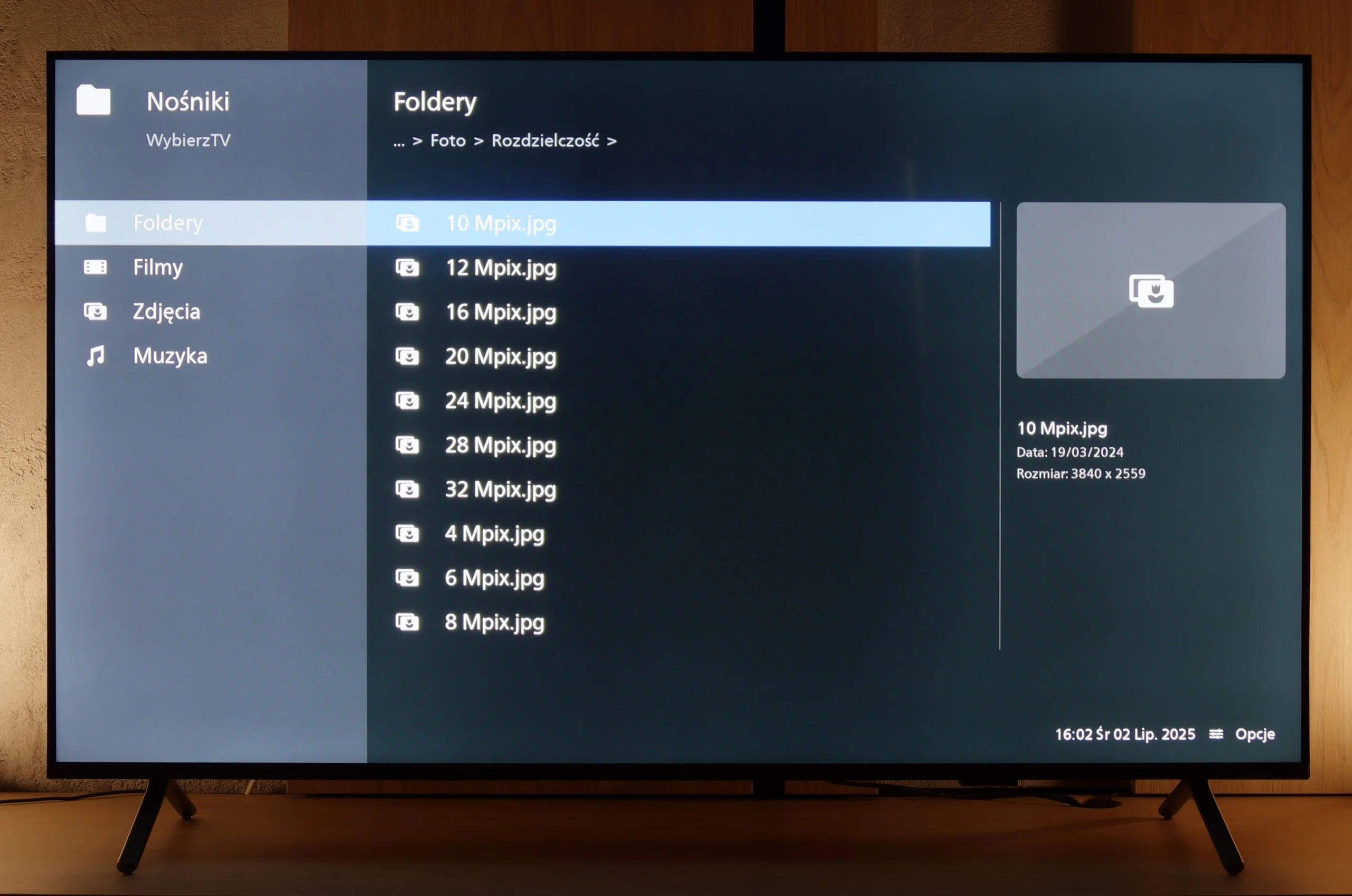
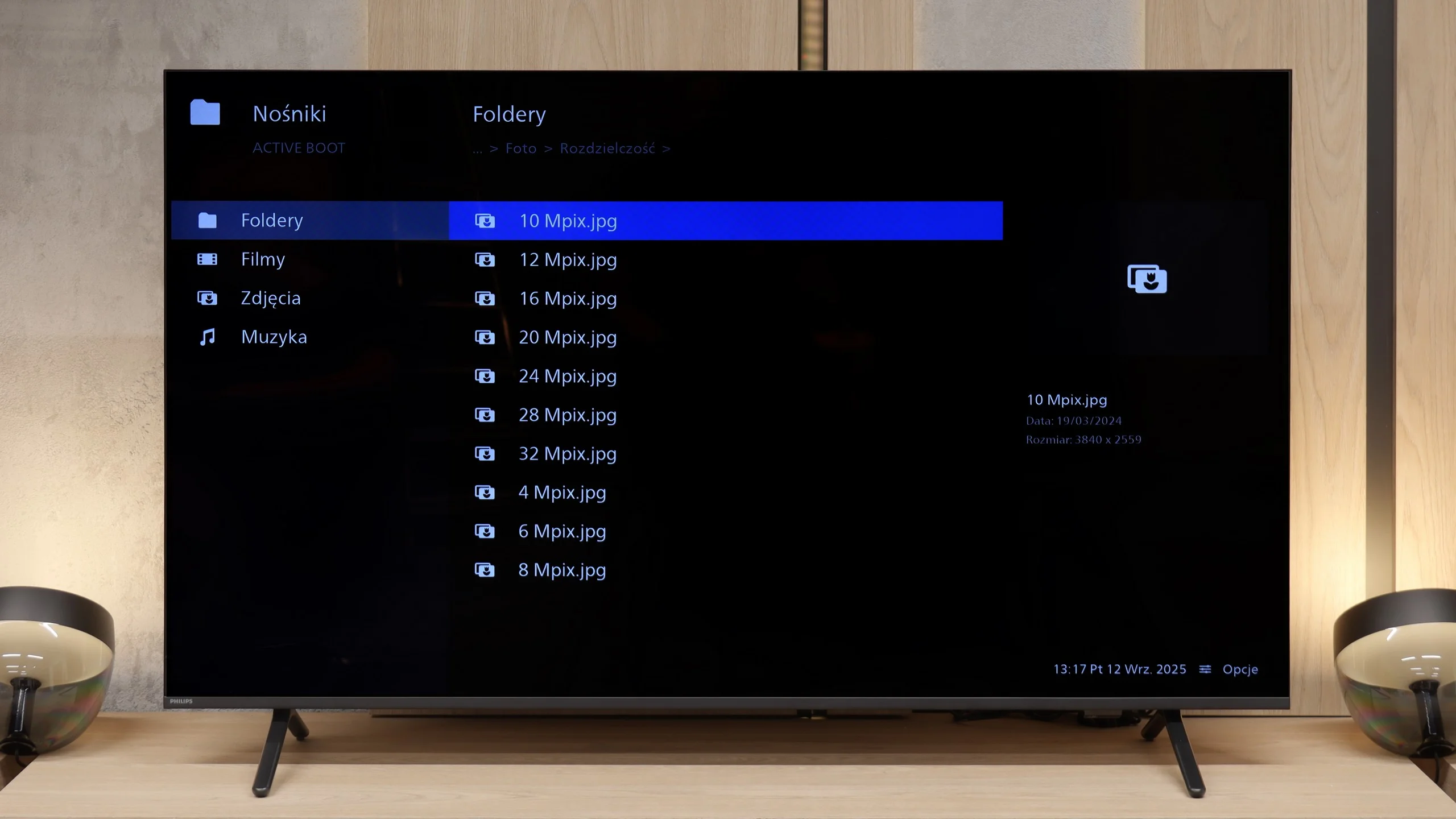
Playing files from USB

8/10

8.5/10

Supported photo formats:

JPEG
Yes
Yes
HEIC
No
No
PNG
Yes
Yes
GIF
Yes
Yes
WebP
No
No
TIFF
No
No
BMP
Yes
Yes
SVG
No
No

Maximum photo resolution:

4 Mpix
Yes
Yes
6 Mpix
Yes
Yes
8 Mpix
Yes
Yes
10 Mpix
No
No
12 Mpix
No
No
16 Mpix
Yes
Yes
20 Mpix
No
No
24 Mpix
No
No
28 Mpix
No
No
32 Mpix
Yes
Yes

PUS8560 handles playback of most popular video and audio formats from USB memory without any major issues, so there's no point in detailing the compatibilities individually. In daily use, it should just work – and it does. The only thing worth noting is the way it handles photos. Although the television easily recognizes common file extensions, with very high resolution graphic files, some photos may simply not display. This is not a huge problem, but it's good to keep it in mind, especially if we want to view photographs directly from the camera. Aside from that, PUS8560 shouldn't have any major problems with playback of files from USB.

The built-in player in the Philips MLED920 works quite well and handles most popular audio and video files without major issues – exactly as you can see in our test table. There is no need to worry about typical movie or music formats. We can only nitpick about the somewhat selective support for photo formats and certain resolutions.

Sound

6.2/10

6.2/10

  • Maximum volume
    -
    88dB
  • Dolby Digital Plus 7.1
    Yes
    Yes
  • Dolby True HD 7.1
    Yes
    Yes
  • Dolby Atmos in Dolby Digital Plus (JOC)
    Yes
    Yes
  • Dolby Atmos in Dolby True HD
    Yes
    Yes
  • DTS:X in DTS-HD MA
    Yes
    Yes
  • DTS-HD Master Audio
    Yes
    Yes

The TV sounds quite pleasant and it can confidently be stated that the sound level will be fully sufficient for most users – both for watching everyday programs and for an evening session with a series. Moreover, a nice surprise is that even in such an affordable series, Philips has decided to acquire licenses for full audio formats such as Dolby Atmos and DTS. This is great news for home theater and soundbar owners, as it means full compatibility and no need to "fiddle around" with connecting external devices.

The sound in the Philips MLED920 is probably not going to be the element that impresses you the most. It sounds rather flat, lacking depth and clearer bass, which means that movies or concerts don’t have the extra layer of immersion that a better audio system can provide. However, it must be noted that the volume is really decent – the TV can reach up to 88 decibels. A big plus of the MLED920 is not so much the sound quality itself, but the support for audio formats. Philips has ensured compatibility with nearly all the major standards, including Dolby Atmos, DTS, and Dolby TrueHD 7.1. As a result, if someone decides to connect an external soundbar or receiver, they will encounter no limitations and will be able to enjoy the fullness of cinematic sound.

Sound Quality Test

No sound test video

Acoustic Measurements

No acoustic data

88dBC (Max)

75dBC

Reader comments

Comments are provided by the external service Disqus (Zeta Global). Once loaded, Disqus may set cookies and process data about your activity.

We will remember your choice on this device. Provider's privacy policy