 Direct comparison
The LG G5 is a television that not only continues but also expands on what we loved about previous models in the G series. Instead of taking the beaten path, LG opted for a new Tandem OLED panel – and it was a stroke of genius. Picture brightness? Simply, F E N O M E N A L. HDR effect? Close to reference. Colors after calibration? Nearly perfect. Motion smoothness, low latency, and gaming features? At an absolutely top level. The G5 performs well in movies and games, day and night, whether with a decoder, console, PC, or just the remote. Of course – this is not a product without flaws. It's a pity that DTS support is lacking, the viewing angles have worsened compared to its predecessor, and the remote may vary depending on the version. But when we look at the overall picture, it's hard not to feel that this is one of the best OLED televisions available on the market, and perhaps even the best. Definitely, when it comes to its versatility and picture quality without having to reach for extremely expensive models from competitors. If you're looking for a television for everything – for cinema, gaming, a bright living room, streaming content, or connecting a computer – the LG G5 is a device that simply delivers on every front without compromise.
- Matching (Score) |
- Our verdict |
- TV appearance |
- Where to buy |
- Contrast and black detail |
- HDR effect quality |
- Factory color reproduction |
- Color reproduction after calibration |
- Smoothness of tonal transitions |
- Image scaling and smoothness of tonal transitions |
- Blur and motion smoothness |
- Console compatibility and gaming features |
- Input lag |
- Compatibility with PC |
- Viewing angles |
- Daytime performance |
- Panel details |
- TV features |
- Apps |
- Playing files from USB |
- Sound

Check the best price offer:
LG OLED G5(paid link)G54 / G51 / G55 / LW / LS

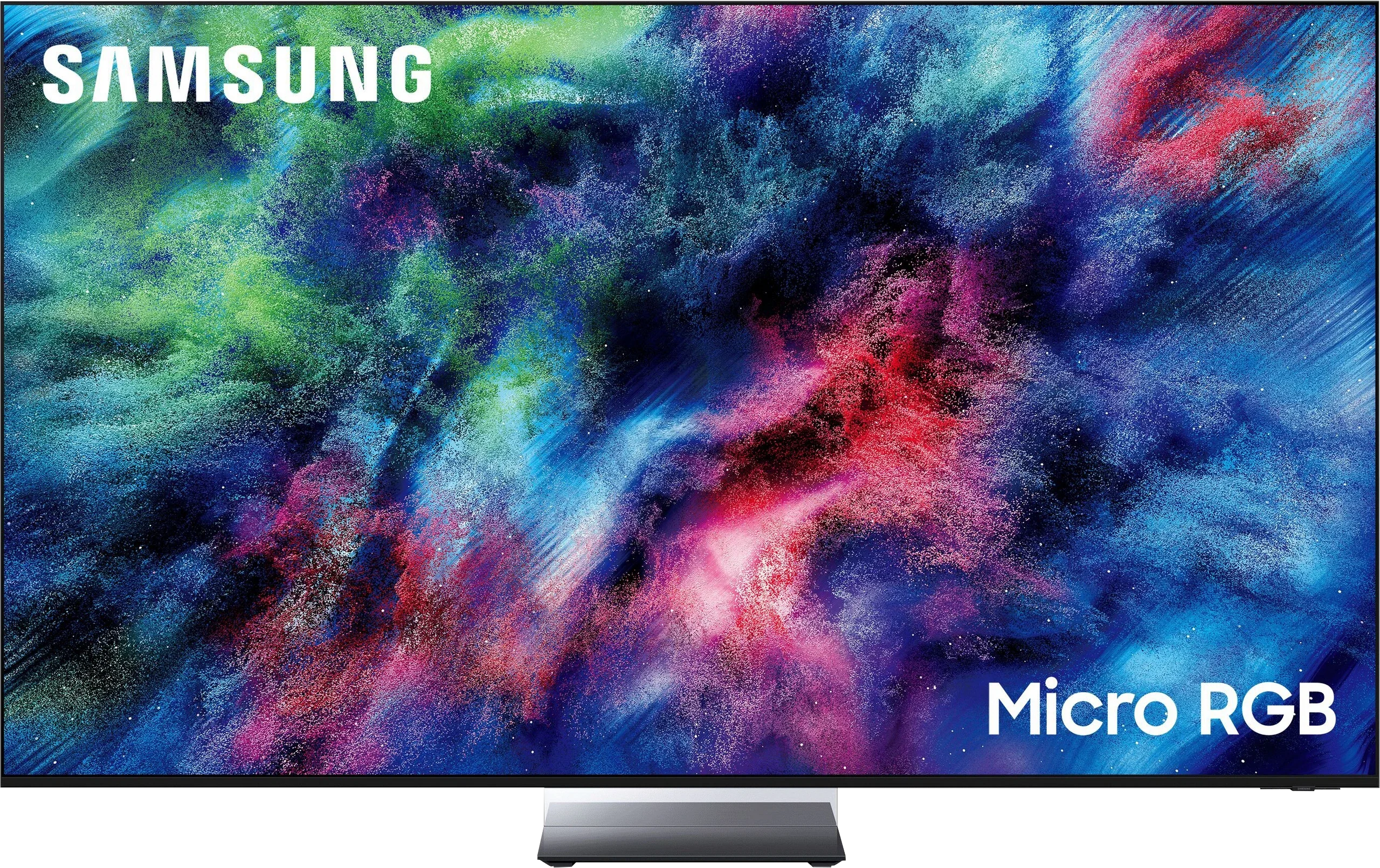
R95H / Mirco RGB

Panel type: WRGB OLED
Resolution: 3840x2160
System: WebOS
Model year: 2025
Complete the survey to find out the result
Panel type: LCD VA
Resolution: 3840x2160
System: Tizen
Model year: 2026
Complete the survey to find out the result
Overall rating
8.9
8.2
 Movies and series in UHD quality
9.2
7.8
 Classic TV, YouTube
9.2
7.9
 Sports broadcasts (TV and apps)
8.8
7.5
 Gaming on console
9.5
9.3
 TV as a computer monitor
8.8
8.4
 Watching in bright light
8.0
8.9
 Utility functions
8.5
7.8
 Apps
9.1
9.3
 Sound quality
8.7
7.5
Complete the survey to find out what fits your preferences
Advantages

Amazing black and contrast
Reference color reproduction after calibration
Very high brightness in HDR content
Outstanding cooperation with consoles and computers
Great motion fluidity - OLED panel 165Hz
Many features for gamers: VRR, ALLM, HGIG, low input lag
Excellent WebOS operating system with many applications
Superb handling thanks to the Magic remote with "cursor" function
Very high contrast and good black levels
High HDR brightness
Very wide color gamut thanks to Micro RGB
Very good HDR tone mapping
High refresh rates: 165 Hz at 4K and 240 Hz in Full HD
Extensive gaming features (4x HDMI 2.1, VRR, ALLM, Game Motion Plus, and Game Hub)
Matte screen coating effectively suppresses reflections
High build quality and a slim design
Extensive Tizen system with many features
Disadvantages

No support for DTS audio format
Worse (though still good) viewing angles than the predecessor G4
Different versions of the remote in derivative models – hard to predict which version we will get
The color advantage of Micro RGB diminishes in more complex scenes
High price compared to the competition
Sound quality could be better
No Dolby Vision and DTS:X (mainly for Xbox users and Blu-ray fans)
Our verdict
Samsung R95H is a TV that primarily demonstrates that the classic LCD still has plenty to offer. Micro RGB is not just a marketing name here — in the right scenes it really can make a difference. When the screen shows solid, highly saturated colors, especially reds and greens, the R95H can render them with an intensity that’s hard to find in typical Mini-LED TVs. Add very deep blacks and high HDR brightness, and the picture can look genuinely striking both at night and in a bright living room. Importantly, the R95H doesn’t feel like a set built only to score well on measurement charts. In everyday use it’s simply very versatile. Movies look dynamic, sports benefit from the high refresh rate, and gamers get essentially everything you’d expect from a flagship. On top of that the set is very well made, Tizen is fast, and the matte coating handles reflections well. It’s hard to find a use case where the R95H wouldn’t fit because it’s a very versatile TV. More questions start to appear when you look more closely at what Micro RGB actually delivers. In simpler scenes the advantage is indeed noticeable, but when the image becomes more complex and the backlight has to control many different colors and brightness levels at once, some of that advantage disappears. Then the R95H can be closer to traditional quantum-dot TVs than clearly ahead of them. We wouldn’t treat that as a flaw of the model itself, but rather as a limitation of the current generation of RGB panels. Our biggest reservation, in fact, concerns the price. The R95H is today one of the most expensive TVs in Samsung’s lineup, and you always have to pay a premium for new technology at first. The problem is Samsung already has very advanced OLEDs in its portfolio that in many areas can deliver a similar or even better picture for less money. So the R95H is a good TV, but not necessarily the best value. If someone wants a flagship LCD and wants to see for themselves what three-color RGB diodes can do, they’ll have a very strong candidate here. If value for money is the top priority, it’s worth taking a serious look at the company’s top OLEDs, because they are the R95H’s biggest competition today.
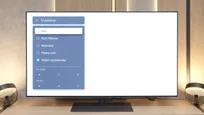
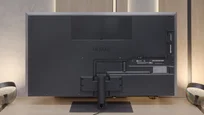
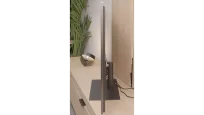
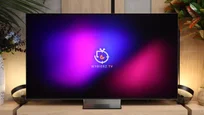
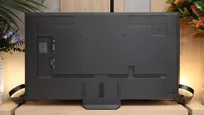
TV appearance



Contrast and black detail
10/10
8.4/10
Local dimming function: Yes, number of zones: 1344 (28 x 48)
Contrast:


Result
∞:1

Result
∞:1

Result
∞:1

Result
∞:1

Result
∞:1
Result
3,160,000:1
Result
67,450:1
Result
44,600:1
Result
27,300:1
Result
9,500:1
Halo effect and black detail visibility:
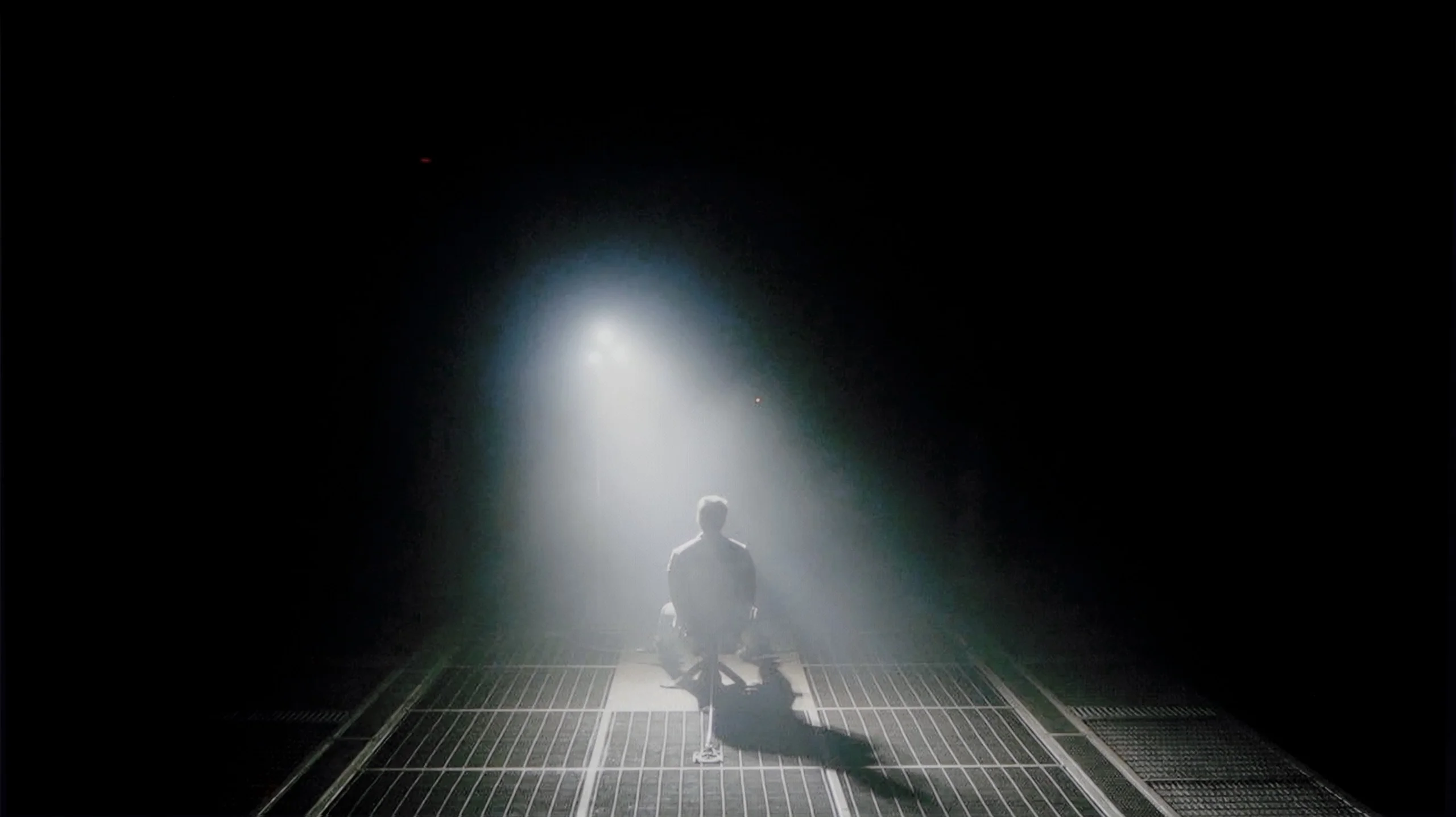
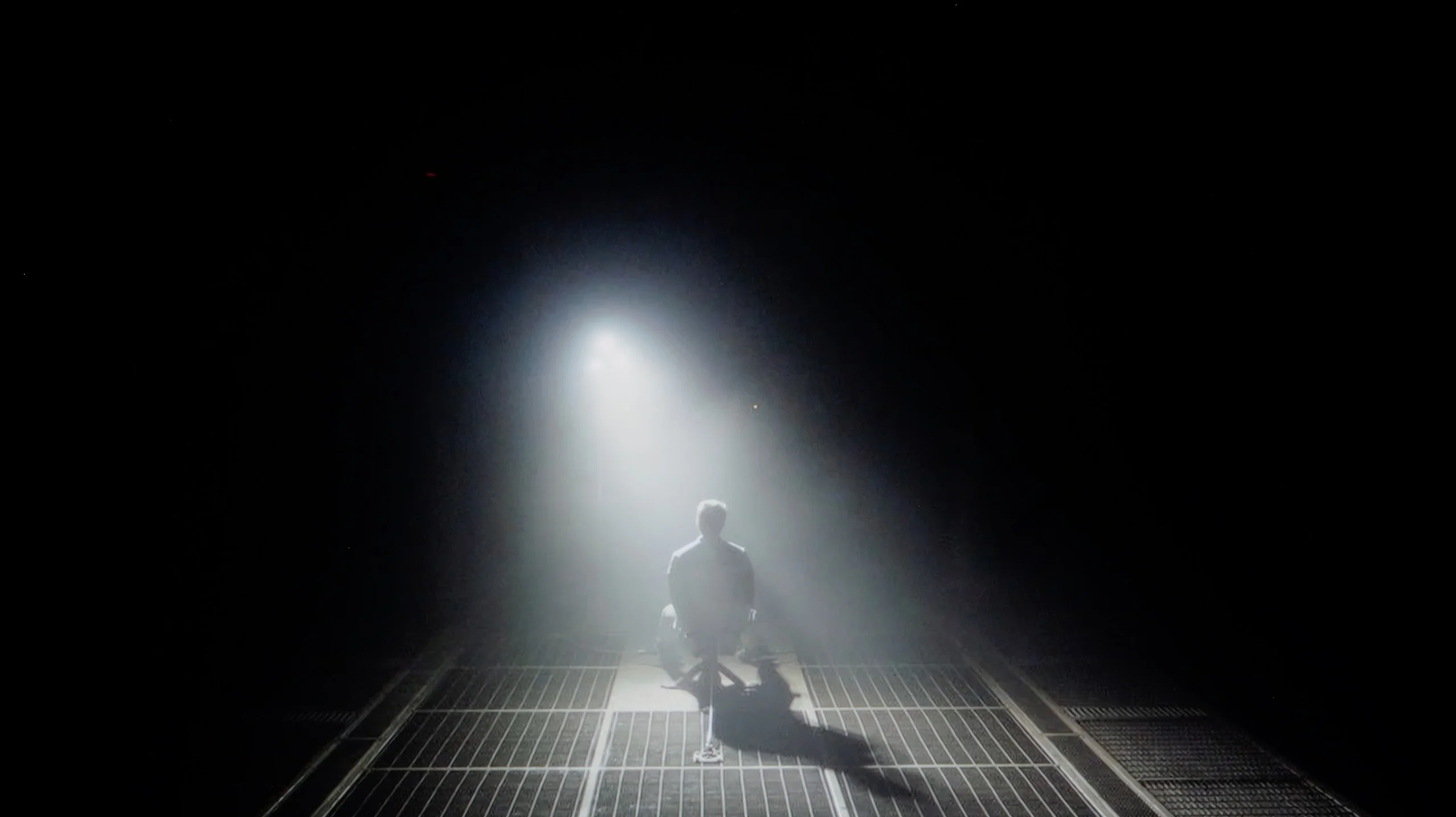
Check the visibility of bright lights on a dark background. Mini-LEDs often struggle with this. The photo does not compare black levels – that’s what the video below is for.
The video accurately shows differences in contrast and black levels between TVs, as well as potential issues: halo around bright objects or Mini-LED zone operation visible as brightness jumps.
LG G5, as befitting an OLED television, impresses with its contrast and black quality. In scenes with a lot of dark areas, the screen looks almost perfect, offering deep, absolute black and infinite contrast – an effect that still cannot be achieved on any LCD television. The new Tandem OLED panel does not introduce any negative changes compared to previous generations – blacks are perfect regardless of the content. Watching scenes from movies like The Revenant or Oblivion, you can clearly see the excellent separation of lights, without any blooming effect or brightening of dark parts. In this category, the LG G5 deserves the highest rating.
Whether the panel uses classic Mini-LED diodes or the new Micro RGB, their job in terms of black performance is essentially the same, to turn off the backlight where the image should be dark while leaving sufficiently high brightness where needed. The R95H also benefits from a high-contrast VA panel, which on its own delivers much better blacks than IPS/ADS panels. For testing we used the 65-inch version, in which we counted 1,344 local dimming zones. In larger screen sizes that number will of course be higher, but we don't expect it to fundamentally change how the backlight behaves. The R95H performs best in scenes with only a few bright elements. Then the TV can heavily dim the rest of the screen and the blacks look really impressive. In more challenging shots, where more bright objects appear against a dark background, you can see the typical limitations of LCD and the backlight has to make more compromises. Even so, the halo effect is well controlled, and the TV doesn't overly brighten large areas of the image just to maintain the brightness of a single element. The R95H can therefore deliver very deep blacks and high contrast, especially in scenes where local dimming has favorable conditions to work. It's not, of course, the perfect pixel-level black offered by OLEDs, but for an LCD TV the results are very good.
HDR effect quality
9.1/10
6.9/10
Luminance measurements in HDR:

Result
2346 nit

Result
2353 nit

Result
2399 nit

Result
2353 nit

Result
2012 nit
Result
1423 nit
Result
703 nit
Result
1089 nit
Result
463 nit
Result
1249 nit
Scene from the movie “Pan” (about 2800 nits)


Scene from the movie “Billy Lynn” (about 1100 nits)


The photos show two HDR10 movies. 'Pan' is one of the brightest productions ever made, while 'Billy Lynn' (soldier) has brightness typical of streaming (Netflix, Prime, HBO MAX). Notice the intensity of effects and detail in whites.
Static HDR10


The photos present the visibility of white details in various HDR formats. They do not show brightness differences between TVs (these can be compared in the previous gallery).
Dynamic: Dolby Vision
Dynamic: HDR10+


The photos present the visibility of white details in various HDR formats. They do not show brightness differences between TVs (these can be compared in the previous gallery).
HDR luminance chart:
Samsung R95H Micro RGB
LG OLED G5
Luminance of RGB colors
LG G5 with the new Tandem OLED panel brings the biggest change specifically in terms of the brightness of the television. And it’s quite impressive. This is truly an astronomically bright OLED. In every tested scene – whether it’s point lights or full-screen whites from the movie The Meg – the brightness on the G5 exceeded 2000 nits. Just a year ago, such values on an OLED were simply unimaginable. And here we are – the G5 comes close, and at times even surpasses the best Mini-LEDs on the market. A new feature of the Tandem OLED panel is the expanded color gamut coverage – and here the LG G5 performs almost perfectly. DCI-P3 achieves a full 100%, while BT.2020 maintains around 83%. These are some of the highest values currently available on the market – it’s hard to find any other television that comes close to such results, unless we are talking about the best displays with QD-OLED panels. The G5 has nearly reference-quality HDR – both in terms of brightness and color saturation. This is an OLED that can truly shine – and not just figuratively.
In terms of brightness the Samsung R95H shows that we’re still dealing with a top-tier TV, although the results aren’t always as spectacular as you might expect from a flagship Micro RGB model. In synthetic tests the TV can exceed 2,400 nits, so it definitely has plenty of headroom. Importantly, it can sustain high brightness even when bright elements occupy a larger portion of the screen. In real movie scenes the situation is a bit more complex. The R95H most often reaches around 1,000 to 1,400 nits, which still delivers a very good, strong HDR effect. Bright sunlight, reflections, or lights can look truly impressive, and the TV has enough power for HDR to be clearly distinguishable from regular SDR.
The problem appears mainly in very dark scenes with single, small light sources. Here the local dimming algorithm favors deep blacks and reducing the halo over maximizing the brightness of such elements. As a result, small lights can be noticeably dimmed. Overall HDR performs well, but not without limitations. The R95H has huge brightness headroom, especially in larger and brighter parts of the image, but in difficult, dark scenes its capabilities are mainly limited by how the local dimming operates.
Colors
Colors were meant to be the biggest revolution enabled by the RGB backlight, and the R95H does show considerable potential here. The assessment is not, however, as simple as synthetic measurements might suggest. On test charts the TV performs superbly. BT.2020 coverage reaches almost 94%, and DCI-P3 98%, so especially strongly saturated reds and greens can look really impressive. The picture changes a bit when, instead of test charts, we start measuring real movie scenes. Then BT.2020 coverage drops to about 87% and DCI-P3 to 93%. It seems that with more complex imagery the RGB zones are not always able to maintain the same high color saturation as on simple charts. They are still saturated, but the advantage of the new backlight is no longer as large as the manufacturer's numbers might suggest.
Factory color reproduction
7.8/10
4.3/10


This gallery shows how colors change after professional TV calibration. If you notice the difference, we recommend ordering this service at SkalibrujTV.com.
Factory Mode
After calibration


This gallery shows how colors change after professional TV calibration. If you notice the difference, we recommend ordering this service at SkalibrujTV.com.
Factory Mode
After calibration
Our test unit LG G5 struggled with some issues in the factory Filmmaker mode. And while the image might have seemed fine to most people, we knew that this TV was capable of much more. This mode had a clear excess blue tint in the white balance, resulting in a strong cooling of the image – particularly in HDR modes, where there was also a lack of red. The picture seemed cold, and its sharpness was artificially boosted and unnatural. Another significant issue was the brightness characteristic. In SDR content, the situation wasn't the worst, aside from a slight dimming of the entire image. However, it performed much worse in HDR materials – due to improper brightness management, the smallest details could completely disappear from the image, and larger, bright elements appeared overexposed and lacking gradation. Luckily, the G5 supports calibration using 3D LUT (a tool for professionals to calibrate colors), so we decided to take advantage of its professional background and see what it was really capable of. Because while it wasn't terrible even before calibration, the potential of this TV definitely deserved more.
To assess factory color reproduction, we of course chose Filmmaker mode, the setting that's supposed to be closest to how the creators intended the image to look. Unfortunately, the R95H does not fully exploit the potential of its panel. The biggest issue in SDR is the gamma. The image is noticeably brightened across almost the entire range, which robs it of some depth and makes it look flatter than it should. The white balance isn't ideal either, as increasing brightness brings a red bias and a lack of blue, making the image too warm. This is especially visible in bright elements and skin tones, which can appear redder than they should.
It's similar in HDR. The EOTF curve sits above the reference value for much of the range, so the R95H again brightens the image compared with how it should look. Combined with the inaccurate white balance, this means colors here are not as precise as we'd expect from a TV of this class. The factory Filmmaker setup is therefore not one of the R95H's strengths. At first glance the picture may look impressive because it's bright and highly saturated, but in terms of fidelity to the source material there is still plenty of room for improvement.
Color reproduction after calibration
9.8/10
8.8/10


The photos show how movies look on the TV. Pay attention to black detail visibility, colors, and shadow tint.


The photos show how movies look on the TV. Pay attention to black detail visibility, colors, and shadow tint.
After completing the calibration process using professional tools, we can confidently state that the LG G5 offers nearly reference-quality image. Most of the errors related to white balance and the ColorChecker test are below the value of 2, which is a phenomenal result, practically imperceptible to the human eye. And while one could still criticize that in HDR films the television tends to slightly dim the smallest elements of the image, in practice, this does not negatively affect the overall impression. Hats off to LG, because once again they provide the user with enormous possibilities for adjusting their display – and this, combined with very good parameters of the panel itself, results in an image that is truly hard to surpass.
R95H responds very well to calibration. In SDR we were able to set the white balance and gamma almost perfectly, and color errors dropped to very low levels. The difference compared with the factory settings is therefore considerable, and after calibration the picture looks much more natural. In HDR we can also improve a lot, especially regarding white balance and overall color accuracy. The issue of managing brightness and color saturation looks a bit different. Here, at some point we run into limitations resulting from the way RGB backlighting and local dimming work. Individual zones have to control both brightness and the color of the light at the same time, so in more demanding scenes it is not always possible to achieve exactly the same saturation and brightness that the TV shows on simple test patterns. Calibration simply can't completely overcome that. Despite this, after calibration the R95H delivers accurate image reproduction, and most of the errors we saw in the factory settings can be effectively eliminated.
Smoothness of tonal transitions
8.5/10
8.8/10





These are selected scenes that show smooth tonal transitions from one color to another. If you see distinct banding, it’s the TV panel’s fault.

These are selected scenes that show smooth tonal transitions from one color to another. If you see distinct banding, it’s the TV panel’s fault.

These are selected scenes that show smooth tonal transitions from one color to another. If you see distinct banding, it’s the TV panel’s fault.

These are selected scenes that show smooth tonal transitions from one color to another. If you see distinct banding, it’s the TV panel’s fault.
The smoothness of tonal transitions in the LG G5 is a clear step forward compared to last year's model. Not only has the brightness improved, but also the way colors blend, which the G4 sometimes struggled with. In the vast majority of scenes, the G5 has no issues with tonal transitions – there is no typical banding associated with WOLED technology, nor ugly breaks between colors. Of course, in very dark areas of the image and with shades of gray, minor imperfections can still be noticed, but these are things that the average viewer wouldn't even register. In short – it's really good.
The R95H also handles gradation well. In bright areas of the image, transitions between shades are smooth, although on closer inspection you can notice slight signs of posterization. So it’s not perfect, but during normal viewing it’s unlikely to draw attention. The same goes for darker scenes. The TV maintains smooth transitions and has no major problems with visible banding or color stepping. From time to time you can spot small imperfections, but overall the R95H handles this aspect very solidly.
Image scaling and smoothness of tonal transitions
8.7/10
7.5/10


Smooth transition function
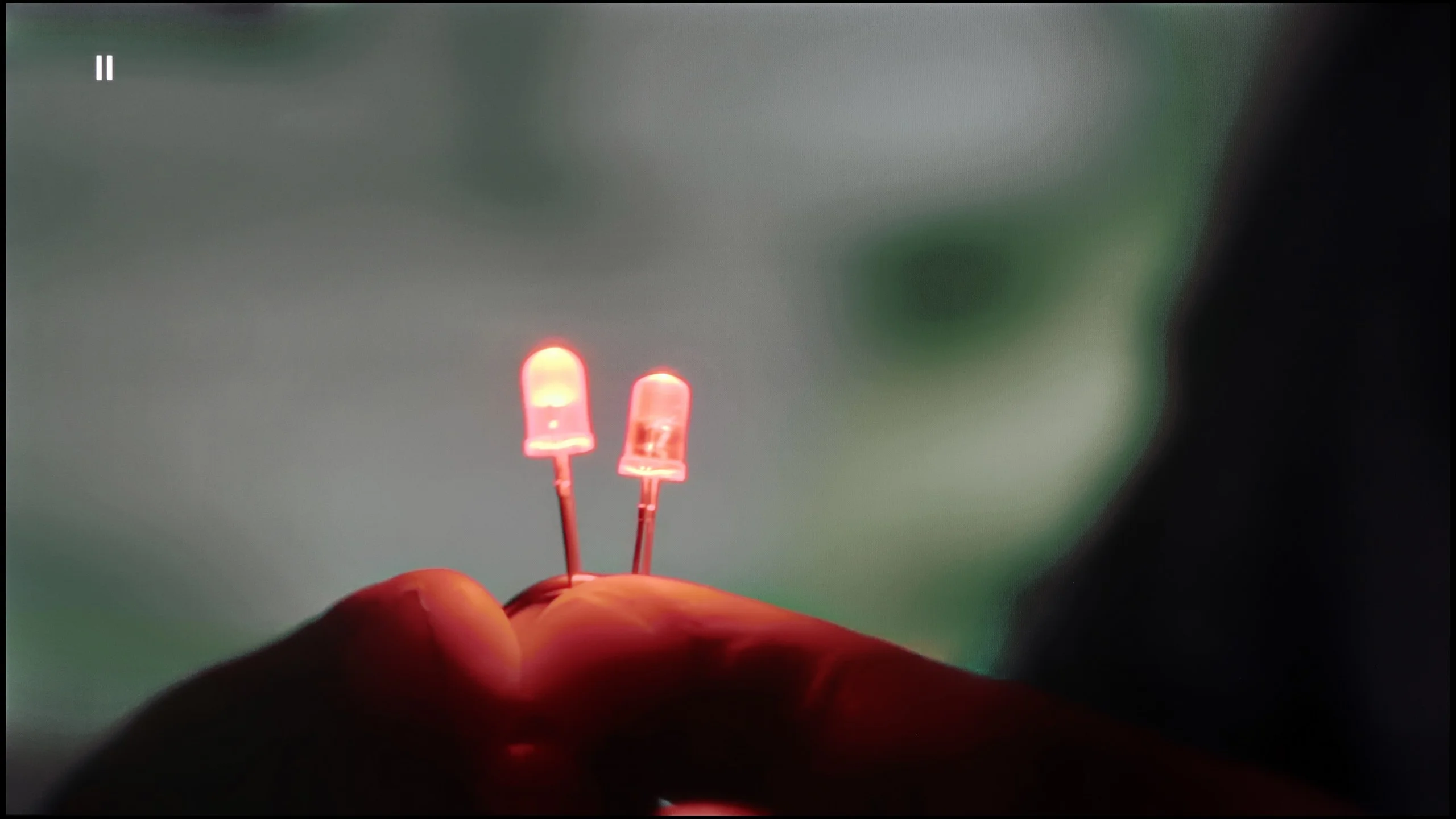
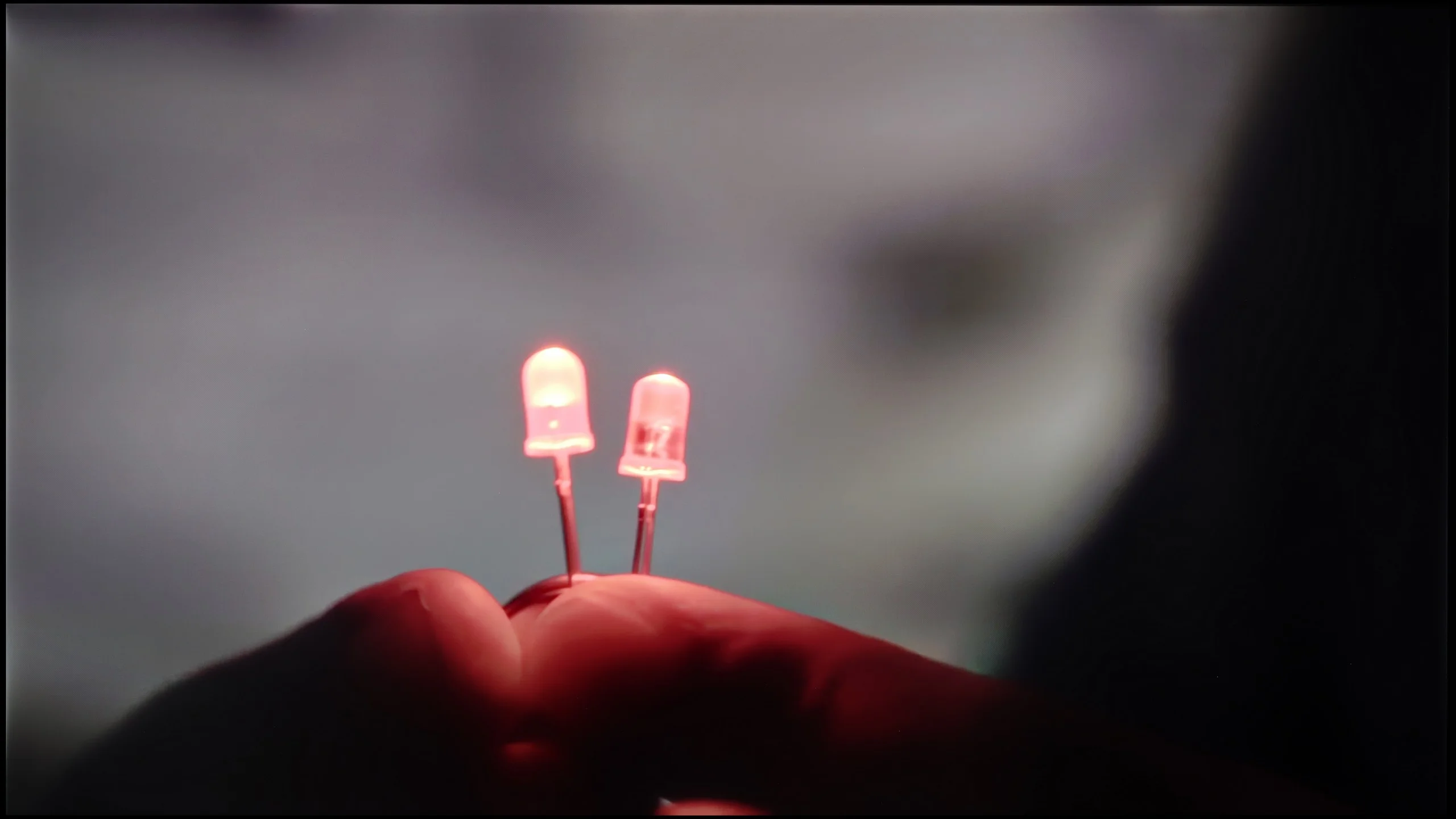
The match photo shows how the TV smooths weak tonal transitions in low-quality video.
Image scaling SD (576i)


The model photo shows how it handles upscaling of SD material.
Upscaling and digital image processing in the LG G5 perform very well. The television handles lower quality content exceptionally, especially when the "Smooth Gradation" feature is set to a low level. In this mode, it effectively removes unwanted artifacts and issues with visible tonal transitions. It may also slightly smooth out some desired details, such as the subtle texture of clothing or skin, but importantly – it does not remove film grain, so it’s hard to say there’s a serious compromise here. It’s one of those options that’s definitely worth enabling.
The G5 also does well with upscaling, which is improving the quality of older materials. The test image with the model looked really solid – slight edging was visible, but that’s an effect that can’t be completely avoided. Additionally, there were no issues with overscan, which – contrary to appearances – is not obvious, even in 2025.
Samsung R95H uses the new Micro RGB AI Processor, but in practice we didn't notice a big leap compared to the NQ4 AI Gen2 or Gen3 chips found in the manufacturer's other TVs. The upscaling itself still performs very well. The image is appropriately smoothed, yet retains plenty of sharpness and doesn't look overly soft. That's definitely one of Samsung's strengths. It's just a shame that with very low-resolution content you still can't completely turn off overscan.
The processor also handles gradients well and can effectively smooth unwanted posterization. The noise reduction feature works very effectively, but you need to use it judiciously. At higher settings it can noticeably interfere with the image and even remove natural film grain. So it's best to use it only when the source material is actually heavily compressed.
Blur and motion smoothness
8.5/10
7.8/10
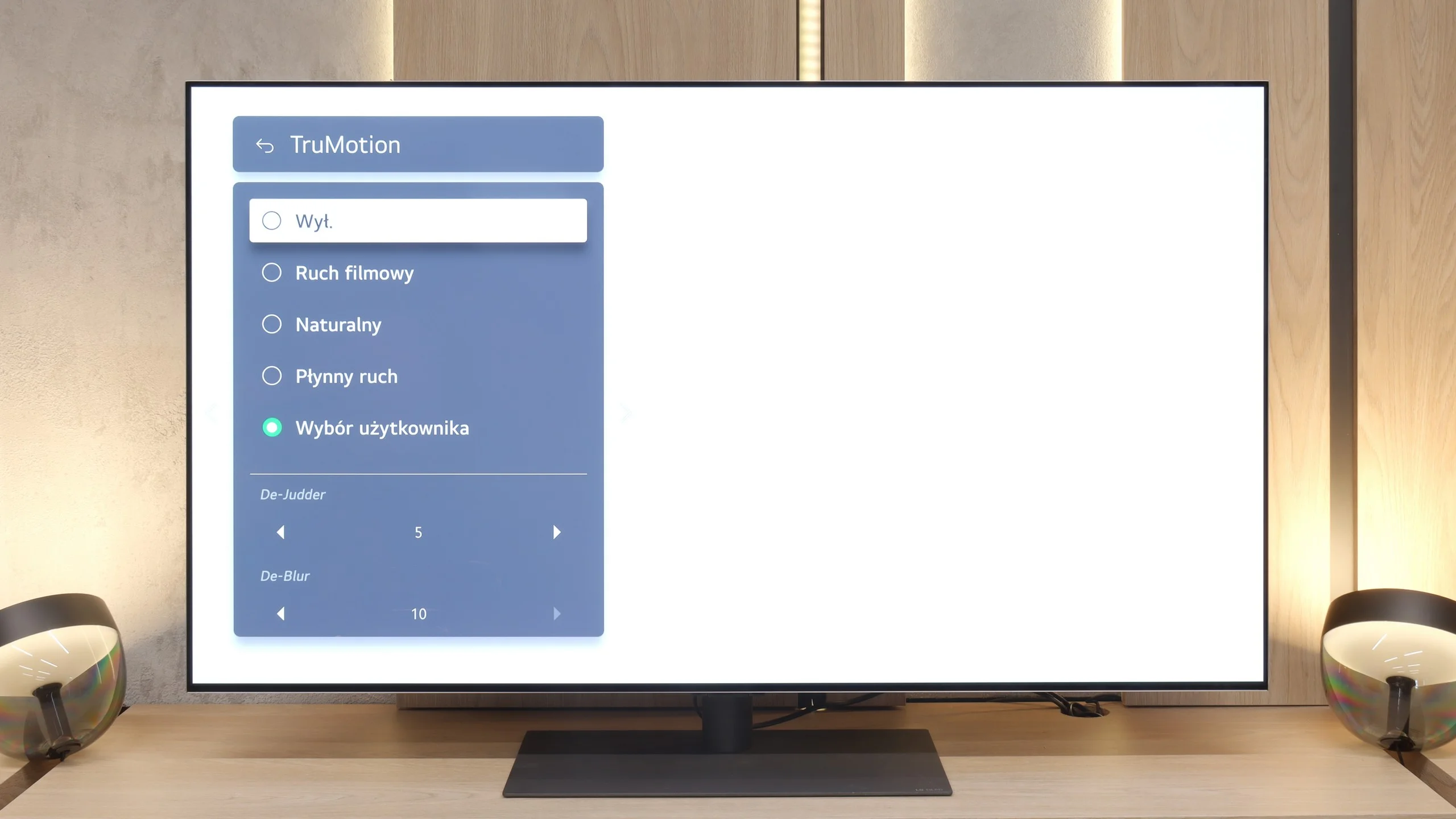
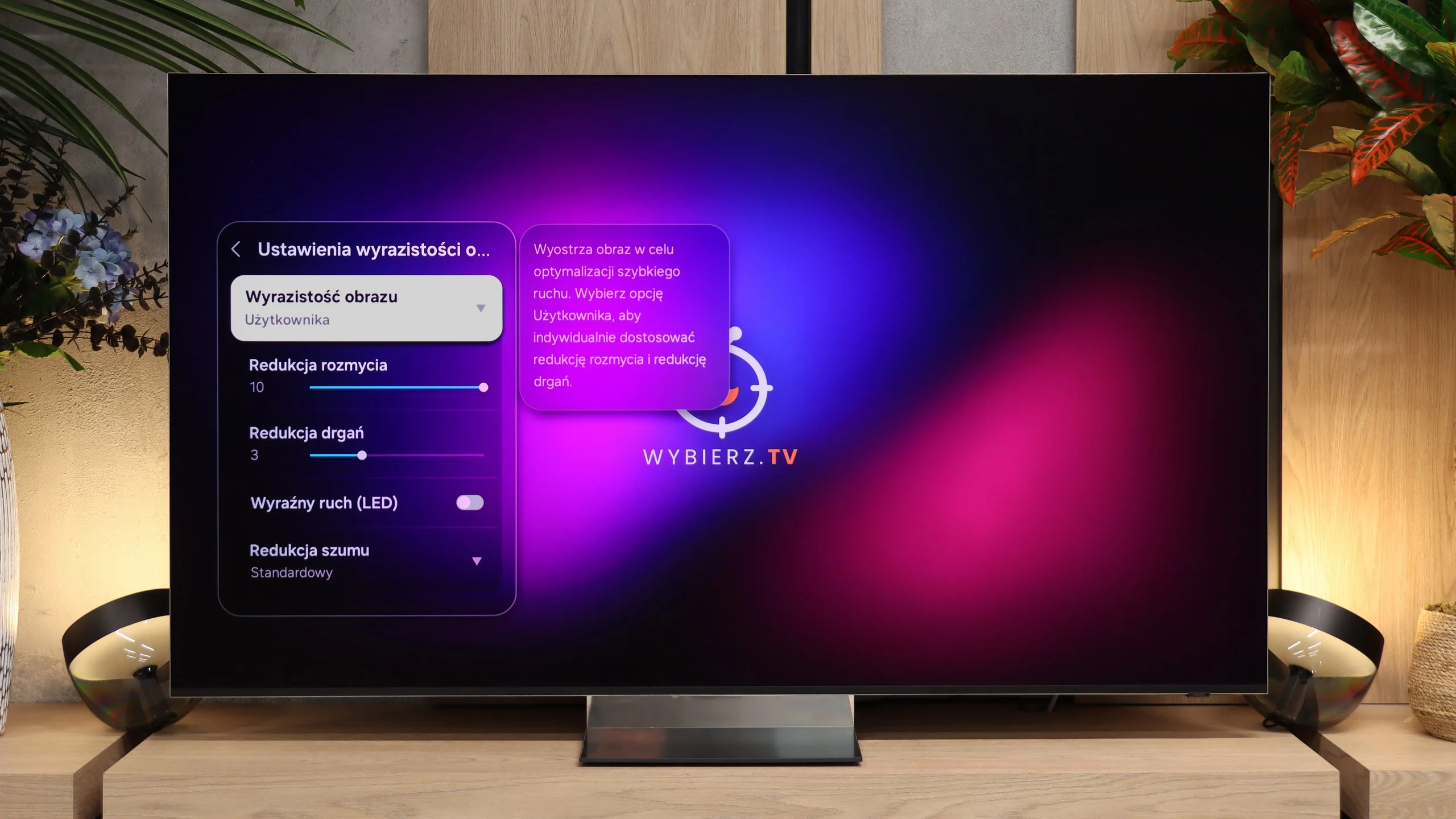
Blur (native resolution, maximum refresh rate):






Blur (BFI function enabled):
Image flickers in this mode



Image flickers in this mode



Blur (4K 165Hz):



Blur (4K@165Hz):



The motion fluidity on the LG G5 is simply phenomenal. The TV is equipped with a 165 Hz refresh rate panel, and this combined with the instantaneous response time of the OLED matrix delivers incredible results. The picture doesn’t stutter or smear like on classic LCD TVs. Like most LG models, the G5 features a motion smoother, which can be useful when watching movies – of course, we're talking about the TruMotion mode. With the “De-Blur” and “De-Judder” sliders, we can adjust the smoothness of older material according to our preferences, whether we want to preserve the characteristic film stutter or move towards a more fluid, television-like effect.
The Samsung R95H has a 165 Hz panel, so its motion handling is excellent. At 120 Hz, like when gaming on a console or watching sports, motion blur is minimal, and when connected to a PC you can use the full 165 Hz to further improve motion clarity. However, keep in mind that it’s still a VA panel, so it doesn’t respond as instantly as OLED. You may sometimes notice a faint trail behind moving objects, but from a normal viewing distance this shouldn’t be distracting. For movies and series you can also use the adjustable motion smoothing. You can keep the more cinematic 24 fps look or gradually smooth the motion if you prefer a smoother image. Samsung gives you plenty of freedom here, and it’s easy to choose a setting that matches your preferences.
Console compatibility and gaming features
10/10
9.6/10
- ALLM
- VRR
- VRR range40 - 165Hz48 - 240Hz
- Dolby Vision Game Mode
- Correct implementation of HGIG
- 1080p@120Hz
- 1440p@120Hz
- 4K@120Hz
- Game bar
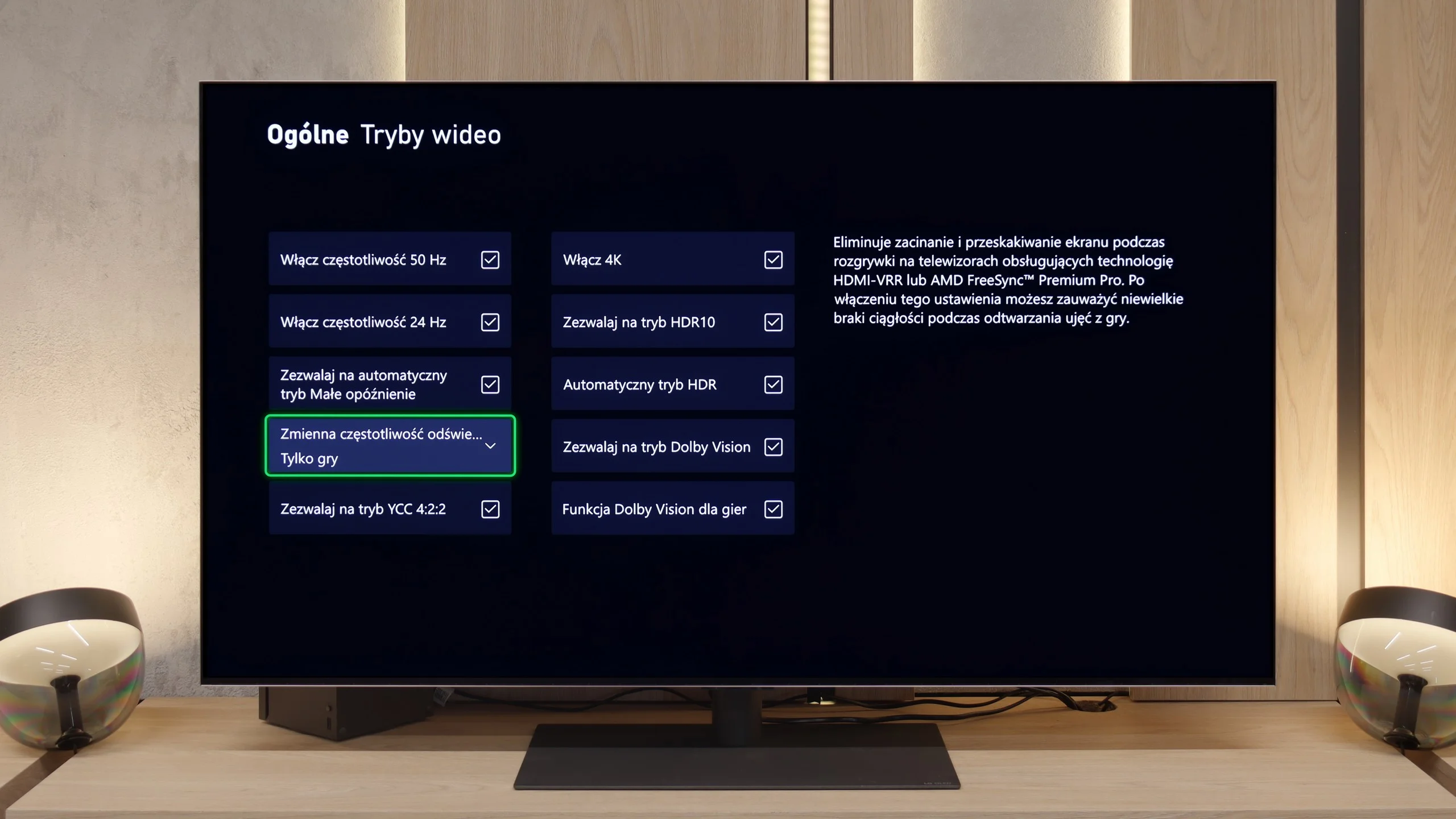
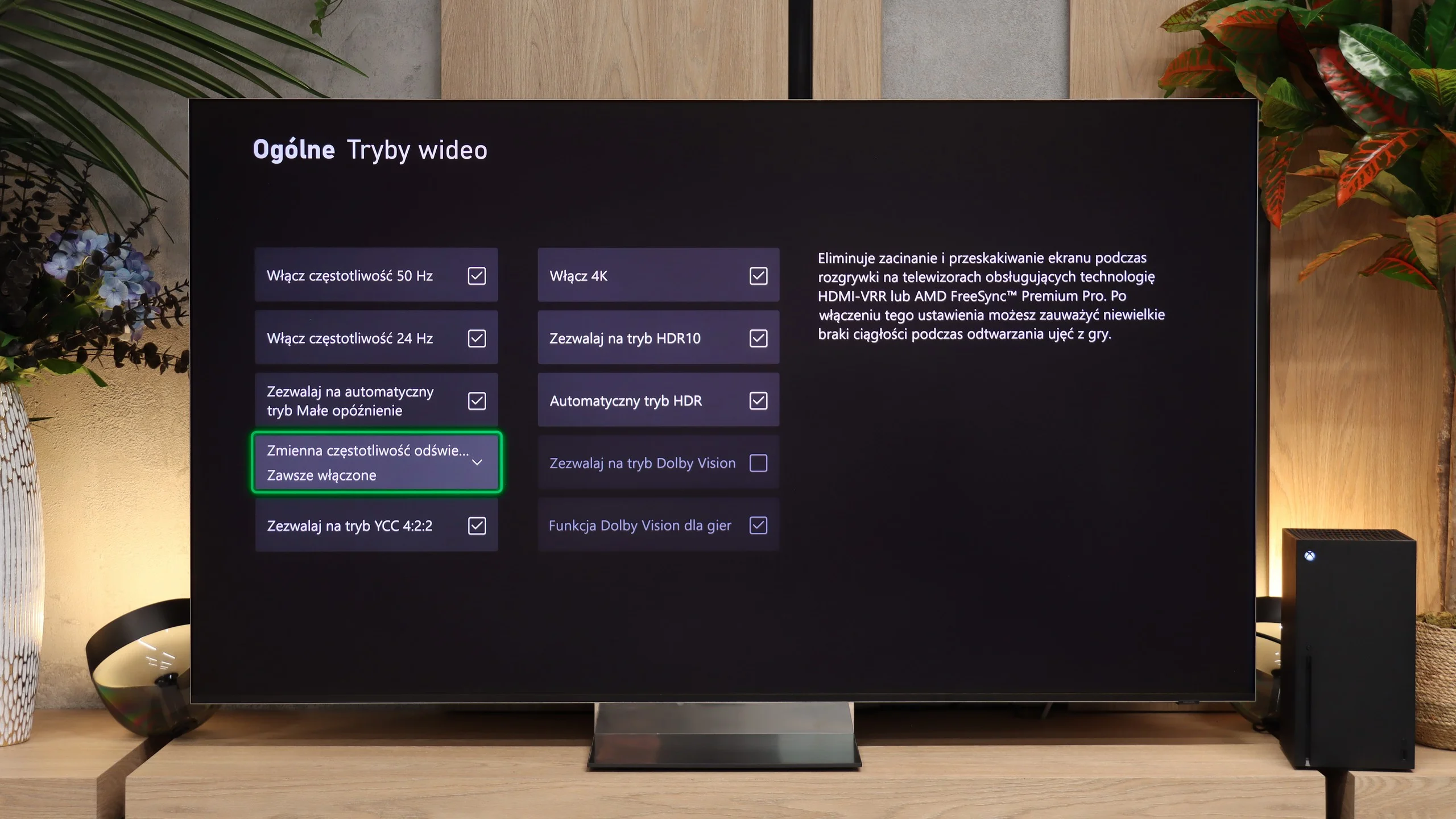
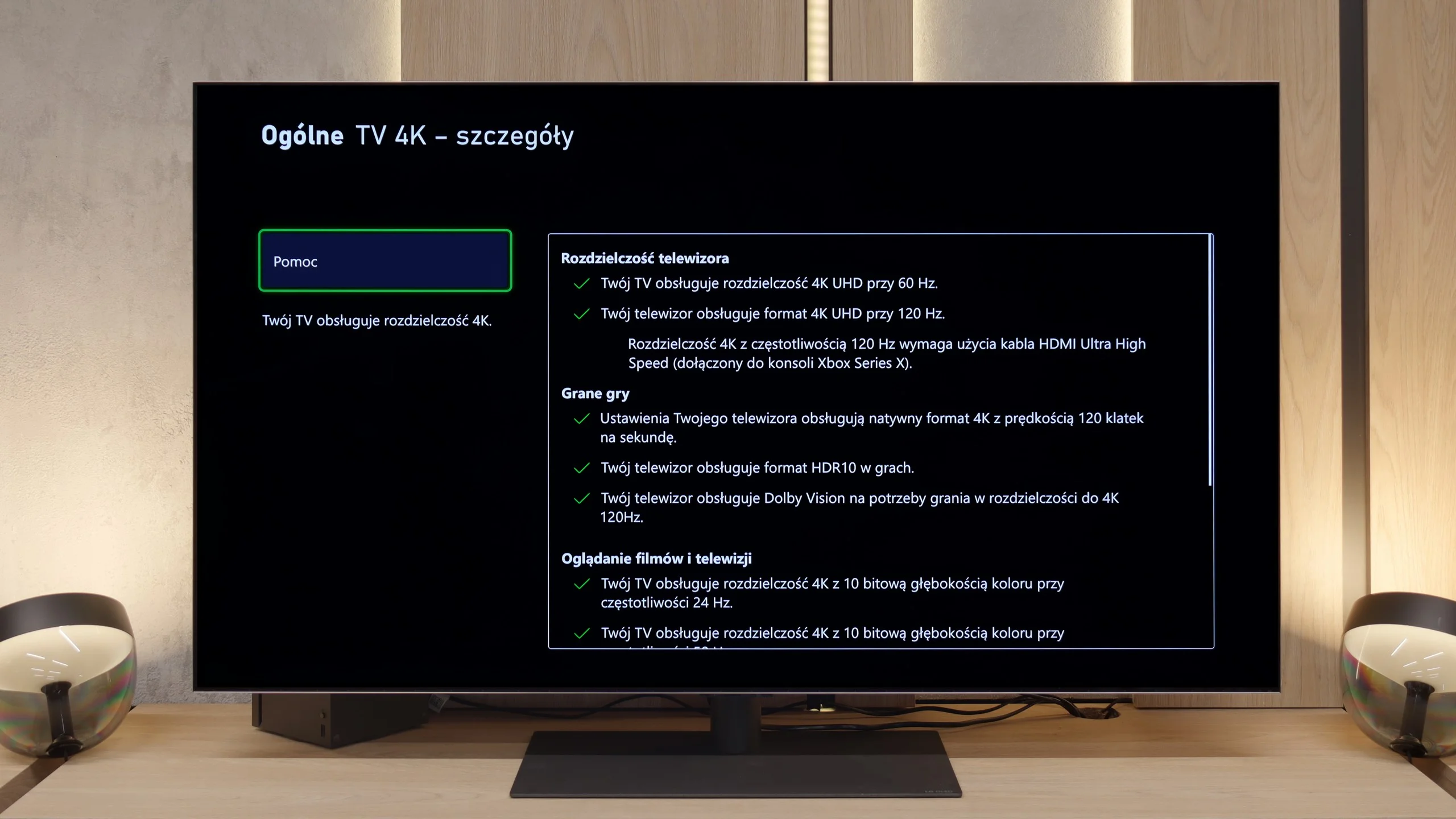
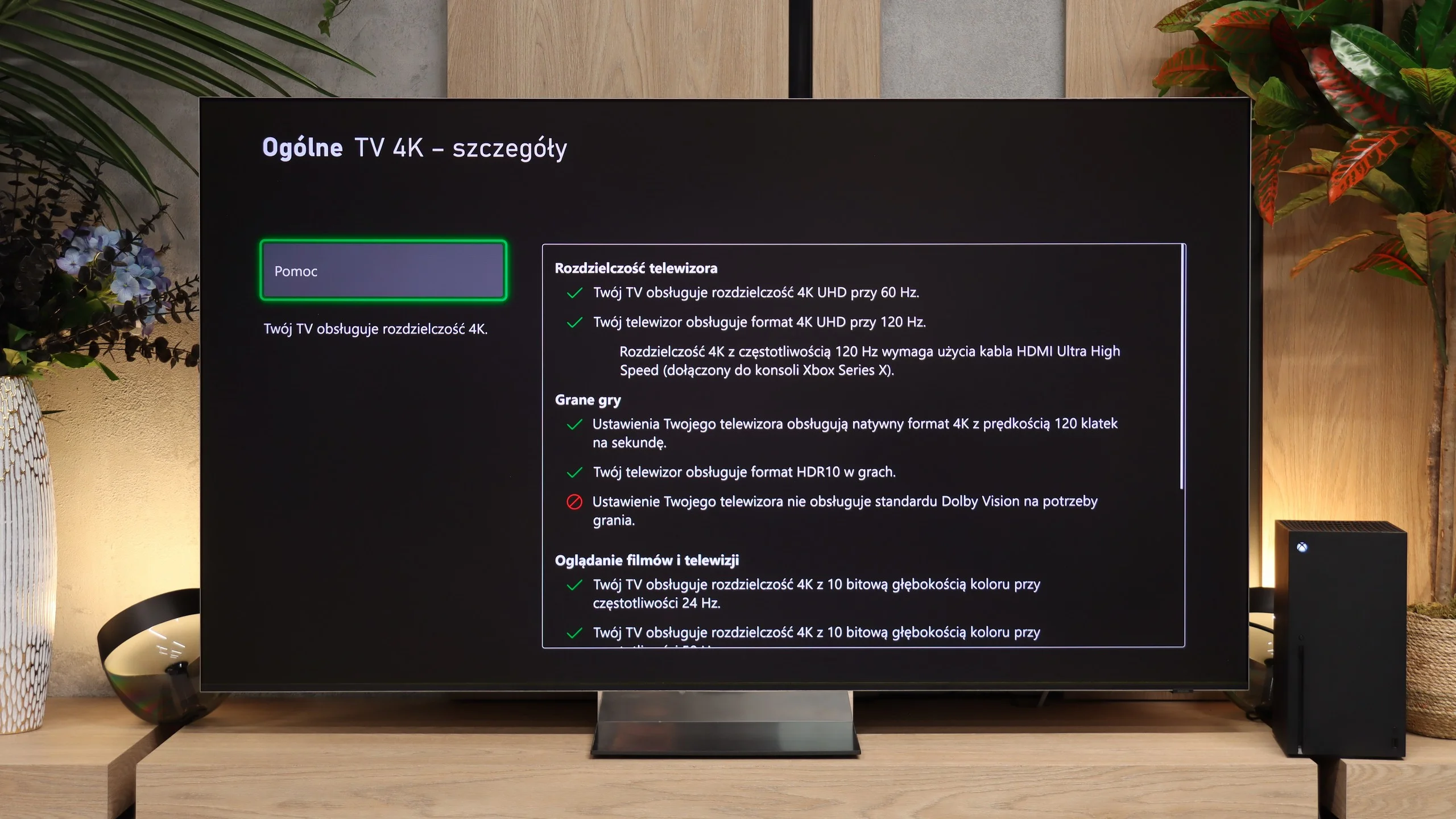
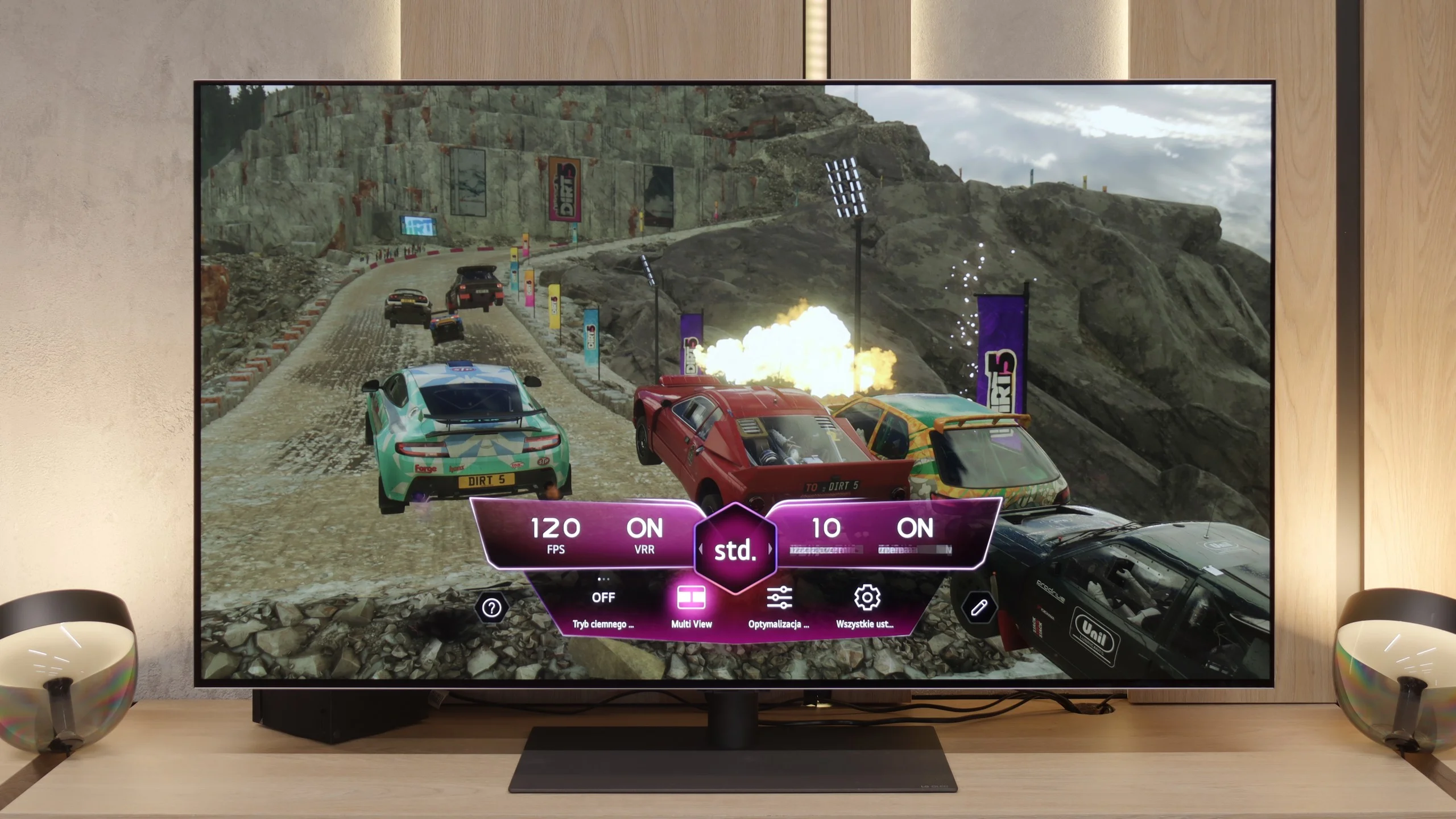
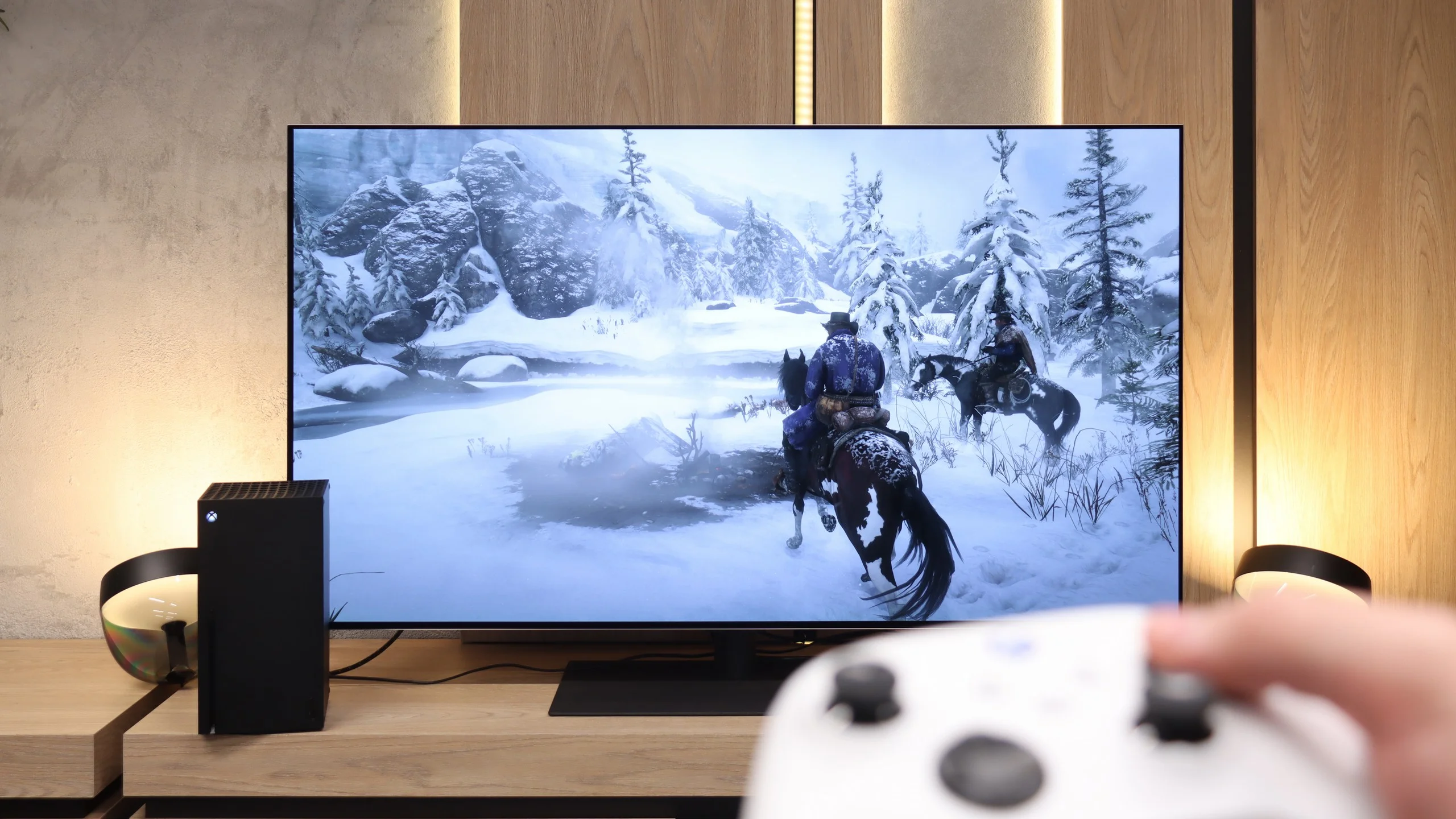
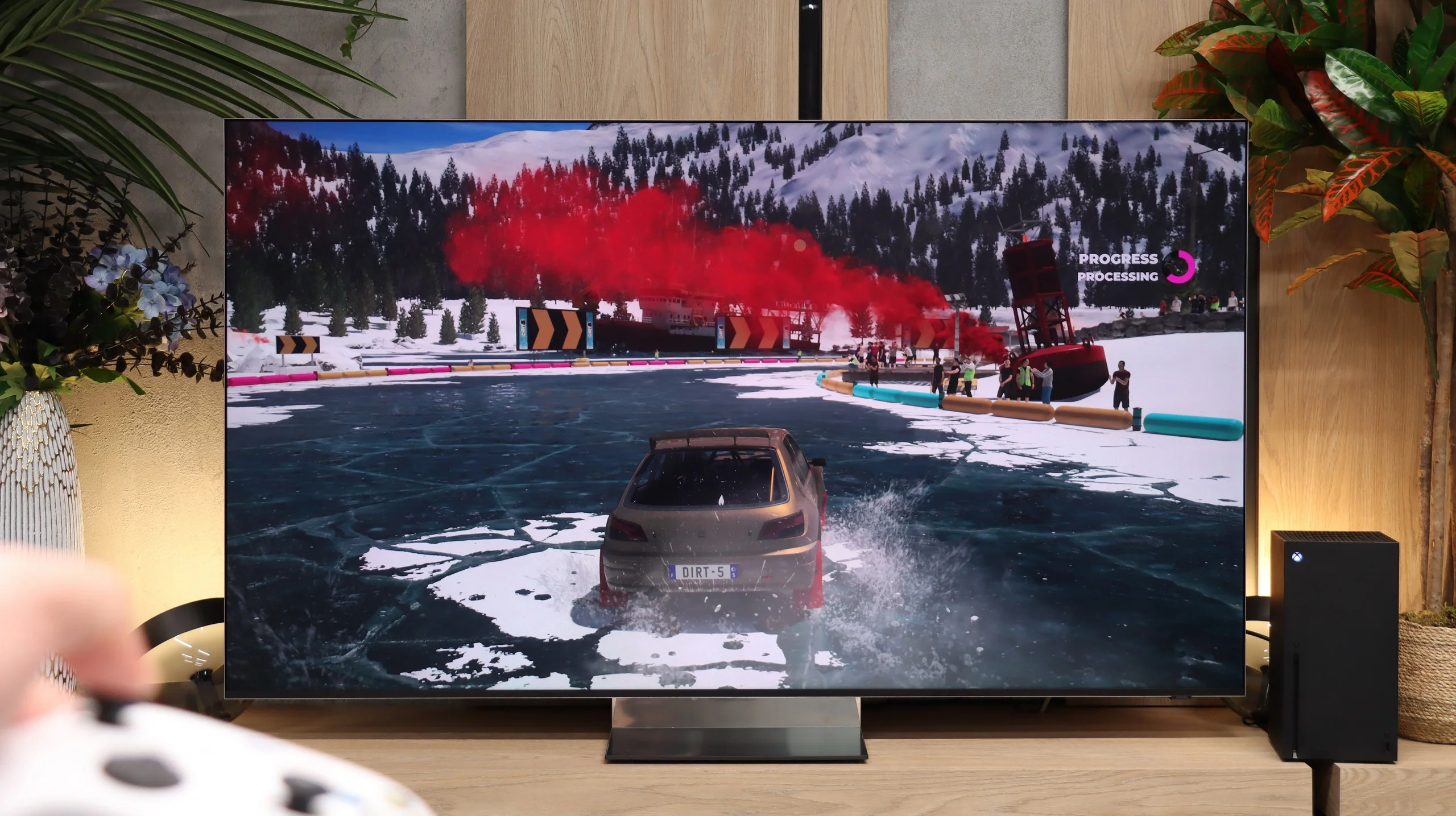
Features for gamers? Perfect. That should be enough for you to know what level we are dealing with here. G5 is a television designed with gamers in mind, so we find literally everything one can expect from a gaming screen. There is Game Bar, support for high resolutions with high refresh rates – that is, 4K at 120 Hz, and even more, because the panel has a refresh rate of 165 Hz (which PC gamers will benefit from). The television supports variable refresh rates (VRR), automatic low latency mode (ALLM), and correctly supports HDR in games thanks to HGiG. All of this adds up to one of the best sets of gaming features available on the market. Well done, LG.
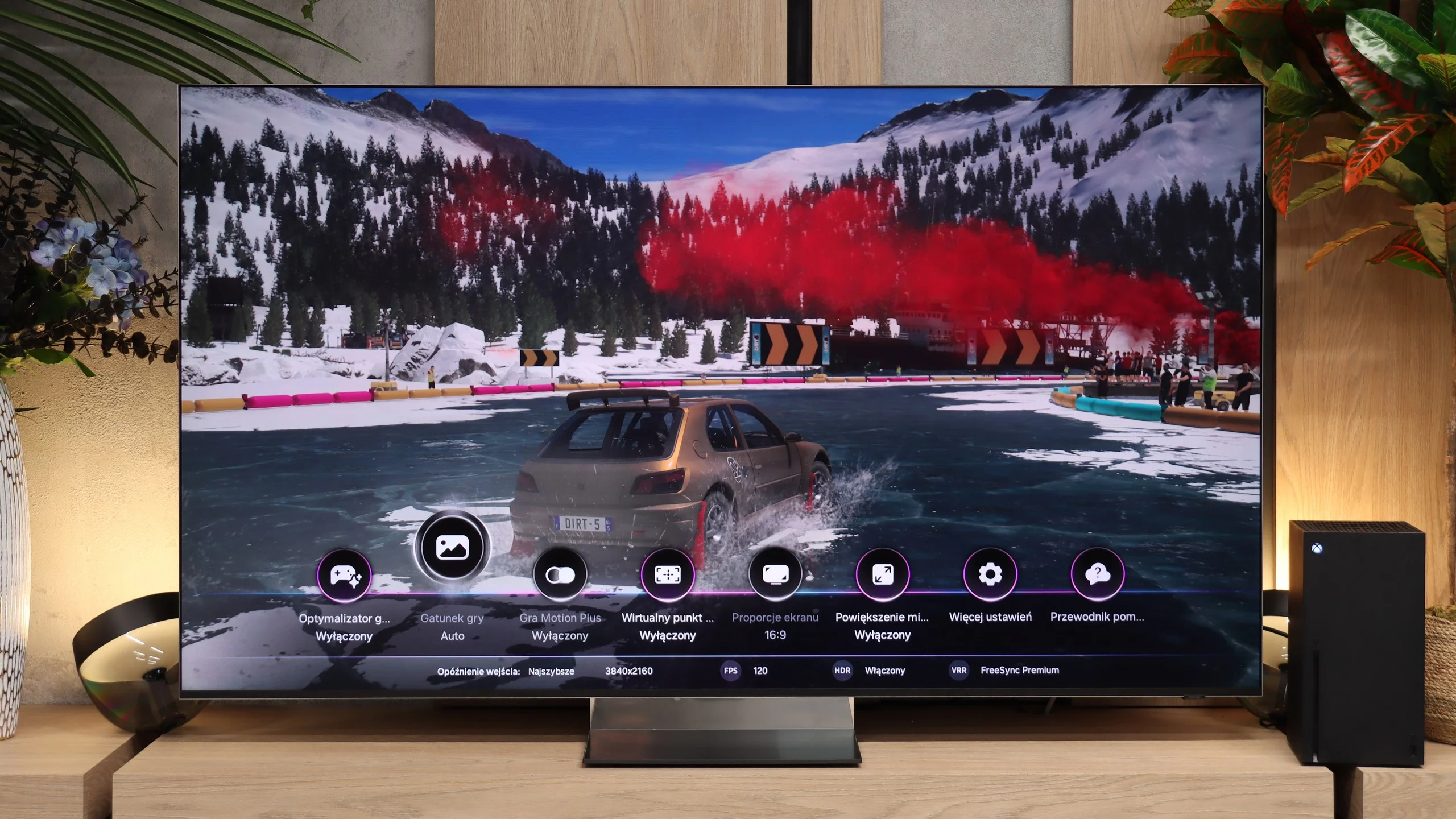
When it comes to gaming the Samsung R95H is almost a complete TV. When you connect a PS5 or Xbox Series X you can use 4K at 120 Hz, VRR and ALLM, and the TV also works properly with HGiG. The only major omission is Dolby Vision Gaming, which Samsung, like with its other TVs, simply does not support. There's also the Game Bar, familiar from other Samsung models, which lets you quickly check frame rate, VRR status or the HDR format and change the most important settings without leaving the game. You can also brighten darker parts of the image or change the screen aspect ratio.
Samsung also offers Game Motion Plus, a motion smoothing feature designed specifically for games. It makes the most sense for games running at 30 fps, where it can noticeably improve smoothness and make camera movement look much nicer. Just remember this comes at the cost of higher input lag (about 60 ms), so it's not the best choice for online or faster paced games. It's also worth noting Gaming Hub, which lets you run some games directly from the cloud without connecting a console. In terms of features for gamers, it's hard to find any major omissions in the R95H.
Input lag
9.9/10
9.7/10
SDR
HDR
Dolby Vision
The input lag on the LG G5 is incredibly low. The response time to our actions – whether we're playing with a controller, keyboard, or mouse – is almost perfect. The controls are instant, and the game reacts exactly when we expect it to. The Dolby Vision Gaming mode does introduce slightly higher delays, but even then it's hard to complain about anything – in the worst case, the values hover around 20 ms, which for most players will be practically unnoticeable.
Input lag in the R95H is low, although it doesn't reach the level of Samsung's best OLEDs. At 120 Hz it's about 10 ms, and at 60 Hz about 20 ms. On paper that looks like a big difference, but during normal gaming it's really hard to notice. The TV responds quickly and doesn't feel delayed at all.
Compatibility with PC
8.8/10
8.4/10
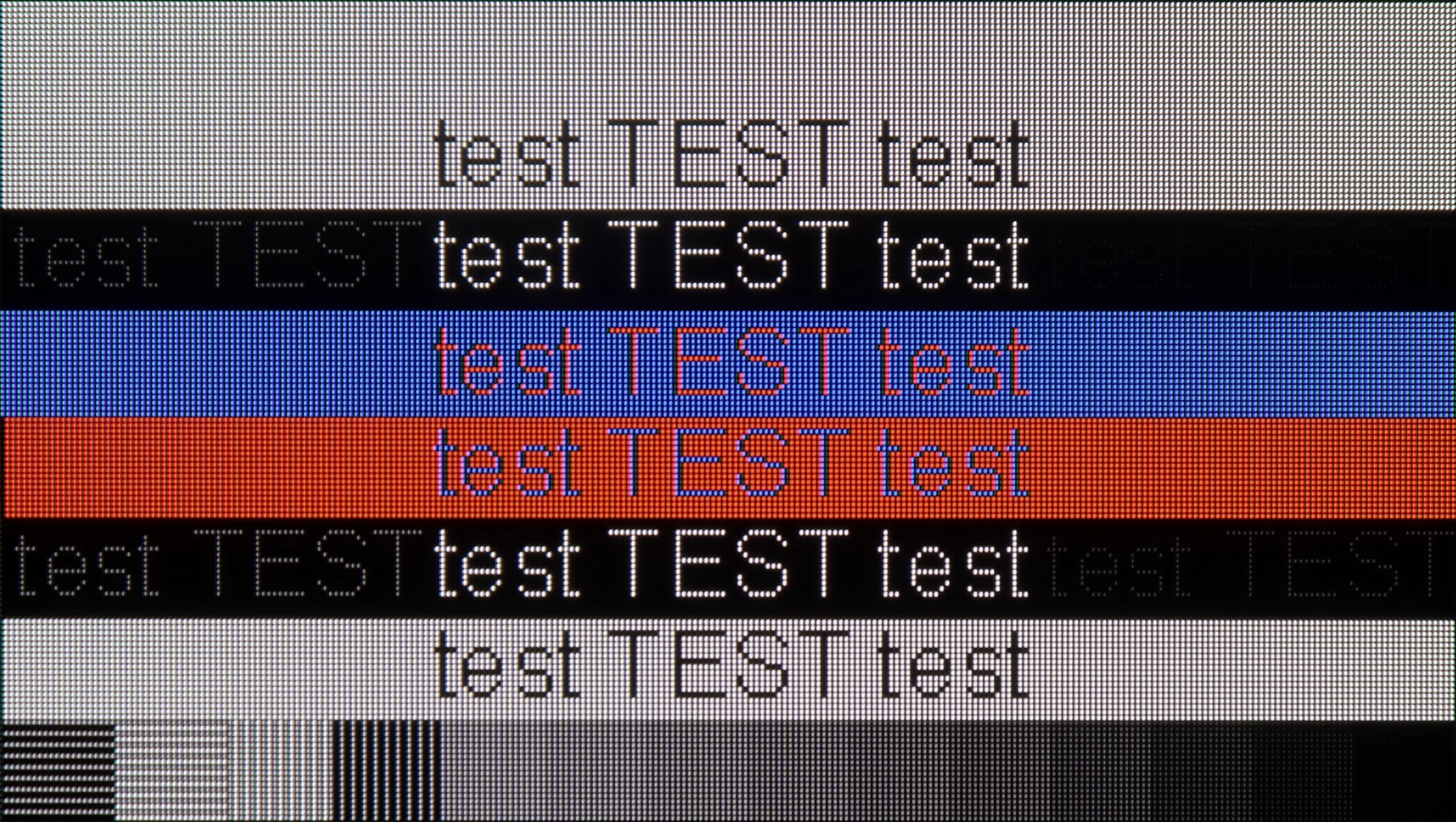
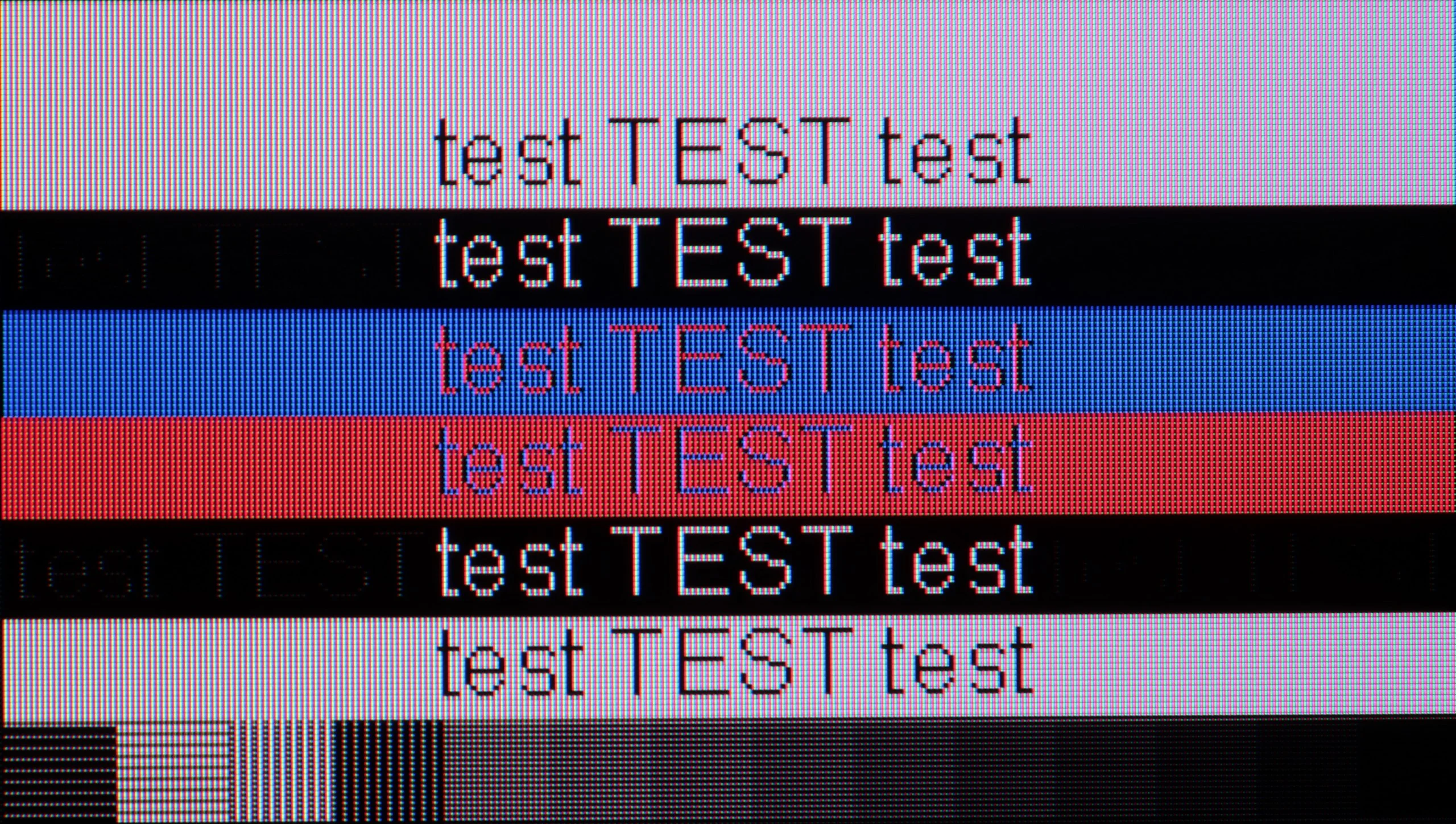
The photo shows the legibility of small fonts. Ideally, lines should be the same thickness on both light and dark text, with minimal pixel gaps.
Collaboration with a PC? Almost ideal. The television, as we mentioned earlier, has great features for gamers – including those using a PC. On board, we find full G-Sync certification, a 165 Hz panel, and a super-fast input lag of around 5 ms. Thanks to the correct implementation of chroma 4:4:4, fonts are very readable – both the smallest and the largest. Although due to the WRGB subpixel layout, there may be slight shadows around the characters, for most users this effect will be virtually unnoticeable. The G5 performs excellently as a screen for work, entertainment, and gaming – also from a computer.
The R95H is also suitable for PC gaming. In 4K you can use the full 165 Hz, and when you drop to Full HD the refresh rate rises to as much as 240 Hz. That’s definitely a plus, especially for online multiplayer games, where those values are easily achievable on a powerful PC. The TV also supports G-Sync and FreeSync, so it will work without problems with both NVIDIA and AMD graphics cards. The only thing to quibble about here is text readability. The R95H correctly handles chroma 4:4:4, but at very close distances you can notice that the horizontal strokes of letters are slightly darker than the vertical ones. However, it’s not something that catches your eye during normal use. Besides, the R95H isn’t available in sizes that would typically tempt you to put it on a desk and use it like a conventional monitor.
Viewing angles
7.5/10
5/10
The viewing angles on the LG G5 are very good, mainly due to the use of the WOLED matrix. It's hard to find something to complain about here – the image does not significantly lose brightness or quality even when we look at the screen from the side. However, it must be fairly noted that there is some regression compared to the G4 model. The predecessor used an MLA matrix with micro-lenses, which offered slightly better light distribution. Also, compared to QD-OLED matrices, the angles are worse. Nevertheless, the overall viewing experience at an angle remains very good and should not be an issue in everyday use.
Viewing angles on the R95H are quite decent, especially considering the TV uses a VA panel. The RGB backlight helps here, allowing colors to retain saturation better even when you view the screen more from the side. It’s not yet on par with the best RGB displays on the market, and certainly not with OLEDs, but the difference compared with typical Mini-LED TVs with a similar VA panel is noticeable. Colors at wider angles don’t wash out as quickly, and the image retains its character longer.
Daytime performance
8/10
8.9/10
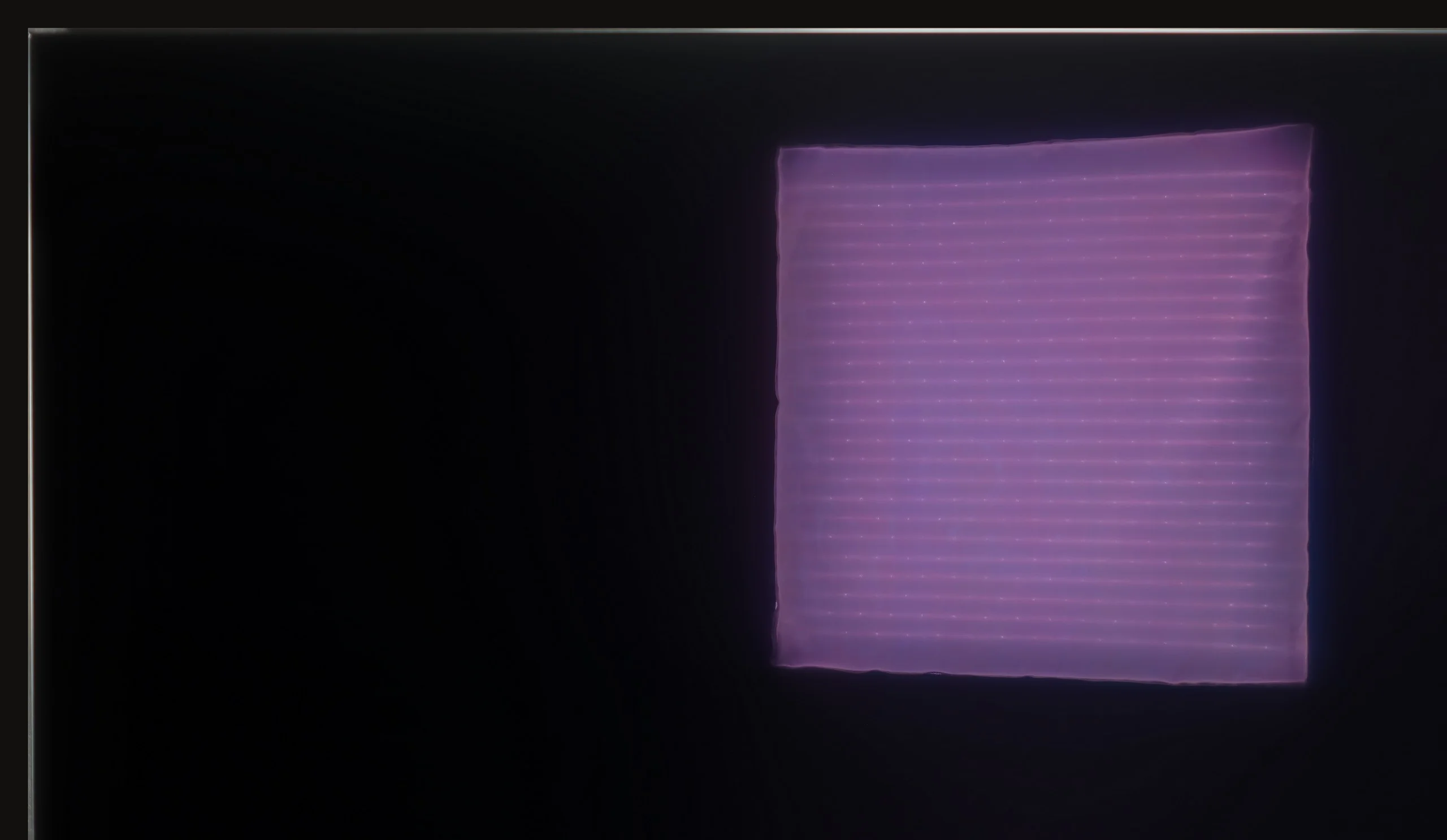
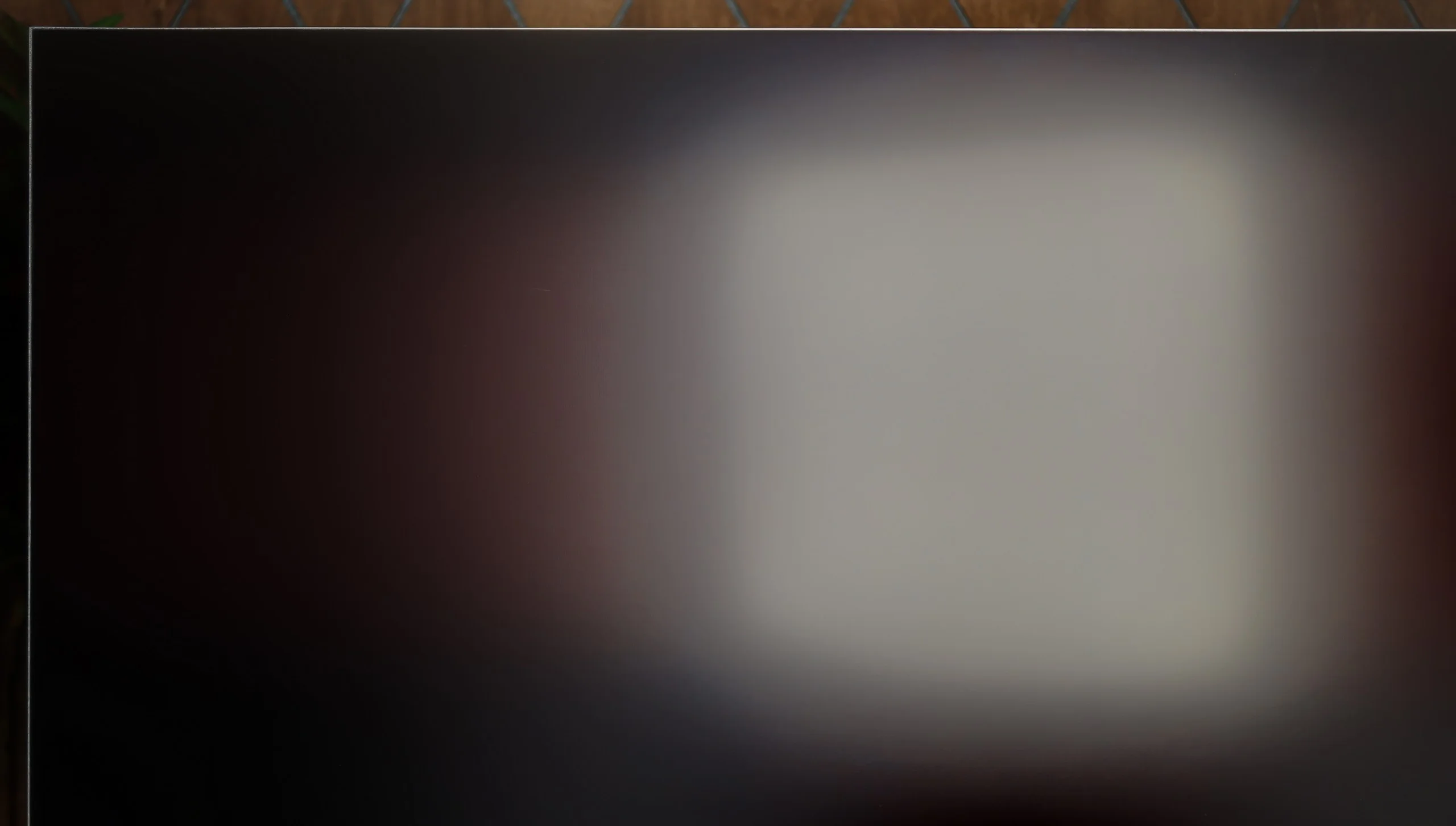


Panel brightness
Samsung R95H Micro RGB : 1172 cd/m2
LG OLED G5: 810 cd/m2
The LG G5, thanks to its very high brightness, performs excellently in bright rooms. Even with SDR content, the average brightness value is around 800 nits, which is significantly more than in standard televisions. It can easily handle a bright living room. Although the panel averages out reflections, it still maintains significantly better black levels and colors during the day than QD-OLED panels or matte-coated screens. The G5 will perform well in very sunny rooms—unless you really can't stand reflections on the screen. In that case, you will need to use blackout shades or consider buying a television with a matte screen.
One of the biggest advantages of the R95H as a TV for a bright living room is its matte screen finish. Samsung has handled this type of coating very well for years, and here we again have one of the better solutions available on the market. Reflections are effectively suppressed, so windows, lamps, and other bright elements in the room don't interfere as much when watching during the day. As usual with matte screens, there's a trade-off. Rather than a distinct reflection, light scatters more across the panel's surface, so under strong, direct lighting parts of the screen can look slightly brightened. A trade-off, but in a typical living room this solution still works very well.
The R95H also has a second very strong selling point, high SDR brightness. In a bright living room, it's worth setting local dimming to High, because the screen can peak at up to 2000 nits, with an average brightness around 1200 nits. However, you should remember that the algorithm then works more aggressively and can sometimes limit the visibility of details in the brightest highlights of the image. Therefore, for evening viewing we recommend setting it to Low, which interferes less with the picture and helps preserve a more natural character.
Brightness values with local dimming set to 'Low':
Local dimming | 5% | 10% | 20% | 30% | 40% | 50% | 60% | 70% | 80% | 90% | 100% |
|---|---|---|---|---|---|---|---|---|---|---|---|
Average | 555 | 591 | 612 | 965 | 958 | 949 | 888 | 799 | 705 | 640 | 620 |
Panel details
Subpixel Structure:
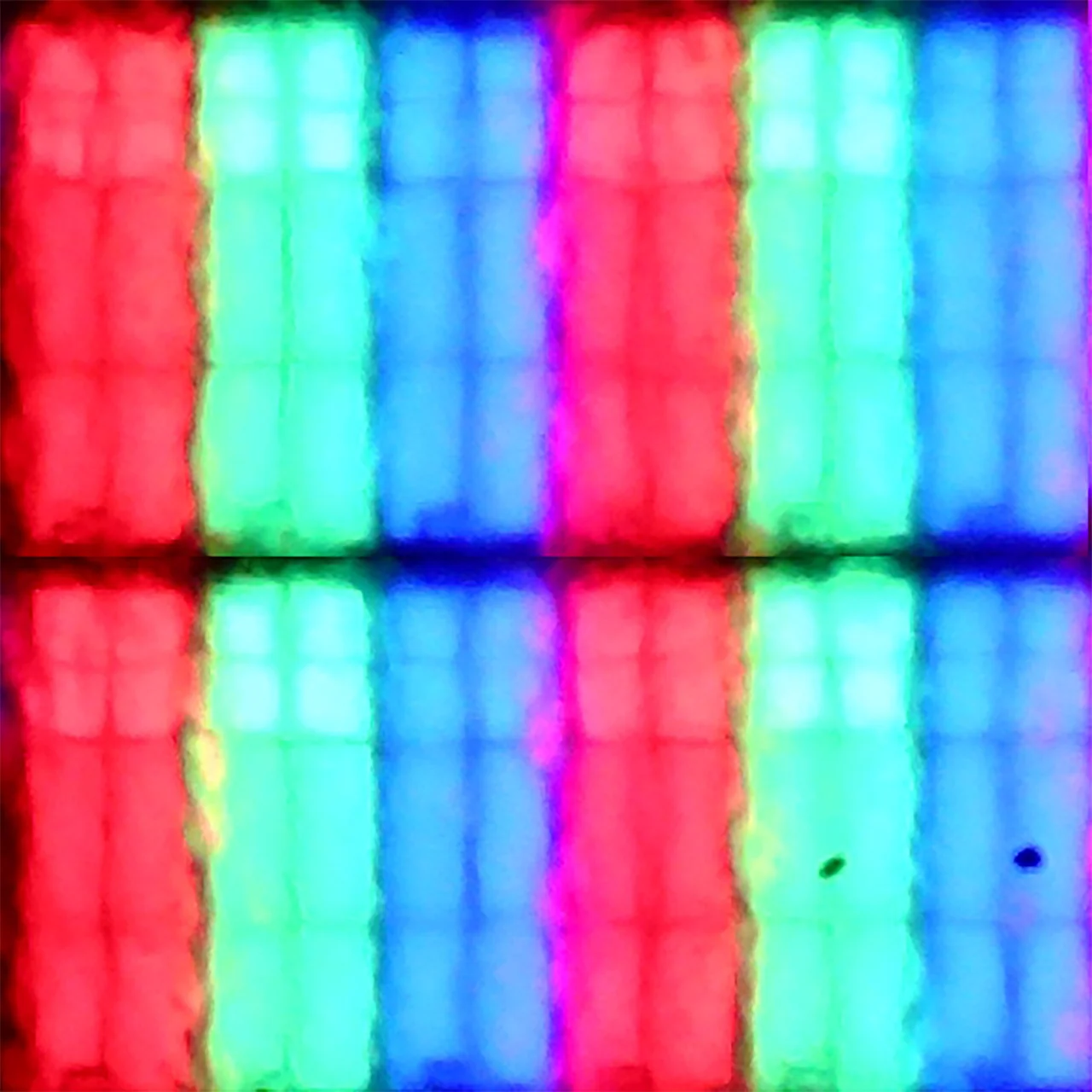
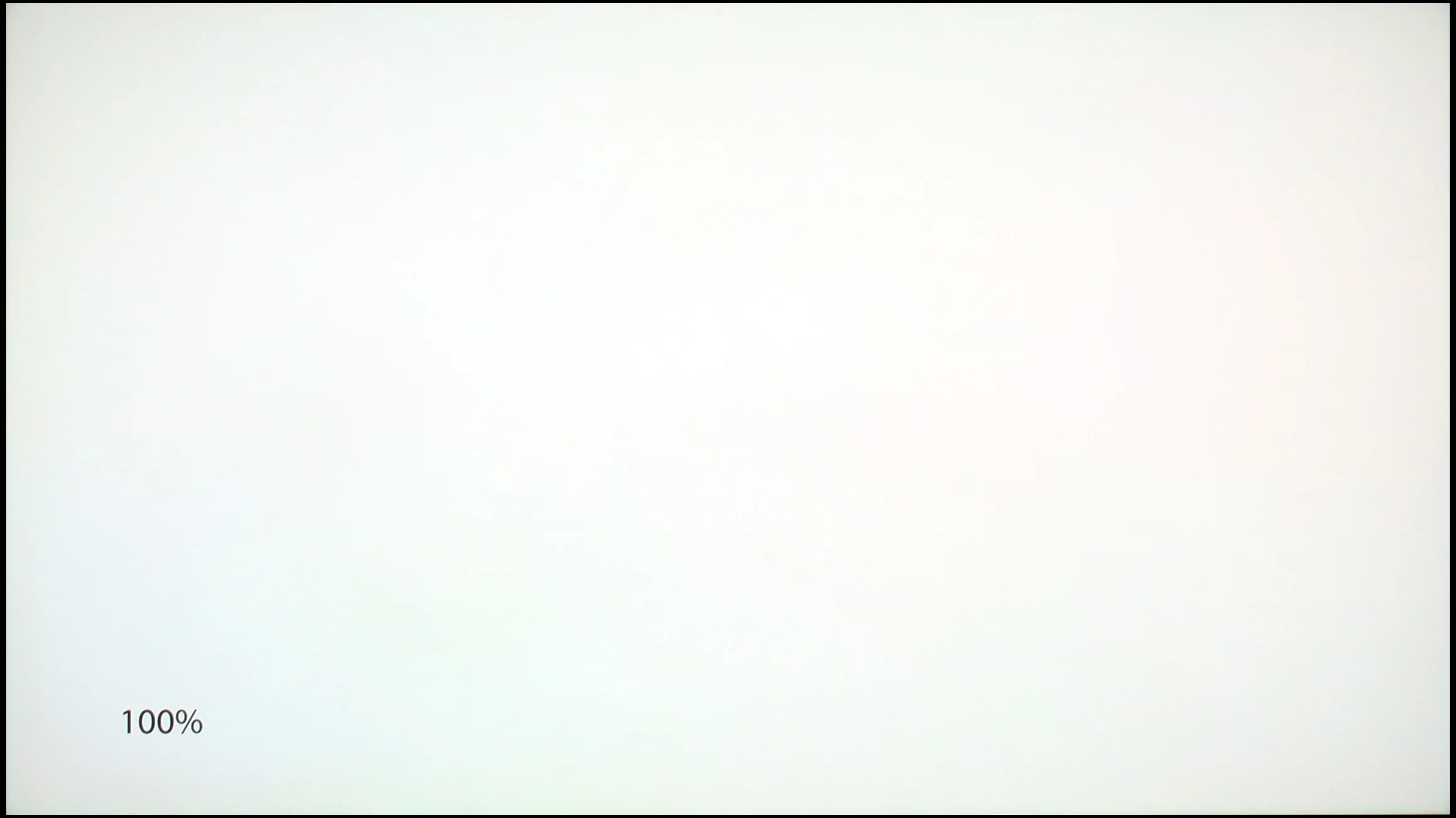
Panel uniformity and thermal imaging:

TV features
8.5/10
7.8/10
- SystemWebOSTizen
- System performanceVery goodVery good
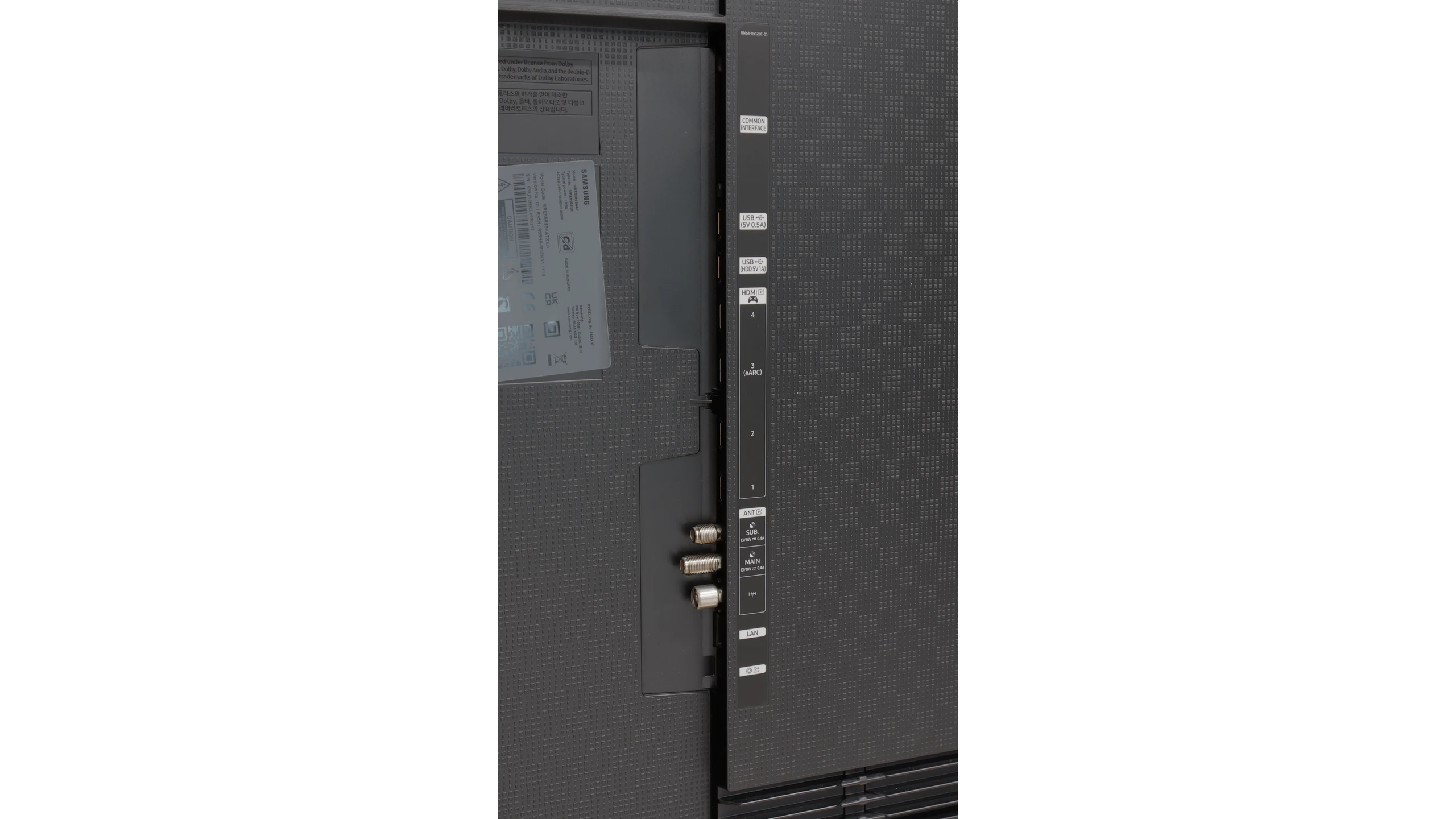
- HDMI inputs0 x HDMI 2.0, 4 x HDMI 2.1 48Gbps0 x HDMI 2.0, 4 x HDMI 2.1 48Gbps
- Other inputsIR (remote)
- OutputsToslink (Optical audio), eARC (HDMI), ARC (HDMI)Toslink (Optical audio), eARC (HDMI), ARC (HDMI)
- Network InterfacesWi-Fi 2.4GHz, Wi-Fi 5GHz, Ethernet (LAN) 100MbpsWi-Fi 2.4GHz, Wi-Fi 5GHz, Ethernet (LAN) 100Mbps
- TV receptionDVB-T, DVB-T2, DVB-S, DVB-S2, DVB-CDVB-T, DVB-T2, DVB-S, DVB-S2, DVB-C
Classic features:
- Recording to USB (terrestrial TV)
- Recording programming
- Picture in Picture (PiP)
- RF remote control (no need to aim)
- Backlit remote control
- Teletext
- Audio only mode
- Bluetooth headphones support
- Simultaneous Bluetooth headphones & TV audio
Smart features:
- AirPlay
- Screen mirroring (Windows Miracast)
- Voice search
- Voice search in native language
- Ability to connect a keyboard and mouse
Sound connection options
- HDMI audioeARC (HDMI), ARC (HDMI)eARC (HDMI), ARC (HDMI)
- Other audio outputsToslink (Optical audio)Toslink (Optical audio)
- Wireless audioBluetoothBluetooth
Supported audio formats (external HDMI eARC audio):
- Dolby Digital Plus 7.1
- Dolby True HD 7.1
- Dolby Atmos in Dolby Digital Plus (JOC)
- Dolby Atmos in Dolby True HD
- DTS:X in DTS-HD MA
- DTS-HD Master Audio
Senior accessibility
- Numeric keyboard on TV
- Font size adjustment
- Audio description
Classic Features
LG G5 has a lot to offer when it comes to classic TV features. Aside from the lack of the ability to watch two sources (PIP), the television performs well for everyday use. There are no issues with connecting external Bluetooth devices, such as headphones, and the EPG interface is very clear and understandable – even for those who are not particularly tech-savvy.
Smart TV Features
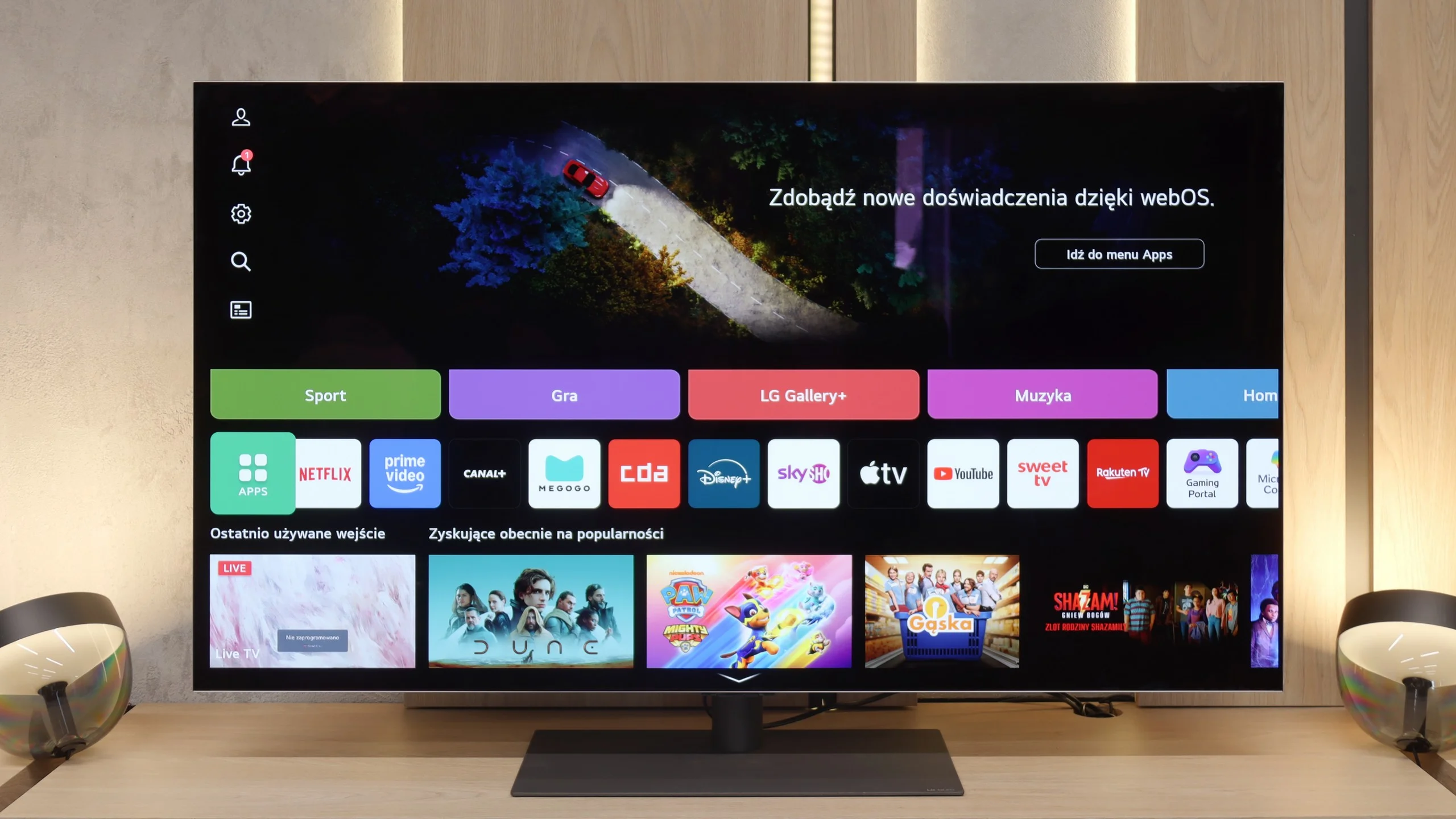
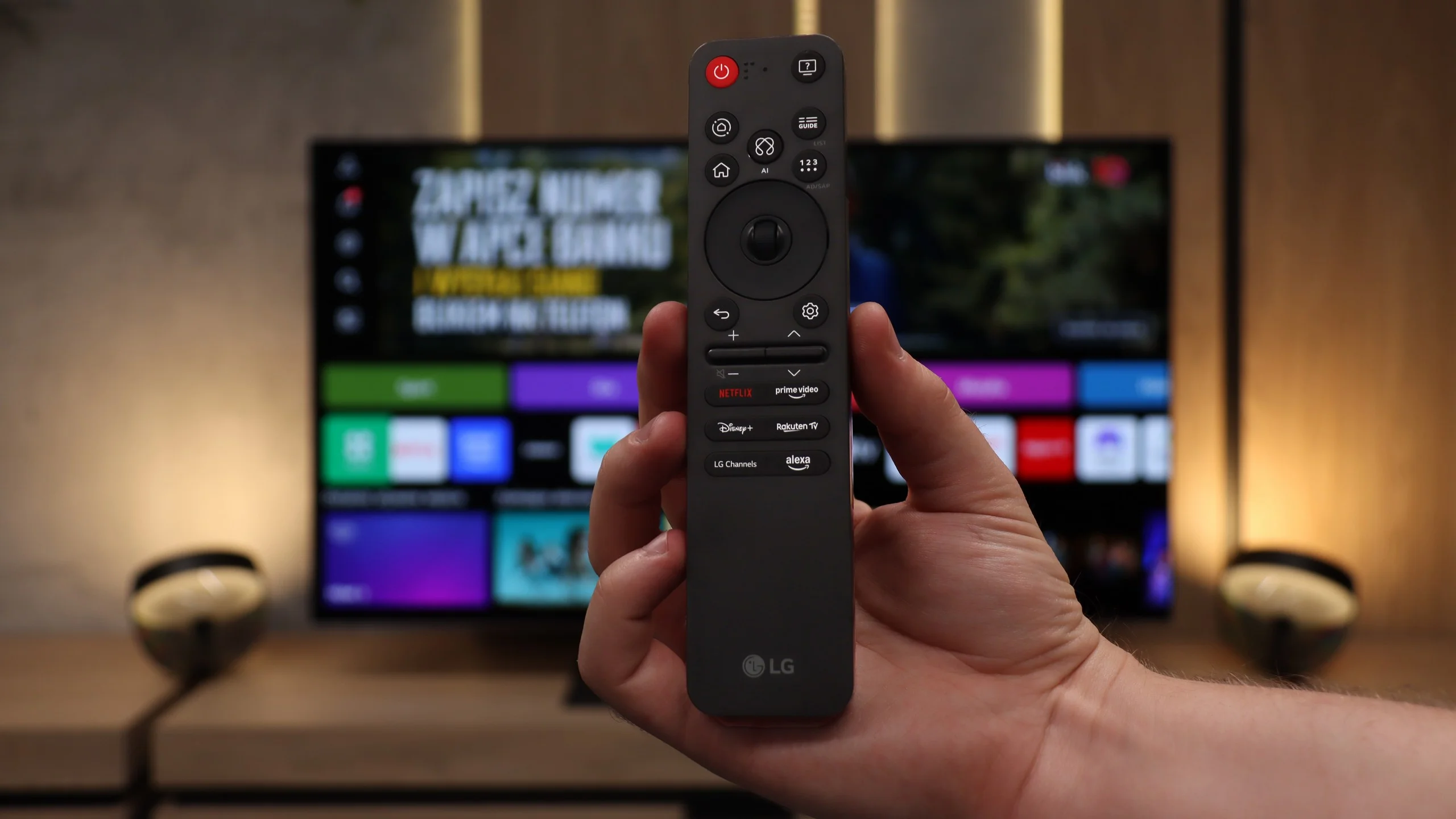
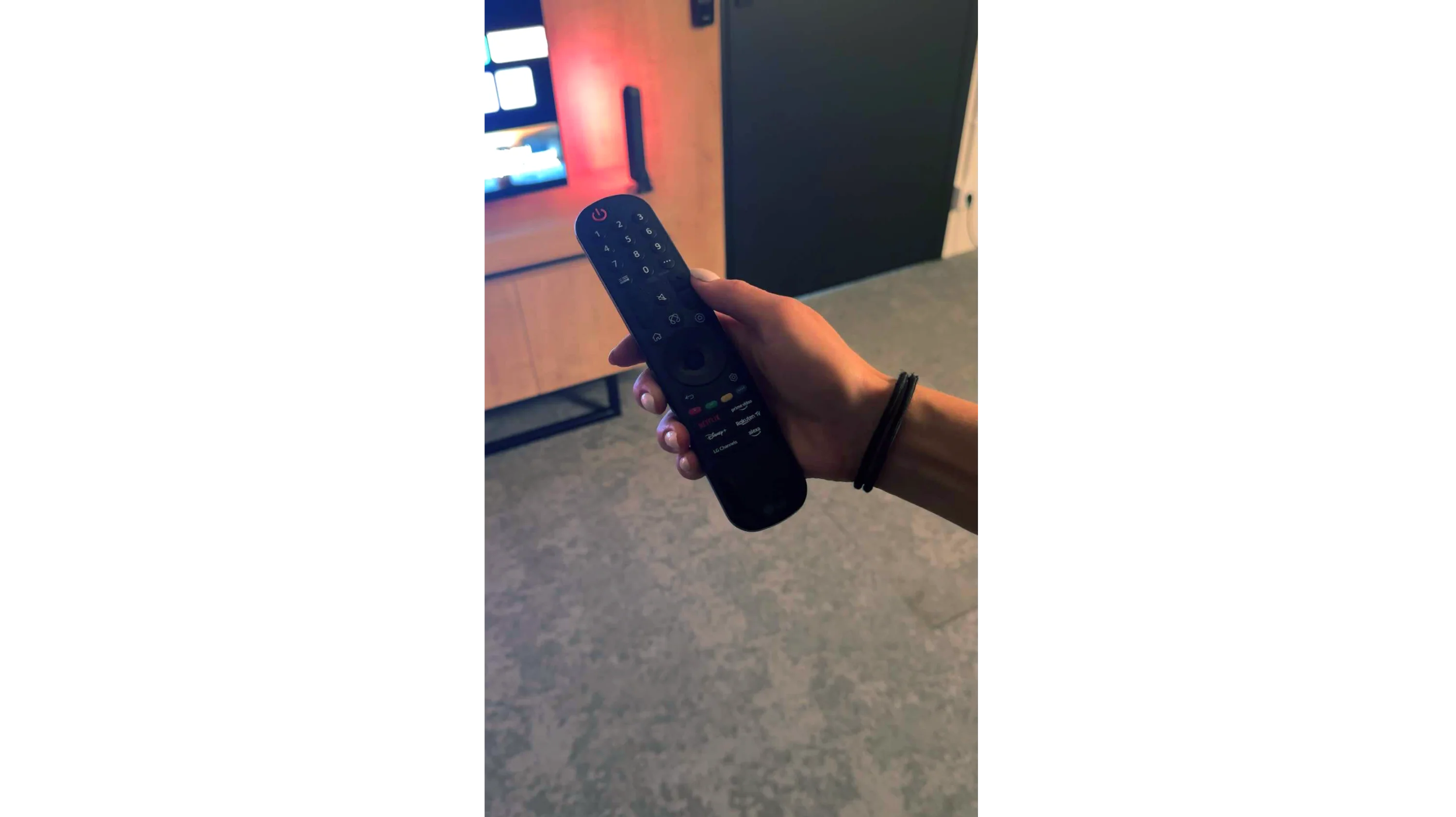
The Smart TV in the G5 operates on the WebOS system – it is the heart and brain of the entire television. Thanks to the Magic remote, using the G5 is truly enjoyable. We control the cursor on the screen with wrist movements, which is somewhat reminiscent of using a mouse in the air. The system itself is very comprehensive and offers everything one could expect: AirPlay, screen mirroring, voice search, and voice commands – all of these work smoothly and without delays. Without a doubt, this is one of the best operating systems in televisions on the market.
Note:
During our testing, we had practically nothing to complain about – except for one exception: the confusion surrounding the remote. Depending on the market and the specific version of the model, you may come across the new, minimalist Magic remote (without a numeric keypad), or the older version with a full set of buttons. We tested the G54LW model, which had the new Magic remote, but it is hard to say how the situation looks in other variants. Perhaps it is a similar situation to the LG C5 series, where the addition of the remote also depends on the specific market.
Smart TV - Tizen
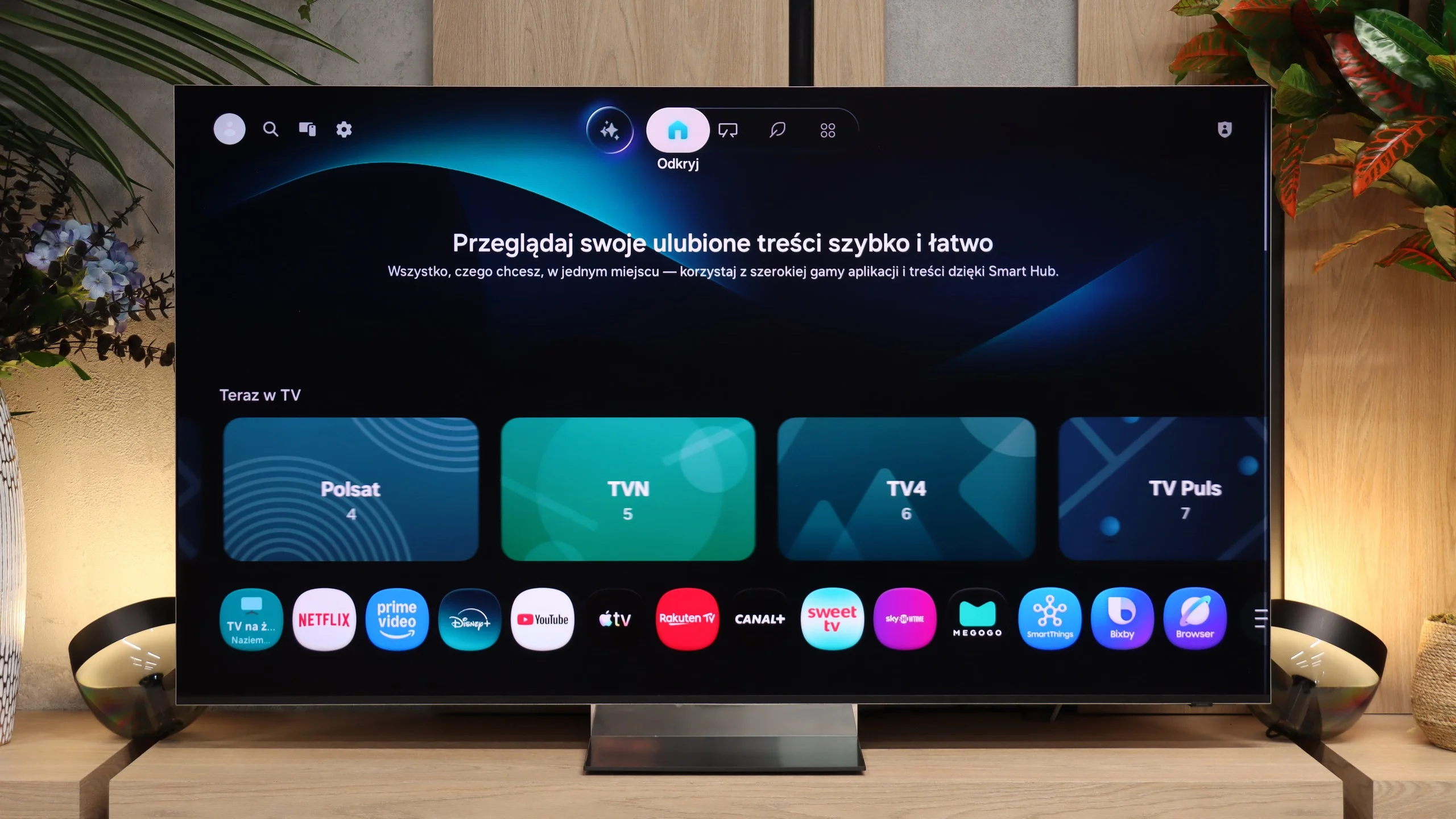
The R95H runs on the well-known Tizen platform, which offers basically everything you can expect from a Smart TV today. You get access to the most popular streaming apps, the system is fast, and navigating the menus is effortless. There's also the SmartThings ecosystem, which lets the TV act as a hub for controlling smart home devices. It also supports AirPlay 2, easy screen sharing from an iPhone, and Multi View, which lets you display multiple sources on the screen at once.
Classic features
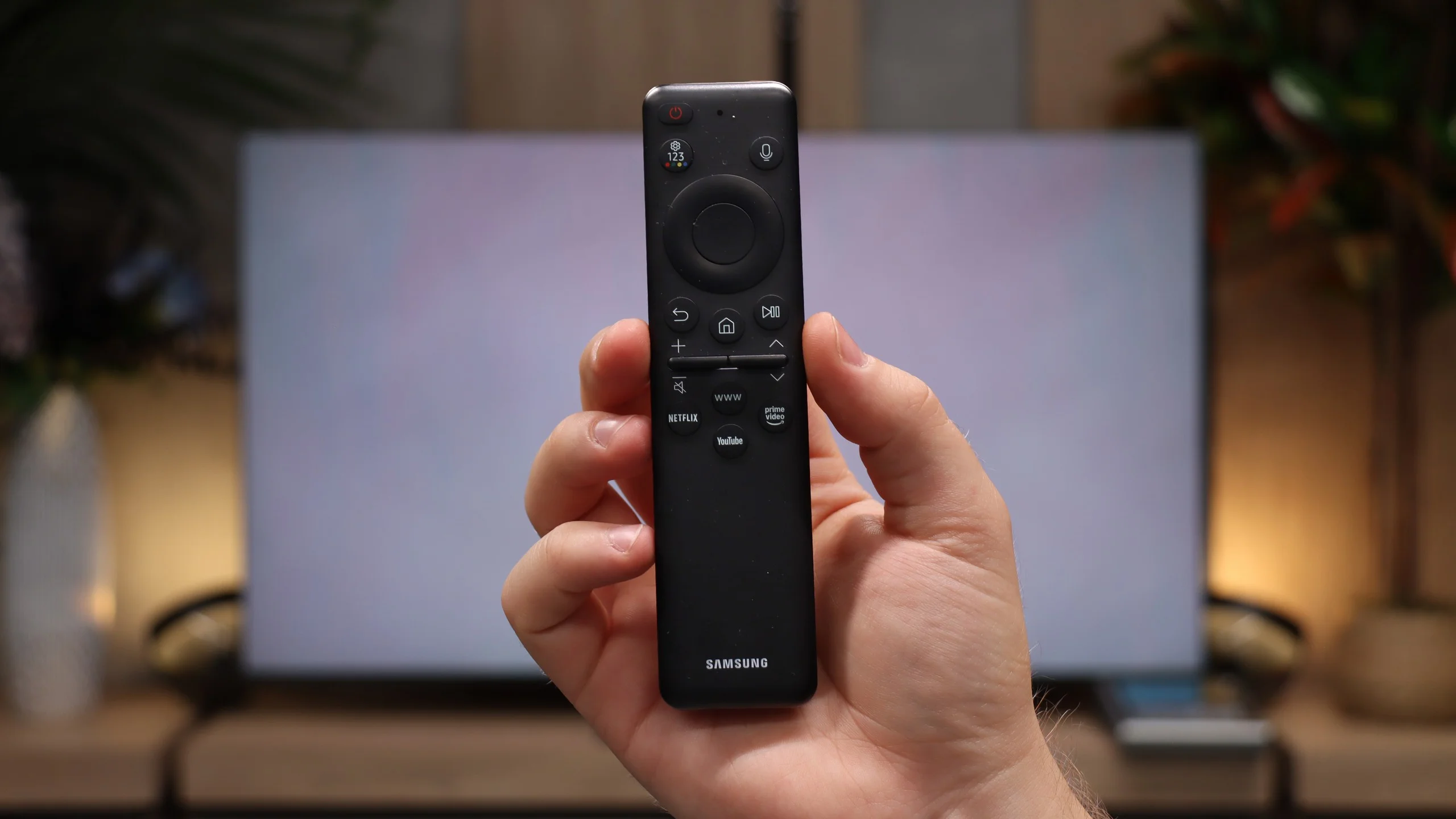
The more traditional side of the R95H looks just as good. The TV has a full set of tuners for terrestrial, cable, and satellite reception, plus a clear EPG guide. Samsung also deserves credit for keeping PiP (Picture-in-Picture), which the maker removed from some lower-tier models. Here you can still display two sources at once, which can be very useful on the R95H's large screen sizes. The TV comes with Samsung's distinctive SolarCell remote. It's compact, has only the essential buttons, and doesn't require battery replacement because it can recharge with light or be charged via USB-C. People who mainly use streaming will quickly get used to it, though the lack of a numeric keypad won't appeal to everyone for traditional TV viewing.
Connections
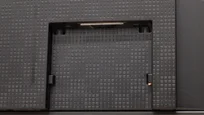
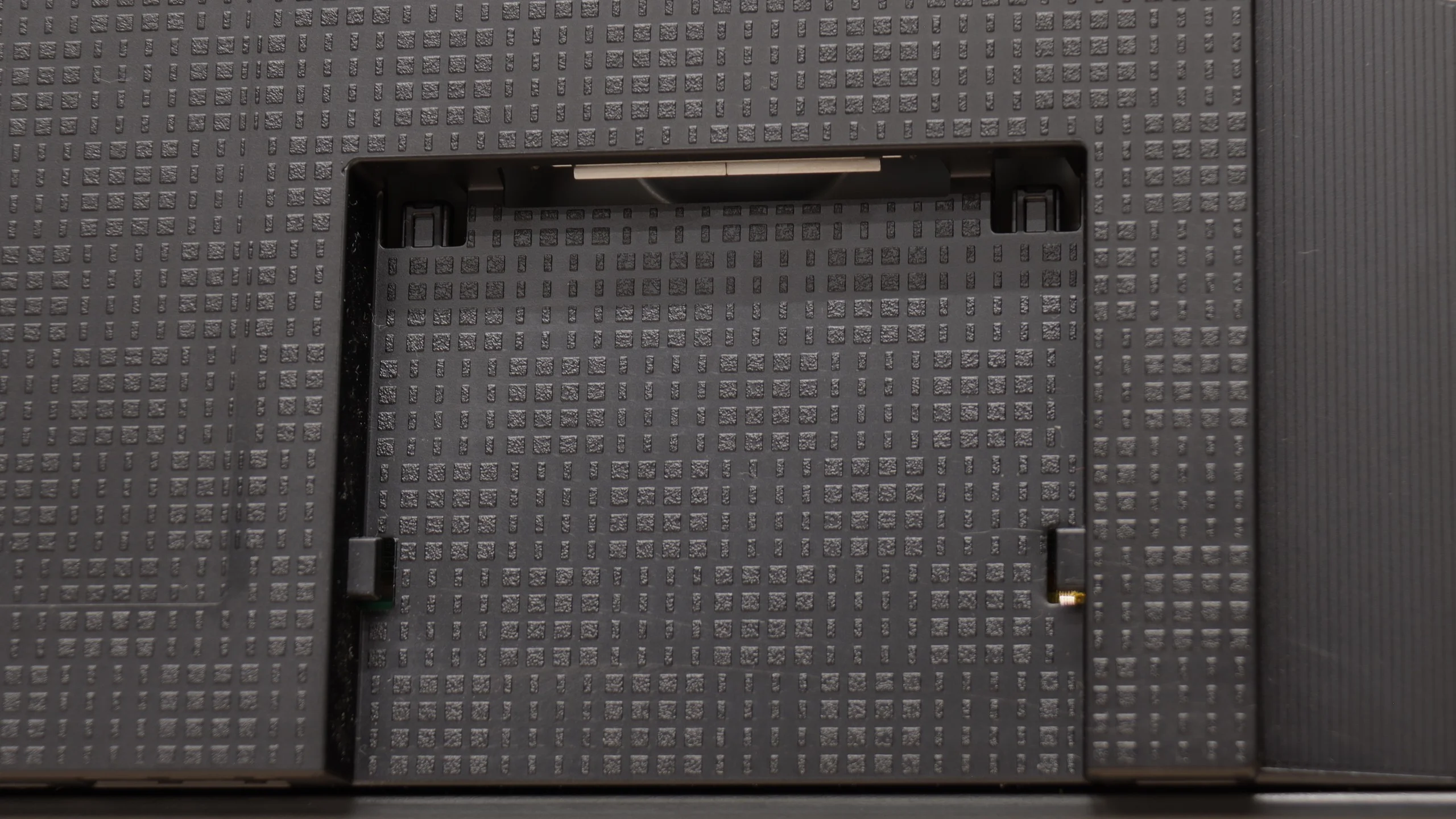
The I/O layout is interesting as well. The R95H has four HDMI 2.1 ports, antenna inputs, and an optical output, and it's also equipped with a dedicated connector for a One Connect module. As with the flagship S99H OLED, you can buy a wireless One Connect and move some of the cabling away from the TV. That's an additional $350 / 1500 zł, but when the TV is mounted very close to the wall it can be a very convenient solution.
Apps
9.1/10
9.3/10






















Playing files from USB
9/10
9.1/10
Supported photo formats:
Maximum photo resolution:
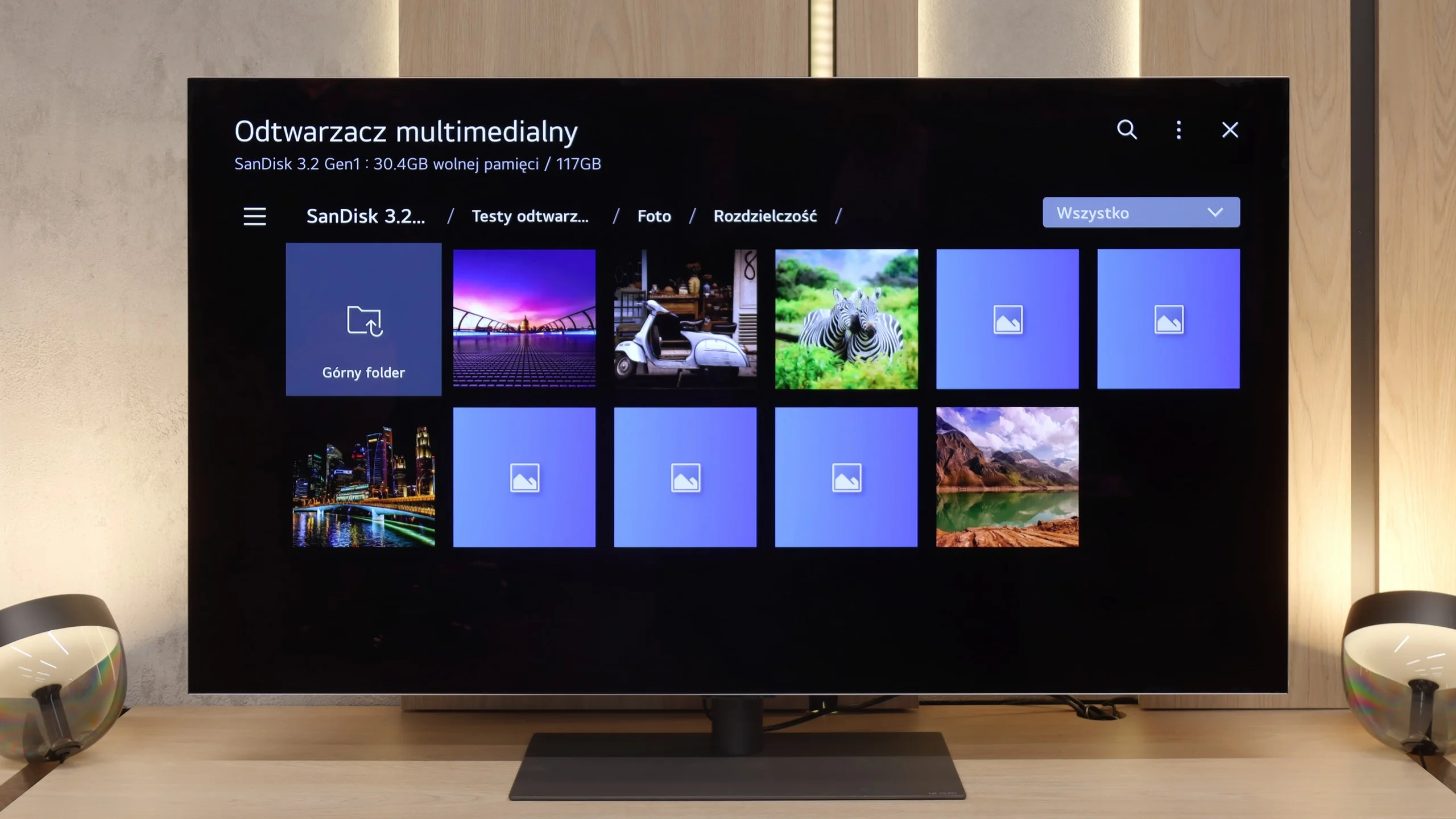
The built-in media player in the LG G5 is really very good. It supports virtually everything you would expect from a modern television – most popular formats work without issue, and the application performs quickly. Our only disappointment was the lack of support for very high bitrate HEVC files at 85 Mbit/s – similar to the C5 and B5 models. Interestingly, the same file worked flawlessly on last year's LG OLEDs, so it's hard to say what is behind this change. Nevertheless, in everyday use, the G5 will handle the vast majority of content, and there will be no need to connect any external devices for media playback.
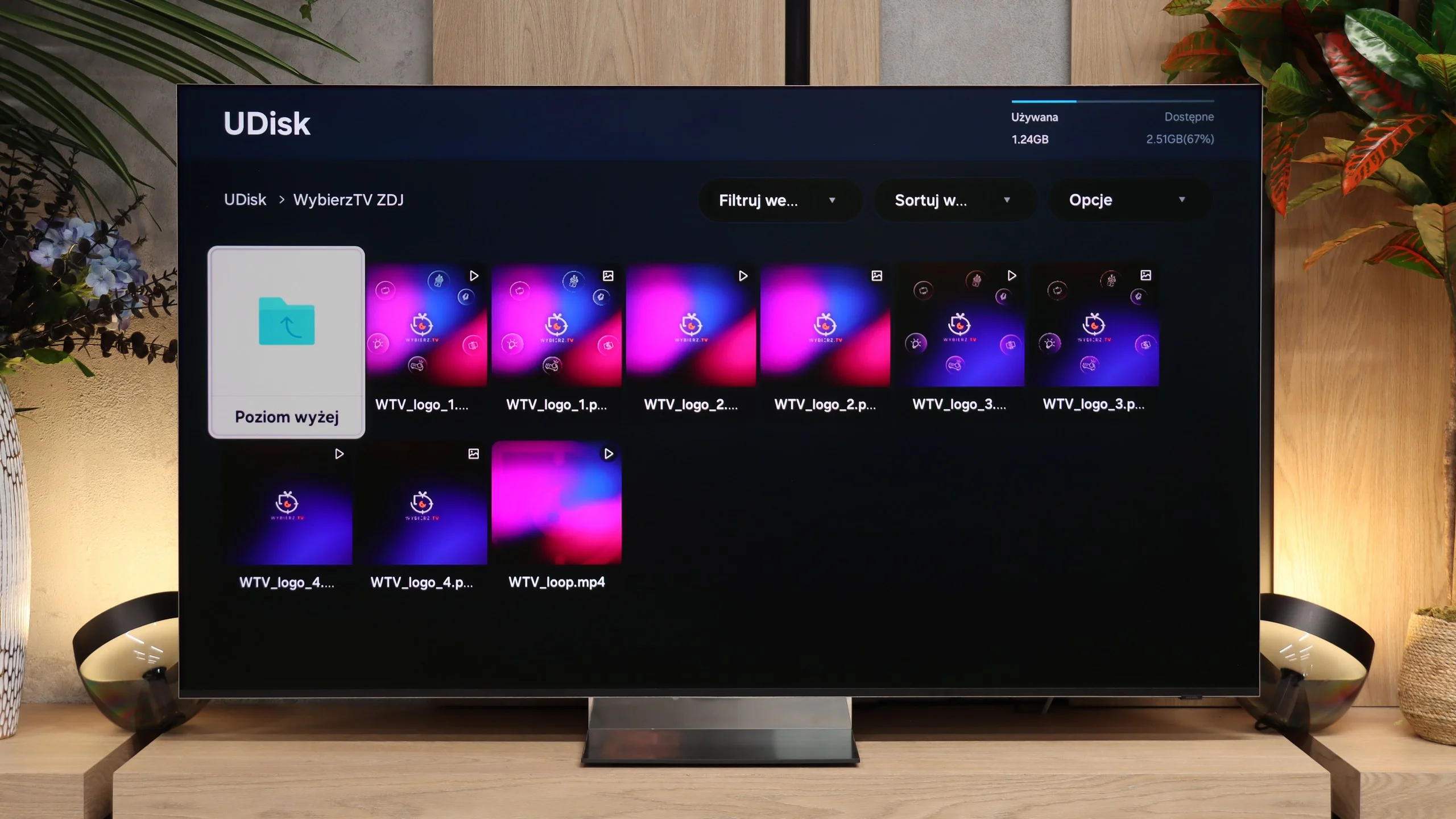
When it comes to playing files from USB, the R95H performs without issues. During our tests we didn’t encounter any common video or audio format that the TV had trouble with, and the player itself is fast and stable. It’s just a shame Samsung still hasn’t added support for the HEIC format. For photos saved in that format, for example from an iPhone, you still have to convert the files beforehand to a more standard format.
Sound
8.7/10
7.5/10
- Maximum volume84dB89dB
- Dolby Digital Plus 7.1
- Dolby True HD 7.1
- Dolby Atmos in Dolby Digital Plus (JOC)
- Dolby Atmos in Dolby True HD
- DTS:X in DTS-HD MA
- DTS-HD Master Audio
The sound on the LG G5, given its slim body, is truly phenomenal. When listening to music, a light, pleasant bass can be felt, and in movies, the dialogues are clear and easily heard – they do not get lost even in dynamic scenes. Unfortunately, a certain disappointment is the lack of support for the DTS format, which LG used in its older models. It's a shame, because many people with home theaters may see this as a step backward.
The Samsung R95H comes with a fairly extensive 4.2.2 audio system rated at 70 W and is genuinely pleasant in everyday use. The sound is clean, fairly spacious for a TV, and noticeably more powerful than in most mid-range models. For movies and TV shows, the built-in speakers handle things comfortably and will satisfy even more demanding users. It only gets a bit worse when the material has a lot of bass. With some tracks we noticed the TV can fall into unpleasant resonances, and this is where the limitations of the built-in audio are most noticeable. If the low end were better, we would rate the whole system much higher. If you want stronger bass and a more cinematic sound, it’s worth considering a soundbar with a subwoofer or a home theater system. A soundbar will of course be the simpler and cheaper option, and with support for Dolby Atmos you can already build a really solid movie setup with the R95H. Unless someone mainly uses physical Blu-ray releases... in that case, it’s worth remembering that Samsung does not support DTS formats, so for some audio tracks that may mean you need to use an external player or an AV receiver.
Sound Quality Test
Acoustic Measurements
84dBC (Max)
75dBC
89dBC (Max)
75dBC
Reader comments
Comments are provided by the external service Disqus (Zeta Global). Once loaded, Disqus may set cookies and process data about your activity.
We will remember your choice on this device. Provider's privacy policy