 Direct comparison
The LG G5 is a television that not only continues but also expands on what we loved about previous models in the G series. Instead of taking the beaten path, LG opted for a new Tandem OLED panel – and it was a stroke of genius. Picture brightness? Simply, F E N O M E N A L. HDR effect? Close to reference. Colors after calibration? Nearly perfect. Motion smoothness, low latency, and gaming features? At an absolutely top level. The G5 performs well in movies and games, day and night, whether with a decoder, console, PC, or just the remote. Of course – this is not a product without flaws. It's a pity that DTS support is lacking, the viewing angles have worsened compared to its predecessor, and the remote may vary depending on the version. But when we look at the overall picture, it's hard not to feel that this is one of the best OLED televisions available on the market, and perhaps even the best. Definitely, when it comes to its versatility and picture quality without having to reach for extremely expensive models from competitors. If you're looking for a television for everything – for cinema, gaming, a bright living room, streaming content, or connecting a computer – the LG G5 is a device that simply delivers on every front without compromise.
- Matching (Score) |
- Our verdict |
- TV appearance |
- Where to buy |
- Contrast and black detail |
- HDR effect quality |
- Factory color reproduction |
- Color reproduction after calibration |
- Smoothness of tonal transitions |
- Image scaling and smoothness of tonal transitions |
- Blur and motion smoothness |
- Console compatibility and gaming features |
- Input lag |
- Compatibility with PC |
- Viewing angles |
- Daytime performance |
- Panel details |
- TV features |
- Apps |
- Playing files from USB |
- Sound

Check prices in stores:
LG OLED G5(paid link)G54 / G51 / G55 / LW / LS

B65 / B6E / B6G
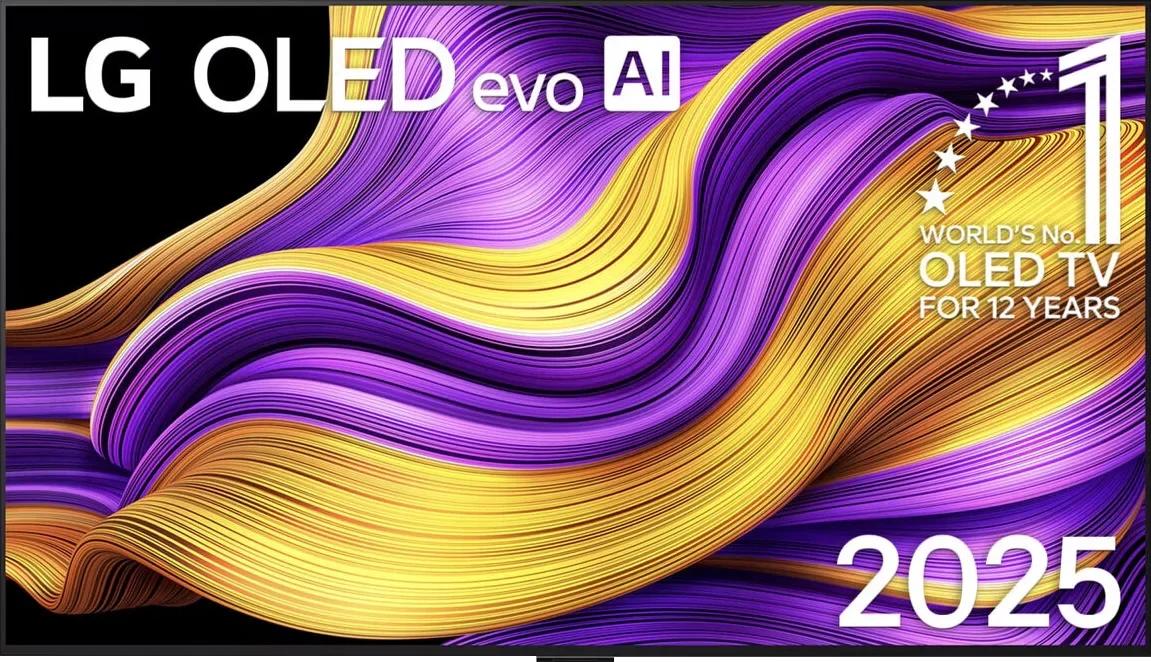
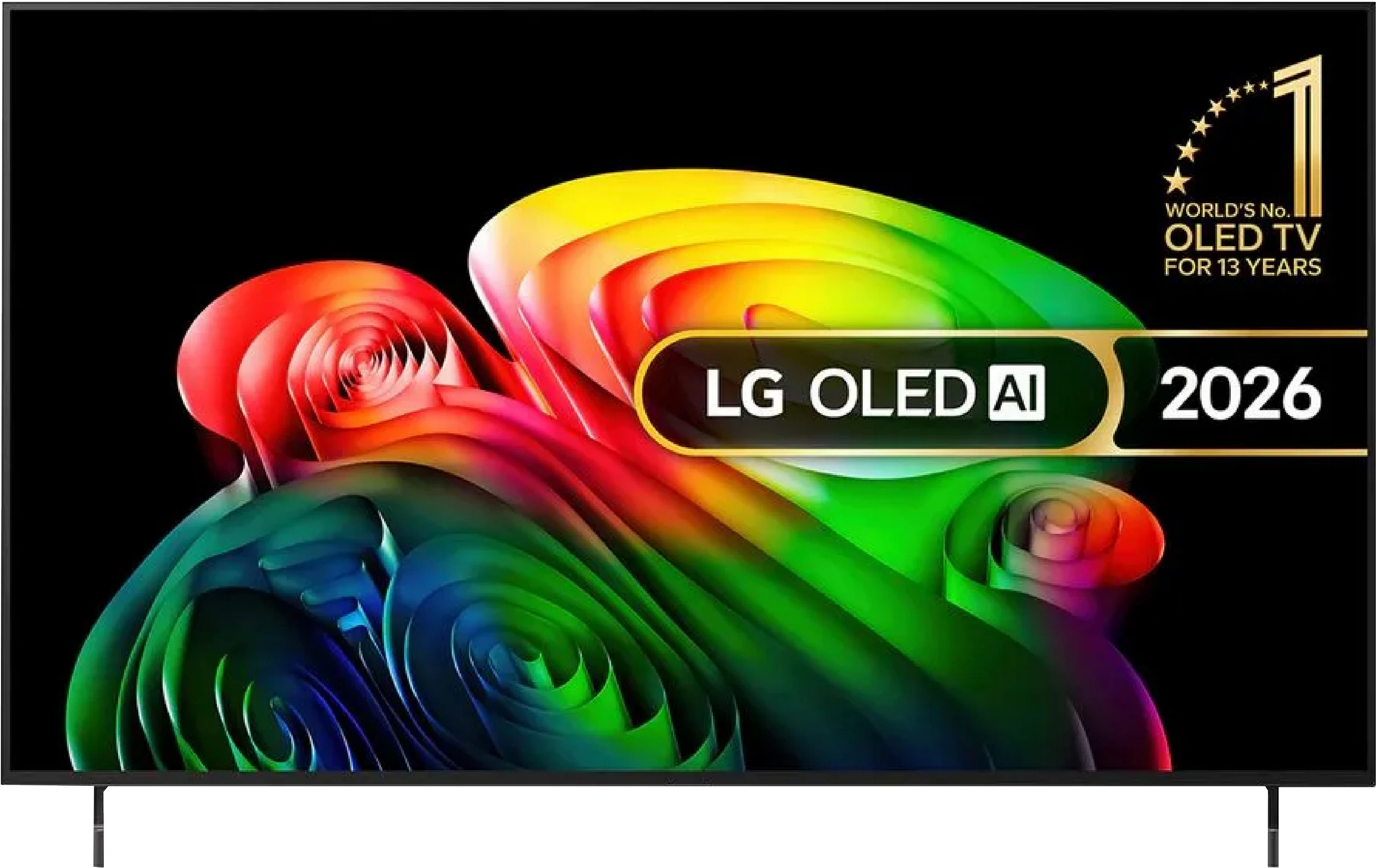
Panel type: WRGB OLED
Resolution: 3840x2160
System: WebOS
Model year: 2025
Panel type: WRGB OLED
Resolution: 3840x2160
System: WebOS
Model year: 2026
Check how well they match your needs
Take the surveyOverall rating
8.9
7.8
 Movies and series in UHD quality
9.2
8.0
 Classic TV, YouTube
9.2
8.8
 Sports broadcasts (TV and apps)
8.8
8.6
 Gaming on console
9.5
9.2
 TV as a computer monitor
8.8
7.6
 Watching in bright light
8.0
4.8
 Utility functions
8.5
8.0
 Apps
9.1
9.1
 Sound quality
8.7
6.7
Complete the survey to find out what fits your preferences
Advantages

Amazing black and contrast
Reference color reproduction after calibration
Very high brightness in HDR content
Outstanding cooperation with consoles and computers
Great motion fluidity - OLED panel 165Hz
Many features for gamers: VRR, ALLM, HGIG, low input lag
Excellent WebOS operating system with many applications
Superb handling thanks to the Magic remote with "cursor" function
Perfect blacks and contrast from an OLED panel
Very good HDR performance with Dolby Vision
Natural, accurate colors after calibration
Excellent motion clarity without motion blur (120 Hz)
4 HDMI 2.1 ports with full 48 Gbps bandwidth
Very low input lag
VRR, G-Sync, FreeSync, and proper HGiG, offering a rich set of features for gamers
Feature-rich webOS with the Magic Remote
Wide viewing angles
Disadvantages

No support for DTS audio format
Worse (though still good) viewing angles than the predecessor G4
Different versions of the remote in derivative models – hard to predict which version we will get
Worse reflection suppression than its predecessor, a characteristic of the OLED SE panel
Average brightness, so it performs best in a room with controlled lighting
No DTS:X support, mainly a drawback for Blu-ray disc owners
The webOS system isn't the fastest here
Our verdict
The LG OLED B6 is a very successful continuation of the B series and a TV that makes a lot of sense as a first step into OLED. It doesn't try to compete with the most expensive models in every respect, but on the most important points it still delivers exactly what many people choose the technology for: perfect black, very high contrast, and a picture that can simply look spectacular in movies. This is largely thanks to the new budget WOLED panel, called OLED SE. Thanks to it, LG's cheapest OLED is now noticeably brighter than a few years ago, and around 800 nits in HDR is a level you can actually notice while watching. Bright elements have more punch, the picture handles more demanding scenes better, and combined with OLED blacks the whole thing can look really impressive. Movies and series from streaming platforms fare especially well, particularly those available in Dolby Vision. That's when the B6 makes the most of its capabilities and can produce a picture that will be a big step up for someone moving from a typical LCD TV. However, it's not a model without compromises. Our biggest reservation is how the screen handles reflections. The lack of a classic polarizer means the TV fares much worse when placed opposite a large window or a strong light source. Reflections are more noticeable than on other WOLED panels, and the black itself loses some of its character in a bright room. In controlled viewing conditions this won't be an issue, but for a very bright living room you should approach this purchase with some caution. The operation of webOS also leaves something to be desired. It is still very good overall, with a rich app library, a convenient Magic Remote, and pretty much everything you'd expect from a modern smart TV. The problem is that on the B6 it doesn't always run as smoothly as it should. At times you can tell the new version of the system is more demanding and a bit "heavier" than before. Despite these notes, the LG B6 still performs very well. It's a TV that delivers all the key advantages of OLED while not costing as much as the higher-end models. It makes the most sense when it turns up on a good sale, because that's when it can be one of the most interesting choices for people who want to get into OLEDs without overpaying.
TV appearance
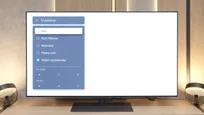

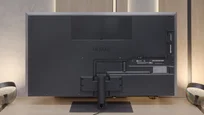
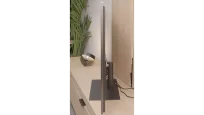
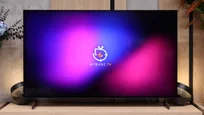

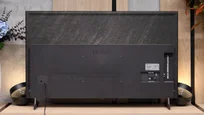
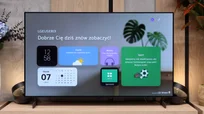

Contrast and black detail
10/10
10/10
Contrast:


Result
∞:1

Result
∞:1

Result
∞:1

Result
∞:1

Result
∞:1
Result
∞:1
Result
∞:1
Result
∞:1
Result
∞:1
Result
∞:1
Halo effect and black detail visibility:
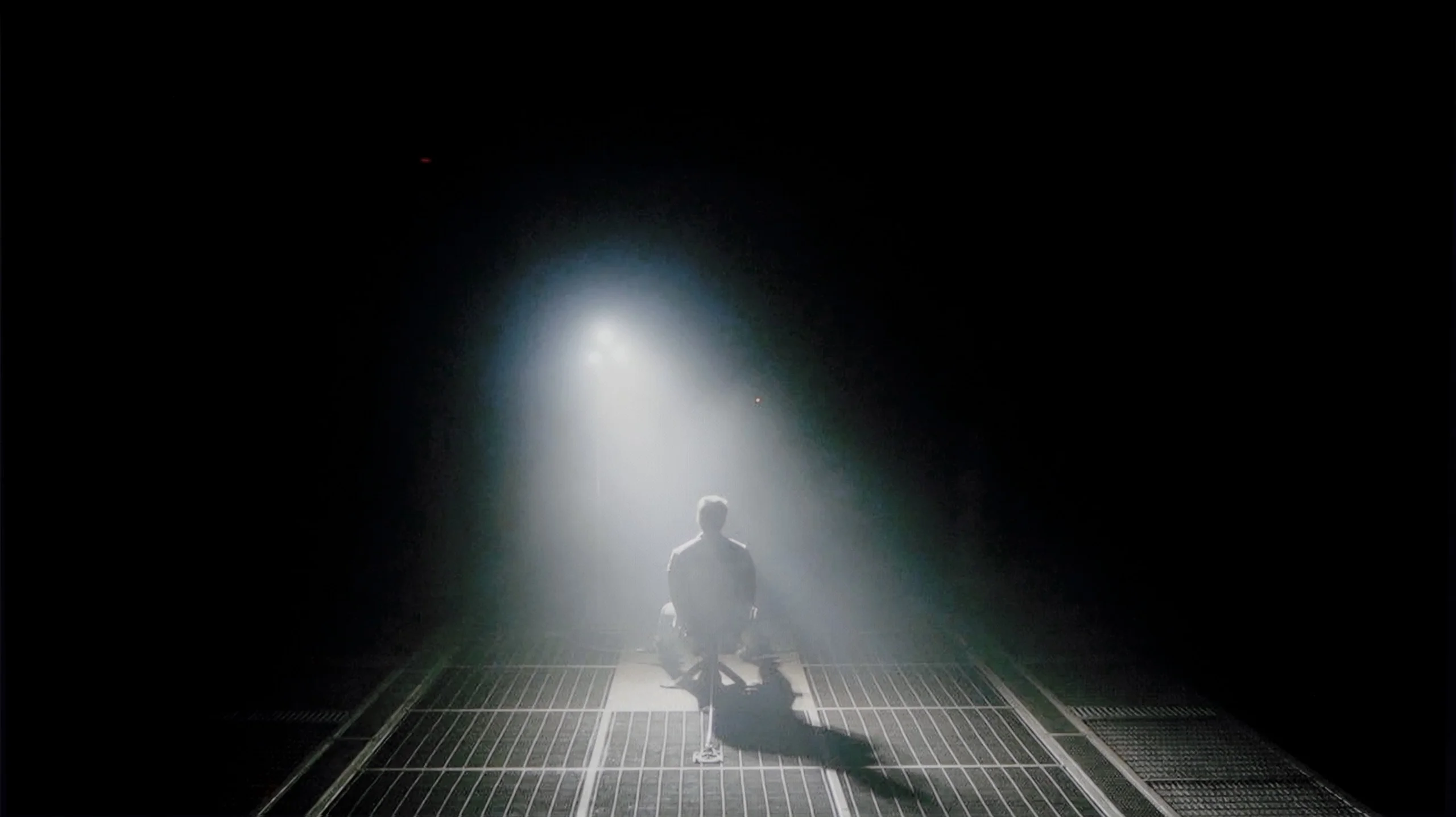
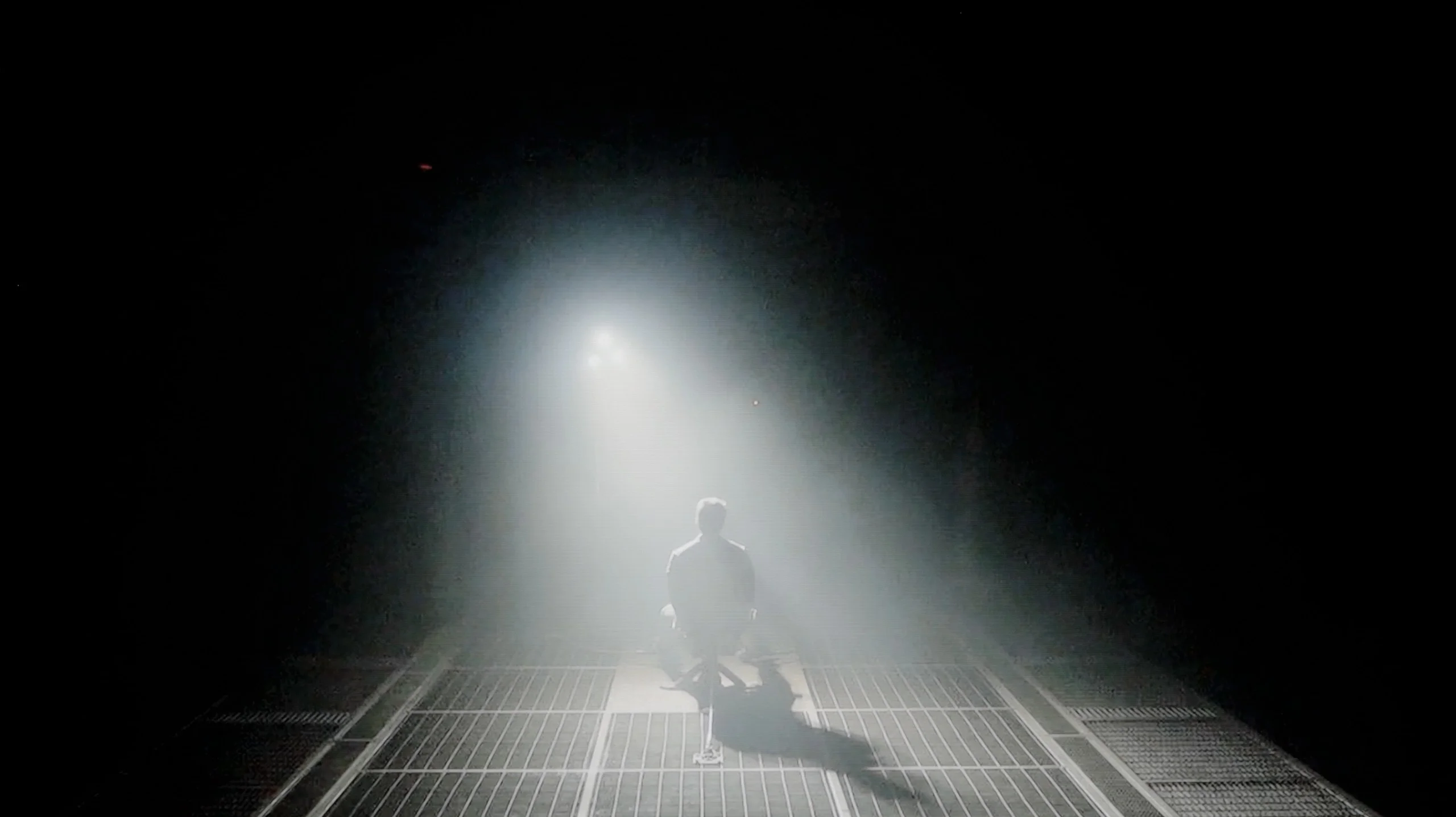
Check the visibility of bright lights on a dark background. Mini-LEDs often struggle with this. The photo does not compare black levels – that’s what the video below is for.
The video accurately shows differences in contrast and black levels between TVs, as well as potential issues: halo around bright objects or Mini-LED zone operation visible as brightness jumps.
LG G5, as befitting an OLED television, impresses with its contrast and black quality. In scenes with a lot of dark areas, the screen looks almost perfect, offering deep, absolute black and infinite contrast – an effect that still cannot be achieved on any LCD television. The new Tandem OLED panel does not introduce any negative changes compared to previous generations – blacks are perfect regardless of the content. Watching scenes from movies like The Revenant or Oblivion, you can clearly see the excellent separation of lights, without any blooming effect or brightening of dark parts. In this category, the LG G5 deserves the highest rating.
Black levels on the LG OLED B6 are perfect. That's no surprise, since it's an OLED (WOLED), but this is where you can really see why this technology still has so many fans. Each pixel can turn off individually, so in dark scenes there's no gray haze or light bleed around bright elements. That gives the image excellent depth and can make it look truly three-dimensional. Shadow detail also holds up well. Nothing blends into one dark blotch, and fine details remain visible even in more challenging scenes. In that respect, the B6 simply showcases everything we love about OLED TVs.
HDR effect quality
9.1/10
6.2/10
Luminance measurements in HDR:

Result
2346 nit

Result
2353 nit

Result
2399 nit

Result
2353 nit

Result
2012 nit
Result
734 nit
Result
734 nit
Result
804 nit
Result
757 nit
Result
355 nit
Scene from the movie “Pan” (about 2800 nits)


Scene from the movie “Billy Lynn” (about 1100 nits)

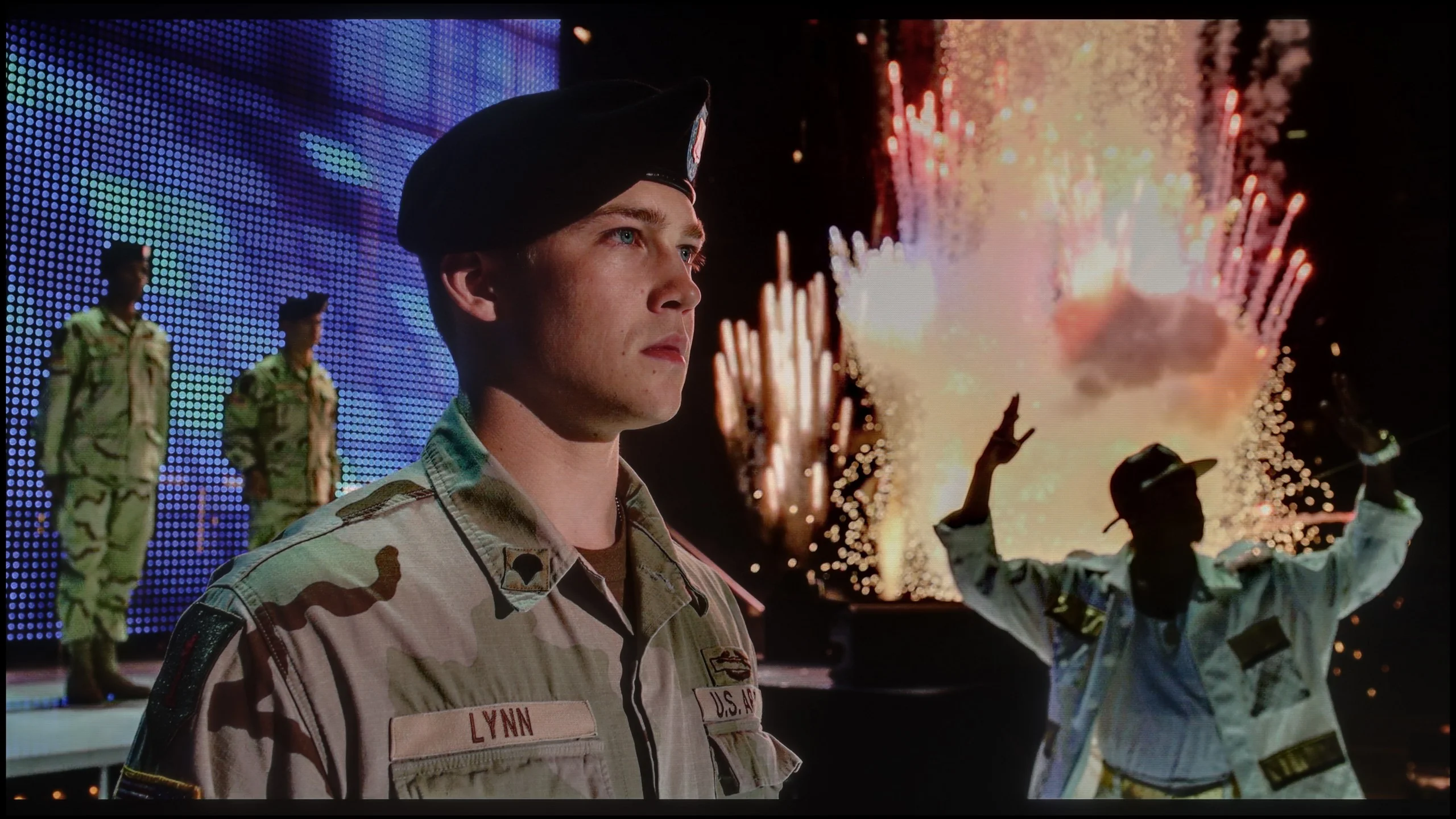
The photos show two HDR10 movies. 'Pan' is one of the brightest productions ever made, while 'Billy Lynn' (soldier) has brightness typical of streaming (Netflix, Prime, HBO MAX). Notice the intensity of effects and detail in whites.
Static HDR10


The photos present the visibility of white details in various HDR formats. They do not show brightness differences between TVs (these can be compared in the previous gallery).
Dynamic: Dolby Vision
Dynamic: Dolby Vision


The photos present the visibility of white details in various HDR formats. They do not show brightness differences between TVs (these can be compared in the previous gallery).
HDR luminance chart:
LG OLED B6
LG OLED G5
Luminance of RGB colors
Luminance of RGB colors
LG G5 with the new Tandem OLED panel brings the biggest change specifically in terms of the brightness of the television. And it’s quite impressive. This is truly an astronomically bright OLED. In every tested scene – whether it’s point lights or full-screen whites from the movie The Meg – the brightness on the G5 exceeded 2000 nits. Just a year ago, such values on an OLED were simply unimaginable. And here we are – the G5 comes close, and at times even surpasses the best Mini-LEDs on the market. A new feature of the Tandem OLED panel is the expanded color gamut coverage – and here the LG G5 performs almost perfectly. DCI-P3 achieves a full 100%, while BT.2020 maintains around 83%. These are some of the highest values currently available on the market – it’s hard to find any other television that comes close to such results, unless we are talking about the best displays with QD-OLED panels. The G5 has nearly reference-quality HDR – both in terms of brightness and color saturation. This is an OLED that can truly shine – and not just figuratively.
The LG B6 is a moderately bright OLED. After calibration it reaches about 800 nits, roughly 200 nits more than last year’s B5. That’s thanks to the new budget OLED SE panel from LG Display. In practice it simply gives a bit more headroom and makes HDR in many scenes look fuller than on last year’s lower-tier OLEDs. That doesn’t mean the B6 has no limits. In very bright shots, when a large part of the screen is strongly lit, brightness can drop below 400 nits. This behavior is typical for OLED TVs (especially those from this segment) and that’s when you see the biggest difference versus more expensive models. All things considered, we rate the B6’s results as really solid. It’s still not a TV for breaking brightness records, but the HDR effect is strong enough that you can really feel the step up from ordinary SDR in films.
Color gamut
Using the OLED SE panel has slightly affected wide color gamut coverage. Compared with last year’s model, results fell by a few percentage points. DCI-P3 reaches about 96%, and BT.2020 around 71%. That doesn’t mean the colors on the LG B6 are weak. In most movies and series they look lively, well saturated and simply pleasing to the eye. You only notice a difference in very bright, highly colorful scenes. Then colors lose some intensity compared with QD-OLED panels. This comes from the WOLED panel construction. Besides red, green and blue subpixels it also uses a white subpixel that helps boost brightness. It comes at a cost: at very high luminance some color is effectively “diluted” by the white light, so saturation of some colors can be slightly lower. In everyday use this isn’t a big issue, but you can notice it in the most demanding scenes.
Factory color reproduction
7.8/10
6.1/10


This illustrative image shows how colors change after professional calibration. If you can see the difference, you can order it from SkalibrujTV – it's our own service.
Factory mode
After calibration


This illustrative image shows how colors change after professional calibration. If you can see the difference, you can order it from SkalibrujTV – it's our own service.
Factory mode
After calibration
Our test unit LG G5 struggled with some issues in the factory Filmmaker mode. And while the image might have seemed fine to most people, we knew that this TV was capable of much more. This mode had a clear excess blue tint in the white balance, resulting in a strong cooling of the image – particularly in HDR modes, where there was also a lack of red. The picture seemed cold, and its sharpness was artificially boosted and unnatural. Another significant issue was the brightness characteristic. In SDR content, the situation wasn't the worst, aside from a slight dimming of the entire image. However, it performed much worse in HDR materials – due to improper brightness management, the smallest details could completely disappear from the image, and larger, bright elements appeared overexposed and lacking gradation. Luckily, the G5 supports calibration using 3D LUT (a tool for professionals to calibrate colors), so we decided to take advantage of its professional background and see what it was really capable of. Because while it wasn't terrible even before calibration, the potential of this TV definitely deserved more.
We tested the LG B6 in Filmmaker Mode, which is the best picture setting available right out of the box. ISF modes deliver very similar results, but in our tests we always stick to Filmmaker Mode for better comparison with other TVs. Each of those modes is, after all, a much better starting point than Vivid or Eco mode, where the picture is heavily boosted and noticeably less natural. With SDR content, the factory settings perform really well. Color errors are small, gamma behaves properly, and the image looks natural during ordinary viewing and does not seem overly "pumped up." It's a bit worse with HDR. When you play that kind of content you can quickly see that the white balance hasn't been set perfectly. Too much blue and red causes the image to shift toward a slightly pink tint. This is also confirmed by measurements of the color gamut and the ColorChecker, where samples clearly drift in that direction. It's not a flaw that completely ruins the picture, but you can notice it in HDR films. So people who care about the most faithful image should consider the calibration we describe later in the review.
Color reproduction after calibration
9.8/10
9.2/10
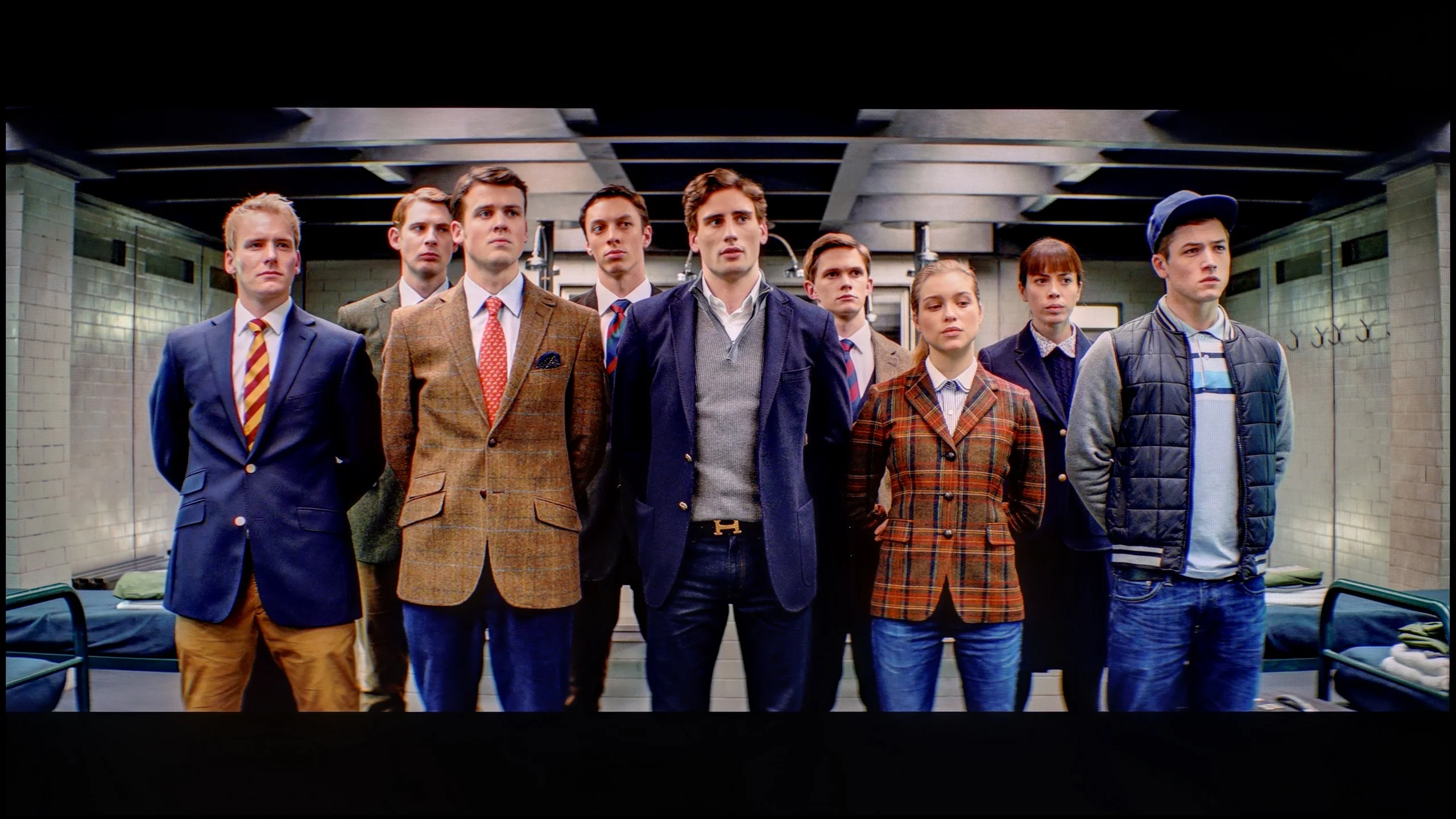
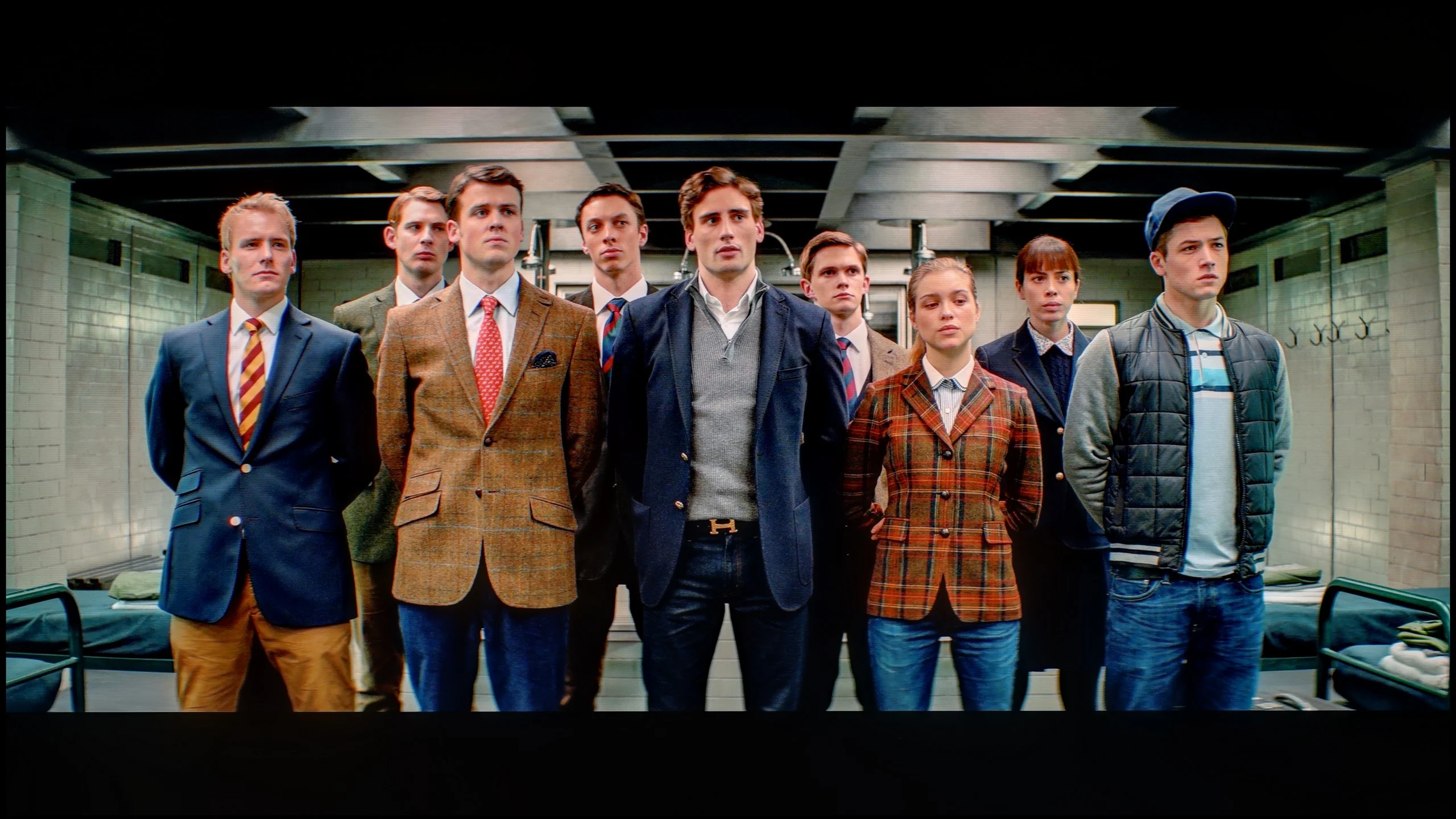
The photos show how movies look on the TV. Pay attention to black detail visibility, colors, and shadow tint.


The photos show how movies look on the TV. Pay attention to black detail visibility, colors, and shadow tint.
After completing the calibration process using professional tools, we can confidently state that the LG G5 offers nearly reference-quality image. Most of the errors related to white balance and the ColorChecker test are below the value of 2, which is a phenomenal result, practically imperceptible to the human eye. And while one could still criticize that in HDR films the television tends to slightly dim the smallest elements of the image, in practice, this does not negatively affect the overall impression. Hats off to LG, because once again they provide the user with enormous possibilities for adjusting their display – and this, combined with very good parameters of the panel itself, results in an image that is truly hard to surpass.
During calibration we focused primarily on HDR content, because that's where the factory settings required the biggest corrections. We didn't neglect SDR mode, though, which after adjustment was brought almost to perfection. Colors are very accurate and brightness is handled as it should be. The biggest improvement in HDR came from correcting the white balance. After removing the excess red and blue, the pinkish tint disappeared and the image became much more natural. Skin tones, whites and all colors that had been shifting toward magenta improved. After calibration most errors fell below a Delta E of 2–3, the threshold at which the average viewer stops noticing differences with the naked eye. The LG B6 can therefore deliver a very accurate image, especially for the manufacturer's entry-level OLED model.
Smoothness of tonal transitions
8.5/10
7.3/10
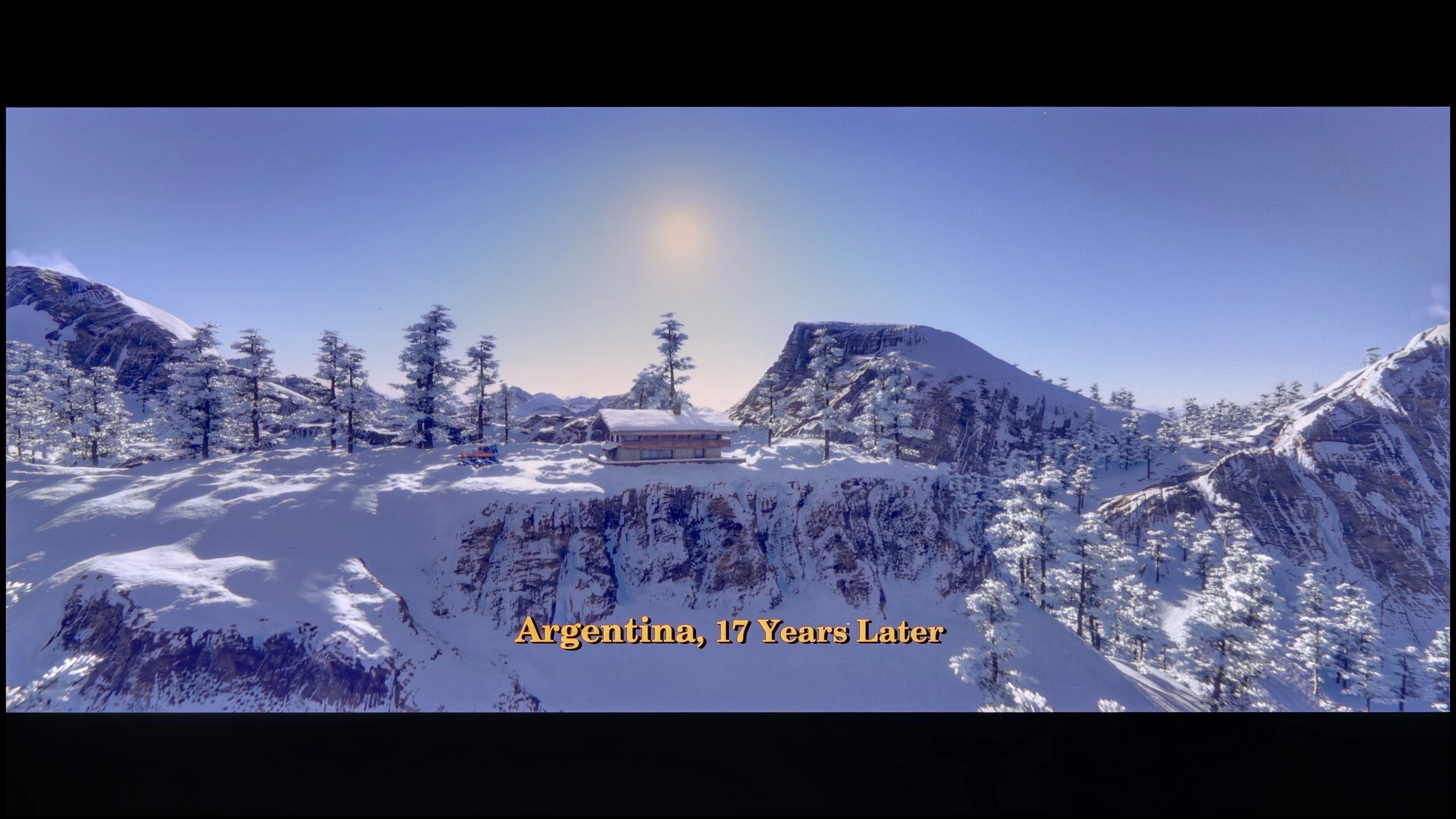

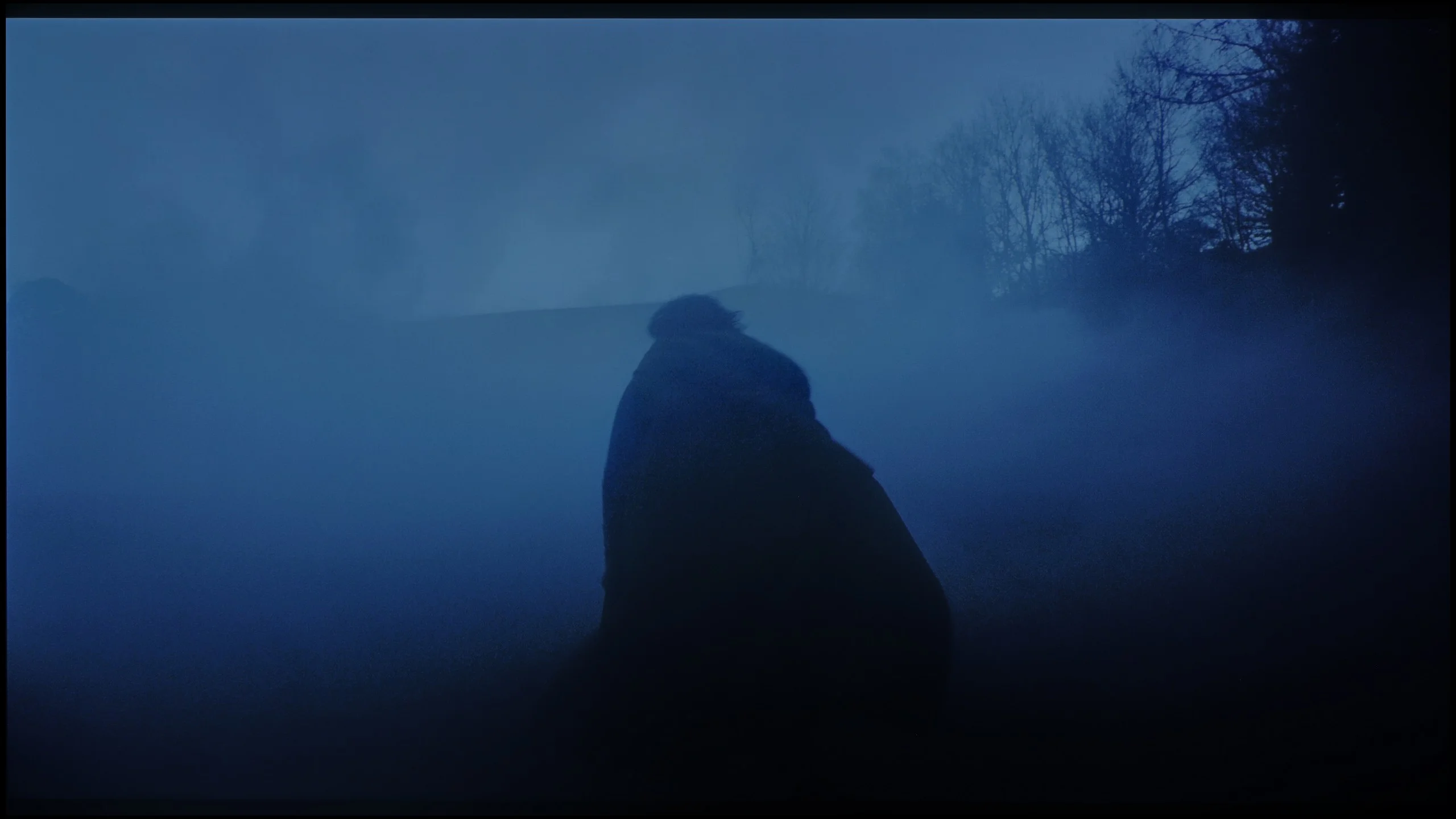

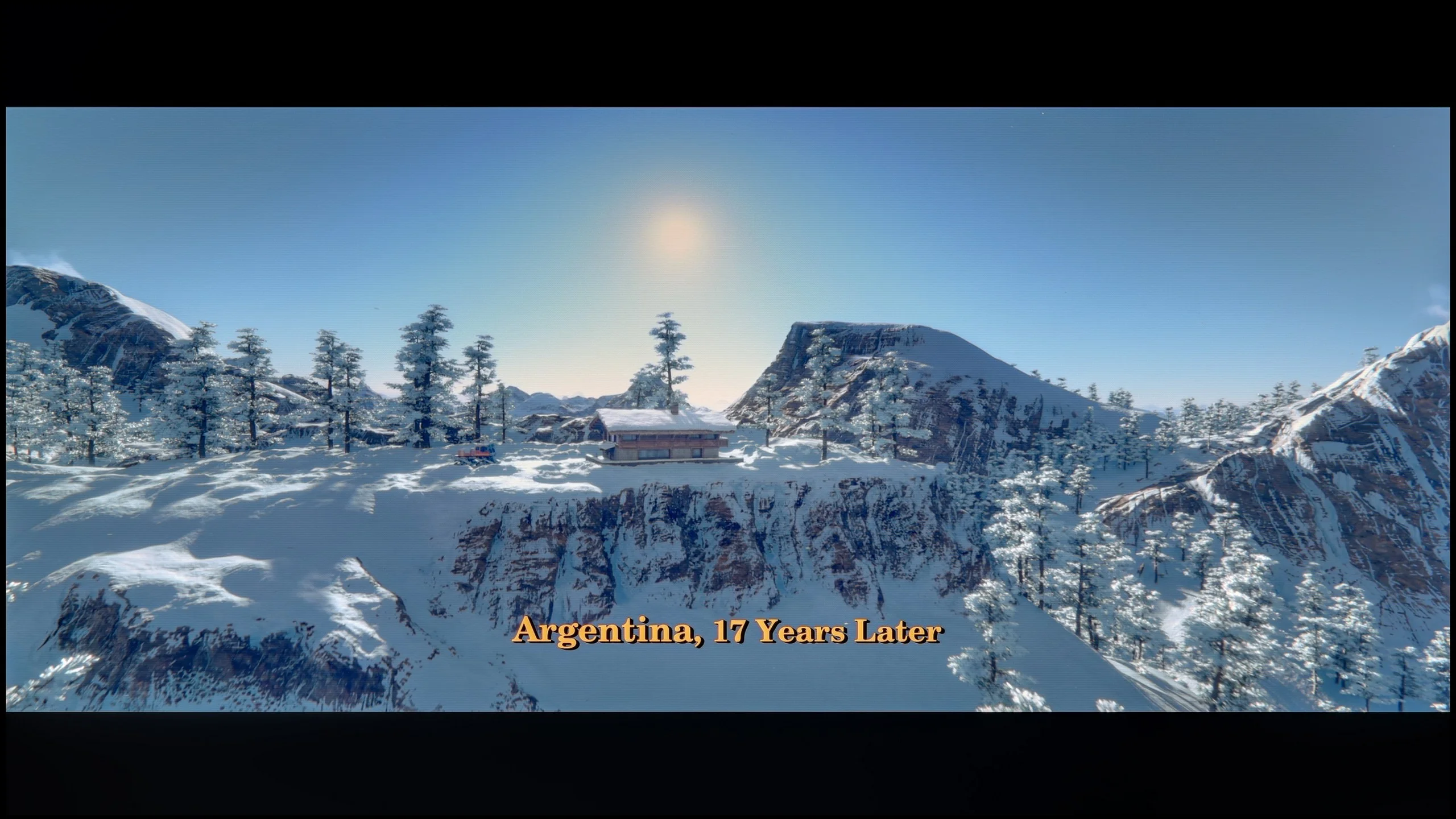
These are selected scenes that show smooth tonal transitions from one color to another. If you see distinct banding, it’s the TV panel’s fault.

These are selected scenes that show smooth tonal transitions from one color to another. If you see distinct banding, it’s the TV panel’s fault.
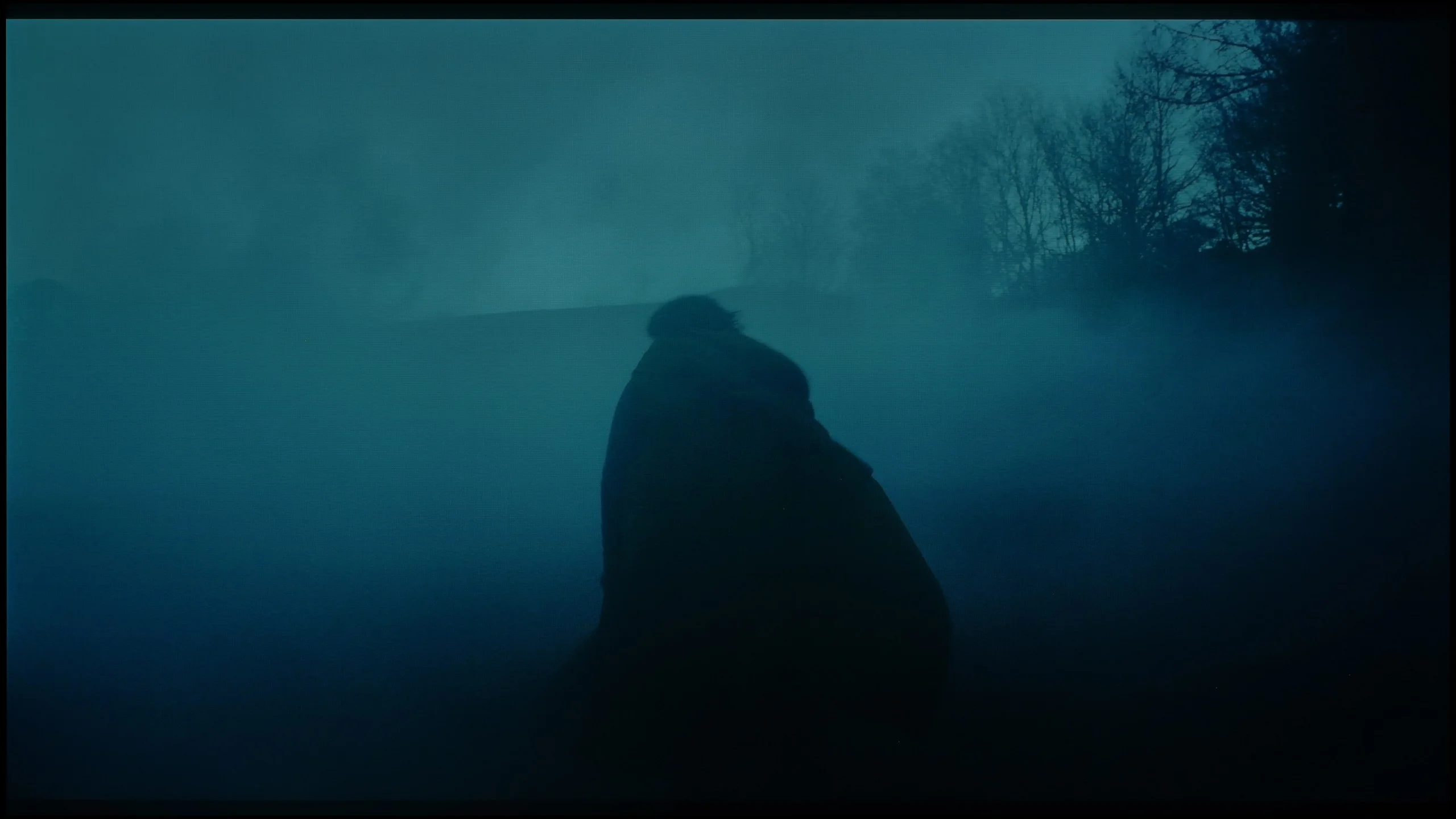
These are selected scenes that show smooth tonal transitions from one color to another. If you see distinct banding, it’s the TV panel’s fault.

These are selected scenes that show smooth tonal transitions from one color to another. If you see distinct banding, it’s the TV panel’s fault.
The smoothness of tonal transitions in the LG G5 is a clear step forward compared to last year's model. Not only has the brightness improved, but also the way colors blend, which the G4 sometimes struggled with. In the vast majority of scenes, the G5 has no issues with tonal transitions – there is no typical banding associated with WOLED technology, nor ugly breaks between colors. Of course, in very dark areas of the image and with shades of gray, minor imperfections can still be noticed, but these are things that the average viewer wouldn't even register. In short – it's really good.
Tonal transitions on the LG B6 are quite good, though you can still see some limitations typical of WOLED panels. In most scenes, colors transition smoothly between shades, without noticeable banding or unwanted digital artifacts. It's not always perfect, however. Most problems appear in the dark areas of the image, where WOLED panels have long been somewhat weaker. This is partly due to the greater difficulty of driving the panel at very low brightness and to the design's use of a white subpixel. Compared with last year's model there is a slight improvement, but it still doesn't reach the level of the best QD-OLED TVs or more advanced LCD models.
Image scaling and smoothness of tonal transitions
8.7/10
8/10

Smooth transition function
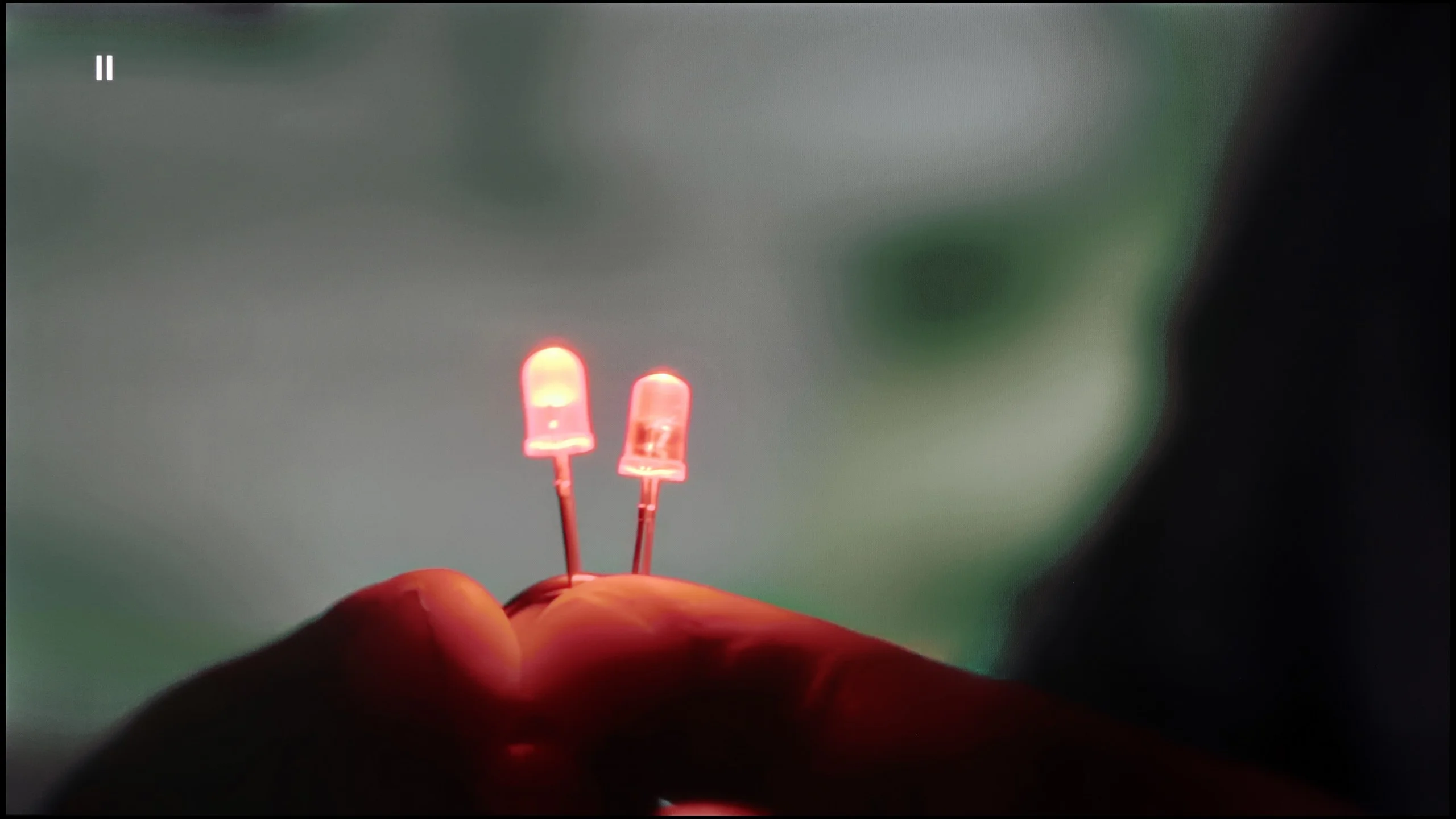
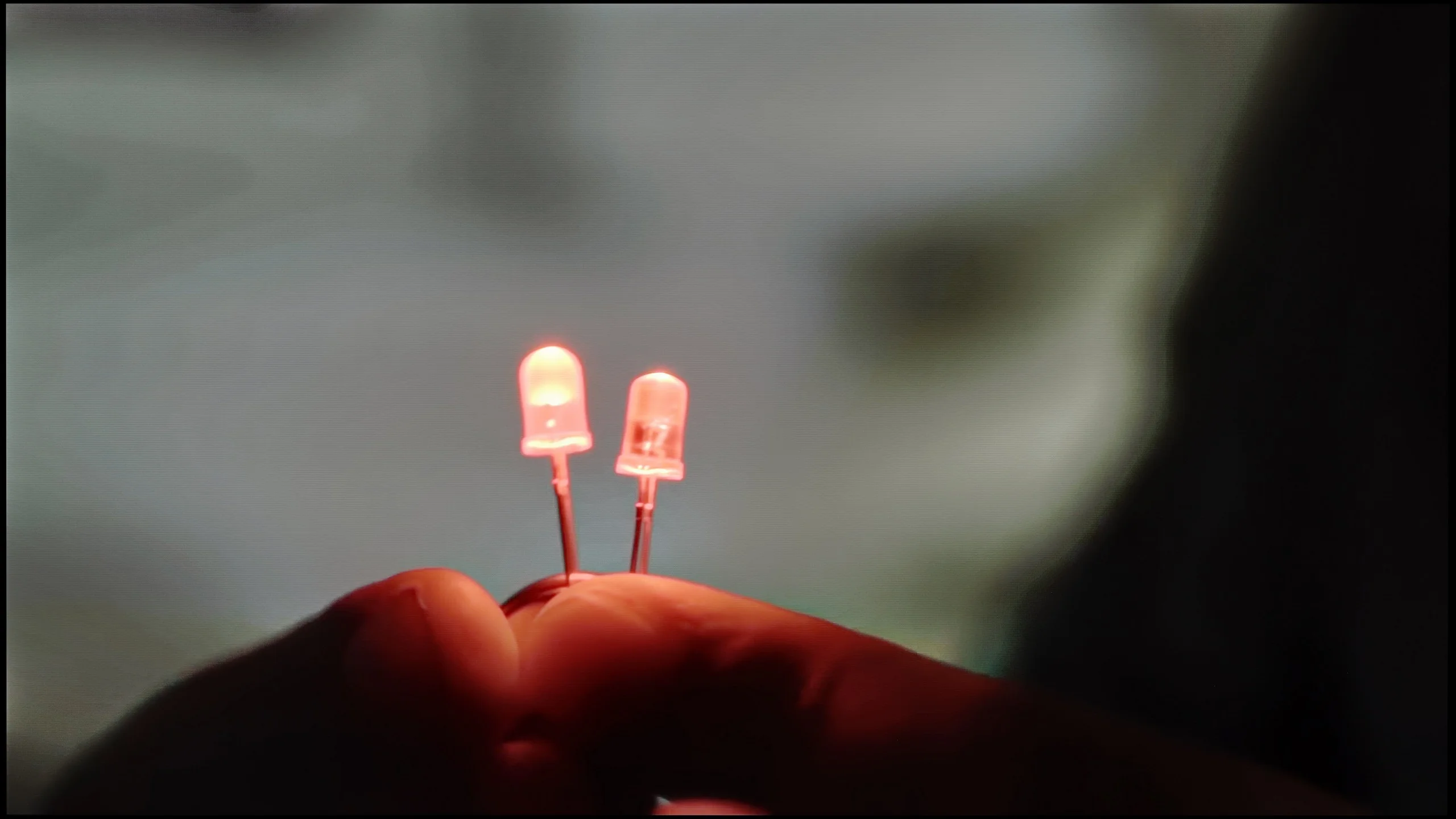
The match photo shows how the TV smooths weak tonal transitions in low-quality video.
Image scaling SD (576i)


The model photo shows how it handles upscaling of SD material.
Upscaling and digital image processing in the LG G5 perform very well. The television handles lower quality content exceptionally, especially when the "Smooth Gradation" feature is set to a low level. In this mode, it effectively removes unwanted artifacts and issues with visible tonal transitions. It may also slightly smooth out some desired details, such as the subtle texture of clothing or skin, but importantly – it does not remove film grain, so it’s hard to say there’s a serious compromise here. It’s one of those options that’s definitely worth enabling.
The G5 also does well with upscaling, which is improving the quality of older materials. The test image with the model looked really solid – slight edging was visible, but that’s an effect that can’t be completely avoided. Additionally, there were no issues with overscan, which – contrary to appearances – is not obvious, even in 2025.
The LG B6 handles lower-quality sources very well. Much of the credit goes to effective digital image processing, which can mask some source imperfections without overly smoothing the whole scene. The feature "Smooth Gradation" proves particularly useful. It can significantly reduce posterization, which we mentioned earlier, especially in darker areas of the image. The safest choice remains Low or Medium. The function still effectively smooths harsh tonal transitions, but does not yet interfere too much with fine details. The most dedicated purists can, of course, leave it off. Upscaling to 4K also performs very well. Full HD and 720p content retain a good amount of detail, and the image is neither overly sharpened nor excessively blurred. Some limitations become noticeable only with very poor sources below 720p, where the smallest subtitles and fine elements are not always perfectly sharp, but this is true for almost every other TV on the market.
Blur and motion smoothness
8.5/10
8.5/10
Blur (native resolution, maximum refresh rate):






Blur (BFI function enabled):
Image flickers in this mode






Blur (4K 165Hz):



Blur ():
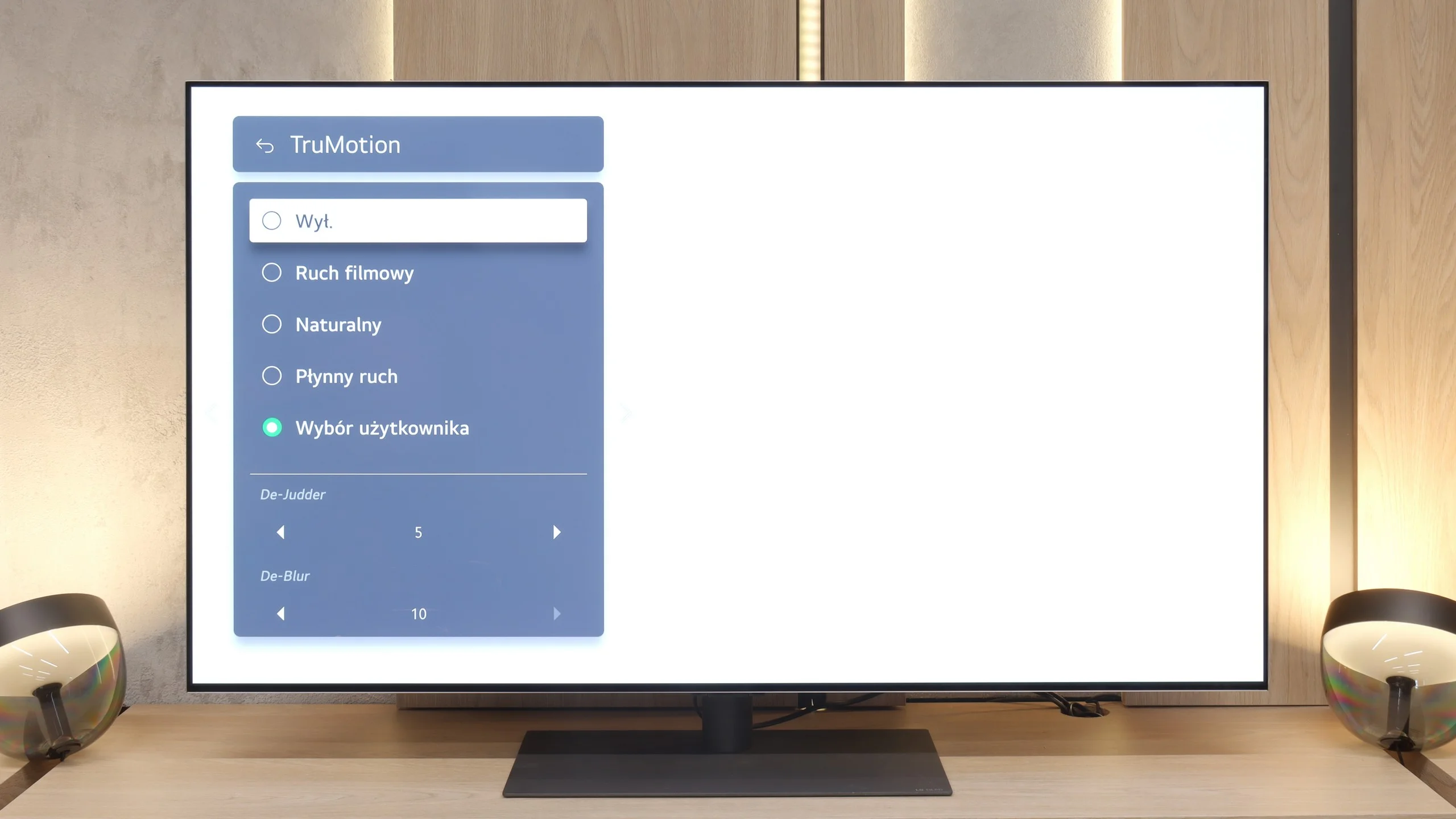
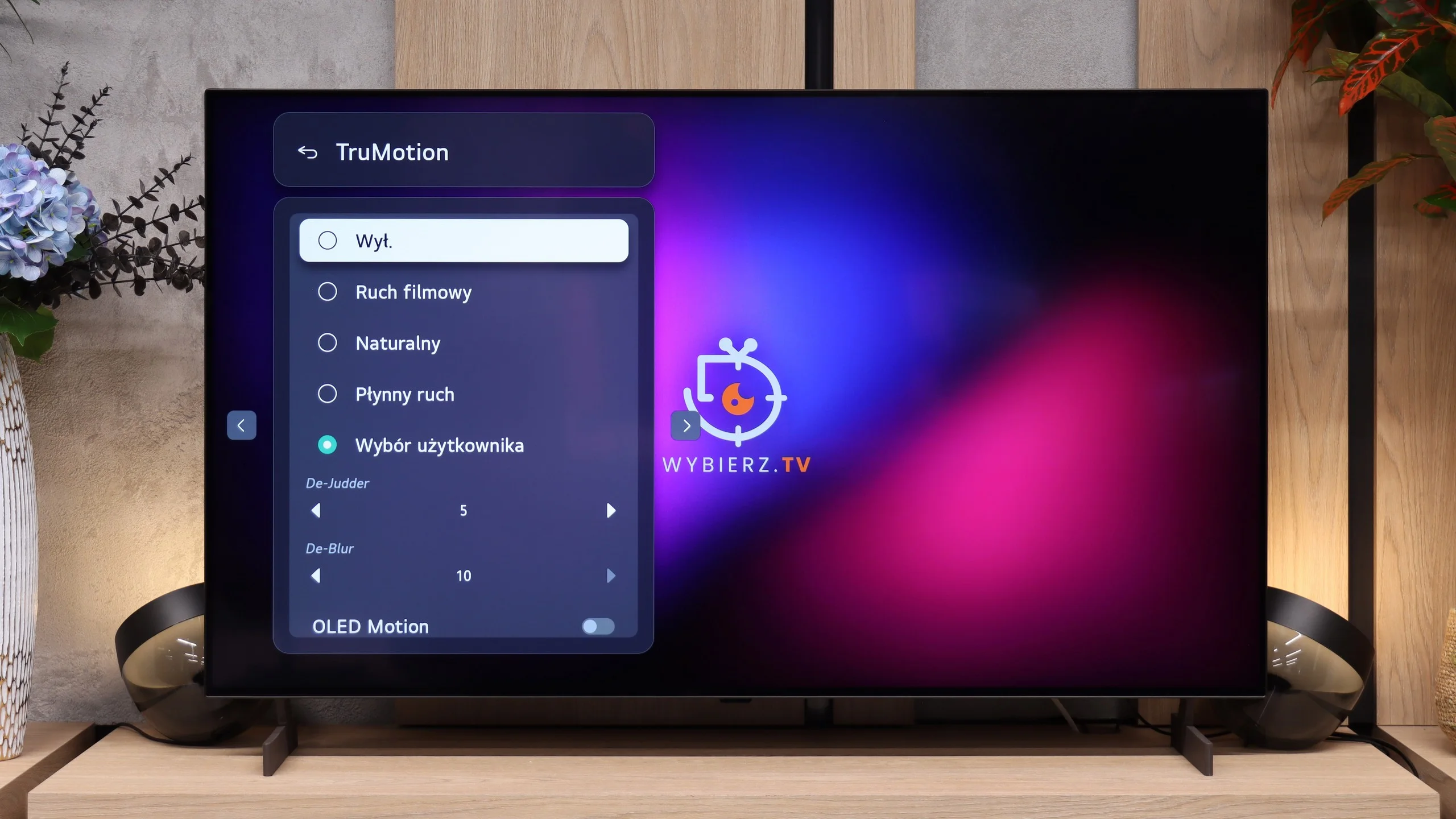
The motion fluidity on the LG G5 is simply phenomenal. The TV is equipped with a 165 Hz refresh rate panel, and this combined with the instantaneous response time of the OLED matrix delivers incredible results. The picture doesn’t stutter or smear like on classic LCD TVs. Like most LG models, the G5 features a motion smoother, which can be useful when watching movies – of course, we're talking about the TruMotion mode. With the “De-Blur” and “De-Judder” sliders, we can adjust the smoothness of older material according to our preferences, whether we want to preserve the characteristic film stutter or move towards a more fluid, television-like effect.
One of the biggest advantages of OLED panels is their very fast pixel response time. This keeps the image sharp and prevents the visible smearing that often appears on LCD TVs. However, there is a downside. During slow camera pans, motion can look more choppy than on LCD screens, where the slower panel naturally masks some of that effect. Fortunately, on the LG B6 you can easily soften this with TruMotion. With the motion smoothing properly adjusted, you can achieve smoother motion without giving the picture an excessive soap-opera effect.
Console compatibility and gaming features
10/10
10/10
- ALLM
- VRR
- VRR range40 - 165Hz40 - 120Hz
- Dolby Vision Game Mode
- Correct implementation of HGIG
- 1080p@120Hz
- 1440p@120Hz
- 4K@120Hz
- Game bar
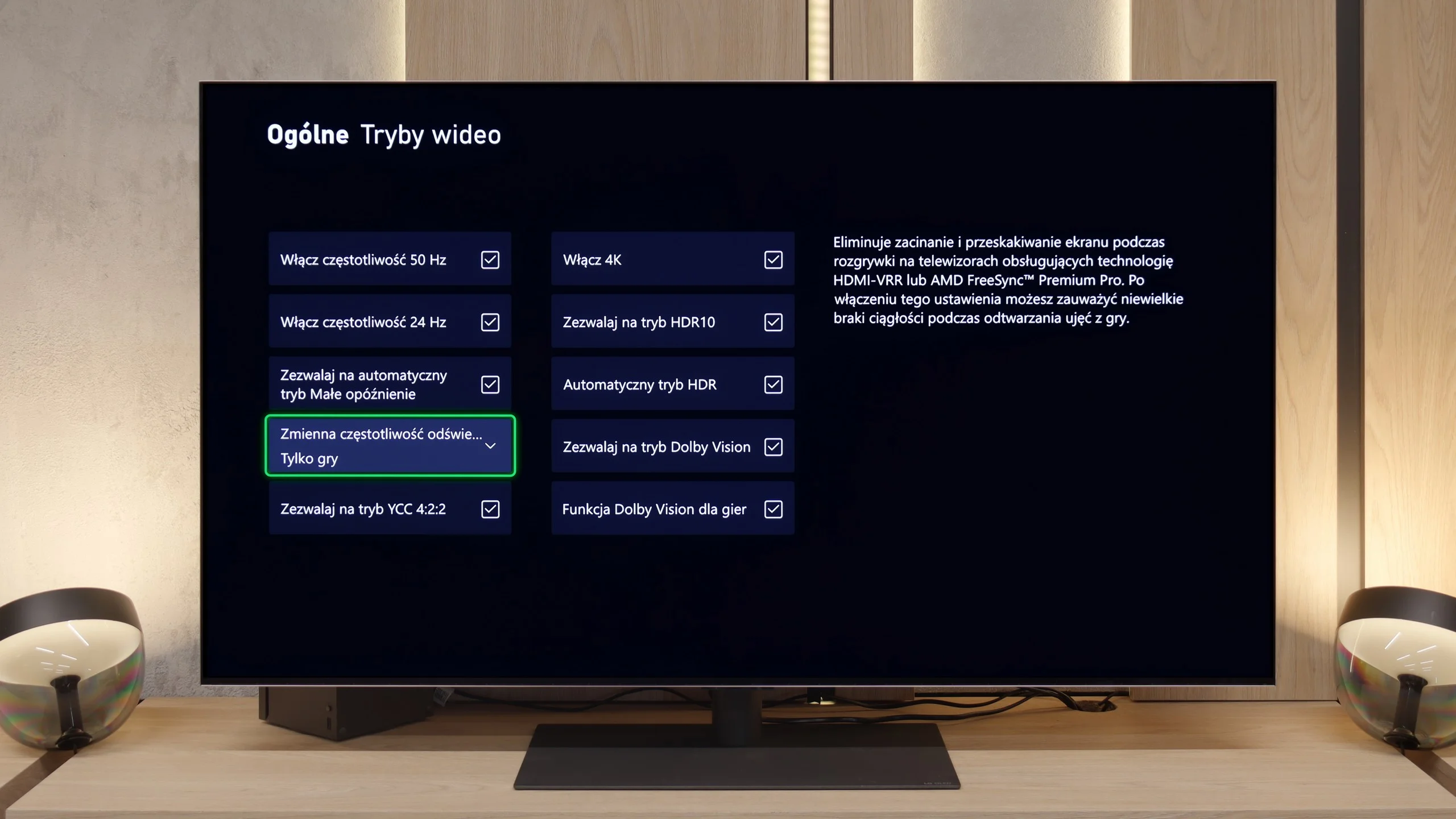
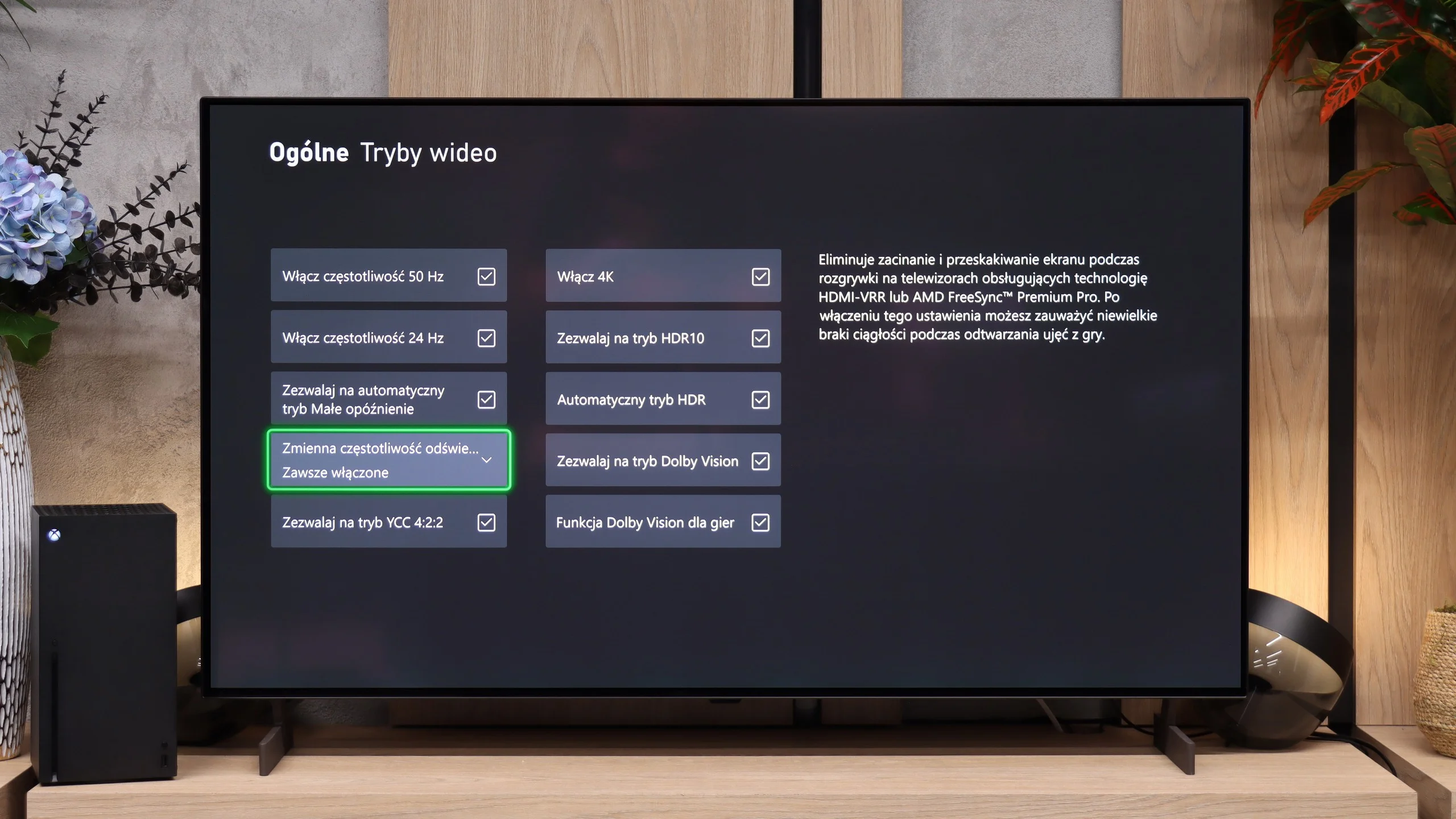
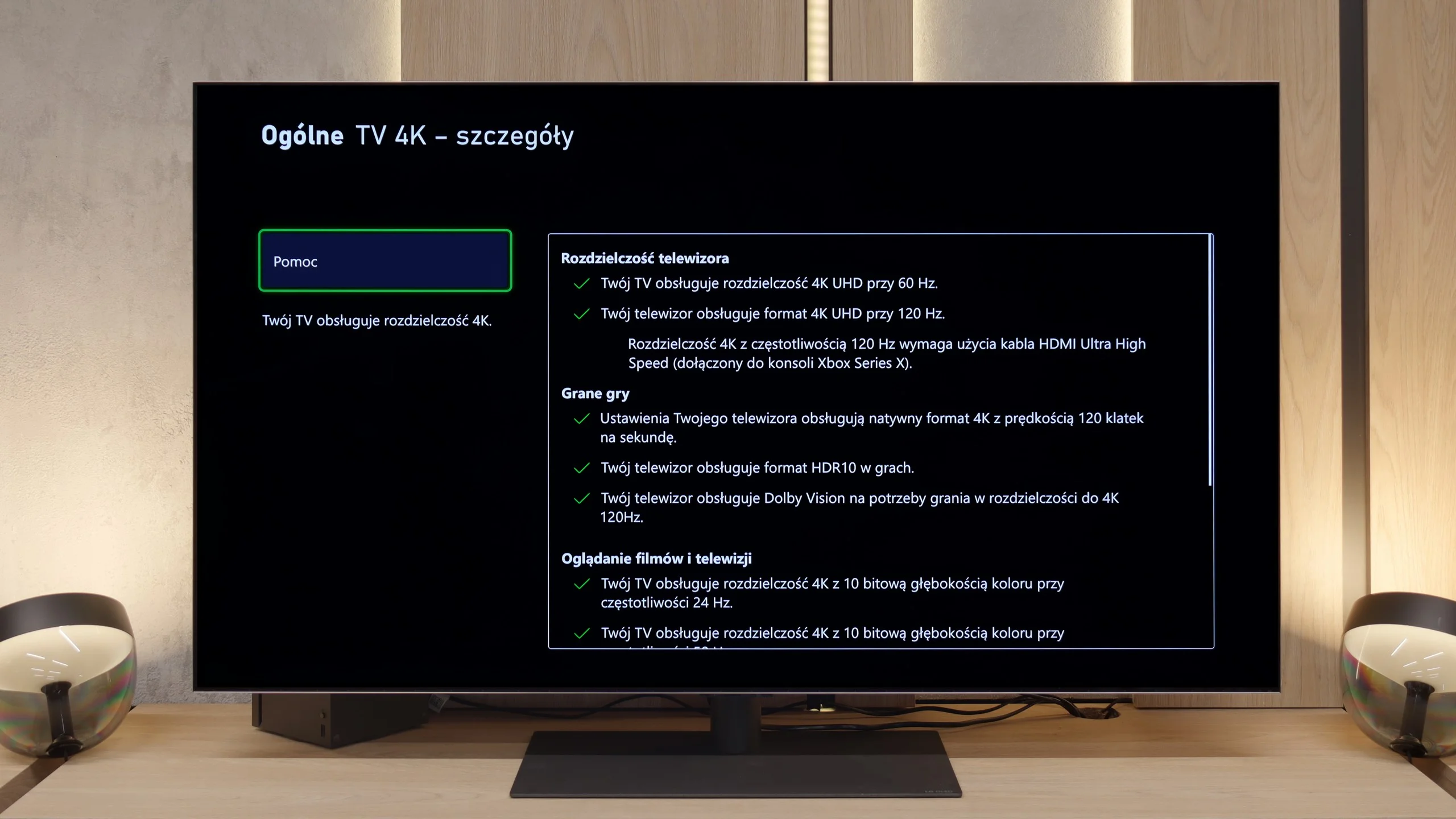
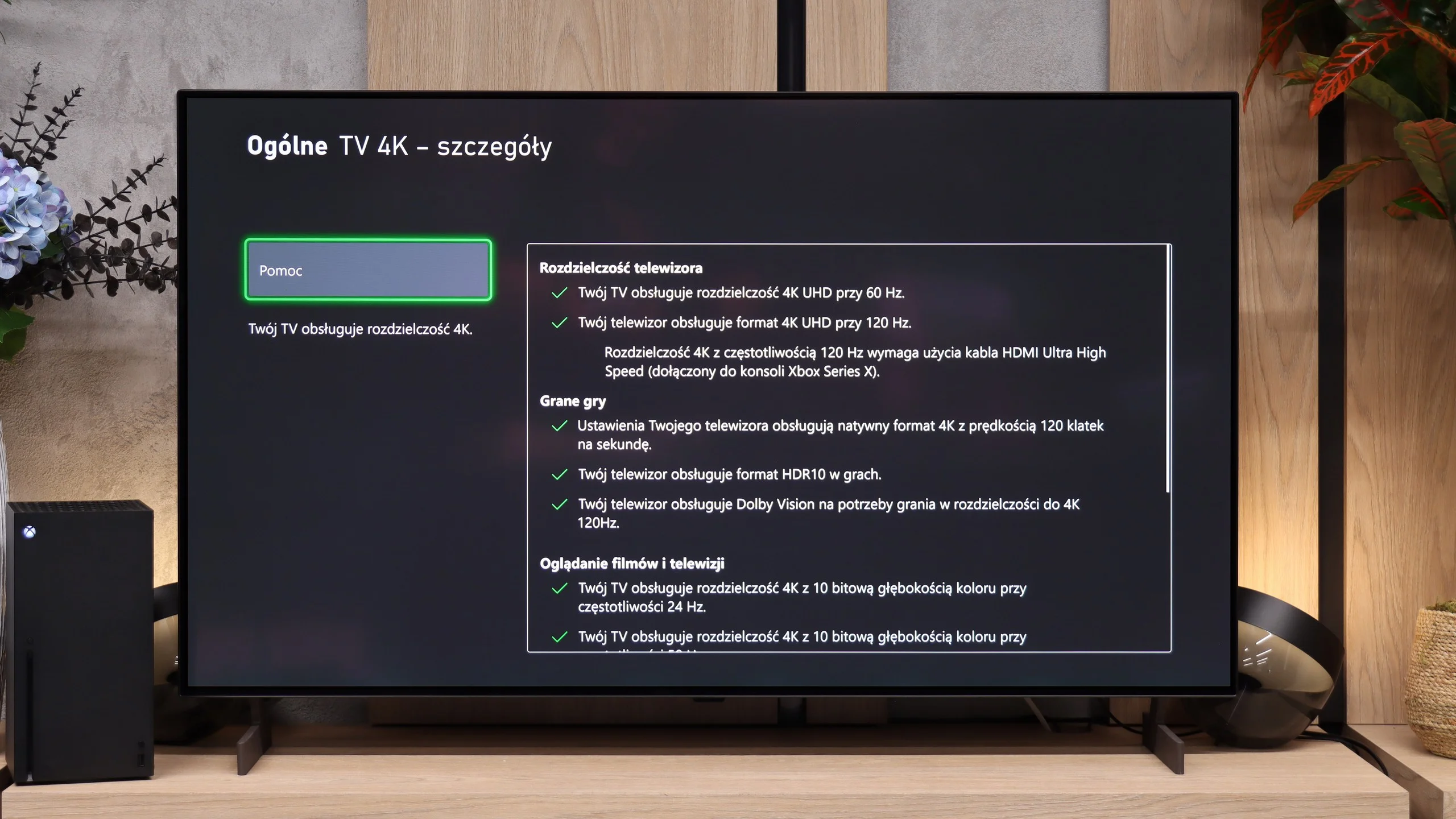
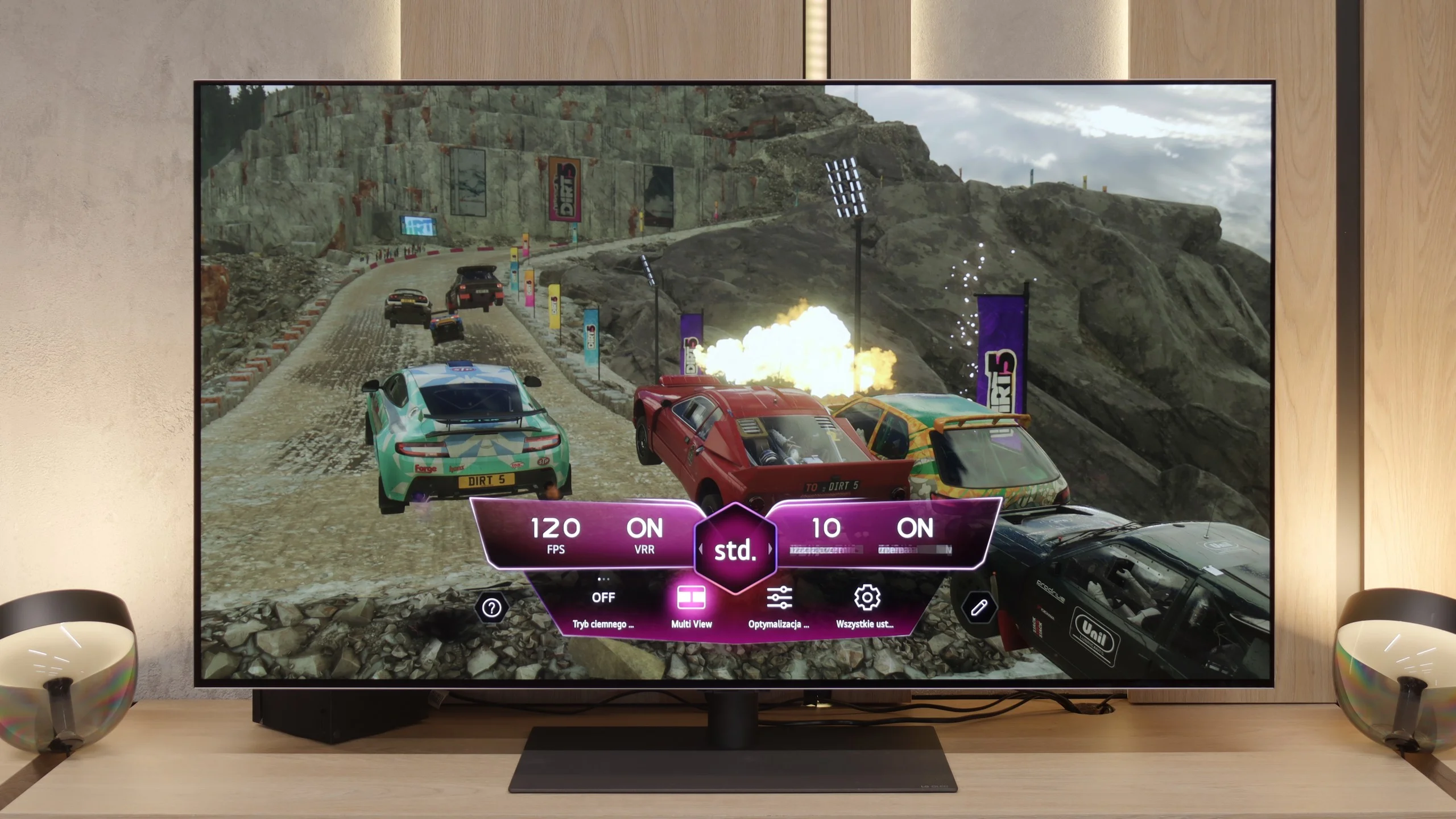
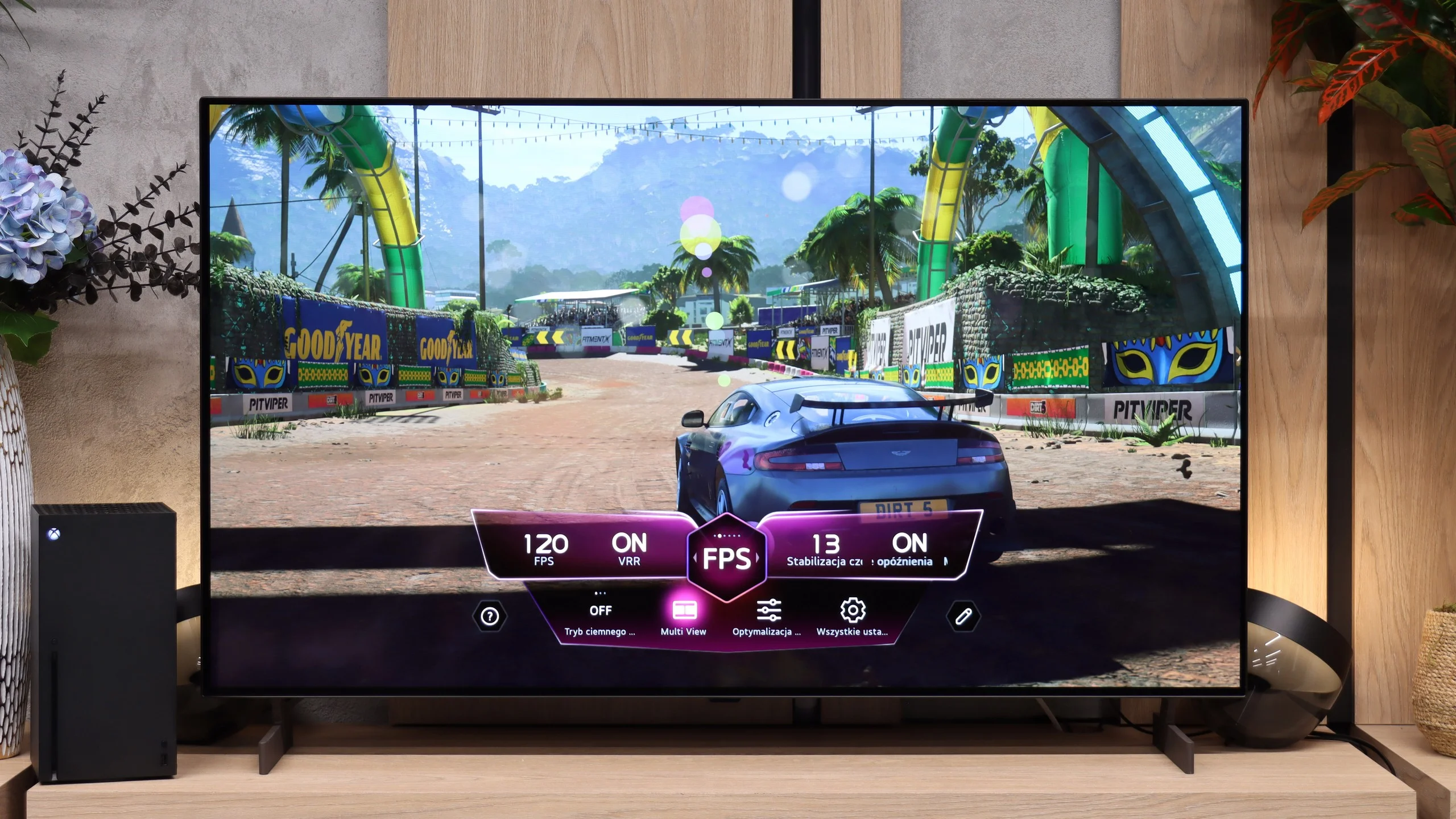
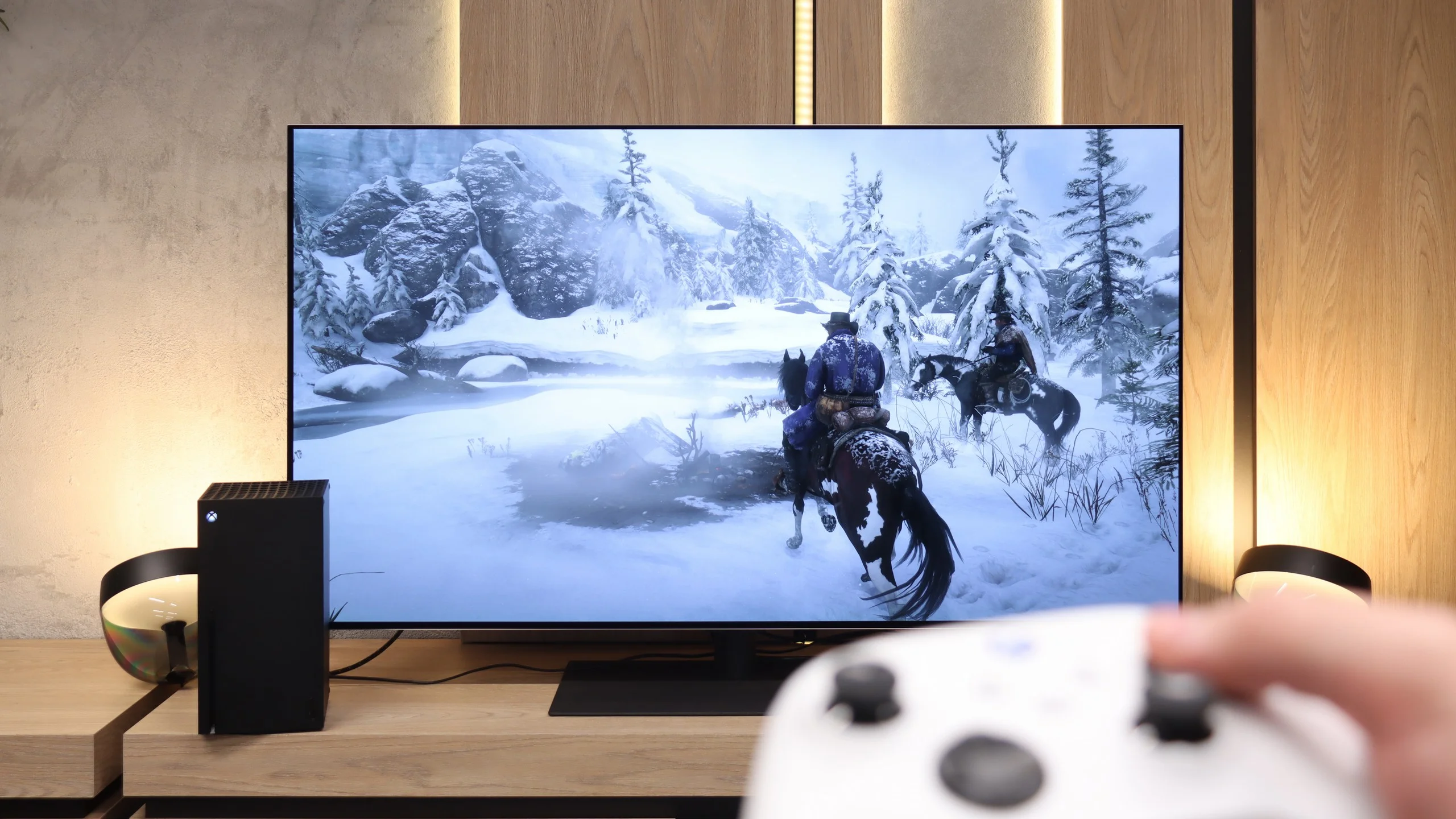
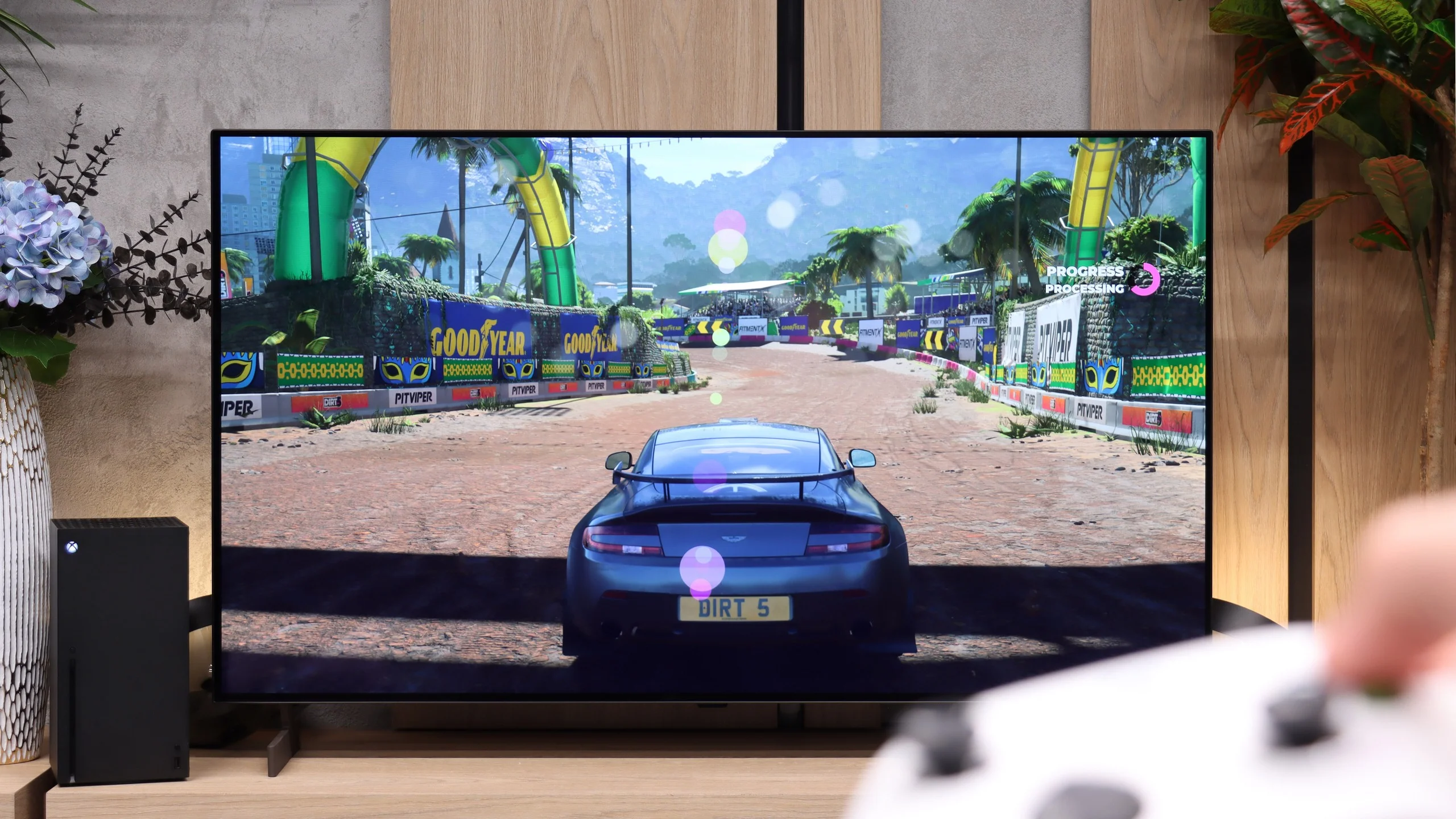
Features for gamers? Perfect. That should be enough for you to know what level we are dealing with here. G5 is a television designed with gamers in mind, so we find literally everything one can expect from a gaming screen. There is Game Bar, support for high resolutions with high refresh rates – that is, 4K at 120 Hz, and even more, because the panel has a refresh rate of 165 Hz (which PC gamers will benefit from). The television supports variable refresh rates (VRR), automatic low latency mode (ALLM), and correctly supports HDR in games thanks to HGiG. All of this adds up to one of the best sets of gaming features available on the market. Well done, LG.
LG OLED B6 offers a powerful set of advantages for gamers; it's simply a complete platform for PS5, Xbox Series X/S, or a solid PC. It has four full-size HDMI 2.1 ports with 48 Gbps bandwidth, so you can skip the annoying cable swapping when you want to connect several newer devices at once. We get the full suite of sync technologies – from classic VRR to G-Sync and FreeSync. The screen seamlessly matches the refresh rate to the frame output produced by the console or graphics card. Of course ALLM is included: the B6 automatically detects a running game and immediately cuts input lag to a minimum. HDR handling is also excellent. The TV supports Dolby Vision, and a properly implemented HGiG standard means that after an initial calibration in the console settings the picture won’t suffer from blown-out highlights or lost detail in bright areas. The cherry on top is the Game Bar. Instead of digging through the full menu during gameplay, one click lets you adjust shadow visibility, tweak selected settings, or simply check the display’s current operating mode. All of this makes the LG B6 a great choice for gamers.
Input lag
9.9/10
9.8/10
SDR
HDR
Dolby Vision
The input lag on the LG G5 is incredibly low. The response time to our actions – whether we're playing with a controller, keyboard, or mouse – is almost perfect. The controls are instant, and the game reacts exactly when we expect it to. The Dolby Vision Gaming mode does introduce slightly higher delays, but even then it's hard to complain about anything – in the worst case, the values hover around 20 ms, which for most players will be practically unnoticeable.
Input lag in the LG B6 is very low. At 120 Hz it's about 5 ms, and at 60 Hz it rises to roughly 15 ms. Both results are good enough that most gamers won't notice any delay between their inputs and what happens on screen. Dolby Vision performs a bit worse, where input lag can increase to around 25 ms. That's still not a bad result, but the most demanding players using an Xbox may already feel a difference compared to standard HDR.
Compatibility with PC
8.8/10
7.6/10
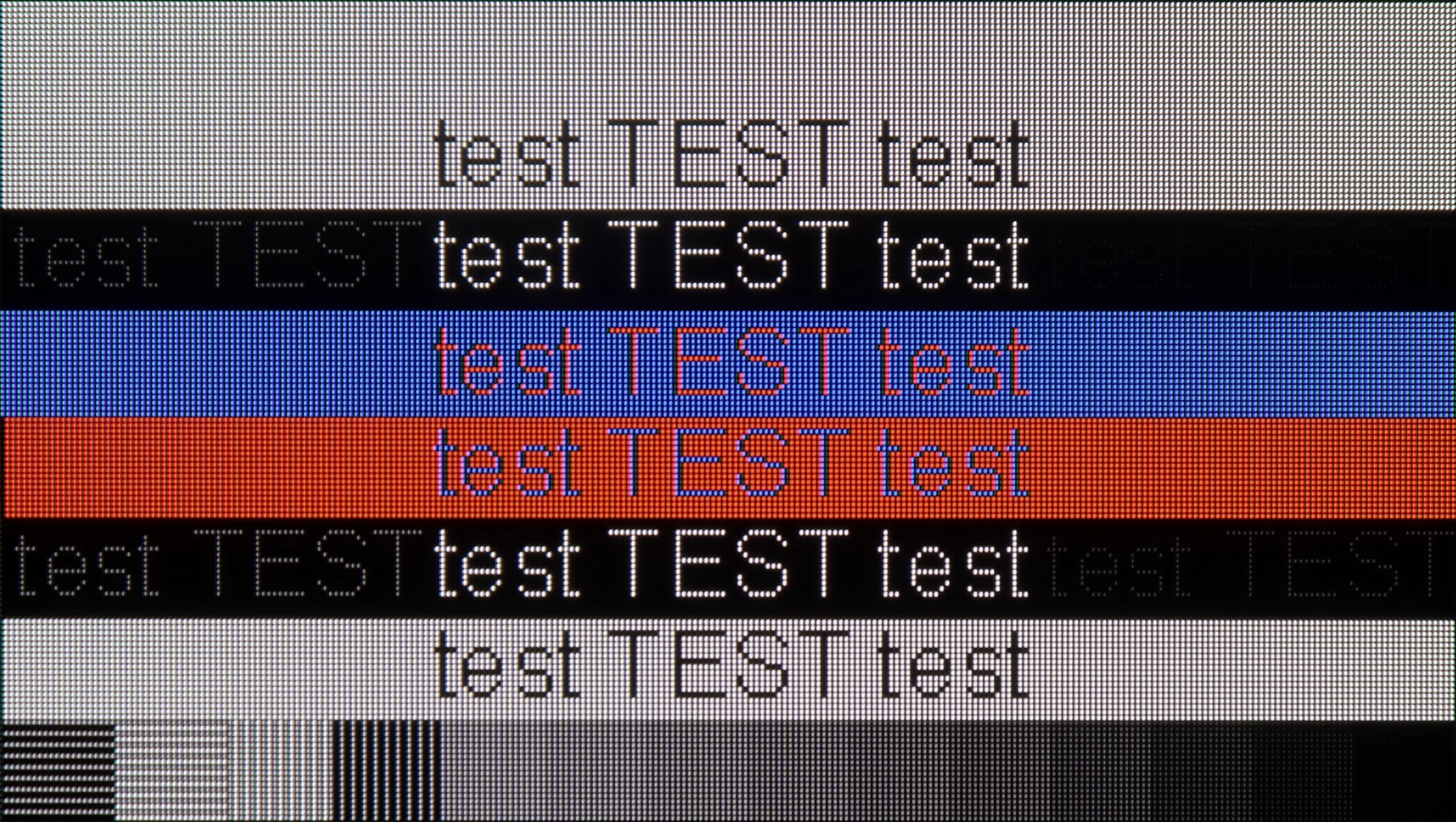
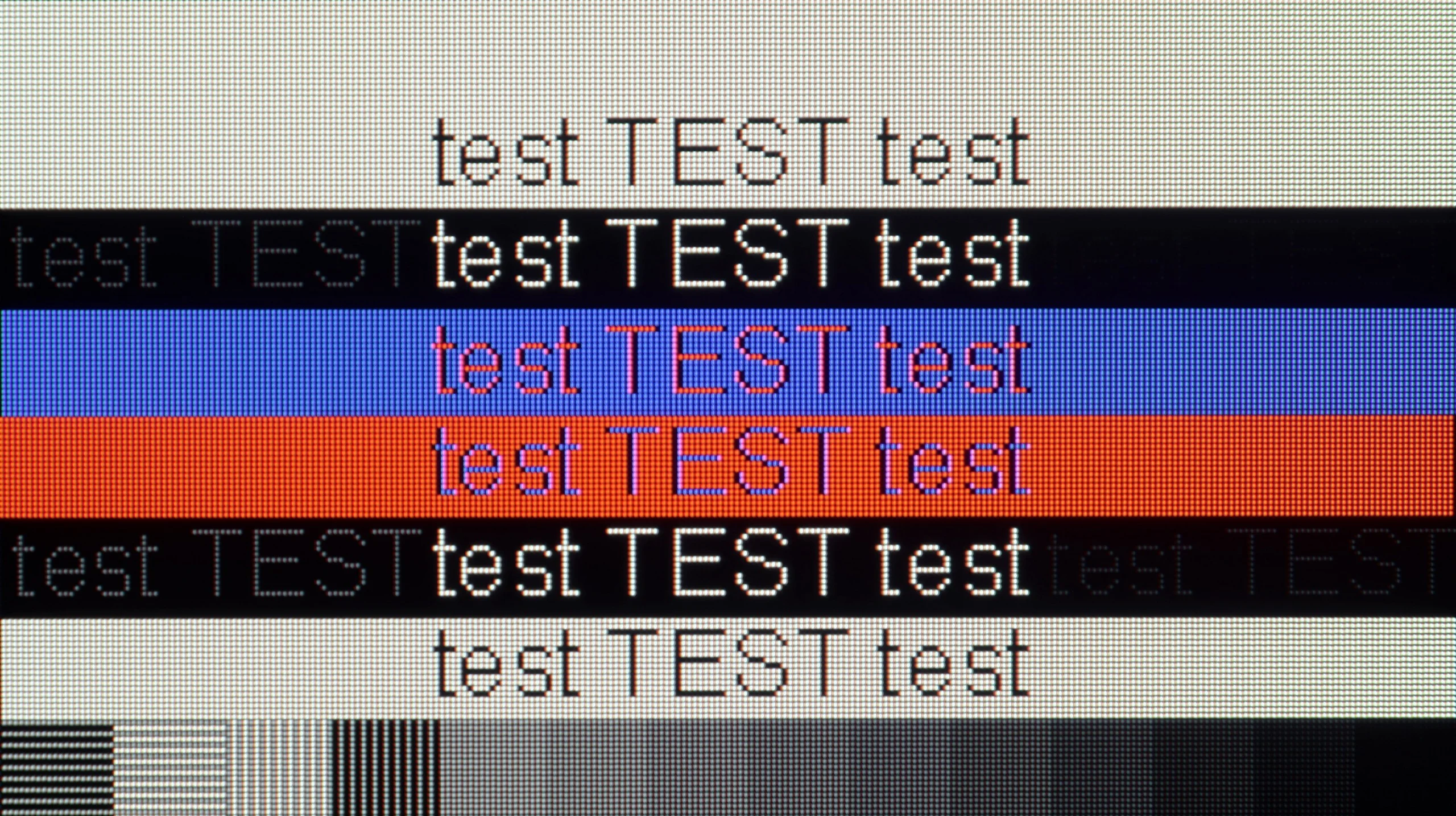
The photo shows the legibility of small fonts. Ideally, lines should be the same thickness on both light and dark text, with minimal pixel gaps.
Collaboration with a PC? Almost ideal. The television, as we mentioned earlier, has great features for gamers – including those using a PC. On board, we find full G-Sync certification, a 165 Hz panel, and a super-fast input lag of around 5 ms. Thanks to the correct implementation of chroma 4:4:4, fonts are very readable – both the smallest and the largest. Although due to the WRGB subpixel layout, there may be slight shadows around the characters, for most users this effect will be virtually unnoticeable. The G5 performs excellently as a screen for work, entertainment, and gaming – also from a computer.
The LG B6 also works very well as a computer display. Low input lag, support for VRR, G-Sync and FreeSync, and a high refresh rate mean there's little to fault it for gaming. Compared with pricier models, it only lacks additional modes with even higher refresh rates. In the best OLEDs and some LCD TVs you can now find even 240 or 330 Hz at lower resolutions. The B6 doesn't have that, but for most people it won't be a big loss. What may matter more is the WOLED panel's subpixel structure. Because it uses four subpixels, small fonts in Windows aren't perfectly sharp and you can sometimes see slight colored fringes around them. For occasional web browsing or computer work that probably won't be an issue. However, anyone planning to buy a smaller variant, for example 48 inches, and use it as their main monitor at a desk should keep that in mind.
Viewing angles
7.5/10
7.5/10
The viewing angles on the LG G5 are very good, mainly due to the use of the WOLED matrix. It's hard to find something to complain about here – the image does not significantly lose brightness or quality even when we look at the screen from the side. However, it must be fairly noted that there is some regression compared to the G4 model. The predecessor used an MLA matrix with micro-lenses, which offered slightly better light distribution. Also, compared to QD-OLED matrices, the angles are worse. Nevertheless, the overall viewing experience at an angle remains very good and should not be an issue in everyday use.
Viewing angles on the LG B6 are very good, which is typical for almost all OLED TVs. Even at extreme side angles the picture maintains strong color saturation and doesn't noticeably lose brightness. In this respect, really only models with QD-OLED panels perform better. However, there's one thing worth mentioning. Some WOLED panels may show a slight greenish tint at extreme angles. This isn't a rule; some units exhibit the effect more, others hardly at all. It depends on the specific unit.
Daytime performance
8/10
4.8/10
Panel brightness
LG OLED B6: 313 cd/m2
LG OLED G5: 810 cd/m2
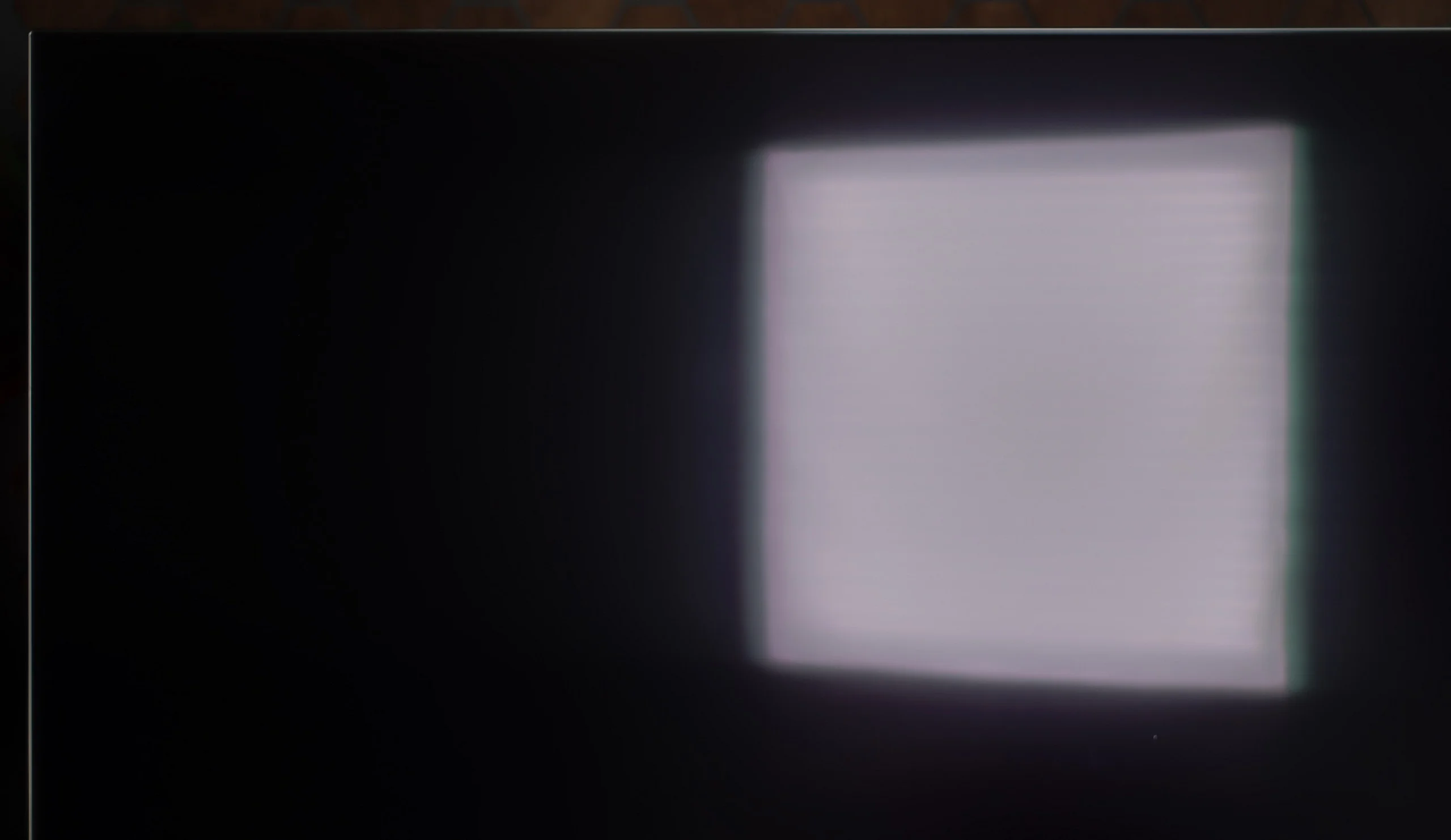
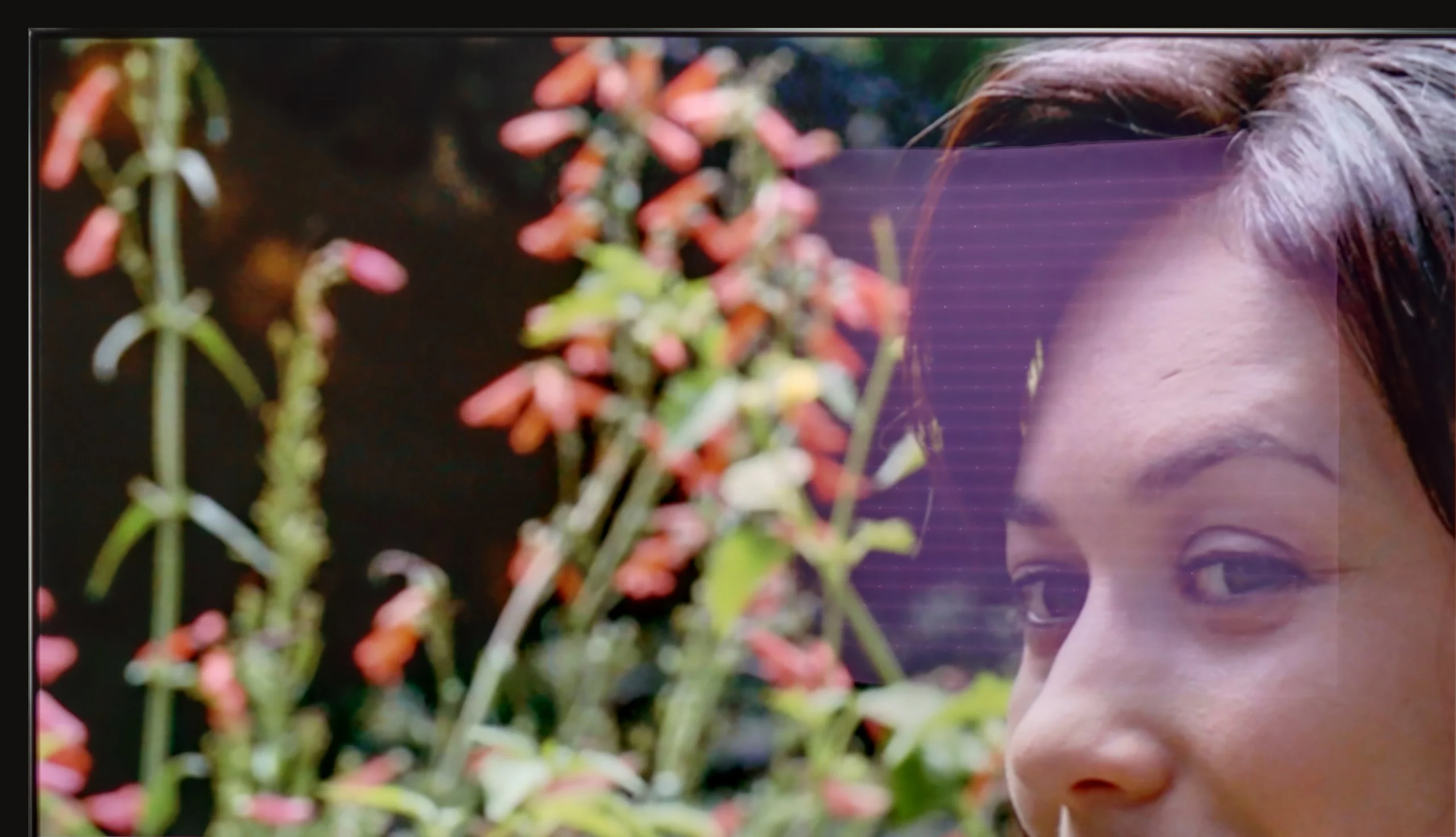
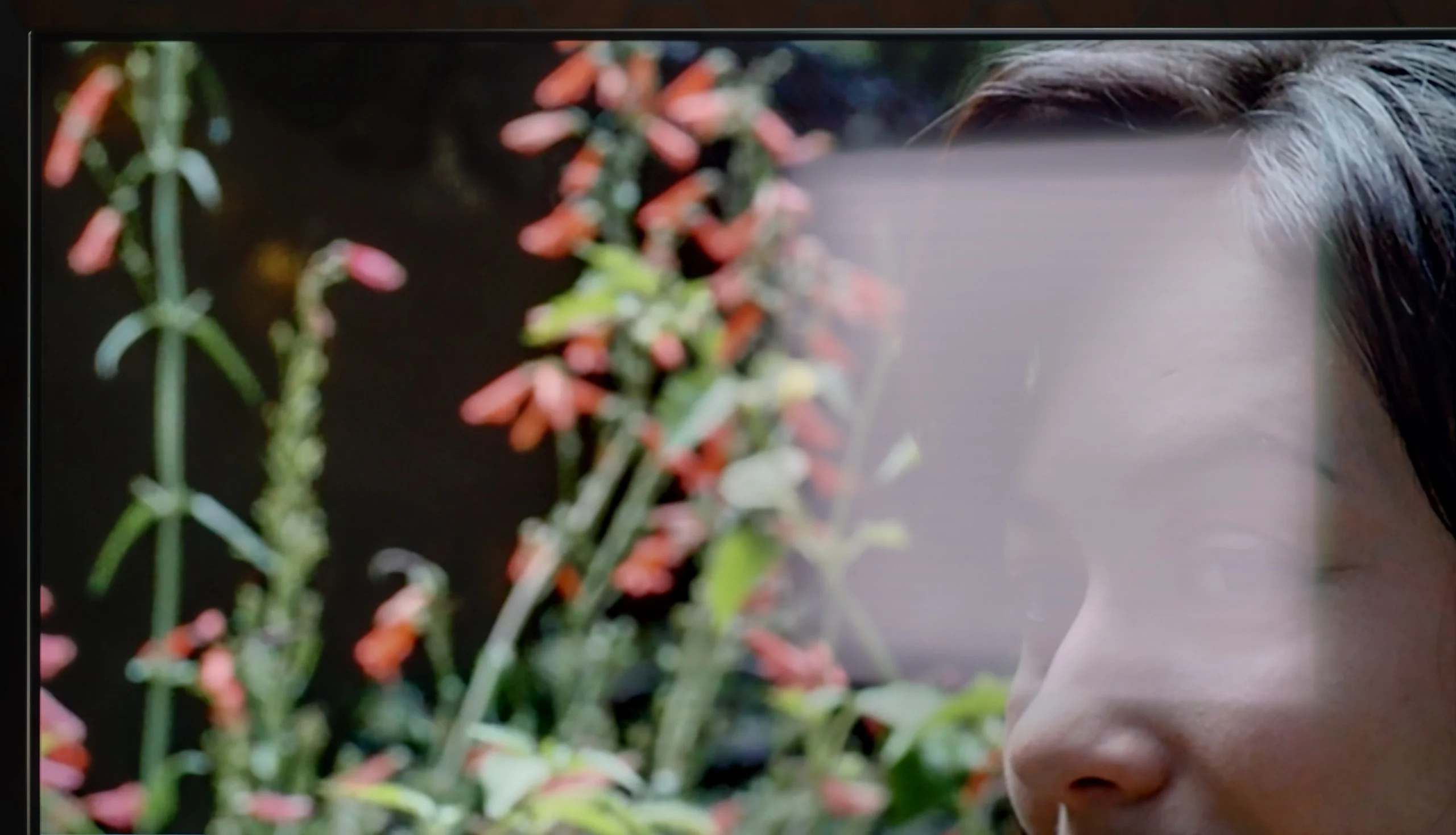
The LG G5, thanks to its very high brightness, performs excellently in bright rooms. Even with SDR content, the average brightness value is around 800 nits, which is significantly more than in standard televisions. It can easily handle a bright living room. Although the panel averages out reflections, it still maintains significantly better black levels and colors during the day than QD-OLED panels or matte-coated screens. The G5 will perform well in very sunny rooms—unless you really can't stand reflections on the screen. In that case, you will need to use blackout shades or consider buying a television with a matte screen.
In the case of the LG B6, one of the bigger changes comes from the new OLED SE panel. The TV is slightly brighter than its predecessor, but at the same time it handles direct light reflections worse. The reason is a less effective polarizer, so reflections from windows or lamps are less effectively suppressed, and blacks in a bright room can look slightly lifted. LG tried to partially mask this effect with a satin screen coating. It does help to subtly diffuse reflections, but it doesn't eliminate them as effectively as earlier solutions. And in this respect the B series loses the most compared with the previous generation. During the day the screen no longer looks as clean, and strong light sources can clearly reflect on the panel.
That doesn't mean, of course, that the B6 is unsuitable for a bright living room. The higher screen brightness helps cut through ambient light, and during normal viewing the picture remains readable. The problem starts when there's a large window or a strong lamp opposite the TV. In those conditions the B6 doesn't perform at its best. So it's best used in a room where you can at least partially control the light falling directly on the screen.
Panel details
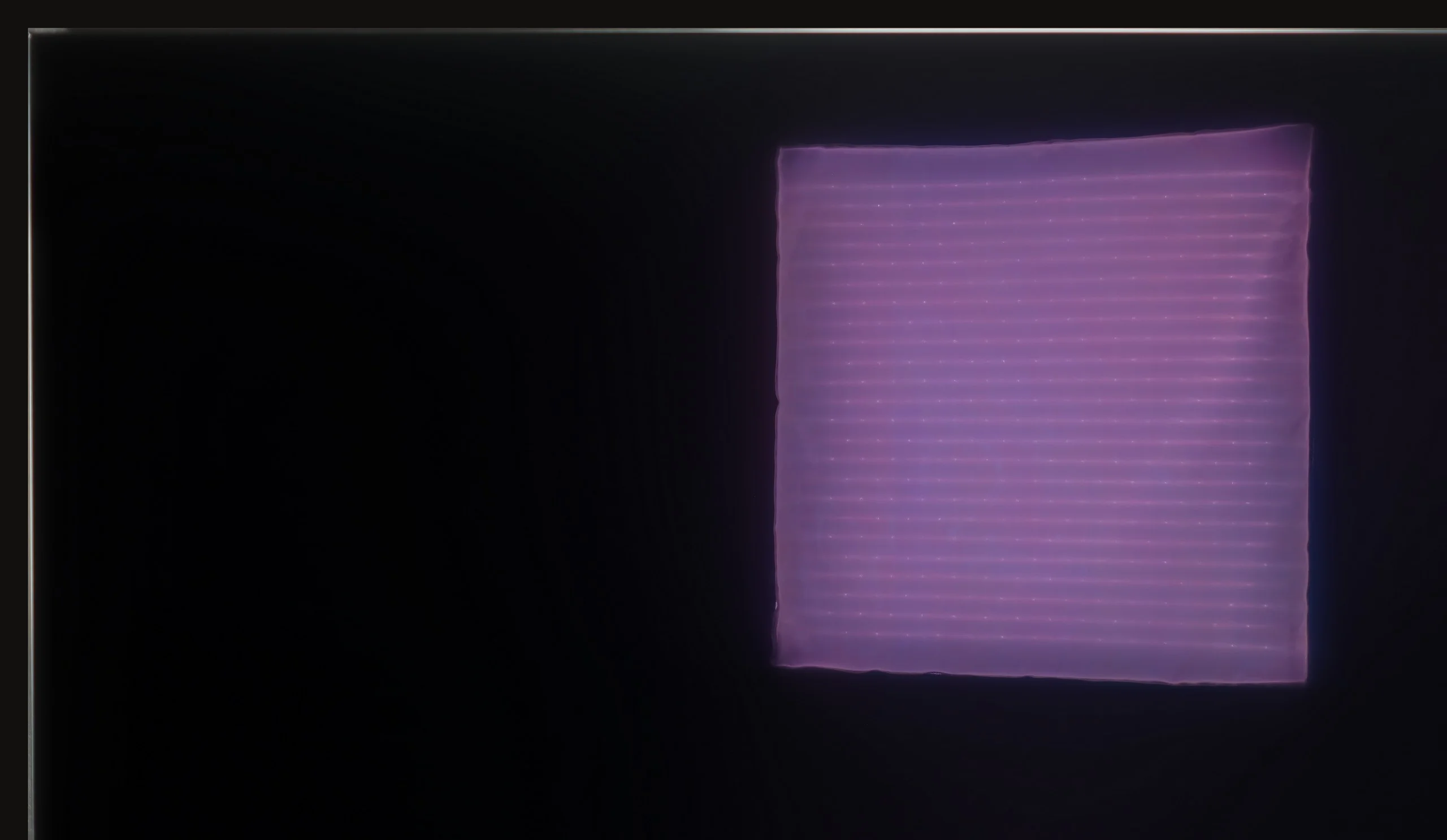
Subpixel Structure:
Panel uniformity and thermal imaging:


TV features
8.5/10
8/10
- SystemWebOSWebOS
- System performanceVery goodDecent
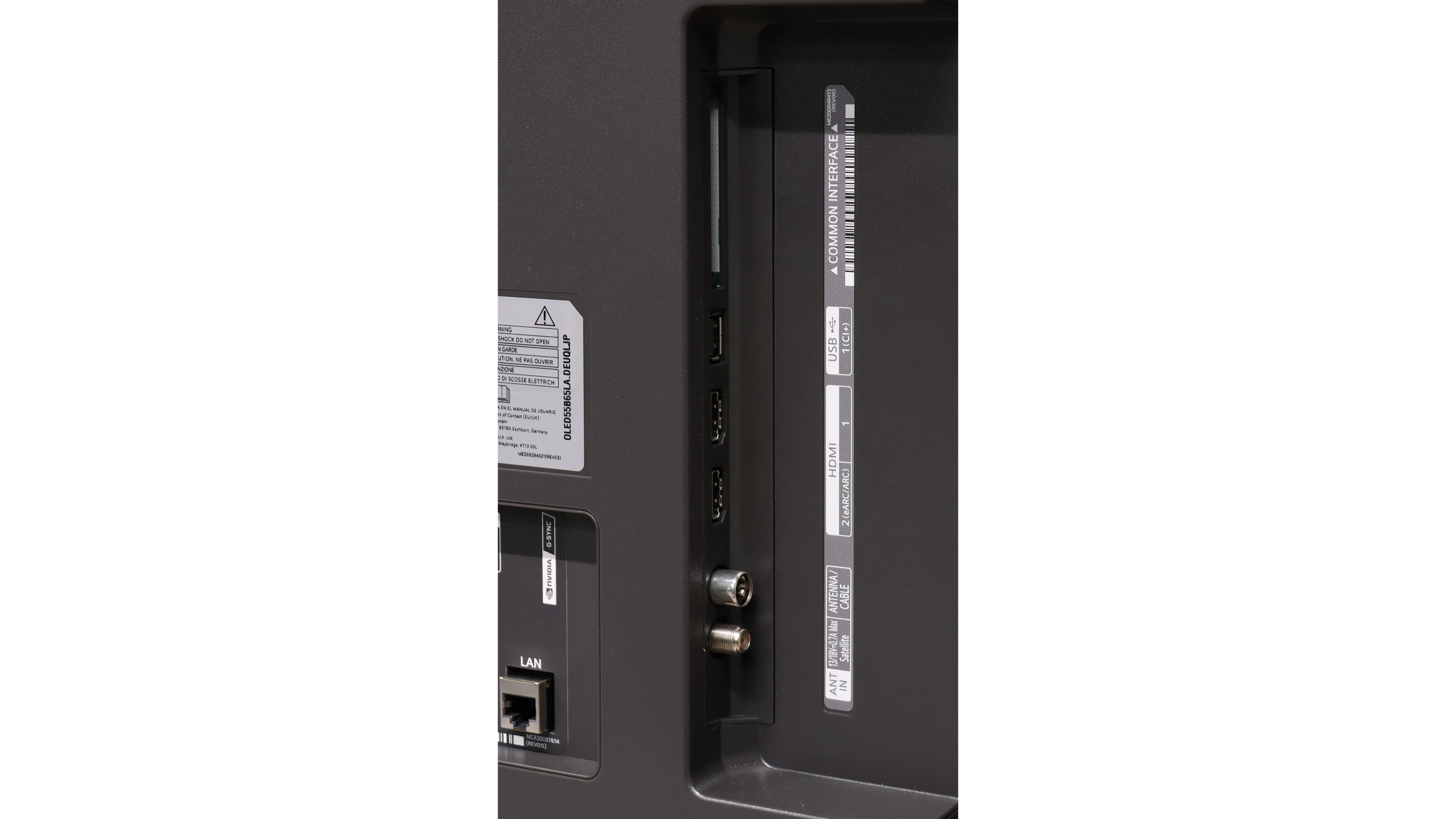
- HDMI inputs0 x HDMI 2.0, 4 x HDMI 2.1 48Gbps0 x HDMI 2.0, 4 x HDMI 2.1 48Gbps
- Other inputsIR (remote)
- OutputsToslink (Optical audio), eARC (HDMI), ARC (HDMI)Toslink (Optical audio), eARC (HDMI), ARC (HDMI)
- Network InterfacesWi-Fi 2.4GHz, Wi-Fi 5GHz, Ethernet (LAN) 100MbpsWi-Fi 2.4GHz, Wi-Fi 5GHz, Ethernet (LAN) 100Mbps
- TV receptionDVB-T, DVB-T2, DVB-S, DVB-S2, DVB-CDVB-T, DVB-T2, DVB-S, DVB-S2, DVB-C
Classic features:
- Recording to USB (terrestrial TV)
- Recording programming
- Picture in Picture (PiP)

- RF remote control (no need to aim)
- Backlit remote control
- Teletext
- Audio only mode
- Bluetooth headphones support
- Simultaneous Bluetooth headphones & TV audio
Smart features:
- AirPlay
- Screen mirroring (Windows Miracast)
- Voice search
- Voice search in native language
- Ability to connect a keyboard and mouse
Sound connection options
- HDMI audioeARC (HDMI), ARC (HDMI)eARC (HDMI), ARC (HDMI)
- Other audio outputsToslink (Optical audio)Toslink (Optical audio)
- Wireless audioBluetoothBluetooth
Supported audio formats (external HDMI eARC audio):
- Dolby Digital Plus 7.1
- Dolby True HD 7.1
- Dolby Atmos in Dolby Digital Plus (JOC)
- Dolby Atmos in Dolby True HD
- DTS:X in DTS-HD MA
- DTS-HD Master Audio
Senior accessibility
- Numeric keyboard on TV
- Font size adjustment
- Audio description
Classic Features
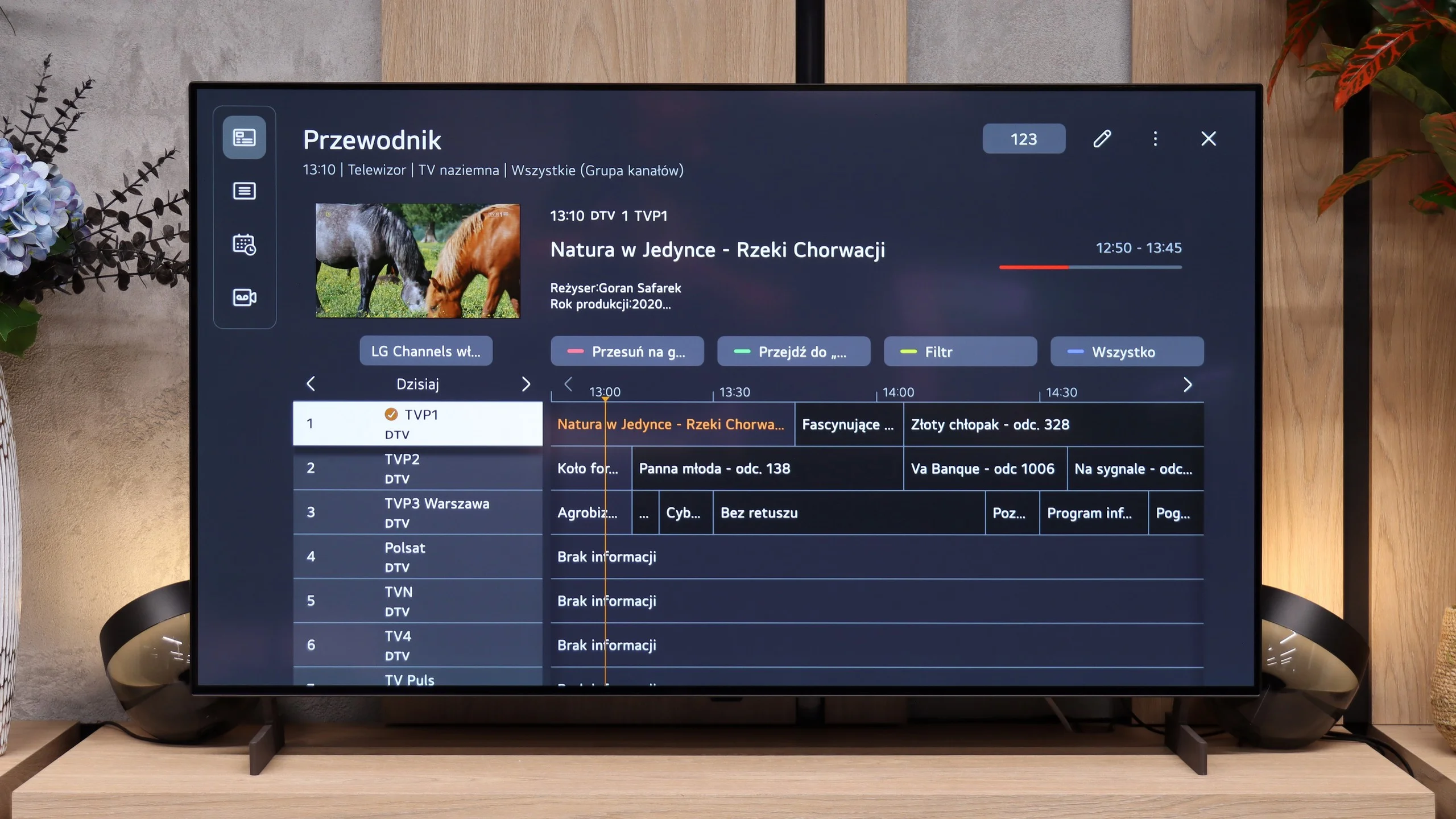
LG G5 has a lot to offer when it comes to classic TV features. Aside from the lack of the ability to watch two sources (PIP), the television performs well for everyday use. There are no issues with connecting external Bluetooth devices, such as headphones, and the EPG interface is very clear and understandable – even for those who are not particularly tech-savvy.
Smart TV Features
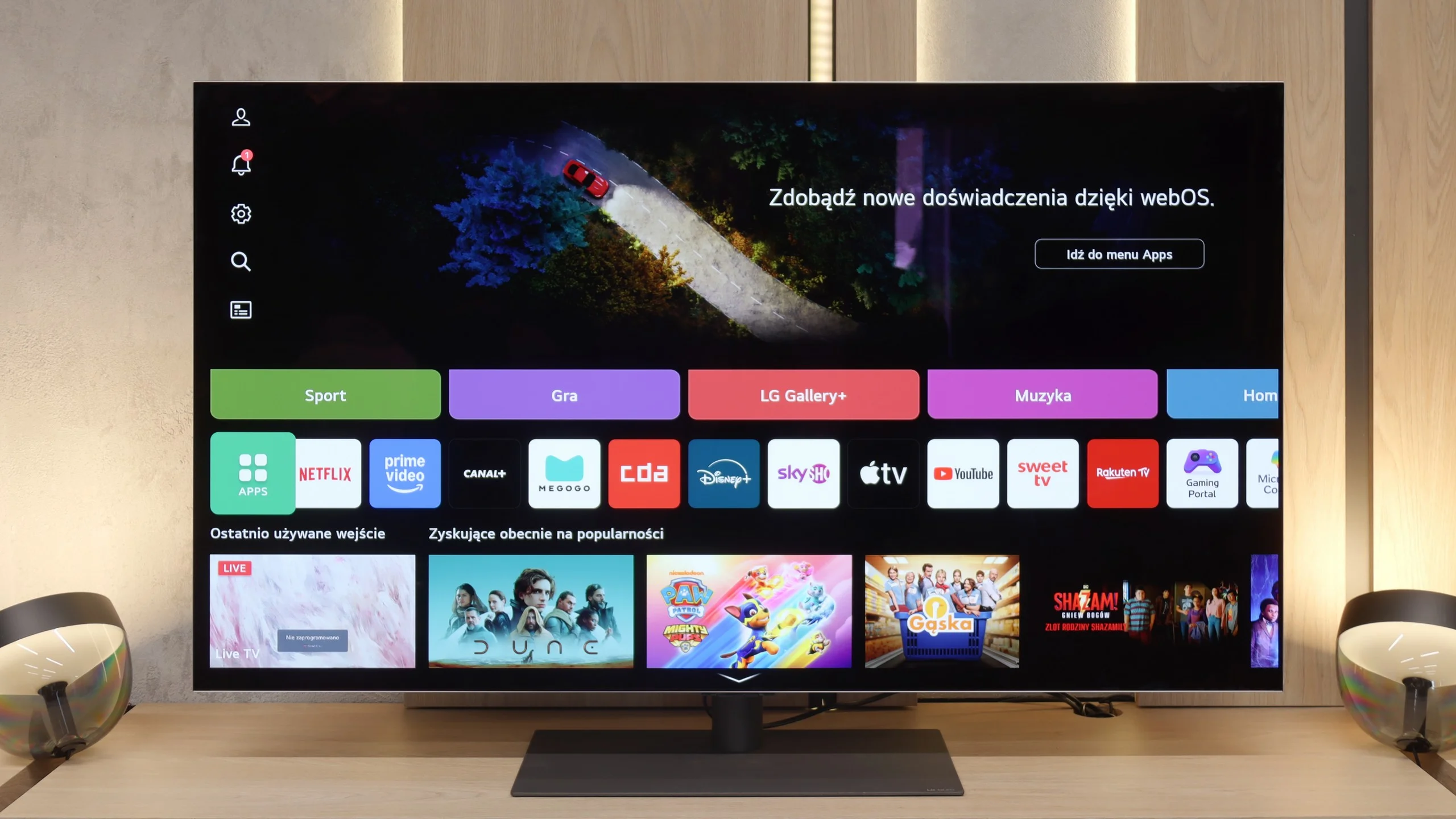
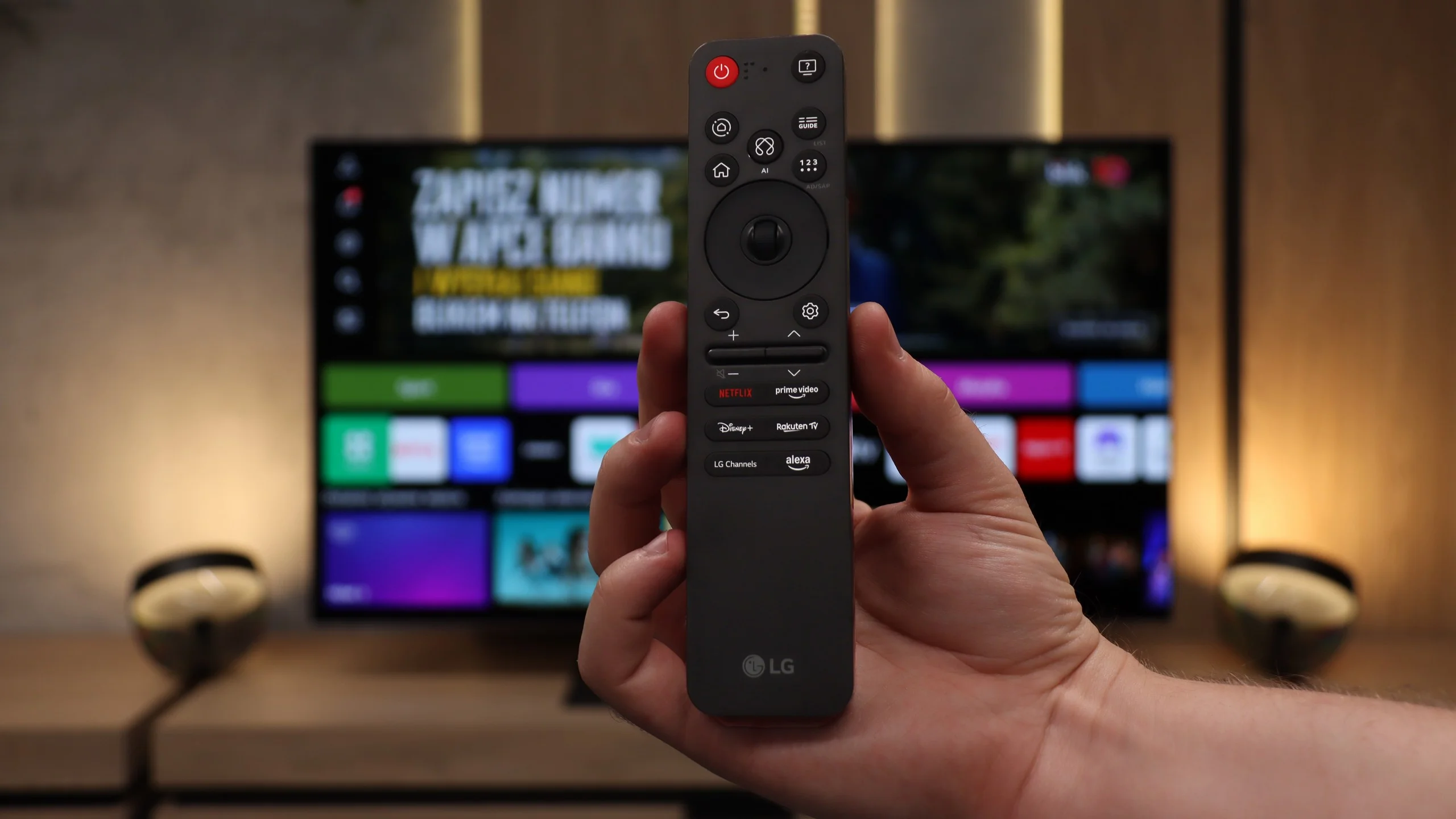
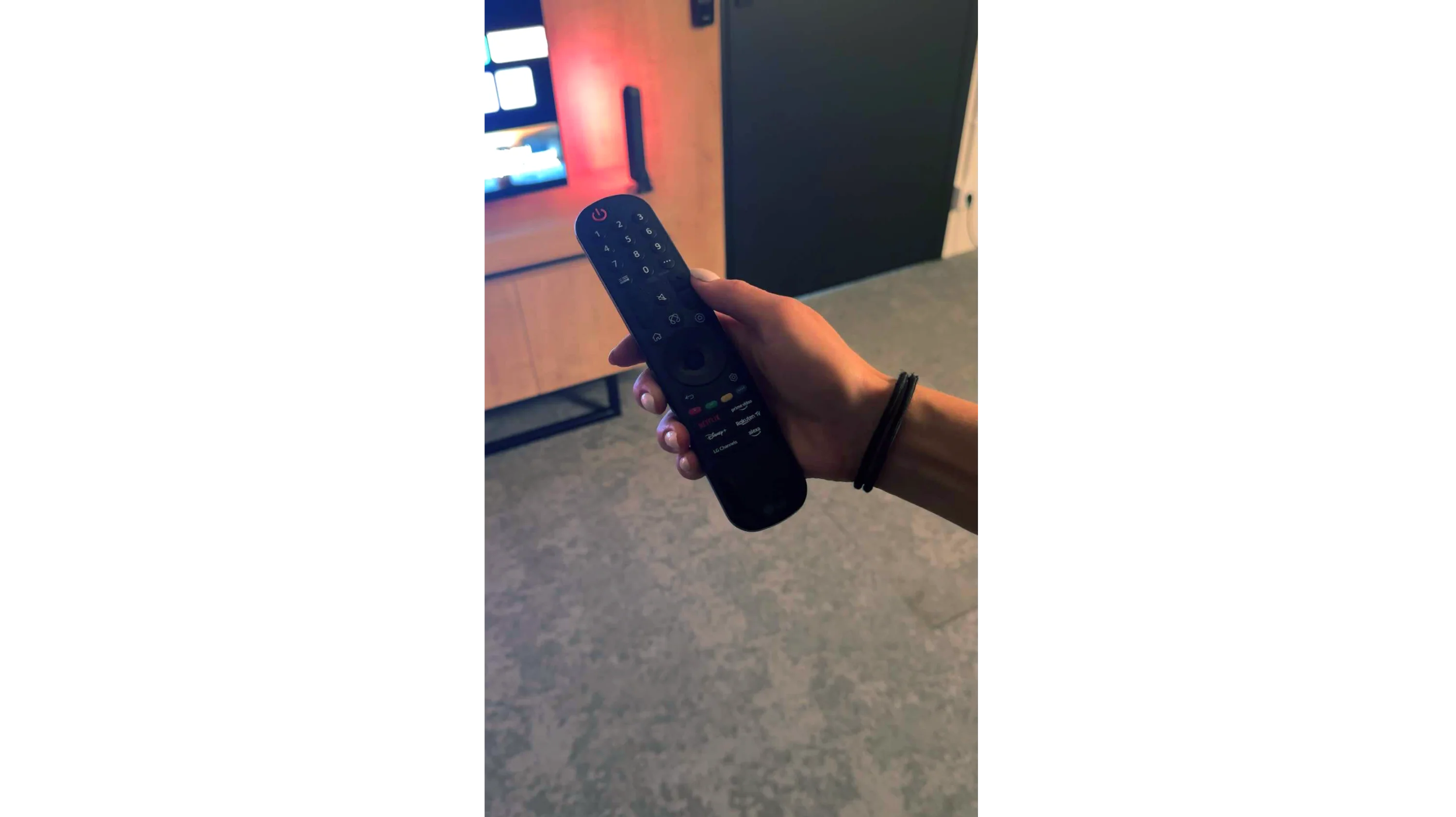
The Smart TV in the G5 operates on the WebOS system – it is the heart and brain of the entire television. Thanks to the Magic remote, using the G5 is truly enjoyable. We control the cursor on the screen with wrist movements, which is somewhat reminiscent of using a mouse in the air. The system itself is very comprehensive and offers everything one could expect: AirPlay, screen mirroring, voice search, and voice commands – all of these work smoothly and without delays. Without a doubt, this is one of the best operating systems in televisions on the market.
Note:
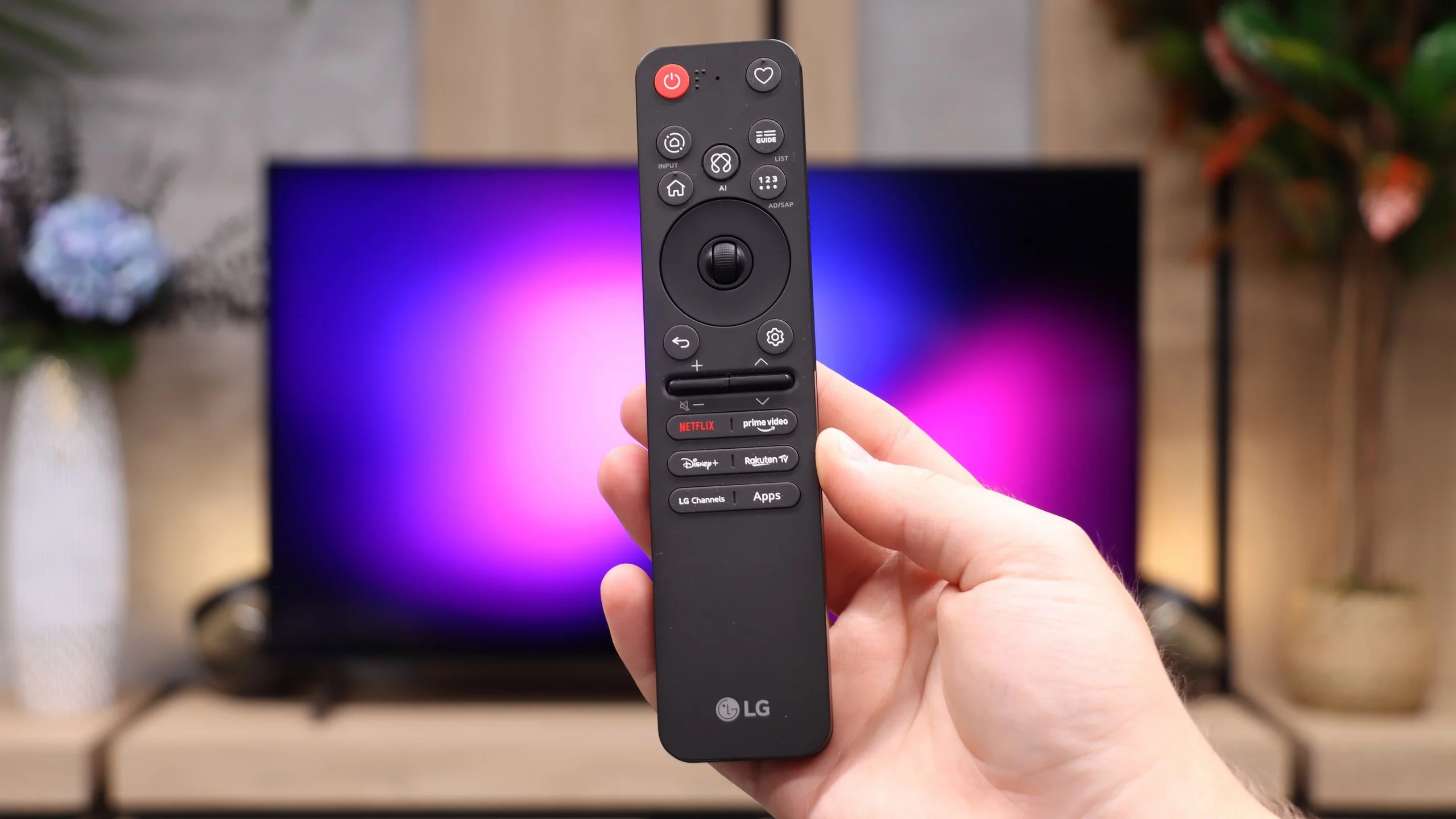
During our testing, we had practically nothing to complain about – except for one exception: the confusion surrounding the remote. Depending on the market and the specific version of the model, you may come across the new, minimalist Magic remote (without a numeric keypad), or the older version with a full set of buttons. We tested the G54LW model, which had the new Magic remote, but it is hard to say how the situation looks in other variants. Perhaps it is a similar situation to the LG C5 series, where the addition of the remote also depends on the specific market.
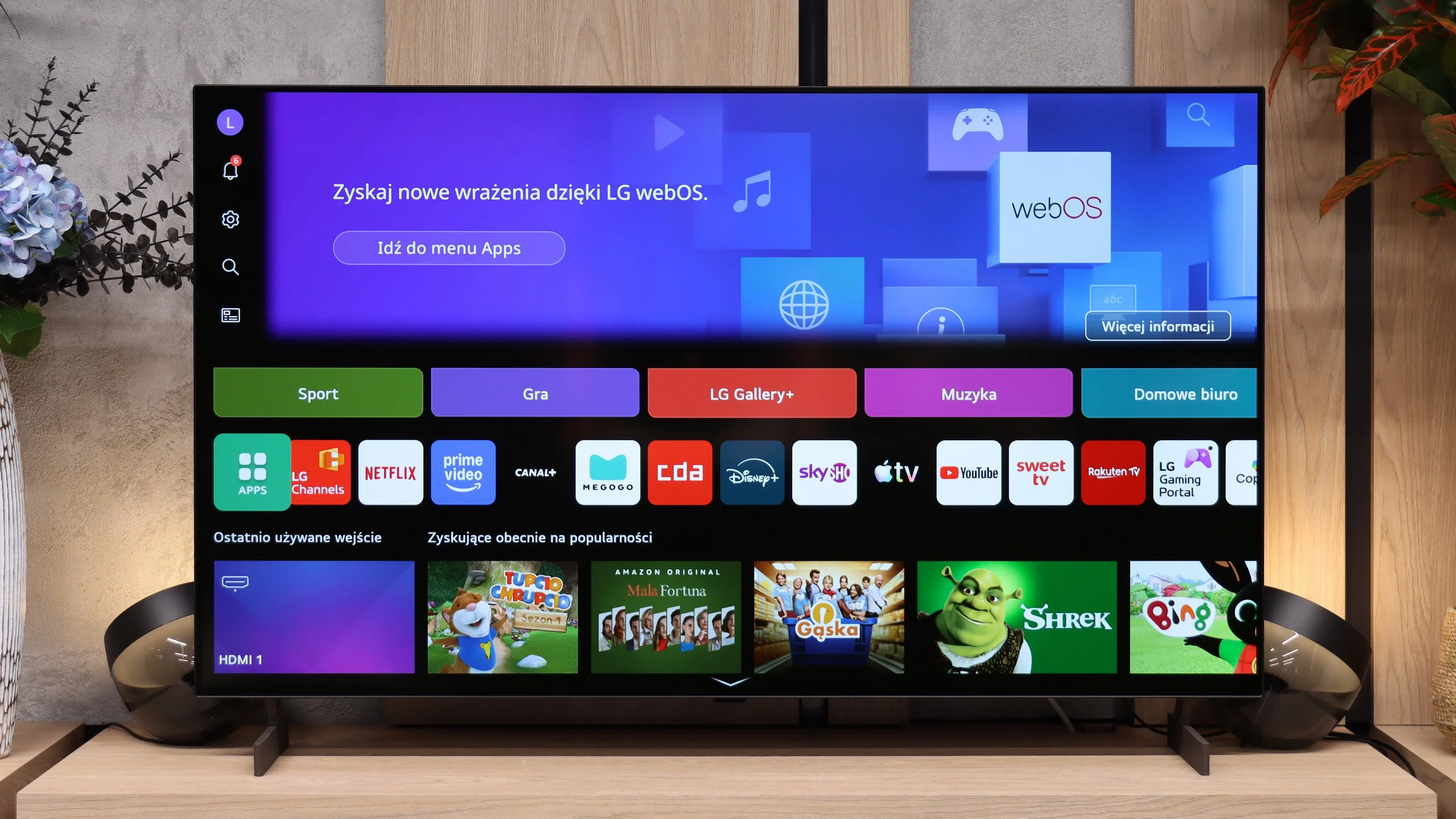
Smart TV: webOS
LG B6 runs webOS, LG’s proprietary platform. Its biggest strength remains the way it’s controlled. The included Magic Remote works like a mouse; just move your wrist to move the cursor across the screen and point at the items you want. It may feel unusual at first, but it quickly proves very convenient, especially when typing text, selecting apps, or navigating a complex menu. The remote itself is fairly minimalist and doesn’t offer many traditional buttons, but the cursor control largely makes up for that. On the other hand, if you don’t want to wave your hand to type letters, you can always speak the desired phrase into the remote and the AI voice assistant will suggest appropriate recommendations.
In terms of available apps, it’s hard to fault webOS. You’ll find practically all the major streaming services here, as well as extra features like AirPlay, screen mirroring, and Chromecast. The TV therefore works well with both Apple phones and Android devices. It’s just a pity that the system on the B6 doesn’t run as smoothly as on higher-end models. At times it can respond with a slight delay, and the home screen is heavily loaded with recommendations, tiles, and ads. That doesn’t make webOS unusable, but it could certainly be more organized.
Classic features
By contrast, the traditional TV features perform very well—features many manufacturers are starting to forget. The LG B6 lets you record programs to an attached hard drive or USB storage. The PVR function also supports scheduling, so you can program recordings in advance from the TV guide. This comes in handy when you want to save an episode, a match, or another event broadcast while you’re away. There’s also a clear channel guide and solid support for terrestrial, cable, and satellite TV. For people who still regularly use traditional television, the B6 is therefore a relatively complete device, provided the lack of teletext doesn’t bother you.
Apps
9.1/10
9.1/10






















Playing files from USB
9/10
9.1/10
Supported photo formats:
Maximum photo resolution:
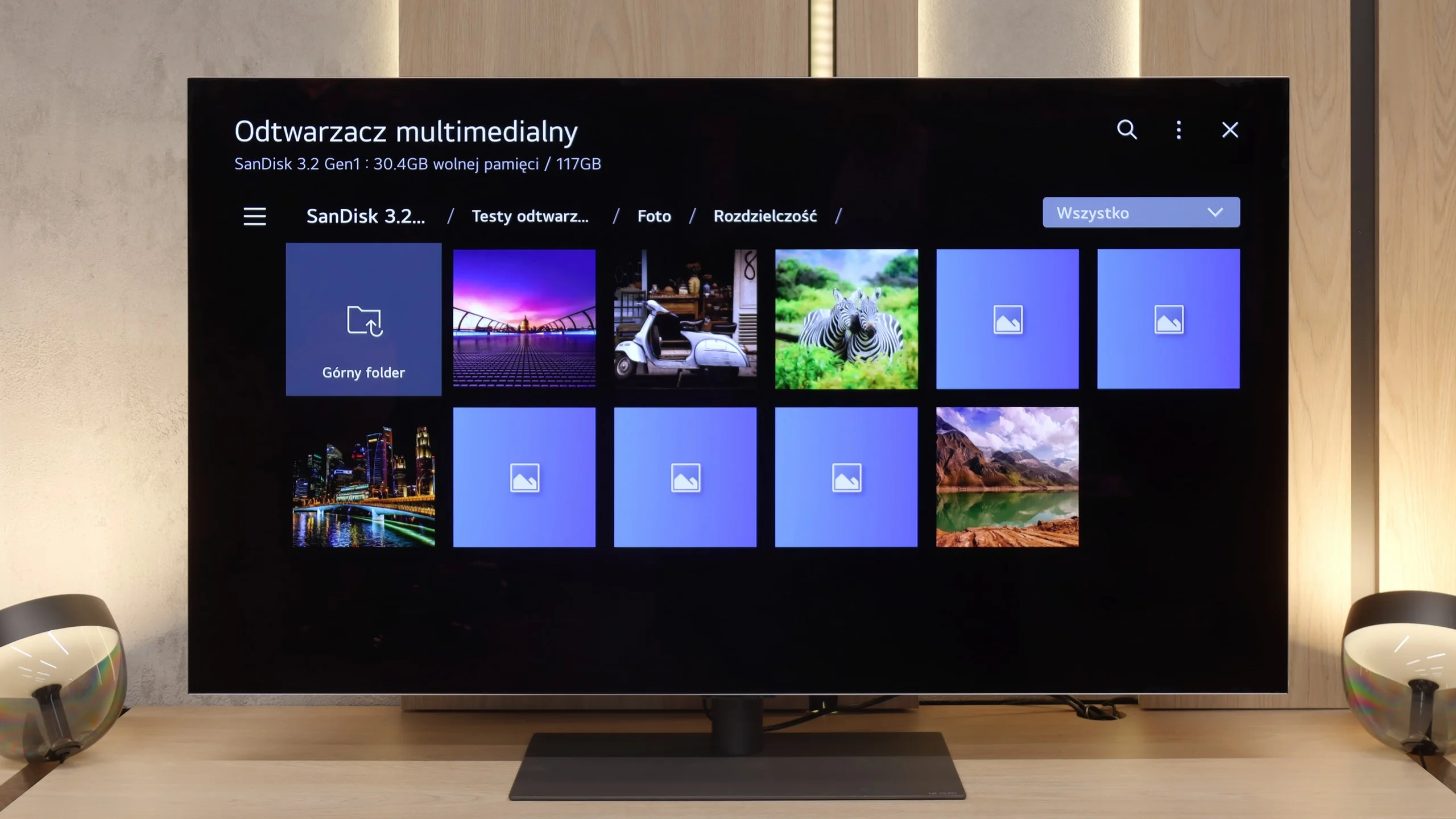
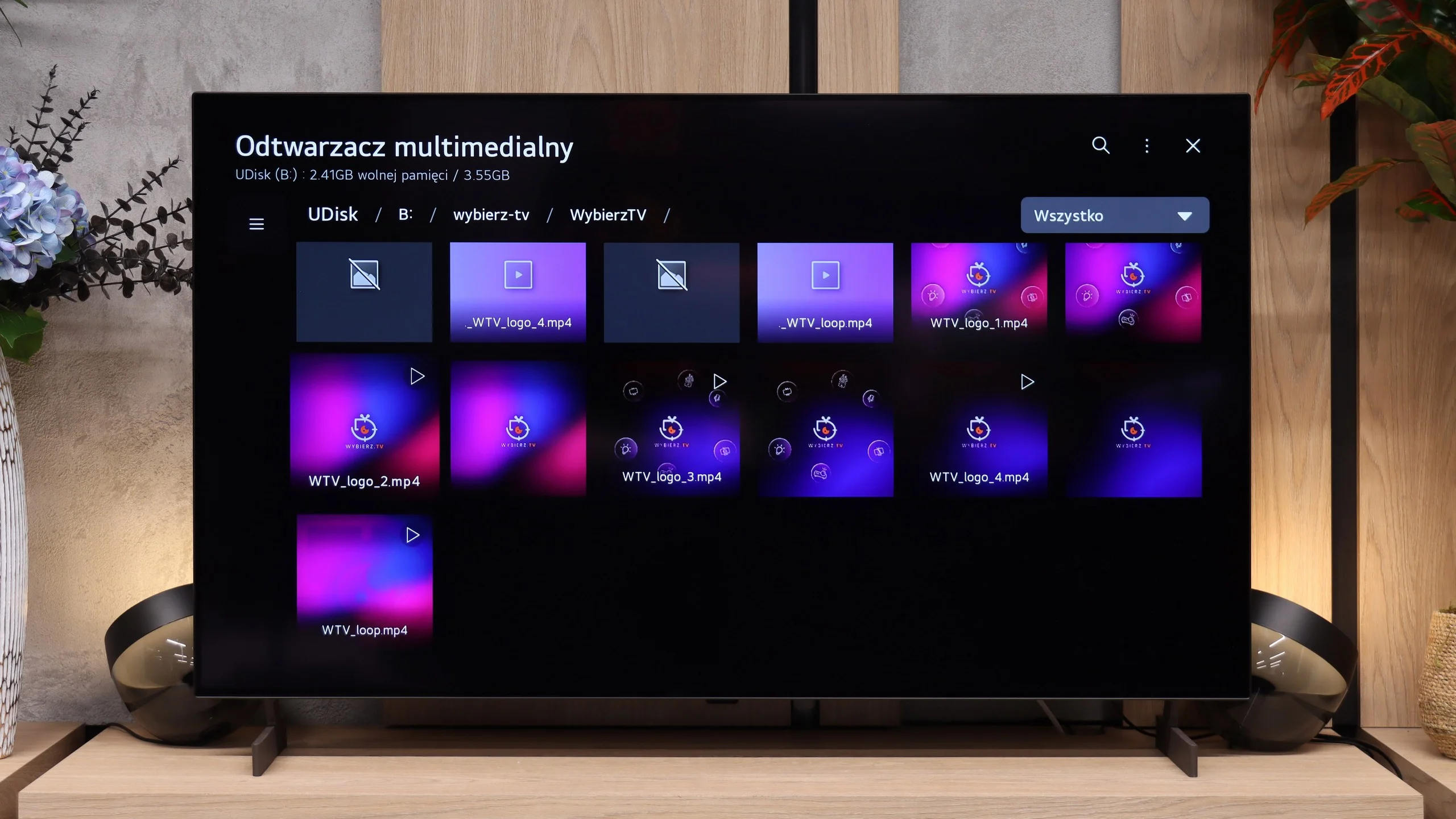
The built-in media player in the LG G5 is really very good. It supports virtually everything you would expect from a modern television – most popular formats work without issue, and the application performs quickly. Our only disappointment was the lack of support for very high bitrate HEVC files at 85 Mbit/s – similar to the C5 and B5 models. Interestingly, the same file worked flawlessly on last year's LG OLEDs, so it's hard to say what is behind this change. Nevertheless, in everyday use, the G5 will handle the vast majority of content, and there will be no need to connect any external devices for media playback.
The LG B6’s built-in player handles most popular video files played from USB without any major problems. The TV also properly supports subtitles and the most common audio formats, though it lacks DTS support. The situation is somewhat worse for photos. The list of supported formats is fairly limited and does not include HEIC, the format in which photos taken with an iPhone are saved by default. Such files therefore need to be converted to JPG beforehand, or you can simply use the AirPlay function.
Sound
8.7/10
6.7/10
- Maximum volume84dB87dB
- Dolby Digital Plus 7.1
- Dolby True HD 7.1
- Dolby Atmos in Dolby Digital Plus (JOC)
- Dolby Atmos in Dolby True HD
- DTS:X in DTS-HD MA
- DTS-HD Master Audio
The sound on the LG G5, given its slim body, is truly phenomenal. When listening to music, a light, pleasant bass can be felt, and in movies, the dialogues are clear and easily heard – they do not get lost even in dynamic scenes. Unfortunately, a certain disappointment is the lack of support for the DTS format, which LG used in its older models. It's a shame, because many people with home theaters may see this as a step backward.
In terms of sound, the LG B6 performs very similarly to last year's model. It still uses a 2.0 speaker setup rated at 20 W, which is more than enough for everyday viewing. Dialogue is clear and the sound doesn't sound bad, but there's no sense of space, dynamics, or bass you get from higher-end models. The TV supports the Dolby Atmos spatial audio format, but DTS:X is missing. The biggest problem, however, is not the speakers themselves but the settings. Compared with its predecessor, a large portion of the options for tailoring the sound to your preferences has disappeared. A few preset modes remain, including AI and Standard, but the ability to fine-tune the audio is much more limited than it was a year ago.
Sound Quality Test
Acoustic Measurements
84dBC (Max)
75dBC
87dBC (Max)
75dBC
Reader comments
Comments are provided by the external service Disqus (Zeta Global). Once loaded, Disqus may set cookies and process data about your activity.
We will remember your choice on this device. Provider's privacy policy