 Redakcja Choose TV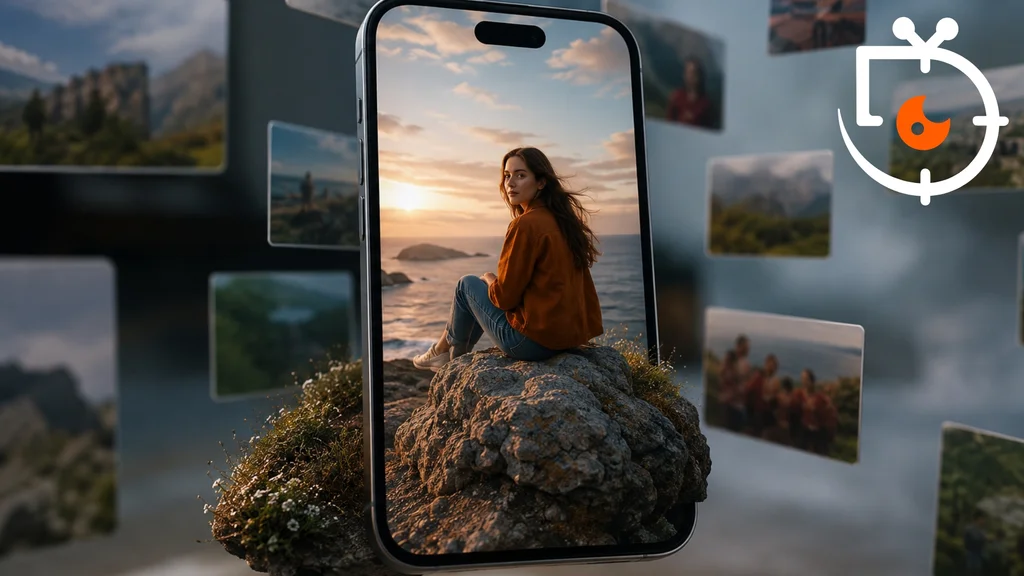
During WWDC 2026, Apple introduced the Spatial Reframing feature, which allows users to change the perspective of regular photos and create an effect reminiscent of a three-dimensional scene. While it may seem at first glance like just another photography editing tool, it could actually be part of a much larger plan. The new solutions show that the company is increasingly developing technologies related to 3D imaging and immersive experiences.
Photos Start to Resemble Three-Dimensional Worlds
The new feature available in iOS 27 allows users to gently change the perspective of a photo after it has been taken. Artificial intelligence analyzes the photograph and generates additional fragments of the image that were not visible in the original frame. This gives the impression that the photo has depth and space reminiscent of a 3D scene.
Apple uses a technology known as Gaussian Splatting for this. It is responsible, among other things, for the realistic avatars of Persona in Apple Vision Pro and increasingly detailed three-dimensional views in Apple Maps. The solution allows for the creation of extremely realistic models of objects and entire spaces based on photos or recordings.
In practice, this means that an ordinary photograph ceases to be a flat image and begins to resemble a fragment of a digital world that can be viewed from different angles.
This could be the beginning of a larger revolution
According to market observers, the new features are just the first step. In visionOS 27, Apple also introduces the capability to transform panoramas into spatial environments surrounding the user. This solution allows users to almost "walk into" previously taken photos and view them in a more natural way.
Currently, the possibilities are still limited and do not allow for free movement within the generated scenes. However, the development of technology suggests that Apple is gradually laying the groundwork for more advanced systems for creating digital replicas of real locations. Similar solutions are already being utilized by VR app developers and mixed reality headset manufacturers.
Experts point out that future Apple devices may make much broader use of such capabilities. In the long run, photographs and videos may transform into full-fledged spatial memories that can be viewed almost as if the user were back in that location.
Spatial Reframing in iOS 27 is not just a new visual effect for photos. The feature shows the direction in which Apple is developing its imaging technologies, artificial intelligence, and spatial reality. If the company consistently develops Gaussian Splatting, the future of photography may look completely different than it does today.
source: cnet