 Maciej Koper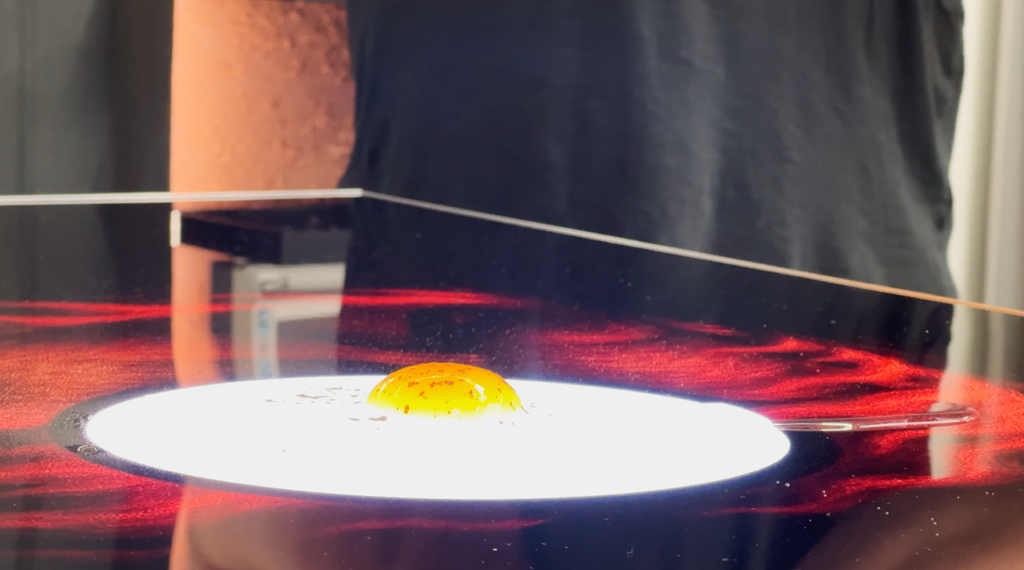
You see it well and no – this is not an AI-generated graphic. Before us is a real chicken egg and the latest flagship LG G5. We decided to drastically break the warranty rules to see if breakfast can be… prepared on an OLED panel. But don’t worry, there is a very specific technical goal behind this craziness. On ChooseTV you usually encounter a cool analysis: insightful reviews, blind tests, comparisons to studio monitors, and mathematical precision. Today, however, we are putting aside the charts for a moment (though not for long!) and switching to “hardcore” mode.
How to turn a television into a frying pan?
The principle was simple. We prepared a screen with white set to 100% in a small window. We activated HDR mode, squeezed the maximum brightness out of the panel, and allowed the LG G5 display to heat up to the limit. Before we checked the result, we asked artificial intelligence for its opinion. Unfortunately, "Gemini" has too many safety restrictions in place to enjoy such fun. We relied on a professional thermal camera. The result? Nearly 100 degrees Celsius. This is no longer just "a bit of warmth from the television." It's a fully-fledged frying pan with the LG logo.
Frying an egg on the television
A bit of spray oil (to avoid scratching the surface), an egg on glass, a pinch of pepper and… we wait. Modern OLED screens have advanced thermal protection mechanisms. When the processor detects too high a temperature, it drastically lowers the brightness to avoid damaging the pixels. To maintain a temperature above 90 degrees, we had to outsmart the algorithms by refreshing the image every now and then. Even so, the egg cooled from the top. Only after putting on a lid and several minutes of “life-or-death” struggle for the matrix did the egg white start to solidify in earnest. Armed with fire extinguishers (just in case!), we waited for tasting. The verdict? LG G5 is a brilliant television, but as a frying pan, it still needs improvement – the breakfast turned out a bit too runny.
Why all this? Thermal imaging becomes standard
You might think: “This is the dumbest thing they’ve done this year.” And you are right. But this test has a deeper meaning. We want to show that we push the equipment to the absolute limits of durability. From this moment on, the thermal imaging camera becomes a permanent part of our OLED tests. We will no longer just provide dry numbers like “1500 nits in HDR”. You will see:
How quickly the panel heats up
How efficiently it dissipates heat
How long it can maintain high brightness before thermal throttling kicks in
These are key pieces of information for anyone planning to purchase a television for years and worried about the durability of the panel.
Did the LG G5 survive this clash?
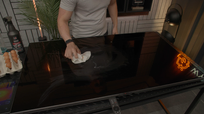
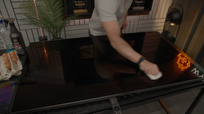
This is the most interesting part of the experiment. After finishing the frying, we subjected the panel to thorough cleaning (safe agents and microfiber, no scouring pads!). The result? The panel looks and functions perfectly. Despite operating for several minutes at a temperature close to 100 degrees, the panel was not damaged. This is proof of the tremendous progress made in OLED technology. Today's panels, although "stretched" to the limits, are extremely resistant to extreme conditions. PS. If your TV is not for frying eggs, but you want it to display images exactly as the director intended, check out our professional calibration service. We use laboratory spectrometers for this (that's the device next to the egg!), which guarantee cinematic experiences in your living room.
Watch the film of this test:
And what about you? What else would you like us to do with the televisions before the manufacturers blacklist us? Let us know in the comments!