The TCL P8K is a television that immediately endears itself. It may seem cheap and from a lower range, yet it can surprise. This device demonstrates that you can also get equipment with character at this price – and it's specifically targeted towards a particular group of users. Because let's not kid ourselves, the P8K is a television designed with gamers in mind. With two HDMI 2.1 ports, VRR support, 4K at 120 Hz, HGiG, and even Dolby Vision in games – it sounds like something that was only recently found in much more expensive models. Additionally, it has a 144 Hz panel and the capability to achieve even 240 Hz on PC. At this price? It’s really hard not to smile. Moreover, it comes with Google TV, which has breathed life into this screen. Everything operates intuitively, with access to a vast library of applications and an efficient Google Assistant that actually understands what you say – even when you phrase it in your own way. Of course, this is not a perfect television. A brightness of 250–300 nits isn't overwhelming and probably won't impress in a sunny living room. But just an evening, a film, and a slightly darker environment reveal that this screen can do quite a lot. Thanks to dynamic tone mapping, the P8K performs surprisingly well in HDR, and the colours can look natural. In cinematic scenes, there's no question of a plastic, overexposed image – it's simply pleasant. Let’s not pretend that it competes with Mini LEDs or OLEDs – that’s not the point here. The P8K/P89K is meant to be a television that is simply enjoyable to use. And that is where its strength lies. For someone who wants to play games, watch Netflix, launch YouTube, and have it all in one simple device – it’s a home run. The TCL P8K shows that "cheap" does not have to mean "poor quality". It is a television with character that doesn’t pretend to be premium equipment, yet delivers a lot. And perhaps that's why it’s so easy to like.
- Matching (Score) |
- Our verdict |
- TV appearance |
- Where to buy |
- Contrast and black detail |
- HDR effect quality |
- Factory color reproduction |
- Color reproduction after calibration |
- Smoothness of tonal transitions |
- Image scaling and smoothness of tonal transitions |
- Blur and motion smoothness |
- Console compatibility and gaming features |
- Input lag |
- Compatibility with PC |
- Viewing angles |
- Daytime performance |
- Panel details |
- TV features |
- Apps |
- Playing files from USB |
- Sound
TCL P89K / TCL P8K vs PHILIPS PUS9010 (IPS)
 Direct comparison
P8K / P89K

The One 2025 / PUS9060 / PUS9010 / PUS9000
Available screen sizes: 75”
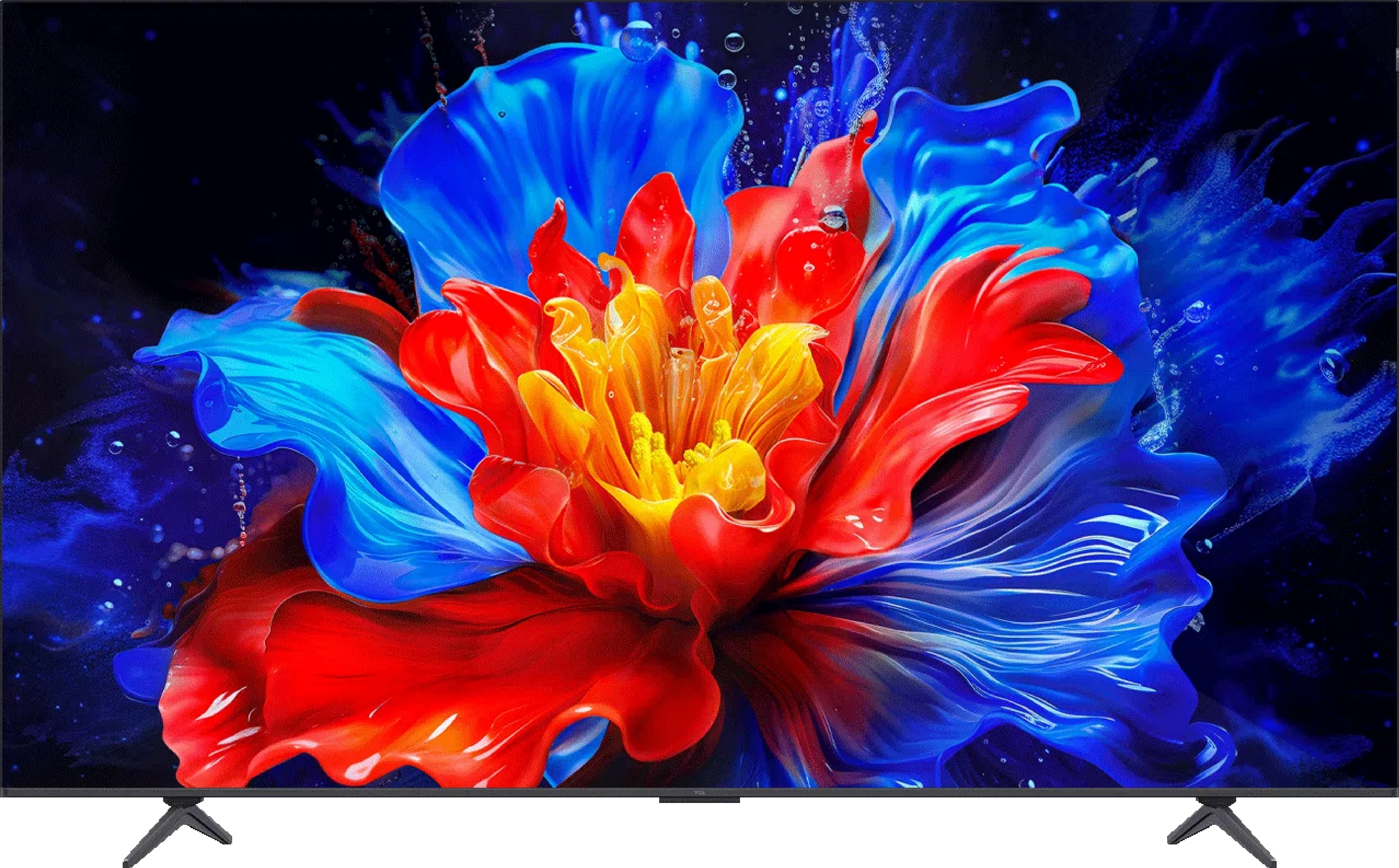
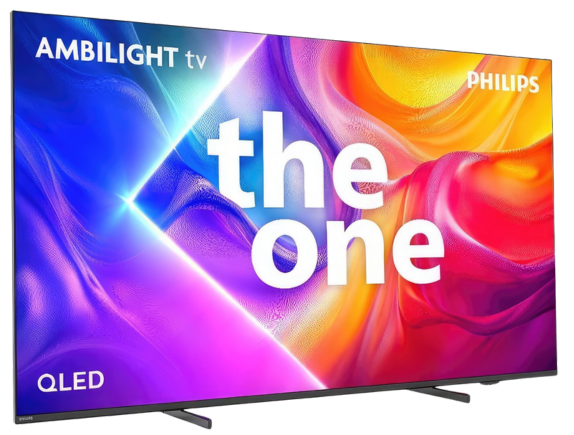
Panel type: LCD VA
Resolution: 3840x2160
System: Google TV
Model year: 2025
Complete the survey to find out the result
Panel type: LCD IPS
Resolution: 3840x2160
System: Titan OS
Model year: 2025
Complete the survey to find out the result
Overall rating
6.6
6.5
 Movies and series in UHD quality
 6.1
5.9
 Classic TV, YouTube
 6.0
5.6
 Sports broadcasts (TV and apps)
 6.1
6.7
 Gaming on console
 8.1
8.1
 TV as a computer monitor
 8.6
8.9
 Watching in bright light
 4.6
5.4
 Utility functions
 7.4
6.1
 Apps
Apps 9.6
6.7
 Sound quality
 6.7
6.6
Complete the survey to find out what fits your preferences
Advantages

Good contrast thanks to the VA panel
Google TV system with a large number of applications
Good motion fluidity. 144Hz panel
Excellent features for gamers: HDMI 2.1, VRR, 4K@120Hz, HGiG, Dolby Vision in games
Very good colour gamut coverage thanks to the PFS filter (QLED)
Very good compatibility with PC. 240Hz mode
Low input lag – gaming is smooth and responsive
Well-implemented HDR dynamic tone mapping feature. Despite low brightness: HDR content looks surprisingly good.
2.1 sound from Onkyo with a subwoofer – surprisingly good bass
Very attractive price
Very good viewing angles thanks to the IPS panel
Great compatibility with PC, 144 Hz mode, proper support for G-Sync and FreeSync
A wide range of features for gamers, variable refresh rate, auto game mode, HGiG
Support for multiple HDR formats including HDR10+ and Dolby Vision
Support for Dolby Atmos
Low input lag
Effective P5 image processor for lower quality materials
Ambilight system
Illuminated remote control
Disadvantages

Low brightness – around 250–300 nits
Very poor viewing angles
Average digital image processing
Incorrectly implemented Dolby Vision mode
System errors and glitches occur
Not very loud sound, volume limiter in operation
Poor black levels and contrast (typical for IPS panels)
Significantly lower brightness compared to the VA panel variant
Visible backlight bleed at the edges of the screen in the tested unit
Limited number of applications in the Titan OS system
The remote control is still based on infrared, requiring aiming at the screen
Our verdict
Philips PUS9010 (The One 2025) in the 75-inch version with an IPS panel is a television that clearly demonstrates the differences resulting from the panel used. Compared to the variant with a VA panel, it offers significantly better viewing angles, very good compatibility with consoles, and excellent text readability, but at the same time, it loses on black levels and maximum brightness. This model is best suited for everyday use, gaming, and in larger living rooms where not everyone is sitting perfectly facing the screen. The television performs very well in terms of responsiveness and features for gamers, offering 144 Hz, low input lag, and full support for variable refresh rate. An additional advantage is Ambilight, which, especially in the evening, can enhance the viewing experience and partially mask the weaker black levels of the IPS panel. After calibration, the picture appears coherent and natural, and the differences compared to the VA version in colour reproduction become difficult to detect. On the other hand, it must be clearly stated that those inclined towards cinematic viewing in complete darkness may be disappointed. The poor black levels, boosted brightness resulting from the quality of our unit, meant that this variant of the PUS9060 performs worse than the same model with a VA panel. Philips PUS9010 IPS is generally a sensible choice for users looking for a large, modern television for gaming, PC use, and everyday viewing, with very good viewing angles. However, if the priority is deep blacks and better picture quality, it is worth considering other variants or a higher class of equipment, as often for a small additional payment, you can get a television equipped with mini-LED technology.
TV appearance
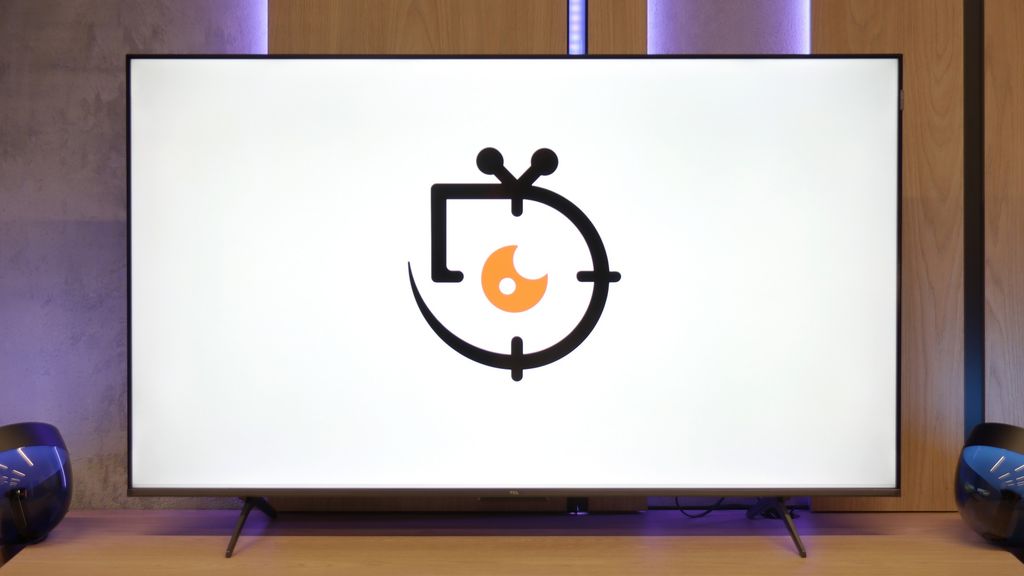
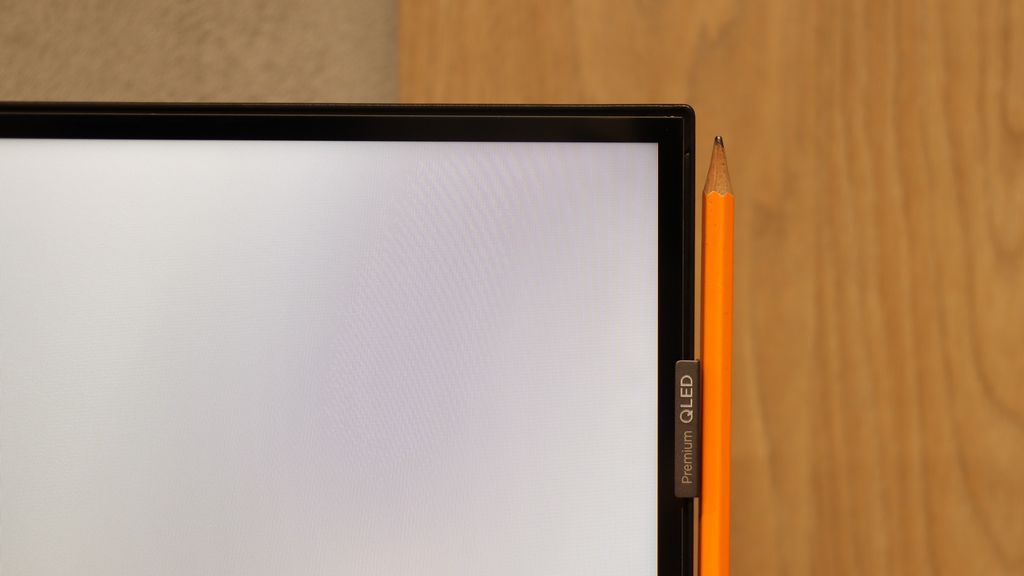
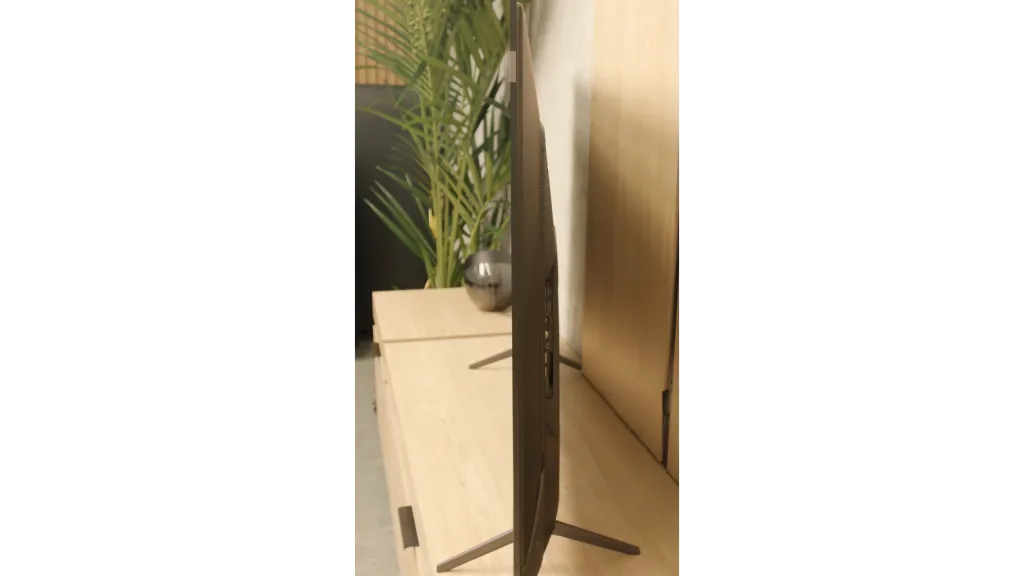
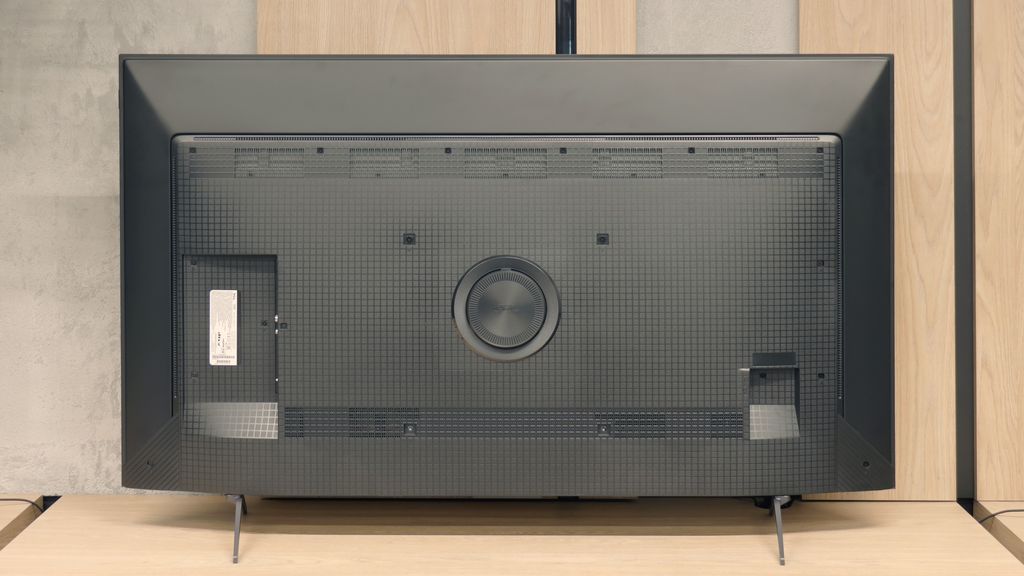
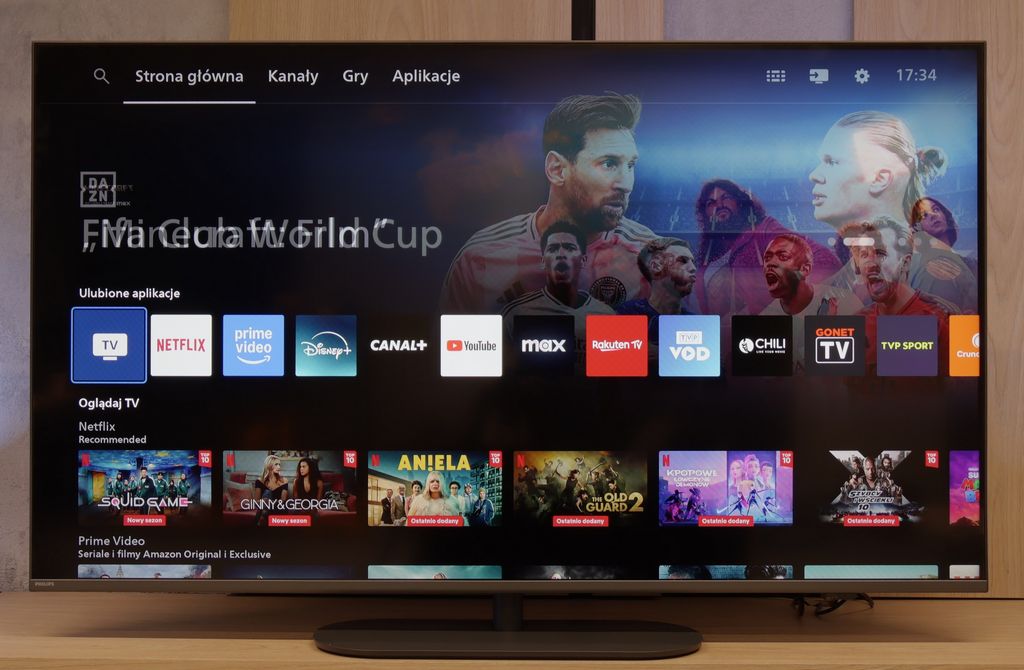
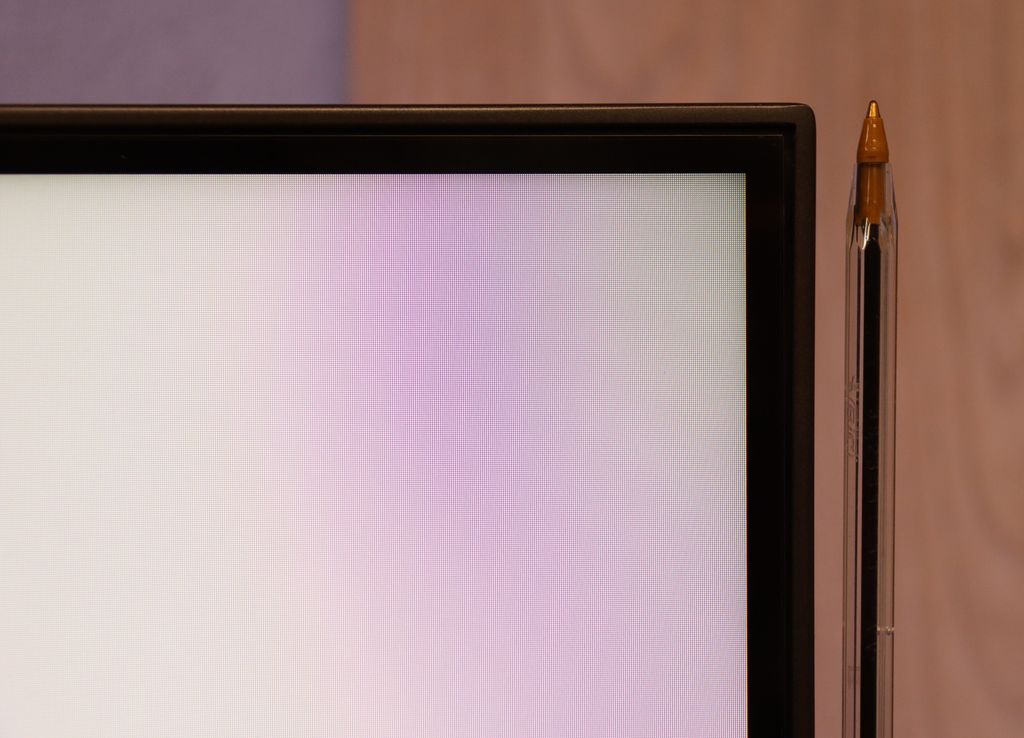
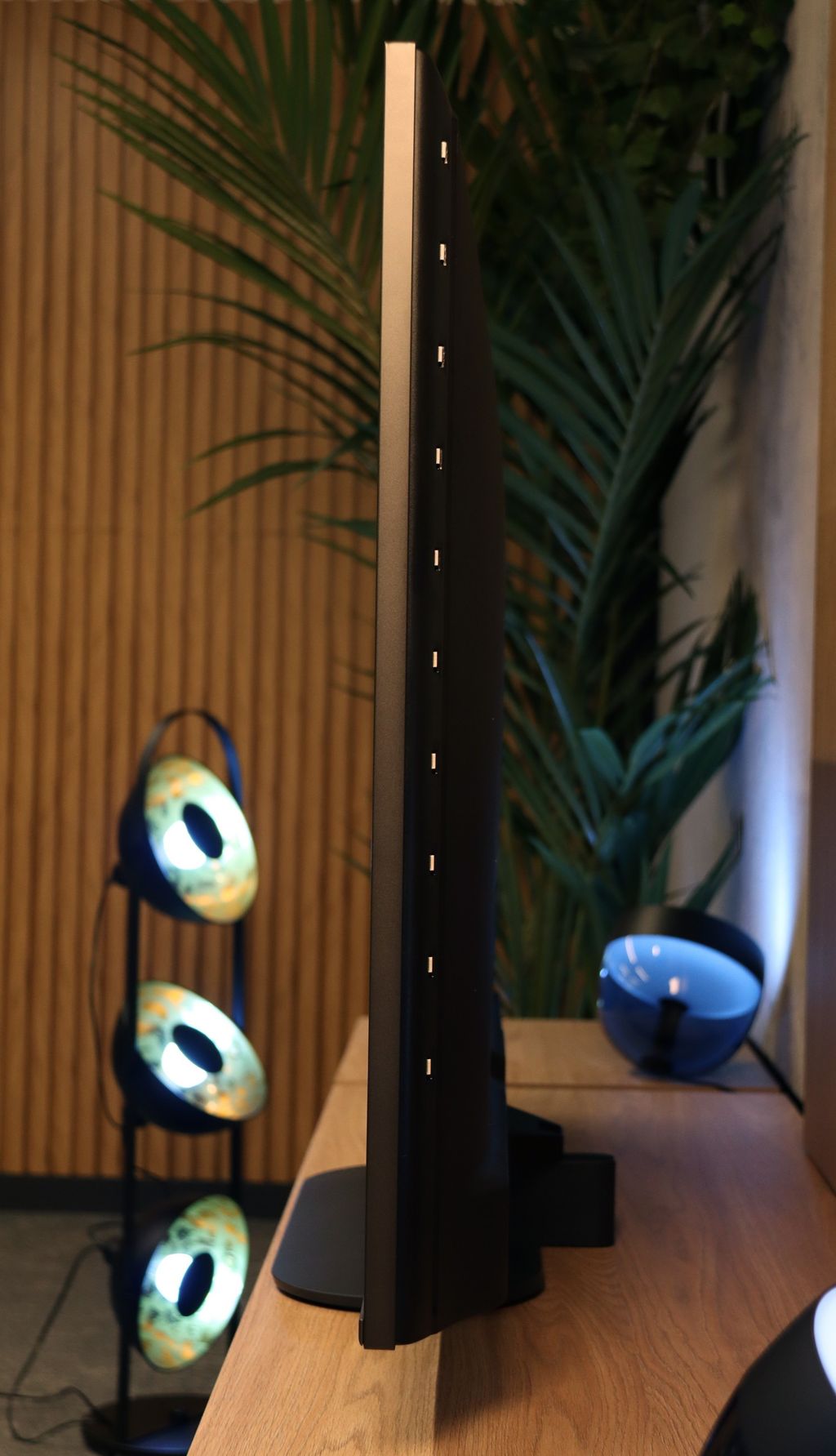
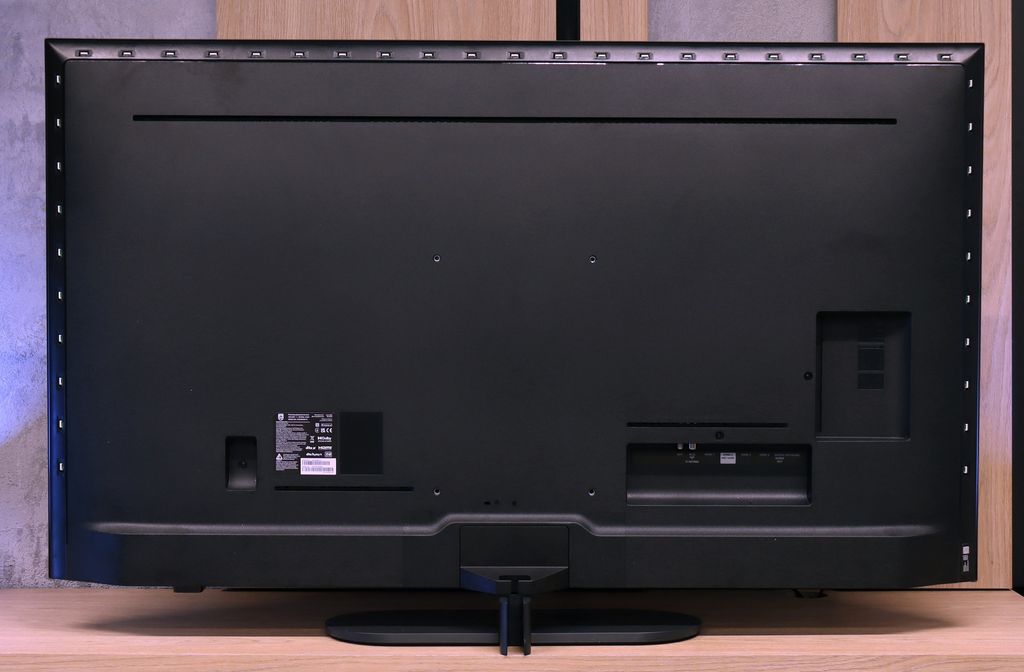

Contrast and black detail
5.5/10
2.9/10
Local dimming function: No
Local dimming function: No
Contrast:


Result
5,650:1

Result
3,950:1

Result
5,700:1

Result
5,450:1

Result
2,600:1
Result
1,300:1
Result
1,400:1
Result
1,450:1
Result
1,500:1
Result
1,350:1
Halo effect and black detail visibility:
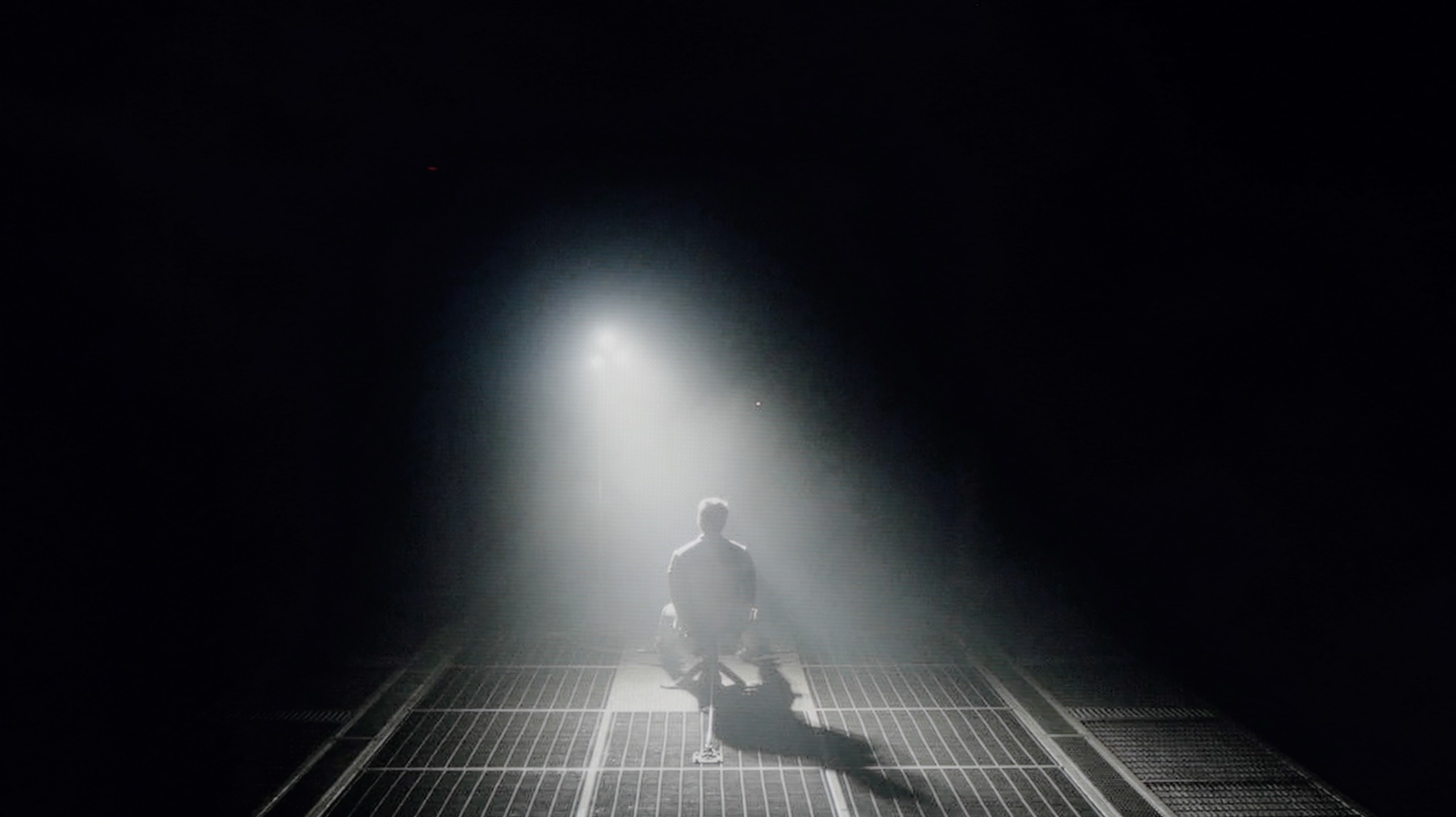
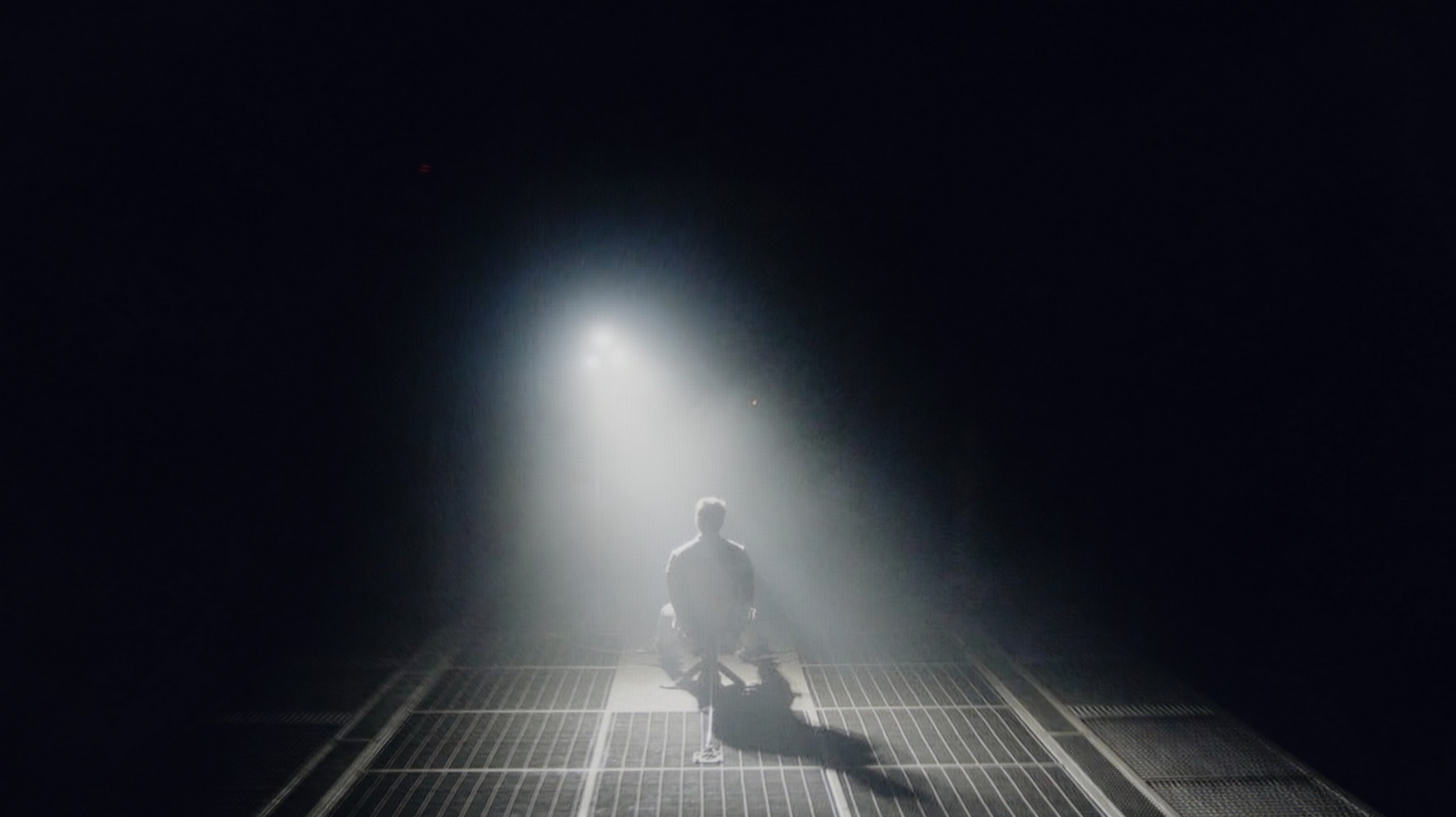
Check the visibility of bright lights on a dark background. Mini-LEDs often struggle with this. The photo does not compare black levels – that’s what the video below is for.
TCL P8K is an example of a television that shows that even in the lower tier, one can still encounter solid contrast. The VA panel does a really good job here – a measurement around 6000:1 may not sound spectacular, but in actual scenes it produces an effect that simply delights the eye. In the darkness of the forest in "The Revenant" or in the futuristic shots of "Oblivion", depth and light separation are visible, which is difficult to expect from equipment at this price. The P8K can render darkness without the feeling that everything is drowning in grey. The Direct LED backlighting also works in its favour. Of course, we do not have any local dimming here, but the system can dim the entire screen when the scene requires it or slightly brighten it to bring out details in bright areas. This is somewhat of an analogue approach to contrast – simple but effective. On the test pattern from the legendary Pioneer Kuro, it was well evident: the television prioritised bright points while the background lost some depth; however, it still maintained a decent appearance. Of course, there is no perfectly inky black here. In a dark room, it is noticeable that the black leans towards blue, but despite this, the overall presentation is simply good. Under normal home conditions, the contrast is entirely sufficient to feel the cinematic atmosphere.
In the 75-inch version of the Philips PUS9010 that we tested, an IPS panel has been used, which is immediately noticeable in terms of black levels and contrast. Compared to the 55-inch variant with a VA panel that we tested earlier, the difference is evident from the first scenes. The black is shallower, and in a dark room, the screen clearly tends towards greys. The television is not equipped with local dimming, so in low light, dark scenes lack depth. In practice, the picture looks noticeably worse than in the smaller 55-inch variant, especially during film sessions viewed in the evening. The situation is somewhat salvaged by Ambilight. The rear lighting can gently "trick" the eye, improving perceived contrast and making the blacks seem a bit deeper. It's a simple trick, but it works. That's why this model is definitely better watched with Ambilight turned on. It doesn't have to be a multi-colour mode following the image. Even a uniform white backlight can enhance the perception of dark scenes.
HDR effect quality
4.5/10
5.2/10
Luminance measurements in HDR:

Result
207 nit

Result
238 nit

Result
313 nit

Result
251 nit

Result
299 nit
Result
374 nit
Result
383 nit
Result
397 nit
Result
391 nit
Result
401 nit
Scene from the movie “Pan” (about 2800 nits)
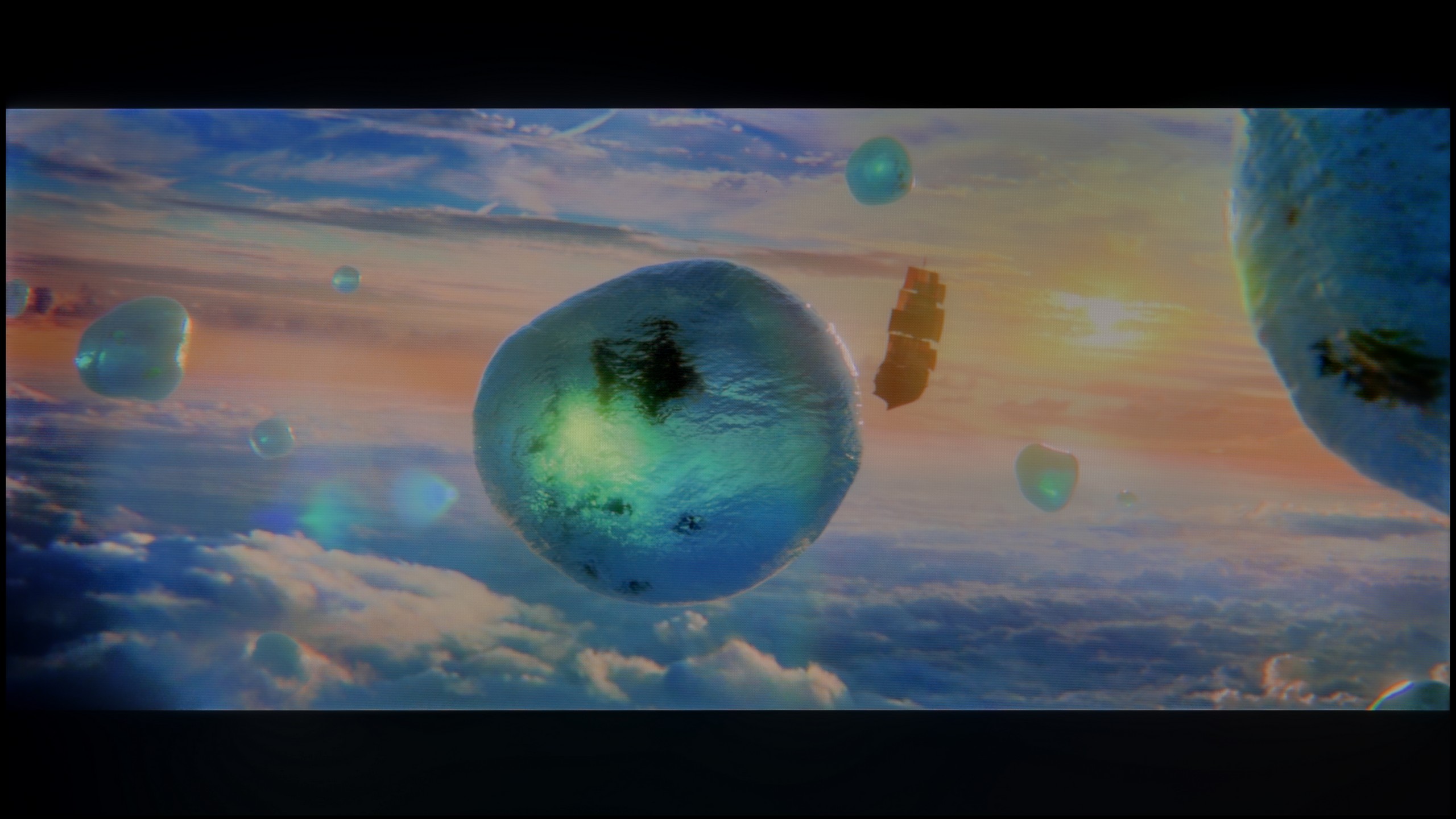

Scene from the movie “Billy Lynn” (about 1100 nits)


The photos show two HDR10 movies. 'Pan' is one of the brightest productions ever made, while 'Billy Lynn' (soldier) has brightness typical of streaming (Netflix, Prime, HBO MAX). Notice the intensity of effects and detail in whites.
Static HDR10


The photos present the visibility of white details in various HDR formats. They do not show brightness differences between TVs (these can be compared in the previous gallery).
Dynamic: Dolby Vision
Dynamic: Dolby Vision


The photos present the visibility of white details in various HDR formats. They do not show brightness differences between TVs (these can be compared in the previous gallery).
HDR luminance chart:
PHILIPS PUS9010 (IPS)
TCL P89K / TCL P8K
The maximum brightness of the TCL P8K is around 300 nits, although in real film scenes, the television maintains more of a level of about 250 nits. These values cannot be considered sufficient to achieve a full HDR effect – they are closer to a solid base for SDR content. Therefore, we will not see spectacular flashes, bursts of light, or moments in which the screen actually "blinds," as is the case with more expensive models. This makes the image somewhat flat, and the differences between light and shadow are more symbolic than realistic. Fortunately, TCL has a few aces up its sleeve that save the overall reception. One of these is the coverage of the DCI-P3 colour palette at around 93–94%. Thanks to an additional QLED layer (PFS LED), the colours gain depth and intensity, clearly surpassing standard LCD panels. As a result, although there is a lack of the typical "wow effect" associated with HDR brightness, the image itself can impress with its saturation and vibrant tones, making film scenes pulse with colours and not appear strongly washed out.
In the Philips PUS9010 version with an IPS panel, the HDR brightness unfortunately performs worse than in the previously tested 55-inch model with a VA panel. The difference reaches about 100 nits, which is quite noticeable given the relatively low values. While the VA version could exceed 500 nits, here the maximum brightness is around 400 nits. This level still allows for watching movies and series in HDR, especially on streaming platforms, but the effects are clearly muted. Bright elements do not have the same impact, and scenes requiring high luminance appear less impressive. On the positive side, the coverage of the DCI-P3 colour gamut is commendable. The IPS version offers around 91%, which is about 5% more than the variant with a VA panel. This translates to somewhat better colour saturation in HDR content, despite the lower brightness. Colours can appear more vibrant and cohesive, especially in colourful scenes.
Factory color reproduction
5.4/10
5.9/10
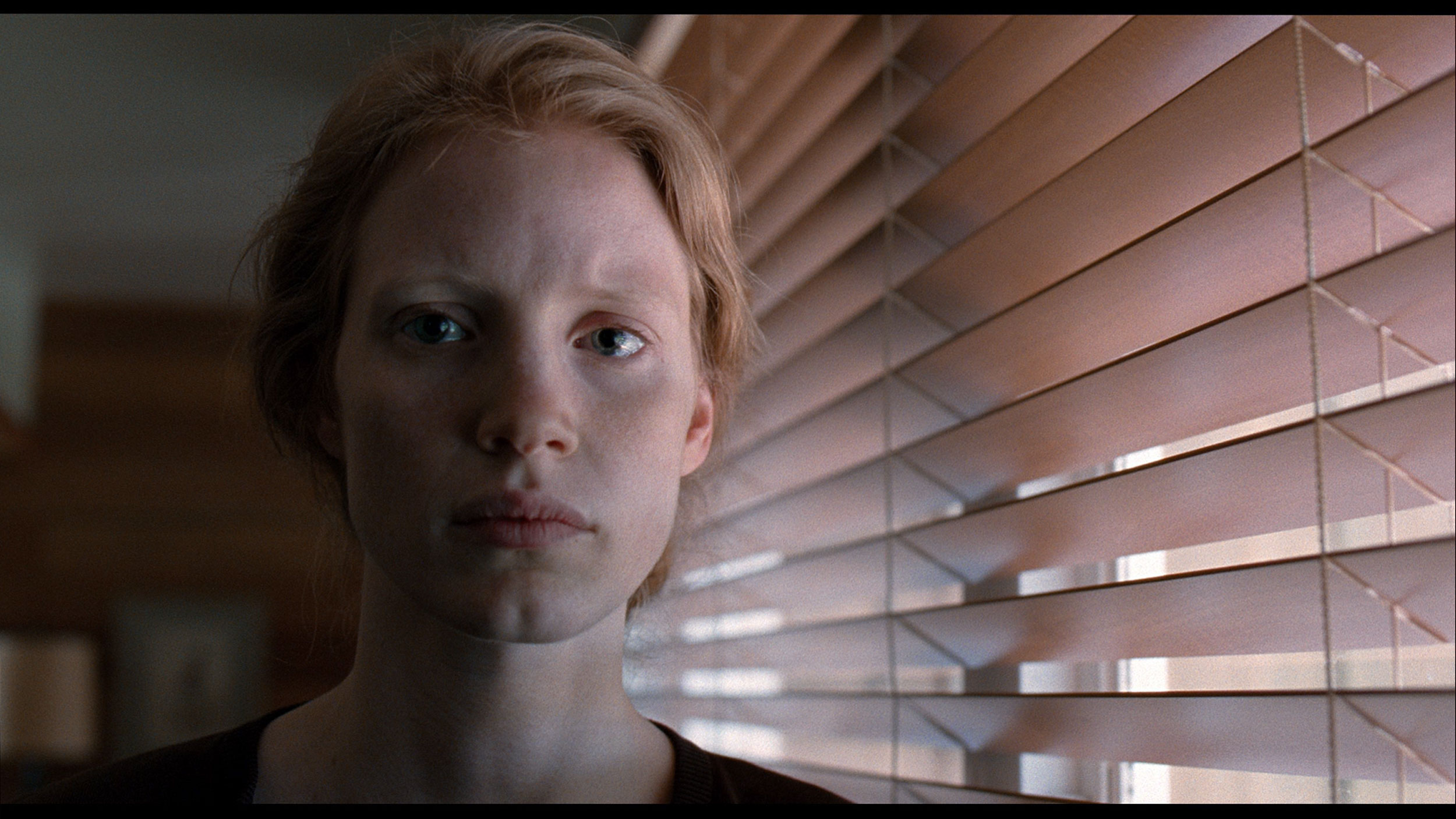
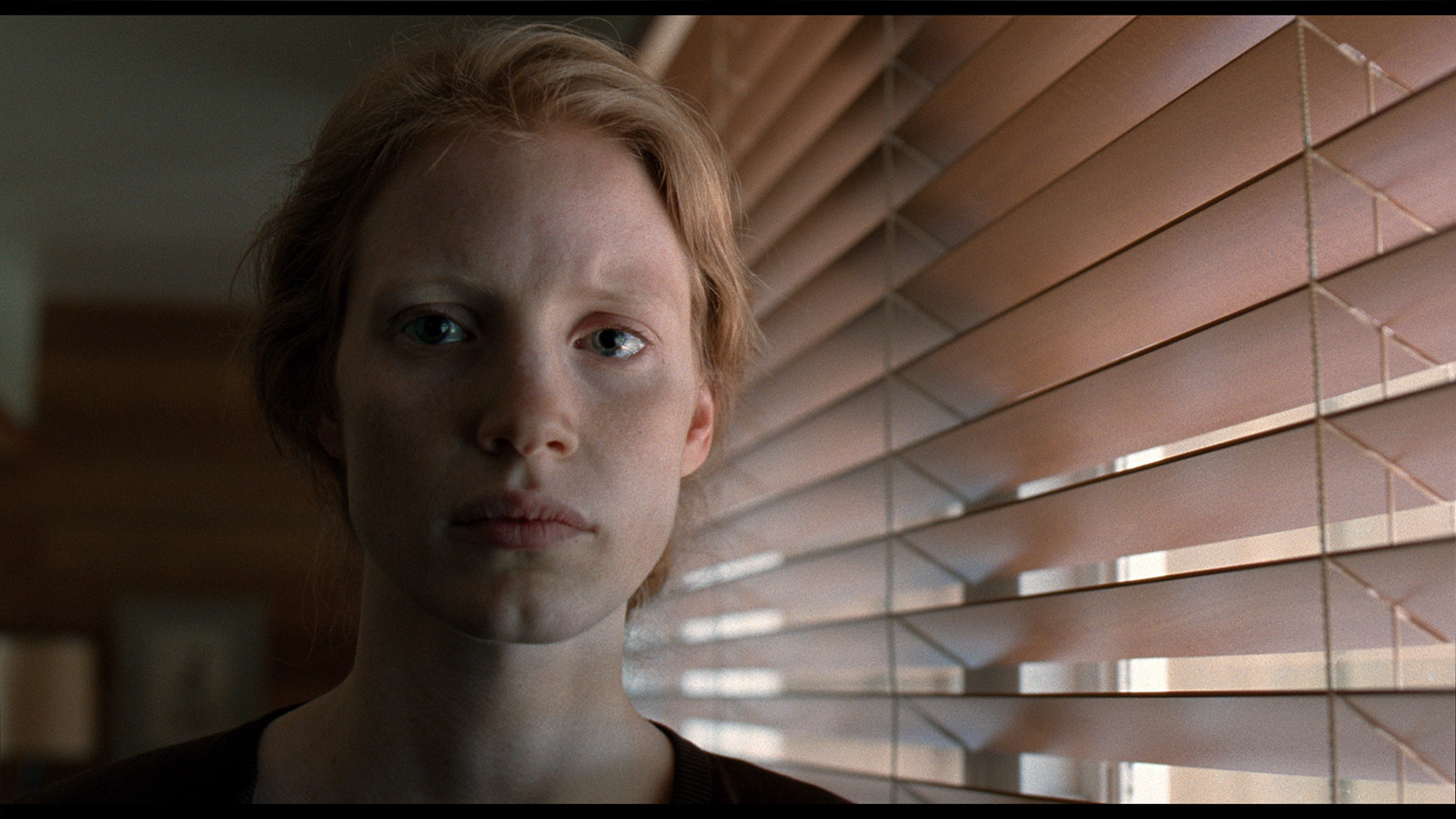
This gallery shows how colors change after professional TV calibration. If you notice the difference, we recommend ordering this service at SkalibrujTV.com.
Factory Mode
After calibration
In Filmmaker mode, the TCL P8K revealed certain imperfections in image reproduction from the outset. We noticed that the television had a tendency to slightly brighten scenes – its gamma was somewhat low, causing the image to appear slightly "washed out", lacking depth, as if the contrast had slipped out of control. This was most evident in HDR content, where the EOTF brightness graph clearly deviated from reference values. As a result, darker areas of the image appeared too gloomy, while brighter areas did not always reach the correct level of luminance. Another noticeable issue was a slight overemphasis on blue – the television stubbornly boosted this colour, causing certain parts of the image, especially skin tones and reds, to have a subtle purple tint. This is not a major flaw, but it is noticeable to a trained eye. Fortunately, most of these errors could be corrected during calibration. You can see the results of this adjustment in the graphs and photos below.
We assessed the colour reproduction, as always, on the factory settings, focusing on the movie mode, which for Philips usually provides the best starting point. This is also a good moment to demonstrate how much the same TV model can vary depending on the type of panel used. Looking at the white balance, the overall tendency remains similar to the variant with the VA panel. Excessive red in the whites is still noticeable, but in the tested unit with an IPS panel, there are also deficits in the blue channel. As a result, the image has a slightly different colour character, which can be clearly seen in the comparative materials. This is a very good example illustrating why ready-made settings downloaded from the internet do not always work even within the same model.
However, returning to the assessment itself, this unit performs quite well, especially with SDR content. Colour tests show correct saturation and consistency, with no glaring errors that could interfere with everyday viewing. In HDR materials, slight deficits in reds can already be noticed, but these are not flaws that spoil the overall perception of the image. The biggest limitations do not come directly from the colours, but rather from the white and black levels. The use of an IPS panel and slightly lowered gamma results in the image being slightly boosted in brightness, and the poor black levels further affect the perceived contrast. This makes the overall picture look brighter, but at the same time it loses depth, especially during evening viewing.
Color reproduction after calibration
7.5/10
8/10


The photos show how movies look on the TV. Pay attention to black detail visibility, colors, and shadow tint.


The photos show how movies look on the TV. Pay attention to black detail visibility, colors, and shadow tint.
After calibration, the TCL P8K showed a completely different face. It managed to achieve nearly perfect, even reference-level color reproduction in both SDR and HDR content. The screen no longer had a tendency towards a cool tint, and the white balance was perfectly balanced. The gamma values for SDR material also finally look as they should – the image has the proper depth and no longer appears washed out. The only remark that can still be made about the P8K concerns its "Chinese" traits, known from most TCL models. The TV still likes to manipulate saturation in HDR content in its own way – sometimes slightly boosting it, sometimes smoothing it out, which means the effect is not always fully predictable. Nevertheless, after calibration, the colors look stunning, and their accuracy is truly surprising. In most cases, measurement errors dropped below values of 1-2, which is a result that significantly more expensive models would not be ashamed of.
After calibration, the picture was brought to a truly sensible level. The overall look is coherent and natural, and when it comes to colour reproduction, it is difficult to unequivocally state whether we are dealing with a VA or IPS panel. This is a good sign, showing that the television has a solid foundation for further adjustments. It is worth noting the larger colour gamut coverage in this variant, which can subtly enhance the perception of colourful scenes, particularly in HDR content. However, this advantage is largely balanced out by the boosted black levels resulting from the use of an IPS panel. The limited black depth affects the perceived contrast, especially when watching in a dark room. Consequently, despite the noticeable improvement after calibration, the final assessment remains the same as in the variant with the VA panel. Better colours are unable to fully compensate for the weaker black levels.
Smoothness of tonal transitions
9.1/10
8.5/10
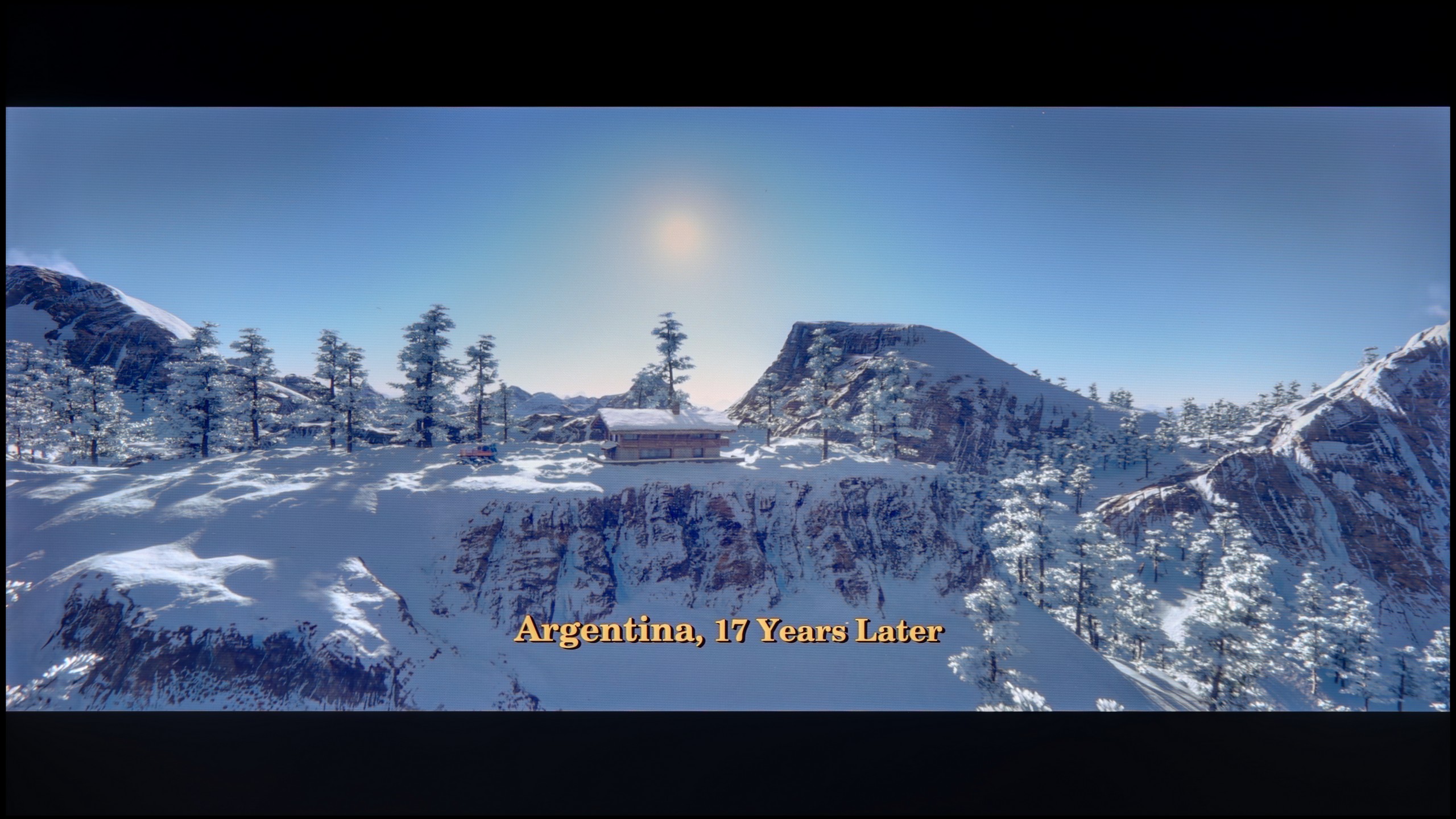

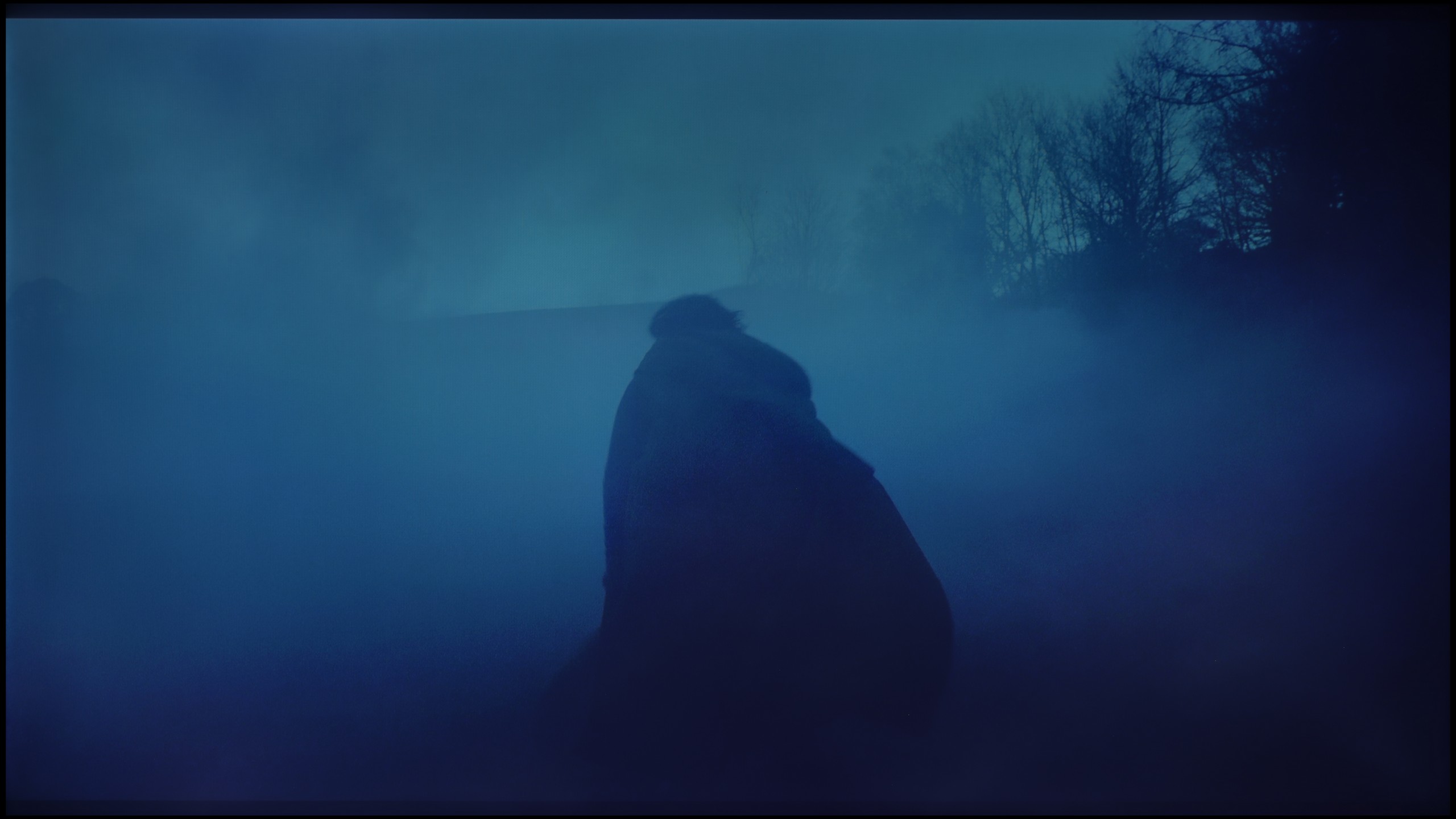

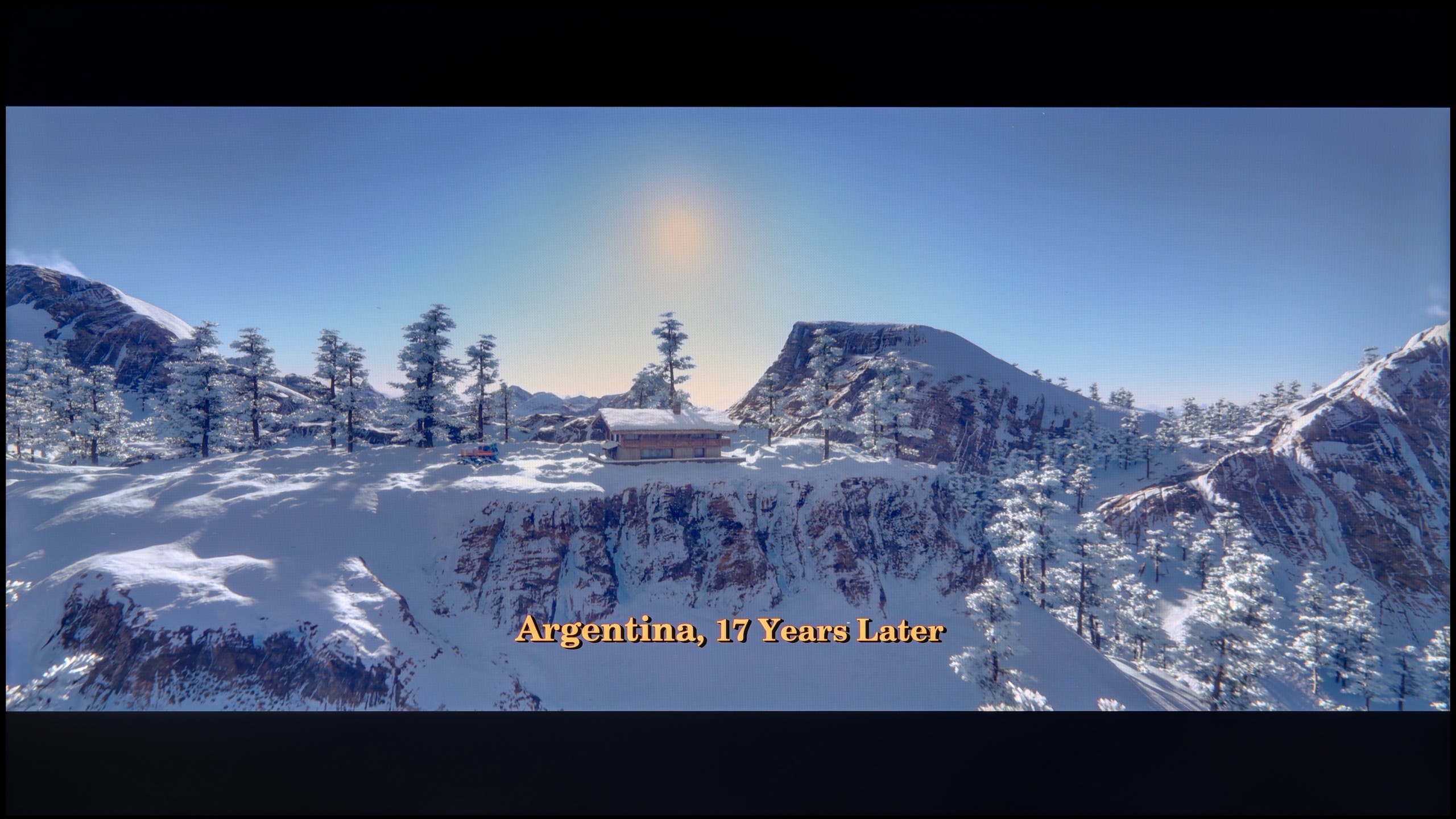
These are selected scenes that show smooth tonal transitions from one color to another. If you see distinct banding, it’s the TV panel’s fault.

These are selected scenes that show smooth tonal transitions from one color to another. If you see distinct banding, it’s the TV panel’s fault.

These are selected scenes that show smooth tonal transitions from one color to another. If you see distinct banding, it’s the TV panel’s fault.
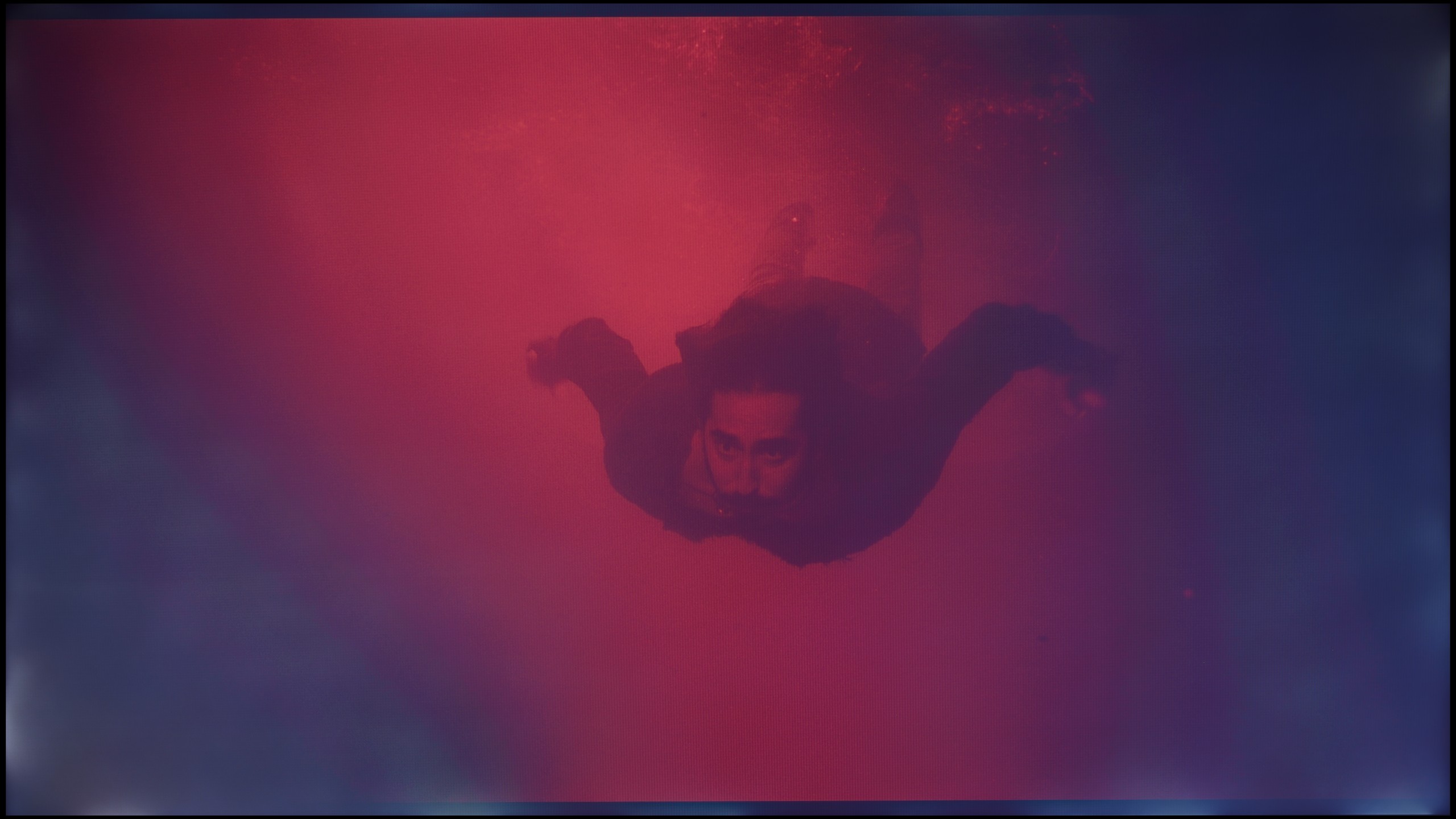
These are selected scenes that show smooth tonal transitions from one color to another. If you see distinct banding, it’s the TV panel’s fault.
The television performs excellently in colour blending – the gradients are smooth, free from visible bands or unpleasant jumps. This is best seen in classic test scenes, such as shots from the film Kingsman or The Martian, where most televisions reveal their weaknesses. The P8K maintains the consistency and subtlety of colours, creating an image that is pleasing and natural to observe.
Minor imperfections only appear with extremely dark shades or on grey palettes – this is the moment when even significantly more expensive models start to struggle. However, this does not matter in everyday viewing. Overall, the TCL P8K excels in colour blending, offering a smooth, harmonious image free from artifacts.
When it comes to the fluidity of tonal transitions, in the 75-inch version with an IPS panel, we have mixed feelings. Looking solely at the colourful gradients, the transitions perform even better than in the variant with a VA panel. The colours blend more smoothly, and typical banding issues are less noticeable. However, the situation changes dramatically in dark scenes. The tragic black characteristic of IPS effectively ruins the perception of tonal transitions in the low brightness areas. The boosted black makes it difficult to notice subtle shades of colours, and the very unnatural backlight bleed further exacerbates the situation. In the tested specimen, the backlight bleed was particularly noticeable at the edges, where the light almost pierced through to the screen. This not only negatively impacts the perception of dark scenes but also significantly hampers a reliable assessment of the gradation itself.
Image scaling and smoothness of tonal transitions
6/10
6.7/10

Smooth transition function
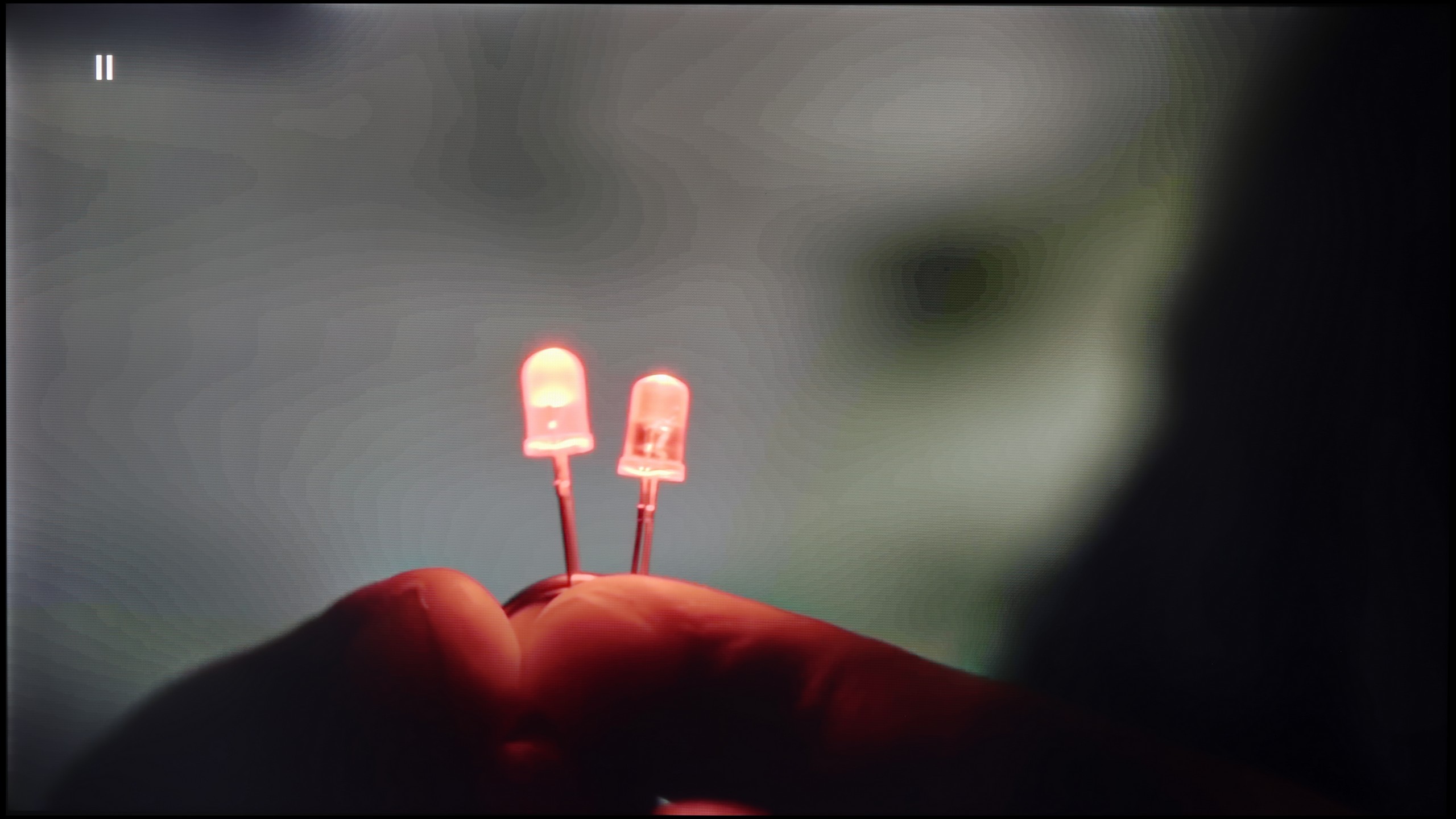
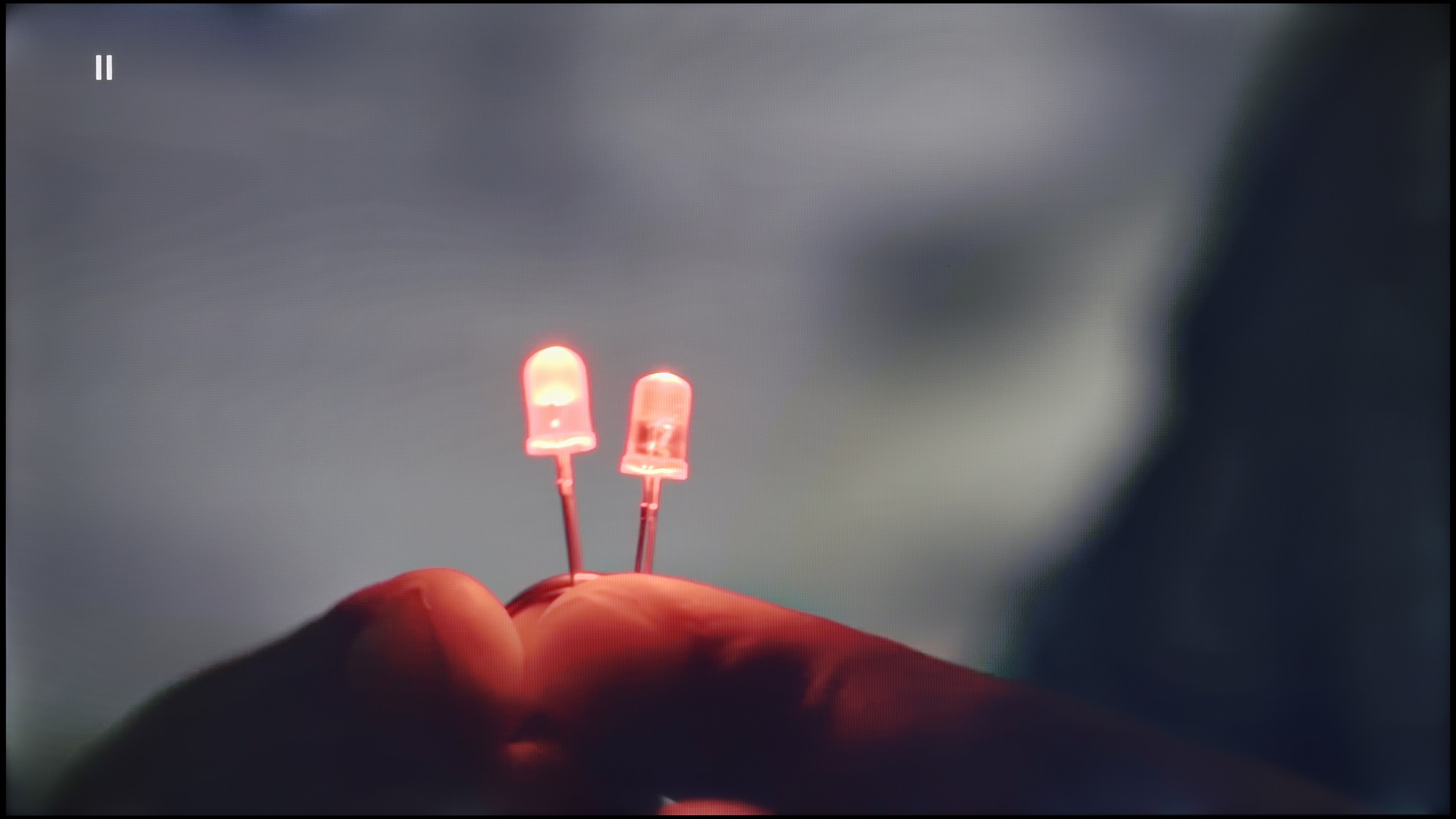
The match photo shows how the TV smooths weak tonal transitions in low-quality video.
Image scaling SD (576i)


The model photo shows how it handles upscaling of SD material.
The TCL P8K performs somewhat worse when it comes to the fluidity of tonal transitions in lower-quality materials. The television does offer a function to smooth out unwanted bands; however, its effectiveness leaves much to be desired. Even at the highest setting, it's hard to talk about any real improvement – at times the effect is almost the opposite of what is intended, as the function can introduce small artifacts and unnatural blurring on the screen.
On the other hand, upscaling – that is, scaling the image to 4K resolution – looks significantly better. The P8K handles this task surprisingly well – HD content, and even SD, is enhanced in an aesthetically pleasing manner without excessive loss of sharpness. While there are slight "hard" edges typical of this class of equipment, this can be easily adjusted with the sharpness slider to suit personal preferences. The final effect is more than satisfactory, especially considering the price range in which this model is situated.
In the Philips PUS9010, we find another iteration of the P5 Perfect Picture image processor, designed to improve the quality of inferior materials. One of the components of this system is the distortion reduction function, which is responsible for smoothing tonal transitions. It works effectively and indeed reduces the visible colour gradation. Unfortunately, it does so quite aggressively. In practice, it can dim details such as the texture of materials or film grain. This is a notable compromise, so we would not recommend it for movie screenings. However, it performs significantly better with more casual content like YouTube or regular television. The P5 processor also manages quite well with lower resolution materials. The image is soft, at times even too soft, but this can easily be corrected with the sharpness slider, adjusting the effect to personal preference. A positive aspect is also the lack of edge trimming in SD materials, which is still not standard in this class of televisions.
Blur and motion smoothness
7.1/10
7.7/10
Blur (native resolution, maximum refresh rate):






Blur (4K@144Hz):



Blur (4K@144Hz):



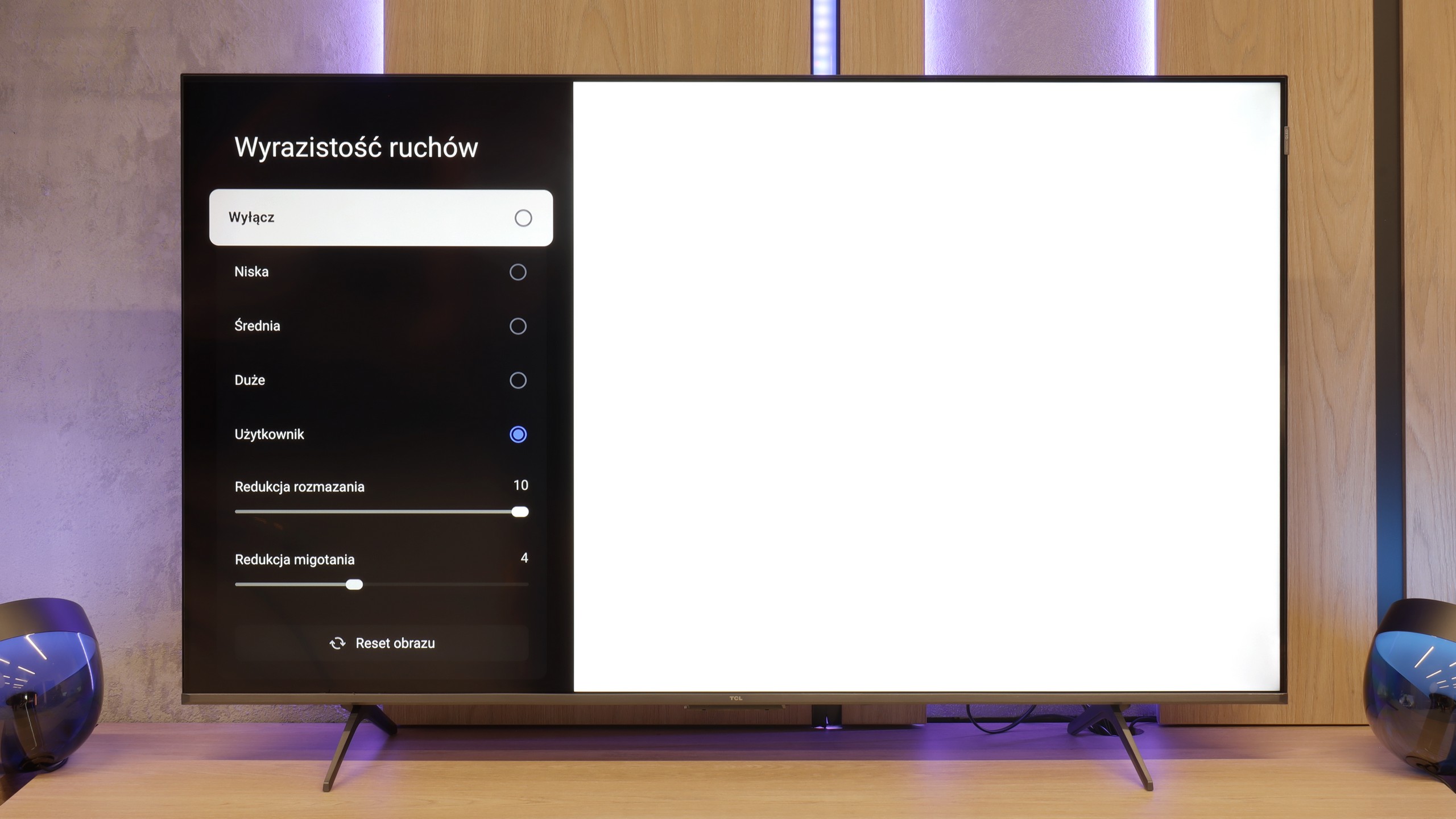
TCL P8K is one of the cheapest televisions offering a refresh rate of 144 Hz, which in itself is quite an advantage in this price segment. Thanks to the fast panel, this model can confidently be recommended to both sports fans and video gamers – the image is smooth, and the movement of the ball or dynamic actions look natural. However, this does not mean that the P8K is suitable solely for sports. On the contrary – it can also maintain appropriate dynamics in films without introducing the artificial effect of "theatricality", as long as we set the parameters wisely. The television is equipped with a motion smoother called "Motion Clarity", which features two sliders: blur reduction and judder reduction. The first is responsible for smoothing the image by generating additional frames, which increases fluidity, but may cause a slight soap opera effect. The latter, on the other hand, reduces judder and improves sharpness during movement, although it can slightly darken the screen. Properly adjusting these two parameters allows for a really good balance between natural motion and fluidity. It has a 60 Hz refresh rate, but it is hard to say that it is a top-tier panel in terms of response speed. It will perform well for dynamic content, although more demanding users will notice that it is not a screen from the highest class in terms of motion clarity.
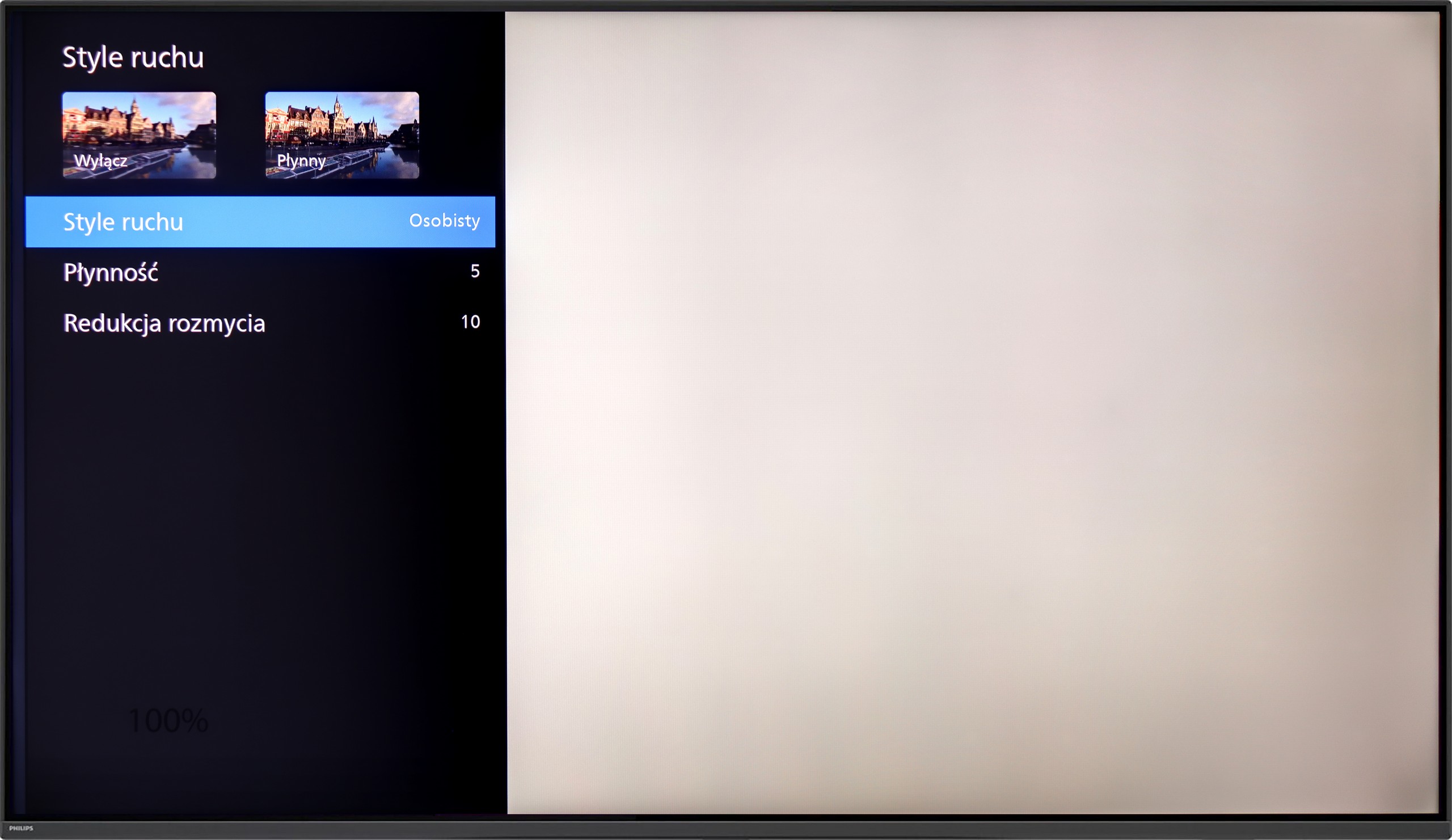
Philips PUS9010 has a 4K panel with a refresh rate of 144 Hz, which will be appreciated primarily by sports fans and gamers. This is especially evident in dynamic scenes where the motion is sharp, and annoying blur is almost non-existent. When it comes to movies (standard 24 fps), Philips gives us a proven set of settings known from higher series. Two sliders are used to control motion. “Smoothness” allows you to adjust the image to your own taste: at low settings, we maintain a cinematic character, while moving the slider to the right gives us a perfectly smooth, albeit somewhat “theatrical” effect. On the other hand, “Motion Blur Reduction” is a function designed for sports – it ensures that fast-moving objects do not lose detail and remain clear.
Console compatibility and gaming features
9.8/10
9.8/10
- ALLM
- VRR
- VRR range48 - 240Hz48 - 144Hz
- Dolby Vision Game Mode
- Correct implementation of HGIG
- 1080p@120Hz
- 1440p@120Hz
- 4K@120Hz
- Game bar
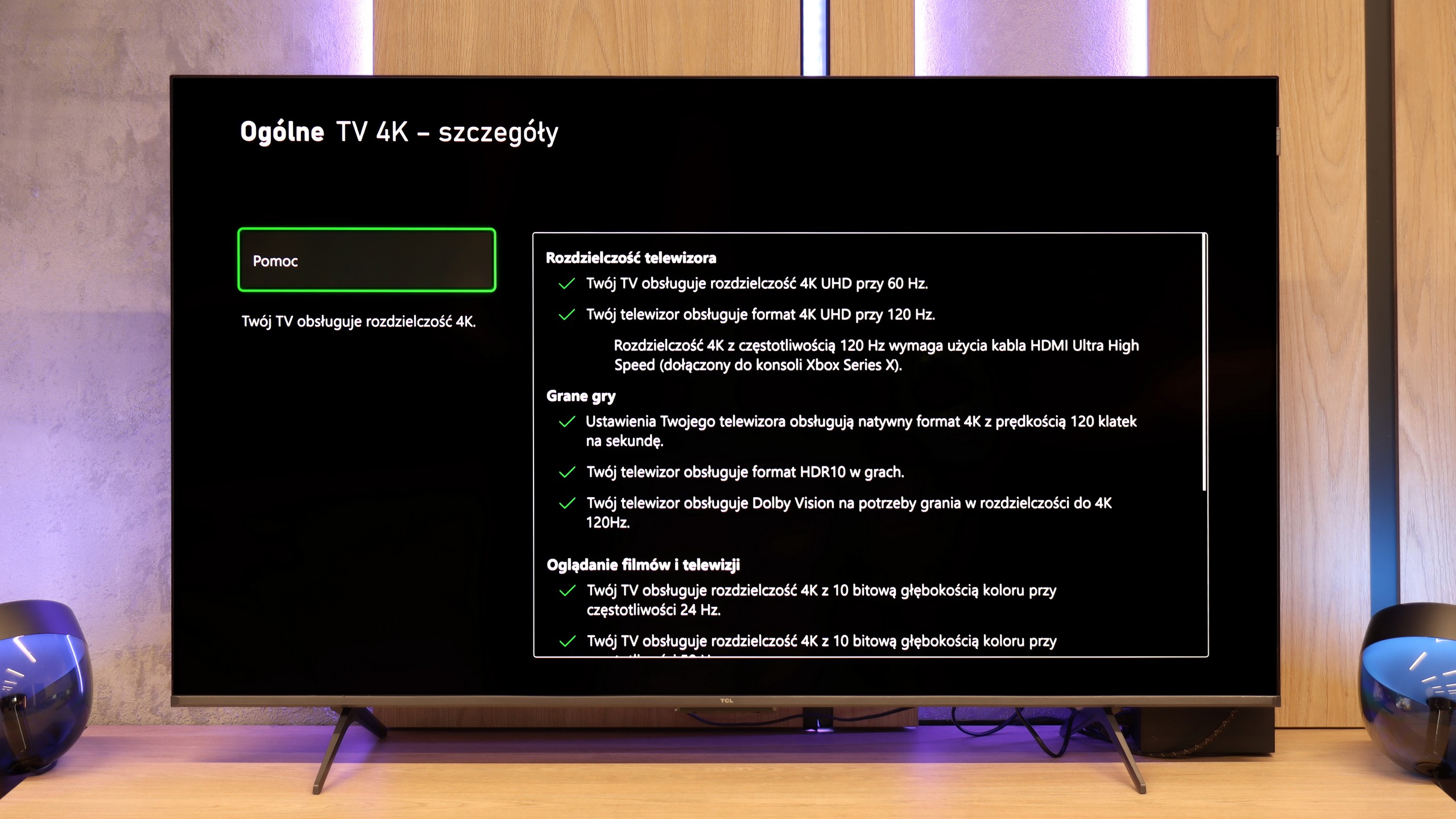
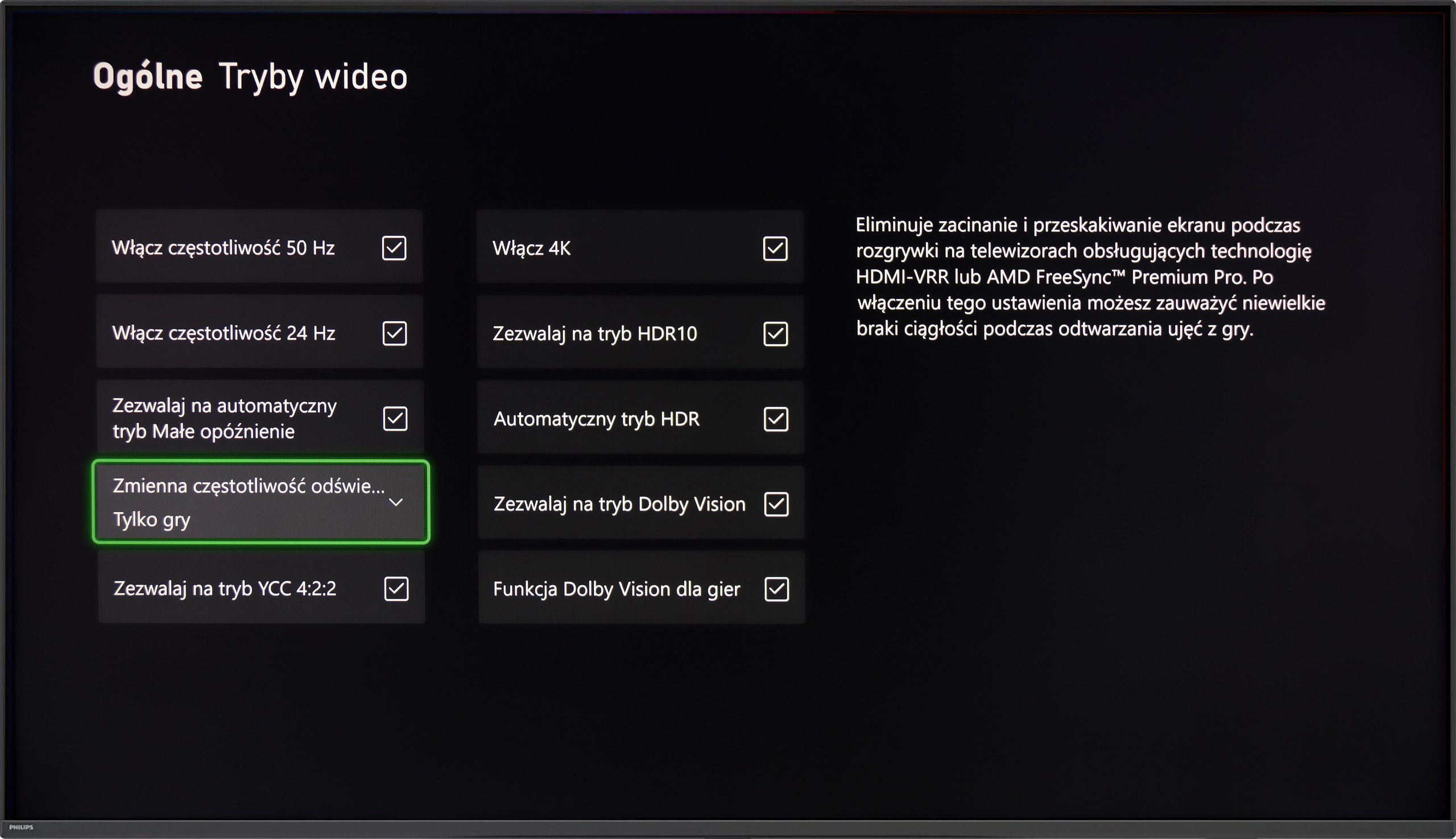
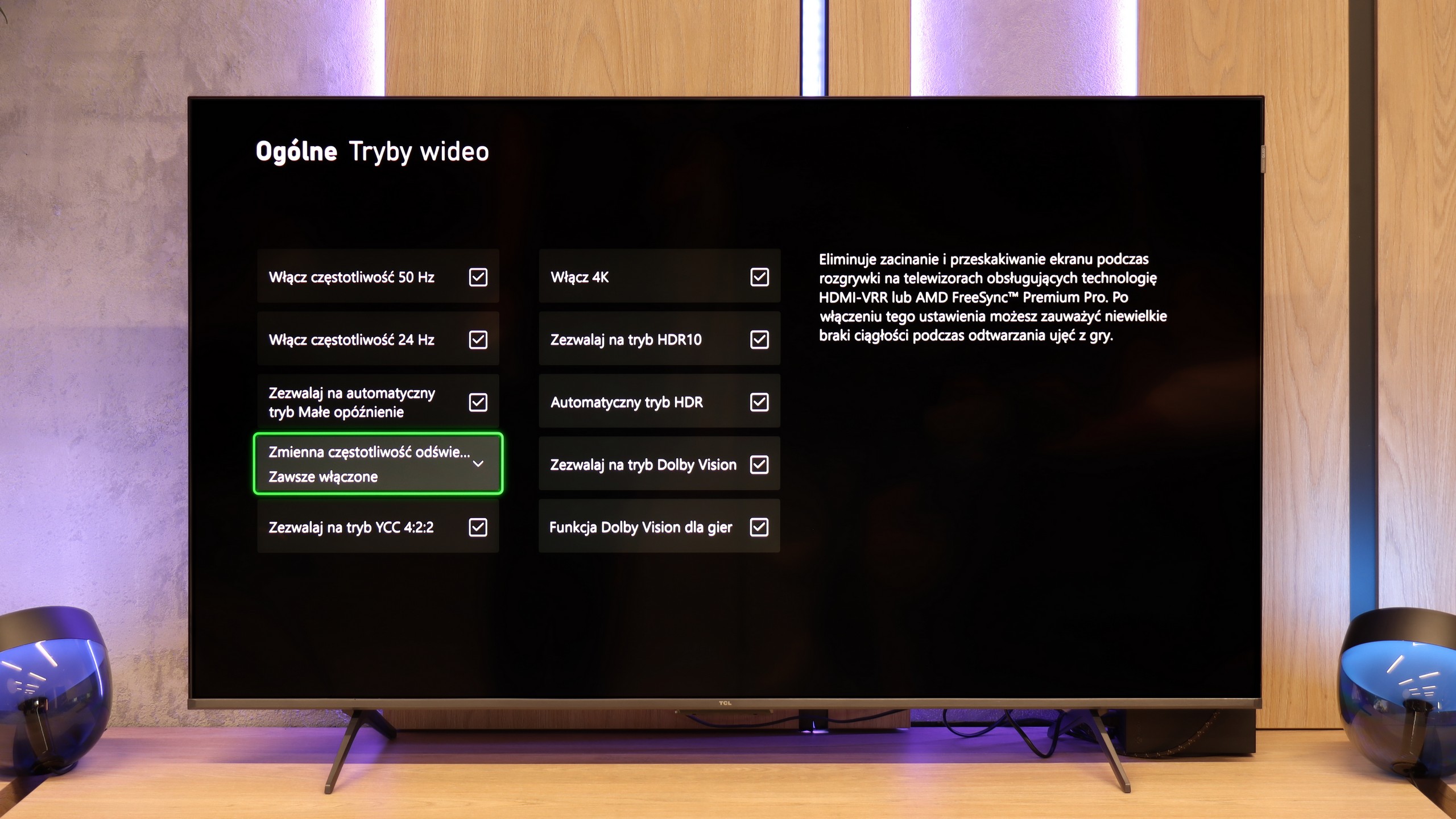
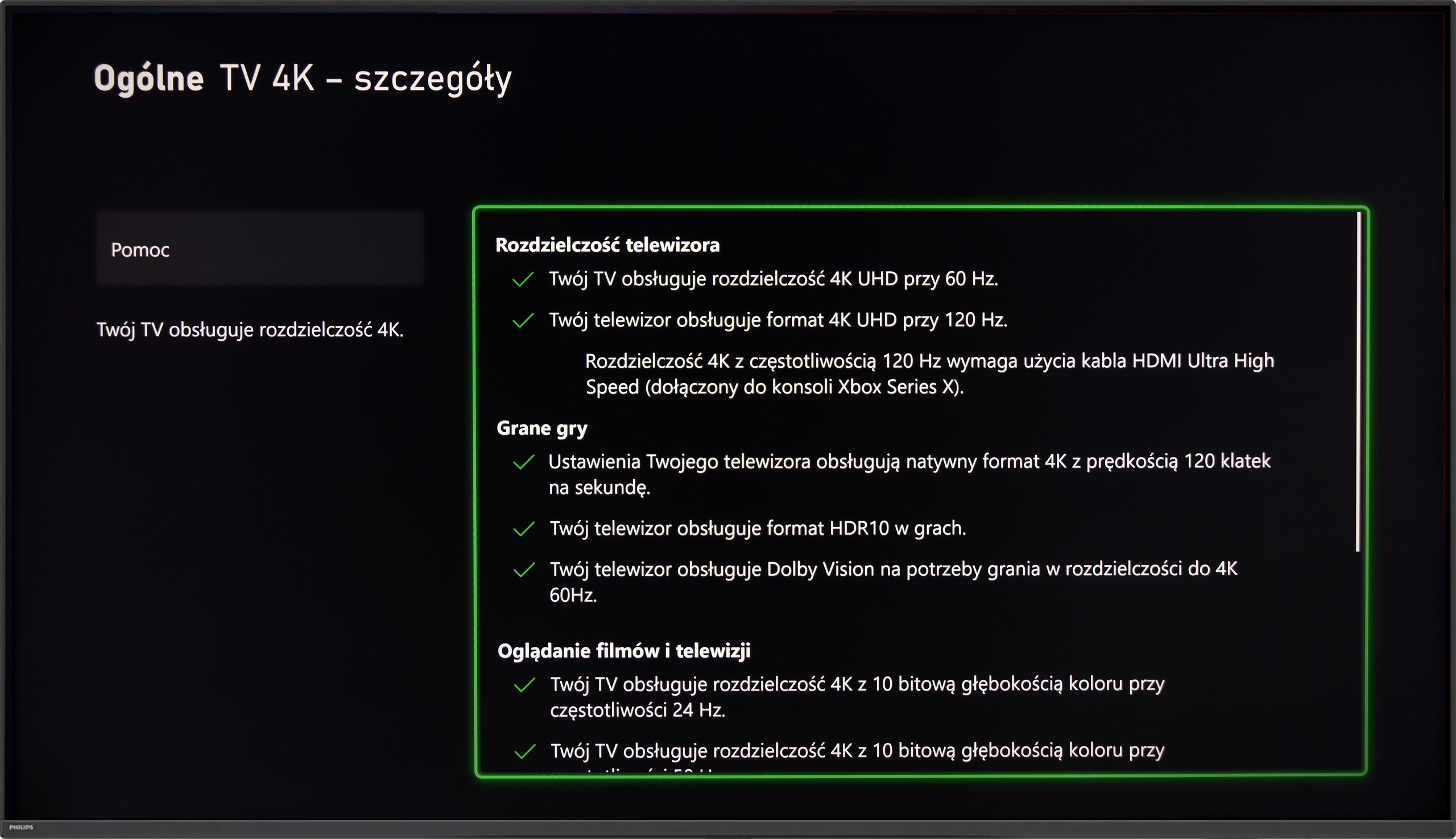
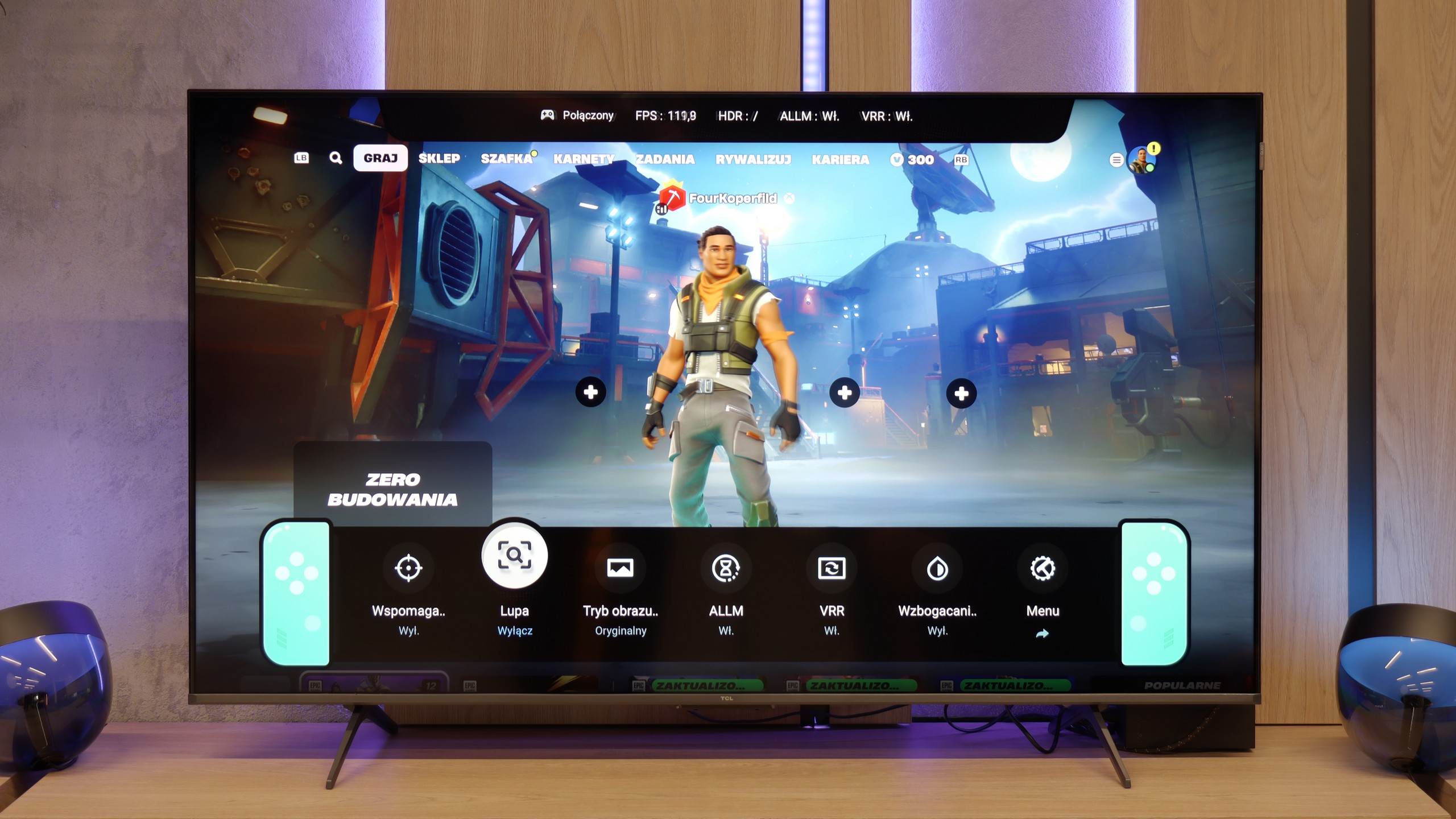
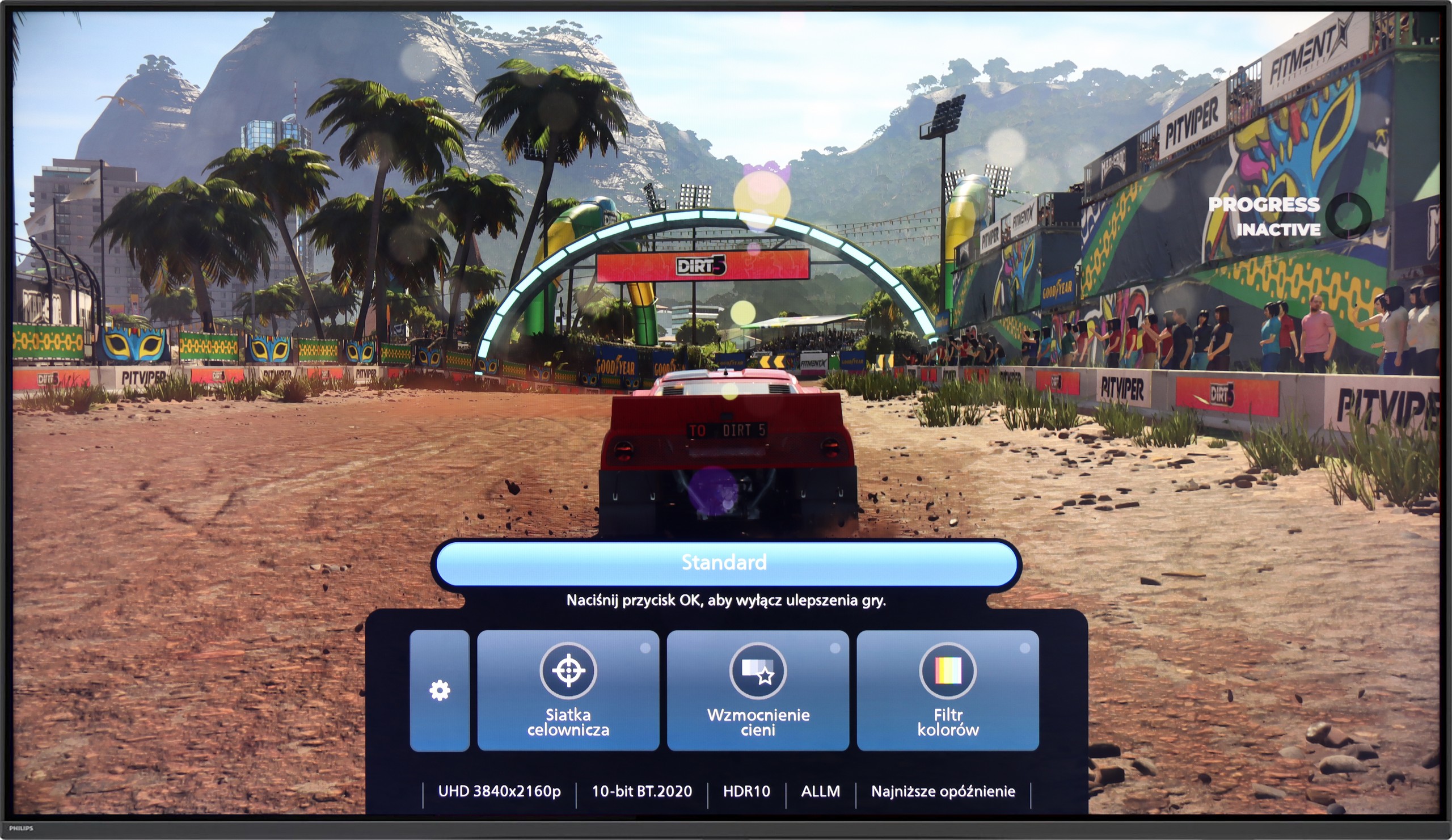
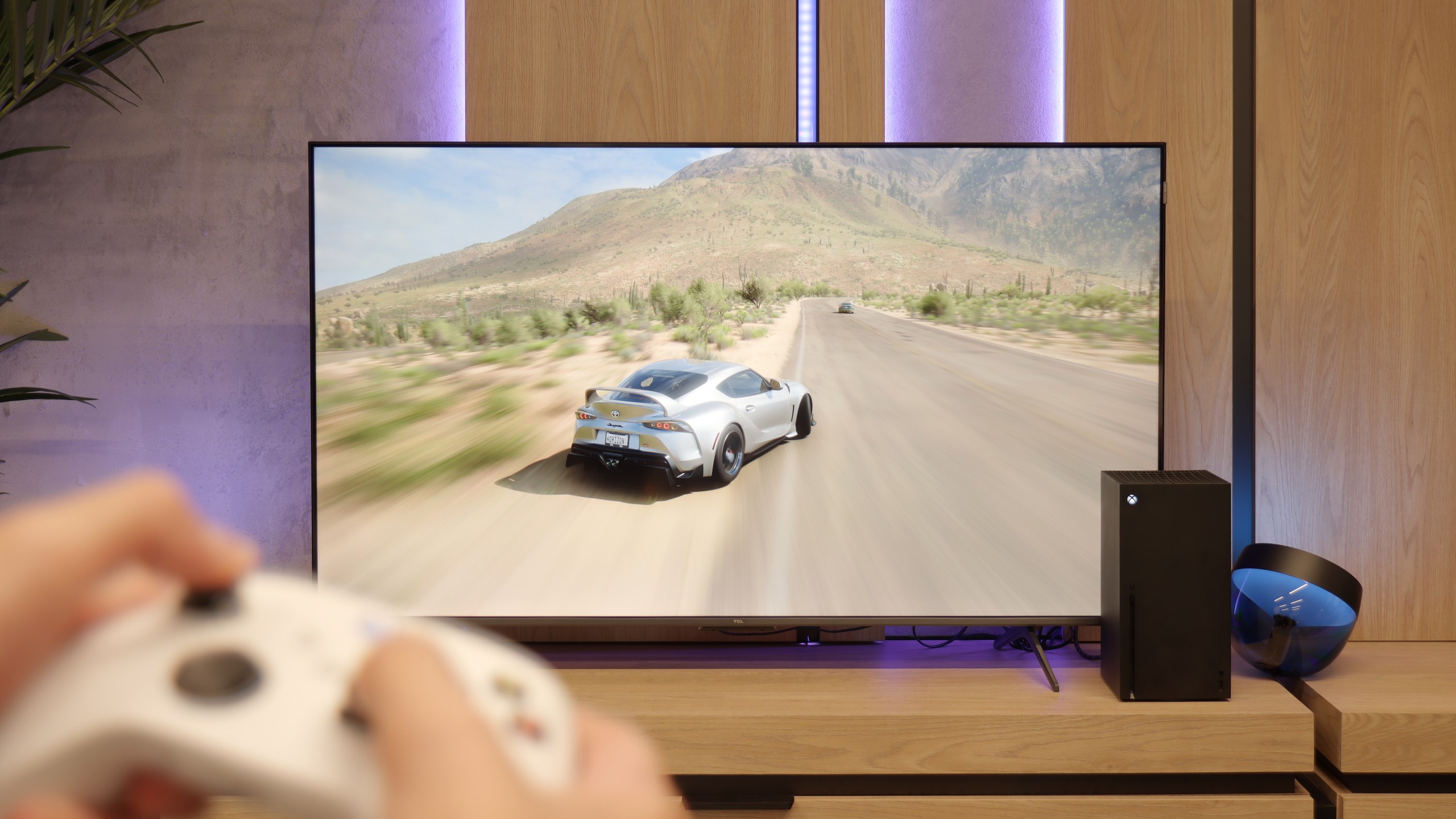
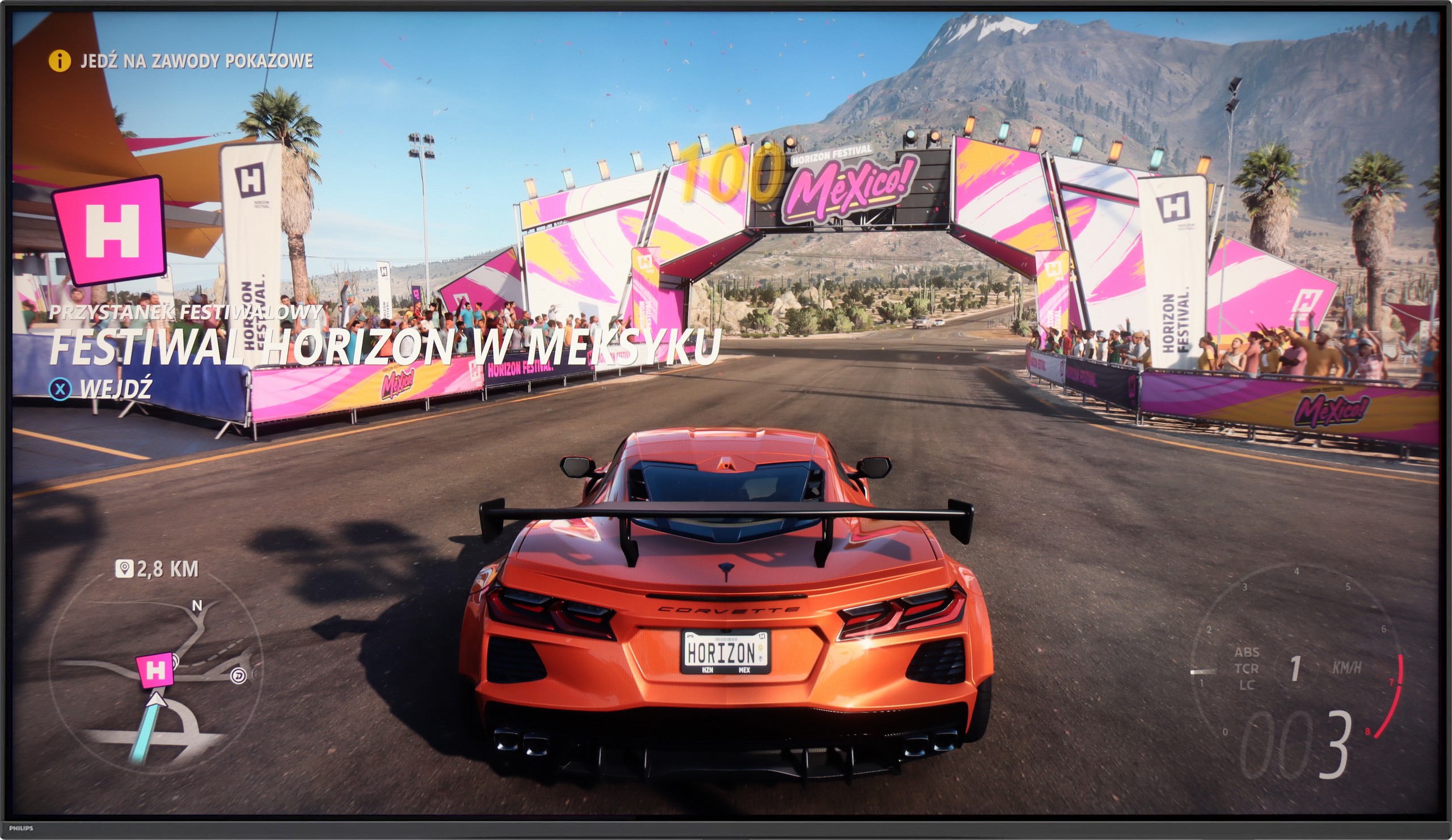
Although the TCL P8K is a budget television, it cannot be said that it is unsuitable for gaming. On the contrary – it is a screen that can pleasantly surprise any gamer. It features two HDMI 2.1 ports, allowing for 4K output at 120 Hz without any issues. For those gaming on a PC, they will also be pleased to know that the television can operate with a refresh rate of up to 240 Hz at a lower resolution – a small thing, but it delights. Additionally, it comes with a full set of gaming features: automatic game mode, Game Bar with quick parameter previews, VRR, HGiG, and support for Dolby Vision in games. All of this makes gaming on the P8K a truly enjoyable experience – the picture is smooth, the response is quick, and the television communicates well with next-generation consoles. The TCL P8K shows that a cheap screen doesn't have to mean giving up on fun. Certainly not in terms of gaming.
The Philips PUS9010 is a truly solid machine for gaming. It has everything that matters: VRR, automatic game mode (ALLM), and support for HGiG. The latter is a great feature – it allows HDR in games to be set exactly as the developers envisioned. The television handles 120 Hz refresh rates effortlessly at every popular resolution (1080p, 1440p, and 4K). Whether you connect a PS5, Xbox, or a powerful PC, everything functions stably and simply as it should. Gamers will also appreciate the Game Bar. This quick, clear menu immediately shows whether the low latency mode is active. This is especially useful when frequently switching between different consoles. The whole experience is complemented by Ambilight. Evening sessions with this backlighting take the atmosphere to a whole new level – the image seems larger, and dynamic scenes leave an even better impression. Even if someone isn’t a fan of such “gadgets”, it’s hard to deny that it’s impressive.
Input lag
9.5/10
9.5/10
SDR
HDR
Dolby Vision
In terms of latency, the TCL P8K performs really well. In game mode at 4K and 60 Hz, the input lag is around 22 ms, and at 4K and 120 Hz it drops to 13 ms. These figures ensure that the television responds quickly and there is no noticeable 'lag' between the controller and the screen.
In terms of responsiveness, the Philips PUS9010 performs very well. The input lag is around 9 ms at 120 Hz and 18 ms at 60 Hz, so the response to movement with the controller is quick and predictable. In practice, even dynamic action games or esports titles pose no problems. Dolby Vision in games performs less well. The lag then increases to around 35 ms, which will still be acceptable for less demanding players, but more sensitive individuals may start to feel a slight sluggishness in control. For this reason, HDR10 with HGiG enabled remains a better choice. In this model, it works correctly, providing lower latency and more predictable brightness behaviour, without the issues that can arise in Dolby Vision.
Compatibility with PC
8.6/10
8.9/10
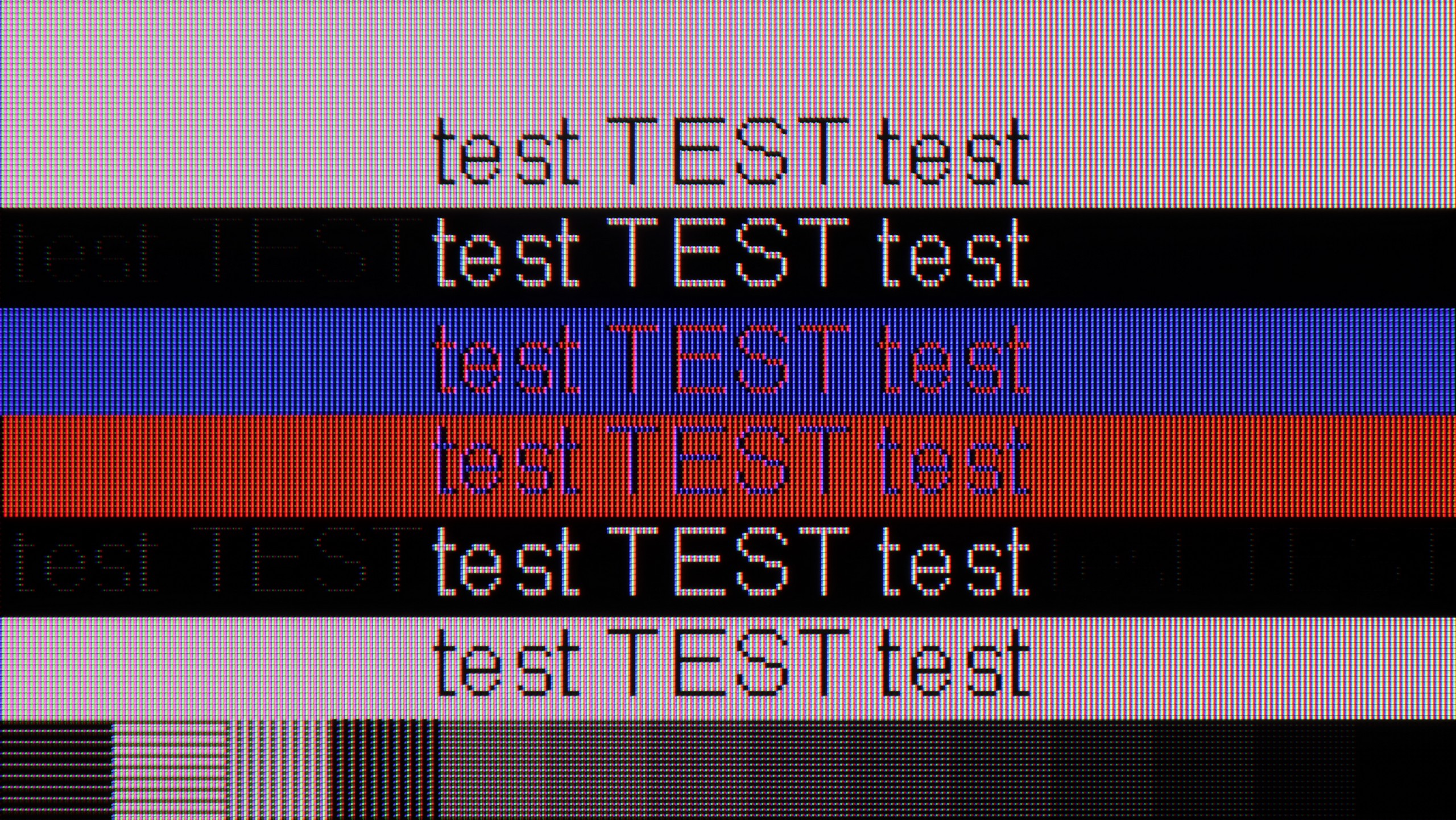
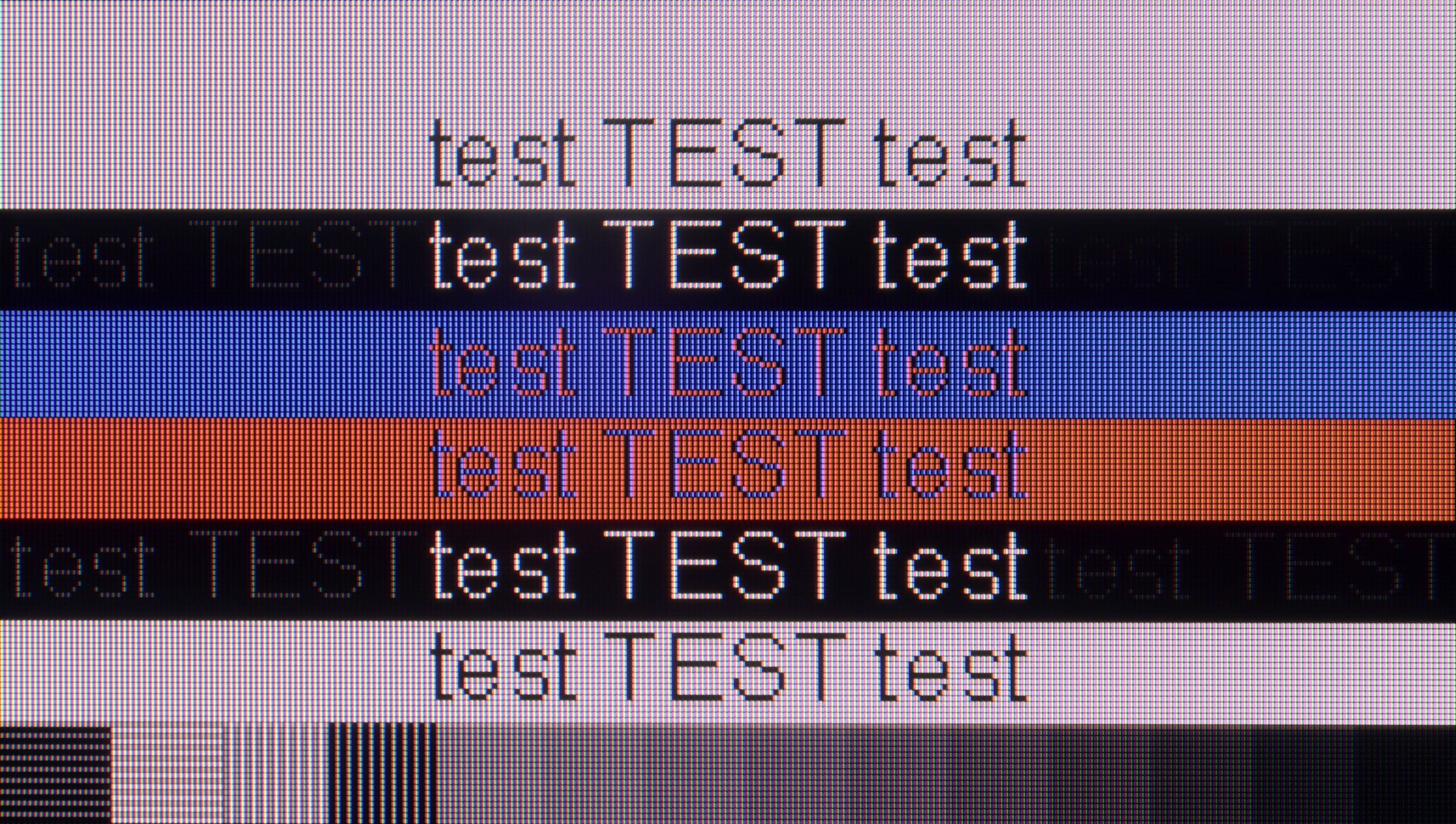
The photo shows the legibility of small fonts. Ideally, lines should be the same thickness on both light and dark text, with minimal pixel gaps.
The TCL P8K also works excellently as a computer monitor. The readability of fonts is at a very good level, making work with documents and browsing the web simply comfortable. The only slight downside occurs when refreshing at 144 Hz in 4K – dark text on a light background can slightly lose sharpness. The problem disappears when switching to 120 Hz, so it's worth keeping this in mind for everyday use. Besides, it is not only a screen for work but also a great monitor for gamers. The 144 Hz refresh rate (and even 280 Hz at a lower resolution) combined with G-Sync synchronisation guarantees very smooth gameplay. Of course, we will fully appreciate its capabilities only with a suitably powerful computer, but the potential of the P8K in this role is truly significant.
The Philips PUS9010 (2025) is a very good television for using with a PC. The manufacturer has provided a dedicated 144 Hz mode for PC gamers, and the television correctly supports variable refresh rates for both NVIDIA and AMD cards. The G-Sync and FreeSync features work seamlessly, making PC gaming smooth and free from screen tearing. Since we already know that the television is very suitable for gaming, it is worth noting the readability of text, especially when working daily on the PC. The use of an IPS panel is definitely a plus in this regard. The chroma has been implemented correctly, so we can talk about almost perfect font rendering. The text is sharp, clear and does not pose problems even with prolonged use. However, we must highlight a minor detail out of our meticulousness. With very dark text, vertical and horizontal lines can have slightly different brightness levels. This is, however, purely a technical flaw, practically imperceptible in practice, especially in the case of the 75-inch variant, where the distance from the screen additionally masks this effect.
Viewing angles
2.8/10
5.8/10
The Achilles' heel of the TCL P8K is undoubtedly its viewing angles. The VA panel used has its advantages in terms of solid contrast, but unfortunately, it suffers significantly when viewed from the side. Colours noticeably fade, saturation drops, and the overall image takes on a cooler, washed-out hue. In practice, this means that the best picture is achieved when sitting directly in front – any significant deviation results in a noticeable loss of quality.
The viewing angles on the Philips PUS9010 are very good, and this is one of the greatest advantages of the IPS panel. Compared to the variant with a VA panel, the difference is noticeable. The picture retains significantly better consistency, and the colours remain stable even when viewed from a sharp angle. Of course, with a change in position, the level of brightness does drop slightly; however, the degradation of the image is much less than in the VA version. It is not at the level known from OLED screens, but among LCD televisions, one can say that it has some of the better viewing angles available on the market.
Daytime performance
4.6/10
5.4/10
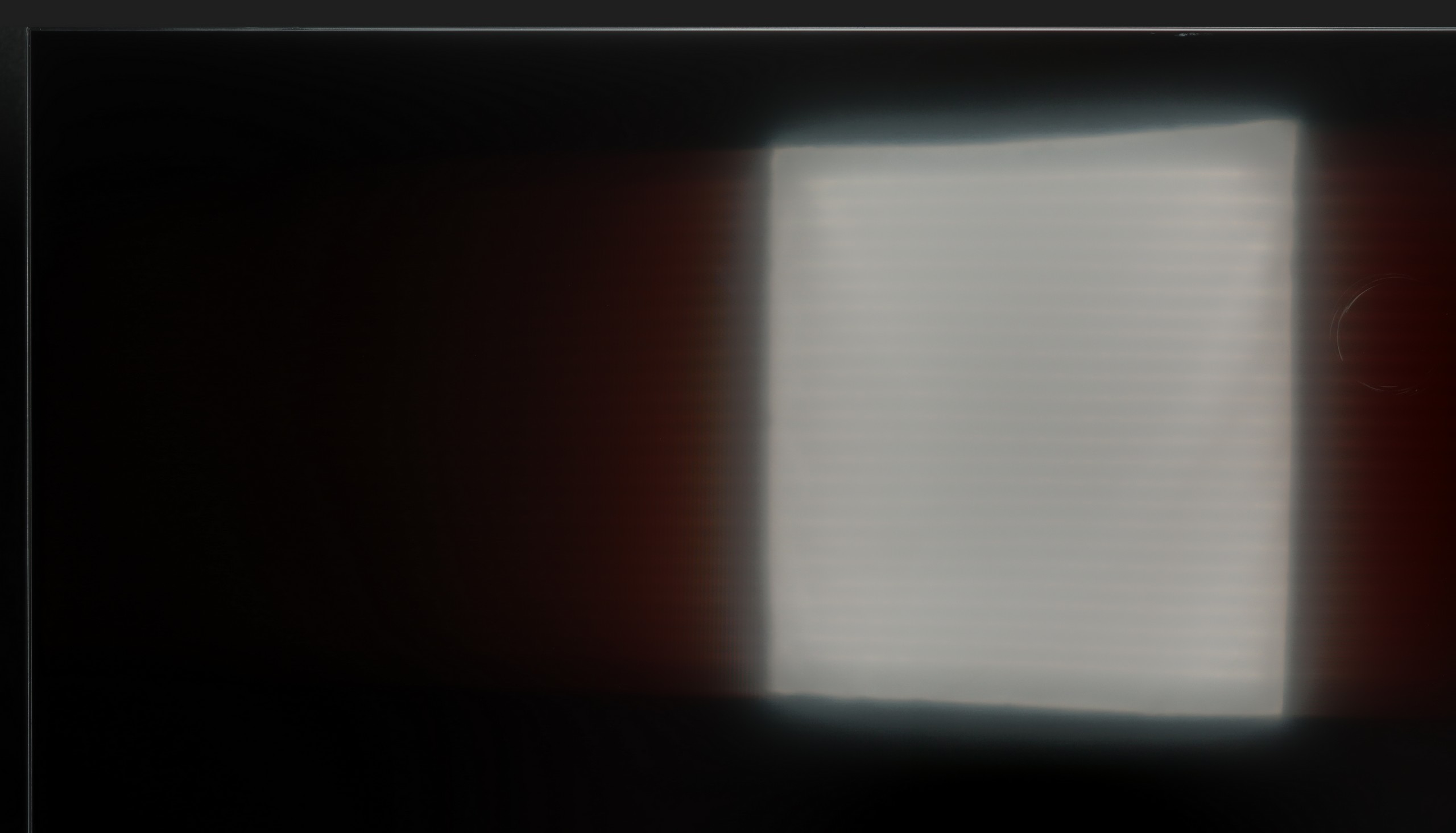

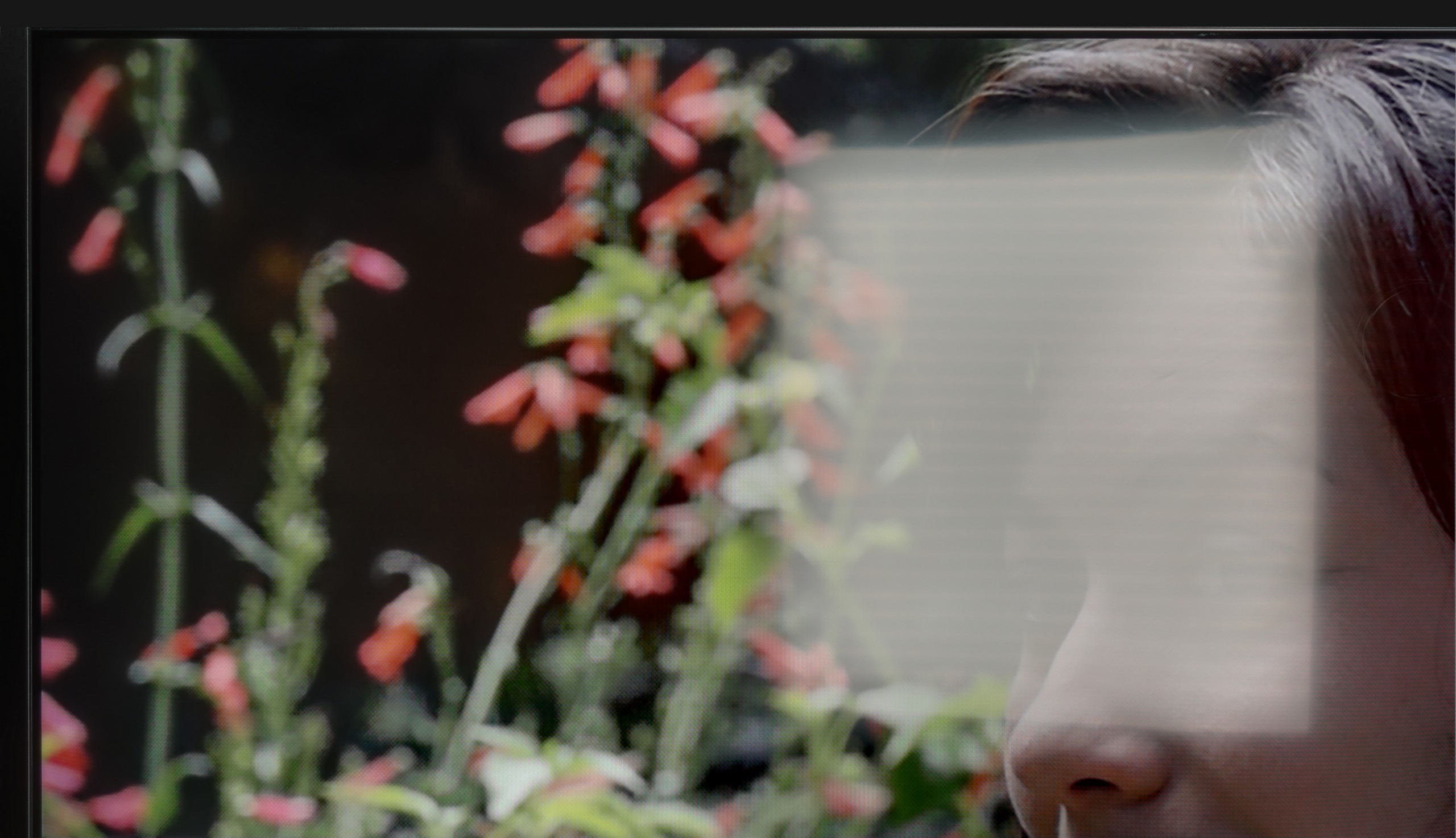
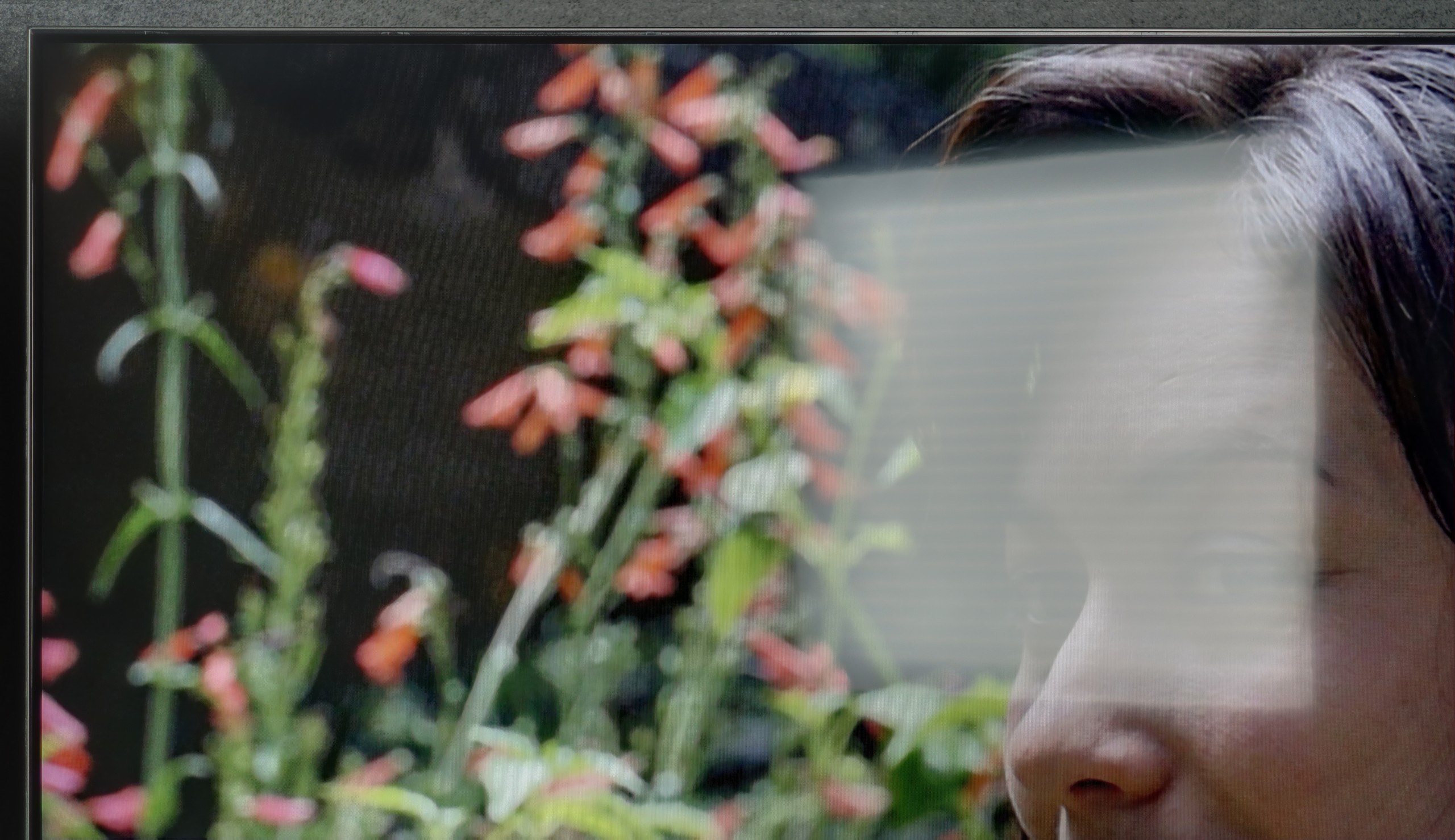
Panel brightness
PHILIPS PUS9010 (IPS): 398 cd/m2
TCL P89K / TCL P8K: 299 cd/m2
TCL P8K does not cope well with strong sunlight. With brightness at around 300 cd/m², it is hard to expect it to perform well in a living room with large windows and no blinds. In such conditions, the image loses some sharpness, and darker scenes can disappear in light reflections. Fortunately, the screen has a satin coating that handles reflections well and saves the situation in typical home conditions. In the evening or in a slightly dimmed room, the television looks very good. It is simply not a device that prefers to be placed opposite a south-facing window.
In terms of use in a bright room, the Philips PUS9010 performs reasonably well. The applied satin matrix effectively dampens reflections and does not create a mirror effect, which means the screen doesn't scatter as much light from windows or lamps. Unfortunately, compared to the VA panel variant, the television performs worse. The screen is noticeably darker, which can be felt in a very sunny room. Under normal daytime conditions, this does not pose a major problem; however, in very bright surroundings, the difference compared to the VA version is noticeable.
Panel details
Subpixel Structure:
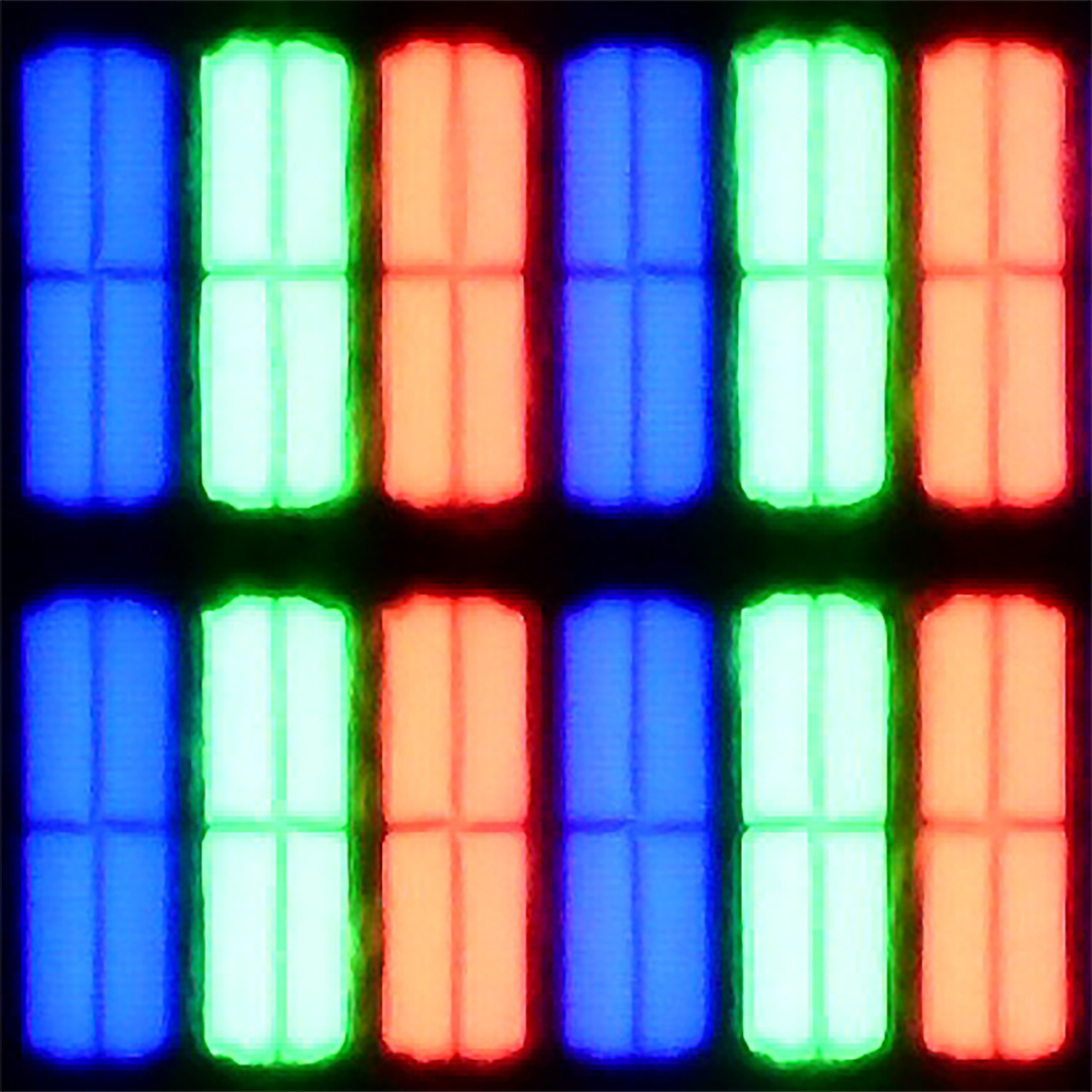
Panel uniformity and thermal imaging:
TCL P89K / TCL P8K
PHILIPS PUS9010 (IPS)
TV features
7.4/10
6.1/10
- SystemGoogle TVTitan OS
- System performanceDecentDecent
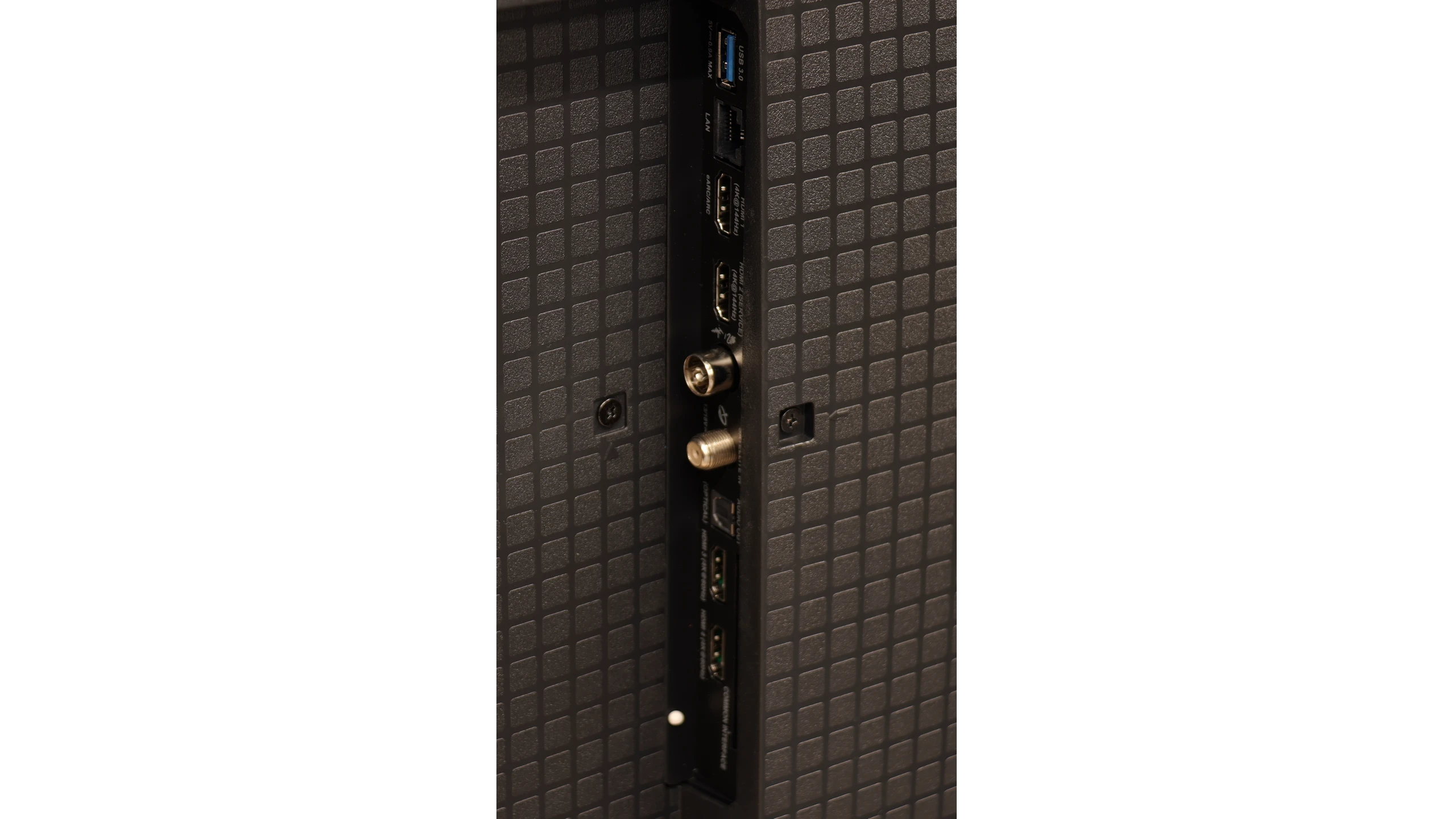
- HDMI inputs2 x HDMI 2.0, 2 x HDMI 2.1 48Gbps2 x HDMI 2.0, 2 x HDMI 2.1 48Gbps
- Other inputsToslink (Optical audio)
- OutputsToslink (Optical audio), eARC (HDMI), ARC (HDMI)Toslink (Optical audio), eARC (HDMI), ARC (HDMI), Mini-Jack (Headphones)
- Network InterfacesWi-Fi 2.4GHz, Wi-Fi 5GHz, Ethernet (LAN) 100Mbps, Ethernet (LAN) 1GbitWi-Fi 2.4GHz, Wi-Fi 5GHz, Ethernet (LAN) 1Gbit
- TV receptionDVB-T, DVB-T2, DVB-S, DVB-S2, DVB-CDVB-T, DVB-T2, DVB-S, DVB-S2, DVB-C
Classic features:
- Recording to USB (terrestrial TV)

- Recording programming
- Picture in Picture (PiP)
- RF remote control (no need to aim)
- Backlit remote control
- Teletext
- Audio only mode
- Bluetooth headphones support
- Simultaneous Bluetooth headphones & TV audio
Smart features:
- AirPlay
- Screen mirroring (Windows Miracast)
- Voice search
- Voice search in native language
- Ability to connect a keyboard and mouse
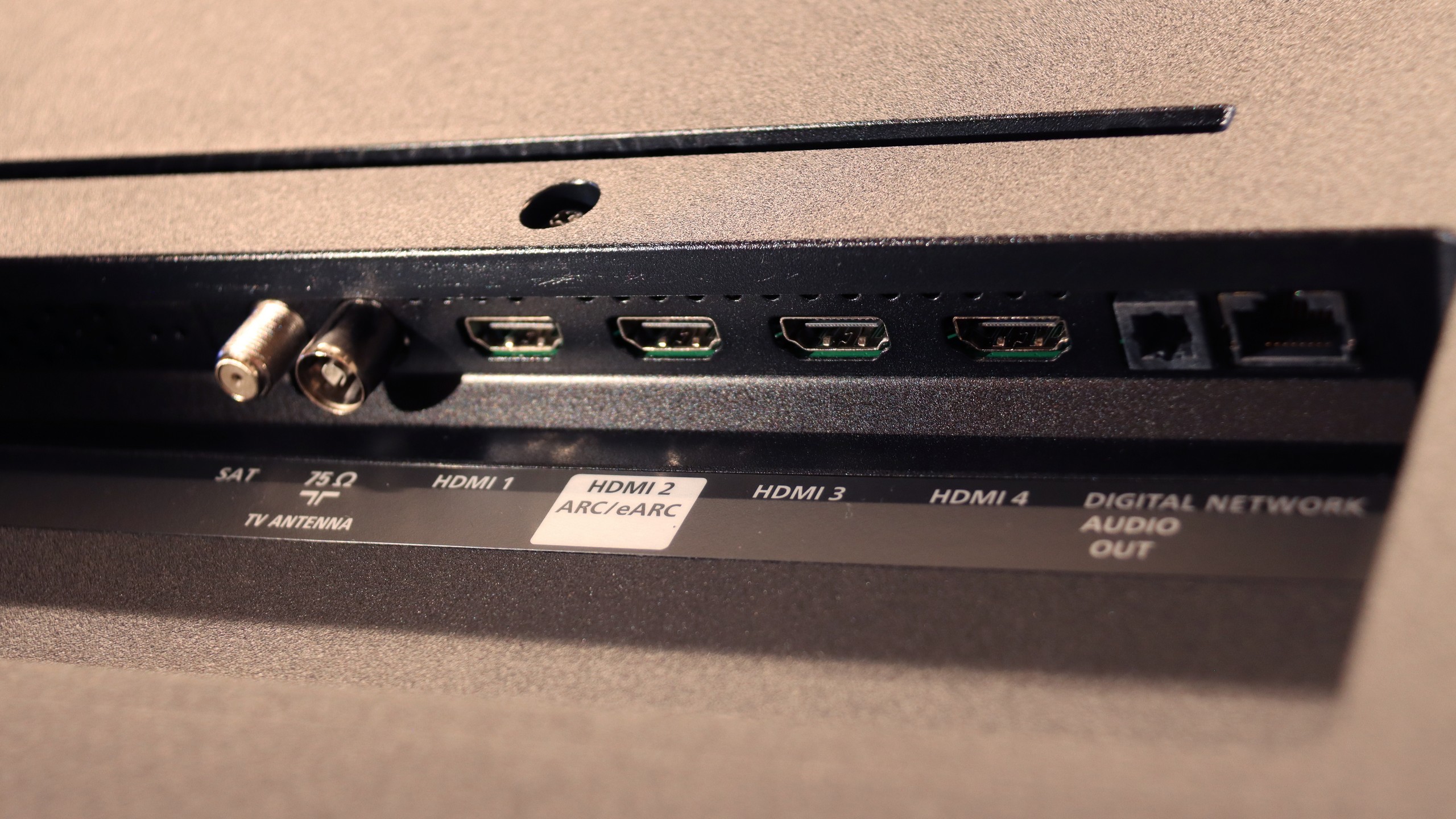
Sound connection options
- HDMI audioeARC (HDMI), ARC (HDMI)eARC (HDMI), ARC (HDMI)
- Other audio outputsToslink (Optical audio)Toslink (Optical audio), Mini-Jack (Headphones)
- Wireless audioBluetoothBluetooth
Supported audio formats (external HDMI eARC audio):
- Dolby Digital Plus 7.1
- Dolby True HD 7.1
- Dolby Atmos in Dolby Digital Plus (JOC)
- Dolby Atmos in Dolby True HD
- DTS:X in DTS-HD MA
- DTS-HD Master Audio
Senior accessibility
- Numeric keyboard on TV
- Font size adjustment
- Audio description
SmartTV: Google TV
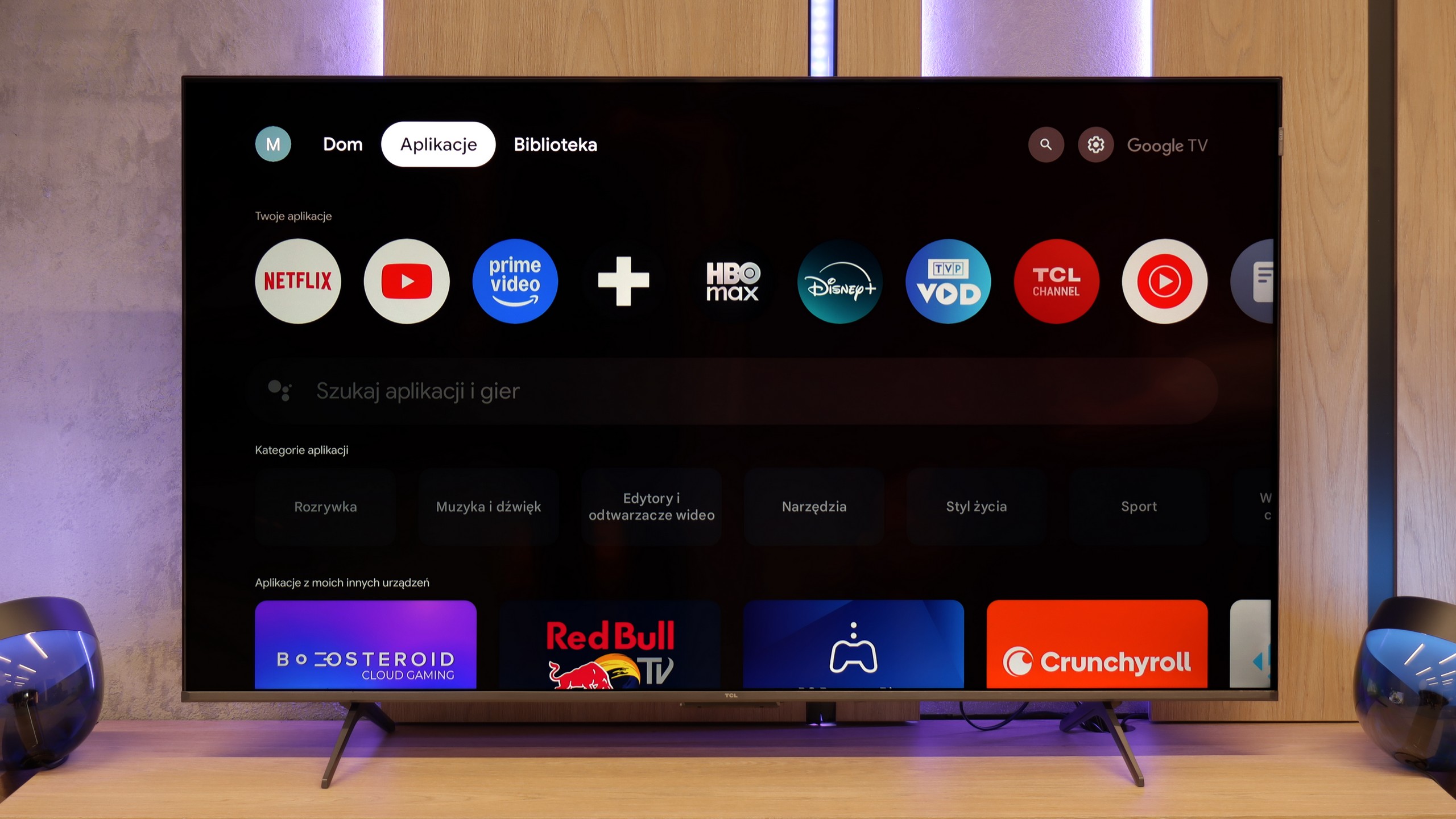
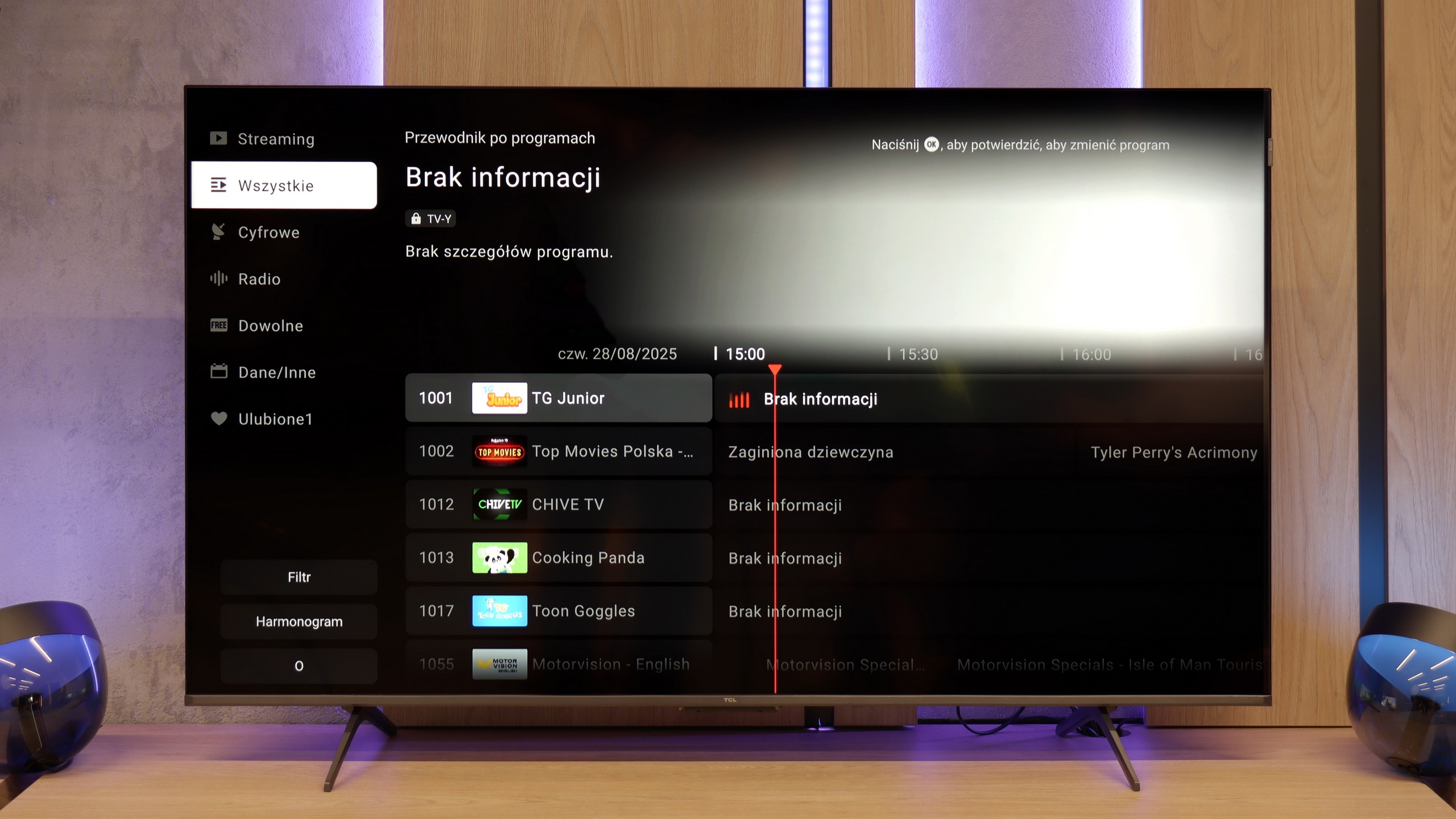
TCL P8K operates based on the Google TV system, which is the heart of the entire device. This is where the biggest advantage of this model over many competitors in a similar price range is visible. The system is clear and easy to use, and very well optimised. We can easily make use of the screen mirroring feature or the built-in Chromecast, which allows us to quickly transfer images from our phone to the large screen. The greatest asset, however, is the Google Assistant, which responds promptly and really understands commands well – even those expressed imprecisely. Moreover, the application library in Google TV is a real treasure – you can install practically anything, from major VOD platforms to lesser-known music or sports applications.
Classic features
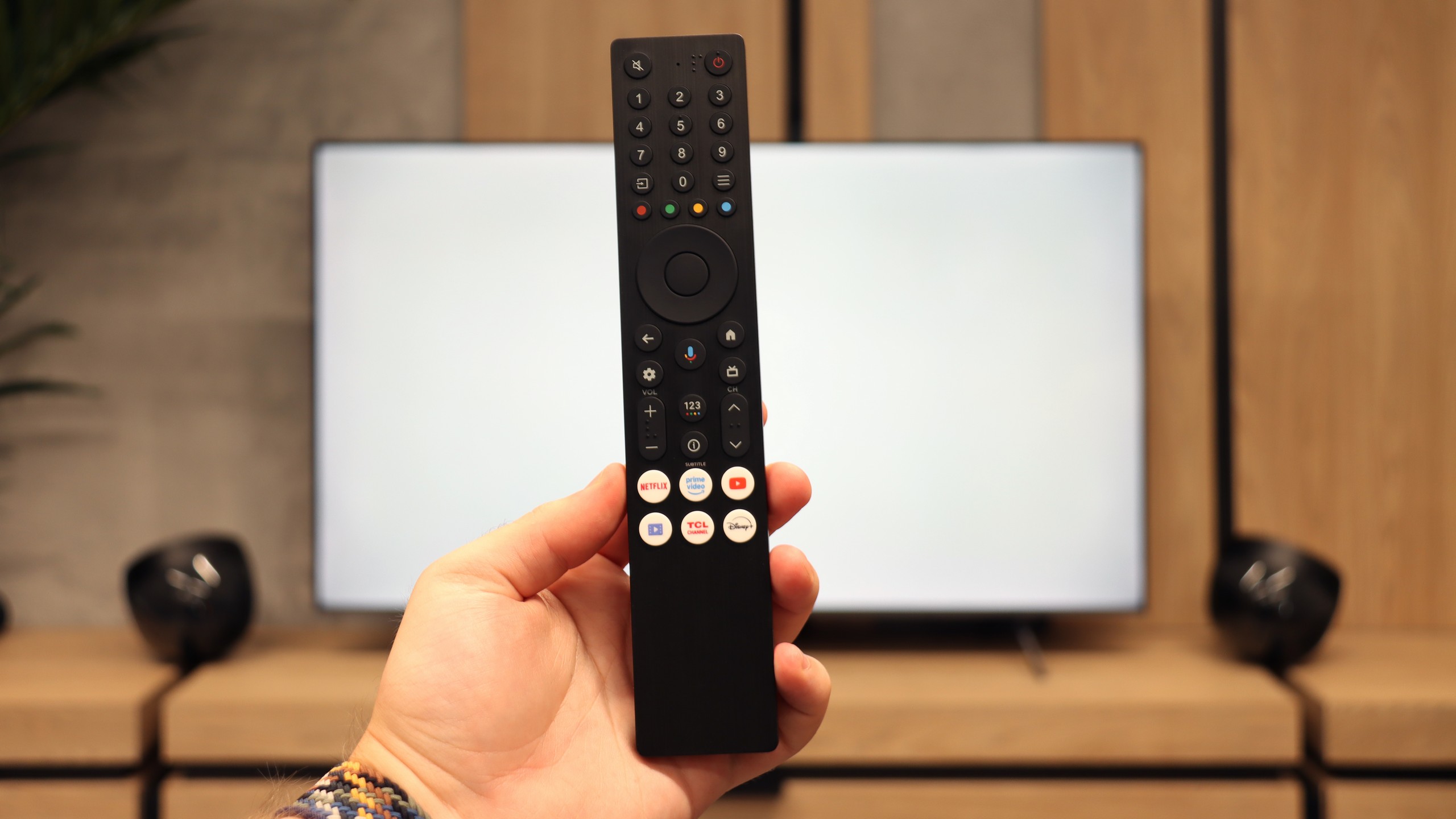
As for classic television functions, the P8K doesn't have much to boast about. The remote is simple and convenient, with a large number of buttons, and the presence of Bluetooth allows you to connect wireless headphones or a speaker. And really, that’s where the list of conveniences ends. You won’t find USB recording, PiP functionality, or even working teletext here. TCL has clearly focused on modern content and internet features, rather than classic solutions known from older receivers. This television is meant to shine in the world of applications and streaming – and that’s exactly what it does.
Classic TV Features
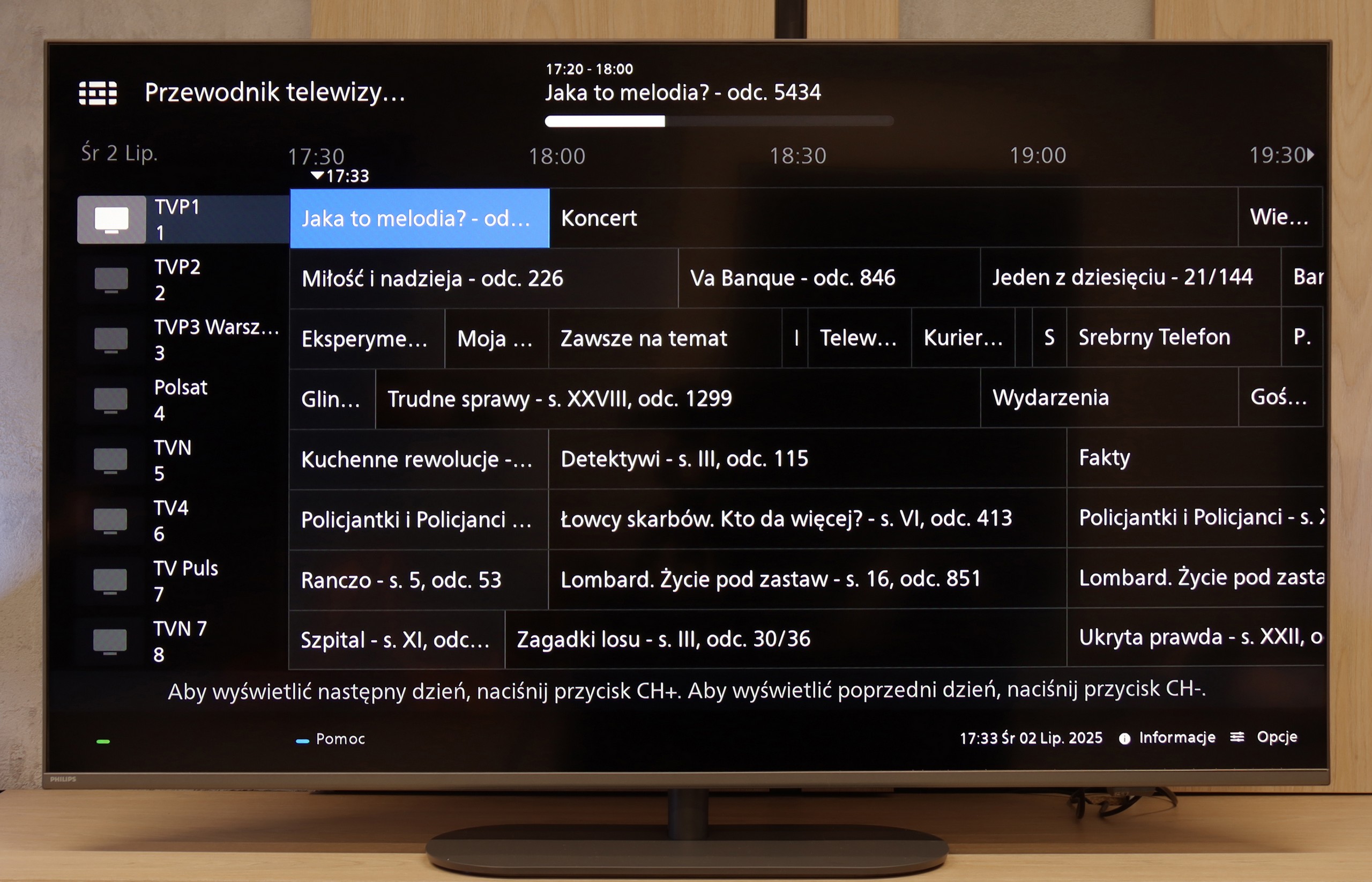
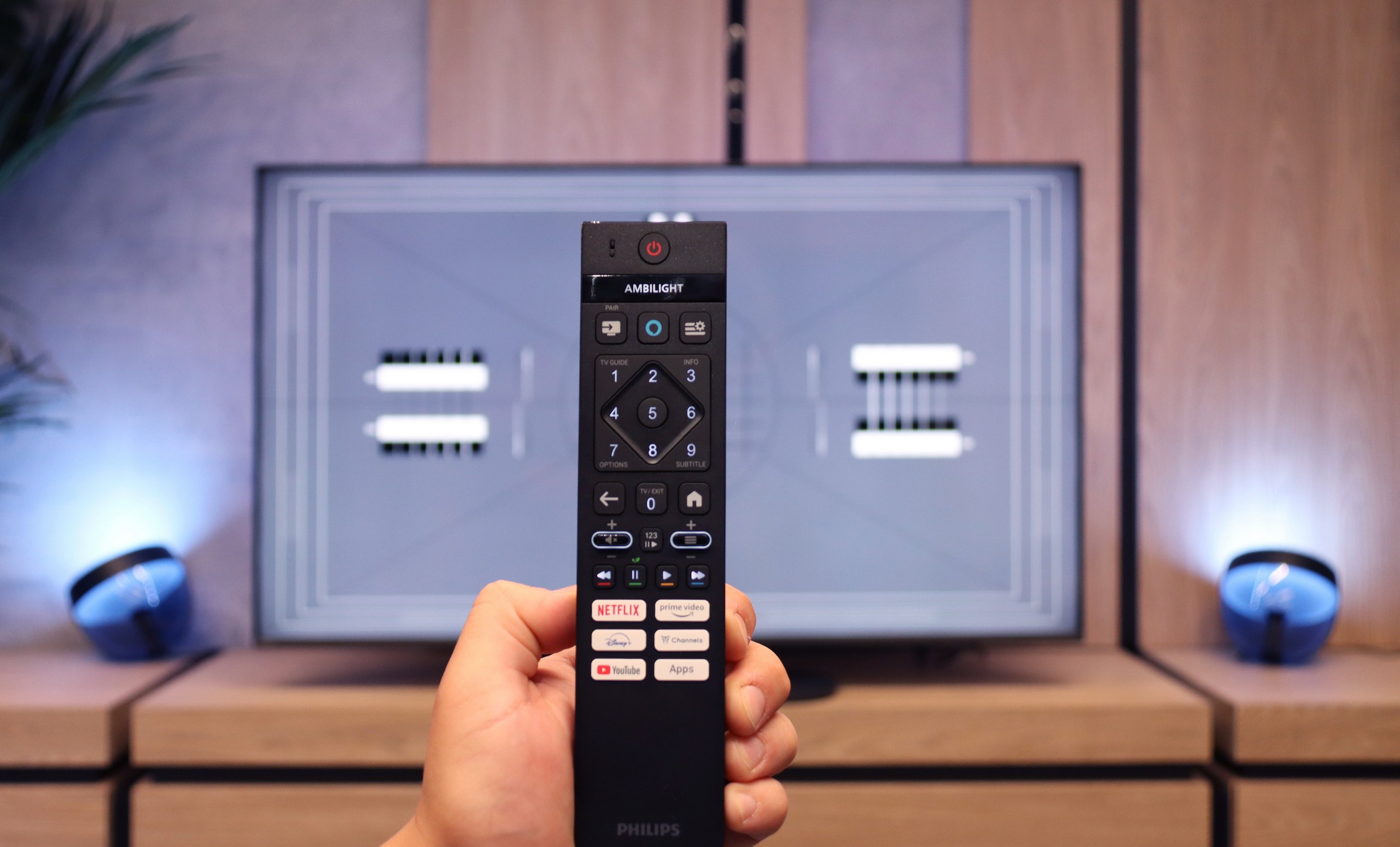
When it comes to classic features, the Philips PUS9010 is rather average. Onboard, we find the basics such as EPG, teletext, and the ability to connect headphones via Bluetooth. However, this is where the list of stronger points essentially ends. Unfortunately, it lacks USB recording and PiP (picture in picture) mode. These are features that are becoming increasingly rare but can still be useful in everyday use. A plus is the remote control with a numeric keypad. It is modern, backlit, and visually makes a very good impression. It's just a shame that it is still an infrared remote, so it requires aiming at the screen. With such a modern look, one would expect Bluetooth radio control.
Smart TV
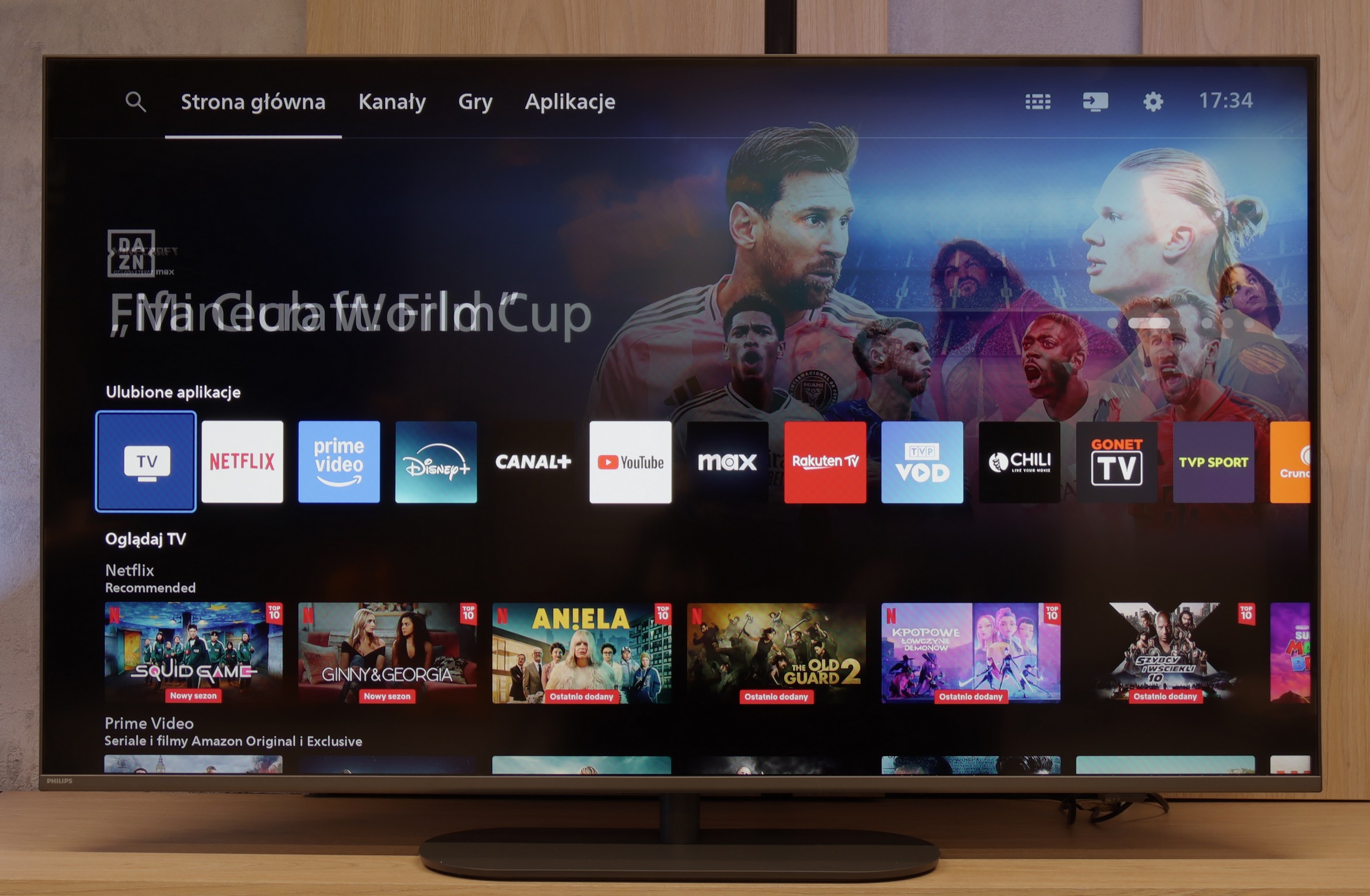
Most Philips TVs from 2025, including the PUS9010, operate on the Titan OS system. This is still a relatively young platform, and unfortunately, its limitations are still apparent. The system itself runs quite smoothly, noticeably better than in the manufacturer's cheaper models, and during tests, it did not encounter issues when using screen mirroring or AirPlay, which is still not a given. However, the biggest drawback remains the limited number of available apps. This can be partially circumvented by connecting a keyboard and mouse to the TV and using the built-in web browser, but this is more of an emergency solution than a convenient everyday option.
Apps
9.6/10
6.7/10






















Playing files from USB
8.9/10
7.9/10
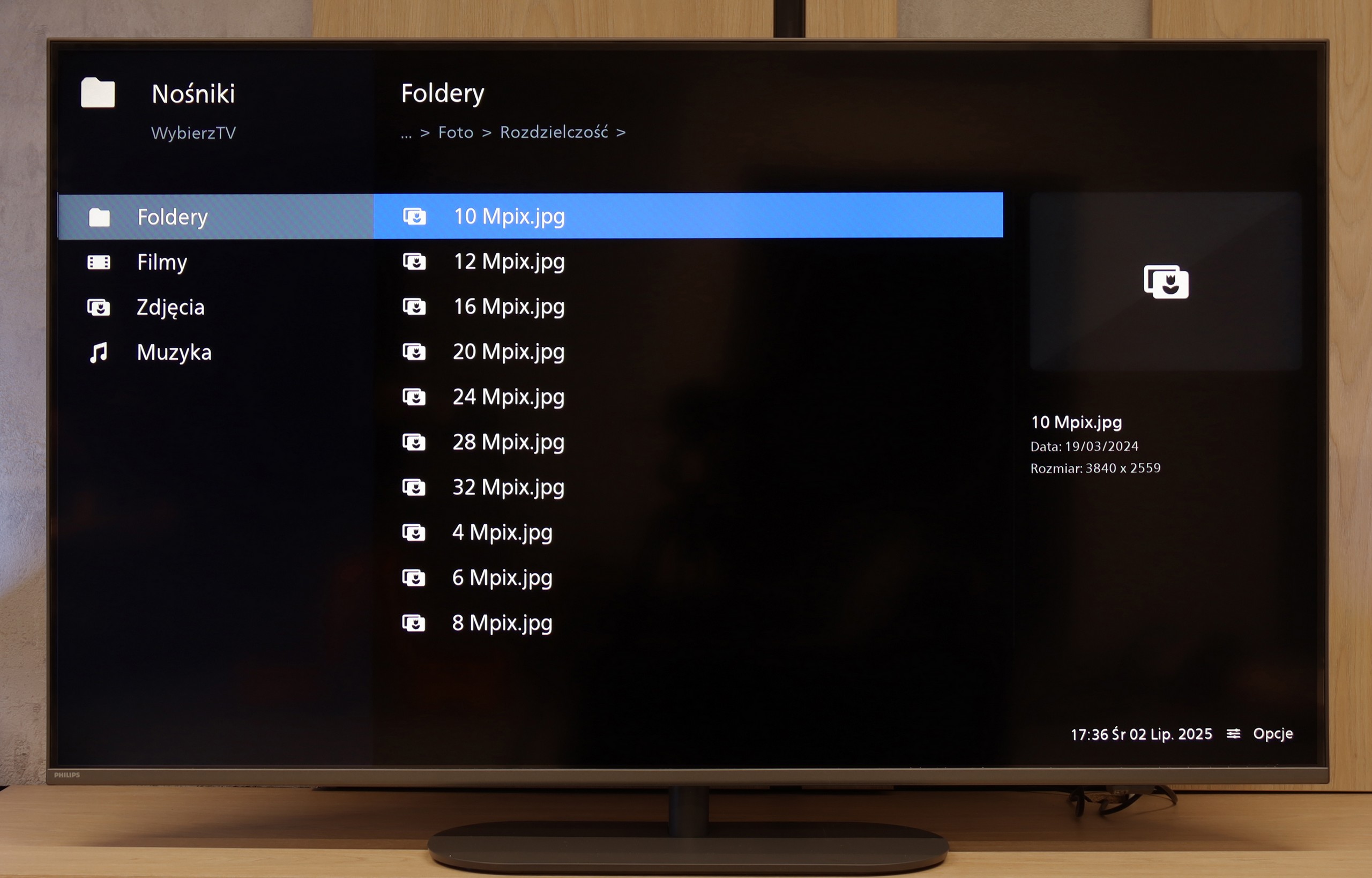
Supported photo formats:
Maximum photo resolution:
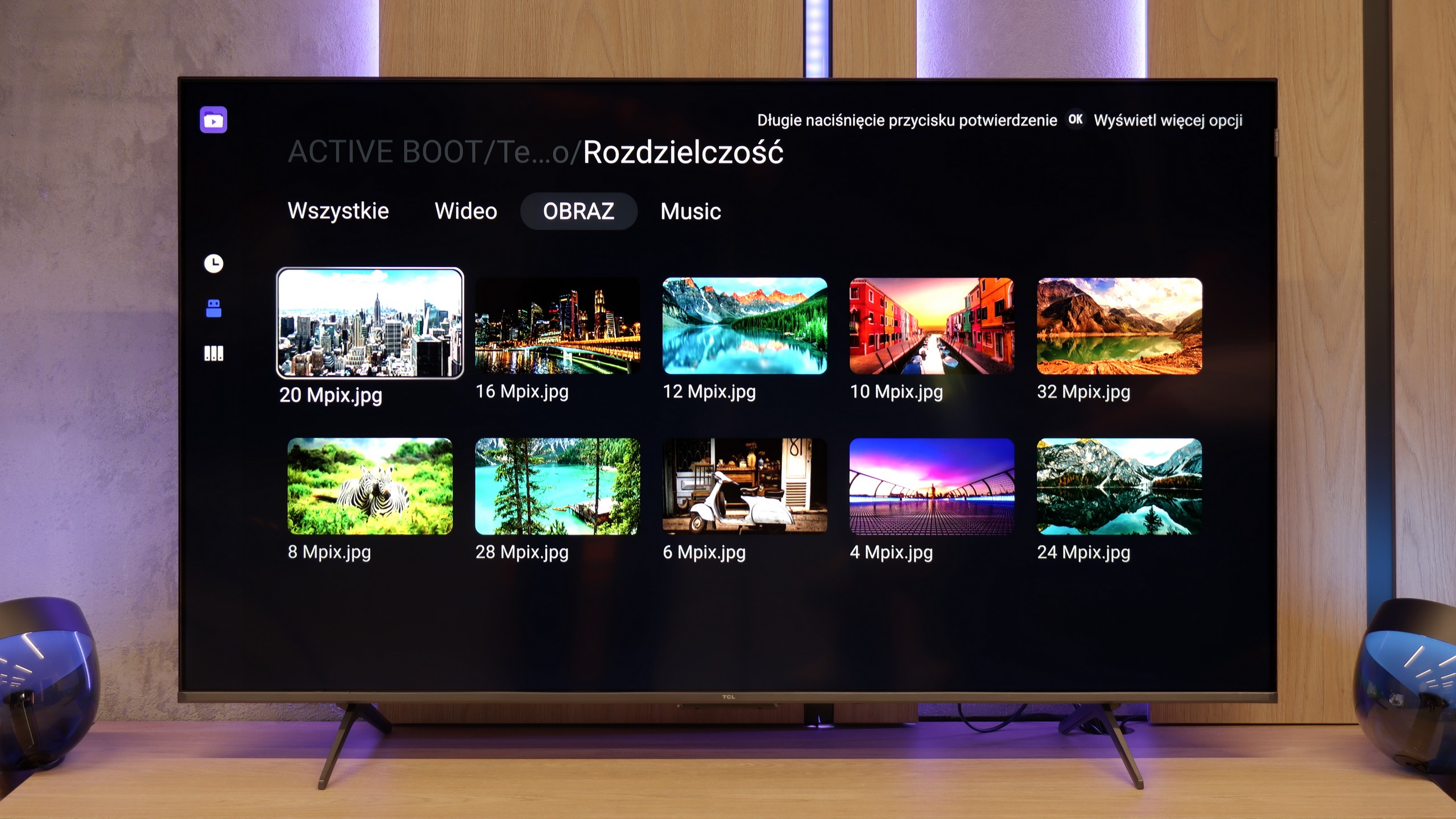
Playing files from USB on the TCL P8K is quite decent. The television handles most popular video formats, as well as subtitles and audio files, without any issues. Problems may only arise with less common codecs or unusual file containers that the built-in player simply does not recognise. Fortunately, with Google TV, this is not a problem at all - in just a few moments, you can download an external player, such as VLC, MX Player or Kodi, and the issue disappears.
The media player in the new Philips is a solid standard. It handles most popular video and audio files, operating steadily and predictably. Although fans of rarer subtitle formats or specific image resolutions may feel somewhat unsatisfied, for the average user, the built-in software does the job. It's a convenient solution that means we don't need to engage external equipment to play materials from an external drive.
Sound
6.7/10
6.6/10
- Maximum volume80dB85dB
- Dolby Digital Plus 7.1
- Dolby True HD 7.1
- Dolby Atmos in Dolby Digital Plus (JOC)
- Dolby Atmos in Dolby True HD
- DTS:X in DTS-HD MA
- DTS-HD Master Audio
For a television in this price range, the TCL P8K really manages to surprise with its sound. The 2.1 system used here, branded by Onkyo, along with the subwoofer placed at the back of the casing, offers surprisingly enjoyable, full bass and quite a wide soundstage. The sound is warm, and with the right material, one can even get the impression that the audio gains depth and character – something you rarely expect from a television at this price. It performs quite well for music. However, it is not perfect. The P8K is not one of the particularly loud televisions – during tests, we noticed a strange tendency to automatically lower the volume, even with the volume slider set to maximum. It seems to be the effect of some internal limiter designed to protect the speakers (or our ears). It’s a shame, as the potential in this setup is considerable, and without this limitation, the sound could have been even fuller.
The sound from the Philips PUS9010 is simply adequate. The tested unit offers a 2.0 set with a total power of 40 W, which is more than sufficient for daily watching of television, films, or series. The sound quality is pleasant, but it is hard to speak of anything exceptional, especially if one is looking for strong bass or greater dynamics. One positive aspect is the wide range of audio formats supported. When connecting a soundbar or home cinema system, the television easily supports Dolby Atmos and DTS, without needing to fiddle with settings or sacrificing sound quality. For those planning on external audio systems, this is definitely good news.
Sound Quality Test
No sound test video
Acoustic Measurements
80dBC (Max)
75dBC
No acoustic data