The Sony A95L is a television that has left a huge impression on us. Although a year has passed since its release, it still deserves a place among the best models on the market. When it comes to picture quality, it is simply brilliant. Deep blacks, vibrant colours, and excellent brightness in HDR make everything look incredibly realistic. The QD-OLED panel does its job – movies and games look so good that you sometimes forget it's just a screen. Using the A95L on a daily basis is a pleasure. Google TV runs smoothly, and there are plenty of apps available. The package includes two remotes: one traditional and another backlit - a really useful solution, especially in the evenings. To top it off, there is a voice assistant that makes life easier by allowing you to quickly search for a film or control your home from the sofa. Gamers will also be delighted. The 120 Hz refresh rate, low input lag (below 10 ms even in Dolby Vision), and VRR support is a combination that will satisfy any gaming enthusiast. And the sound? The Acoustic Surface Audio+ system ensures that sound comes straight from the screen, providing excellent, spatial sensations. Of course, there are no perfect things. Two HDMI 2.1 ports (including one for eARC) is a bit limited if someone wants to connect a console, soundbar, and other devices. In a bright room, the black may have a slightly cherry hue, which may bother more demanding users. Despite these minor remarks, the Sony A95L is a piece of fantastic equipment. The picture, sound, and functionality are all top-notch. It is a television that will satisfy both film enthusiasts and gamers, offering a true premium experience in the comfort of your home.
- Matching (Score) |
- Our verdict |
- TV appearance |
- Where to buy |
- Contrast and black detail |
- HDR effect quality |
- Factory color reproduction |
- Color reproduction after calibration |
- Smoothness of tonal transitions |
- Image scaling and smoothness of tonal transitions |
- Blur and motion smoothness |
- Console compatibility and gaming features |
- Input lag |
- Compatibility with PC |
- Viewing angles |
- Daytime performance |
- Panel details |
- TV features |
- Apps |
- Playing files from USB |
- Sound
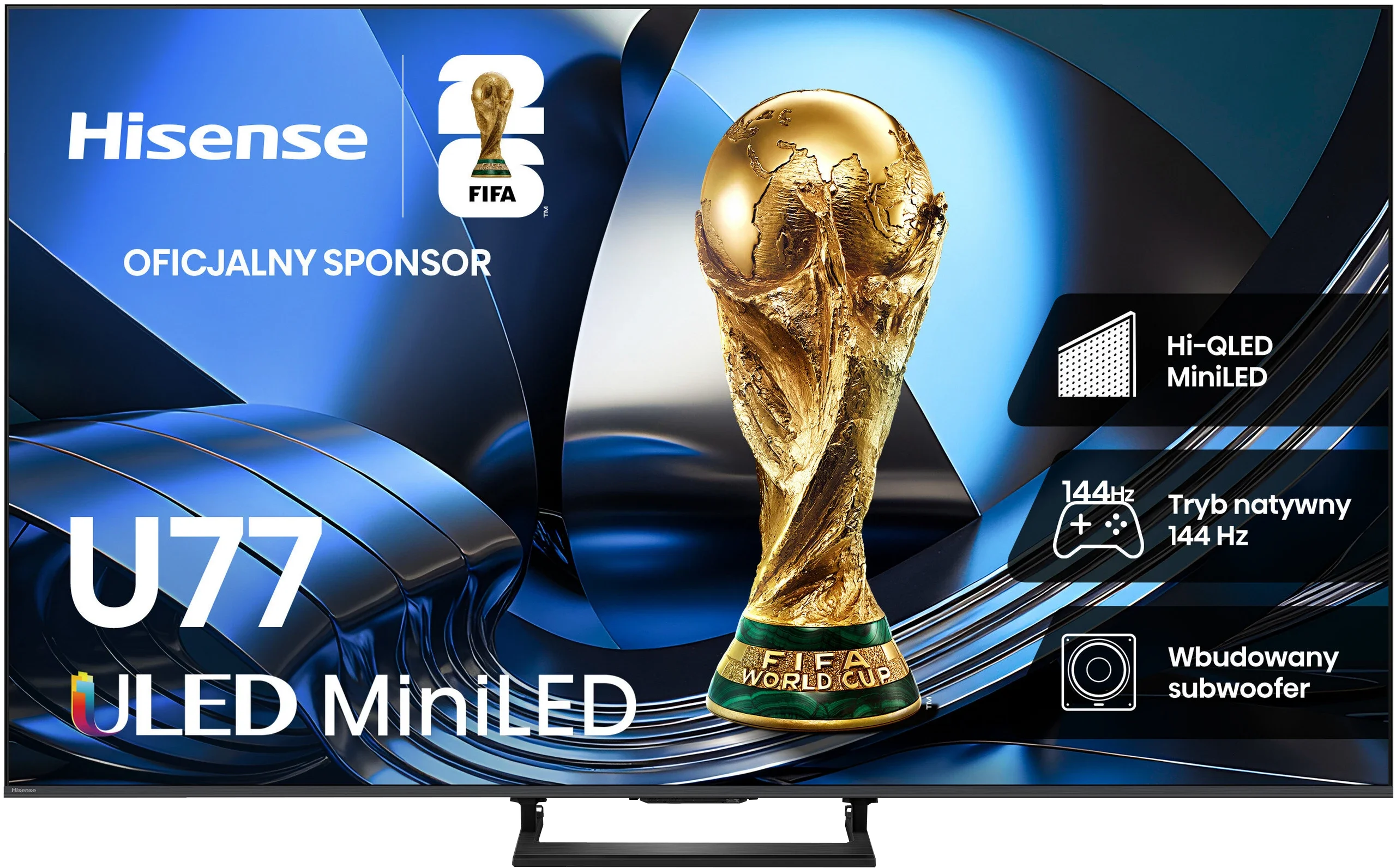
Sony A95L vs Hisense U7S / U77SE
 Direct comparison
A95L
U7S / U77S

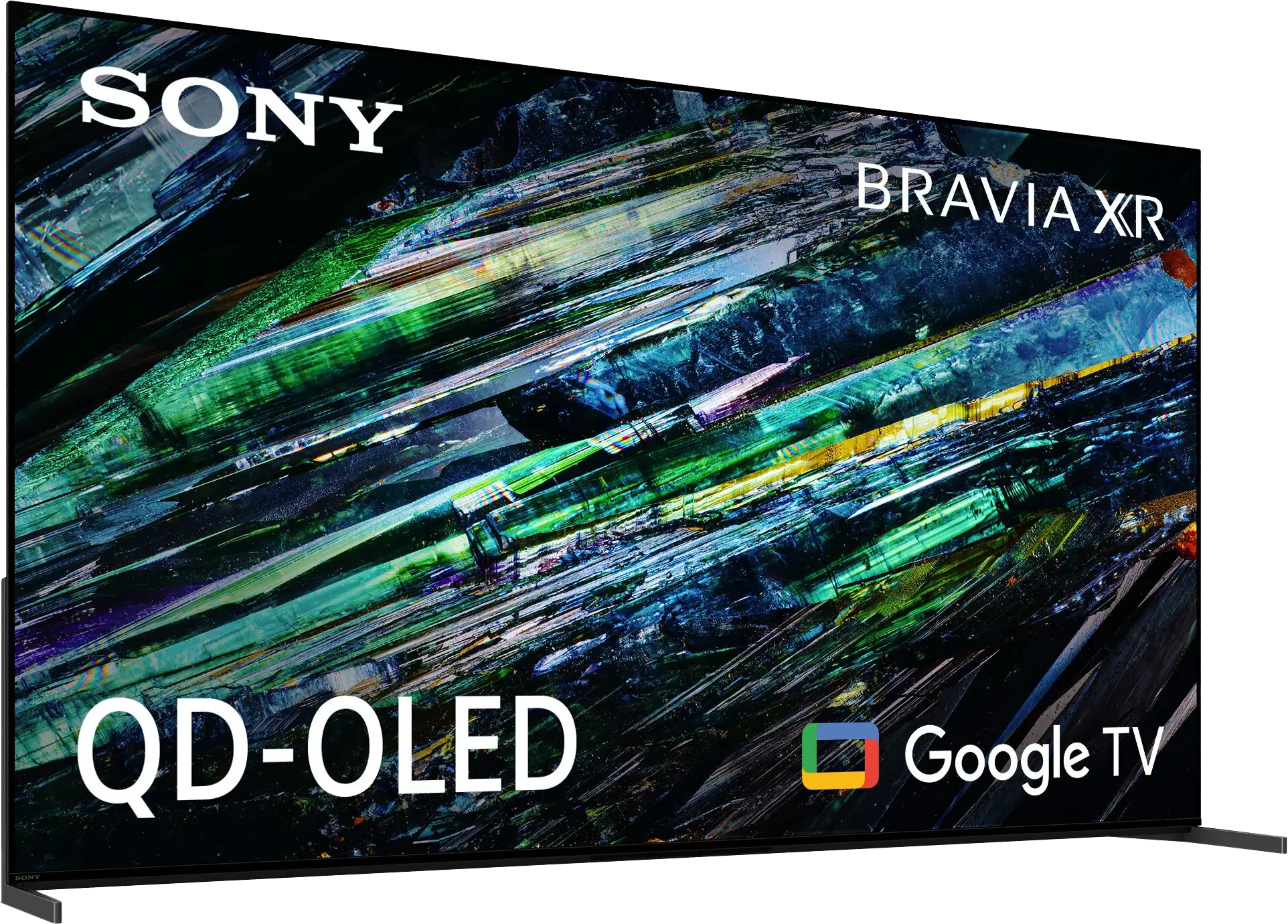
Panel type: QD-OLED
Resolution: 3840x2160
System: Google TV
Model year: 2023
Complete the survey to find out the result
Panel type: LCD VA
Resolution: 3840x2160
System: VIDAA
Model year: 2026
Complete the survey to find out the result
Overall rating
8.2
7.3
 Movies and series in UHD quality
9.0
6.9
 Classic TV, YouTube
9.3
6.9
 Sports broadcasts (TV and apps)
9.0
6.4
 Gaming on console
9.3
8.2
 TV as a computer monitor
5.0
8.2
 Watching in bright light
5.0
7.0
 Utility functions
8.8
8.9
 Apps
9.6
8.3
 Sound quality
7.9
7.2
Complete the survey to find out what fits your preferences
Advantages

Amazing Contrast
Great for HDR films
Advanced Google TV system
Excellent Viewing Angles
Gaming Features: Support for ALLM, VRR, refresh rate of 120 Hz, low input lag
Great sound
Camera included
Good black levels thanks to MINI-LED backlighting + VA panel
Bright, clear picture even during the day
Natural colours after calibration when watching standard TV and SDR films
Plenty of options for PC and console gamers
Low input lag
Feature-rich VIDAA system
Support for multiple audio/video formats, including Dolby Vision | Atmos and DTS
Pleasant sound with light bass
Disadvantages

Only Two HDMI 2.1 Ports: One of the HDMI 2.1 ports is used for eARC, which may limit the number of devices that can be connected, especially for those using a soundbar and console
Cherry black effect in bright light: The QD-OLED panel causes blacks to lose their depth in bright light
Not the sleekest design
Price compared to the competition
Severe smearing on the VA panel
HDR image excessively brightened, clearly deviating from the creators' intent
Incorrect HGiG implementation making HDR configuration in games difficult
Poor viewing angles
Some apps missing from the VIDAA system
Our verdict
Hisense U7S is the latest iteration of the U7 series, whose biggest advantage remains its price-to-quality ratio. You get a Mini LED TV with local dimming, which really improves black levels and gives the picture depth for evening viewing. During the day, the generous brightness headroom is useful, so you don't have to immediately cover the windows. It's not a device without compromises, but as an everyday TV it makes a lot of sense. Gamers benefit a lot as well. The U7S supports high refresh rates from consoles and PCs, has an extensive set of gaming features, and responds very quickly to controller input. Pleasingly, the low input lag is preserved in Dolby Vision too. Add in the smoothly running VIDAA, which offers both Smart features and handy extras for regular TV, and the package is fairly versatile, though compared with last year's U7Q it's hard to call it a big step forward. Unfortunately there are also things that clearly bother us. The first is motion blur. The panel has a high refresh rate, but its pixels don't always keep up, so visible trails follow moving objects. Fans of sports and fast-paced games will notice this especially. The second issue is HDR, which the TV shows somewhat "its own way." Instead of sticking to the brightness encoded in the content, it strongly brightens parts of the image. That was probably meant to look more impressive, but it often has the opposite effect: the scene becomes over-bright, loses depth, and clearly departs from the creators' intent. It's a shame this behavior can't be effectively corrected even during calibration. Despite these remarks, the U7S remains an interesting choice if you're looking to get as much as possible for a reasonable price. Compared with basic LCDs without local dimming, which you can still find at a similar price, it primarily offers much better blacks. And that's exactly its greatest strength. You don't have to reach for an expensive model to get a Mini LED whose advantages are actually noticeable when watching. If you accept its flaws, the Hisense U7S can above all be a cost-effective purchase.
TV appearance
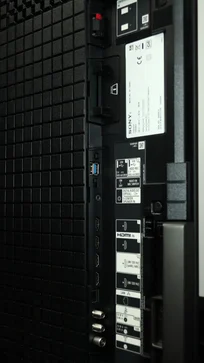
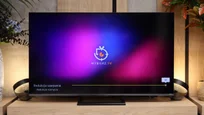
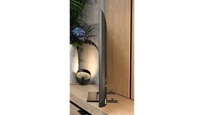

Contrast and black detail
10/10
8/10
Local dimming function: Yes, number of zones: 192 (8 x 24)
Contrast:


Result
∞:1

Result
∞:1

Result
∞:1

Result
∞:1

Result
∞:1
Result
507,800:1
Result
51,250:1
Result
30,900:1
Result
21,250:1
Result
5,650:1
Halo effect and black detail visibility:
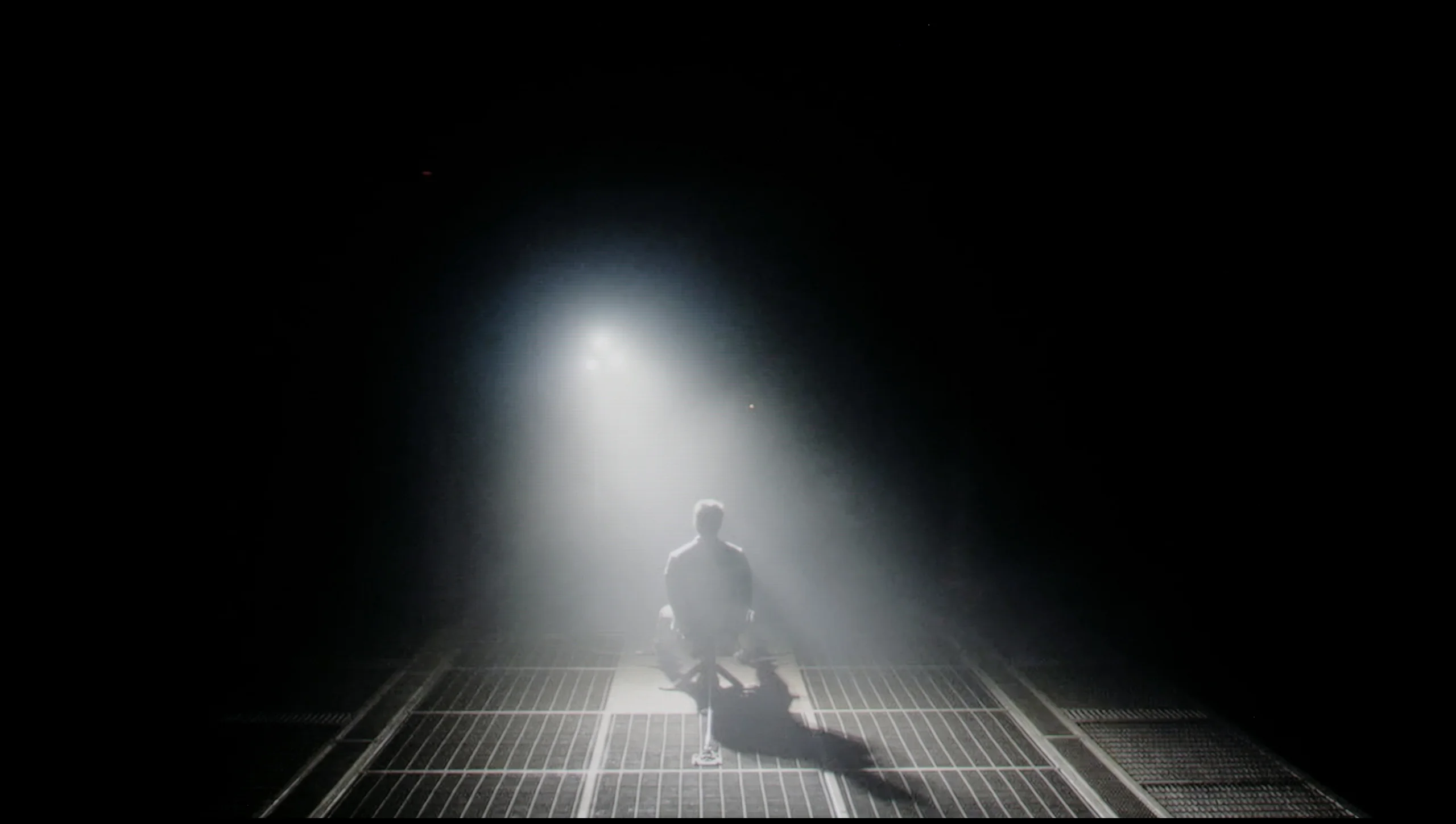
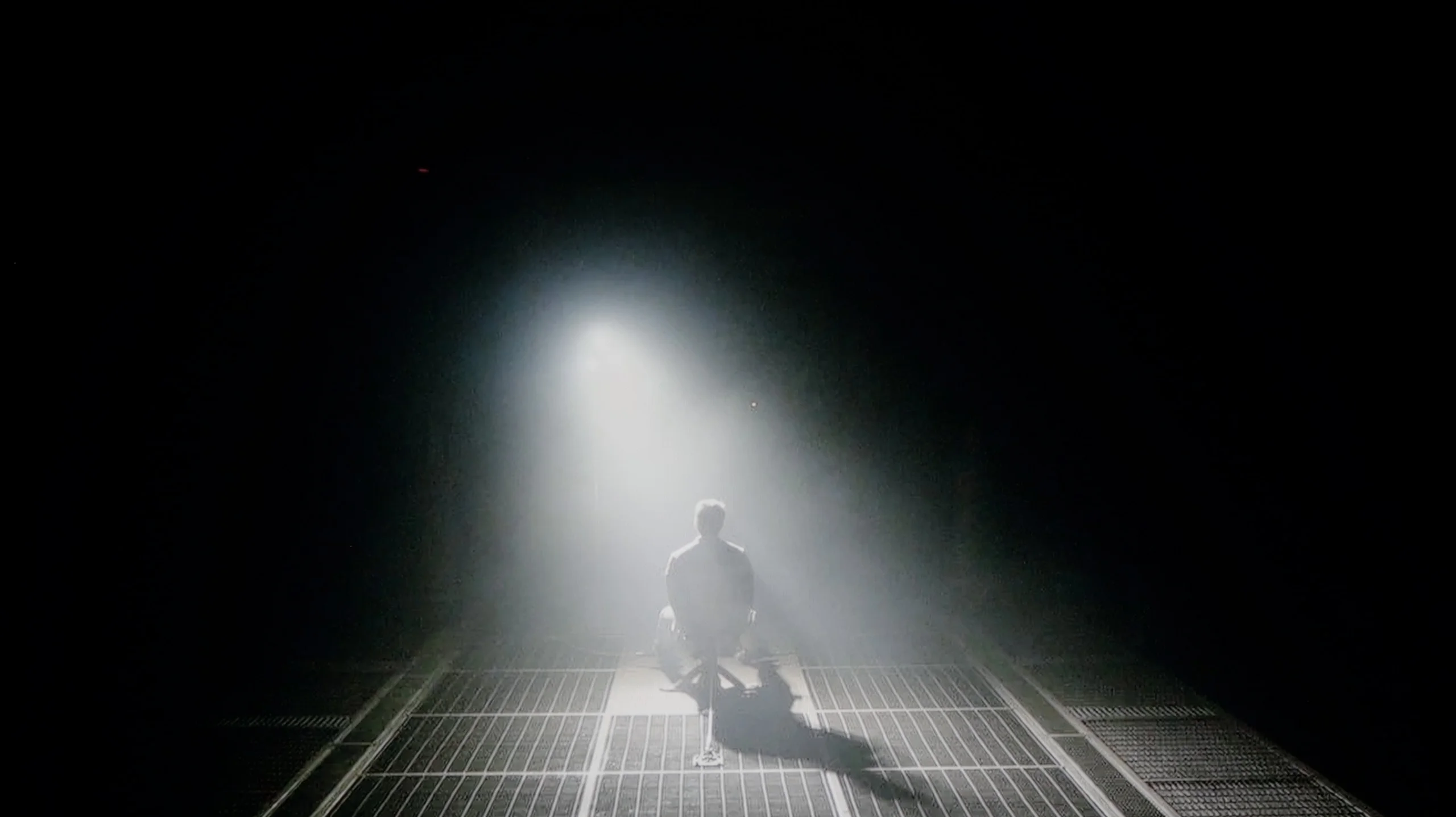
Check the visibility of bright lights on a dark background. Mini-LEDs often struggle with this. The photo does not compare black levels – that’s what the video below is for.
The video accurately shows differences in contrast and black levels between TVs, as well as potential issues: halo around bright objects or Mini-LED zone operation visible as brightness jumps.
Sony A95L is an OLED television that truly impresses when it comes to contrast. Thanks to OLED technology, this model offers perfectly deep blacks – in dark scenes, there are no discolorations or glows, which makes the images look incredibly realistic. Additionally, QD-OLED technology allows for higher brightness, which further accentuates the difference between light and dark elements. As a result, in scenes such as those from the films Oblivion or Sicario 2, A95L Sony excels at separating lights from shadows, giving the picture clarity and depth – an ideal solution for those seeking a cinematic experience at home.
Hisense U7S delivers good black levels, especially for an entry-level Mini LED model. The 55-inch sample we tested uses 192 local dimming zones, which work well with the VA panel. In most of our scenes contrast ranged from about 21,000:1 to over 51,000:1, and in one it even exceeded 500,000:1. In many films you can clearly see the difference. Dark scenes have depth and blacks don't look grey like on many cheaper LCDs without local dimming.
It gets worse when the screen shows a lot of small bright objects on a dark background (for example the scene shown below). There are too few zones to light each of them separately, so small objects have a bright ring around them. This so-called halo effect is most noticeable when watching in a dark room. In the most demanding shot the contrast fell to around 5,650:1 and here the backlight limitations are already apparent. Even so, given the class of the television, it is hard to call this a flaw, because many Mini LED televisions in a similar price range will have comparable problems.
HDR effect quality
7.8/10
5.5/10
Luminance measurements in HDR:

Result
1471 nit

Result
1498 nit

Result
1465 nit

Result
1527 nit

Result
626 nit
Result
700 nit
Result
297 nit
Result
640 nit
Result
154 nit
Result
745 nit
Scene from the movie “Pan” (about 2800 nits)


Scene from the movie “Billy Lynn” (about 1100 nits)
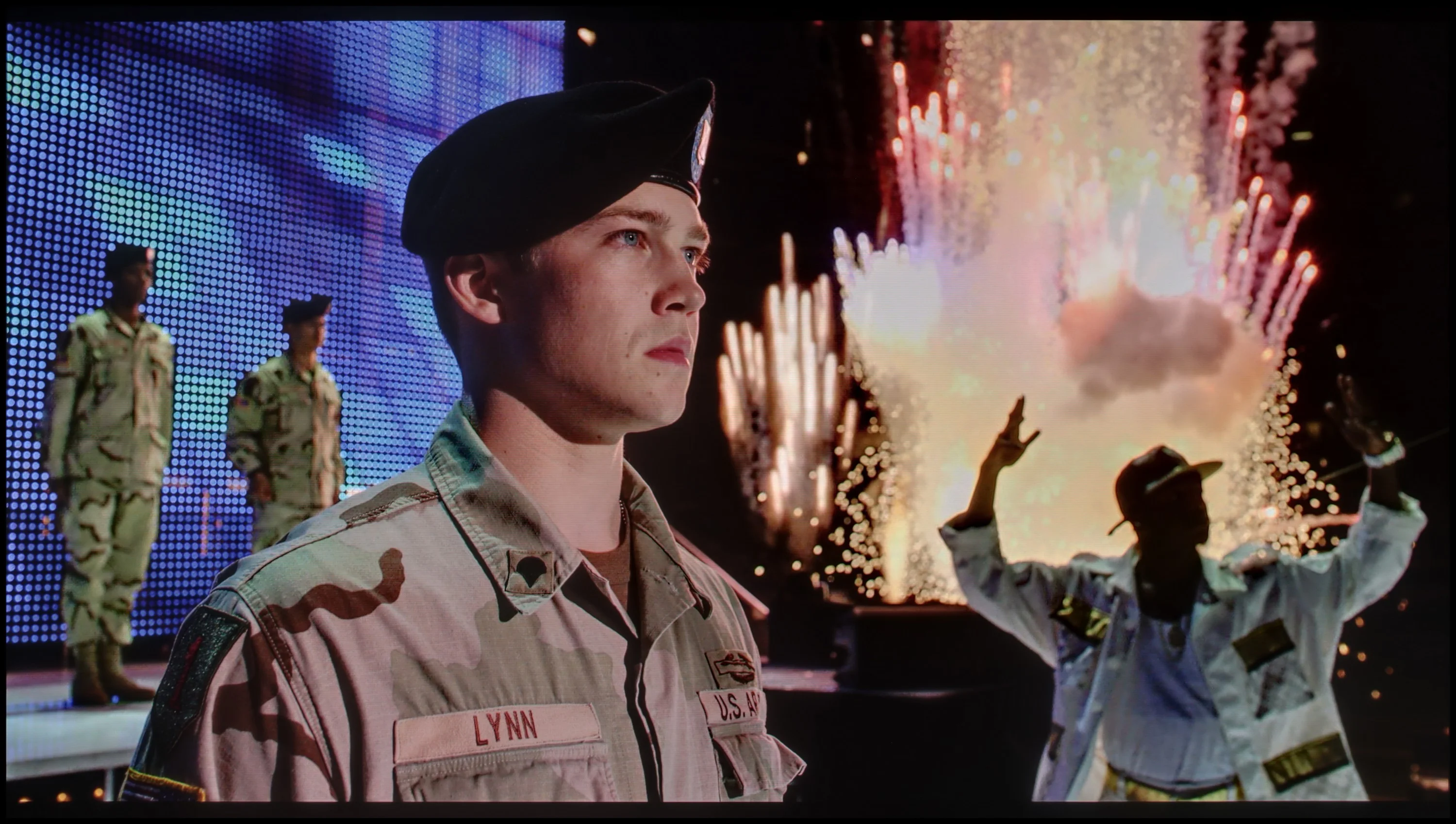
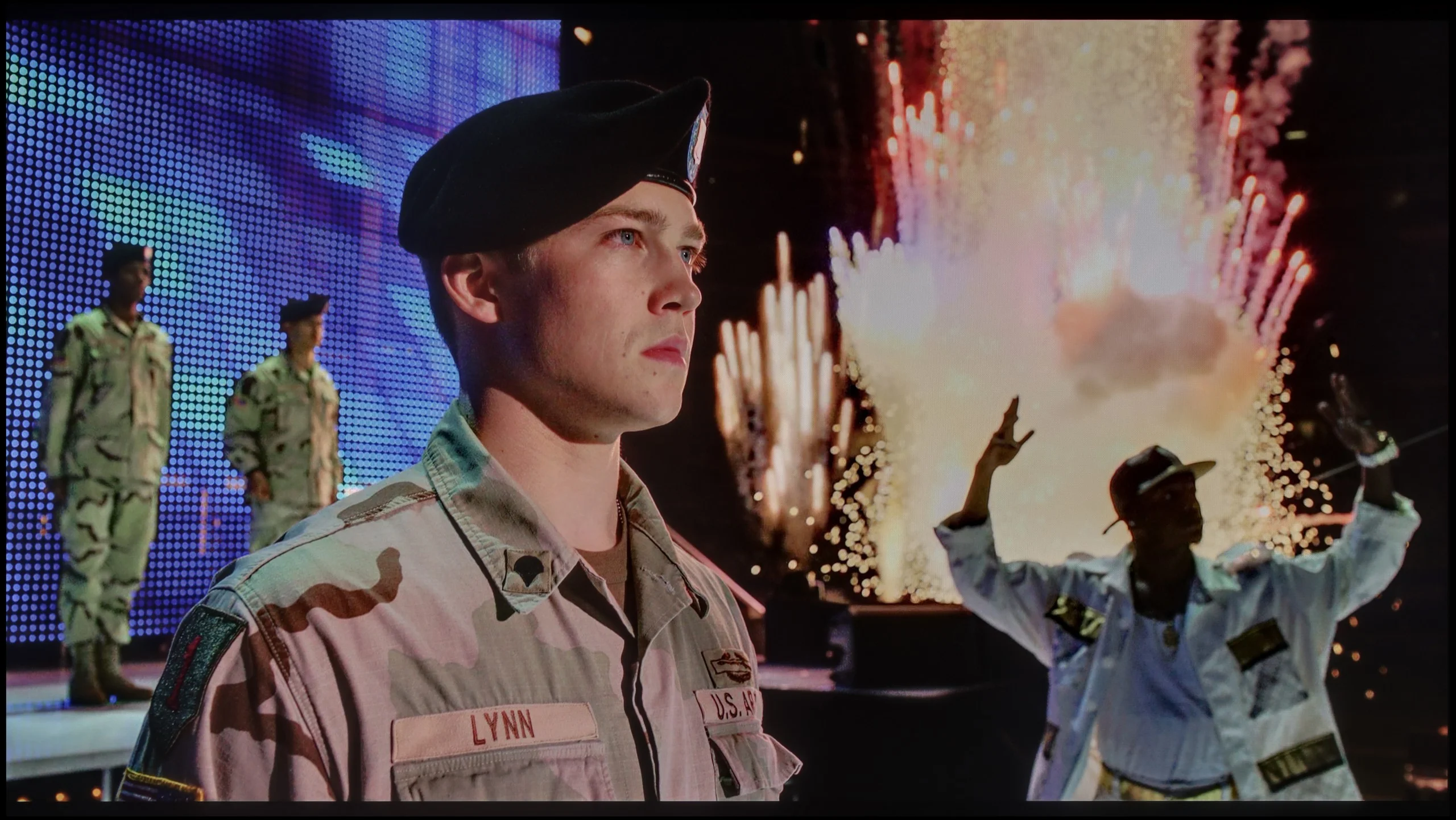
The photos show two HDR10 movies. 'Pan' is one of the brightest productions ever made, while 'Billy Lynn' (soldier) has brightness typical of streaming (Netflix, Prime, HBO MAX). Notice the intensity of effects and detail in whites.
Static HDR10


The photos present the visibility of white details in various HDR formats. They do not show brightness differences between TVs (these can be compared in the previous gallery).
Dynamic: Dolby Vision
Dynamic: Dolby Vision


The photos present the visibility of white details in various HDR formats. They do not show brightness differences between TVs (these can be compared in the previous gallery).
HDR luminance chart:
Hisense U7S / U77SE
Sony A95L
Sony A95L offers an incredible HDR effect, achieving an impressive brightness level of 1500 nits in scenes such as those from Life of Pi or Sicario 2. These results are truly remarkable – the bright elements in these films practically come to life on the screen, providing the viewer with immersive visual experiences. The only thing that can be noticed is minor issues with maintaining brightness in a scene from The Meg, where the entire scene is flooded with light. However, this is a natural effect associated with OLED technology. The wide coverage of the BT.2020 colour palette at 89% also deserves high praise, placing A95L Sony among the top televisions in terms of colour reproduction. All this is made possible by the QD-OLED panel from Samsung Displays.
The Hisense U7S has considerable potential for HDR display, but it cannot exploit that potential in every scene. On a test pattern it reaches around 1,100 nits, so the backlight itself is very strong. In our brighter film scenes we measured about 640 to 745 nits. That is still plenty for the sun or bright highlights to have a clear bloom and to show an advantage over SDR material. When the TV needs to brighten a larger portion of the image, it handles it fairly well.
The problem appears with small highlights on a dark background. Each of the 192 zones covers an area much larger than a tiny point on the screen. If the TV were to light that whole zone strongly, it would also brighten the area around the highlight. Hisense tries to avoid that and dims the entire zone. This makes blacks look better, but a small bright object that should attract the eye also loses intensity. That is why in two more demanding scenes we recorded only 297 and 154 nits. The difference is large: in one shot HDR can impress, and in the next small highlights are noticeably muted. The U7S therefore prioritises preserving deep blacks, even at the expense of bright details. With that number of zones it is an understandable compromise, but worth bearing in mind — the peak 1,100 nits tells us about the backlight’s capability, not how brightly the TV will show every element of a film.
Colours
Hisense describes the U7S as ULED, but that is a marketing name, and it is a PFS phosphor backlight that expands the colour palette here. In our measurements the TV covered about 91% of the DCI-P3 colour space and 71% of BT.2020. Those are good results, though they fall short of the best screens on the market. The largest shortfall is in green — the TV does not even reach the DCI-P3 boundary here, so the most intense shades will be less saturated than they should be. Most colours in HDR films and series still look suitably vibrant. A positive is the repeatability of the results. Gamut coverage on test patterns and in film scenes is practically identical.
Factory color reproduction
7.9/10
5.8/10
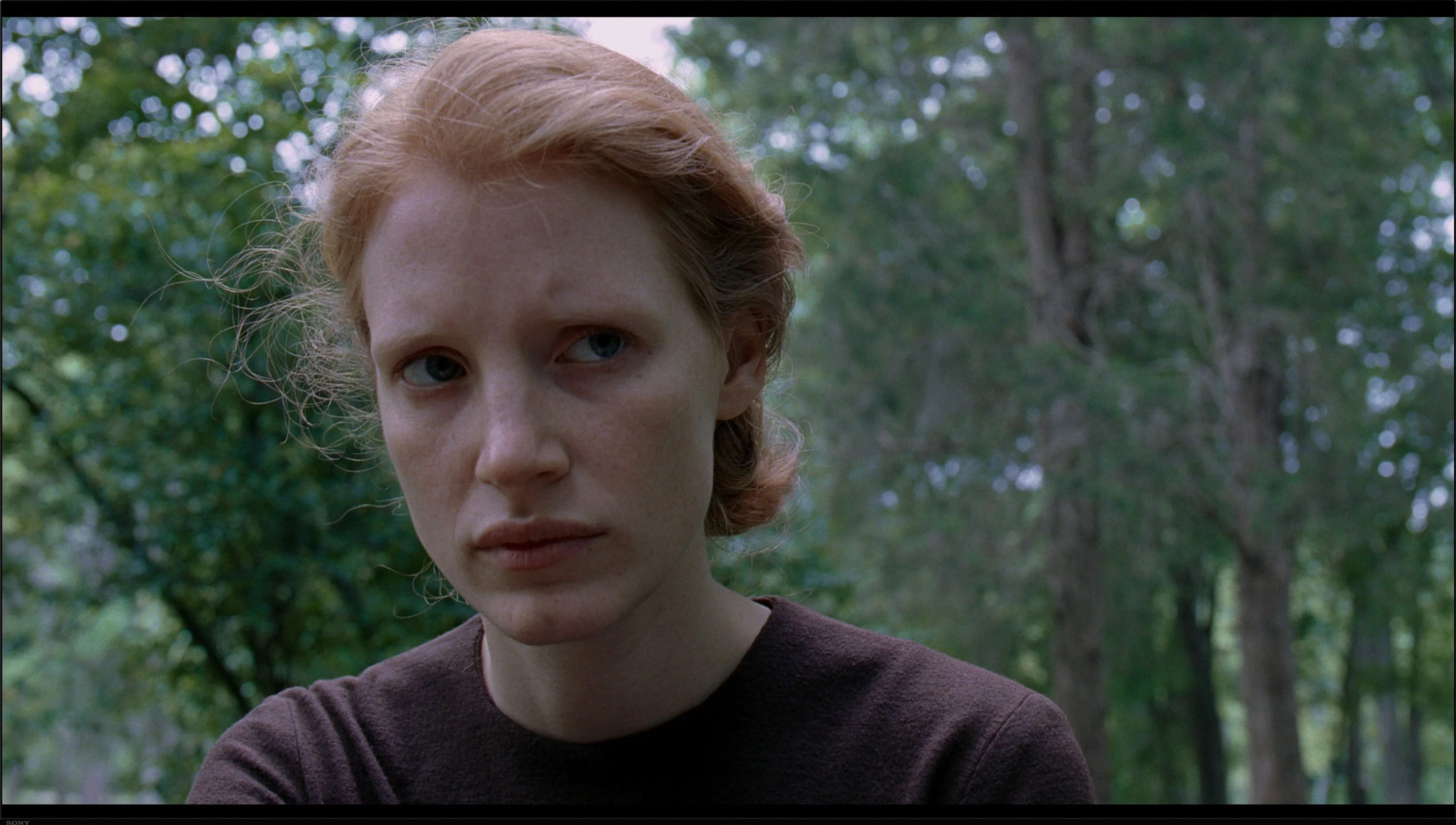
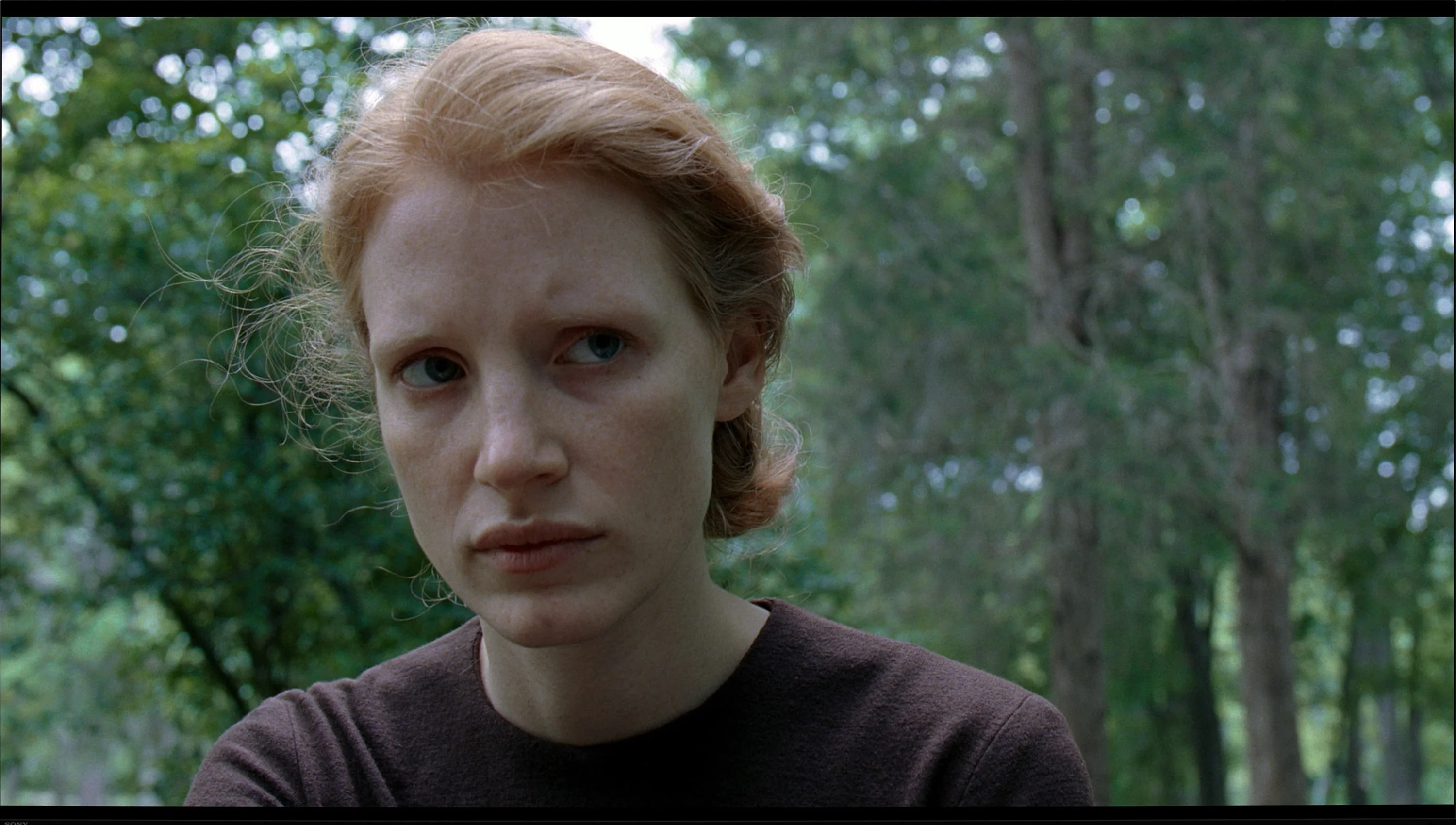
This gallery shows how colors change after professional TV calibration. If you notice the difference, we recommend ordering this service at SkalibrujTV.com.
Factory Mode
After calibration


This gallery shows how colors change after professional TV calibration. If you notice the difference, we recommend ordering this service at SkalibrujTV.com.
Factory Mode
After calibration
The best factory mode for colour reproduction in the Sony A95L is IMAX Enhanced. This mode appears to be well calibrated at first glance, but upon closer examination, several areas requiring improvement can be identified. Firstly, the white balance for both SDR content and 4K HDR is affected by an excess of blue and red, leading to a subtle pinkish hue, particularly noticeable on neutral tones. As a result, skin tones are distorted, impacting the realism of the displayed image. This is clearly visible in the comparison image below. Additionally, the Colour Checker test confirms the presence of these errors – colour samples often deviate from their reference values, indicating some inconsistencies in the factory colour reproduction of the A95L Sony. Maximum deltaE error values reach up to 5.8, which is a clear indicator that colours are not always reproduced as precisely as they should be.
Regarding brightness characteristics, gamma for HD/SDR content is generally quite accurate, maintaining an appropriate balance between brightness and contrast. Unfortunately, a significant jump is visible at the end of the graph, leading to a strong brightening of the image when the screen is entirely flooded with white. This can make scenes with a very bright background, such as snowy landscapes or bright daylight, appear too harsh and lose detail. For HDR content, the EOTF curve, which controls luminance, is slightly boosted compared to reference values. This, in turn, causes the image to appear somewhat brighter than it should, which can affect the viewing of more subtle details in the darker parts of the frame.
Out-of-the-box colours on the Hisense U7S are decent, but there are a few areas to improve. In SDR there is a red bias in the white balance, which makes the picture too warm and, in places, slightly pink. You can notice this on faces and on bright, neutral surfaces. The gamma also runs below the target, so the TV brightens the image, particularly in darker areas. That makes shadow detail easier to see, but the scene loses some of its depth.
In HDR the white balance is somewhat more even, but not entirely neutral, with a shortage of blue in the mid-tones and a lack of red in the brightest parts. A bigger issue is how brightness is rendered. The EOTF curve shows a large portion of the mid-tones being lifted, causing the picture to look brighter than the source intends. Color Checker measurements are also weaker than in SDR: many errors are around 3 to 4, and some reach as high as 8. Colours can therefore look attractive, but they are not always faithful to what we should see. There is room for improvement here and we will see how much can be corrected through calibration.
Color reproduction after calibration
9.3/10
7.5/10
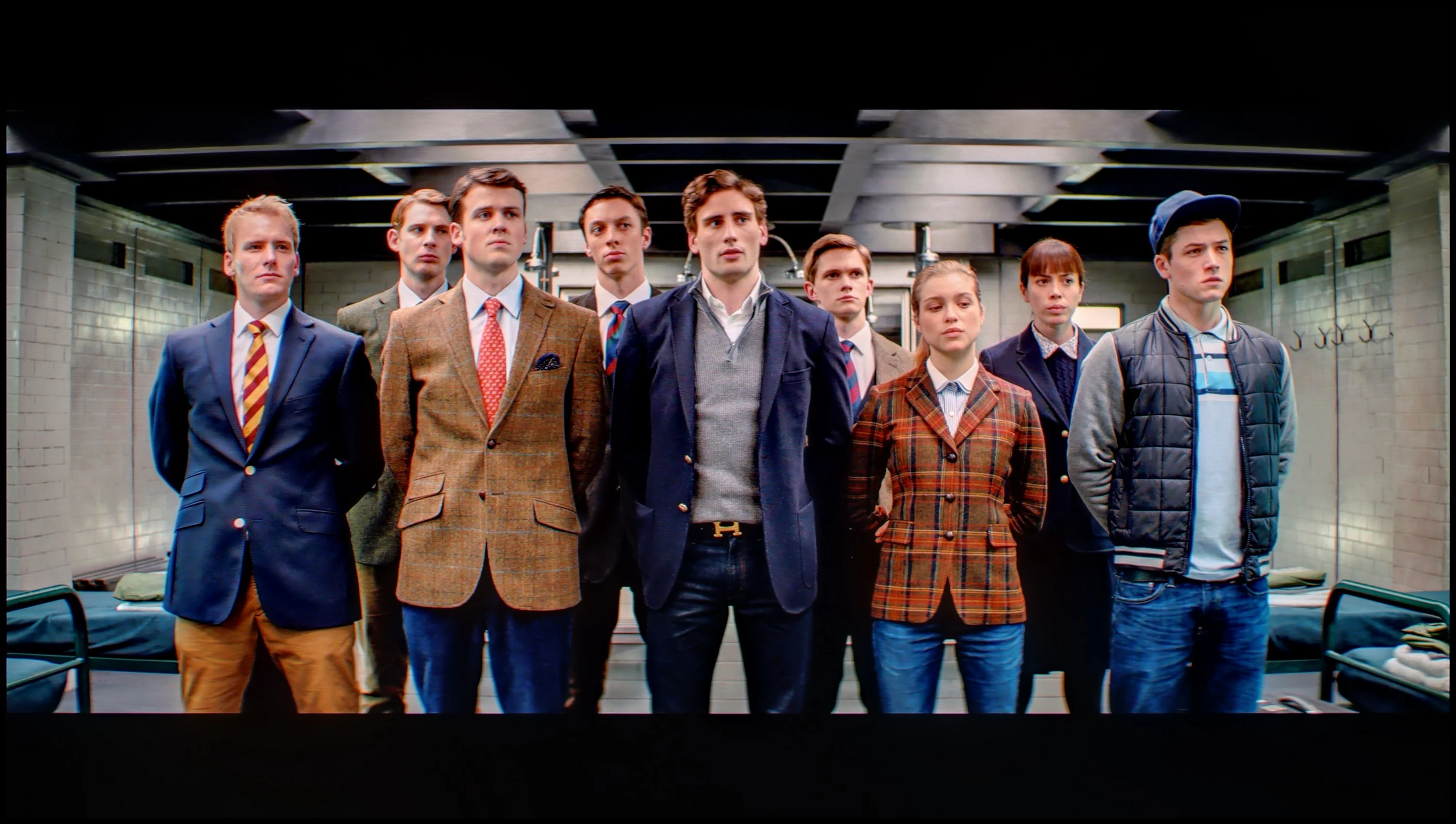

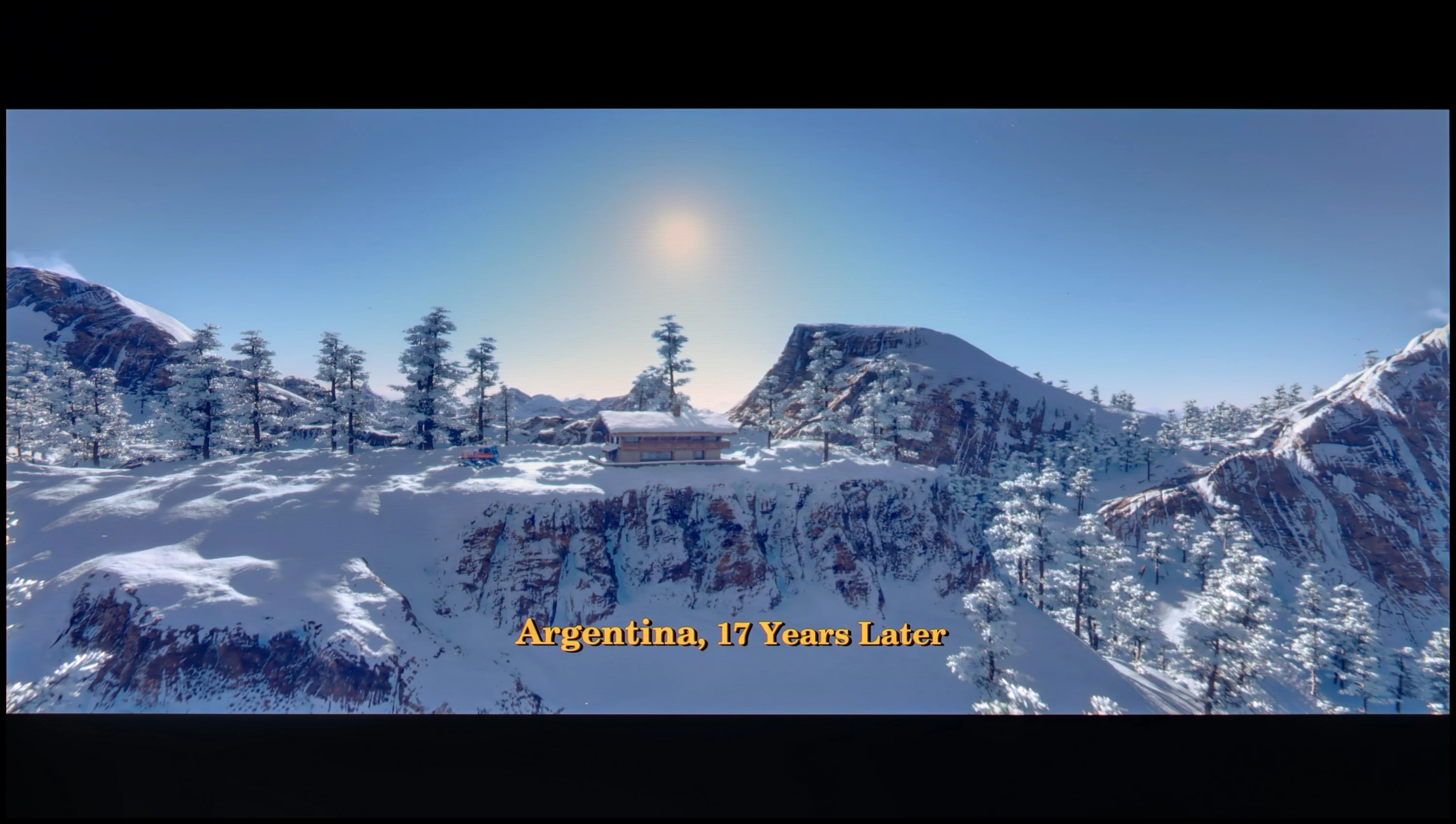
The photos show how movies look on the TV. Pay attention to black detail visibility, colors, and shadow tint.


The photos show how movies look on the TV. Pay attention to black detail visibility, colors, and shadow tint.
Sony A95L offers excellent tools for professional screen calibration, which allows users to unlock the maximum potential of the IMAX Enhanced mode. We utilised these tools to achieve a picture quality that will satisfy even the most demanding viewers. After calibration, the white balance for both 4K HDR and SDR content looks simply superb – almost perfect. The Colour Checker test confirmed that deltaE errors do not exceed the value of "2", which means that colour reproduction is incredibly accurate, and any deviations are practically unnoticeable to the human eye.
Calibration also brought significant improvements in terms of brightness – gamma is now perfectly balanced, eliminating the previous issue of excessive lightening in scenes with very bright backgrounds. As a result, even the most vibrant moments, such as snowy landscapes or intense daytime scenes, appear natural, without any risk of overexposure. The EOTF curve, responsible for controlling luminance in HDR content, has also been improved – it now reaches reference levels, both in synthetic tests and during practical movie watching.
As a result of the calibration, A95L Sony offers outstanding experiences, whether you are watching content from regular television or your favourite films. Every detail is reproduced exactly as the creators intended – without unnecessary brightening, with perfectly rendered colours and appropriate depth. This demonstrates that this television, after professional tuning, is capable of competing with the best screens on the market, delivering a picture that truly delights.
Calibration of the Hisense U7S brought the biggest improvements with SDR material. We managed to even out the white balance, so the previous warm tint has gone and whites and greys now look neutral. Gamma is also now very close to the reference, and the TV no longer brightens the picture unnecessarily, so darker scenes have regained depth. Color Checker measurements confirm the improvement: most errors are below 2. That means the picture is very well set up for watching regular TV and SDR films. It wasn't as smooth in HDR. There is no effective way to correct the EOTF curve, so the TV still interprets a film's brightness somewhat on its own. It brightens parts of the picture and can dim the brightest elements depending on the scene and the behaviour of the local dimming. Calibration could not eliminate this. This is also reflected in the Color Checker results, where many errors remain around 3–4 and a few exceed 7. So the result in SDR is really very good, but in HDR we must accept that the TV adds its own interpretation of brightness to the image.
Smoothness of tonal transitions
9/10
8.5/10

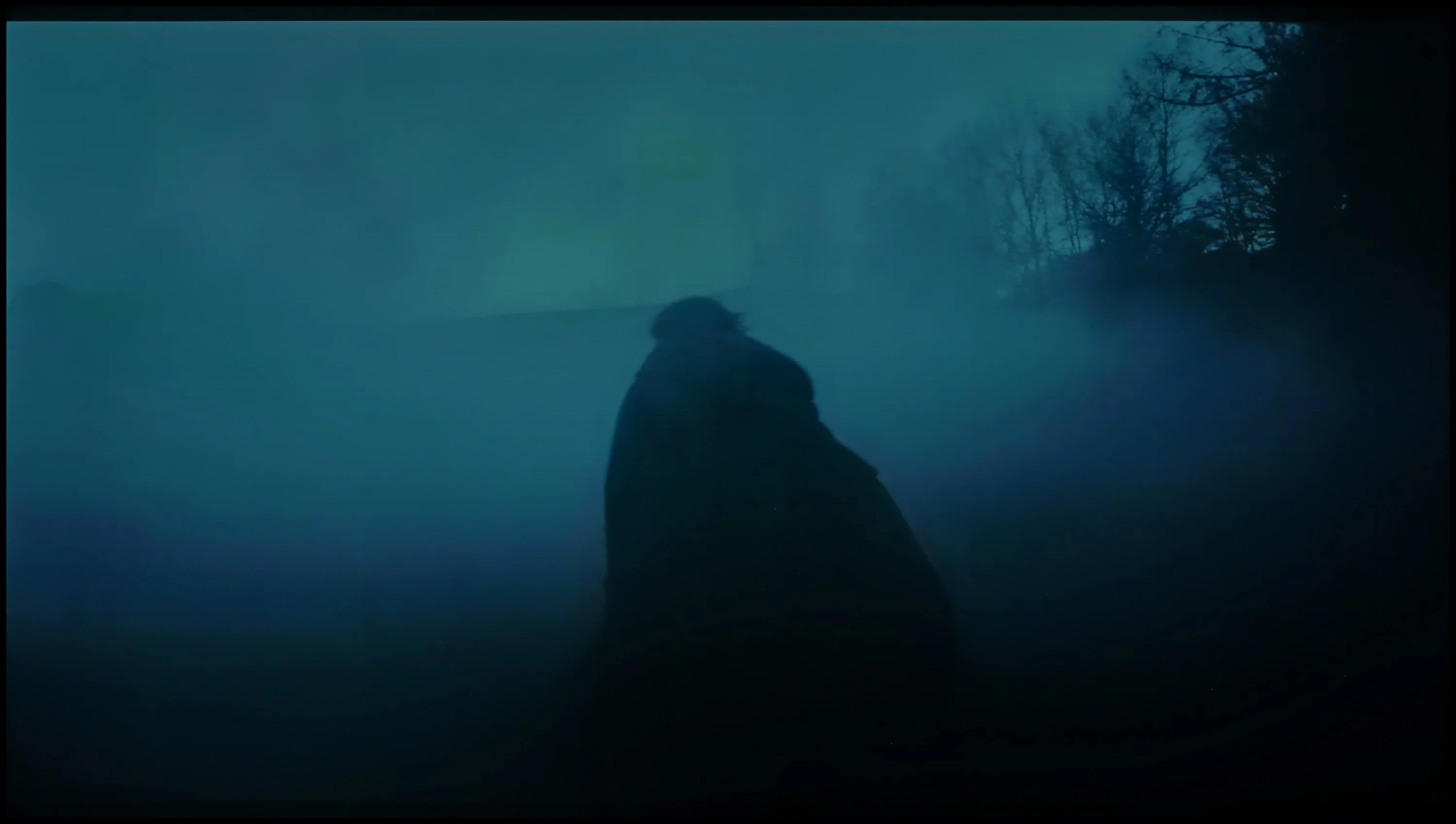
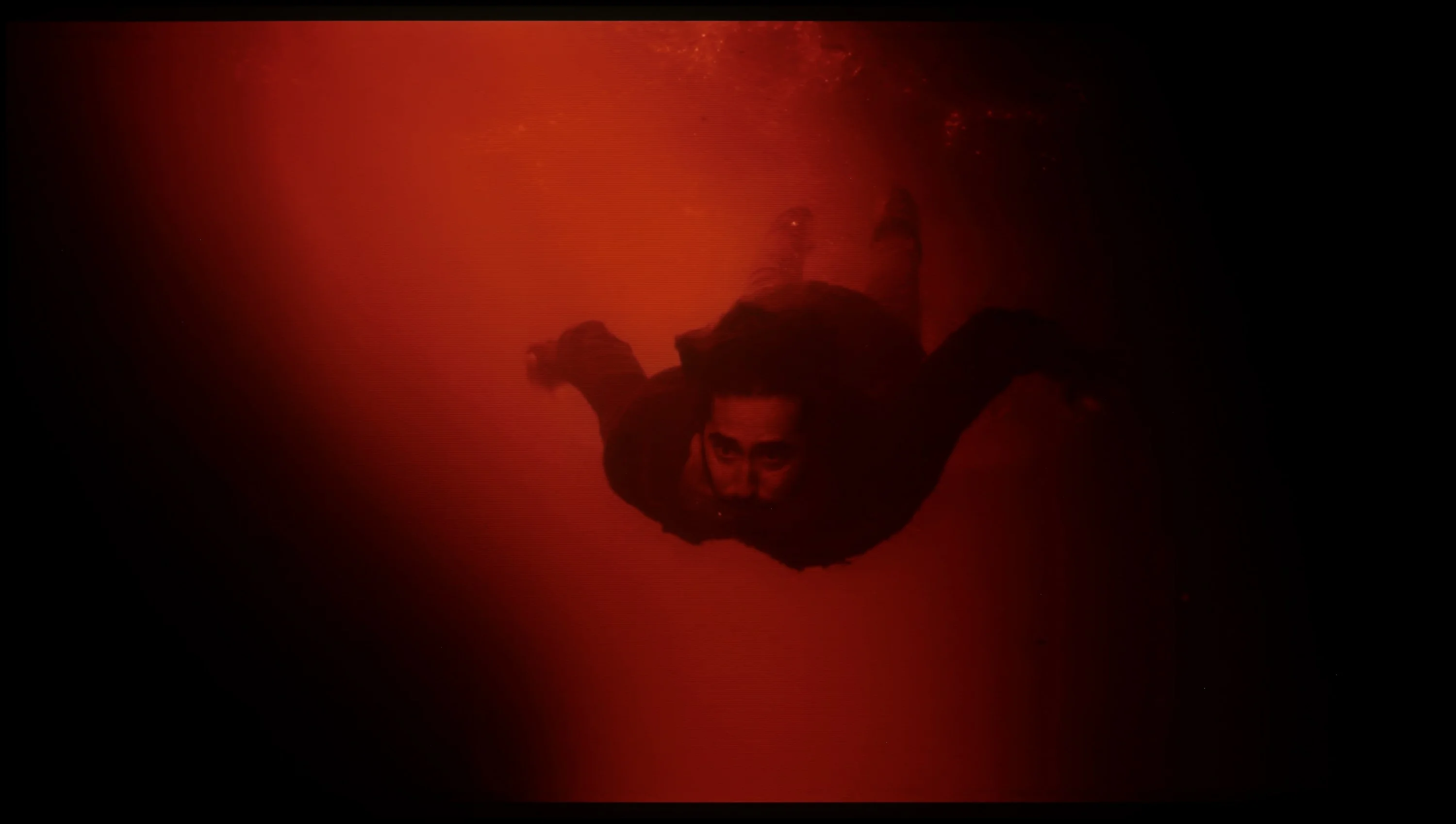

These are selected scenes that show smooth tonal transitions from one color to another. If you see distinct banding, it’s the TV panel’s fault.

These are selected scenes that show smooth tonal transitions from one color to another. If you see distinct banding, it’s the TV panel’s fault.
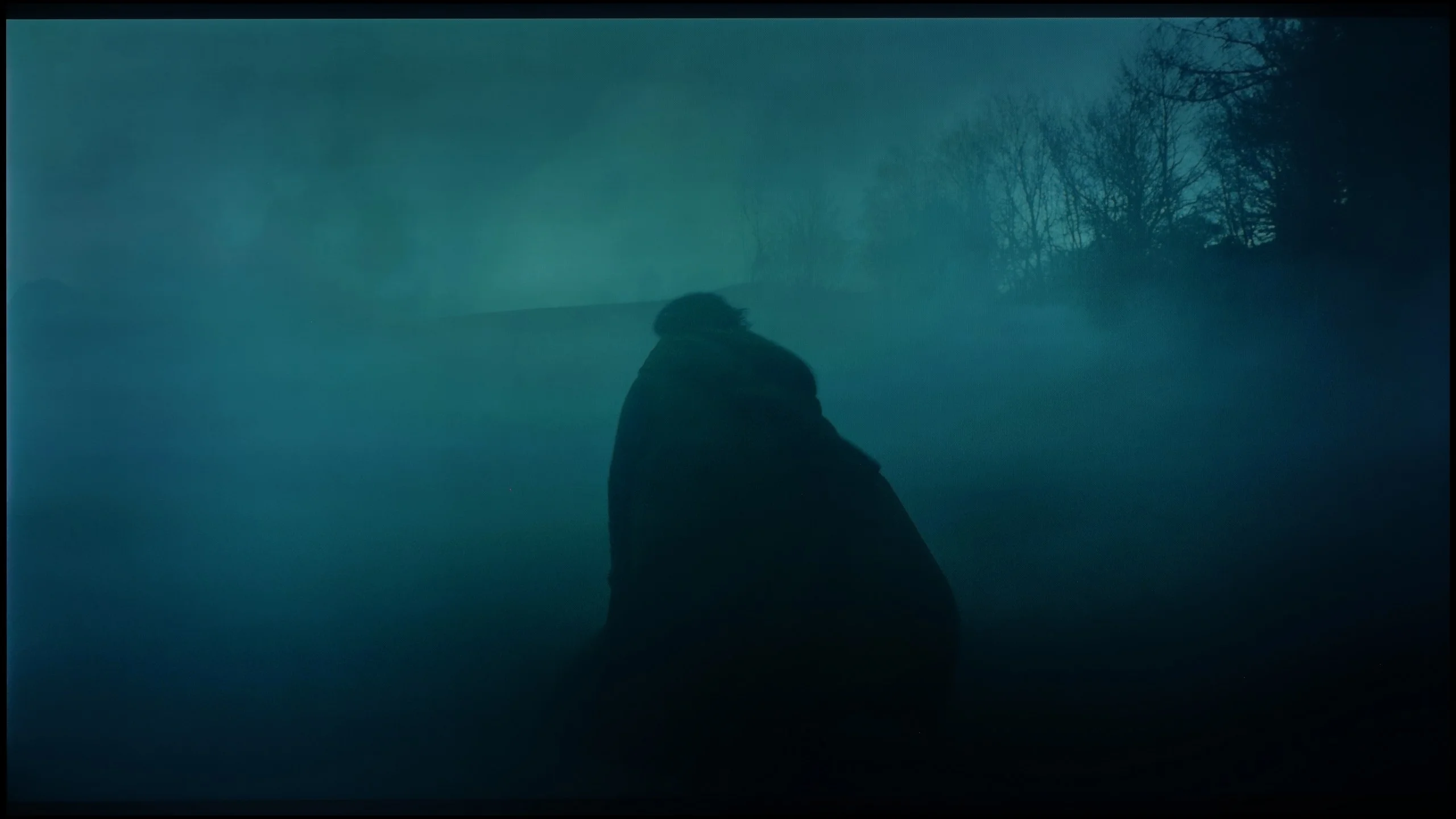
These are selected scenes that show smooth tonal transitions from one color to another. If you see distinct banding, it’s the TV panel’s fault.
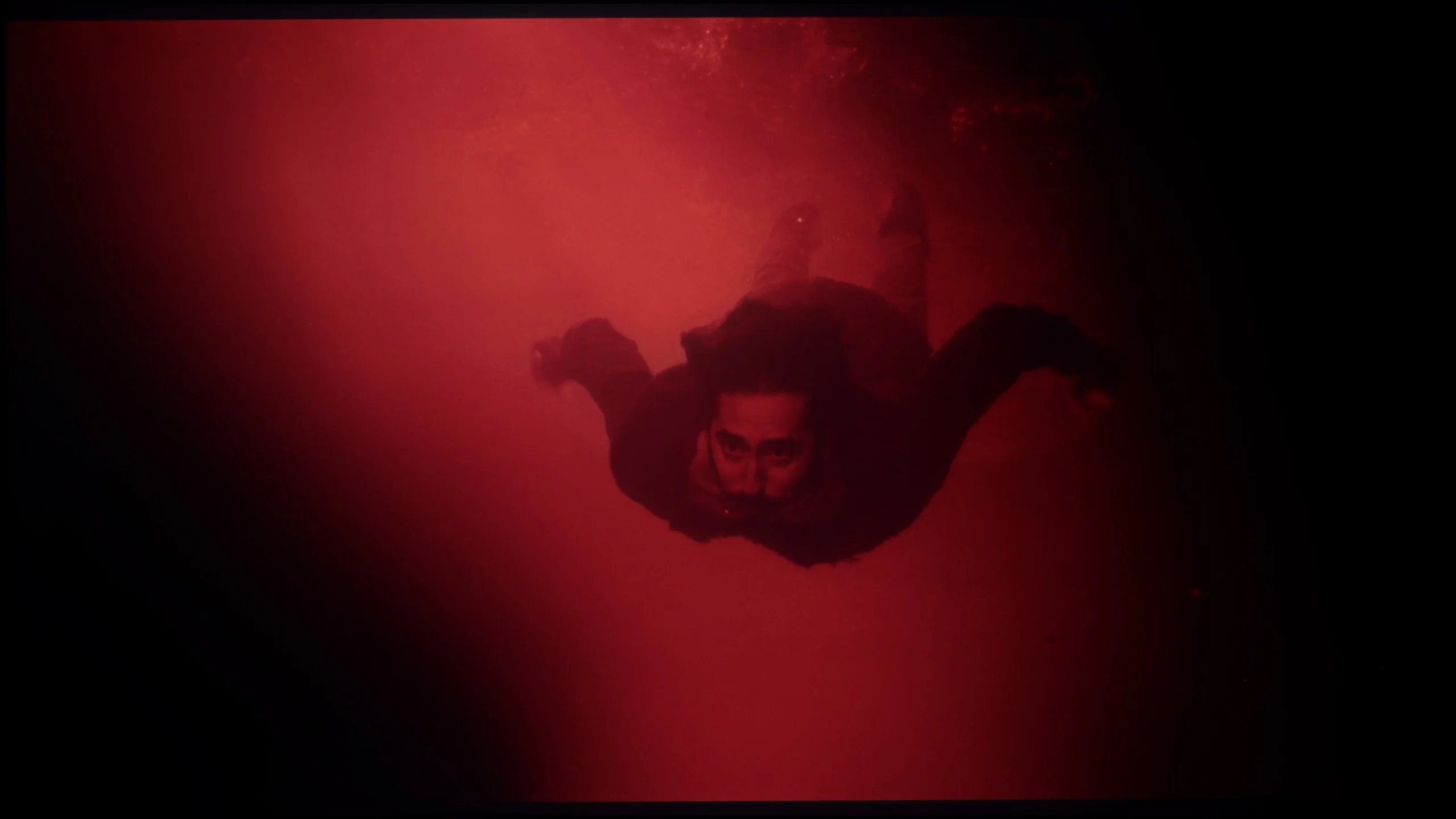
These are selected scenes that show smooth tonal transitions from one color to another. If you see distinct banding, it’s the TV panel’s fault.
The fluidity of tonal transitions in A95L is truly remarkable – it is one of the greatest advantages of QD-OLED panels. The image is presented with exceptional smoothness, and all transitions between different shades are captured perfectly, without noticeable jumps or disturbances. As of today, it is difficult to find a panel that can handle tonal transitions with such precision. Of course, if one looks closely, minor errors can be seen in the blacks, but they are subtle enough that hardly anyone will notice them during normal use of the Sony A95L. For most users, these small imperfections will go completely unnoticed, and the fluidity and detail of tonal transitions will satisfy even the most demanding enthusiasts of excellent picture quality.
Smoothness of tonal transitions is one of the strengths of the Hisense U7S. HDR10 content performs particularly well, with colours blending gently from one to another without obvious banding. Even in dark scenes it is hard to find significant issues. Minor colour banding becomes visible only in brighter shots, but during normal viewing it is hardly noticeable. It is slightly worse in Dolby Vision, where the boundaries between tones can be more apparent. For that reason Hisense loses some points with us, although overall this remains a very good result and one of the better performers in its class.
Image scaling and smoothness of tonal transitions
8/10
6/10

Smooth transition function
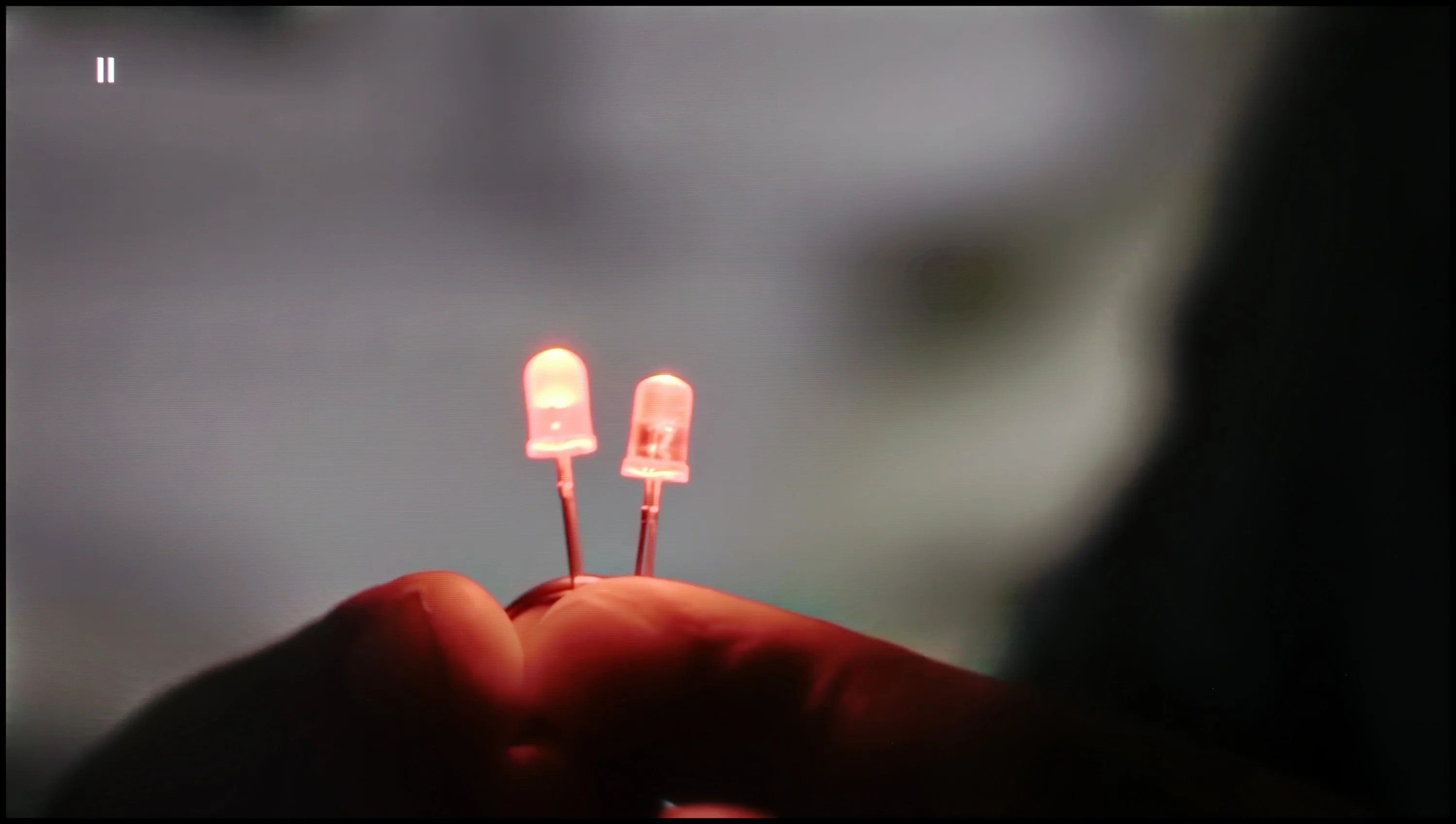
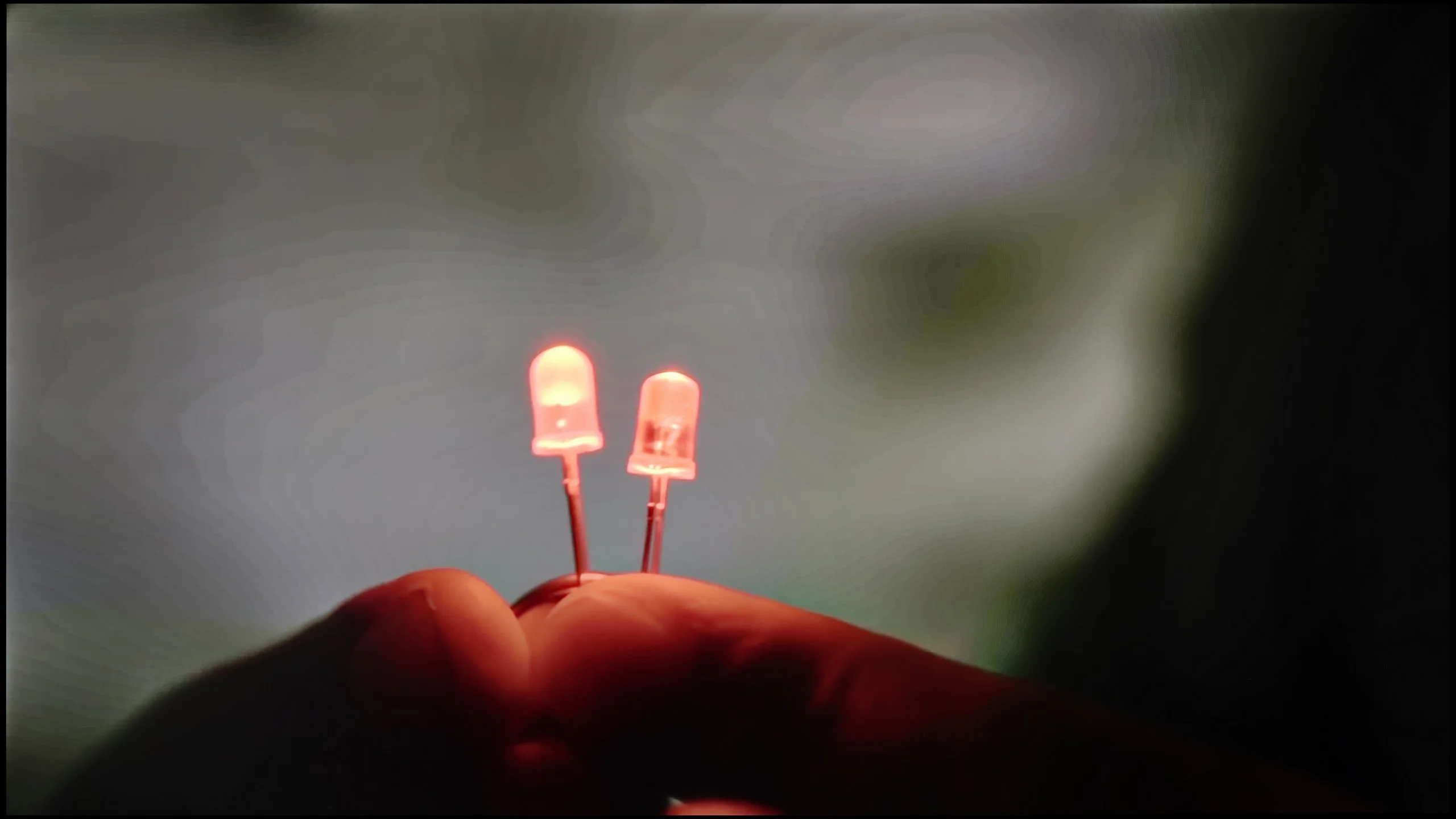
The match photo shows how the TV smooths weak tonal transitions in low-quality video.
Image scaling SD (576i)


The model photo shows how it handles upscaling of SD material.
The tonal transition smoothing feature in Sony A95L works really well and is worth noting. We recommend setting it to "Medium" because at this level, you achieve the perfect compromise – no artifacts appear, and the image looks incredibly natural and pleasing to the eye. As a result, the transitions between different shades are smooth while maintaining the detail of the scenes, which further enhances the viewing comfort.
When it comes to upscaling, you can see the full power of the XR processor here. Sony A95L handled our test material featuring a model exceptionally well – the image is remarkably clear, there are no excessive jagged edges, and details in the background are perfectly preserved. The XR processor effectively improves low resolution, delivering very good results that allow you to enjoy materials in almost high quality, even if their source is not ideal.
The handling of lower-quality material is fairly mediocre on the Hisense U7S. The Pentonic 700 chipset used here does not cope particularly well with strong compression artefacts. The menu includes a "Smooth and Gradient Image" function, but its performance leaves much to be desired. At the low setting tonal transitions show little improvement, although at least the image does not suffer. The medium and high settings still do not remove obvious banding between shades, and they begin to blur details; in our test material even parts of characters' faces disappeared. Interestingly, film grain remains untouched at every level. If you do use this feature, stick to the low setting. Its current behaviour needs refinement, but that is mainly down to the chipset used here.
Upscaling to 4K performs much better. Lower-resolution content gains in legibility, edges are well reproduced, and fine elements look sharp. That does not mean it recovers details that were never in the recording, but the TV makes good use of what it receives from the source. Another plus is that it does not crop the image edges, even with an SD signal.
Blur and motion smoothness
8.5/10
7/10
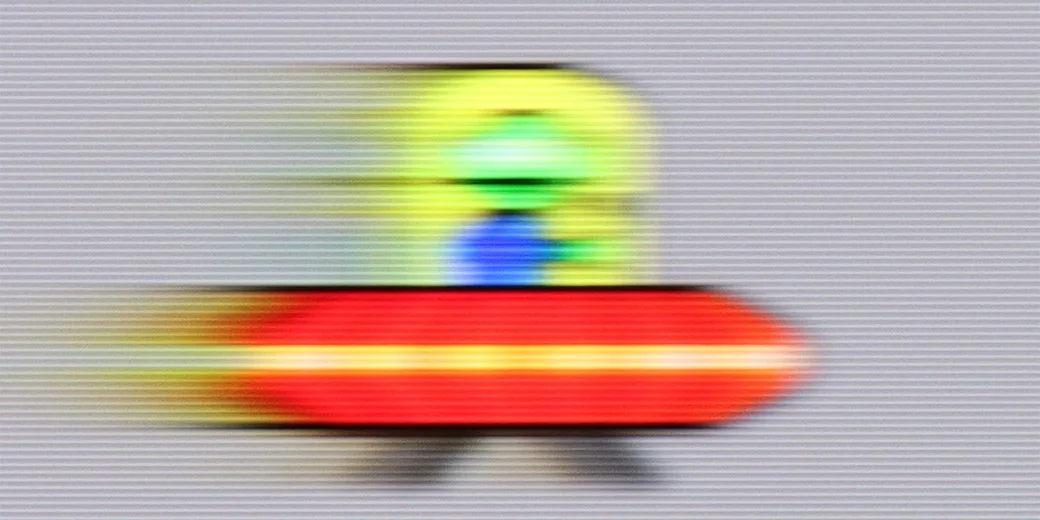
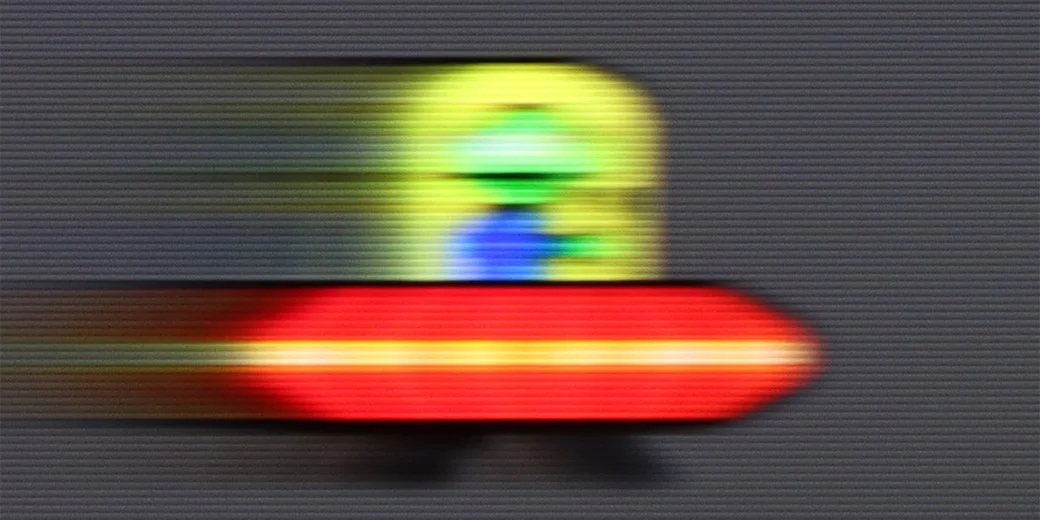
Blur (native resolution, maximum refresh rate):




Blur (BFI function enabled):





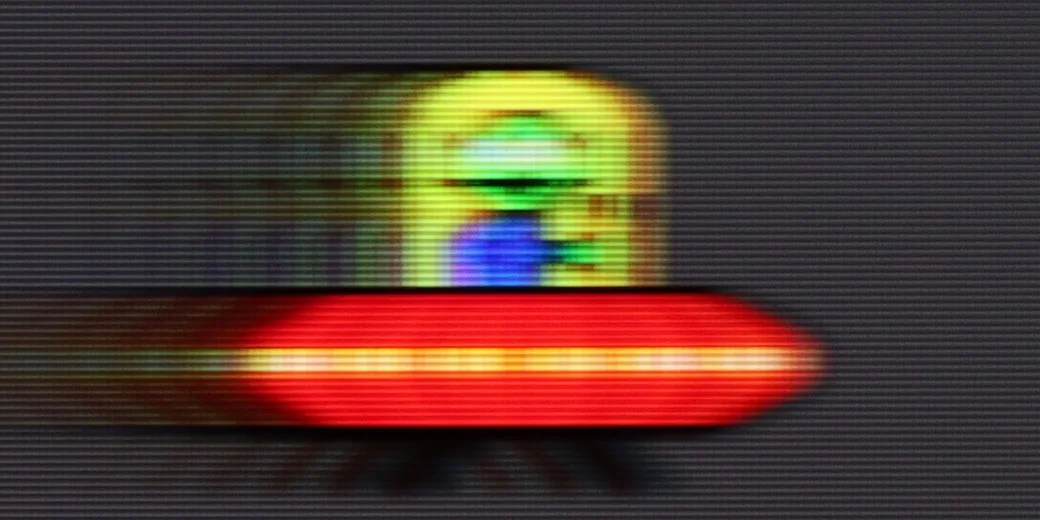
Blur ():
Blur (1080p@240Hz):


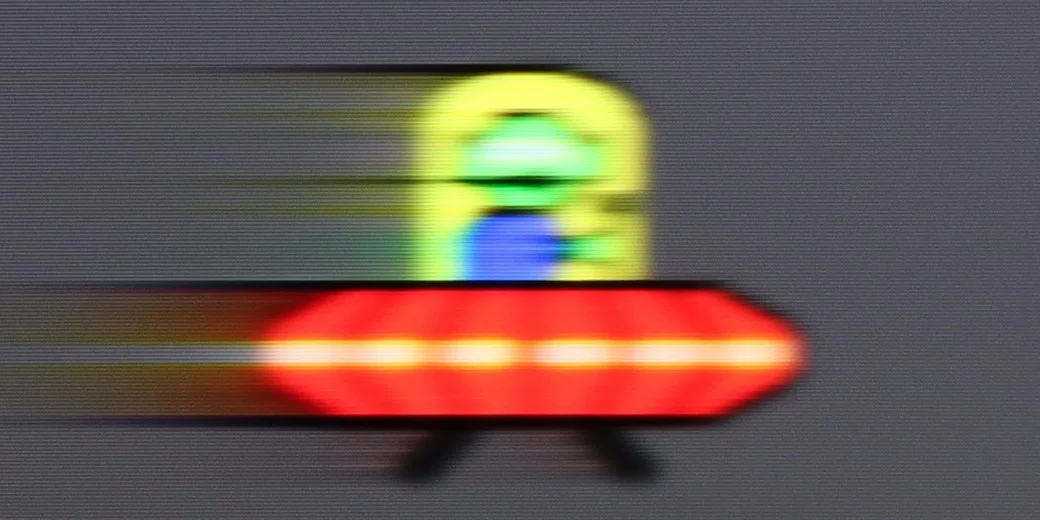
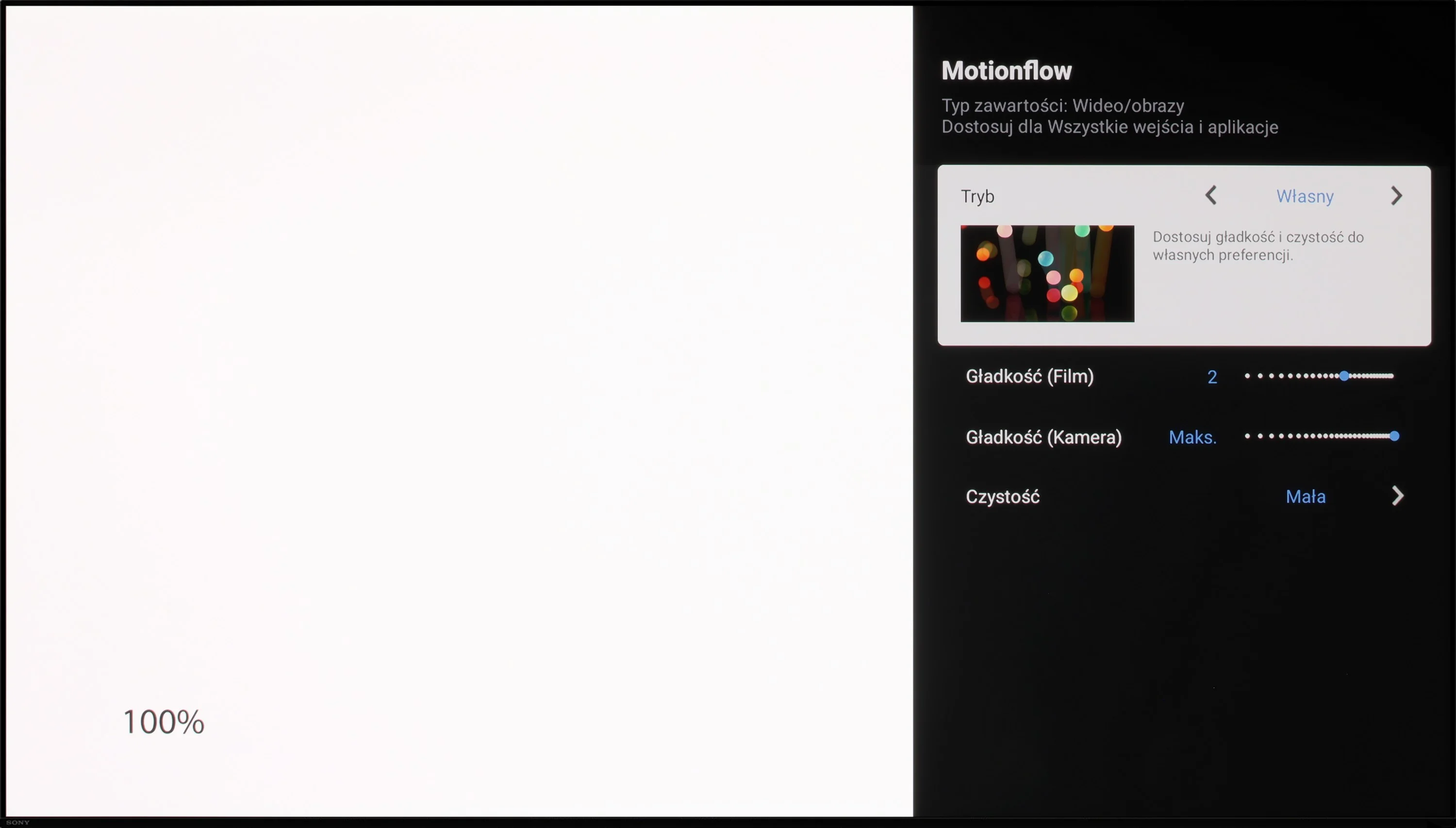
Sony A95L is a television that should satisfy both gamers and cinema lovers. When it comes to watching films, this model is equipped with the Motionflow feature, which allows you to precisely adjust whether you want the image to be more "cinematic," like in traditional cinema, or exceptionally smooth, like in cinema-style TVs. The "Smoothness" slider lets you regulate the level of fluidity – from subtle changes to a more noticeable effect, while the "Clarity" slider is responsible for reducing flicker and artifacts, helping to achieve a more natural and clear motion. As for gaming and watching sports, the A95L Sony television offers a refresh rate of 120 Hz, making every dynamic action look incredibly smooth. Gamers will appreciate the lack of blur, while sports fans will see every movement in full clarity. Overall, the television performs excellently – both with fast-paced games and emotionally charged film sequences.
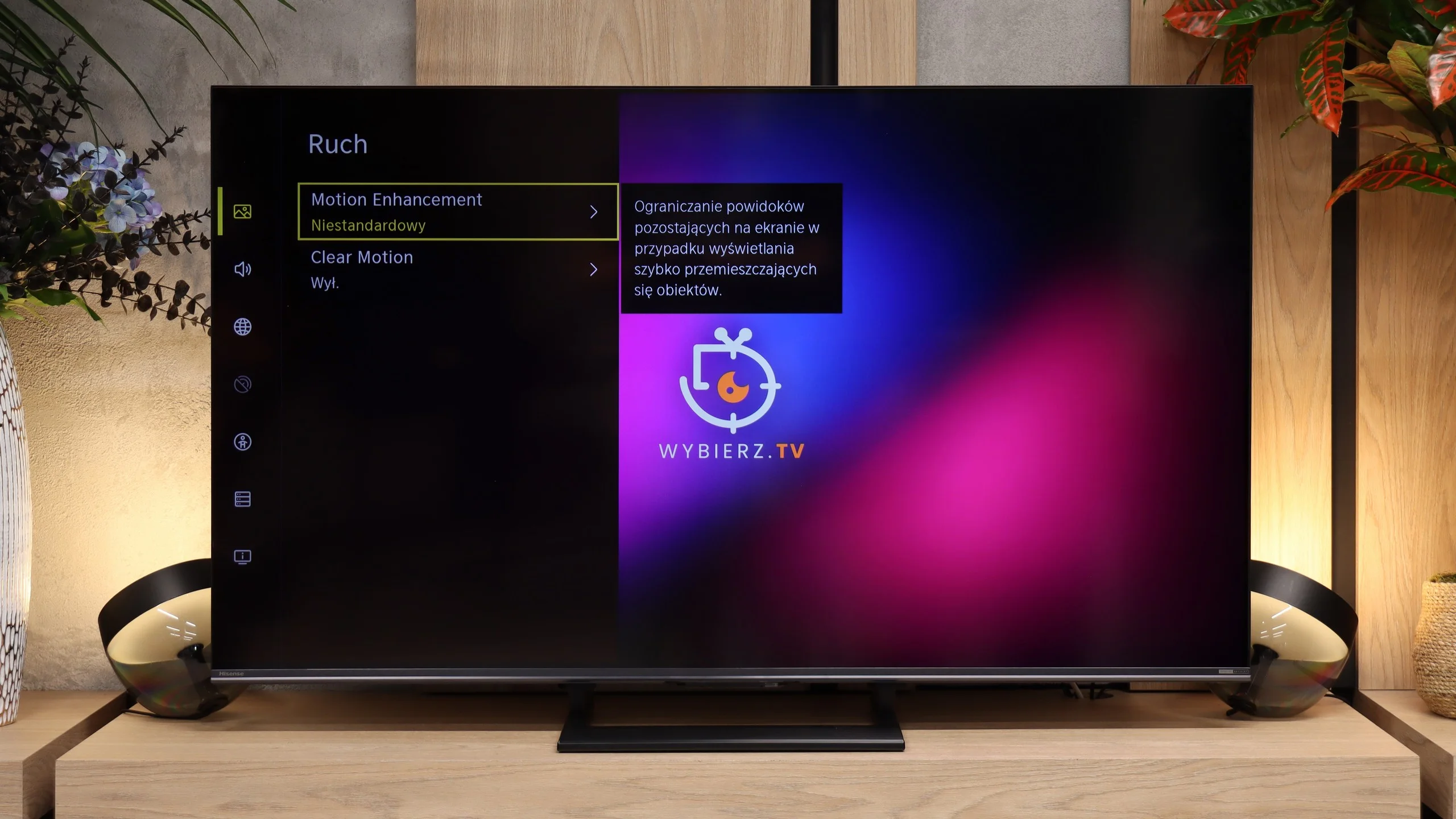
Motion handling on the Hisense U7S is decent thanks to the 144 Hz refresh rate. For films there is also a motion smoother with adjustable judder and blur reduction. You can therefore keep a more cinematic motion or increase smoothness if jerky camera pans bother you. The high refresh rate is also useful for sports and gaming, but unfortunately it does not solve the panel's biggest problem.
That problem is pixel response time. Fast-moving objects leave long, clearly visible trails, as our UFO test shows. It looks worst on dark backgrounds, where the trail behind the object is particularly pronounced. So motion can be smooth, but the moving object itself loses sharpness, and that difference on the U7S is fairly easy to notice.
Console compatibility and gaming features
9.4/10
8.5/10
- ALLM
- VRR
- VRR range48 - 120Hz48 - 240Hz
- Dolby Vision Game Mode
- Correct implementation of HGIG

- 1080p@120Hz
- 1440p@120Hz
- 4K@120Hz
- Game bar
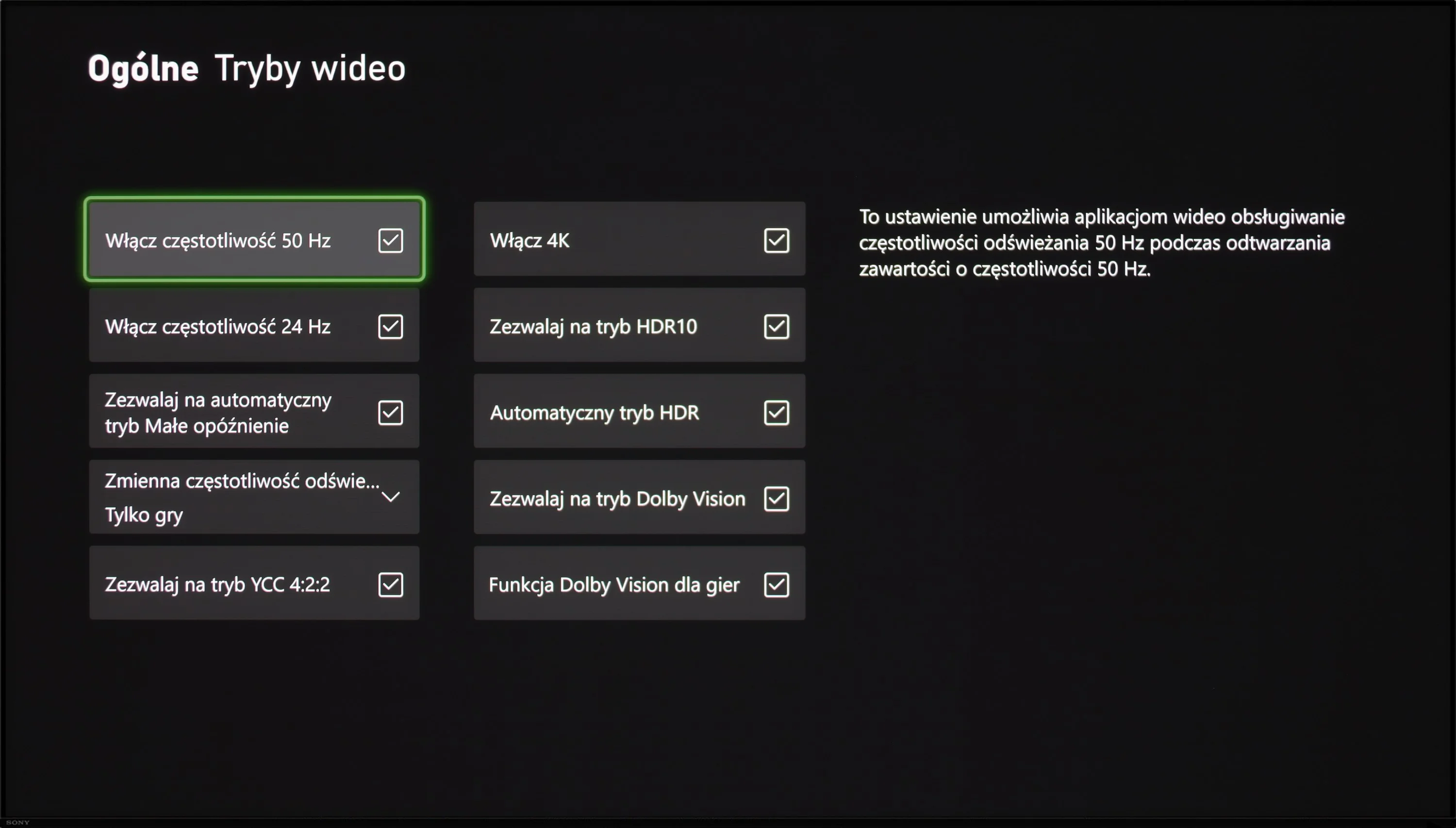
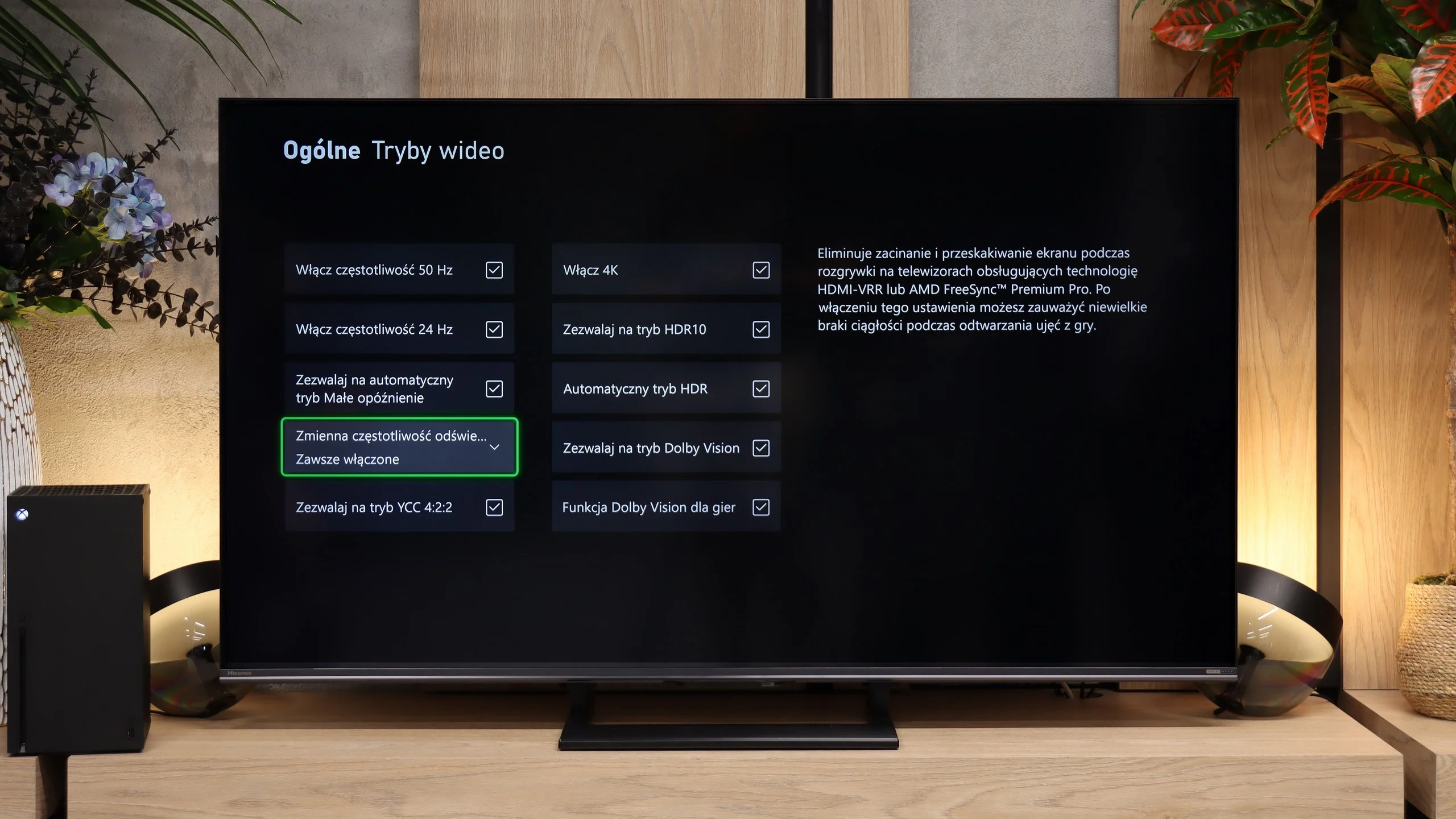
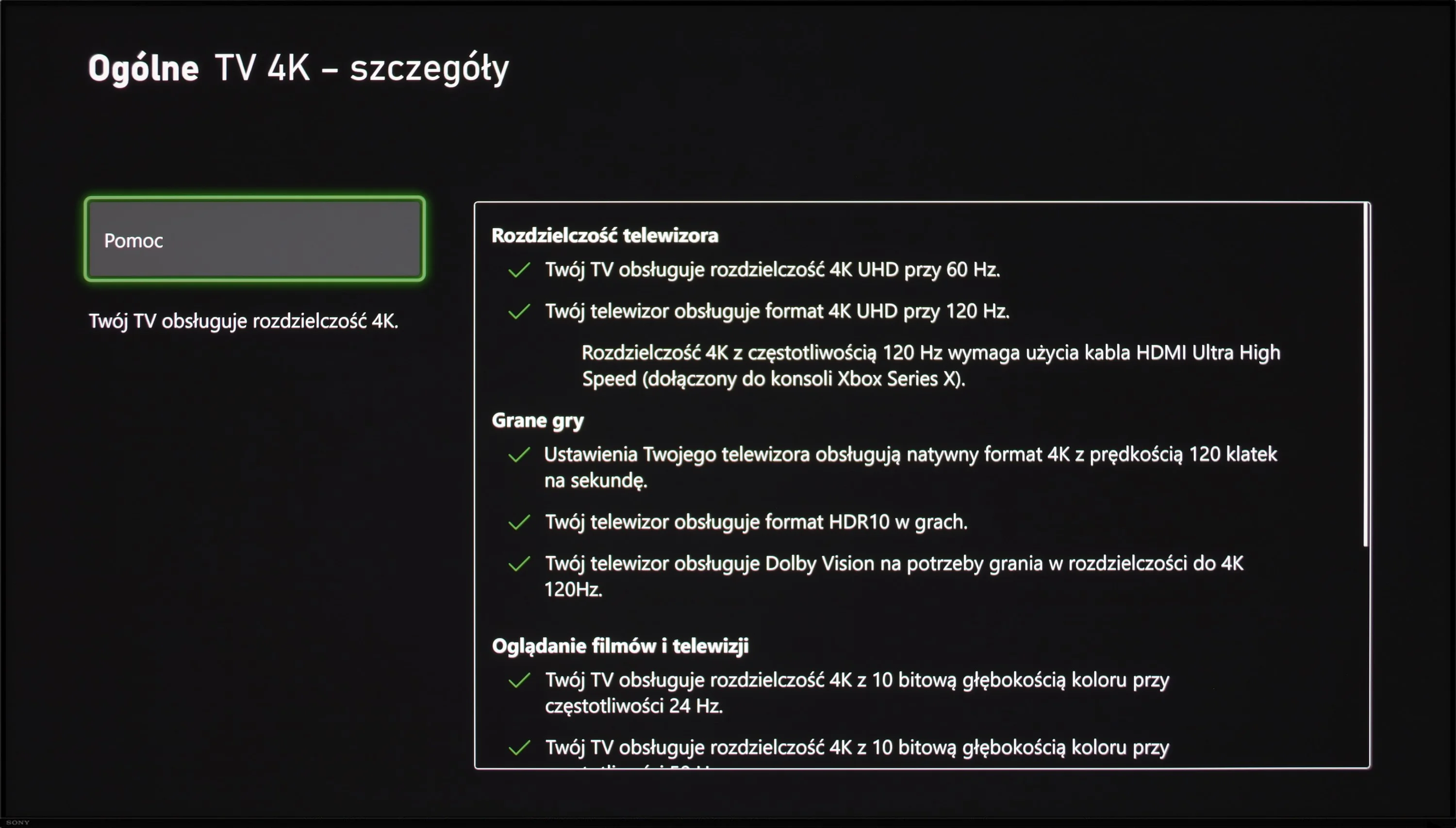
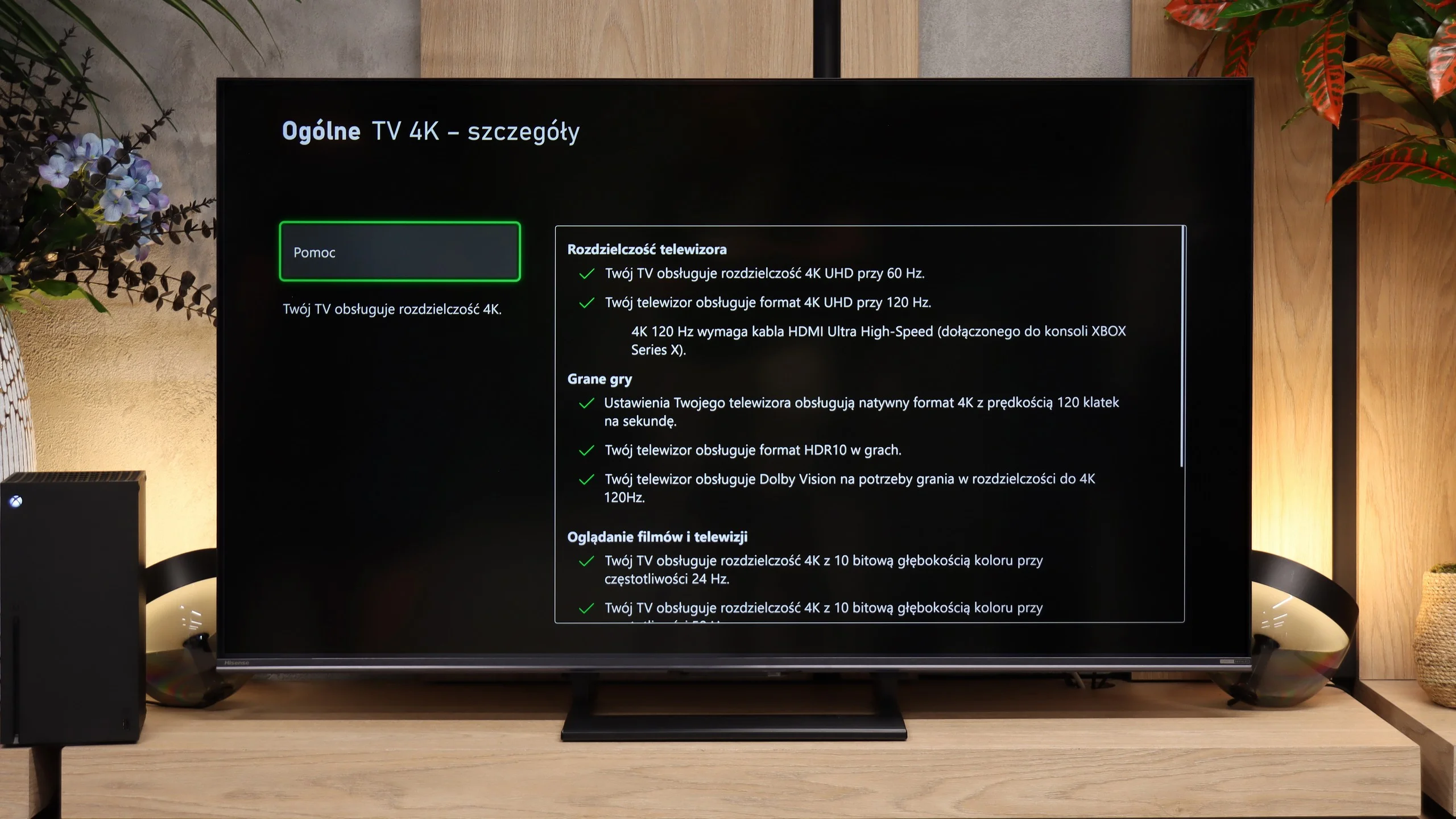
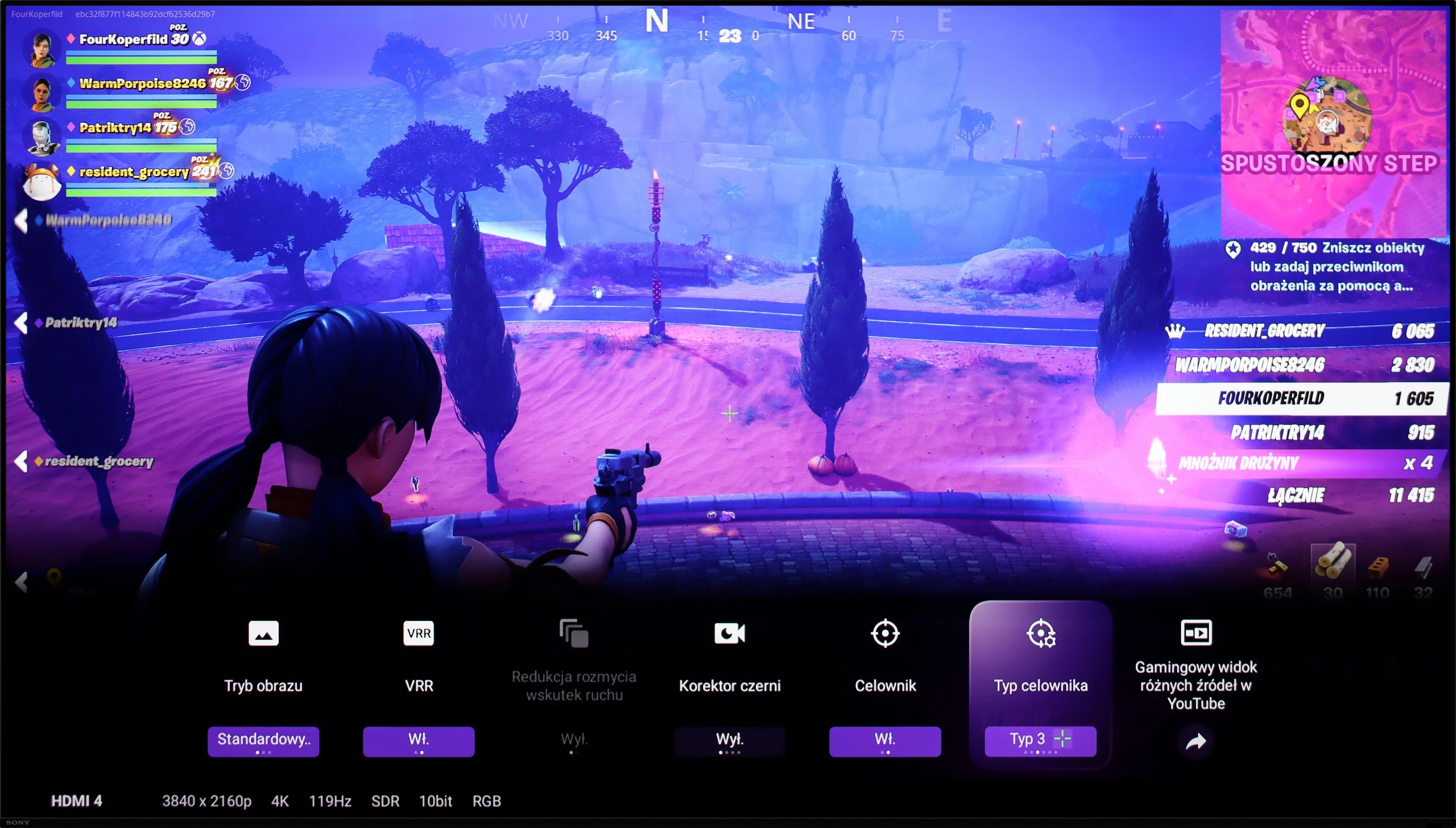
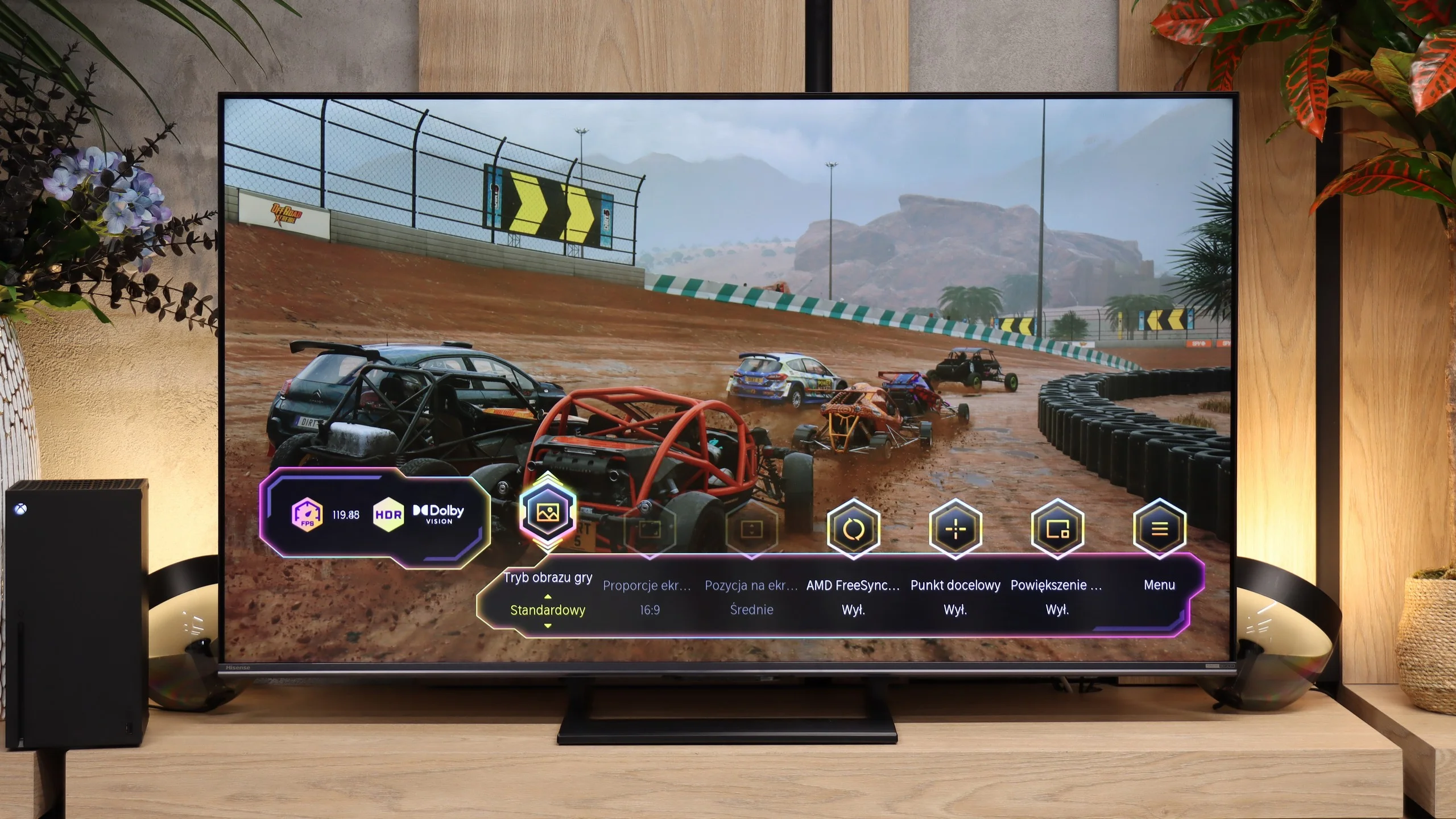
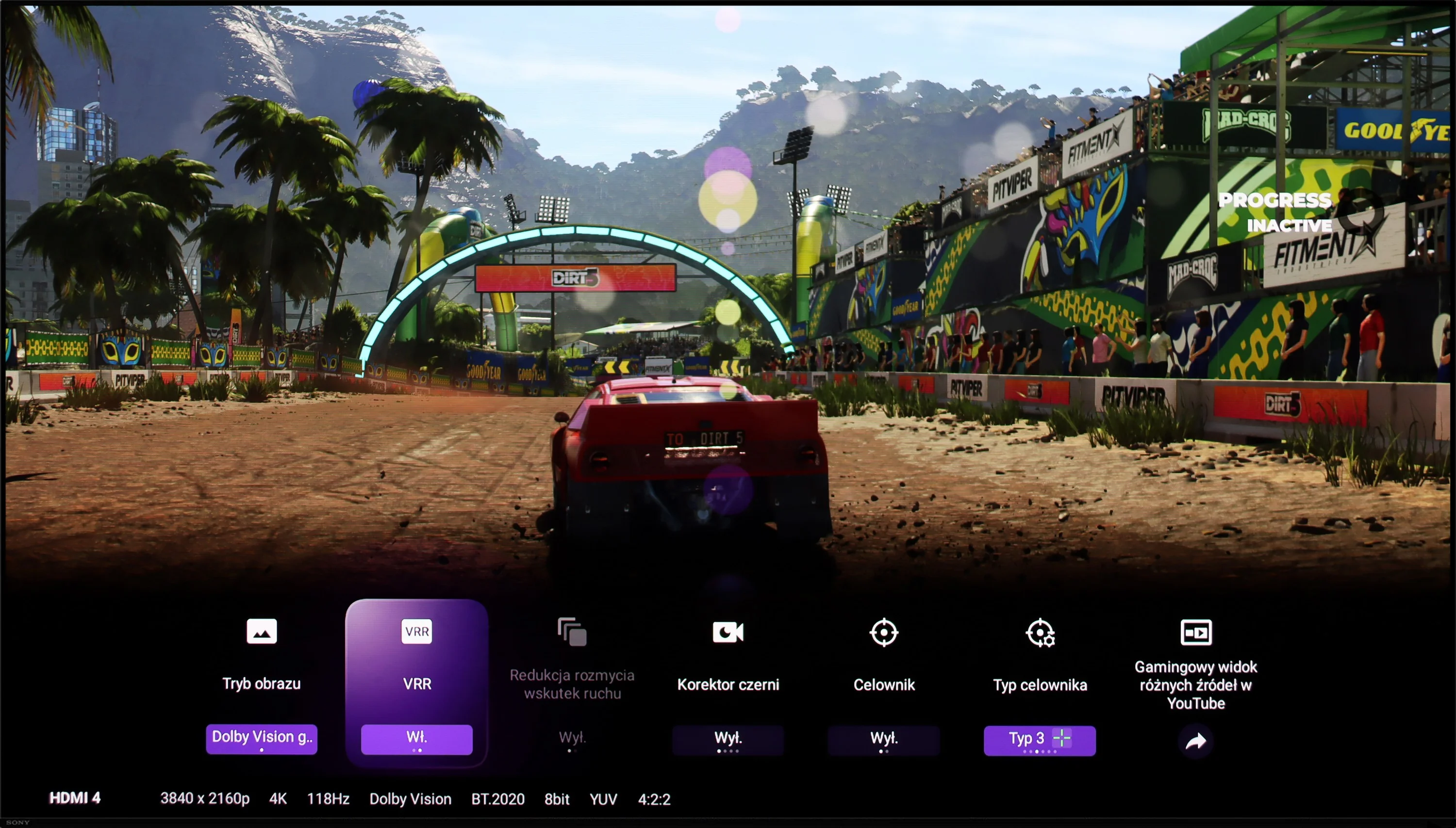
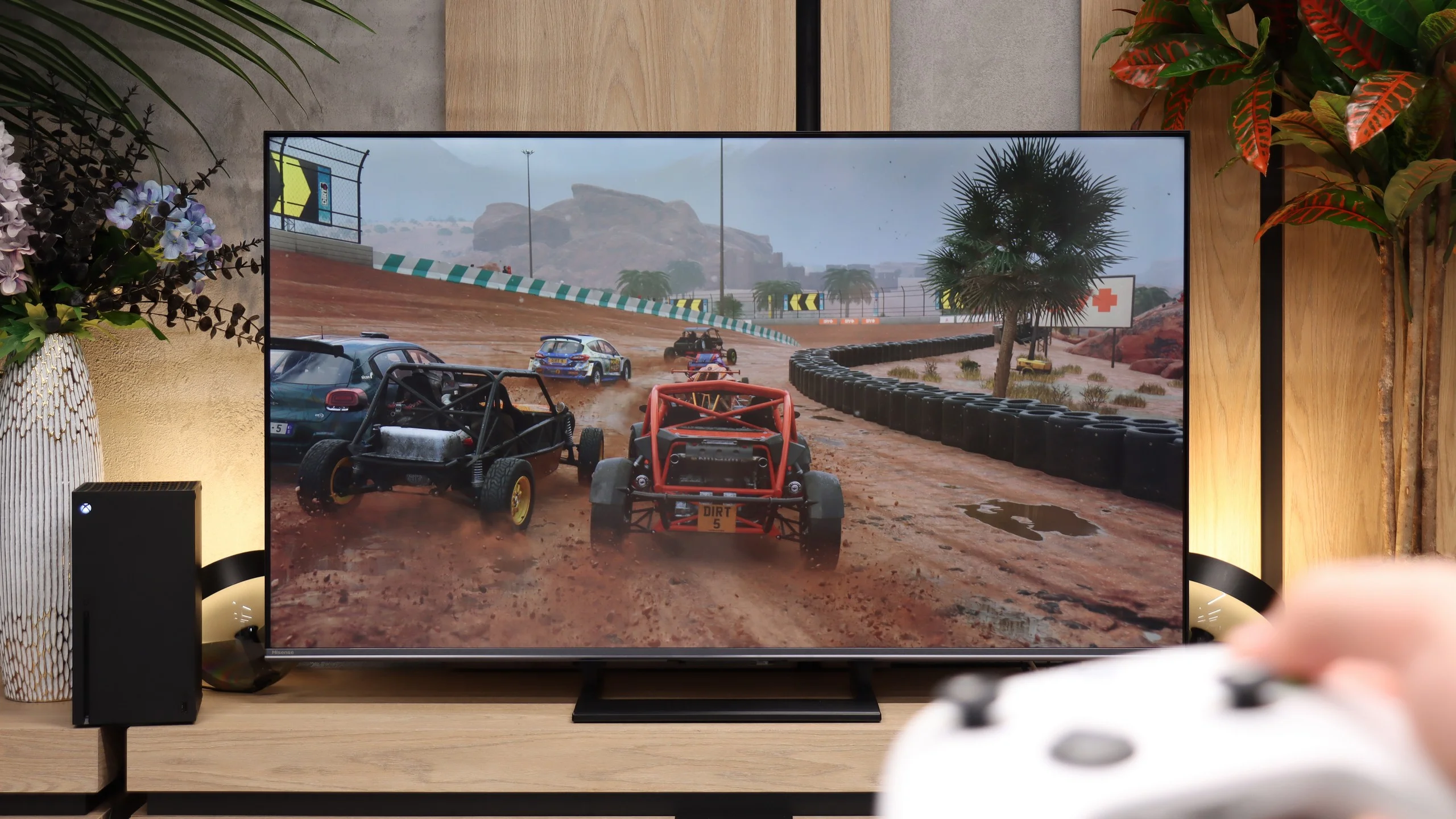
Sony A95L is a television that will truly satisfy gamers, thanks to several key features that set it apart from the competition. To start with, the 120 Hz refresh rate – this is something everyone who loves fast action games, racing, or dynamic shooters will appreciate. As a result, the image is exceptionally smooth, and the gameplay is more satisfying, without annoying stuttering. The A95L Sony also has an ALLM (Auto Low Latency Mode) feature, which automatically engages low latency mode when we turn on the console. What does this mean? Above all, faster response on the screen, which in games where every second matters is simply invaluable. Additionally, there’s VRR (Variable Refresh Rate), which adjusts the image refresh rate to the number of frames generated by the console. The effect? No tearing of the image, and everything looks smooth and cohesive – even with variable FPS.
It is worth mentioning the support for Dolby Vision with low input lag in games – something we don’t often encounter in televisions, and here we have it onboard. Thanks to this, the image in games that support HDR is incredibly vibrant, with rich colours and excellent contrast. Both the brightest and darkest details are visible, making everything look as the game creators intended. And then there's the "Game Bar" – a small but very practical feature. With it, we have all the most important gaming-related settings at our fingertips, such as VRR or latency information. There’s no need to interrupt gameplay to adjust parameters – everything is right at hand.
However, it should be remembered that the A95L offers only two full-bandwidth HDMI 2.1 ports, one of which is designated for eARC. This may pose a limitation if we plan to connect multiple devices – for instance, a next-gen console and a soundbar simultaneously. In such a case, the eARC occupying one of those ports can be somewhat problematic, blocking the possibility of connecting a second console.
The Hisense U7S has a lot to offer gamers. You get two HDMI 2.1 ports and support for 120 Hz at Full HD, 1440p, and 4K, so modern consoles’ capabilities are well used. When connected to a PC you can use 144 Hz at 4K or switch the resolution to Full HD and run 240 Hz. So there’s a wide choice, although it’s worth remembering the motion smearing mentioned earlier, which the high refresh rate does not eliminate. VRR and ALLM are also present. The first helps prevent tearing when frame rates in a game change. The second automatically switches the TV into game mode, so you don’t have to dig through the menu each time. VRR works from 48 to 240 Hz, with the highest refresh rate available in Full HD. Xbox users can also play in Dolby Vision, including at 120 Hz. Importantly, this format does not introduce significant input lag here. The Game Bar also looks very good. It’s easy to read, visually appealing, and lets you quickly check what signal the TV is receiving. There are also handy gaming settings at your fingertips, including shadow brightening. If it’s hard to spot an opponent in a dark game, you can improve visibility without digging through the entire menu.
Our biggest complaints concern HGiG. Hisense continues to do its own tone mapping, which makes setting HDR on the console confusing. You adjust a checkerboard test pattern and the TV continuously adapts how it looks. As a result, the moment the pattern disappears does not correctly indicate the screen’s brightness limit, and it’s easy to set the value too high. For this model it’s better to set the target HDR peak brightness on the console to about 900 to 1000 nits, rather than relying on the configurator.
Input lag
9.8/10
9.9/10
SDR
HDR
Dolby Vision
When it comes to input lag, Sony A95L really performs well. Even in Dolby Vision mode, the lag is surprisingly low – results below 10 ms with 120 Hz content are quite impressive. With such low input lag, gaming is extremely responsive, and every action in the game is instantly reflected on the screen. For those playing at 60 frames per second, an input lag of 17 ms is also very good. This value practically does not affect the gaming experience – it falls within the so-called "placebo effect". Sony deserves praise for updating the Dolby Vision Gaming mode, which solved the problem of high input lag present at the TV's launch in 2023.
In terms of input lag, the Hisense U7S performs excellently. At 60 Hz we measured 14 to 16 ms, and at 120 Hz just 9 to 10 ms. The controls are responsive and even in fast-paced games the TV doesn't add any noticeable delay. Importantly, Dolby Vision performs just as well: 14 ms at 60 Hz and 9 ms at 120 Hz mean you don't have to give up the format for fear of added latency. The motion blur described earlier is a separate issue: the screen reacts quickly to inputs, but the pixels do not always keep up with changes in colour.
Compatibility with PC
5/10
8.2/10
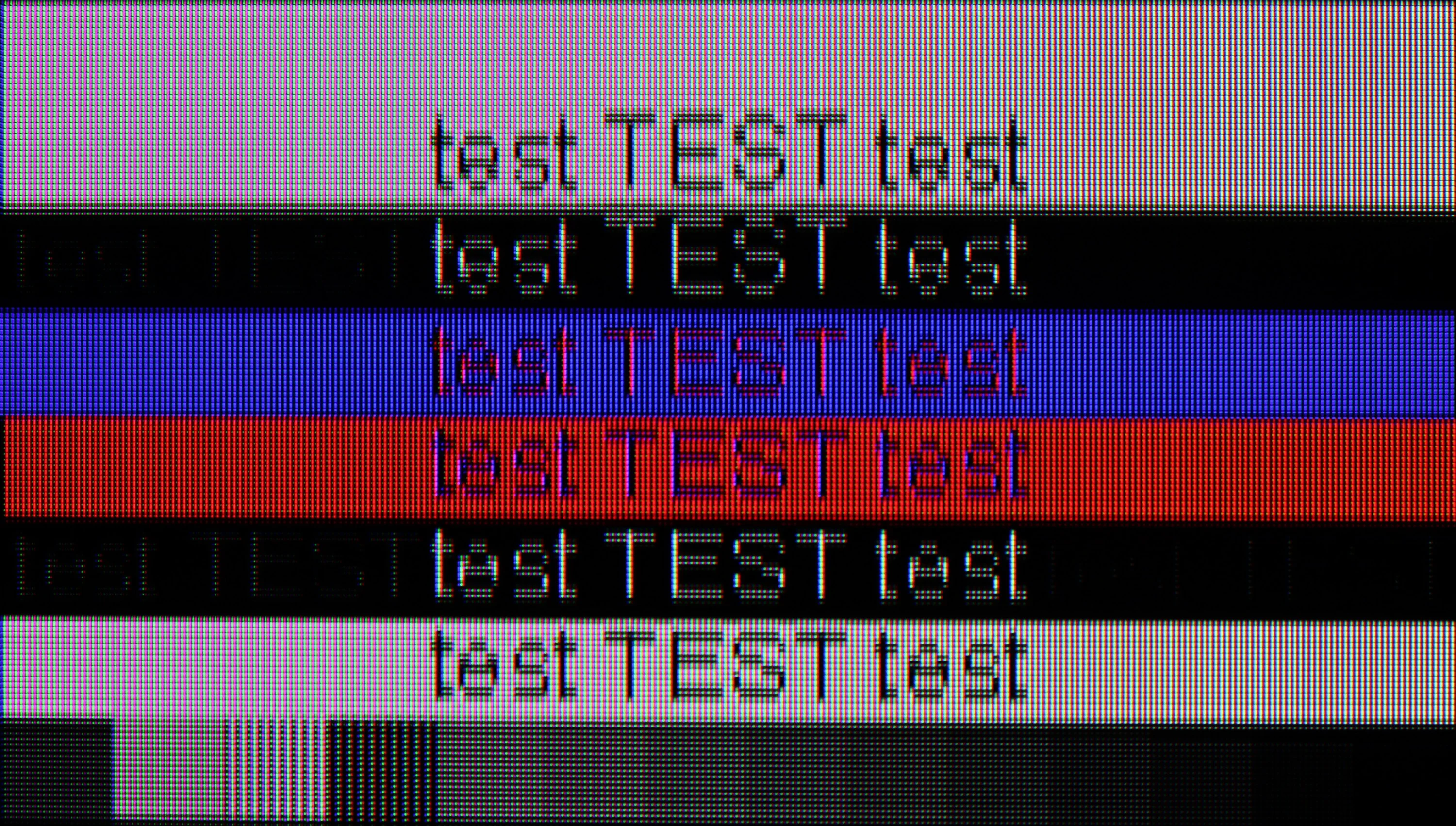
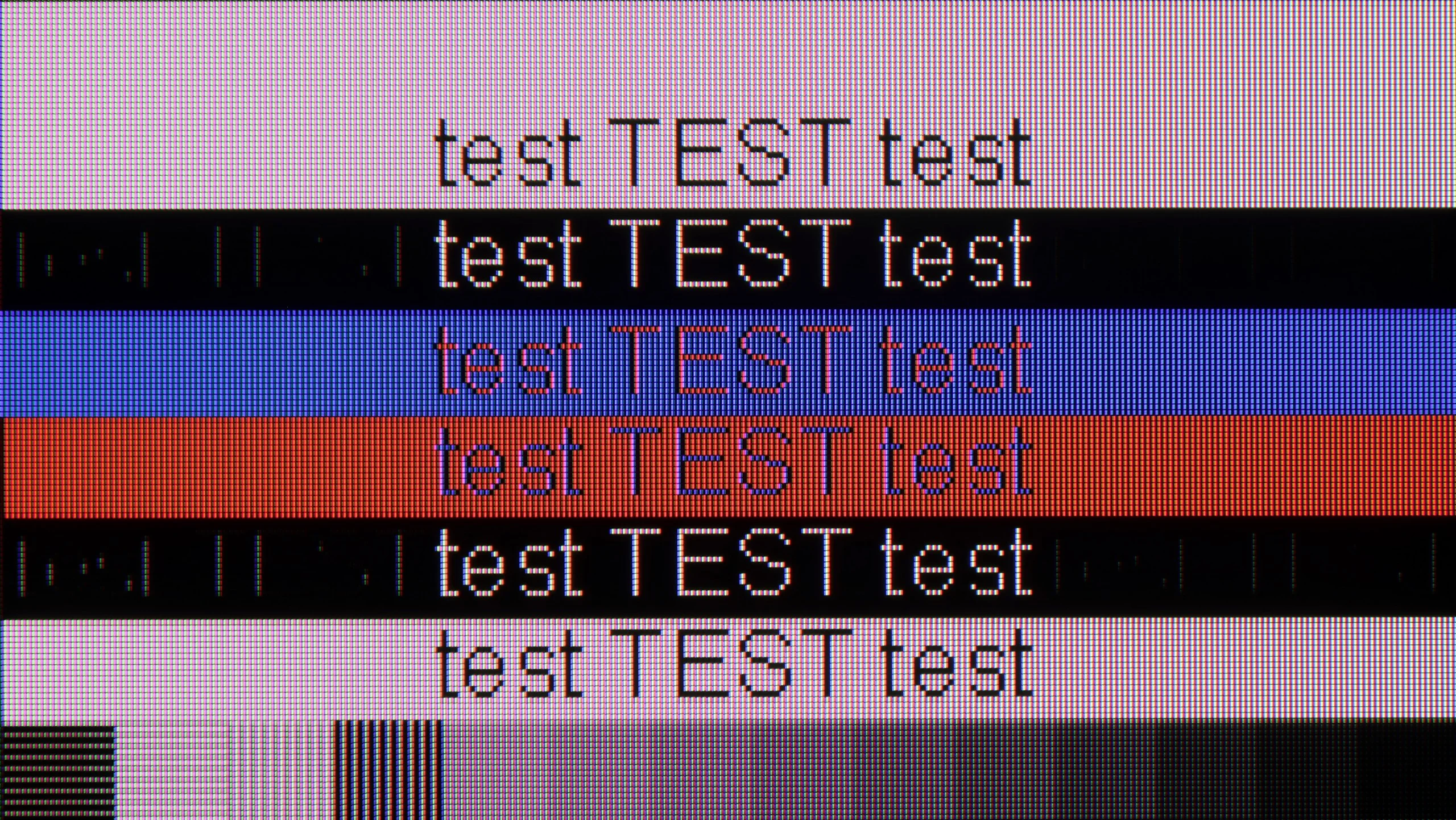
The photo shows the legibility of small fonts. Ideally, lines should be the same thickness on both light and dark text, with minimal pixel gaps.
Sony A95L TV offers compatibility with a computer at 4K resolution at both 60 Hz and 120 Hz. In 4K mode at 60 Hz, the legibility of fonts is at a good level, making it comfortable to use the television as a monitor for office work or browsing content.
Unfortunately, when switching to 4K with a refresh rate of 120 Hz, the quality of the displayed text deteriorates – the resolution is reduced by half, negatively affecting the sharpness of the fonts. In 4K, the fonts lose clarity, which can make extended use of the television as a computer monitor at higher refresh rates more difficult. Of course, the problem disappears if we switch to 60Hz, but this can be quite cumbersome when the television forces us to "juggle" with the settings.
When connected to a PC you can run 4K at 144 Hz, with G-Sync enabled and input lag of around 10 ms. It's a good setup for gaming, although panel smearing is still noticeable in fast-moving scenes. 4:4:4 chroma subsampling also works correctly, even at the maximum refresh rate, so coloured text and small desktop elements remain legible.
For web browsing or occasional work the U7S is quite suitable, but not all fonts look equally sharp. Our main complaint is small, dark text: thin strokes of letters can disappear and characters look uneven. It's hard to notice that from the sofa, but when working up close, especially with text or spreadsheets, it can become distracting.
Viewing angles
9.7/10
3.1/10
The viewing angles on the Sony A95L are among the best on the market, thanks to the QD-OLED panel. With this technology, the colours remain vibrant, and the contrast hardly changes, regardless of the viewing angle. This is a result that even standard OLED panels do not achieve, making the A95L ideal for rooms where viewers change positions or there is a larger group of spectators.
Viewing angles are unfortunately a weak point of the Hisense U7S. Even after shifting to the side, colours lose saturation, blacks become lighter and the picture looks washed out. At a 45-degree angle we measured as much as a 74% drop in brightness, so the difference compared with watching head-on is really significant. This is a typical limitation of VA panels. When seated centrally you can appreciate its good contrast, but people at the far ends of a wide sofa will see a noticeably poorer picture. The U7S is therefore best suited to setups where seating is positioned as directly in front of the screen as possible.
Daytime performance
5/10
7/10
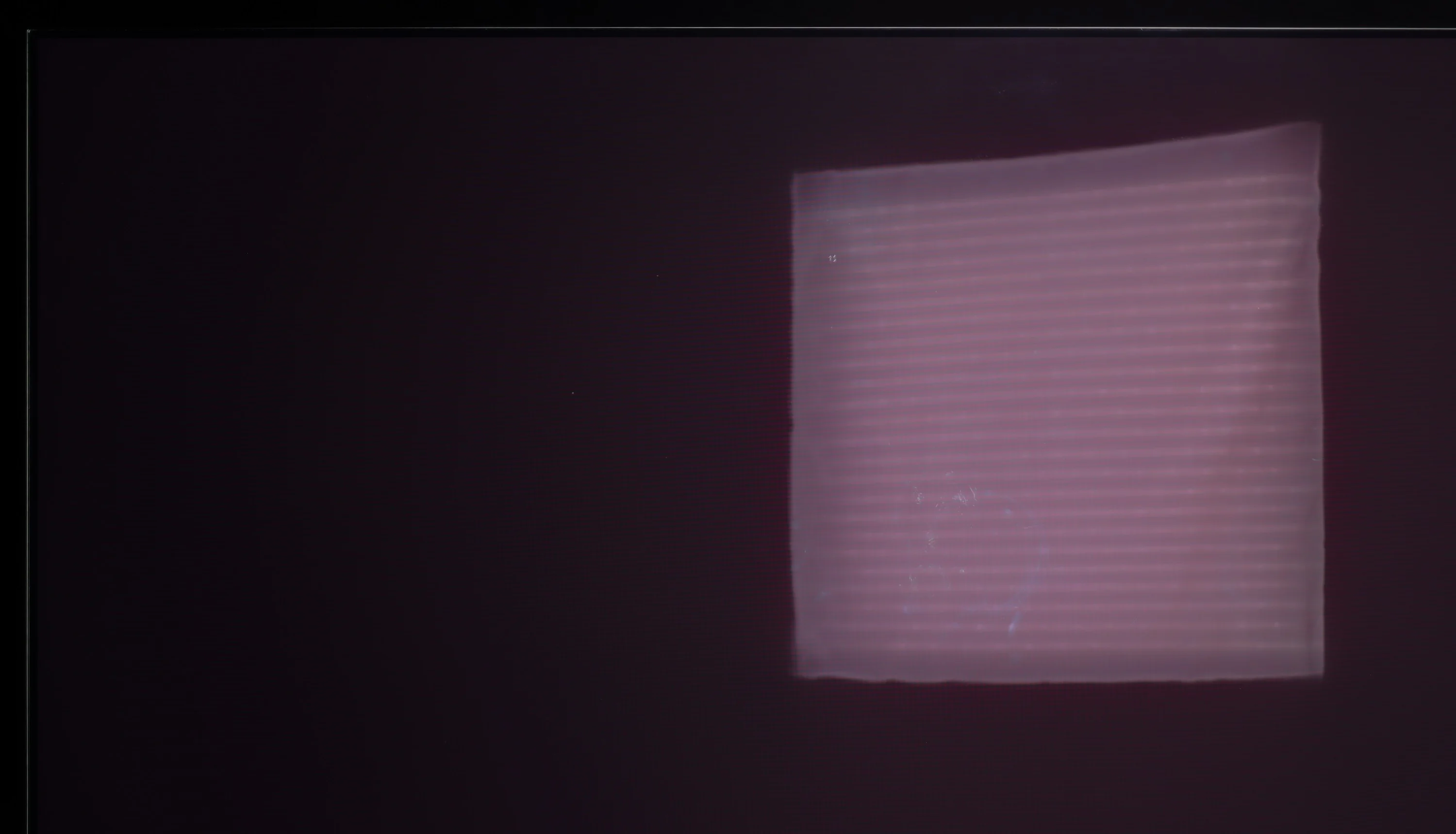
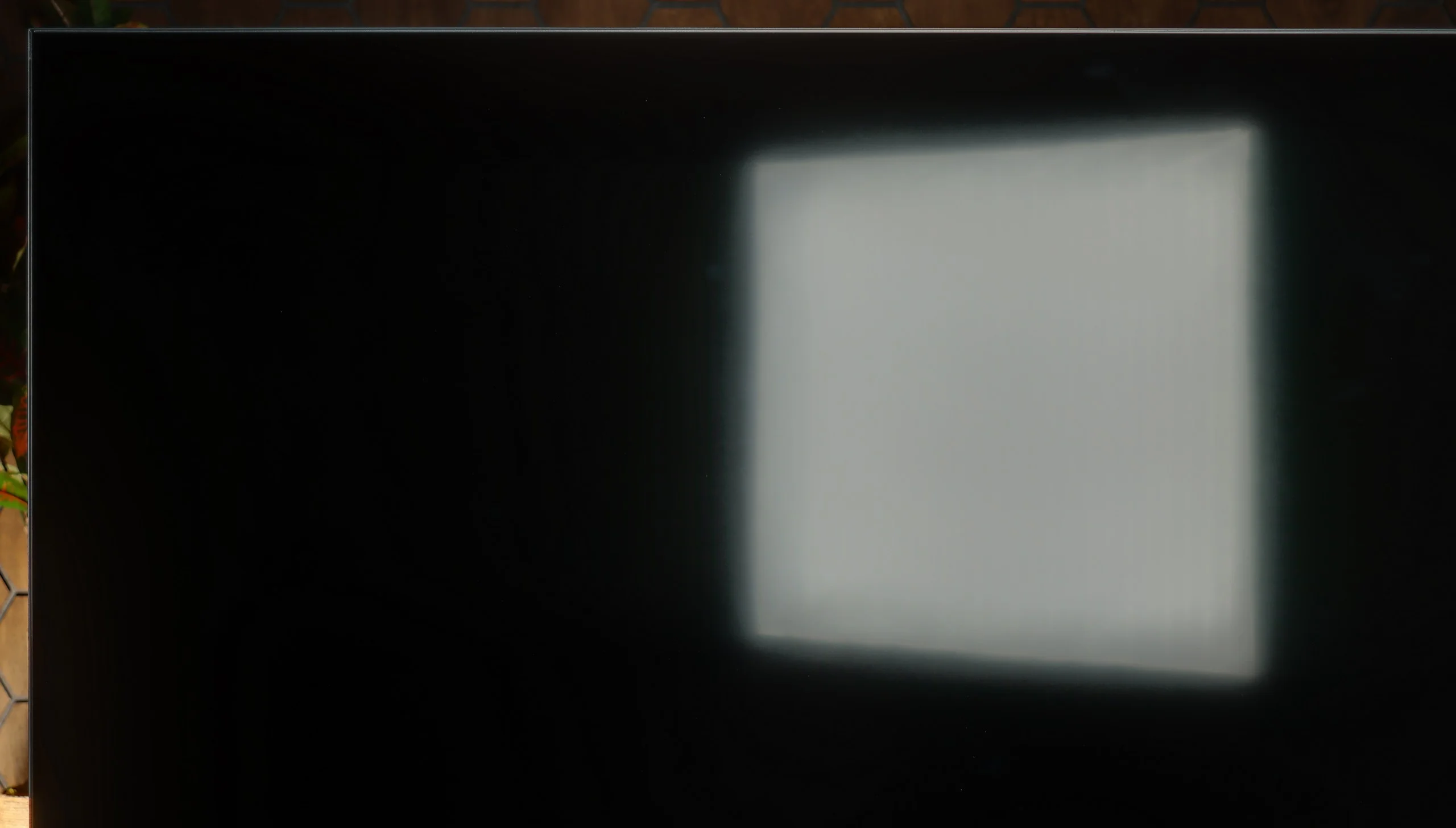
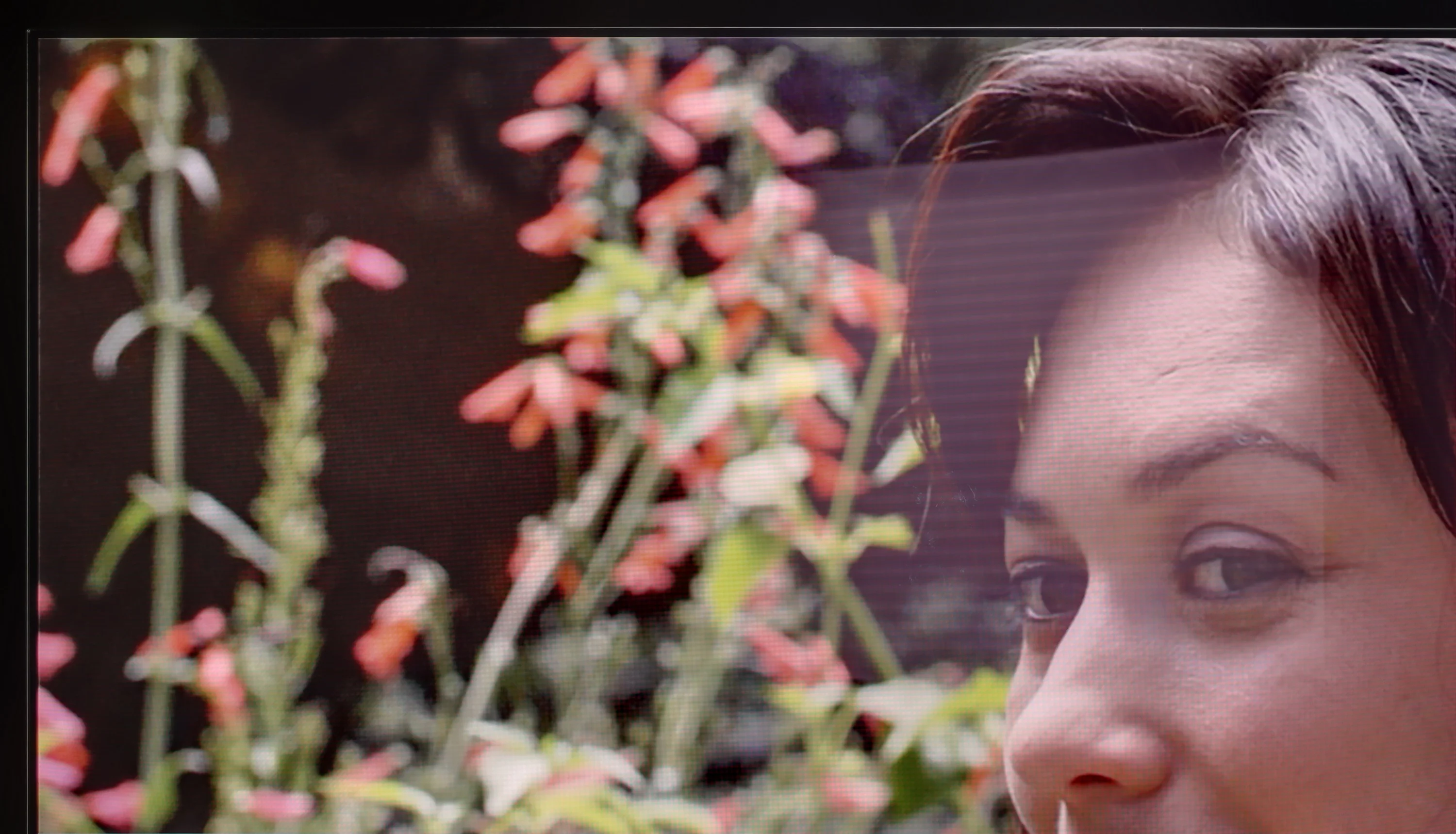
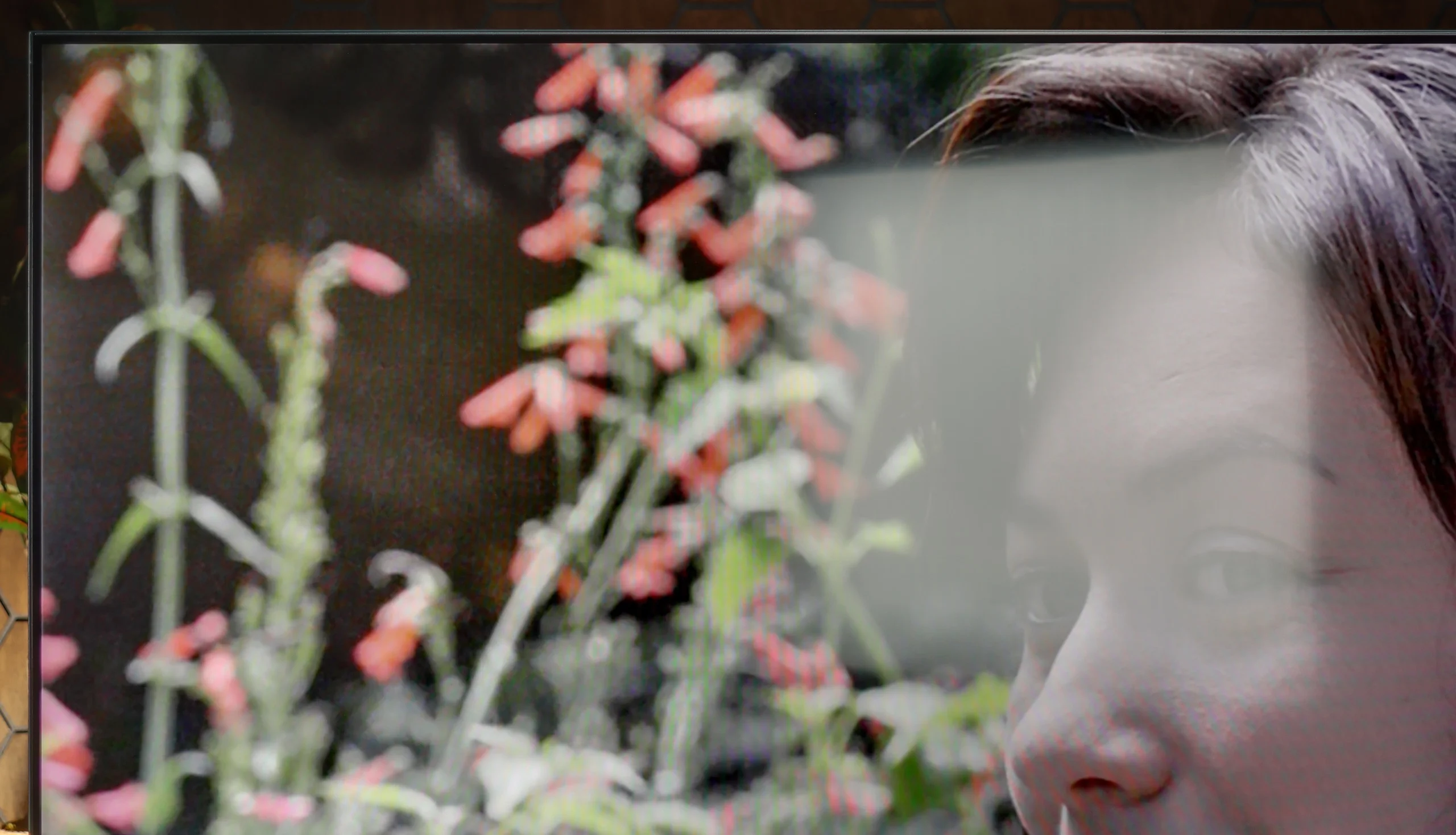
Panel brightness
Hisense U7S / U77SE: 664 cd/m2
Sony A95L: 387 cd/m2
Sony A95L performs quite well in daytime conditions. The QD-OLED panel effectively suppresses reflections and glare, making viewing in bright sunlight comfortable. An average brightness of 380 cd/m² is really a good result, especially for an OLED television—it holds up, although it still cannot compete with Mini LEDs, which are unrivalled in this regard. One of the issues that might bother some viewers is the characteristic QD-OLED effect, where black loses its depth and takes on a slightly cherry hue in strong light.
The Hisense U7S handles daytime viewing well. In SDR we measured an average of around 664 nits, and depending on the screen content brightness ranged roughly between 500 and 800 nits. Even with an all-white image it stays above 500 nits, so a sports broadcast or a bright TV programme does not suddenly look dimmed. That is plenty of headroom for comfortable viewing in most living rooms. The satin coating does a decent job suppressing reflections, but a window opposite the TV will still be visible. In the photo it is clear that its reflection can obscure part of the picture, so high brightness alone does not solve everything. A plus is the handling of blacks and colours in daylight, which do not become overly grey. Overall the U7S performs well in a bright room, though you should position it to avoid direct reflections from windows.
Panel details
Subpixel Structure:
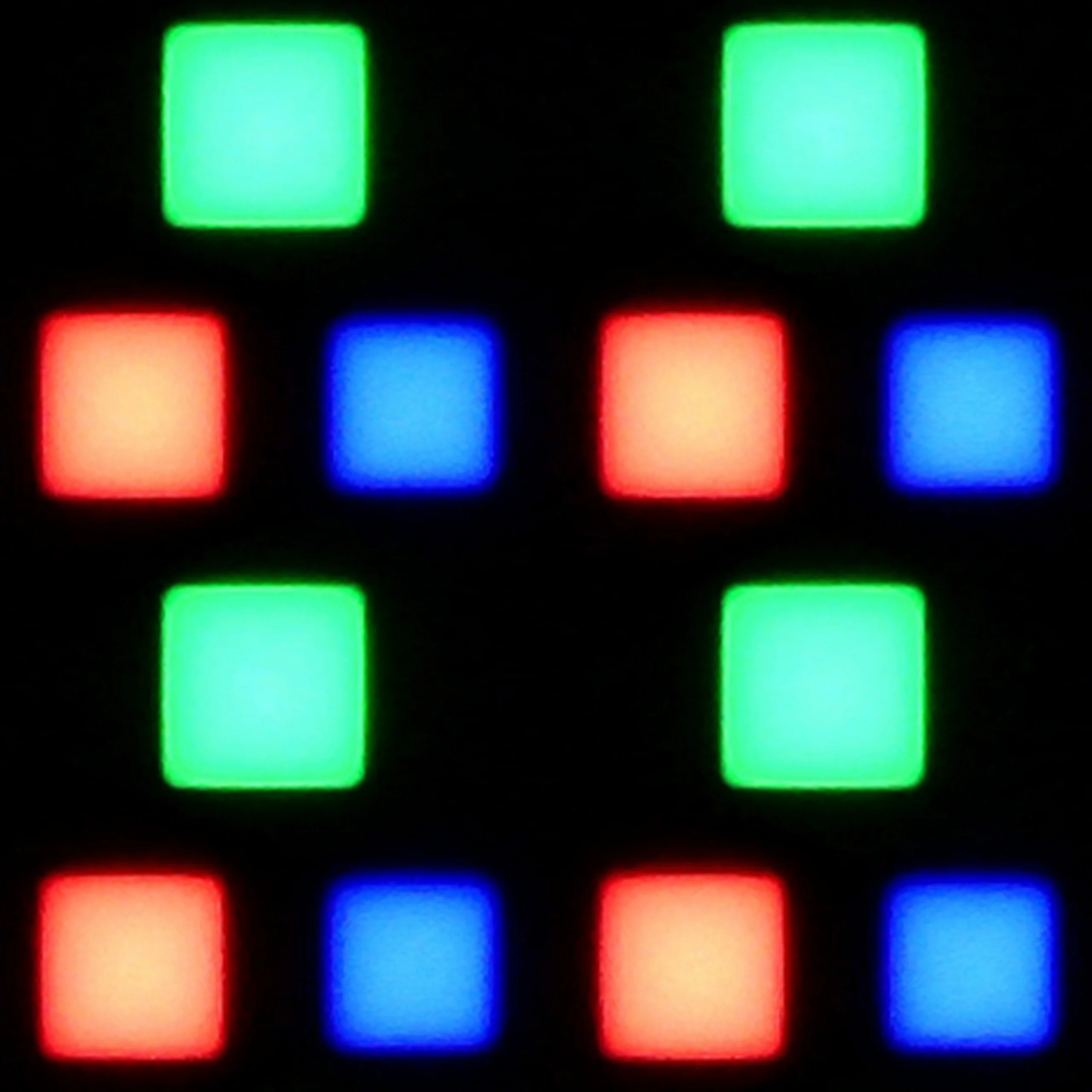
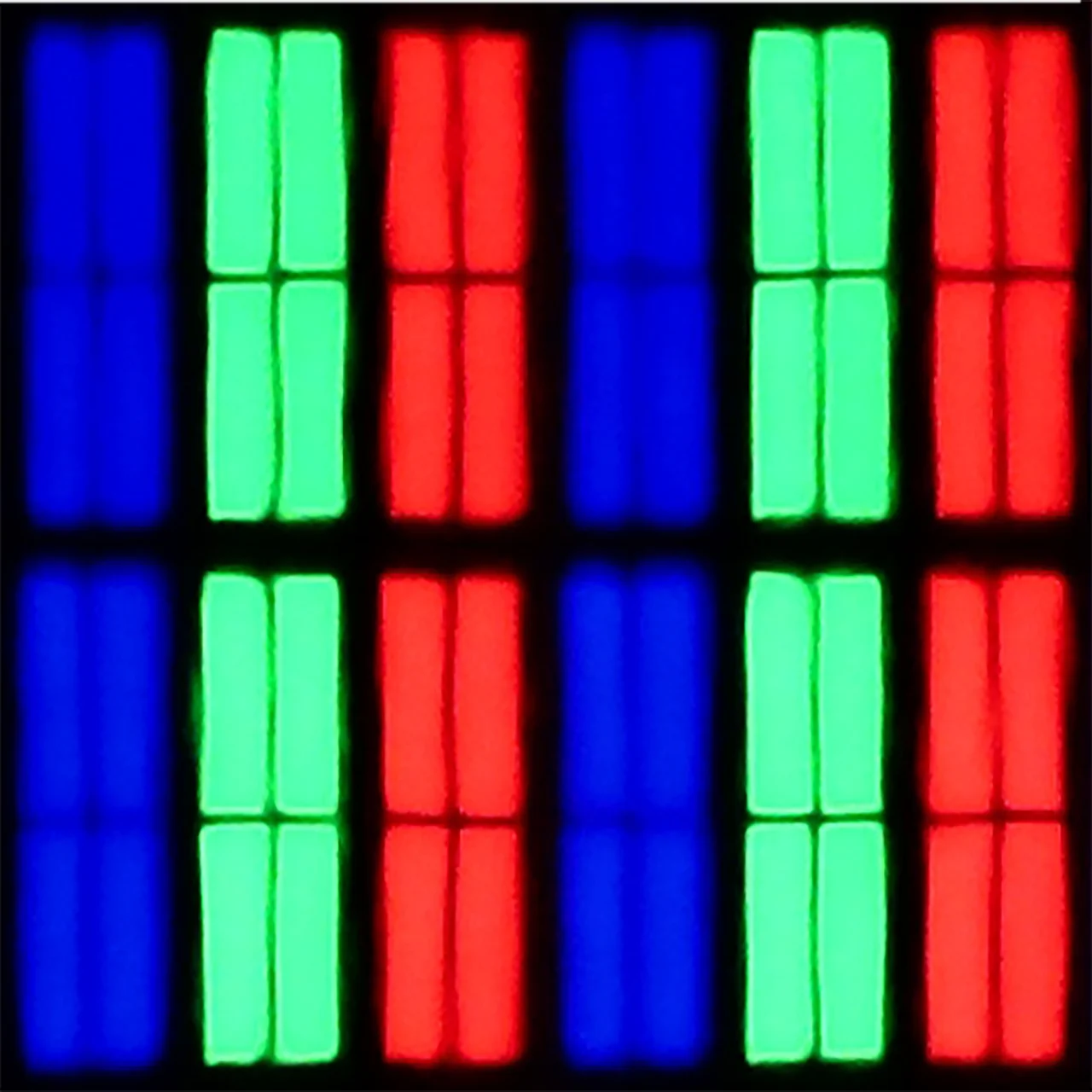
Panel uniformity and thermal imaging:


Sony A95L
Hisense U7S / U77SE
TV features
8.8/10
8.9/10
- SystemGoogle TVVIDAA
- System performanceVery goodGood
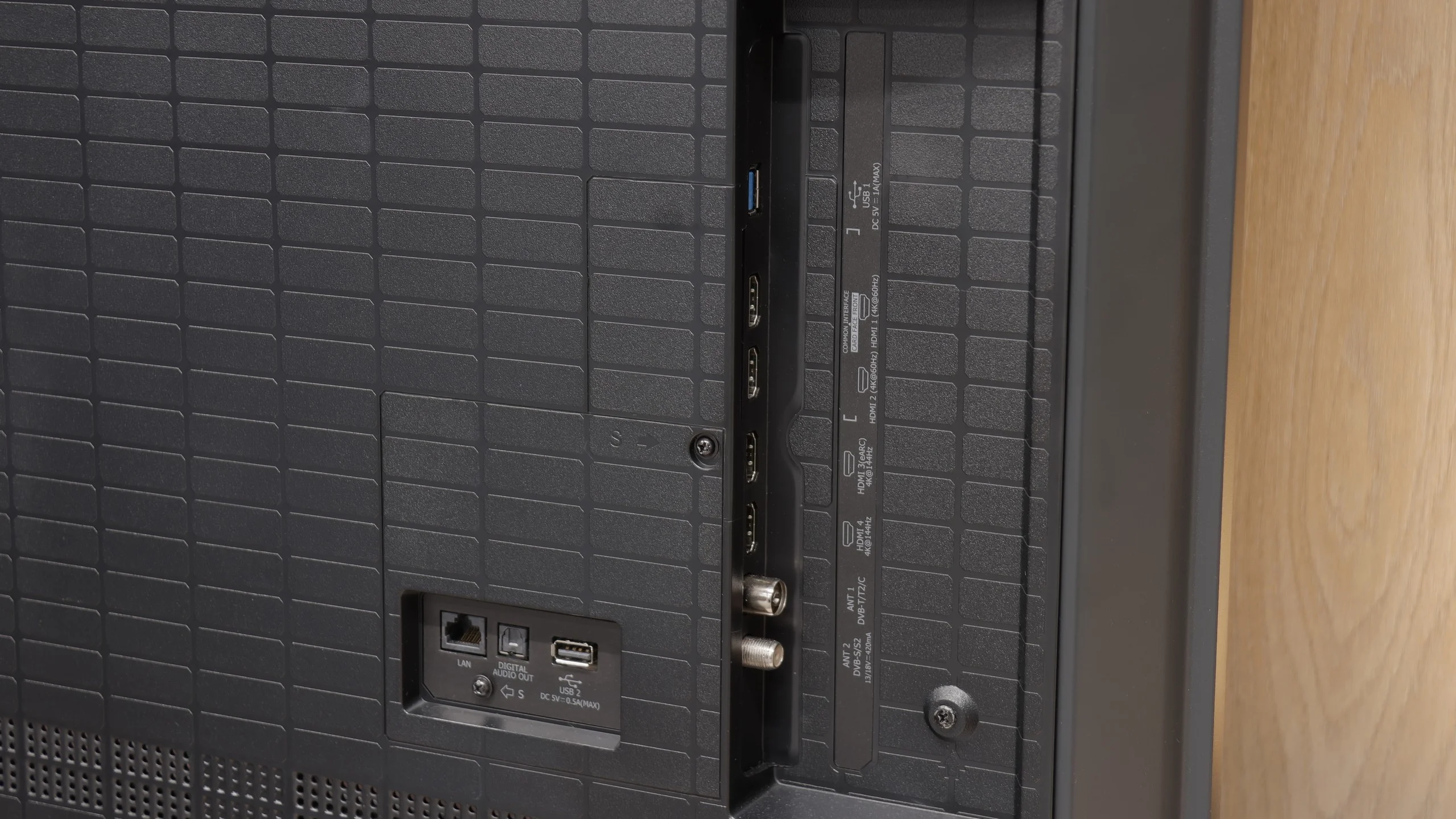
- HDMI inputs2 x HDMI 2.0, 2 x HDMI 2.1 48Gbps2 x HDMI 2.0, 2 x HDMI 2.1 48Gbps
- OutputsToslink (Optical audio), eARC (HDMI), ARC (HDMI)Toslink (Optical audio), eARC (HDMI), ARC (HDMI)
- Network InterfacesWi-Fi 2.4GHz, Wi-Fi 5GHz, Ethernet (LAN) 100MbpsWi-Fi 2.4GHz, Wi-Fi 5GHz, Ethernet (LAN) 100Mbps
- TV receptionDVB-T, DVB-T2, DVB-S, DVB-S2, DVB-CDVB-T, DVB-T2, DVB-S, DVB-S2, DVB-C
Classic features:
- Recording to USB (terrestrial TV)
- Recording programming
- Picture in Picture (PiP)
- RF remote control (no need to aim)
- Backlit remote control
- Teletext
- Audio only mode
- Bluetooth headphones support
- Simultaneous Bluetooth headphones & TV audio
Smart features:
- AirPlay
- Screen mirroring (Windows Miracast)
- Voice search
- Voice search in native language
- Ability to connect a keyboard and mouse
Sound connection options
- HDMI audioeARC (HDMI), ARC (HDMI)eARC (HDMI), ARC (HDMI)
- Other audio outputsToslink (Optical audio)Toslink (Optical audio)
- Wireless audioBluetoothBluetooth
Supported audio formats (external HDMI eARC audio):
- Dolby Digital Plus 7.1
- Dolby True HD 7.1
- Dolby Atmos in Dolby Digital Plus (JOC)
- Dolby Atmos in Dolby True HD
- DTS:X in DTS-HD MA
- DTS-HD Master Audio
Senior accessibility
- Numeric keyboard on TV
- Font size adjustment
- Audio description
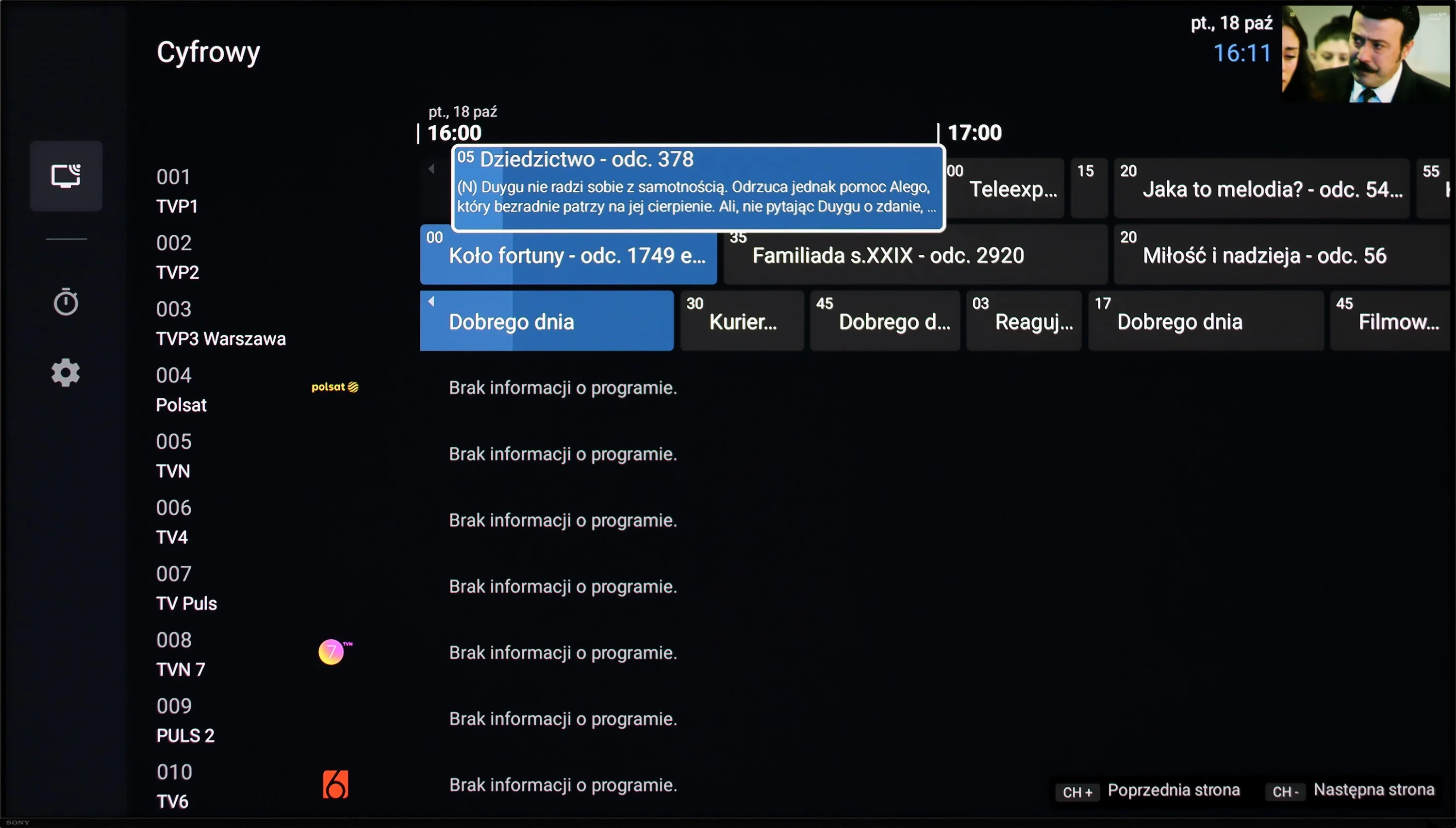
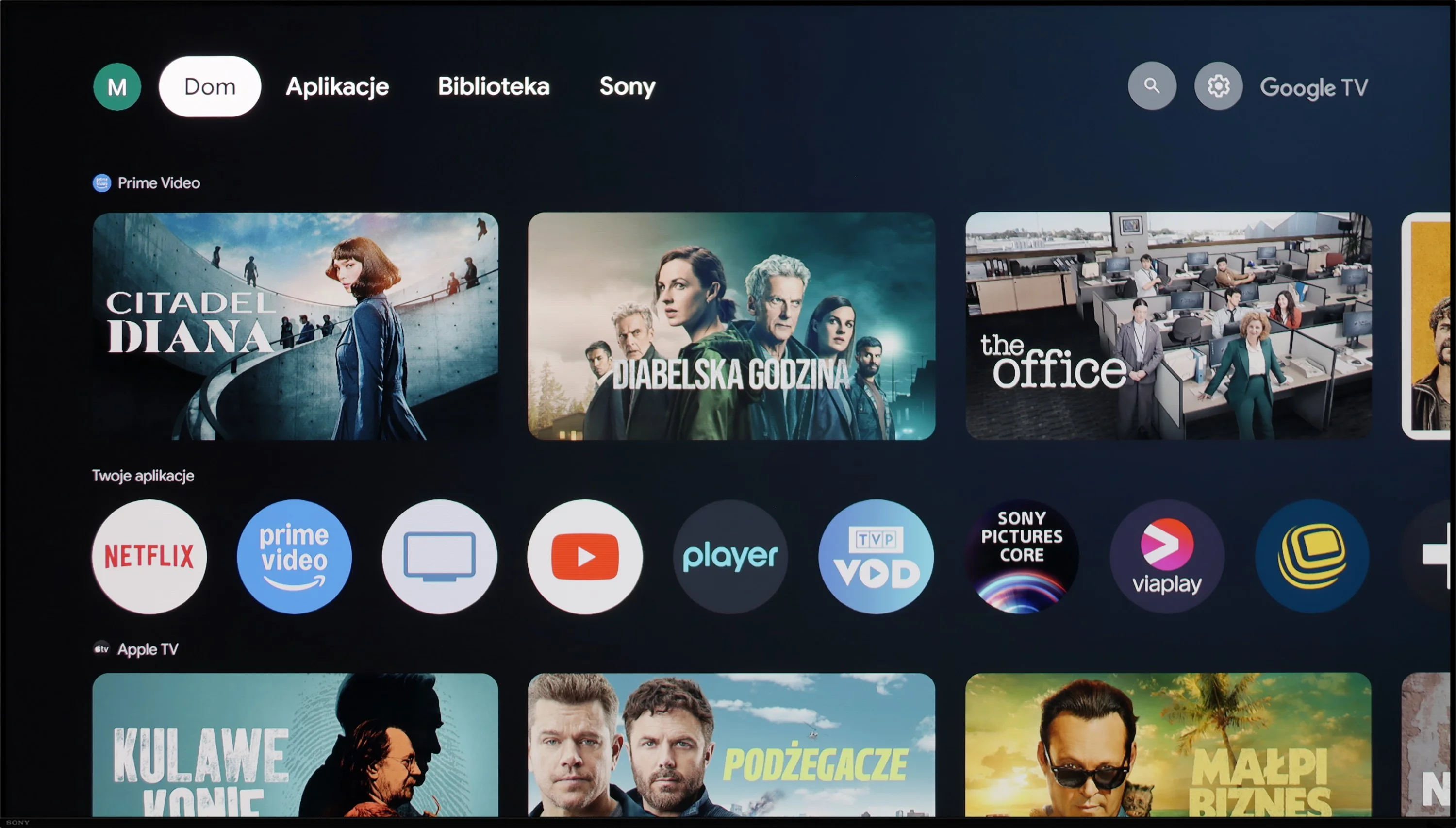
Sony A95L operates on the Google TV operating system, which means easy access to a wide range of applications, streaming services, and various personalisation features. The interface is clear and easy to use, and the wealth of available applications ensures that everyone will find something for themselves – from popular streaming services like Netflix, Disney+ and HBO Max to a variety of music and sports applications. Google TV also supports a voice assistant, allowing for easy content searches, control of television settings, and even management of other smart devices in the home – all with simple voice commands.
Sony A95L also offers a range of user-friendly features that make it even more versatile. The television has the capability to record programmes directly onto USB memory, providing a convenient solution if you cannot watch something live. It also supports AirPlay, making it easier to stream content from Apple devices, and additionally, various peripherals such as headphones or game controllers can be connected via Bluetooth. The package includes two remote controls – one traditional and one modern, backlit, which is especially useful during evening viewing when the room is dark. It is worth mentioning the lack of PIP functionality, which allows viewing multiple television signals simultaneously.
Regarding appearance, A95L Sony may not be the thinnest OLED television on the market, but it has its advantages. The package includes a practical stand that can be adjusted in various ways, allowing you to customise the television to your needs and spatial arrangement. Additionally, the manufacturer has included a Bravia Cam, which opens up further possibilities – from video calls to smart features such as optimising image and sound based on the viewer's position. While it may not be the sleekest, the solid construction and useful additions make the A95L look truly good in any living room.
Smart TV: VIDAA
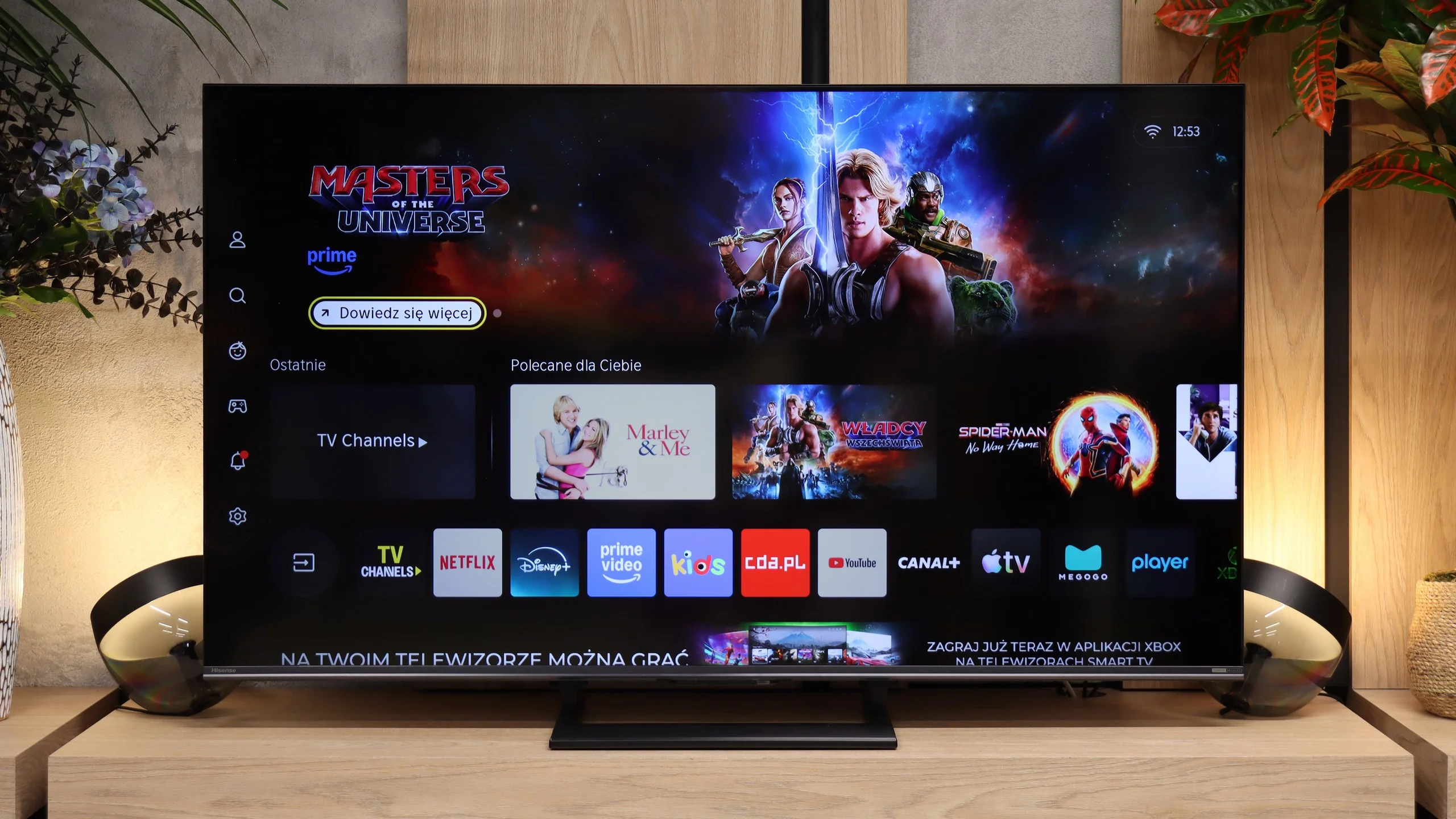
VIDAA HOME OS on the Hisense U7S is feature-rich, yet runs quickly and does not complicate everyday use. Besides apps there is AirPlay for streaming from Apple devices and Miracast, which lets you mirror a computer’s screen. There is also voice search in Polish, so instead of typing a film title with the remote you can simply say it. You can also connect a keyboard and mouse. So there is little to complain about in terms of smart features, although before buying it is worth checking the availability of specific apps you use, because it is not as extensive as on competing systems.
Conventional features and the remote
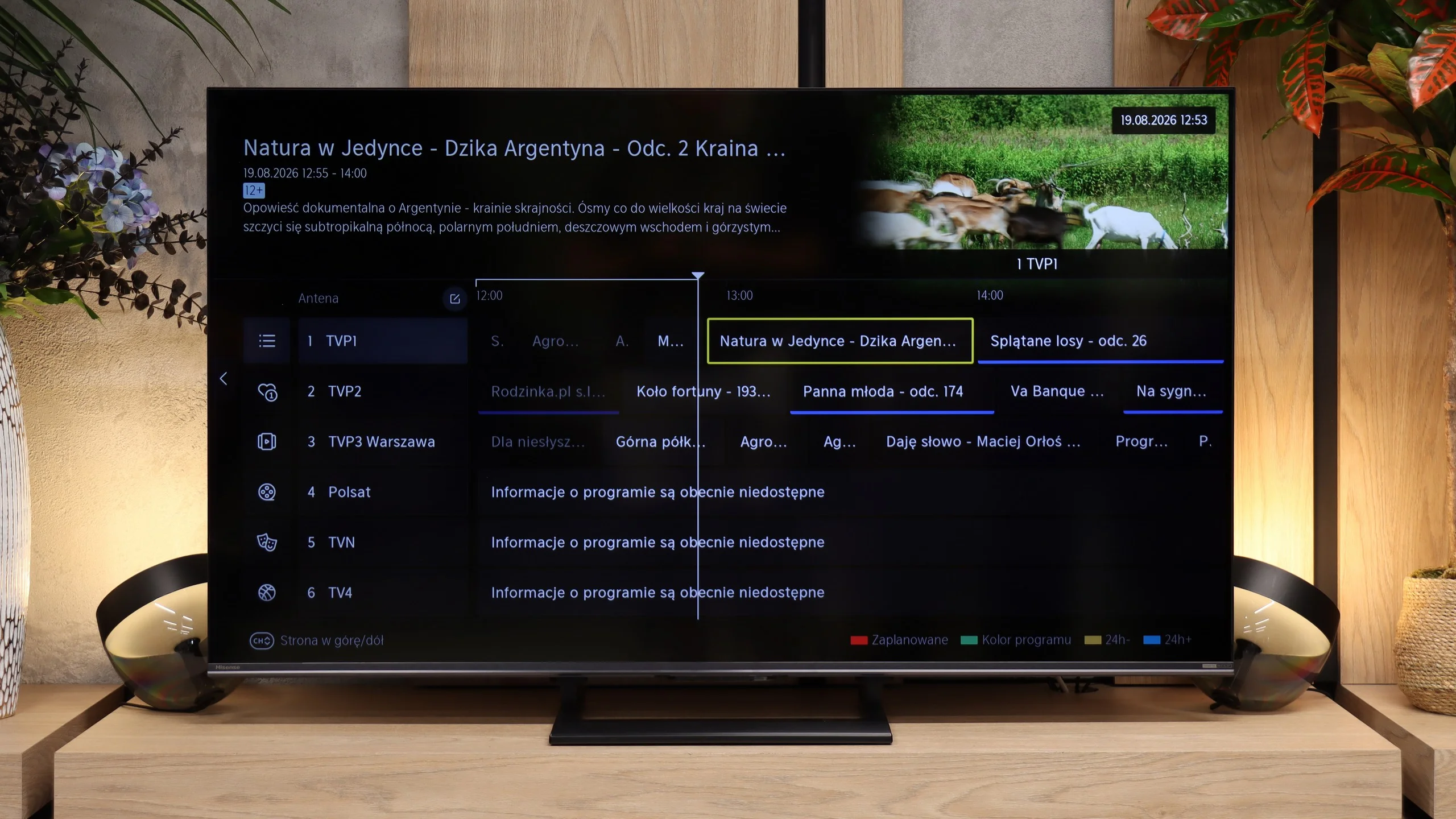
Hisense has not forgotten people who watch regular TV. The U7S lets you record programmes from terrestrial TV to USB and schedule recordings for later. There is teletext, the ability to listen to audio with the screen turned off, and support for Bluetooth headphones. Usefully, headphones can work at the same time as the TV speakers, so one person can use them, for example a senior, while others continue to listen normally. One notable omission is picture-in-picture, or PiP.
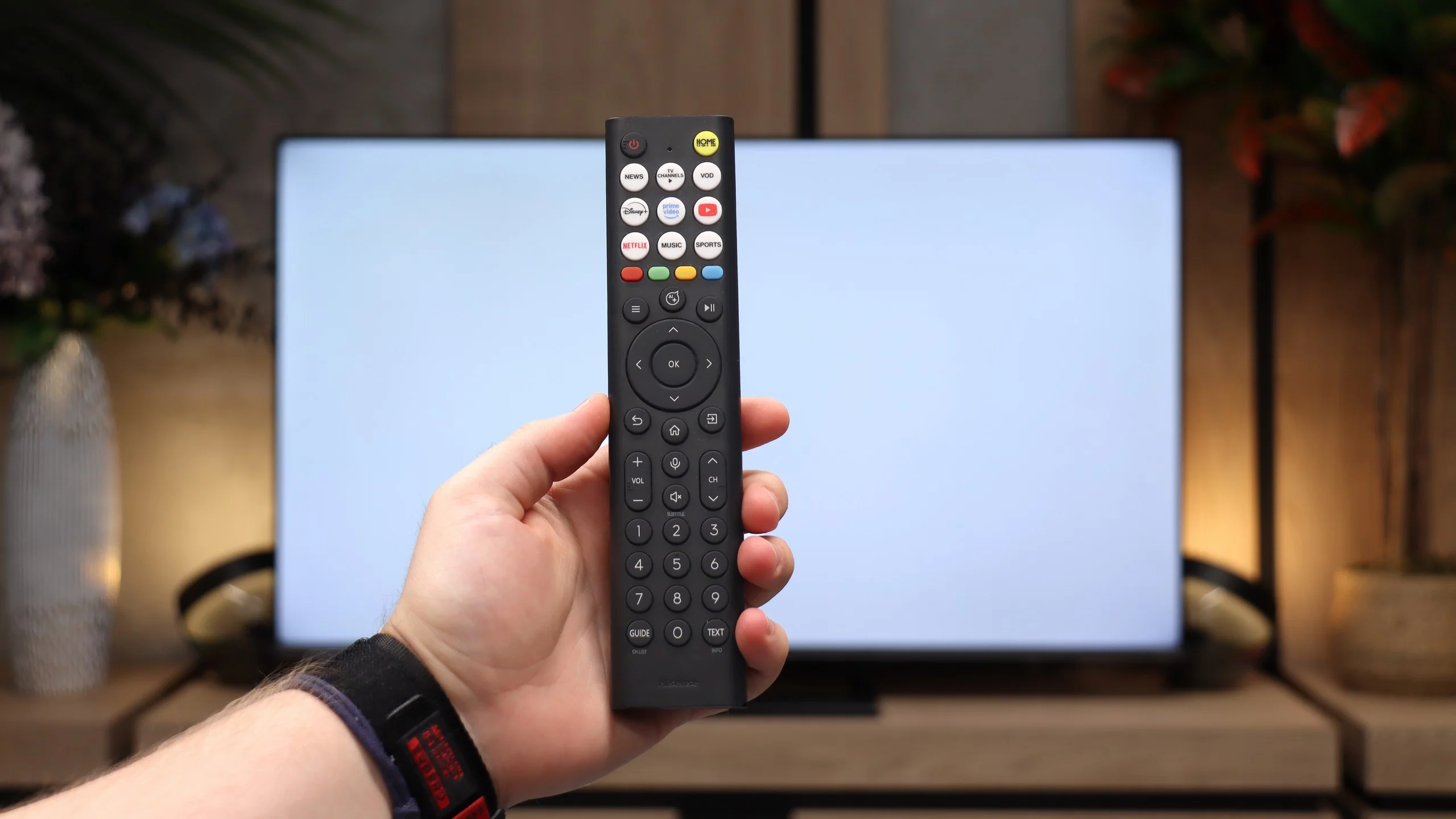
We were not fond of the remote itself. It feels very plastic and looks rather cheap, but it does its job well. It has a full numeric keypad, plenty of shortcuts and operates via radio, so you do not need to point it at the screen. It is a shame the buttons are not backlit. Hisense reserves more stylish versions of the remote for higher-end models, such as the U7S Pro.
Apps
9.6/10
8.3/10






















Playing files from USB
8.7/10
8.4/10
Supported photo formats:
Maximum photo resolution:
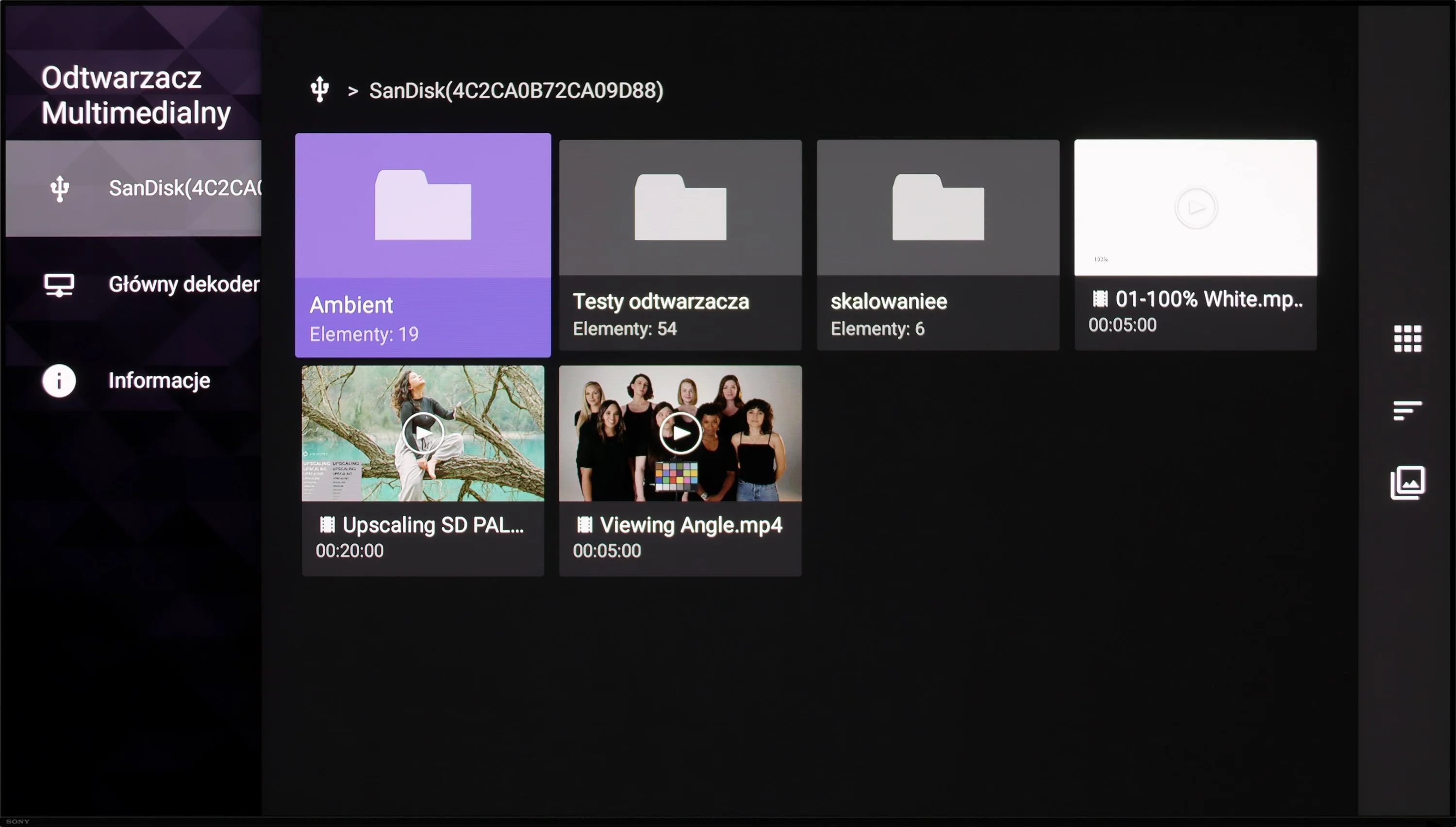
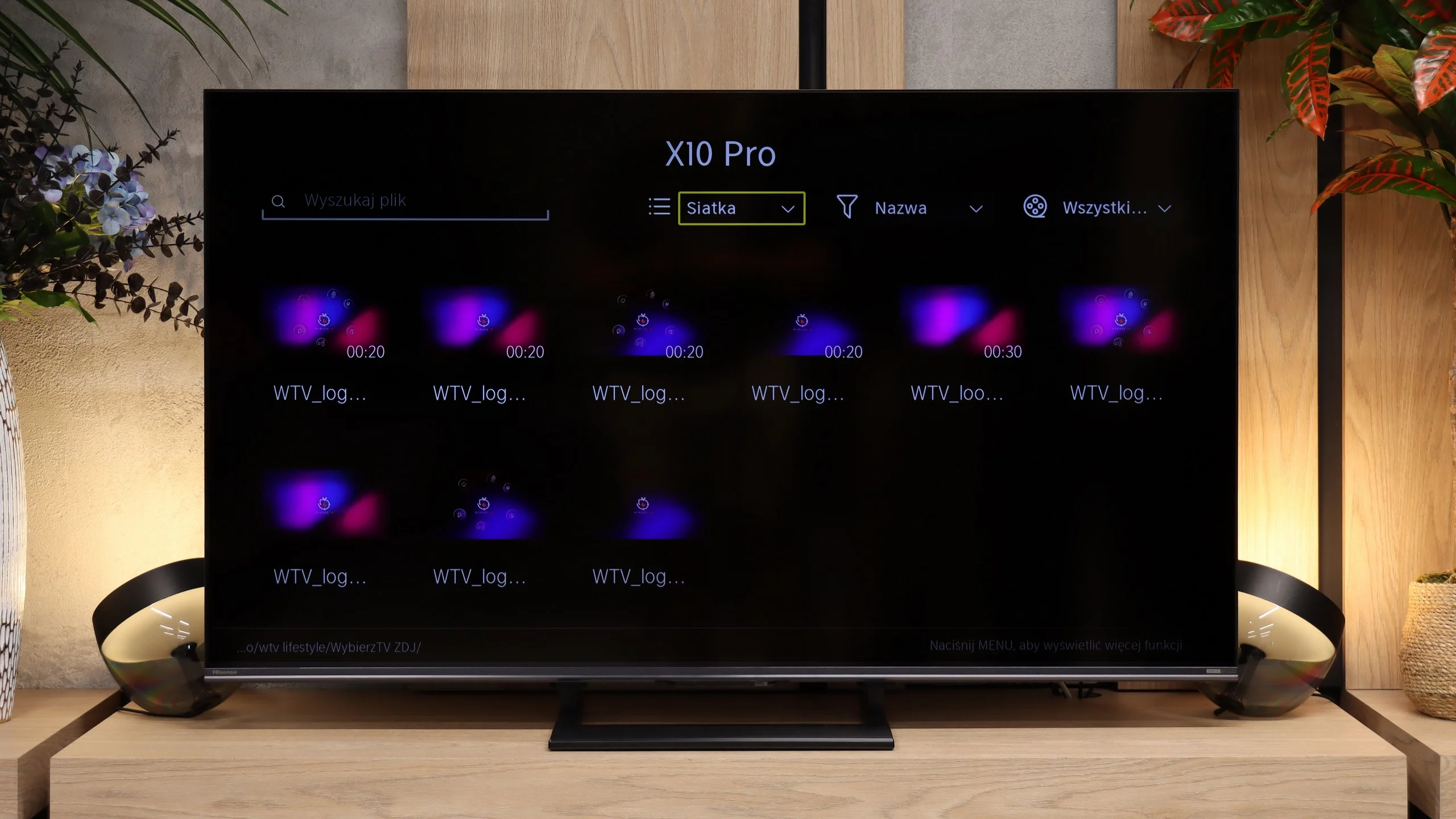
Sony A95L performs quite well when it comes to playing files from USB. The built-in media player will satisfy most users – it is user-friendly and supports popular formats, making it easy to play films, photos or music directly from a connected USB drive. The only thing it lacks is the ability to change the font colour of subtitles, which can be problematic in certain situations. Fortunately, the Google TV system allows the installation of other media players that offer more advanced personalisation options, so you can easily customise everything to your needs.
The USB player in the Hisense U7S handles most common file types. It played our H.264 and H.265 material without problems, including high-bitrate 4K clips and a Dolby Vision test file. SRT and SUB subtitles work, including Polish characters and changes to font colour. Not everything ran, though. AV1 and H.266 VVC files did not play, nor did ASS and TXT subtitles. Audio performance is good, from ordinary MP3s to FLAC 96 kHz/24-bit, although AIFF and DSD are not supported.
Our biggest reservations concern photos. The range of supported formats is broad — besides JPEG and PNG, WebP and TIFF also work, but HEIC won’t open. Resolution handling is odd. The TV displayed 4, 6, 8, 16 and 32 Mpix images but couldn’t cope with 10, 12 or 24 Mpix files. So this isn’t a simple image-size limitation. The player is perfectly adequate for movies and music, but when showing holiday photos you may find you need to convert some files beforehand.
Sound
7.9/10
7.2/10
- Maximum volume-88dB
- Dolby Digital Plus 7.1
- Dolby True HD 7.1
- Dolby Atmos in Dolby Digital Plus (JOC)
- Dolby Atmos in Dolby True HD
- DTS:X in DTS-HD MA
- DTS-HD Master Audio
Sony A95L offers a sound that definitely stands out compared to most televisions. Considering the built-in speakers, the sound is truly impressive – full, with well-balanced bass and mid-tones. Dialogues are clear, and sound effects are well distributed, making the television excellent for both watching films and playing games. The Acoustic Surface Audio+ system, which converts screen vibrations into sound, creates a more spatial impression, adding extra depth to the viewed materials.
The USB player in the Hisense U7S handles most common video and music files well. It supports 4K content, including a Dolby Vision file we tested, and displays Polish characters correctly in subtitles. It should therefore be sufficient for everyday use with a USB stick, although there are problems with less common formats. Our main reservations concern photos. The TV handles photo resolutions rather inconsistently and can open a larger image but refuse to display a smaller one. That can be irritating when browsing a holiday album, as you cannot be sure that all photos will work. Some will require prior preparation on a computer.
Sound Quality Test
No sound test video
Acoustic Measurements
No acoustic data
88dBC (Max)
75dBC
Reader comments
Comments are provided by the external service Disqus (Zeta Global). Once loaded, Disqus may set cookies and process data about your activity.
We will remember your choice on this device. Provider's privacy policy