Hisense UR9S is without doubt one of the more interesting launches this year, but not necessarily for the reasons the manufacturer most emphasises. Admittedly, the brand’s first RGB Mini LED backlight in history and in this range impresses in measurements, but in practice the TV’s main strength is that it is simply well refined. It’s clear Hisense learned from previous models and improved the things that really matter for day-to-day viewing. RGB Mini LED itself has considerable potential, but for now it is not yet a reason to buy this particular model. In actual films and series the advantage of the new technology is not as pronounced as test-pattern results might suggest. Perhaps future generations will show much more, but today we treat it more as an interesting direction of development than a true revolution. Above all, the UR9S stands out for its versatility. It handles black levels very well (for an LCD panel), processes lower-quality footage efficiently and offers extensive features for both regular viewing and gaming. It also has a few solutions missing from rivals, such as a USB-C port with DisplayPort and a very high panel refresh rate for PC gamers. Is it worth considering? In our view, yes, especially if you are looking for a flagship LCD TV. Not because it uses an RGB Mini LED backlight, but because it is a very good, versatile and simply pleasant TV for everyday use.
- Matching (Score) |
- Our verdict |
- TV appearance |
- Where to buy |
- Contrast and black detail |
- HDR effect quality |
- Factory color reproduction |
- Color reproduction after calibration |
- Smoothness of tonal transitions |
- Image scaling and smoothness of tonal transitions |
- Blur and motion smoothness |
- Console compatibility and gaming features |
- Input lag |
- Compatibility with PC |
- Viewing angles |
- Daytime performance |
- Panel details |
- TV features |
- Apps |
- Playing files from USB |
- Sound
Hisense UR9S vs TCL X11L
 Direct comparison
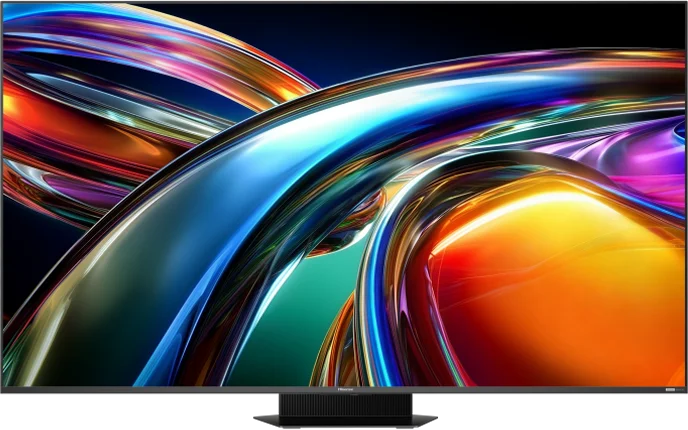
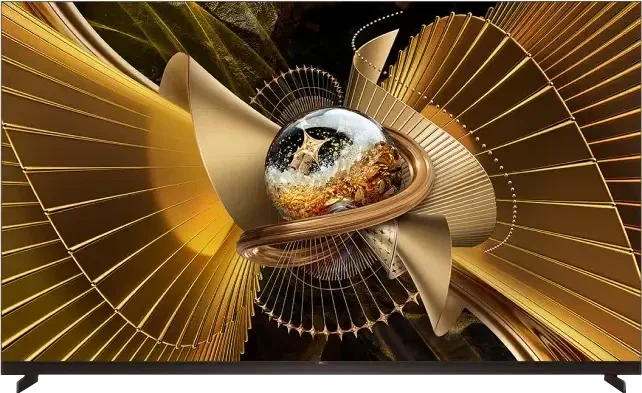
Panel type: LCD VA
Resolution: 3840x2160
System: VIDAA
Model year: 2026
Complete the survey to find out the result
Panel type: LCD VA
Resolution: 3840x2160
System: Google TV
Model year: 2026
Complete the survey to find out the result
Overall rating
8.4
8.6
 Movies and series in UHD quality
 7.9
8.5
 Classic TV, YouTube
 7.9
7.9
 Sports broadcasts (TV and apps)
 7.6
7.3
 Gaming on console
 8.4
9.1
 TV as a computer monitor
 8.4
8.6
 Watching in bright light
 9.9
10.0
 Utility functions
 9.4
8.3
 Apps
Apps 8.3
9.6
 Sound quality
 7.8
8.2
Complete the survey to find out what fits your preferences
Advantages

High HDR and SDR brightness
Very good black levels and contrast for an LCD TV
Excellent image processing and upscaling of lower-quality content (Pentonic 800)
Matt coating that effectively reduces reflections
Extensive gaming features (170/180 Hz, VRR, FreeSync, G-Sync, HDMI 2.1)
Low input lag
USB-C port with DisplayPort support
Dolby Atmos and DTS support
Good audio system for a TV
Smoothly functioning HomeOS (VIDAA)
Convenient remote with backlight, solar panel and USB-C charging
Best blacks on the market in a MINI-LED screen
Extremely high HDR and SDR brightness
Excellent colour saturation thanks to the SQD (Super QLED) filter
Very good image processing (MediaTek Pentonic 800)
A host of features for gamers: 4x HDMI 2.1, VRR, ALLM, refresh rate up to 288Hz (PC)
Good motion handling
Open operating system: Google TV
Stunning design and build quality
Backlit metal remote
Built-in audio system tuned by Bang & Olufsen
Disadvantages

In films, the full potential of RGB Mini LED backlighting is not always realised
HDR image brightness deviates from the director's intent
Lack of proper HGiG implementation (a feature for gamers)
Some key applications are missing
Artificial brightening of the image: the TV brightens the entire HDR image by itself
Glossy panel poorly suppresses reflections
Lack of "television" features, e.g. USB recording (PVR), PiP
High price
Our verdict
TCL X11L is, without a doubt, a powerful showcase of the manufacturer's capabilities and a TV that impresses in many areas. It’s clear the engineers focused on what matters most: maximum brightness, blacks and contrast. The new quantum dots with an SQD filter do such a job that colour saturation is hardly any different from the top new RGB panels. And what about the blacks? The X11L can easily be placed alongside an OLED and doesn't lose that fight by much, which is a real feat in the world of Mini-LEDs. On top of that there’s a whole host of features surrounding the screen. The new MediaTek Pentonic 800 processor has completely eliminated TCL’s old issues; image processing, upscaling and the smoothness of tonal transitions finally look as good as the competition from Korea or Japan. There is nothing to be ashamed of anymore. Gamers will be delighted too: four full HDMI 2.1 ports, refresh rates up to 288 Hz, a console-inspired Game Bar and Dolby Vision with no noticeable input lag. All of this is tied together by a very smooth Google TV system. Sounds like a recipe for the best Mini-LED of 2026, right? It would be perfect if not for one irritating quirk that stems directly from TCL’s stubborn image-tuning “philosophy”. This TV can simply ignore the director’s intent and, in HDR formats, arbitrarily and artificially brighten entire scenes. The effect? The picture can be too bright at times, sometimes even blown-out. The worst part is that the software offers no option to fix it; even during professional calibration we couldn’t fully correct this fault. For a screen at this price that aspires to be “the best of the best”, such wilfulness is simply unacceptable, especially when we’re talking about Filmmaker mode.
Still, if you couldn’t care less about perfect, studio-accurate fidelity and are after a picture that is above all maximally spectacular, showy and very bright in daylight, the X11L is a true beast. It’s the first Mini-LED to come so close to OLED black levels, and in brightness it simply crushes it. The only real brake here is the price. The sum you’ll have to pay for this model (regardless of size) is a serious outlay. Is it worth spending that much? We’ll leave that to your judgement. One thing must be conceded: it’s currently one of the best Mini-LEDs we’ve tested so far.
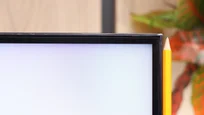
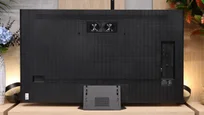
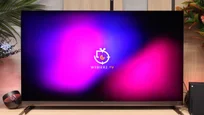
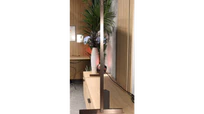
TV appearance

Contrast and black detail
8.5/10
9.1/10
Local dimming function: Yes, number of zones: 1056 (24 x 44)
Local dimming function: Yes, number of zones: 11520 (80 x 144)
Contrast:


Result
411,100:1

Result
152,050:1

Result
38,100:1

Result
28,450:1

Result
14,700:1
Result
1,842,100:1
Result
942,400:1
Result
93,700:1
Result
91,450:1
Result
27,550:1
Halo effect and black detail visibility:
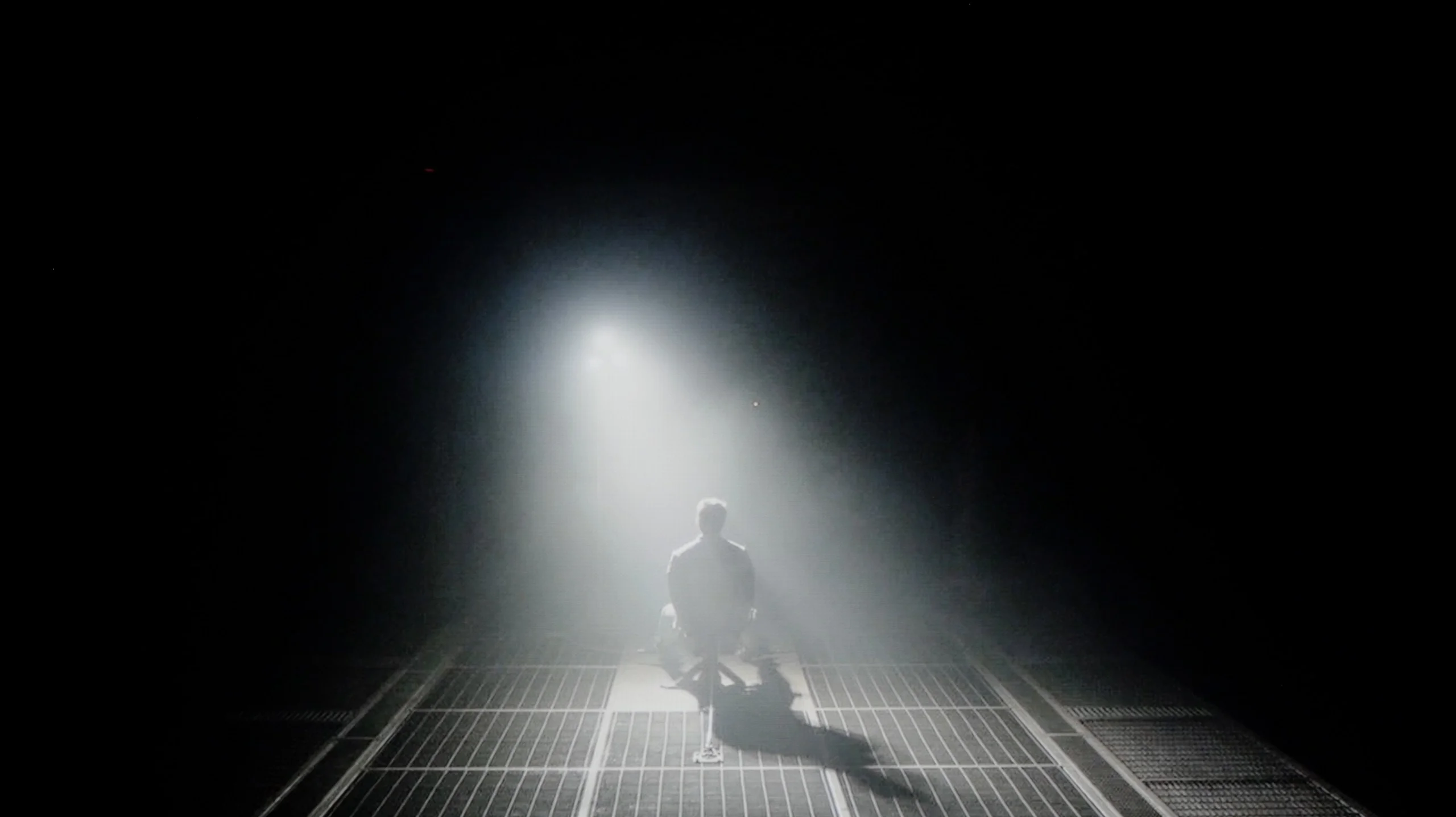
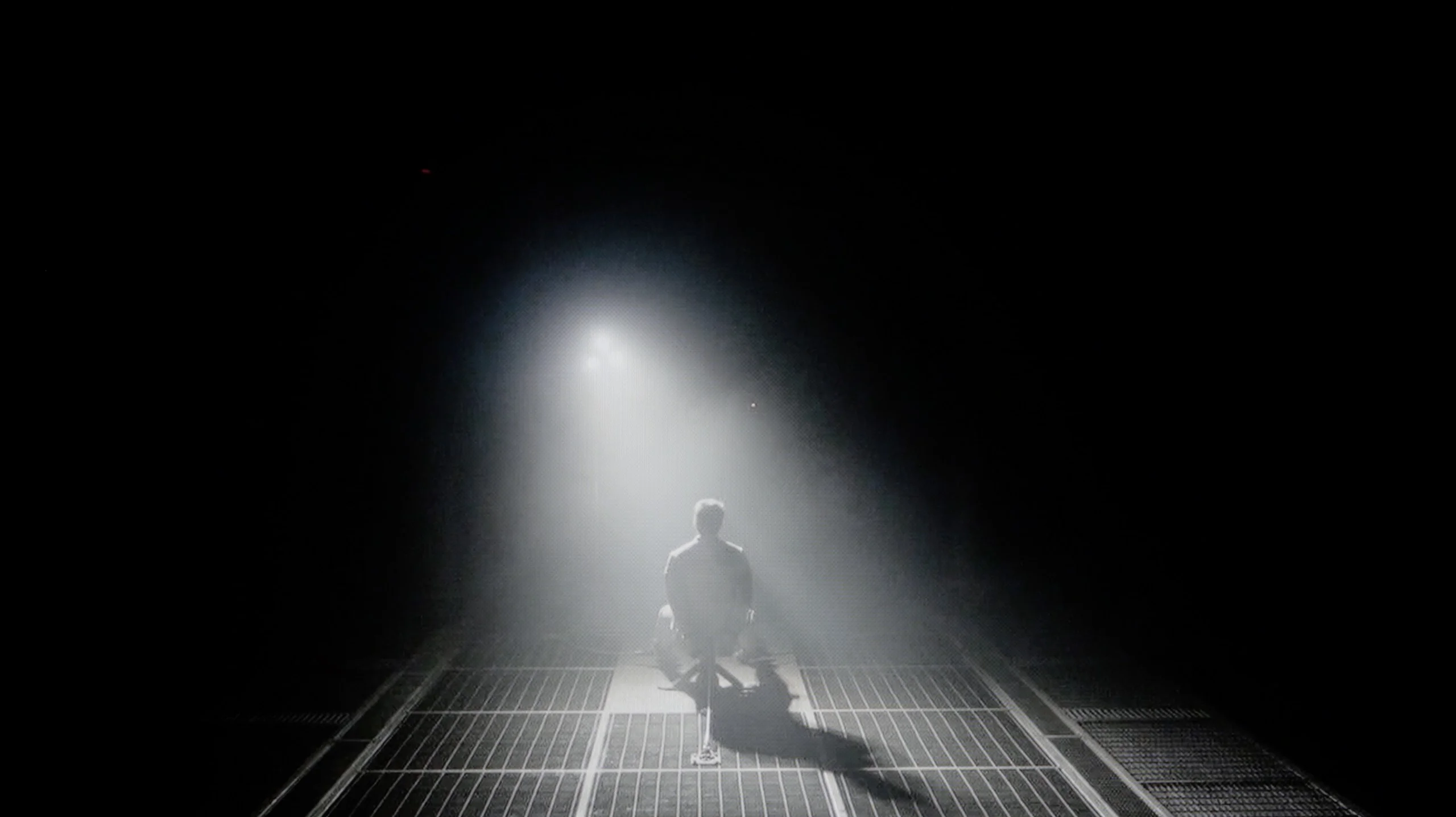
Check the visibility of bright lights on a dark background. Mini-LEDs often struggle with this. The photo does not compare black levels – that’s what the video below is for.
The video accurately shows differences in contrast and black levels between TVs, as well as potential issues: halo around bright objects or Mini-LED zone operation visible as brightness jumps.
The Hisense UR9S in the 65-inch version has 1056 local dimming zones. That’s still quite a lot, although fewer than last year’s U8Q with classic QD Mini LED backlighting. The number of zones alone does not determine black performance, because it is equally important how the TV controls them. Despite the smaller number of zones, the UR9S delivers a comparable level in this respect. The contrast we measured was very high in most scenes and reached six-figure values. As a result, blacks look deep and the image retains good depth. Naturally, as with any Mini LED TV, a halo effect can appear around bright elements on a dark background, which makes contrast in those areas noticeably lower. In the UR9S the halo is not as unnatural to the eye as on traditional Mini LED screens. The glow often takes on the colour of the displayed object. If a small coloured element appears on screen, the backlight in that part of the screen lights with a similar colour instead of creating a typical white bloom. This is not, of course, a TV that can rival OLED when it comes to black levels. Even so, the UR9S is certainly one of the better LCD TVs in this category.
Black and contrast on the X11L are simply S E N S A T I O N A L. The main credit goes to the astronomical number of local dimming zones combined with the proprietary WHVA 2.0 panel (VA-type). In the 75-inch model we tested we counted exactly 11,520 of them. Yes, you read that correctly, over 11 thousand local dimming zones in a Mini-LED screen! This translated into outstanding results in our tests: most scenes, especially the less complex ones, had blacks that were indistinguishable from those known from OLEDs. Even with the lights completely off, when the screen displayed deep, almost pitch-black parts of the image, it could be mistaken for an OLED panel. It’s currently the best Mini-LED if you care about the deepest blacks.
However, remember this is still an LCD TV. Even with such an astronomical number of zones, very complex sequences with lots of small elements on a black background (like a starfield or our demanding test pattern (no. 5) from the Pioneer Kuro) can reveal some halo effects, a faint glow around bright objects. Undoubtedly, though, this is far less noticeable than on other screens of this type we’ve tested so far. The algorithm handles it very well.
Naturally, the number of zones increases with screen diagonal. Below you can see the number of zones for each size:
X11L screen size | Number of local dimming zones |
75" | 11,520 zones |
85" | 14,400 zones |
98" | 20,736 zones |
HDR effect quality
6.8/10
9.2/10
Luminance measurements in HDR:

Result
1704 nit

Result
385 nit

Result
845 nit

Result
291 nit

Result
1719 nit
Result
2934 nit
Result
2105 nit
Result
2809 nit
Result
1782 nit
Result
2841 nit
Scene from the movie “Pan” (about 2800 nits)
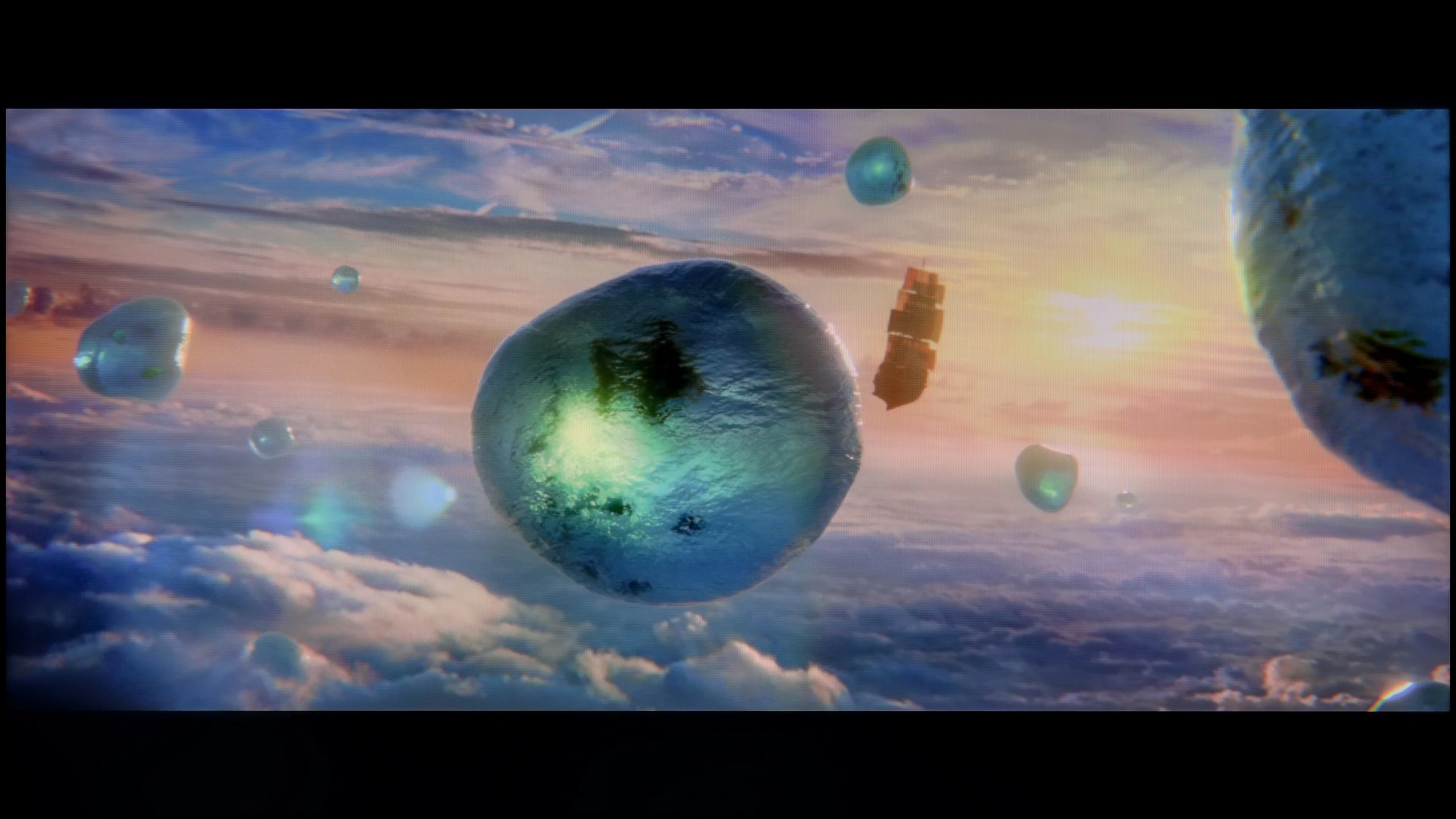
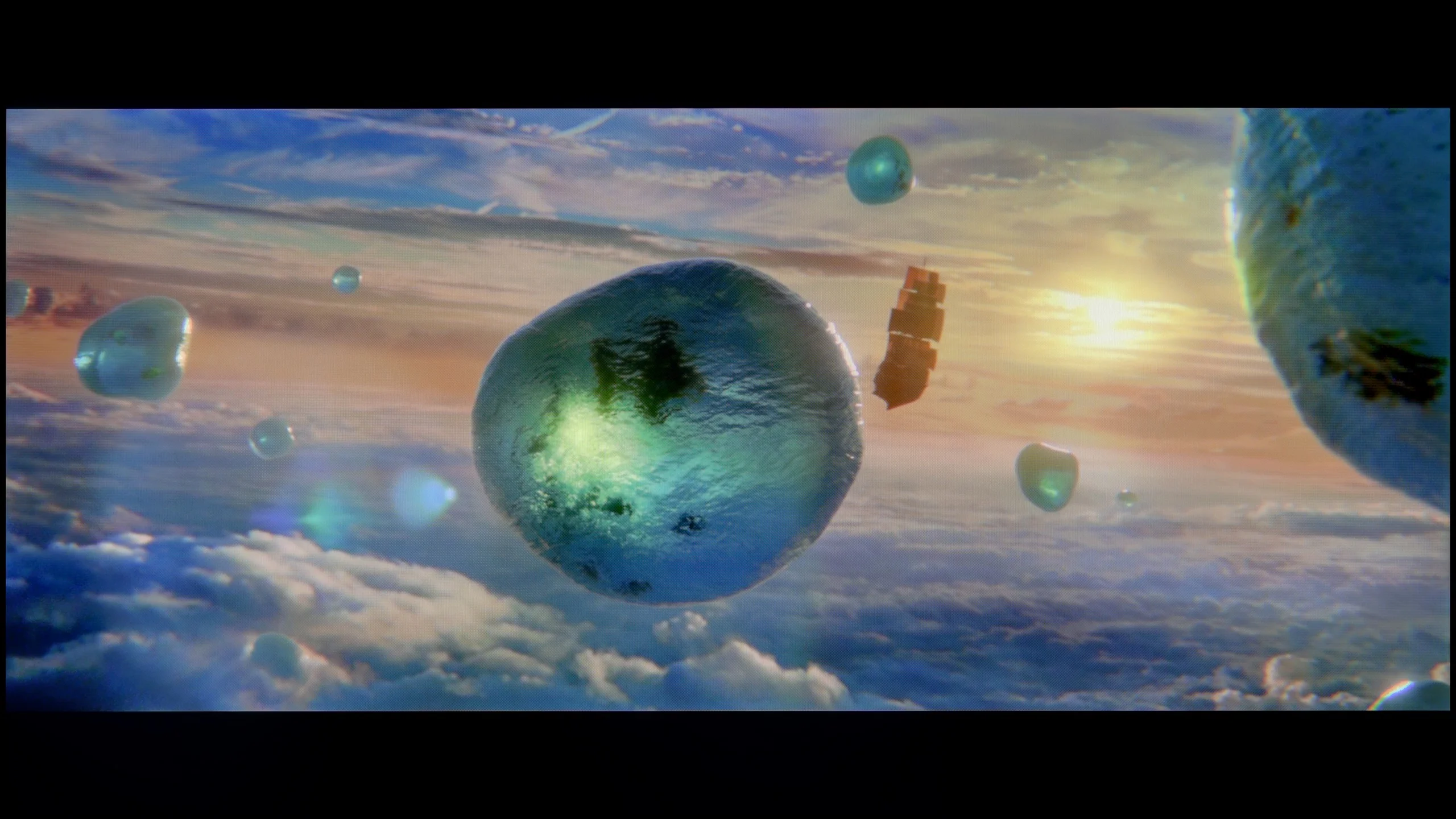
Scene from the movie “Billy Lynn” (about 1100 nits)
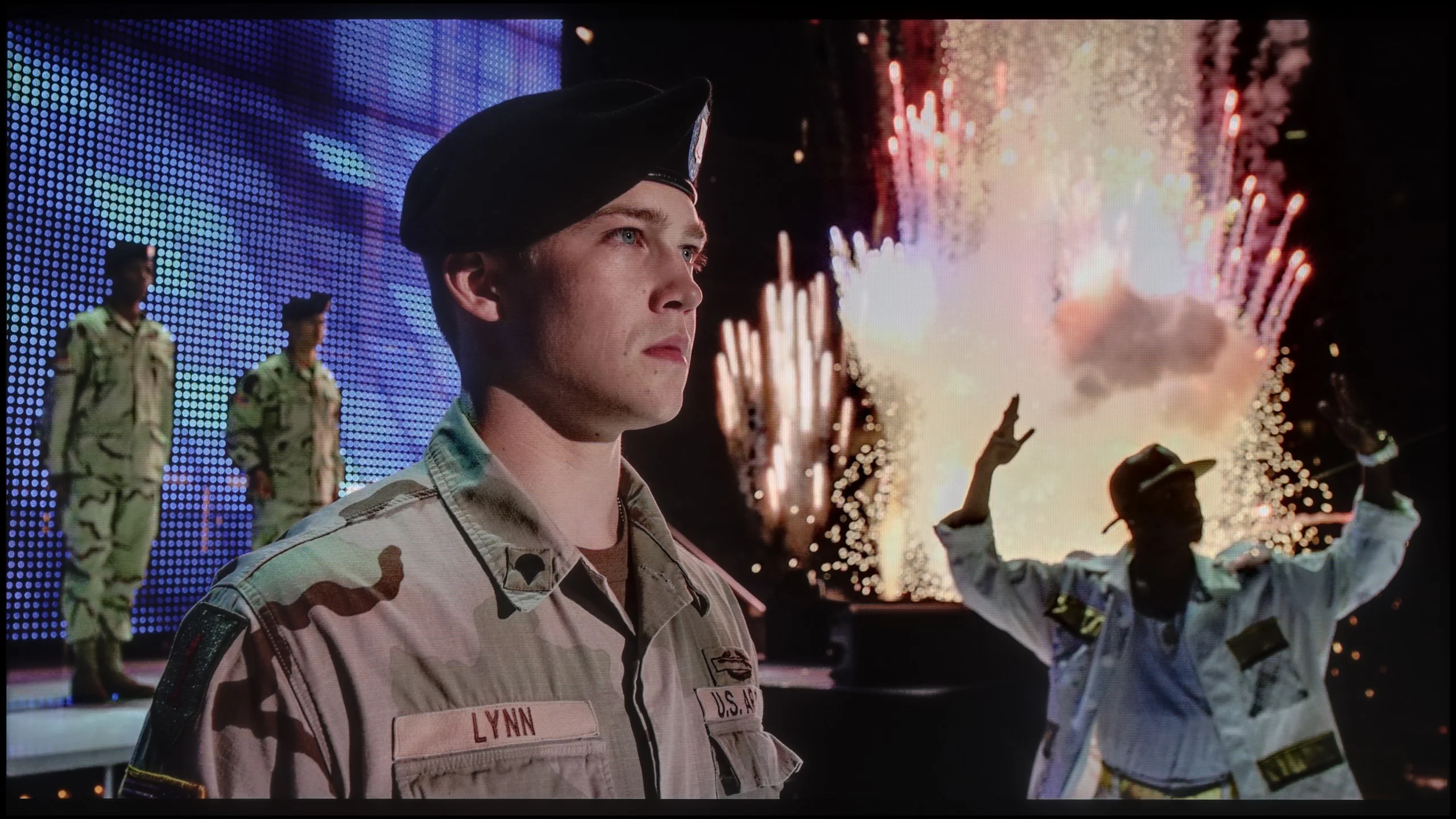
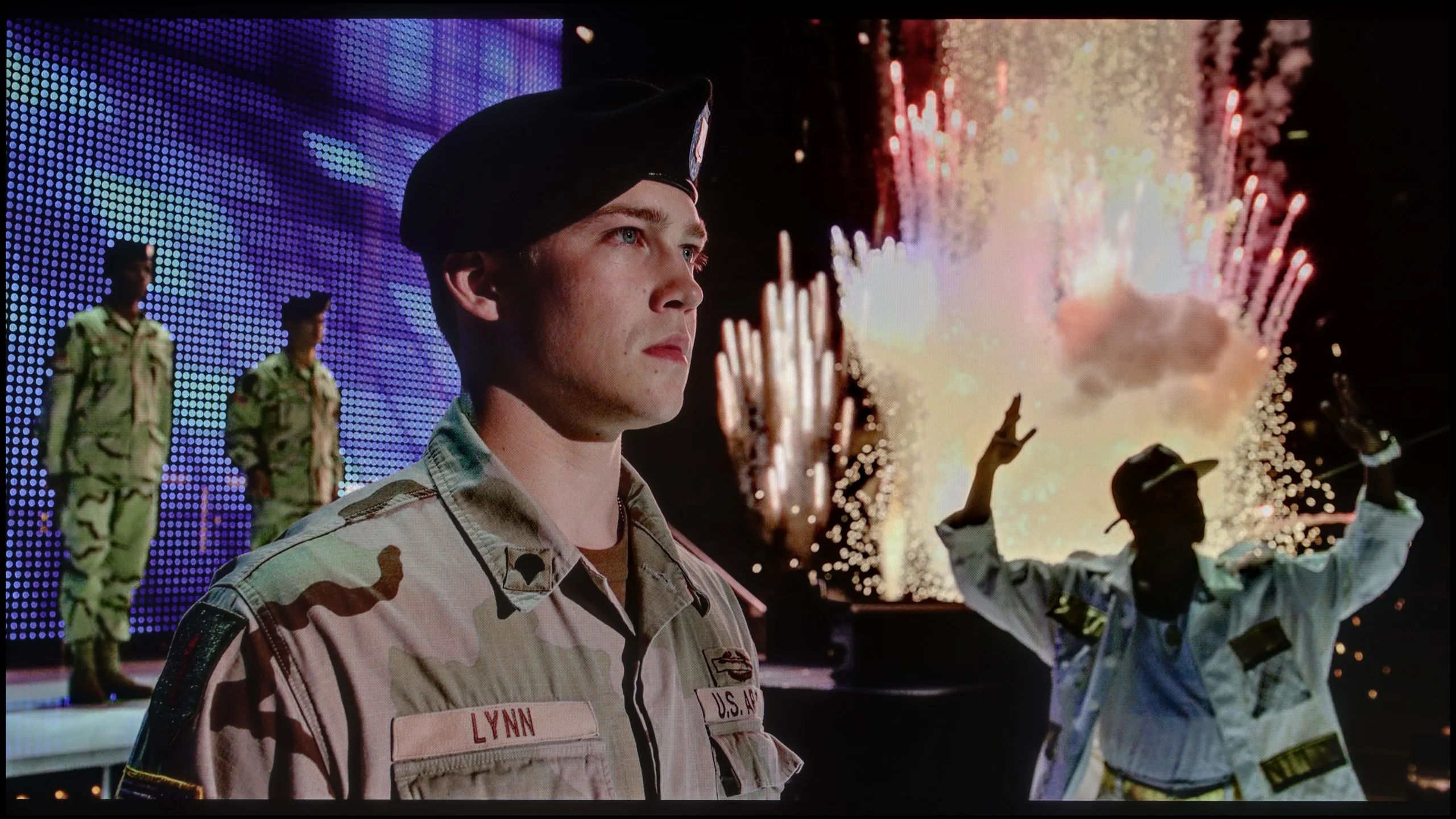
The photos show two HDR10 movies. 'Pan' is one of the brightest productions ever made, while 'Billy Lynn' (soldier) has brightness typical of streaming (Netflix, Prime, HBO MAX). Notice the intensity of effects and detail in whites.
Static HDR10


The photos present the visibility of white details in various HDR formats. They do not show brightness differences between TVs (these can be compared in the previous gallery).
Dynamic: Dolby Vision
Dynamic: Dolby Vision


The photos present the visibility of white details in various HDR formats. They do not show brightness differences between TVs (these can be compared in the previous gallery).
HDR luminance chart:
TCL X11L
Hisense UR9S
Hisense UR9S is undoubtedly a show of strength from the Chinese manufacturer when it comes to luminance. On a synthetic test pattern the panel reached as much as 2600 nits, which is an impressive result. However, it is important to clearly separate laboratory results from filmic realities. In real material the UR9S behaves much more... restrained. Maximum brightness peaks in balanced scenes hover around 1500 nits. In demanding, dark shots, where algorithms must at once maintain deep black and precisely light small details, brightness can fall drastically, even to around 400 nits. The discrepancy between the chart and reality is therefore huge. This is a direct consequence of the conservative behaviour of the local dimming system. When a bright object occupies a large part of the frame, the system can easily sustain a high brightness. But in night scenes the priority becomes protecting black and combating the halo effect (unsightly glows around bright edges). To avoid contrast degradation, the TV drastically limits light output. Even so, the UR9S can still produce a very powerful, immersive HDR effect that impresses in bright, spectacular sequences.
Colour gamut coverage
On test patterns the Hisense UR9S performs excellently in terms of colour. Its coverage of the DCI-P3 gamut is almost 100%, and the wide BT.2020 as much as 93%. Those are results even the best QD-OLED TVs do not achieve. But again, synthetic measurements are one thing, films and series another. In real-world scenes the figures fell to 93% for DCI-P3 and 81% for BT.2020. That's still a great result, but the advantage of RGB Mini LED is no longer as dramatic as manufacturers claim in their marketing materials. One could even say that currently their capability is similar to TVs equipped with quantum dots, the so-called QLED. So why does this happen? To a large extent colour reproduction here depends on the specifics of how the backlight zones operate. When a strongly saturated colour sits next to white or another, more complex element, a single zone has to handle both parts of the picture at once. Under those conditions the backlight cannot maintain extreme saturation of a given colour on screen, because the emitted light takes on a more white-like character. In the UR9S this has been refined quite well, but still not enough for the TV to maintain such high colour saturation in every situation.
Such a large number of zones did not only result in deep, inky blacks, but also in screen brightness. The X11L is an extremely bright television. Peak brightness can easily exceed 4,000 nits, and with the special "Boost" mode active it can, in specific conditions, even reach marketing figures around 9,000 to 10,000 nits. It is undoubtedly one of the brightest, if not the brightest, screens on the market. So how do these numbers relate to real film measurements? The results are very good, though of course far from the marketing claims. The brightness we measured in real film scenes was around 2,000 to 3,000 nits. That is an excellent result, given that the vast majority of content available is recorded and produced for those brightness levels, even the rare material mastered to 4,000 nits. But it also clearly shows that the figures the manufacturer touts do not always translate directly to the video material you have at home. The only "quirk" (if you can call it that) is that when very small, bright elements appear on screen, their brightness falls below 2,000 nits. The dimming algorithm does this deliberately to preserve deep blacks and minimise halo. This is entirely understandable, and the effect is still very impressive, but it also shows that even with such powerful hardware, Mini-LED technology has its limits and does not always work without compromise. In HDR itself, brightness is not the only thing that matters; colour saturation and the colours themselves do too. On the X11L these are very good thanks to the new Super QLED (SQD) quantum dots. The application of a new coating filter has delivered excellent results in covering the P3 colour gamut and the ultra-wide BT.2020. Although it does not reach the promised 100% of BT.2020, figures around 89 to 90% can be considered excellent. Colours are not far off those of RGB Mini-LED screens. We can even say they are more stable, due to a less demanding algorithm that RGB screens often struggle with.
Factory color reproduction
5.1/10
5.2/10
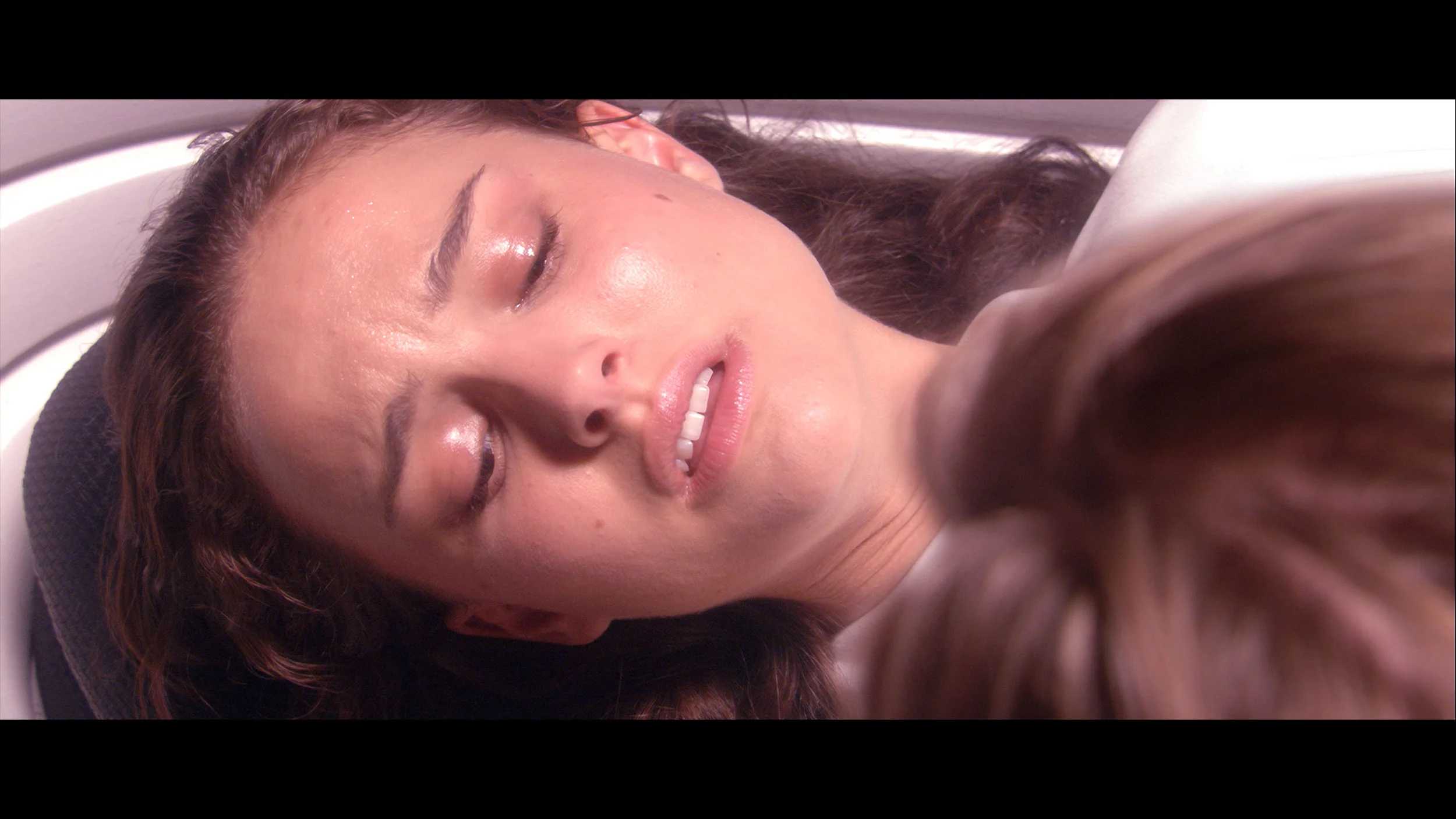
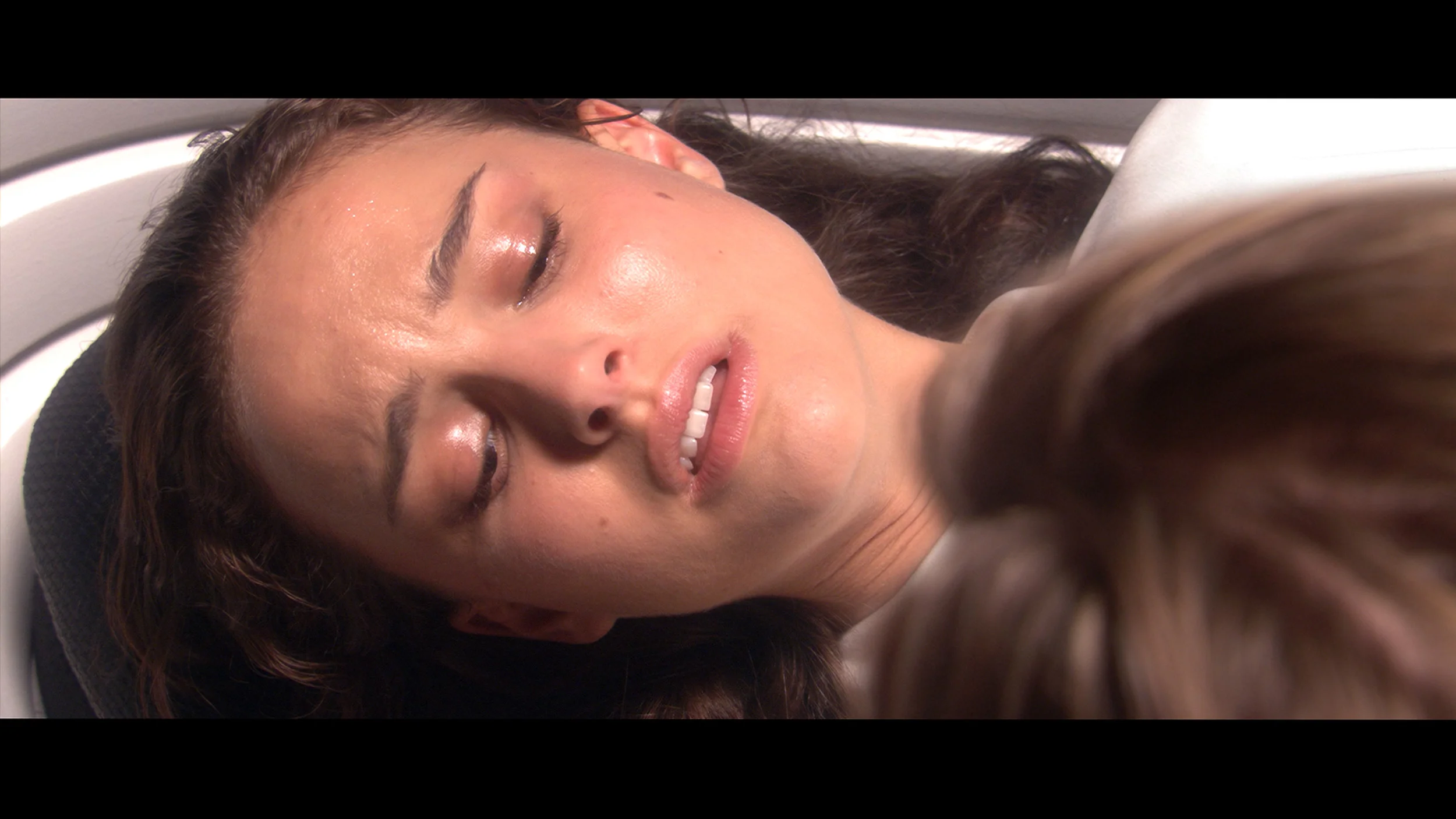
This gallery shows how colors change after professional TV calibration. If you notice the difference, we recommend ordering this service at SkalibrujTV.com.
Factory Mode
After calibration


This gallery shows how colors change after professional TV calibration. If you notice the difference, we recommend ordering this service at SkalibrujTV.com.
Factory Mode
After calibration
We tested the Hisense UR9S in Filmmaker Mode, which out of the box provides the best image reproduction. With HDR material the TV performed quite well in this regard. The white balance showed no major errors, and the luminance response, although it had the characteristic Hisense profile, was maintained at a reasonable level. The picture was therefore neither excessively brightened nor noticeably colour-distorted. The same mode performed much worse with SDR material, the kind of content we watch most often, such as broadcast television or YouTube. The white balance was strongly shifted towards red and blue, giving the picture a slight pink tint. This also affected the gamma curve. Instead of approaching the reference value of 2.4, it was closer to 2.0, making the image look too bright, particularly in midtones and darker areas. Filmmaker Mode therefore remains the best out-of-the-box choice, but it is not a mode without faults.
Turning on what should theoretically be the best Filmmaker Mode, you expect a one-to-one image of what the director saw. On the X11L it's fairly good, but this mode has obvious faults, which our measurements immediately exposed. Let's start with SDR. Both the white balance and the gamma are simply misaligned. The whites contain too much blue and red, giving the screen a slight pink tint. That also affected the gamma, which instead of holding the cinematic 2.4 drifts closer to 2.2. What did that result in? The whole image is therefore more pushed and looks artificially brighter. The worst comes at the end, namely the HDR measurements. Apart from this slight white-balance shift, the X11L fails on the brightness-management curve, the so-called EOTF. What we saw in the measurements immediately explains what we noticed earlier in films. The image is unnaturally brightened because the curve is massively overshot above the reference. The TV simply blatantly lifts the dark parts of the picture to create a "wow" effect, completely ignoring the director's intent.
Color reproduction after calibration
8/10
7/10
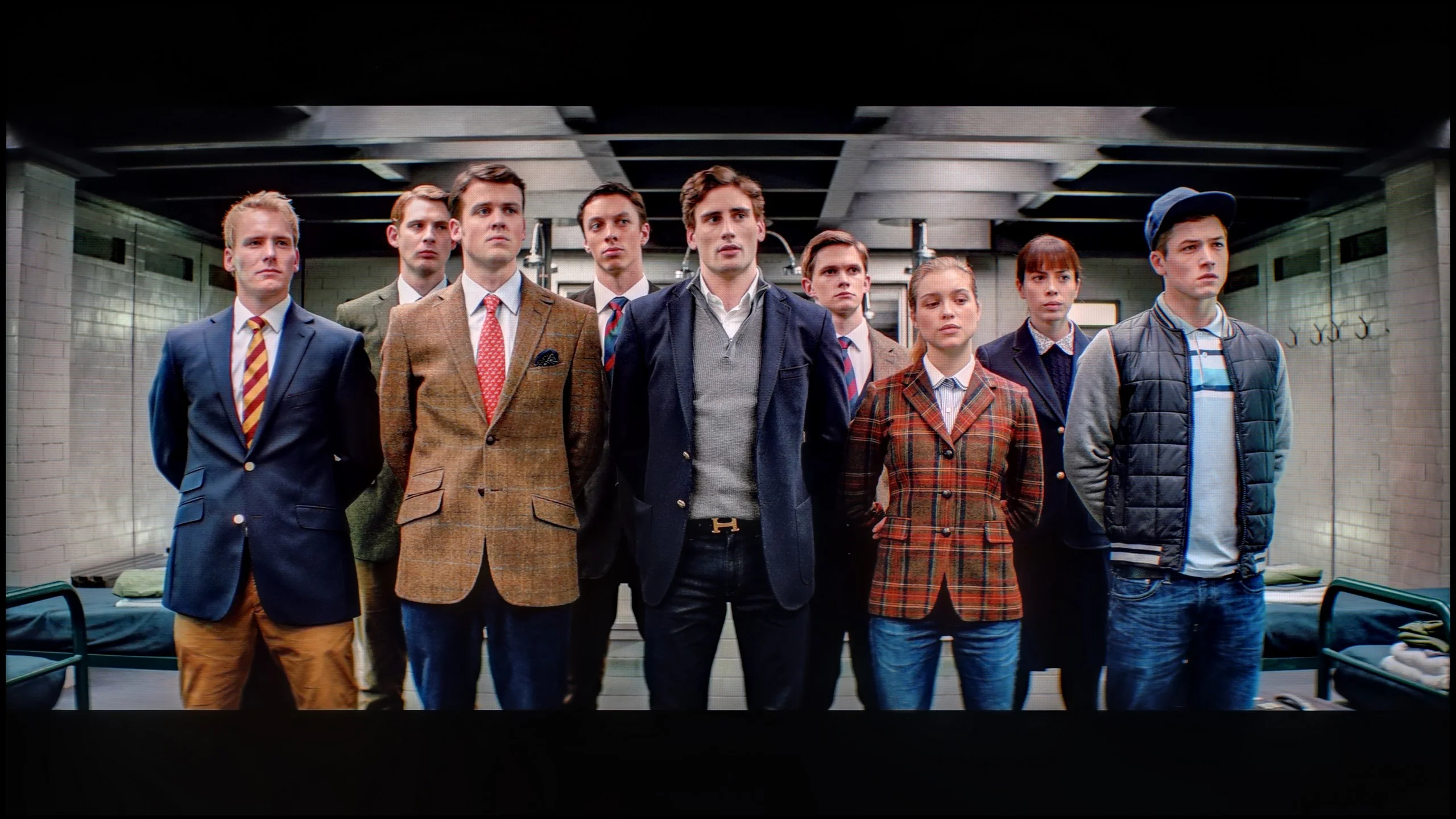
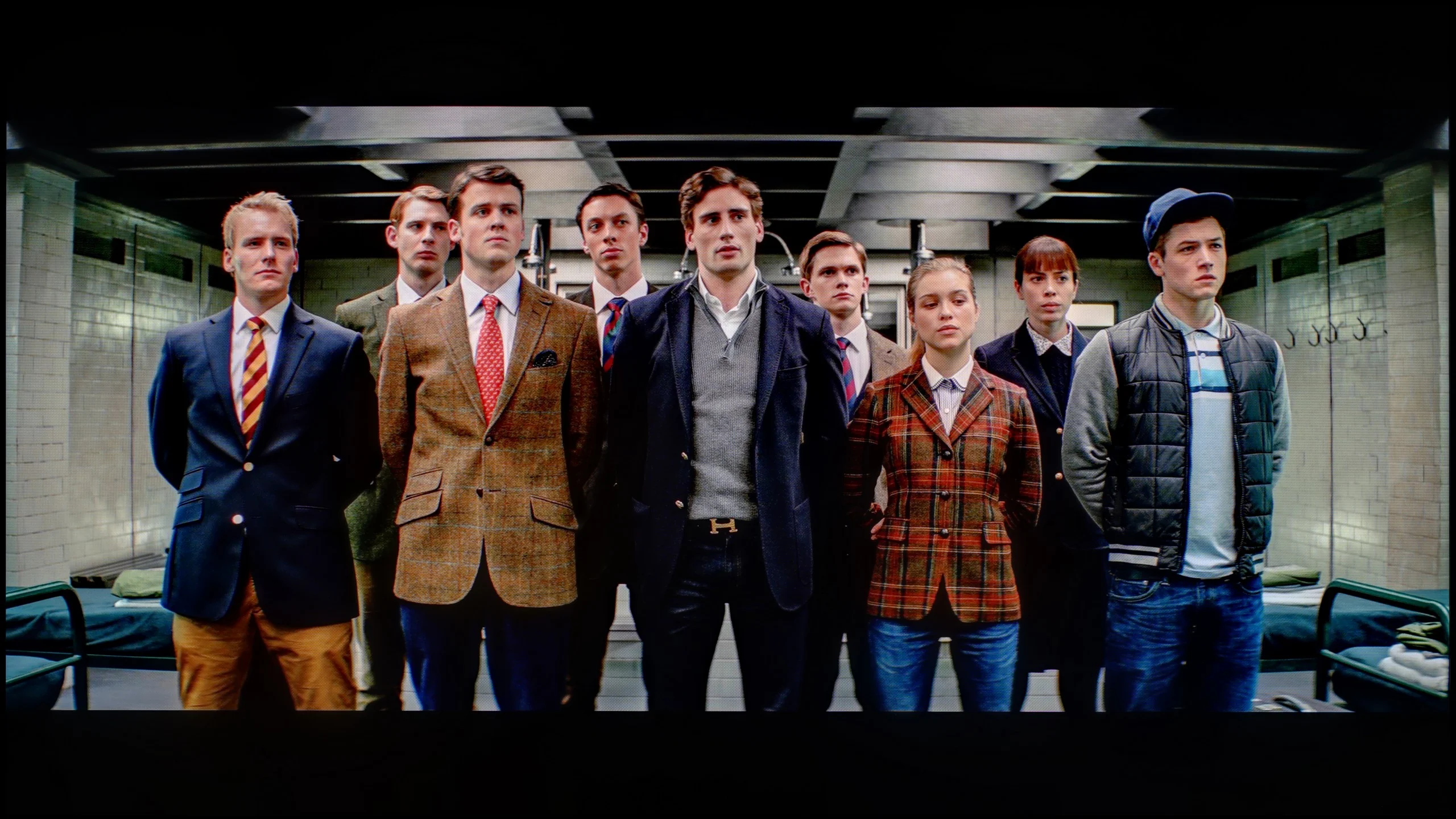
The photos show how movies look on the TV. Pay attention to black detail visibility, colors, and shadow tint.
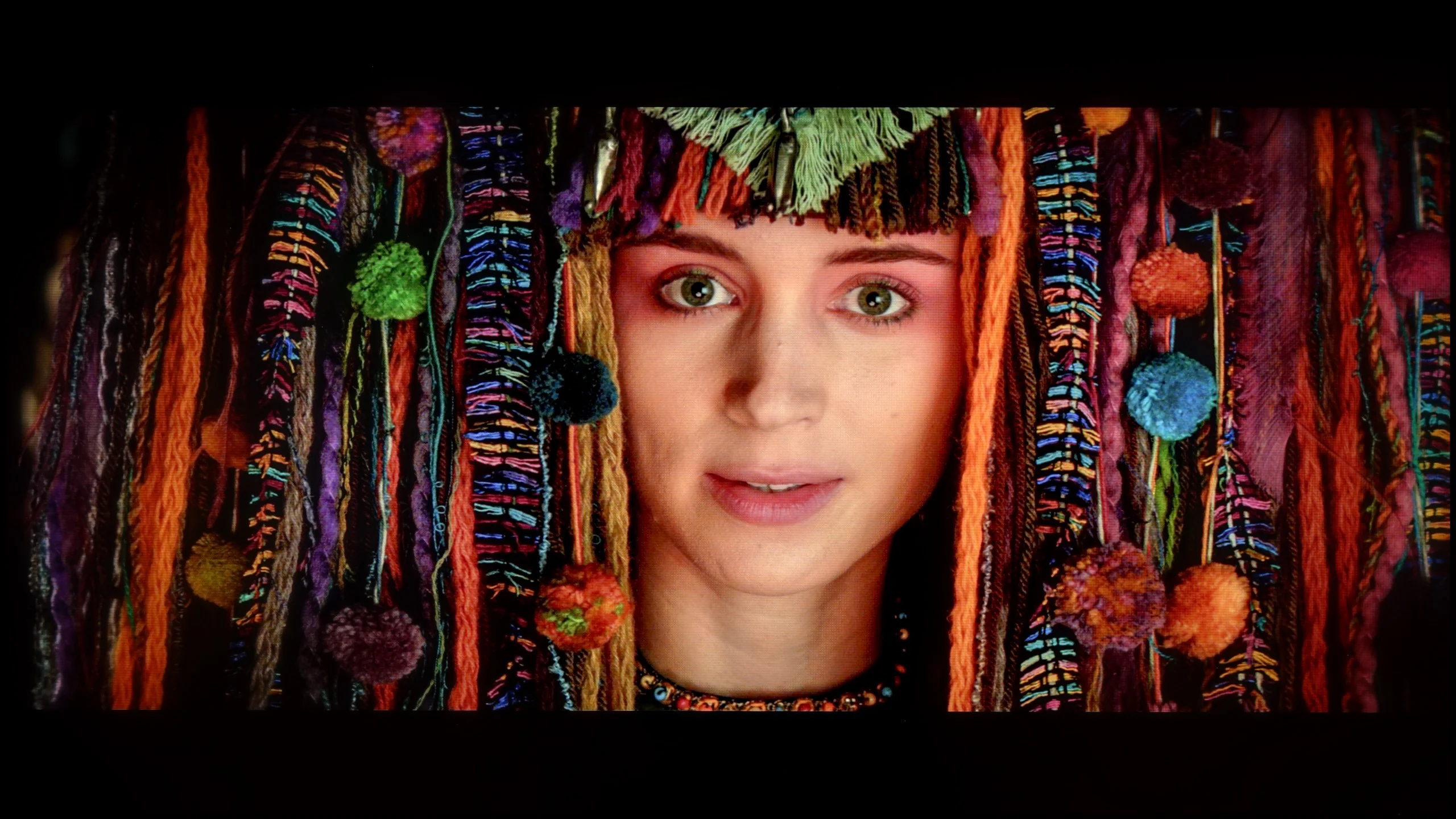

The photos show how movies look on the TV. Pay attention to black detail visibility, colors, and shadow tint.
After calibration the biggest improvement was in SDR mode, although we also refined the HDR picture. Hisense offers a lot of calibration settings in the menu, so we were able to precisely correct the white balance and the remaining image errors. The most important change was removing the pink tint that had previously been clearly visible in SDR material. After calibration the picture looks much more natural, especially in everyday content such as TV or YouTube.
Colour reproduction errors on the ColorChecker chart are very small after calibration. The vast majority of colours fall below values of 2 to 3, which is at a level very difficult to discern with the human eye. The only thing we could not completely eliminate is the tone-mapping approach characteristic of Hisense TVs in HDR. It affects how brightness is distributed in films and can subtly 'enhance' the image, rather than sticking exactly to the creators' intent. For less experienced viewers this can produce a stronger 'wow' effect, but it will not always fully match how the material should look.
After professional calibration we primarily managed to fully tame the SDR signal. Here the X11L responded perfectly to our adjustments. We were able to completely correct the white balance, remove that pink tint and set gamma to a stable 2.4. After that the picture finally became consistent with the director's vision, natural and free of artificial boosts. We also made minimal tweaks to HDR, but the TV's biggest flaw remained unchanged. It's of course about how the X11L manages its brightness and how much it overshoots the EOTF curve. Unfortunately, TCL provides virtually no tools to adjust this parameter. Even during professional calibration the software offers no way to rein in this curve, so the TV will always tend to brighten the image in HDR on its own.
Smoothness of tonal transitions
9.4/10
9.5/10
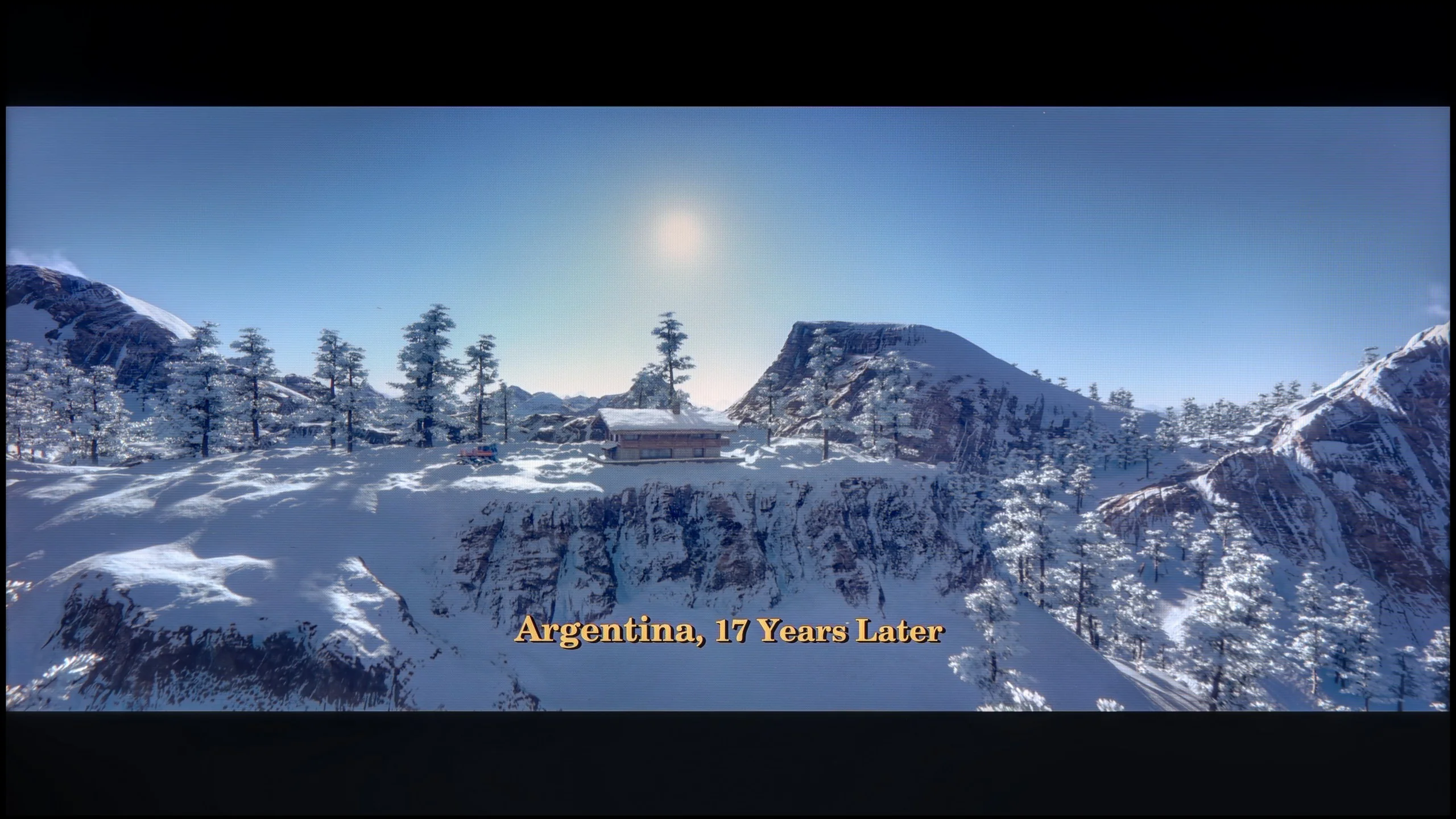
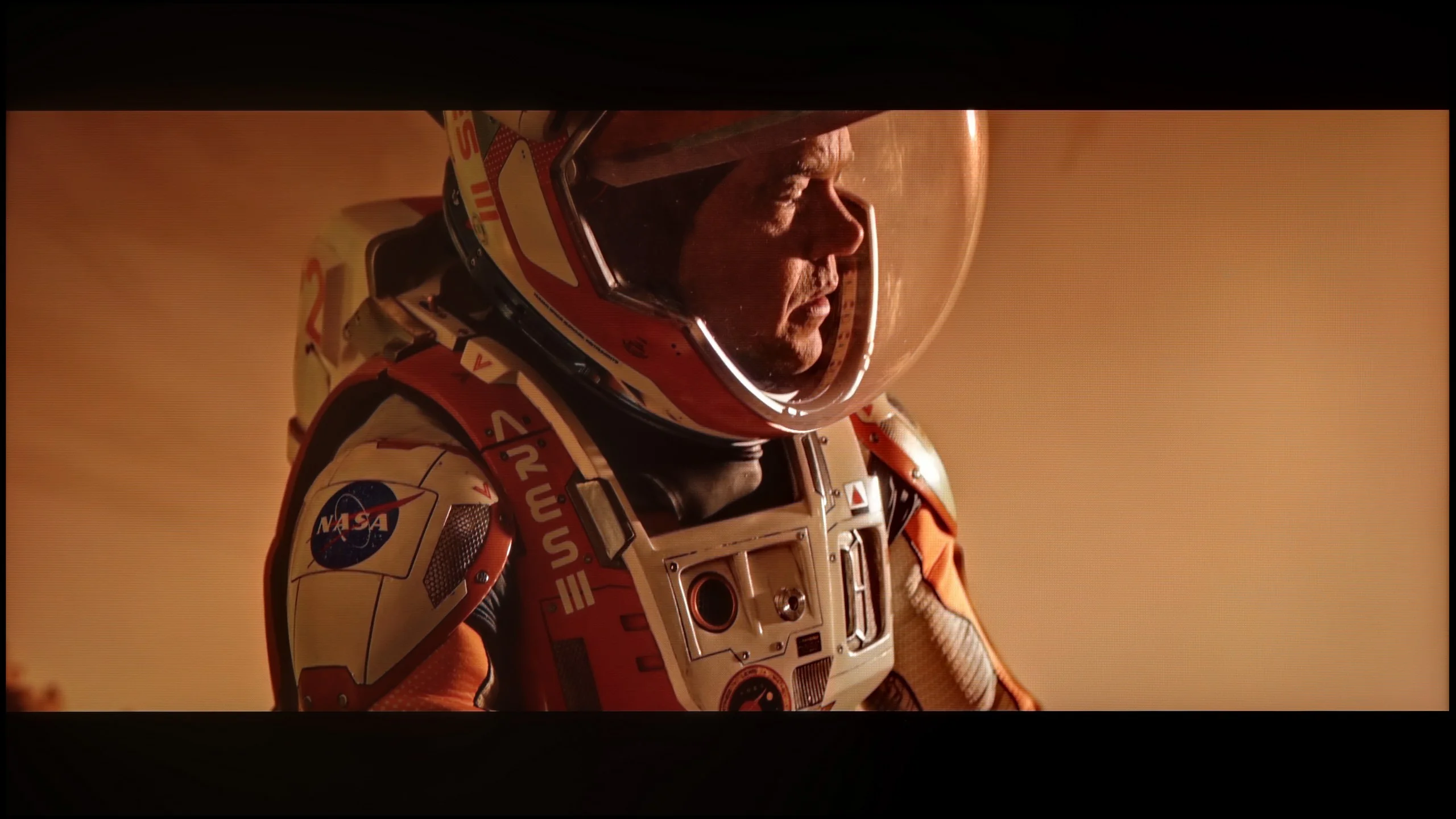
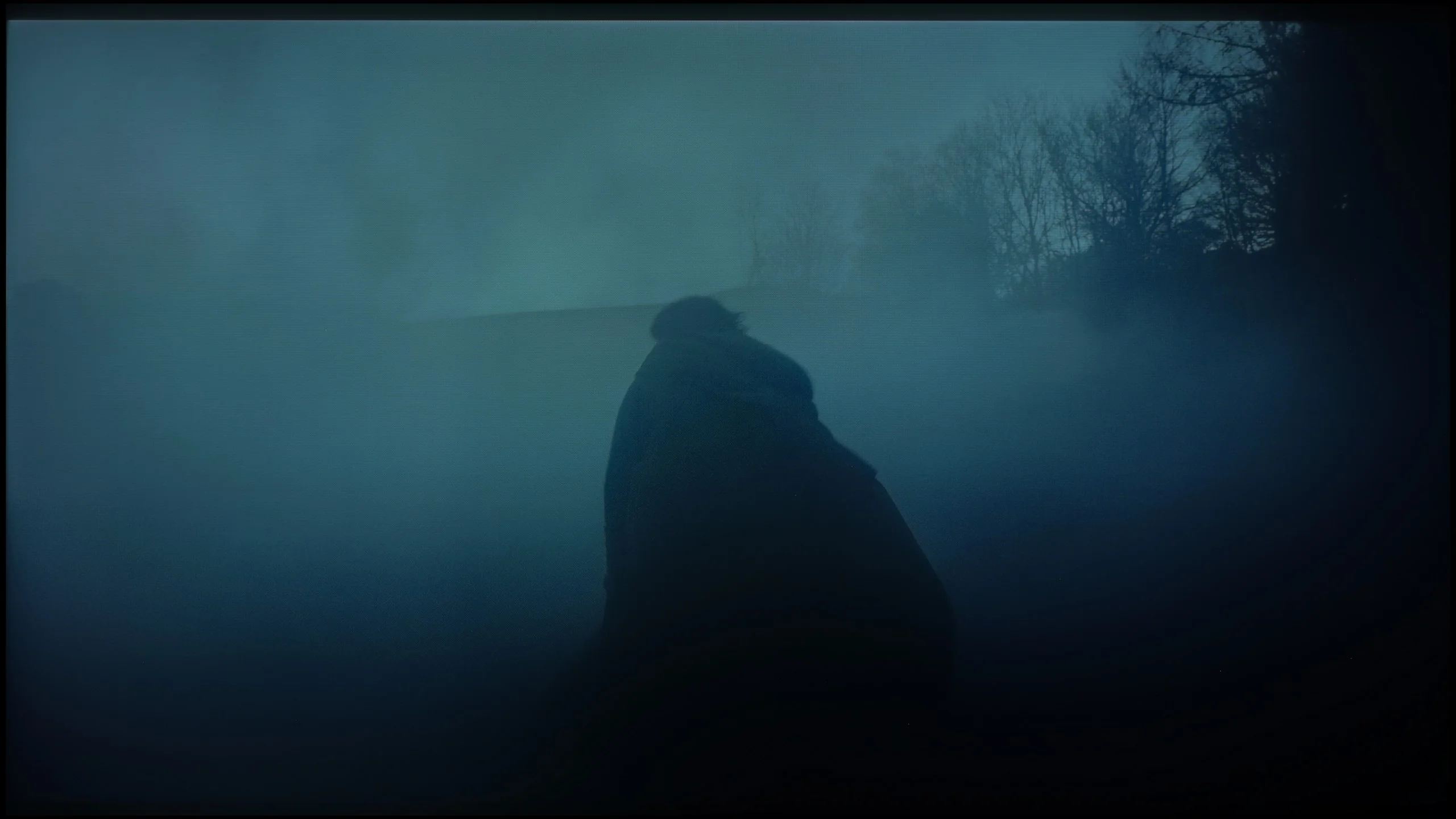
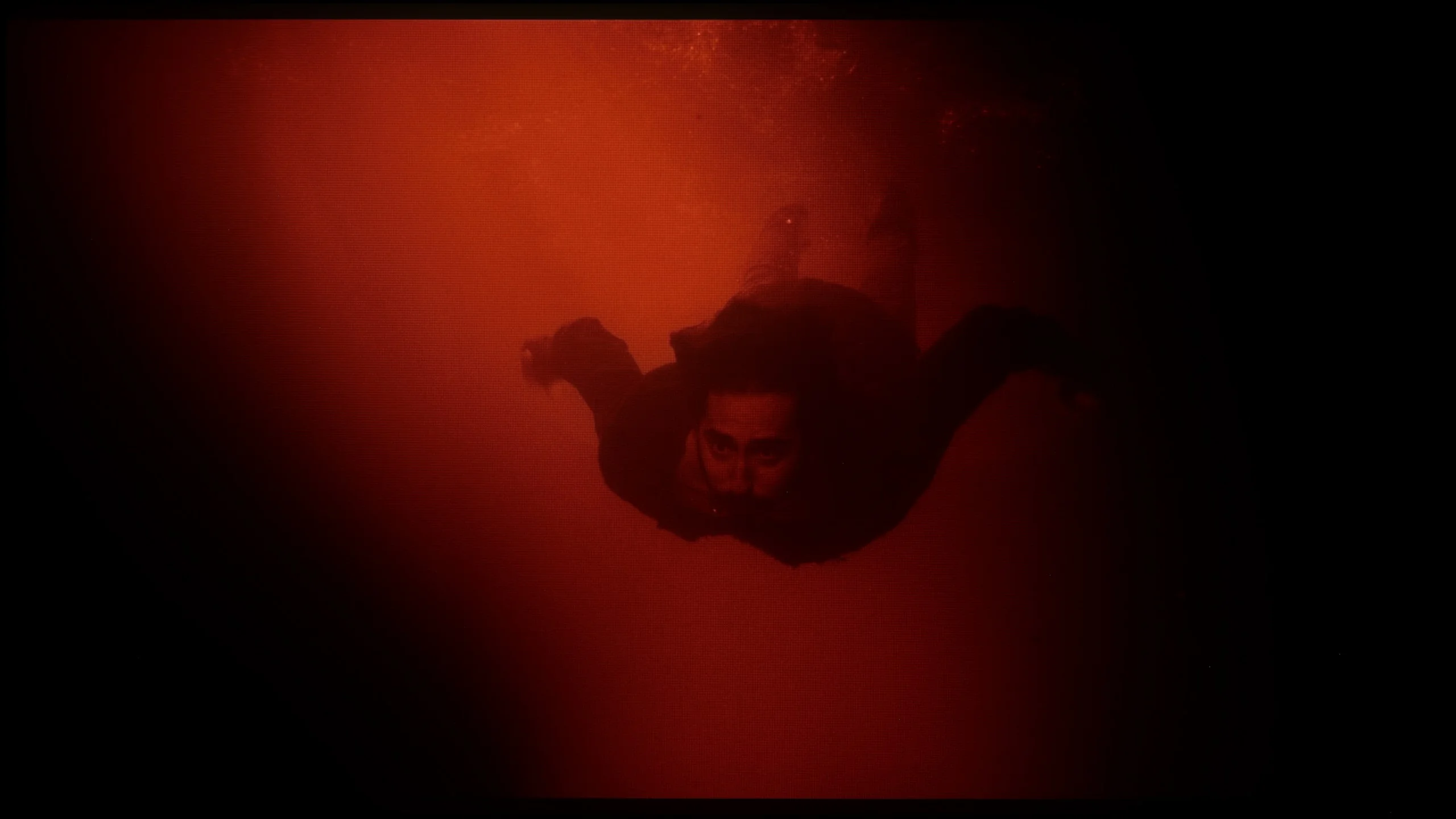
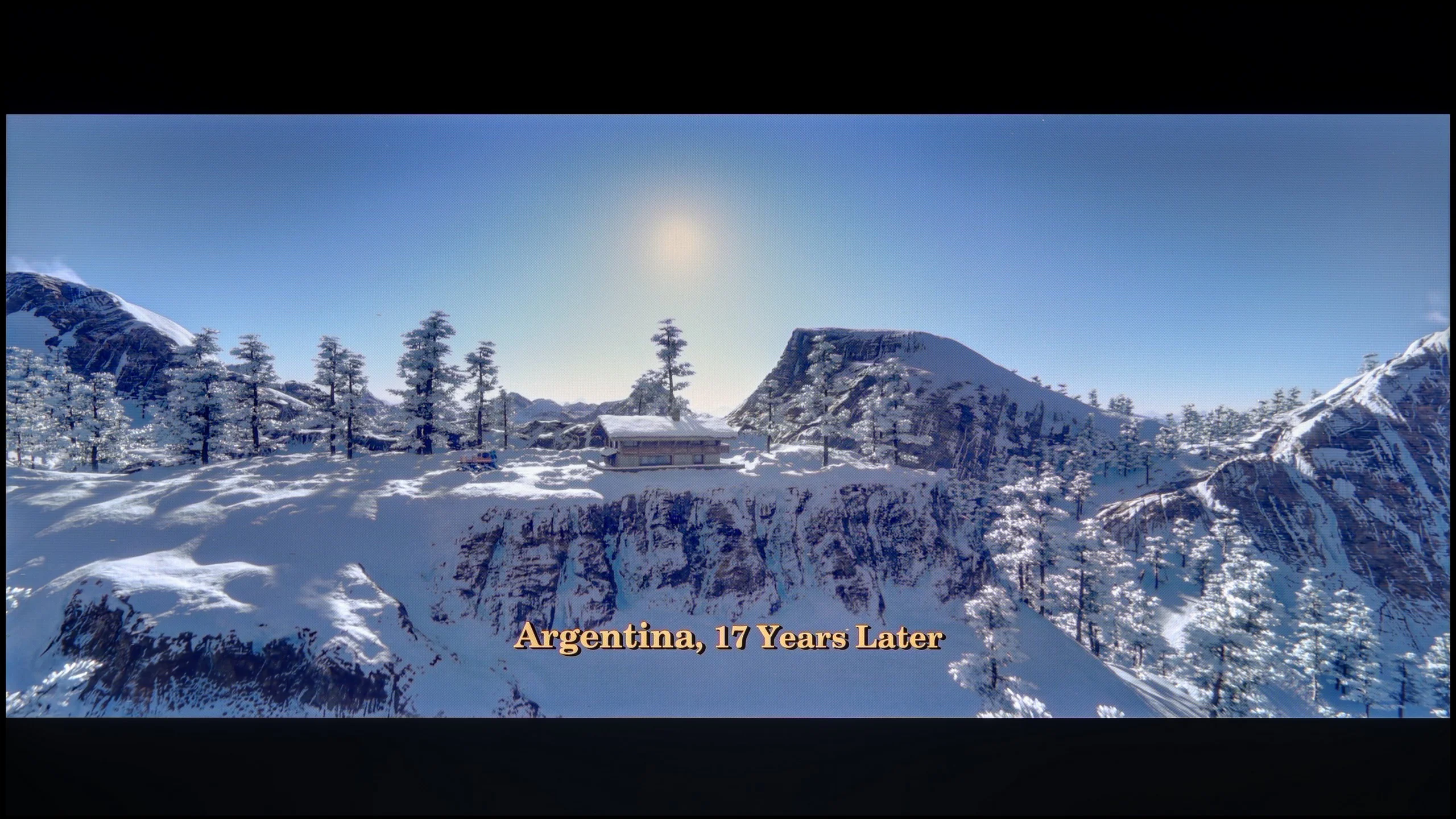
These are selected scenes that show smooth tonal transitions from one color to another. If you see distinct banding, it’s the TV panel’s fault.
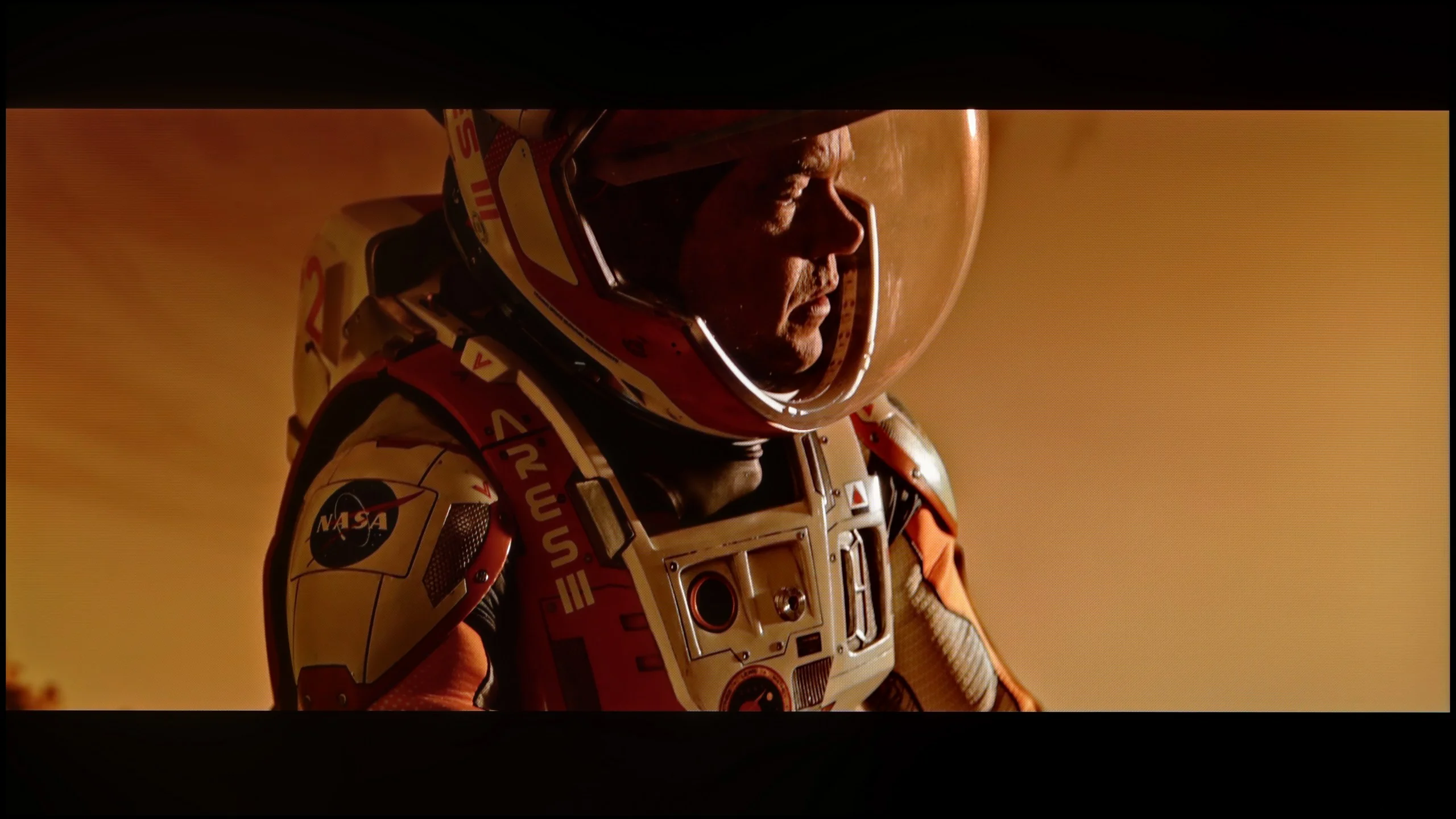
These are selected scenes that show smooth tonal transitions from one color to another. If you see distinct banding, it’s the TV panel’s fault.
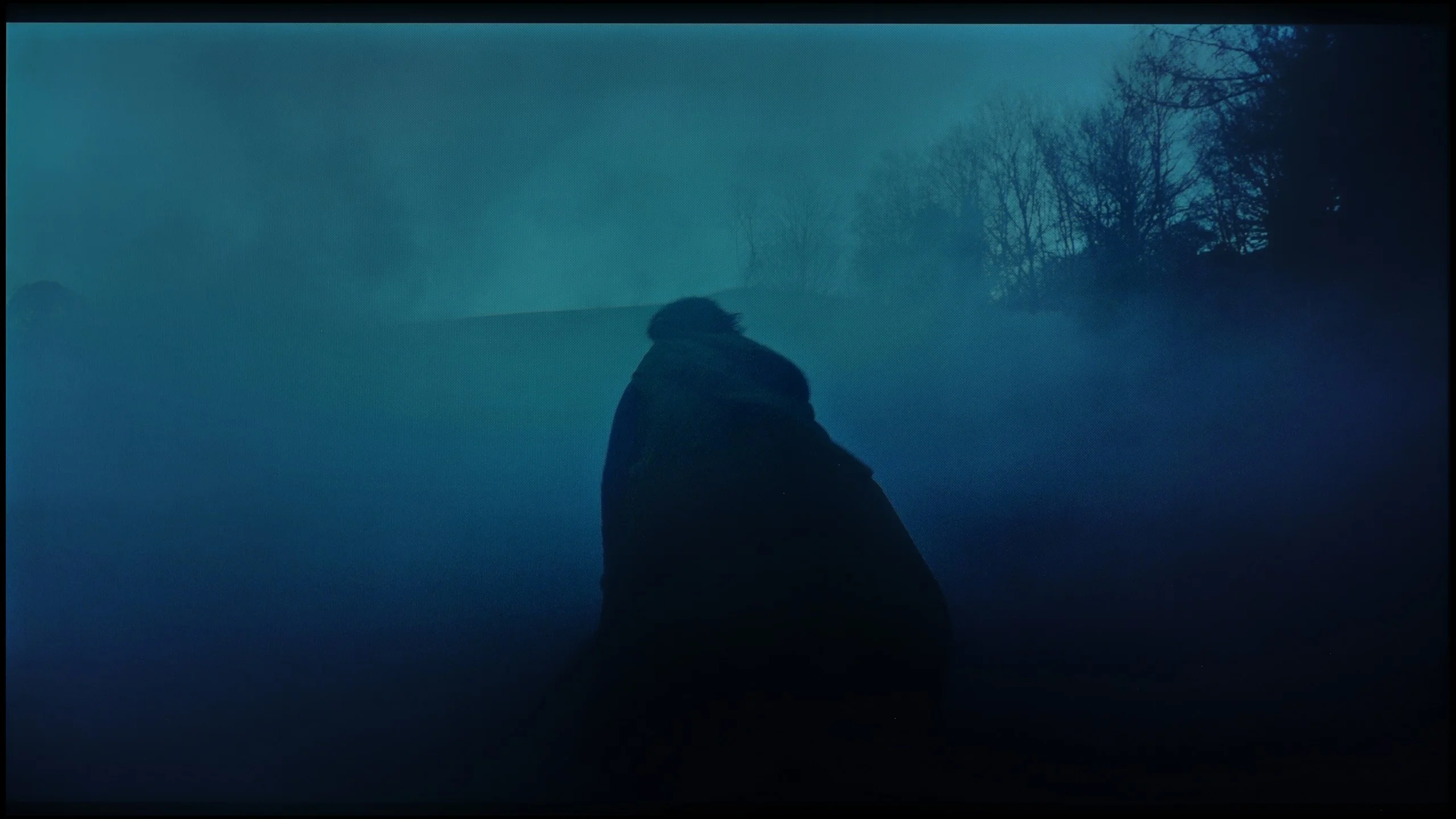
These are selected scenes that show smooth tonal transitions from one color to another. If you see distinct banding, it’s the TV panel’s fault.
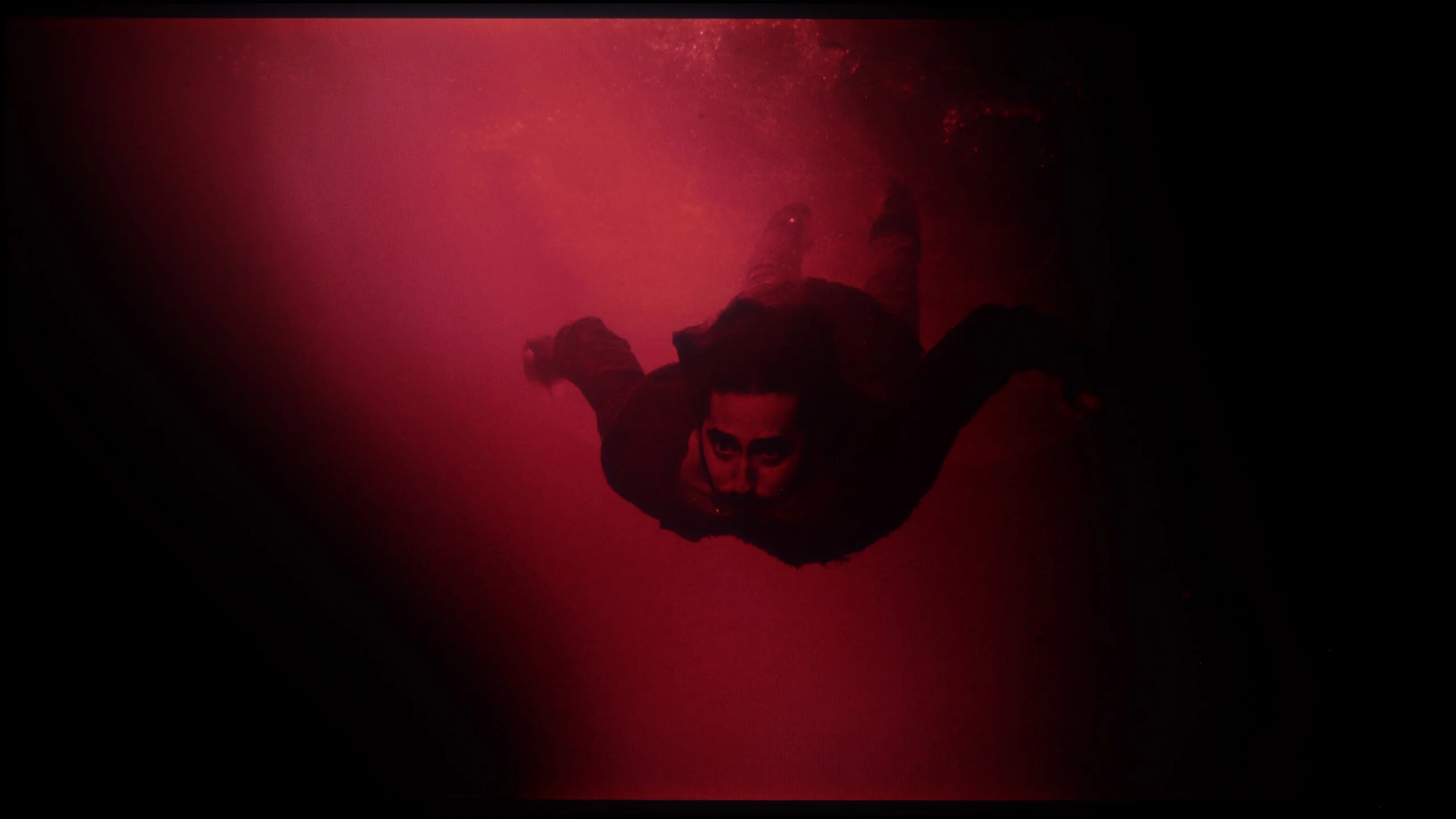
These are selected scenes that show smooth tonal transitions from one color to another. If you see distinct banding, it’s the TV panel’s fault.
In terms of the smoothness of tonal transitions, the Hisense UR9S performs very well. In high-quality material, such as films on Ultra HD Blu-ray discs or content from streaming services, the transitions between tones are smooth and there is no obvious posterization. Occasionally you may notice minor imperfections, mainly in Dolby Vision content, but they are small enough that during normal viewing they are hard to regard as a real problem.
The smoothness of tonal transitions deserves praise. Both in bright and dark areas the image simply looks smooth and is free from irritating banding or contouring. Importantly, with Dolby Vision material this issue is not particularly noticeable either, which is often not the case with other TVs. Minor gradation errors are visible only on specific shades of grey, but they are so small that in everyday use they will bother practically no one. In this respect the X11L performs almost perfectly.
Image scaling and smoothness of tonal transitions
8/10
8/10

Smooth transition function
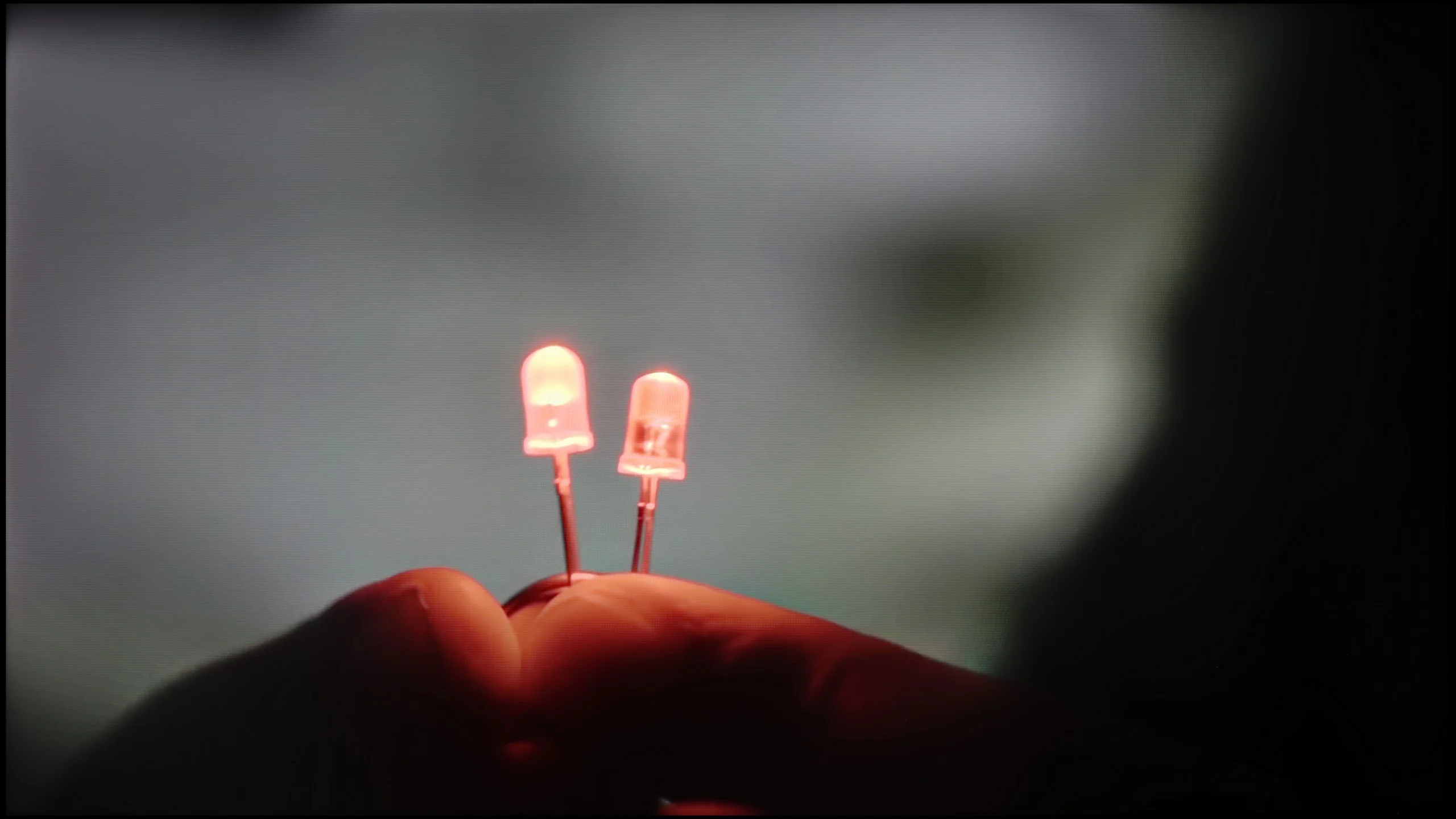
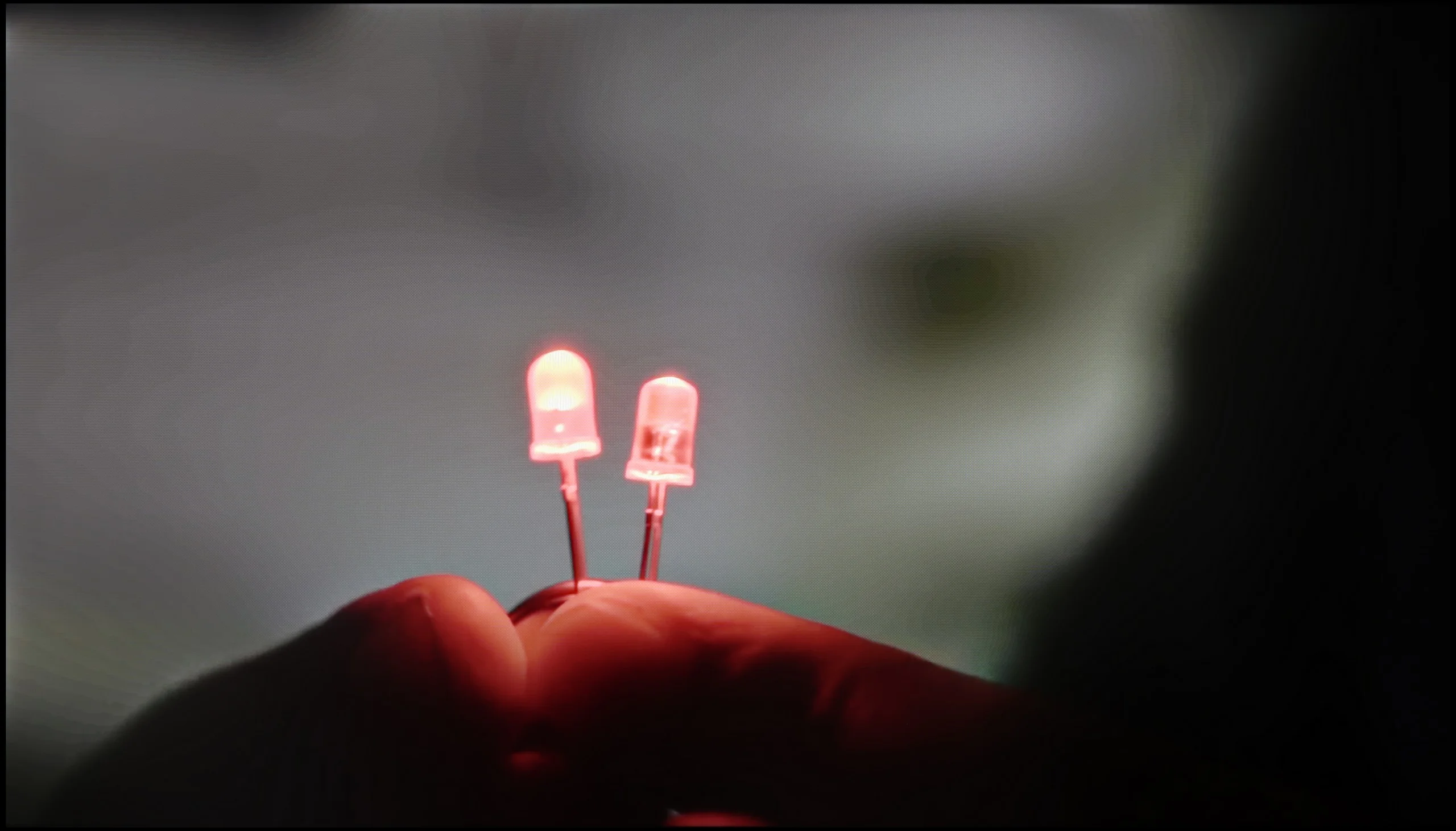
The match photo shows how the TV smooths weak tonal transitions in low-quality video.
Image scaling SD (576i)
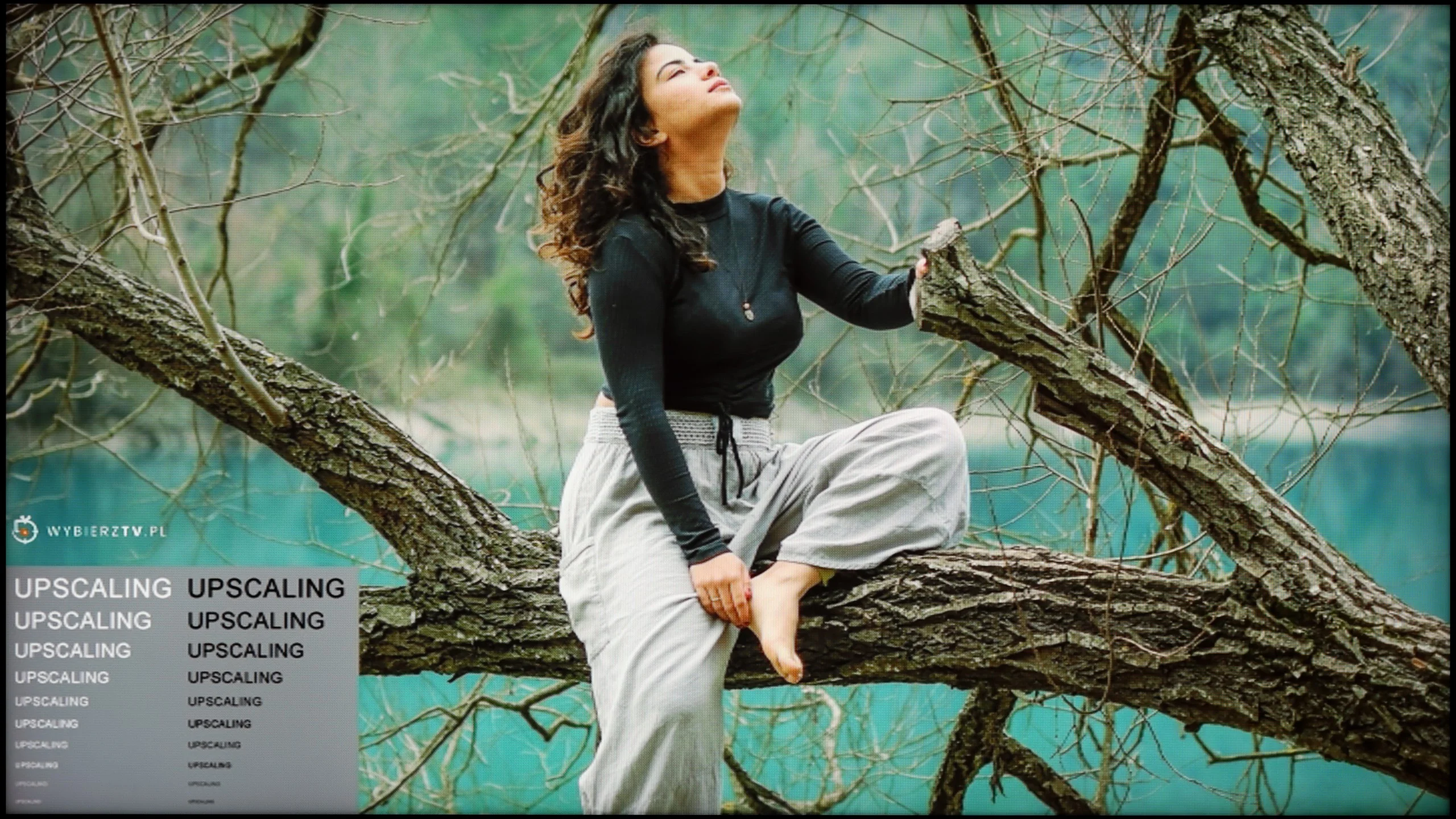

The model photo shows how it handles upscaling of SD material.
For the past two years digital picture processing has been one of Hisense's strengths, and the UR9S is no exception. The manufacturer uses the Hi-View AI Engine RGB processor, which in practice is built on the well-known MediaTek Pentonic 800 platform, previously used, among others, in the U8Q model. The TV handles upscaling lower-resolution material to 4K very well, and copes with low-bitrate content where compression artefacts are common. Thanks to a feature called "Smooth and Gradient Picture", the image remains detailed without appearing over-sharpened or artificially smoothed. When watching regular broadcast TV or older, lower-quality material, the UR9S can get a surprising amount out of them. In terms of digital picture processing, this is one of the most refined LCD TVs we've had the chance to test.
Much like the C8L model we tested earlier, TCL has delivered a substantial upgrade in its flagship X series. It's all thanks to the MediaTek Pentonic 800 processor used in this model. Thanks to it, features for smoothing tonal transitions and even upscaling content to higher resolutions finally look as they should. The biggest Achilles' heel of previous TCL models has at last been addressed. The processor handles digital processing superbly and, in this respect, the TV no longer lags behind flagship models from Korea or even the most refined ones from Japan.
Blur and motion smoothness
7.9/10
7.9/10
Blur (native resolution, maximum refresh rate):

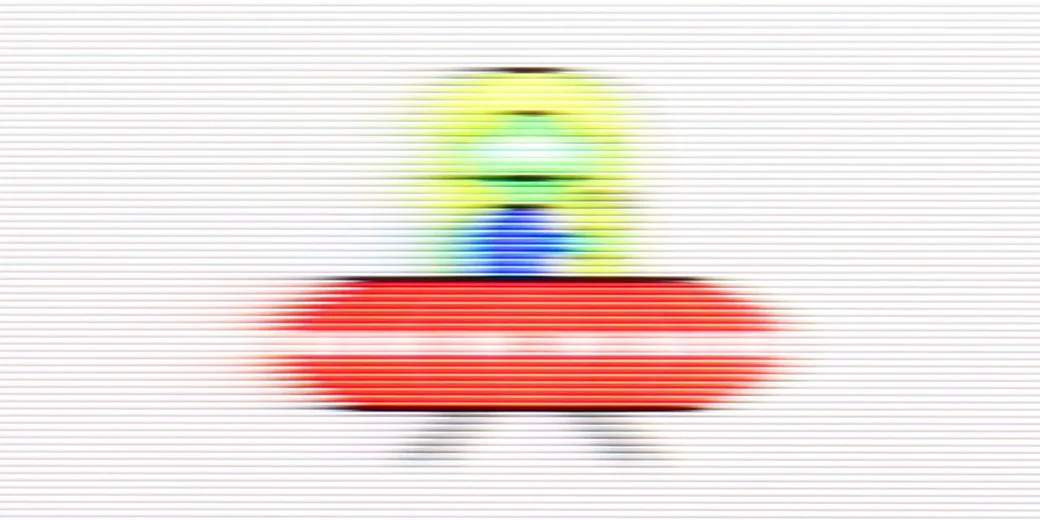
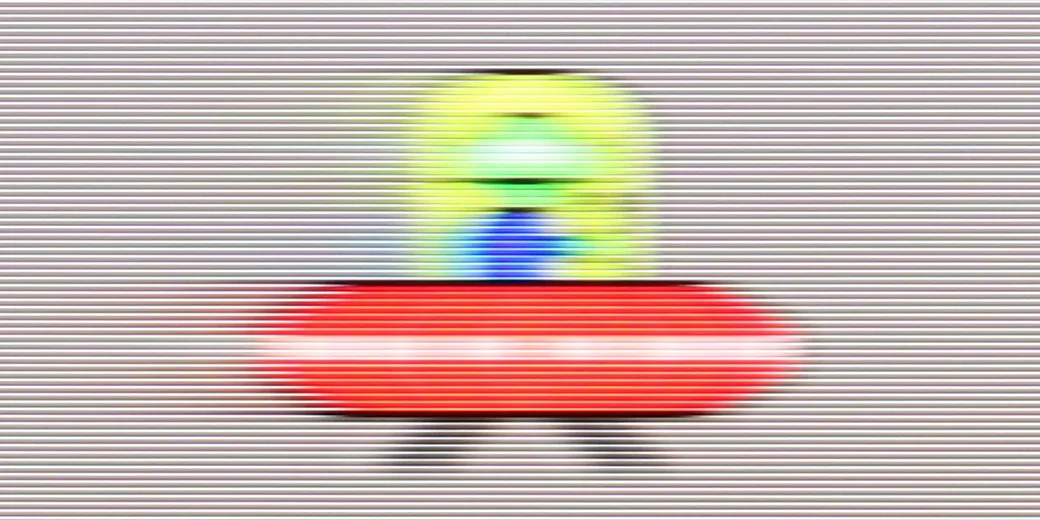
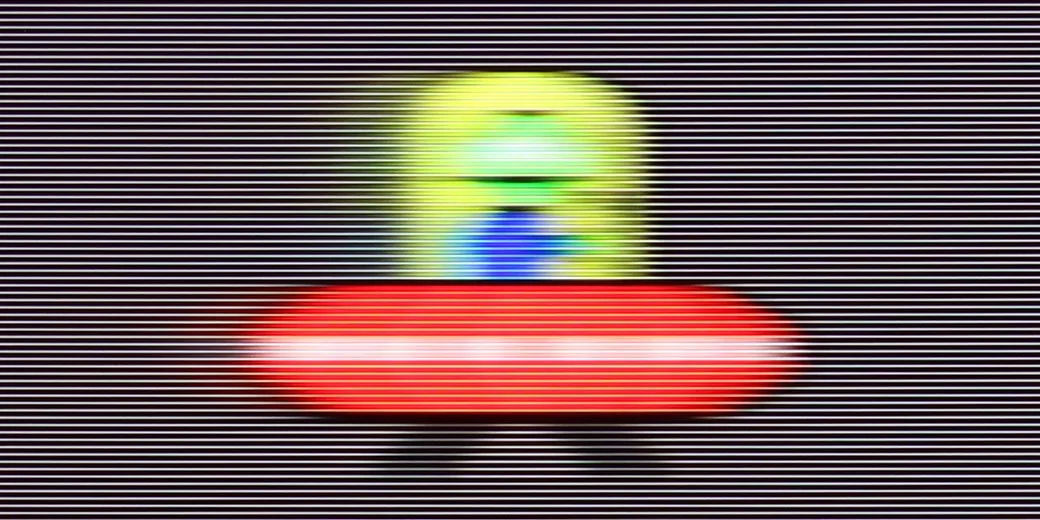
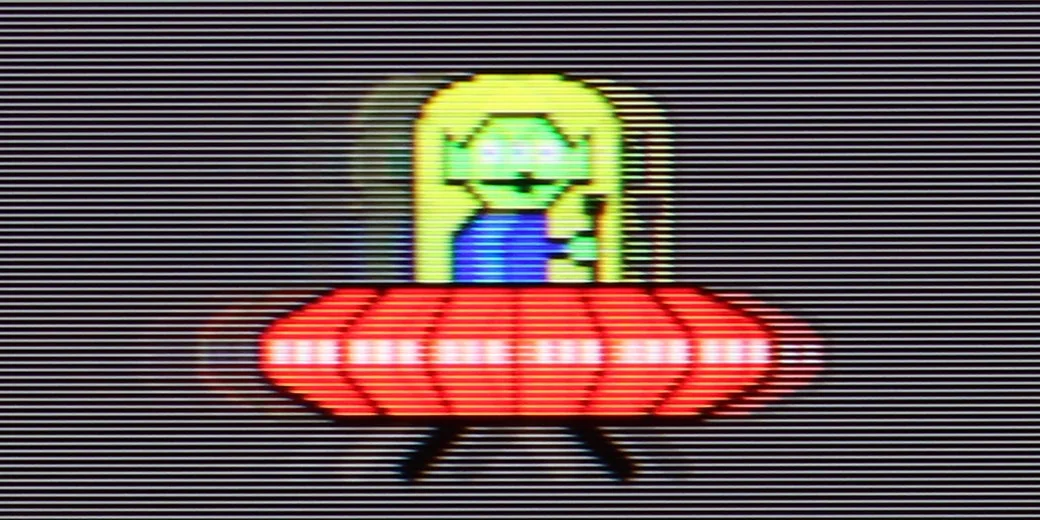
Blur (BFI function enabled):





Blur (1080P@330Hz):

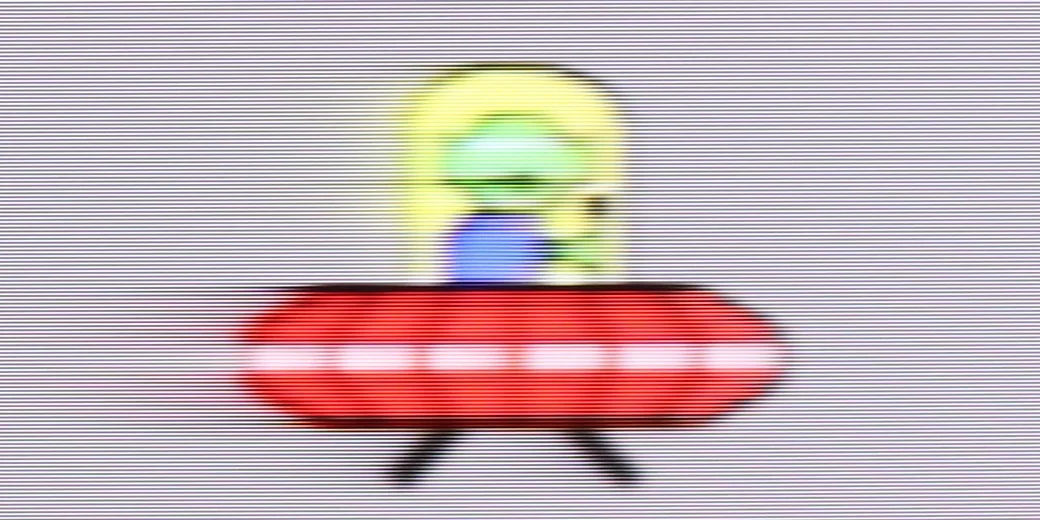
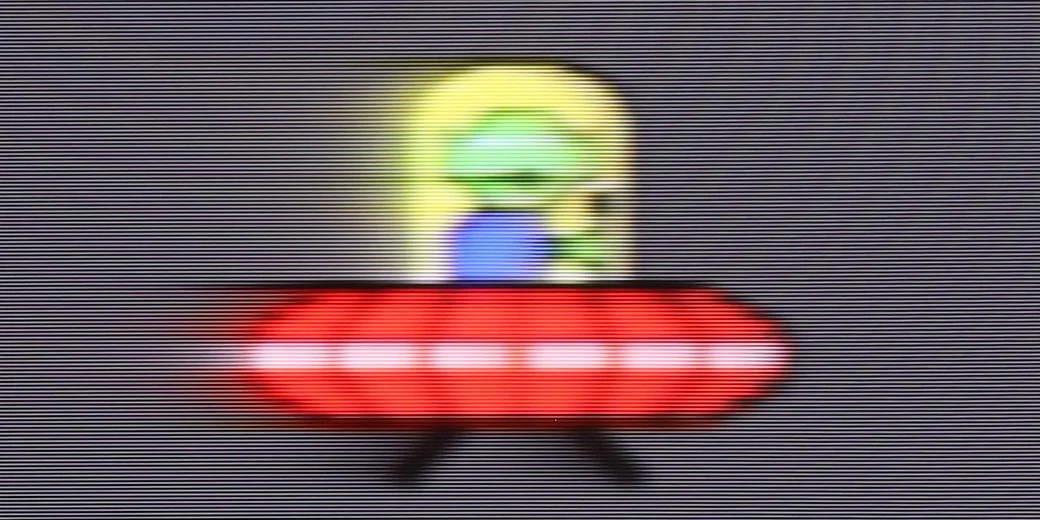
Blur (1080p@288Hz):


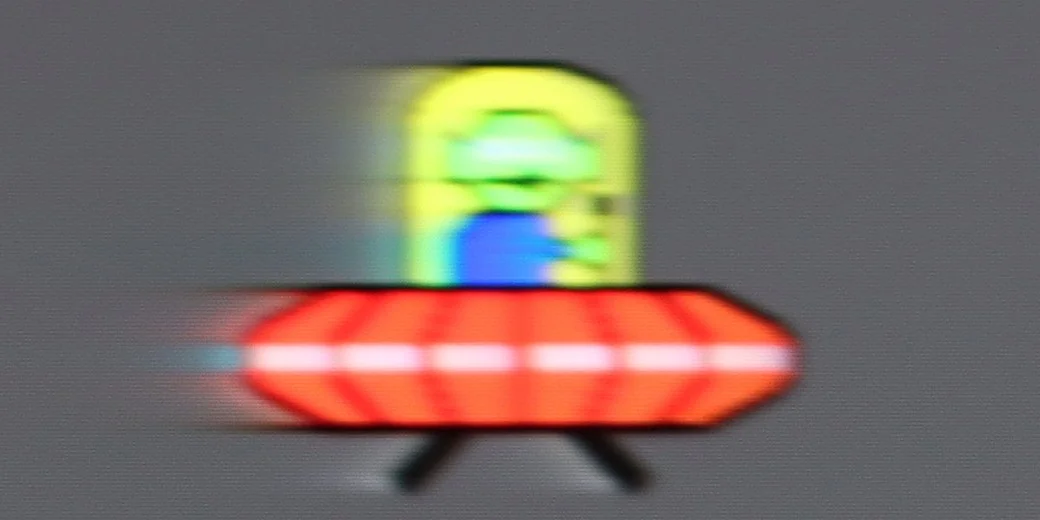
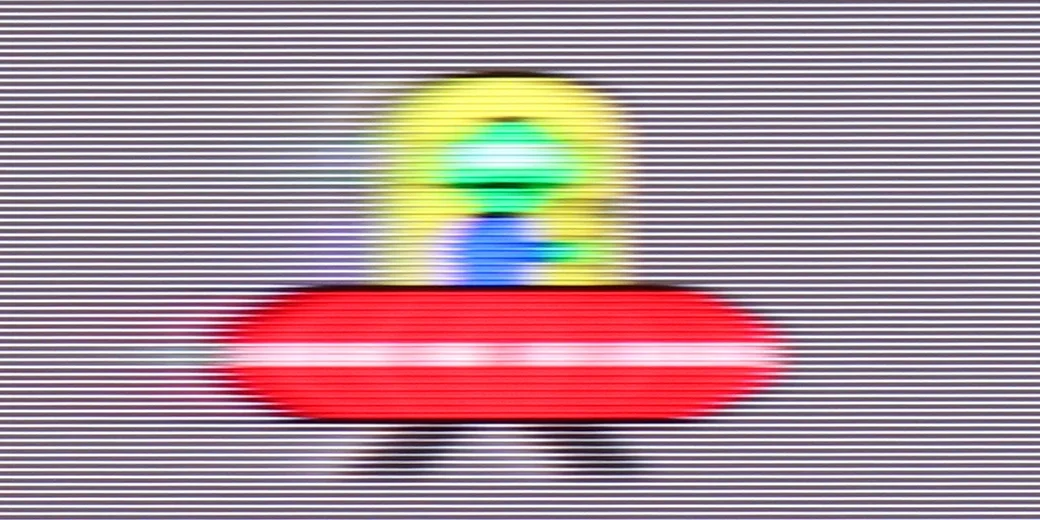
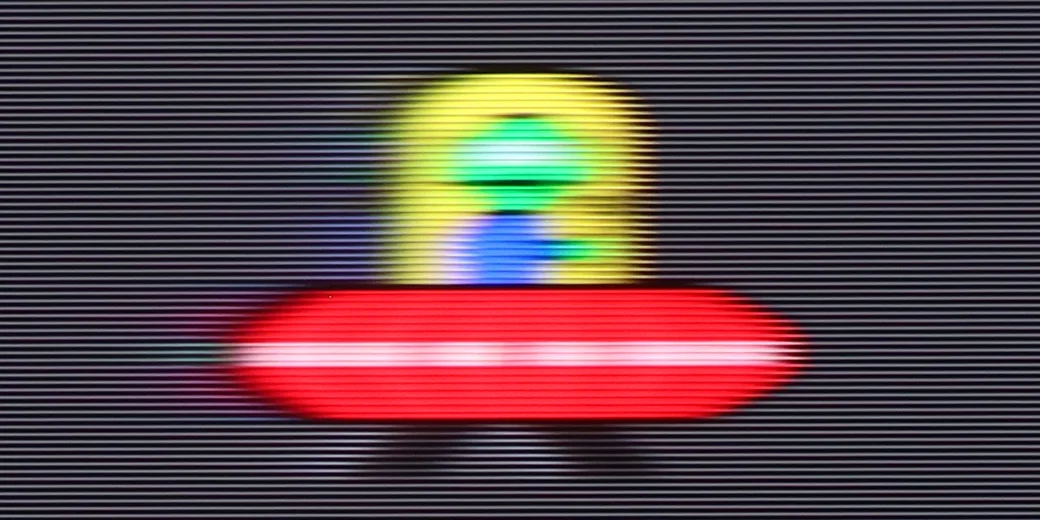
The Hisense UR9S is one of the first televisions on the market with a 4K panel and a 170 Hz refresh rate. In the larger sizes, 75 and 85 inches, this goes up to 180 Hz. However, such a high refresh rate will be useful mainly to owners of very high-performance PCs. Most films and TV series are still watched at 24 fps, and sports broadcasts at 50 fps, so for everyday use panel response time and the operation of the motion smoothing are more important. In that respect the UR9S performs very well. Panel smearing is minimal, as confirmed by our UFO test. Moving objects do not leave a pronounced trail, so the picture remains clear even in fast scenes.
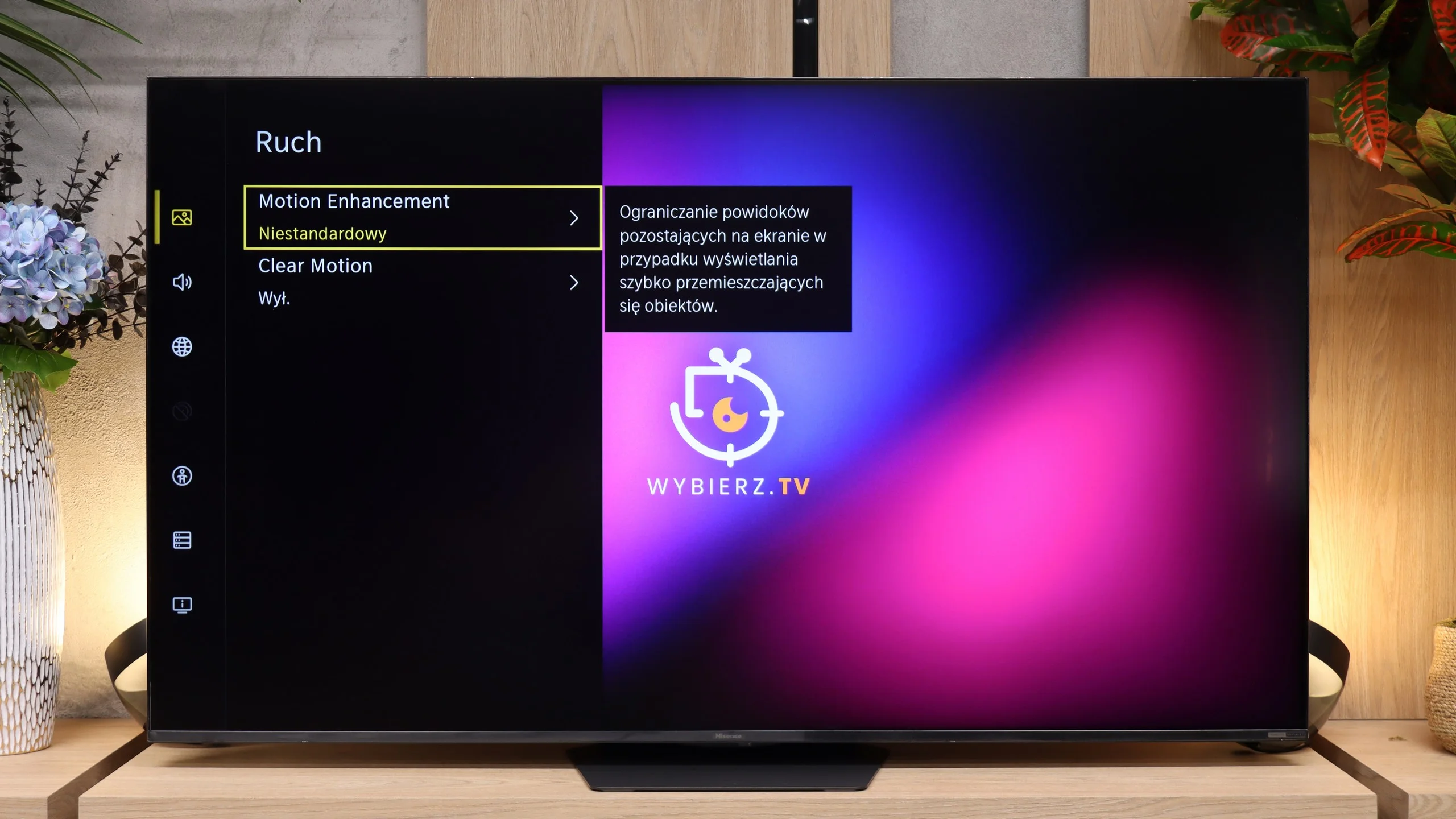
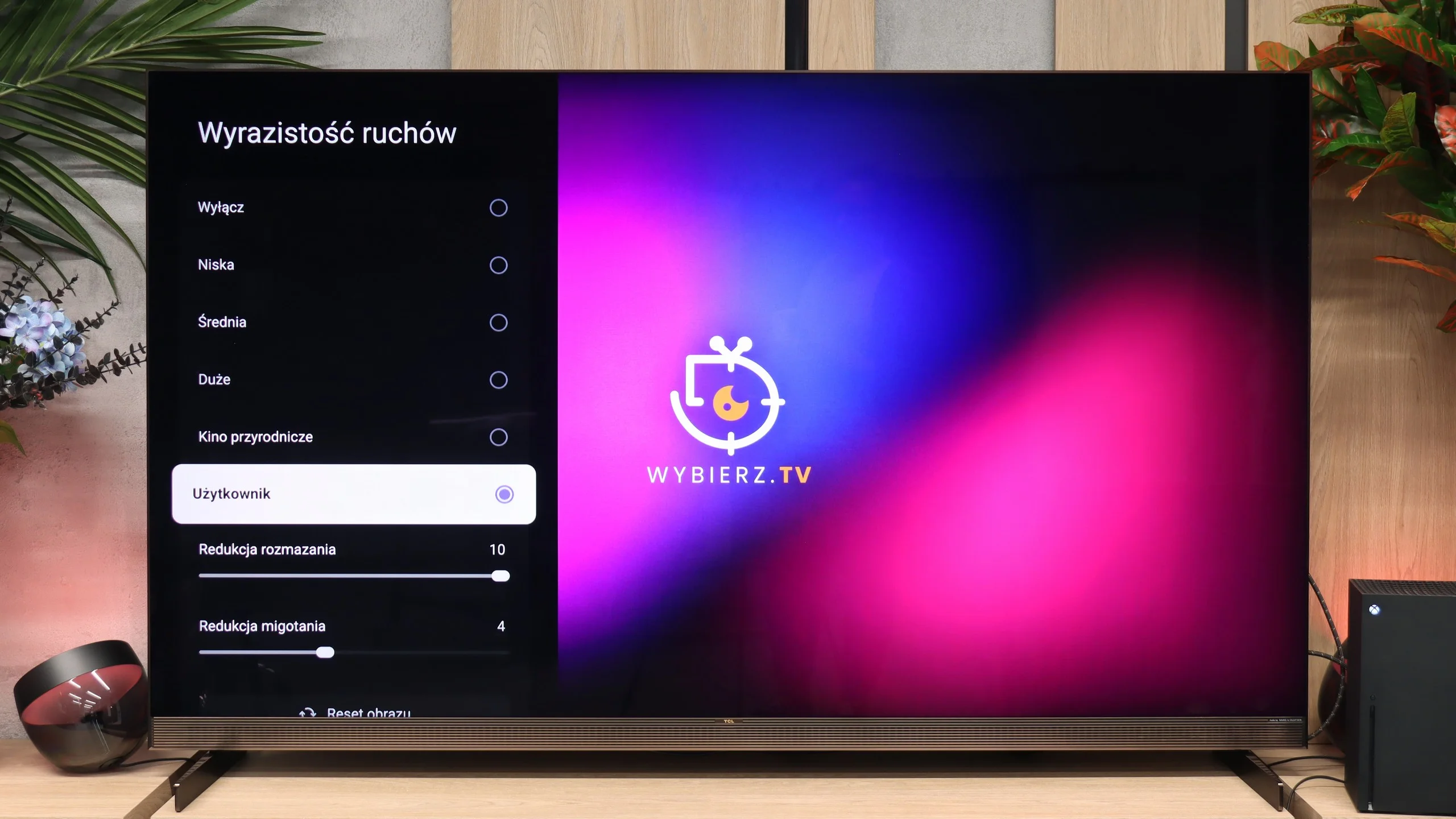
From a specification standpoint the X11L can impress, supporting refresh rates up to 144 Hz at 4K, and it can be pushed to as much as 288 Hz in Full HD. However, from a real-world usage perspective we were most interested in how the screen performs at 120 Hz. After all, that is the limit for today’s hardware, with current-generation consoles leading the way. How does that look in practice? Even though it uses a VA panel, the screen does not exhibit significant smearing. With very fast-moving objects you can notice a slight trailing, but it is subtle enough that it hardly stands out while gaming or watching sport. The motion smoothing feature called "Motion Clarity" is also very useful here, allowing you to adjust motion smoothness to your preference. Recommended settings can be found in the picture.
Console compatibility and gaming features
8.5/10
9.8/10
- ALLM
- VRR
- VRR range48 - 330Hz48 - 288Hz
- Dolby Vision Game Mode
- Correct implementation of HGIG

- 1080p@120Hz
- 1440p@120Hz
- 4K@120Hz
- Game bar
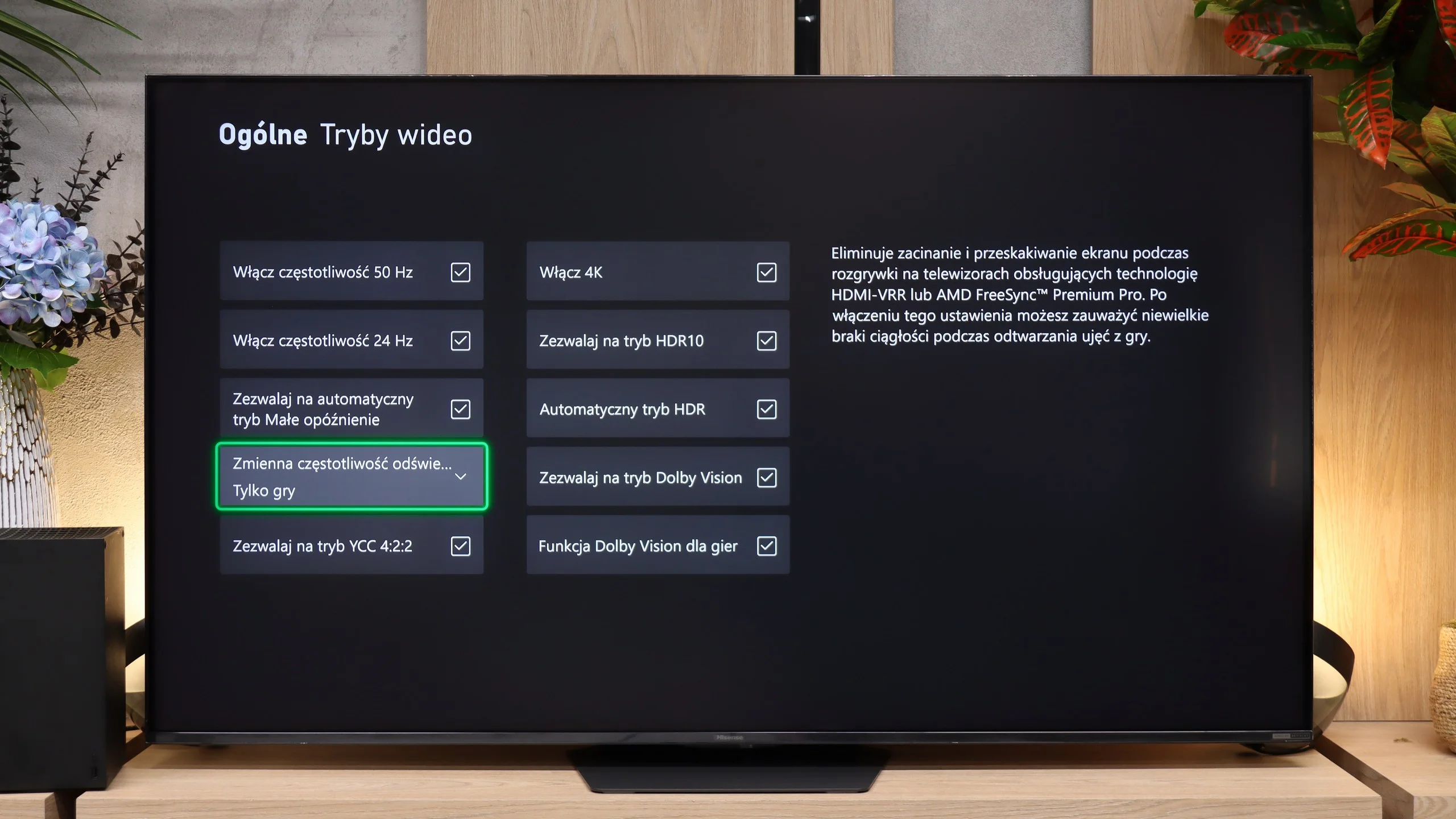
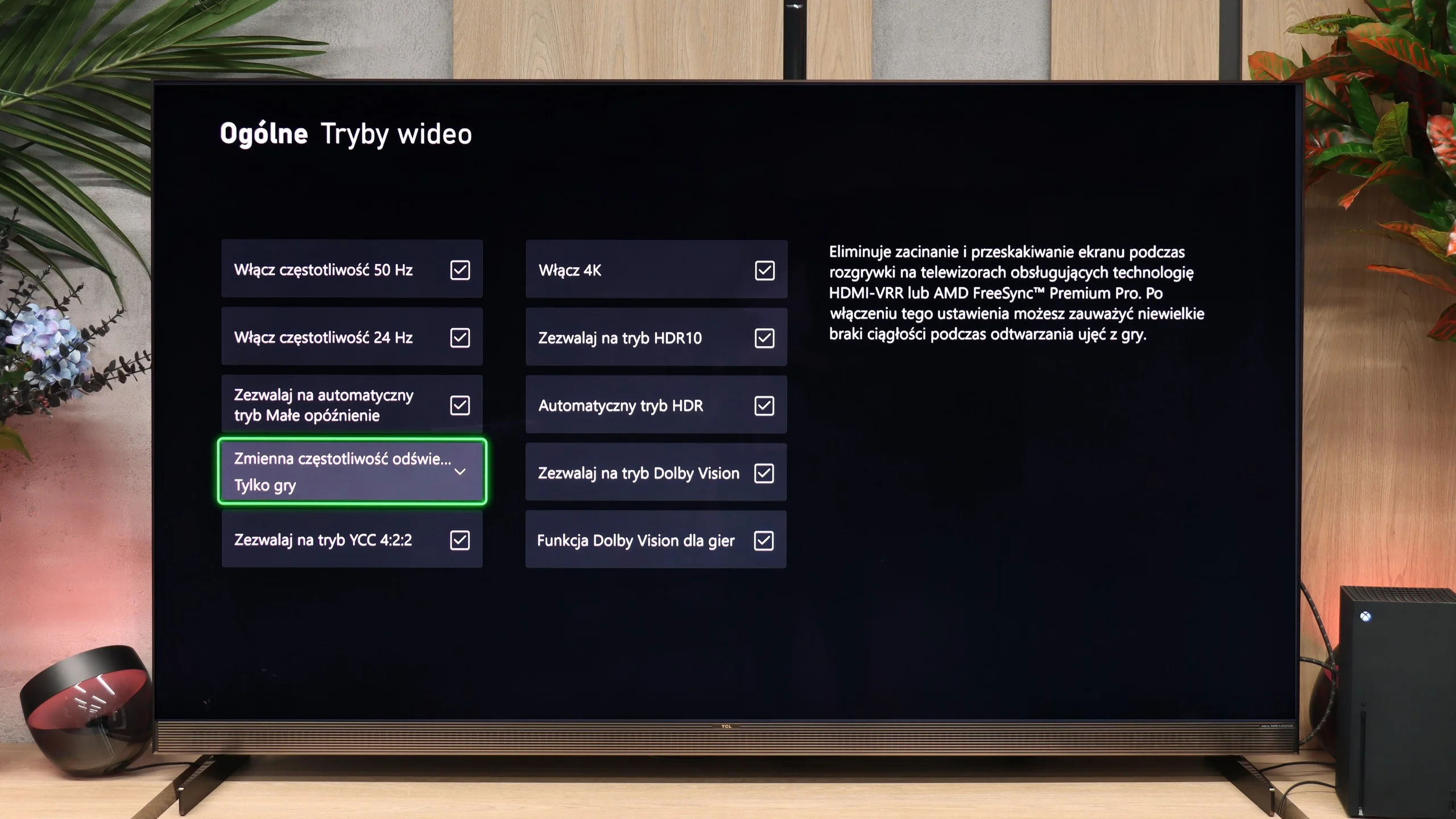
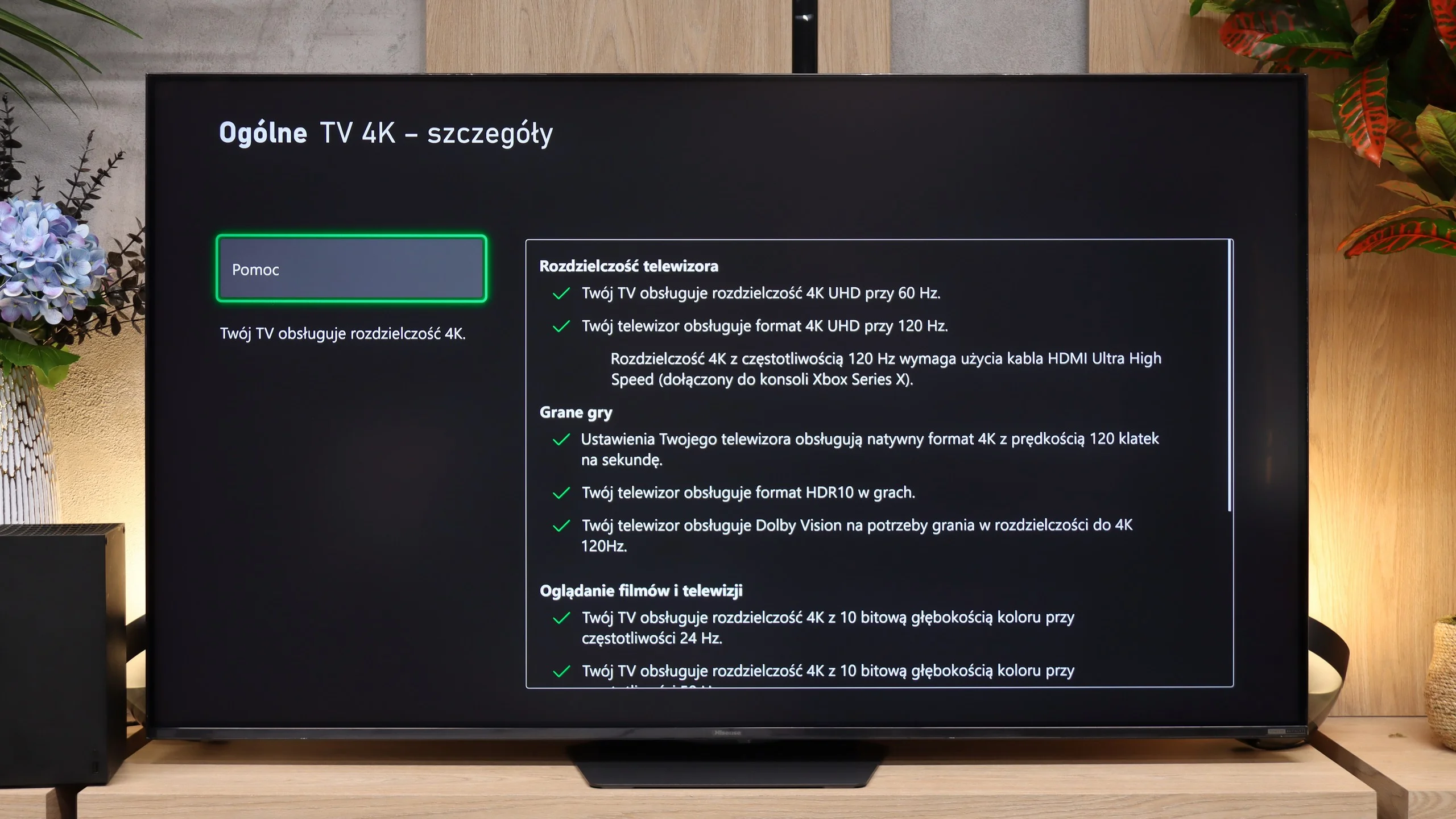
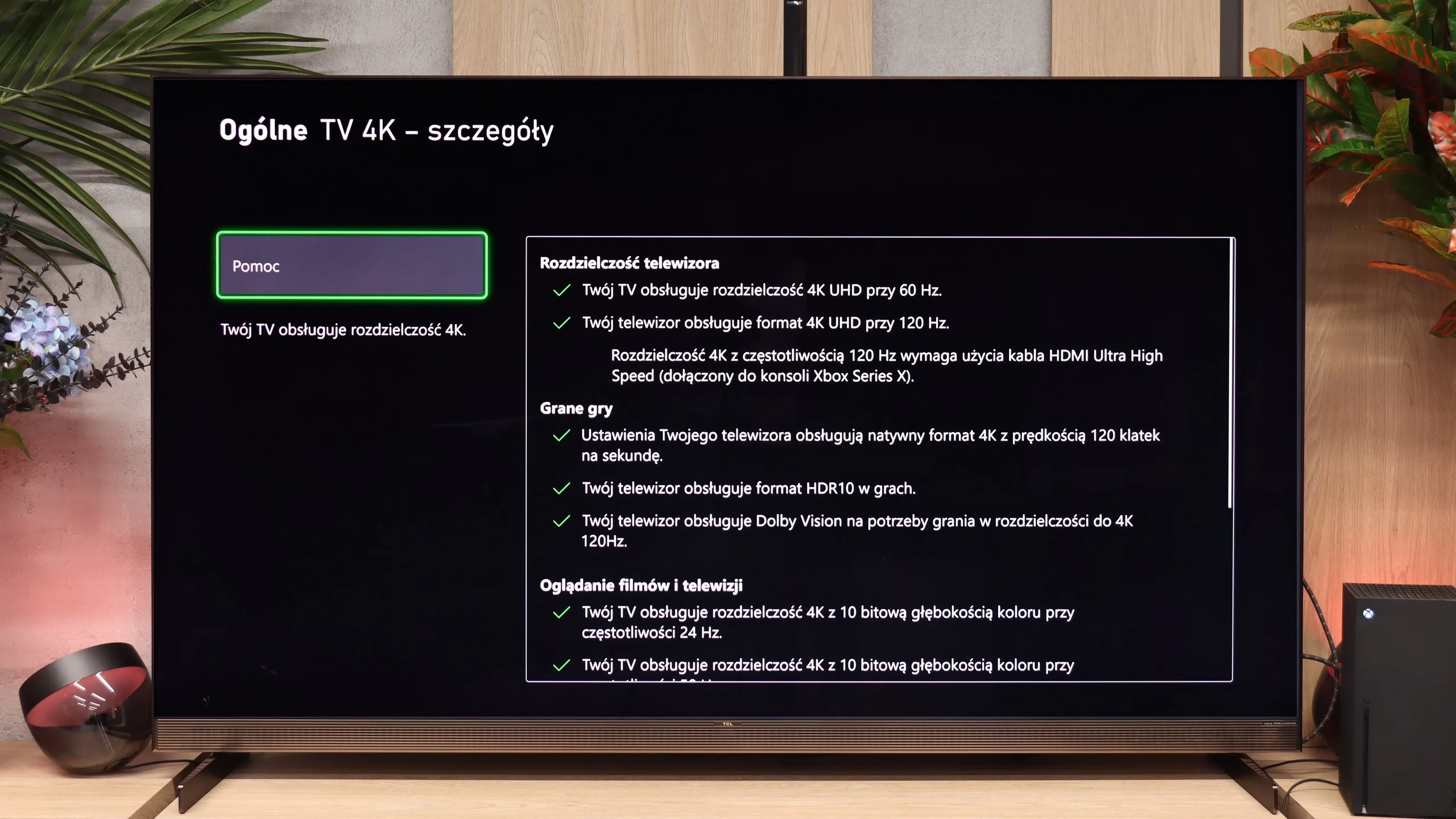
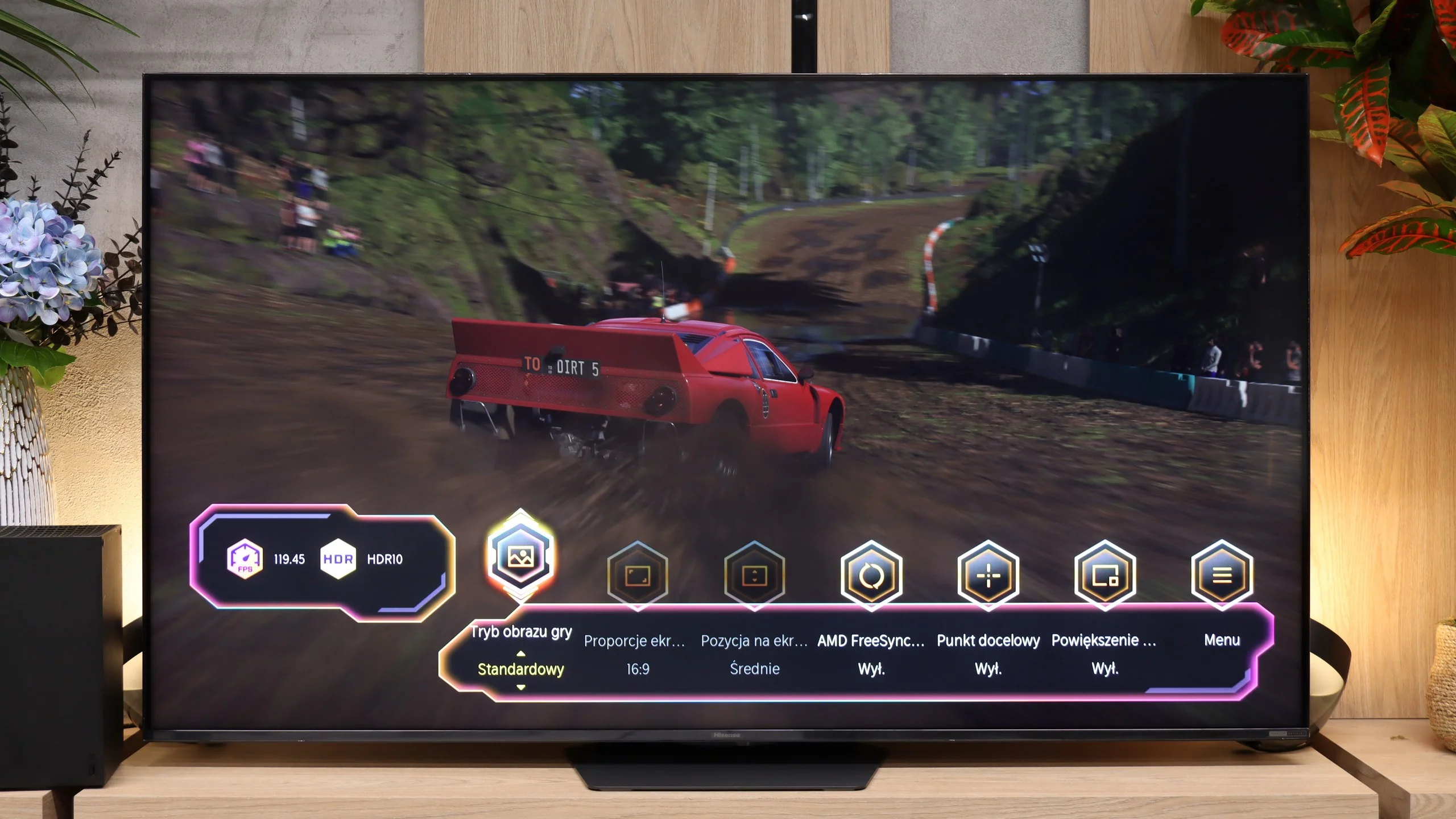
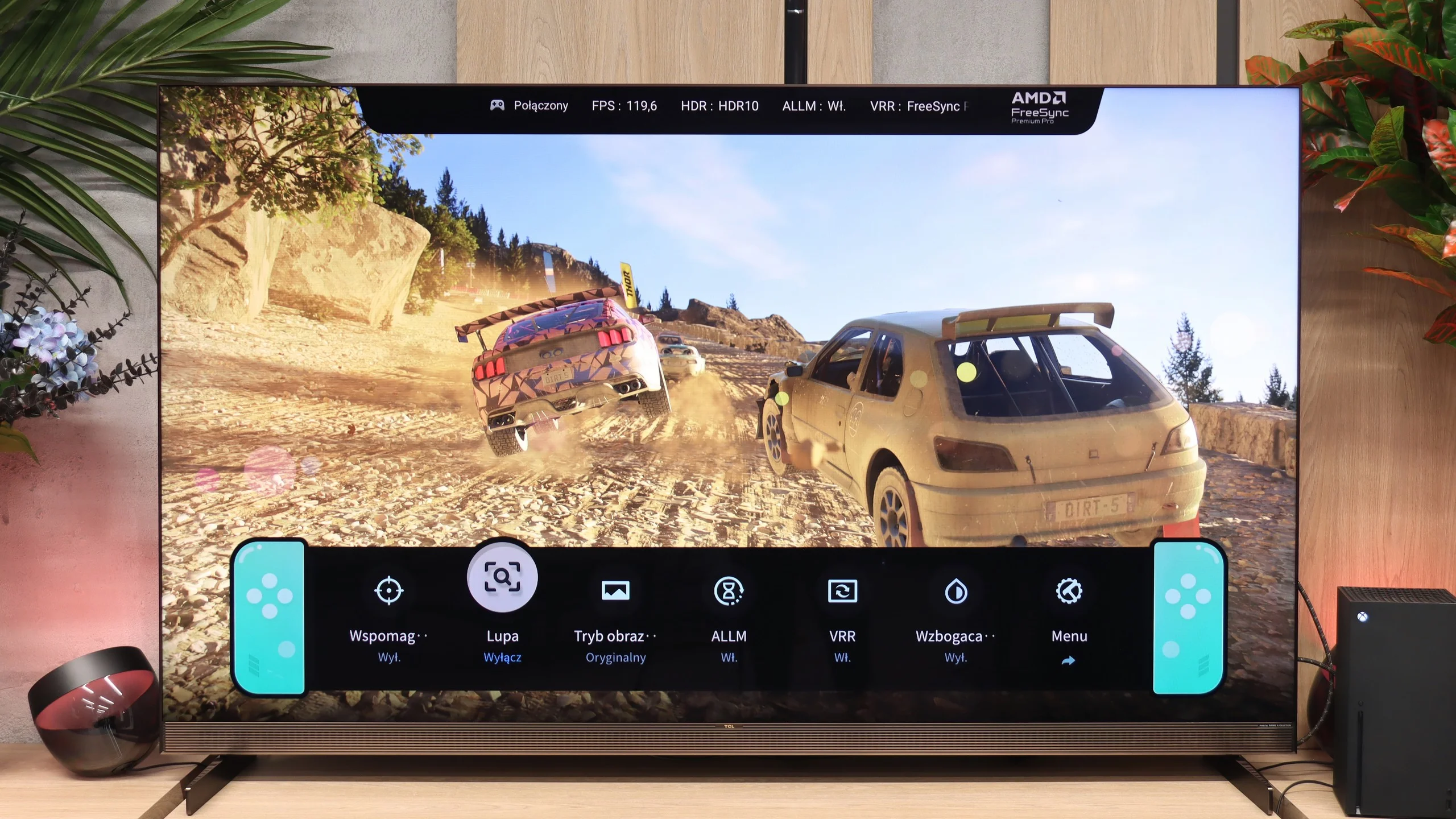
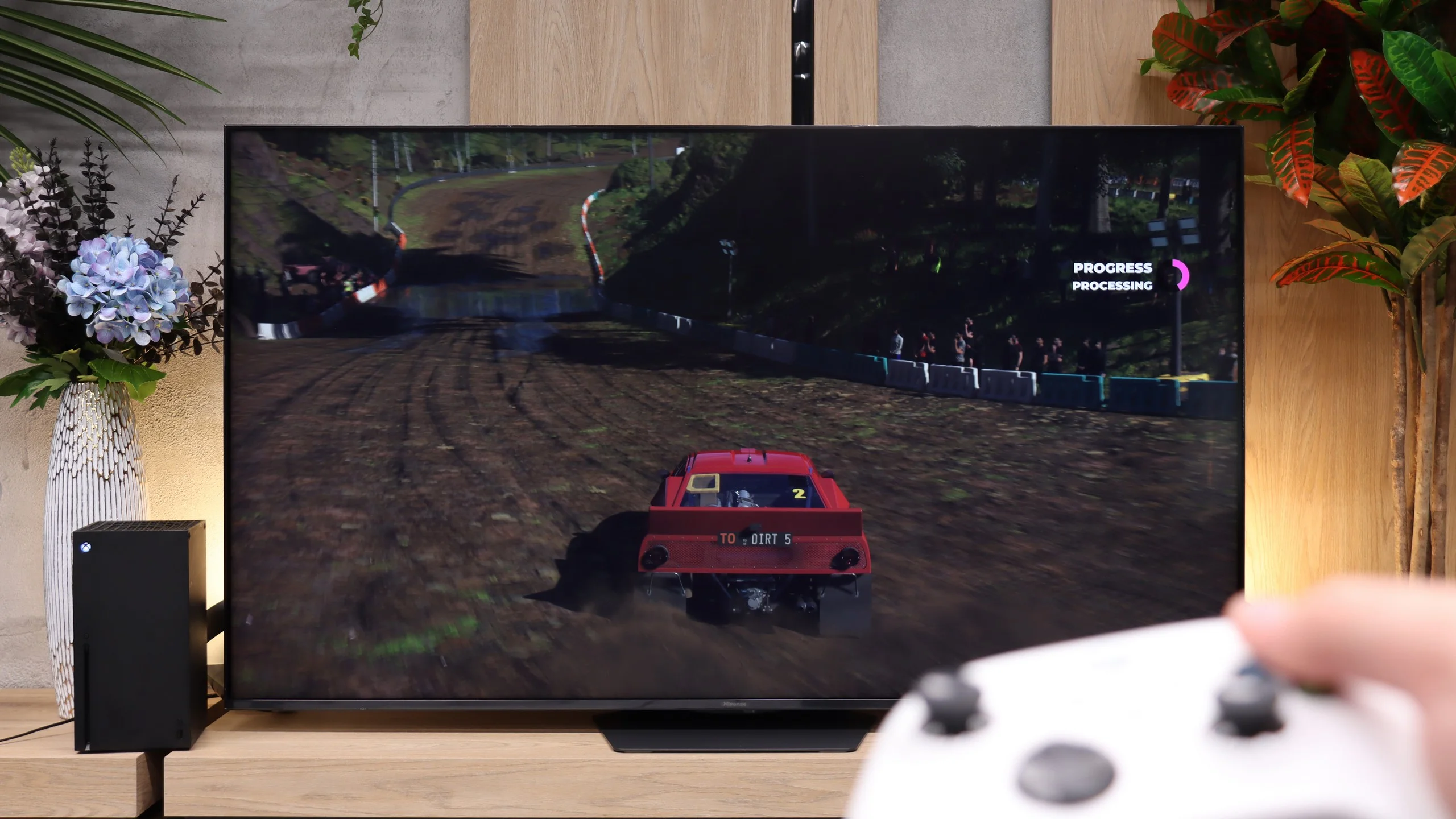
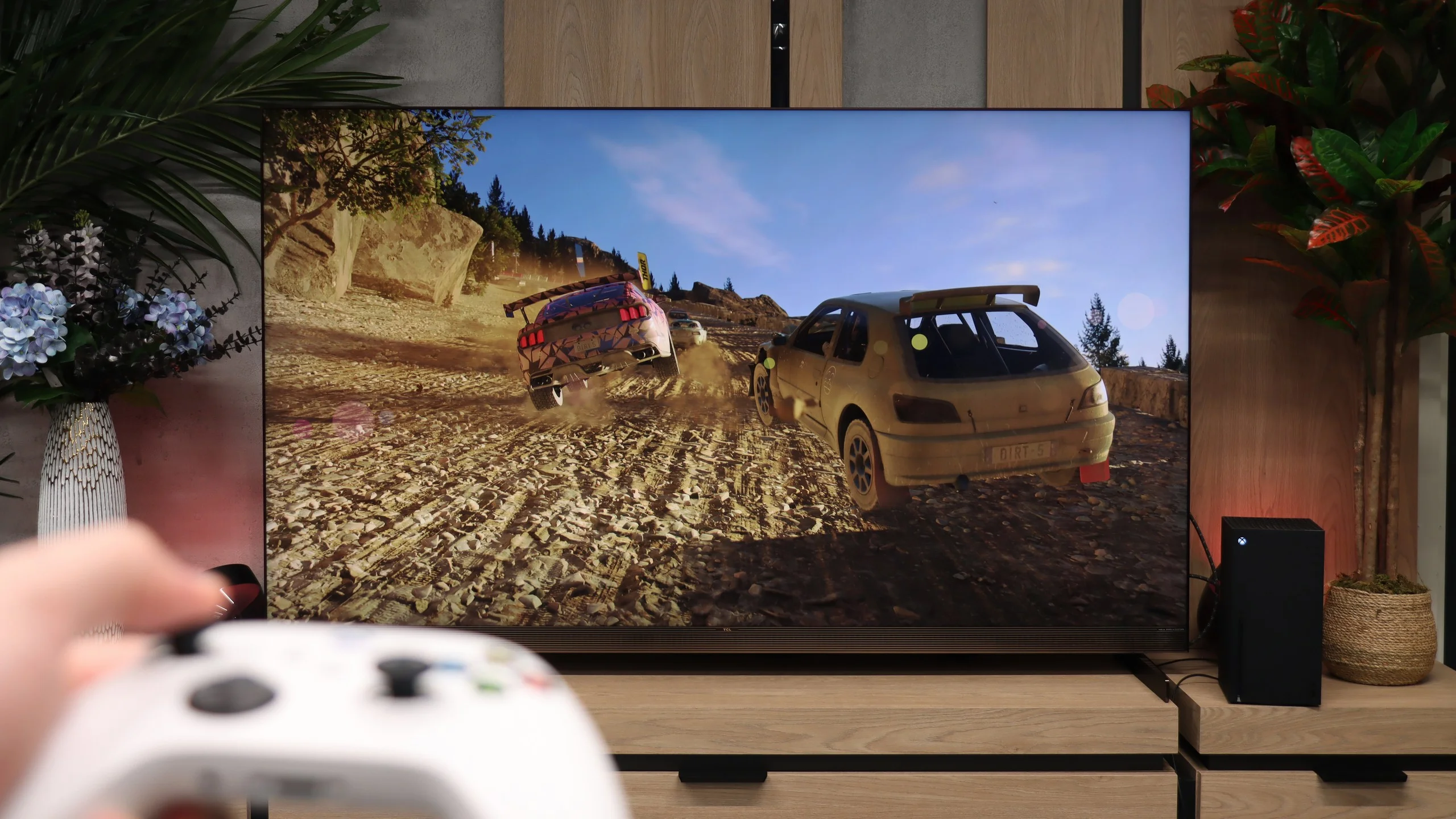
Hisense UR9S is very well prepared for gaming. All three HDMI ports are HDMI 2.1 and offer the full 48 Gb/s bandwidth. The TV supports 4K at 170 Hz, and on larger screen sizes even 180 Hz. It also includes VRR, ALLM, NVIDIA G-Sync and AMD FreeSync, so in terms of basic features there is little to criticise. PC gamers can additionally enable DLG mode. After switching the resolution to Full HD the refresh rate can increase to as much as 330 Hz. That's probably an option for a relatively small group of users, but it shows how much headroom the panel has. Hisense has also added a Game Bar that lets you quickly change key settings, check the refresh rate or enable an on-screen crosshair and minimap zoom.
The biggest drawback remains the lack of a properly working HGiG. The TV still uses its own tone mapping, which makes configuring HDR on a console a bit more difficult. In our case values around 1500 to 2000 nits worked best, but it's worth checking which setting keeps all the detail in the brightest parts of the image.
For gamers the X11L is simply a superb screen. TCL has already accustomed us to the fact that it packs virtually every available feature into its products, and the flagship from the X series is no different. Thanks to the new processor, the X11L has as many as four HDMI 2.1 ports with full 48 Gbps bandwidth. Naturally, HDMI 2.1 brings a set of very useful features, such as Auto Low Latency Mode (ALLM) and VRR frame synchronisation, covering the full refresh range up to 288 Hz. All these features can be conveniently controlled from the dedicated Game Bar. Interestingly, its appearance can be customised to your taste; there are three preset themes to choose from, directly referencing the Nintendo, PlayStation and Xbox consoles. And speaking of Xbox, the X11L also supports Dolby Vision Gaming without any issues.
When gaming in the standard HDR10 format, however, you need to bear in mind the specific tuning of the brightness curve, which can prove troublesome during initial setup. Although the TV supports HGiG, configuring everything via the PlayStation or Xbox system menu can be difficult. The screen’s algorithms tend to artificially brighten the test checkerboard pattern, making it really hard to hit the correct white clipping point by eye. For HDR10 to look correct, we suggest manually setting the console brightness in the console menu to around 2,500–3,000 nits.
Input lag
9.5/10
9.8/10
SDR
HDR
Dolby Vision
The Hisense UR9S can also boast very low input lag. With a 4K signal at 120 Hz, input lag is only around 10 ms, which means thumbstick movements are registered instantly. That level will easily meet the demands of both casual players and fans of fast-paced online battles. We observed slightly higher values after enabling Dolby Vision on an Xbox console. In that scenario, the lag rises to about 20 ms. Even so, it remains low enough not to affect gameplay comfort and is practically unnoticeable during play.
Input lag is very good. Results of around 10-15 ms don't exactly break market records, but in practice they provide the exact same level of comfort as top 5 ms displays. At such low values the difference becomes purely theoretical. During gaming no one can detect any delay.
Compatibility with PC
8.4/10
8.6/10
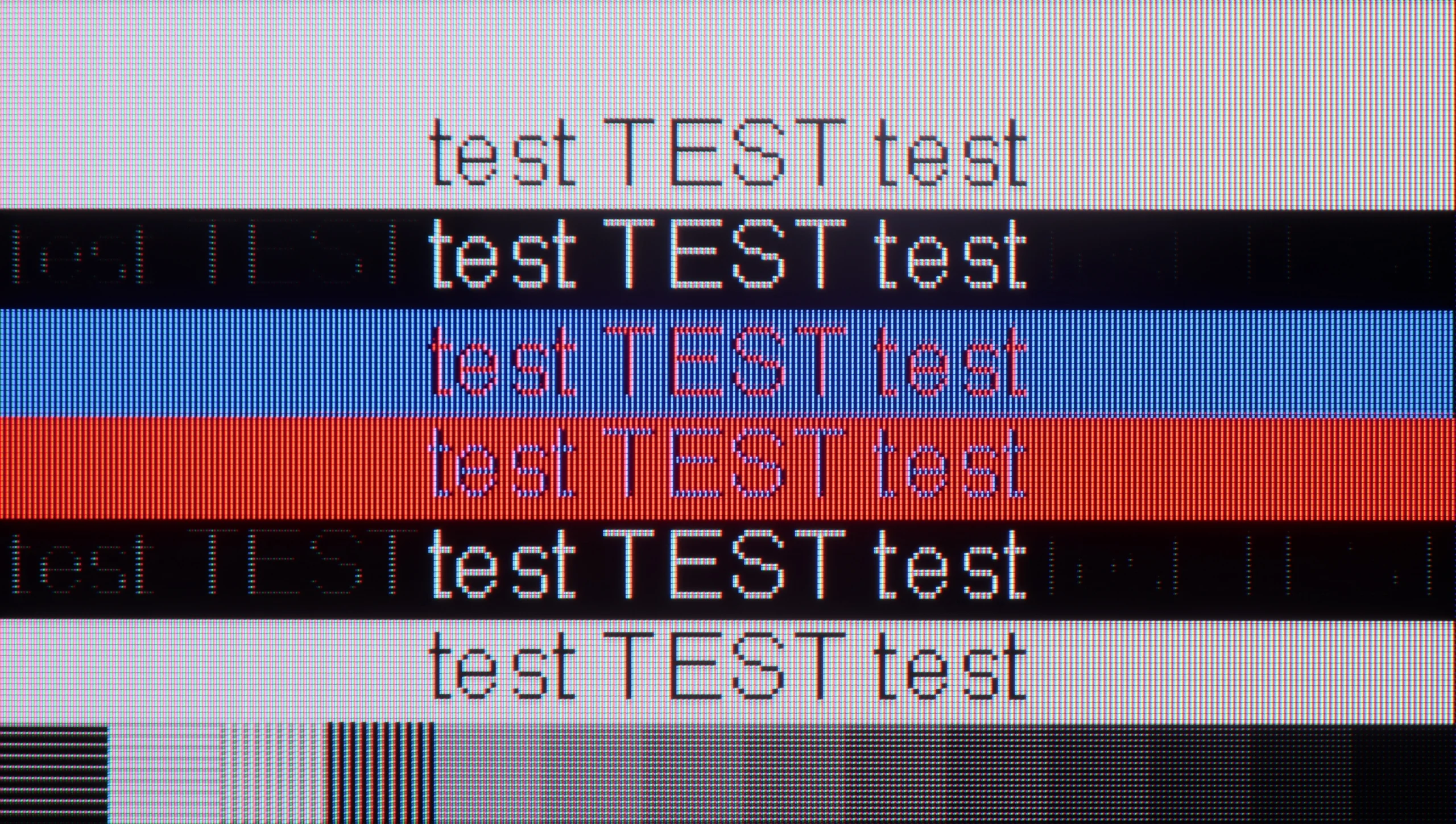
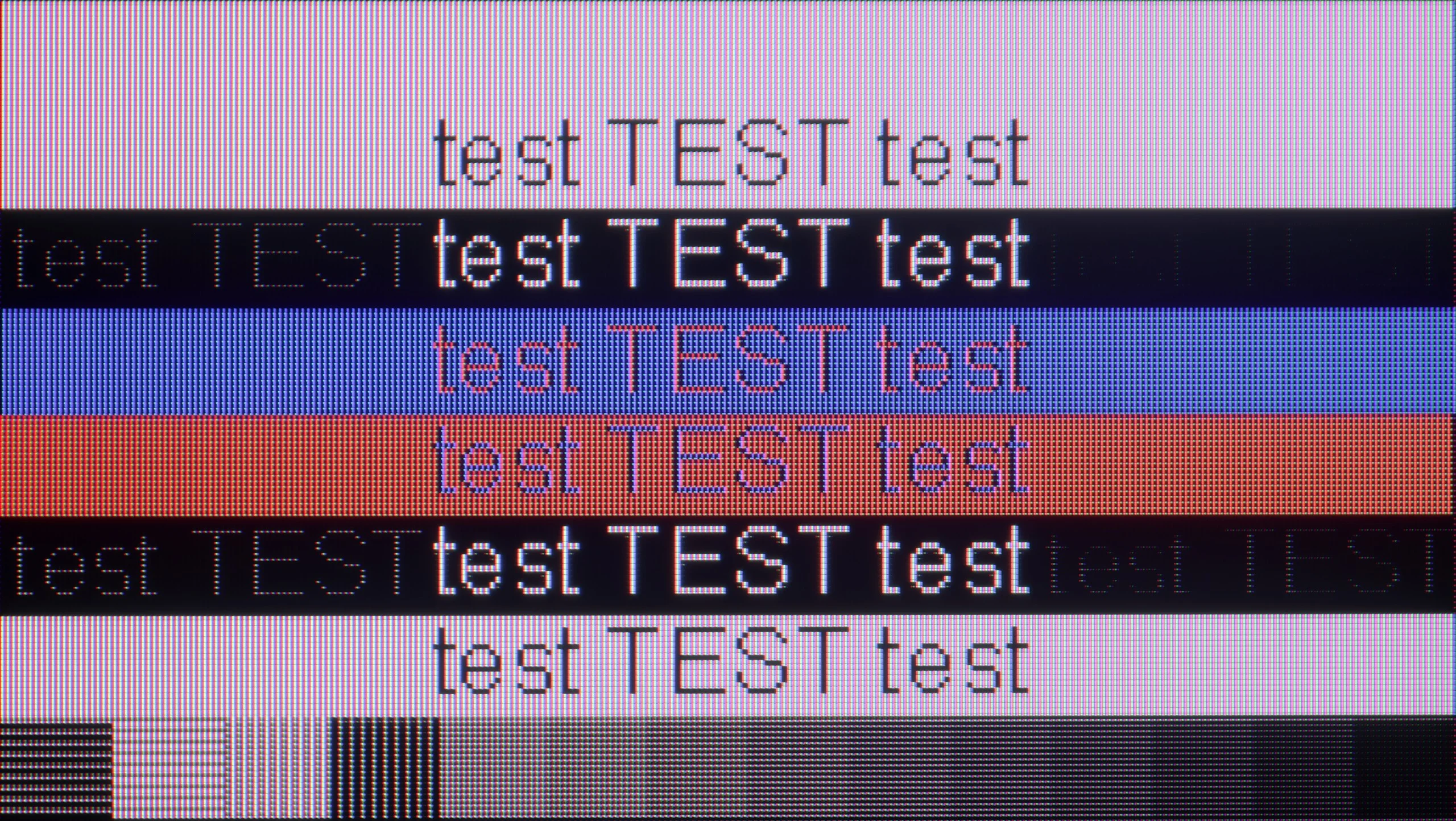
The photo shows the legibility of small fonts. Ideally, lines should be the same thickness on both light and dark text, with minimal pixel gaps.
Its performance with a PC is generally very good, mainly thanks to full support for gaming technologies. The aforementioned G-Sync and FreeSync work flawlessly, and PC gamers will certainly appreciate the ability to natively use higher panel refresh rates. The panel fares a little worse, however, during typical work with text documents. Although the TV easily supports 4:4:4 chroma sampling, so the overall readability of standard fonts remains good, on closer inspection of darker text some imperfections become apparent. Letter shapes can be imprecise, and the horizontal strokes of fonts are less pronounced than the vertical ones, which at times negatively affects the clarity of characters. Undoubtedly this is a flaw, but it is so specific that it is hard to call it a major drawback in a device whose smallest variant starts at 65 inches. It’s hard to imagine anyone planning to put such a screen directly on a desk for everyday office work. 😉
PC compatibility on the X11L is very good, mainly thanks to a powerful suite of gaming features. In addition to console-style benefits and very high refresh rates, it supports PC frame-sync technologies (G-Sync Compatible and AMD FreeSync Premium Pro), tailored to particular GPUs. In short, in terms of gaming, even from a PC source, this screen is simply outstanding. Text work is somewhat weaker, though, because of the fonts' particular legibility. Looking closely at the letters, you can see that horizontal strokes are slightly darker than the verticals, and faint artefacts appear around the edges. The truth is, however, that from a metre or two away this is completely unnoticeable. And given the size of the X11L series, nobody is likely to put this 'beast' on their desk. 😉
Viewing angles
5.6/10
4.5/10
Hisense UR9S is fitted with a VA panel. A natural characteristic of this kind of panel is a drop in contrast and colour saturation when viewing the screen at an angle. In the model we tested this effect is, of course, noticeable, but in our view not so pronounced as to materially reduce the comfort of everyday viewing. To some extent this is also a trait tied to TVs that use RGB backlighting. Compared with many other LCD TVs based on VA panels, the UR9S simply performs well. Colour and black level degradation does not occur as abruptly as in some competing solutions, meaning people sitting slightly to the side of the screen still get a satisfactory image. Naturally you will get the fullest potential and best depth when looking straight at the panel, but for a VA design we rate the viewing angles very positively.
Thanks to its proprietary WHVA 2.0 panel, the viewing angles (for an LCD TV with this type of panel) are really decent. Colours do not wash out as much as they do with classic VA panels often found in lower-tier models. That said, it is not on the level of good IPS/ADS panels, and certainly not of any OLED, but all the same it is not a weak point of this model.
Daytime performance
9.9/10
10/10
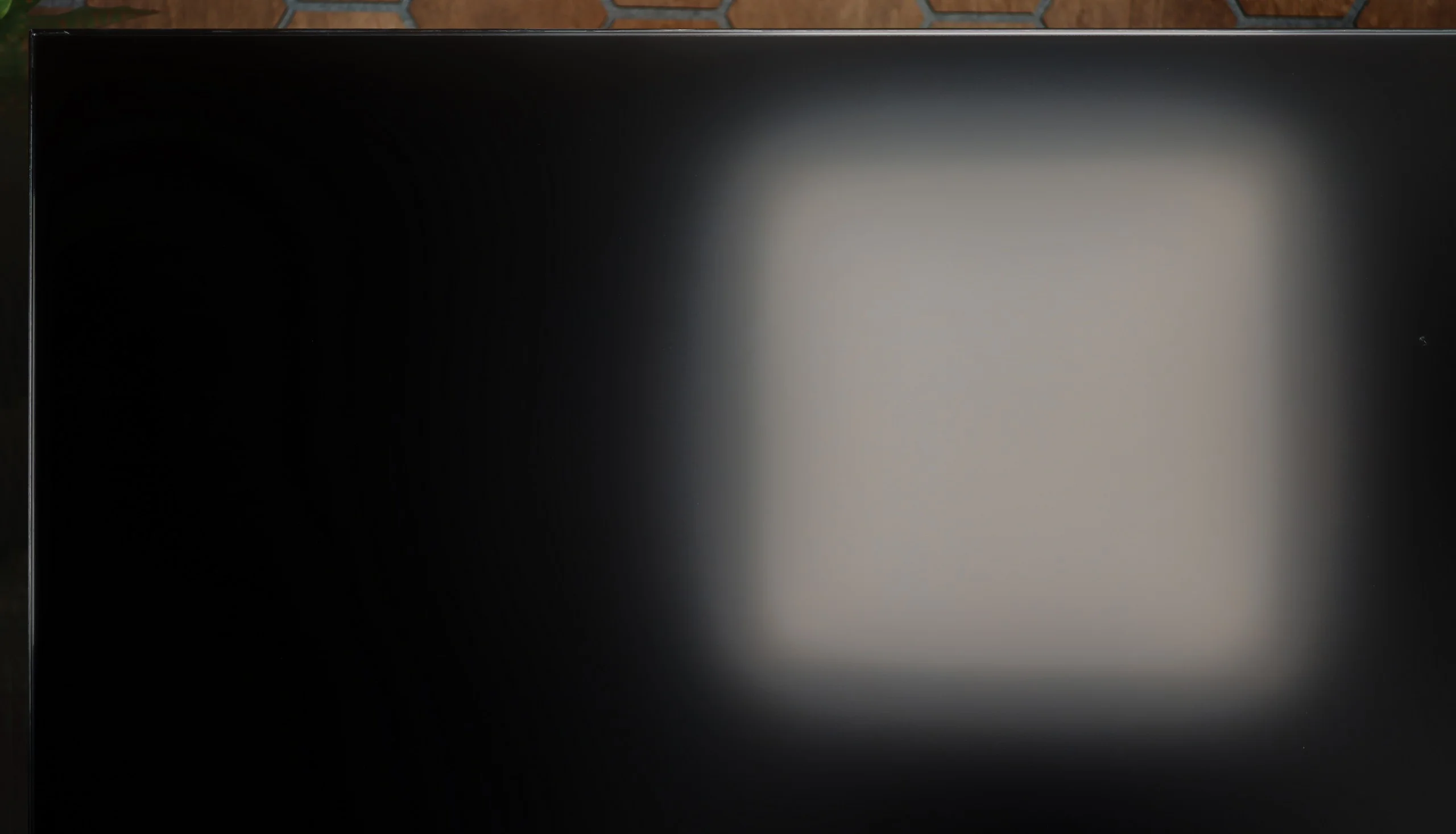
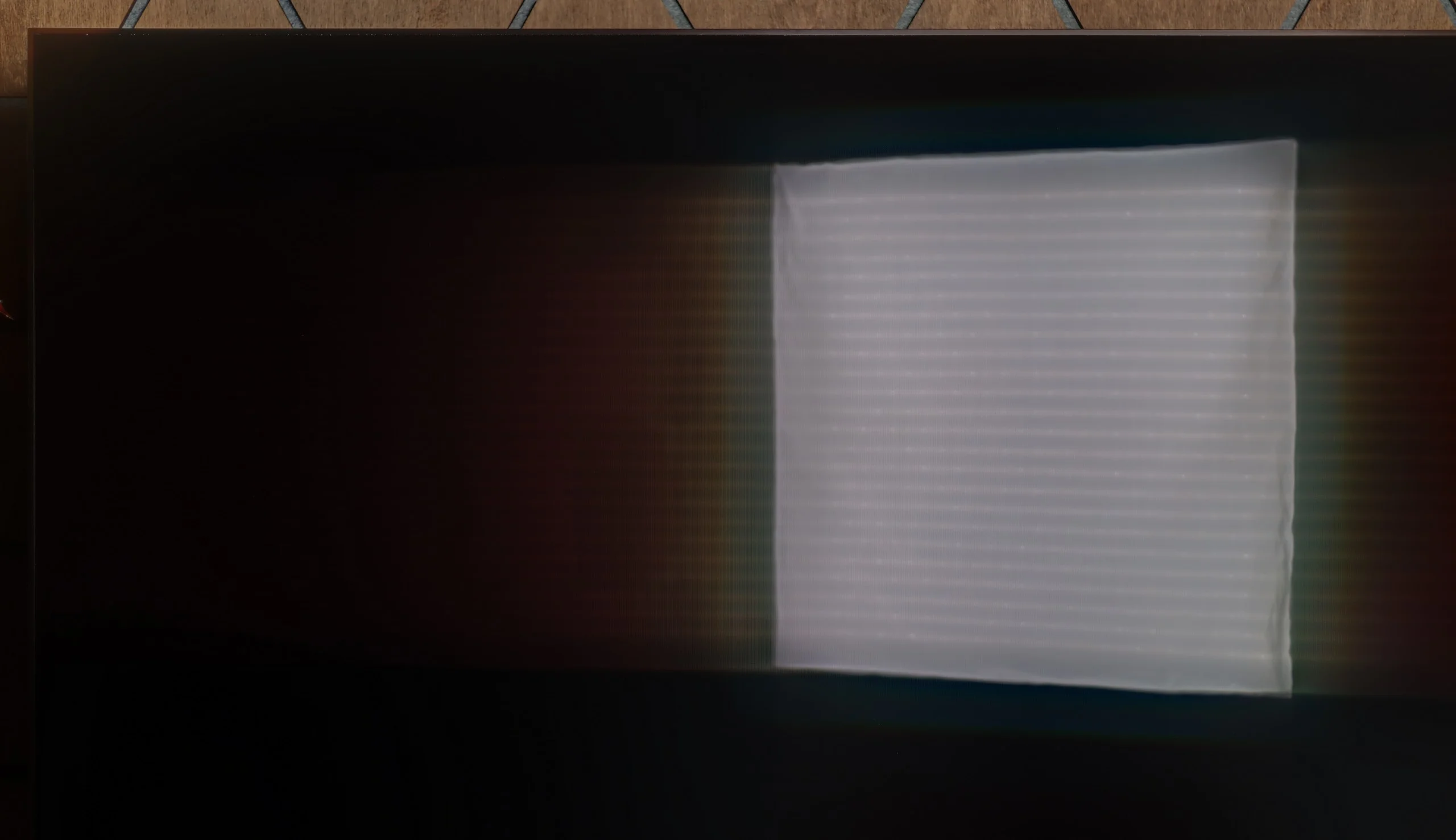
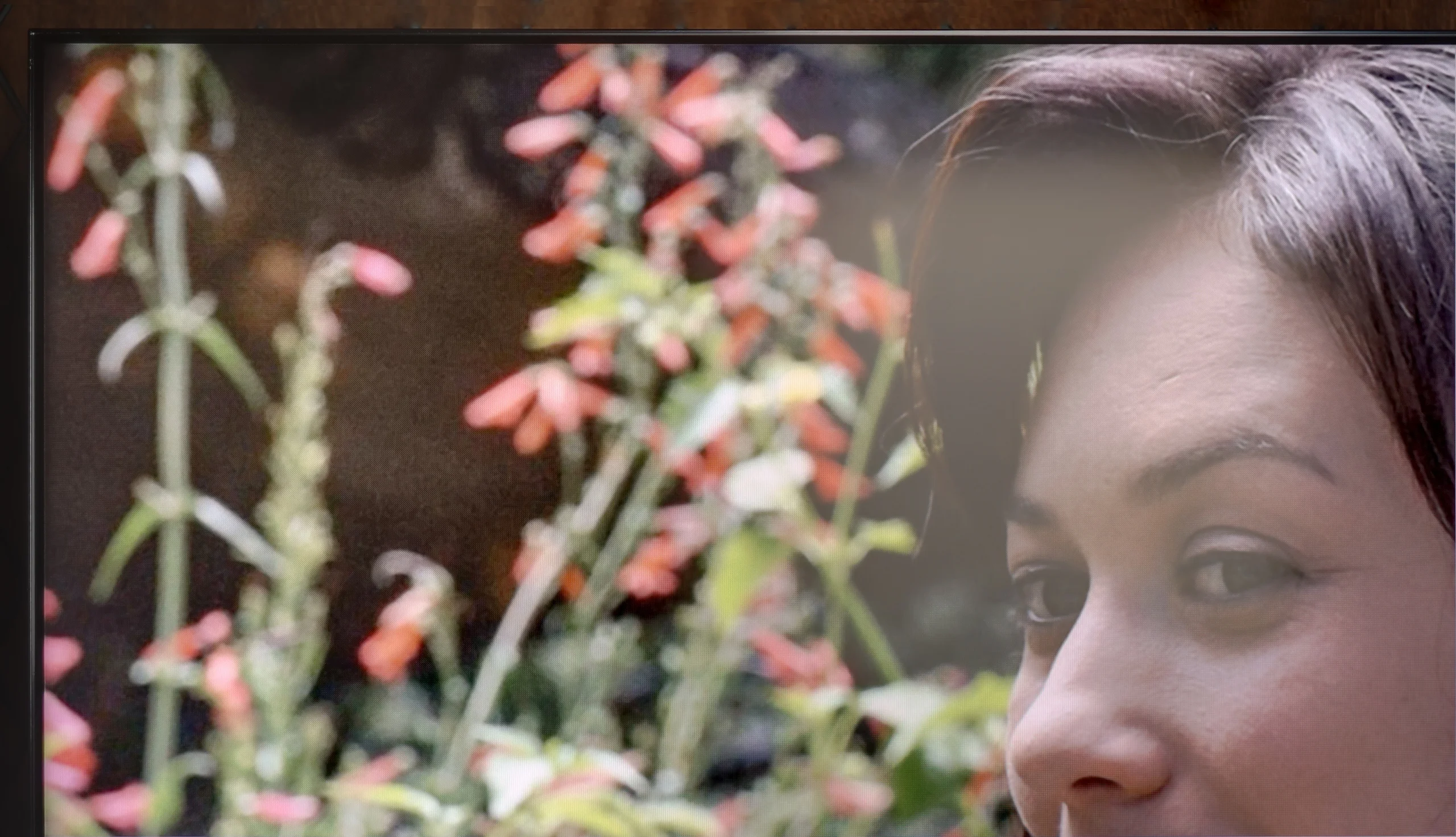
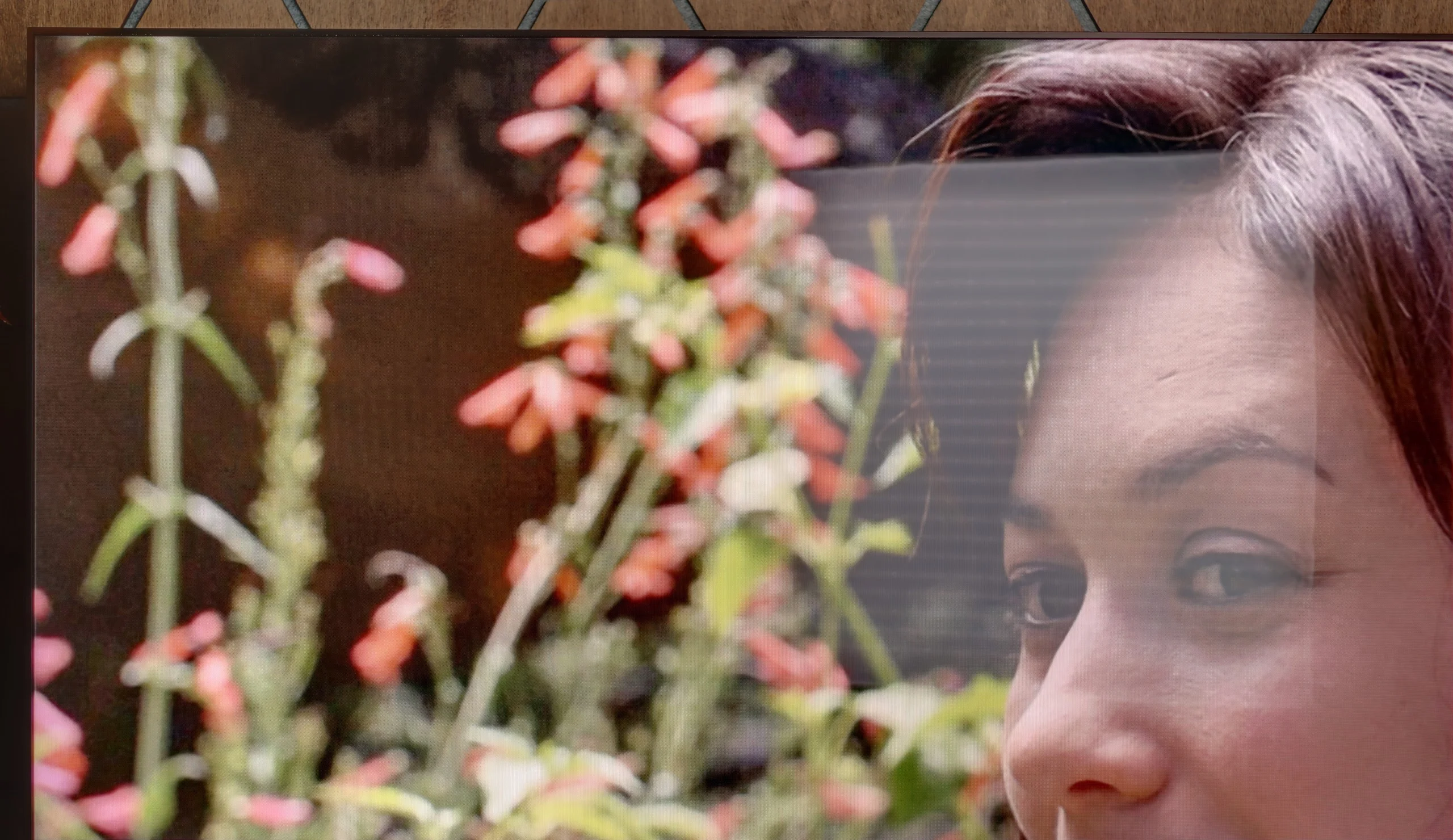
Panel brightness
TCL X11L: 1949 cd/m2
Hisense UR9S: 1639 cd/m2
The Hisense UR9S comes with a matte screen coating that handles direct reflections very well. This is especially important in brightly sunlit living rooms, particularly when light falls directly on the screen. On top of that, the TV is very bright, so even in challenging conditions the picture remains clear. The matte surface, however, makes blacks appear slightly lifted during the day, and colours lose a little saturation compared with glossy screens. Even so, it’s a fair compromise. It’s clear Hisense is targeting this model at people who want a flagship TV but also watch a lot in bright rooms.
The X11L offers outstanding daytime viewing performance, mainly thanks to its extremely high brightness. In SDR content the TV can on average pump out around 2000 nits! The screen is so bright that in typical home conditions it will easily cut through any sunlight entering the room. In that respect, a bright day is no challenge for it. The only drawback for the X11L in this area is a rather glossy panel. Unfortunately this screen doesn't suppress reflections well, so it acts a bit like a mirror. For that reason, when watching in the evening it's best not to switch on lights directly opposite the screen, as lamps and bright items in the room will be fairly clearly visible on the panel surface.
Panel details
Subpixel Structure:
Panel uniformity and thermal imaging:
Hisense UR9S
TCL X11L
TV features
9.4/10
8.3/10
- SystemVIDAAGoogle TV
- System performanceGoodVery good
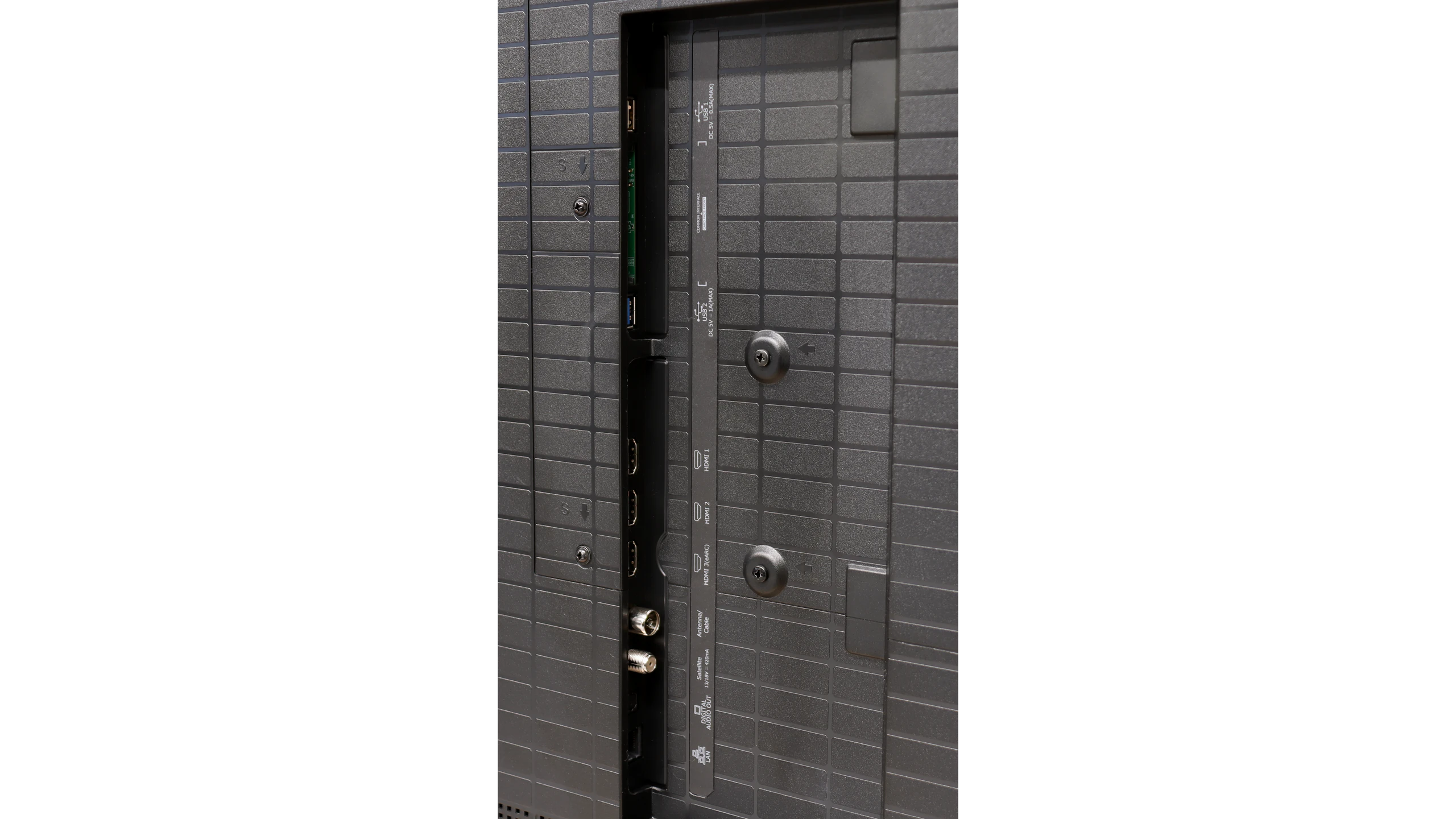
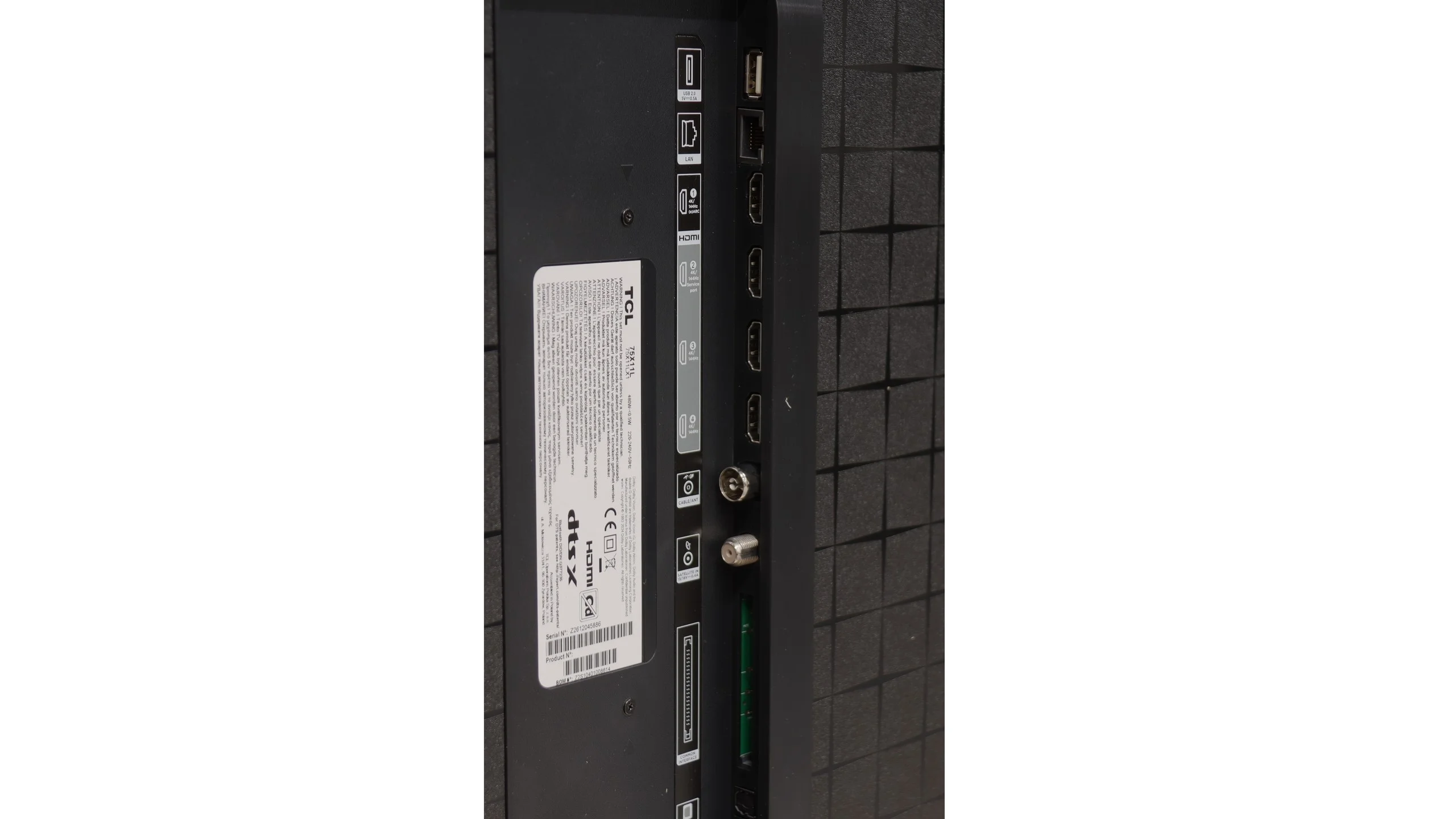
- HDMI inputs0 x HDMI 2.0, 3 x HDMI 2.1 48Gbps0 x HDMI 2.0, 4 x HDMI 2.1 48Gbps
- OutputsToslink (Optical audio), eARC (HDMI), ARC (HDMI)Toslink (Optical audio), eARC (HDMI), ARC (HDMI)
- Network InterfacesWi-Fi 2.4GHz, Wi-Fi 5GHz, Ethernet (LAN) 100MbpsWi-Fi 2.4GHz, Wi-Fi 5GHz, Ethernet (LAN) 100Mbps
- TV receptionDVB-T, DVB-T2, DVB-S, DVB-S2, DVB-CDVB-T, DVB-T2, DVB-S, DVB-S2, DVB-C
Classic features:
- Recording to USB (terrestrial TV)
- Recording programming
- Picture in Picture (PiP)
- RF remote control (no need to aim)
- Backlit remote control
- Teletext
- Audio only mode
- Bluetooth headphones support
- Simultaneous Bluetooth headphones & TV audio
Smart features:
- AirPlay
- Screen mirroring (Windows Miracast)
- Voice search
- Voice search in native language
- Ability to connect a keyboard and mouse
Sound connection options
- HDMI audioeARC (HDMI), ARC (HDMI)eARC (HDMI), ARC (HDMI)
- Other audio outputsToslink (Optical audio)Toslink (Optical audio)
- Wireless audioBluetoothBluetooth
Supported audio formats (external HDMI eARC audio):
- Dolby Digital Plus 7.1
- Dolby True HD 7.1
- Dolby Atmos in Dolby Digital Plus (JOC)
- Dolby Atmos in Dolby True HD
- DTS:X in DTS-HD MA
- DTS-HD Master Audio
Senior accessibility
- Numeric keyboard on TV
- Font size adjustment
- Audio description
Classic features
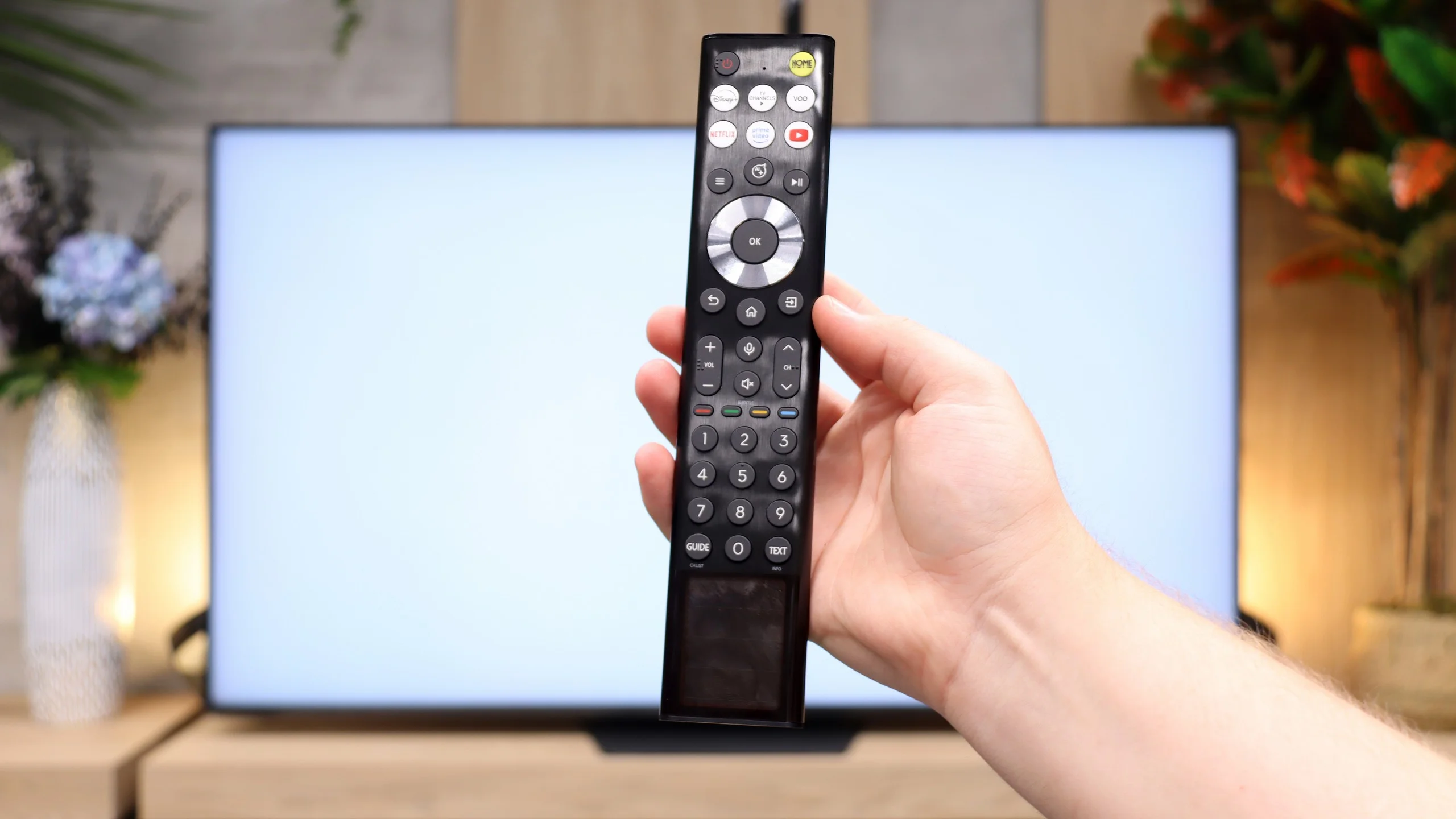
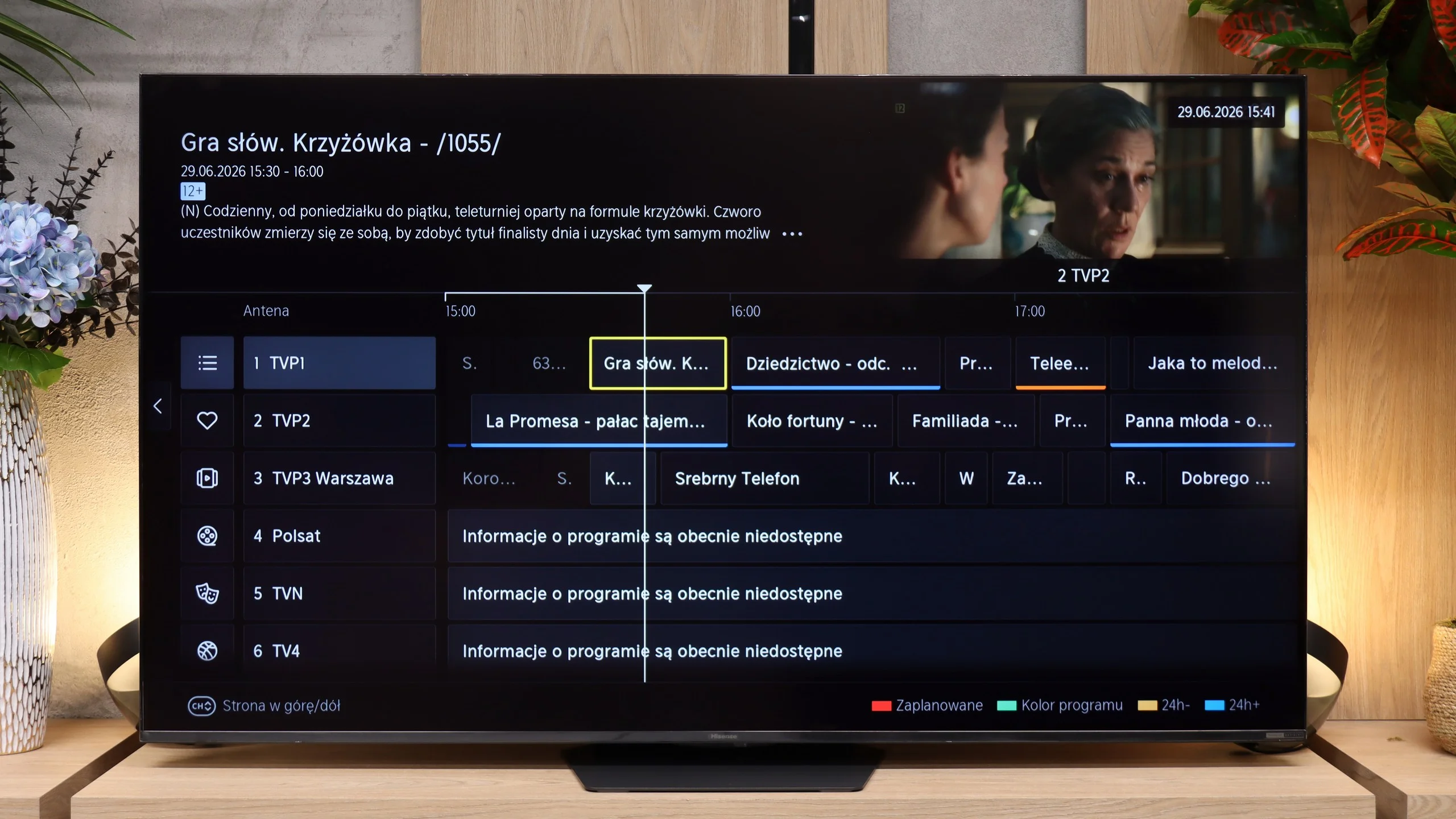
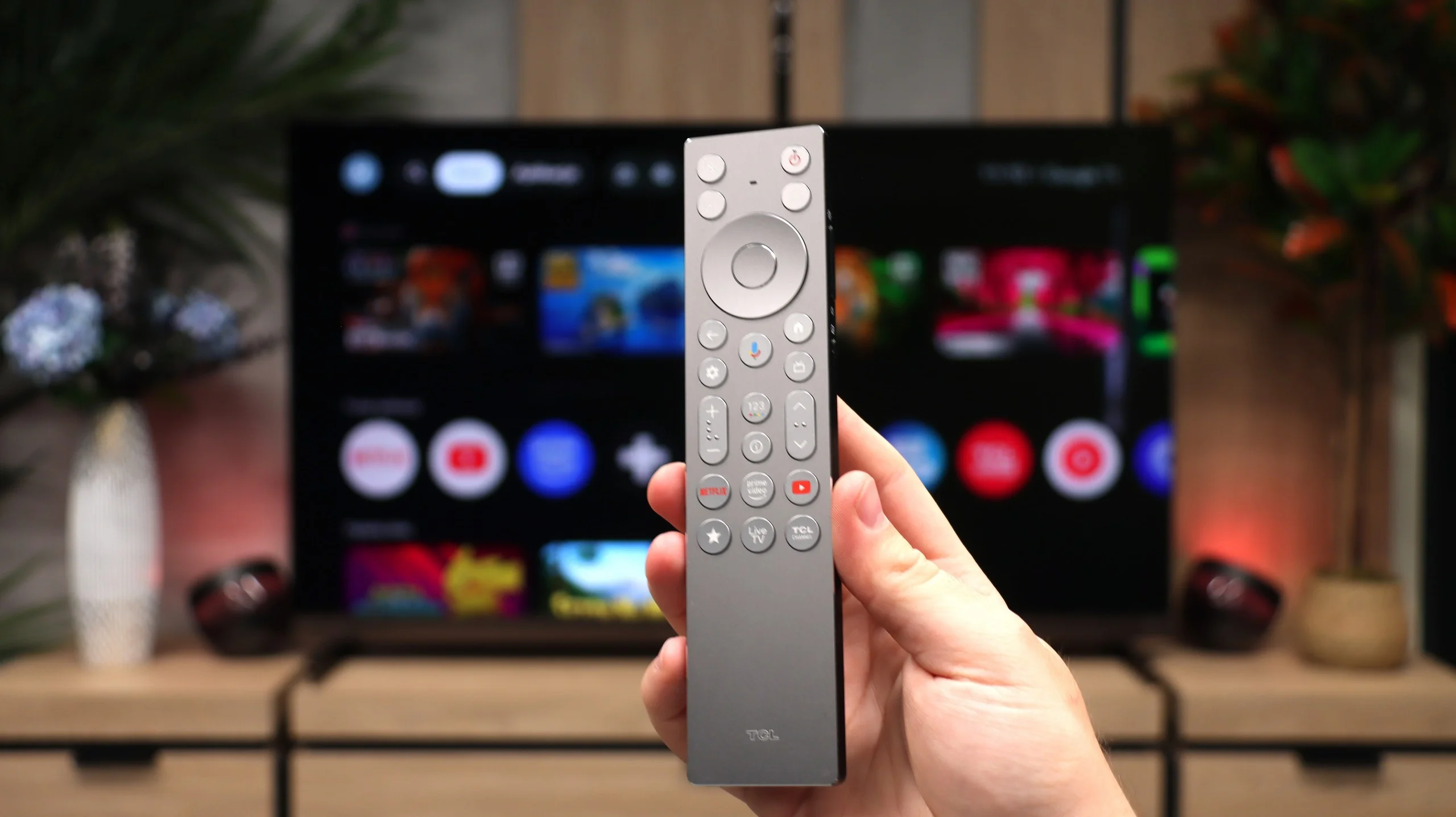
In terms of traditional television features the Hisense UR9S does not disappoint. In addition to a full set of tuners it also offers a CI+ slot and the ability to record programmes to a USB drive, a feature many manufacturers are increasingly dropping. The remote also deserves praise. Besides backlighting, USB-C charging and a small solar panel, the manufacturer has retained a full numeric keypad and a dedicated input button. These are small details, but in everyday use they can be really convenient.
Smart TV
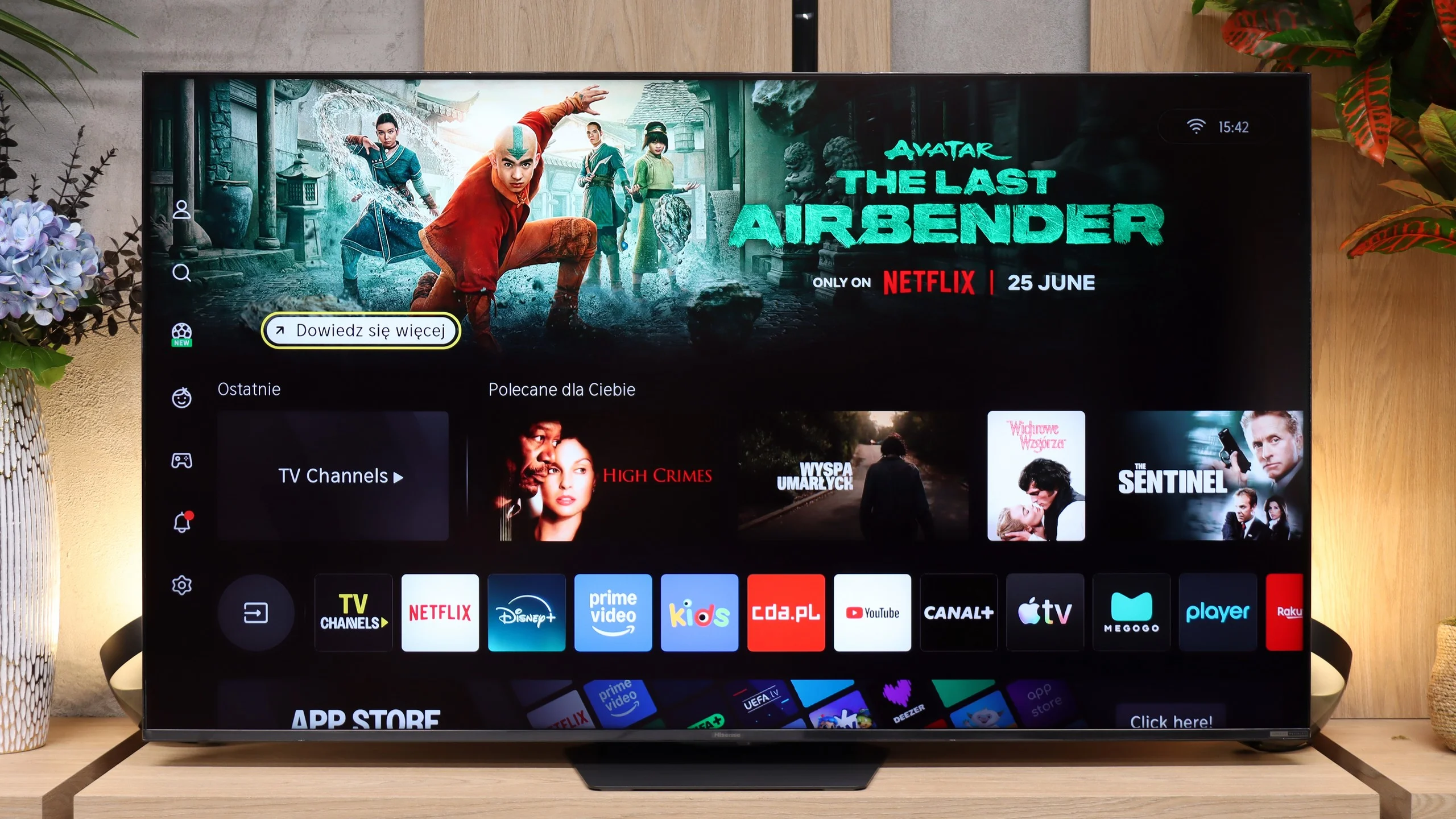
The Hisense UR9S runs HomeOS, which is an evolution of the well-known VIDAA platform. The system itself is very fast and showed no stuttering throughout testing. The app library is slightly smaller than Google TV's, but the main streaming services are, of course, available. The manufacturer has also added a new app offering recommendations for films, series and sporting events, as well as a voice assistant using artificial intelligence.
Smart TV: Google TV
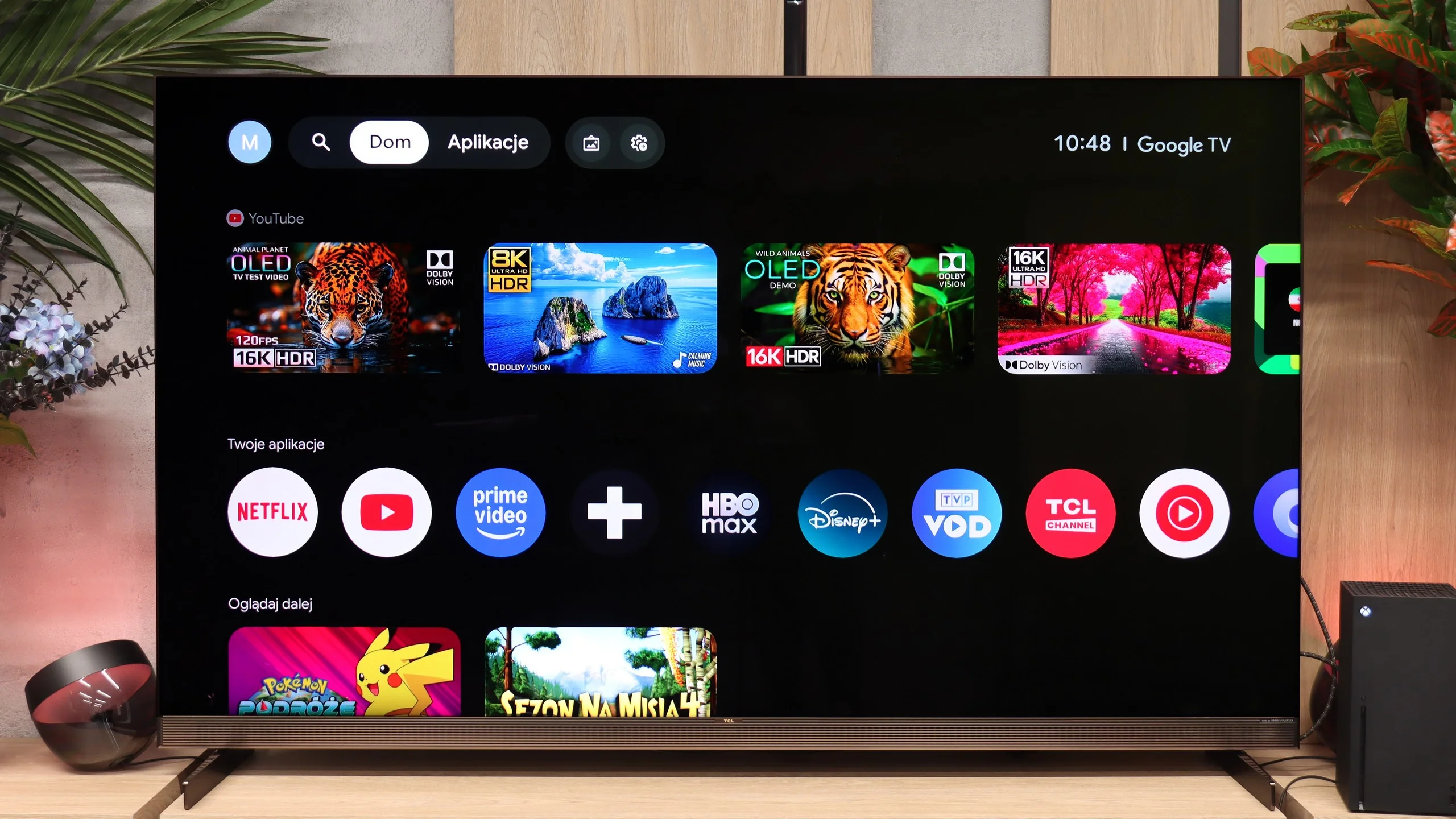
From the Smart TV perspective, the flagship TCL runs Google TV and it is simply excellent software. The platform offers a huge app library that includes virtually every major video-on-demand (VOD) service. Everything runs very smoothly, and the intuitive interface makes daily content browsing easy. A major plus is the responsive voice assistant which, together with Gemini AI support, can accurately suggest films and series based on our previous choices.
Classic features and the remote
While the Smart TV system is top tier, when it comes to conventional features there is really not much to say. The TV provides a well-functioning teletext and that is pretty much all you can expect from traditional television features. TCL has skimped on the basics. There is no USB recording function (PVR) and not even a picture-in-picture (PiP) option. As for the remote, it is very well made, sits comfortably in the hand and even has backlit buttons that make it easier to use at night. Unfortunately, the manufacturer chose not to include numeric buttons. That may not go down well with older viewers or those who like to flick through channels in the traditional way by entering their numbers.
Apps
8.3/10
9.6/10






















Playing files from USB
8.3/10
9.4/10
Supported photo formats:
Maximum photo resolution:
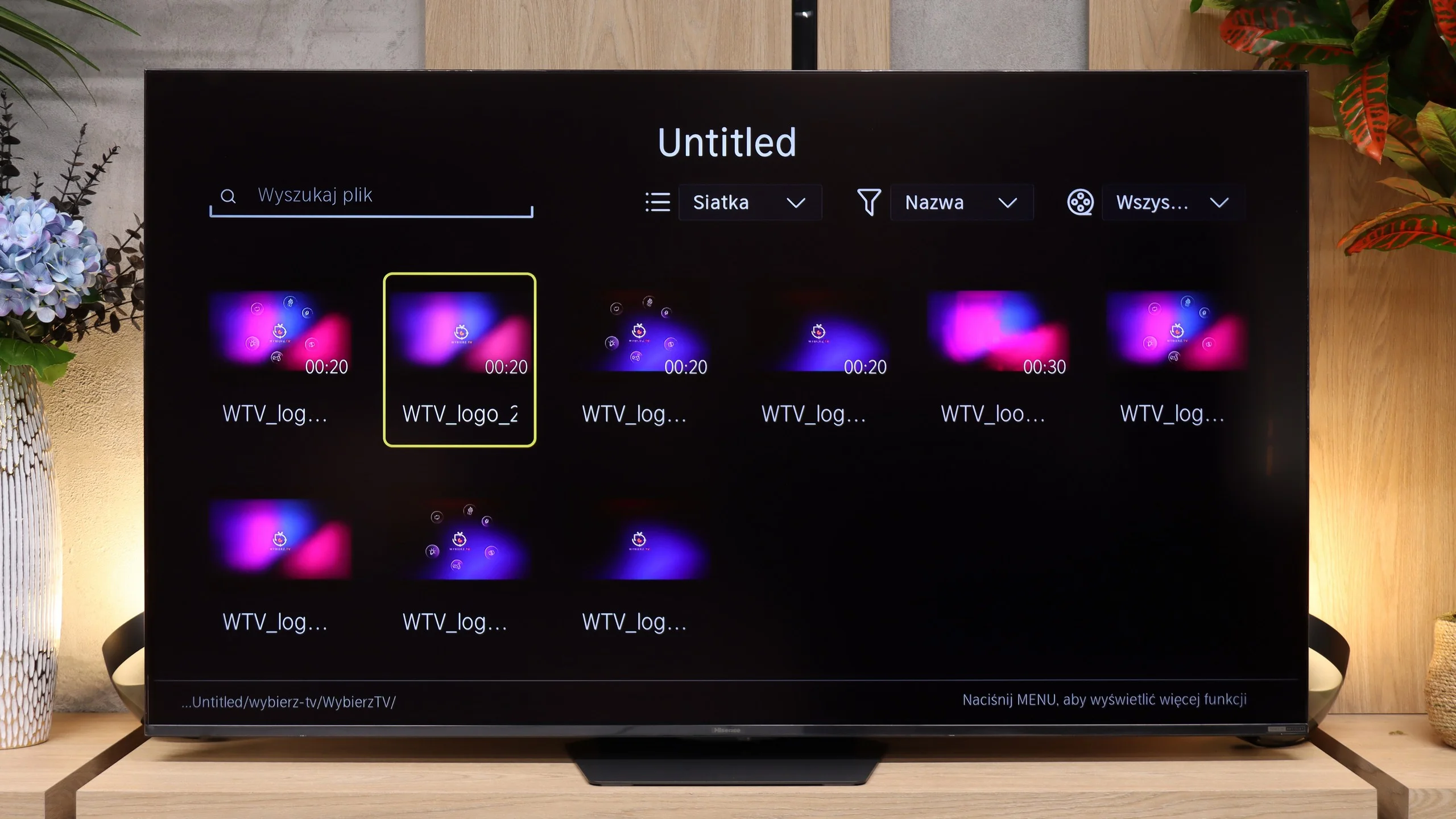
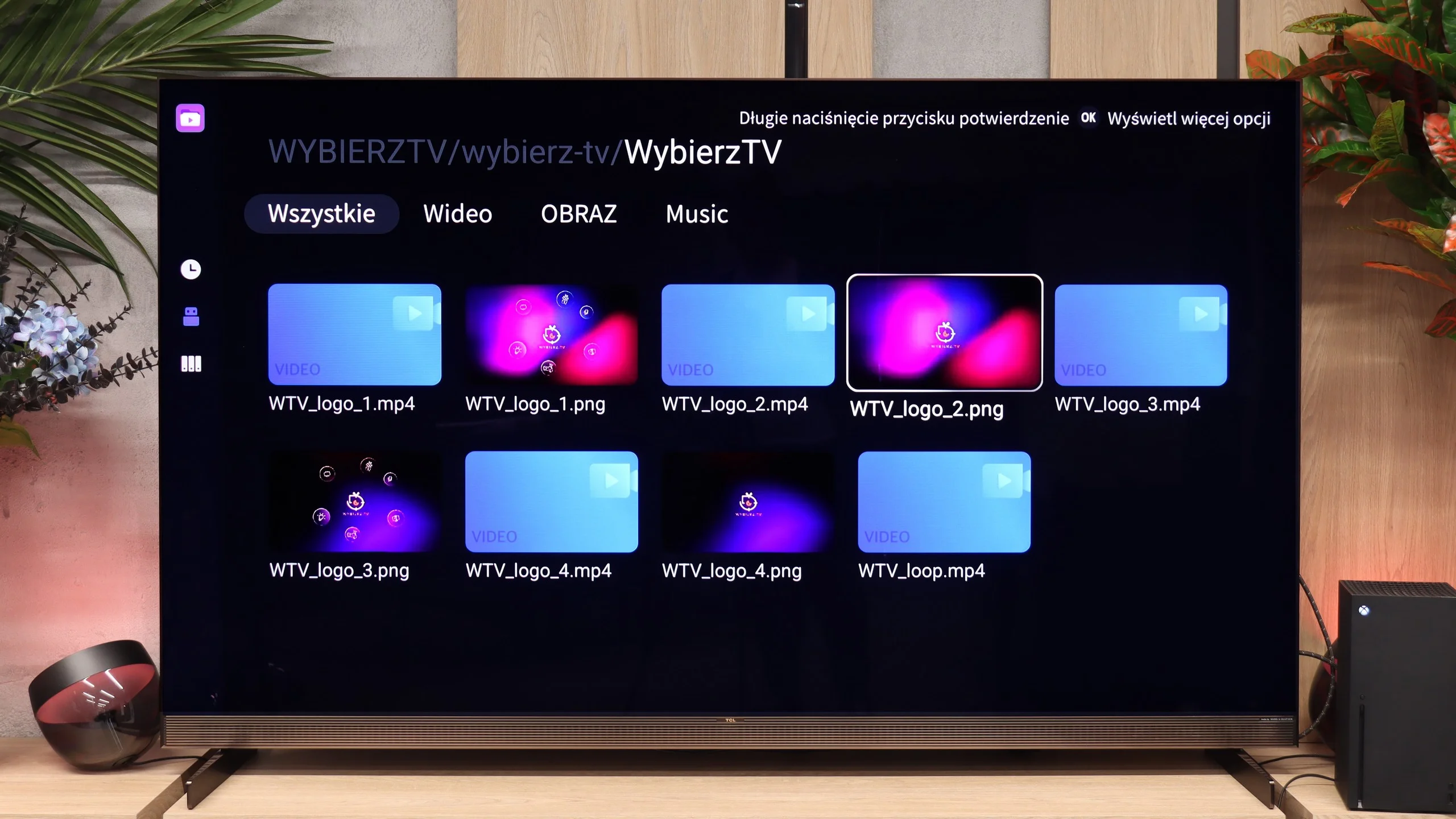
The built-in media player copes fairly well overall and will be perfectly sufficient for most users. However, during testing we came across a few annoying details that could spoil your mood. Above all, the TV is fussy when trying to display high-resolution photos; the system simply refused to work with files sized 10, 12, 20, 24 or 28 Mpix. Sure, this is not a fault that rules out the model, but if you want to copy raw photos from your camera onto a USB stick to show friends some holiday shots, you are in for an unpleasant surprise. In that scenario you either have to resort to wireless screen mirroring via Miracast or manually reduce the files’ resolution on your computer beforehand.
The built-in player works very well. During our tests we examined it from every angle and it played virtually every video file and audio format we threw at it without a hitch. The only minor quirk is that the player refused to work with external text files in .txt format. If that is a major issue for you, the operating system can help: from the app store you can always install a third-party player, such as the reliable VLC, which will handle any kind of subtitles. In most cases you won't need to, though, because the stock TCL app is absolutely top-tier when it comes to file compatibility.
Sound
7.8/10
8.2/10
- Maximum volume89dB84dB
- Dolby Digital Plus 7.1
- Dolby True HD 7.1
- Dolby Atmos in Dolby Digital Plus (JOC)
- Dolby Atmos in Dolby True HD
- DTS:X in DTS-HD MA
- DTS-HD Master Audio
Hisense UR9S features a 4.1.2 speaker system with a total power of 90 W. The manufacturer emphasises its collaboration with French brand Devialet, both on the chassis and in the TV menu. It must be said that the UR9S sounds really good for built-in speakers. It's loud, easily fills a larger living room, and the sound is full and clear. Dialogue is easy to hear, and there is more bass than in most televisions. Is there a big difference compared with last year's flagship Hisense models? Frankly, no. Despite the Devialet logo, the sound signature remained very similar. That does not change the fact that the UR9S is among the better-sounding televisions on the market. It is also worth noting the support for Dolby Atmos and DTS, which many manufacturers have already dropped.
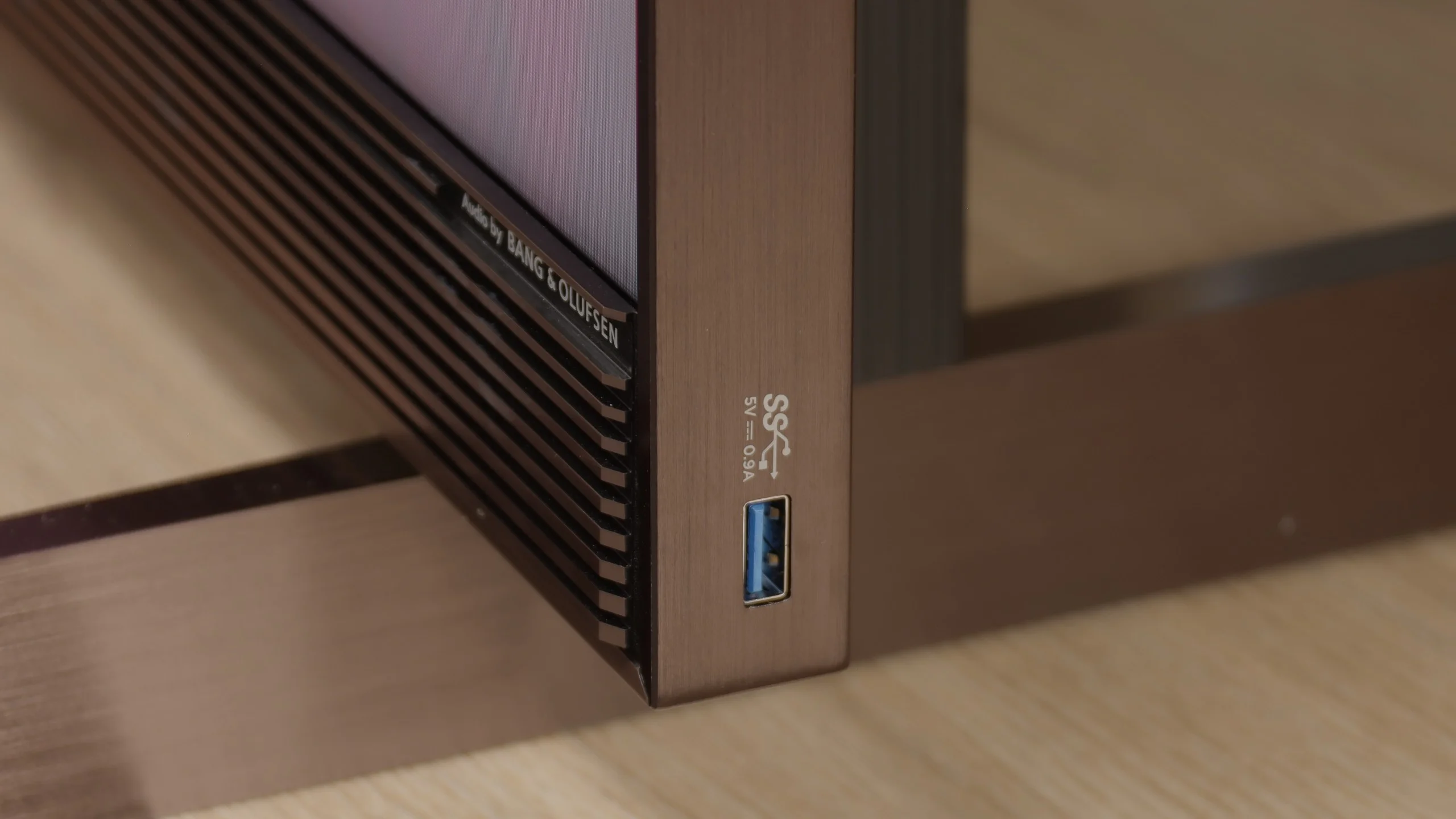
The sound in the X11L is really good, thanks to a very elaborate audio system. The Bang & Olufsen-branded speakers here perform very well: the sound is relatively spacious, clean and free of any odd interference or cabinet resonances even at higher volumes. In that respect the X11L delivers. Still, we feel a slight sense of disappointment. Considering the front of the case has an integrated soundbar, we expected somewhat better sound. We certainly wouldn't compare this sound to similar solutions fitted by direct competitors. Despite our small reservation, the sound is definitely above average and solid. It's ideal for everyday viewing, and buying a basic soundbar without a subwoofer for this model makes no sense at all.
Sound Quality Test
Acoustic Measurements
89dBC (Max)
75dBC
84dBC (Max)
75dBC
Reader comments
Comments are provided by the external service Disqus (Zeta Global). Once loaded, Disqus may set cookies and process data about your activity.
We will remember your choice on this device. Provider's privacy policy