 Redakcja Choose TV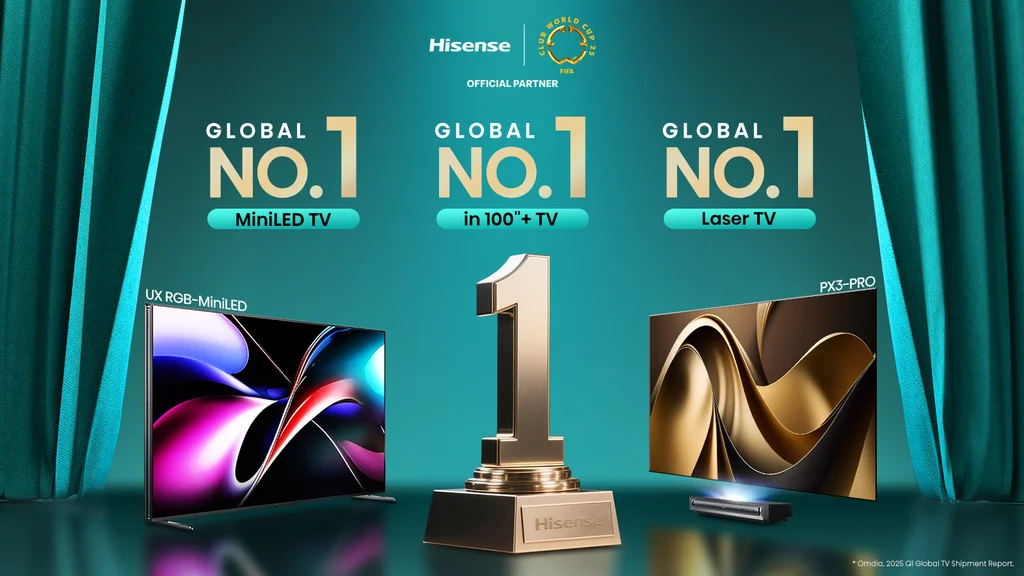
A few years ago, a 100-inch television was an exotic curiosity that only a select few could afford. Today, it represents a real market segment where – as the latest data shows – one player holds the cards. According to a report by the analytical firm Omdia, Hisense has maintained its position as the leader in the "super-size" screen category (100 inches and more) for the third consecutive year. The numbers speak for themselves: the Chinese manufacturer currently controls 57.1% of global sales in this segment. This means that every second giant screen reaching customers' homes worldwide has come from Chinese factories.
Two paths to a big picture: Laser TV and RGB Mini-LED
The success of Hisense is not a coincidence but the result of a dual-track strategy. For years, the company has been promoting its so-called Laser TV, a specific combination of a short-throw projector with a dedicated screen. In this niche but still growing category, Hisense is almost a monopoly with a market share of 70.3%.
MiniLED: A New Leader at the Top
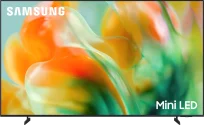
It is perhaps the biggest surprise that Hisense is the leader when it comes to the sales of MINI-LED televisions. They control nearly 1/3 of the market. Exactly 29.3% of the market. This shows that the technology, which was supposed to be the domain of Samsung or TCL, has been effectively "captured" by a brand that quickly scaled up production of this type of screen on its own.
What awaits us in 2026? The flagship 116UXS is coming
For those planning to purchase a large screen in the coming months, the information coming from the editorial team of HDTVTest is particularly interesting. Hisense is preparing a strong model offensive:
UR8 and UR9 Series: These will be models "for the masses" (if one can speak of mass appeal at such sizes), available in sizes ranging from 55 to 100 inches.
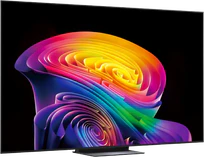
Flagship 116UXS: This will be the first television to utilise RGB Mini-LED evo technology. (We saw it at the CES fair):
Mundial 2026 as fuel for giants
Why is Hisense pushing so hard for 100-inch screens right now? The answer is simple: 2026 FIFA World Cup. As Robert Andrews from the UK division of the brand says in a conversation with HDTVTest, large sporting events have always been a driving force behind the exchange of equipment in homes. The company's strategy is clear; they want to provide specifications that have so far been reserved for the most expensive models, but in a size that OLEDs (due to cost and production process) won't achieve for quite some time.
Source: HISENSE, OMDIA, HDTVTEST