 Direct comparison
In the 85- and 98-inch sizes the Xiaomi S Mini 2026 is a TV you can recommend with much more confidence than its smaller variants. Very good contrast, around 1,000 nits of brightness and Dolby Vision support make HDR movies look really good, and the 144 Hz panel gives it completely different capabilities for sport and gaming. If you're looking for a large Mini LED and don't want to pay top-tier prices, this variant simply makes a lot of sense. It's not without flaws. Processing of lower-quality source material could do with a bit more polish, which is noticeable on such a large screen. You have to remember the price, though; at this budget most competitors also demand compromises, often even bigger ones. That's why the 85- and 98-inch versions stand as a much more complete offering and, with good pricing, are simply good value. The hardest thing to understand is Xiaomi's decision to lump all sizes into a single line-up. Buying the 85- or 98-inch model gets you not only more inches but also native 144 Hz, Dolby Vision, a more responsive system and a better processor. That alone would have been enough to create a separate series. It would be clearer for the customer, who would immediately know that the smaller and larger S Mini 2026 are actually two different TVs. Ultimately it is in these largest screen sizes that the Xiaomi S Mini 2026 performs best. It's a genuinely successful TV that offers a huge screen and great specs at a very attractive price.
- Matching (Score) |
- Our verdict |
- TV appearance |
- Where to buy |
- Contrast and black detail |
- HDR effect quality |
- Factory color reproduction |
- Color reproduction after calibration |
- Smoothness of tonal transitions |
- Image scaling and smoothness of tonal transitions |
- Blur and motion smoothness |
- Console compatibility and gaming features |
- Input lag |
- Compatibility with PC |
- Viewing angles |
- Daytime performance |
- Panel details |
- TV features |
- Apps |
- Playing files from USB |
- Sound
S Mini 2026
U7S / U77S

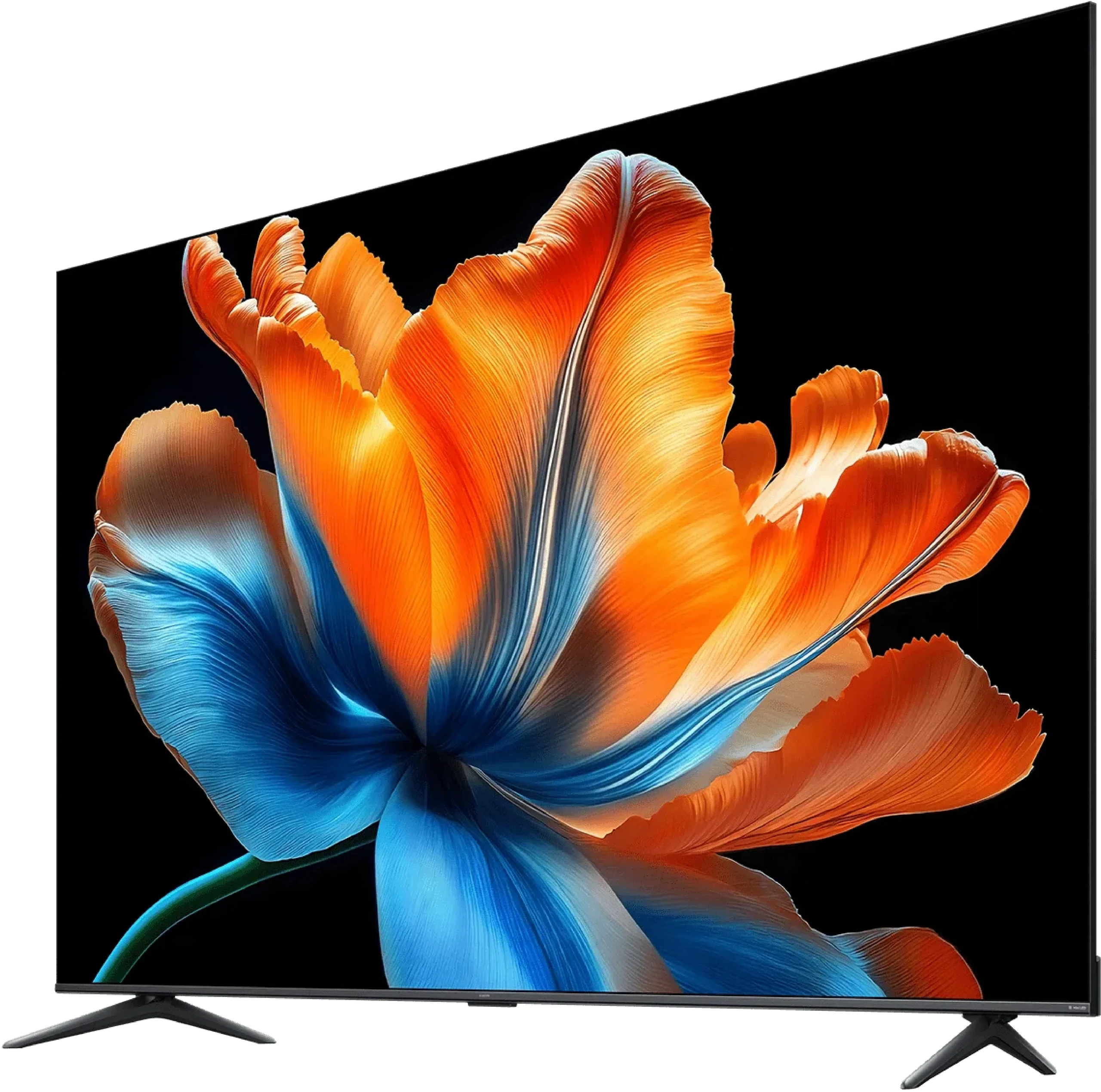
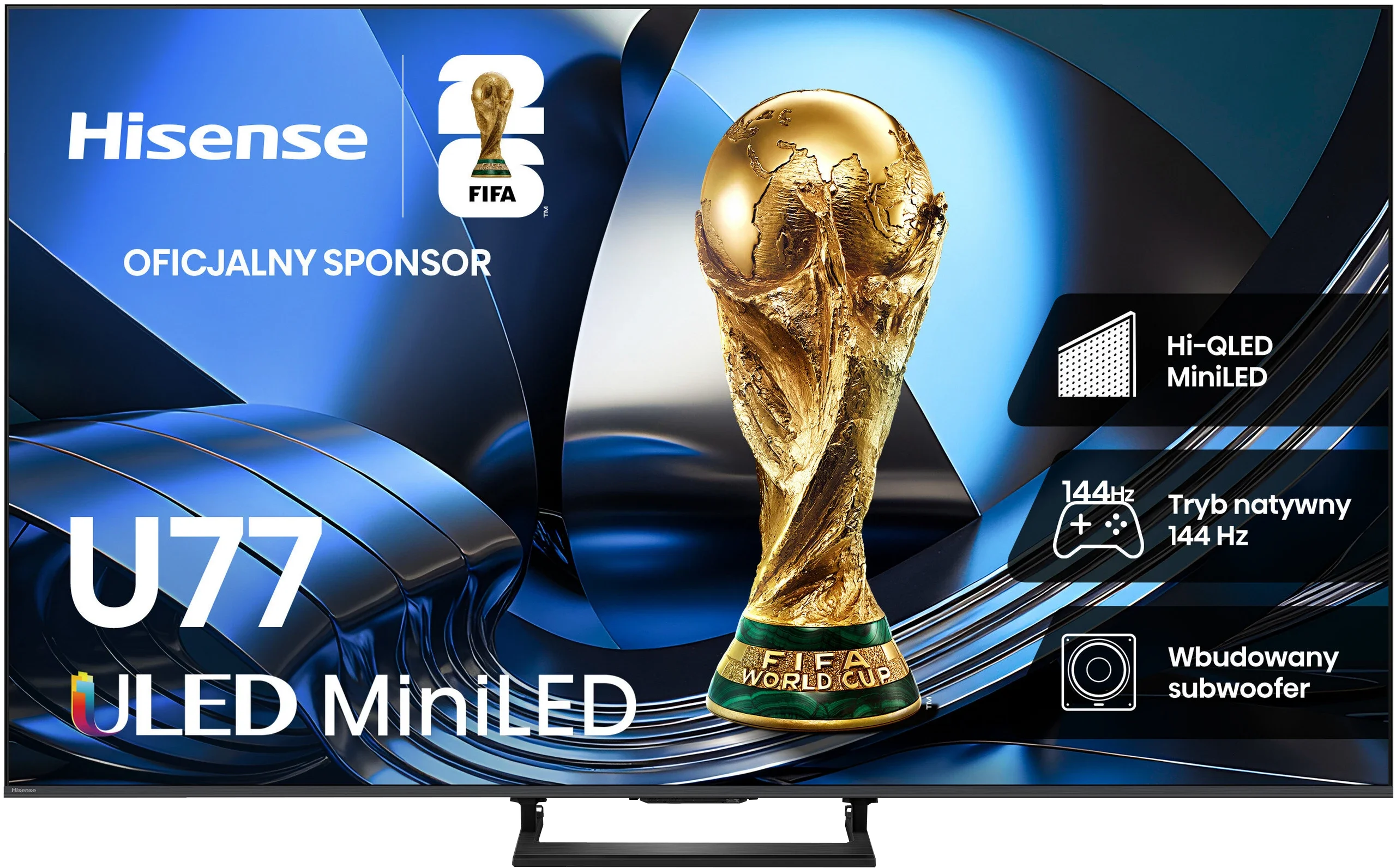
Panel type: LCD VA
Resolution: 3840x2160
System: Google TV
Model year: 2026
Complete the survey to find out the result
Panel type: LCD VA
Resolution: 3840x2160
System: VIDAA
Model year: 2026
Complete the survey to find out the result
Overall rating
7.1
7.3
 Movies and series in UHD quality
7.1
6.9
 Classic TV, YouTube
6.6
6.9
 Sports broadcasts (TV and apps)
6.4
6.4
 Gaming on console
8.3
8.2
 TV as a computer monitor
7.0
8.2
 Watching in bright light
7.5
7.0
 Utility functions
7.0
8.9
 Apps
9.6
8.3
 Sound quality
5.0
7.2
Complete the survey to find out what fits your preferences
Advantages

120/144 Hz panel
Very good contrast: MiniLED + VA
High brightness of around 1,000 nits
Dolby Vision support
Advanced gaming features
Low input lag
Google TV with a wide range of apps
Deep blacks thanks to a MINI-LED backlight and a VA panel
Bright, clear picture even in daylight
Natural colours after calibration when watching regular TV and SDR content
Plenty of options for PC and console gamers
Low input lag
Extensive VIDAA system
Support for many audio and video formats, including Dolby Vision, Dolby Atmos and DTS
Pleasant sound with subtle bass
Disadvantages

Poor image processing
Average anti-reflective performance
Poor viewing angles, typical for VA panels
Flat sound, little bass
Pronounced ghosting on the VA panel
HDR image is overly bright, clearly at odds with the creators' intent
HGiG not working correctly, making it hard to set up HDR in games
Poor viewing angles
Some apps missing from the VIDAA system
Our verdict
Hisense U7S is the latest iteration of the U7 series, whose biggest advantage remains its price-to-performance ratio. You get a Mini LED TV with local dimming, which genuinely improves black levels and gives the picture more depth for evening viewing. During the day a generous brightness reserve helps, so you don't have to rush to close the curtains. It's not a device without compromises, but as an everyday TV it makes a lot of sense. Gamers get a lot too. The U7S supports high refresh rates from consoles and PCs, has an extensive set of gaming features and responds very quickly to controller input. Pleasingly, the low input lag is maintained even in Dolby Vision. On top of that there's the smooth-running VIDAA, which offers both Smart features and handy extras for regular TV. Overall it's quite versatile, although compared with last year's U7Q it's hard to call it a big step forward.
Unfortunately there are also things that clearly bother us. The first is motion smearing. The panel has a high refresh rate, but its pixels don't always keep up, so moving objects leave noticeable trails. Fans of sport and fast-paced games will feel this most. The second issue is HDR, which the TV handles a bit 'its own way'. Instead of sticking to the brightness encoded in the content, it aggressively brightens parts of the image. The aim was probably to make things more striking, but often the opposite happens: a scene becomes overbright, loses depth and clearly departs from the creators' intent. It's a shame that this behaviour can't be effectively corrected even during calibration.
Despite these caveats the U7S remains an interesting choice if you're after as much as possible for a reasonable price. Compared with basic LCDs without local dimming, which you can still find at similar price points, it primarily offers much better black levels. And that's where its biggest strength lies. You don't need to reach for an expensive model to get a Mini LED whose benefits are actually visible in viewing. If you accept its flaws, the Hisense U7S can above all be a very good-value purchase.
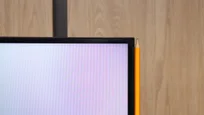
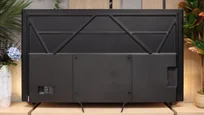
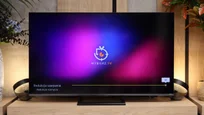
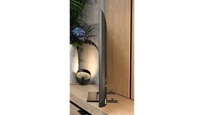
TV appearance

Contrast and black detail
8/10
8/10
Local dimming function: Yes, number of zones: 640 (20 x 32)
Local dimming function: Yes, number of zones: 192 (8 x 24)
Contrast:


Result
427,700:1

Result
49,650:1

Result
29,350:1

Result
13,500:1

Result
8,400:1
Result
507,800:1
Result
51,250:1
Result
30,900:1
Result
21,250:1
Result
5,650:1
Halo effect and black detail visibility:
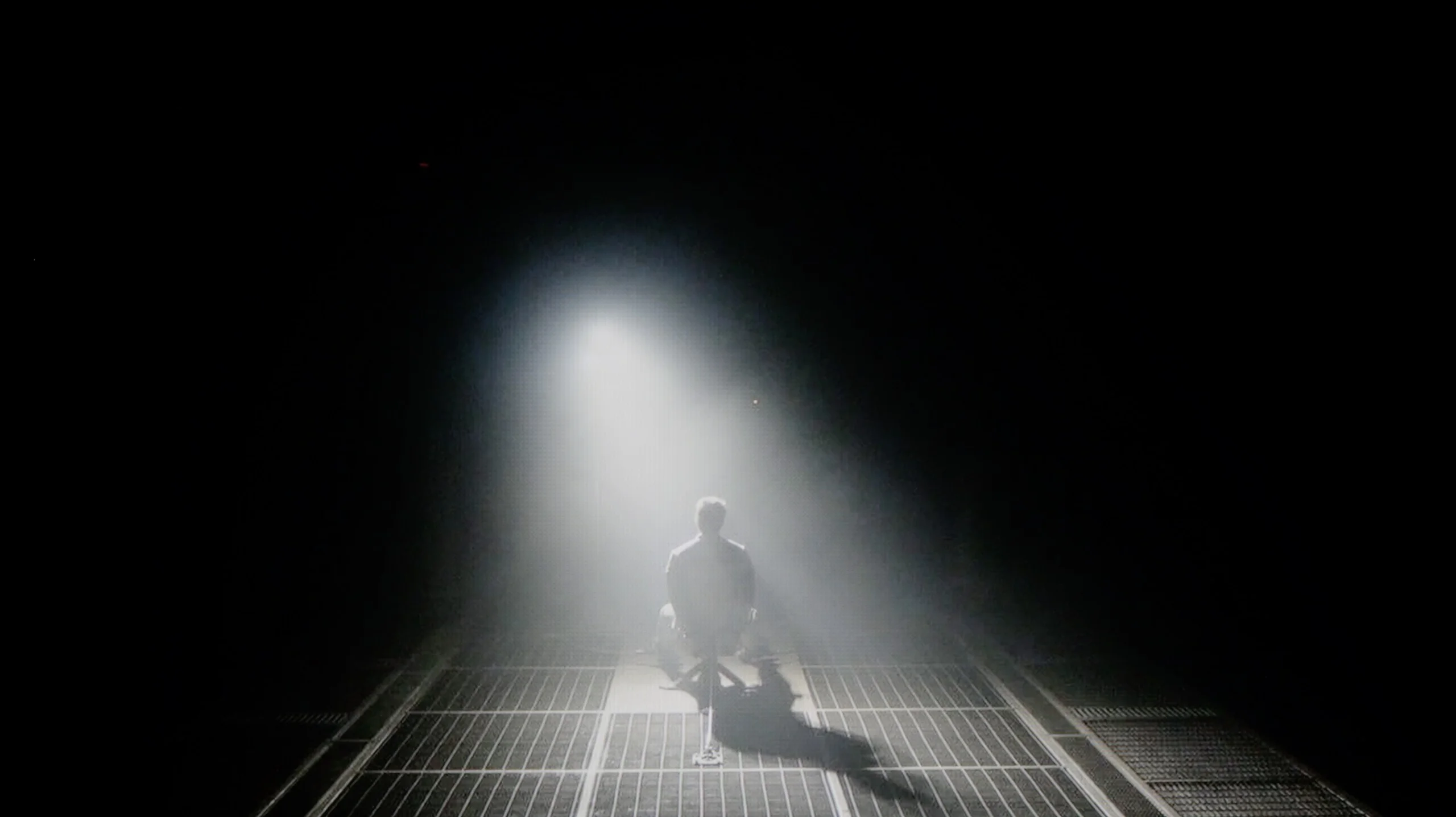
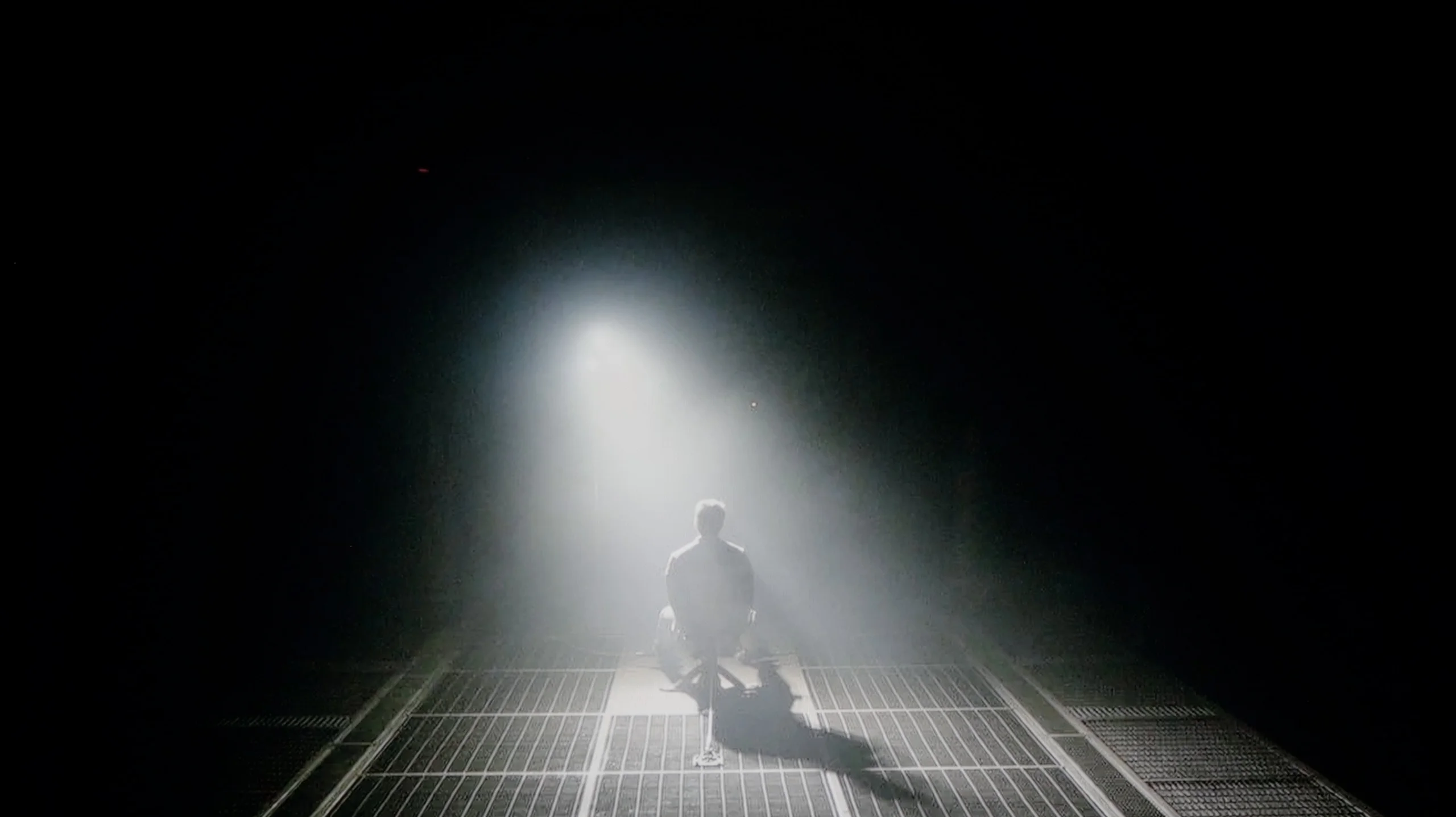
Check the visibility of bright lights on a dark background. Mini-LEDs often struggle with this. The photo does not compare black levels – that’s what the video below is for.
The video accurately shows differences in contrast and black levels between TVs, as well as potential issues: halo around bright objects or Mini-LED zone operation visible as brightness jumps.
Larger screen sizes of the Xiaomi S Mini 2026 also use a VA panel and Mini LED backlighting, but the manufacturer has applied significantly more local dimming zones here. In the 85‑inch model we tested we counted 640 zones, more than twice as many as in the 55‑inch version. Even so, the differences in measurements proved surprisingly small. Contrast remains very high, and in many scenes flooded with black the TV can produce blacks that feel very close to OLED. The additional zones mainly help to better control the backlight in more demanding shots, though they do not completely eliminate the typical limits of this technology. In scenes with many bright objects on a dark background you can still see a halo effect, but its level remains typical for Mini LED TVs. As with the smaller variants, Xiaomi has also improved the local dimming algorithm. The zones operate stably and do not cause visible flicker or the brightness "pumping" that could be seen in last year’s model.
The Hisense U7S shows good black levels, especially for one of the entry-level mini-LED models. The 55-inch test size uses 192 local dimming zones that work well with the VA panel. In most of our scenes contrast ranged from about 21,000:1 to over 51,000:1, and in one it even exceeded 500,000:1. In many films you can plainly see it — dark scenes have depth, and blacks don’t glow grey like on many cheaper LCDs without local dimming.
It’s worse when the screen shows lots of small bright objects against a dark background (for example the scene shown below). There aren’t enough zones to light each of them individually, so you can see a bright halo around small objects. This so-called halo effect is easiest to spot when watching in a dark room. In the most demanding shot the contrast dropped to about 5,650:1, and here the backlight limitations are clearly noticeable. Despite that, given the TV’s class, it’s hard to call this a fault, because many mini-LED TVs in a similar price range will have similar problems.
HDR effect quality
5.7/10
5.5/10
Luminance measurements in HDR:

Result
1079 nit

Result
224 nit

Result
710 nit

Result
244 nit

Result
900 nit
Result
700 nit
Result
297 nit
Result
640 nit
Result
154 nit
Result
745 nit
Scene from the movie “Pan” (about 2800 nits)
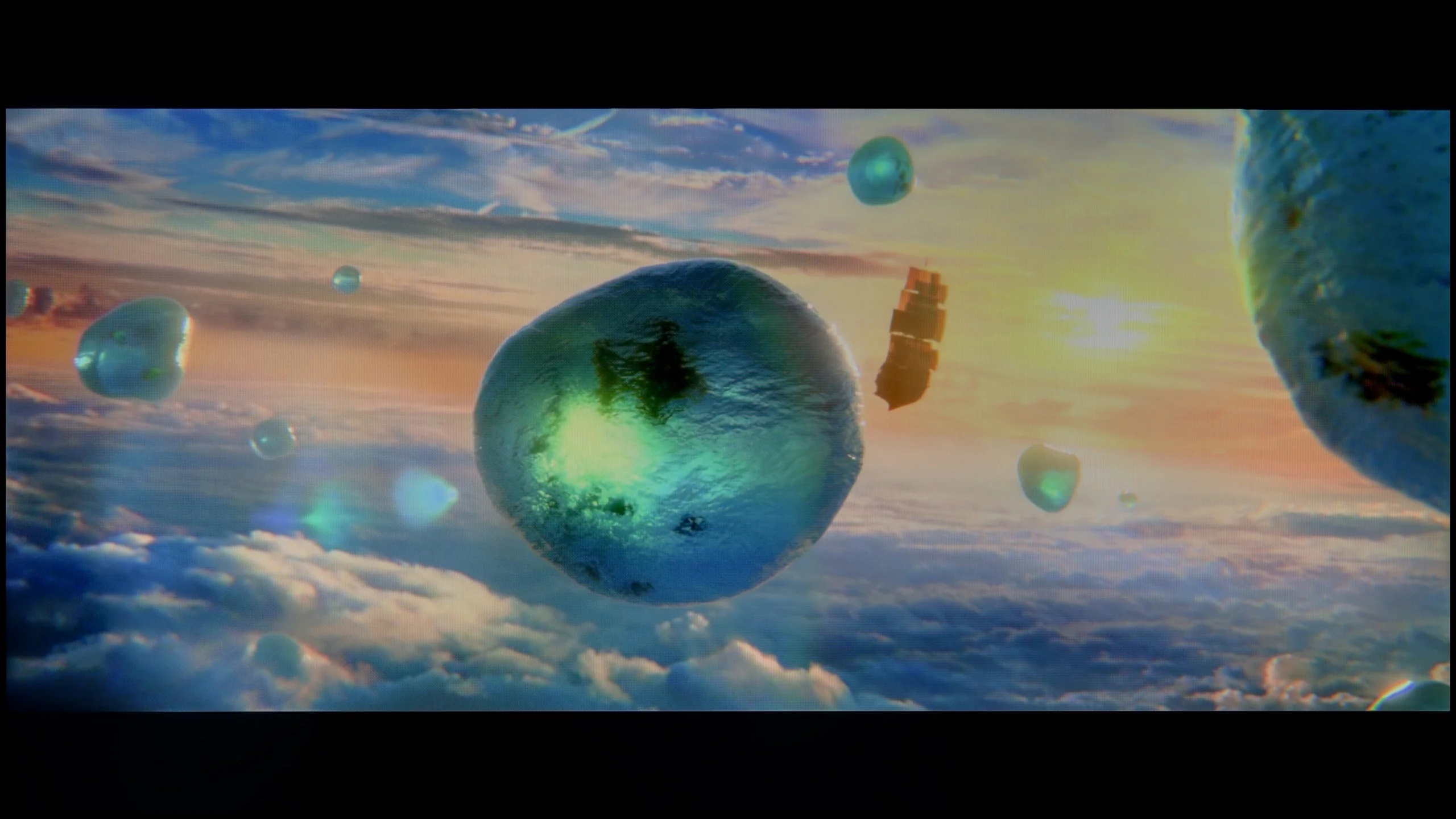
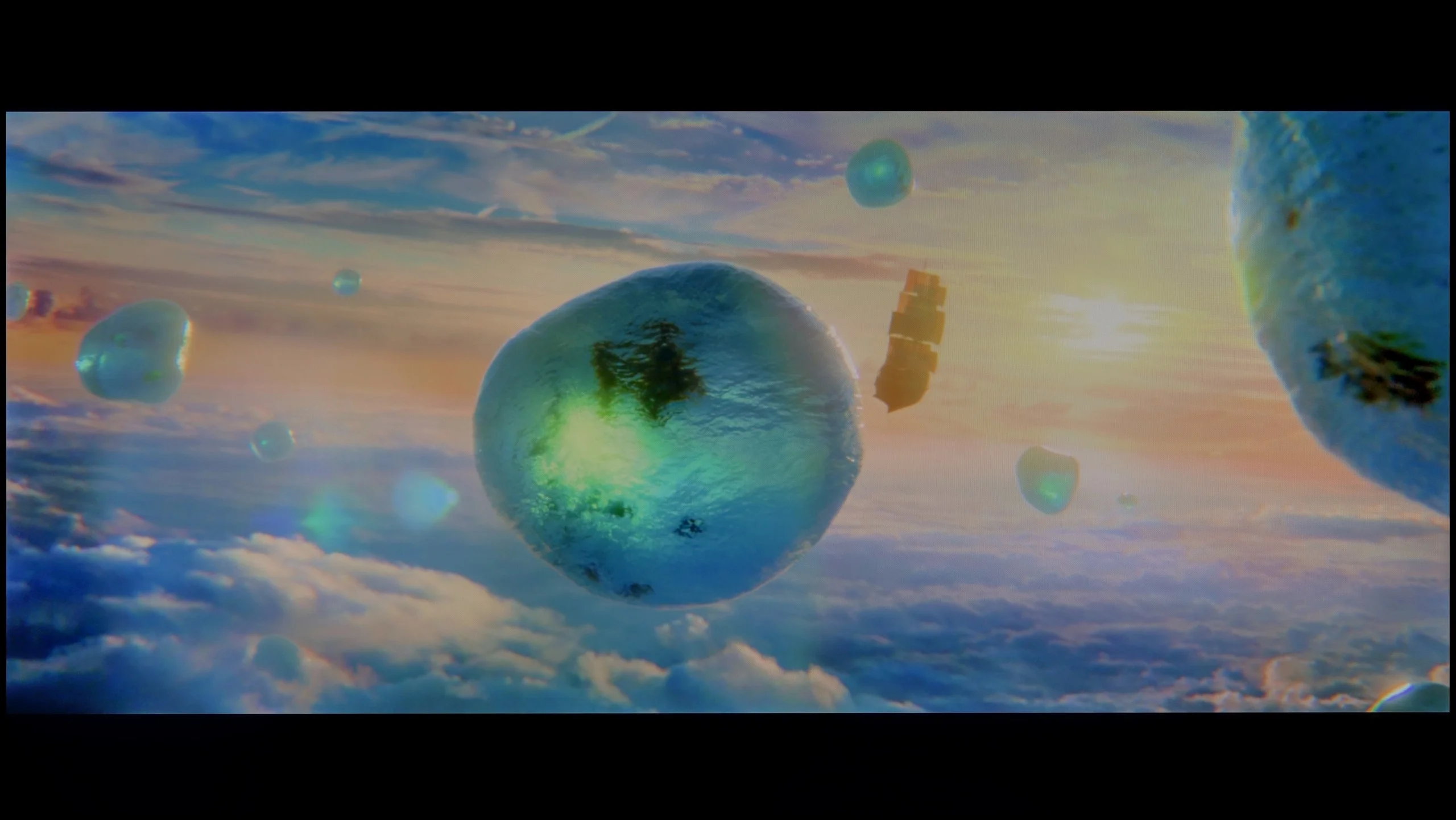
Scene from the movie “Billy Lynn” (about 1100 nits)
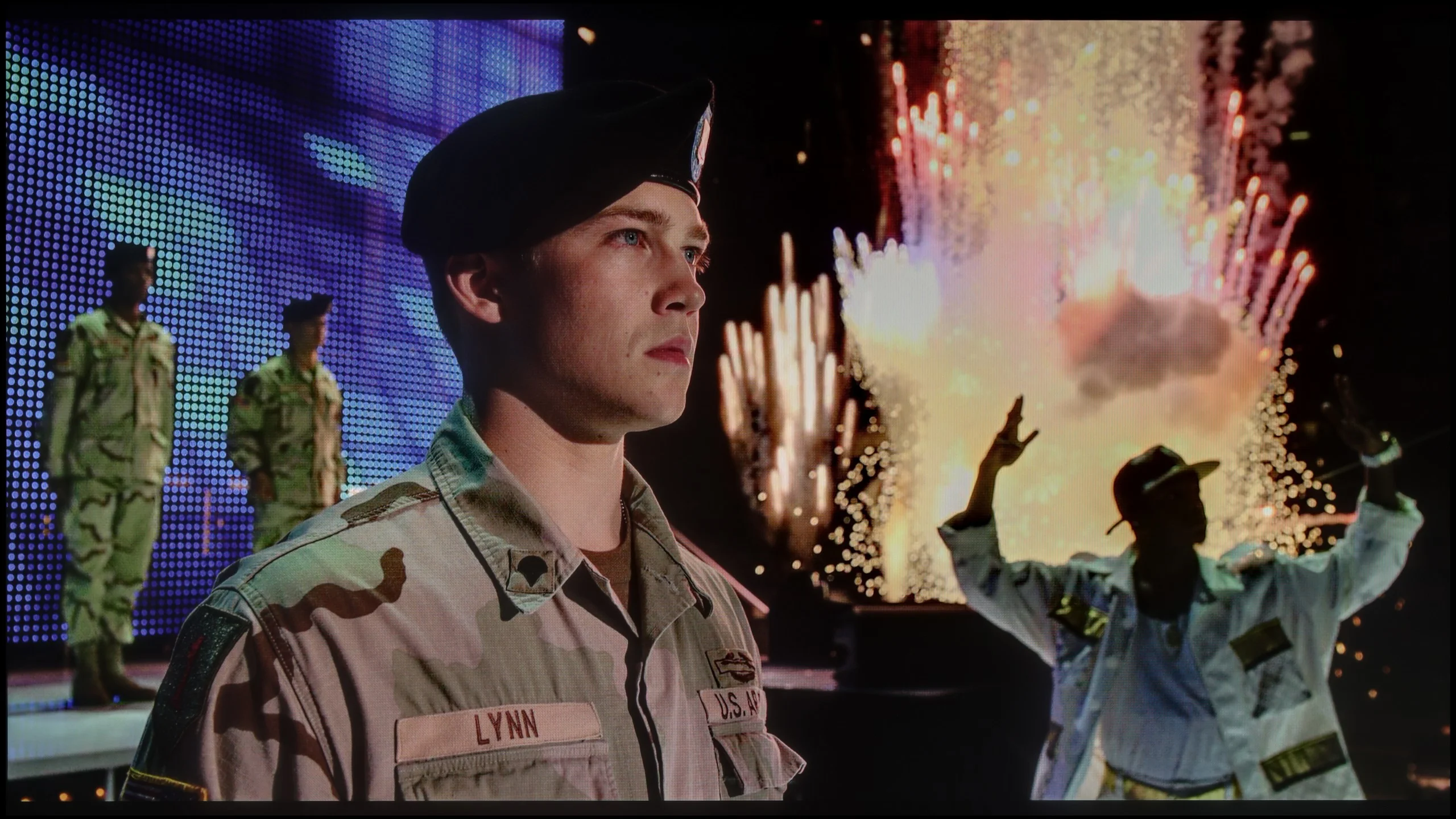
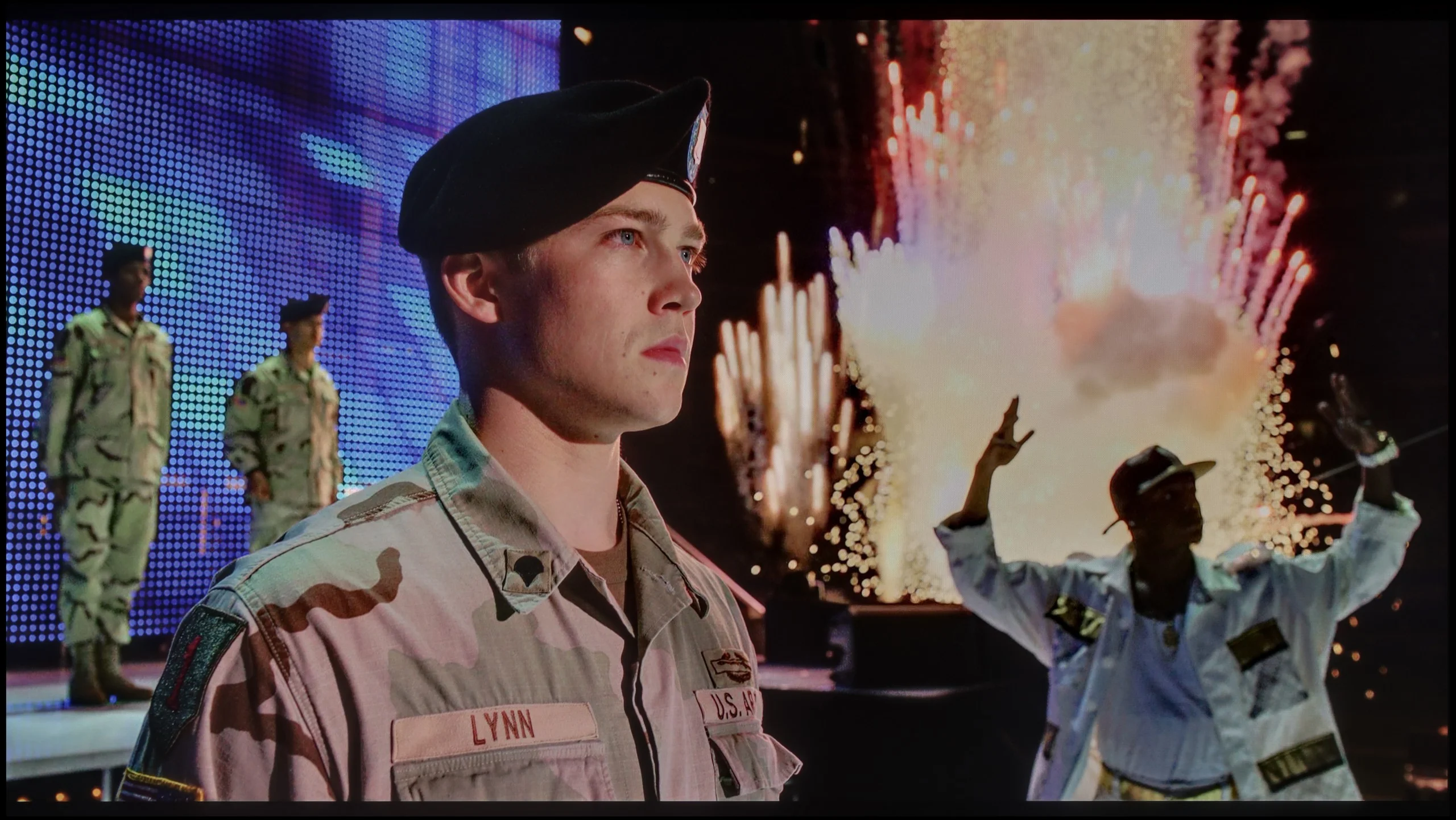
The photos show two HDR10 movies. 'Pan' is one of the brightest productions ever made, while 'Billy Lynn' (soldier) has brightness typical of streaming (Netflix, Prime, HBO MAX). Notice the intensity of effects and detail in whites.
Static HDR10


The photos present the visibility of white details in various HDR formats. They do not show brightness differences between TVs (these can be compared in the previous gallery).
Dynamic: Dolby Vision
Dynamic: Dolby Vision


The photos present the visibility of white details in various HDR formats. They do not show brightness differences between TVs (these can be compared in the previous gallery).
HDR luminance chart:
Hisense U7S / U77SE
XIAOMI S Mini 2026 (85"-98") 144Hz
The larger versions of the Xiaomi S Mini 2026 offer very similar HDR performance. Peak brightness reaches around 1,000 nits, which is a very solid result for a TV in this price bracket. It's most noticeable in bright scenes, where large, heavily lit areas of the picture can look really impressive. The TV has enough brightness headroom that HDR isn't limited to just a slightly brighter image. However, very small pinpoint highlights on an almost completely black background fare worse. In such cases the local dimming system significantly reduces their brightness to avoid lighting adjacent parts of the image and to preserve good blacks. As a result, small reflections or single lamps don't have the same intensity as in much more expensive models. This is typical behaviour for Mini LED TVs and it's hard to treat it as something unique to Xiaomi.
HDR colours
The colour performance is similarly comparable. Although the manufacturer uses the term QLED, the expanded colour gamut here comes from the PFS phosphor. In our measurements the TV covered about 94% of the DCI-P3 space and about 74% of the much more demanding BT.2020. In practice this yields well-saturated colours in most HDR material and it's hard to point to obvious gaps. Limitations appear mainly with the most saturated shades of green, which the TV can no longer reproduce fully.
The Hisense U7S has considerable HDR potential, but it can’t make full use of it in every scene. On a test pattern it reaches about 1100 nits, so the backlight is genuinely strong. In our brighter film scenes we measured around 640 to 745 nits. That’s still enough for the sun or bright highlights to have a distinct bloom and to show an advantage over SDR material. When the TV needs to light a larger portion of the image, it handles it quite well.
The problem appears with small lights on a dark background. Each of the 192 zones covers an area considerably larger than a tiny point on the screen. If the TV were to drive such a zone strongly, it would brighten the surrounding area along with the light. Hisense tries to avoid that and dims the whole zone. Blacks look better as a result, but a small bright object that should draw the eye also loses intensity. That’s why in two tougher scenes we recorded only 297 and 154 nits. The difference is large: in one shot HDR can impress, and in the next small highlights are noticeably muted. The U7S therefore prioritises keeping deep blacks, even at the expense of bright details. With this number of zones it’s an understandable compromise, but it’s worth remembering that the peak 1100 nits tells us about the backlight’s capability, not how brightly the TV will show every element of a film.
Colours
Hisense markets the U7S as ULED, but that’s a marketing name; the wider colour gamut here is achieved by a PFS phosphor backlight. In our measurements the TV covered about 91% of the DCI-P3 space and 71% of BT.2020. Those are good results, though a little short of the best screens on the market. The biggest shortfall is in green — the TV doesn’t even reach the DCI-P3 boundary there, so the most intense green hues will be less saturated than they should be. Most colours in HDR films and series still look suitably vivid, however. A positive is the repeatability of the results: gamut coverage on test patterns and in film scenes is practically identical.
Factory color reproduction
5.2/10
5.8/10
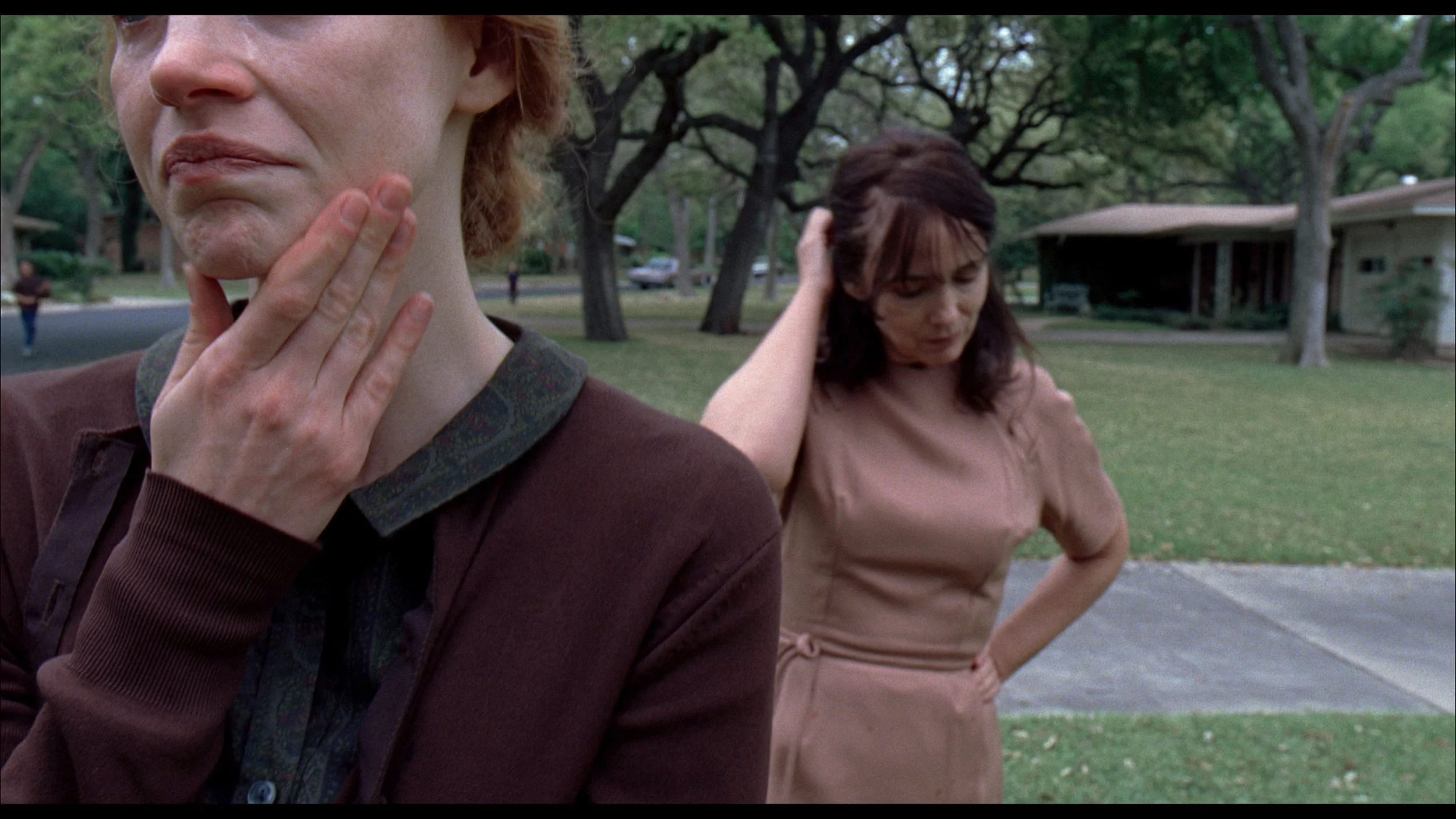
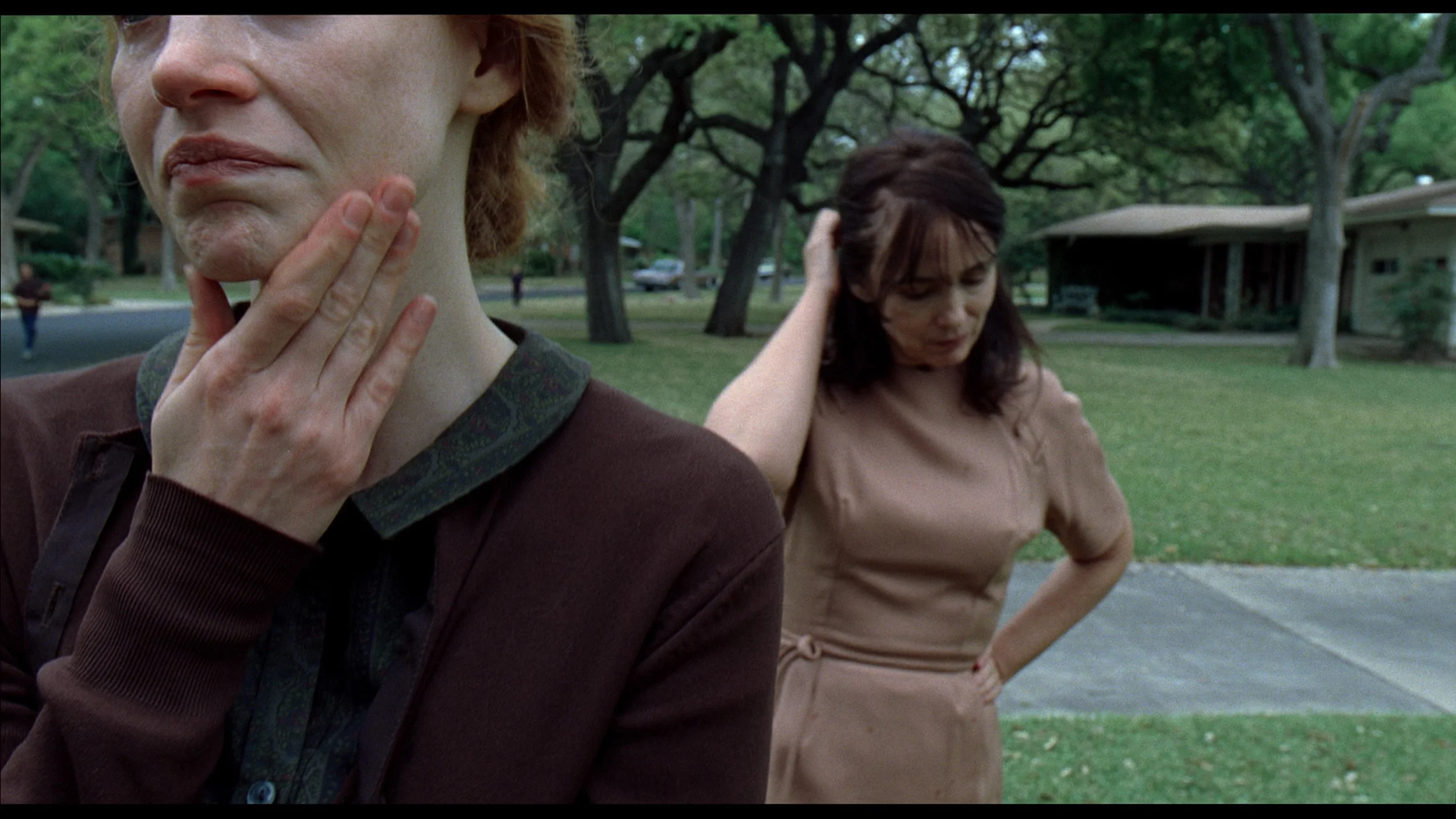
This gallery shows how colors change after professional TV calibration. If you notice the difference, we recommend ordering this service at SkalibrujTV.com.
Factory Mode
After calibration


This gallery shows how colors change after professional TV calibration. If you notice the difference, we recommend ordering this service at SkalibrujTV.com.
Factory Mode
After calibration
On the larger versions of the Xiaomi S Mini 2026, Film mode performs best, although even here the out-of-the-box settings are not without flaws. In SDR the white balance was noticeably warm due to an excess of red. In HDR the opposite was true, with too much blue and too little red, which made the image cooler. Additionally, both the gamma response in SDR and the EOTF curve in HDR sat slightly above the reference values. In practice this resulted in a slightly brightened image, particularly in the midtones. It wasn't a major fault, but with more demanding material you could see that the image wasn't reproduced entirely in line with the filmmakers' intent.
Factory colours on the Hisense U7S are decent, but there are a few things to fix. In SDR the white balance favours red, so the image looks too warm, in places with a slightly pink tint. You can see this on faces and bright, neutral surfaces. Gamma also runs below the target, so the TV brightens the image, especially in darker areas. That makes it easier to see shadow detail, but the scene loses some of its depth.
In HDR the white balance is a bit more even, but not completely neutral, with midtones lacking blue and the brightest parts lacking red. A bigger problem is the way brightness is reproduced. The EOTF curve shows that a large portion of the midtones is boosted, making the image appear brighter than the source material intends. Color Checker measurements also fare worse than in SDR: many errors are around 3 to 4, and individual ones reach as high as 8. Colours can therefore look attractive, but they're not always faithful to what we should be seeing. There’s room for improvement and we’ll see how much can be corrected with calibration.
Color reproduction after calibration
7.7/10
7.5/10
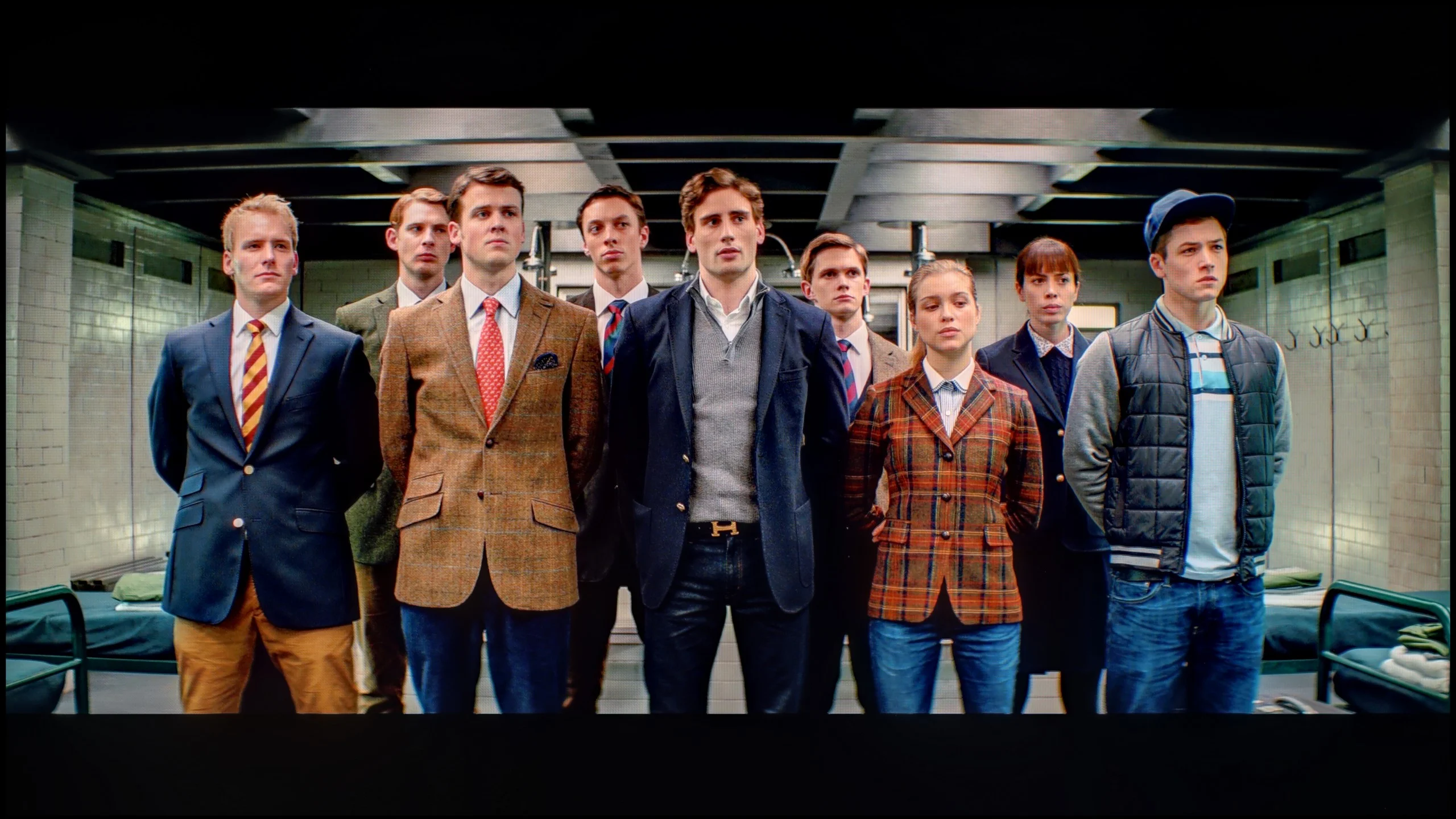
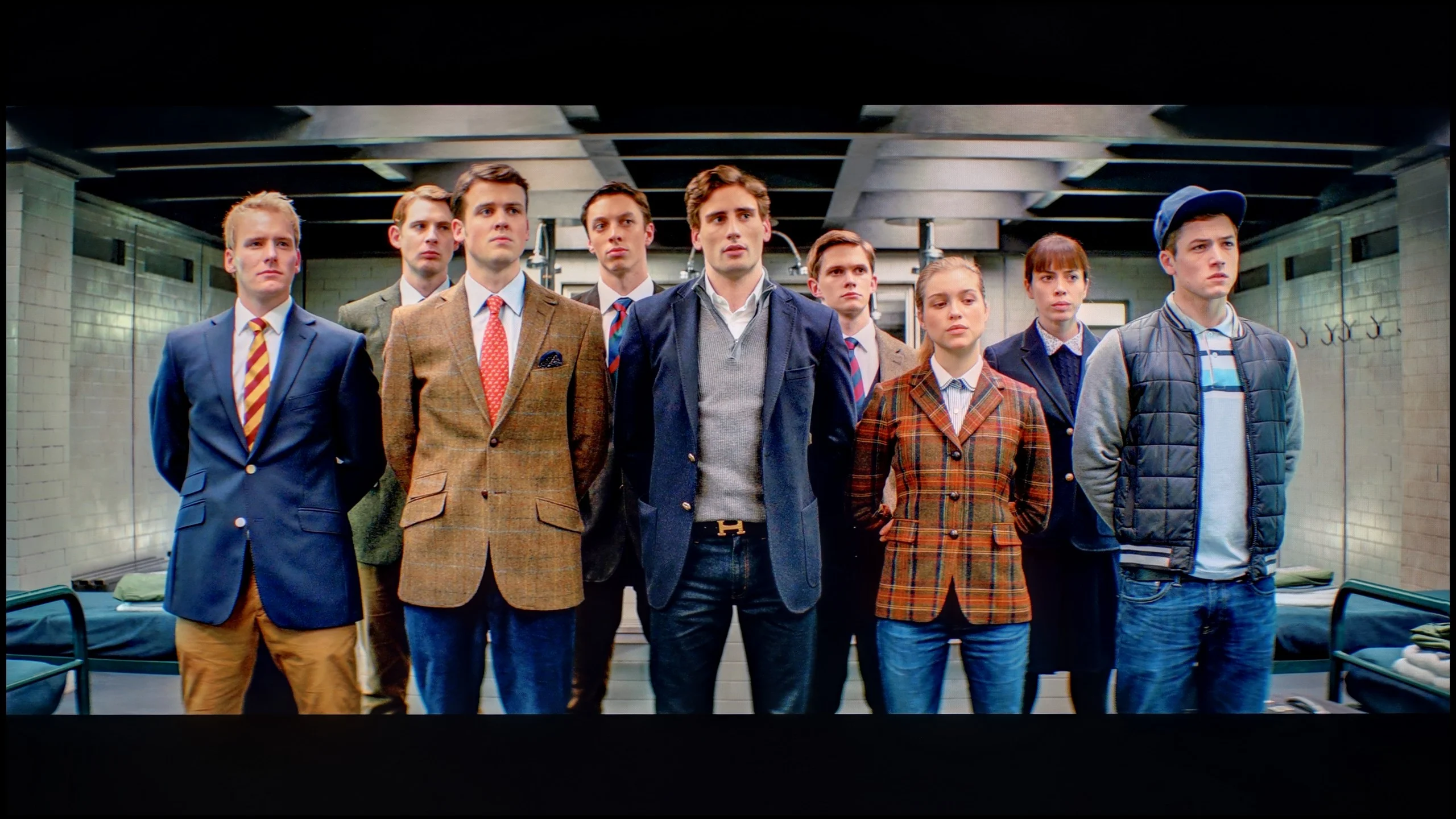
The photos show how movies look on the TV. Pay attention to black detail visibility, colors, and shadow tint.


The photos show how movies look on the TV. Pay attention to black detail visibility, colors, and shadow tint.
After calibration we mainly managed to even out the white balance, so colours look much more natural in both SDR and HDR. We also improved the gamma response, so SDR content is no longer unnecessarily brightened and stays closer to reference values. The only larger issue remaining is in HDR. Xiaomi still controls brightness a little too aggressively and renders some scenes brighter than it should. This is less noticeable on the larger models than on the 55–75-inch versions, but the EOTF curve still runs slightly above the reference. In practice HDR is therefore slightly brightened, even though colour reproduction after calibration is already very good.
Calibrating the Hisense U7S did the most for SDR content. We managed to even out the white balance, so the earlier warm tint is gone and whites and greys look neutral. Gamma now sits very close to the reference, so the TV no longer brightens the image unnecessarily and darker scenes have regained depth. Color Checker measurements confirm the improvement: most errors are below 2. For watching regular TV and SDR films, this delivers a really well calibrated picture. Calibration in HDR wasn’t as smooth. The TV lacks an effective way to correct the EOTF curve, so Hisense still interprets the film’s brightness a bit on its own. It brightens parts of the image and, depending on the scene and local dimming, can tone down the brightest elements. That couldn’t be eliminated by calibration. This also shows up in the Color Checker results, where many errors remain around 3–4 and some exceed 7. In SDR the result is therefore very good, but in HDR we have to accept that the TV adds its own interpretation of brightness to the image.
Smoothness of tonal transitions
9/10
8.5/10

These are selected scenes that show smooth tonal transitions from one color to another. If you see distinct banding, it’s the TV panel’s fault.

These are selected scenes that show smooth tonal transitions from one color to another. If you see distinct banding, it’s the TV panel’s fault.
These are selected scenes that show smooth tonal transitions from one color to another. If you see distinct banding, it’s the TV panel’s fault.
These are selected scenes that show smooth tonal transitions from one color to another. If you see distinct banding, it’s the TV panel’s fault.
The smoothness of tonal transitions in the larger sizes of the Xiaomi S Mini 2026 is very good. In both bright and darker scenes, colours blend much more smoothly than in the smaller sizes. It's not perfect, and in the most demanding shots you can still spot slight banding, but it occurs far less often and is much less noticeable. That's a clear plus, especially since dark scenes in the 55 to 75-inch models could be noticeably worse in that regard.
The smoothness of tonal transitions is one of the Hisense U7S’s stronger points. HDR10 content performs particularly well, with colours gently flowing from one to another without noticeable banding. Even in dark scenes it's hard to find significant issues. Minor tone joins only become visible in brighter shots, but during normal viewing they rarely draw attention. It's a bit worse with Dolby Vision, where the boundaries between tones can be more apparent. That's why Hisense loses some points with us, although overall it's still a very good result and one of the better performers in its class.
Image scaling and smoothness of tonal transitions
3/10
6/10


Smooth transition function
The match photo shows how the TV smooths weak tonal transitions in low-quality video.
Image scaling SD (576i)


The model photo shows how it handles upscaling of SD material.
The larger variants of the Xiaomi S Mini 2026 also use the MT5896 processor and perform similarly in terms of digital image processing. Upscaling isn't a strong suit of this model. Low-resolution material is upscaled to 4K in a fairly basic way and it doesn't recover fine detail as well as more refined TVs. The 85- and 98-inch versions do include a feature intended to reduce posterisation, but it's barely effective. When it's switched on it's hard to notice any real improvement, so in scenes with visible colour banding the TV still does little to address it.
The processing of lower-quality material in the Hisense U7S is fairly average. The Pentonic 700 chipset used here doesn't cope particularly well with the effects of heavy compression. There's a "Smooth and Gradient Picture" function in the menu, but its performance leaves a lot to be desired. At the low setting it's hard to see any improvement in tonal transitions, though at least the picture doesn't suffer. Medium and high settings still don't remove visible banding between tones and begin to blur details; in our clips parts of characters' faces even vanished. Interestingly, film grain remains untouched at every level. If you do use this function, stick to the low setting. Its current performance needs refinement, but that's mainly down to the processor used here.
Upscaling to 4K performs much better. Lower-resolution content gains clarity, edges are well reproduced and fine details look sharp. That doesn't mean the TV can recover details that weren't in the recording, but it makes good use of what's provided by the source. Another plus is the lack of edge cropping, even with an SD signal.
Blur and motion smoothness
7.7/10
7/10
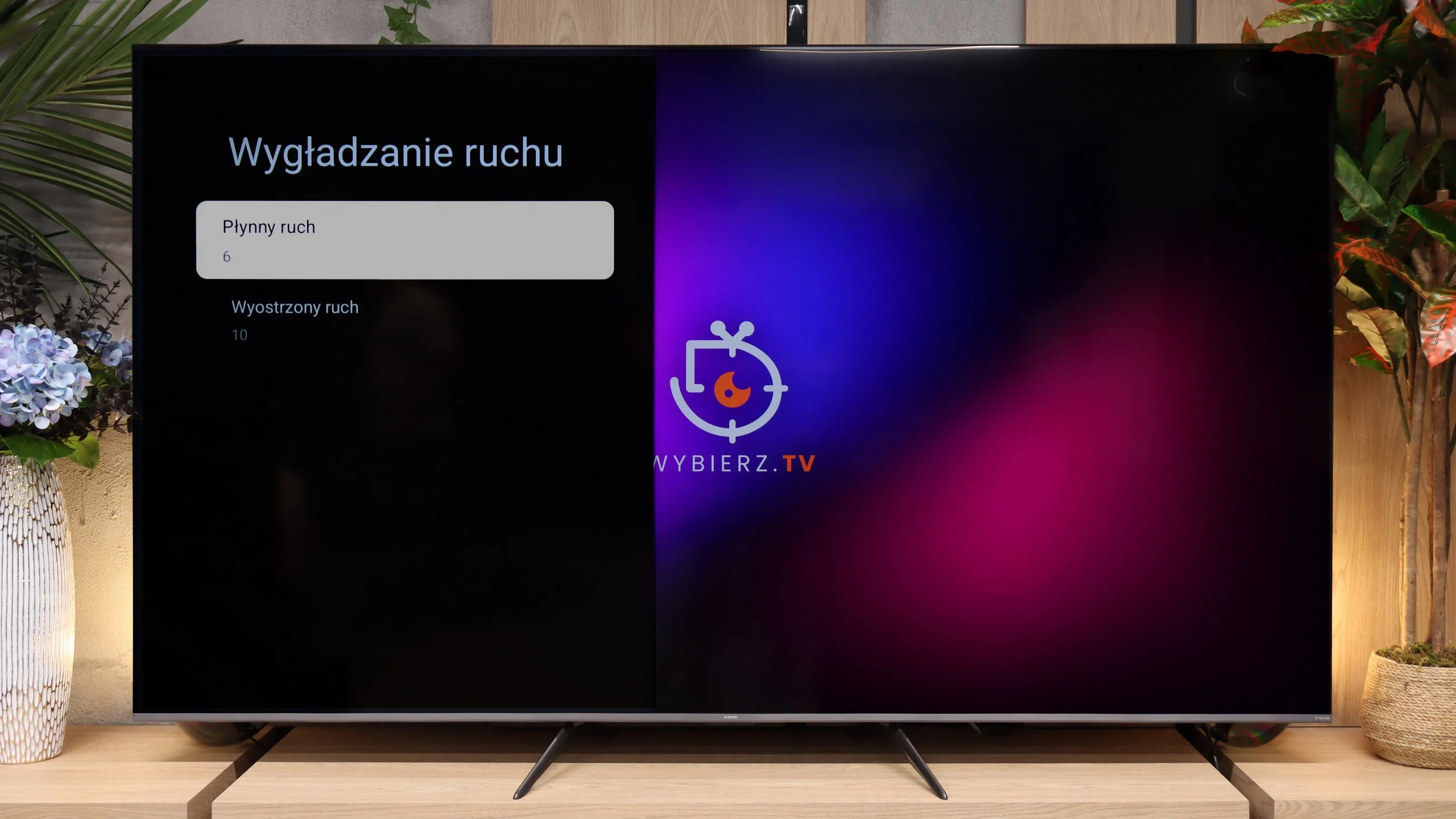
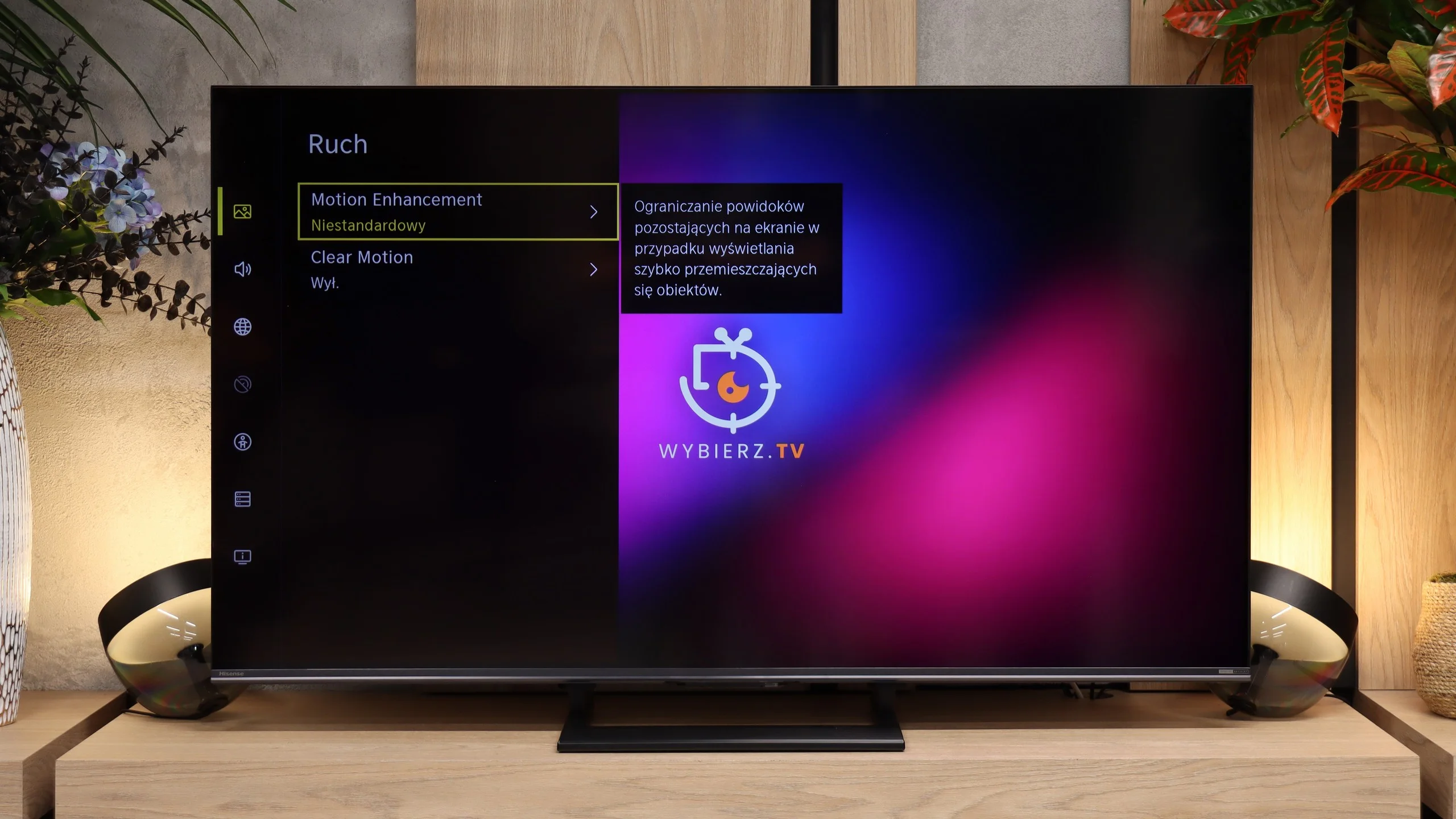
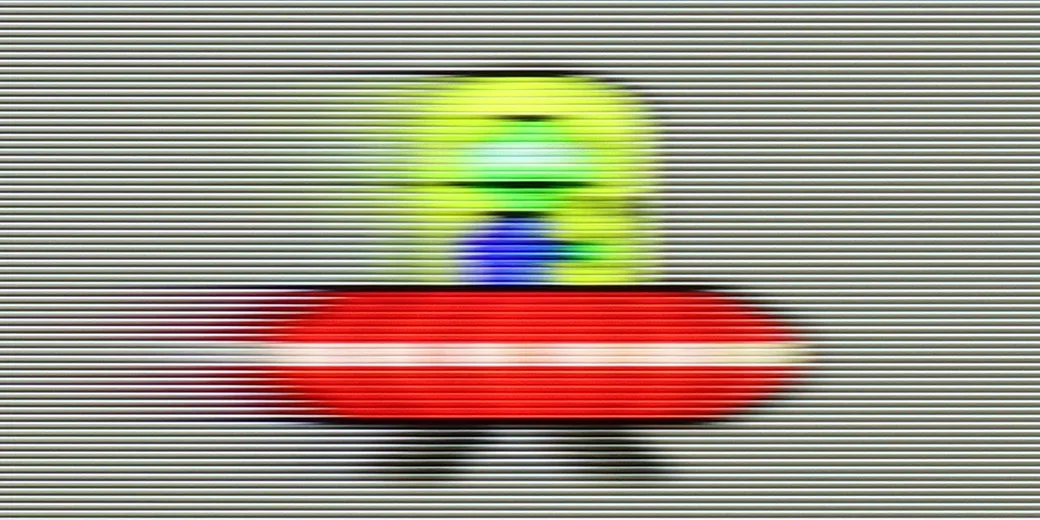
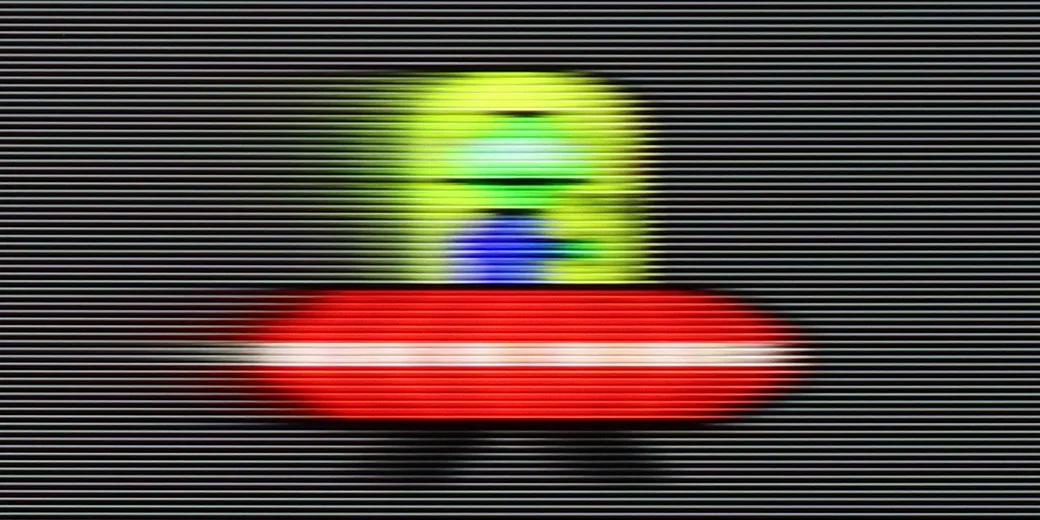
Blur (native resolution, maximum refresh rate):


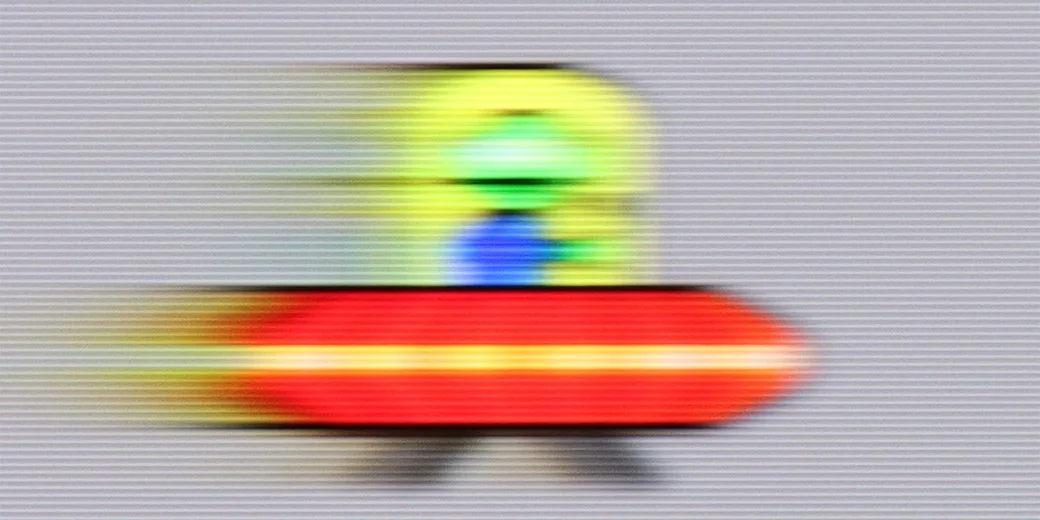
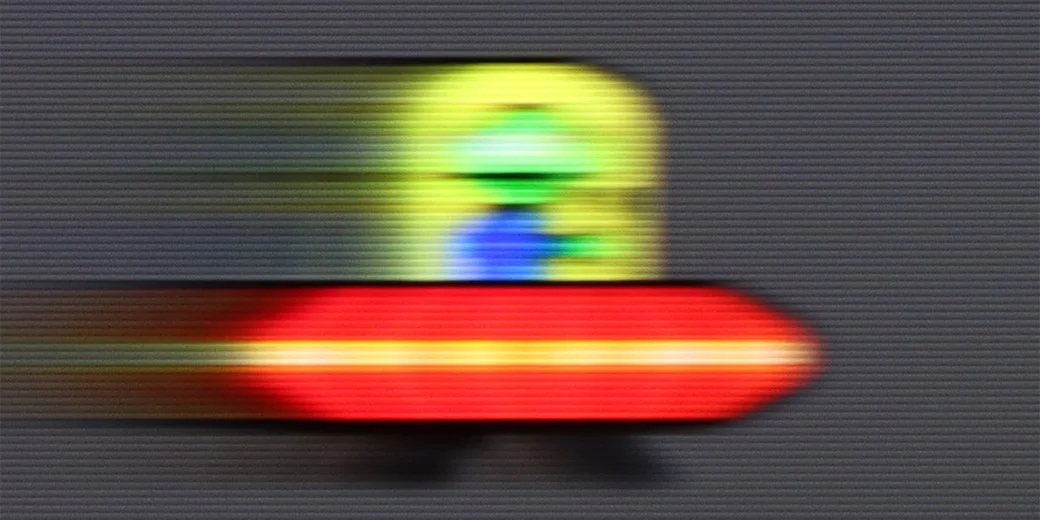
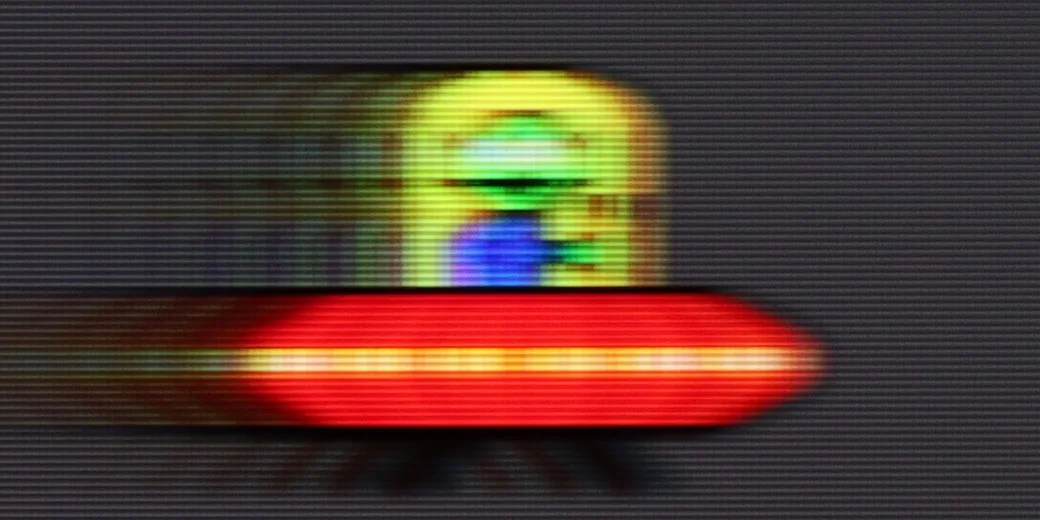
Blur (BFI function enabled):


Blur (4K@288Hz):

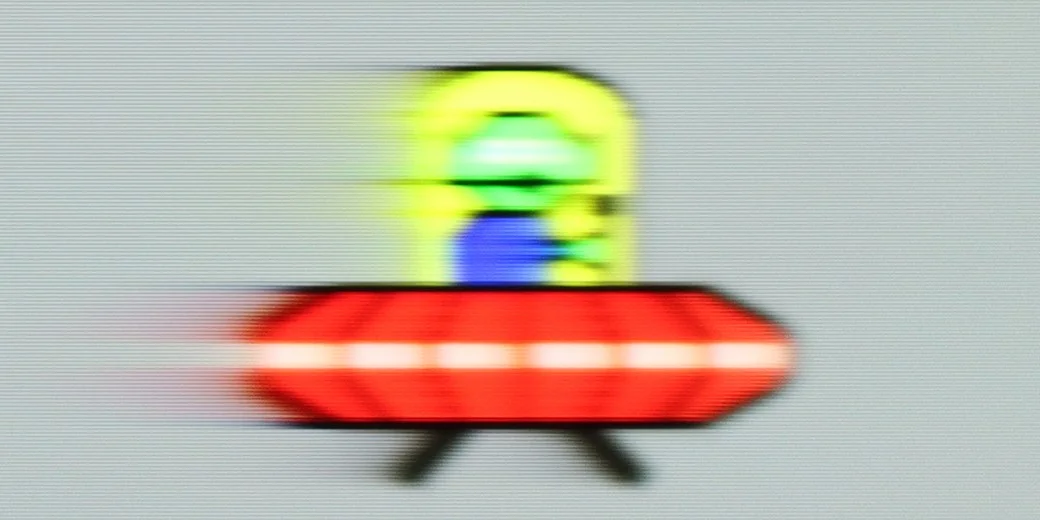
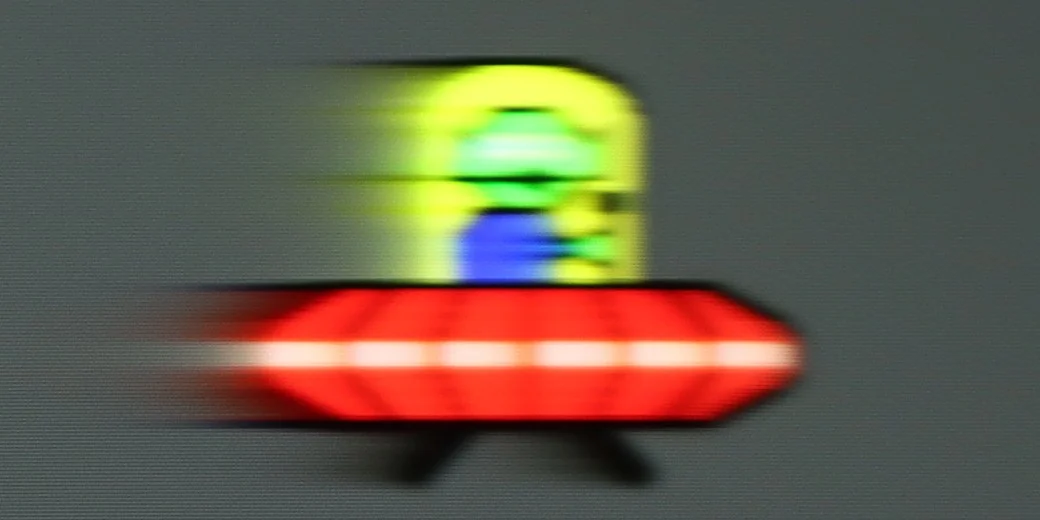
Blur (1080p@240Hz):

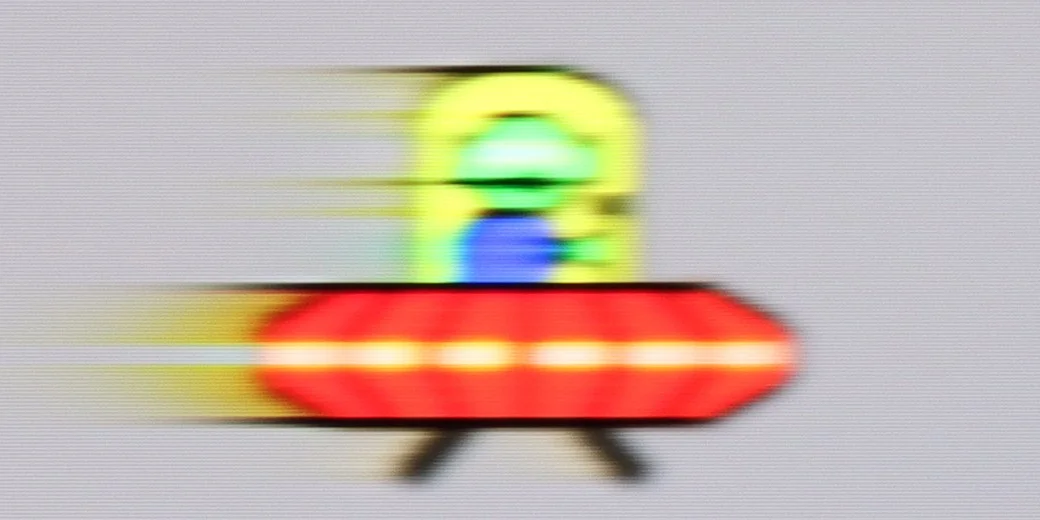
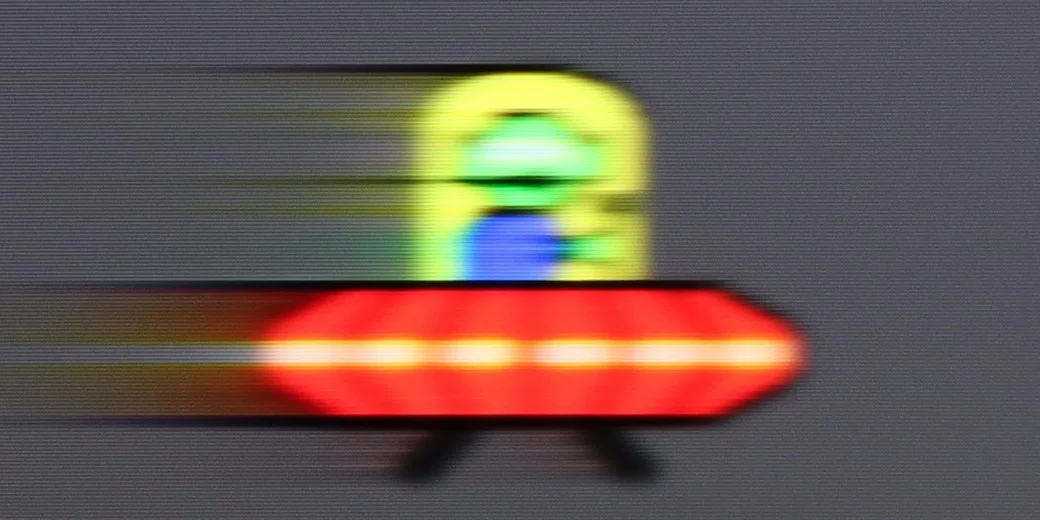
The biggest difference between the various sizes of the Xiaomi S Mini 2026 is the panel's refresh rate. The 55–75-inch variants use a 60 Hz panel, which in practice means noticeably less smooth motion than the larger versions. This is easiest to spot when watching sport, fast-moving scenes or gaming, where the picture isn't as smooth and clear in motion.
Motion handling on the Hisense U7S is decent thanks to its 144 Hz refresh rate. For films there's also a motion smoothing option with adjustable judder and blur reduction. You can keep a more cinematic feel to motion or increase smoothness if choppy camera pans bother you. High refresh is also useful for sport and gaming, but unfortunately it doesn't solve the panel's biggest problem.
The issue is pixel response time. Fast-moving objects leave long, distinct trails, as our UFO test shows. It's worst on dark backgrounds, where the trail is particularly pronounced. So motion can be smooth, but the moving object loses sharpness, and that difference on the U7S is fairly easy to spot.
Console compatibility and gaming features
8.5/10
8.5/10
- ALLM
- VRR
- VRR range48 - 288Hz48 - 240Hz
- Dolby Vision Game Mode
- Correct implementation of HGIG
- 1080p@120Hz
- 1440p@120Hz
- 4K@120Hz
- Game bar
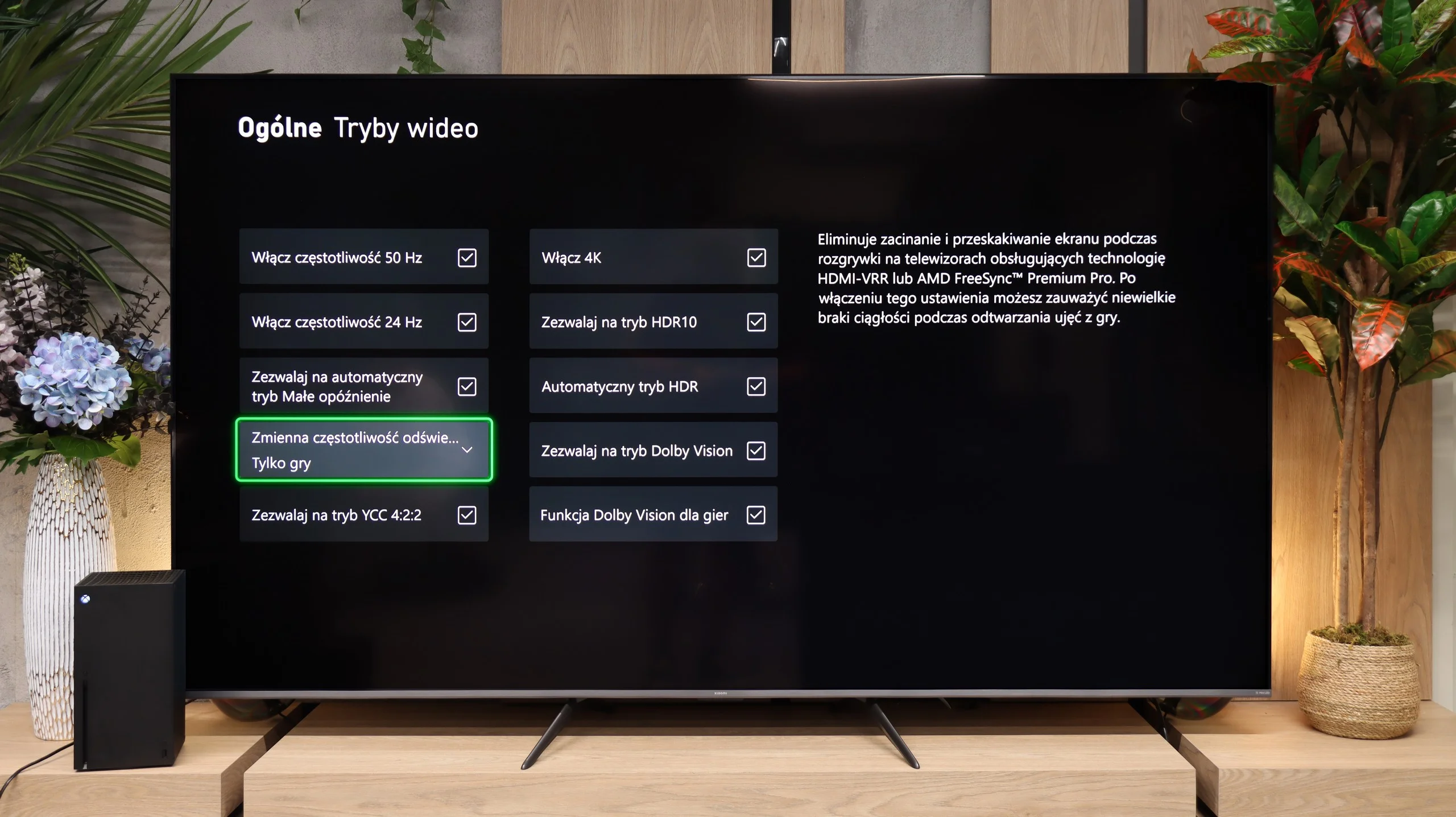
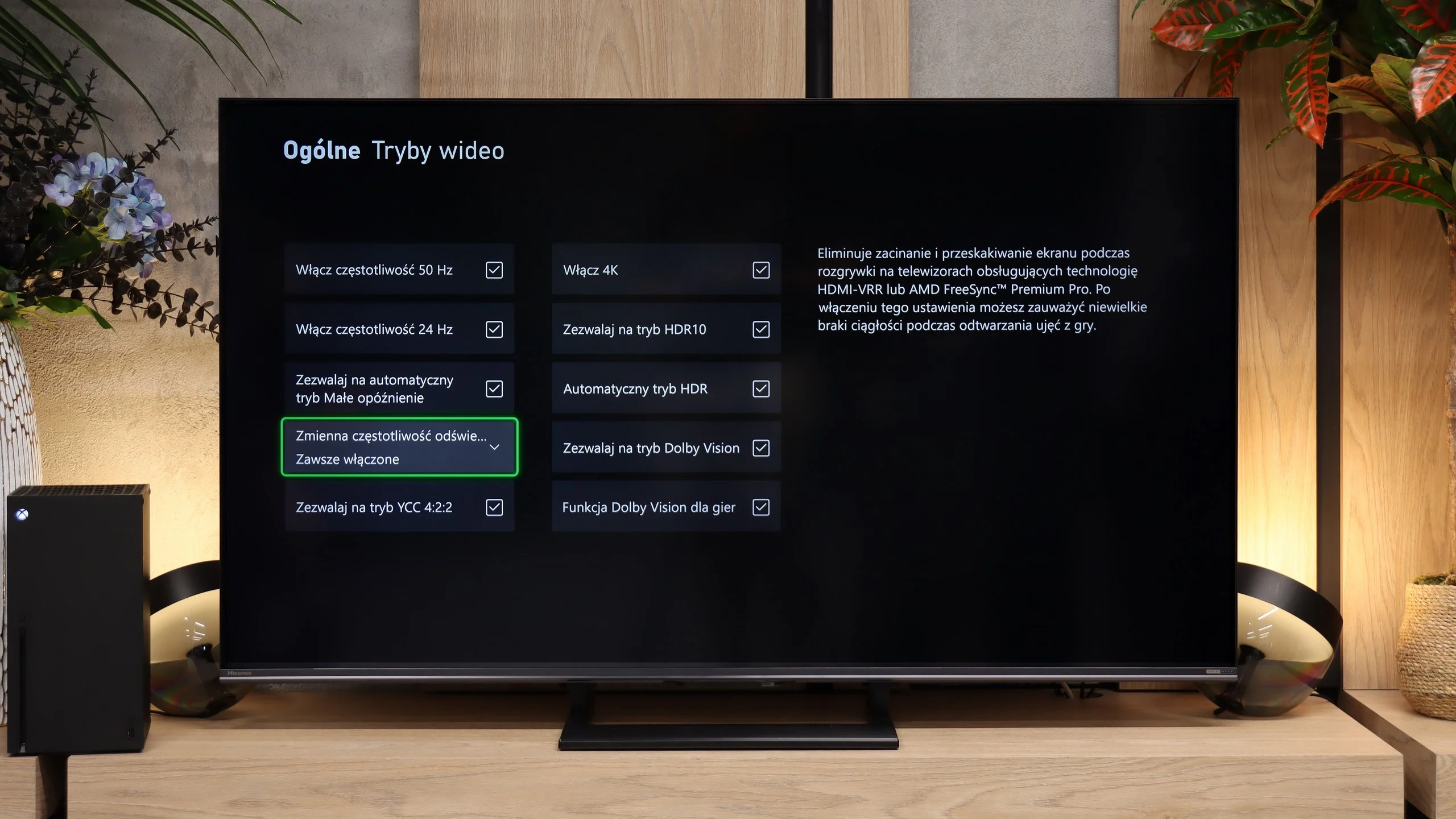
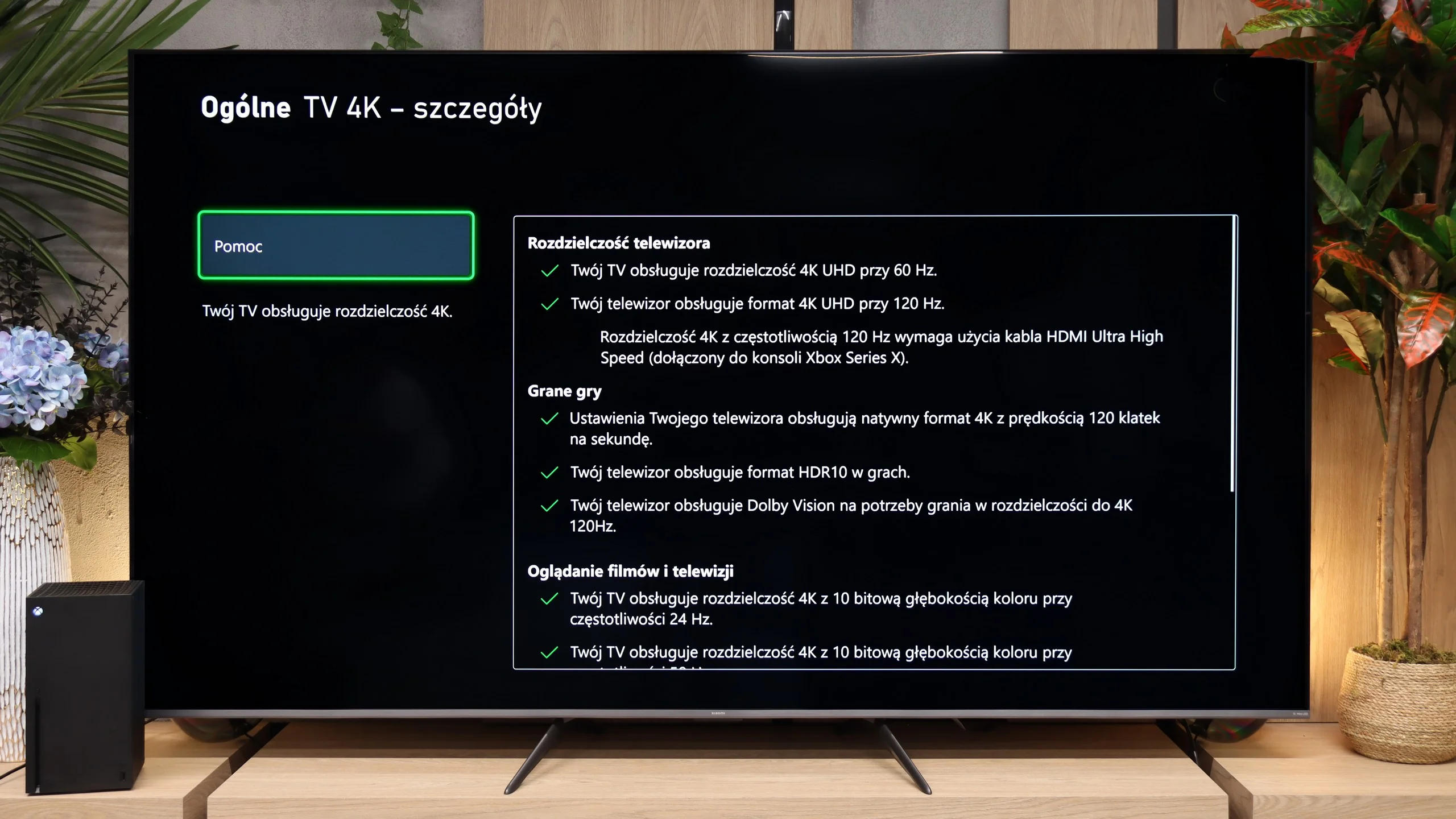
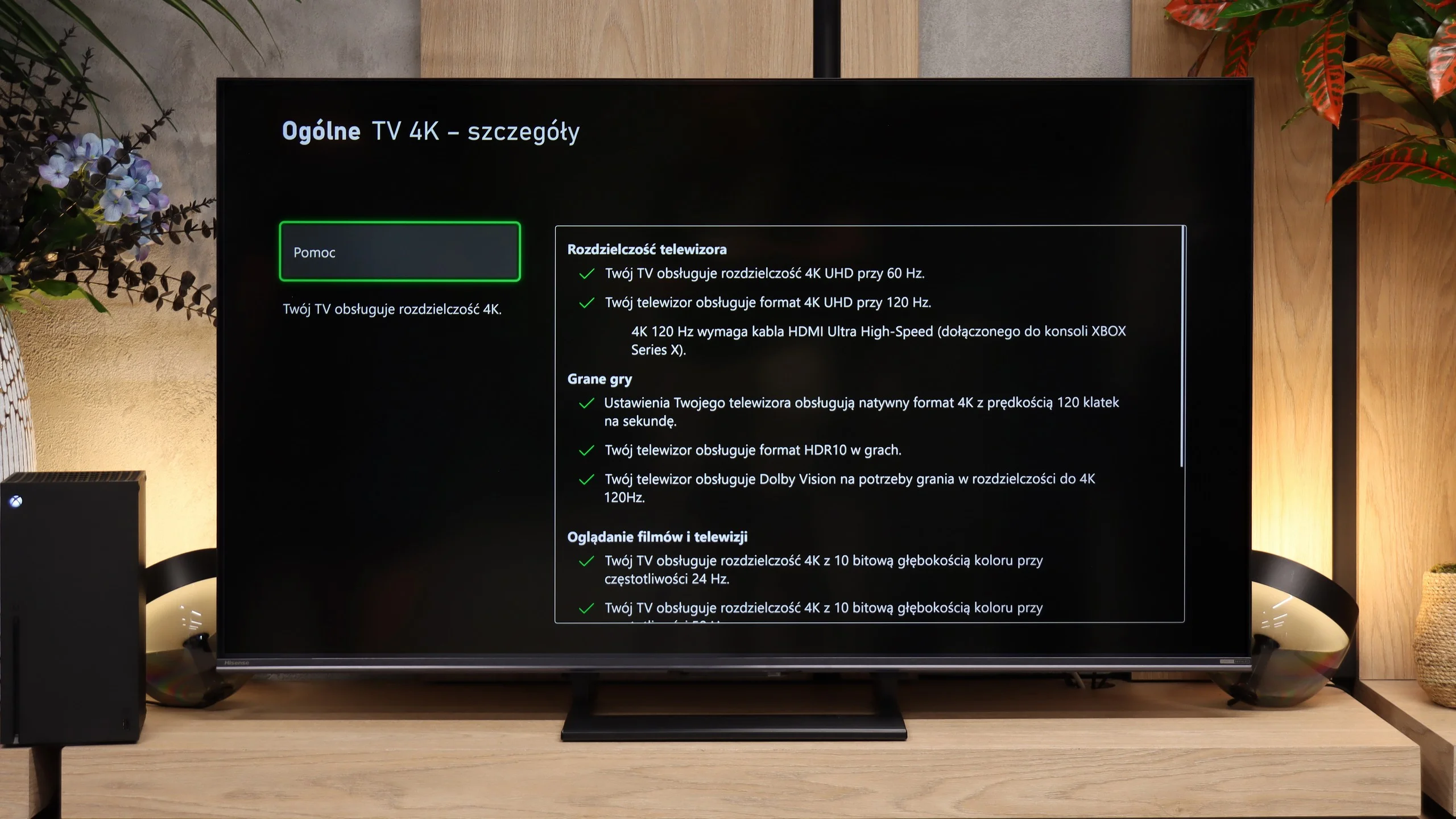
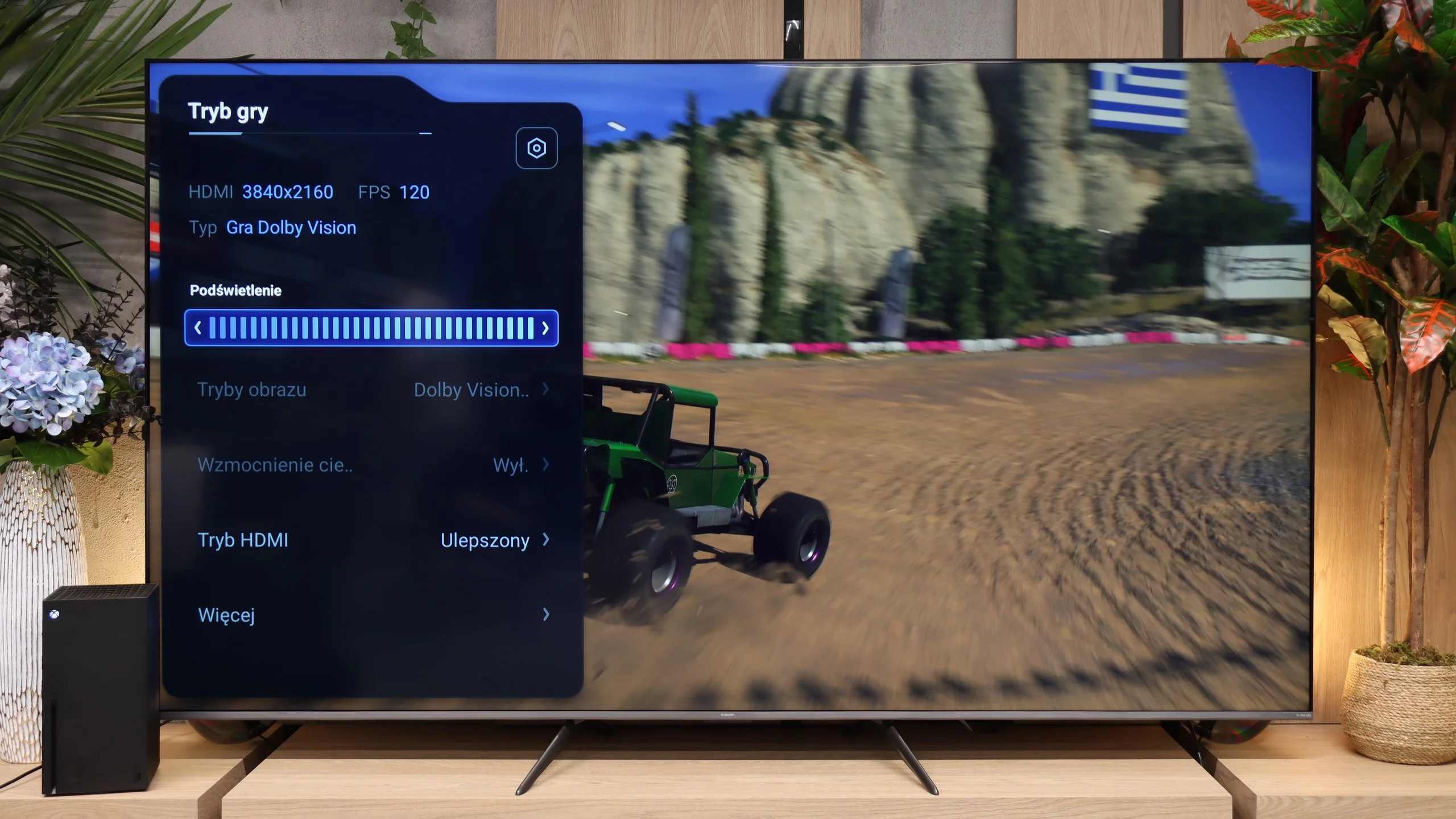
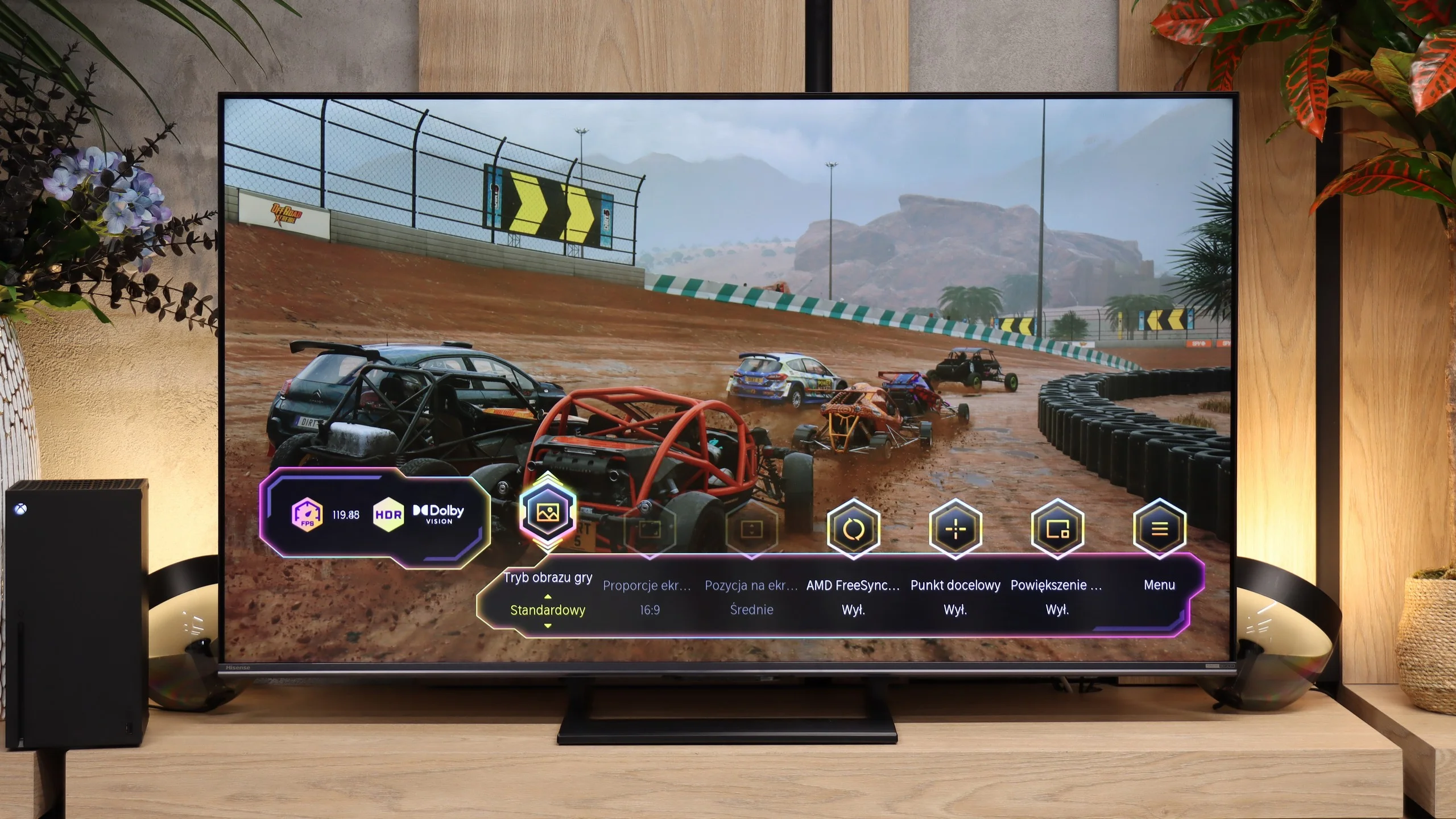
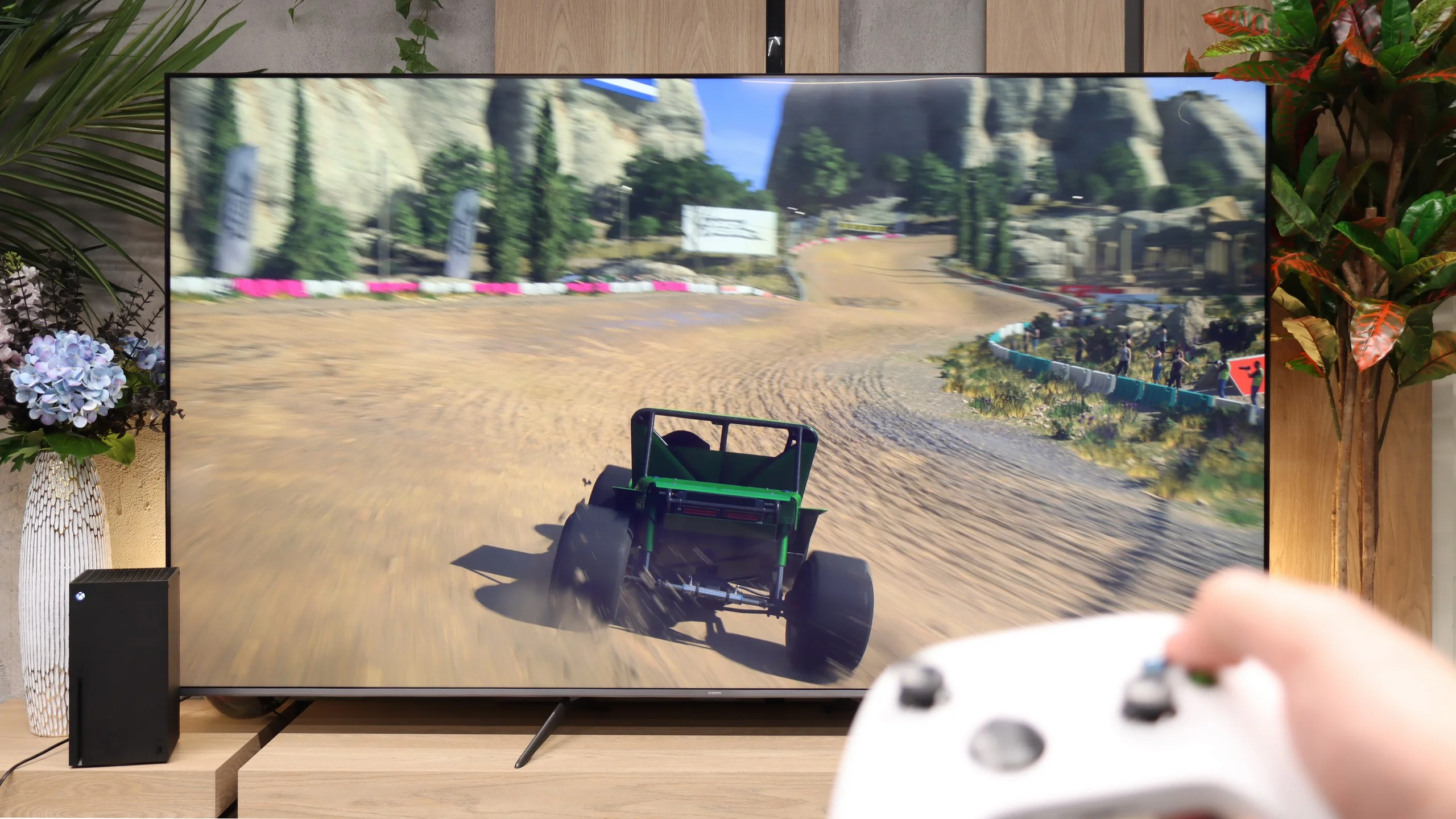
The smaller versions of the Xiaomi S Mini 2026 unfortunately have a big limitation for gamers — a 60 Hz panel. In 4K we’re therefore limited to 60 fps and can’t fully take advantage of the PS5 or Xbox Series X. You can run 120 Hz, but only after dropping the resolution to 1080p or 1440p. Other than that, it’s pretty reasonable. The TV supports ALLM and automatically switches to game mode when it detects a console. There’s also a Game Bar where you can quickly check the main gaming settings. Our biggest reservation is HGiG. The HDR calibration screens on the PS5 and Xbox don’t match the TV’s actual capabilities. If you set HDR exactly according to them, some of the brightest elements can simply be blown out.
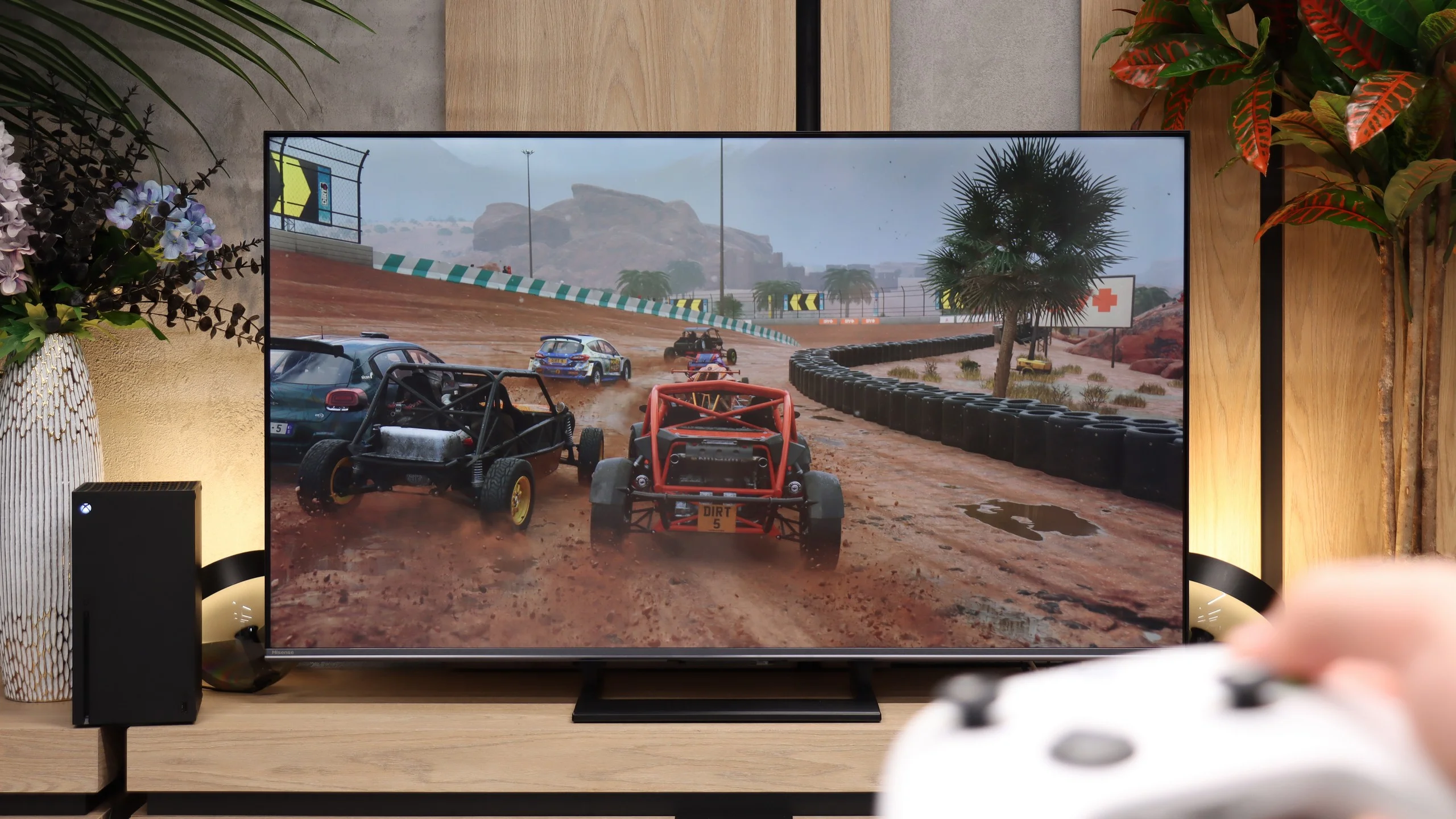
The Hisense U7S has plenty to offer gamers. You get two HDMI 2.1 ports and support for 120 Hz in Full HD, 1440p and 4K, so modern consoles’ capabilities are well utilised. When connected to a PC you can use 144 Hz at 4K or switch the resolution to Full HD and run 240 Hz. So there’s a lot of choice, although it’s worth remembering the motion smearing mentioned earlier, which the high refresh rate doesn’t eliminate. VRR and ALLM are present as well. VRR helps keep the picture tear-free when a game’s frame rate changes. ALLM automatically switches the TV into game mode, so you don’t have to go into the menu each time. VRR works from 48 to 240 Hz, with the highest refresh rate available in Full HD. Xbox users can also play in Dolby Vision at 120 Hz. Importantly, that format does not cause significant input lag here. The Game Bar also looks great. It’s clear and attractive, and lets you quickly check what signal the TV is receiving. Handy gaming settings are close to hand too, including shadow brightening. If it’s hard to spot an opponent in a dark game, you can improve visibility without digging through the whole menu.
Our biggest complaint is HGiG. Hisense keeps doing its own tone mapping, which makes setting up HDR on the console confusing. You adjust the checkerboard pattern, and the TV continually alters its appearance. As a result, the point at which the pattern disappears does not correctly indicate the display’s brightness limit, and it’s easy to set the value too high. For this model it’s better to set the target HDR brightness on the console to around 900 to 1000 nits, rather than rely on the configurator.
Input lag
9.8/10
9.9/10
SDR
HDR
Dolby Vision
Input lag is low. At 120 Hz we measured about 10 ms, and at 60 Hz about 15 ms. In practice the TV responds quickly and you won't notice any significant delay while gaming.
In terms of input lag the Hisense U7S performs excellently. At 60 Hz we measured 14–16 ms, and at 120 Hz just 9–10 ms. Input is responsive and even in fast-paced games the TV doesn't introduce any noticeable delay. Importantly, Dolby Vision performs just as well: 14 ms at 60 Hz and 9 ms at 120 Hz mean you don't have to forgo the format for fear of added latency. The smearing described earlier is a separate issue. The screen reacts quickly to inputs, but the pixels don't always keep up with colour changes.
Compatibility with PC
7/10
8.2/10
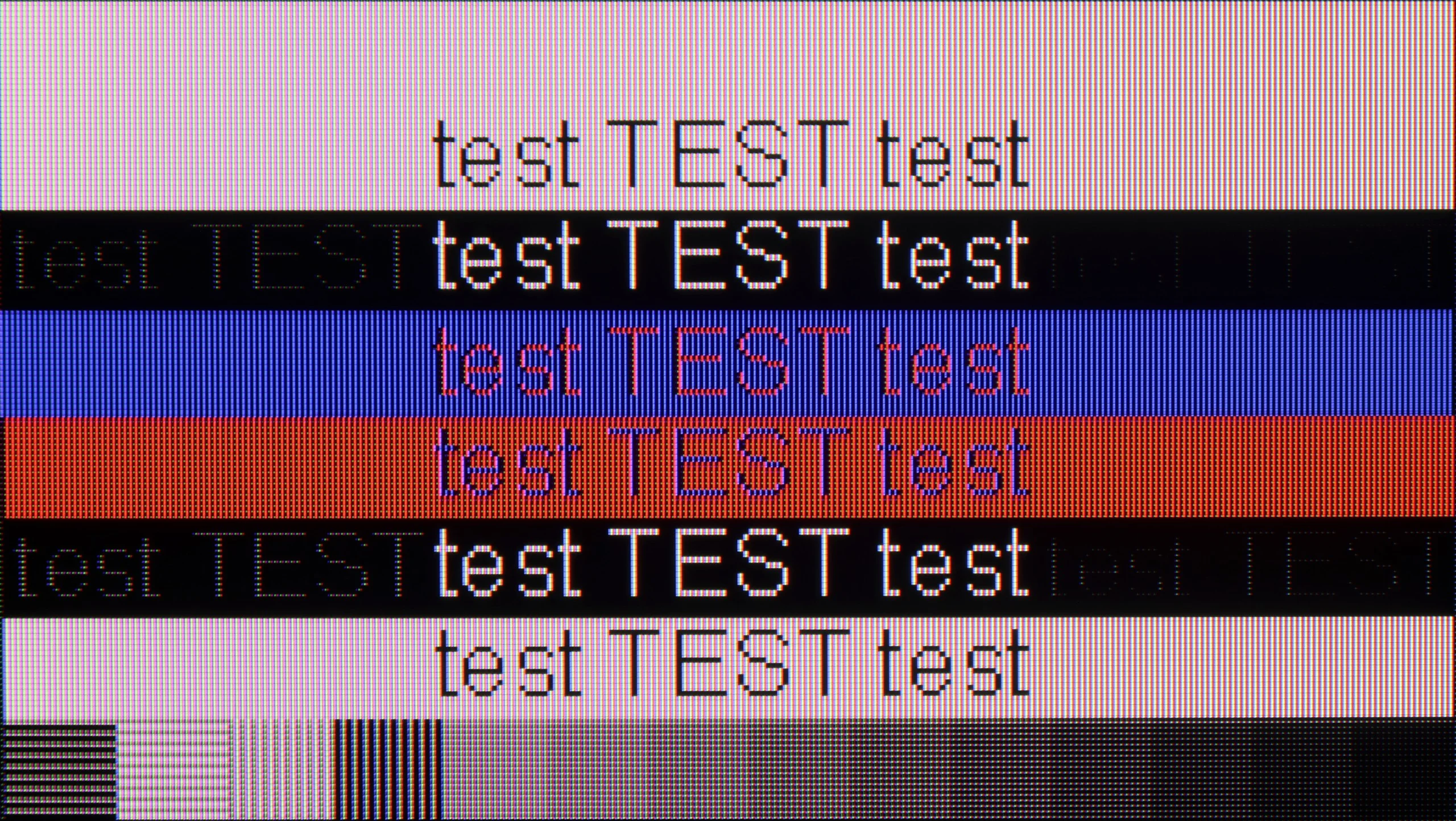
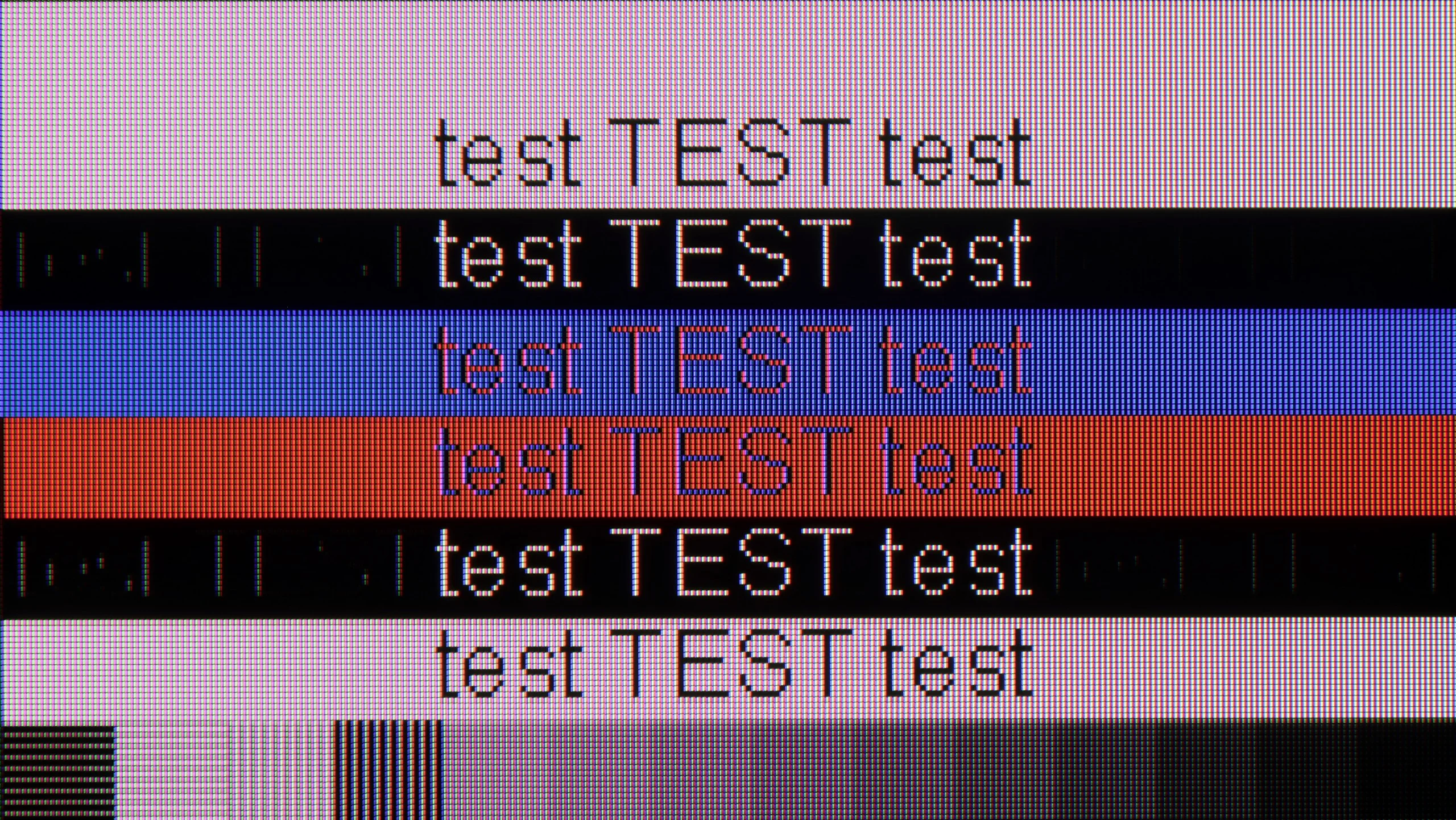
The photo shows the legibility of small fonts. Ideally, lines should be the same thickness on both light and dark text, with minimal pixel gaps.
The larger versions of the Xiaomi S Mini 2026 also aren’t an ideal choice for working on a computer. The issue remains the lack of proper chroma 4:4:4 reproduction. It’s most noticeable on fine coloured text, icons and other interface elements. Regular fonts are still mostly readable, but the image lacks the sharpness we’d expect from a TV meant to serve as a large monitor. The refresh-rate side looks much better. In 4K you can run up to 144 Hz, and lowering the resolution lets the TV go even higher. That makes the larger variants far more appealing for PC gaming than for pure text work.
Po podłączeniu komputera możemy korzystać z 4K przy 144 Hz, działającego G-Sync i opóźnienia na poziomie 10 ms. To dobry zestaw do grania, choć w dynamicznych scenach nadal daje o sobie znać smużenie matrycy. Poprawnie działa też chroma 4:4:4, również przy maksymalnym odświeżaniu, dzięki czemu kolorowe napisy i drobne elementy pulpitu pozostają czytelne.
Do przeglądania internetu czy okazjonalnej pracy U7S nadaje się całkiem dobrze, ale nie wszystkie czcionki wyglądają równie wyraźnie. Najwięcej uwag mamy do drobnego, ciemnego tekstu — cienkie fragmenty liter potrafią zanikać i znaki wyglądają nierówno. Z kanapy trudno to zauważyć, natomiast przy pracy z bliska, szczególnie z tekstem czy arkuszami, może już przeszkadzać.
Viewing angles
3.4/10
3.1/10
The larger S Mini 2026 variants also use a VA panel, but their viewing angles are noticeably better. As you move off centre, colours still lose some saturation, but it happens more slowly than with the smaller versions. It's still not up to the level of IPS/ADS panels, and even less so with OLEDs, but for everyday viewing it's no longer as bad as with the smaller variants.
Viewing angles are unfortunately a weak point of the Hisense U7S. Even after shifting to the side, colours lose saturation, blacks become lighter and the picture looks washed out. At a 45-degree angle we measured a brightness drop of as much as 74%, so the difference compared with watching straight on is really significant. That's a typical limitation of VA panels. When seated centrally we can appreciate its good contrast, but people sitting at the far ends of a wide couch will see a noticeably worse picture. The U7S is therefore best suited to setups where viewing positions are as close to directly in front of the screen as possible.
Daytime performance
7.5/10
7/10
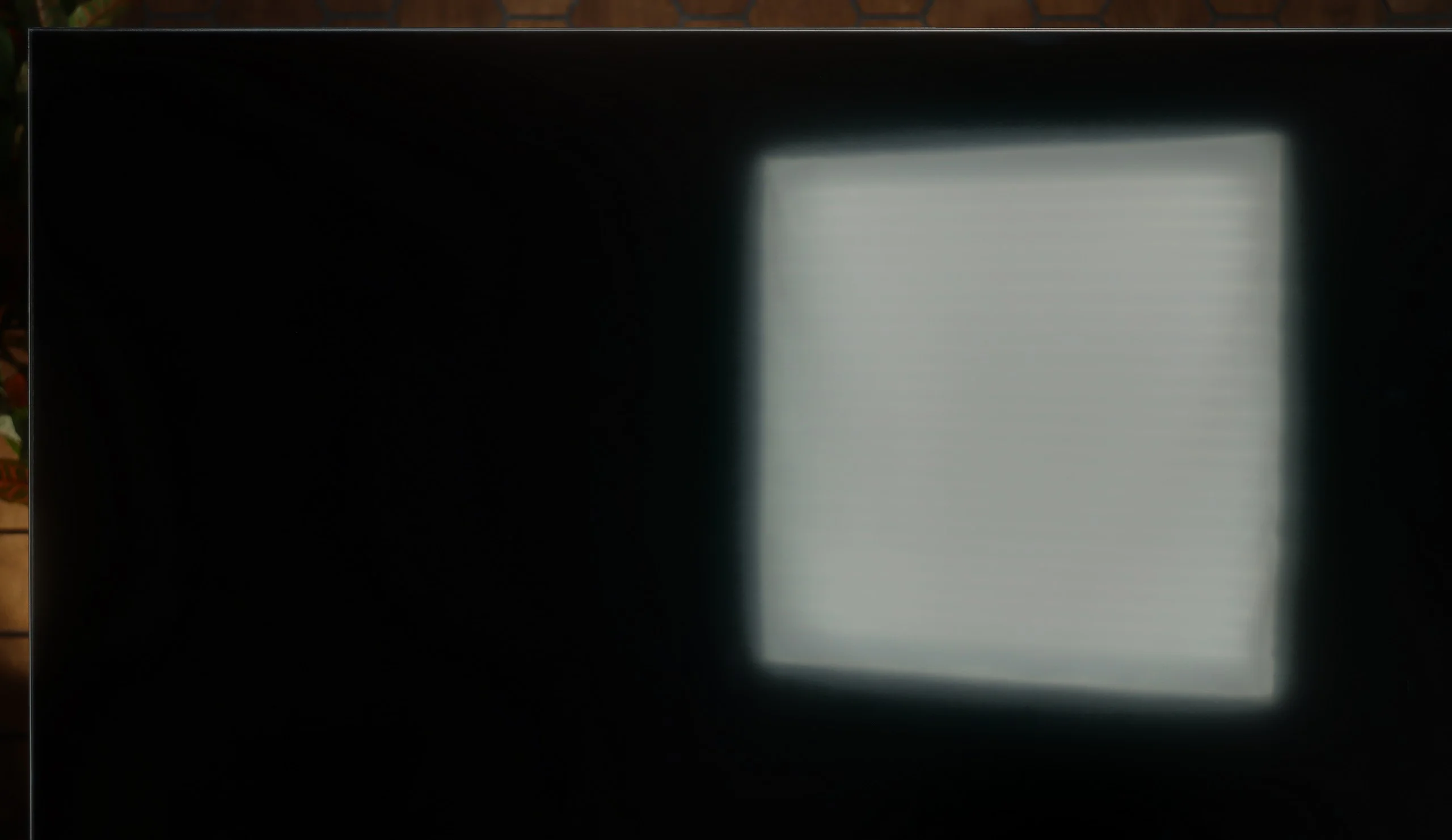
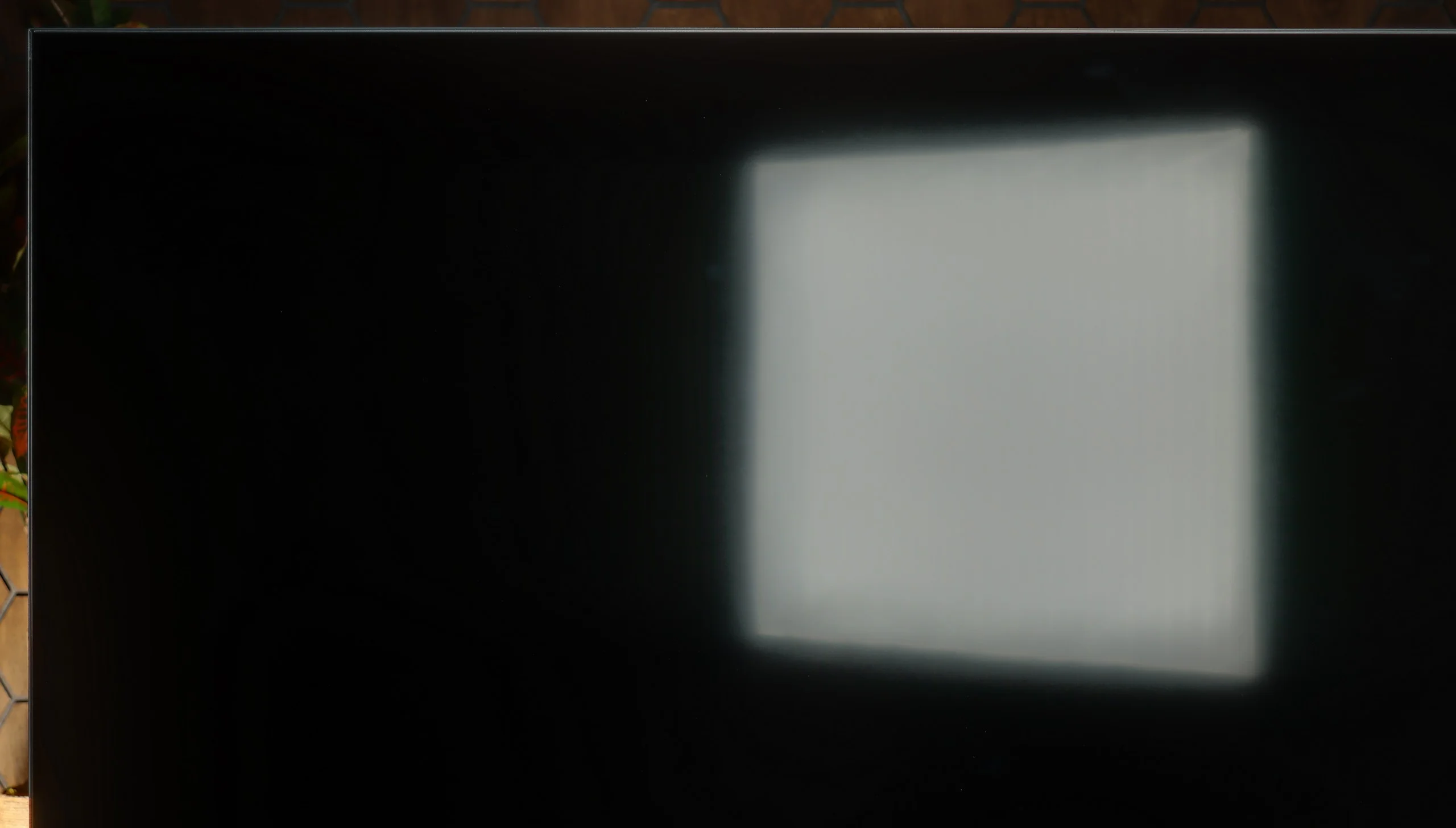
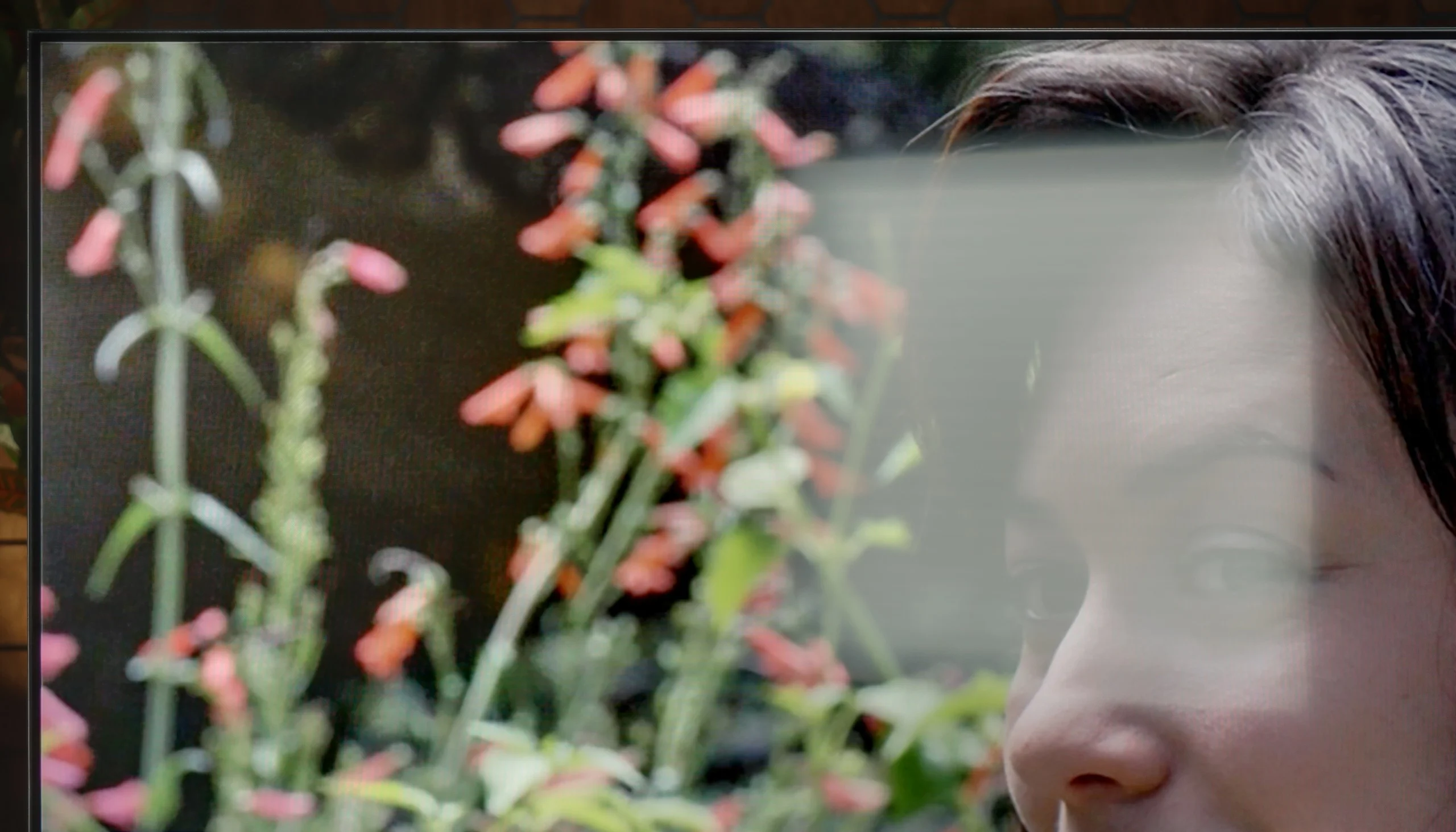
Panel brightness
Hisense U7S / U77SE: 664 cd/m2
XIAOMI S Mini 2026 (85"-98") 144Hz : 805 cd/m2
The larger versions of the Xiaomi S Mini 2026 perform even better in a bright room. Average SDR brightness reaches around 800 nits, so the TV can easily cut through the light coming into the lounge and keep the picture readable during the day. The weak point remains the screen coating. The satin finish doesn't handle direct reflections well, so with a window or a lamp opposite the screen you'll still see reflections. High brightness helps a lot, but the coating's effectiveness at suppressing reflections is rather average.
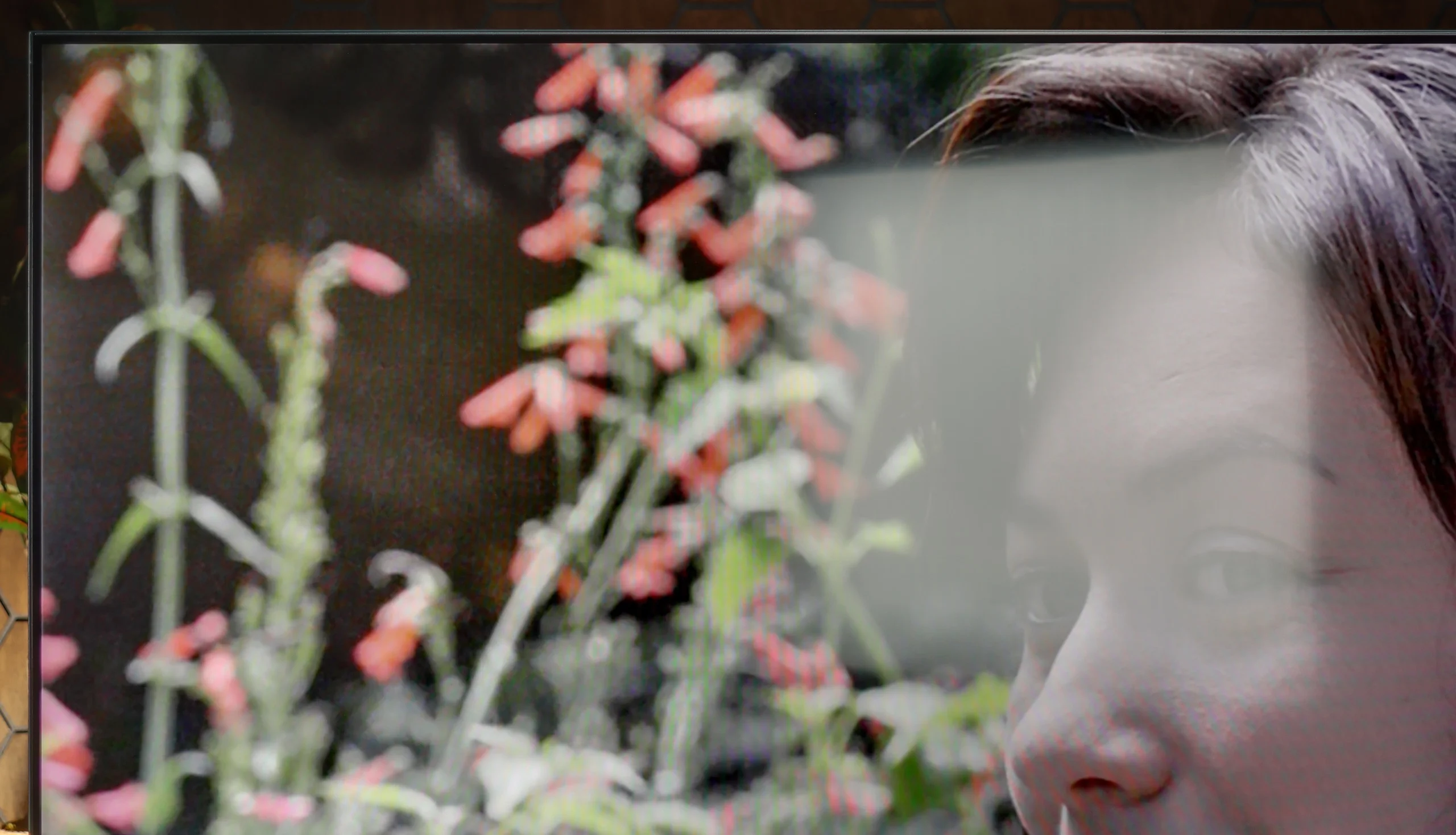
Hisense U7S handles daytime viewing well. In SDR we measured on average about 664 nits, and depending on the onscreen content the brightness ranged roughly between 500 and 800 nits. Even with an all-white image it stays above 500 nits, so a sports broadcast or a bright TV programme won't suddenly look dim. That's enough headroom for comfortable viewing in most living rooms. The satin finish does a decent job of suppressing reflections, but a window opposite the TV will still be visible. The photo shows clearly that its reflection can obscure part of the picture, so high backlight alone doesn't solve everything. On the plus side, blacks and colours hold up in daylight and don't become overly grey. Overall the U7S will work well in a bright room, although it's worth positioning it to avoid direct window reflections.
Panel details
Subpixel Structure:
Panel uniformity and thermal imaging:

XIAOMI S Mini 2026 (85"-98") 144Hz
Hisense U7S / U77SE
TV features
7/10
8.9/10
- SystemGoogle TVVIDAA
- System performanceAverageGood
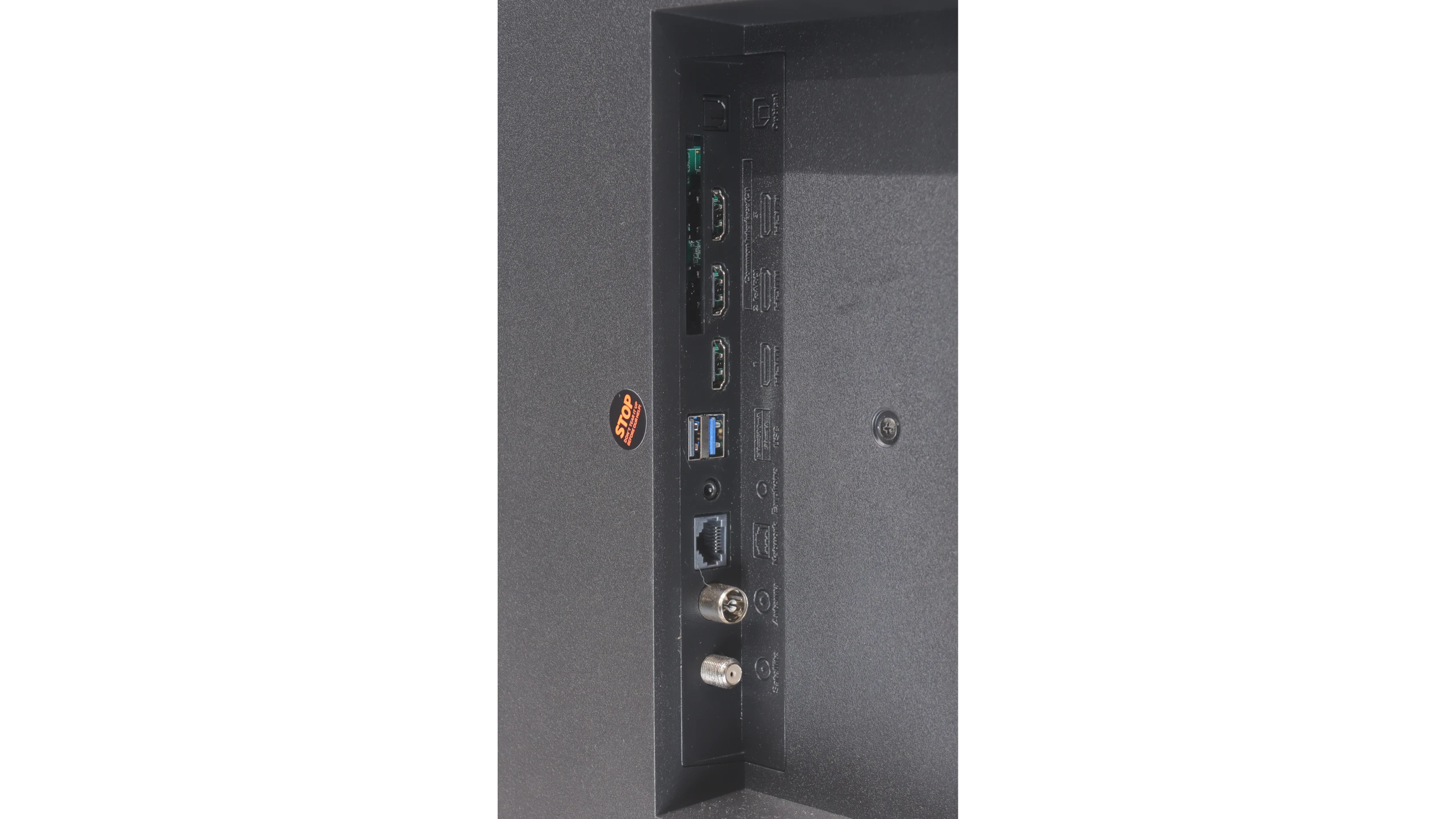
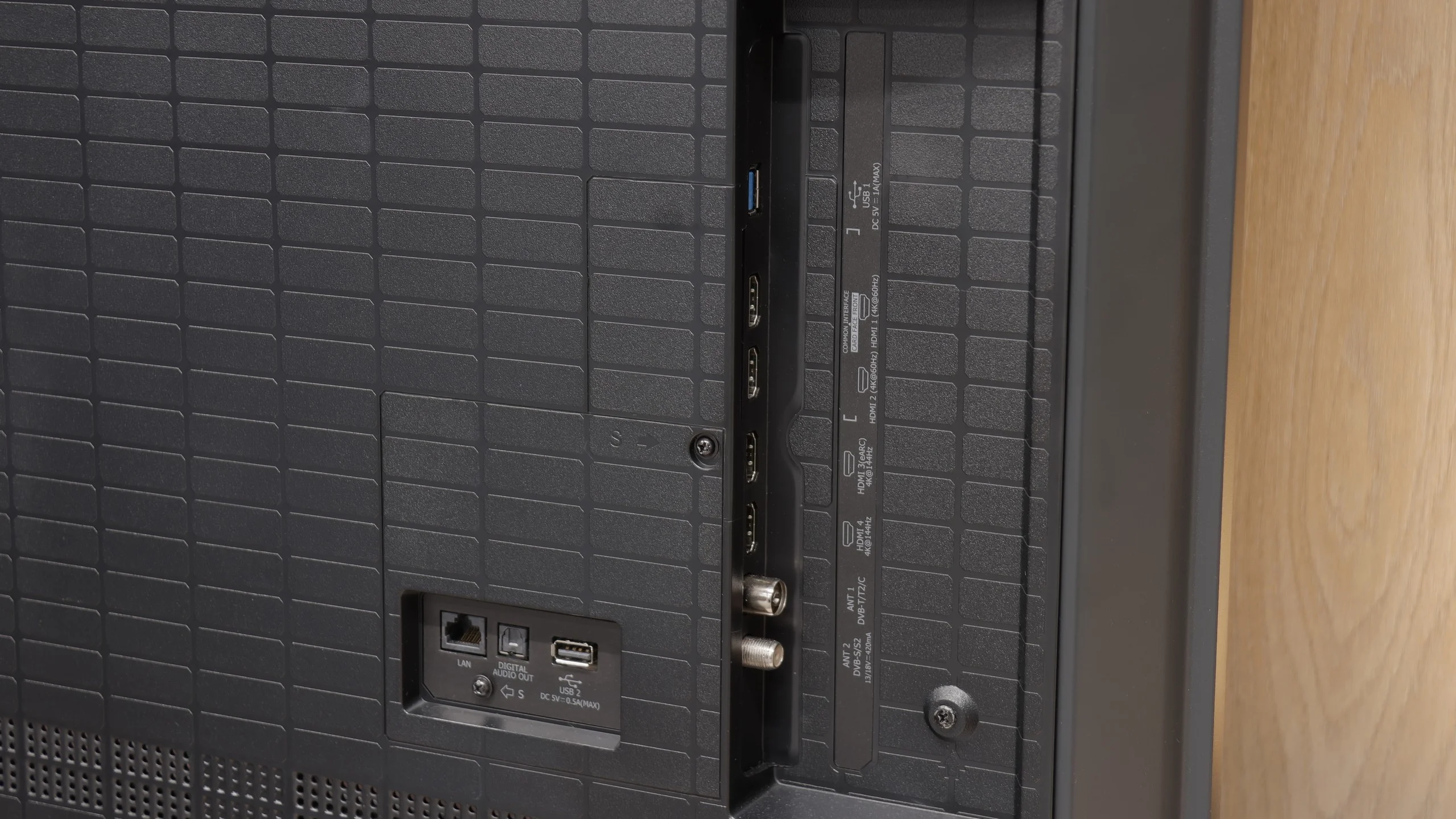
- HDMI inputs1 x HDMI 2.0, 2 x HDMI 2.1 48Gbps2 x HDMI 2.0, 2 x HDMI 2.1 48Gbps
- OutputsToslink (Optical audio), eARC (HDMI), ARC (HDMI), Mini-Jack (Headphones)Toslink (Optical audio), eARC (HDMI), ARC (HDMI)
- Network InterfacesWi-Fi 2.4GHz, Wi-Fi 5GHz, Ethernet (LAN) 100MbpsWi-Fi 2.4GHz, Wi-Fi 5GHz, Ethernet (LAN) 100Mbps
- TV receptionDVB-T, DVB-T2, DVB-S, DVB-S2, DVB-CDVB-T, DVB-T2, DVB-S, DVB-S2, DVB-C
Classic features:
- Recording to USB (terrestrial TV)
- Recording programming
- Picture in Picture (PiP)
- RF remote control (no need to aim)
- Backlit remote control
- Teletext
- Audio only mode
- Bluetooth headphones support
- Simultaneous Bluetooth headphones & TV audio
Smart features:
- AirPlay
- Screen mirroring (Windows Miracast)
- Voice search
- Voice search in native language
- Ability to connect a keyboard and mouse
Sound connection options
- HDMI audioeARC (HDMI), ARC (HDMI)eARC (HDMI), ARC (HDMI)
- Other audio outputsToslink (Optical audio), Mini-Jack (Headphones)Toslink (Optical audio)
- Wireless audioBluetoothBluetooth
Supported audio formats (external HDMI eARC audio):
- Dolby Digital Plus 7.1
- Dolby True HD 7.1
- Dolby Atmos in Dolby Digital Plus (JOC)
- Dolby Atmos in Dolby True HD
- DTS:X in DTS-HD MA
- DTS-HD Master Audio
Senior accessibility
- Numeric keyboard on TV
- Font size adjustment
- Audio description
Google TV
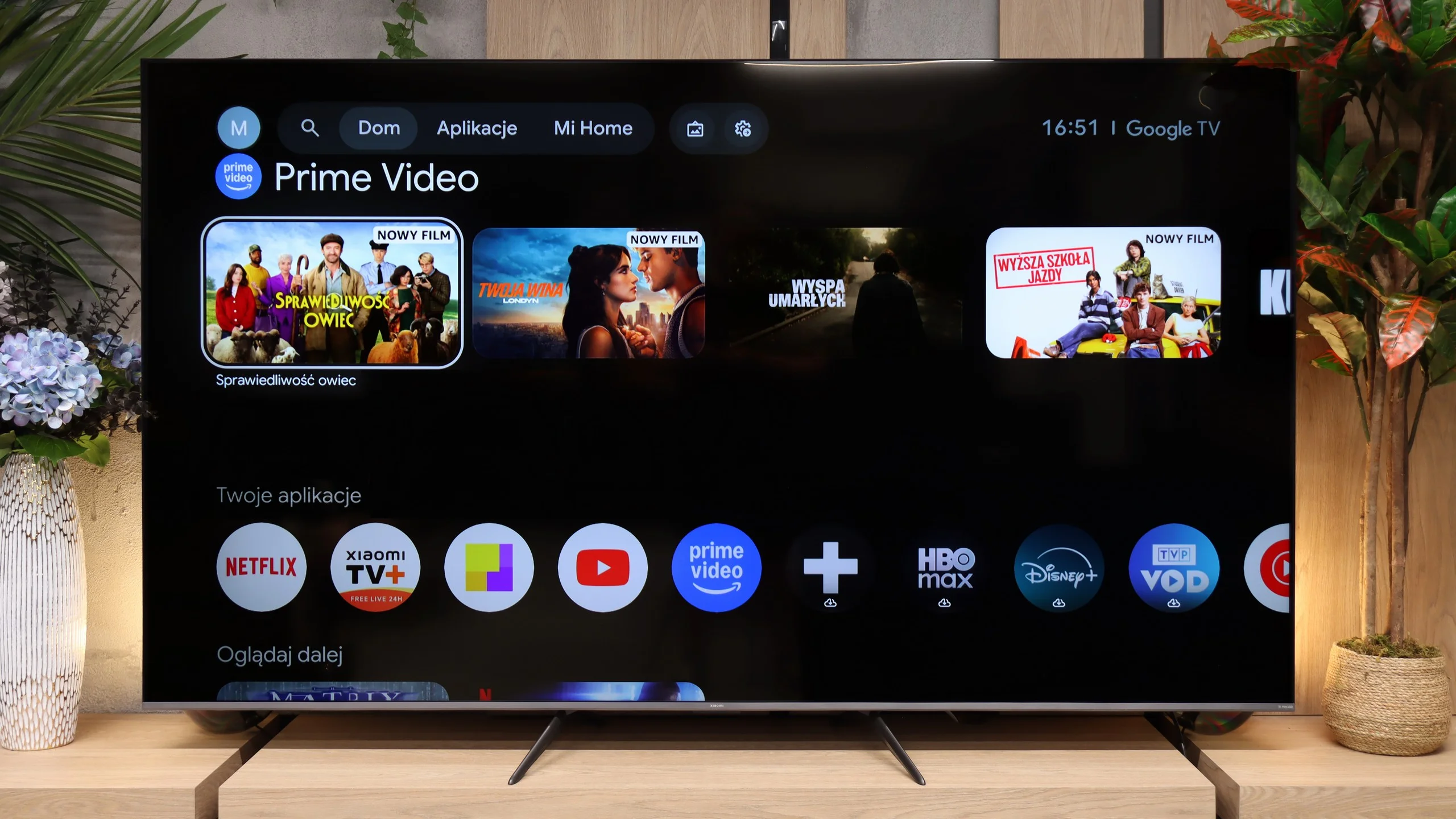
On the larger variants of the Xiaomi S Mini 2026, Google TV runs quite smoothly. These models have a bit more RAM than the smaller versions, and you can really notice the difference in everyday use. Menus respond faster, apps launch more smoothly, and you much less often encounter moments where you have to wait for the system to react. Google TV itself provides access to pretty much everything you’d expect from a Smart TV. You can easily find the most popular streaming apps, and you can install additional apps from the Google Play store. There’s Chromecast, voice control and convenient unified search for content across services in one place. In terms of features, there’s little to fault Xiaomi on.
Practical features
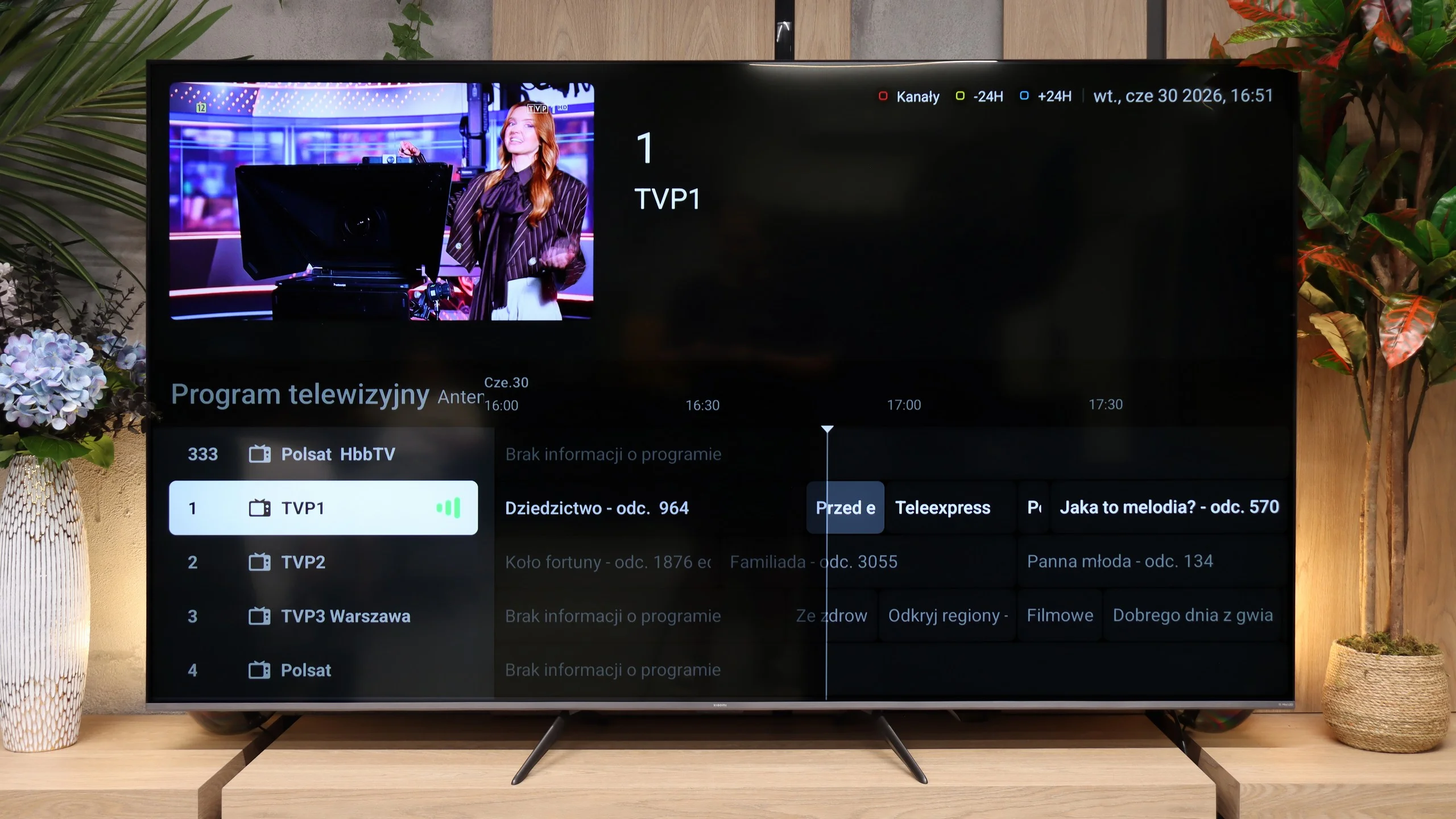
If you use traditional TV, the Xiaomi S Mini 2026 offers a fairly basic set of features. There’s a programme guide, teletext and a traditional remote control with a numeric keypad. The latter is becoming less common these days, but it can still be convenient for regular channel switching. A slightly more unusual feature is the 3.5mm headphone jack. New TVs increasingly omit it, so its presence here could be useful if someone still uses wired headphones or older audio equipment.
Smart TV: VIDAA
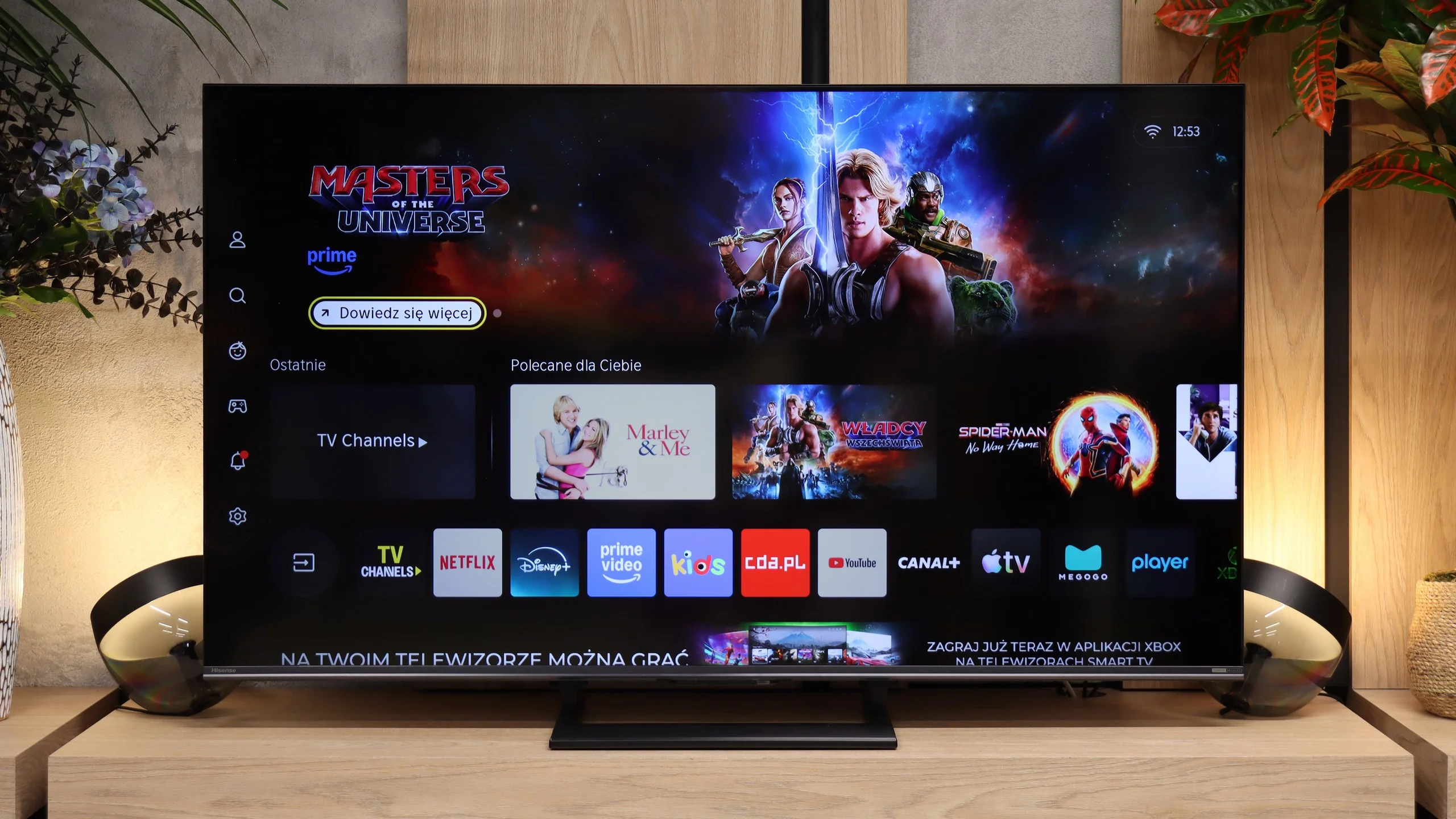
VIDAA HOME OS on the Hisense U7S is feature-rich, yet runs quickly and doesn't complicate everyday use. Besides apps, there is AirPlay for streaming from Apple devices and Miracast, which lets you mirror a computer screen. Voice search in Polish also works, so instead of typing a film title with the remote you can just say it. You can also connect a keyboard and mouse. It's hard to complain about the Smart features, though before buying it's worth checking the availability of the specific apps you use, because the selection isn't as extensive as on competing systems.
Classic features and the remote
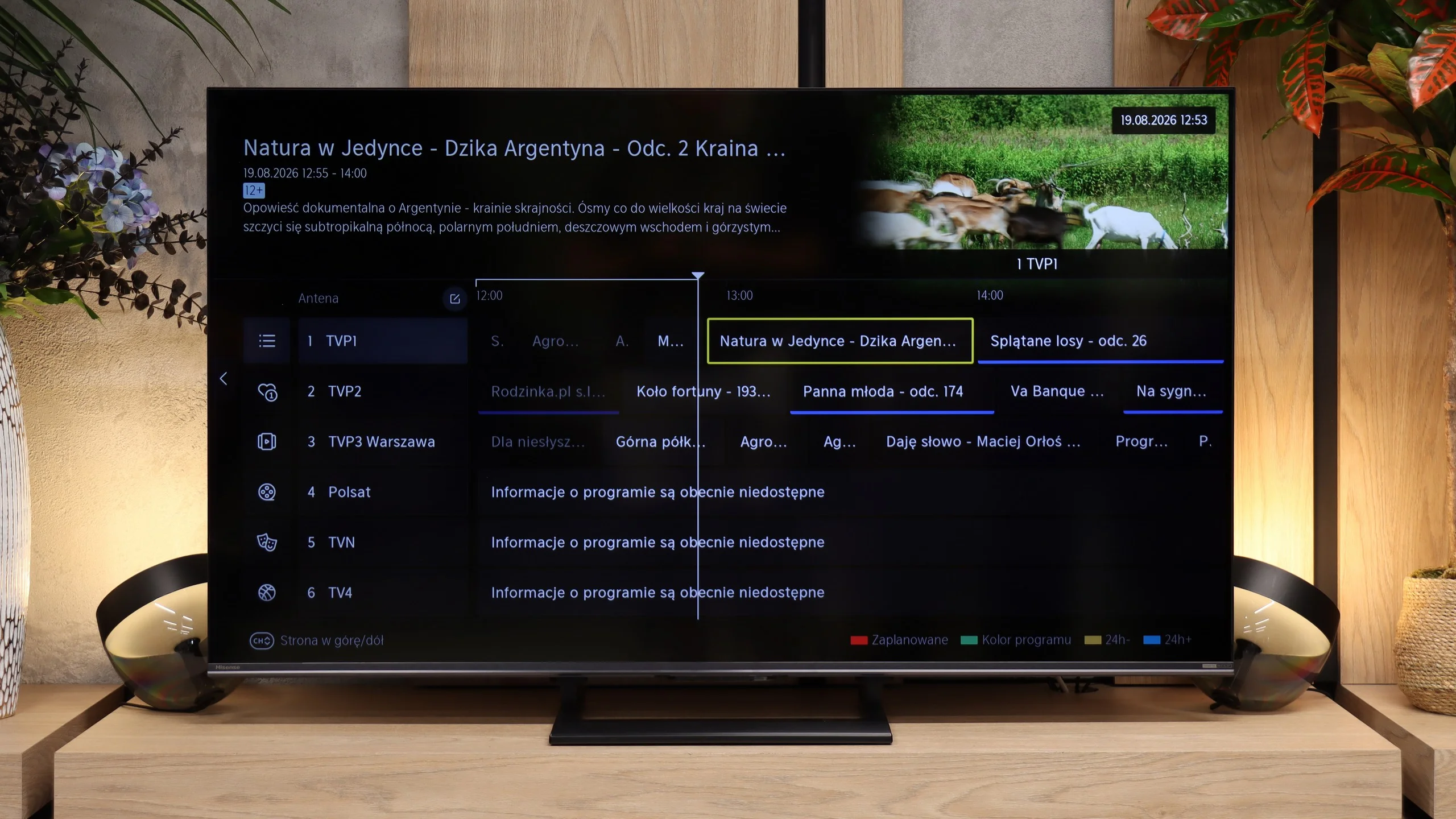
Hisense hasn't forgotten viewers who watch regular TV. The U7S lets you record programmes from terrestrial TV to USB and schedule recordings for later. There's teletext, the option to listen to audio with the screen off, and support for Bluetooth headphones. Usefully, headphones can operate at the same time as the TV speakers, so one person, for example a senior, can use them while others continue to listen normally. The main omission is really picture-in-picture, PiP.
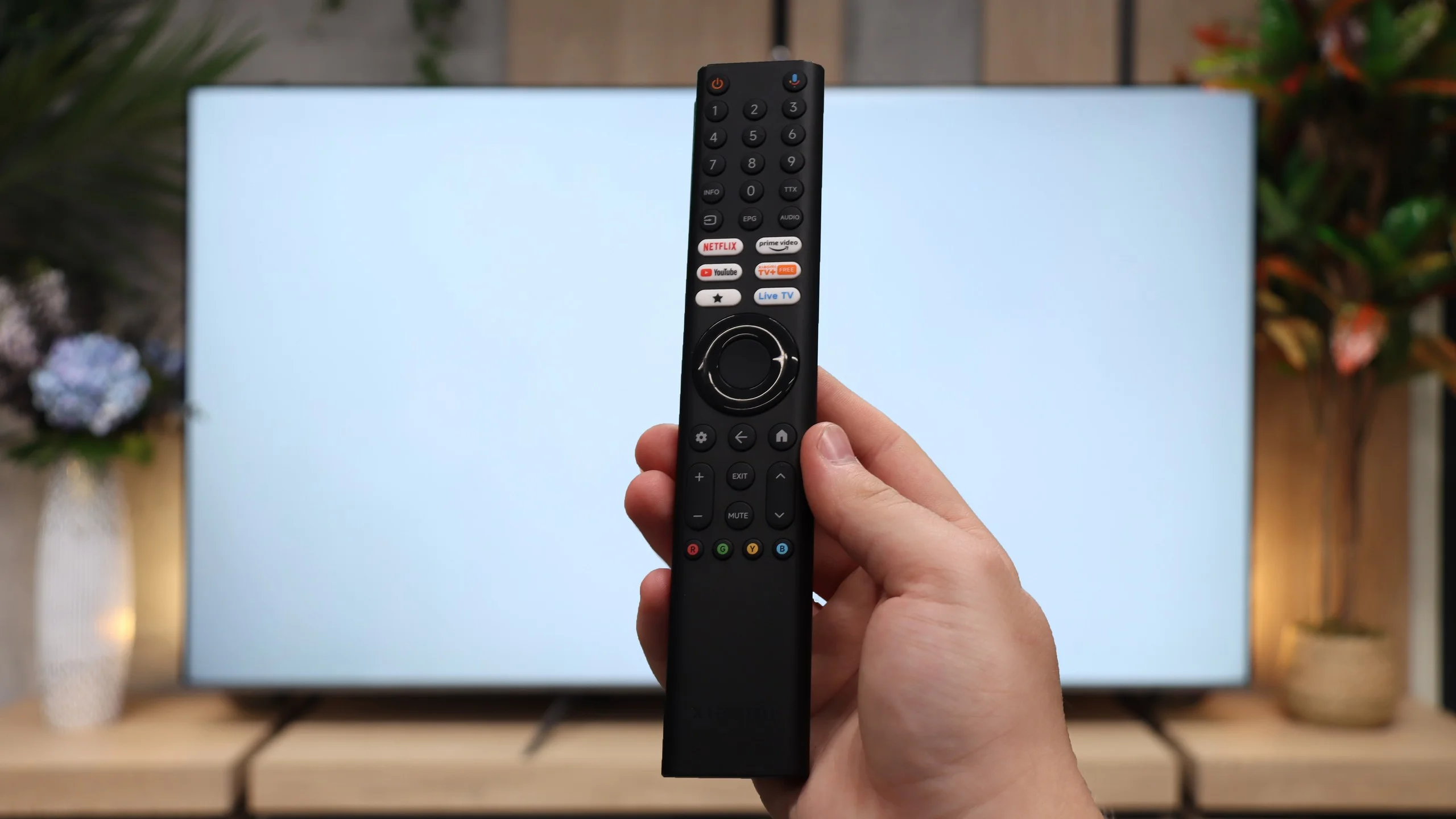
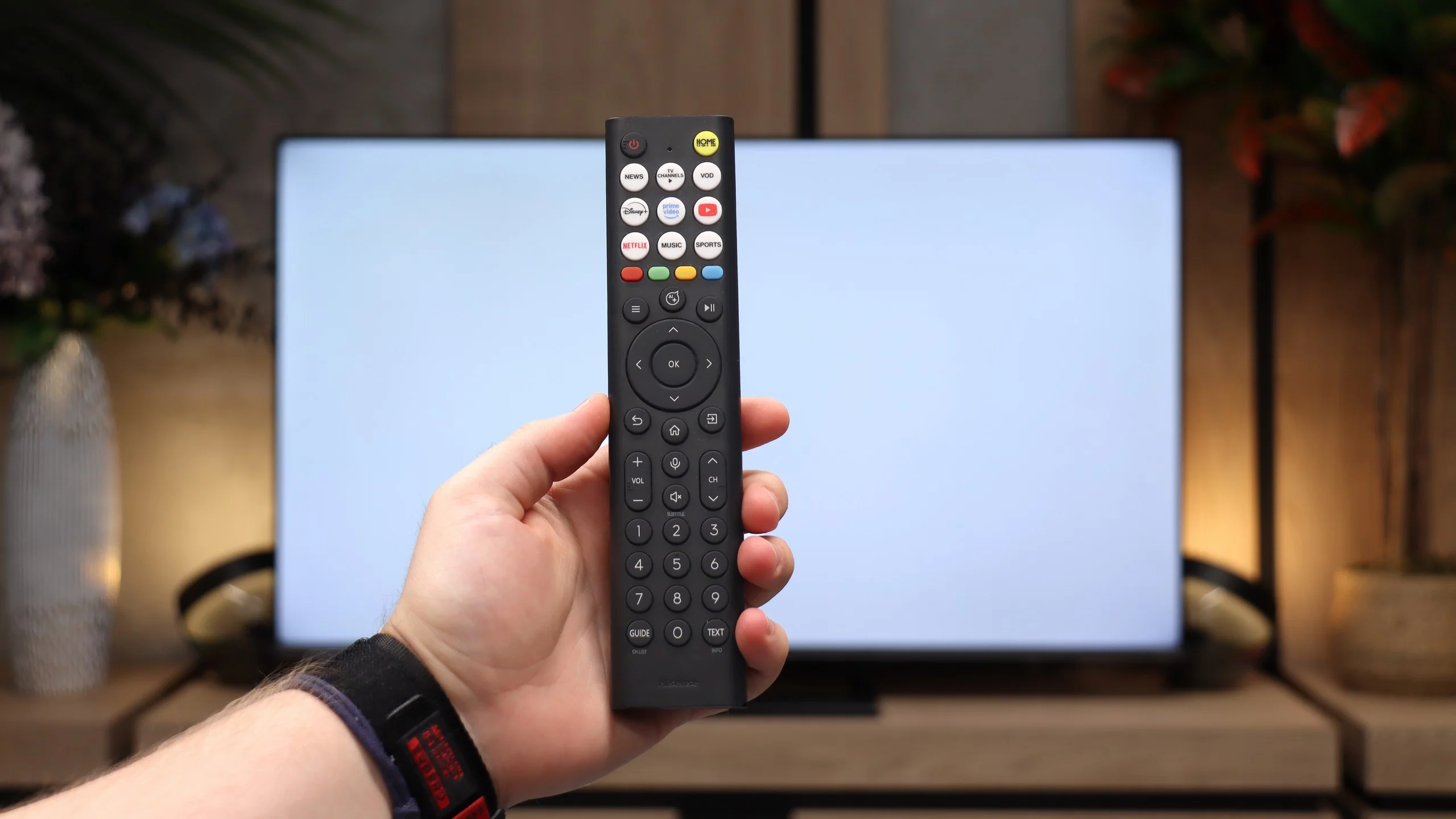
We weren't keen on the remote itself. It's quite plasticky and looks rather "cheap", but it does its job well. It has a full numeric keypad, plenty of shortcuts and controls the TV via radio, so you don't have to point it at the screen. It's just a shame the buttons aren't backlit. Hisense reserves more elegant remote versions for higher-end models, such as the U7S Pro.
Apps
9.6/10
8.3/10






















Playing files from USB
6.8/10
8.4/10
Supported photo formats:
Maximum photo resolution:
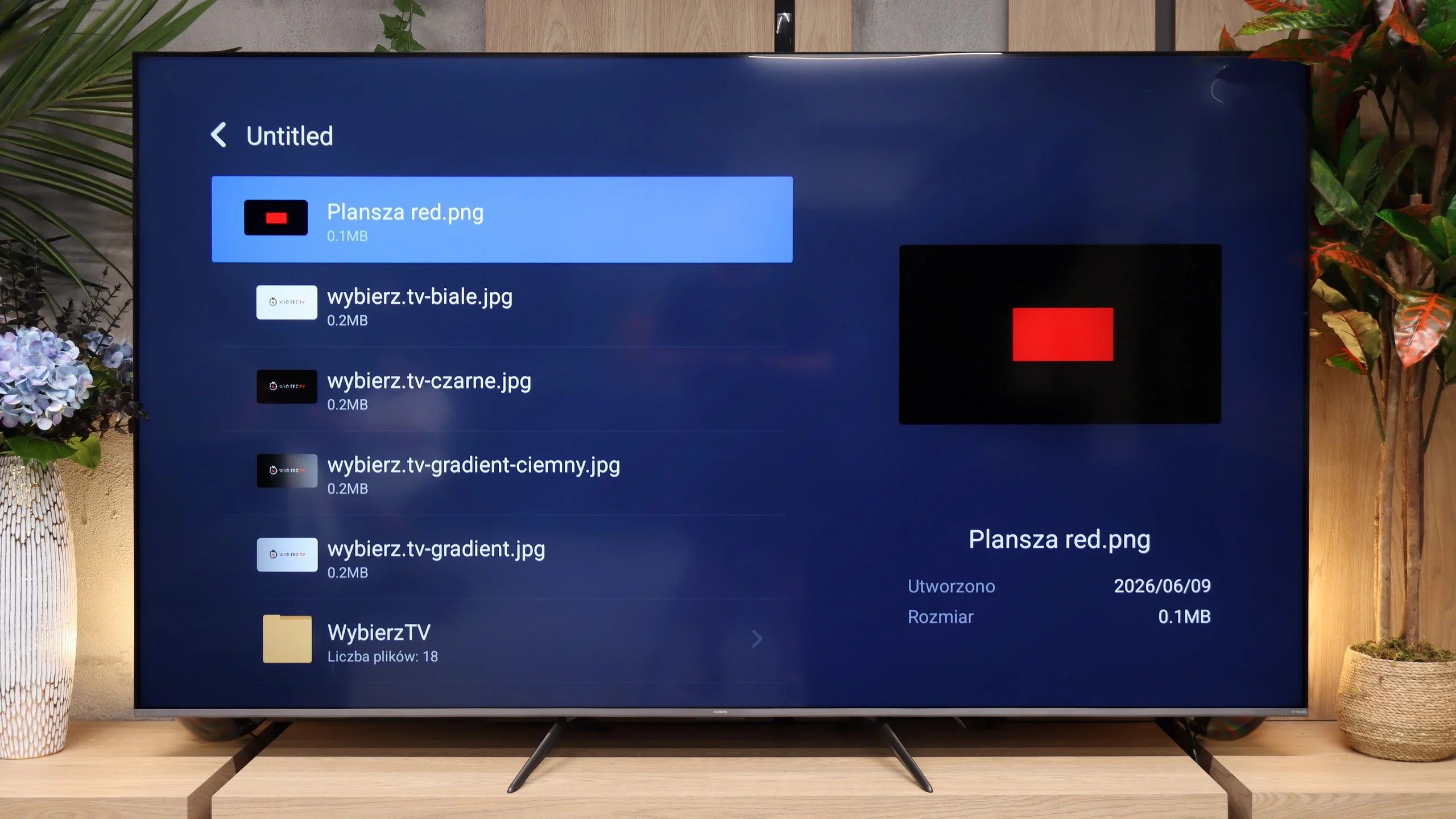
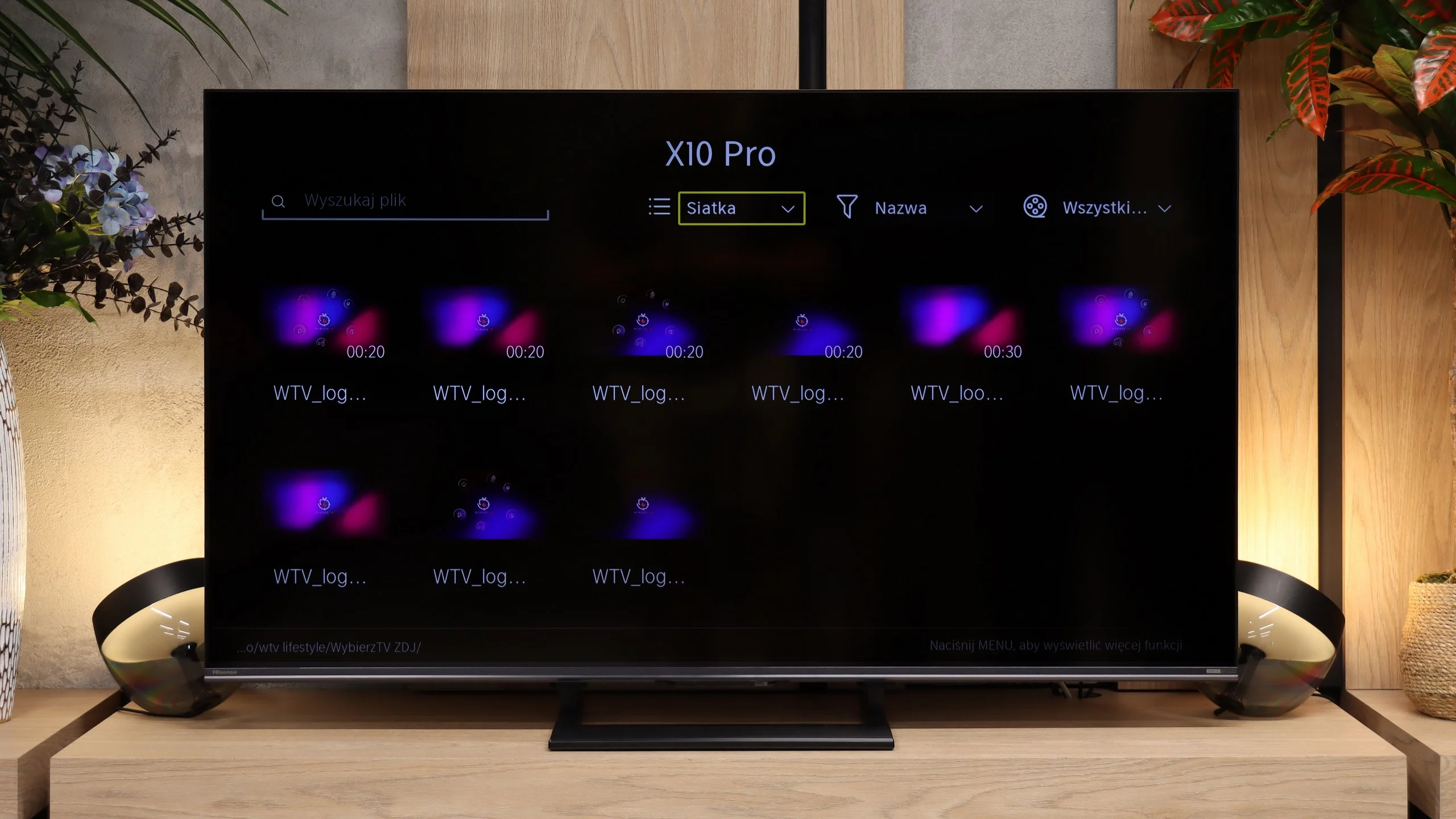
The built-in USB file player does a pretty good job and opens most common formats without any issues. If you come across a file it doesn’t support, Google TV makes it easy to install another player, e.g. VLC. Our main complaint is with subtitles. The stock app doesn’t handle certain characters outside the basic alphabet correctly, which can cause problems with Polish characters. If you frequently watch videos from USB, it’s better to use a third-party app.
The USB player in the Hisense U7S handles most common files. It played our H.264 and H.265 material without any problems, including high-bitrate 4K recordings and a Dolby Vision test file. SRT and SUB subtitles work, as do Polish characters and font colour changes. Not everything could be run, though. AV1 and H.266 VVC files failed to play, as did ASS and TXT subtitles. Audio support is good, from simple MP3s to FLAC 96 kHz/24 bit, although AIFF and DSD are not supported.
Our biggest issues are with photos. The selection of supported formats is wide — besides JPEG and PNG it also handles WebP and TIFF, but HEIC won’t open. The way it handles resolution is odd too. The TV displayed images at 4, 6, 8, 16 and 32 Mpix, but couldn’t cope with 10, 12 or 24 Mpix files. So it’s not a straightforward size limit. The player is perfectly adequate for movies and music, but when showing holiday photos you may find some files need converting first.
Sound
5/10
7.2/10
- Maximum volume89dB88dB
- Dolby Digital Plus 7.1
- Dolby True HD 7.1
- Dolby Atmos in Dolby Digital Plus (JOC)
- Dolby Atmos in Dolby True HD
- DTS:X in DTS-HD MA
- DTS-HD Master Audio
Built-in speakers perform adequately, but it's hard to expect much more from them. They're fine for everyday viewing of the news, series or TV programmes. However, they lack low end, so the sound is fairly flat and doesn't deliver much excitement when watching films.
The USB player in the Hisense U7S handles most common movies and music well. It supports 4K content, including a Dolby Vision file we tested, and displays Polish characters correctly in subtitles. It should therefore be sufficient for everyday use with a USB stick, although it can struggle with less common formats. Our biggest reservations concern photos. The TV treats image resolutions quite selectively and may open a larger photo but refuse to display a smaller one. When browsing a holiday album this can be annoying, because you can't be sure all the photos will work. Some will need to be prepared on a computer beforehand.
Sound Quality Test
Acoustic Measurements
No acoustic data
88dBC (Max)
75dBC
Reader comments
Comments are provided by the external service Disqus (Zeta Global). Once loaded, Disqus may set cookies and process data about your activity.
We will remember your choice on this device. Provider's privacy policy