It’s time to gather all observations. The TCL P7K / P79K is a television that smartly juggles compromises, offering significantly more in its price range than one might expect. Its undeniable advantage is the VA panel, which guarantees deep blacks and high contrast, while an impressively rich package for gamers (with VRR and support for 120 Hz at lower resolutions) makes it a phenomenal choice for console owners. The whole thing is tied together by a functional Google TV system. Of course, the low peak brightness means that HDR content lacks spectacular highlights, and the TV's performance in sunlit rooms is limited. And while, at its relatively low price, the P7K / P79K is quite a decent option, its biggest rival turns out to be… its more refined sibling, the P8K. Often FOR a small extra fee, we get a device that is a class above – with a native 4K 144 Hz panel, significantly better audio system, and generally higher operational quality, which is reflected in its much higher rating on our portal. Therefore, the final verdict must be as follows: if your budget is absolutely non-negotiable, the P7K / P79K will be a good and cost-effective choice. However, if you can afford to add a small amount, the P8K model will offer significantly more and will ultimately be a more satisfying investment.
- Matching (Score) |
- Our verdict |
- TV appearance |
- Where to buy |
- Contrast and black detail |
- HDR effect quality |
- Factory color reproduction |
- Color reproduction after calibration |
- Smoothness of tonal transitions |
- Image scaling and smoothness of tonal transitions |
- Blur and motion smoothness |
- Console compatibility and gaming features |
- Input lag |
- Compatibility with PC |
- Viewing angles |
- Daytime performance |
- Panel details |
- TV features |
- Apps |
- Playing files from USB |
- Sound
TCL P7K / P79K vs LG QNED80A6A (IPS)
 Direct comparison
P7K / P79K

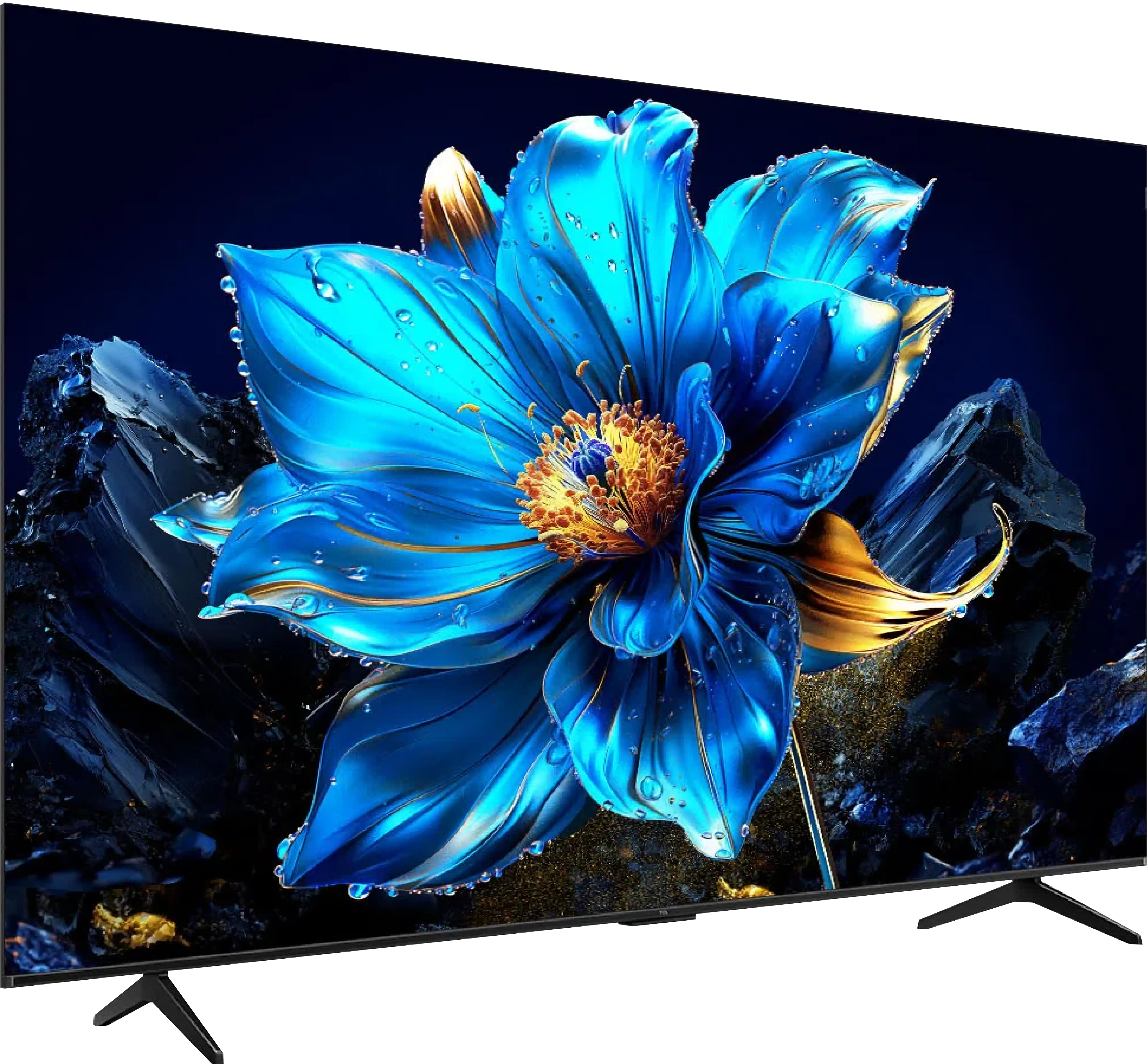

Panel type: LCD VA
Resolution: 3840x2160
System: Android TV
Model year: 2025
Complete the survey to find out the result
Panel type: LCD IPS
Resolution: 3840x2160
System: WebOS
Model year: 2025
Complete the survey to find out the result
Overall rating
5.8
5.9
 Movies and series in UHD quality
 5.1
5.7
 Classic TV, YouTube
 5.5
5.6
 Sports broadcasts (TV and apps)
 5.3
5.5
 Gaming on console
 7.1
6.8
 TV as a computer monitor
 2.0
5.0
 Watching in bright light
 4.6
4.7
 Utility functions
 7.0
6.8
 Apps
Apps 9.6
9.1
 Sound quality
 6.2
6.0
Complete the survey to find out what fits your preferences
Advantages

Great black and high contrast
Support for 120 Hz in games (at lower resolutions)
Very low responsiveness (input lag), excellent for dynamic gameplay
Modern features for gamers, such as VRR and ALLM
Smooth Google TV system with a massive app base
Very well-functioning Google Assistant in Polish
Easy screen mirroring from your phone (support for AirPlay)
Attractive price
Wide viewing angles – the image looks just as good from any spot on the couch
Rich and vibrant colours thanks to the PFS filter (QNED)
Smooth and modern WebOS 25 system
Magic remote (with cursor)
Good detail reproduction in HDR
Effective upscaling and toning smoothing feature
Low input lag
Decent features for gamers (VRR, ALLM, HGiG), despite the 60Hz panel
Smooth tonal transitions – no visible "stepping" on colour gradients
Disadvantages

Low brightness, which makes the HDR effect poor, and the image is hard to see in sunlight
The image loses quality and colours when viewed at an angle
Not suitable as a computer monitor due to very poor readability of text
Strong dithering phenomenon (heavily digital image)
Poor contrast and greyish black – the IPS panel does not perform well in low light
Problematic local dimming – vertical backlight bands are very noticeable on dark backgrounds
60Hz panel
No Dolby Vision support
Sound lacks depth – a soundbar is recommended
Our verdict
The QNED80A variant based on an IPS panel is aimed at a completely different audience. If you're looking for a TV for a place where life buzzes all day, and family members watch TV from various spots – this will be a good choice. The wide viewing angles and saturated colours make the picture look good, whether you're sitting directly in front or at the dining table. Of course, it's not perfect equipment, as there simply aren't any in this price segment. The IPS panel won't offer you inky blacks, so evening horror movie sessions may appear slightly grey, and local dimming in dark scenes can create noticeable light bands. Despite these flaws, the QNED80A makes up for it with its overall picture quality. The performance of the processor deserves immense praise – both upscaling regular TV to 4K and presenting details in HDR content are outstanding here. The image is clean, sharp, and rich in detail, even if the screen itself doesn't break brightness records. Combined with the fantastic WebOS system, which runs quickly and reliably, it's a very safe, solid choice for everyday family entertainment at a relatively low price.
TV appearance
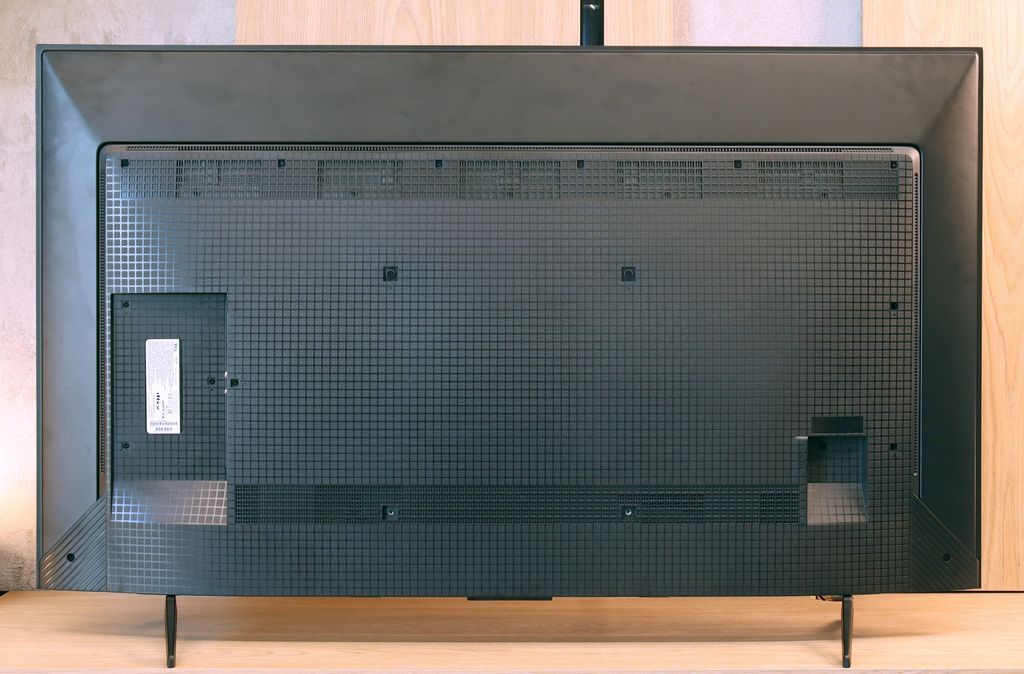
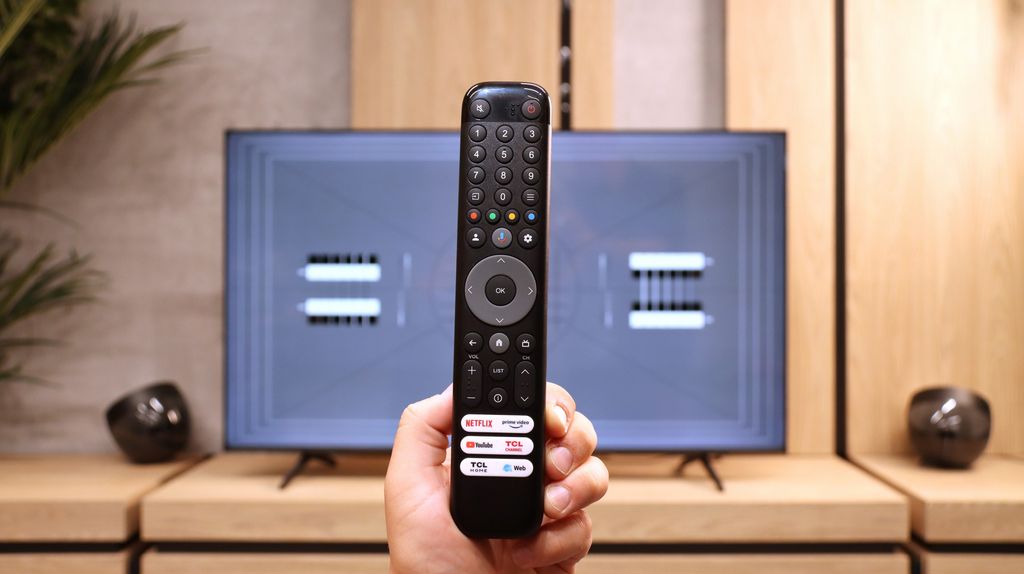
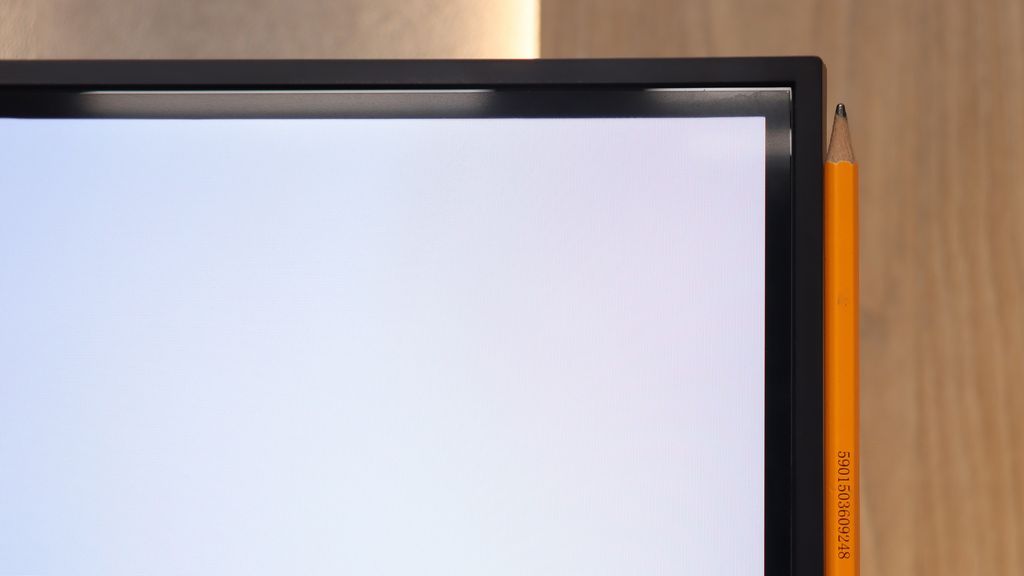
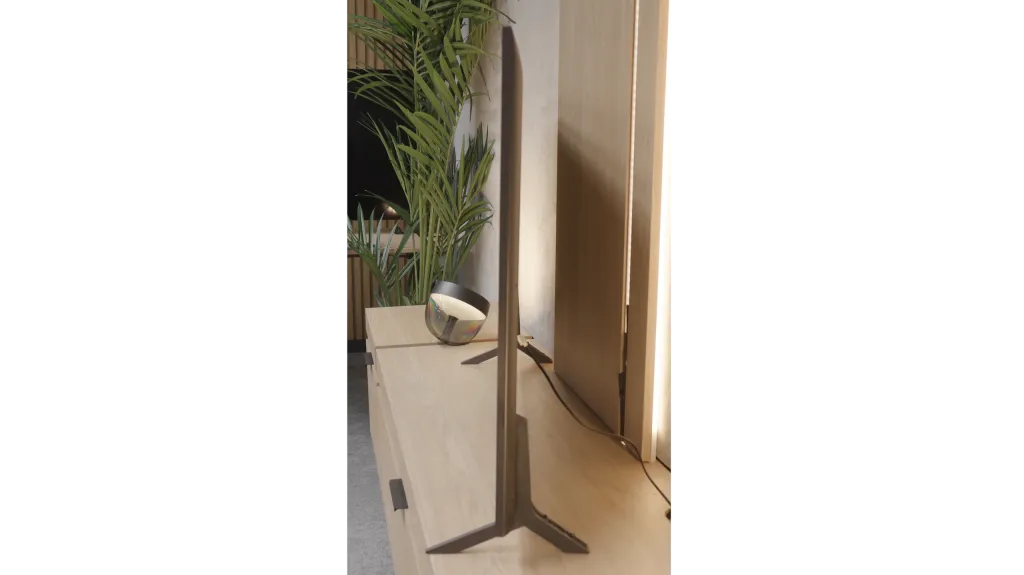
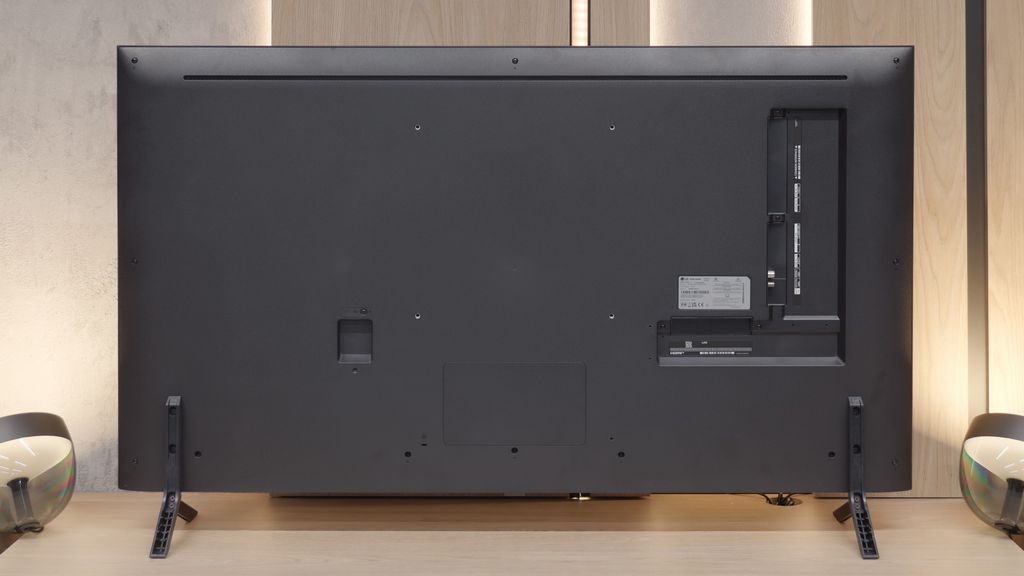

Contrast and black detail
5.2/10
2.7/10
Local dimming function: No
Local dimming function: Yes, number of zones: 6 (1 x 6)
Contrast:


Result
4,000:1

Result
6,500:1

Result
2,700:1

Result
2,800:1

Result
3,800:1
Result
2,400:1
Result
1,350:1
Result
2,450:1
Result
1,200:1
Result
1,150:1
Halo effect and black detail visibility:
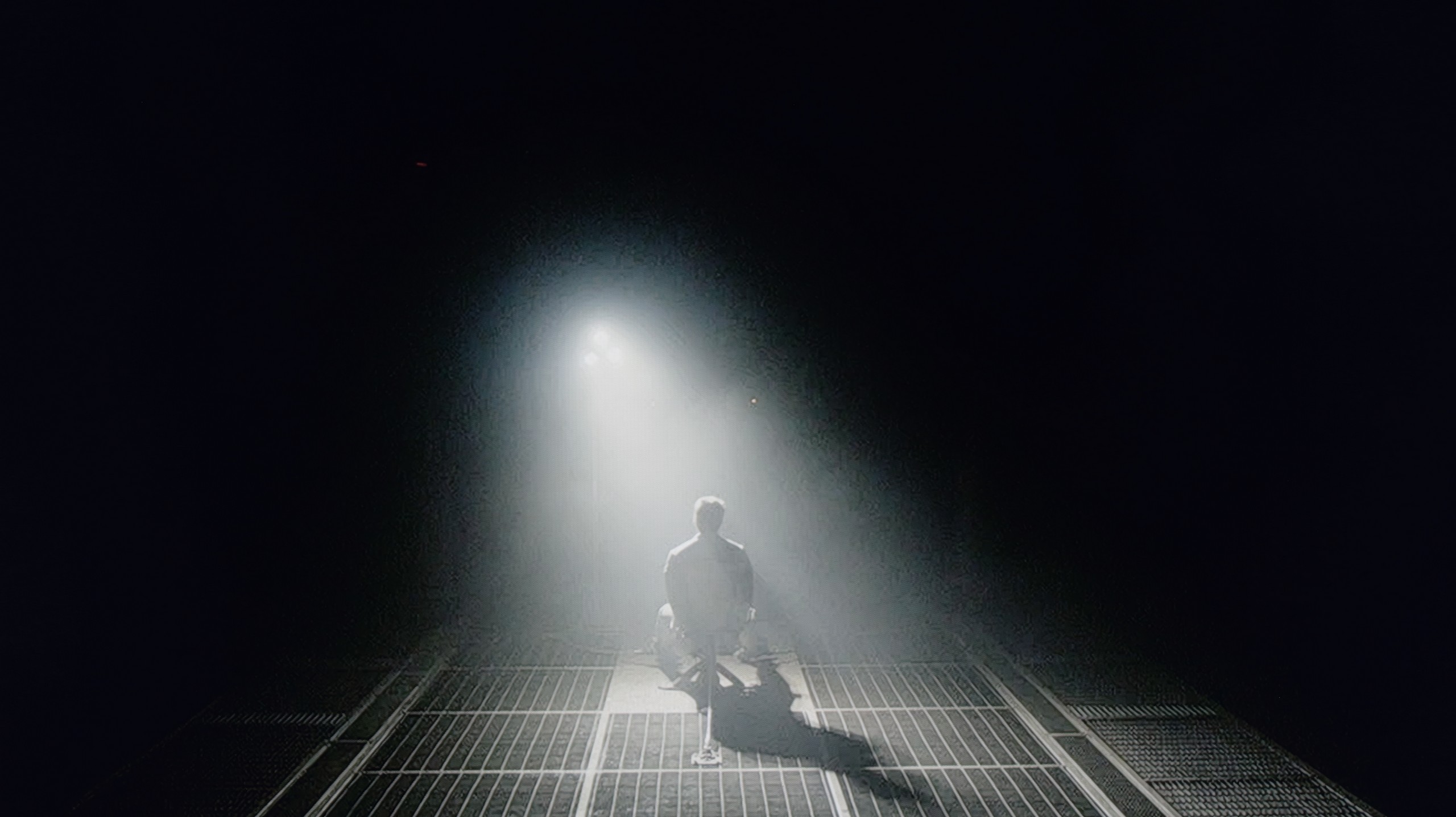
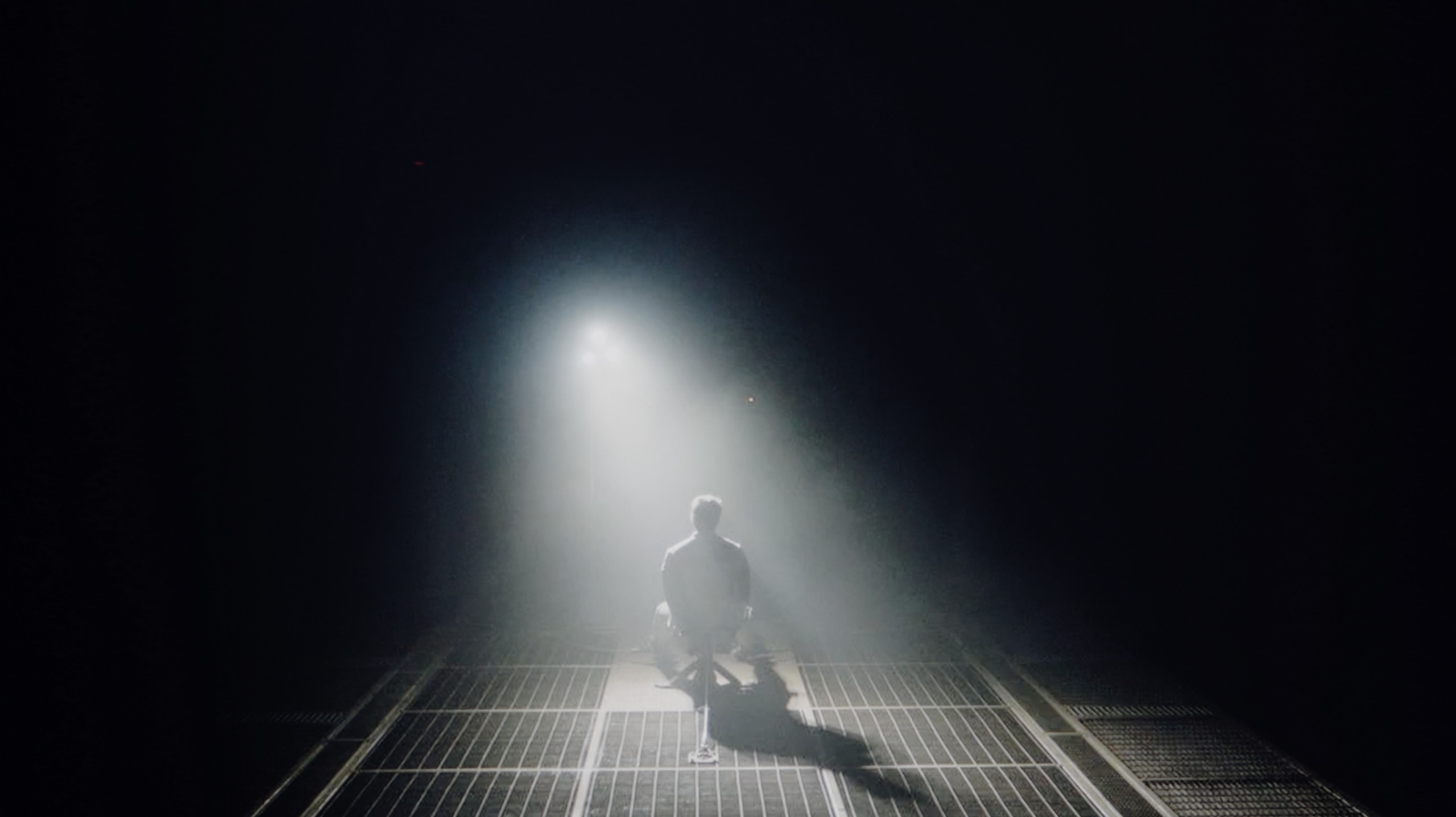
Check the visibility of bright lights on a dark background. Mini-LEDs often struggle with this. The photo does not compare black levels – that’s what the video below is for.
The video accurately shows differences in contrast and black levels between TVs, as well as potential issues: halo around bright objects or Mini-LED zone operation visible as brightness jumps.
In discussions about image quality, the conversation almost always begins with the issue of black depth and contrast, which are parameters defining the plasticity and realism of the viewed world. And here, the TCL P7k/P79k immediately lays its strongest advantage on the table – a VA-type panel. It is its construction that ensures the native relationship between the brightest and darkest parts of the image is more than satisfactory, especially in the context of the price segment this model represents. In the majority of scenes, the achieved black has a noble depth, which allows for building an engaging spectacle for the viewer. To illustrate the scale, it's worth mentioning that competing constructions based on IPS panels often offer results that are even four or sometimes five times lower, which constitutes a chasm in direct comparison. Of course, as we venture into the territory of budget-oriented models, we must be aware of certain compromises. Thus, in the discussed television, we will not find an advanced local dimming system that could further enhance the impression of contrast. The absence of this feature is, however, fully understandable and constitutes a logical consequence of the product's positioning in the market – this technology in TCL's portfolio for 2025 has been reserved for higher-positioned, more prestigious series marked with the letter "C".
If you come across a model equipped with an IPS panel, the situation changes dramatically and we won't beat around the bush – the contrast is simply weak. This is a natural characteristic of this technology, which pales in comparison to VA panels. The blacks, especially during evening screenings with the lights off, are rarely pitch black – more often they lean towards dark grey or navy hues. However, the real problem in this variant is the way the local dimming system operates. Since we are dealing with edge-lit backlighting on a panel that naturally "leaks" more light, this system often does more harm than good. When a bright object appears on a dark background, the TV tries to boost its brightness by activating the relevant zone. The effect? Instead of pinpoint light, we see illuminated vertical bars stretching across the entire screen. Unfortunately, this looks worse than in the VA version. Due to the lower native contrast of the panel, these "light bars" (so-called blooming) are much more visible and stand out more against the background. In many cases, these brightness jumps are so aggressive that instead of enjoying the screening, we focus on the backlighting's performance.
HDR effect quality
4.3/10
4.8/10
Luminance measurements in HDR:

Result
206 nit

Result
247 nit

Result
297 nit

Result
237 nit

Result
281 nit
Result
369 nit
Result
325 nit
Result
434 nit
Result
342 nit
Result
318 nit
Scene from the movie “Pan” (about 2800 nits)
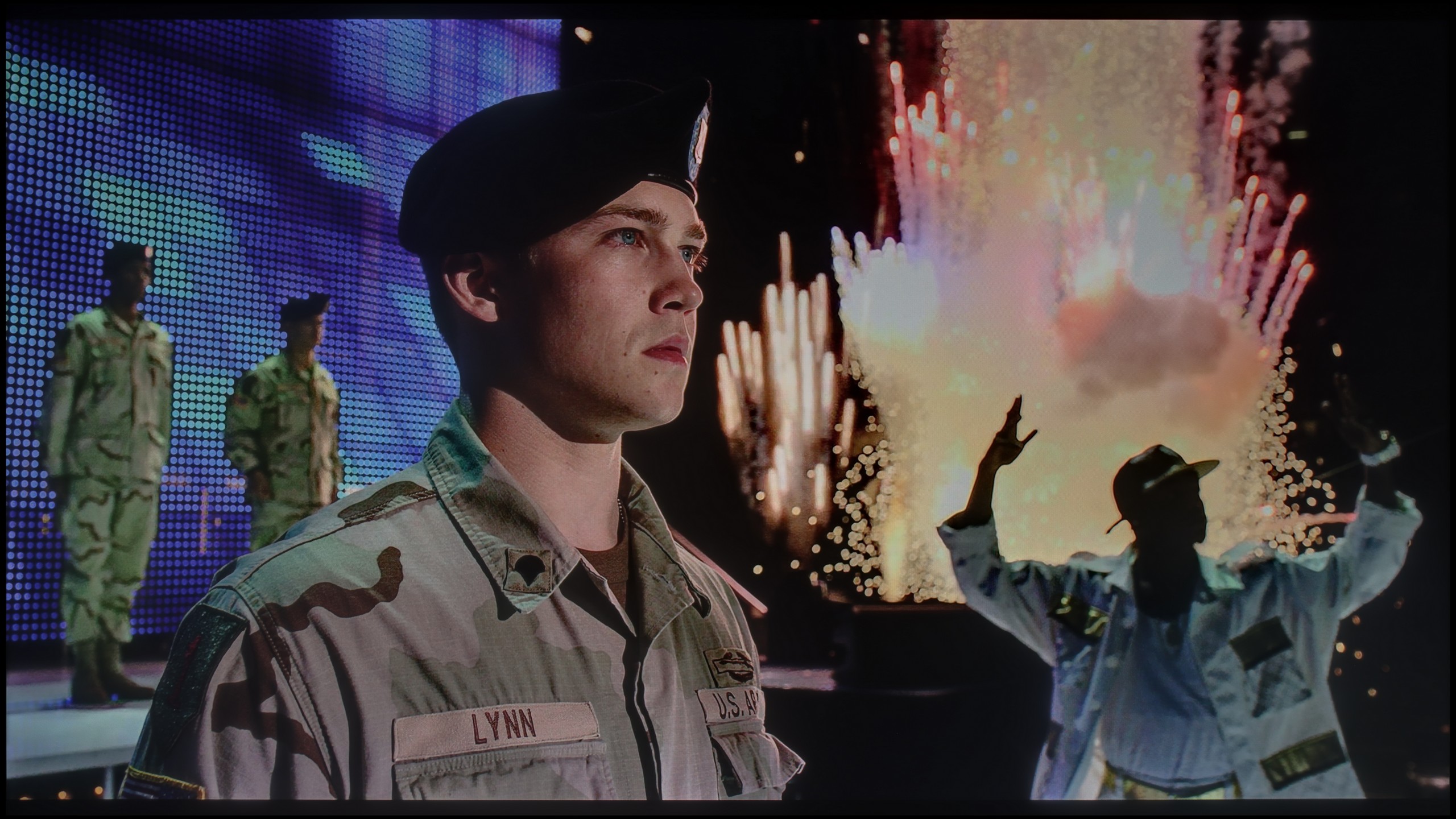
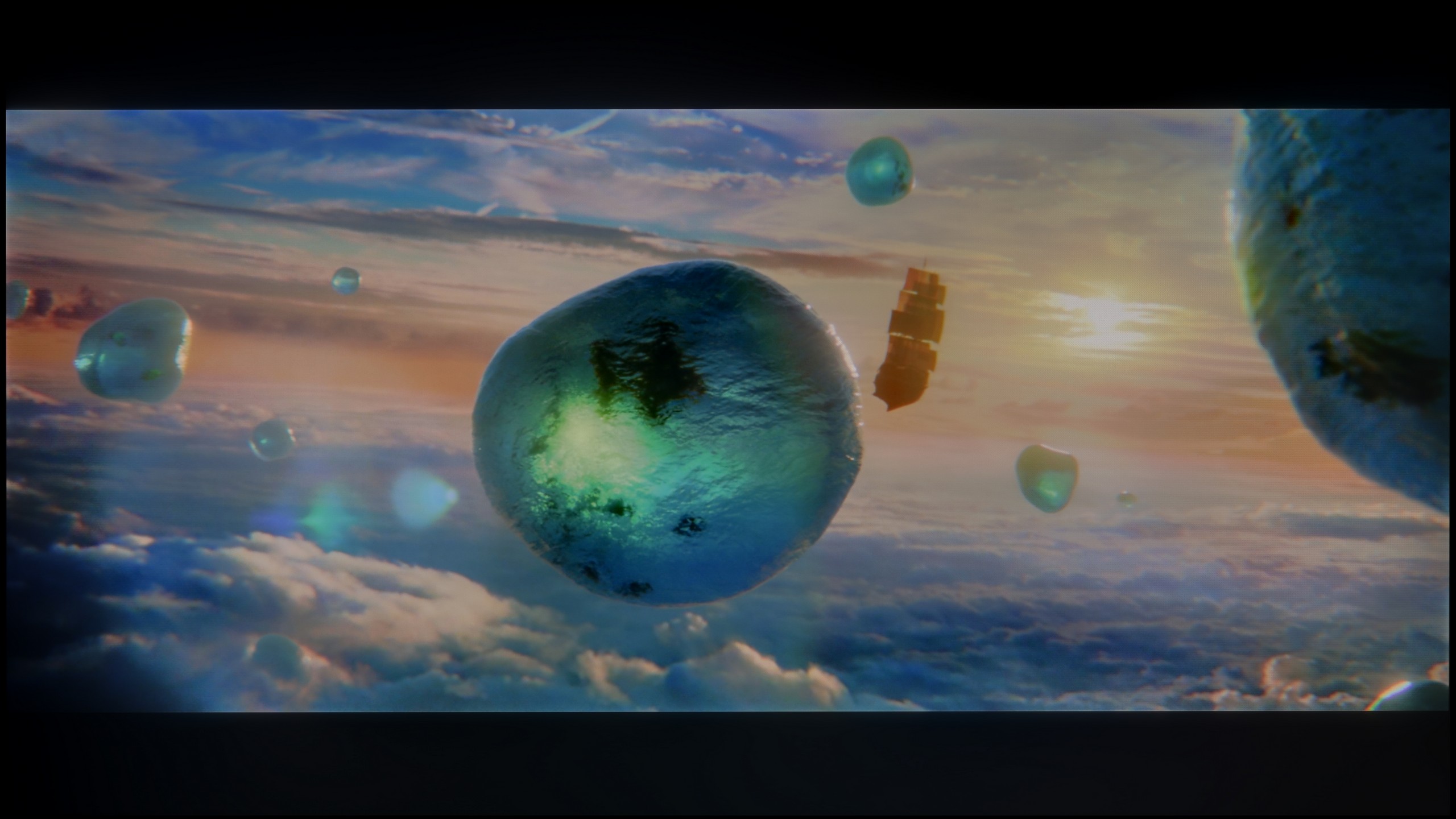
Scene from the movie “Billy Lynn” (about 1100 nits)
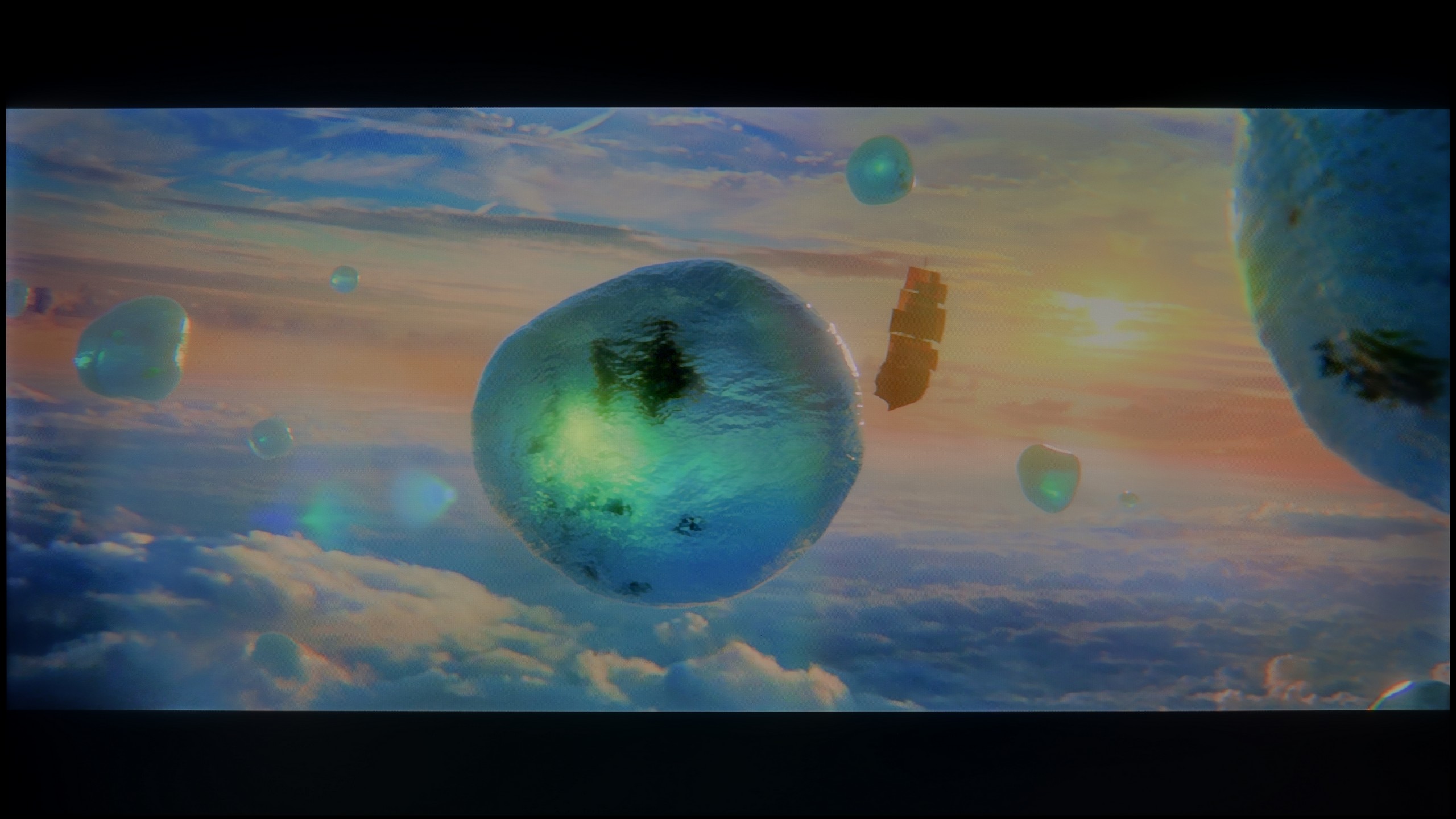
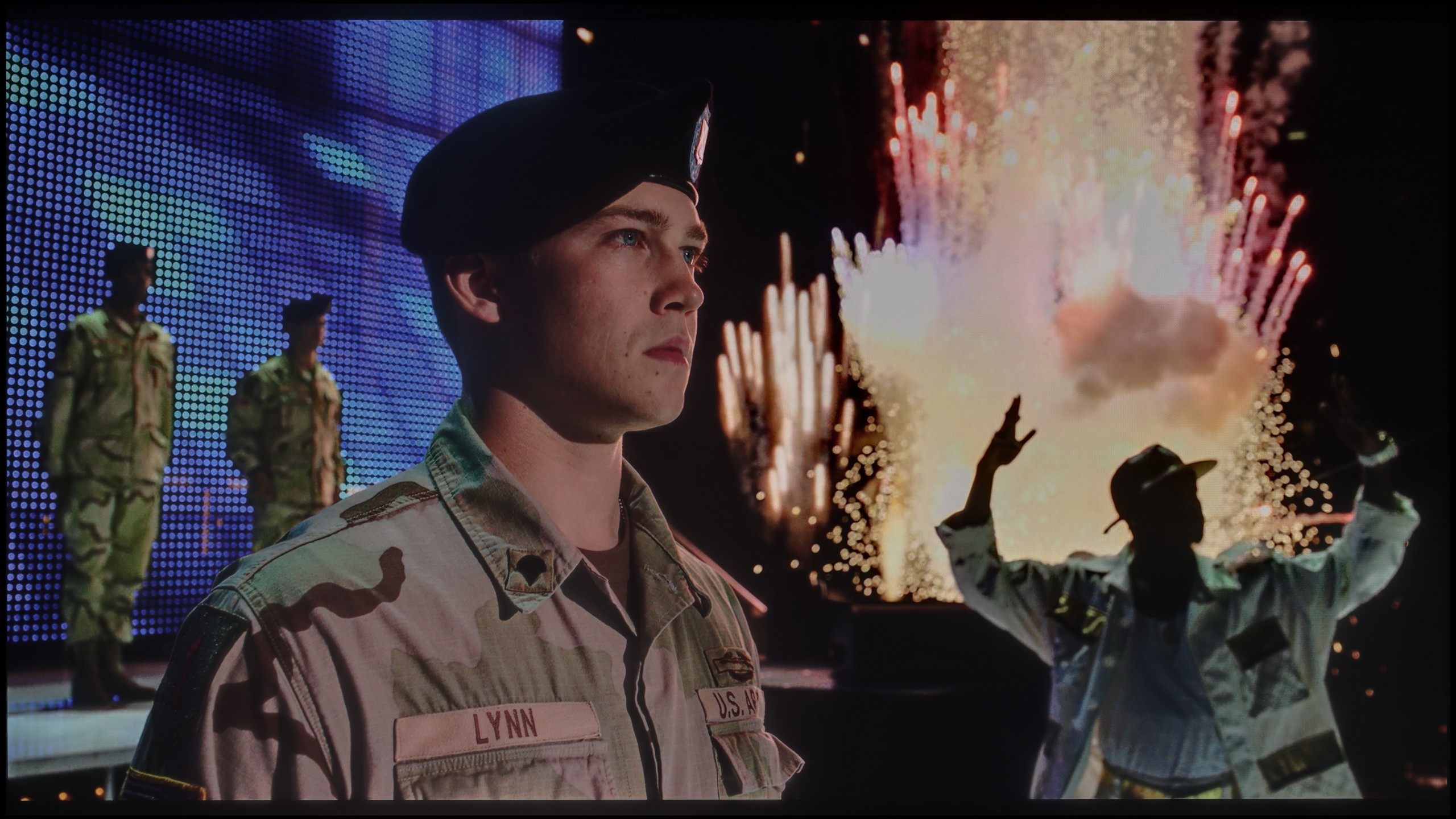
The photos show two HDR10 movies. 'Pan' is one of the brightest productions ever made, while 'Billy Lynn' (soldier) has brightness typical of streaming (Netflix, Prime, HBO MAX). Notice the intensity of effects and detail in whites.
Static HDR10


The photos present the visibility of white details in various HDR formats. They do not show brightness differences between TVs (these can be compared in the previous gallery).
HDR luminance chart:
LG QNED80A6A (IPS)
TCL P7K / P79K
When it comes to assessing HDR performance, we need to be clear and straightforward without any marketing fluff: the P7K/P79K is not and never was meant to be a champion in this area. The maximum peak brightness that this panel can generate hovers around just 300 nits. This represents a threshold, a sort of thin red line between what can be considered barely satisfactory HDR signal and what is, in reality, only slightly better than standard dynamic range (SDR), unfortunately leaning towards the latter. Synthetic tests confirmed this harsh reality – our measurements taken during movie sessions showed that the luminance in key bright scenes rarely exceeded 200-250 nits. Therefore, this is not a TV that would allow content created in a wide tonal range to truly shine, and that must be openly acknowledged.
Unfortunately, the issue of colour reproduction is presented just as conservatively. Although the manufacturer positions this model within the "QLED" family, owing to the use of a PFS LED filter, the results do not match the heightened expectations. The coverage of the wide DCI-P3 colour gamut reaches only 86%. Compared to the market, this is at best an average result, since most devices that utilise additional layers to expand the colour spectrum easily achieve values at a minimum of 90-92%.
When it comes to image dynamics and brightness, the QNED80A keeps its feet firmly on the ground. It’s not a "light beast" – during our measurements, peak luminance hovered around 350-400 nits. To put it bluntly: these are values that won't fully unleash the potential of HDR formats. So don’t expect the glare of the sun or car headlights in films to blind you. However, this television has a powerful ace up its sleeve that saves the overall image quality – it's the colours. LG engineers have employed an advanced filtration system (technically based on phosphor PFS, marketed as QNED/NanoCell), which does a fantastic job. Thanks to this, despite average brightness, the screen can generate exceptionally saturated and pure colours. Our instruments showed coverage of the wide cinematic DCI-P3 colour gamut at around 93-94%. This is a result that outclasses most standard LCD televisions. In practice, this means that when watching 4K HDR content, the image – although not very bright – is very vivid, lively, and delights the eye with its depth of colours.
Factory color reproduction
5.9/10
4.4/10
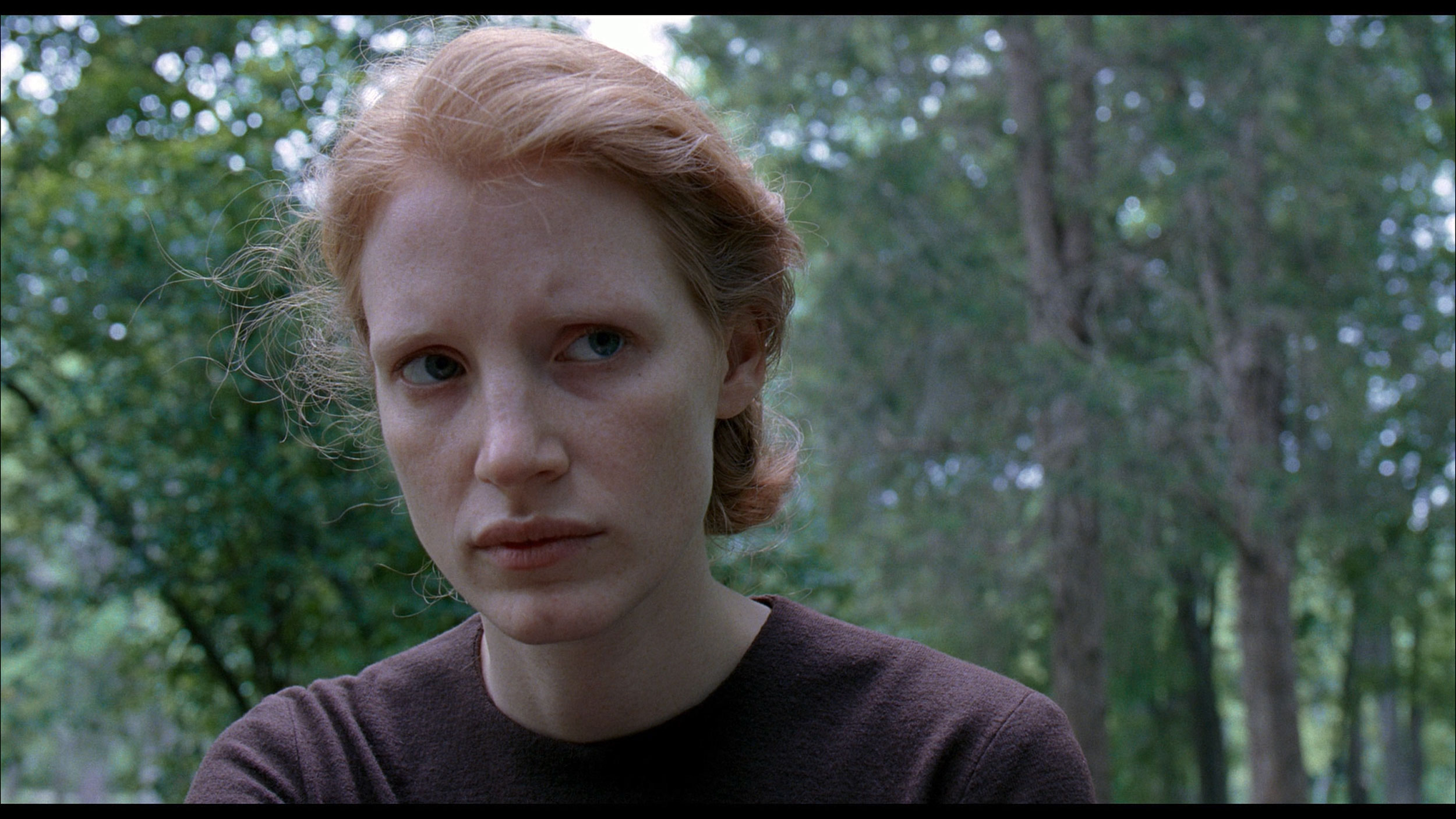
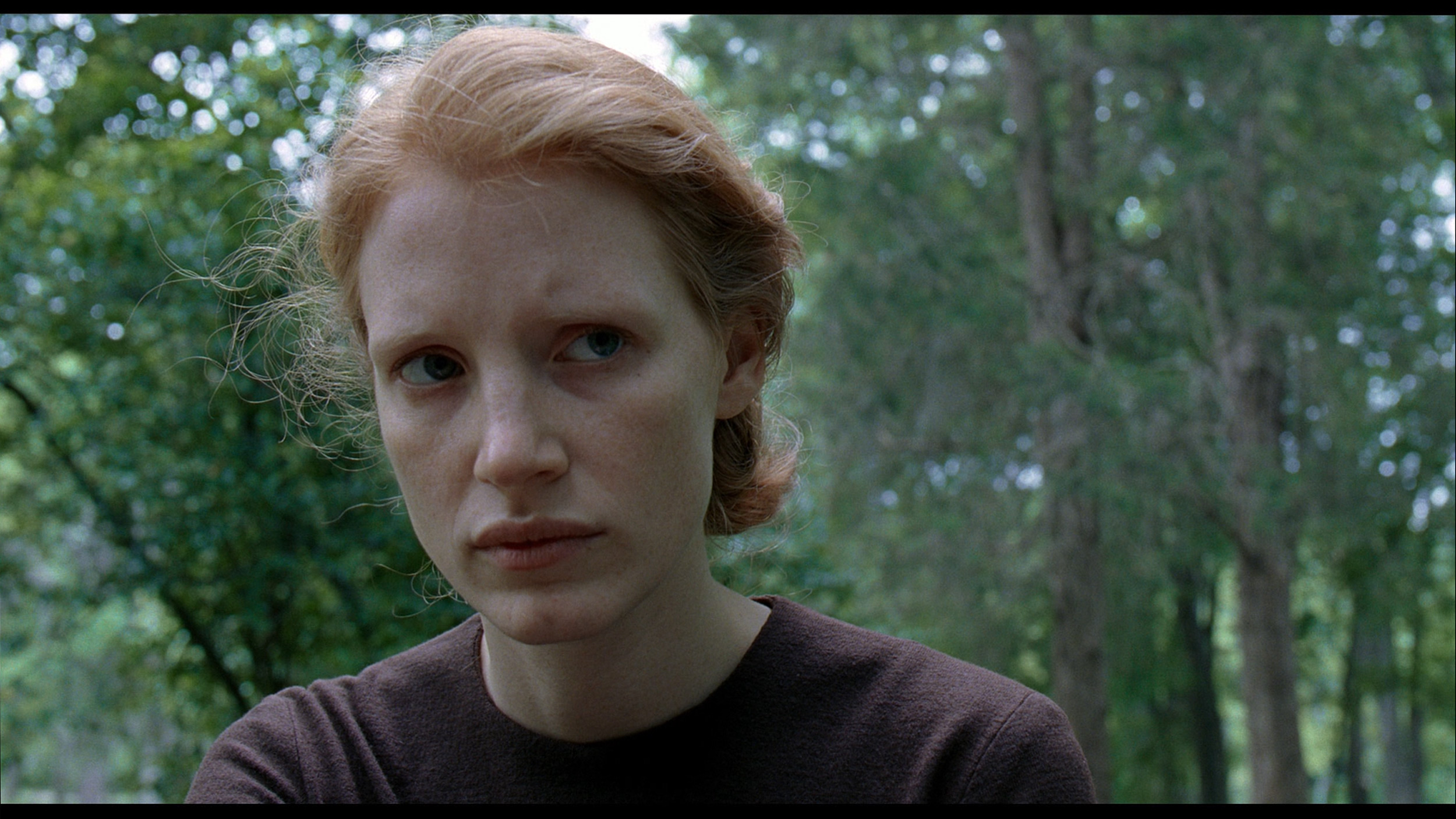
This gallery shows how colors change after professional TV calibration. If you notice the difference, we recommend ordering this service at SkalibrujTV.com.
Factory Mode
After calibration
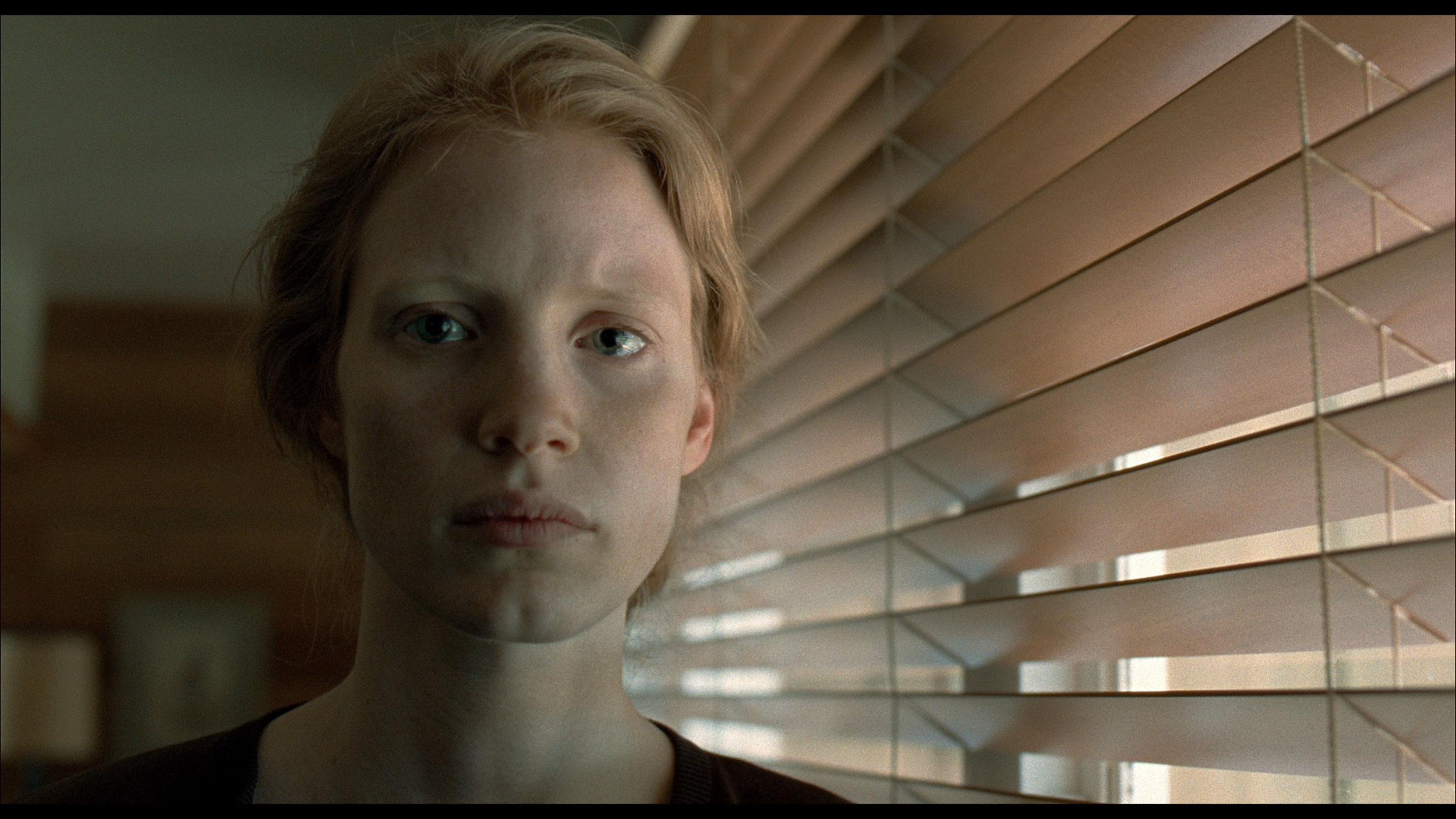
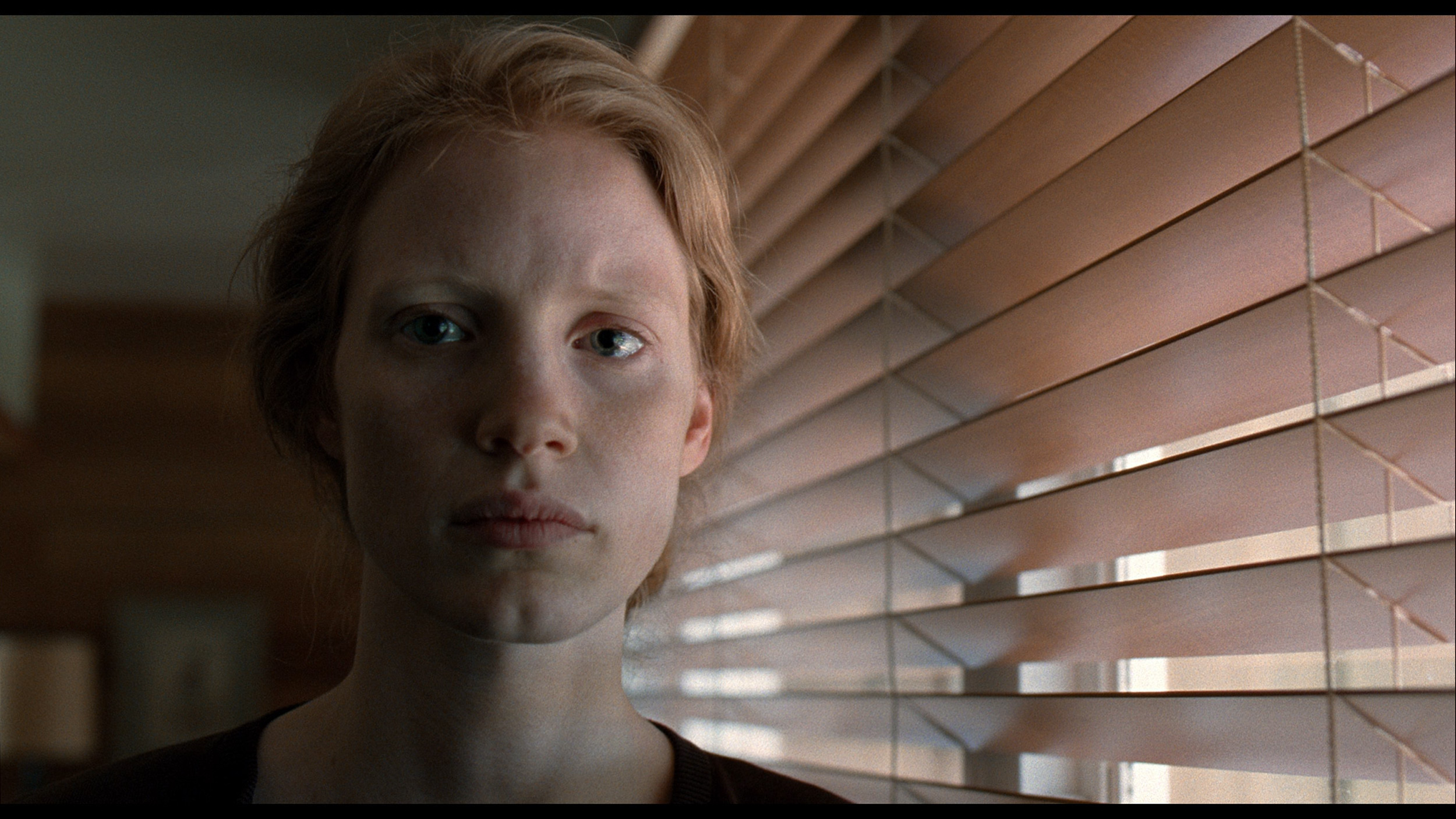
This gallery shows how colors change after professional TV calibration. If you notice the difference, we recommend ordering this service at SkalibrujTV.com.
Factory Mode
After calibration
Every reliable assessment of image quality must start with selecting the most optimal, factory preset mode. In the case of the tested P7K/P79K model, the choice was made without hesitation for the "Film" mode. It is the mode that presents an image closest to the intentions of its creators, avoiding both the exaggerated brightness of the dynamic mode and the excessive dimming known from eco settings. And it must be admitted that, for a device in this price range, the factory calibration is surprisingly decent, although it is not without a few stumbles. The most noticeable shortcoming turned out to be the not entirely correctly set white balance. A slight dominance of the blue component gives the image a subtly cool, frosty character, straying from the ideal neutrality that the director intended to show us. The television handles the reproduction of greyscale in the standard dynamic range much better – the gamma curve is almost exemplary. The only slight reservation can be made for the darkest parts of the image, where a delicate deviation from the norm causes a loss of some detail in the shadows. The most significant challenge, however, for the TCL software was interpreting the HDR signal, as illustrated by the EOTF curve. The television follows its own, rather free path here – the darkest details are disproportionately brightened, followed by a noticeable slowdown in brightness increase for mid-tones. Fortunately, most of these imperfections are of a software nature, which can be eliminated. With that thought in mind, we proceeded to the process of professional calibration.
Here, regardless of whether you come across the VA or IPS version, the situation looks identical. LG engineers have once again served us their vision of a "gaming look," which unfortunately has little to do with accuracy. When switching to a console, the white balance automatically shifts to very cold regions. The image is dominated by blue, making it seem artificially sharpened, and the white is so aggressive that it almost burns out. This creates an effect we associate with garish retail modes – everything is meant to shine and scream "I’m digital." While some may like this, we must say it bluntly: it is not an accurate image. If you care about naturalness, we suggest you immediately check the settings and change the colour temperature to a warmer one.
Color reproduction after calibration
7/10
7.4/10
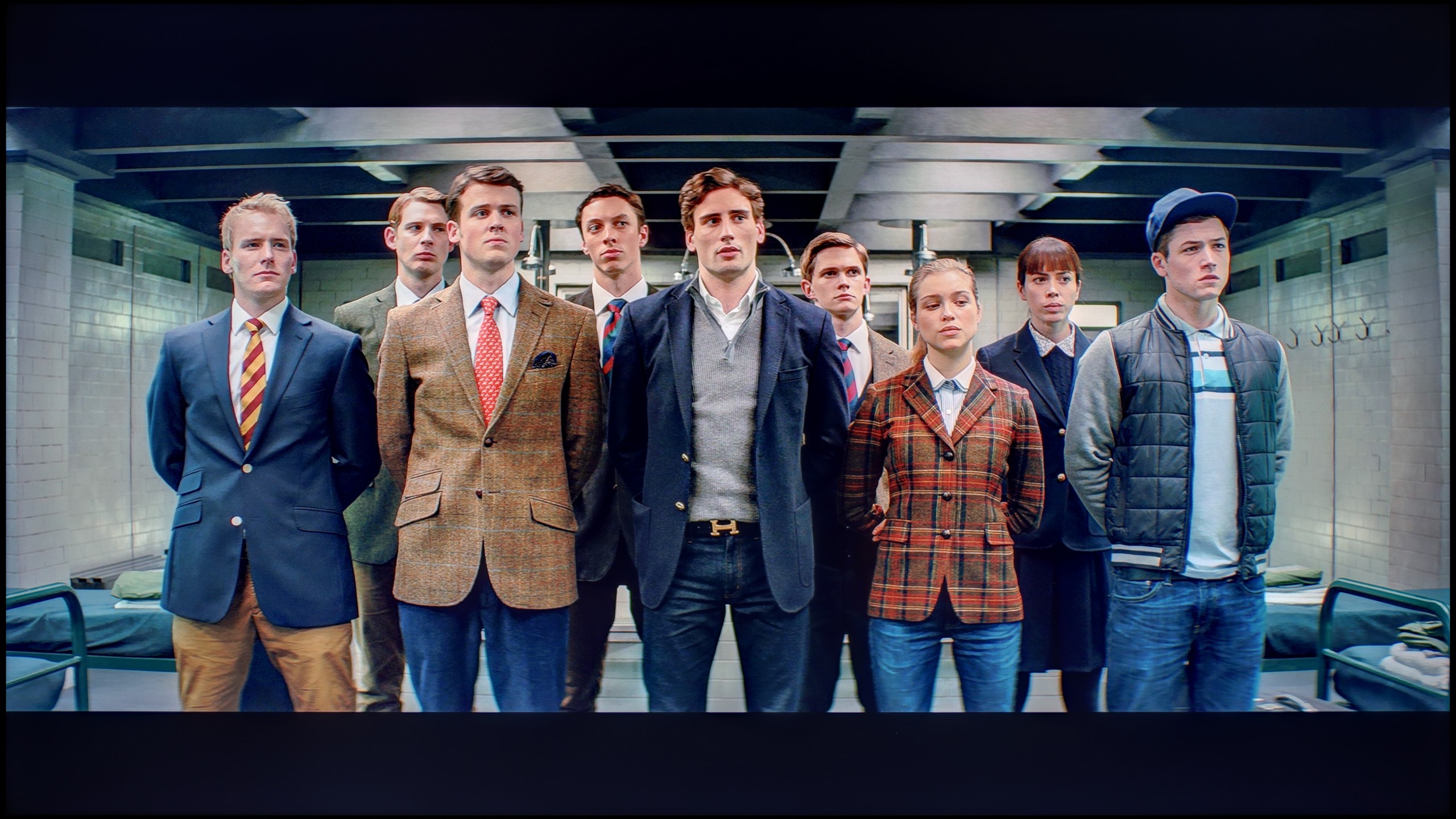

The photos show how movies look on the TV. Pay attention to black detail visibility, colors, and shadow tint.
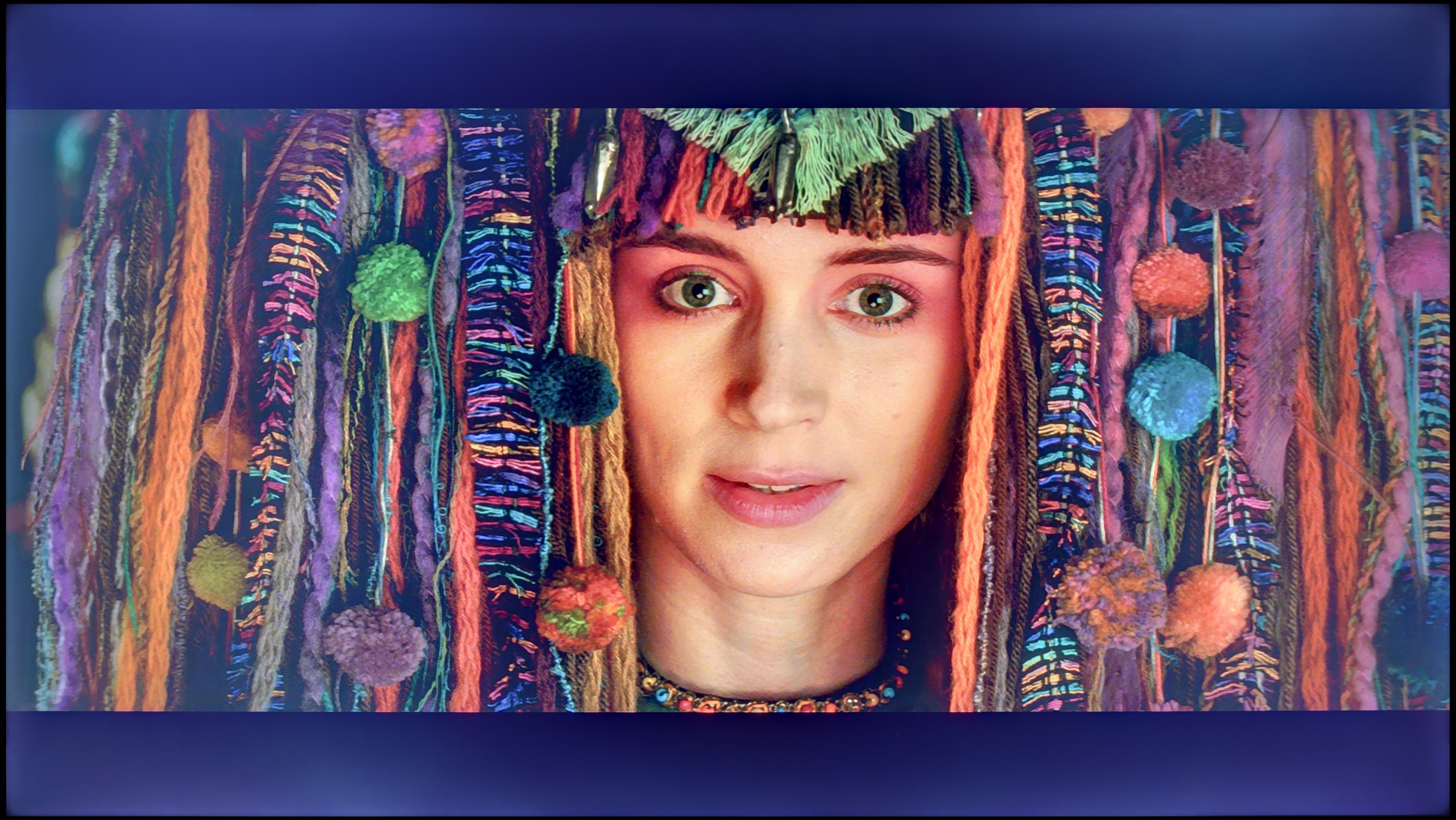
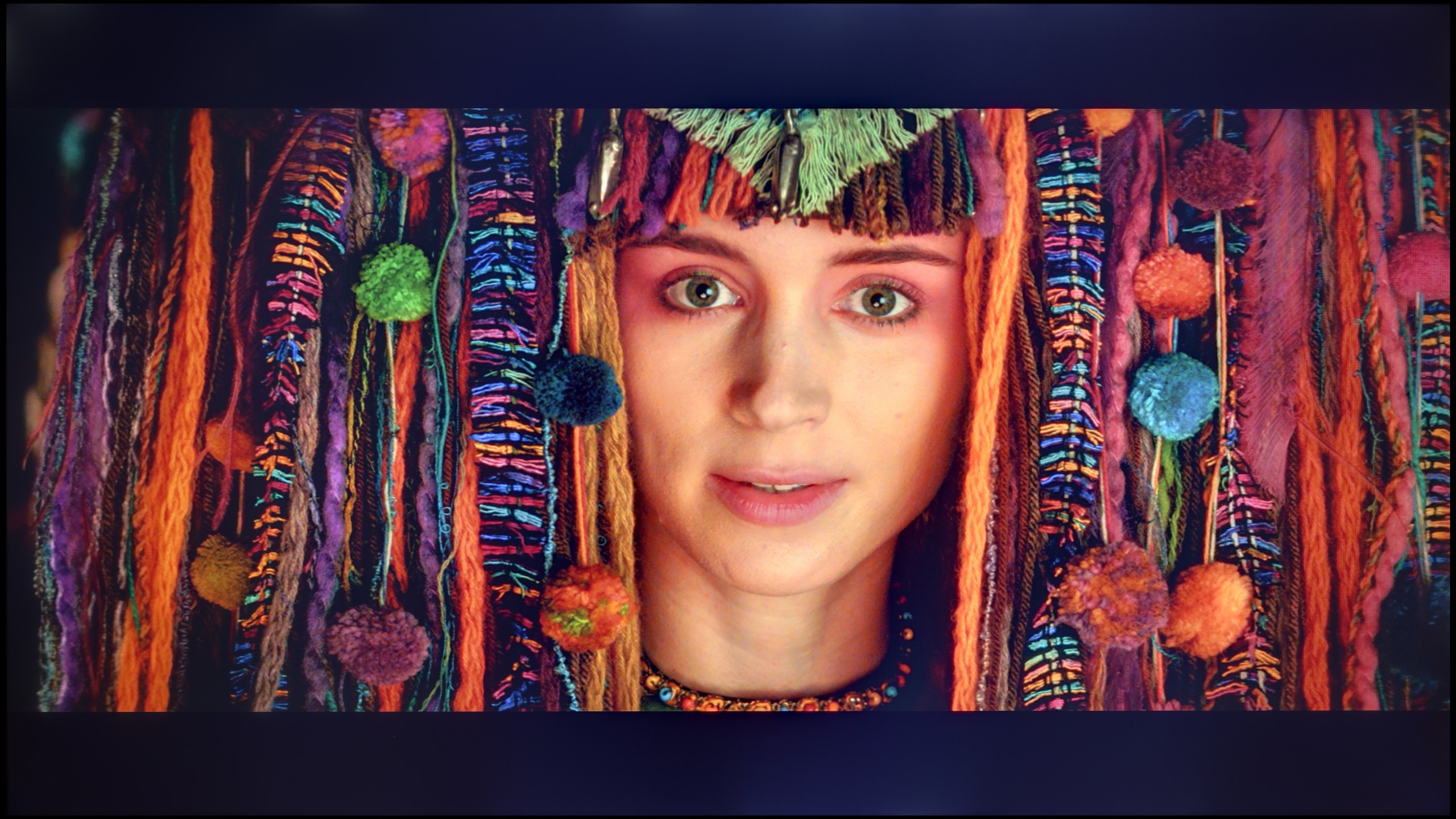
The photos show how movies look on the TV. Pay attention to black detail visibility, colors, and shadow tint.
The calibration process turned out to be spot on, especially in the context of standard dynamic range (SDR) content. We successfully managed to eliminate the tendency of the television to showcase cool tones, restoring white to its natural neutrality. Moreover, the precise adjustment allowed us to correct a slight error in the gamma curve, enabling the darkest parts of the image to regain proper depth, without any signs of unnatural brightness. The results are measurable and impressive – in the ColorChecker test, the vast majority of colour reproduction errors fell below the perceptual threshold, achieving a deltaE value of below 2. This is a result that more expensive models would not be ashamed of. Unfortunately, in the case of HDR content, we encounter a wall in the form of the panel's structural limitations. And although we managed to bring the colours into line, the software's specifics mean that the television still adapts brightness in its own way, as evidenced by the persistent, non-standard EOTF curve. To summarise, calibration adds tremendous value, but it is important to be aware that it won't overcome certain physical barriers. The slightly elevated blacks, resulting from the lack of local dimming, and limited peak brightness mean that HDR content won't always be able to showcase its full potential. This is simply not the main task of this display; its true strength, especially after professional tuning, lies in viewing SDR material.
After professional calibration, the QNED80A in the IPS version has changed beyond recognition, especially with "ordinary" content (SDR). We managed to eliminate the greenish tint and calm down the overly bright gamma. In classic television or older games, colour errors (DeltaE) have fallen below the threshold of perception (value < 2). The image is now coherent, natural, and truly pleasing to the eye. The situation is somewhat more complicated in HDR mode. Although the colours are now in place, the TV struggles with perfect brightness control (EOTF curve). Due to the limitations of edge lighting and the rather poor adjustment options provided by LG in this area, the TV's software at times "does what it wants" just to mask the imperfections of black and contrast. However, this is not a cause for concern – despite these technical limitations, the image after calibration is a class above what you saw out of the box.
Smoothness of tonal transitions
5/10
9.2/10
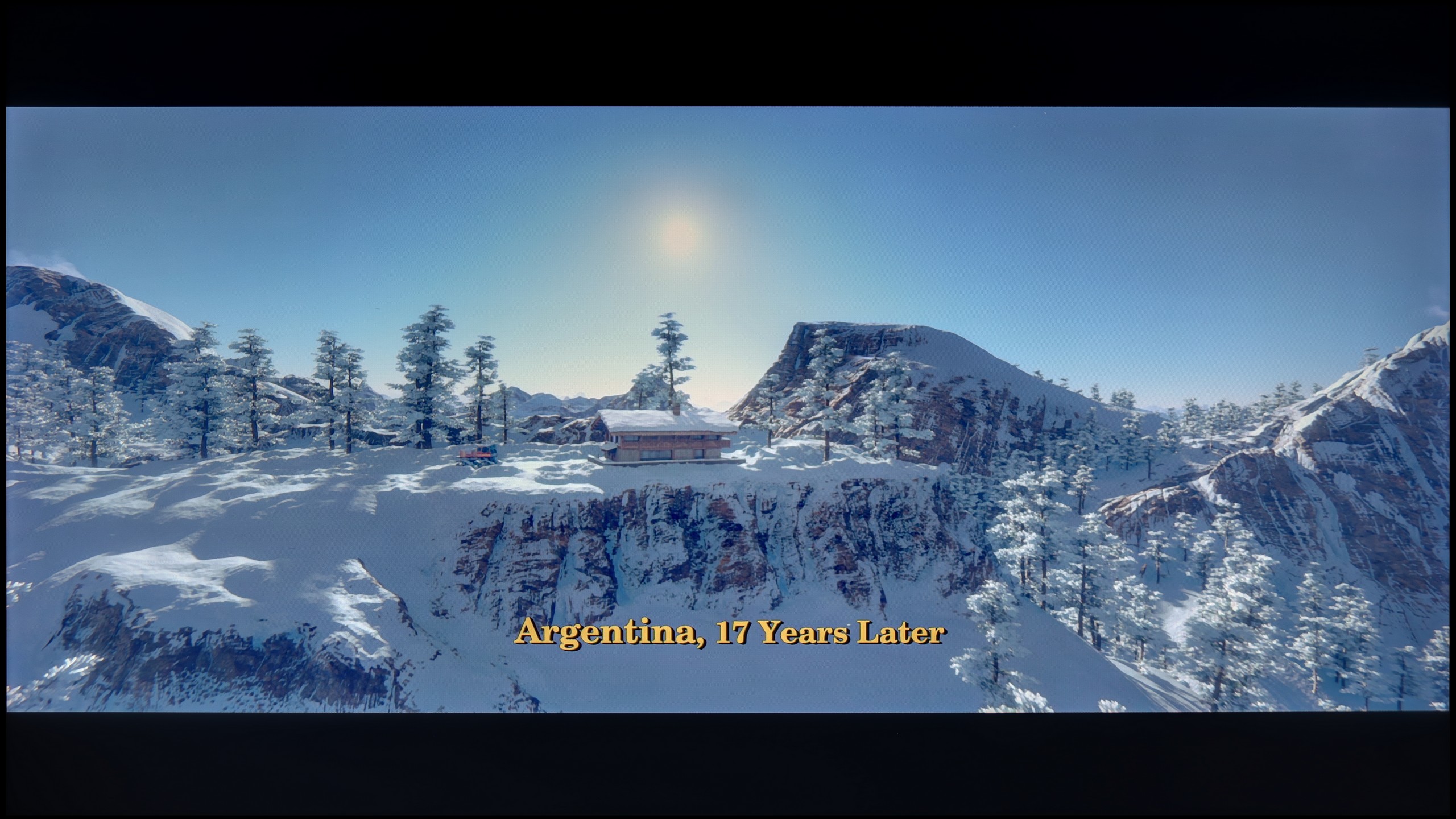
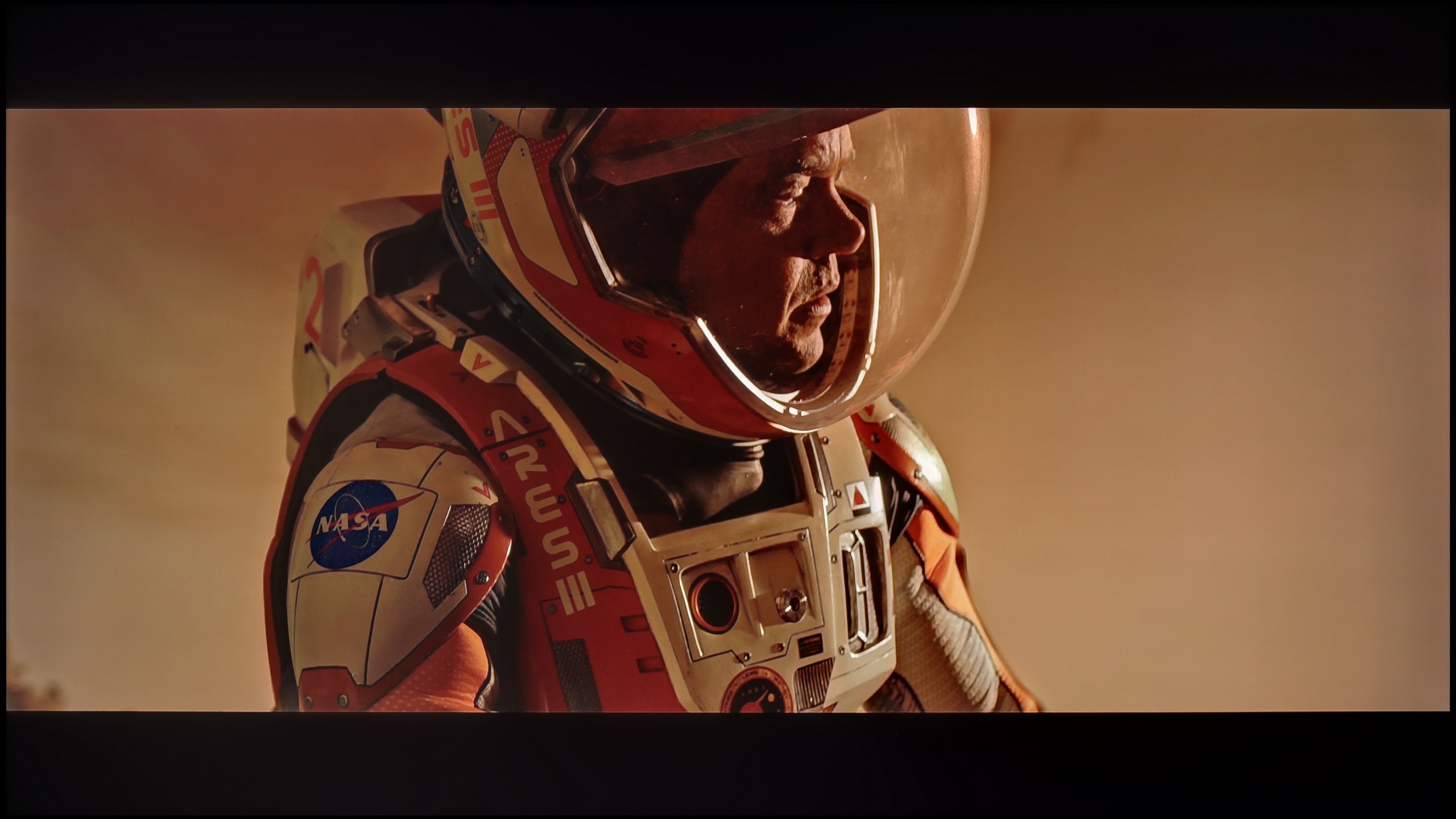
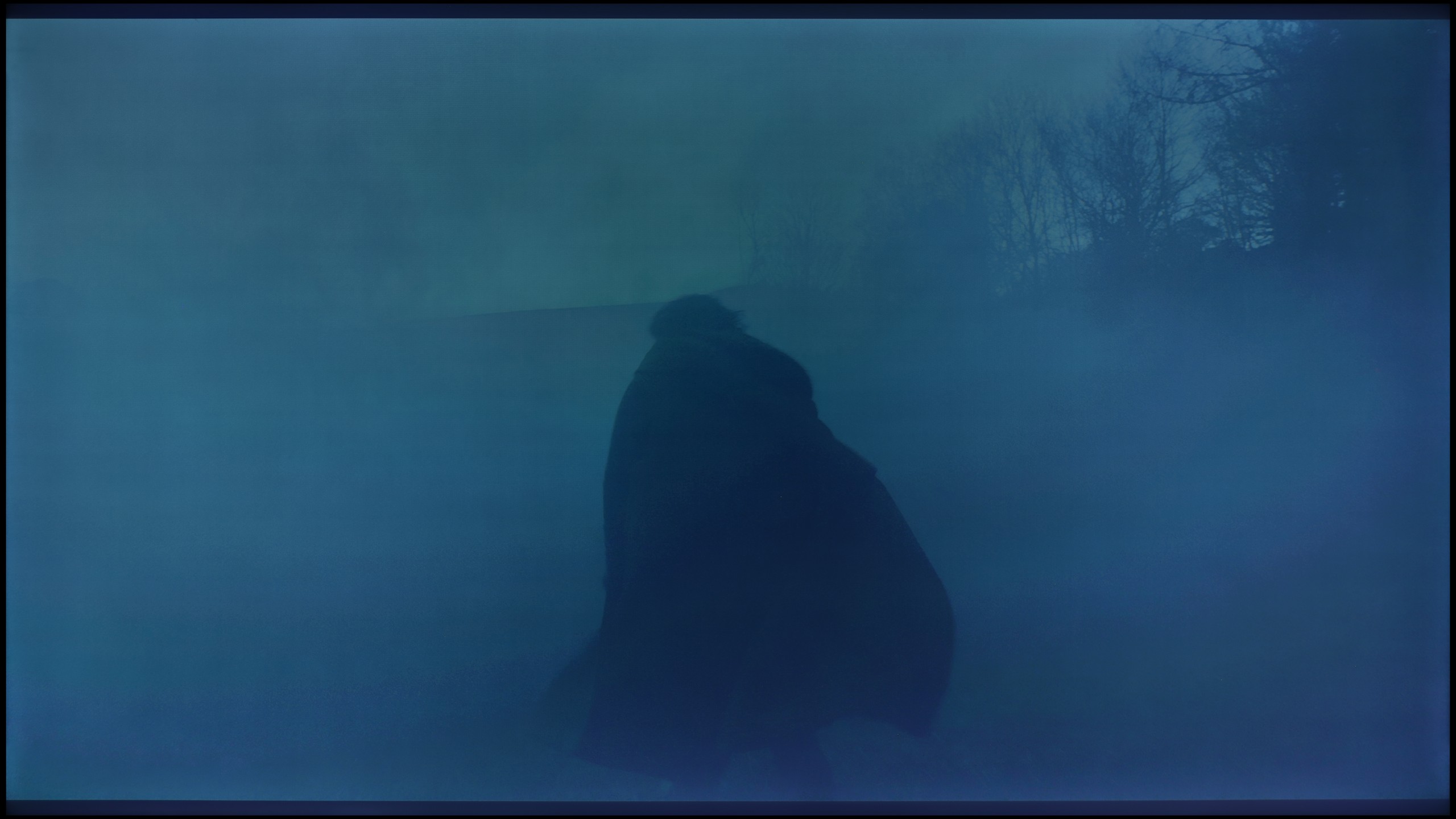
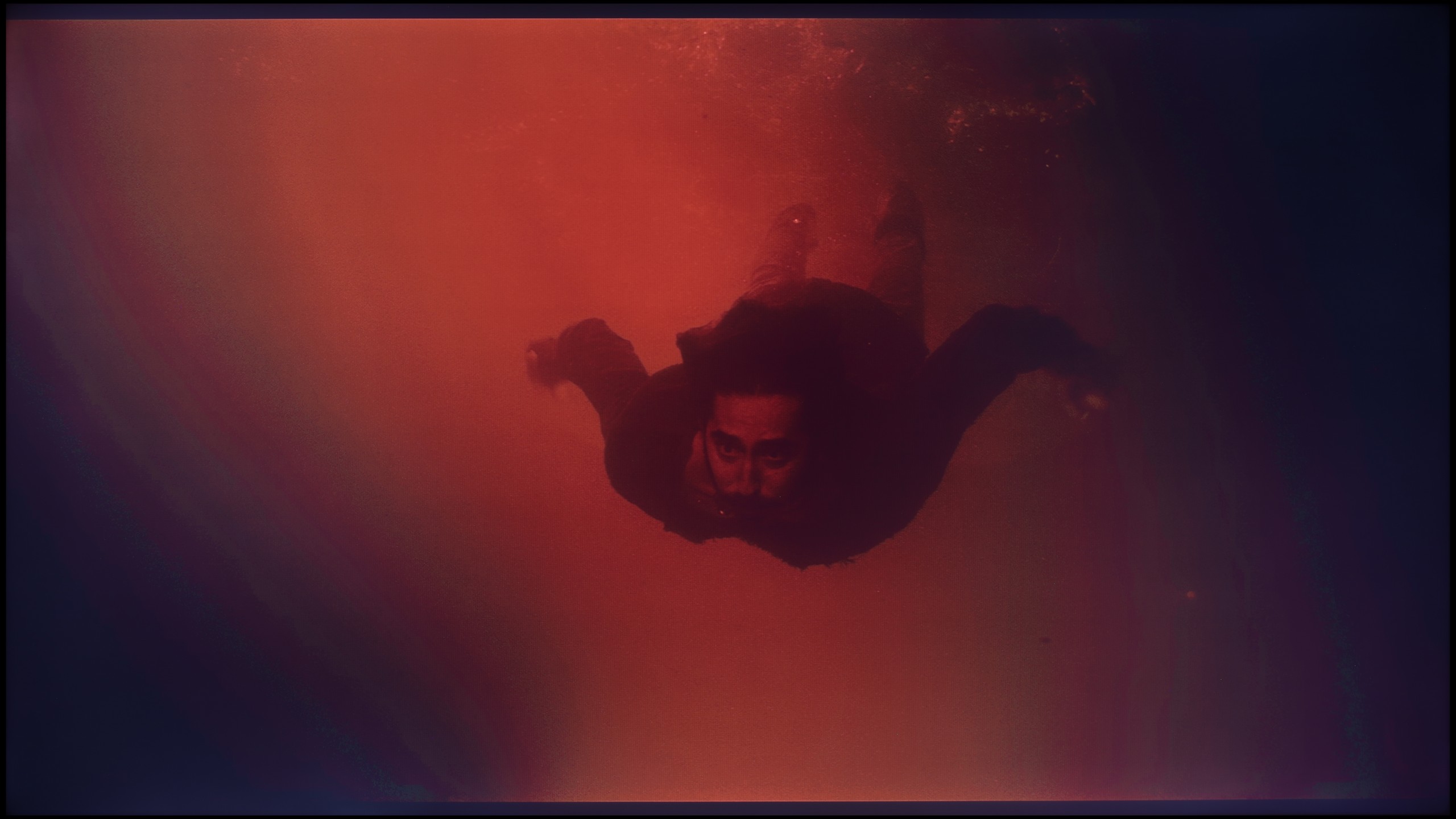
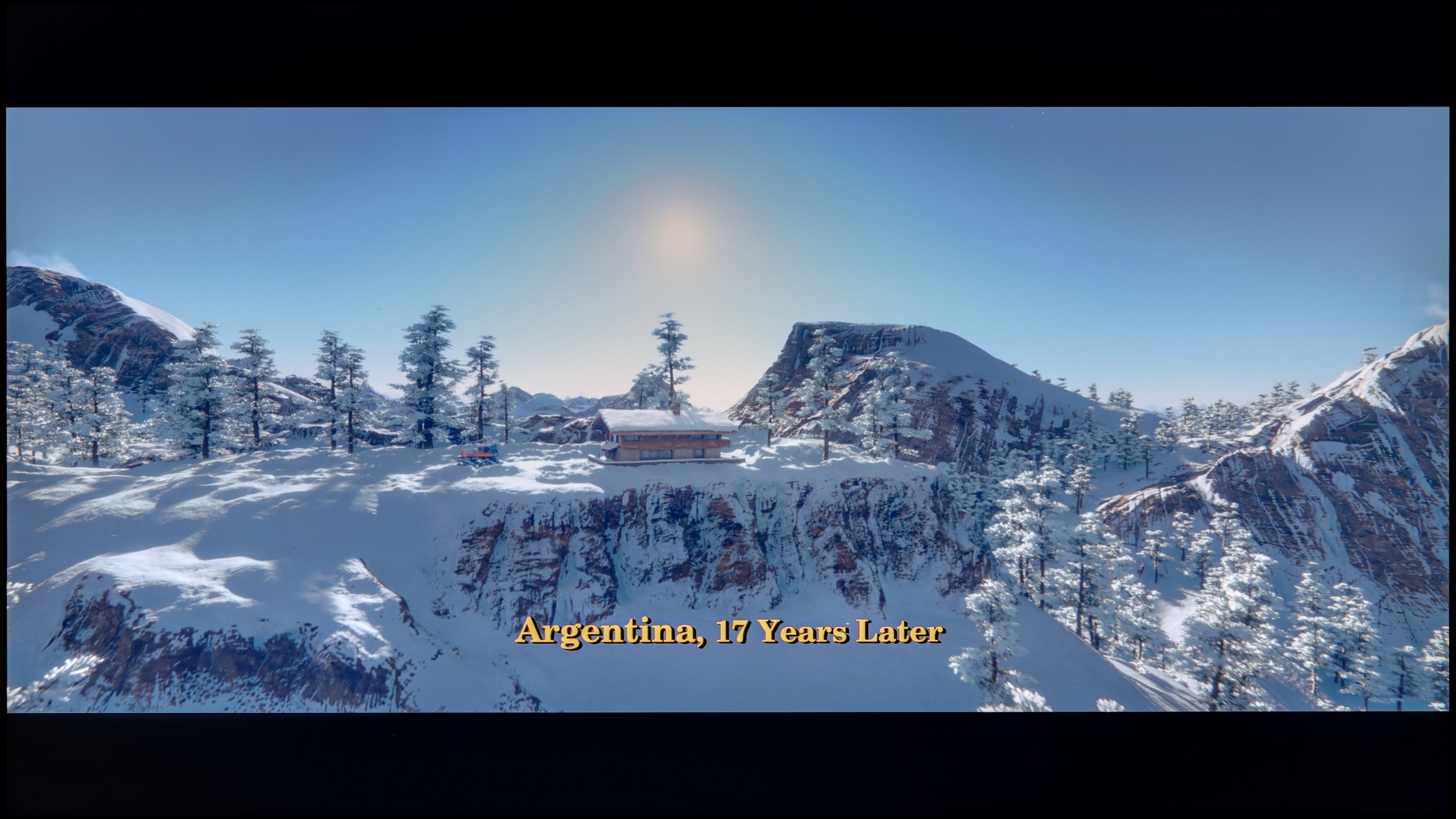
These are selected scenes that show smooth tonal transitions from one color to another. If you see distinct banding, it’s the TV panel’s fault.
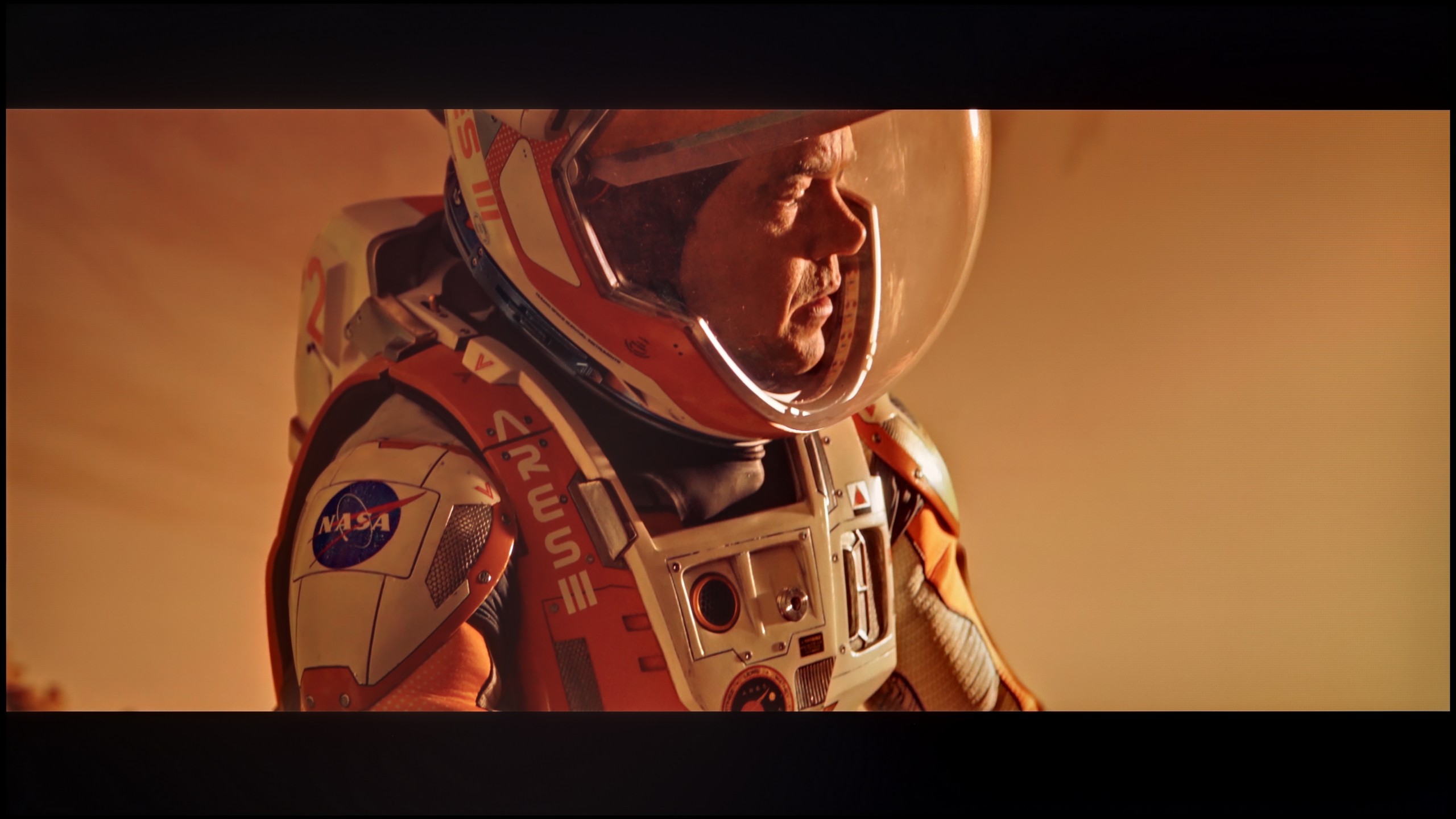
These are selected scenes that show smooth tonal transitions from one color to another. If you see distinct banding, it’s the TV panel’s fault.
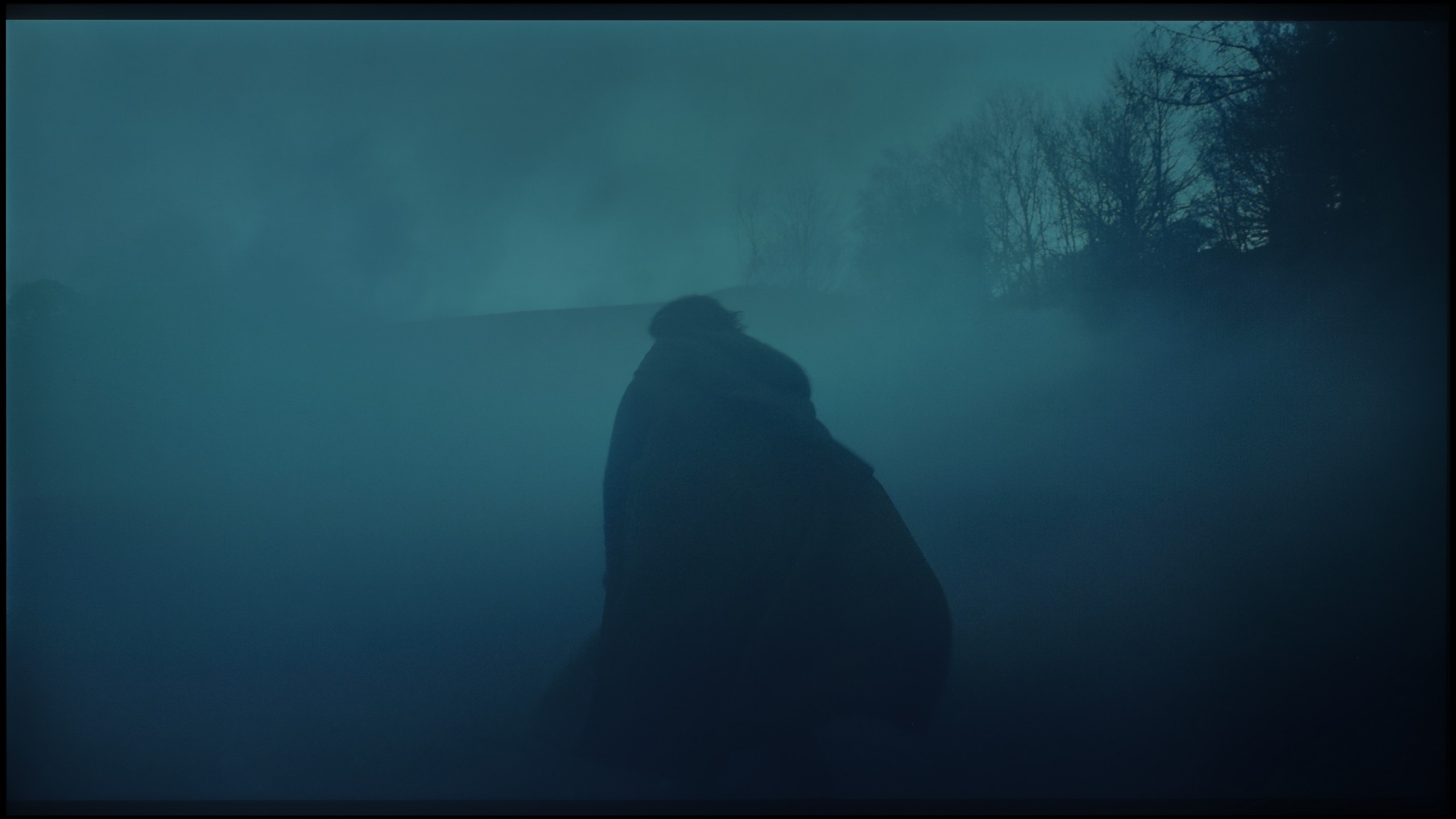
These are selected scenes that show smooth tonal transitions from one color to another. If you see distinct banding, it’s the TV panel’s fault.
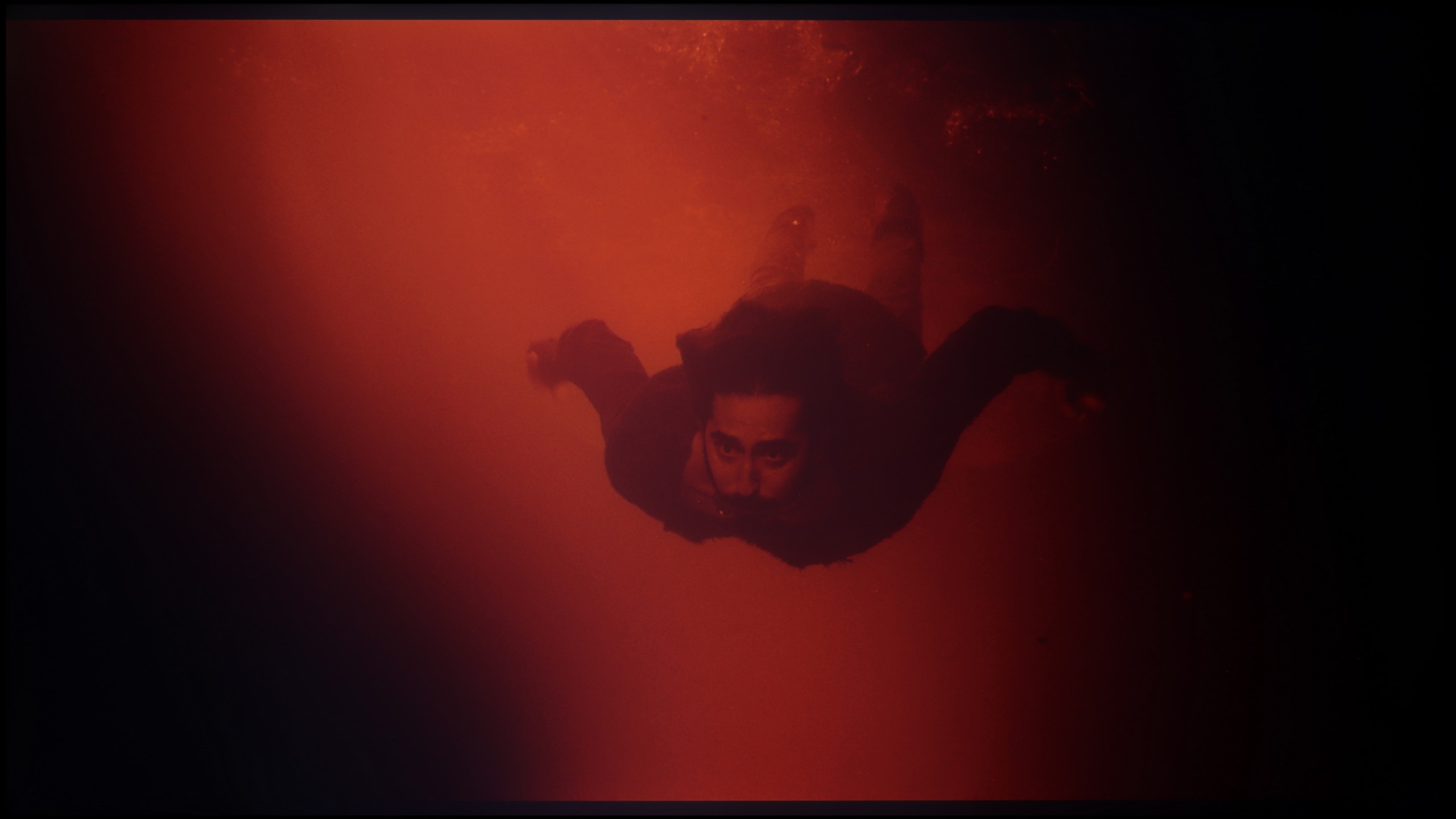
These are selected scenes that show smooth tonal transitions from one color to another. If you see distinct banding, it’s the TV panel’s fault.
The issue of the fluidity of tonal transitions, or popular grading, is another area where the P7K / P79K evokes mixed feelings and surprises with its dual nature. If we were to assess solely its ability to render smooth colour gradients, we would undoubtedly award it a solid score of 8/10. Unfortunately, this entire positive image is disrupted by the use of very aggressive and visually unpleasant dithering. This artifact is particularly noticeable on demanding test screens – such as the one depicting an actor submerged in red water – where rough, unnatural textures appear on uniform colour planes, revealing the digital nature of the image. This is particularly disappointing as it is not a new problem. It seems to be a sort of hangover from previous generations of budget TCL models, which is a shame, as it marred what is fundamentally a quite competent image and is a mistake that could have been avoided.
Another very strong point of this model is the way it handles tonal transitions. Often in cheaper LCD designs, we see so-called banding – a situation where the television fails to smoothly display a gradient, creating visible "steps" between shades. In the case of the QNED80A, the engineers did their homework. Whether we're watching a blue sky, fog, or dark scenes full of greys, the transitions between colours are incredibly smooth and soft. There are no artificial cuts or jagged edges of colours here. This makes the image very cohesive and natural, which is not at all a standard in this price segment.
Image scaling and smoothness of tonal transitions
7/10
7/10

Smooth transition function
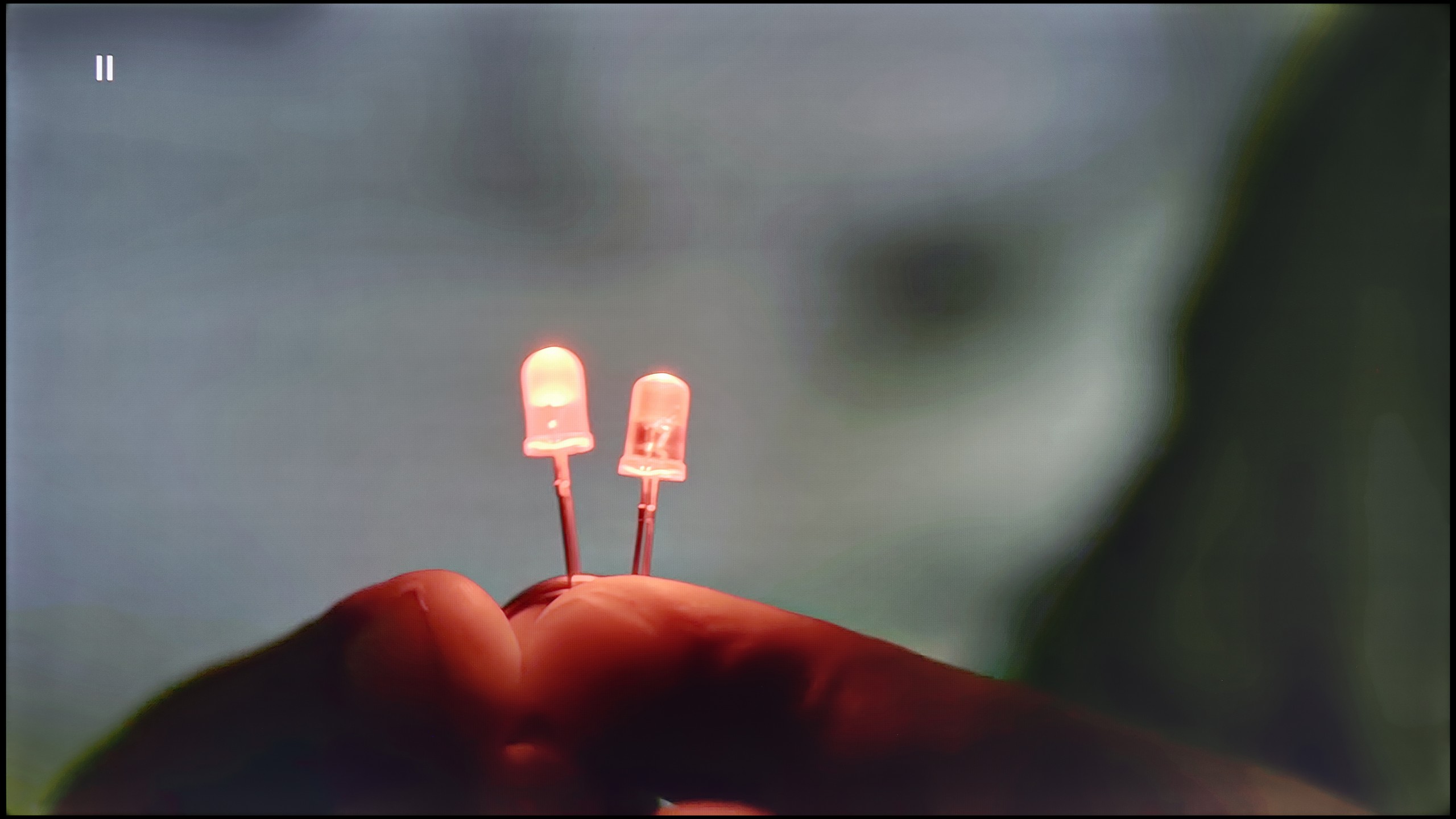
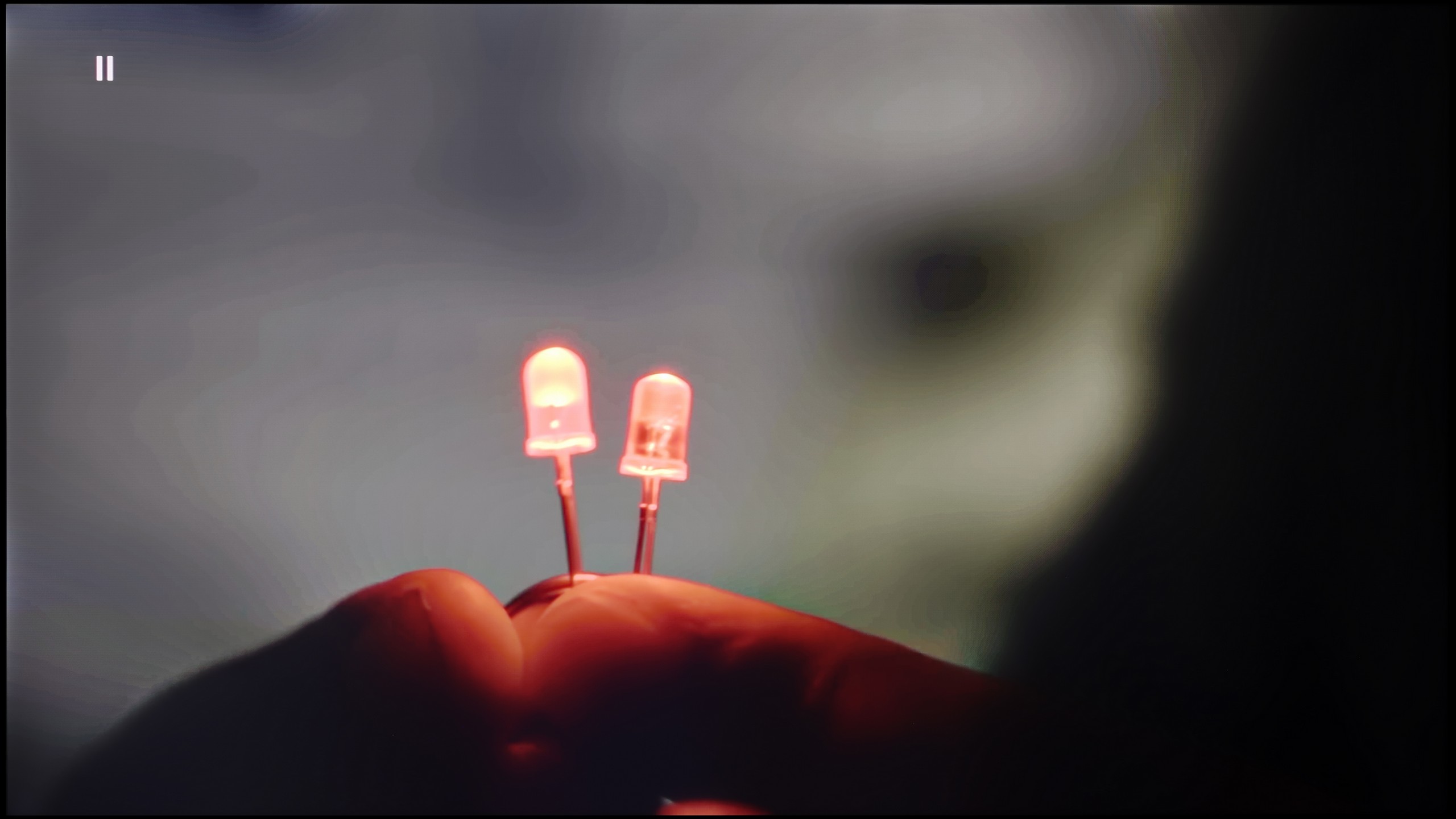
The match photo shows how the TV smooths weak tonal transitions in low-quality video.
Image scaling SD (576i)
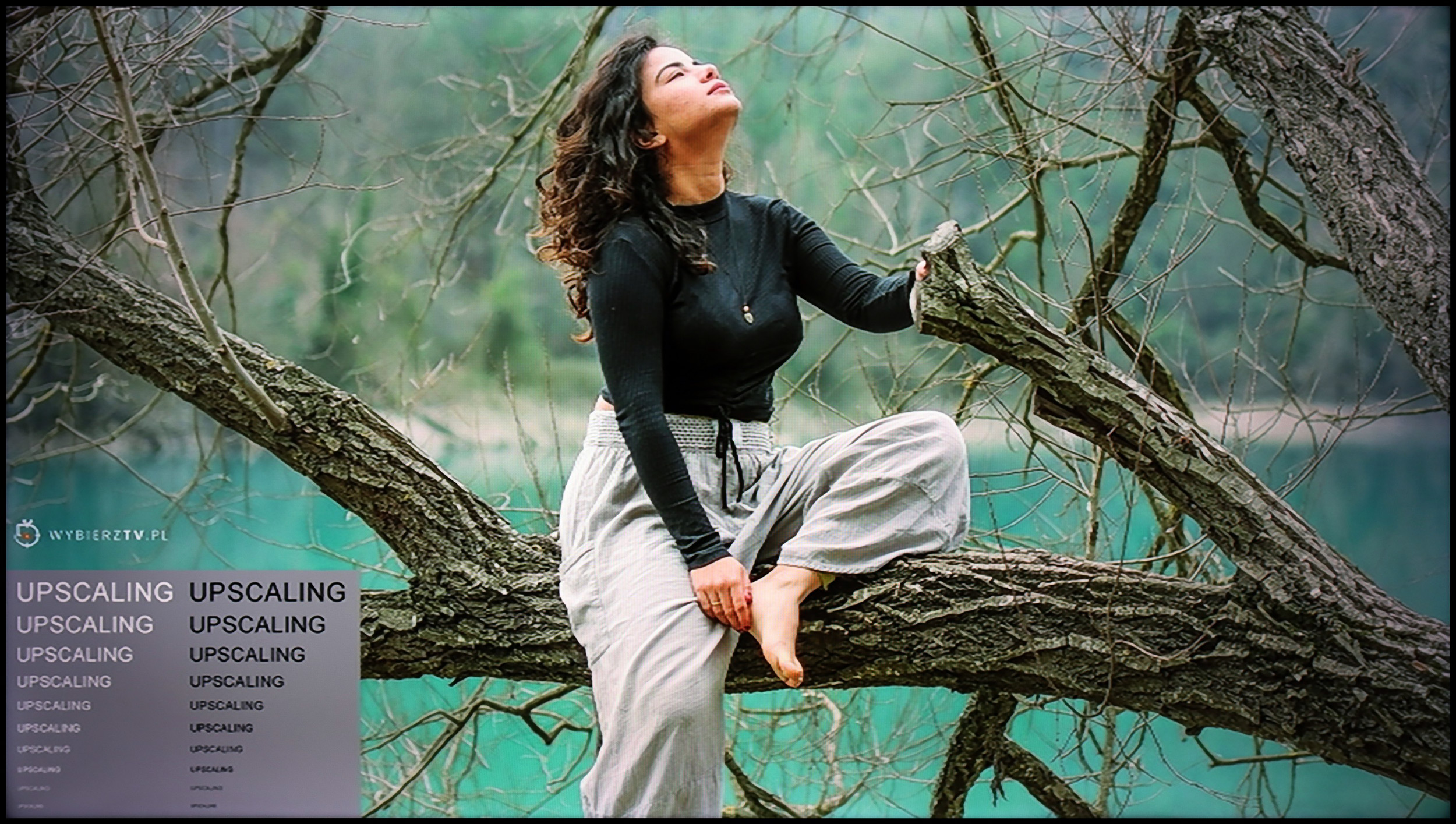

The model photo shows how it handles upscaling of SD material.
After a series of harsh evaluations, thankfully, it’s time for some praise, and this is deserved by the TCL AiPQ image processor for its work in the field of digital processing and content scaling. It should be noted right away that we are not talking about the level known from flagship models; nonetheless, in the price segment represented by the P7K/P79K, the results achieved are more than solid. The function that smooths tonal transitions performs particularly well, effectively eliminating posterization, which are the characteristic bands often visible in materials with higher compression, for instance, from choose.tv. The algorithm can elegantly remove unwanted gradients, which ultimately looks really good. The television also handles upscaling competently, which means the task of raising low-resolution materials to 4K standard. The resulting image, although it may seem a bit too sharp out of the box, is fortunately not a problem. The software allows for free adjustment of this parameter using a sharpness slider, allowing the final appearance to be easily tailored to personal preferences.
It often happens that cheap 4K TVs mercilessly expose the flaws of low-resolution materials. Here, it's different. The QNED80A is great equipment for watching content that isn’t perfect. The processor does a great job of scaling the image, making even older recordings look quite decent on the 4K screen – they are consistent and free of digital noise. Interestingly, there’s a gradation reduction feature available in the settings. It’s particularly effective in combating what is known as banding in low-bitrate materials. Of course, you need to approach it with some caution. Due to the lower processing power of the chip (in comparison to the premium series), turning on this option can sometimes result in unwanted artifacts or blurring. Despite this risk, we encourage experimentation, as in many cases this feature can save a viewing of low quality.
Blur and motion smoothness
4.8/10
4.6/10

Blur (native resolution, maximum refresh rate):
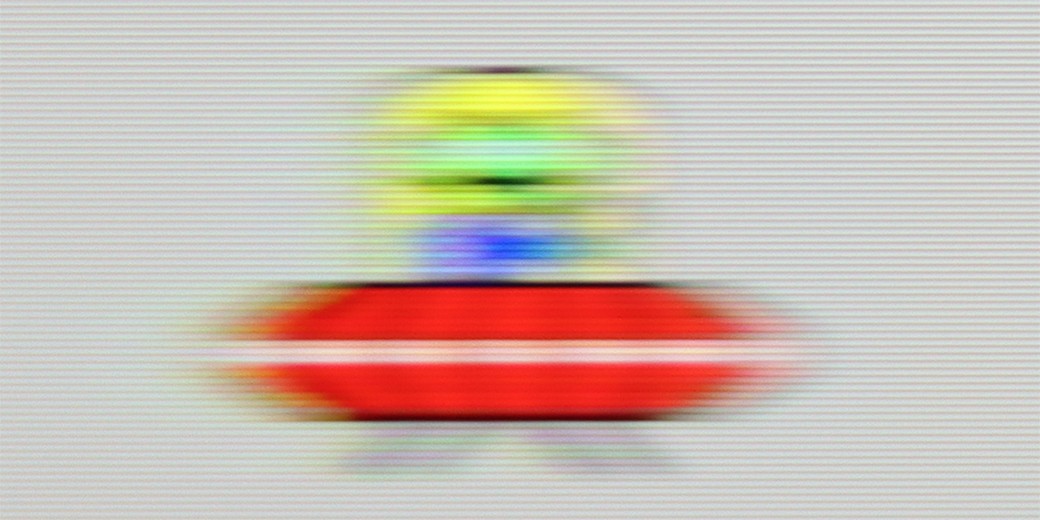
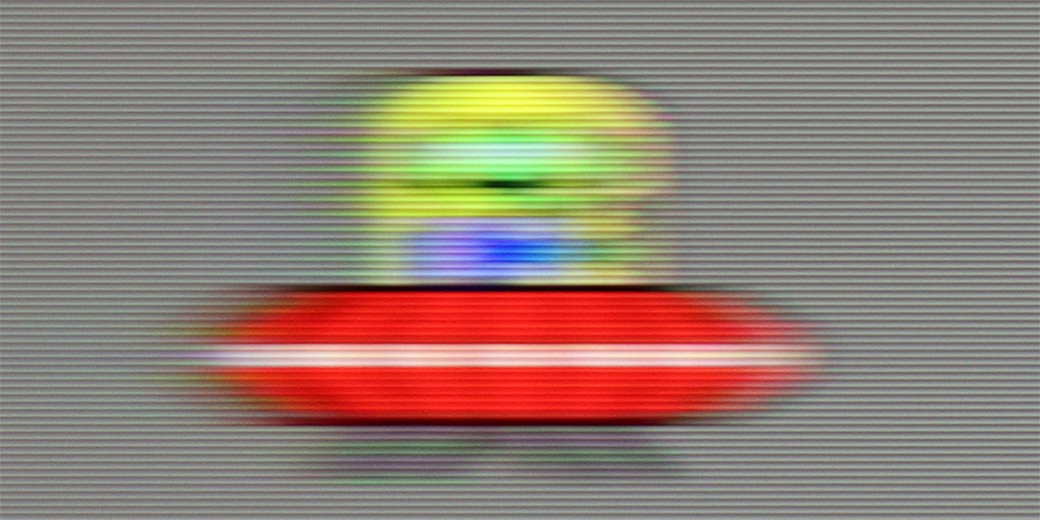
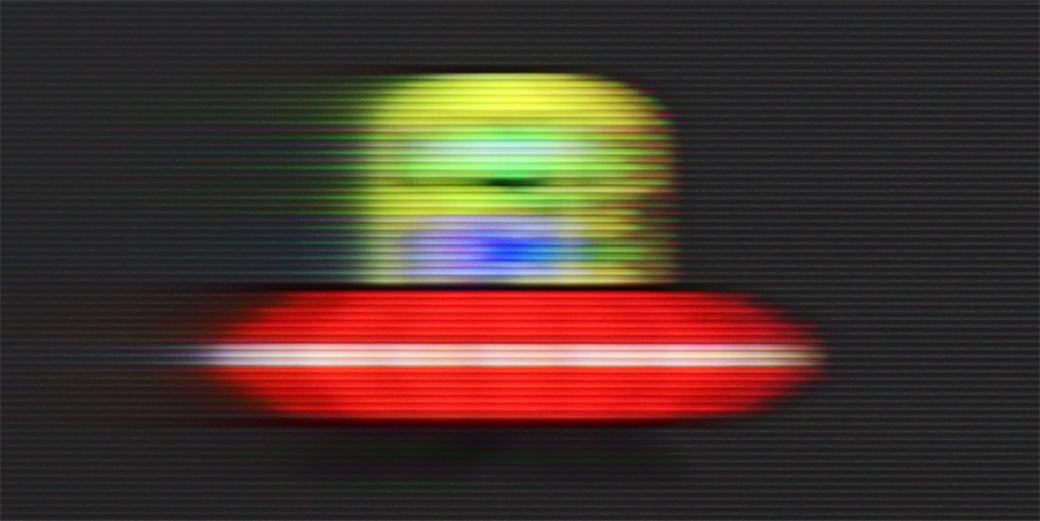
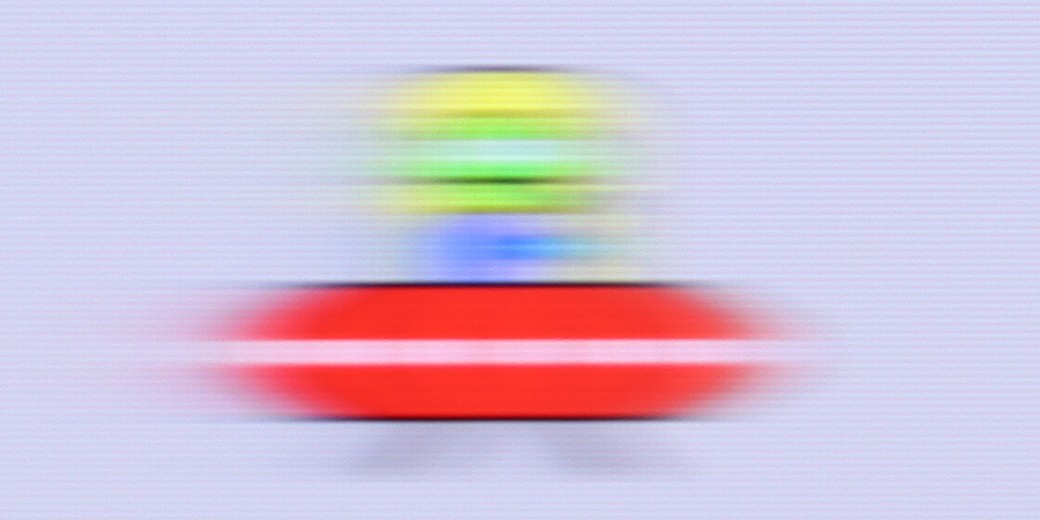
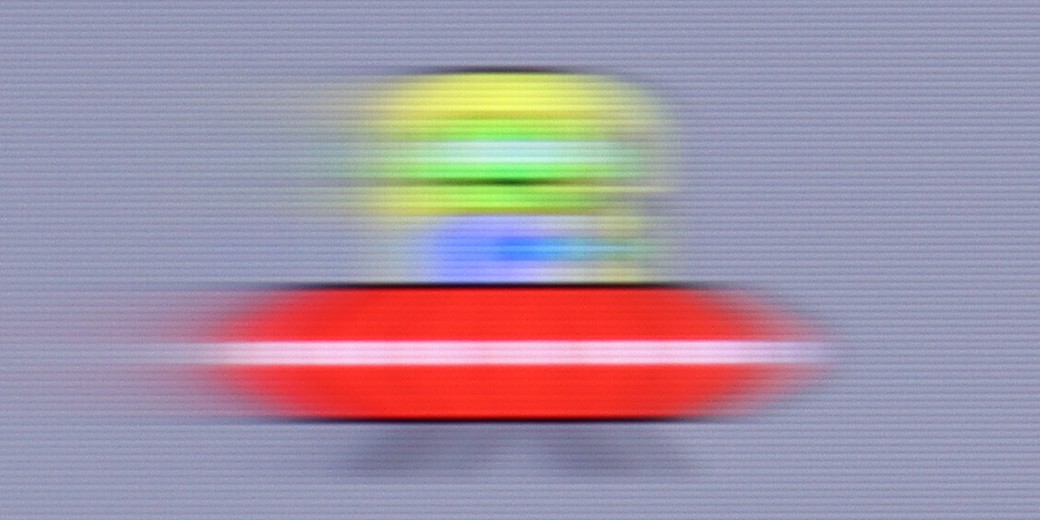
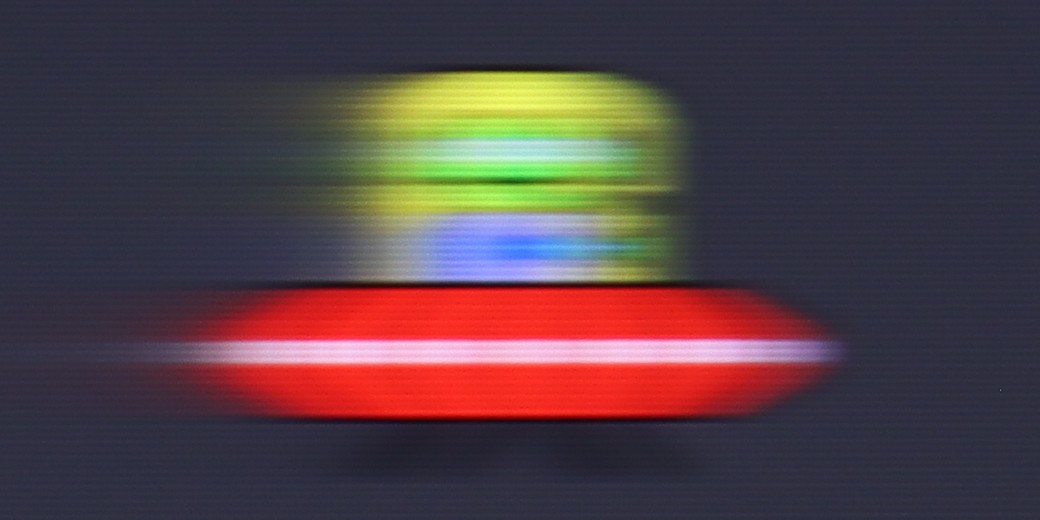
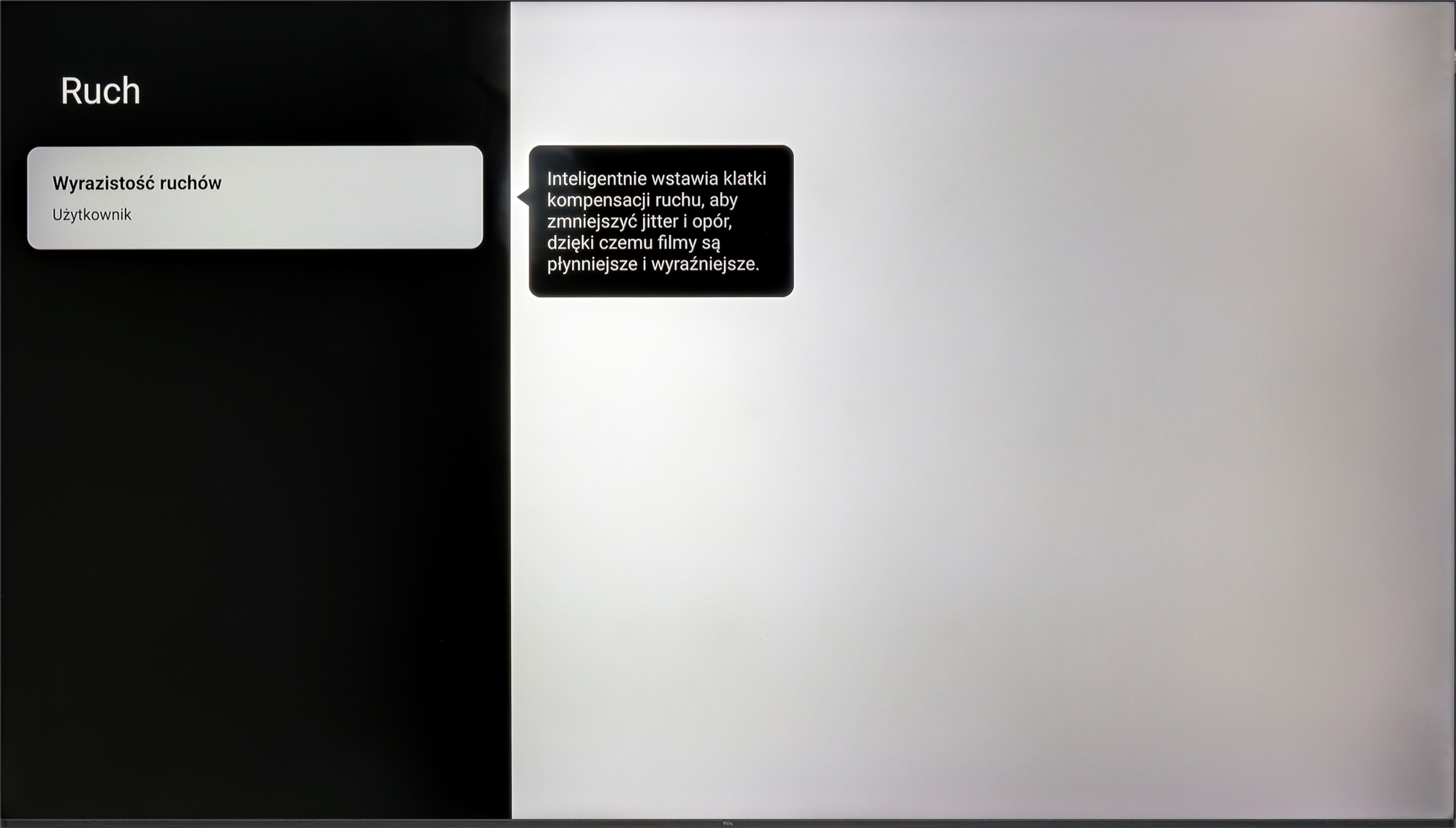
The issue of fluidity and sharpness of motion image is inextricably linked to the fundamental parameter of the panel, and in the case of the TCL P7K/P79K, we are dealing with a panel that has a native refresh rate of 60 Hz. This specification at the outset defines its capabilities and makes it hard to unequivocally recommend it to enthusiasts of dynamic sports broadcasts. During quick camera movements, the image loses sharpness, and the panel also shows a slight tendency to smudge, which may be noticeable to more sensitive viewers. Fortunately, not everything in this aspect has been left to chance. The manufacturer has implemented a simple motion smoothing system, which is primarily used in film materials recorded at 24 or 30 frames per second. Thanks to a dedicated slider, the user can decide on the final nature of the motion – from maintaining a fully cinematic, slightly jerky image, to achieving a very smooth, almost theatrical effect. It is a simple yet effective tool that allows one to adjust the viewing experience to their own preferences.
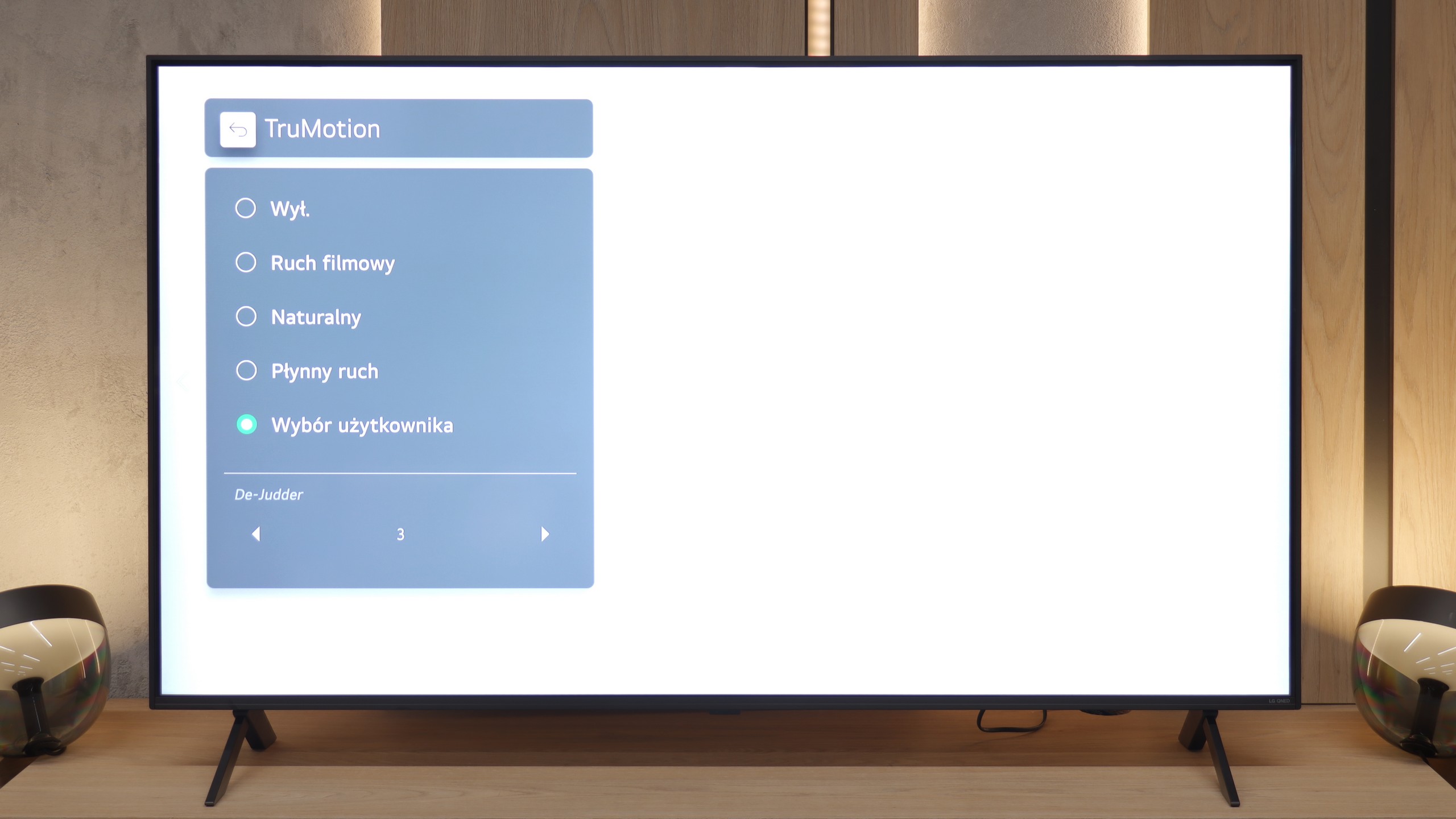
When it comes to motion reproduction, the QNED80 unfortunately has a bit of a disadvantage. The TV is built on a 60Hz refresh rate panel, which is quite disappointing for the QNED series in 2025. If you're looking for perfect sharpness in dynamic football matches, you might feel a bit let down. The solution in this situation is the TruMotion system. It allows for artificially adding frames, which smooths out the picture in movies and TV shows. In the menu, you'll find a De-Judder slider – we recommend setting it to a value of 2, 3, or 4. This is the "golden mean" that improves fluidity without turning the film into a soap opera.
Console compatibility and gaming features
6.7/10
6/10
- ALLM
- VRR
- VRR range48 - 120Hz48 - 60Hz
- Dolby Vision Game Mode
- Correct implementation of HGIG
- 1080p@120Hz
- 1440p@120Hz
- 4K@120Hz
- Game bar
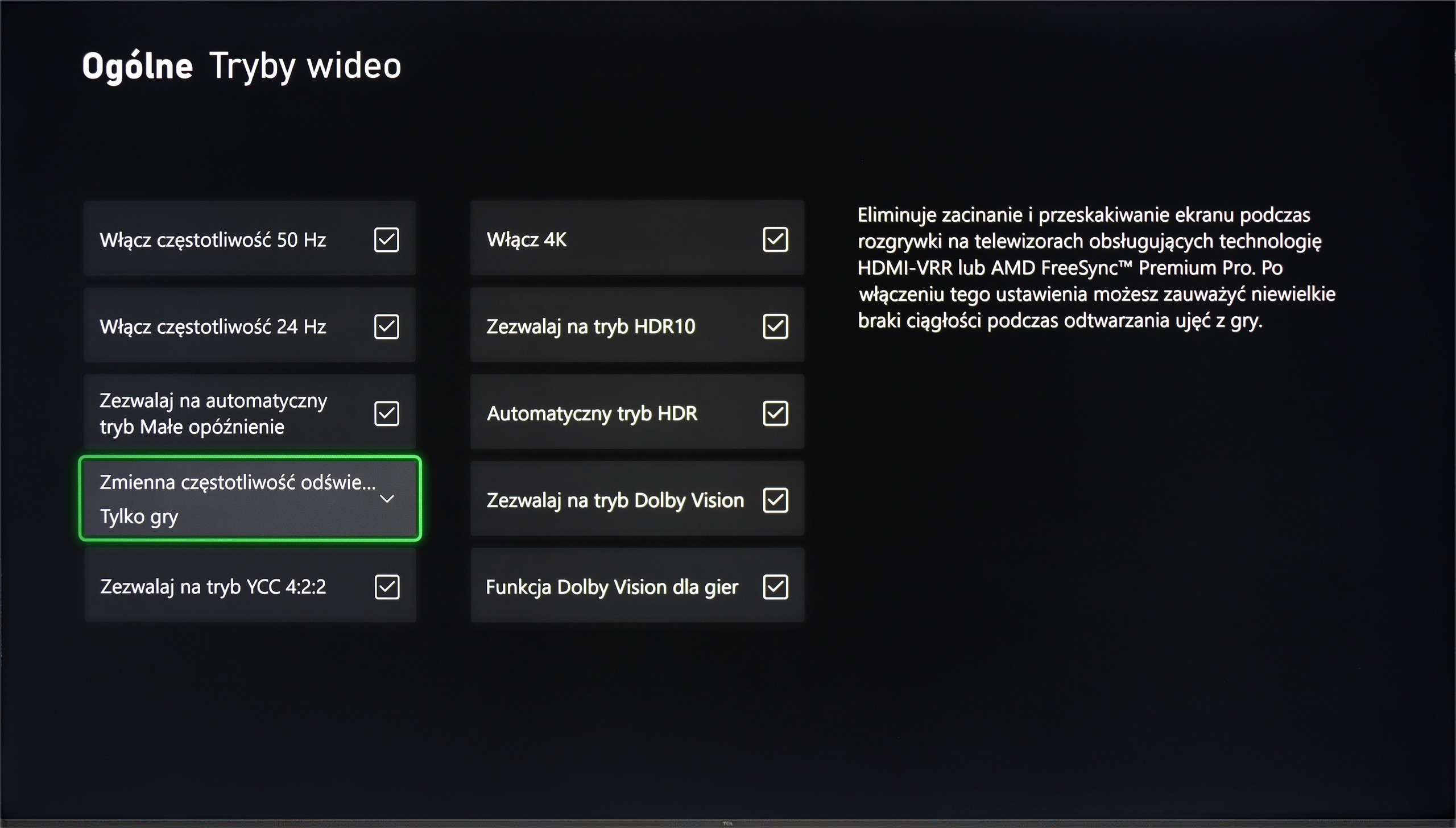
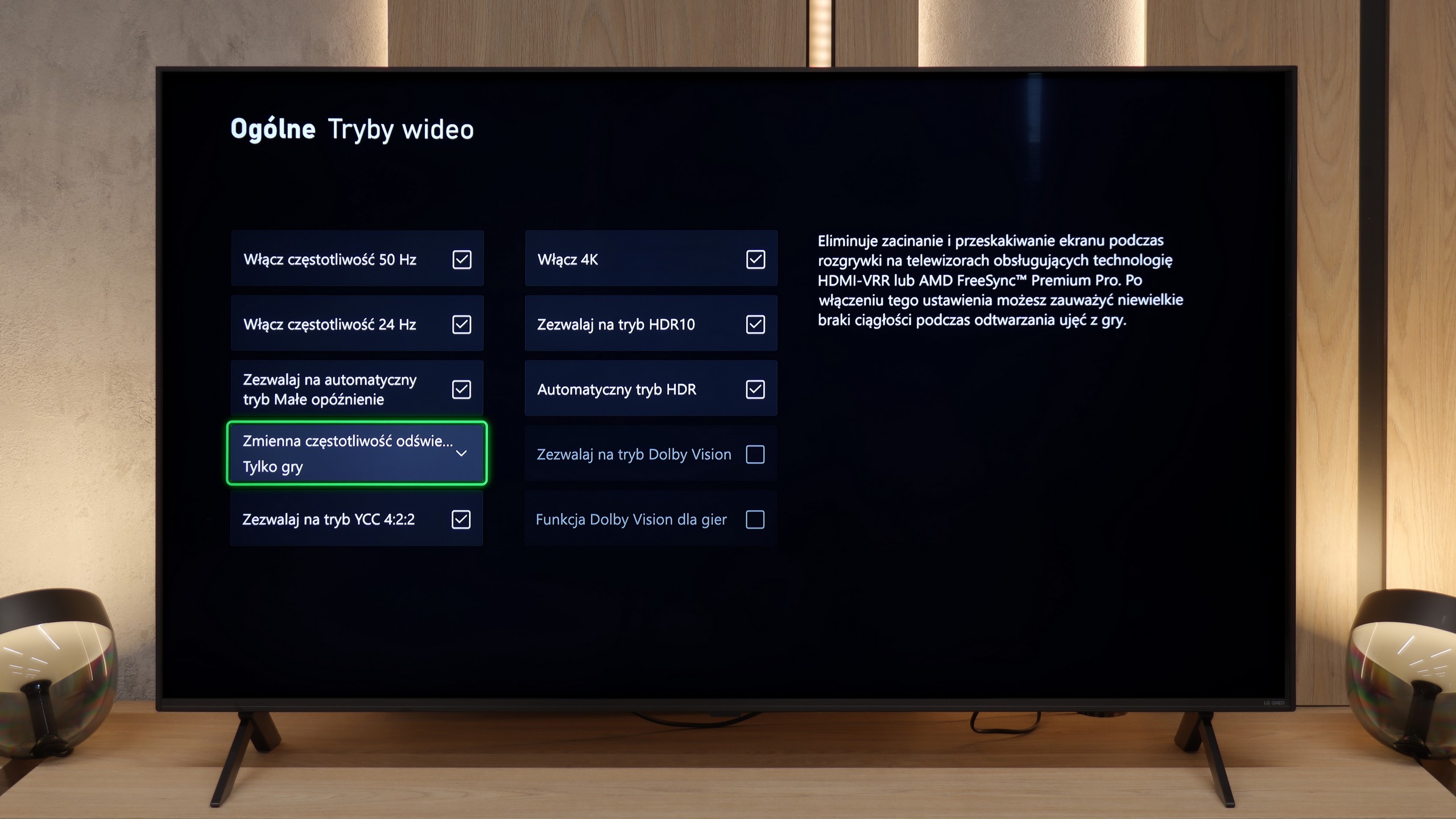
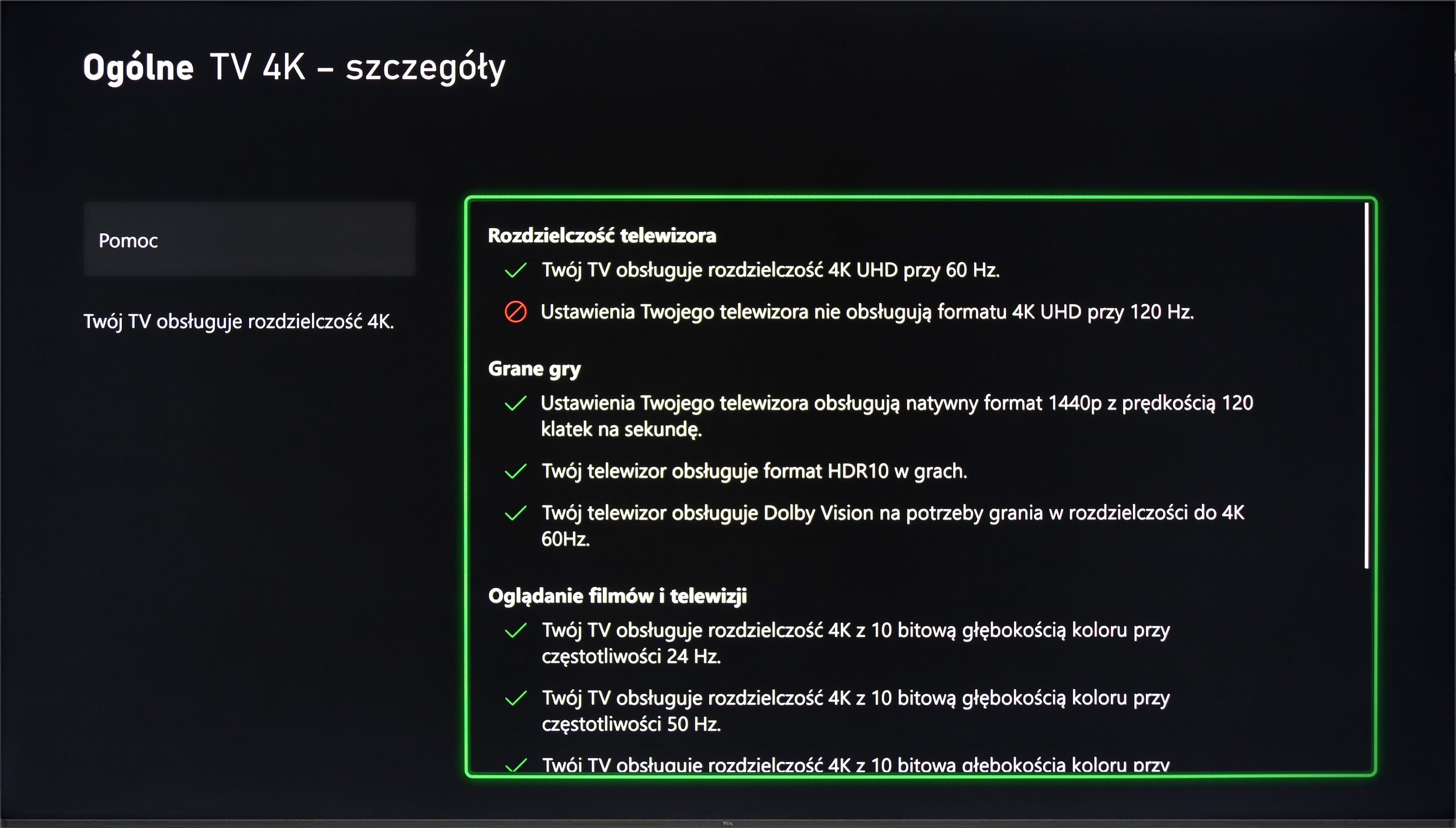
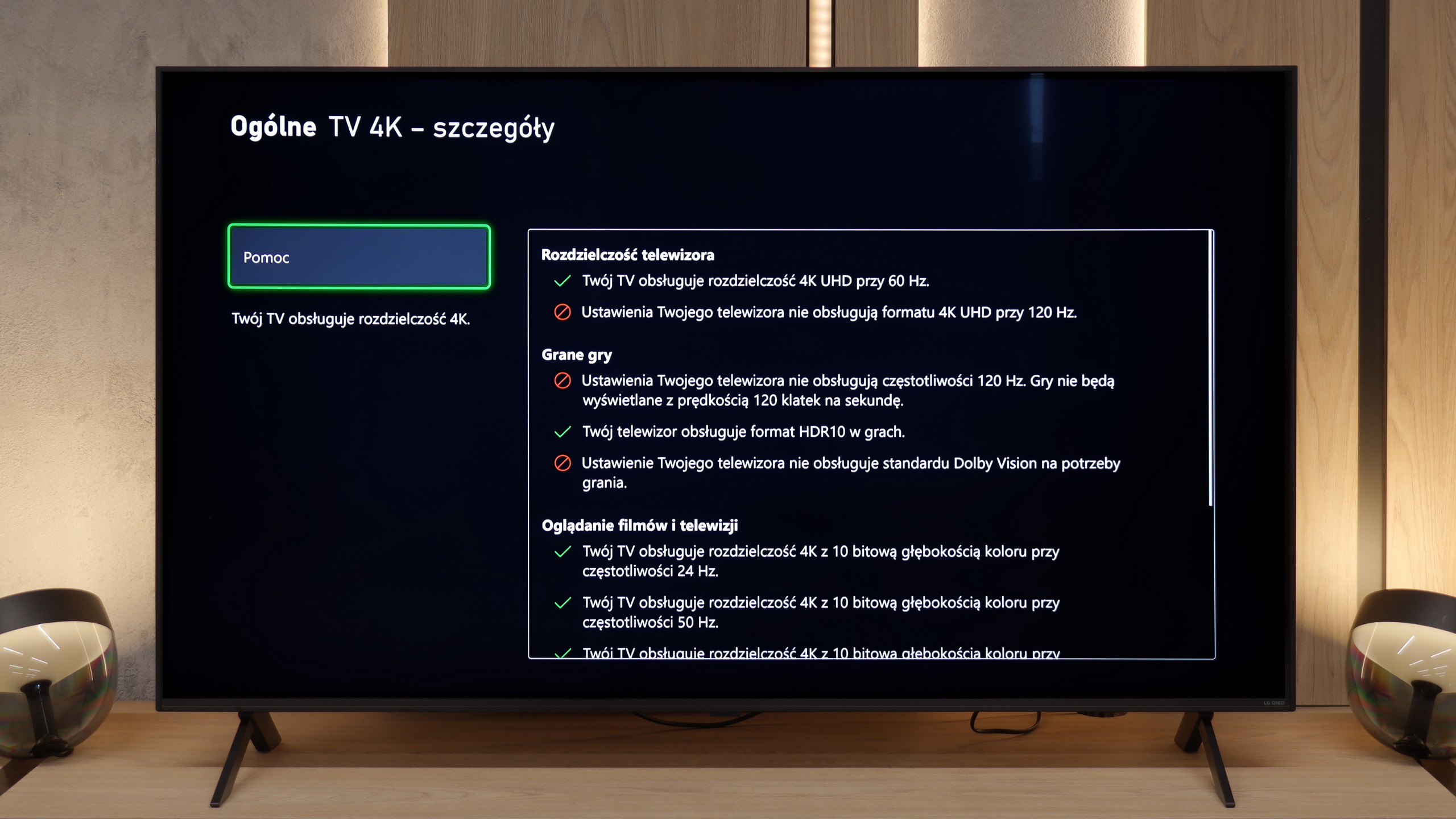
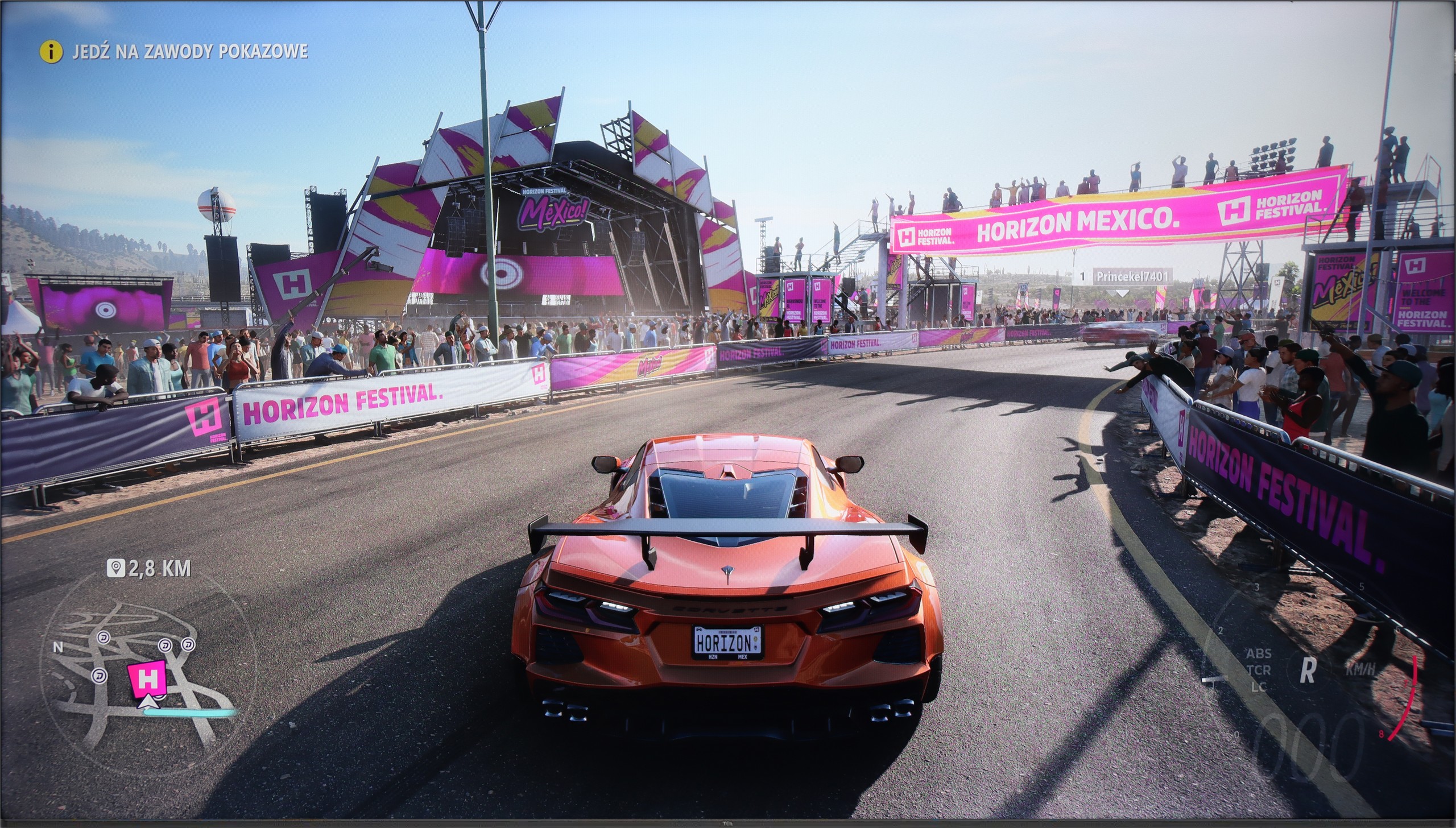
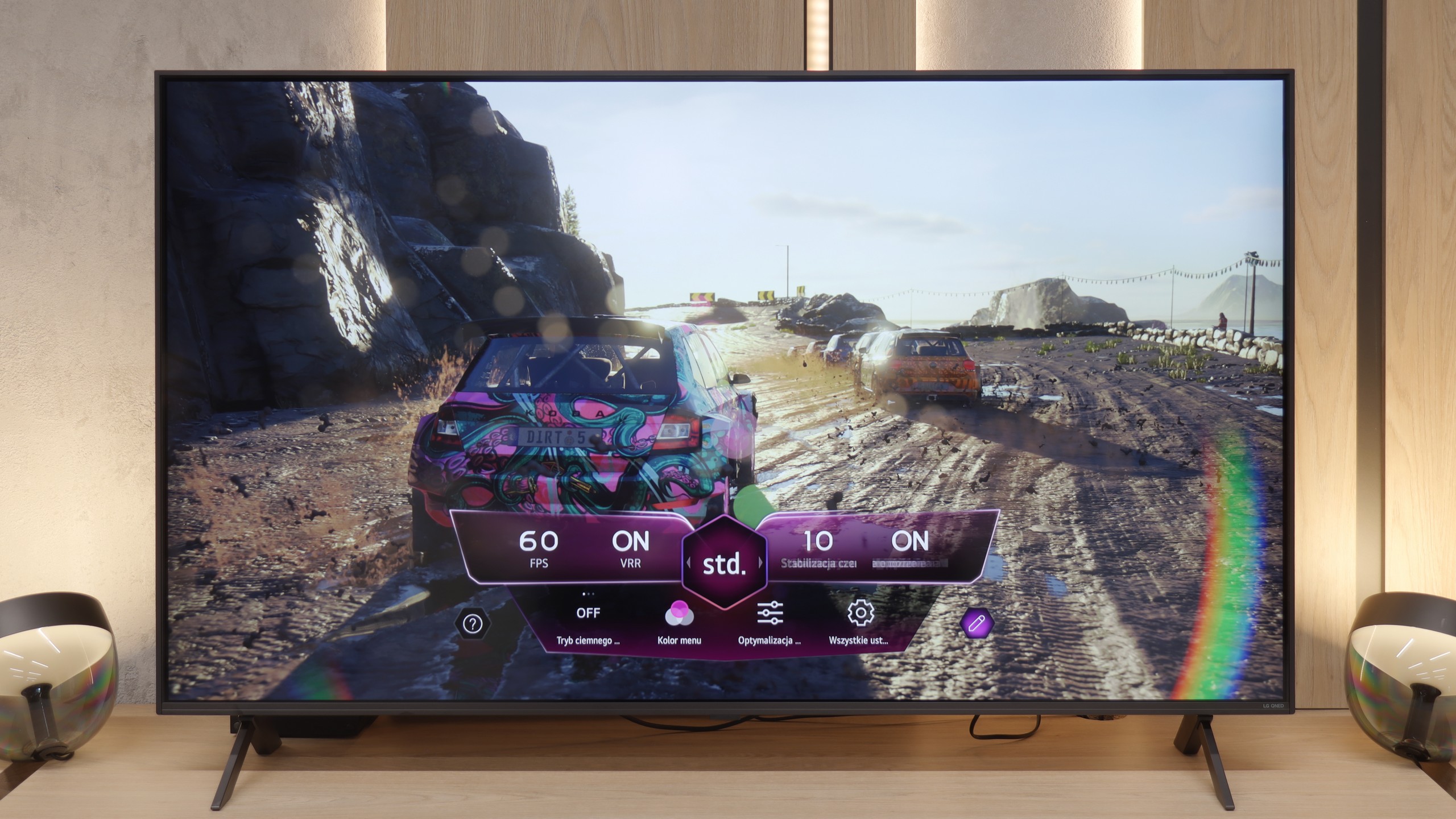
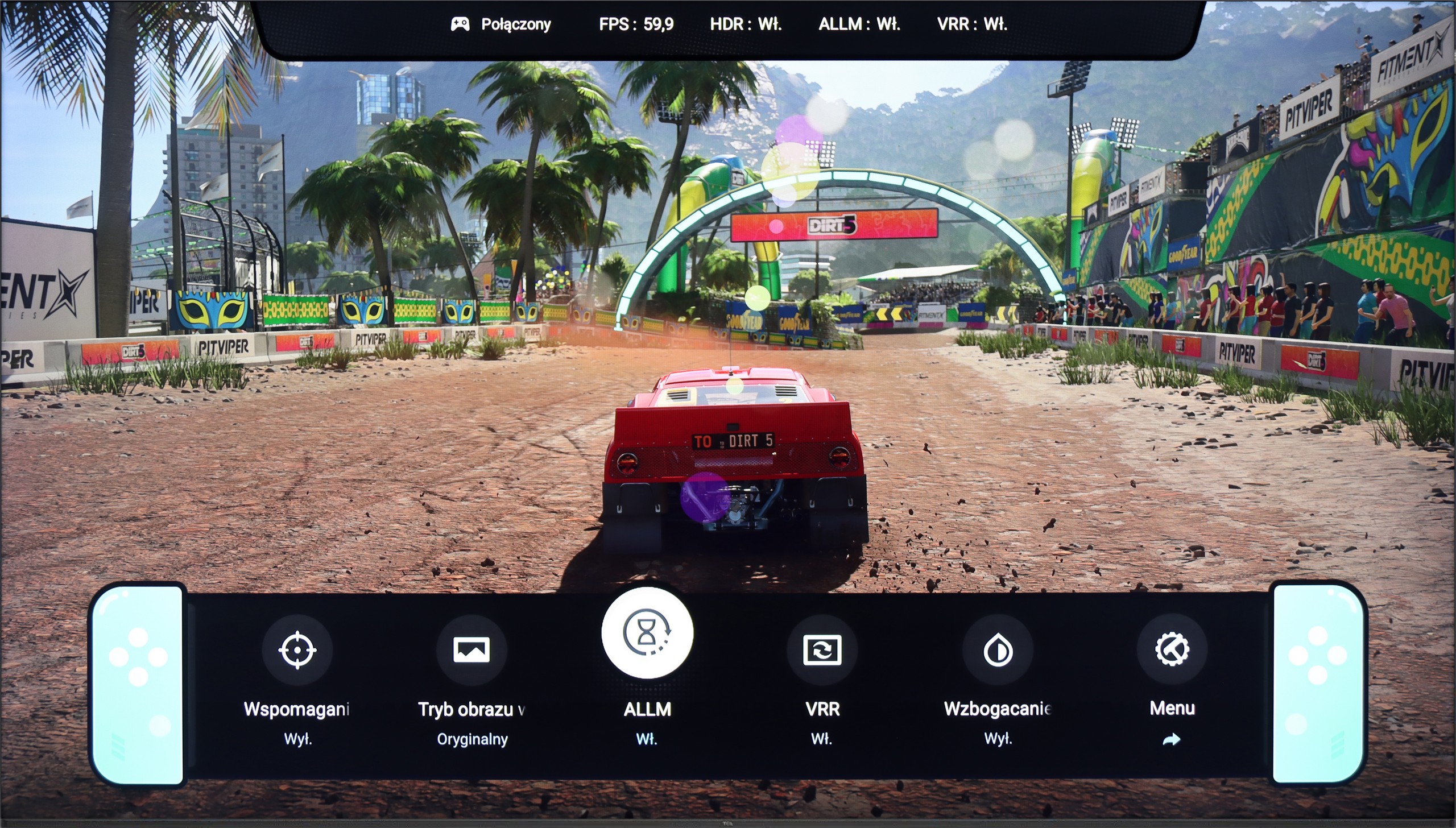
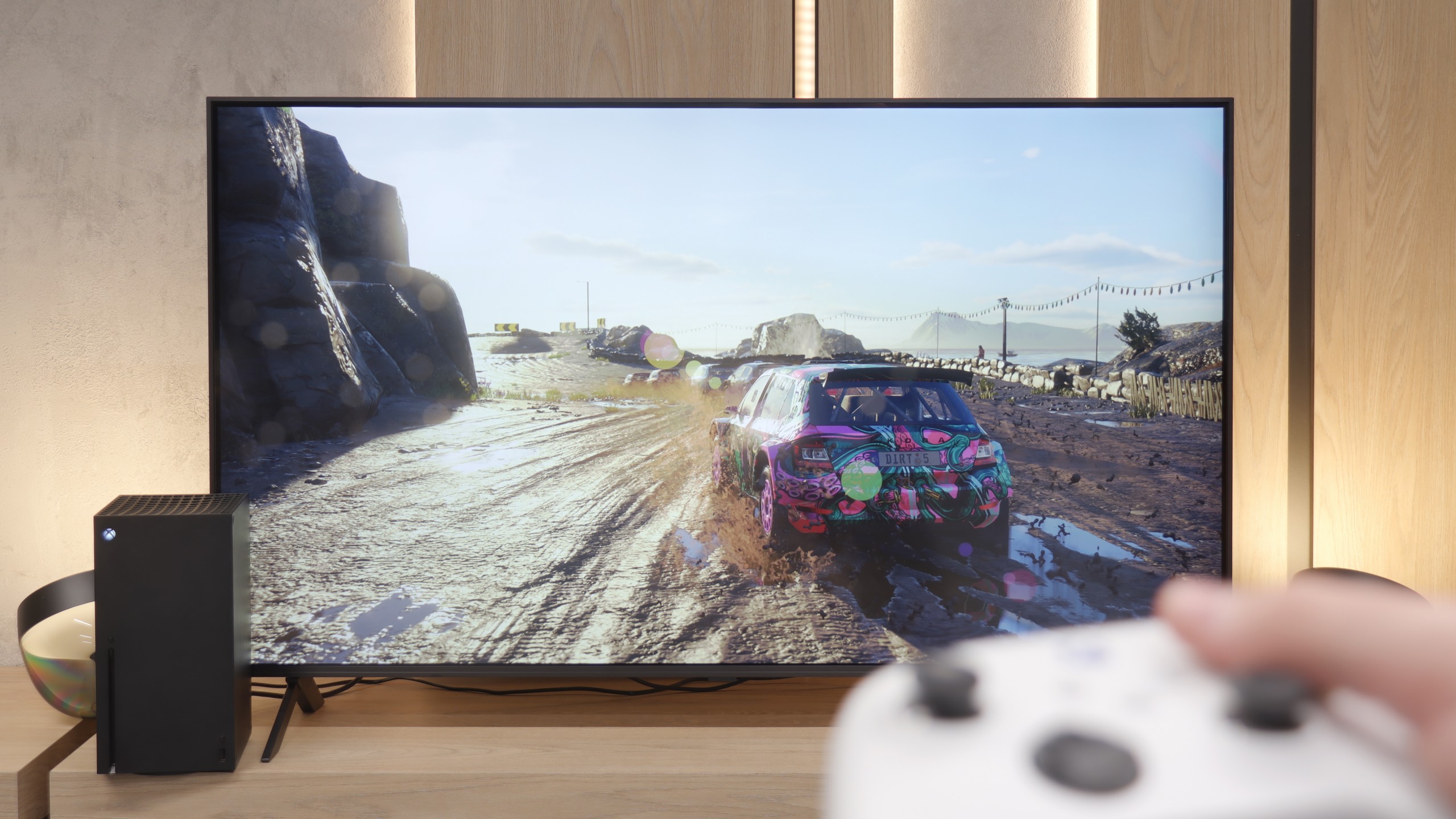
Although on paper the native 4K@60Hz matrix might suggest that the TCL P7K/P79K is not a TV tailored for gamers, the reality turns out to be surprisingly different. On the contrary, the manufacturer has ensured a rich set of features that make it a very friendly companion for next-generation consoles. Onboard, we find key technologies such as ALLM, which provides automatic switching to low-latency mode, and VRR, or variable refresh rate, which eliminates screen tearing. The list is rounded off with support for Dolby Vision Gaming and a simple yet functional Game Bar. However, the real and extremely pleasant surprise is something else. It turns out that the TV effortlessly supports a high refresh rate signal of 120Hz, but at lower resolutions – 1080p and 1440p. This is fantastic news for console owners, who know how rarely games run in native 4K at a full 120 frames per second. The option to choose between higher resolution and doubled smoothness is therefore an incredibly sensible compromise.
In summary, while the P7K/P79K may not be the target screen for the most passionate, tournament gamers, it offers a package of options for casual or occasional console users that is hard to find among many competitors at this price point.
In the gaming section, we won't be pulling the wool over your eyes – the QNED80A is not e-sports equipment. The lack of 120Hz signal support is a fact to accept. However, LG's engineers have done everything to squeeze the maximum potential out of this 60Hz panel, providing gamers with a desirable set of features. Above all, the TV supports VRR (in the range of 48-60Hz) and ALLM. This means the image is smooth and doesn't stutter, and the TV automatically switches to low latency mode as soon as you grab the controller. Accessing these options is ridiculously easy thanks to the dedicated system overlay – Game Dashboard. It's also worth appreciating the support for the HGiG format. This is a nod to owners of modern consoles. Even though the screen doesn't support gaming Dolby Vision, HGiG ensures that the TV "understands" how to display games in HDR. This helps avoid the effect of blown-out clouds, which is unfortunately a plague on cheaper LCD TVs.
Input lag
9.9/10
9.8/10
SDR
HDR
Dolby Vision
Completing this rich package for gamers is a parameter that has a direct impact on comfort and performance in gameplay – input lag. Already in native 60 Hz mode, the television can boast an excellent result of just 15 ms. However, the real magic happens when switching to 120 Hz mode, where the lag drops almost by half, reaching values below 10 ms. Such responsiveness ensures that every command from the controller is transmitted to the screen in the blink of an eye, which will be appreciated not only by professionals but by anyone who values smooth and direct interaction with the game.
And what about responsiveness? Our measurements showed an input lag of around 15 ms. In the gaming world, where top monitors can go down to 1 ms, this might seem like an average result, but in the category of living room TVs, it's a very good outcome. In practice, this means that when playing on a console, you won't feel any discomfort. There's no situation where the character reacts with a noticeable delay after pressing a button on the controller. The TV responds to the controller without delay, allowing you to enjoy gameplay without unnecessary irritation. For casual gaming after work – the result is quite acceptable.
Compatibility with PC
2/10
5/10
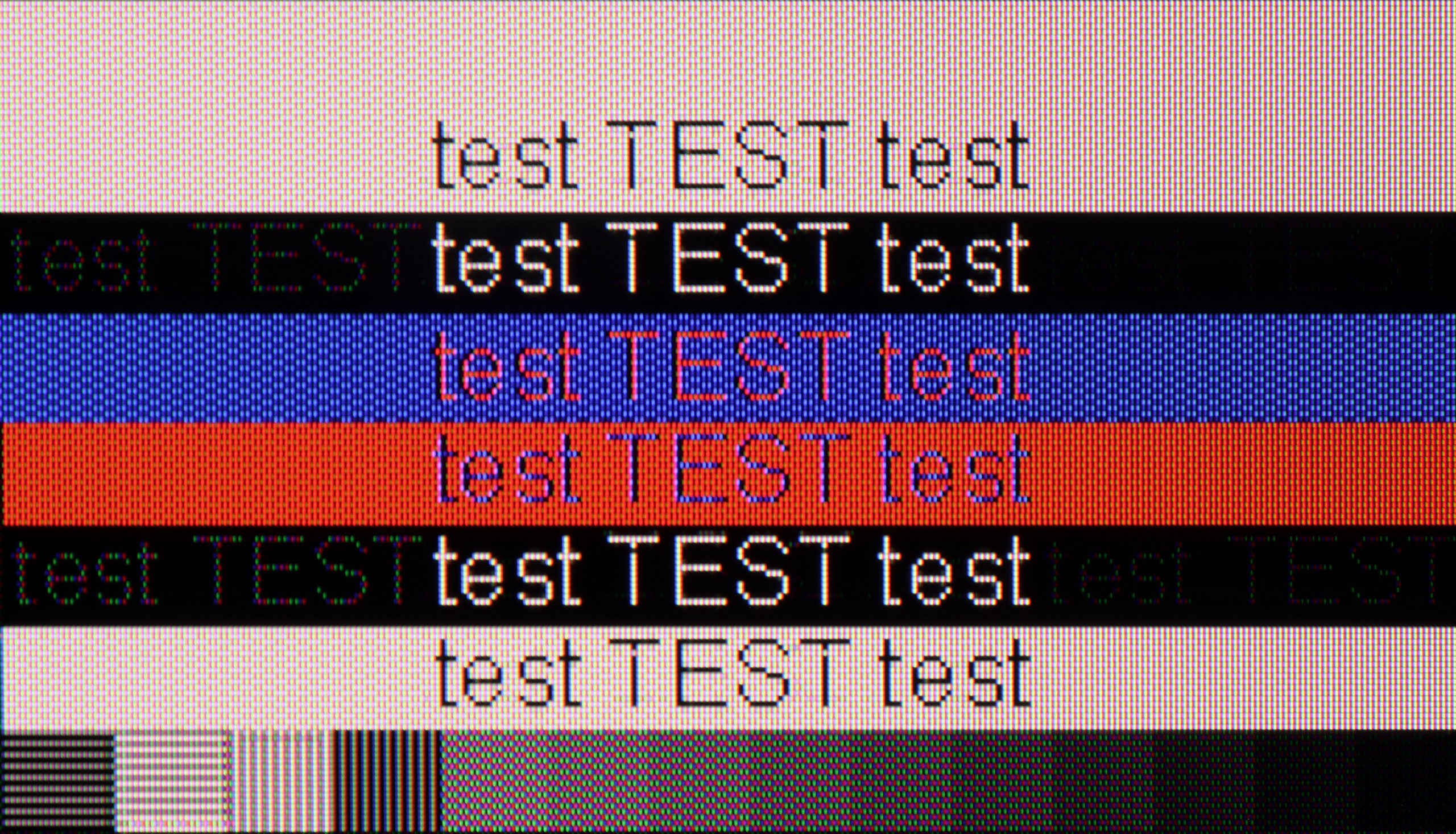
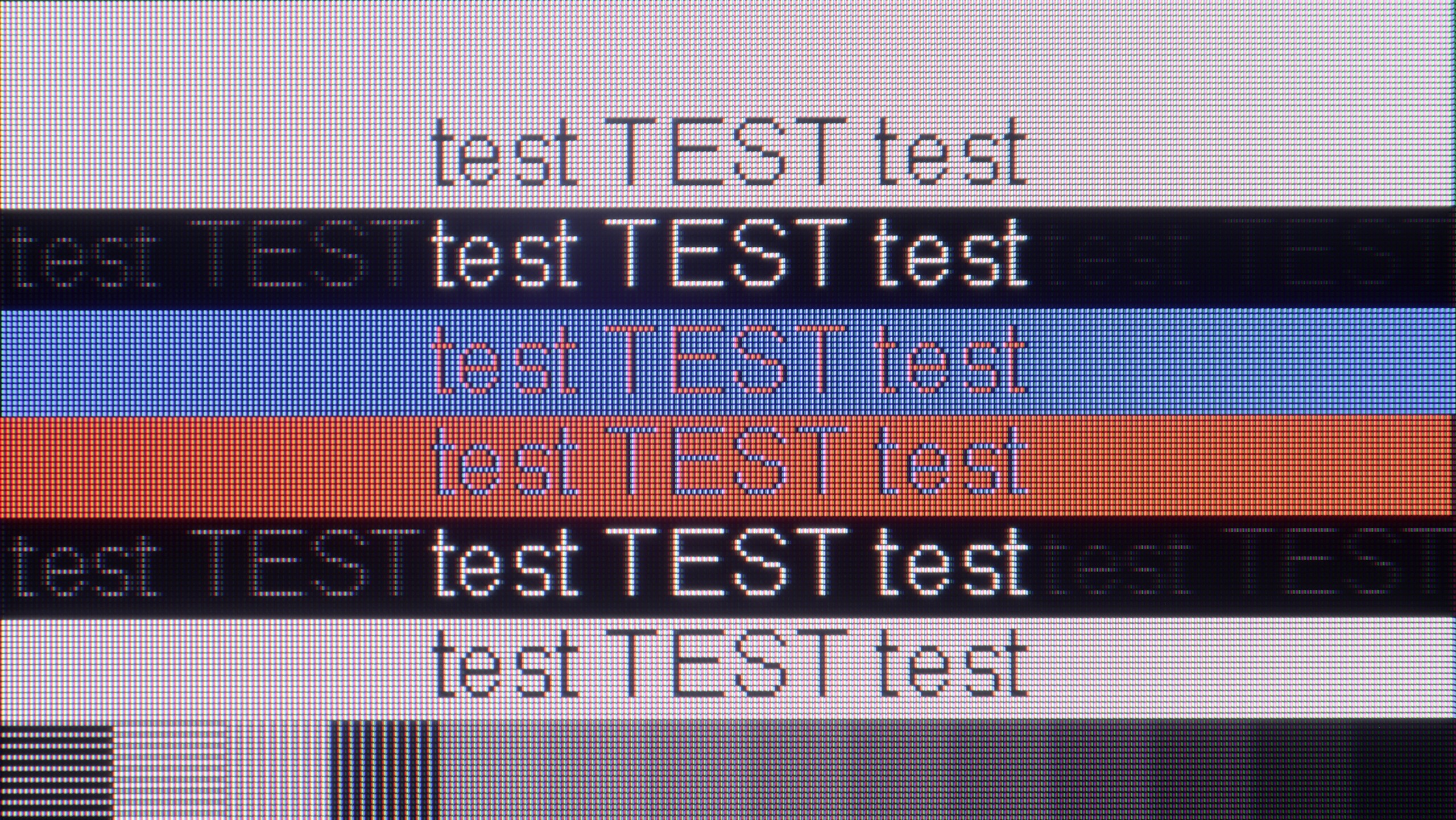
The photo shows the legibility of small fonts. Ideally, lines should be the same thickness on both light and dark text, with minimal pixel gaps.
We finally arrive at the area that can undoubtedly be described as the biggest achilles heel of the TCL P7K/P79K – its compatibility with a PC. This is paradoxical because on paper, everything looks promising. The presence of G-Sync and support for high refresh rates at lower resolutions could suggest that it will also be a great monitor. Unfortunately, practice brutally verifies these assumptions. The key problem is the lack of support for full 4:4:4 chroma sampling. In everyday use, this translates to terrible font rendering quality – they, especially coloured ones, become jagged, surrounded by artifacts, and simply poorly readable. And that’s not all, as in PC mode, the problem of aggressive dithering also becomes apparent, giving the whole image an artificial, overly digital look. The only consolation in this situation is the fact that in games we can take advantage of the extra hertz and G-Sync technology, but these are not advantages that could compensate for the fundamental shortcomings in displaying a static interface. The verdict is therefore clear: while it may still hold up as a screen solely for gaming with a PC, in the role of a monitor for work or browsing the internet, the P7K/P79K simply performs poorly.
In terms of collaboration with a PC, we have another surprise in store. Theoretically, it's the IPS panels that should dominate the display of static office content due to their pixel structure. Meanwhile, the QNED80A breaks the mould once again. During testing, we noticed some odd behaviour when displaying text. While classic, bold fonts are readable and look correct, the challenges arise with small, thin letters. They tend to "split" on the contours and cast a strange shadow. This makes small text less clear, and over extended periods, it can be tiring on the eyes. So if you're looking for a television that will mainly be used for displaying tables in Excel or Word documents, this particular model may disappoint you a bit.
Viewing angles
3.2/10
6/10
Moving on to the issue of viewing angles, we enter a realm where VA matrix technology dictates unavoidable conditions. As expected, this is the weak point of this model. It is enough to step away from the screen axis to observe a gradual degradation of the image: colours begin to fade, contrast noticeably drops, and blacks lose their depth. In direct confrontation with IPS panels, which are renowned for their generosity in this aspect, the VA matrix must concede superiority to its competitor. Is there a silver lining? Paradoxically, yes. Weak viewing angles are indeed the price we consciously pay for the fundamental advantage of this technology – a significantly higher native contrast and deeper blacks viewed head-on. Thus, we can say that this is a television that favours the viewer sitting in the “ideal” spot, offering them a maximally vivid image at the cost of universality.
Remember how we complained about the lower contrast? Now it's time for a comeback. It's in terms of viewing angles that the IPS panel shows its superiority and reason for existence. If you have a spacious lounge and family members watch TV from different spots – for example, from an armchair in the corner or over the dining table – this variant will be spot on. Unlike VA panels, here the image retains its properties even at a large angle. Colours remain vibrant, not changing shades when viewed from the side. This makes the QNED80A in this version an excellent choice for watching matches with mates or cartoons with the kids, where not everyone has the luxury of sitting directly in front of the screen.
Daytime performance
4.6/10
4.7/10
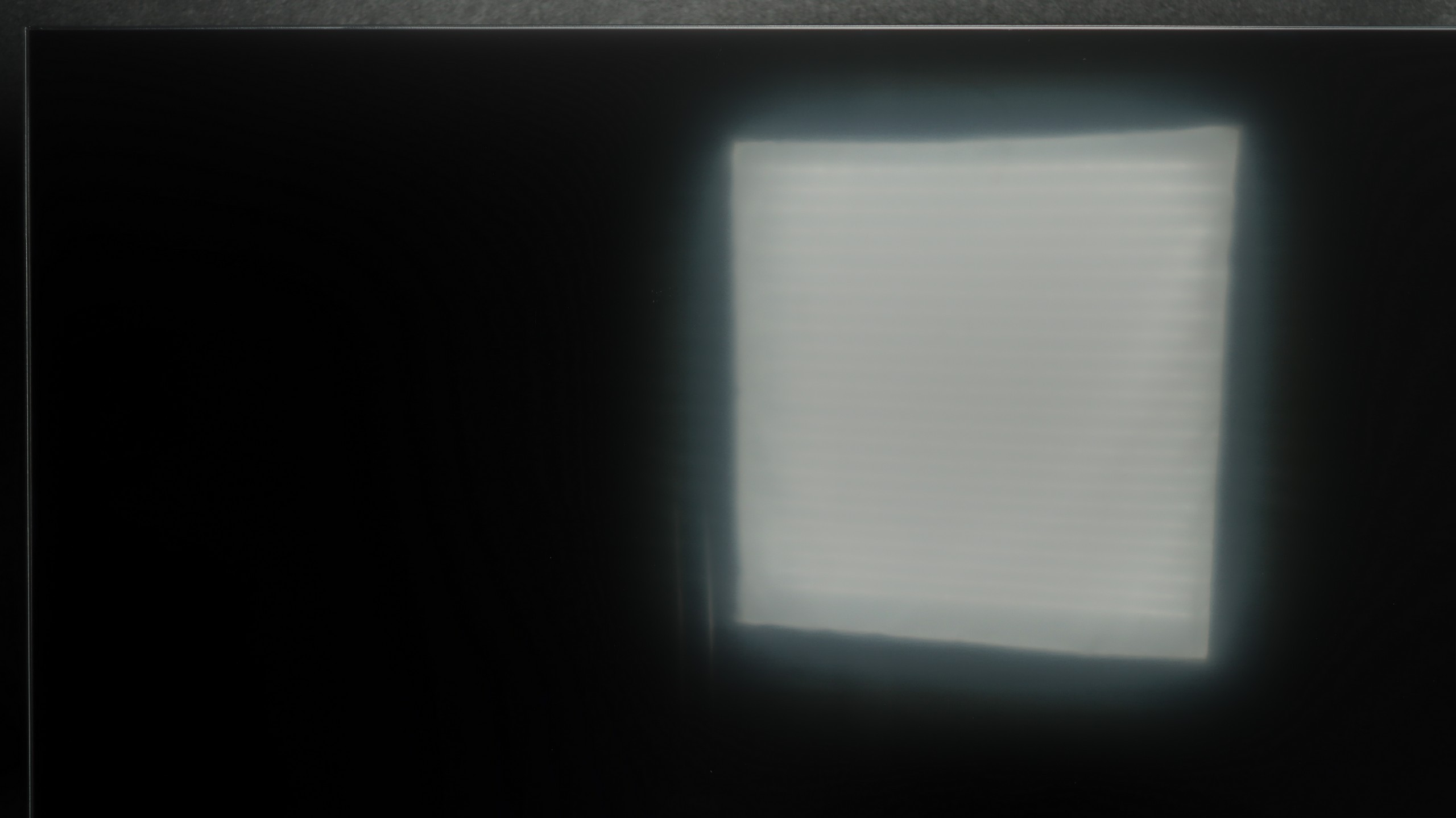
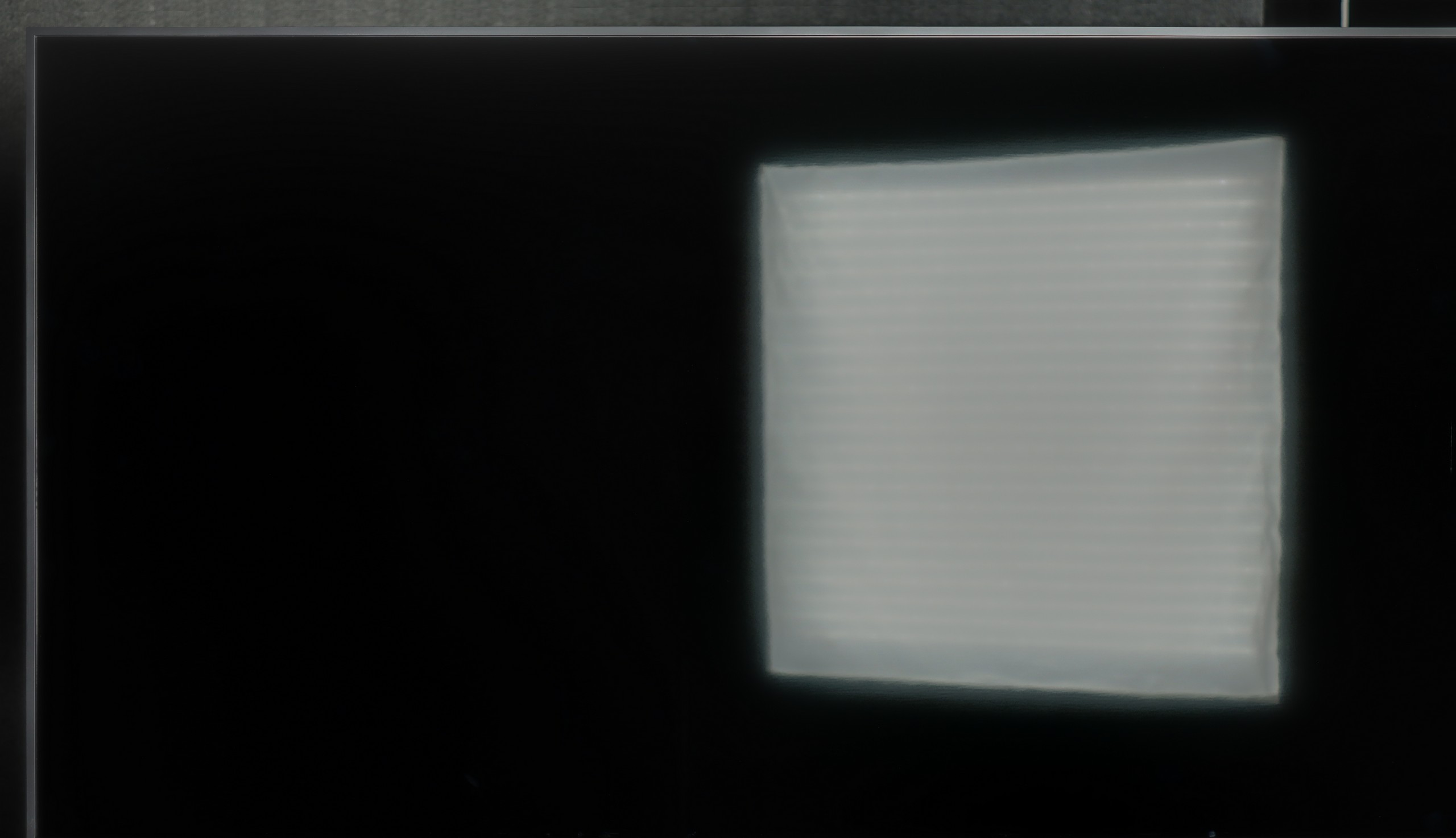
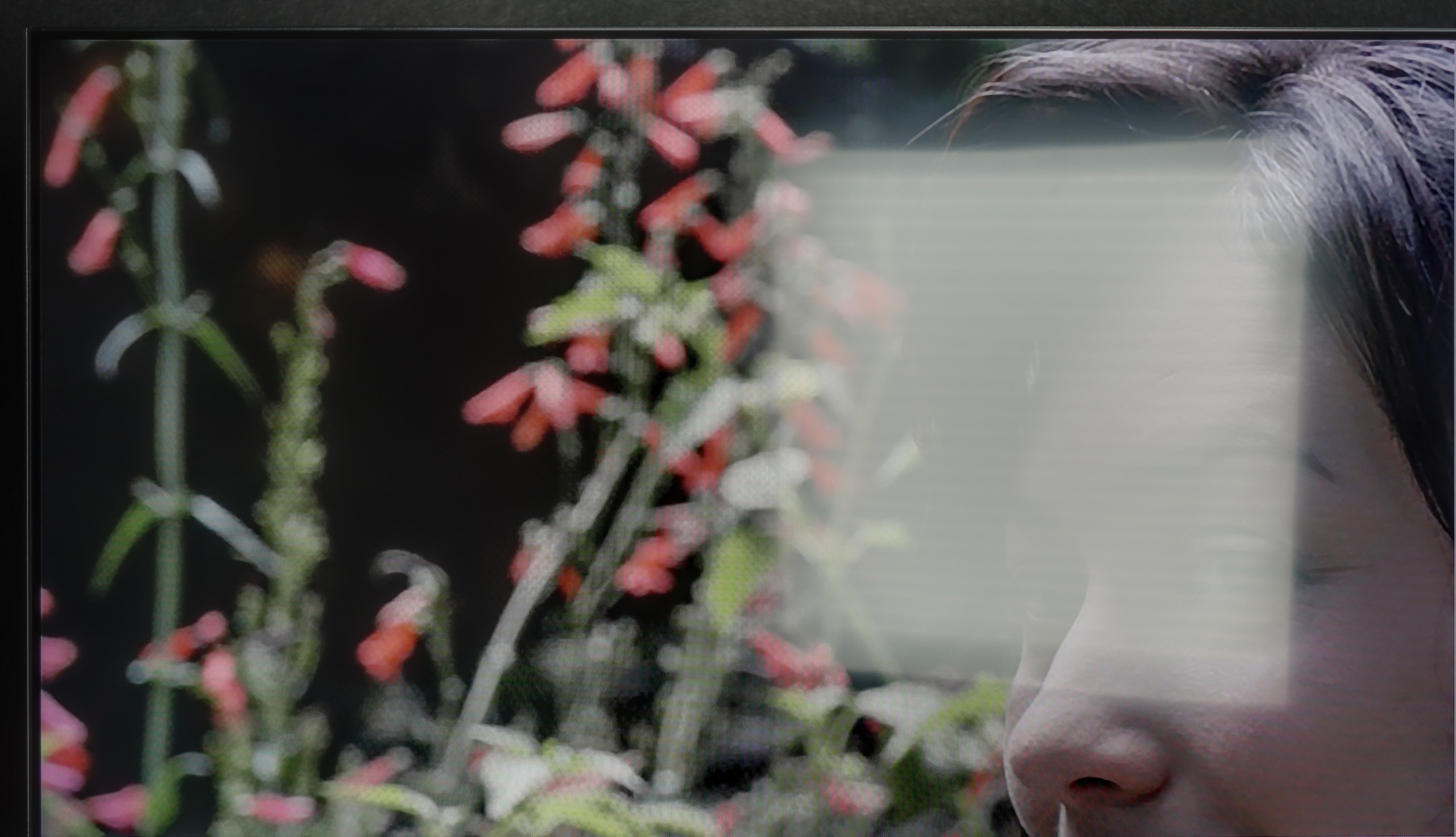
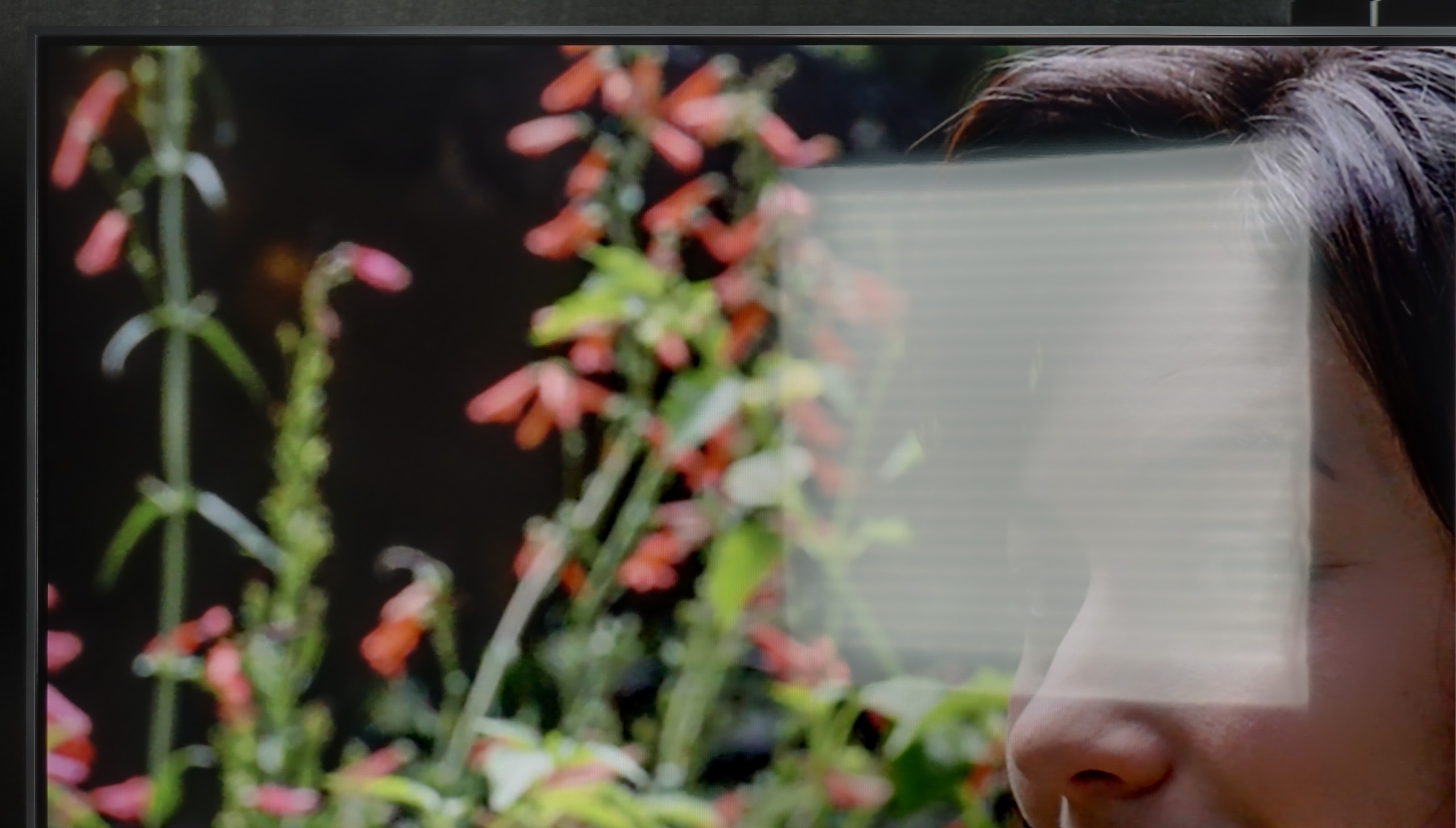
Panel brightness
LG QNED80A6A (IPS): 310 cd/m2
TCL P7K / P79K: 299 cd/m2
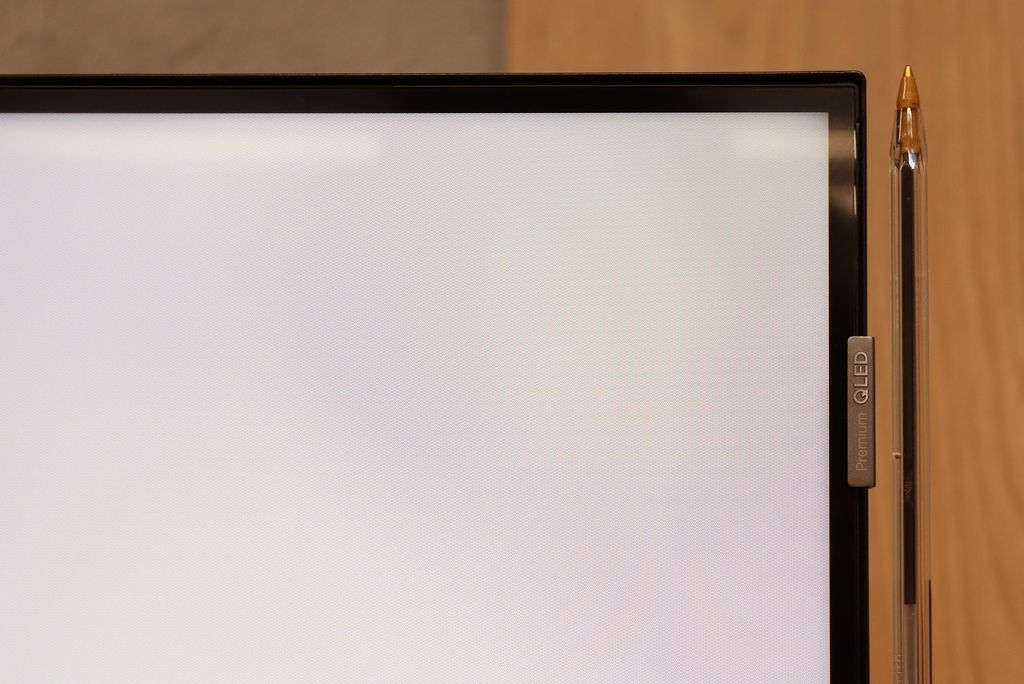
The last practical test for any television is its daily performance in daylight conditions when it must compete with ambient light. In this competition, the TCL P7K / P79K starts with a certain advantage due to its satin screen coating. Its structure does quite well at suppressing direct reflections, dispersing them and protecting the image from excessive colour fading or brightening of blacks. However, passive combat against reflections is one side of the coin. The other is the active ability to "punch through" bright surroundings, and here one of the key limitations of this model comes to light. The previously mentioned peak brightness of around 300 nits is simply too low to ensure a fully comfortable and dynamic viewing experience in a heavily sunlit lounge. In such conditions, the image may lack punch, and scenes with lower brightness may lose readability.
QNED80A is not a "light monster," so in full, direct sunlight, the picture may appear a bit washed out. It is not equipment designed to combat sharp sunlight hitting directly on the screen. However, it has an ace up its sleeve that significantly improves user comfort: the matrix coating. Instead of a cheap, glossy finish, LG has used a satin structure here. It works very effectively, "softening" reflections from the surroundings. We don’t see our perfect reflection in the screen like in a mirror, which can be incredibly annoying in darker scenes. So for extremely bright rooms, this may be insufficient, but in standard, moderate home conditions, the QNED80A will perform perfectly.
Panel details
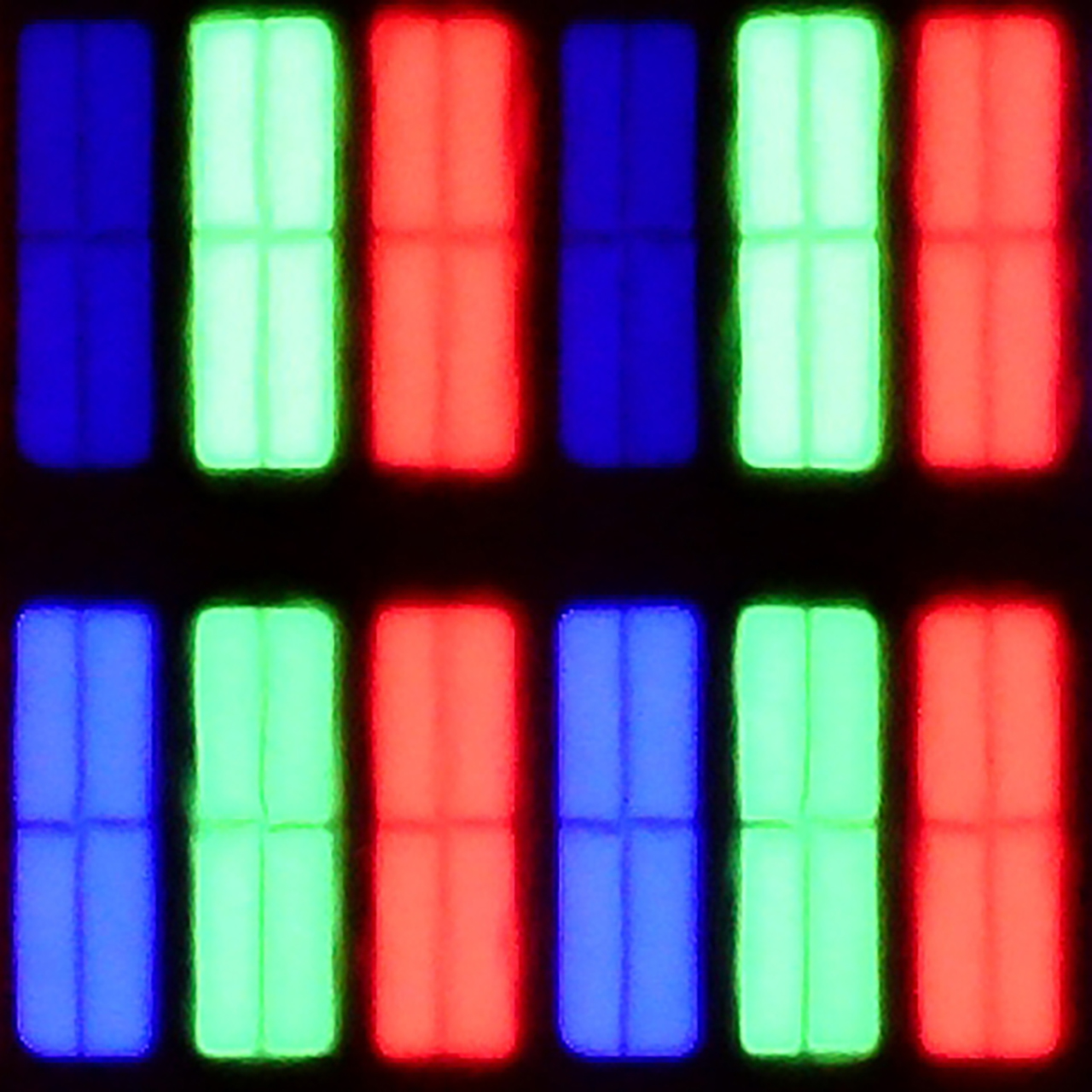
Subpixel Structure:
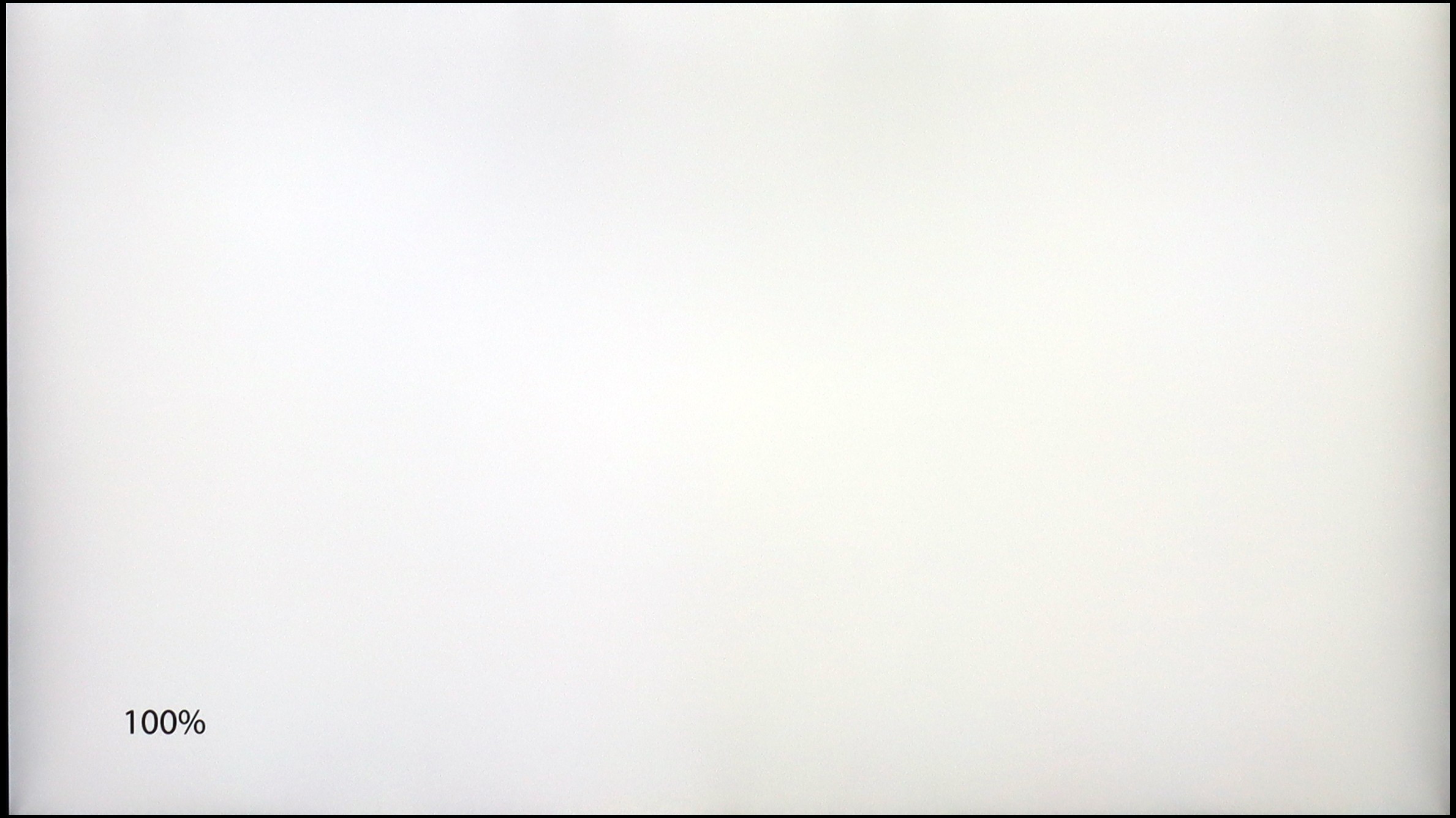
Panel uniformity and thermal imaging:
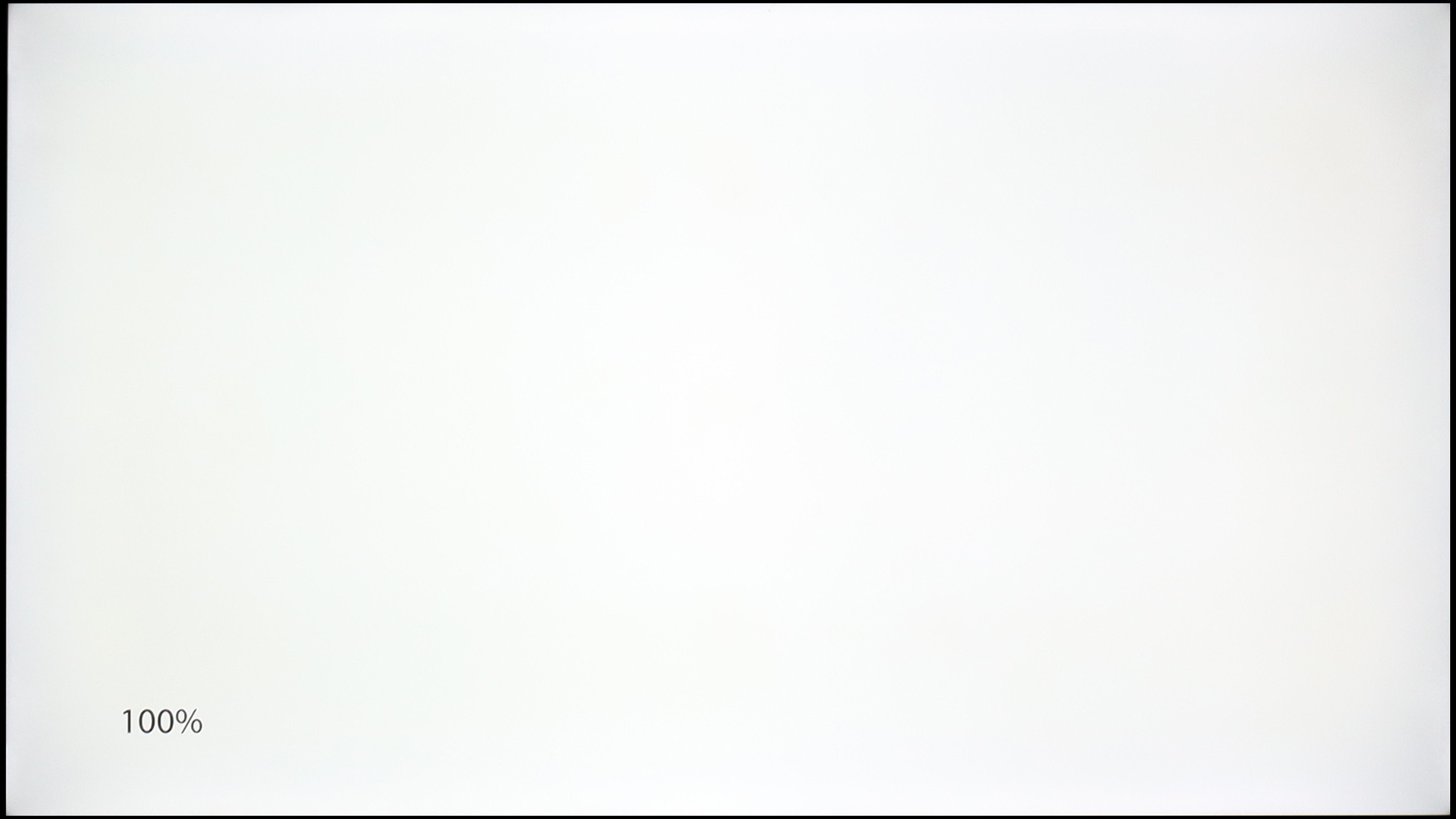
TCL P7K / P79K
LG QNED80A6A (IPS)
TV features
7/10
6.8/10
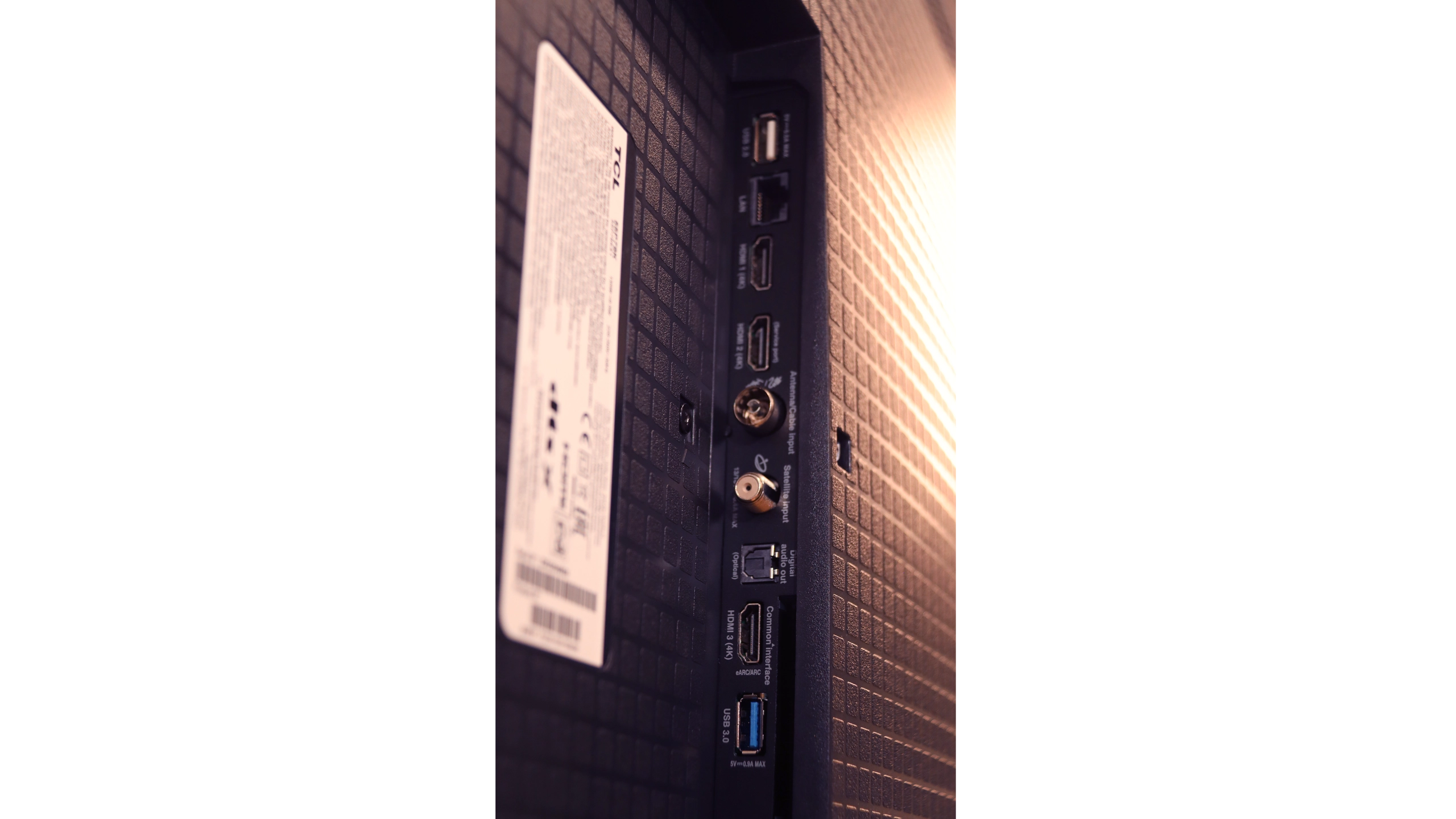
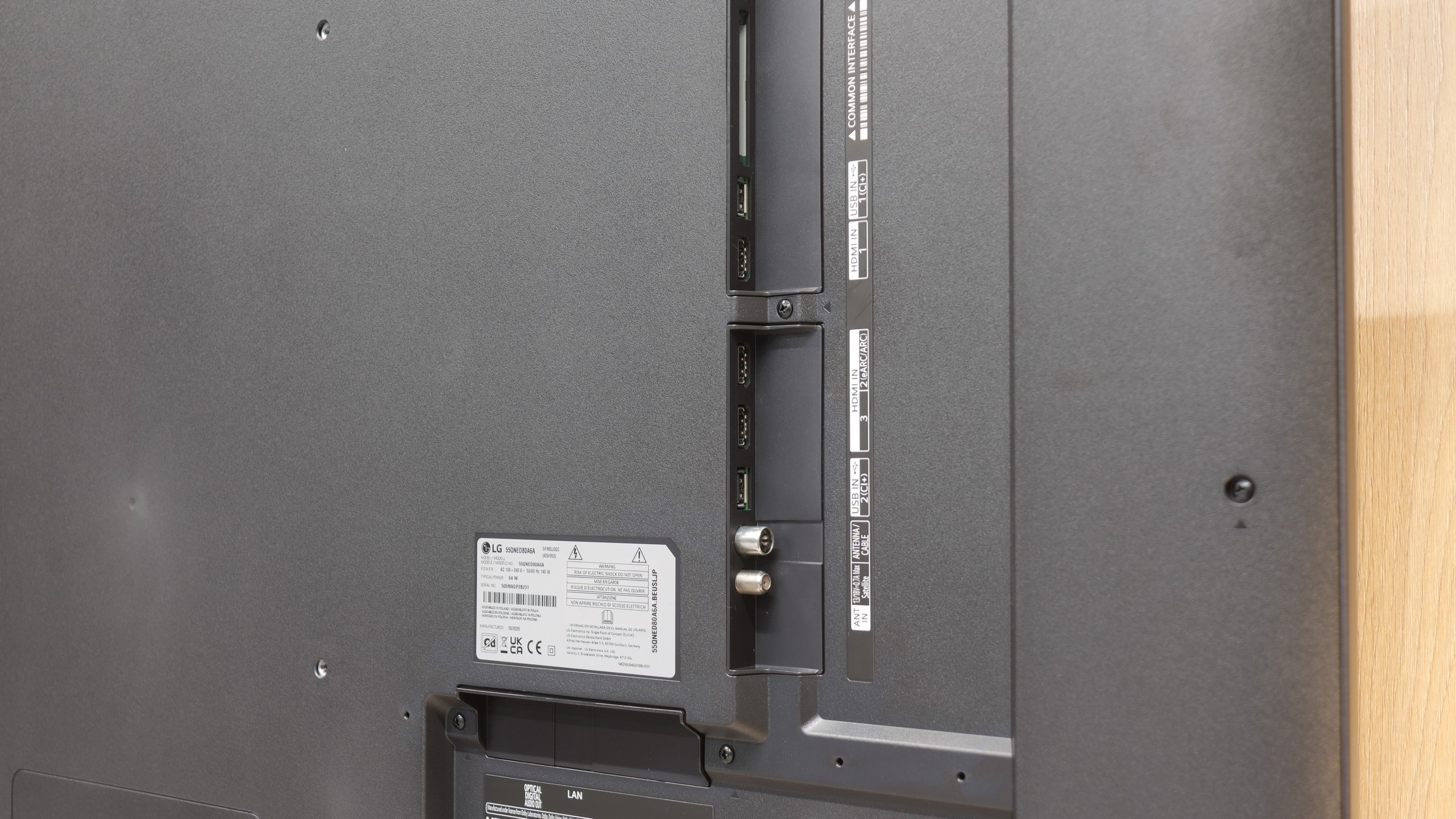
- HDMI inputs0 x HDMI 2.0, 3 x HDMI 2.1 48Gbps3 x HDMI 2.0, 0 x HDMI 2.1
- Other inputsToslink (Optical audio)
- OutputsToslink (Optical audio), eARC (HDMI), ARC (HDMI)Toslink (Optical audio), eARC (HDMI), ARC (HDMI)
- Network InterfacesWi-Fi 2.4GHz, Wi-Fi 5GHz, Ethernet (LAN) 100MbpsWi-Fi 2.4GHz, Wi-Fi 5GHz, Ethernet (LAN) 100Mbps
- TV receptionDVB-T, DVB-T2, DVB-S, DVB-S2, DVB-CDVB-T, DVB-T2, DVB-S, DVB-S2, DVB-C
Classic features:
- Recording to USB (terrestrial TV)
- Recording programming
- Picture in Picture (PiP)
- RF remote control (no need to aim)
- Backlit remote control
- Teletext
- Audio only mode
- Bluetooth headphones support
- Simultaneous Bluetooth headphones & TV audio
Smart features:
- AirPlay
- Screen mirroring (Windows Miracast)
- Voice search
- Voice search in native language
- Ability to connect a keyboard and mouse
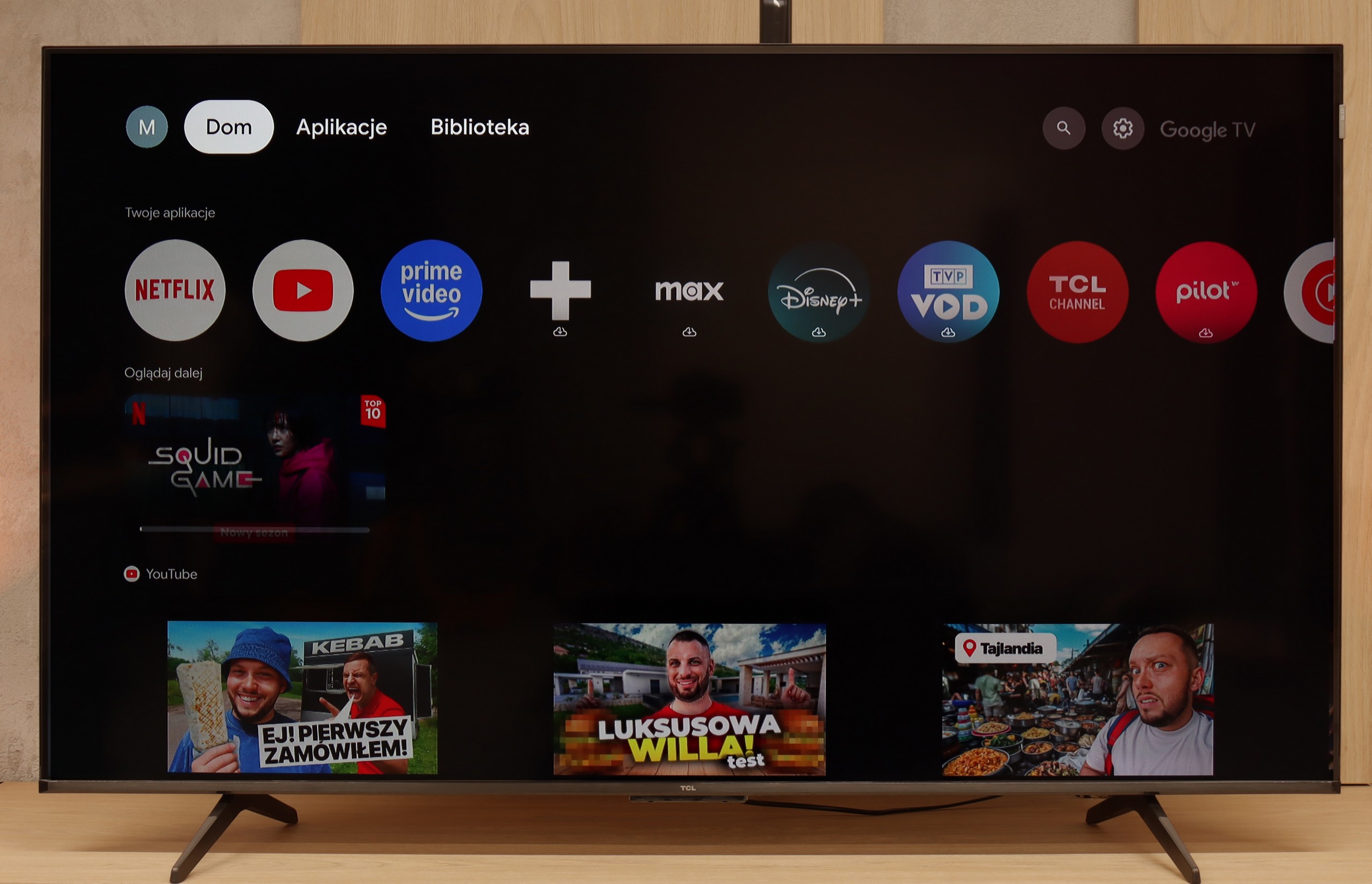
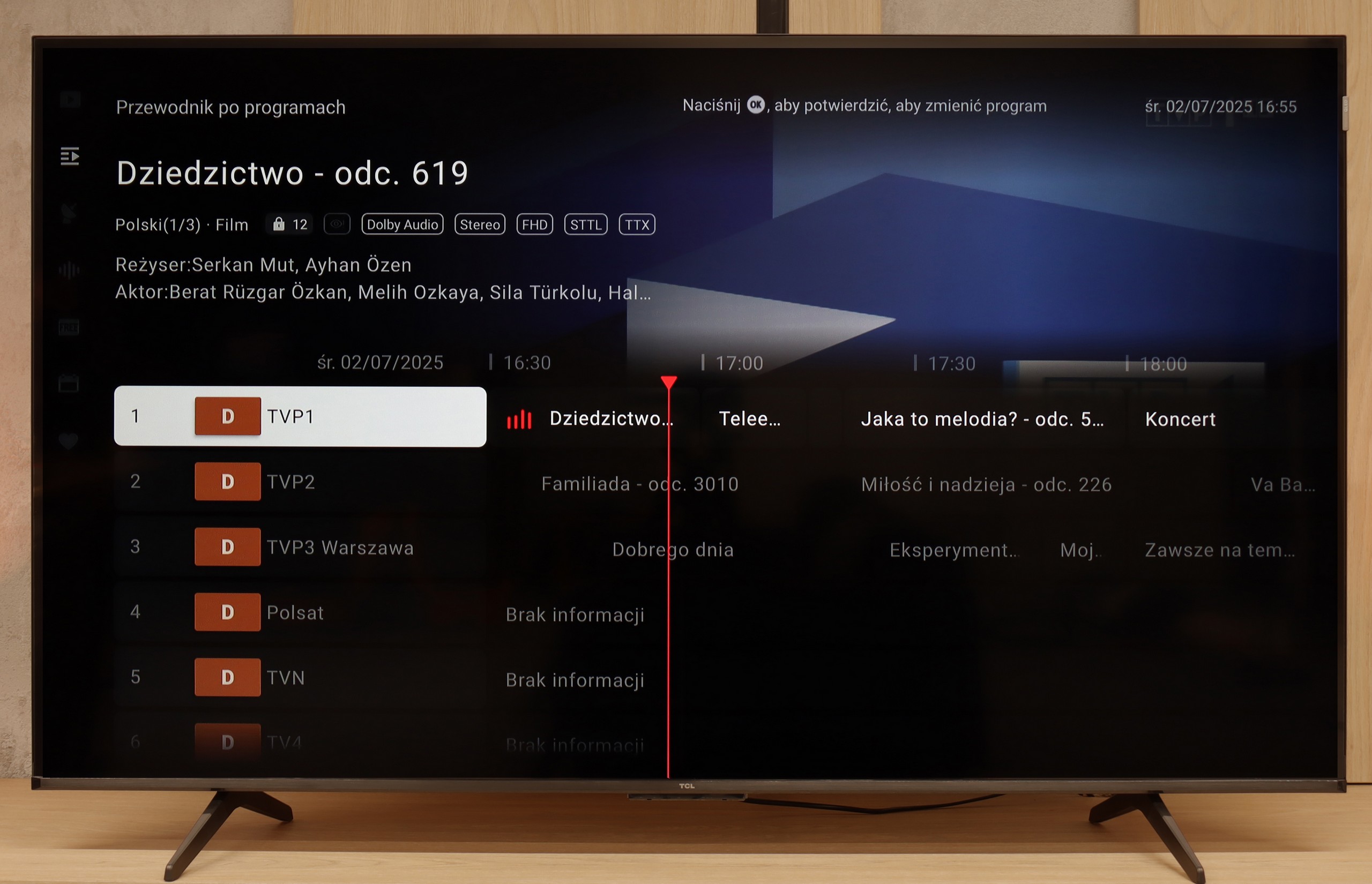
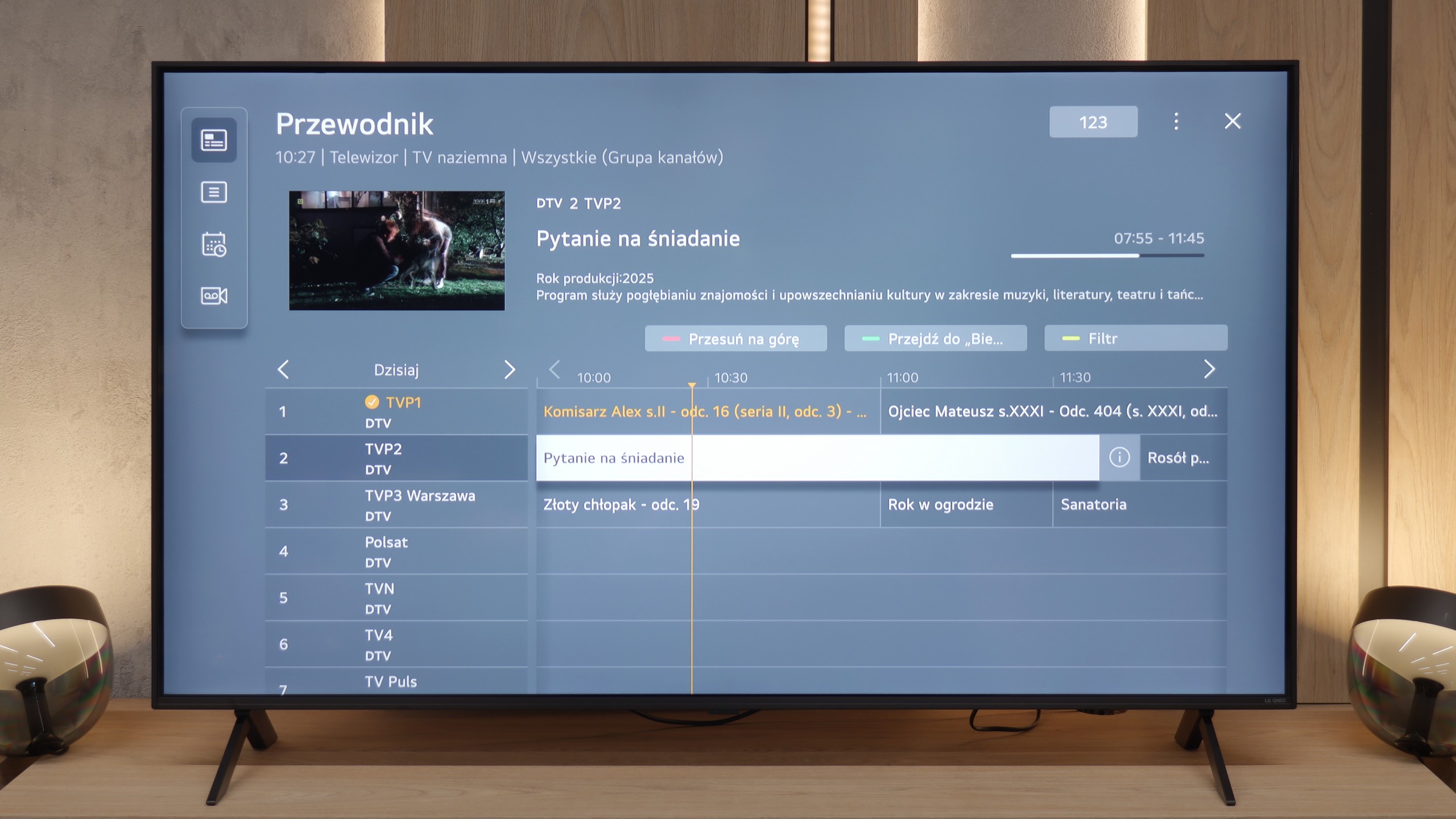
Smart Features – the power of Google TV
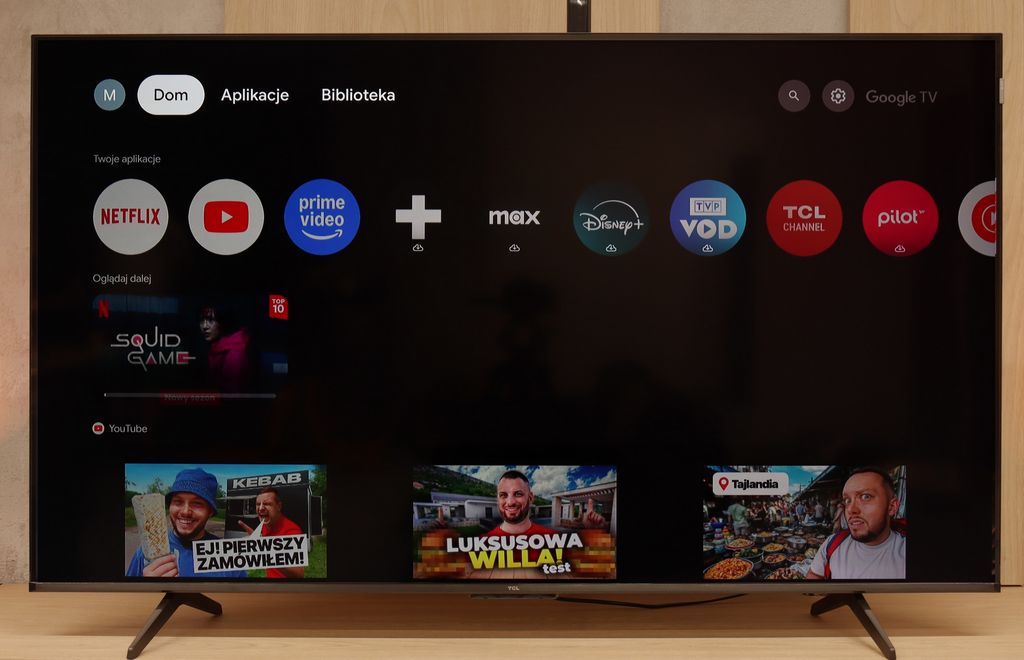
The heart and operational brain of the TCL P7K / P79K is the Google TV system, which in itself is a huge advantage. This platform opens access to an almost endless library of applications from the Play Store, ensuring we won't miss any key streaming service. Integration with other devices is exemplary – Apple device owners will appreciate the seamless cooperation thanks to AirPlay, while users of Windows and Android systems can easily take advantage of screen mirroring features. The Google Assistant also deserves a mention, as it handles voice search in Polish exceptionally well, remaining one of the most effective and convenient solutions of its kind on the market. The operation of the system on the tested model can be described as "above average." The interface is mostly smooth, but during testing, it experienced occasional slowdowns and even sporadic "freezes" that required a moment of patience. Minor hiccups are also noticeable in the translation of some system messages, which can be clumsy – these are merely minor oversights on TCL's part that do not affect overall functionality.
Classic Features
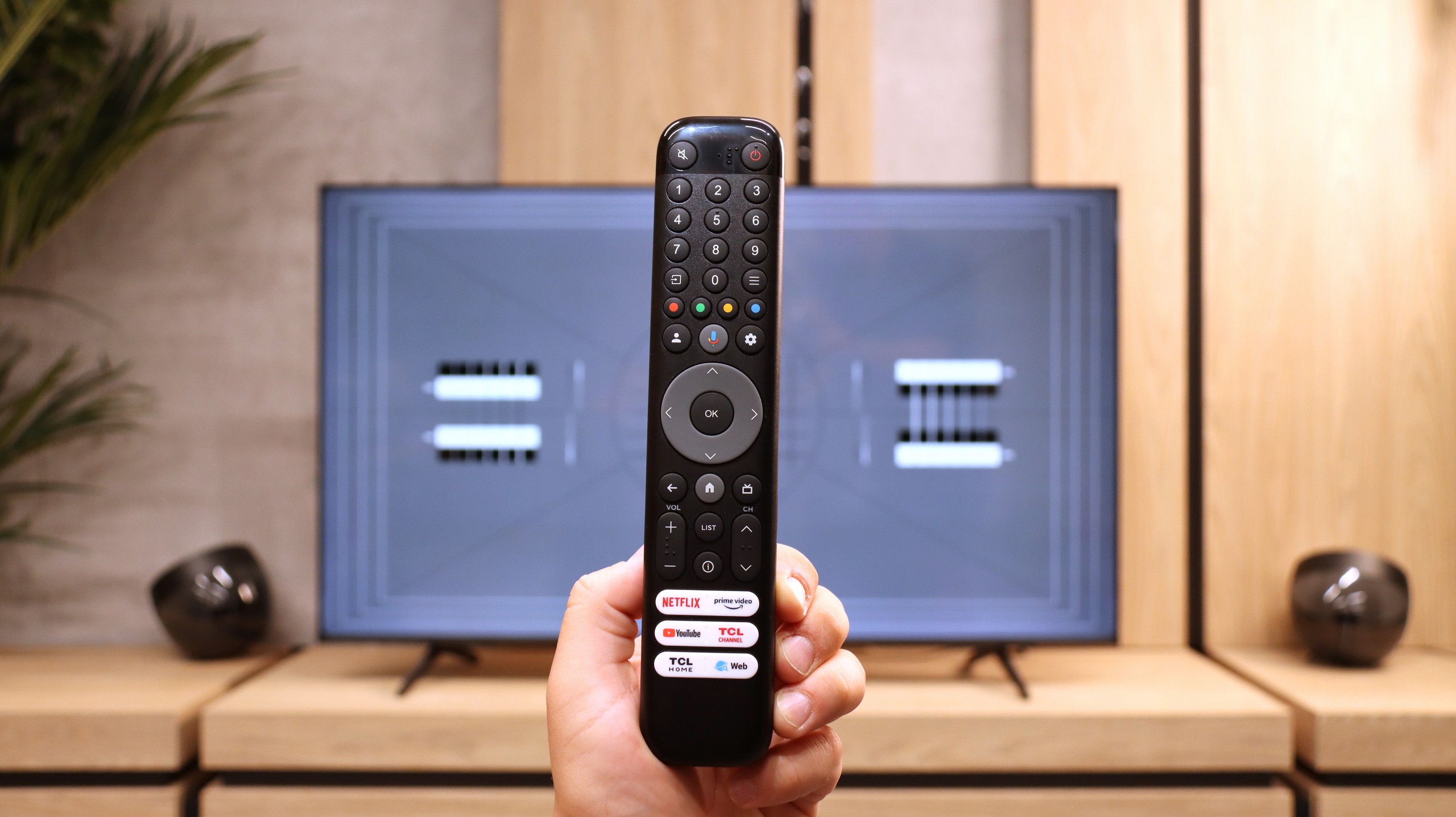
In the age of smart systems, traditional television functions often take a back seat, and this case is no different. A significant advantage is the inclusion of a classic remote control with a numeric keypad, which does not require precise aiming at the screen for communication, significantly enhancing user comfort. The presence of Bluetooth technology for connecting external devices, such as headphones or speakers, also counts as a plus. However, this is essentially where the list of conveniences ends. It's evident that TCL has placed nearly everything on the Google TV card, treating classic features as an absolute minimum. Thus, we won’t find options for recording programs from built-in tuners to a USB drive or the once-popular PiP (Picture-in-Picture) feature. It is therefore a basic package that simply works but offers nothing beyond what is essential.
WebOS Platform and Support
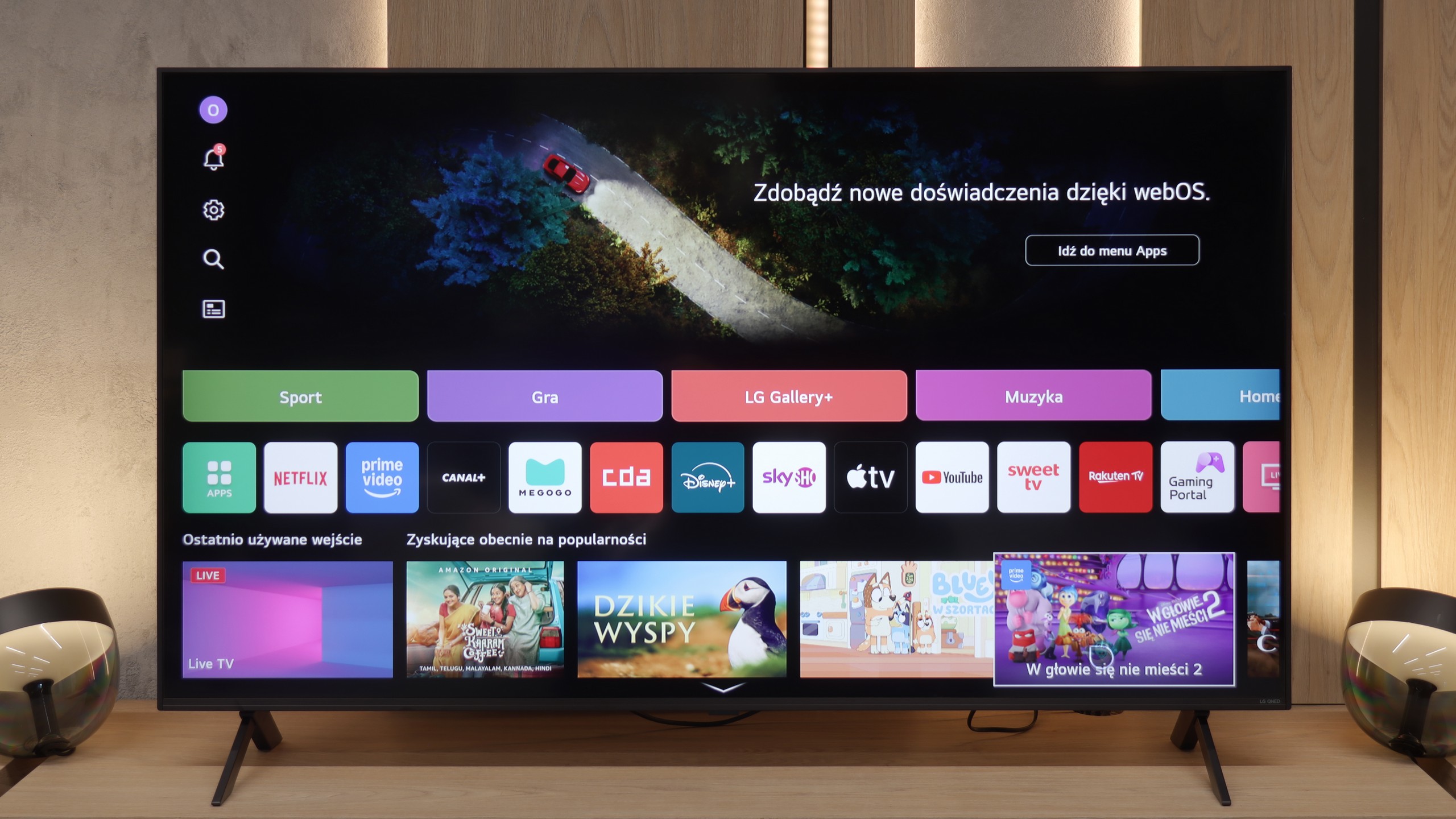
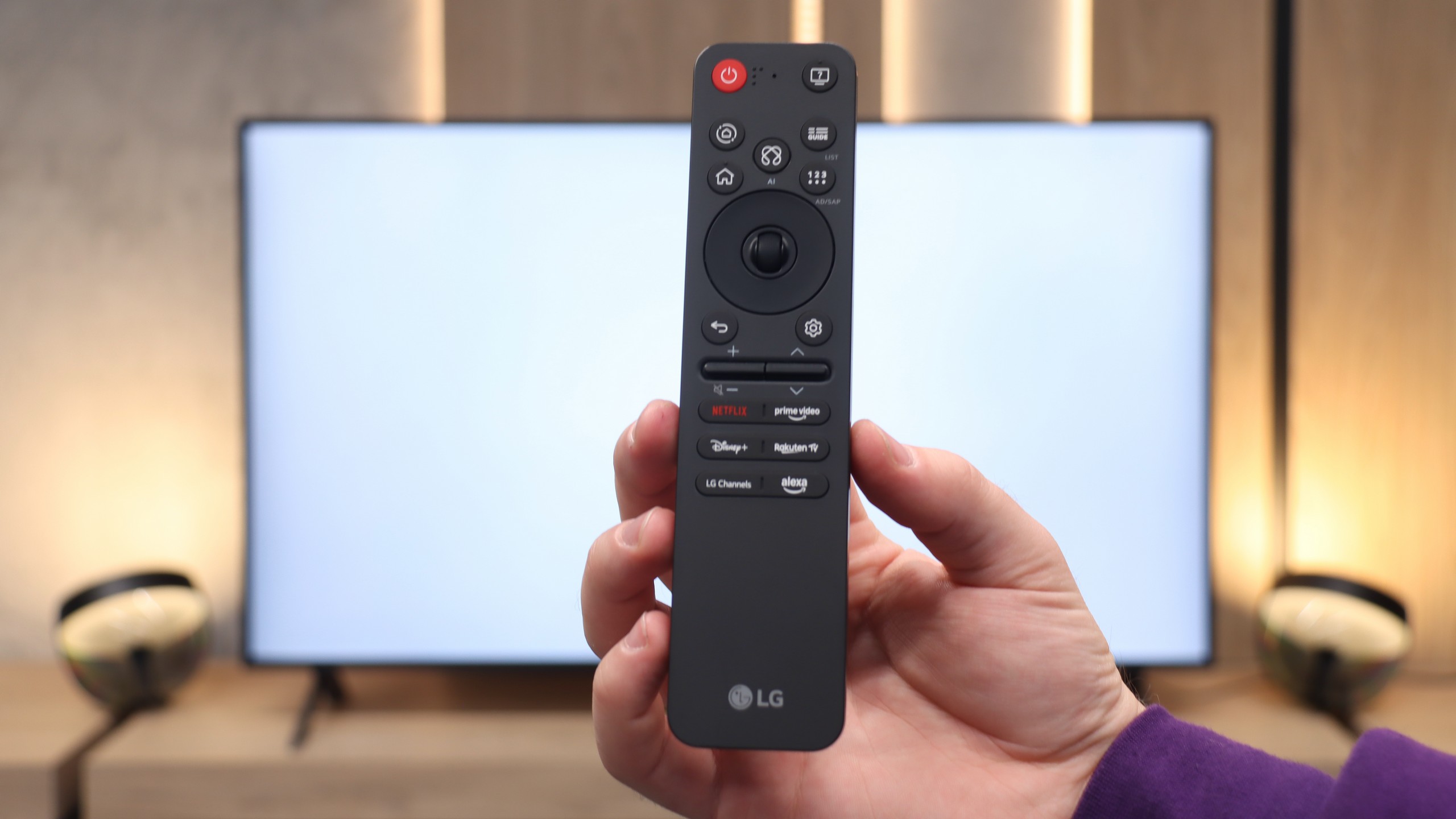
One of the biggest advantages of the QNED80A model is its "brain," which is the operating system. LG has implemented a fully-fledged WebOS version for 2025, which in terms of smoothness and usability is on par with more expensive models. Apps launch smoothly, and navigating the menu is a pure pleasure. This is all thanks to the unique remote control with a pointer (cursor) function, which has undergone a visual redesign this year. The manufacturer has opted for minimalism – the new "Magic" is significantly smaller and more ergonomic. It fits perfectly in the hand, but this change also has a downside. The physical number pad has disappeared from the casing. For younger users, accustomed to streaming, this is no problem, but older household members who are used to entering channel numbers from memory will have to change their habits.
Daily Use and Features
In terms of features that we would call "classic," the QNED80A adheres to a tried-and-true standard. It is not a multimedia machine that will surprise you with any exotic additions, but it performs flawlessly in everyday television tasks. The handling of traditional television, including Teletext, is correct and trouble-free. The wireless communication also deserves praise – the Bluetooth module works reliably, allowing for quick connection to a game controller or wireless speakers. This is a television that simply "works" – stably, predictably, and without unnecessary complications.
Apps
9.6/10
9.1/10






















Playing files from USB
7.2/10
8.2/10
Supported photo formats:
Maximum photo resolution:
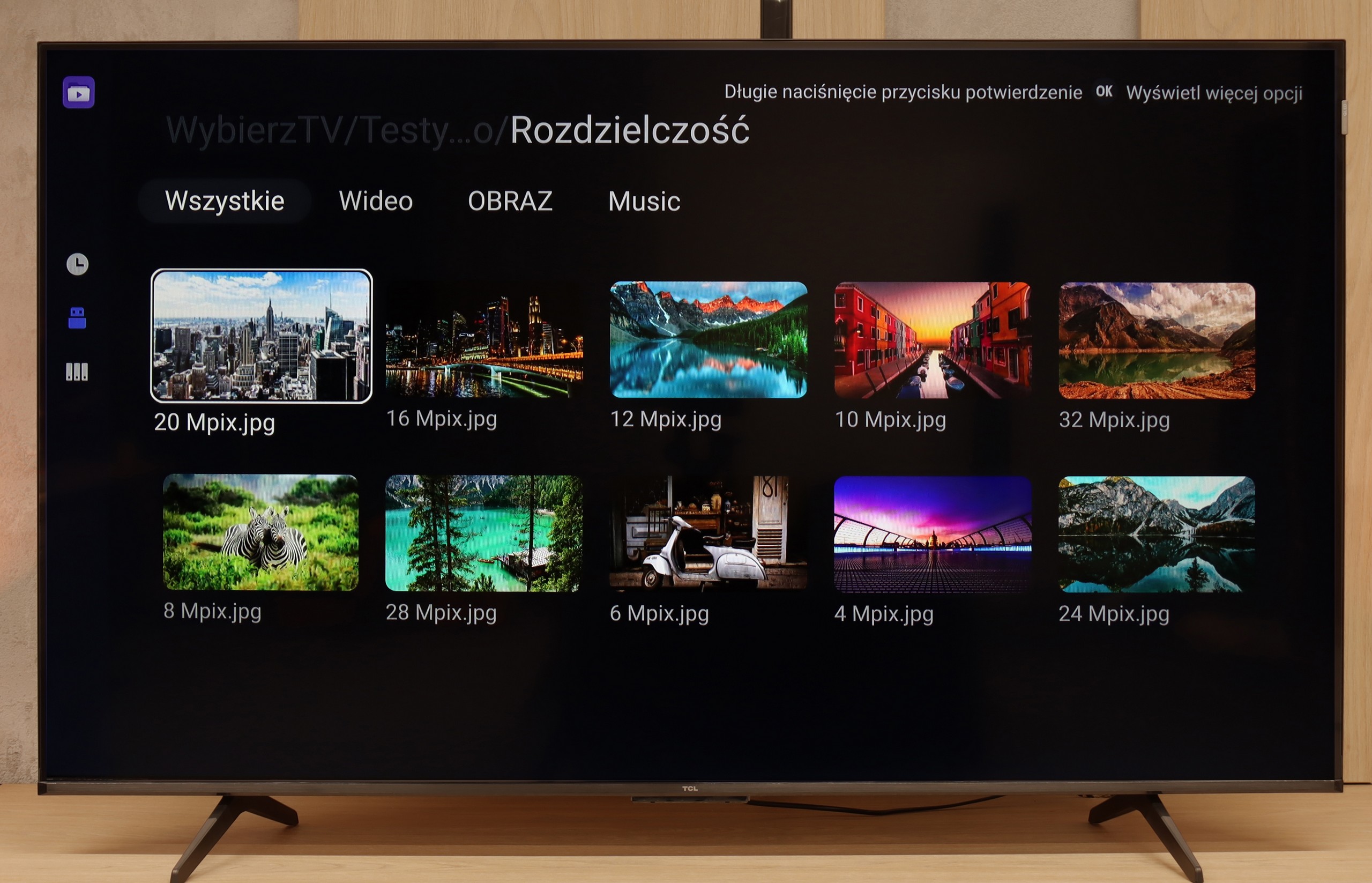
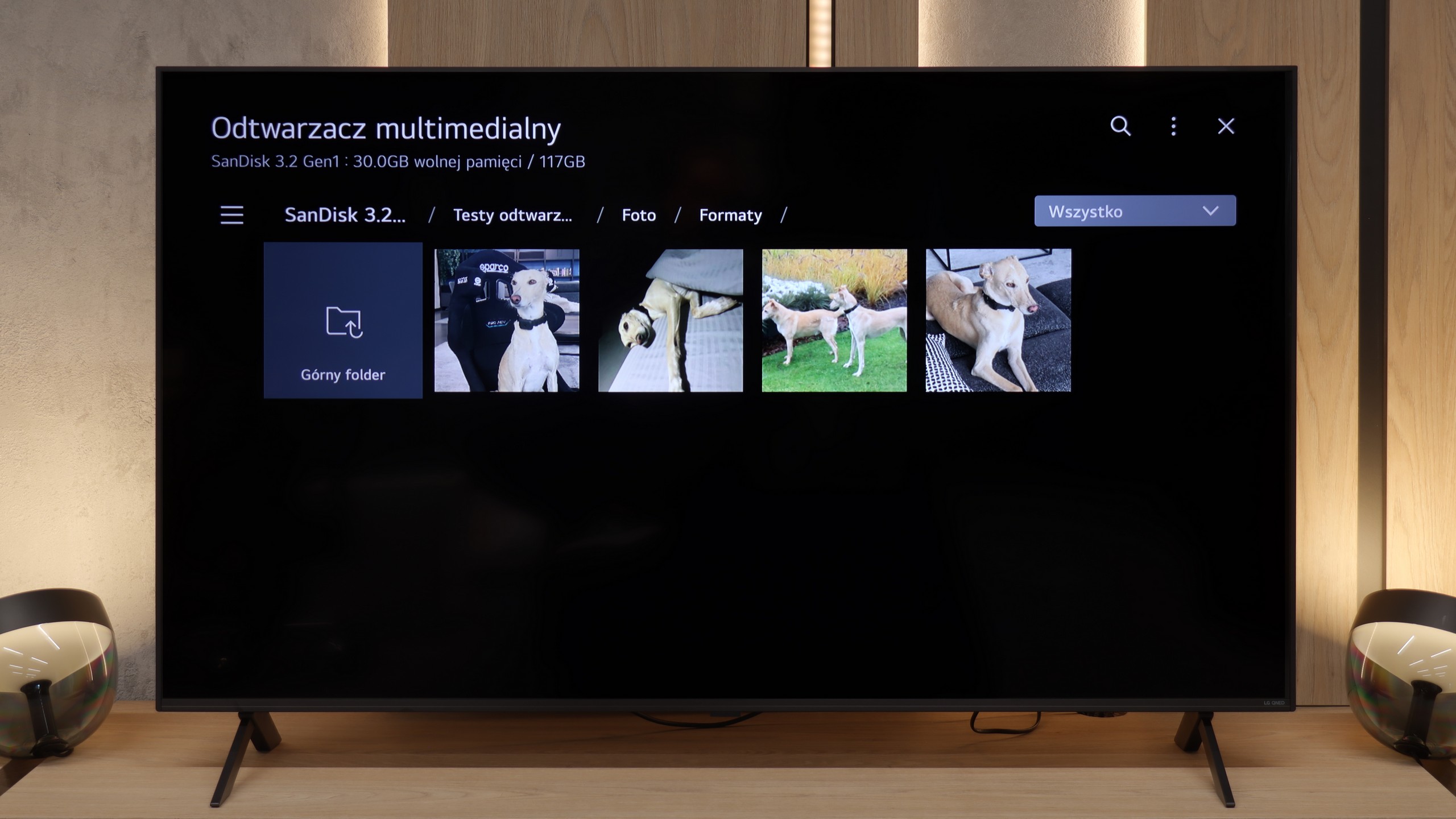
The built-in media player in the P7k/P79k model is at least a curious case, putting us in quite an unusual situation. On one hand, its engine handles the decoding of most popular video formats, which is of course good news. On the other hand, we encountered a surprising and frustrating issue – the default application has a fundamental problem with correctly displaying Polish diacritic characters in subtitle files. Instead of letters like "ą", "ę" or "ż", empty squares or random, illegible symbols appeared on the screen. Fortunately, thanks to the flexibility of the Google TV system, this problem can be easily circumvented. Installing an alternative, advanced player, such as the tried-and-true VLC or KODI, fully resolves this inconvenience. The situation is strange in that this flaw did not occur in other TCL models we tested earlier. So we are dealing with a clear software oversight, which, hopefully, will be corrected in a future update.
Many of us still enjoy watching films or photos from our own USB drives. Here, the QNED80A performs quite well, supporting a wide range of audio and video codecs. Most film libraries should start "straight away." However, it's important to remember the specifics of the WebOS system. As it is a closed environment, we are limited to what the manufacturer has provided for us – there is no option to install alternative players (like the popular VLC) if we encounter a read error. And what errors might we encounter? Primarily the lack of support for HEIC files. So, if you take photos with your iPhone and want to display them on the big screen straight from a USB drive – the TV won't recognise them. It’s worth changing the photo format to JPG on your phone right away. We also noticed that the player has difficulties processing very large graphic files. Photos with resolutions of around 20-28 Mpix may not load or may cause errors. Aside from these exceptions – the operation is seamless.
Sound
6.2/10
6/10
- Maximum volume-81dB
- Dolby Digital Plus 7.1
- Dolby True HD 7.1
- Dolby Atmos in Dolby Digital Plus (JOC)
- Dolby Atmos in Dolby True HD
- DTS:X in DTS-HD MA
- DTS-HD Master Audio
In terms of the built-in audio system, the TCL P7k/P79k presents a level that can be described as functional and adequate, but lacking in audiophile ambitions. The speakers play quite loudly, and dialogues in films and TV shows are conveyed clearly and without distortion, which is crucial for everyday use. However, the audio scene definitely lacks the foundation of low frequencies. This is a direct consequence of the absence of a dedicated subwoofer – an element that in the higher P8K series, took the form of a large Onkyo subwoofer at the back of the cabinet, which contributed to its sound strength. Here, that element is simply missing, making the sound seem flatter and devoid of the depth that creates a cinematic atmosphere. We also noticed a peculiar issue with the software – when attempting to set the maximum volume, the TV automatically reduces it. It's hard to definitively say whether this is a form of protection against distortion or a minor software glitch, but it's a shame, as the power reserves seem to be a bit greater.
When it comes to sound, the QNED80A fits into the market standard for the mid-range. We have a classic 2.0 setup with a power of 20 watts. We won't hide it – physics cannot be fooled. The sound lacks low tones (bass) and that specific depth that builds the atmosphere in action movies or while listening to music. However, the television has one significant advantage that users of traditional television, such as series and news programmes, will appreciate. It is the reproduction of speech. The dialogues are surprisingly clear and natural. The sound is not "bass-heavy" or artificially boosted, which means it doesn't strain the ear and allows you to understand every word of the narrator without the need to turn up the volume.
Sound Quality Test
No sound test video