Sony A95L is a TV that has made a huge impression on us. Although a year has passed since its launch, it still deserves a spot among the best models on the market. When it comes to picture quality, it's simply brilliant. Deep blacks, vibrant colours, and excellent brightness in HDR make everything look incredibly realistic. The QD-OLED panel does its job – movies and games look so good that at times you forget it's just a screen. Using the A95L on a daily basis is a pleasure. Google TV runs smoothly, and there are plenty of apps available. The package includes two remote controls: one traditional and the other backlit – a really handy solution, especially in the evenings. Plus, the voice assistant makes life easier, allowing you to quickly search for a movie or control the home from the couch. Gamers will also be delighted. A refresh rate of 120 Hz, low input lag (below 10 ms even in Dolby Vision), and VRR support is a set that will satisfy any gaming enthusiast. And the sound? The Acoustic Surface Audio+ system makes the sound come straight from the screen, providing great, spatial experiences. Of course, there are no perfect things. Two HDMI 2.1 ports (including one for eARC) might be a bit limiting if someone wants to connect a console, soundbar, and other devices. In a bright room, the black can have a slightly cherry hue, which might bother more demanding users. Despite these minor notes, the Sony A95L is a piece of fantastic equipment. The picture, sound, and functionality are top-notch. It's a television that will satisfy both cinephiles and gamers, offering a true premium experience in the comfort of home.
- Matching (Score) |
- Our verdict |
- TV appearance |
- Where to buy |
- Contrast and black detail |
- HDR effect quality |
- Factory color reproduction |
- Color reproduction after calibration |
- Smoothness of tonal transitions |
- Image scaling and smoothness of tonal transitions |
- Blur and motion smoothness |
- Console compatibility and gaming features |
- Input lag |
- Compatibility with PC |
- Viewing angles |
- Daytime performance |
- Panel details |
- TV features |
- Apps |
- Playing files from USB |
- Sound
Sony A95L vs Samsung OLED S95H (S99H) (QD-OLED)
 Direct comparison
A95L
S99H / S95H

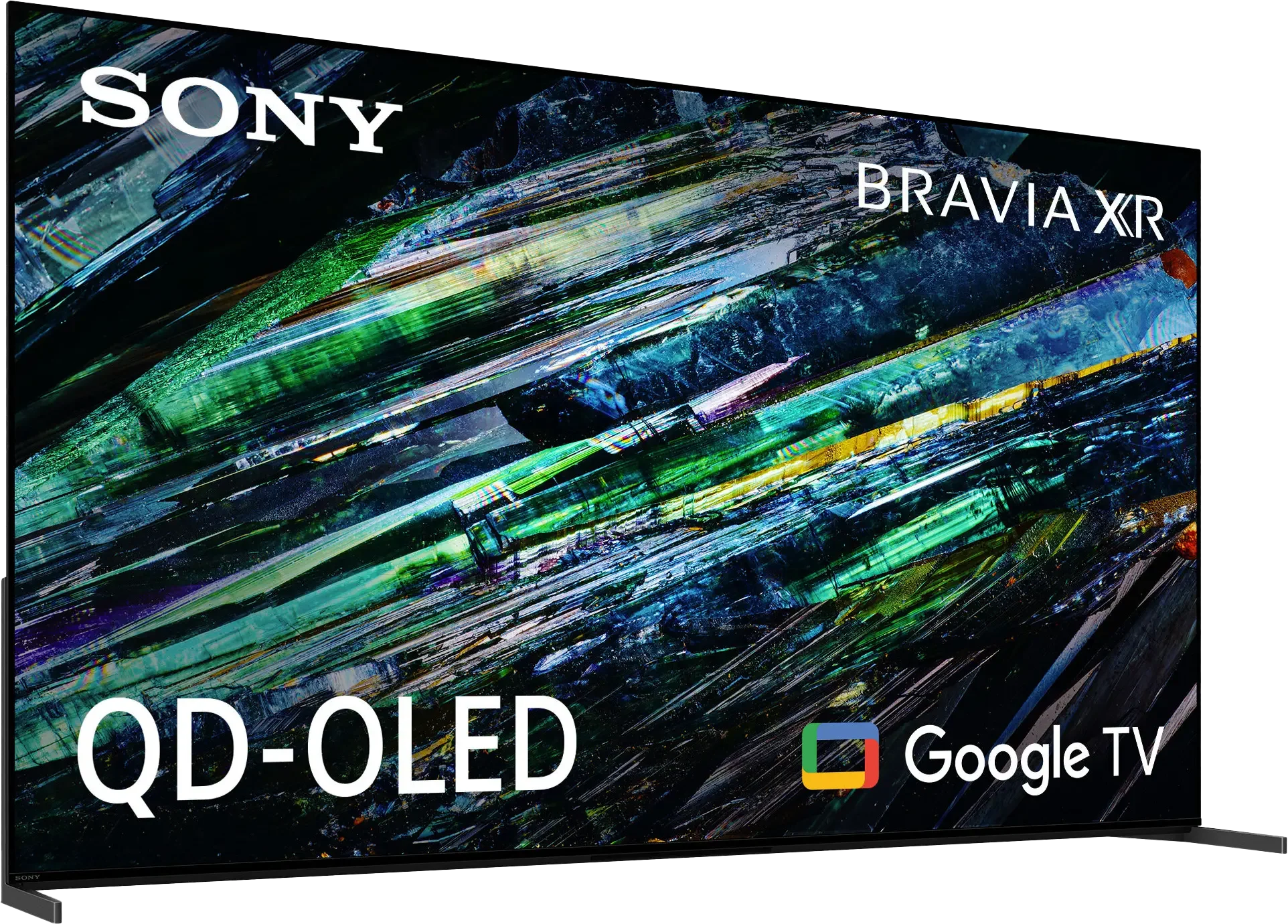
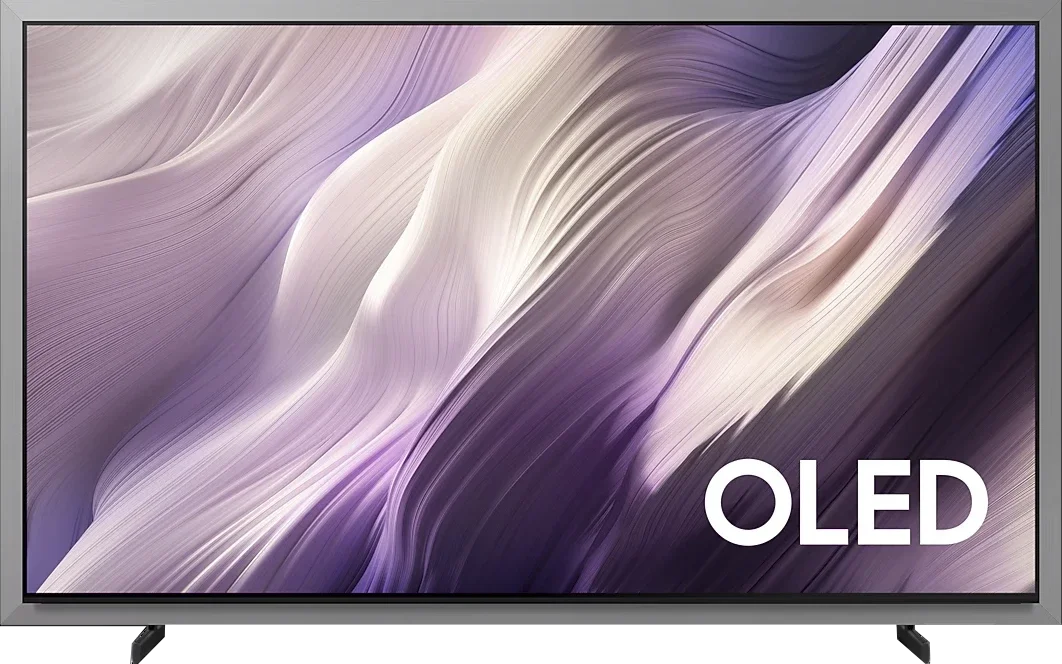
Panel type: QD-OLED
Resolution: 3840x2160
System: Google TV
Model year: 2023
Complete the survey to find out the result
Panel type: QD-OLED
Resolution: 3840x2160
System: Tizen
Model year: 2026
Complete the survey to find out the result
Overall rating
8.2
9.0
 Movies and series in UHD quality
 9.0
9.7
 Classic TV, YouTube
 9.3
9.5
 Sports broadcasts (TV and apps)
 9.0
9.0
 Gaming on console
 9.3
9.9
 TV as a computer monitor
 5.0
8.8
 Watching in bright light
 5.0
8.0
 Utility functions
 8.8
7.8
 Apps
Apps 9.6
9.3
 Sound quality
 7.9
8.7
Complete the survey to find out what fits your preferences
Advantages

Amazing Contrast
Great for HDR movies
Advanced Google TV system
Great Viewing Angles
Gaming Features: Support for ALLM, VRR, 120 Hz refresh rate, low input lag
Great sound
Camera included
Perfect OLED blacks
Reference image quality in HDR (after calibration)
Very high brightness (over 2800 nits in HDR!)
Beautifully saturated QD-OLED colours
Excellent glare suppression (matte coating)
Very good motion clarity (no smearing, refresh rate up to 165 Hz)
Brilliant for gamers (4x HDMI 2.1, low input lag, Game Motion Plus)
Fast Tizen OS with 7 years of support
Top viewing angles
High build quality
Disadvantages

Only Two HDMI 2.1 Ports: One of the HDMI 2.1 ports is used for eARC, which may limit the number of devices that can be connected, especially for those using a soundbar and console
Cherry black effect in bright light: The QD-OLED panel causes blacks to lose their depth in bright light
Not the sleekest design
Price compared to competitors
No wall mount or One Connect included
Black takes on a cherry tint in bright light (a characteristic of QD-OLED panels)
No DTS:X (for Blu-ray fans)
Unusual design 😉
Our verdict
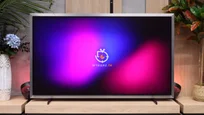
The Samsung S99H is probably the best OLED TV we’ve tested so far, and certainly the best Samsung OLED in years. In terms of picture quality it’s really hard to find a weak spot. Blacks are perfect, as you’d expect from an OLED panel, and the HDR performance impresses with brightness and colour saturation. The use of a QD-OLED panel produces an image that in many scenes looks almost reference-level. Practically every parameter related to display performance is excellent. It’s also simply a pleasure to use day to day. Tizen is fast, gives access to all the major apps and comes with seven years of update support. On top of that there are brilliant gaming features, which translated into one of the highest scores in that category on our site. The S99H will therefore perform well in virtually any situation, whether you’re watching movies in the evening, following regular TV in a bright living room, or spending several hours on a console.
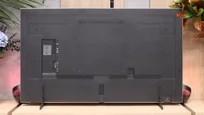
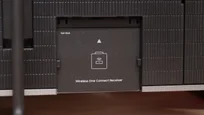
So is it the perfect TV? Not quite. The most controversial aspect is, of course, the design. Its unique look with a wide bezel means you’ll either love it straight away or be put off completely — and that’s purely a matter of taste. We can, however, judge the equipment, and in that respect Samsung left something to be desired. In a model designed primarily for wall mounting there’s no dedicated wall bracket and no One Connect module. Samsung does allow you to buy the wireless version, Wireless One Connect, but for a product at this price point those two items should, in our view, be included.
These are not faults that should rule out the model. The Samsung S99H stands on its picture above all else, and that picture is simply phenomenal. If you like the way it looks and are after the very best TV, it’s hard to point to a better choice today. At the moment the Samsung S99H is the strongest contender for the title of best TV of 2026.
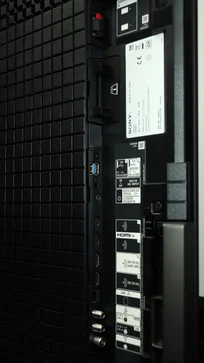
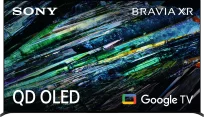
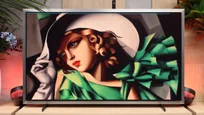
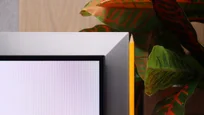
TV appearance



Contrast and black detail
10/10
10/10
Contrast:


Result
∞:1

Result
∞:1

Result
∞:1

Result
∞:1

Result
∞:1
Result
∞:1
Result
∞:1
Result
∞:1
Result
∞:1
Result
∞:1
Halo effect and black detail visibility:
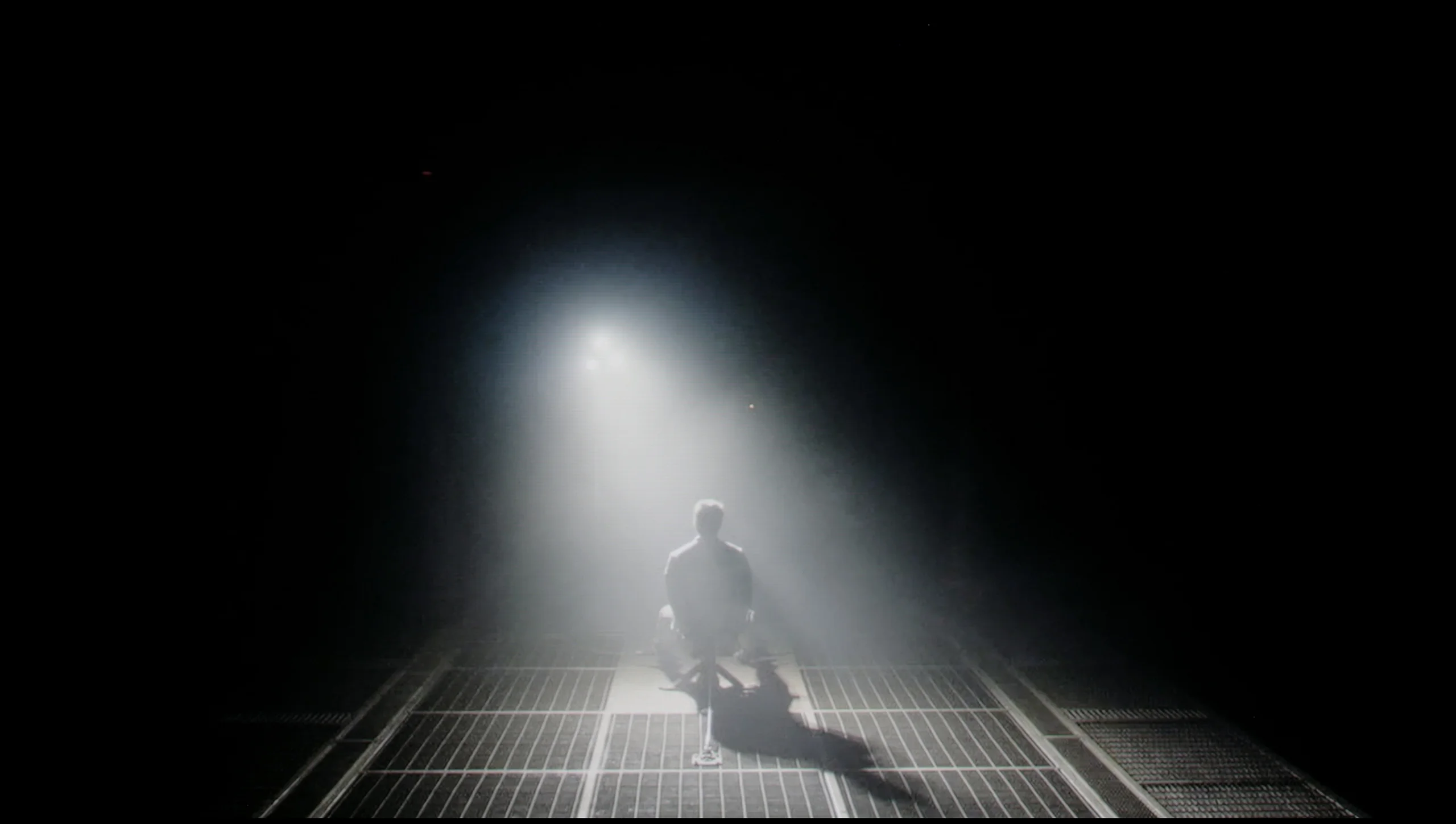
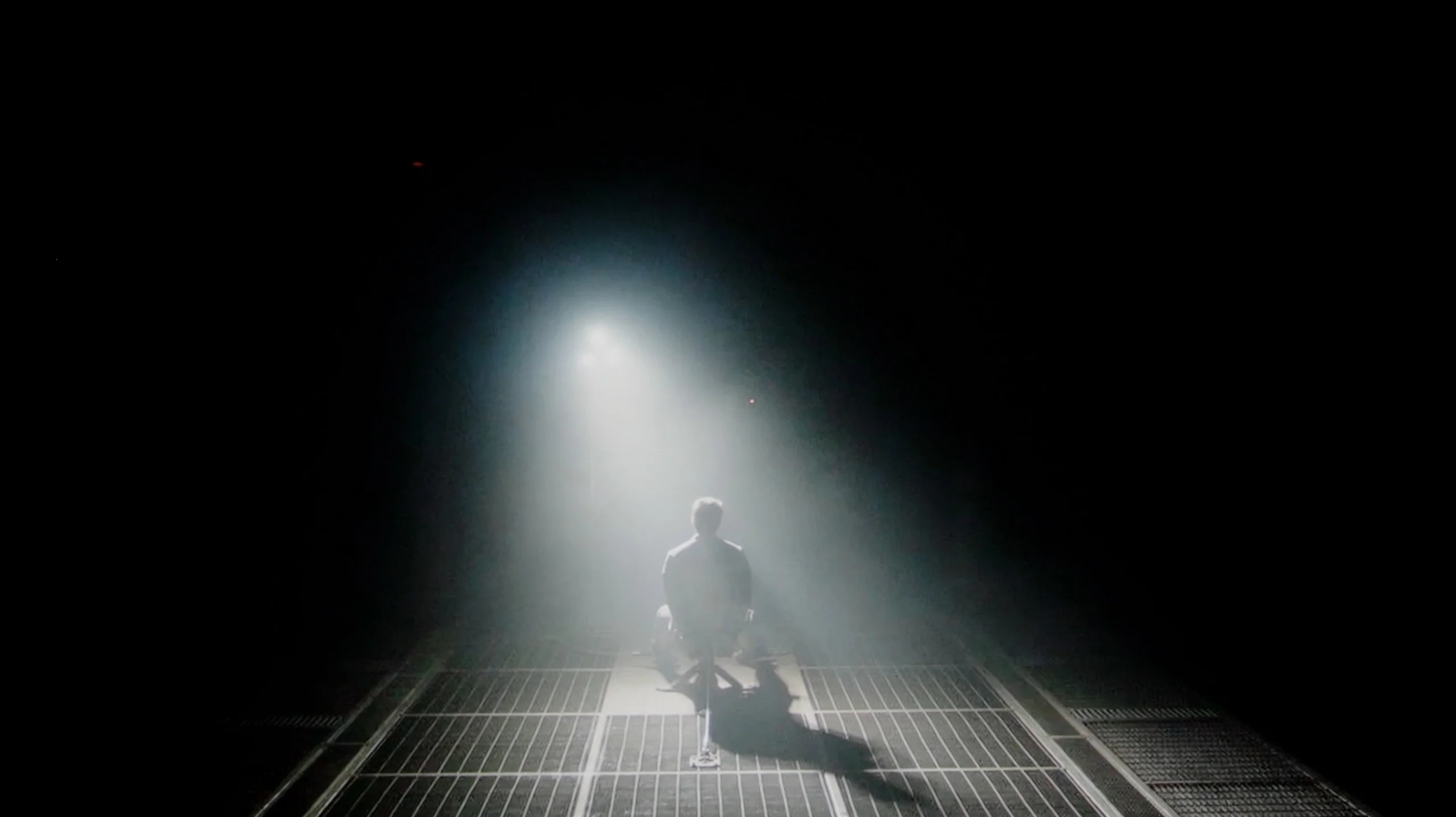
Check the visibility of bright lights on a dark background. Mini-LEDs often struggle with this. The photo does not compare black levels – that’s what the video below is for.
The video accurately shows differences in contrast and black levels between TVs, as well as potential issues: halo around bright objects or Mini-LED zone operation visible as brightness jumps.
Sony A95L is an OLED television that truly impresses when it comes to contrast. With OLED technology, this model offers perfectly deep blacks – in dark scenes, there are no signs of colour bleeding or glow, making images look incredibly realistic. Additionally, QD-OLED technology allows for higher brightness, further emphasizing the difference between bright and dark elements. As a result, in scenes like those from the movies Oblivion and Sicario 2, A95L Sony excels at separating lights from shadows, giving the picture clarity and depth – the perfect solution for those seeking a cinematic experience at home.
As you'd expect from an OLED TV, the Samsung S99H delivers perfect black and virtually infinite contrast. Each pixel can switch off independently, so bright elements cause no haloing and blacks stay black even in the toughest scenes. This gives the picture excellent depth and it looks great in films, TV series and games. Compared with Mini LED LCD TVs, the advantage is particularly noticeable in dark shots with small bright details. Subtitles, stars, headlights and small light sources retain full definition and don't blend into the background. You also don't get the haloing typical of local dimming, nor the dimming down of bright elements just to preserve deep blacks. Importantly, in this respect it doesn't much matter whether we're talking about the QD-OLED panel or Tandem WOLED. In both cases you can expect the same fundamental benefits of organic technology: precise per-pixel control and excellent contrast regardless of the scene.
HDR effect quality
7.8/10
9.4/10
Luminance measurements in HDR:

Result
1471 nit

Result
1498 nit

Result
1465 nit

Result
1527 nit

Result
626 nit
Result
2837 nit
Result
2795 nit
Result
2592 nit
Result
2811 nit
Result
2271 nit
Scene from the movie “Pan” (about 2800 nits)


Scene from the movie “Billy Lynn” (about 1100 nits)


The photos show two HDR10 movies. 'Pan' is one of the brightest productions ever made, while 'Billy Lynn' (soldier) has brightness typical of streaming (Netflix, Prime, HBO MAX). Notice the intensity of effects and detail in whites.
Static HDR10


The photos present the visibility of white details in various HDR formats. They do not show brightness differences between TVs (these can be compared in the previous gallery).
Dynamic: Dolby Vision
Dynamic: HDR10+


The photos present the visibility of white details in various HDR formats. They do not show brightness differences between TVs (these can be compared in the previous gallery).
HDR luminance chart:
Samsung OLED S95H (S99H) (QD-OLED)
Sony A95L
Sony A95L offers an incredible HDR effect, achieving an impressive brightness level of 1500 nits in scenes such as those from Life of Pi and Sicario 2. These results are truly remarkable – the bright elements in these films practically come alive on the screen, providing the viewer with immersive visual experiences. The only thing to note is minor issues with maintaining brightness in the scene from The Meg, where the entire scene is flooded with light. However, this is a natural effect associated with OLED technology. A big plus also goes to the wide coverage of the BT.2020 colour palette at 89%, which places A95L Sony among the top TVs in terms of colour reproduction. All of this is made possible by the QD-OLED panel from Samsung Displays.
When it comes to pure brightness, the S99H is an astronomically bright TV. Its peak brightness in film scenes can exceed 2,800 nits. Whatever the scene, you can expect powerful HDR effects that are almost blinding, which is exactly what we want from a top‑tier display. By nature, an OLED panel can't maintain that extreme brightness in very bright, full‑screen frames the way it can with small bright highlights, but the results are still excellent. In a bright scene from The Meg the sun still exceeded 2,200 nits. That means the S99H was able to hold a higher brightness than most Mini LED screens on the market. In terms of brightness the S99H is currently the best OLED TV we've tested.
Colour gamut coverage
The S99H also handles colours exceptionally well, thanks directly to the QD‑OLED panel used here. Whether the test used synthetic test patterns or measurements with film material in the background, the results remained very high. The S99H easily covers almost 100% of the DCI‑P3 gamut, and in the most demanding space, BT.2020 it reaches nearly 90%. That's absolute top‑tier performance. These results match what we saw in the new SQD‑Mini‑LED displays, and in real film scenes they even surpass RGB Mini LED displays.
Factory color reproduction
7.9/10
7.5/10


This gallery shows how colors change after professional TV calibration. If you notice the difference, we recommend ordering this service at SkalibrujTV.com.
Factory Mode
After calibration


This gallery shows how colors change after professional TV calibration. If you notice the difference, we recommend ordering this service at SkalibrujTV.com.
Factory Mode
After calibration
The best factory mode for colour reproduction on the Sony A95L is IMAX Enhanced. This mode seems well-calibrated at first glance, but upon closer analysis, several areas for improvement become apparent. Firstly, the white balance for both SDR and 4K HDR content is marred by an excess of blue and red hues, leading to a subtle pink tint, particularly noticeable on neutral tones. As a result, skin tones are skewed, affecting the realism of the displayed image. This is clearly visible in the comparison photo below. Additionally, the Colour Checker test confirms the presence of these errors – the colour samples often deviate from their reference values, indicating some inaccuracies in the factory colour reproduction of the A95L Sony. The maximum deltaE error values reach up to 5.8, which is a clear indicator that colours are not always reproduced as accurately as they should be.
Regarding brightness characteristics, the gamma for HD/SDR content is generally quite good, maintaining an appropriate balance between brightness and contrast. Unfortunately, a significant jump is visible at the end of the graph, leading to a strong brightening of the image when the screen is fully flooded with white. This can make scenes with very bright backgrounds, such as snowy landscapes or intense daylight, appear too glaring and lose detail. For HDR content, the EOTF curve, which controls luminance, is slightly elevated compared to reference values. This, in turn, causes the image to be somewhat brighter than it should be, which can affect the perception of more subtle details in the darker areas of the frame.
Samsung offers a whole host of picture modes and features, but we traditionally recommend choosing FILMMAKER mode, especially if you want the most faithful rendering of the creators' intent. Out of the box the TV is tuned very well, though it has minor flaws. These are mainly a slight deviation in white balance in SDR content and a slightly low gamma. As a result, the picture in a dark room can be a little too bright compared with the reference value of 2.4, which is the standard for watching films with the lights off. These are, of course, small issues, because overall colour reproduction remains very good and the errors in ColorChecker measurements are not large. However, we know that for a screen of the S99H's calibre you can and should expect even more, so we subjected it to professional calibration.
Color reproduction after calibration
9.3/10
9.6/10


The photos show how movies look on the TV. Pay attention to black detail visibility, colors, and shadow tint.


The photos show how movies look on the TV. Pay attention to black detail visibility, colors, and shadow tint.
Sony A95L offers excellent tools for professional screen calibration, allowing you to maximise the potential of the IMAX Enhanced mode. We used them to achieve an image quality that satisfies even the most demanding viewers. After calibration, the white balance for both 4K HDR and SDR content looks simply fantastic – nearly perfect. The Colour Checker test confirmed that deltaE errors do not exceed a value of "2", which means that colour reproduction is extremely accurate, and any deviations are practically imperceptible to the human eye.
The calibration also brought a significant improvement in brightness – gamma is now perfectly balanced, eliminating the previous problem of excessive brightening in scenes with very bright backgrounds. Thanks to this, even the brightest moments, such as snowy landscapes or intense daytime scenes, appear natural, without the risk of blown-out highlights. The EOTF curve, responsible for controlling luminance in HDR content, has also been improved – it now reaches reference levels in both synthetic tests and practical movie watching.
As a result of the calibration, A95L Sony provides an excellent experience, whether you are watching regular TV content or your favourite films. Every detail is reproduced exactly as the creators intended – without unnecessary brightenings, with perfectly rendered colours and appropriate depth. This shows that this television, after professional tuning, can compete with the best screens on the market, offering an image that truly impresses.
After professional calibration, FILMMAKER mode looks practically perfect. Because Samsung offers a rich set of advanced calibration controls, we were able to tune the colours to an almost perfect level. Above all, we managed to even out the white balance and the gamma curve, which resulted in noticeably improved contrast and correct image modelling. In a profile prepared like this there really isn't a single thing to pick apart or call a fault. After calibration, the S99H can deliver an essentially reference-quality picture.
Smoothness of tonal transitions
9/10
9.6/10


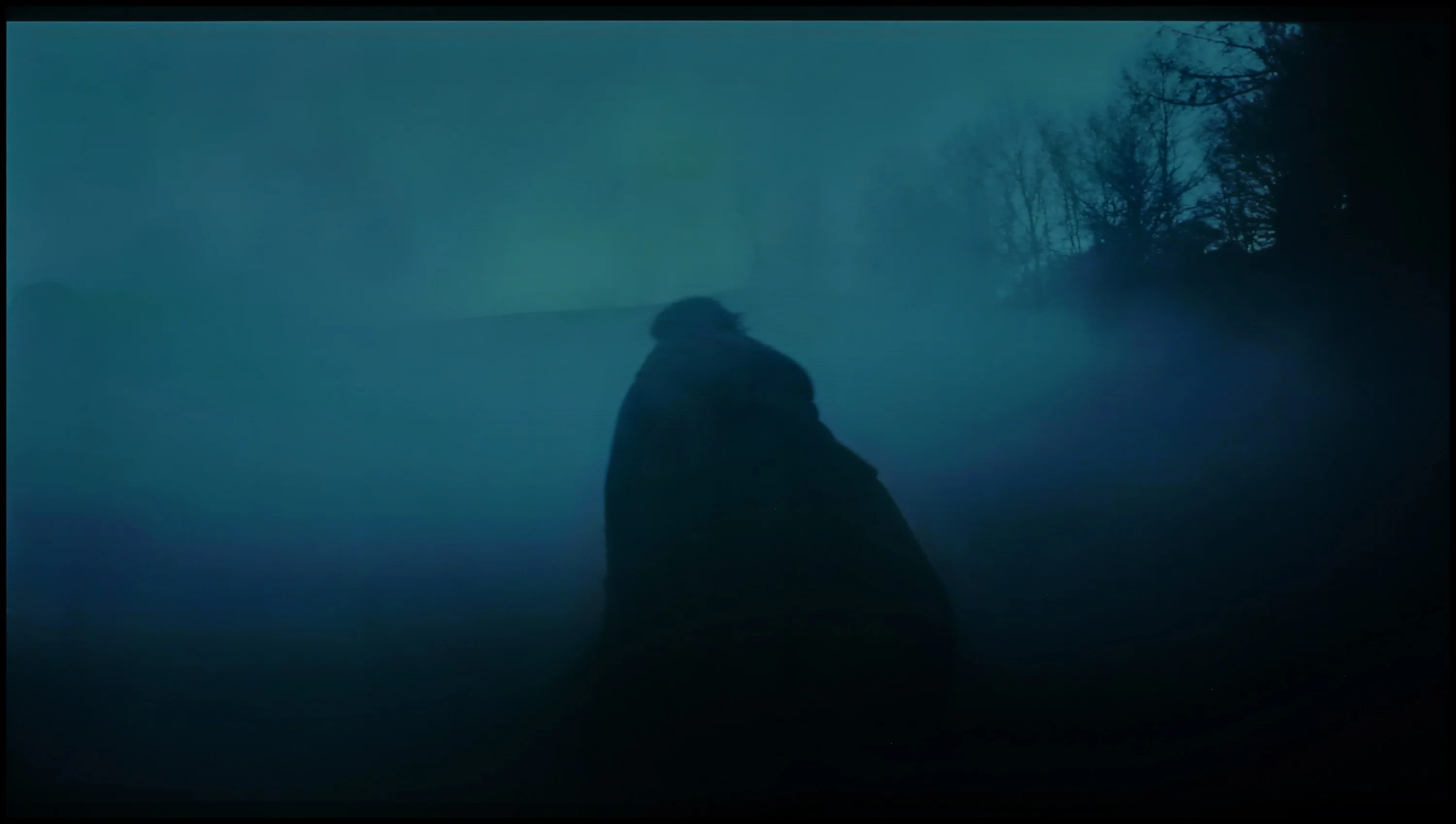
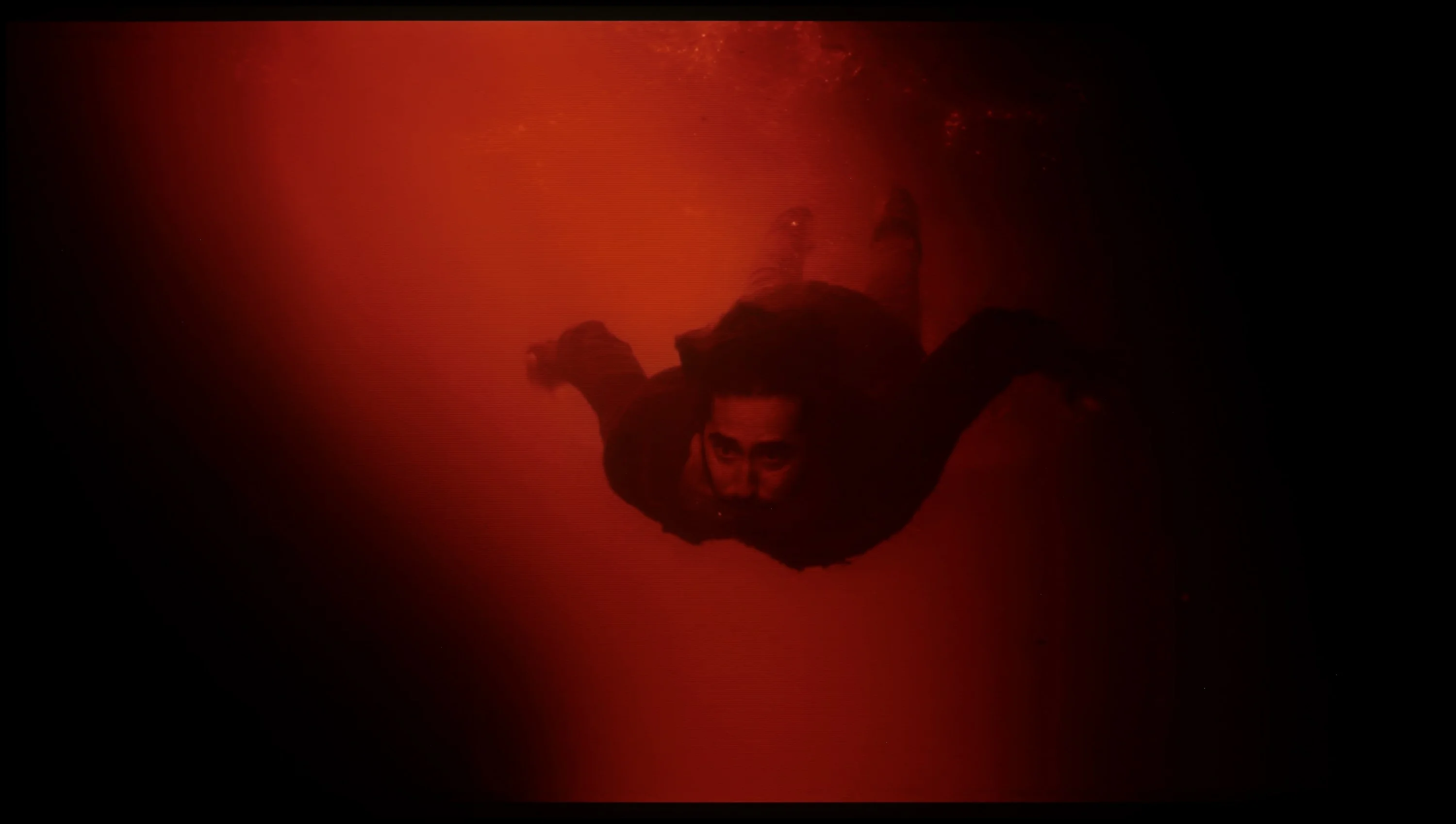

These are selected scenes that show smooth tonal transitions from one color to another. If you see distinct banding, it’s the TV panel’s fault.

These are selected scenes that show smooth tonal transitions from one color to another. If you see distinct banding, it’s the TV panel’s fault.
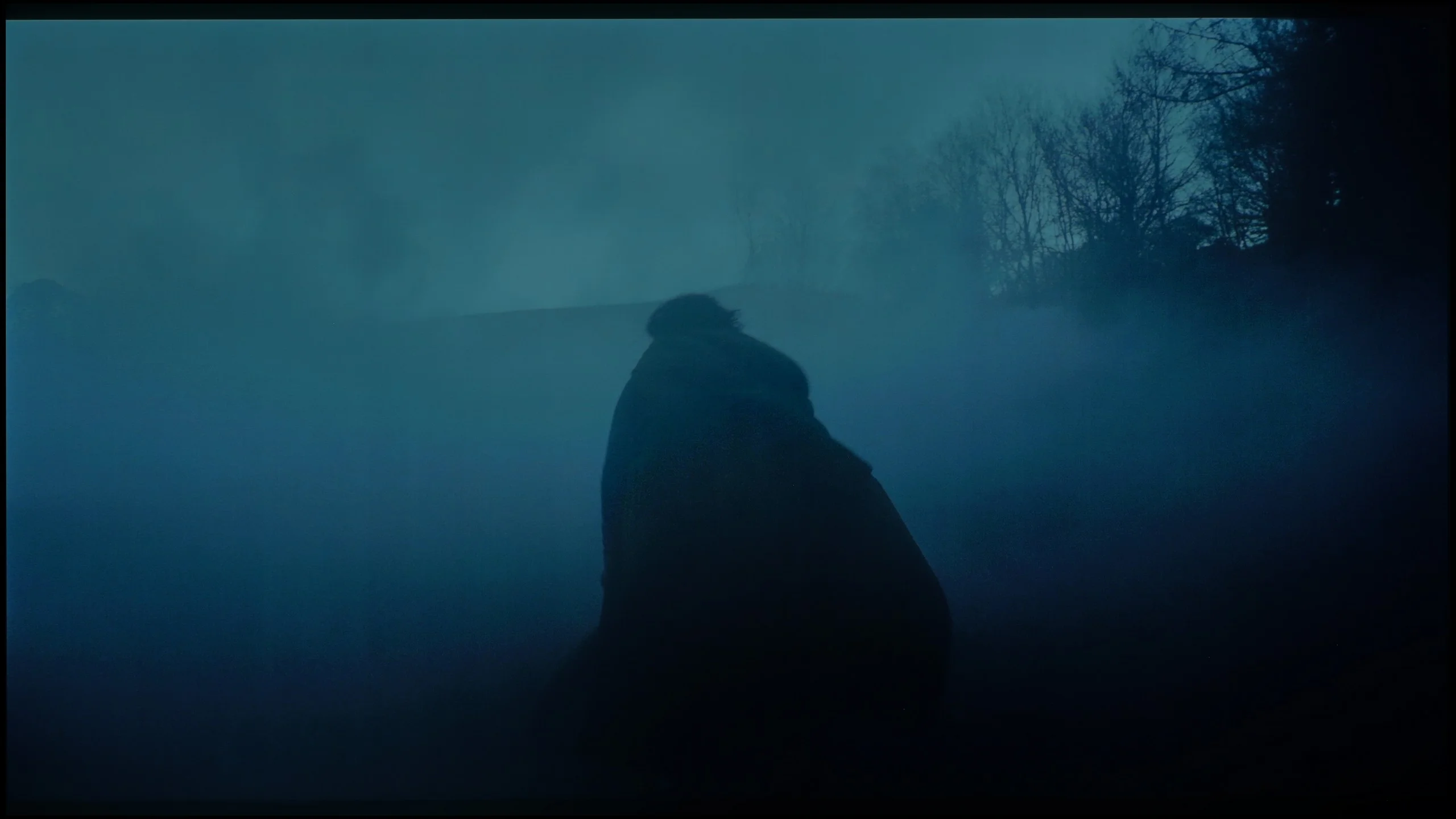
These are selected scenes that show smooth tonal transitions from one color to another. If you see distinct banding, it’s the TV panel’s fault.
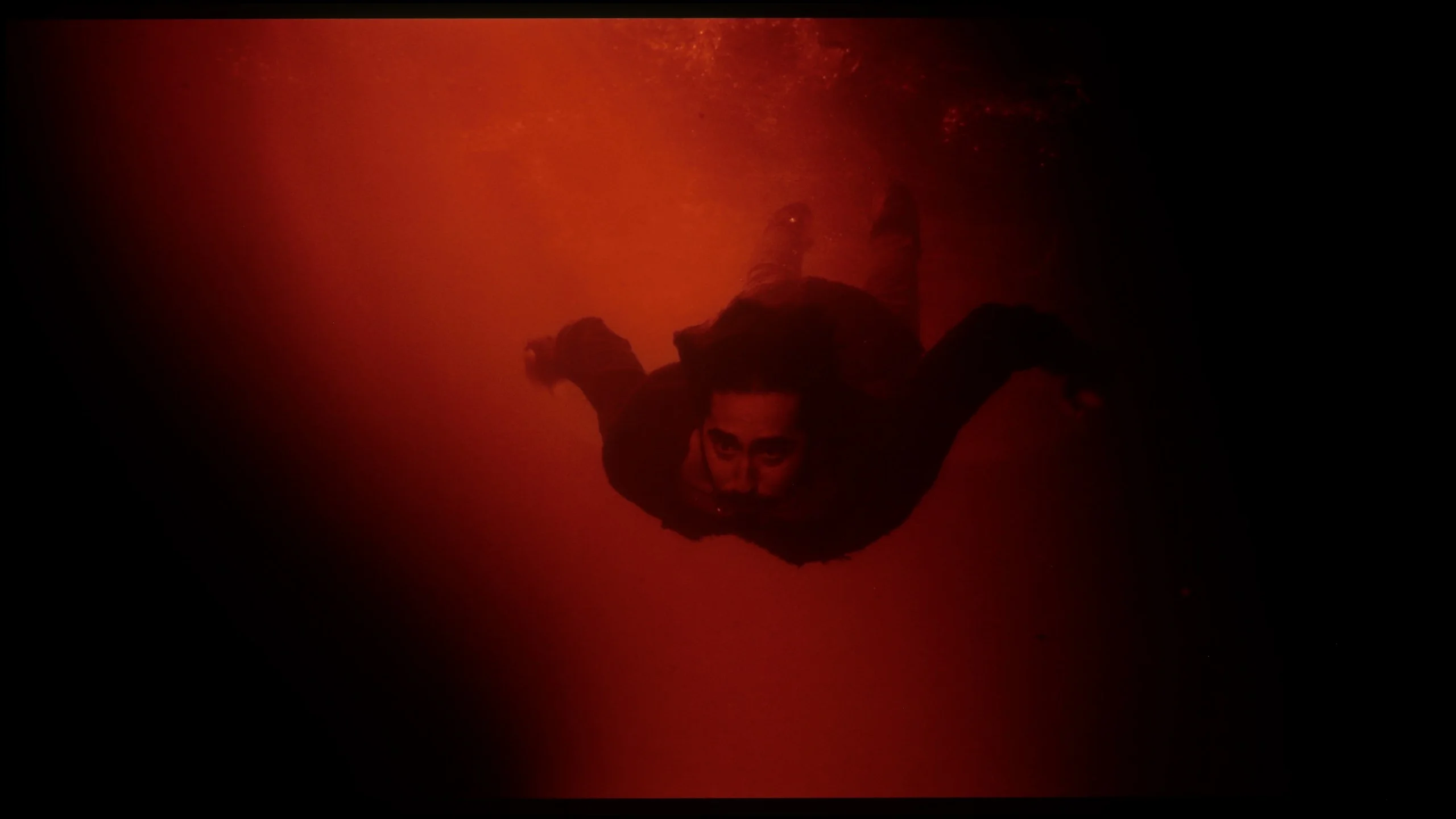
These are selected scenes that show smooth tonal transitions from one color to another. If you see distinct banding, it’s the TV panel’s fault.
The fluidity of tonal transitions in A95L is truly remarkable – it’s one of the greatest advantages of QD-OLED panels. The image appears incredibly smooth, and all transitions between different shades are perfectly rendered, with no noticeable jumps or distortions. As of today, it's challenging to find a panel that handles tonal transition reproduction with such precision. Of course, if someone really looks closely, they might notice slight errors in the black areas, but they are subtle enough that hardly anyone will notice them during normal use of the Sony A95L. For most users, these minor imperfections will be completely unnoticeable, and the fluidity and detail of tonal transitions will satisfy even the most demanding enthusiasts of excellent picture quality.
The smoothness of tonal transitions on the Samsung S99H looks very good. Bright scenes fare best, where successive shades blend very smoothly with no visible banding. In darker passages it is also good, though you can occasionally notice small imperfections. In everyday viewing they are practically unnoticeable. It is also worth noting that this is one of the strengths of QD-OLED panels. Compared with WOLED panels, they cope much better with near-black transitions, where competing panels from LG Display more often show posterisation and uneven tonal gradation.
Image scaling and smoothness of tonal transitions
8/10
7.5/10


Smooth transition function
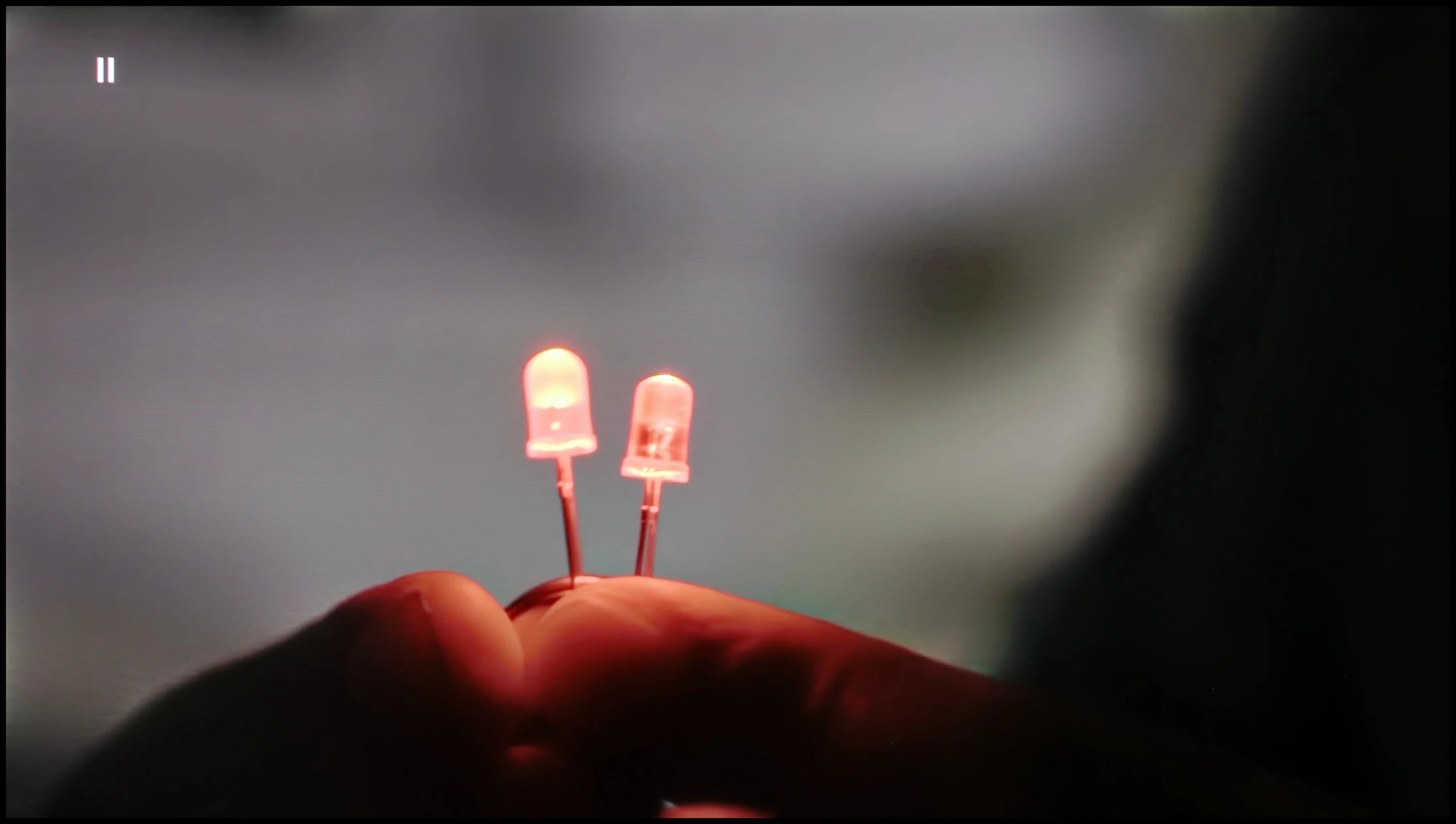
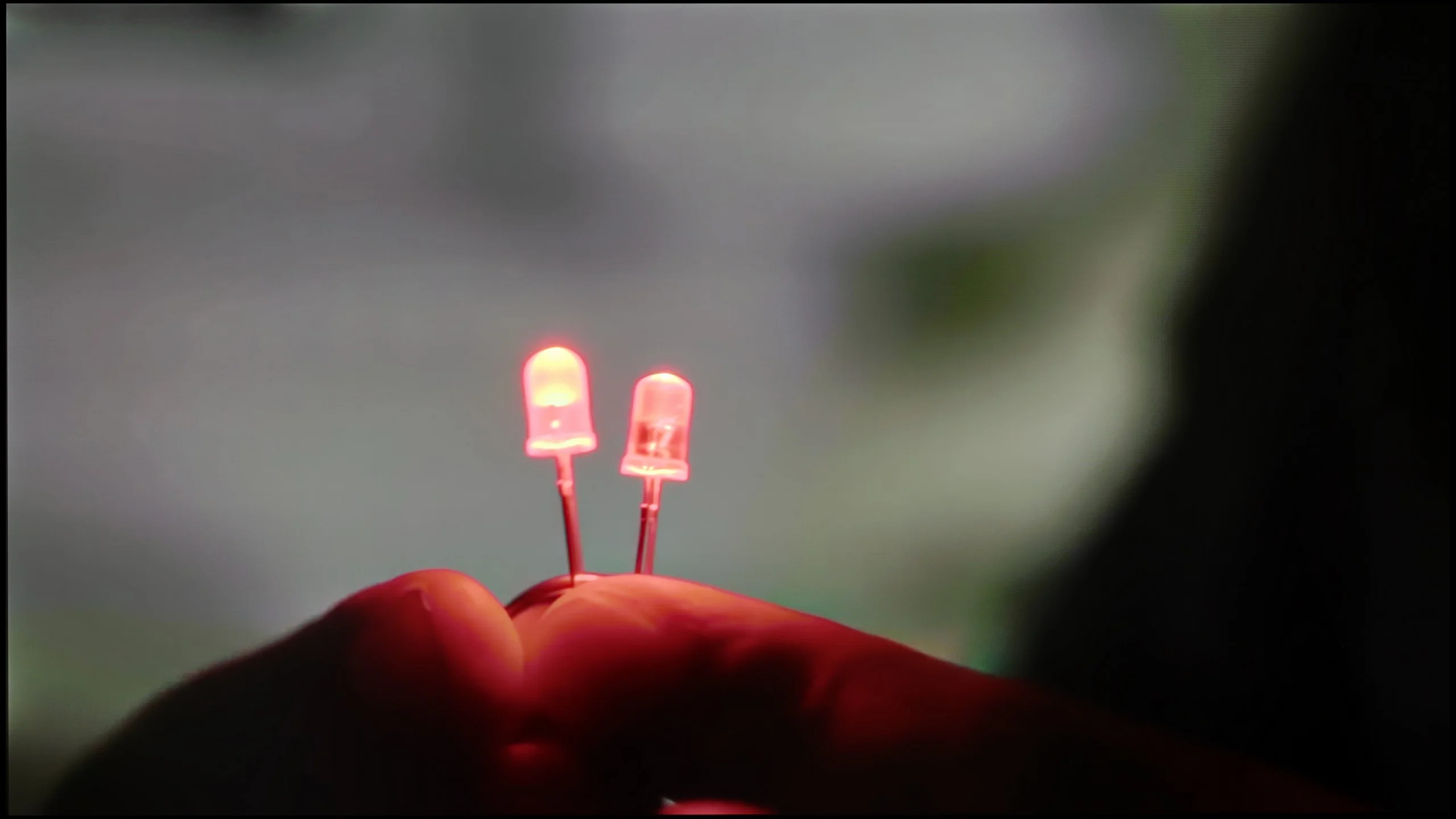
The match photo shows how the TV smooths weak tonal transitions in low-quality video.
Image scaling SD (576i)


The model photo shows how it handles upscaling of SD material.
The tonal transition smoothing function in Sony A95L works really well and is worth noting. We recommend setting it to "Medium" level, as this value achieves an ideal compromise – no artifacts appear, and the image looks incredibly natural and pleasing to the eye. This ensures that transitions between different shades are smooth while maintaining scene detail, which further enhances viewing comfort.
When it comes to upscaling, you can see the full power of the XR processor here. Sony A95L handled our test material featuring a model exceptionally well – the image is remarkably clear, there are no excessive jagged edges, and the background details are perfectly preserved. The XR processor effectively improves low resolution, providing very good results that allow you to enjoy content in nearly high quality, even if its source is not perfect.
Upscaling and digital image processing are handled by Samsung's proprietary NQ4 Gen3 processor. It copes very well with scaling lower-resolution content to 4K. The picture is clear without looking artificial or overly sharp. The only fairly specific drawback appears with very old material recorded at 480p or lower. In such cases the TV can slightly crop the edges of the image.
The processor also does a decent job with artefacts visible in low-bitrate material, for example in heavily compressed YouTube videos. The noise reduction function effectively smooths the picture and reduces posterisation, but it works quite aggressively. It can remove not only unwanted artefacts but also some fine detail, and even natural film grain. We, wanting to preserve maximum fidelity to the source material, chose not to use it. However, if someone values a clean, as-smooth-as-possible image more than keeping every detail, it may prove useful.
Blur and motion smoothness
8.5/10
8.5/10
Blur (native resolution, maximum refresh rate):






Blur (BFI function enabled):



Image flickers in this mode



Blur ():
Blur (4K@165Hz):



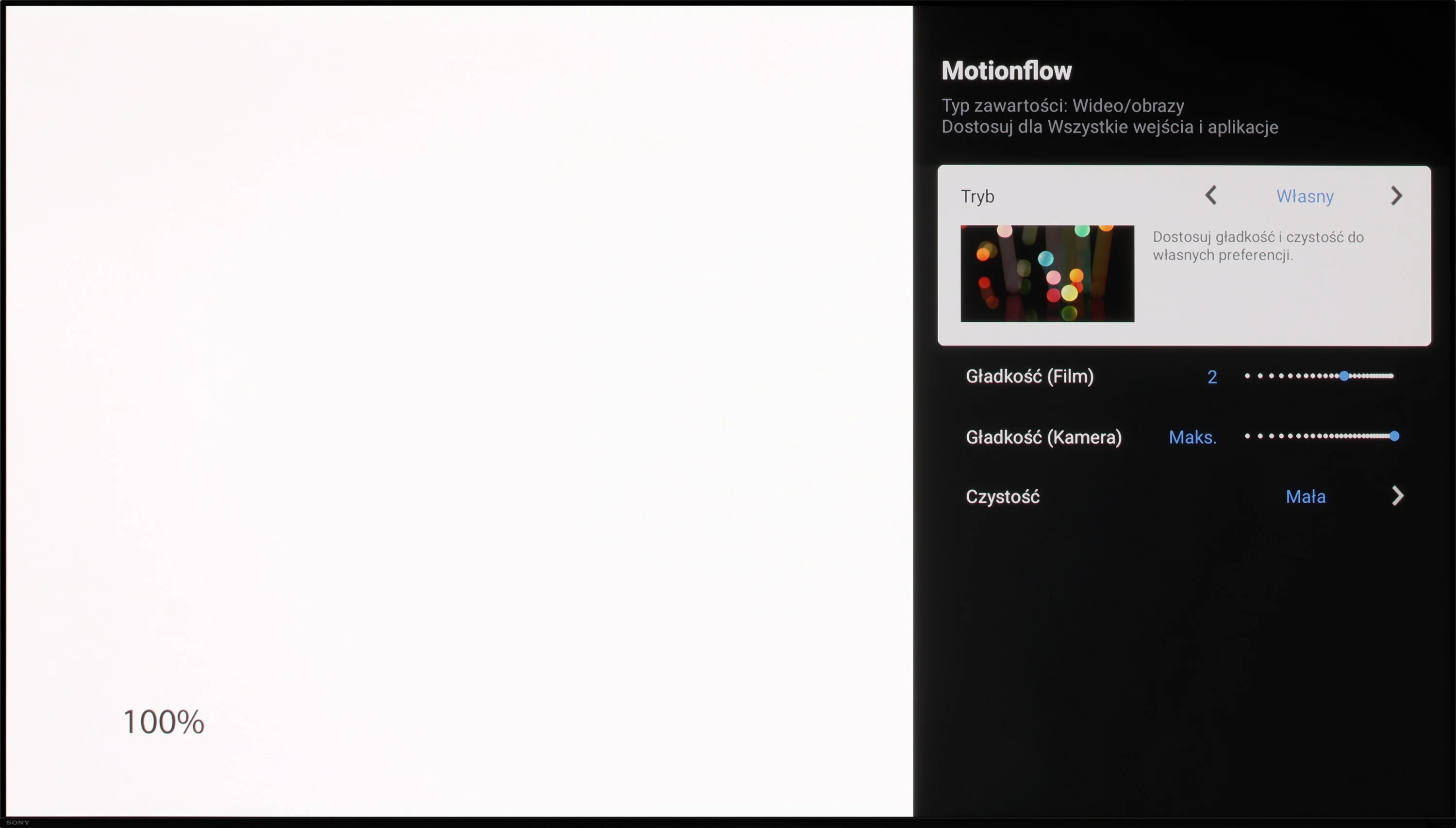
Sony A95L is a television that should satisfy both gamers and movie enthusiasts. When it comes to watching films, this model is equipped with Motionflow technology, which allows you to precisely adjust whether you want the image to be more "framey," like in traditional cinema, or exceptionally smooth, like in cinema TVs. The "Smoothness" slider allows you to control the level of fluidity – from subtle changes to more noticeable effects, while the "Clarity" slider reduces flicker and artifacts, helping to achieve more natural and clear movement. When it comes to gaming and watching sports, the A95L Sony offers a refresh rate of 120 Hz, making every dynamic action look incredibly smooth. Gamers will appreciate the lack of blur, and sports fans will see every movement in full clarity. Overall, the television performs excellently – both with fast-paced gameplay and emotionally charged film sequences.
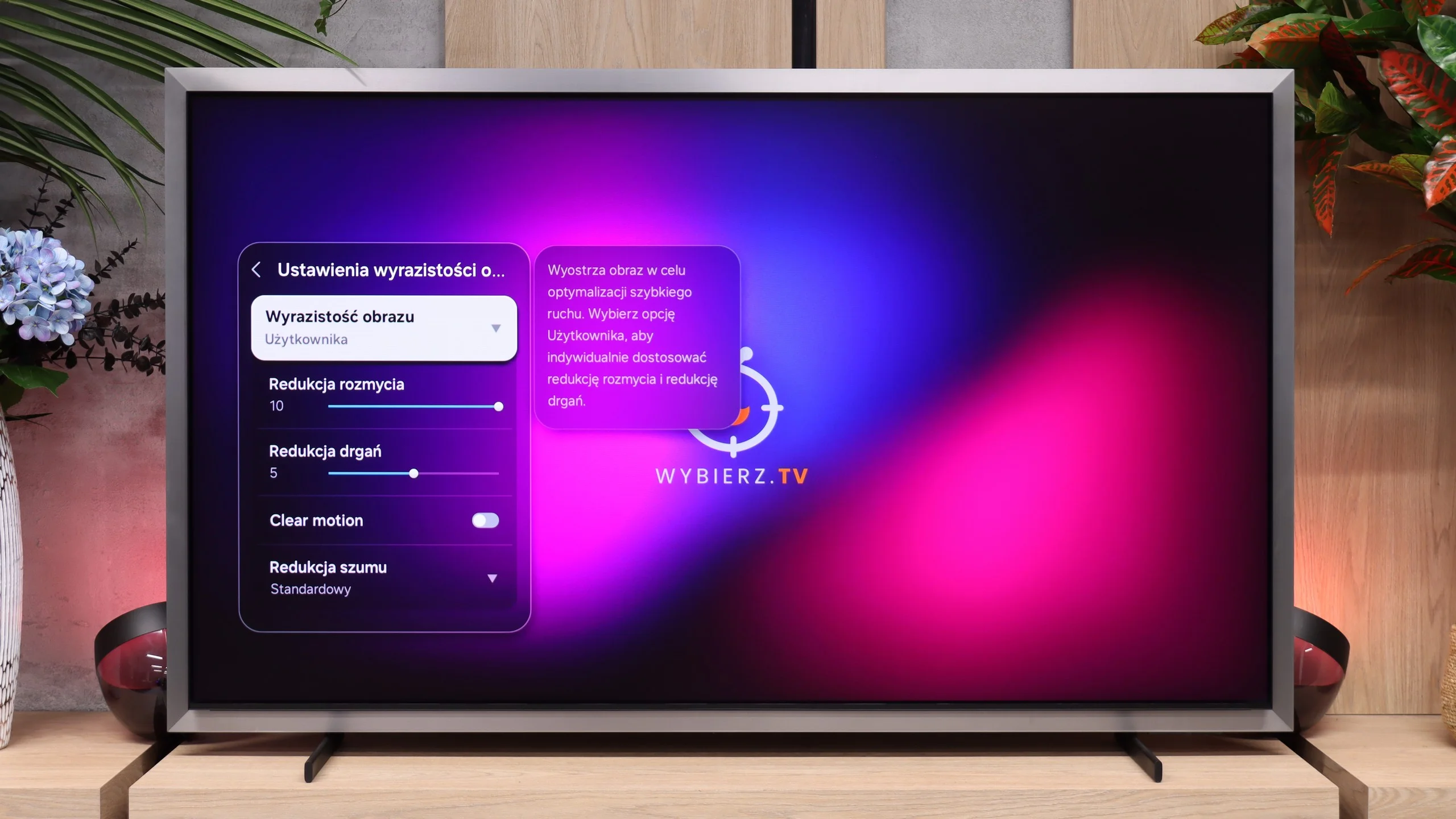
Another major advantage of organic panels is very good motion handling. Thanks to the pixels' near-instant response time, the Samsung S99H shows virtually no smearing. Fast-moving objects don't produce visible halos or trailing artefacts, so the TV performs very well for both sport and gaming. One quirk of OLED screens compared with LCD is the way they render low-frame-rate material. With very slow camera movement the picture can appear noticeably more juddery. This can be quite effectively mitigated using frame interpolation. Samsung lets you adjust judder reduction and motion blur reduction separately, so it's easy to find a compromise between a smoother picture and preserving the cinematic feel of the content.
Console compatibility and gaming features
9.4/10
9.6/10
- ALLM
- VRR
- VRR range48 - 120Hz48 - 165Hz
- Dolby Vision Game Mode
- Correct implementation of HGIG
- 1080p@120Hz
- 1440p@120Hz
- 4K@120Hz
- Game bar
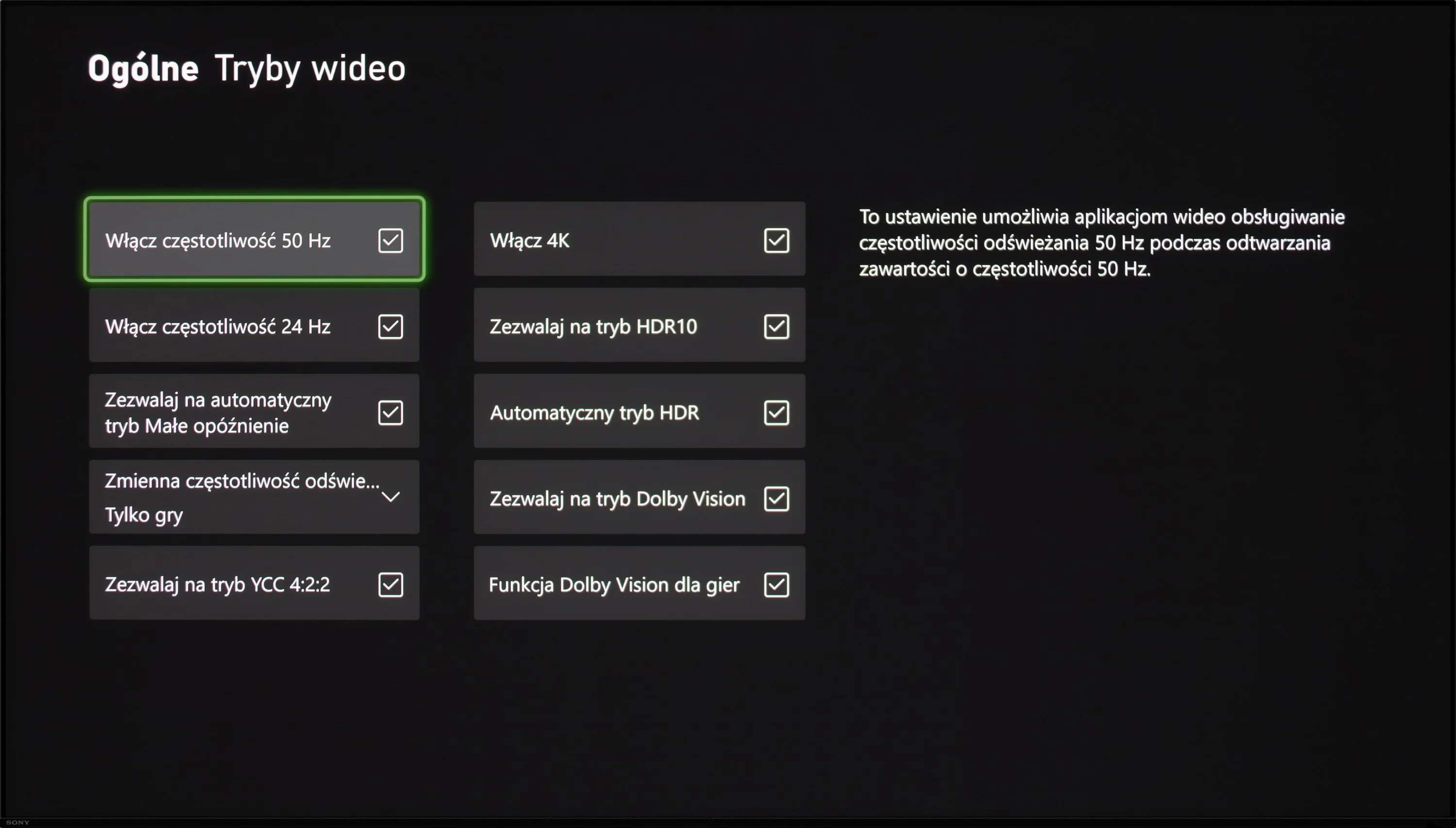
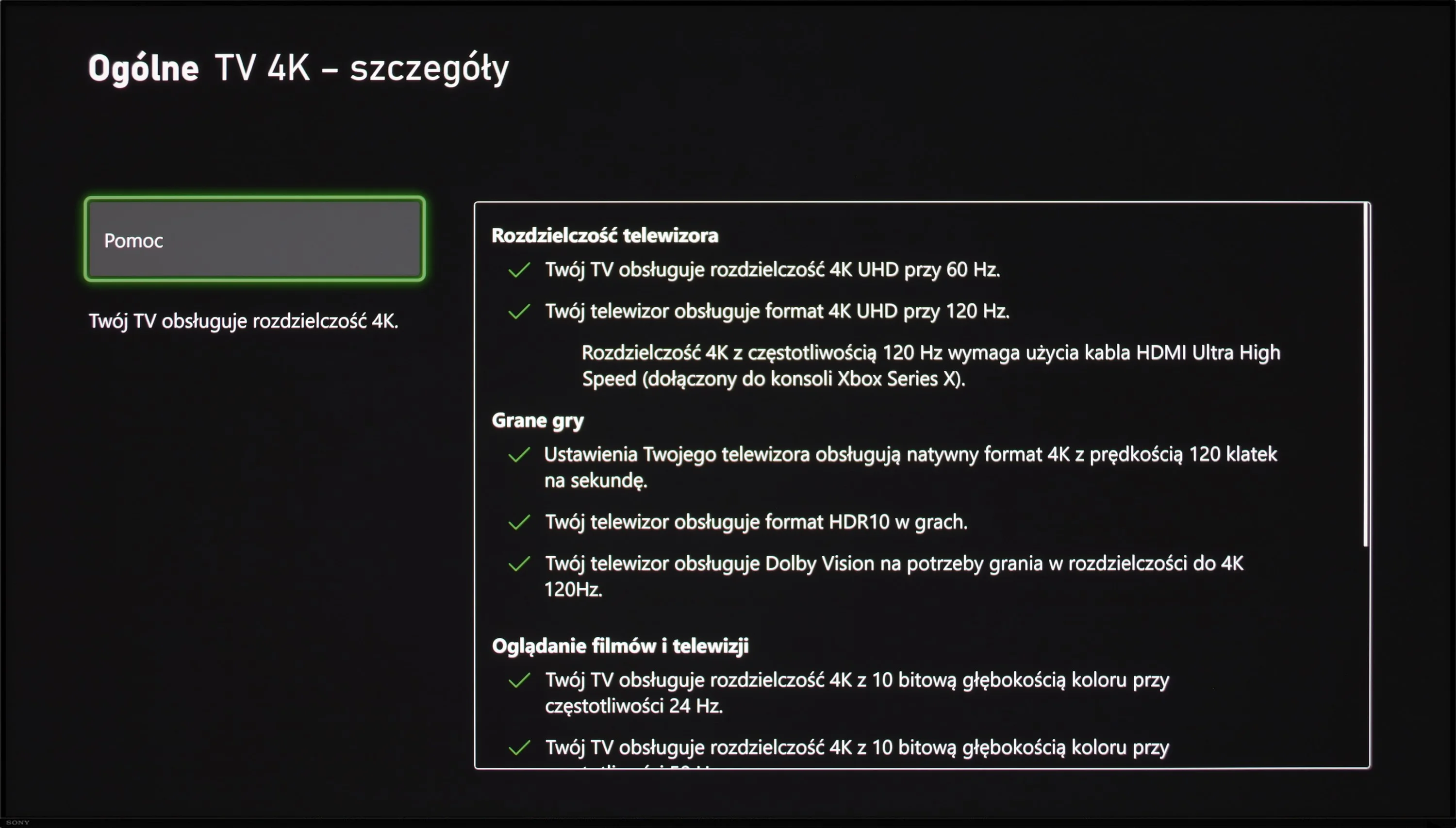
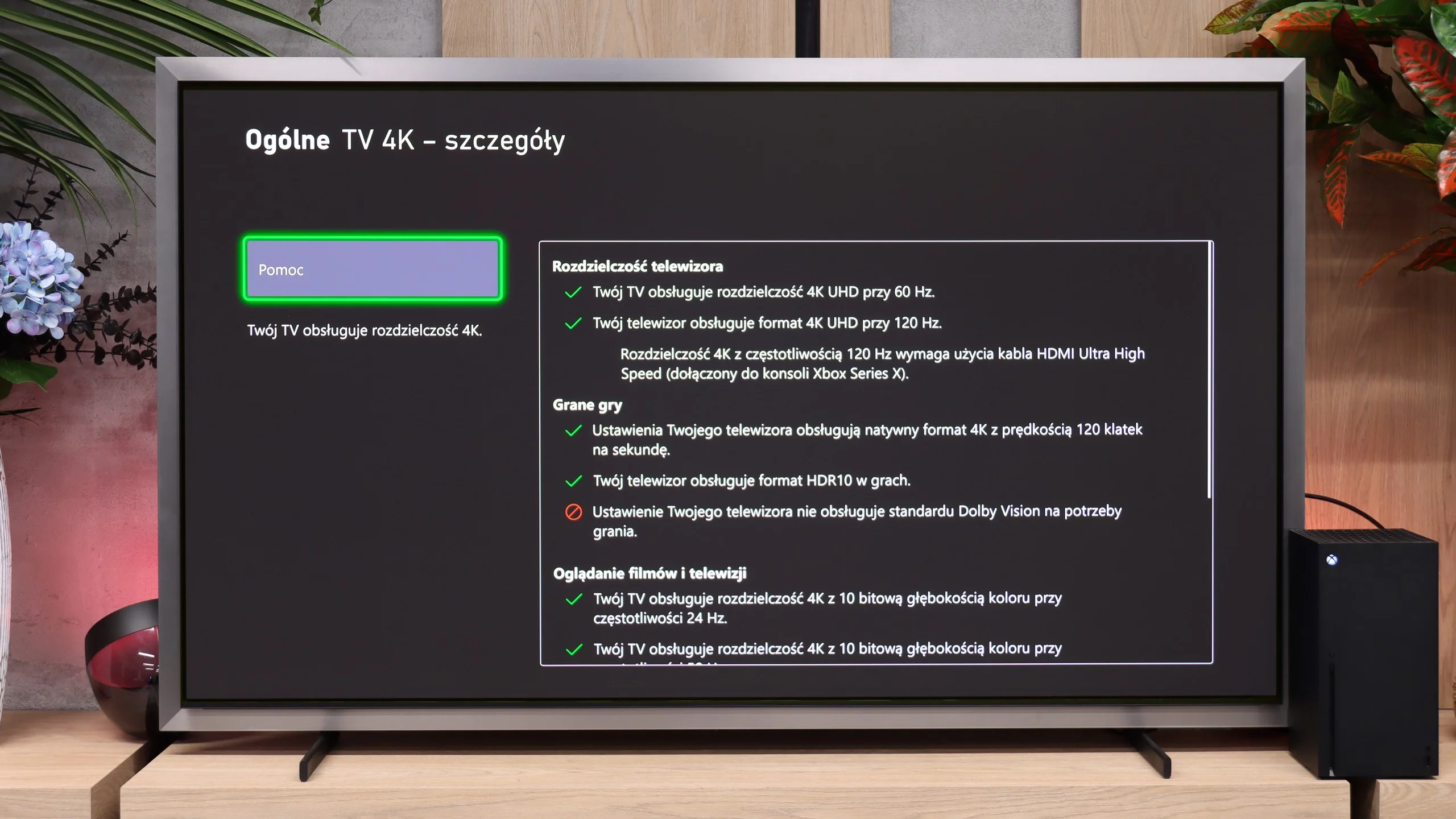
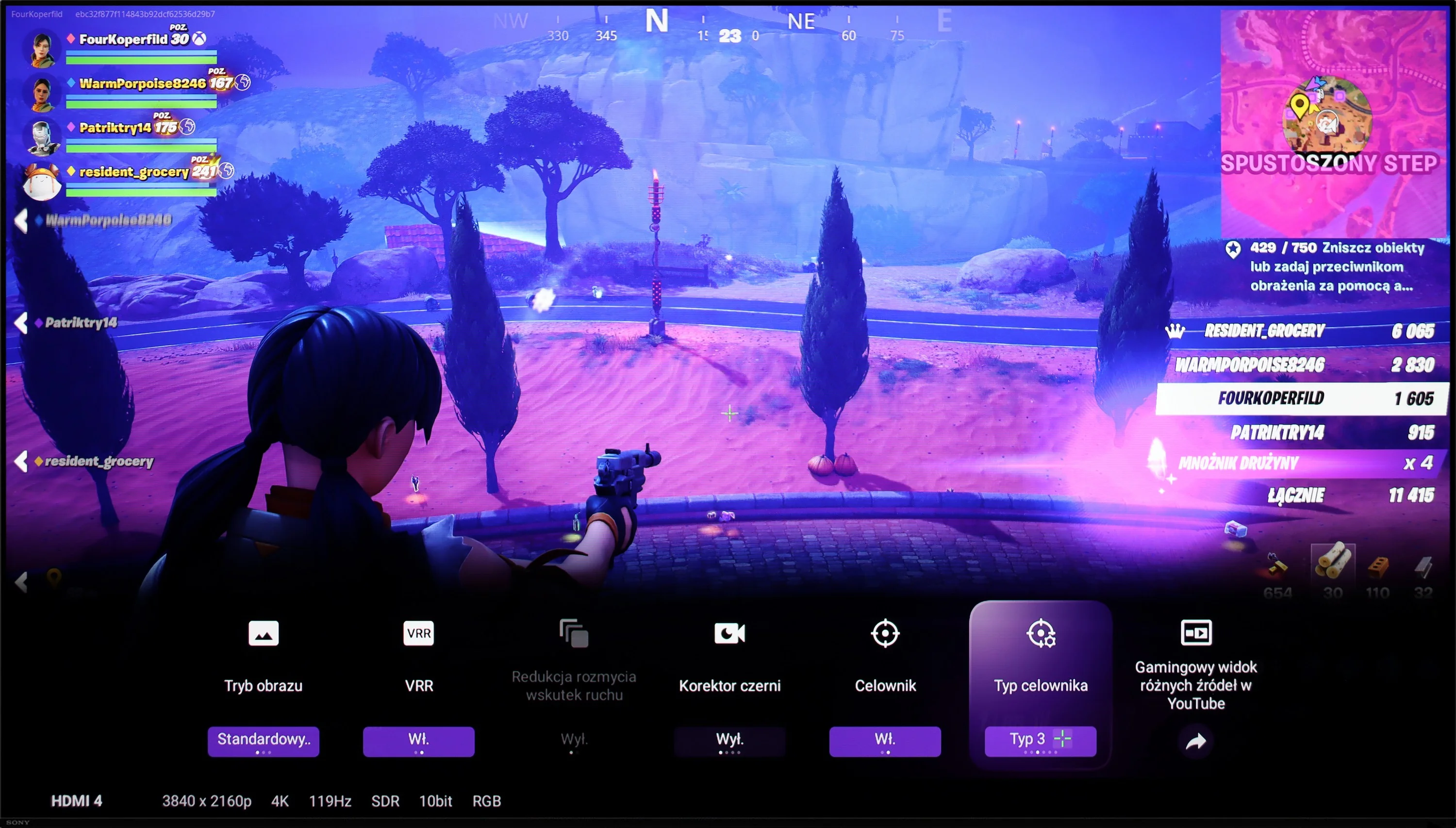
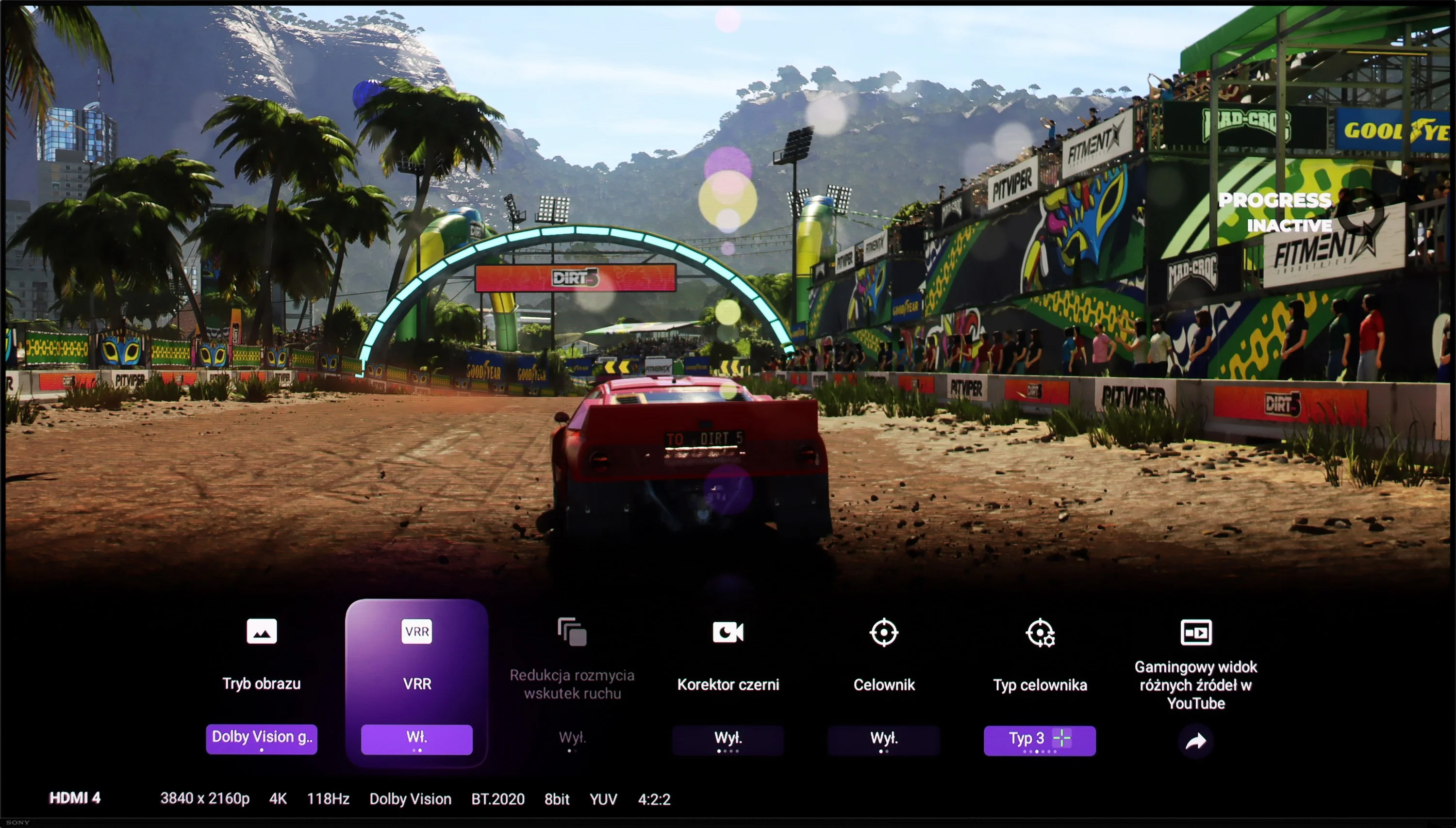
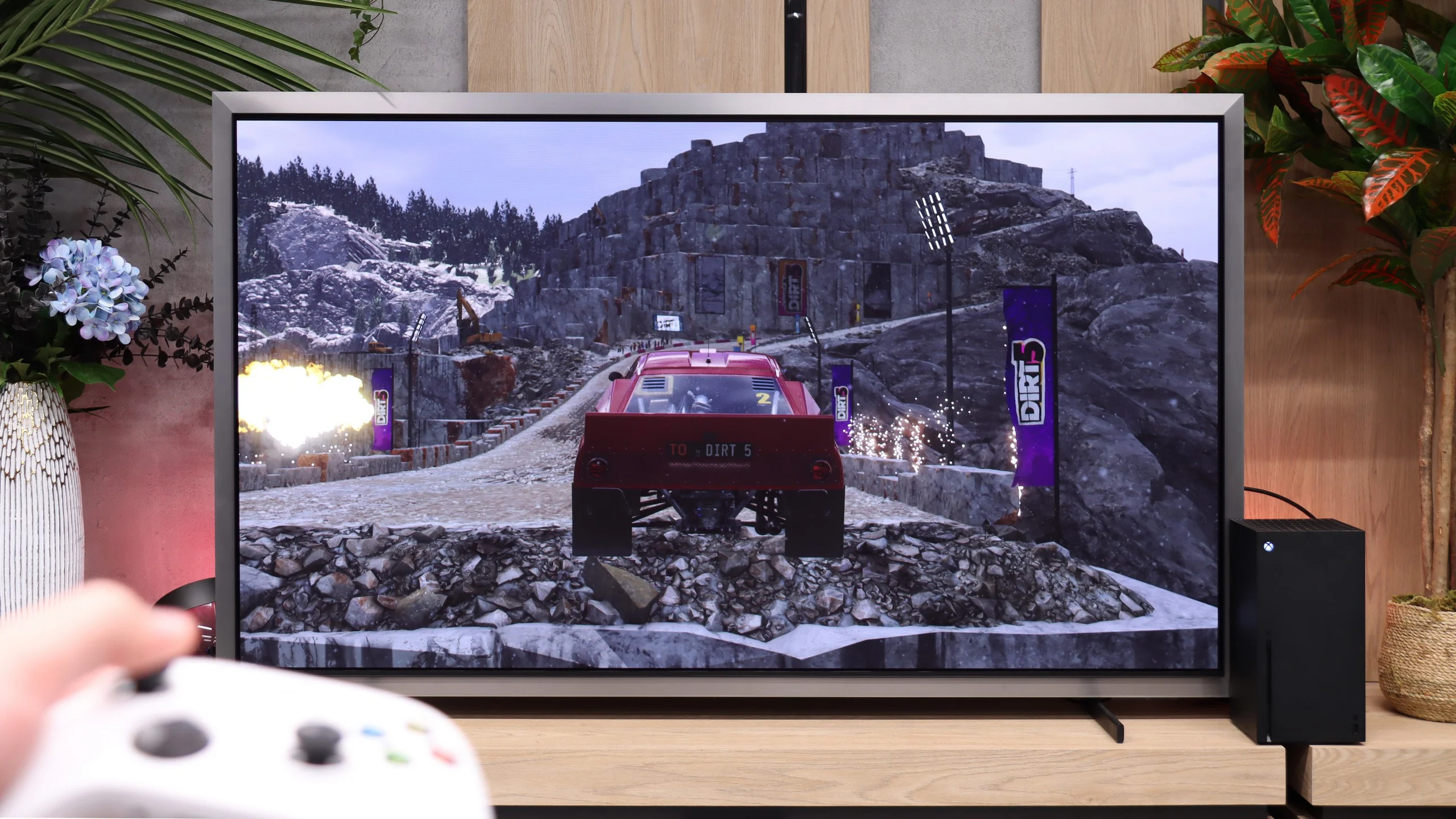
Sony A95L is a television that will truly satisfy gamers, thanks to several key features that set it apart from the competition. To begin with, the 120 Hz refresh rate – this is something that anyone who loves fast-paced action games, racing, or dynamic shooters will appreciate. This makes the image exceptionally smooth, and gameplay more satisfying, without annoying stutters. The A95L Sony also has an ALLM (Auto Low Latency Mode) feature, which automatically activates low-latency mode when we start up a console. What does this mean? Primarily, faster reactions on screen, which in games where every second counts, is simply invaluable. Added to that is VRR (Variable Refresh Rate), which ensures that the image refresh rate adapts to the number of frames generated by the console. The effect? No tearing of the image, and everything looks smooth and cohesive – even with varying FPS.
It's worth mentioning the support for Dolby Vision with low input lag in games – something we don't often see in televisions, but here it is included. As a result, the image in HDR-compatible games is incredibly vibrant, with vivid colors and excellent contrast. Both the brightest and darkest details are visible, making everything look just as the game developers intended. And there's also the "Game Bar" – a small but very practical convenience. It gives us all the essential gaming-related settings at our fingertips, such as VRR and lag information. There's no need to interrupt gameplay to adjust settings – everything is at hand.
However, it's important to note that the A95L offers only two full-bandwidth HDMI 2.1 ports, one of which is allocated for eARC. This could be somewhat limiting if we plan to connect multiple devices – for example, a next-gen console and a soundbar simultaneously. In such cases, eARC occupying one of those ports may be a bit problematic, blocking the option to connect a second console.
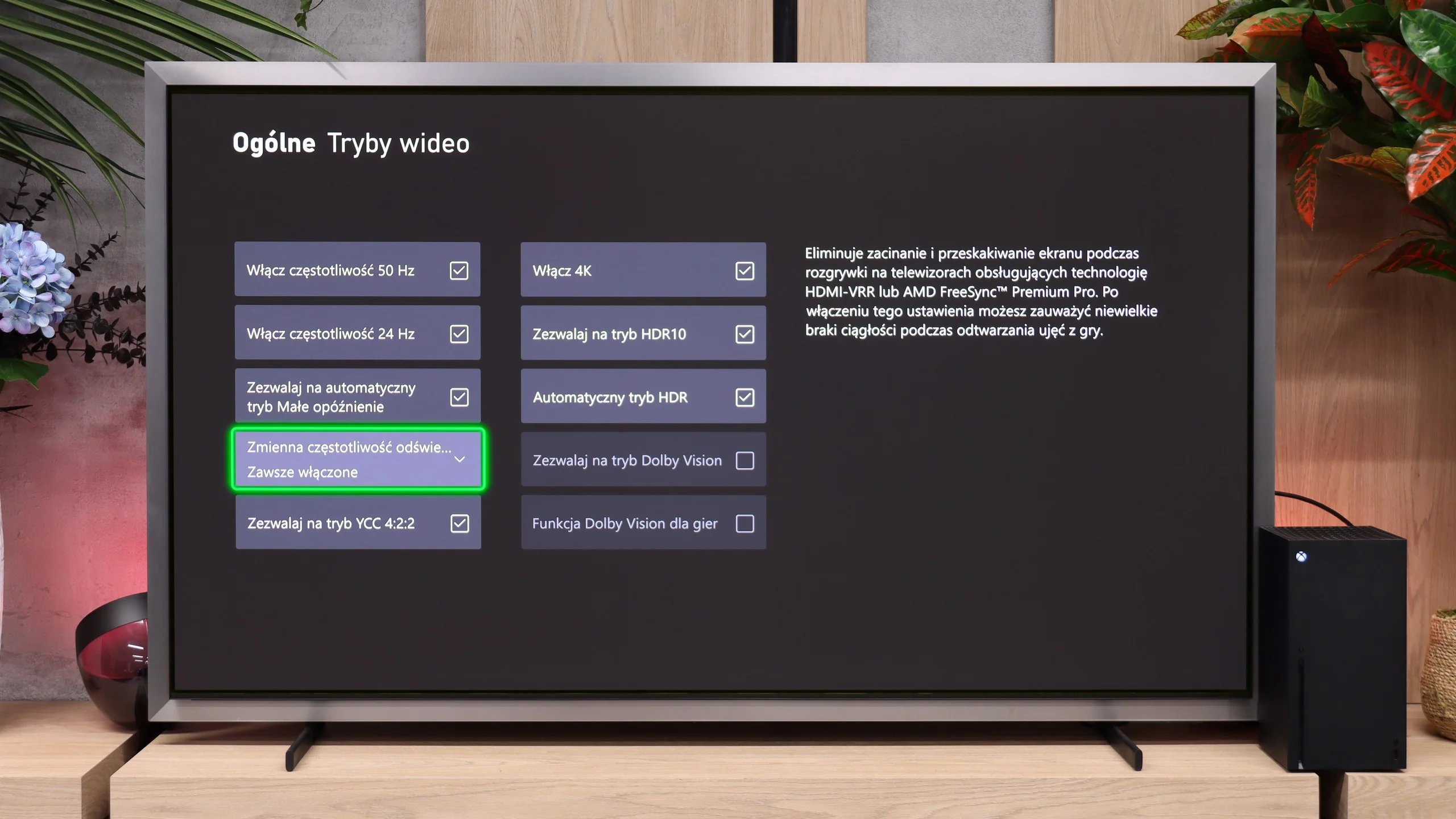
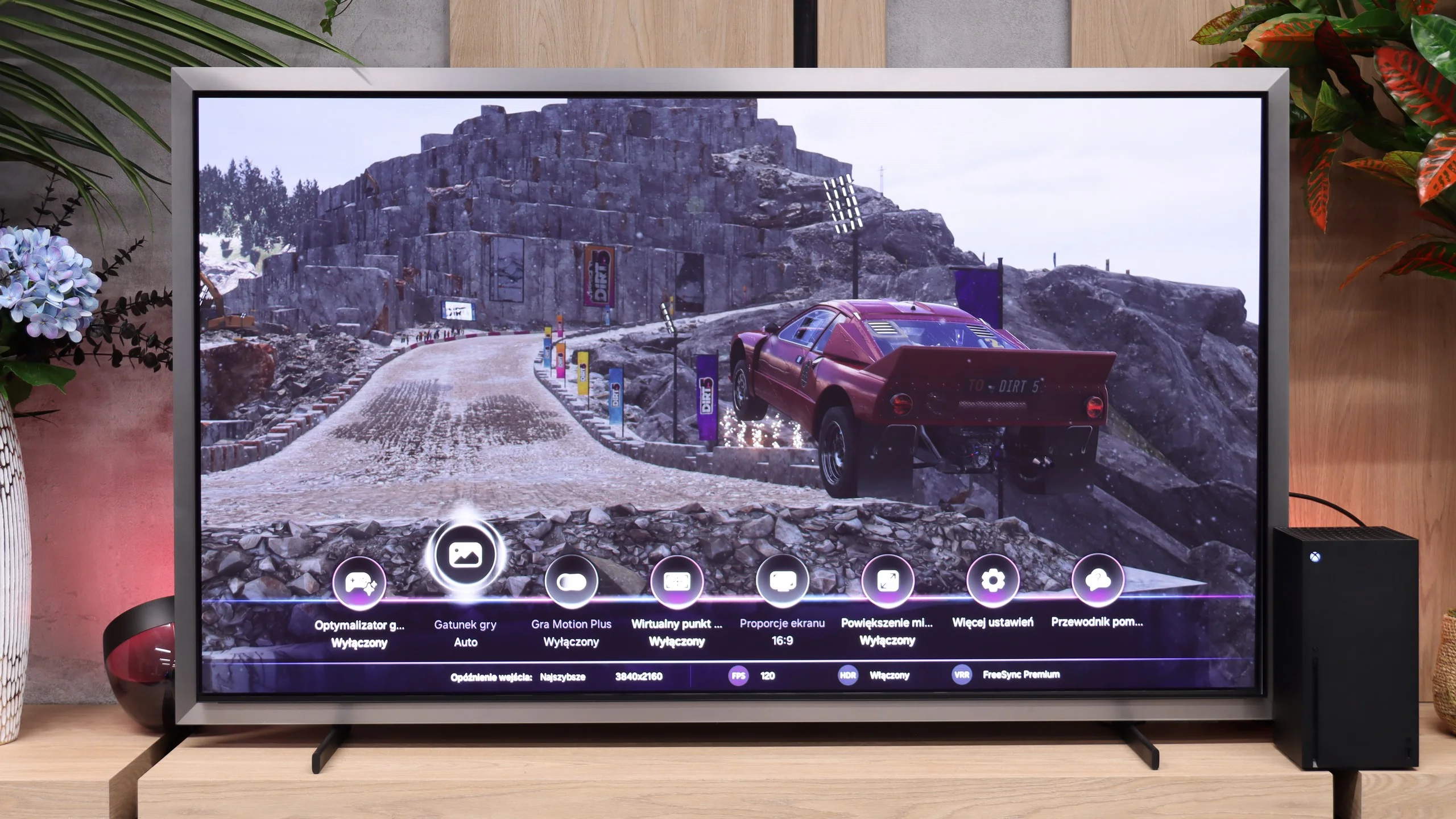
Samsung S99H is also a top TV for gamers. It offers almost every possible and useful feature... well, perhaps except the obvious lack of Dolby Vision for the Xbox console. It’s equipped with four full-fledged HDMI 2.1 ports with the full 48 Gbps bandwidth. That makes it easy to use frame-rate synchronization VRR or automatic low-latency mode (ALLM). This year Samsung also has no issues with proper HGiG support, so HDR setup on a console is quick and free of unnecessary complications. Samsung is also known for interesting extras in its TVs. In the Game Bar menu you’ll find options to add an on-screen crosshair, enlarge the minimap, or change the aspect ratio of the displayed image (PC).
Particularly noteworthy is Samsung’s feature: Game Motion Plus. It’s Samsung’s proprietary motion-smoothing system that uses interpolation to boost smoothness in games. Input lag then rises to around 40 to 50 ms (depending on the strength of the setting), which, compared with the competition, is an excellent result. The system makes gameplay noticeably smoother. So if someone has their eye on a demanding game (e.g. GTA 6 😉) that runs on a console at only 30 fps, the S99H can display it much more smoothly than competing models.
Input lag
9.8/10
10/10
SDR
HDR
Dolby Vision
When it comes to input lag, Sony A95L really delivers. Even in Dolby Vision mode, the latency is surprisingly low – results below 10 ms with 120 Hz content are quite impressive. Thanks to such low input lag, gaming is incredibly responsive, and every action in the game is instantly reflected on the screen. For those playing at 60 frames per second, an input lag of 17 ms is also very good. This is a value that practically has no impact on the gaming experience – it falls within the so-called "placebo effect." Sony deserves praise for updating the Dolby Vision Game mode, which solved the issue of high input lag that was present at the TV's launch in 2023.
Input lag is very low regardless of the selected refresh rate. With a 120 Hz signal we measured around 5 ms, and at 60 Hz about 10 ms. After connecting a PC and setting it to 165 Hz, the values were even lower. Response to controller or mouse movement is almost instantaneous, so in that respect the Samsung S99H is suitable even for very fast and demanding games.
Compatibility with PC
5/10
8.8/10
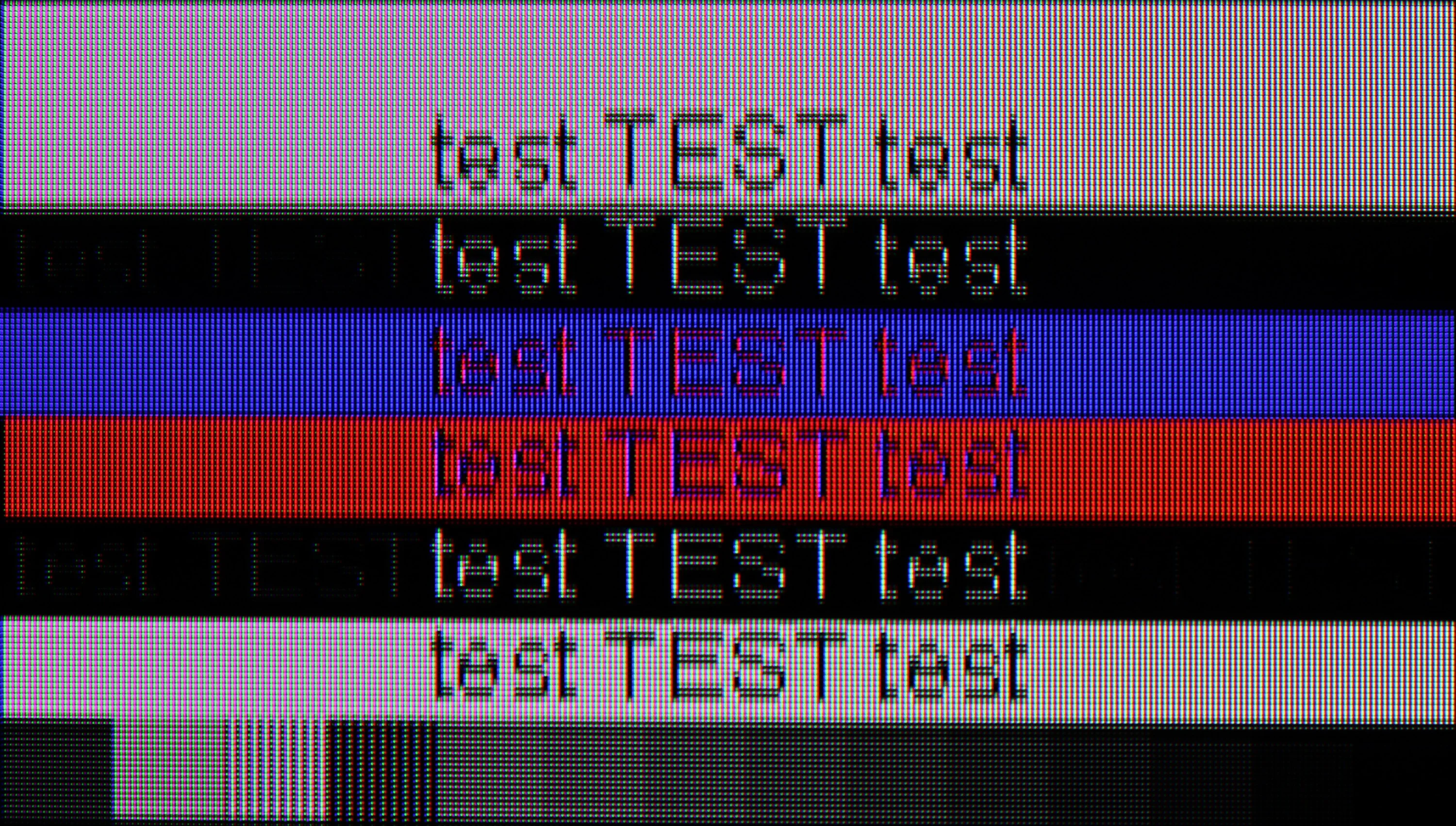
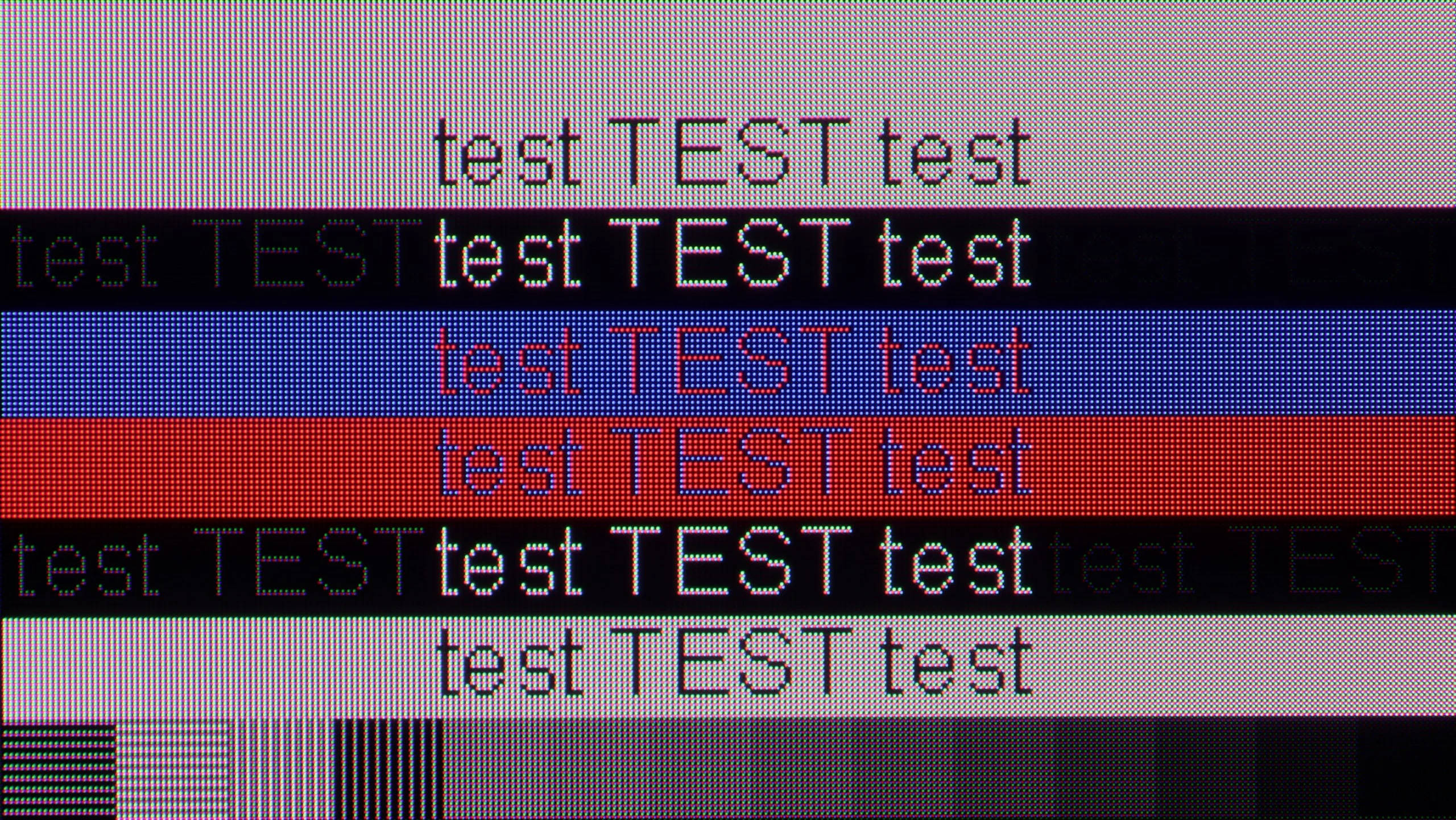
The photo shows the legibility of small fonts. Ideally, lines should be the same thickness on both light and dark text, with minimal pixel gaps.
Sony A95L TV offers compatibility with computers at 4K resolution at both 60 Hz and 120 Hz. In 4K mode at 60 Hz, the readability of fonts is at a good level, making it comfortable to use the TV as a monitor for office work or browsing content.
Unfortunately, when switching to 4K with a refresh rate of 120 Hz, the quality of the displayed text deteriorates – the resolution is reduced by 2 times, negatively affecting the clarity of the fonts. In 4K, fonts lose sharpness, which can make prolonged use of the TV as a computer monitor at higher refresh rates difficult. Of course, the problem disappears if we switch back to 60Hz, but this can be quite inconvenient when the TV forces us to "juggle" the settings.
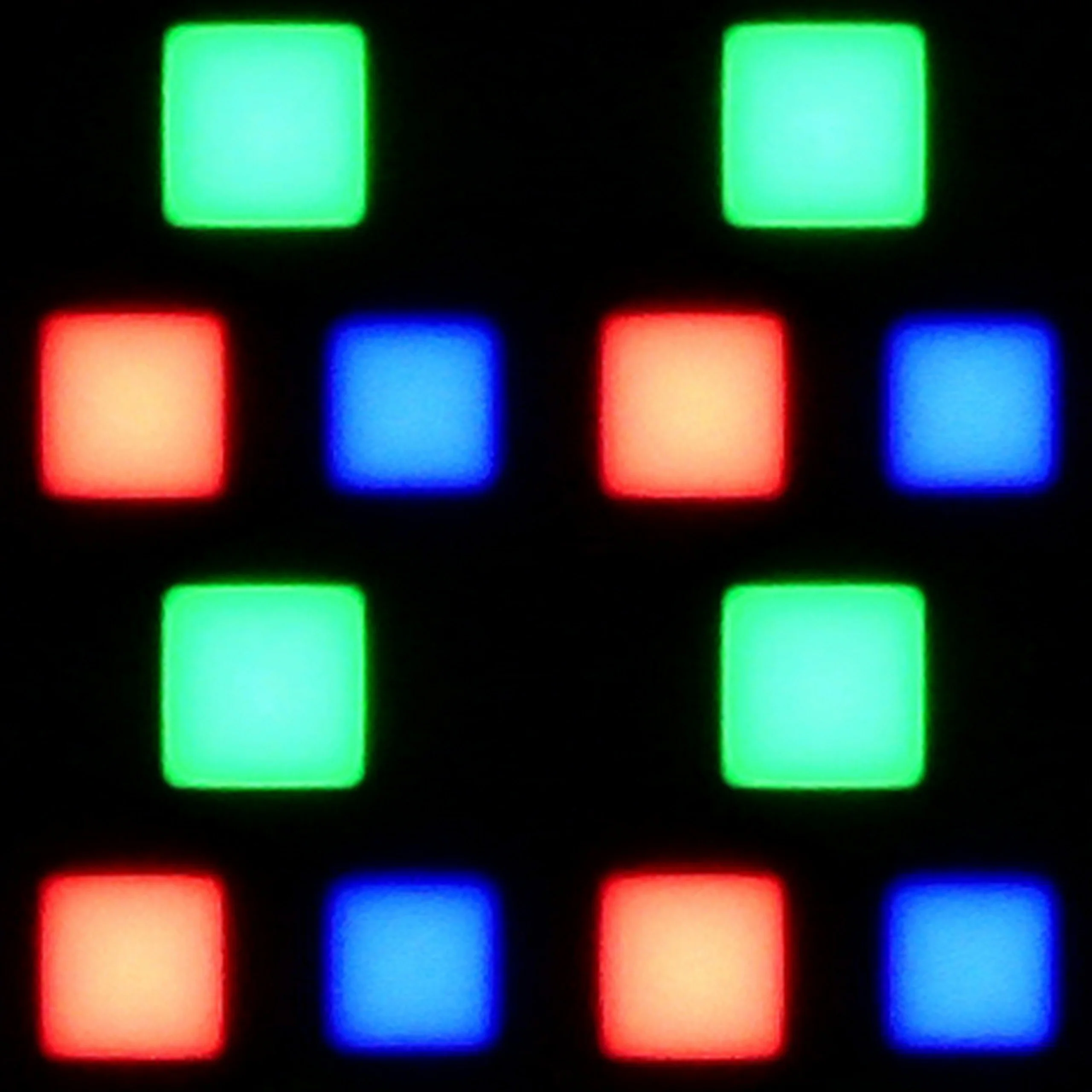
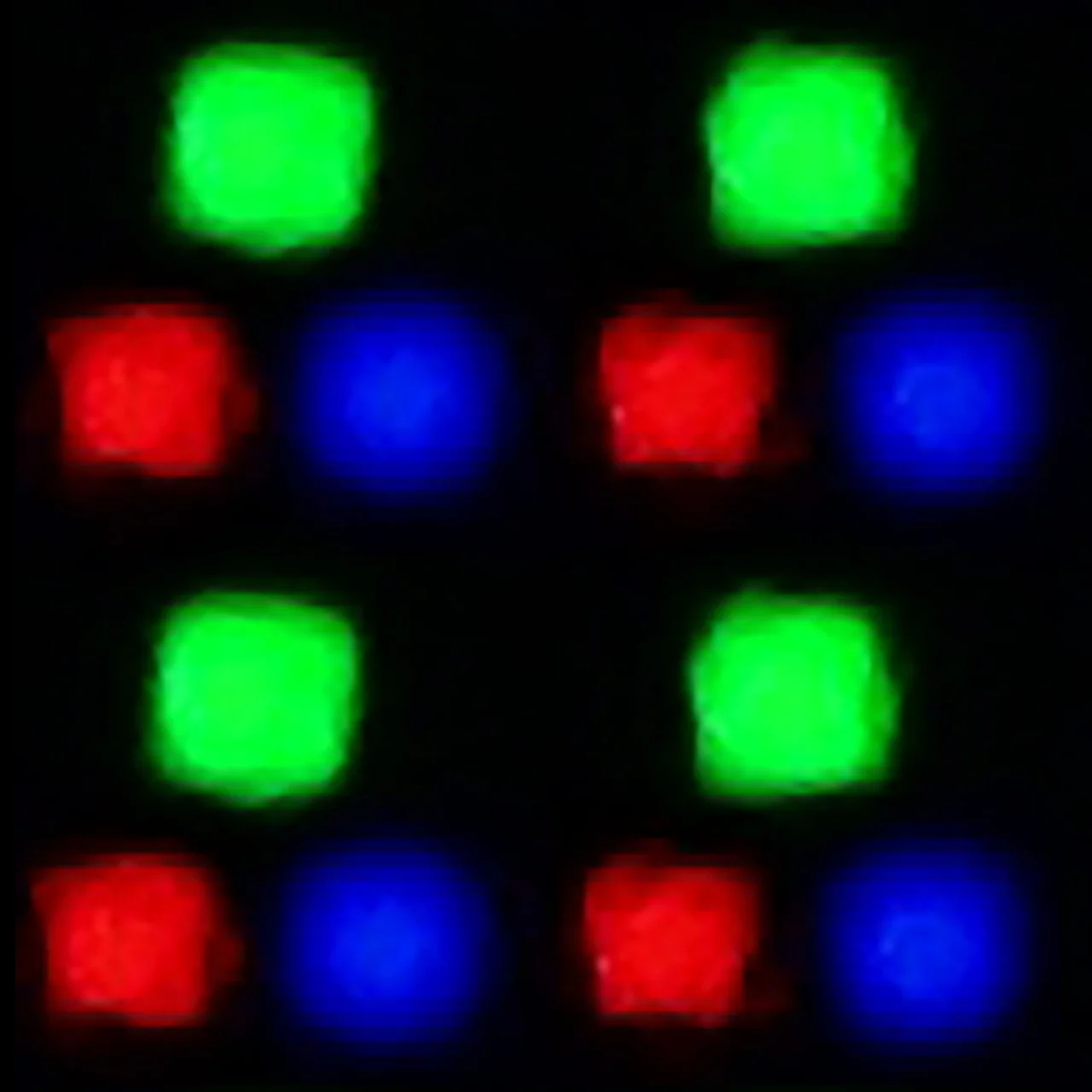
The S99H also works very well as a large monitor connected to a computer. This is mainly thanks to full support for frame rate synchronisation, with both AMD FreeSync Premium Pro and seamless G-Sync compatibility for NVIDIA cards. The TV also supports refresh rates of up to 165 Hz, which is a nice plus for PC gamers. The only distinctive characteristic of QD-OLED panels is the triangular subpixel layout. Because of this, the sharpness of very small text viewed from extremely close up isn’t perfect. However, given the size of the S99H, this TV is unlikely to sit directly on anyone’s desk, and when working or gaming from more than a metre away the issue becomes irrelevant.
Viewing angles
9.7/10
9.9/10
The viewing angles on the Sony A95L are among the best on the market, thanks to the QD-OLED panel. With this technology, colours remain vibrant and contrast hardly changes, regardless of the viewing angle. This is a result that even standard OLED panels fail to achieve, making the A95L perfect for rooms where viewers change position or there is a larger group of spectators.
Viewing angles on the S99H are simply excellent, thanks to the QD-OLED panel. In this respect it's right at the top of the market. Even when viewing the screen from a very steep angle the image remains perfectly legible, with only a negligible drop in brightness or colour saturation. That's a hallmark of QD-OLED panels and gives them the edge over conventional WOLED displays, where viewing angles are somewhat worse.
Daytime performance
5/10
8/10

Panel brightness
Samsung OLED S95H (S99H) (QD-OLED): 851 cd/m2
Sony A95L: 387 cd/m2
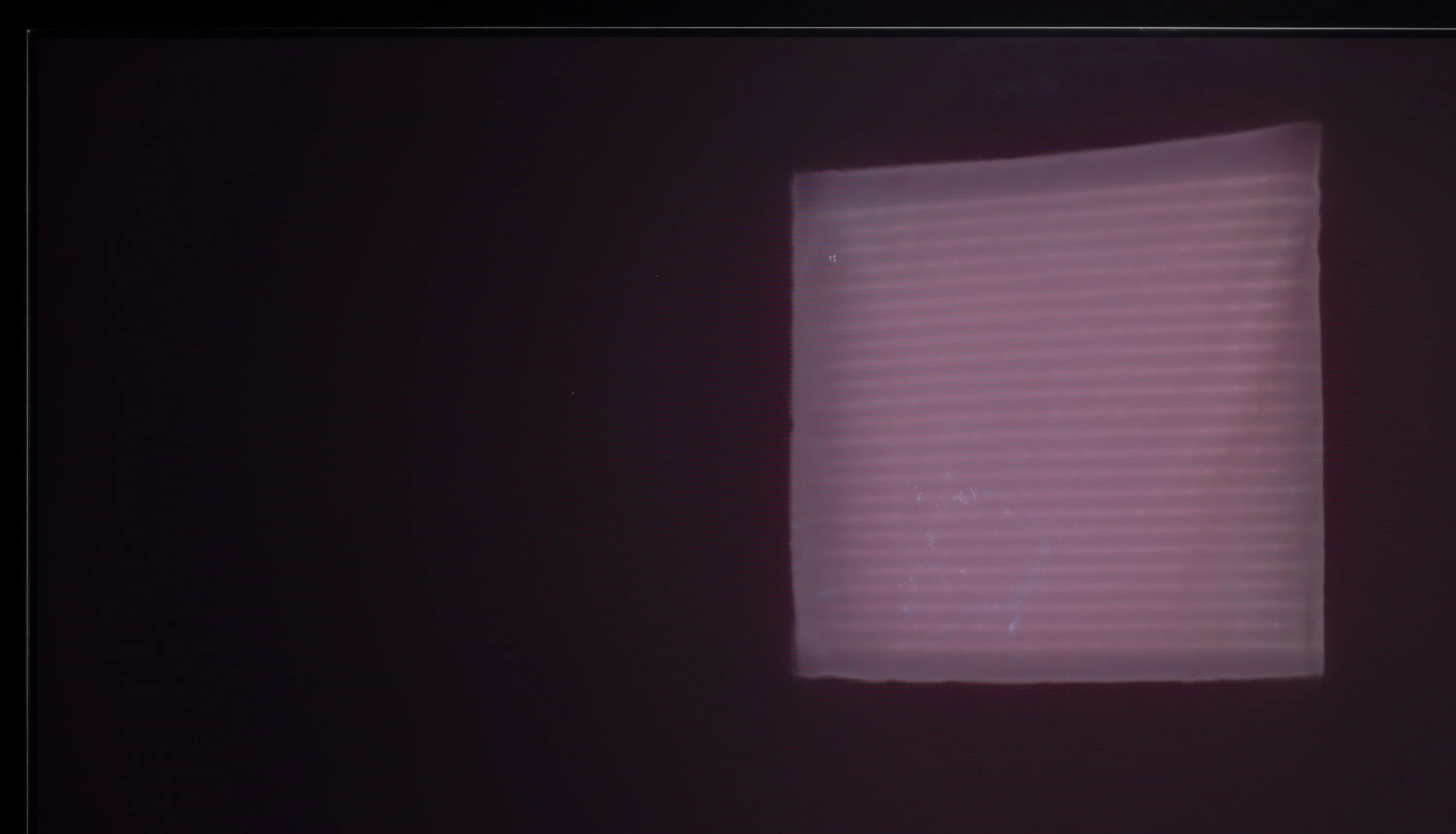
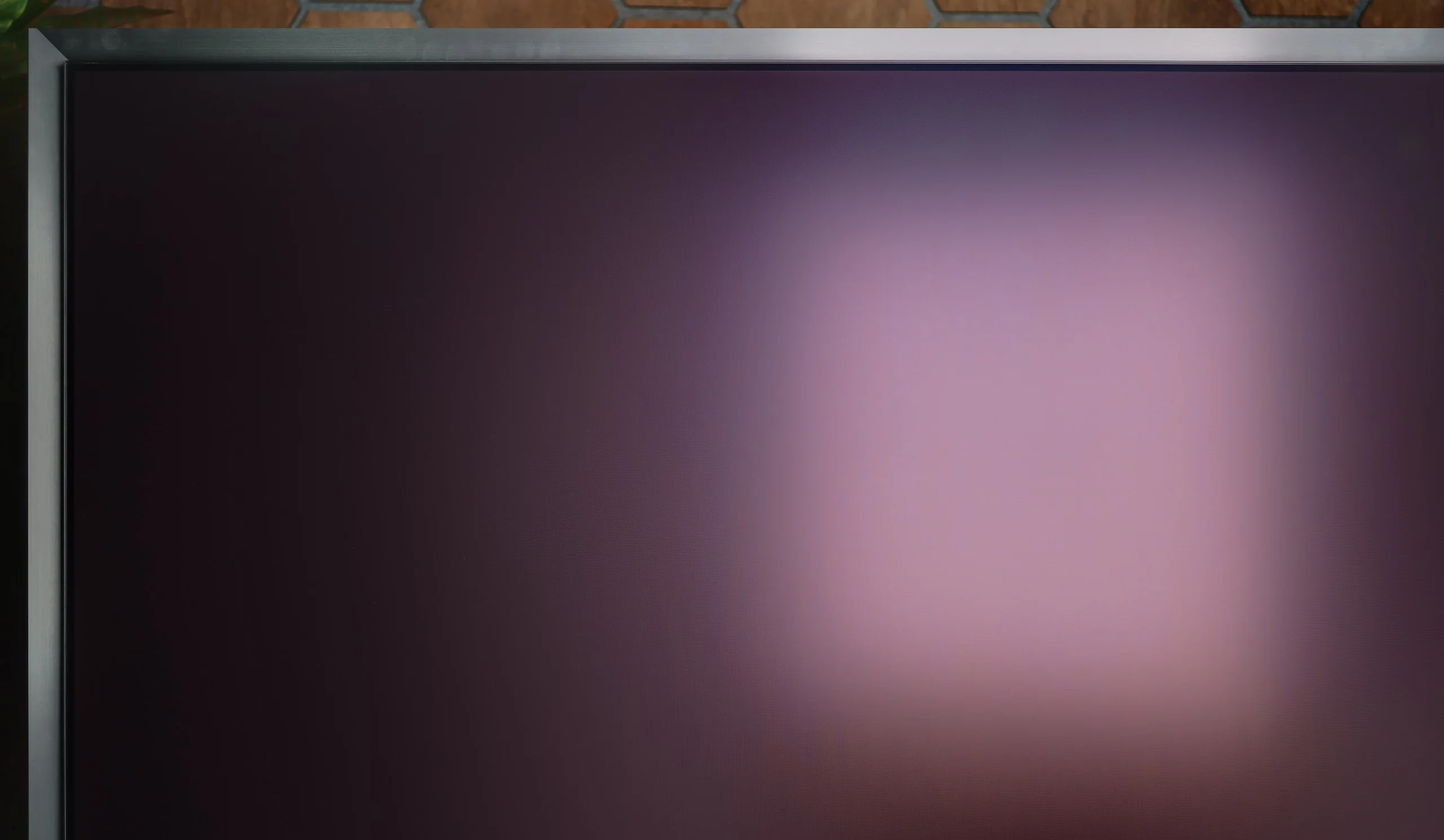
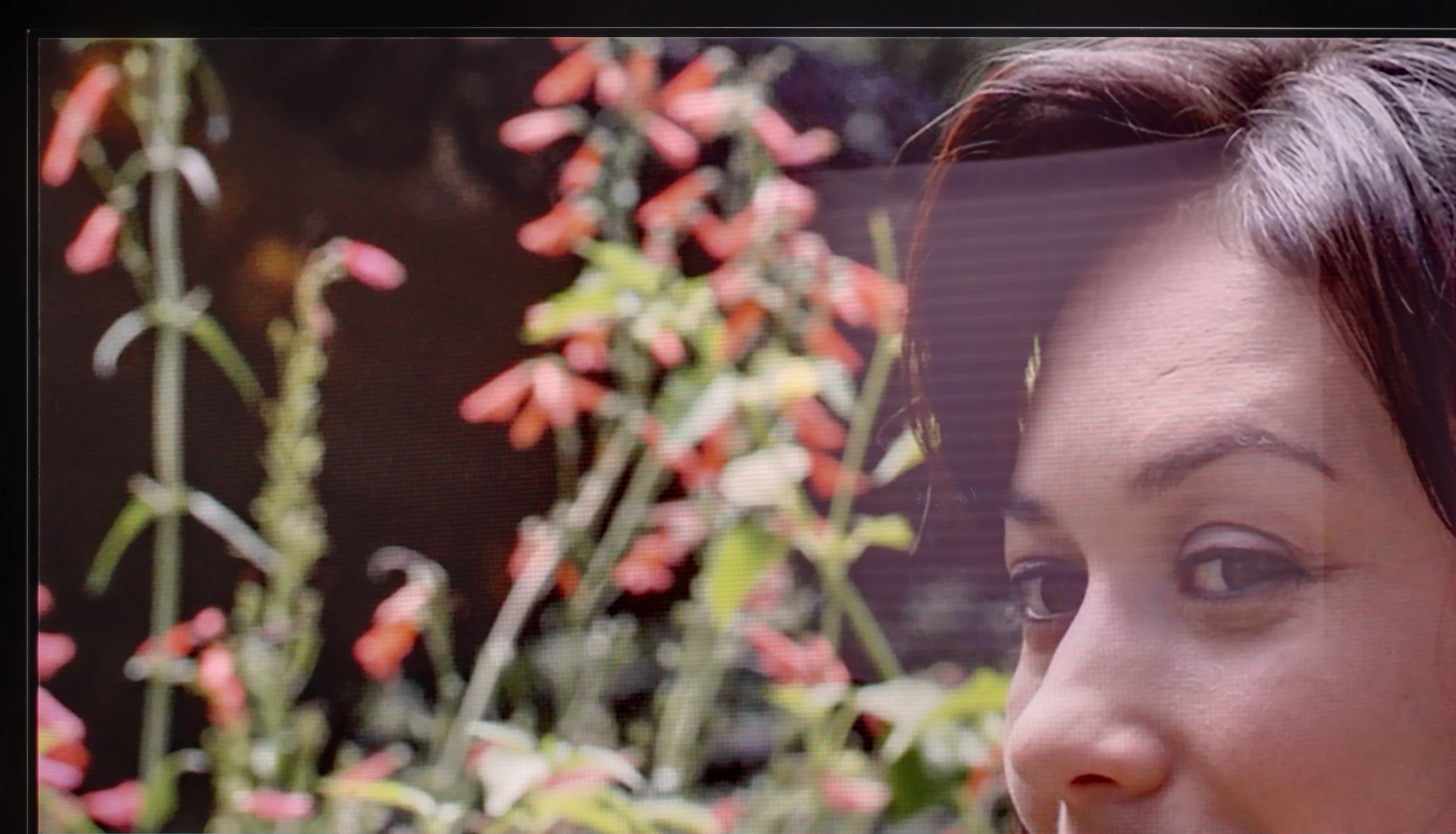
Sony A95L performs quite well in daytime conditions. The QD-OLED panel effectively suppresses reflections and glare, making viewing comfortable even in bright sunlight. An average brightness of 380 cd/m² is a really good result, especially for an OLED TV – it holds up, although it still can't compete with Mini LEDs, which are unmatched in this regard. One of the issues that may bother some viewers is the characteristic QD-OLED effect, where blacks lose their depth and take on a slightly cherry hue in strong light.
One of the key and most distinctive features of Samsung's OLEDs (including the S99H tested here) is the matte screen coating. It's currently one of the best solutions on the market if you want to minimise reflections. Whether the room has large windows or the lamps are on, any glare is very effectively dispersed. However, this comes at a cost. Because of the matte screen finish and the nature of QD-OLED panels (which in bright surroundings can take on a slightly cherry tint), blacks lose a little of their depth and richness during the day. It's worth noting, though, that this effect mainly occurs when very harsh light falls directly on the panel. Fortunately the S99H is an extremely bright OLED TV, comparable in this regard to the best Mini LED screens on the market. Its average brightness in everyday SDR content reaches close to 850 to 900 nits, so the TV will easily cope even in a strongly sunlit living room.
Panel details
Subpixel Structure:
Panel uniformity and thermal imaging:


Sony A95L
Samsung OLED S95H (S99H) (QD-OLED)
TV features
8.8/10
7.8/10
- SystemGoogle TVTizen
- System performanceVery goodVery good
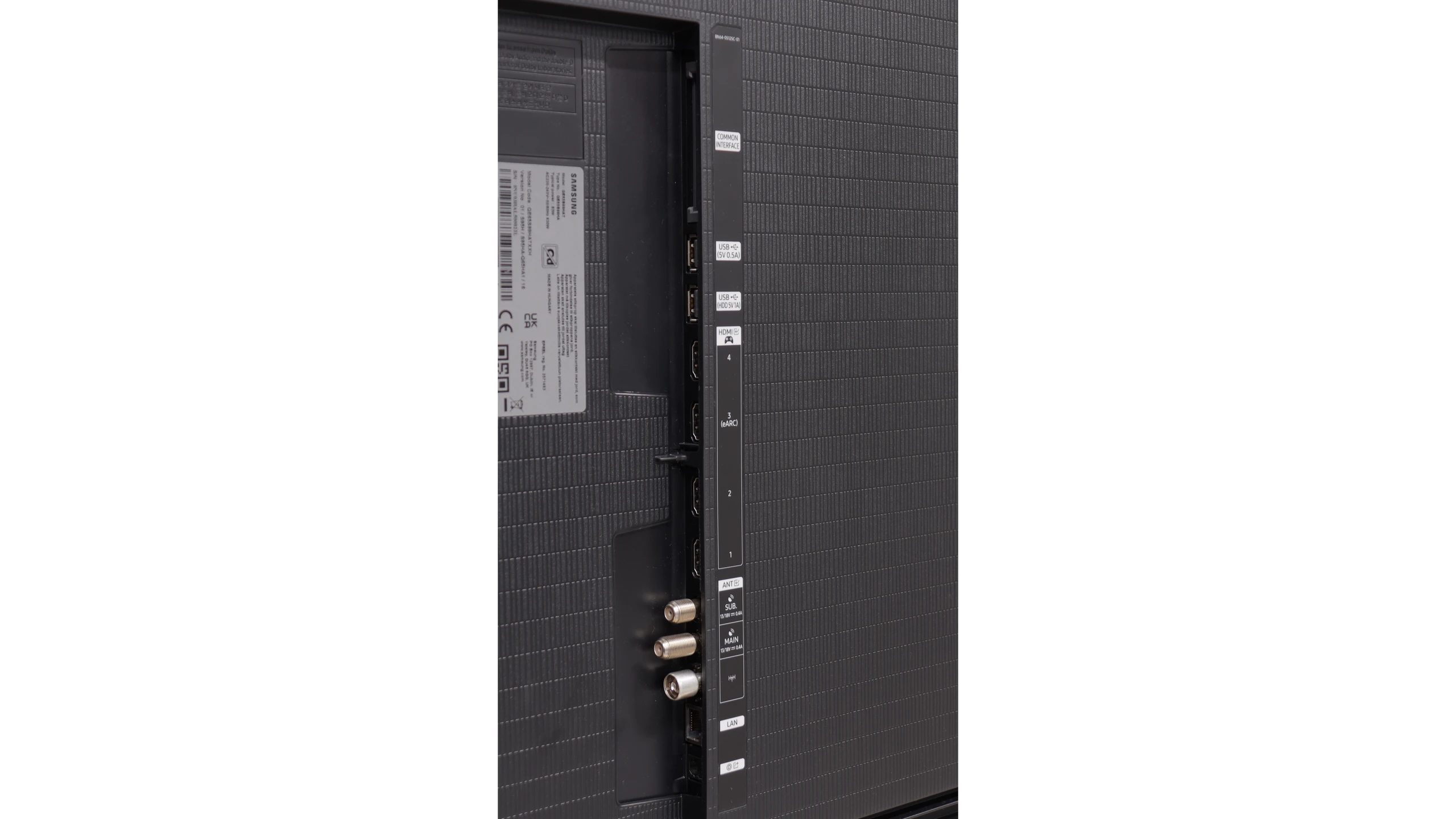
- HDMI inputs2 x HDMI 2.0, 2 x HDMI 2.1 48Gbps0 x HDMI 2.0, 4 x HDMI 2.1 48Gbps
- OutputsToslink (Optical audio), eARC (HDMI), ARC (HDMI)Toslink (Optical audio), eARC (HDMI), ARC (HDMI)
- Network InterfacesWi-Fi 2.4GHz, Wi-Fi 5GHz, Ethernet (LAN) 100MbpsWi-Fi 2.4GHz, Wi-Fi 5GHz, Ethernet (LAN) 100Mbps
- TV receptionDVB-T, DVB-T2, DVB-S, DVB-S2, DVB-CDVB-T, DVB-T2, DVB-S, DVB-S2, DVB-C
Classic features:
- Recording to USB (terrestrial TV)
- Recording programming
- Picture in Picture (PiP)
- RF remote control (no need to aim)
- Backlit remote control
- Teletext
- Audio only mode
- Bluetooth headphones support
- Simultaneous Bluetooth headphones & TV audio
Smart features:
- AirPlay
- Screen mirroring (Windows Miracast)
- Voice search
- Voice search in native language
- Ability to connect a keyboard and mouse
Sound connection options
- HDMI audioeARC (HDMI), ARC (HDMI)eARC (HDMI), ARC (HDMI)
- Other audio outputsToslink (Optical audio)Toslink (Optical audio)
- Wireless audioBluetoothBluetooth
Supported audio formats (external HDMI eARC audio):
- Dolby Digital Plus 7.1
- Dolby True HD 7.1
- Dolby Atmos in Dolby Digital Plus (JOC)
- Dolby Atmos in Dolby True HD
- DTS:X in DTS-HD MA
- DTS-HD Master Audio
Senior accessibility
- Numeric keyboard on TV
- Font size adjustment
- Audio description
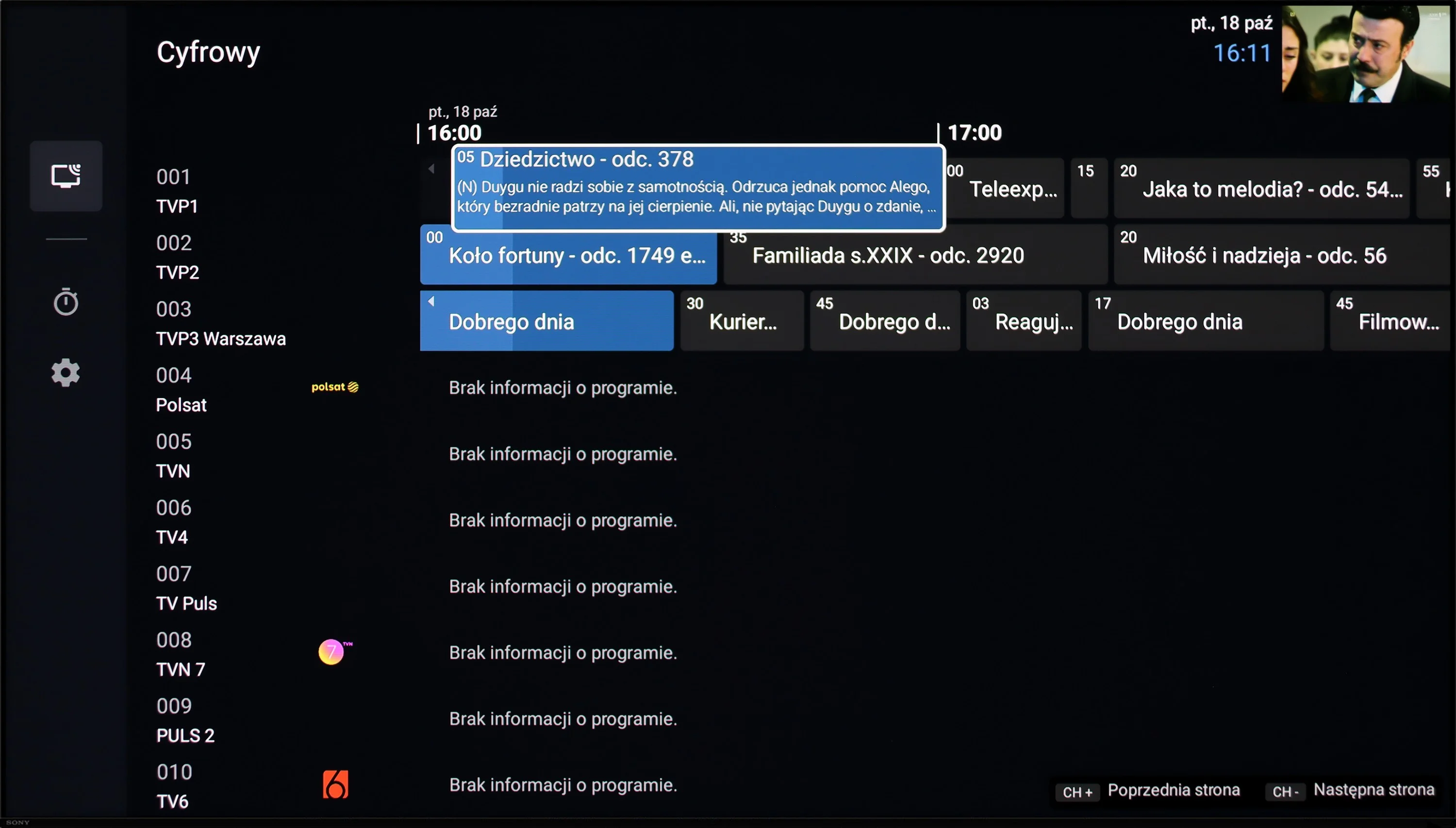
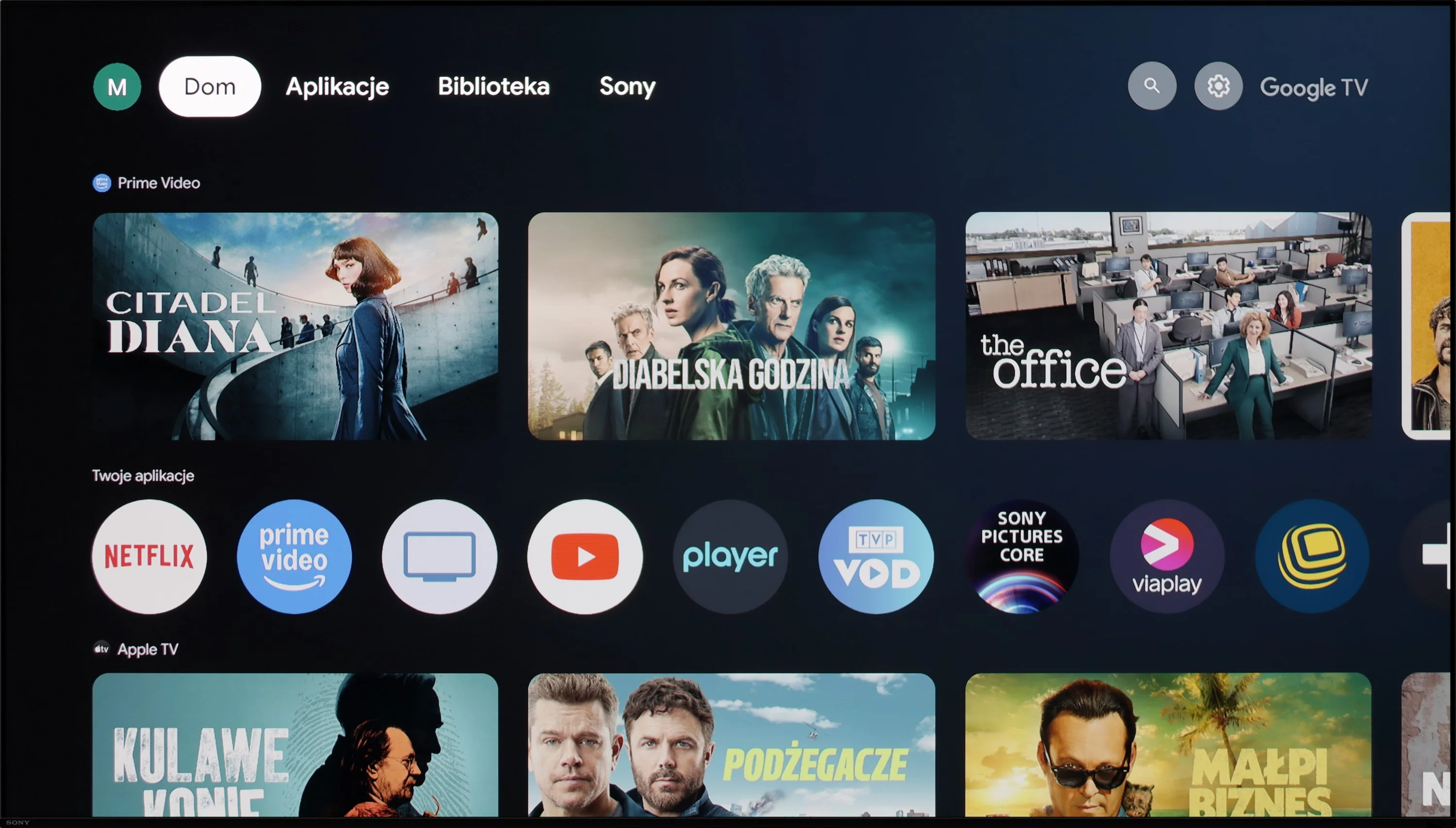
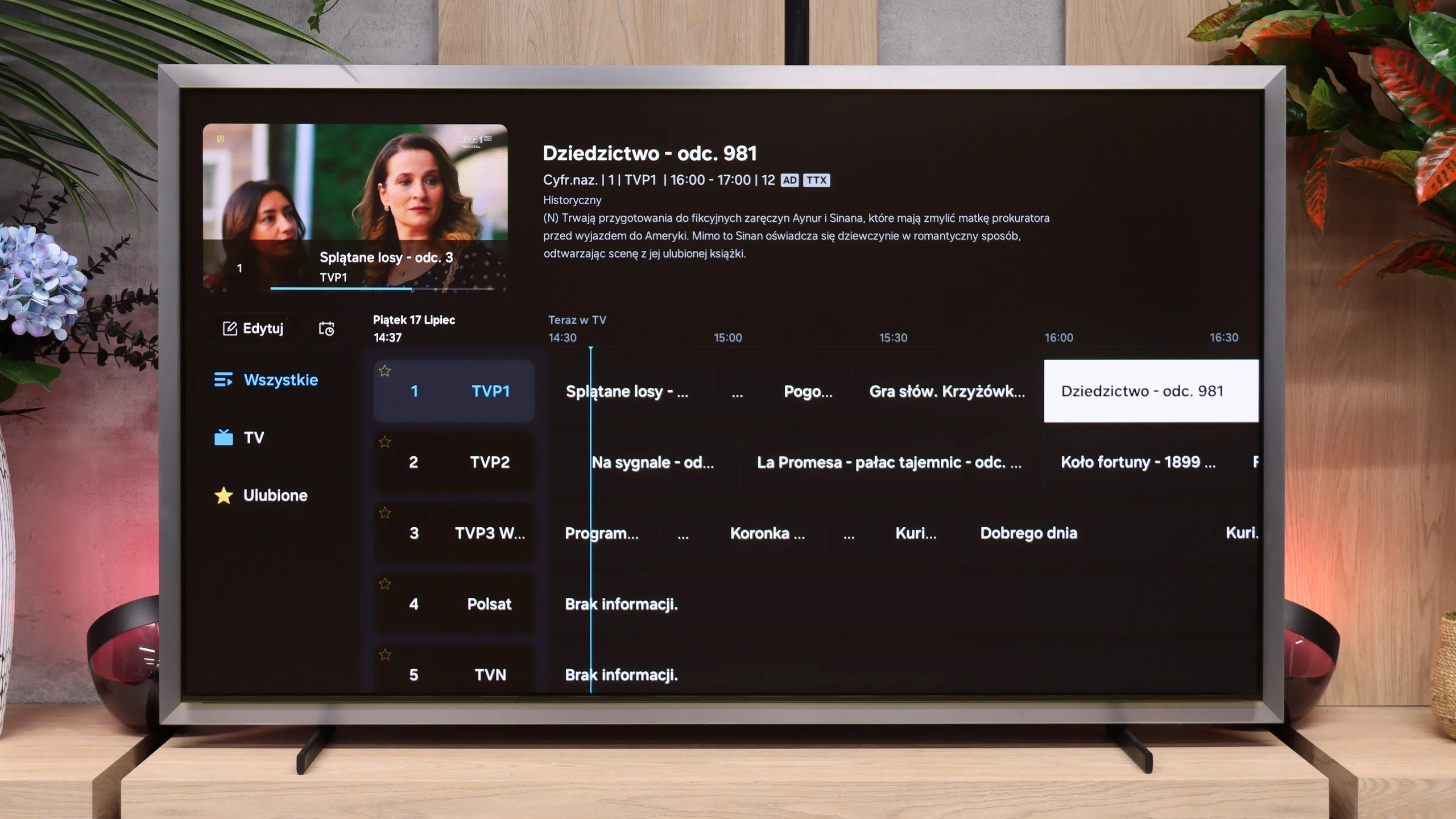
Sony A95L runs on the Google TV operating system, which provides easy access to a wide range of apps, streaming services, and various personalisation features. The interface is clear and user-friendly, and the wealth of available apps means that everyone will find something for themselves – from popular streaming services like Netflix, Disney+ or HBO Max, to various music and sports apps. Google TV also supports voice assistant functionality, allowing for easy content search, control of TV settings, and even management of other smart devices in the home – all through simple voice commands.
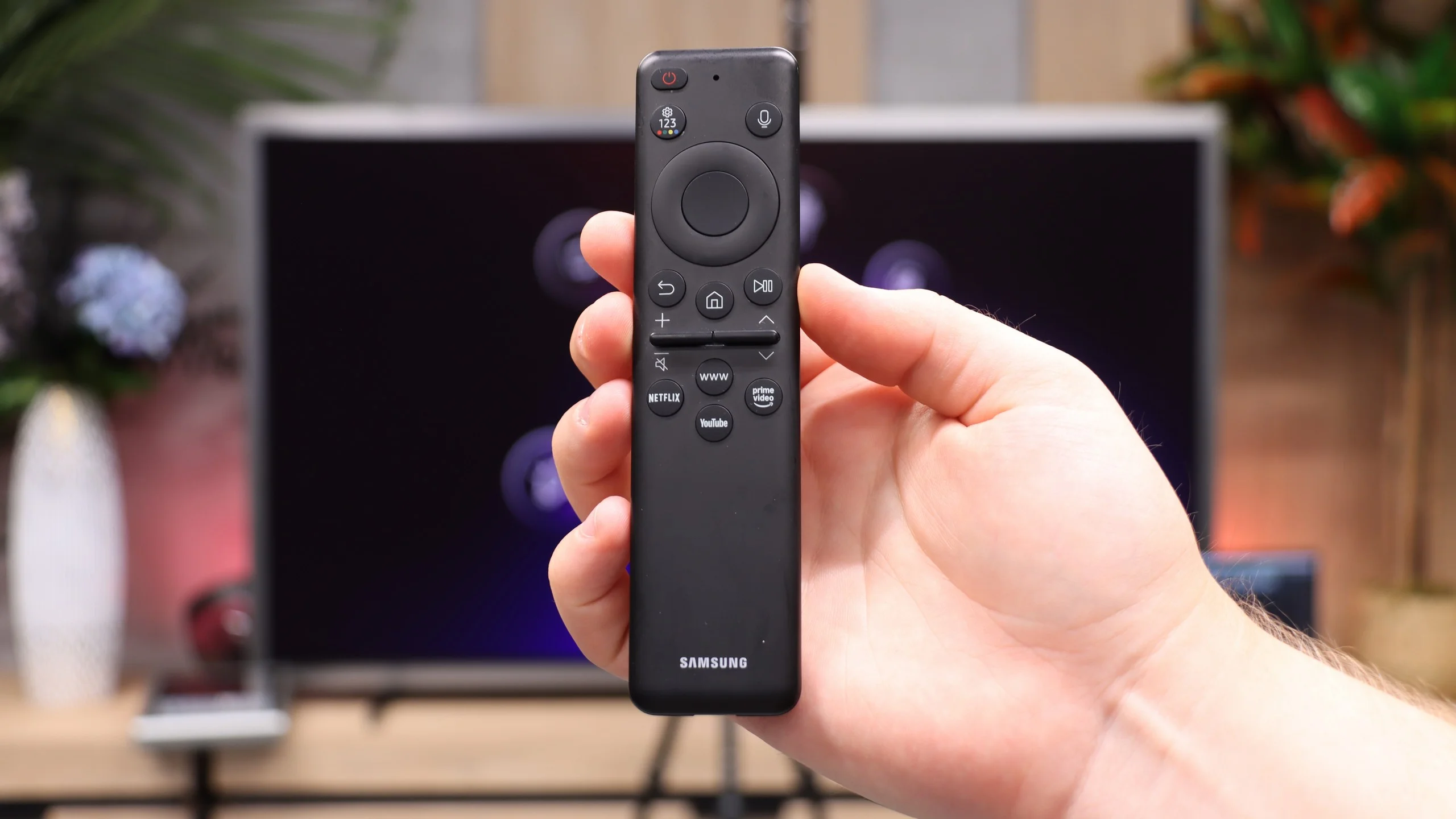
Sony A95L also offers a range of user-friendly features that make it even more versatile. The TV has the ability to record programs directly to USB memory, a convenient solution if you can't watch something live. It also supports AirPlay, making it easy to stream content from Apple devices, and additionally, you can connect various peripherals via Bluetooth, such as headphones or game controllers. The package includes two remotes – one traditional and one modern, backlit remote, which is particularly useful for evening viewing when the room is dark. It is worth mentioning the lack of PIP functionality, which allows watching multiple TV signals simultaneously.
In terms of appearance, A95L Sony may not be the thinnest OLED TV on the market, but it has its strengths. The package includes a practical stand that can be adjusted in various ways, allowing you to tailor the TV to your needs and space arrangement. Additionally, the manufacturer has included the Bravia Cam, which opens up further possibilities – from video calls to smart features such as optimising image and sound based on the viewer’s position. While it may not be the sleekest, its solid construction and useful accessories make the A95L look really good in any living room.
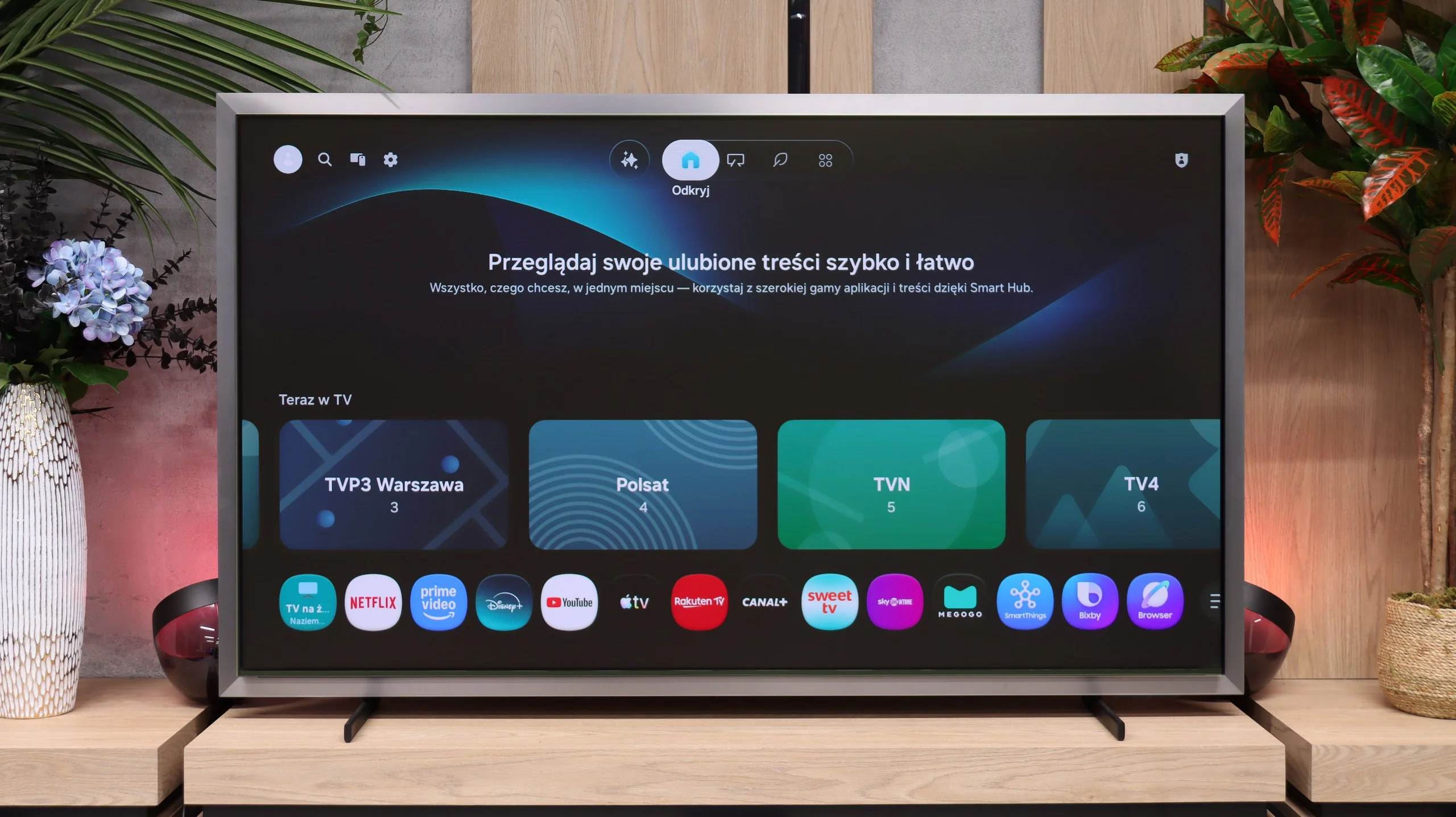
Smart features: Tizen
The Tizen system runs exceptionally quickly and stably on the S99H. The broad support for wireless protocols is notable – it includes Apple AirPlay and the recently added Chromecast support. It’s hard to fault Tizen today in terms of app availability. Its catalogue covers all the most popular streaming services and in that respect it matches the capabilities of Google TV.
Art Mode (Art Mode)
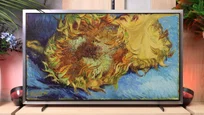
The S99H is the first Samsung OLED TV to be equipped with a dedicated Art Mode, previously seen mainly on The Frame series. That’s a bit of a surprise, because most manufacturers using OLED panels generally advise against long-term display of static images. Here the feature is officially promoted, which suggests Samsung is confident in the panel’s resistance to burn-in. Access to the full art library unfortunately requires a paid subscription. However, there’s a simple workaround: you can upload favourite artworks or your own photos to the TV’s internal storage for free and set them as the background in the dedicated app. It’s worth adding that the set includes an ambient light sensor that adjusts brightness and colour temperature so the displayed image closely mimics a real canvas or print.
Daily use and the remote
All the classic TV functions perform well on the S99H, although the controls may not appeal to older users. That’s due to the minimalist remote, which lacks a traditional numeric keypad. The advantage of the solar-powered remote is its universal remote function; you can easily pair it and control virtually any device connected to the TV, such as satellite set-top boxes, consoles and media players.
Apps
9.6/10
9.3/10






















Playing files from USB
8.7/10
8.8/10
Supported photo formats:
Maximum photo resolution:
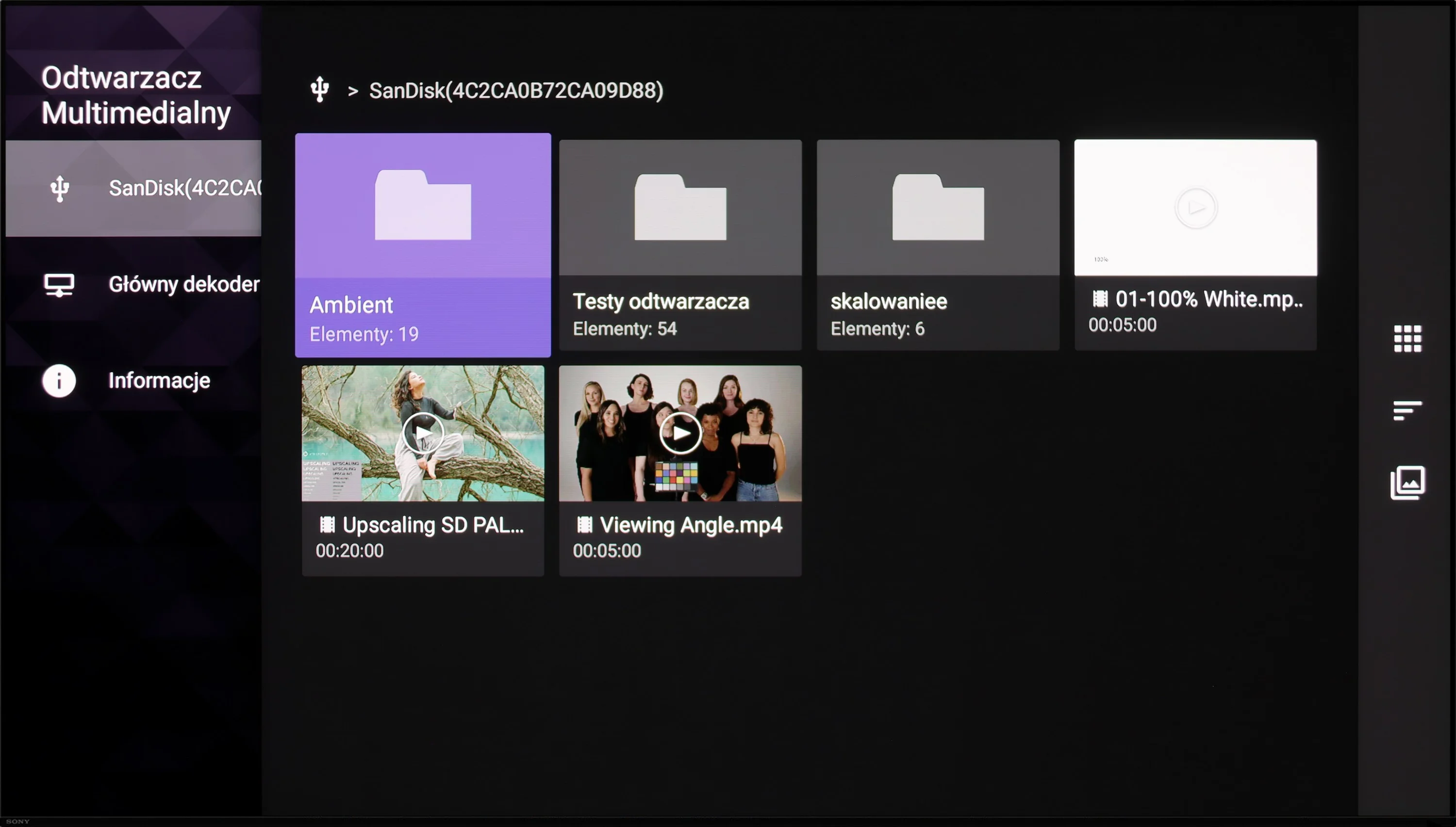
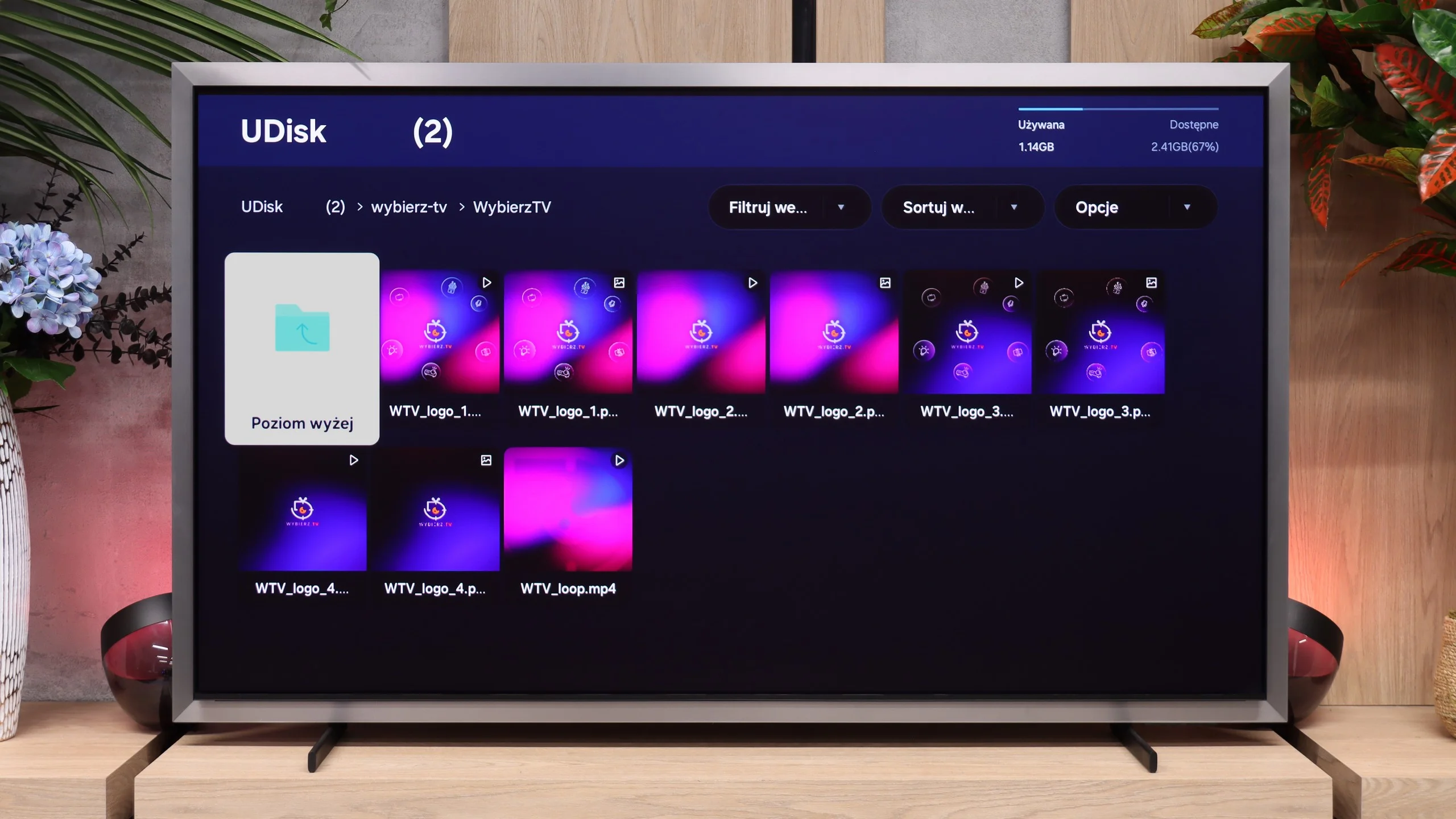
Sony A95L does quite well when it comes to playing files from USB. The built-in media player will satisfy most users – it’s easy to use and supports popular formats, making it simple to play movies, photos, or music directly from a connected USB drive. The only thing missing is the ability to change the font colour in subtitles, which can be problematic in some situations. Fortunately, the Google TV system allows the installation of other media players that offer more advanced personalisation options, so you can easily customise everything to your needs.
The built-in media player in the S99H runs smoothly and quickly. The TV easily handles most popular video and audio formats, providing smooth playback without stuttering. The only reservations concern support for certain photo formats stored on external drives. The TV reacts rather oddly to files in Apple’s HEIC format... although thumbnails in the browser display correctly, attempting to open a photo at full size causes the interface to freeze. It looks like a software bug that Samsung will likely fix in an upcoming update.
Sound
7.9/10
8.7/10
- Maximum volume-95dB
- Dolby Digital Plus 7.1
- Dolby True HD 7.1
- Dolby Atmos in Dolby Digital Plus (JOC)
- Dolby Atmos in Dolby True HD
- DTS:X in DTS-HD MA
- DTS-HD Master Audio
Sony A95L offers sound that definitely stands out from most televisions. For built-in speakers, the sound is truly impressive – full, with well-balanced bass and mid-tones. Dialogues are clear, and sound effects are well distributed, making the television great for both watching movies and gaming. The Acoustic Surface Audio+ system, which converts screen vibrations into sound, creates a more spatial impression, adding extra depth to the content being viewed.
For such a slim design, the Samsung S99H sounds surprisingly good. At first we were amazed that such a flat screen could produce such a full, room‑filling sound. Importantly, there’s even some bass, while keeping in mind these are built-in TV speakers, not a dedicated home cinema. 😉 The TV easily handles Dolby Atmos decoding and Samsung’s own Q-Symphony system. That makes it simple to pair the screen with a Samsung soundbar (or the new Studio series speakers), so the built-in speakers work together with external audio. For everyday viewing and standard use, though, external audio gear won’t be needed right away. As is traditional for Samsung, there’s no support for DTS. For people who use streaming only that may not be a big loss, but for fans of physical media and Blu-ray discs it will be a noticeable drawback.
Sound Quality Test
No sound test video
Acoustic Measurements
No acoustic data
95dBC (Max)
75dBC
Reader comments
Comments are provided by the external service Disqus (Zeta Global). Once loaded, Disqus may set cookies and process data about your activity.
We will remember your choice on this device. Provider's privacy policy