 Direct comparison
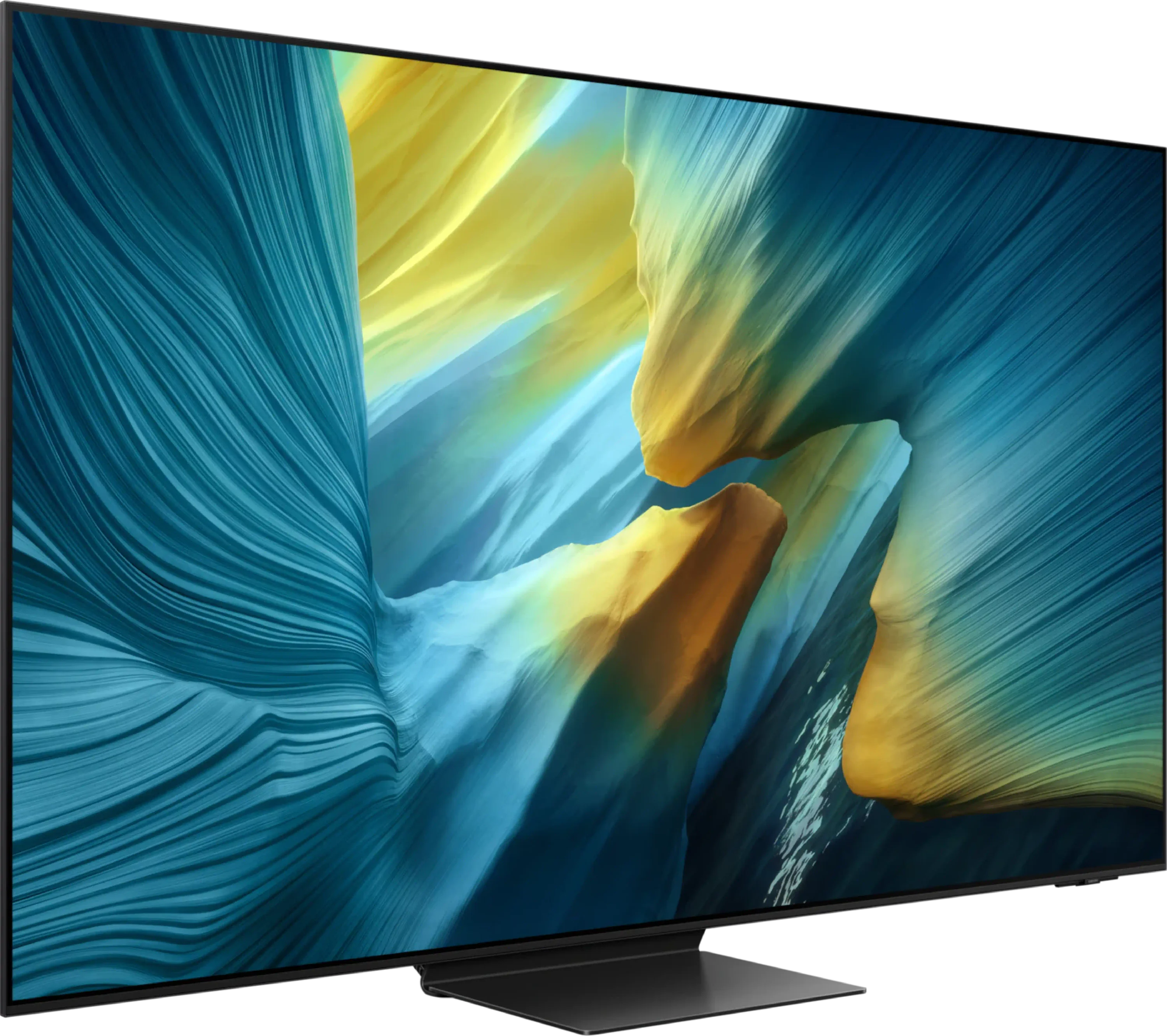
In the case of the 83-inch version, Samsung took a different route than with smaller diagonals and opted for LG Display's Tandem WOLED panel. This move initially raised questions but has proven to be right on the money in practice. We have here an exceptionally successful mix: absolutely reference black, excellent brightness allowing enjoyment of HDR content even during the day, and overall picture quality that firmly places this television at the top of the entire market. There are also features aimed at gamers – lightning-fast input lag, 165 Hz refresh rate, full support for VRR and G-Sync/Freesync, as well as four HDMI 2.1 ports that allow connection of multiple consoles or PCs without any compromises. Adding to the list of pros is the matte coating – rare in OLEDs, yet remarkably effective in this case. Thanks to it, light reflections are largely eliminated, and the television remains readable and comfortable to view even in a sunlit lounge. This is a feature that takes on even greater significance in such a large size, as it's hard to imagine an 83-inch screen on which instead of a movie, we see a reflection of our own room. Of course, there are compromises – the viewing angles on the WOLED panel are not as perfect as in the QD-OLED versions. However, in return, we get better performance in challenging lighting conditions and a more stable image when strong light hits the screen. In practice, it is hard to see this as a real downside, rather just a different distribution of emphasis compared to the smaller variants. The S95F in the 83-inch version is an almost explosive combination: a gigantic OLED with a matte coating, excellent brightness, fantastic black levels, and a complete set of features for gamers. If someone dreams of a massive, matte screen that isn't afraid of daylight, there is currently no better screen available on the market.
- Matching (Score) |
- Our verdict |
- TV appearance |
- Where to buy |
- Contrast and black detail |
- HDR effect quality |
- Factory color reproduction |
- Color reproduction after calibration |
- Smoothness of tonal transitions |
- Image scaling and smoothness of tonal transitions |
- Blur and motion smoothness |
- Console compatibility and gaming features |
- Input lag |
- Compatibility with PC |
- Viewing angles |
- Daytime performance |
- Panel details |
- TV features |
- Apps |
- Playing files from USB |
- Sound
S95F / FAT / FAE

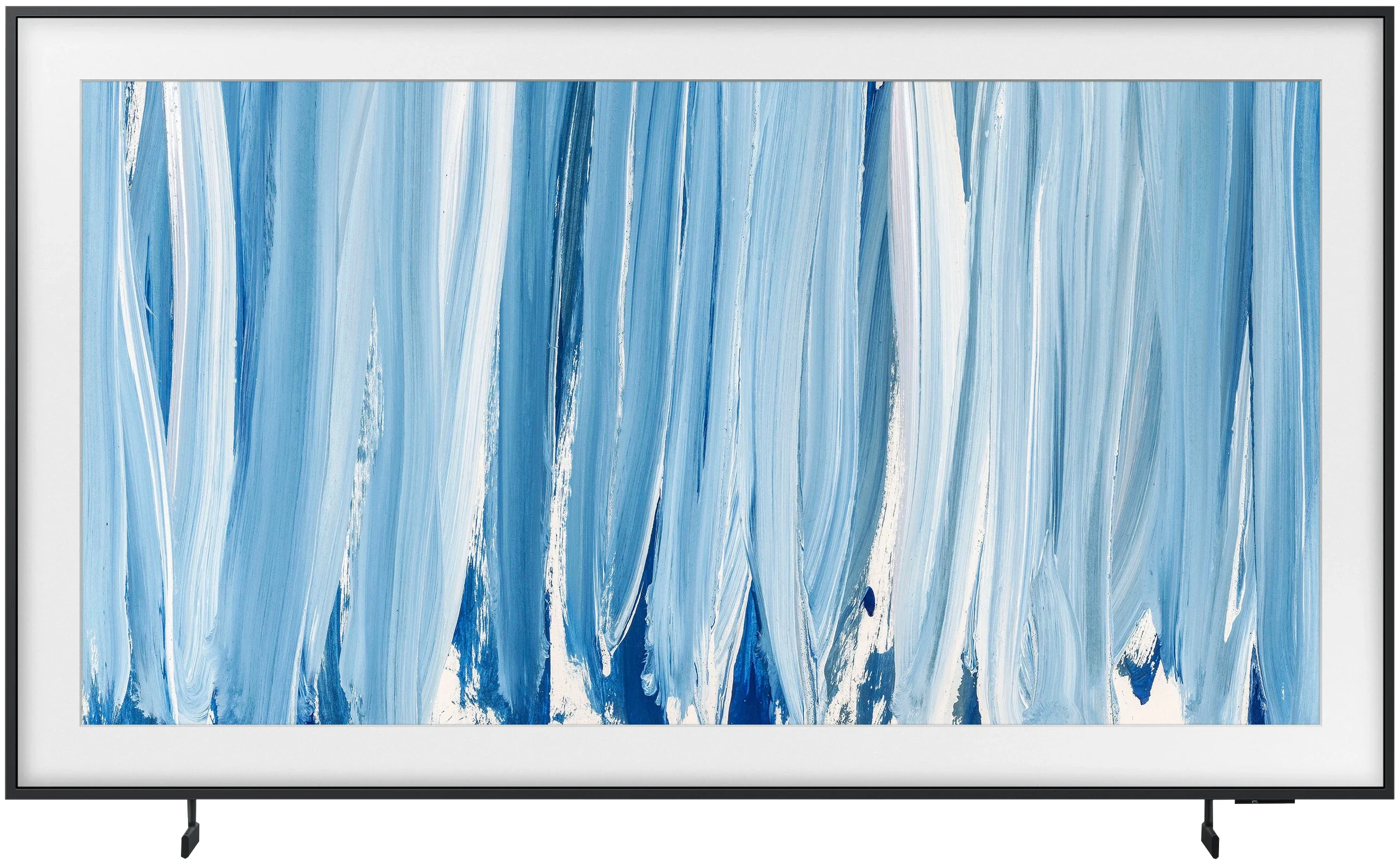
The Frame Pro / LS03HW
Available screen sizes: 83”
Panel type: WRGB OLED
Resolution: 3840x2160
System: Tizen
Model year: 2025
Panel type: LCD VA
Resolution: 3840x2160
System: Tizen
Model year: 2026
Check how well they match your needs
Take the surveyOverall rating
8.7
7.3
 Movies and series in UHD quality
9.0
6.8
 Classic TV, YouTube
9.0
6.5
 Sports broadcasts (TV and apps)
8.6
6.9
 Gaming on console
9.8
8.9
 TV as a computer monitor
8.8
8.4
 Watching in bright light
7.7
6.5
 Utility functions
7.9
7.7
 Apps
9.3
9.3
 Sound quality
8.0
6.4
Complete the survey to find out what fits your preferences
Advantages

Perfect black and outstanding contrast
High image brightness
Amazing image quality after calibration
Ultra-fast WOLED panel 165 Hz
Excellent choice for gamers – full support for HDMI 2.1, VRR, ALLM, and HGiG, with an input lag of just 5 ms
Very precise colour reproduction after calibration
Best reflection suppression thanks to the matte screen finish and better panel performance in challenging lighting conditions compared to the QD-OLED panel version
Intuitive and quick Tizen operating system with a rich set of features
Modern and stylish design
One Connect module for easy and aesthetic cable management
On-wall picture styling: interchangeable frames
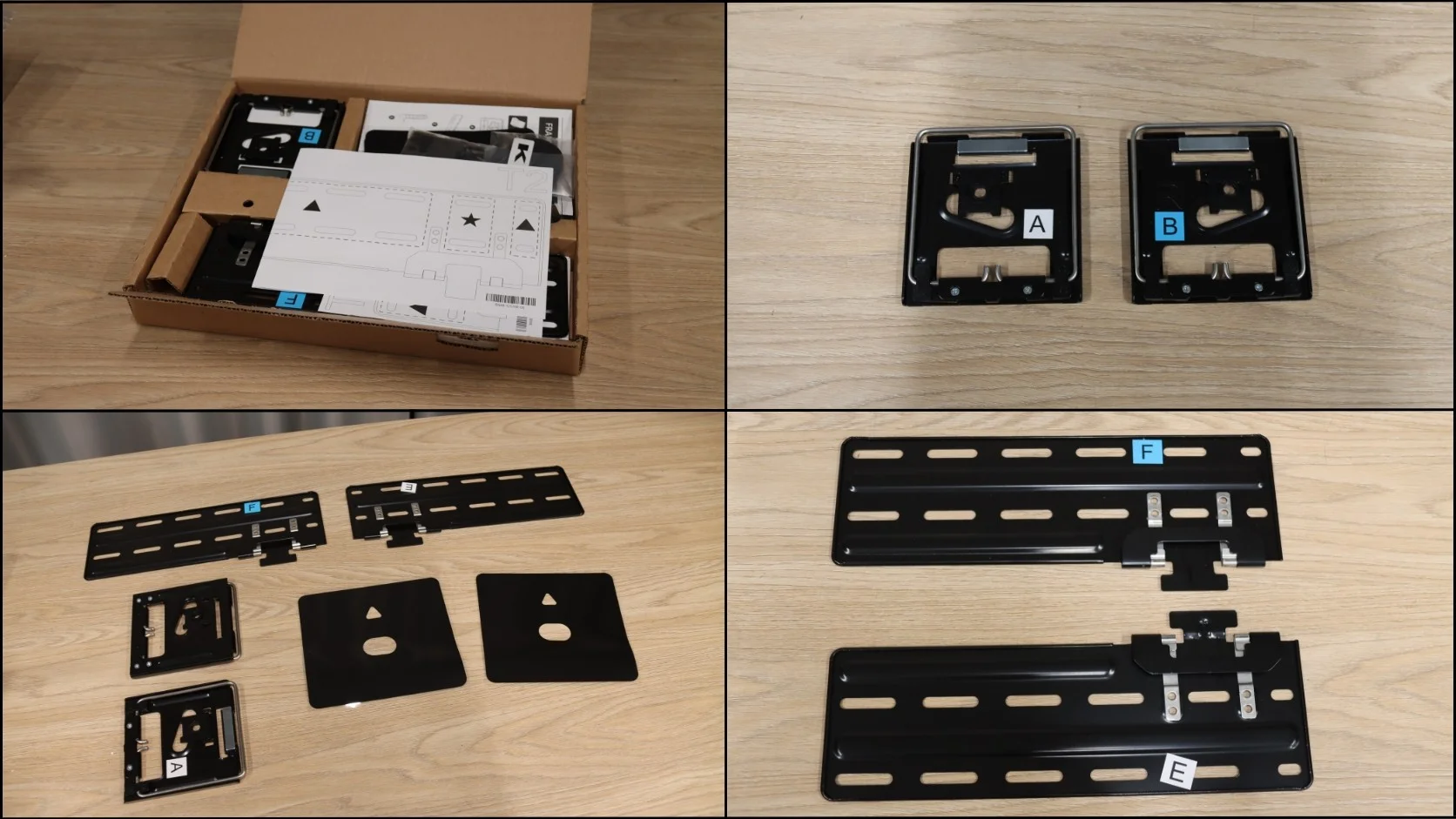
Well equipped: wall mount and Wiralles One Connect included
Art Store: the best artwork scans on the market
Matte screen finish: no reflections
High brightness 850–900 nits
Wide colour gamut (QLED)
Many gaming features: VRR, ALLM, refresh rate up to 240 Hz, Game Motion Plus
Smooth, sharp motion: relatively low motion blur for a VA panel
Tizen operating system, rich in modern features
Disadvantages

No support for DTS:X (home cinema)
No USB recording from built-in tuners
Worse viewing angles (though still very good) than the version with QD-OLED panel
Poor black levels for a "Neo QLED" screen (edge-lit)
Art Store requires a monthly subscription (you can work around this by uploading your own photos 😉)
Poor viewing angles (they could be better to improve the on-wall picture effect)
High input lag when using the Wireless One Connect wireless module
Our verdict
The Frame Pro 2026 makes the most sense when you want a TV that looks good in the living room and isn’t just another large black slab on the wall. And here Samsung still does something most manufacturers can’t match. Flush mounting, interchangeable bezels, Art Mode, a matte finish and the wireless One Connect mean that when The Frame Pro is hung correctly it can really look more like a piece of decor than AV equipment. In our view, it’s the best-executed TV of this kind on the market. Importantly, you don’t entirely pay for the looks with everyday performance. The Frame Pro is bright, the matte finish handles reflections very well, so it works really well in a brightly lit living room. Colors are vivid, motion is handled very well, and there are surprisingly many gamer-friendly features for a TV that’s primarily meant to “look better.” More questions arise when you consider the “Pro” badge and the fact it’s labelled as a Neo QLED screen. From that you might expect a large jump in picture quality over the regular The Frame, but in practice it isn’t that big. The TV uses Mini-LED backlighting and local dimming, but the zones are located at the edges of the screen. That’s a completely different approach than in more advanced Mini-LEDs, where the backlight works across the whole panel. That isn’t a major issue in bright, colorful scenes. It becomes more noticeable in the evening, especially in films with many dark scenes. Then you can see that black levels and backlight control are clearly weaker than in the best Mini-LED TVs. This is where it becomes most clear that “Pro” doesn’t mean top-tier picture quality in this case. An interesting alternative is the Samsung S99H. It has a strong design focus, but in terms of picture it really goes further. Of course it also costs significantly more, so it’s not a direct replacement but rather an option for someone who wants to combine both worlds with fewer compromises. So is it worth buying The Frame Pro 2026? We think yes, but only if you know what you’re paying for. The TV’s biggest strengths are its looks, Art Mode, very good performance in a bright living room, and the wireless One Connect. If that’s what you’re looking for, The Frame Pro is a very appealing option. If the main reason to pay extra is significantly better picture quality, we’re less convinced. It’s simply a better, more refined The Frame, not a full-fledged rival to the best Mini-LEDs.
TV appearance

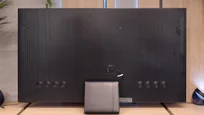
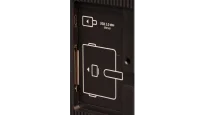
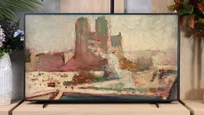
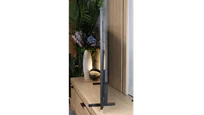
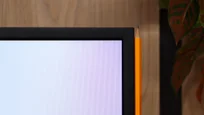
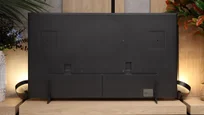

Contrast and black detail
10/10
5.3/10
Local dimming function: Yes, number of zones: 24 (1 x 24)
Contrast:


Result
∞:1

Result
∞:1

Result
∞:1

Result
∞:1

Result
∞:1
Result
5,400:1
Result
3,250:1
Result
3,900:1
Result
3,750:1
Result
3,900:1
Halo effect and black detail visibility:
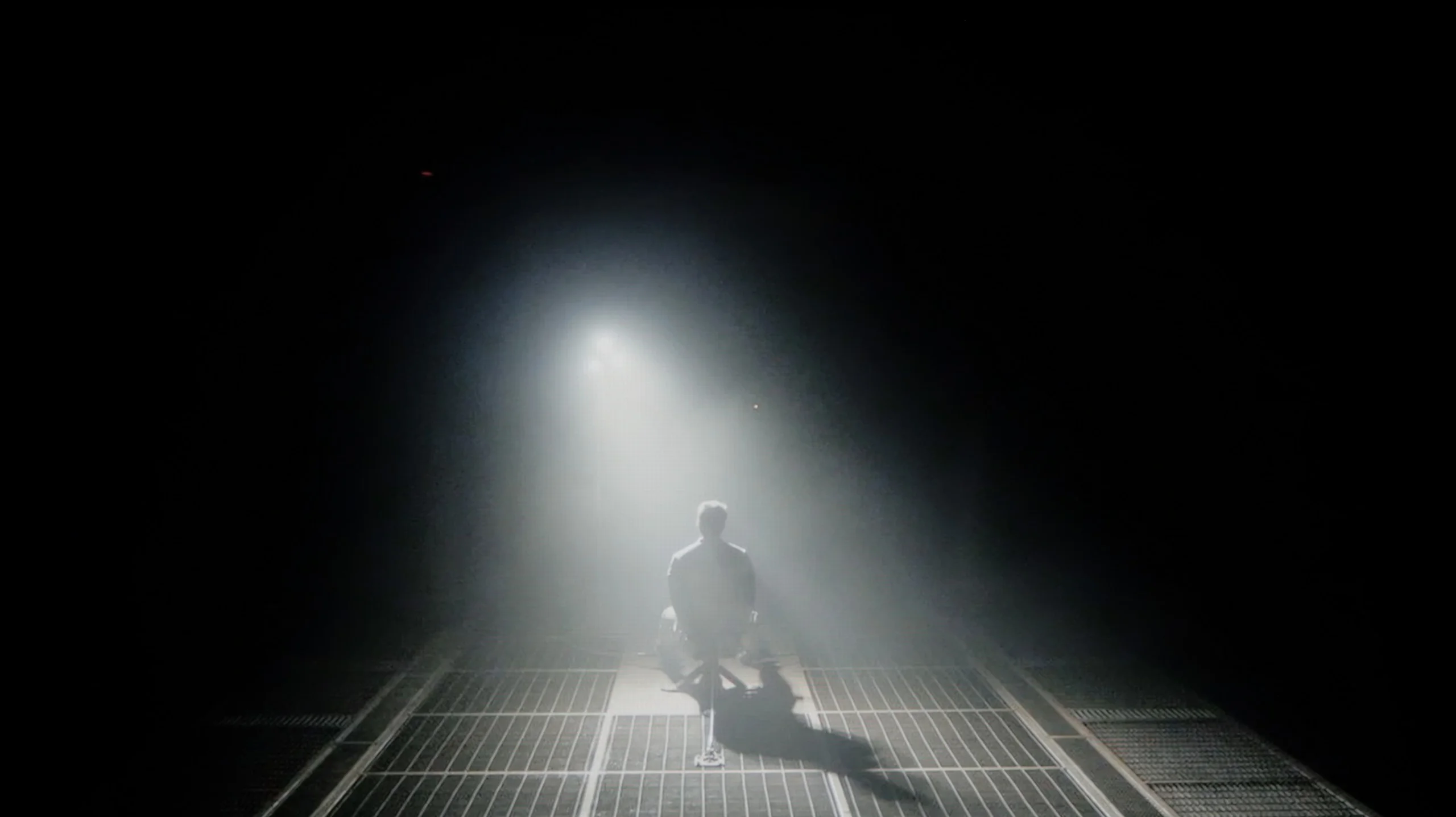
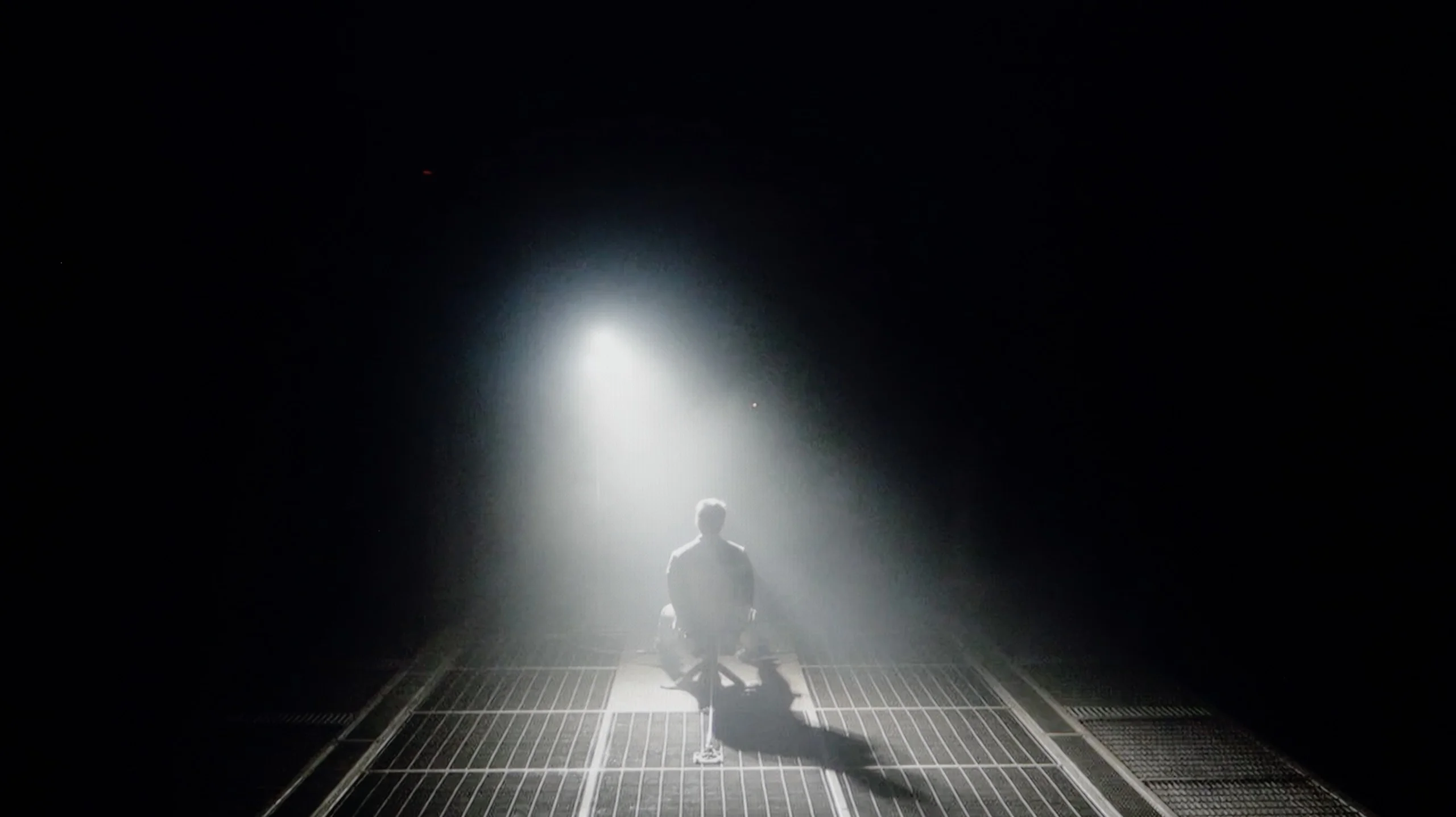
Check the visibility of bright lights on a dark background. Mini-LEDs often struggle with this. The photo does not compare black levels – that’s what the video below is for.
The video accurately shows differences in contrast and black levels between TVs, as well as potential issues: halo around bright objects or Mini-LED zone operation visible as brightness jumps.
The 83-inch version, equipped with a Tandem OLED panel, also offers an image that is truly breathtaking. Despite the different technology, the end result remains at an absolutely top level. The black is deep and uniform, without any bleed or imperfections, and the contrast is simply jaw-dropping. In dark scenes, every detail remains visible, and the separation of lights is perfect – nothing merges together, and the image looks as it should on a reference-class television. This is proof that regardless of the panel used, Samsung has set the bar very high in this series.
The Frame Pro formally belongs to the Neo QLED family, so it uses Mini-LED backlighting. Except this isn't the same kind of Mini-LED we know from most TVs in that series. Instead of a large number of zones placed behind the panel, it only has a single row of zones at the edge. In practice it's an edge-lit design that simply uses smaller LEDs. Unfortunately that's quite quickly visible in blacks. There's just not enough local dimming here for the TV to handle more demanding scenes well. In our measurements contrast most often fell in the range of 3,000–5,000:1, so it's hard to speak of the level you'd expect from more advanced Mini-LEDs. You see it most when single bright elements appear on a dark background. A larger part of the image lights up with them, which makes blacks look noticeably shallower, almost navy. The Sicario 2 scene illustrates this well. Because of that placement of the zones, the TV simply doesn't have the precision to show it any other way. The Frame Pro uses Mini-LED, but its black performance is much closer to simpler designs. It's a bit of a shame, because this is the element we complained about most last year.
HDR effect quality
8.6/10
6/10
Luminance measurements in HDR:

Result
2074 nit

Result
2107 nit

Result
2330 nit

Result
2165 nit

Result
1083 nit
Result
834 nit
Result
536 nit
Result
545 nit
Result
460 nit
Result
668 nit
Scene from the movie “Pan” (about 2800 nits)


Scene from the movie “Billy Lynn” (about 1100 nits)


The photos show two HDR10 movies. 'Pan' is one of the brightest productions ever made, while 'Billy Lynn' (soldier) has brightness typical of streaming (Netflix, Prime, HBO MAX). Notice the intensity of effects and detail in whites.
Static HDR10


The photos present the visibility of white details in various HDR formats. They do not show brightness differences between TVs (these can be compared in the previous gallery).
Dynamic: HDR10+
Dynamic: HDR10+


The photos present the visibility of white details in various HDR formats. They do not show brightness differences between TVs (these can be compared in the previous gallery).
HDR luminance chart:
Samsung The Frame Pro 2026 (LS03HW)
SAMSUNG S95F (TANDEM OLED 83")
Luminance of RGB colors
The Samsung S95F in the 83-inch variant with a Tandem OLED panel also enchants with its HDR effects. In test movie scenes, such as “Life of Pi” or “Sicario 2,” where smaller light points dominate – stars in the night sky, the glow of the moon, or headlights – the TV easily achieves brightness levels surpassing 2000 nits. This is a result that not long ago seemed unattainable for OLEDs and places this model in the same category as the best Mini-LED constructions.
The limitations of organic panels only emerge in full-screen scenes completely filled with white. In the case of this model, for example, in the final scene of the film The Meg, brightness drops to around 1000 nits – slightly lower than in the smaller QD-OLED variants, where the result hovered around 1400 nits. Nevertheless, we are still talking about an outstanding result, unprecedented in OLED TVs of this size. The colour reproduction is equally impressive. The new Tandem OLED panel nearly catches up to QD-OLED TVs, offering excellent coverage of a wide colour gamut. The results are slightly weaker than those of QD-OLED, but in practice, they still provide an image whose intensity and naturalness of colours are hard to compare with any other television.
You can't fault The Frame Pro for one thing: brightness. At peak we measured about 850-900 nits, so the TV has plenty of power to make many HDR scenes look really impressive. Bright, full-screen shots and more colourful frames perform best. In those scenes The Frame Pro can make a good impression — the image is bright, punchy and has the effect we expect from HDR. In our measurements some scenes reached over 800 nits, and even in tougher passages the TV maintained a fairly respectable brightness level.
The problem starts when HDR depends on small bright elements shown against a dark background. Single lamps, stars or reflections can be bright, but very often the black level across a larger part of the image also rises. As a result the bright point itself can look good, but the whole frame loses a lot of quality. That means The Frame Pro shows HDR best in scenes that are simply full-screen. If a film or series contains many such shots, the effect can be genuinely enjoyable. In darker material the limits of local dimming become much more noticeable.
Colours
The Frame Pro deserves praise for its colour gamut coverage. The TV uses quantum dots, the solution known as QLED, so it can deliver really well-saturated colours. In our measurements coverage of the important DCI-P3 palette was around 94.5%, while the more demanding BT.2020 was about 72%.
Those are very solid results that in most scenes produce pleasant, saturated colours. Of course they are not as eye-catching as the values from the latest panels using RGB backlights, but The Frame Pro makes up for that in another way — colour stability. Regardless of the scene, colour saturation remains fairly consistent and there aren't situations where the TV loses colour badly in more demanding frames.
Factory color reproduction
6/10
5.5/10


This illustrative image shows how colors change after professional calibration. If you can see the difference, you can order it from SkalibrujTV – it's our own service.
Factory mode
After calibration


This illustrative image shows how colors change after professional calibration. If you can see the difference, you can order it from SkalibrujTV – it's our own service.
Factory mode
After calibration
The best picture mode right out of the box is undoubtedly Filmmaker Mode. This mode has been present in Samsung televisions for several years and is intended to reproduce the image as faithfully as possible to the creators' vision. In SDR material, it performs reasonably well, though not without flaws. The image is slightly dimmed, and the white balance tends to shift towards red and blue, resulting in a slight pinkish tint on the screen. Average colour errors hover around values of ΔE 3–4, which is on the borderline of what most people can detect with the naked eye.
The limitations are much more apparent with HDR content. Here, a slight excess of blue in the white balance isn't such a big issue – the real obstacle is how the television manages brightness. In many scenes, the image looked as if it had been blown out, and details in the blacks could completely vanish. The final effect didn't do justice to what such a device is capable of, leading to significant colour inaccuracies. It's hard to understand why such a factory characteristic was chosen, as the perception of HDR in this rendition was definitely not what it should have been.
In SDR material The Frame Pro in Filmmaker mode performs quite well, though it falls short of perfect. White balance is relatively even, but as brightness increases the blue component diminishes, so brighter parts of the image can have a slightly warmer tint. A bigger difference is visible in the gamma, i.e. the screen’s brightness handling. Across most of the range it runs below our reference point, which means the TV brightens the midtones a little. As a result, the image can appear a little brighter and less contrasty than it should. The colour errors themselves aren’t huge, but they’re noticeable enough that calibration can still make a significant improvement.
In HDR content the white balance looks similar, being fairly even across much of the range, with larger deviations appearing only at higher brightness. The EOTF curve, however, is more revealing. The Frame Pro holds up fairly well against the reference values in the brighter parts of the image, but clearly lifts the darkest parts. This is primarily due to the TV’s backlight design. This also affects the colours. With less saturated colours the errors are still moderate, but they become significantly larger as saturation increases. In Colour Checker measurements many samples already show high error values. So the out-of-the-box HDR can be considered decent, but it’s definitely not an image we’d call very accurate.
Color reproduction after calibration
9.4/10
8.5/10


The photos show how movies look on the TV. Pay attention to black detail visibility, colors, and shadow tint.


The photos show how movies look on the TV. Pay attention to black detail visibility, colors, and shadow tint.
After calibration, the S95F shows what it can really do. The white balance has been straightened out, and minor inaccuracies have been corrected, making the image in SDR content look nearly exemplary. Colour differences have fallen below the level that the human eye can detect – looking at the screen, one just gets the impression of complete naturalness and harmony of colours.
In HDR, the improvement is equally noticeable. The TV handles brightness much better, and there’s no longer the 'blowing out' of the entire frame. Bright scenes are more controlled, and blacks retain more detail, though sometimes a slight brightening of the overall image can still be noticed. However, this doesn’t change the fact that after calibration, the S95F delivers an image that can confidently be called one of the best on the market – regardless of whether we’re watching movies in SDR or spectacular productions in HDR.
After calibration, the biggest improvements are seen mainly in SDR material. We managed to even out the white balance, but an even more important change was the gamma correction, which before calibration had the greatest effect on the picture's character. After the adjustments the gamma curve is now very close to the reference, so the image is not as bright in the mid-tones and simply looks more natural. Colour errors have also been noticeably reduced, so the effect of calibration in SDR is clearly visible.
In HDR the situation is a bit more complex. White balance was improved and in some ranges the TV tracks the reference much better, but at higher brightness levels deviations still appear. The same goes for colour reproduction; some errors can be corrected, but not all stem from the settings themselves. This reveals the limitations of the TV's design and the way its backlight and local dimming affect the HDR image. So with The Frame Pro, calibration makes the biggest difference to everyday content. Regular TV, YouTube and films and series in SDR (mainly those from cheaper streaming service tiers) can look noticeably better afterwards.
Smoothness of tonal transitions
8.6/10
9.5/10
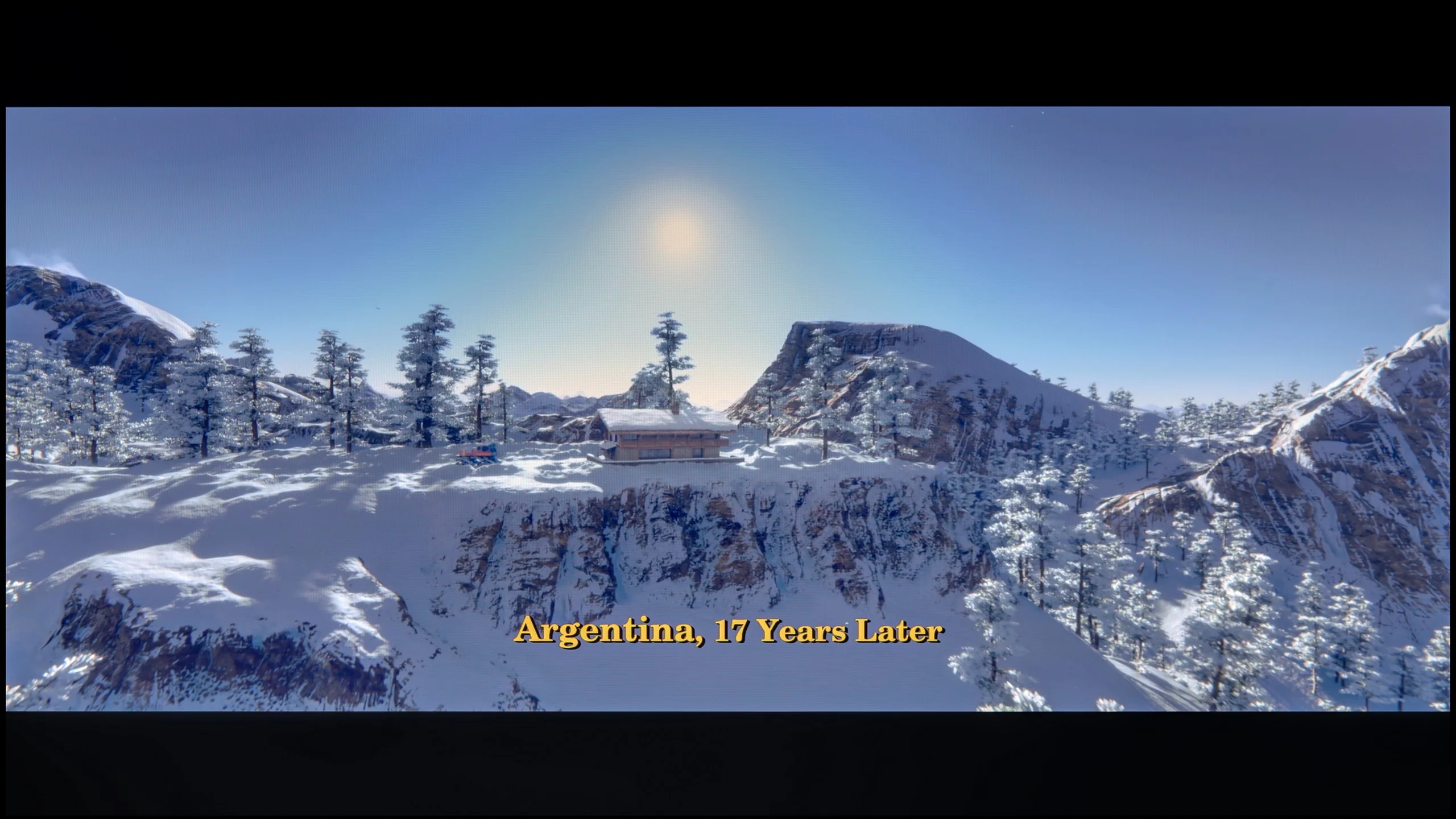

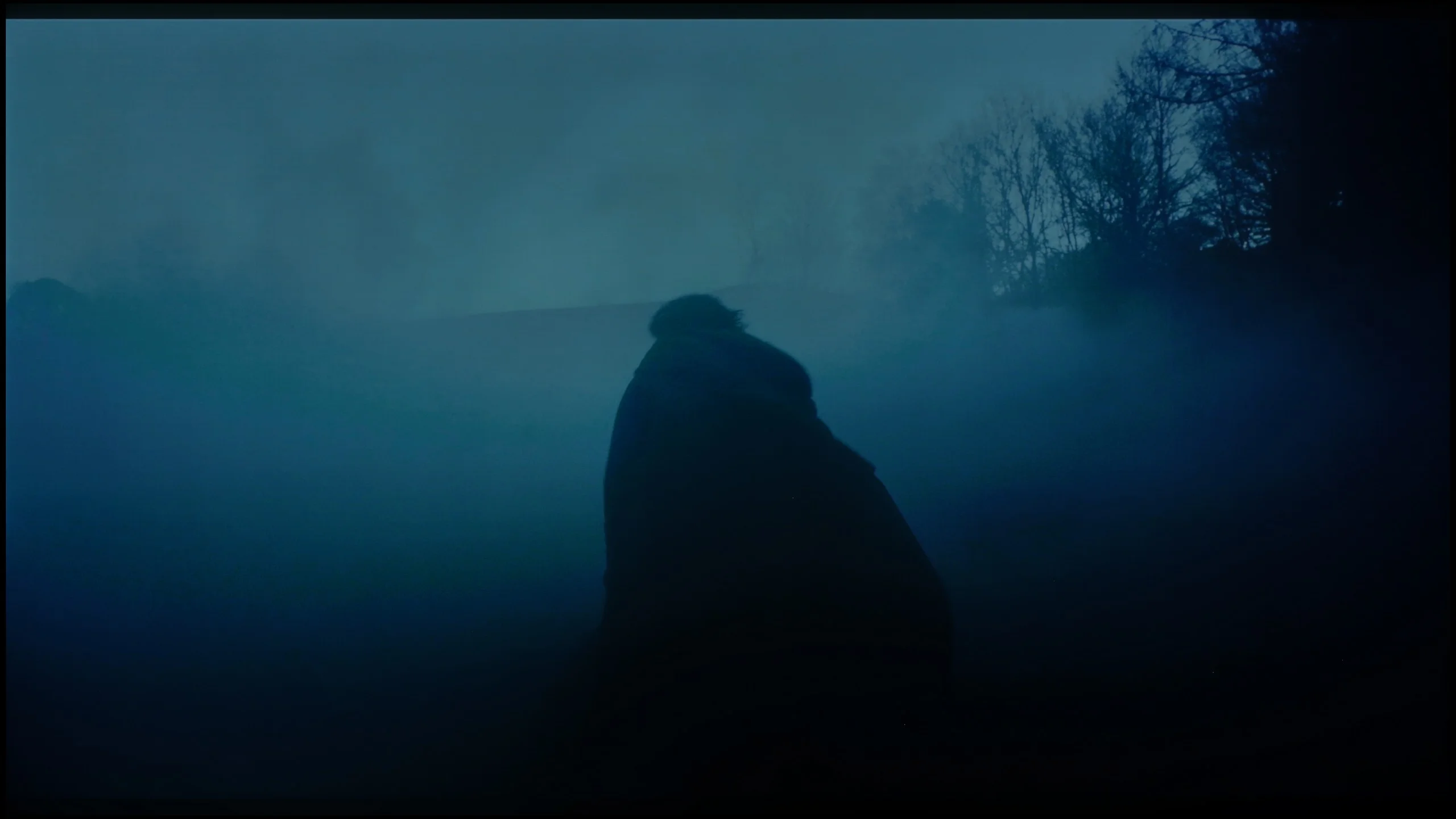

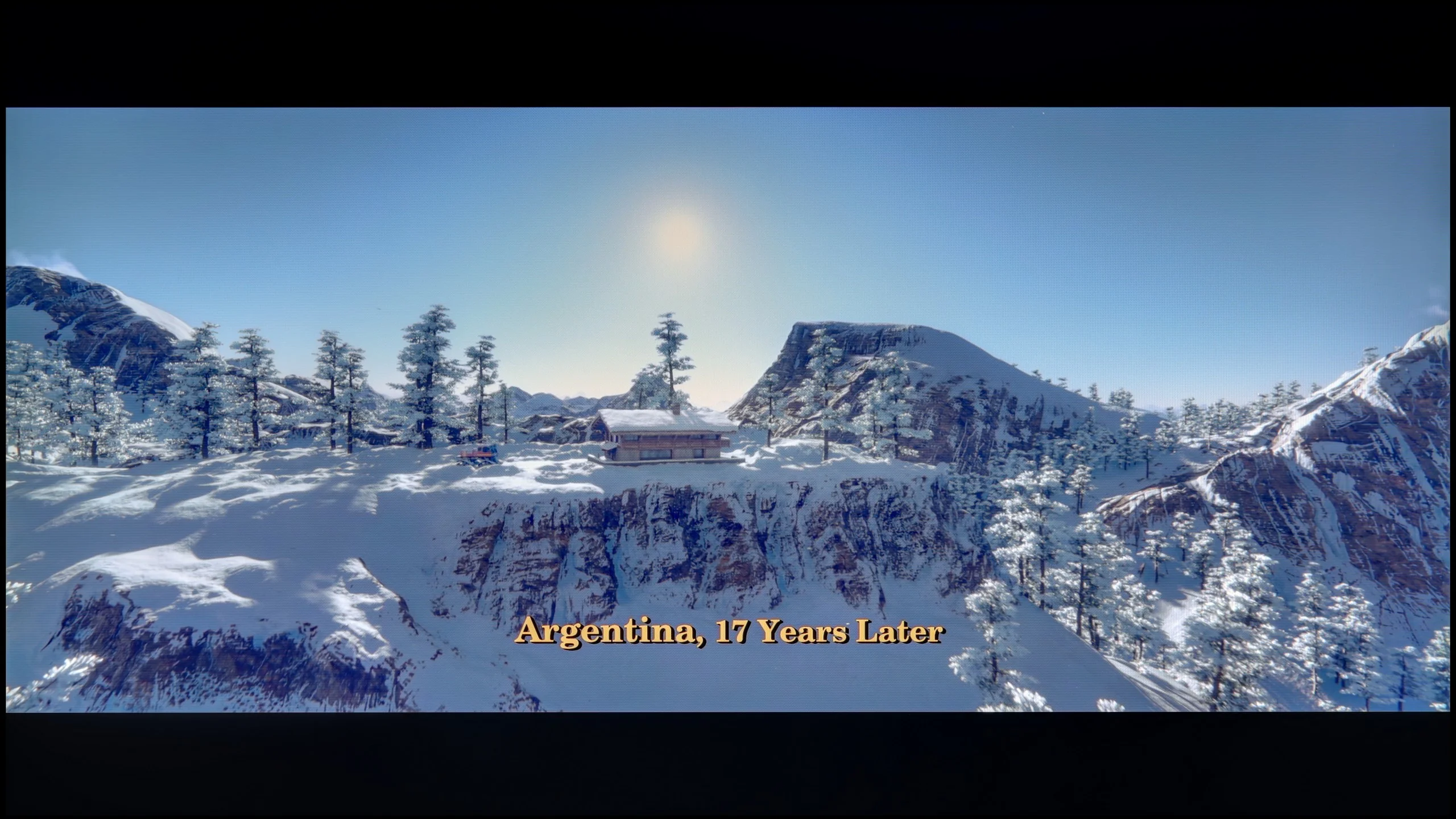
These are selected scenes that show smooth tonal transitions from one color to another. If you see distinct banding, it’s the TV panel’s fault.

These are selected scenes that show smooth tonal transitions from one color to another. If you see distinct banding, it’s the TV panel’s fault.
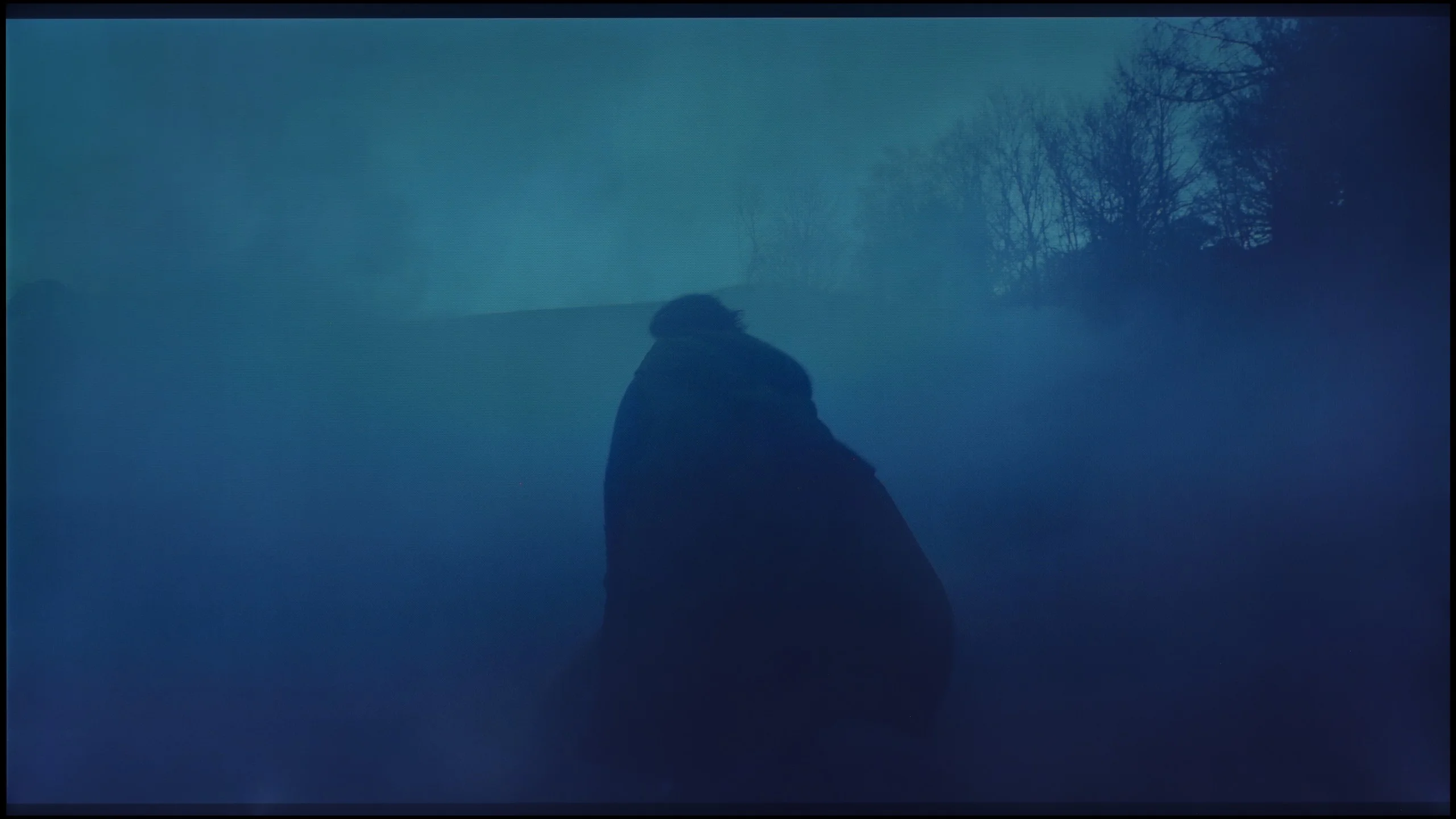
These are selected scenes that show smooth tonal transitions from one color to another. If you see distinct banding, it’s the TV panel’s fault.

These are selected scenes that show smooth tonal transitions from one color to another. If you see distinct banding, it’s the TV panel’s fault.
The S95F version with the Tandem OLED panel also handles the smoothness of tonal transitions very well. Although WOLED panels have not typically been the strongest in this category, it is hard to find any serious issues here. The colour gradation is smooth and natural, and the only minor imperfections may appear with lighter colours. However, they are not significant enough to detract from the overall image quality – the whole presentation is at a truly high level.
The Frame Pro handles the smoothness of tonal transitions really well. In most content you don't see noticeable banding or ugly breaks between similar shades, and gradients look smooth and natural. Even in more demanding scenes with mist or dark transitions, issues are very rare. It's definitely one of this model's strengths.
Image scaling and smoothness of tonal transitions
7.5/10
7.5/10


Smooth transition function
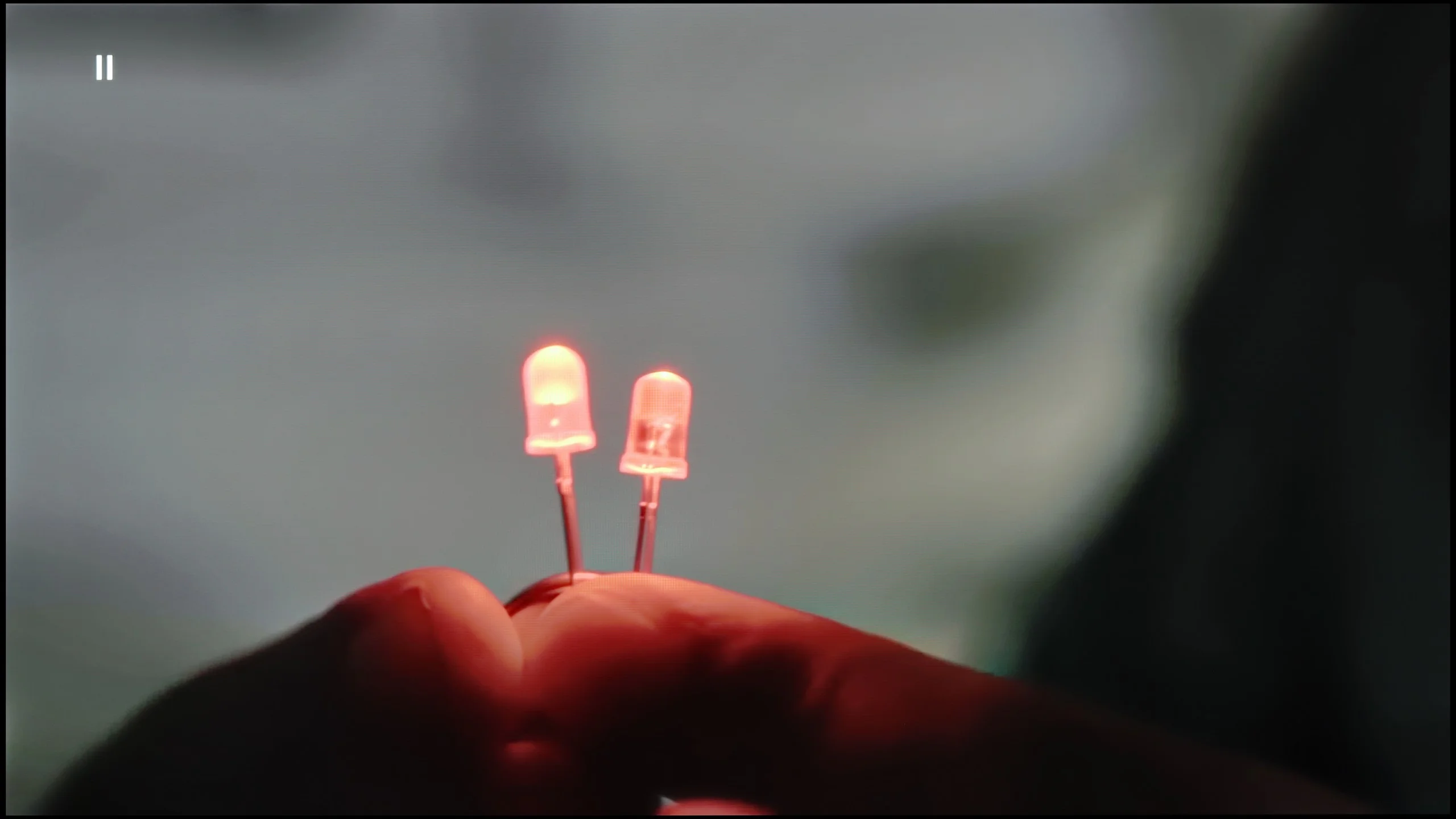
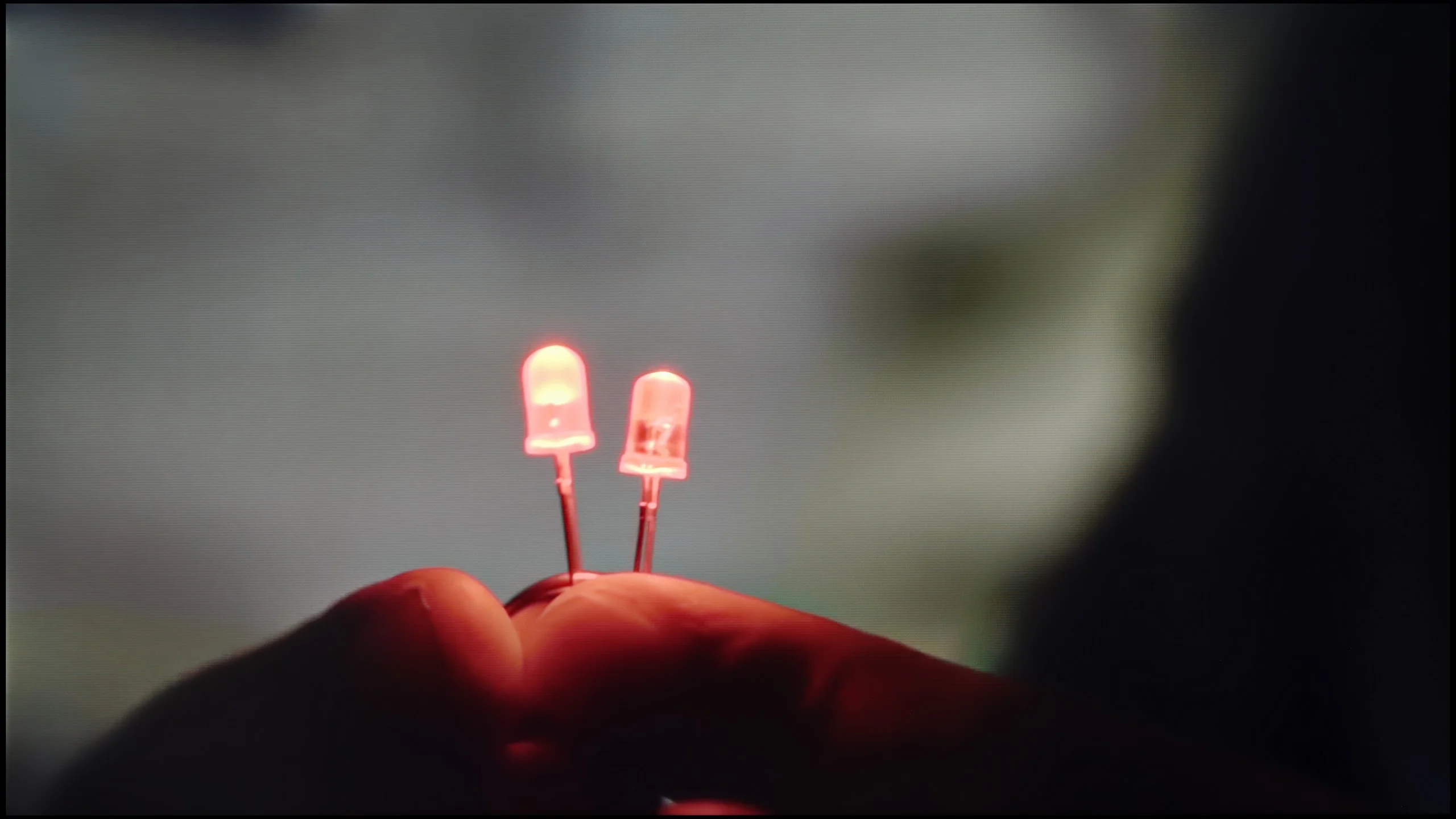
The match photo shows how the TV smooths weak tonal transitions in low-quality video.
Image scaling SD (576i)


The model photo shows how it handles upscaling of SD material.
The Samsung S95F model features noise reduction, aimed at improving the fluidity of tonal transitions. Its effectiveness is difficult to call ineffective – on the contrary, it can excessively interfere with the image. Older films or materials of lower quality, such as those from YouTube, take on a soft, smoothed character reminiscent of a painting effect thanks to this feature. The problem is that along with the noise, the natural film grain, which gives the image a cinematic quality, also disappears. Fortunately, the feature does not blur significant details, so its use is more a matter of preference. If someone prefers a slightly polished and smooth image, it’s worth turning it on, but in our opinion, the most sensible setting is “Standard”.
Upscaling leaves a better impression. The S95F efficiently enhances the quality of lower resolution content – even 576p videos look quite good, although minor artifacts in the form of blockiness can be noticed. Overall, the effect is very solid, although when compared to the competition – such as the Sony Bravia 8 (II) or LG G5 – it is noticeable that those models can extract a bit more from the image. However, one inconvenience to remember is that in the case of older films and photos, there is a problem with overscan, which causes a slight trimming of the left edge of the image.
The Frame Pro uses the NQ4 AI Gen3 processor, so in terms of image processing it behaves very similarly to other recent Samsung TVs. Upscaling works really well, with lower-resolution material being sensibly sharpened and the picture remaining readable without over-emphasising edges. With regular TV broadcasts or lower-quality YouTube content this can deliver a noticeable improvement, although viewers watching even older sources, such as VHS tapes, may notice a slight cropping on the left side (overscan).
It’s a different story for heavily compressed footage and the reduction of noise and posterization artefacts. The "Noise Reduction" feature can improve poorer material, but it fairly quickly starts to interfere with the picture and removes fine detail and film grain. So it’s best used sparingly and mainly when the source genuinely needs it.
Blur and motion smoothness
8.5/10
7.9/10
Blur (native resolution, maximum refresh rate):






Blur (BFI function enabled):
Image flickers in this mode



Image flickers in this mode



Blur (4K@165Hz):



Blur (1080p@240Hz):


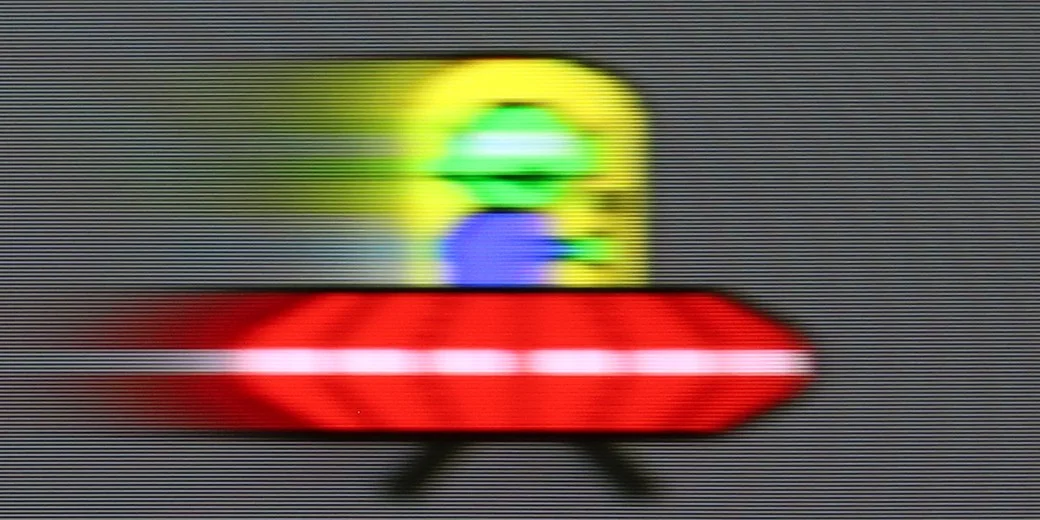
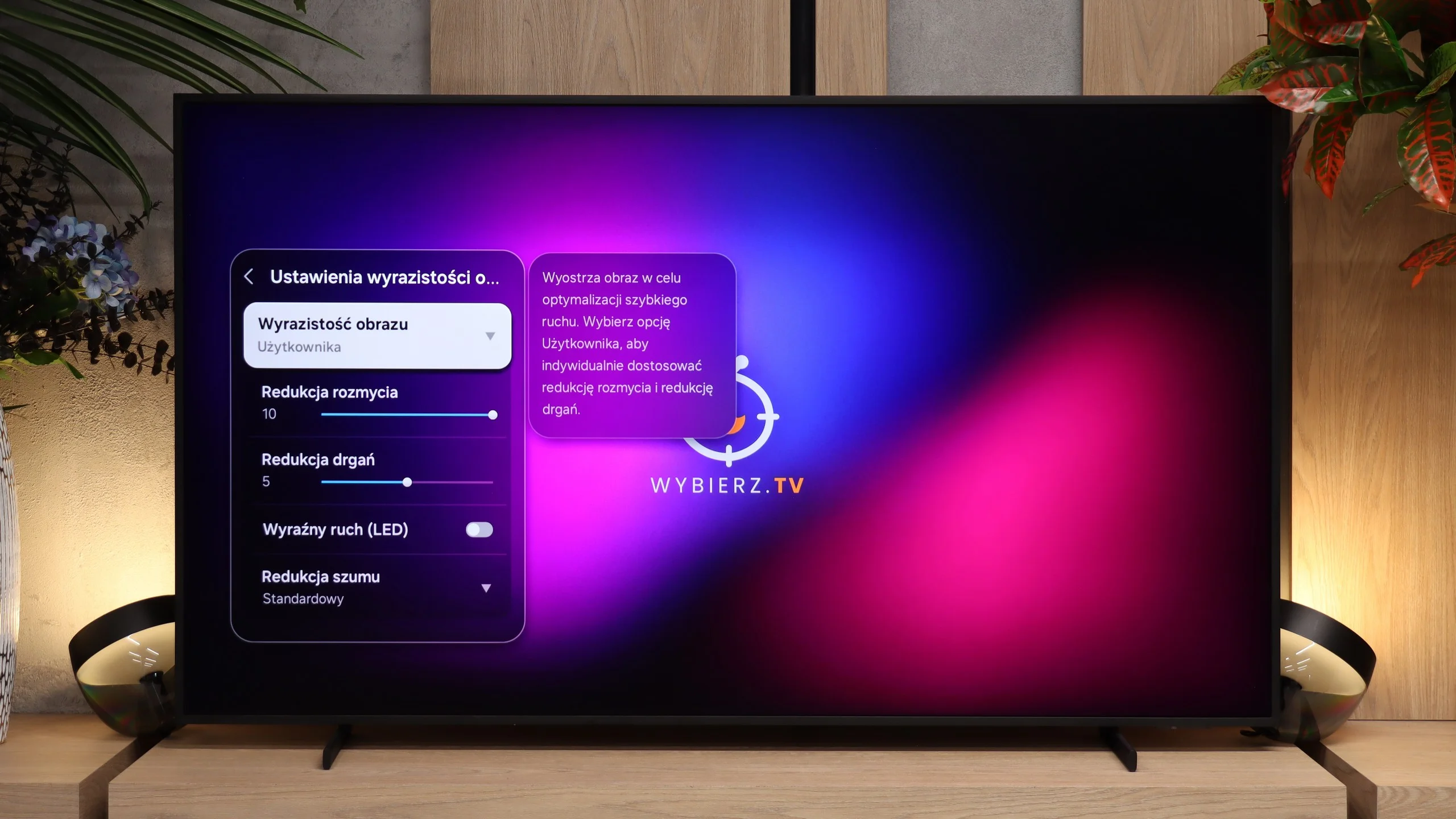
In the case of the 83-inch S95F with a Tandem OLED panel, the fluidity of motion also makes a huge impression. The panel in native 4K resolution offers a refresh rate of 165 Hz, and this combined with organic technology makes games and sport look fantastic. Additionally, the manufacturer has added a motion smoother and a motion blur reduction system, allowing each viewer to customise the picture to their own preferences – whether a more 'choppy', cinematic effect or a smooth, almost theatrical spectacle.
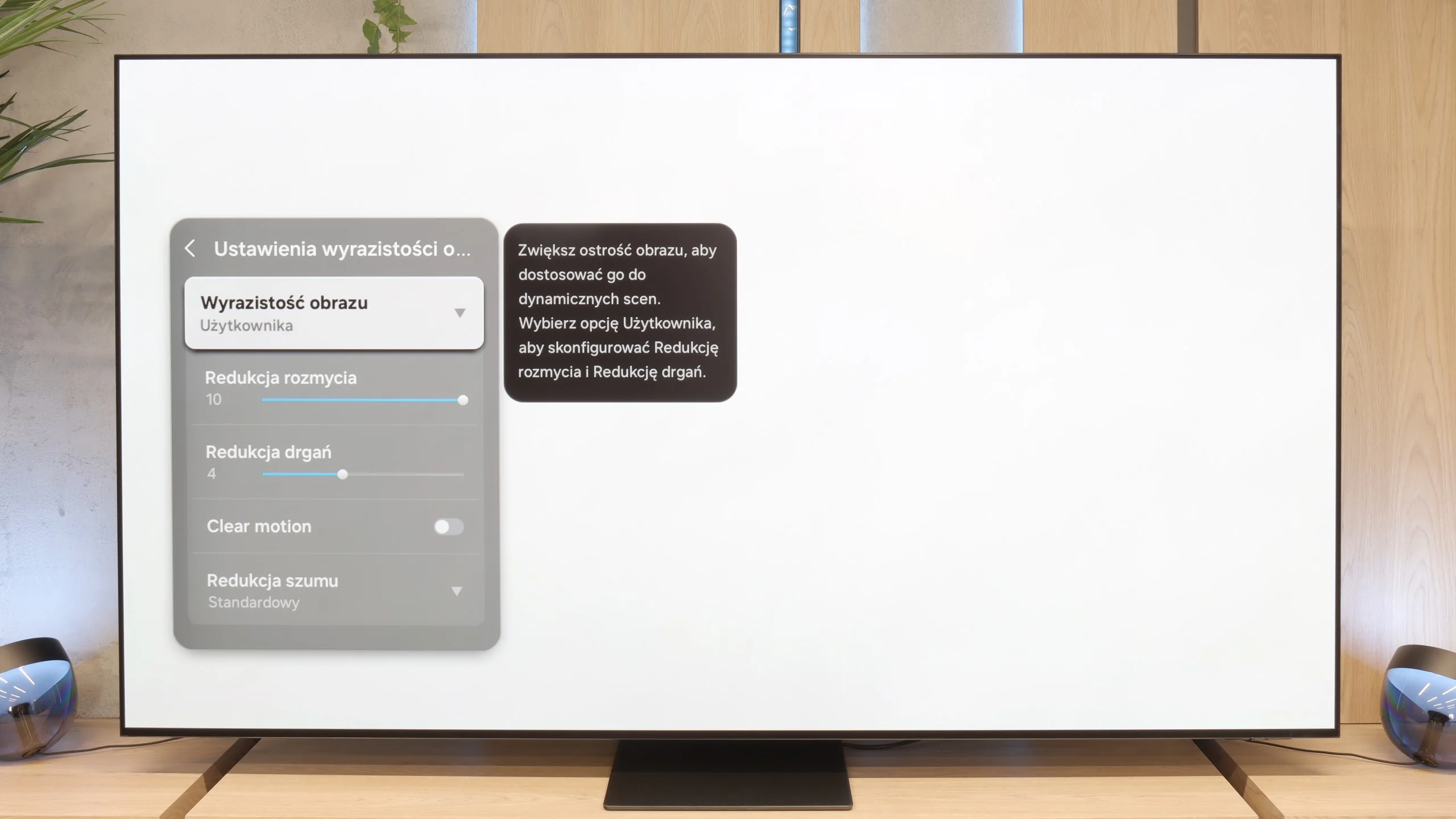
The Frame Pro is equipped with a 144 Hz panel and, when connected to a PC, also supports 240 Hz at Full HD. That's mainly a feature aimed at PC gamers, but the TV also handles the standard 120 Hz refresh rate used for watching sport or gaming on consoles very well. A major plus is the low smearing. For a VA panel, The Frame Pro performs really well in this regard. You don't see the strong, dark trails behind moving objects that are fairly common on TVs with this type of panel. That keeps fast sport and dynamic games clear in motion. There's also a motion smoothing feature with adjustable strength, so for films and sports broadcasts you can tailor the motion to your preferences. You can find our recommended settings in the photo.
Console compatibility and gaming features
9.6/10
9.6/10
- ALLM
- VRR
- VRR range48 - 165Hz48 - 240Hz
- Dolby Vision Game Mode
- Correct implementation of HGIG
- 1080p@120Hz
- 1440p@120Hz
- 4K@120Hz
- Game bar
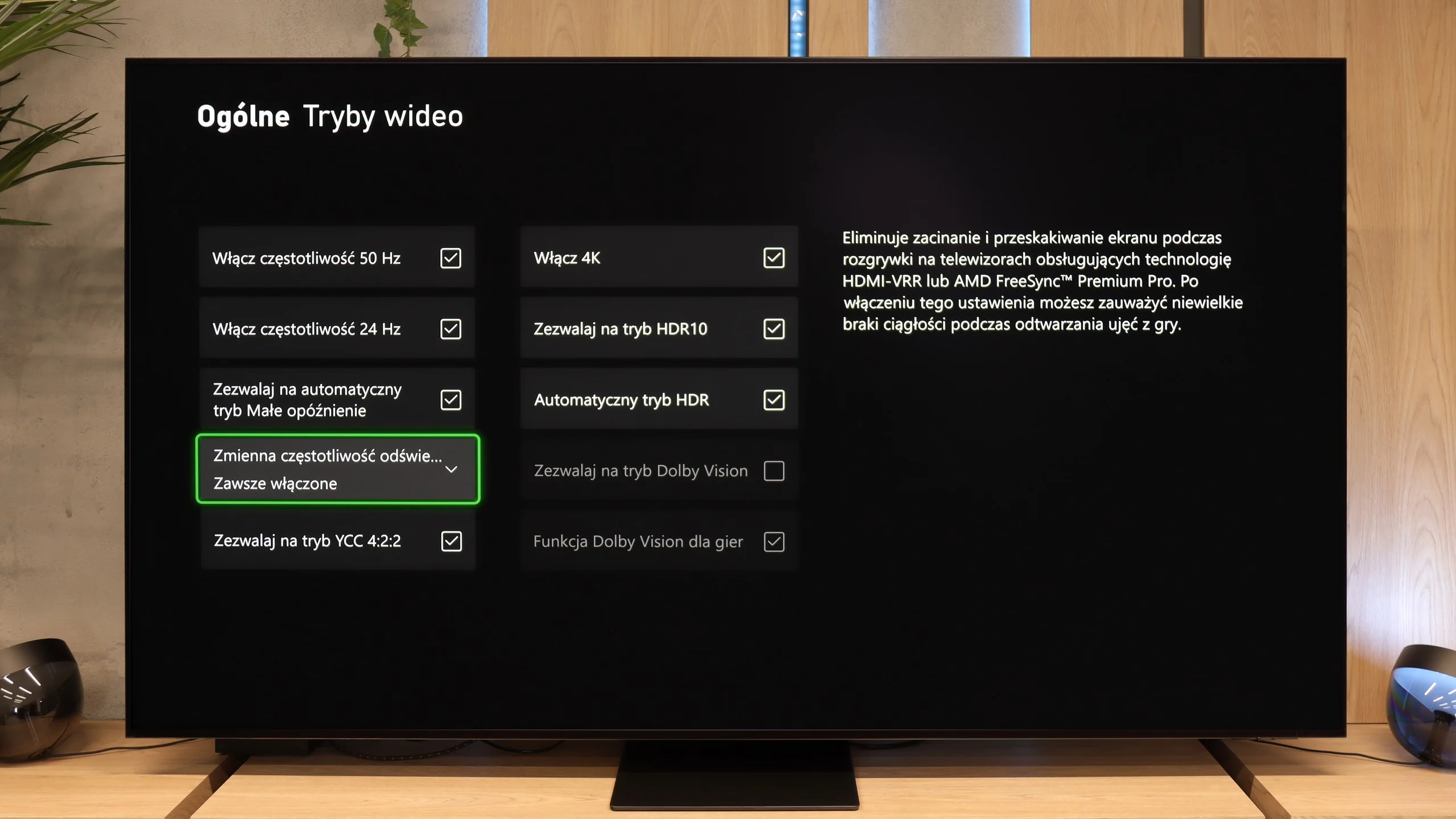
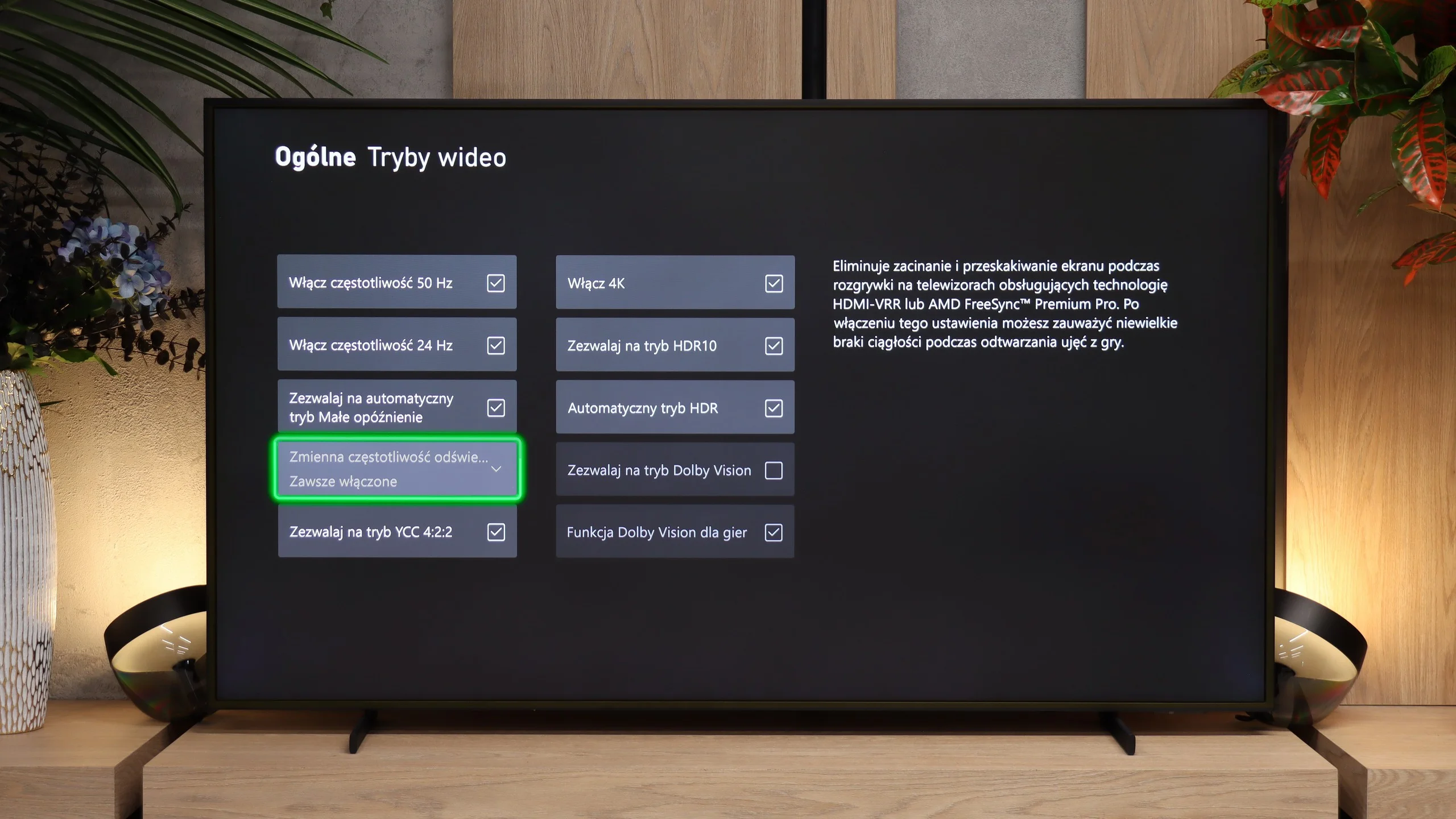
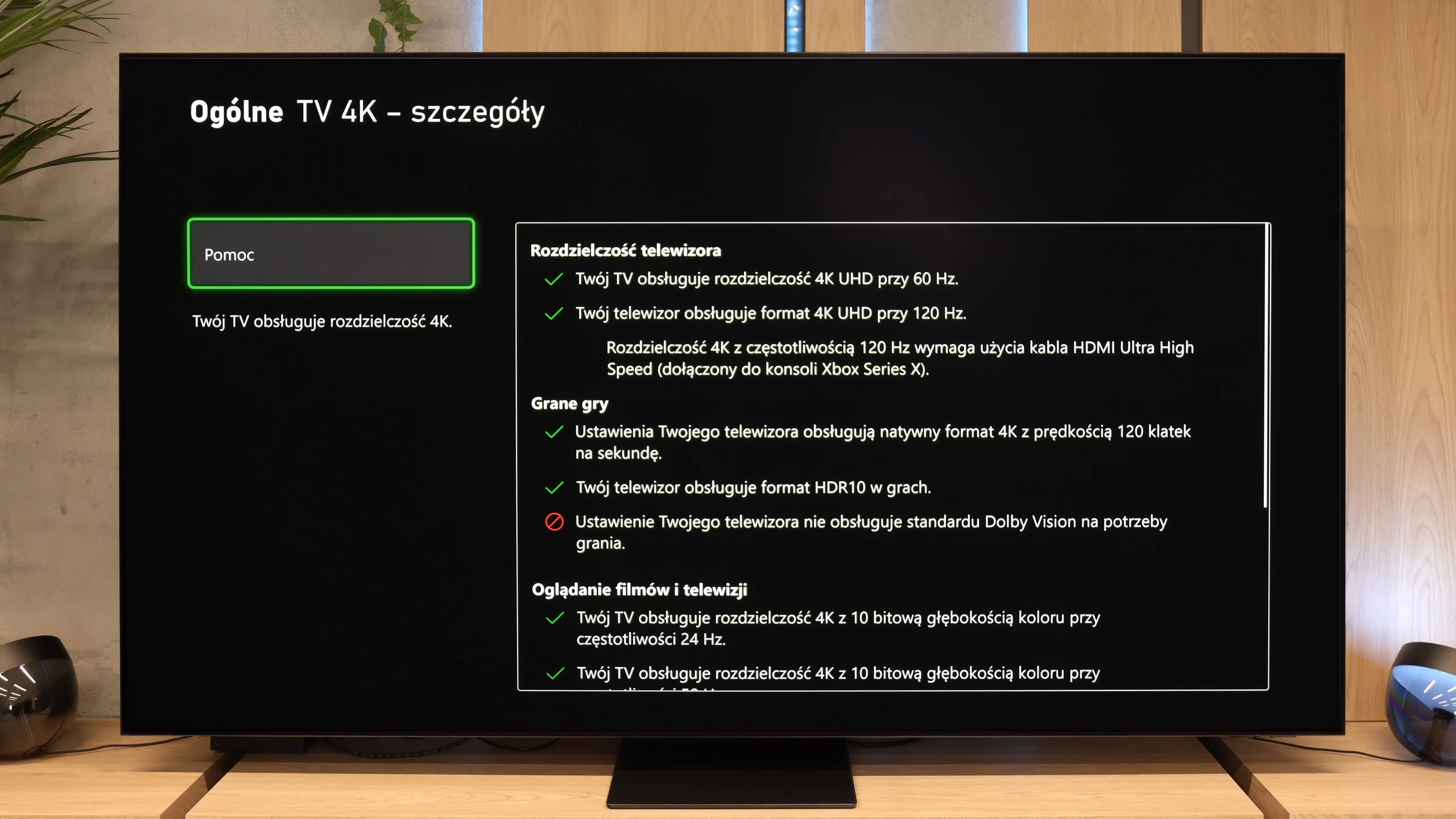
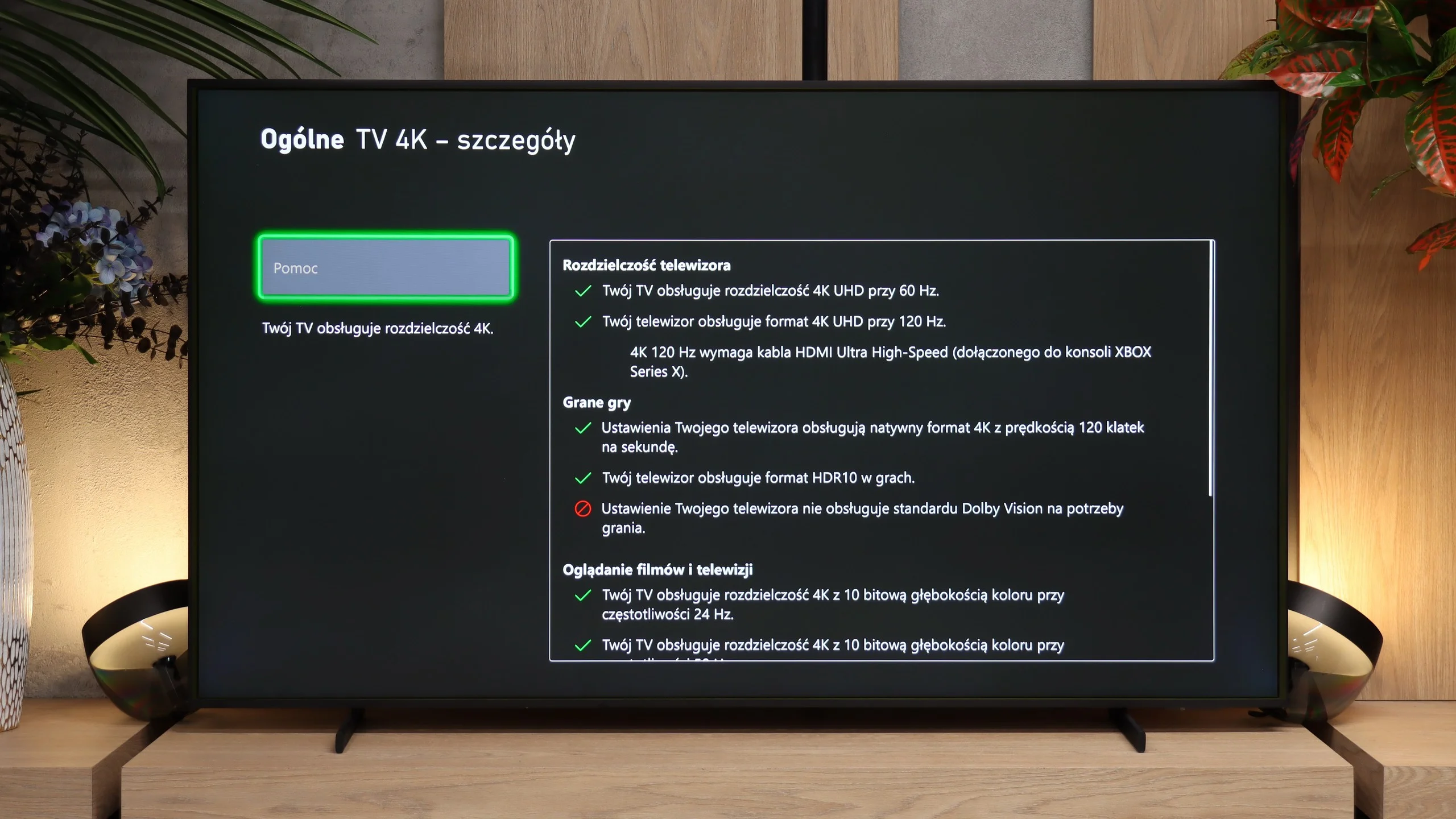
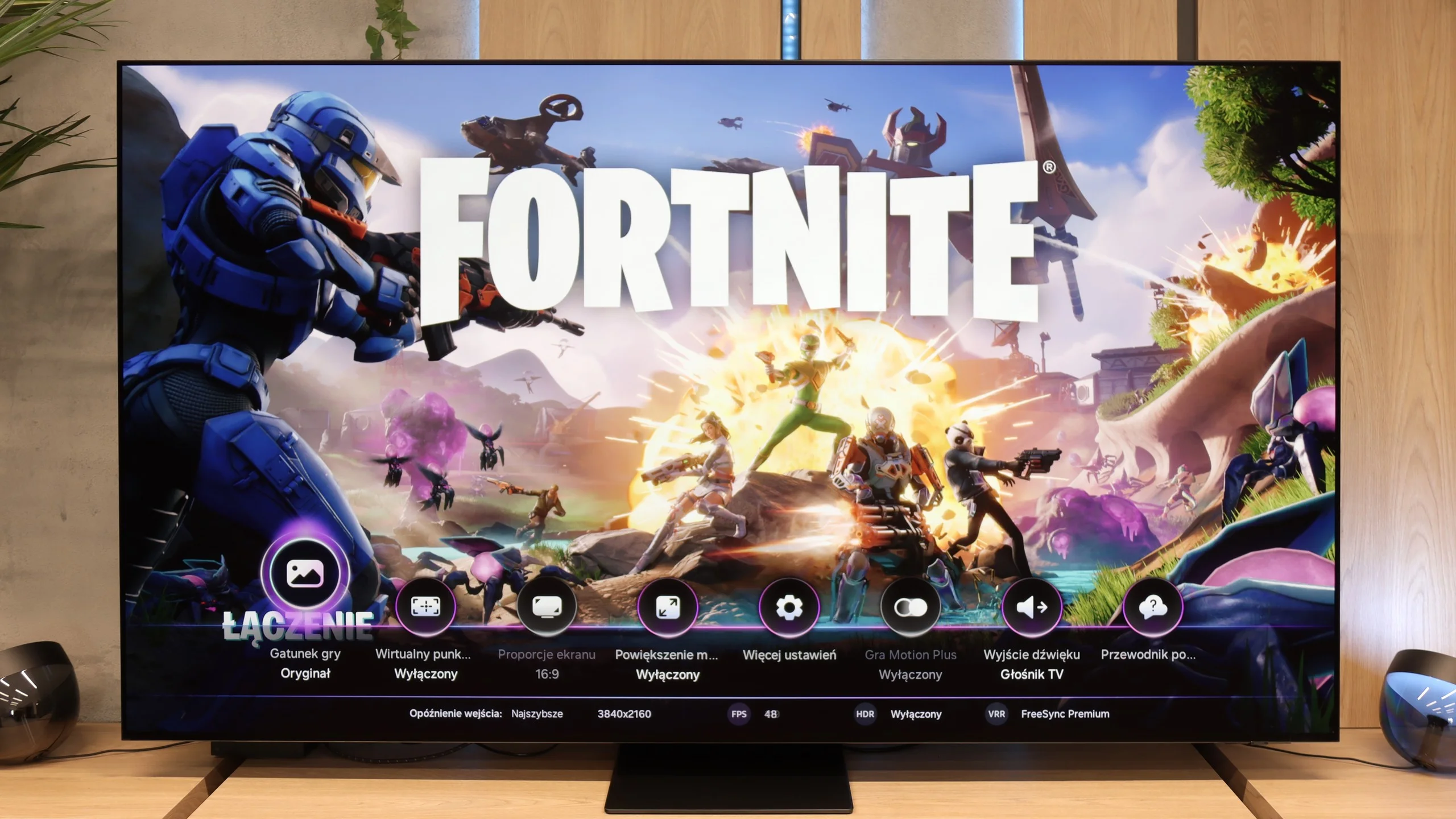
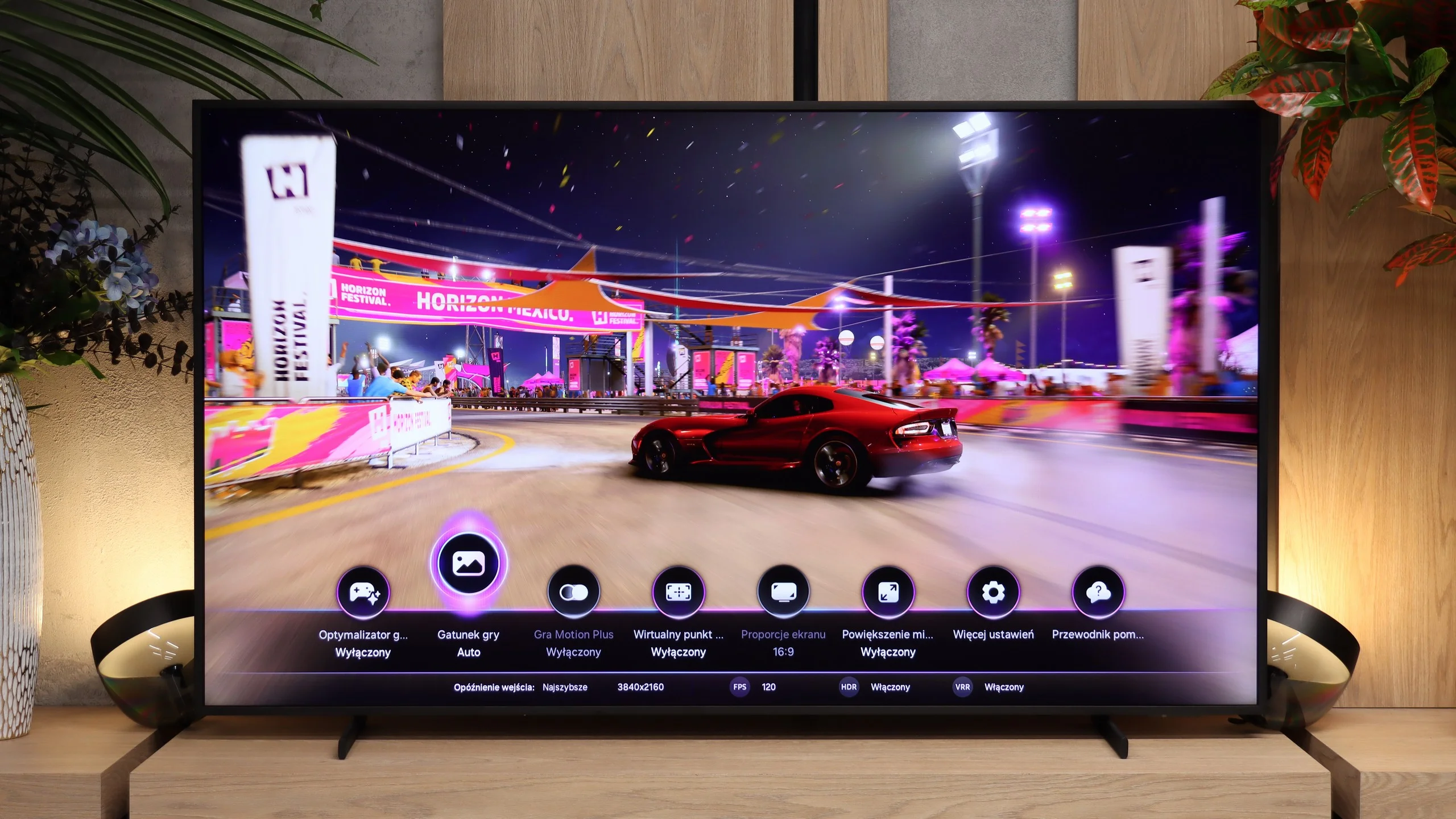
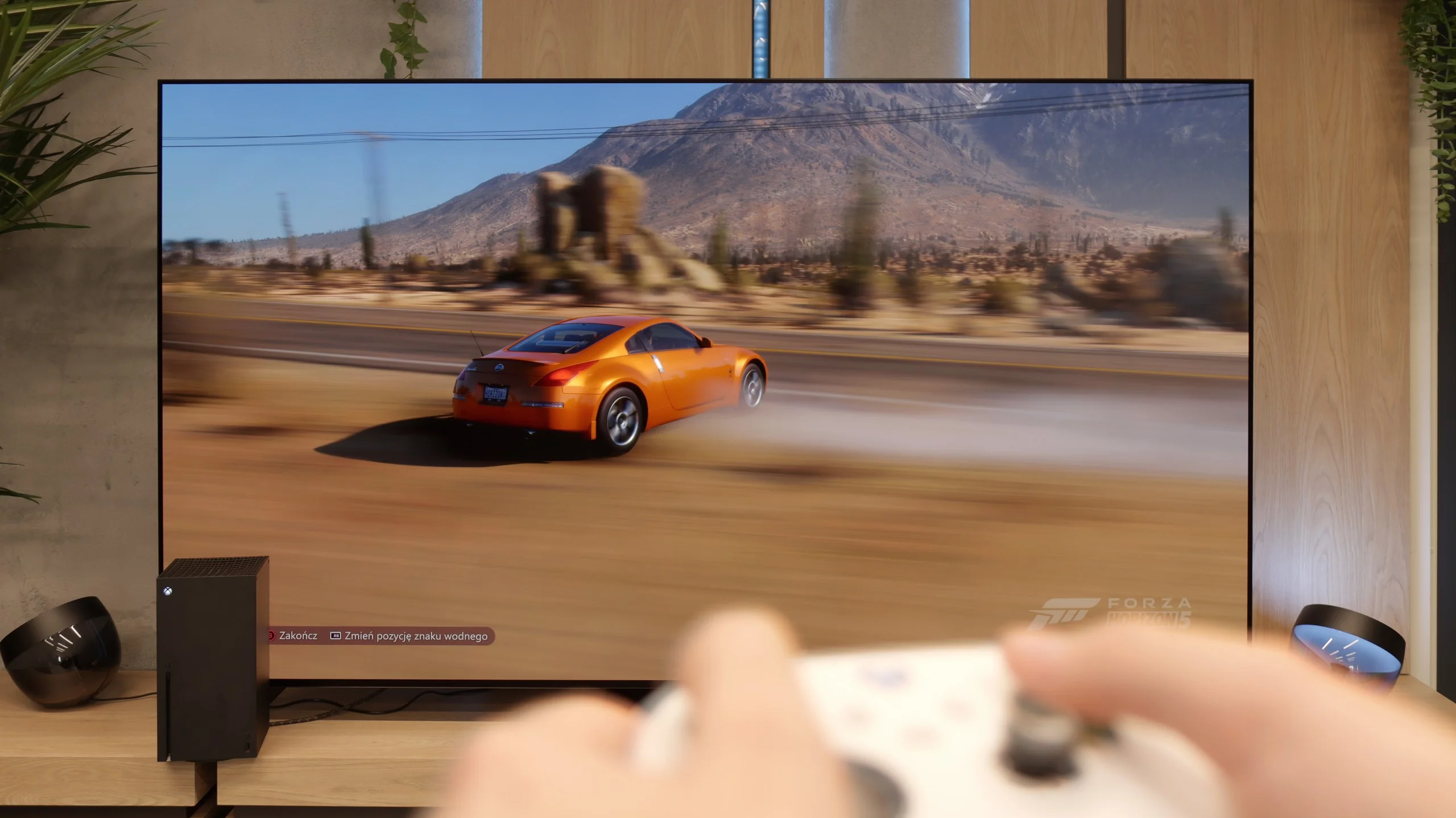
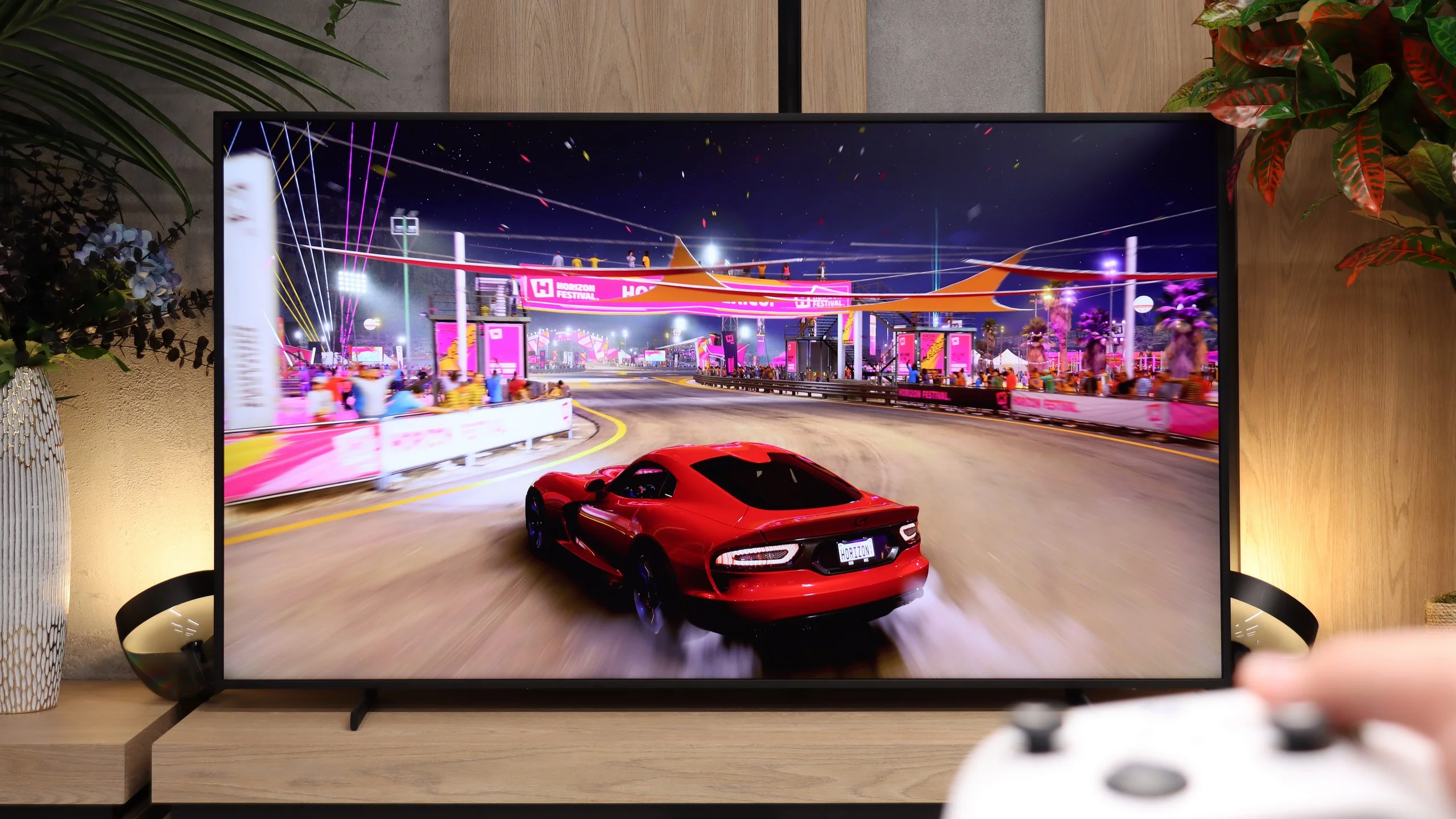
Low motion blur and phenomenal motion fluidity, hallmarks of the OLED panel, are just the warm-up. The Samsung S95F has been designed with gamers in mind – and this is evident at every turn. Four HDMI 2.1 ports with a bandwidth of 40 Gb/s may sound like a compromise on paper, but in practice, neither consoles nor PCs will feel the slightest limitation here. Onboard is a full set of gaming features: variable refresh rate VRR, automatic game mode ALLM, and an excellently implemented HGiG standard, which allows you to enjoy HDR exactly as the creators intended. All this is complemented by Game Bar – an intuitive command centre where you can check and adjust the most important settings in seconds.
Particularly noteworthy is Game Motion Plus, Samsung's proprietary motion smoother. It can add additional fluidity to animations, which can be a lifesaver in games running at 60 frames, where stability doesn't always hold up. Yes, there's no support for Dolby Vision in games, but it's hard to consider this a serious flaw – the manufacturer compensates for this gap with other solutions. The S95F is one of the absolute favourites for the title of the best gaming television on today's market.
For gamers, The Frame Pro has a lot to offer. The TV supports 4K at 120 Hz, VRR, ALLM and a correctly implemented HGiG. When connected to a PC you can also run 144 Hz at 4K, and even 240 Hz if you drop to Full HD. Samsung also bundles its usual set of gamer extras: an expanded Game Bar that lets you quickly view and change the key settings, and Game Motion Plus to improve smoothness for games running at 30 or 60 fps. There’s also the Gaming Hub and the ability to play in the cloud without needing to connect a console. The only real omission is Dolby Vision Gaming, which Samsung doesn’t support. Aside from that, The Frame Pro offers pretty much everything you’d expect from a well-equipped gaming TV today.
Input lag
10/10
10/10
SDR
HDR
Dolby Vision
Input lag on the Samsung S95F is absolutely top-notch – just 5 ms with 120 Hz content is impressive. The response to our actions on the controller is almost instantaneous, providing a feeling of complete control over the gameplay. Of course, with 60 Hz content, the delay is twice as long, but even 10 ms is hard to complain about – it's still a result that will satisfy both demanding gamers and e-sports perfectionists.
adasdsadddas
Input Lag Wirales One Connect (2-3 metry od TV)
SDR | HDR |
|---|---|
1080p60 Hz: 61 | 2160p60 Hz HDR: 71 |
1080p120 Hz: 39 | 2160p120 Hz HDR: 32 |
2160p60 Hz: 63 | |
2160p120 Hz: 32 |
Compatibility with PC
8.8/10
8.4/10
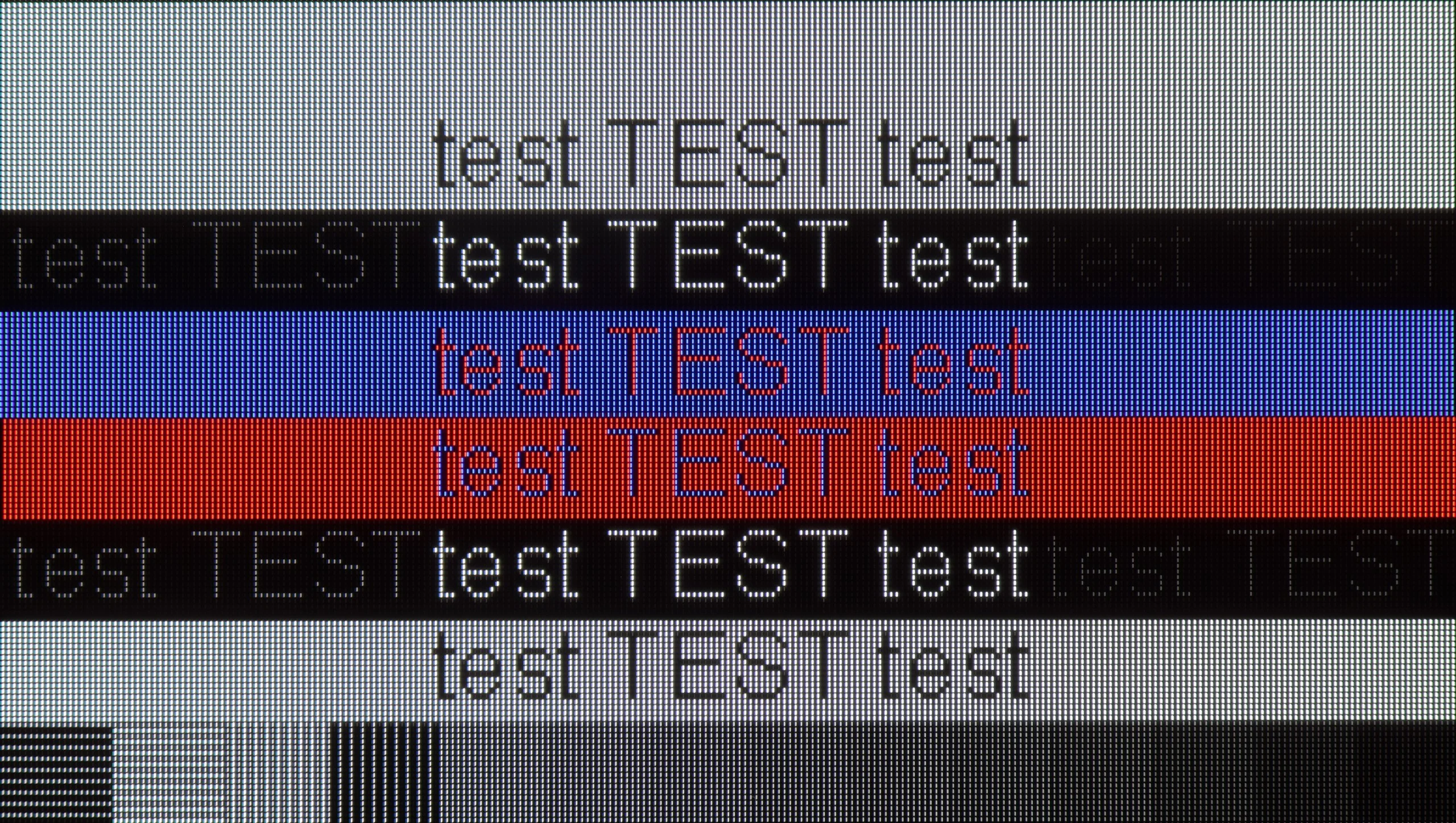
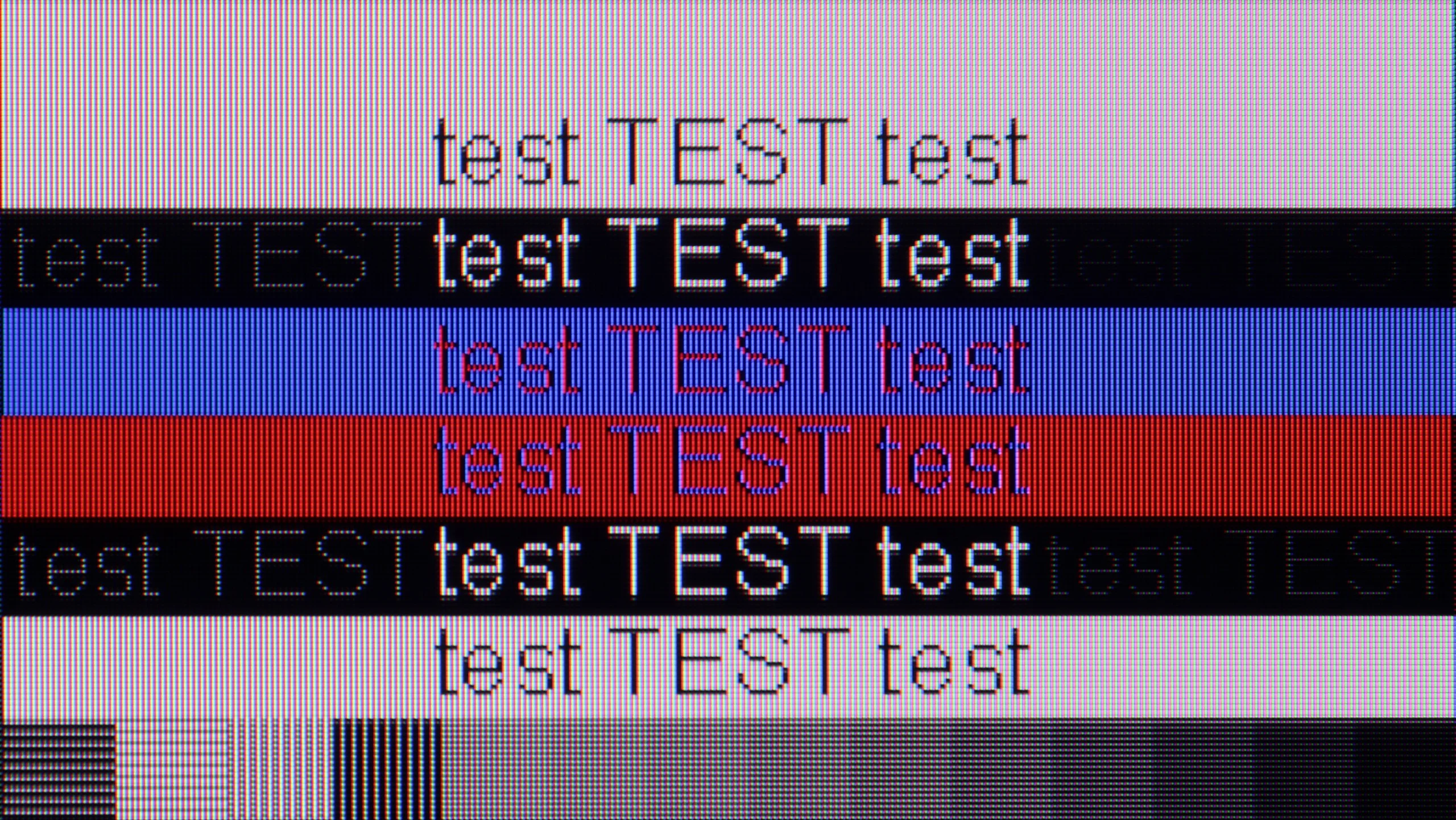
The photo shows the legibility of small fonts. Ideally, lines should be the same thickness on both light and dark text, with minimal pixel gaps.
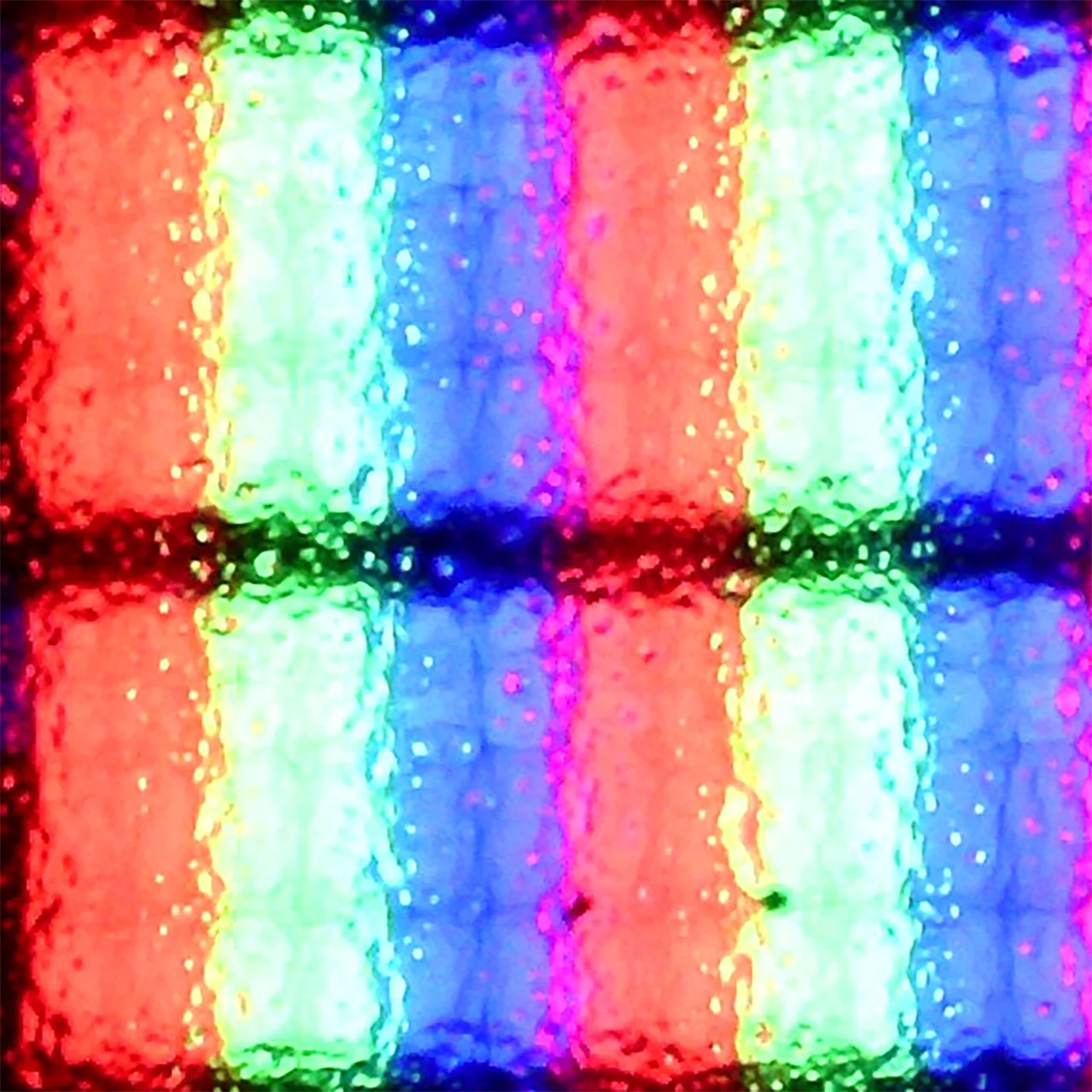
In the version with the WOLED panel, the Samsung S95F also shows its claws – PC gamers have access to a full gaming package with low input lag, support for G-Sync and FreeSync, and fast refresh rates. It’s a device that can easily replace a monitor even in fast-paced titles. When working with text, the differences compared to QD-OLED are subtle but noticeable – the BWGR subpixel layout may give the impression of a slight softening of the edges of letters, as if the text had a gentle shadow. This is not a flaw that ruins the comfort of using a PC, but rather a characteristic resulting from the panel's construction.
The Frame Pro performs well when connected to a computer. It supports full 4:4:4 chroma, 144 Hz at 4K and 240 Hz at Full HD. It also works with both NVIDIA's G-Sync and AMD FreeSync. However, it's not ideal for working with text. From a normal viewing distance everything looks fine, but up close you can see minor artefacts around fonts and slightly less crisp edges. That doesn't matter much for gaming or watching content, but you may notice it for office work.
Viewing angles
7.6/10
3.4/10
In the version with the WOLED matrix, the viewing angles are good and absolutely sufficient for everyday watching. The fact is that the QD-OLED panel performs better in this regard, and with a strong offset, there is a slight color shift, but this is not something that interferes with a normal viewing session. Sitting on the couch – whether in the middle or a bit to the side – the picture still looks very good and most viewers will be fully satisfied.
Viewing angles on The Frame Pro are average, if not poor. The TV uses a classic VA panel and at wider angles the picture loses quality quite quickly. Brightness drops first and foremost, but colour saturation also clearly falls, making the image look more washed out. That's a bit more of a shame on The Frame Pro than on a regular TV. It's a model that's often meant to hang on the wall and also serve as artwork, so better viewing angles would be really welcome here.
Daytime performance
7.7/10
6.5/10
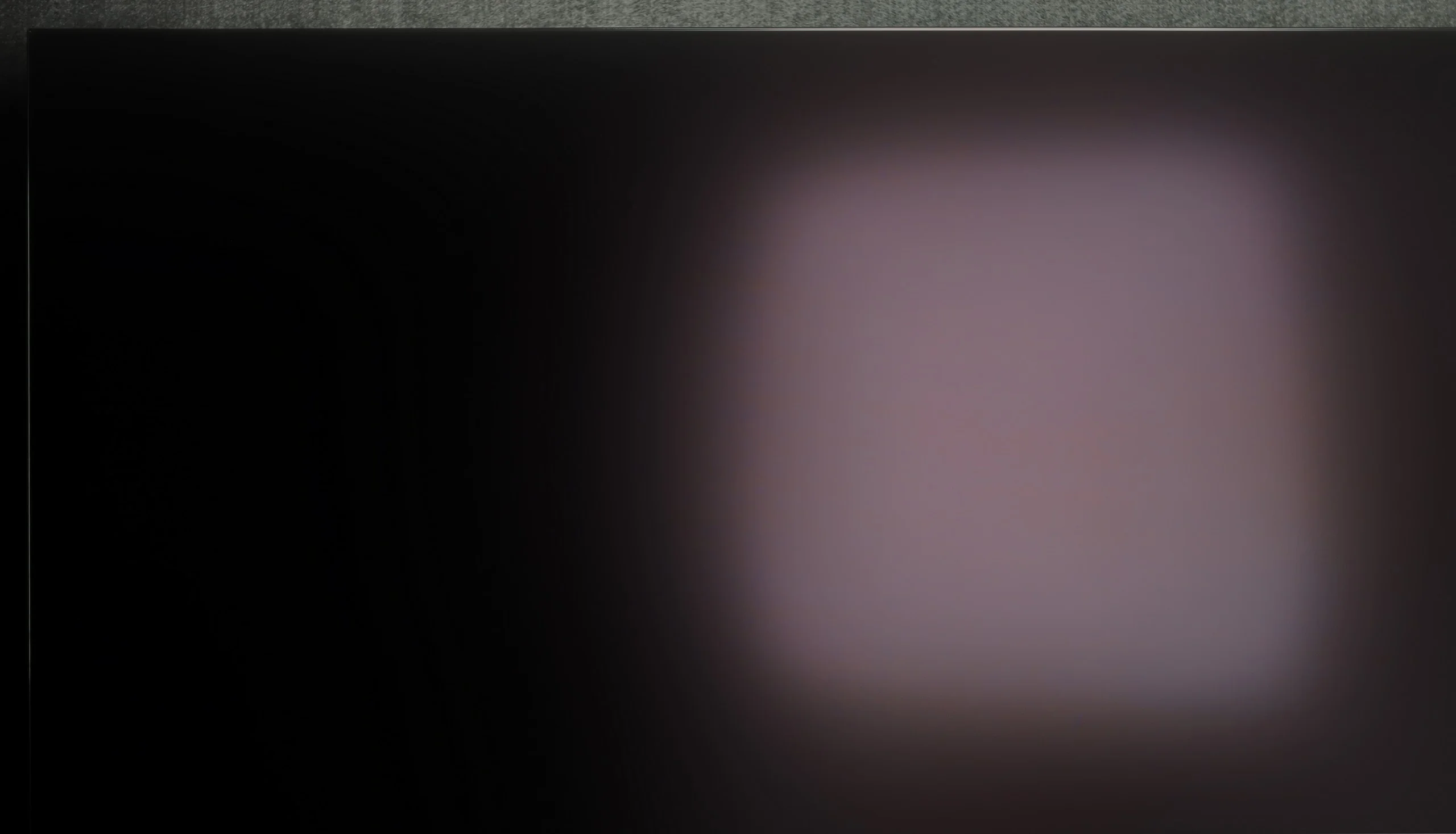
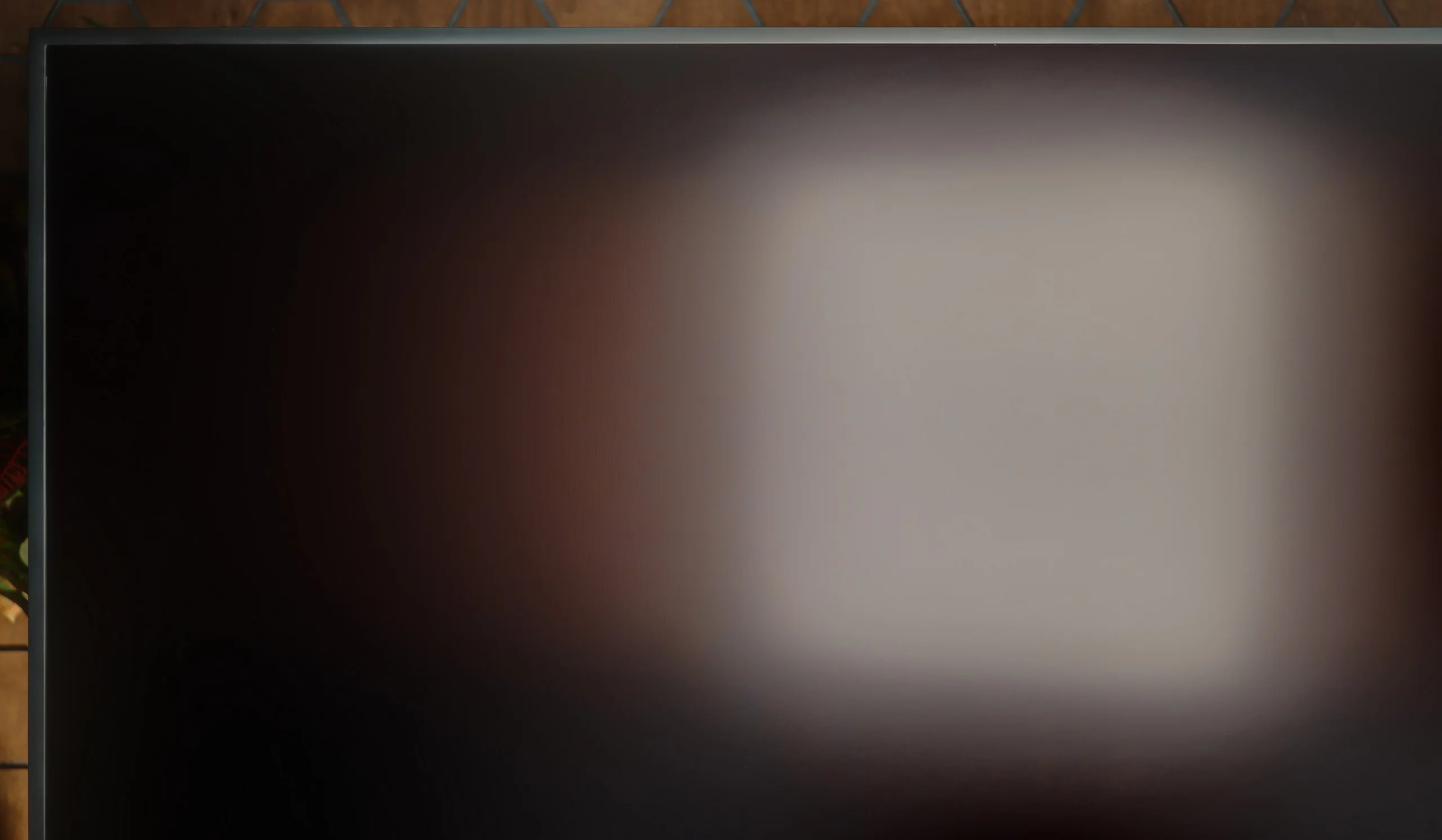
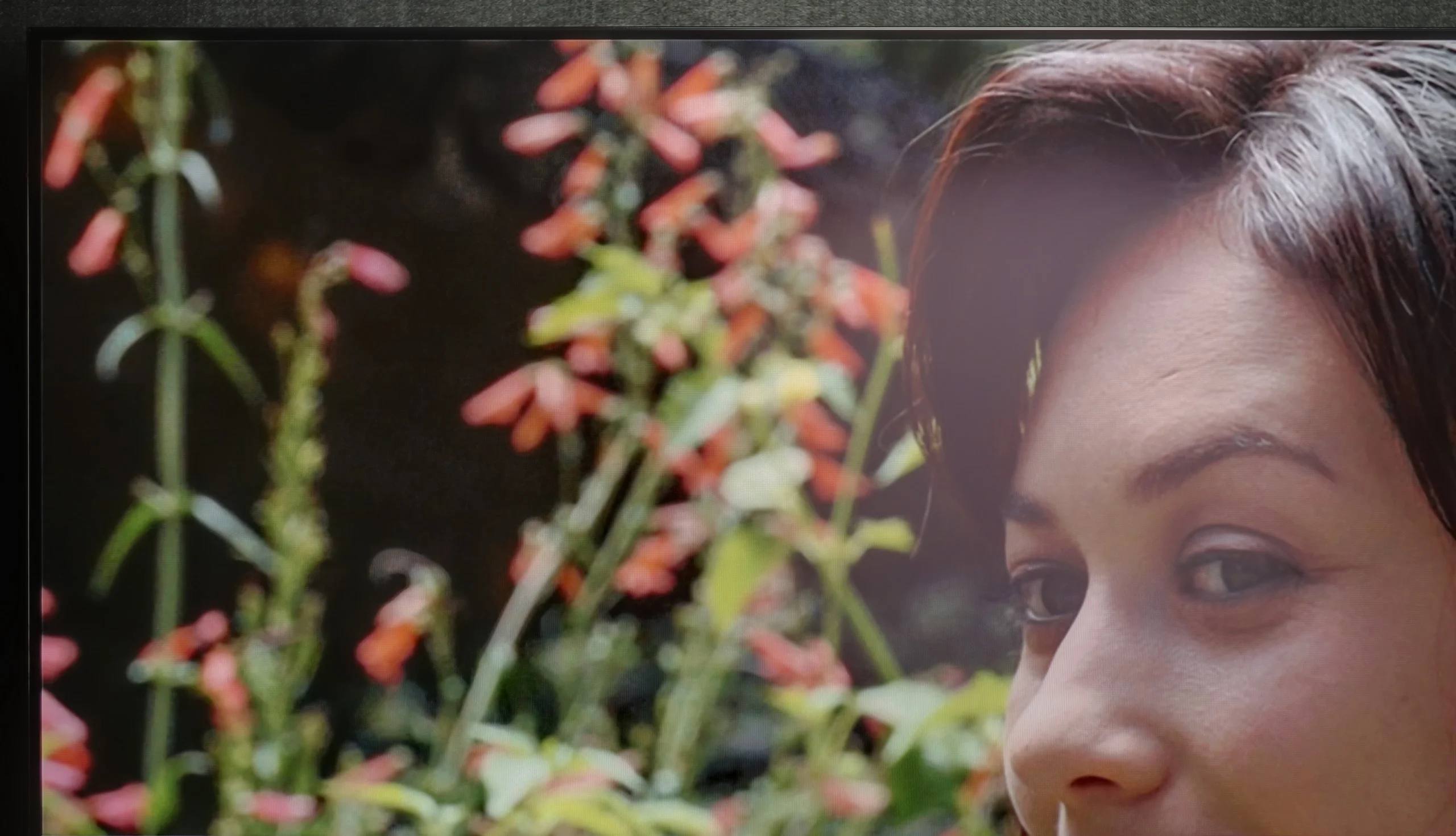
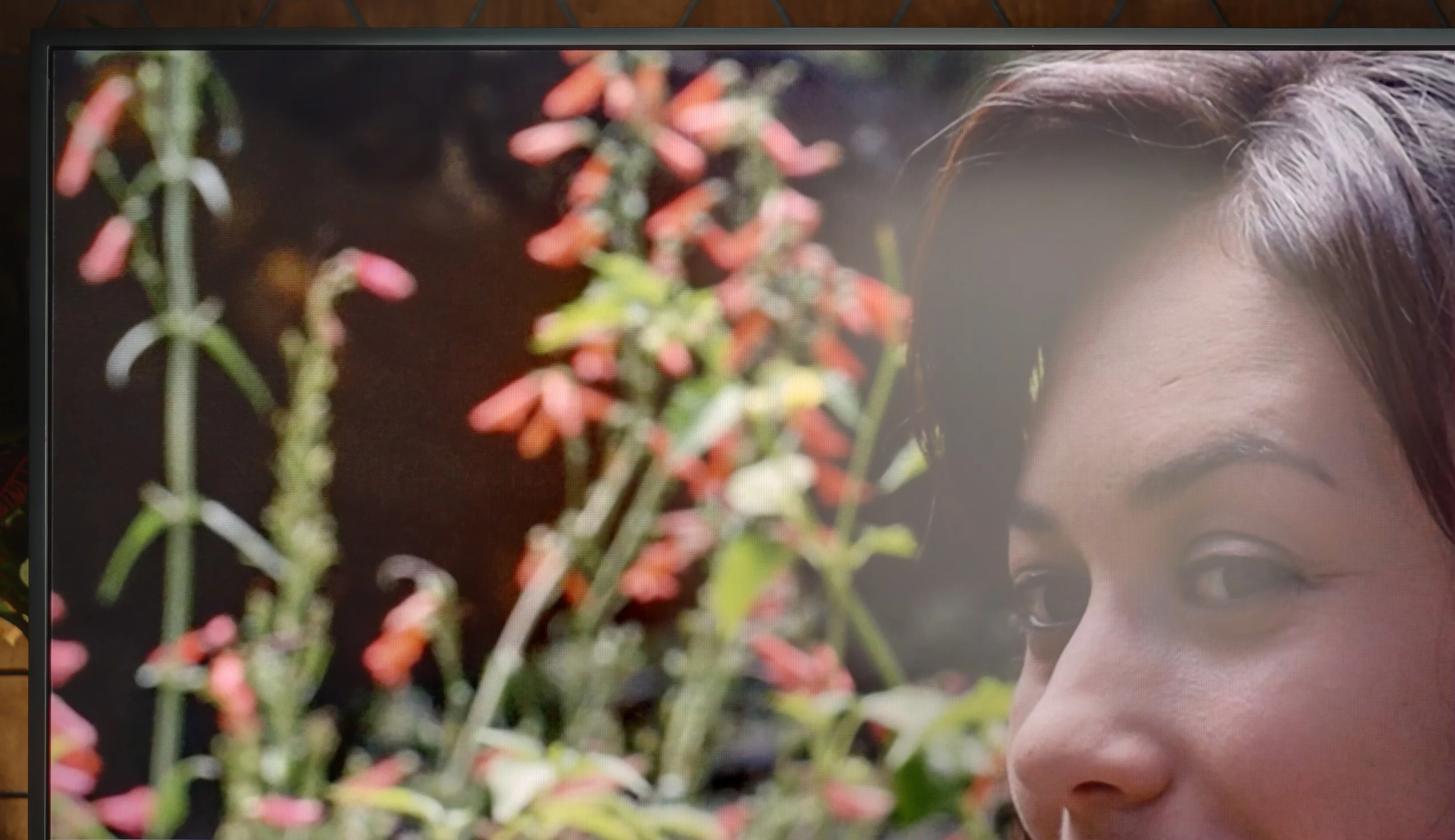
Panel brightness
Samsung The Frame Pro 2026 (LS03HW): 587 cd/m2
SAMSUNG S95F (TANDEM OLED 83"): 704 cd/m2
This is probably the first television in the world where two worlds meet – a matte finish from Samsung and a WOLED panel from LG Display. And it must be said that such a duo makes a stunning impression. Light reflections practically disappear, and the image retains its naturalness – colours remain saturated, and black doesn’t wash out like in QD-OLED. It sounds almost like an industry joke, but it turns out that the combination of technology from two rivals has produced a result better than anyone could have expected. Additionally, the panel's brightness, hovering around 700 nits, means that the television performs excellently even in difficult, daytime conditions.
During the day The Frame Pro performs quite well. SDR brightness stays at around 600 nits, so the picture remains readable even in a brighter room. The biggest advantage is the matte screen coating, which very effectively diffuses reflections and means lamps or windows aren't so visible on the screen. However, we noticed that on this year's model the coating affects the image itself a bit more. In stronger light the blacks become slightly lifted and colours lose some of their depth. It's still a very good choice for a bright living room, but in that respect the screen is not without compromises.
Panel details
Subpixel Structure:
Panel uniformity and thermal imaging:
SAMSUNG S95F (TANDEM OLED 83")
Samsung The Frame Pro 2026 (LS03HW)
TV features
7.9/10
7.7/10
- SystemTizenTizen
- System performanceVery goodGood
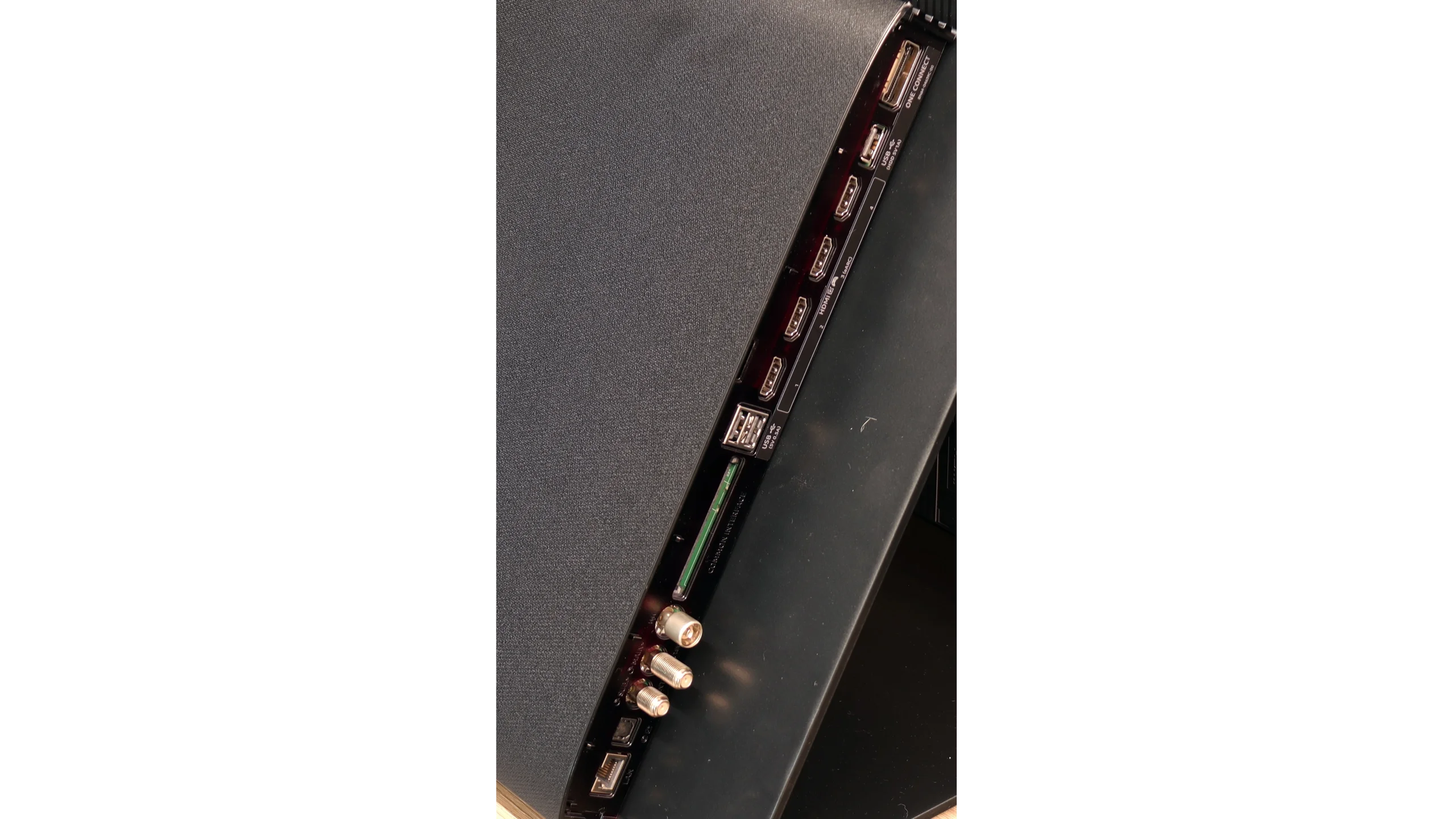
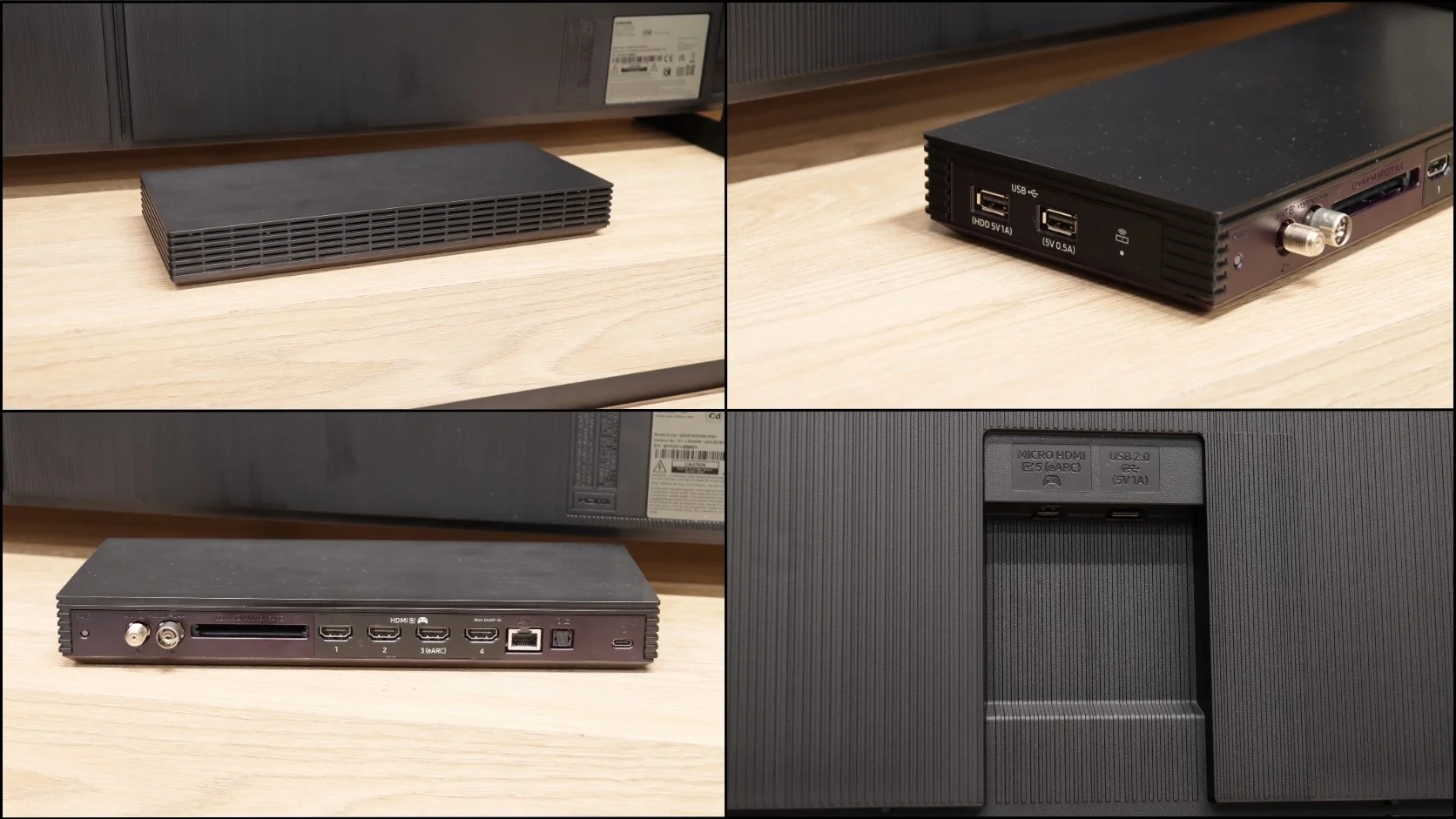
- HDMI inputs0 x HDMI 2.0, 4 x HDMI 2.1 40Gbps0 x HDMI 2.0, 5 x HDMI 2.1 48Gbps
- Other inputsUSB-C, Micro-HDMI
- OutputsToslink (Optical audio), eARC (HDMI), ARC (HDMI)Toslink (Optical audio), eARC (HDMI), ARC (HDMI)
- Network InterfacesWi-Fi 2.4GHz, Wi-Fi 5GHz, Ethernet (LAN) 100MbpsWi-Fi 2.4GHz, Wi-Fi 5GHz, Ethernet (LAN) 100Mbps
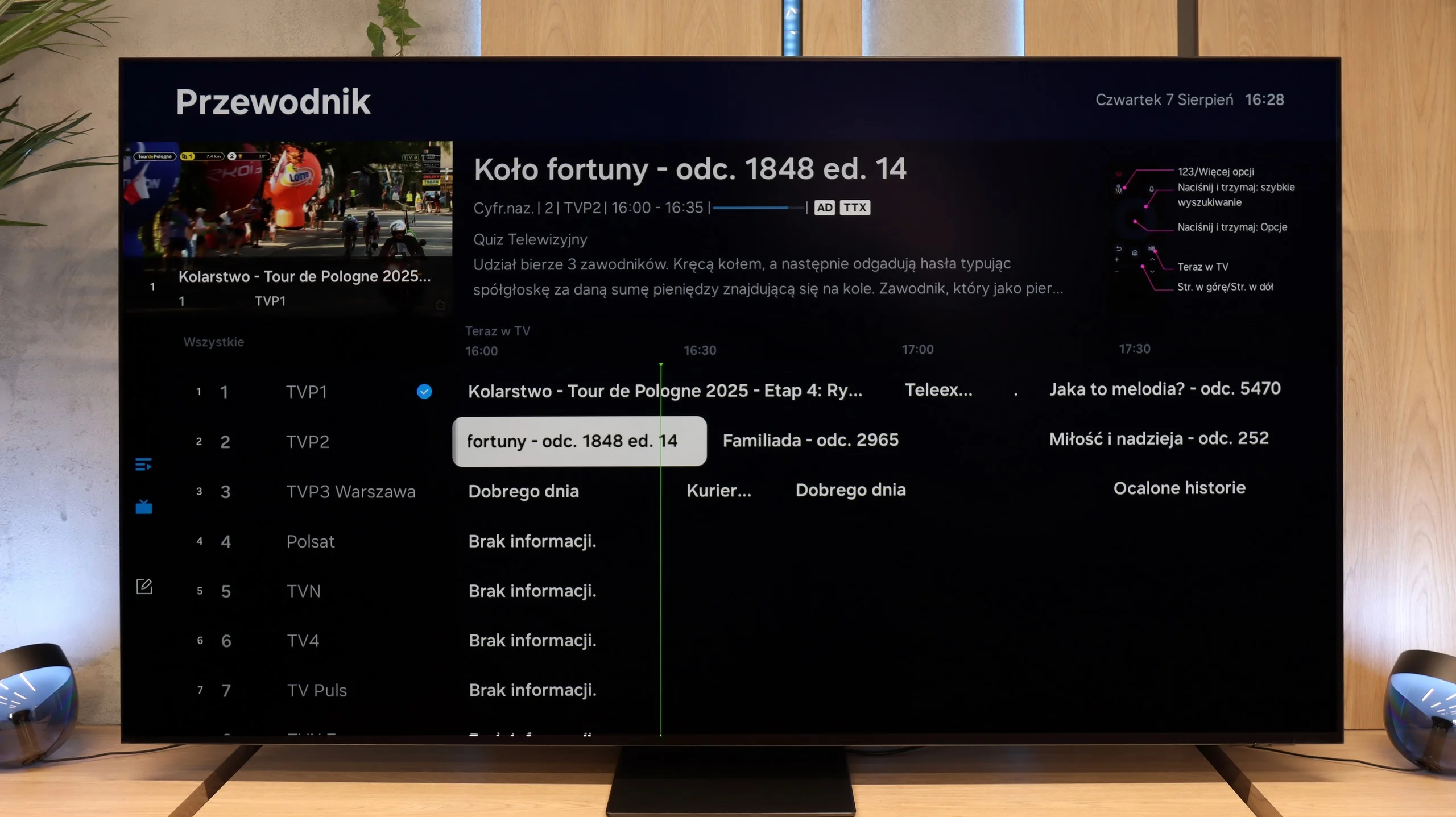
- TV receptionDVB-T, DVB-T2, DVB-S, DVB-S2, DVB-CDVB-T, DVB-T2, DVB-S, DVB-S2, DVB-C
Classic features:
- Recording to USB (terrestrial TV)
- Recording programming
- Picture in Picture (PiP)
- RF remote control (no need to aim)
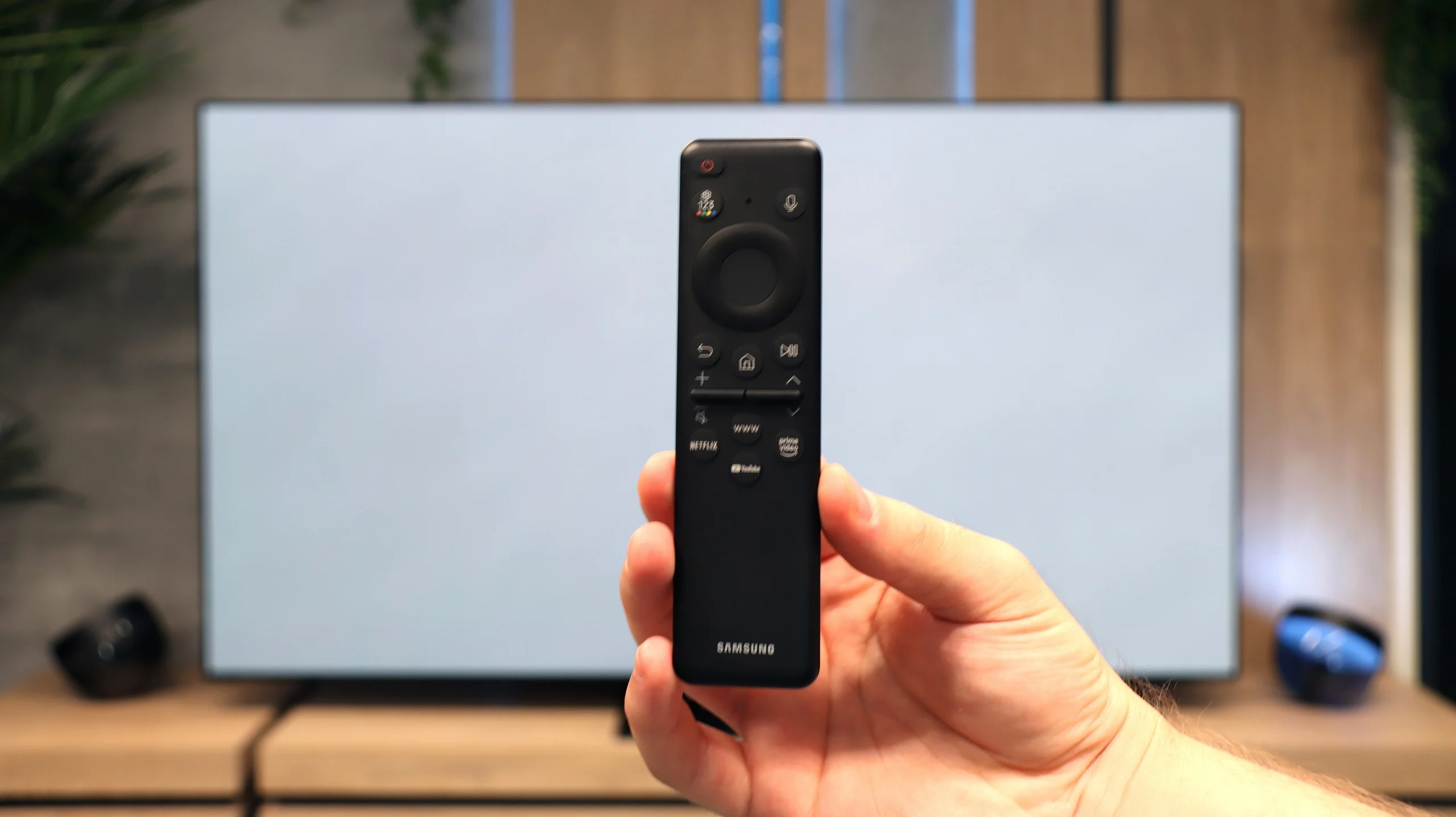
- Backlit remote control
- Teletext
- Audio only mode
- Bluetooth headphones support
- Simultaneous Bluetooth headphones & TV audio
Smart features:
- AirPlay
- Screen mirroring (Windows Miracast)
- Voice search
- Voice search in native language
- Ability to connect a keyboard and mouse
Sound connection options
- HDMI audioeARC (HDMI), ARC (HDMI)eARC (HDMI), ARC (HDMI)
- Other audio outputsToslink (Optical audio)Toslink (Optical audio)
- Wireless audioBluetooth, Samsung Q-Symphony (Speaker extension)Bluetooth, Samsung Q-Symphony (Speaker extension)
Supported audio formats (external HDMI eARC audio):
- Dolby Digital Plus 7.1
- Dolby True HD 7.1
- Dolby Atmos in Dolby Digital Plus (JOC)
- Dolby Atmos in Dolby True HD
- DTS:X in DTS-HD MA
- DTS-HD Master Audio
Senior accessibility
- Numeric keyboard on TV
- Font size adjustment
- Audio description
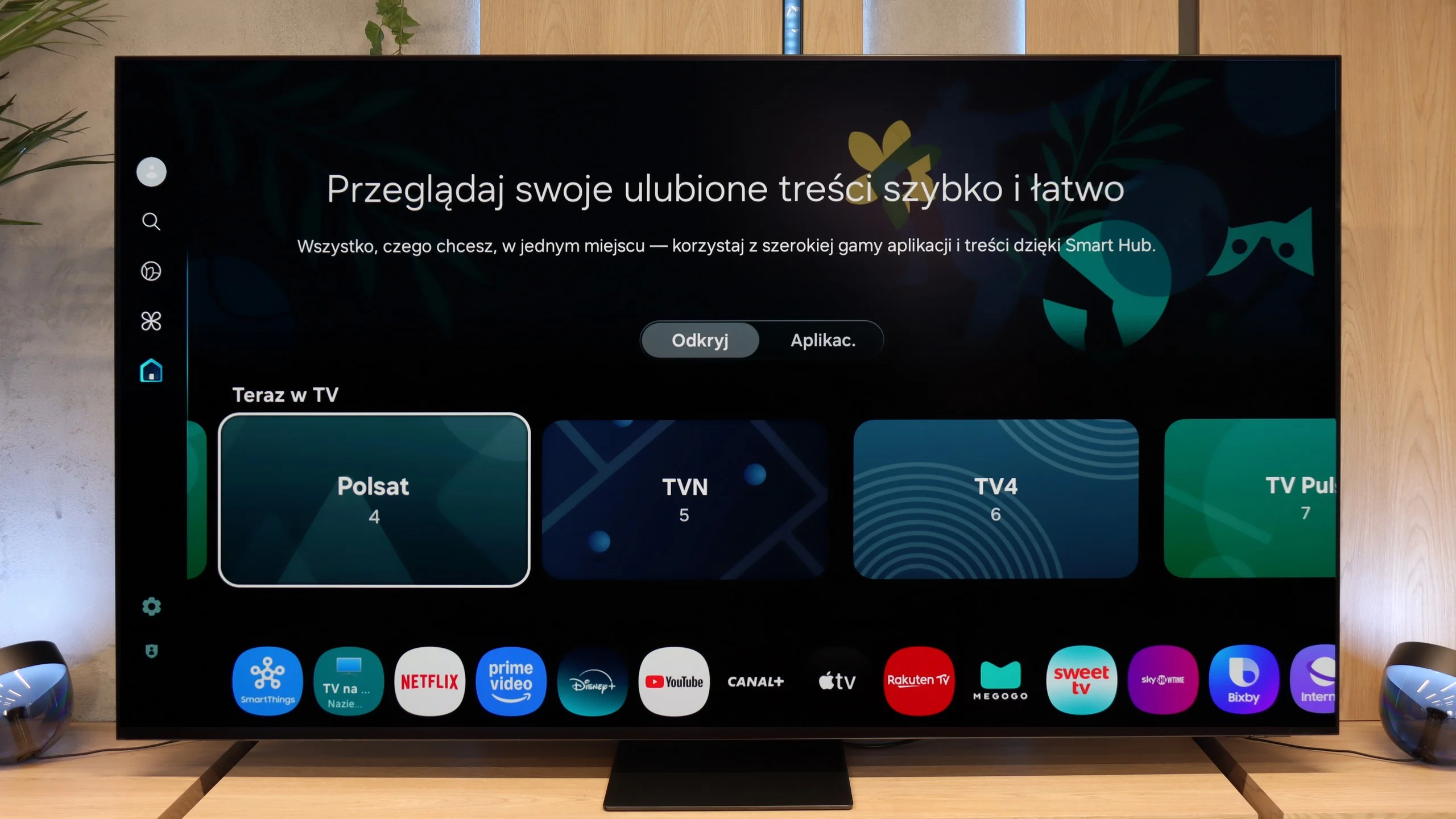
SmartTV in S95F: Tizen
Samsung S95F is not just a screen for movies and games, but also a well-developed smart platform. The Tizen system runs quickly and efficiently – it's hard to encounter stuttering or serious issues. On a daily basis, we have everything we need: AirPlay, screen sharing from a smartphone, voice search (working even without a remote in hand). It’s a closed system, so we won’t find every app available on Android, but the library is rich enough that no one will feel shortchanged. Additionally, there’s SmartThings, which integrates with smart home devices, allowing the television to be more than just a display.
Classic Features of S95F
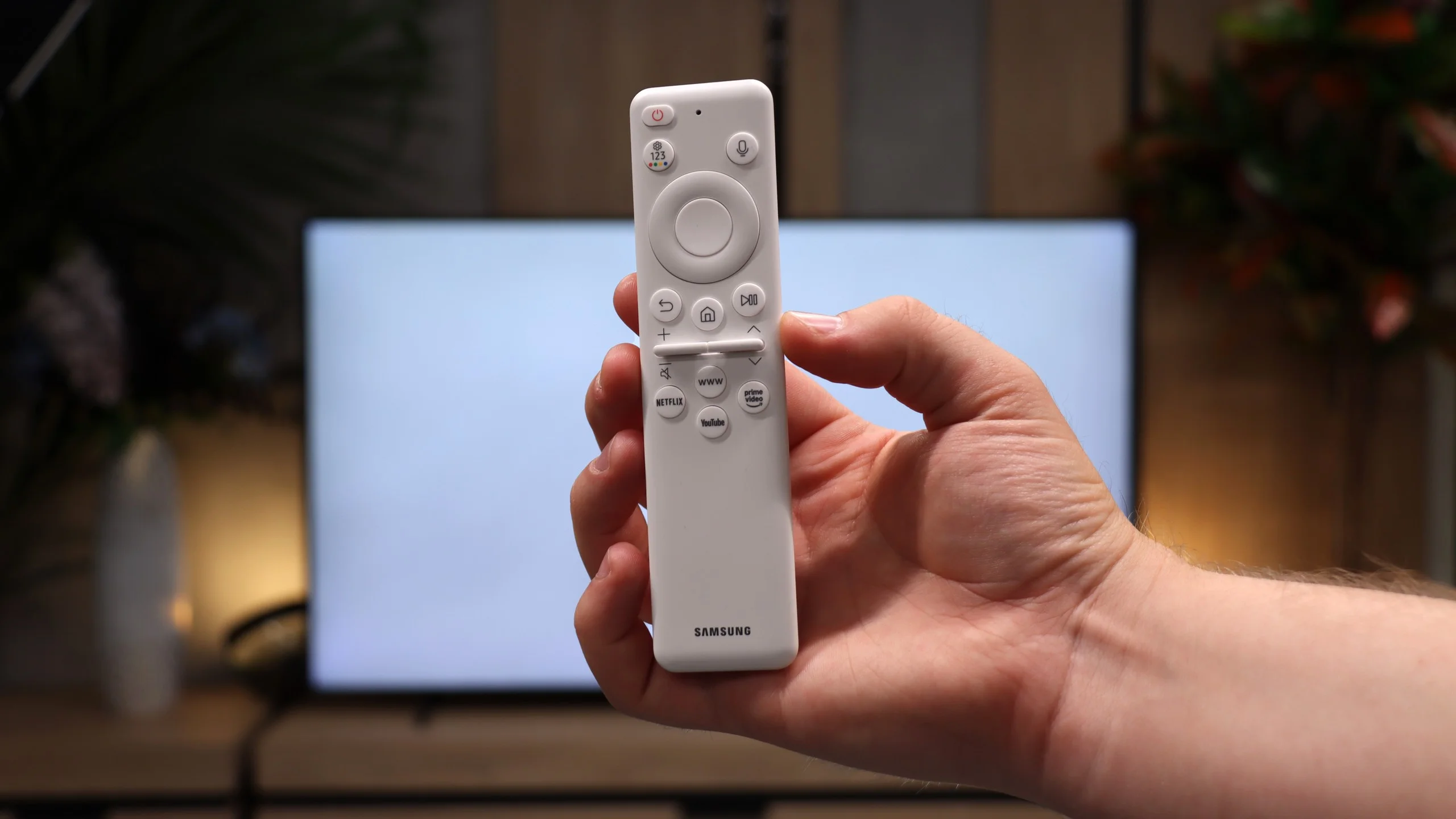
A pleasant surprise is the presence of features that are sometimes overlooked in this category of equipment – PiP, teletext, and the ability to connect headphones via Bluetooth. The only thing missing is USB recording from the built-in DVB-T/T2 tuners, but Samsung makes up for this with a great remote (small) that can easily control other devices, including the Canal+ decoder. The One Connect module also deserves praise – having all the ports hidden in a separate box is a huge convenience, especially for those who frequently juggle connected devices. It’s hard to pinpoint any element that could lead to complaints.
Tizen and Smart TV features
Tizen is, of course, behind the Smart TV features. The system runs smoothly and offers a very large selection of streaming apps. It also supports AirPlay, Miracast and voice search in Polish. In that respect The Frame Pro is not especially different from other new Samsungs – you simply get the manufacturer's feature-rich, well-working system.
Art Mode and Art Store
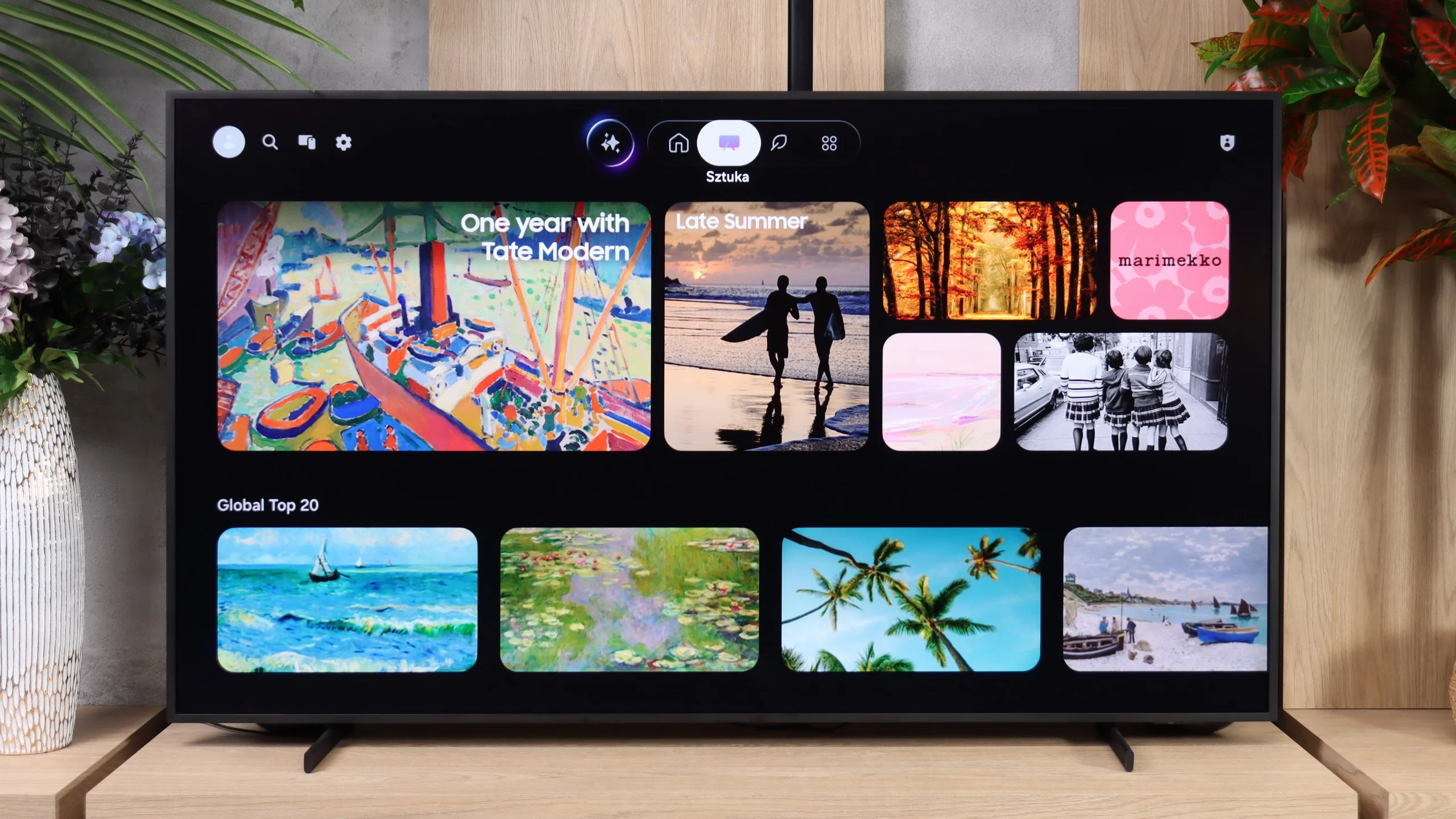
Far more interesting is Art Mode, since it's one of the most important features of the whole Frame series. When turned off, the TV can display paintings, photos or graphics instead of a black screen and can genuinely do a good job of imitating a classic picture hanging on the wall. Samsung provides access to the Art Store, where the selection is really large and the materials themselves are prepared to very high quality. The problem is that full access requires a subscription, and in our view that's a significant drawback for a TV whose main selling point is this feature. Fortunately we're not limited to the Art Store. You can upload your own photos or artwork, so nothing stops you from finding a high-resolution piece yourself and displaying it on the screen. The automation of this mode is also handled very interestingly. The Frame Pro not only has an ambient light sensor to adapt the look of the displayed image to the room, but also a presence sensor. The TV can therefore detect that someone is in the room and automatically activate Art Mode.
Classic features
As for classic TV features, The Frame Pro offers a rather basic set of conveniences. We have DVB-T/T2, DVB-S/S2 and DVB-C tuners, teletext, a sound-only mode and the ability to use Bluetooth headphones and the TV speakers at the same time. Missing, however, are USB programme recording, PiP and a more advanced remote, for example one with a numeric keypad. The remote works via radio, so you don't need to point it at the screen.
Apps
9.3/10
9.3/10






















Playing files from USB
9/10
9.1/10
Supported photo formats:
Maximum photo resolution:
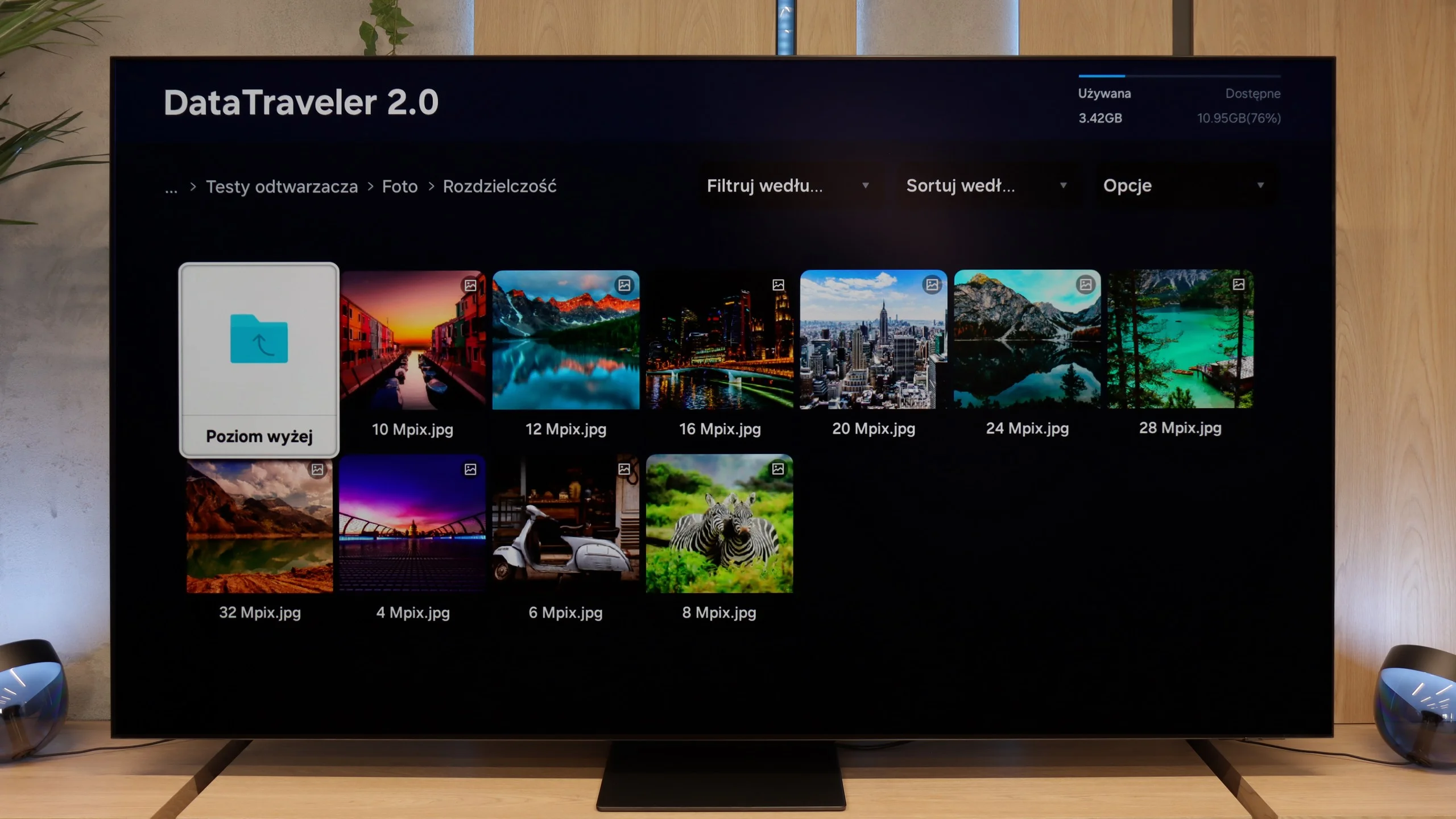
The built-in media player in the S95F works quite well, although it is not without its limitations. It handles most popular video and audio formats, but there may be some reservations regarding photos. The manufacturer's claims do not always align with reality – for example, HEIC files refused to open. On the other hand, for most users, such a set of features will be perfectly adequate, while those who need something more advanced can always look for alternatives in the Tizen catalog (if they can find one) or use wireless connectivity 😉.
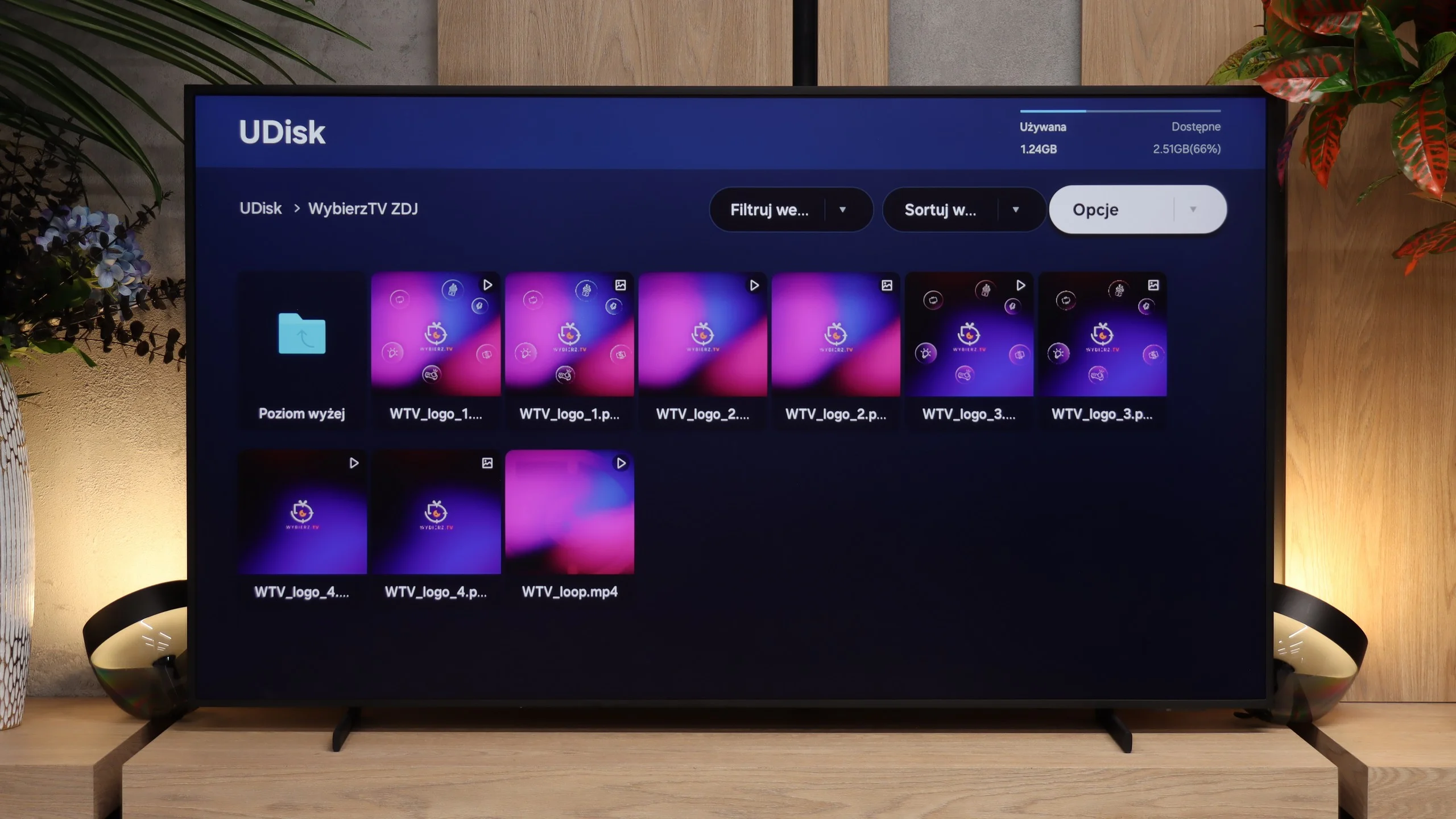
The Frame Pro handles playing files from a USB drive well. Most common video, audio and photo formats work correctly, so you probably won't need to connect a laptop just to play a movie or browse photos. What we miss most is support for HEIC, the format commonly used for photos taken with iPhones. Apple users will therefore have to convert those photos to a supported format beforehand or simply stream them to the TV via AirPlay. Other than that, the player works great.
Sound
8/10
6.4/10
- Maximum volume82dB89dB
- Dolby Digital Plus 7.1
- Dolby True HD 7.1
- Dolby Atmos in Dolby Digital Plus (JOC)
- Dolby Atmos in Dolby True HD
- DTS:X in DTS-HD MA
- DTS-HD Master Audio
The built-in speakers of the S95F can positively surprise – they play pleasantly and clearly, and despite the slim construction of the TV, it's hard to say that the sound is flat. Sure, there could be more bass, but that's a natural compromise with such a thin casing. For everyday watching of movies or series, the set performs excellently. Those who enjoy stronger experiences should consider a soundbar – preferably one with Q-Symphony support. Then the TV speakers and the Samsung soundbar work together.
The sound on The Frame Pro is decent and hasn't changed much compared with last year's model. The TV handles dialogue particularly well, with voices clear and easy to hear. However, it lacks stronger bass, so films and music don't have much depth. If you care about better sound, it's worth considering a soundbar when buying The Frame Pro. Models from the S series suit it especially well. Their slim design complements the look of the TV. Finally, The Frame Pro supports Dolby Atmos, so with a compatible soundbar or AV receiver you can enjoy immersive audio. It does not support DTS, which is worth bearing in mind when playing films from your own library, for example Blu-ray discs.
Sound Quality Test
Acoustic Measurements
82dBC (Max)
75dBC
89dBC (Max)
75dBC
Reader comments
Comments are provided by the external service Disqus (Zeta Global). Once loaded, Disqus may set cookies and process data about your activity.
We will remember your choice on this device. Provider's privacy policy