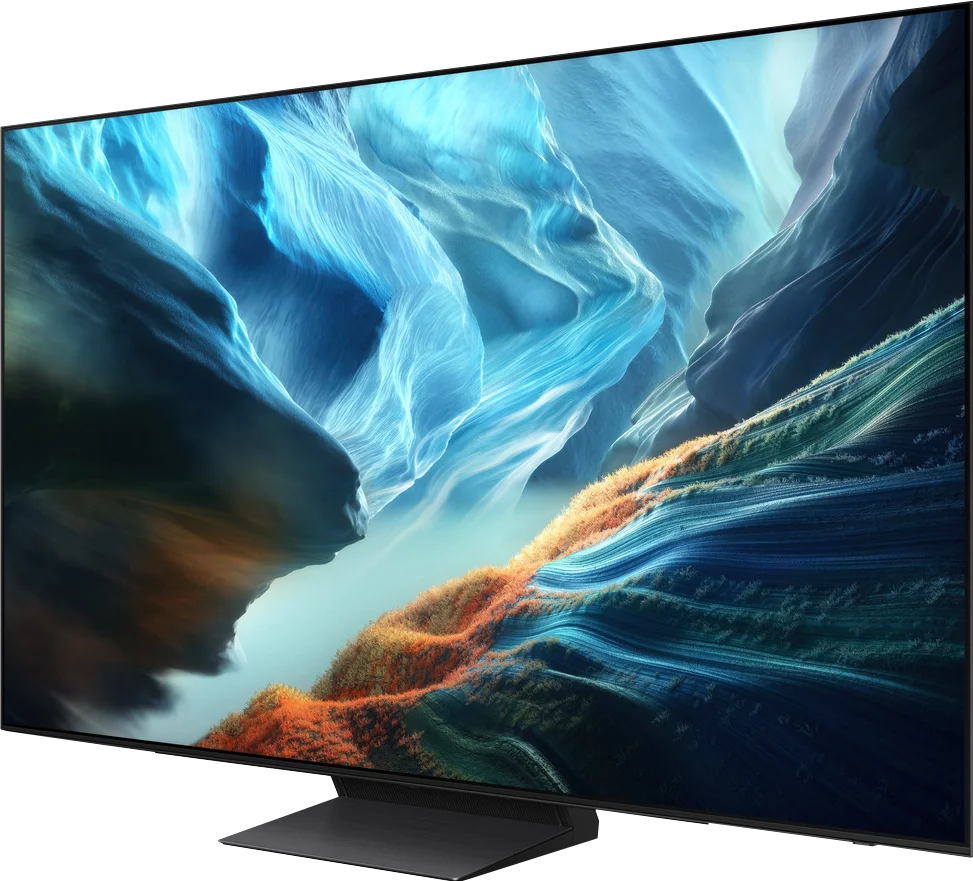
Samsung, what on earth did you do? The S90H is a TV that won us over almost from the first minutes. If you're after a short answer to whether it's worth the money, we’ll be blunt: yes, absolutely. The combination of perfect, organic blacks with very high brightness and the vivid colours of a QD-OLED panel creates an effect that's hugely impressive from the first power-on. Choosing a matte finish proved to be a brilliant move. No more constant battles with the blinds or seeing your own reflection on a sunny day. Sure, purists like us will notice that in a room with strong sunlight the blacks can subtly shift towards grey-maroon tones, but the daytime viewing comfort here is hard to overstate. Most importantly, in the evening and at night the picture still delivers everything we love about OLEDs: perfect blacks, excellent contrast and incredible depth. Add to that a fast, polished Tizen system and a nearly complete suite of gaming features, led by Game Motion Plus. The result is an exceptionally complete TV where minor software niggles don't change the overall, very positive impression. Does the S90H have any major downside? It's hard to point to anything in the TV itself that would seriously detract from this model. The biggest concern is more about Samsung's policy. To this day it's difficult to understand why such a great QD-OLED panel is offered only in the 77-inch model we tested, the one with the HAT suffix in the name. That may change in future, but for now that's how things stand. So if you're specifically aiming for that variant, there's no need to think twice. The Samsung S90H 77-inch with a QD-OLED panel is one of the most exciting TVs of the year. Once the new-product premium fades and bigger discounts start to appear, it could become one of the best-value OLEDs on the market — and very likely one of the biggest bestsellers of 2026.
- Matching (Score) |
- Our verdict |
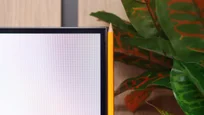
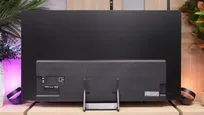
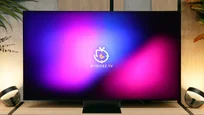
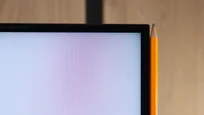
- TV appearance |
- Where to buy |
- Contrast and black detail |
- HDR effect quality |
- Factory color reproduction |
- Color reproduction after calibration |
- Smoothness of tonal transitions |
- Image scaling and smoothness of tonal transitions |
- Blur and motion smoothness |
- Console compatibility and gaming features |
- Input lag |
- Compatibility with PC |
- Viewing angles |
- Daytime performance |
- Panel details |
- TV features |
- Apps |
- Playing files from USB |
- Sound
Samsung S90H (QD-OLED) vs SONY Bravia 9 II XR95M2
 Direct comparison
S90HAT / S90HAE / S92HAT

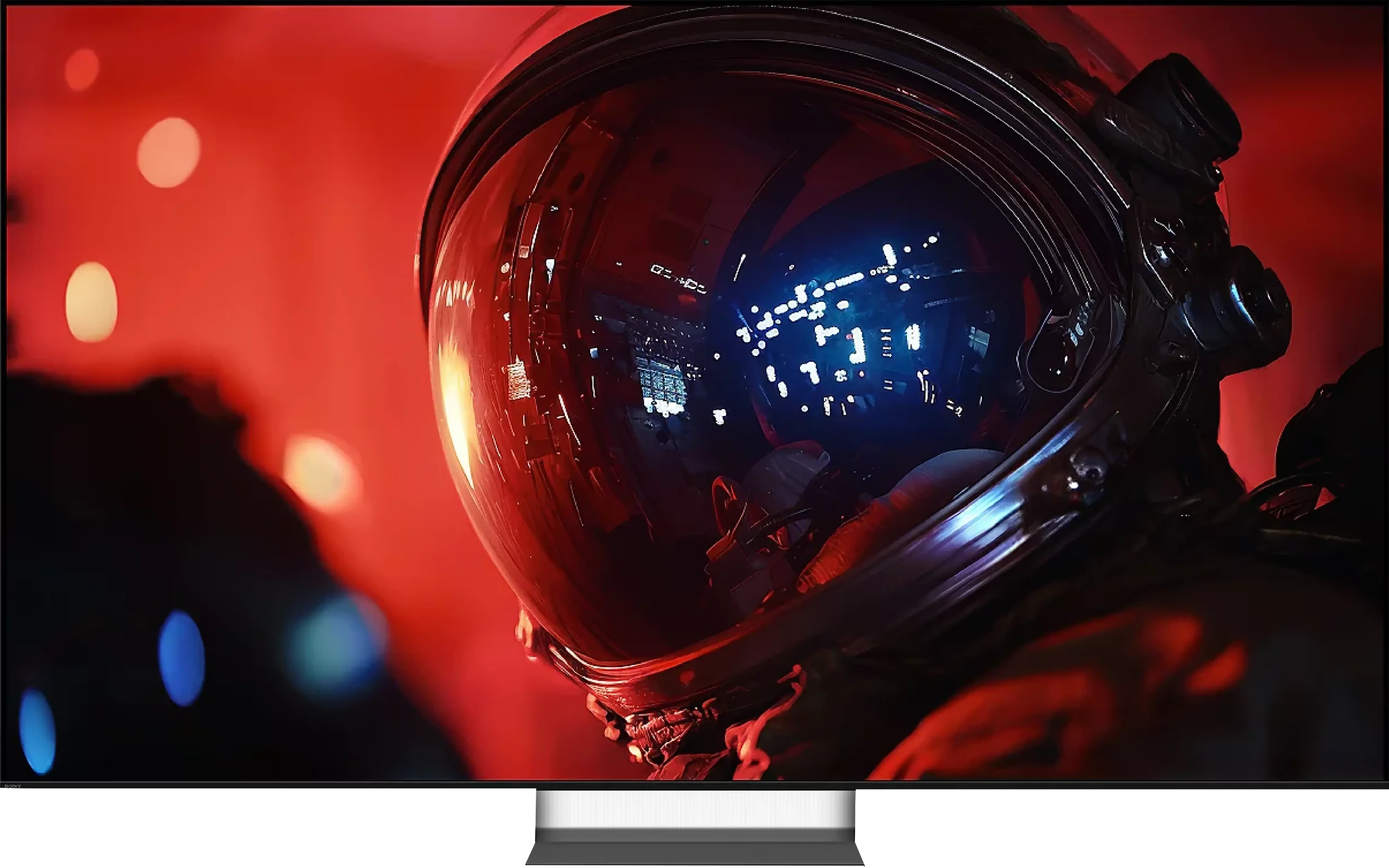
BRAVIA 9 II / XR95M2 / XR9M2
Available screen sizes: 77”
Panel type: QD-OLED
Resolution: 3840x2160
System: Tizen
Model year: 2026
Complete the survey to find out the result
Panel type: LCD VA
Resolution: 3840x2160
System: Google TV
Model year: 2026
Complete the survey to find out the result
Overall rating
8.6
8.9
 Movies and series in UHD quality
 9.0
8.9
 Classic TV, YouTube
 9.3
8.4
 Sports broadcasts (TV and apps)
 9.0
8.0
 Gaming on console
 9.8
9.2
 TV as a computer monitor
 8.6
7.8
 Watching in bright light
 6.4
10.0
 Utility functions
 7.3
8.8
 Apps
Apps 9.3
9.6
 Sound quality
 8.4
9.0
Complete the survey to find out what fits your preferences
Advantages

Perfect blacks and infinite contrast
Very high HDR brightness (reaching 1700 nits)
Excellent colour gamut coverage (QD-OLED)
Reference-grade image reproduction after professional calibration
Excellent motion handling (no motion blur)
Excellent for gamers (4x HDMI 2.1, VRR, ALLM, low input lag)
High panel refresh rate (up to 165 Hz)
Perfect viewing angles
Effective anti-reflective coating (matte)
Responsive Tizen system
Surprisingly good sound
Excellent black levels for an RGB Mini-LED LCD panel
Extremely high HDR and SDR brightness (identical to the Sony BVM-HX3110 reference monitor)
Great daytime performance thanks to the matte panel
Very good colour reproduction
Market-leading digital image processing
Plenty of gaming features (VRR, ALLM, HDMI 2.1)
Quite good viewing angles (for a VA panel)
Polished Google TV operating system and two remotes included
Very good audio
Support for premium video and audio formats: Dolby Vision, Dolby Atmos, DTS:X
Disadvantages

In bright light, blacks can take on a cherry tint (a characteristic of QD-OLED panels)
The matte finish in strong light affects perceived colour saturation
Lacks TV features such as USB recording or PIP
No support for DTS:X (a problem for Blu-ray disc fans)
Why isn't this panel available in all sizes?!
Only 2 HDMI 2.1 ports (on a flagship screen in 2026?!)
No 98-inch option in the range
Limited picture calibration features
Very noticeable local-dimming zone behaviour off-axis
No high refresh-rate modes for PC gamers (higher than 120Hz)
Our verdict
Sony Bravia 9 II is without a doubt one of the most advanced televisions that have ever passed through our editorial office. Sony has created a real monster by using a completely new RGB Mini-LED backlight design, which they call True RGB. But the technology alone is only half the story. Only combined with Sony's finely tuned, years-in-the-making image processing algorithms has a television emerged that is closer to a director's intended picture than any other screen we've tested to date. This is where you can see why Sony has enjoyed such a reputation in the world of imaging for years. HDR looks spectacular, peak brightness at times seems almost absurd, blacks can be surprising for an LCD TV, and colours are at once extremely vivid and natural. Most importantly, all these elements form a coherent whole. There's no sense that the TV is trying to impress with numbers in the spec sheet alone — it is simply a huge pleasure to watch, whether it's movies, series or gaming. Beyond the excellent picture quality, you can't forget that this is simply a complete television. Google TV runs fast and offers virtually all the major apps, gamers get a full suite of premium features, and support for audio and video formats means there's little to complain about in the feature set. These are exactly the qualities we expect from a device that aspires to be the television of the year 2026.
Are there any drawbacks? Of course there are. Even the Bravia 9 II is not a perfect design. Interestingly, our biggest reservations are not about picture quality, which is absolutely phenomenal. We're more puzzled by some of the manufacturer's decisions. In the flagship 2026 model we still only get two HDMI 2.1 ports, which can be downright annoying when you have a console, a PC or audio equipment. The other issue is the lack of a 98-inch version. It's really hard to understand why a TV of this class doesn't come in that recently popular size.
So is the Bravia 9 II worth buying? Our answer is: YES, YES and once again YES. If you're after a top-tier television and picture quality is your primary concern, it's hard to find a better choice right now. Sony has not only proven that RGB Mini-LED has enormous potential, but also shown how the technology should be used. The "True RGB" label didn't appear here by accident. What's more, given the current price of this model, you can confidently say it has been priced quite sensibly compared with the competition. The Bravia 9 II is not just one of the best TVs of 2026. It's a television that sets a new benchmark and shows the whole industry what image quality on an RGB Mini-LED TV should look like.
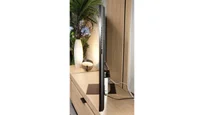
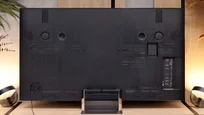
TV appearance

Contrast and black detail
10/10
8.6/10
Local dimming function: Yes, number of zones: 1500 (30 x 50)
Contrast:


Result
∞:1

Result
∞:1

Result
∞:1

Result
∞:1

Result
∞:1
Result
218,000:1
Result
66,700:1
Result
448,850:1
Result
12,700:1
Result
4,200:1
Halo effect and black detail visibility:
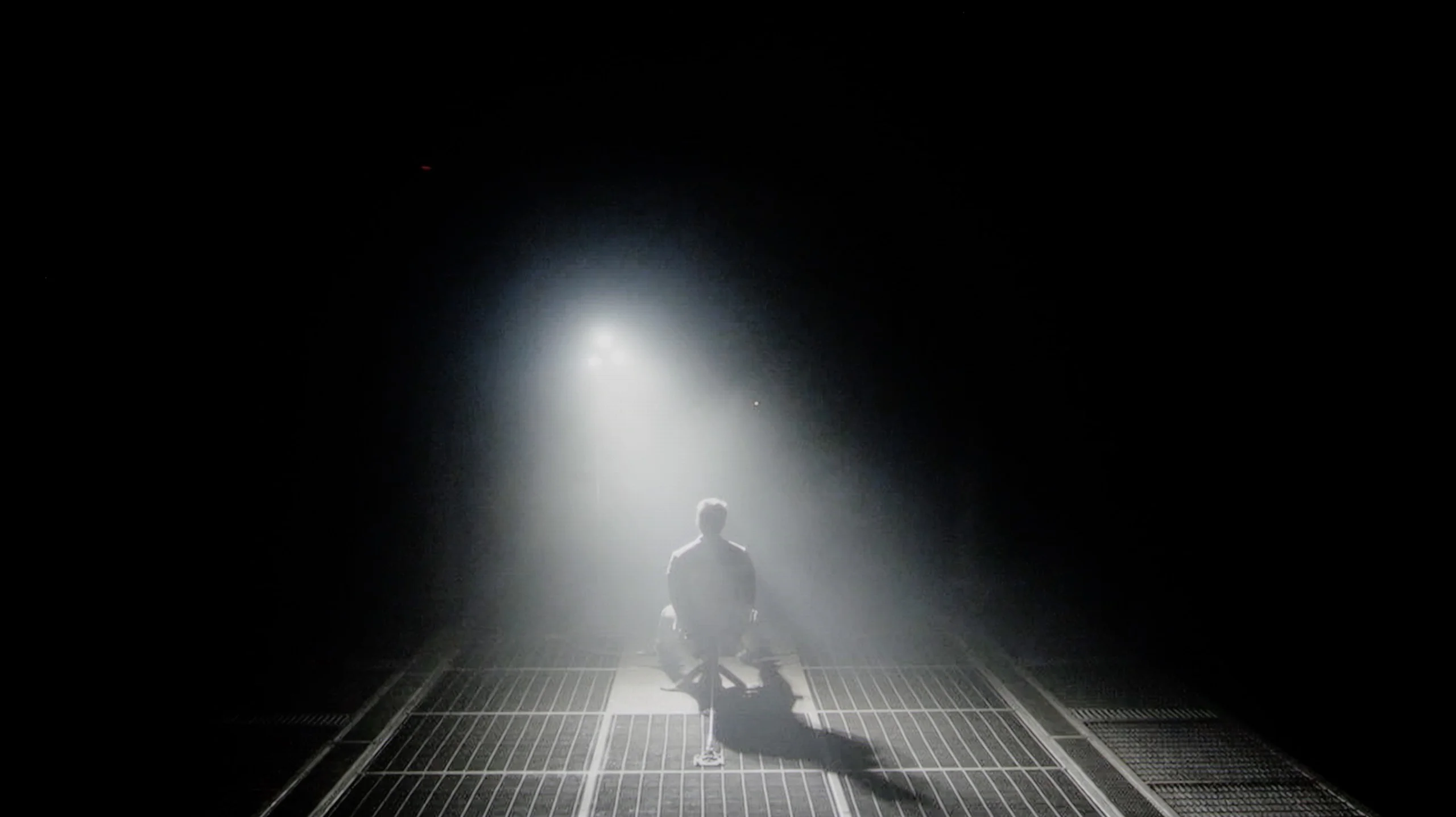
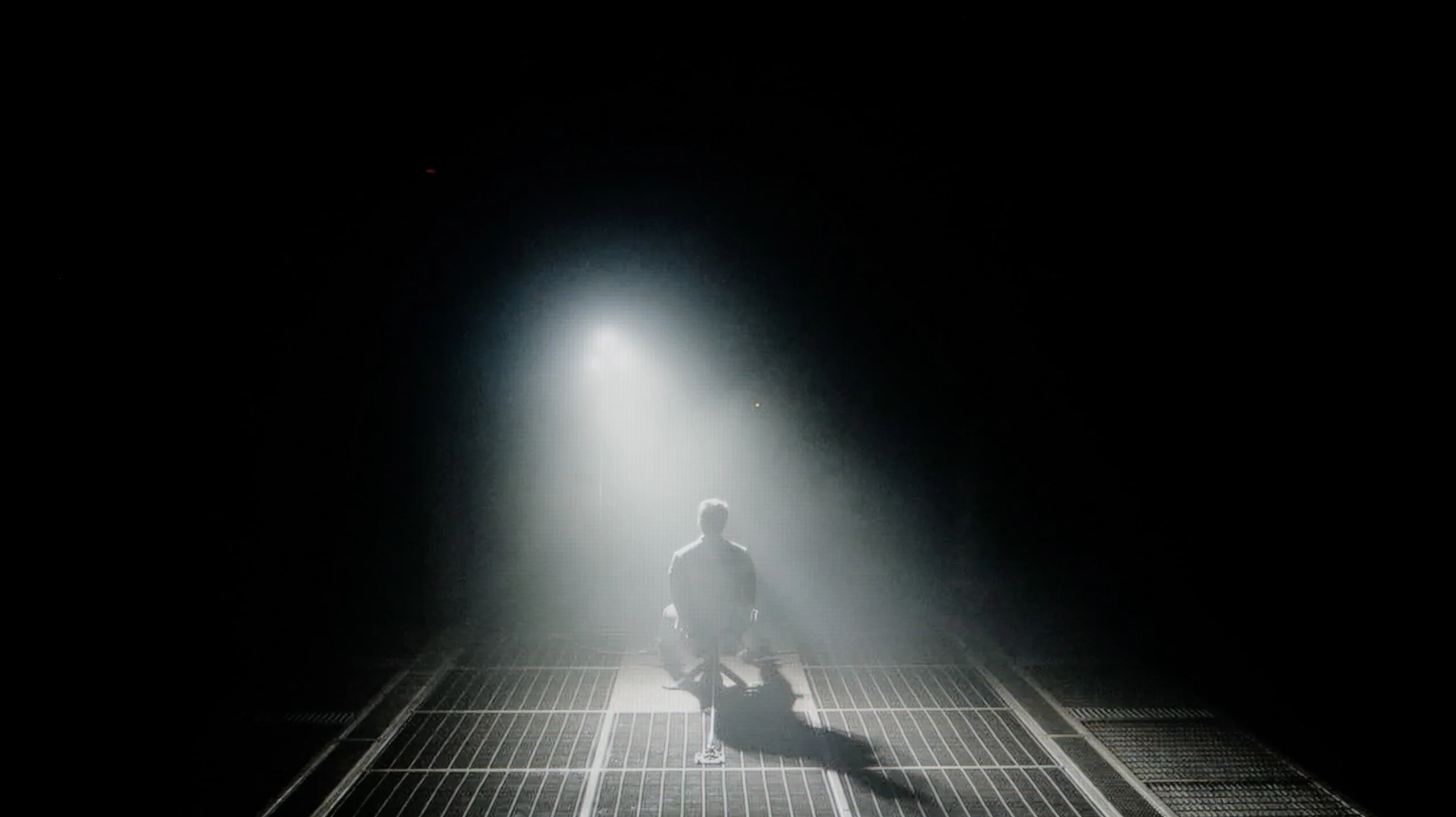
Check the visibility of bright lights on a dark background. Mini-LEDs often struggle with this. The photo does not compare black levels – that’s what the video below is for.
The video accurately shows differences in contrast and black levels between TVs, as well as potential issues: halo around bright objects or Mini-LED zone operation visible as brightness jumps.
Because the Samsung S90H uses an OLED panel, it earns the highest rating for contrast and black levels. Importantly, this applies both to the WOLED version and to the QD-OLED variant we tested. Each pixel emits its own light and can be switched off completely, so the TV delivers perfect black and virtually infinite contrast. That translates into excellent image depth and a very clear separation of bright elements from dark backgrounds, without the blooming that still appears even in the best LCD TVs. The effect is especially impressive when watching in a darkened room, where dark scenes look incredibly realistic and the picture gains a stronger sense of three-dimensionality and detail.
In the 65-inch size we tested we counted exactly 1,500 independent local dimming zones. Combined with the VA panel's native high contrast, this translates into very good results when reproducing dark scenes. Although the number of zones isn't as high as with classic QD-Mini LED-backlit screens, Sony's algorithms more than make up for the difference. The contrast we measured reaches very high values, and in easier dark shots dominated by deep blacks the image can even resemble OLED screens. Of course Mini LED has its physical limits and it's not an OLED. When small bright elements appear on a dark background the halo effect is still visible (a characteristic bright glow around a bright point, caused by the lighting zone being much larger than a single pixel).
In the Bravia 9 II this phenomenon works quite differently to classic LCD TVs. Thanks to the new architecture, the glows around objects take on the colour of the displayed element. You can clearly see this in the helicopter cockpit scene: the halo glow generated around the instruments isn't white-blue, it takes on the exact green tint of the LEDs in the cockpit. To the human eye that image is much more coherent and gives a greater sense of depth, even if the purely mathematical, measurable contrast at that particular point isn't revolutionary. Sony once again proves it has the best local dimming algorithms on the market. The software doesn't produce artificial, abrupt brightening and keeps the undesirable side effects of zone-based technology well under control. If you're wondering which RGB screen currently handles backlight zones best, the Bravia 9 II is the answer.
HDR effect quality
7.8/10
9.3/10
Luminance measurements in HDR:

Result
1464 nit

Result
1470 nit

Result
1269 nit

Result
1505 nit

Result
902 nit
Result
3003 nit
Result
2717 nit
Result
2755 nit
Result
2230 nit
Result
2033 nit
Scene from the movie “Pan” (about 2800 nits)


Scene from the movie “Billy Lynn” (about 1100 nits)

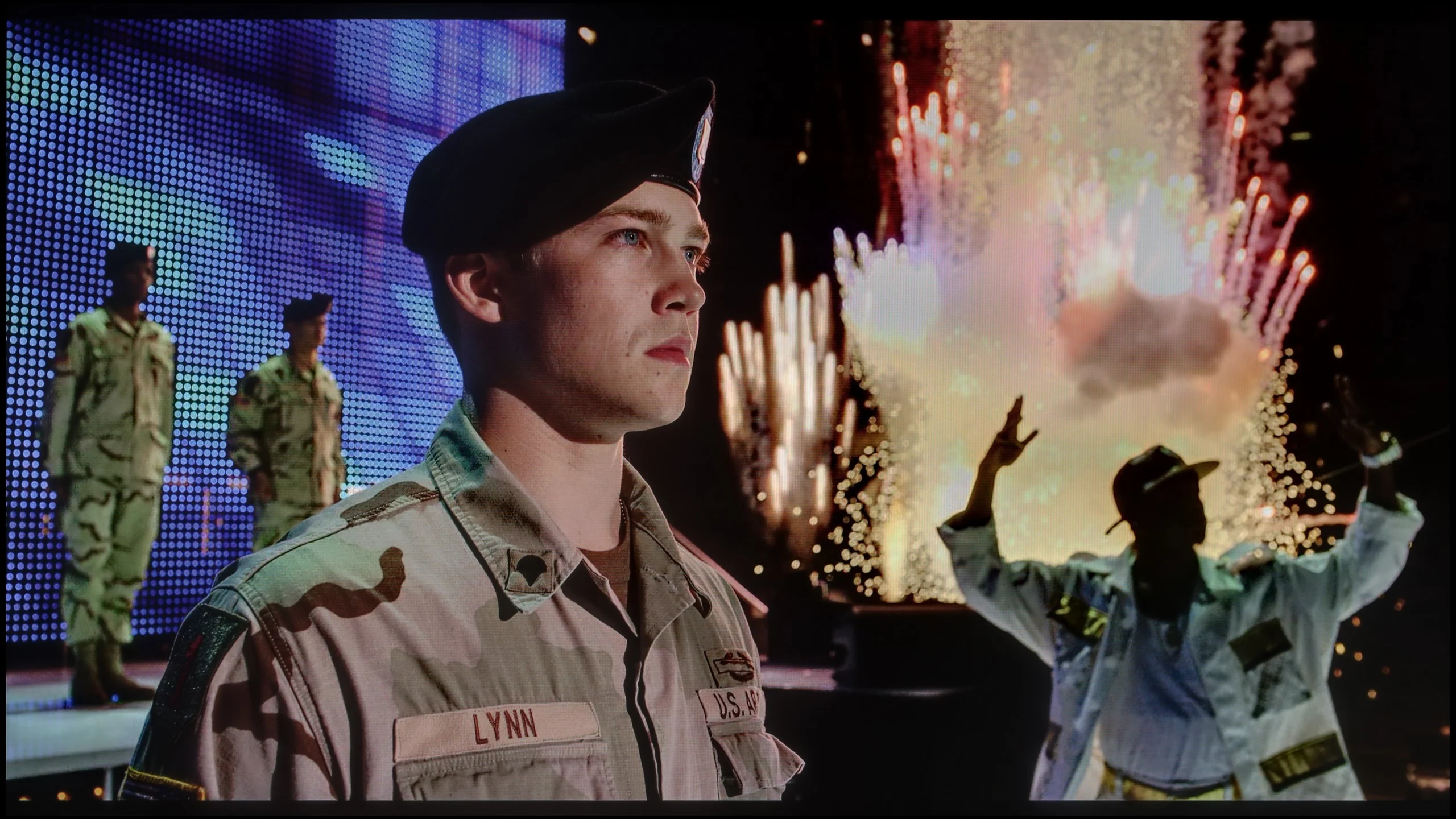
The photos show two HDR10 movies. 'Pan' is one of the brightest productions ever made, while 'Billy Lynn' (soldier) has brightness typical of streaming (Netflix, Prime, HBO MAX). Notice the intensity of effects and detail in whites.
Static HDR10


The photos present the visibility of white details in various HDR formats. They do not show brightness differences between TVs (these can be compared in the previous gallery).
Dynamic: HDR10+
Dynamic: Dolby Vision


The photos present the visibility of white details in various HDR formats. They do not show brightness differences between TVs (these can be compared in the previous gallery).
HDR luminance chart:
SONY Bravia 9 II XR95M2
Samsung S90H (QD-OLED)
The Samsung S90H is a really bright TV for the mid-range among OLEDs. In synthetic measurements its peak brightness reached around 1650 nits. That's an outstanding result in this class, roughly 50% higher than what we’ve seen from previous models at this price point. Most importantly, these tests translate directly to real video material. In four out of the five film scenes we tested the S90H’s brightness hovered around 1300-1500 nits. That kind of headroom lets it reproduce most HDR films with very high impact and without obvious compromises, especially material mastered to 1000–1500 nits. In practice, highlights, reflections and explosions have the right punch and the picture doesn’t feel dimmed. Of course, on full-screen, very bright scenes the result is naturally lower and drops to about 900 nits. That’s a direct effect of the protection systems that keep the OLED panel from being overloaded. Even in that scenario there’s little to complain about. Nine hundred nits across the whole screen is still a very high level, guaranteeing excellent dynamics in HDR content. A huge advantage of QD-OLED TVs has always been the colours, and the S90H is no exception. The DCI-P3 colour space we measured reached a full 100% (actually 99.9%), while coverage of the much wider BT.2020 gamut hit about 89%. That’s a great result, allowing very saturated and vivid colours in HDR material. It’s worth emphasising that QD-OLED’s edge over WOLED panels isn’t just about gamut coverage. In practice it’s seen mostly in the higher brightness of saturated colours, in other words greater colour volume. That makes intense reds, greens and blues in HDR look juicier and more impressive.
The real showcase for the new backlight architecture and Sony’s processor is HDR reproduction. At the official launch the Sony engineers said (not officially 😉) that the Bravia 9 II’s brightness should be almost identical to their professional director’s monitor BVM-HX3110, priced at astronomical sums. Our lab tests confirmed they weren’t empty promises. In synthetic measurements on the L20 test pattern the TV easily exceeded 4000 nits of peak brightness. More importantly, these impressive results translate directly to real film scenes. In most of the demanding shots we tested the screen consistently held brightness around 2500 to 3000 nits. Whether the light was small and pinpoint or flooded almost the entire screen, the HDR effect was incredibly intense.
Colours
Colour is another key pillar of RGB Mini LED technology (Sony’s True RGB implementation). For testing this type of panel we’ve permanently added a new research section to check how TVs handle colour in real-world conditions. Traditional synthetic-chart tests are no longer enough to determine real gamut coverage. From now on we also measure colour saturation directly in selected film scenes by overlaying measurement points. So how do the colours perform?
In synthetic tests the Bravia 9 II posts excellent results. For the popular DCI-P3 space used for HDR, colour-gamut coverage was almost 98%, while for the extremely wide and demanding BT.2020 space our measurements showed nearly 90%. However, in real-world, varied scenes those values drop by a few percentage points. This is directly due to the nature of zoned RGB backlighting. When differently coloured elements or bright white points appear next to each other, light from adjacent zones begins to mix slightly, producing a whitish backlight. This, of course, affects colour saturation, slightly reducing it. It shows that despite Sony’s brilliant algorithm controlling the RGB diodes, that number of zones is too small to eliminate the effect completely.
Is this a reason to complain? Of course not. The Bravia 9 II’s final colour coverage is the same as that of a very good QLED TV, and it’s important to remember: the vast majority of films and TV shows distributed in HDR use the DCI-P3 gamut. In that standard Sony easily maintains very high colour saturation, regardless of the scene.
Factory color reproduction
8.3/10
6.2/10


This gallery shows how colors change after professional TV calibration. If you notice the difference, we recommend ordering this service at SkalibrujTV.com.
Factory Mode
After calibration


This gallery shows how colors change after professional TV calibration. If you notice the difference, we recommend ordering this service at SkalibrujTV.com.
Factory Mode
After calibration
The next stage of the test was to check how the S90H handles colour reproduction without any calibration. As always, we took measurements in Filmmaker Mode, the best factory picture setting. And here Samsung really deserves praise. The factory tuning is at a very high level, which wasn’t always the case a few years ago. The white balance was set correctly, as was the brightness response. The average colour reproduction error (Delta E) stayed around 3, which is below the level at which most viewers can notice inaccuracies. Only in the brightest shades of grey did the values slightly approach 4, but it’s still hard to call that a real problem during viewing. For out-of-the-box settings, the result is simply excellent.
Contrary to expectations and high hopes, the Bravia 9 II we tested straight out of the box showed some issues with its factory calibration. Looking at the white balance charts, you can see it isn’t perfect. In SDR content it mainly lacked the red component, so the picture leaned toward cooler, bluish tones. By contrast, white balance in HDR looked much better in that respect. So where do the visible errors in image reproduction come from? They stem from an unexpected tuning of the gamma and the EOTF curve. In both cases the Bravia 9 II straight from the factory showed a clear deviation from reference standards.
In SDR content the gamma was significantly too high, at times running very close to 2.8 instead of the reference 2.4. In practice this meant the image was artificially dark and appeared washed out of colour, with details in dark areas (the shadows) completely lost. The opposite was true in HDR material, where brightness reproduction is handled by the EOTF curve. That curve was pushed too high above the correct value, which resulted in the picture being artificially brightened across most luminance ranges. As with every TV we test, we also subjected this unit to professional calibration. You can see the results and how we managed to correct those factory errors below.
Color reproduction after calibration
9.4/10
9/10
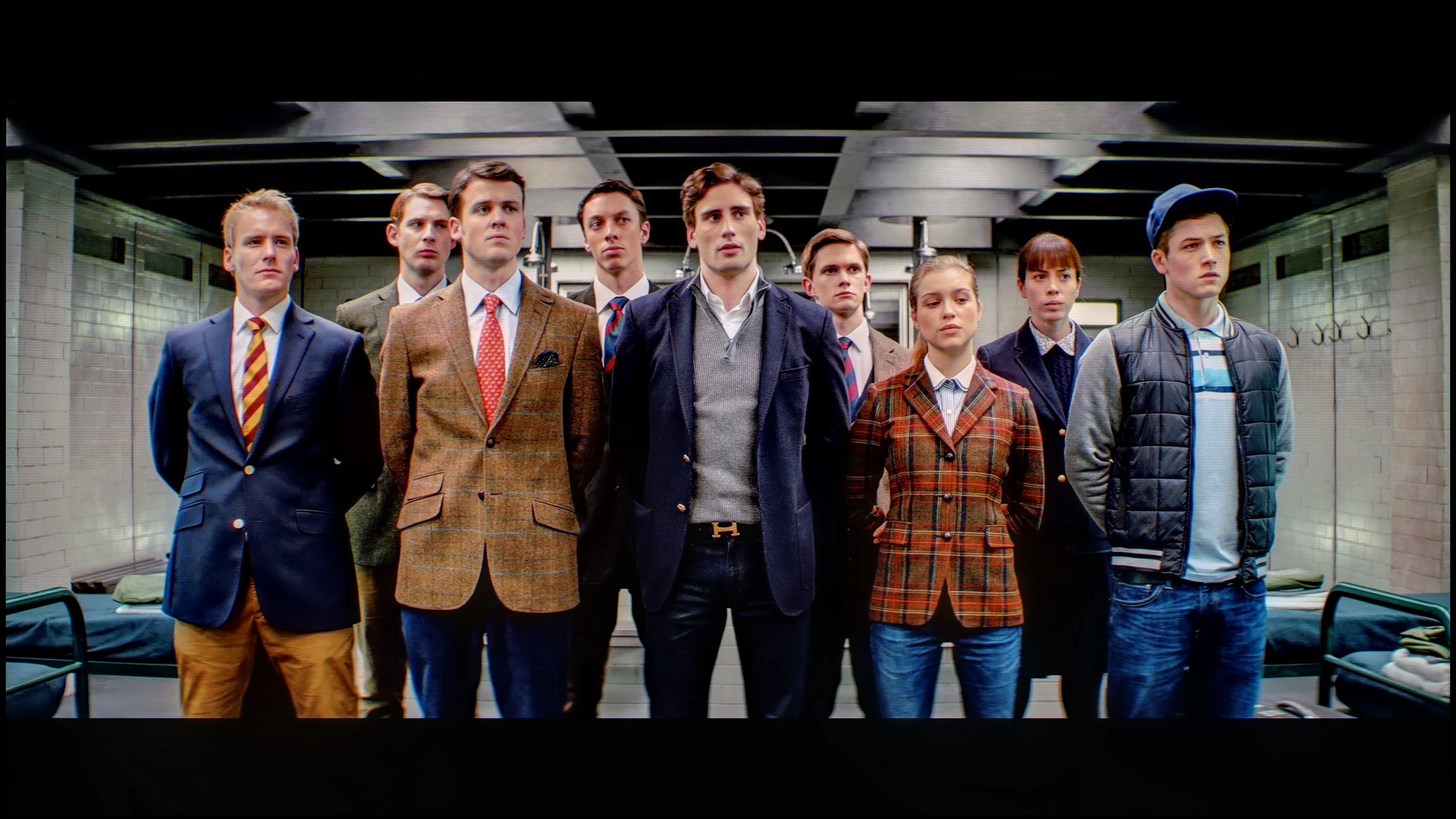
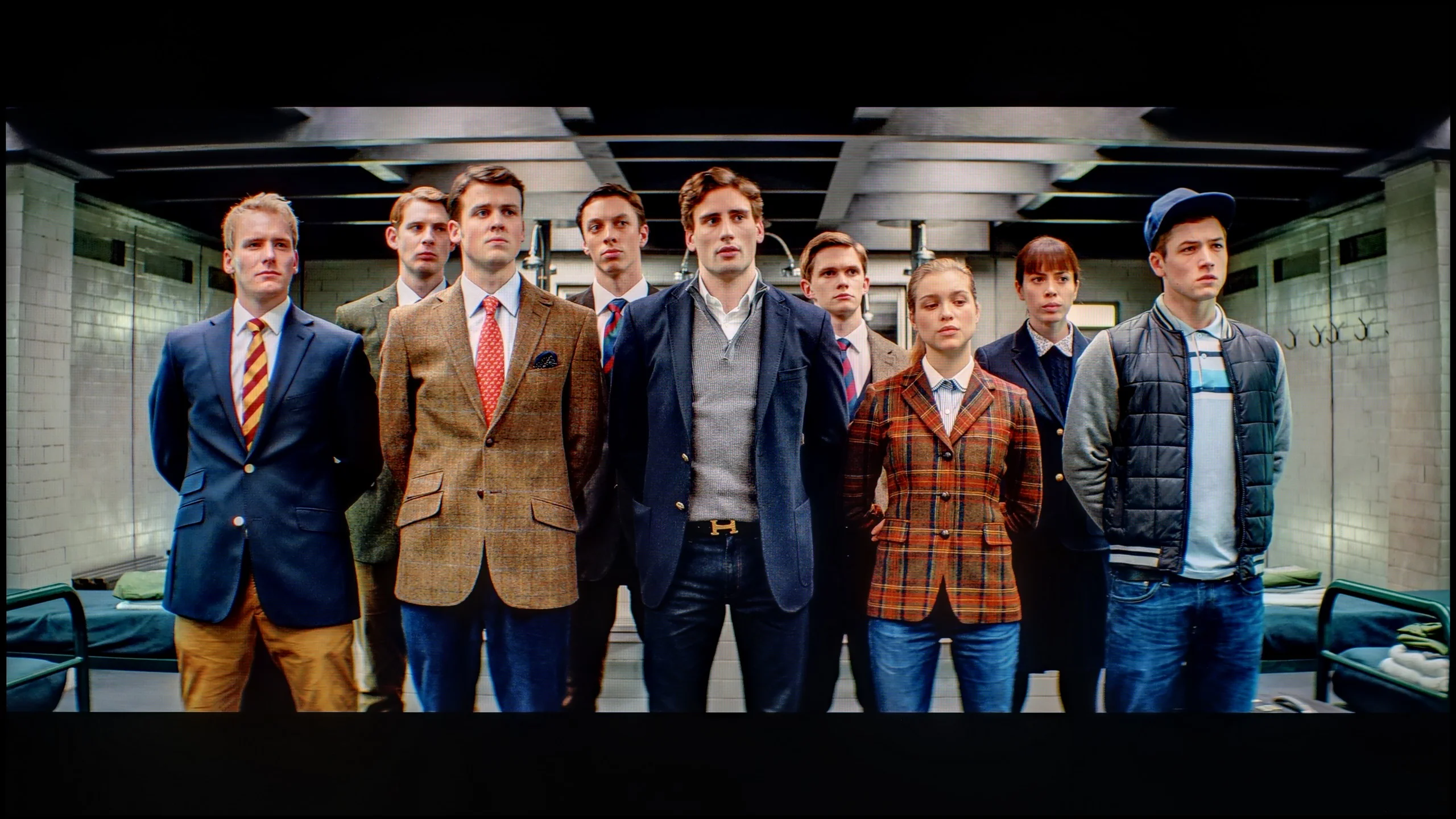
The photos show how movies look on the TV. Pay attention to black detail visibility, colors, and shadow tint.


The photos show how movies look on the TV. Pay attention to black detail visibility, colors, and shadow tint.
All right, but you know we wouldn't be ourselves if we didn't also check how much we could get out of the S90H with professional calibration. And there was no big surprise. Since the out-of-the-box settings were already very good, there wasn't a huge margin for improvement. Even so, we managed to refine the image almost to perfection. After calibration the average colour reproduction errors fell below the threshold of perception, reaching Delta E values under 2 for both SDR and HDR material. We also improved the luminance response, so the picture more faithfully reflects the creators' intent and maintains correct tonality across the entire brightness range. After professional calibration the S90H therefore becomes a screen very close to reference. Will the difference be spectacular for everyone? Not necessarily. The factory settings already deliver a very high level, so in everyday viewing some people may not notice a huge jump. Much also depends on the specific unit. Our sample was very well tuned straight out of the box, but that doesn't mean every S90H will present the same level. Even identical models can differ in their factory calibration. That's exactly why professional calibration makes sense: it lets you bring a particular unit to the highest possible accuracy, rather than relying on a bit of luck when buying.
Fortunately, with professional calibration, most of the factory shortcomings of the Bravia 9 II can be effectively eliminated. We managed to precisely correct primarily the white balance and the gamma and EOTF curves. After those adjustments, in everyday use and during movie sessions the TV looks vastly better. The image gained proper dimensionality, the cool tint to the whites disappeared, and shadow details that had previously been lost due to excessively high gamma finally became clearly visible. Although we ultimately assess colour accuracy as very good, as specialists we must point out one fairly serious design flaw in this model. The Bravia 9 II could look even better if it weren't for the complete lack of an advanced colour management system in the TV's menu.
While a basic white balance correction can be carried out here without issue, the settings lack options for adjusting specific colours. We tried to tackle this from every angle, both using the traditional method from the remote and with dedicated calibration software for Bravia TVs. Unfortunately, that function has been entirely locked. We suspect this may stem from the specifics of the new RGB architecture, which imposes these limitations. It's a real shame, because without it you can't fine-tune colour reproduction to perfection. The inaccurate red, for example, still stands out. Let's hope Sony will fix this shortcoming over time via an update.
Smoothness of tonal transitions
9/10
9.5/10
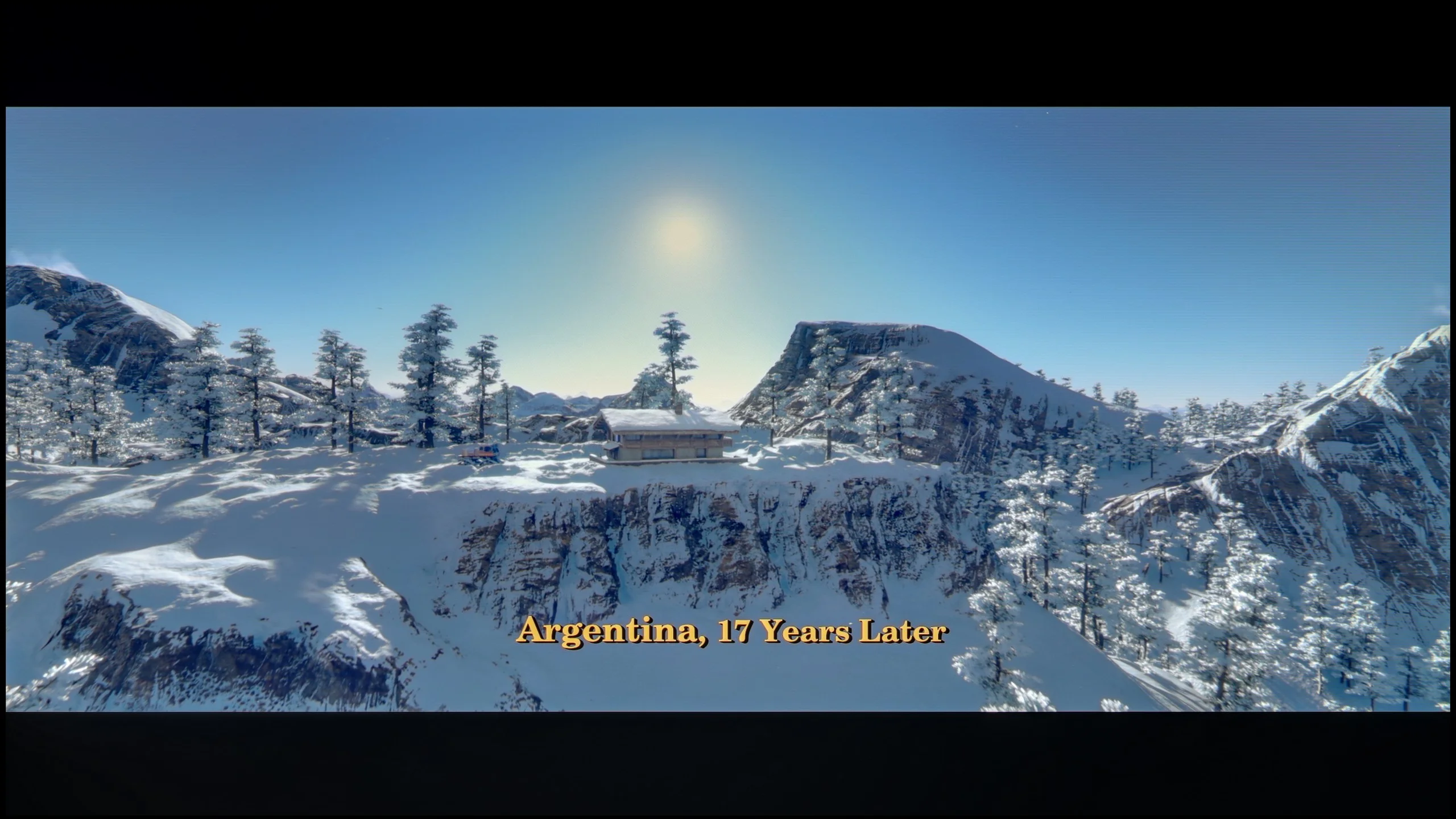

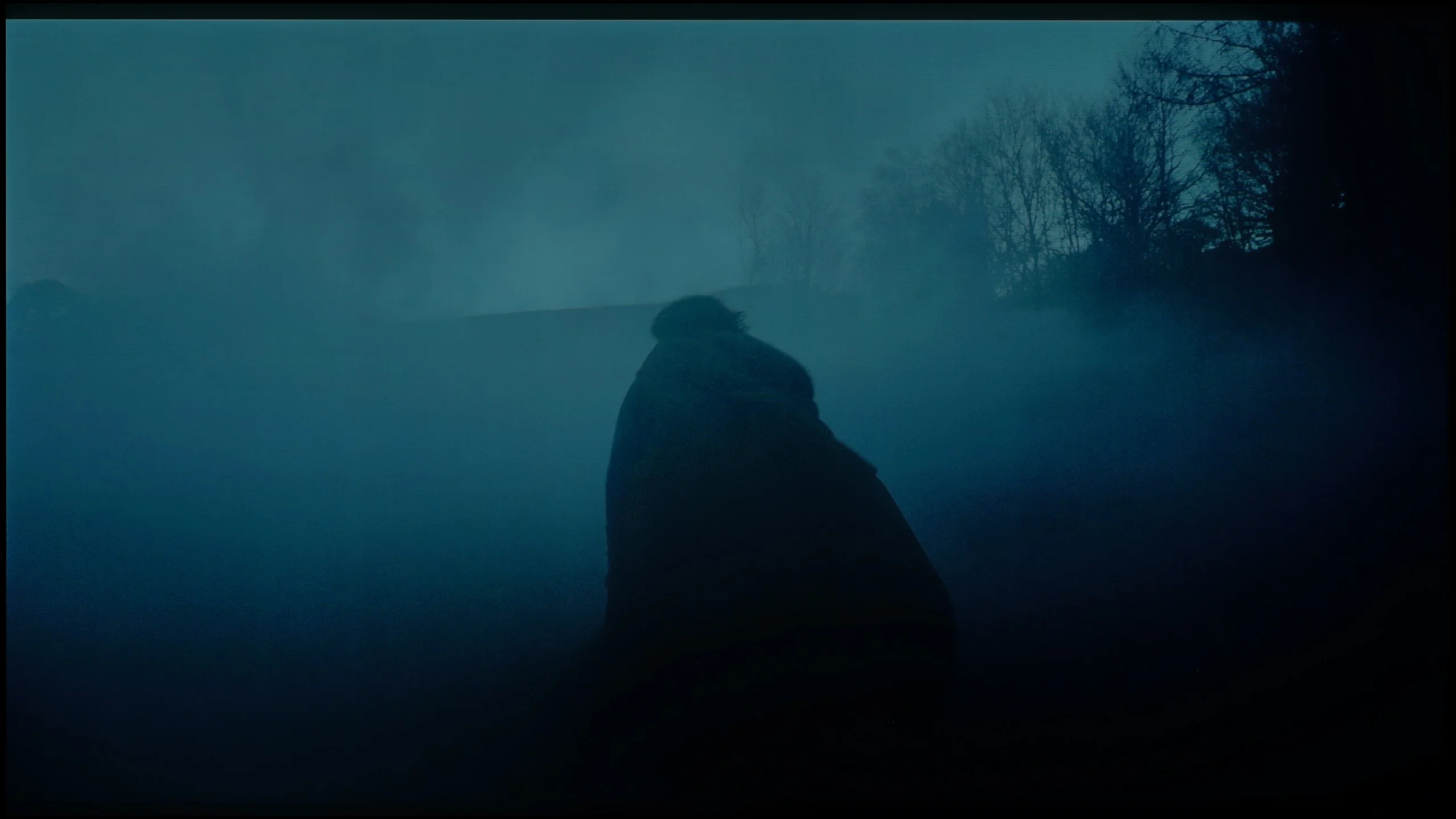
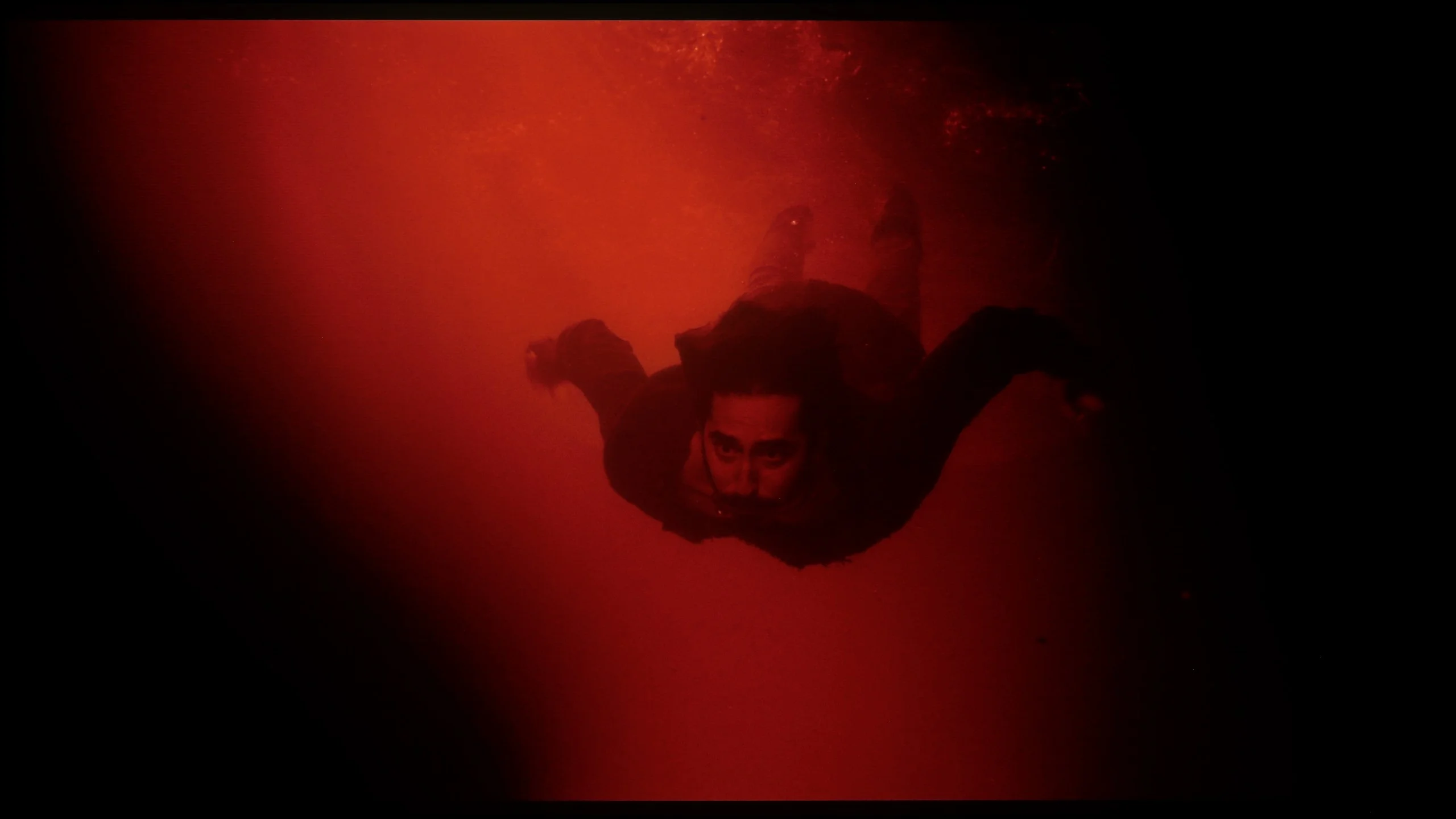
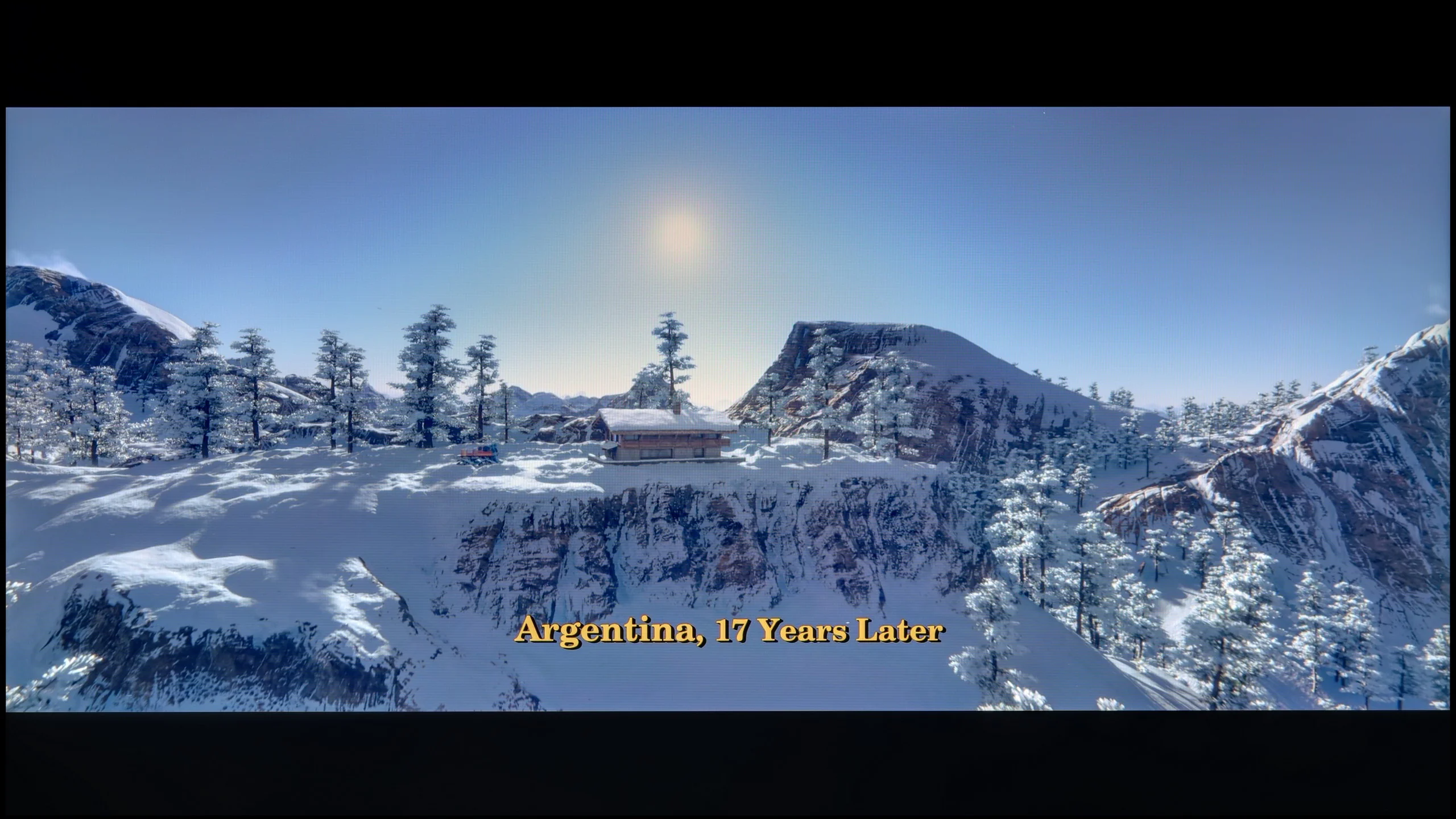
These are selected scenes that show smooth tonal transitions from one color to another. If you see distinct banding, it’s the TV panel’s fault.
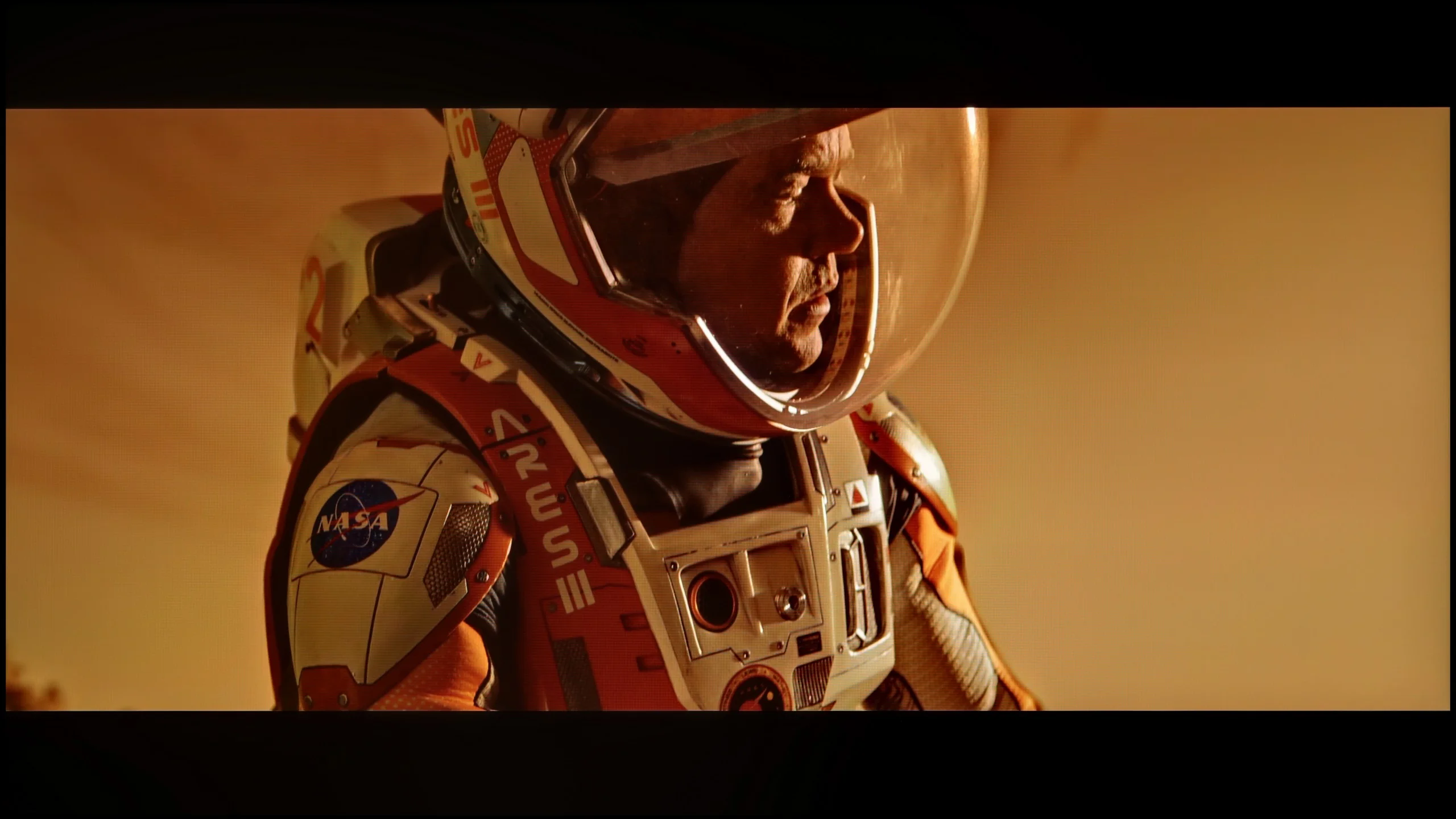
These are selected scenes that show smooth tonal transitions from one color to another. If you see distinct banding, it’s the TV panel’s fault.
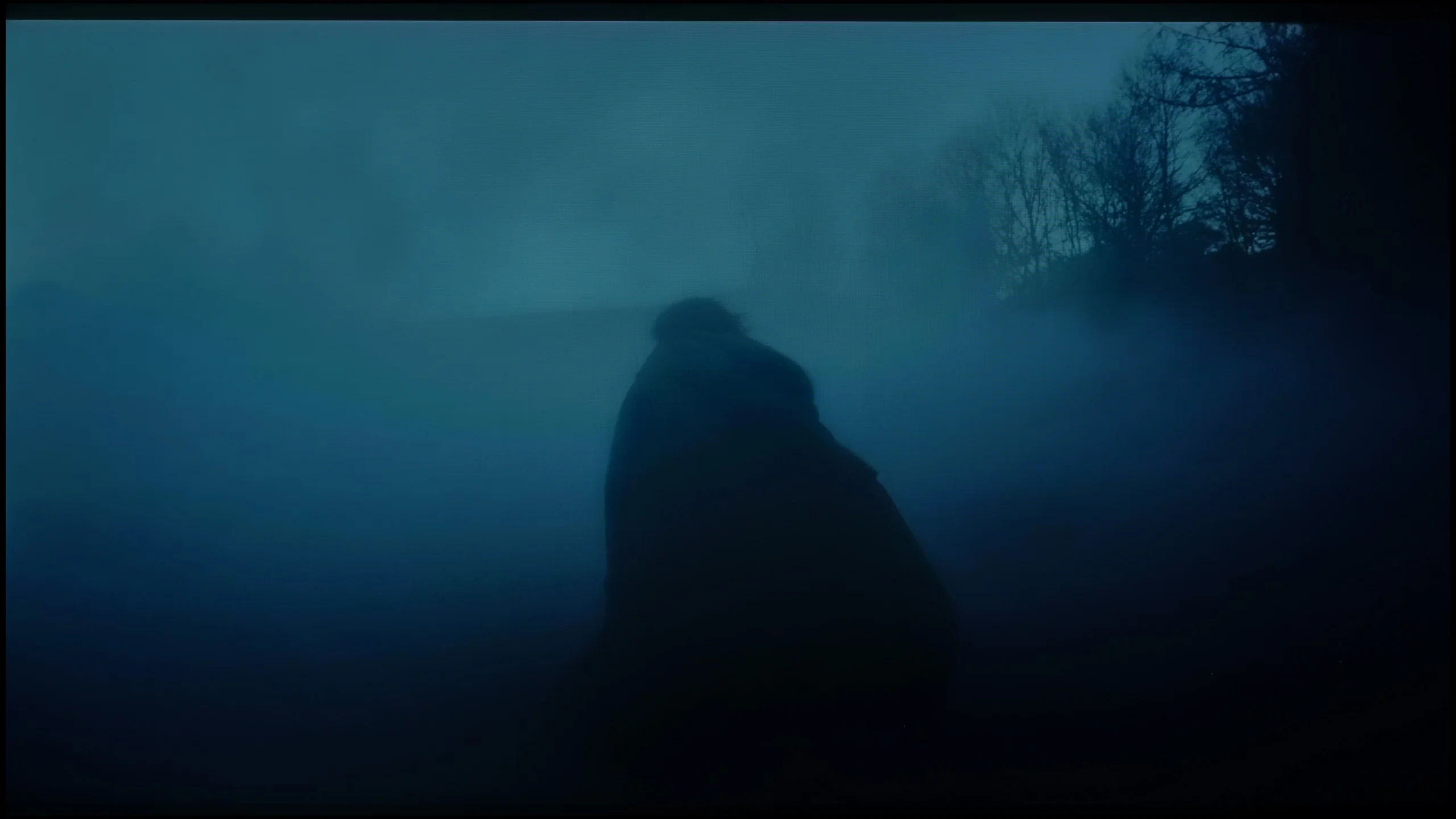
These are selected scenes that show smooth tonal transitions from one color to another. If you see distinct banding, it’s the TV panel’s fault.
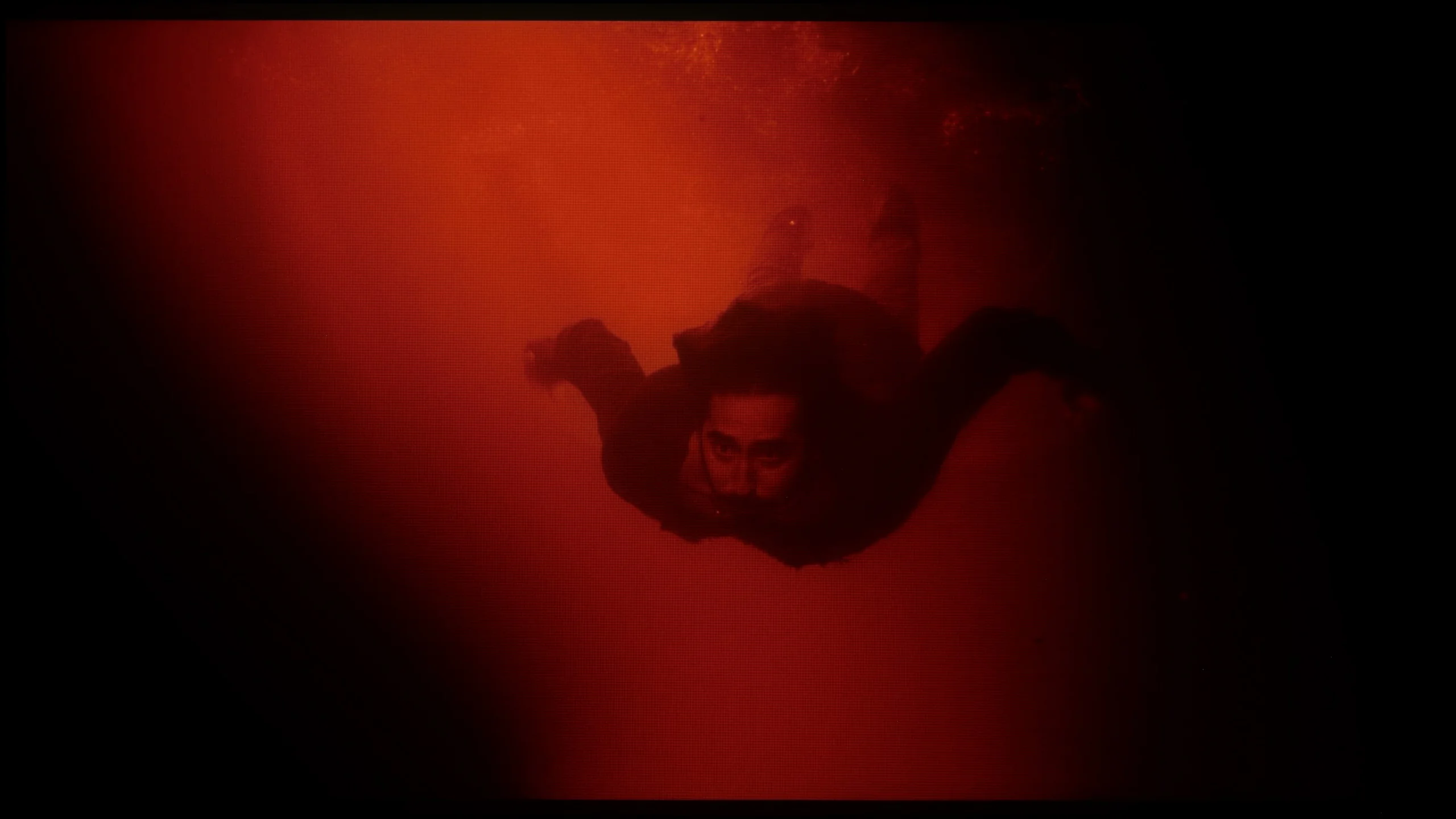
These are selected scenes that show smooth tonal transitions from one color to another. If you see distinct banding, it’s the TV panel’s fault.
The smoothness of tonal transitions here is really high. In most content it's hard to spot any obvious posterisation, and when it does appear it's only in the most demanding scenes. That's also one of the traits we often see in well-tuned QD-OLED panels. In practice they can perform more favourably in terms of gradation than many classic WOLEDs, although much depends on the electronics and the specific model. So if you're after the smoothest possible gradients, the version tested with a QD-OLED panel has a clear advantage here.
Huge credit to Sony for the smoothness of tonal transitions, which has been significantly improved over last year’s Bravia 9. Colour gradation here is at a very high level and, most importantly, this effect is consistent regardless of the type of scene being shown. Both in very bright parts of the image and in very dark, demanding gradients, the TV performs superbly, effectively eliminating the irritating phenomenon of posterization (that is, the appearance of visible "steps" and bands in colour transitions, for example in shots of the sky or in fog). The only slight shortcomings in this area appear when watching Dolby Vision content. In those specific pieces the gradation can at times be a little worse than with an HDR10 signal, but the differences are so subtle and marginal that they will be completely invisible to the average viewer.
Image scaling and smoothness of tonal transitions
7.5/10
8.5/10


Smooth transition function
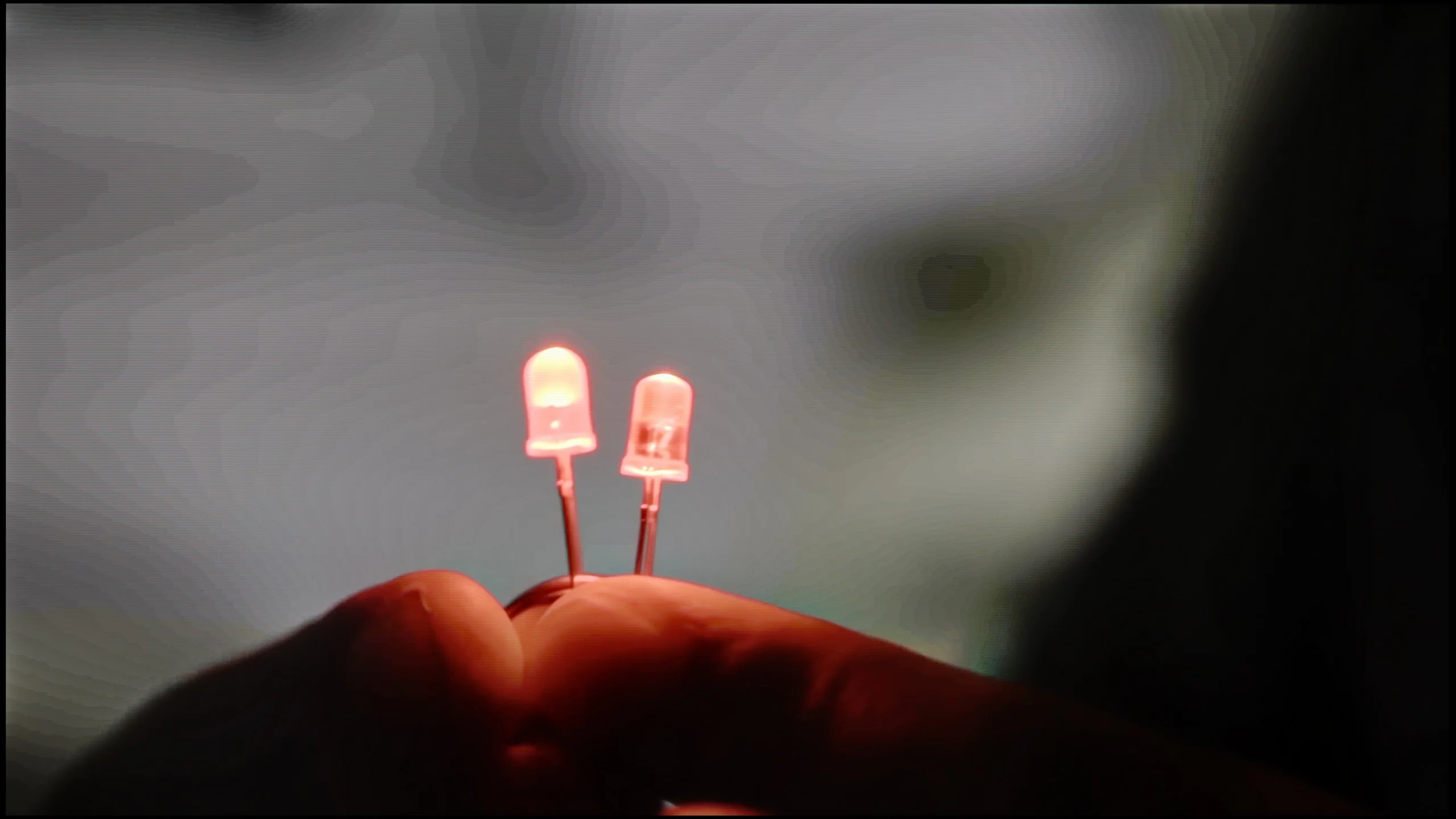
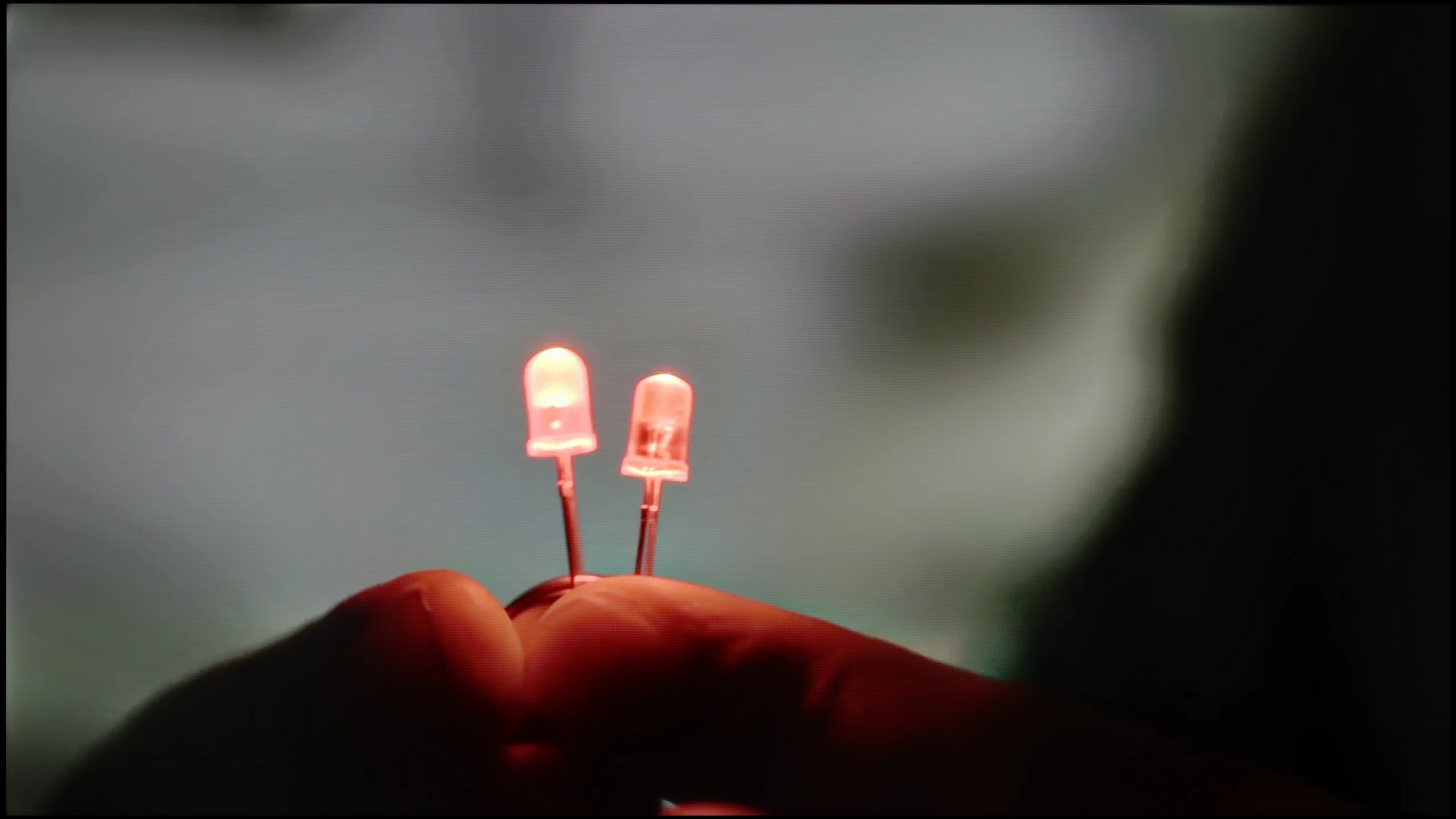
The match photo shows how the TV smooths weak tonal transitions in low-quality video.
Image scaling SD (576i)


The model photo shows how it handles upscaling of SD material.
W tej kwestii Samsung praktycznie nic nie zmienił względem ubiegłorocznego modelu, co akurat jest dość dobrą wiadomością. Funkcja odpowiedzialna za wygładzanie przejść tonalnych nadal bardzo skutecznie ogranicza efekt posteryzacji. Trzeba jednak pamiętać, że działa dość agresywnie, bo oprócz samych artefaktów potrafi usunąć również ziarno filmowe i delikatnie zmiękczyć drobne detale obrazu. Jak zwykle jest to więc kwestia kompromisu i własnych preferencji. Jeśli zależy Wam na jak najwierniejszym odwzorowaniu materiału, polecamy pozostawić tę funkcję wyłączoną.
Również w kwestii upscalingu trudno mówić o rewolucji. S90H korzysta z tego samego autorskiego procesora obrazu NQ4 Gen3 co jego poprzednik, dlatego jakość skalowania pozostała praktycznie bez zmian. Telewizor dobrze radzi sobie z materiałami o niższej rozdzielczości, skutecznie poprawiając ich ostrość. Nadal jednak nie rozwiązano problemu z overscanem. W przypadku niektórych starszych materiałów, zwłaszcza archiwalnych nagrań, może zdarzyć się, że fragment obrazu przy krawędziach zostanie ucięty. To drobna wada, ale szkoda, że Samsung kolejny rok z rzędu pozostawił ten problem bez zmian.
Digital processing and upscaling have long been Sony's forte, and after testing the Bravia 9 II we can confidently say that nothing has changed in this area. Sony remain at the top of the market. Their proprietary XR image processor, which in this model works together with the main MediaTek Pentonic 1000 chip, deserves the highest praise. That combination delivers excellent results. Upscaling lower-resolution content is extremely effective and precise.
However, what earns the most praise in the XR processor's performance is its tonal transition smoothing function. The system can reduce posterisation in heavily compressed material to practically zero. Crucially, the algorithm does this in a very intelligent way. It removes only the irritating digital 'steps' in gradients (banding), but does not blur fine texture detail or create an artificial, 'plastic' look lacking film grain. The image remains sharp, natural and cinematic.
Blur and motion smoothness
8.5/10
8.1/10
Blur (native resolution, maximum refresh rate):




Blur (BFI function enabled):
Image flickers in this mode






Blur (4K@165HZ):



Blur ():
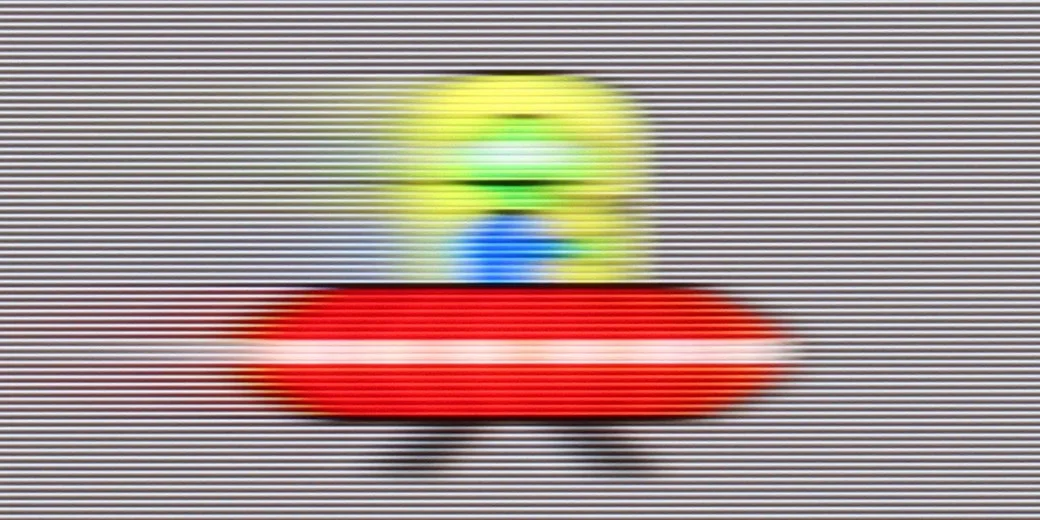
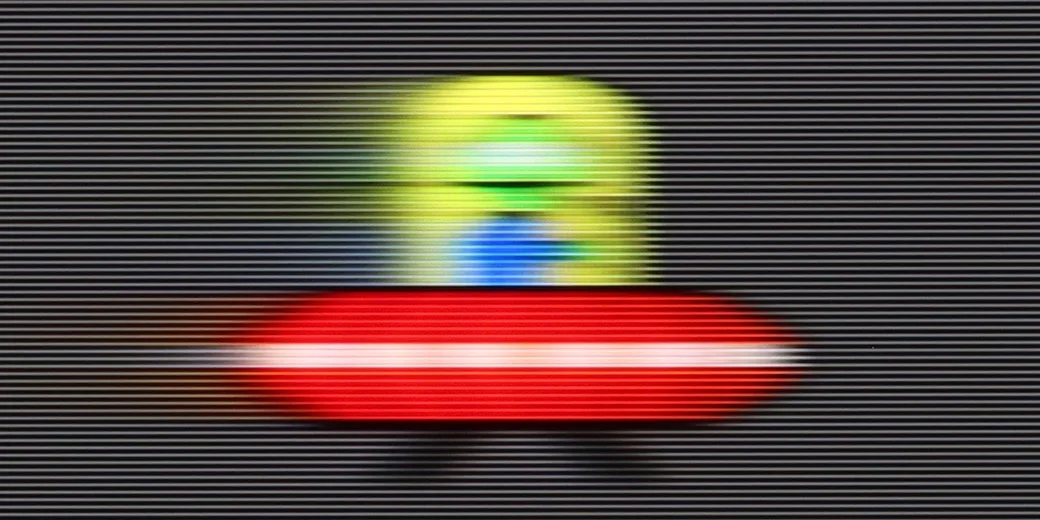
In terms of motion handling the S90H delivers a very high level of performance. A new feature here is a panel with a refresh rate of up to 165 Hz, although in practice this will mainly benefit PC gamers. Movies, TV series and sports broadcasts don’t use such high refresh rates, so when watching them the difference compared with the standard 120 Hz won’t be noticeable. That said, thanks to the OLED panel’s instantaneous response time, motion is very clean and the image doesn’t suffer from the smearing common to many LCDs. Samsung has equipped the TV with extensive motion settings. You get two sliders: judder reduction and blur reduction, which let you easily tailor the image’s character to your preferences. You can easily achieve very smooth motion for sport, but you can just as easily preserve a more cinematic feel at the typical 24 fps. It all comes down to which effect you prefer.
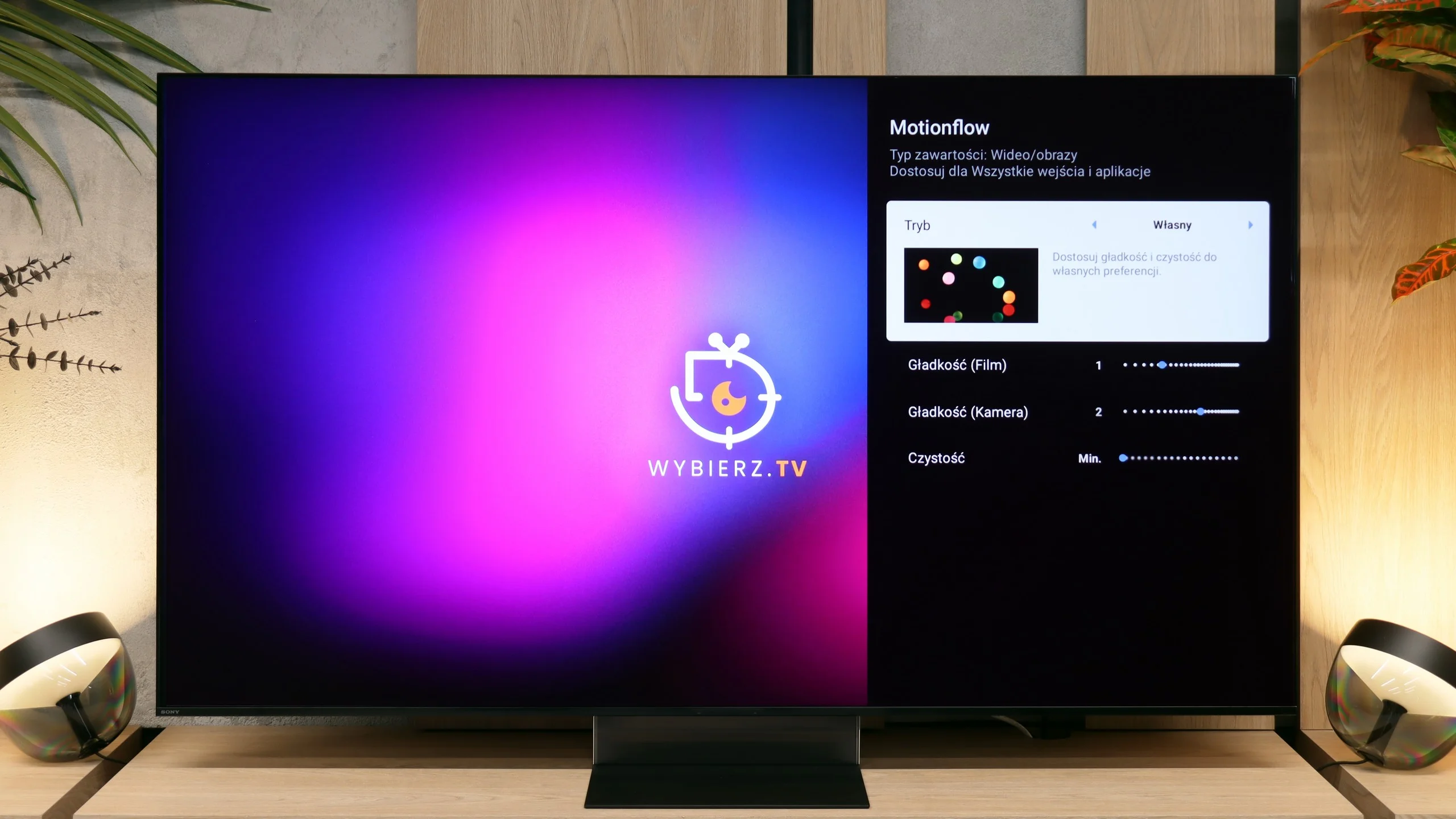
In the specifications for the Sony Bravia 9 II you won't find dizzyingly high screen refresh rates above 120 Hz, which some more demanding PC gamers might see as a drawback. However, in everyday use — whether during film sessions, playing console games or watching sport — it's really hard to criticise the motion smoothness. The VA panel used here does exhibit some slight, natural smearing typical of this panel type, but the excellent Motionflow smoothing algorithms come to the rescue. The system menu includes sliders for blur reduction and smoothing that let you precisely tune the motion characteristics to your own preferences.
Console compatibility and gaming features
9.6/10
9.4/10
- ALLM
- VRR
- VRR range48 - 165Hz48 - 120Hz
- Dolby Vision Game Mode
- Correct implementation of HGIG
- 1080p@120Hz
- 1440p@120Hz
- 4K@120Hz
- Game bar
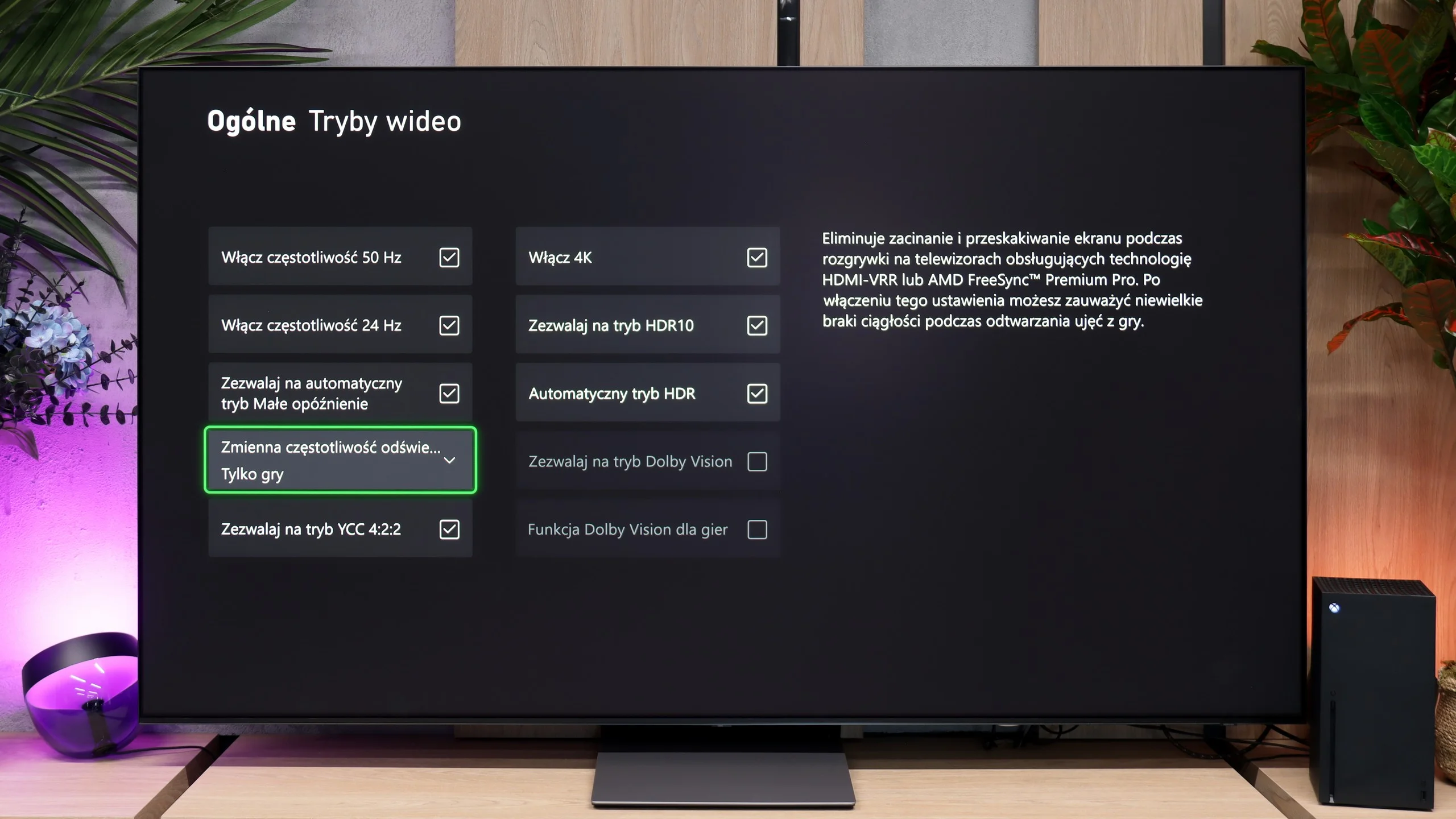
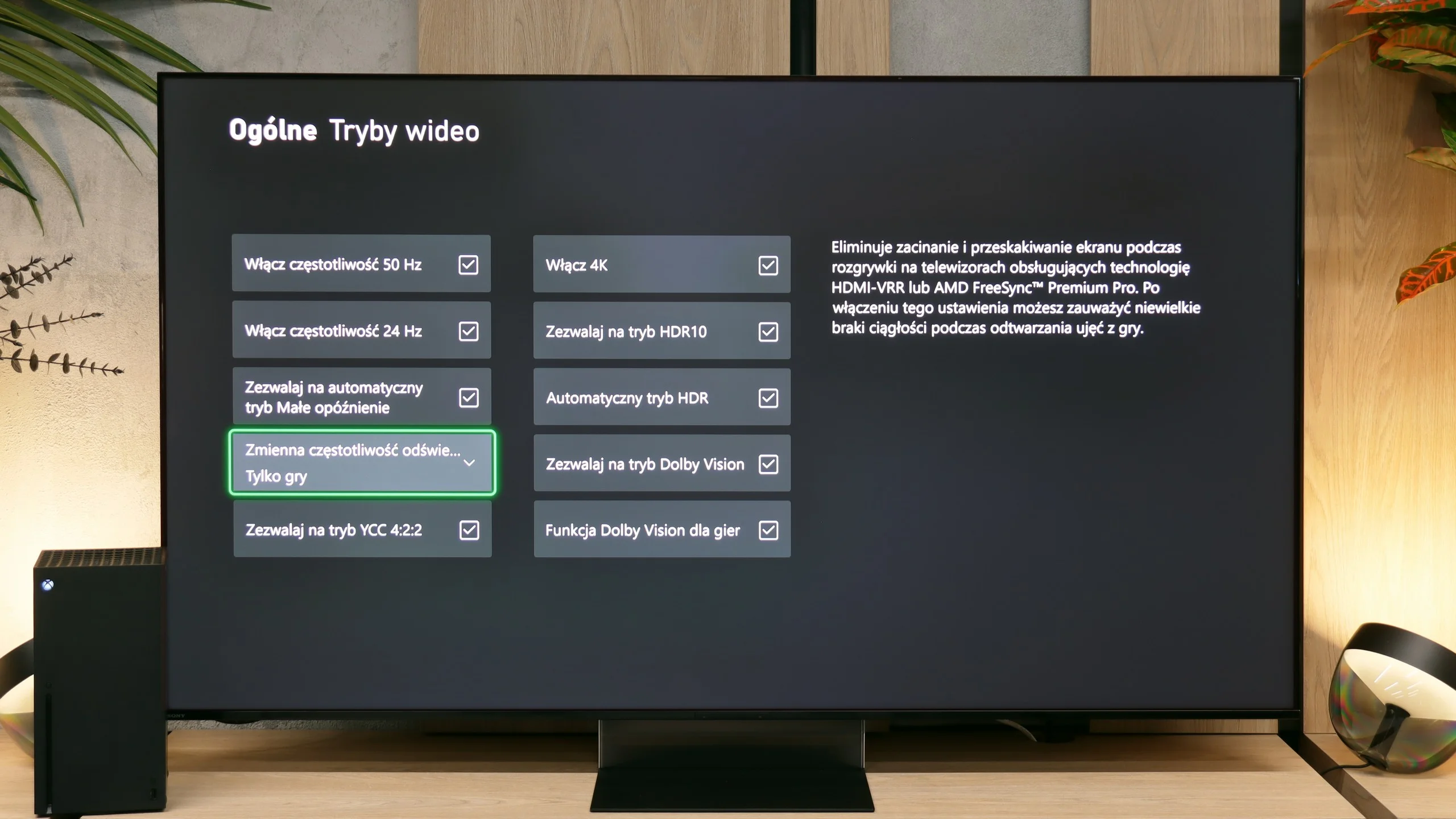
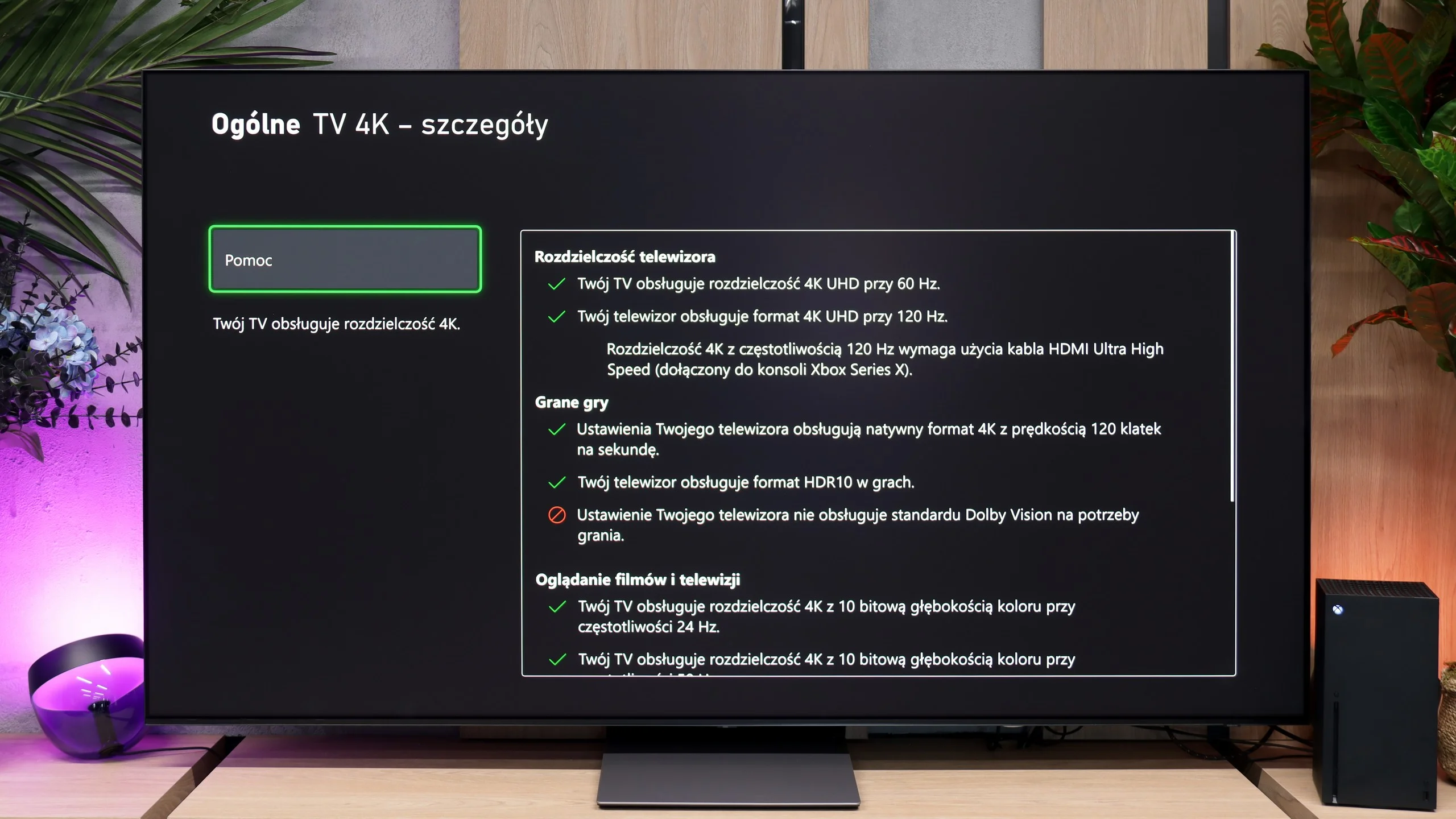
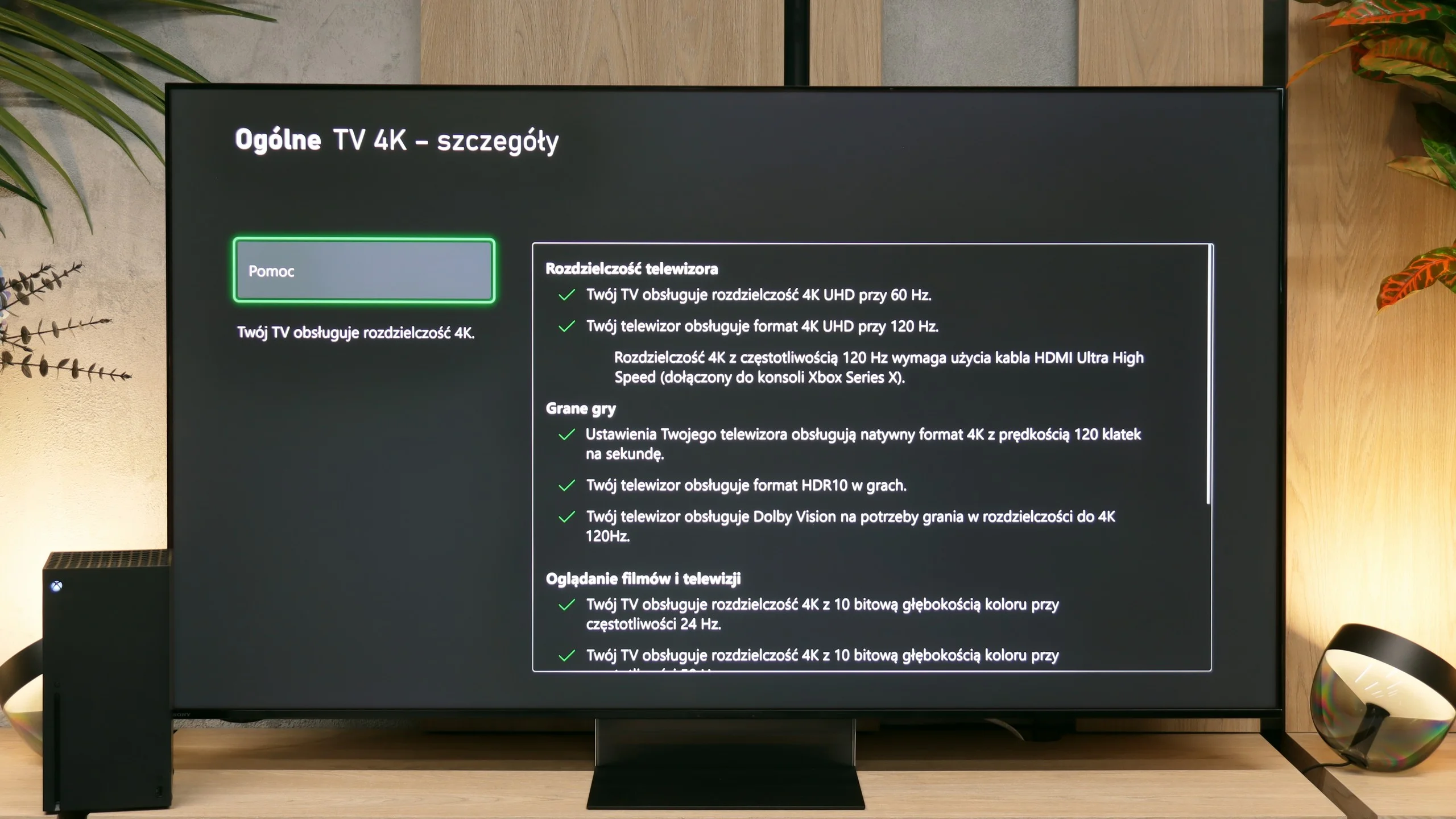
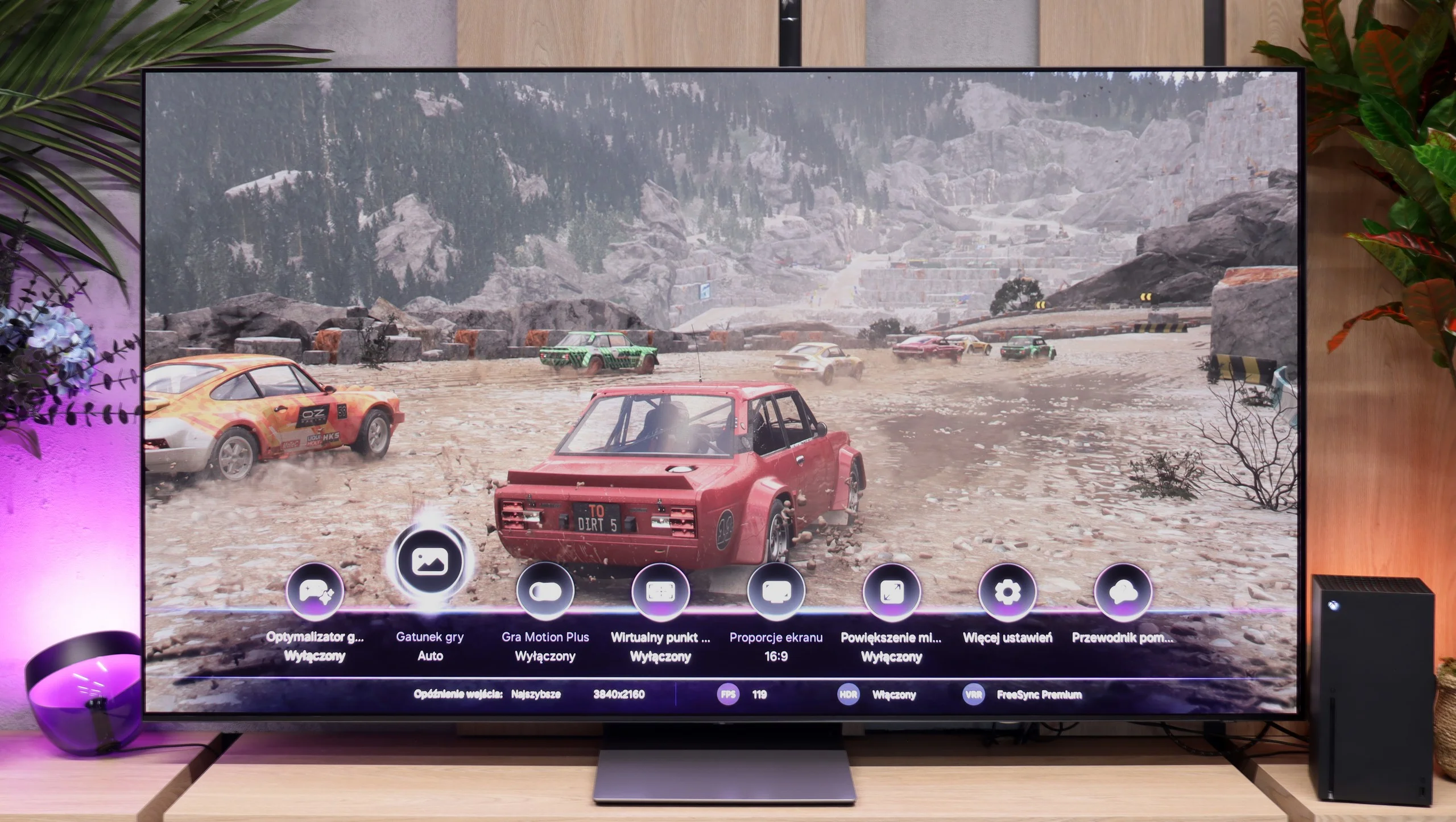
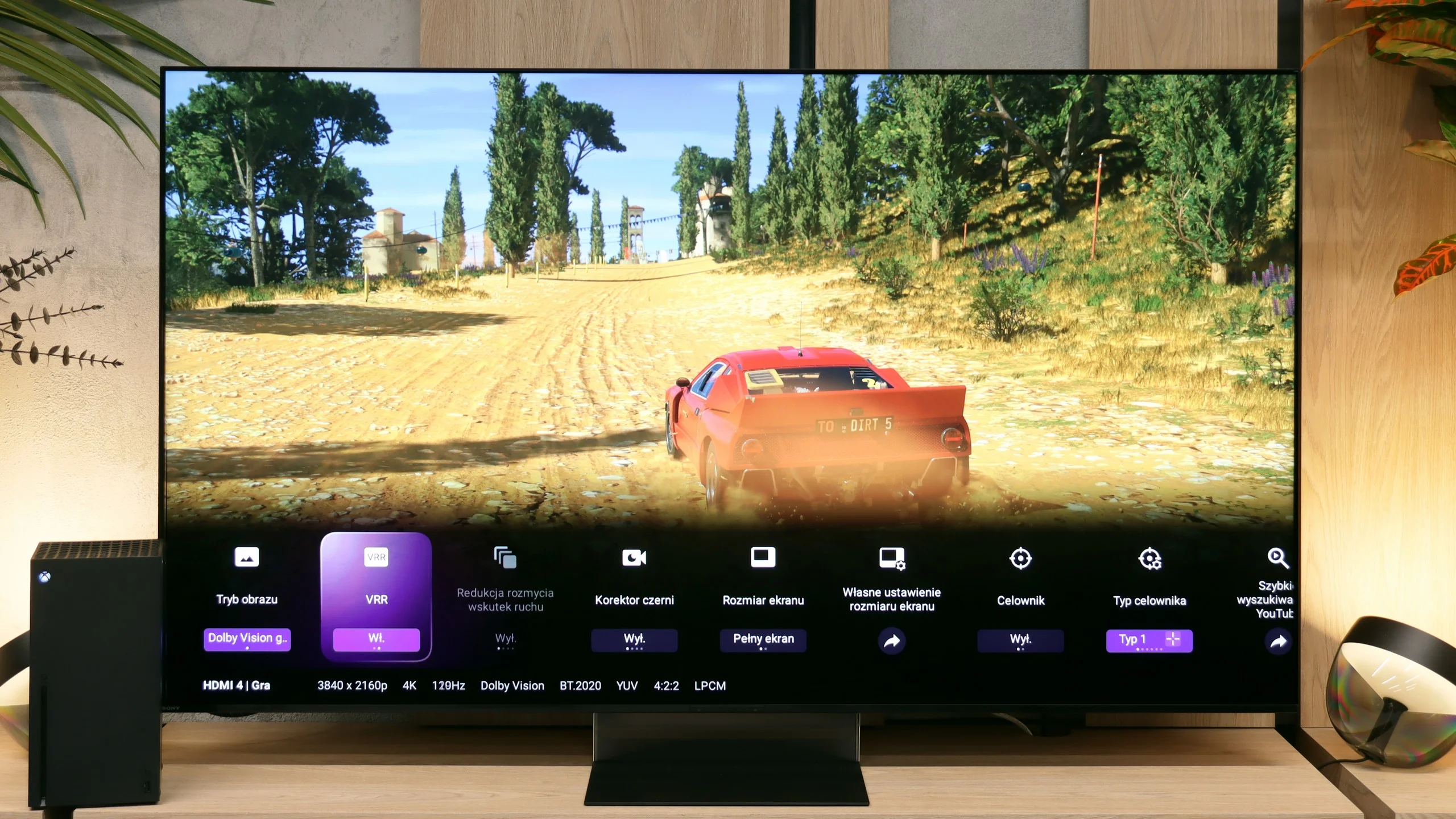
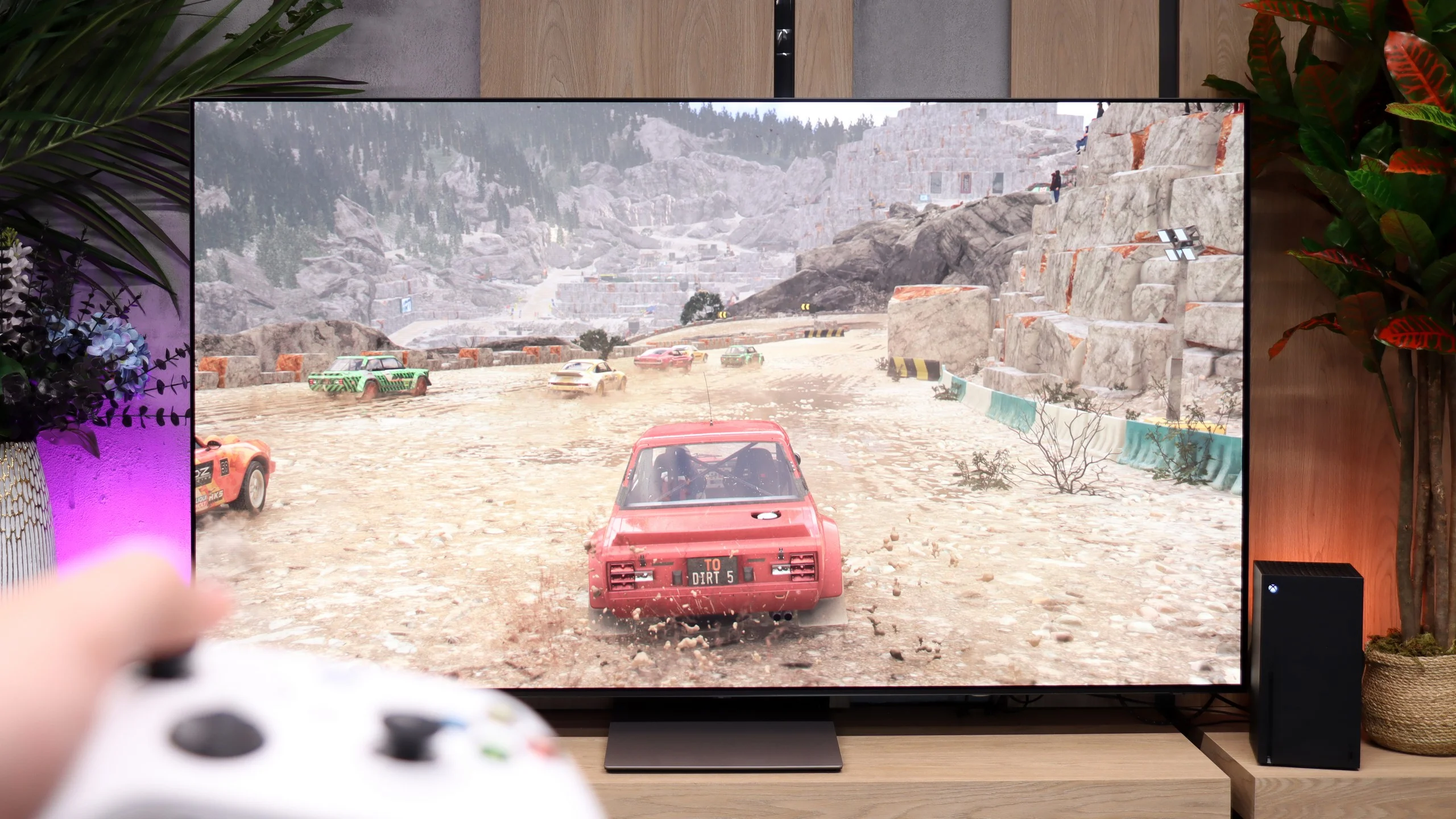
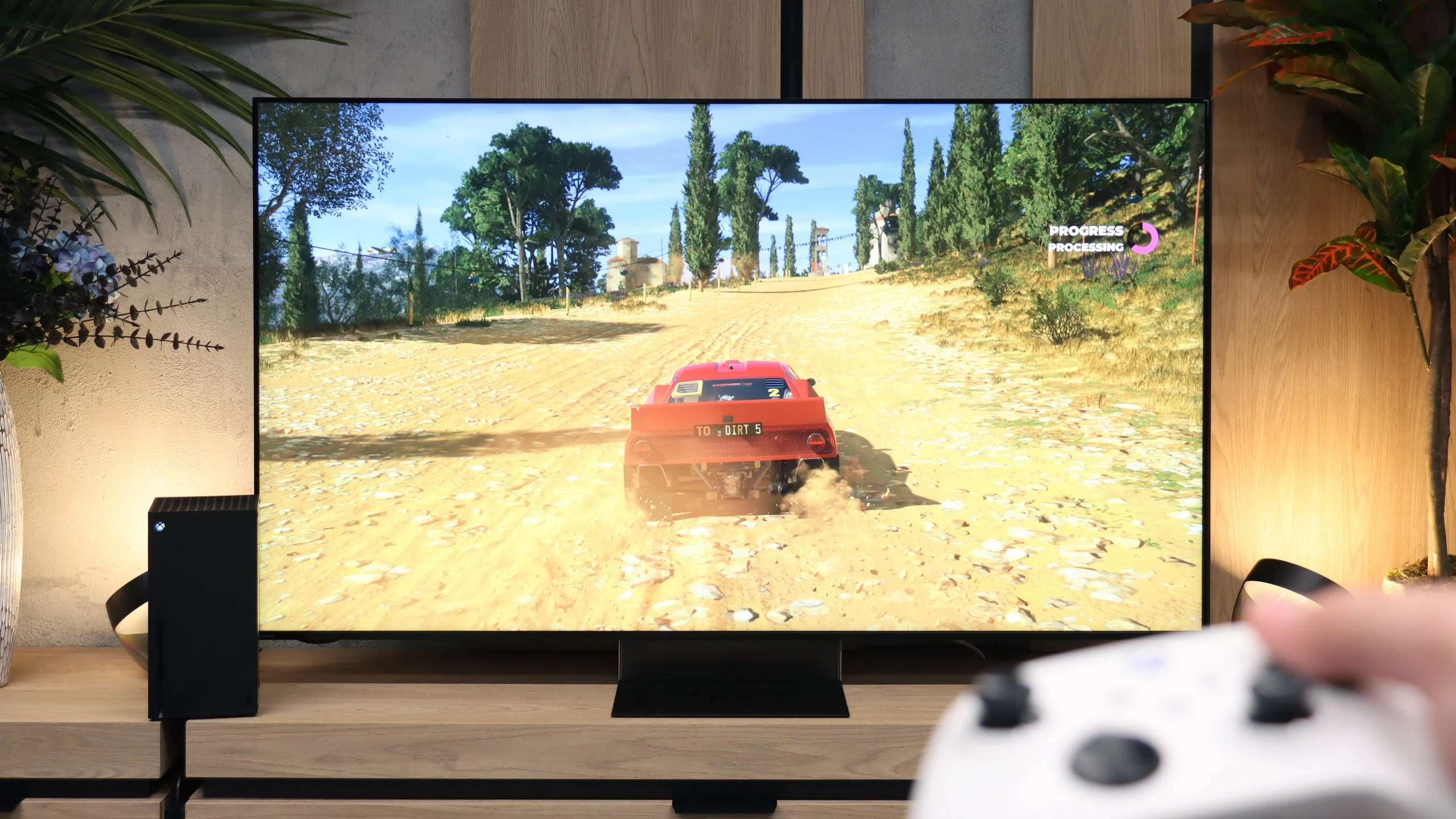
From the start, the Samsung S90H gives the impression of a TV designed with gamers in mind, and it's easy to see why. The maker has equipped it with nearly everything you’d expect from a modern gaming display. You get as many as four full-bandwidth HDMI 2.1 ports, support for ALLM, VRR and very high refresh rates. There's also a clear Game Bar that lets you quickly check key picture parameters or change settings without leaving the game. Another very welcome improvement is HGiG support. Last year it could cause quite a few problems, but in the S90H it works exactly as it should.
Samsung's real ace, however, is its proprietary Game Motion Plus mode. The feature works much like the motion smoothing used in films: it improves animation smoothness in games while keeping input lag at a very reasonable level. For titles running at 30 or 60 fps, with the right settings, input lag in our testing never exceeded 40 ms. That's an excellent result, especially since on many manufacturers' TVs enabling similar features results in delays several times higher. Game Motion Plus doesn't replace Dolby Vision Gaming, of course, since it's a completely different type of feature, but overall for gaming it's an addition that many players may find more noticeable. Smoother motion in 30/60 fps games often makes more of a difference than HDR itself, which, incidentally, is often poorly implemented in games.
Aside from the fairly serious design oversight of limiting the platform to just two full HDMI 2.1 ports, the Bravia 9 II offers almost all the key gaming features available on the market. Sony has already accustomed us to such a rich feature set in its previous designs. The list of supported technologies here is extensive. It includes automatic low-latency mode (ALLM), variable refresh rate (VRR), as well as a fully compliant implementation of the HGIG standard and Dolby Vision tailored specifically for gamers.
Input lag
10/10
10/10
SDR
HDR
Dolby Vision
Input lag is another aspect that's really hard to fault. With a 120 Hz signal we measured just around 5 ms, which is an exceptional result. When switching to even higher refresh rates the delay fell to almost astronomically low levels, practically imperceptible during gameplay. The Samsung S90H delivers absolutely market-leading results here.
Alongside its rich package of gaming features comes a parameter that’s crucial for every gamer: input lag. Here the new Bravia 9 II performs simply flawlessly. Our laboratory tests showed that signal delay in "Game" mode is SUPER low. The values we recorded during measurements are completely imperceptible to the human eye and place this model among the very best.
Compatibility with PC
8.6/10
7.8/10
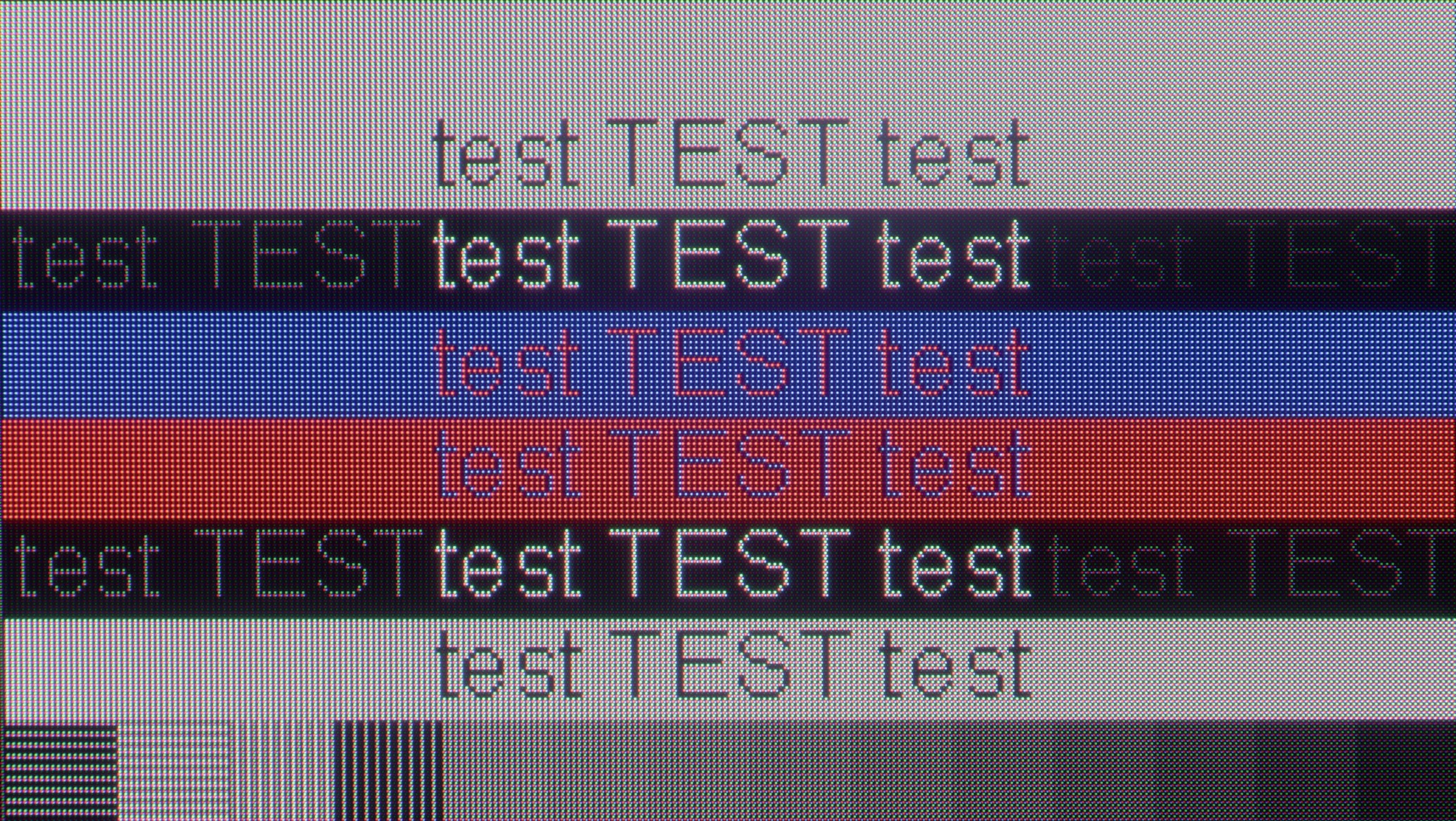
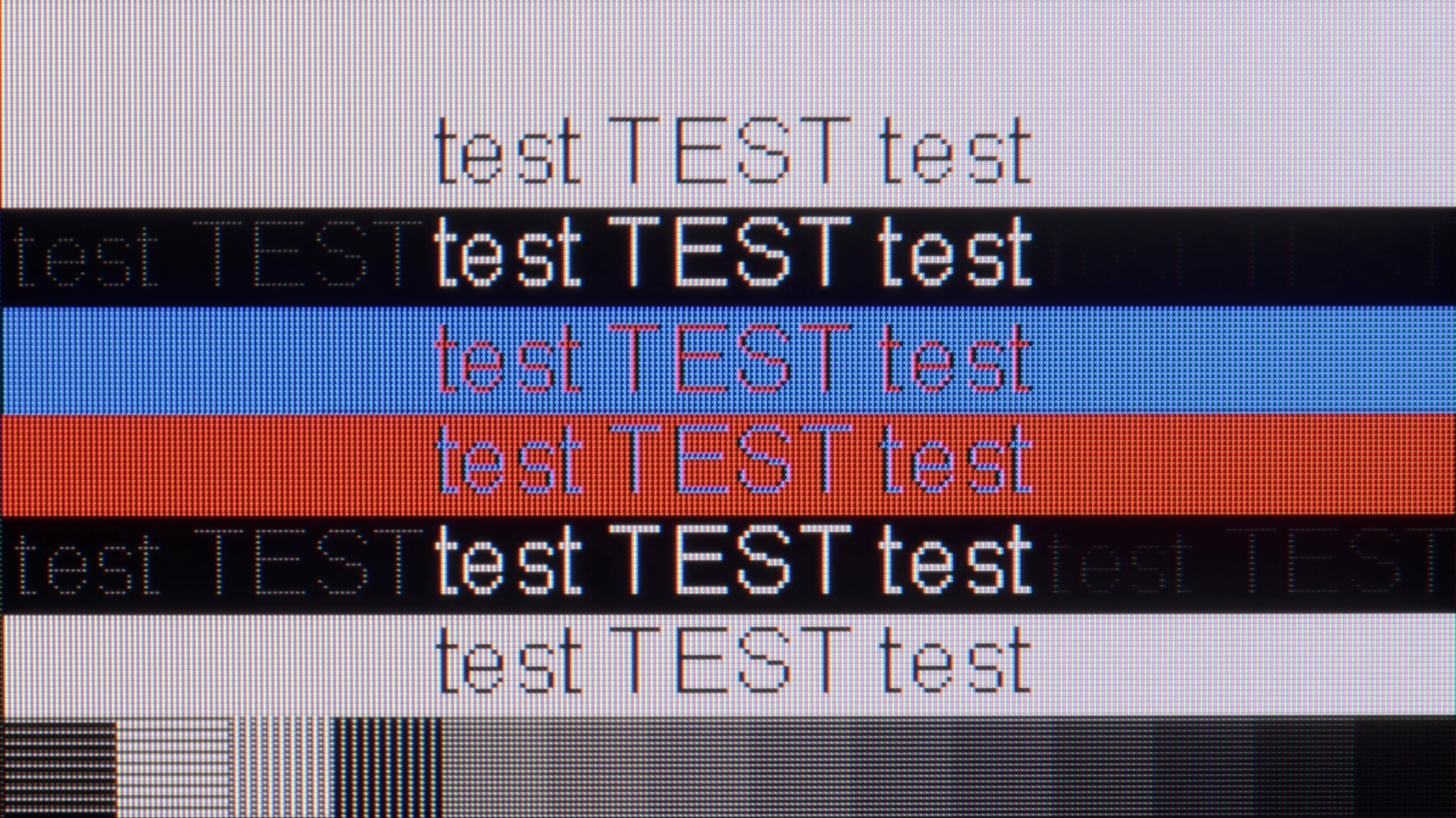
The photo shows the legibility of small fonts. Ideally, lines should be the same thickness on both light and dark text, with minimal pixel gaps.
The Samsung S90H makes an excellent large PC screen, and not just because of its gaming feature set. The panel supports refresh rates up to 165 Hz, has very low input lag, and its official NVIDIA G-Sync certification allows smooth gameplay without screen tearing when paired with GeForce cards. If you're after a large display that will handle demanding PC games well, the S90H is a great choice.
And what about everyday work with text or browsing the web? That's good too. Fonts are sharp and legible, though it's worth remembering the specifics of QD-OLED panels. Up very close you can see the characteristic triangular subpixel layout, which can make letter edges look slightly jagged or pick up faint, coloured fringing. Is that a problem? In practice, it's minor. After all, we're talking about a 77-inch screen, so few people will be sitting a few dozen centimetres from the panel. From a normal viewing distance this effect becomes practically invisible.
The Bravia 9 II also works extremely well as a powerful computer display. Although there are no special PC modes that would allow pushing the refresh rate above 120 Hz, as a large monitor the TV performs excellently. Full frame synchronisation works flawlessly and is compatible with the major GPU vendors' adaptive sync standards; you can enable both G-Sync and FreeSync without any problems.
A pleasant surprise and real improvement is the change to the panel's subpixel arrangement. In the new Sony model, Sony has dropped the BGR layout in favour of the conventionally structured RGB. This change has directly improved the readability of fonts and other fine elements in Windows and macOS compared with the first-generation Bravia 9. At very close distances a trained eye may notice that the edges of dark text on a light background are not "perfectly" sharp, but in everyday use, whether working on documents or gaming, this is completely unnoticeable.
Viewing angles
9.9/10
6/10
As you'd expect from an OLED, the viewing angles are excellent, but the QD-OLED panel used here goes a step further. Even if you sit well off to the side of the screen, the colours hardly lose saturation and the drop in brightness is marginal. There's also no sign of the greenish tint that can be annoying on some TVs with panels from LG Display. The image holds its colours very well regardless of the angle you view it from.
The Bravia 9 II is fitted with a VA-type LCD panel. Naturally, its strongest asset is its high native contrast, but unfortunately that comes at the expense of weaker viewing angles. Importantly, because of the use of a new, deeply matte screen coating, the manufacturer had to dispense with the special filters that widen viewing angles. Does that mean the viewing angles are simply bad? Not entirely. When you look at the panel from a moderate angle (say around 45 degrees), colour saturation and brightness remain at a perfectly acceptable level. It's all down to the specifics of the RGB backlight. Because the backlight takes on the colour of the image currently being shown, what we see appears much more natural to the human eye. We perceive such an image as more coherent compared with classic Mini LED screens with quantum dots. On the other hand, when we compare the visibility of local dimming zones at a steep angle with a standard Mini LED, the Sony screen made the halo effect and the panel's zonal segmentation more noticeable.
Daytime performance
6.4/10
10/10
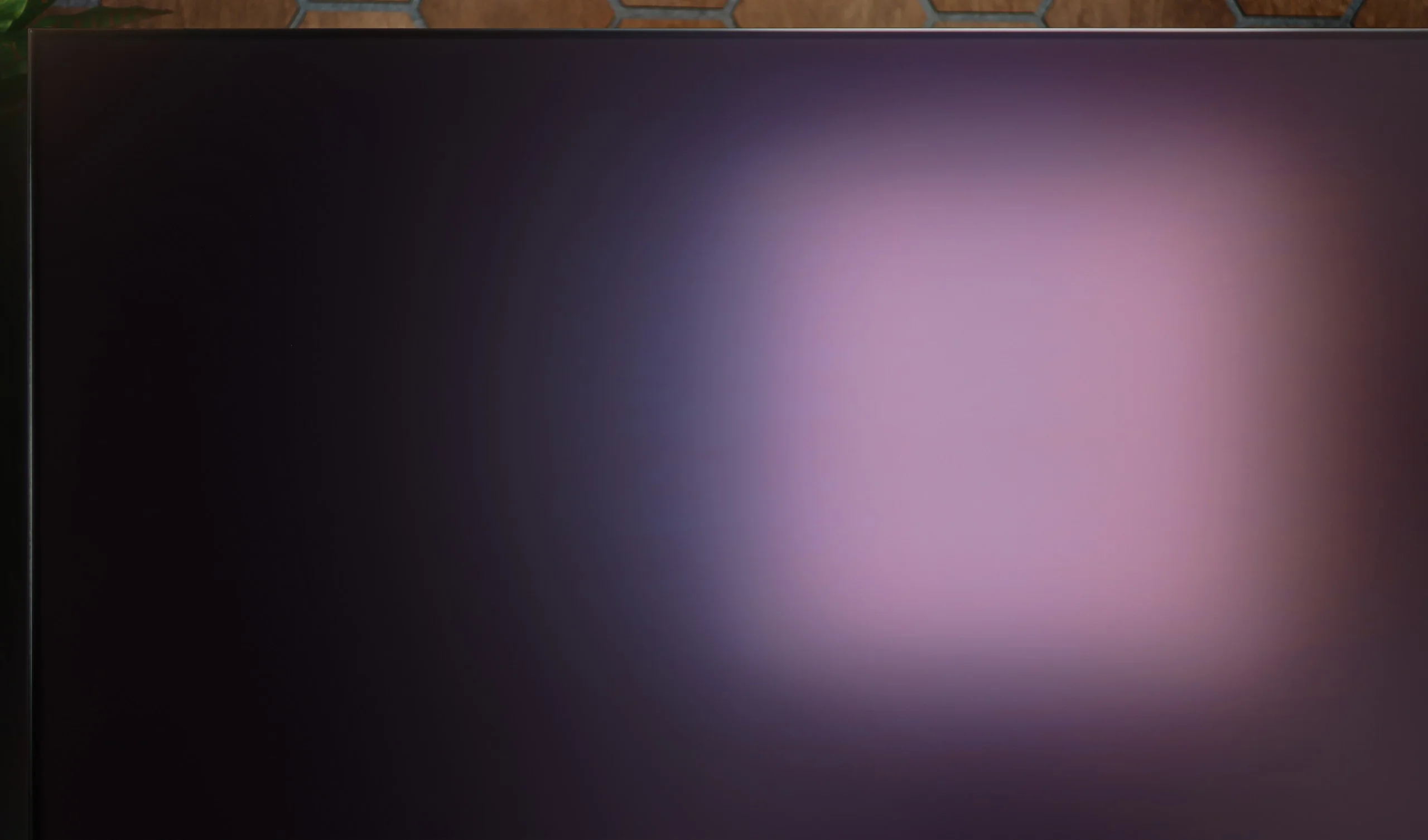
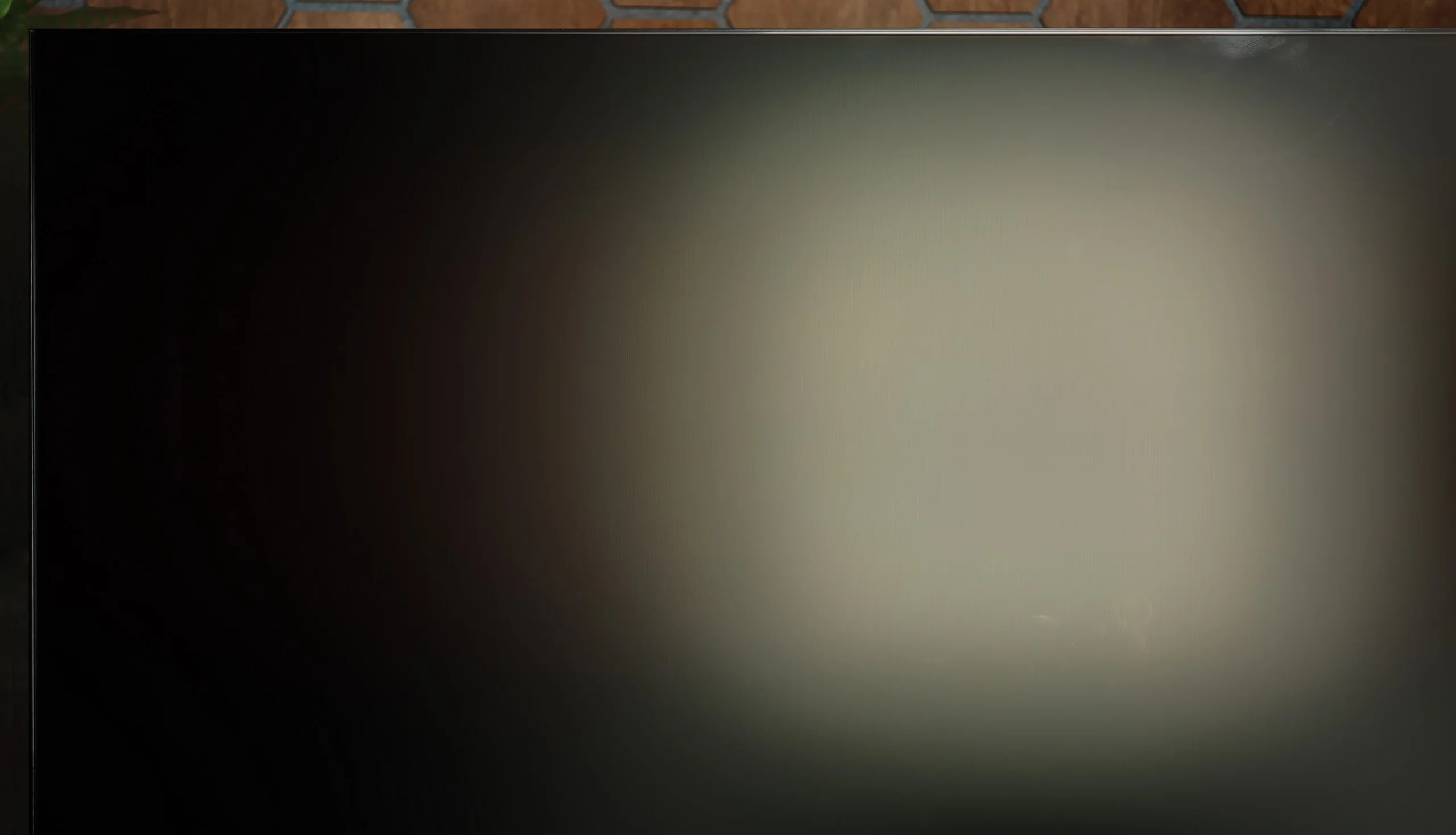
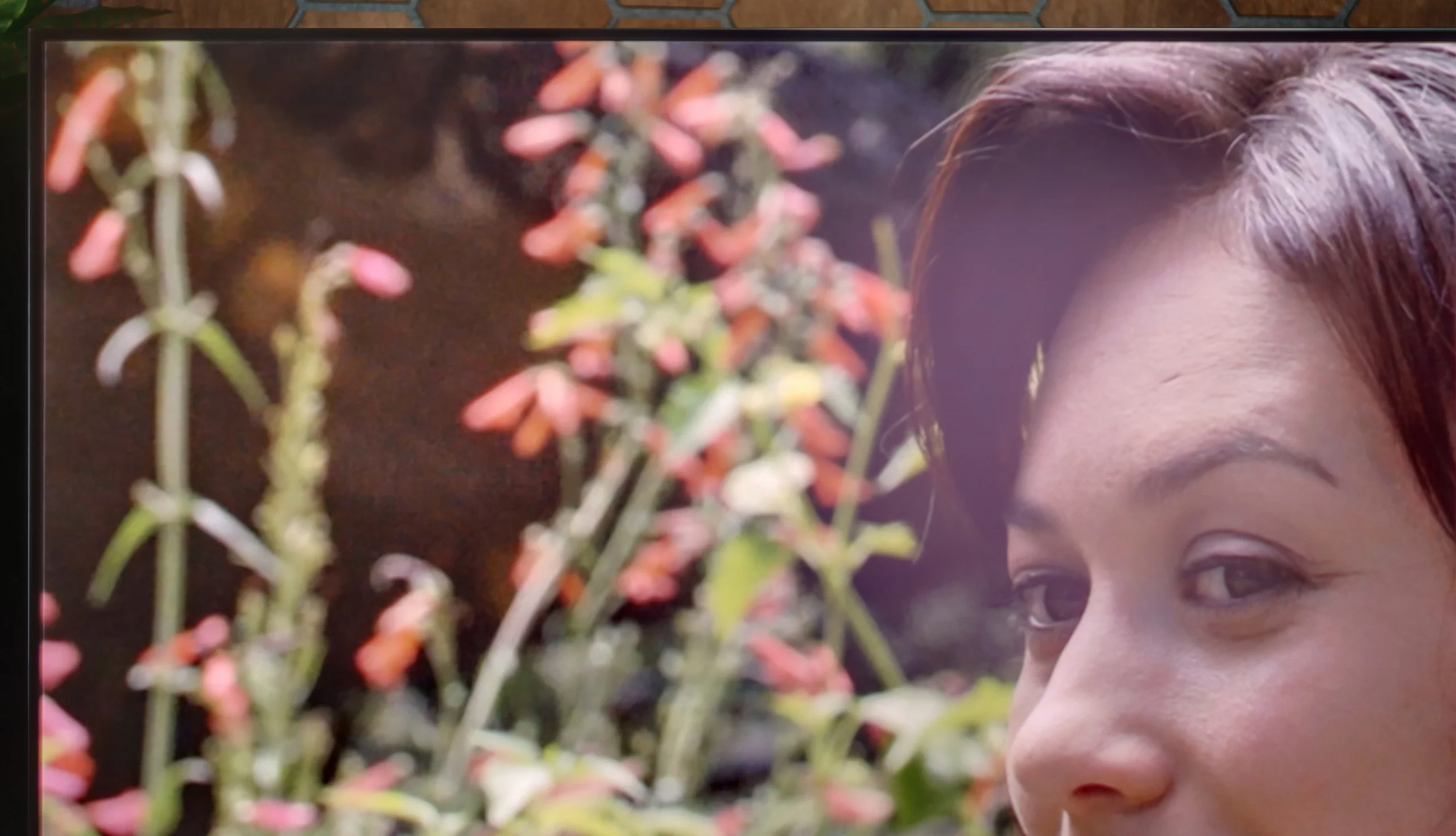
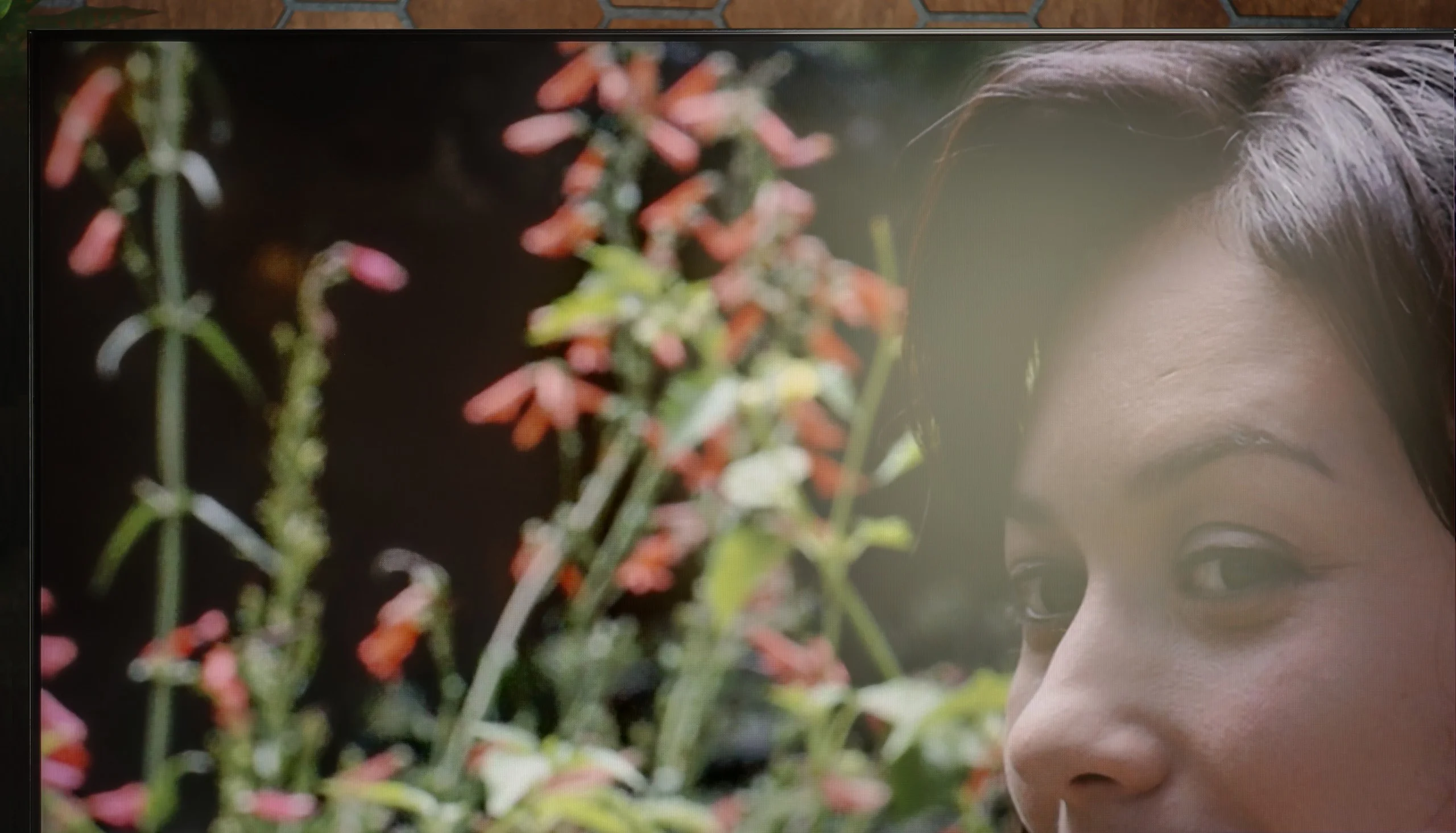
Panel brightness
SONY Bravia 9 II XR95M2: 1980 cd/m2
Samsung S90H (QD-OLED): 486 cd/m2
The biggest new feature in the S90 series is the matte screen coating. Samsung has taken this step in this line for the first time and, in our view, it was a good move. In practice the difference is obvious straight away. The coating very effectively dampens reflections, so even when there's a window opposite the TV or a strong lamp is shining, you won't see the typical mirror-like glare on the screen. Instead you get only gently diffused light, which interferes much less with viewing. If the TV is going to sit in a bright lounge, that's hard to overstate. Of course there's a trade-off. QD-OLED with a matte coating has its characteristic quirk: when strong light hits the screen, blacks can shift slightly towards a cherry tint and colours may lose a little of their depth. This isn't a fault that appears in every situation, just a feature of this design under heavy lighting. Fortunately the TV is bright enough that daytime viewing isn't a problem. In SDR it reaches about 500 nits of average brightness, and combined with the matte coating this provides really comfortable viewing conditions.
High brightness combined with a new coating makes the Bravia 9 II one of the best TVs on the market for viewing in demanding conditions. Average brightness in SDR content is around 2000 nits, and smaller highlights can hit a hefty 4000 nits. In practice this means the picture keeps its clarity even when direct, midday sun pours into the living room. The key is the new, deep matte panel coating. Unlike the glossy screen finish of the previous model, this filter is exceptionally effective at reducing reflections. When direct light from a window or lamp falls on the screen, you won't see the annoying reflection of your face or the furniture.
The natural trade-off of a matte finish is a slight reduction in perceived colour saturation and black levels compared with perfectly glossy panels, and in very bright light the image can appear a little flatter. However, that's a wholly justified and almost negligible price to pay for the dramatic improvement in viewing comfort. If you're looking for a TV for a living room with large windows and want to forget once and for all about troublesome daytime reflections, the Bravia 9 II will be ideal in that respect.
Panel details
Subpixel Structure:
Panel uniformity and thermal imaging:

Samsung S90H (QD-OLED)
SONY Bravia 9 II XR95M2
TV features
7.3/10
8.8/10
- SystemTizenGoogle TV
- System performanceVery goodVery good
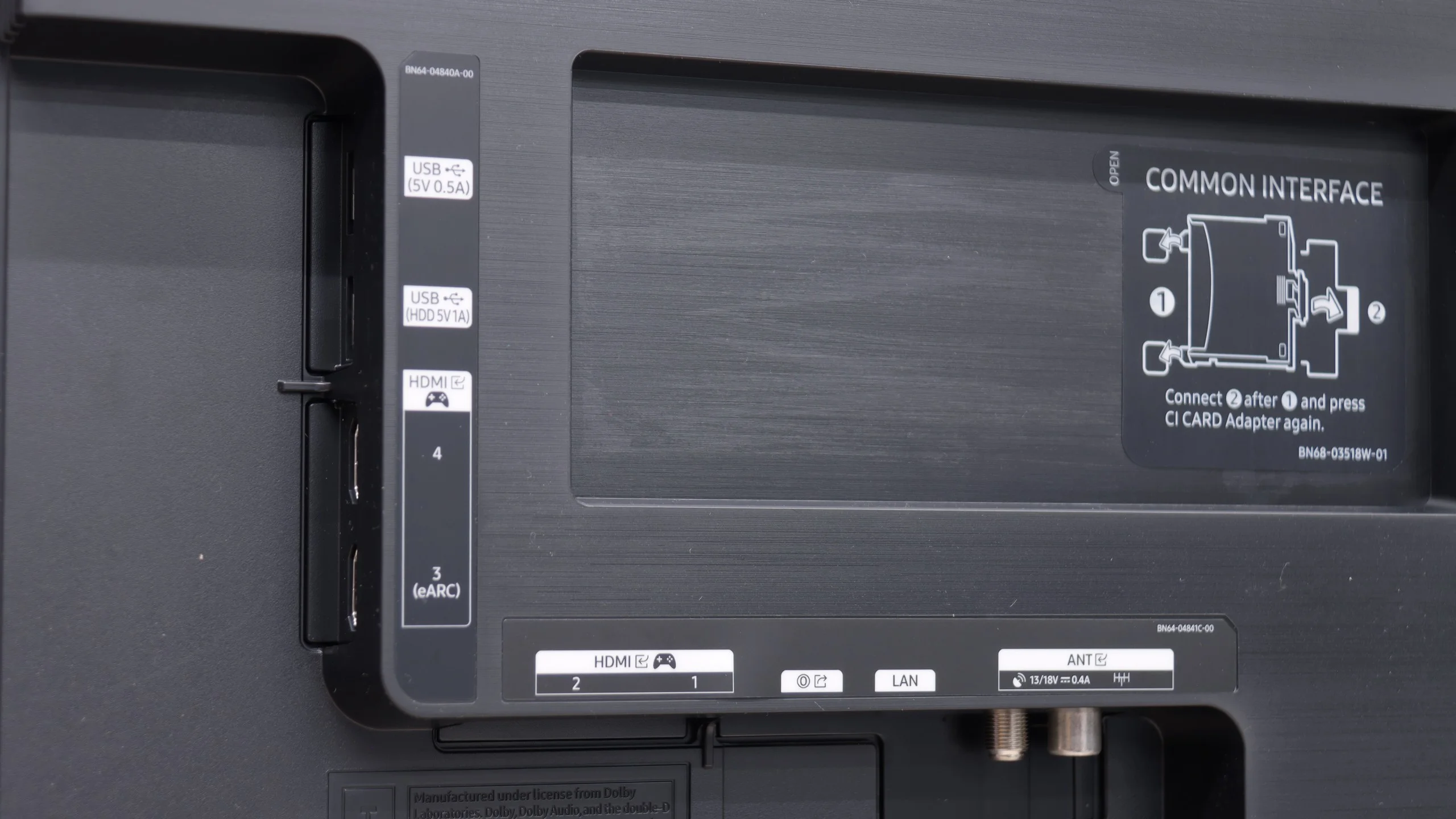
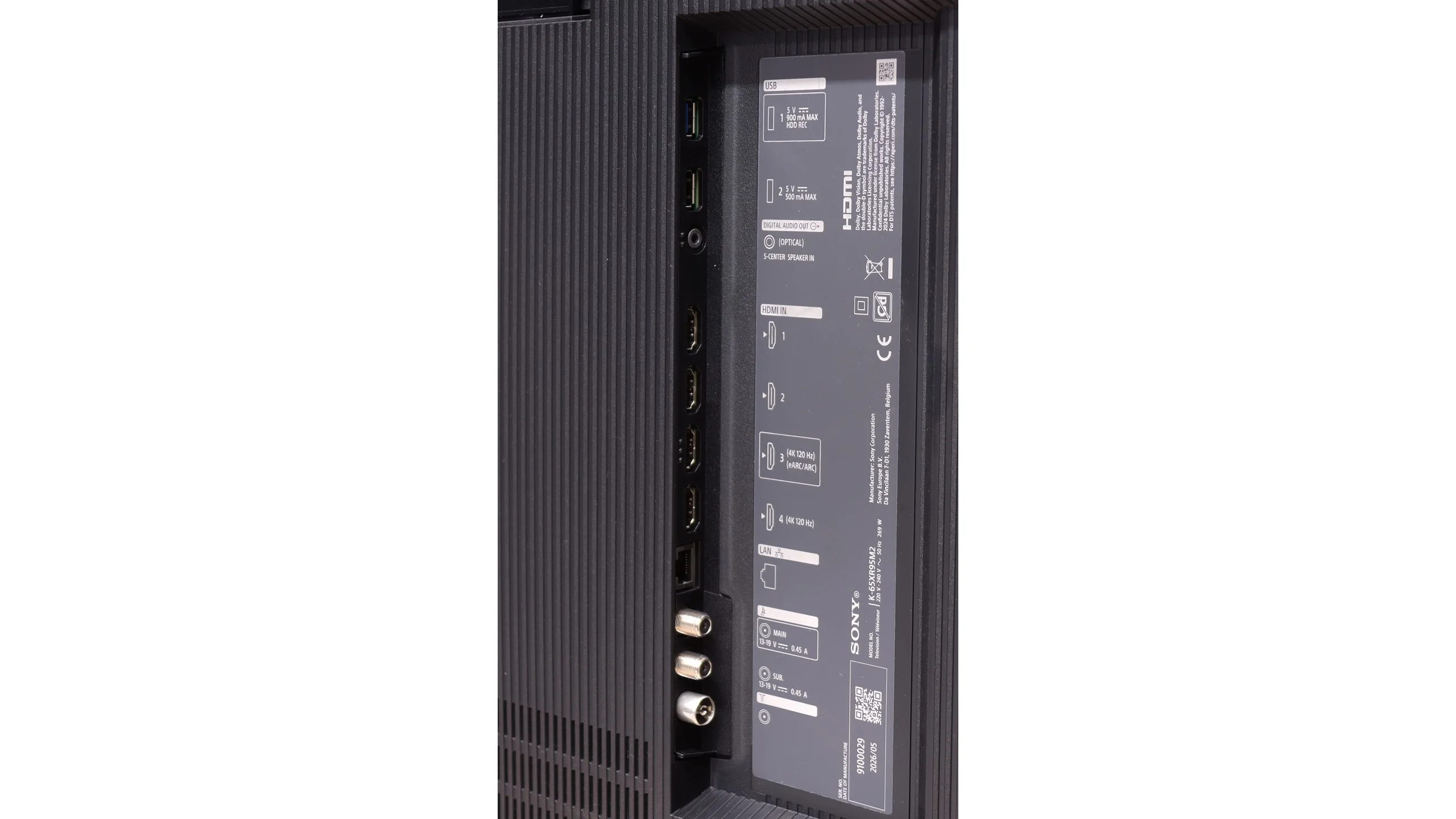
- HDMI inputs0 x HDMI 2.0, 4 x HDMI 2.1 48Gbps2 x HDMI 2.0, 2 x HDMI 2.1 48Gbps
- OutputsToslink (Optical audio), eARC (HDMI), ARC (HDMI)Toslink (Optical audio), eARC (HDMI), ARC (HDMI), Mini-Jack (Sony S-Center)
- Network InterfacesWi-Fi 2.4GHz, Wi-Fi 5GHz, Ethernet (LAN) 100Mbps, Ethernet (LAN) 1GbitWi-Fi 2.4GHz, Wi-Fi 5GHz, Ethernet (LAN) 100Mbps
- TV receptionDVB-T, DVB-T2, DVB-S, DVB-S2, DVB-CDVB-T, DVB-T2, DVB-S, DVB-S2, DVB-C
Classic features:
- Recording to USB (terrestrial TV)
- Recording programming
- Picture in Picture (PiP)
- RF remote control (no need to aim)
- Backlit remote control
- Teletext
- Audio only mode
- Bluetooth headphones support
- Simultaneous Bluetooth headphones & TV audio
Smart features:
- AirPlay
- Screen mirroring (Windows Miracast)
- Voice search
- Voice search in native language
- Ability to connect a keyboard and mouse
Sound connection options
- HDMI audioeARC (HDMI), ARC (HDMI)eARC (HDMI), ARC (HDMI)
- Other audio outputsToslink (Optical audio)Toslink (Optical audio), AuxiliaryOutput-Mini-Jack (Sony S-Center)
- Wireless audioBluetooth, Samsung Q-Symphony (Speaker extension)Bluetooth, Samsung Q-Symphony (Speaker extension)
Supported audio formats (external HDMI eARC audio):
- Dolby Digital Plus 7.1
- Dolby True HD 7.1
- Dolby Atmos in Dolby Digital Plus (JOC)
- Dolby Atmos in Dolby True HD
- DTS:X in DTS-HD MA
- DTS-HD Master Audio
Senior accessibility
- Numeric keyboard on TV
- Font size adjustment
- Audio description
Classic TV
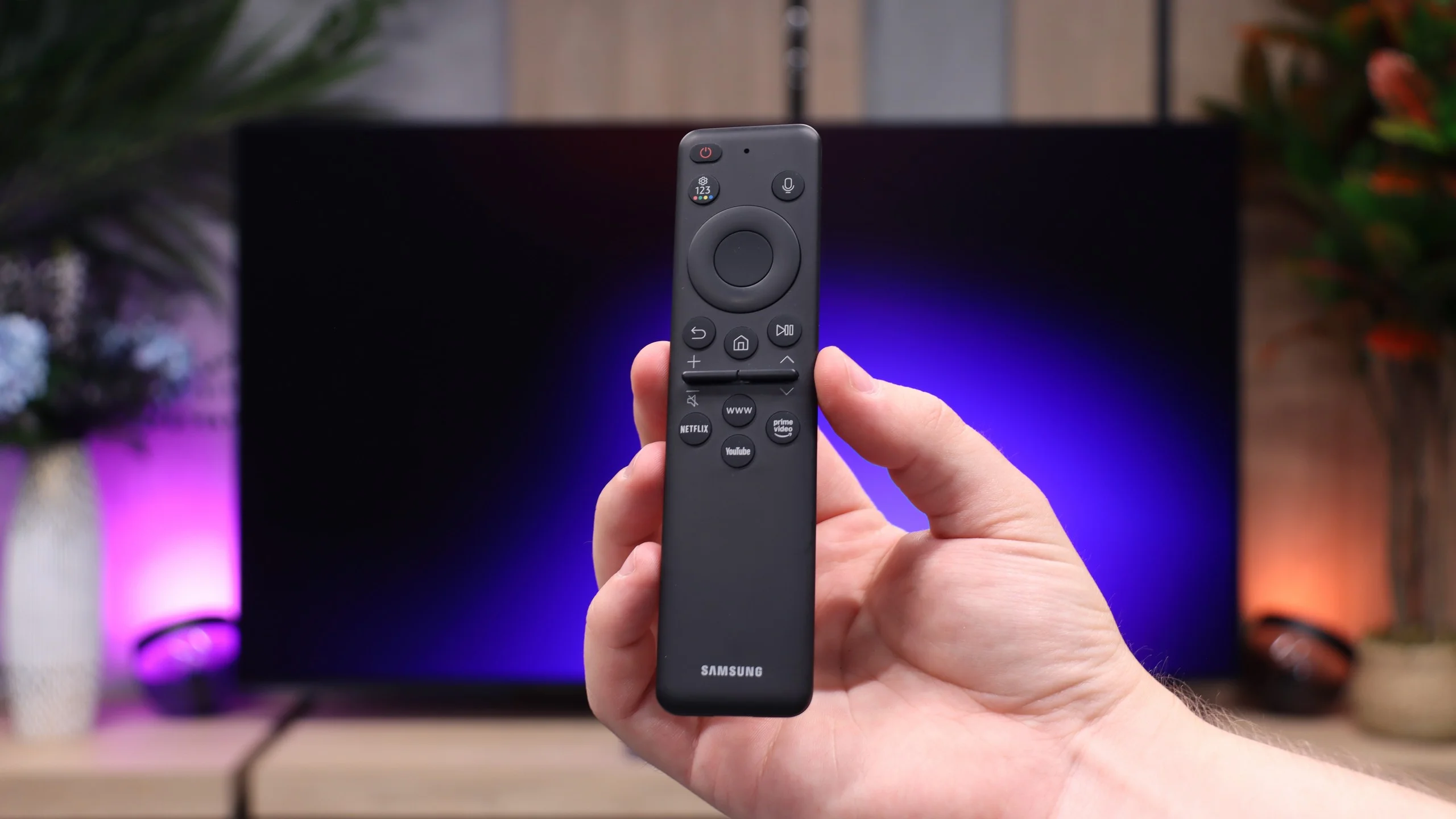
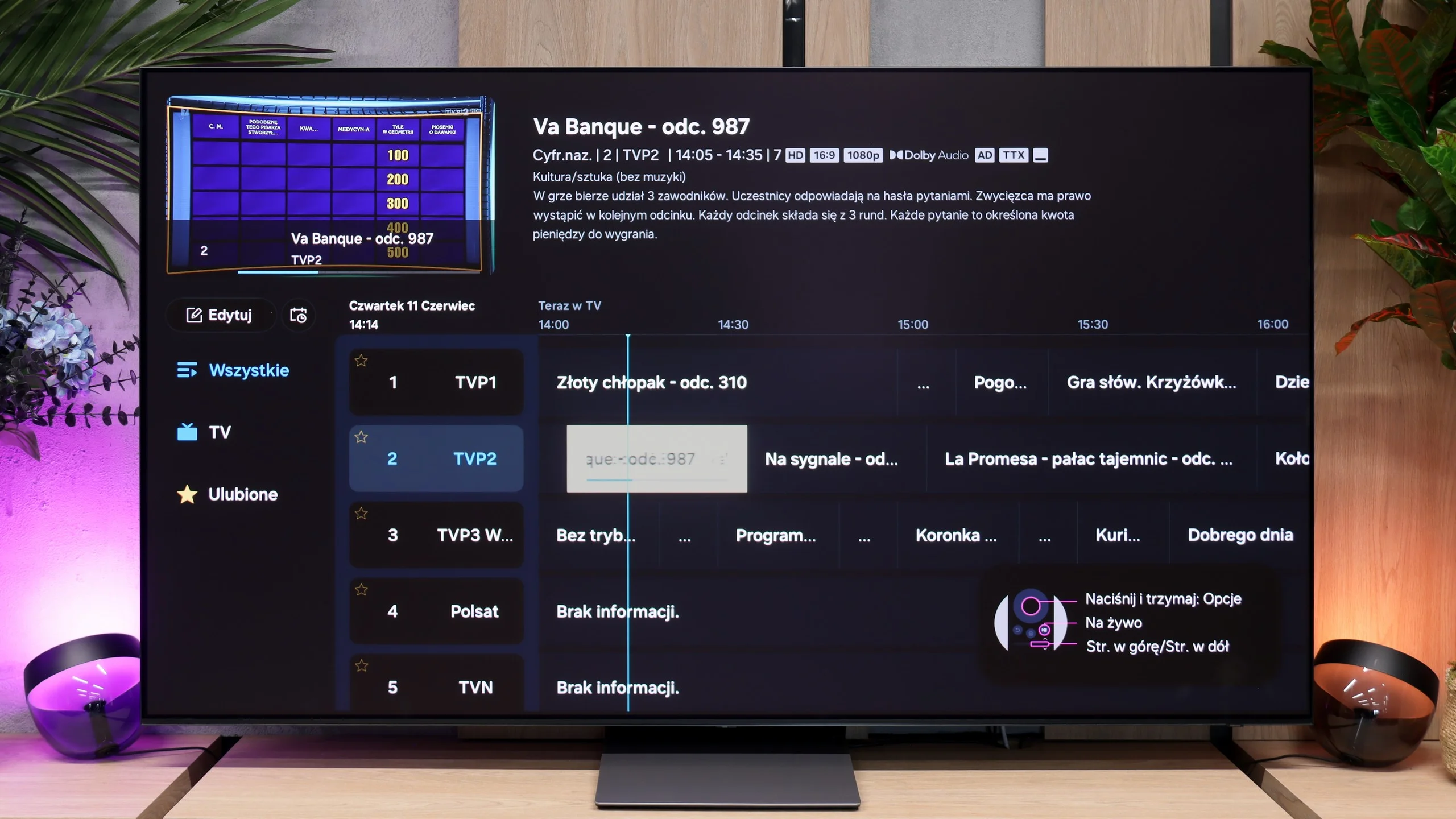
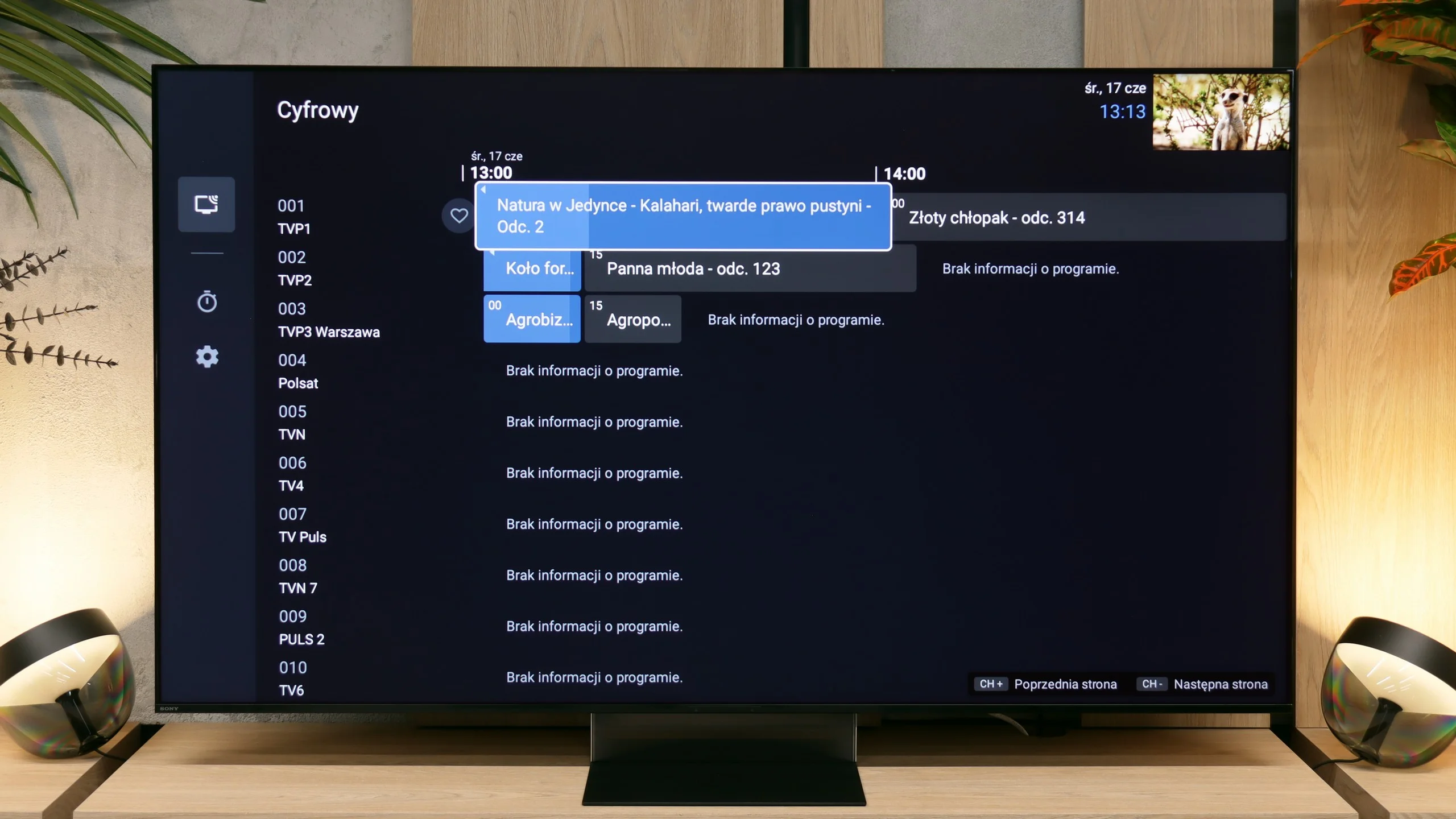
When it comes to plain cable or an over‑the‑air antenna, Samsung hasn’t reinvented the wheel. Putting the whole AI stuff to one side, the user largely gets the same as last year. The TV just does its job: it switches channels smoothly, has a tuner and a slot for a CI module, so in many cases you can do without an external set‑top box. Teletext is still available. The compact remote is also worth praising; its biggest advantage is the radio link, so you don’t need to point it directly at the TV to change anything. The problem is most competitors offer these features these days, and the S90H doesn’t bring anything particularly special to the table. What’s more, the maker took a small step backwards. The S90 range has dropped PiP, picture‑in‑picture. If you were used to glancing at the news in the corner while watching another programme, you can’t do that here. A shame.
Smart TV: Tizen
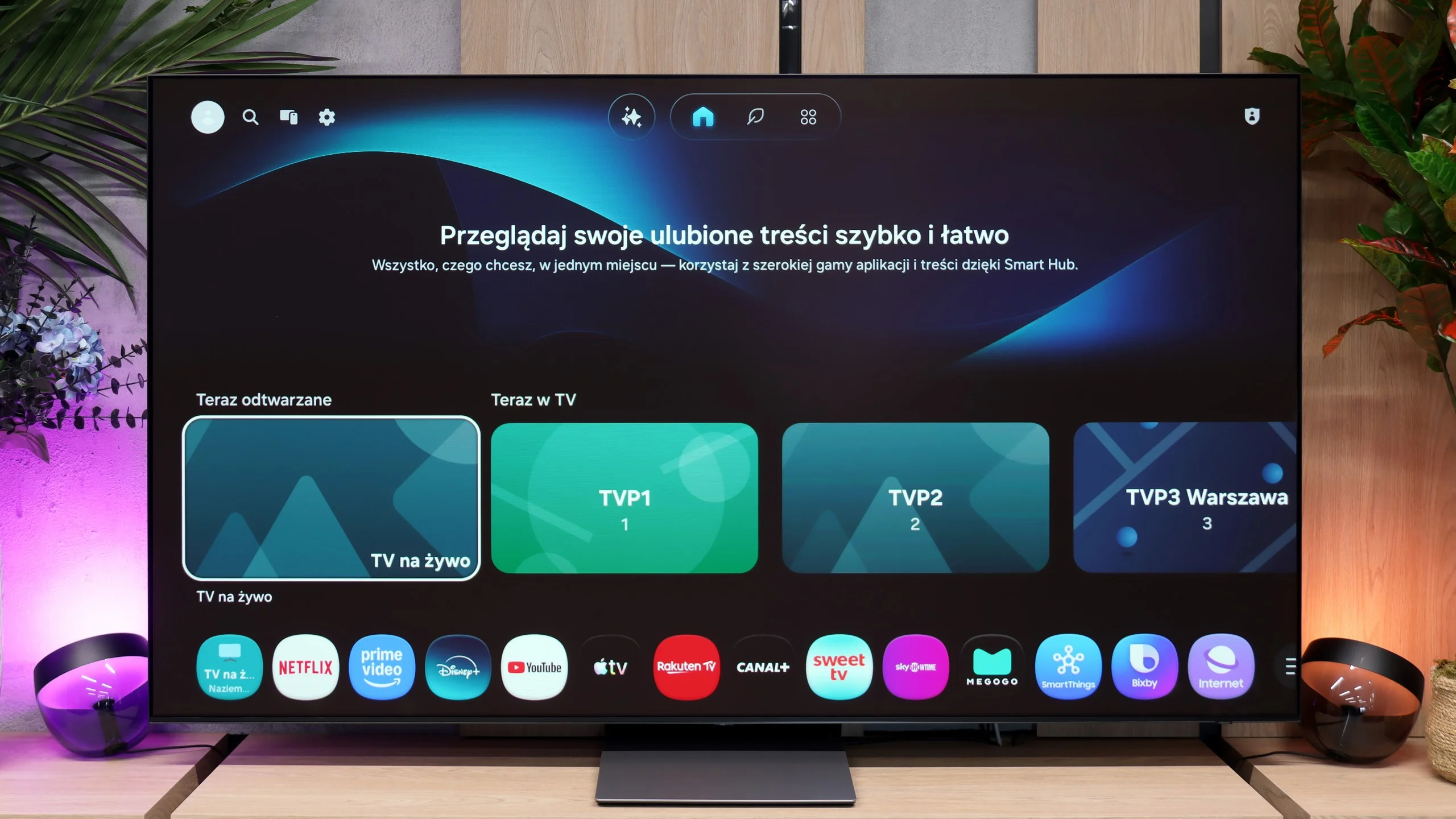
There may be little to get excited about with traditional TV features, but Tizen in its 2026 incarnation is absolutely top‑tier. Again putting AI features to one side, the key point is simple: this system is lightning‑fast. Responses to remote commands are instantaneous, and navigating menus shows no slow animations or annoying stutters. Although it doesn’t use Google TV, the app library is extensive. It includes practically all the major VOD streaming platforms, so there’s little to complain about on that front. Console‑free gamers will be happy too, because Samsung has greatly expanded the cloud gaming section, offering access to the main streaming services directly from the TV. As a Smart TV the S90H is a very well‑rounded and exceptionally fast set.
Classic features and two remotes
When talking about such an advanced television it's easy to focus only on processors and nits, but the Bravia 9 II is also a very good TV in the most down-to-earth aspects. A great example of this is the return to traditional solutions that many competitors have already forgotten. One of them is full support for recording television programmes directly to an external USB drive.
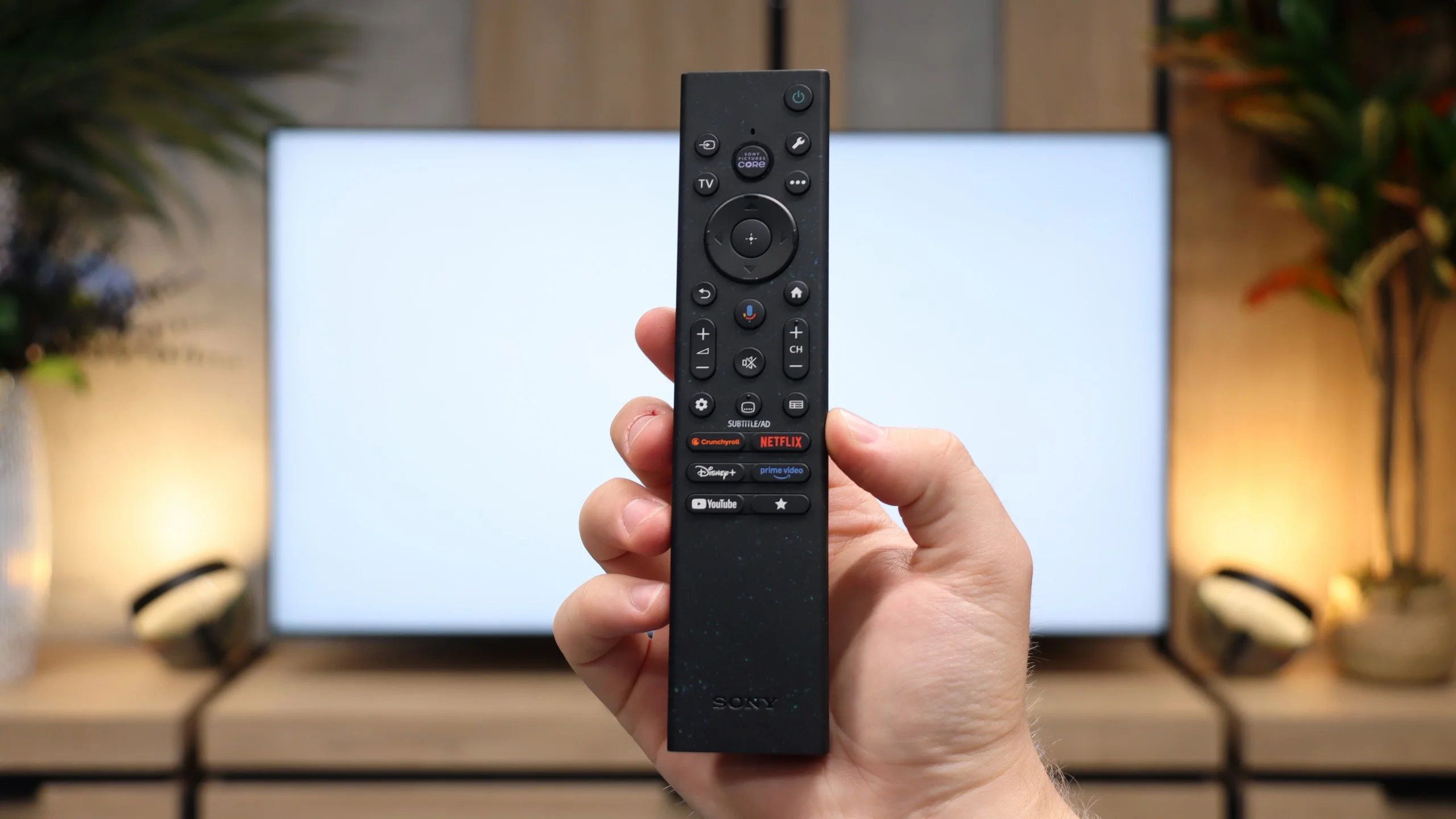
Sony's traditional, very practical approach is visible as soon as you open the box. Sony, one of the few players on the market (currently perhaps the only one? 🤔), still includes not one but two remotes. The first is a nod to older users and traditionalists. It may look like a design from the 2000s, but it offers a full, physical numeric keypad, which makes it much easier to jump quickly between cable or satellite channels. The second remote belongs to a completely different school. It's a compact smart remote that is brilliantly balanced, feels great in the hand, and the icing on the cake is automatic button backlighting. Interestingly, according to Sony it is largely made from recycled materials.
Smart TV: Google TV
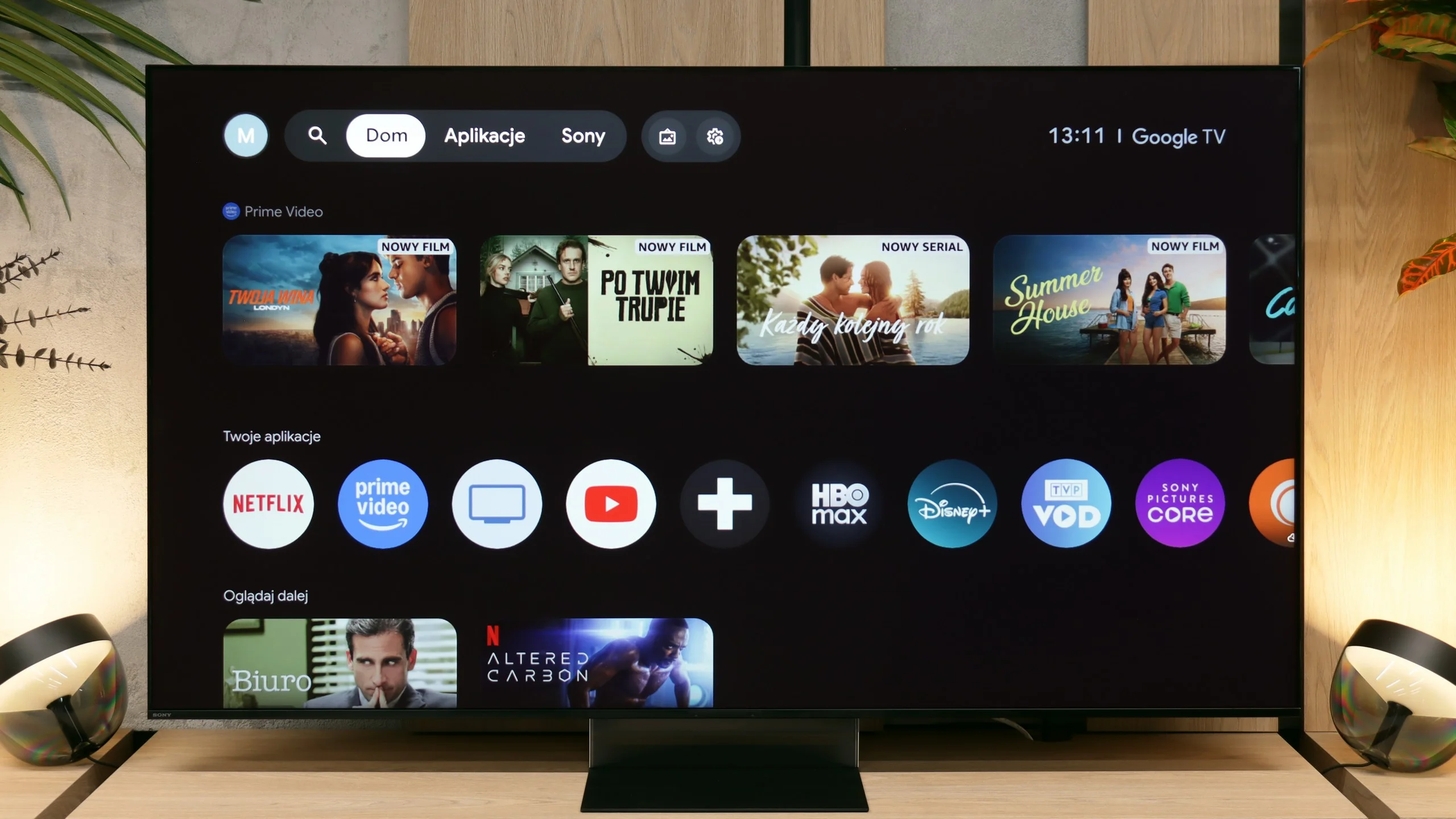
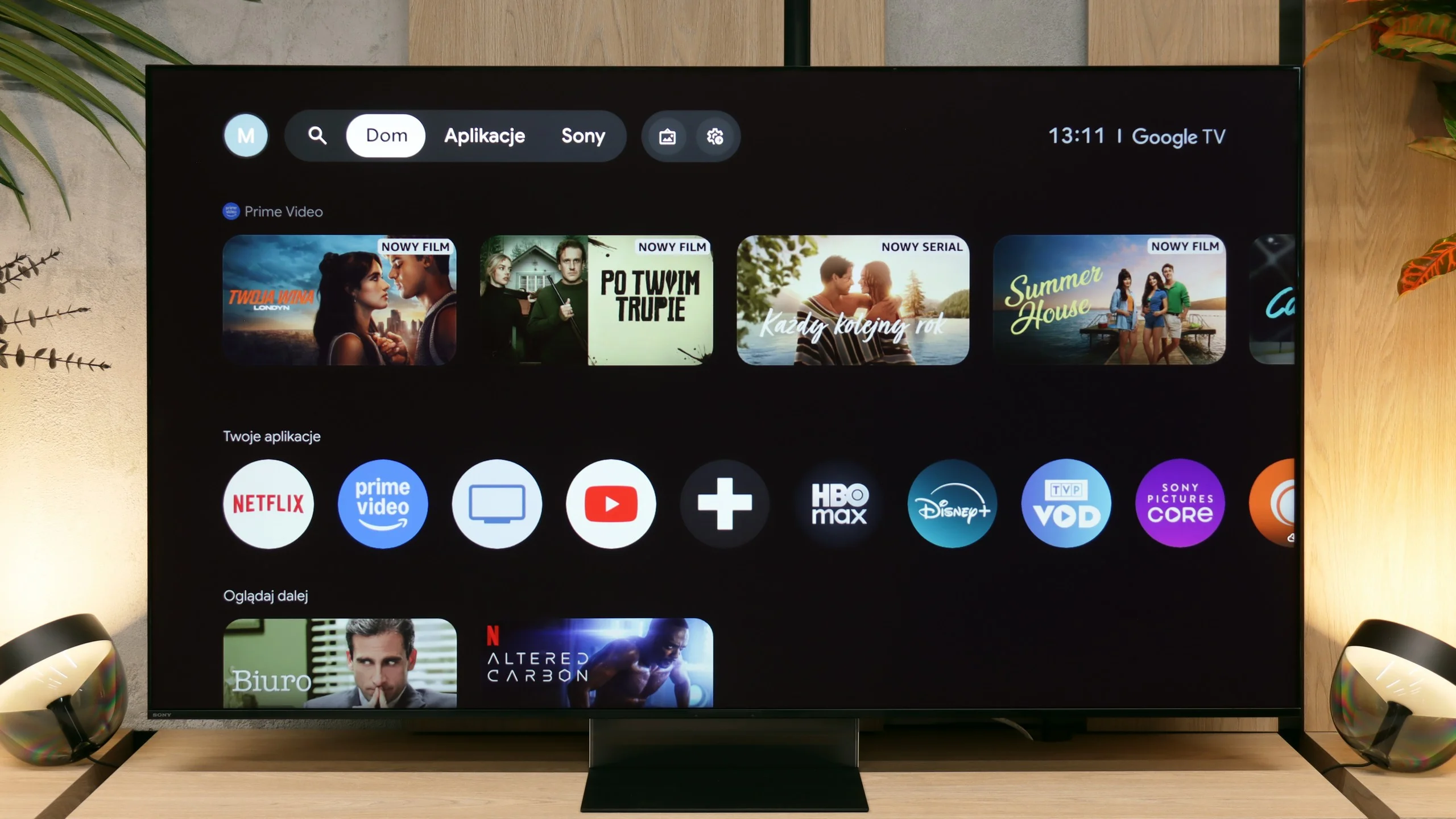
When we switch the TV on with that remote, Google TV appears on screen. In this model the platform has received excellent optimisation. The menu responds instantly and animations don't drop frames, which used to be a problem in older models. Although the interface can sometimes be overloaded with sponsored recommendations for movies and TV shows, which is unfortunately a sign of the times, the system makes up for it with an absolutely unrivalled app ecosystem.
An additional, unique argument in favour of Sony's platform is built-in access to the Sony Pictures Core app. It's Sony's own streaming service and, thanks to huge data throughput, can deliver pictures with extremely low compression, offering a level of quality unattainable for other VOD services.
Apps
9.3/10
9.6/10






















Playing files from USB
9.1/10
8.9/10
Supported photo formats:
Maximum photo resolution:
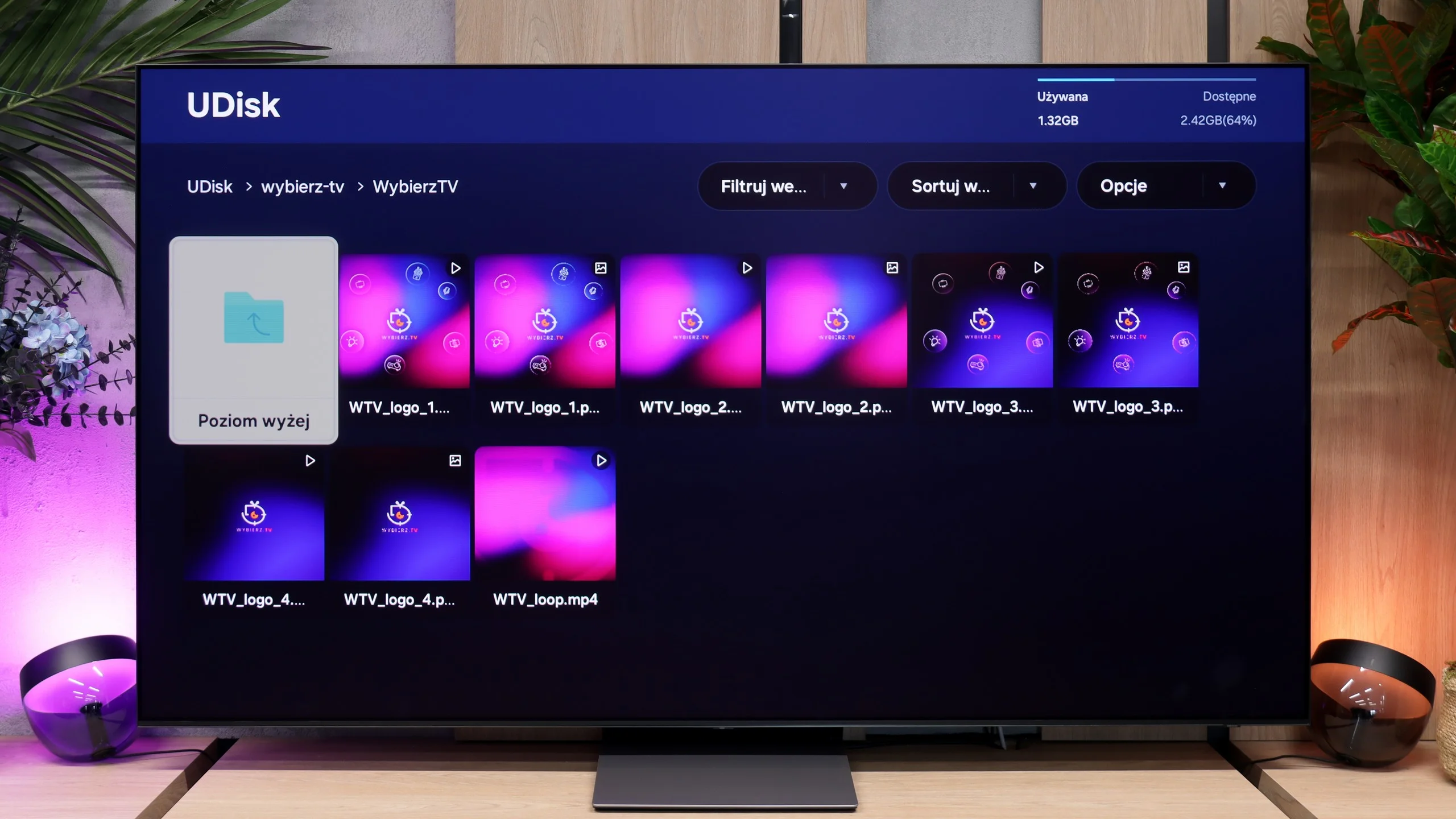
The built-in player handles most popular video, audio and photo formats very well. Its "playback capabilities" are comprehensive enough that you definitely won't miss the option to install external players like VLC. However, we encountered a serious bug when trying to open HEIC photos from an iPhone. The S90H not only failed to display the files, it caused the system to hang completely. The receiver stopped responding to any of our commands, so we had to reset it; unplugging it solved the problem. This appears to be a software flaw that requires an urgent fix in the next firmware update.
Playback of files from an external drive or USB stick works smoothly and quickly. The interface loads the contents of the media instantly. However, we have some reservations about the built-in player's out-of-the-box capabilities. While the list of supported audio and video codecs is quite extensive, the TV's support for image files was surprisingly limited. It really only supports the classic JPG format and, which is great news for iPhone users, Apple's HEIC format. Unfortunately, even the popular PNG format was missing from the list. Luckily, thanks to Google TV, this issue is easy to solve. Just download a third-party player from the app store and it will open any missing file format without a hitch.
Sound
8.4/10
9/10
- Maximum volume89dB93dB
- Dolby Digital Plus 7.1
- Dolby True HD 7.1
- Dolby Atmos in Dolby Digital Plus (JOC)
- Dolby Atmos in Dolby True HD
- DTS:X in DTS-HD MA
- DTS-HD Master Audio
Theoretically the audio spec in the S90 series has been unchanged for several years. We again get a 2.1 speaker system with a total power of 40 W. However, when we fired up the review unit we were pleasantly surprised. The TV sounded noticeably better than the dry specs or memories from tests of previous models would suggest. It's hard to say for sure whether that's down to optimisation of the audio processing software or simply the fact that the 77-inch cabinet allows somewhat larger drivers to be fitted and gives them more room to operate. The fact is the sound is fuller and more dynamic. That's a big plus for the manufacturer. The only real gripe is the lack of DTS support. Unfortunately this format is increasingly being dropped by TV makers, so Samsung is no exception. On board, however, there's support for the most popular spatial format, Dolby Atmos. Still, fans of physical Blu-ray releases, where DTS tracks are still commonly found, may feel slightly let down.
The two-year-old Bravia 9 has already got us used to the idea that you can squeeze genuinely enjoyable sound out of a regular slim TV without an integrated soundbar. The new Bravia 9 II goes a step further and turns those impressions up even more. In our view, the engineers have mainly improved the low end. The bass, which was a bit lacking and sometimes too flat in the previous model, is now much stronger, deeper and noticeably more dynamic. That makes watching films (especially ones with explosions) or simply listening to music much more enjoyable. The built-in sound system can easily replace a basic soundbar that lacks an external subwoofer. As usual, Sony deserves big credit for its approach to licensing and audio formats. In addition to the obvious and popular Dolby Atmos standard, there is also full support for DTS:X on board. That’s great news for film fans with large collections of 4K Ultra HD discs. In terms of built-in audio, the Bravia 9 II is an absolute masterpiece.
Sound Quality Test
Acoustic Measurements
89dBC (Max)
75dBC
93dBC (Max)
75dBC
Reader comments
Comments are provided by the external service Disqus (Zeta Global). Once loaded, Disqus may set cookies and process data about your activity.
We will remember your choice on this device. Provider's privacy policy