 Direct comparison
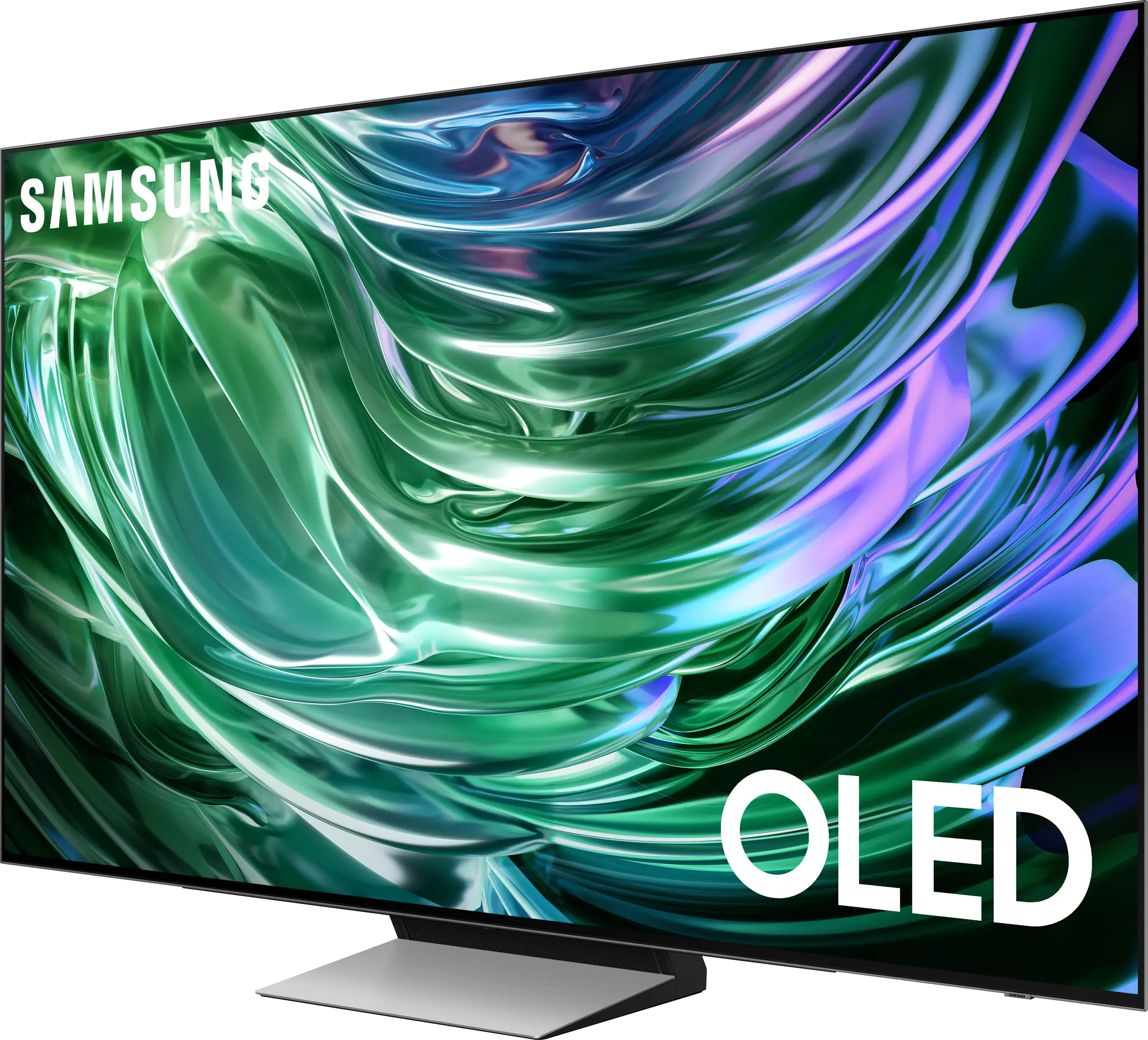
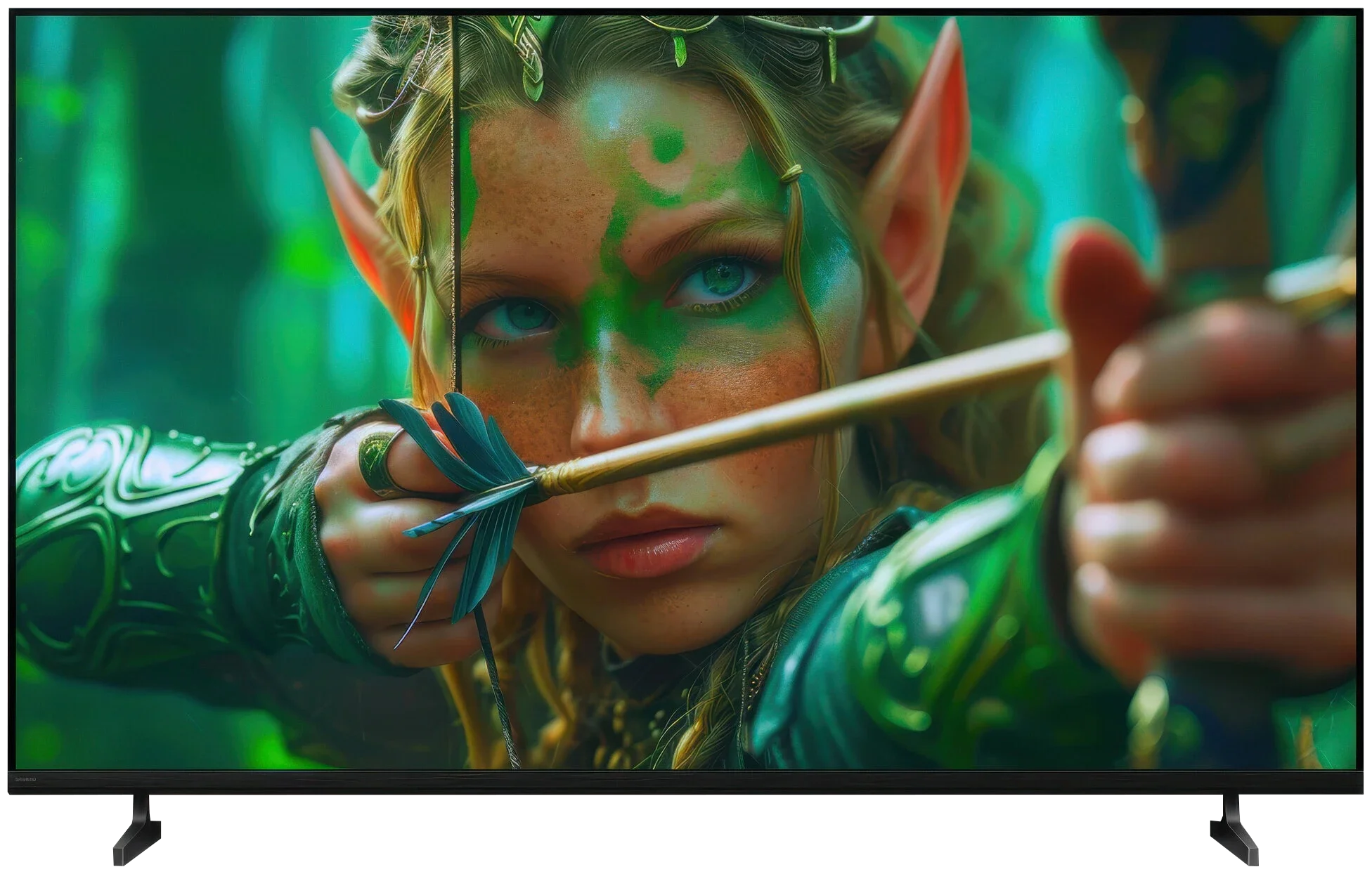
Samsung OLED 48 S90D or S94D is the smallest model in this series and we had the opportunity to check out what it can do. At first glance, it’s clear that it handles details in dark scenes excellently, as expected from an OLED. It’s worth mentioning that the 48-inch version differs from the larger models. The brightness is slightly lower, and the panel has a satin finish instead of a glossy one. During the day, this may affect image perception. However, regardless of the variant, OLED always makes an impression. The black depth is incredible and the contrast makes even the most demanding scenes look cinematic. When it comes to high-quality materials, this TV literally shines – bright elements in dark frames literally jump off the screen. The factory colour settings could be better, but after calibration, the TV reveals its full potential. While watching from different spots in the room, we noticed that the wide viewing angles work well – the image remains sharp and full of details, even when viewed from the side. The Tizen system proved to be user-friendly – apps like Netflix and Prime Video were at our fingertips. A few less popular apps are missing, which could be a downside, but it wasn’t an issue for us. The interface itself operated smoothly, with no stutters. When watching sports and dynamic films, the TV showed what it’s capable of. The 144 Hz panel eliminates motion blur, and fast actions are displayed smoothly and without interruptions. What is gaming on this TV like? It’s simply pure enjoyment. Low input lag and support for 144 Hz made every gaming session responsive and fluid, whether we were playing dynamic FPS titles or more laid-back strategy games. Samsung OLED 48' S90D/S94D is a great choice for those looking for a smaller TV with excellent picture quality and extra features for gamers. It’s not without compromises, but in everyday use, it performs really well. For us, it’s a compact device that proves that size doesn’t always matter.
- Matching (Score) |
- Our verdict |
- TV appearance |
- Where to buy |
- Contrast and black detail |
- HDR effect quality |
- Factory color reproduction |
- Color reproduction after calibration |
- Smoothness of tonal transitions |
- Image scaling and smoothness of tonal transitions |
- Blur and motion smoothness |
- Console compatibility and gaming features |
- Input lag |
- Compatibility with PC |
- Viewing angles |
- Daytime performance |
- Panel details |
- TV features |
- Apps |
- Playing files from USB |
- Sound
S90D / S94D

BRAVIA 2 II / S25M2
Available screen sizes: 48”
Panel type: WRGB OLED
Resolution: 3840x2160
System: Tizen
Model year: 2024
Panel type: LCD IPS
Resolution: 3840x2160
System: Google TV
Model year: 2026
Check how well they match your needs
Take the surveyOverall rating
7.9
5.8
 Movies and series in UHD quality
8.0
5.2
 Classic TV, YouTube
8.6
5.2
 Sports broadcasts (TV and apps)
8.4
5.5
 Gaming on console
9.4
6.2
 TV as a computer monitor
8.6
6.0
 Watching in bright light
5.4
4.8
 Utility functions
7.4
6.6
 Apps
9.3
9.6
 Sound quality
6.8
6.1
Complete the survey to find out what fits your preferences
Advantages

Perfect black
Great for 4K HDR content
Excellent for gamers - 144hz, HDMI 2.1, low input lag.
Advanced and smooth Tizen system
Multifunctional solar remote
Very good viewing angles (IPS panel)
Google TV with a huge selection of apps
Chromecast and AirPlay
Low input lag
Very good USB file player
Supports audio formats: Dolby (Atmos, TrueHD, Digital), DTS (X, HD)
Two remotes included
Disadvantages

Worse brightness than larger counterparts
Missing Dolby Vision and DTS:X
Too expensive for what it offers!
Very poor black levels and low contrast (IPS panel)
Low brightness of around 320 nits
No support for dynamic HDR formats (Dolby Vision, HDR10+)
Panel limited to 60 Hz
Very limited gaming capabilities
Our verdict
The Sony Bravia 2 II is a TV that’s best suited to simple, everyday use. And we suspect many people will pick it mainly for Google TV. The system gives access to a huge number of apps and streaming services, and you also get Chromecast, AirPlay and convenient voice search. The TV itself may not run as fast as pricier Sony models, but in terms of functionality there’s little to complain about. Importantly, for regular viewing the picture quality is quite decent. The Bravia 2 II handles SDR material especially well — ordinary broadcast TV, YouTube and a lot of older films and series. The out-of-the-box Cinema mode is sensibly tuned, colours look natural and, without much fiddling with the settings, you can just start watching. And that’s where the Bravia 2 II shows its strengths — as a simple smart TV for daily use, rather than a set that aims to dazzle with panel performance.
However, you have to remember that the “Bravia” badge on the case doesn’t automatically mean great picture quality. The Bravia 2 II uses an IPS panel with very low contrast, and that’s its biggest problem. In daylight it’s not so noticeable, but turn the lights off in the evening and black starts to look more like dark grey. Of course, in return you get good viewing angles, so if the TV sits in a large living room and several people watch from different spots, IPS has an advantage. But that comes at the cost of weak blacks. This TV isn’t designed for HDR impact or for more demanding gamers either. Around 300 nits of brightness and a narrow colour gamut mean HDR content doesn’t show much more than SDR. A 60 Hz panel and the lack of broader gaming features also make it clear that gaming isn’t a priority for this model.
And that wouldn’t be a major issue, because we expected that from an entry-level Sony. The biggest problem for the Bravia 2 II, though, is the price. For similar money you can easily find competitor TVs, especially Korean and Chinese brands, that already offer a lot more, ranging from 120 Hz panels to Mini-LED backlights with local dimming. So the Bravia 2 II isn’t a bad TV in itself. It’s simply too expensive for what it offers. If its price were noticeably lower, it would make much more sense as a basic TV for everyday viewing.
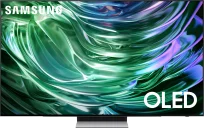
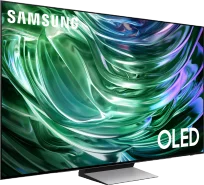
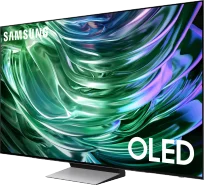
TV appearance

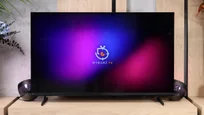
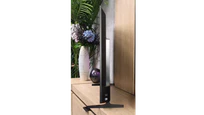
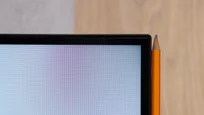
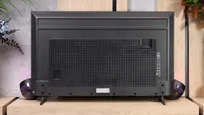

Contrast and black detail
10/10
2.7/10
Local dimming function: No
Contrast:


Result
∞:1

Result
∞:1

Result
∞:1

Result
∞:1

Result
∞:1
Result
1,150:1
Result
1,200:1
Result
1,450:1
Result
1,400:1
Result
1,100:1
Halo effect and black detail visibility:
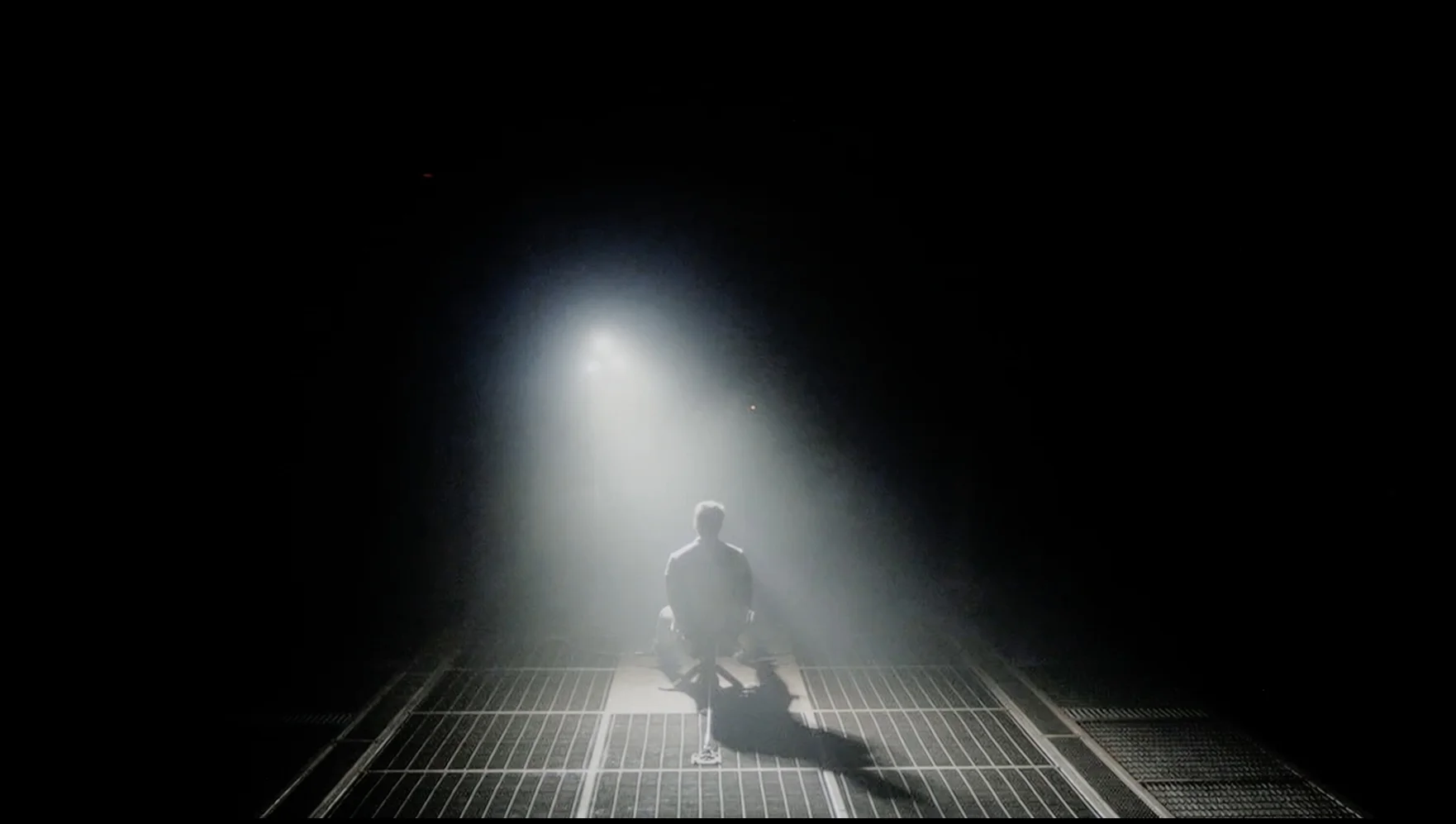
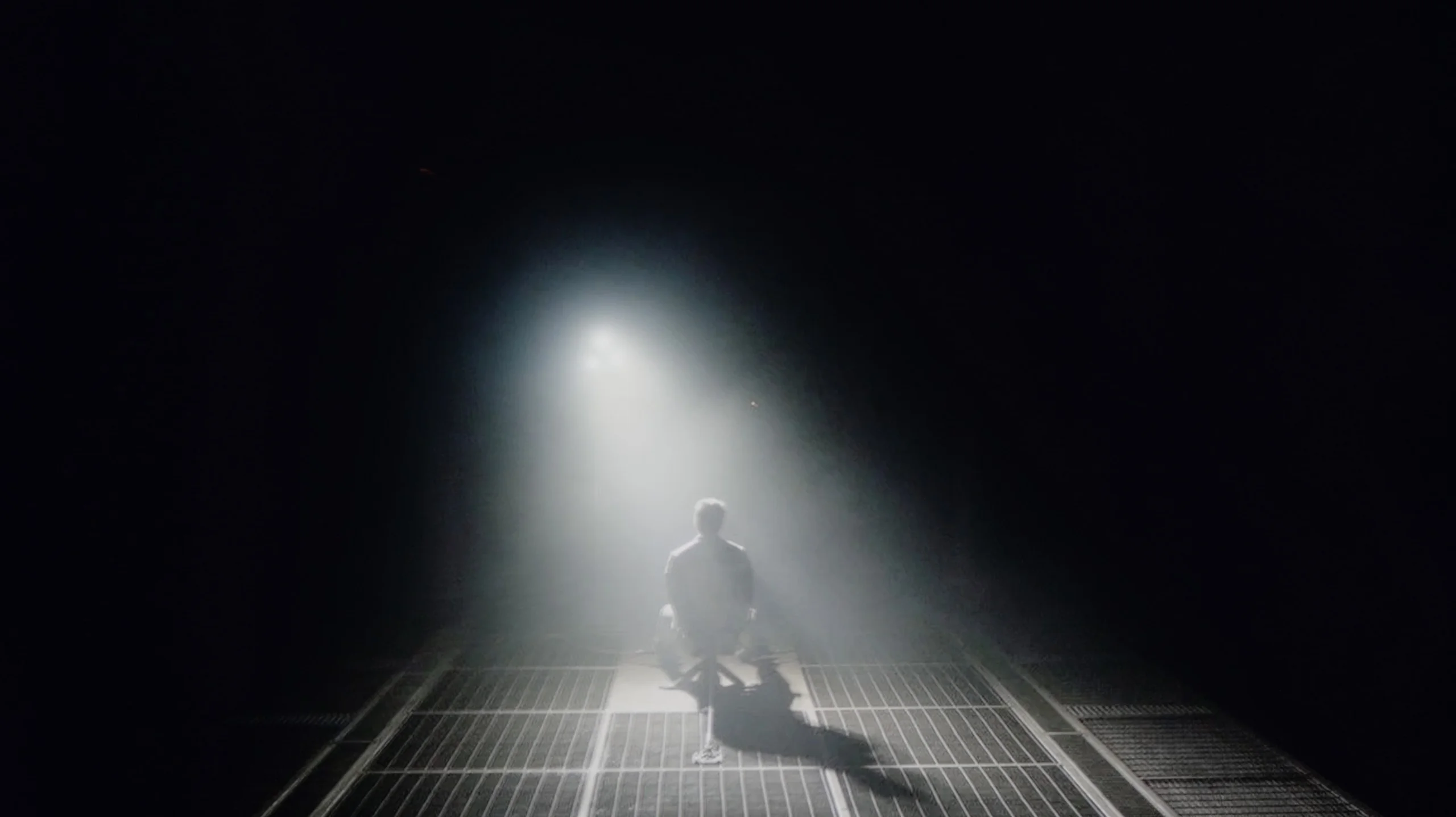
Check the visibility of bright lights on a dark background. Mini-LEDs often struggle with this. The photo does not compare black levels – that’s what the video below is for.
The video accurately shows differences in contrast and black levels between TVs, as well as potential issues: halo around bright objects or Mini-LED zone operation visible as brightness jumps.
Samsung OLED 48 S90D stands out thanks to the use of an OLED panel, which provides an extremely high contrast, one of its key advantages. OLED technology allows each pixel to emit light independently, resulting in perfectly deep blacks and excellent visibility of details even in the darkest scenes. Unlike traditional LCD screens with backlighting, where black can appear washed out and greyish due to uneven backlighting, OLED ensures that pixels are completely turned off in areas where black should appear. This achieves an impressive level of contrast, making images more vibrant and realistic. An example can be seen in a scene from the film "Oblivion," where the S90D television superbly captures the intense light of the lamp, highlighting details in the bright areas of the image. Meanwhile, in "Sicario 2," the OLED panel accurately reproduces the helicopter lights against a dark background.
When it comes to black levels, the Bravia 2 II unfortunately doesn't have much going for it. Sony has used an IPS panel here, which offers one of the lowest native contrasts among LCD panels. In our measurements we saw figures around 1,100:1 to 1,450:1, and unfortunately that's very noticeable when watching. Additionally, the TV lacks any local dimming, so it can't darken only the parts of the screen that should remain dark. In practice, this means that once the lights go out, blacks very quickly shift toward grey and navy. In scenes such as Oblivion or Sicario 2, instead of a deep background we get a noticeably brightened image, which takes away a lot of the atmosphere from evening viewing. Of course an IPS panel also has the advantage of better viewing angles, but in this respect it's hard to call that sufficient compensation. If you're looking for a TV primarily for watching films at night, the Bravia 2 II simply isn't a model we could recommend.
HDR effect quality
6.4/10
4/10
Luminance measurements in HDR:

Result
788 nit

Result
807 nit

Result
851 nit

Result
838 nit

Result
372 nit
Result
294 nit
Result
307 nit
Result
329 nit
Result
330 nit
Result
325 nit
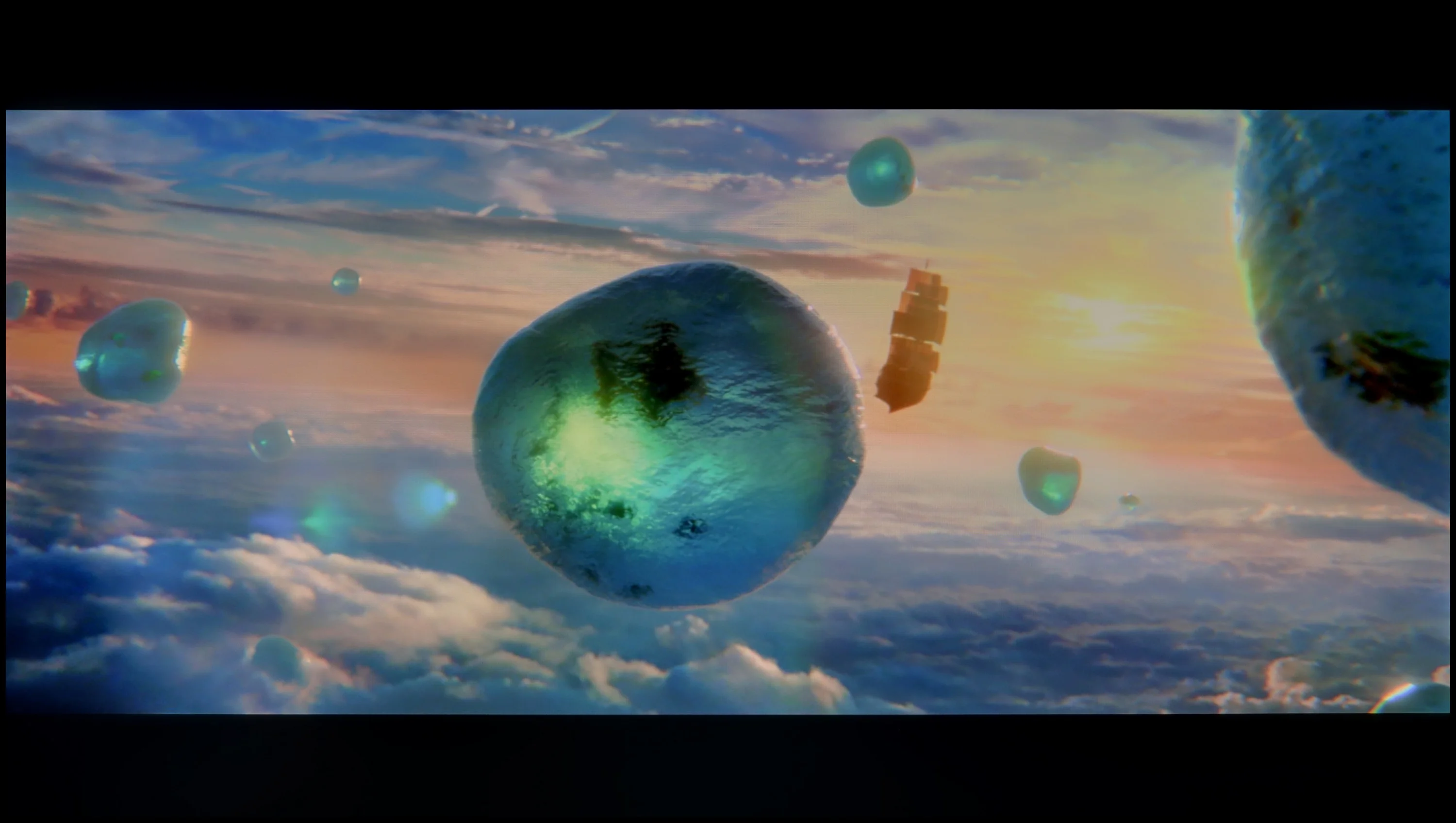
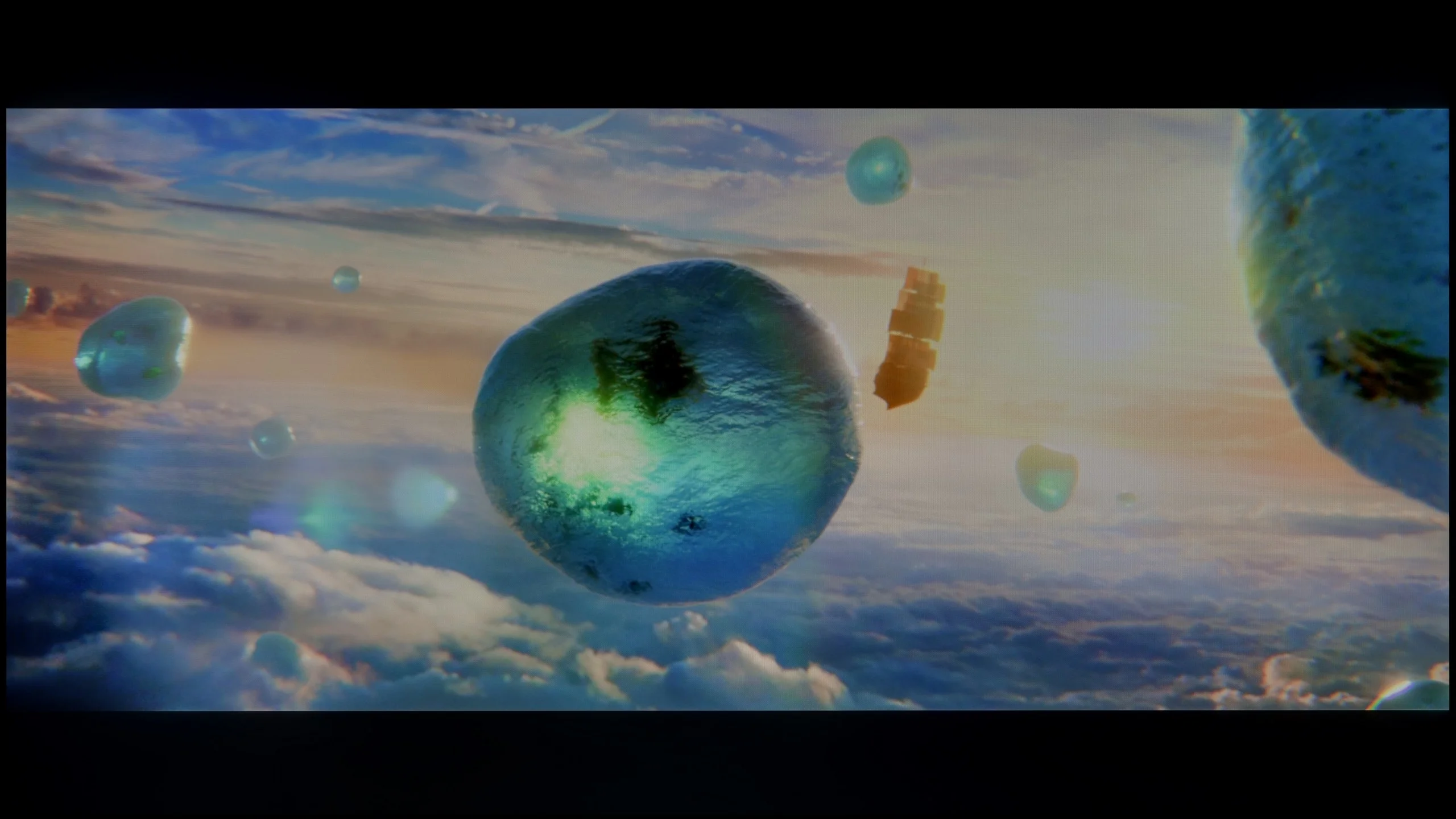
Scene from the movie “Pan” (about 2800 nits)
Scene from the movie “Billy Lynn” (about 1100 nits)
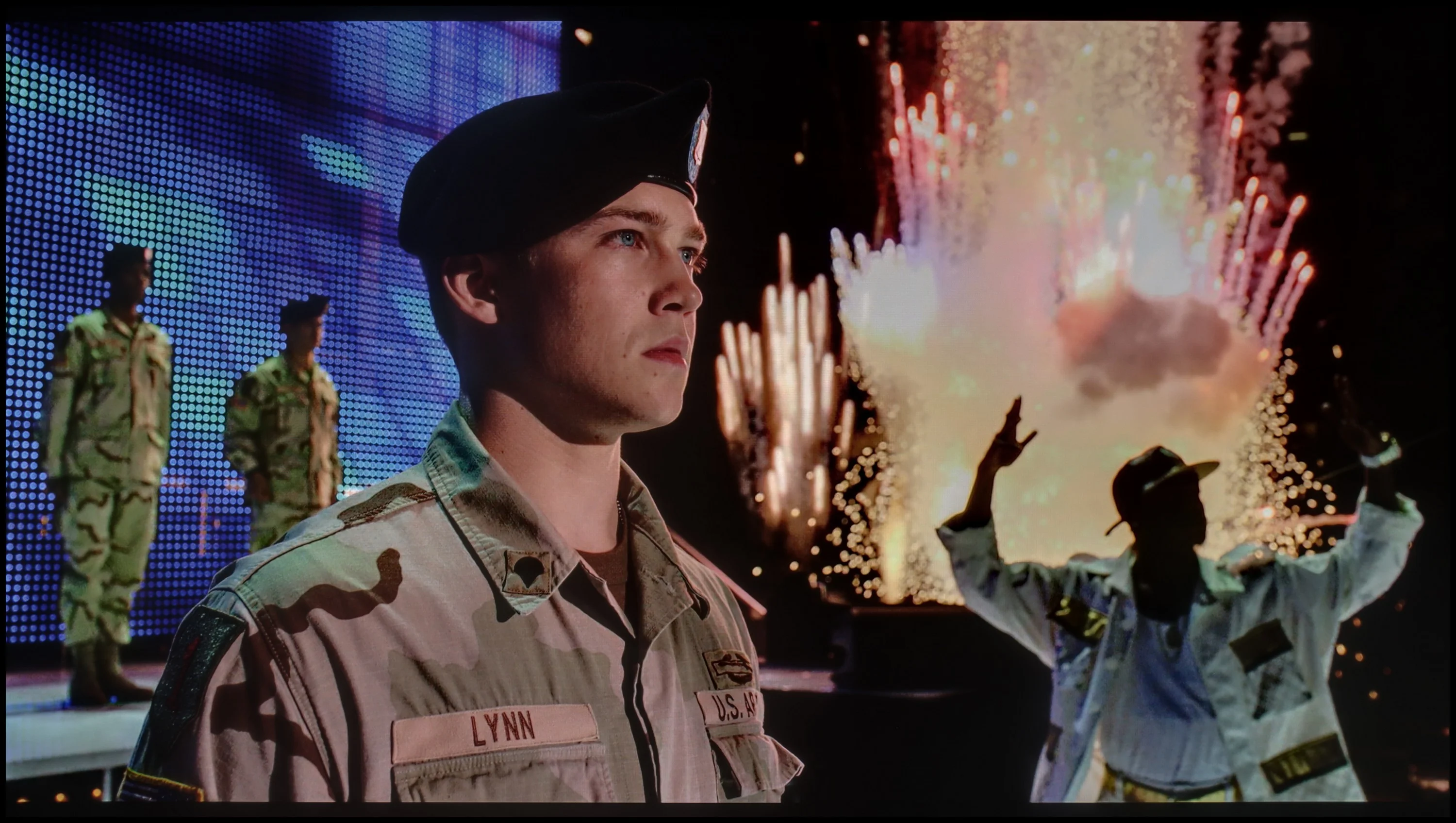
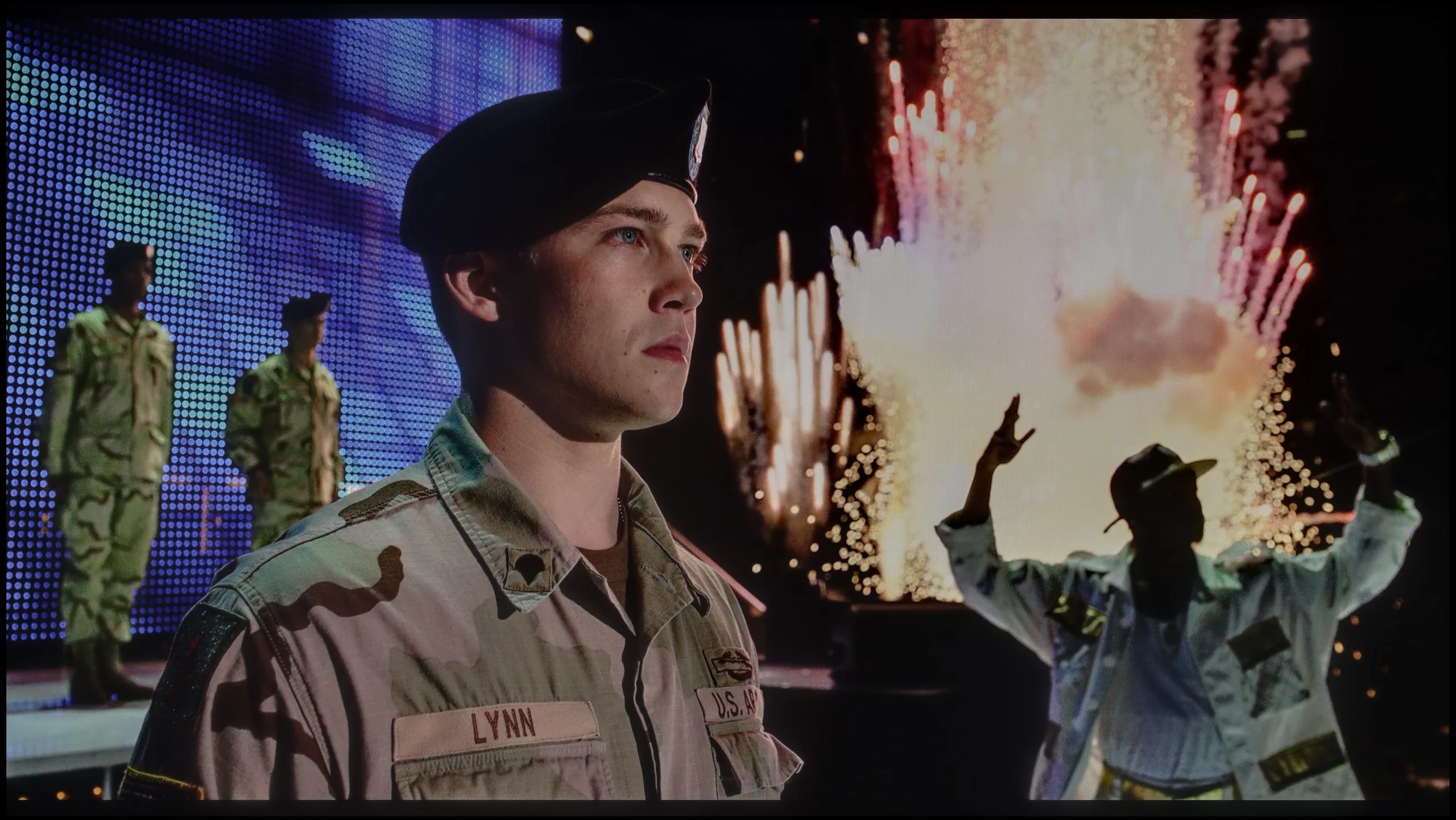
The photos show two HDR10 movies. 'Pan' is one of the brightest productions ever made, while 'Billy Lynn' (soldier) has brightness typical of streaming (Netflix, Prime, HBO MAX). Notice the intensity of effects and detail in whites.
Static HDR10


The photos present the visibility of white details in various HDR formats. They do not show brightness differences between TVs (these can be compared in the previous gallery).
HDR luminance chart:
Sony BRAVIA 2 II (S25M2)
Samsung S90D / S94D 48" (WRGB OLED)
Luminance of RGB colors
In the tested movie scenes, the Samsung OLED 48 S90D television achieves impressive brightness results, exceeding 800 nits in the first four shots, which can be considered a very good outcome. In the case of the last shot, where a full-screen burst of sunlight is visible, the brightness drops to around 400 nits but still remains at an acceptable level. However, it is worth noting that this model in larger sizes offers higher values, exceeding the "barrier" of 1000 nits. Additionally, speaking of the DCI-P3 colour space coverage value of 97% is an excellent result, which guarantees extremely rich and realistic colour reproduction, further enhancing the picture quality. However, once again it should be remembered that the panel in the 65' variant equipped with a QD-OLED panel will be even better in this aspect. For those hesitating about the size of the S90D model, it is worth noting that larger versions of this television offer a better HDR effect, and consequently, a higher score in our tests.
Sony Bravia 2 II isn't a particularly bright TV and unfortunately that's immediately obvious in HDR. In our measurements brightness stayed around 300 to 330 nits, which is far too low for the brightest parts of the image to look truly impactful. In practice HDR here doesn't differ that much from regular SDR. Bright highlights, the sun or lamps are of course visible, but they lack the intensity you'd expect from HDR content. The Bravia 2 II is therefore much better suited to standard SDR material, where its limited brightness will be least noticeable.
Colour gamut coverage
The Sony Bravia 2 II also doesn't impress when it comes to colour. The TV doesn't use any extra gamut-expanding filter, such as the quantum dots found in QLED sets or a PFS phosphor layer. In our measurements it covered about 78% of the DCI-P3 gamut and roughly 57% of the very wide BT.2020. That's definitely too little to deliver truly saturated colours in HDR material. More intense reds, greens or turquoises will simply be less striking than on TVs with an expanded colour gamut. The Bravia 2 II is much better matched to the standard Rec.709 gamut used for films, series and SDR broadcast.
Factory color reproduction
7/10
5.3/10


This illustrative image shows how colors change after professional calibration. If you can see the difference, you can order it from SkalibrujTV – it's our own service.
Factory mode
After calibration


This illustrative image shows how colors change after professional calibration. If you can see the difference, you can order it from SkalibrujTV – it's our own service.
Factory mode
After calibration
The S90D Samsung TV has been tested in Filmmaker mode, which offers good colour reproduction, although with some imperfections that may be noticeable to more demanding users. This mode may seem a bit too warm, and users who switched from Standard mode may experience a slight shock. It's worth considering that this state of affairs is caused by poor settings, such as white balance, rather than the Filmmaker mode itself. Both in SDR and HDR content, the device exhibits drops in blue, causing colours to appear warmer than they should. In practice, this means that some shades, like sky blue or skin tones, may seem less natural and take on a pinkish or yellowish tint. The Colour Checker test confirms these deviations, showing shifts towards warmer tones. In SDR content, the gamma chart indicates minor fluctuations, resulting in a slightly darker image, especially in the shadows. This may affect the clarity of details in darker scenes. Conversely, in 4K HDR materials, the EOTF curve is above the recommended line, leading to some portions of the image being too bright, which can cause clipping in the brightest areas. Overall, the Samsung S90D presents a solid image straight out of the box, but for the best results, particularly with more demanding content, additional calibration is recommended.
The out-of-the-box colour reproduction in Kino mode was really quite good, at least for ordinary SDR material. The Bravia 2 II had a slight tendency to boost reds, which made some colours lean a bit warmer, at times with a faint pinkish tint. That wasn't a major fault and during normal viewing the picture still looked fairly natural. There was a bit more going on with image brightness. Looking at the gamma curve, Sony doesn't stick perfectly to the reference value. The darkest areas are slightly lifted, while as brightness increases the gamma gradually rises and a large part of the image becomes darker than it should. However, the difference isn't big enough to seriously bother during everyday watching. Overall, SDR straight out of the box performs quite decently.
The situation is much worse in HDR. We've already mentioned the limited colour gamut, but on top of that the Bravia 2 II quite aggressively manipulates image brightness. The EOTF curve sits below the reference for much of the range, which means the TV renders most mid and brighter parts of the scene darker than the source material intends. Only towards the very end of the range does the curve flatten out, as the panel reaches the limits of its capabilities. Combined with a peak brightness of around 300 nits, this gives HDR that not only lacks much punch but can simply look too dark.
Color reproduction after calibration
8.7/10
7/10


The photos show how movies look on the TV. Pay attention to black detail visibility, colors, and shadow tint.


The photos show how movies look on the TV. Pay attention to black detail visibility, colors, and shadow tint.
After calibration, the Samsung OLED 48 S90D in movie mode looks even better than one might have assumed. The white balance, for both HD and 4K HDR content, has been improved to near perfection. Although minor errors can still be noticed, they are so minimal that they do not significantly affect the picture quality. Colours are more balanced, which translates into a natural reproduction of details, especially in scenes requiring a precise colour palette. It’s worth noting that this model in the 48' size is equipped with a WOLED panel that has different characteristics compared to larger sizes and has a smaller coverage of a wide colour gamut, not offering as rich colours as, for example, the 65-inch version, which is equipped with a QD-OLED panel.
Contrast has also seen significant improvement. The gamma chart after calibration is much closer to the expected line, providing better balance between the bright and dark portions of the image. The EOTF curve, which showed issues with overexposed scenes before calibration, now shows better results. This effect allows for greater detail retention in bright parts of the image, particularly in HDR material.
Calibration did a lot for the Bravia 2 II, especially with SDR content. Above all, we managed to even out the white balance and tidy up the gamma, which now stays much closer to the reference value. As a result, the image no longer has the earlier pink cast, and the brightness across different areas is much better organised. You can also see it in the colour errors, which after calibration dropped to a very low level (with only minor issues in the most saturated reds).
We also partly managed to rein in the Bravia 2 II in HDR, especially in the way the TV handles image brightness. However, there is one thing no calibration can fix: the panel's capabilities. A narrow colour gamut means the TV physically can't reproduce the most saturated colours recorded in HDR content. On top of that, the low contrast of the IPS panel causes darker scenes to be covered in a grey haze, which robs colours of some of their depth. So we can improve how the Bravia 2 II uses its capabilities, but we can't overcome the panel's inherent limitations.
Smoothness of tonal transitions
7.6/10
8/10
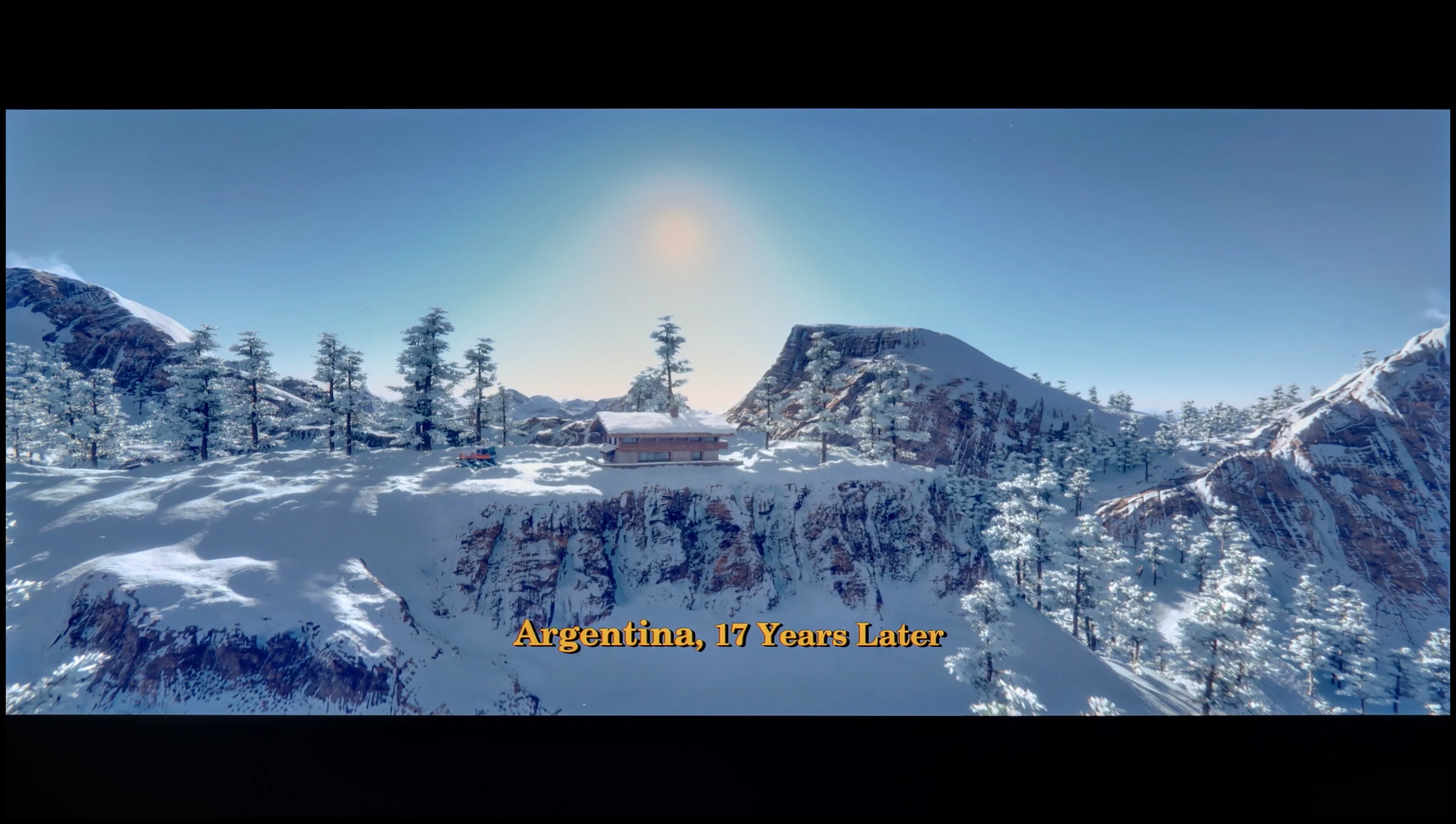

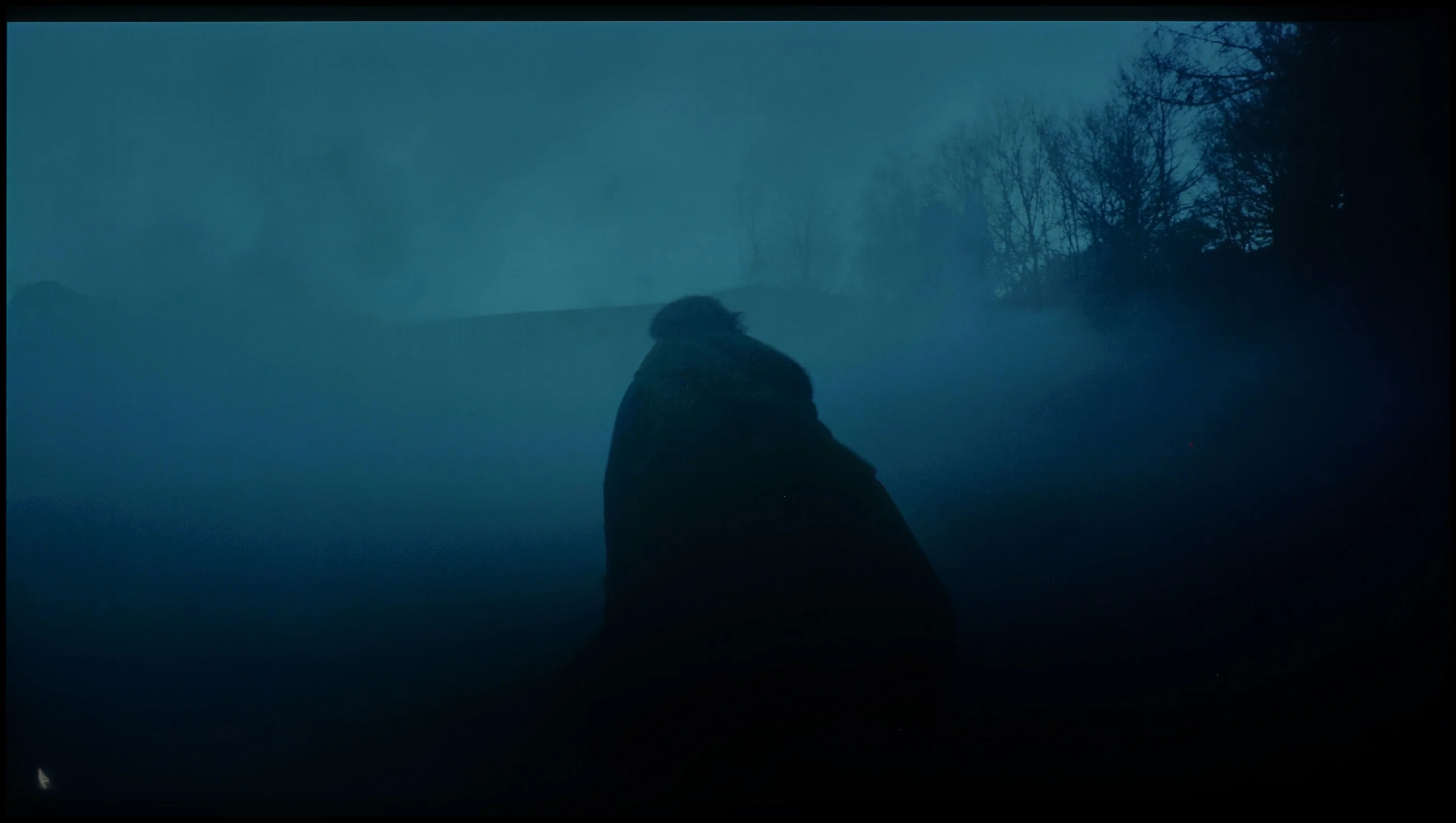
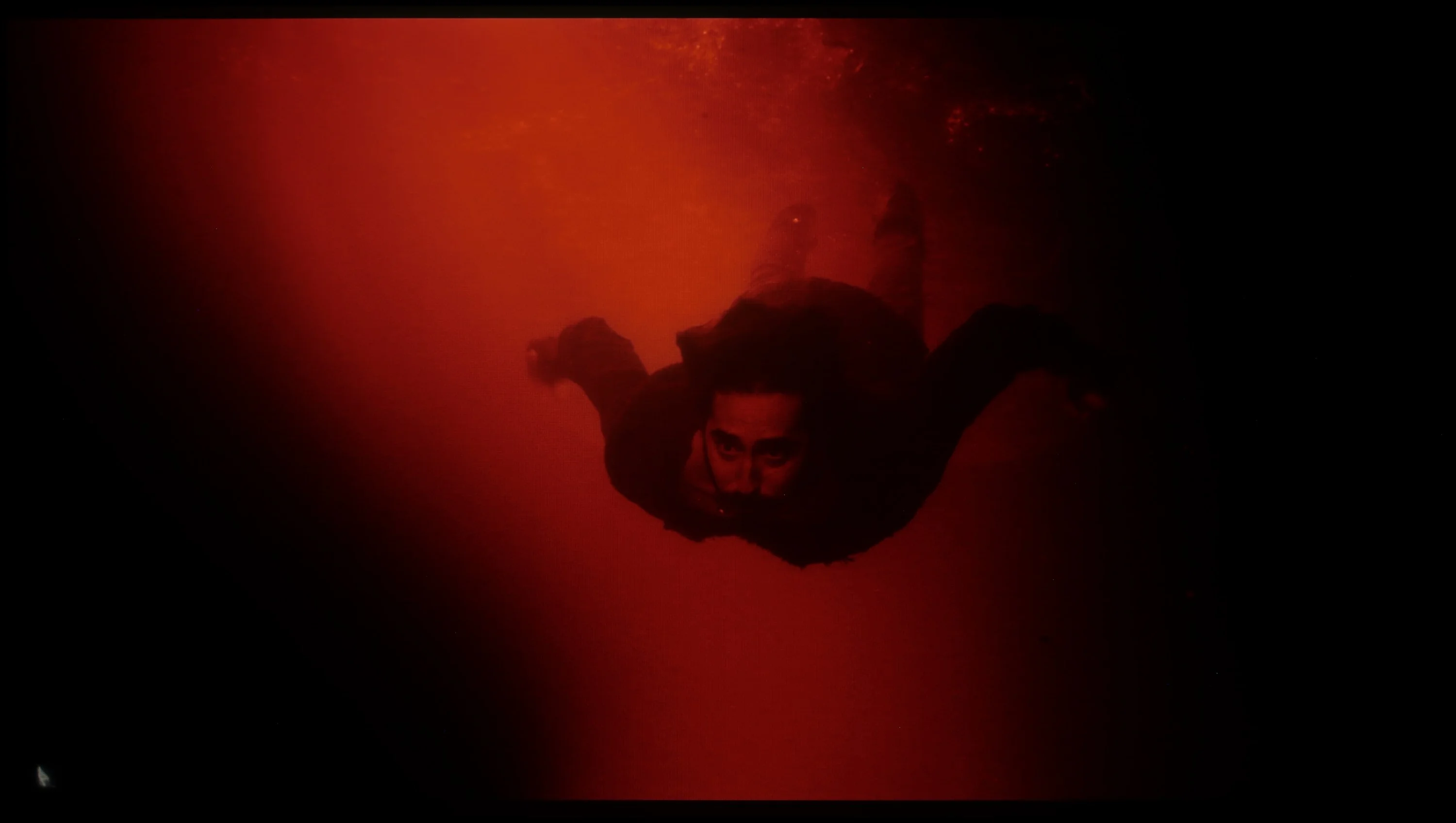
These are selected scenes that show smooth tonal transitions from one color to another. If you see distinct banding, it’s the TV panel’s fault.

These are selected scenes that show smooth tonal transitions from one color to another. If you see distinct banding, it’s the TV panel’s fault.
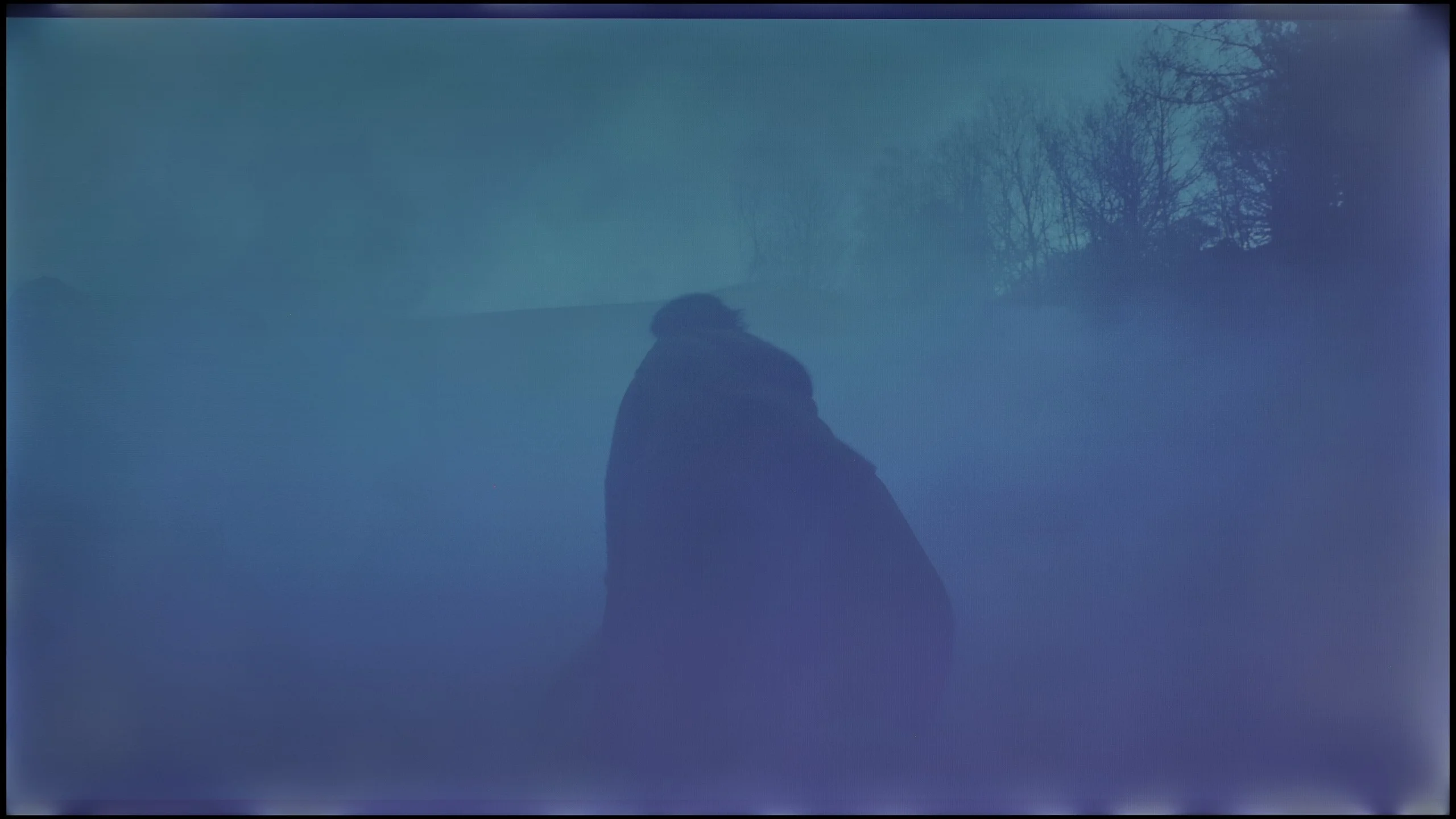
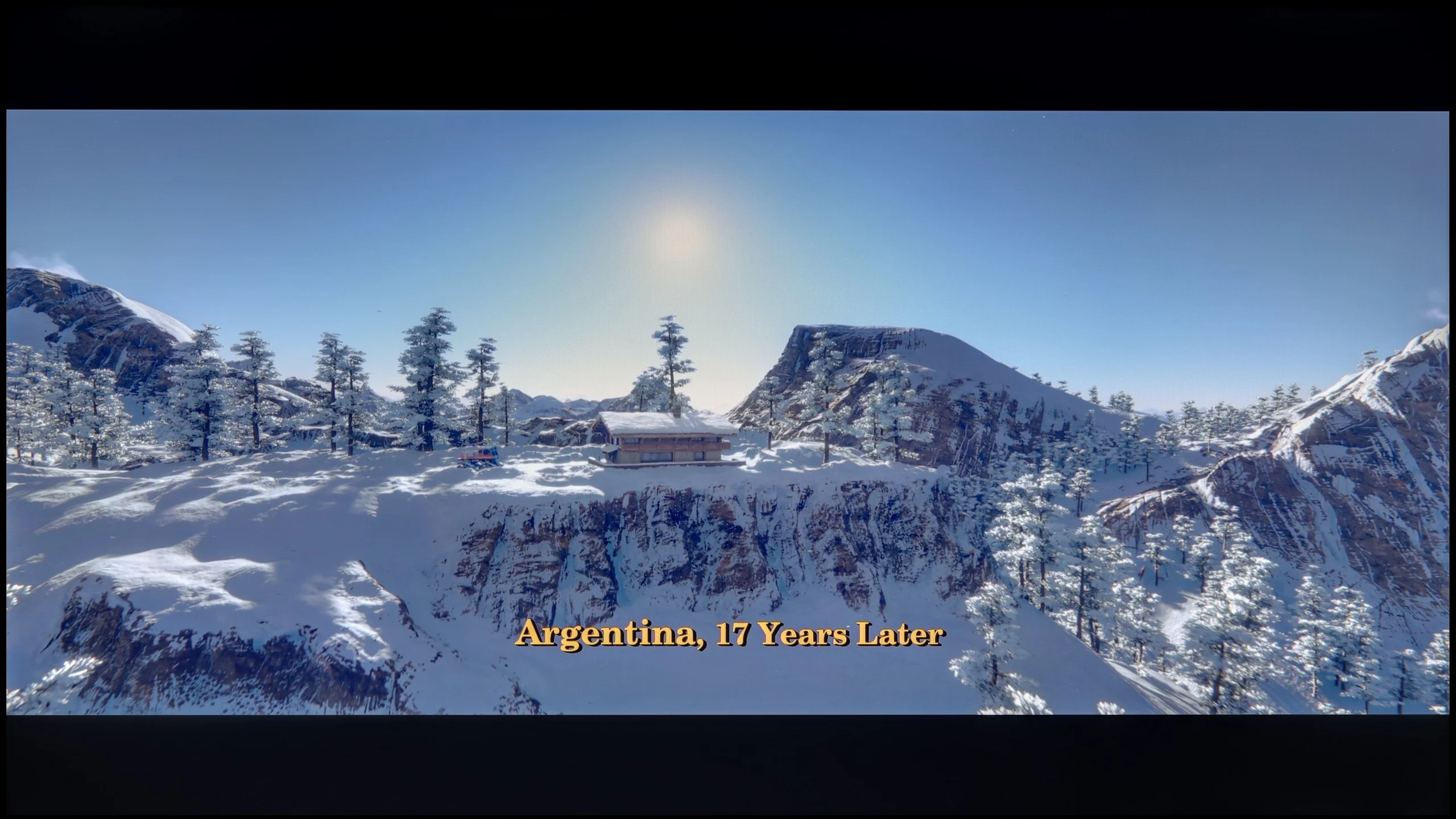
These are selected scenes that show smooth tonal transitions from one color to another. If you see distinct banding, it’s the TV panel’s fault.
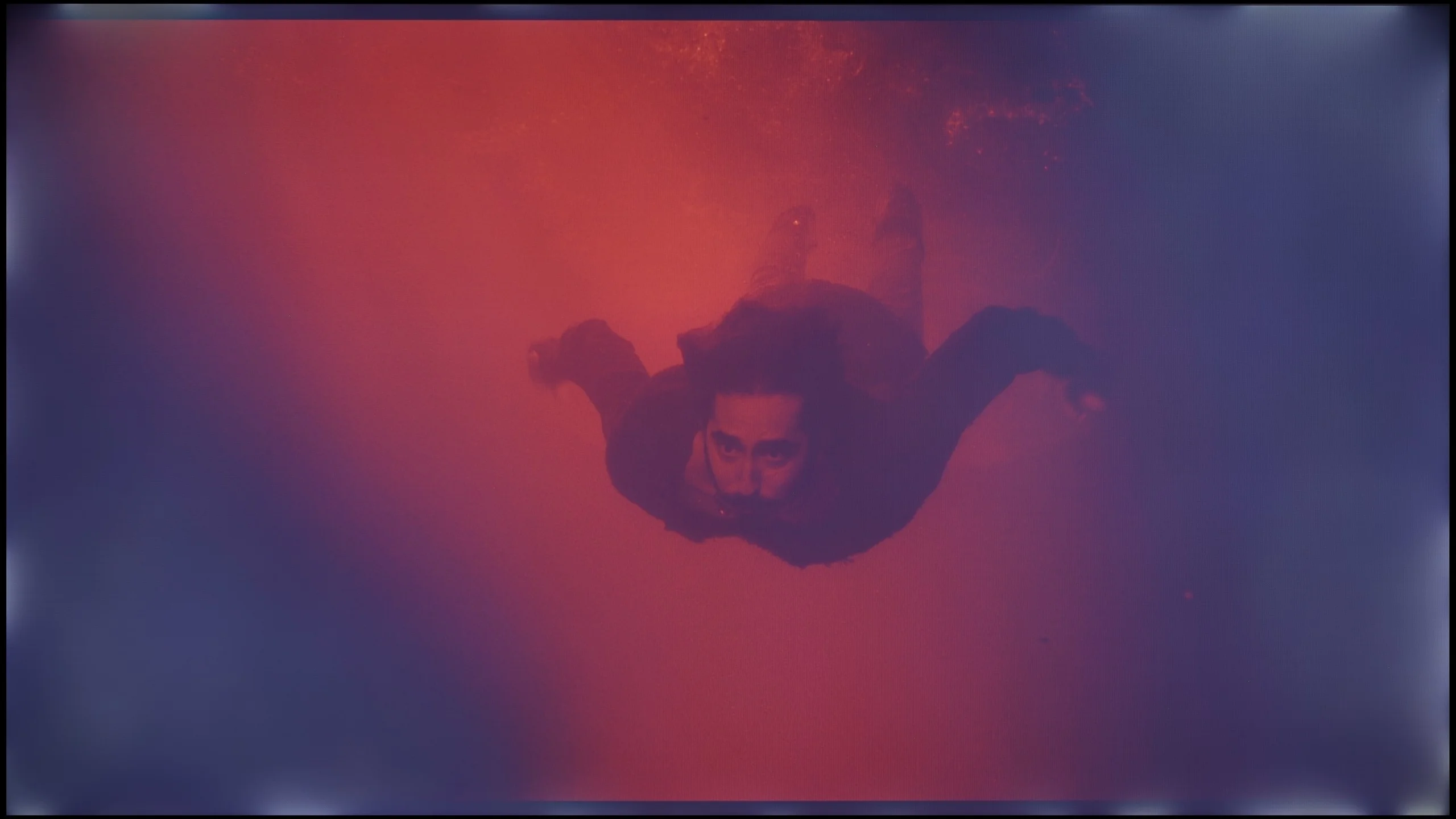
These are selected scenes that show smooth tonal transitions from one color to another. If you see distinct banding, it’s the TV panel’s fault.
The fluidity of tonal transitions on the Samsung OLED 48 S90D TV is at a good level, although subtle imperfections are visible in places. In most scenes, tonal transitions are smooth and well-reproduced, providing a natural viewing experience. In more demanding sequences, such as a dark coloured sky, slight issues may arise; however, they do not significantly impact the overall visual experience. In the test scene with dominant red hues, slight clipping of the brighter areas can be observed, but it is subtle enough not to interfere with viewing. Overall, the fluidity of tonal transitions on the S90D TV is solid, ensuring a good reception of content.
The smoothness of tonal transitions on the Bravia 2 II is pretty good, though it depends a lot on the scene. In brighter parts of the picture the gradation is smooth and it's hard to spot any major issues. It gets worse in very dark shots. In scenes with many dark tones you can already see distinct banding between successive shades. So it's not perfect, but with most everyday content the issue shouldn't be particularly noticeable.
Image scaling and smoothness of tonal transitions
7.9/10
6/10


Smooth transition function
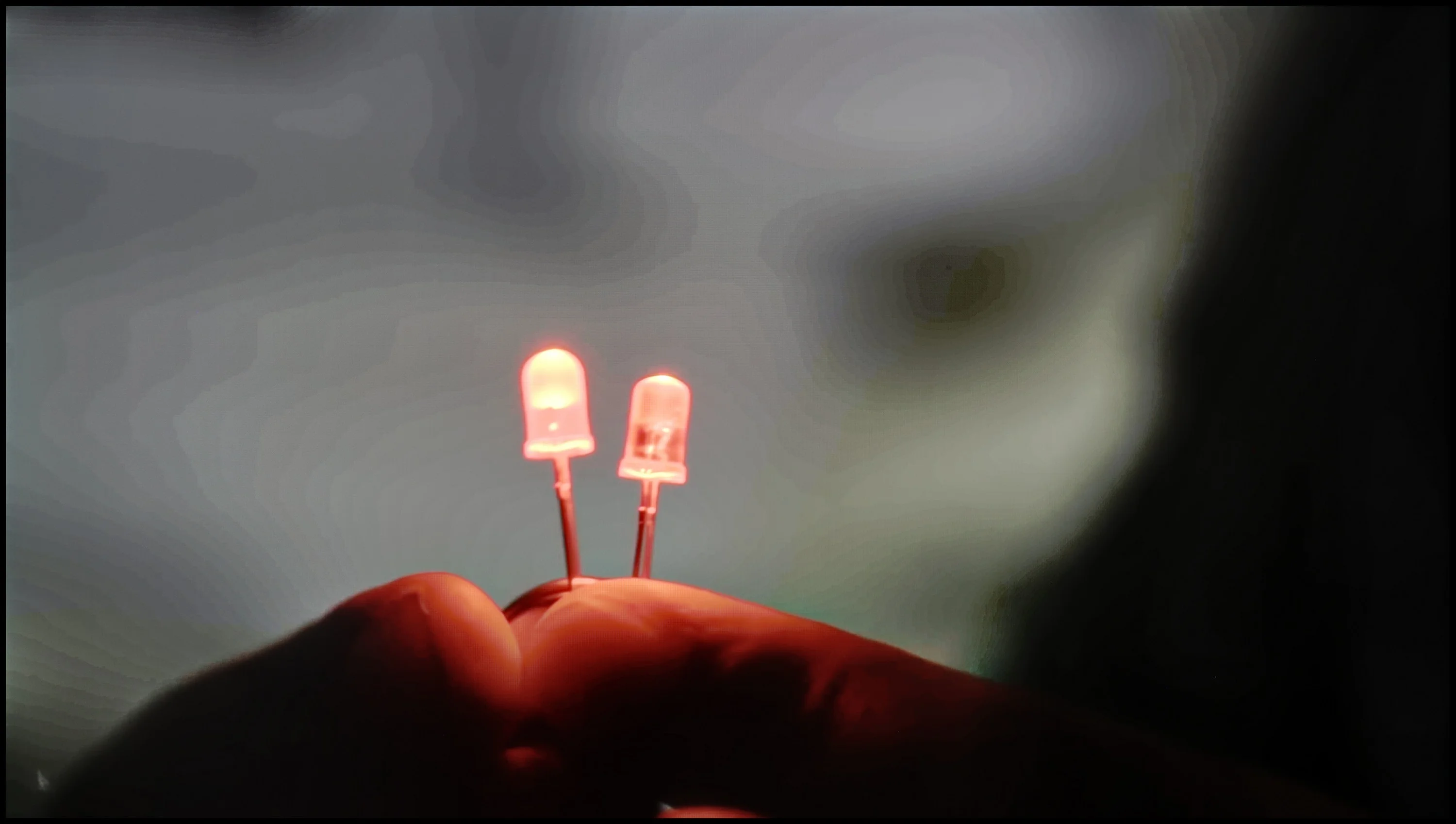
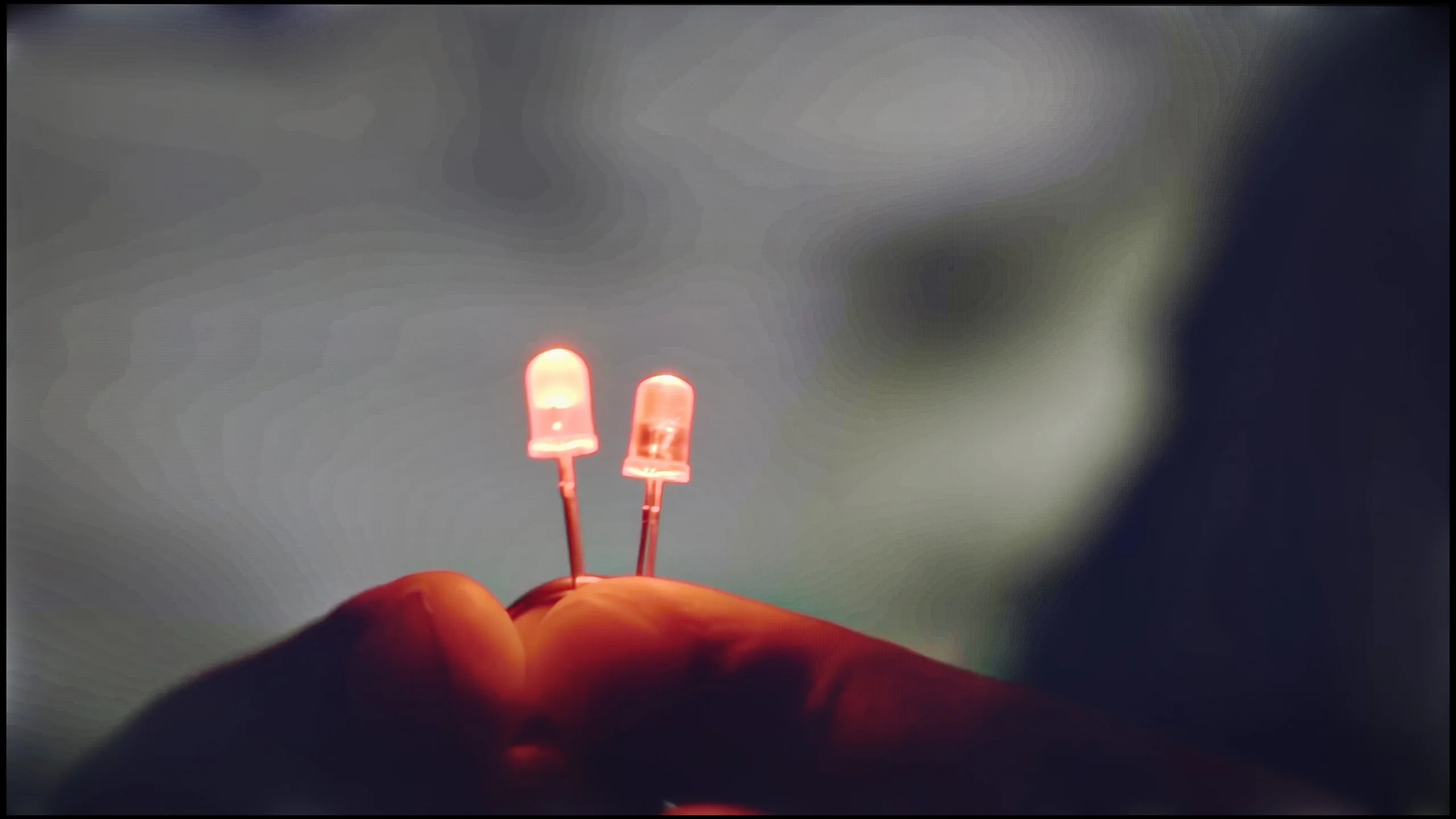
The match photo shows how the TV smooths weak tonal transitions in low-quality video.
Image scaling SD (576i)


The model photo shows how it handles upscaling of SD material.
The Samsung OLED 48 S90D television performs exceptionally well in smoothing tonal transitions. Thanks to the technology used, the transitions between colours are more fluid and natural. It is also possible to utilise the noise reduction feature, which further smooths tonal transitions, which can be useful in some situations. However, it's worth remembering that turning on noise reduction can also lead to the smoothing of desired film grain, which may reduce the cinematic feel of the picture. For this reason, caution is advised when using this feature, as it's better to leave the natural grain that adds character and authenticity to the content being viewed.
Samsung, as always, does not disappoint, and in terms of scaling images from lower resolutions, it performs excellently. The S90D OLED 48 Samsung television effectively processes lower resolutions, as seen in the visible photo. The outline of the model is clear and correct, making it look natural and detailed. Furthermore, the branches of the trees are well reproduced, showing no significant jaggedness that could detract from the image quality. Thanks to effective scaling, even lower resolution materials look attractive on the screen, satisfying users who prefer diverse content sources such as regular antenna/cable television.
Upscaling on the Bravia 2 II performs quite well and the TV maintains the standard we've come to expect from Sony. Lower-resolution material is sensibly upscaled to 4K, and the image is slightly smoothed without excessive edge sharpening. It's less successful at dealing with content that shows visible compression artefacts. That's down to the "Digital Noise Reduction" function, which on the "High" setting can smooth some ugly banding. The problem is it does so quite aggressively and, along with the imperfections, removes a lot of fine detail, including natural film grain. What's more, when there's more motion on screen its effectiveness drops considerably and the improvement is minimal. For that reason we generally didn't use this feature for everyday viewing.
Blur and motion smoothness
8.5/10
5/10
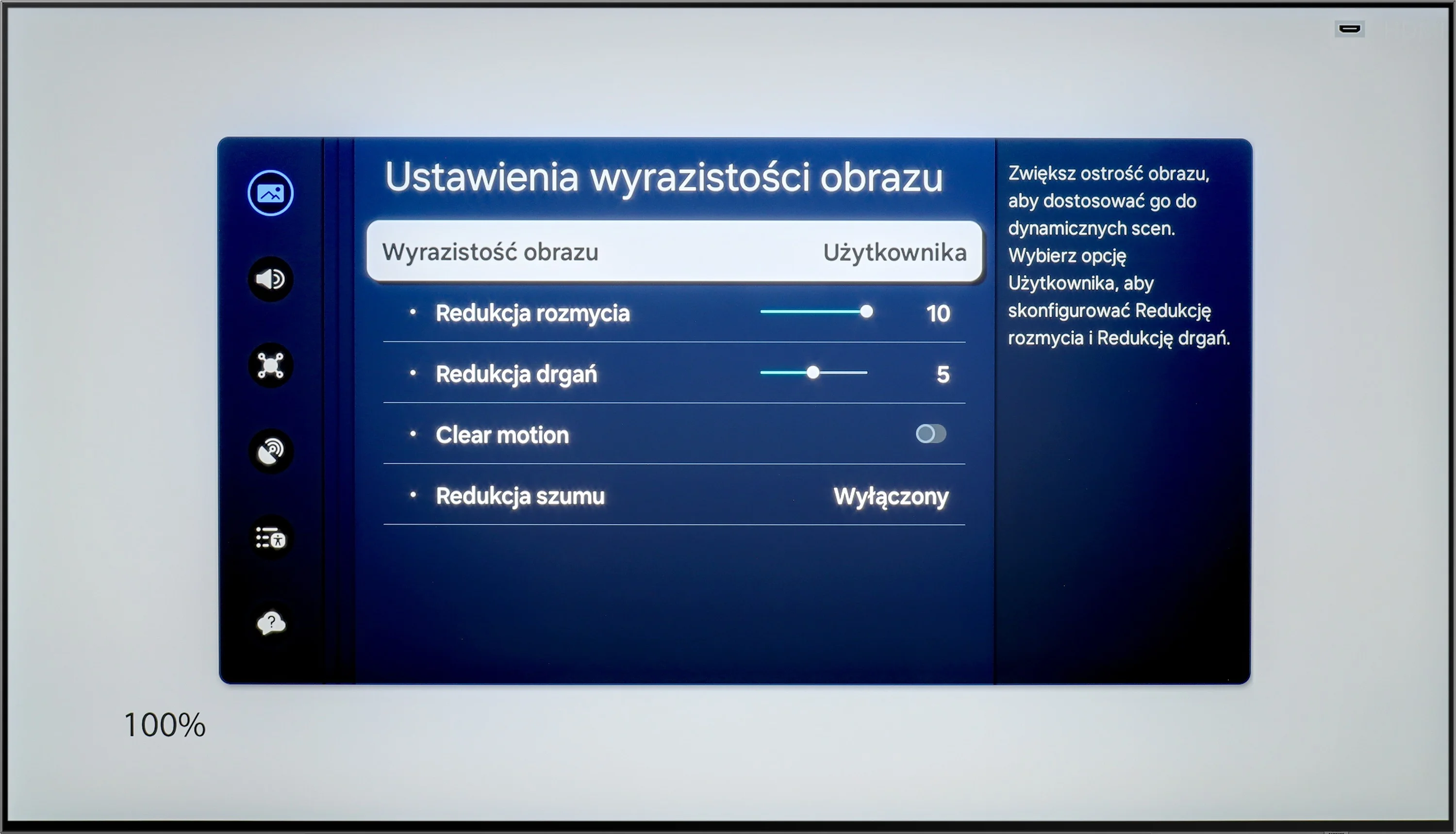
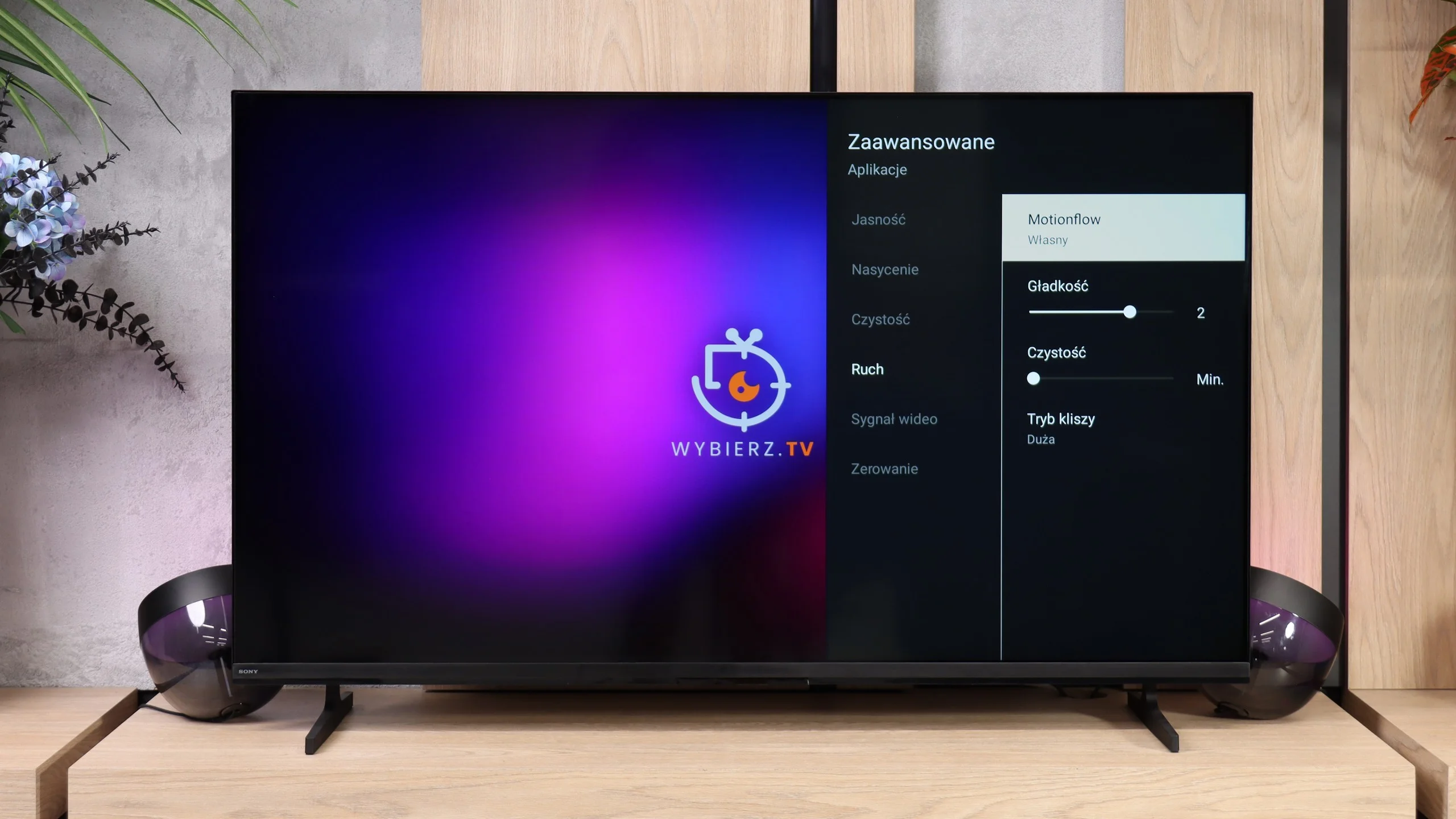
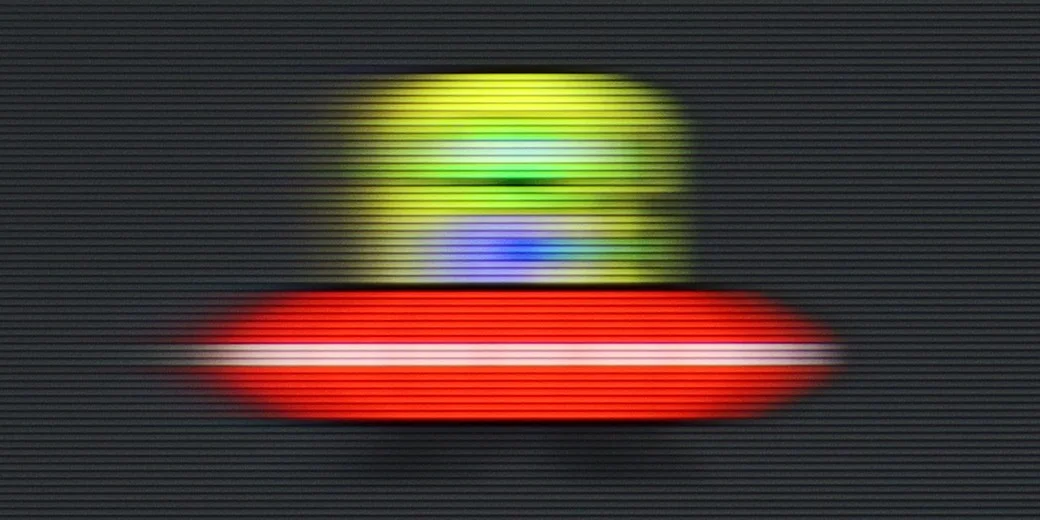
Blur (native resolution, maximum refresh rate):





Blur (BFI function enabled):
Image flickers in this mode
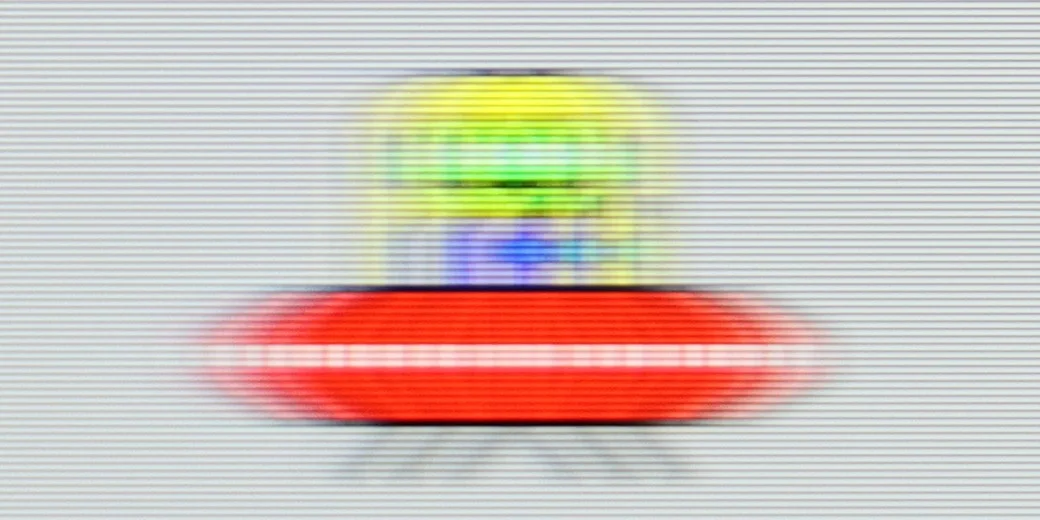

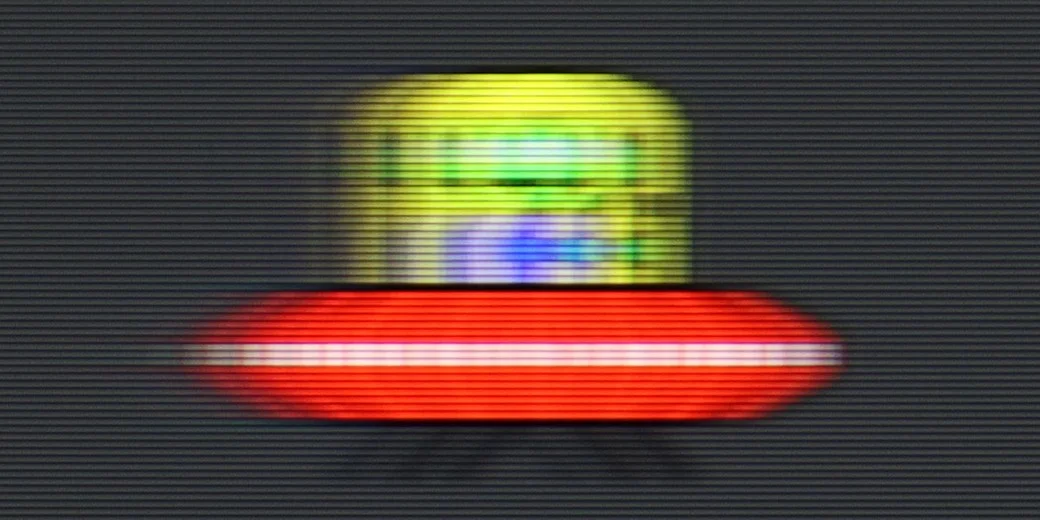
The S90D television is equipped with a 120 Hz panel, with the ability to "overclock" to 144 Hz with the right PC configuration, providing exceptional motion smoothness. Samsung has been offering a variety of image clarity settings on a ten-point scale for years, allowing users to customise the display to their preferences. In the UFO test, thanks to the use of an OLED panel, there's no question of any ghosting. The response time of the pixels is instantaneous and perfectly captures dynamic movements. In this aspect, OLED technology is considered one of the best on the market. The picture is extremely sharp and detailed, even during fast action, making the S90D OLED 48 Samsung television the perfect choice for gamers and sports enthusiasts.
Bravia 2 II uses a 60 Hz panel and, for what it is, handles motion quite well. However, bear in mind it’s an entry-level panel and its limitations are especially noticeable with sports. The TV can’t interpolate 50/60 fps material to a higher refresh rate, so it can’t further improve the sharpness of fast-moving objects. For films and series there’s a conventional motion-smoothing feature that can reduce the judder typical of 24 fps material.
Console compatibility and gaming features
9.5/10
3.3/10
- ALLM
- VRR
- VRR range48 - 144Hz
- Dolby Vision Game Mode
- Correct implementation of HGIG
- 1080p@120Hz
- 1440p@120Hz
- 4K@120Hz
- Game bar
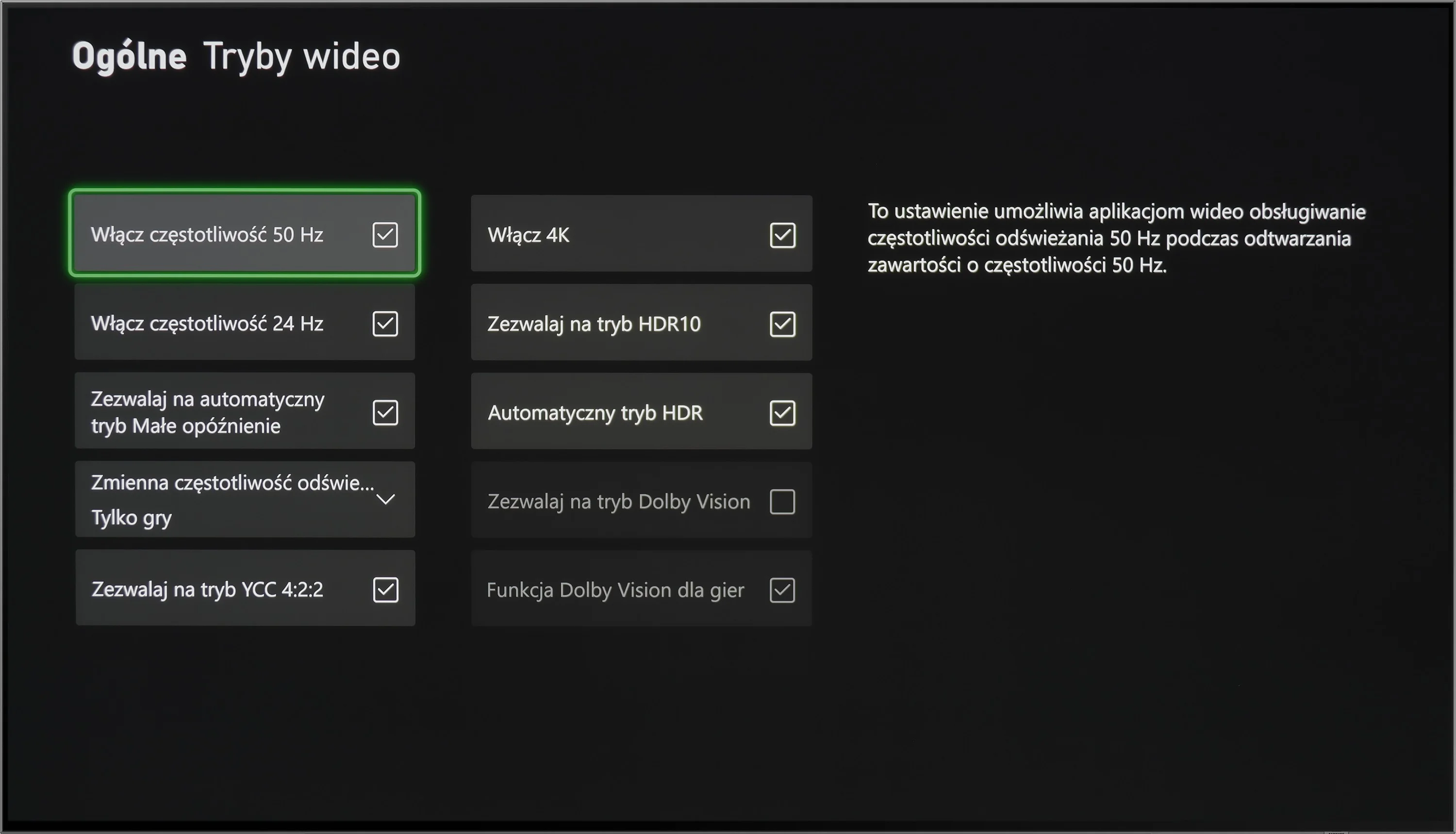
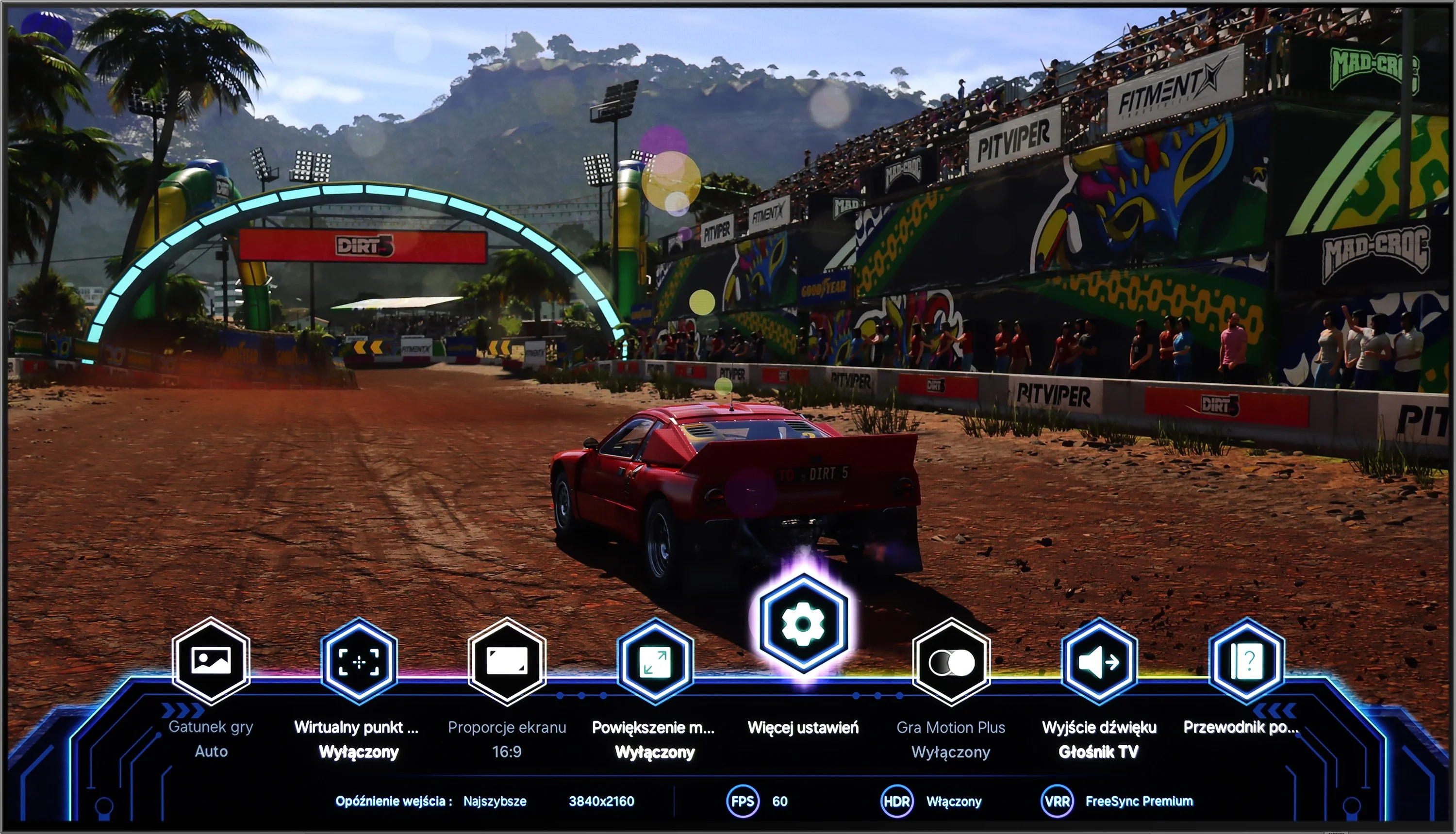
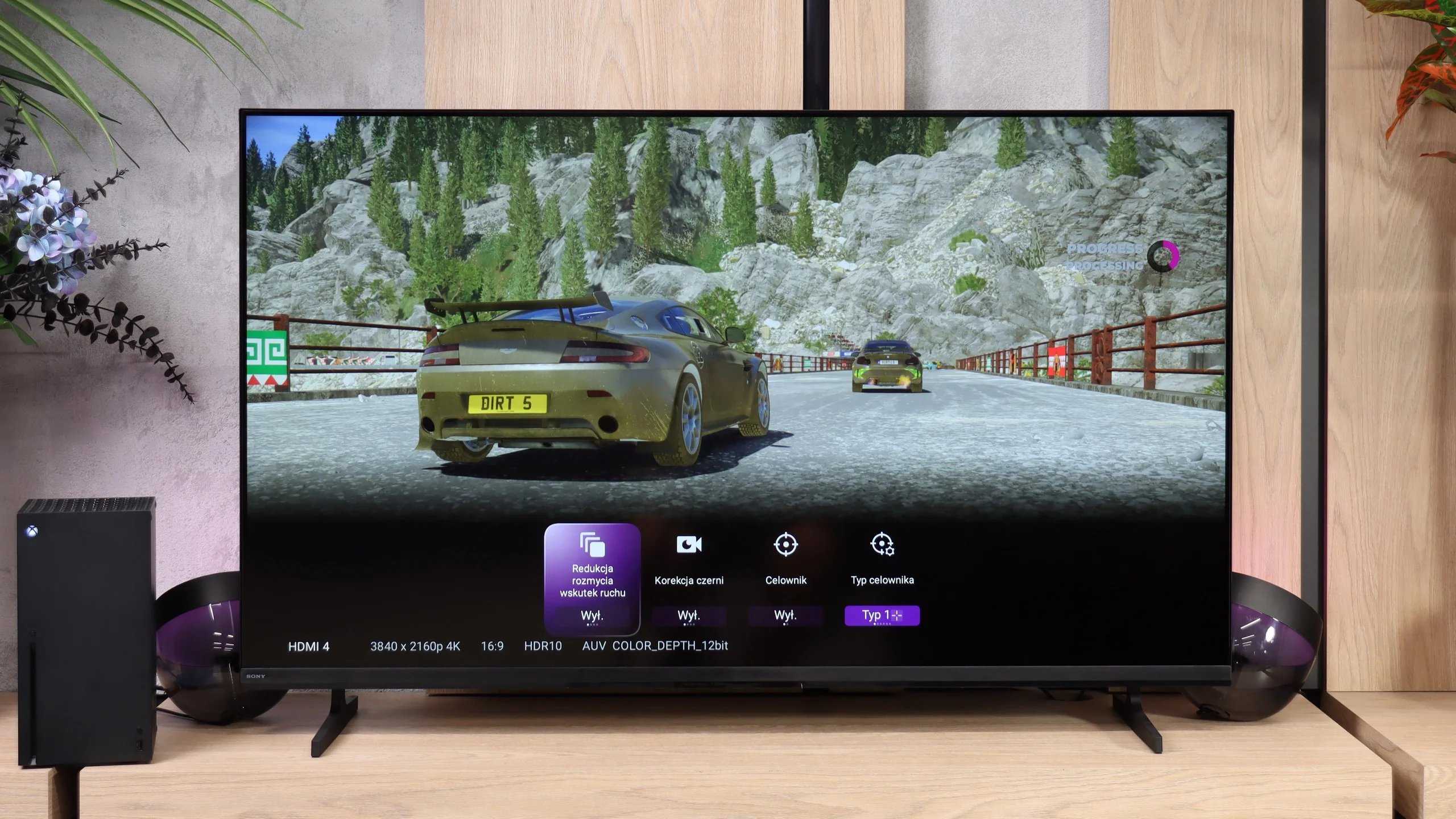
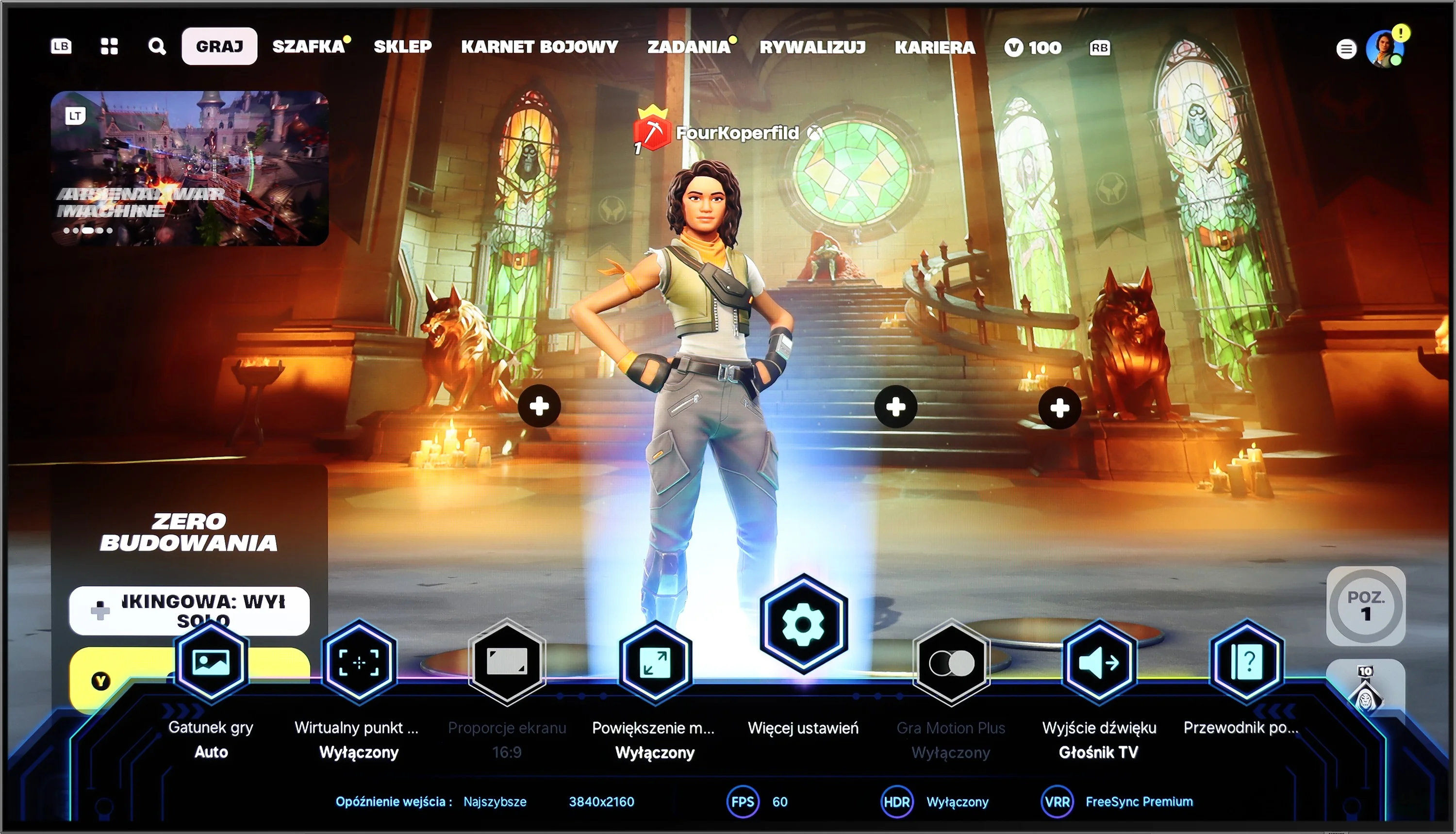
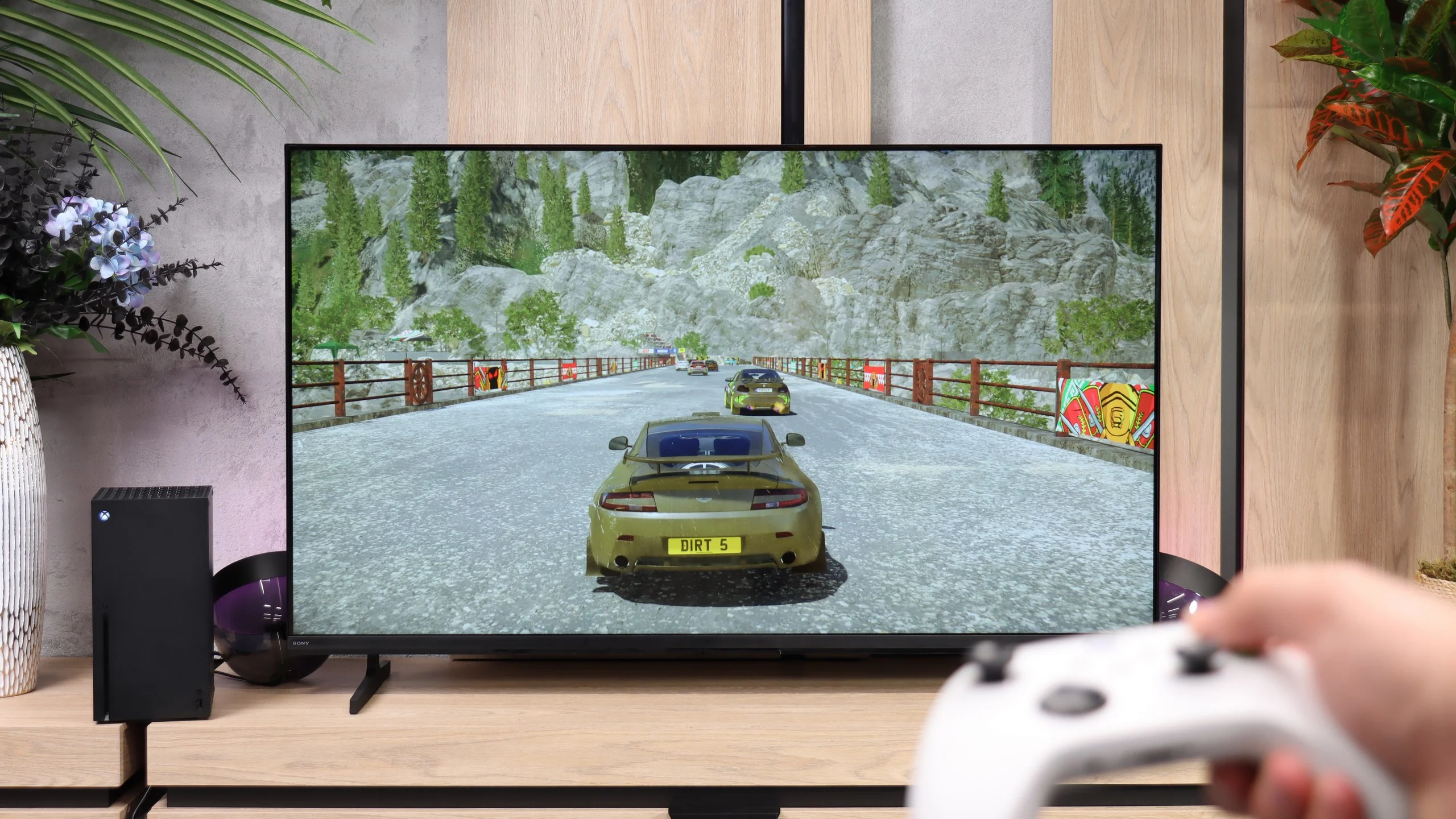
The Samsung OLED 48 S90D television is well-suited to the needs of gamers, offering four HDMI 2.1 ports that support features such as Auto Low Latency Mode (ALLM), Variable Refresh Rate (VRR), and HGIG (HDR Gaming Interest Group). With these technologies, gamers can enjoy smoother gameplay and faster on-screen response, significantly enhancing comfort during long gaming sessions. Additionally, the Game Bar feature allows for easy adjustment of settings, such as aspect ratios, which can be particularly useful in different types of games. For PC users, the television offers an impressive refresh rate of 144Hz, and Nvidia and AMD graphics cards support G-Sync and FreeSync, further improving image smoothness. Although the lack of Dolby Vision support may be a drawback, it's worth noting that in gaming, this technology is not as widely used as in films. Nevertheless, the S90D still offers excellent features for gamers, making it a great choice for those seeking high-quality visuals and advanced gaming technologies.
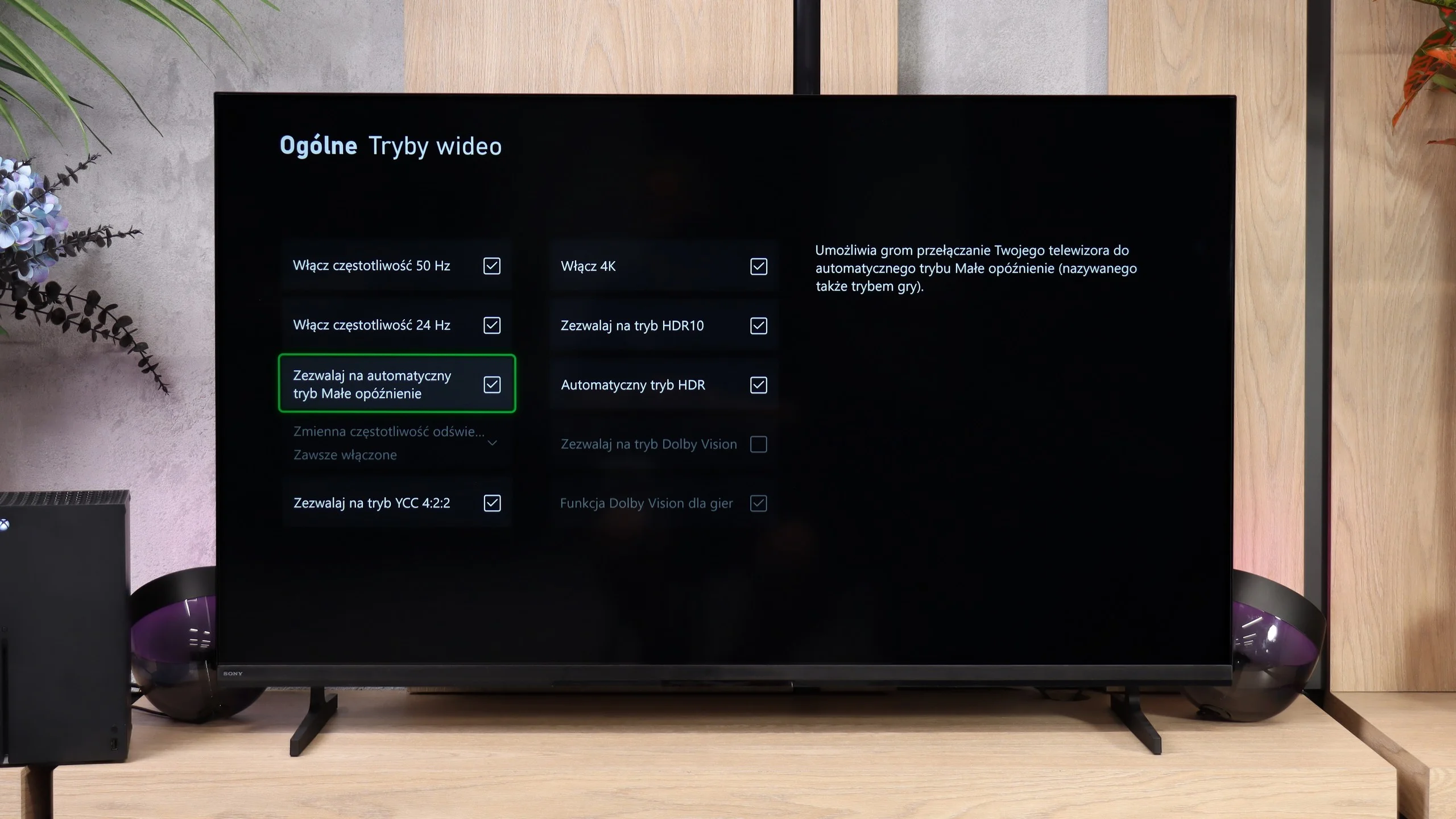
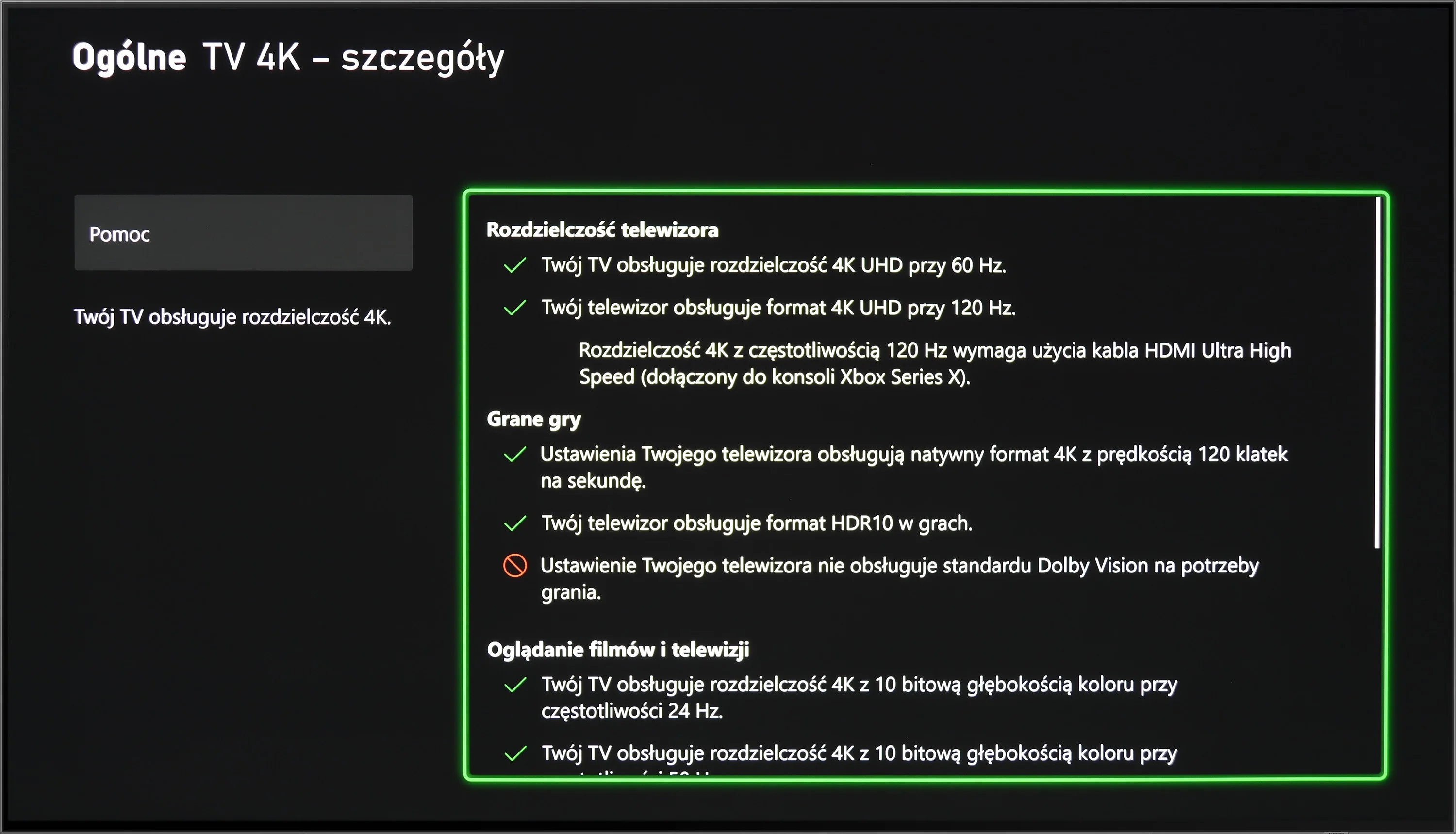
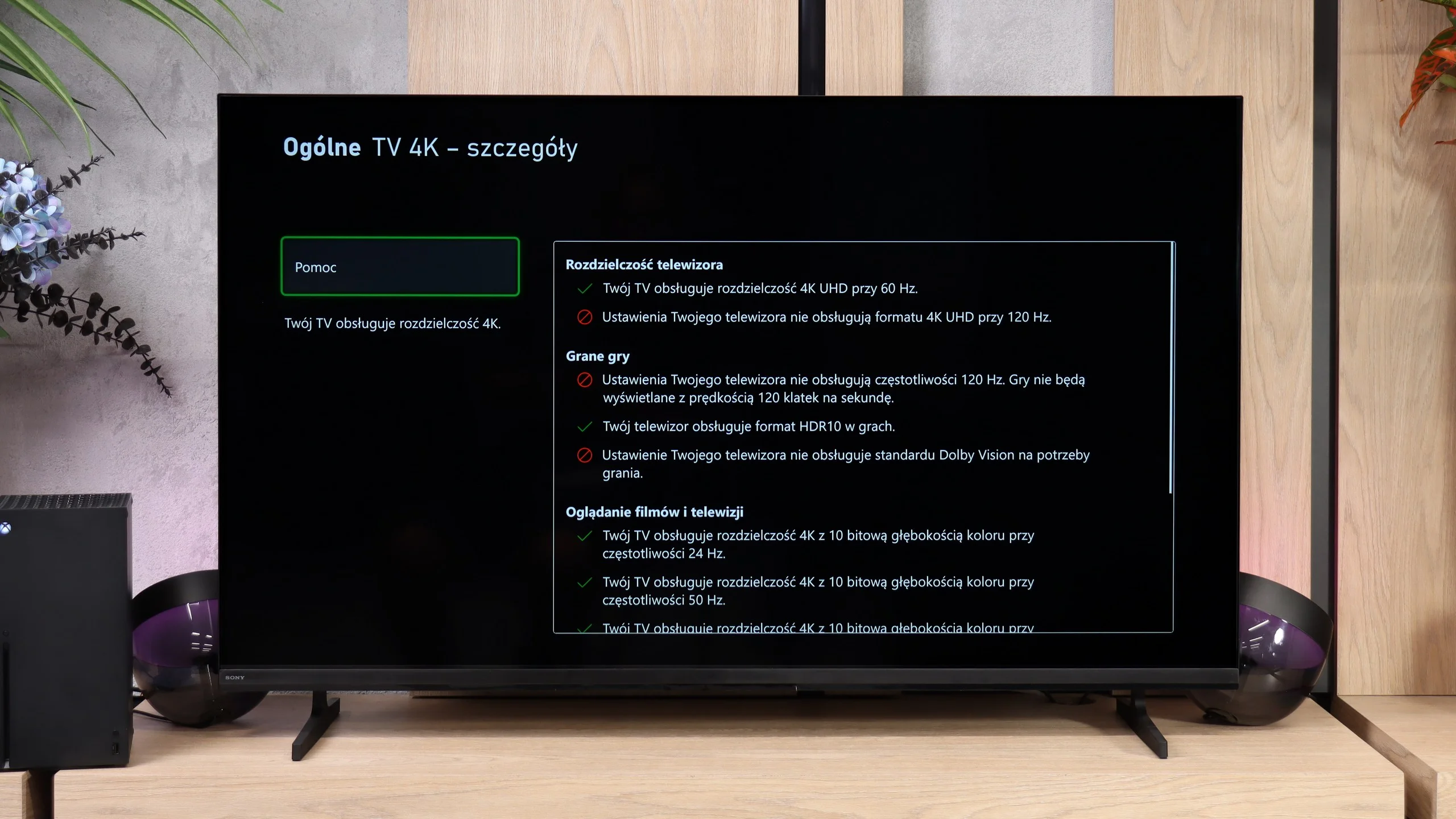
The Bravia 2 II isn’t a TV that’s particularly suited to gaming, and the feature list makes that clear pretty quickly. You basically only get automatic low-latency ALLM and a simple Game Bar where you can view basic signal info and change a few settings. That’s where the positives end. The TV doesn’t support VRR or 120 Hz (not even at lower resolutions) and on top of that it has problems correctly implementing HDR HGIG. It’s fine for occasional console play and, thanks to low input lag, the controls remain responsive, but if you’re after a TV primarily for gaming the Bravia 2 II is a significantly limited choice.
Input lag
10/10
10/10
SDR
HDR
Dolby Vision
Samsung's OLED features an almost reference-level low input lag, regardless of resolution and refresh rate, in both SDR and HDR modes. Results around 10 ms are truly impressive and significantly enhance the gaming experience. Such a low input lag ensures immediate response to on-screen actions, which is crucial in fast-paced games where every millisecond counts. This allows users to enjoy smoothness and precision, making the S90D TV an excellent choice for those who prioritise gaming performance.
Here the Bravia 2 II performs considerably better. The input lag is only about 11 ms, low enough that you’ll hardly notice any delay while gaming. So even with a modest set of gaming features, the TV will handle regular console gaming without any major issues.
Compatibility with PC
8.6/10
6/10
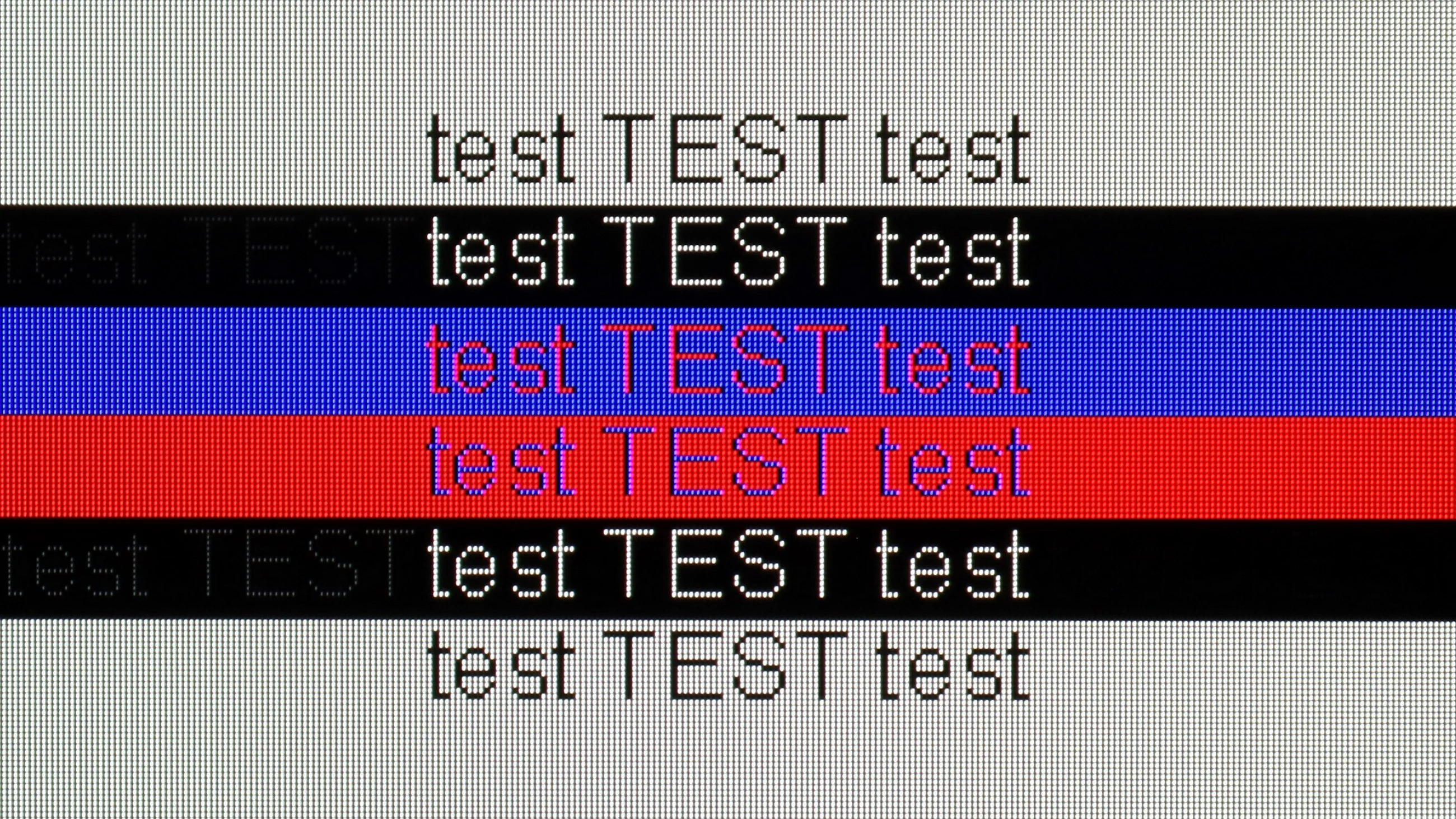
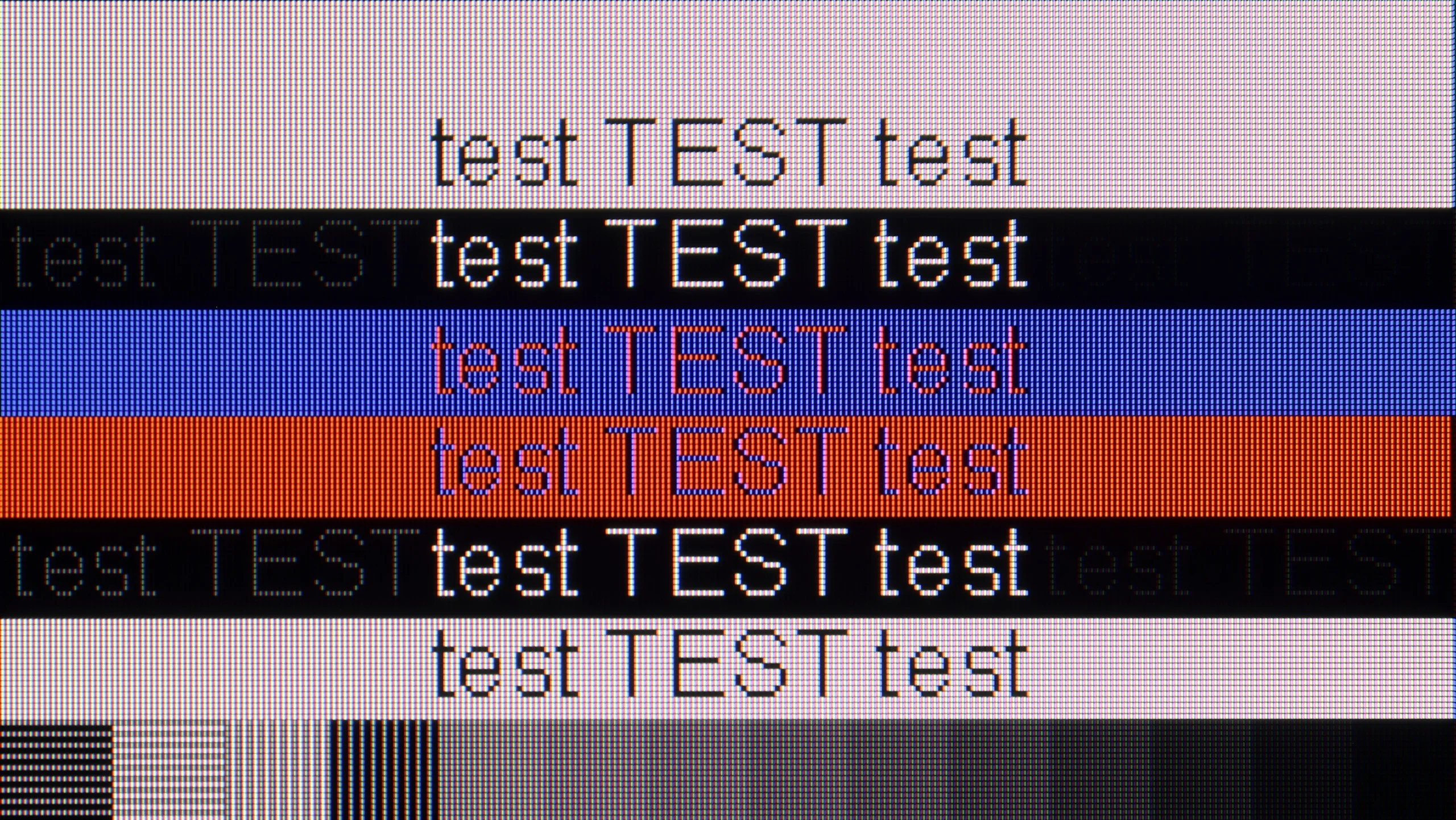
The photo shows the legibility of small fonts. Ideally, lines should be the same thickness on both light and dark text, with minimal pixel gaps.
The Samsung OLED 48 S90D TV works perfectly with a PC. Fonts are clearly visible, making it easier to read text and use applications. Additionally, it supports chroma 4:4:4 at 4K resolution and a refresh rate of 144 Hz, ensuring full colour reproduction and image sharpness. It's worth noting that the input lag of just 5 ms is extremely advantageous, particularly for gamers and professionals working with graphics. With such low latencies, using the TV as a monitor becomes a pleasure, allowing for comfortable and responsive work. The S90D TV is an excellent choice for users seeking performance and quality in everyday computer use.
Bravia 2 II handles a computer very well, at least if you think of it as a screen for work. Thanks to its IPS panel and accurate 4:4:4 chroma reproduction, fonts are sharp and readable regardless of their size, shape or colour. That’s particularly good news for people considering the smaller variant and placing it on a desk instead of a classic monitor. It looks much worse, however, from a gaming perspective. The TV doesn’t offer 120 Hz, VRR or other features that would interest more demanding PC gamers. So it’s very good for office work or watching content from a computer, but as a gaming screen it has quite a few limitations.
Viewing angles
7.2/10
6.5/10
The viewing angles on the S90D television, thanks to OLED technology, are unmatched. OLED offers excellent colour and contrast reproduction, even at wide viewing angles, making the picture remain sharp and vibrant from almost any perspective. Users can enjoy a consistent visual experience, regardless of where they are watching the screen.
Viewing angles are one of the Bravia 2 II's stronger points. Thanks to the IPS panel, colours and brightness remain accurate for quite a while even when we’re not sitting directly in front of the TV. In this area Sony regains some of the points it lost earlier on black levels and contrast. As a result, the Bravia 2 II may be better suited to a larger living room or a room where some people watch the TV from the side, especially if it will mainly be used for everyday TV.
Daytime performance
5.4/10
4.8/10
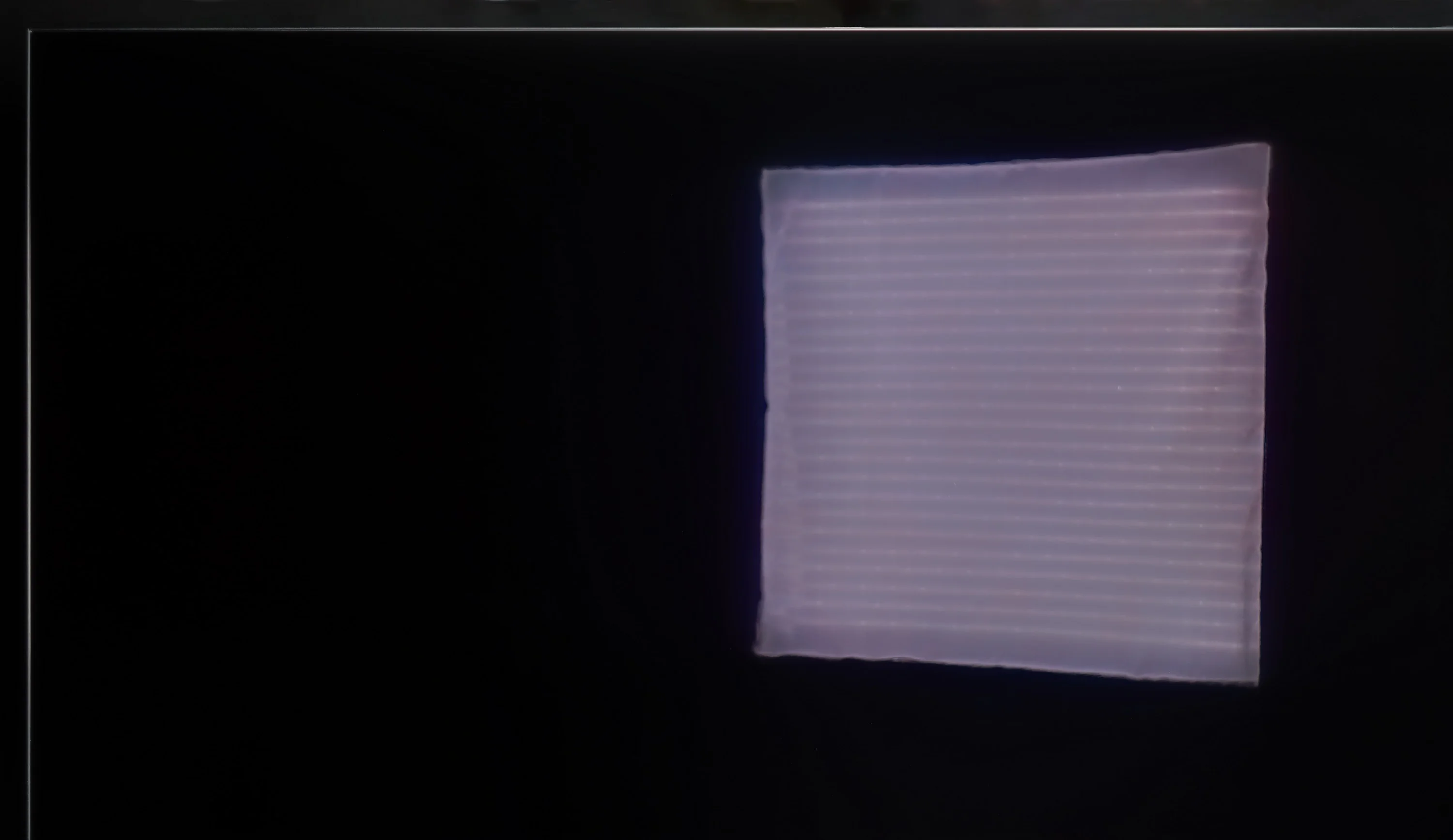
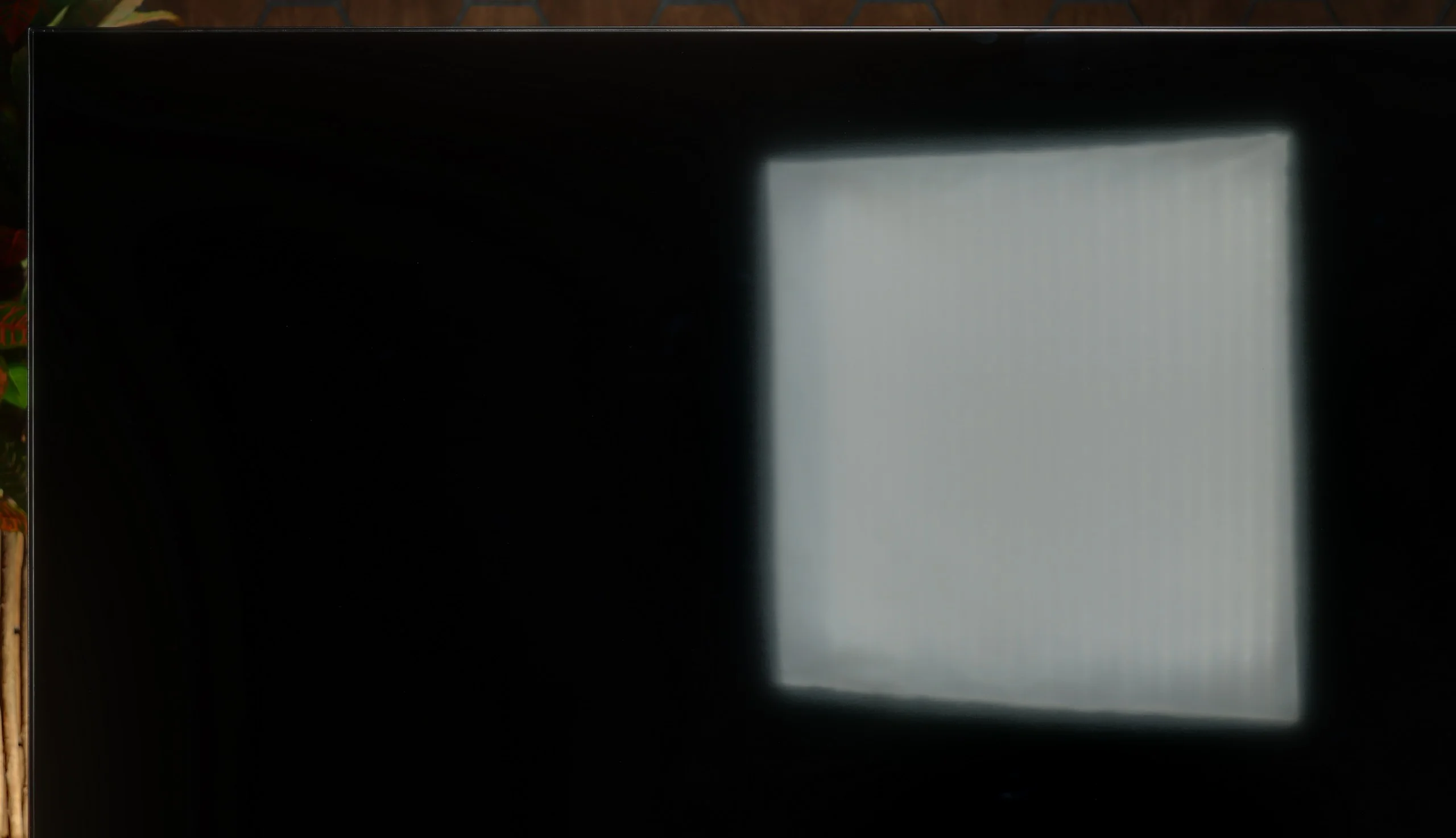
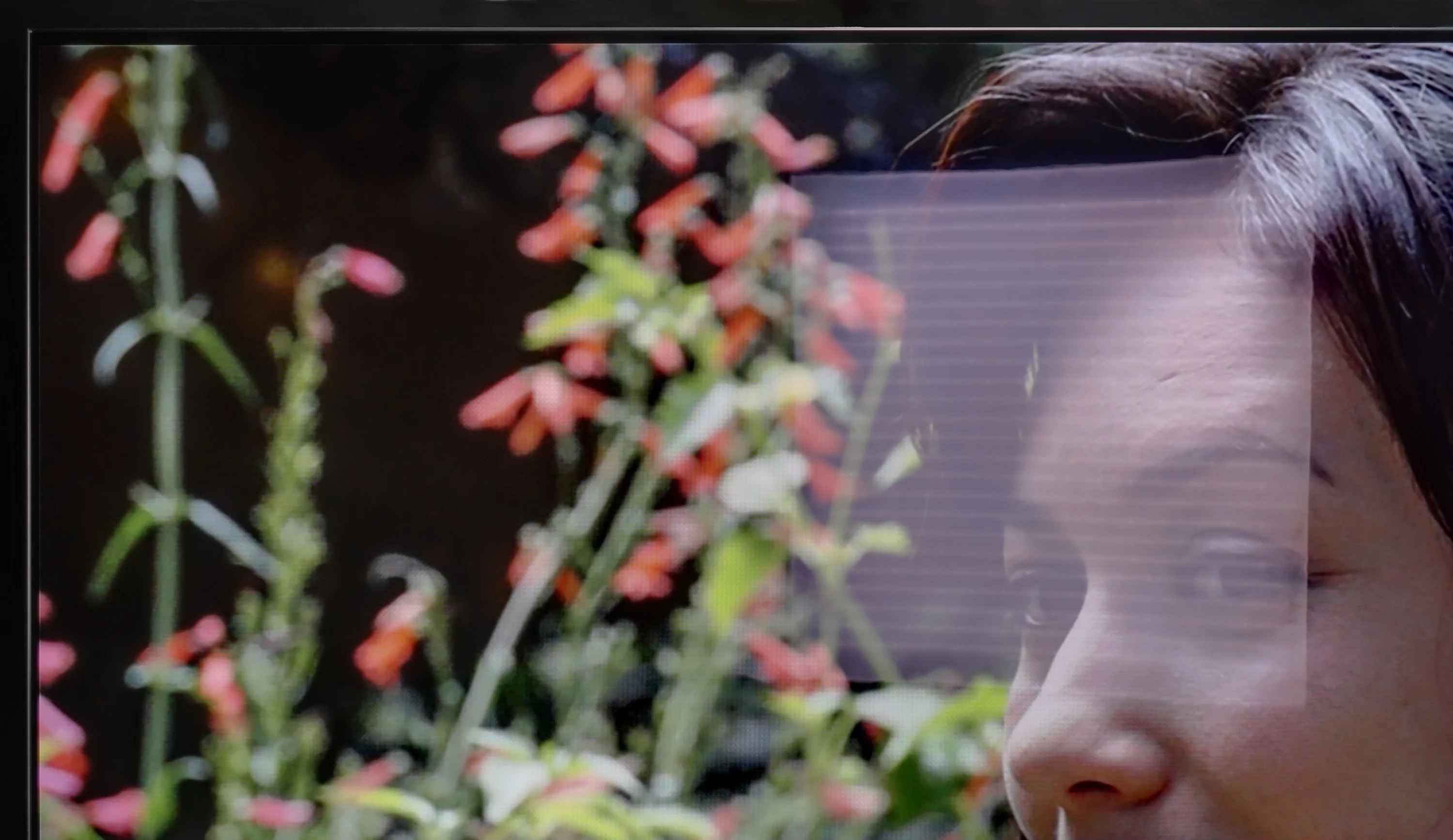
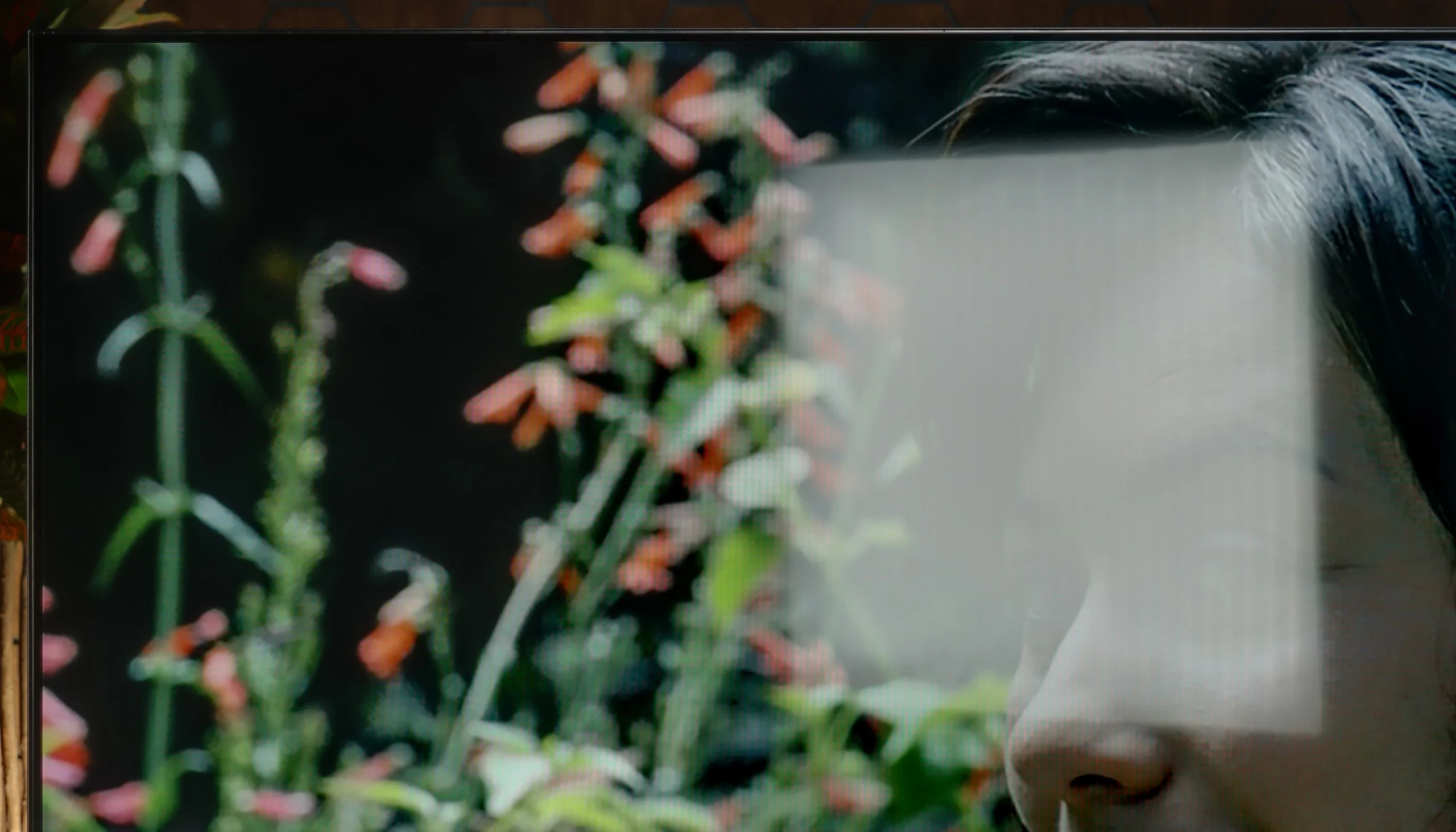
Panel brightness
Sony BRAVIA 2 II (S25M2): 319 cd/m2
Samsung S90D / S94D 48" (WRGB OLED): 320 cd/m2
While watching during the day, the Samsung OLED 48 S90D performs very well, achieving an average brightness of around 320 nits, which is a decent result for OLED technology in a 48-inch size. Thanks to the satin panel, reflection suppression is at a reasonable level, allowing for comfortable viewing even in bright rooms. The only noticeable downside of this technology, and not the television itself, is the brightness at 100% white screen fill. In such conditions, OLED may struggle to achieve extremely high brightness. Situations like this can be observed when we want to watch winter sports, e.g., ski jumping.
In daylight the Bravia 2 II performs rather average. Brightness of around 320 nits doesn’t leave much headroom, but in a typical, moderately bright living room it’s still enough to keep the picture readable. The screen’s matte coating does a decent job of reducing reflections, though it can’t eliminate them entirely. With strong light falling directly on the screen, there’s simply not enough brightness to effectively cut through the glare. So it will be fine for ordinary daytime viewing, but in a very bright room with lots of windows you may start to notice the limitations of this model.
Panel details
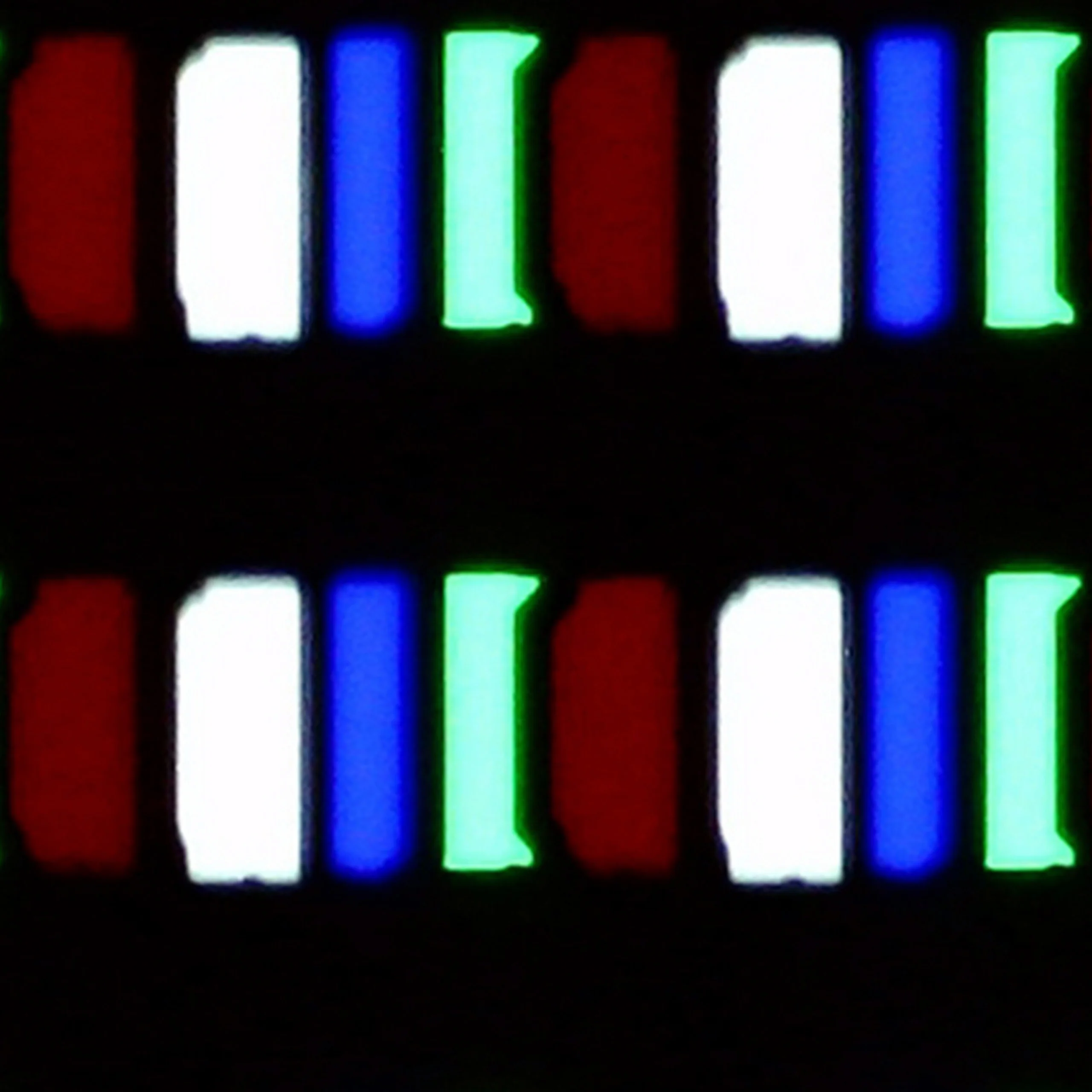
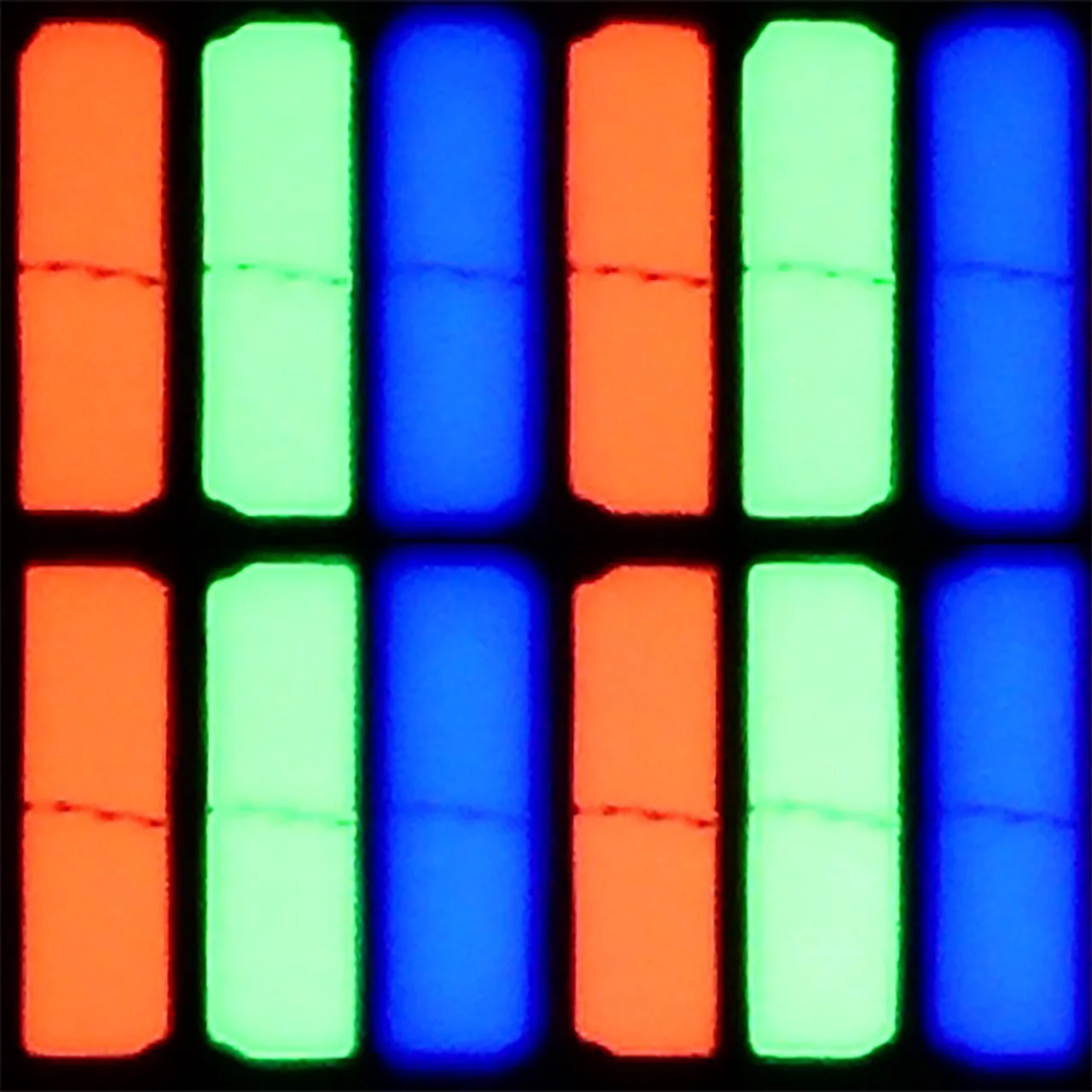
Subpixel Structure:
Panel uniformity and thermal imaging:


Samsung S90D / S94D 48" (WRGB OLED)
Sony BRAVIA 2 II (S25M2)
TV features
7.4/10
6.6/10
- SystemTizenGoogle TV
- System performanceVery goodDecent
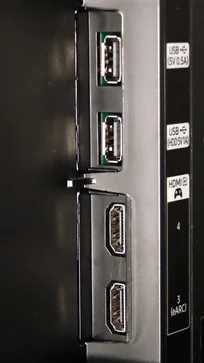
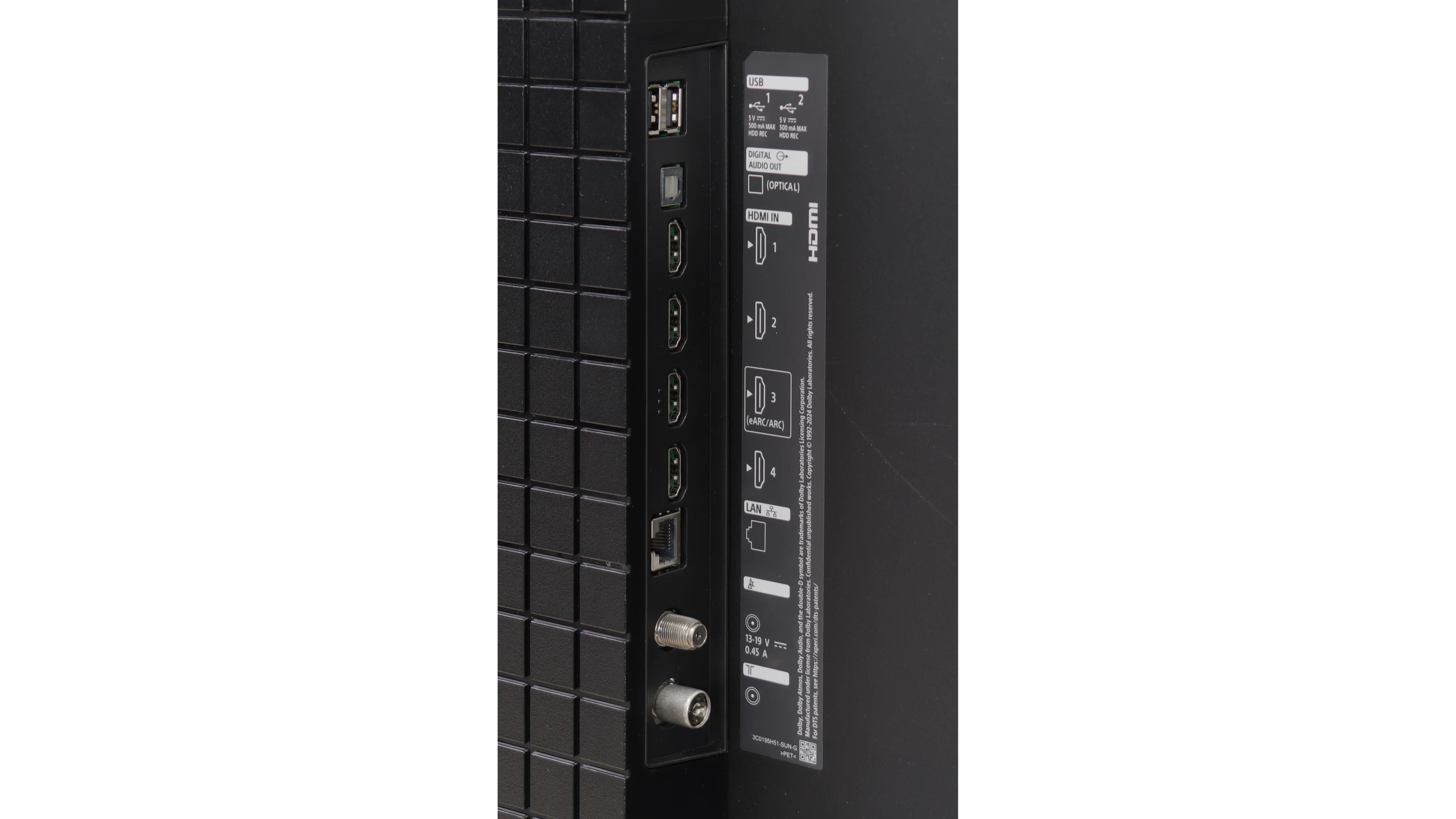
- HDMI inputs0 x HDMI 2.0, 4 x HDMI 2.1 48Gbps4 x HDMI 2.0, 0 x HDMI 2.1
- OutputsToslink (Optical audio), eARC (HDMI), ARC (HDMI)Toslink (Optical audio), eARC (HDMI), ARC (HDMI)
- Network InterfacesWi-Fi 2.4GHz, Wi-Fi 5GHz, Ethernet (LAN) 100MbpsWi-Fi 2.4GHz, Wi-Fi 5GHz, Ethernet (LAN) 100Mbps
- TV receptionDVB-T, DVB-T2, DVB-S, DVB-S2, DVB-CDVB-T, DVB-T2, DVB-S, DVB-S2, DVB-C
Classic features:
- Recording to USB (terrestrial TV)
- Recording programming
- Picture in Picture (PiP)
- RF remote control (no need to aim)
- Backlit remote control
- Teletext
- Audio only mode
- Bluetooth headphones support
- Simultaneous Bluetooth headphones & TV audio
Smart features:
- AirPlay
- Screen mirroring (Windows Miracast)
- Voice search
- Voice search in native language
- Ability to connect a keyboard and mouse
Sound connection options
- HDMI audioeARC (HDMI), ARC (HDMI)eARC (HDMI), ARC (HDMI)
- Other audio outputsToslink (Optical audio)Toslink (Optical audio)
- Wireless audioBluetoothBluetooth
Supported audio formats (external HDMI eARC audio):
- Dolby Digital Plus 7.1
- Dolby True HD 7.1
- Dolby Atmos in Dolby Digital Plus (JOC)
- Dolby Atmos in Dolby True HD
- DTS:X in DTS-HD MA
- DTS-HD Master Audio
Senior accessibility
- Numeric keyboard on TV
- Font size adjustment
- Audio description
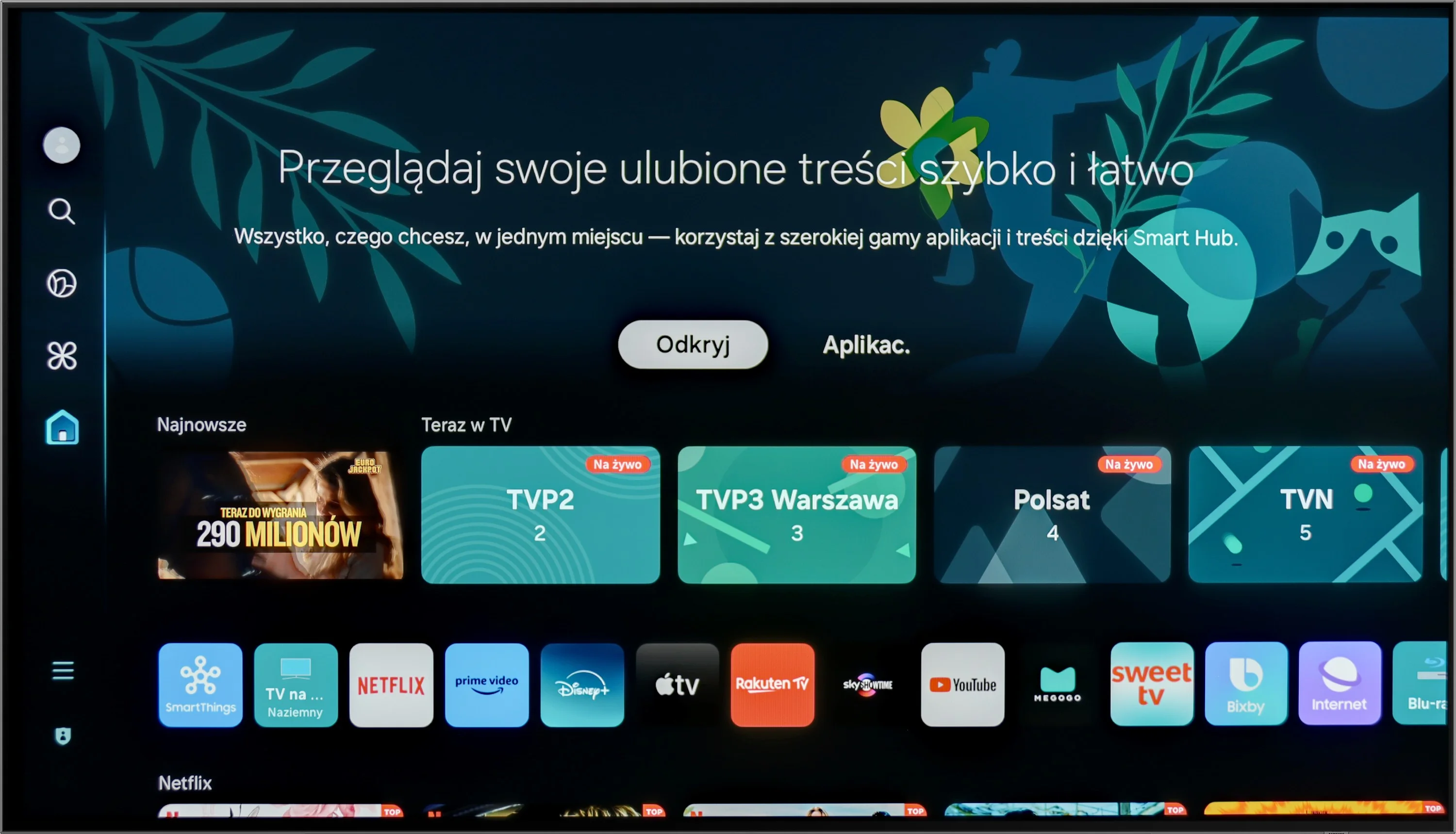
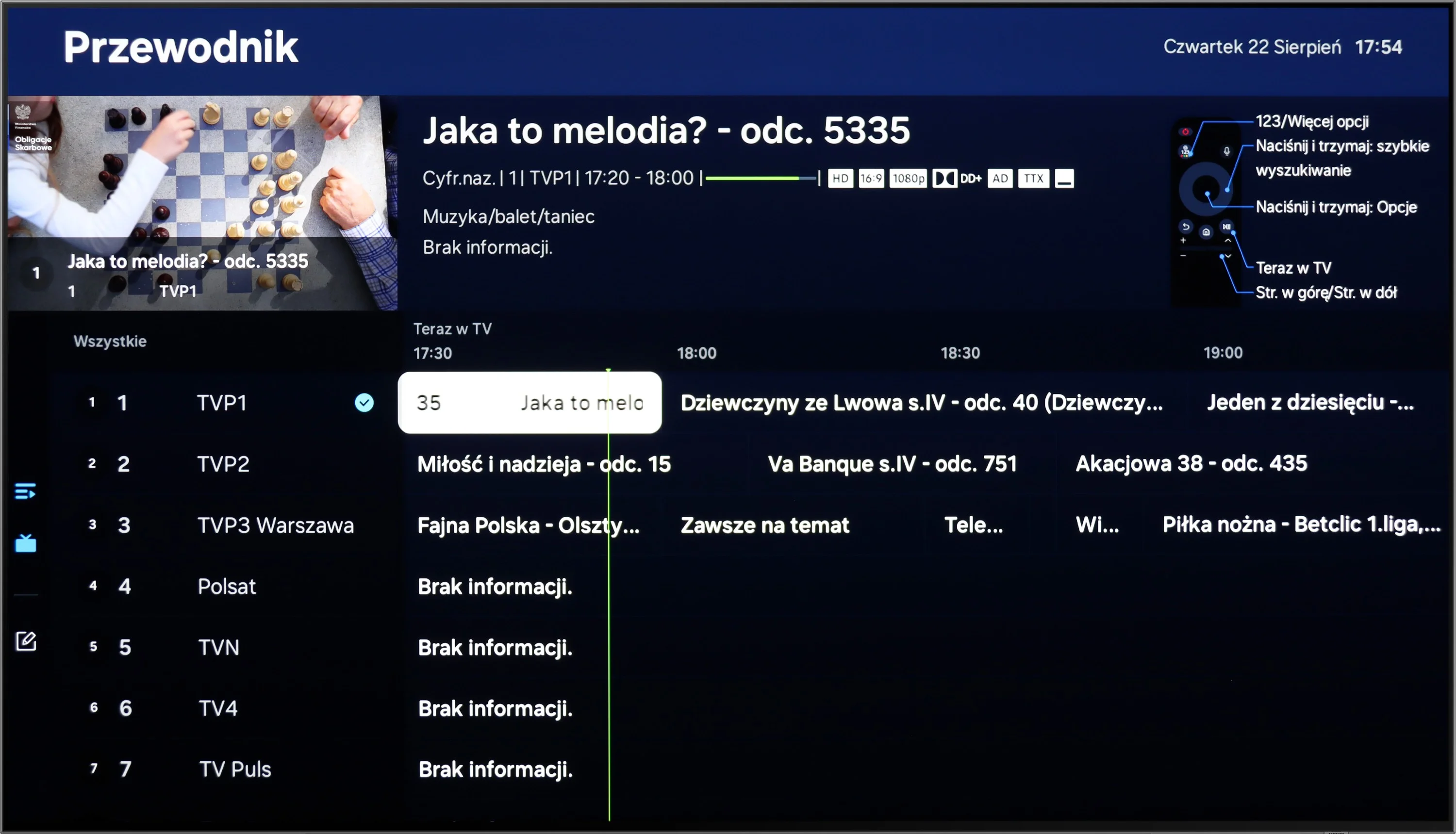
The Samsung OLED 48 S90D television offers a range of features that significantly enhance user comfort and make it the ideal device for entertainment in the comfort of your home. The Tizen system, which this model is based on, is a modern and advanced platform that provides users with an intuitive and smooth experience. Thanks to its user-friendly interface, navigation through apps and settings is quick and intuitive, making it easier for even those less familiar with technology to use the television. Tizen supports a rich set of applications, including all popular streaming services such as Netflix, YouTube, and Amazon Prime Video. A new feature for 2024 is also the availability of voice search in Polish. It's also worth noting the eco-friendly solar remote, which is not only environmentally friendly but also practical for everyday use. For example, the remote can control multiple devices connected to the television, so we don’t have to use multiple remotes. Additionally, the television supports AirPlay, enabling easy content streaming from Apple devices like the iPhone or iPad. The S90D OLED 48 also allows for the connection of various Bluetooth devices, such as mice, keyboards, or headphones, which increases its versatility and allows for personalised user experiences. As a result, users can easily adjust their settings to make the most of the television's capabilities. The only downside that can be pointed out is the lack of USB recording support. For some users, this may pose a limitation, especially in the case of wanting to archive their favourite shows or movies. Despite this, the S90D television offers many advanced features and technologies that make it an excellent choice for anyone looking for high-quality entertainment in their home.
Google TV
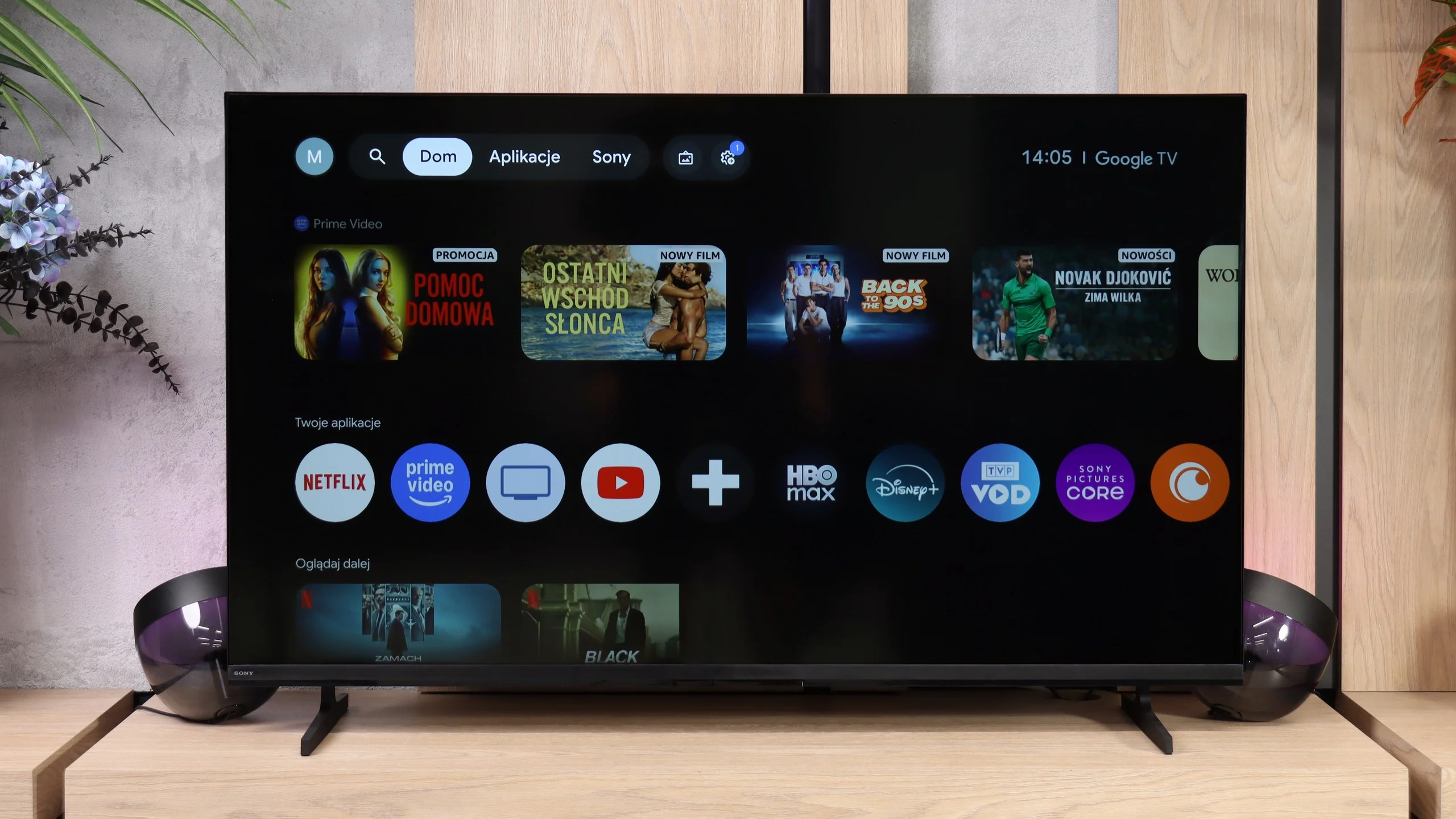
Bravia 2 II runs Google TV, which is definitely one of this model's stronger points. First and foremost, you get a huge range of apps, so accessing popular streaming services is no problem. It also has Chromecast and AirPlay, making it easy to cast content from your phone or other devices. Voice search with Google Assistant/Gemini works very well, including in Polish. The system itself isn't the fastest version of Google TV we've used, and you sometimes have to wait a moment for a response, but overall it performs decently. In terms of features it's hard to complain — especially for one of Sony's more affordable TVs.
Funkcje telewizyjne
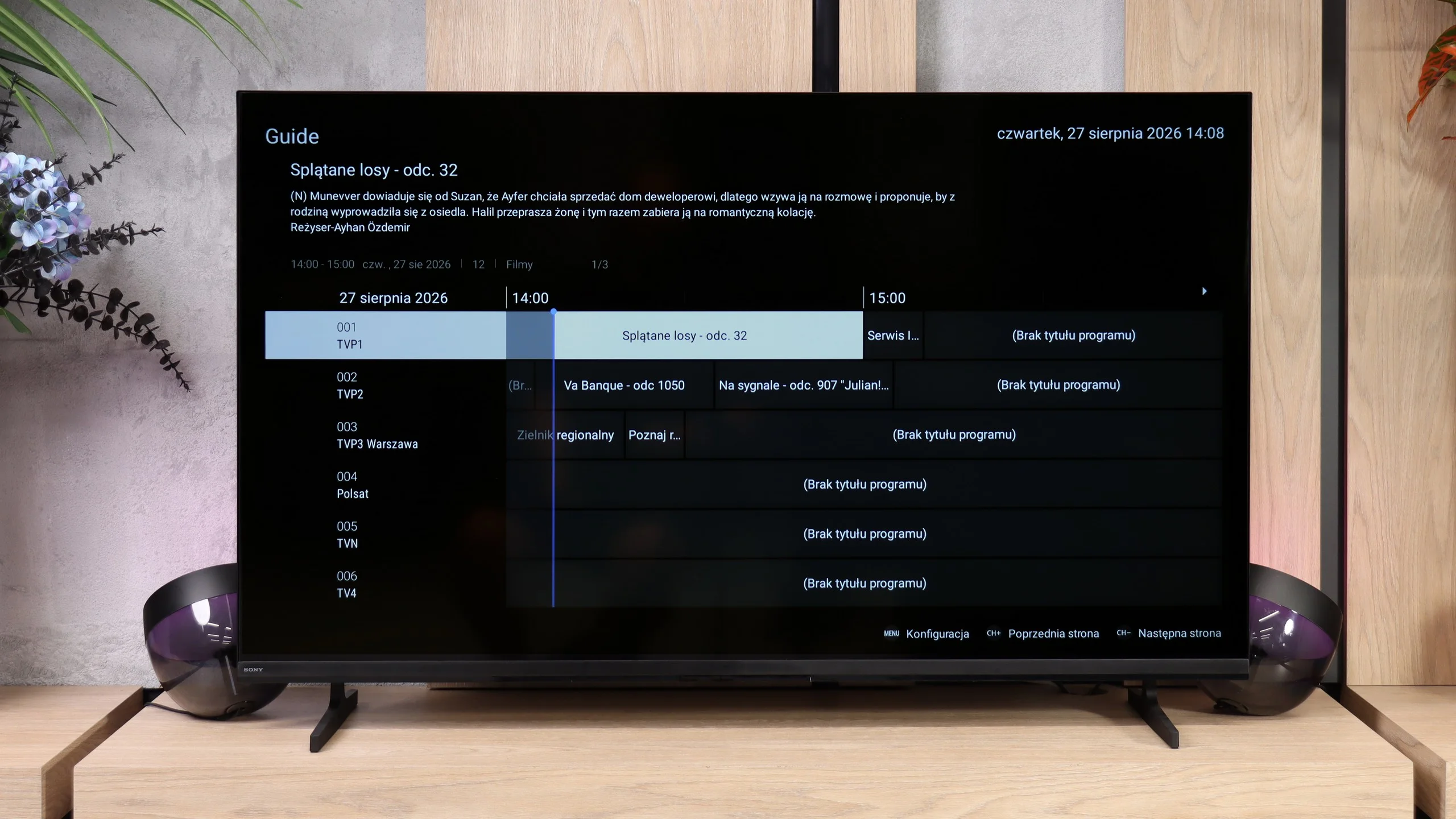
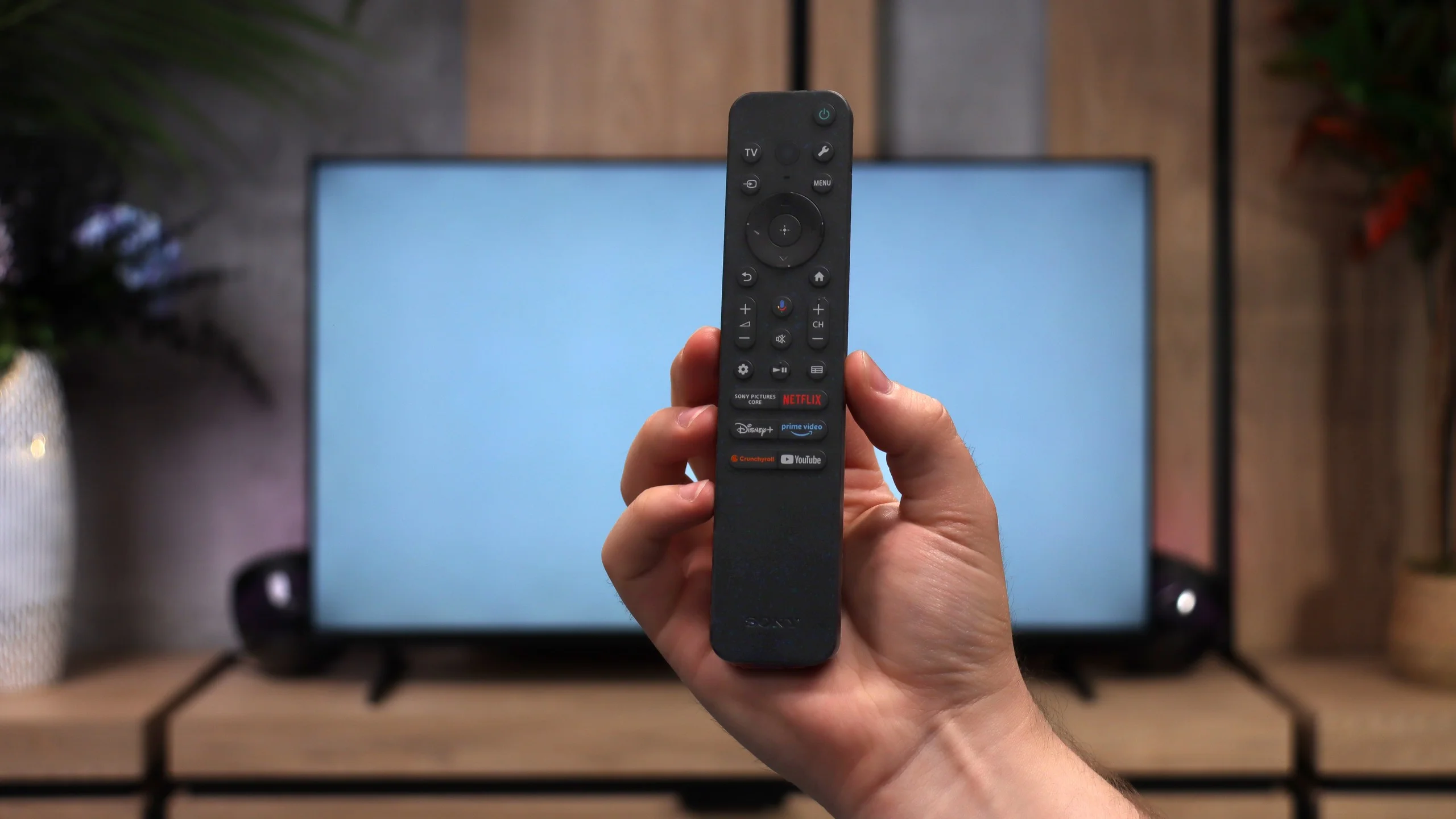
When it comes to traditional TV features, the Bravia 2 II is rather modest. For example, there's no recording to USB or other more advanced extras, so in that respect it's fairly basic. A plus is the inclusion of two remotes. One is modern and simpler, mainly for using the Smart TV, while the other is a classic remote with more buttons, which may be more convenient for people who often watch regular TV. The smaller one works via radio, so you don't have to point it directly at the screen, which is simply more convenient in everyday use.
Apps
9.3/10
9.6/10






















Playing files from USB
9.1/10
9.4/10
Supported photo formats:
Maximum photo resolution:
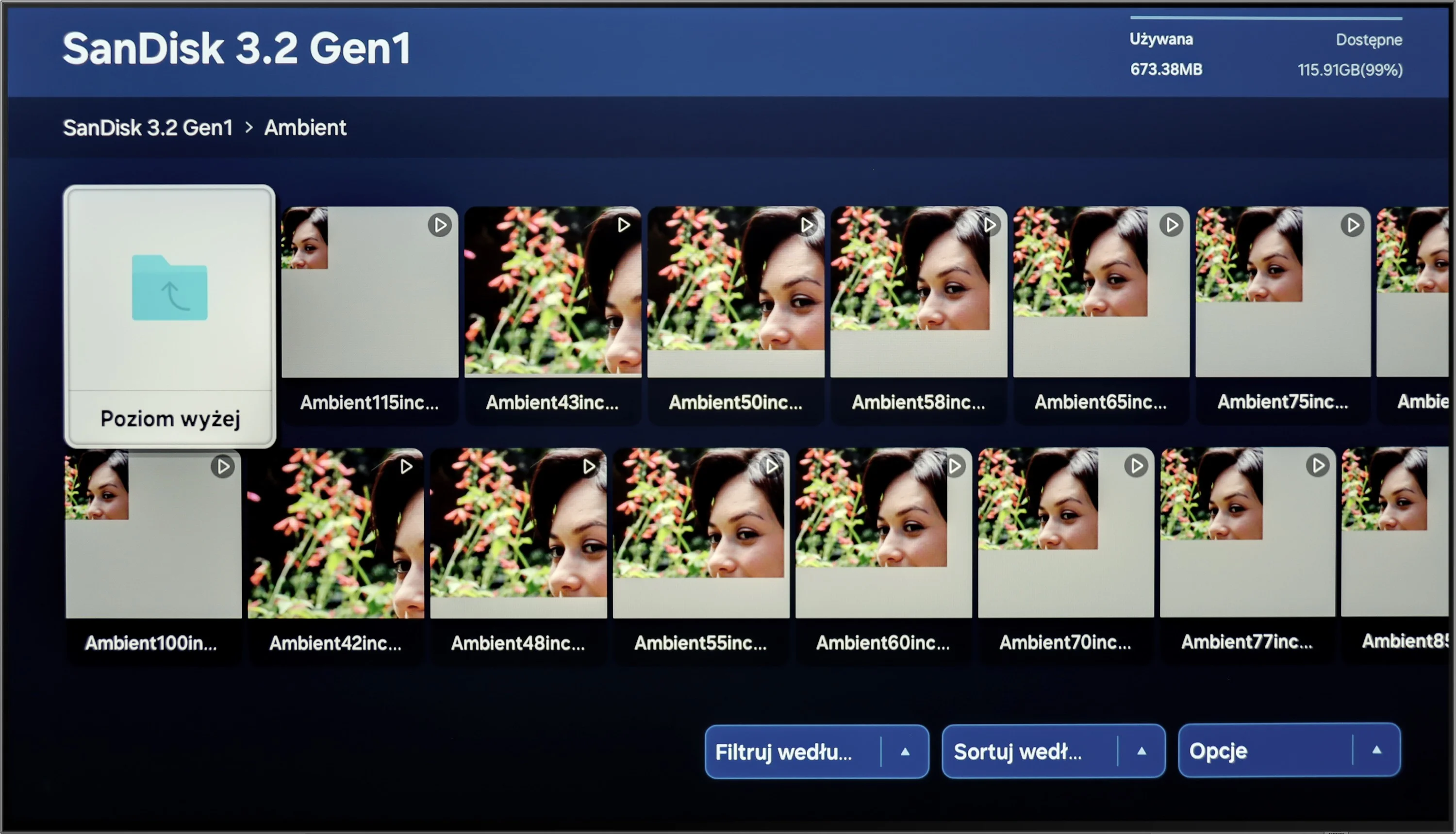
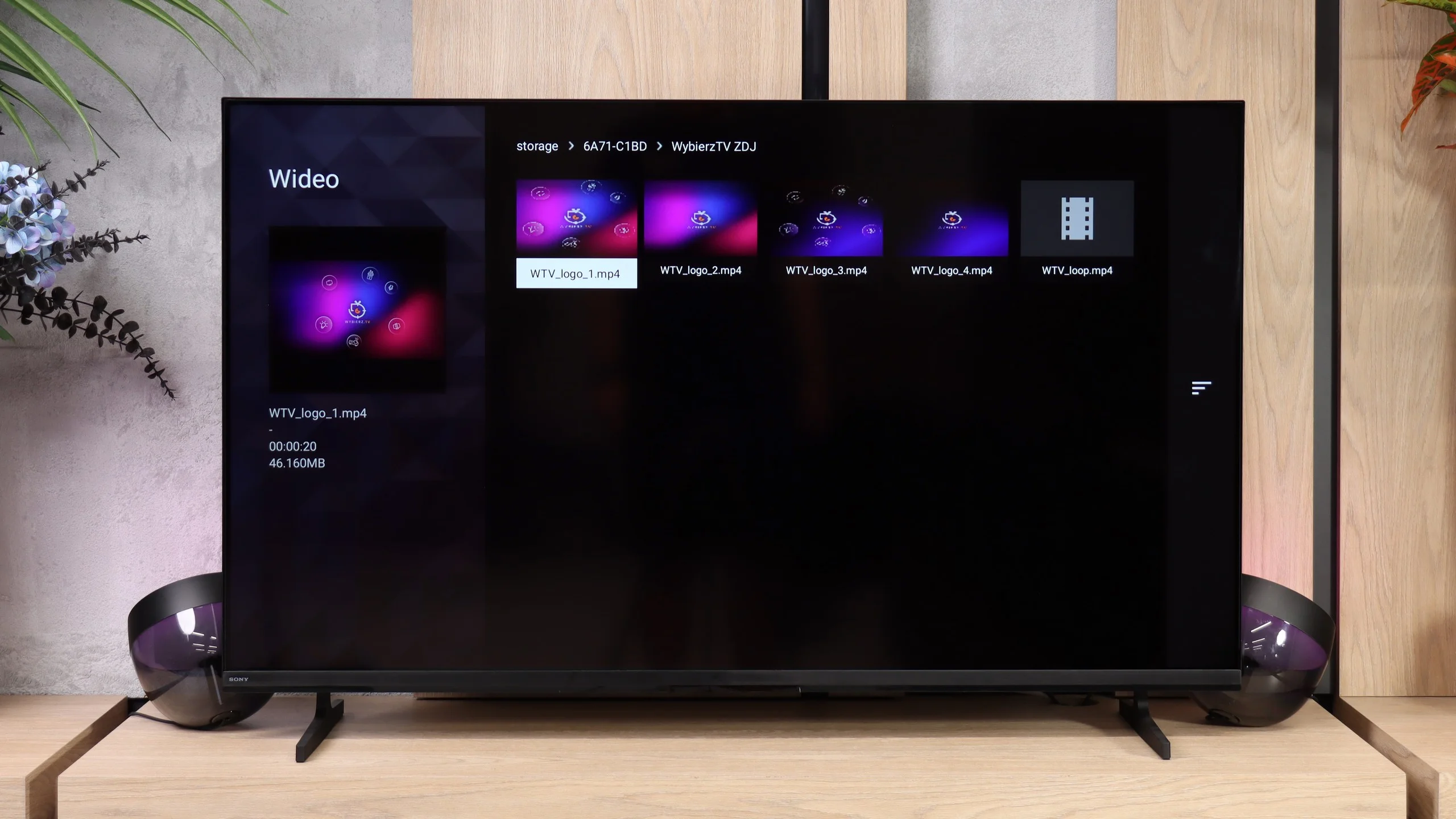
The Samsung S90D comes equipped with a built-in player that supports most popular video formats, allowing for convenient playback of films from various sources. The player also supports subtitles in Polish and enables users to customise the font colour, enhancing comfort while watching content with subtitles. In terms of photo formats, the television handles many of them, however, one of the few downsides is the lack of ability to play the popular PNG format. Nonetheless, the overall file playback capabilities of the S90D are outstanding.
The built-in file player performs very well. The Bravia 2 II opens almost everything you throw at it, from common video files and subtitles to photos and music. Importantly, it also handles more demanding 4K material encoded in HEVC or AV1. Of course, there are a few isolated formats the TV doesn’t support, such as VVC or some less common audio and image files. These are things few people will try to play directly on the TV.
Sound
6.8/10
6.1/10
- Maximum volume-92dB
- Dolby Digital Plus 7.1
- Dolby True HD 7.1
- Dolby Atmos in Dolby Digital Plus (JOC)
- Dolby Atmos in Dolby True HD
- DTS:X in DTS-HD MA
- DTS-HD Master Audio
The Samsung OLED 48 S90D TV delivers good sound quality, with clear and balanced audio. The sound is crisp, and the bass is well-defined, enhancing the viewing experience. Even at maximum volume, the sound remains clear, although the TV itself isn't very loud.
Sound in the Bravia 2 II is simply adequate for an entry-level TV. It’s more than enough for watching regular TV, like the news, but as with this type of design it mainly lacks bass. You notice it quite quickly with music and even more in action films, where explosions and other heavy effects lack real weight. Sony does deserve praise for its audio format support. When you connect a soundbar or a home theatre system, the TV will pass the key formats over eARC with no trouble, including Dolby Atmos, Dolby TrueHD, DTS-HD Master Audio and DTS:X. It’s especially welcome to see DTS included, which can’t always be taken for granted on rival TVs, even the pricier models.
Sound Quality Test
No sound test video
Acoustic Measurements
No acoustic data
92dBC (Max)
75dBC
Reader comments
Comments are provided by the external service Disqus (Zeta Global). Once loaded, Disqus may set cookies and process data about your activity.
We will remember your choice on this device. Provider's privacy policy