 Direct comparison
The Samsung S85F with a QD-OLED panel is capable of surprising – and in a very positive way. Even before the tests, we did not think that in the case of TVs often referred to in the context of "panel lotteries", one could come across something that would benefit the user. Yet, in this case, particularly with the 55-inch version, it has fully succeeded. The QD-OLED panel, as expected from organic technology, offers near-perfect blacks and contrast in cinematic conditions. However, the difference lies in the way the colours are rendered – here it is simply exceptional. The colour gamut coverage is impressive, and after a slight calibration, the colours become almost exemplary. Motion fluidity is also at a very high level. The 120 Hz panel handles both sports and action films excellently. And if someone plans to connect a console to the S85F, they will receive a full set of advantages: low input lag, variable refresh rate, Game Bar, and full HDMI 2.1 support. In everyday use, we were supported by the Tizen system – closed, but extremely polished. It responds quickly, offers a rich selection of apps, and features like AirPlay and voice control make it hard to find anything more complete in this category. True, the S85F is not without its flaws. However, the balance of pros and cons is exceptionally favourable here. One could even get the impression that it is one of the best TVs in its price segment.
- Matching (Score) |
- Our verdict |
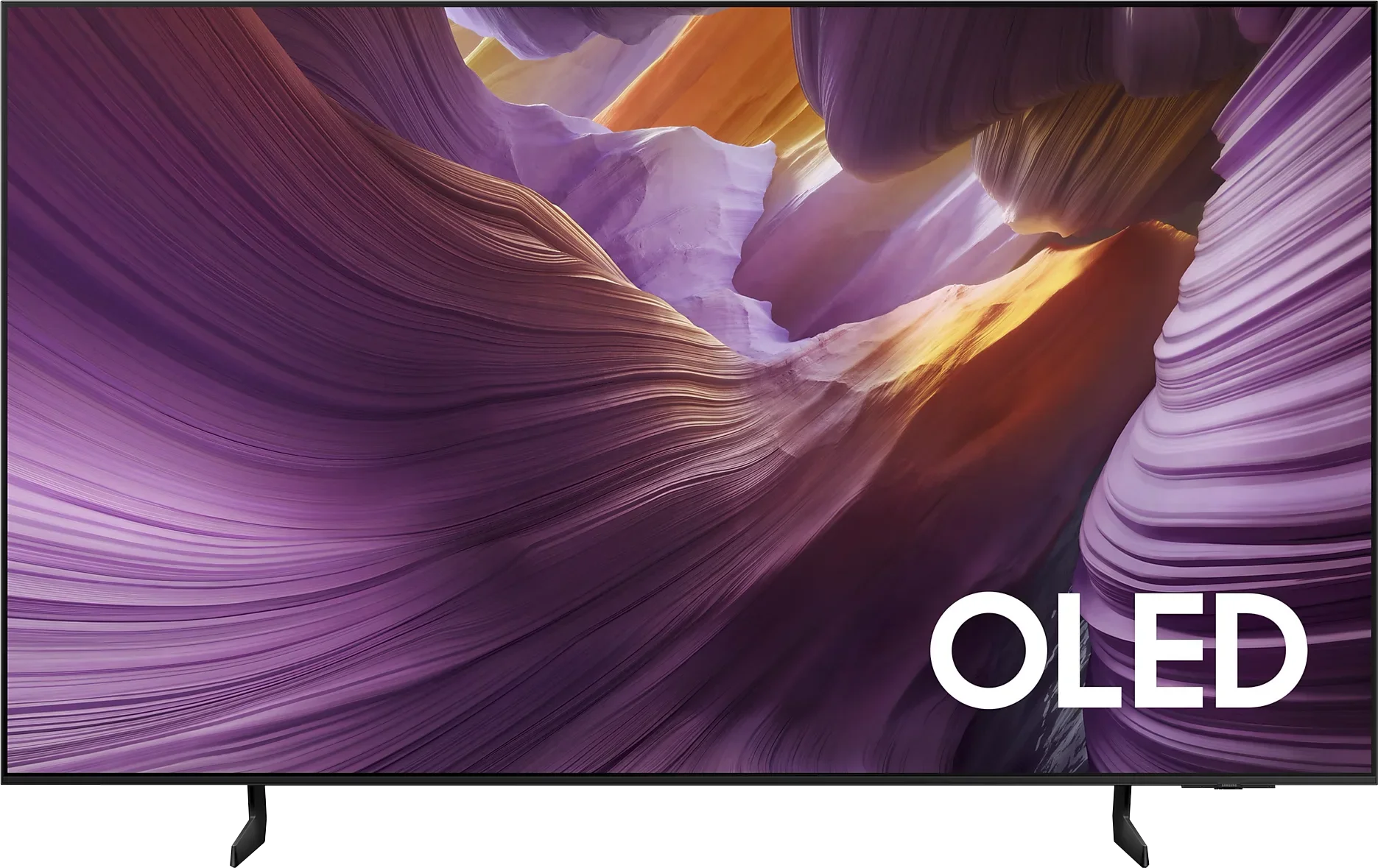
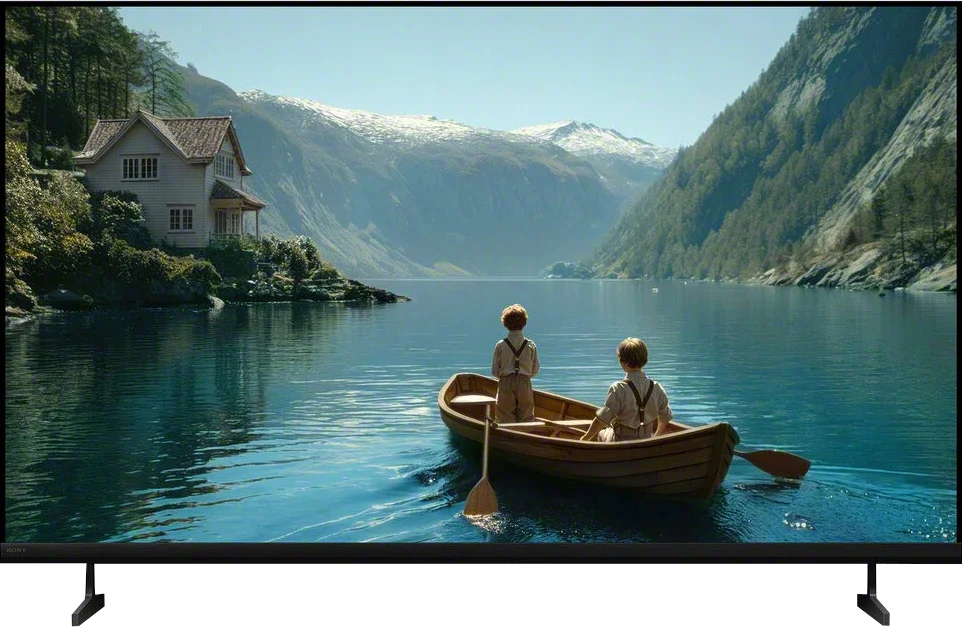
- TV appearance |
- Where to buy |
- Contrast and black detail |
- HDR effect quality |
- Factory color reproduction |
- Color reproduction after calibration |
- Smoothness of tonal transitions |
- Image scaling and smoothness of tonal transitions |
- Blur and motion smoothness |
- Console compatibility and gaming features |
- Input lag |
- Compatibility with PC |
- Viewing angles |
- Daytime performance |
- Panel details |
- TV features |
- Apps |
- Playing files from USB |
- Sound
S85F / FAE / FAU

BRAVIA 3 II / XR35M2
Available screen sizes: 55”
Panel type: QD-OLED
Resolution: 3840x2160
System: Tizen
Model year: 2025
Complete the survey to find out the result
Panel type: LCD VA
Resolution: 3840x2160
System: Google TV
Model year: 2026
Complete the survey to find out the result
Overall rating
8.1
7.0
 Movies and series in UHD quality
8.4
6.5
 Classic TV, YouTube
9.2
6.3
 Sports broadcasts (TV and apps)
8.9
6.7
 Gaming on console
9.6
8.1
 TV as a computer monitor
7.6
7.2
 Watching in bright light
5.1
5.8
 Utility functions
7.3
7.9
 Apps
9.3
9.6
 Sound quality
7.2
6.8
Complete the survey to find out what fits your preferences
Advantages

Outstanding black levels and contrast
Amazing colour palette coverage thanks to the QD-OLED panel
Great picture quality in SDR and HDR content
High colour accuracy after calibration
Very good motion smoothness – 120 Hz OLED panel
Rich set of features for gamers: VRR, Game Bar, low input lag
4 HDMI 2.1 ports with full 48 Gbps bandwidth
Advanced and smoothly operating Tizen system
Solar Remote with multiple capabilities
Very good motion clarity and exceptionally low motion blur for a 120Hz LCD TV
Finally, 4 × HDMI 2.1 48 Gb/s!
Lots of gaming features: VRR, ALLM, low input lag
Wide colour gamut: QLED (PFS)
Dolby Vision support
Google TV with a wide range of apps and features
Broad audio format support: Dolby Atmos and DTS
Record programmes to USB
Two remotes included
Disadvantages

No USB recording function and PiP
No Dolby Vision
Slight cherry black under very strong external light (not visible when watching in cinema conditions)
High price for what it offers; for only a little more you can buy the much better BRAVIA 5 model
No local dimming
No proper HGiG support
Average processing of lower-quality source material
Our verdict
The Sony Bravia 3 II is a TV where you can quickly see what the manufacturer had in mind for this model. It’s meant above all to be a sensible Bravia for gaming, and in that respect the changes are quite significant. Sony has finally fixed one of the biggest headaches of its TVs, namely having only two full HDMI 2.1 ports. This one has four, and that alone makes the Bravia 3 II a much more convenient choice for anyone who wants to connect a lot of gaming gear. Fortunately it’s not limited to gaming. The 120 Hz panel performs very well for motion, motion blur is minimal, and the motion-enhancing systems work surprisingly effectively, at times even better than on Sony’s top sets. That makes sport another use case where the Bravia 3 II feels right at home. Add Google TV with its full suite of apps and features, and in terms of everyday use it’s just the Sony we’ve known for years.
The biggest problem with this model, however, isn’t the TV itself but its current price. The Bravia 3 II is today dangerously close in price to the Bravia 5, and when the extra cost for the higher model is just a few percent, choosing the lower series starts to make less sense. The Bravia 5 already offers a full Mini-LED backlight with local dimming, which is exactly what the Bravia 3 II most lacks for evening viewing and HDR. That’s why we look at this model mainly through the lens of price. The Bravia 3 II itself is a very successful lower-mid-range TV and, at the right price, could easily be one of the more interesting choices for a gamer or sports fan. However, if the gap to the Bravia 5 remains small, it will be hard to recommend it wholeheartedly.
TV appearance

Contrast and black detail
10/10
5.6/10
Local dimming function: No
Contrast:


Result
∞:1

Result
∞:1

Result
∞:1

Result
∞:1

Result
∞:1
Result
3,050:1
Result
4,650:1
Result
5,850:1
Result
6,400:1
Result
4,350:1
Halo effect and black detail visibility:
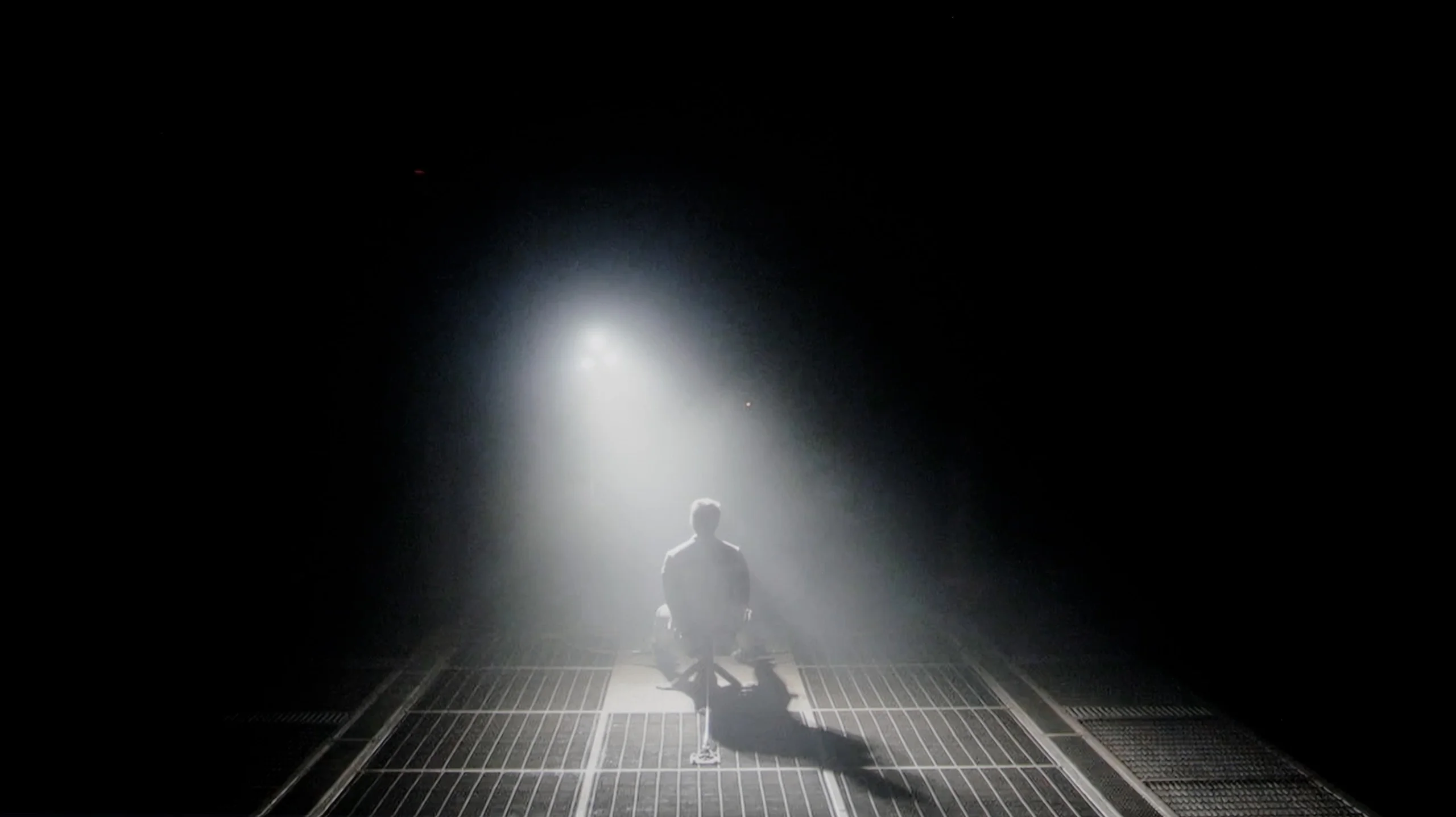
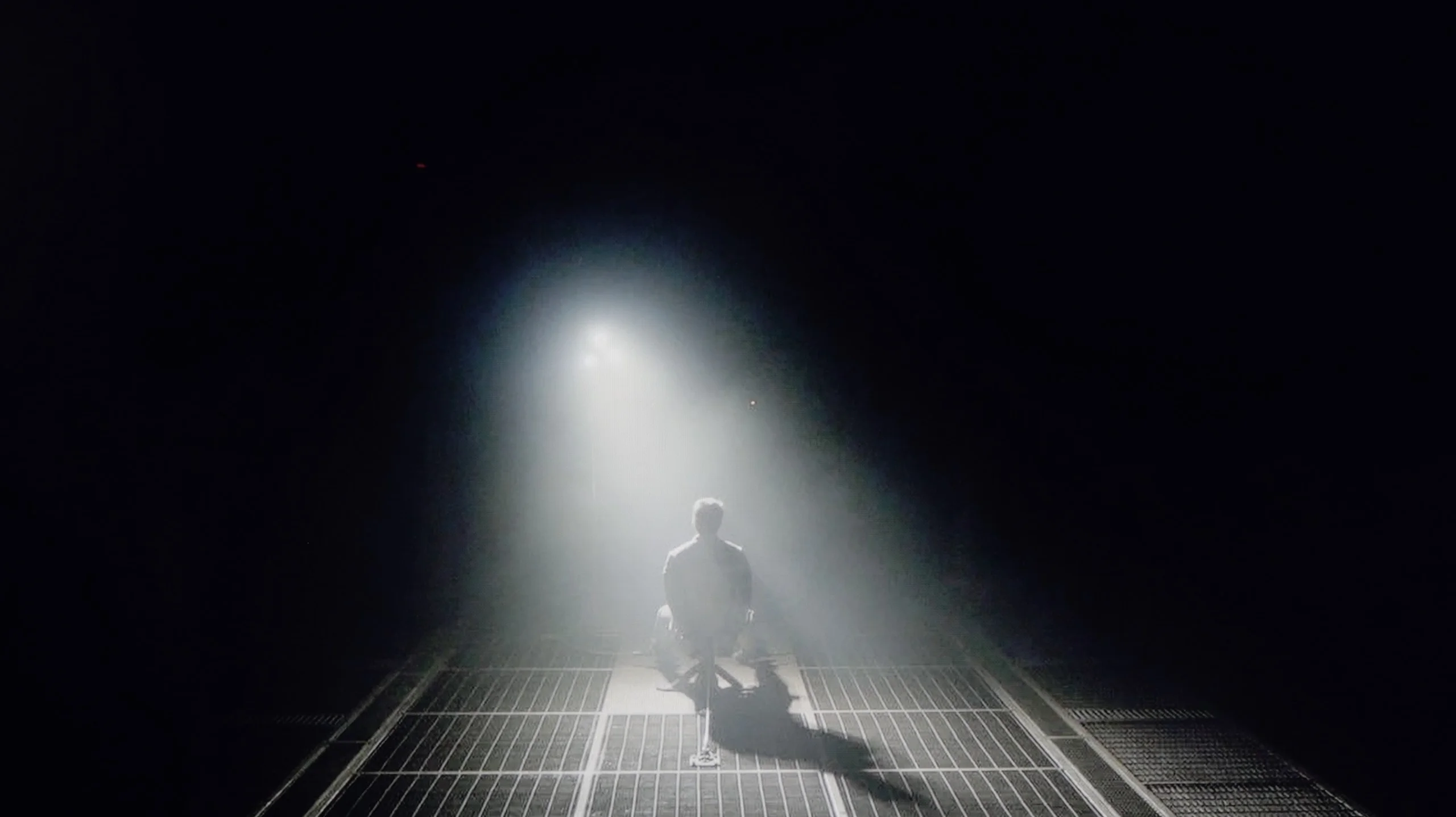
Check the visibility of bright lights on a dark background. Mini-LEDs often struggle with this. The photo does not compare black levels – that’s what the video below is for.
The video accurately shows differences in contrast and black levels between TVs, as well as potential issues: halo around bright objects or Mini-LED zone operation visible as brightness jumps.
Samsung S85F in the 55-inch version has something special – it features a QD-OLED panel. This might sound quite surprising, but that's the fact, at least in Poland. So the question arises: is the difference compared to last year's S85D with a WOLED panel even noticeable? Yes, although in this specific test – black levels and contrast – it practically makes no difference.
Regardless of the scene, the S85F presents infinite contrast and perfect blacks that we expect from any OLED. These results can impress even the most demanding film enthusiasts. It's worth remembering that only TVs with organic panels can provide such deep blacks – and it doesn't matter whether it's WOLED or QD-OLED. So if you dream of a screen that can 'turn off' the light in a scene just as effectively as a boutique cinema in a dark room, the S85F is one of those TVs.
Bravia 3 II uses a VA panel, a solution that by nature delivers significantly better contrast than IPS or ADS panels. In our unit the native contrast ratio was around 5000:1 and, for a TV without local dimming, that's a pretty good result. In practice that means in a lightly lit room blacks can look genuinely decent. Dark parts of the image do not immediately go grey, and night scenes have noticeably more depth than on many TVs with IPS panels. The poorer black performance becomes visible, however, when you turn the lights off. The Bravia 3 II does not have local dimming, so the entire backlight operates in a similar way regardless of what is happening in a given area of the image. In a dark room it is easy to notice that black is no longer truly black but starts to shift towards a dark navy. It is not a level that severely spoils the film, but during an evening viewing the difference compared with Mini-LED, and even more so with an OLED TV, becomes very clear.
HDR effect quality
6.2/10
5.3/10
Luminance measurements in HDR:

Result
666 nit

Result
703 nit

Result
742 nit

Result
732 nit

Result
433 nit
Result
408 nit
Result
430 nit
Result
449 nit
Result
457 nit
Result
455 nit
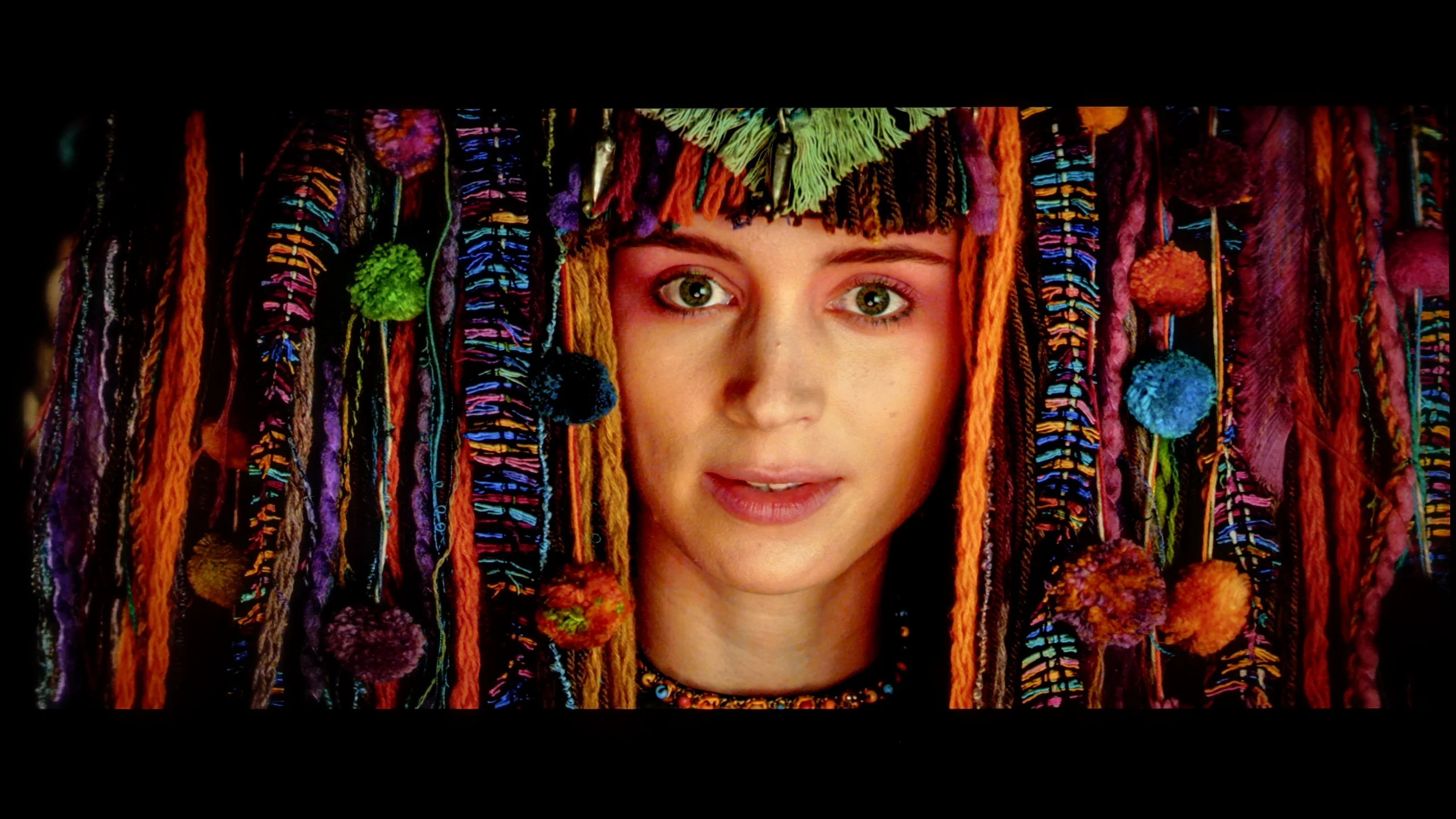
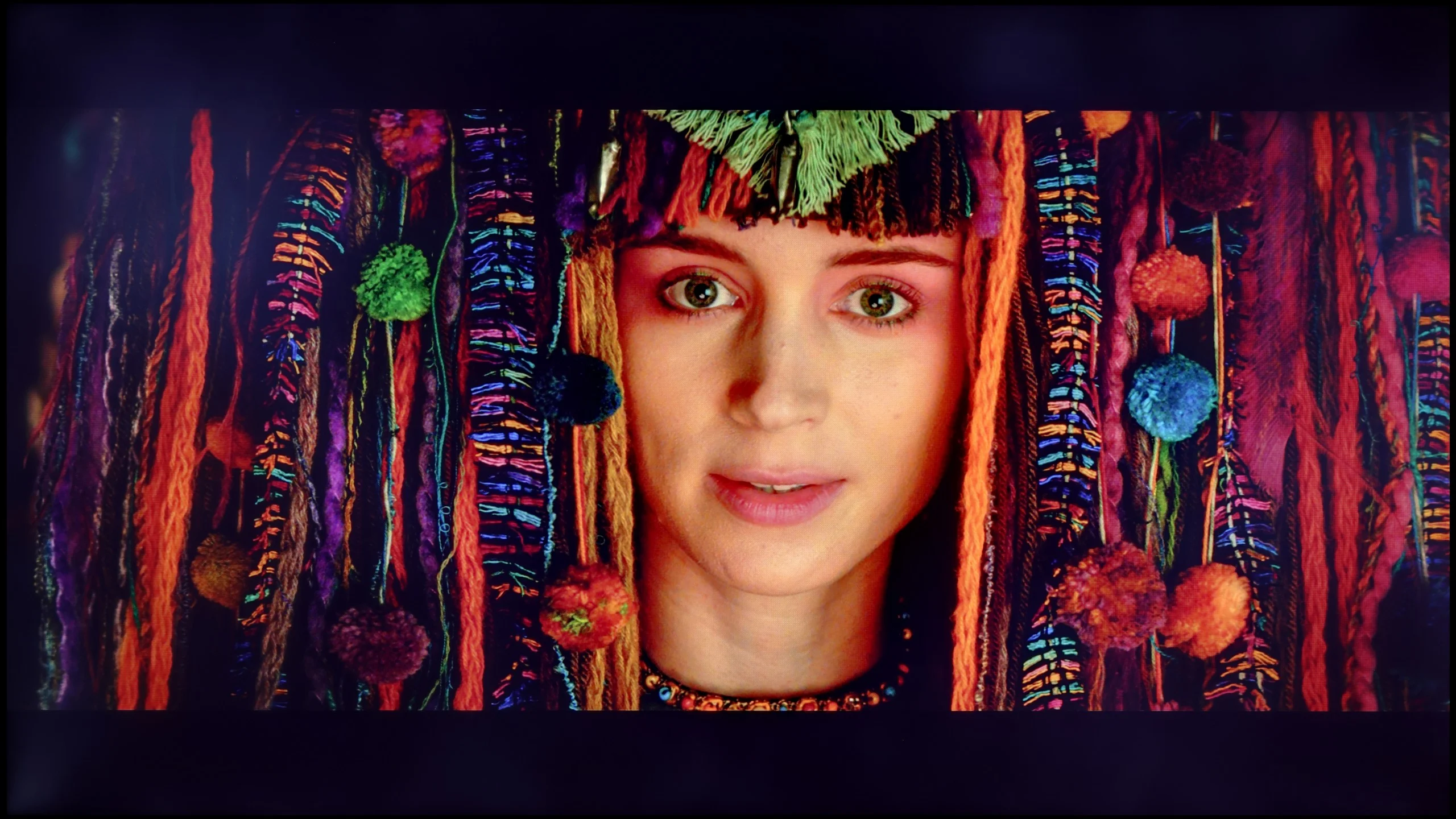
Scene from the movie “Pan” (about 2800 nits)
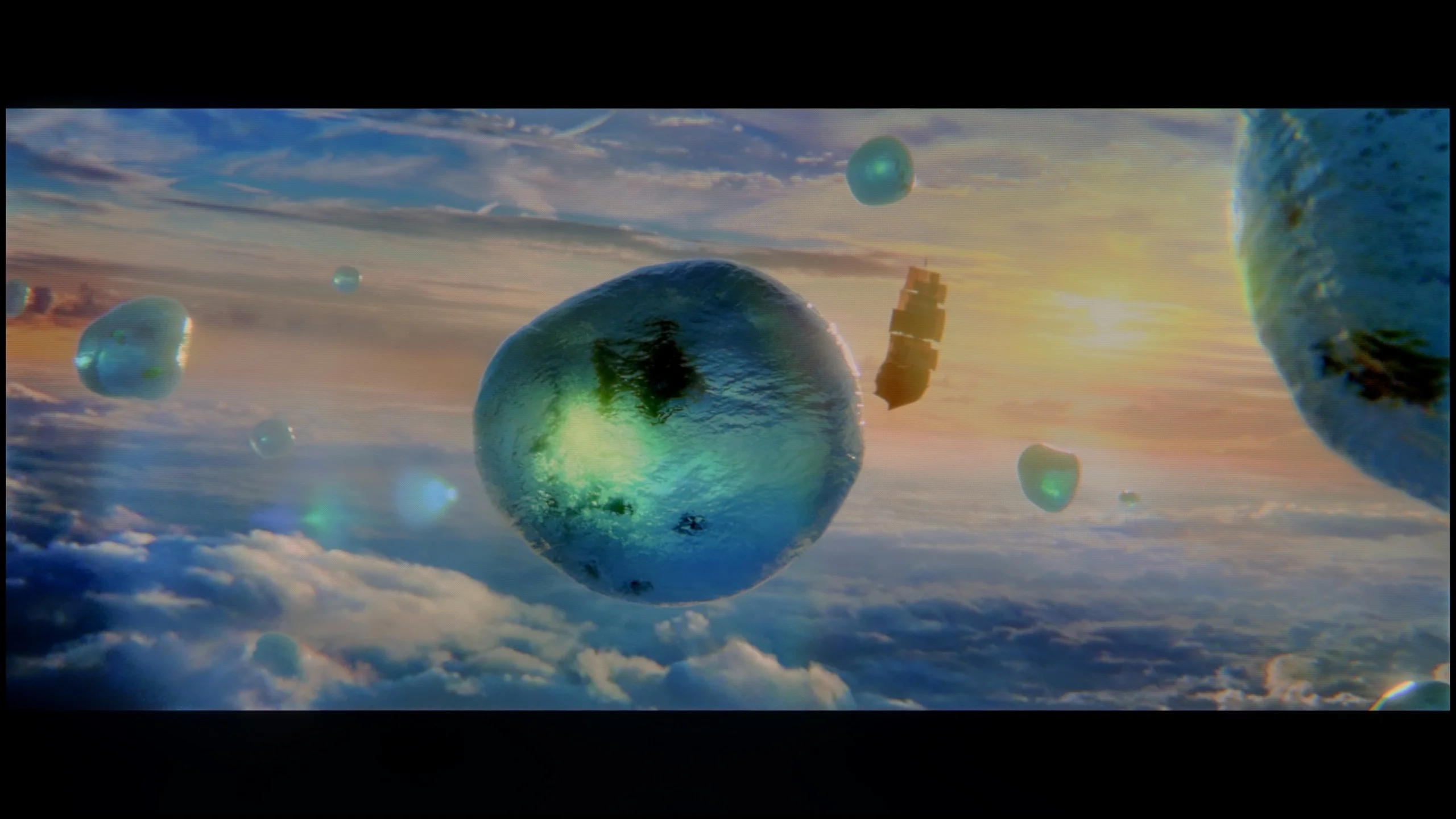
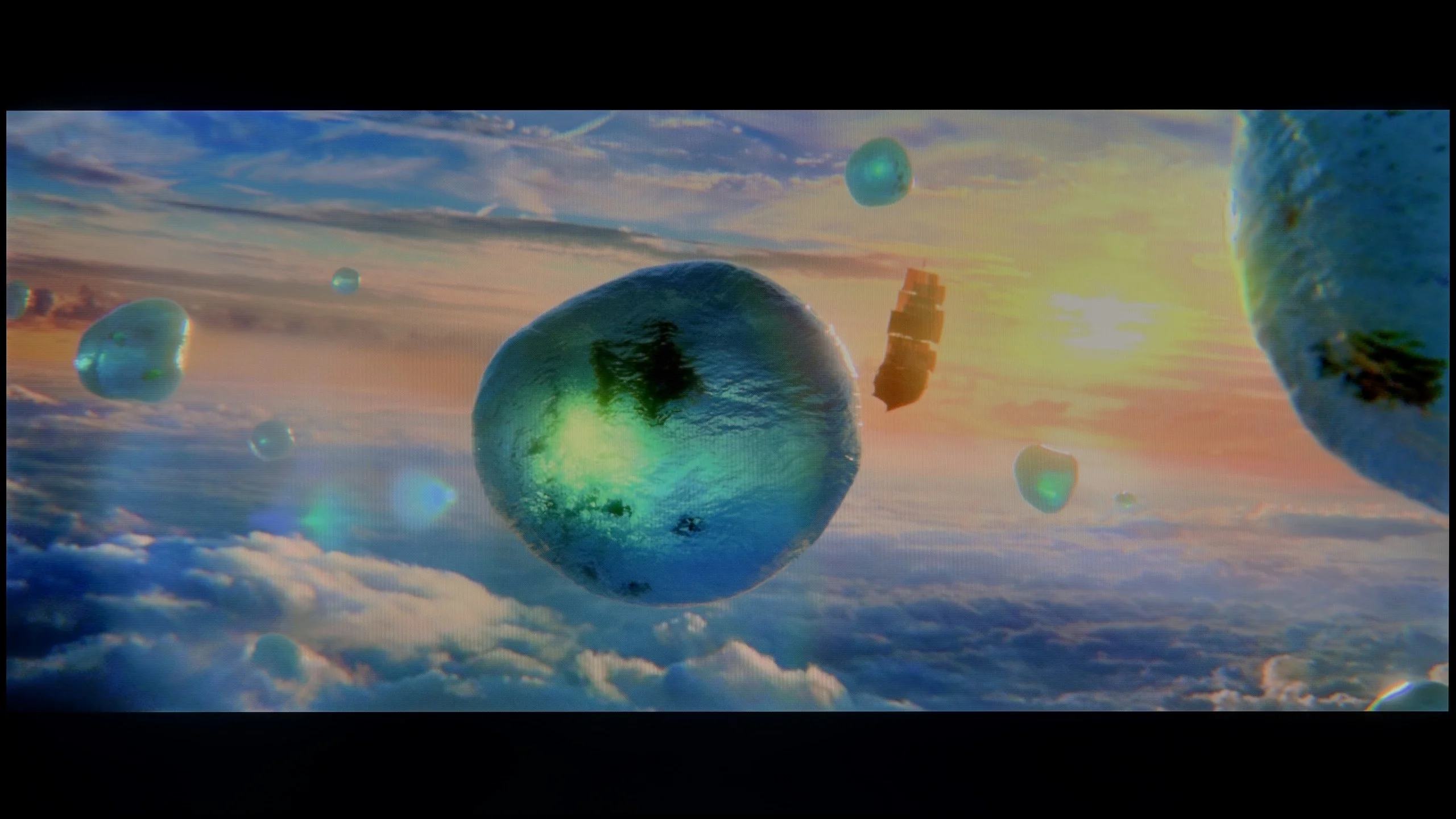
Scene from the movie “Billy Lynn” (about 1100 nits)
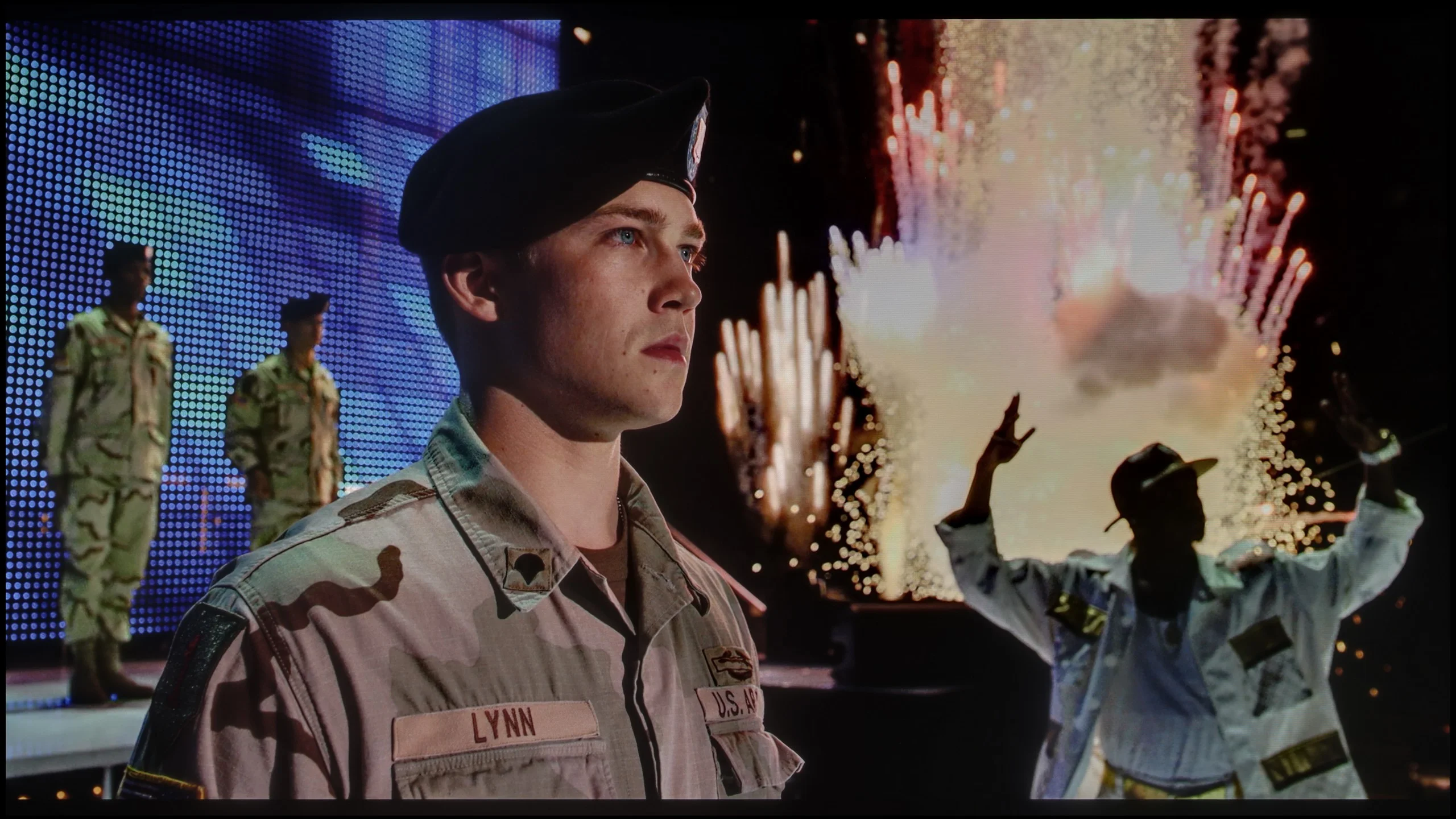
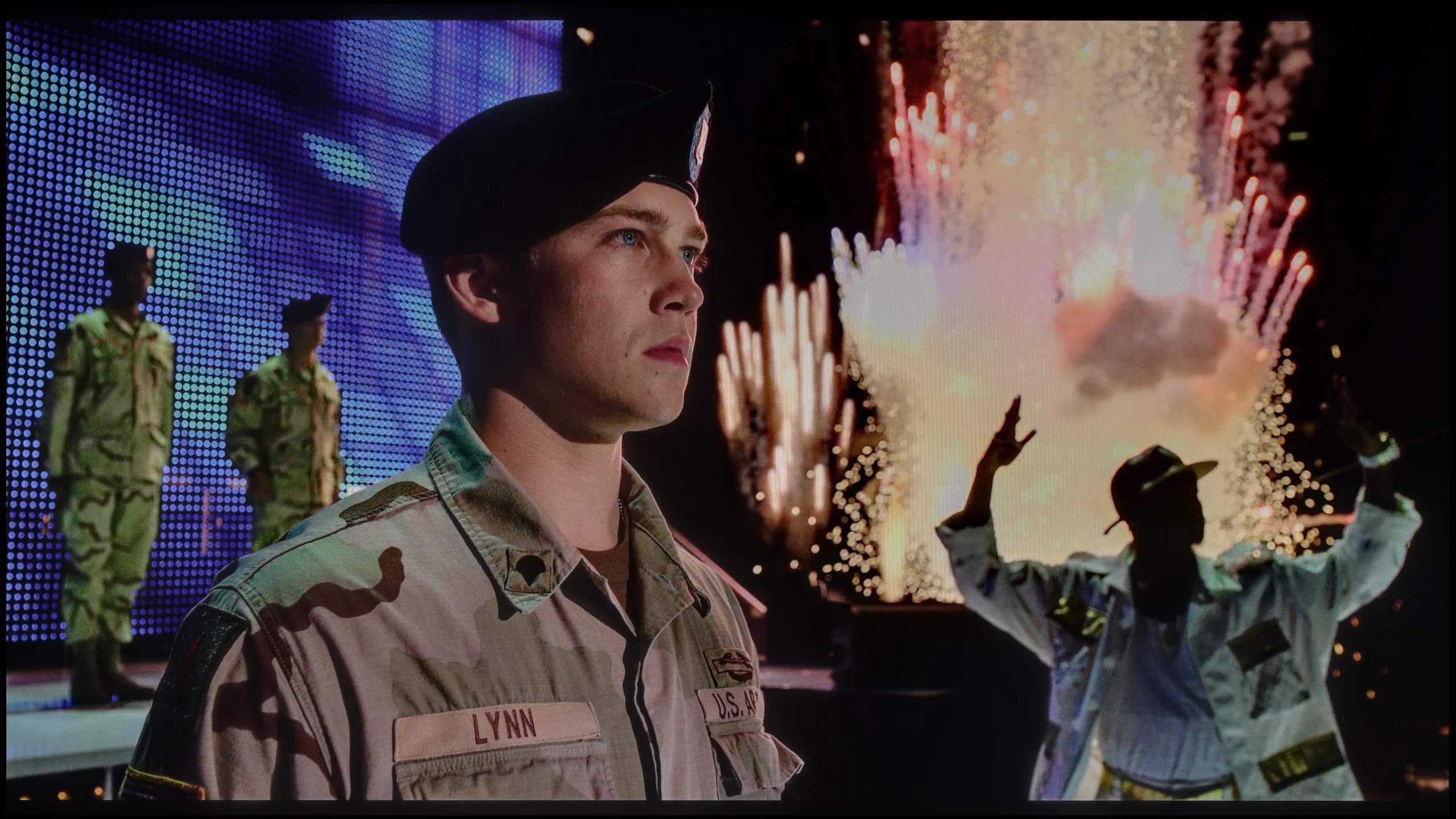
The photos show two HDR10 movies. 'Pan' is one of the brightest productions ever made, while 'Billy Lynn' (soldier) has brightness typical of streaming (Netflix, Prime, HBO MAX). Notice the intensity of effects and detail in whites.
Static HDR10


The photos present the visibility of white details in various HDR formats. They do not show brightness differences between TVs (these can be compared in the previous gallery).
Dynamic: HDR10+
Dynamic: Dolby Vision


The photos present the visibility of white details in various HDR formats. They do not show brightness differences between TVs (these can be compared in the previous gallery).
HDR luminance chart:
SONY BRAVIA 3 II (XR35M2)
Samsung S85F OLED
As an OLED, the Samsung S85F can shine – literally. In favourable conditions, it can generate brightness exceeding 750 nits. This is significant because most films are created with displays aiming for around 1000 nits. In practice, this means that in scenes with moderately large, bright elements, the picture can look absolutely stunning. However, it's not always so rosy. When an enormous amount of light appears on the screen – whether it's an expansive, bright background or an entire frame filled with white – the S85F must tone it down. Brightness can drop by even four times in such scenes. This limitation is well-known to anyone familiar with OLEDs in this price segment, so we don't view it as a particular fail. However, something that deserves praise is what sets this model apart from the competition – colour gamut coverage. Thanks to the QD-OLED panel, our colour meter indicated values exceeding 100% coverage of DCI-P3 and an impressive 86% for the ultra-wide BT.2020 palette. Such results are hard to find even in televisions that cost several times more.
The Bravia 3 II isn't exactly a TV that tries to impress with brightness. In our measurements it reached around 450 nits, so it's well short of the brightest models on the market. That doesn't mean HDR is just a paper feature here. Compared with standard SDR material, the brightest parts of the image can already punch through noticeably, and highlights, light sources and stronger exposures have a bit more energy and stand out better from the rest of the scene. You can see this best in simpler shots where the screen contains lots of bright elements. Then the Bravia 3 II can give a taste of a higher-dynamic-range picture. The problem only starts with more demanding content, where much greater brightness headroom is needed. There the TV quickly shows its limits and instead of bold, spectacular HDR we’re left with a merely competent picture.
Colours
The Bravia 3 II uses a QLED panel, although technically it doesn't employ a traditional quantum-dot layer. Instead Sony has used a PFS phosphor-based solution, which performs a very similar role: it allows for more saturated reds and greens, and thus reproduces a much wider colour gamut. In our measurements coverage of the DCI-P3 gamut was about 94%, and of the very wide BT.2020 around 74.4%. Those are good results for this class of hardware, which means the Bravia 3 II has no problem showing suitably saturated colours in HDR material. Colours don't look washed out, and the more intense hues can look really attractive.
Factory color reproduction
5.5/10
6.3/10


This gallery shows how colors change after professional TV calibration. If you notice the difference, we recommend ordering this service at SkalibrujTV.com.
Factory Mode
After calibration
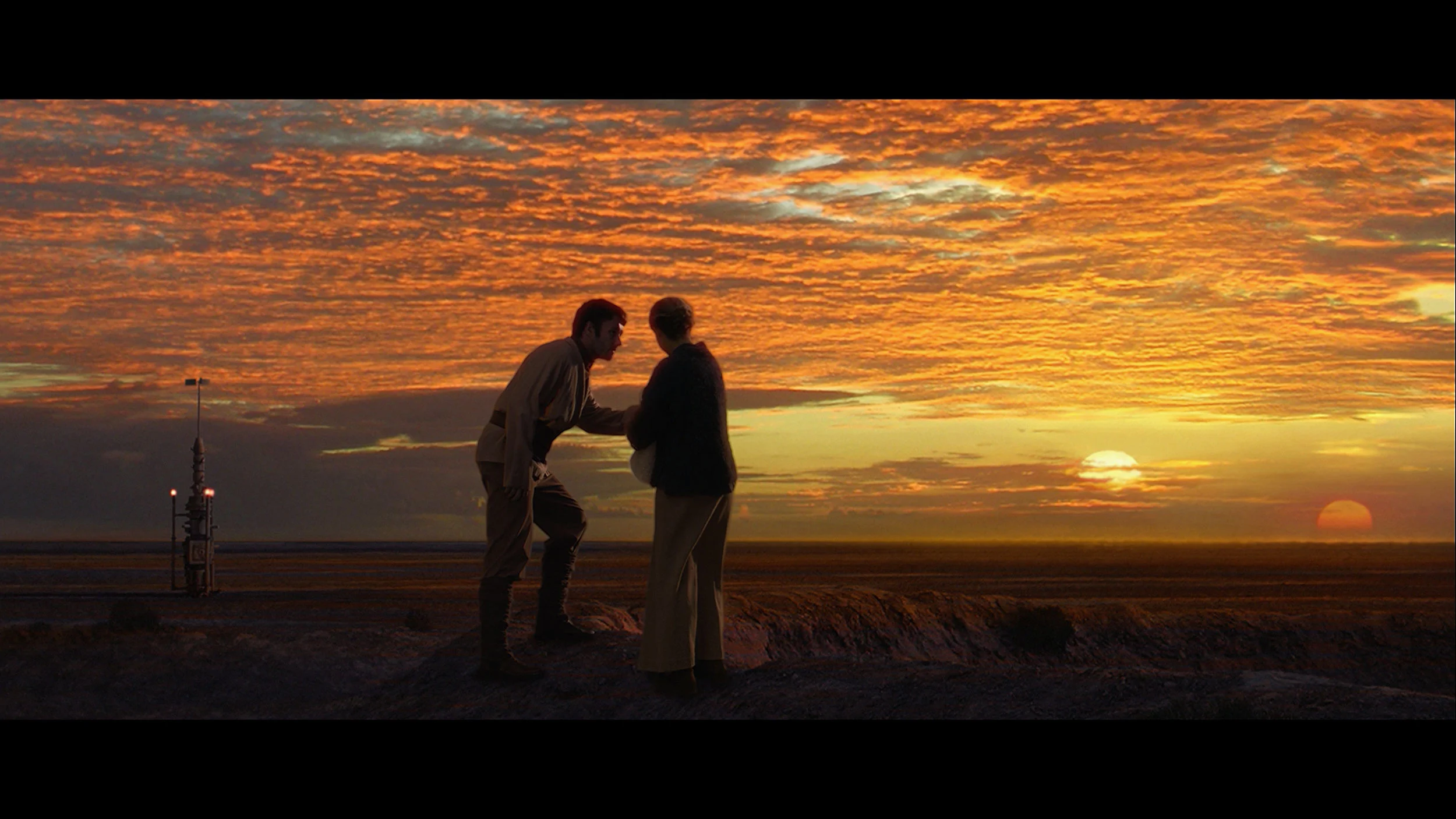
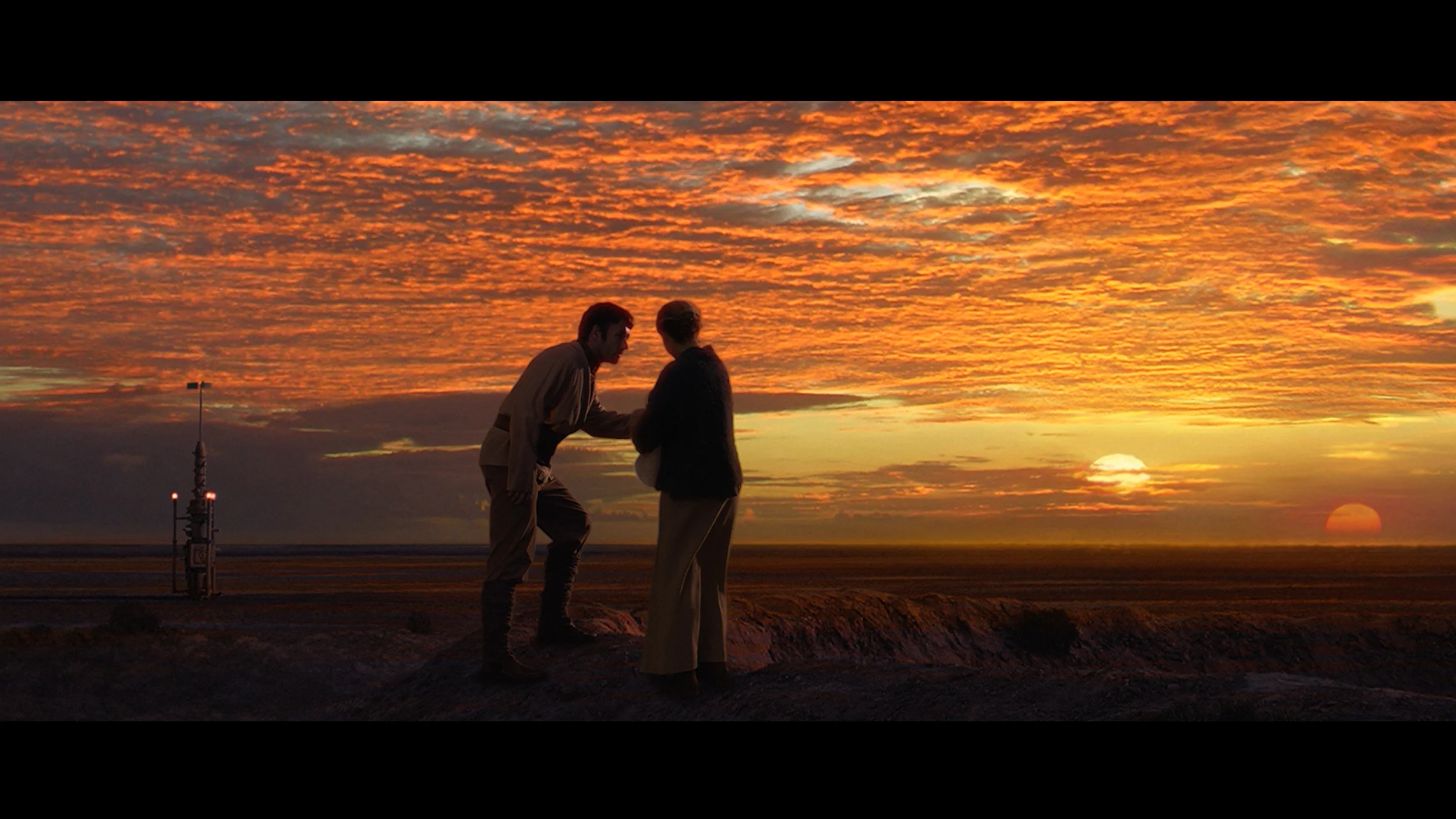
This gallery shows how colors change after professional TV calibration. If you notice the difference, we recommend ordering this service at SkalibrujTV.com.
Factory Mode
After calibration
Samsung, as befits a manufacturer with ambitions, has equipped the S85F with a mode called Filmmaker. Its task is simple: to make the colours on the newly purchased television as faithful as possible to what the director intended to show us. Sounds great… but, as is often the case, a theory that sounds wonderful doesn’t always translate into perfect practice.
In the tested unit, it quickly became apparent that the image – due to an excess of blue and red – looked as if someone had gone a bit overboard with the saturation. As a result, there were quite significant colour errors, particularly in 4K content. On top of that, there was an issue with brightness – the S85F could brighten most scenes more than it should, stripping them of the intended mood.
Fortunately, Samsung televisions, including the S85F, offer an impressive number of settings for advanced calibrators. This means that we could see what this panel is really capable of when it gets into the right hands.
In Professional mode the Bravia 3 II delivers a fairly good level of colour reproduction straight out of the box. In SDR the most noticeable issue is a slightly low gamma, which makes the midtones a little brighter. The white balance isn't perfect either; as brightness increases a bit of blue and red drops away, so whites can sometimes appear a touch warmer with a faint greenish tint. These aren't mistakes that immediately jump out when watching a film. Average error values hover around 3, so the factory setup can be considered quite good. The situation in HDR is similar. Here too there's a slight lack of blue, so the picture is marginally warmer than the reference, but the difference isn't large enough to be distracting during normal viewing.
Color reproduction after calibration
9.3/10
8/10
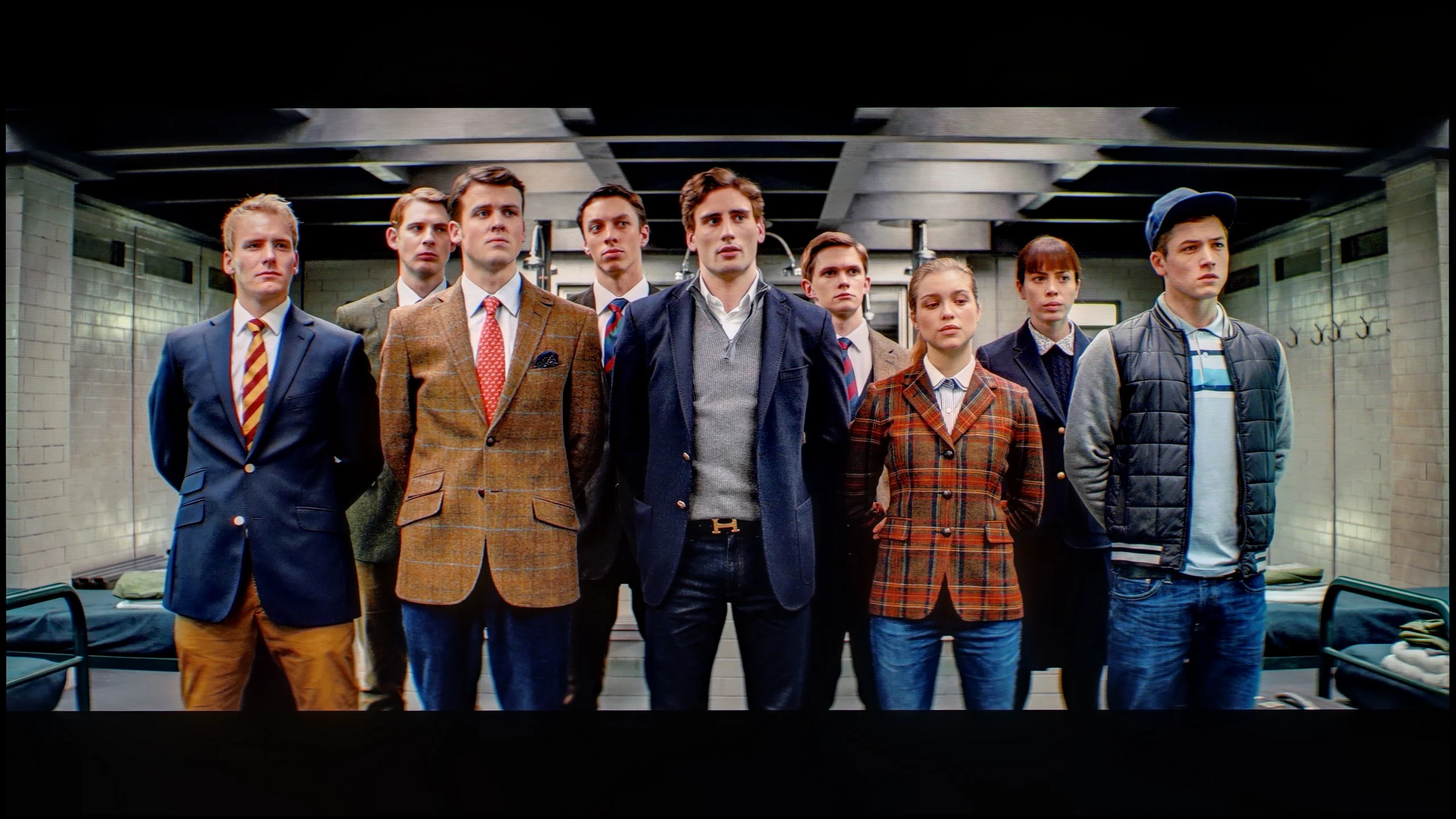
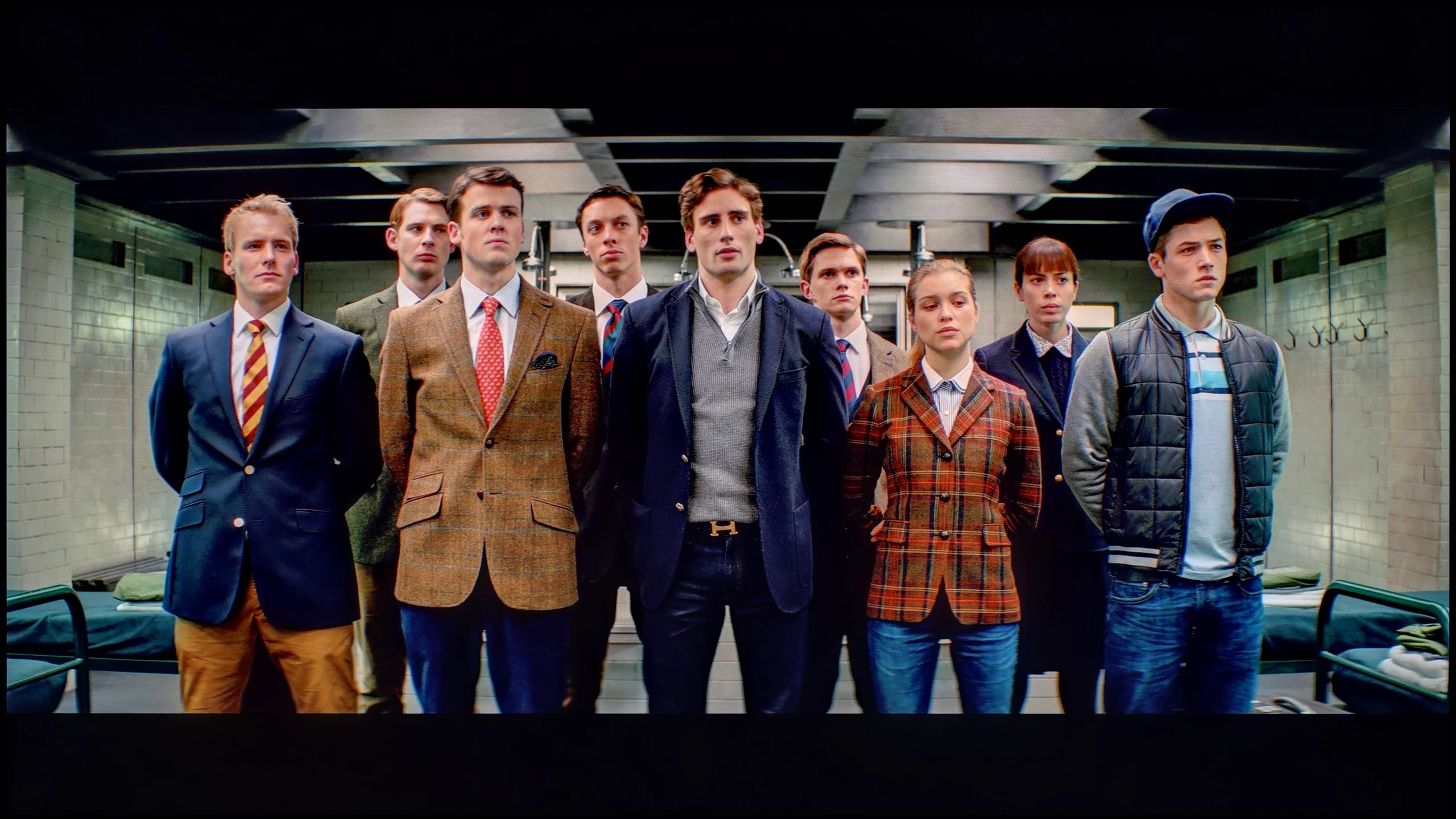
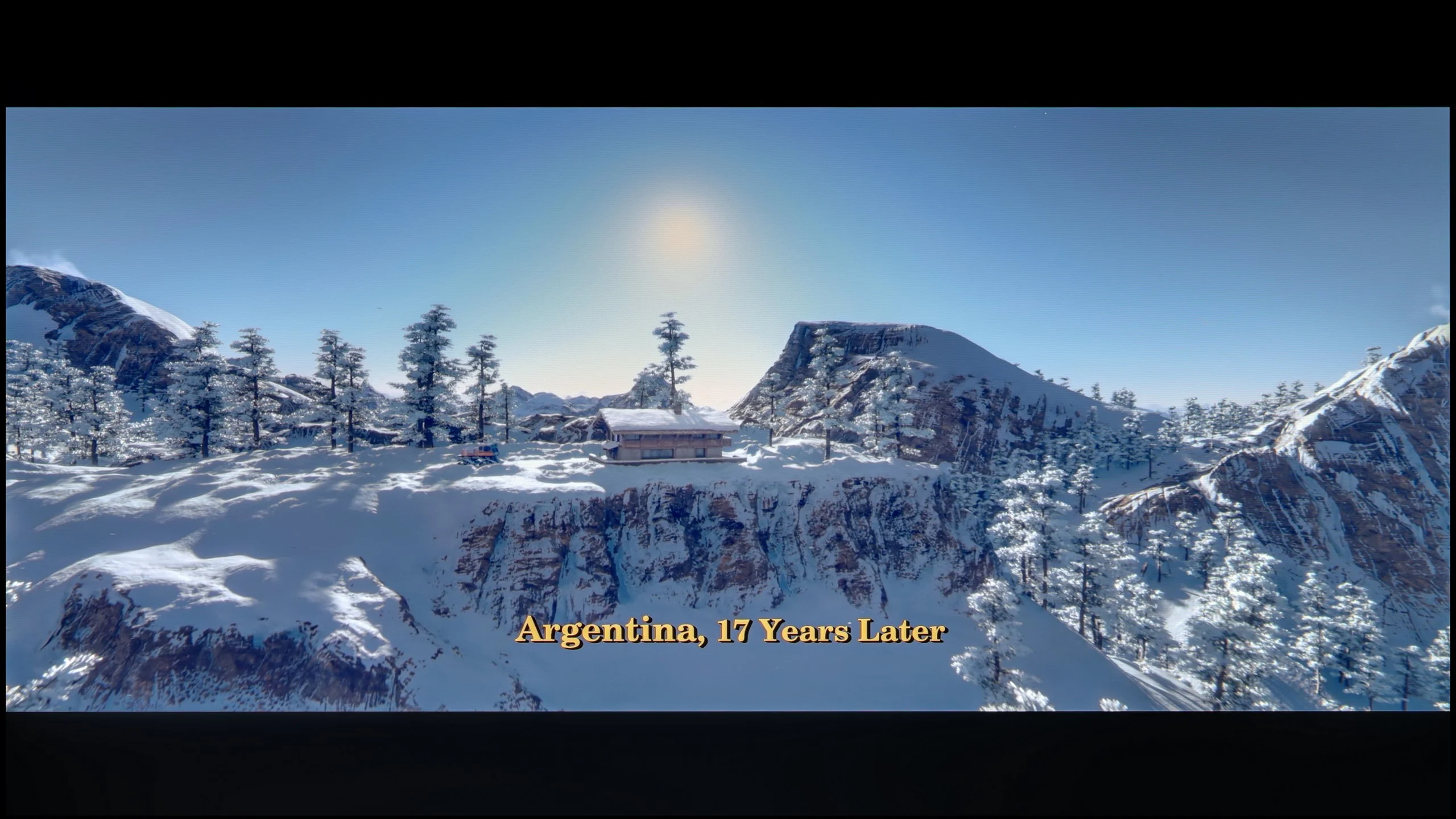
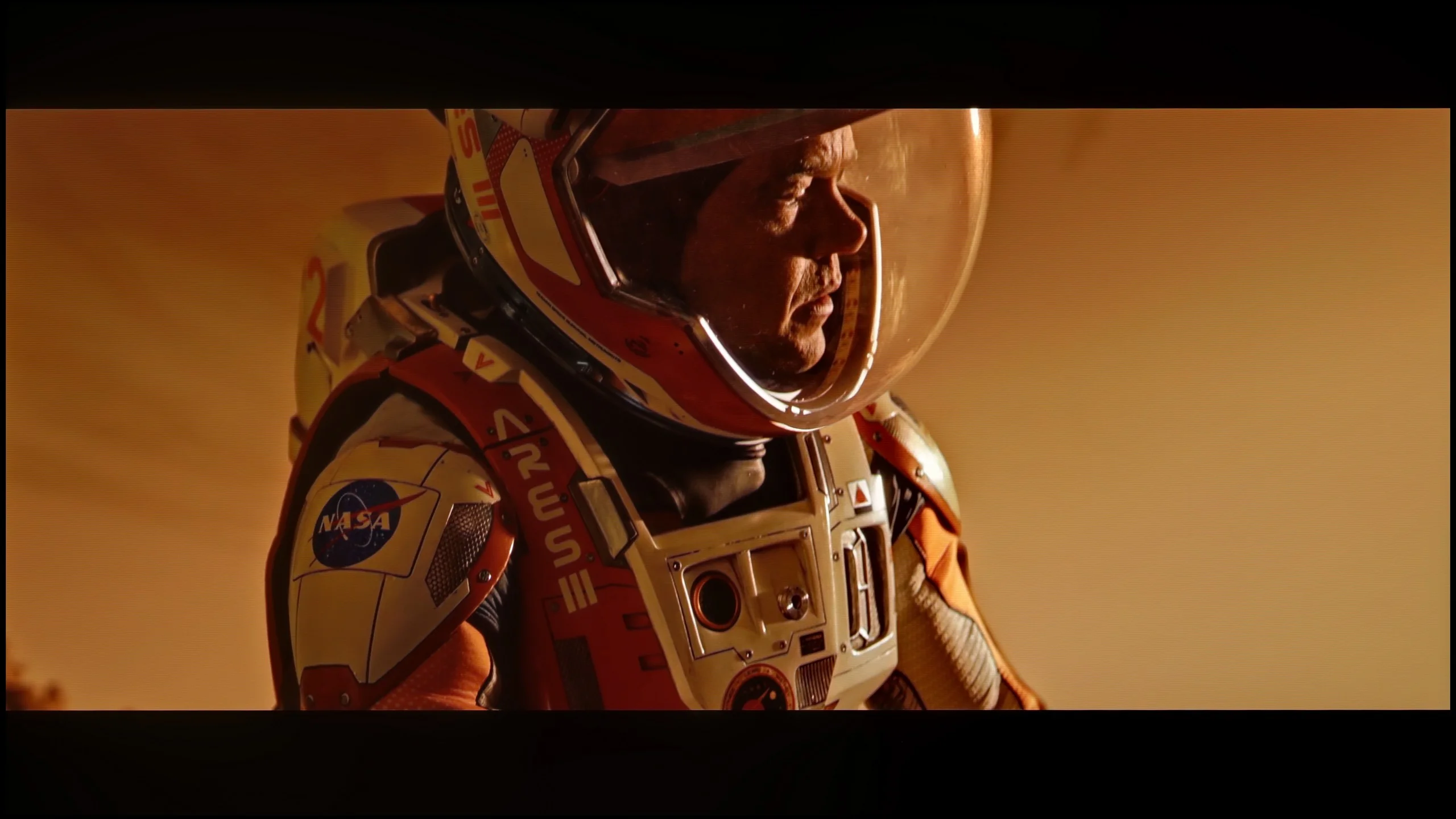
The photos show how movies look on the TV. Pay attention to black detail visibility, colors, and shadow tint.
The photos show how movies look on the TV. Pay attention to black detail visibility, colors, and shadow tint.
Thanks to the huge number of settings in the menu, we managed to bring the S85F almost to perfection. White balance in SDR content? Literally perfect – deviations do not exceed a value of "1". So we can confidently say that in materials with not too high dynamics, we have an image that's close to reference.
In HDR content, minor issues appeared, but they don't have much significance in practice – most errors fall below the threshold of perception, which is a value of "3". We also managed to tame the S85F when it comes to brightness management – the EOTF curve, even in films, holds nearly perfect straight line. This is one of those cases where after calibration, you can comfortably forget about the settings and simply watch movies and series at the highest level.
After calibration you can get a lot out of SDR material. The white balance was set almost perfectly, gamma practically matches the reference value, and average colour errors fell from around 3 to about 1. That’s already the level at which differences from the reference image are very hard to spot in practice. The Bravia 3 II therefore shows that despite its place in Sony’s range it has quite a bit of potential for precise picture tuning. Improvement is also visible in HDR, although here you can’t avoid all the limitations of the TV itself. Once the colours are evened out it’s easier to notice that the EOTF curve in film material runs slightly below the reference value in places, meaning the Bravia 3 II gently darkens parts of the image. That isn’t ideal from a reference point of view, but in this particular TV it also has an advantage. With no local dimming and average black levels this behaviour slightly reduces the visibility of the backlight in darker scenes and helps preserve a stronger sense of contrast. You could say Sony is partly masking the limitations of the panel this way, rather than trying at all costs to stick to the reference brightness.
Smoothness of tonal transitions
8.5/10
9.5/10
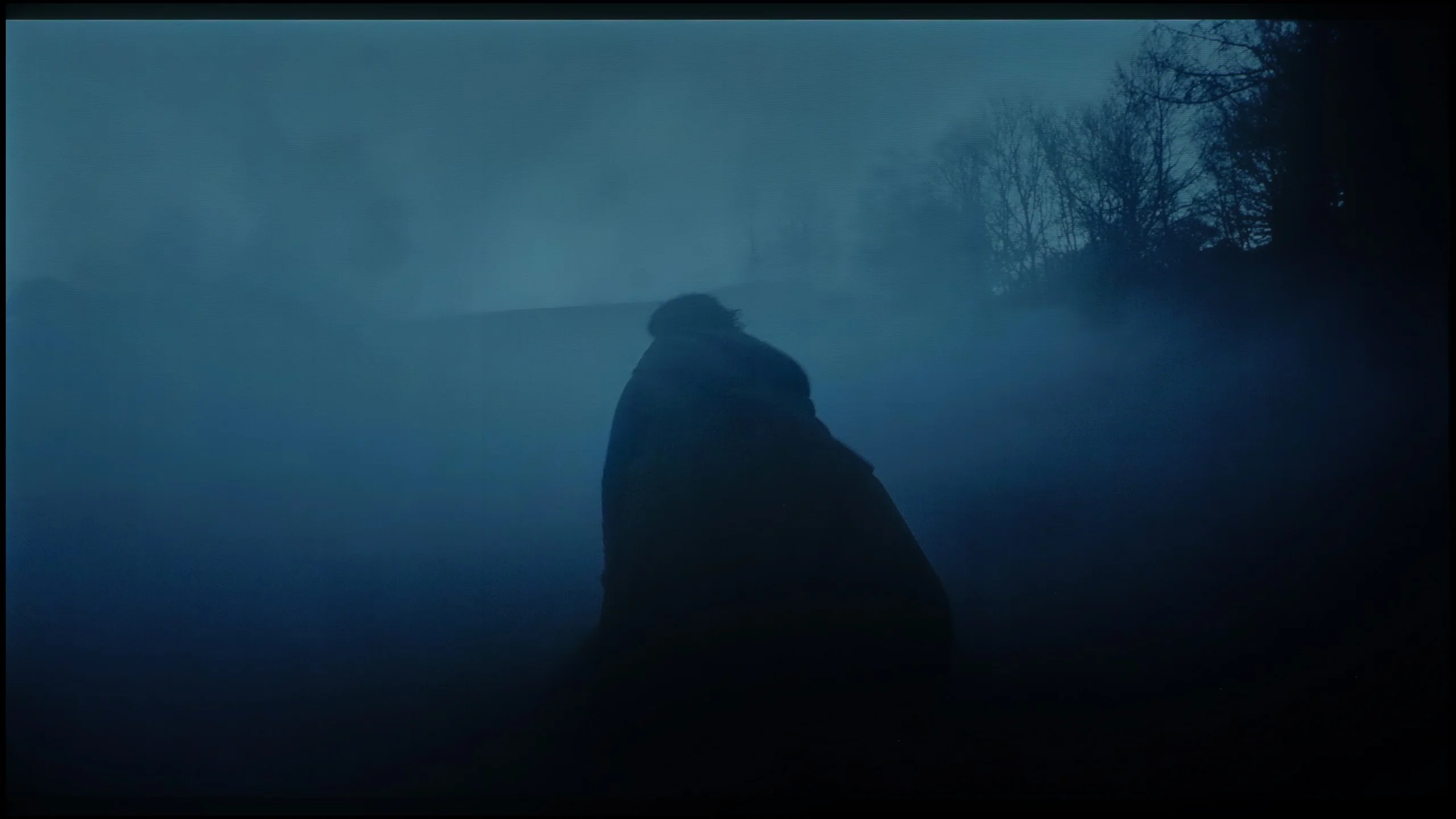
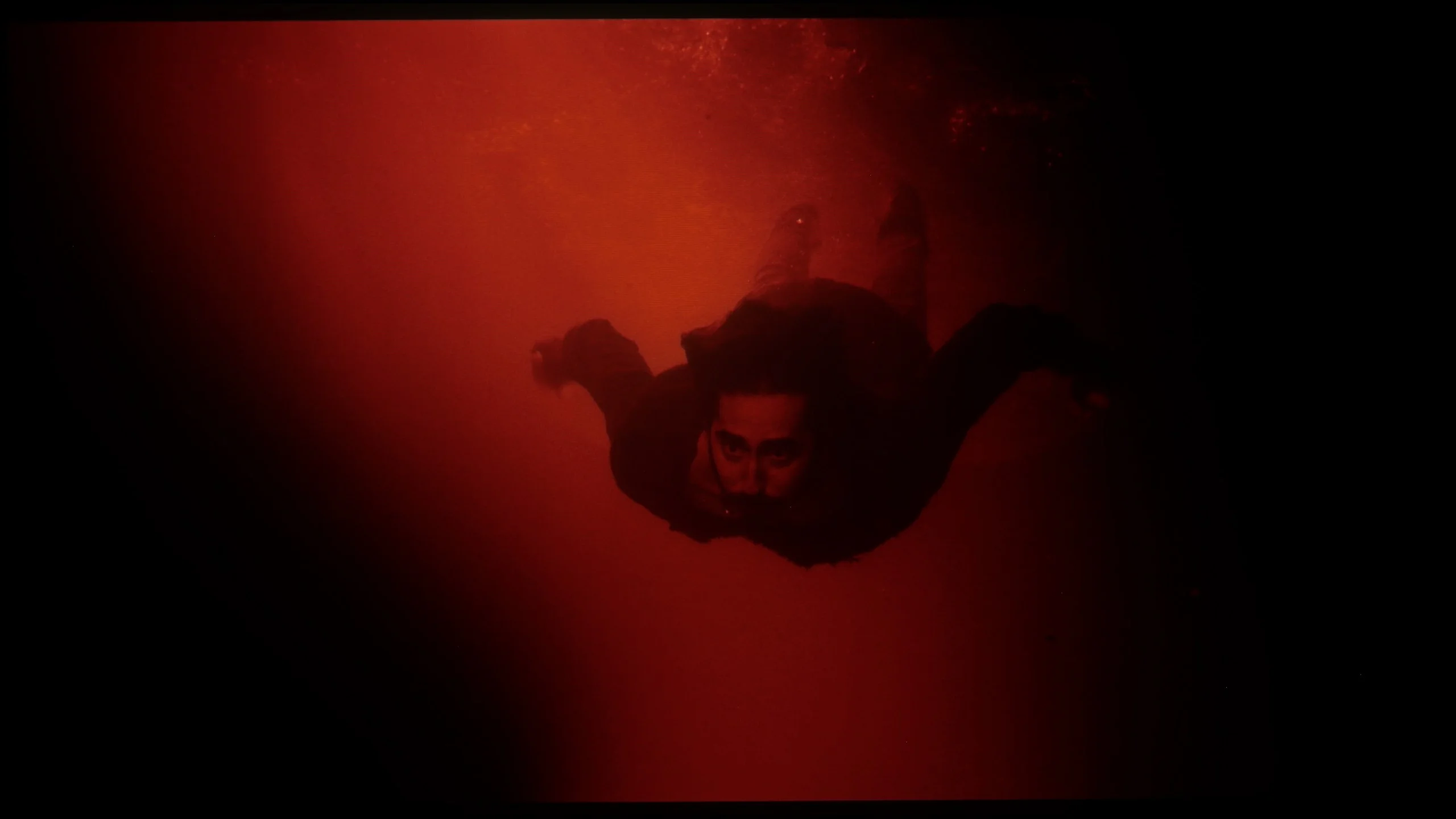
These are selected scenes that show smooth tonal transitions from one color to another. If you see distinct banding, it’s the TV panel’s fault.
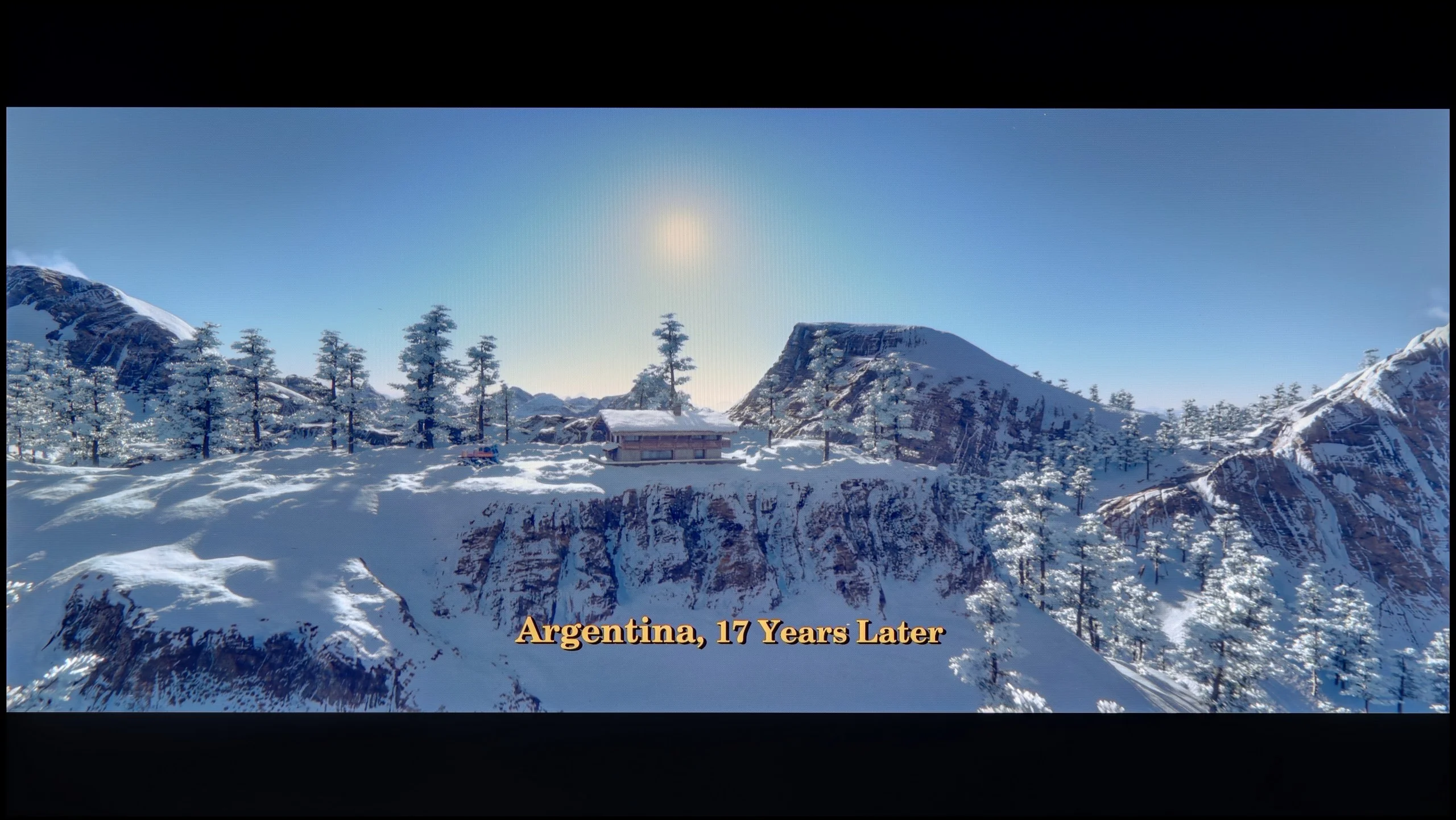
These are selected scenes that show smooth tonal transitions from one color to another. If you see distinct banding, it’s the TV panel’s fault.
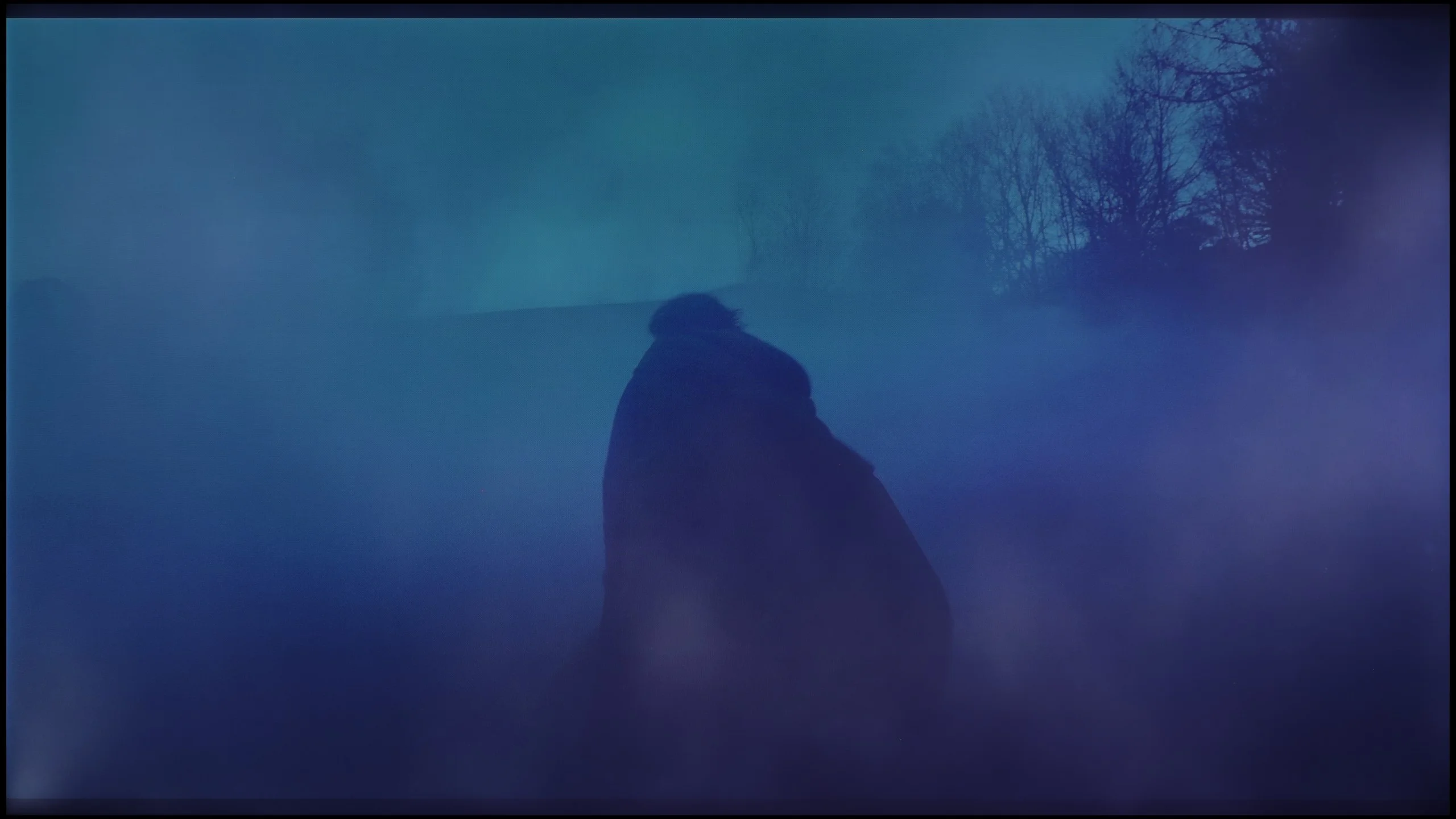
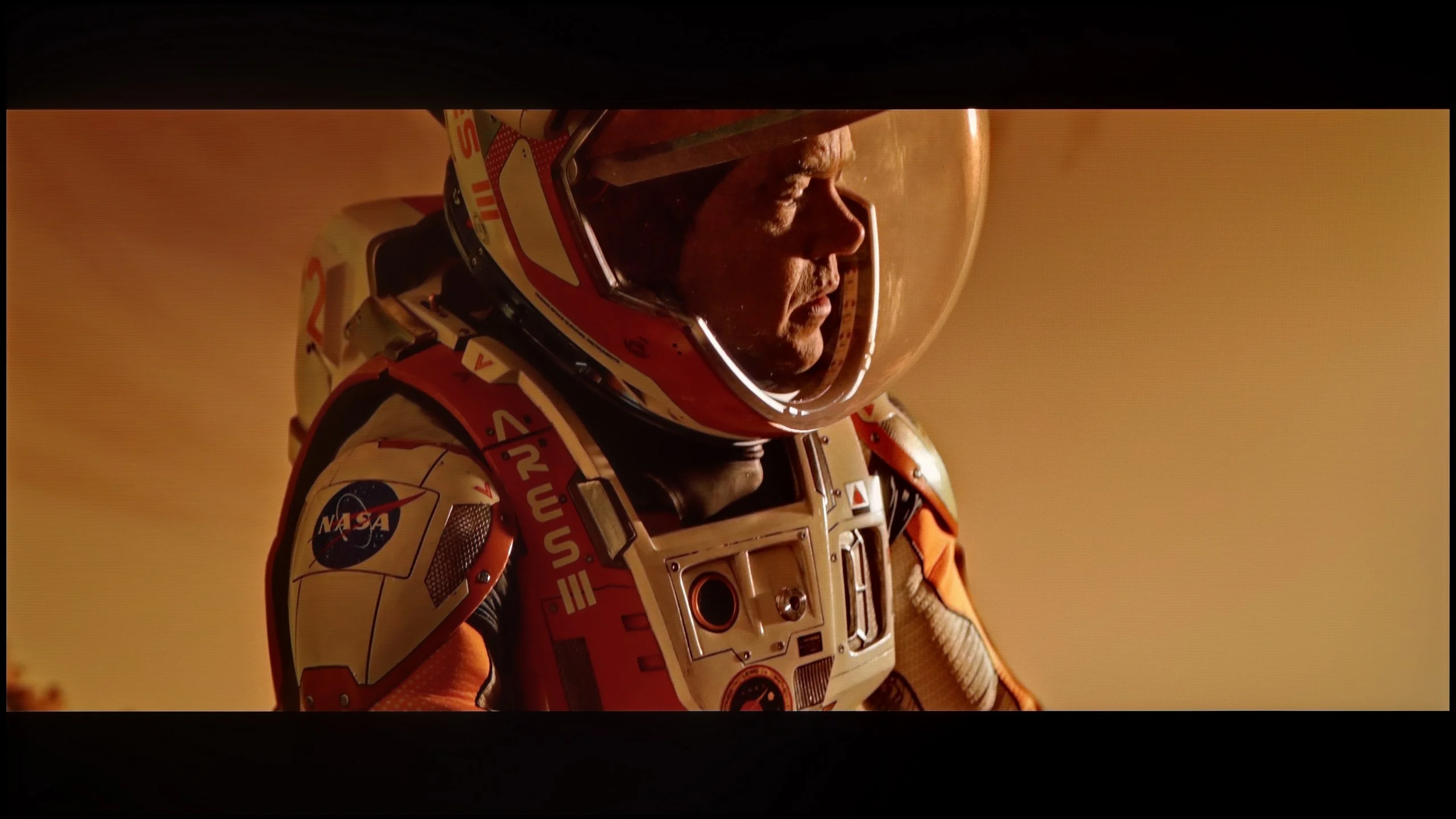
These are selected scenes that show smooth tonal transitions from one color to another. If you see distinct banding, it’s the TV panel’s fault.
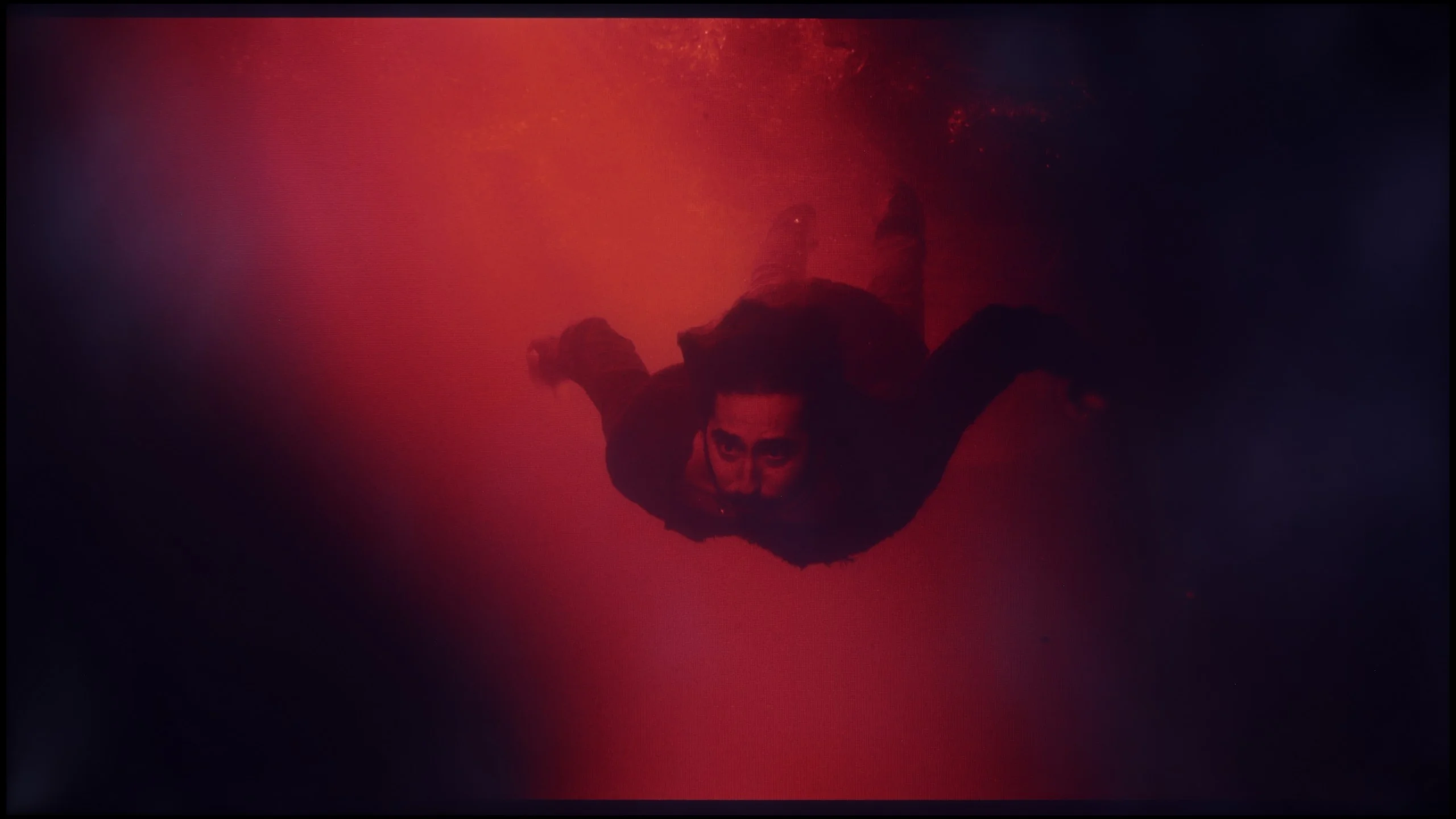
These are selected scenes that show smooth tonal transitions from one color to another. If you see distinct banding, it’s the TV panel’s fault.
Thanks to the QD-OLED panel, colour blending on the S85F is really very good. It's particularly worth noting how it performs in the darkest, most demanding scenes – where most TVs start to struggle, this model operates almost perfectly.
Interestingly, a slight stumble can be noticed in those easier, brighter shots. There is minimal colour banding, but it's so subtle that it's hard to believe it would genuinely bother anyone during viewing.
In terms of the smoothness of tonal transitions, the Bravia 3 II performs very well. In most of the scenes we watched it was hard to notice any problems with the blending of individual shades. Gradients remain smooth both in the bright parts of the image, such as skies or sunsets, and in much more challenging dark shots. The only thing that may stand out in our photos, particularly in the very darkest scenes, is the unevenness of the backlight itself. However, this is not related to colour gradation; it is rather a consequence of using a backlight without local dimming.
Image scaling and smoothness of tonal transitions
7.5/10
6/10


Smooth transition function
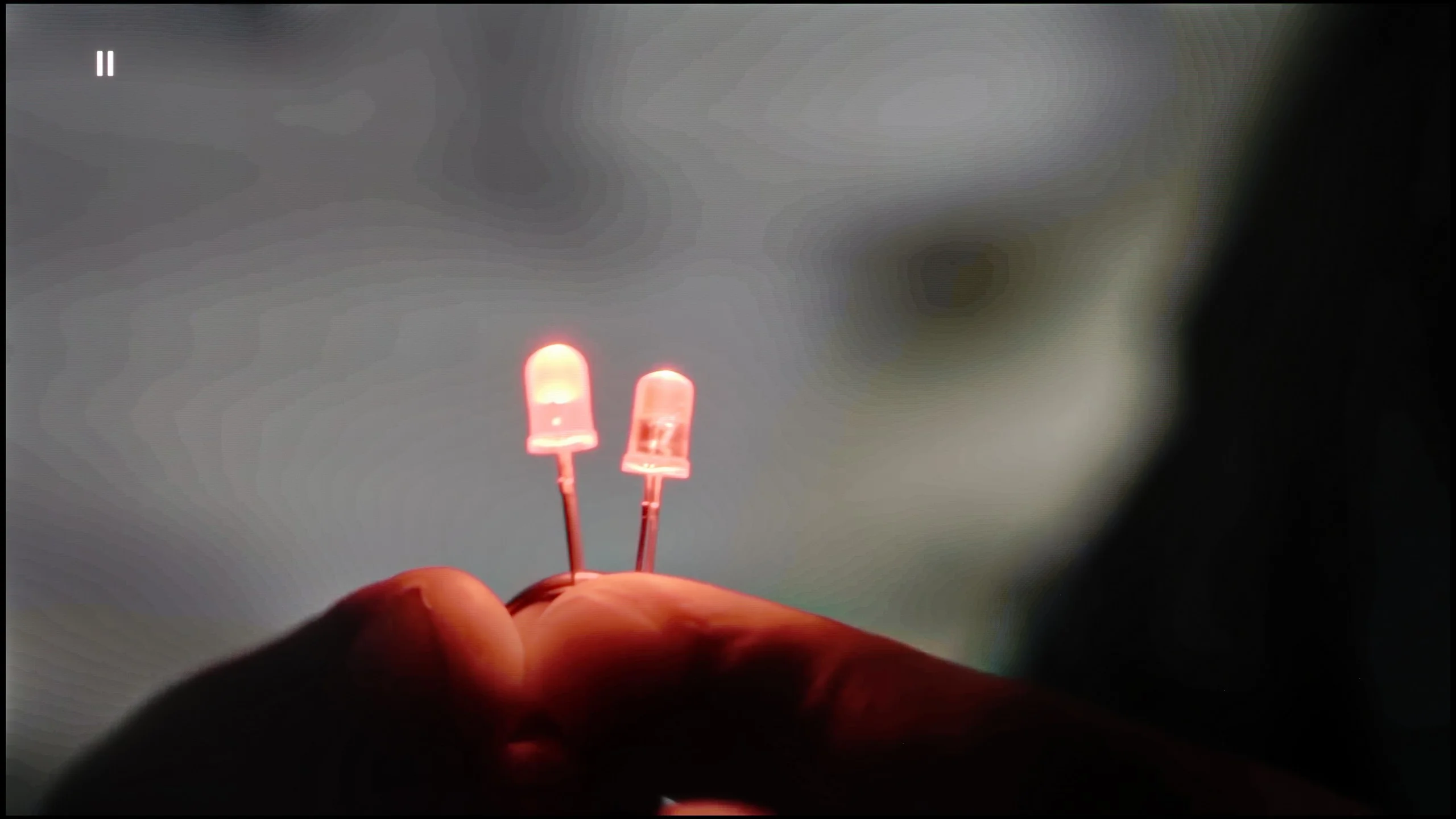
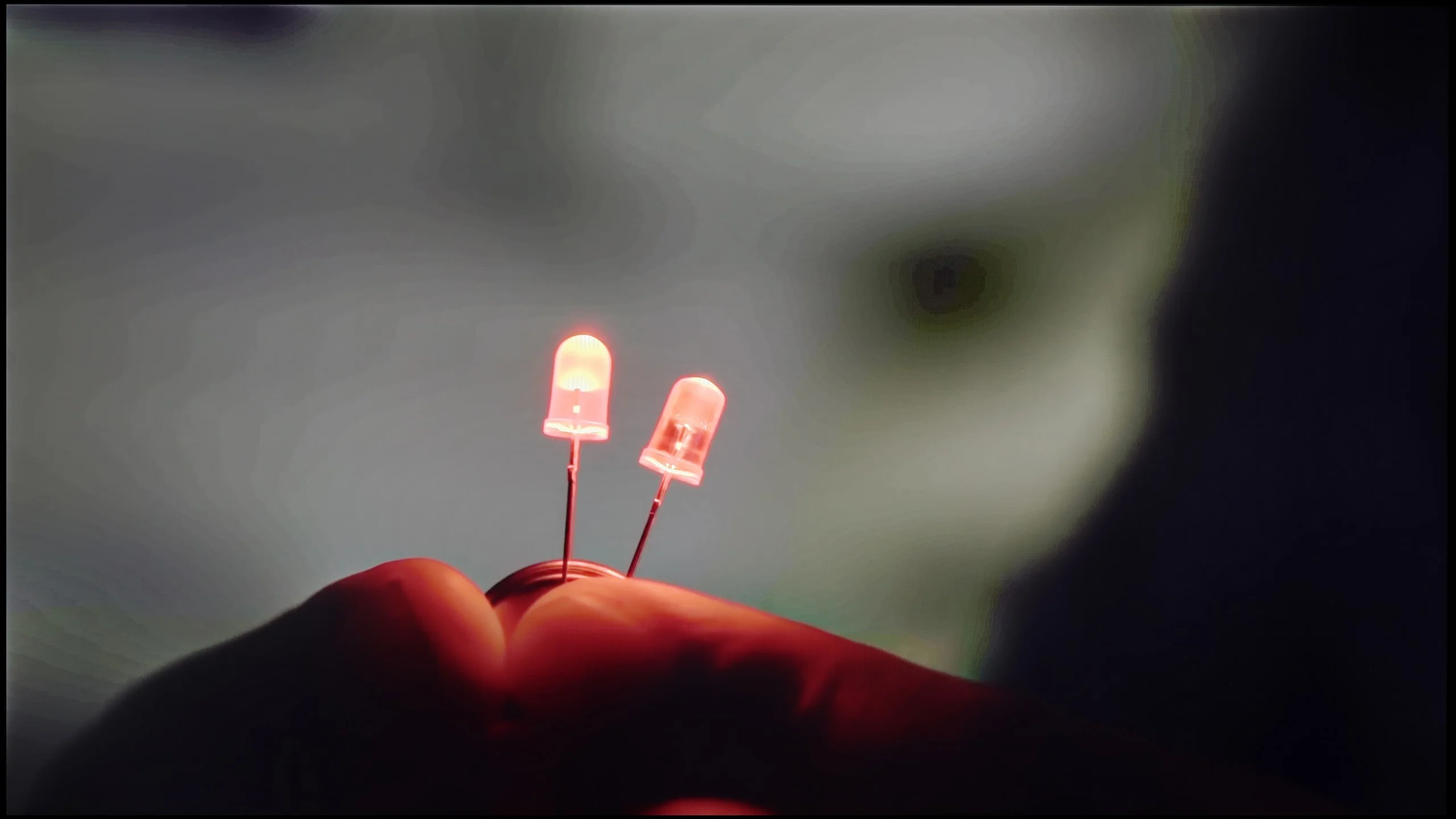
The match photo shows how the TV smooths weak tonal transitions in low-quality video.
Image scaling SD (576i)


The model photo shows how it handles upscaling of SD material.
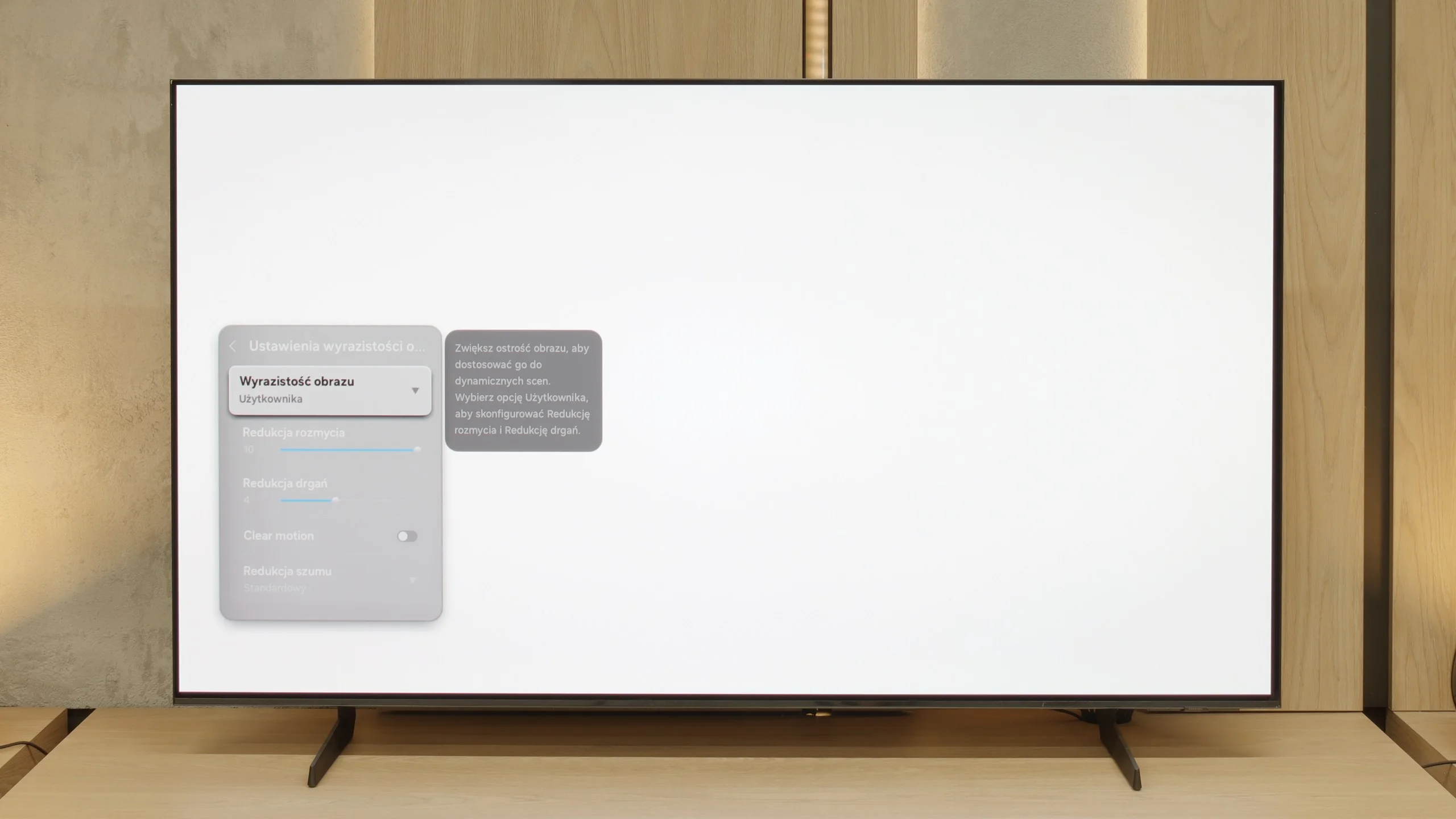
The tone transition smoothing function in the S85F works really effectively – it can completely eliminate the problem of visible banding in very poor quality material, such as from YouTube. Unfortunately, even the lowest level of this option comes with compromises. The noise reduction is so aggressive that it can smooth out film grain, which many of us consider to be an element of the cinematic atmosphere. At the “Standard” level, we didn’t notice this function removing anything significant from the image, so we can recommend this setting. On the other hand, the “High” level is a different story – it can smooth out not just noise, but also small, desirable details like, for example, the texture of objects.
When it comes to image scaling, the S85F performs very well. The material looks sharp, and the only slight imperfection is the barely noticeable aliasing of edges. And there’s the ongoing issue with Samsung televisions – overscan. This can cause some scenes to be slightly cropped, which is worth noting when watching very old content.
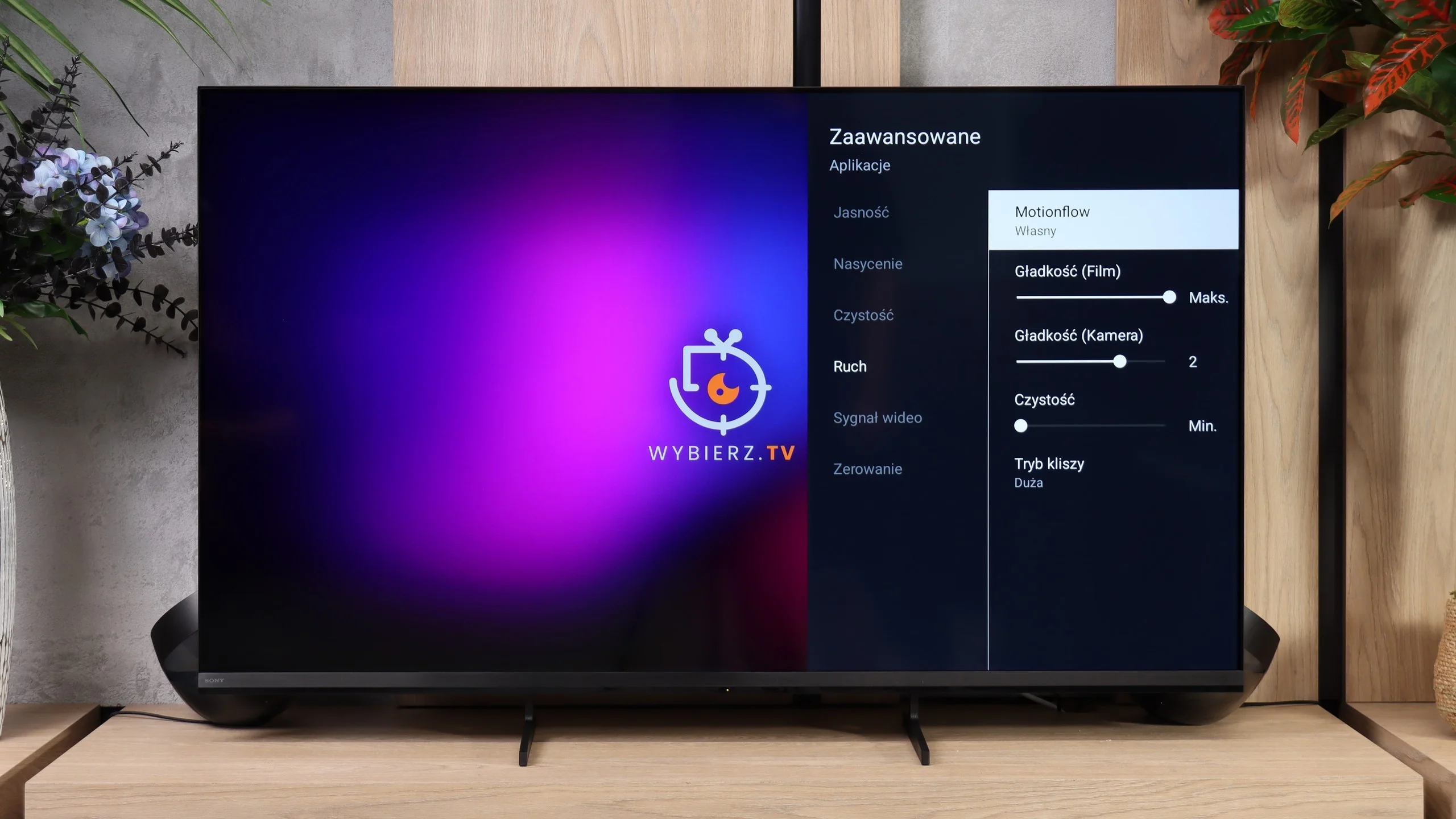
Bravia 3 II is Sony's first TV to use the new MediaTek Pentonic 800 chip, and you can see a few changes in the image processing. Starting with the basics: the upscaling itself is decent. The TV can sensibly upscale lower-resolution material and doesn't have a strong tendency to over‑emphasise jagged edges or other source imperfections. With regular broadcast TV or lower-quality streaming material the picture therefore remains quite attractive.
We have more reservations about the digital image processing. In this model Sony has replaced the well-known "Smooth Gradation" function with a new setting called "Digital Noise Reduction". Its job is basically the same: to smooth out ugly tonal transitions and artifacts caused by heavy compression. Unfortunately, this function performs noticeably worse than before. At the "Large" setting (the only one that had any visible effect) the TV can smooth away too many image elements at once, which causes film grain to disappear and object textures or even skin to start looking unnatural. Worse still, the effect is not particularly stable. When there's more motion in a scene, the function's effect noticeably weakens and at times it looks as if the TV stops intervening in the image altogether. So for everyday viewing we wouldn't recommend using it at a high level. It can help on static shots, but the trade-off is often too much loss of detail.
Blur and motion smoothness
8.5/10
8.2/10
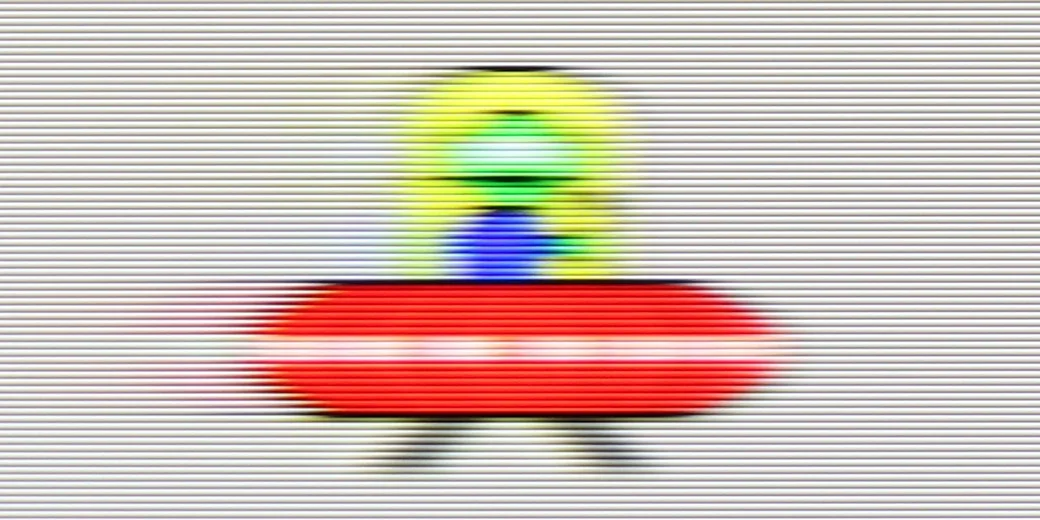
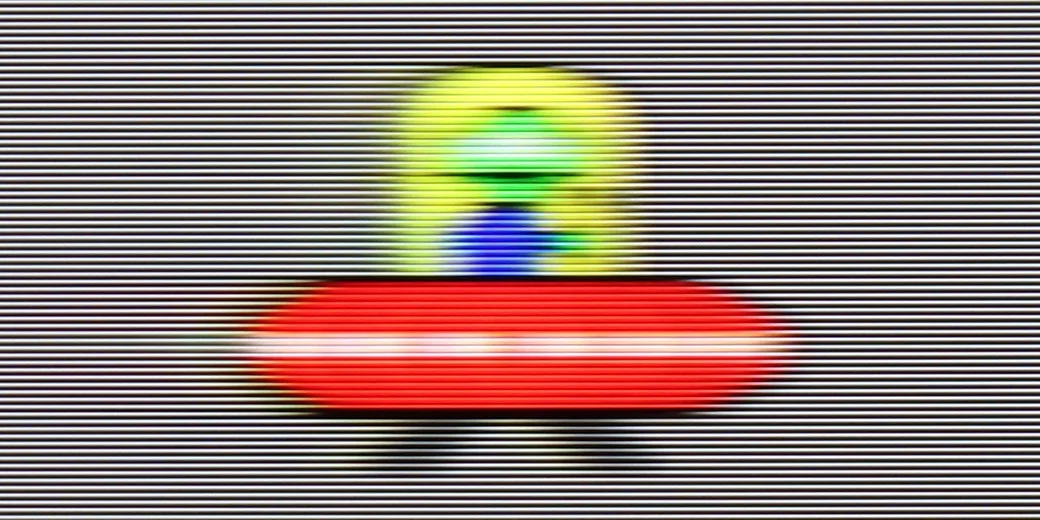
Blur (native resolution, maximum refresh rate):



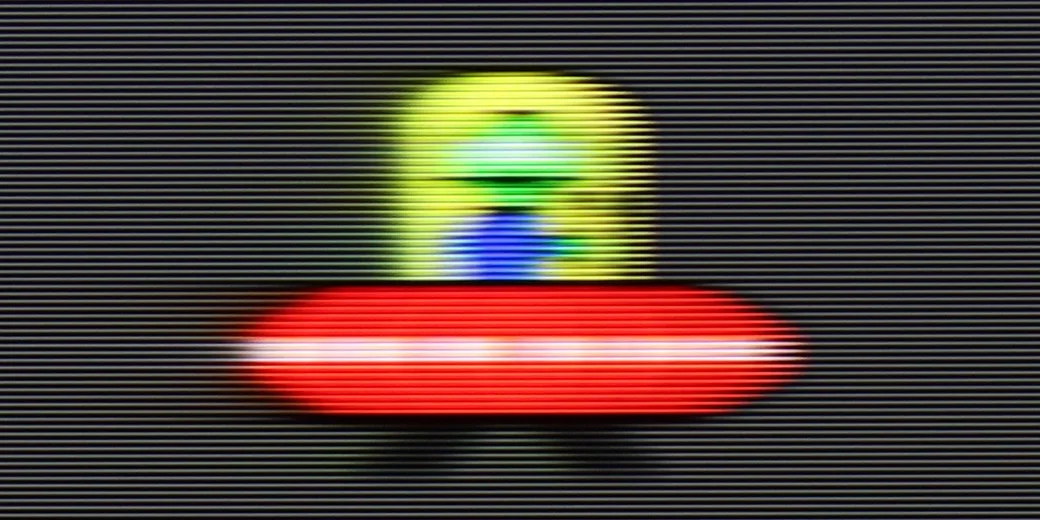
Blur (BFI function enabled):
Image flickers in this mode

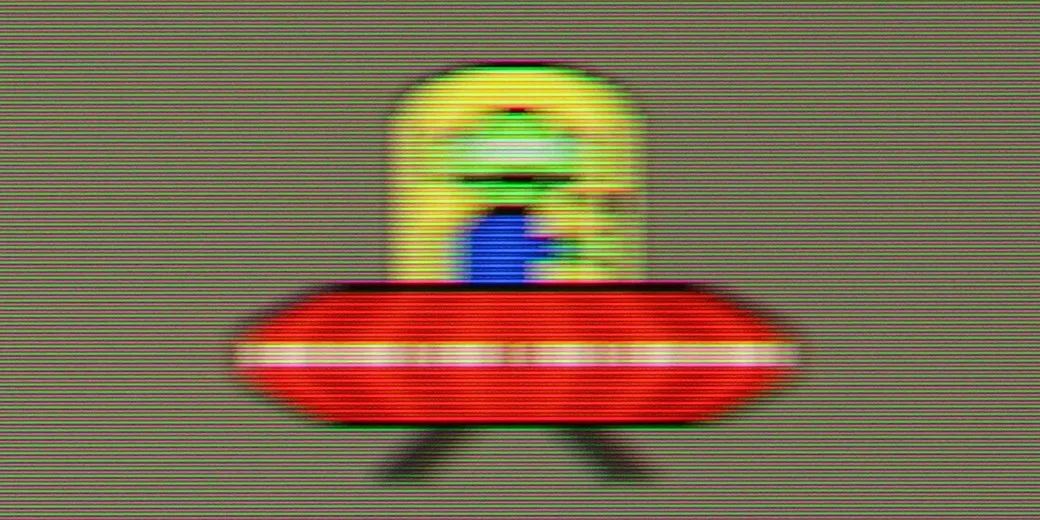
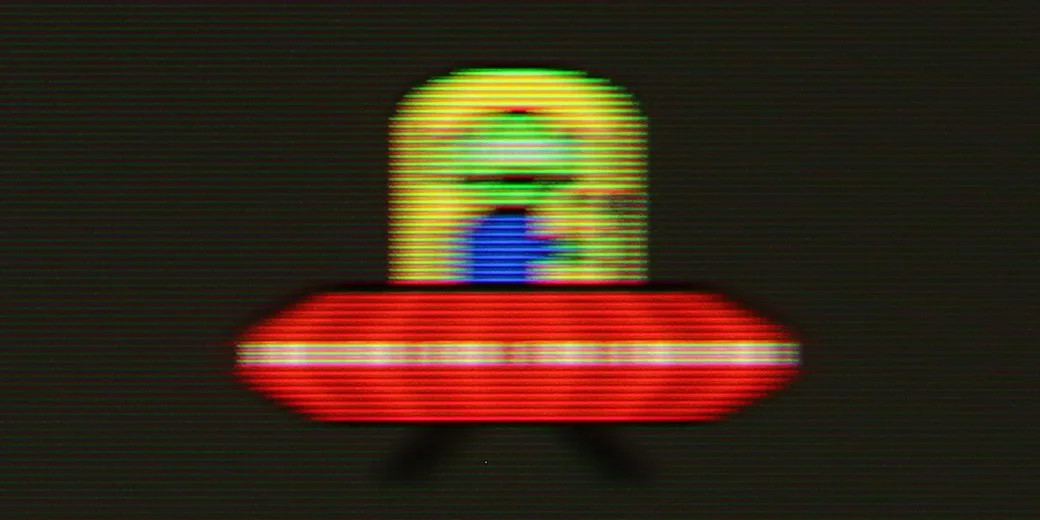

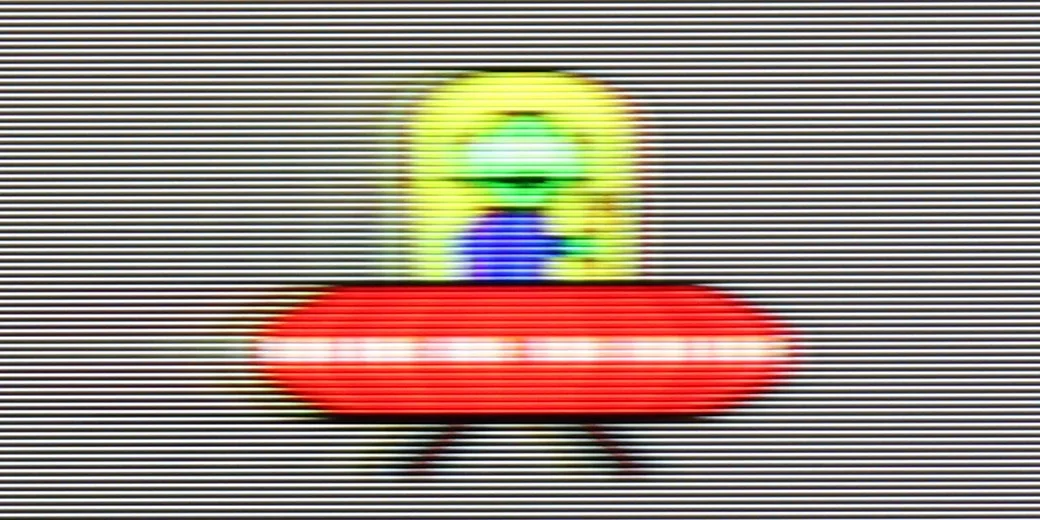
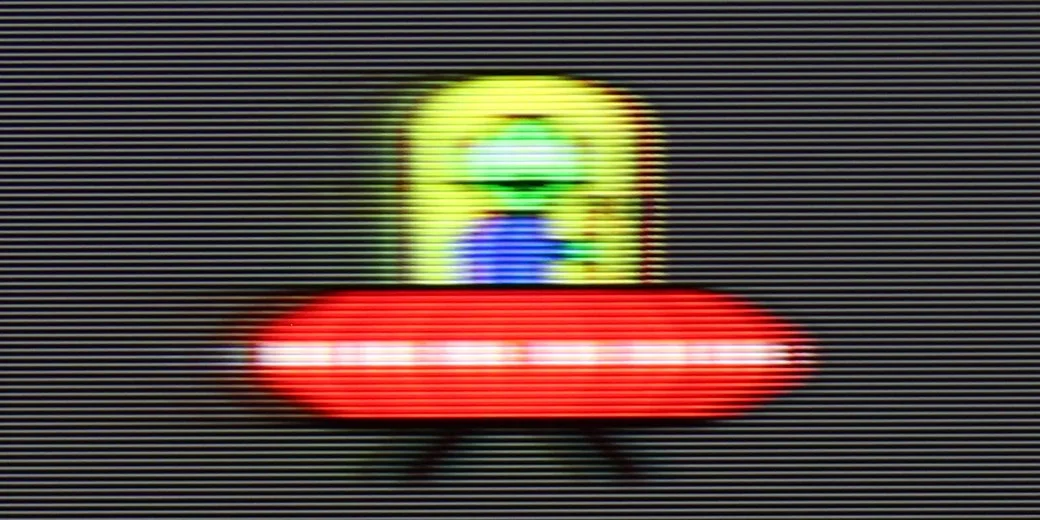
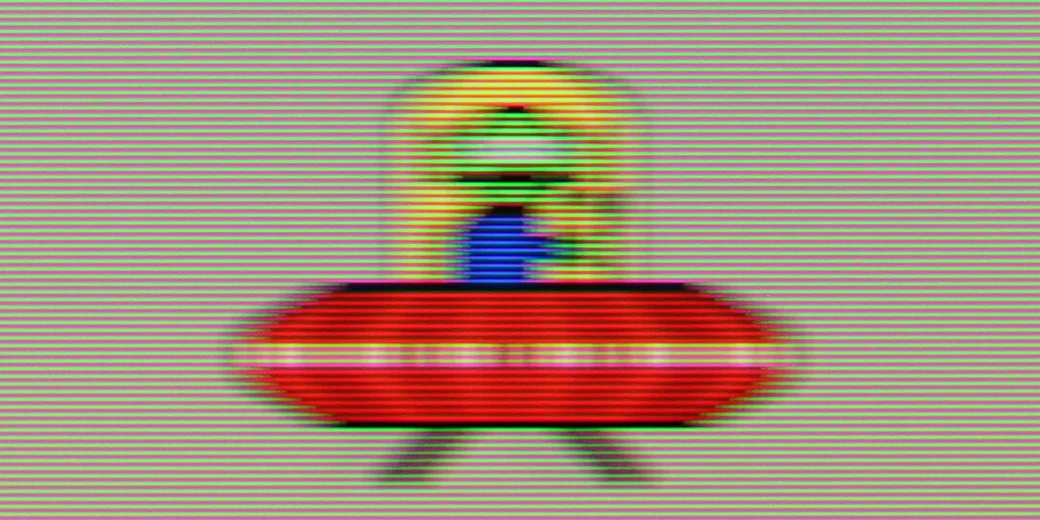
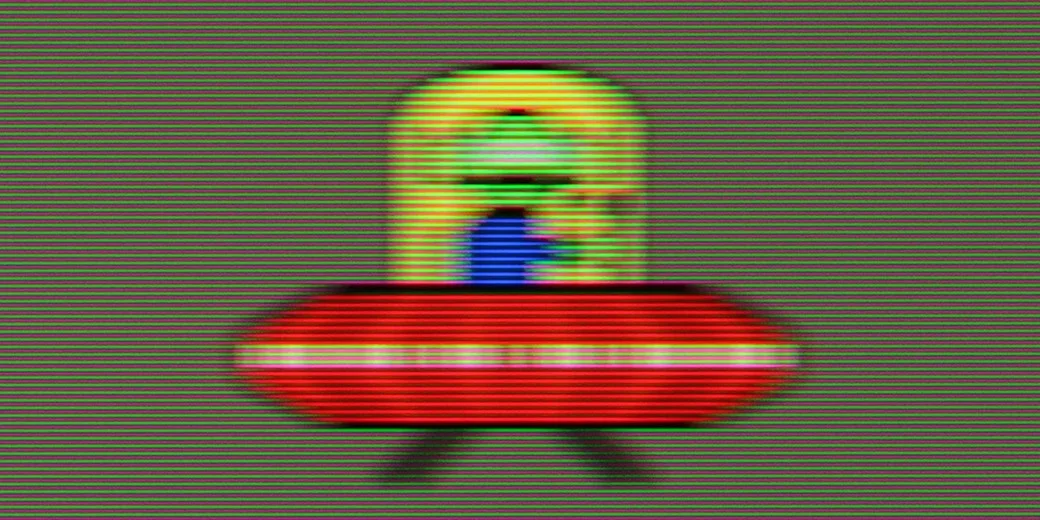
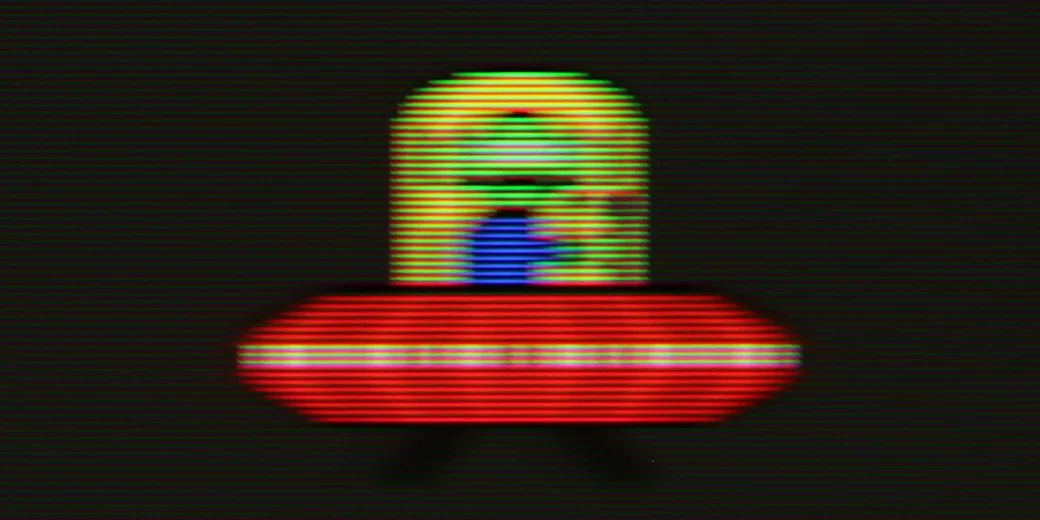
Blur (4K@60Hz Game Motion Plus):
Blur ():
S85F is an incredibly fast television – and that’s not just empty hype. Thanks to the 120 Hz OLED panel, dynamic scenes, whether in games or while watching a live match, look just as they should – smooth, sharp, and without the feeling that something is "slipping" out of frame. The lightning-fast pixel response time, typical of OLEDs, plays a big role here. Transitions between frames are virtually instantaneous, and the image remains clear even during the fastest camera movements. A ball flying across half the field? A car speeding in a chase scene? Everything here is clear and free of the typical "trail" associated with LCDs.
This is exactly what we expect from a good OLED – zero compromises when it comes to motion smoothness. The S85F gives the impression that regardless of the pace of action, we can focus on what’s happening on the screen, rather than on the imperfections of the image.
Motion handling is definitely one of the Bravia 3 II's strongest points. The TV uses a 120 Hz VA panel, a solution that by nature, despite the high refresh rate, doesn't always cope well with motion blur. Sony has, however, managed that issue very well here. Fast-moving objects remain sharp, and the characteristic motion trails and blur are reduced to a very low level, if not to zero. It's one of the least motion-blur-prone LCD TVs we've had the chance to test. Interestingly, in this respect the Bravia 3 II can even outperform the much more expensive flagship True RGB series, the Bravia 9 II.
Console compatibility and gaming features
9.6/10
8.1/10
- ALLM
- VRR
- VRR range48 - 120Hz48 - 120Hz
- Dolby Vision Game Mode
- Correct implementation of HGIG
- 1080p@120Hz
- 1440p@120Hz
- 4K@120Hz
- Game bar
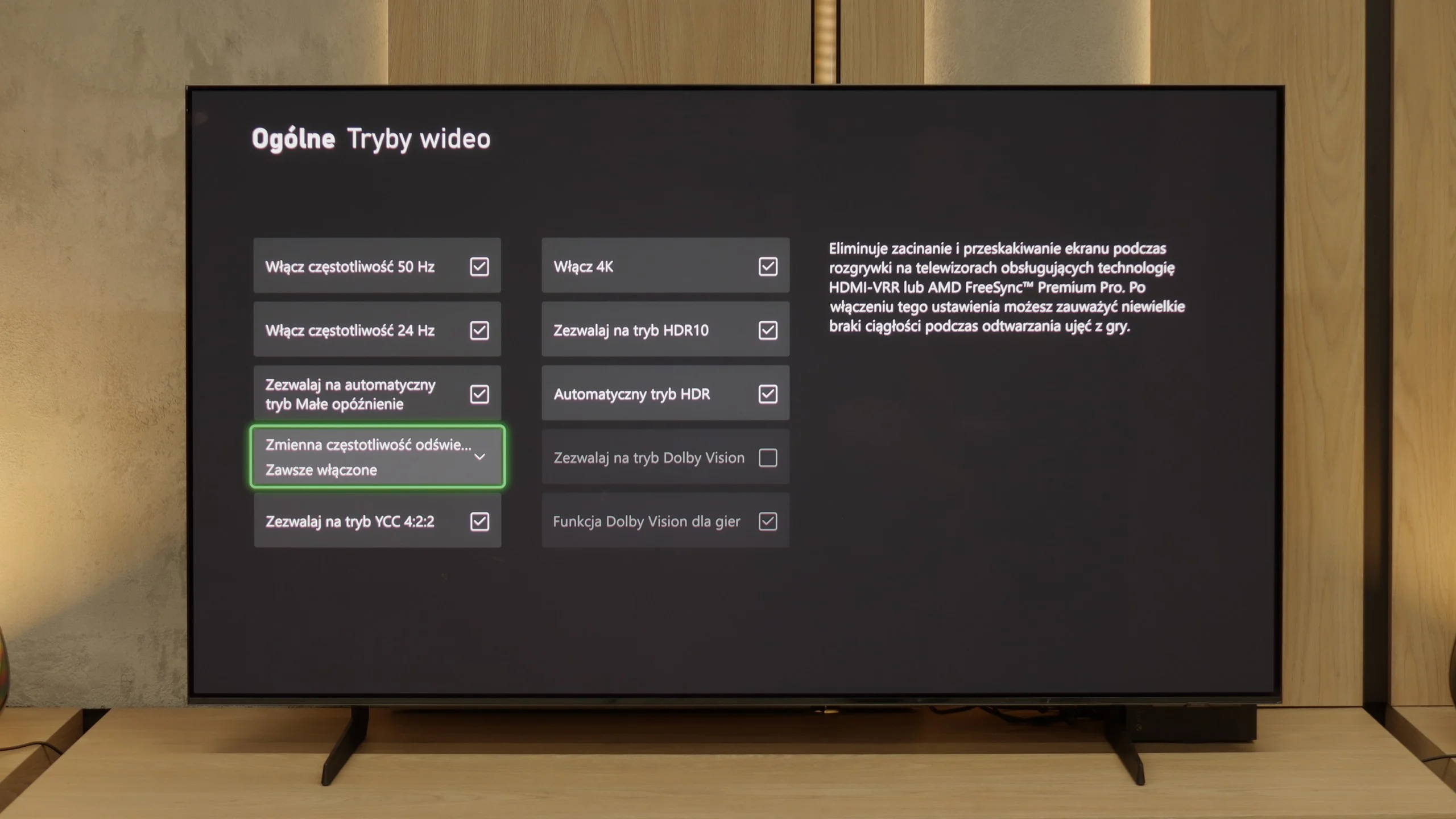
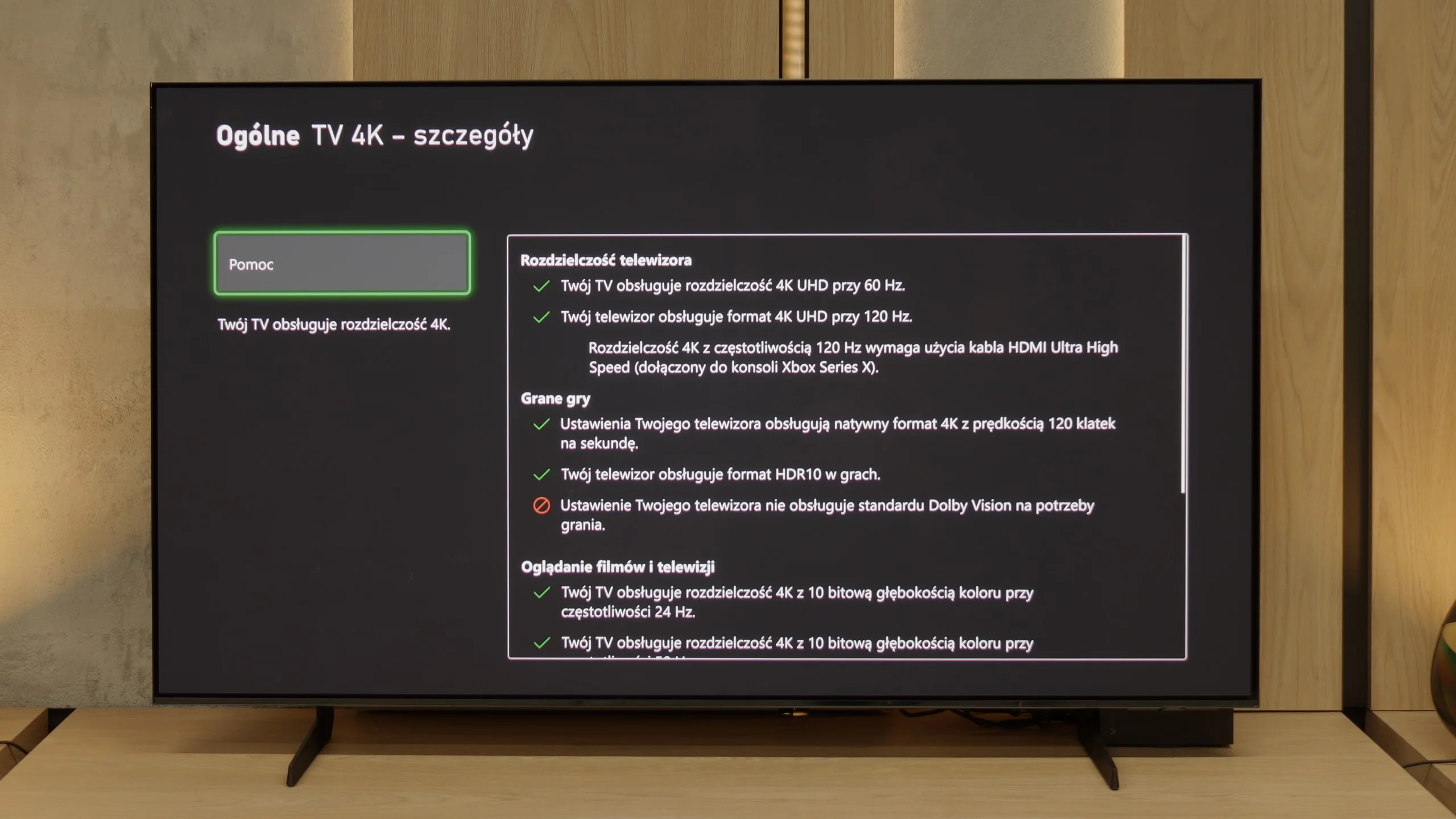
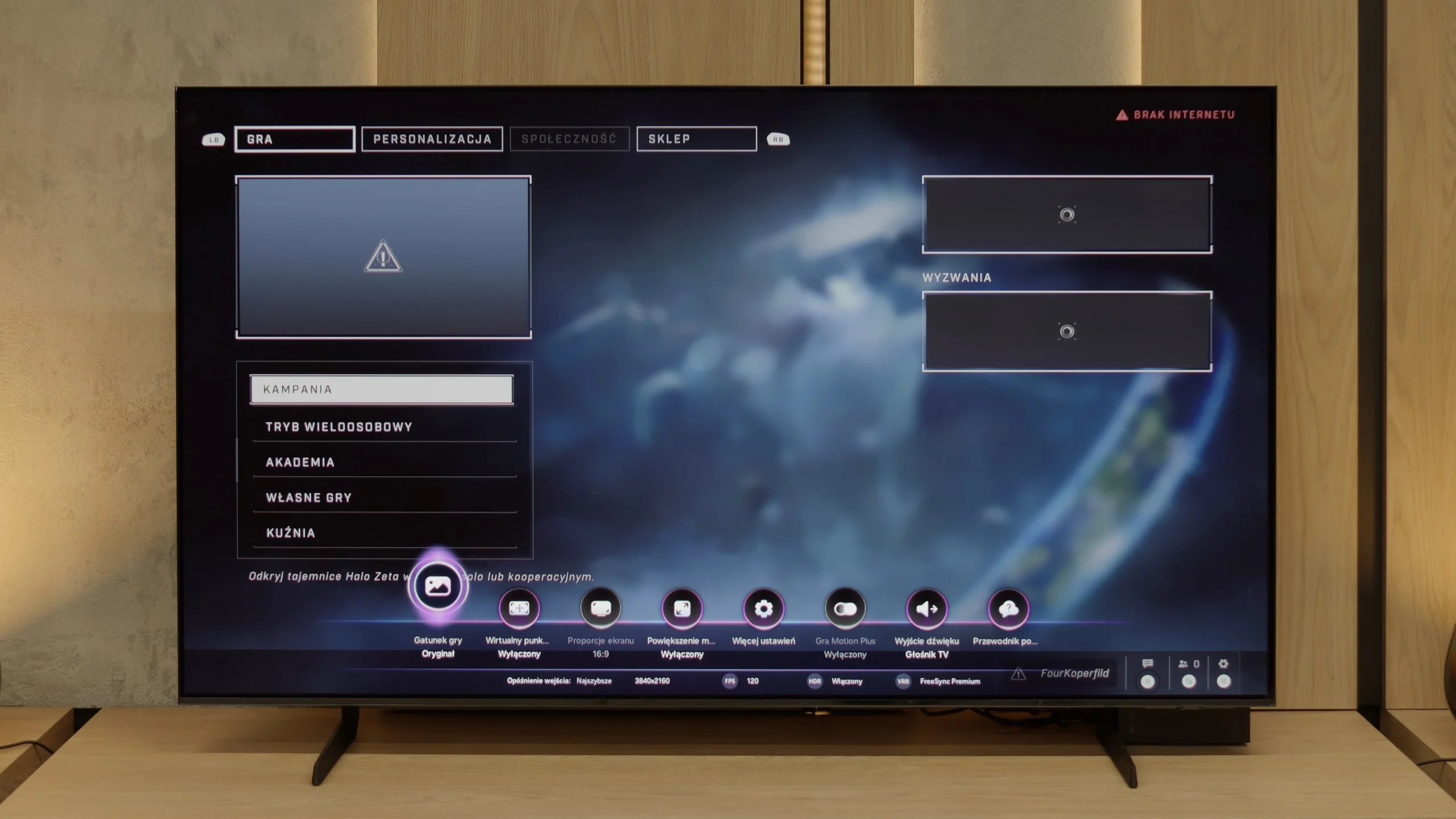
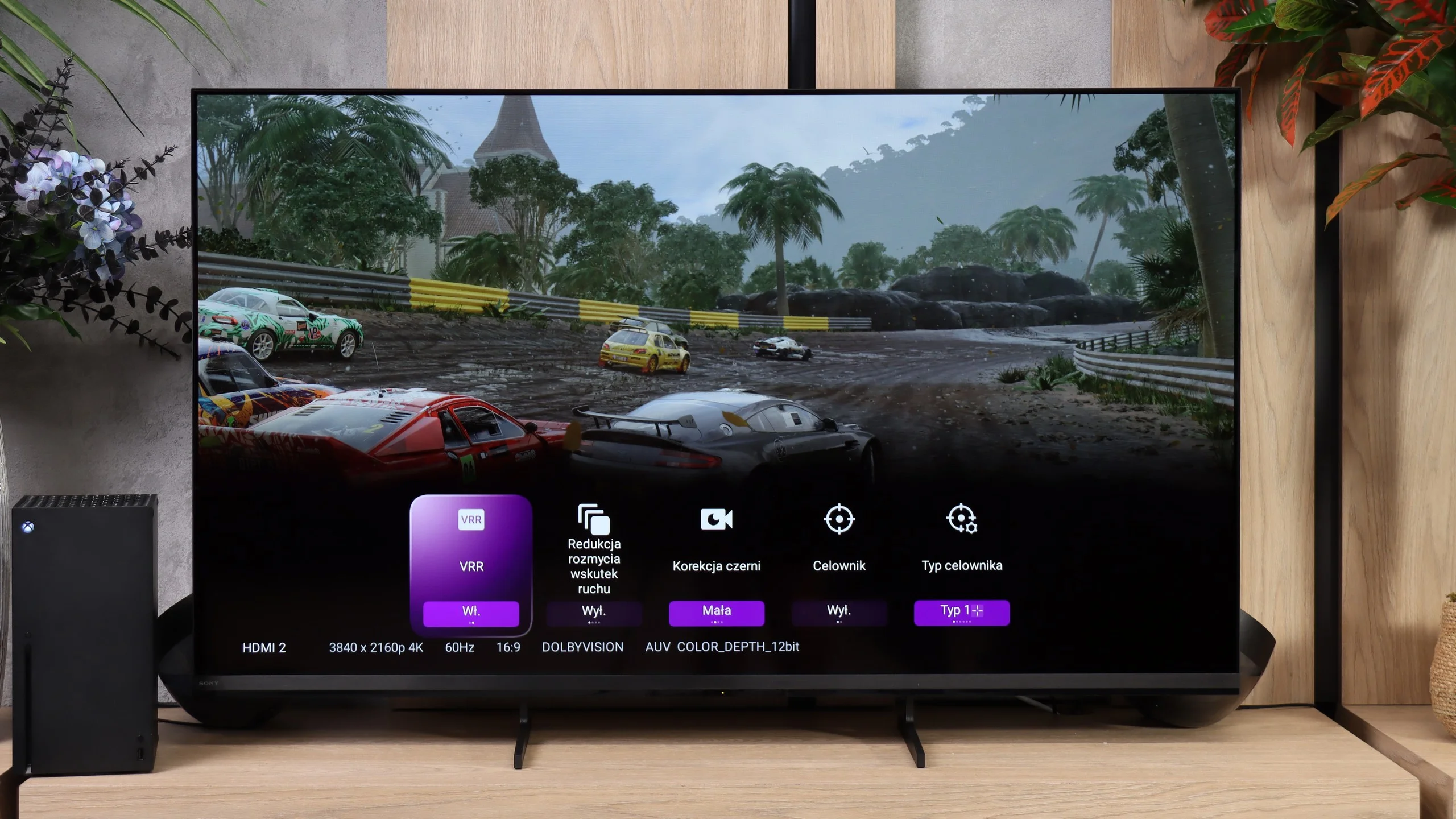
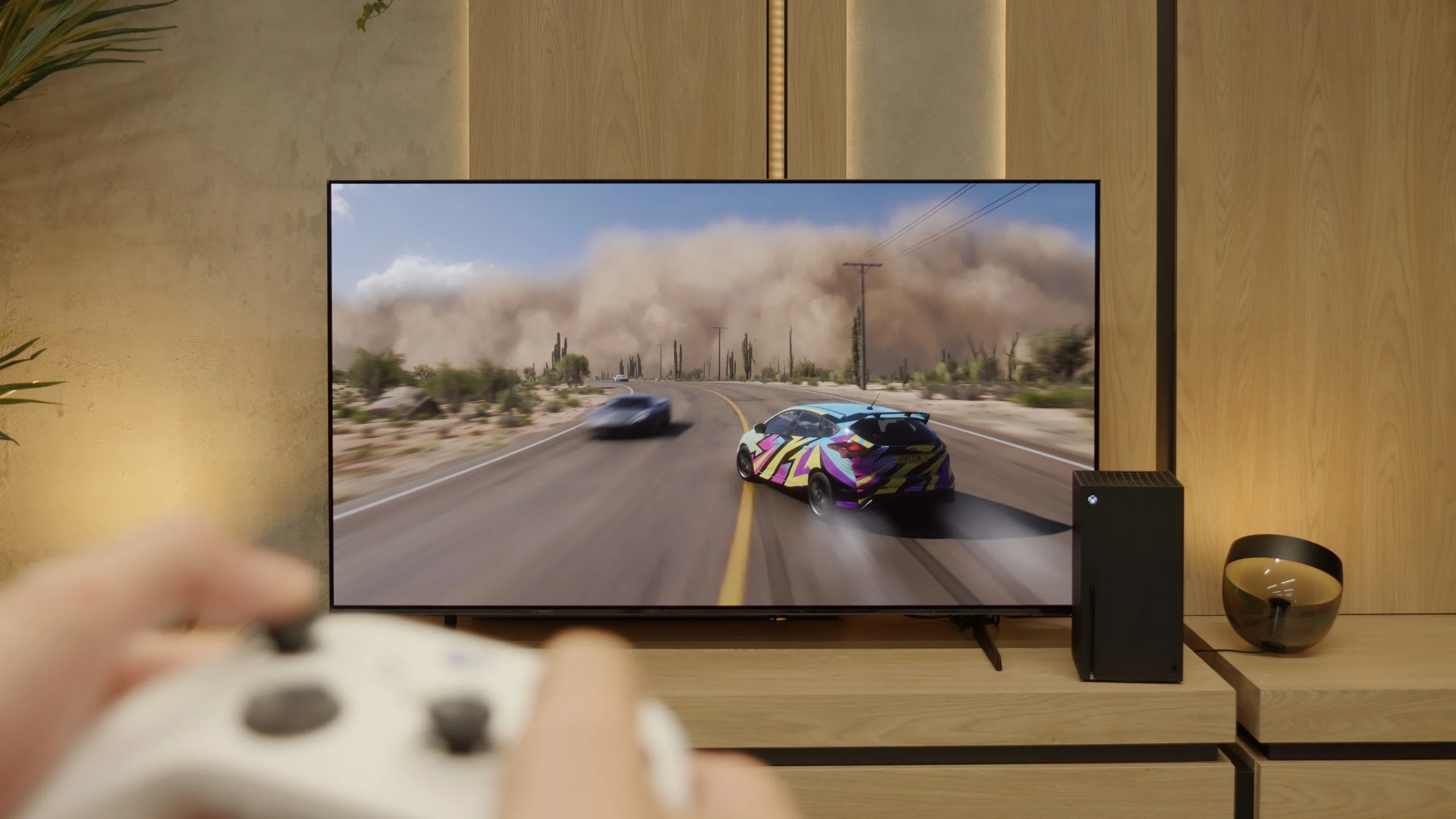
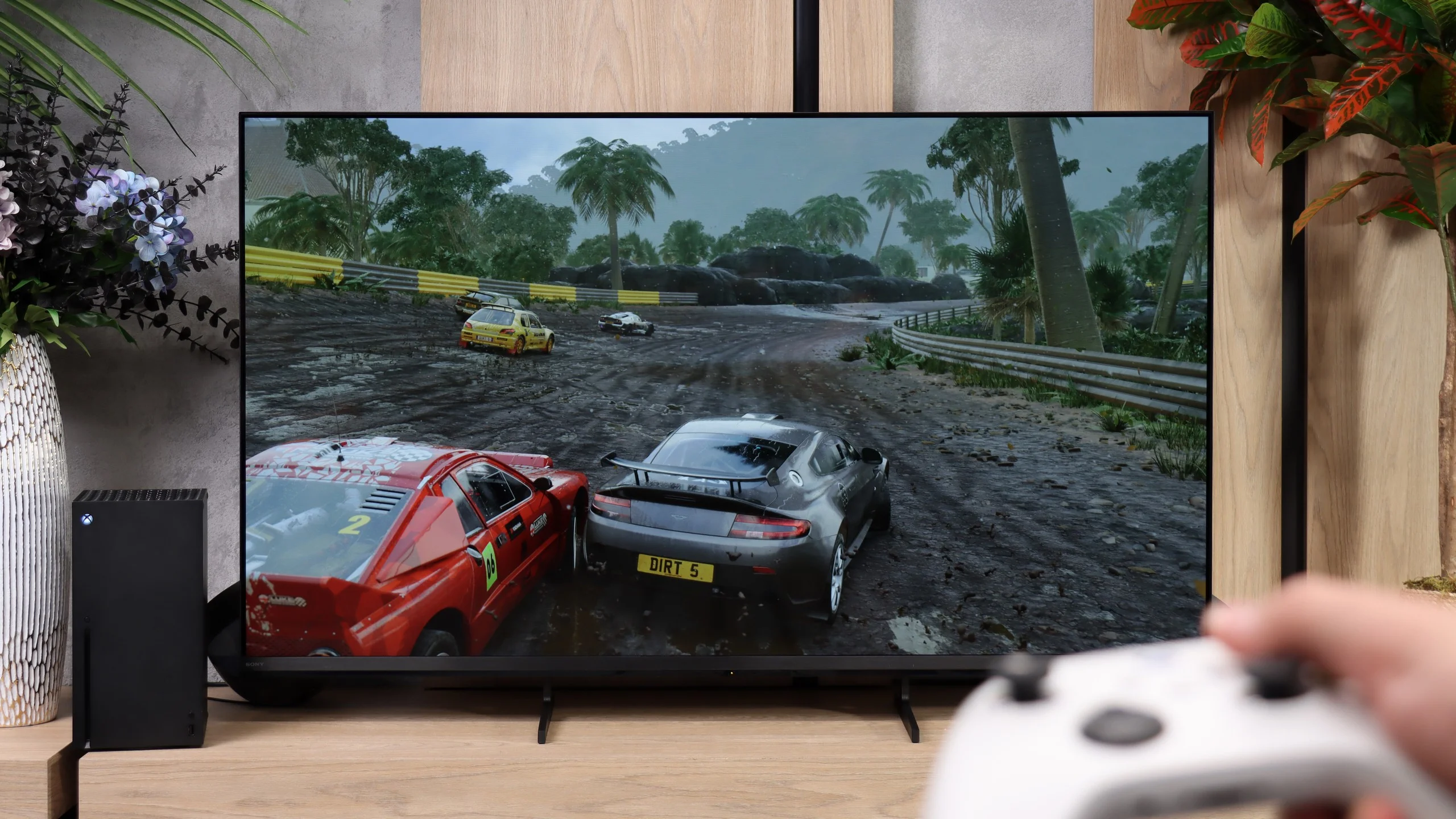
[UPDATE] We have updated our 2025 Samsung TV reviews following the release of firmware version 1131, which officially restores the essential HGiG (HDR Gaming Interest Group) support.
S85F has practically everything on board to become the dream screen for gaming. Four full HDMI 2.1 ports with a bandwidth of 48 Gb/s, support for VRR, ALLM, a super-detailed Game Bar that clearly shows all parameters – plus a gem in the form of Game Motion Plus. This motion smoother makes animation in games more enjoyable, while input lag increases slightly. It's a rare combination, and that’s a big plus for Samsung. Perhaps Samsung will fix this in the next update – and we have high hopes for that. Because if HGiG comes back, the S85F will become nearly the perfect TV for gamers.
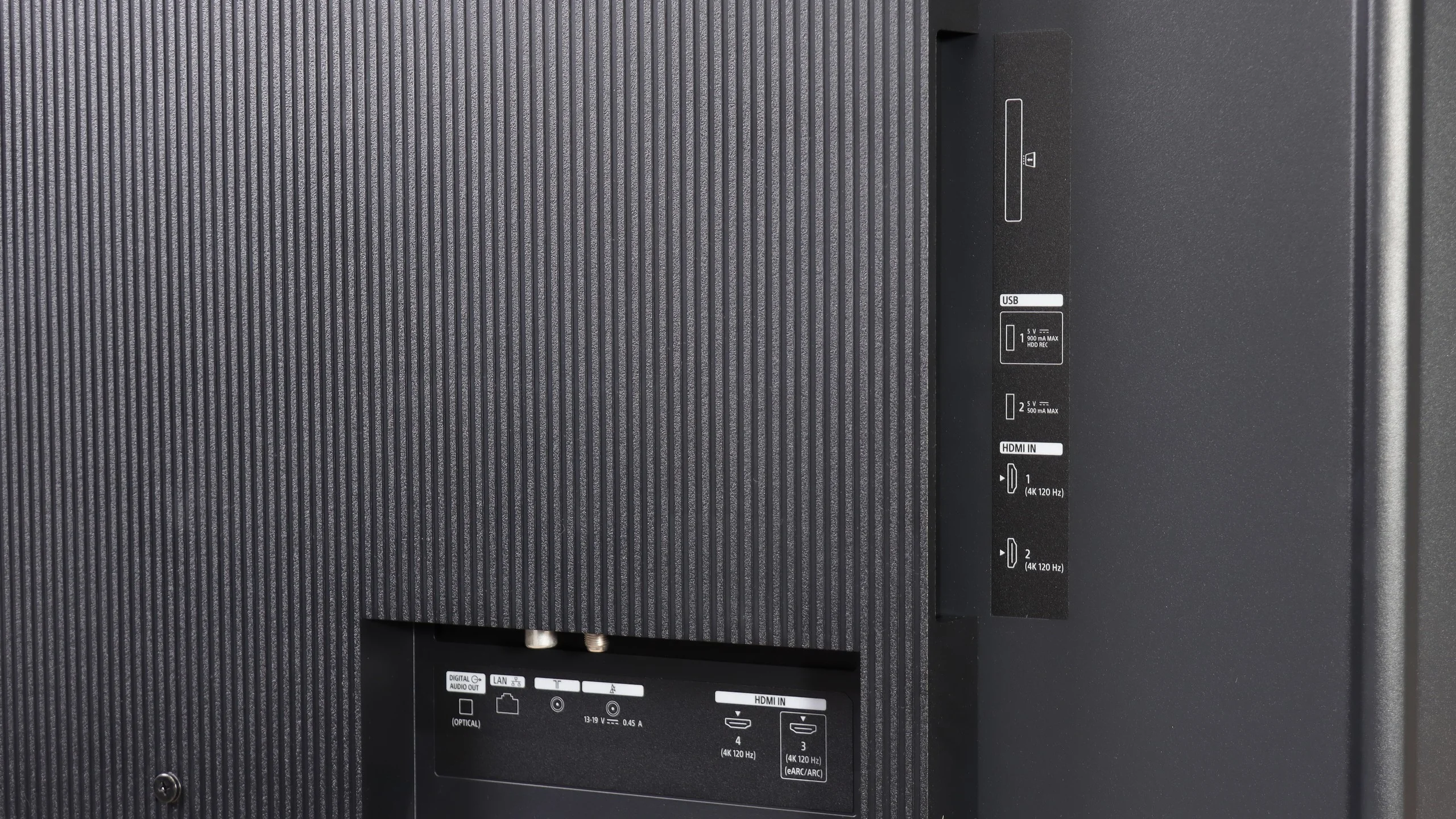
The Sony Bravia 3 II is a very good TV for gamers, although not everything has been solved the way we’d like. The biggest change concerns the connectors. For the first time in a Sony TV we get four full HDMI 2.1 ports with 48 Gb/s bandwidth, thanks to the new MediaTek Pentonic 800 chipset. That removes one of the problems that has hung over this manufacturer’s TVs for years. You can connect several devices at once and on each input use the device’s full capabilities, including VRR and ALLM. There’s also a simple Game Bar that lets you check the key signal parameters and change a few useful settings, such as black level, when you want to improve visibility in darker parts of a game.
There are, however, two limitations worth knowing. The first is the lack of support for 1440p at 120 Hz. That won’t be an issue for everyone, but people using that resolution on a console or PC—for example to get higher frame rates in certain games—will have to choose 1080p. We have more reservations about HGiG support. Sony doesn’t let you disable tone mapping on the Bravia 3 II, so the TV keeps processing HDR even when you’d prefer to leave that task to the console. It’s easiest to spot during HDR setup—the checkerboard test pattern doesn’t disappear at the point where it should based on the TV’s actual capabilities. That doesn’t mean HDR in games will look bad. You just need to set up a little differently and, rather than relying on the pattern, manually set the peak brightness to about 450 nits. So the issue can be worked around, but you should know about it before you start configuring your console.
Input lag
10/10
9.9/10
SDR
HDR
Dolby Vision
Here, dear gamers, the S85F shows its claws. 5 ms with 120 Hz content and around 10 ms with 60 Hz are results that can be described in one word in the world of televisions – phenomenal. This means that the response to our movements is practically instantaneous. We press the button, and the action on the screen happens without any delay, as if the television can read our thoughts. In dynamic games, where a fraction of a second can decide victory or defeat, such values make a huge difference. There's no question of a nervous "wait" for the image to catch up with our movements. The S85F gives us the feeling that everything is under our complete control – and that's how it should be in equipment that aspires to be the ideal screen for a gamer.
In terms of input lag, the Bravia 3 II performs very well. With a 120 Hz signal latency is about 8 ms, while at 60 Hz it rises to around 14 ms, so in both cases the response to controls is very quick and during normal gameplay you’d be unlikely to notice any delay. It’s also worth noting the TV’s behaviour in Dolby Vision Gaming mode on Xbox. Input lag then remains practically just as low, and until recently Sony used to have a noticeable problem with this.
Compatibility with PC
7.6/10
7.2/10
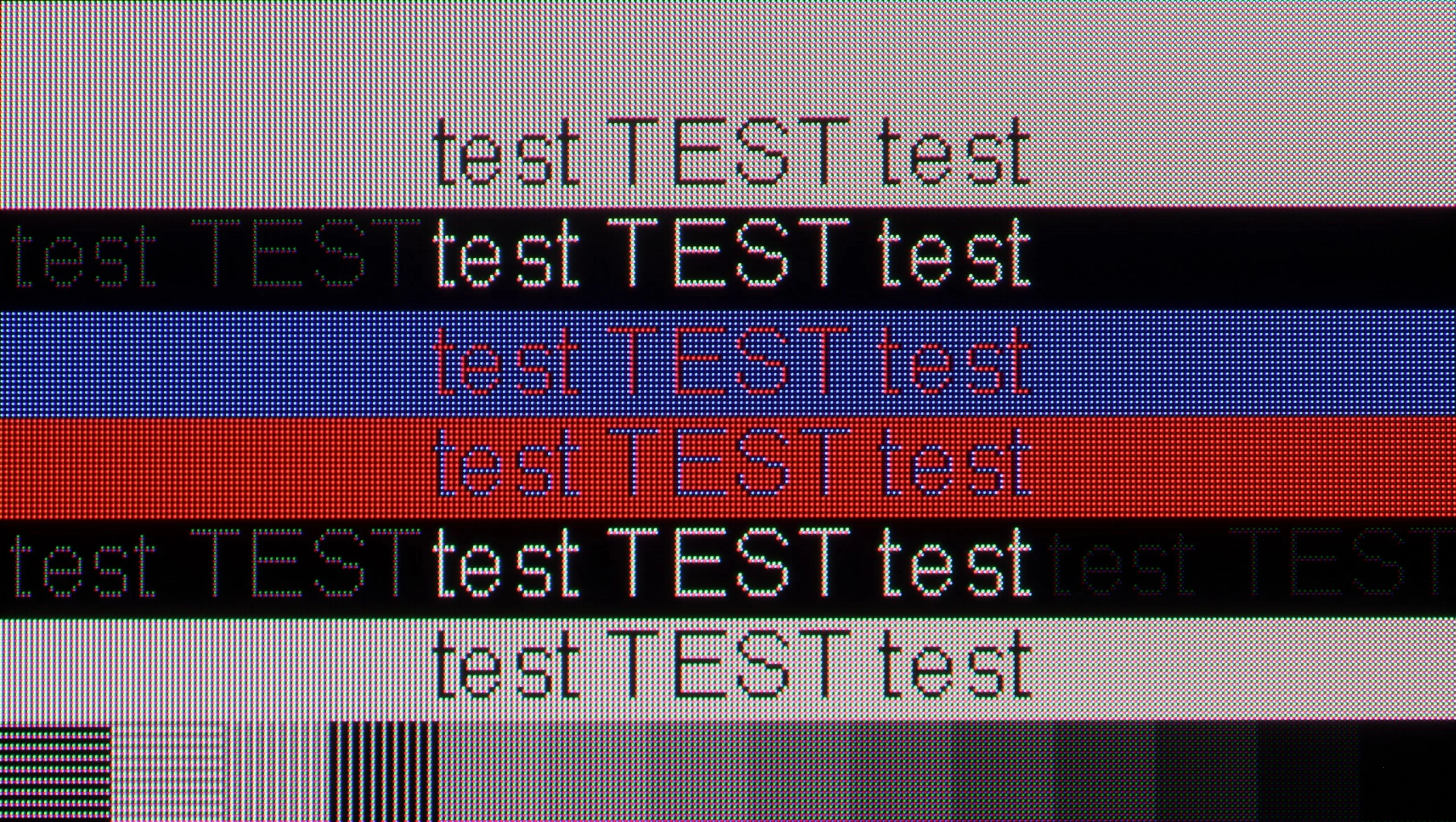
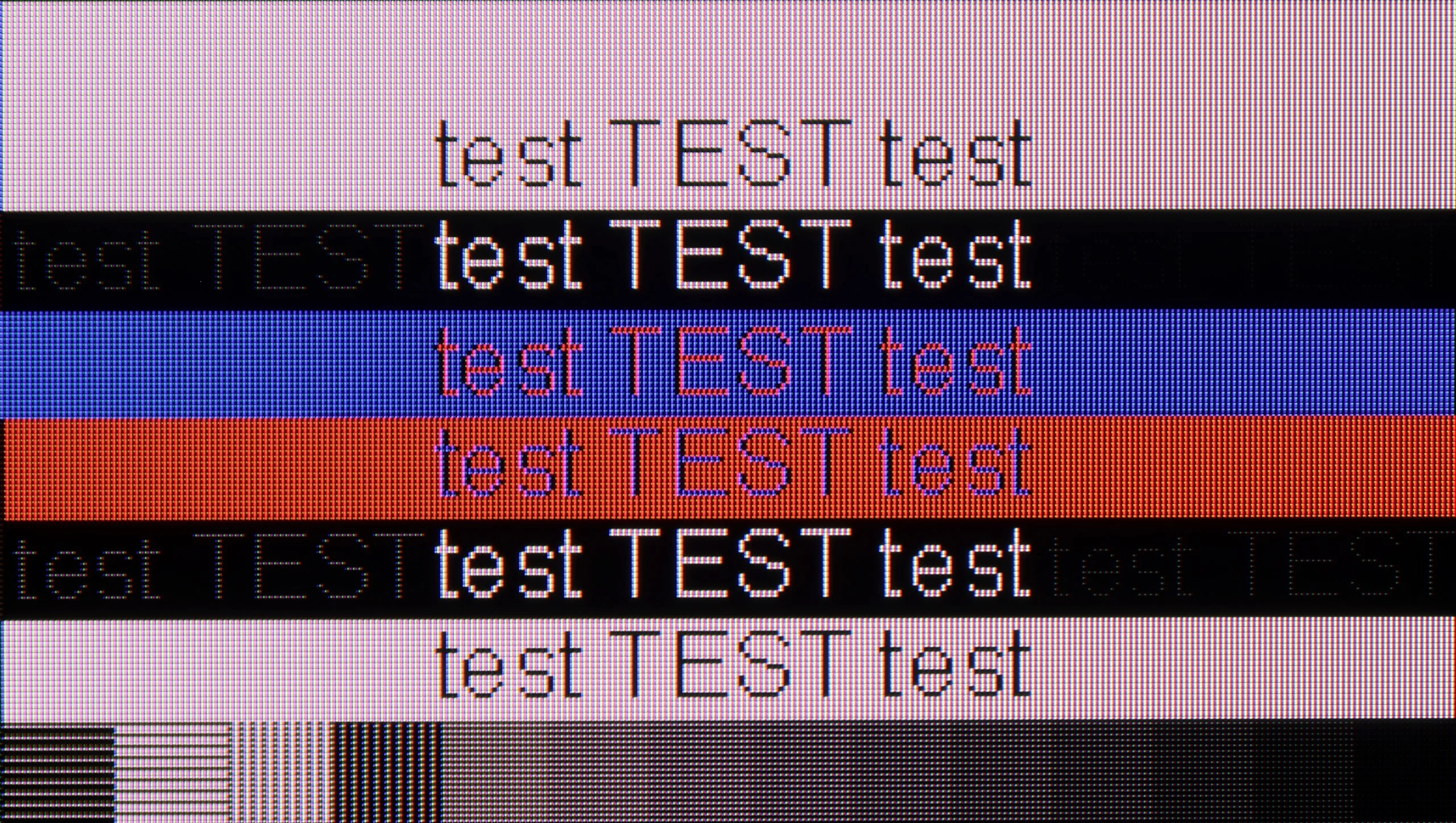
The photo shows the legibility of small fonts. Ideally, lines should be the same thickness on both light and dark text, with minimal pixel gaps.
If you're planning to connect the S85F to a computer, we have good news – this television is perfect for that. Low input lag and a 120 Hz panel make gaming on PC a pure pleasure. Whether we're talking about dynamic shooters or more relaxed RPGs, the response is instantaneous, and the smoothness of the animation can draw you in for hours on end.
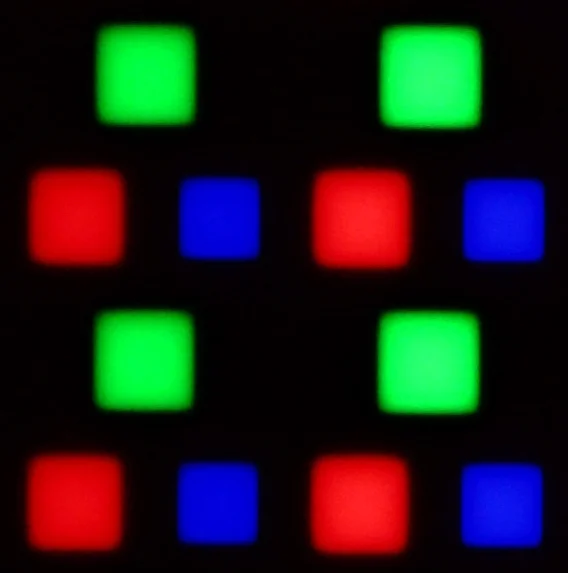
Of course, there’s no rose without thorns. Due to the diamond pixel layout in the QD-OLED panel, there is a slight "rainbow icon" effect, particularly noticeable when sitting close to the screen. Fortunately, this is more of a detail that most of you won’t mind in everyday use. Especially since, thanks to the proper implementation of 4:4:4 chroma, the readability of fonts is at a very good level – documents, websites, and text editors simply look as they should.
Working with a computer is generally good, although, again, not without a few caveats. The Bravia 3 II correctly handles chroma 4:4:4, so in typical use text and the system interface look sharp and legible. However, grey fonts can draw attention, since their vertical edges may be noticeably brighter than the horizontal ones. On the larger screen this isn't particularly bothersome, but if someone is considering the smaller Bravia 3 II as a monitor for text work, it's worth keeping in mind.
What bothers us more, though, is the lack of additional modes with increased refresh rates. It's not even about 144 or 165 Hz at 4K, but rather the option to get higher smoothness at Full HD. This solution is increasingly appearing in rival TVs (DLG 240Hz), while Sony still does not offer it, even in its pricier models. For most users, 4K at 120 Hz will of course be perfectly sufficient, especially for consoles. But those who also use the TV as a PC gaming monitor may feel somewhat disappointed.
Viewing angles
9.8/10
3.3/10
Here, dear readers, the S85F reaches the absolute peak. The viewing angles are phenomenal – some of the best you can get in a TV today, and it’s thanks to the unique QD-OLED panel from Samsung Display. Of course, WOLED panels can also maintain a high level in this regard, but let’s not kid ourselves – what the QD-OLED shows in the S85F is even more impressive. Colours, contrast, and brightness remain practically unchanged even when viewing the screen from a very large angle. It’s the kind of television where you don’t have to fight for the “best spot on the couch” – everyone will see the picture in all its glory, no matter where they’re sitting.
Viewing angles are fairly typical for a VA panel, meaning simply average and, for some, probably poor. The Bravia 3 II looks best when you're sitting directly in front of the screen. As you move to the side, colours start to lose saturation and blacks become greyer. That's unfortunately the price we pay for this panel's high native contrast. Watching with two or three people shouldn't be much of an issue, but with a wide sofa those sitting at the ends will notice a clearly worse image.
Daytime performance
5.1/10
5.8/10
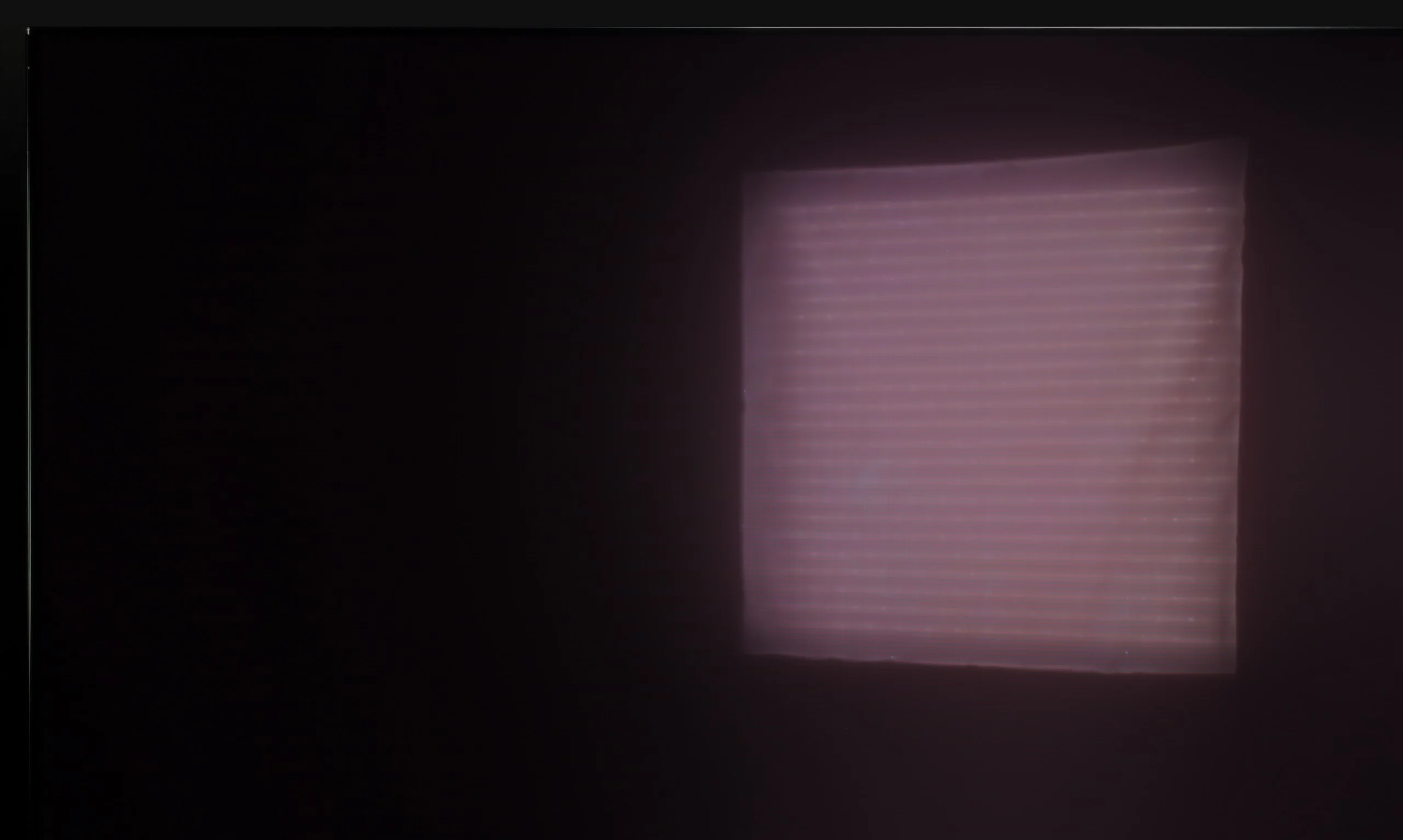
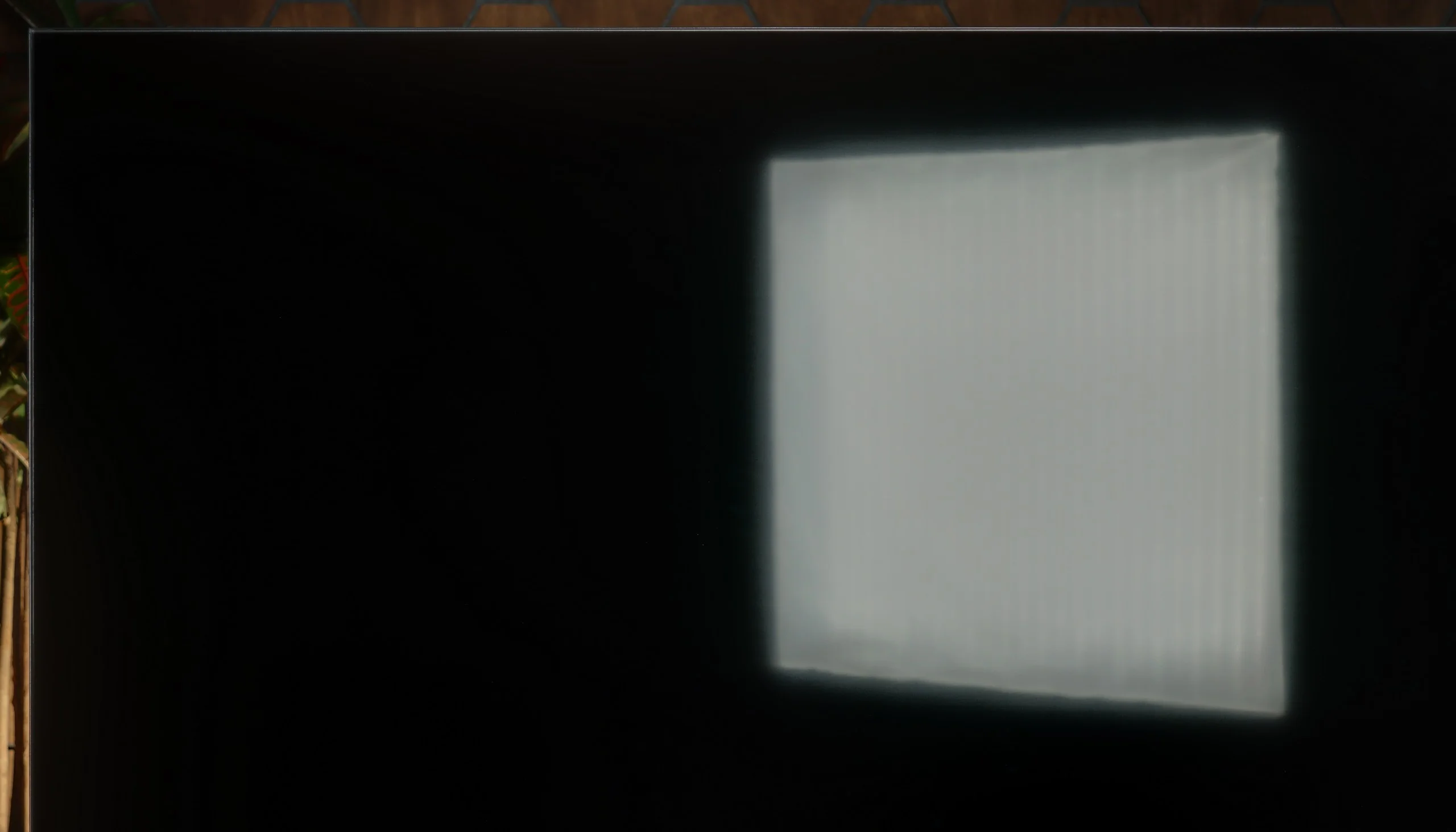
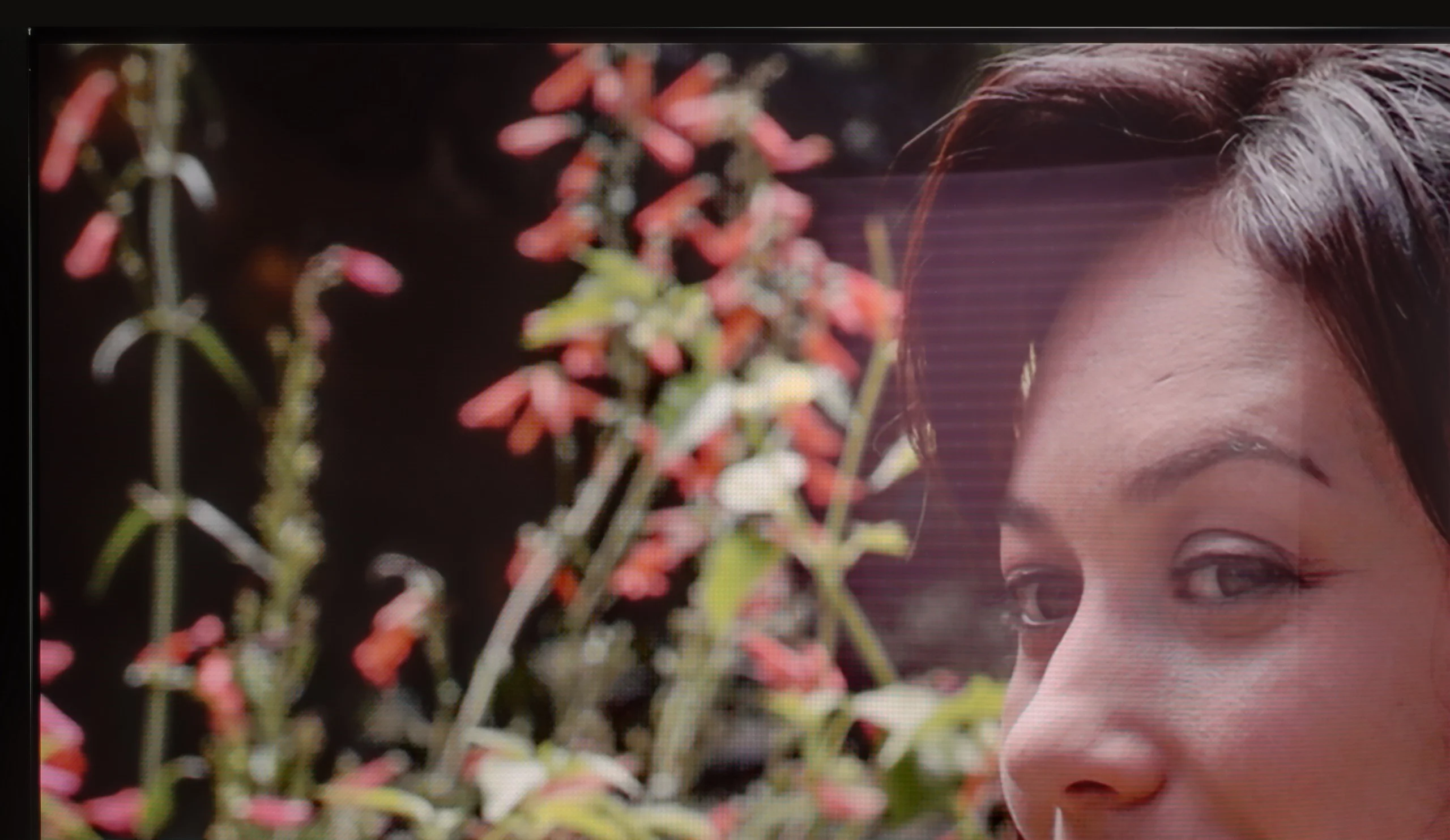
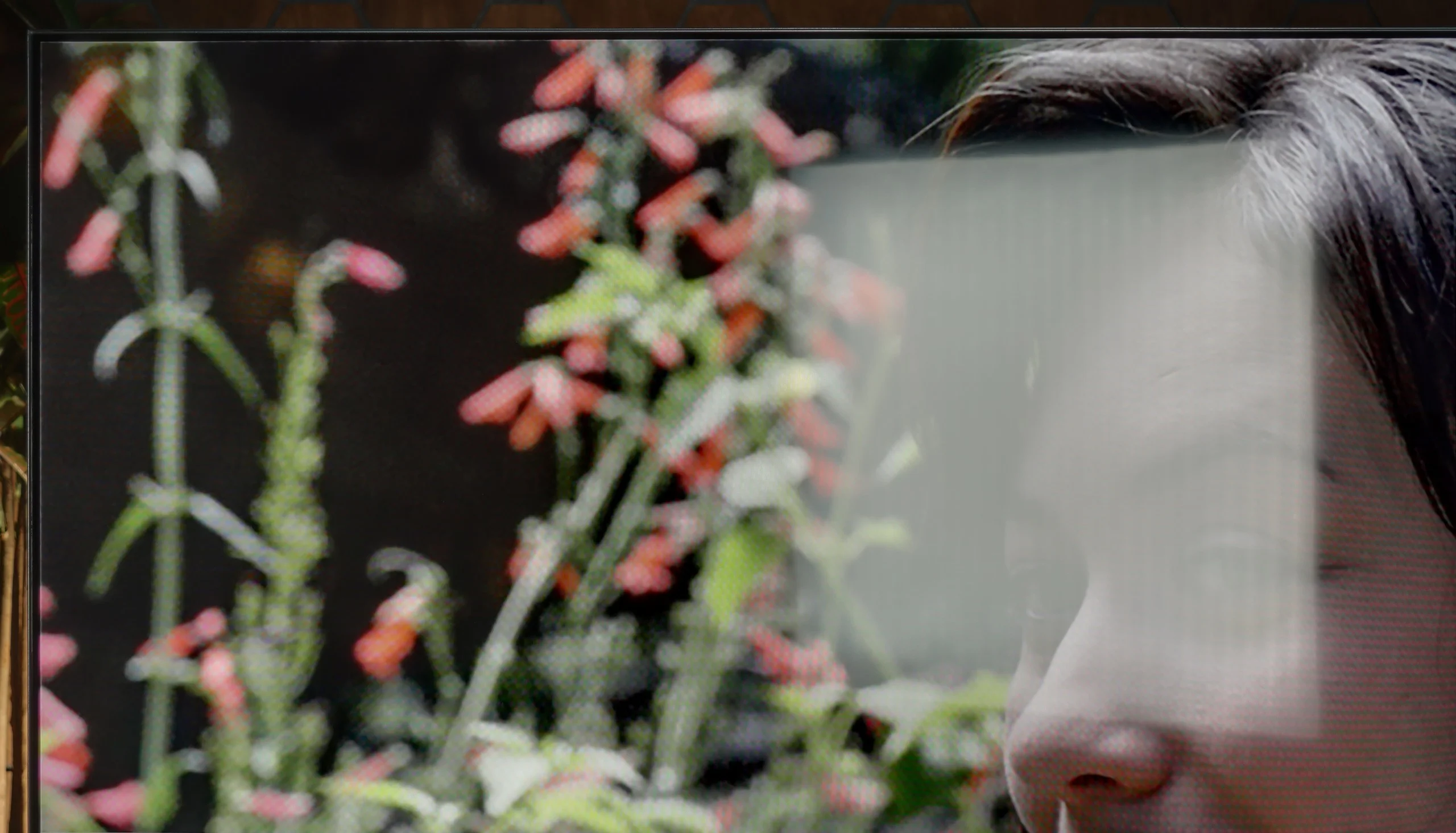
Panel brightness
SONY BRAVIA 3 II (XR35M2): 447 cd/m2
Samsung S85F OLED: 317 cd/m2
We really liked the saying "no rose without thorns," and it fits perfectly with QD-OLED TVs. Especially when we look at their performance in highly lit conditions. As you may notice, under very intense light, the surface of the panel can take on a slightly cherry hue. The effect is subtle in the case of the S85F, but in extreme lighting conditions, black can appear a bit worse than in WOLED panels. But – and this "but" is key here – QD-OLED suppresses direct light reflections much better. This means that reflections will be less bothersome, and the picture will retain clarity even when something bright reflects on the screen. You win some, you lose some.
As for brightness, the S85F is a moderately bright OLED. It’s not a model designed for extremely sunny living rooms. If you plan to place it in a very bright room, we recommend considering blinds or placing it in a location that at least partially protects it from direct light.
During the day the Bravia 3 II performs quite well, although a lot depends on where you place the TV. The satin finish handles reflections reasonably — it doesn't act like a mirror, but strong light sources, particularly a window opposite the screen, can interfere with viewing. On the plus side, the VA panel keeps blacks fairly deep in daylight, so the image doesn't immediately look grey or washed out. The brightness of around 450 nits also helps, and the Bravia 3 II can sustain that regardless of how many bright elements are on-screen. That's more than enough for a typical living room and the picture remains readable during the day. However, if the TV will be placed in a very bright room with large windows and a lot of direct light, you can find models with noticeably more effective coatings and greater brightness headroom.
Panel details
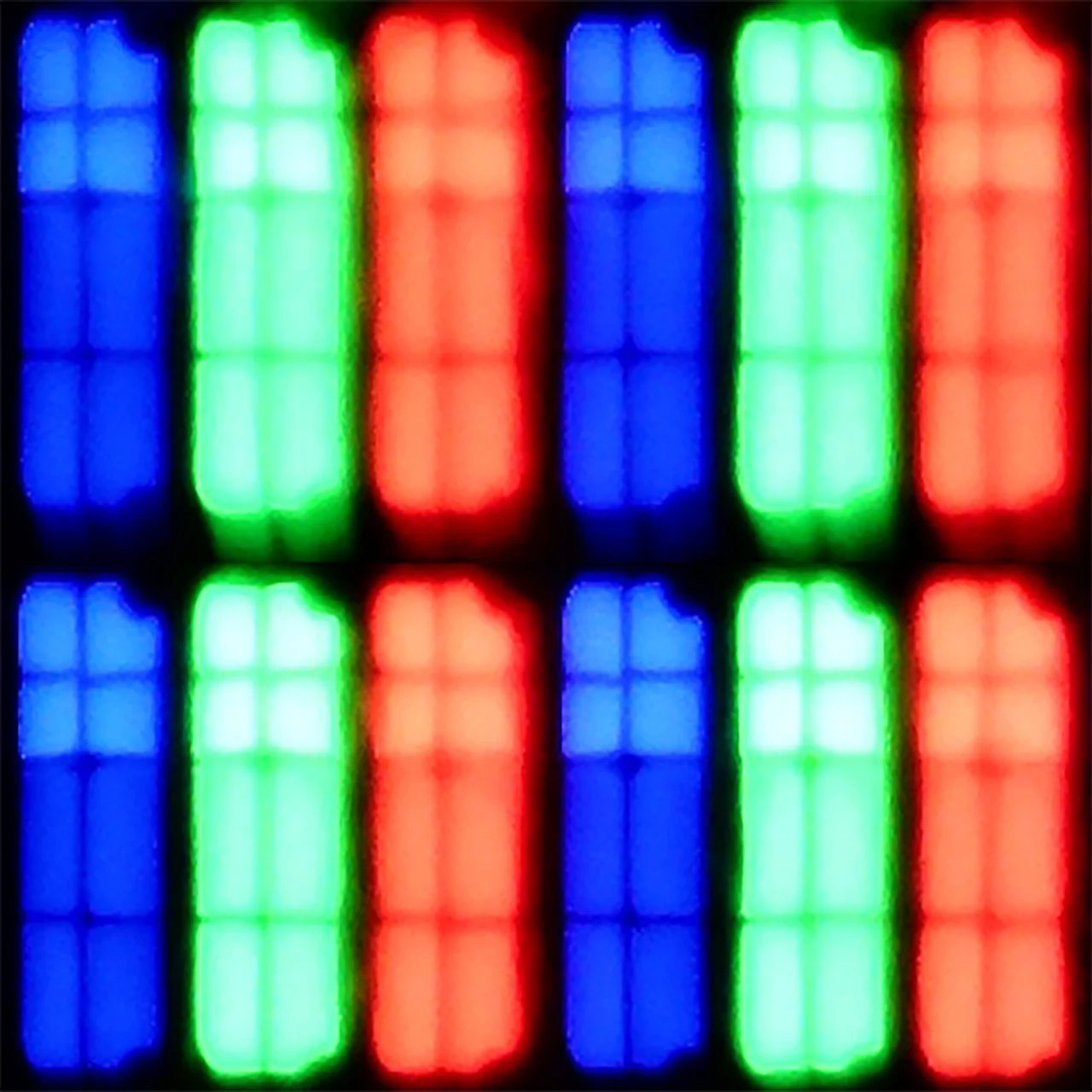
Subpixel Structure:
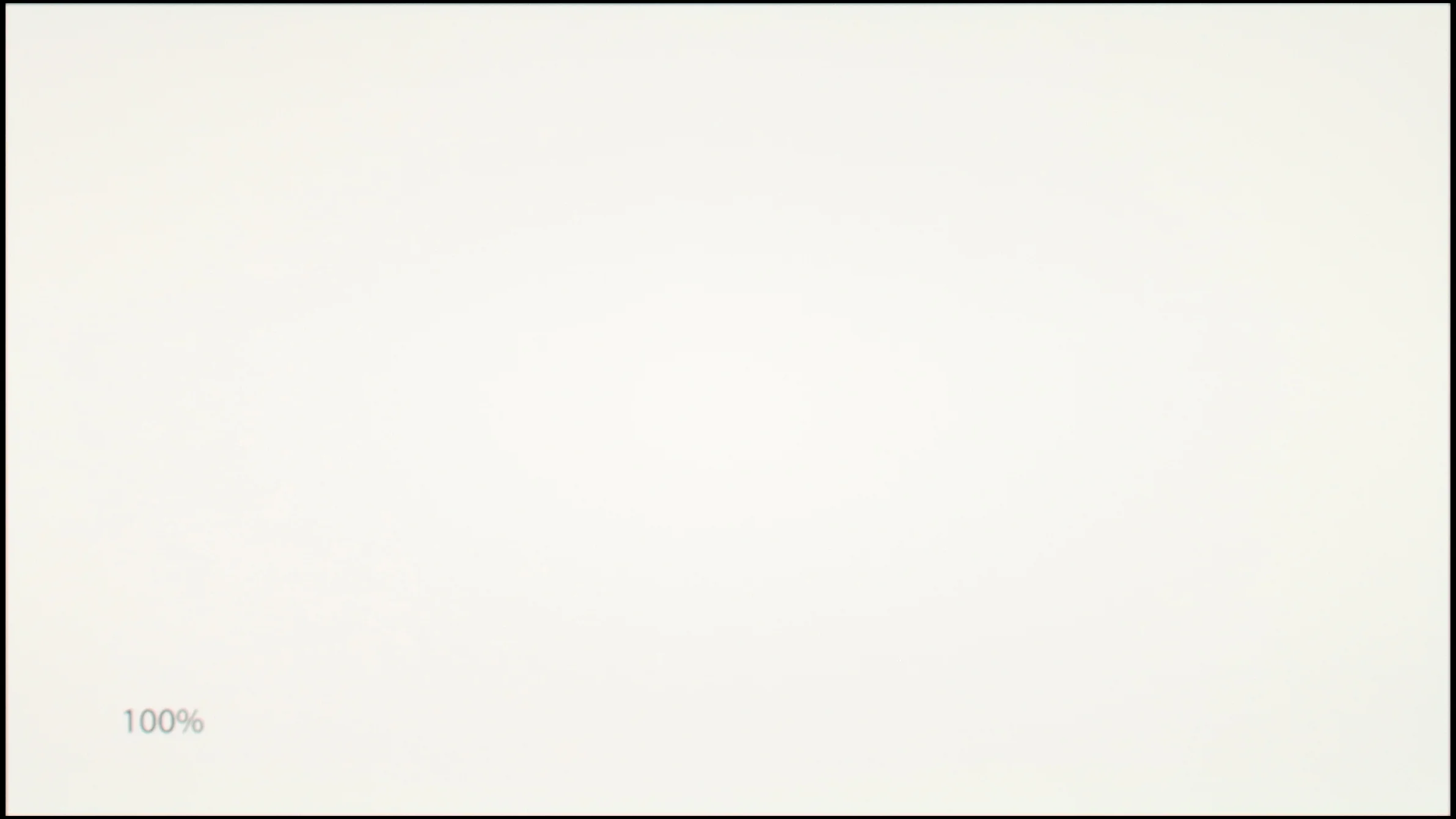
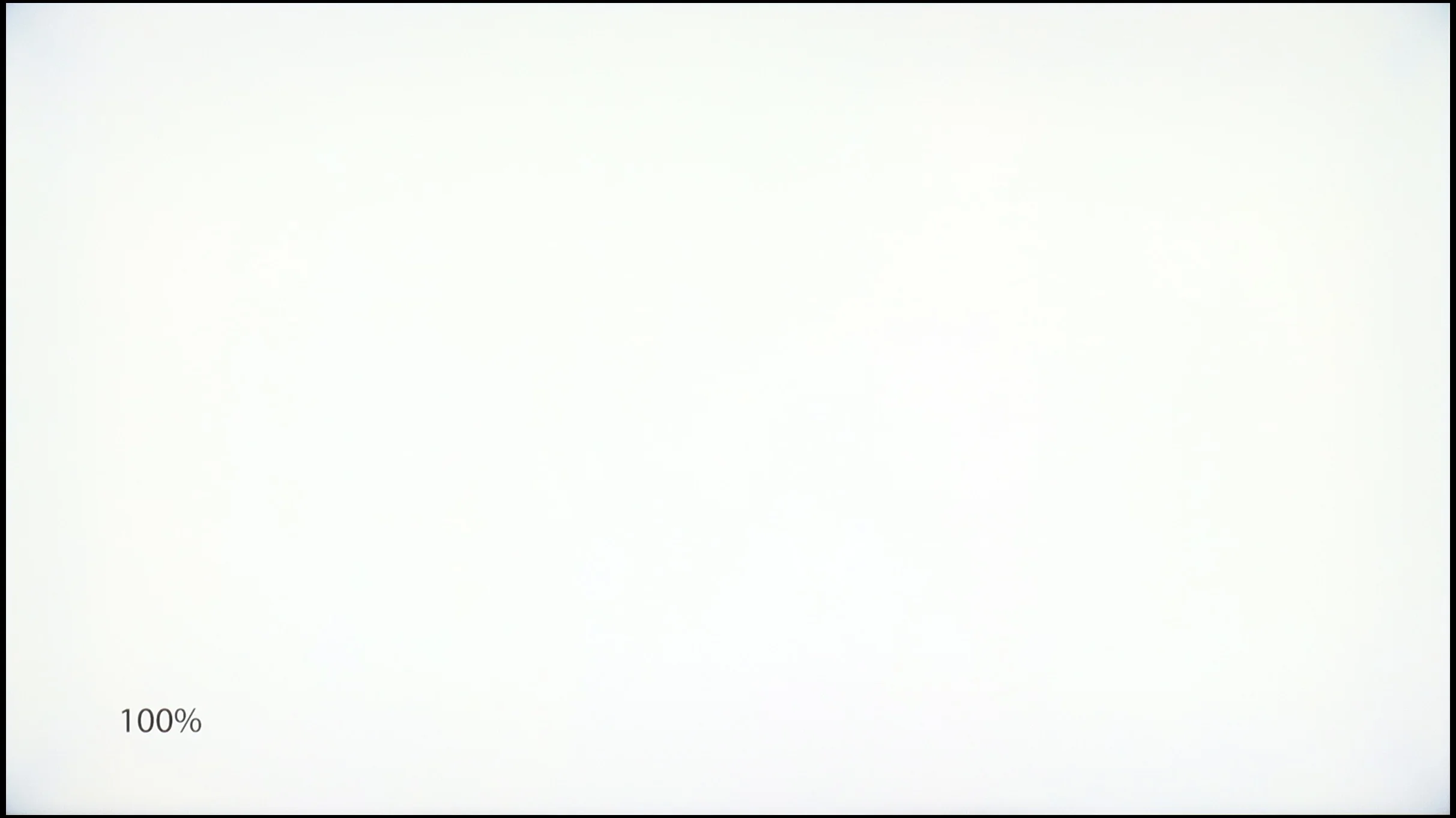
Panel uniformity and thermal imaging:
Samsung S85F OLED
SONY BRAVIA 3 II (XR35M2)
TV features
7.3/10
7.9/10
- SystemTizenGoogle TV
- System performanceGoodGood
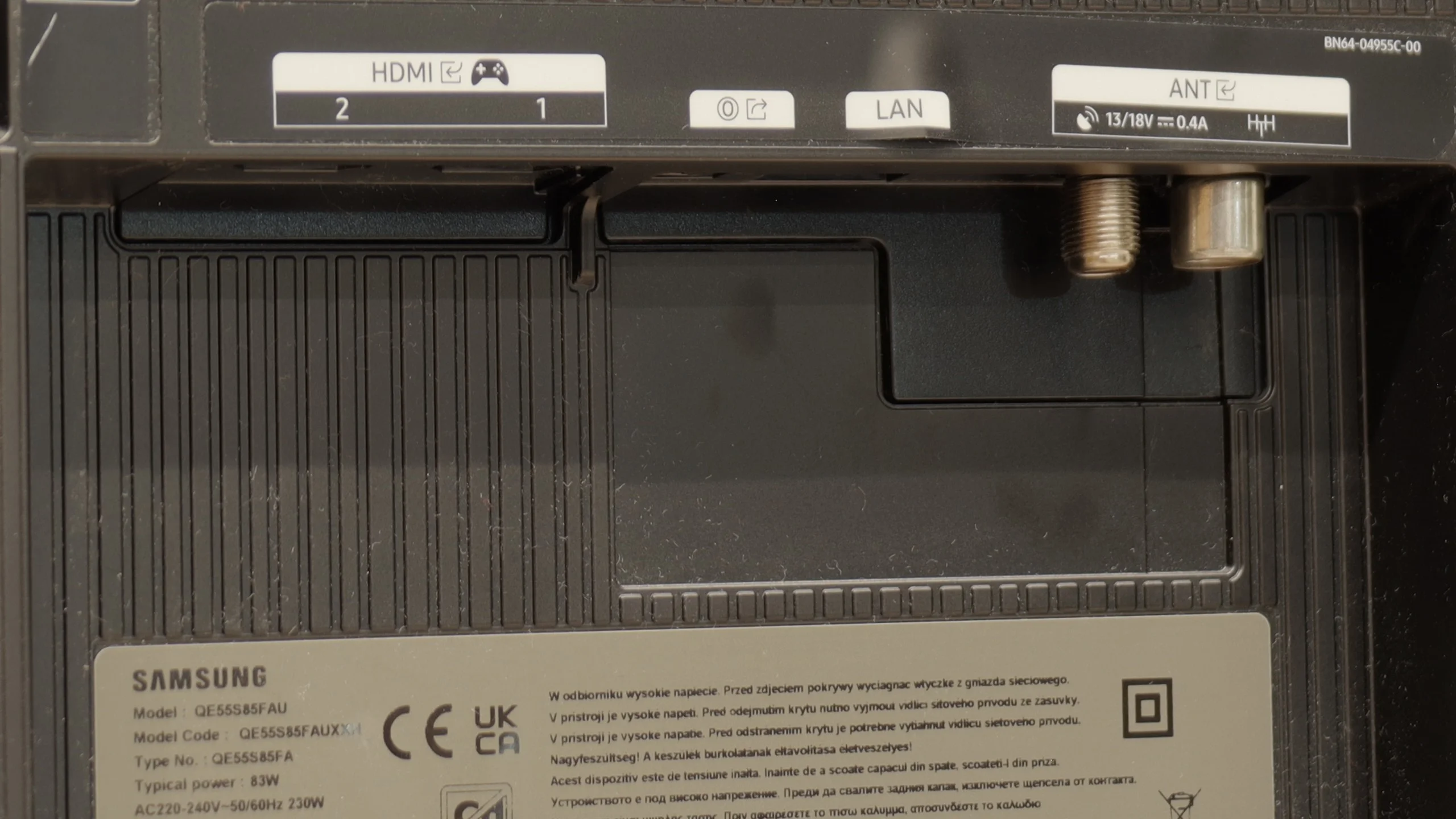
- HDMI inputs0 x HDMI 2.0, 4 x HDMI 2.1 48Gbps0 x HDMI 2.0, 4 x HDMI 2.1 48Gbps
- Other inputsToslink (Optical audio)
- OutputsToslink (Optical audio), eARC (HDMI), ARC (HDMI)Toslink (Optical audio), eARC (HDMI), ARC (HDMI)
- Network InterfacesWi-Fi 2.4GHz, Wi-Fi 5GHz, Ethernet (LAN) 100MbpsWi-Fi 2.4GHz, Wi-Fi 5GHz, Ethernet (LAN) 100Mbps
- TV receptionDVB-T, DVB-T2, DVB-S, DVB-S2, DVB-CDVB-T, DVB-T2, DVB-S, DVB-S2, DVB-C
Classic features:
- Recording to USB (terrestrial TV)
- Recording programming
- Picture in Picture (PiP)
- RF remote control (no need to aim)
- Backlit remote control
- Teletext
- Audio only mode
- Bluetooth headphones support
- Simultaneous Bluetooth headphones & TV audio
Smart features:
- AirPlay
- Screen mirroring (Windows Miracast)
- Voice search
- Voice search in native language
- Ability to connect a keyboard and mouse
Sound connection options
- HDMI audioeARC (HDMI), ARC (HDMI)eARC (HDMI), ARC (HDMI)
- Other audio outputsToslink (Optical audio)Toslink (Optical audio)
- Wireless audioBluetooth, Samsung Q-Symphony (Speaker extension)Bluetooth, Samsung Q-Symphony (Speaker extension)
Supported audio formats (external HDMI eARC audio):
- Dolby Digital Plus 7.1
- Dolby True HD 7.1
- Dolby Atmos in Dolby Digital Plus (JOC)
- Dolby Atmos in Dolby True HD
- DTS:X in DTS-HD MA
- DTS-HD Master Audio
Senior accessibility
- Numeric keyboard on TV
- Font size adjustment
- Audio description
Features of the classic S85F television
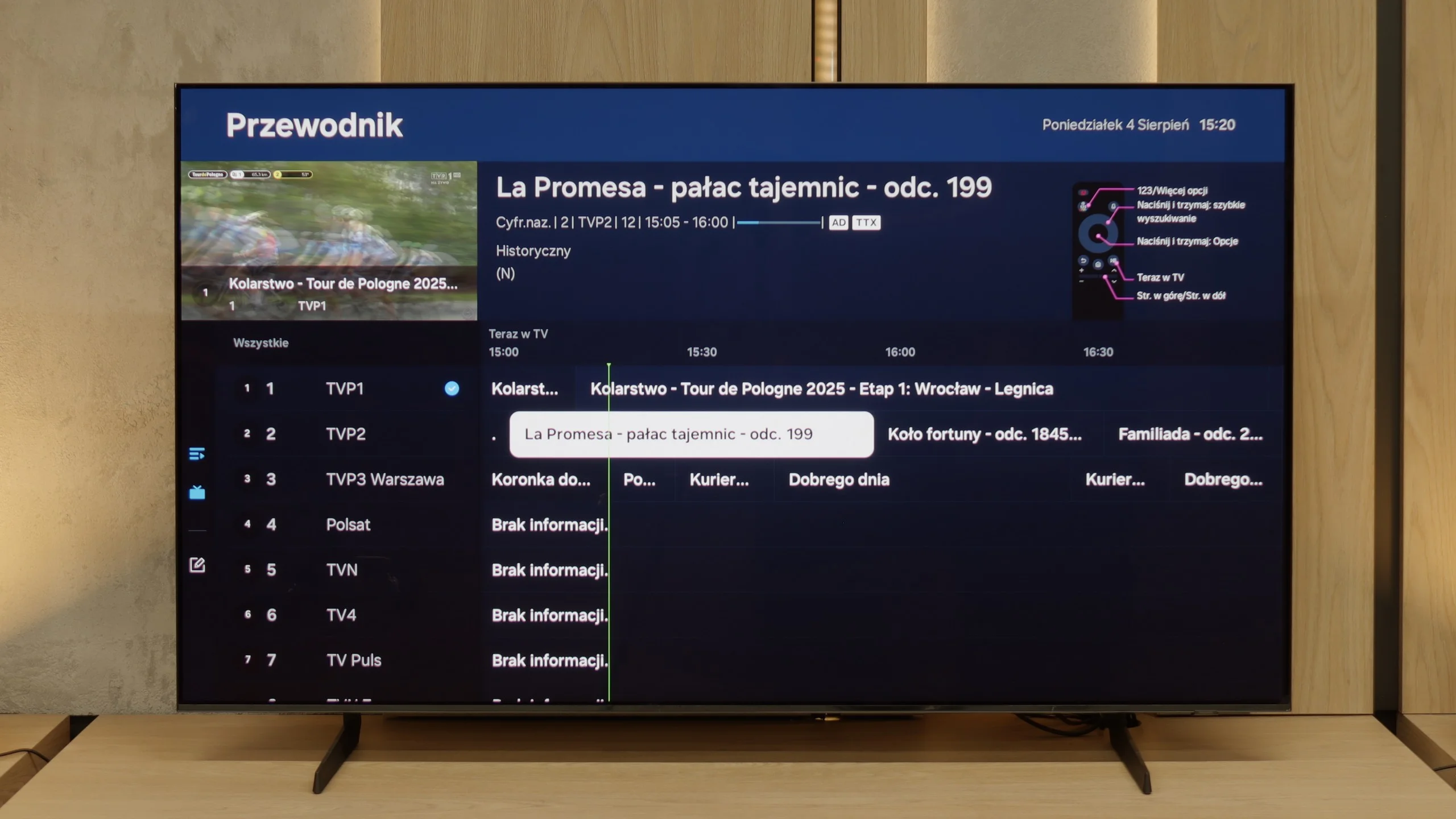
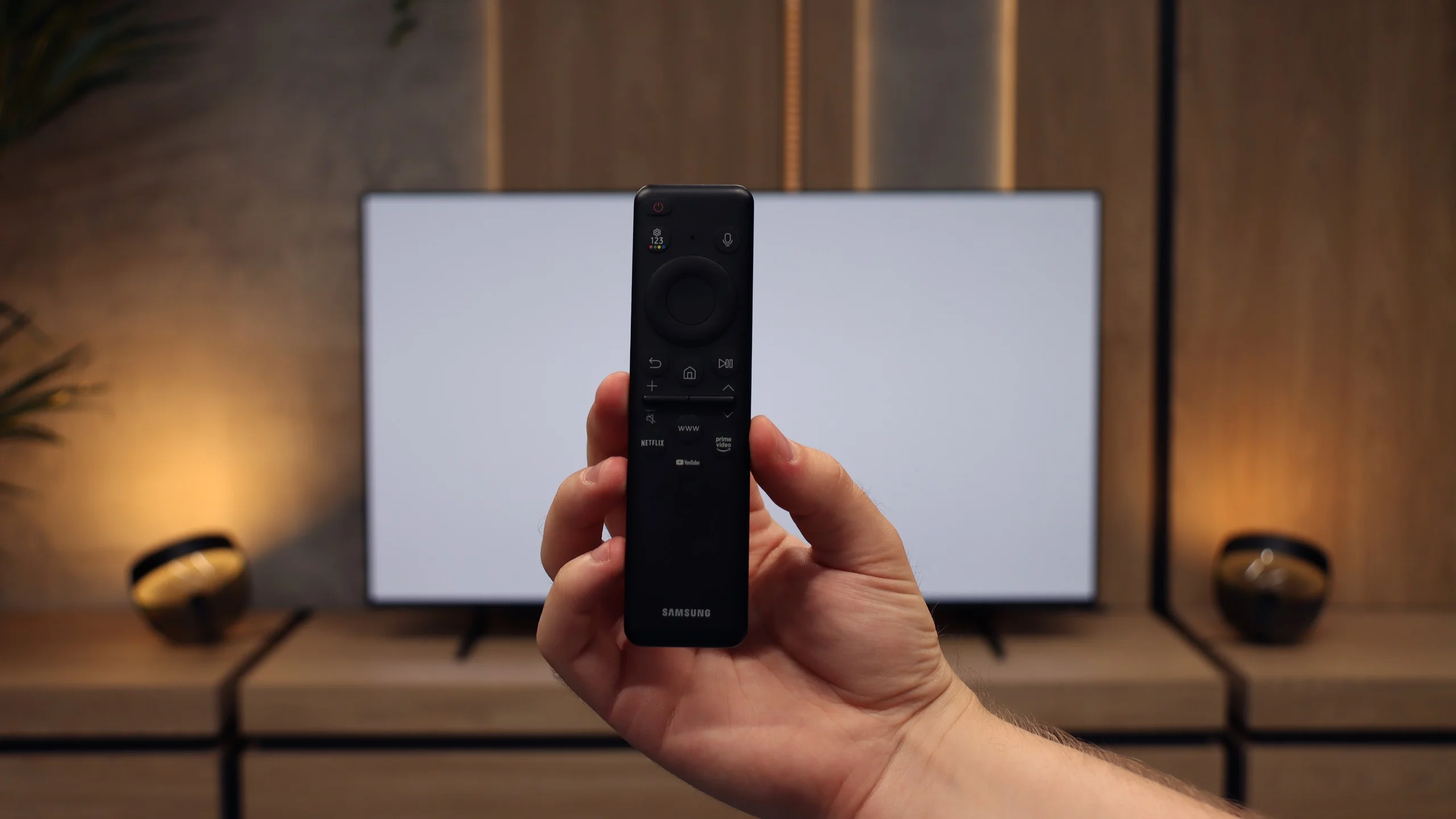
The S85F was not really designed with fans of classic television in mind. We won’t find a PiP function here (which is somewhat surprising, as Samsung typically offers it) or the ability to record programs onto USB from the built-in tuners. Fortunately, the basics are there – teletext and a clear channel guide – so it’s more than sufficient for regular, everyday viewing. The included remote, although simple at first glance and lacking a numeric keypad, allows for control of multiple devices. This means that when connecting, for example, a Canal+ decoder, you don’t need two remotes on the table – the one for the television is quite enough.
SmartTV S85F: Tizen
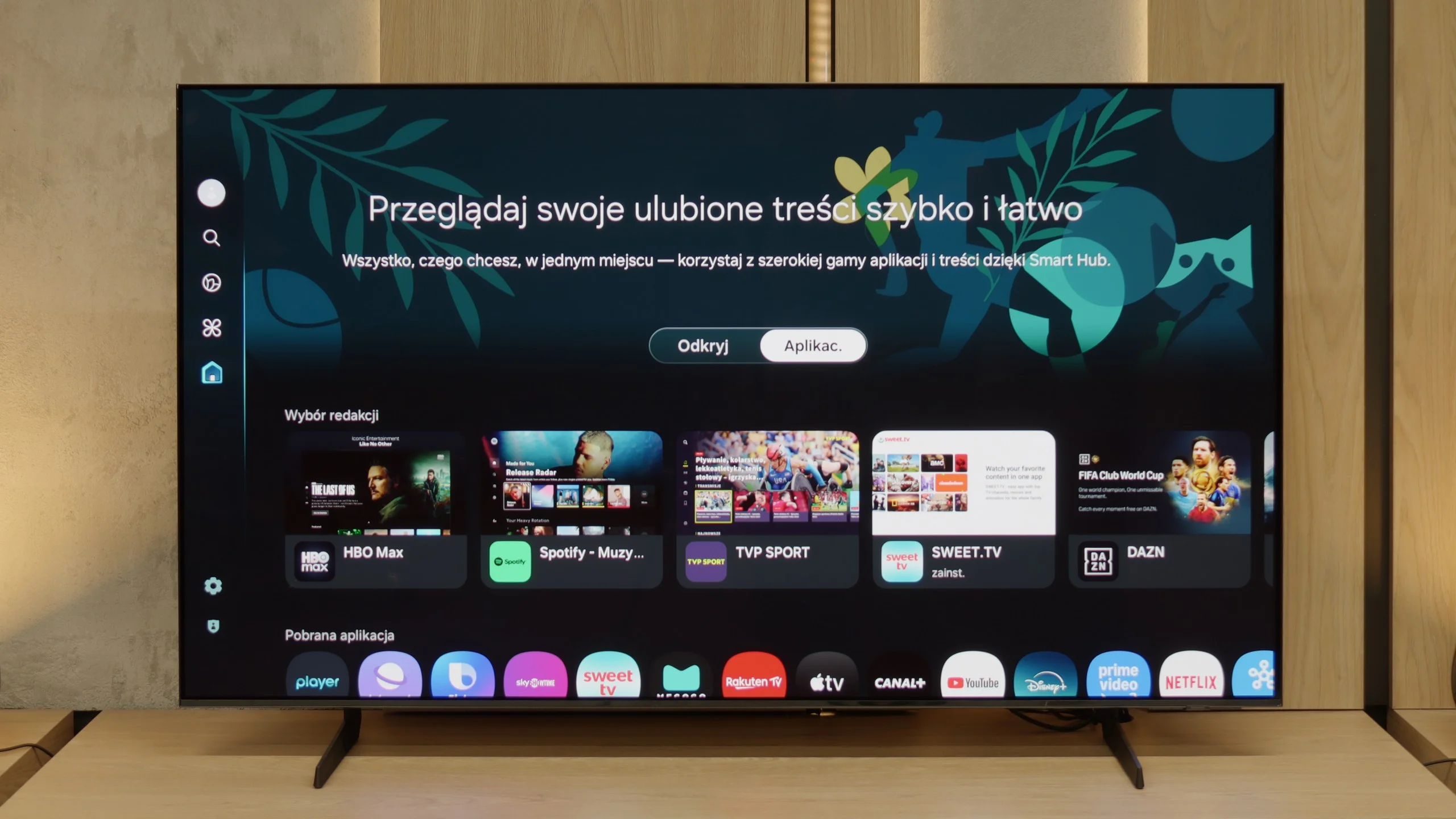
The smart part is a completely different story. Tizen is one of the most comprehensive operating systems in televisions. It operates smoothly, supports all popular internet functions – from screen mirroring to AirPlay to voice search. The strongest point of Tizen is its integration with the SmartThings app, which can act as a control centre for the entire home. Of course, like any closed system, Tizen has its limitations – for instance, a smaller app library compared to GoogleTV. However, looking at the current list of available applications, it’s hard to point out anything that might actually be missing.
Smart TV features: Google TV
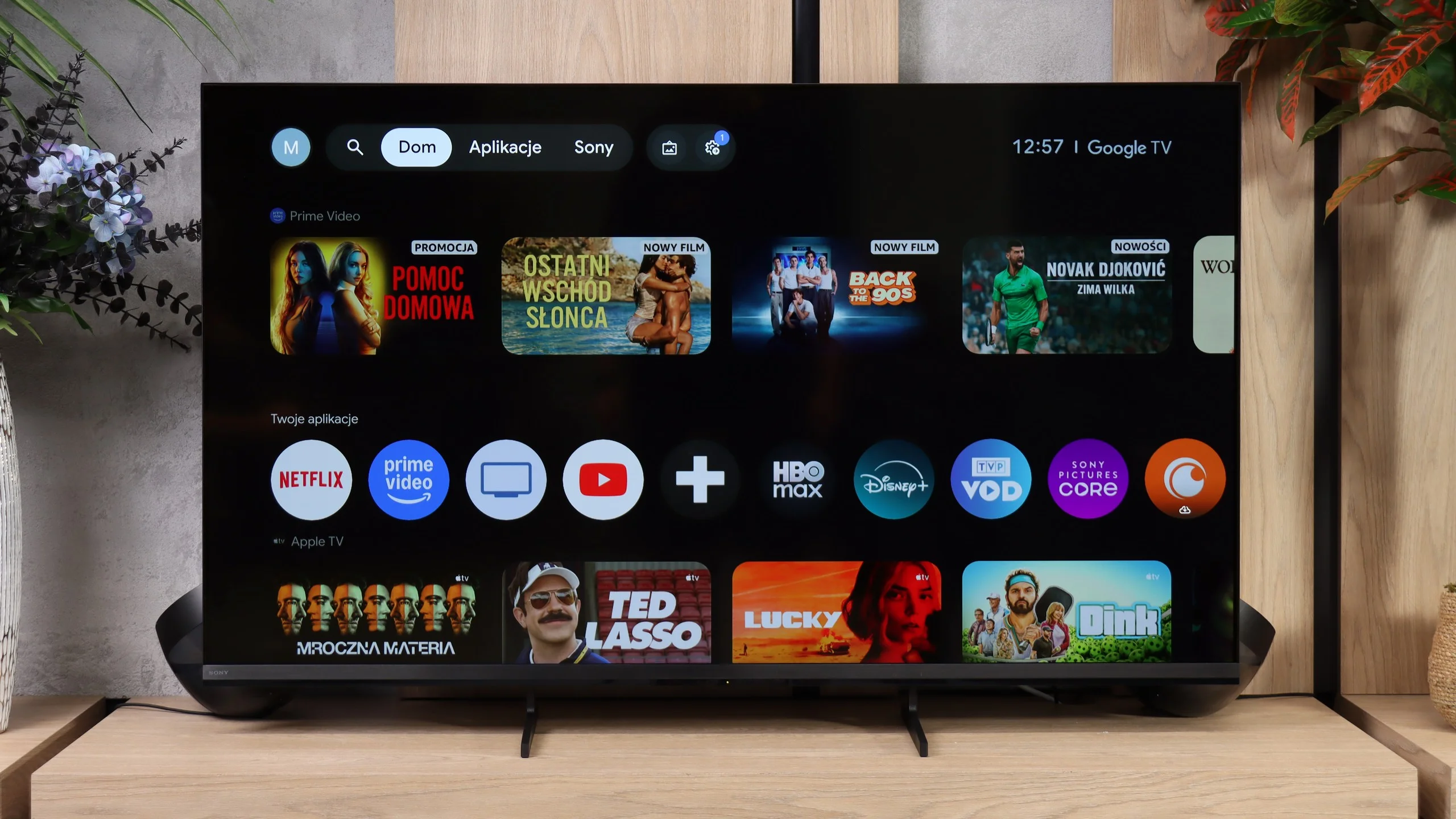
Bravia 3 II runs Google TV and, in terms of capabilities, it’s one of the more fully featured systems you’ll find in TVs today. First and foremost, you get access to a very large number of apps, so beyond the most popular streaming platforms you’ll also find plenty of less obvious services. Sony also supports AirPlay and Chromecast, making it very convenient to cast content from a smartphone. Voice search is good too, powered by Gemini, which handles commands in many languages and can genuinely make using the TV easier. During our tests we did encounter one issue: Bravia 3 II wouldn’t reliably receive a picture from a Windows 11 PC over Miracast. So if you want to use the TV as a secondary screen for a computer, the most reliable solution remains a connection via HDMI.
Traditional TV features
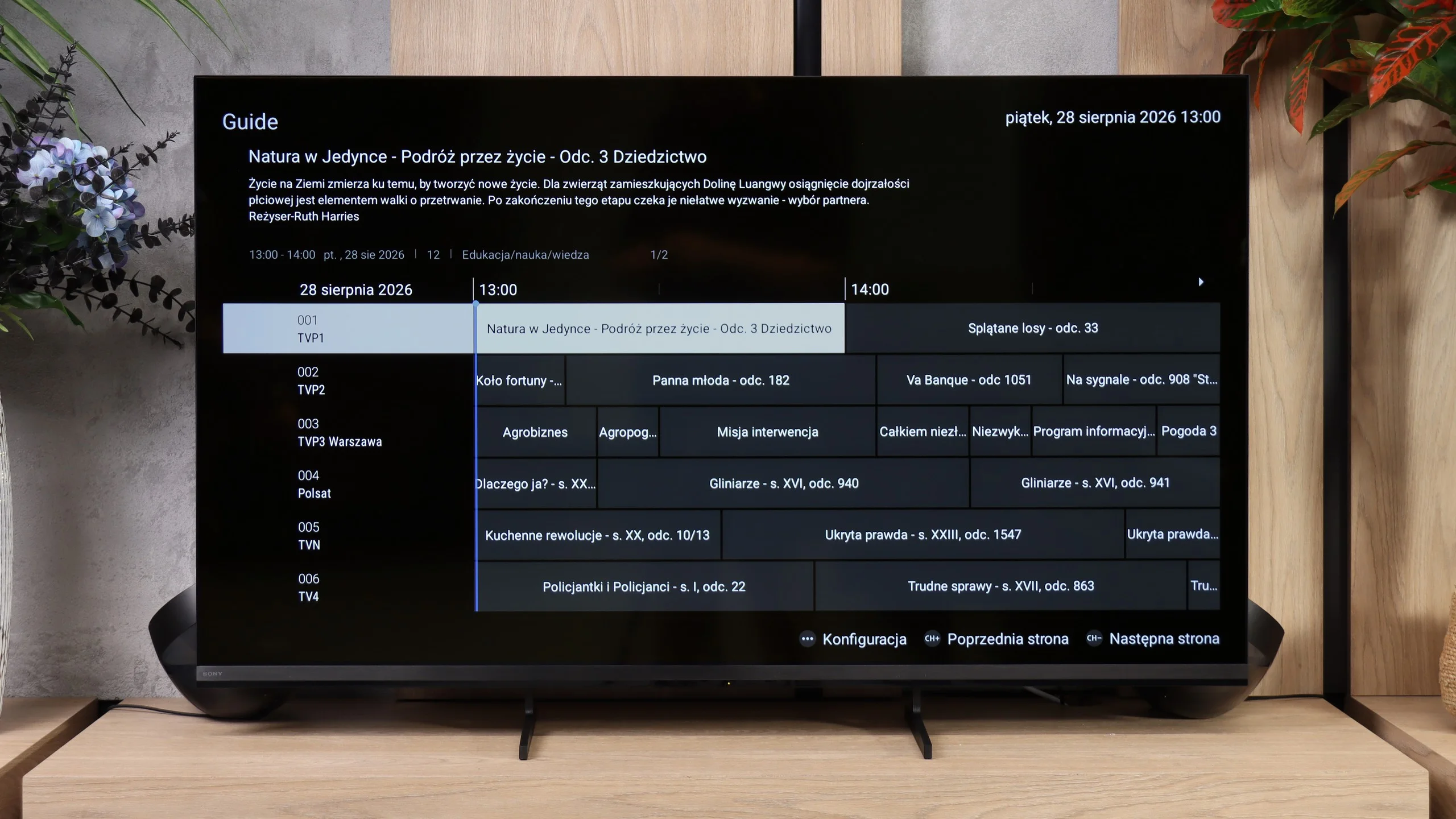
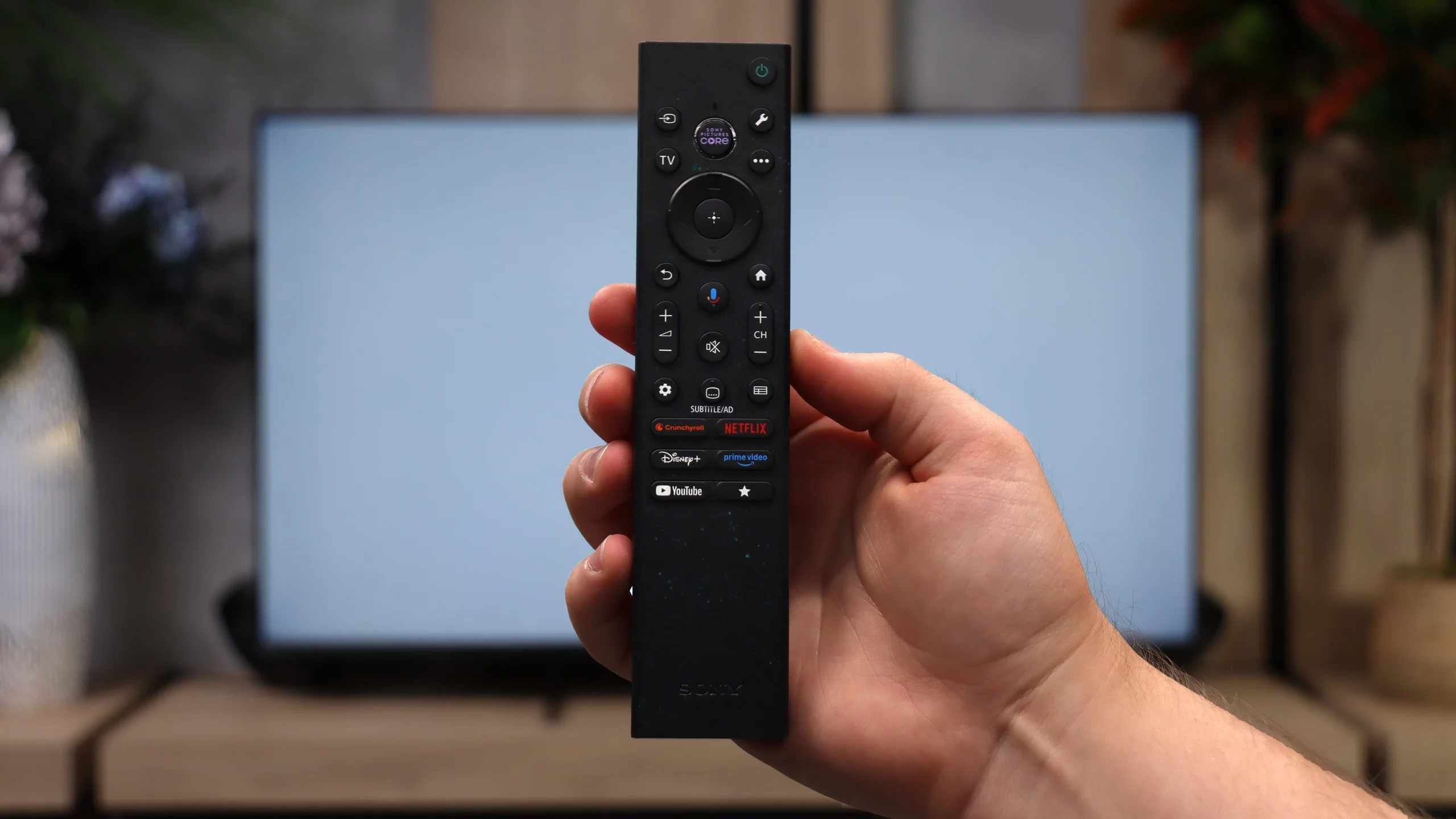
Sony hasn’t forgotten people who still mainly watch regular television. Bravia 3 II supports recording programmes to USB with the ability to schedule them in advance via PVR, which is rare nowadays, especially in cheaper models. There’s also teletext and a clear channel guide, so in terms of basic TV functions we weren’t really missing anything, maybe apart from picture-in-picture (PiP). A curiosity is the two remotes included in the set. The first is modern and pared-back (non-backlit), while the other is a classic design with a full numeric keypad. Although it may look a little old-fashioned, viewers who watch a lot of traditional TV might actually find it more convenient, for example when entering channel numbers.
Apps
9.3/10
9.6/10






















Playing files from USB
9.1/10
9.3/10
Supported photo formats:
Maximum photo resolution:
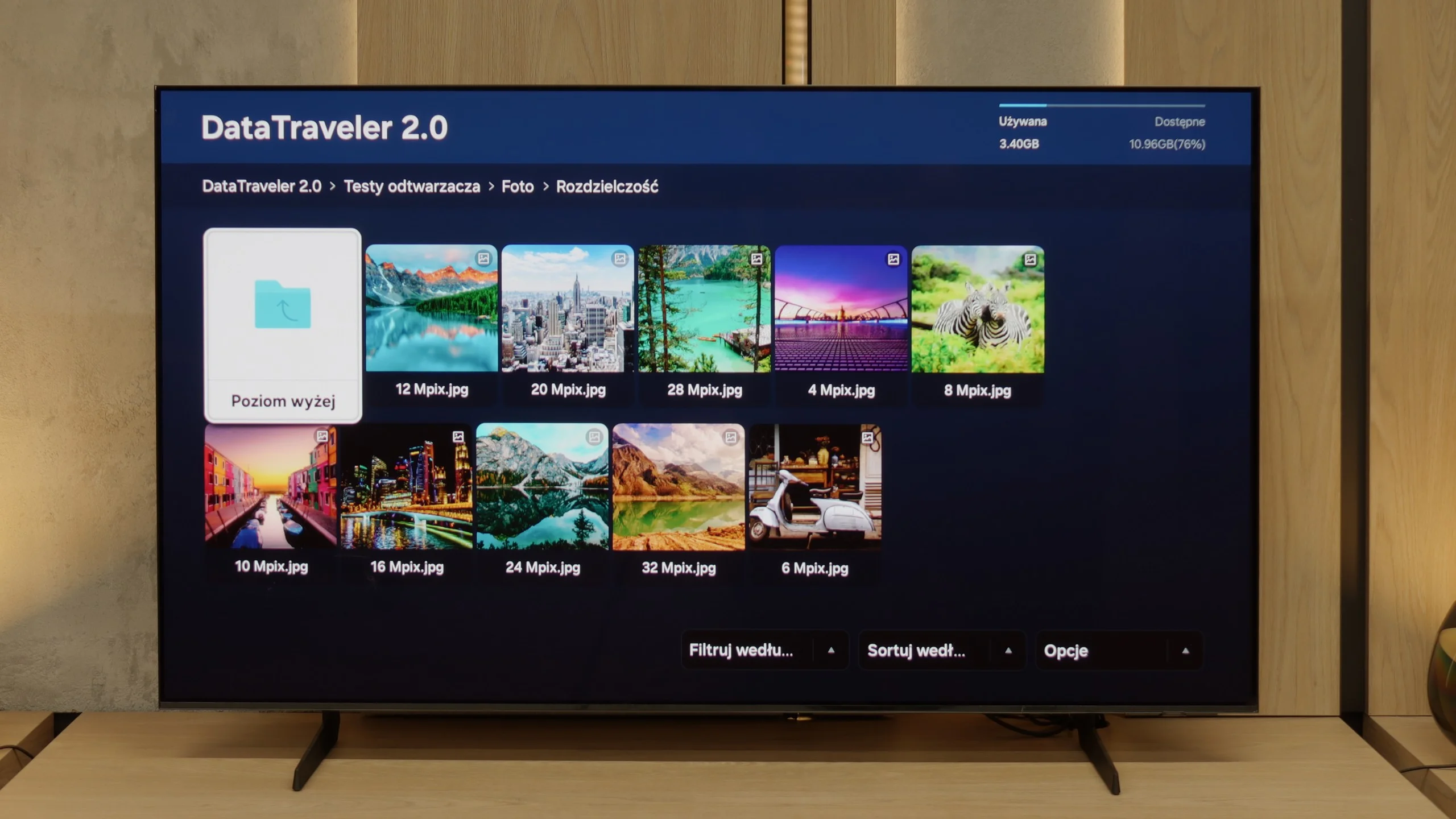
The built-in media player in the S85F performs excellently – practically everything you throw on a USB stick or hard drive will be played back without the slightest issue. Minor shortcomings only arise in the support of some less common photo formats, but for the vast majority of you, this will be more than sufficient. Therefore, it can be confidently stated that for home use, the built-in player is more than solid.
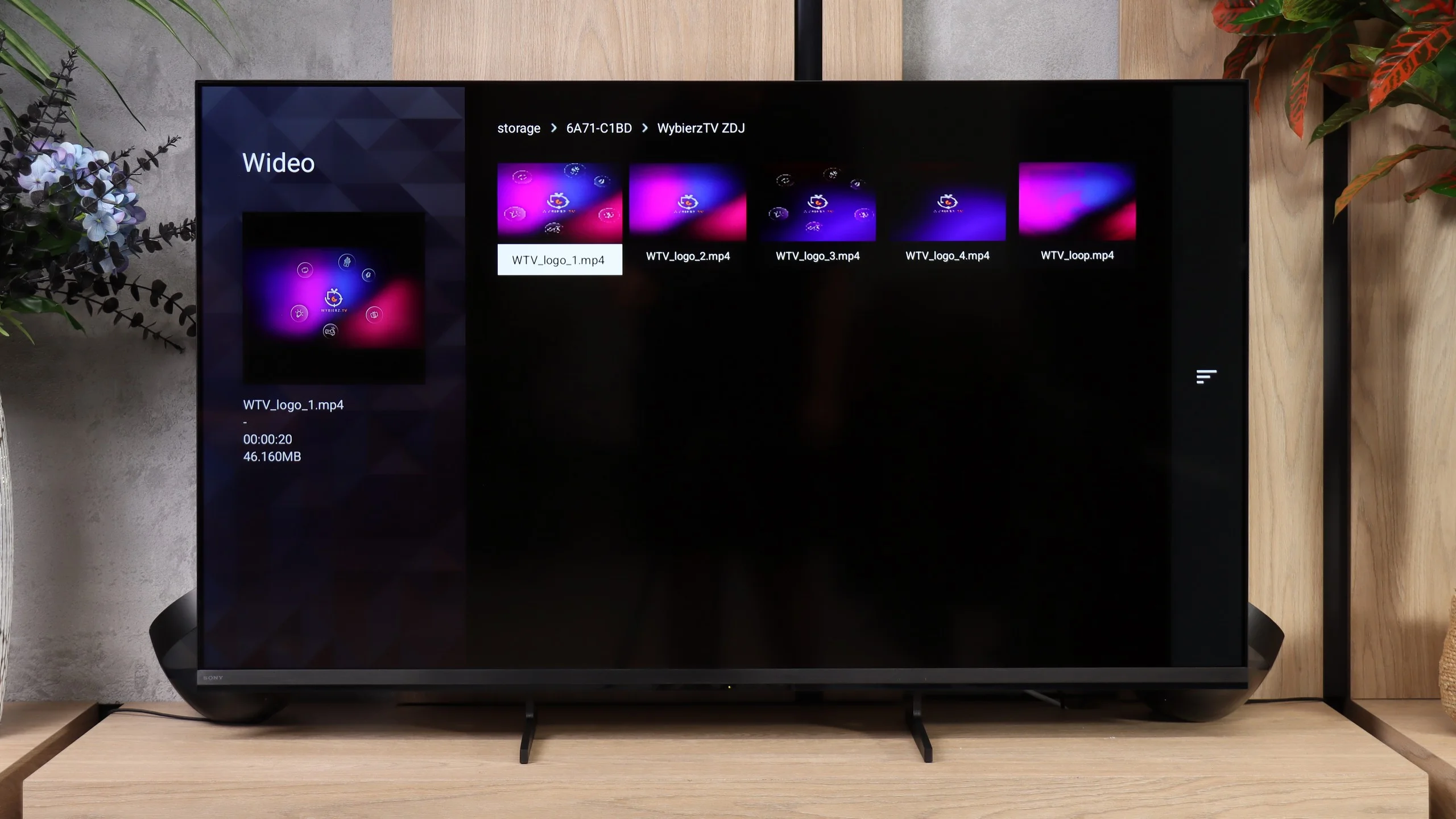
The Bravia 3 II's built-in player works really well and, during our tests, handled most popular video and audio formats with no trouble. Basically, there's little that would make us install an additional player or use an external device. The only exception might be videos with subtitles saved in .txt format, which the TV doesn't support, but let's be honest, at this point that would be nitpicking.
Sound
7.2/10
6.8/10
- Maximum volume80dB87dB
- Dolby Digital Plus 7.1
- Dolby True HD 7.1
- Dolby Atmos in Dolby Digital Plus (JOC)
- Dolby Atmos in Dolby True HD
- DTS:X in DTS-HD MA
- DTS-HD Master Audio
The built-in speakers rated at 20 W on paper may not seem impressive, but in practice, the S85F can be surprising. It sounds really pleasant, and at times you can even pick up a subtle bass, which is not a given in this class of speakers. The TV does not support the DTS format, which unfortunately became a standard for most manufacturers by 2025. A nice surprise is the support for Dolby Atmos. Of course, talking about "spatial" sound with two speakers located at the bottom of the casing would be a slight exaggeration, but it's good that Samsung offers such a feature in this model at all.
Pod względem dźwięku Bravia 3 II wypada poprawnie, ale trudno powiedzieć o niej coś znacznie więcej. Głośniki dobrze radzą sobie z dialogami i zwykłą telewizją, natomiast zdecydowanie brakuje im niższych częstotliwości. Bas zaczyna szybko tracić energię, przez co przy muzyce, filmach akcji czy grach dźwięk jest dość lekki i brakuje mu uderzenia. Nie jest to oczywiście nic niezwykłego w telewizorach tej klasy, ale jeśli zależy nam na bardziej efektownym brzmieniu, soundbar będzie tutaj bardzo wskazanym dodatkiem.
Znacznie lepiej wygląda kwestia obsługiwanych formatów audio. Bravia 3 II radzi sobie praktycznie ze wszystkim, czego możemy potrzebować, włącznie z Dolby TrueHD, DTS-HD Master Audio czy DTS:X, a więc formatami coraz częściej pomijanymi przez innych producentów. Telewizor może również przesłać je dalej do zewnętrznego zestawu audio. Wyjątkiem jest Dolby Atmos zapisany w Dolby TrueHD, którego wbudowane głośniki nie odtworzą bezpośrednio, ale przy korzystaniu z odpowiedniego soundbara lub amplitunera nie powinno stanowić to większego problemu.
Sound Quality Test
Acoustic Measurements
80dBC (Max)
75dBC
87dBC (Max)
75dBC
Reader comments
Comments are provided by the external service Disqus (Zeta Global). Once loaded, Disqus may set cookies and process data about your activity.
We will remember your choice on this device. Provider's privacy policy